
My Regular Pagan Holiday post
She is a towering figure, casting mountains by flinging stones from her wicker basket. She is the crone goddess, ancient and wise, with flowing white hair and—some legends say—one eye in the center of her forehead. The Cailleach (pronounced kallyak), the Celtic goddess of winter, seizes control of the earth on November 1, at the pagan festival of Samhain (pronounced sow-in), and reigns until the thaw of spring. She governs the weather, especially storms, and with each step, she shapes the land.
The hag’s face is pale blue, cold like a corpse, her long white hair streaked with frost. Cloaked in a gray plaid, she appears worn by time, yet her power is immense. She is both creator and destroyer, molding the hills and valleys with her hammer, a deity tied to cycles of death and rebirth. Some say she has roots as ancient as the Indian goddess Kali.
As the harbinger of winter, the Cailleach has been feared and revered for centuries. On Imbolc, February 1, she is said to gather firewood for the remainder of winter. If the weather is clear and bright, it’s a sign she intends for the cold to stretch on, collecting plenty of wood to sustain her. But if the day is foul, people sigh in relief—the Cailleach sleeps, and winter’s end is near. Today, we mark this custom with Groundhog Day.
“Winter is coming”—a phrase popularized by Game of Thrones—is not just a warning of seasonal change, but a metaphor for scarcity, hardship, and the potential for conflict. The ominous truth is that winter is always coming, unless we are already in the thick of it. Perhaps, politically, we are.
The looming threat of a Trump presidency feels like the onset of a long, harsh winter. It keeps me awake at night. For decades, Republicons have skewed the game, and I’ve lived long enough to witness it firsthand. From voter suppression to outright vote theft, it’s been an ongoing battle. I was blown away by Greg Palast’s latest documentary, Vigilantes Inc.: America’s New Vote Suppression Hitmen, produced by Martin Sheen, George DiCaprio, and Maria Florio (Oscar, Best Documentary). He exposes the political history of racist Georgia Gov. Brian Kemp and his slave owning family. Stream it for free.
For those unfamiliar with Greg Palast, he’s a freelance journalist with a history of working for the BBC and The Guardian. His investigations predict that MAGA extremists may riot on December 11, the constitutional deadline for states to submit their final lists of electors. You can read more on his site: https://www.gregpalast.com/maga-militants-to-riot-on-december-11/
I’m sending this message before Samhain, hoping these warnings help to thwart the political winter ahead. We may already be in the storm’s grip, but awareness can help us weather it.

For those of you in Sonoma County, I hope you’ll join me at a Democracy Fair, sponsored by the Deep Democracy group of the North Bay Organizing Project. Get voter information about local and state propositions and races. Plus games and prizes! It’s happening this Friday October 18 from 4 to 7pm at the SRJC student center. Registering ahead will help us plan. Here’s the RSVP link: tinyurl.com/deepdemfair. (Apologies to those I’ve already sent this to.)
One more thing. I was saddened to learn of the death of my friend, the artist and writer Mary Wings in San Francisco. We were both born in 1949 (it was a very good year for Boomers) and shared a neighborhood in Bernal Heights. Mary was kind of famous; she rated an obit in the New York Times: https://www.nytimes.com/2024/08/08/arts/mary-wings-dead.html?unlocked_article_code=1.SU4.GC0y.GZ_rimClOb6P&smid=url-share
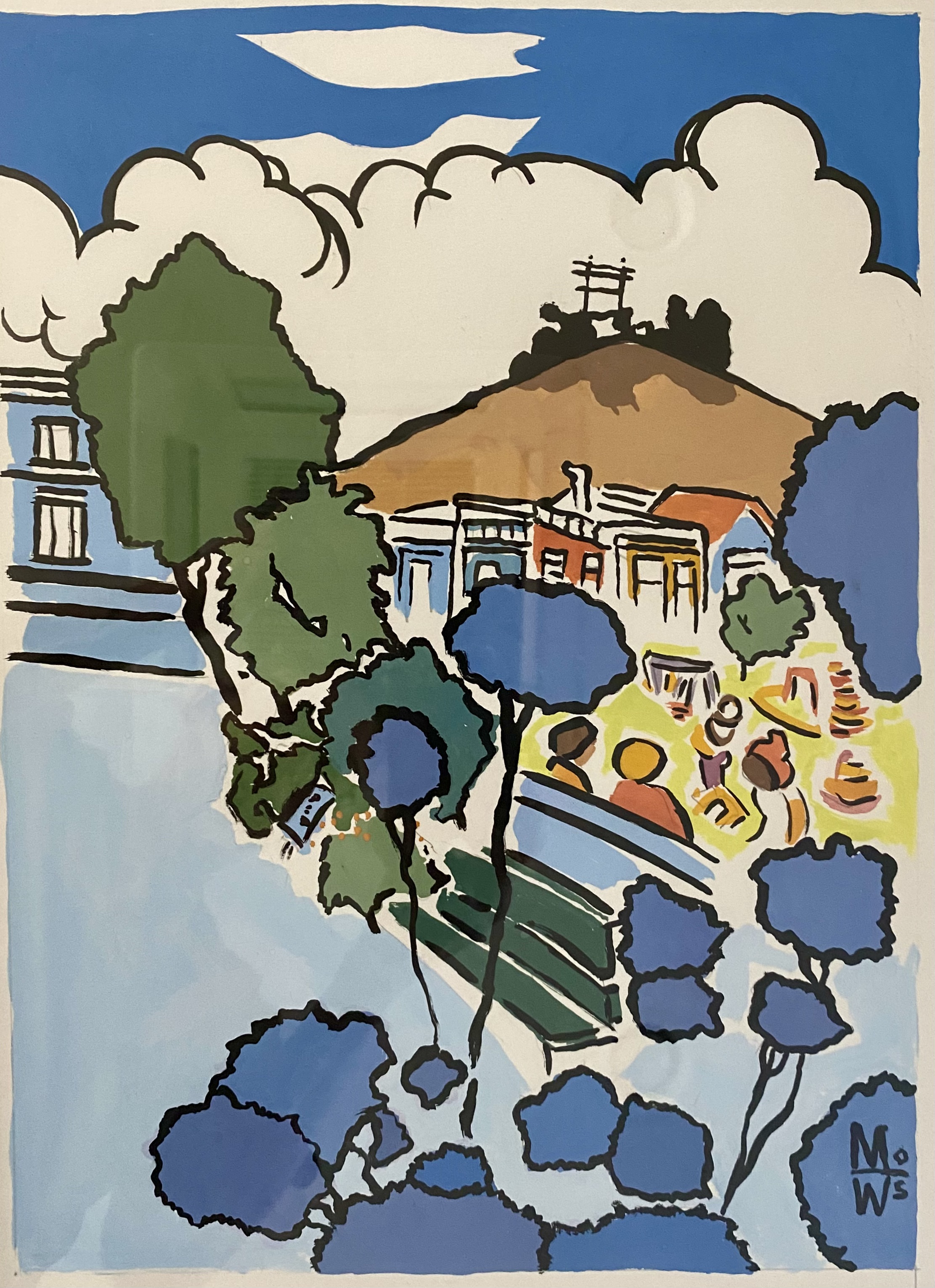
She was always working on art projects and her friends were often the lucky recipients of her creations. One of her gifts to me was this painting of Bernal Hill viewed from Precita Park where she lived. I lived on the opposite side of the hill. The painting had originally been framed in something she’d found at Scrap, but it fell apart over time. Recently, I rediscovered it in the garage and had it reframed. Now it’s hanging on the kitchen wall, and it’s a beautiful way to remember both Mary and our beloved San Francisco neighborhood.
Sending Samhain greetings to all.
Love, Molly (and Holly)
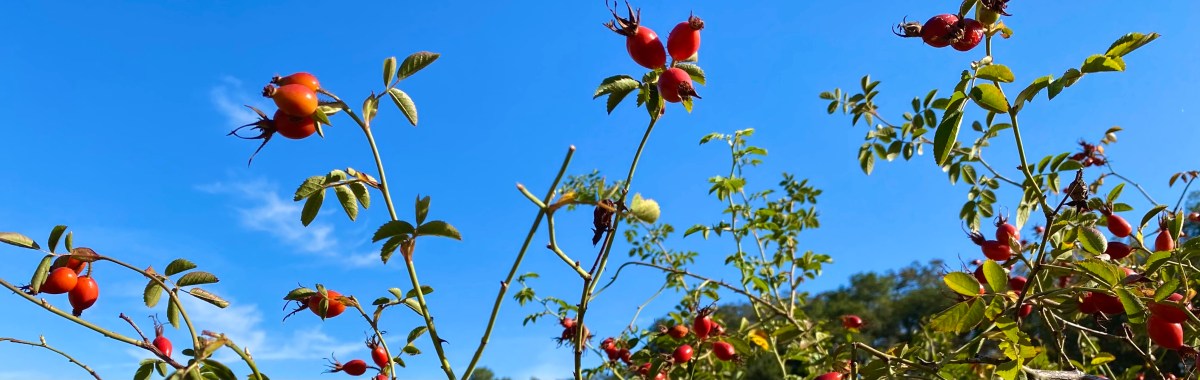
The top photo is by David Mirlea on Unsplash (having trouble with captions)


 tradeswomn musings