The US and USSR Sign a Peaceful Pact

The agreement marked a territorial change in the occupied zones

My Mother and Audie Murphy Ch. 93

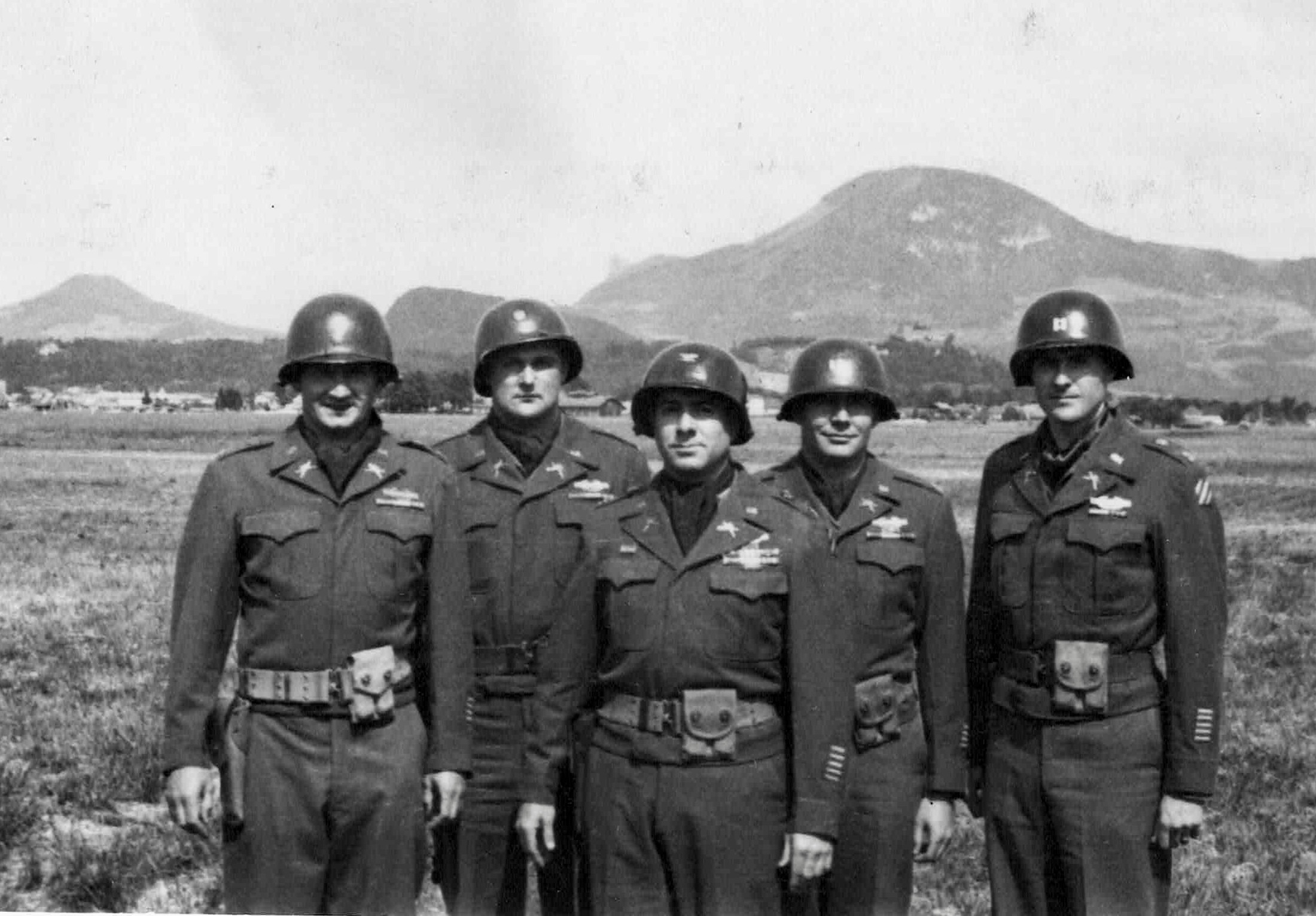
The meeting took place at the Russian and American liaison headquarters in Wanfried.

Flo attended the historic Russian–American conference in Wanfried, Germany, where the Wanfried Agreement was signed on September 17, 1945. The agreement was a post–World War II territorial exchange between U.S. and Soviet occupation authorities, finalized in English and Russian, to resolve a logistical problem along the Bebra–Göttingen railway. A roughly 2.7-mile stretch of this crucial rail line briefly crossed into the Soviet zone near Wanfried, disrupting traffic vital to U.S. connections between southern Germany and the American-controlled port of Bremerhaven. To secure uninterrupted U.S. control of the line, two villages in Soviet-occupied Thuringia were exchanged for five villages in American-occupied Hesse. The agreement, informally known as the “Whisky-Vodka Line,” stands out as a rare, peaceful, and highly localized negotiation between the two superpowers in the tense early months of the occupation.

Figuring out the new borders between occupations zones
Flo’s head sticks out on the left. It looks like there was one other female at the table. At least one participant wore a gun to lunch.
Flo sitting next to Russian regimental CO. Col. Michael Paschchenko. Flo told me she had a big crush on this handsome guy but neither spoke the other’s language.
Agreement signed! Russian general and Gen. Sexton toast.

Losar the Tibetan New Year

Remembering That the World Is Alive

My Regular Pagan Holiday Post

“During Losar, the Tibetan celebration of the New Year, we did not drink champagne. Instead, we went to the local spring to offer gratitude. We made offerings to the nagas, the water beings who awaken and sustain the water element in that place. We made smoke offerings to the spirits of the surrounding land. Beliefs and practices like these arose long ago and are often dismissed in the West as primitive. But they are not projections of fear onto nature. They come from direct, lived experience—by sages and ordinary people alike—of the sacred presence of the elements within us and around us. These we call earth, water, fire, air, and space.”
— Tenzin Wangyal Rinpoche, Bon lama

The pagan holiday of Imbolc coincides with Losar, the Tibetan New Year—an observance older than Buddhism itself and rooted in Tibet’s indigenous relationship with land, weather, animals, and time. Losar’s rituals arose before Indian and Chinese influence, shaped instead by mountains, winds, springs, and the deep listening of people who understood the world as alive.

Losar is celebrated according to the Tibetan lunisolar calendar, which follows both moon and sun and adjusts itself to the breathing of the seasons. Months are added when necessary so that time does not drift away from frost, thaw, planting, and return. The calendar has a sixty-year cycle weaving twelve animals with five elements—Wood, Fire, Earth, Iron, and Water—each year a particular conversation between forces. In February 2026, Losar begins the Female Fire Horse year (2153), a year of movement, heat, and untamed momentum. The festival lasts fifteen days, with the first three devoted to renewal, protection, and blessing.

Before the Chinese invasion of Tibet in 1950, Losar opened with dawn ceremonies at Namgyal Monastery, where the Dalai Lama and senior lamas made offerings to Palden Lhamo, fierce guardian of the land and the Dharma. After exile and occupation, monasteries were destroyed and public ritual suppressed. Yet Losar did not disappear. It moved into exile, into kitchens and courtyards, into memory and breath. In Dharamsala, the Dalai Lama continues to offer blessings, while Tibetans everywhere keep faith with the spirits of place—even when the place itself is inaccessible.

At a protest in Santa Rosa this man displayed 300 of his 1000 Origami birds

How do we observe Imbolc?

By remembering that the world is alive—and responding accordingly.

As we witness the brutal ICE raids in Minnesota, we feel the rupture in the web of relations. Bodies are dragged from homes; families are torn from their ecosystems of care, citizens are murdered. ICE has been run out of Maine where it targeted Somali communities after arresting 200 people and sending them to concentration camps. These acts violate not only the Constitution but the deeper laws of reciprocity that make life possible.

So we act.

We speak to our representatives and demand the defunding of ICE.
We write postcards, calling neighbors back into civic responsibility.
We organize to protect our town if the violence arrives here. The North Bay Rapid Response Network provides a 24-hour hotline to immigrants facing a raid by federal immigration agents, dispatches trained legal observers to the raid location, provides legal defense to affected communities, and offers accompaniment to impacted people and families following a raid.
We protest, along with our community and neighbors.

We put loving kindness out in all directions for the benefit of all beings.
And we plan our gardens for the coming year—because tending soil, saving seed, and preparing for planting are acts of allegiance to life itself.

Resistance, like ritual, is a way of keeping faith with the land, the waters, and one another.

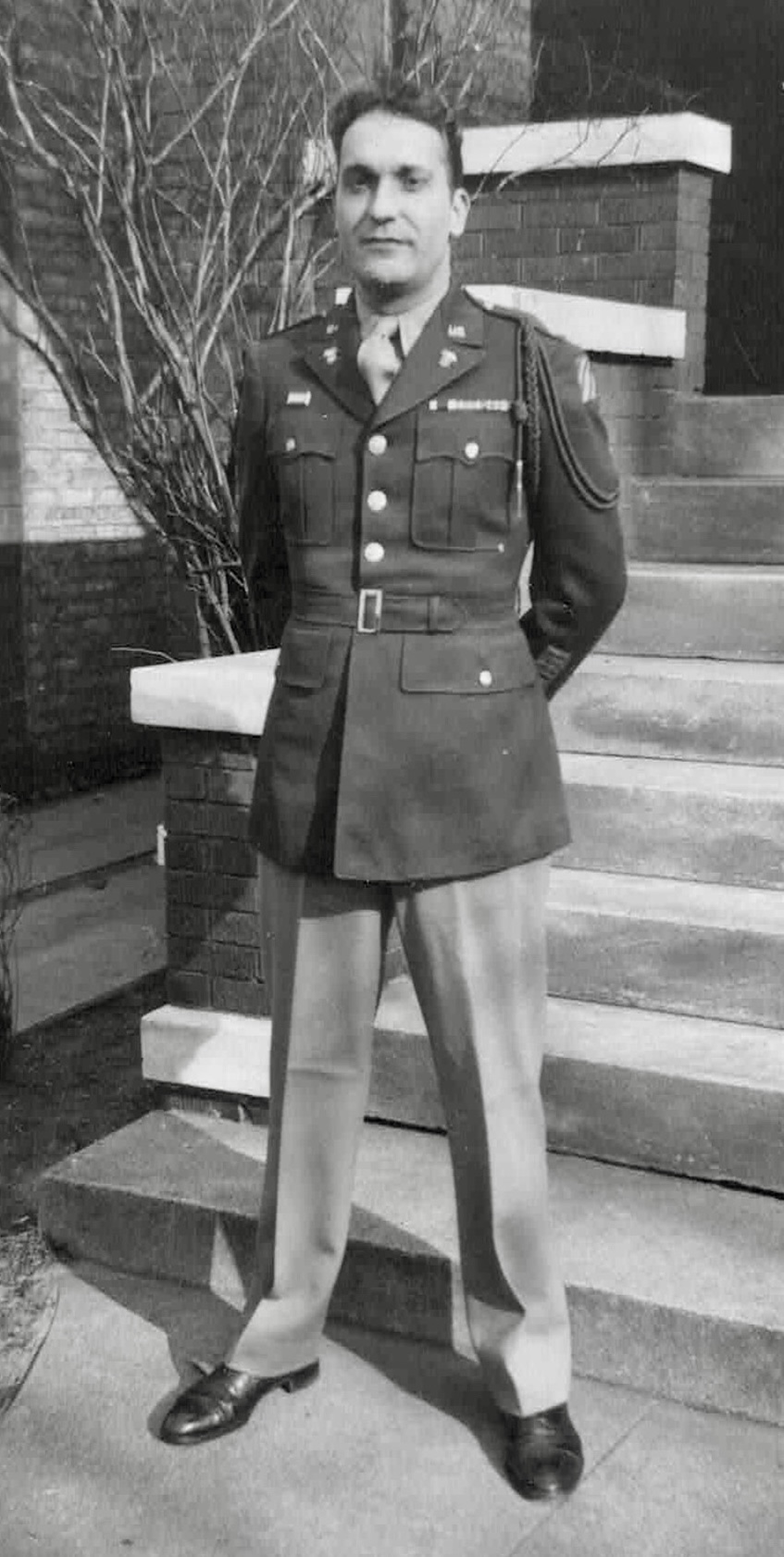
At the VA Protest January 30, 2026

Trump wants to defund and privatize the U.S. Veterans Administration

Around Witzenhausen, Autumn 1945

My Mother and Audie Murphy Ch. 92

Witzenhausen, Germany, lay within the American occupation zone near the border with the Soviet zone, making it strategically important for intelligence and personnel transfers. In 1945, U.S. forces used the town during Operation Paperclip to evacuate German rocket scientists, including Wernher von Braun, from Bleicherode to prevent their capture by advancing Soviet troops, underscoring Witzenhausen’s role in the emerging Cold War. The town became a U.S. Army garrison, with military bases integrated into local life, a pattern seen across West Germany. This long American presence left lasting marks on language, consumer culture, and infrastructure, making Witzenhausen a microcosm of the broader U.S. occupation experience.

Janet and Flo visited a beach house on Lake Edersee occupied by the 3rd Signal Co.
Janet Potts
Berlepsch castle
Janet and Jens Jenson in their apartment at Witzenhausen Thanksgiving, 1945
At Janet and Jens’s home with Lt. Gerry Mehuron 3rd Bn. 3oth Thanksgiving Day
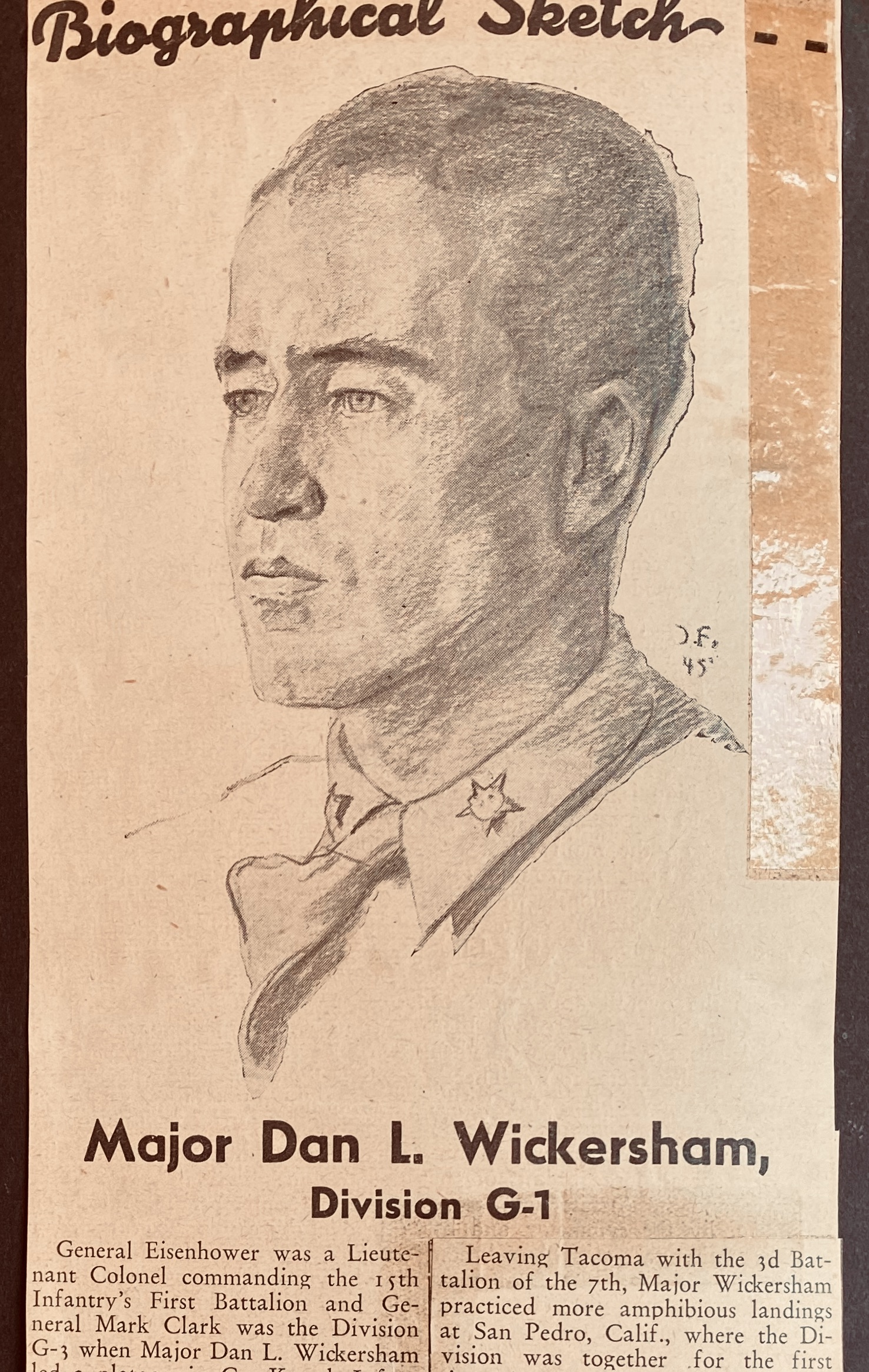
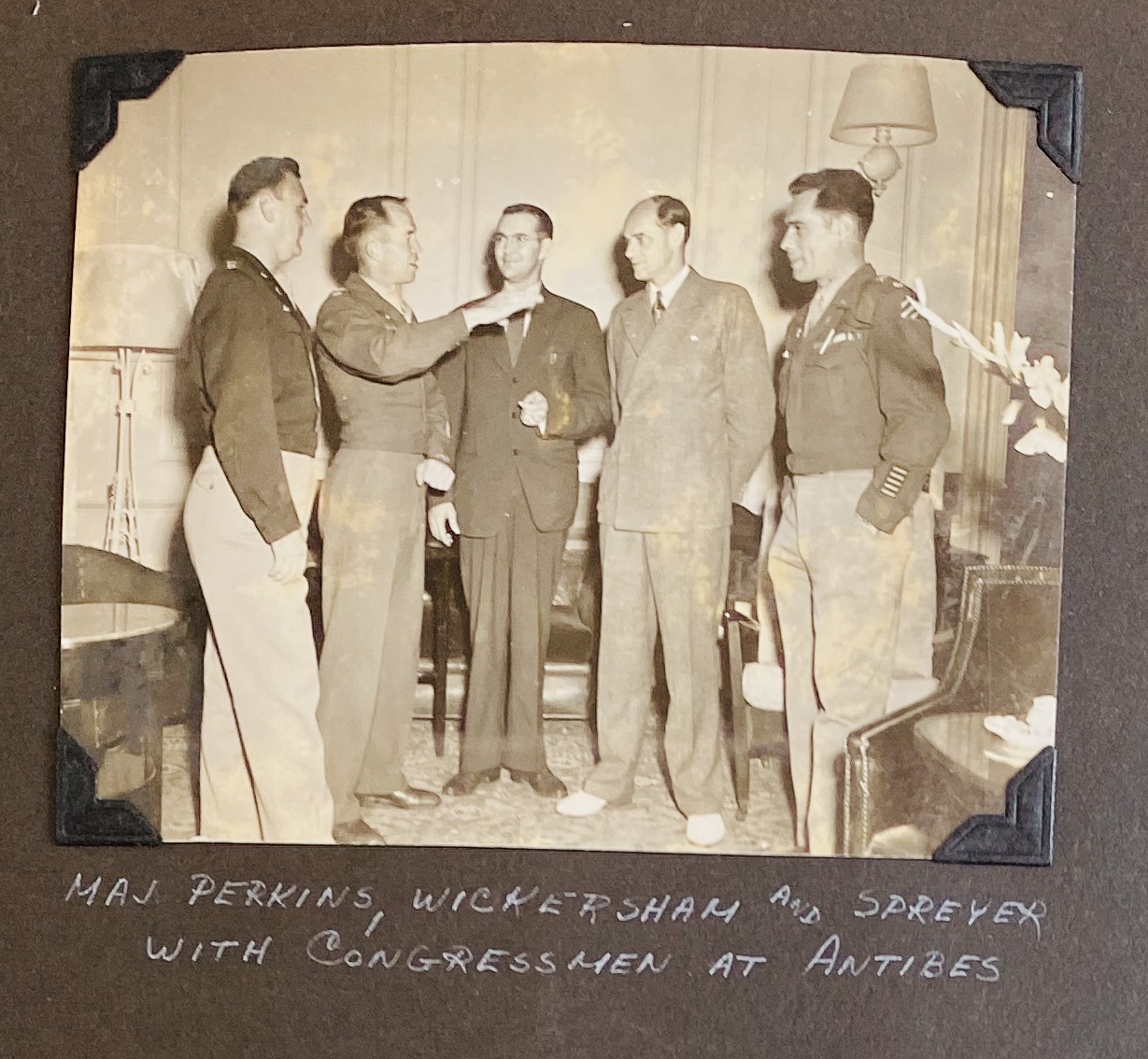
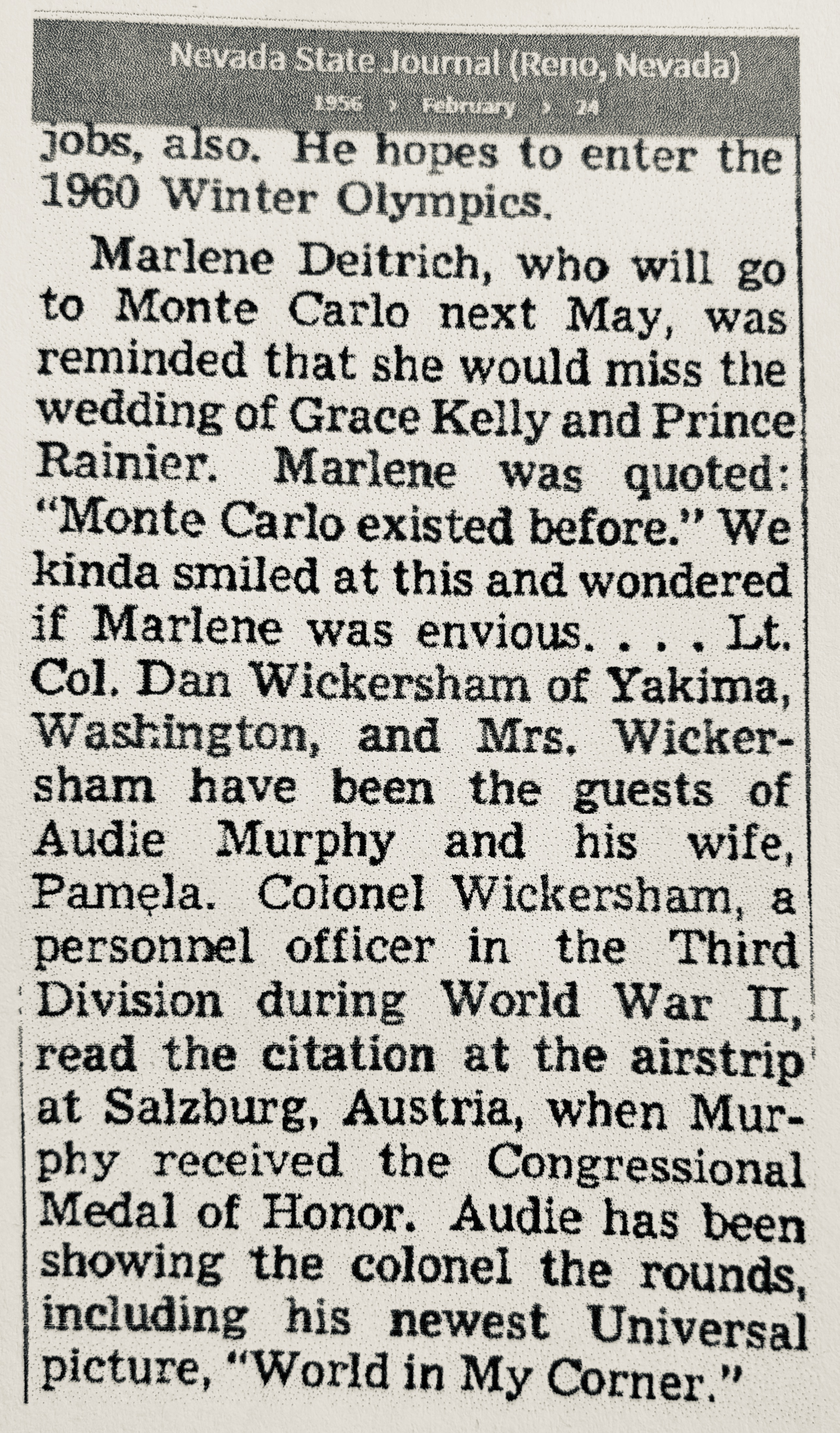
With Major Wickersham, a friend from Flo’s hometown, Yakima, WA
Locating these places on Apple maps helps me. Lake Edersee on the left, Witzerhausen to the right of Kassel, Bad Wildungen where Flo was stationed is to the right of Lake Edersee. All were within the American occupation zone in Hesse.

Flo Goes to a Football Game

Third Division vs. 29th

Ch. 91 My Mother and Audie Murphy

The football games were part of a sports program organized to occupy restless American and Canadian troops awaiting discharge. In August 1945, the U.S. Army had staged the “GI Olympics” in Nuremberg, with high-ranking Russian observers in attendance. Events included a baseball game played in the former Hitler Youth Stadium—an unmistakably symbolic reclaiming of Nazi space. That same day, news of Japan’s surrender crackled over the loudspeakers, unleashing a roar that seemed to lift the roof as GIs tossed caps, coats, and red-white-and-blue programs into the air, hugging, kissing, and celebrating the war’s end. The festivities continued into the night with performances by Hal McIntyre at the amphitheater and Bob Hope at the Opera House, drawing thousands of cheering troops in a city freshly transformed from fascist spectacle to victorious release.

Pretty sure Flo was rooting for the Third Division
Reserved for the brass.

Ch. 92: https://mollymartin.blog/2026/01/30/around-witzenhausen-autumn-1945/

Friends at the 3rd QM

“Our home for two years”

Ch. 90 My Mother and Audie Murphy

Flo didn’t identify the soldiers on this page of the album. We see ARC clubmobiler Janet Potts in one picture and I’m guessing the man standing next to her is her fiance Jens Jenson. Flo is holding tightly onto one tall handsome man’s hand in several photos. Apparently she has a new boyfriend.

Free America Walkout Jan. 20, 2026

With Santa Rosa Women’s March and SEIU Local 2021

Folks Get Creative With Their Signs

Report on the Occupation

John Dos Passos travels around the zone

Ch. 89 My Mother and Audie Murphy

In her album Flo saved a Report on the Occupation published in Life Magazine authored by John Dos Passos*. In late autumn, 1945, Dos Passos traveled around occupied Germany and wrote about encounters with Germans in cities and in small towns. Here are some passages from his report.

“In the American zone in Germany reconstruction stands still and victors are as glum as vanquished.”

Germany was divided into four zones controlled by Britain, France, the USSR and the US.
Image: Wikipedia

Dos Passos traveled through “medieval villages out of the backgrounds of Breughel and Hieronymus Bosch.” 

“We began to see Hessian peasants in their traditional dress. The women wear their hair pulled off their faces and tied up in stiff little cylindrical topknots on the top of their heads. They wear embroidered blouses and black knee length dresses fluffed out by numerable petticoats. The men wear black smocks and knee breeches over the same heavy knitted stockings the women wear. Some of them have 18th century-looking black felt hats. They have grim nutcracker faces. They slog along beside long wooden carts, drawn by oxen or bulls or cows…. Here and there you even see a wooden plow.” 

“In every farmhouse, yard, right under the front windows, you see the steaming manure piles that so intrigued Mark Twain. Long coffin-shaped tanks on wheels are hauling tankage, and human manure out to the fields. Like the Chinese, the Hessians can’t afford to waste a thing.”

One village had a lady burgomaster. She was a fresh-faced young woman with glasses. Unmarried, she had been chief clerk in charge of rationing under the old burgomaster.  She had never been a Nazi. We asked if she knew she was the first woman in her country to hold the post of burgomaster. She didn’t seem impressed. “Somebody’s got to be first” she said flatly.

The Third Infantry Division divided their part of the occupation zone into sectors .
Image: Dogfacesoldier.org

“About the time of the book burnings the people of this town managed to make about 300 volumes disappear. One man walled up his library with a brick wall. All these old pre-Nazi books are ready to go back into circulation.”

As part of the denazification program, all Germans had to fill out a Fragebogen (often 131 questions) detailing their Nazi Party and organization memberships, employment, and activities to determine their suitability for public life and employment.

“The fragebogen is the greatest thing in Germany,” said the sergeant who came out from his desk with a long questionnaire of the type developed by US immigration inspectors. If they get past this, he says, they can hold any job they want. If they don’t, they can’t have any position where they employ labor or exercise a skilled trade or profession. They can’t do nothing but dig ditches, and if they lie on their fragebogan we have them up in court and they don’t get off easy. Every man or woman who has any position of authority has got to make out a fragebogan. If it turns out they are big Nazis it’s mandatory arrest. If they are small Nazis, they report to the labor gang. Everybody gets frageboganed sooner or later. Then we know what’s what.

Along the road, men and women, bundled up in heavy clothes and bowed under the weight of rucksacks, carried bundles of sticks. Their forests ought to be saving them in this winter. If they can’t get coal, they’ll at least have wood. But it’s hard to get the wood into the cities.

The trouble is all the foresters turned out to be Nazis. With denazification we are having trouble finding anybody who knows how to get the logs out.

“Frankfurt resembles a city as much as a pile of bones and a smashed skull on the Prairie resembles a prize Hereford steer, but quite enabled streetcars packed with people jingle purposefully as they run along the cleared asphalt streets. People in city clothes with city faces and briefcases under their arms trot busily about among the high rubbish piles, dart into punched out doorways under tottering walls. They behave horribly like ants when you have kicked over an anthill.”

“At every intersection there’s a traffic cop in blue uniform with a long warm overcoat. The traffic cops are the happiest looking people in Frankfurt. They are warm. They are fed. Their uniforms are clean. And they can order the other Germans around.”

Dos Passos speaks to the director of the zoo who tells how he saved some animals and some have died from cold.

“The more I see the more I hate the krauts for having made us do it.” shouts an American man.

*John Dos Passos (1896–1970) was an American novelist, journalist, and political commentator best known for his modernist U.S.A. trilogy—The 42nd Parallel, 1919, and The Big Money—a sweeping portrait of American life in the early twentieth century. An experimental writer, he blended fiction, biography, newsreels, and stream-of-consciousness to capture the forces shaping modern society. Politically radical in his early years, Dos Passos sympathized with labor movements such as the Industrial Workers of the World (IWW) and sharply criticized war, corporate power, and government repression, themes that run powerfully through the trilogy and define his enduring place in American literature.

Austria During American Occupation

The Geműtlichkeit was riddled by flashes of bitterness

Ch. 88 My Mother and Audie Murphy

Flo pasted this page from an English language newspaper in her album. The story gives more details about what it was like for Americans and Austrians alike during the occupation. It mentions that the Red Cross had a club in the Mirabell casino in Salzburg and it’s a good bet Flo spent time there. She may have had to work serving coffee and donuts there.

Ice cream and jitterbugging

(In Vienna the Army) set up replicas of US drugstores where GI’s could take their Austrian girls for a soda (daily ice cream consumption of the US army and friends in Vienna now runs to 60,000 scoops.) Among venerable establishments, Broadwayish nightclubs sprouted. Racily named Esquire, Zebra, and Heideho, they offered in neat, cultural synthesis US style jazz and Viennese style wine instead of hard liquor.

Better than Vienna, GI’s liked Salzburg with its mossy stone and patinated copper. The Red Cross had moved into the Mirabell casino and the GI’s listened to symphony concerts in the Mirabell castle’s gardens. Then, oblivious to the echoes of Mozart’s minuets, they jitterbugged in the old, staid Hotel Pitter….

The Red Cross club at the Mirabell casino in Salzburg

Nearby, built directly against the rough mountainside, was the Festspielhaus, through whose cavernous yard had boomed the theatrical damnation of Dr. Faust. The GI metamorphosis had turned it into a movie house nostalgically named the Roxy. And around Salzburg’s Bierjodelgasse (beer-yodel street) GI’s noisily scouted for beer gardens.

The favorite outdoor sport was chamois hunting in the mountains hovering over the city–where the game poacher has always been a highly respected member of society, and where one of Austria’s most important bits of national philosophy originated: If you hadn’t climbed up you wouldn’t have fallen down.

Krauts and cokes

Although Americans had made a better impression on Austrians than any other people in Europe, the Geműtlichkeit (good feeling) was riddled by flashes of bitterness. Usually broad minded, the Viennese grew jealous, called girls who fraternized with the chocolate-bearing GI’s “chocoladies.” The sprinkling (5%) of combat veterans among US troops called the Austrians just plain krauts only softer.

Last month soldiers in the US zone were booked for 32 assaults, 5 rapes, 3 disorderly conducts, and one house breaking. Cracked an MP officer: “Now that we’re getting quantity supplies of Coca-Cola maybe our boys will get back to behaving.” But most GI’s in Austria already had passing marks for behavior; and many were living up to their orientation slogan, “Soldier, you are helping Austria.” The first crop of Austrian babies fathered by helpful GI’s is sizable.

Ch. 89: https://mollymartin.blog/2026/01/18/report-on-the-occupation/

Kassel and the Hesse Area

Traveling Around the American Occupation Zone

Ch. 87 My Mother and Audie Murphy

Kassel, Germany, was a critical WWII target due to its Henschel & Sohn factories (building tanks like Tigers and Panthers) and major railway hub. The city suffered devastating Allied bombing from 1942-1945, especially the October 1943 raid that destroyed the city center and killed thousands. Few inhabitants were left by the time US forces captured it in April 1945 after intense fighting, concluding a brutal chapter of destruction. The Third Infantry Division was heavily involved in the fight for Kassel before securing the region, and later established its command structure in the surrounding Hesse area. 

From pictures on this page of her album, it appears Flo was able to travel around the Hesse area as a tourist. She was probably continuing to dish out donuts to occupation troops from the clubmobile.

Typical kraut village
Division formation, Reinhardshausen
View from Furstenhof
Lt. Cols. Chaney and Rosson of Portland, C.C. and Exec. Kassel, Germany
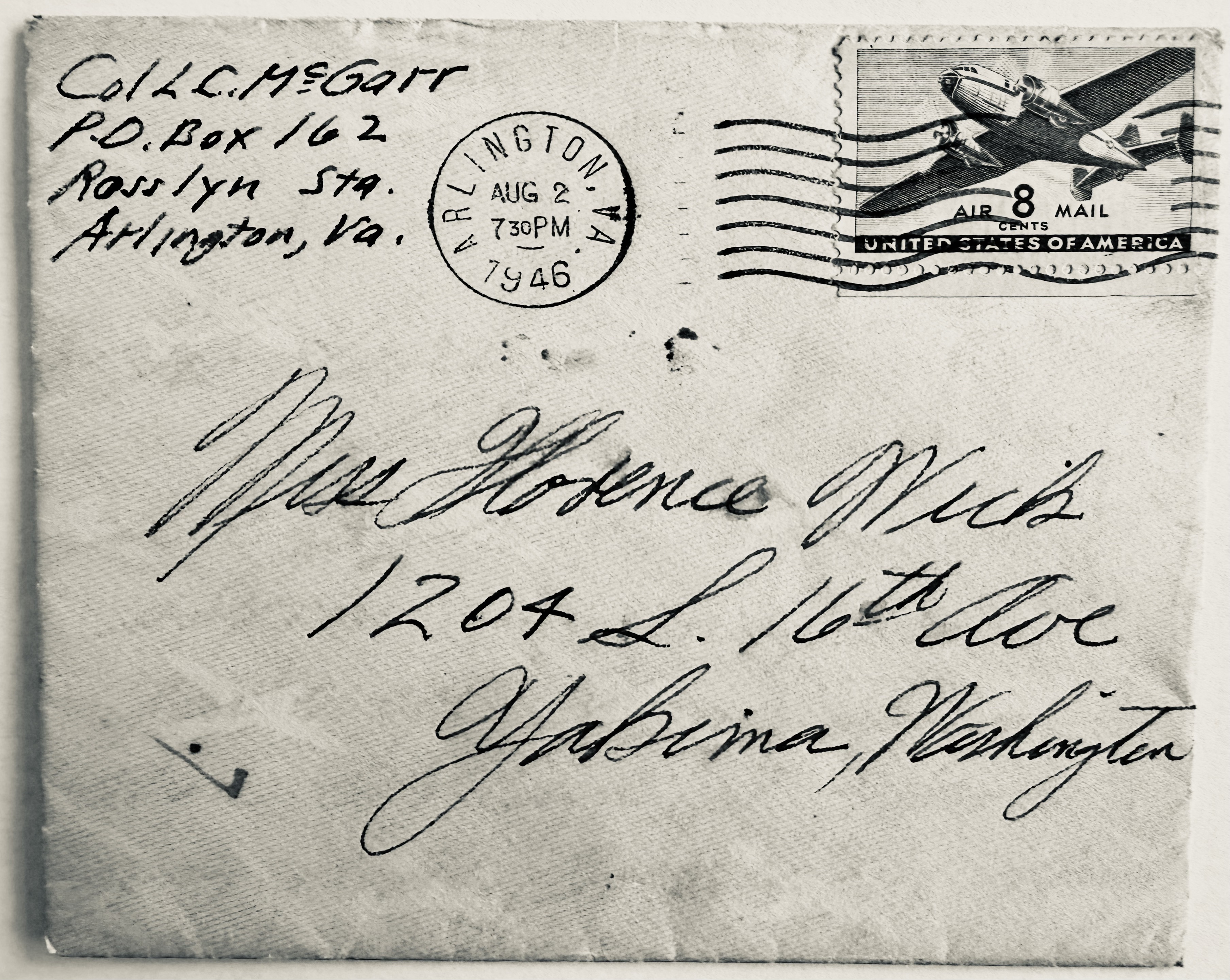
Maj. Prever, Lt.Col. King, Col. McGarr, Lt. Col. Ramsey, Maj. Wickersham, 3rd Div. HQ staff
Staff quarters. Flo with Col. McGarr (R)

Ch. 88: https://mollymartin.blog/2026/01/15/austria-during-american-occupation/