Taking a Little Break from Posting

Where We Are Now: A Recap

My Mother and Audie Murphy Ch. 113

Dear Readers,

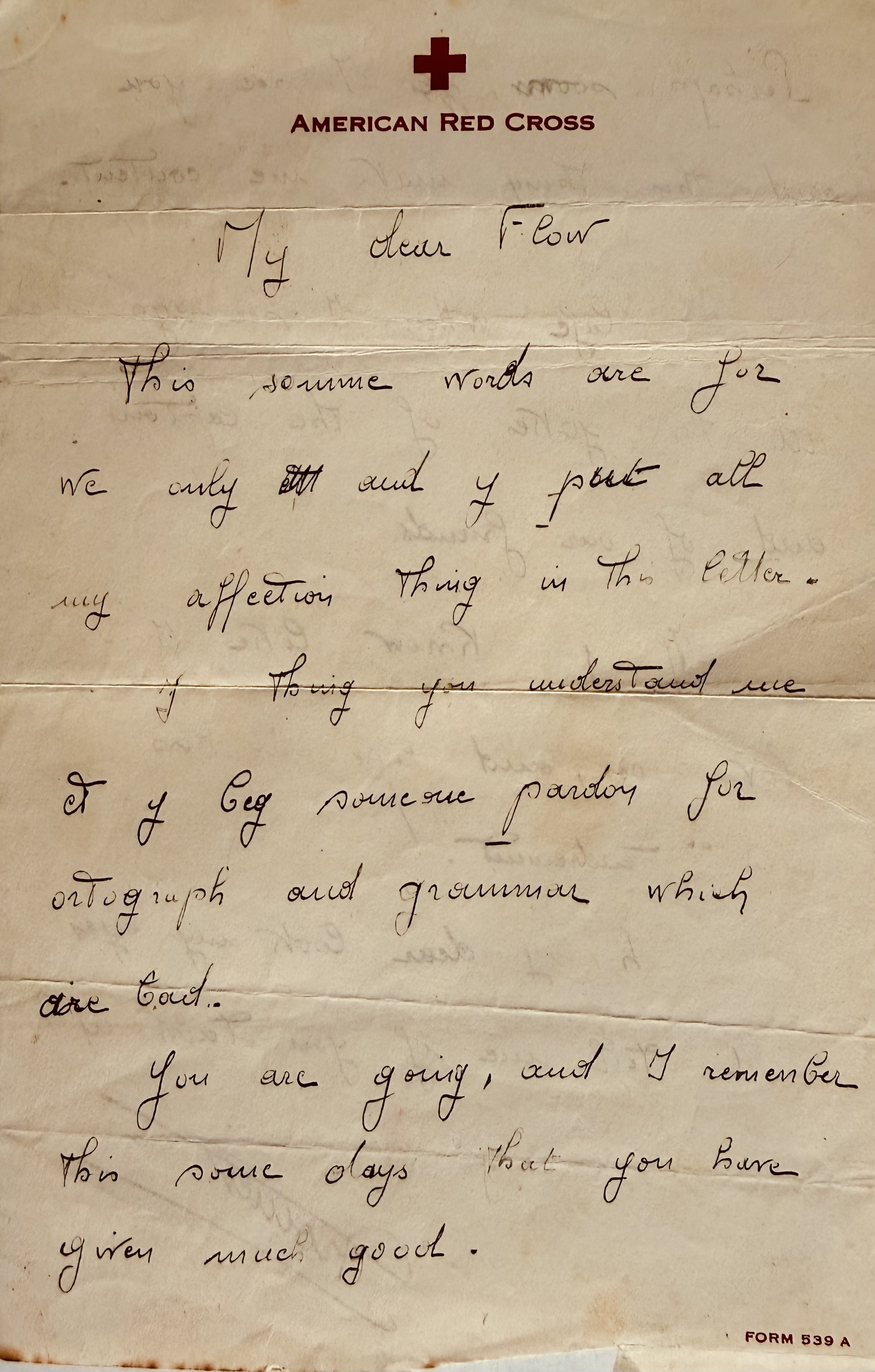
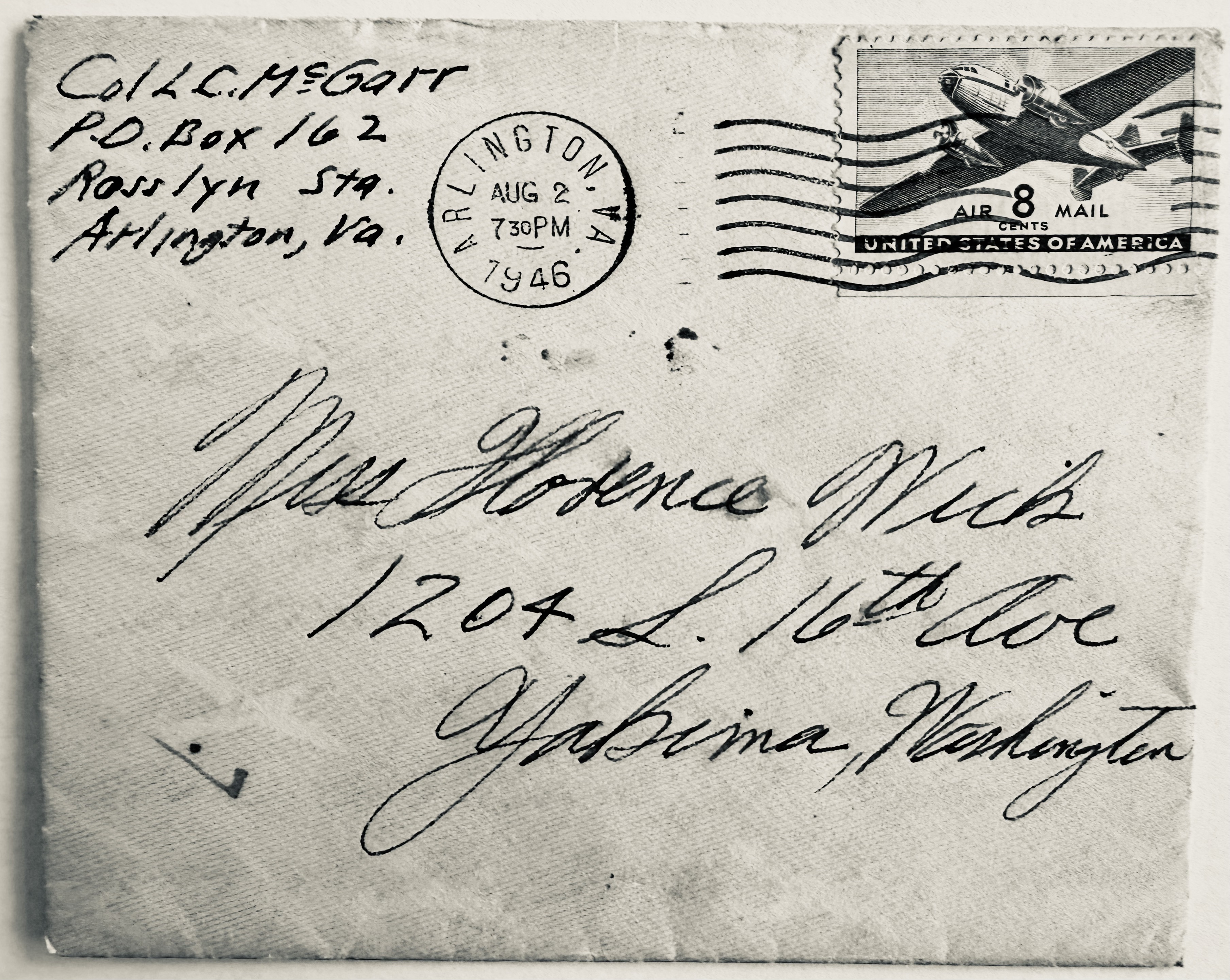
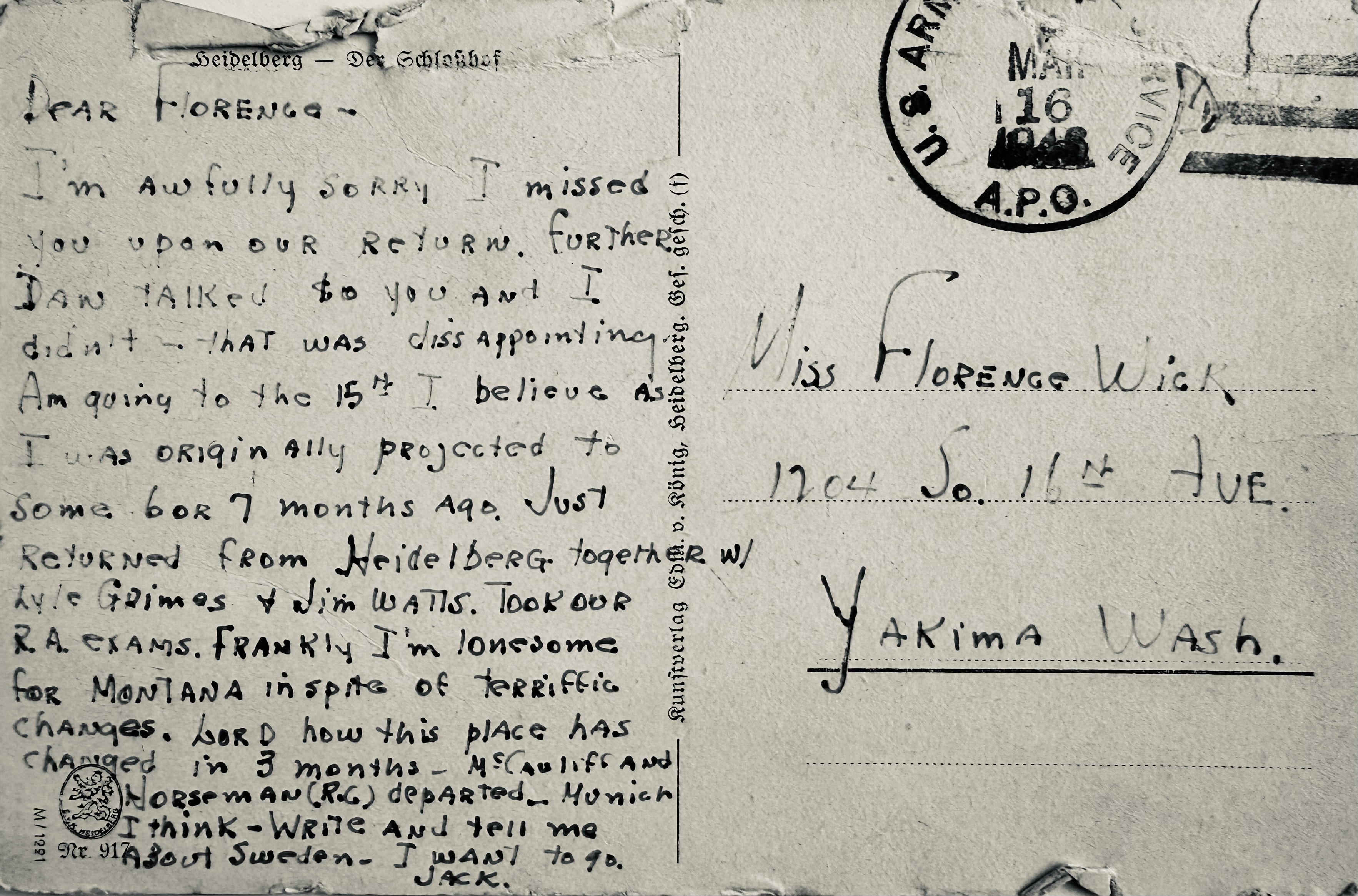
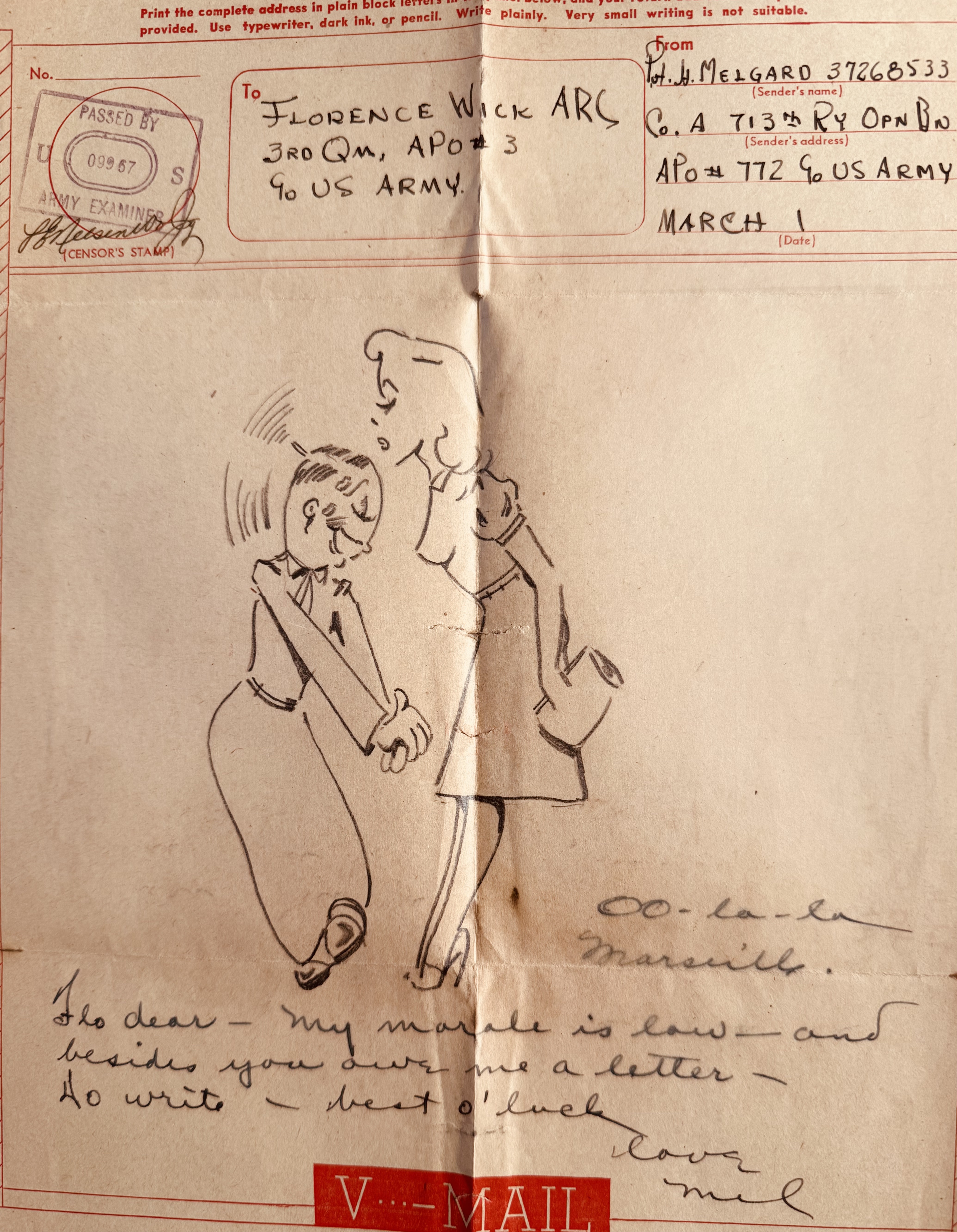
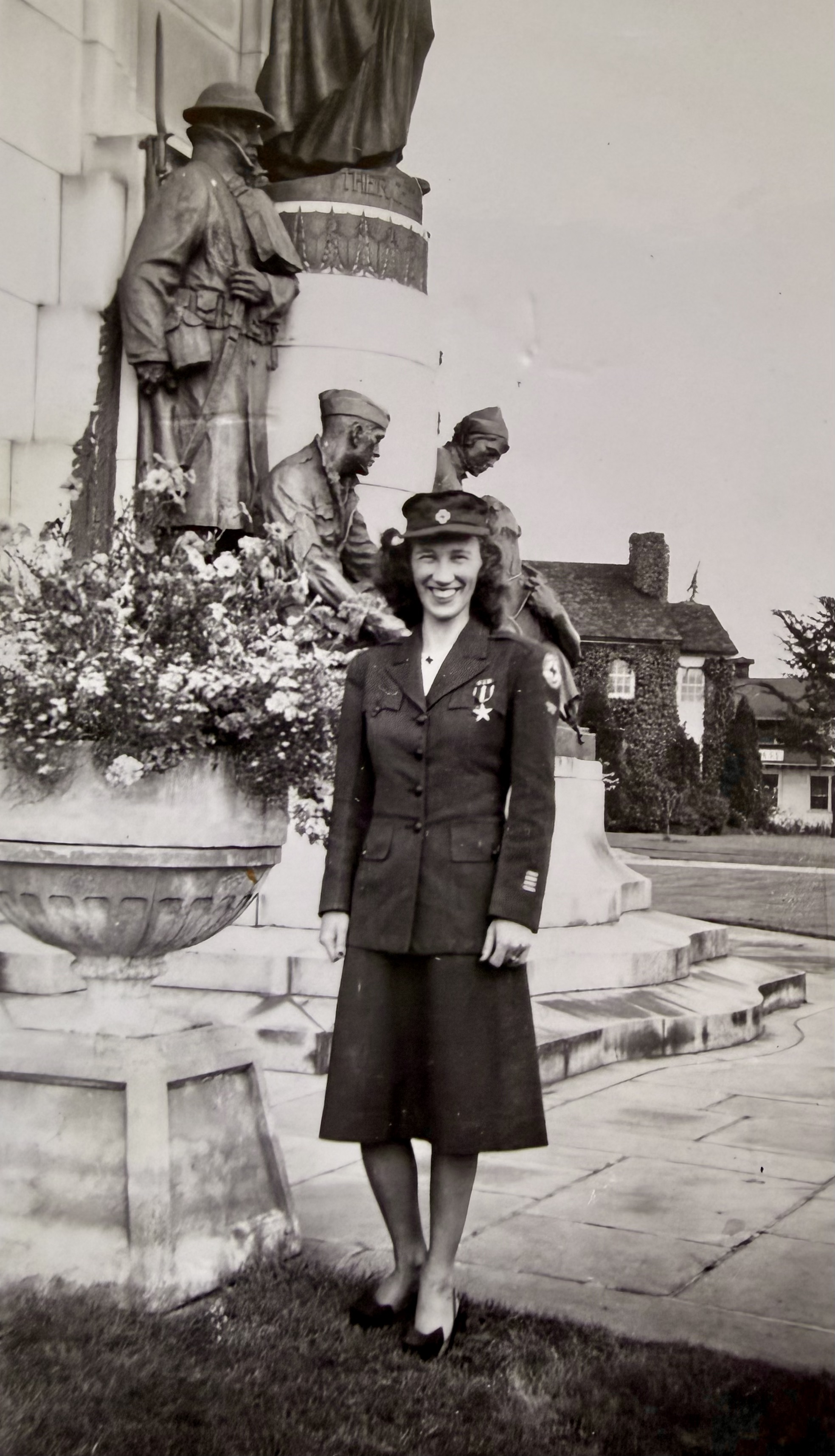
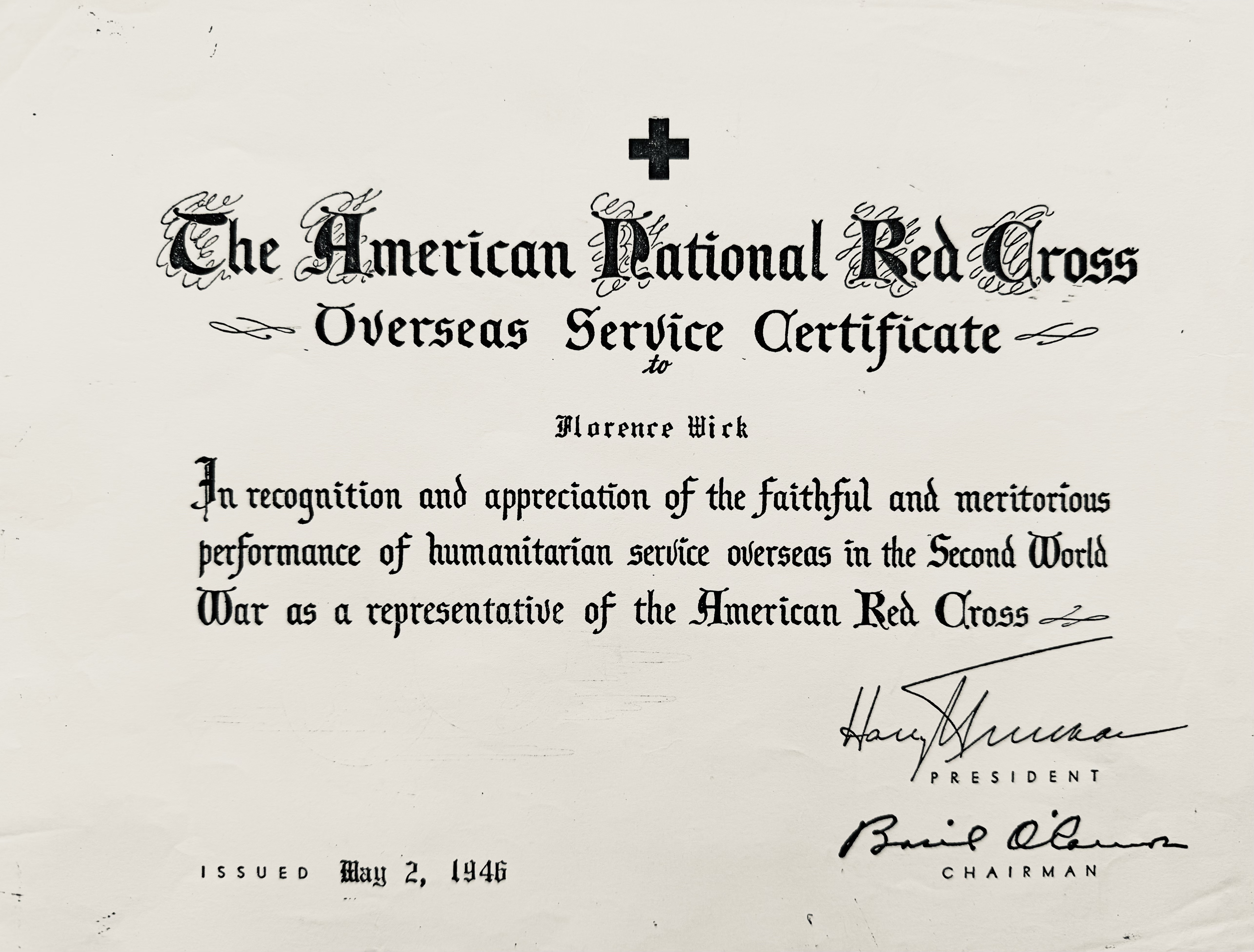
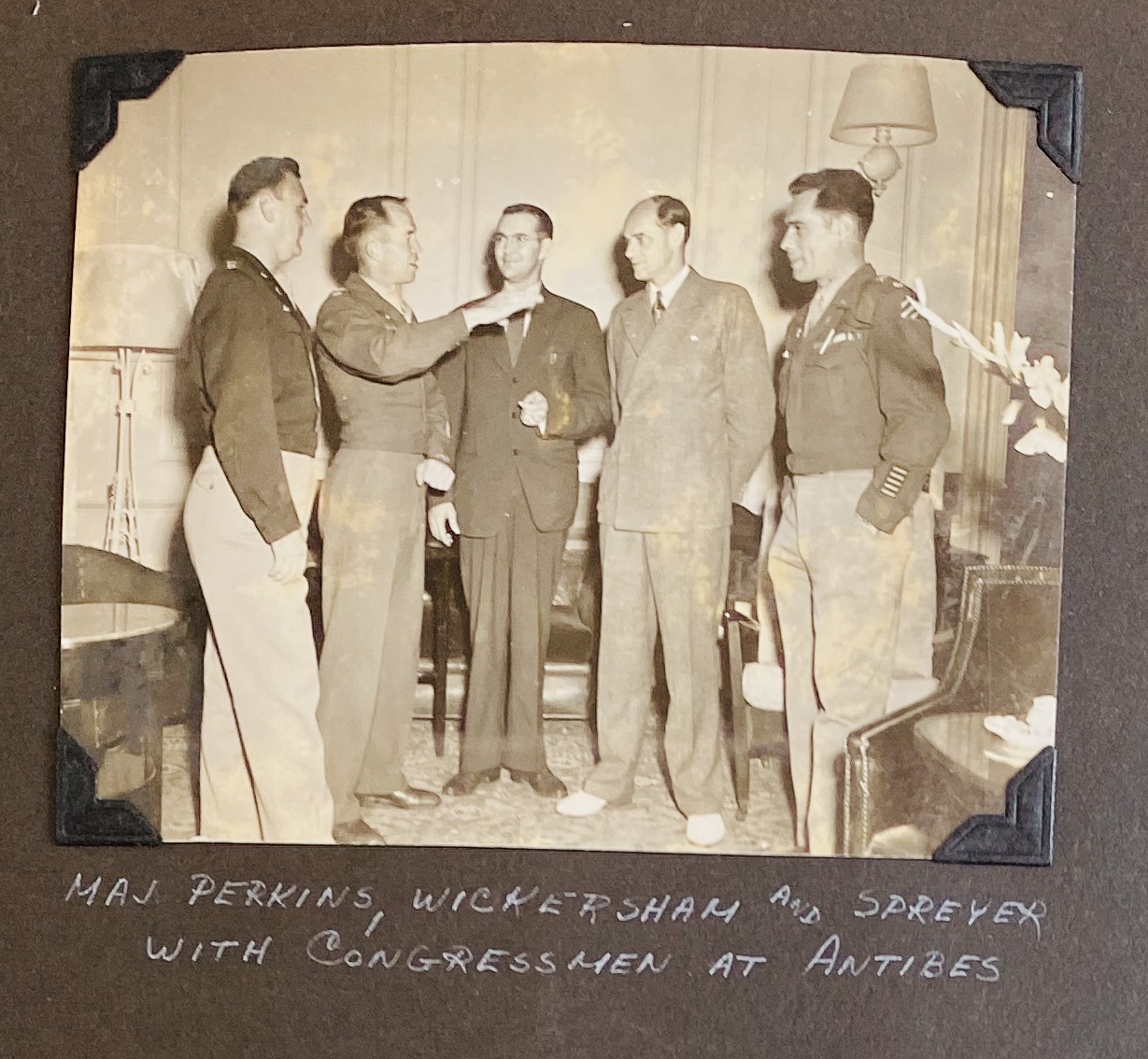
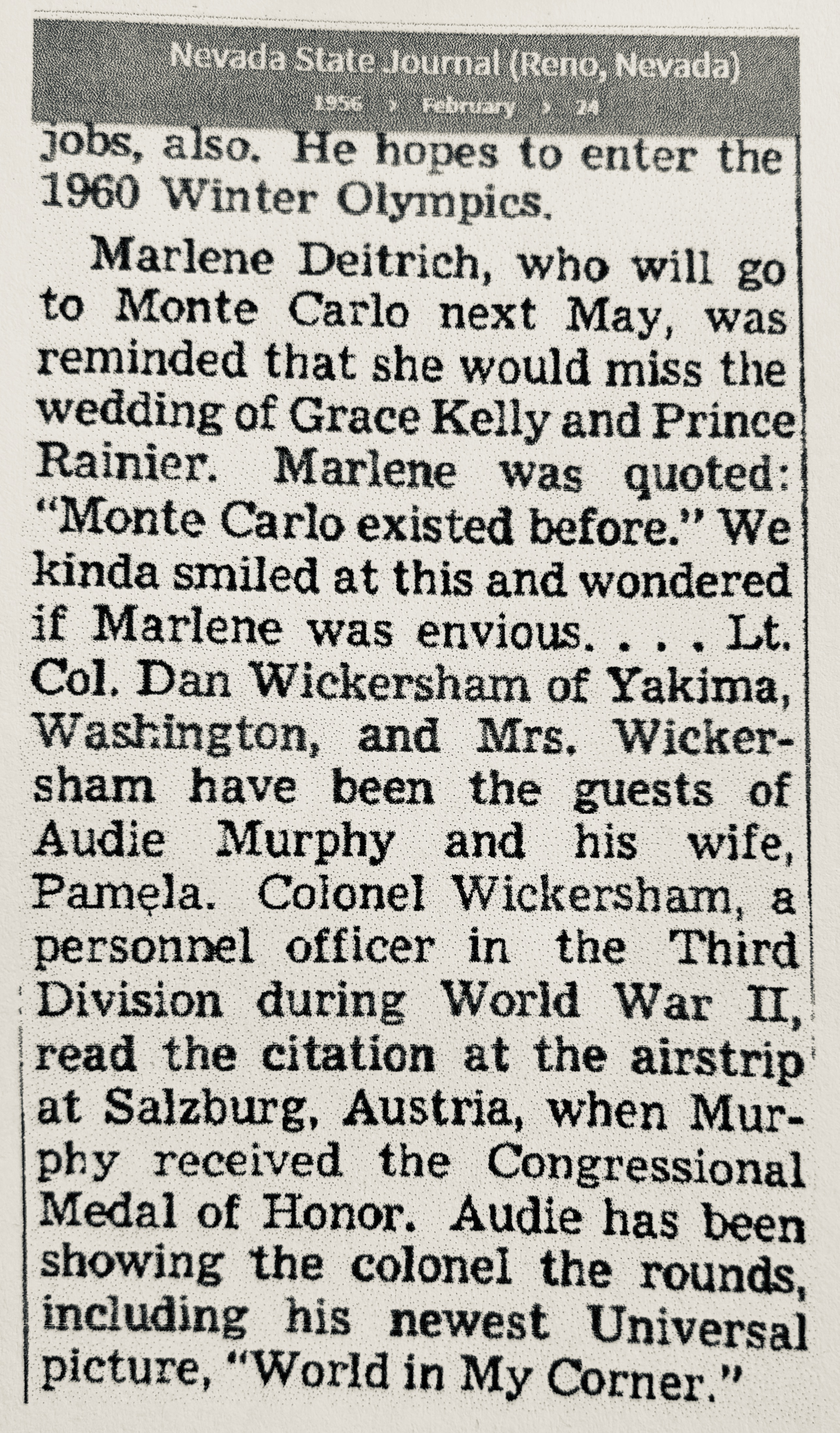
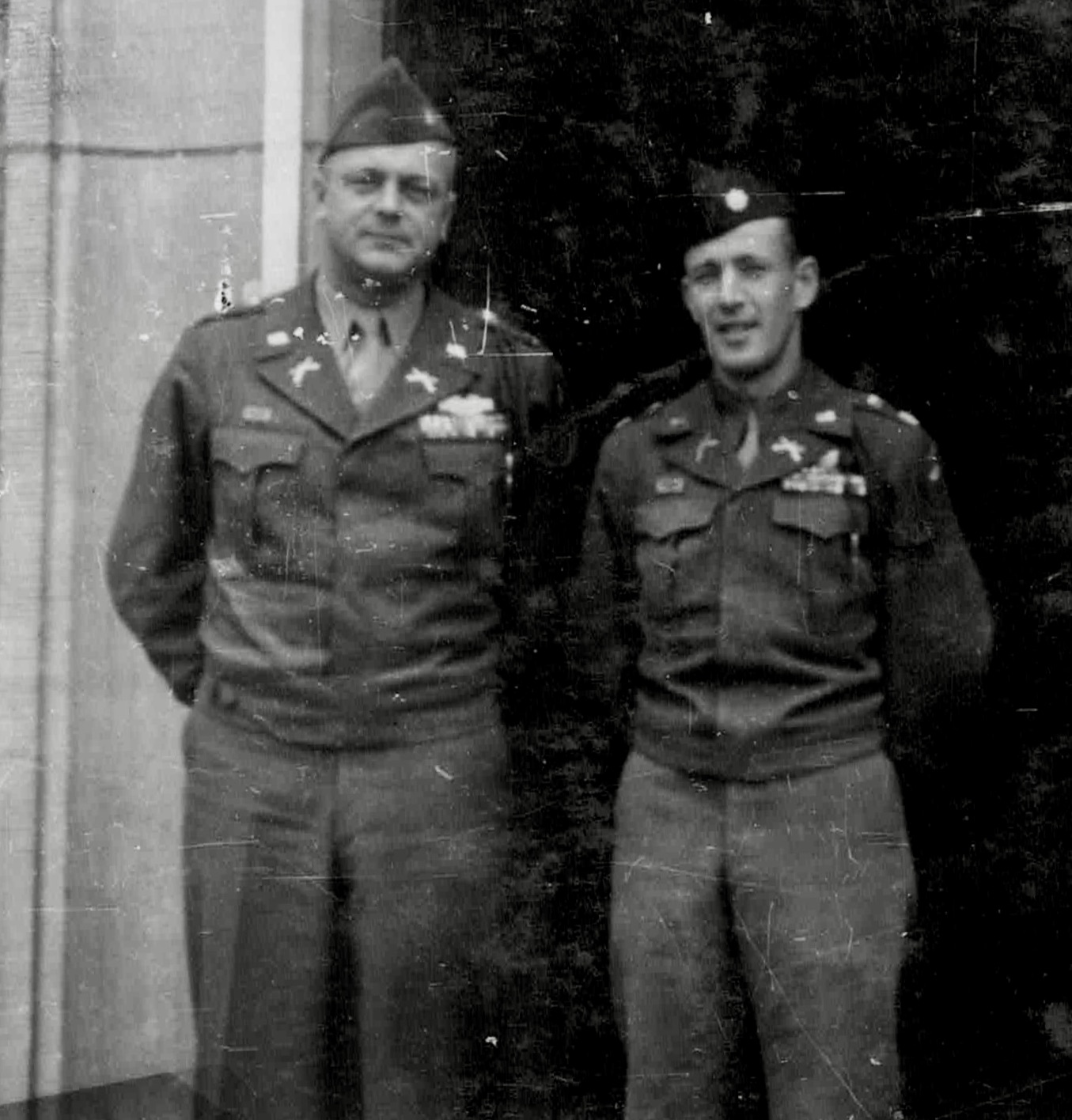
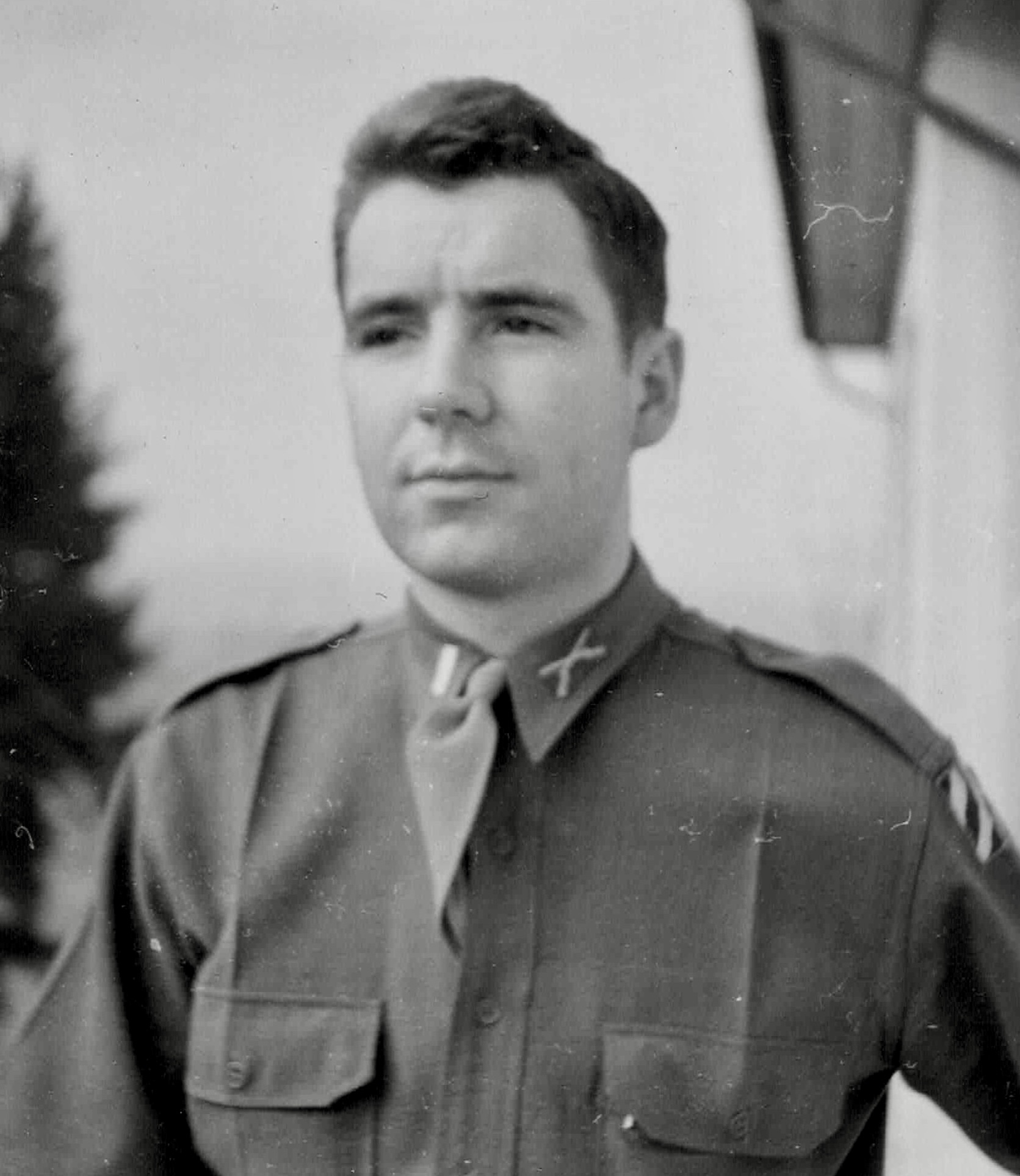
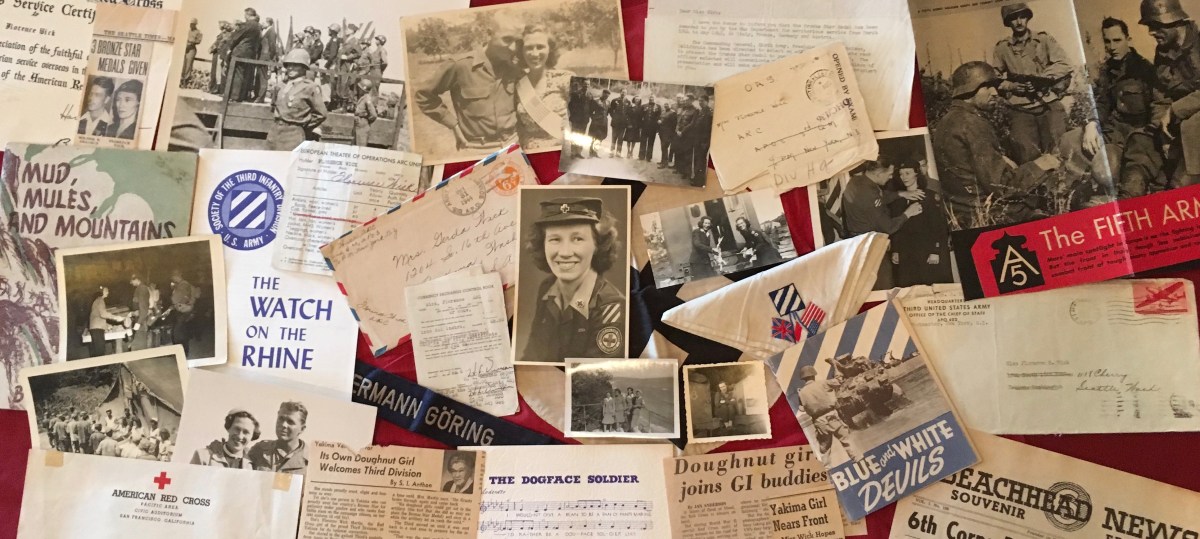
For the past year and a half, I’ve been tracing the life of my mother, Florence Wick, her service as a Red Cross clubmobiler, and her improbable intersection with the war hero Audie Murphy. Flo made a huge scrapbook after the war and I’ve been using that and her war diary to tell the story. I’m also telling Audie Murphy’s story using his autobiography To Hell and Back.

I’m pausing now to catch my breath, but the story is far from over.

Patches and insignia of some of the combat groups Flo served with, along with her dogtag, tacked onto the inside covers of her scrapbook

To recap:

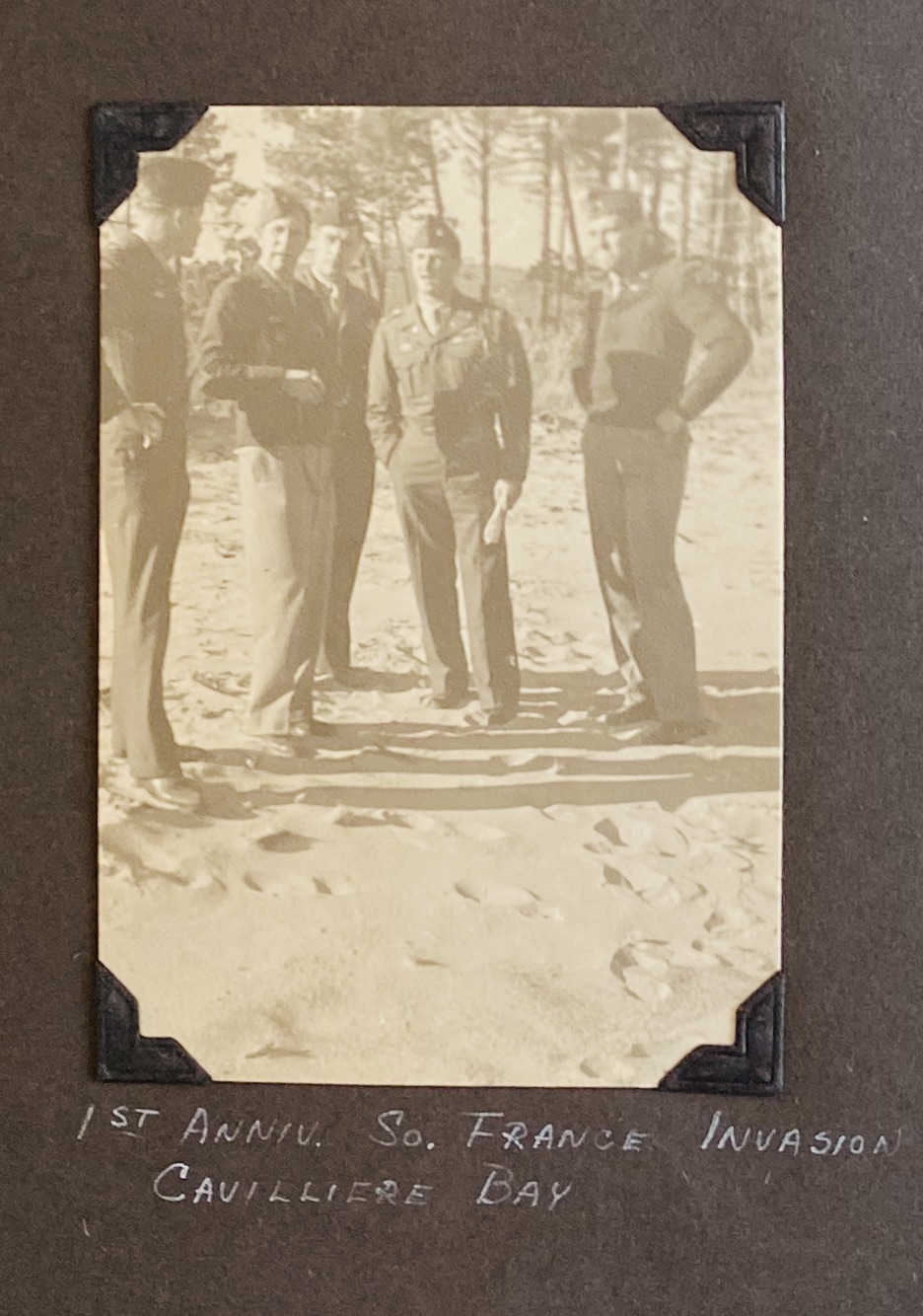
In May 1944, Flo joined the American Red Cross Clubmobile program and sailed for Naples on a hospital ship. A month later, she stood in the streets of Rome as it was liberated, alongside General Mark Clark. By high summer, she was at an army camp near Pozzuoli, leading a four-woman crew, serving doughnuts and coffee to soldiers on the brink of the invasion of southern France.

By late August, they were in France, chasing a front that refused to hold still. Somewhere in that rush, Flo fell in love—with a lieutenant named Gene. They planned to marry in October. A mortar shell ended that future before it began.

Winter came hard—1944 into ’45—frigid, dangerous, unrelenting. Flo and her crew followed the Third Infantry Division through France, often within earshot of the guns. It was here she handed coffee and doughnuts to a young soldier named Audie Murphy—not yet a legend, but already carrying the weight of one.

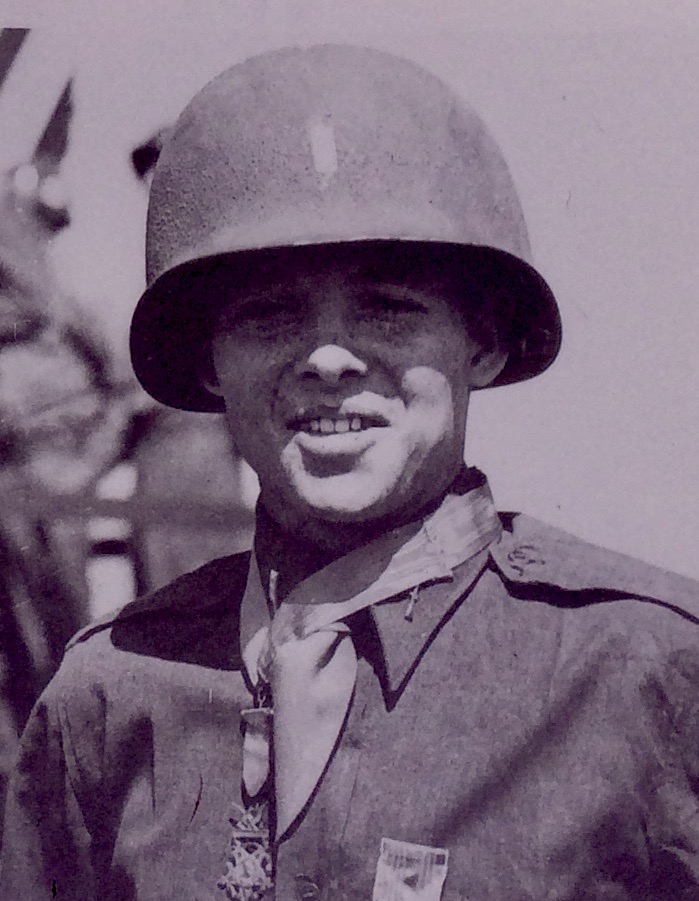
He would become the most decorated American soldier of World War II. Flo, meanwhile, captured something just as lasting: she took the only photograph of Murphy at a field awards ceremony. The photo became a famous icon.

In January, the division crossed the Rhine and drove into Germany. Flo kept working—serving men rotating through rest camps, offering small comforts in a landscape torn apart. At the war’s end, she witnessed the liberation of Dachau concentration camp and Berchtesgaden, Hitler’s alpine retreat.

She stayed on through the occupation, stationed in Austria and Germany. When she could, she traveled—Switzerland, England, German cities and towns, Brussels, Copenhagen, Paris—brief glimpses of a world trying to knit itself back together. She ended her stay with a visit to relatives in Sweden.

And that’s where we are now.

There is still much to tell. Flo’s scrapbook is bursting with post-war miscellany. How did Flo and Audie adjust to peacetime back in the USA? How did the war affect them and those who fought in combat? How did Audie Murphy become a movie star?

I’ll come back to the rest—after a little rest of my own.

To start the story from chapter 1: https://mollymartin.blog/2024/11/04/my-mother-and-audie-murphy/

Sweden: She Had to Visit Them All

Lugnås, Stora Myran, Jönköping, Lidköping, Skövde

My Mother and Audie Murphy Ch. 112

A Trip to Lugnås, Grandma’s Home Village

Church and cemetery at Lugnås. The church was built in the 12th century.
Grandma’s family home at Stora Myran
It was still there when we visited in 1979.
“Skiing (?) in Lugnås”
The farm at Stora Myran

Lidköping

Flo visited cousin Karin in Lidköping and we saw her again in 1979. She was a lesbian who adopted her younger caregiver. They traveled the world together.

Vener Canal, Lidköping
Town square Lidköping. “500 years old in 1946”
Still there 1979. Smokestacks are gone.
Flo and I with her first cousins Greta and Elizabeth, Ingebritt and son
“Land of the midnight sun”

Ch. 113: https://mollymartin.blog/2026/04/11/taking-a-little-break-from-posting/

Visiting Relatives in Sweden

Flo First Arrives in Mariestad

My Mother and Audie Murphy Ch. 111

Our Swedish relatives live near the southern shores of the two great lakes, Vänern and Vättern. Our grandmother, Gerda, grew up on a farm called Stora Myran, near the village of Lugnås.

Gerda’s father, Lars Persson (d: 1910) was first married to Sara Jonsdotter, who died in 1871. His second wife was Sara Nyberg (d: 1924). Altogether they had 16 children, and you can see why I have trouble keeping track of them all. Some died and most, including Gerda, emigrated to the US. Two daughters, Julia and Amalia, stayed in Sweden.

The Swedes gathered in Mariestad to welcome Flo
Flo captioned these pictures “Mariestad, Sweden (Aunt Amalia’s home)”. This is where she stayed while visiting the relatives.
Sometimes they traveled by ski. Cool contraption to replace poles, maybe like training wheels?
Aunt Amalia (I think), one of the two daughters who did not emigrate
Cousin Britta threw a party and made a cake that says Welcome Florence
Cake and coffee reprise. Cousin Ingabritt, Molly and Flo visiting in Jönköping, 1979. Flo died four years later in 1983.

Ch. 112: https://mollymartin.blog/2026/04/08/sweden-she-had-to-visit-them-all/

Stockholm: First Stop in Sweden

Flo Requests Compassionate Leave to Visit Relatives

My Mother and Audie Murphy Ch. 110

Sweden maintained official neutrality in the war but made pragmatic concessions to Nazi Germany—exporting crucial materials and allowing troop transits to occupied Norway and Finland—while also expanding its military, sheltering thousands of Jewish and political refugees, training Norwegian resistance fighters, and sharing intelligence with the Allies. As the war turned, Sweden steadily curtailed cooperation and nearly ended trade with Germany by late 1944. Historians debate this legacy: some see pragmatic neutrality that preserved independence and enabled humanitarian acts; others criticize compromises that prioritized economic interests over moral responsibility.

Flo and I traveled to Sweden and Norway in 1979, and we visited all the Swedish relatives still living that Flo saw in 1946. We saw Flo’s mother Gerda’s birthplace, and the towns Flo had visited. From talking to Norwegians I got the feeling then that they had not yet forgiven the Swedes for cooperating with the Nazis during their five-year occupation of Norway. In 1979 there were still those, like my mother, who remembered the war. Perhaps the younger generations no longer hold a grudge.

“This is the best place I’ve been in all Europe,” wrote Flo

Flo’s Photos of Stockholm February 1946

Changing guard at palace in snowstorm
Guards at the palace Midsommer 1979

Postcards of Stockholm

I’ll have the Smor, Brod & Varmrätt

Ch. 111: https://mollymartin.blog/2026/04/06/visiting-relatives-in-sweden/

Mary McAuliff Revealed

A Reader Helped Find More Infomation About the Clubmobiler

My Mother and Audie Murphy Ch. 109

Mary McAuliff  joined Captain Flo’s clubmobile crew at the end of 1945. Aside from the pictures in Flo’s album, I could find no information about her. Then a reader from Asturias, Spain reached out with more particulars. He sent some pictures and news stories, and also details about his research.

Mary McAuliff in the clubmobile. Photo: Flo Wick

Mary McAuliff, born August 27, 1920, was from Brooklyn, New York. Her father was a doctor. She had departed for England in February, 1945. She sailed back to the U.S. from Le Havre, France arriving May 28, 1946. She was married in 1947 to William Robert Palmer at St. Paul’s Episcopal Church in Flatbush. They had two daughters. William died in 1959. Mary died at 99 in 2019.

Most clubmobile and WWII American Red Cross archives were destroyed in a fire. The only accessible list of clubmobilers is in the book The ARC in the Storm, by Marjorie Lee Morgan, but the book does not include all the women. I learned that the best way to find the clubmobilers not listed in the book is from ships manifests. Here are the passenger lists that included Mary and Flo.

Mary’s is the last name on the list, which tells date of birth and address
Here is the passenger list from Flo’s ship. She is fourth from bottom

Ch. 110: https://mollymartin.blog/2026/04/04/stockholm-first-stop-in-sweden/

Trip to Denmark and Sweden

First Stop Copenhagen

My Mother and Audie Murphy Ch. 108

Flo stopped in Copenhagen on her way to visit relatives in Sweden. In a postcard home Flo wrote, “Copenhagen is a lovely city and the food is wonderful–milk, steaks, ice cream.” The city had escaped the ravages of war as few other European cities had.

Permission from the consulate. Flo was born in 1913, not 1915.

Denmark was invaded by Germany on April 9, 1940. The Danish government opted for a swift surrender to avoid destruction, leading to a period of occupation where they maintained some autonomy and collaborated with German authorities. Denmark supplied food and resources to Germany, but resentment grew among the population against this cooperation.

As occupation continued, resistance movements emerged, notably organizing the rescue of around 7,200 Jews, who were smuggled to Sweden in 1943. Denmark was liberated by British forces on May 5, 1945, after five years of occupation. The aftermath prompted national discussions on collaboration and resistance, significantly influencing Danish society and identity in the post-war era.

Flo’s photos of Copenhagen in her album
“I wish you were here with me,” Flo wrote to her mother.
Copenhagen street scenes

Ch. 109: https://mollymartin.blog/2026/04/01/mary-mcauliff-revealed/

3rd Signal Co. Hosts a BBQ Supper

They join in singing popular songs from the war

My Mother and Audie Murphy Ch. 107

Flo and her comrades got together for an indoor BBQ supper in February probably in an effort to recreate an American picnic. It was sponsored by the Third Signal Company, the photographers attached to the Third Infantry Division who joined the division at Anzio. Their photographs are posted at dogfacesoldier.org. 

Cotton Balers. The 7th US Infantry Regiment is one of the five oldest continuously serving regiments in the U.S. Army, initially organized in July 1798. The regiment earned its nickname, “The Cottonbalers”, from its use of cotton bales as defensive works during the 1815 Battle of New Orleans. The regiment deployed early on in 1942’s assault on Morocco. They went on to serve across North Africa into Sicily and Italy, up through France, and then participating in the capture of Berchtesgaden.

Stella the Belle of Fidella is a song sung by soldiers who joined the war in Casablanca. Stella, it turns out, was just starving.
 
“This Arabic honey has no use for money:
She spurns even five hundred Franc notes
In order to win her just give her a dinner
It’s much more effective than bank notes”

Still no wine

Dog-faced soldier is the official song of the Third Infantry Division. In this version the word “Jap” replaces the word “Kraut.”

Ch. 108: https://mollymartin.blog/2026/03/31/trip-to-denmark-and-sweden/

Of Mud, Mules, and Mountains

Chapter 8: My Mother and Audie Murphy

Mignano Italy November, 1943

The town of Mignano sits trapped between steep, craggy peaks, their sheer faces scarred by war. The Nazis are dug in, their defenses embedded in the rock like stubborn roots. The strategy is clear — avoid the town and strike straight at the mountains surrounding it. But the terrain is merciless. Cliffs rise like walls, gorges cut deep into the earth, and even surefooted pack mules often slip, falling to their deaths. When the animals fail, the soldiers must take over, crawling on hands and knees, dragging supplies through mud that swallows boots whole.

Bill Mauldin (1921–2003) — Pulitzer Prize-winning cartoonist famous for his WWII characters, Willie and Joe, depicted the hardships of American soldiers with grit and humor.

On a reconnaissance mission, Audie Murphy and his squad find themselves stranded on the side of a mountain above Mignano. They walk straight toward a German tank, so expertly camouflaged that they miss it. As the snout of the cannon is lowered at them, they run like hell for a clump of bushes. One soldier breaks his leg in the rush. They drag him into a ditch and lose the tank.

Several assaults on nearby Mount Rotondo are pushed back. Lines are confused by enemy fire. Murphy mistakes a Nazi patrol for allies. When he realizes his mistake, he starts firing. Now the enemy knows where they are. With no choice, they scramble up the rocks, reaching an abandoned quarry where they settle in for the night.

At dawn, they ambush a Nazi patrol. The fight is brutal and quick, but the cost is high. Three German soldiers lay dying.

Mauldin drew six cartoons a week during the war. He was only 23 when awarded the Pulizer Prize.

“The wounded must be got under cover. The peculiar ethics of war condone our riddling the bodies with lead. But then they were soldiers. (The machine gun) transformed them into human beings again; and the rules say that we cannot leave them unprotected against a barrage of their own artillery,” Murphy wrote.

Murphy’s squad is forced to stay with them, listening to their labored breaths as a cold mountain rain washes over the quarry.

“When dawn breaks, two of the Germans are dead. Their eyes stare glassily. Their mouths are open and the old man’s swollen tongue protrudes between his teeth,” Murphy wrote.

For three days artillery rains down, death echoing off the cliffs. The men remain trapped.

On the third day, the third German dies. In the light of the moon that night “the faces of the dead seem green and unearthly. That is bad for morale, as it makes a man reflect on what his own life may come to.”

After the war, Mauldin became a political cartoonist, advocating civil liberties. He also appeared in John Huston’s film The Red Badge of Courage (1951) starring with Audie Murphy.

Murphy is near breaking. “My eyeballs burn, my bones ache; and my muscles twitch in exhaustion. Oh, to sleep and never awaken. The war is without beginning, without end. It goes on forever.”

Then, at last, the sound they have been waiting for — American artillery. The shells scream through the air, bursting against the rocks like salvation.

“If there is one thing a dogface loves, it is artillery — his own.”

American Red Cross workers, too, must contend with mountains and mud.

From a Life Magazine story pasted in Flo’s album

On Christmas Day, 1943, high in the rain-drenched peaks, a soldier huddles in his foxhole, staring at a can of C-rations — his holiday meal. Then, out of the swirling mist, she appears. Isabella Hughes of Baltimore, a Red Cross clubmobile worker, crouches on the lip of his trench, one hand gripping a box of doughnuts, the other holding a steaming pot of coffee. The soldier blinks, then exclaims, “Good Lord, sweetheart! What in hell are you doing here?”

Isabella Hughes was one of the first ARC workers to get to Italy, in 1943. She would later join Flo’s clubmobile crew in Naples.

The clubmobile was a two and a half ton Dodge truck fitted with a kitchen and windows. Workers sometimes slept in it or under it.

Italy’s roads, slick with rain and churned to sludge, are brutal even for military transport. The clubmobile — a sturdy machine — proves no match for the mountains. When roads vanish into goat trails, the Red Cross workers adapt. They take the Army’s weapons carriers, pushing higher, until even those fail. Then come the donkeys and mules.

Two clubmobile workers, Margaret Decker of Towaco, New Jersey, and Gladys Currie of Greenwich, Connecticut, volunteer for an impossible task: deliver coffee and doughnuts to a unit stationed atop a remote peak. No road leads there — only a narrow mule track winding up the mountain’s spine. The Army offers them transport, if they’re willing to ride donkeys up the perilous slope. They accept without hesitation.

The climb is slow, the air thin. Their donkeys pick careful steps along the treacherous trail. The doughnuts are packed onto a mule. At last, they reach the summit. The men are waiting — shaved, cleaned — their arrival announced on the camp bulletin board like the coming of long-lost friends. As the ARC workers pour coffee, the soldiers form a circle around them, an island of warmth in the cold mountain war. Mortars shriek in the distance. Shells thunder through the valleys below. But for a moment, they all pause, talk, and remember something beyond the battle.

Their bravery does not go unnoticed. When the U.S. Army Rangers commend Lois N. Berney of Fallon, Nevada — a clubmobile worker once secretary to Harry Hopkins — it is understood that the honor belongs to all of them. From General Mark W. Clark down to the last rifleman, the Army recognizes the Red Cross women not just for their courage, but for bringing something human to the inhuman mountains.

From Audie Murphy’s autobiography, “To Hell and Back,” and from “At His Side–The Story of The American Red Cross Overseas in WWII” by George Korson

Ch. 9: https://mollymartin.blog/2025/02/11/american-red-cross-training/

Clubmobiling in Occupied Germany 1946

Then there were three: Flo, Janet and Mary

My Mother and Audie Murphy Ch. 106

The clubmobile crew of Mary McAuliffe, Janet Potts and Florence Wick in occupied Borgen, Germany. The women are now allowed to wear pants and have been issued handsome uniforms.
After having to scrounge vehicles to deliver donuts throughout 1944 and 45, the crew finally got its own clubmobile, the SageBrush. It had been attached to the 70th Infantry Division.
Flo’s note on the back of the picture
Ready for business in the SageBrush
Janet poses with donuts in the new/used clubmobile
Serving coffee and donuts in what looks like a break in an archery or shooting competition
Working during halftime at an army football game
Flo and Janet
Mary McAuliff joined the crew in late 1945. She had probably served with another crew, but I can’t find more information about her. She doesn’t appear in “The Arc in the Storm,” the one book that lists the clubmobile women, but neither do most of the others who joined the North Africa/Italy campaign.
Mary, Janet, Flo
With “C” Company 3oth Infantry at Borken Germany
Flo and “her boys”
I’ve no idea why the soldiers are wearing helmets in these pictures. The war was long over.

Ch. 107: https://mollymartin.blog/2026/03/27/3rd-signal-co-hosts-a-bbq-supper/

At the 7th Infantry House

Hershfield Germany

My Mother and Audie Murphy Ch. 105

Flo did a good job of identifying the people in pictures on this page in her album relaxing at the 7th Infantry house. I’ve no idea where the child came from.

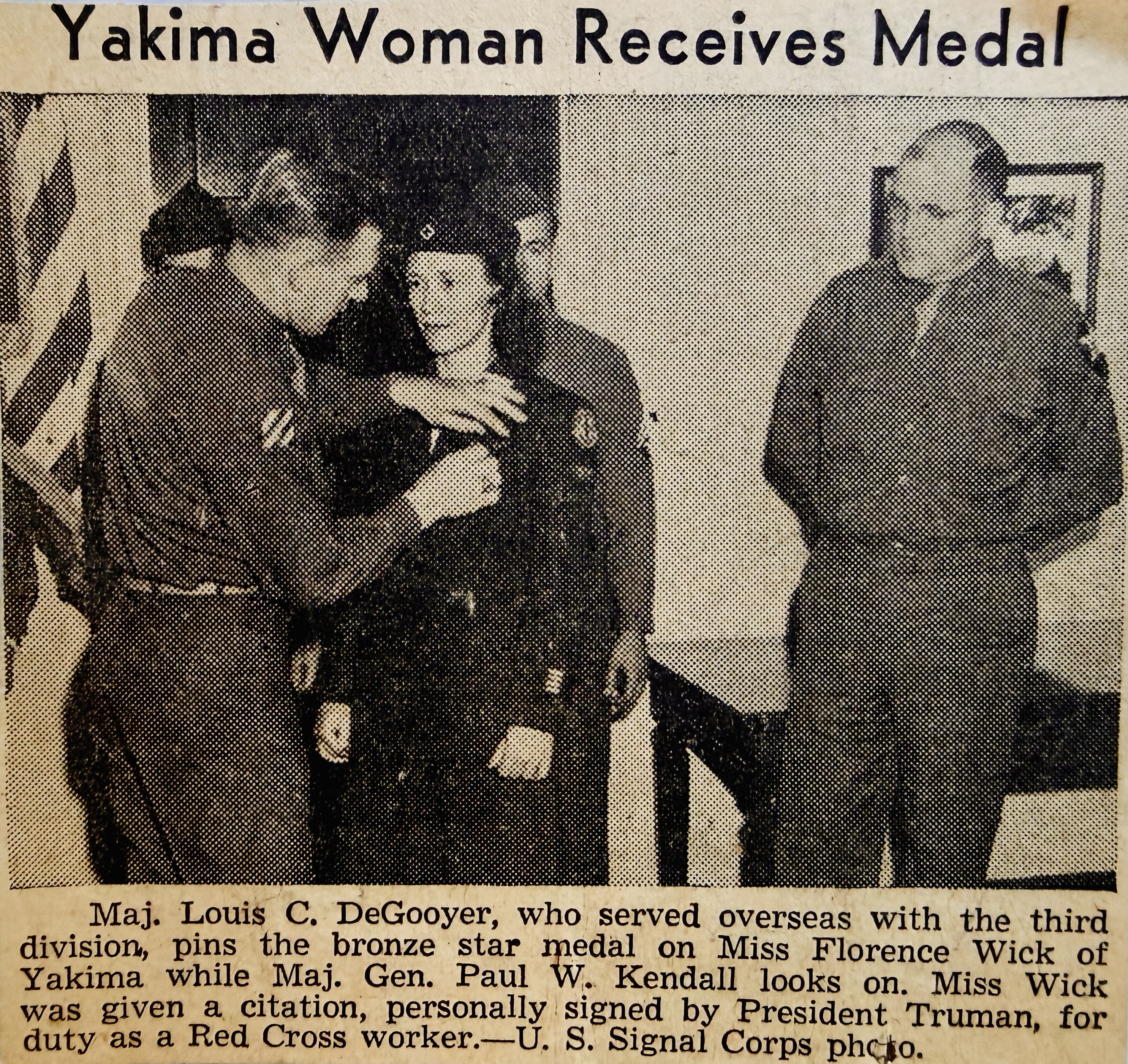
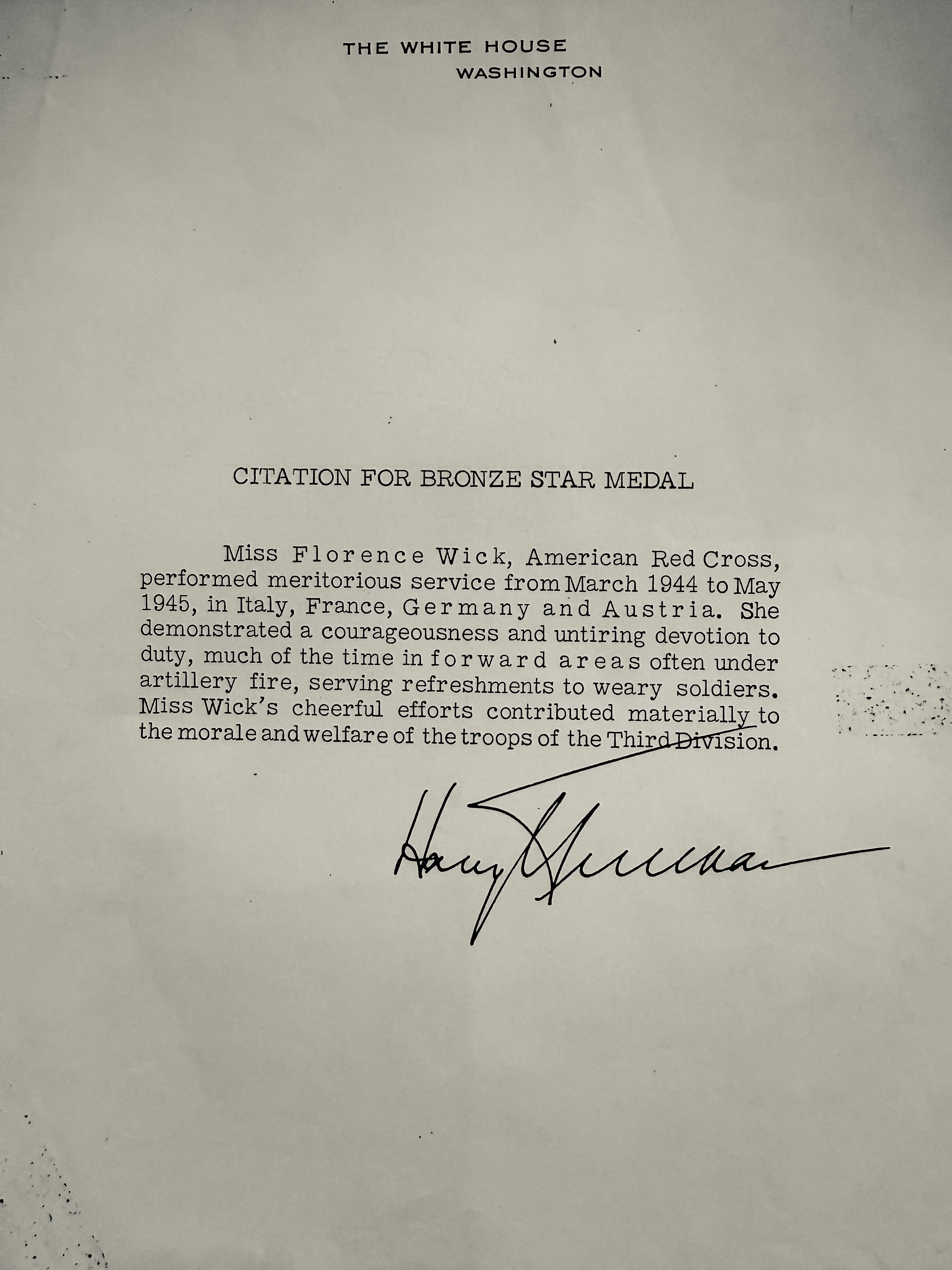
Flo pasted some ephemera on this page which includes a newspaper story about her receipt of an award. Flo was later awarded a bronze star. This is an award called a service star. The story reads: Miss Florence Wick of Yakima, who served with the American Red Cross in the European war theatre, has received the presidential citation ribbon with four bronze battle stars on the European theatre of war ribbon for her service with a division at the front. She is now in Germany and hopes she will be able to come home by Christmas.

Flo’s 3rd Div. officers club membership card 
Army exchange ration card
What’s the difference between L. soap and T. soap?
In February 1945 the clubmobilers were issued new uniforms
This currency was issued by the Allied Military Government during the occupation, replacing the German Reichsmark. It was used for transactions in the occupied zones of Germany and was a part of the effort to stabilize the economy and control inflation after the collapse of the Nazi regime. Fünfzig Pfennig means fifty pfennigs in German. AI says this type of currency is collectible and significant in the context of post-war German history.

Ch. 106: https://mollymartin.blog/2026/03/23/clubmobiling-in-occupied-germany-1946/