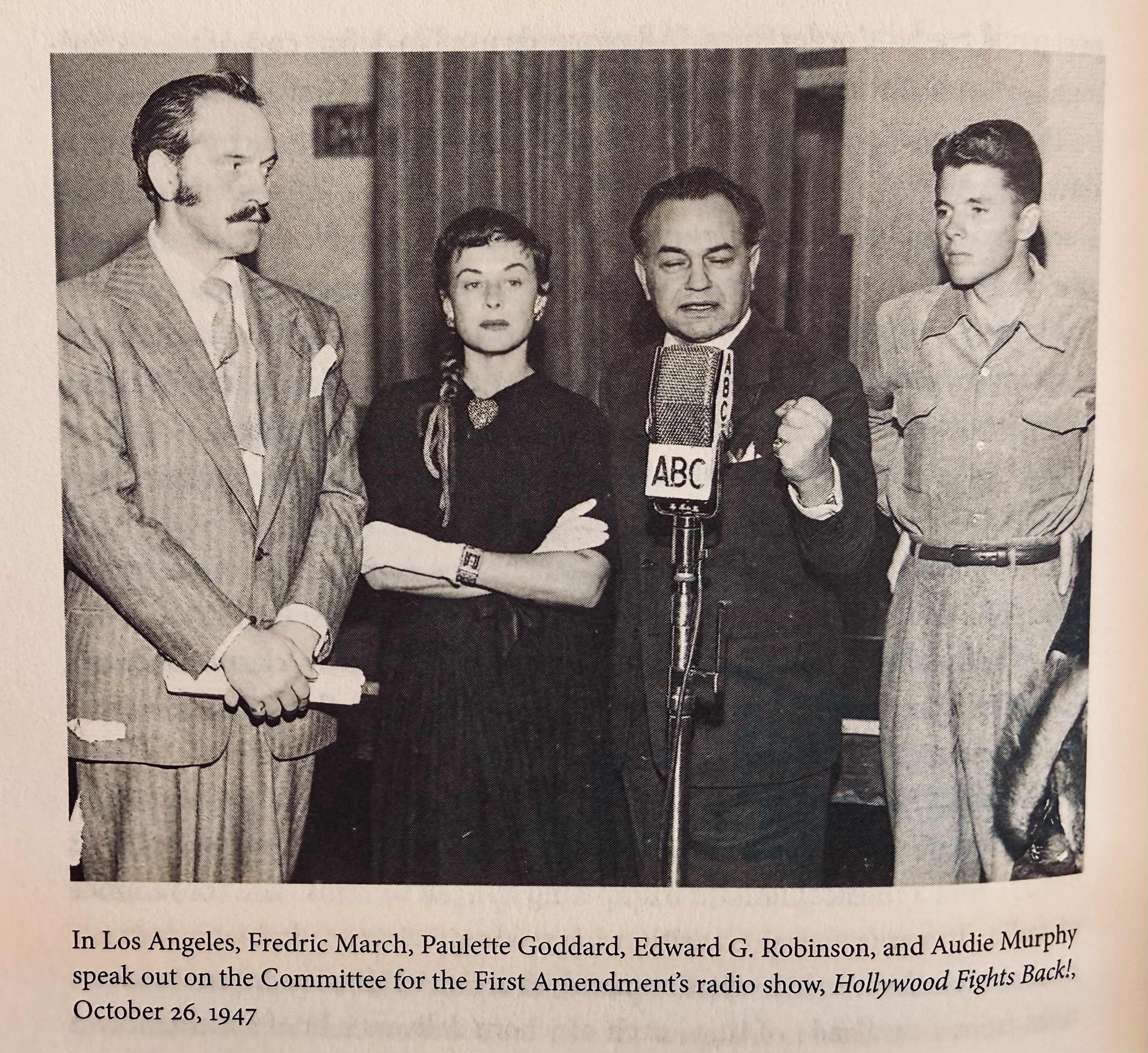
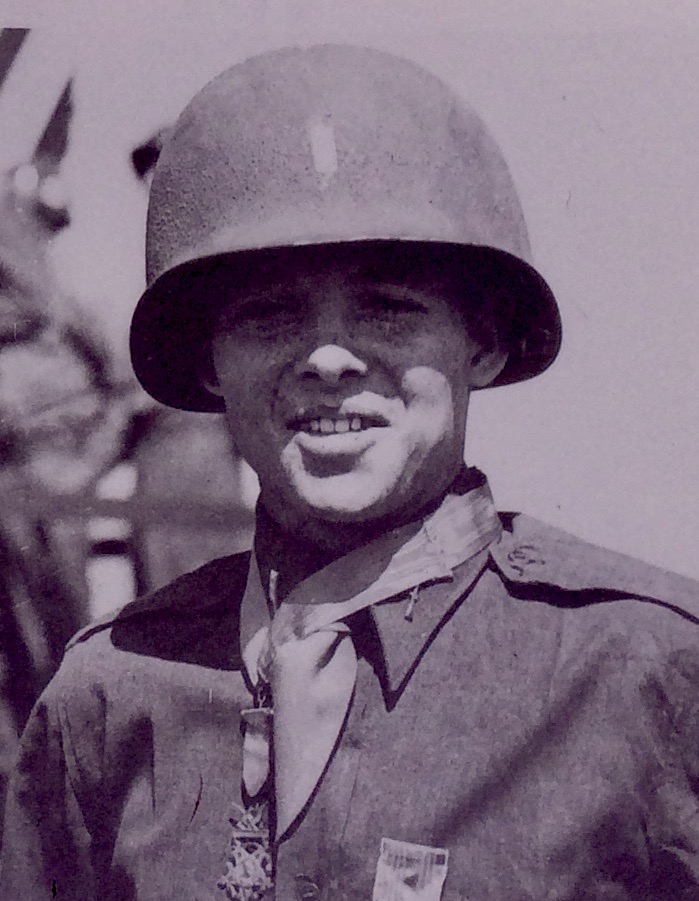
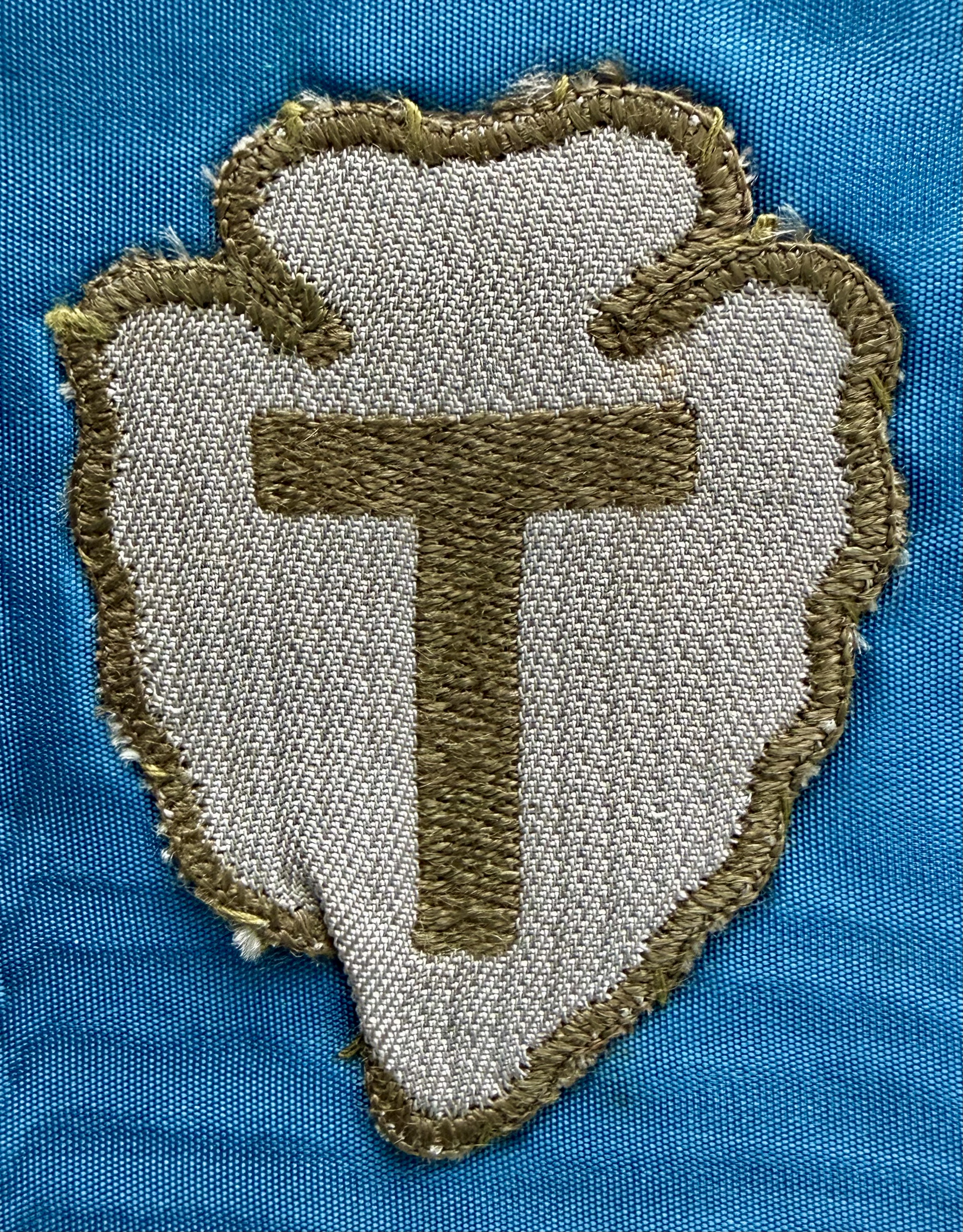
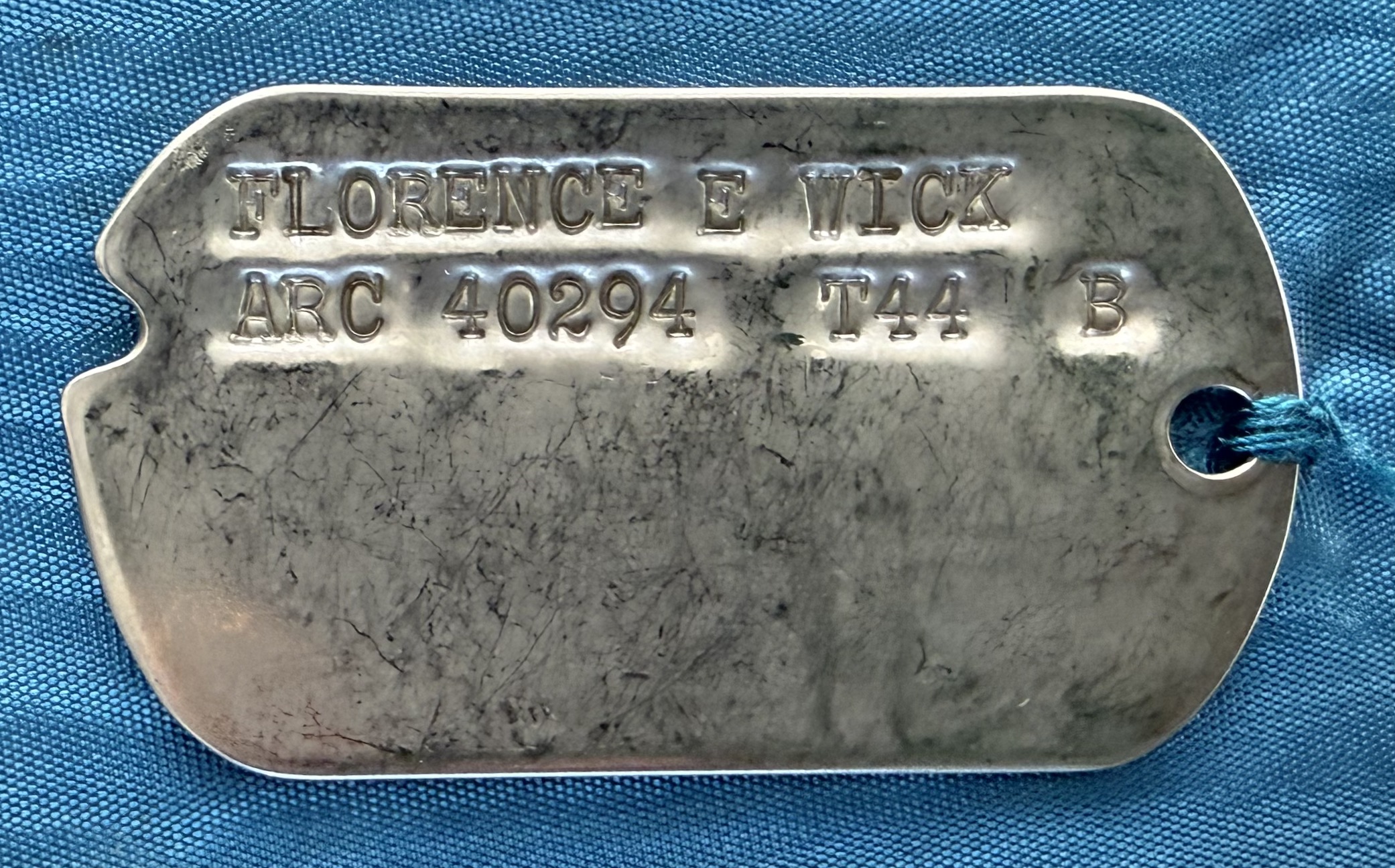
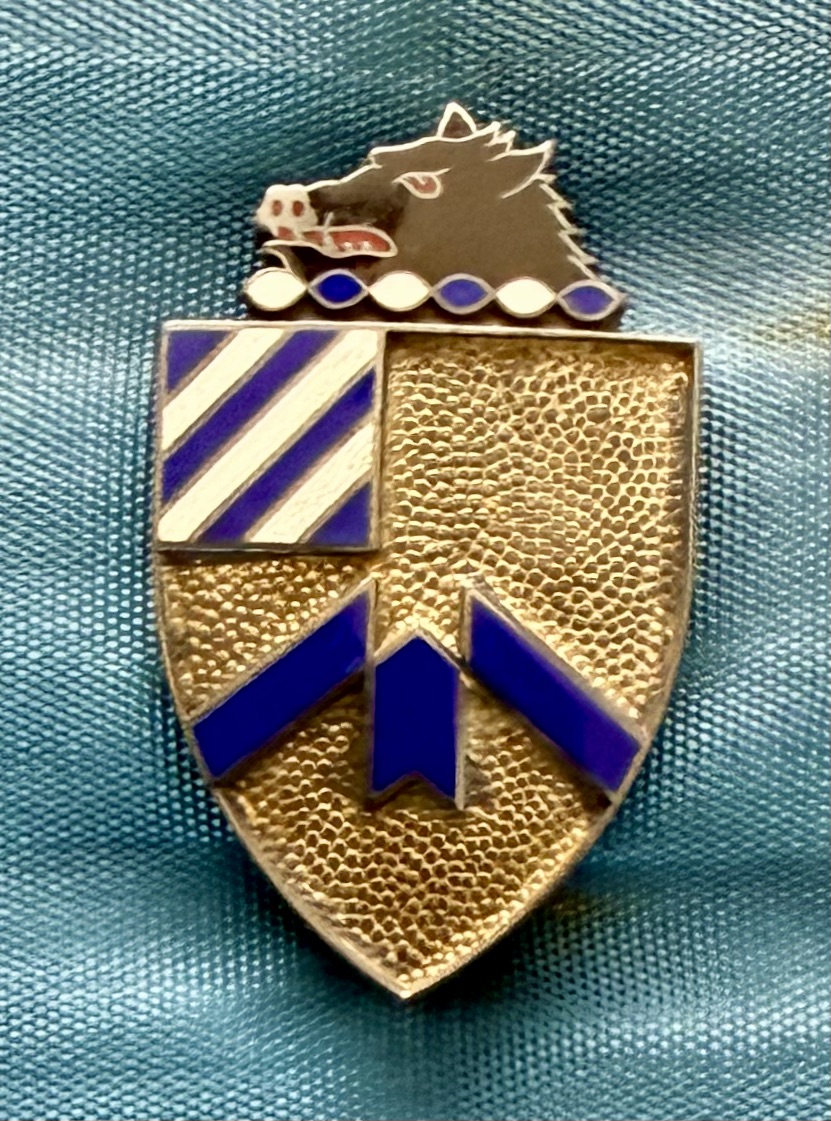
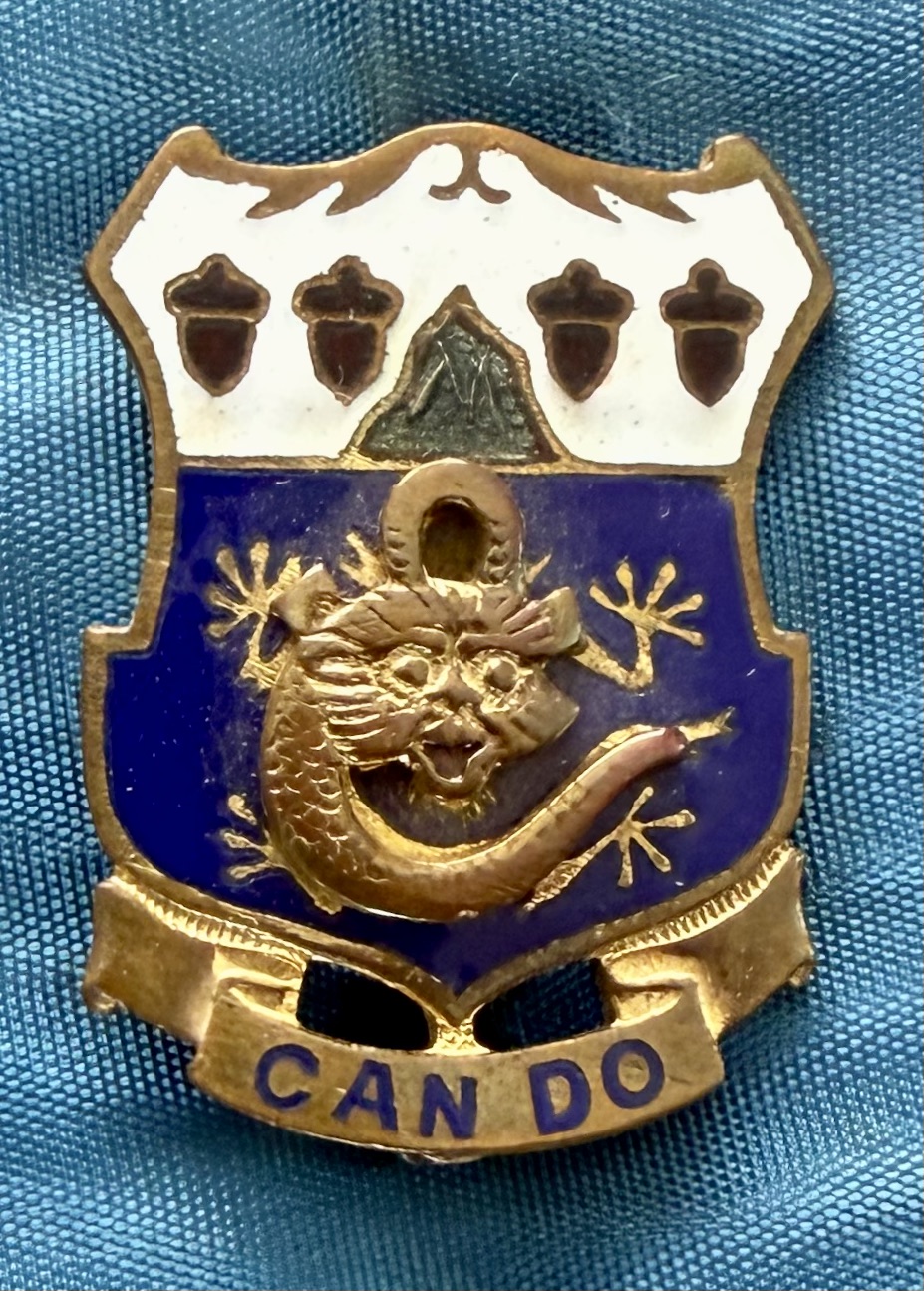
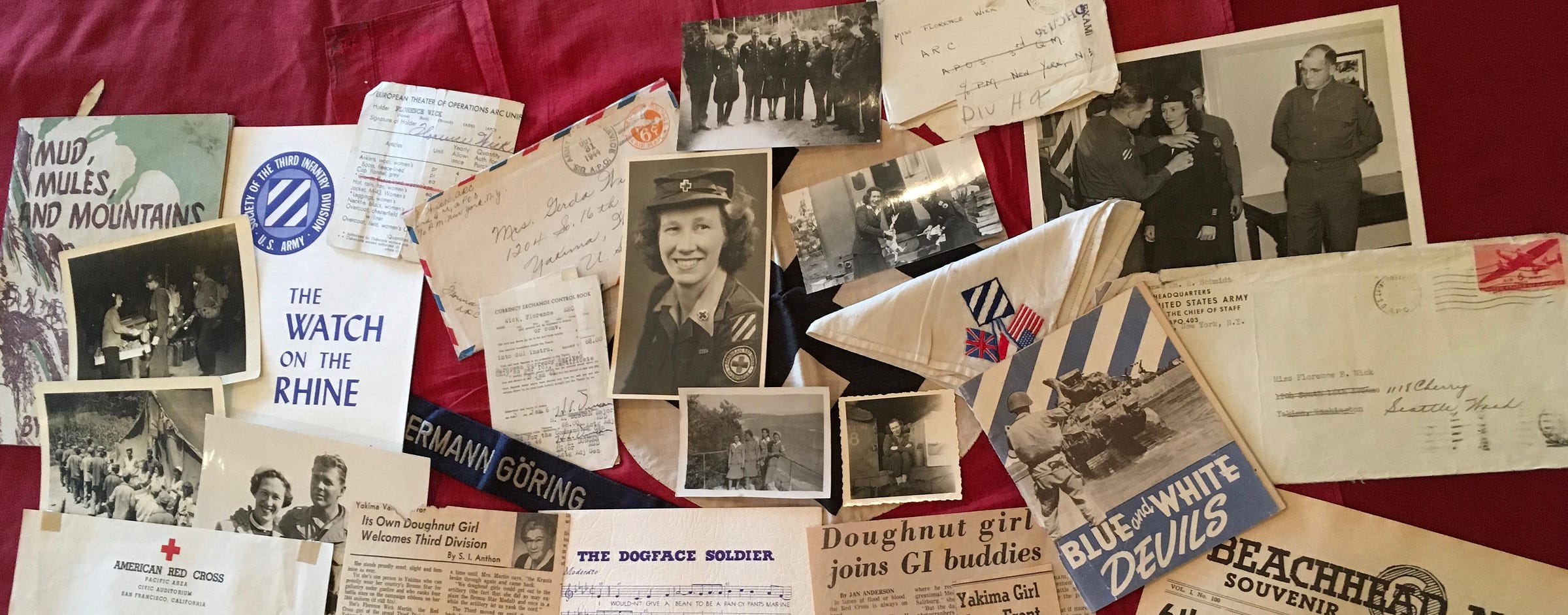
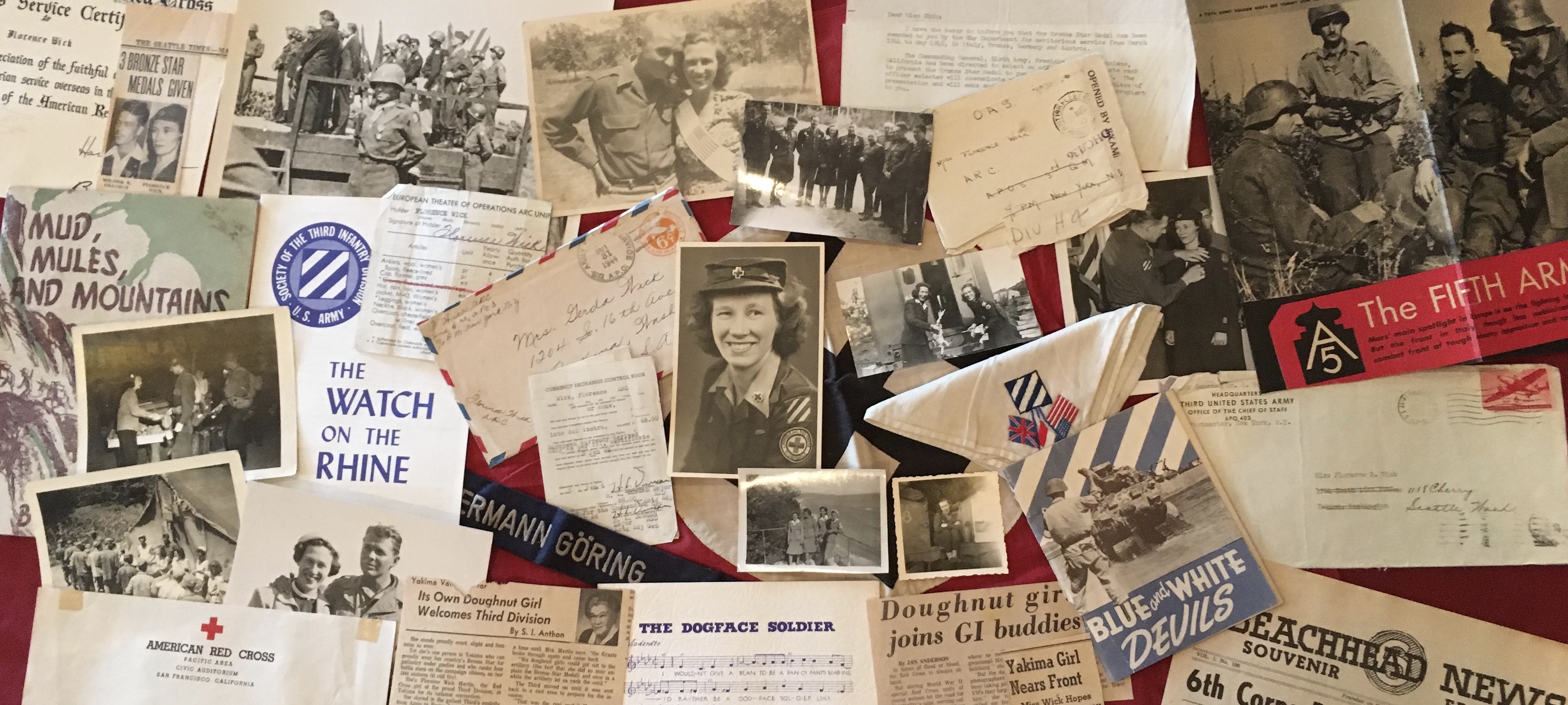
For the past year and a half, I’ve been tracing the life of my mother, Florence Wick, her service as a Red Cross clubmobiler, and her improbable intersection with the war hero Audie Murphy. Flo made a huge scrapbook after the war and I’ve been using that and her war diary to tell the story. I’m also telling Audie Murphy’s story using his autobiography To Hell and Back.
I’m pausing now to catch my breath, but the story is far from over.
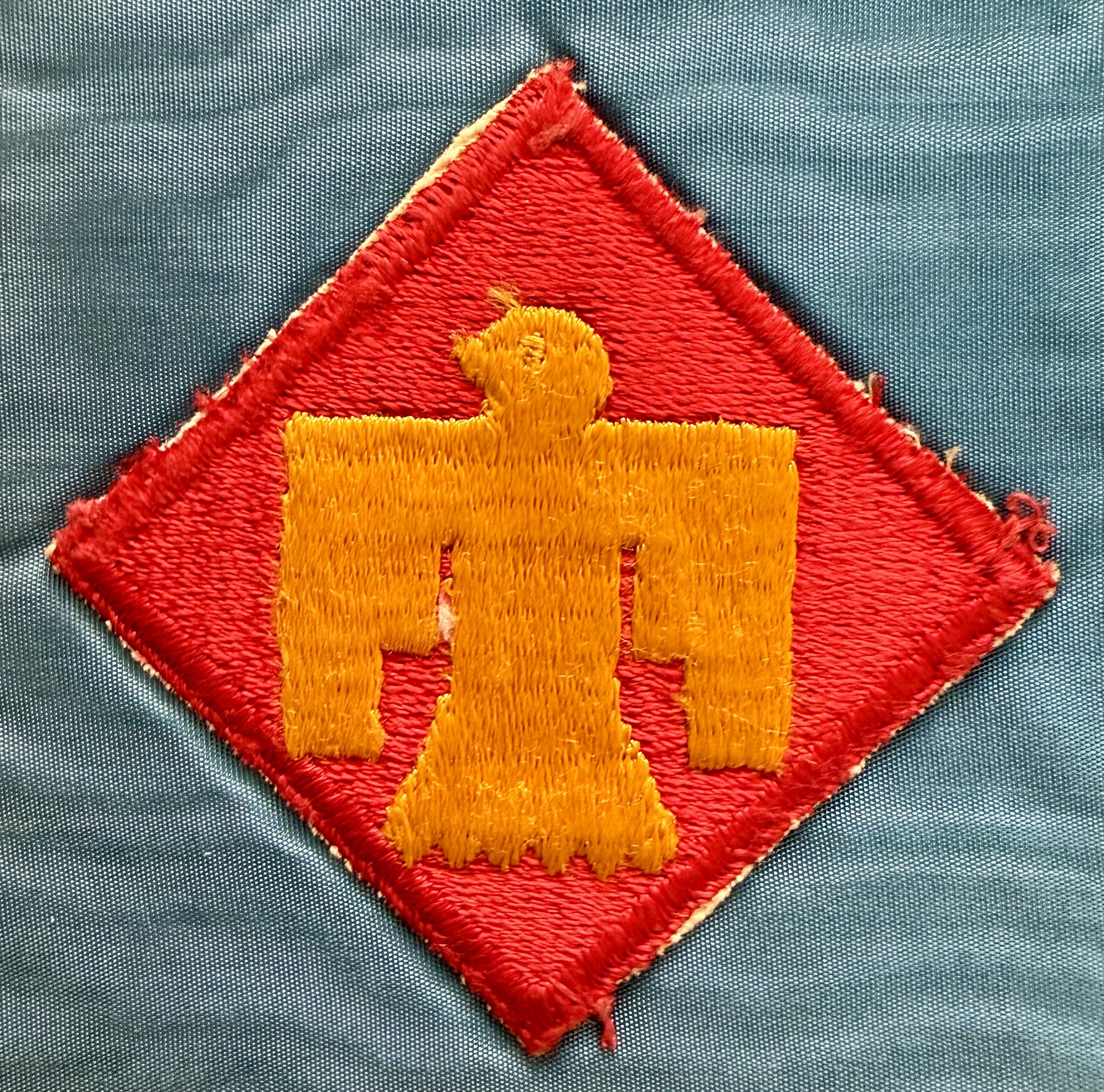
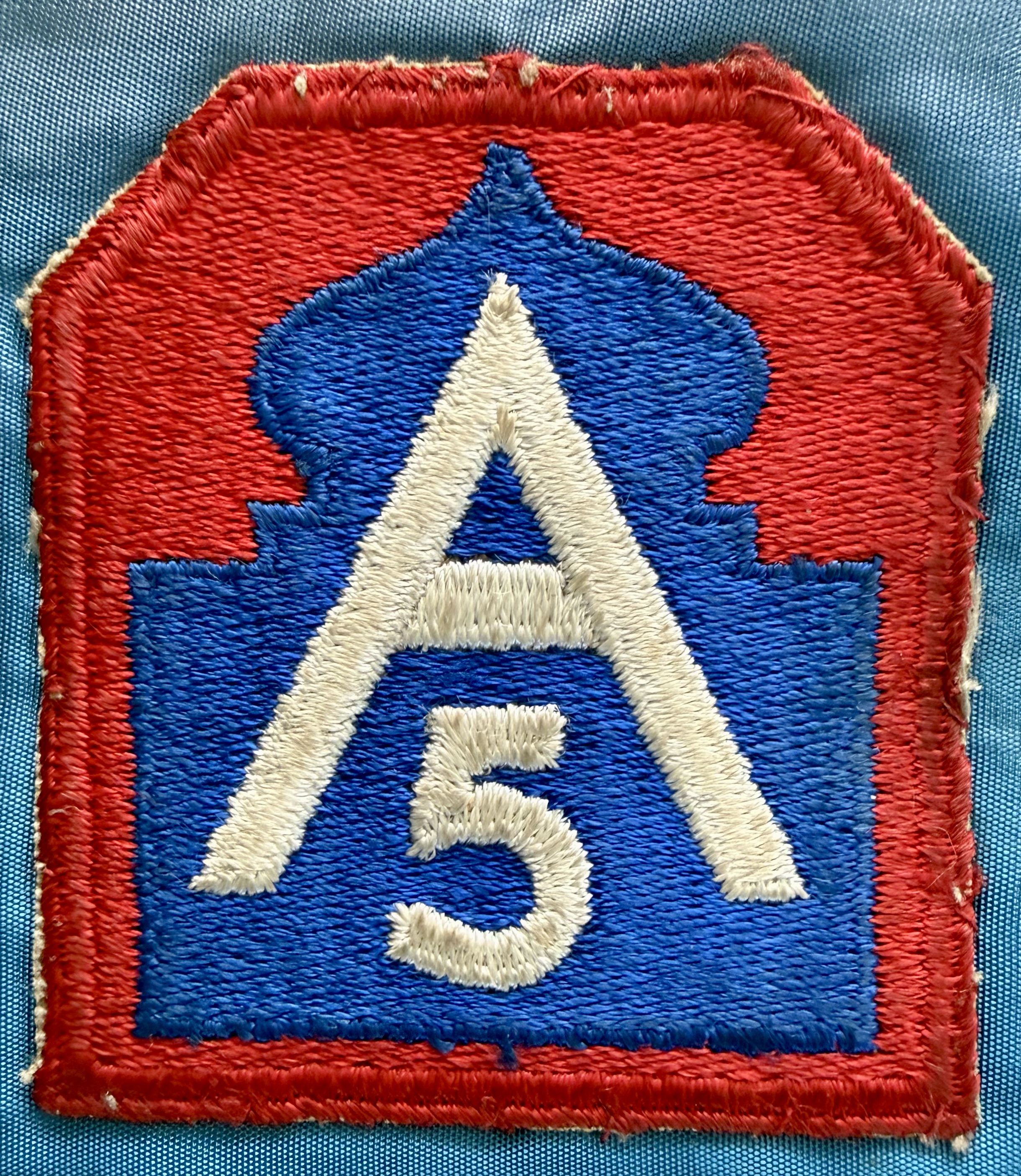
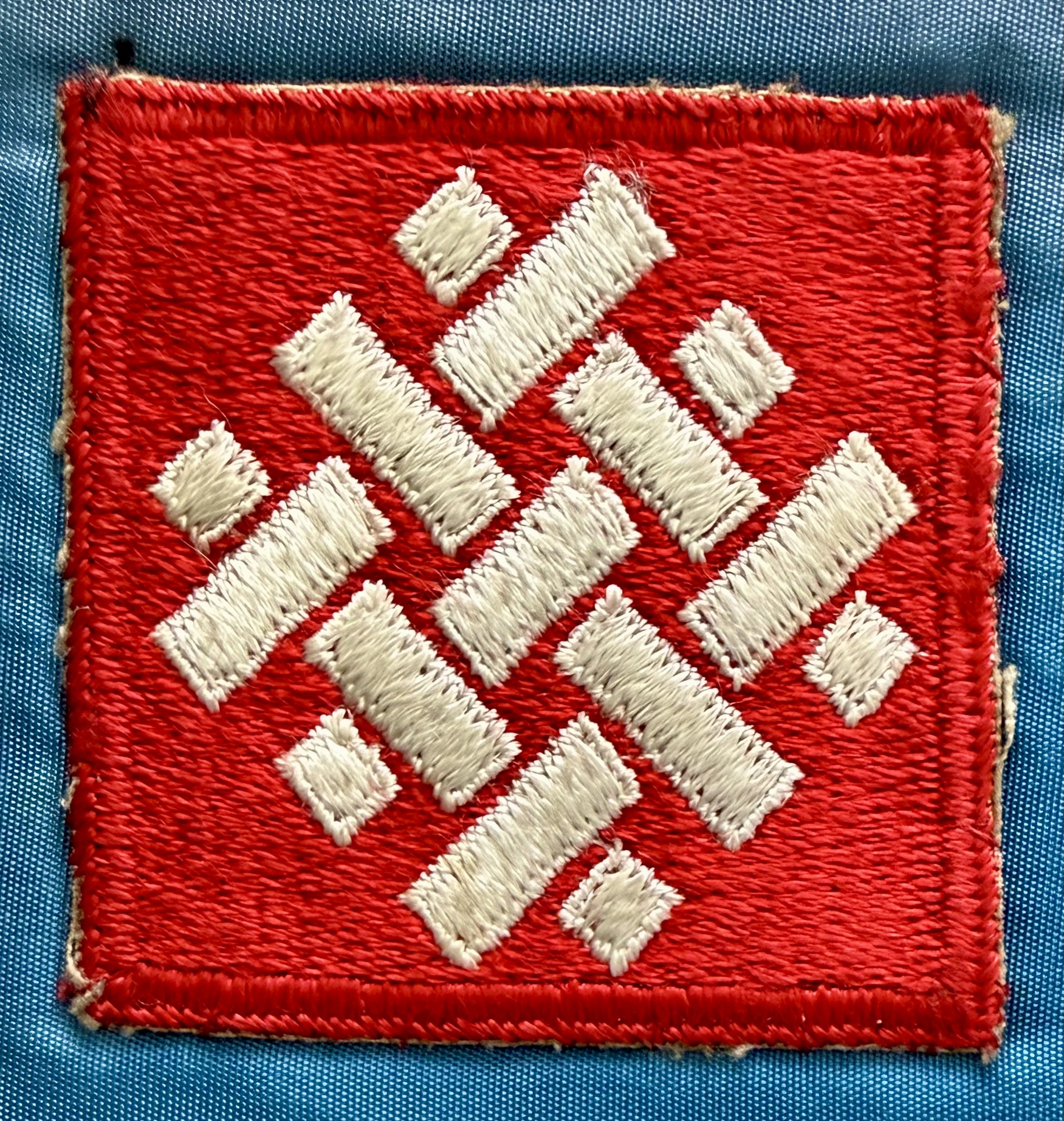
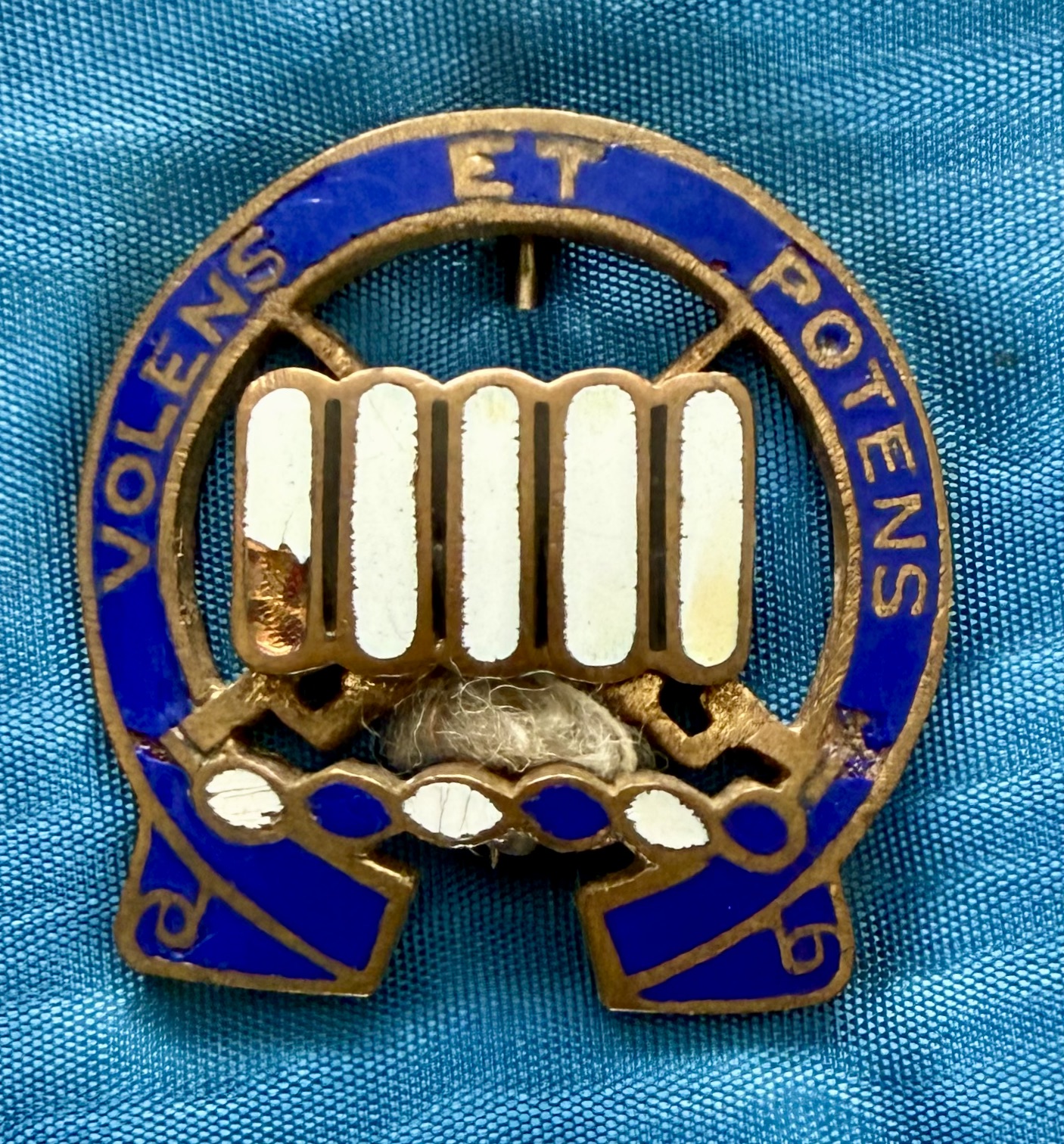
45th Infantry Div. patch5th Army patch10th mountain division.Tenth Corps patchFlo’s dog tag30th Infantry insignia15th Infantry badge7th inf Reg. Wiling and Able
Patches and insignia of some of the combat groups Flo served with, along with her dogtag, tacked onto the inside covers of her scrapbook
To recap:
In May 1944, Flo joined the American Red Cross Clubmobile program and sailed for Naples on a hospital ship. A month later, she stood in the streets of Rome as it was liberated, alongside General Mark Clark. By high summer, she was at an army camp near Pozzuoli, leading a four-woman crew, serving doughnuts and coffee to soldiers on the brink of the invasion of southern France.
By late August, they were in France, chasing a front that refused to hold still. Somewhere in that rush, Flo fell in love—with a lieutenant named Gene. They planned to marry in October. A mortar shell ended that future before it began.
Winter came hard—1944 into ’45—frigid, dangerous, unrelenting. Flo and her crew followed the Third Infantry Division through France, often within earshot of the guns. It was here she handed coffee and doughnuts to a young soldier named Audie Murphy—not yet a legend, but already carrying the weight of one.
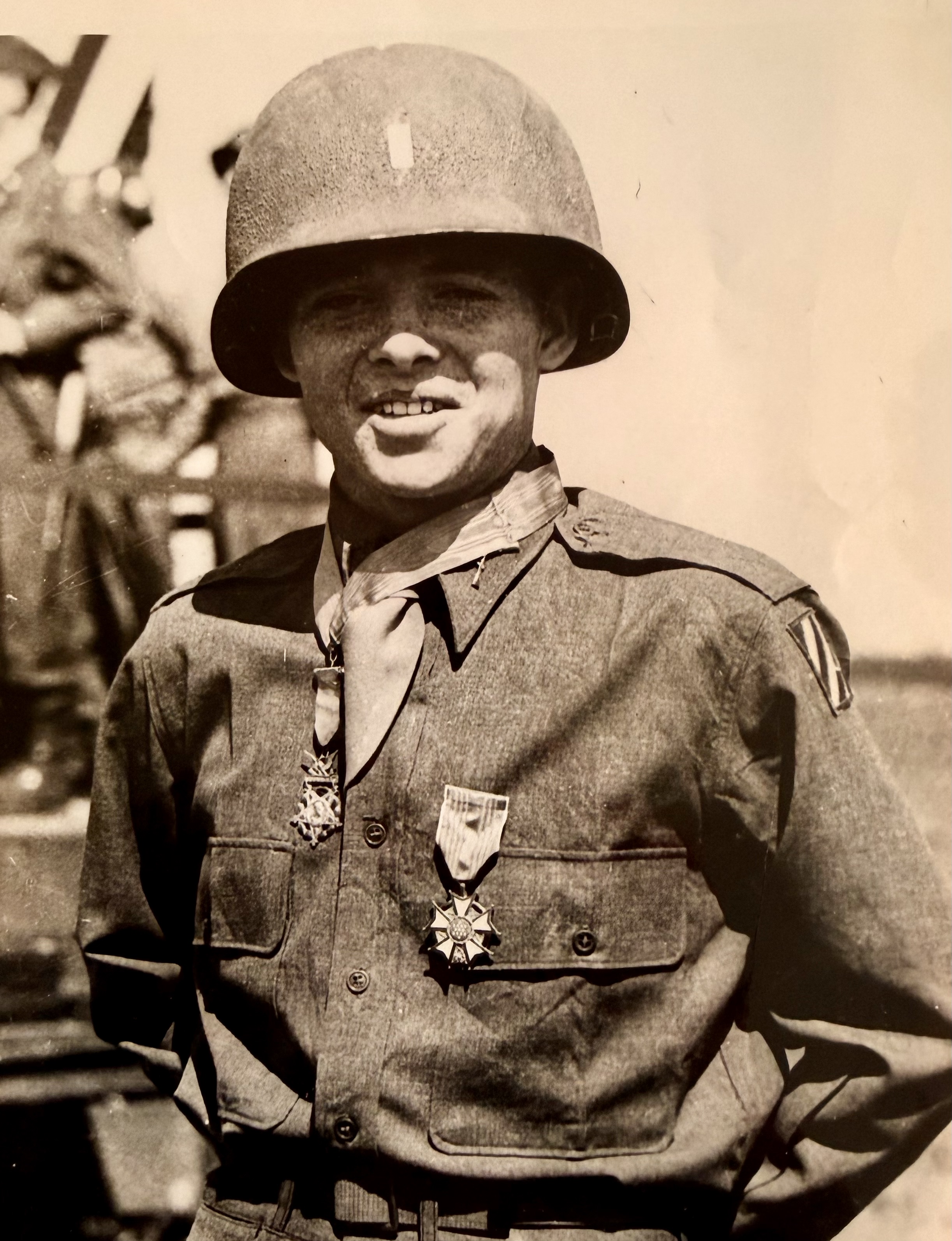
He would become the most decorated American soldier of World War II. Flo, meanwhile, captured something just as lasting: she took the only photograph of Murphy at a field awards ceremony. The photo became a famous icon.
In January, the division crossed the Rhine and drove into Germany. Flo kept working—serving men rotating through rest camps, offering small comforts in a landscape torn apart. At the war’s end, she witnessed the liberation of Dachau concentration camp and Berchtesgaden, Hitler’s alpine retreat.
She stayed on through the occupation, stationed in Austria and Germany. When she could, she traveled—Switzerland, England, German cities and towns, Brussels, Copenhagen, Paris—brief glimpses of a world trying to knit itself back together. She ended her stay with a visit to relatives in Sweden.
And that’s where we are now.
There is still much to tell. Flo’s scrapbook is bursting with post-war miscellany. How did Flo and Audie adjust to peacetime back in the USA? How did the war affect them and those who fought in combat? How did Audie Murphy become a movie star?
I’ll come back to the rest—after a little rest of my own.
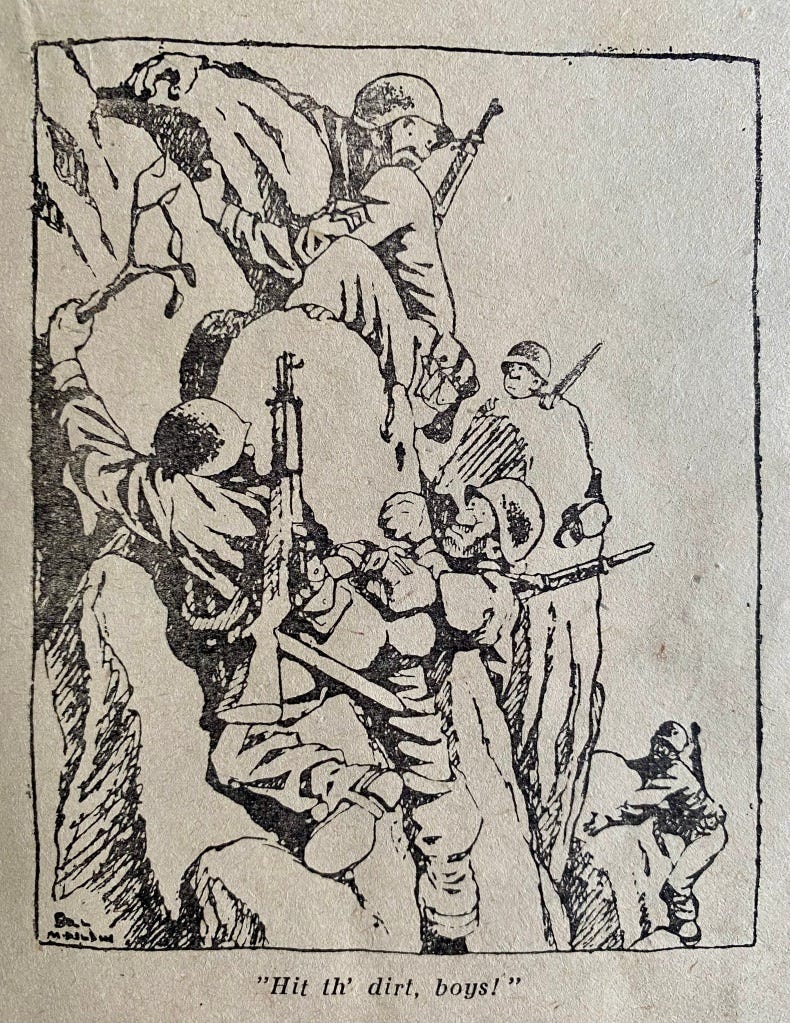
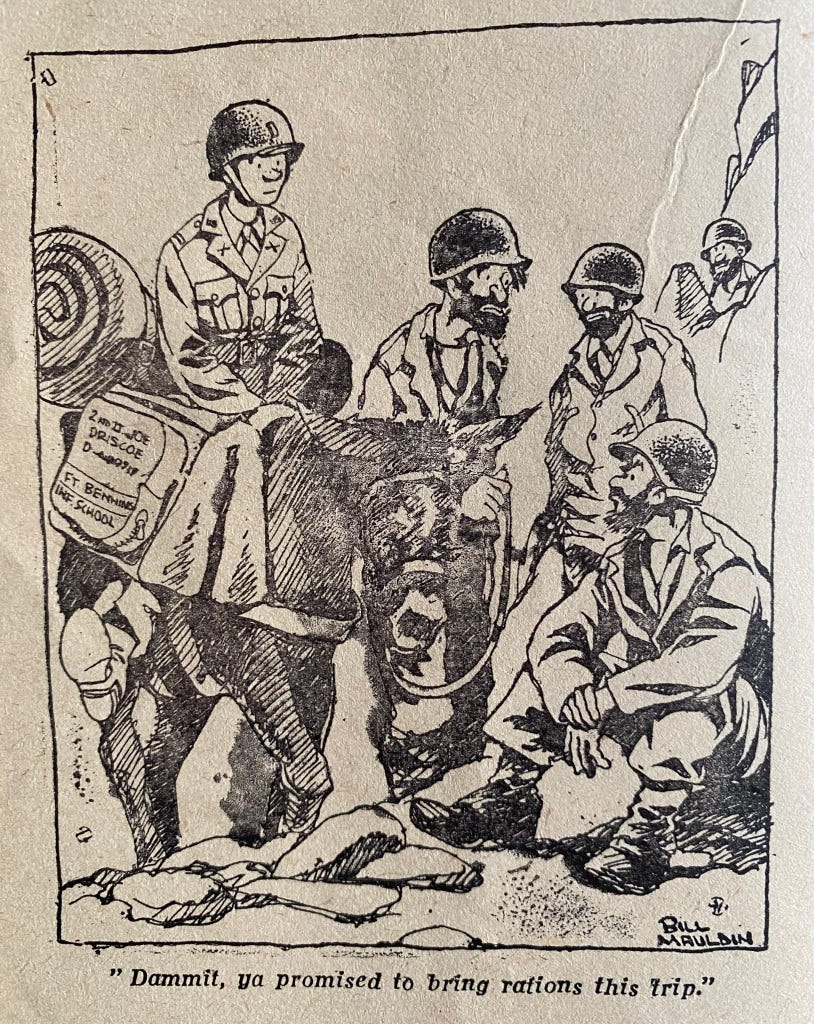
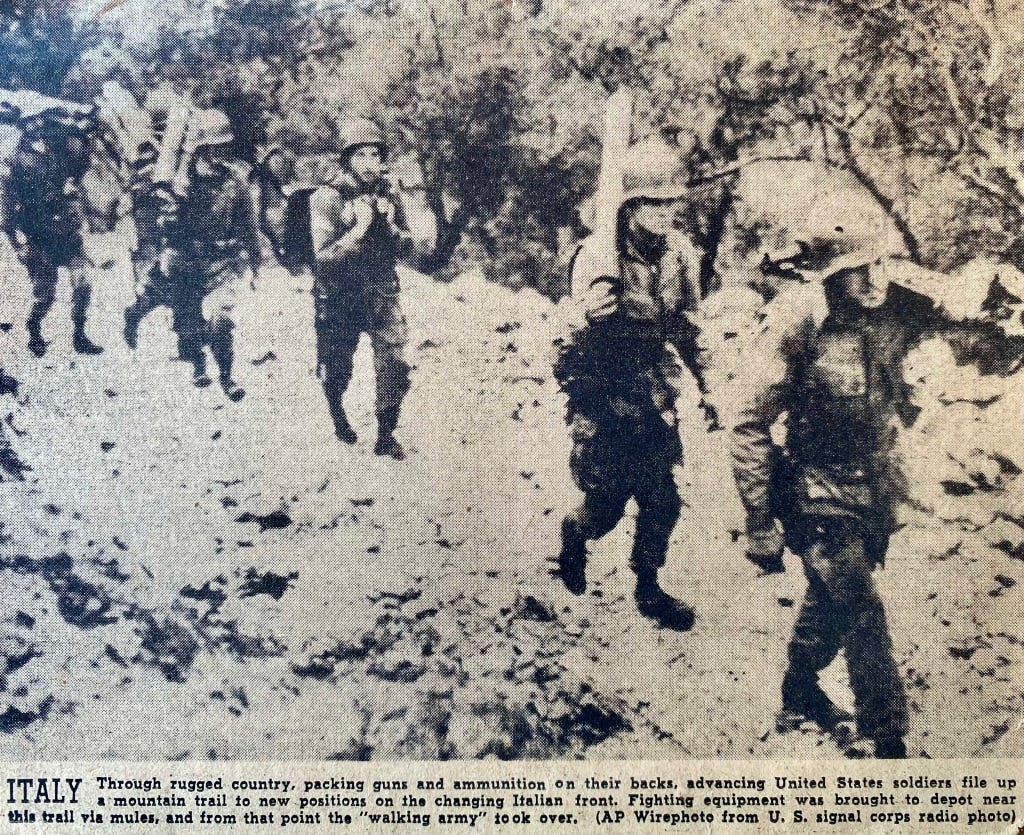
The town of Mignano sits trapped between steep, craggy peaks, their sheer faces scarred by war. The Nazis are dug in, their defenses embedded in the rock like stubborn roots. The strategy is clear — avoid the town and strike straight at the mountains surrounding it. But the terrain is merciless. Cliffs rise like walls, gorges cut deep into the earth, and even surefooted pack mules often slip, falling to their deaths. When the animals fail, the soldiers must take over, crawling on hands and knees, dragging supplies through mud that swallows boots whole.
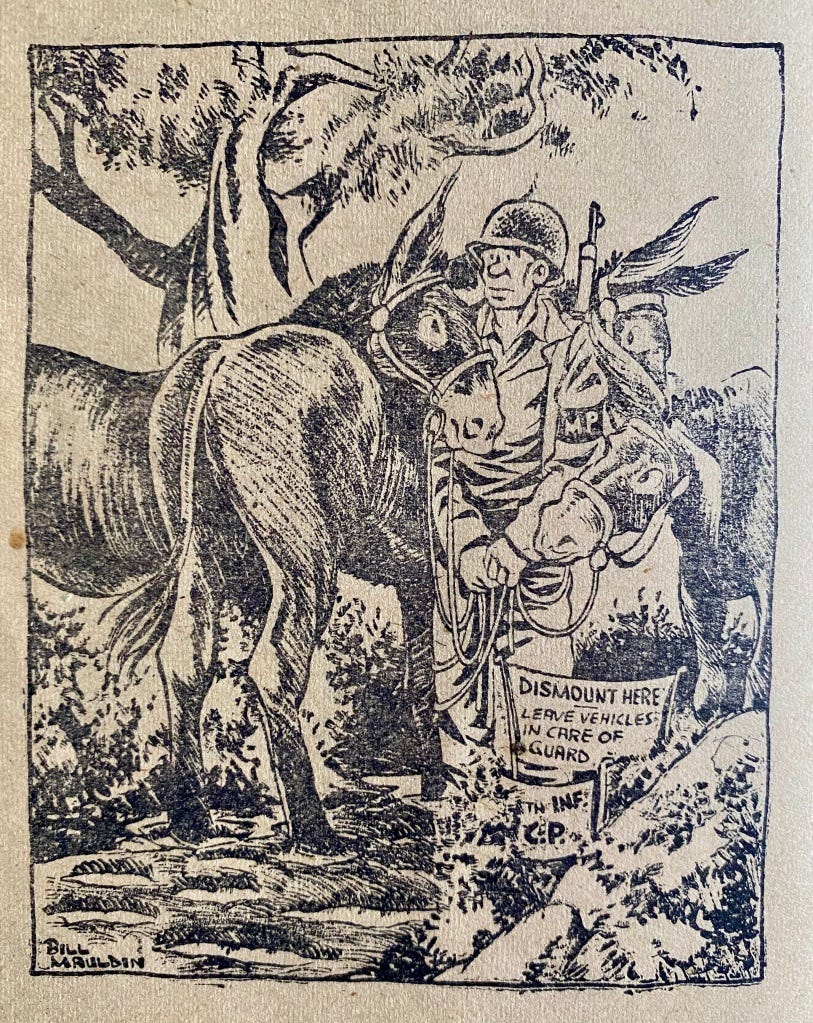
Bill Mauldin (1921–2003) — Pulitzer Prize-winning cartoonist famous for his WWII characters, Willie and Joe, depicted the hardships of American soldiers with grit and humor.
On a reconnaissance mission, Audie Murphy and his squad find themselves stranded on the side of a mountain above Mignano. They walk straight toward a German tank, so expertly camouflaged that they miss it. As the snout of the cannon is lowered at them, they run like hell for a clump of bushes. One soldier breaks his leg in the rush. They drag him into a ditch and lose the tank.
Several assaults on nearby Mount Rotondo are pushed back. Lines are confused by enemy fire. Murphy mistakes a Nazi patrol for allies. When he realizes his mistake, he starts firing. Now the enemy knows where they are. With no choice, they scramble up the rocks, reaching an abandoned quarry where they settle in for the night.
At dawn, they ambush a Nazi patrol. The fight is brutal and quick, but the cost is high. Three German soldiers lay dying.
Mauldin drew six cartoons a week during the war. He was only 23 when awarded the Pulizer Prize.
“The wounded must be got under cover. The peculiar ethics of war condone our riddling the bodies with lead. But then they were soldiers. (The machine gun) transformed them into human beings again; and the rules say that we cannot leave them unprotected against a barrage of their own artillery,” Murphy wrote.
Murphy’s squad is forced to stay with them, listening to their labored breaths as a cold mountain rain washes over the quarry.
“When dawn breaks, two of the Germans are dead. Their eyes stare glassily. Their mouths are open and the old man’s swollen tongue protrudes between his teeth,” Murphy wrote.
For three days artillery rains down, death echoing off the cliffs. The men remain trapped.
On the third day, the third German dies. In the light of the moon that night “the faces of the dead seem green and unearthly. That is bad for morale, as it makes a man reflect on what his own life may come to.”
After the war, Mauldin became a political cartoonist, advocating civil liberties. He also appeared in John Huston’s film The Red Badge of Courage (1951) starring with Audie Murphy.
Murphy is near breaking. “My eyeballs burn, my bones ache; and my muscles twitch in exhaustion. Oh, to sleep and never awaken. The war is without beginning, without end. It goes on forever.”
Then, at last, the sound they have been waiting for — American artillery. The shells scream through the air, bursting against the rocks like salvation.
“If there is one thing a dogface loves, it is artillery — his own.”
American Red Cross workers, too, must contend with mountains and mud.
From a Life Magazine story pasted in Flo’s album
On Christmas Day, 1943, high in the rain-drenched peaks, a soldier huddles in his foxhole, staring at a can of C-rations — his holiday meal. Then, out of the swirling mist, she appears. Isabella Hughes of Baltimore, a Red Cross clubmobile worker, crouches on the lip of his trench, one hand gripping a box of doughnuts, the other holding a steaming pot of coffee. The soldier blinks, then exclaims, “Good Lord, sweetheart! What in hell are you doing here?”
Isabella Hughes was one of the first ARC workers to get to Italy, in 1943. She would later join Flo’s clubmobile crew in Naples.
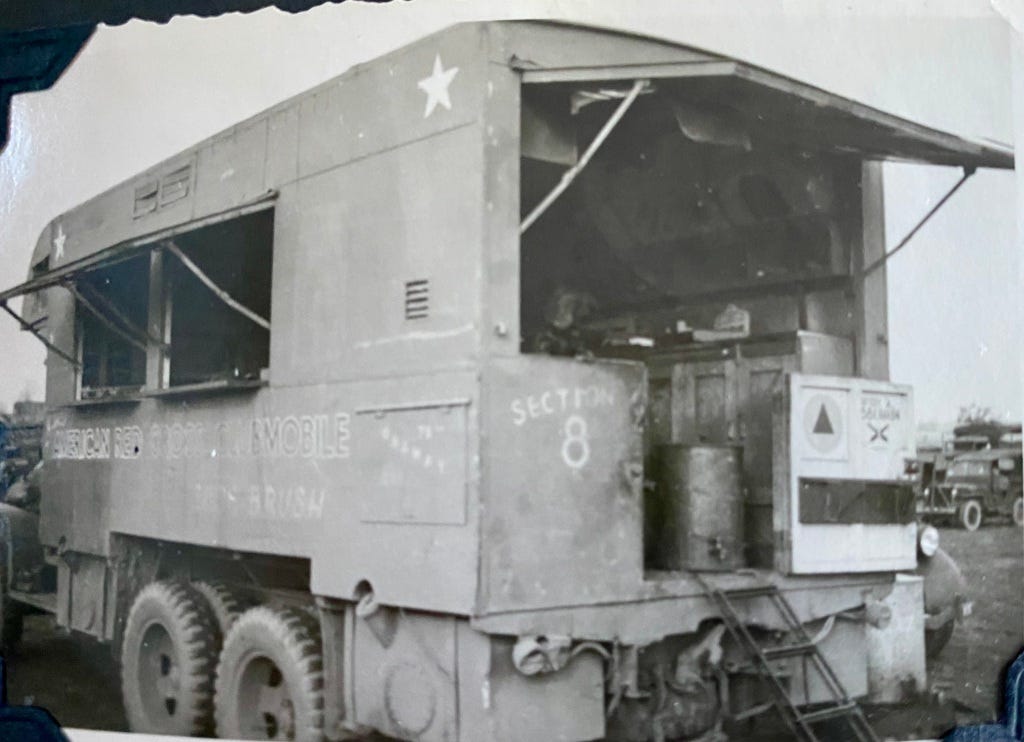
The clubmobile was a two and a half ton Dodge truck fitted with a kitchen and windows. Workers sometimes slept in it or under it.
Italy’s roads, slick with rain and churned to sludge, are brutal even for military transport. The clubmobile — a sturdy machine — proves no match for the mountains. When roads vanish into goat trails, the Red Cross workers adapt. They take the Army’s weapons carriers, pushing higher, until even those fail. Then come the donkeys and mules.
Two clubmobile workers, Margaret Decker of Towaco, New Jersey, and Gladys Currie of Greenwich, Connecticut, volunteer for an impossible task: deliver coffee and doughnuts to a unit stationed atop a remote peak. No road leads there — only a narrow mule track winding up the mountain’s spine. The Army offers them transport, if they’re willing to ride donkeys up the perilous slope. They accept without hesitation.
The climb is slow, the air thin. Their donkeys pick careful steps along the treacherous trail. The doughnuts are packed onto a mule. At last, they reach the summit. The men are waiting — shaved, cleaned — their arrival announced on the camp bulletin board like the coming of long-lost friends. As the ARC workers pour coffee, the soldiers form a circle around them, an island of warmth in the cold mountain war. Mortars shriek in the distance. Shells thunder through the valleys below. But for a moment, they all pause, talk, and remember something beyond the battle.
Their bravery does not go unnoticed. When the U.S. Army Rangers commend Lois N. Berney of Fallon, Nevada — a clubmobile worker once secretary to Harry Hopkins — it is understood that the honor belongs to all of them. From General Mark W. Clark down to the last rifleman, the Army recognizes the Red Cross women not just for their courage, but for bringing something human to the inhuman mountains.
From Audie Murphy’s autobiography, “To Hell and Back,” and from “At His Side–The Story of The American Red Cross Overseas in WWII” by George Korson
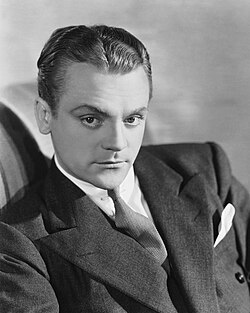
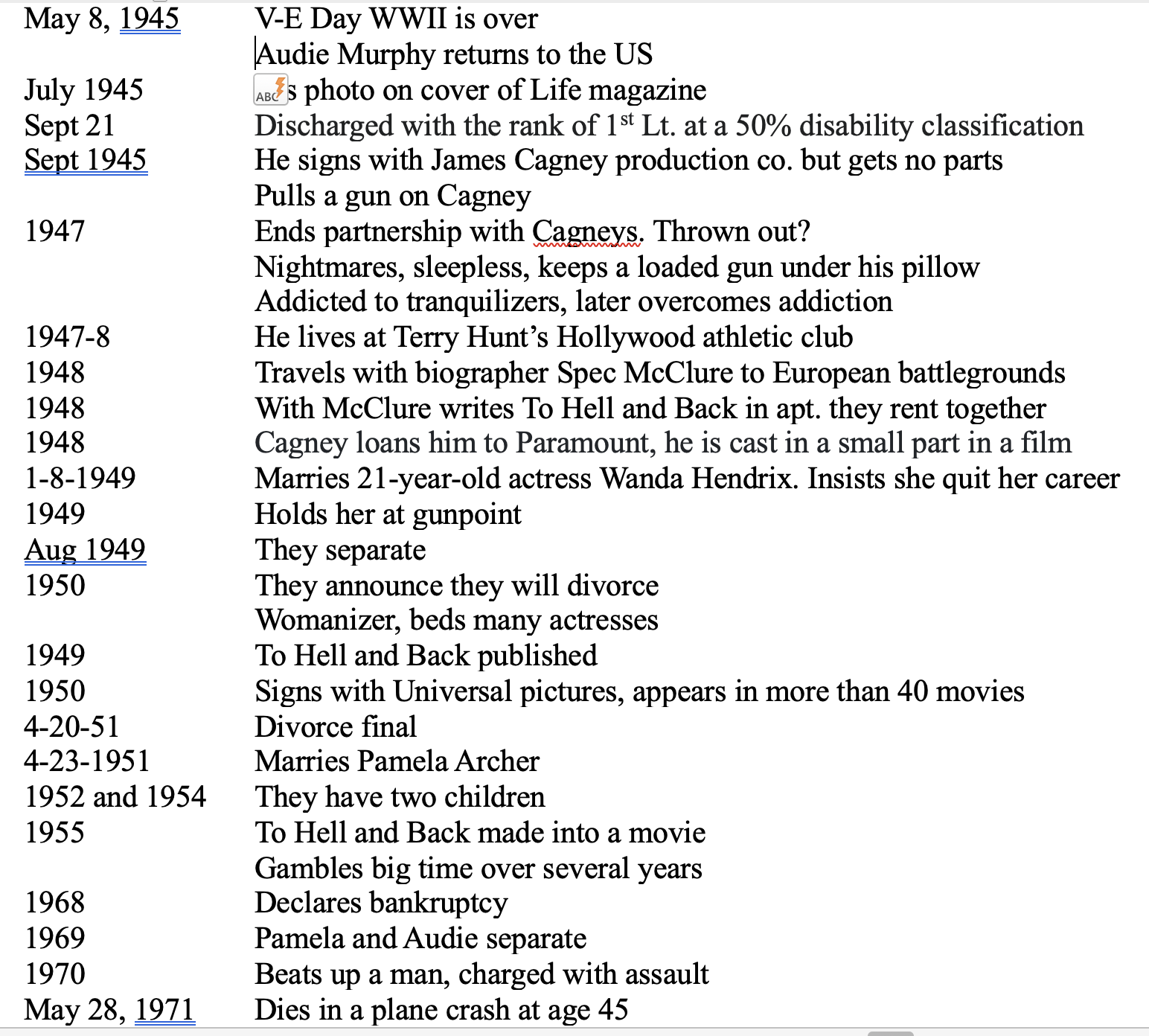
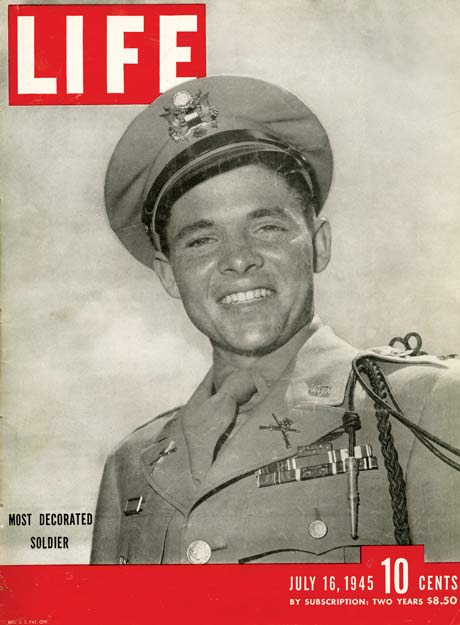
James Cagney plays the unlikely role of talent scout in 1945 when a photograph on the cover of Life magazine stops him cold: Audie Murphy, the boyish Texan just discharged from the Army and celebrated as the most decorated American soldier of World War II. Impressed by Murphy’s heroism and screen presence, Cagney invites him to Los Angeles and signs him to his production company, determined to help turn a war hero into a movie star.
This is the photo Flo took of Audie Murphy when he was awarded the Silver Star in the field in 1945. Picked up by Wide World Photos without attribution.
Cagney pays for Murphy’s acting, voice, and dance lessons and offers guidance during his first years in Hollywood. But despite the investment and publicity, the arrangement fails to deliver actual film roles. The problem is not personal between Cagney and Murphy, but business. In 1947, a contractual dispute and personal friction with Cagney’s brother and producing partner, William, brings the deal to a quiet end.
The collapse of the Cagney contract leaves Murphy stranded—broke, living on his military pension, sleeping in a gym, and carrying the unspoken weight of wartime trauma. Yet the door Cagney had opened does not fully close. Forced to make his own way, Murphy rebuilds his career from scratch and ultimately appears in more than forty films, mostly Westerns, forging a hard-won Hollywood life that echos the endurance that had first drawn Cagney’s attention.
Audie Murphy returns home in June 1945 to a hero’s welcome of parades, swarming reporters and his face on the cover of Life Magazine. At just twenty years old, he is celebrated as the most decorated American soldier of World War II, awarded the Medal of Honor along with more than 30 US and foreign decorations for extraordinary valor in combat. The public sees a slight, soft-spoken Texan who embodied courage and sacrifice, but behind the accolades Murphy carries the psychological weight of prolonged frontline combat, the loss of close comrades, and memories that will not easily fade.
In the years after the war, Murphy remains connected to the Army even as he struggles to adjust to civilian life. He continues to serve in the Texas Army National Guard, eventually reaching the rank of major, and becomes an outspoken advocate for recognizing what is now known as post-traumatic stress disorder, then poorly understood and often dismissed. By publicly acknowledging his nightmares, insomnia, and dependence on medication, Murphy challenges the myth that heroism ends suffering. His postwar Army career, marked by continued service and hard-won honesty, expands his legacy beyond battlefield valor to include a lasting contribution to how veterans’ mental health is understood and discussed.
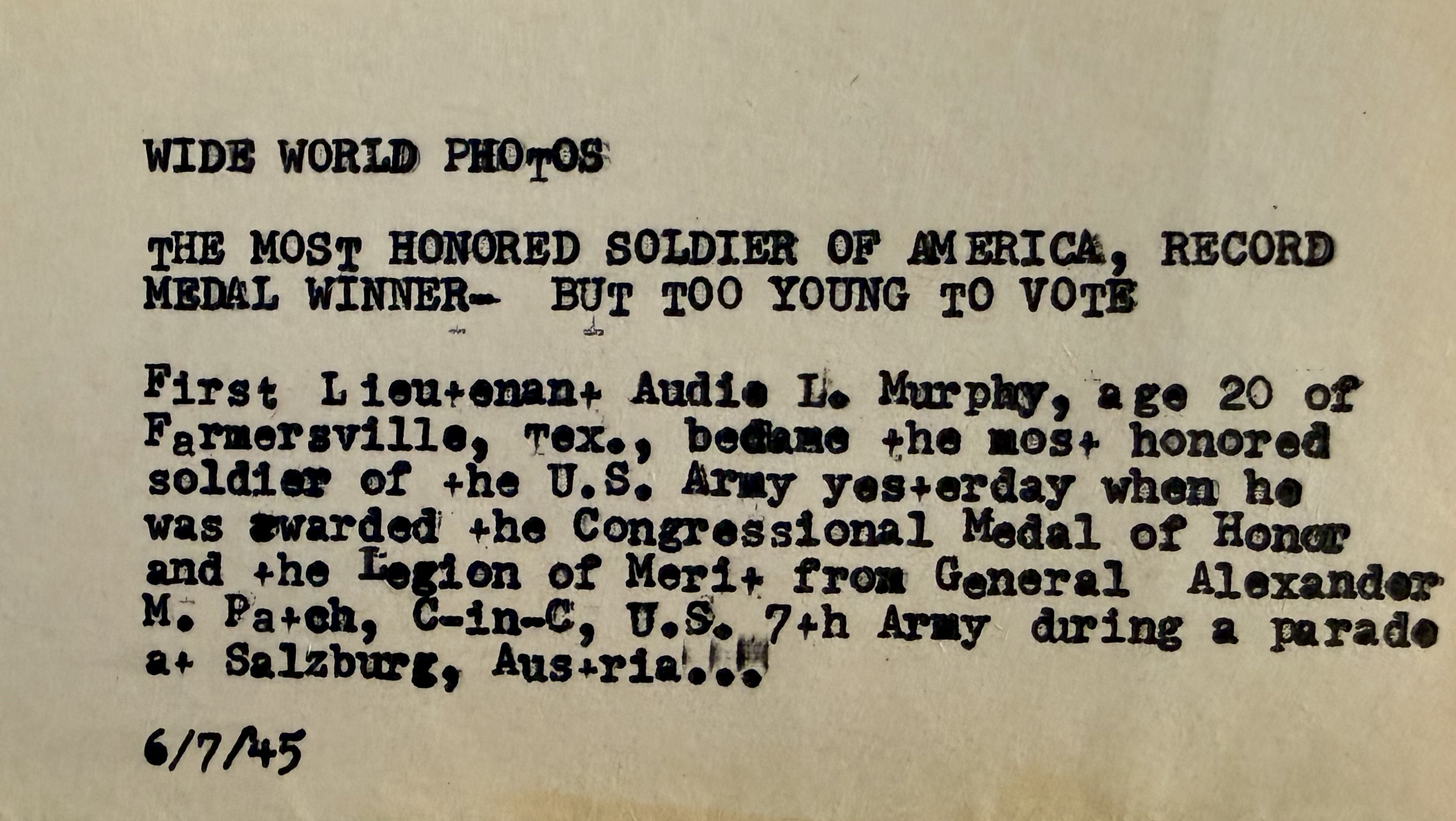
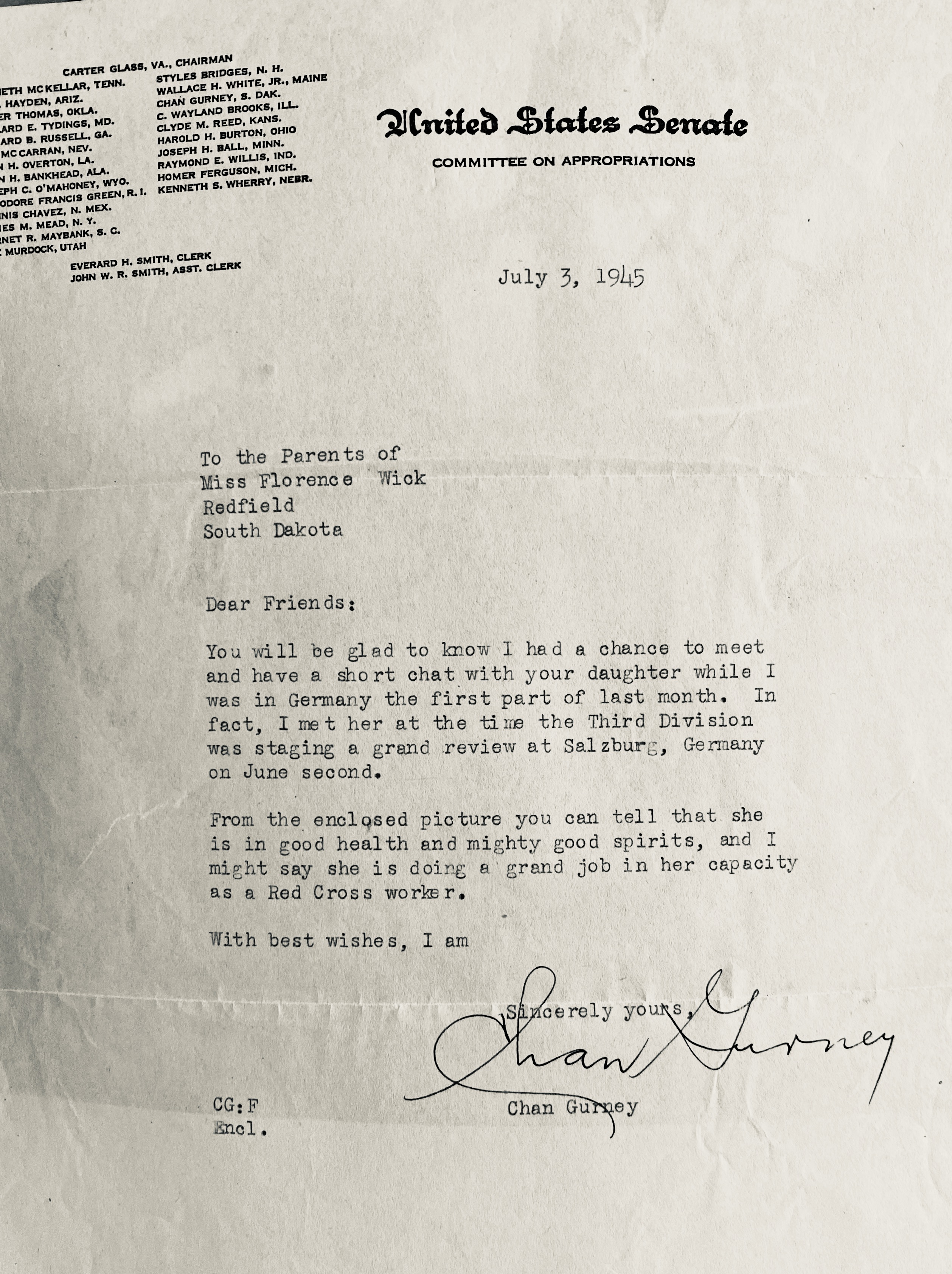
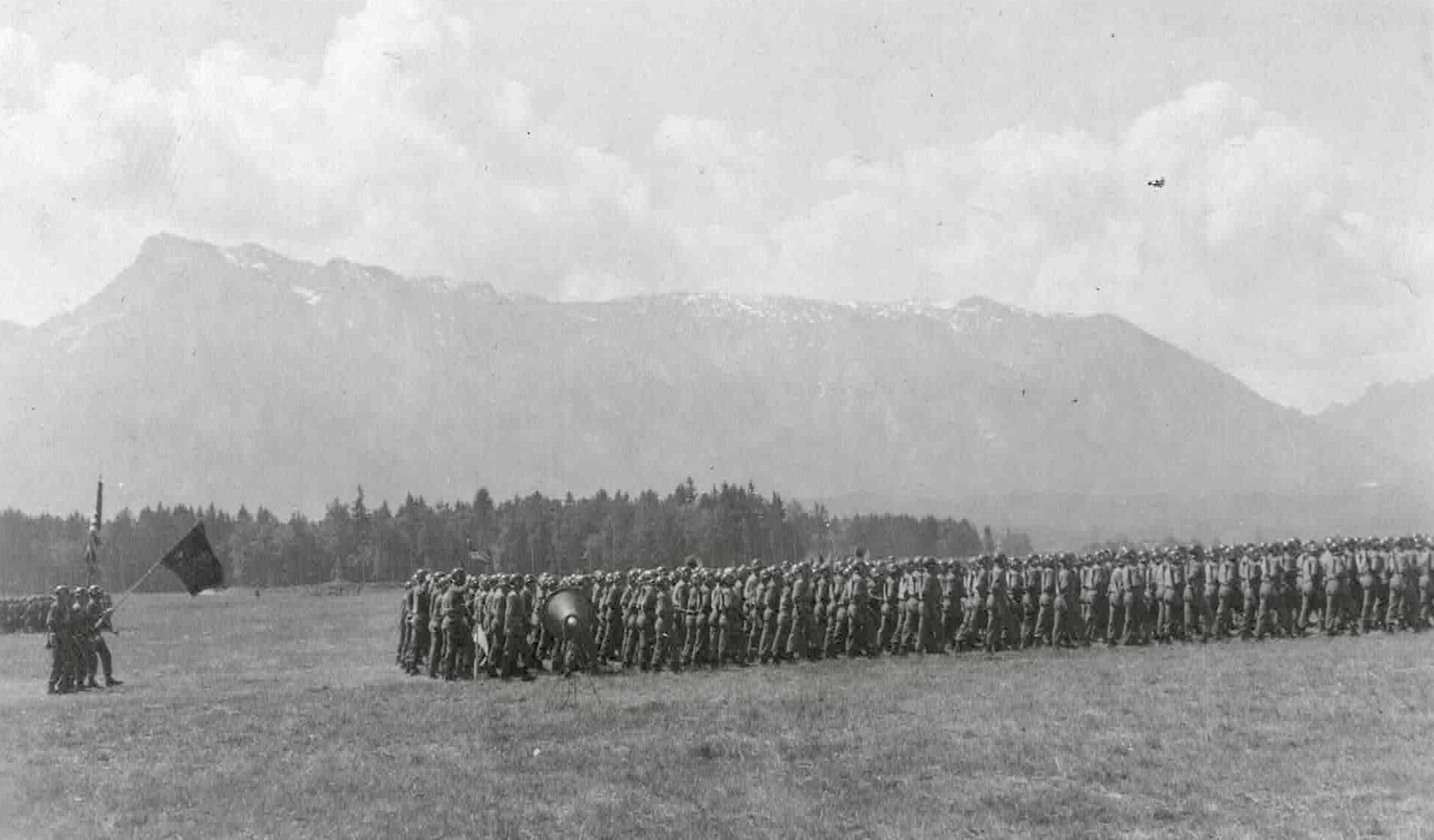
On June 2, 1945, the Third Infantry Division assembled for a division-wide review in Salzburg, their ranks drawn up before their headquarters. Flo was there with her clubmobile crew, Liz Elliott and Janet Potts, watching as Seventh Army commander General Alexander Patch presented decorations and commendations. A Congressional delegation stood in review alongside Secretary of War Robert P. Patterson, among them South Dakota Senator Chan Gurney, the first chairman of the Senate Committee on Armed Forces.
June 2, 1945. This is the last picture of the three Red Cross clubmobilers together–Janet Potts, Flo Wick and Liz Elliott. Fritzie Hoaglund never returned to the crew after having been hospitalized.
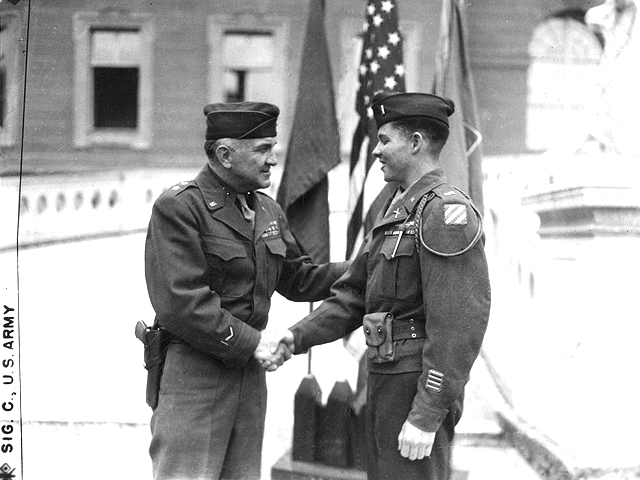
That day, Lieutenant Audie Murphy of B Company, 15th Regiment, received the Medal of Honor and the Legion of Merit in front of his entire division. Five other Third Division soldiers were awarded the Distinguished Service Cross and the Silver Star, their citations read aloud to the troops who had fought across Europe and now stood at attention in peacetime formation.
Gen. O’Daniel shakes the hand of 1st Lt. Audie Murphy of B Company, 15th Regiment, 3rd Division. Murphy received the Medal of Honor and the Legion of Merit on June 2, 1945 in front of his entire division in Salzburg, Austria. Photo: Dogface soldier collection
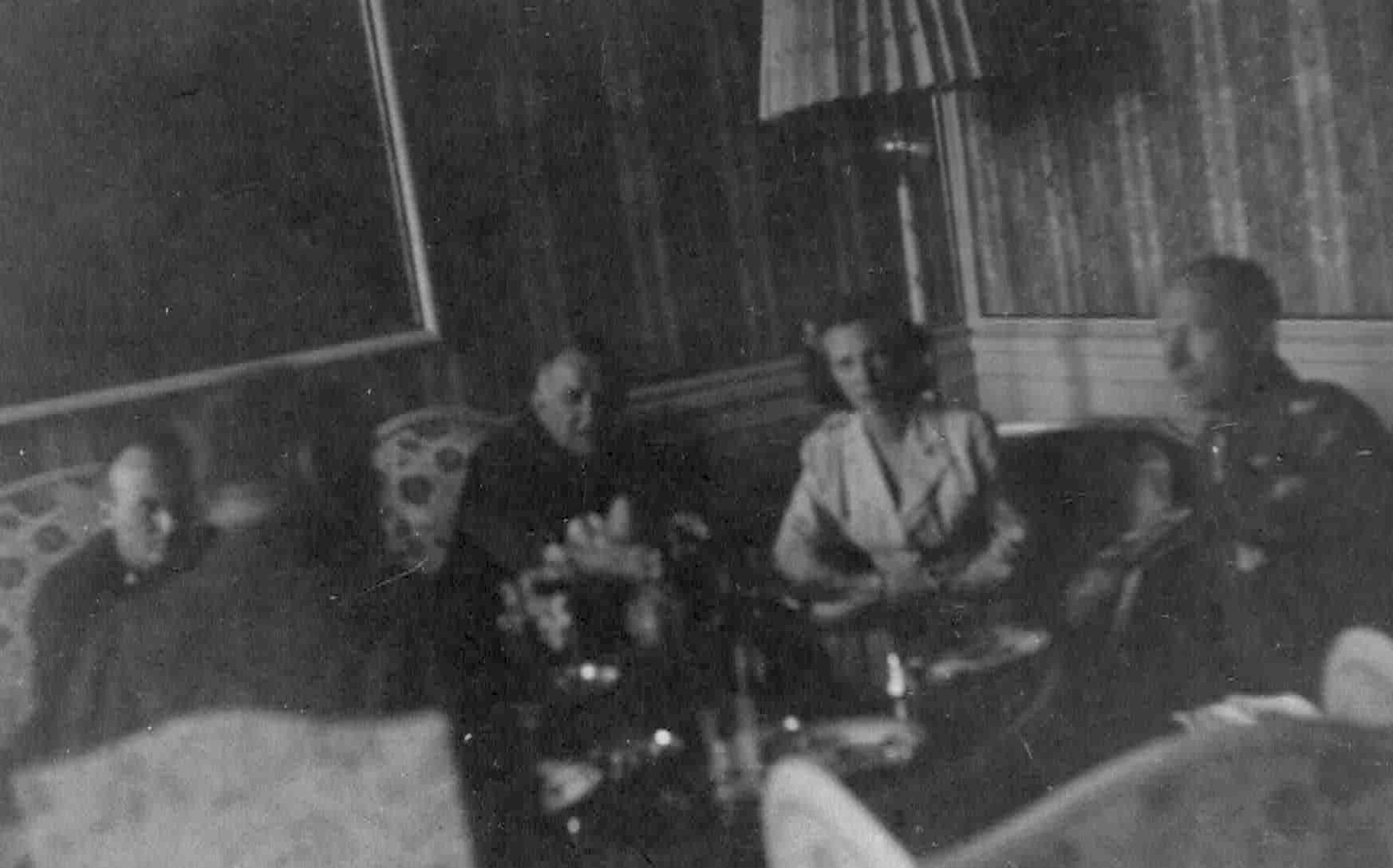
The ceremony took place at a site heavy with layered history. Built in 1700 as a Baroque summer residence for the Prince-Archbishops of Salzburg, the palace later became a Nazi showpiece where Hitler hosted Axis leaders and stored looted art as the Reich collapsed. Captured by the U.S. Third Infantry Division in May 1945, it was repurposed as headquarters of the American Occupation Authority during the decade-long U.S. presence in Salzburg, before eventually becoming a casino.
Gen. J. W. O’Daniel 3rd Div. Commander; Flo Wick, ARC; Gen Alex Patch 7th Army commander. June 1945. Schloss Klessheim SalzburgA delegation of the US Congress witnessed the Audie Murphy ceremony. Chan Gurney, South Dakota, the first chairman of the US senate committee on Armed Services, is seen here with Flo.Letter from Sen. Gurney to Flo’s parents. He thought they were South Dakota constituents. Flo was born in Redfiled, SD, but the family hadn’t lived there since she was a baby. They lived in Yakima, WA. Her father had died in 1938.On June 2, 1945 the 3rd Division staged a grand review at Schloss Klessheim.Soldiers march past the reviewing stand. photos from Flo’s album
By April, 1945 the war’s end was inevitable. The Soviets broke through German defenses and surrounded Berlin. Artillery shells rained down on the capital as Hitler, holed up in his bunker beneath the Reich Chancellery, raged against reality. On April 20, the bombardment of Berlin began. Five days later, Soviet and American troops met at the Elbe River, cutting Germany in half. In Italy, Benito Mussolini was captured by partisans and executed on April 28. Two days later, on April 30, Adolf Hitler killed himself in his underground bunker.
In Schloss Klessheim, VE-Day partiers hold up a liberated pair of Hermann Goring’s pajamas. Photo: Dogface Soldiers Collection
Berlin fell on May 2. Soviet troops raised their flag over the Reichstag, signaling the final collapse of the Third Reich. Across northern Europe, German armies laid down their arms: in Denmark, the Netherlands, and northwest Germany on May 4. In Prague, a last uprising flared as German resistance crumbled.
On May 7, German representatives signed an unconditional surrender at Reims, France, in the presence of Allied commanders. The next day—May 8, 1945—the war in Europe was officially over. Crowds filled the streets of London, Paris, and New York, singing, embracing, and weeping with relief. In Moscow, the celebration came a day later, on May 9, when the surrender was ratified in Berlin according to Soviet time.
Photo: Dogface Soldier Collection
The guns finally fell silent. After nearly six years of war, Europe lay in ruins—but free of Nazi rule. The deadliest war in history involved more than 30 countries around the globe. More than 50 million people lost their lives during the war.
We don’t know where Flo was on VE-Day, but it’s a good guess she was partying somewhere. She left the page in her album blank.
The page in Flo’s album
Audie Murphy is on leave, riding a train to the French Riviera when the war is declared over. In a Cannes hotel, he bathes and naps, but he can’t get images of the war out of his mind.
He wrote: “We have been so intent on death that we have forgotten life. And now suddenly life faces us. I swear to myself that I will measure up to it. I may be branded by war, but I will not be defeated by it.”
In To Hell and Back, Murphy tells of the last days of the war.
After the crossing of the Rhine, the dike seems to crumble, and a flood of men and equipment pours into Germany. Even the most fanatical Nazis must sense that the game is over, yet they still deceive the population with promises that resistance will bring a negotiated peace rather than unconditional surrender. If they still want war, the Americans give it to them. With victory in sight, they do not soften. Artillery levels sections of towns; flames lick across burning buildings. Infantry and armor prowl rubble-strewn streets, and blood flows needlessly through the gutters.
A column of German prisoners is escorted by 3rd Division soldiers after their capture in Nuremberg, Germany. The fight for the city from April 17-20, 1945 was a tough one for the 3rd Division including mines, booby traps, Panzerfaust, snipers and futile counterattacks. Photo: Dogface Soldier
As the battle lines roll forward, windows drip with white flags. Any house without the mark of surrender receives no polite warning; soldiers rake its windows with machine-gun fire to correct the oversight. The tactic works.
Murphy is transferred to liaison duty, serving as the contact man between the division’s units. Near Munich, he enters a prison camp with his gun drawn and comes face-to-face with a German guard. The prisoners insist the man is a “good joe.” Murphy hears the phrase and thinks bitterly, Maybe he is. But I cannot see men anymore—I see only uniforms. He holsters his pistol.
The German mumbles something and stumbles toward a set of steps.
“There is something pathetically human about his odd, hobbled walk…. Perhaps it is the knowledge that we carry in our hearts that nobody ultimately wins. Somewhere we all go down. Force used tyrannically is our common enemy. Why align ourselves with it in whatever shape or fashion.“
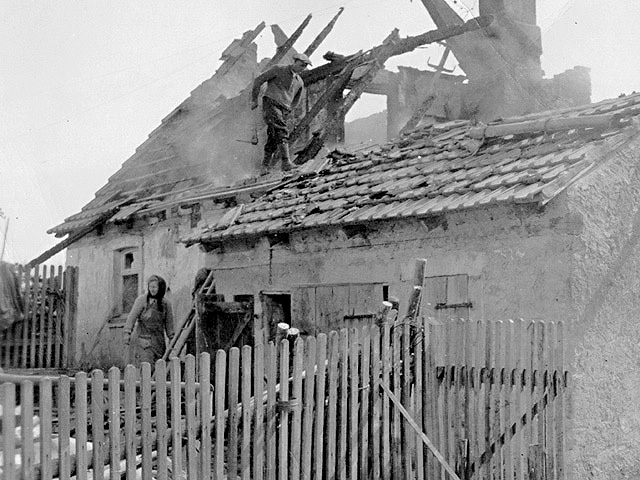
A man and woman inspect their damaged home in Neuheusen east of Bamberg. Photo: Dogface
Then comes the great picture of mass defeat, the most overwhelming sight of the war. It appears in the bent figures of old women poking through ruins for some miserable relic of the past; in the shamed, darting eyes of the beaten; in the faces of little boys who watch the triumphant columns with fear and fascination. Above all, it appears in the thousands of dusty, exhausted soldiers streaming toward the stockades. Their feet clump wearily, mechanically, hopelessly along the seemingly endless road of war. They move as haggard gray masses in which the individual has no life and no meaning. It is impossible now to see in these men the fierce power that made them fight like demons out of hell only a few months before.
Everyone knew about General George Patton’s infamous “slapping incidents,” when he physically attacked two soldiers under his command at hospital evacuation centers in August 1943. The episodes became international news — two among several erratic outbursts that may have led to his eventual removal as commander of the Seventh Army in Europe.
A woman sifts through the rubble of her home in Steinach. In the first half of April, 1945, the allies moved quickly through German towns, many already destroyed by bombing. photos: Dogface Soldier.
The men Patton slapped had been diagnosed with “exhaustion” and “psychoneurosis,” terms then used for what we now recognize as post-traumatic stress disorder (PTSD). During the First World War, it was called “shell shock.”
Patton didn’t believe in shell shock.
Steinach saw a fierce battle on April 7 before the Nazis retreated. Photo: Dogface Soldier collection
In a directive issued to his commanders, he explicitly forbade “battle fatigue” in the Seventh Army:
It has come to my attention that a very small number of soldiers are going to the hospital on the pretext that they are nervously incapable of combat. Such men are cowards and bring discredit on the army and disgrace to their comrades, whom they heartlessly leave to endure the dangers of battle while they, themselves, use the hospital as a means of escape. You will take measures to see that such cases are not sent to the hospital but dealt with in their units. Those who are not willing to fight will be tried by court-martial for cowardice in the face of the enemy. — Patton directive to the Seventh Army, August 5, 1943
At the time, the Army Medical Department was beginning to study what would later be classified as PTSD, but most of the officer corps still regarded it as cowardice.
The devastation in Lohr was mostly caused by American artillery. Photo: Dogface Soldier collection
Audie Murphy, who saw more front-line combat than almost any other American soldier, witnessed many such breakdowns. As the war dragged on and he watched more men “crack up,” his own understanding and empathy evolved. The first episode he describes in To Hell and Back is met with derision from his men — and from himself:
“Olsen is the first to crack up. He throws his arms around the company commander, crying hysterically, ‘I can’t take any more.’ The harassed captain tries to calm him, but Olsen will not stop bawling. So he is sent to the rear, and we watch him go with hatred in our eyes. ‘If I ever throw a whingding like that, shoot me,’ says Kerrigan. ‘Gladly,’ I reply. ‘In North Africa I thought he was one tough boy.’ ‘Yeah, he threw his weight around plenty.’ ‘He seemed to be everything the War Department was looking for. He was my idea of a real soldier. Then one night that little Italian, Corrego, came in drunk; and Olsen beat him up.’ ‘He should have been shot right then.’”
Lohr saw heavy fighting as allies advanced on April 3. Photo: Dogface Soldier collection.
Later, Murphy watches another man lose his senses and die as a result:
“Staggering with weariness and snarling like wolves, we meet the Germans again… We slip within 200 yards of their lines before they turn the full force of their weapons upon us. Obviously, they intend our complete annihilation. Under the furious punishment, a man a few yards from me cracks up. He begins with a weeping jag; then, yelling insanely, he rises to his feet and charges straight toward the German lines. A sniper drills him through the head; and a burp gun slashes his body as he falls.”
Poppenlaur displayed flagsmade from any white fabric that could be found. Photo: Dogface Soldier.
Near the end of the war, Murphy’s tone shifts. He shows compassion and understanding when a soldier named Anders returns to the front, determined to stay with his comrades despite his shattered nerves:
“Before we have had time to regroup for instructions, the shells fall into our midst. Eight men are knocked out; and Anders cracks up. It is not his fault. He has courage to spare, but body and nerves have taken all they can stand. He has heard one explosion too many; seen one too many die. As we check the dead and wounded, his voice goes thick. I grab him by the shoulder. He shudders and begins to shake violently. ‘What’s the matter?’ ‘I’ve gone all to pieces.’ ‘Stay here and wait for the medics. You shouldn’t have come back up.’ ‘N-n-no. No. No.’ ‘You’re no good in that shape.’ ‘I’ll come out of it.’ ‘The hell you will. You can’t let the men see you in that condition.’ ‘I’ll be quiet. I won’t say anything.’ ‘You’re going to tell it to the doctor.’ ‘If you think so, maybe I should. Maybe I should.’ He rejoins us the next day. I curse him heartily, but he only grins. When we come under heavy artillery fire, that grin is quickly erased. His nerves collapse again… Whether or not he knows or wants it, he is through. Finished. This time when I send him to the rear, I also send the colonel word to keep him there.”
Photo: Wikipedia
Murphy himself suffered from PTSD for the rest of his life. After the war, he spoke publicly about it and tried to alert the Army to its dangers — but at the time, the brass didn’t want to hear it.
Meanwhile, during the war, doctors at an airbase hospital in Arizona began recognizing and treating PTSD with compassion rather than punishment or electroshock. Their pioneering work inspired the 1963 film Captain Newman, M.D., starring Gregory Peck, Tony Curtis, Angie Dickinson, Bobby Darin, and other notables. Five stars from me.
First 3rd Division Medal of Honor Recipient Killed in Action
My Mother and Audie Murphy Ch. 55
Flo devoted a page in her album to the first Third Division Congressional Medal of Honor award recipient, Lt. David Waybur or Piedmont, California. She noted that he was killed in action near the end of the war in March, 1945.
Page in Flo’s album. Pinch out to read the whole story.
From the story: The Army, chances are, will never be a great writer. Its taciturn prose travels on a punchless belly. But some of the most spectacular stories of this war are being scribbled on battlefields in the sparse, lean, GI prose of army officers writing to headquarters of the heroism of men unto them.
Such a story is told in the recommendation for a citation for Lieutenant David C Waybur, 24… A graduate of Piedmont high school, a former grocery clerk, David Waybur enlisted in the army at the end of his second year at the University of California in 1940. Three years later, in the dead of night, young Waybur rode to army immortality at the head of a little fleet of three jeeps and fought, jeeps versus enemy tanks, a never-to-be-forgotten engagement beside a blown up bridge in Sicily.
Audie Murphy also received the Congressional Medal of Honor, the highest US military decoration for valor, awarded by the President in the name of Congress.
Third Division fights its toughest battle of the war
My Mother and Audie Murphy Ch. 53
The fight for the Colmar Pocket rages through late January 1945, a brutal campaign largely overshadowed by the final days of the Battle of the Bulge. Audie Murphy, then a young lieutenant in the 15th Infantry Regiment, endures the worst days of his war.
Bailey bridge built next to the bridge over the Ill Riverdestroyed by a tank falling in. Photo: Dogface
Through the freezing night he and his men take turns on watch. He nods off, his hair freezing to the ground, and wakes with a jerk when gunfire cracks, leaving patches of hair in the ice. By morning, a bridge over the Ill River is finally usable; a few tanks cross to join them—comforting, but also a sign that there will be no retreat.
They form up for another attack. The quiet woods erupt—mortars, machine guns, rifle fire. Murphy watches two lieutenants leap into the same foxhole; a shell follows them in and ends their lives instantly. He is knocked down by another blast, his legs peppered with fragments, but still able to fight. Tanks push forward, only to be hit and burst into flames. Crewmen stumble out, burning, screaming, cut down by enemy bullets as they roll in the snow.
Communications wire strung over German materiel. Photo: Dogface soldier collection
By nightfall the company is shattered. They huddle in the cold, eating greasy rations, waiting for ammunition and replacements. Company B has lost 102 of its 120 men; every officer but Murphy is gone. With only seventeen men left in his zone, he receives orders: move to the edge of the woods facing Holtzwihr, dig in, and hold.
The ground is too frozen to dig, so they stamp along the road to stay warm, waiting for daylight—the most dangerous hour. Their promised support does not arrive. Two tank destroyers move up, but by afternoon the situation worsens. Six German tanks roll out of Holtzwihr and fan across the field, followed by waves of infantry in white snowcapes.
Crew with an 8 inch howitzer and a heavy machine gun. Photo: Dogface soldier collection
One tank destroyer slides uselessly into a ditch; the crew bails out. Artillery begins to fall on Murphy’s position. A tree burst wipes out a machine-gun squad. The second tank destroyer takes a direct hit; its surviving crew staggers away. Murphy realizes the line is collapsing. Of 128 men who began the drive, fewer than forty remain, and he is the last officer. He orders the men to pull back.
While directing artillery fire by telephone, he fires his carbine until he runs out of ammunition. As he turns to retreat, he sees the burning tank destroyer. Its machine gun is intact. German tanks veer left, giving the flaming vehicle a wide berth. Murphy drags the field phone up onto the wreck, hauls a dead officer’s body out of the hatch, and uses the hull for cover.
Loading an M-2 chemical mortar. Photo: Dogface soldier collection
From the turret he mans the machine gun, calling artillery on the field while firing into the advancing infantry. Smoke swirls; the heat of the fire warms his frozen feet for the first time in days. He cuts down squad after squad, sowing confusion; the Germans cannot locate him and expect the burning vehicle to explode at any moment.
When the smoke lifts briefly, he spots a dozen Germans crouched in a roadside ditch only yards away. He waits for the wind to clear the haze, then traverses the barrel and drops all twelve. He orders more artillery. Shells crash around him; the enemy infantry is shredded, and the German tanks pull back toward Holtzwihr without support.
A tank destroyer in the Colmar battle. Photo: Dogface soldier collection
Another bombardment knocks out his telephone line. Stunned, Murphy finds his map shredded with fragments and one leg bleeding. It hardly registers. Numb and exhausted, he climbs off the tank destroyer and walks back through the woods, indifferent to whether the Germans shoot him or not.
Stretcher crew of medics. Photo: Dogface soldier collection
Murphy was 19 years old.These are the actions that win him the Congressional Medal of Honor.