American Red Cross Training

You are covered by the international rules of war

My Mother and Audie Murphy Ch. 9

On Monday morning April 17, 1944 the three women from Washington state reported for training at the American University campus. They checked into a large classroom full of milling women and immediately lost track of each other. In the din Flo could hear accents from all over the country, and as she met and talked with the recruits, she was impressed by their high level of education and abilities.
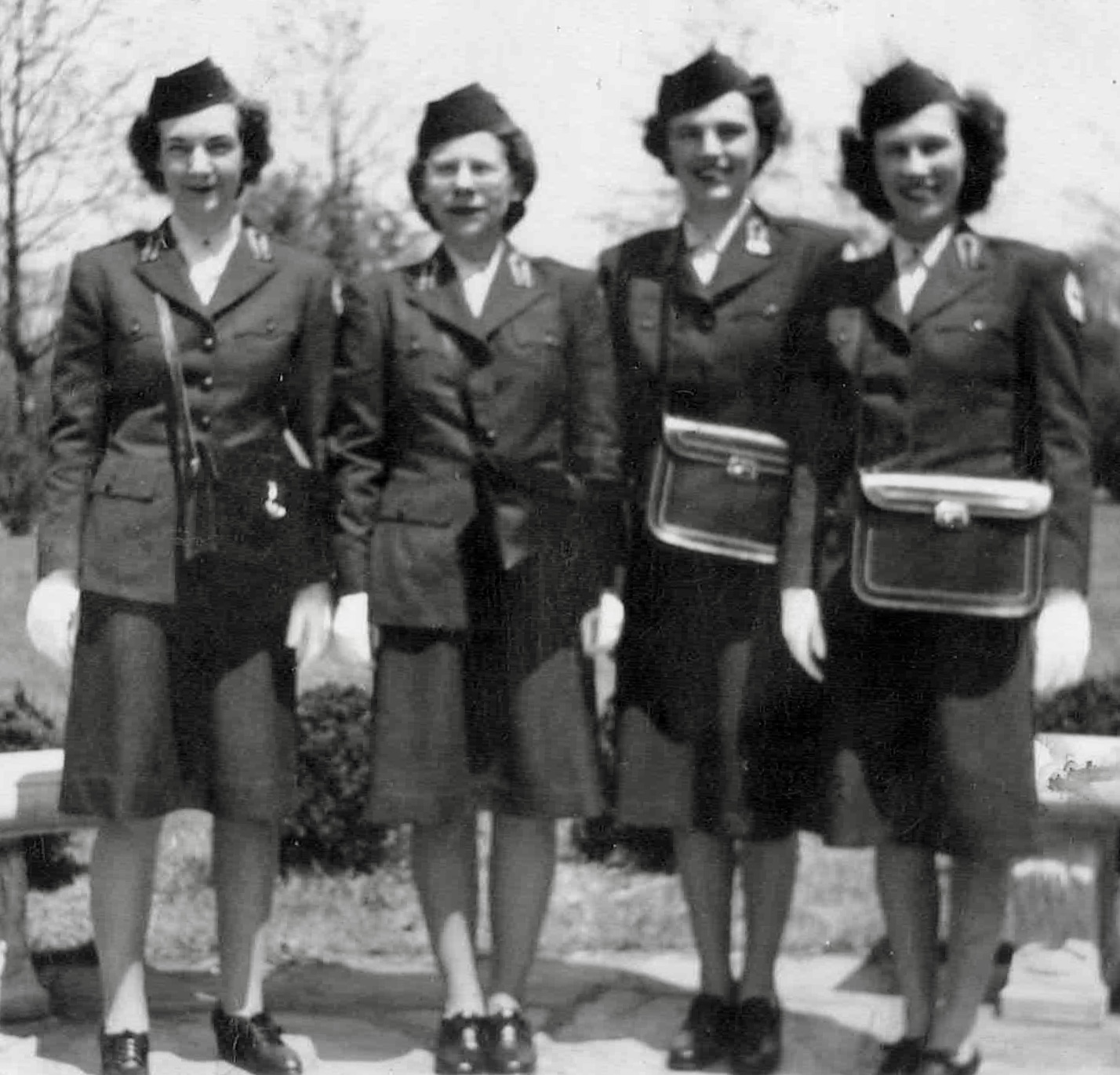
At graduation, Flo was photographed with her Washington State counterparts–the Suksdorf twins and a woman from Seattle, Josephine Ryan. Flo at right.

That first day was mostly filled with speeches from ARC directors, none particularly memorable. Then, the trainees fell into a routine: up at 6am, lectures and exams starting at 8am.

One instructor they dubbed Theda Bara. She was a thin older woman, hair drawn severely back from her face, who had served in France during “the last show” as she called the Great War. She warned of the pitfalls and perils women face in situations where they are sometimes outnumbered by men 100 to 1.

The women were admonished to date only officers and to “be careful not to let your heads be turned by all the attention.”

“As ARC staff assistants you are considered officers if captured, the equivalent of second lieutenants, and you are covered by the international rules of war,” she told them. 

The women were allowed extra time to shop and they needed it. They hadn’t realized there was so much shopping involved–at their own expense. They were given one set of summer and winter Class A uniforms (dresses and skirts only; no pants), which they would need to have fitted. Flo was also issued a trench coat type raincoat, and a heavy topcoat with removable red lining. The Red Cross paid for the uniforms, but the women had to pay for a long list of required clothes and equipment. The list specified exactly how many white blouses, socks, cotton underpants, girdles, and cotton gloves they would need, plus odd items like canteen, web belt, musette bag (a shoulder bag, like a purse), boots, duffle bag and foot locker, leaving them to scurry all over town to track down every item on the list. 
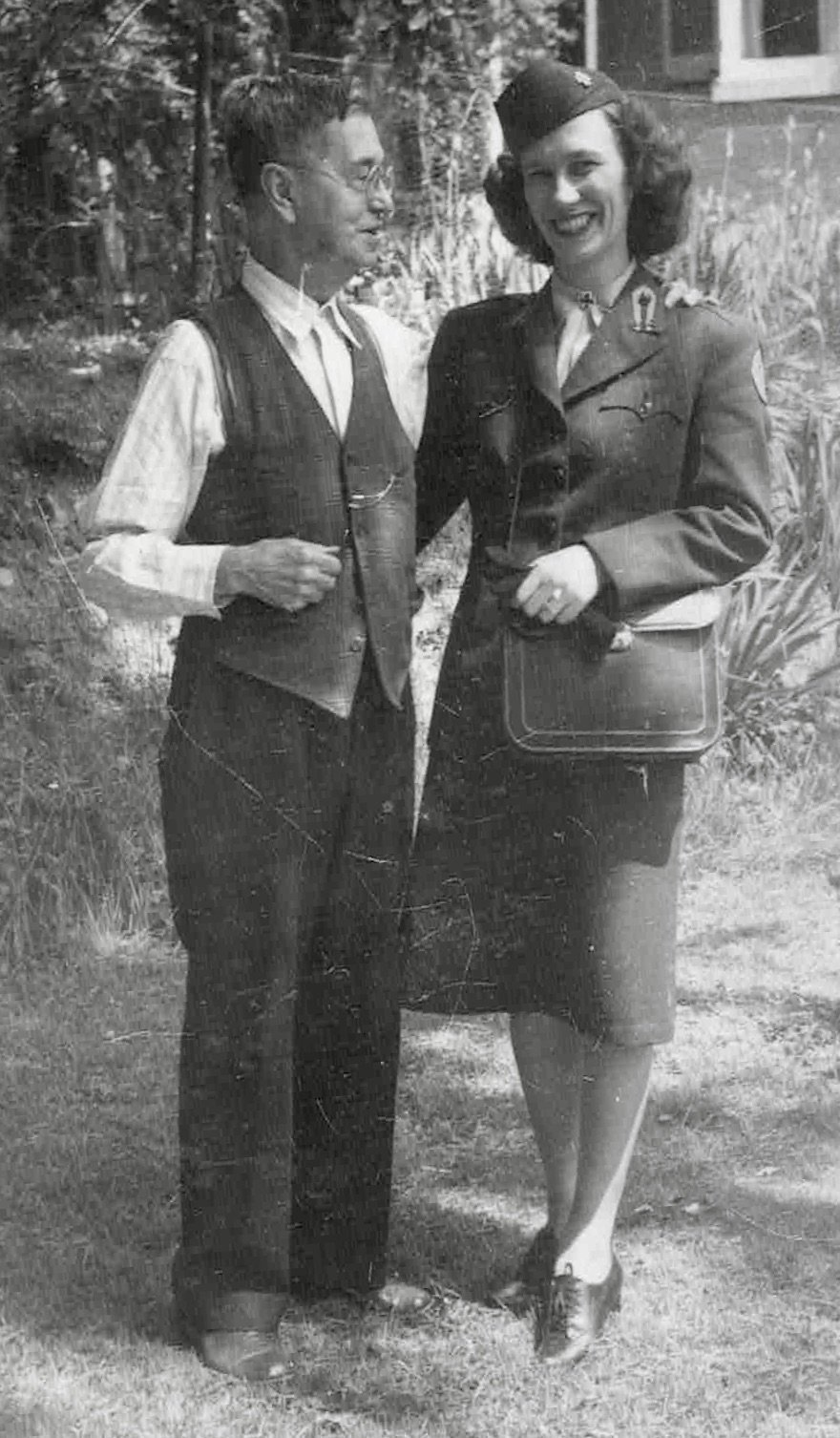
In her new uniform with “uncle” Alf

Once she had been fitted for her new uniforms, Flo paid a visit to “Uncle” Alf. The Wick family’s dear old friend, Alfred May, lived in Washington and Flo had telegrammed him of her arrival. She hadn’t seen her gay “uncle” since he had visited the family in 1929 when her father was still alive. Uncle Alf had been her father Ben’s partner in the family chicken farm business in Oregon and he was a presence in the four daughters’ lives until the business went bust and he joined the Navy in WWI. Alf, the son of a costume making English family–whose clients it was said had included the Queen–had dressed the girls and himself in Shakespearean outfits and produced plays. Flo had made a quite passable Hamlet. Alf was still living with the family who had taken him in, though he had retired from his job at the Naval Academy. Flo and Alf were photographed together in front of Alf’s apartment.

Back at the training school, a teacher admonished the women. “Once you get orders you’re incommunicado until you reach your destination, which might take as long as two months.”

Chapter 10: https://mollymartin.blog/2025/02/17/a-reprieve-and-a-little-rr/
Surrounded by Nazis at the Volturno

Chapter 6: My Mother and Audie Murphy

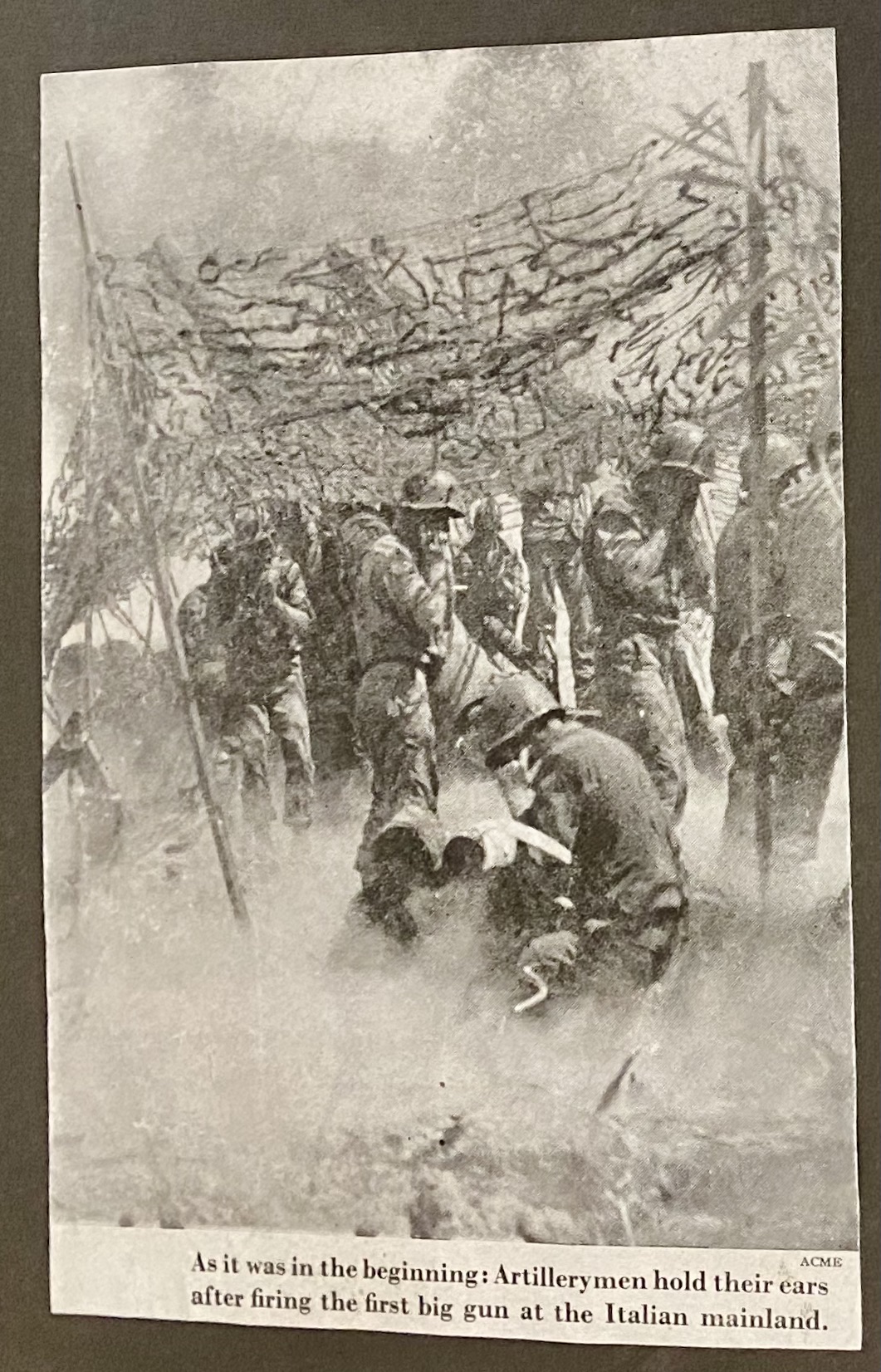
October 1943. Murphy lands at Salerno during the Allied invasion of the mainland.

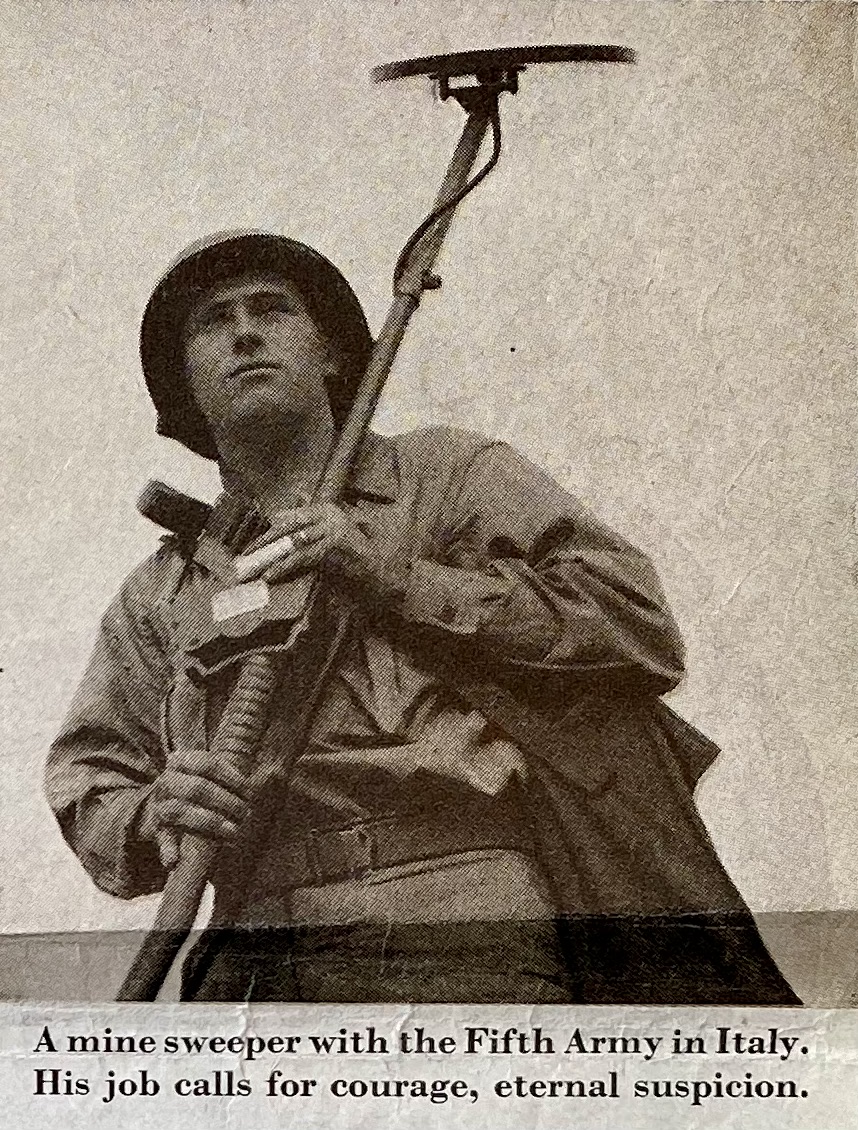
Clip from a Life Magazine story pasted in Flo’s WWII album

Italy has surrendered, and the road to Rome appears deceptively simple. Yet, the journey is anything but straightforward. Many thousands of lives will be lost on the road to the Eternal City.

“We land with undue optimism on the Italian mainland near Salerno. The beachhead, bought dearly with the blood and guts of the men who preceded us, is secure….We are prepared for a quick dash to Rome,” wrote Murphy in his autobiography, To Hell and Back.

This was far too optimistic. The Third Division will be fighting and dying on the Italian beaches and mainland until May, 1944.

The troops of the Third Division must first push through Salerno, cross the Volturno River, and take Anzio, Mignano, Cassino, and Cisterna before they can approach Rome.

Audie Murphy leads a small, diverse squad of men. Among them are an Italian immigrant, a Cherokee Indian manning the machine gun, an Irishman, a Pole, a Swede, and a Smoky Mountain bootlegger.

Members of Murphy’s squad begin to fall almost immediately. One soldier hesitates under heavy Nazi fire as he runs for a bridge and is cut down. The squad carries his body to the highway where it can be easily found.

“In death, he still bears the look of innocent wonder. He could not have lived long after tumbling. The bullet ripped an artery in his throat,” wrote Murphy.

Another fighter takes out a German machine gun nest and a foxhole with grenades, killing five Germans.

From Flo’s WWII album

The small victory is short-lived.

Later, the five remaining men find themselves trapped in a cave, surrounded by the enemy. The cave is infested with fleas, and the men are bitten mercilessly as they wait, parched and desperate.

We come to know and care for the men in Murphy’s squad, only to witness their deaths or injuries that force them out of the fight. Murphy becomes the last man standing at the end.

“All my life I wait to come to Italy,” says the Italian soldier. “I write my old man that the country stinks. Wait till you get to Rome, he says. Wait’ll you see your grandfather’s place. Then you’ll see the real Italy.”

The Italian never makes it to Rome. After three days without water, he breaks under the strain, running out of the cave only to be hit and killed by enemy fire. “He has come home to the soil that gave his parents birth,” wrote Murphy.

Finally, American troops break through the German lines and rescue the remaining men. Relief arrives with rations, water, and ammunition.

The next morning, they cross the Volturno River and join the push toward their next major objective: the communications center at Mignano.

Quotes are from Audie Murphy’s autobiography, To Hell and Back.

Chapter 7: https://mollymartin.blog/2025/01/30/train-to-d-c-april-1944/

Audie Murphy Fights to Fight

Chapter 4: He Sheds First Nazi Blood in Sicily

They nicknamed him Baby and he couldn’t shed the tag. Audie Murphy had to fight for his place in combat. From the beginning of his military journey, he faced skepticism at every turn. Rejected by the Marines and paratroops, he was finally accepted by the infantry. 

Battle route of the Third Infantry Division

Immediately his first commanding officer tried to shove him into a cook and baker’s school where the going would be less rough.

“That was the supreme humiliation. To reach for the stars and end up stirring a pot of C-rations. I would not do it. I swore that I would take the guardhouse first. My stubborn attitude paid off. I was allowed to keep my combat classification; and the Army was spared the disaster of having another fourth-class cook in its ranks,” he wrote in his autobiography.

In training, officers took one look at his skinny body and boyish face and tried to steer Murphy away from the front lines.  At Fort Meade, one well-meaning officer attempted to save him from combat altogether by assigning him a clerical position at the post exchange. Again he stuck to his guns.

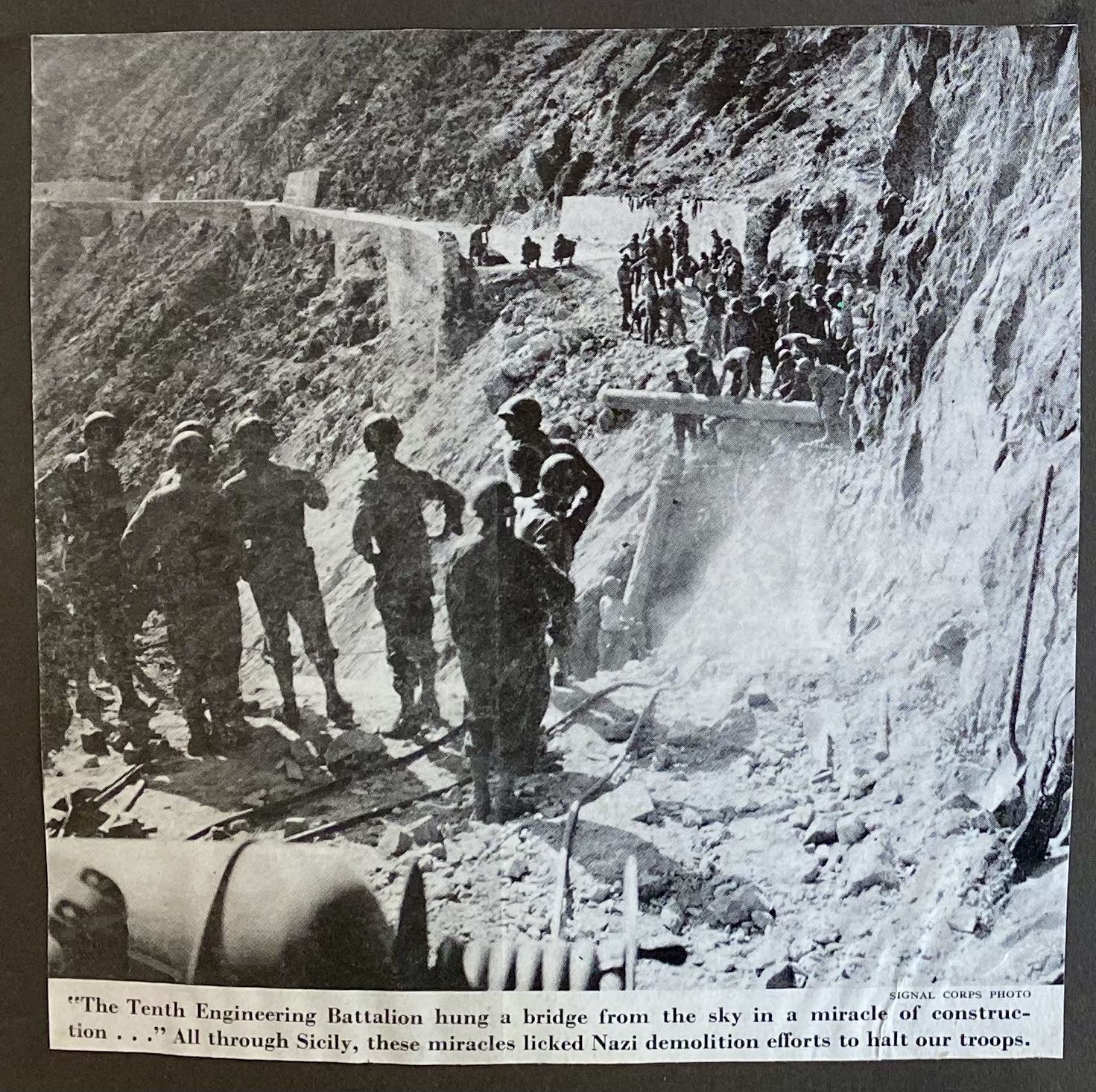
In July, 1943 he made it to the front in Sicily, but his youth and appearance worked against him even there. He was transferred to headquarters to serve as a runner. But Murphy wouldn’t stay away from the action. He repeatedly sneaked off on patrols and scouting missions. His determination eventually forced his commander’s hand. He was promoted to corporal.

Life Magazine photo essay posted in Flo’s album

By then, Murphy had already missed his chance to fight in North Africa. His convoy had docked in Casablanca only after the battles were over. Instead of combat, he endured more training—much to his frustration. “I just wanted to fight,” he later said.  

Murphy finally got his chance in Sicily, but it was far from the glory he had imagined as a boy.  

On his first day in combat, a mortar attack killed a young soldier sitting nearby.  A boom, a whistle, the earth shakes, and the boy falls from the rock where he was sitting, just taking a break. As simple as that. One minute you’re sitting on a rock. The next minute you’re dead.  

This was not the war Murphy had dreamed of.  He had imagined men charging gallantly across flaming hills. Bugles blew, banners streamed, and the temperature was mild. Enemy bullets always miraculously missed, and his trusty rifle always hit home. As a kid, the dream was his escape from a grimly realistic world of poverty.

But now, as he trudged across the Sicilian battlefield, sweat soaking his uniform, his boyhood fantasies were shattered.  

“Maybe my notions about war are all cockeyed. How do you pit skill against skill if you cannot even see the enemy? Where is the glamour in blistered feet and a growling stomach? And where is the expected adventure? Well, whatever comes, it was my own idea. I had always wanted to be a soldier,” he wrote.  

His skill with a rifle, however, did not go unnoticed. In one skirmish, Murphy shot two German officers from their horses with two clean shots. He had shed his first blood. But he felt nothing except a weary indifference.

Even as malaria struck and forced him into a field hospital for a week, Murphy returned to the lines. The disease would haunt him throughout the war, but it didn’t stop him. 

He had loved the idea of war, but it didn’t take long to hate the real thing.

“The Sicilian campaign has taken the vinegar out of my spirit. I have seen war as it actually is, and I do not like it. But I will go on fighting,” he wrote.

*Quotes are from Audie Murphy’s autobiography, To Hell and Back

A Photo Album Tells the Story

My mother and Audie Murphy Chapter 2

The photo album that my mother, Flo Wick, shared with Audie Murphy when they reconnected in 1955 is massive. The scrapbook is filled with photographs, newspaper clippings, letters, and travel paraphernalia and it tells the story of Mom’s two years as an American Red Cross (ARC) “donut girl” in Europe during World War II. 

It also tells the story of the Third Infantry Division, the only American division that fought the Nazis on every front—North Africa, Sicily, Italy, France, and Germany. “The Fightin’ Third” had more casualties—nearly 35,000—than any other division, and it holds the record for high combat citations. 

Throughout our childhoods my brothers and I pulled out the album, looked through it, and listened to our mother’s war stories. We kids especially liked the sketches by Flo’s comrade Liz Elliott of the everyday lives of the “donut gals.”

When my mother died in 1983 at the age of 70, I claimed the album and it’s been stored in garages and closets ever since, occasionally brought out for perusal by relatives or friends with an interest in World War II. For a time, it lived in a mold-infected storage room and so it was infected along with other archives. I exposed each page to sunlight in an effort to reduce the mold and that helped, but when I really wanted to examine the book, I donned a respirator to avoid breathing in clouds of invisible mold spores.

Mom was a scrapbook maker and for that I am now grateful as I try to piece together the events of her life during the war. Perhaps she had the idea for the album even before she sailed to Europe on a hospital ship in May 1944. I do know that the act of putting it together when she returned home after the war in 1946 salved her sadness at the deaths of so many and helped her readjust to life stateside where it seemed Americans had moved on and no longer wanted to think or talk about the war.

Recently I went through the album page by page, photographing all. That’s when I discovered that Flo had had a friendship with Audie Murphy that began somewhere in France when she served him donuts and continued after the war.

This story follows two narratives: one chronicles Flo Wick and the other chronicles Audie Murphy. They were both attached to the Third Division but mostly in different parts of the North African and European theaters. Their paths intersect in the Vosges mountains of France and as the Third pushed its way into Germany. For Audie’s tale I’m referencing his autobiography To Hell and Back, as well as letters and artifacts saved in Flo’s album.

A Little Background

She came of age during the Depression

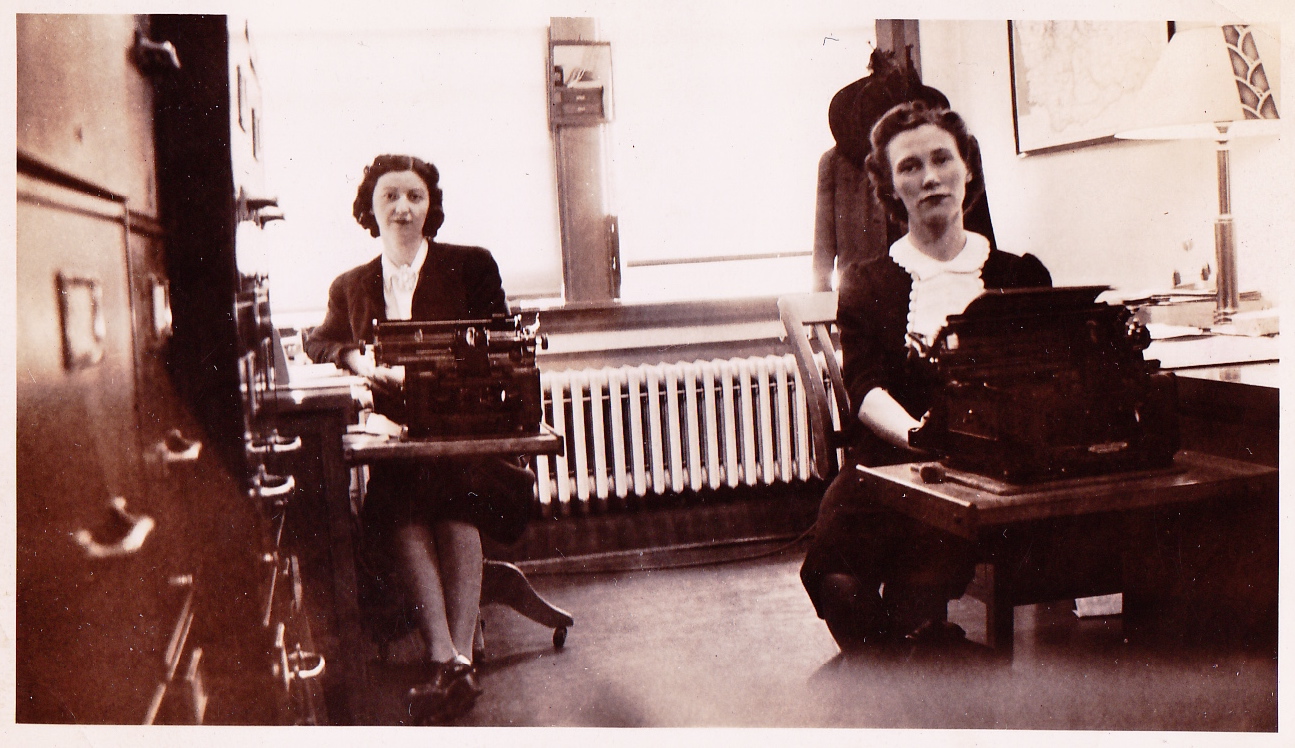
Born in 1913, Florence Wick had graduated high school at 16 after being allowed to skip ahead a grade. Her class graduated in 1929½. Flo was excited about the prospect of going to college. She planned to enroll at the state college, but the Great Depression intervened. Instead, she completed a secretarial course at a trade school. At 17 she started working to help support her family. In 1931 she found a job as a stenographer for the Washington State Department of Highways. 

Flo (R) at the Highway Dept.

By the time she learned about the ARC program, Flo had been working full time at that job for more than a decade. No doubt she was ready to do something else—maybe anything else. This seemed like an opportunity to travel outside of Washington State and to see other places in the world. And she was anxious to help the war effort.

He always wanted to be a soldier

Flo’s photo of Audie 1945

Even as a little boy Audie Murphy had wanted to be a soldier. His share cropper father abandoned his mother and their children leaving the family destitute. Then, when he was 16, his mother died. Born in 1925, the seventh of twelve kids, Audie tried to provide for the others, dropping out of school in fifth grade to pick cotton for a dollar a day. But he knew he had to get out of Farmersville, Texas. He tried to join the paratroopers and the Marines, but was told he was too short at five feet five. The Army took him and trained him to be a soldier. The baby-faced kid earned the nickname Baby. He was already a good shot, having fed the family with wild game. He couldn’t wait to shoot the enemy.

Murphy was assigned to the Third Division, then part of the Third Army under the command of General George Patton. He joined them in Sicily in 1943, on the way from Morocco and North Africa. They would fight their way through Italy and France into Germany. Murphy would be one of a very few of his company left standing and would become the most decorated American soldier of the war.

Chapter 3 https://mollymartin.blog/2025/01/07/flo-gets-a-telegram/

My Mother and Audie Murphy

She took the only pictures as he was honored

Chapter One

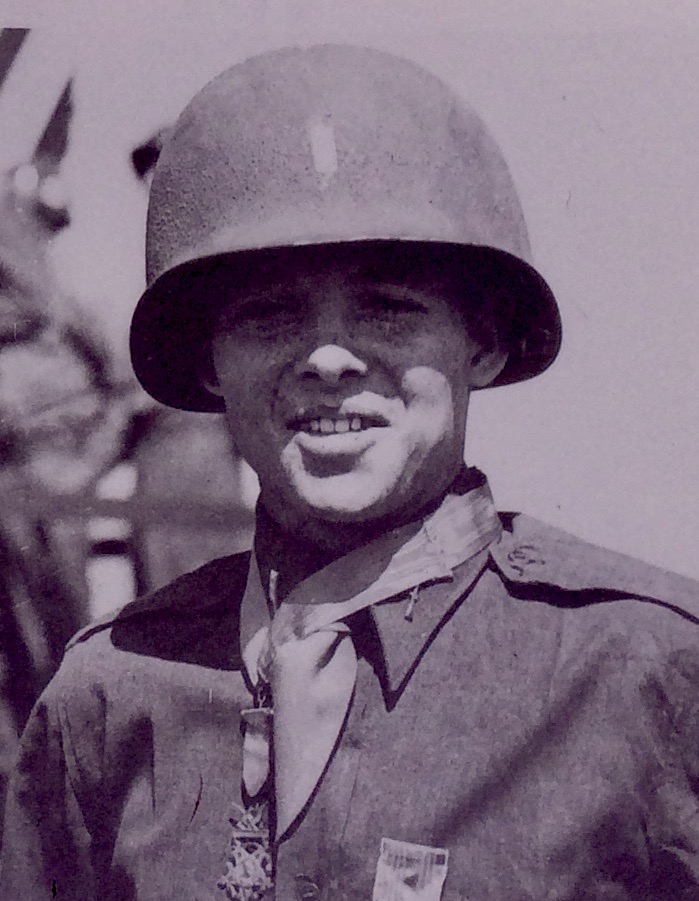
“When are we going to get some more donuts?” asked Audie Murphy of the photographer after he received the highest of all military honors, the Congressional Medal of Honor, in the field in Salzburg, Germany.

Flo’s photo of Audie Murphy receiving the Congessional Medal of Honor

It was 1945 and the photographer was my mother, Florence Wick. She had been serving as a Red Cross “donut girl” with the Third Infantry Division in the Europe. She had met Murphy and served him donuts somewhere in France.

That photograph was the only one taken of Murphy at the awards ceremony and it was published worldwide and used to recreate the scene for the movie of his life story, “To Hell and Back.”

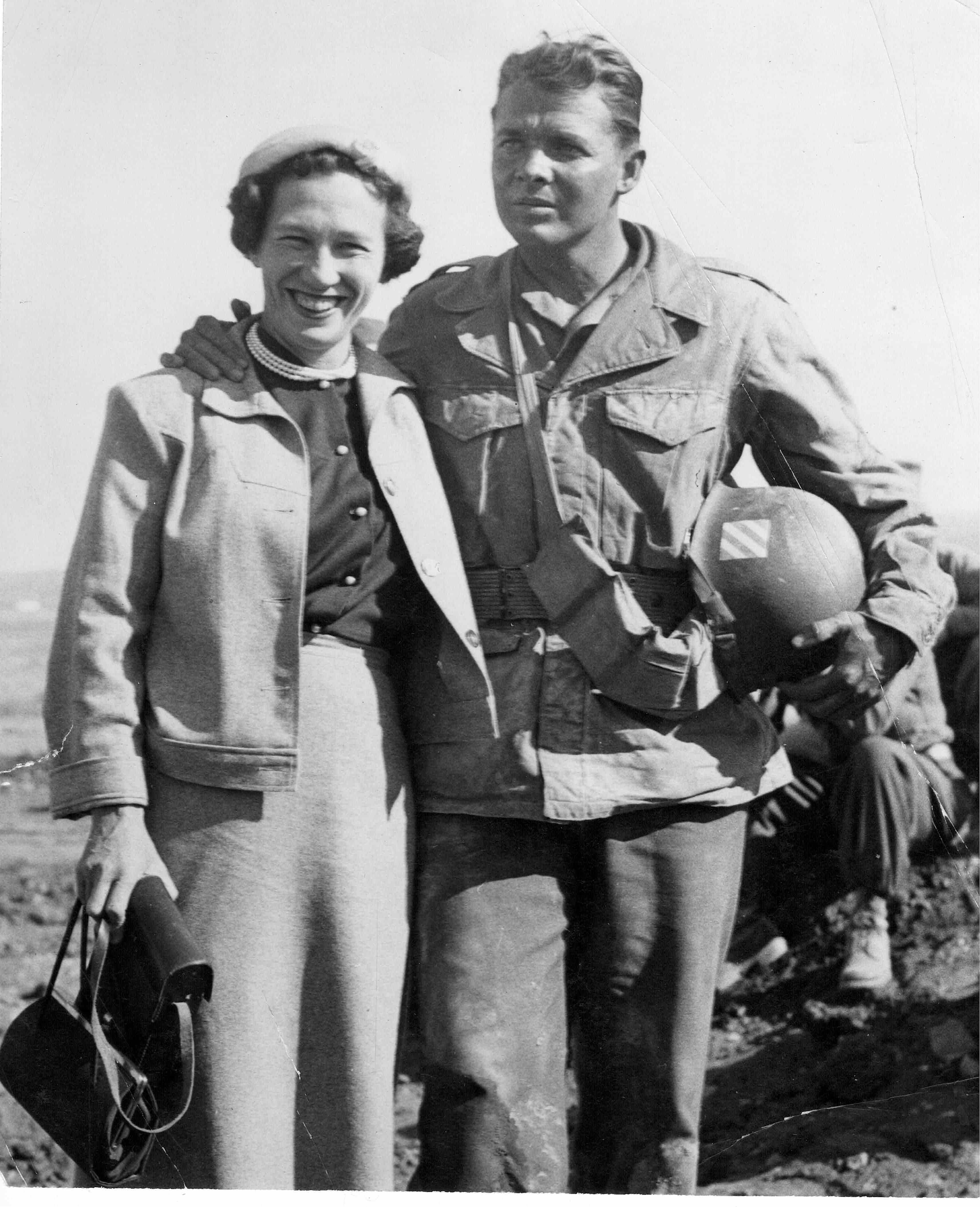
1955 Flo and Audie reconnected on the movie set of To Hell and Back. Photo by Rollie Lane. The photo at top is the one taken by Flo at the awards ceremony in Salzburg in 1945.

The most decorated soldier of WWII, Audie would cross paths with Flo again ten years later when he came to our hometown of Yakima, Washington to film the movie. There at the Yakima Firing Center the two of them looked through the scrapbook Flo had compiled of her adventures and heartbreaks in the European theater.

Now I have that scrapbook. It’s gigantic and weighs 25 pounds. I have wanted to use its contents to tell my mother’s story, but the project is overwhelming. Maybe I can start with Audie.

Audie Murphy was known worldwide after the war. He had a huge fan club and maybe still does (he died in 1971). One of his fans recently got in touch with me and asked if I could supply more stories and pictures. Yes! Flo stayed in touch with Audie. She corresponded with his biographer, his associates and those putting together a memorial in Texas. She saved mementos and newspaper clippings.

As for her photo that became famous, she gave it freely and others took credit. A post-war letter she saved warns that others are charging for the use of her photo. She never received credit.

Chapter 2: https://mollymartin.blog/2024/12/31/a-photo-album-tells-the-story/