Our First Dyke March June 21, 2026

Generations Unite at Sonoma County’s Dyke March

There might be a higher percentage of lesbians in Sonoma County, California, than anywhere else in the world.  So, even though we’ve had gay pride parades and celebrations since the 1980s, it’s surprising that only this year did we have our very first dyke march.

Organizers say it was about time. 

An estimated 600 people participated in the march and “Lez-a-Palooza Street Fair on the Square” in Santa Rosa, the county seat. Cries of “We’re here, we’re queer. Get used to it!” resounded in the city streets on June 21.
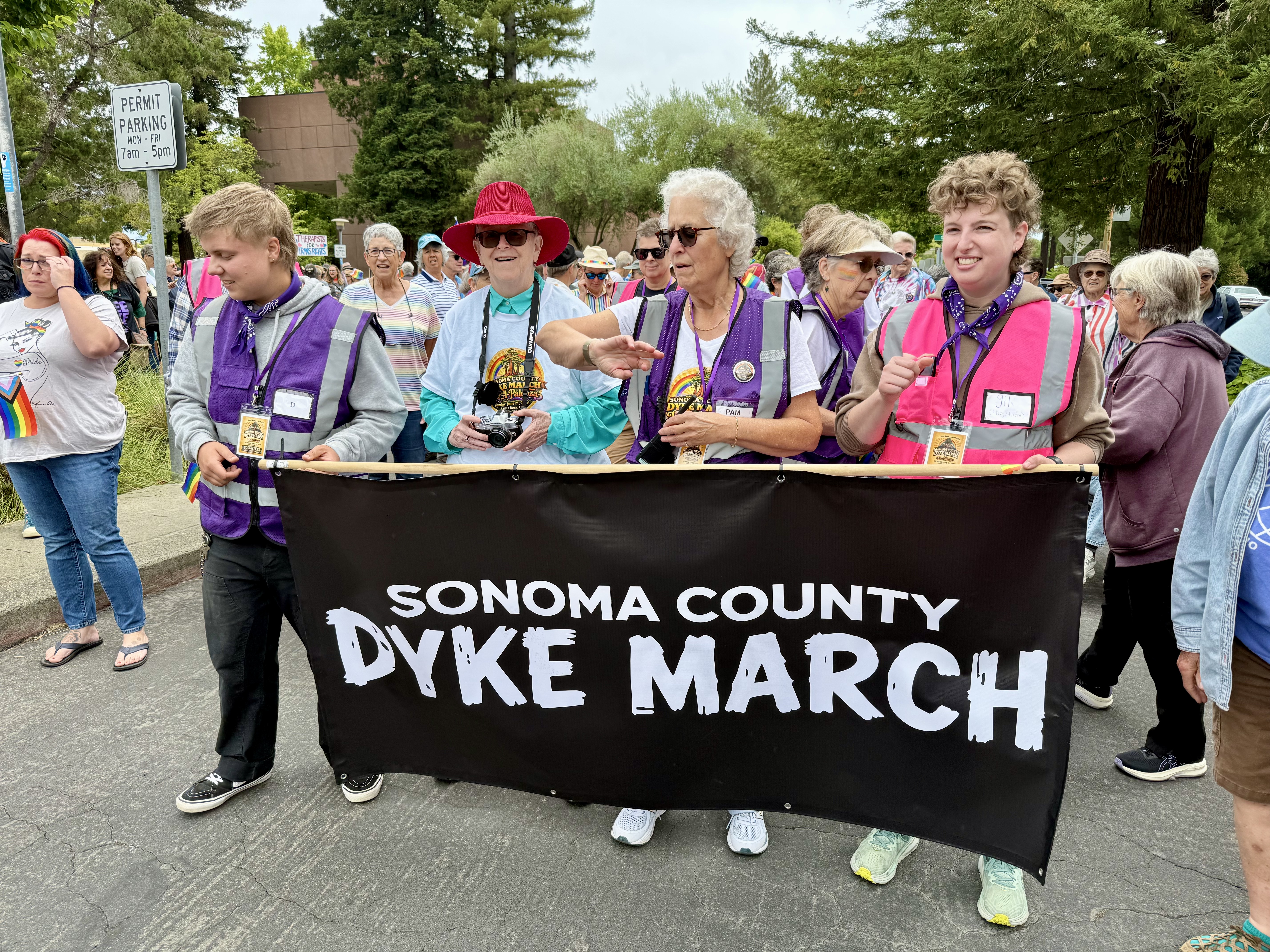
Movement Origins

Dyke marches began in 1993 in Washington, D.C., organized to confront lesbian invisibility and erasure within both the broader LGBTQ+ movement and society at large. Rejecting corporate sponsorship and respectability politics, dyke marches centered grassroots power, direct action, and community care. Built on a demand for visibility, justice, and collective strength, the movement quickly spread to cities including San Francisco and Chicago, becoming a powerful tradition of lesbian-led activism and celebration.

Organizers say the Sonoma County Dyke March proudly carries forward this legacy, uniting generations and creating powerful common ground across the queer community. A dyke march is not a parade. It’s a community-centered march focused on visibility, history, and connection. The Lez-a-Palooza street fair creates intentional space to uplift dykes, lesbians, queer, non-binary, and the sapphic and trans community, while standing in solidarity with the broader LGBTQIA2S+ community.

Organizer Pam Adinoff, 72, said, “As a lesbian who has been out in Sonoma County for 53 years, my identity has been really important to me, but I have felt more and more invisible over the years as an aging lesbian. We have a very, very large senior lesbian community and a lot of them showed up for (last year’s) Pride and they were all marching under different organizations. But nothing said the word ‘lesbian.'” So Adinoff, along with a number of like-minded women, decided to address that sense of invisibility.

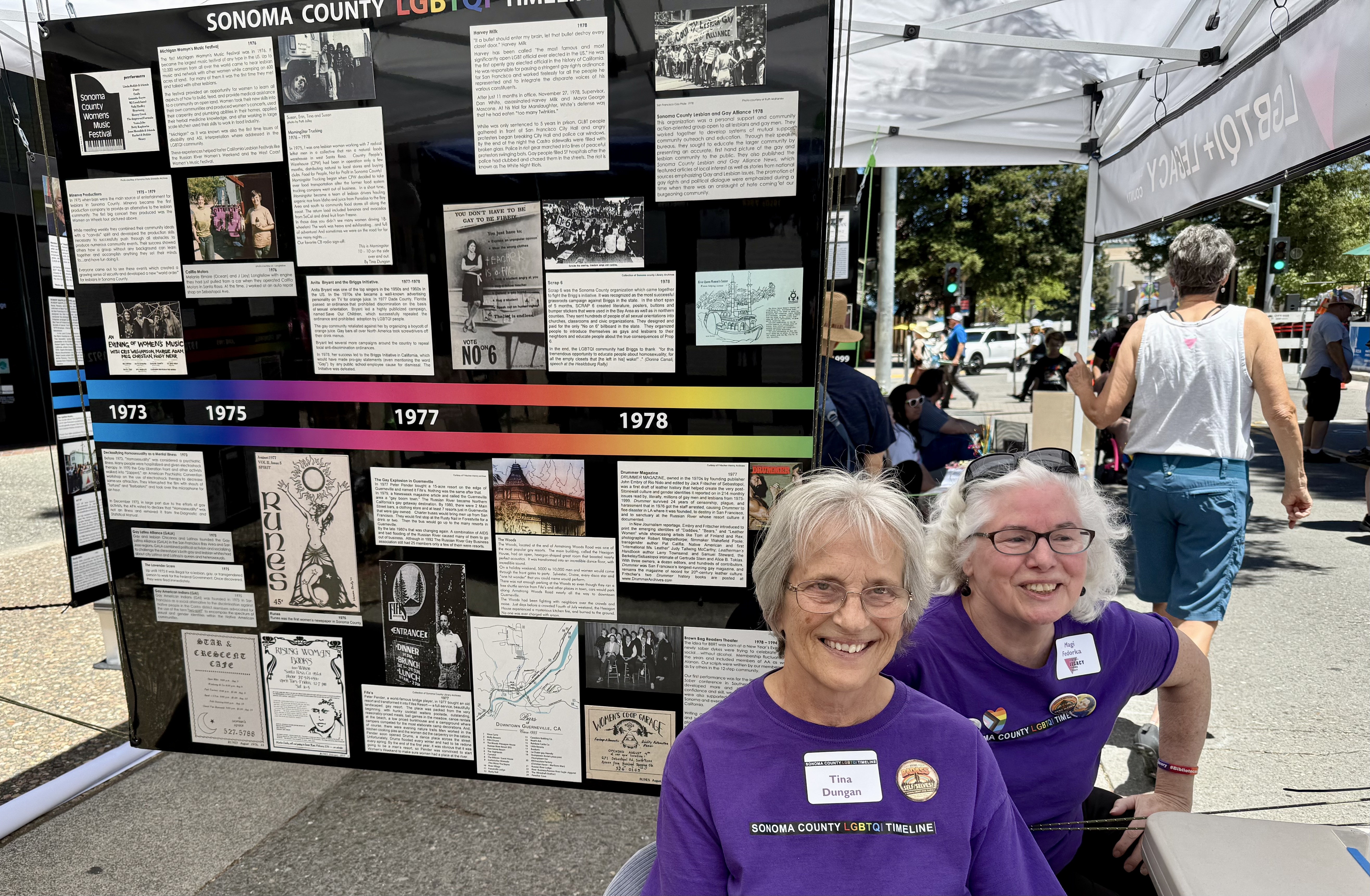
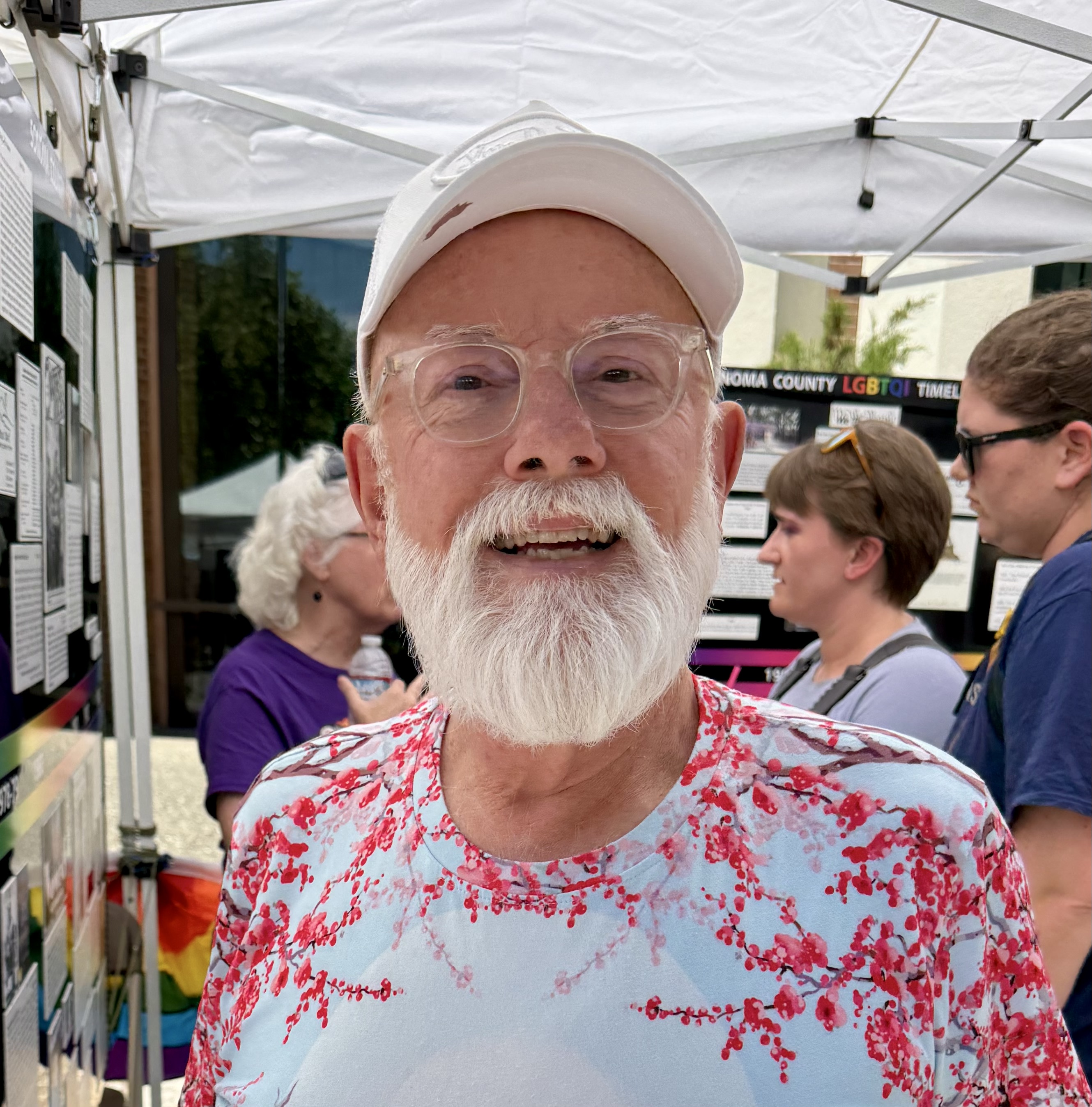
Pat Andreine, one of the organizers, said the best thing about the march was that it was intergenerational. Along with her partner, the historian Tina Dungan, she staffed the Sonoma County LGBT history timeline booth. Pat said they had lots of interest from young people.
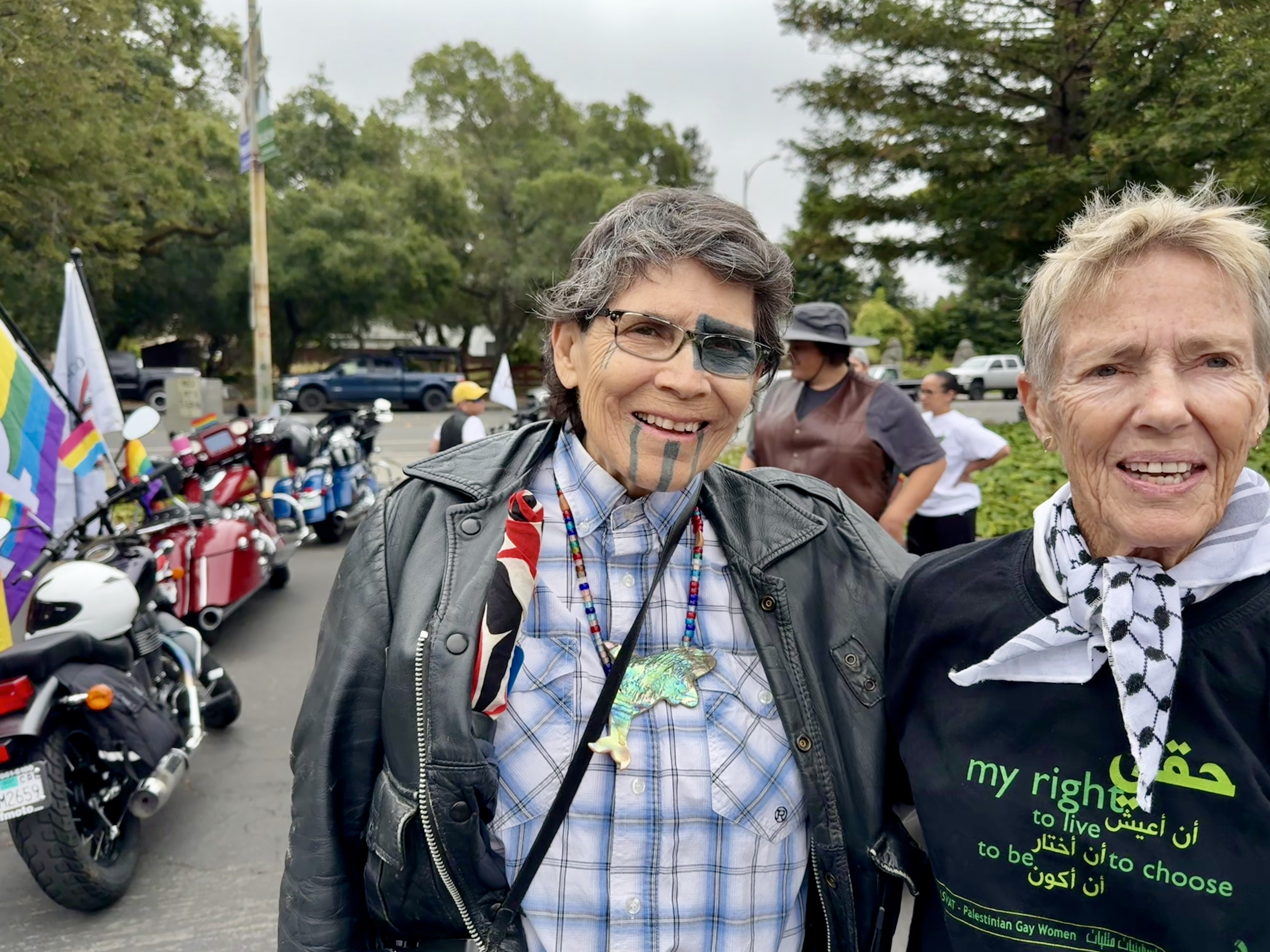
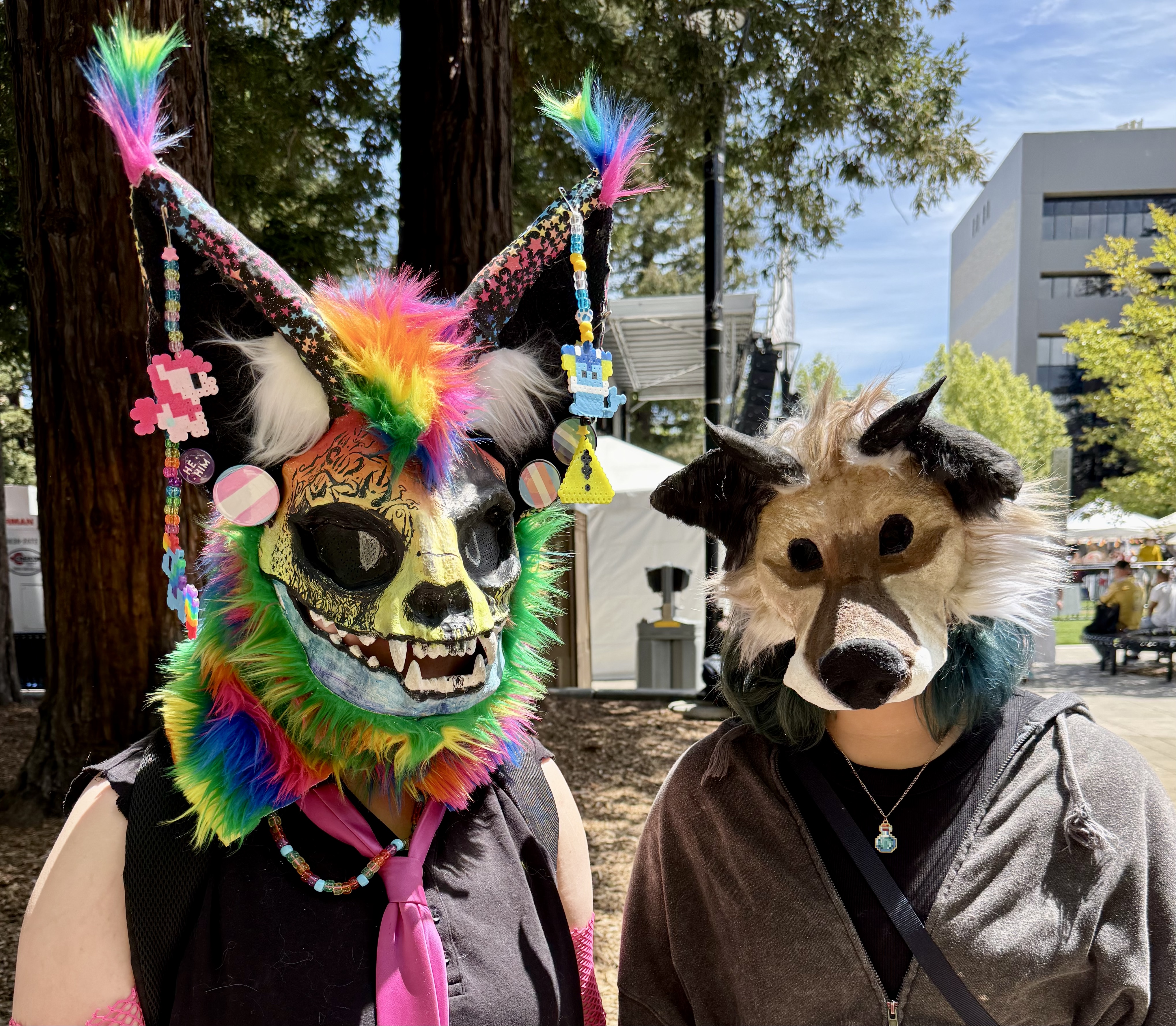
New buddies L and Chivvis

Radical Inclusion

It’s an event meant to both elevate and celebrate lesbian culture and history, organizers said. Crucial to its success and its mission are the people who span ages and identities who have been recruited to help get the first-ever event off the ground.

“In writing our mission statement, we met with different groups of people, trans, non-binary, ‘How does this mission statement sound? Is there anything we need to change and do you feel included and do you feel seen?'” Adinoff, of Petaluma, said. “Visibility is one of the only things that we all want, we are all so different. But we wanted to create a warm embrace in a time when our community is facing immense (threat).”

“Part of the intention of this march is to make a strong statement of protest because the queer community is very much under attack. Trans lives are being targeted, non-binary people, marriage equality, and we want to make a statement that what is happening in the country right now, aimed at the queer community, is not OK,” said organizer Nancy Kelly, 68.

Santa Rosa natives Bonnie Hogue and my wife, Holly Holbrook, agreed that it was revolutionary to be part of the first dyke march in their hometown. Holly said that, if when she was younger there had been this kind of lesbian visibility, she would have figured out her sexuality a lot sooner.
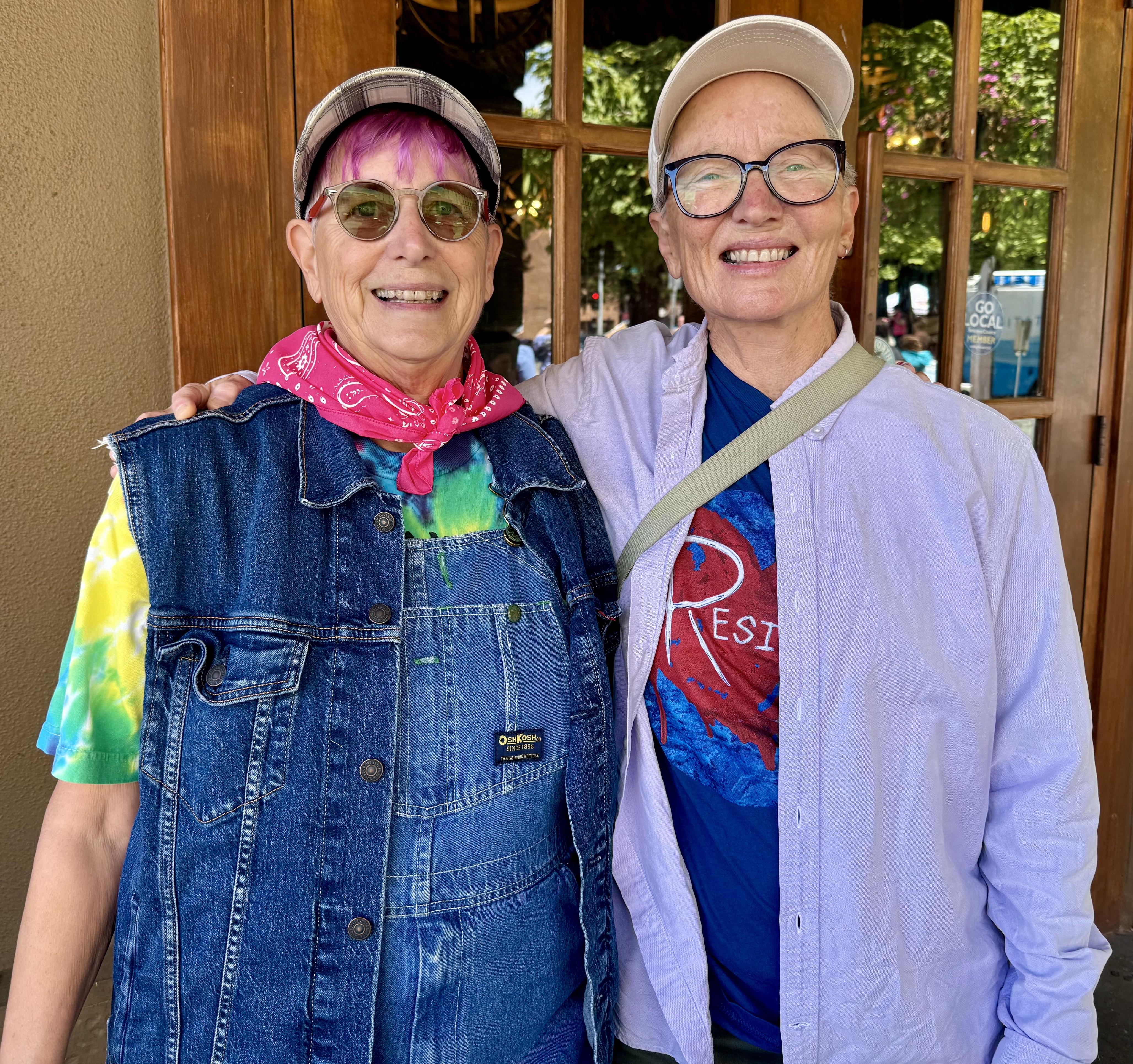
Holly (L) and Bonnie, Santa Rosa natives

Reclaiming the Word

And that word “dyke” was intentional, too. “The word ‘dyke’ definitely used to be a slur,” said Kelly. “One of the things that the gay and queer community does is … take a slur and put it on themselves and reclaim it. So dyke used to be a derogatory word, as did queer.”

Much work was done in the organizing coalition to open the event to all identities, organizers said. “…There was a term – TERF, trans exclusionary radical feminist – meaning only people that were born women can identify as women,” said Alicia LeCompte, 38, of Santa Rosa. LeCompte, who hosts regular queer kickball and climbing events, wasn’t interested in supporting an event that wasn’t welcoming to all women. “A lot of my friends who are non-binary were asking, ‘Are they going to be inclusive to all genders and all queer expressions?'” she said. “Are they the type of people that we want to collaborate with, are we on the same wavelength?”

The answer was Yes. The event’s motto: All identities, all orientations, one march.
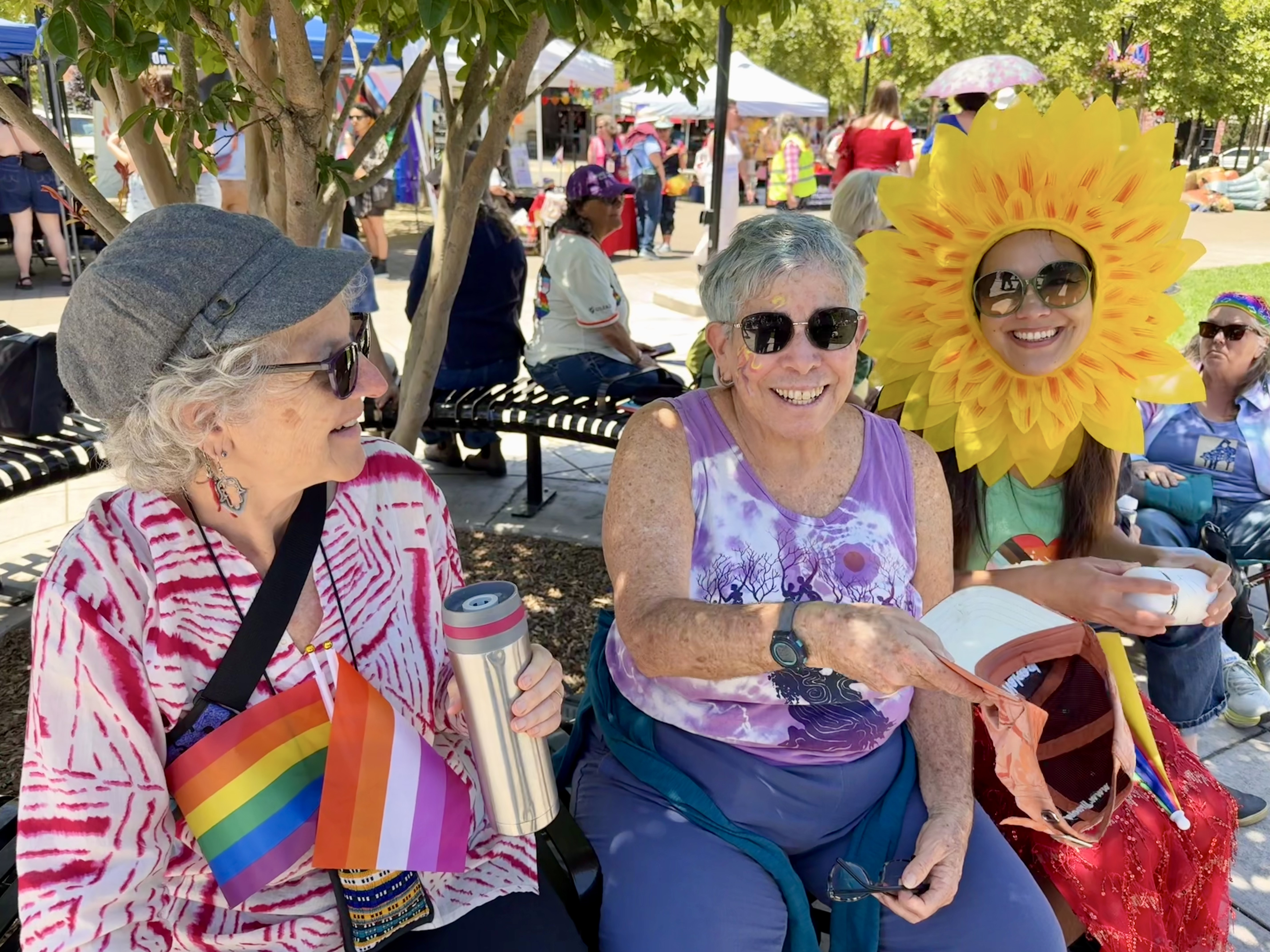
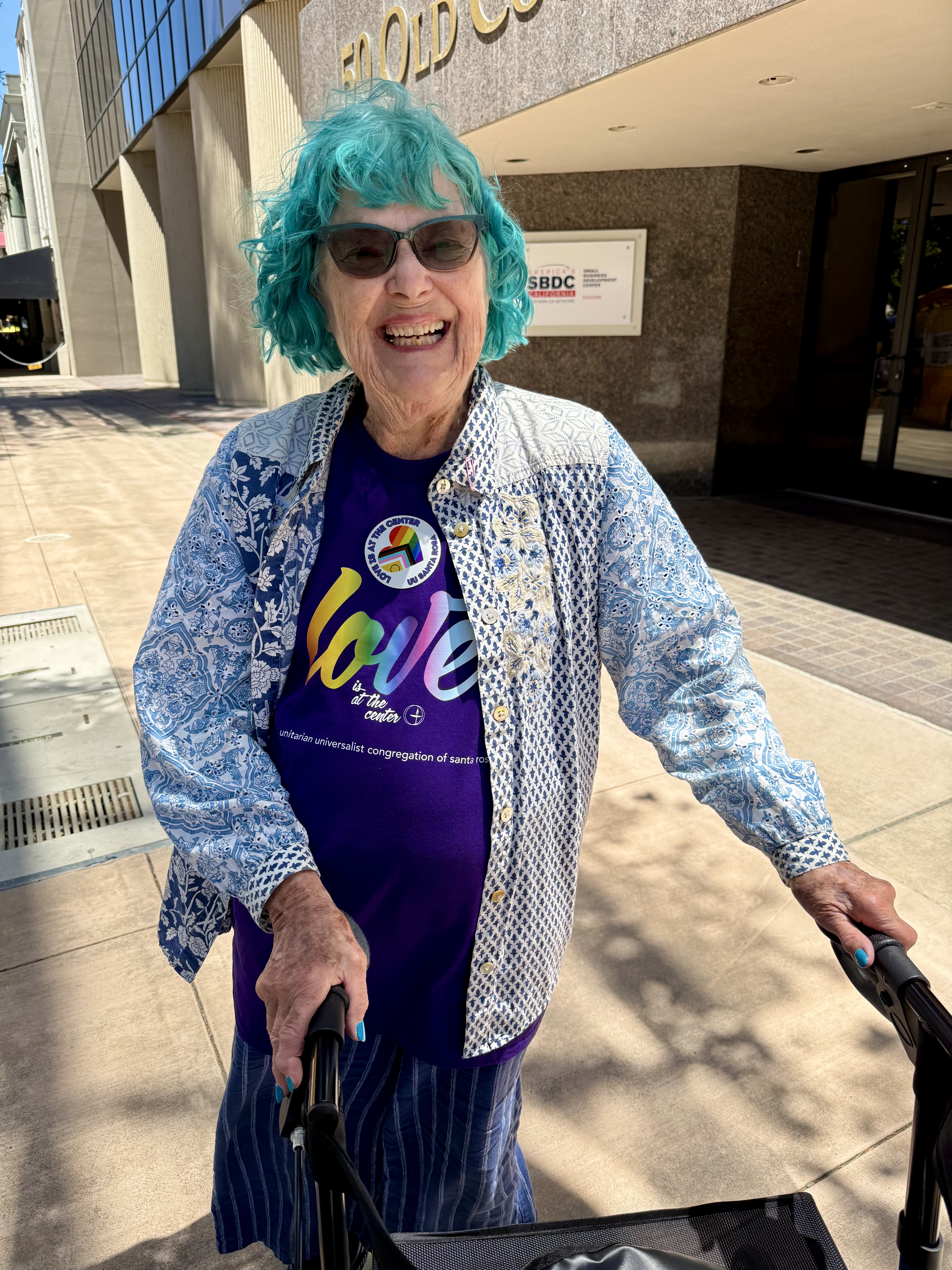
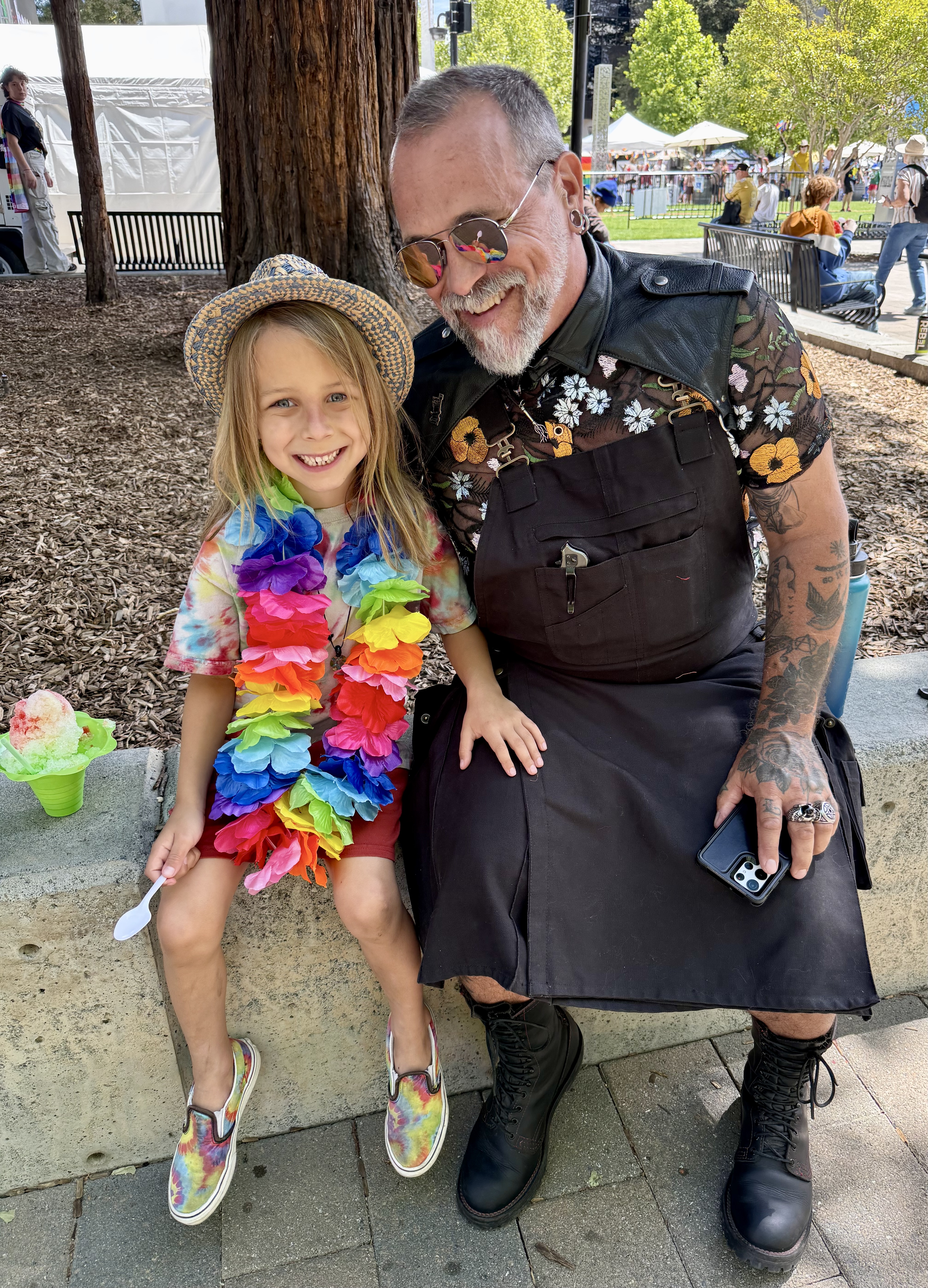
Chaya and Judith with young friend

Bridging Generations

“It’s so energizing to be in an intergenerational community,” said organizer Frances Fuchs, 72, of Santa Rosa.

For Diana “D” Getko, 28, of Sebastopol, much can be learned from older women who have lived through, and learned from, fights for civil rights and acceptance. “I don’t think many people of our generation realize just how much the dykes have carried us through the formative years back in the ’70s,” she said. “Community is what got us through back in the ’70s and ’80s and we are going through another hard time. Community is what is going to get us through again.”

“It’s about building community,” Kelly said. “There is a part that is very serious and it’s a protest but part of it is just fun and joy. Both sustain us.”

The community has many challenges. In the opening days of his second term, President Donald Trump moved swiftly to target transgender and nonbinary people, limiting medical care, stating the federal government recognizes only two unchangeable sexes: female and male, denying requests for passports that use gender markers that don’t conform to the administration’s new definition. It all makes gathering in solidarity all the more important.

And love is at the heart of the event, organizers said. Allies and supporters are welcome. “People say ‘How can you call it a dyke march if it’s open to everybody?'” Fuchs said. “And basically we’d have to say the times are changed. We don’t need to put a fence around it to protect ourselves. We need to open it to protect ourselves. This is about bigger community and bigger connections and having a broader base to stand on.”
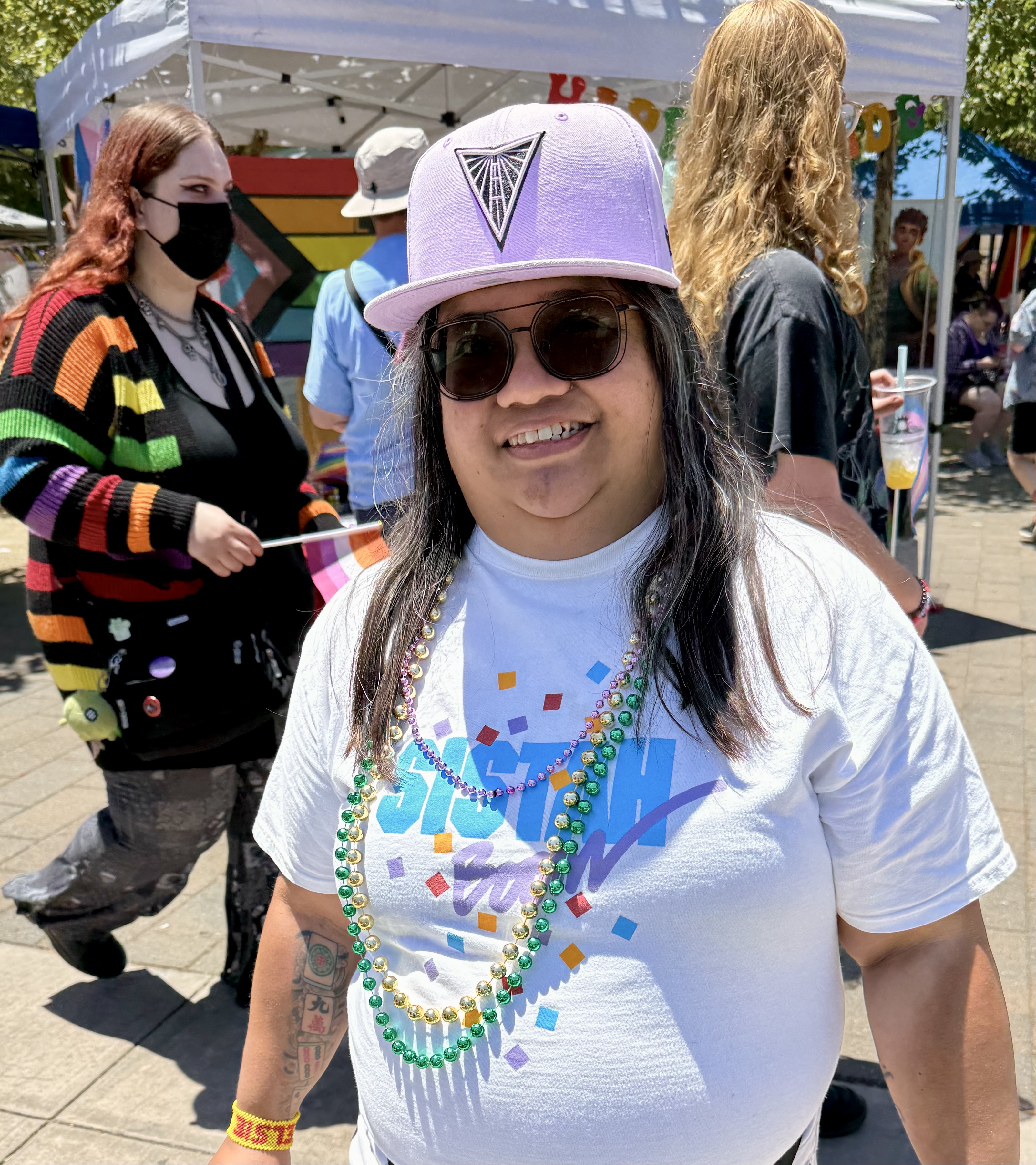
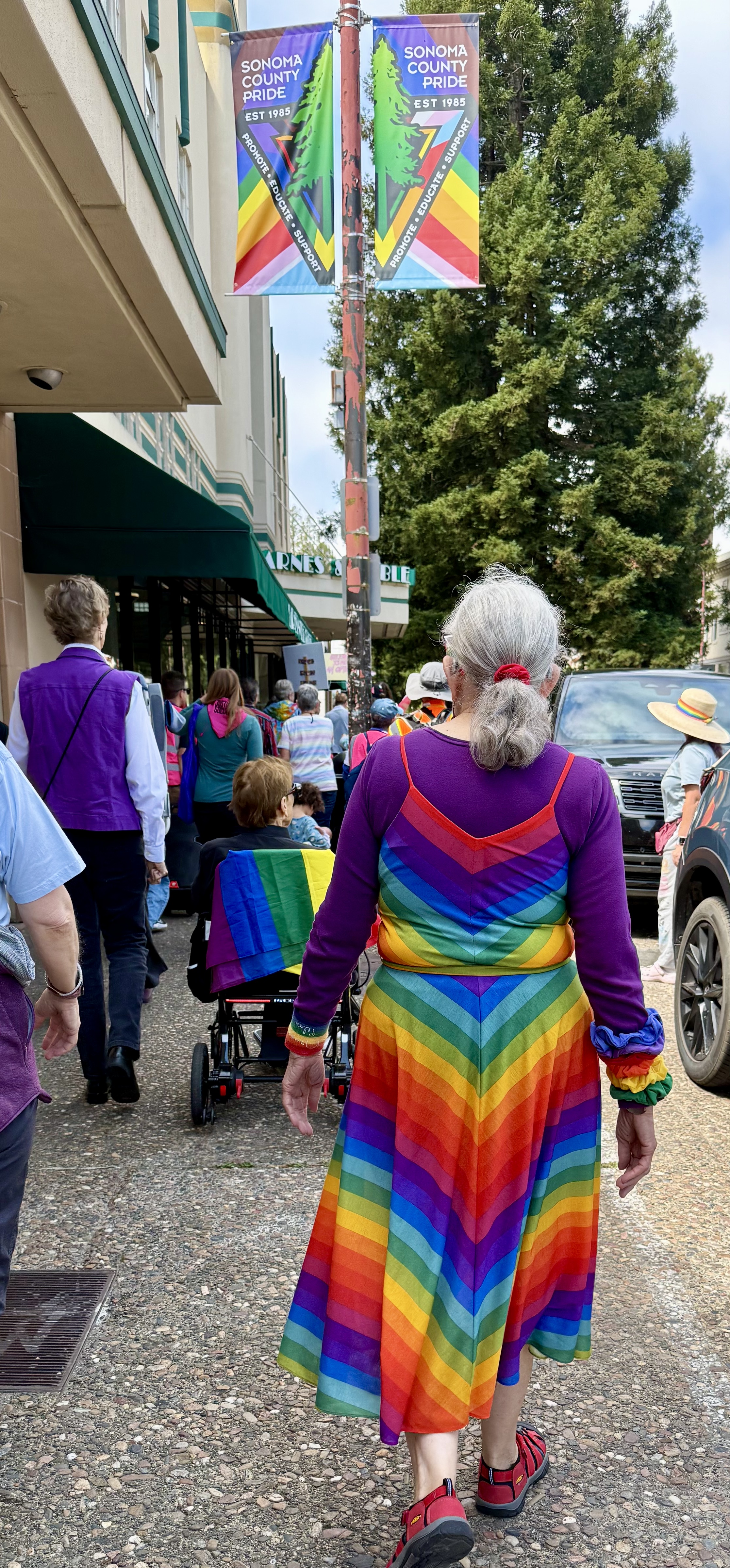
From the mission statement: 

Sonoma County Dyke March is an inclusive, grassroots, intergenerational movement bringing together Lesbian, Queer, Transgender, Non-Binary, Sapphic people, the full LGBTQIA2S+ spectrum, and our allies to resist attacks on our rights, bodies, and lives.

We honor the legacy of the Lesbians and Queer women who have been the backbone of social justice movements. We uplift Elder Lesbians, reclaim the word Dyke as a symbol of pride and defiance, and bestow this legacy on the next generation.

We organize in a moment of immense and escalating backlash—against trans lives, queer rights, reproductive freedom, marriage equality, racial justice, our immigrant communities, and democracy itself. Our goal is to complement and strengthen Pride by offering an intergenerational inclusive space for visibility, celebration, and belonging.

Silence is not an option.

Too many have sacrificed too much for us to stand by while our rights erode.
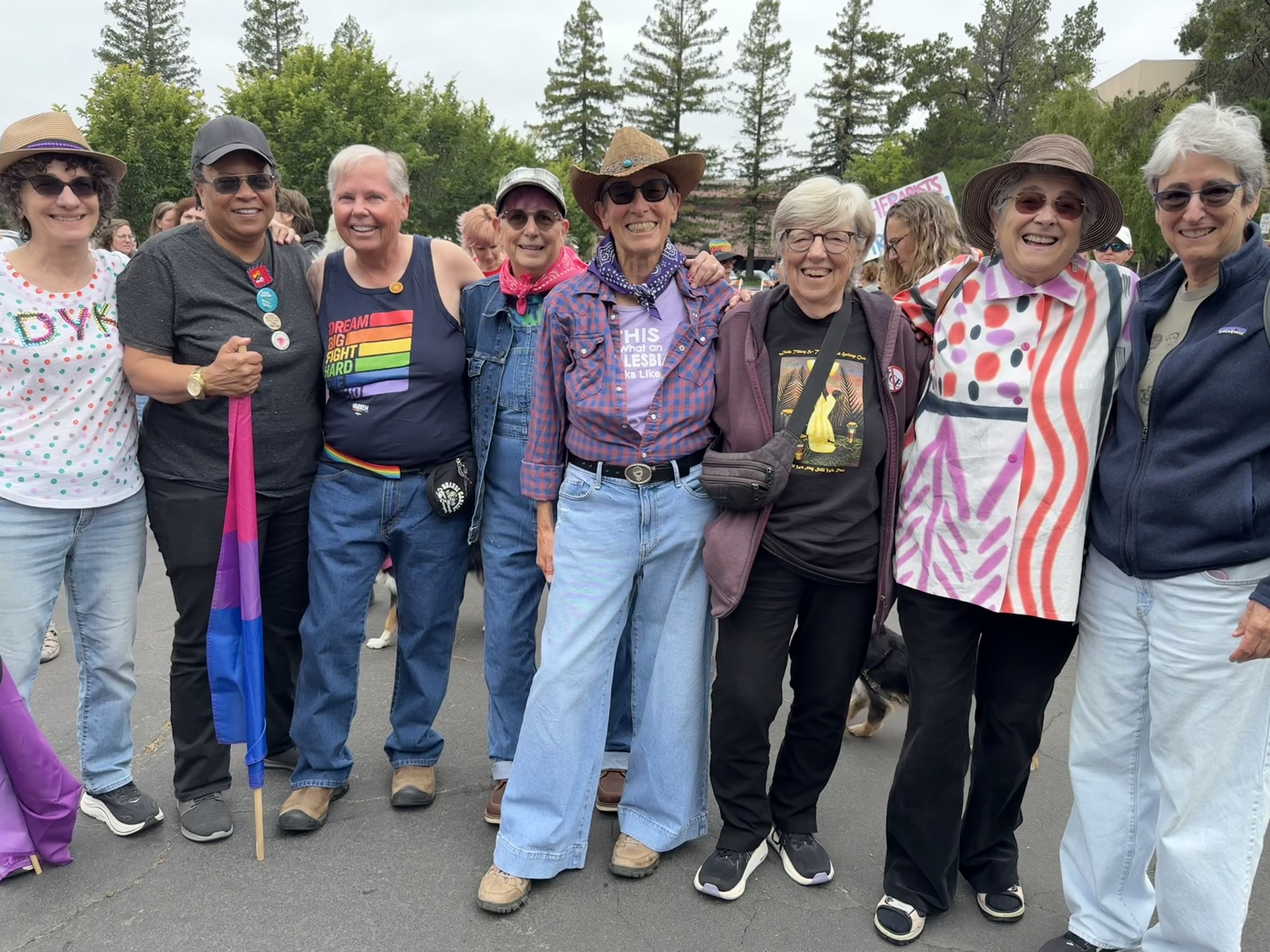
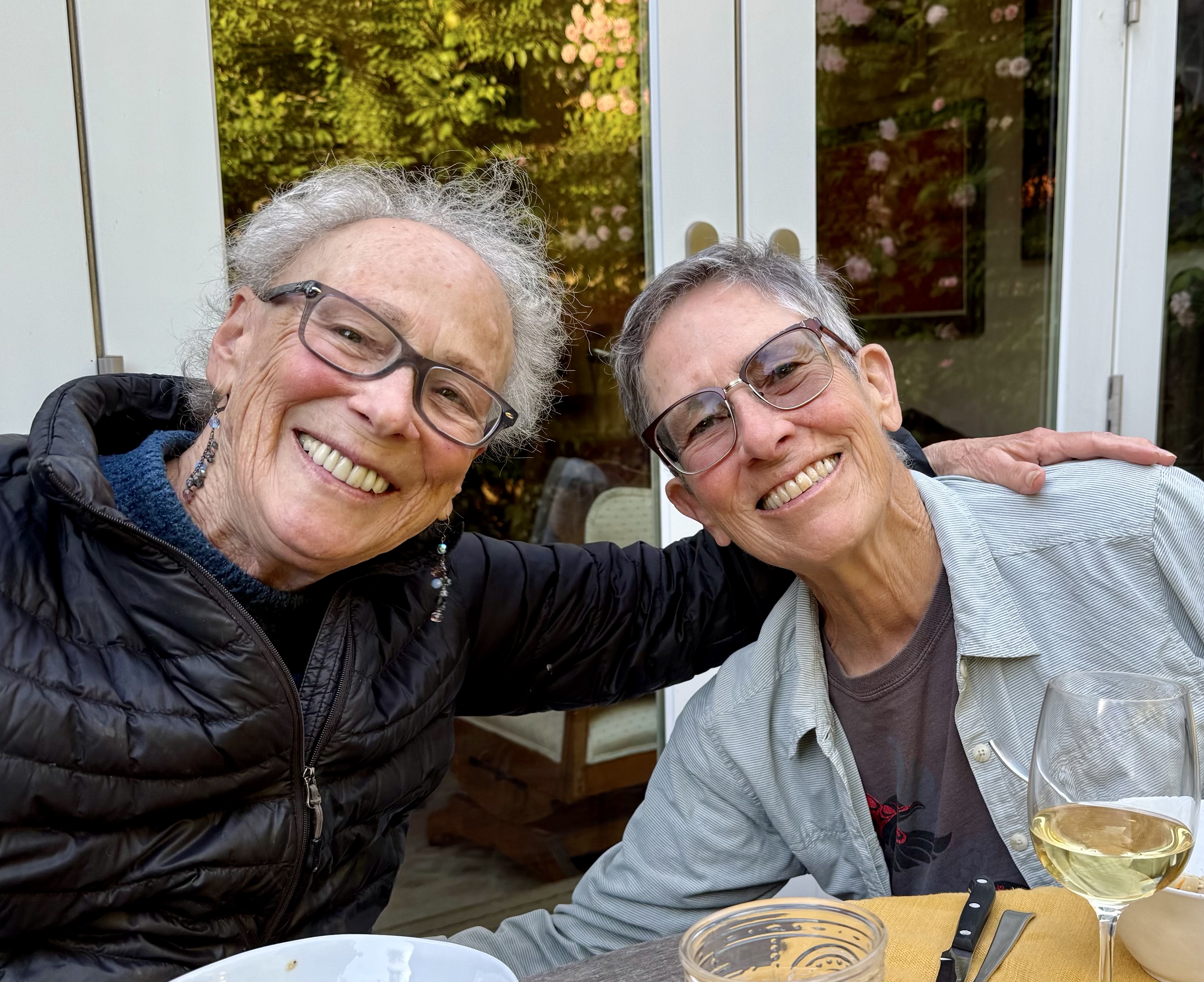
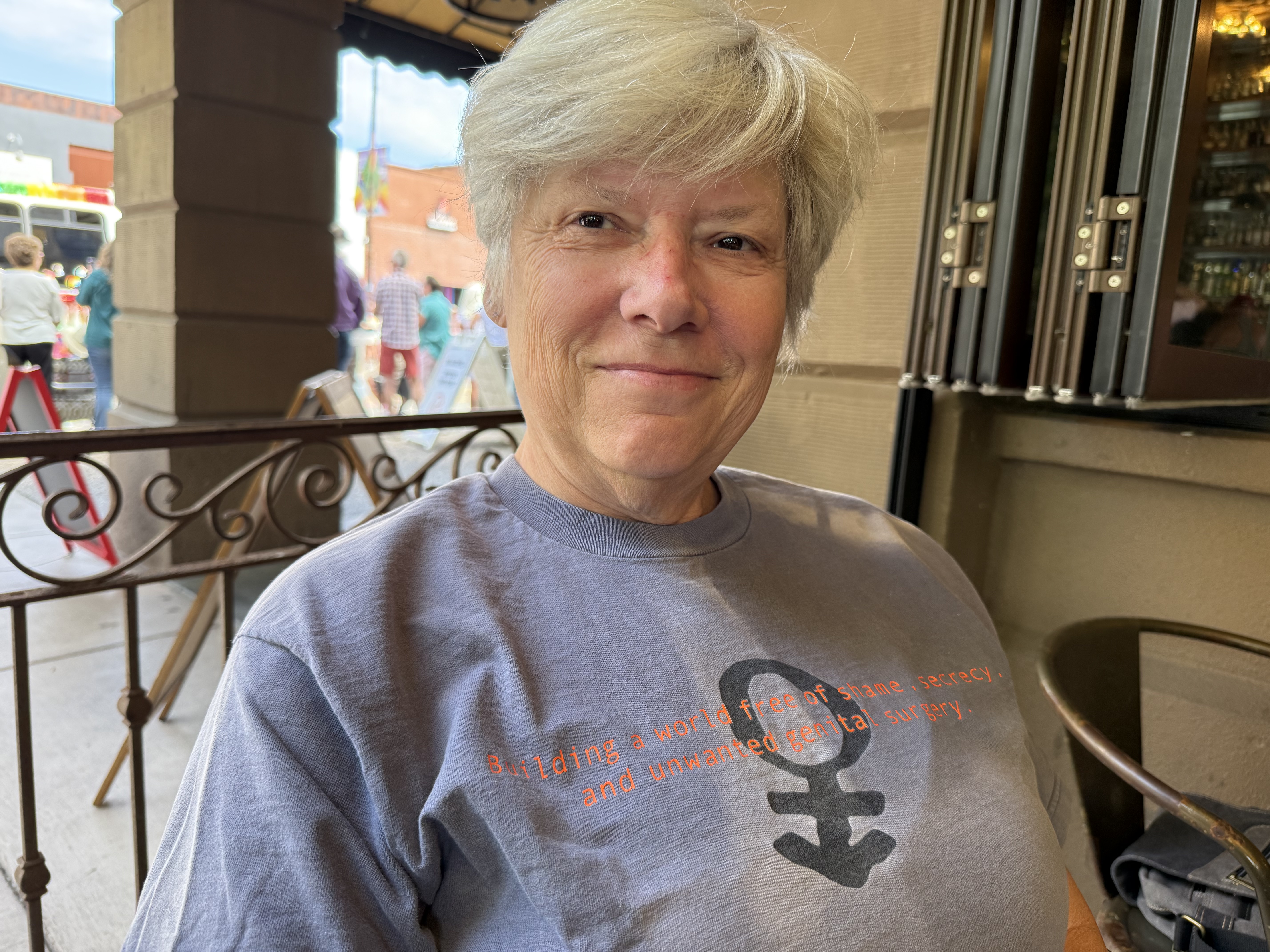
Holly and I with old friends. My T-shirt reads This is What an Old Lesbian Looks Like

Thanks to reporter Kerry Benefield for quotes from coverage in our local newspaper, the Press Democrat.
Midsomer Hails to Vikings’ Time

My Regular Pagan Holiday Post

Summer Solstice (Litha) takes place this year on June 21

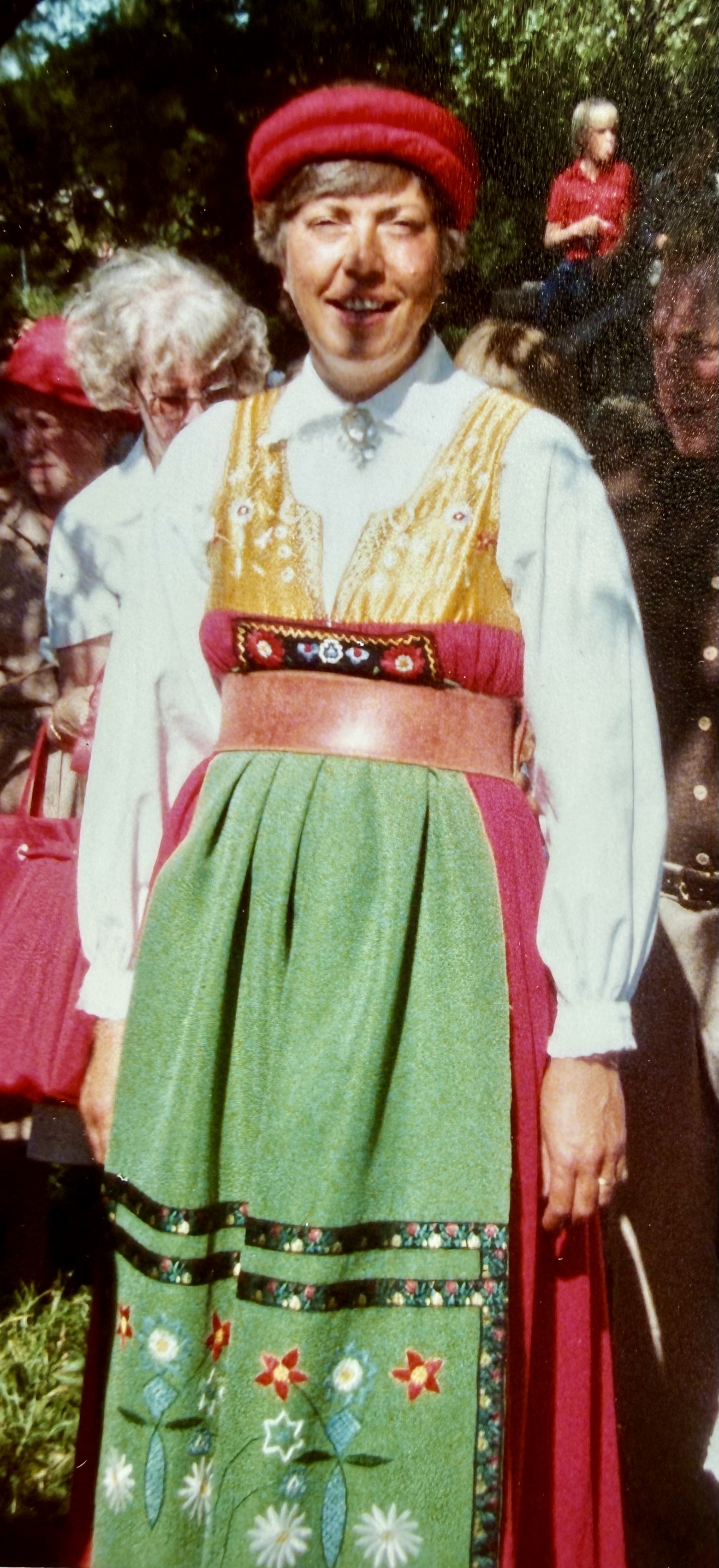
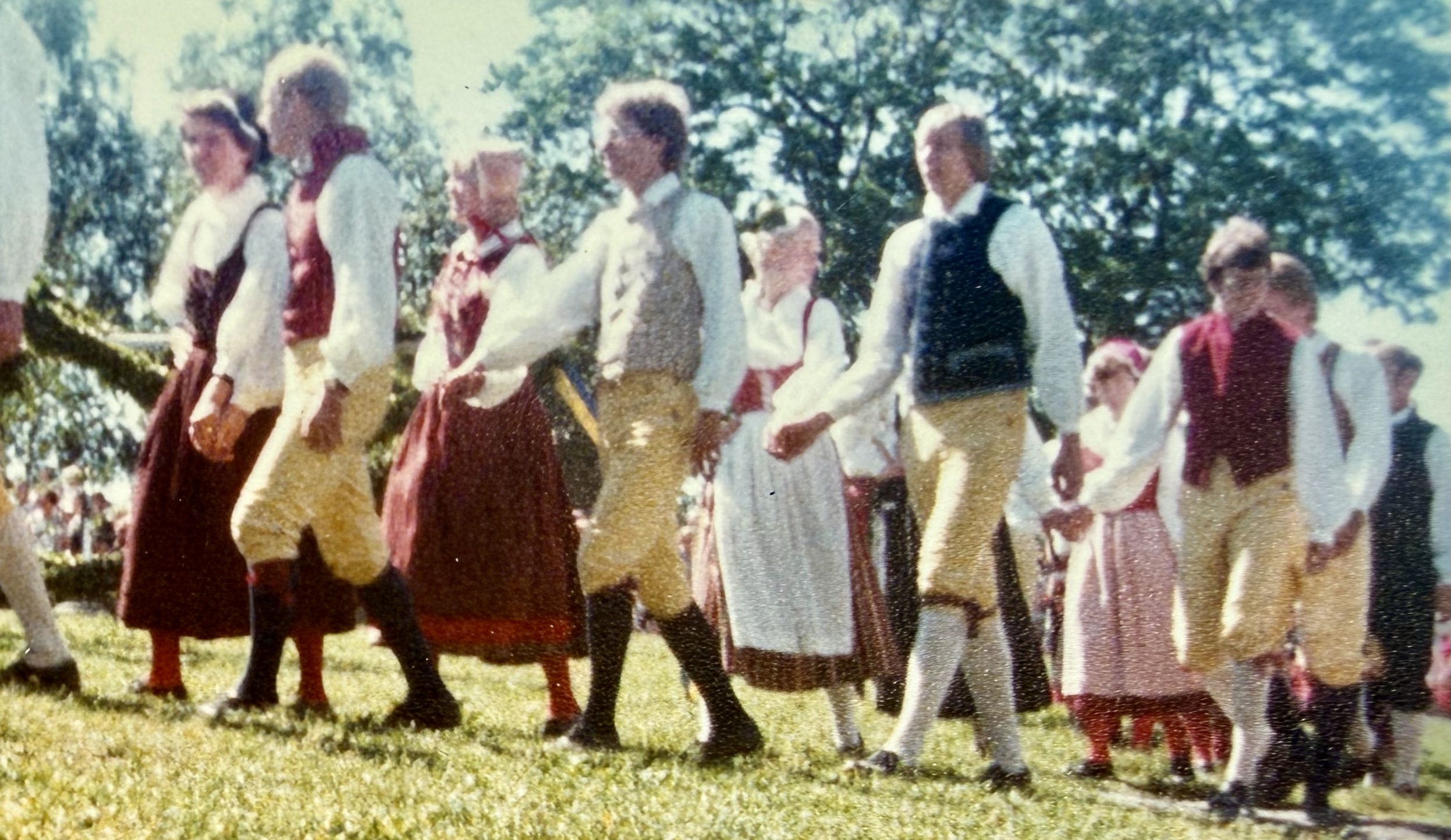
The pagan Scandinavian summer solstice festival, like winter solstice, was appropriated by christians. But, unlike christmas, the takeover never really stuck. They tried to turn midsummer into a birthday party for John the Baptist. Bonfires that once warded off evil spirits and celebrated the sun’s strength became “St. John’s fires,” but the essential ritual survived unchanged. As they did in pre-christian Viking times, Swedes, Norwegians and Danes continue to make flower wreaths, dance around the maypole, sing, eat, drink and light giant bonfires. 
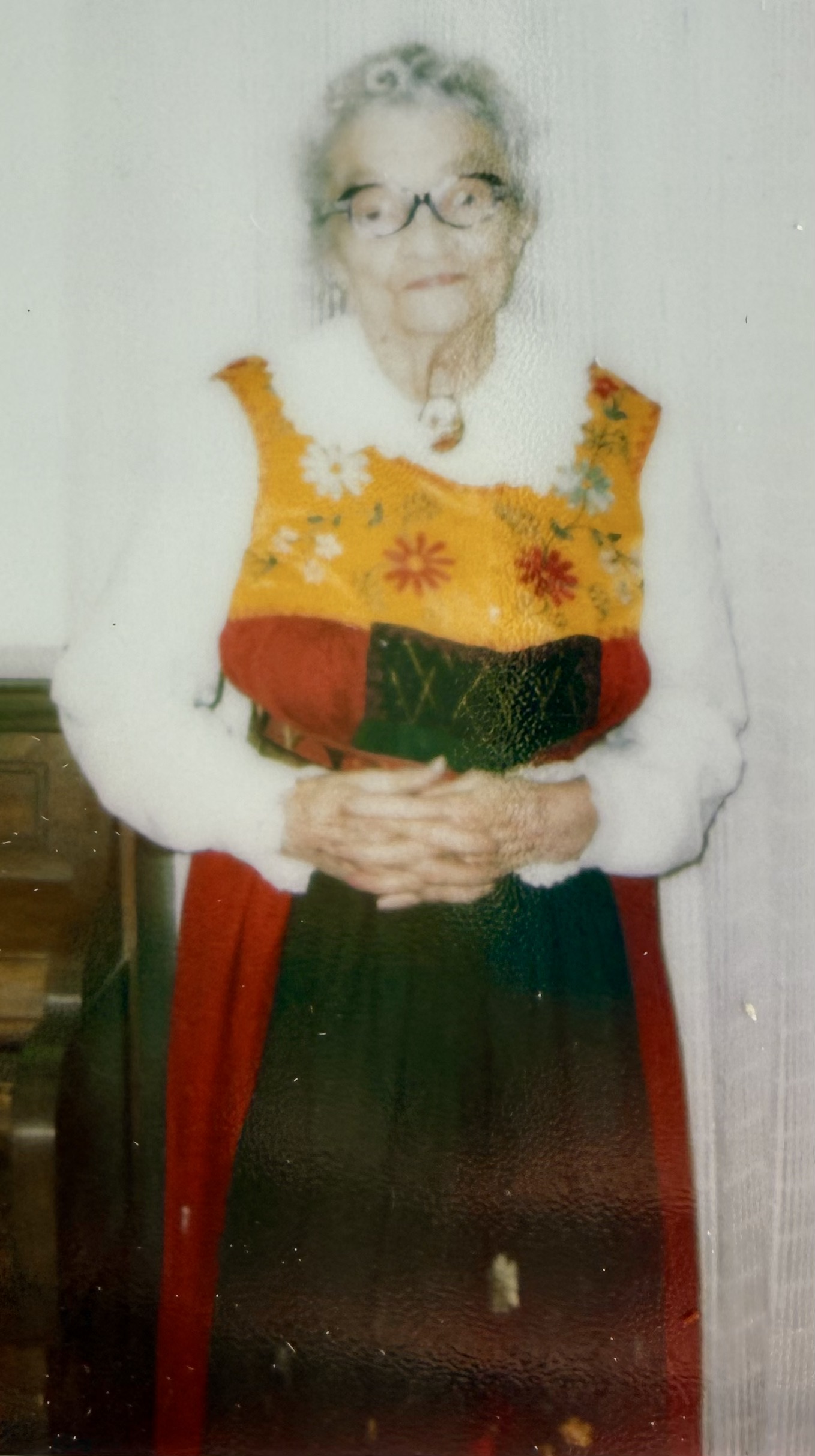
I identify as Swedish because of my grandmother Gerda, who instilled our family’s culture. My grandfather Bernt was Norwegian, so we absorbed some of that tradition too. 

Growing up in Yakima, Washington, we simply picnicked and ate outdoors all summer, perhaps an American substitute for the ritual. But my brother remembers our mother, who was born at Midsommer, hosting parties in June with a maypole for us kids to wind ribbons around. She had never been to a Midsomer festival, but her Scandinavian parents had impressed upon her the importance of this holiday.

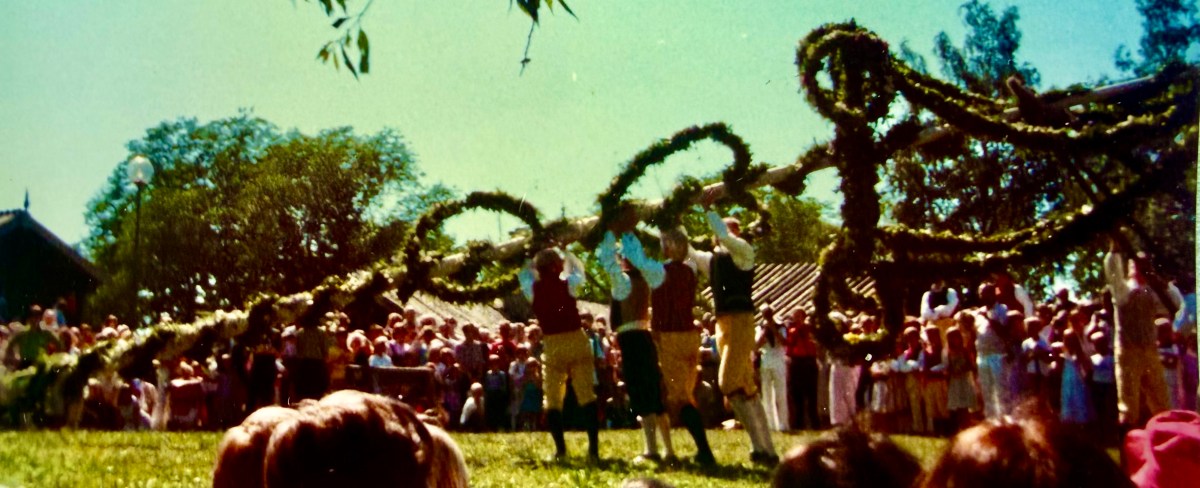
Flo took this picture and the one at top raising the maypole at a Swedih Midsomer festival when we visited in 1979

Swedes gather at big communal and family events. Norwegians build fires. Oslo’s most dramatic public showcase occurs at Sukkerbiten, the sauna wharves on the fjord, where massive burning displays light the water. The Slinningsbålet in Ålesund ranks among the world’s tallest bonfires—a striking coastal tradition. In some places a figure is built and then burned. Think Burning Man.

This year, we’ll mark the solstice on June 21 at Sonoma County’s first dyke march—marching, singing, eating, and drinking. Living in a fire-prone region, we’ll celebrate without bonfires, but the spirit of communal gathering remains.

Skål!

Love, Molly and Holly

My Silver Linings Playbook

Always Look on the Bright Side of Life

I should have canceled the hiking trip to Morocco and Portugal after falling on my deck. The X‑ray showed my ankle wasn’t broken — just a small fragment of displaced bone — and I convinced myself the pain would subside. They fitted me with a walking boot, and I left the hospital with cautious hope.

The trip was filled with mishaps, and so I have begun to frame it as a succession of silver linings. First thing: I forgot my passport and missed my flight. Unable to get on another, I took BART back to San Francisco, had a lovely dinner with old Bernal Heights buddies Judy and Diane, and slept on Judy’s blow‑up bed. 

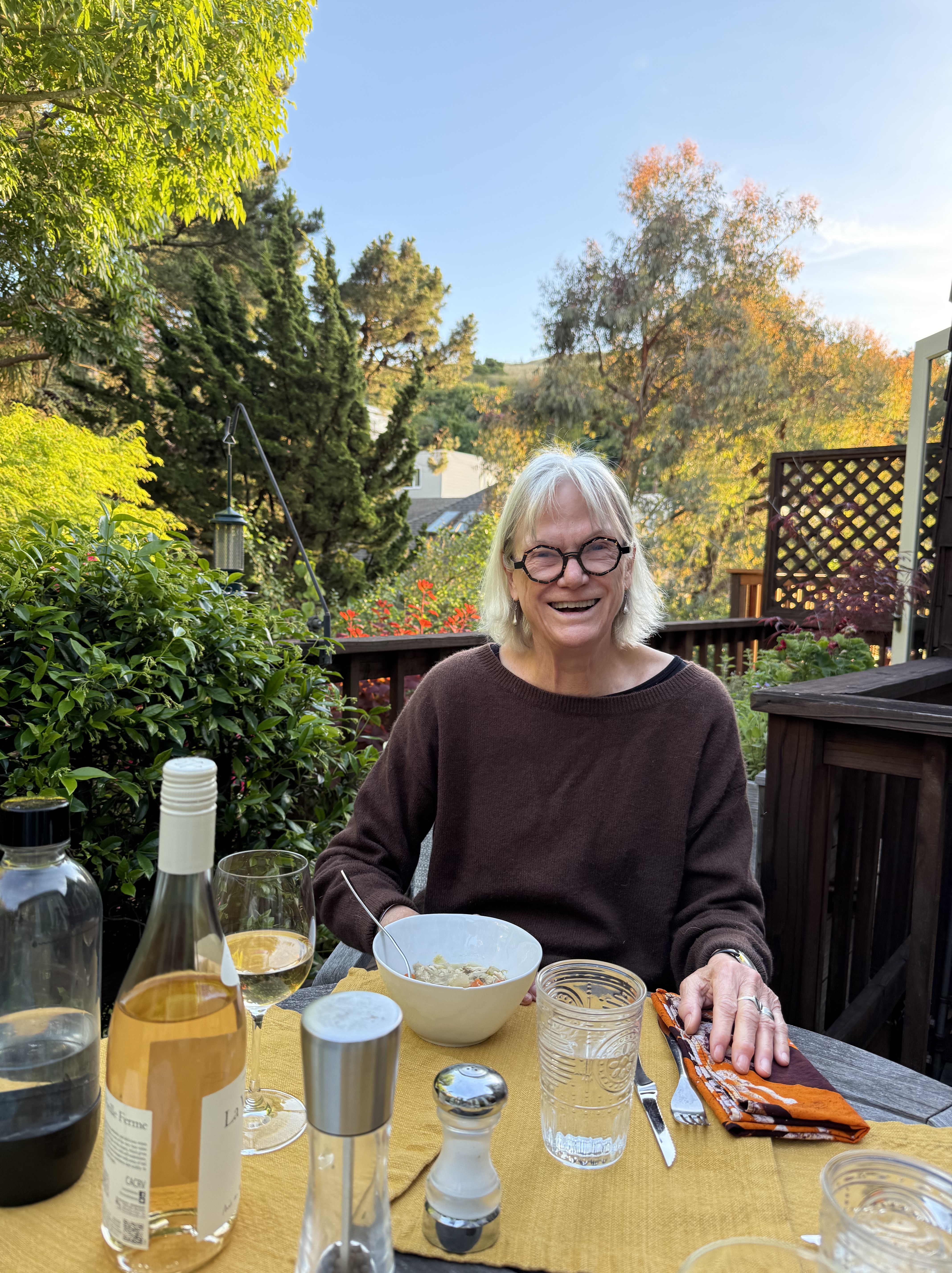
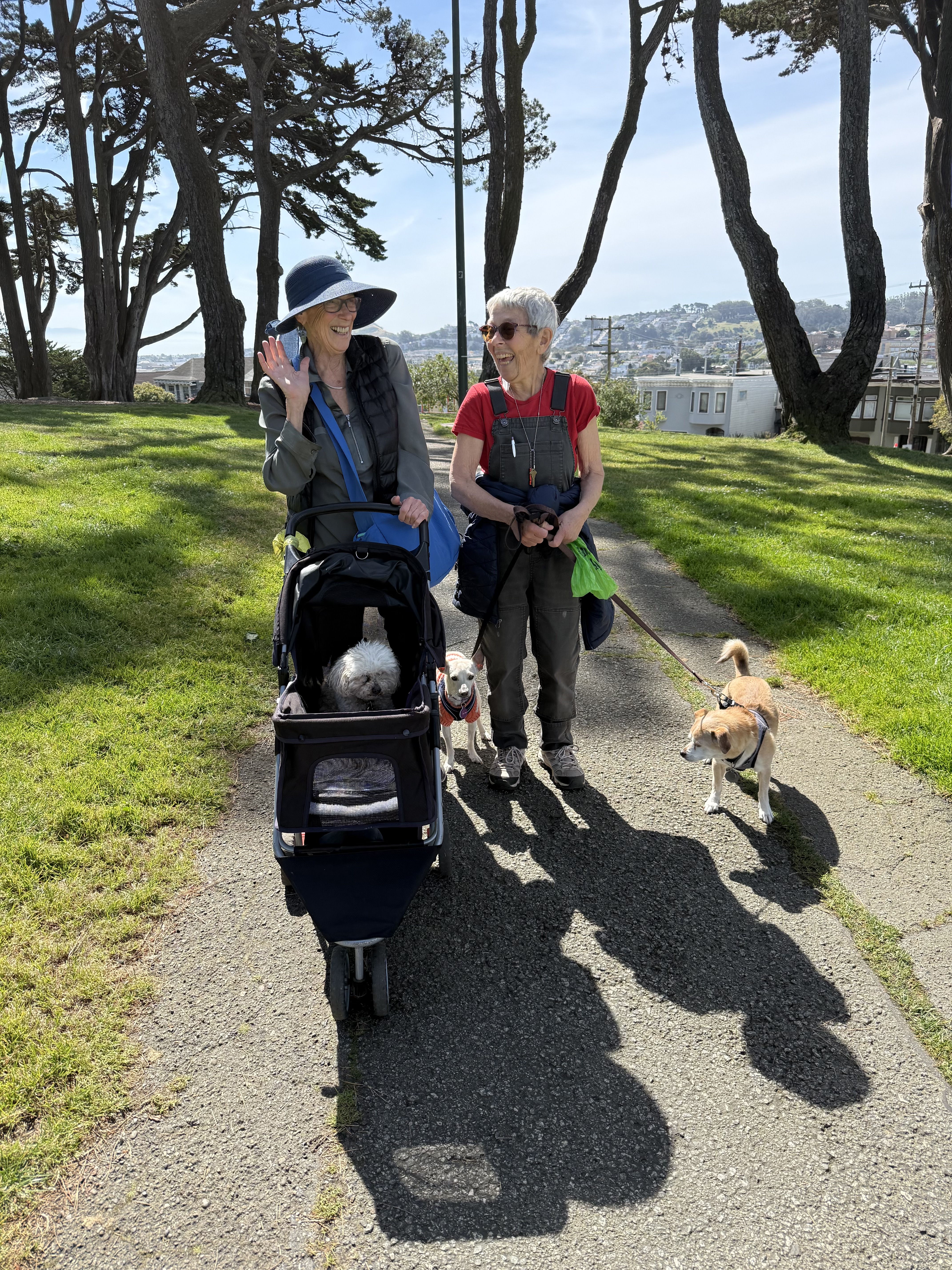
Judy K and I, Diane in her garden with Bernal Hill in the background, dog walking the next day at Holly Park with Judy K and Judy S

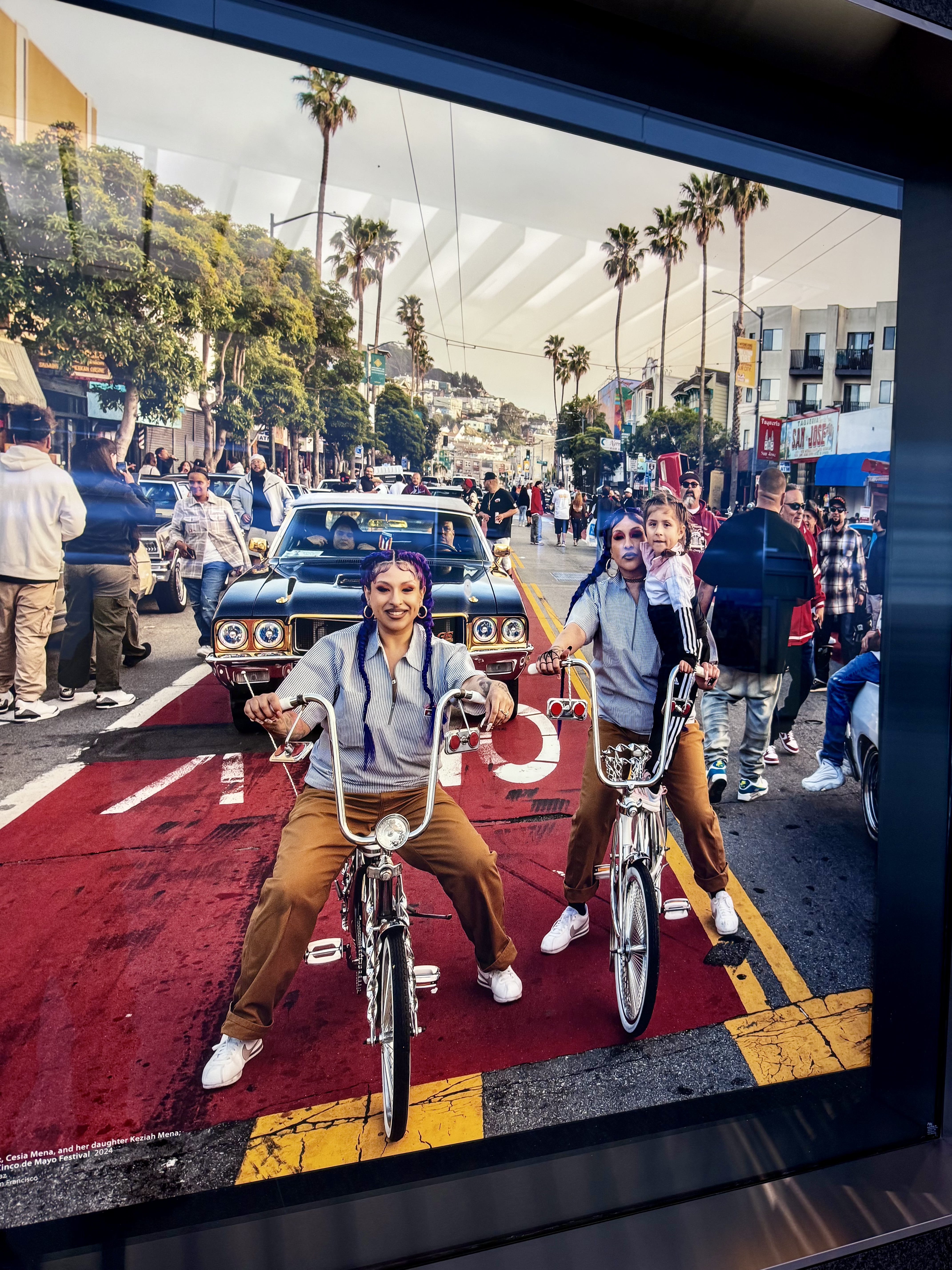
The next day, back at the airport with time to kill, I explored SFO’s International Terminal and found its quirkiest attractions: a low-rider bicycle exhibit, a roast‑your‑own coffee machine and a tiny theater showing shorts that felt like art‑school therapy. At a bar near the Lufthansa gates, the bartender poured a consolatory 20‑ounce IPA and chatted with me — mostly because I was the only customer. Lufthansa pilots were on strike and so their flights were canceled and the bar empty.

At SFO: part of a low rider bike exhibit, roast your own coffee

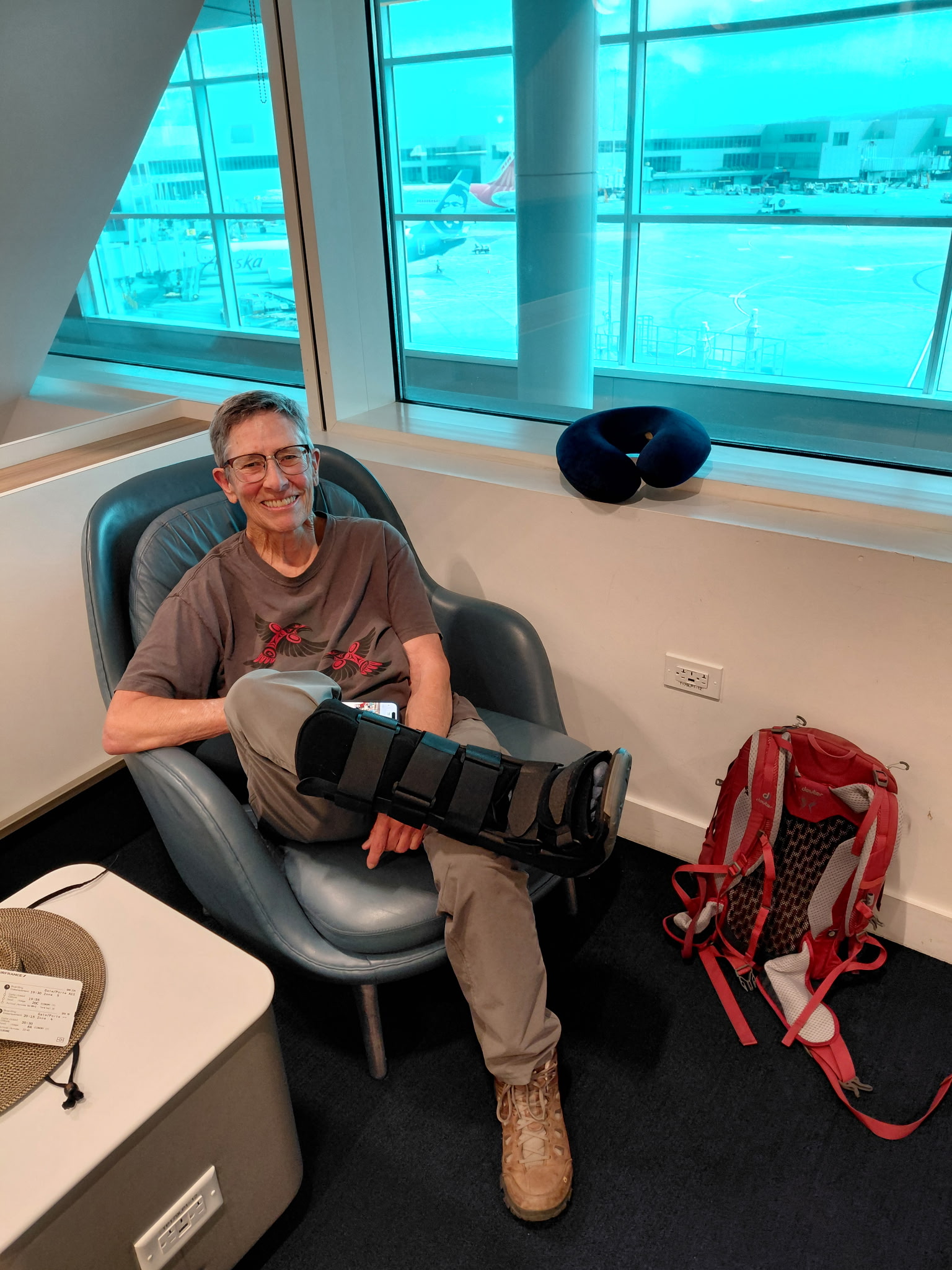
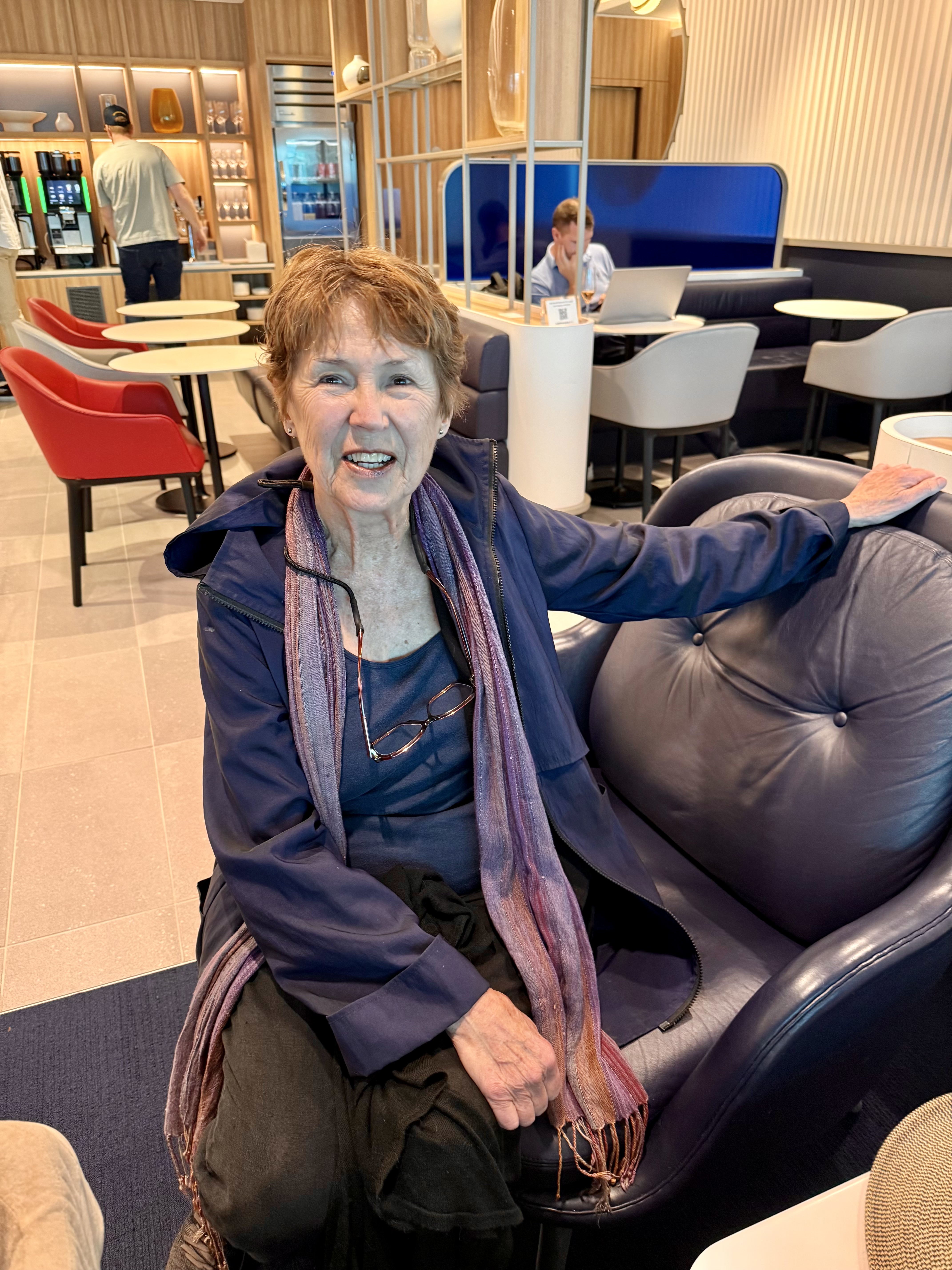
Standby meant more waiting, more near‑misses. I missed another flight because it was full, then met Lynn, a retired flight attendant of 35 years, who’d also left her passport at home. We were directed to the swanky Air France lounge, an oasis of free food and booze. Sometimes fortune favors the passport‑less. 

At the Air France lounge in my boot, new best friend Lynn, 3 kinds of water

My injured leg earned me VIP wheelchair treatment at airports. But the boot was not a fun accessory on the 12‑hour flight. 

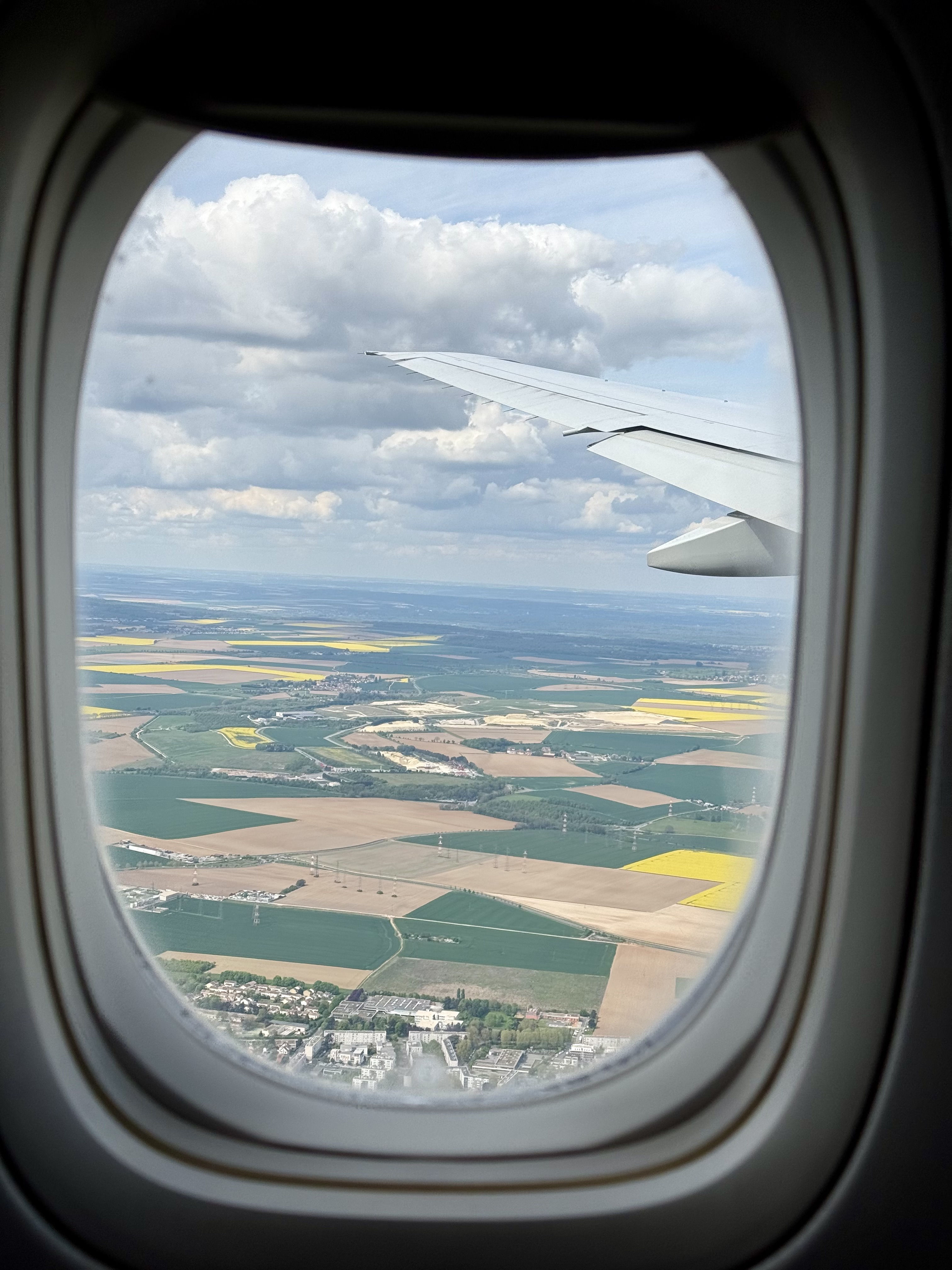
Stopover in Paris: arriving, rated highly, Charles de Gaulle had the coolest toilets

Midnight in Marrakesh: I swapped currency at the airport, shared a taxi to the old town medina with an amiable French couple and met Ali, the hotel night man, who navigated the medina’s narrow alleys like a supernatural GPS. I could never have found my riad (hotel) without him. Ali seemed never to sleep. He served us breakfast in the morning.

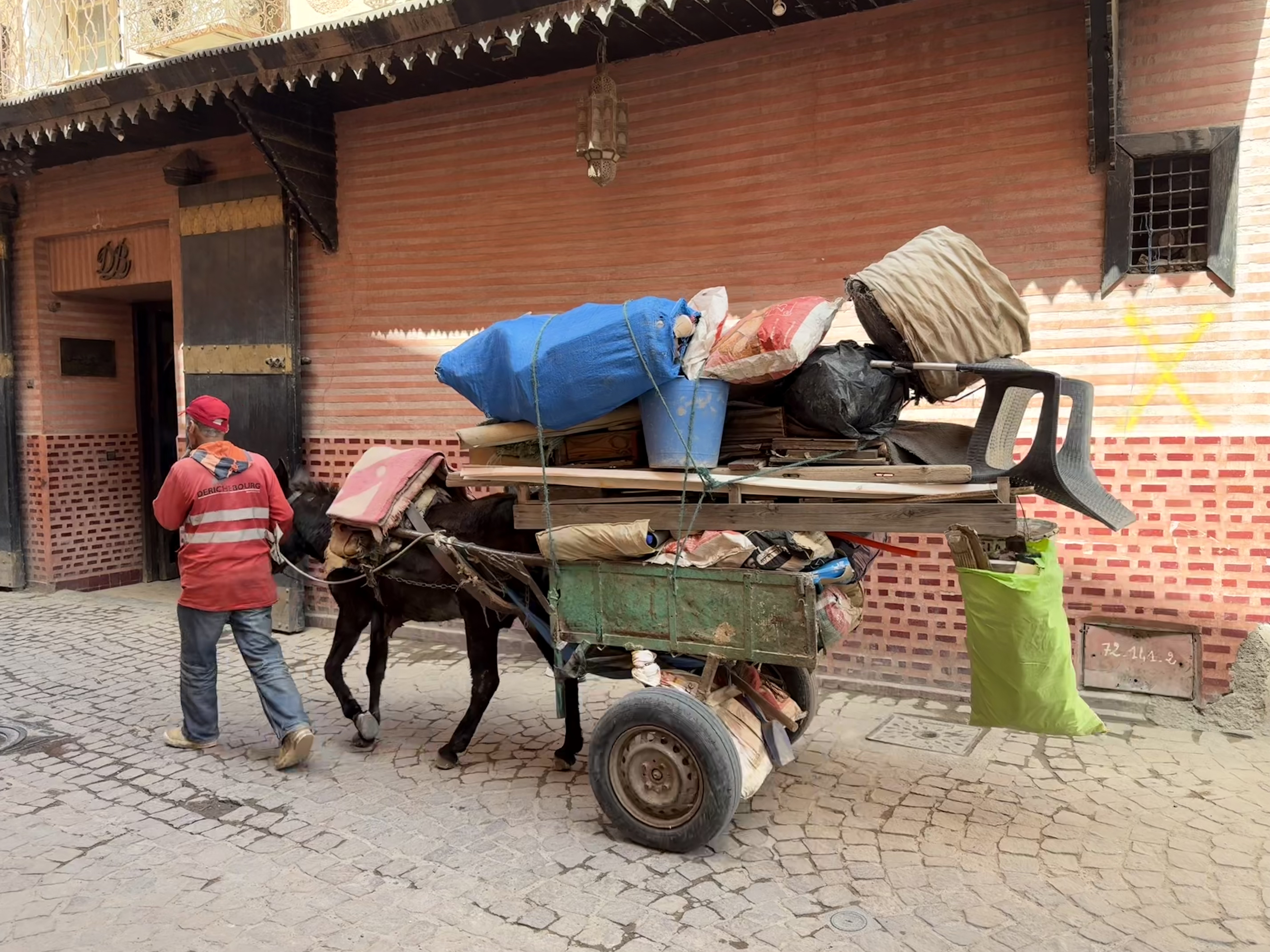
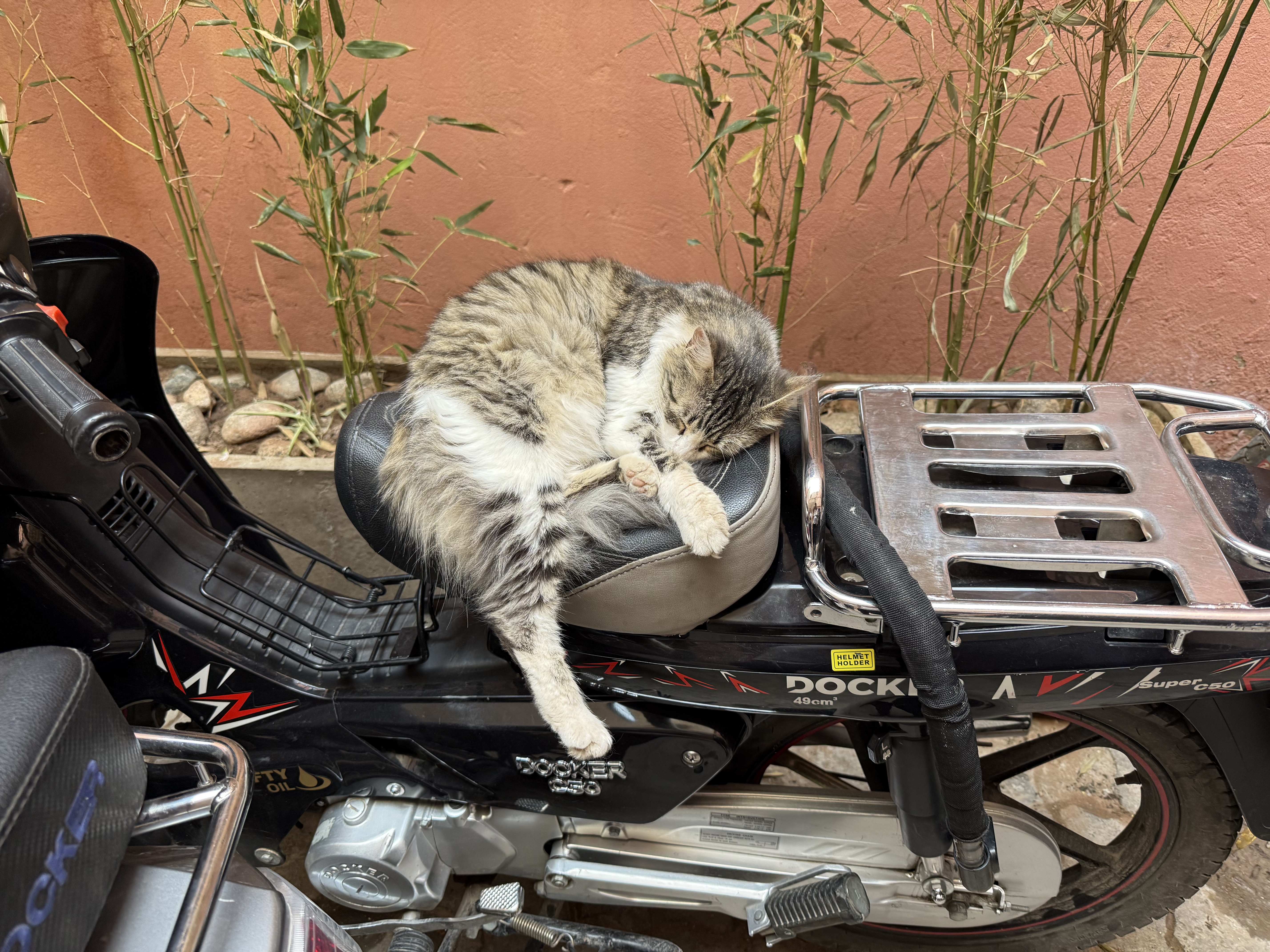
In the old walled city medina: cats and motorbikes, donkeys. No cars will fit

This all-women trip, sponsored by Lewis and Clark College, introduced us to Moroccan culture in ways that didn’t require hiking. I was delighted to chat with English language students whose cosmopolitan takes deepened my cultural understanding.

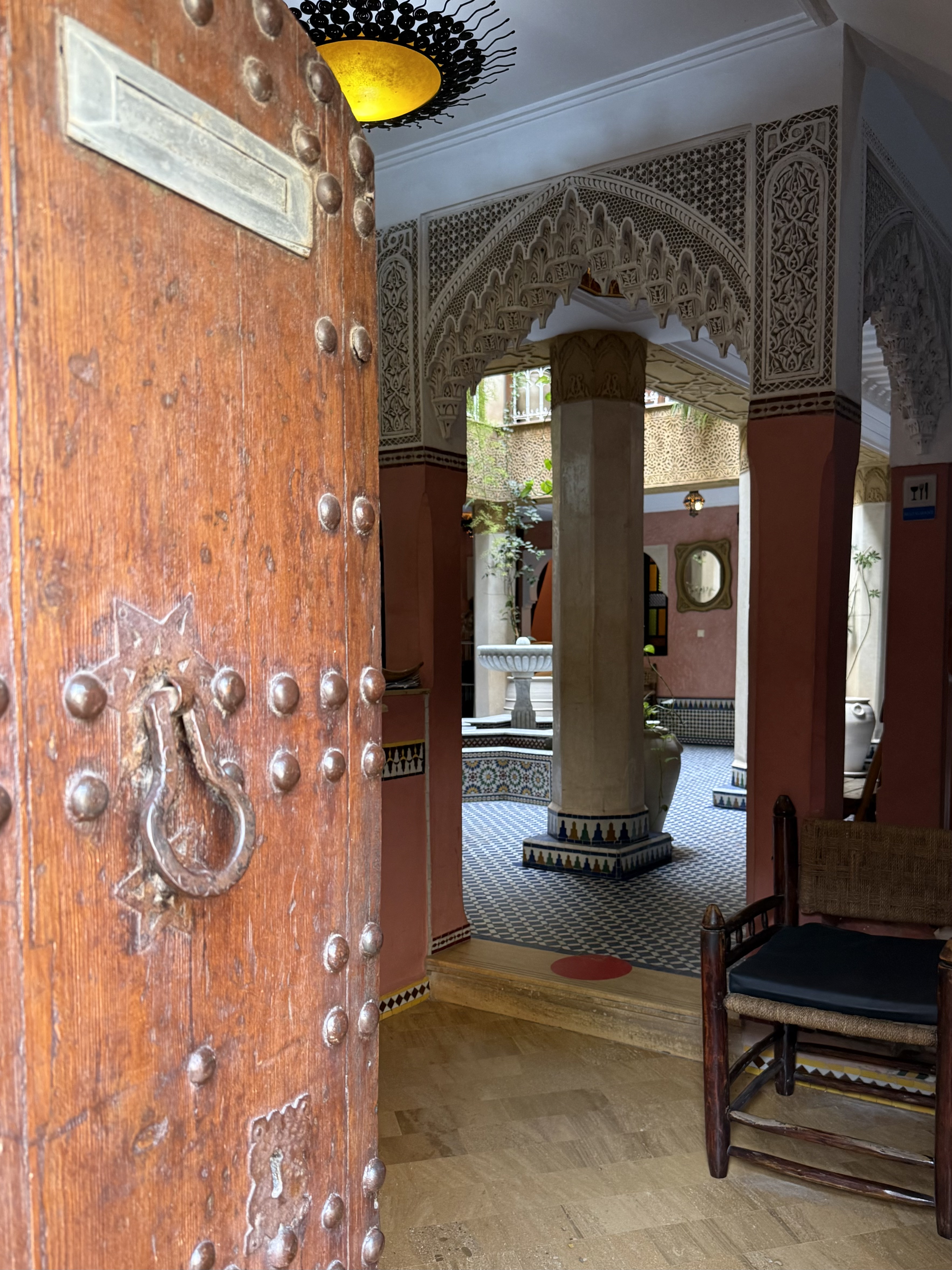
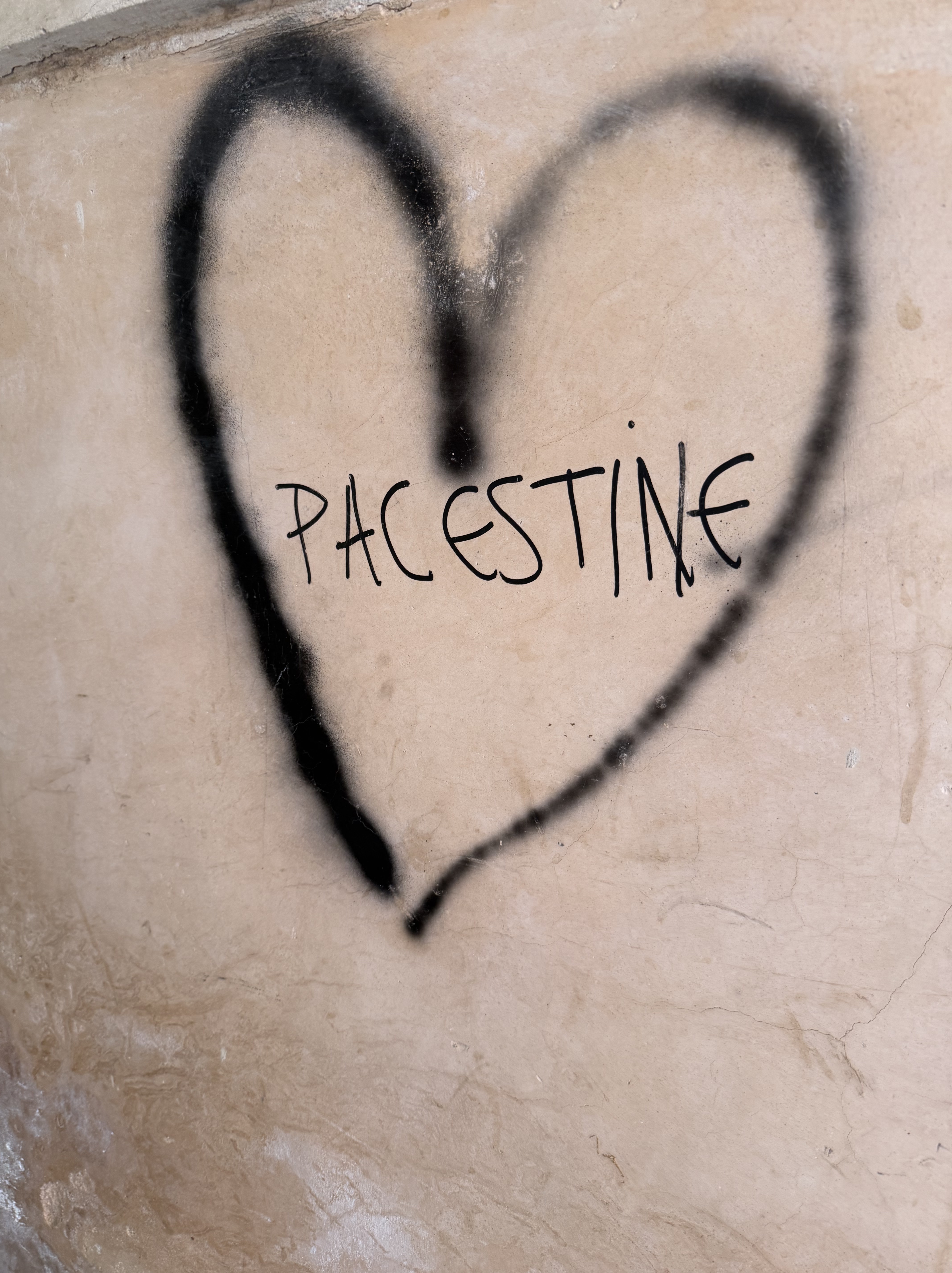
In the medina: door and interior, the only graffiti I saw

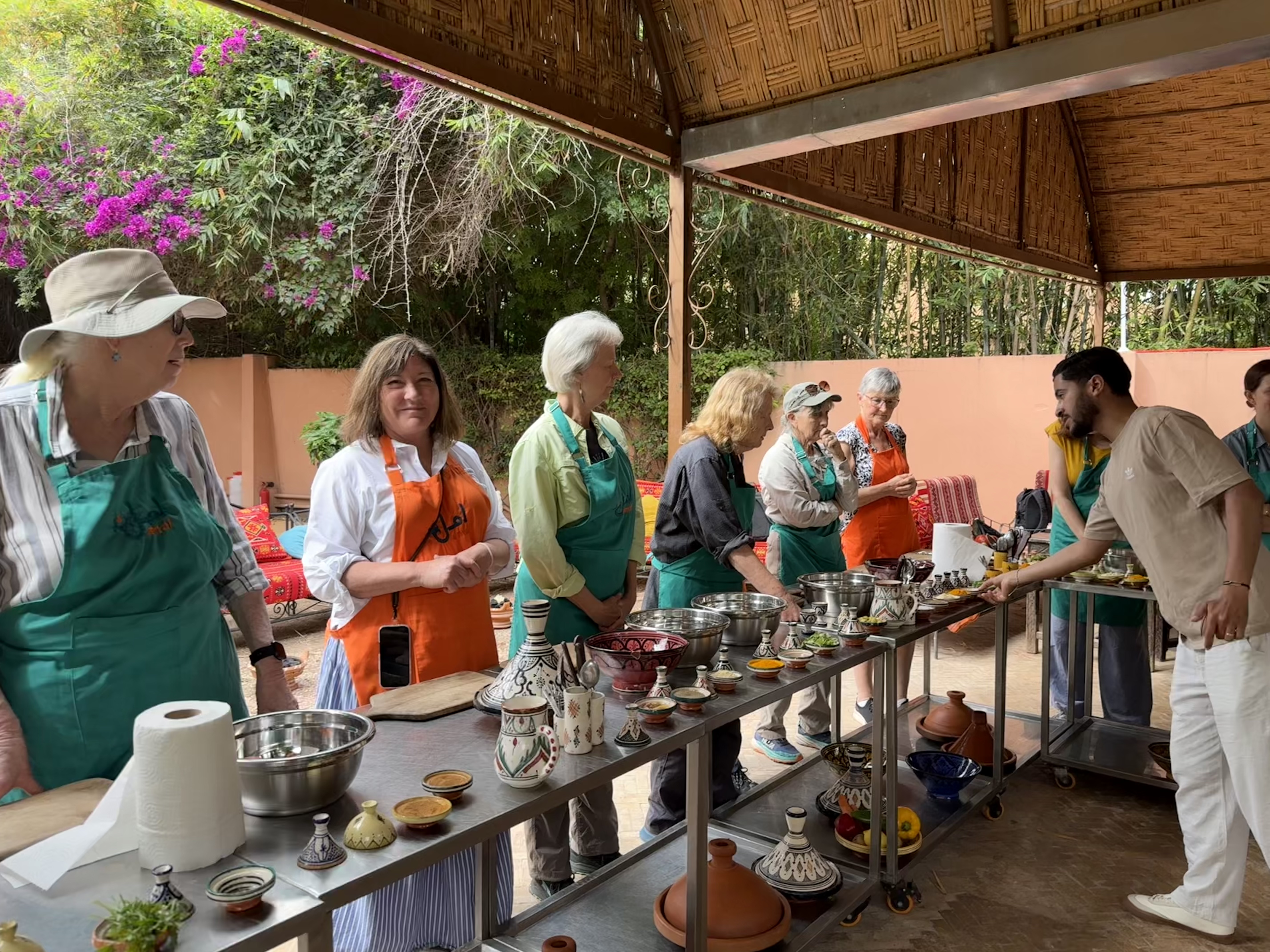
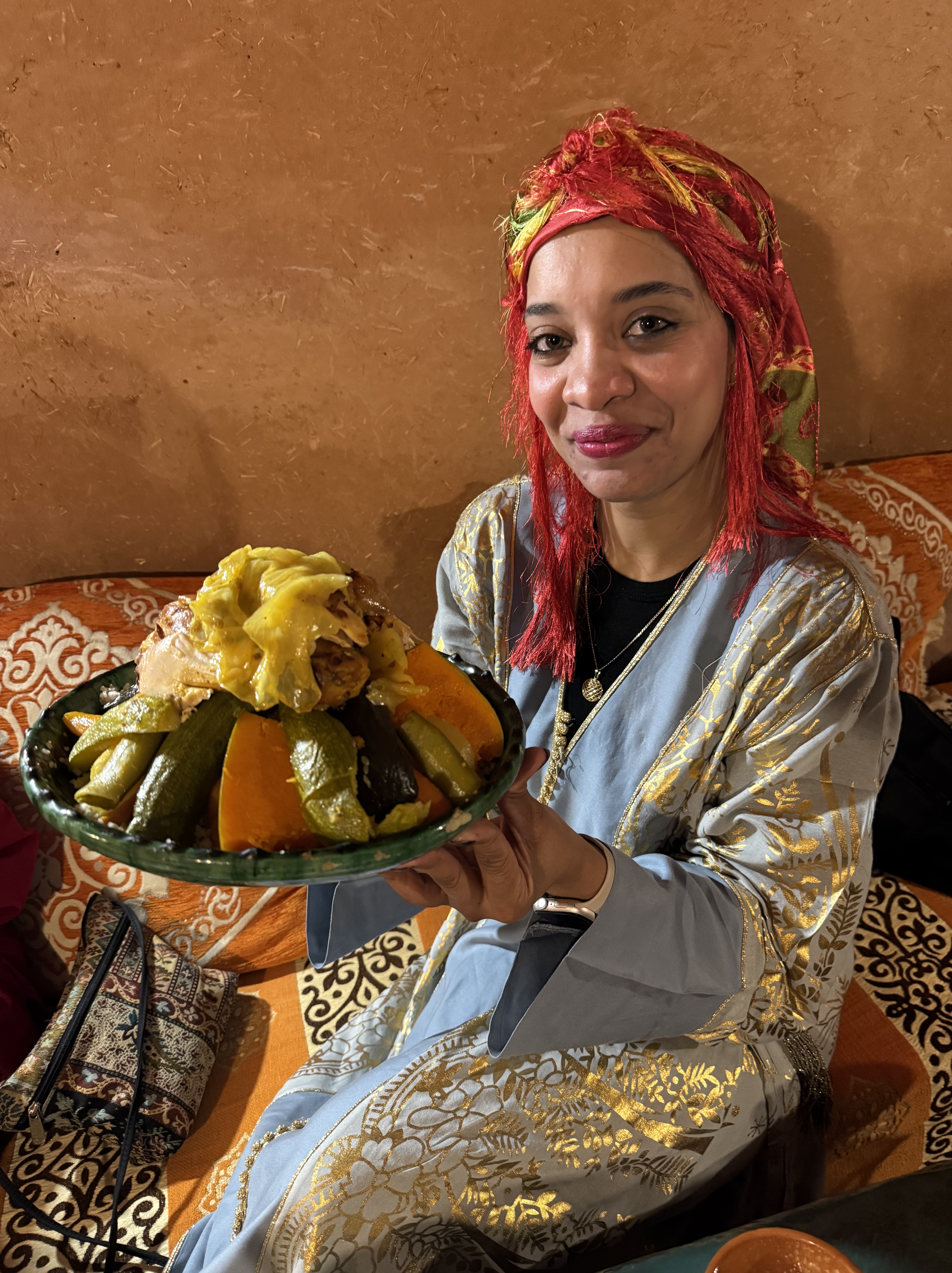
We met Nora Fitzgerald Belahcen, founder of the Amal Women’s Training Center, whose mission is to train indigent women to earn a living. Highlights included a tagine cooking class and a delicate tea ritual using herbs plucked from the garden. Dinner was cooked and served by a crew of deaf women in the Sign Language Café, one of many projects inspired by the Amal culinary school for women*. 

The tagine cooking class

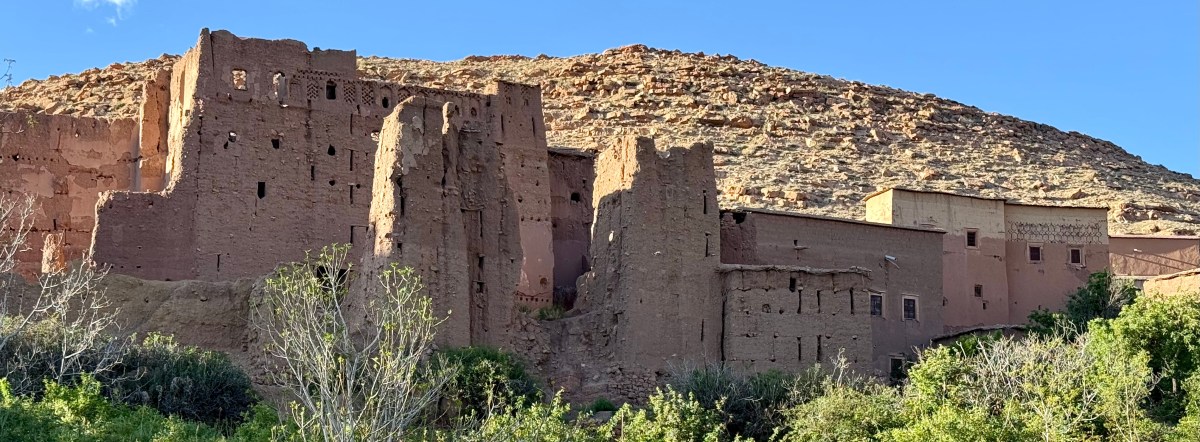
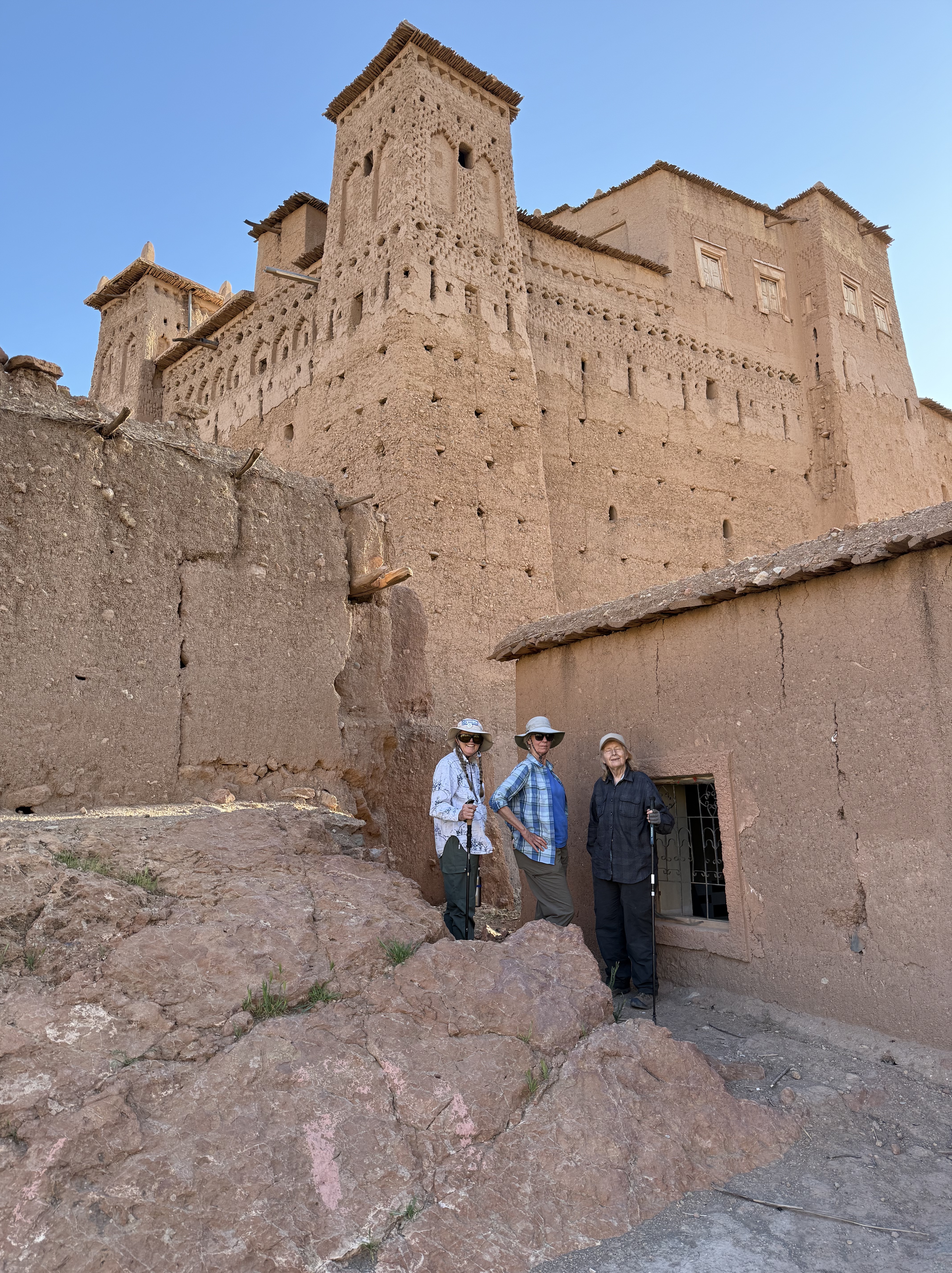
On a seven‑hour drive to the Atlas Mountains, motion sickness upgraded me to front‑seat conversationalist; the female Moroccan guide and I talked about Islamophobia, women’s roles in Morocco and architecture. I was amazed at the earthen buildings and walls. “We call this adobe,” I said. “What do you call the building material?” She replied, “Mud.”

On the way to the Atlas Mountains

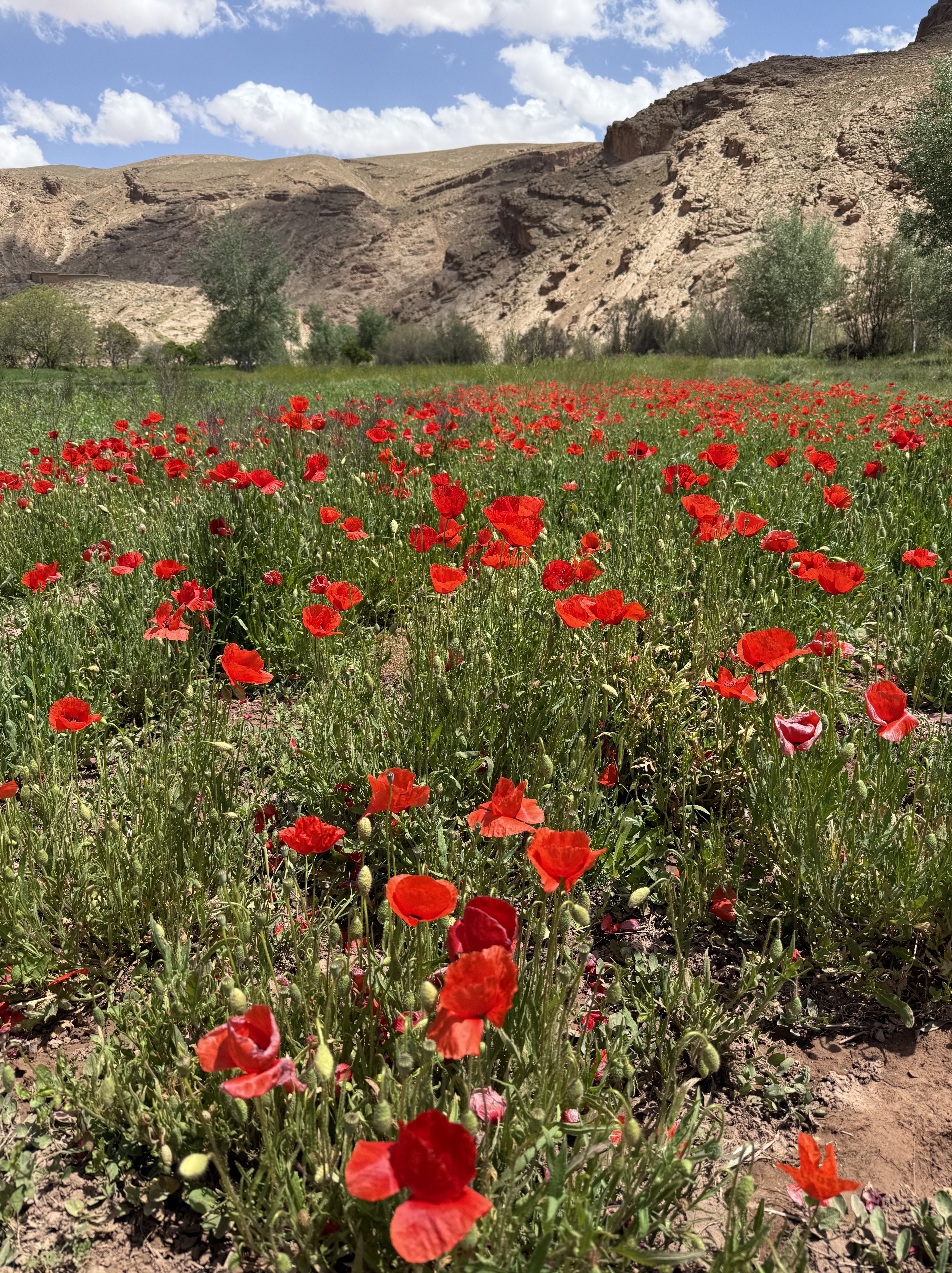
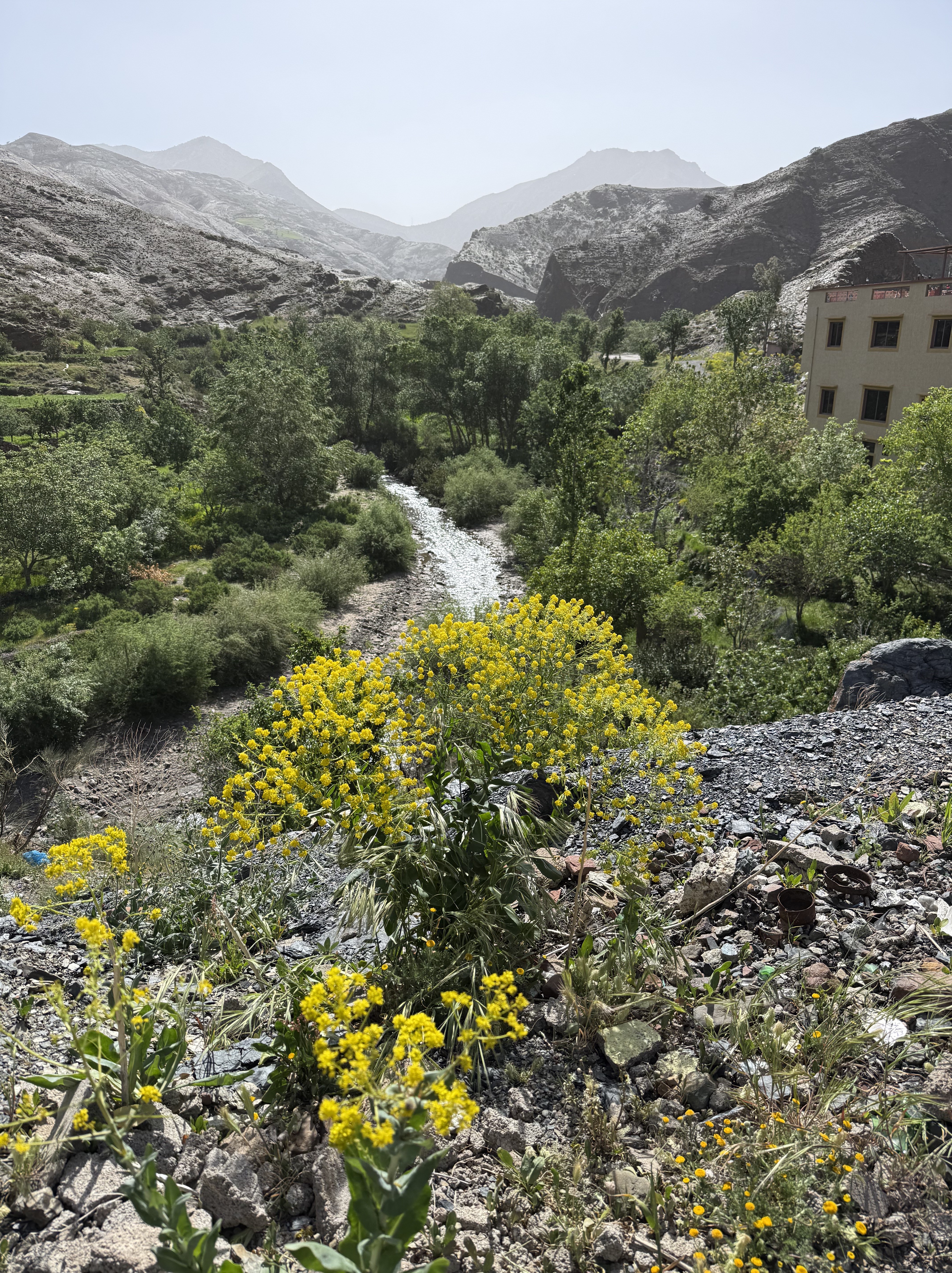
Limited mobility changed the trip but didn’t ruin it. I discovered lounging is an underrated travel activity. As my cohort hiked, a van whisked me to scenic spots so I could sit and be part of the (stunning) landscape.

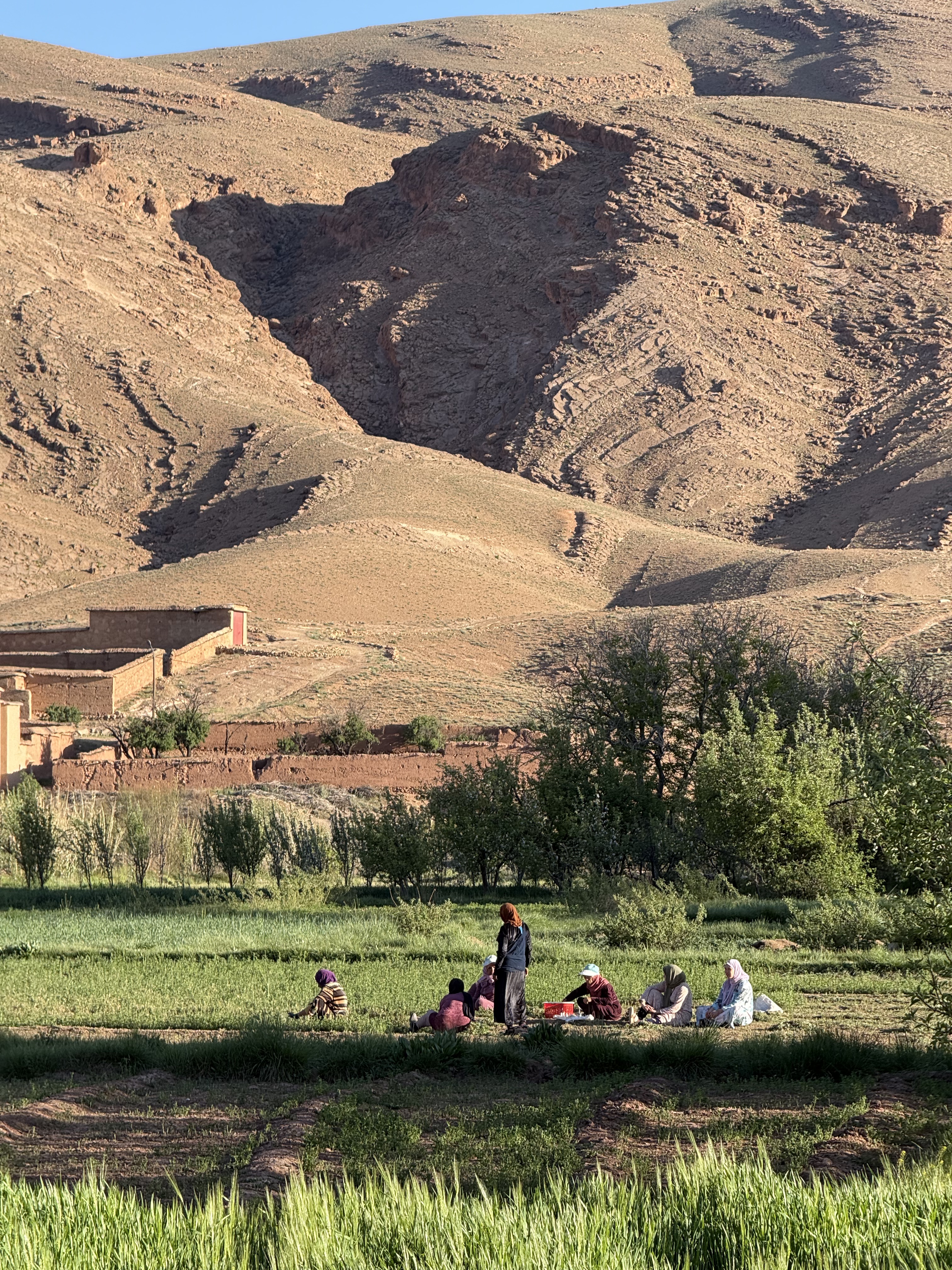
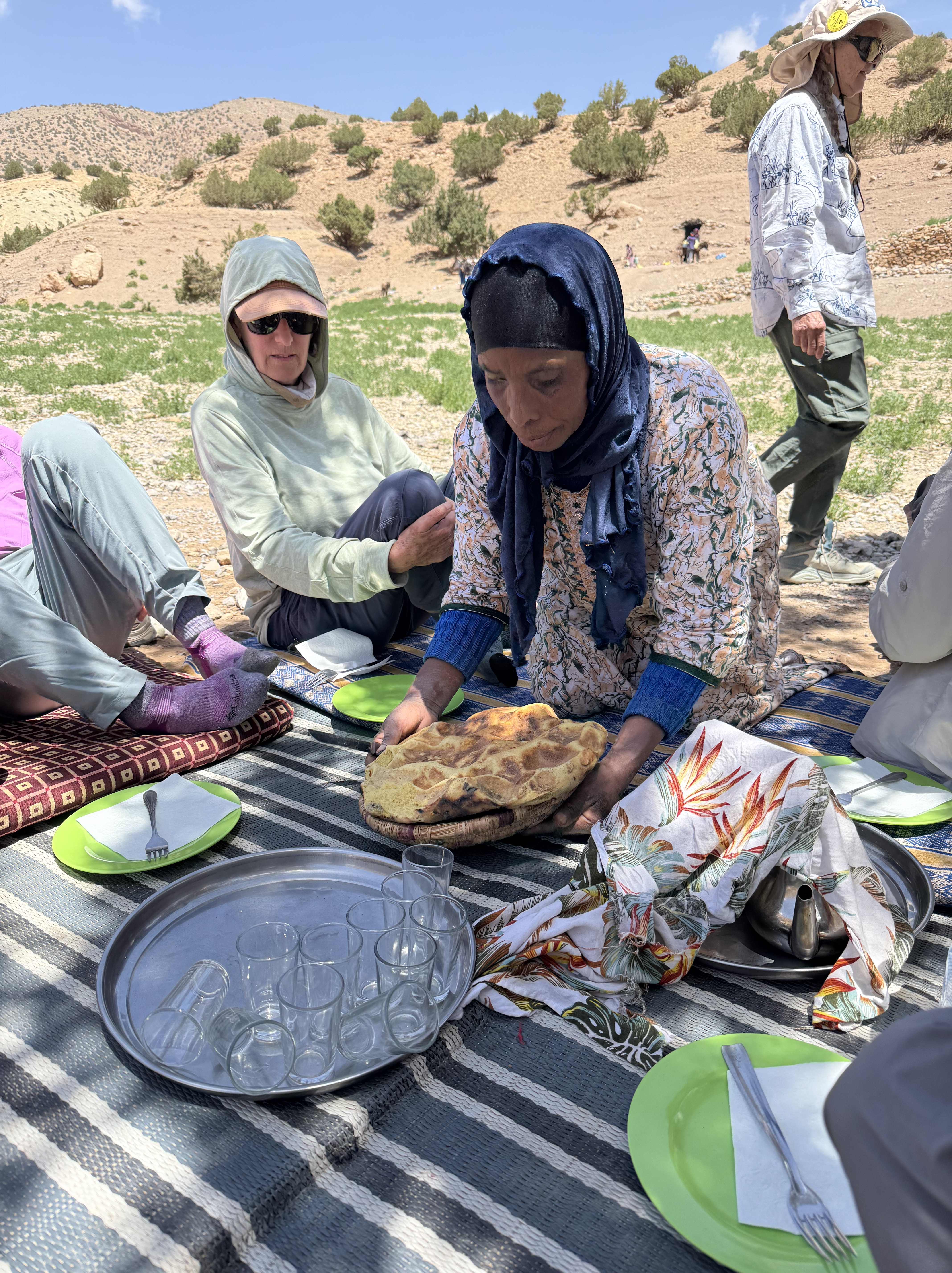
Indigenous guides introduced us to Amazigh (Berber) culture, inviting us for meals and entertainment in women’s homes. The women dressed us up for a mock wedding, drew us in to the song and dance, and in those moments we ten Americans weren’t tourists, we were favored guests. 

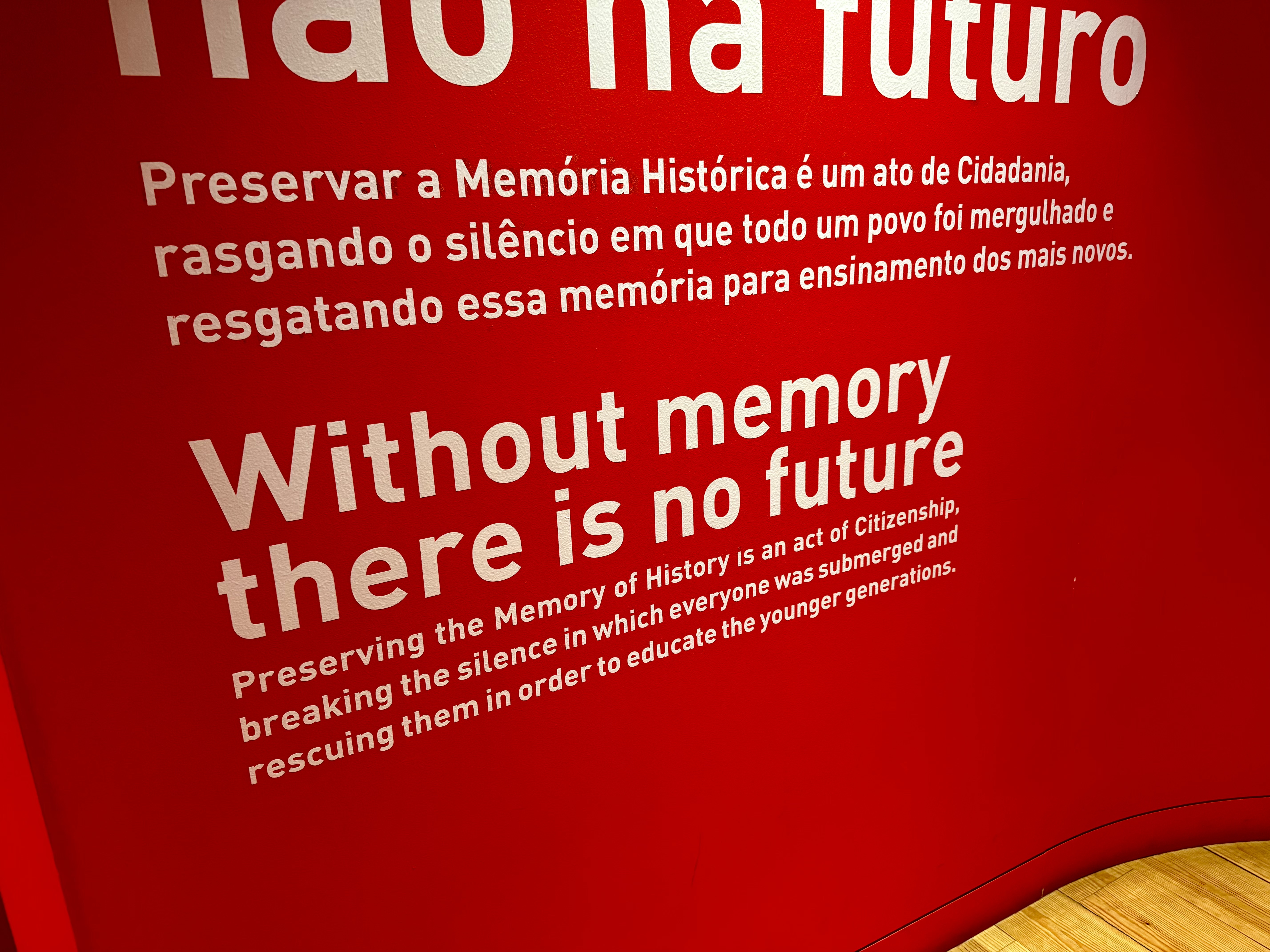
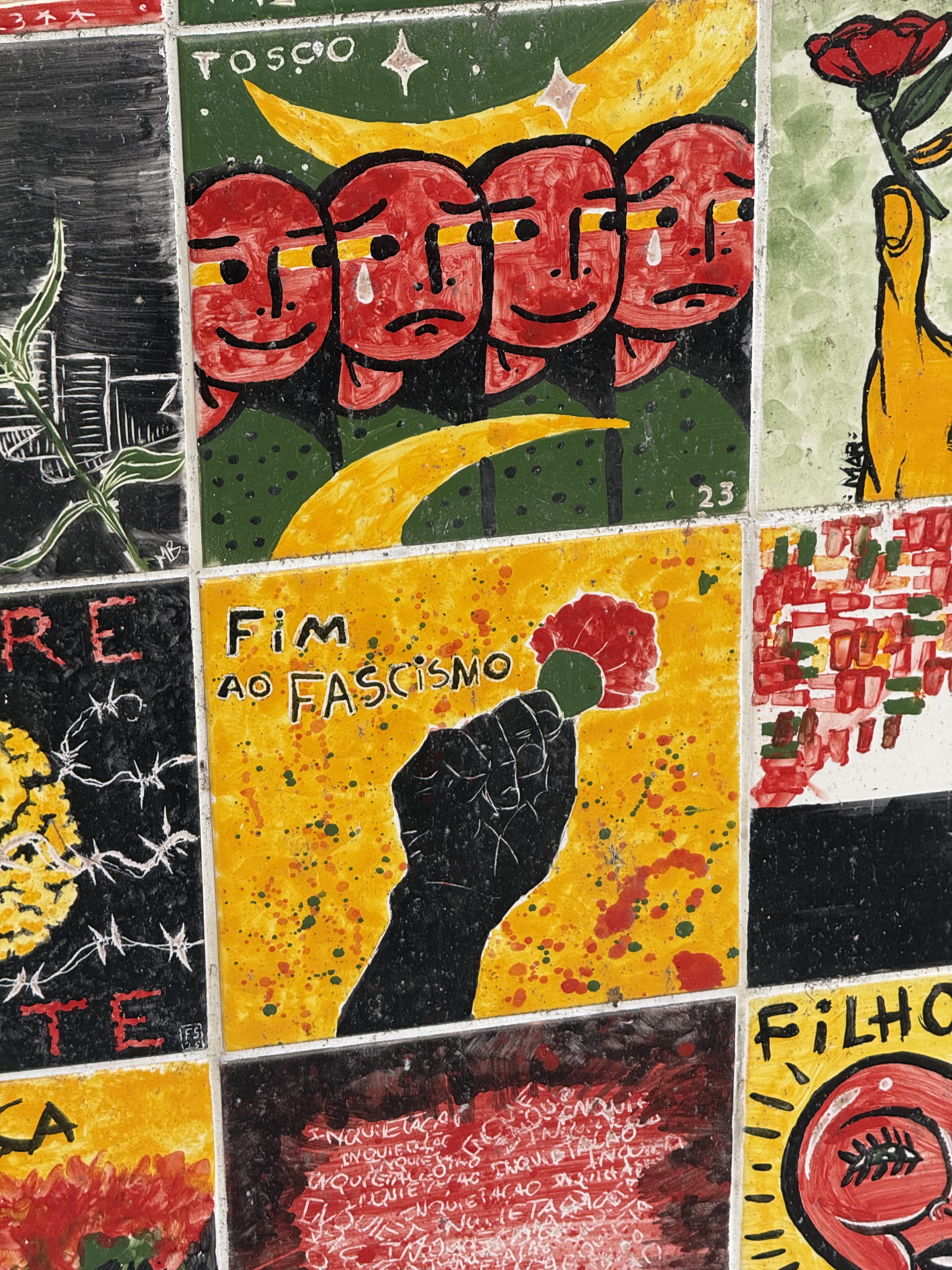
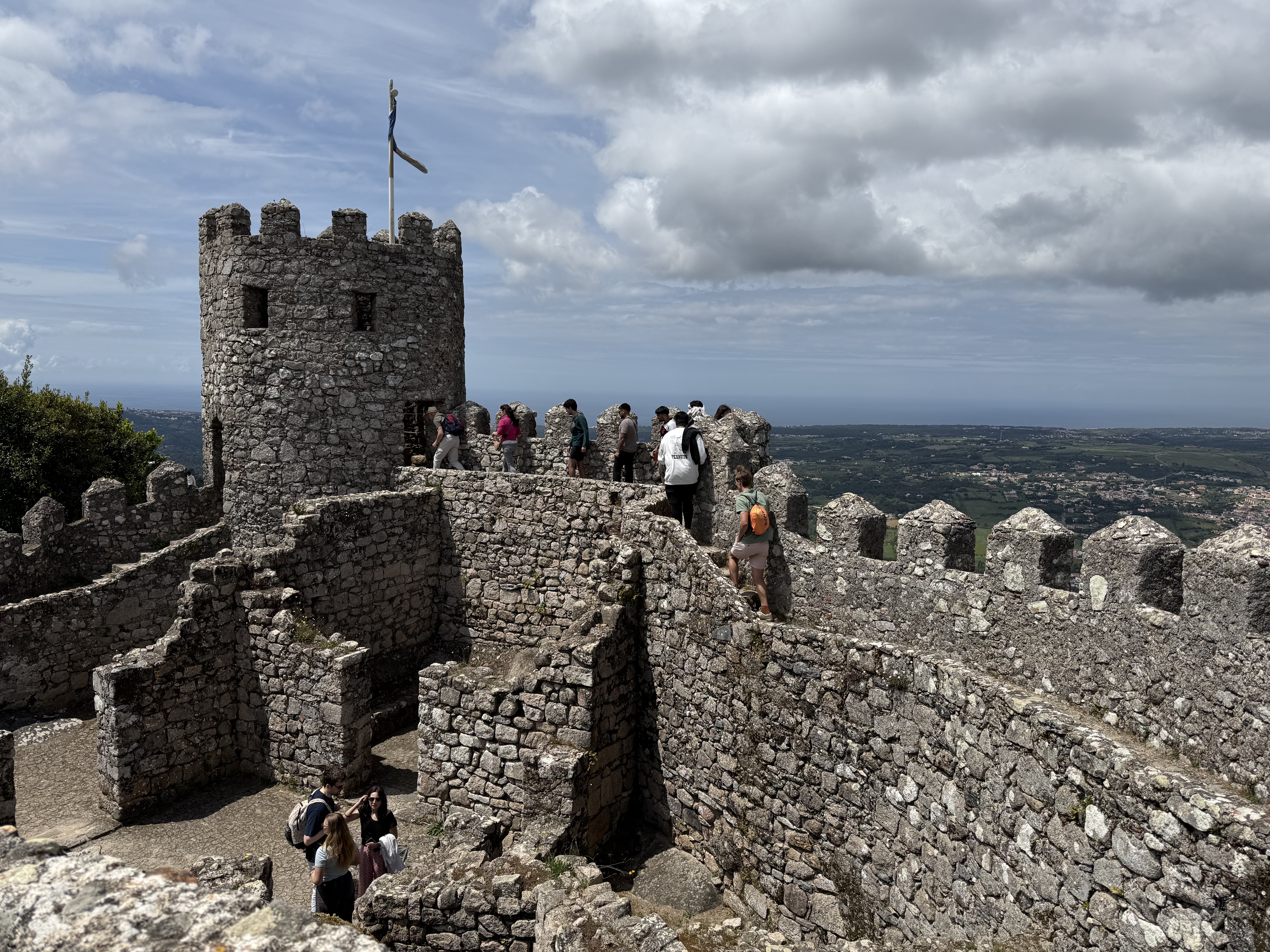
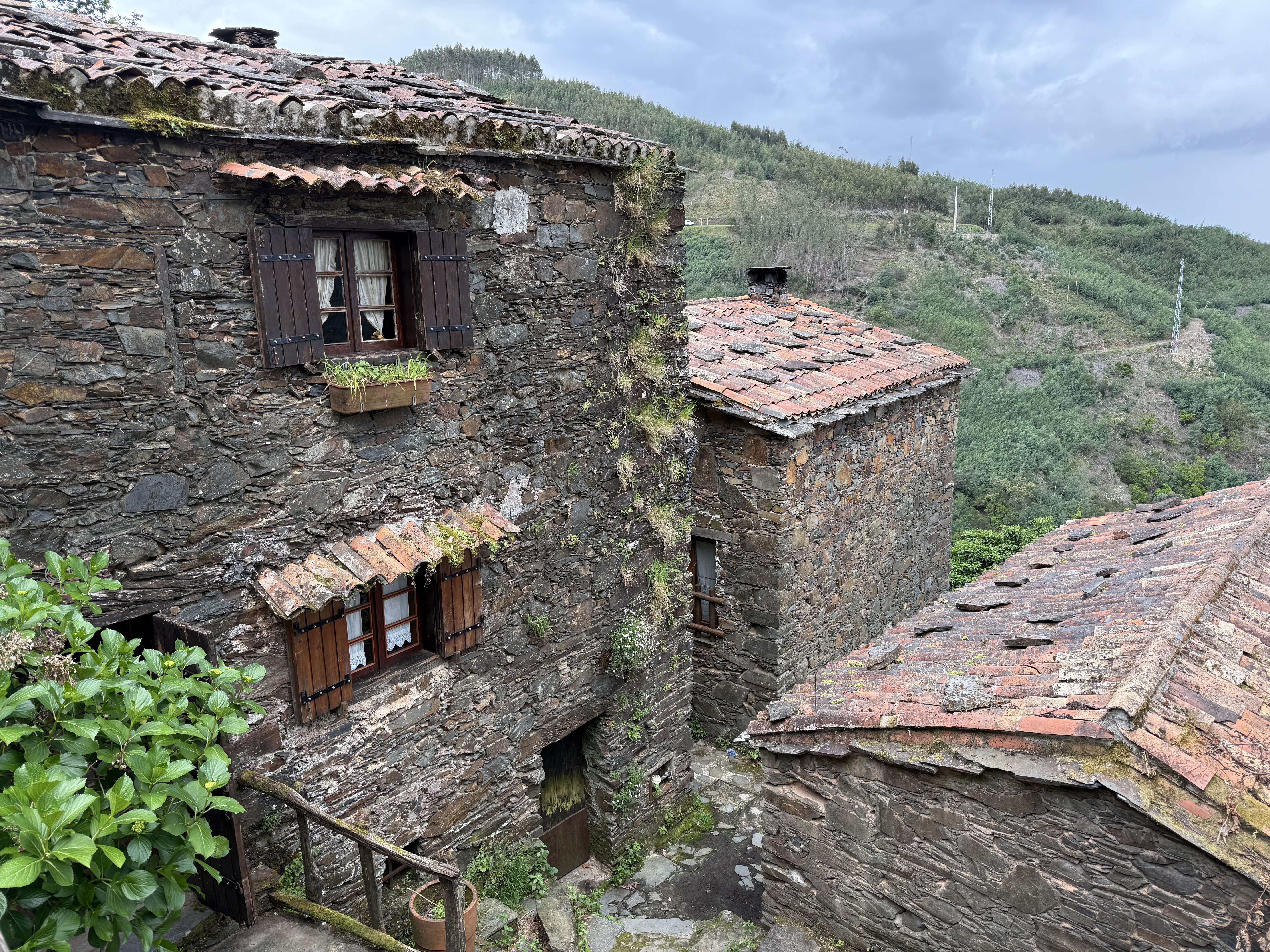
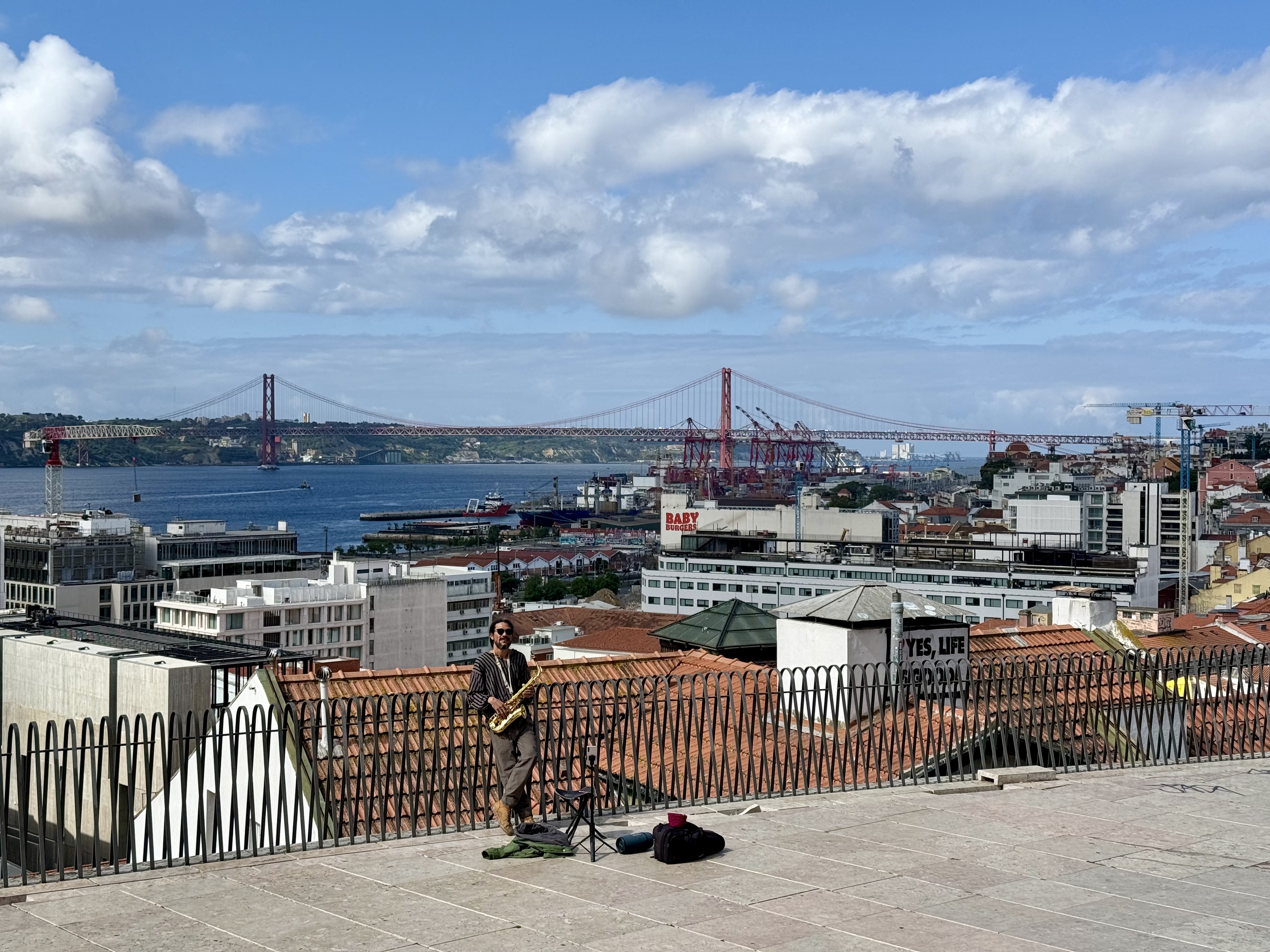
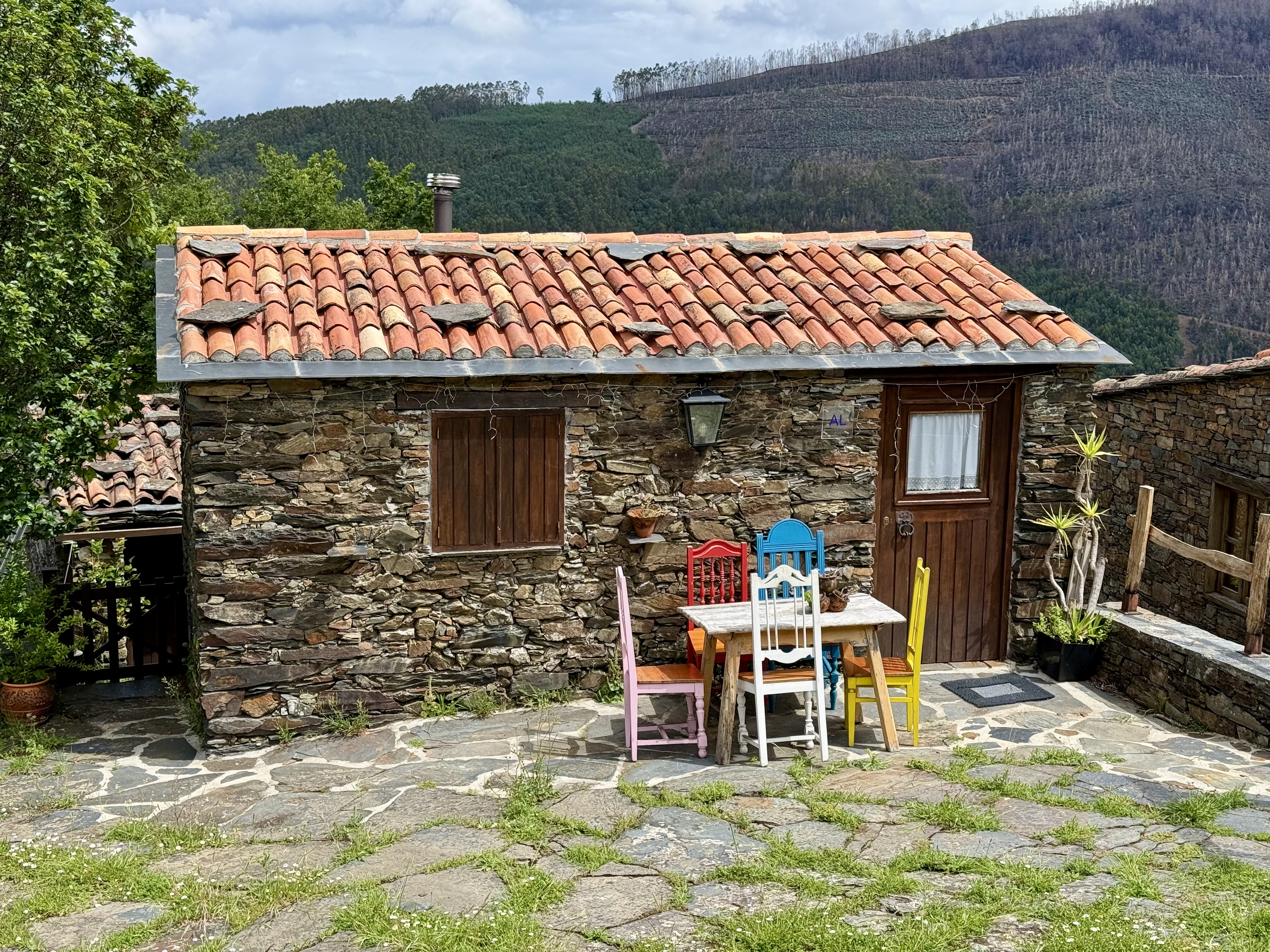
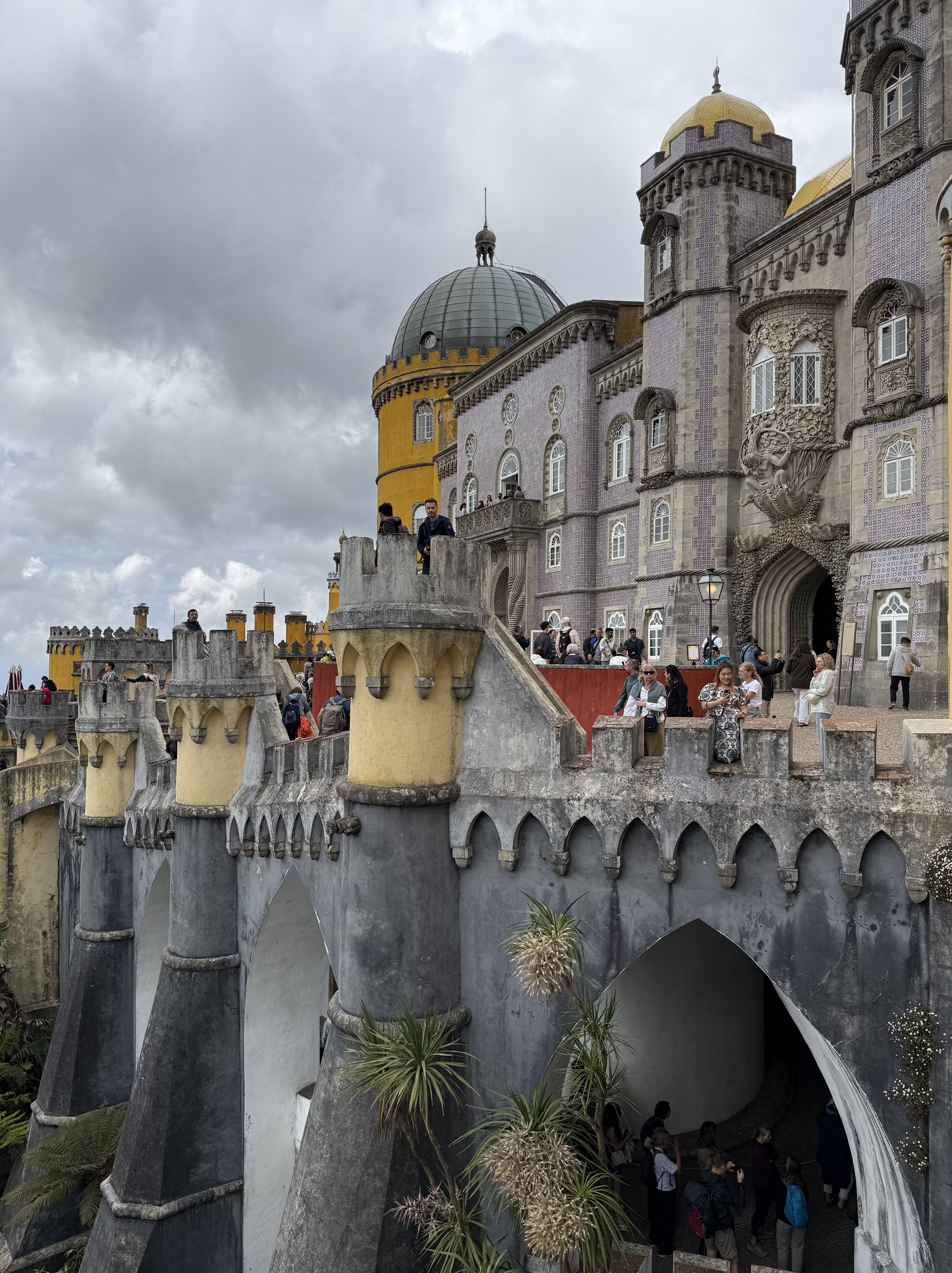
Three of us traveled on to Portugal, visiting Lisbon, Sintra and mountain schist villages. A highlight for me in Lisbon was the Resistance Museum where I could sit and take in the history of the Portuguese 1974 revolution and the concurrent freeing of their African colonies. 

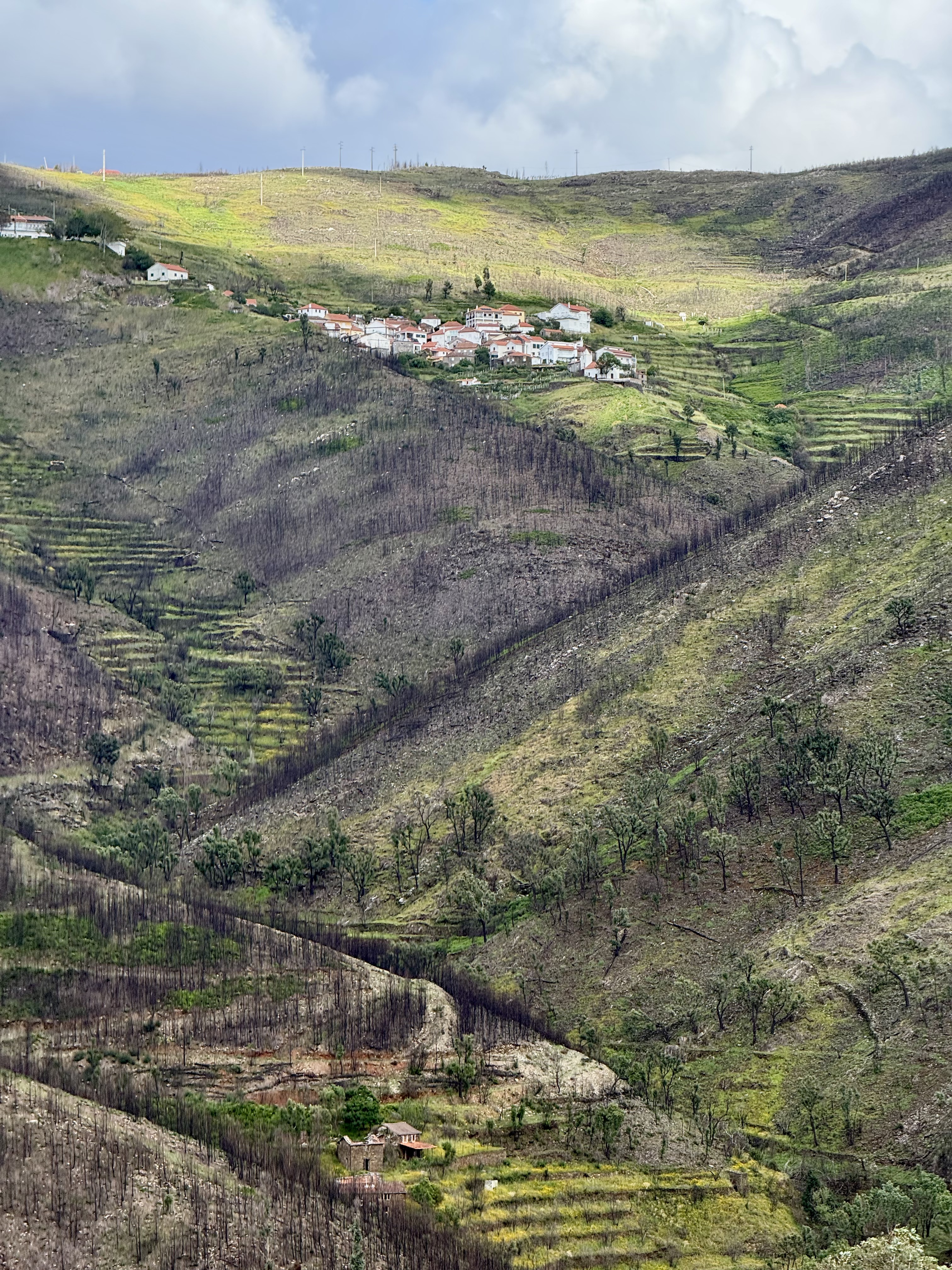
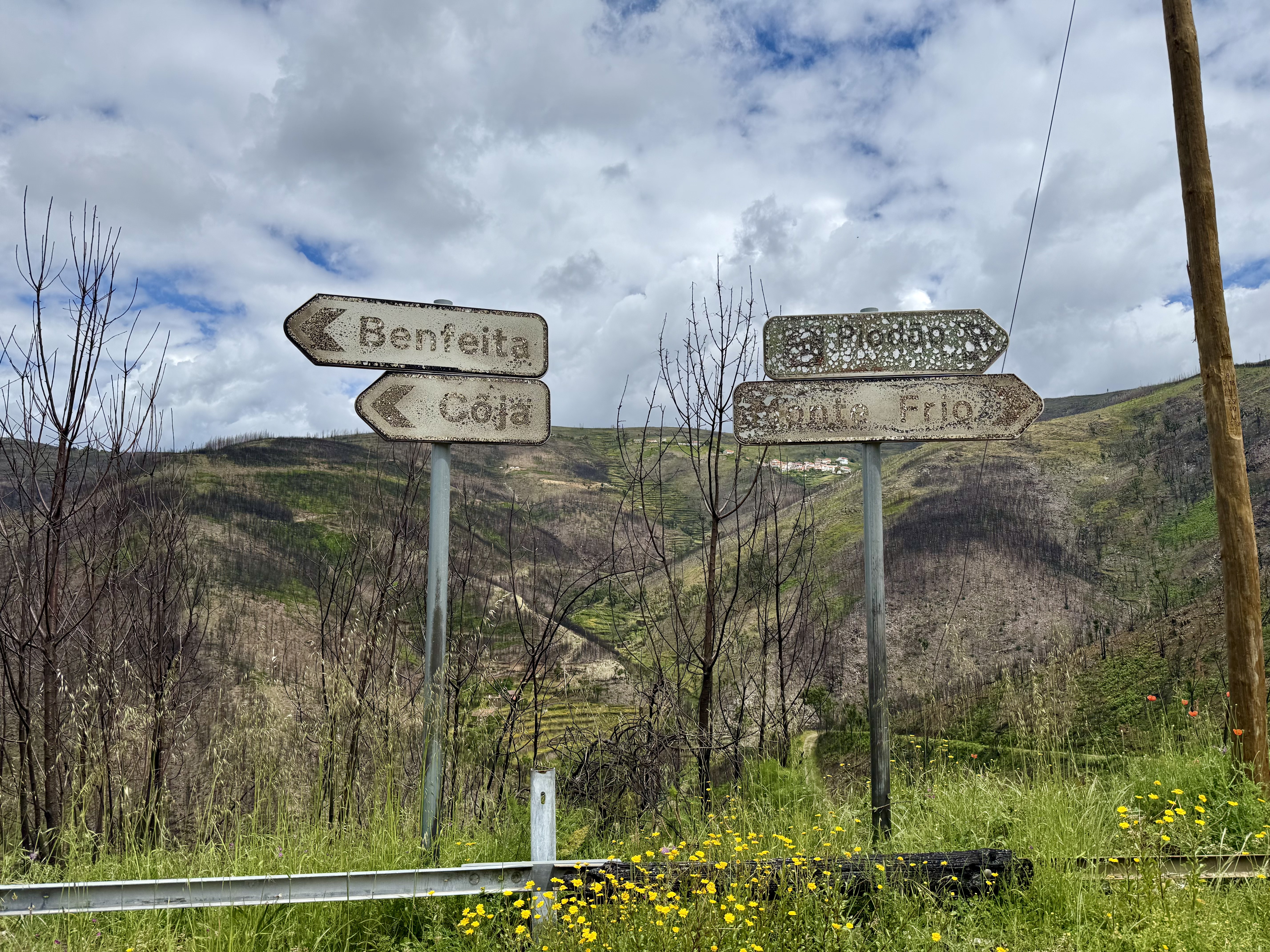
Driving out of the city, we were surprised to see the mountains planted in eucalyptus (for paper production), which burned in a terrible fire in 2025. Then, early this year, a huge storm knocked down trees and power lines and flooded villages, damaging the hiking trails. We Californians recognized this familiar pattern of climate’s cruelty and poor land use decisions.

Burned signs in the Portuguese mountains

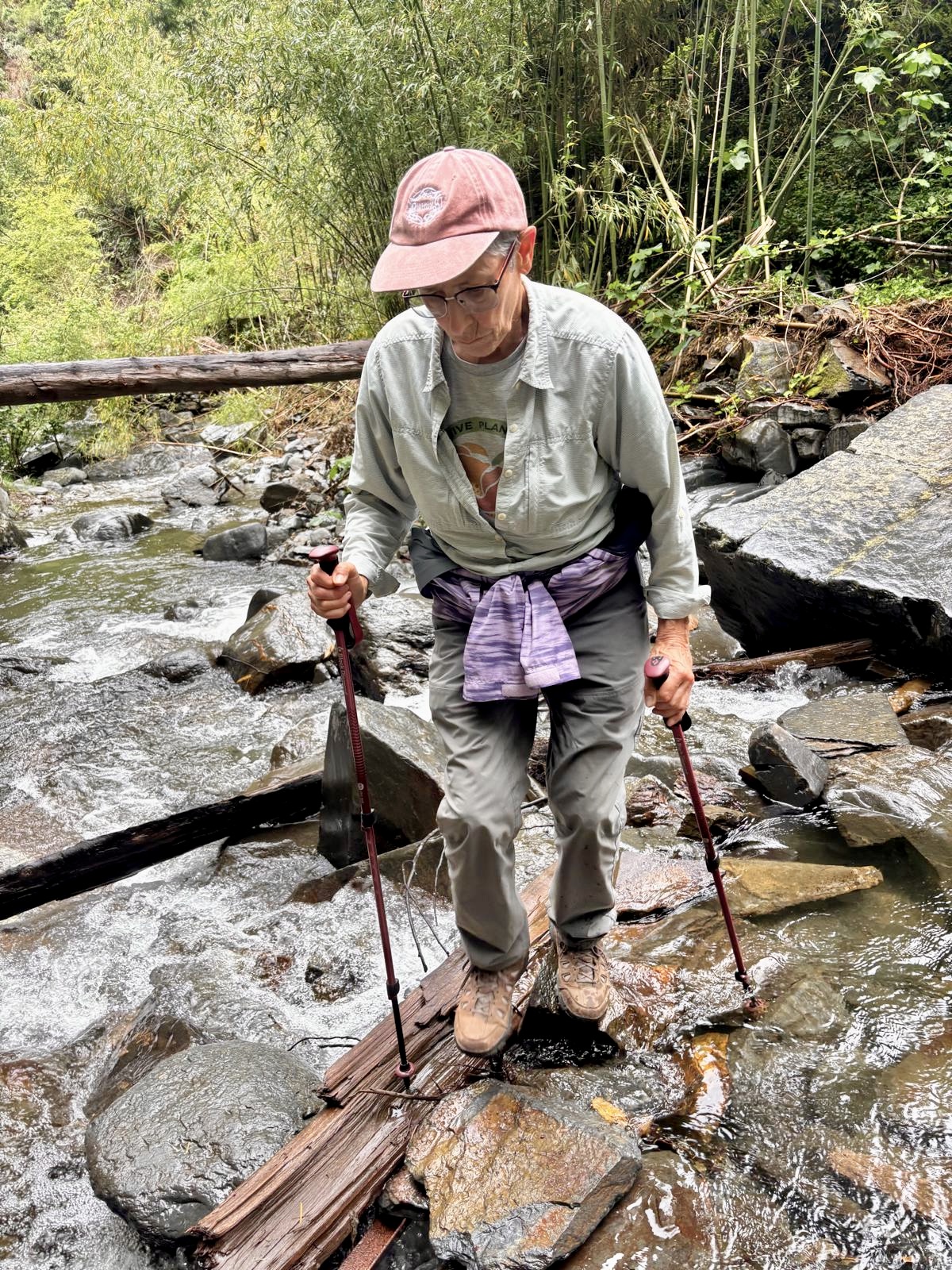
We persisted; my ankle felt a bit better and I was able to hike among the old schist villages with the help of an ankle wrap and hiking poles.

On the way home and back in the boot, at the Madrid airport (I can now say I’ve been to Spain), planes were delayed and gates shuffled, yet an army of orange‑vested attendants formed a conveyor belt of compassion for the disabled. We were a support group on wheels. On packed planes I miraculously avoided catching anything despite the coughing babies.

The grand finale: midnight in Santa Rosa, about to be dropped off at the airporter bus stop, I strategized how to get home. Plan A: Lyft—no reply. Plan B: taxi—too late. Plan C: a heroic 2.5‑mile pilgrimage, halted when the bus driver passed me a phone number and I met Eric, the night driver‑cum‑savior who rescued me from walking‑home doom.

Silver linings: reunions that felt like coming home, friends new and ancient, strangers who became angels, tiny airport luxuries, lessons in culture, and real, workable tweaks for travel with an injury. But perhaps the best was bonding with my sister travelers and our knowledgeable guides. 

No regrets. If anything, I’m grateful I muddled through—because the mess made room for unexpected warmth. I’m glad I didn’t cancel. 

*If you’d like to support the Amal Women’s Training Center, consider donating: https://www.amalnonprofit.org

Sonoma County Gay Pride

June 6, 2026 Santa Rosa

Holly and I watched the parade and hung out with friends at Beer Baron on 4th Street. We perused the many booths at the square but didn’t stay for the stage entertainment. I went on to a party at the Sitting Room, the feminist library, to chat with women writers and readers. A very good day all around.

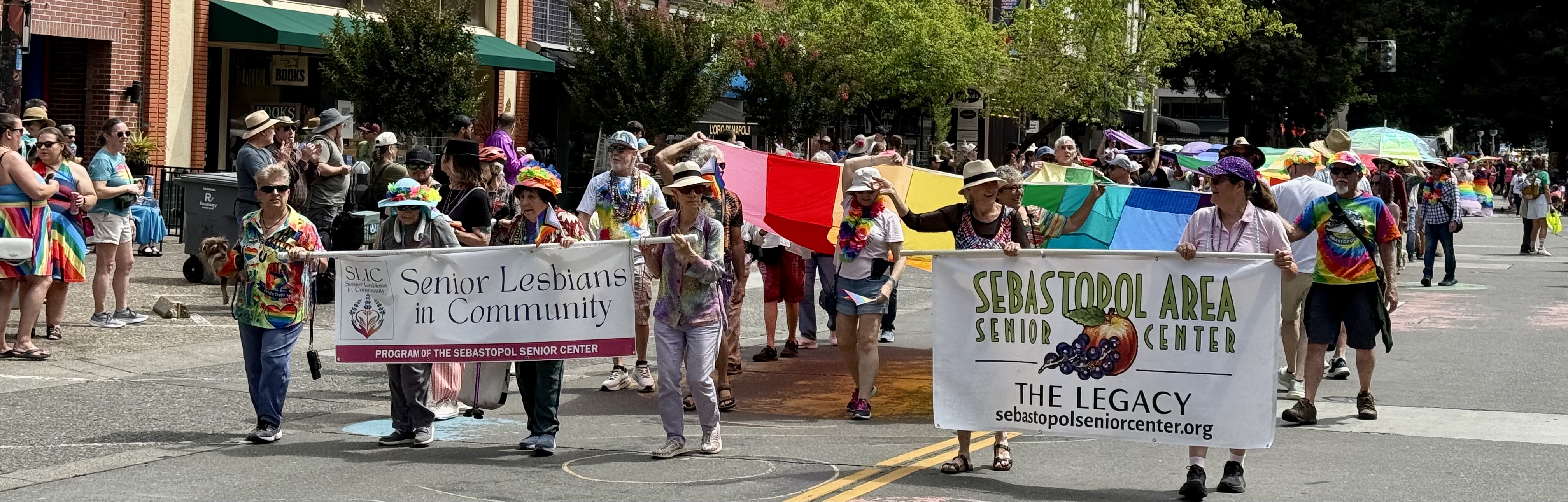
Sebastopol Senior Center has lots of programs for queer seniors
Tina Dungan and Magi Fedorka woman the gay history timeline booth
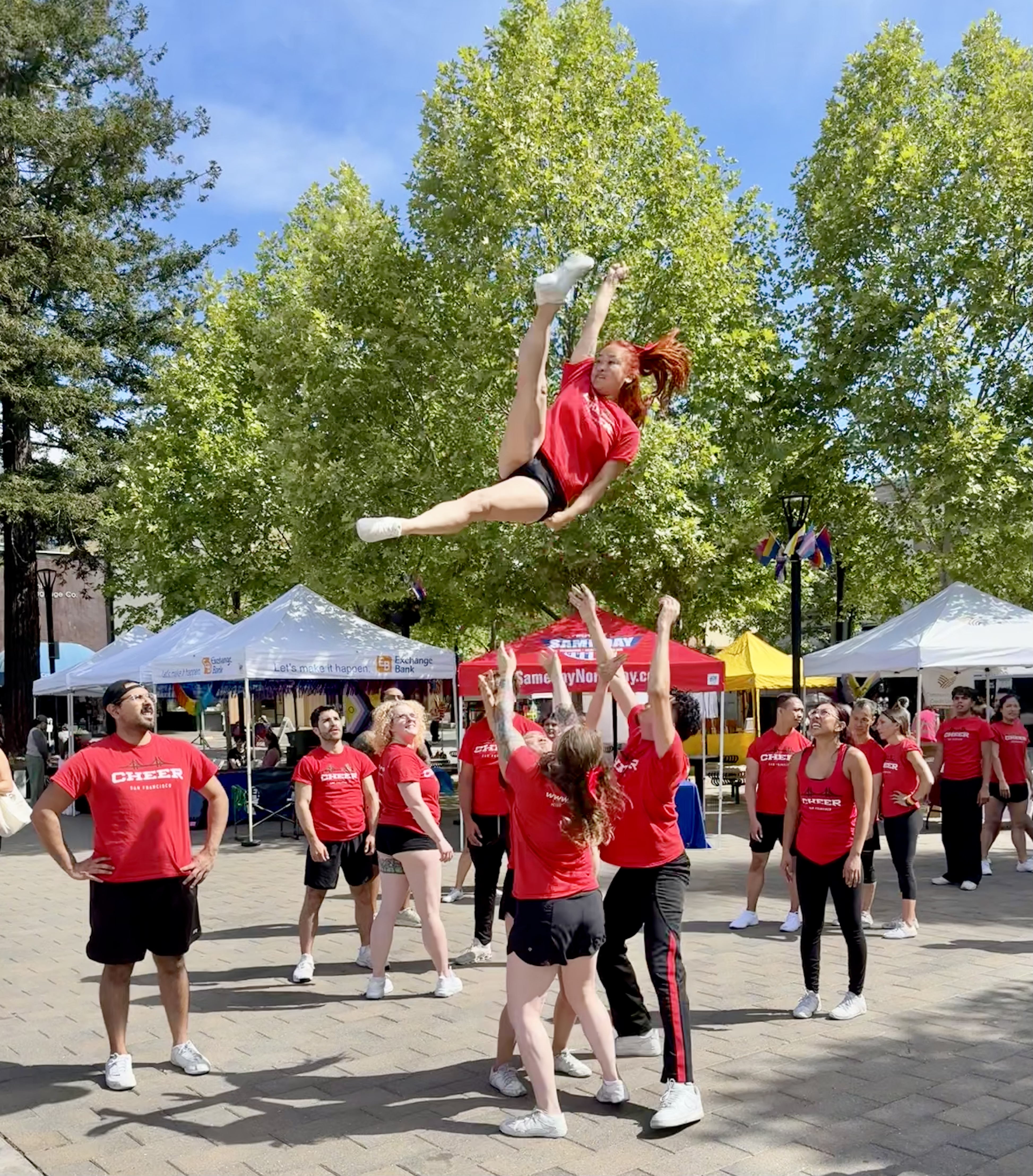
The awesome SF Cheer practicing acrobatics.