The Fuchsia Jacket

Countering Dyke Wardrobe Anxiety

No one has ever praised me for my fashion sense. In the 60s and 70s it didn’t matter. Lesbians all wore pretty much the same thing–jeans and T shirts. I bought my flannel shirts at JC Penney in the boys’ department, boys size 18. I worked construction and so I could wear the same outfits for work and play. For lesbian dress up events I bought a used tuxedo. But straight affairs like weddings left me perplexed as I surveyed my closet.

I didn’t have a thing to wear. 

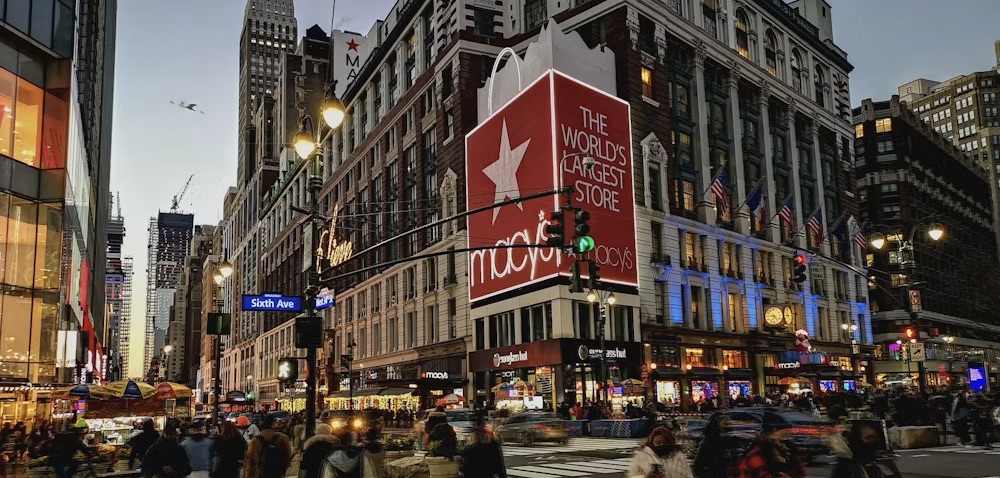
By the 1980s I felt the need for something a little dressier. I enlisted my friend Joan and her tailor girlfriend Lucy to help me. They accompanied me to Macy’s in downtown San Francisco to buy what my father might describe as a sport coat. Something you would wear with slacks of a different color. 
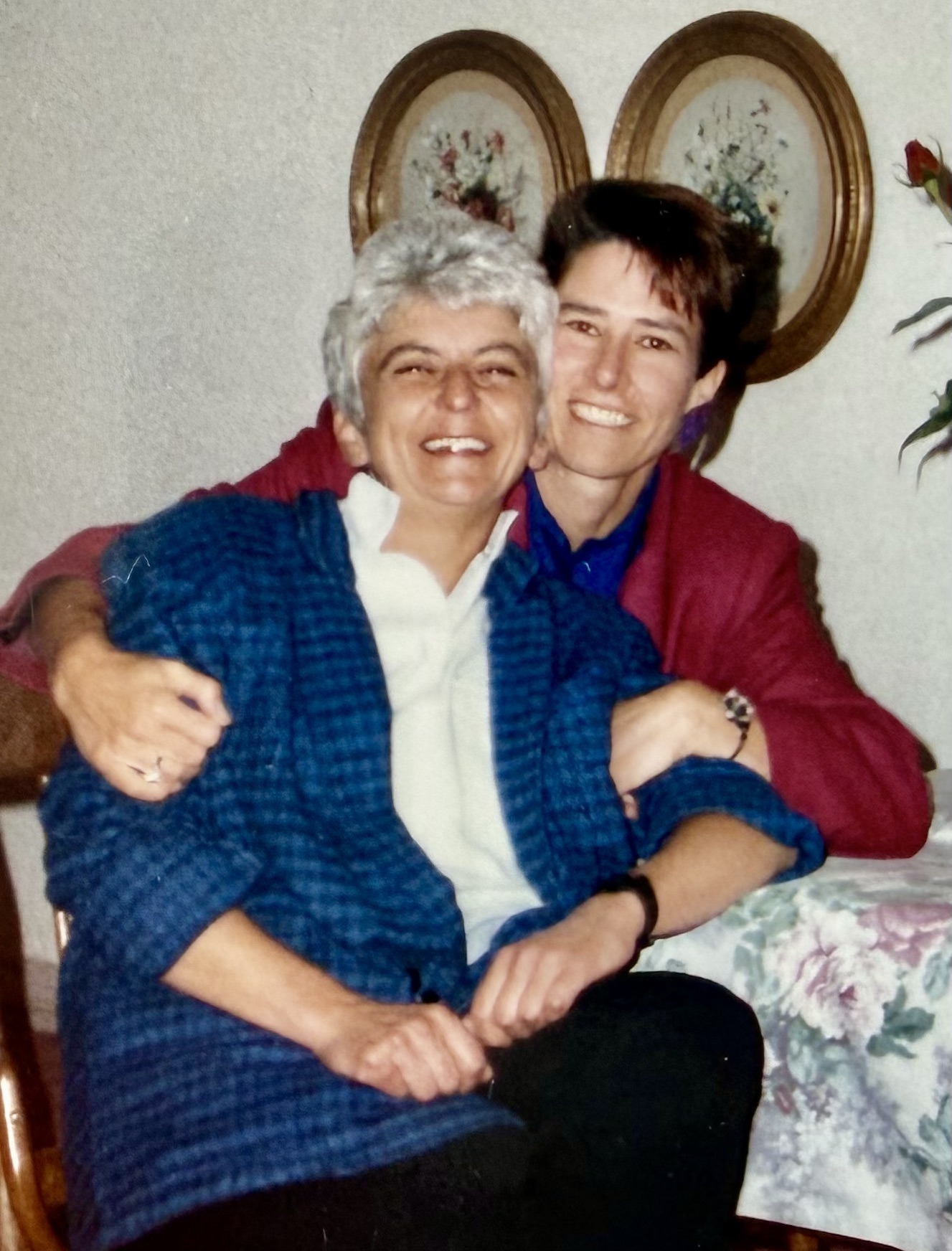
With my girlfriend Pat Cull, wearing the fuchsia jacket

One of the highlights of my week used to be looking through the Macy’s ad in the Sunday Chronicle. It wasn’t a catalog, more like a magazine, even bigger than the Sunday New York Times Magazine. There, in gorgeous color photographs, were all the things we desired–clothes, kitchen appliances, leather furniture, gadgets. You had to go to the Sears catalog for tools, and I drooled over those pictures too. My collective houses had little by way of possessions–furniture found on the street, 2X4 and plywood beds, brick and board bookcases, tables refashioned from electrical spools, mismatched kitchen utensils and dishes from Goodwill. We lusted after the new, even if we dared not admit it to our politically correct circle of friends.

Department stores both excited and overwhelmed me. I loved the window and in-store displays even more than the color pictures. Macy’s was the best, not so hoity toity that you felt unwelcome, but still very classy. Macy’s had signed me up for my very first credit card at a time when most credit cards were still restricted to men. I was as loyal as a customer with little money could be. But I was overwhelmed by the number of departments and choices. I invariably narrowed them down by only shopping the sale racks, usually in the far back of each department. In fact, I could never bring myself to pay full price for anything, so I usually never got beyond them.

Now it was time to use my credit card to buy something new. At Macy’s, Lucy steered me toward the Misses section and we each began perusing a different rack. Cutting edge fashion in the 80s featured big boxy jackets and oversized shirts with padded shoulders. I thought the style would look great on me. Lucy was the one who found the jacket, boxy and big, size 12. It was bright fuchsia. Should I buy it? Would it be a good wardrobe investment? Both women encouraged me. And, while Joan was a sister construction worker, Lucy was a clothes person. I took her advice.

My jacket was well received in San Francisco. I stood out in a crowd of colorful outfits, but I fit in. Fuchsia became my favorite color, and my color consultant, Lucy, said it best complemented my pink white girl complexion.

My travels as a tradeswoman organizer and author took me to New York several times in the 80s. I would stay with carpenter Barbara Trees who lived in a converted warehouse near the tip of Manhattan. The apartment took up part of a floor of the high-rise warehouse—one big room. Residents had filed suit when the owner sought to evict them. They won and were able to stay in the building. Remodeled plumbing necessitated climbing a couple of steps to get to the shower and toilet.
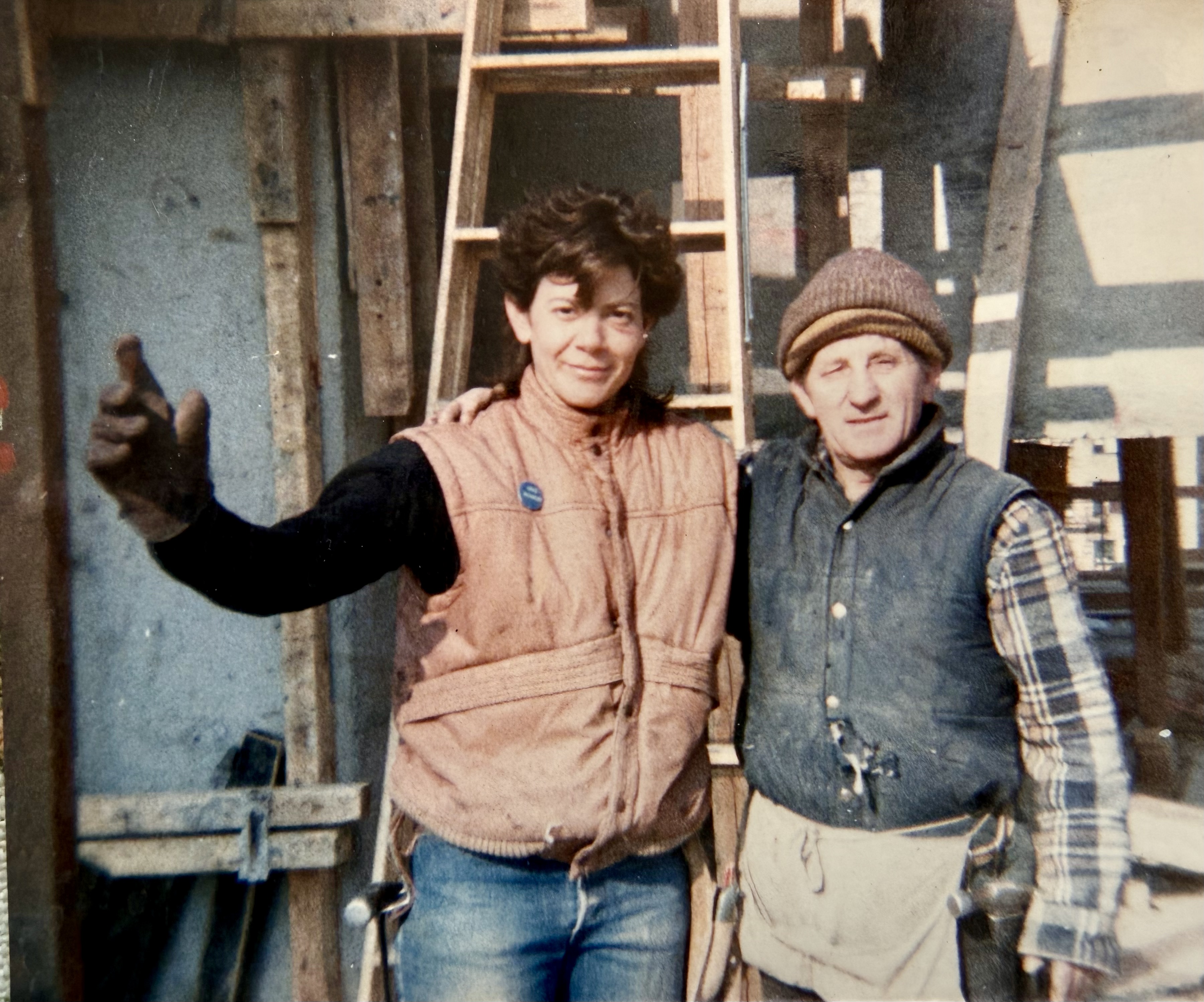
Carpenter Barbara Trees with a coworker

On my first trip to New York I was tasked with meeting with the Ms. Foundation to ask for funding for the tradeswoman organization I was working with. Barbara was out of town but she left a key and I stayed in her loft alone, so I had no one to ask for fashion advice. She was also a construction worker, so she may not have helped that much.

Fashion anxiety overtook me. What does a clueless West Coast dyke wear to a meeting in NYC? I didn’t know anyone in New York, but I had the phone number of the writer and activist Sarah Schulman. She put my mind at ease, advising me that all would be ok no matter what I wore. 

The morning of my appointment I slipped on black shoes and slacks, then topped off the outfit with my fuchsia jacket. In Barbara’s mirror I looked fabulous. Locking the many locks on her door, I rode the elevator to the street and walked out into a sea of people on a sun shiny Manhattan day. Wall Street traders in black suits, ladies walking little dogs–everyone was wearing black. Suddenly it seemed like every single pair of eyes turned toward me and my fuchsia jacket. I began walking purposefully toward the subway and I got a couple of blocks before I had to turn around. I couldn’t do it. I went back to Barbara’s and changed into a black leather jacket I had worn on the plane.

We didn’t get the money. Would we have gotten it if I’d been able to wear the fuchsia jacket?

Epilogue

Barbara Trees was so traumatized by the 9-11 attack that she moved away from New York City. We lost touch after that.

Sarah Schulman joined the faculty of Northwestern University in Illinois in 2016. Her writing has centered on queer life and AIDS activism in NYC. Her latest book is The Fantasy and Necessity of Solidarity. In search of activist guidance I actually bought her tome Let the Record Show: A Political History of ACT UP New York, 1987-1993written using interviews as part of the ACT UP Oral History Project.

Macy’s photo by Vladan Raznatovic on Unsplash
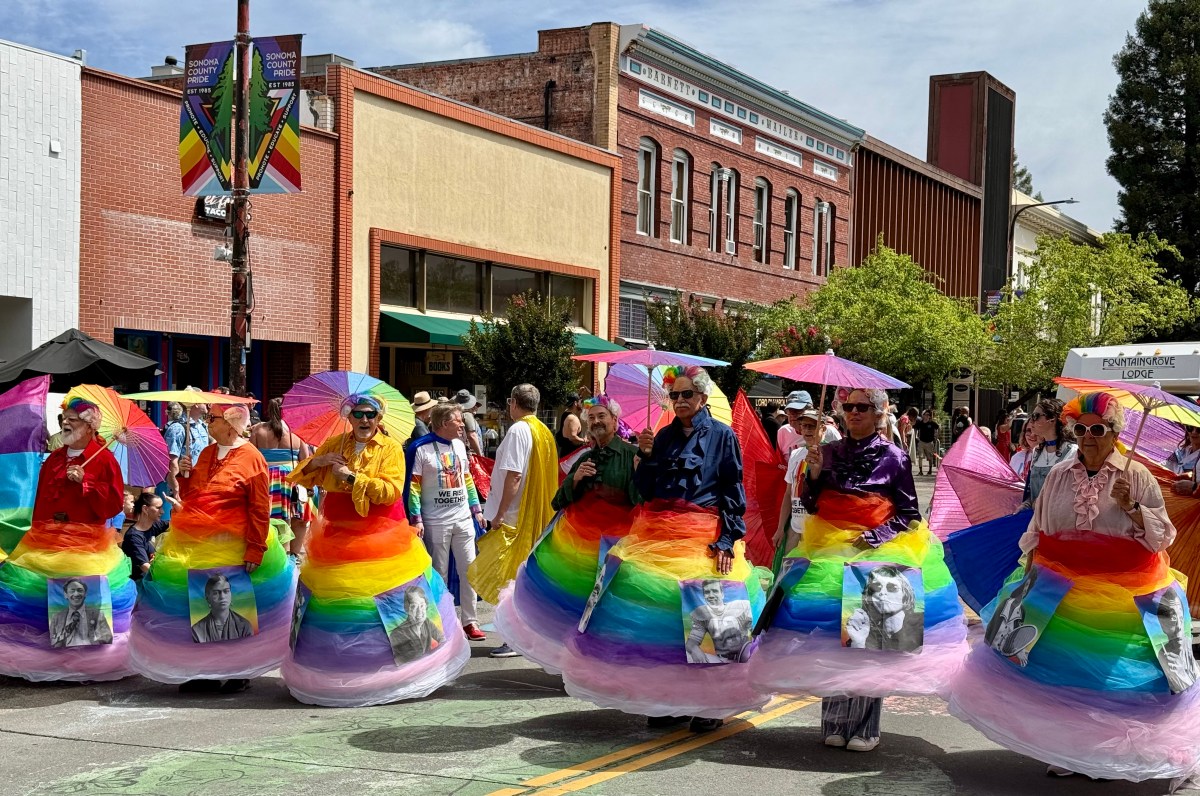
Sonoma County Gay Pride

June 6, 2026 Santa Rosa

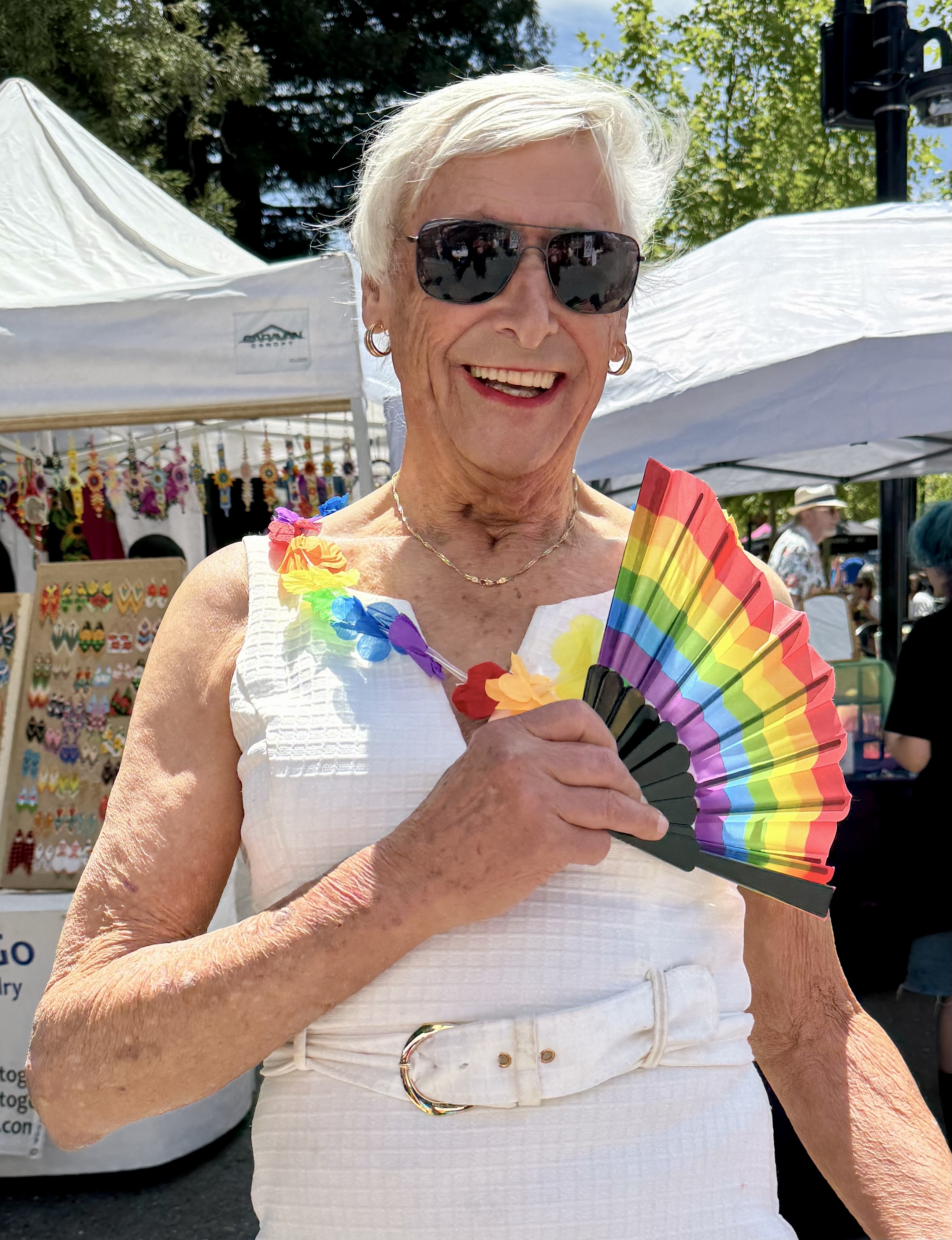
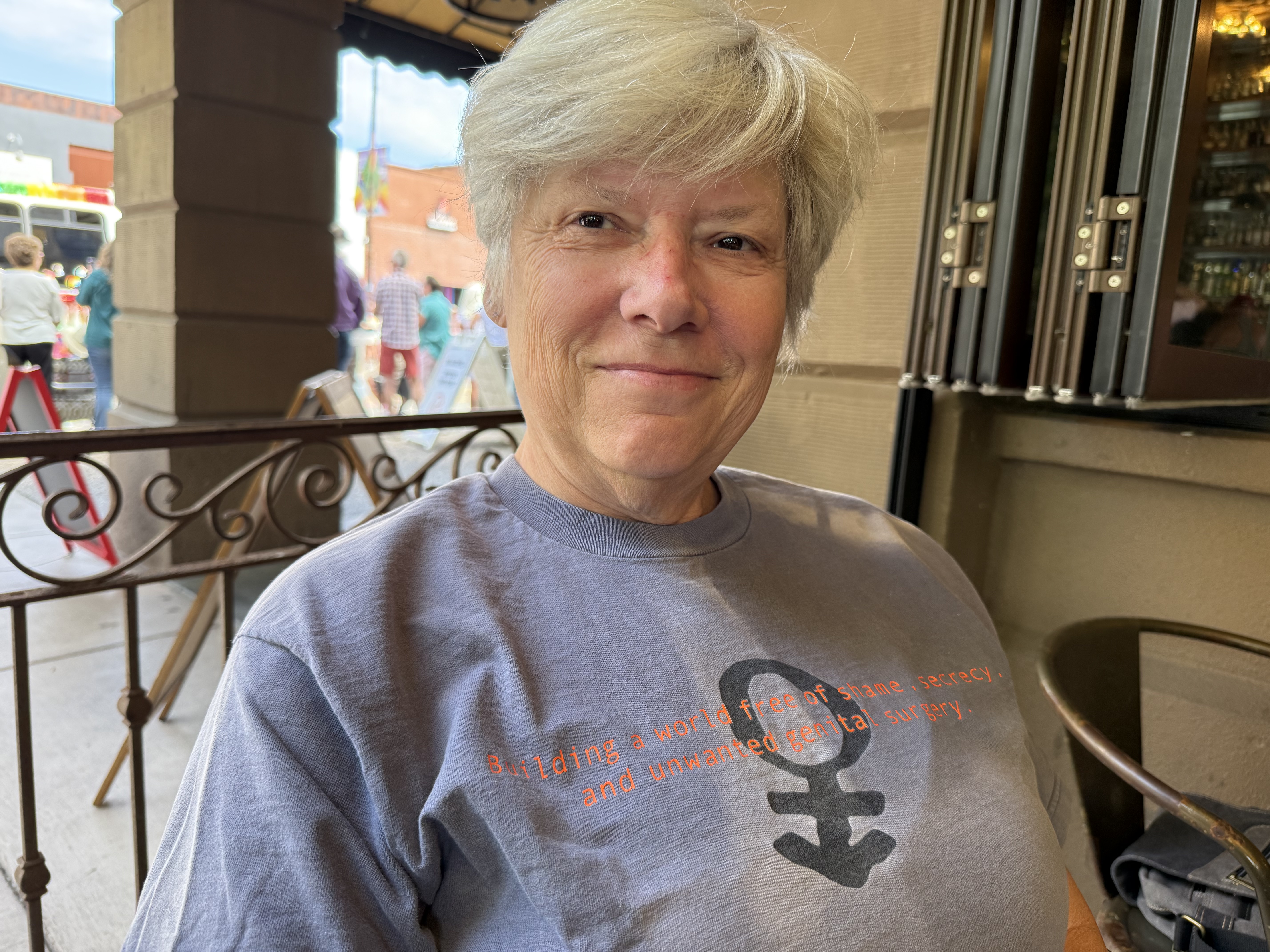
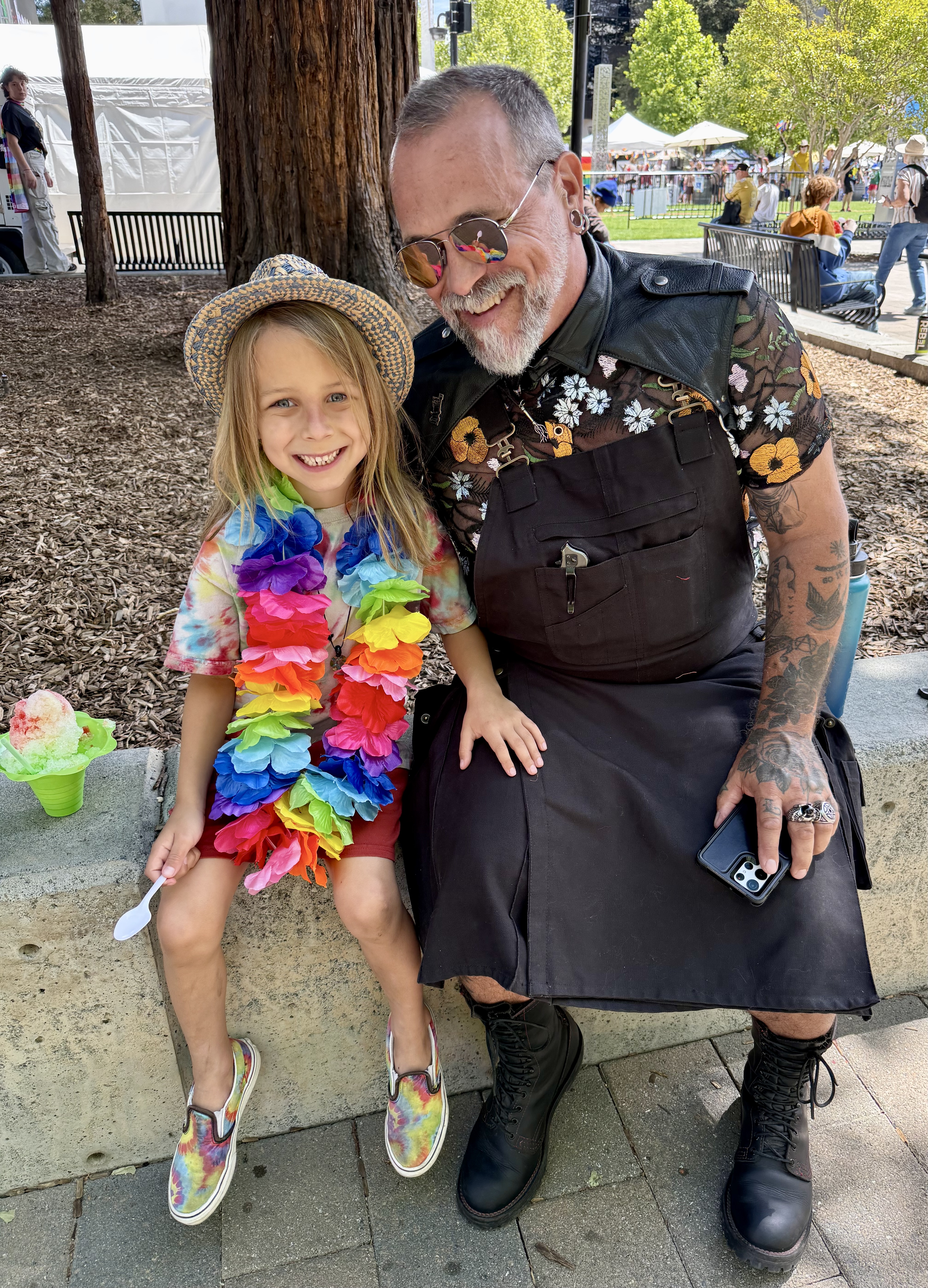
Holly and I watched the parade and hung out with friends at Beer Baron on 4th Street. We perused the many booths at the square but didn’t stay for the stage entertainment. I went on to a party at the Sitting Room, the feminist library, to chat with women writers and readers. A very good day all around.

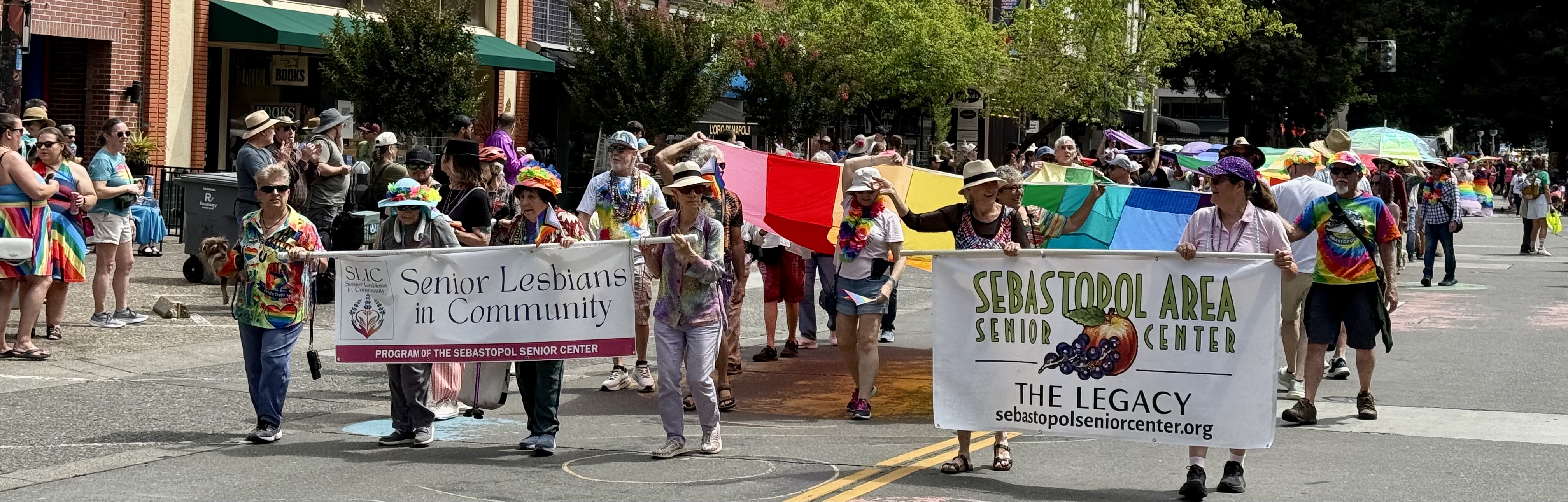
Sebastopol Senior Center has lots of programs for queer seniors
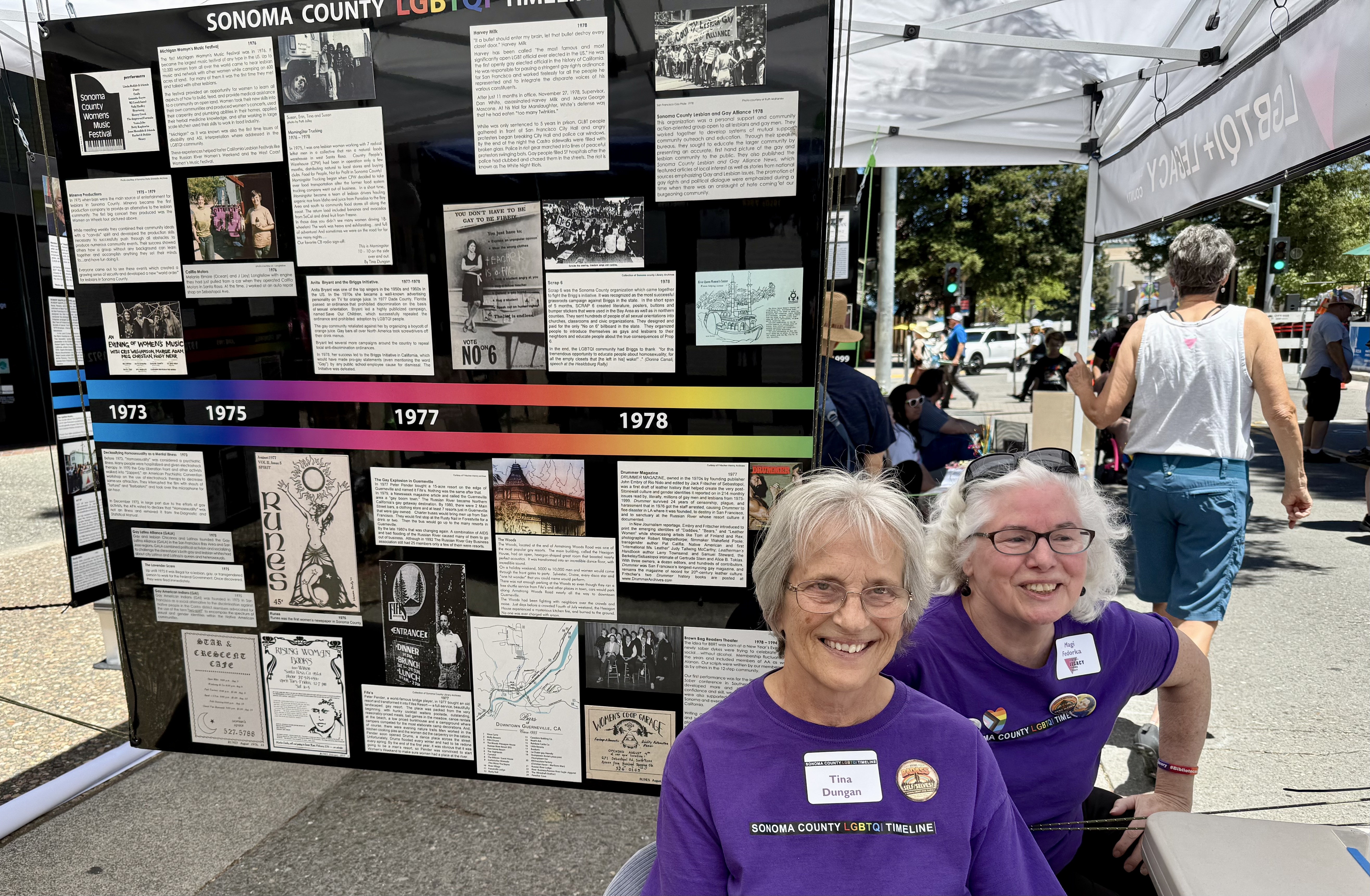
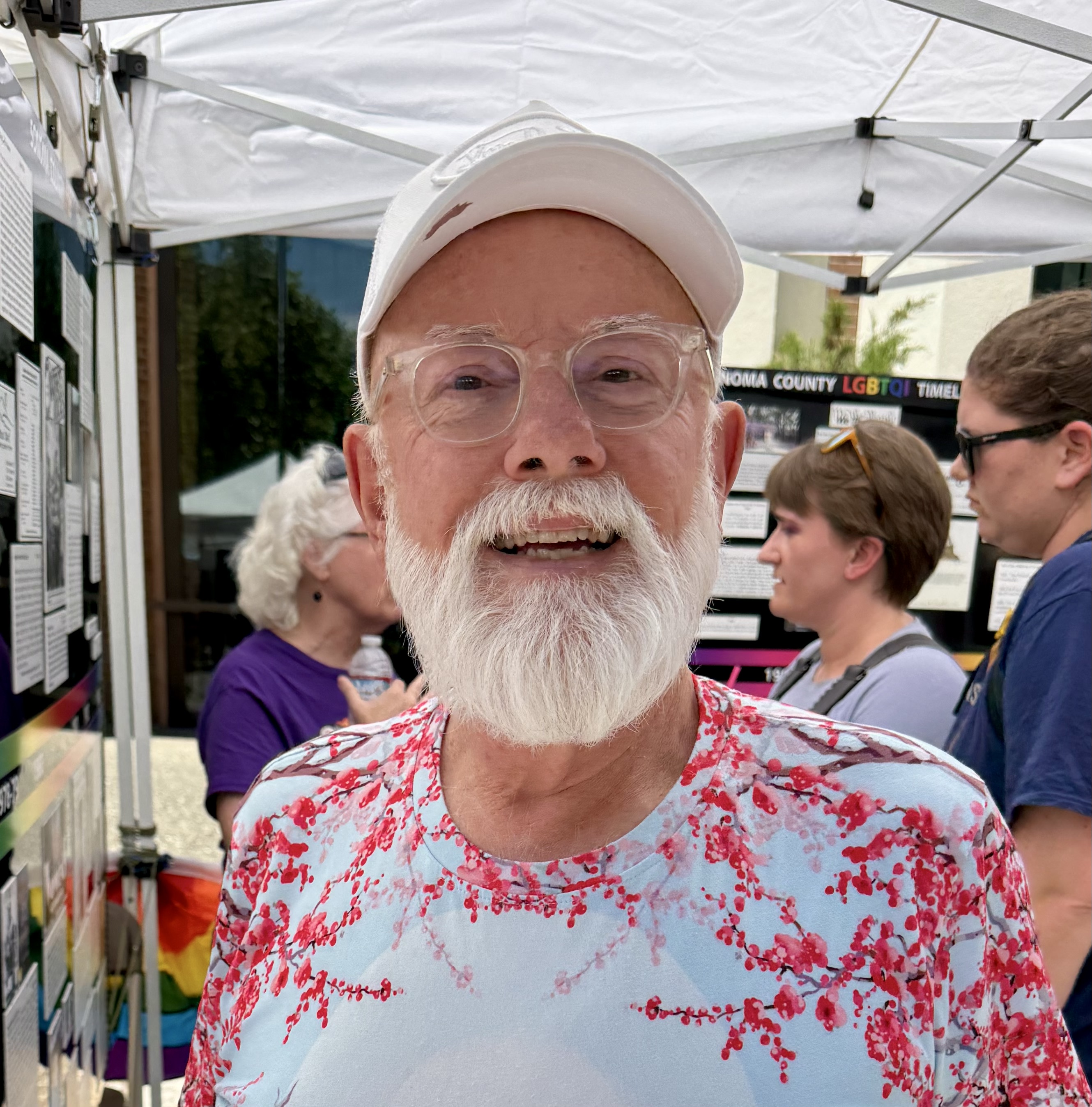
Tina Dungan and Magi Fedorka woman the gay history timeline booth
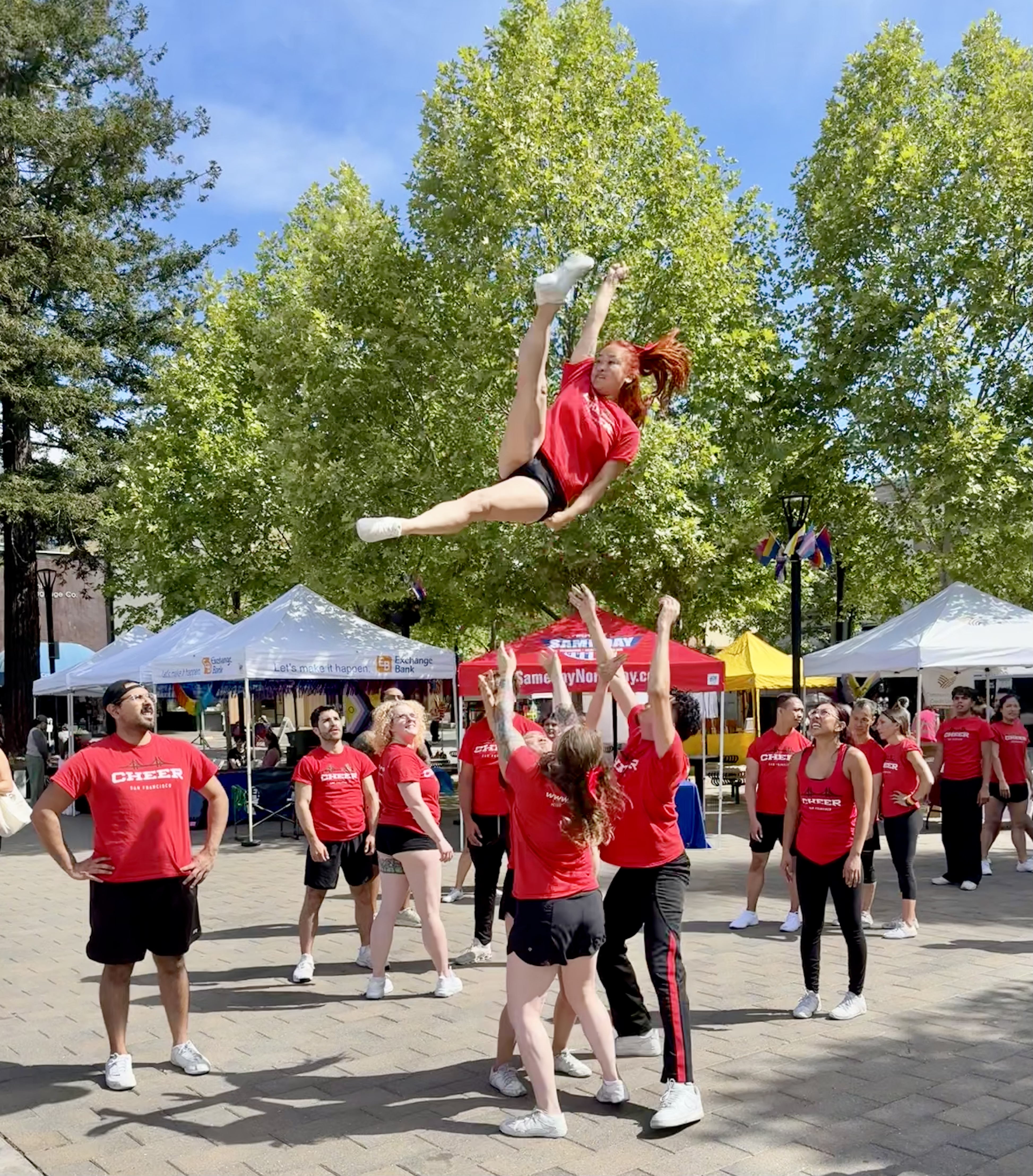
The awesome SF Cheer practicing acrobatics.

Invoking the Travel Goddesses

August 1, 2023 

My Regular Pagan Holiday Post: Lammas

It is the season for traveling in the northern hemisphere and I’ve been traveling along with millions of others, this year freed from covid restrictions. 

The Santa Rosa airport was packed with more people than I’ve ever seen there, and my destination, Seattle, was just as chaotic. I was one of very few folks wearing a mask. On the plane, people sitting around me discovered we are all from the same neighborhood. Two were flight attendants, relieved that they no longer are required to act as mask cops, risking physical confrontations with MAGAs (they wore masks).

My full flight was smooth and on time. At SeaTac I always rush through the baggage claim level to the far south end of the airport where I catch the bus to Kitsap peninsula towns and my destination, Gig Harbor. This time the bus was just boarding and there was an empty seat for me. My luck may have been the result of my friend Barbara Sjoholm’s invocation of (and my introduction to) the two Roman travel goddesses, Abeona and Adeona. The goddesses are often petitioned together to provide safe travels. 

Abeona–in Latin abeo means to depart—also indicates the birth of plant and animal life, including human beings.

Adeona–adeo means to return. “She who returns” is a goddess of plant and animal growth and death.

Betsy, Barbara and Cousin Gail

A prolific writer, Barbara has just published what I’d call her magnum opus, “From Lapland to Sápmi: Collecting and Returning Sámi Craft and Culture,” about the cultural history of the indigenous Scandinavian people. I know her from the murder mysteries she published in the 1980s and 90s, featuring a lesbian sleuth, Pam Nilsen. During covid she wrote and published two mysteries with an older lesbian protagonist, Cassandra Reilly. My cousin Gail, a student of Native American culture, is a big fan of Barbara’s writing about the Sámi, and I got to introduce them. At lunch in Port Townsend we met Barbara’s wife, Betsy Howell, who works for the US Forest Service and writes about it on her blog: https://betsylhowell.com/. She has a new book coming out in the fall. Mazel tov!

We Watch the Earth Burn

I left Santa Rosa as it was experiencing a heat wave. It was only 86 degrees when I arrived in Gig Harbor, also pretty hot for this time of year. For now, the West has mainly avoided heat domes and smoke from Canadian fires that have affected most of the rest of the country. Phoenix is experiencing nearly a month of temperatures above 110 degrees. July 4 was the hottest day in human history.

At one time I thought I would not live to see the effects of climate change, but the change is coming faster than anyone expected. It’s happening in my lifetime!

In California we worry this time of year about fire as well as heat. As a person with lung issues, I dread fire season and its smoky air, which starts earlier every year. It used to start in the fall with the diablo winds that come from the east. Our usual winds blow from the west, offshore, and while they contain pollution from China, they are not usually smoky.

On this trip I’m reuniting with my three brothers and two cousins. Then I’ll travel to Vancouver BC with my brother Don to commune with him and his husband. It’s gonna be great. 

Siblings Molly, Don, Tim and Terry

Celebrating the Cross Quarter Holiday

In the northern hemisphere, the autumn cross-quarter holiday was celebrated by the Celts as Lughnasa/Lammas on August 1. Astronomically the event occurs around August 6 or 7, the hottest time of the year in much of our hemisphere.

At Lammas we celebrate the harvest of first fruits. In Santa Rosa we’ve been harvesting beans for a while. Our first tomatoes are finally ripe. I look forward to summer BLTs and I ate the first one just before leaving town. The peaches are in the dehydrator. The neighbor’s apple tree that hangs over our fence is full of ripe Gravenstein apples. Holly made pies from the leftover last year’s apples so we’ll have room in the freezer for this year’s. Artichokes were prolific and I ate many but left some to flower. Bees love the purple-blue flowers and I love looking at them, but they are now over and the plants are ready to be cut down. 

At summer solstice I celebrated my mother’s birth day. On August 9 I mark her death day, which is also Nagasaki day, the day in 1945 when we, the Americans, dropped the atomic bomb on Nagasaki, Japan. August 6 was Hiroshima. 

Seen from Cousin Gail’s deck. Looking across Colvos Passage at Vashon Island

People all over the world mark the anniversary of the nuclear bombings. Some people fast from August 6 to 9, a nonviolent tradition to pause, reflect and create empathy for those who have suffered from nuclear weapons. Others fold 1,000 origami cranes, a long tradition in Japan, believed to bring a peaceful and healthy life. After the nuclear bombing, origami crane folding became an action for peace and nuclear abolition. It started in response to the story of Sadako Sasaki, a child who contracted leukemia from the radioactive fallout. She tried to make 1,000 cranes but died before she could finish. Her classmates finished the 1,000 cranes, then made crane making their message for peace, starting an international tradition. 

As we face threats of nuclear war and see a new arms race developing, this anniversary must remind us to strive for a nuclear free world.

If you haven’t read Hiroshima, John Hersey’s 1946 piece about the bombing, I recommend it. He personalizes the experience, telling the stories of six survivors. https://www.newyorker.com/magazine/1946/08/31/hiroshima

Sending best wishes for a safe and peaceful Lammas.

Adventures in VanCity

Vancouver, BC.

Carpenter/writer Kate Braid

Whenever I visit I always look for tradeswomen in this city of high rises and construction cranes. On this trip I was lucky to meet up with Kate Braid, the tradeswoman poet laureate of Canada (my christening). I’ve known Kate for decades, and we published her poems in Tradeswomen Magazine regularly, but she and I figured we hadn’t seen each other for 30 years. If you’re not familiar with her writing, go to her web page, Katebraid.com. Her book of poems about working construction, Covering Rough Ground, was published in 1991. Her newest book, Rough Ground Revisited, includes some of the original poems and new ones as well.

Kate has a memoir too: Journeywoman: Swinging a Hammer in a Man’s World, published in 2012. She speaks to tradeswomen all around Canada, and she reminded me as we reminisced that the very first national tradeswomen’s conference happened in the nation of Canada in 1980! We discussed the possibility of Canadians hosting the next tradeswomen conference, since it looks like our building trades in the US have dropped the ball. Come on Canadian tradeswomen: Pick it up and run with it!

One does not always plant one’s feet daintily when one is covering rough ground.

–Emily Carr, Journals

 I was delighted to learn that Kate and I share an interest in the Victoria artist and writer Emily Carr. In fact, Kate is a Carr scholar, having published two books of poetry and a biography of Carr. These I can’t wait to read, but when I tried to order them from the San Francisco Public Library they were not in the stacks. So I have my work cut out for me when I return home. It seems we in the US are not very literate where Canadian authors are concerned, a prejudice that must be rectified.

Walking around downtown Vancouver I passed many high-rise construction sites but the only tradeswomen I saw this time were flaggers. I flagged down two of them and they assured me there are lots of tradeswomen working up above. While most of the signs here are gender neutral, I did find one of the old Men Working kind, an advertisement that this contractor discriminates against women. Why would anyone want to advertise that?