My Silver Linings Playbook

Always Look on the Bright Side of Life

I should have canceled the hiking trip to Morocco and Portugal after falling on my deck. The X‑ray showed my ankle wasn’t broken — just a small fragment of displaced bone — and I convinced myself the pain would subside. They fitted me with a walking boot, and I left the hospital with cautious hope.

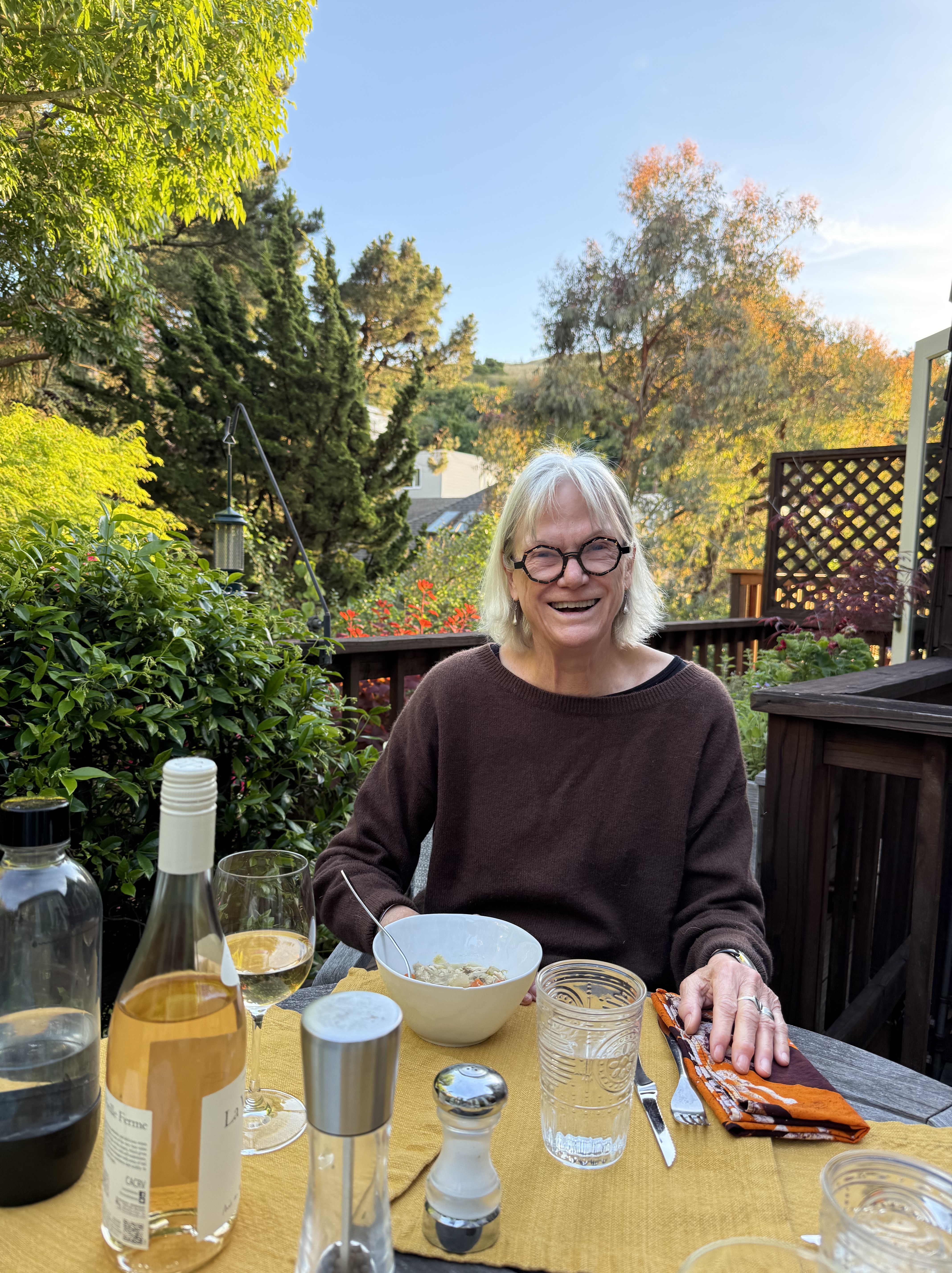
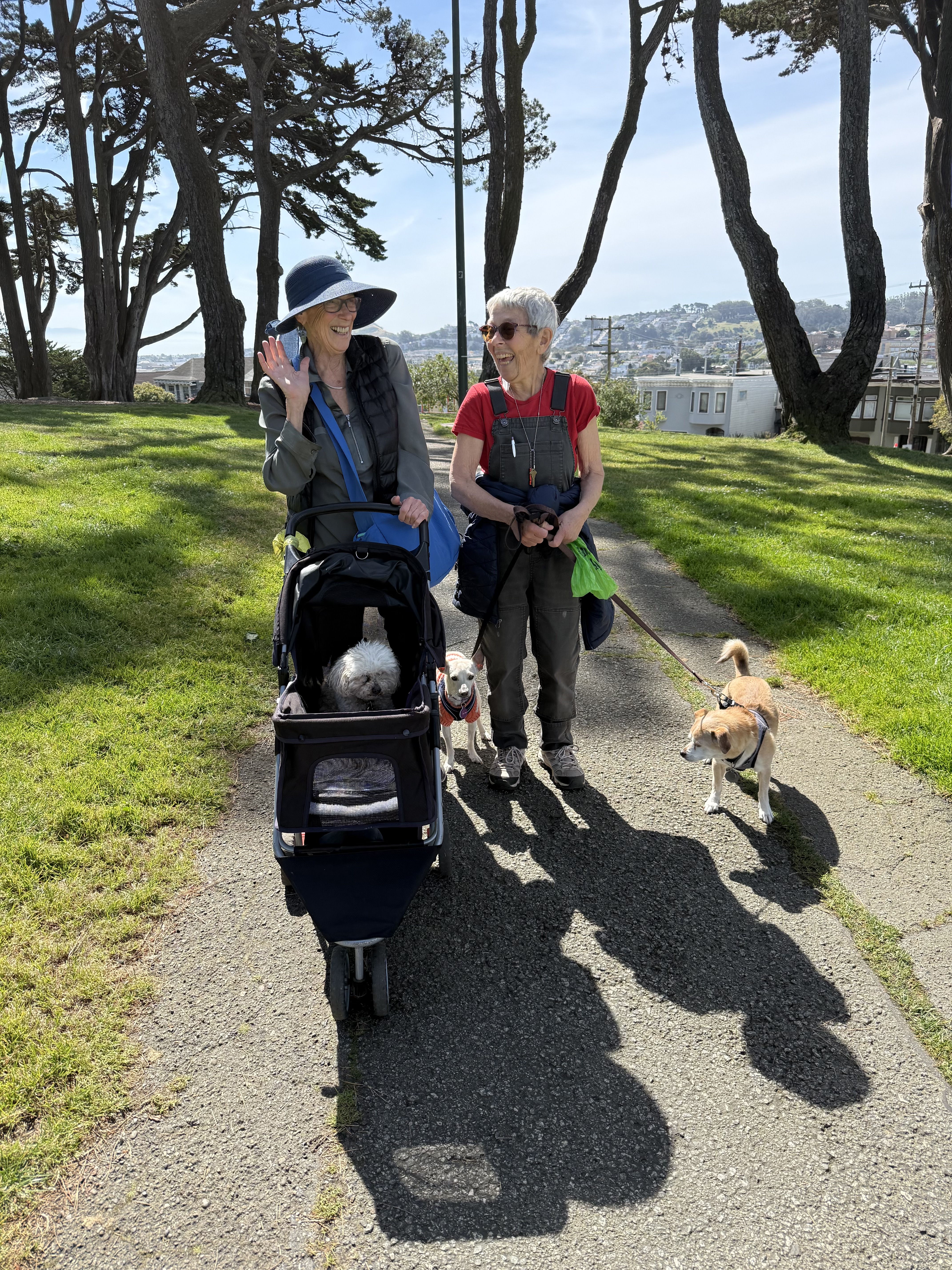
The trip was filled with mishaps, and so I have begun to frame it as a succession of silver linings. First thing: I forgot my passport and missed my flight. Unable to get on another, I took BART back to San Francisco, had a lovely dinner with old Bernal Heights buddies Judy and Diane, and slept on Judy’s blow‑up bed. 
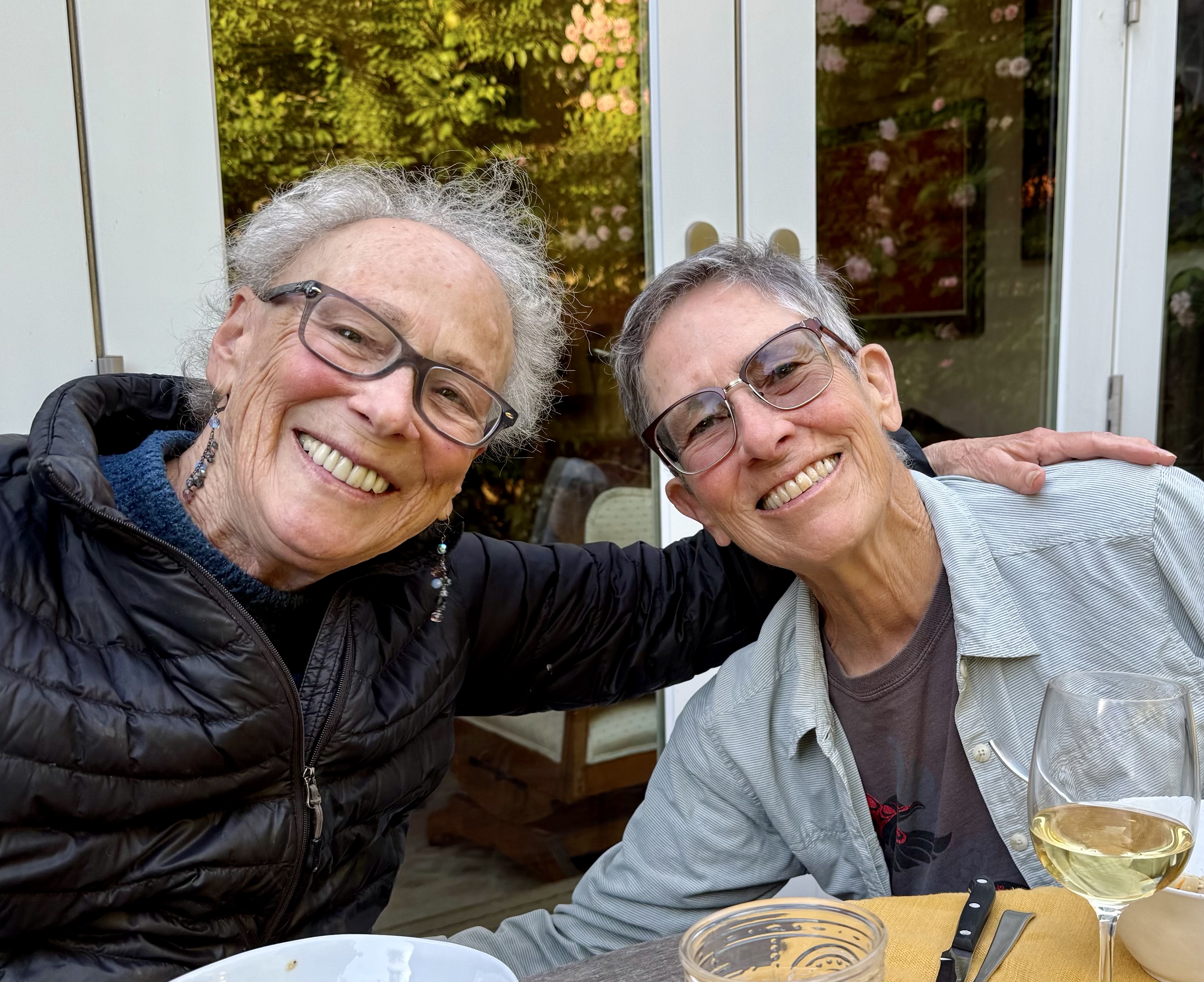
Judy K and I, Diane in her garden with Bernal Hill in the background, dog walking the next day at Holly Park with Judy K and Judy S

The next day, back at the airport with time to kill, I explored SFO’s International Terminal and found its quirkiest attractions: a low-rider bicycle exhibit, a roast‑your‑own coffee machine and a tiny theater showing shorts that felt like art‑school therapy. At a bar near the Lufthansa gates, the bartender poured a consolatory 20‑ounce IPA and chatted with me — mostly because I was the only customer. Lufthansa pilots were on strike and so their flights were canceled and the bar empty.
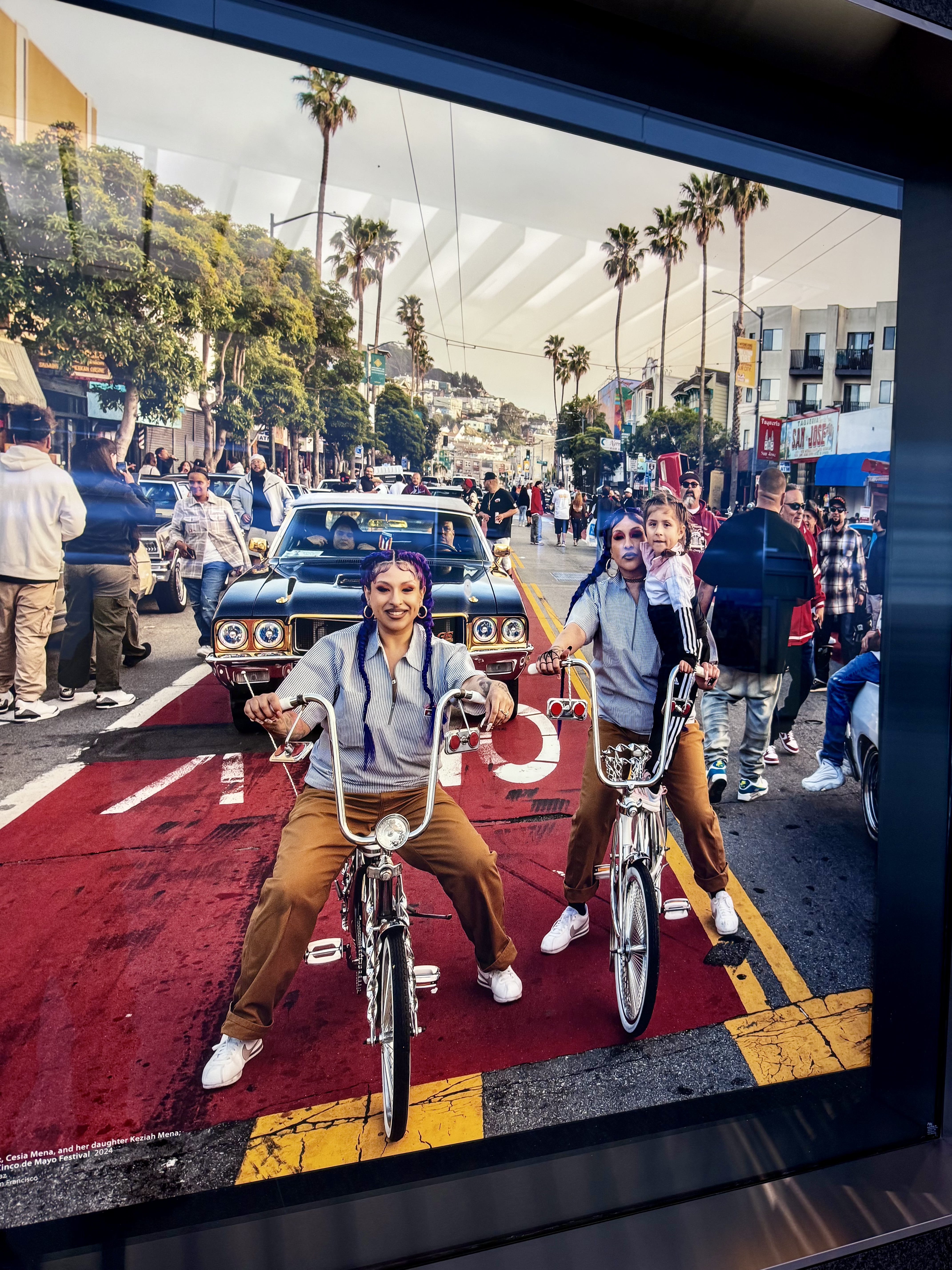
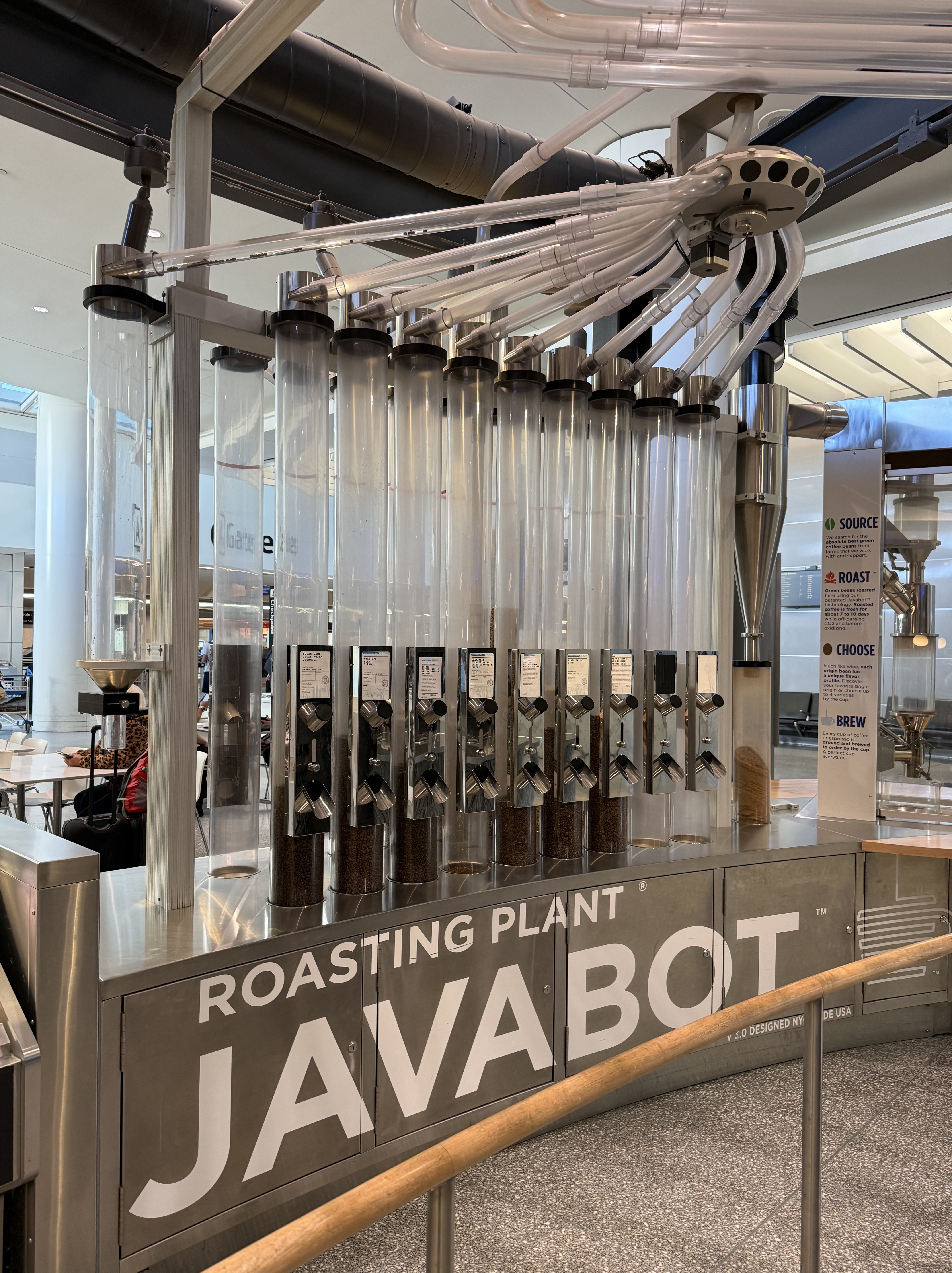
At SFO: part of a low rider bike exhibit, roast your own coffee

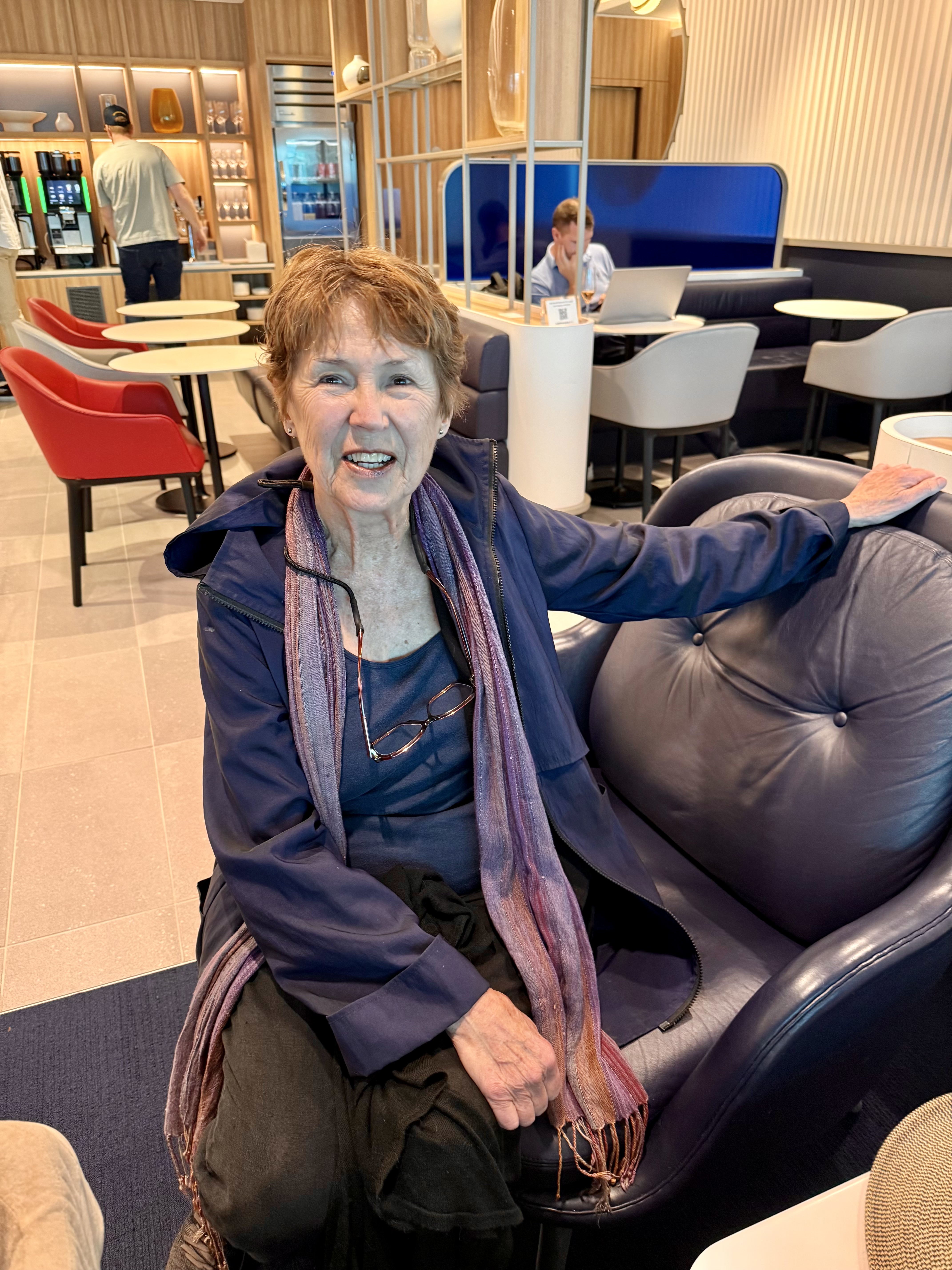
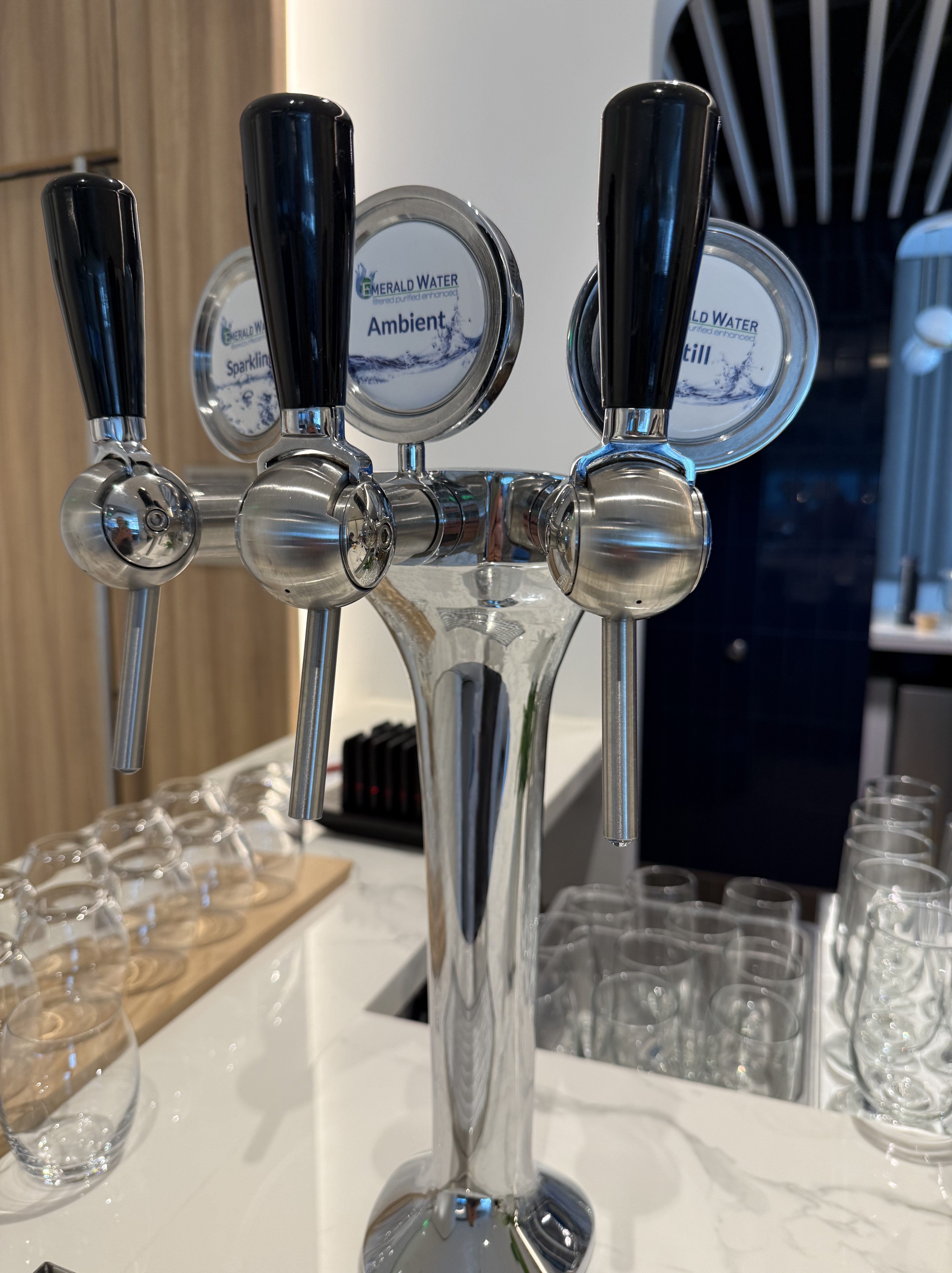
Standby meant more waiting, more near‑misses. I missed another flight because it was full, then met Lynn, a retired flight attendant of 35 years, who’d also left her passport at home. We were directed to the swanky Air France lounge, an oasis of free food and booze. Sometimes fortune favors the passport‑less. 
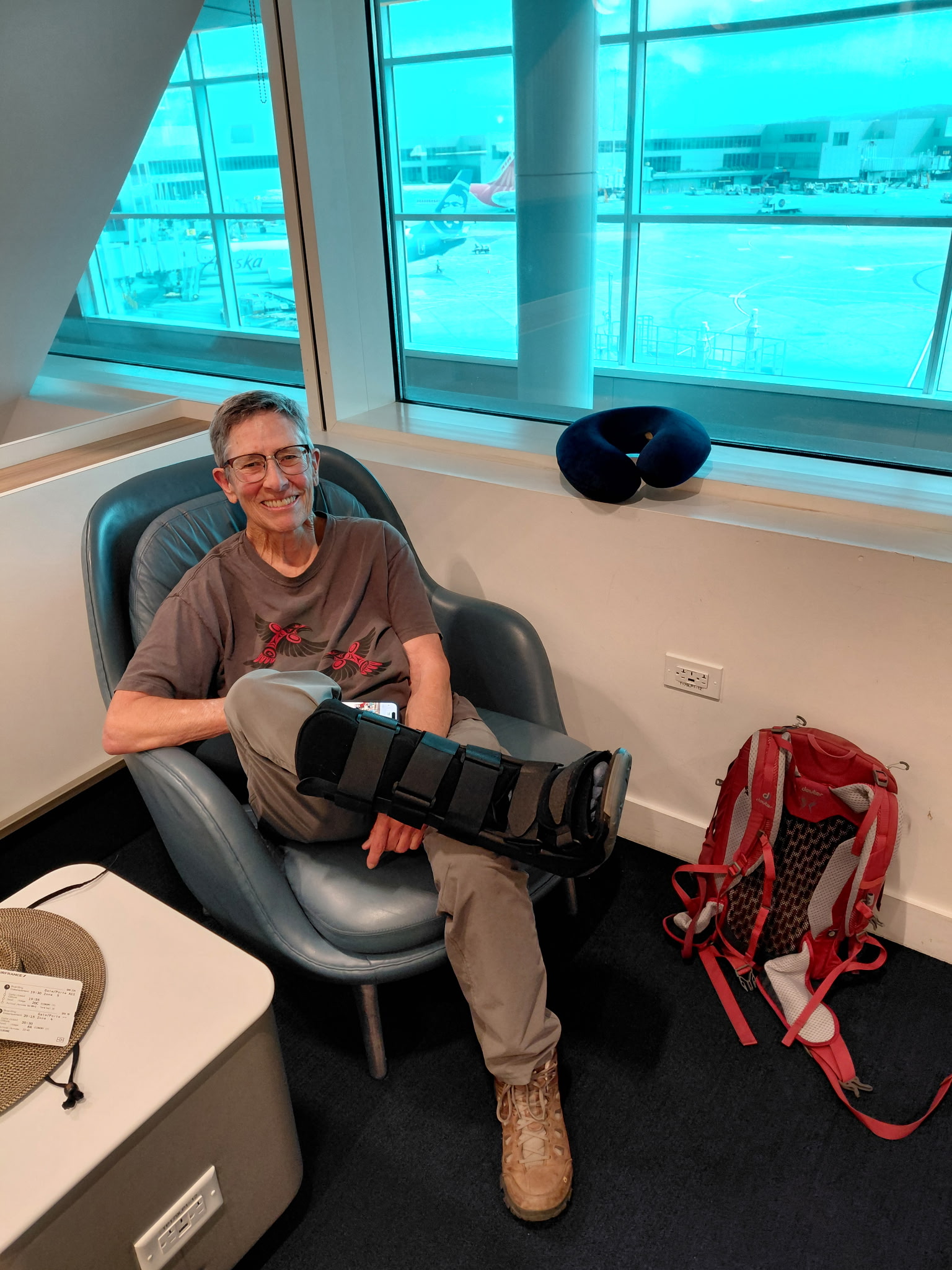
At the Air France lounge in my boot, new best friend Lynn, 3 kinds of water

My injured leg earned me VIP wheelchair treatment at airports. But the boot was not a fun accessory on the 12‑hour flight. 
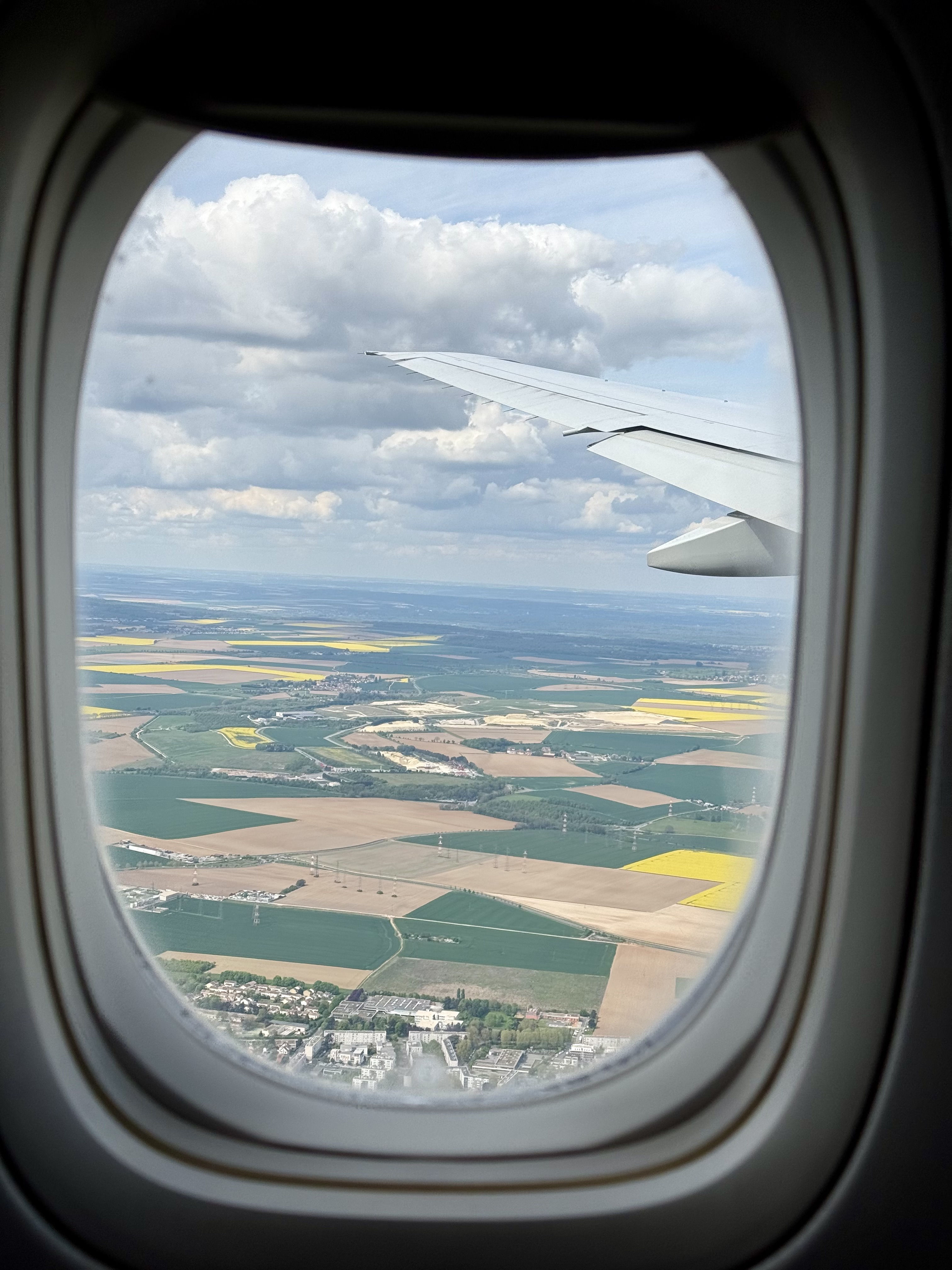
Stopover in Paris: arriving, rated highly, Charles de Gaulle had the coolest toilets

Midnight in Marrakesh: I swapped currency at the airport, shared a taxi to the old town medina with an amiable French couple and met Ali, the hotel night man, who navigated the medina’s narrow alleys like a supernatural GPS. I could never have found my riad (hotel) without him. Ali seemed never to sleep. He served us breakfast in the morning.
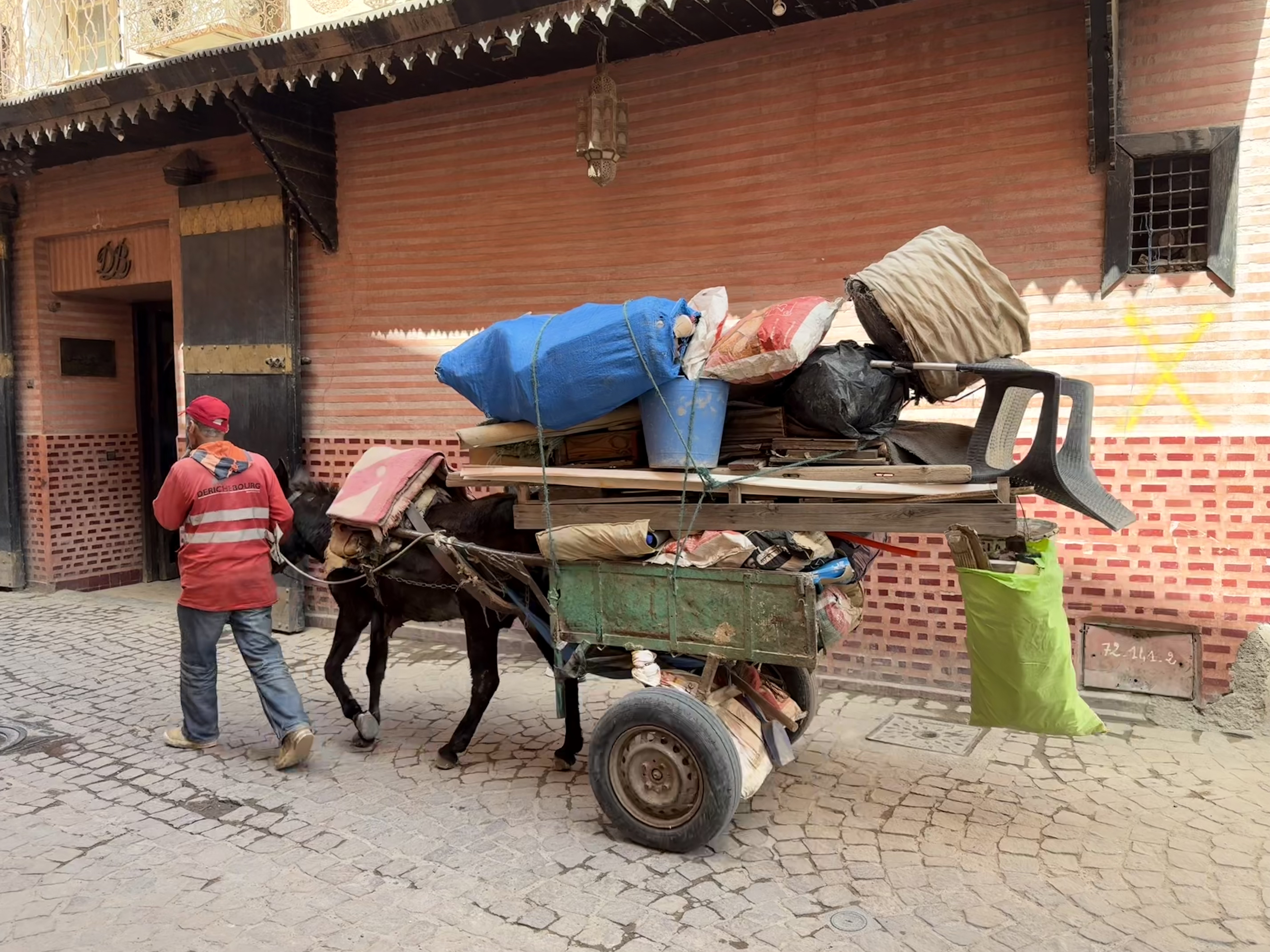
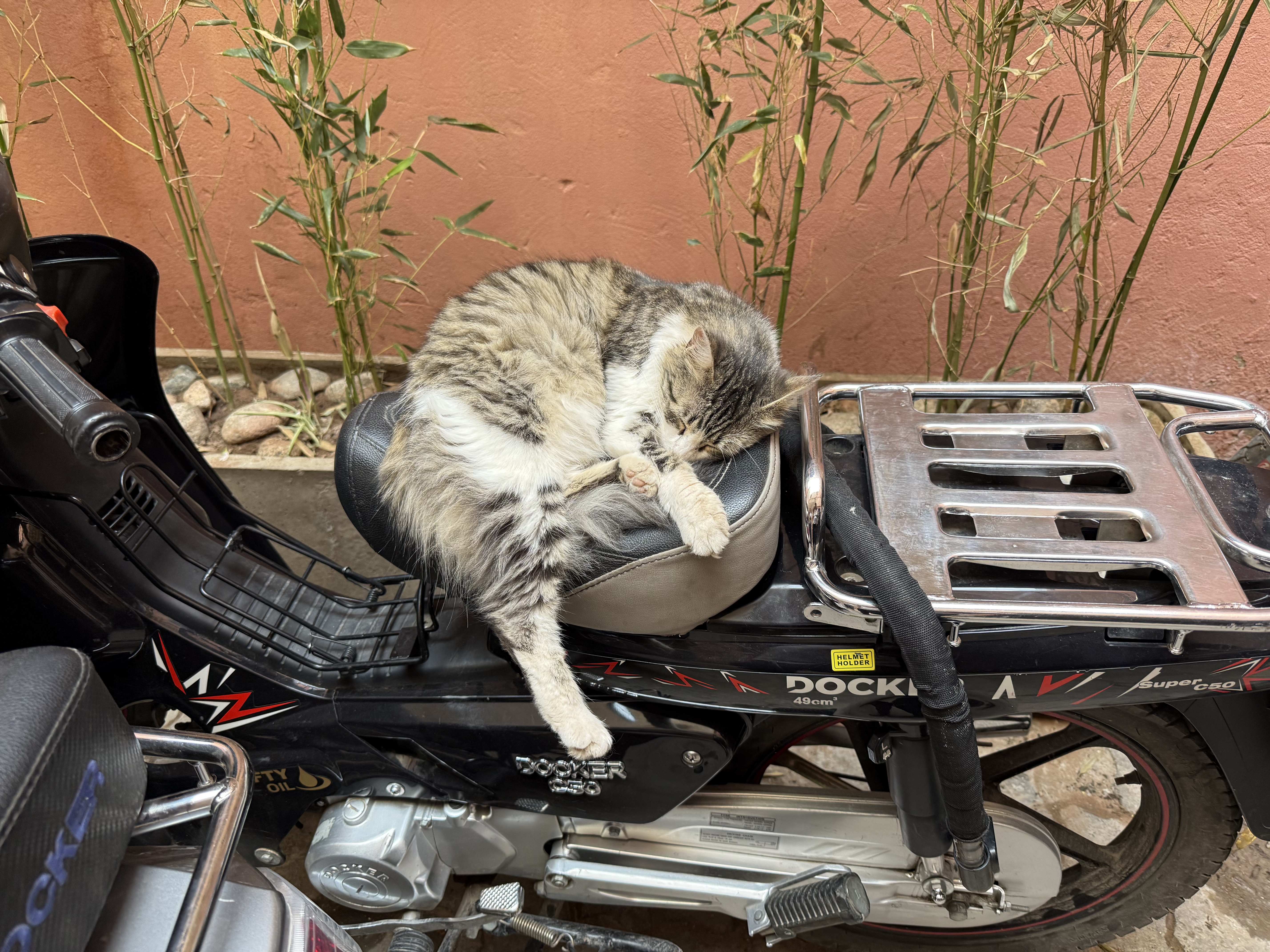
In the old walled city medina: cats and motorbikes, donkeys. No cars will fit

This all-women trip, sponsored by Lewis and Clark College, introduced us to Moroccan culture in ways that didn’t require hiking. I was delighted to chat with English language students whose cosmopolitan takes deepened my cultural understanding.
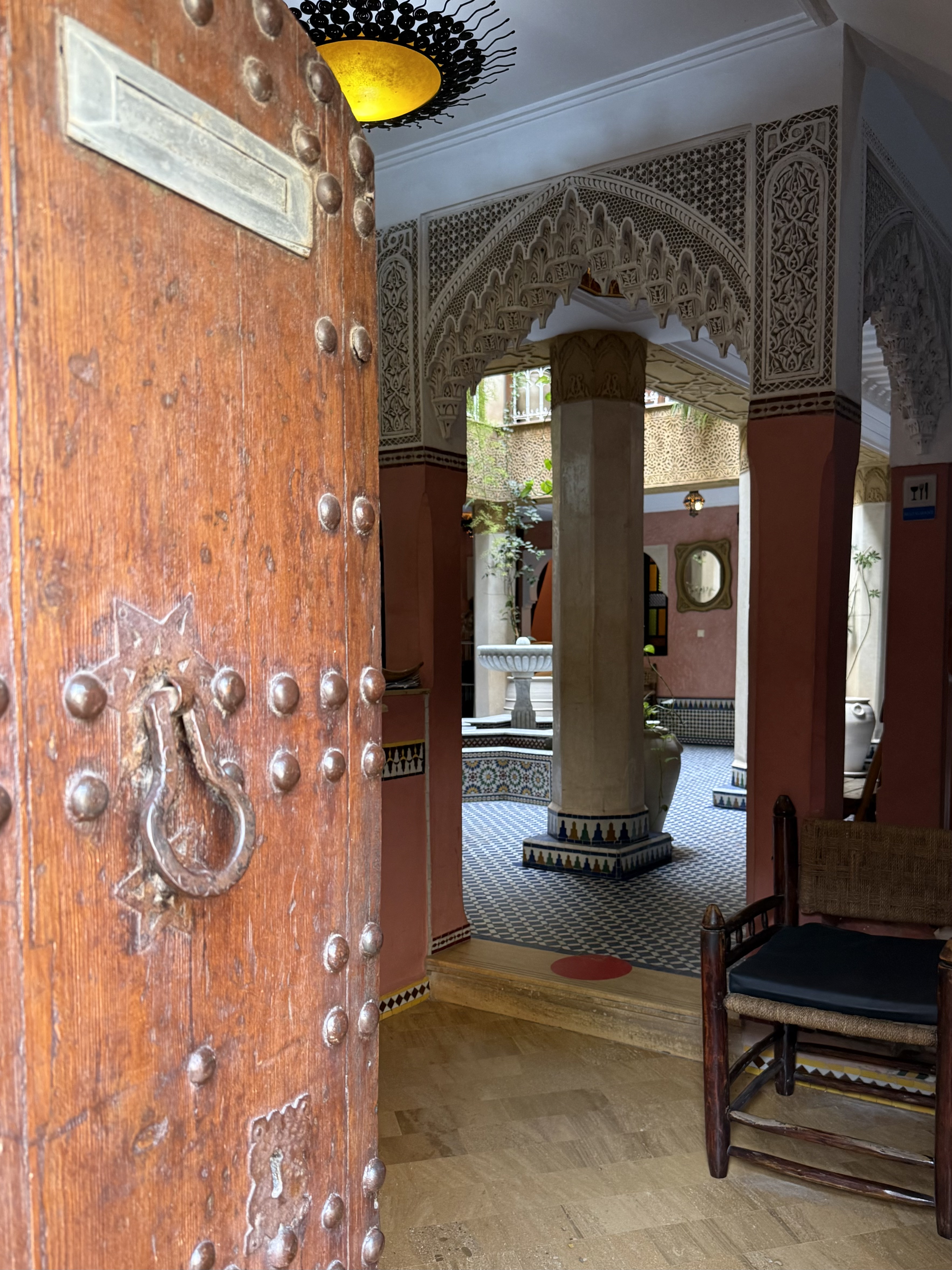
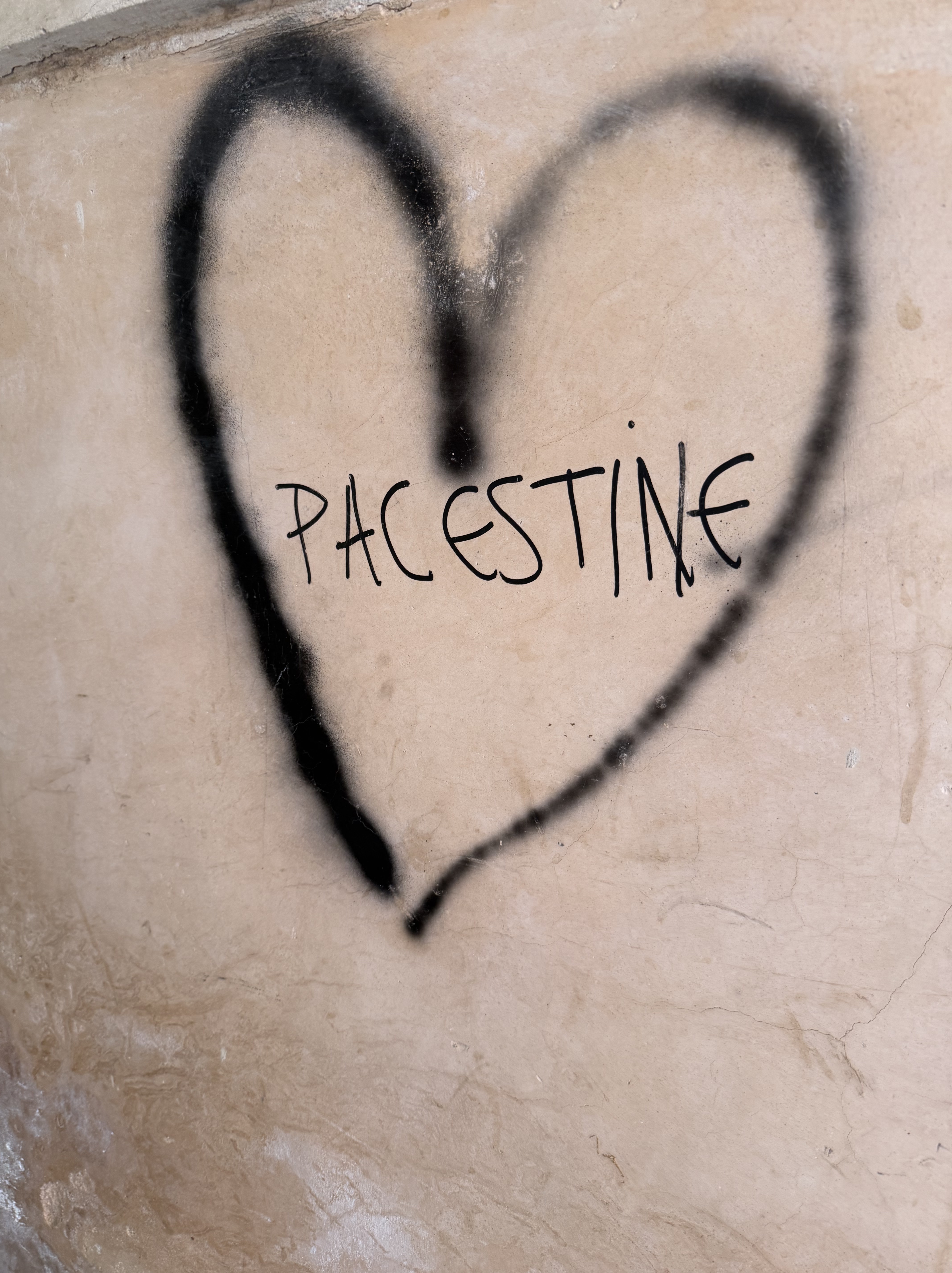
In the medina: door and interior, the only graffiti I saw

We met Nora Fitzgerald Belahcen, founder of the Amal Women’s Training Center, whose mission is to train indigent women to earn a living. Highlights included a tagine cooking class and a delicate tea ritual using herbs plucked from the garden. Dinner was cooked and served by a crew of deaf women in the Sign Language Café, one of many projects inspired by the Amal culinary school for women*. 
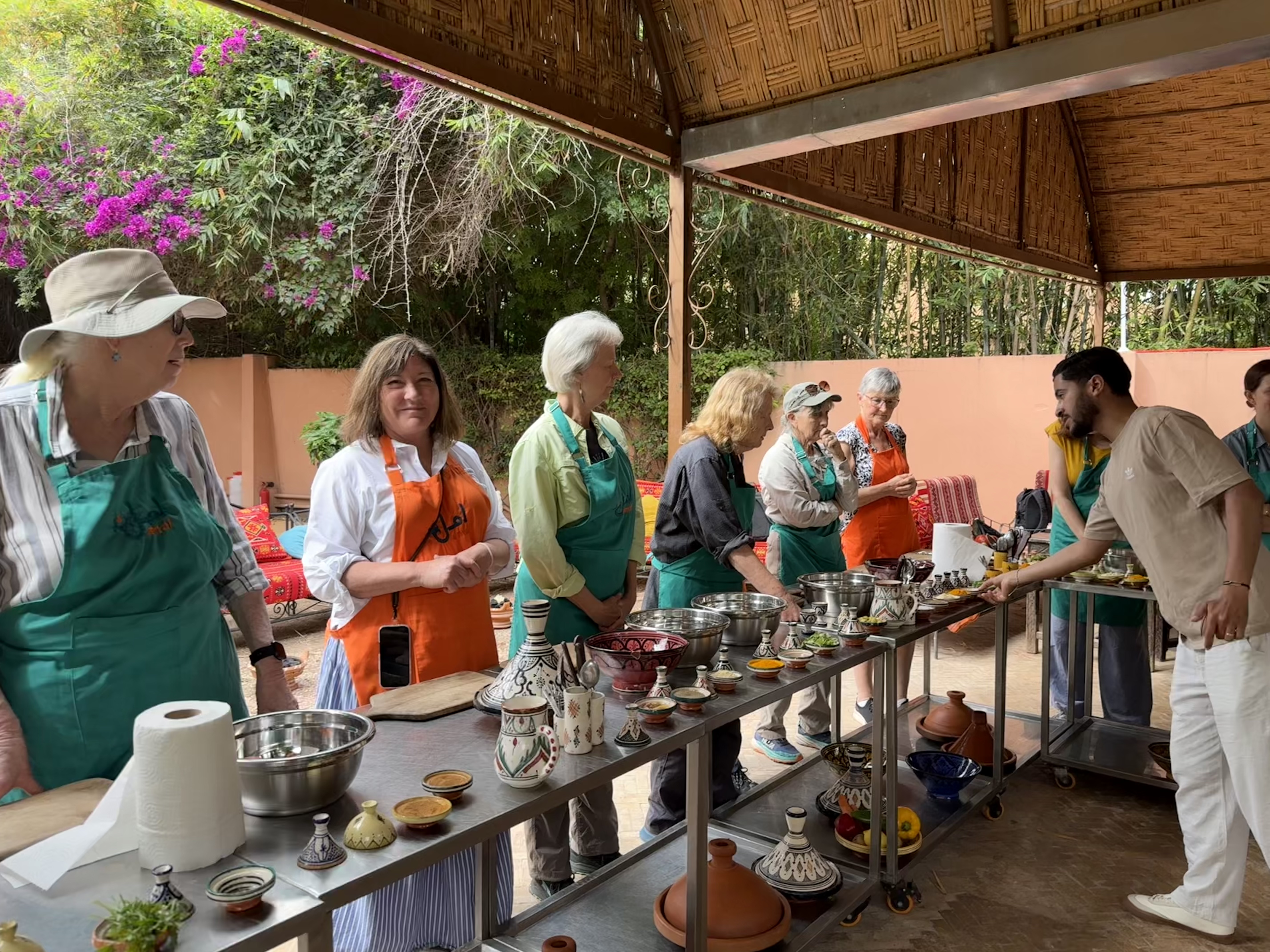
The tagine cooking class

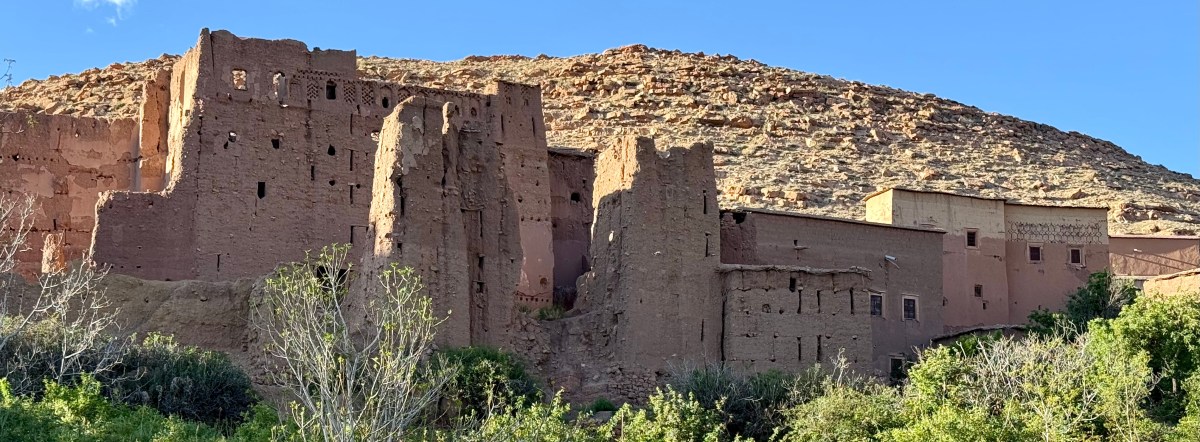
On a seven‑hour drive to the Atlas Mountains, motion sickness upgraded me to front‑seat conversationalist; the female Moroccan guide and I talked about Islamophobia, women’s roles in Morocco and architecture. I was amazed at the earthen buildings and walls. “We call this adobe,” I said. “What do you call the building material?” She replied, “Mud.”
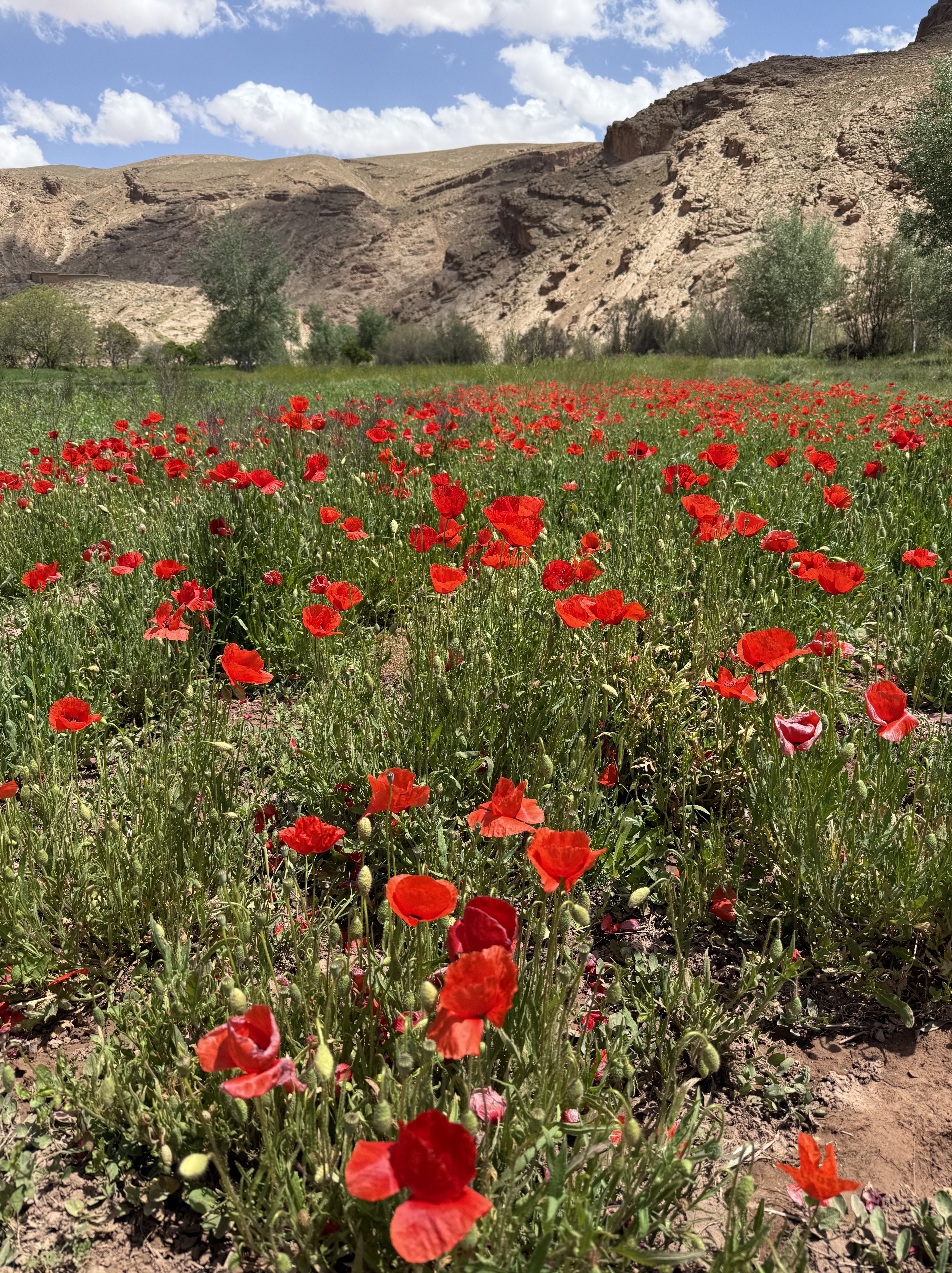
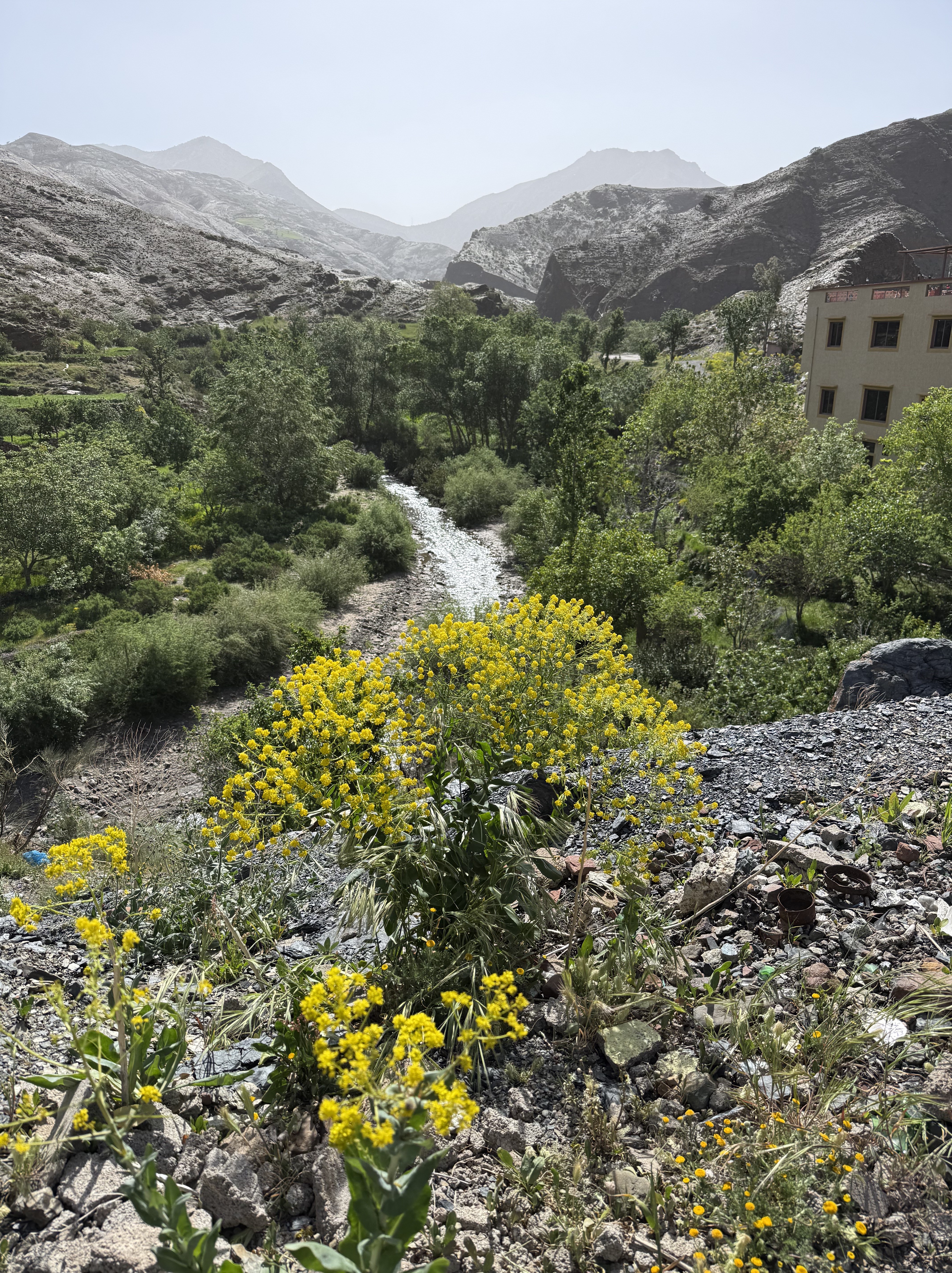
On the way to the Atlas Mountains

Limited mobility changed the trip but didn’t ruin it. I discovered lounging is an underrated travel activity. As my cohort hiked, a van whisked me to scenic spots so I could sit and be part of the (stunning) landscape.
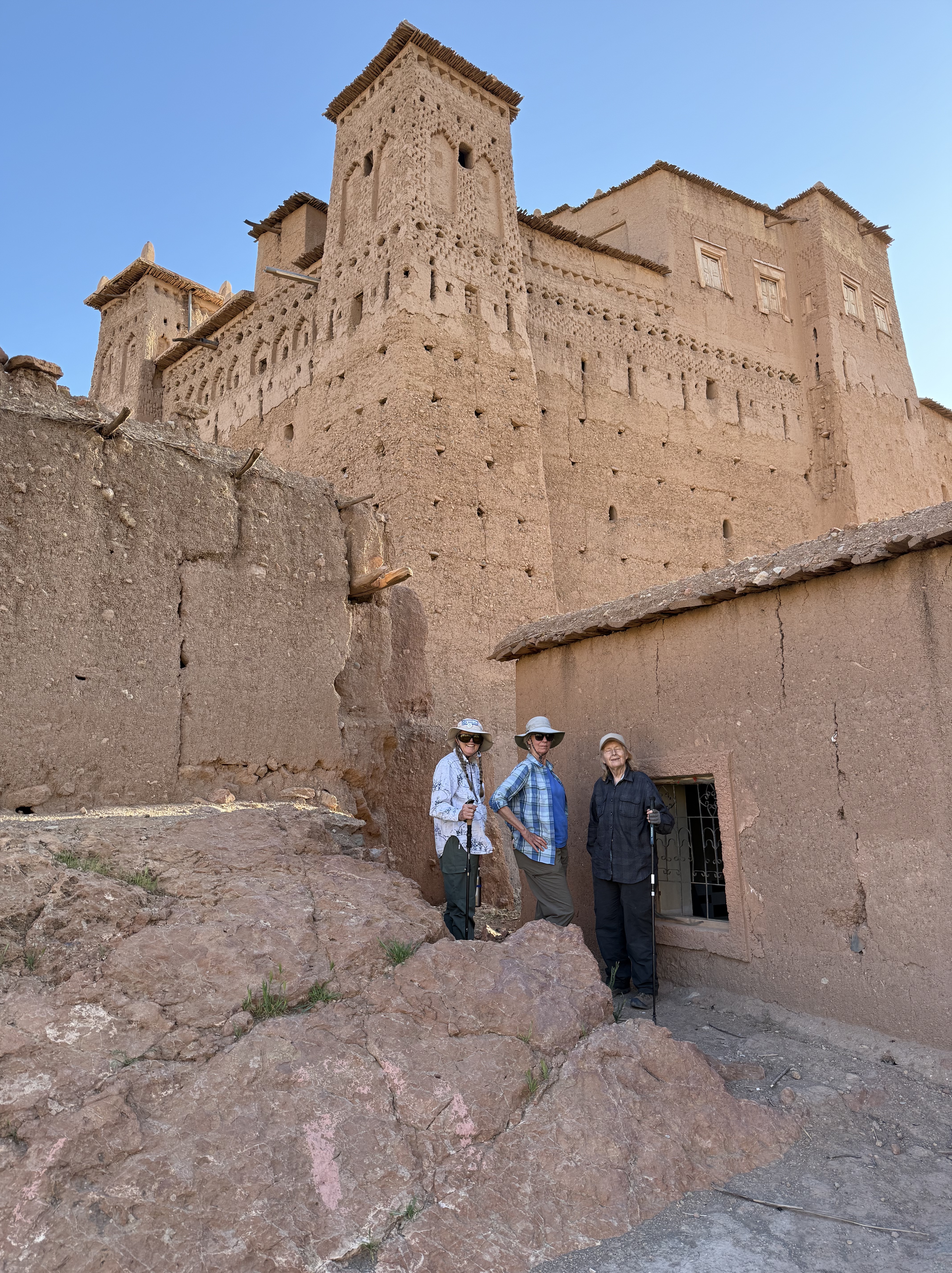
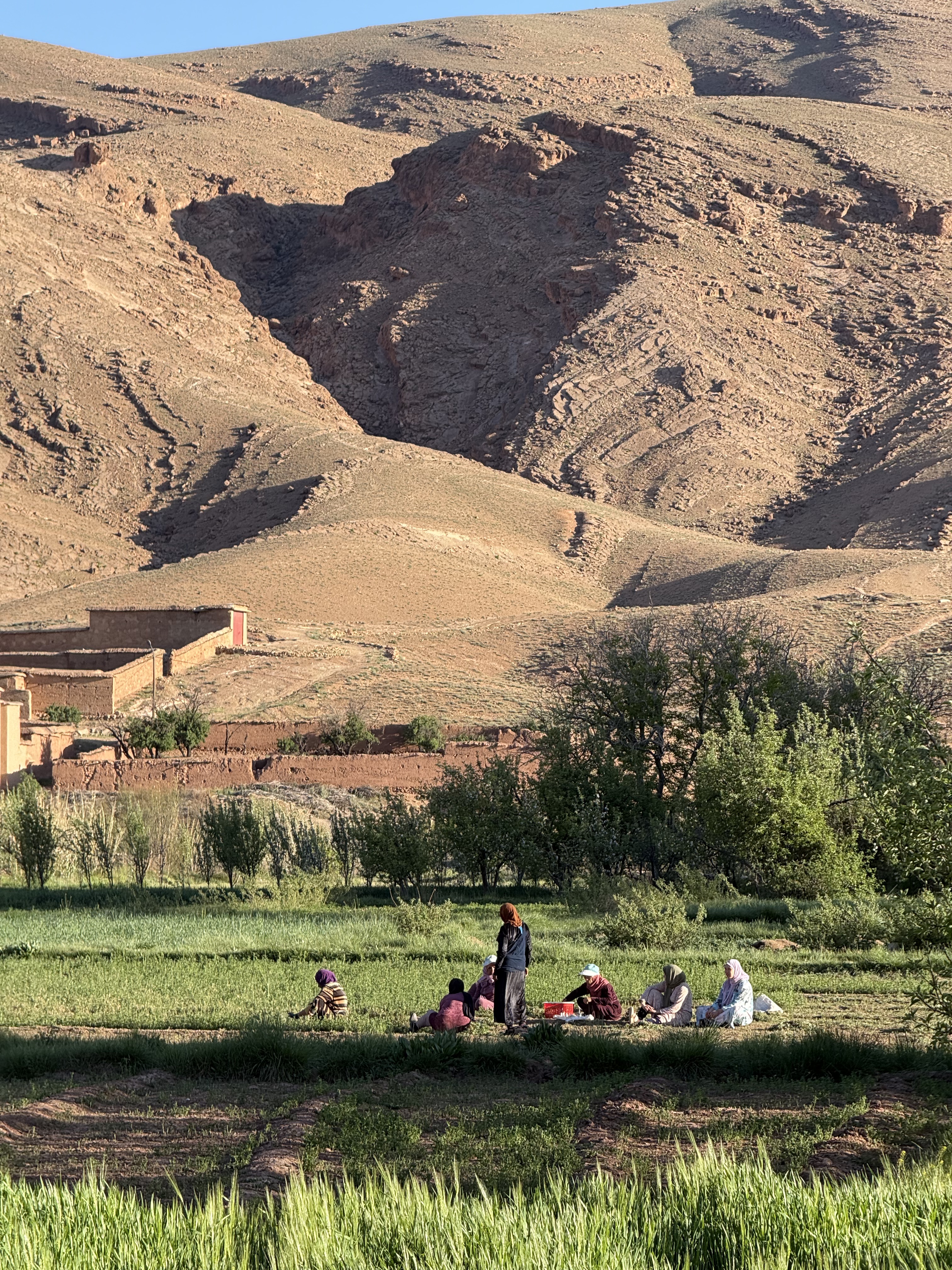
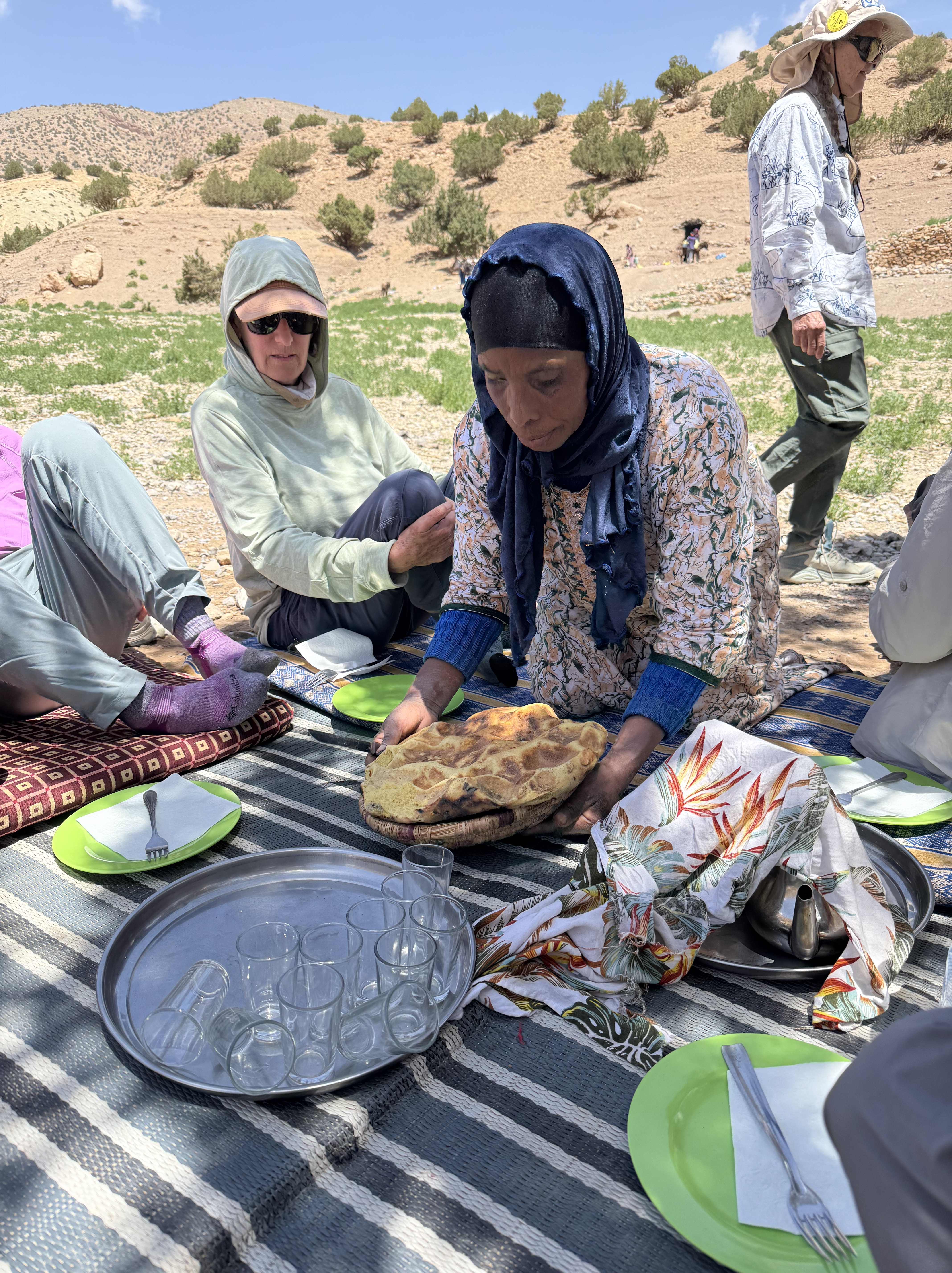
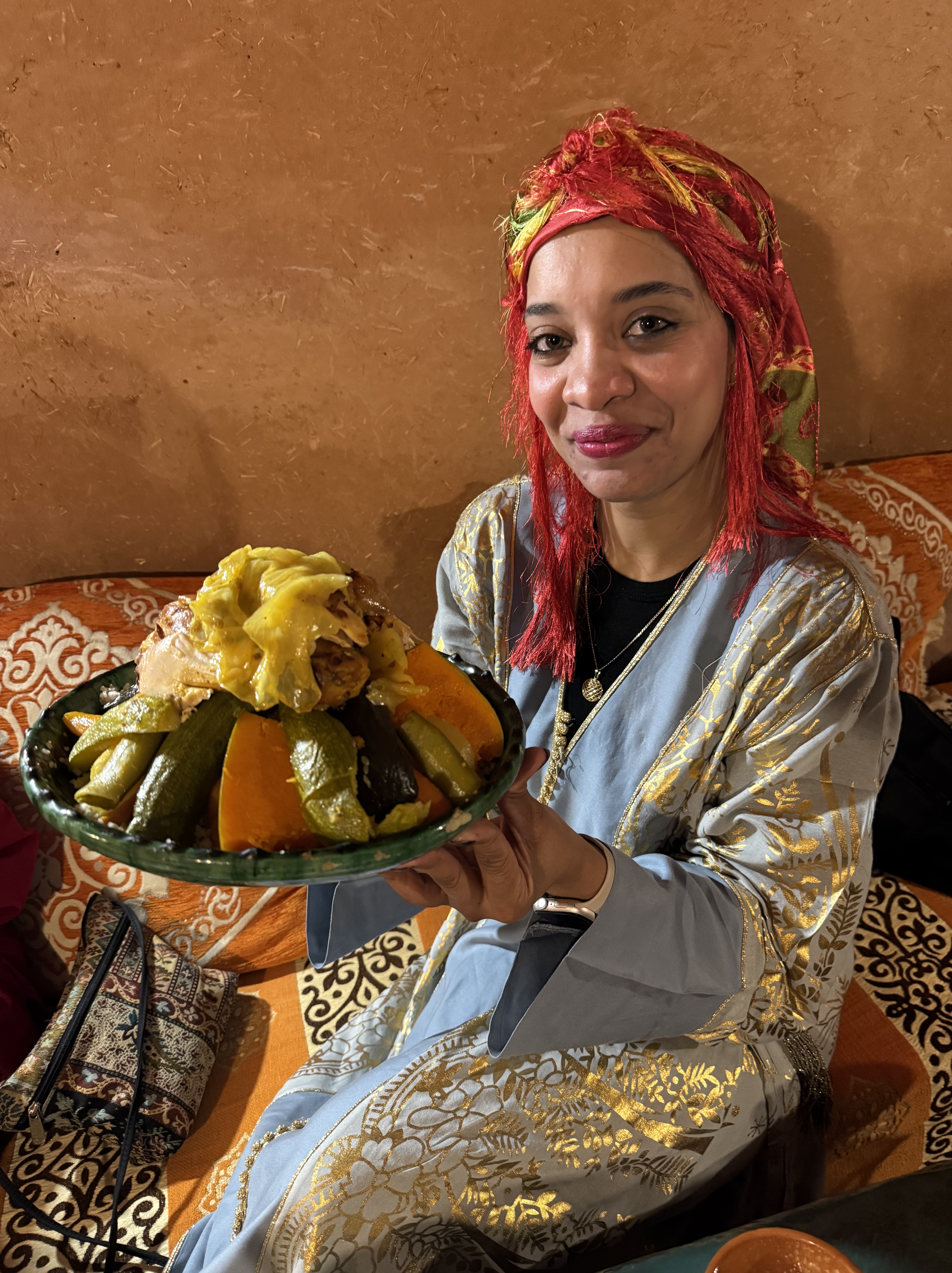
Indigenous guides introduced us to Amazigh (Berber) culture, inviting us for meals and entertainment in women’s homes. The women dressed us up for a mock wedding, drew us in to the song and dance, and in those moments we ten Americans weren’t tourists, we were favored guests. 
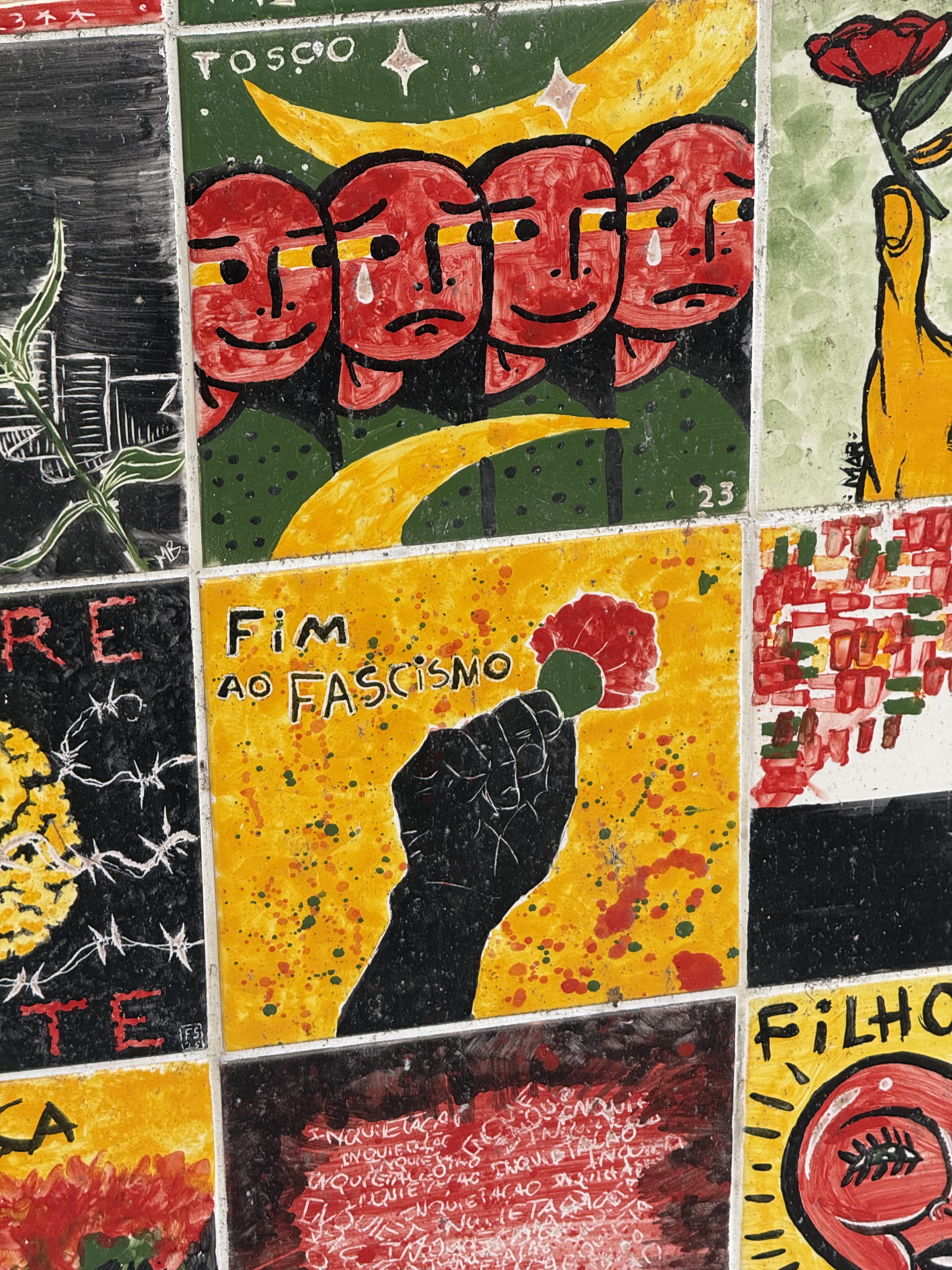
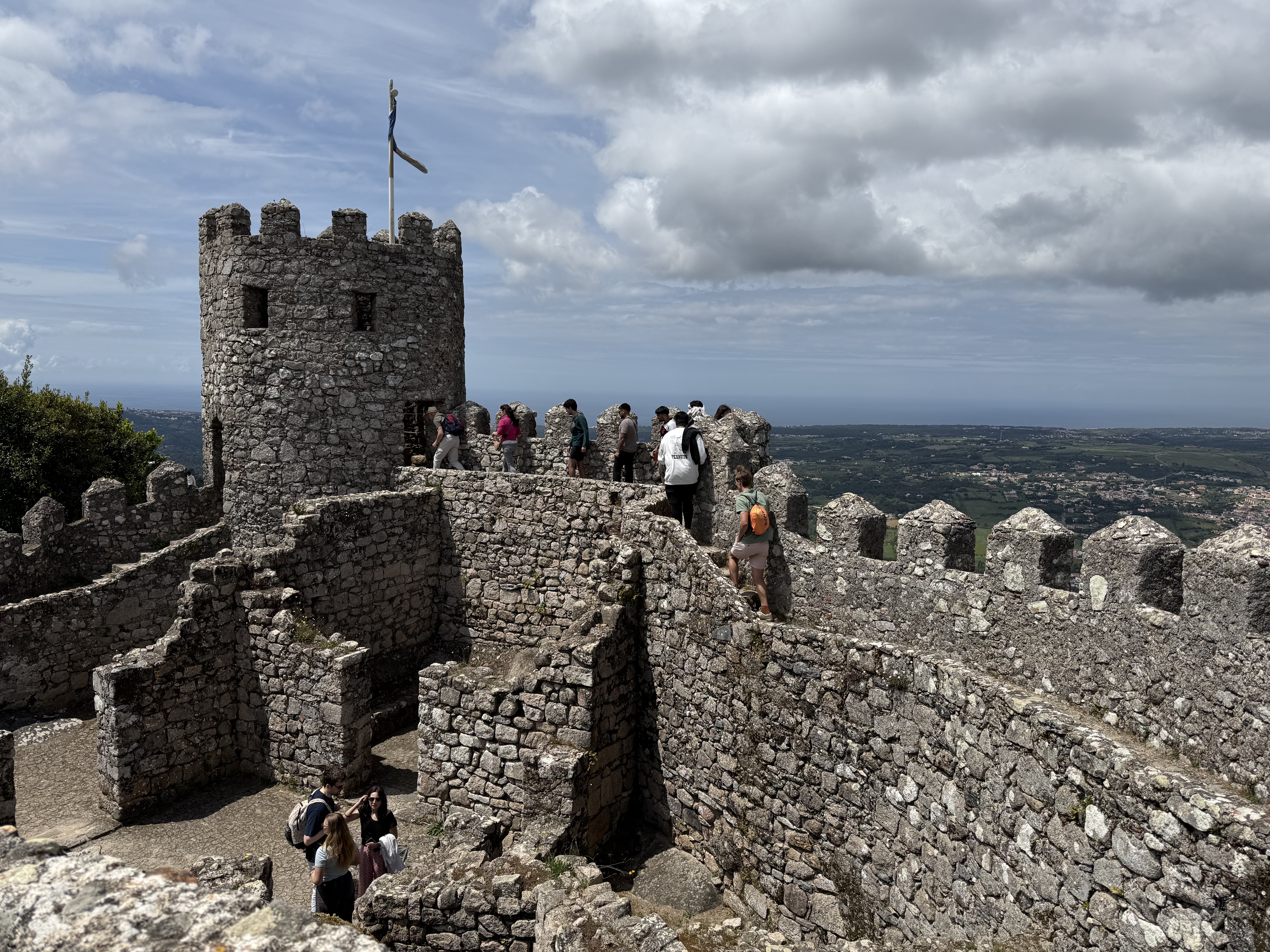
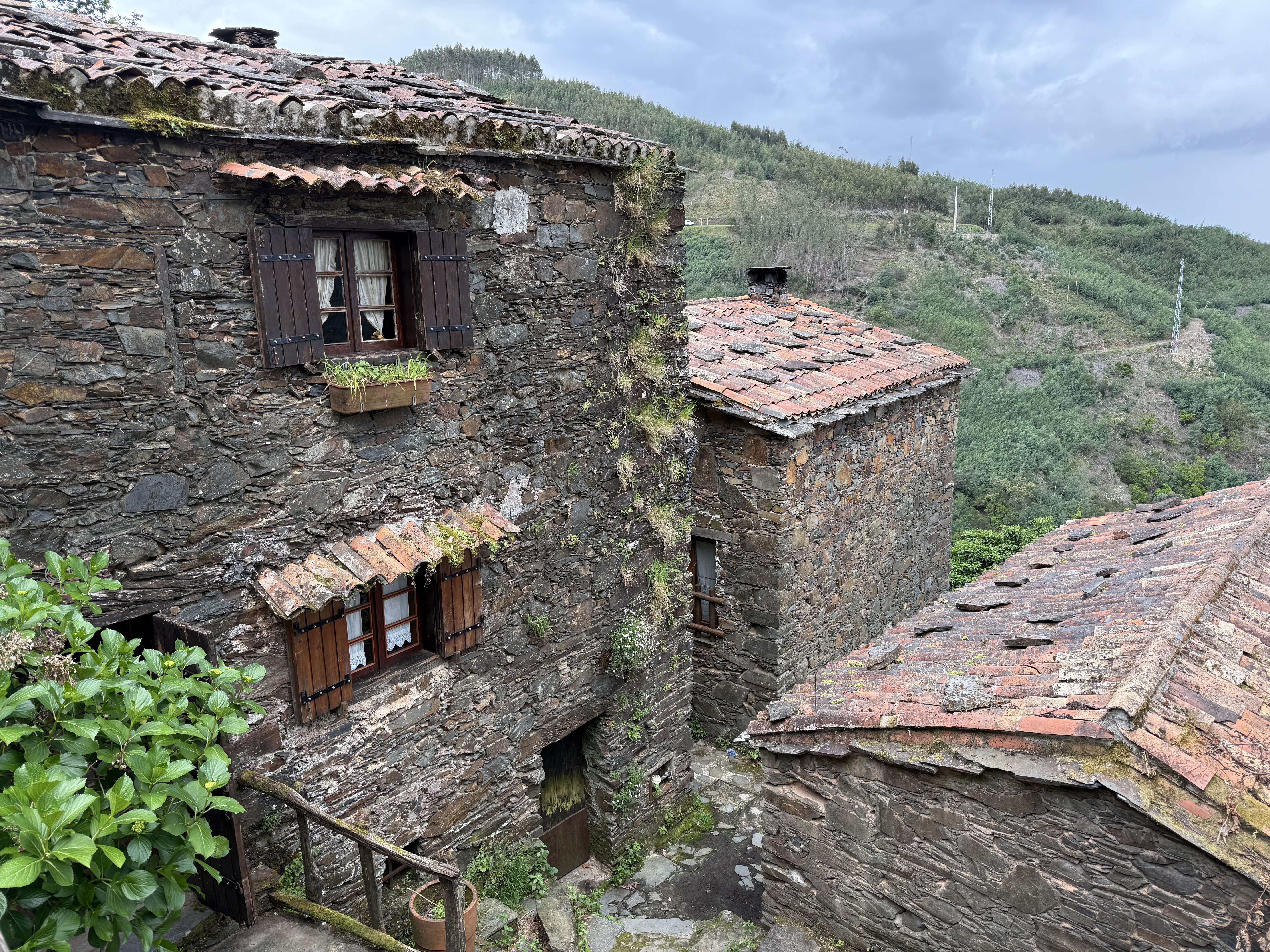
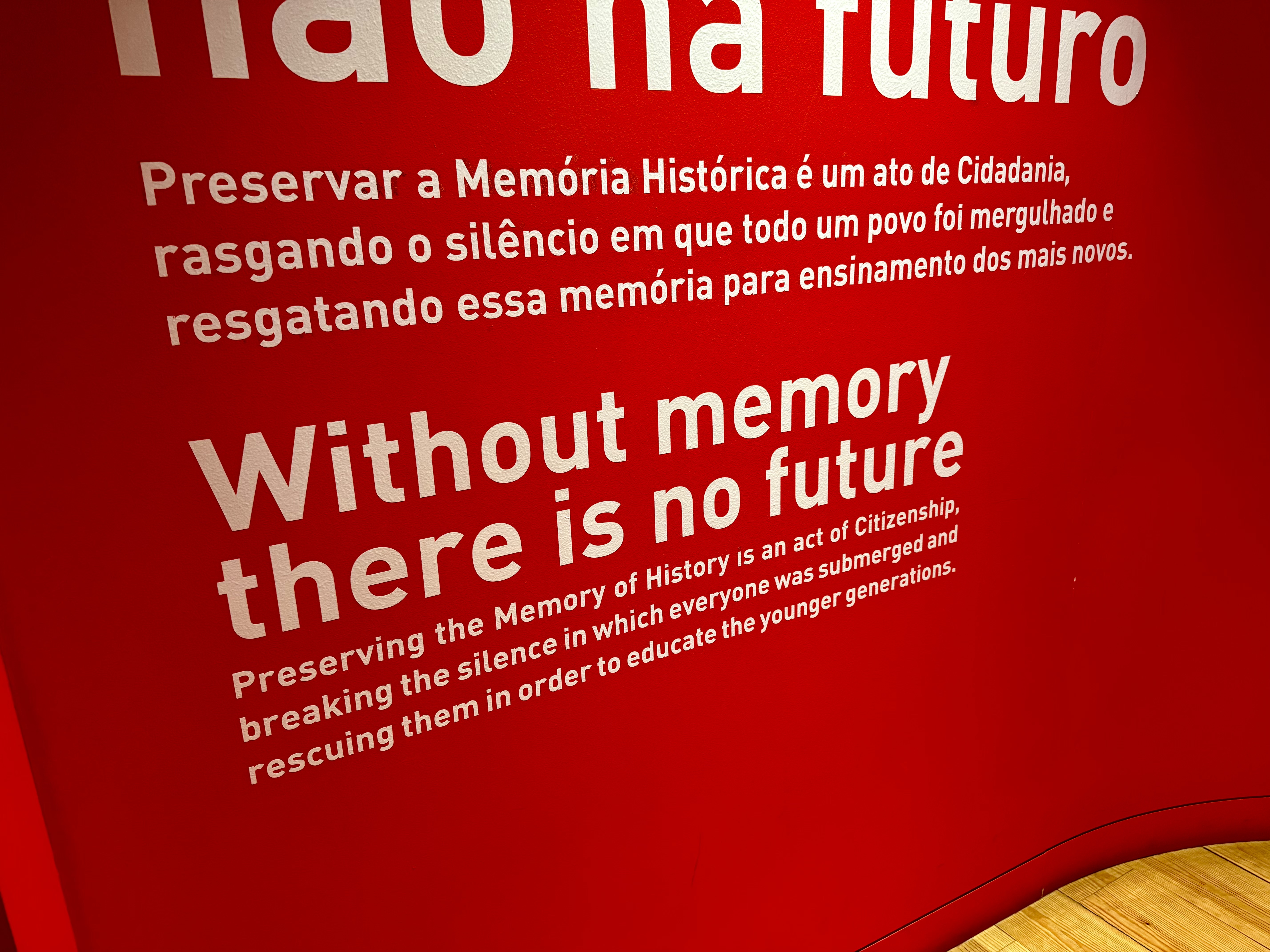
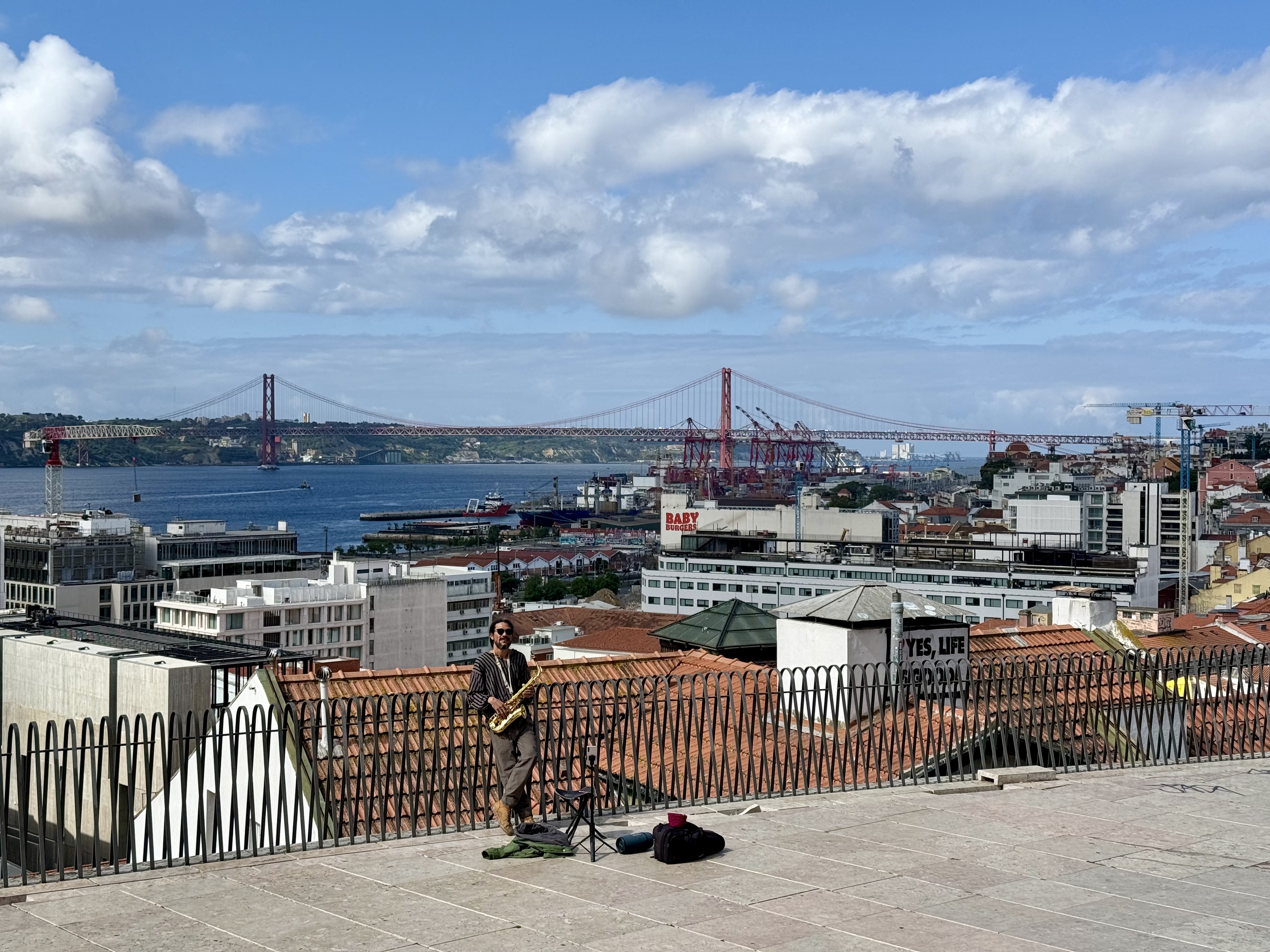
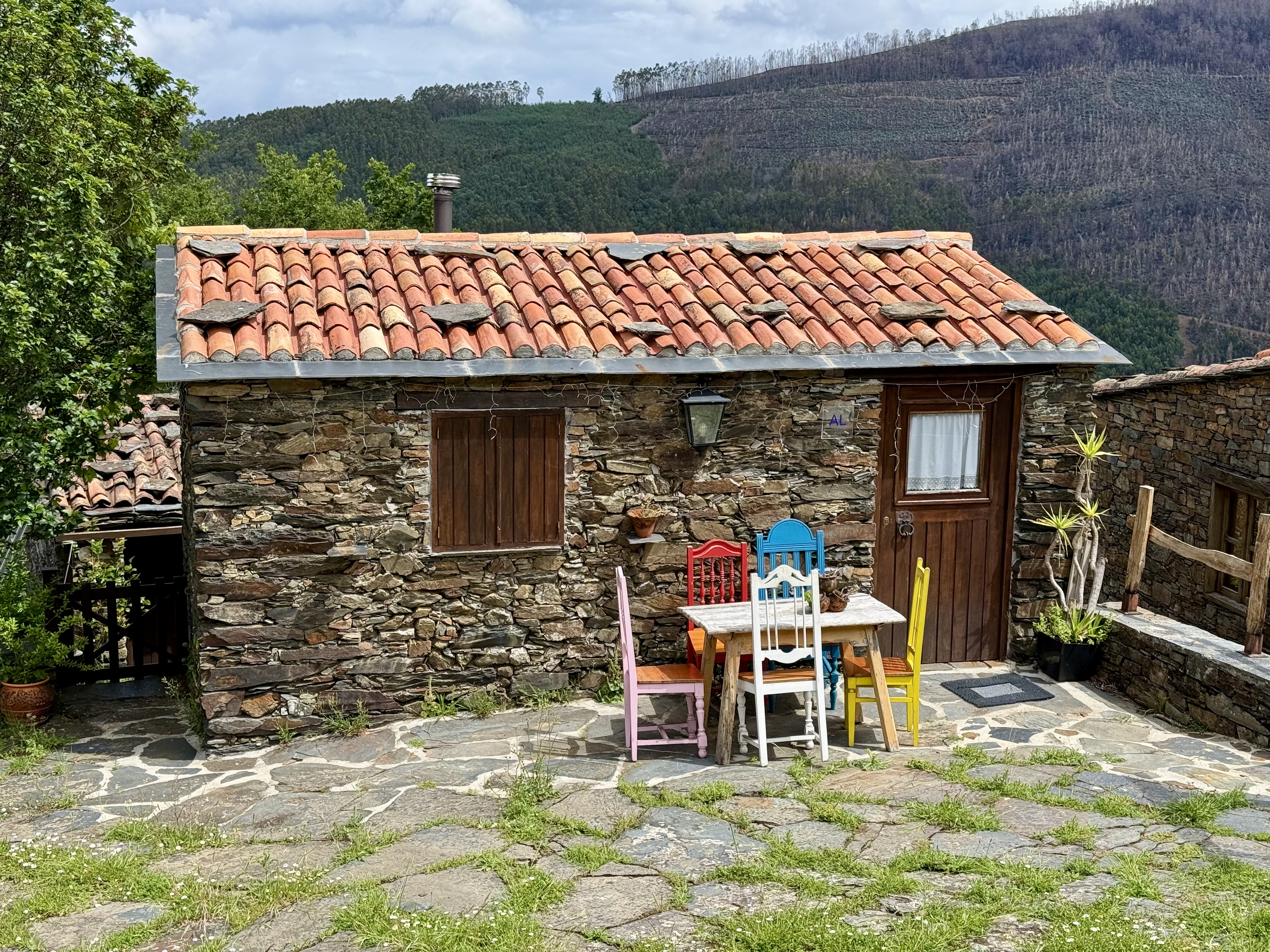
Three of us traveled on to Portugal, visiting Lisbon, Sintra and mountain schist villages. A highlight for me in Lisbon was the Resistance Museum where I could sit and take in the history of the Portuguese 1974 revolution and the concurrent freeing of their African colonies. 
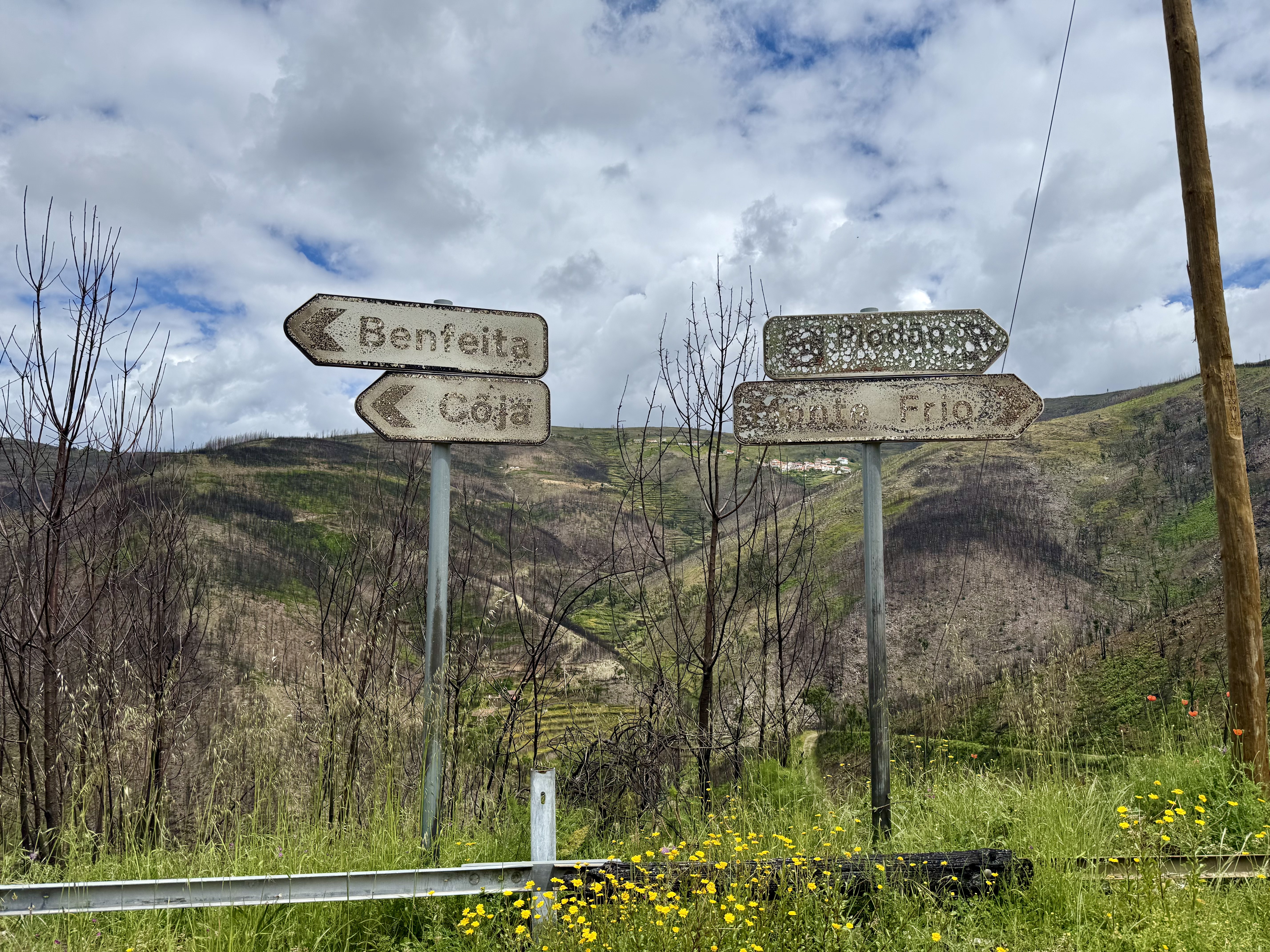
Driving out of the city, we were surprised to see the mountains planted in eucalyptus (for paper production), which burned in a terrible fire in 2025. Then, early this year, a huge storm knocked down trees and power lines and flooded villages, damaging the hiking trails. We Californians recognized this familiar pattern of climate’s cruelty and poor land use decisions.
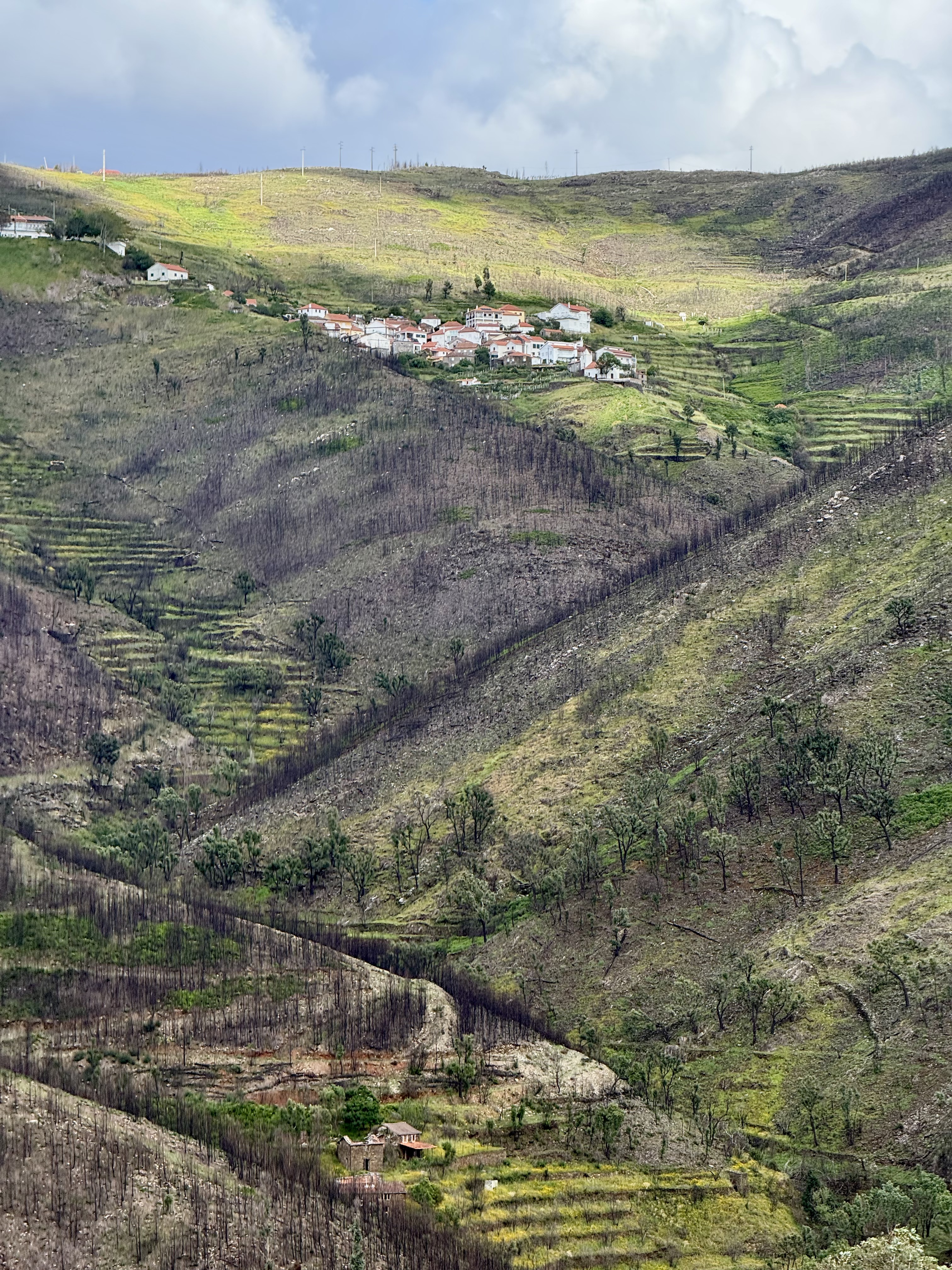
Burned signs in the Portuguese mountains

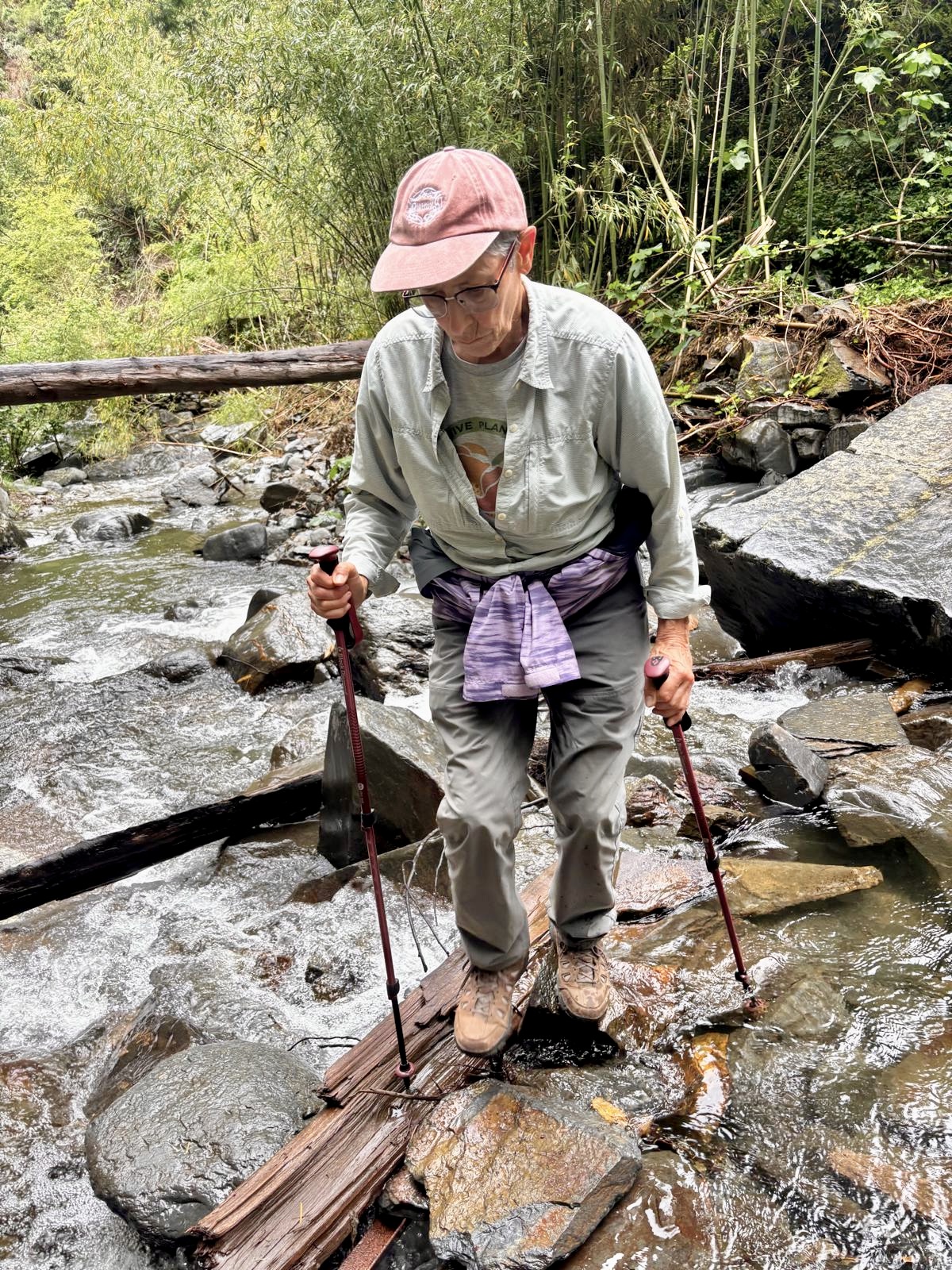
We persisted; my ankle felt a bit better and I was able to hike among the old schist villages with the help of an ankle wrap and hiking poles.

On the way home and back in the boot, at the Madrid airport (I can now say I’ve been to Spain), planes were delayed and gates shuffled, yet an army of orange‑vested attendants formed a conveyor belt of compassion for the disabled. We were a support group on wheels. On packed planes I miraculously avoided catching anything despite the coughing babies.
The grand finale: midnight in Santa Rosa, about to be dropped off at the airporter bus stop, I strategized how to get home. Plan A: Lyft—no reply. Plan B: taxi—too late. Plan C: a heroic 2.5‑mile pilgrimage, halted when the bus driver passed me a phone number and I met Eric, the night driver‑cum‑savior who rescued me from walking‑home doom.
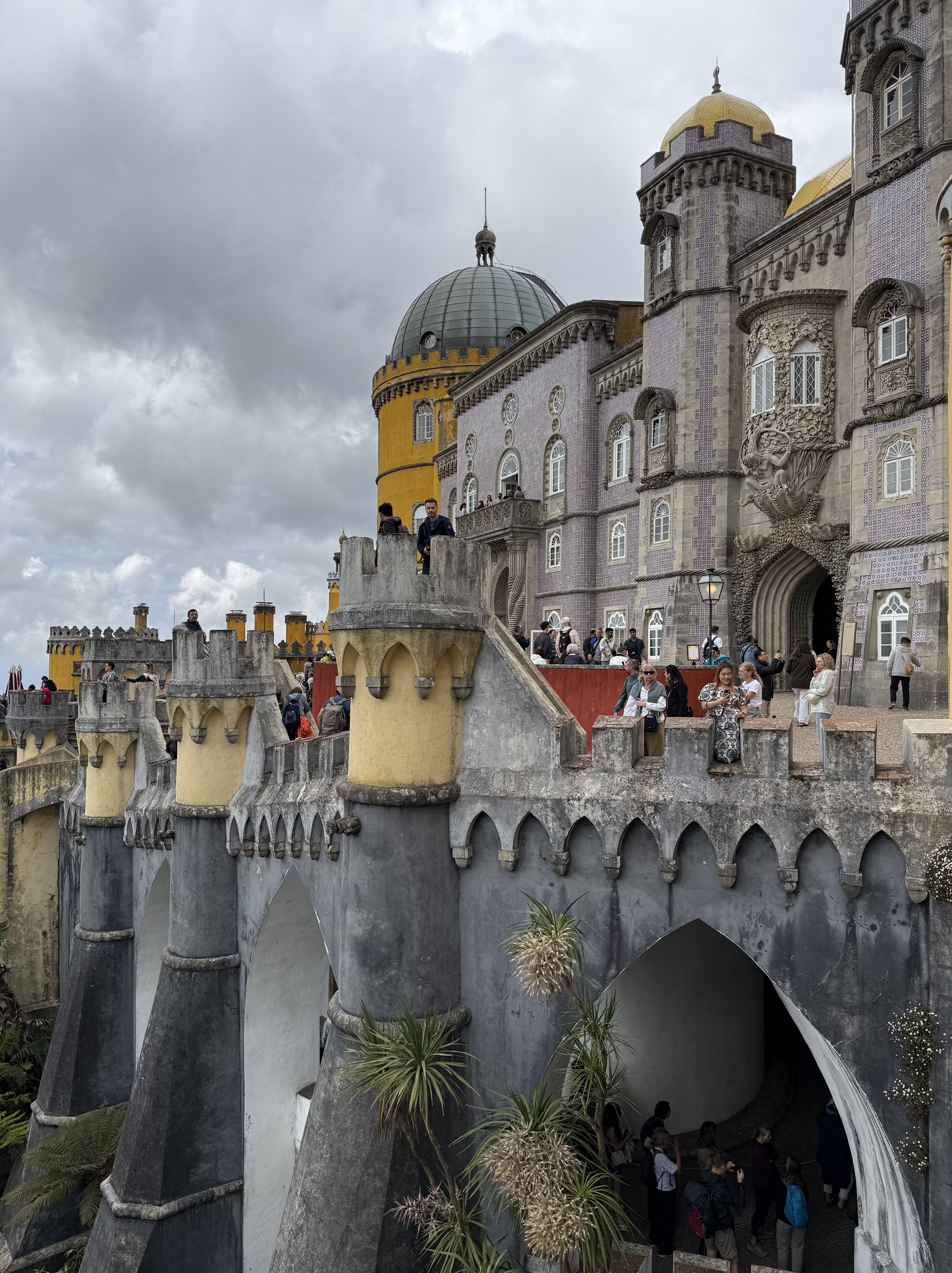
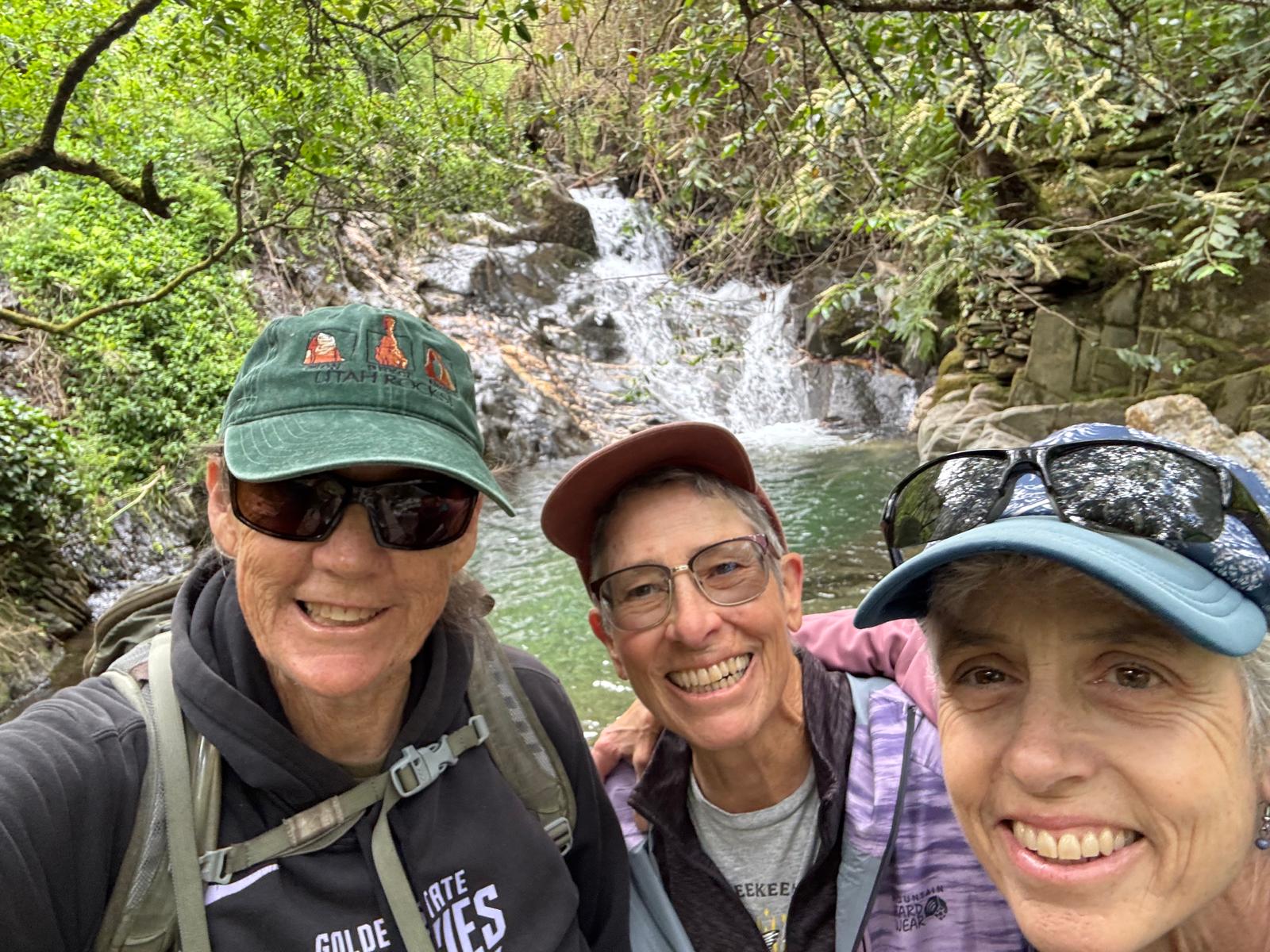
Silver linings: reunions that felt like coming home, friends new and ancient, strangers who became angels, tiny airport luxuries, lessons in culture, and real, workable tweaks for travel with an injury. But perhaps the best was bonding with my sister travelers and our knowledgeable guides. 

No regrets. If anything, I’m grateful I muddled through—because the mess made room for unexpected warmth. I’m glad I didn’t cancel. 

*If you’d like to support the Amal Women’s Training Center, consider donating: https://www.amalnonprofit.org
Gearing Up for a May Day Protest

My Regular Pagan Holiday Post

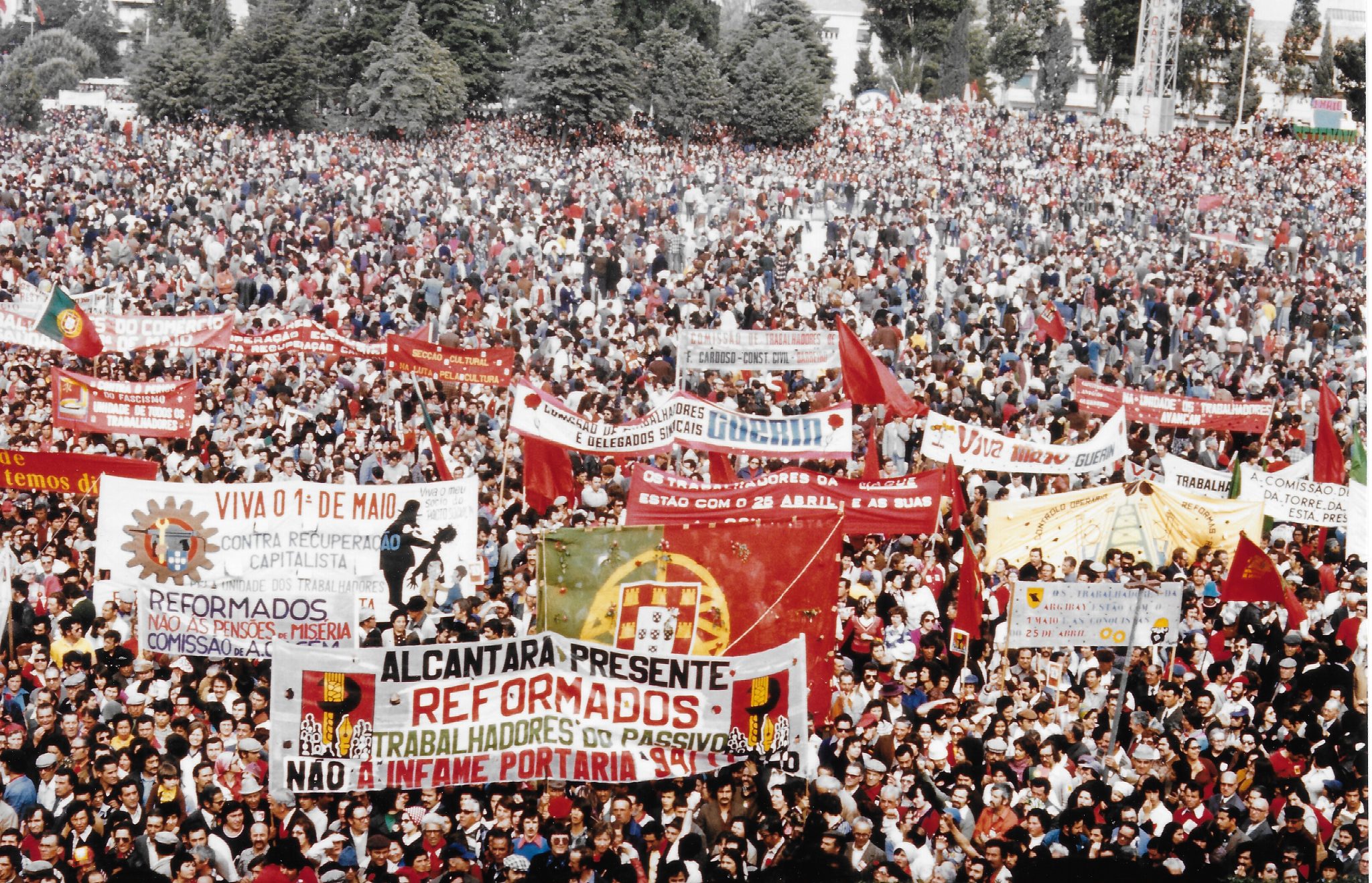
50th anniversary celebration of Portugal’s Carnation Revolution. Photo: IF DDR

May 1 International Workers Day

Beltane, the pagan holiday

April 25 Portugal’s Freedom Day

International Workers’ Day on May 1 had its start in the USA. The observance was first proclaimed after scores were killed in police raids on nonviolent workers agitating for the eight-hour day in Chicago in 1886. In the U.S., anti-socialist sentiment and political pressure has limited its observance. But other—many other—countries in the world celebrate this holiday that honors the people who actually work to build our societies and cultures and infrastructure!

This May Day, Americans are organizing a massive day of nonviolent, economic disruption to protest the pillaging of our environment, the dismantling of our democracy, and the shredding of our social safety net at the hands of the billionaire class.

We are on the way to Morocco for a women’s hiking trip in the Atlas Mountains, and on May Day we’ll be in Portugal. Both of these countries celebrate International Workers Day with marches, community gatherings and a day off work. I hope to parade with the Portuguese in Lisbon.

Portugal’s prime minister, Luís Montenegro, said “Today we celebrate with all workers: those who produce, create and contribute to a more productive and socially responsible country.”

Perhaps we Americans can take inspiration from the Portuguese revolution. The 1974 revolution, known as the Carnation Revolution, was a nearly bloodless military coup that overthrew the Estado Novo regime, ending over 40 years of fascism. It marked the beginning of Portugal’s transition to democracy and led to the independence of several African colonies.

The Carnation Revolution got its name from restaurant worker Celeste Caeiro who offered carnations to soldiers when the population took to the streets to celebrate the end of the dictatorship. Other demonstrators followed suit and placed carnations in the muzzles of guns and on soldiers’ uniforms. In Portugal, April 25, Freedom Day, is a national holiday that commemorates the revolution.

Visiting Relatives in Sweden

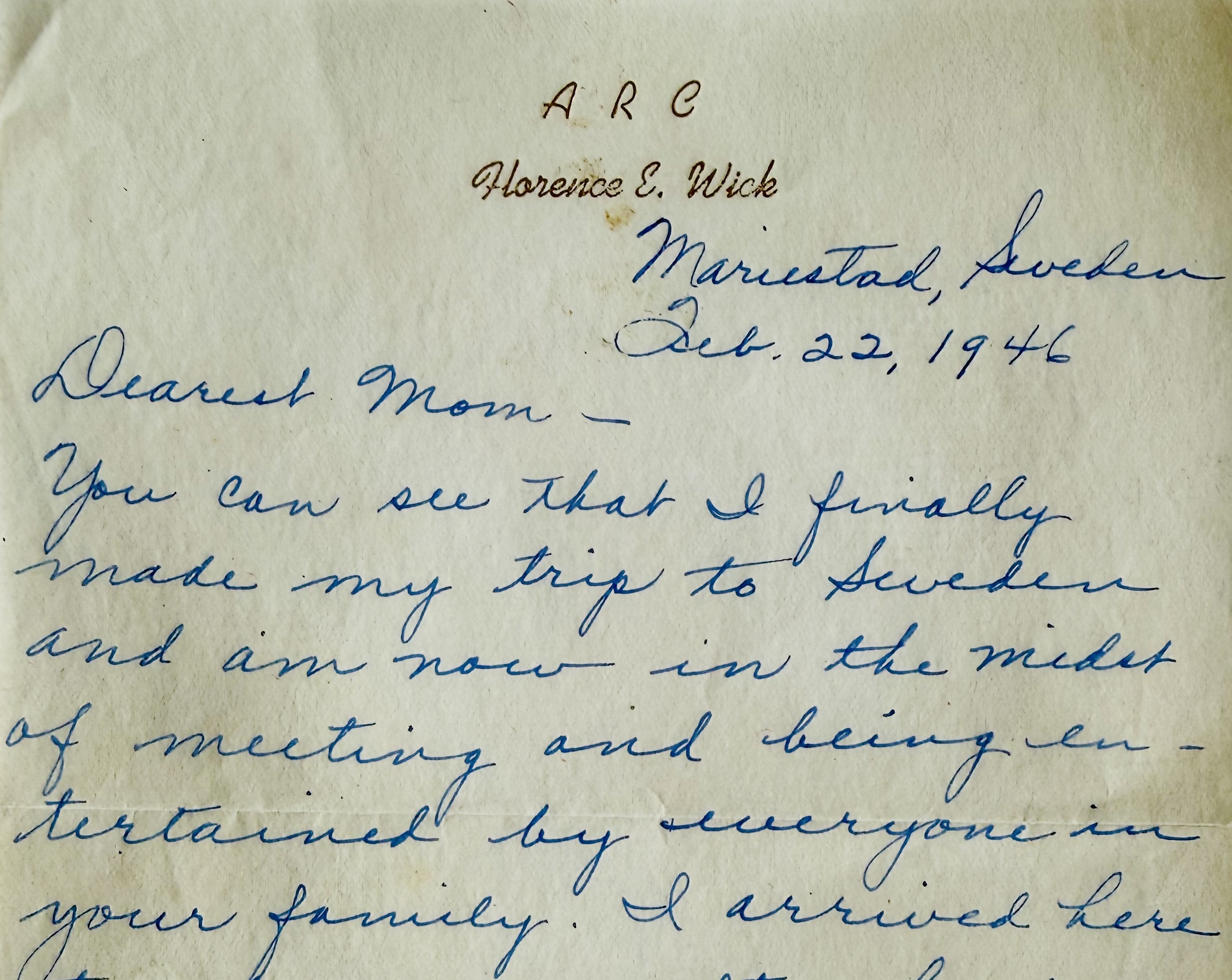
Flo First Arrives in Mariestad

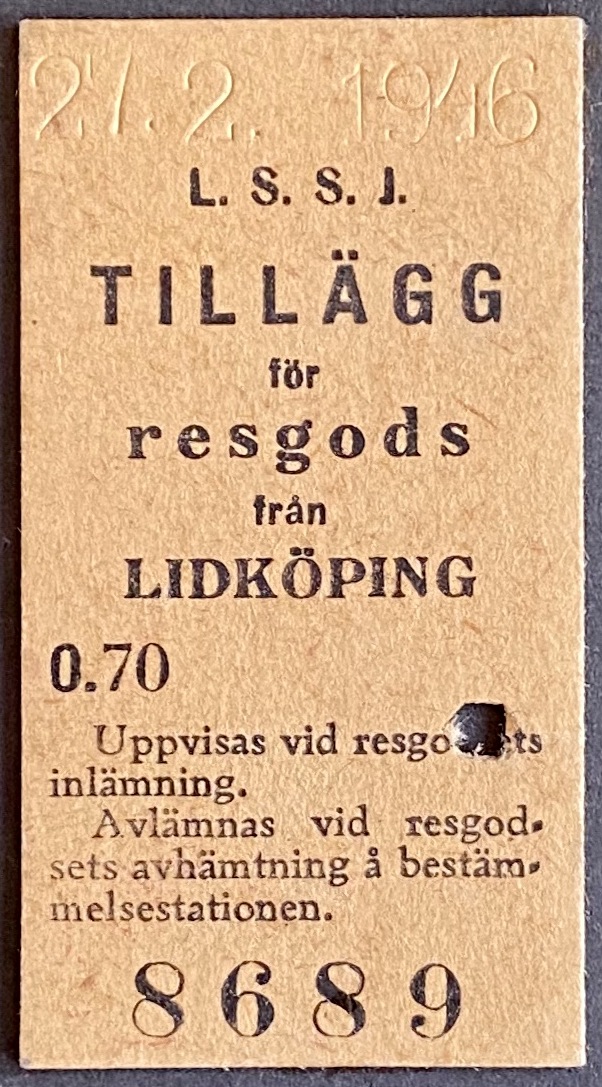
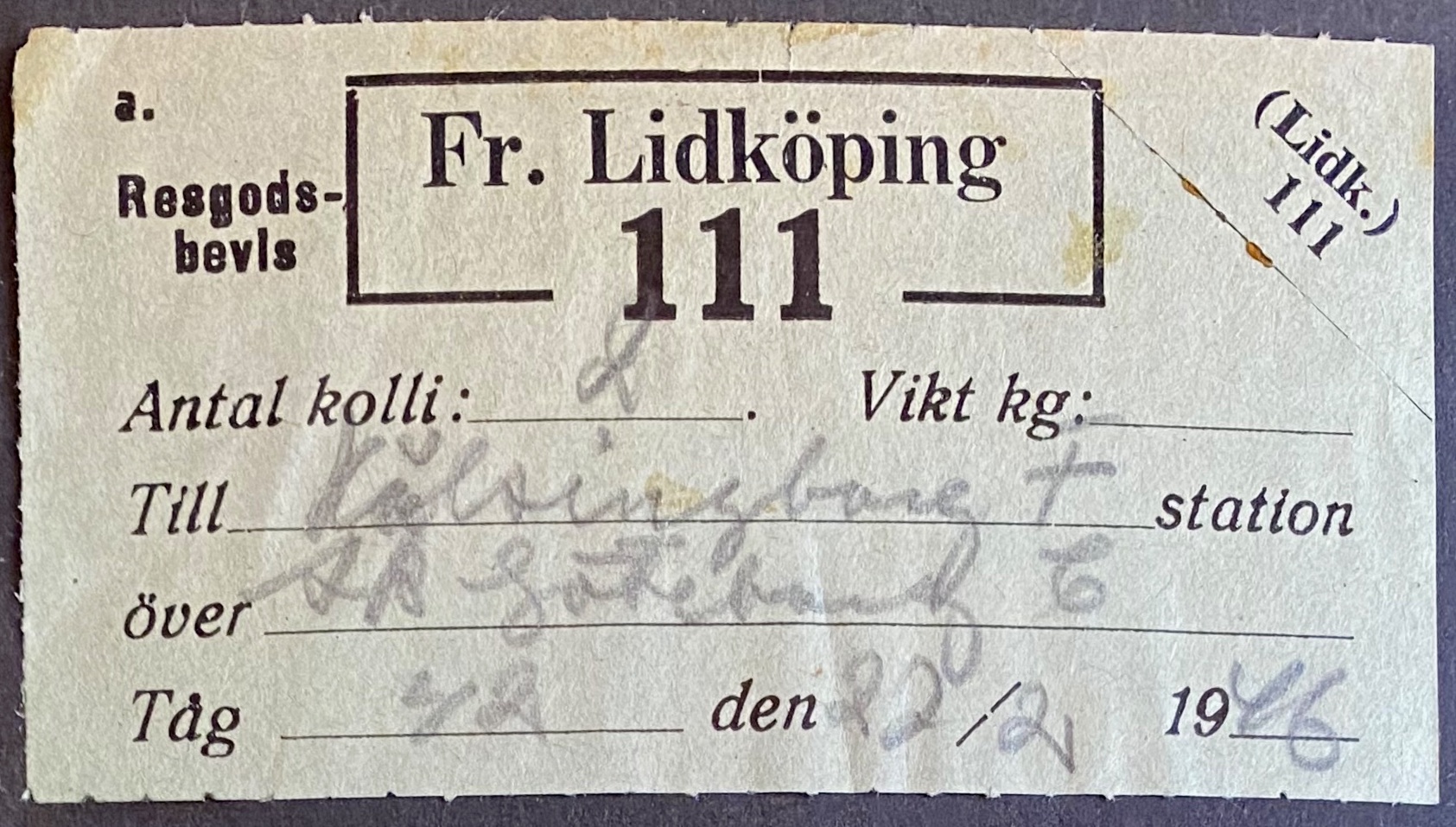
My Mother and Audie Murphy Ch. 111

Our Swedish relatives live near the southern shores of the two great lakes, Vänern and Vättern. Our grandmother, Gerda, grew up on a farm called Stora Myran, near the village of Lugnås.

Gerda’s father, Lars Persson (d: 1910) was first married to Sara Jonsdotter, who died in 1871. His second wife was Sara Nyberg (d: 1924). Altogether they had 16 children, and you can see why I have trouble keeping track of them all. Some died and most, including Gerda, emigrated to the US. Two daughters, Julia and Amalia, stayed in Sweden.

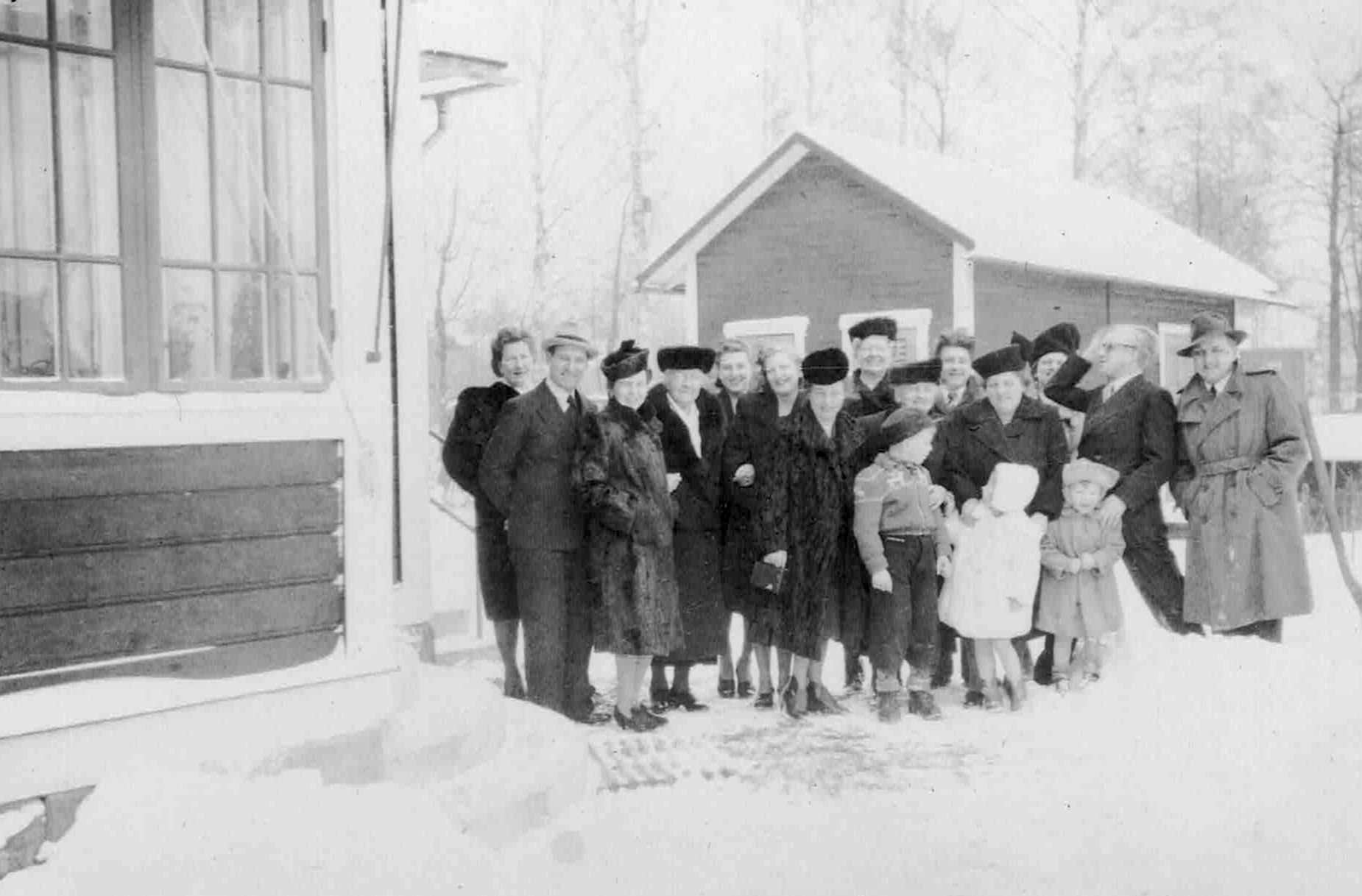
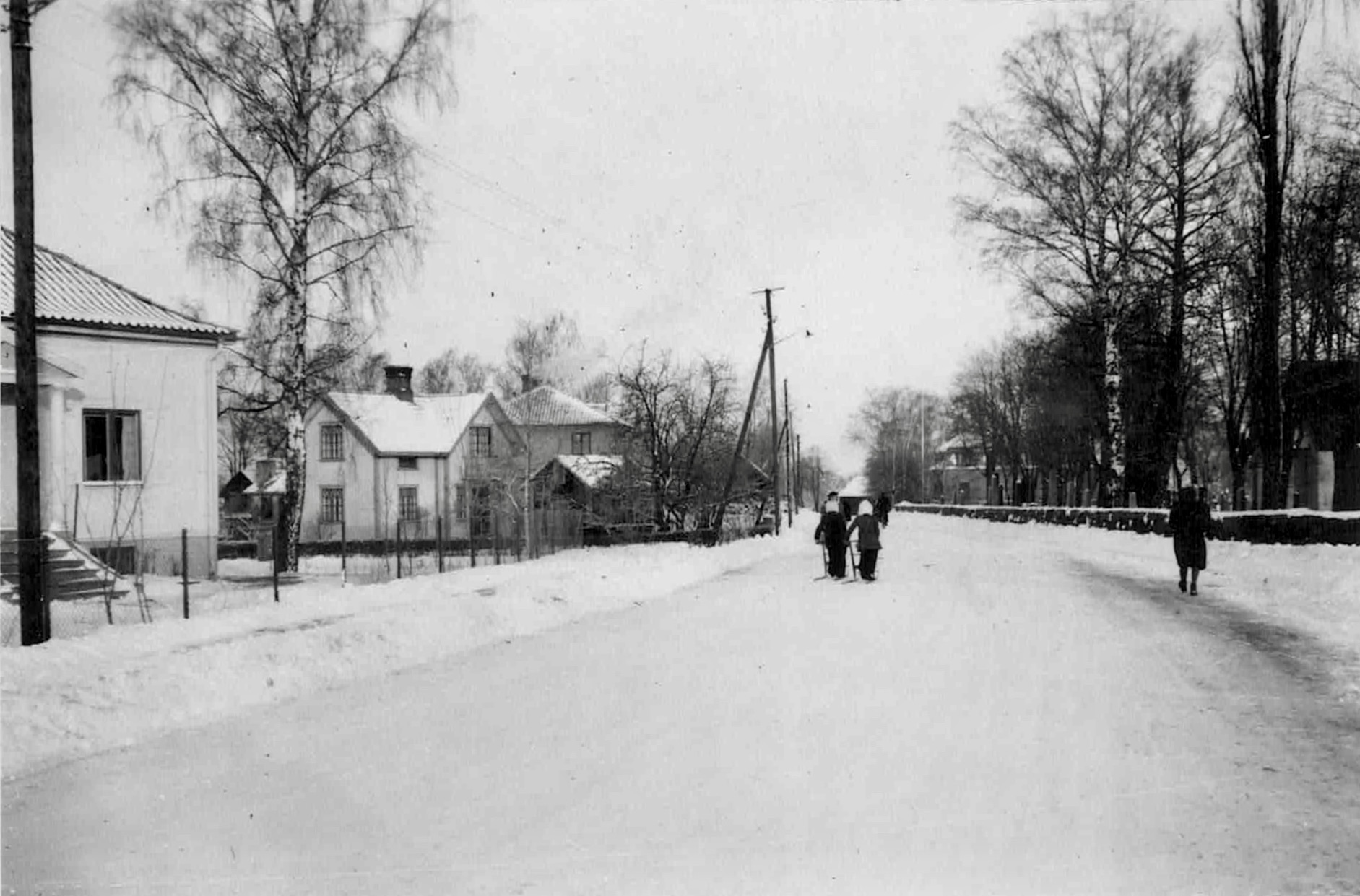
The Swedes gathered in Mariestad to welcome Flo
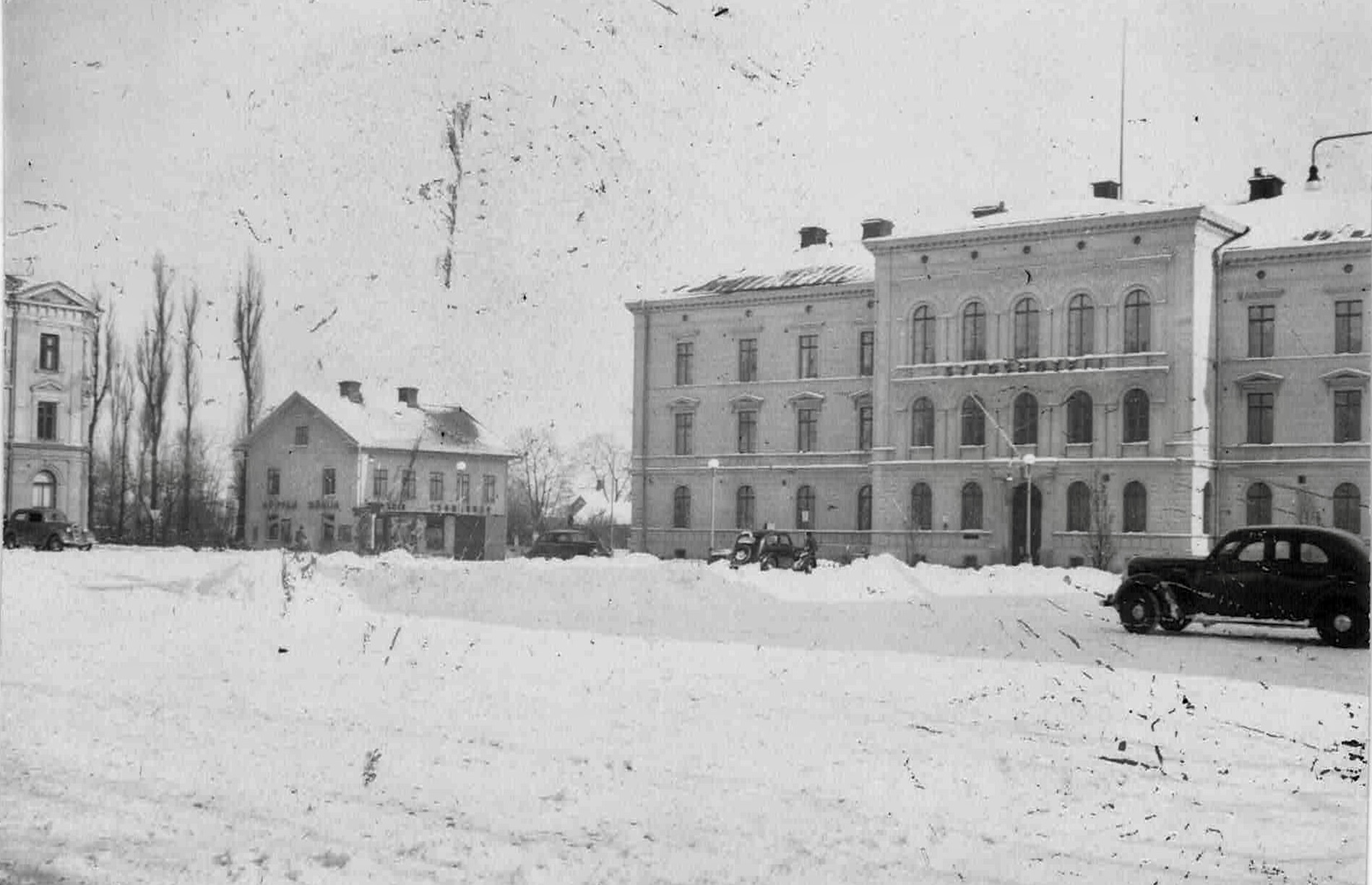
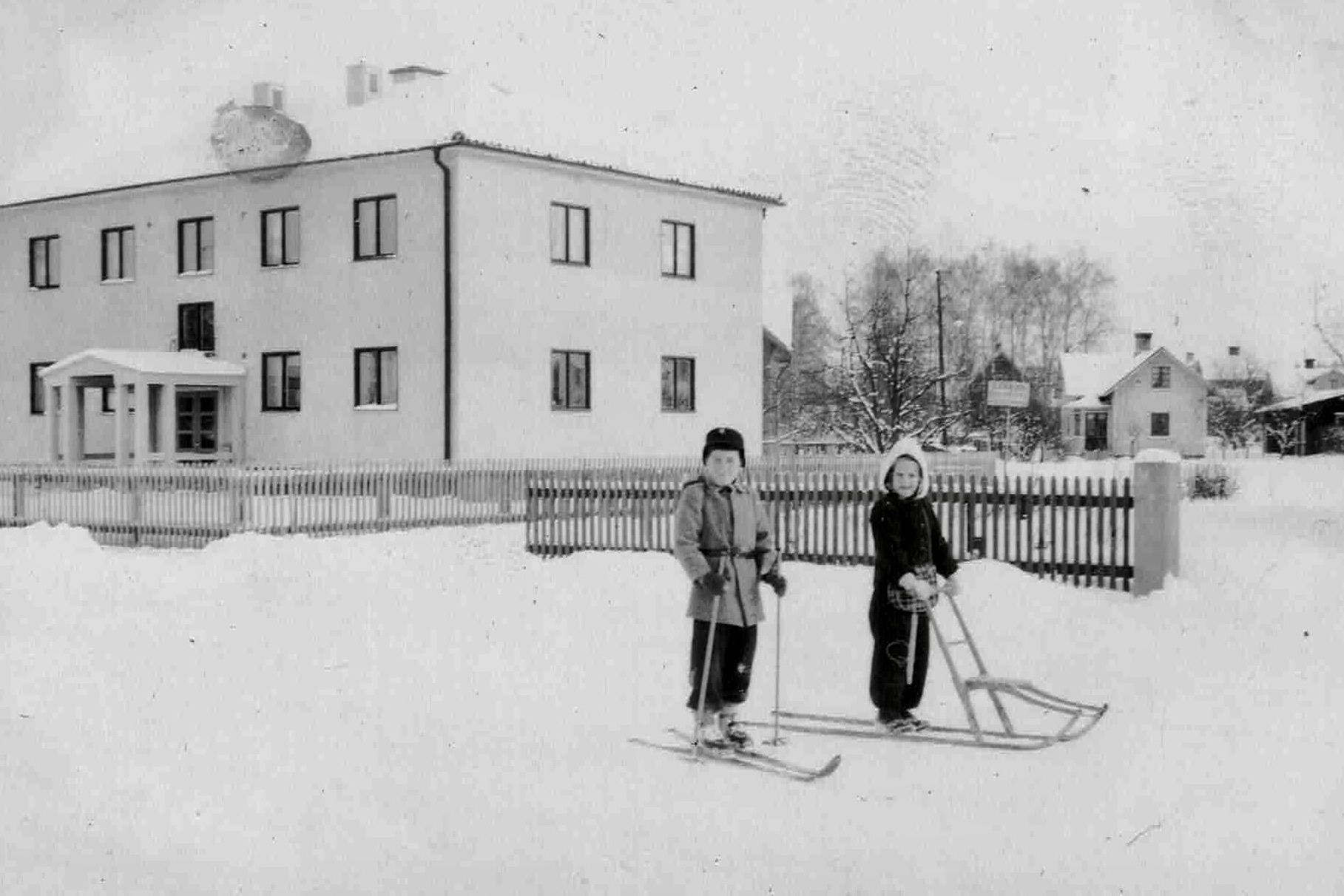
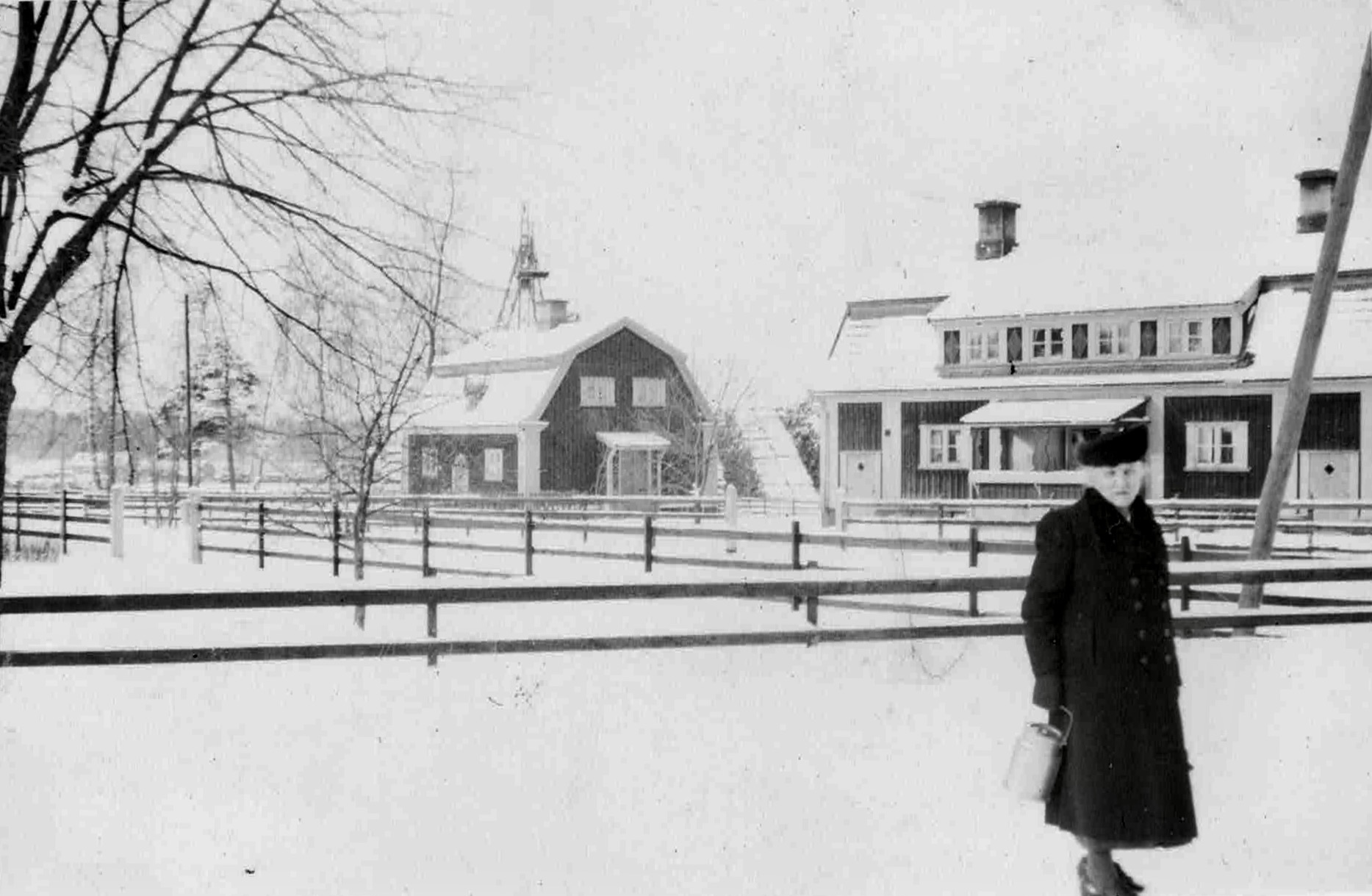
Flo captioned these pictures “Mariestad, Sweden (Aunt Amalia’s home)”. This is where she stayed while visiting the relatives.
Sometimes they traveled by ski. Cool contraption to replace poles, maybe like training wheels?
Aunt Amalia (I think), one of the two daughters who did not emigrate
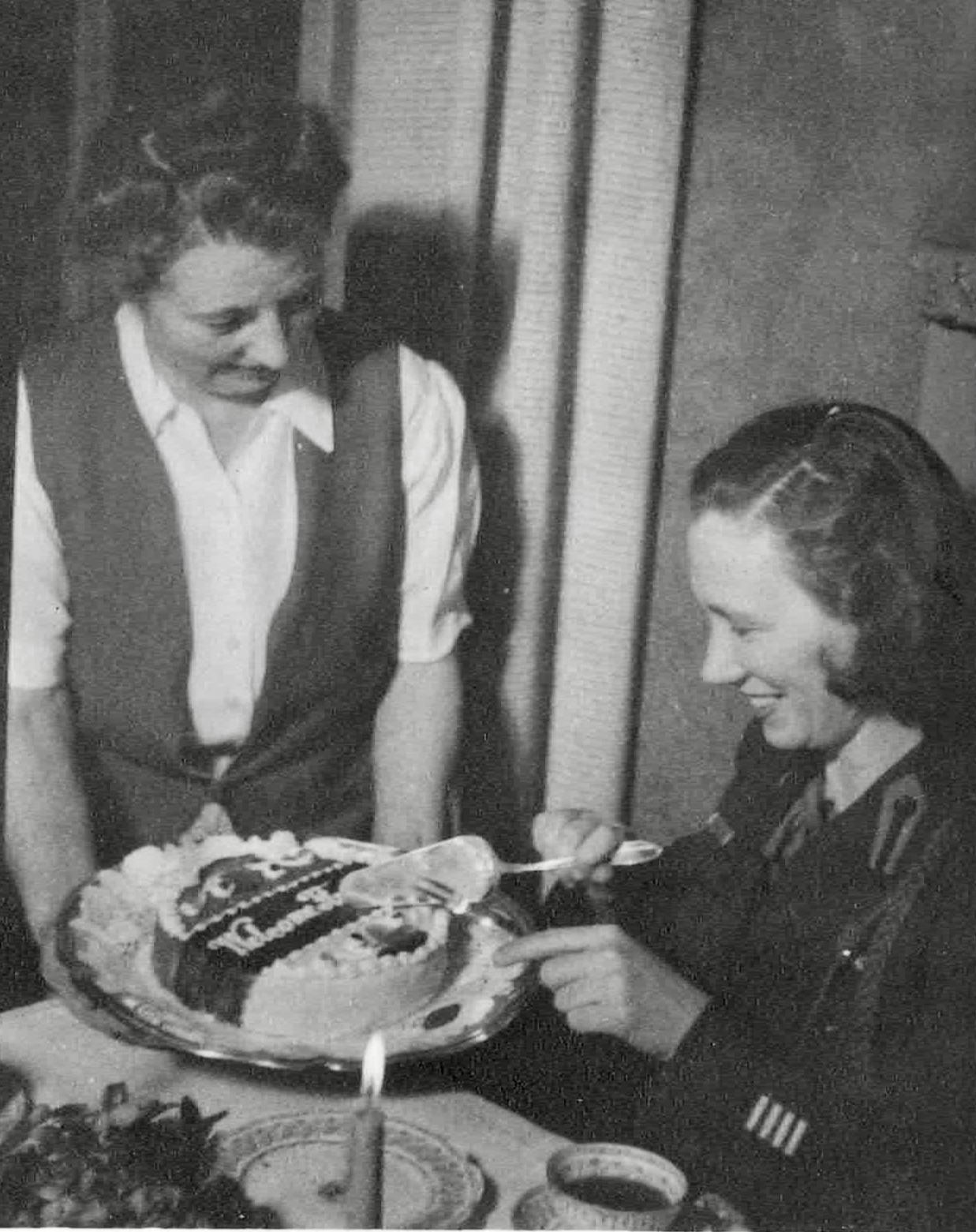
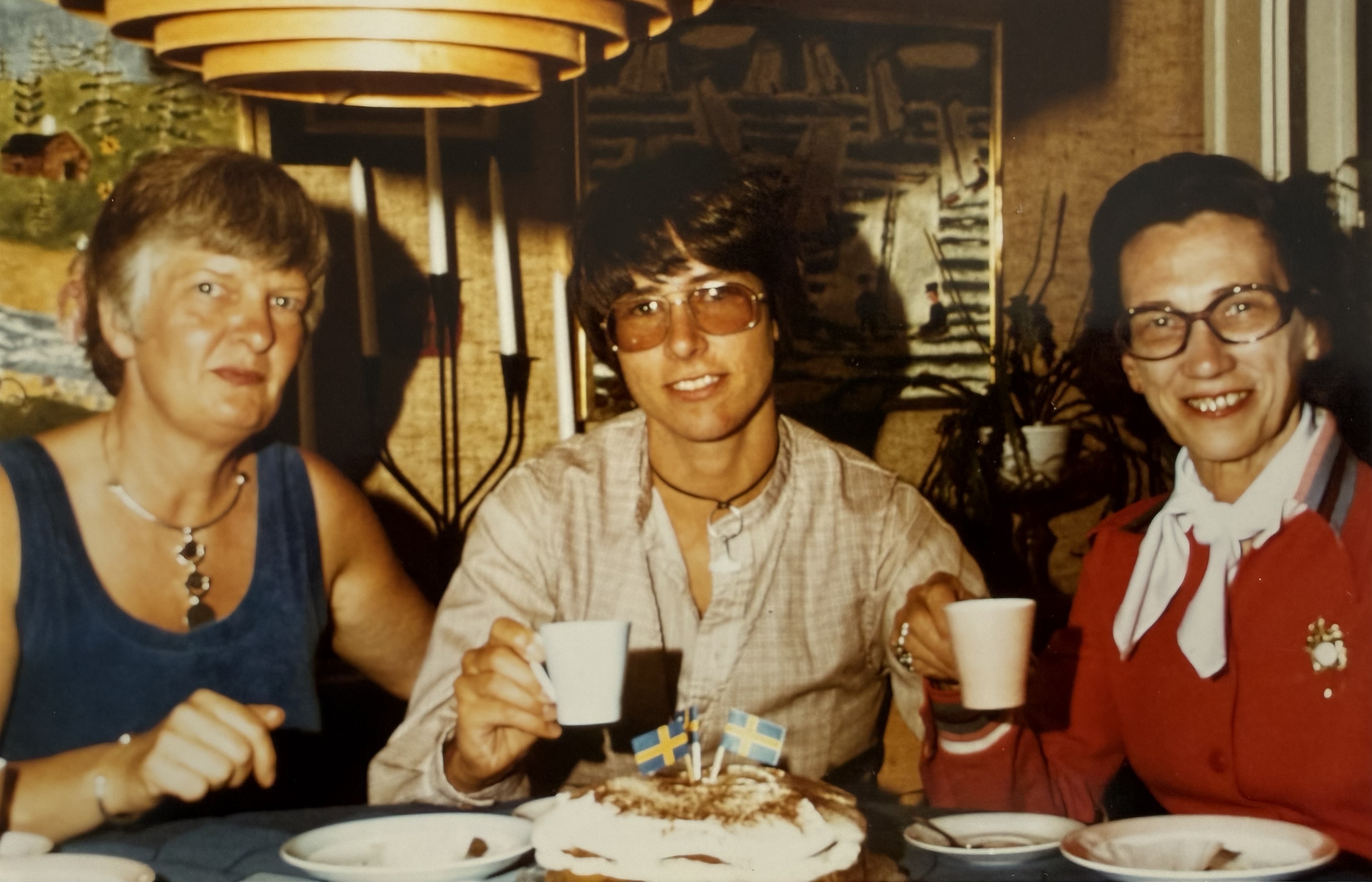
Cousin Britta threw a party and made a cake that says Welcome Florence
Cake and coffee reprise. Cousin Ingabritt, Molly and Flo visiting in Jönköping, 1979. Flo died four years later in 1983.

Ch. 112: https://mollymartin.blog/2026/04/08/sweden-she-had-to-visit-them-all/

A Visit to Stratford-upon-Avon

Flo gets to see some Shakespeare too

Ch. 84 My Mother and Audie Murphy

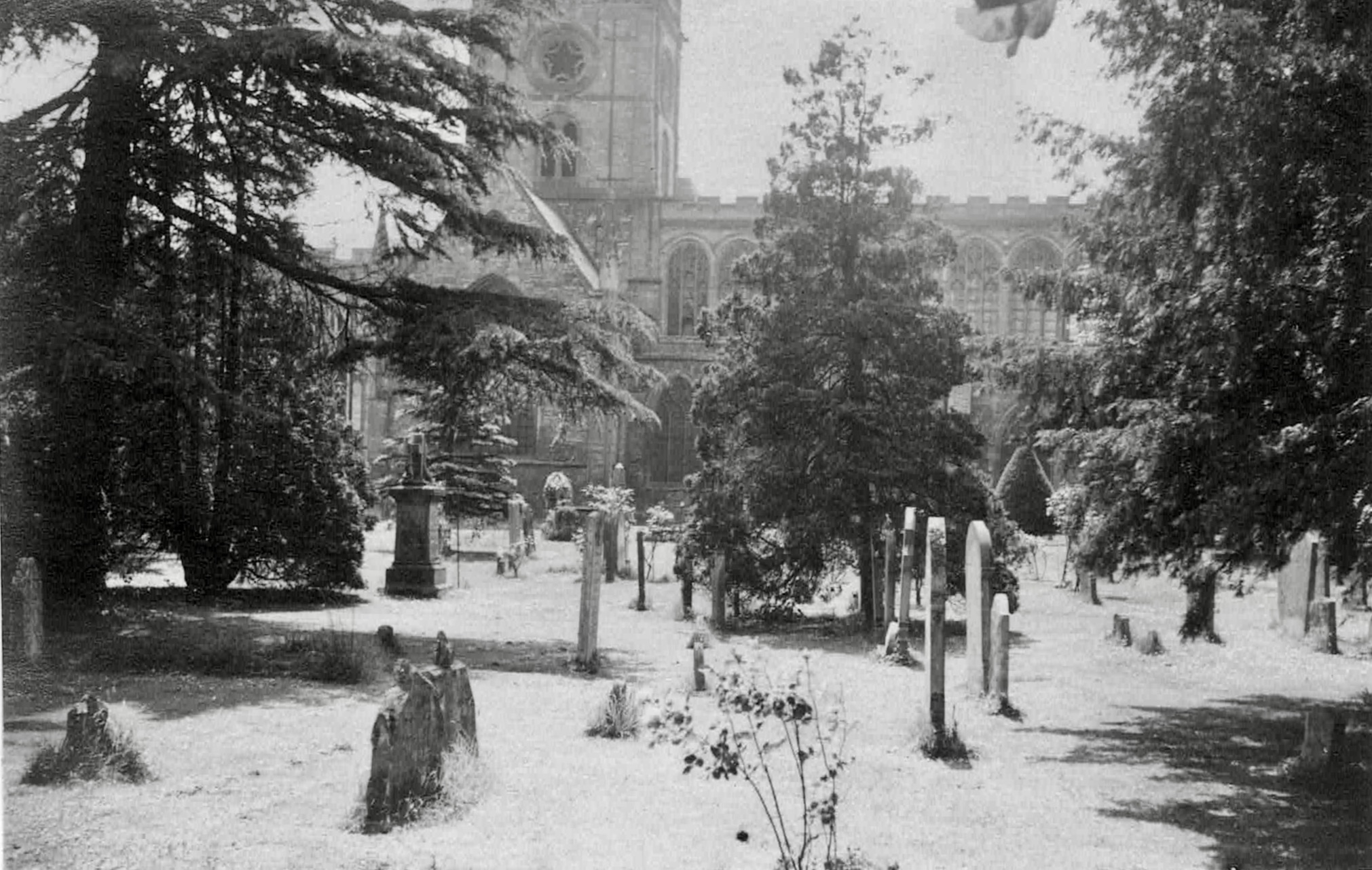
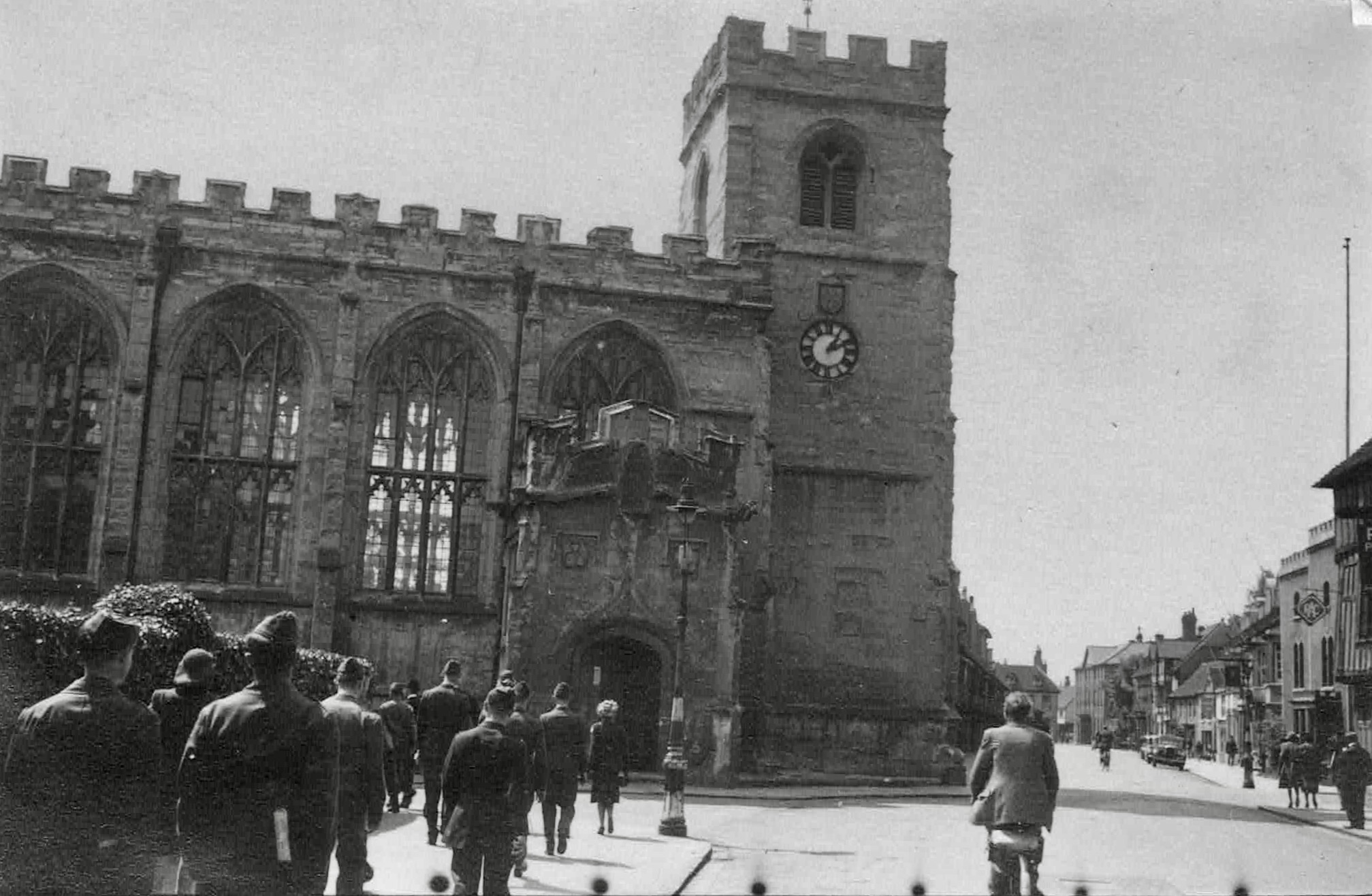
Stratford-upon-Avon, as we all know, is the 16th-century birthplace and burial place of William Shakespeare. The medieval market town in England’s West Midlands is about 100 miles northwest of London. The Royal Shakespeare Company still performs his plays in the Royal Shakespeare Theatre and adjacent Swan Theatre on the banks of the River Avon. Flo visited in mid-June, 1945.

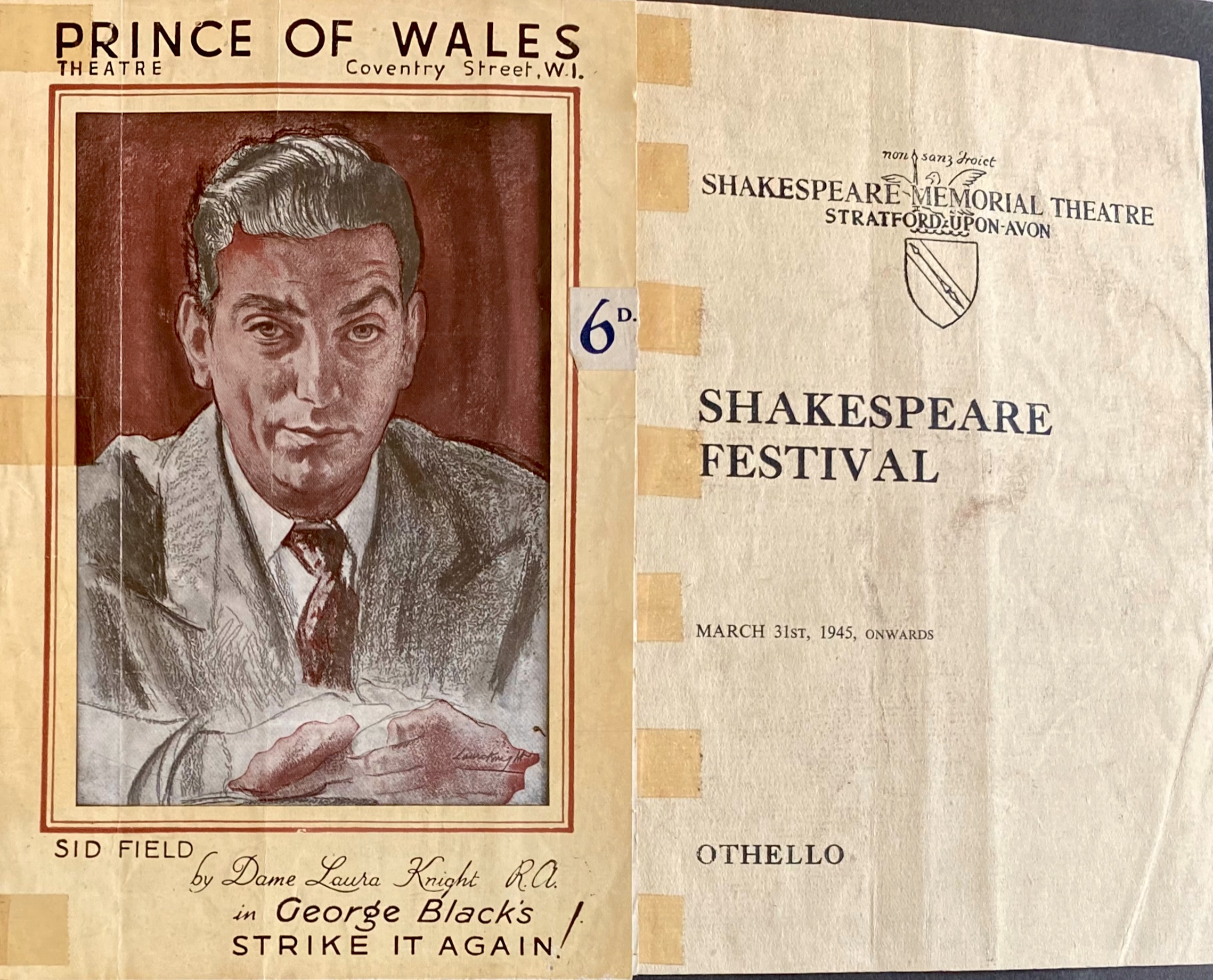
She attended the Shakespeare Festival
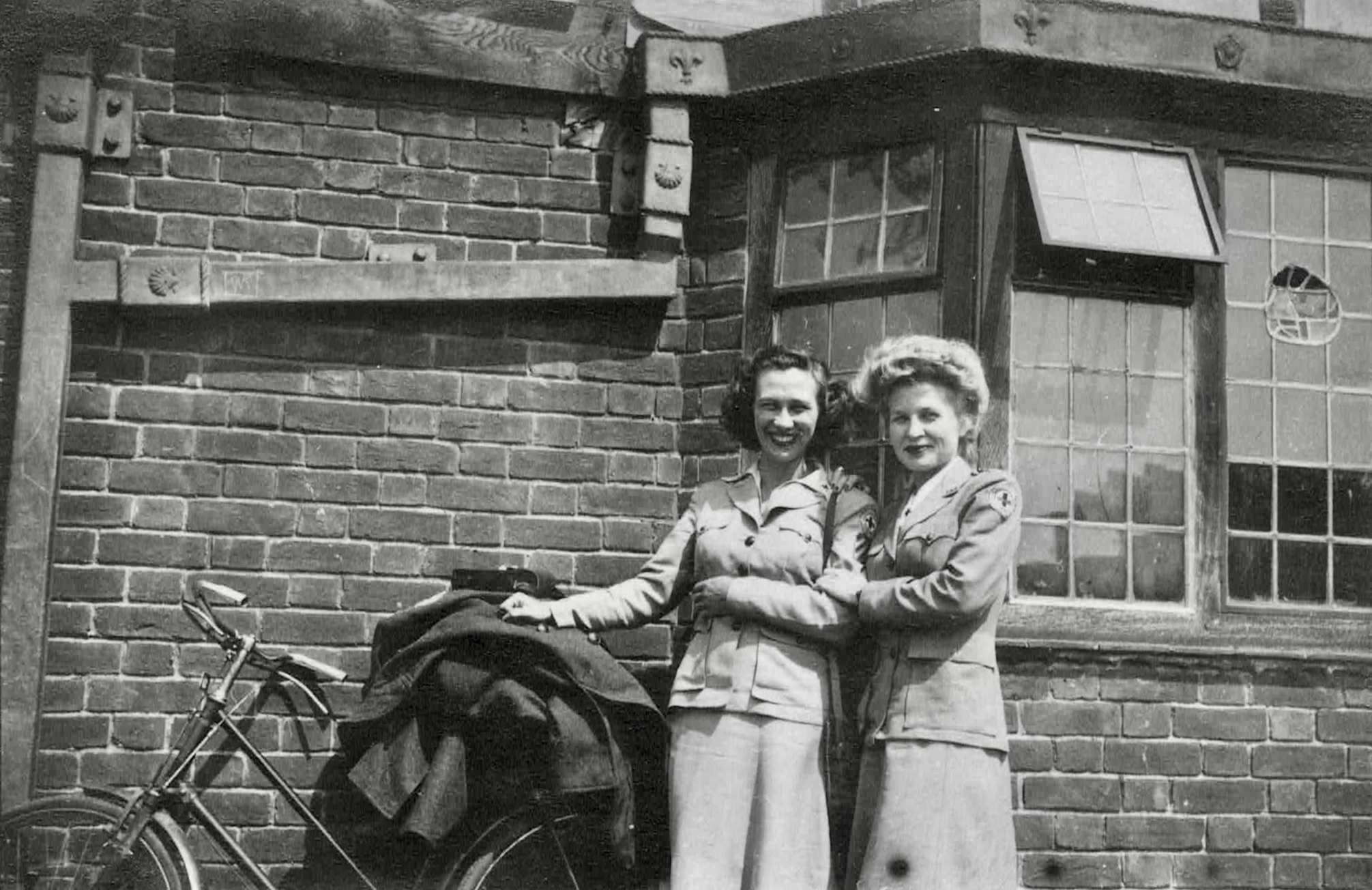
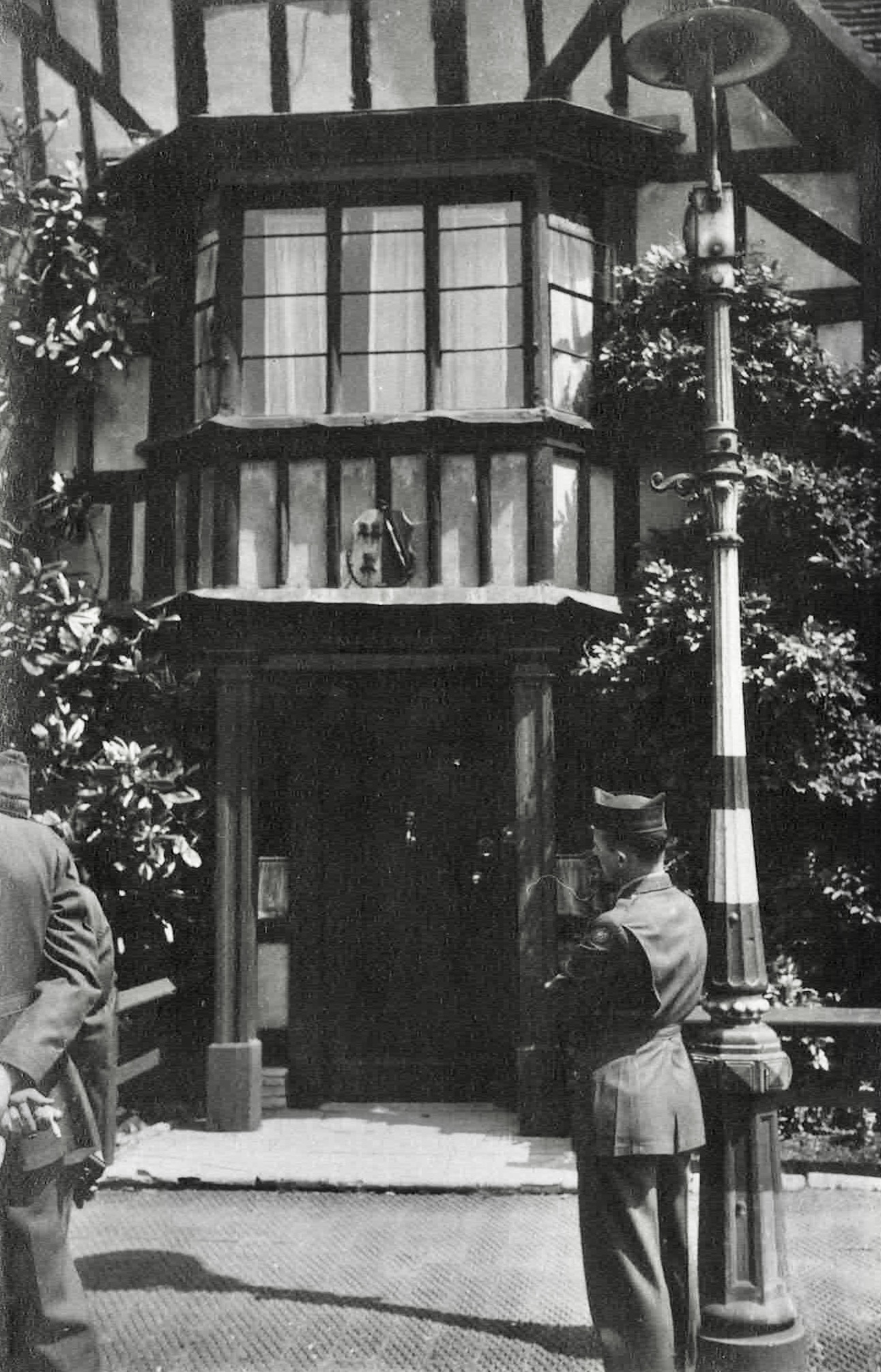
Stratford-on-Avon Red Cross club. Photos from Flo’s album
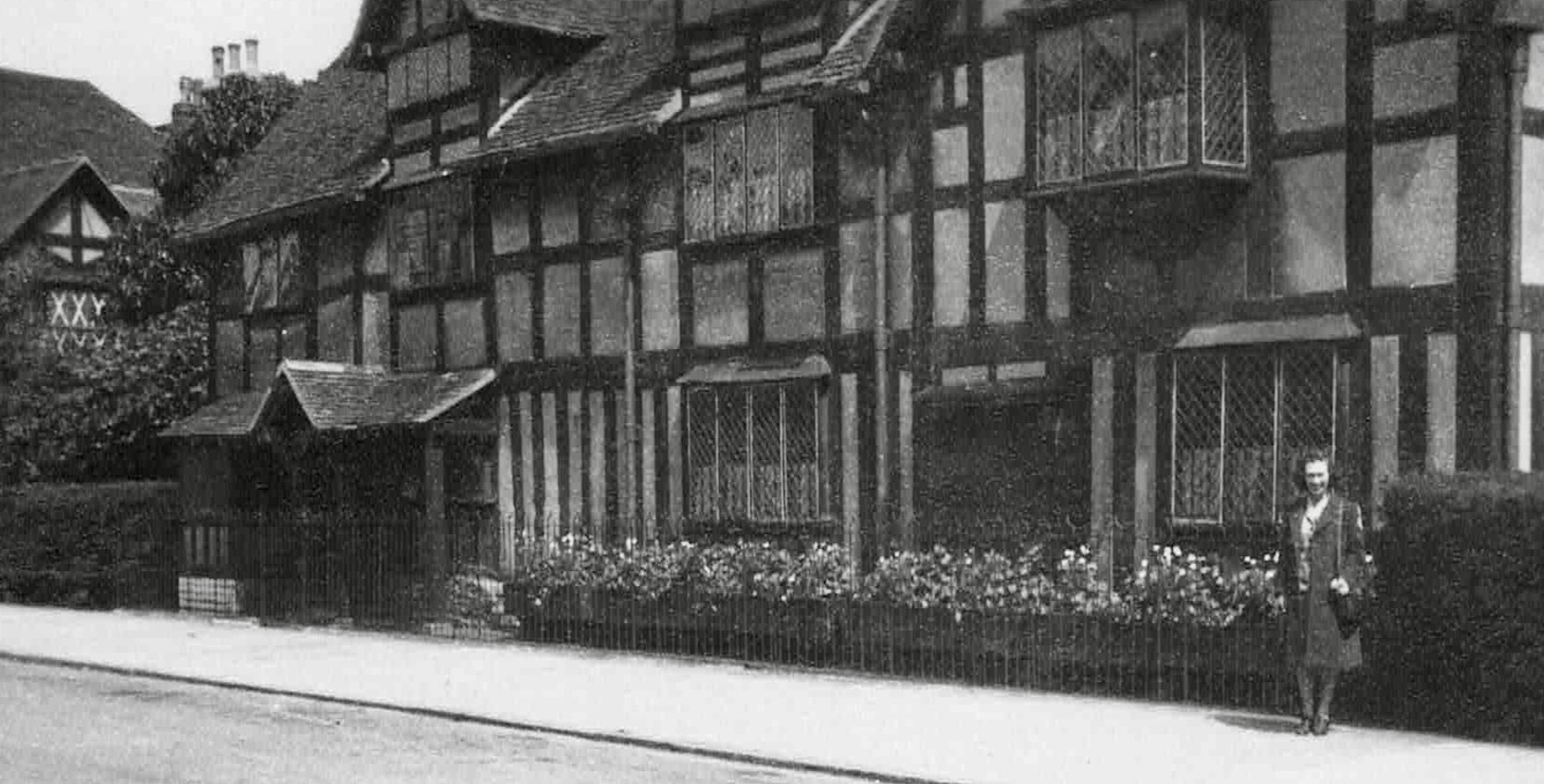
Shakespeare’s house
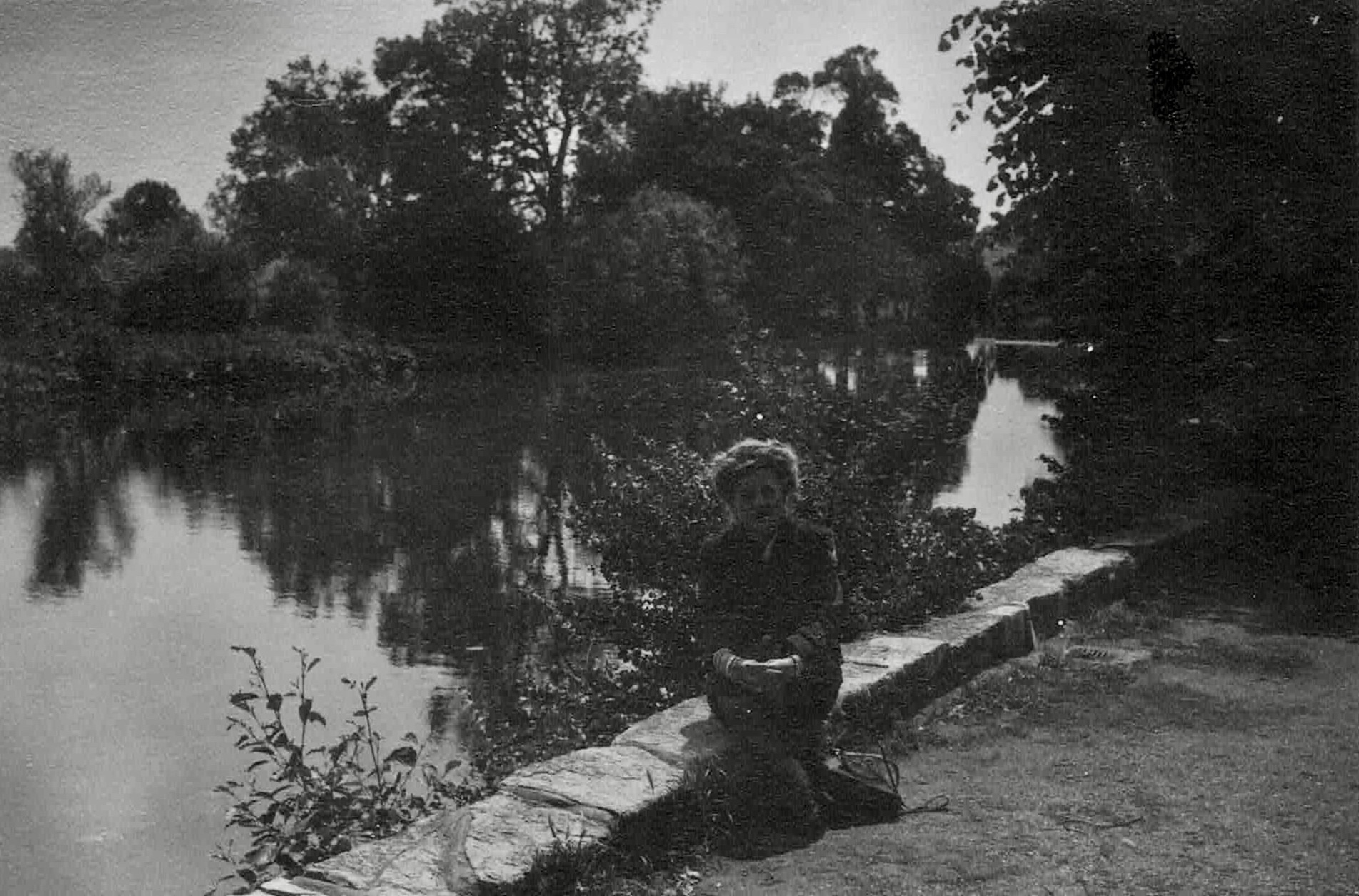
Flo didn’t identify this woman, her host at the Red Cross club
Sailing back to the Continent. Leaving England for Dieppe at the end of the week-long leave.

Stratford-upon-Avon had faced the threat and effects of the Blitz through scattered incidents and as a sanctuary, rather than being a central target for sustained bombing like larger industrial or military centers. During the war the town provided refuge, with people from heavily bombed areas like Birmingham coming to Stratford for quiet and respite from the relentless night raids.

Ch. 85: https://mollymartin.blog/2026/01/04/audie-murphy-comes-home/

Trip to Brussels and Cologne

Flo and Janet Get Leave

My Mother and Audie Murphy Ch. 74

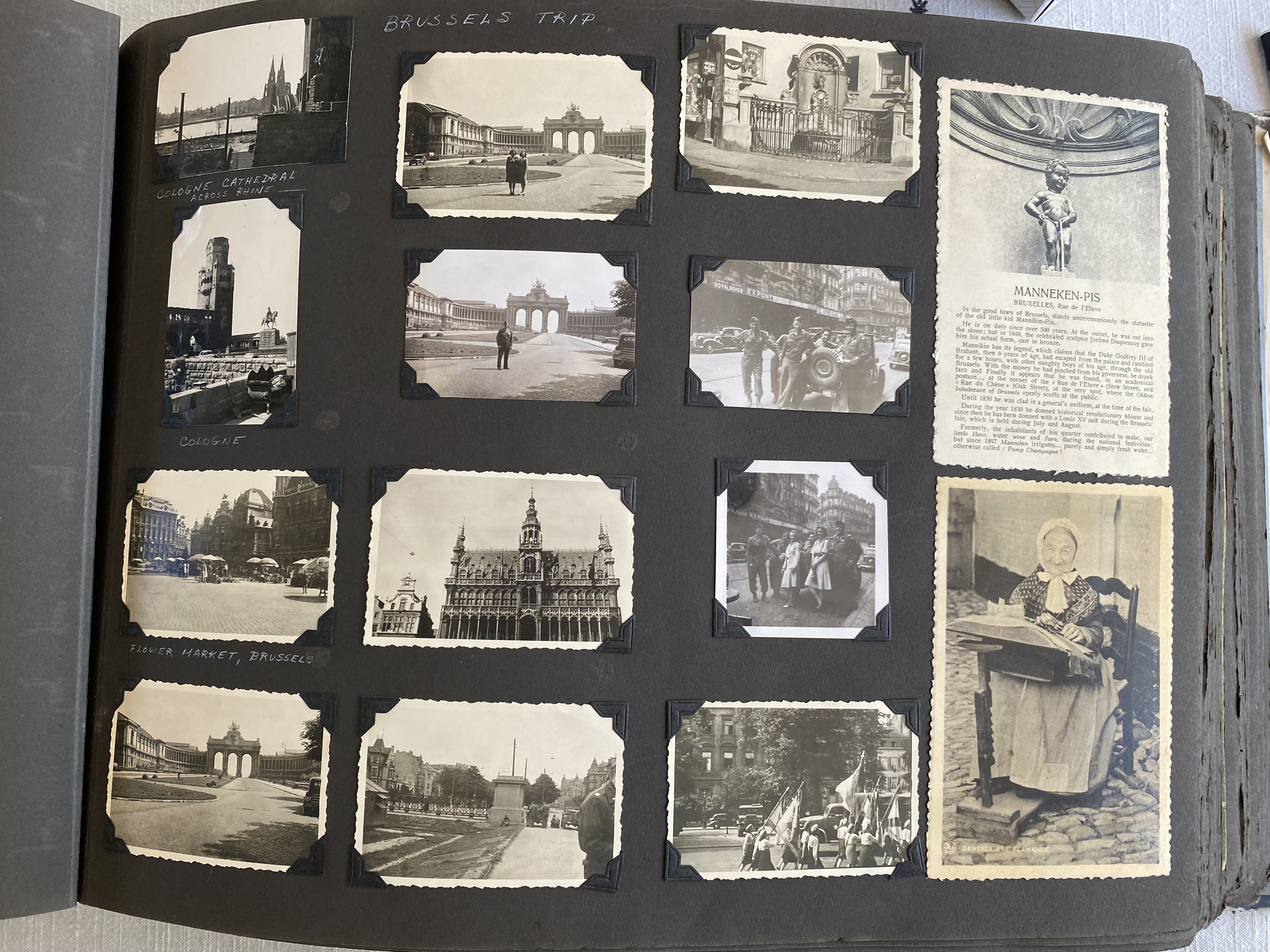
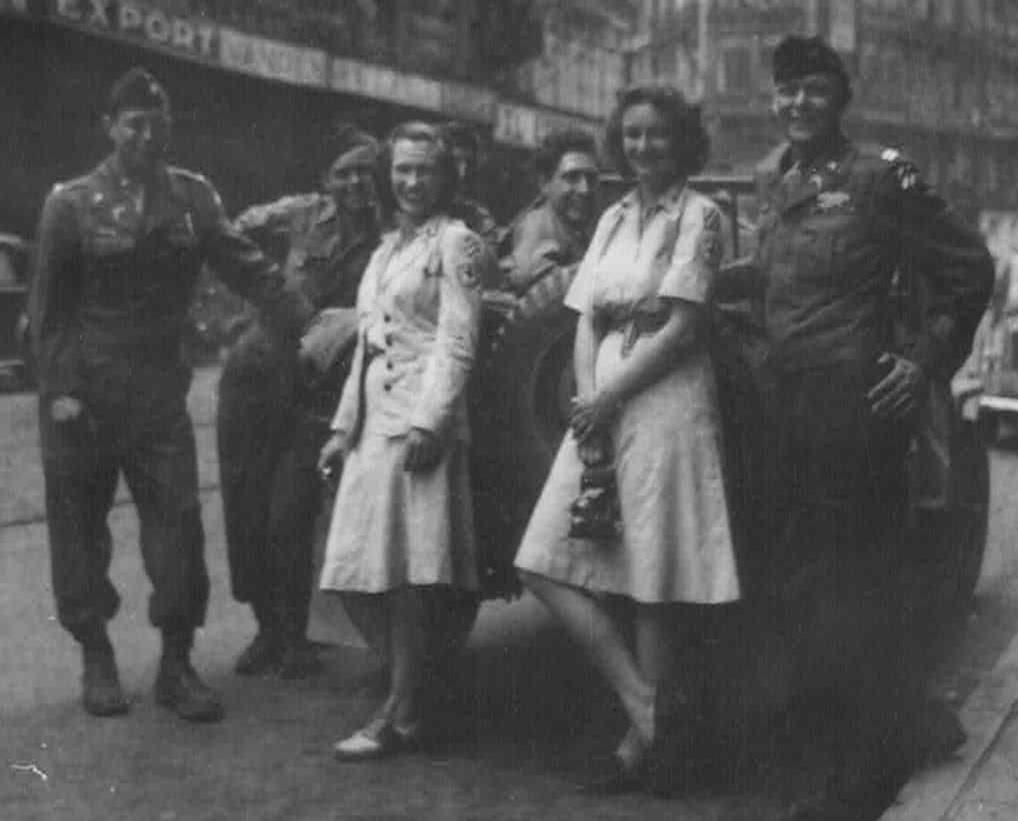
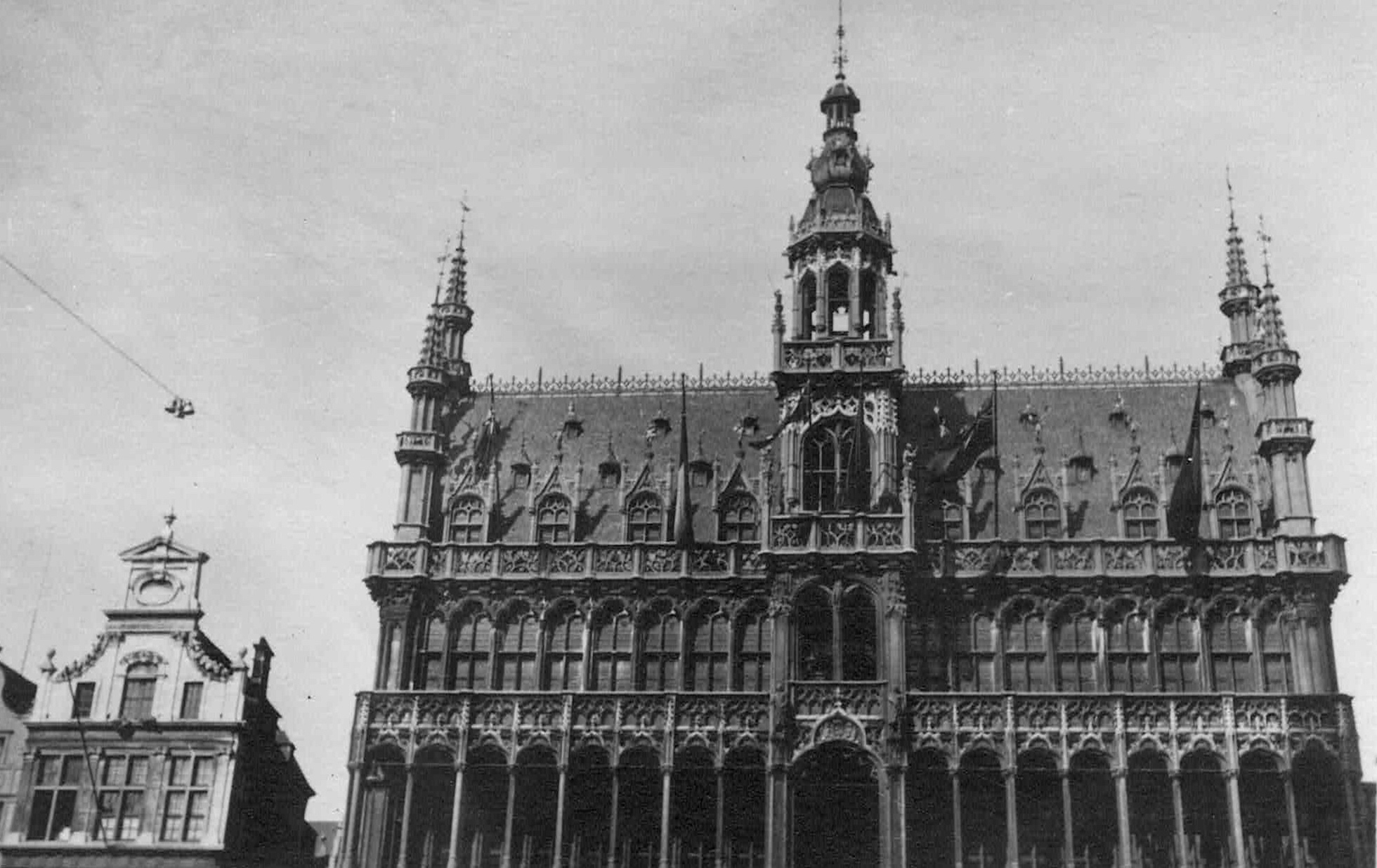
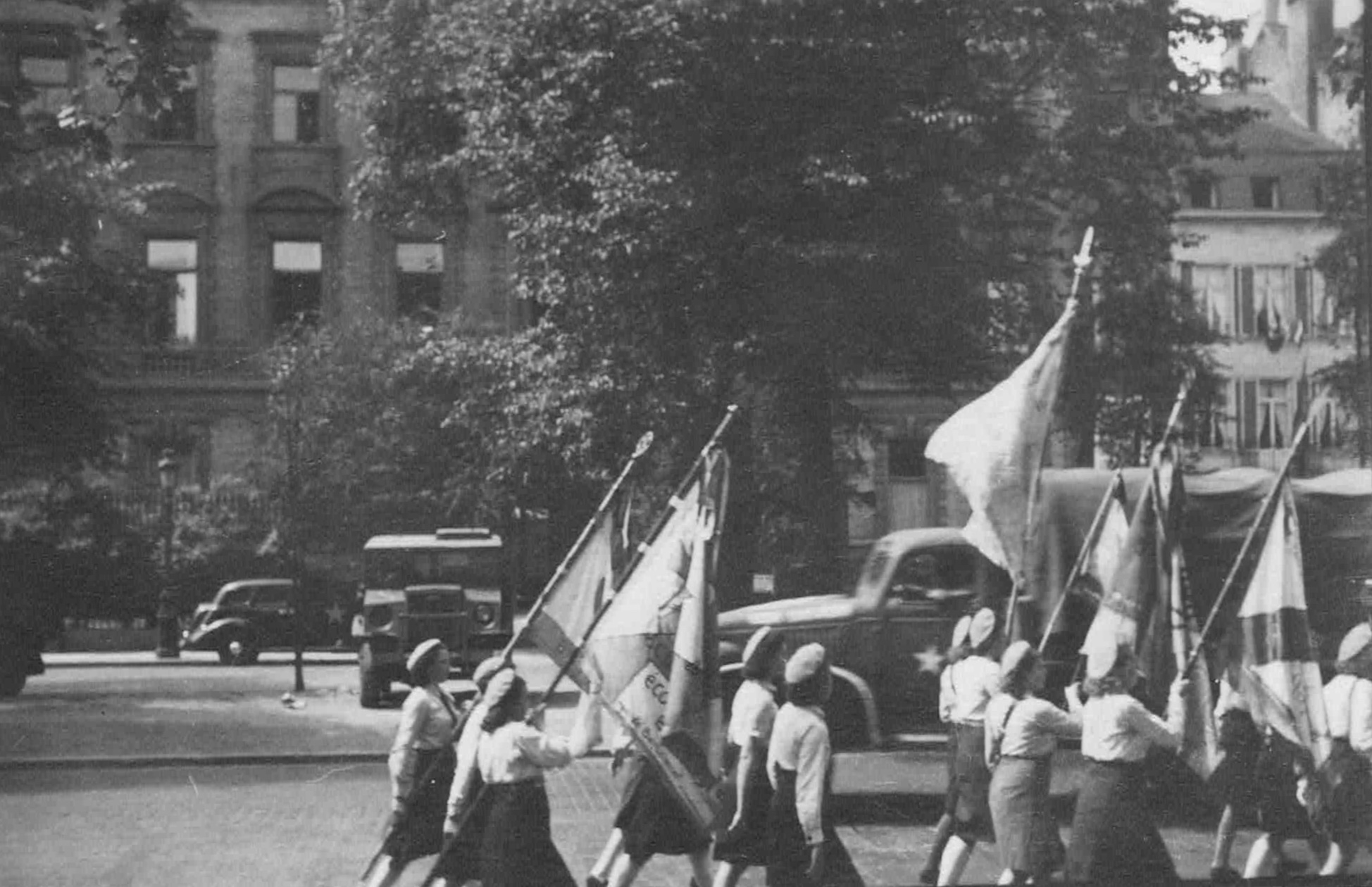
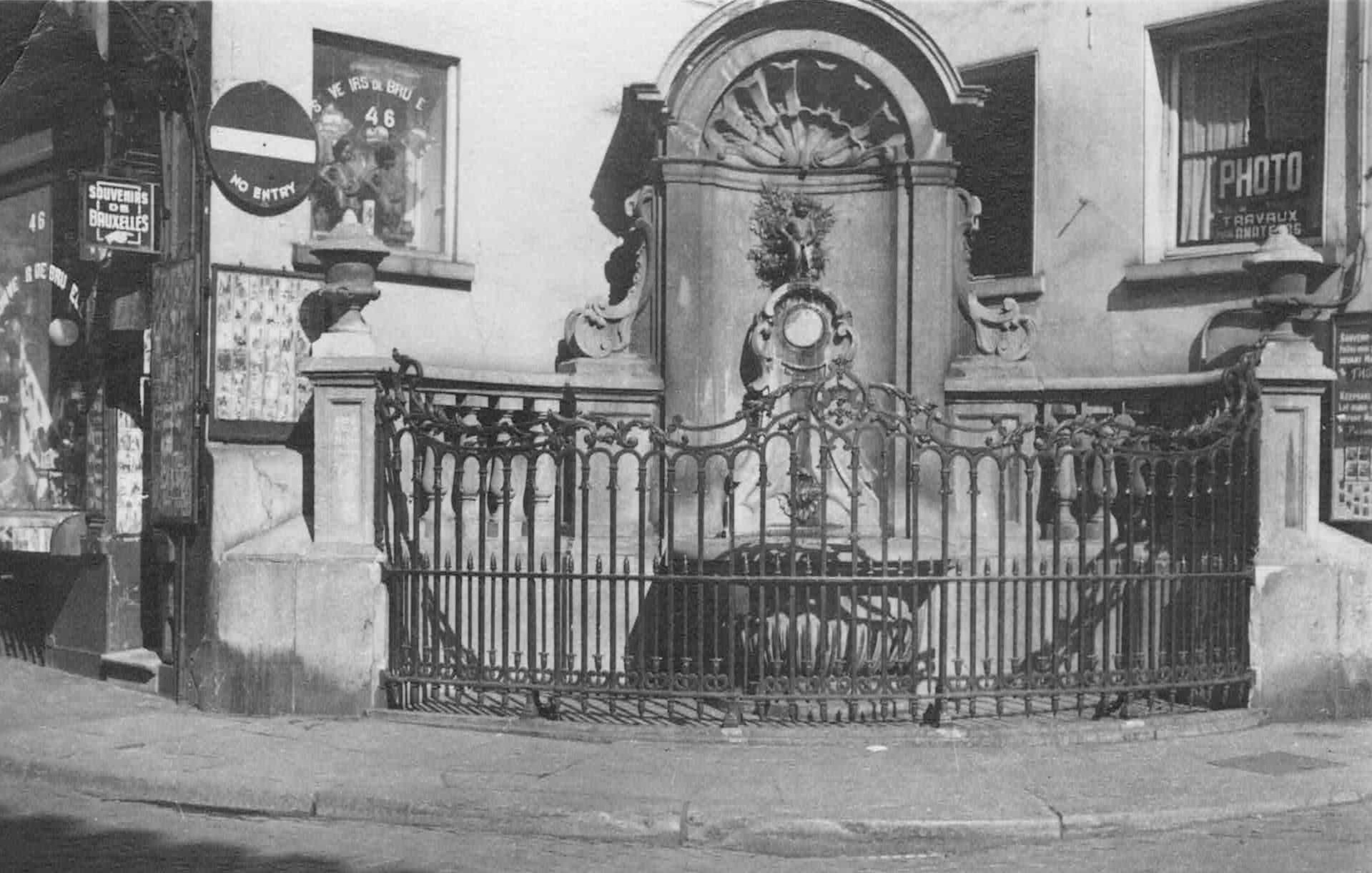
Flo and Janet got leave to travel to Brussels probably in June, 1945. In her inscriptions on this page in her album, Flo doesn’t indicate how they travelled the 450 miles from Salzburg, stopping in Cologne, nor whether they went with the soldiers in these pictures. 

The War in Brussels

Belgium had been under German occupation since 1940, but Brussels was freed in early September 1944. The city of nearly a million people did not expect liberation to come so quickly, and enormous crowds poured into the streets, slowing the Allied advance as they welcomed their liberators. At the same time, Belgian railway workers and the resistance foiled a German attempt to deport 1,600 political prisoners and Allied POWs to concentration camps on the so-called “ghost train.”

The city escaped the widespread destruction seen elsewhere in Europe; it was not subjected to systematic or heavy bombing. The rest of the country was liberated by February 1945.

Flo and Janet in Brussels with the boys
Flower market in Brussels

Cologne Cathedral Survived

When American troops entered Cologne on March 6, 1945, the Cologne cathedral was one of the few major structures still standing. The Gothic landmark became the backdrop to a famous tank battle as U.S. forces took the western part of the city and the Germans withdrew across the Rhine, holding the eastern bank for another month.

Remarkably, the cathedral survived both the battle and years of Allied bombing. Construction began in 1298, but the cathedral wasn’t finished until 1880. Just sixty years later, Cologne was hit by the first of 262 RAF air raids. Nearly a quarter of the city’s 770,000 residents fled after that initial attack, and the population continued to drain away until only about 20,000 remained by the final raid on March 2, 1945.

The cathedral’s twin spires even served as a navigational point for Allied bombers. Though struck 14 times and heavily damaged, the great structure endured, towering over the ruins of the city.

Cologne cathedral across the Rhine
Cologne. Photos: Flo Wick

Ch. 75: https://mollymartin.blog/2025/12/01/occupied-salzburg-summer-1945/

Invoking the Travel Goddesses

August 1, 2023 

My Regular Pagan Holiday Post: Lammas

It is the season for traveling in the northern hemisphere and I’ve been traveling along with millions of others, this year freed from covid restrictions. 

The Santa Rosa airport was packed with more people than I’ve ever seen there, and my destination, Seattle, was just as chaotic. I was one of very few folks wearing a mask. On the plane, people sitting around me discovered we are all from the same neighborhood. Two were flight attendants, relieved that they no longer are required to act as mask cops, risking physical confrontations with MAGAs (they wore masks).

My full flight was smooth and on time. At SeaTac I always rush through the baggage claim level to the far south end of the airport where I catch the bus to Kitsap peninsula towns and my destination, Gig Harbor. This time the bus was just boarding and there was an empty seat for me. My luck may have been the result of my friend Barbara Sjoholm’s invocation of (and my introduction to) the two Roman travel goddesses, Abeona and Adeona. The goddesses are often petitioned together to provide safe travels. 

Abeona–in Latin abeo means to depart—also indicates the birth of plant and animal life, including human beings.

Adeona–adeo means to return. “She who returns” is a goddess of plant and animal growth and death.

Betsy, Barbara and Cousin Gail

A prolific writer, Barbara has just published what I’d call her magnum opus, “From Lapland to Sápmi: Collecting and Returning Sámi Craft and Culture,” about the cultural history of the indigenous Scandinavian people. I know her from the murder mysteries she published in the 1980s and 90s, featuring a lesbian sleuth, Pam Nilsen. During covid she wrote and published two mysteries with an older lesbian protagonist, Cassandra Reilly. My cousin Gail, a student of Native American culture, is a big fan of Barbara’s writing about the Sámi, and I got to introduce them. At lunch in Port Townsend we met Barbara’s wife, Betsy Howell, who works for the US Forest Service and writes about it on her blog: https://betsylhowell.com/. She has a new book coming out in the fall. Mazel tov!

We Watch the Earth Burn

I left Santa Rosa as it was experiencing a heat wave. It was only 86 degrees when I arrived in Gig Harbor, also pretty hot for this time of year. For now, the West has mainly avoided heat domes and smoke from Canadian fires that have affected most of the rest of the country. Phoenix is experiencing nearly a month of temperatures above 110 degrees. July 4 was the hottest day in human history.

At one time I thought I would not live to see the effects of climate change, but the change is coming faster than anyone expected. It’s happening in my lifetime!

In California we worry this time of year about fire as well as heat. As a person with lung issues, I dread fire season and its smoky air, which starts earlier every year. It used to start in the fall with the diablo winds that come from the east. Our usual winds blow from the west, offshore, and while they contain pollution from China, they are not usually smoky.

On this trip I’m reuniting with my three brothers and two cousins. Then I’ll travel to Vancouver BC with my brother Don to commune with him and his husband. It’s gonna be great. 

Siblings Molly, Don, Tim and Terry

Celebrating the Cross Quarter Holiday

In the northern hemisphere, the autumn cross-quarter holiday was celebrated by the Celts as Lughnasa/Lammas on August 1. Astronomically the event occurs around August 6 or 7, the hottest time of the year in much of our hemisphere.

At Lammas we celebrate the harvest of first fruits. In Santa Rosa we’ve been harvesting beans for a while. Our first tomatoes are finally ripe. I look forward to summer BLTs and I ate the first one just before leaving town. The peaches are in the dehydrator. The neighbor’s apple tree that hangs over our fence is full of ripe Gravenstein apples. Holly made pies from the leftover last year’s apples so we’ll have room in the freezer for this year’s. Artichokes were prolific and I ate many but left some to flower. Bees love the purple-blue flowers and I love looking at them, but they are now over and the plants are ready to be cut down. 

At summer solstice I celebrated my mother’s birth day. On August 9 I mark her death day, which is also Nagasaki day, the day in 1945 when we, the Americans, dropped the atomic bomb on Nagasaki, Japan. August 6 was Hiroshima. 

Seen from Cousin Gail’s deck. Looking across Colvos Passage at Vashon Island

People all over the world mark the anniversary of the nuclear bombings. Some people fast from August 6 to 9, a nonviolent tradition to pause, reflect and create empathy for those who have suffered from nuclear weapons. Others fold 1,000 origami cranes, a long tradition in Japan, believed to bring a peaceful and healthy life. After the nuclear bombing, origami crane folding became an action for peace and nuclear abolition. It started in response to the story of Sadako Sasaki, a child who contracted leukemia from the radioactive fallout. She tried to make 1,000 cranes but died before she could finish. Her classmates finished the 1,000 cranes, then made crane making their message for peace, starting an international tradition. 

As we face threats of nuclear war and see a new arms race developing, this anniversary must remind us to strive for a nuclear free world.

If you haven’t read Hiroshima, John Hersey’s 1946 piece about the bombing, I recommend it. He personalizes the experience, telling the stories of six survivors. https://www.newyorker.com/magazine/1946/08/31/hiroshima

Sending best wishes for a safe and peaceful Lammas.