
He Stands Up Against Attacks on Hollywood
My Mother and Audie Murphy chapter 125
Audie Murphy’s relationship with the House Un-American Activities Committee (HUAC) reveals a complex intersection of patriotism, celebrity, and the political paranoia of the Cold War. Murphy’s resistance to the climate of fear created by HUAC highlights a principled stand against the infringement of civil liberties and the weaponization of patriotism.
The House Un-American Activities Committee was a congressional committee formed in 1938 to investigate subversive activities within the United States. While its initial focus was on Nazi and fascist influence, its focus shifted sharply after WWII toward the perceived threat of communism. By the late 1940s and 1950s, HUAC had become a tool for political persecution, utilizing public hearings to “out” suspected communists. The committee operated on a system of coercion; witnesses were often pressured to “name names”—to identify colleagues, friends, or family members with socialist or communist leanings—in exchange for their own professional survival. Those who refused to cooperate were often cited for contempt of Congress or, more commonly in Hollywood, were placed on “blacklists,” effectively ending their careers.
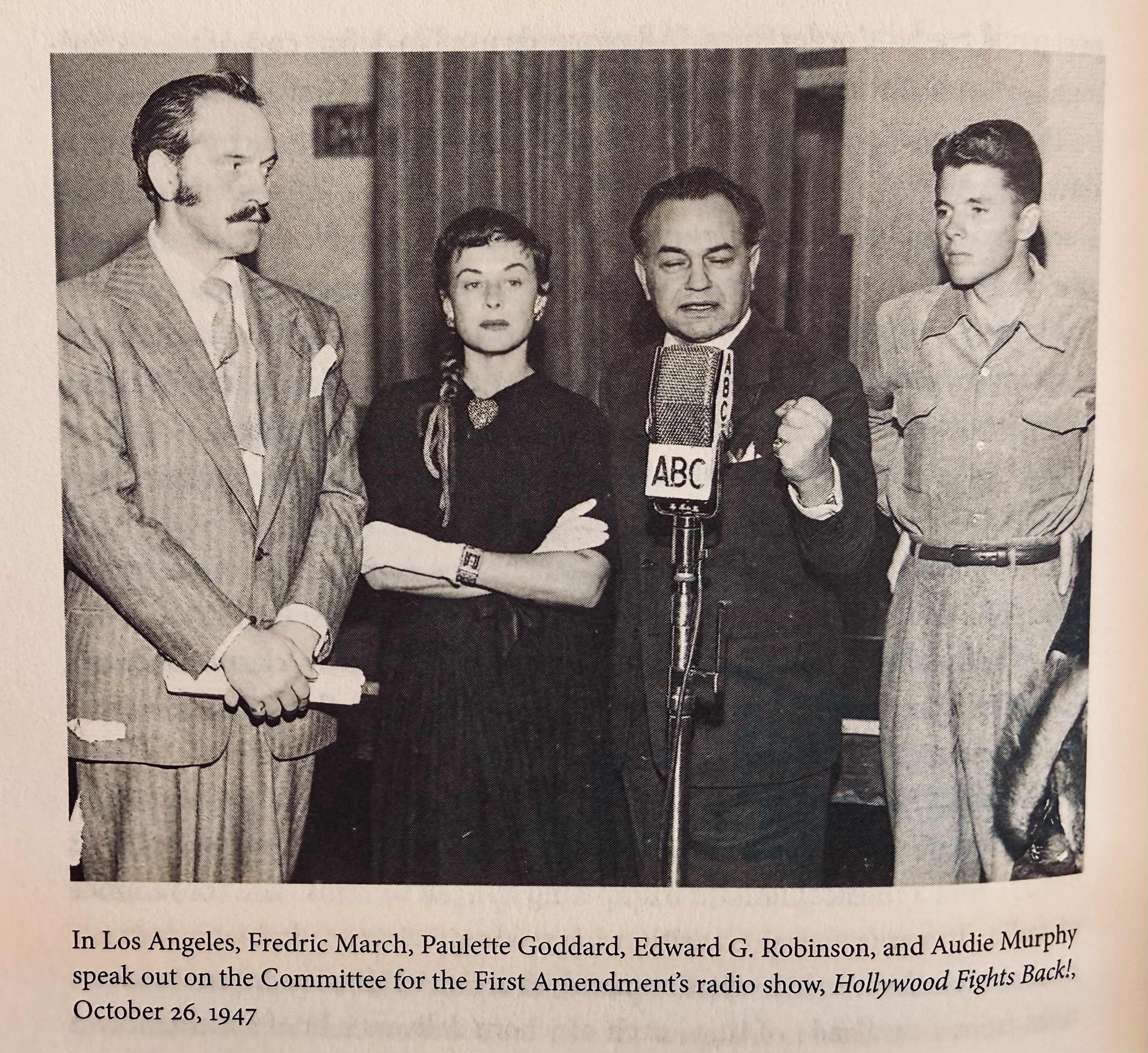
Audie Murphy’s involvement with the anti-HUAC sentiment was less about an ideological alignment with the left and more about a visceral reaction to the committee’s tactics. Murphy, who had faced the horrors of war and seen the true meaning of sacrifice, found the committee’s methods of intimidation and betrayal abhorrent. For Murphy, the demand that citizens betray one another to prove their loyalty was fundamentally un-American. He viewed the HUAC hearings not as a defense of democracy, but as an attack on the very freedom of association and thought that he had fought to protect in Europe.
Murphy’s stance was particularly potent because he was “untouchable” by the committee. As a national hero with a chest full of medals, including the Medal of Honor, he could not be easily painted as a “Red” or a subversive. This gave him a unique platform to criticize the committee without the immediate fear of professional ruin that haunted his peers.
Murphy was not alone in his opposition, though the risks for others were far higher. The most famous instance of resistance occurred in 1947 with the “Hollywood Ten,” a group of screenwriters and directors who refused to answer HUAC’s questions on First Amendment grounds. They were imprisoned for contempt, and their names became synonymous with the blacklist. Other stars took different paths of resistance. Paul Robeson, a world-renowned singer and actor, became a primary target of the committee due to his outspoken socialist views and his refusal to renounce them, leading to a systemic erasure of his career in the United States.
Audie Murphy testifies
The First Amendment Committee made a radio program to defend the First Amendment and critique HUAC–Hollywood fights back. Forty-five stars, directors, screenwriters and four U.S. senators spoke.
Audie Murphy said:
“You know during the war every guy in uniform dreamed of the day when he could stop squeezing triggers and come home. You get so fed up on fighting that you never want to do it again. There’s one kind of fighting that has to go on always. You can’t ever take a furlough from this fight to preserve human liberty. I think the methods used by the Thomas Rankin committee are a challenge to those liberties and I think we should use every fair and constitutional means to fight those methods.” (HUAC was also called the Thomas Rankin committee).
In the broader context of McCarthyism and the Red Scare, Audie Murphy’s opposition to HUAC serves as a reminder that the defense of civil liberties is not the exclusive domain of any one political party. Murphy’s resistance was rooted in a soldier’s code of honor and a citizen’s demand for privacy. By challenging the committee, he demonstrated that true patriotism consists not of blind obedience or the betrayal of others, but of the courage to protect the constitutional rights of all individuals, regardless of their political affiliations.
Murphy, in particular, embodied the principle that American heroes are defined not only by military valor but by the willingness to defend constitutional liberties. His opposition to HUAC showed that the most decorated soldier of World War II understood that the war’s true purpose—defending American freedom—required vigilance against threats to liberty even from within America’s own government.
Committee for the First Amendment Relaunched
Recently over 550 celebrities relaunched the Committee for the First Amendment. The current group is headlined by actor and activist Jane Fonda — whose father, actor Henry Fonda, was one of the early members.
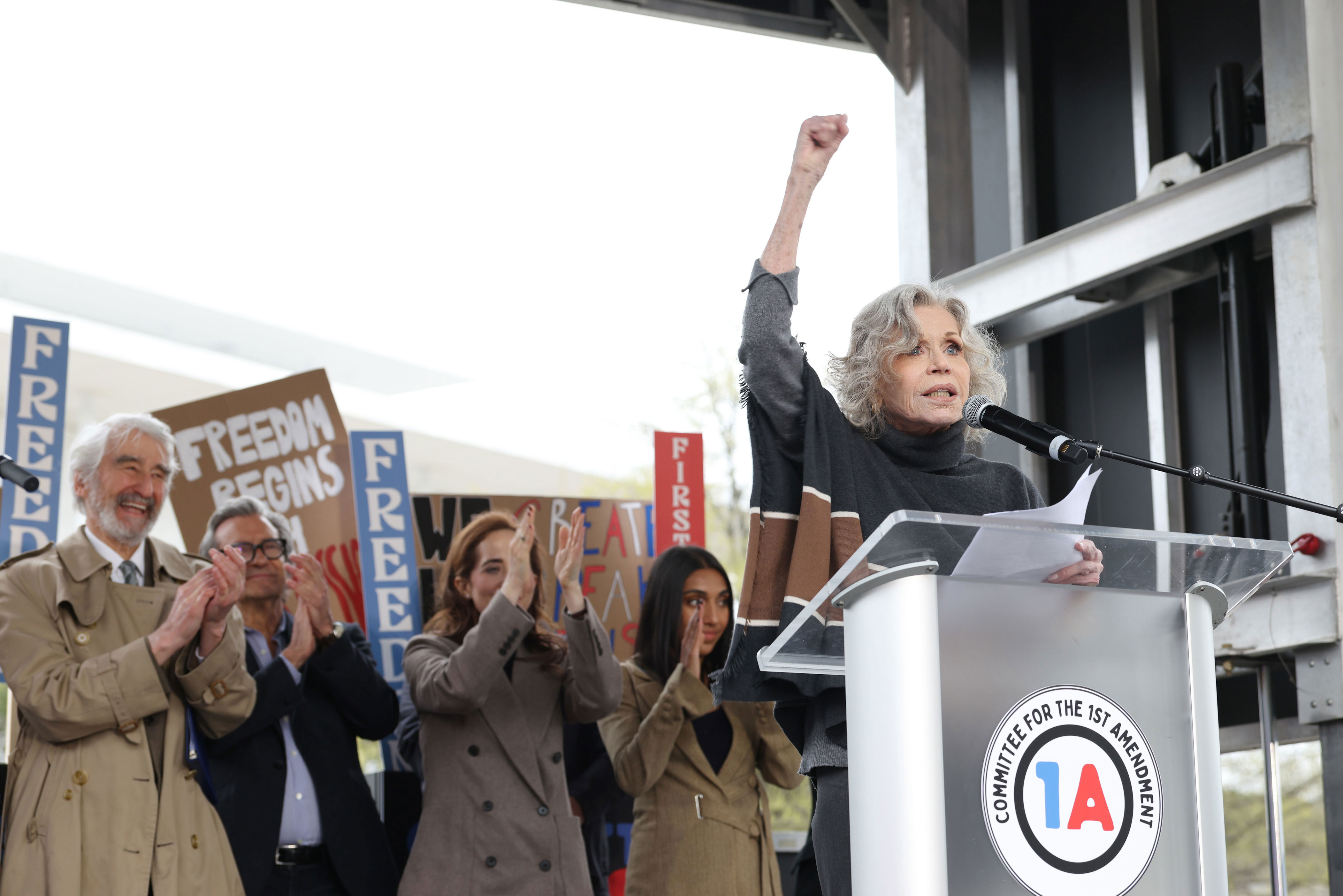
Their intent is to stand up in a defense of our constitutional rights: “The federal government is once again engaged in a coordinated campaign to silence critics in the government, the media, the judiciary, academia, and the entertainment industry.”
In a letter inviting her peers to join the re-established group, Fonda writes: “I’m 87 years old. I’ve seen war, repression, protest, and backlash. I’ve been celebrated, and I’ve been branded an enemy of the state. But I can tell you this: this is the most frightening moment of my life. When I feel scared, I look to history. I wish there were a secret playbook with all the answers — but there never has been. The only thing that has ever worked — time and time again — is solidarity: binding together, finding bravery in numbers too big to ignore, and standing up for one another.”
Chapter 126: https://mollymartin.blog/2026/10/17/post-war-letters-to-flo/


This is a wonderful post, Molly. So well written and tells a good story, not to mention being informed about the past and present. Thanks.
LikeLiked by 1 person
Blessings on those who are brave enough to speak up against corruption of the Constitution. Look what’s going on now. Worse than ever! Minerva
>
LikeLiked by 1 person
I almost didn’t read this but was curious about Audie Murphy’s stance on HUAC. So glad I did as this was not only informative but inspirational. And I loved Fonda’s quote at the end.
>
LikeLiked by 1 person
Audie Murphy seems to be a real life Captain America.
LikeLiked by 1 person