Generations Unite at Sonoma County’s Dyke March
There might be a higher percentage of lesbians in Sonoma County, California, than anywhere else in the world. So, even though we’ve had gay pride parades and celebrations since the 1980s, it’s surprising that only this year did we have our very first dyke march.
Organizers say it was about time.
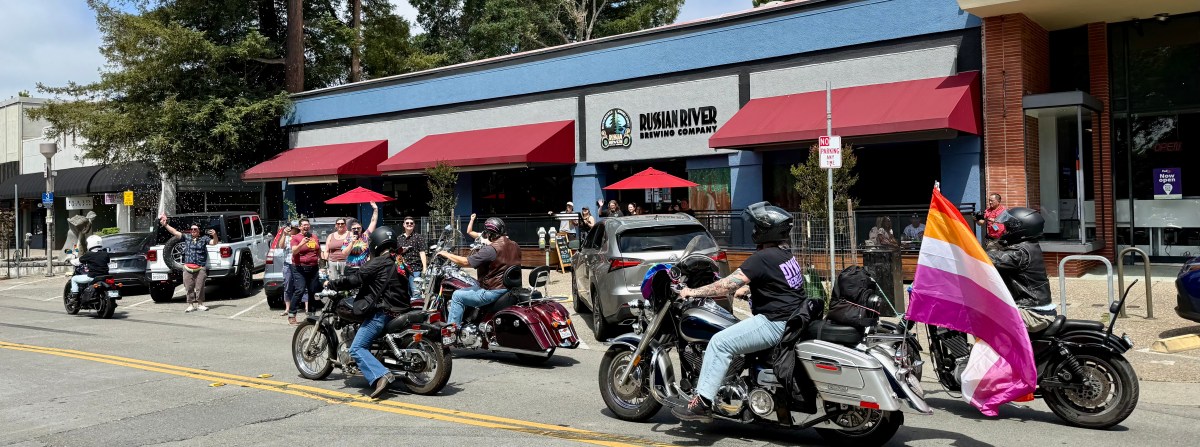
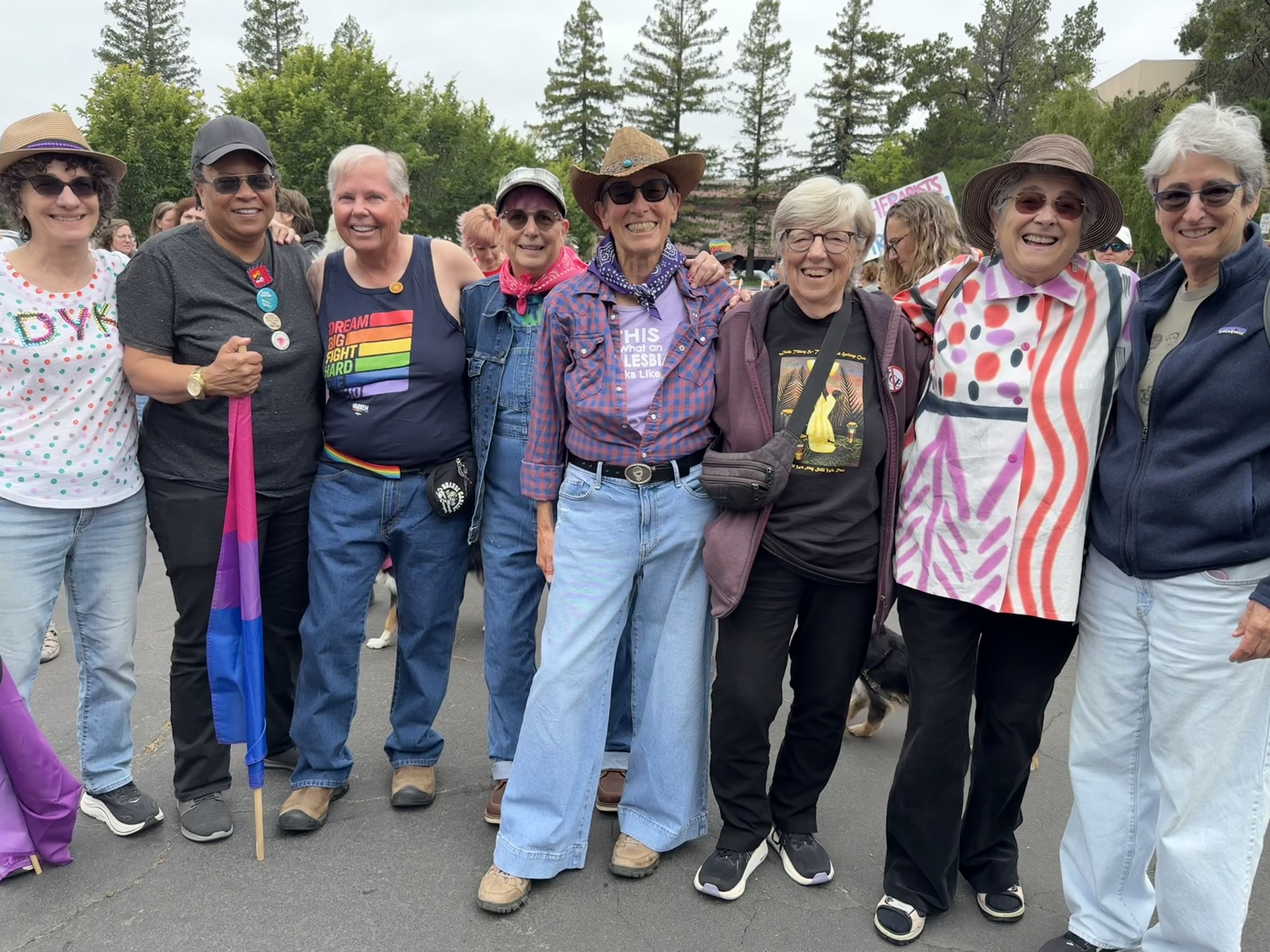
An estimated 600 people participated in the march and “Lez-a-Palooza Street Fair on the Square” in Santa Rosa, the county seat. Cries of “We’re here, we’re queer. Get used to it!” resounded in the city streets on June 21.
Movement Origins
Dyke marches began in 1993 in Washington, D.C., organized to confront lesbian invisibility and erasure within both the broader LGBTQ+ movement and society at large. Rejecting corporate sponsorship and respectability politics, dyke marches centered grassroots power, direct action, and community care. Built on a demand for visibility, justice, and collective strength, the movement quickly spread to cities including San Francisco and Chicago, becoming a powerful tradition of lesbian-led activism and celebration.
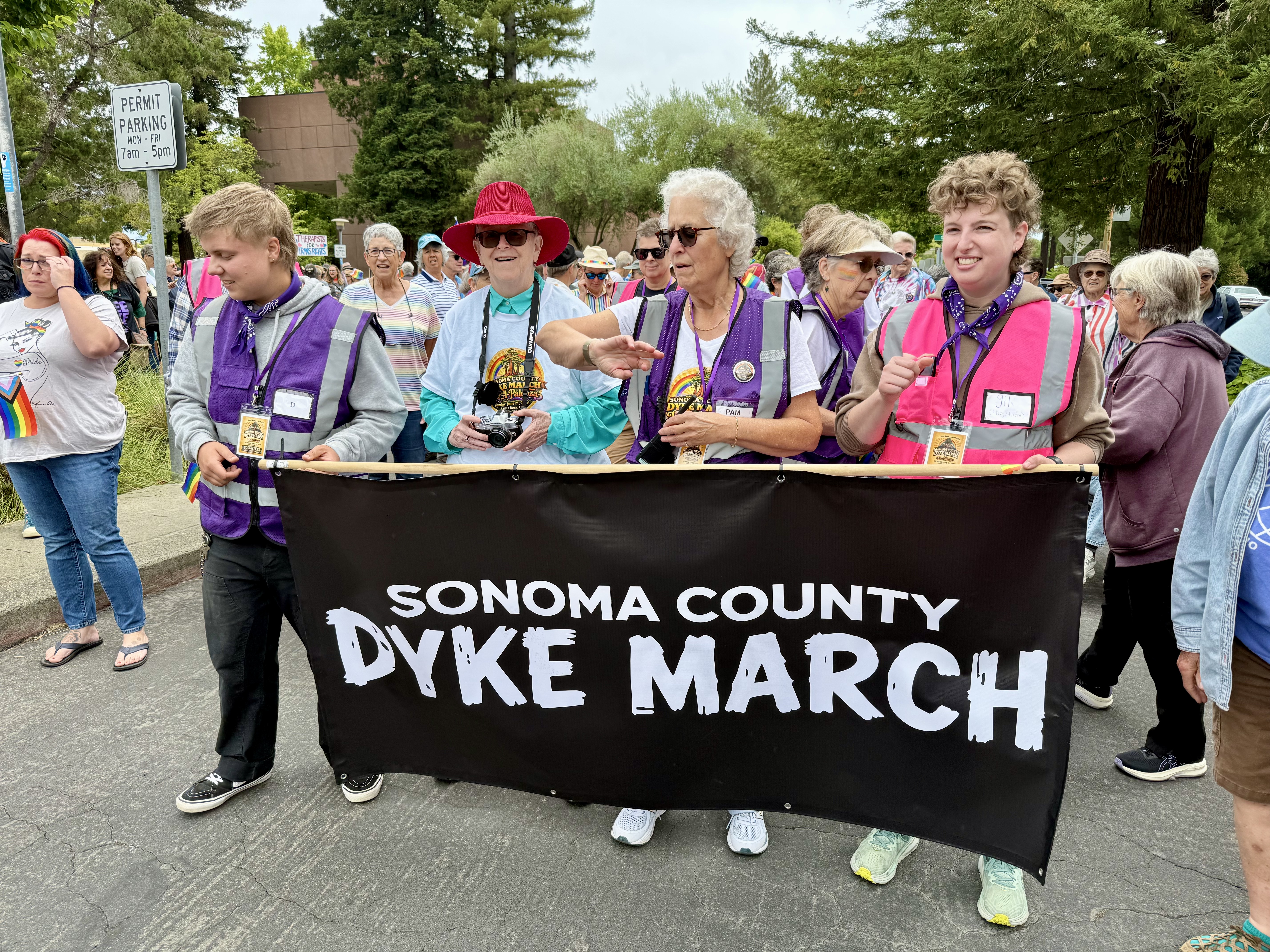
Organizers say the Sonoma County Dyke March proudly carries forward this legacy, uniting generations and creating powerful common ground across the queer community. A dyke march is not a parade. It’s a community-centered march focused on visibility, history, and connection. The Lez-a-Palooza street fair creates intentional space to uplift dykes, lesbians, queer, non-binary, and the sapphic and trans community, while standing in solidarity with the broader LGBTQIA2S+ community.
Organizer Pam Adinoff, 72, said, “As a lesbian who has been out in Sonoma County for 53 years, my identity has been really important to me, but I have felt more and more invisible over the years as an aging lesbian. We have a very, very large senior lesbian community and a lot of them showed up for (last year’s) Pride and they were all marching under different organizations. But nothing said the word ‘lesbian.'” So Adinoff, along with a number of like-minded women, decided to address that sense of invisibility.
Pat Andreine, one of the organizers, said the best thing about the march was that it was intergenerational. Along with her partner, the historian Tina Dungan, she staffed the Sonoma County LGBT history timeline booth. Pat said they had lots of interest from young people.
Radical Inclusion
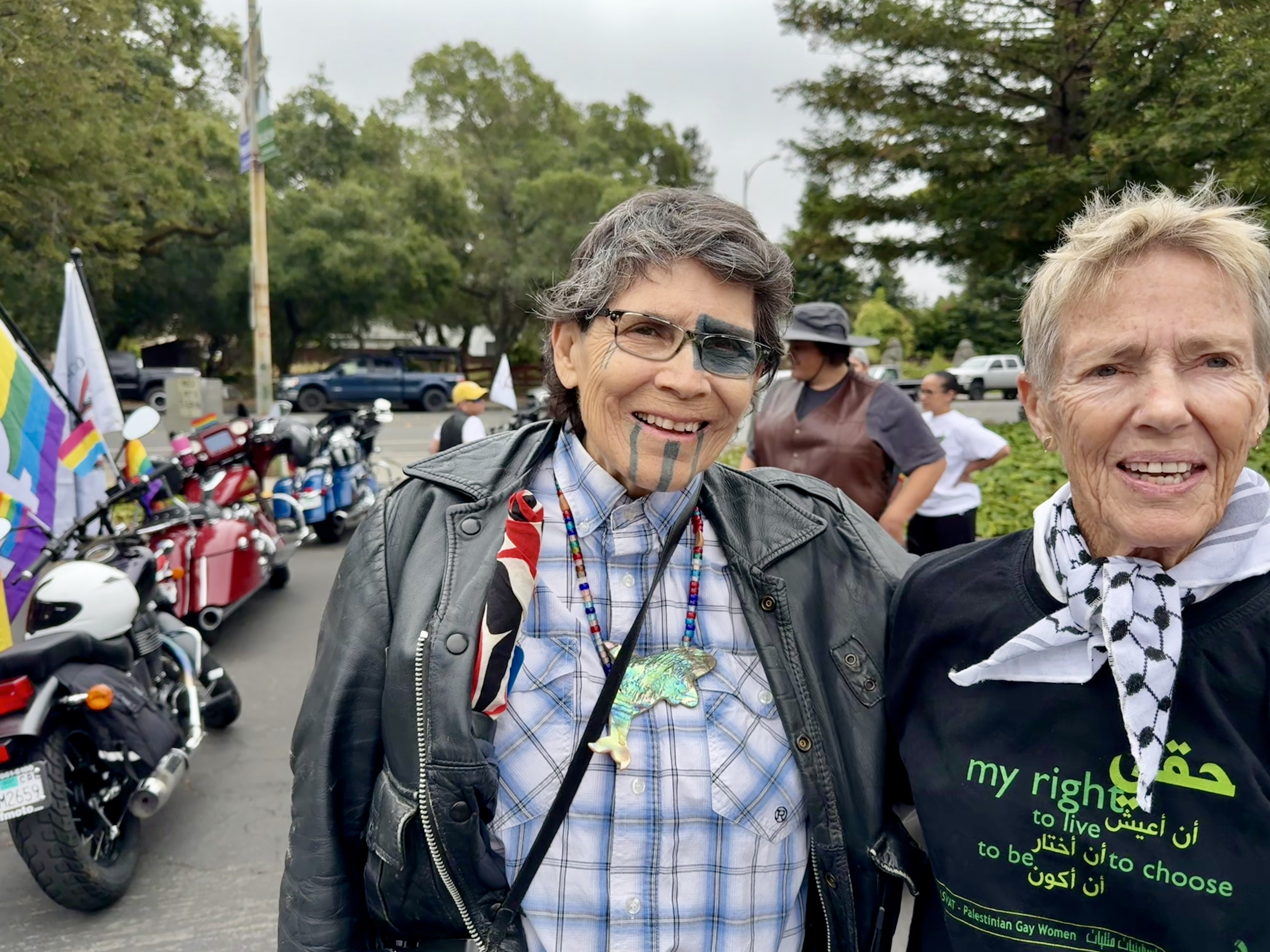
It’s an event meant to both elevate and celebrate lesbian culture and history, organizers said. Crucial to its success and its mission are the people who span ages and identities who have been recruited to help get the first-ever event off the ground.
“In writing our mission statement, we met with different groups of people, trans, non-binary, ‘How does this mission statement sound? Is there anything we need to change and do you feel included and do you feel seen?'” Adinoff, of Petaluma, said. “Visibility is one of the only things that we all want, we are all so different. But we wanted to create a warm embrace in a time when our community is facing immense (threat).”
“Part of the intention of this march is to make a strong statement of protest because the queer community is very much under attack. Trans lives are being targeted, non-binary people, marriage equality, and we want to make a statement that what is happening in the country right now, aimed at the queer community, is not OK,” said organizer Nancy Kelly, 68.
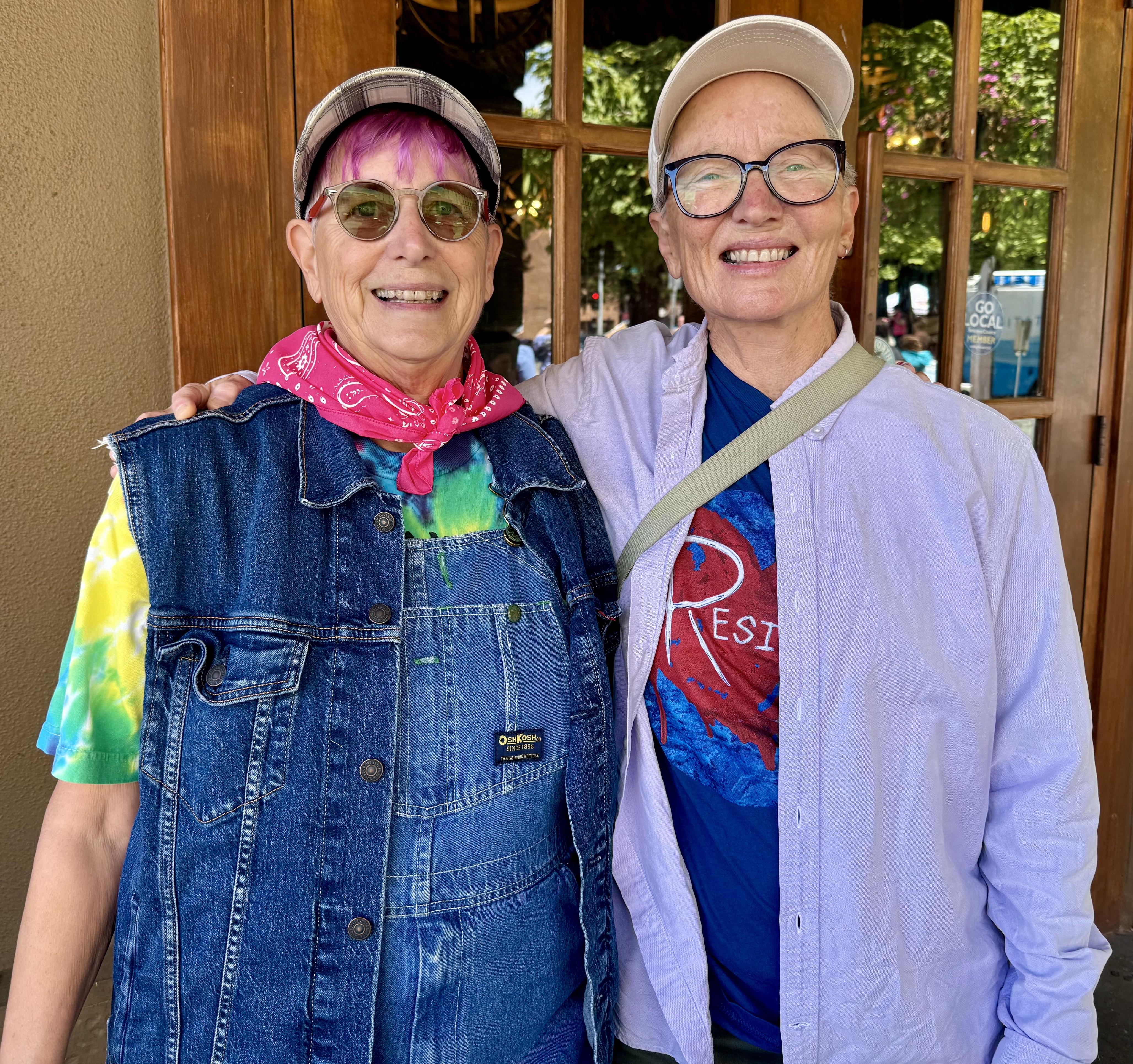
Santa Rosa natives Bonnie Hogue and my wife, Holly Holbrook, agreed that it was revolutionary to be part of the first dyke march in their hometown. Holly said that, if when she was younger there had been this kind of lesbian visibility, she would have figured out her sexuality a lot sooner.
Reclaiming the Word
And that word “dyke” was intentional, too. “The word ‘dyke’ definitely used to be a slur,” said Kelly. “One of the things that the gay and queer community does is … take a slur and put it on themselves and reclaim it. So dyke used to be a derogatory word, as did queer.”
Much work was done in the organizing coalition to open the event to all identities, organizers said. “…There was a term – TERF, trans exclusionary radical feminist – meaning only people that were born women can identify as women,” said Alicia LeCompte, 38, of Santa Rosa. LeCompte, who hosts regular queer kickball and climbing events, wasn’t interested in supporting an event that wasn’t welcoming to all women. “A lot of my friends who are non-binary were asking, ‘Are they going to be inclusive to all genders and all queer expressions?'” she said. “Are they the type of people that we want to collaborate with, are we on the same wavelength?”
The answer was Yes. The event’s motto: All identities, all orientations, one march.
Bridging Generations
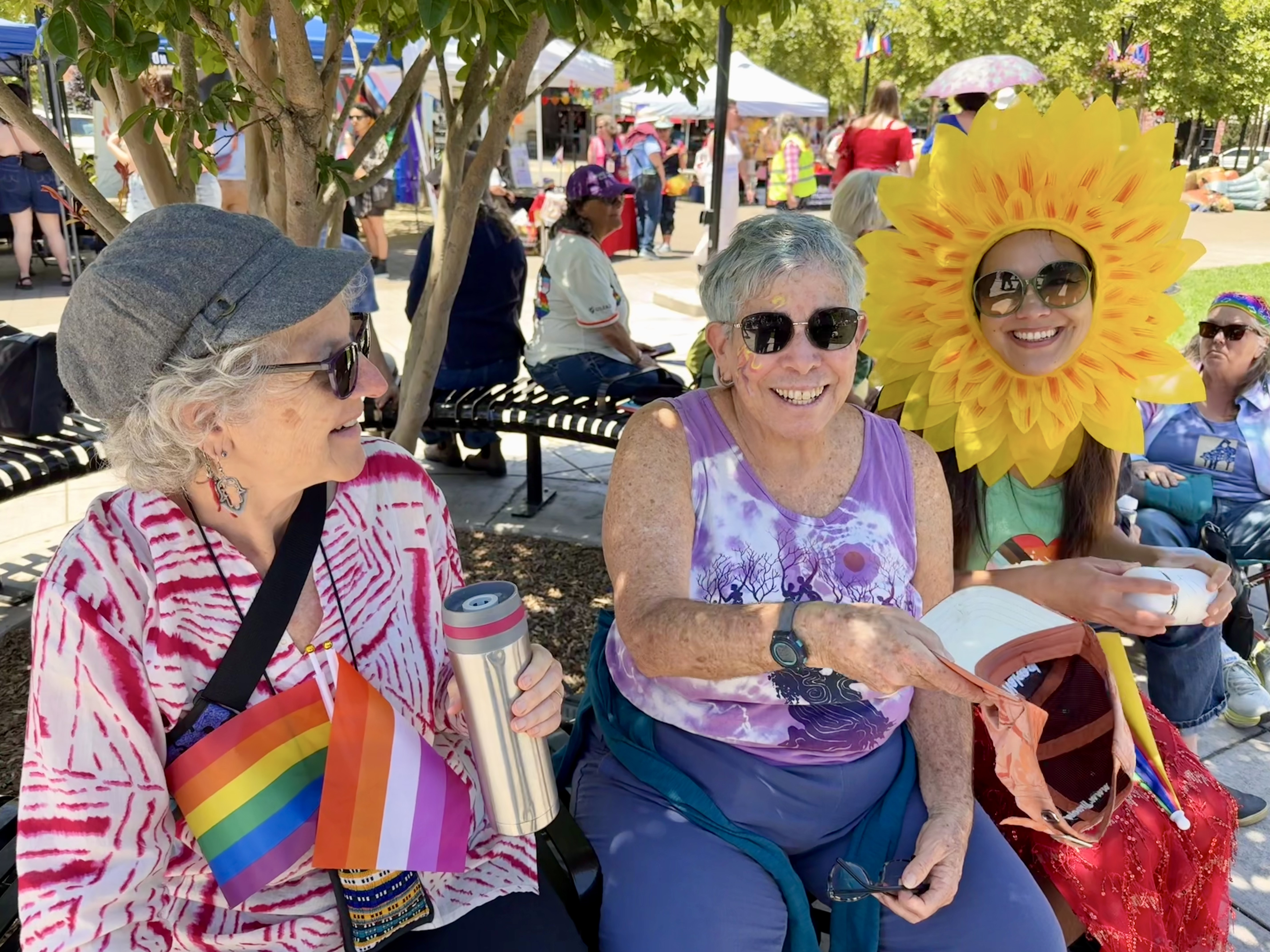
“It’s so energizing to be in an intergenerational community,” said organizer Frances Fuchs, 72, of Santa Rosa.
For Diana “D” Getko, 28, of Sebastopol, much can be learned from older women who have lived through, and learned from, fights for civil rights and acceptance. “I don’t think many people of our generation realize just how much the dykes have carried us through the formative years back in the ’70s,” she said. “Community is what got us through back in the ’70s and ’80s and we are going through another hard time. Community is what is going to get us through again.”
“It’s about building community,” Kelly said. “There is a part that is very serious and it’s a protest but part of it is just fun and joy. Both sustain us.”
The community has many challenges. In the opening days of his second term, President Donald Trump moved swiftly to target transgender and nonbinary people, limiting medical care, stating the federal government recognizes only two unchangeable sexes: female and male, denying requests for passports that use gender markers that don’t conform to the administration’s new definition. It all makes gathering in solidarity all the more important.
And love is at the heart of the event, organizers said. Allies and supporters are welcome. “People say ‘How can you call it a dyke march if it’s open to everybody?'” Fuchs said. “And basically we’d have to say the times are changed. We don’t need to put a fence around it to protect ourselves. We need to open it to protect ourselves. This is about bigger community and bigger connections and having a broader base to stand on.”
From the mission statement:
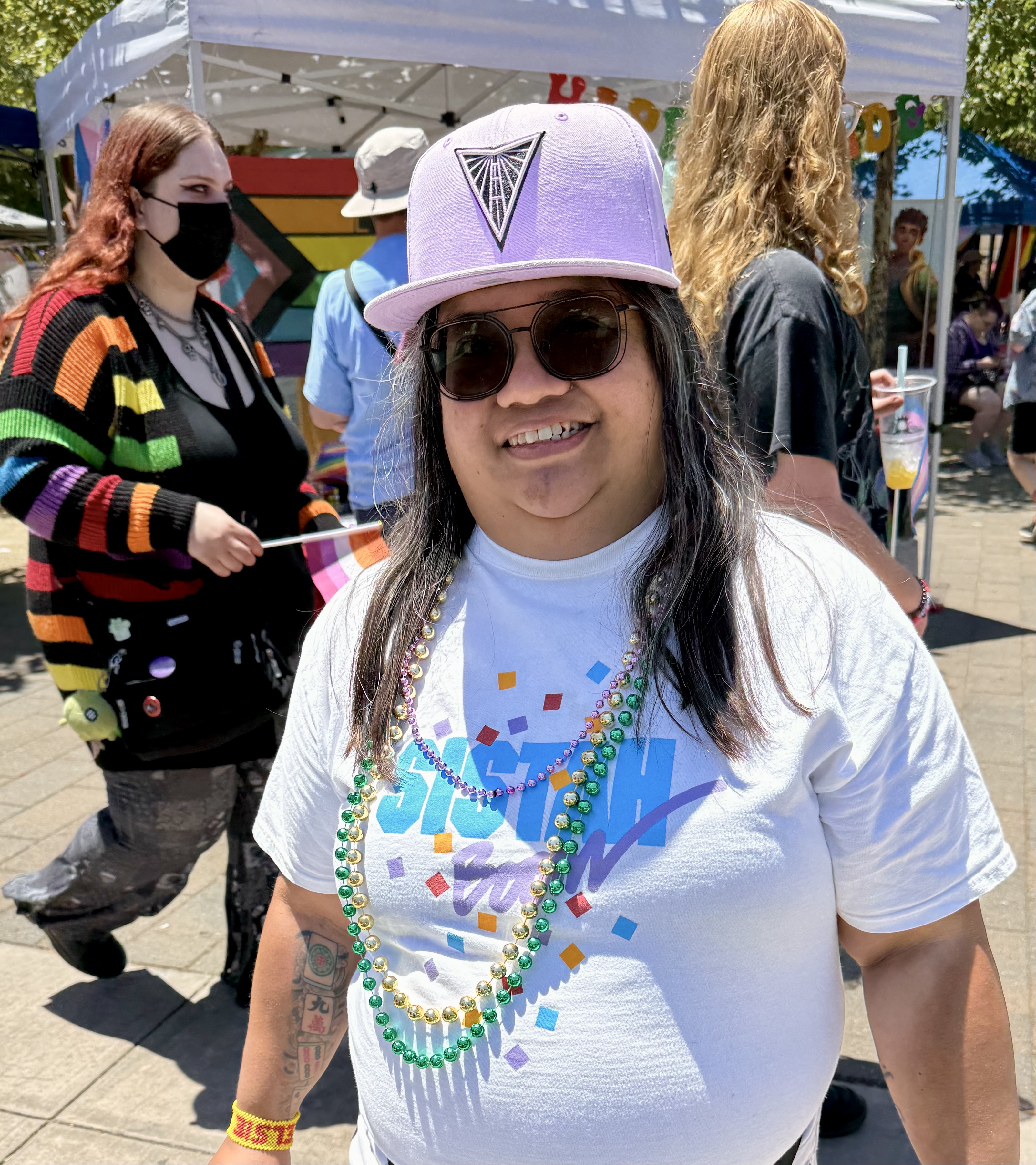
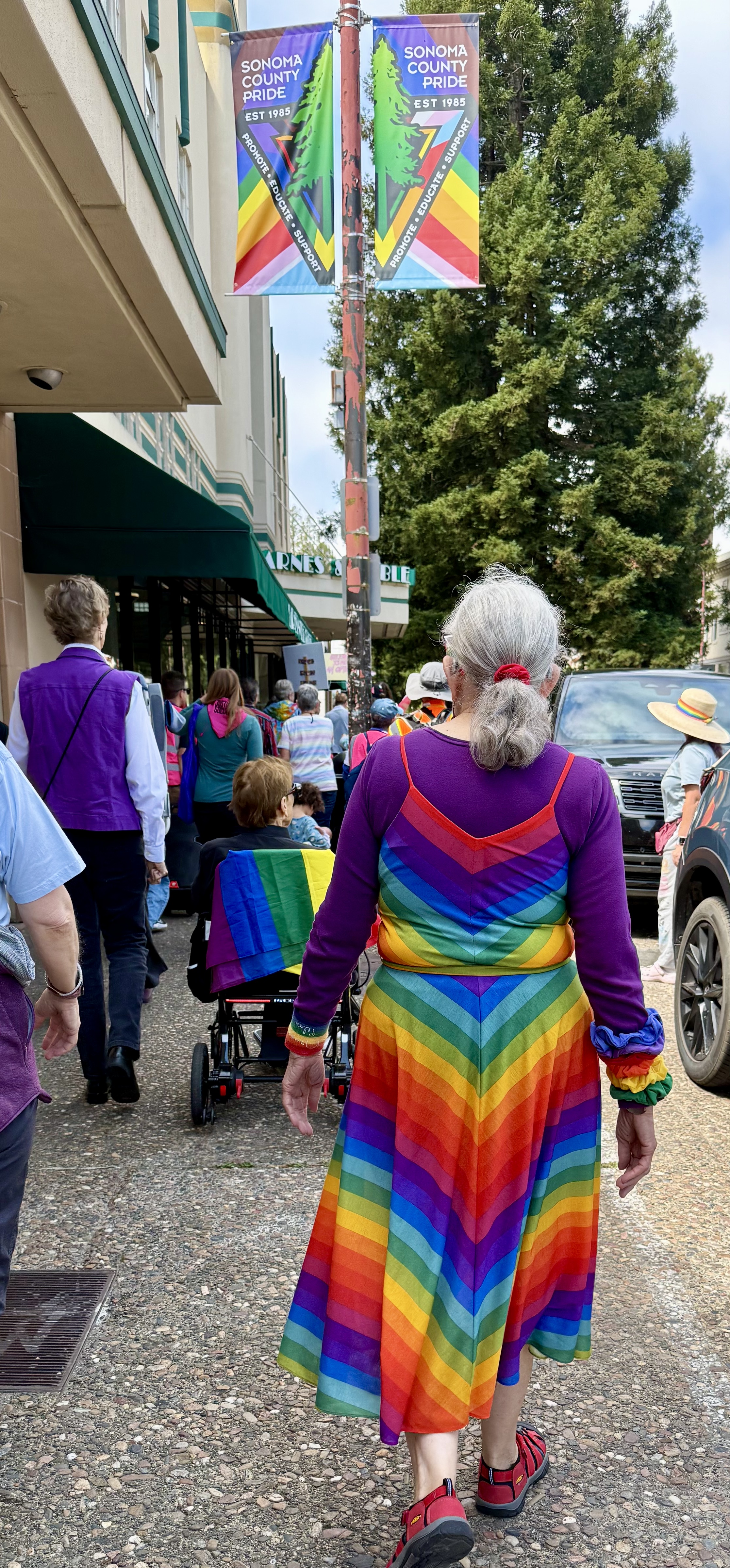
Sonoma County Dyke March is an inclusive, grassroots, intergenerational movement bringing together Lesbian, Queer, Transgender, Non-Binary, Sapphic people, the full LGBTQIA2S+ spectrum, and our allies to resist attacks on our rights, bodies, and lives.
We honor the legacy of the Lesbians and Queer women who have been the backbone of social justice movements. We uplift Elder Lesbians, reclaim the word Dyke as a symbol of pride and defiance, and bestow this legacy on the next generation.
We organize in a moment of immense and escalating backlash—against trans lives, queer rights, reproductive freedom, marriage equality, racial justice, our immigrant communities, and democracy itself. Our goal is to complement and strengthen Pride by offering an intergenerational inclusive space for visibility, celebration, and belonging.
Silence is not an option.
Too many have sacrificed too much for us to stand by while our rights erode.
Thanks to reporter Kerry Benefield for quotes from coverage in our local newspaper, the Press Democrat.