First 3rd Division Medal of Honor Recipient Killed in Action
My Mother and Audie Murphy Ch. 55
Flo devoted a page in her album to the first Third Division Congressional Medal of Honor award recipient, Lt. David Waybur of Piedmont, California. She noted that he was killed in action near the end of the war in March, 1945.
Page in Flo’s album. Pinch out to read the whole story.
From the story: The Army, chances are, will never be a great writer. Its taciturn prose travels on a punchless belly. But some of the most spectacular stories of this war are being scribbled on battlefields in the sparse, lean, GI prose of army officers writing to headquarters of the heroism of men unto them.
Such a story is told in the recommendation for a citation for Lieutenant David C Waybur, 24… A graduate of Piedmont high school, a former grocery clerk, David Waybur enlisted in the army at the end of his second year at the University of California in 1940. Three years later, in the dead of night, young Waybur rode to army immortality at the head of a little fleet of three jeeps and fought, jeeps versus enemy tanks, a never-to-be-forgotten engagement beside a blown up bridge in Sicily.
Audie Murphy also received the Congressional Medal of Honor, the highest US military decoration for valor, awarded by the President in the name of Congress.
Third Division fights its toughest battle of the war
My Mother and Audie Murphy Ch. 53
The fight for the Colmar Pocket rages through late January 1945, a brutal campaign largely overshadowed by the final days of the Battle of the Bulge. Audie Murphy, then a young lieutenant in the 15th Infantry Regiment, endures the worst days of his war.
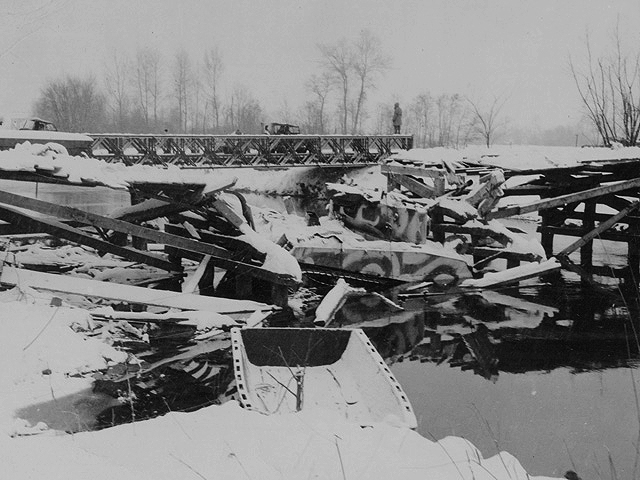
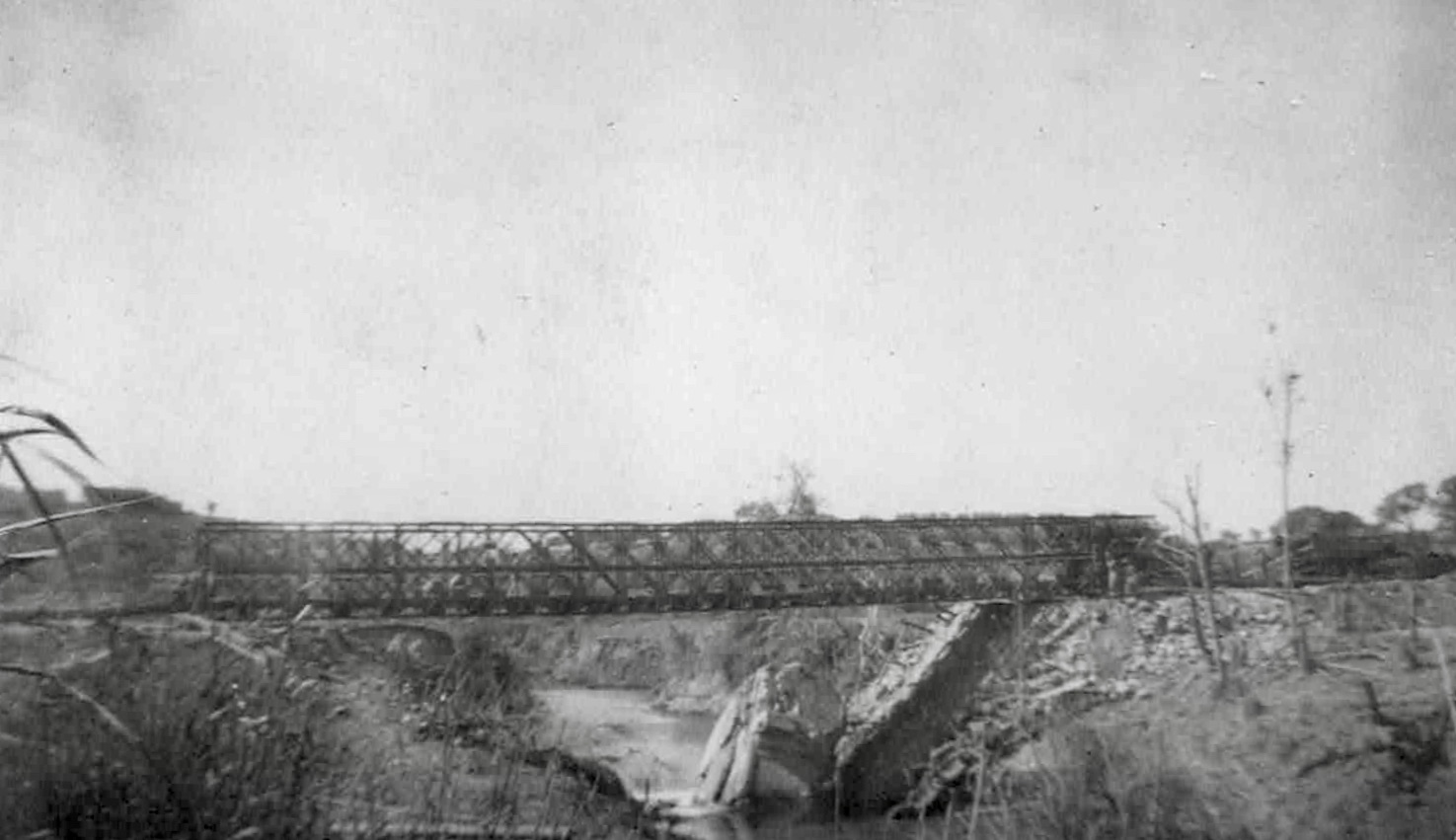
Bailey bridge built next to the bridge over the Ill Riverdestroyed by a tank falling in. Photo: Dogface
Through the freezing night he and his men take turns on watch. He nods off, his hair freezing to the ground, and wakes with a jerk when gunfire cracks, leaving patches of hair in the ice. By morning, a bridge over the Ill River is finally usable; a few tanks cross to join them—comforting, but also a sign that there will be no retreat.
They form up for another attack. The quiet woods erupt—mortars, machine guns, rifle fire. Murphy watches two lieutenants leap into the same foxhole; a shell follows them in and ends their lives instantly. He is knocked down by another blast, his legs peppered with fragments, but still able to fight. Tanks push forward, only to be hit and burst into flames. Crewmen stumble out, burning, screaming, cut down by enemy bullets as they roll in the snow.
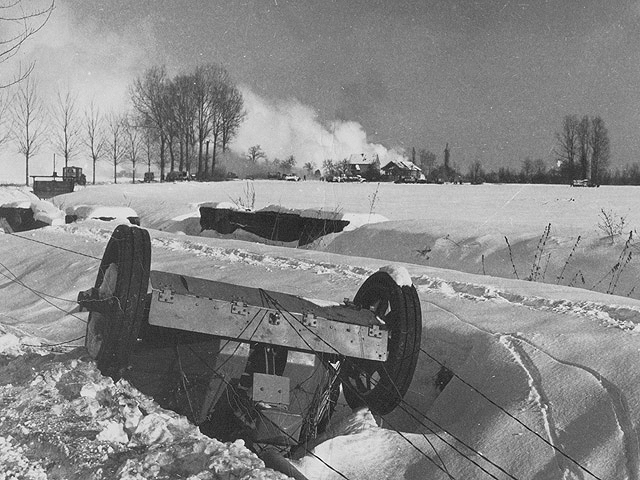
Communications wire strung over German materiel. Photo: Dogface soldier collection
By nightfall the company is shattered. They huddle in the cold, eating greasy rations, waiting for ammunition and replacements. Company B has lost 102 of its 120 men; every officer but Murphy is gone. With only seventeen men left in his zone, he receives orders: move to the edge of the woods facing Holtzwihr, dig in, and hold.
The ground is too frozen to dig, so they stamp along the road to stay warm, waiting for daylight—the most dangerous hour. Their promised support does not arrive. Two tank destroyers move up, but by afternoon the situation worsens. Six German tanks roll out of Holtzwihr and fan across the field, followed by waves of infantry in white snowcapes.
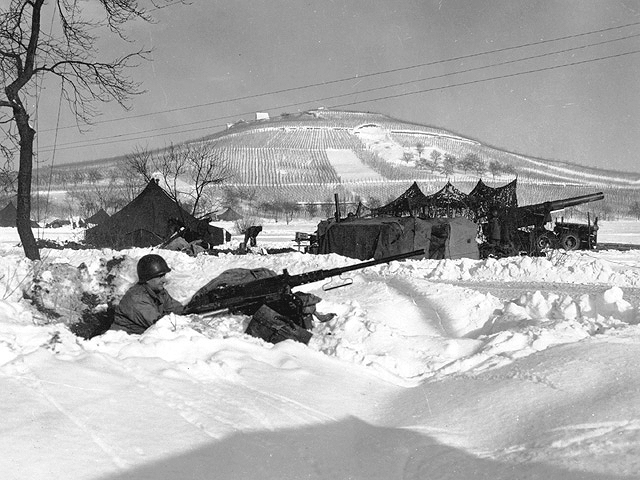
Crew with an 8 inch howitzer and a heavy machine gun. Photo: Dogface soldier collection
One tank destroyer slides uselessly into a ditch; the crew bails out. Artillery begins to fall on Murphy’s position. A tree burst wipes out a machine-gun squad. The second tank destroyer takes a direct hit; its surviving crew staggers away. Murphy realizes the line is collapsing. Of 128 men who began the drive, fewer than forty remain, and he is the last officer. He orders the men to pull back.
While directing artillery fire by telephone, he fires his carbine until he runs out of ammunition. As he turns to retreat, he sees the burning tank destroyer. Its machine gun is intact. German tanks veer left, giving the flaming vehicle a wide berth. Murphy drags the field phone up onto the wreck, hauls a dead officer’s body out of the hatch, and uses the hull for cover.
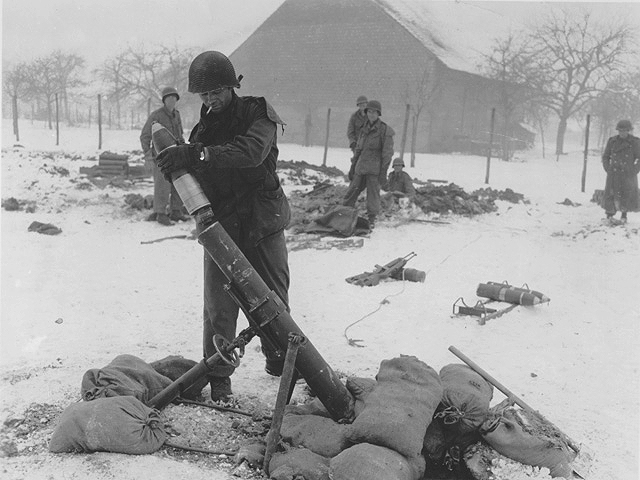
Loading an M-2 chemical mortar. Photo: Dogface soldier collection
From the turret he mans the machine gun, calling artillery on the field while firing into the advancing infantry. Smoke swirls; the heat of the fire warms his frozen feet for the first time in days. He cuts down squad after squad, sowing confusion; the Germans cannot locate him and expect the burning vehicle to explode at any moment.
When the smoke lifts briefly, he spots a dozen Germans crouched in a roadside ditch only yards away. He waits for the wind to clear the haze, then traverses the barrel and drops all twelve. He orders more artillery. Shells crash around him; the enemy infantry is shredded, and the German tanks pull back toward Holtzwihr without support.
A tank destroyer in the Colmar battle. Photo: Dogface soldier collection
Another bombardment knocks out his telephone line. Stunned, Murphy finds his map shredded with fragments and one leg bleeding. It hardly registers. Numb and exhausted, he climbs off the tank destroyer and walks back through the woods, indifferent to whether the Germans shoot him or not.
Stretcher crew of medics. Photo: Dogface soldier collection
Murphy was 19 years old.These are the actions that win him the Congressional Medal of Honor.
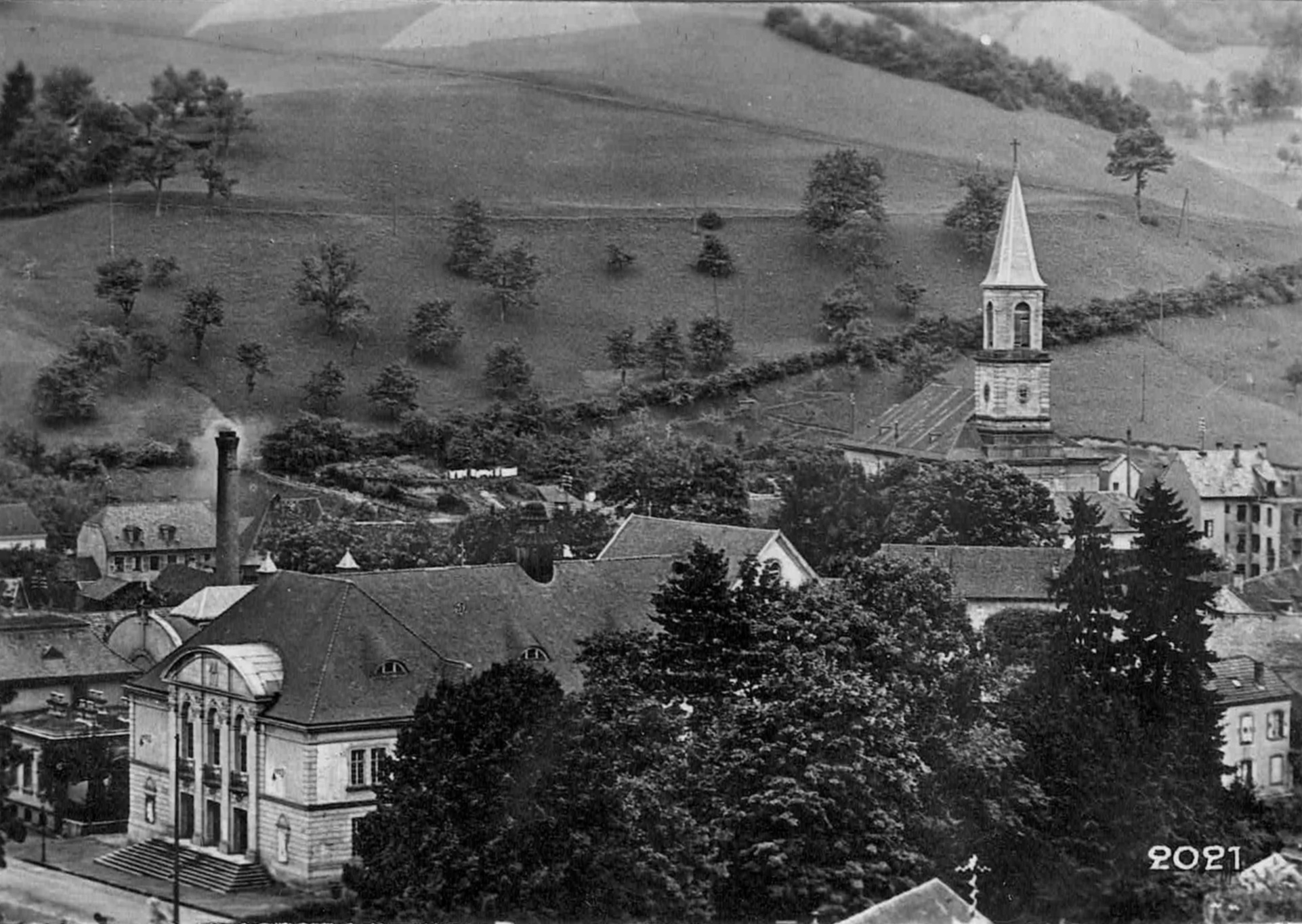
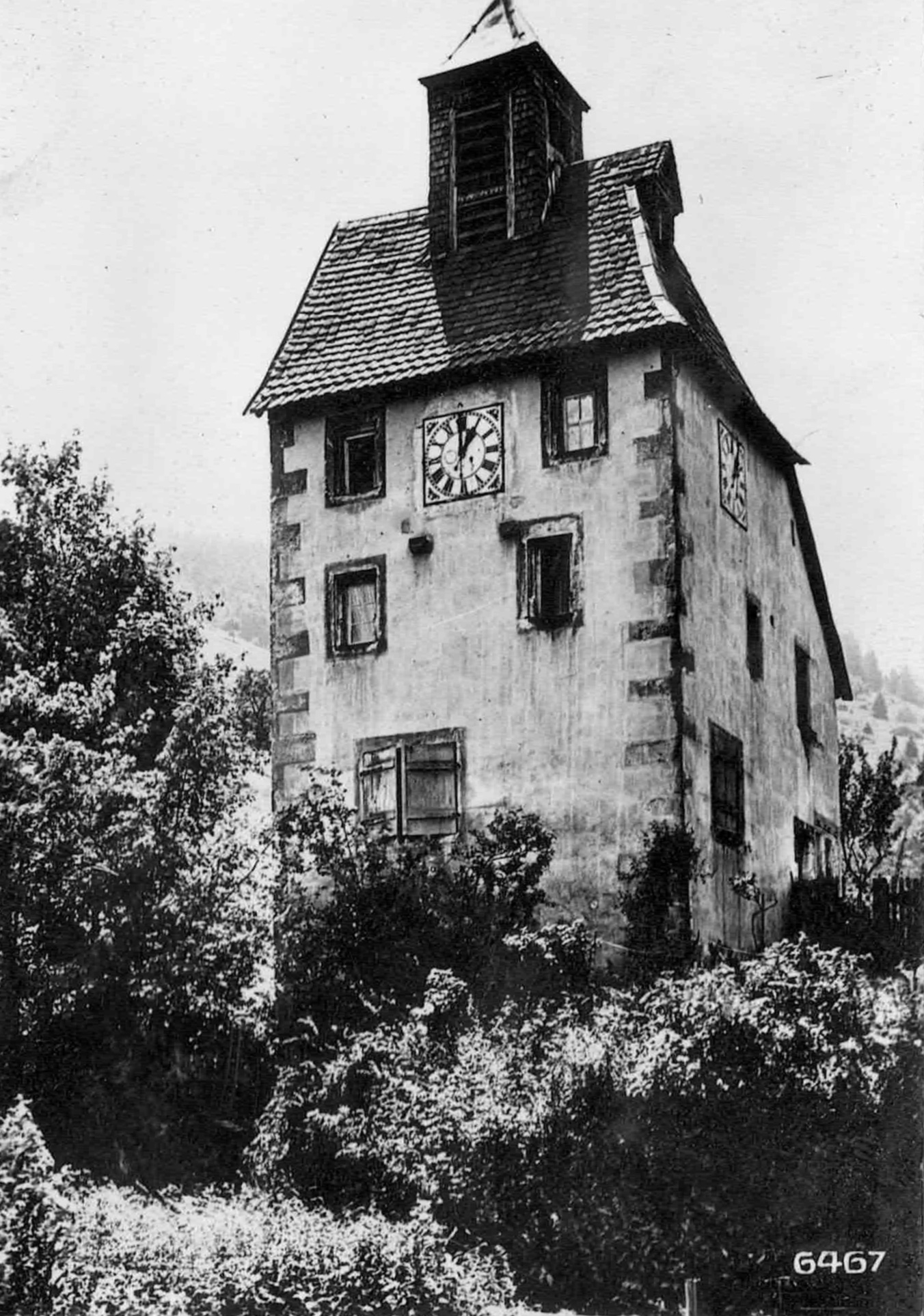
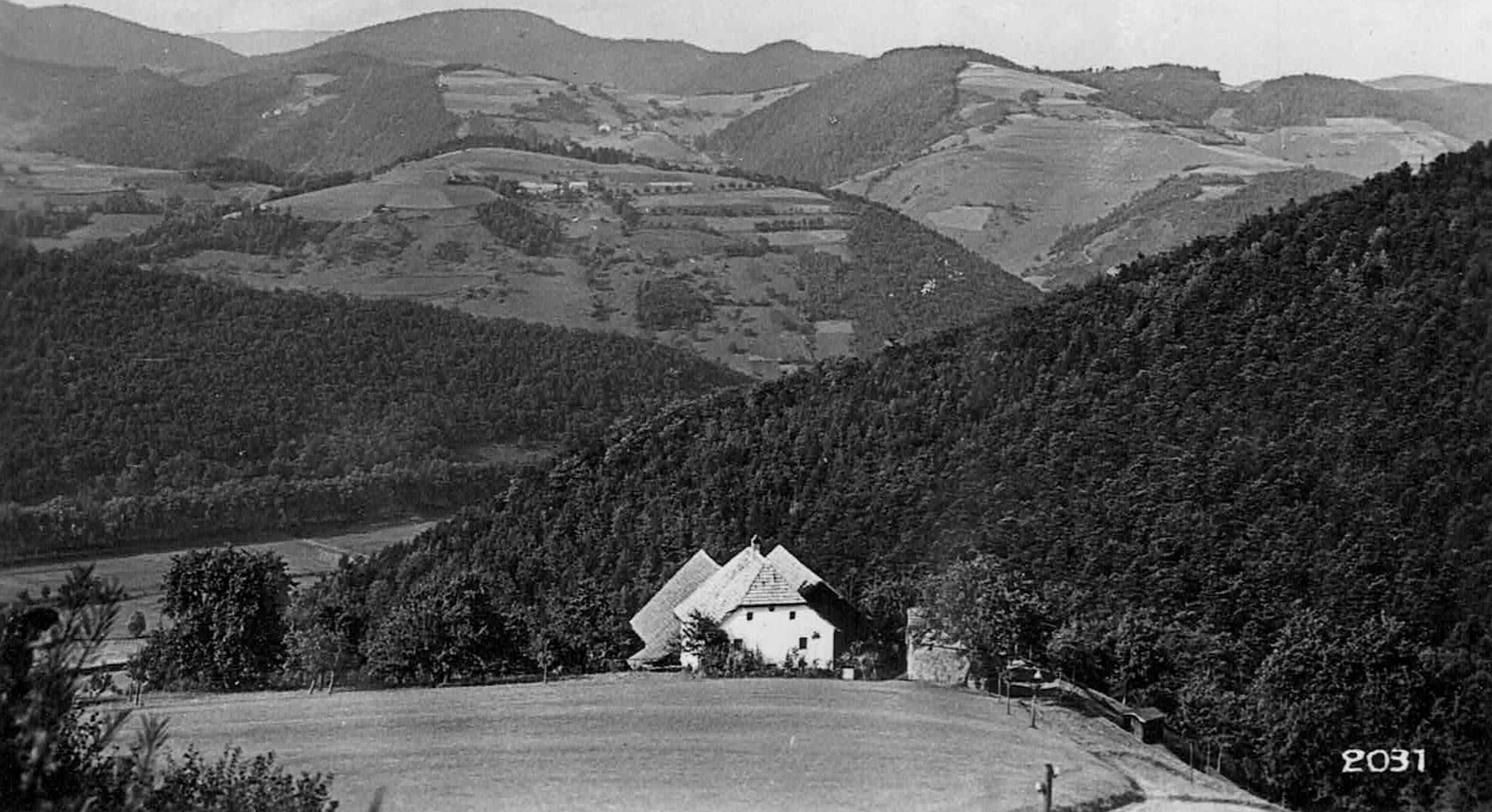
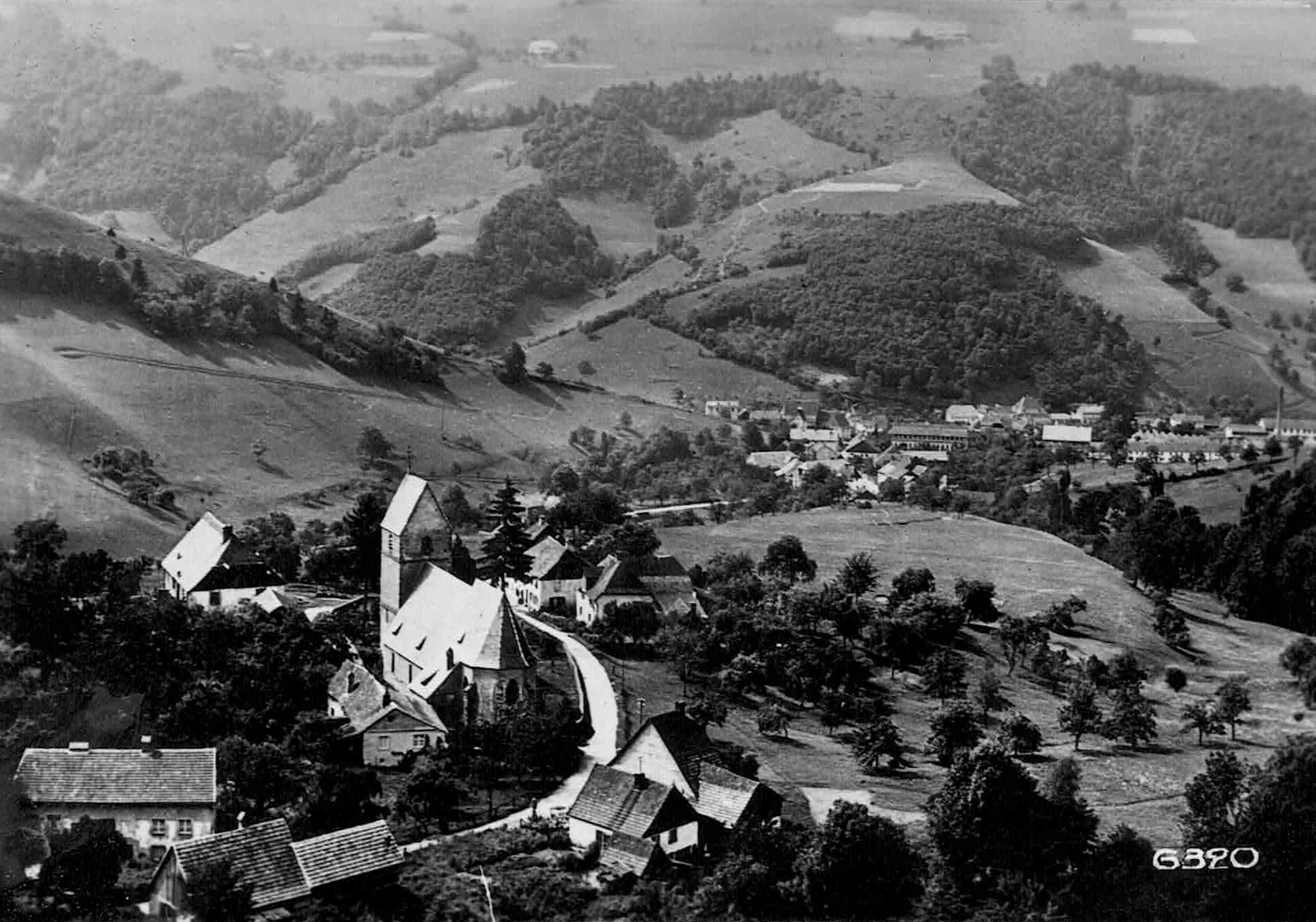
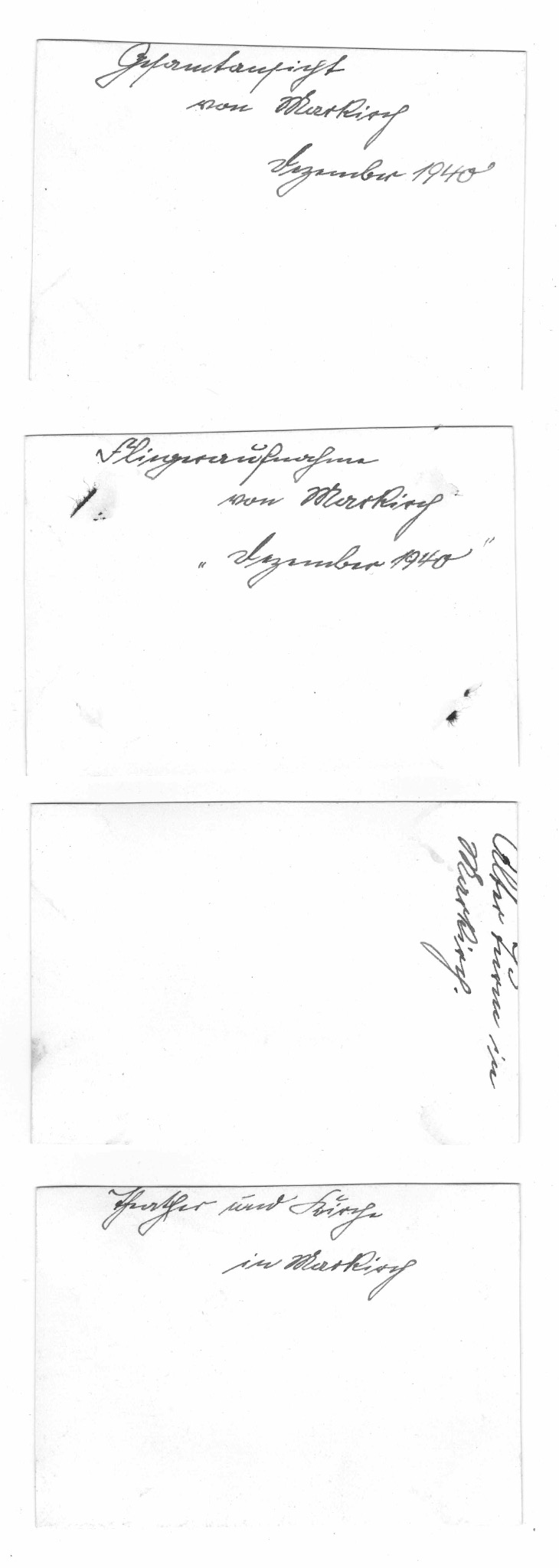
I assumed these landscape photos were pictures of the lovely French Alsace town of Sainte-Marie-Aux-Mines. That is until I turned them over and read, or tried to read, the captions. They describe Markkleeberg, a town in the Saxony region of Germany near Leipzig. It’s now described as a suburb of Leipzig.
According to AI, the captions on the back are in German, written in an old-fashioned cursive handwriting, and the captions read: “General view, War memorial, Old gatehouse, and Richter and Sons in Markkleeberg, December 1940”.
Professionally made photos with numbers in the right lower corner, they could be postcards. I can’t imagine who might have taken them, who wrote the captions, or why Flo put them on a page headlined Sainte-Marie-Aux-Mines. The Third Division had not yet crossed the Rhine into Germany, although Audie Murphy wrote that a number of Allied units had entered Germany by January, 1945.
The other three photos on this page are captioned Marie of Ville France; Lt. Reardon, me, Janet, Lt. Nelson. Fraize, France; and Sgt. Holbrook, St. Die France ad center.
After weeks in the hospital with a gangrenous hip wound, Murphy returns to the lines in late January 1945—just in time for the brutal fighting around the Colmar Pocket during the coldest winter in fifty years. Snow lies two feet deep, and the cold cuts through even the thickest layers.
Attack plan. The 3rd Division is with the 7th Army under Gen. Patch
By the time he rejoins his unit, the Third Division has pushed through the Vosges, smashed the German winter line, and reached the Rhine at Strasbourg. Germany lies just beyond the river, close enough to see, but still weeks—and many casualties—away from any attempted crossing.
The entire front is restless. To the north, the Battle of the Bulge is sputtering out. American units are crossing into Germany, seeking firm ground for the spring offensive. Columns of men and supplies move constantly across frozen French and Belgian roads. But the men at the front think only of the task immediately ahead: eliminating the Colmar Pocket, a heavily fortified German position stretching toward the Swiss border.
A supply convoy makes it way over a snowy road toward Colmar. Photo dogface soldier
The pocket is a dangerous bridgehead jutting west of the Rhine, fed by steady reinforcements from across the river. It threatens the Allies’ right flank and could serve as a launch point for a massive German counterattack. The Third Division has already trimmed its northern edge and now stands near Guémar, ready to strike at the center.
The terrain favors the Germans. Icy winds sweep down from the Vosges. Forest patches, open fields, and fortified villages form their defense. Tanks hide in the woods, covering the plains the Americans must cross. Temperatures rarely climb above fourteen degrees. Snow reaches to the knees. Even without enemy fire, the nights are a battle simply to avoid freezing.
Soldiers in snow cloaks on the way to Colmar. Photo: dogface soldier
Two rivers, the Fecht and the Ill, lie between the division and the enemy. At night, the 7th and 30th Regiments slip across the Fecht after breaching German lines. The 7th pushes south to strike Ostheim; the 30th clears a forest and captures a small wooden bridge over the Ill. That fragile track becomes the hinge of the entire operation.
The 30th crosses it and prepares to attack two small villages, Holtzwihr and Riedwihr, separated by a stretch of woodland. At 4:30 in the afternoon, disaster strikes: ten German tanks and tank destroyers smash into the 3rd Battalion near Holtzwihr. The infantry have no protection. The frozen ground is too hard to dig into. The tanks break the battalion into pockets and rake them with machine-gun fire.
Training for warfare in the snow. Photo: dogface soldier collection
An hour later, the 1st Battalion is hit near Riedwihr and torn apart in the same way. Survivors retreat toward the Ill, some swimming through the icy water, emerging with their uniforms stiff with icicles.
Murphy’s regiment, held in reserve, is rushed forward. At 3 a.m., the 3rd Battalion attempts to establish a bridgehead across the Ill. It gains ground until a counterattack with four German tanks drives it back to the river.
A grave registration unit operates 10 miles north of Colmar. Photo: dogface soldier collection
It becomes clear that without tanks of their own, the infantry are battering themselves against a stone wall. Still, the attacks must continue—the Germans cannot be allowed to maneuver freely or shift their strength. If given the chance, they could destroy the Allied forces piecemeal.
Behind the lines, engineers work frantically to build a bridge across the Ill. Murphy and the men of his regiment fight simply to hold the enemy back long enough for that bridge to be completed.
October 1944. Flo’s diary is blank from October 2 to October 7, 1944. There’s no way to know what happened during that time, but there are clues. My cousin told me that at some point during the war Flo went to Paris for an abortion. I wrote about it here: https://mollymartin.blog/2022/04/16/solving-a-wwii-era-mystery/. The city had been liberated in late August and it would have been possible for Flo to travel there and back in five days. Flo stayed in touch with her sister, Eve, who was serving as an Army nurse in a Paris hospital. Eve told me that Flo had also suffered a miscarriage while hauling heavy equipment. Flo never wrote about any of it in her diary, and she never spoke of it later. But whatever happened during that week, it was serious enough to stop her from writing altogether.
Flo’s diary (pinch out to read)
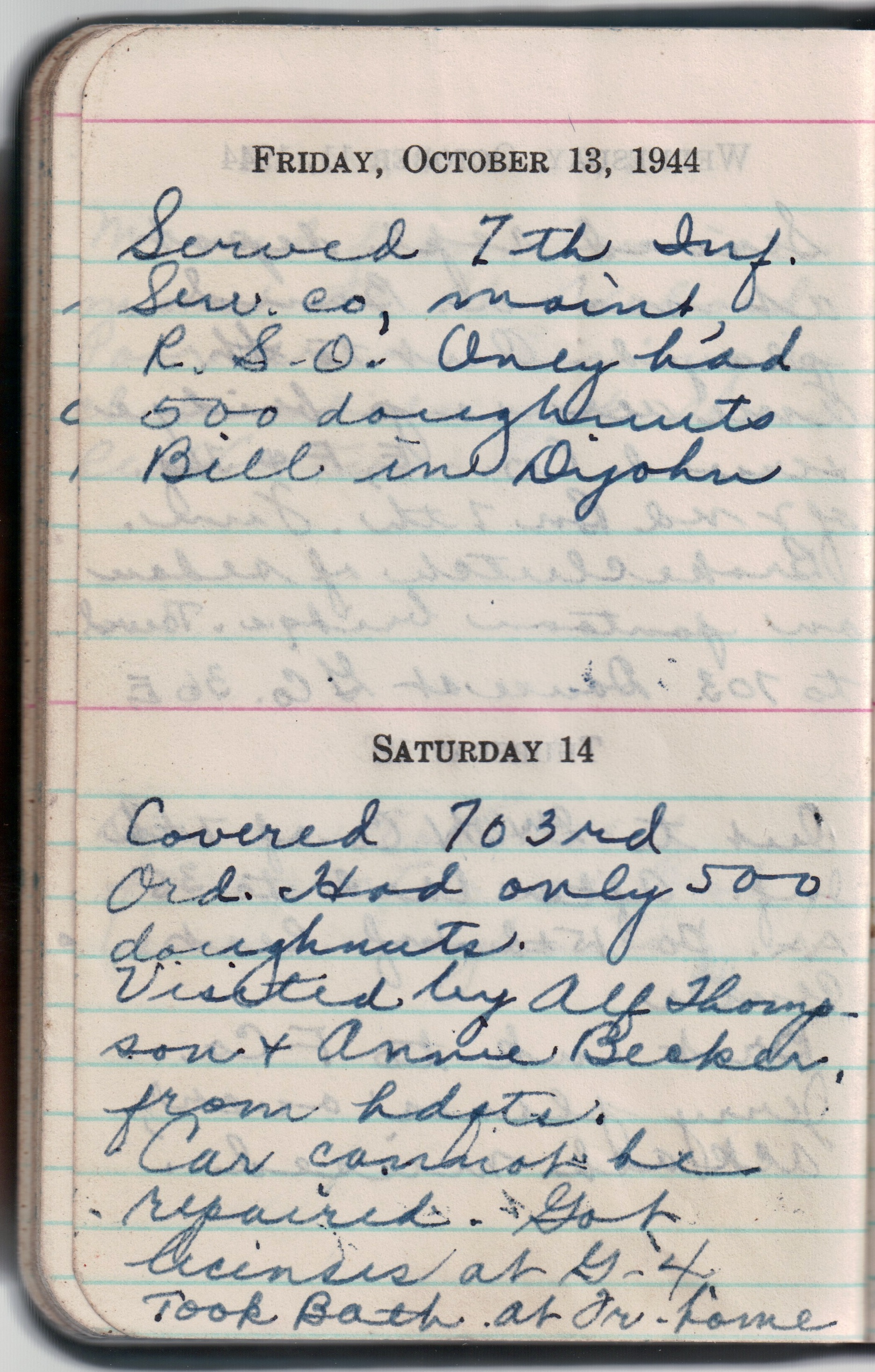
By October 8, Flo and Liz were back in action, serving hundreds of donuts to American troops every day. They had moved from Remiremont to nearby Saint-Nabord, a grim, war-torn area where they now lived in their clubmobile. One day they drove to Luxeuil for photos. Another day they served the replacement depot while a military band played. And then they bounced across a pontoon bridge into Saint-Amé, until their battered old sedan gave out. The clutch snapped halfway over the bridge and couldn’t be repaired.
During this time, they served the 15th Infantry—Audie Murphy’s unit—a couple of times. The men were quiet, polite, exhausted. After some hard battles, the 15th was finally getting a little rest. But Murphy was not among them. He had been wounded in the fight for Cleurie Quarry. At the aid station, he learned that nearly his whole platoon had been wiped out the night before. Because of the rain and mud, the wounded men could not be evacuated for three days. At the hospital Murphy learned gangrene had resulted. He would be out of commission until January.
In breaks from battle, the army handed out medals. The Third Division took home more than any other. This would be Murphy’s third purple heart.
Flo was able to see her fiancé Gene occasionally, as his unit, the 36th combat engineers, was stationed nearby. They met for church, a dance and meals at his camp. They planned to marry by Christmas and he had ordered rings for them.
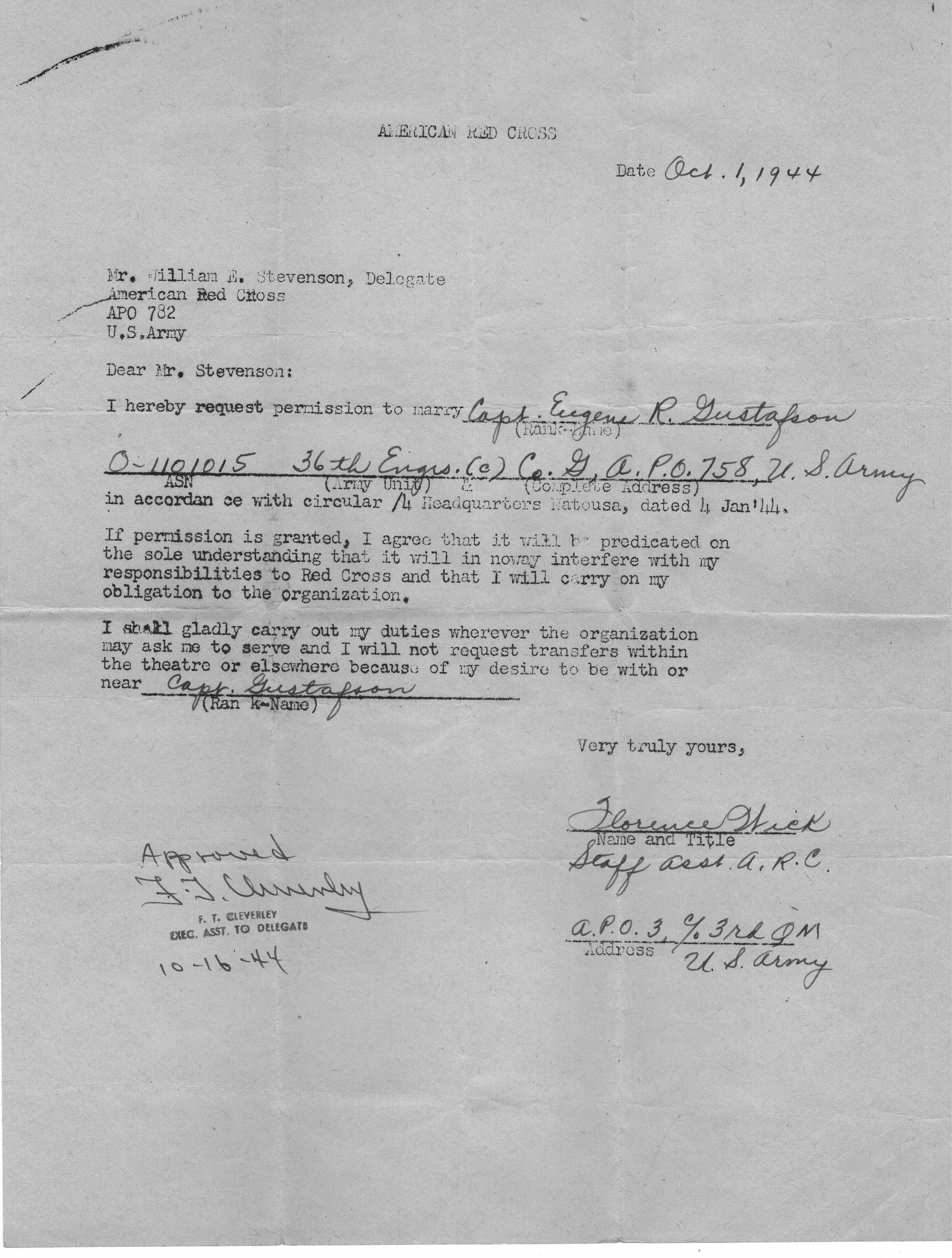
Form letter asking for permission to marry
On October 1, Flo sent a formal request to William Stevenson at Red Cross headquarters for permission to marry Gene. The form letter says,
“If permission is granted, it will be predicated on the sole understanding that it will in no way interfere with my responsibilities to Red Cross and that I will carry on my obligation to the organization. I shall gladly carry out my duties wherever the organization may ask me to serve and I will not request transfers within the theater or elsewhere because of my desire to be with or near Capt. Gustafson.”
In her accompanying letter, Flo had again managed to put her writing skill into practice. Whatever she wrote convinced the ARC. She received permission to marry in a warm letter from Eleanor “Elly” Parker, Director of Staff Welfare, dated October 23.
She wrote, “Thanks very much for your nice letter and I feel much more comfy issuing your marriage approval after having your explanation of exactly what is happening….You sound well surrounded by friends and family in France and I am glad you enjoy being there….I imagine that you are terribly busy and very hard at work under pretty trying cricumstances….
Permission granted and our shoes are boring (sorry)
Apparently Flo also had asked about getting some shoes after her nice shoes were stolen in Italy. But Elly Parker wrote that all they have at the PX are “regular black Red Cross shoes.” Not exactly what Flo, a lifelong shoe queen, had in mind.
On October 12, German planes flew overhead. Everyone looked up at the roar, held their breath as the anti-aircraft fire opened up—and missed.
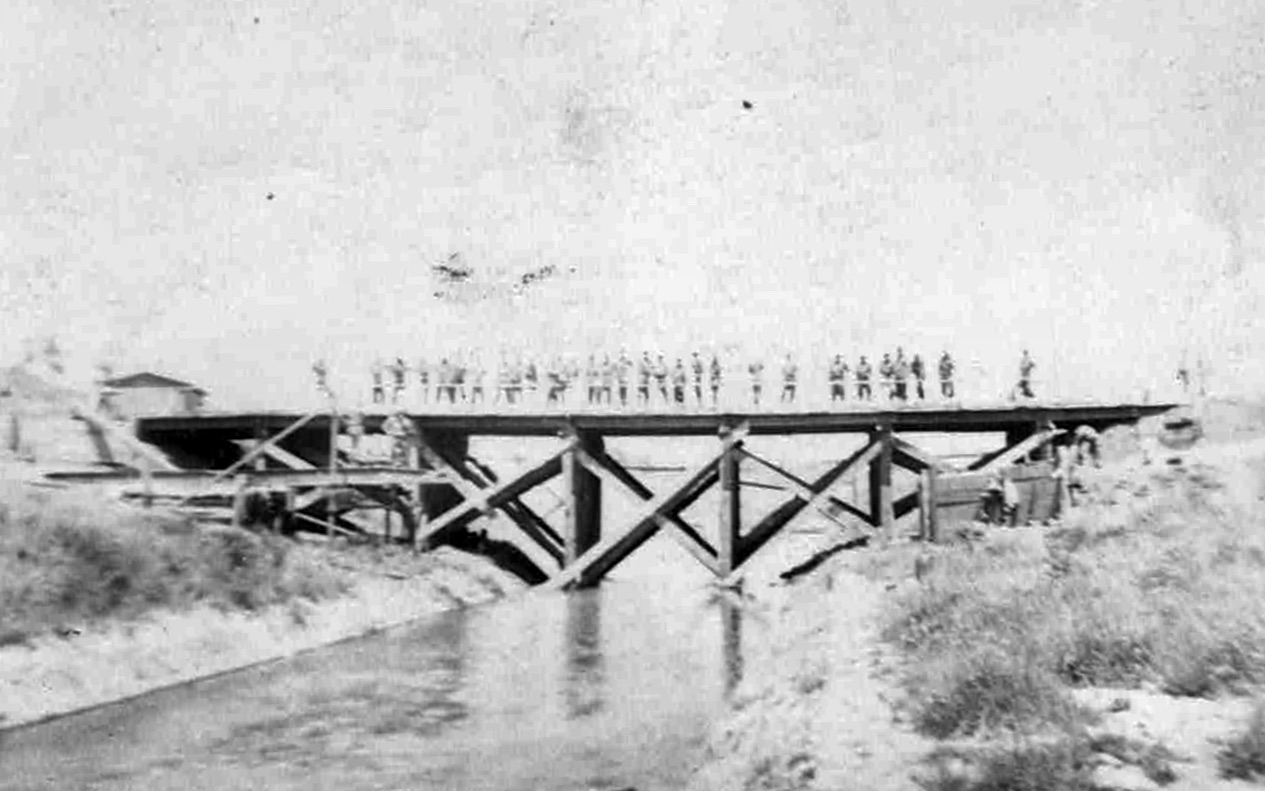
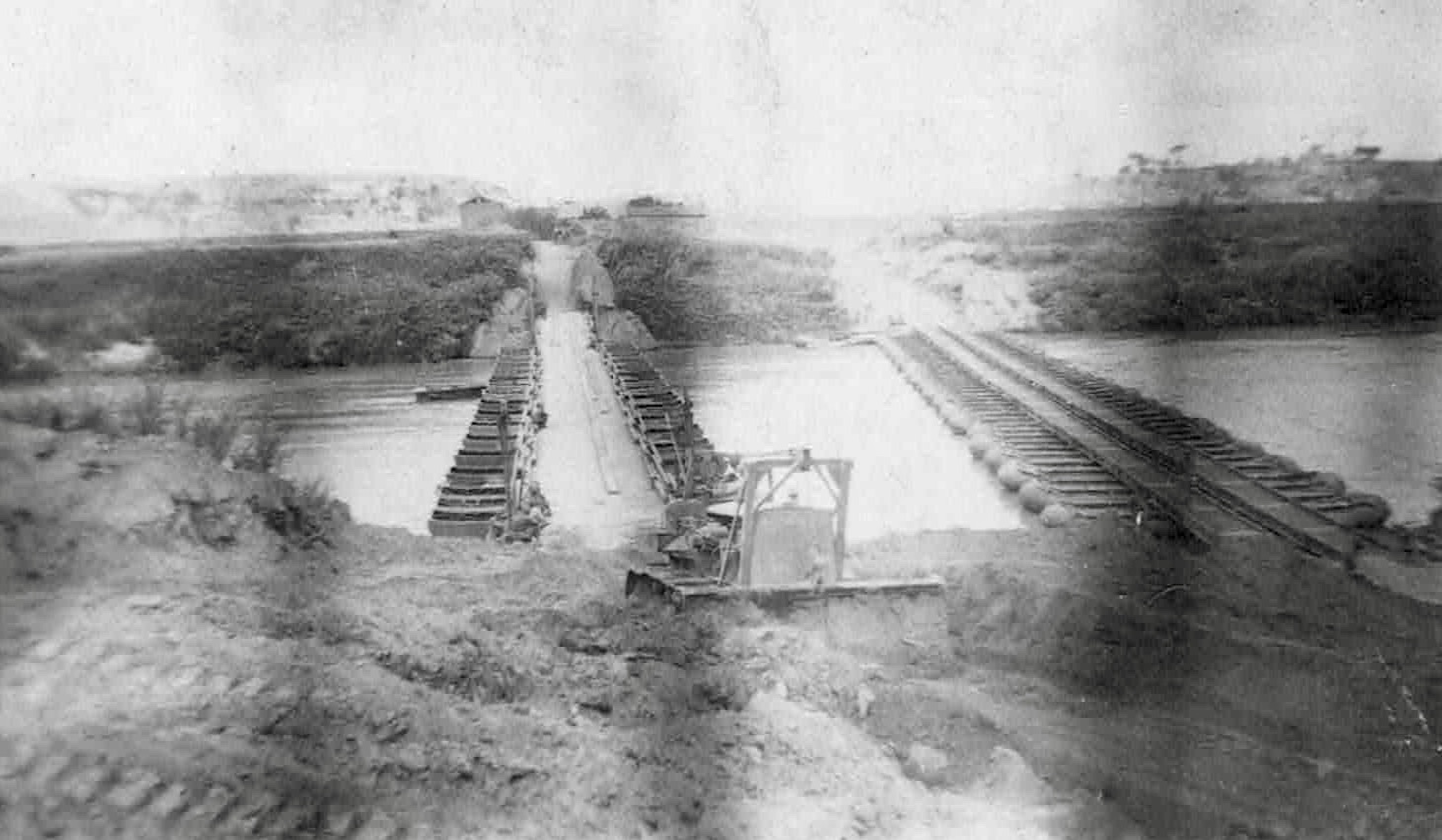
One page in Flo’s album is devoted to the combat engineers—soldiers whose construction work enabled the army to move men, machines, and supplies into active war zones.
Bailey Bridge at Monto Alto above Rome, Topping out
Combat engineers were tasked with everything from building roads and bridges to clearing mines, digging tunnels, demolishing obstacles, and performing emergency construction under fire. Their work was both strategic and dangerous, often done at the front lines or just behind them.
Constructing a bridge across Mussolini canal, Pontoon bridges across the Tiber River in Rome
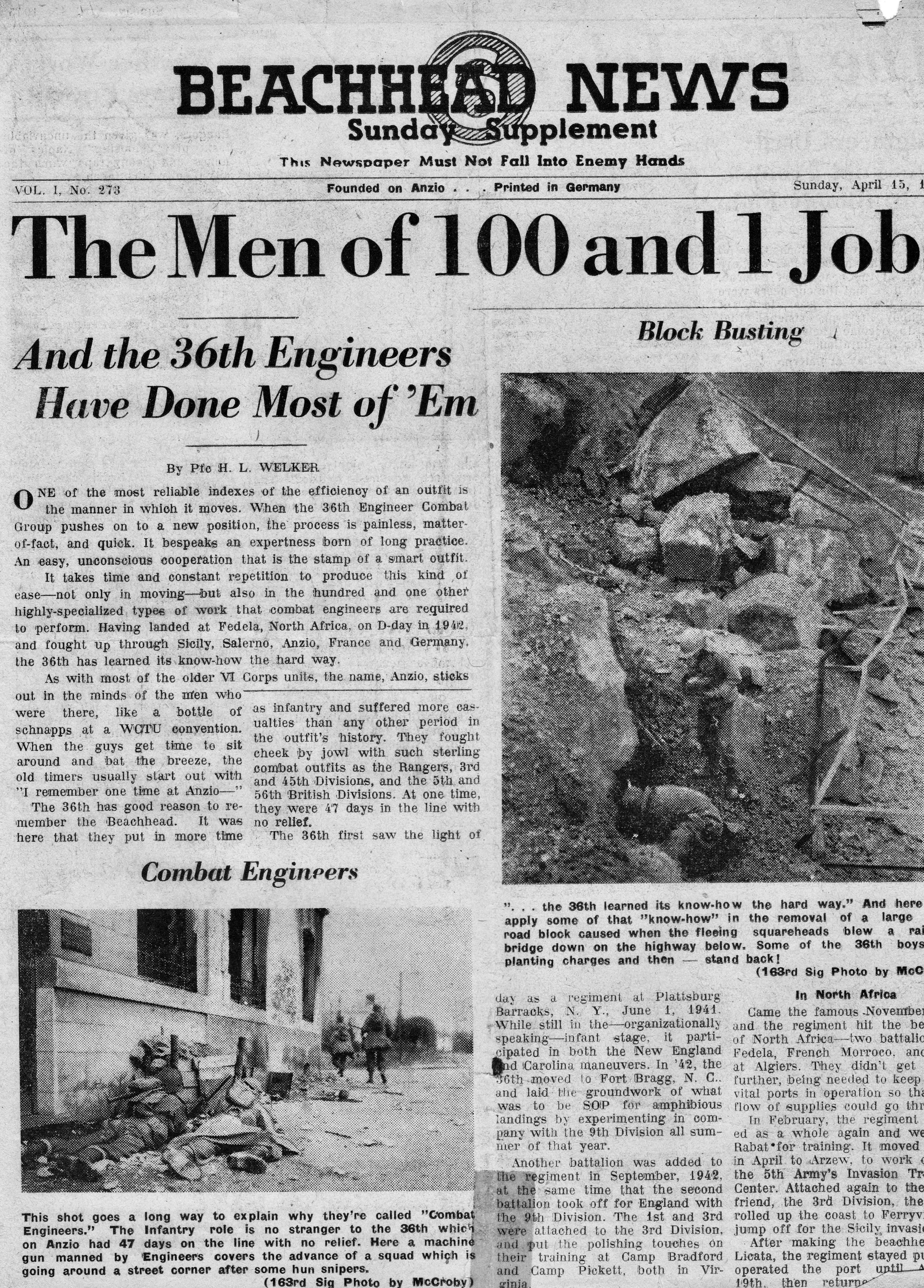
Flo’s fiancé, Gene, served with the 36th Engineer Combat Group. The engineers were proud of their mission, and Gene gave Flo photos of some of the bridges his unit built. She carefully arranged them in her album, alongside a special edition of Beachhead News from April 15, 1945, dedicated to the 36th.
From Beachhead News
The Men of 100 and 1 Jobs—And the 36th Engineers Have Done Most of ’Em
“One of the most reliable indexes of the efficiency of an outfit is the manner in which it moves. When the 36th Engineer Combat Group pushes on to a new position, the process is painless, matter-of-fact, and quick. It bespeaks an expertness born of long practice—an easy, unconscious cooperation that is the stamp of a smart outfit.
It takes time and constant repetition to produce this kind of ease—not only in moving—but also in the hundred and one other highly specialized types of work that combat engineers are required to perform. Having landed at Fedala, North Africa, on D-Day in 1942, and fought up through Sicily, Salerno, Anzio, France, and Germany, the 36th has learned its know-how the hard way.”
The article goes on to chronicle the unit’s contributions across multiple campaigns—a record of grit and expertise that Flo proudly preserved.
“It looms like the King’s Mountain in the Revolutionary War.”
My Mother and Audie Murphy Ch. 37
Early October, 1944.Murphy is now the last one standing of his original unit. The Third Division is driving into the Vosges mountain chain, which is the chief obstacle lying between the Allies and the Rhine. From his autobiography To Hell and Back:
Rain, cold, and the threat of early snow slow the advance. The terrain favors the Germans: dense forests hide snipers and machine guns, and the enemy holds the steep slopes with artillery, mortars, and night patrols that slip into American lines. Murphy keeps his bayonet sharp and close.
Their next objective is a quarry near Cleurie. On the map it is small, but in battle it dominates the road ahead. Set high on a near-vertical slope, protected by tunnels and covered by interlocking machine-gun fire, it is ordered held to the last German. Repeated American assaults fail, and the regiment digs in while command searches for a new plan. At night the lines are so close that Murphy hears enemy voices in the dark. Burned out and emotionally spent, he avoids forming new friendships; he thinks only of keeping his remaining men alive.
The German’s fortified position at the Cleurie quarry controlled the region. Photo: Dogface soldiers
One gray morning the battalion commander and his executive officer visit the front to see what is stopping the advance. They select four men to guide them up the hillside. Restless and unable to sleep, Murphy grabs grenades and a carbine and follows.
As he rounds a boulder, two German grenades explode and a machine gun opens up. The ambush is poorly planned: the Germans strike the enlisted men first, giving the officers time to roll into a shallow depression. Concentrating on killing the officers, the attackers fail to guard their flank.
German prisoners of war file out of the quarry after their defeat. Photo: Dogface soldiers collection
Murphy steps out from behind a rock. The gunner swings his weapon toward him, but the barrel catches on a branch and the burst goes wide. Murphy throws a grenade and fires. Two Germans fall before the grenade even detonates. He tosses two more grenades, killing or disabling most of the ambushers. A squat German tries to flee, waddling downhill. Murphy hesitates—he looks absurd, almost comical—but the man is armed. Murphy fires and drops him.
Murphy safeties his carbine and turns to the battalion commander, who remains cool as the October morning. Brushing dirt from his uniform, the officer says, “Those grenades aren’t a bad idea. Next time I’ll bring my own.”
A howitzer crew in action. Photo: Dogface soldiers collection
“We pick up our wounded and start down the hill. A single feeling possesses me. It is one of complete and utter weariness.”
Which of us will be alive when the new leaves return
My Mother and Audie Murphy Ch. 35
Late September, 1944. Murphy has been wounded in a mortar attack. From his autobiography To Hell and Back:
After a few days in the hospital, Murphy gets a new pair of shoes and returns to the lines. It is late September, and drizzly rains sweep over the hilly, wooded country they are moving through. Keeping warm at night has already become a problem.
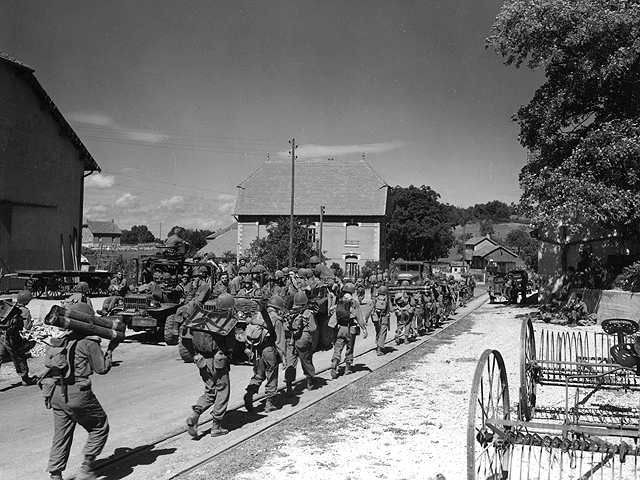
Foot soldiers marching through a French town. Photo: Dogface soldiers collection
The leaves have begun to turn. Gold and red flare sharply against the dark evergreens, and the camouflage crews start mixing new paint to match the changing colors of the forest. It is the prelude to another long, grim winter.
The men plod up the wet roads doggedly, each one wondering, however vaguely, who among them will still be alive when new leaves return to the trees. The Germans fall back stubbornly but steadily. Yet each day their resistance stiffens, their retreats shorten. As the enemy forces withdraw toward the fortified positions of the Vosges Mountains, they lash back with fierce counterattacks. Murphy’s regiment is on the threshold of some of its hardest fighting of the war.
One morning, as a chilled, misty dawn spreads across the landscape, the men wait for the signal to assault a hill known only by a number. Artillery pounds the ridge in a steady barrage. They lie on their backs, shivering in the growing gray light.
Tank destroyers of the 601st TD Battalion move through Lons-le-Saunier in pursuit of the retreating enemy.Photo: Dogface soldiers collection.
Near Murphy, a sergeant checks a .50-caliber machine gun set in a deep, round emplacement ringed with sandbags. The weapon, stationary for now, will cover the advance, and if needed, the retreat. Satisfied with the gun’s readiness, the sergeant leans back on his elbows. Drops of water cling to his mop of wavy black hair. He is an extraordinarily handsome man, with fine features and broad shoulders—exactly the sort a Hollywood producer might cast as a soldier. Among the troops, a man like that is instantly labeled a lady-killer.
A cannon booms from the rear. The men hear its projectile flutter through the air with an odd, hesitant wobble, as if reluctant to plow into the cold earth. To experienced ears, that sound signals a defective shell—one that might explode anywhere. Murphy shouts for his men to get down and hits the dirt just before the crash comes.
The blast feels as though it lands directly on top of them. When silence follows, he mentally checks each part of his body for the burning sting of a wound. Finding none, he rises to his feet. The new men shakily pat their clothing, searching for blood. He knows the feeling well—only the uninitiated are shocked that a shell could land so close without killing everyone in its path.
Photo: Dogface Soldiers collection
Murphy glances toward the machine-gun pit. The sergeant still reclines where he was, but another soldier is twisting a tourniquet around his leg. The sergeant’s left foot has been sheared off neatly above the shoe top. His face shows no panic, no pain. He lights a cigarette with steady hands and draws calmly on it.
Then his eyes close, his face tightens, and the pain finally hits.
After living in tents for the summer of 1944 at a training camp for the Third Infantry Division in Italy, the American Red Cross clubmobile workers made it to France. They scrambled to catch up with the fast moving war and their boys in the front lines.
Flo (my mother, Florence Wick) and her coworker Liz Elliott traveled north from southern France trying to get to a place where they could go back to work serving donuts and coffee to the troops.
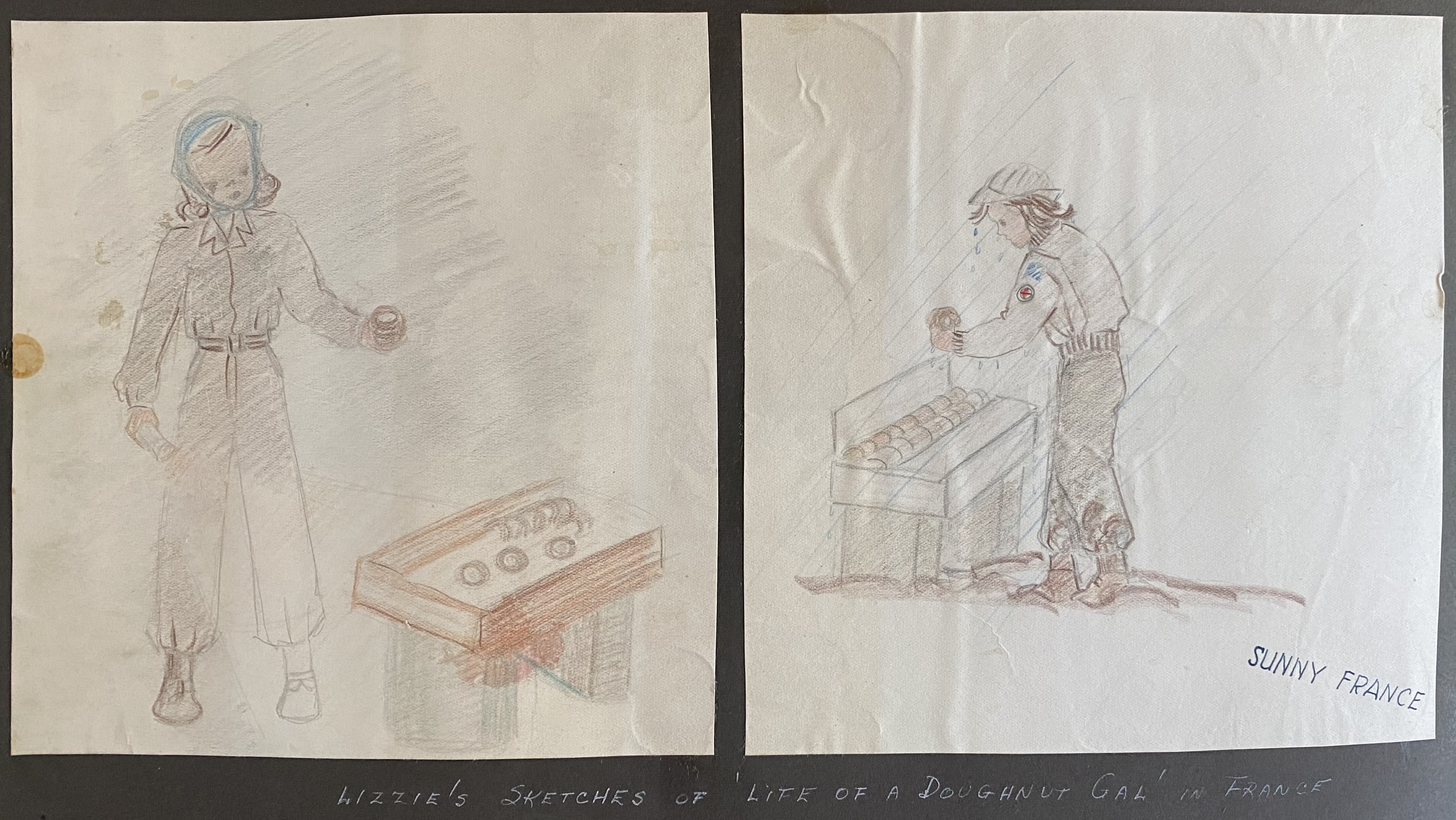
Flo captioned this “Lizzie’s sketches of ‘Life of a Donut Gal in France’“
They had been a crew of four, but Isabella Hughes and Dottie Shands stayed in Marseille. They expect to join Flo and Liz, but for the time being Flo and Liz are a crew of two living mostly in the clubmobile. Frequent rain has turned roads and fields to muddy sludge.
Liz and Flo and the clubmobile they lived in
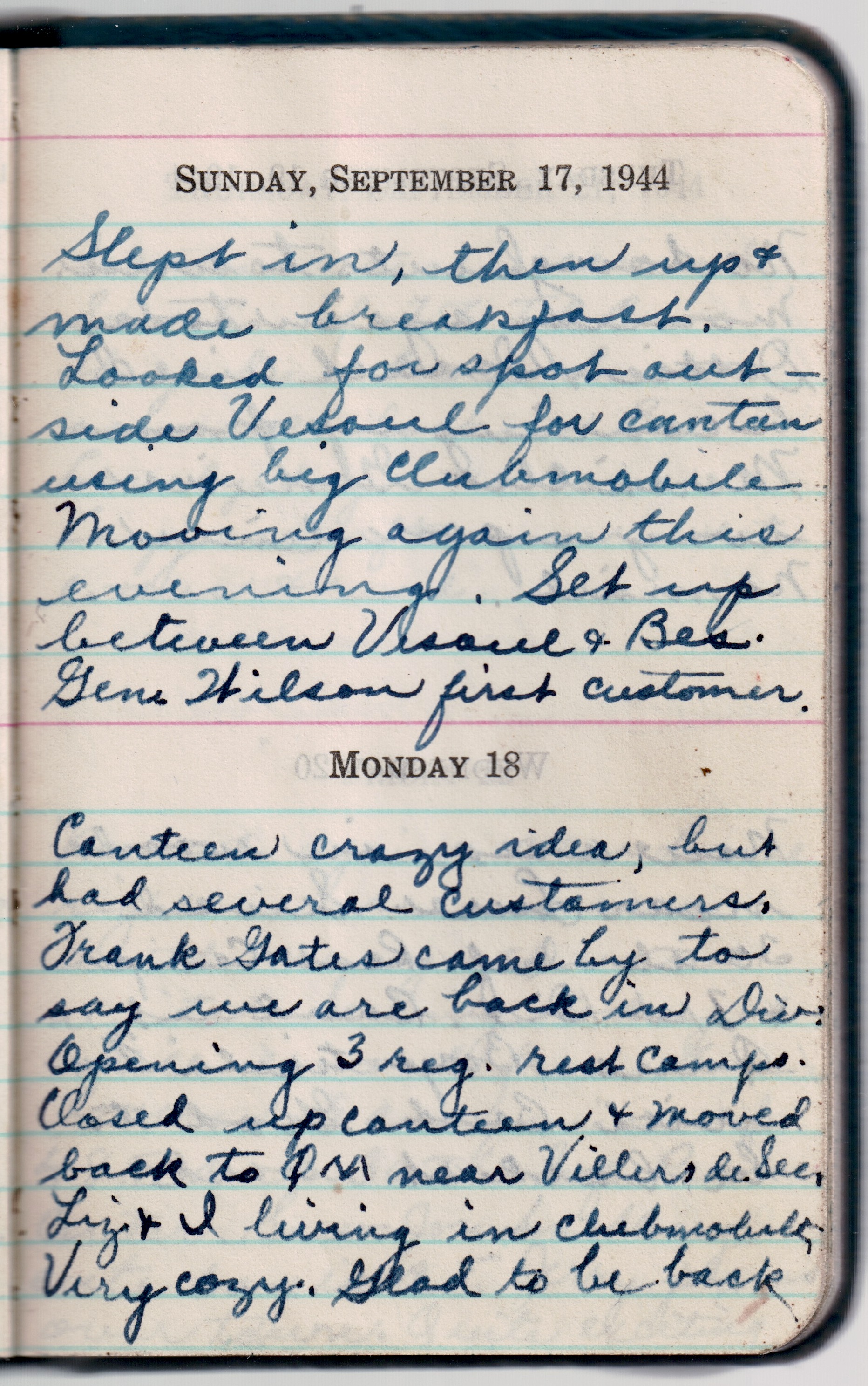
They were originally assigned to the Third Division, but after a major evicted them, they moved in with the 6th Corps artillery unit near Vesoul for a time. Then they were allowed back in to the division as three regimental rest camps were opened.
Flo has met up with her fiancé Gene several times and she corresponds with him through the APO mail, although she complains often in her diary of “no mail.” He is with the 36th Engineers, the crew that rebuilds bombed out bridges and roads. But they are also forced into combat when foot soldiers are needed.
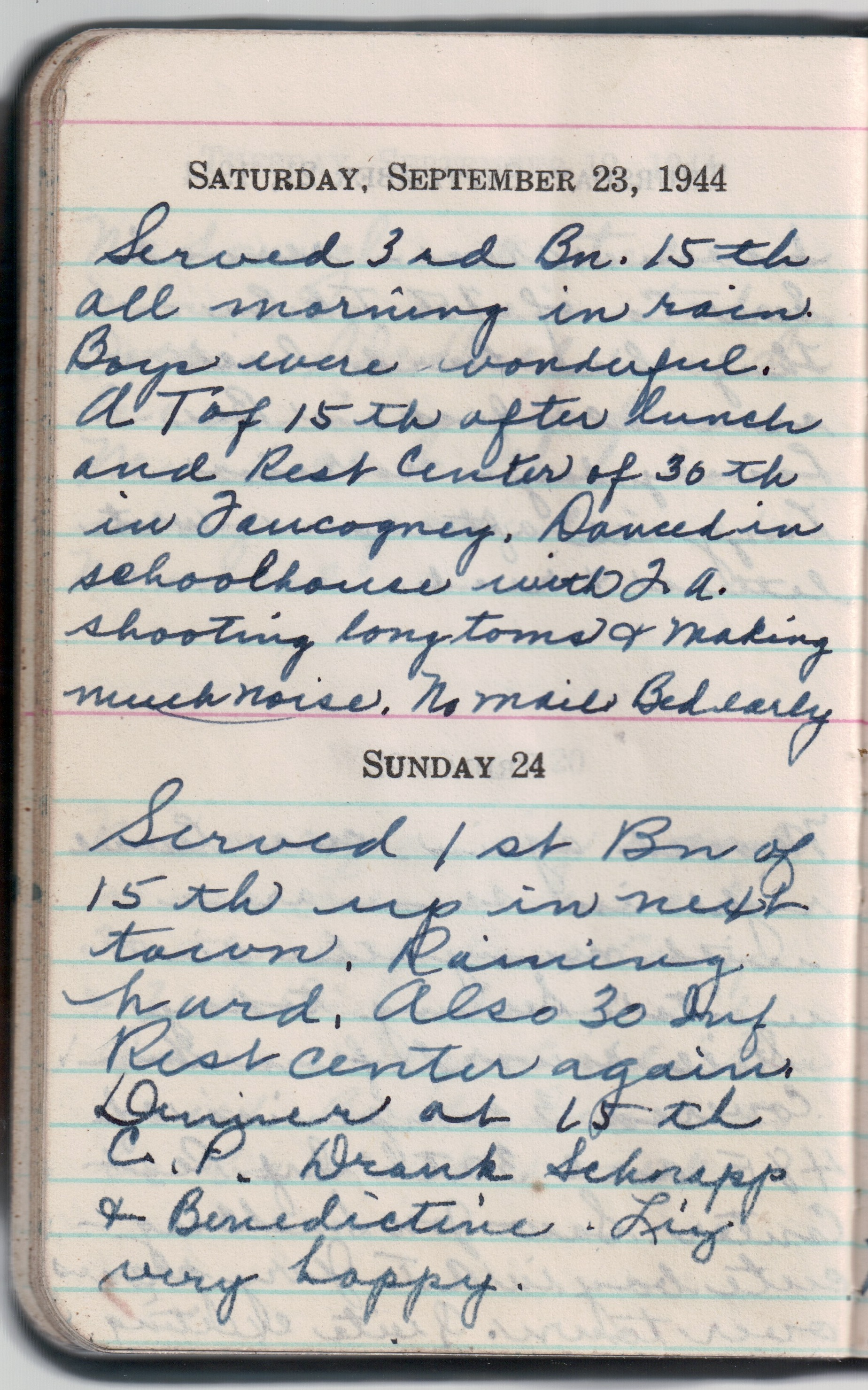
September 19-24 Flo’s diary (pinch out to read)
“Good to be back at work,” wrote Flo in her diary, after the Red Cross women had been allowed back into the Third Division.
“Gene way up on lines. No mail.”
“Served 30th Inf. Rest camp & 3rd Div band. Boys tired. Fun with band.”
Flo working in the field
On Sept. 21 she wrote, “ Served co. of 756 tank Bn. They had hard luck—several lost in Bn.”
Sept. 22: “Served in same area with many other div. Still no word from Gene. Jerry planes over town. Quite exciting.”
Sept. 24: “Served 1st Bn of 15th up in next town. Raining hard…dinner at 15th C.P.”
This is Audie Murphy’s unit and must be where they met. He remembered Flo served him donuts somewhere in France.
September 5, 1944. From Murphy’s autobiography To Hell and Back:
In a short while they are back in the thick of battle. The forward units knife through German lines, leaving pockets of resistance for the mopping-up crews. The noise of combat rises from every direction.
The swift advance has drained their energy and their supplies. Hungry and exhausted, they collapse along a roadside to wait for orders. Artillery thunders over their heads. They lie on their backs, listening to the shells crash forward into the hills.
Murphy and his crew seize an opportunity when a German supply truck rattles into view. They ambush it and find it loaded with bread and cognac. For a brief, stolen moment they eat, drink, and sing, the battle seeming almost far away.
The town of Besancon from its citadel. You can see the bombed bridges.Photo: Dogface soldiers.org
That night they crash into Besançon and fight until morning. Within a few days the city is secured, and once again the pursuit of the retreating Germans begins.
Murphy’s platoon brings up the rear when a roadblock stops the company. Mortar shells begin peppering the earth. Murphy pauses to speak to a small group of soldiers, several of them nervously pale replacements, waiting for the fire to ease.
Nearly killed by a mortar shell
A mortar shell drops in almost without sound. It is practically under Murphy’s boots before he registers its arrival. He has just enough time to think, This is it, before the blast knocks him unconscious.
When he comes to, he is sitting beside a crater with the shattered remains of a carbine in his hands. His head throbs, his eyes burn, and he cannot hear. The acrid, greasy taste of burned powder coats his tongue.
FFI fighters. Photo: NARA
He runs his hands down his legs, methodically checking. Both limbs are there. But the heel of his right shoe is gone, and his fingers come away sticky with blood.
A voice filters dimly into his fogged brain: “Are you all right, Sergeant?” He wipes the tears from his stinging eyes and looks around. The sergeant who spoke and the young recruit beside him are dead. Three others are wounded. All had been farther from the shell than he was.
When a mortar detonates on contact with the ground, its fragments shoot upward and outward in a cone. Murphy had been standing close to the base of that cone and caught only the lightest edge of the fragmentation. Had he been three feet farther away, he knows he would not be alive.
During World War II, concussions resulting from mortar attacks were a significant source of traumatic brain injury (TBI). Soldiers experienced symptoms like headaches, dizziness, poor concentration, and memory problems following exposure to blasts, even without visible head injuries. The term “shell shock” was originally used in WWI to describe these symptoms, but was later replaced with terms like “post-concussion neurosis” in WWII. Head injuries from mortars contributed to a significant percentage of medically treated wounds during the war.
Murphy spends a few days in the hospital, not because of his brain injury, but because his foot was wounded. Then he’s back in the lines.