End of the Persephone Period

My Regular Pagan Holiday Post: Imbolc

Today, January 23, marks the end of the Persephone Period here in Sonoma County.    

Have you heard of the Persephone Period? It’s a concept we’ve only recently discovered, but it’s already proving to be a valuable guide for us gardeners.  

Most of us are familiar with the myth of Persephone, the daughter of Zeus and Demeter, the goddess of agriculture. According to Greek mythology, Persephone was abducted by Hades, the god of the underworld. Grief-stricken, Demeter caused the earth to grow barren until a compromise was reached: Persephone would spend four months of the year in the underworld, during which the earth experienced winter, and then return to bring the renewal of spring.  

In gardening terms, the Persephone Period begins on the last day of the year with 10 hours of sunlight and ends when daylight hours rise above 10. Across much of the Northern Hemisphere, this period typically spans mid-November to early February. I like to think of it as starting around Samhain, the pagan holiday on November 1, and ending at Imbolc on February 1. Another fitting end point is the lunar new year, which in 2025 falls on January 29.  

In Northern California, our Persephone Period is shorter than in regions further north. In Sonoma County, it starts on November 18 and ends today.  

The Myth Meets Science 

The Persephone Period isn’t just a poetic reference—it mirrors the biological response of plants to diminishing sunlight. When daylight drops below 10 hours, most plants enter dormancy, conserving energy and resources to survive the colder months. Growth slows or halts entirely, allowing plants to endure harsh conditions and rebound when warmth and light return.  

For gardeners, understanding this phenomenon is key to successful planning. During the Persephone Period, it’s best to avoid sowing seeds or transplanting seedlings, as plants struggle to establish themselves while dormant.  
Timing Is Everything  

Here in the San Francisco Bay Area, we’re lucky to have a “secret season” for winter gardening. The key to success is planting seeds well before the Persephone Period begins, giving plants enough time to develop roots and begin growing before sunlight dwindles. 

In the past, I assumed planting when rains come in October—or even early November—was sufficient. Snow peas planted in our garden in October yield a crop by February. But Sonoma County Master Gardeners recommends planting winter seeds as early as August or September. This gives plants more time to grow before the Persephone Period slows them down. The downside? Planting in late summer requires consistent watering, often daily or every other day, during the dry months—a challenge for many gardeners. 

Our Winter Garden  

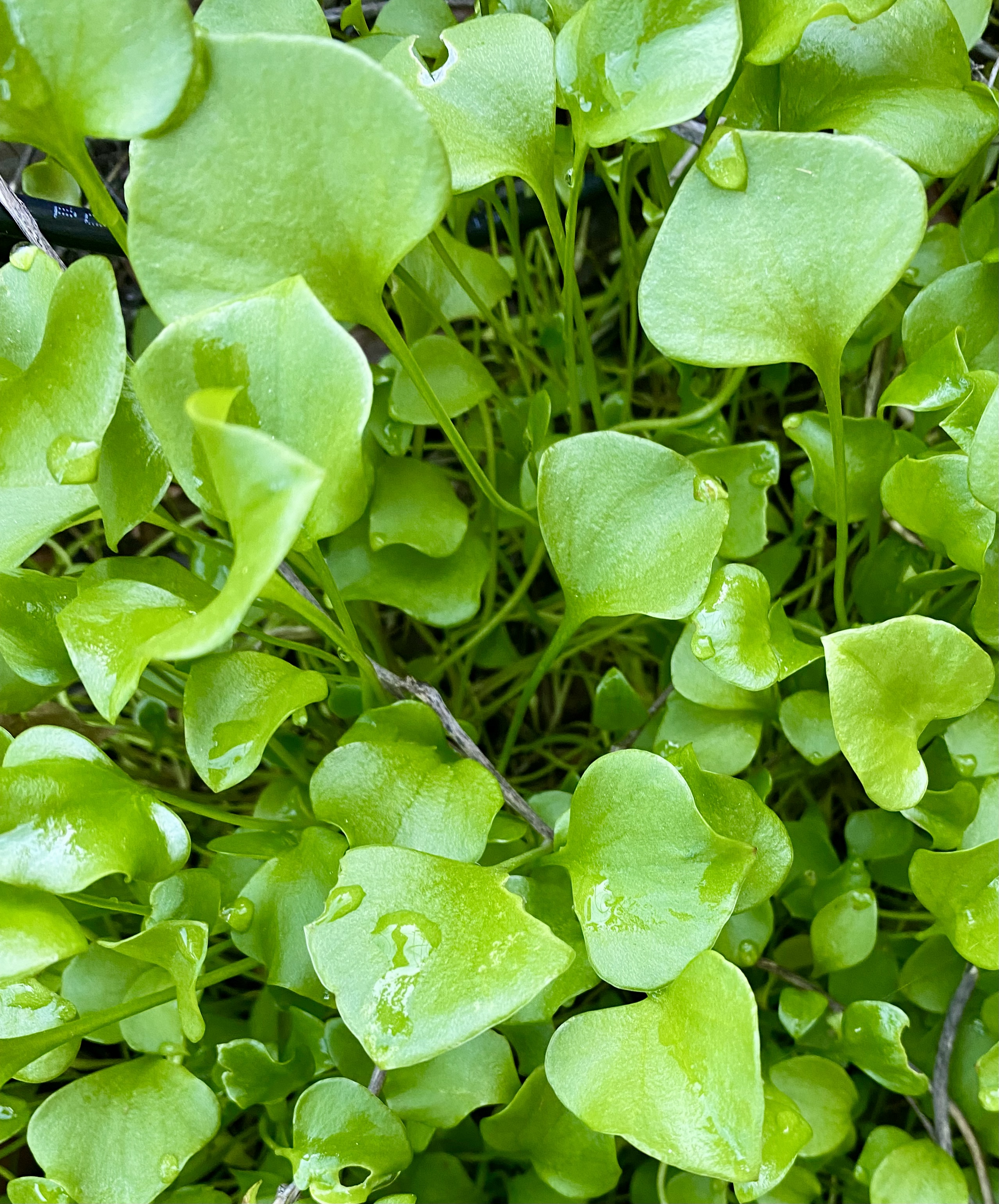
I’ll admit, I’m not particularly enthusiastic about winter vegetables like carrots or Brussels sprouts—they’re cheap and plentiful at local farmers’ markets. But I do appreciate winter greens. I love being able to harvest greens in the middle of winter. Just now I’m snacking on miner’s lettuce, coming up around the garden. The kale I planted last year has grown to an impressive three feet tall. Birds, especially finches, eat the leaves and so we’ve left those plants for the birds.
Seasonal Markers

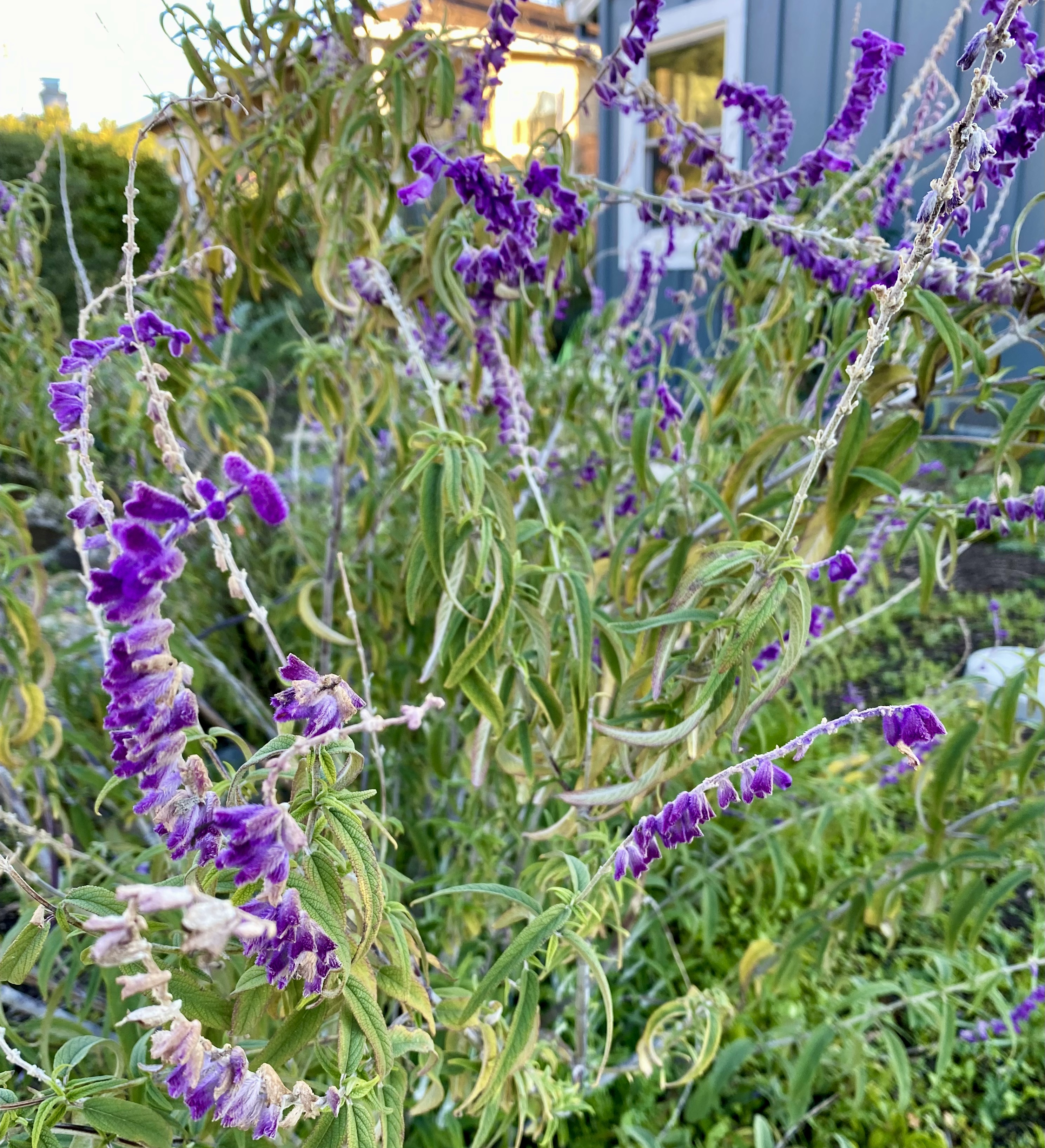
Other plants, too, thrive here even during the Persephone Period. The start of winter rains wakes them up. Here are a few standouts in our winter garden:  

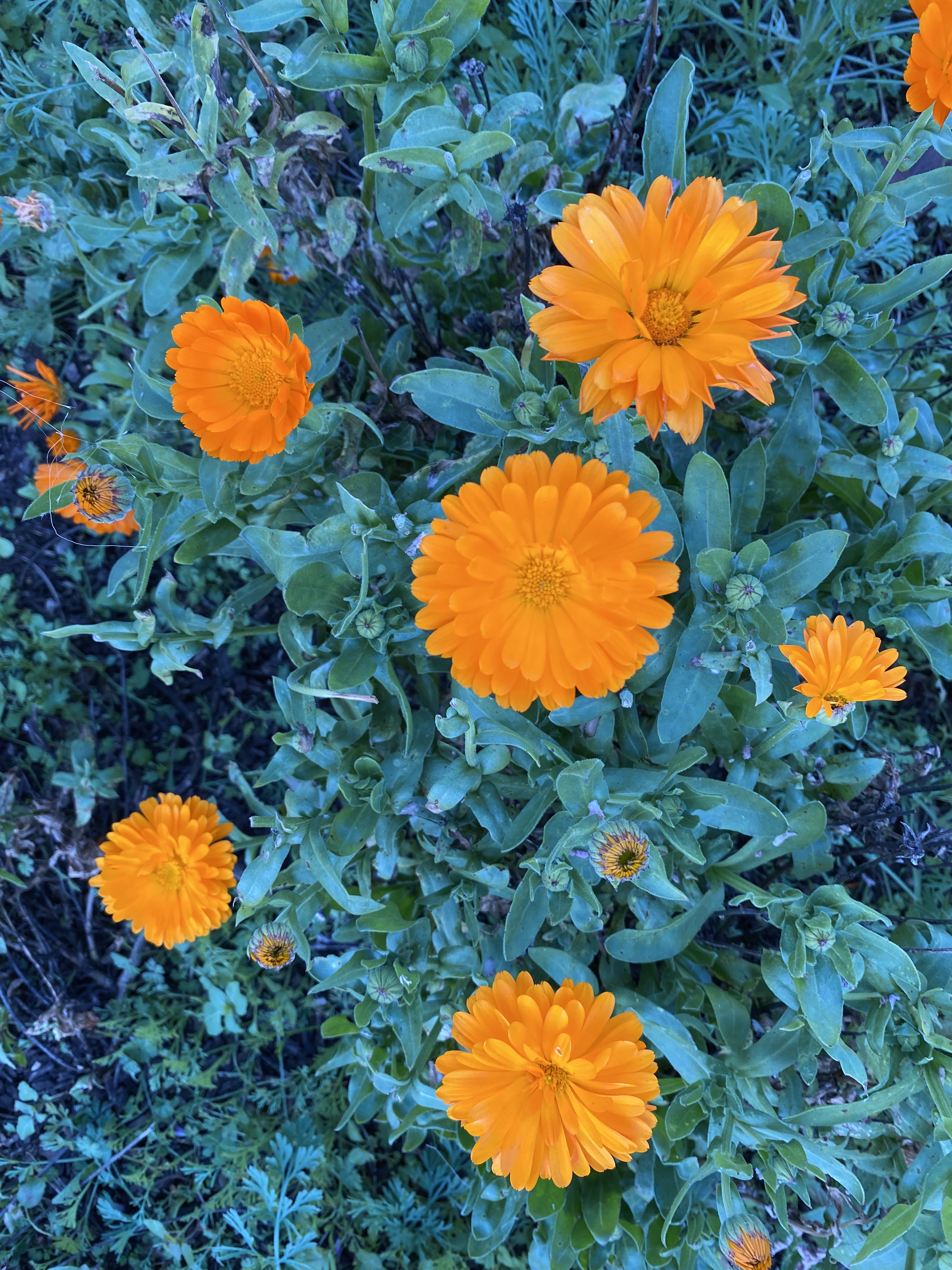
Calendulas: Their cheerful, easy-to-grow blooms brighten the garden. 

Woolly blue curls: A native plant gifted by a friend, it’s flourishing in our front yard.  

Native verbena: A reliable bloomer nearly all year long.  

Ornamental flowers: Planted in the fall, they’re still adding a welcome burst of color.  

Narcissus: Lovely, though I find their fragrance too overpowering for indoors—I’ve had to move the gifted bouquet outside.  

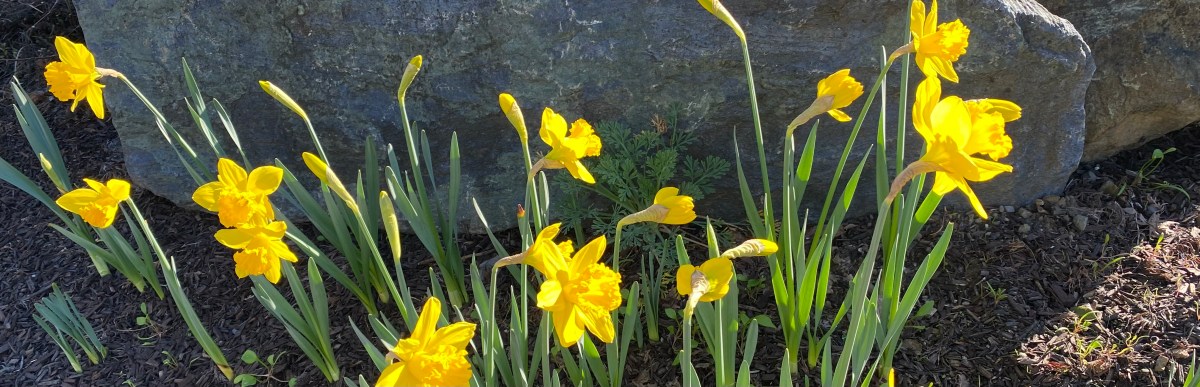
And last week our daffodils started blooming!

Winter may bring shorter days and quieter rhythms, but it also offers its own moments of beauty. Between the blooms in the garden and the bounty of oranges from our old tree, I’ve learned to appreciate the Persephone Period for what it is: a time of rest, resilience, and subtle life persisting through the season’s challenges.  

To all a blooming Imbolc and festive Lunar New Year!
Good Imbolc, Happy New Year!

My Regular Pagan Holiday Greeting: Imbolc

Posted on Solstices, Equinoxes and Cross Quarter Holidays

Dear Friends,

Imbolc, the Celtic pagan holiday on February 1, and the time of the Lunar New Year really mark the advent of spring in California, at least here in Sonoma County. The daffodils I planted in November are in full bloom. Just before a series of atmospheric rivers dumped 18 inches of rain (about three times the normal rainfall), we installed a water catchment system with swales in the front yard and three 1000-gallon tanks. Our system worked well to save water for future irrigation and to direct it away from the house. The January rains filled creeks to overflowing and greened the grass, although storms also felled many trees and resulted in flooding and some deaths. 

The earth is turning and the light is returning, but it’s still dark at 5 AM when I go out to look for the comet called ZTF. I haven’t been able to see it yet, but skies have been clear lately and I keep trying. The comet can be found in the north sky between the north star and the big dipper. It will be closest to Earth on February 2. It’s green! Perhaps a sign? 

A bit of angst seizes me whenever I look up for the comet. I can’t help thinking about the movie Don’t Look Up. We watched it again recently and it was just as hilarious and sobering as the first time. If you haven’t seen this movie yet, you must! It’s a metaphor for climate change that hits us over the head hard, but lately I’m thinking nothing can be too un-subtle for us humans. (My friends, I’m not talking about you. I know you are aware and doing all you can do to avert the predicted climate disaster).

Every day, as the green comet comes closer, I’ve looked for it with binoculars, but it keeps eluding me. So we bought a telescope. I found two telescopes in town–an inexpensive one at a sporting goods store and a more expensive one at a camera store. I’m new at this so figured the cheaper one would be just fine. We brought it home and tried to figure out how to use it. It seemed so simple. We followed the spare directions but failed to make it work. We tried and tried. The manufacturer didn’t have decent assembly instructions. So we looked online for videos and found one in Spanish, but as neither of us understands the language (a failing I’ve always regretted) we didn’t really get it. Plus, to set the focus each time you have to bend over in a way that my old neck will no longer allow. 

So I boxed the telescope back up and returned it. Then we bought the expensive one. This thoroughly modern telescope was made in France and must be connected to wifi and a computerized device. Directions say we can have as many as ten devices so we imagine we can host star watching parties where all the guests could see the comet, or the moon, or planets on their ipads. That’s the fantasy anyway. Still is. 

We were directed to connect to the manufacturer’s wifi network, which didn’t come up on my phone. Later I was able to log on but couldn’t figure out the next step. Instructions are not terribly helpful. Are they translated? Or are we just too old to understand? Normally this tech breakdown would have me throwing up my hands in despair. But my wife Holly is kind of a tech wizard (witch?) and I depend on her to solve these problems. She couldn’t, but she is sanguine and so I haven’t lost hope that we can figure it out. Maybe I’ll see the green comet yet. It won’t be back around again for 50,000 years. I just can’t wait that long.

Aside from my unfulfilled obsession with the comet, life is good for us in Santa Rosa. We are thankful for our good fortune, but at the same time we are anguished by the growing wealth gap and the failure of our society to care for those more needy than we. The capitalist system values nothing as much as making (or stealing) money, assigning those with other priorities to the losers column.

My angst is multiplied by the recent explosion of gun violence especially in the past couple of weeks. California, with the strictest gun laws in the country, experienced some of the worst violence. We lesbian feminists laugh (and cry) about testosterone poisoning, and I do think that simple theory has some truth to it. Systems breakdowns and our society’s failure to prioritize the common good contribute. Gun violence has worsened with the proliferation of guns, but it has been going on for a long time. January 30 is the 75thanniversary of the shooting death of Mahatma Ghandi.

I support taking away the guns. That’s what Cheryl Wheeler sang. Her song, If It Were Up to Me, was written after the Stockton school shooting in 1989 and it still applies. https://www.youtube.com/watch?v=Op7agdIFOGY

If you don’t know Cheryl Wheeler, check her out. She writes funny songs too. My Cat’s Birthday comes to mind. We lesbians do love our cats.

Sending wishes for peace in the new year.

Love, Molly and Holly (MoHo)

Imbolc Is Imminent

Feb. 1, 2021

Dear Ones,

It’s been a rough year. Impossible to say that without understating. But, as we celebrate Imbolc, I feel like it’s a new morning.

My covid walking outfit. Brew is the local gay cafe.

I’m on the pavement thinking about the government. But I hesitate to write about that because it’s been written about so very much. Suffice to say Holly and I are maintaining our sanity here in Santa Rosa. And we ain’t goin’ nowhere. We haven’t been vaccinated partly because of a shortage of vaccine here in Sonoma County. Also because we are in no way essential.

Actually I’m lying not on pavement but on the redwood deck in the backyard after having pulled out as many oxalis as I can from the garden. I’m starting to worry about getting a sunburn when clouds roll in swift from the south. Rain is coming but it won’t be a hard rain. Not today.

This day of sun and weeding and planting and gray clouds has got my mind off wintertime. And I think that’s the whole point of Imbolc, one of my favorite pagan holidays because—spring!

Imbolc falls in the middle between the winter solstice and the spring equinox. The old Celtic pre-christian holiday was a day to honor the pagan goddess Brigid, who invoked fertility rites. She also oversaw crafts, poetry and prophecy—the domain of us old folks. 

Brigid was a powerful Celtic god and so of course the christians had to turn her into St. Brigid, whose day is still celebrated in Ireland. Here at Hylandia we prefer to celebrate the goddess. I can already feel myself becoming more prophetic. Maybe more poetic and crafty too!

However you celebrate have a happy Imbolc. 

Sending big virtual hugs to you all.