
My Regular Pagan Holiday Greeting: Litha
Reclaiming Ritual
Can we remake religious rituals into traditions that are free from religion? In her book, The Wonder Paradox, Jennifer Michael Hecht answers with a resounding Yes! And she shows us how.
Hecht posits that humans need tradition and ritual in our lives, but that there is no reason to attach these practices to church, which she aptly calls “drop by and lie.” I do love that she is a fellow atheist, but anyone, religious or not, can make use of her ritual adaptations that are more appropriate to modern life. She says everything is secular, including religion—a human invention after all. Hecht makes the case for incorporating poetry into newly imagined rituals. Reading this book and listening to an interview with her has renewed my own path to inventing new rituals.
We humans need ritual to mark births and deaths, but we can make our own or incorporate those of other cultures. My friend Ruth, a new grandmother, told me her Hindu relatives have rituals for everything, including the baby’s first haircut. She is not Hindu but she is invited and delighted to participate in them all.

When the news gets us down or is cause for celebration, we can create our own ceremonies. A friend posted “Happy arraignment eve to all who celebrate” and another commented, “I’m looking forward to the high holy days of conviction and sentencing.” (Me too!)
In these pagan holiday posts, I have been using the Wheel of the Year to think about the wheel of life. A combination of ancient and new tradition, the Wheel of the Year acknowledges the summer and winter solstices, the spring and fall equinoxes and the four cross quarter holidays in between. It’s a good way to notice the changing of the seasons and to feel closer to the earth and all its inhabitants.
Summer solstice is a gay holiday
Just as the whole alphabet of queer folks have become pariahs around the world, our invention of Gay Pride Day and Gay Month have become universal markers of summer solstice (winter solstice in the southern hemisphere). For most of my adult life I’ve been celebrating the summer solstice at Gay Pride Day. Taking place in cities and towns around the world, mostly in June, Pride is both a protest and a party.
In San Francisco, Pride is huge, taking over the whole city for the month. In New York City, activists have split from the old corporate sponsored pride parade to form a new protest march. In LA, the parade turned into a music festival and has also split in two.
I say it’s all for the good. Why not have Pride celebrations in every town and city and neighborhood. As Sonoma County celebrated its 38th year of Pride, other small towns around the Bay now sponsor their own Pride celebrations.
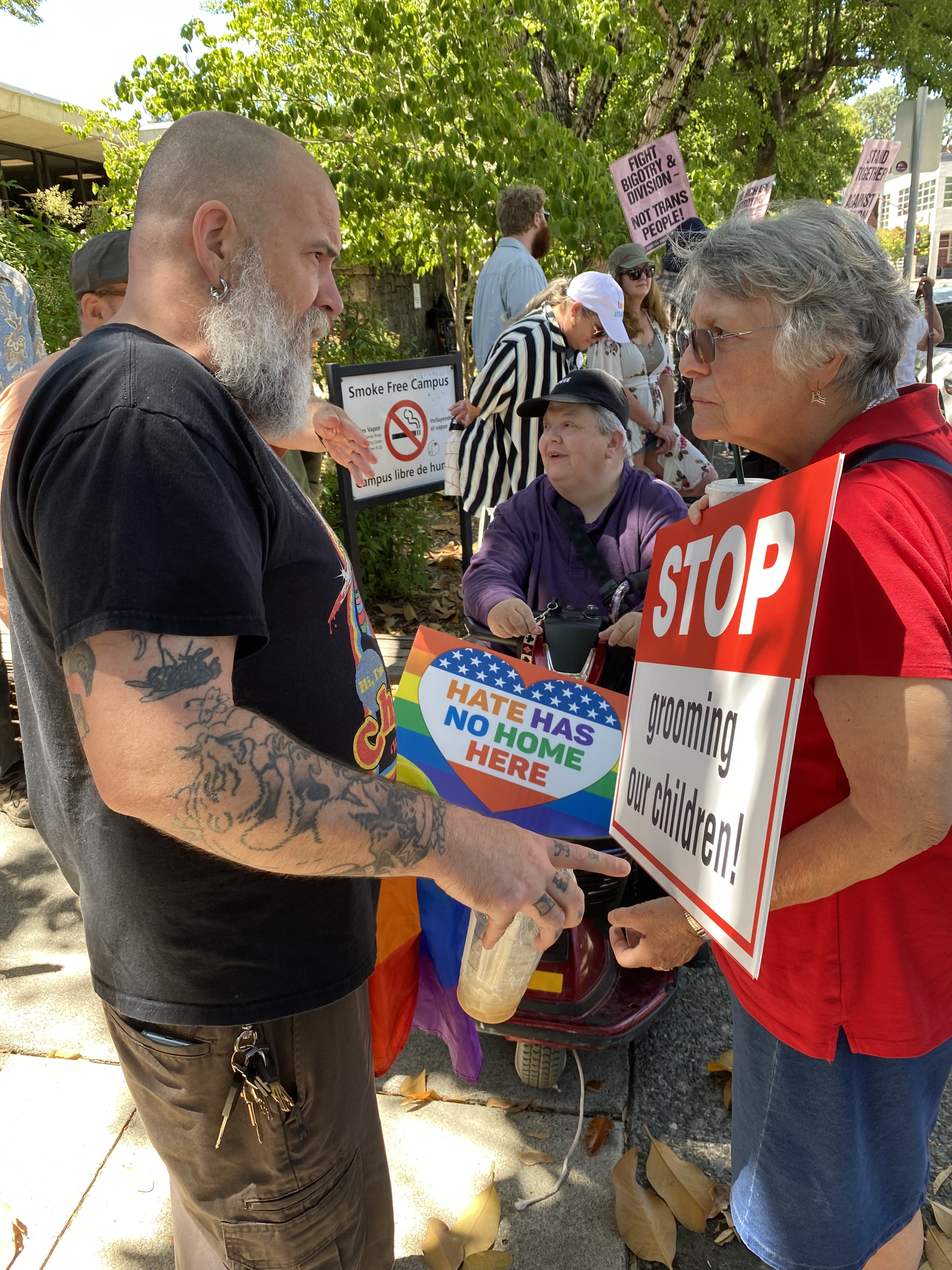
So Gay Pride Day and gay events like drag queen story hour are proliferating all over the country but at the same time our community is under attack in nearly every state. We are lucky to live in California whose state legislature is not at the moment promoting anti-gay bills (although we have fought against many in the past). But even in Sonoma County and around the liberal San Francisco Bay Area, protesters show up at public libraries and school boards with the aim of censoring books and queer programming. Here in Sonoma County the counterprotesters are vigilant and nonviolent. No events have been shut down by the book burners yet.
Not a Virgin Anymore
June has been a mixed bag this year. In between occasional sunny breakthroughs, Santa Rosa has been experiencing what Santa Barbarans call June Gloom. My wife Holly’s weather guru, Daniel Swain (https://weatherwest.com), predicts hotter-than-ever summer days after the gloom subsides.
At the spring equinox I opined that the wet cold winter had become suddenly summer. Wrong! Summer lasted just a weekend before the weather turned cool again. I had performed a spring ceremony, kissing my winter gloves and putting them away for the season, but I soon pulled them back out. Now I’m putting them away again. Ok I’ll kiss them again. Our ceremonies and rituals can be repeated as often as we want.
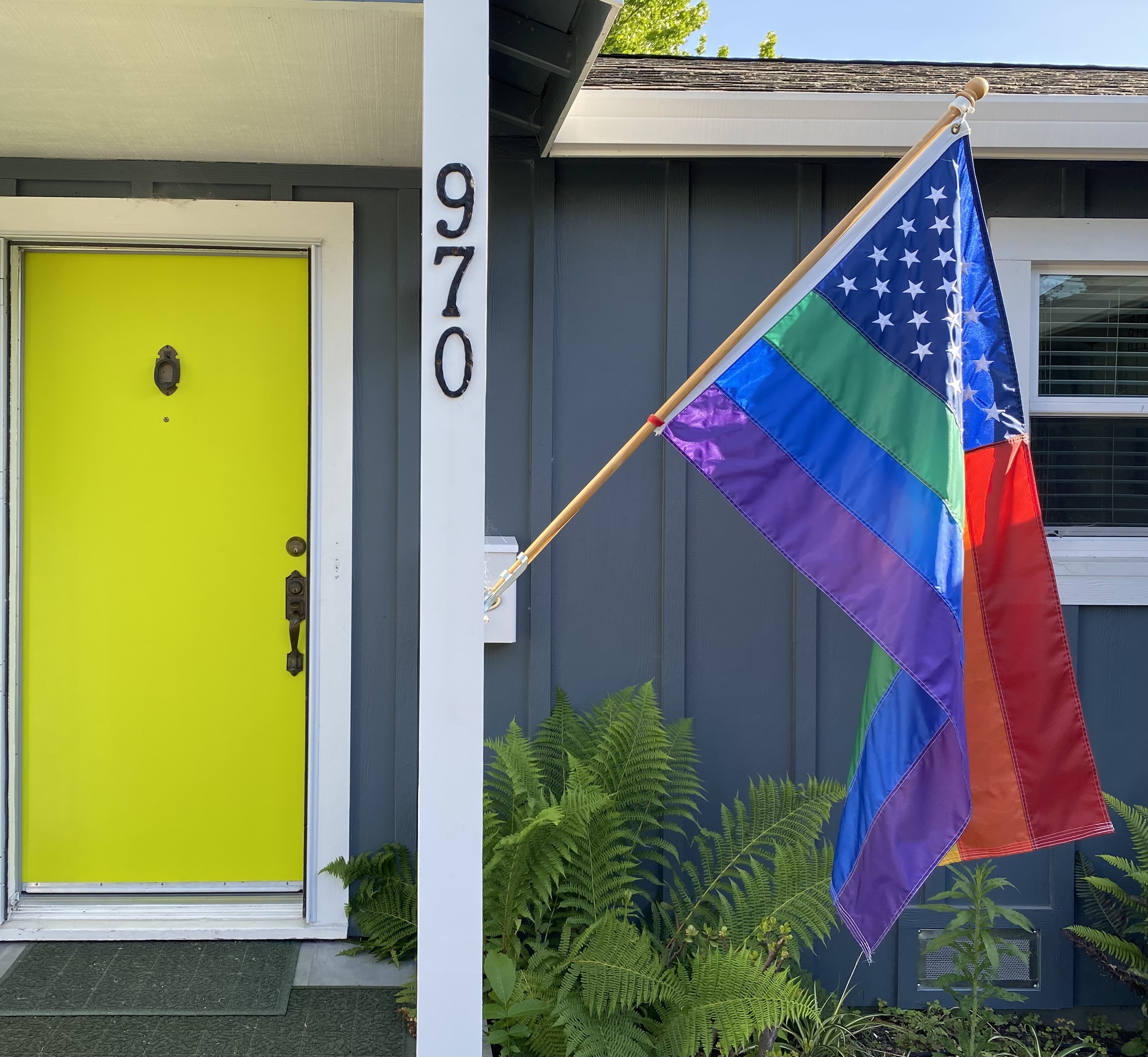
Flags are big during Gay Month. We hung the gay flag on June 1, a ritual repeated every year.
Then Holly and I both got covid, thankfully at the same time so we could isolate together. She brought it home from her mother’s assisted living place. We each took a five-day course of Paxlovid. I’m pretty sure it reduced the severity of our symptoms and now we’ve tested negative. We didn’t practice many rituals while we were sick, unless you count lying in bed all day watching Mrs. Maisel.
Now I’m back to hiking! I’ve resurrected my daily morning ritual of preparing for the hike—donning boots and hat, filling my water bottle, making a snack, checking the fanny pack. Keys, wallet, phone and bandana felt for in pockets. And I’m off to walk in nature, my favorite pastime.
Have a delightful Summer Solstice and a fabulous Gay Pride Day!


 tradeswomn musings