
Demand for the eight-hour day inspires a world-wide holiday
My regular pagan holiday post
No one ever knew who threw the bomb that killed a cop during a peaceful rally. Then the police opened fire, killing seven more of their own and several bystanders.
But the Powers That Be said someone had to pay. They arrested eight men and charged them with conspiracy.
The accused, immigrants and anarchists, became convenient scapegoats in a city gripped by fear and suspicion. The mainstream media fanned the flames of anti-immigrant hysteria with sensationalized tales and outright lies.
As the trial unfolded, prejudice tainted the proceedings. The judge’s bias was palpable, and jurors were selected for their predispositions. Despite a glaring lack of evidence, the men were convicted.
Four were hanged. One committed suicide in prison. Others were given long sentences.


The progressive governor, burdened by the knowledge of their innocence, commuted the sentences of the surviving men. Then he faced the wrath of voters who, swayed by fear and misinformation, ousted him from office in a bitter electoral battle.
It happened in Chicago in 1886, but to me it reads like today’s news. Except for the bomb. Our modern methods of murder are far more sophisticated.
Could history repeat itself in a modern age?
I worry. The specter of prejudice still haunts our land, immigrants demonized, and dissent silenced. The media—mainstream and social–wields its influence with impunity, shaping public opinion with biased narratives and sensationalism.
Meanwhile, our judiciary does not even try to conceal its corruption. The militarization of police forces and the epidemic of police violence create more distrust in those pledged to keep us safe. We won’t forget the killing of a 13-year-old boy, Andy Lopez, in Santa Rosa at the hands of a deputy sheriff.
So, yeah. It seems little human evolution has taken place since 1886.
At that 1886 Chicago rally, workers had agitated for the eight-hour work day, a movement then brutally crushed by employers with the help of federal, state and local police forces. With its leaders executed and imprisoned, the Chicago labor movement’s head was cut off. Labor lost that battle, but eventually won the war for the eight-hour day. Their slogan, written in a song of the time, was “Eight hours for work, eight hours for sleep, eight hours for what we will.”
The eight defendants were all thinking and articulate men, but the one I find most interesting is the one man who was not an immigrant, Albert Parsons. Born in Alabama in 1848, he traced his ancestry back to English colonists in 1632. Some ancestors fought in the American revolution.
Parsons moved to Texas and fought for the Confederacy during the Civil War. Then he realized he had fought for the wrong side. He called the war “the slaveholders’ rebellion.”
He became a Republican, supporting Reconstruction efforts and running for office, making enemies of his former comrades and the KKK. Then he joined the socialist movement, eventually denouncing electoral politics and joining the anarchists and the labor movement.
His marriage to Lucy Parsons (Gonzales), a Black woman, defied the norms of a society steeped in prejudice, and her activism would become legendary in its own right. As she led the campaign to win a new trial, one Chicago official called her “more dangerous than a thousand rioters.”
Albert Parsons saw the connections between slavery and capitalism. He said: “My enemies in the southern states consisted of those who oppressed the black slave. My enemies in the north are among those who would perpetuate the slavery of the wage workers.”
What made Albert Parsons switch sides? I think it was working with previously enslaved people after the war and at the start of Reconstruction. He began to see things from their point of view.
The Haymarket Affair, as the events in Chicago came to be called, inspired May Day, or International Workers Day, as a labor holiday in countries around the world on May 1. It was never a national holiday in the US because of ourgovernment’s resistance to encouraging worldwide working-class unity. But workers in the US celebrate May Day anyway, and it will be marked again this year in cities across the country.


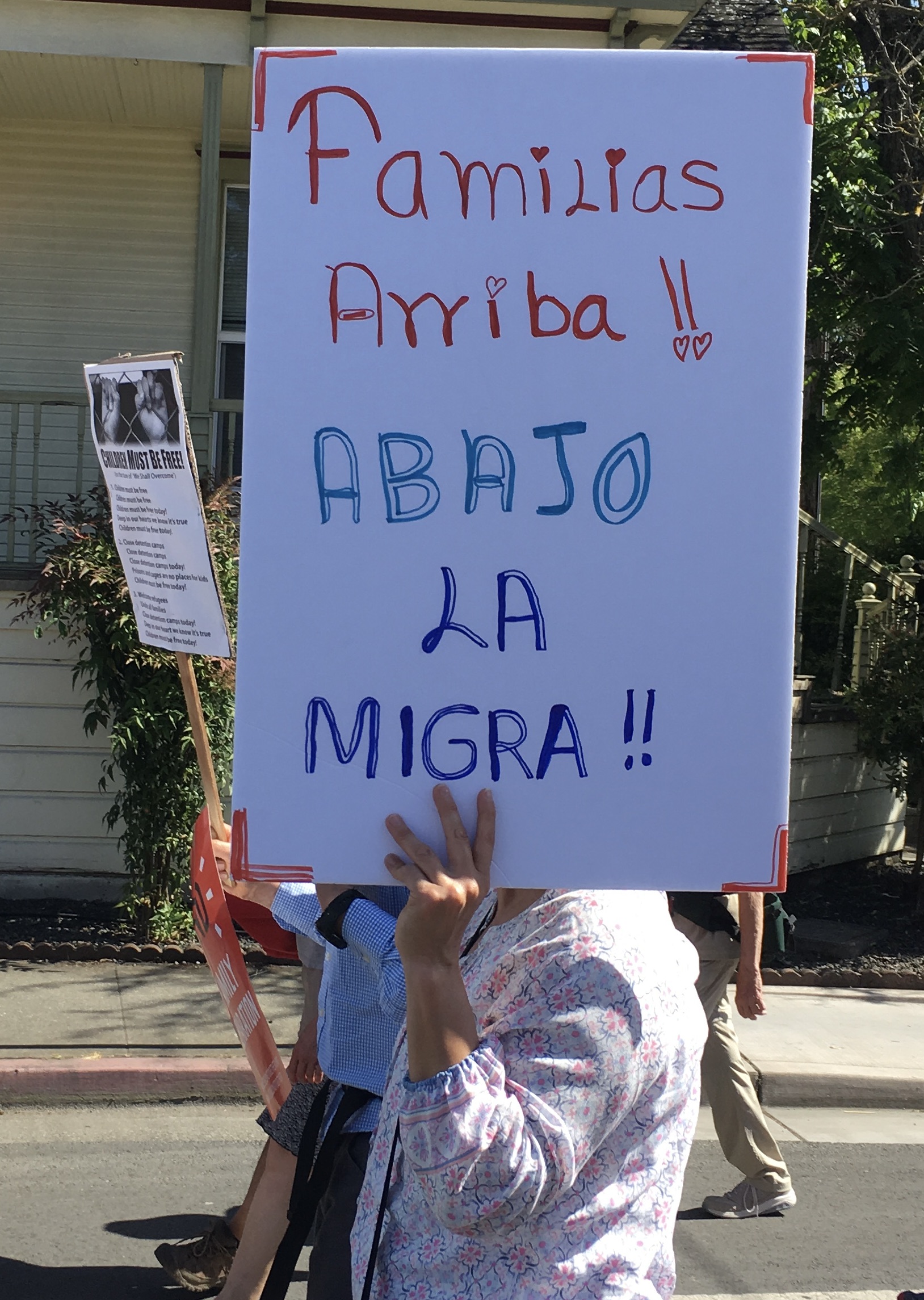
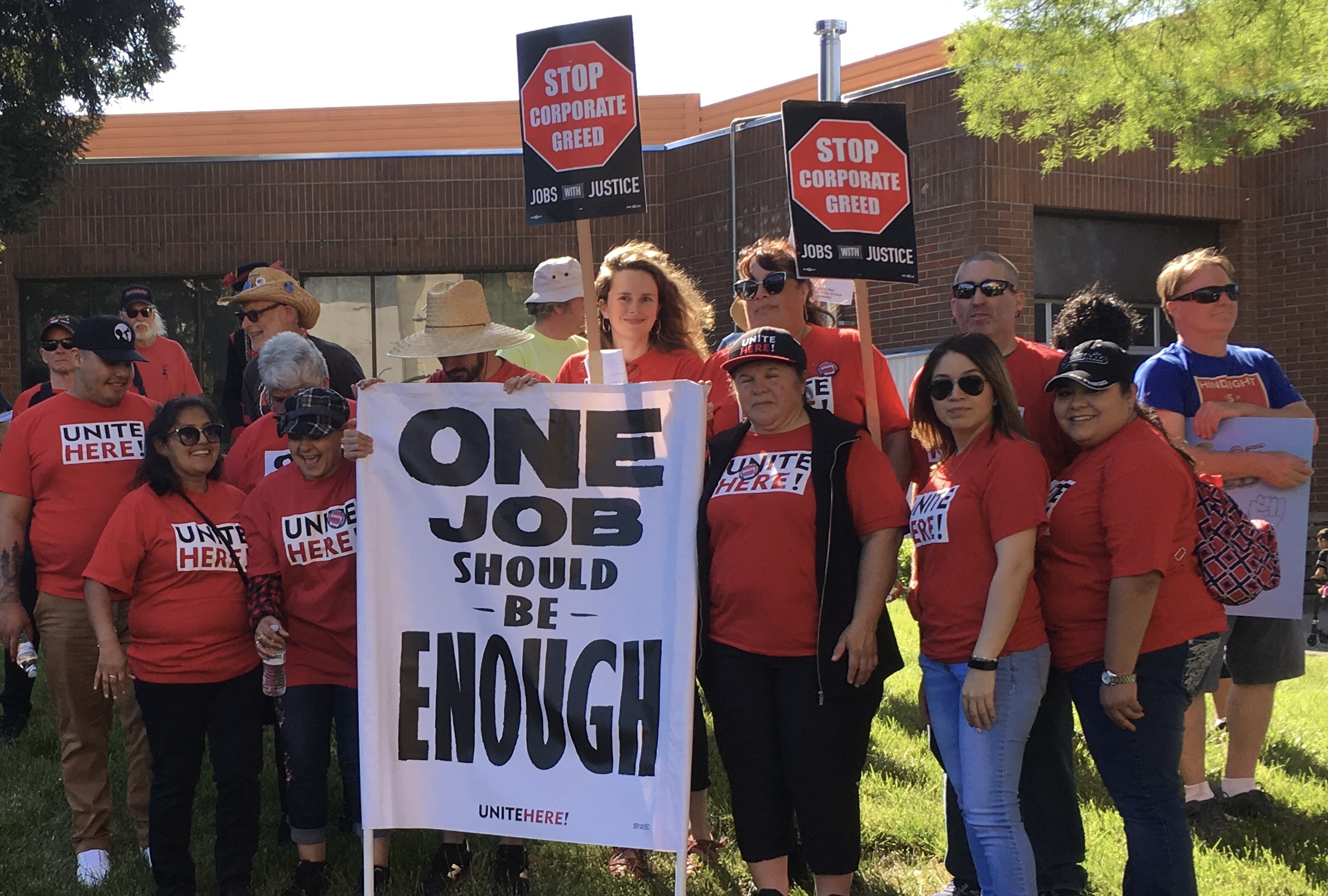
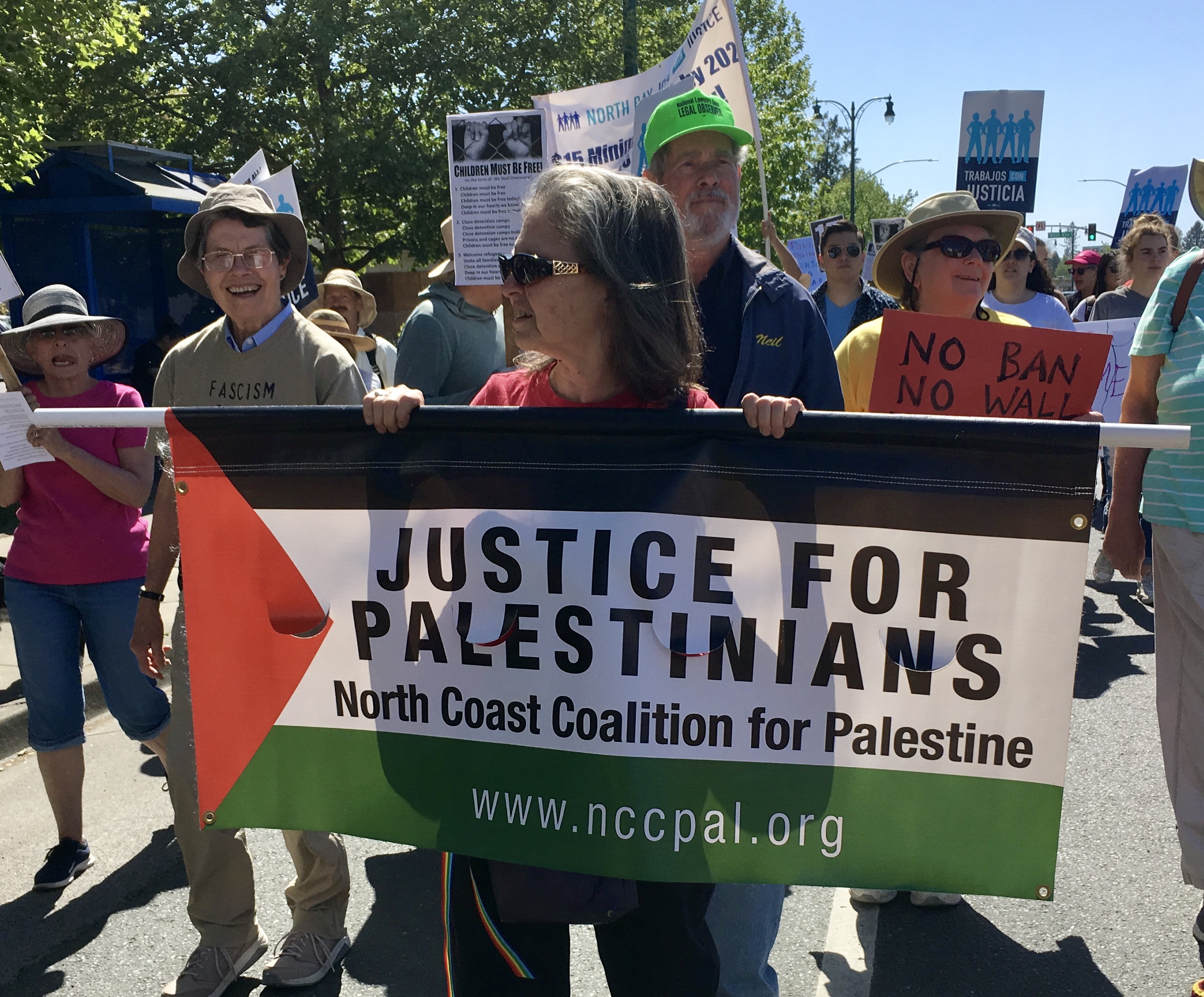
Photos are from the 2019 Santa Rosa May Day march
California Labor Councils are planning actions up and down the state. This year’s May Day actions are about solidarity across sectors as workers push for higher wages, stronger contracts, the right to join a union, and fight back against corporate greed.
Here in Sonoma County on May 1 we will be marching for “Immigrant Rights Are Human Rights” starting at the county sheriff’s office. Marchers will demand that the Sonoma County Board of Supervisors proactively advocate for a Path To Citizenship policy in Congress and also support a county ordinance which would prohibit any collaboration or information sharing between the Sonoma County Sheriff and Immigration Customs Enforcement (ICE).
The Haymarket Affair was a seminal moment in the struggle for workers’ rights. The martyrs of that turbulent era—Albert Parsons, August Spies, George Engel, and Adolph Fischer—must not be forgotten. Their legacy endures, inspiring movements for social justice and workers’ rights around the world.


The Haymarket martyrs memorial and Lucy Parson’s grave at Forest Hill cemetery in Chicago
A happy Beltane and a revolutionary May Day to all!

 tradeswomn musings
Dear Molly,
The information about both Parsons and the way you talk about Mr. Parson’s switching sides was very interesting. And your journalistic craft is a delight!
LikeLiked by 1 person
Thank you Ruth! I always appreciate your feedback. Yes, I was trying to put myself back in that time, thinking about what makes people change their minds. Parsons was a teenager when he fought in many Civil War battles. Only after the war did he realize he’d been on the wrong side. He was influenced by and participated in Reconstruction efforts.
LikeLike
Molly, that was great! thank you for the musing. I’m so glad you did finish it once I quit the field.
LikeLiked by 1 person
Thanks so much for the education about May Day, the Haymarket Affair and Albert Parsons! Now I’m wondering what happened to my copy of the Peoples’ History of the US by Howard Zinn… couldn’t find it so I went on Wikipedia – not the same perspective but there was an excellent account of the Haymarket Affair with illustrations and the historical monuments in Chicago and the history of May Day celebrations.. Now I think I’ll make sure that my son Josh knows about the martyrs who fought for the 8 hour day and how International Workers Day came to be!
LikeLiked by 1 person
Wonderful! Yeah the history is longer and far more complicated than what I wrote. Do you remember the city put up a statue of the first cop killed by the bomb (not the cops that killed each other!) and the Weathermen kept blowing it up in the 60s? It was finally moved indoors.
LikeLike
“Presente”Happy MAY DAY!!
LikeLiked by 1 person
Thank you Mary! Happy May day to you and all the Fort Point gangers. Please give them my regards.
LikeLike
Interesting history, Molly, and very well written. I’m thinking I’d like the eight hour day for overseas workers from Asian countries. Their work days are more like 16 hrs every day cleaning, cooking and caring for the rich with low pay and exploitive conditions. They sometimes come home to their country in a box. Workers here need to remember those who aren’t even close worker justice.
Anyway, happy Beltane. I’ll be Sacred Circle Dancing again Wednesday and thinking of you and Holly.
Marsha
LikeLiked by 1 person
Yes, the labor movement is international and we do support organizing efforts in other countries. Globalization makes that a necessity.
LikeLike
absolutely one of your best essays dear Molly. sending it out to everyone I know. love how you sew all the threads of our history together and especially how you include all we are dealing with today. nothing came from nothing. the struggle for justice for all continues!
LikeLiked by 1 person
Thanks Sheila! You are so right. Important to remember our history.
LikeLike
That’s a stirring story! Thanks for sharing how labor protests began. –Jean H.
LikeLiked by 1 person
Thanks for reading Jean!
LikeLike