Blossom Peeping in Yakima

My Regular Pagan Holiday post–Ostara

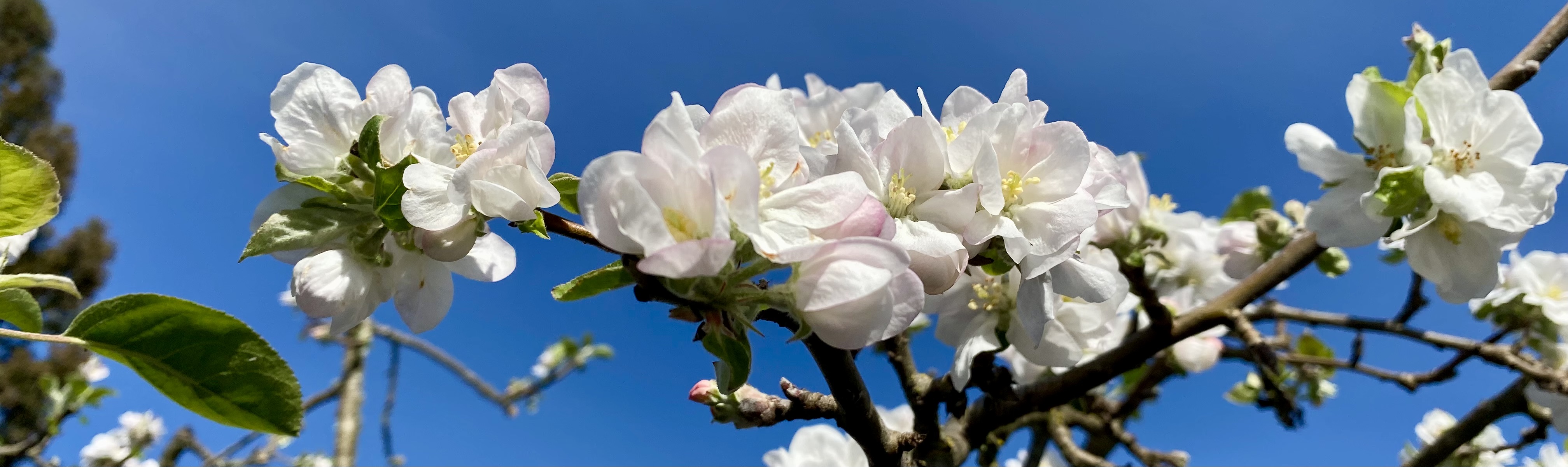
Each spring, near the Vernal Equinox, my family practiced a ritual that felt both ordinary and divine. We piled into the car and drove the back roads, wandering through orchards to admire the blossoming trees. In an agricultural town in the 1950s, perhaps many families did something similar. To us it marked the true arrival of Spring.

Yakima, Washington is on the dry eastern side of the Cascade mountain range, and from certain places in the valley you can glimpse two great peaks rising in white brilliance above the brown, sagebrushy foothills. The Indigenous peoples named the mountain we call Rainier Tahoma, which means “the mother of waters.” The Native name for Mt. Adams is Pahto. Closer in, foothill ridges encircle the valley: Ahtanum Ridge, Rattlesnake Hills, Horse Heaven Hills. 

Our annual blossom pilgrimages would take us south to the Lower Valley where the trees bloomed earlier. To reach it from the town of Yakima, you drive through a narrow gap in the Rattlesnake Hills at Union Gap, where a massive basalt landslide is now slowly creeping south at a foot and a half per week. Drive fast and don’t look up. 

From there, the road winds along the Yakima River past Wapato, Toppenish, and Buena—locally pronounced Byoo-enna. I didn’t realize until adulthood that the word is Spanish. Originally, the place had been called Konewock, a Native word meaning a lush, green marshy place. But when the railroad needed a station name, it became Buena.

The Yakama Indian Reservation borders the Lower Valley towns and stretches west toward Mount Adams. On the reservation stand the remains of Fort Simcoe, where U.S. soldiers were stationed during the Indian wars of the 1850s—a quiet, uneasy reminder of deeper histories layered beneath the orchards.

Yakima was home to vast orchards of apples and pears, along with stone fruits—peaches, cherries, apricots. In the spring the valley was a quilt of flowering trees, fragrant and luminous. But, in my childhood, change was already underway. Like the orchards here in Sonoma County today, many of Yakima’s were already being razed to make room for postwar housing developments and, later, vineyards.

The new ranch-style house we moved into in 1951 stood on land that had been a cherry orchard. The developers left one tall cherry tree in the front yard of each house on the block. I climbed every one of them. Across the street, an apple orchard remained, and bi-planes flew overhead, trailing clouds of DDT and other pesticides. 
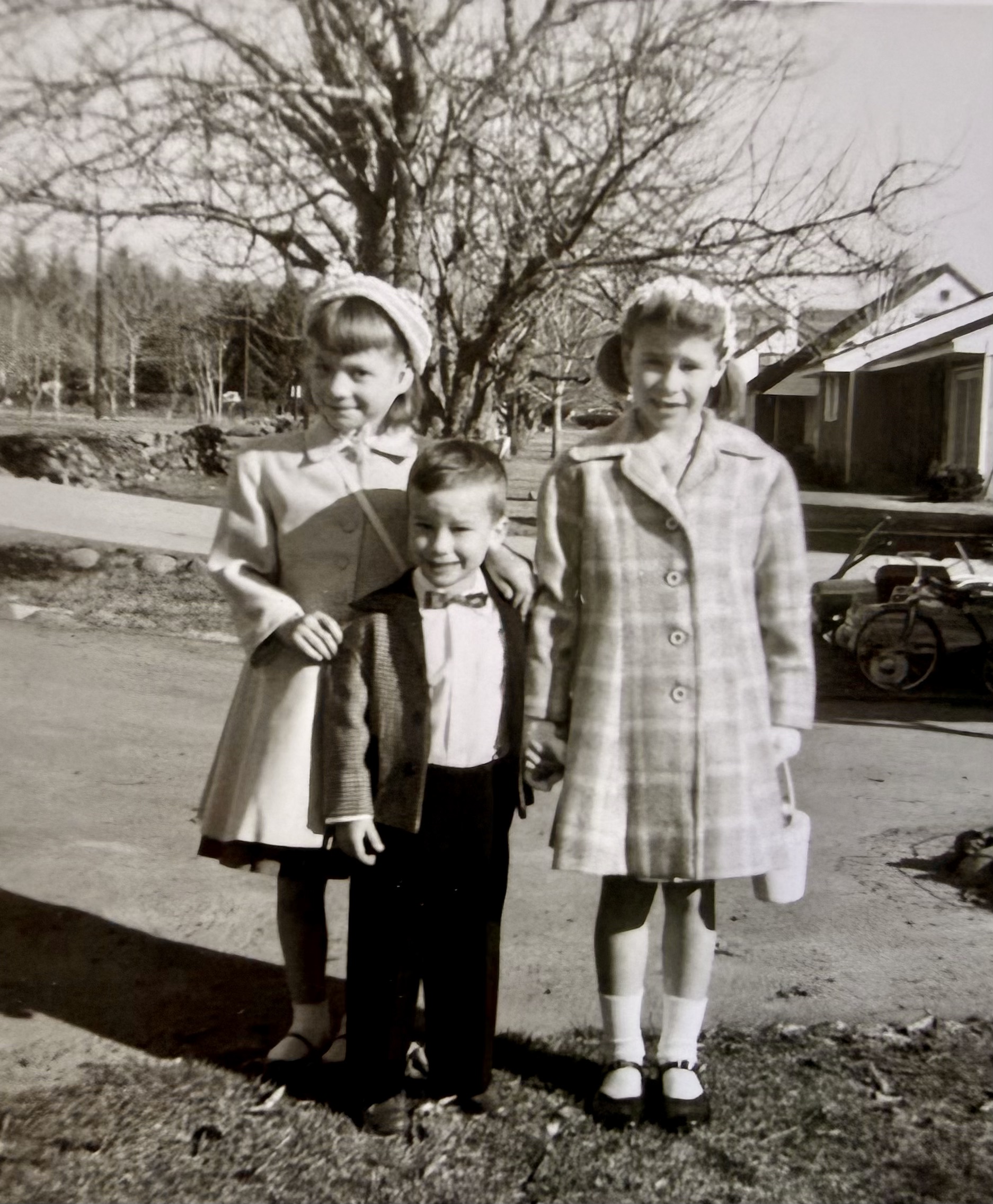
There is the row of cherry trees behind me (R), brother Don and a neighbor. I couldn’t find any blossom pictures and at Easter in 1955 the cherries hadn’t yet bloomed.

When I was a kid, Yakima was a town of about 40,000, with a lively downtown. Women wore hats and gloves to go shopping. Store windows gleamed, sidewalks buzzed, and the town felt cohesive, self-contained. Then, in the 1970s, the first shopping mall arrived, and everything shifted. Downtown slowly hollowed out.
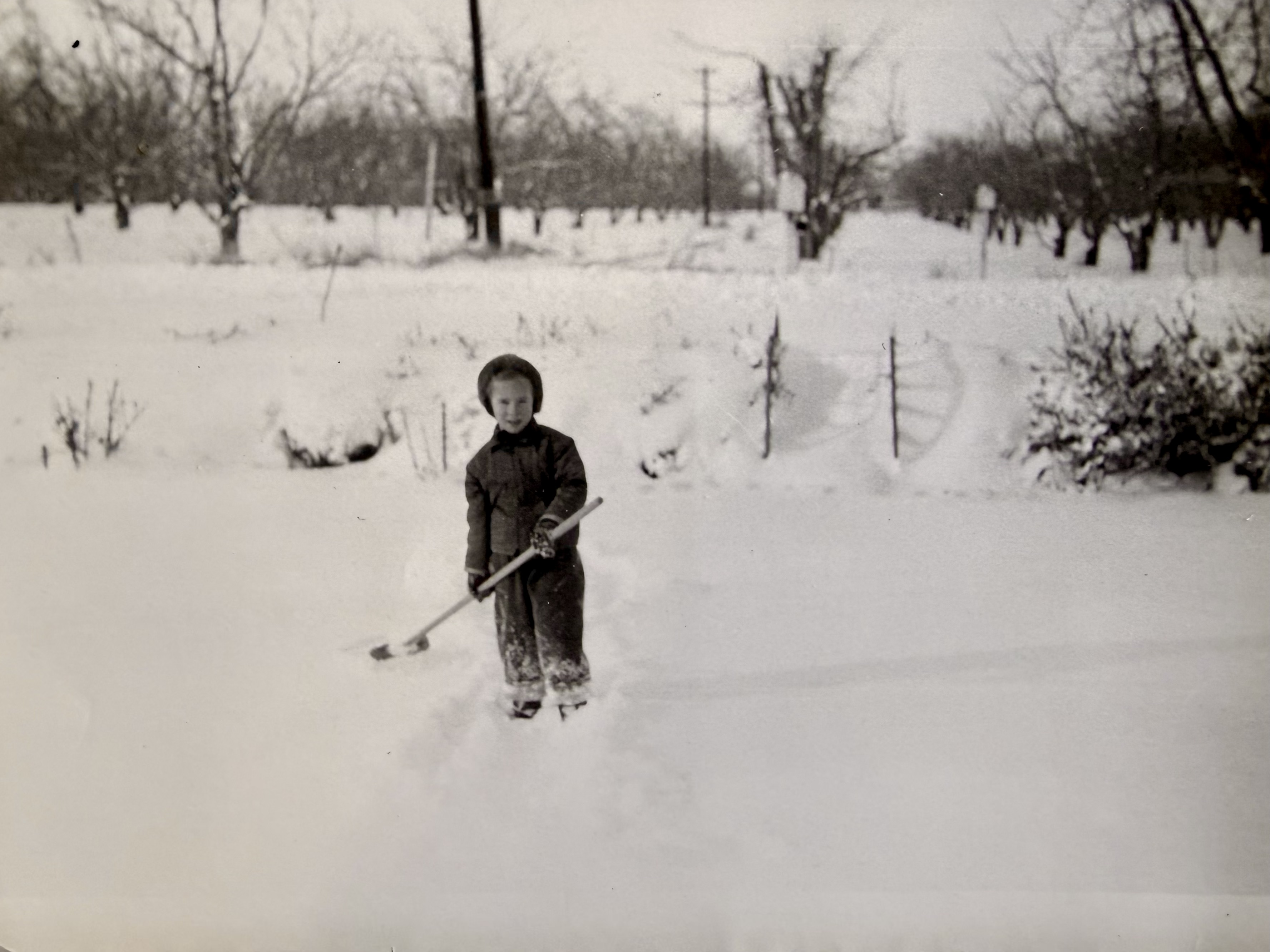
Behind me is the across-the-street apple orchard.

Now the population of Yakima is getting close to 100,000. Farmers still grow hops, and there are still fruit trees—mostly apples—but vineyards have been steadily taking over. There is less blossom-peeping now; grapes, after all, have no blossoms.
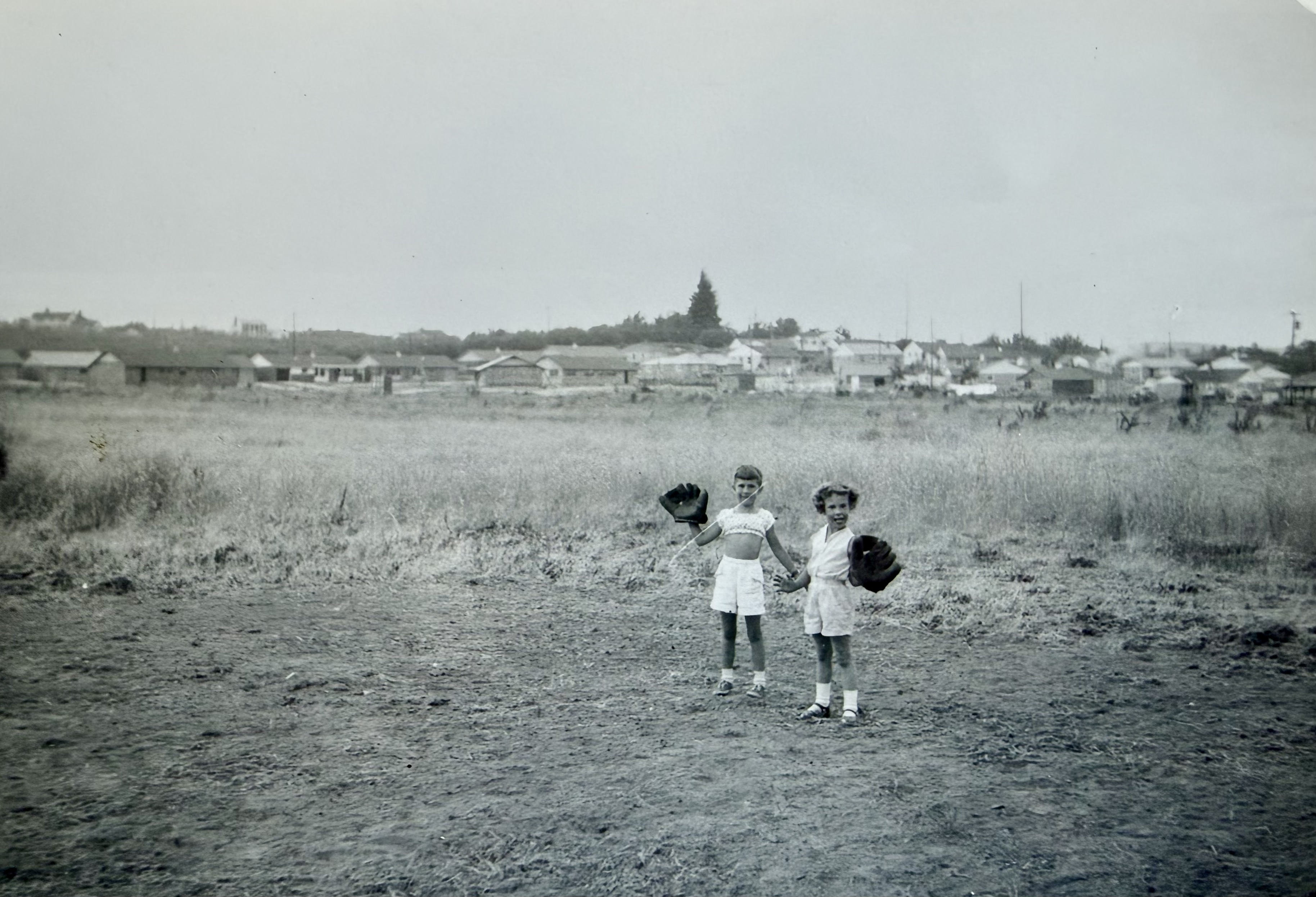
Me (R) and friend. From the back yard we can see development encroaching and a few trees left.

But we still participate in the ritual of spring blossom peeping. Holly and I have planted a little orchard of cherry, plum and peach trees in our back yard. We have a magical orange, and lemon and apple trees hang over our neighbors’ fences. Plus, in our town of Santa Rosa there are magnolias, redbuds, dogwood and ornamental fruit trees, enough to inspire a months’-long Spring ritual right in our neighborhood.

On March 28 we will be marching with our neighbors in the No Kings march and rally here in Santa Rosa, but every little town in Sonoma County will be hosting a No Kings event. We haven’t yet seen a big uptick in ICE arrests here, but the government’s anti-immigrant project is nevertheless creating chaos in the agricultural community. Our sheriff still has not responded to community demands that he not work with ICE and people feel that they are under siege. We are determined to protect and defend our immigrant neighbors.
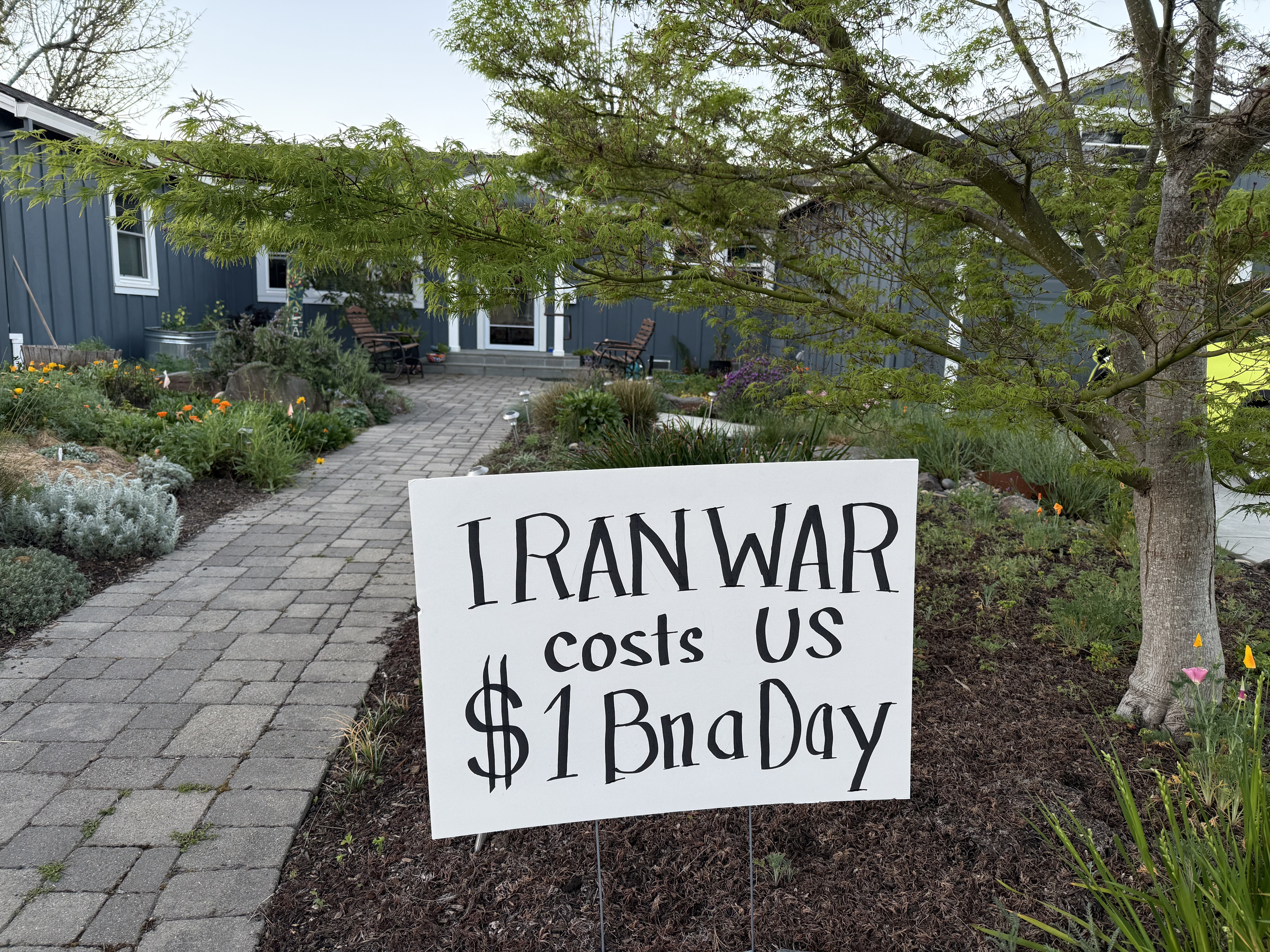
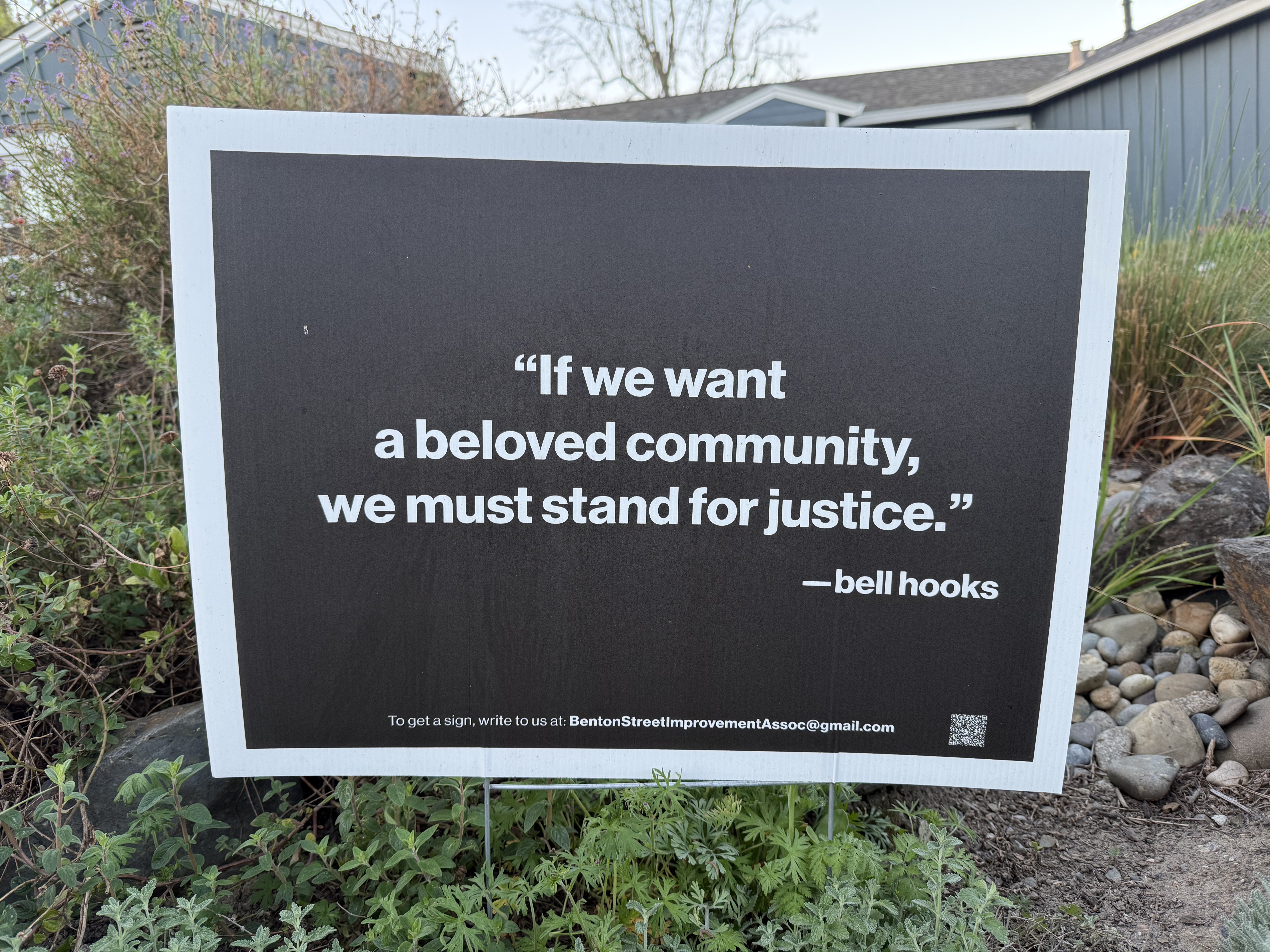
My No Kings sign posted in our front yard
Four women in my neighborhood had these signs made, with quotes from luminaries that promote kindness and justice. Now they are posted in front yards all over town.

Happy Spring blossom peeping and protesting to all!

Wither the Maypole?

May Day 2025

My Regular Pagan Holiday Post

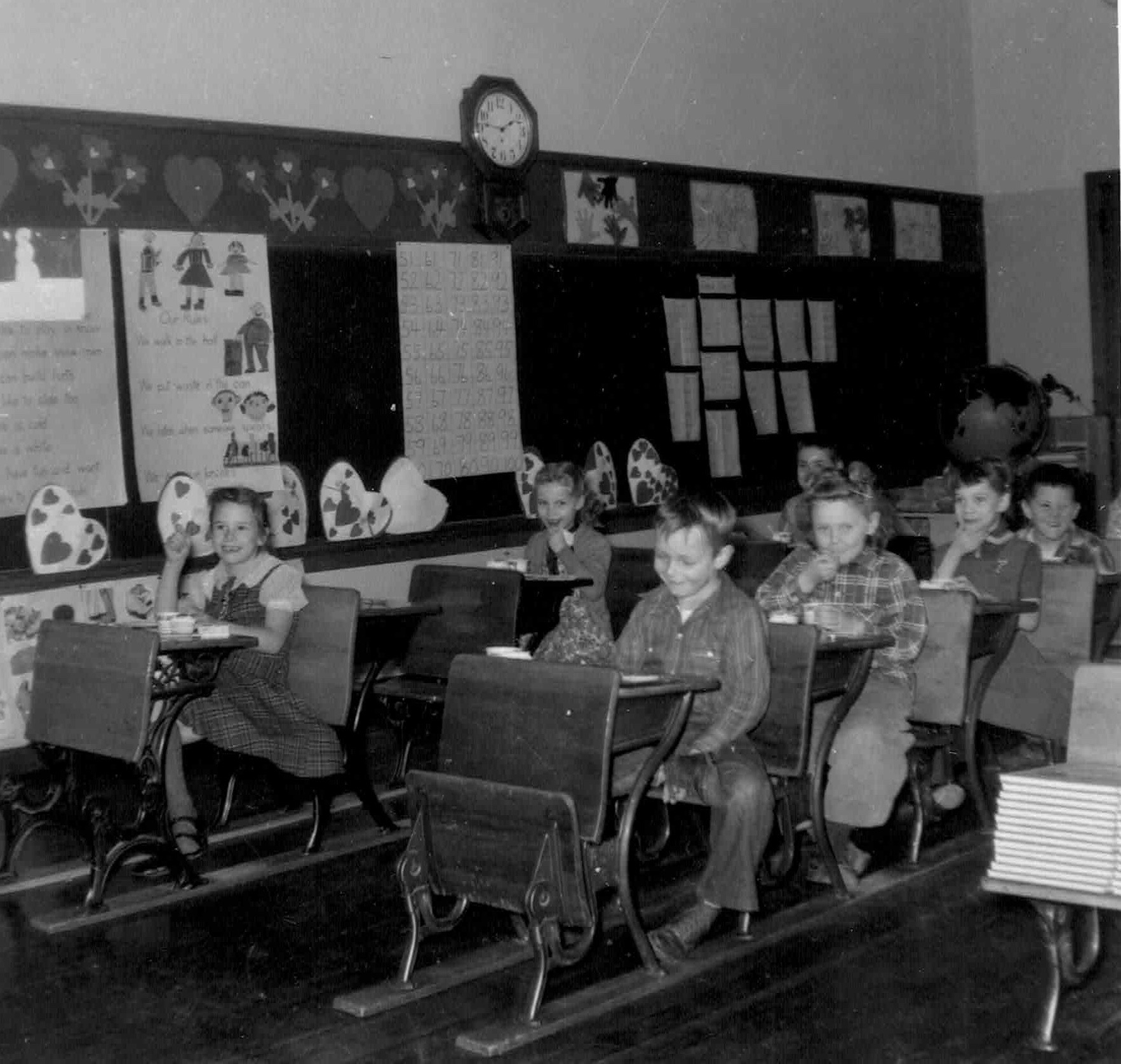
Wide Hollow Elementary School in Yakima, Washington, was already an old building when I began attending in the 1950s. At the time, it served students from first through eighth grades. The little kids were on the first floor, the big kids upstairs. I remember the worn wooden steps leading to the second floor, scalloped by generations of student feet.

Our classrooms held old-fashioned desks—wooden with ornate cast-iron legs—each one with a small hole in the top for an ink bottle. We were taught how to fill our fountain pens by dipping the nib into the ink and lifting a lever to draw it in. (This cannot have happened without spills—the poor teachers!)

Valentines day 1956 at Wide Hollow school. That’s me on the far left.

Every room had a long wall of blackboard, with erasers that students cleaned by smacking them together, creating great clouds of chalk dust. The tall windows were opened using a long pole. Above the blackboards, neat rows of Palmer Method cursive letters reminded us of the proper way to form our handwriting.

The school was heated by a coal furnace. A coal chute led to the basement, where the coal man would periodically unload his delivery.

My first grade class at Wide Hollow

Outside, the playground seemed enormous. A towering maple tree stood right outside the building. We had swings, a slide, and a ride called the “ocean wave”—a notoriously dangerous contraption rumored to have killed children in other schools. As far as I know, ours survived it, though I did rip my good dress riding it on the very first day of first grade.

At recess, we played Ring Around the Rosie, Red Rover, jump rope, tetherball, and a game where we bounced a ball against the wall chanting, “Not last night but the night before, 24 robbers came knocking at my door.”

Much has changed. The old building was torn down years ago and replaced. The curriculum has become more inclusive. I still remember being twelve and furious that our new history books made no mention of the Indigenous peoples of the area. Today, Wide Hollow proudly displays a land acknowledgment on its website:

 “We would like to acknowledge that we’re coming to you from the traditional lands of the first people of our valley, the 14 Confederated Tribes and Bands of the Yakama Nation, and we honor with gratitude the land itself and the Yakama Tribe.”

Wide Hollow is now a K–5 school. They host a “multicultural celebration,” but I don’t believe the ancient pagan Spring holiday of May Day is among those still observed. Back in our day, we celebrated May Day by weaving ribbons around a maypole (perhaps the tetherball pole?) and making May baskets, often filled like Easter baskets with flowers.

Dancing around the maypole

While May Day celebrations have largely fallen out of fashion in the U.S., they still take place in some towns. In Europe, the tradition persists more strongly. In modern pagan communities, May Day has been revived and reimagined through the Celtic festival of Beltane.

In Sweden, maypole dancing has shifted to the big Summer Solstice festivals, but until the 19th century, May Day was celebrated with mock battles between Summer and Winter. I love this account by Sir James George Frazer in The Golden Bough (1911):

“On May Day two troops of young men on horseback used to meet as if for mortal combat. One of them was led by a representative of Winter clad in furs, who threw snowballs and ice in order to prolong the cold weather. The other troop was commanded by a representative of Summer, covered with fresh leaves and flowers. In the sham fight which followed, the party of Summer came off victorious, and the ceremony ended with a feast.”

Note: the picture of Wide Hollow school at the top is a postcard labeled North Yakima. That means the picture was taken before 1918 when North Yakima was changed to Yakima. So the school was originally built probably in the teens.

May 1 is also International Workers Day

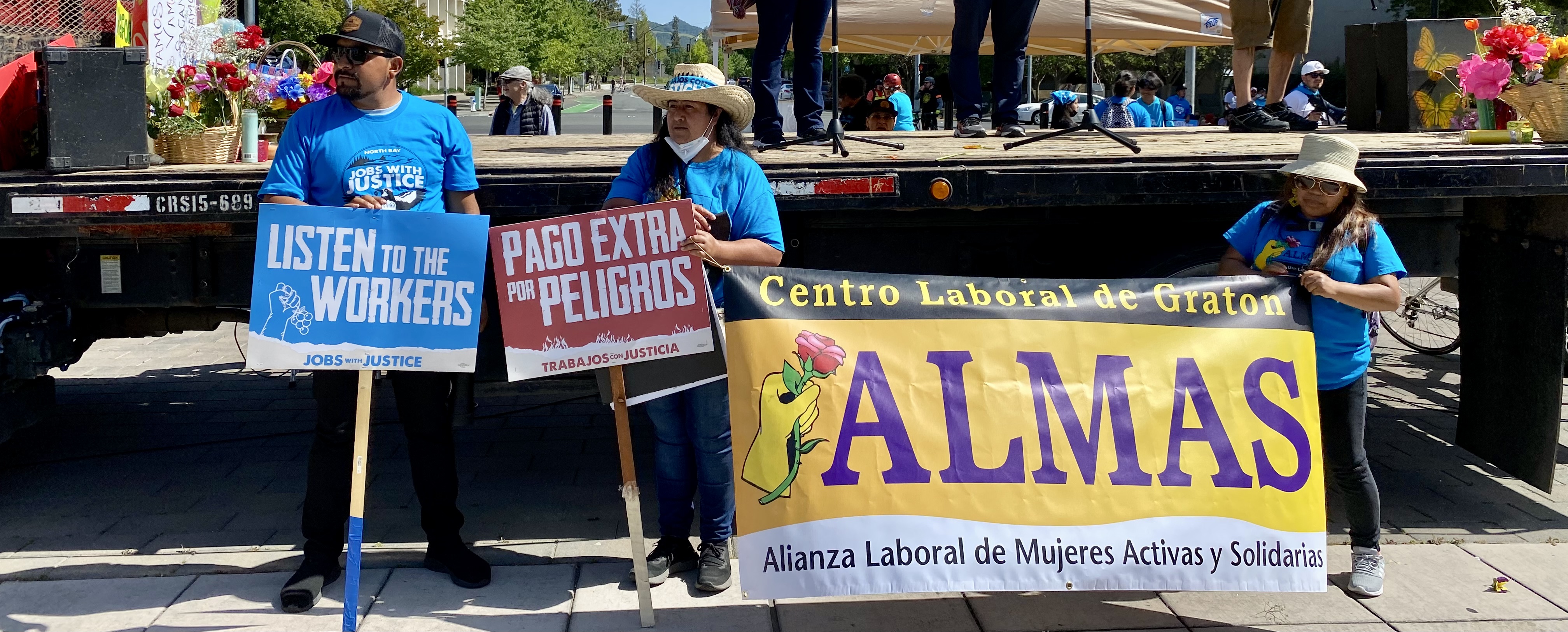
At the Santa Rosa International Workers Day celebration

May 1st is also recognized globally as International Workers’ Day. In 1889, the date was chosen by an international federation of socialist groups and trade unions to commemorate the Haymarket Affair—a violent deadly police riot in Chicago in 1886 targeting workers organizing for the eight-hour workday.

Here in Sonoma County, this year May Day marks the beginning of the Days of Action May 1-5, organized by Community United to Resist Fascism (CURF). The International Workers’ Day march will call for immigrant rights and is co-organized with the May 1st Coalition. The event will begin at 3 p.m. in Santa Rosa at the Sonoma County Sheriff’s Office, proceed to the Board of Supervisors’ office, and then continue to Old Courthouse Square to rally at 5pm. I’ll see you there!

For more information and to sign up for the coalition: https://www.pjcsoco.org/event—santa-rosa-protests-may-1—5.html