Remembering the Mother of California Civil Rights

My Regular Pagan Holiday Greeting: Celebrating Beltane May 1

Mary Ellen Pleasant, the mother of California civil rights, is associated with the pagan holiday Beltane because she once owned and lived at Beltane Ranch, here in Sonoma County. It is now recognized as a Black historic site by the National Park Service. Once the richest Black woman in America, her wealth was stolen and she died a pauper in 1904. She is buried in the Tulocay cemetery in Napa.

I wrote about Pleasant last year on Beltane, but I wasn’t finished thinking about her. She is a supremely important person in California history, but one who has been largely forgotten. I’m all about resurrecting her memory.

I refer to her as MEP because that is how she signed the note found in the pocket of John Brown before he was hanged for treason and inciting a slave rebellion in 1859. The note read, “The ax is laid at the foot of the tree. When the first blow is struck, there will be more money to help.” MEP had financed Brown’s raid on Harper’s Ferry with a donation of what today would be a million dollars. Because her initials were read as WEP, she was never caught by Virginia authorities.

MEP was born in the East where she worked to bring slaves up north on the underground railroad until slavers threatened her. Along with a number of fellow abolitionists, she migrated to California in 1850. She sailed first to New Orleans where she continued to help people to flee slavery. During her short time there she connected with the legendary voodoo queen Marie Laveau. She left the city just as she was about to be captured for helping runaway slaves. 

The party landed in San Francisco where abolitionists found plenty of work to do. In California of the 1850s the law allowed any Black person who did not have proper papers to be sold into slavery. Slave catchers and slave owners came west looking for runaways. Slave owners who arrived in California before September, 1850 were allowed to keep their slaves as indentured servants.

My wife’s family traces their ancestry to Peter Burnett, the first elected governor of California, but of this they are not proud. Burnett, a Missouri immigrant, slave owner and white supremacist, promoted some of California’s most racist laws including enabling the enslavement and genocide of American Indians, the Chinese Exclusion Act, and a push for the total exclusion of Blacks from the state. Earlier, as a judge in Oregon territory, he signed the first exclusion laws which required all Blacks to leave the territory or be flogged.

Burnett and MEP were destined to tangle. At the time Blacks were not allowed to testify in court. MEP helped get this law changed, but in the meantime she defended and hid Blacks unfairly captured. She paid the legal bills of young Archy Lee, brought as a slave from Mississippi, a slave state, to California, a free state, in 1857.
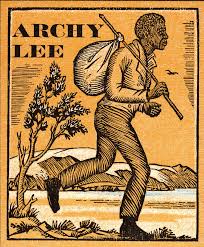
In the first case, Lee was declared free, as California allowed only “transient” slave owners to retain their slaves. Then, in an appeal to the state supreme court, Peter Burnett (by this time he was a member of the court) authored and signed the court’s decision to allow the slaveholder to leave the state with Lee as his slave. 

From the court ruling: “It must be concluded that, where slavery exists, the right of property of the master in the slave must follow as a necessary incident. This right of property is recognized by the Constitution of the United States.” 

Californians were outraged, and abolitionists boarded the ship to rescue Lee as it was leaving the state. A federal court overturned the Burnett decision, but then the slaveholder charged that Lee was in violation of the Fugitive Slave Act of 1850. A final trial declared Lee to be a free man. Archy Lee joined an expedition of African Americans who resettled in Canada.

Burnett was only governor for a year, then on the supreme court for less than a year, but he and other Southern whites impressed racist ideology on California in that short time. Reading the history, I’m truly amazed that a failed shop owner who had fled Missouri in debt could leave such a smear on the new state. California citizens have since learned the history and taken Burnett’s name off public buildings.

I wanted to see MEP’s grave so my friend Joan and I made the pilgrimage to Napa this spring. When we visited, the cherry trees surrounding it were in full bloom. Tucolay is a beautiful big cemetery and MEP’s grave is situated in a lovely corner.

When my friend Bill had visited last year, the gravestone was covered with voodoo icons like skulls with a vase of black roses. Icons had been glued right onto the stone, obscuring the inscription. Was it the work of a modern voodoo cult that surrounds her because of her association with Madame Leveau? At my visit the skulls had been removed, but traces of glue remained.

MEP said, “Before I pass away, I wish to clear the identity of the party who furnished John Brown with most of his money to start the fight at Harpers Ferry and who signed the letter found on him when he was arrested.” 

She said it was the most important and significant act of her life, a life spent working to end human slavery.

On Beltane we celebrate the life and work of MEP and we also devise our own rituals to acknowledge the changing of the seasons. Our winter was cold and wet—about twice as rainy as normal. There was no spring; we graduated into summer on easter weekend. The sun came out with a vengeance and all the buds and flowers that had been patiently waiting for it burst forth in profusion. Grass of every variety grew tall. Lawn mowers revved. Fence lizards emerged. Ants vacated the kitchen. Bees and pollinators are waking up.

On Easter, instead of hunting for eggs, we concocted a ritual with friends who periodically drink Prosecco with us. It’s Linda’s job to pop the corks, and they can travel far into the garden. We hunted for corks instead of eggs. This, we expect, will become an annual custom.

I’ve just picked the last of the oranges and am about to start harvesting artichokes. We planted flowers and vegetables. I put away my warm slippers and took out my flip flops. I kissed the gloves I’d worn all winter, thanked them for warming my hands on many chilly hikes and tucked them into a drawer.

Goodbye winter. Hello summer!

Here is the link to last year’s story about MEP: https://mollymartin.blog/2022/05/01/beltane-and-a-black-heroine/

Happy Beltane to All

Birds Are Busy in Our Garden

The Celts were a bunch of tree worshippers and their pagan holiday of Beltane featured a May Bush, decorated and shown off around town. The Celts celebrated the holiday with big smokey bonfires into which the May Bush was sacrificed at the end. Beltane, May 1, marks the Gaelic start of summer. 

Our celebration was fireless and smokeless and we didn’t get around to decorating a May Bush, although I love the idea and think we should adopt it. But we celebrate by appreciating the flora and fauna in our garden and neighborhood. This spring we’ve been particularly appreciating our birds.

This is our fourth spring living and gardening here at Hylandia, and we’ve watched the behavior of our local birds change over that time. Now we see that some birds just visit our garden and some live here year round, becoming family of sorts. They no longer fly high over our yard, but swoop fast and low over our heads. 

In the midst of our human pandemic the birds experienced their own pandemic, an outbreak of salmonella especially prominent among flocks of pine siskins. They migrated here because of a bird irruption, the greatest irruption of these birds on record, according to Audubon. The pine siskin is a finch that looks very much like a goldfinch, brown striped with yellow markings. But they were easily identifiable because they looked sick. Dying birds lay on the ground in our garden and the neighborhood.

On the advice of the Bird Rescue Center we took our feeder down, but now the pine siskins have moved on and Holly has put it back up. The fickle finches have returned to the feeder. They don’t live here, but they don’t migrate either. They roost elsewhere and only come in for eating and bathing. Robins occasionally drop in for a bath and jays are regular visitors.

Crows built a nest at the top of the big oak tree in the next-door yard and so we had crows visiting our garden often for about a month. By mid-April the chicks had fledged. The crows have disbursed now but for a time the crow noise was deafening. Baby birds don’t look babyish at all. They sometimes are even bigger than their parents. But you can tell the fledglings because they flap their wings asking to be fed. And very often we see adults feeding them. For the first time we saw crows coming down to our fountain to drink and bathe and just check out the yard. 

The crow noise must’ve also inspired the mockingbirds around here. One was singing all night for a few weeks. He would stand on top of a telephone pole–mockingbird territory. Then he would do an acrobatic dance, jumping up in a somersault before coming back down to the top of the pole, singing all the while. Mockingbirds are loud but not boring because they sing lots of different songs. They have learned the song of the titmouse: sweetie sweetie. They’ve also learned the sound of car alarms although their version is more songlike than the actual alarm. Leave your windows open and they might keep you up at night.

We were delighted that the titmice chose our birdhouse to nest in this year.  Once the nest was chosen the male’s call began to sound threatening and kind of rough, unlike his usual sweet song. He aggressively patrolled the yard, now his territory. Some people think crows in the garden scare away little birds, but nesting titmice and crows cohabited well here.

Oak titmice are year-round residents of the yard and so are California towhees. Here is something we have discovered this year: towhee sex is is violent and it happens in midair in a fast flurry of bodies and feathers. The birds make weird grunting sounds that we never hear from them otherwise. Their usual call is a boring and sometimes irritating cheep cheep cheep that can go on for hours and is loud enough to wake humans. Chimneys and rooftops are their territory. They scratch the ground, chicken-like, which to me is rather comforting. 

Ok, I must admit a slight irrational prejudice against the towhees. More than once I’ve mistaken one of them for a rat in the garden. They move in a devious way like rats, scurrying with heads down. And they’re a similar brown color to the rats that live here. I do know this unfortunate resemblance is not their fault.

We have learned the beautiful songs of the Bewicks wren this spring but we’ve only seen one and assume it’s the male. He likes to eat lettuce planted in straw bales in the garden, and he sometimes comes to the feeder for suet. We have been anxious for him to find a mate, settle down and live with us.

Mourning doves visit most often in the morning and evening at dusk. We know that their nests can be found in unlikely places. In my San Francisco garden the female laid eggs in a depression in a flower pot on the back stairs. We could see everything. Sadly, so could the crows; the eggs were stolen. Here in Santa Rosa we haven’t seen them nesting, though our neighbor Linda told us they nested on her electric meter last year.

One day I watched an elaborate dove mating ritual. There was wing flapping and feather ruffling and head bobbing and something that looked like passionate making out where they would grab each others’ beaks and hold on while moving back and forth. It went on for a while. Then another time they just did it with no ritual at all. The couple, it turns out, only has to court once. They are a pair for the season.

Lately we’ve been delighted to see a pair of hooded orioles taking baths in the fountain. They do migrate south for the winter but have nested in the last two seasons in a bottle brush tree in the neighbor’s yard. 

Bird behavior is so very varied, often we can’t even confirm our observations by looking these things up in our bird books or online (I couldn’t find anything written about towhee sex). But we are having great fun learning by observing.

Celebrating Beltane and May Day

Dear Friends,

Emerging from the chrysalis—a month and a half of  coronavirus lockdown and spine surgery recovery—it feels like a brand new day. In Sonoma County residents are now allowed to walk or bike (but not drive) to a park. Keep your mask on.

IMG_0302
A trailer parked on my block

I’m one of those people who finds it difficult to sit in one place and concentrate on anything for any length of time. I always knew I had a very short attention span. Holly thinks maybe I have undiagnosed ADHD. Anyway being flat on my back and having to concentrate on recovery from surgery has helped me if not to focus better at least to understand my problem better. I was pretty happy listening to novels especially when I was in the first stage of recovery and could barely get in and out of bed. As I recovered I felt more and more like multitasking, as if I actually could pick up my iPad and read Facebook posts while I’m listening to a book. Not! I can work on a jigsaw puzzle and listen to a book at the same time. Holly says that’s because you’re using different parts of the brain. Don’t try do two tasks that require words at the same time.

So I have been trying to practice doing one thing at a time. Then, reading the Audubon newsletter, I learned about bird sitting. It’s easy. You just sit and listen and watch and use all your senses to experience birds. I expanded this concept to pollinators. Bee sitting.

IMG_0331
Our pollinator garden

One sunny April day after I was able to walk around and sit outside in a zero gravity chair, I spent an hour or so just watching pollinators. The air was full of flying and floating things. Filaments of spider web, falling blossoms, puffs of seeds and insects moved through the air in the soft breeze. Honeybees populated the orange and the apple tree. The native bees went for the native plants. Bee segregation! Our pollinator garden starts blooming early. The native carpenter bees and bumblebees especially love the red salvia. And there are all these other little pollinators that may or may not be bees, the kind that fly in squares turning quickly at right angles, the tiny gnats that circle endlessly around each other. I was surprised at how many bugs I couldn’t identify.

IMG_0310
First strawberries. Eaten by a wild animal that night.

Two years ago we had a great population of carpenter bees. The females are big and shiny black, the males smaller with a smidge of yellow. A tub full of purple flowers bloomed near where I like to sit on the patio and my purple hair was constantly being dive-bombed by purple-loving bees. Then last year the bee population declined. I saw one maybe two carpenter bees and we began to wonder if they had been living in the old original redwood fence from 1948 that we had replaced the year before. My brother Don told me that when they remodeled their house in Olympia they destroyed the carpenter bees’ home in the exterior trim on their building. That year and some years after their apple orchard did not get pollinated and had no apples. So I’m delighted that the carpenter bees have returned. 

I plan to celebrate Beltane bee sitting. 

Sending virtual hugs to you all. Take care of yourselves.