Practicing Garden Herb Witchery

My Regular Pagan Holiday Post

Autumn Equinox is September 22, 2025

It felt like fate. On our very first date, a hike in the hills above Muir Beach, Holly and I bonded over plants. She pointed out a lichen growing on an oak tree—Usnea. To identify it, she said, you snap a branch and pull it apart until you see the central cord inside.
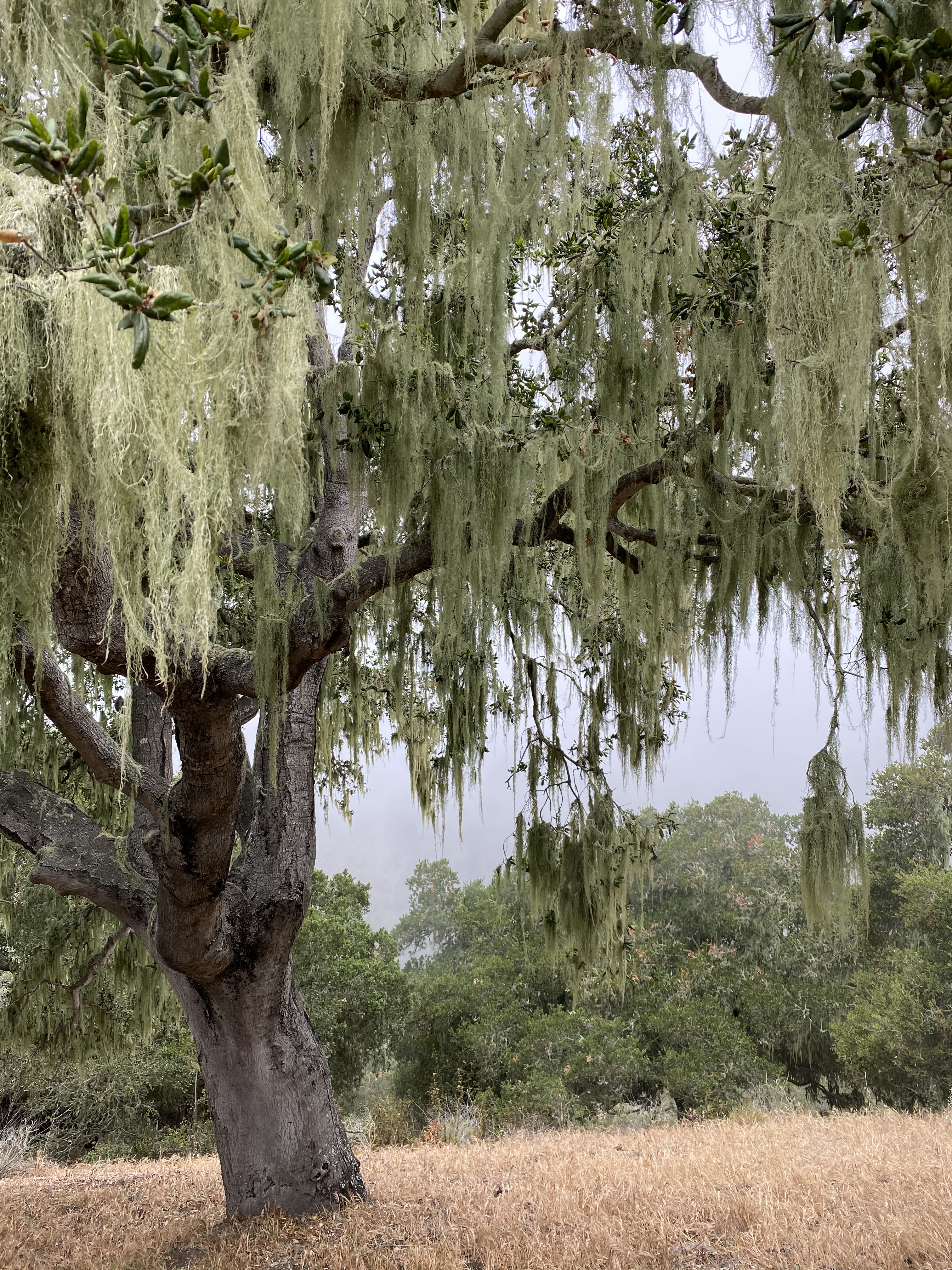
Usnea on oak. Photo by author

Usnea is known by many names: old man’s beard, beard lichen, or beard moss. A sensitive bioindicator of air quality, it only thrives where the air is clean and unpolluted. For centuries, it has been used in traditional medicine to treat wounds and infections. Today it’s still valued—for easing sore throats, helping wounds heal, reducing fevers and pain, even as a possible cancer-fighting agent.

Holly, now my wife, is a witch and an herbalist. She first learned about Usnea from a teacher of medicinal plants, and today her garden overflows with remedies. 

The fall equinox—Mabon—is our time to harvest herbs and brew up remedies. Holly stirs up her bite balm, a salve for every kind of skin irritation, while I turn to cannabis. Since I don’t smoke, I’ve studied the alchemy of decarboxylation: gently heating the herb to unlock its powers before infusing it into oils for cooking.

Some of the herbs in Holly’s garden. Photos by author

Together we blend teas from garden herbs. Our MoHo Blend we make from nettle, comfrey, and lemon balm. Comfrey mends bones; nettle brims with minerals; lemon balm lifts the spirit. Holly grows native yarrow, too, and last week she showed me how to stop a cut from bleeding: chew a fresh leaf and press it to the wound.
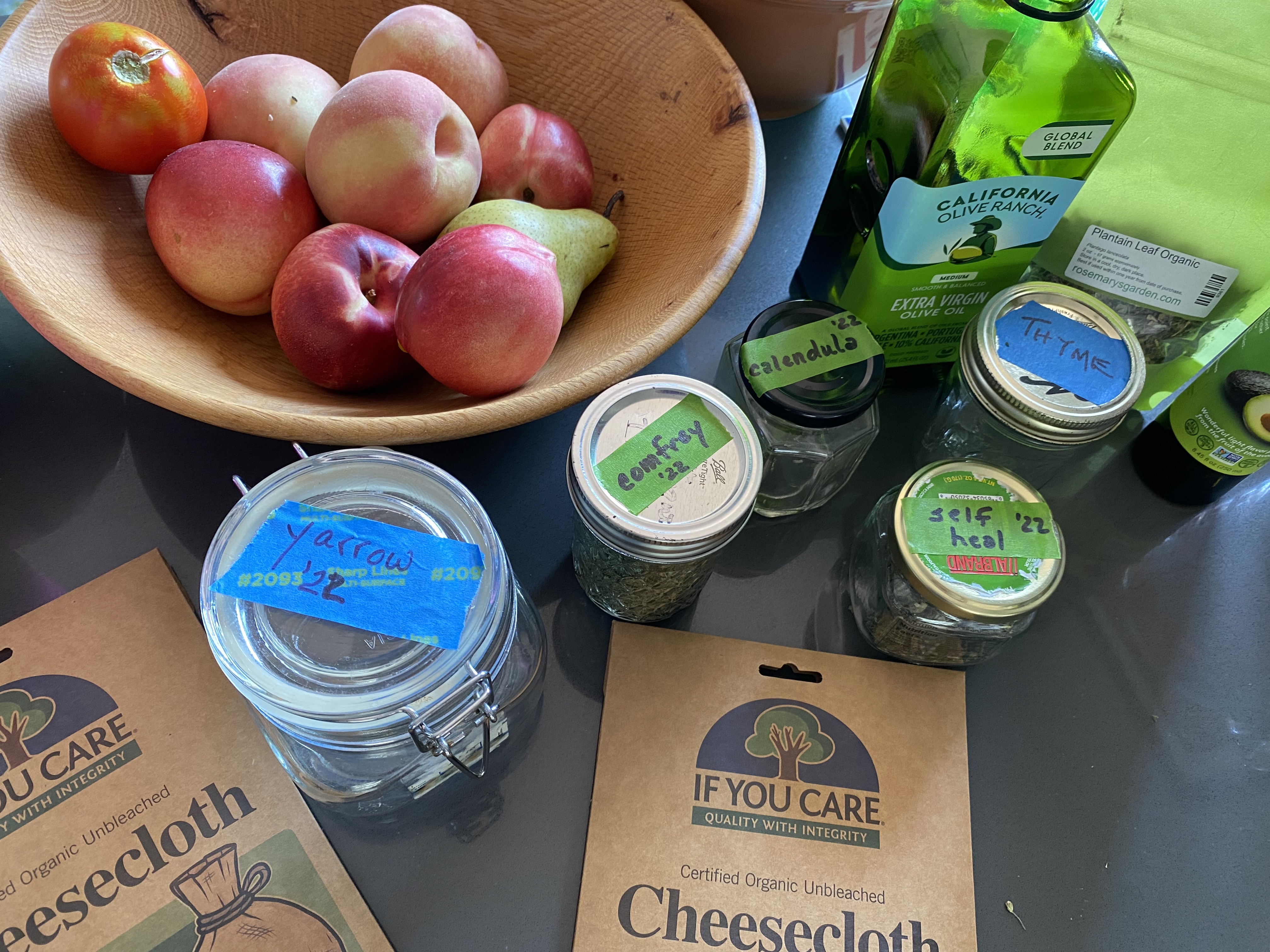
Some of the ingredients for bite balm. Photos by author from 2022

This season, I’m also harvesting and drying figs. Sonoma County is fig country, rich with varieties—Black Mission, Brown Turkey, green Kadota, Adriatic. The fig in our own garden is called Celestial: small, pink-fleshed, and honey-sweet. I can’t resist foraging (with permission) from neighbors’ trees, and the green figs from the tree across the street are my favorite treat.

Earlier in the summer we dried peaches from our little orchard. We peeled and cored the apples that hang over from next door, simmered them into apple sauce and pie fillings for the freezer, and pressed the rest into juice with friends. These harvest gatherings always feel like old-time rituals, neighbors bound by fruit, labor, and laughter.
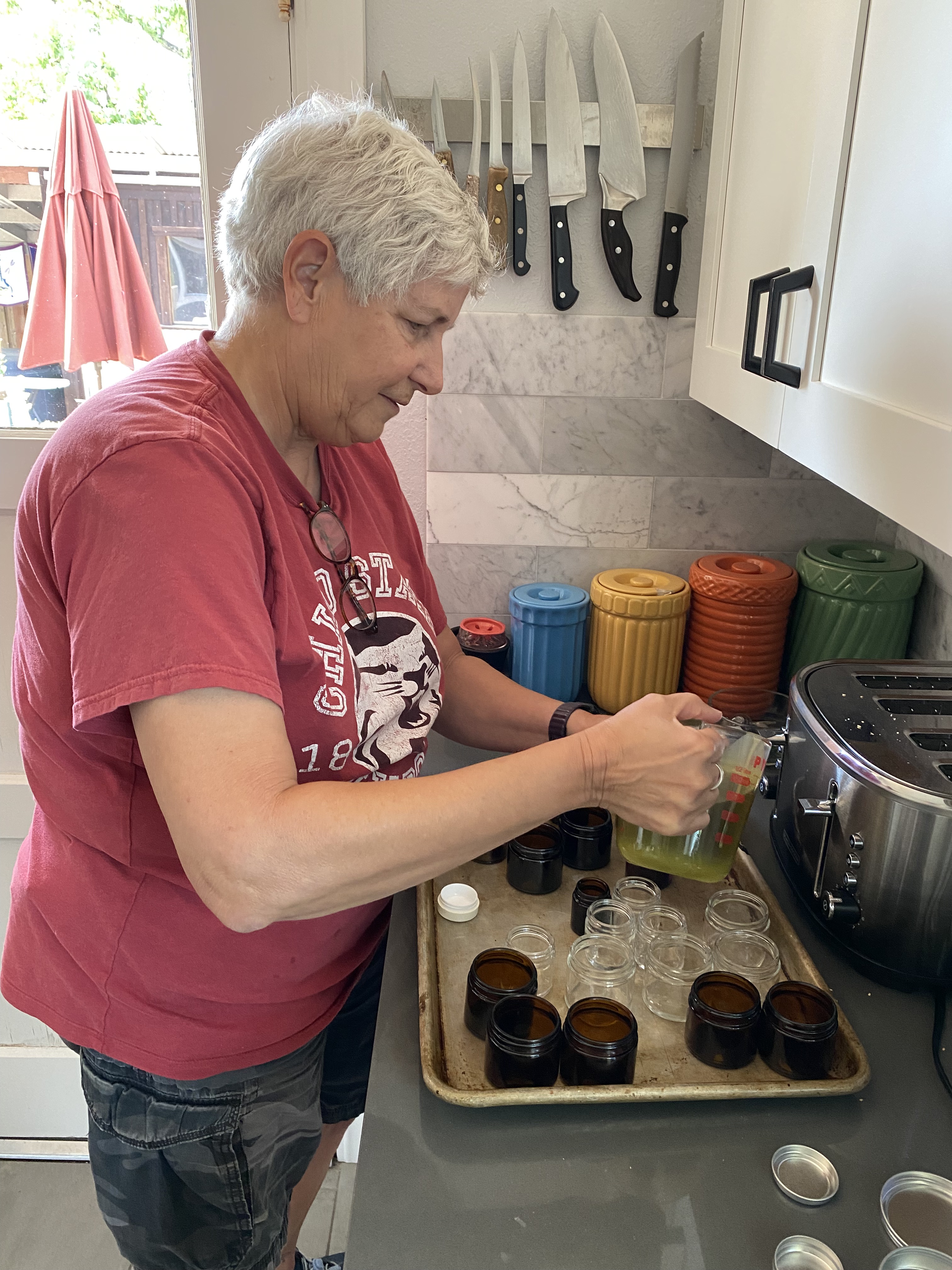
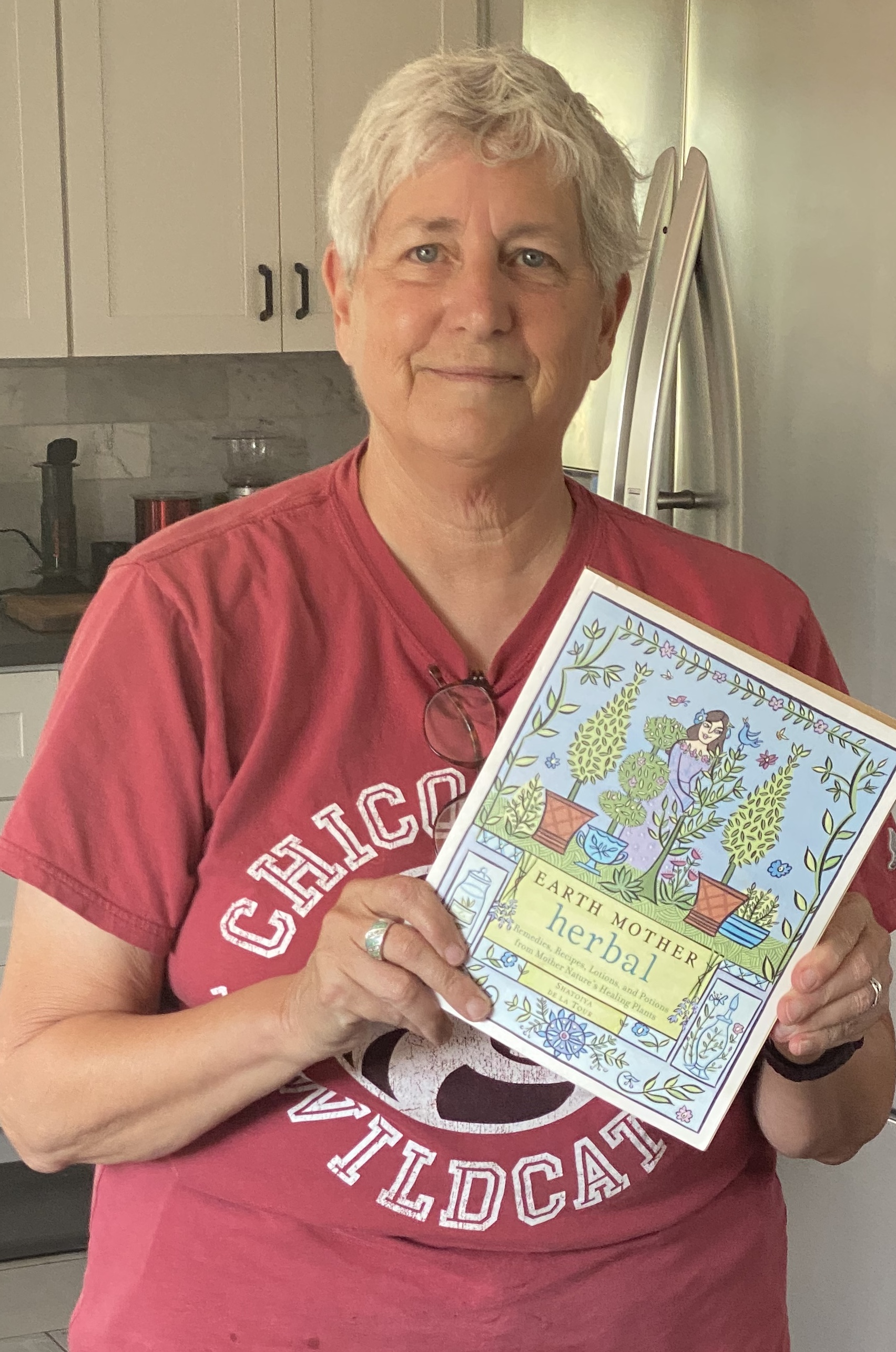
Our garden is more than soil and stems. It is a living grimoire—a book of green magic—where medicine, ritual, and daily life are entwined. Harvesting and making are rituals of resistance too: an antidote to the anxiety of a world slipping toward fascism. To touch leaf, fruit, and root is to salve our spirits, to root ourselves again in Mother Earth.

Winter’s Coming and We Like It

My Regular Pagan Holiday Post: Autumn Equinox

You can shake your fist at heaven, you can file your appeal

You can try to rise above it, you can crawl and you can kneel

No matter what life gives you, no matter what you steal

You cannot stop the turning of the wheel

Chorus from Jennifer Berezan’s song Turning of the Wheel

Naked ladies (Amaryllis belladonna), a ubiquitous and favorite fall flower

Sitting out in our yard on a lovely evening at the ides of August, Holly and I luxuriated in the garden’s summer radiance. The day was cooling as the sun retreated. Colorful zinneas and cone flowers bloomed and the fragrance of the rockrose bush enveloped us. Hummingbirds zipped back and forth. Finches and oak titmice populated the feeder. Towhees scratched the ground as mourning doves bobbed and cooed. It was a perfect summer evening.

But as we sat in our twin rockers, we both said, almost in unison, “I’m looking forward to the turning of the seasons.”

Summer, with its long, warm days and bountiful harvests, has been beautiful, but we’re ready for the change. Holly says that humans evolved with the rhythm of change, and that’s why we appreciate the wheel of the year turning.

Now, with the autumn equinox upon us, the new season begins. Pagans call this time Mabon, after the Welsh God who is the son of the Earth Mother Goddess.

Recently, I learned about the lunistice, the moment when the moon seems to pause, similar to the way the sun appears to stop at solstices before shifting direction. It’s a fascinating event, though hard to observe unless you track the moon regularly.

The major lunar standstill is marked by observing the extreme points where the moon rises and sets on the horizon, akin to watching the sun at solstices. Just as the sun’s position reaches its furthest northern and southern points at solstice, the moon does something similar every 18.6 years during a maximum lunistice—an event that occurs near equinoxes and eclipses, and it’s happening now!

This 18.6-year cycle is due to the moon’s orbital tilt and the gravitational pull of the sun, causing the moon’s orbit to swivel and vary its angle relative to Earth.

Excited, I reached out to the folks at Ferguson Observatory at Sugarloaf State Park to learn more. I was intrigued by the idea of “maximum lunistice,” thinking it sounded particularly special. But I learned something surprising: the minimum lunistices are actually more significant, especially in relation to tides. 

The Observatory explained that during maximum lunistices, the moon is furthest from the celestial equator, resulting in less dramatic tides. However, minimum lunistices bring larger tides because the moon is closer to the equator’s gravitational bulge. But since “maximum” sounds more impressive, it tends to get more attention. The next minimum lunistice won’t be until 2034.

At an Old Lesbians retreat in the Mayacamas mountains as a group of us stargazed, I attempted to explain this lunar phenomenon but stumbled over the details. Honestly, I don’t fully grasp it myself. Yet, here’s what’s clear: ancient peoples understood this cycle.

Bronze Age societies, like those who constructed the megalithic monuments in Britain and Ireland, placed great significance on lunar standstills. Modern Neopagan religions find meaning in them too. Ancient cultures beyond the British Isles also recognized these events—sites like Chaco Canyon in New Mexico, Chimney Rock in Colorado, and the Hopewell sites in Ohio all feature alignments to the moon during lunar standstills.

As I write this, the full supermoon is rising with a partial lunar eclipse. The turning of the celestial wheel continues to fascinate us, just as it did our ancestors.

I’d like to call back summertime and have her stay for just another month or so

But she’s got the urge for going so I guess she’ll have to go.

From Joni Mitchell’s song Urge for Going

One of my favorite Joni Mitchell songs, Urge for Going, laments “summertime falling down.” Joni was thinking about snow and cold and pulling the blankets up to her chin. She sang, “All that stays is dying and all that lives is getting out.” But she was singing about winter coming in Canada. In California when I think about winter coming I think rain, which makes plants start to grow in the outdoors. It brings mushrooms, grass, new leaves and flowers. The cold coastal summer fog falls away and dust is dampend. 

David Douglas, the Scottish botanist who traveled in North America in the 1830s (after whom the Douglas fir and other plants were named) remarked on how dead the Sonoma area was in summer. He collected plants in the winter and spring when they were growing and flowering.

These are some of the reasons we here in summer-dry California exclaim with anticipation “Winter’s coming!”

The autumn equinox takes place Sunday September 22. Wishing you all a fabulous fall season.

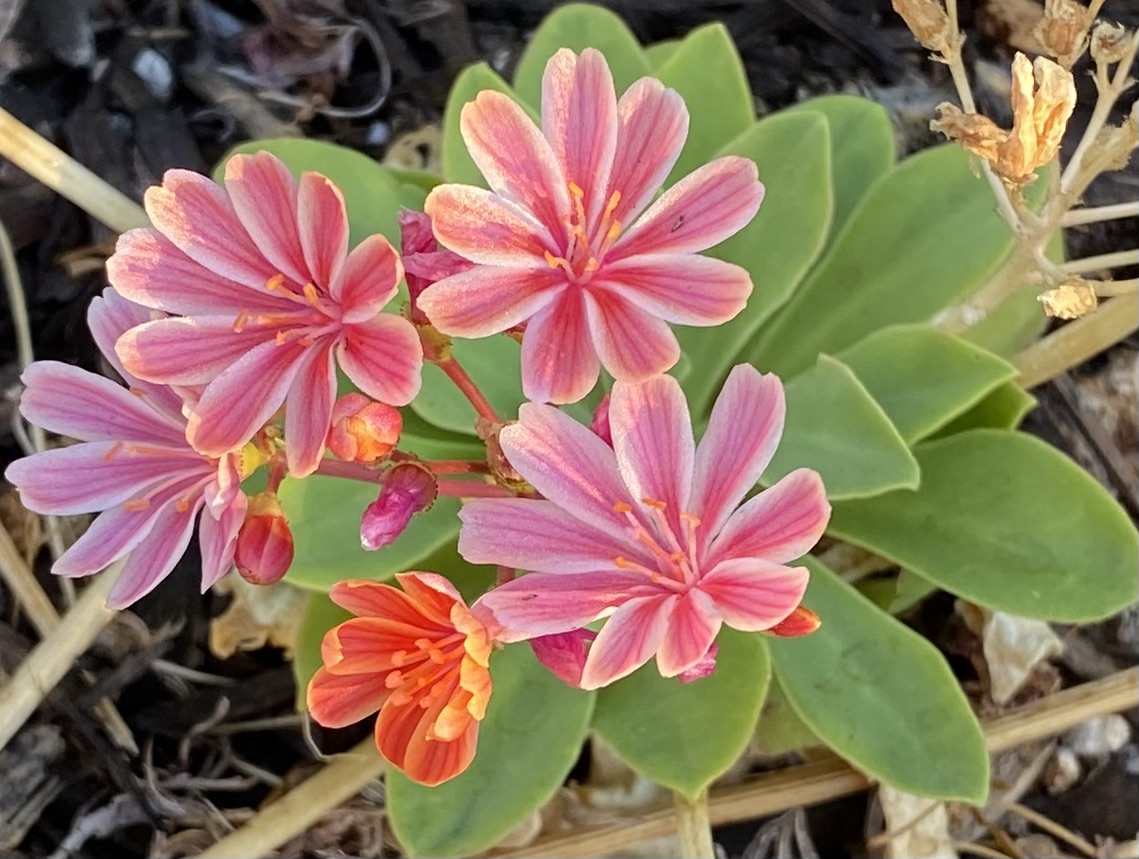
Lewisia, a native in our garden, named for Meriwether Lewis who encountered the species in 1806