
Dead and Dying Include Hundreds of Horses
My Mother and Audie Murphy Ch. 28
Late August, 1944. From Murphy’s autobiography To Hell and Back:
Smarting under the wrongs and indignities endured during the years of German occupation, members of the French underground emerge from hiding and strike. Entire towns are already liberated by the FFI—the French Forces of the Interior—waiting only for the Americans to arrive. The Maquis join the advancing troops as guides, offering information on enemy strongholds and hidden defenses.
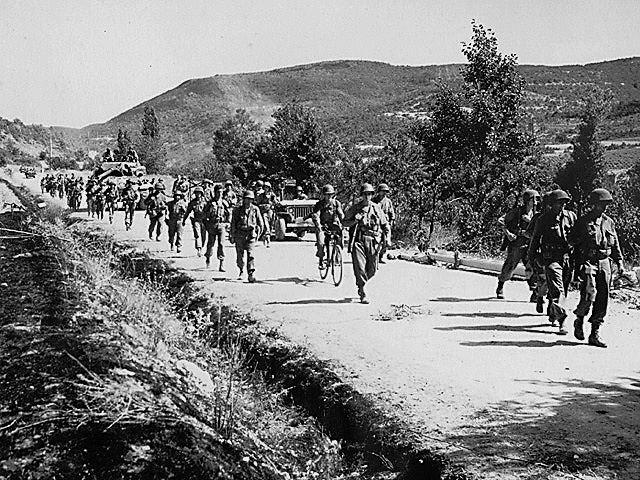
The German dead lie buried in abandoned foxholes, hastily covered with the same soil they once held in captivity. When it rains, their boots stick grotesquely from the mud.
Meanwhile, the Third Army drives relentlessly across middle France. When contact is made, the Germans in a vast section of the country will be caught in a trap. For three days the Americans move forward in trucks, meeting only scattered resistance—roadblocks, ambushes, and small pockets of determined defenders. After the slow, grinding months in Italy, this rapid advance feels almost unreal.
The men are exhilarated. Nothing lifts a soldier’s morale like progress. They have long believed that the only road home lies through the Siegfried Line, and every mile up the Rhône Valley feels like another mile closer to America.
The Germans react unpredictably. In one place, twenty thousand surrender to a single American platoon. In another, a few dozen fight with desperate ferocity, clawing for every inch of ground.

By August 23, 1944, the swift, circling maneuvers of divisional units have trapped a large enemy force at Montélimar, a key communications hub. The Germans would gladly abandon the town if only they could escape north. As the American ring closes around them, they counterattack fiercely—an entire regiment hurling itself against Murphy’s battalion. Artillery and mortar fire break the assault, holding the line amid smoke and shattered trees.
On the outskirts of Montélimar, a massive German convoy is caught by American guns. In their panic to flee, the vehicles jam the road two and three abreast. Artillery zeroes in, and the destruction defies belief.
Hundreds of horses, evidently stolen from French farmers, lie among the wreckage. They stand or fall with torn flesh, gazing at the soldiers with unblinking, bewildered eyes, whinnying softly as life drains from them. The men, hardened by years of battle, find themselves strangely shaken. They are used to the sight of dead and wounded men, but these suffering animals stir something deeper, a sorrow for innocence trapped in the machinery of war.
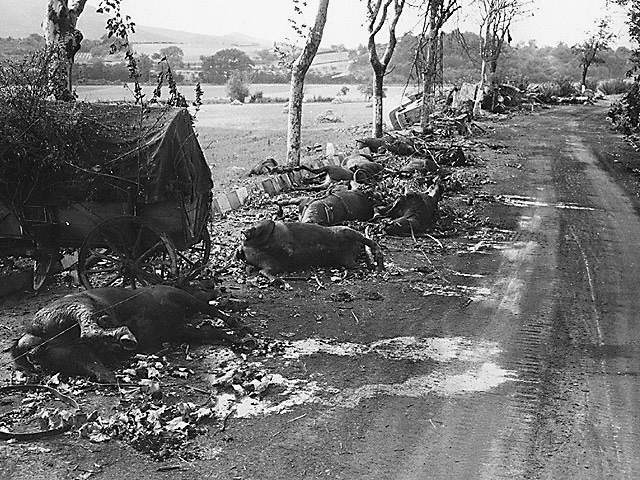
One of Murphy’s men, a Texan, gently approaches a horse and shoots him behind the ear.
“I’ve known horses all my life,” he says, “and there’s not one dirty, mean thing about them. They’re too decent to blast each other’s guts out like we’re doing. Makes you ashamed to belong to the human race.”
Ch.29: https://mollymartin.blog/2025/05/25/red-cross-lands-in-france/

 tradeswomn musings
heartbreaking…
LikeLiked by 1 person
How sad to see the dead and dying, including the horses. It’s hard to imagine such sights.
>
LikeLiked by 1 person