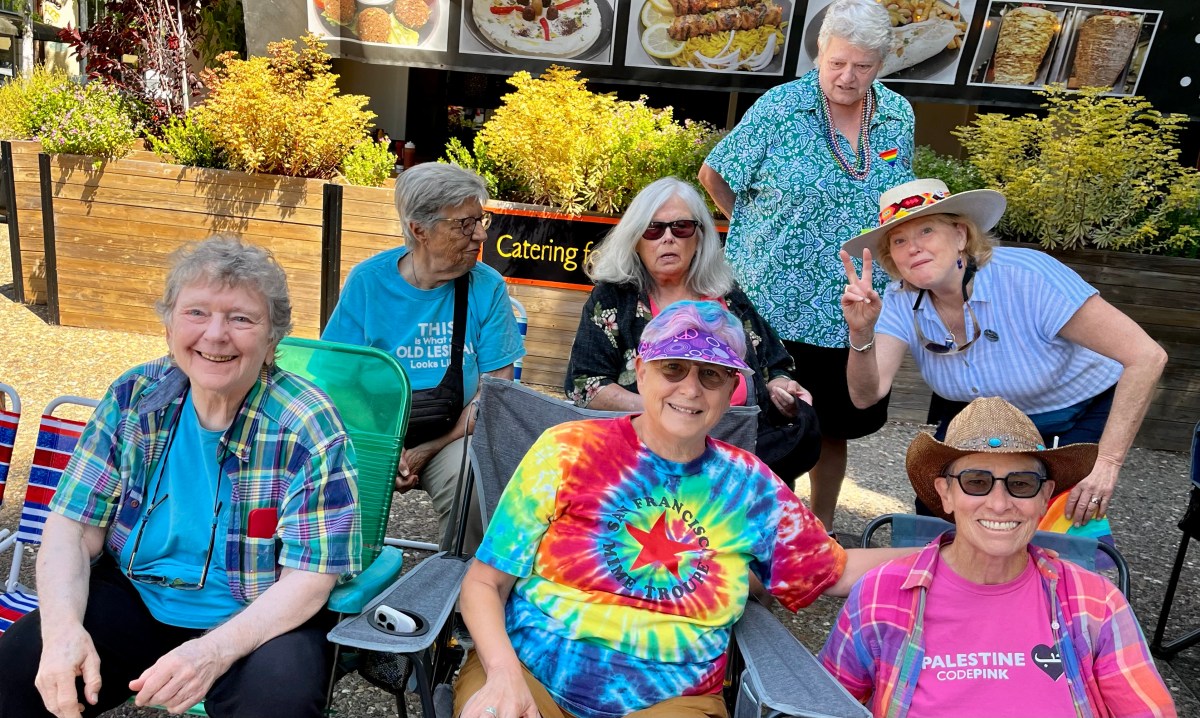
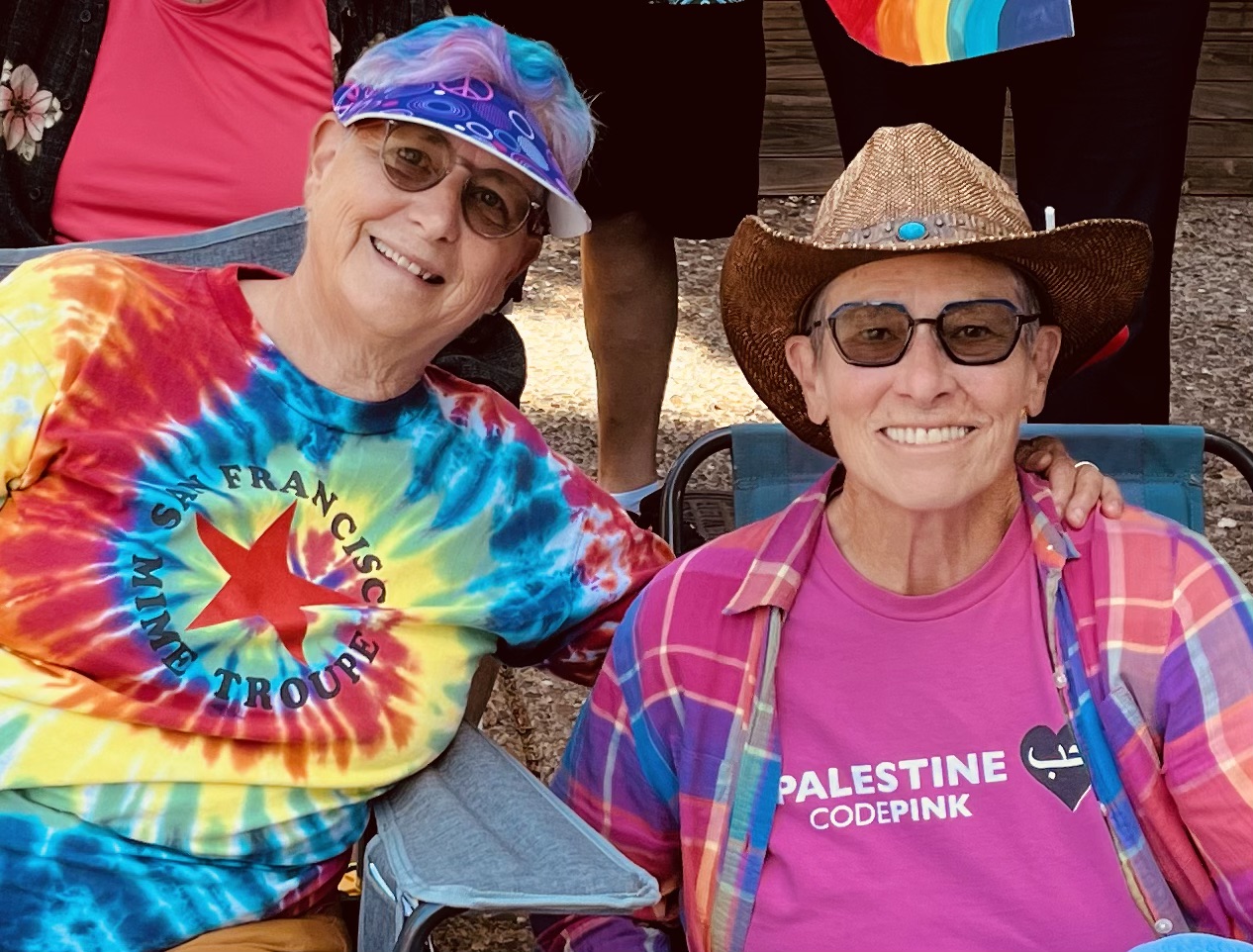
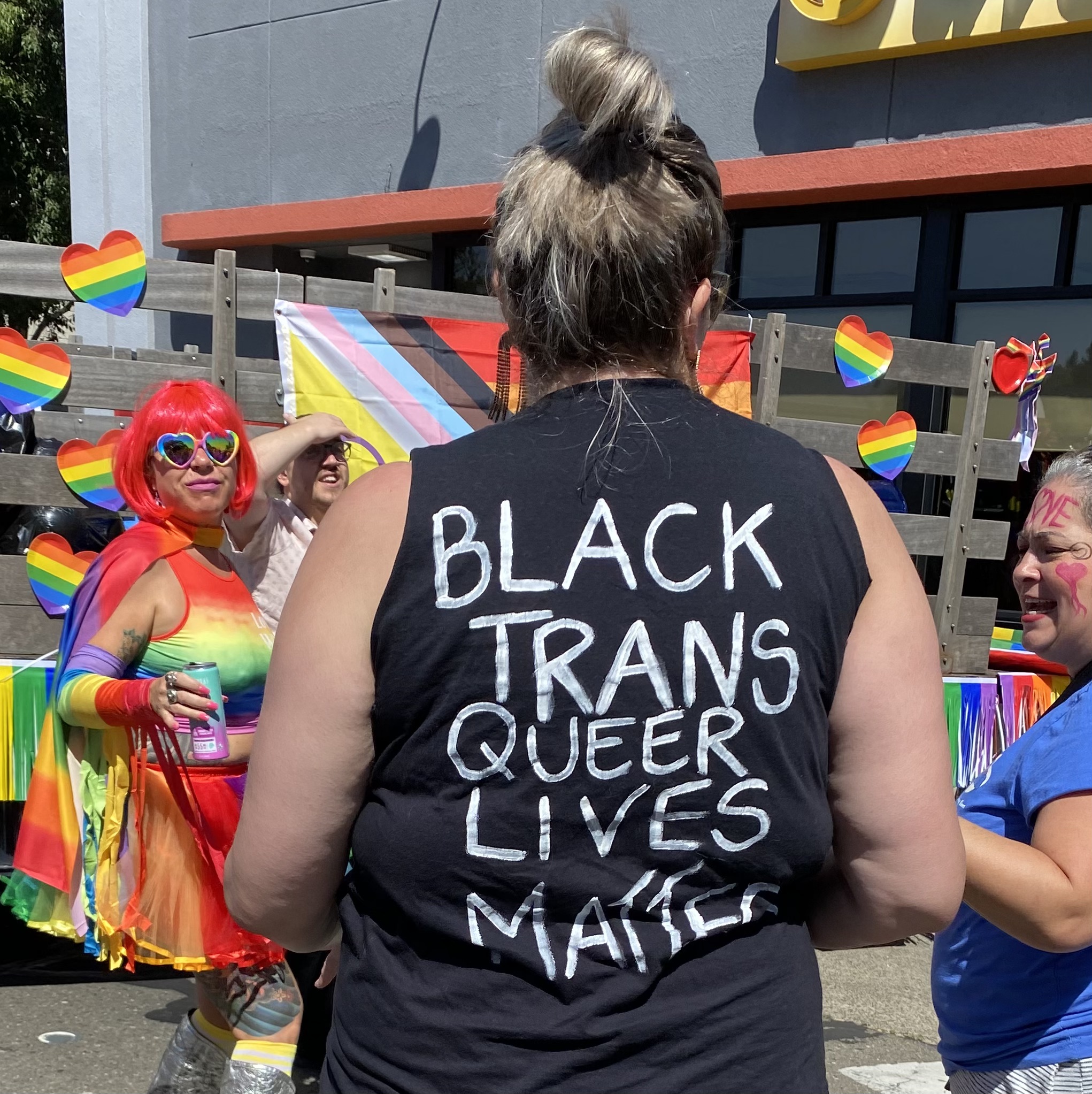
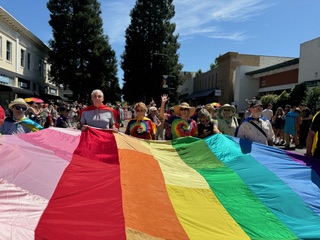
Our celebration took place in Santa Rosa, where we live, a city of 177,000. My honey, Holly (L), and I watched the parade with a group of friends. Afterward we checked out the booths and music at the town square. This year saw more marchers and watchers than ever. And if there were haters (as there have been in past years), I never saw them. The vibe was joyful.
The theme this year was Heroes Sheroes and Queeroes. So there were lots of superhero capes among the marchers. The Sebastopol (a nearby small town) Senior Center volunteers made 60 capes with messages, and they won the Best Overall Float prize.
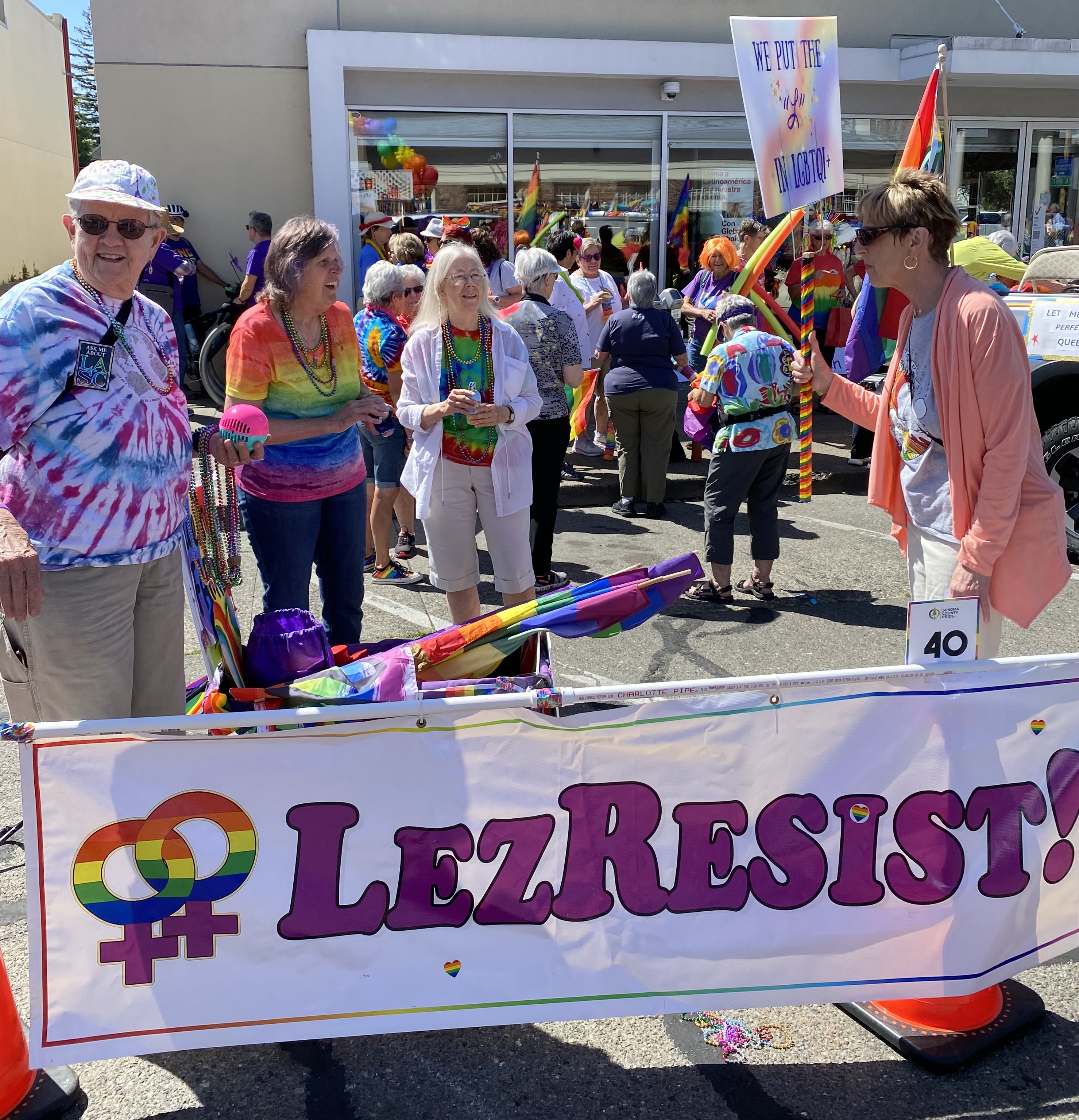
I think maybe there are more old dykes in Sonoma County than anywhere else in the world! We were well represented at Pride. A new organization just started called Senior Lesbians in Community (SLIC). I’m also a member of Old Lesbians Organizing for Change (OLOC) and Lesbian Reunion. The village of Oakmont, a retirement community, has its own lesbo contingent.
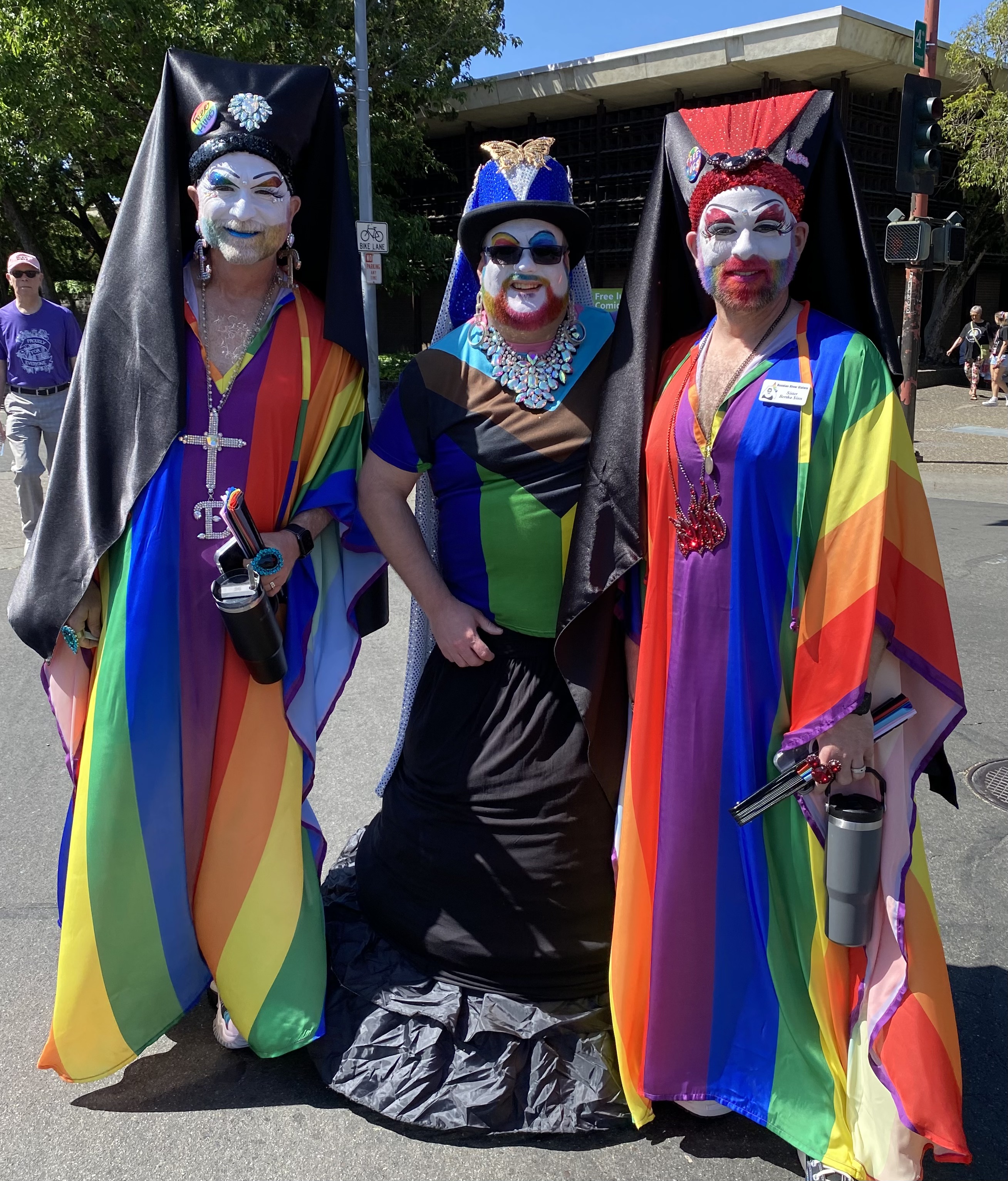
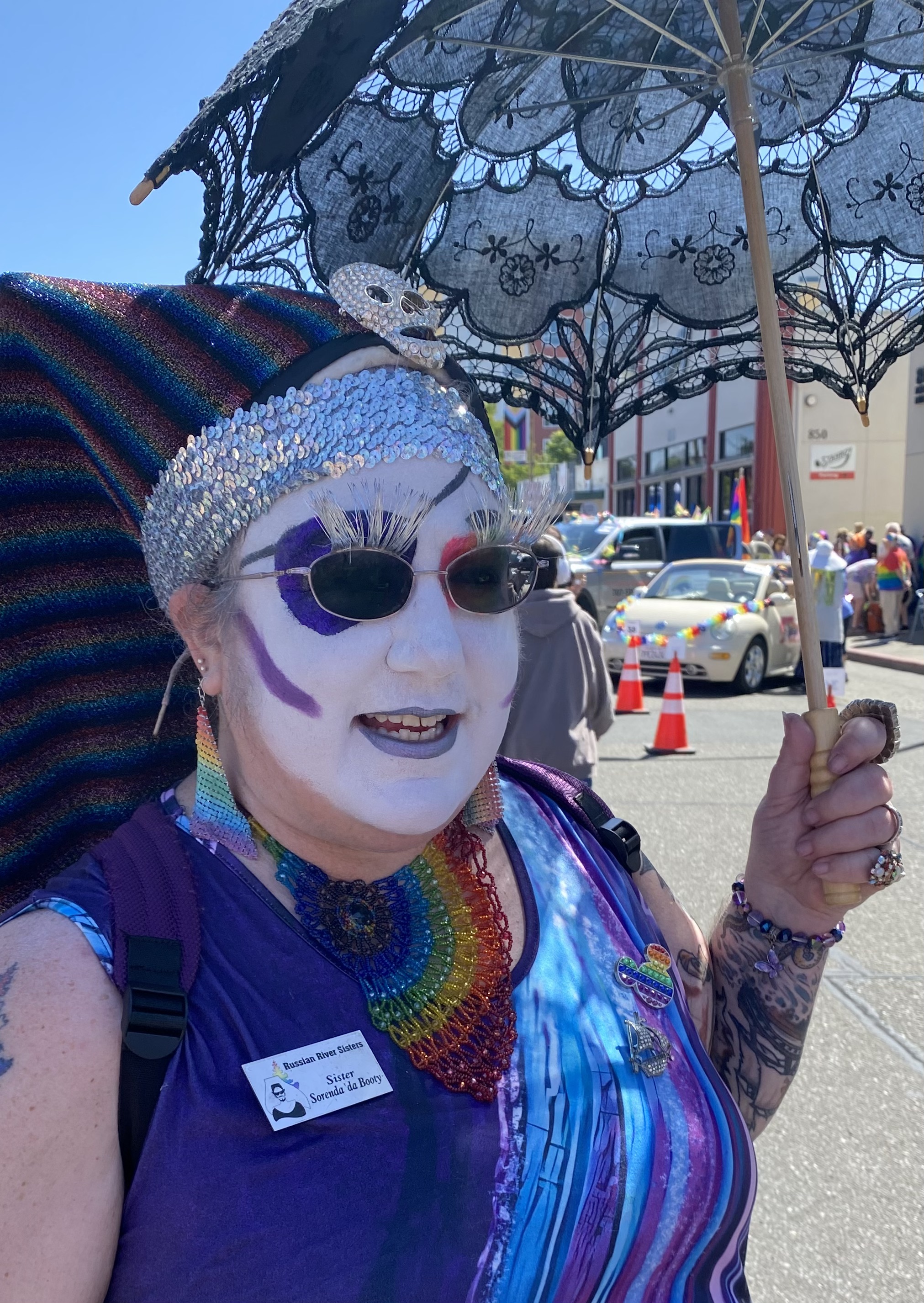
The Sisters of Perpetual Indulgence has a big congregation here in Sonoma County. They fundraise to support the comunity with fabulous parties, bingo games and campaigns. The Sisters were the sponsors of Gay Pride for many years when it was in Guerneville, a resort town on the Russian River.
So many queers, so little time!
The Democratic Party always shows up at Pride. They sponsor postcard writing parties to help get out the vote for Congressional races around the country. In California we are working to turn red districts blue this year.
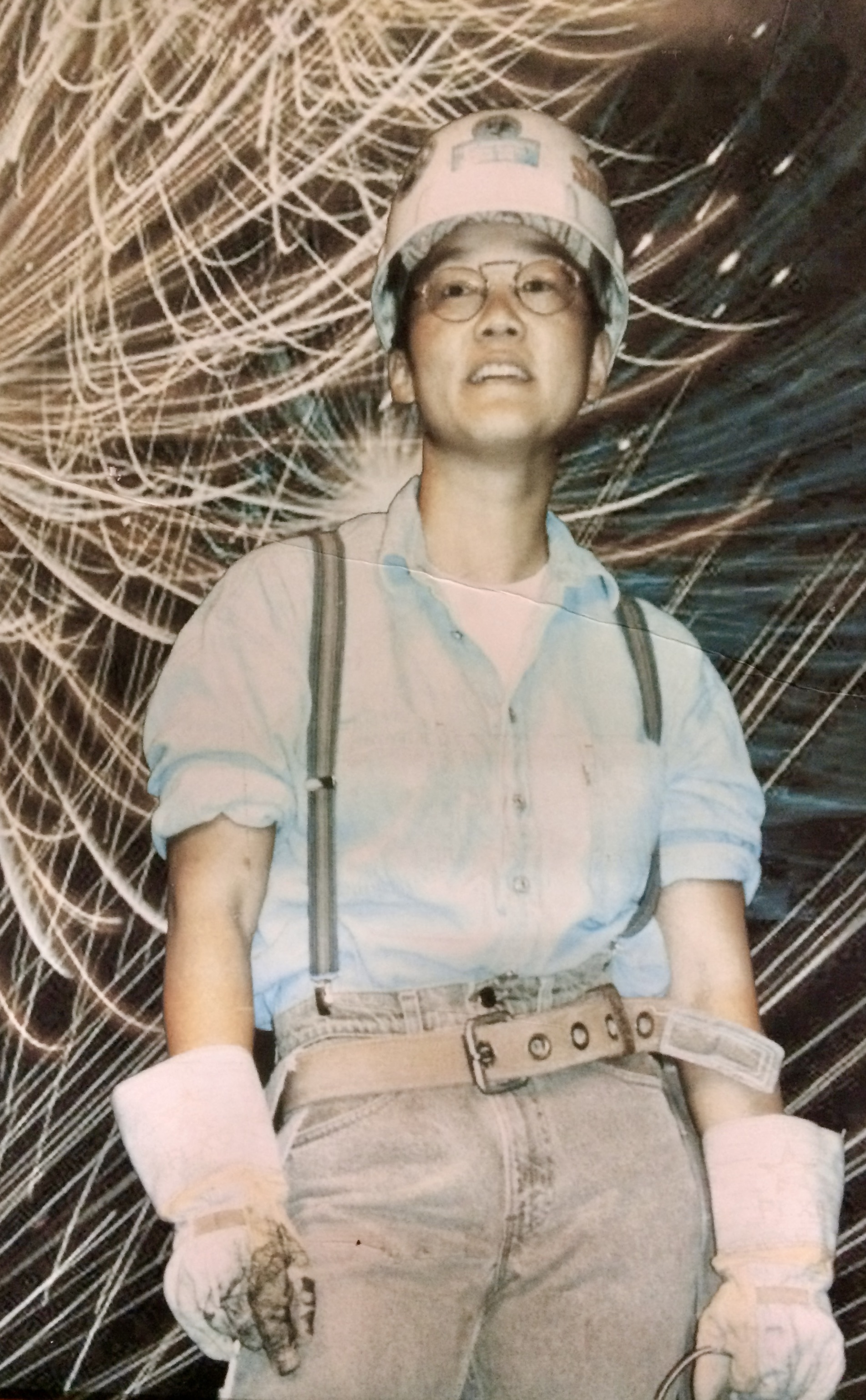
Ah, the legendary red envelope – a festive pocket-sized surprise filled with cash, making it rain luck on New Year’s Day. My memory holds onto that one special red packet, a gift from my friend MeiBeck, a tradeswoman sister, and an ironworker extraordinaire.
Inside? A crisp two-dollar bill, because we’re both as queer as a two-dollar bill. With that red envelope, MeiBeck queered Chinese New Year, and confirmed me as a member of her fabulous queer family!
We were among millions of people celebrating the Lunar New Year, a serious party among East and Southeast Asian cultures–Chinese, Vietnamese, Korean, and more. The celebration can be traced back 4000 years.
Lunar New Year begins on the date of the second new moon after the winter solstice, which usually occurs December 21. This means that the first day of the Lunar New Year can take place anytime between January 21 and February 20. This year, the year of the dragon, the celebration kicks off on February 10. Forget one-day celebrations; this shindig lasts for 15 days, rocking the lunar party until the moon is full, at the lantern festival on the last day.
At Lunar New Year we celebrate the end of winter and the start of spring. Traditionally, New Year’s is all about family, ancestor honoring, feasting, dancing dragons, lanterns and of course fireworks! China traditionally marks Lunar New Year and other holidays with loud firecrackers to rid families and businesses of bad luck.
We all know that the Chinese invented fireworks. As the story goes, around 800 CE, an alchemist mixed sulfur, charcoal, and potassium nitrate (a food preservative) hoping to find the secret to eternal life. Instead, the mixture caught on fire, and gunpowder was born! When the powder was packed into bamboo or paper tubes and lit on fire, history had its first fireworks.
According to legend, the centuries-old New Year’s tradition was started to scare off demons. Fireworks helped drive away the mythological nian, a fierce lionlike beast that rose from the sea each New Year’s Day to feast on Chinese villagers and their livestock. Nian disliked loud noises and the color red, so villagers posted red signs on their doors and lit firecrackers. The ritual is still performed to ward off evil spirits.
My friend MeiBeck in her ironworker gear. Photo edit by Lyn Shimizu
I caught a double dose of airport fireworks during a long layover in Beijing—both landing pre-dawn and taking off that night. It was awesome! But that was before China’s state media cast the practice as an environmental faux pas, an air polluting indulgence. The state now urges families to use flowers and electronic substitutes instead.
Hundreds of Chinese cities have banned or restricted the use of pyrotechnics since 2018. Beijing extended a downtown fireworks ban across the entire city in 2022, allowing it to record its cleanest air on record since the monitoring of hazardous PM2.5 particles began in 2013.
Major Chinese cities organized official displays to ring in 2023. But across the country, members of the public celebrated China’s first post-COVID New Year by disregarding the ban. Social media images showed people shooting fireworks from the backs of mopeds and through car windows.
San Francisco, where I lived for 40+ years, has a large Asian population, and the Lunar New Year still paints the town red. Many neighborhoods are bustling in the lead up to the new year. The whole city celebrates. Last year San Francisco’s Chinatown had a five-hour long pyrotechnic display.
San Francisco boasts the biggest Chinese New Year parade outside of Asia–a tradition since the gold rush days. And it’s not a solo act; every town around the Bay Area has its own Lunar New Year spectacle. We Sonoma County residents have a menu of celebrations to choose from.
Lunar New Year coincides with the pagan holiday Imbolc, heralding the start of spring. Here in northern California, February feels like the real New Year’s kickoff. Signs of spring are everywhere – blossoming trees, early flowers showing off. In December, as a solstice ritual, I planted hyacinths and tulips in our drought tolerant front yard. These bulbs do their thing in rainy spring, no watering needed. They will soon bloom. Right now, in the midst of an atmospheric river of rain, our daffodils are in full bloom.
While we won’t be setting off fireworks, there are many parts of this celebration we like to adopt.
In China everyone takes the first day of Lunar New Year off work. I wish I’d known this when I was still working. For retirees, I guess it’s a day to do whatever we feel like (much like every other day).
There is lots of feasting and we can totally get into that. I look forward to eating Chinese, Vietnamese and Korean food!
In the week before the new year, cleaning house takes priority, sweeping away any ill fortune and making way for incoming good luck. The Goddess of the Garage beckons us for a spring cleaning extravaganza.
And we will not forget the household deities traditionally honored at New Years–a nod to the Kitchen Witch and a shout-out to the Garden Goddess. It’s time to get the garden ready for spring planting.
This year I’m following MeiBeck’s example and queering the tradition of the red envelope. I found envelopes, Chinese lanterns and new year’s candy at the World Market. Now I just have to find $2 bills. There aren’t many in circulation but the U.S. government mint still prints them. I’ll give them to friends who, like me, are queer as a two-dollar bill.
However you celebrate, we wish you a Happy New Year.
In 1977 I lived in a collective house with Jewish lesbians. Banning the Xmas tree from the living room was fine with me. I wanted to ban the holiday entirely. It took years to wean myself of all the expectations and burdens that the holiday brings. Finding the perfect gift for everyone, sending cards to dozens (I sent anti-Xmas cards), forced shopping amidst anxious crowds and booming Xmas music in the stores. To avoid the ubiquitous music I stopped shopping after October. It helped to join the Church of Stop Shopping.*
I was a regular bah humbugger.
I already knew that the solstice holiday had been stolen from pagans by christians. But it took years for me to embrace the decorated tree again. Now I finally have, to the relief of my partner.
The solstice tree is an old pagan tradition–bringing a tree indoors and hanging things on it. Before the advent of electric lights, my Swedish ancestors actually put burning candles on the tree. I wonder how many house fires resulted. Asking for a fire marshal friend.
Last year my wife Holly and I discovered that it made us happy to start getting into the solstice spirit early by buying our solstice tree when the tree farm opens for business the day after Thanksgiving. We did it again this year. Two years in a row makes it a ritual!
Now our sweet smelling fir tree is decorated to the hilt. As Holly danced around the tree hanging the ornaments and I watched from my recliner, we fondly remembered where we acquired each of them and what they represent. I still have the Santa and elf ornaments knitted by my Swedish grandmother. She decorated her tree with Scandinavian straw reindeer, wooden and homemade candy cane ornaments.
Here in the MoHo household we are all about reimagining cultural institutions. If we can take back the tree, why can’t we reclaim other christian traditions?
This year we decided to recycle Advent.
Neither my childhood Presbyterian church nor Holly‘s evangelical sect practiced Advent. But I have a vague memory of seeing an Advent calendar in the home of a Catholic girlfriend. The idea of getting to open a little door with a gift inside for the whole month of December is enticing for a kid. Kind of like Hanukkah only longer and presumably better. Did the christians steal from the Jews too? Asking for some friends.
The word advent is derived from the Latin word adventus, meaning coming, which is a translation from Greek. We felt we needed another word for our pre-solstice holiday and we tried to come up with one. None of the synonyms work. Arrival, onset, appearance, approach, entrance. Holly likes the word Looming, but that sounds ominous to me. We both like Coming but it’s too confusing. So we decided to stick with advent for now, a perfectly nonreligious word which can be applied to any holiday, really.
In the christian tradition Advent is a season. The traditional liturgical color for Advent is violet–so very gay! The Unitarian Universalist Association promotes four words for the four Advent Sundays of the month of December. A candle is lit each week to symbolize hope, peace, joy and love. We can get behind that! I do like the Unitarians. They take the prospect of peace seriously and show up at every peace march.
Our takeover of Advent wasn’t a planned theft. It was rather inadvertent. We each secretly bought a wine advent calendar for the house. When they were both delivered on the same day, we discovered we had each bought the exact same thing!
The wine advent calendar is a cardboard box about 18 by 14 inches and about 7 inches deep, enough for little wine bottles laid on their sides. It has 24 doors, each with a number. You open one door a day and pull out a bottle. We celebrate each evening however we want, by reading a poem or just having a conversation. But there must be a toast. Our favorite: Cheers Queers!
Then, because we observe solstice and not Xmas we had to count back from December 21 instead of December 25. Because of poor math skills, we started on November 24—days early. Whatever. Once you start, you have to keep going. I think that’s what the liturgy says.
The wine comes in adorable small bottles, enough for one glass, so we are glad we got two calendars. Of course, this means we are committed to drinking a glass of wine every night until solstice or until the wine runs out and every door on the calendar is opened. We can do that!
Advent is all about anticipation of the great event—in this case solstice, or the longest night of the year, marking “astronomical winter” in the northern hemisphere, after which the light begins to return. It makes us think of the Carly Simon song, Anticipation. We are Boomers, after all.
Now we are pondering how to use the 48 cute wine bottles. Perhaps next year we shall gift all our friends with MoHo’s Special Herbal Elixir. What is that? We don’t yet know, but Holly has been experimenting with something called fire cider!
Now I’m embracing the solstice holiday and all our reclaimed pagan rituals that go with it. I’m finally enjoying the holiday season that I once eschewed.
Bah humbug no more!
Happy solstice to all and to all a good long night!
Love, Molly (and Holly)
*The Church of Stop Shopping calls consumerism “the biggest and baddest fundamentalist religion in the U.S.” Now, they’ve got some great music! https://revbilly.com/music/
Like Judy Grahn’s poem, Edward the Dyke, written in 1965, “…my problem this week is chiefly concerning restrooms.”*
At 74 I’m still often called sir. I’m mistaken for a man because I wear my hair short and usually wear a ball cap. I dress in T-shirts and hiking pants and, often, boots. Hiking is a favorite pastime. When I was younger I was mistaken for a boy, but that can’t be true now, can it? I’m old!
I never cared that people thought me male. On the street it was a defense mechanism. I passed. I stood tall, took big steps, walked fast, balled my hands into fists, and adopted a mean look. Men generally don’t get attacked on the street, especially if they keep to themselves and don’t make eye contact. That could be why I have never been attacked or raped. People don’t see me as female.
In the 1970s I bought all my clothes in the boy’s department at JC Penney. They had flannel shirts in boys’ size 18. I worked as an electrician and wore Carhartts before the brand became fashionable. I got my hair cut by a gay guy who told me my cut was fag cut number three. Sometimes gay men flirted with me. Sometimes I was confronted by men who thought I was a fag. “You idiot, I’m a dyke!” was my comeback, yelled as they drove away,
There was a time when I tried to signify my femaleness, mainly to ease the discomfort of others. I would wear dangly earrings or women’s clothes. Not dresses. Maybe a scoop neck T-shirt, a bra. But that didn’t always do the trick. People make an immediate decision about gender and changing that first impression is not easy.
I was once nearly thrown out of a women’s dressing room. The authorities have never arrived in time to eject me from the toilets, but I get dirty looks from women there. Often, entering the restroom, they will look at me, then look at the sign on the door, thinking they must have made a mistake. Or implying that I made a big mistake. Their misgendering me has made them mad—at me! How dare I wear male clothes and confuse them!
To these women my response is usually, “I’m one of you.” Once I open my mouth they usually get it. I don’t have a male voice.
But, even after all these years, I was struck dumb recently at a roadside rest stop when a man insisted I should use the men’s toilet.
“The men’s is around the other side,” he instructed.
Many retorts went through my mind. I wondered if I should just pull up my shirt and show him my tits.
My wife Holly reminded me that I’ve often responded, “Do I have to show you my tits?” It’s a way to get the idea across without actually having to disrobe.
These days showing tits might not be enough to prove femaleness. After all, any body can have tits—or not—if they want. But here is the reason showing my tits would be all it takes. Nobody would buy tits like mine. Old lady tits.
I ignored him and kept walking. Why should I have to answer to this man I didn’t even know, had never seen before, was likely a tourist from some red state. I could see he had gotten off one of those big day tripping buses.
Apparently thinking I didn’t speak English, he began gesturing with his arms. “Around that way,” he said, slowly mouthing the words as he flung his arms in circles.
I sized him up. He looked perfectly harmless, rather short, oldish maybe 65. He wore a fisher’s hat, a plaid shirt, shorts and sandals. I was thinking I could take him if necessary. I’d go right for the crotch.
There was nothing sinister about him and I saw no wisdom there. The old white-skinned guy was just trying to be helpful. His face had a quizzical look, like wondering what this man was trying to do in the women’s restroom.
Does he see me as old, this helpful bathroom monitor? I have no facial hair (ok a little, but I pluck and shave). He must think I’m an old, shaven man. Does he think I’m a dirty old man with bad intentions? Does he think I’m targeting the women’s room to attack women? Gee, getting into this guy’s head is scary.
Finally, I just said, “I’m a woman,” and that was enough.
Later, I kind of wished I’d pulled up my T-shirt and showed him my tits.
Can we remake religious rituals into traditions that are free from religion? In her book, The Wonder Paradox, Jennifer Michael Hecht answers with a resounding Yes! And she shows us how.
Hecht posits that humans need tradition and ritual in our lives, but that there is no reason to attach these practices to church, which she aptly calls “drop by and lie.” I do love that she is a fellow atheist, but anyone, religious or not, can make use of her ritual adaptations that are more appropriate to modern life. She says everything is secular, including religion—a human invention after all. Hecht makes the case for incorporating poetry into newly imagined rituals. Reading this book and listening to an interview with her has renewed my own path to inventing new rituals.
We humans need ritual to mark births and deaths, but we can make our own or incorporate those of other cultures. My friend Ruth, a new grandmother, told me her Hindu relatives have rituals for everything, including the baby’s first haircut. She is not Hindu but she is invited and delighted to participate in them all.
When the news gets us down or is cause for celebration, we can create our own ceremonies. A friend posted “Happy arraignment eve to all who celebrate” and another commented, “I’m looking forward to the high holy days of conviction and sentencing.” (Me too!)
In these pagan holiday posts, I have been using the Wheel of the Year to think about the wheel of life. A combination of ancient and new tradition, the Wheel of the Year acknowledges the summer and winter solstices, the spring and fall equinoxes and the four cross quarter holidays in between. It’s a good way to notice the changing of the seasons and to feel closer to the earth and all its inhabitants.
Summer solstice is a gay holiday
Just as the whole alphabet of queer folks have become pariahs around the world, our invention of Gay Pride Day and Gay Month have become universal markers of summer solstice (winter solstice in the southern hemisphere). For most of my adult life I’ve been celebrating the summer solstice at Gay Pride Day. Taking place in cities and towns around the world, mostly in June, Pride is both a protest and a party.
In San Francisco, Pride is huge, taking over the whole city for the month. In New York City, activists have split from the old corporate sponsored pride parade to form a new protest march. In LA, the parade turned into a music festival and has also split in two.
I say it’s all for the good. Why not have Pride celebrations in every town and city and neighborhood. As Sonoma County celebrated its 38th year of Pride, other small towns around the Bay now sponsor their own Pride celebrations.
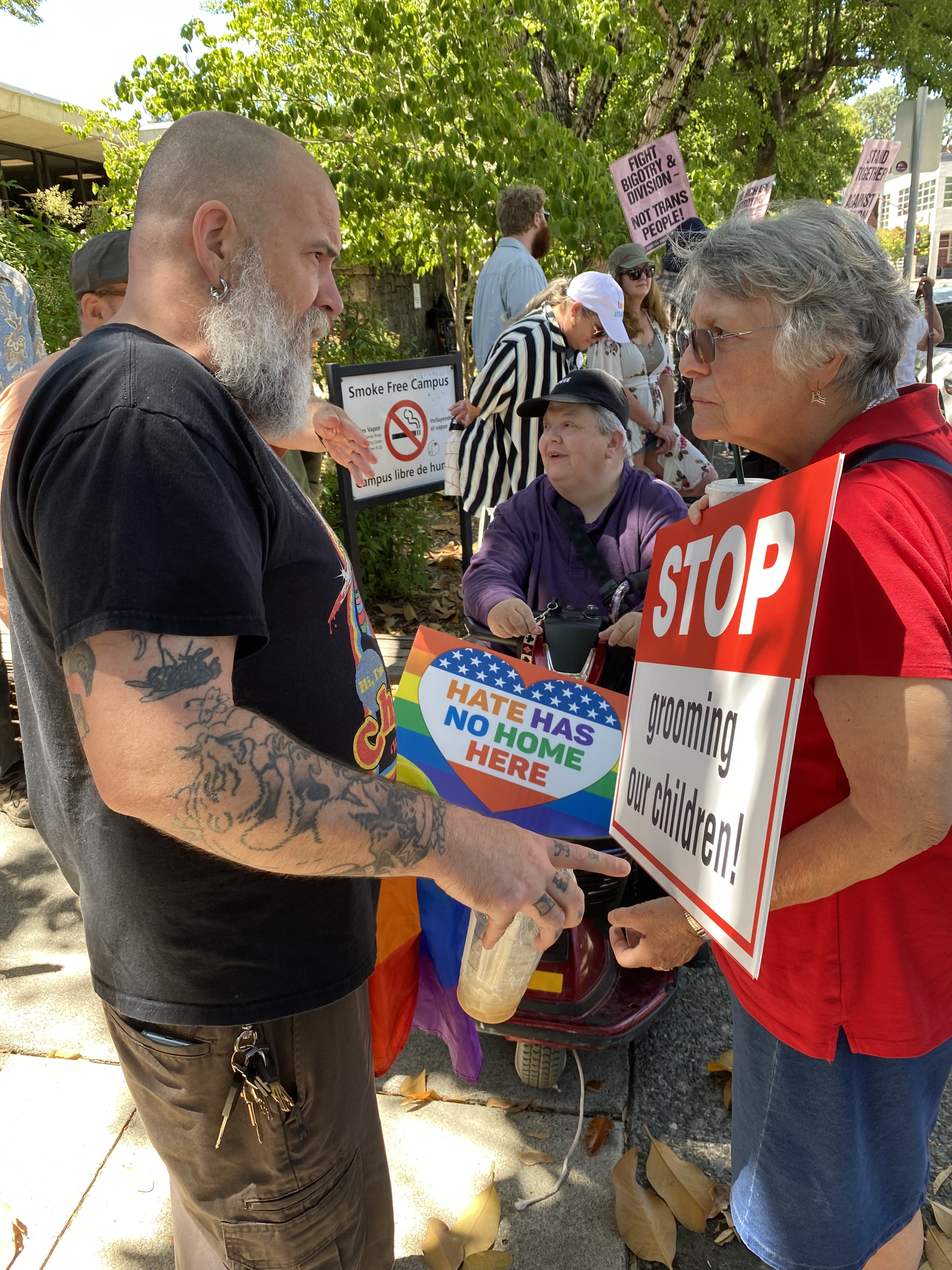
So Gay Pride Day and gay events like drag queen story hour are proliferating all over the country but at the same time our community is under attack in nearly every state. We are lucky to live in California whose state legislature is not at the moment promoting anti-gay bills (although we have fought against many in the past). But even in Sonoma County and around the liberal San Francisco Bay Area, protesters show up at public libraries and school boards with the aim of censoring books and queer programming. Here in Sonoma County the counterprotesters are vigilant and nonviolent. No events have been shut down by the book burners yet.
Not a Virgin Anymore
June has been a mixed bag this year. In between occasional sunny breakthroughs, Santa Rosa has been experiencing what Santa Barbarans call June Gloom. My wife Holly’s weather guru, Daniel Swain (https://weatherwest.com), predicts hotter-than-ever summer days after the gloom subsides.
At the spring equinox I opined that the wet cold winter had become suddenly summer. Wrong! Summer lasted just a weekend before the weather turned cool again. I had performed a spring ceremony, kissing my winter gloves and putting them away for the season, but I soon pulled them back out. Now I’m putting them away again. Ok I’ll kiss them again. Our ceremonies and rituals can be repeated as often as we want.
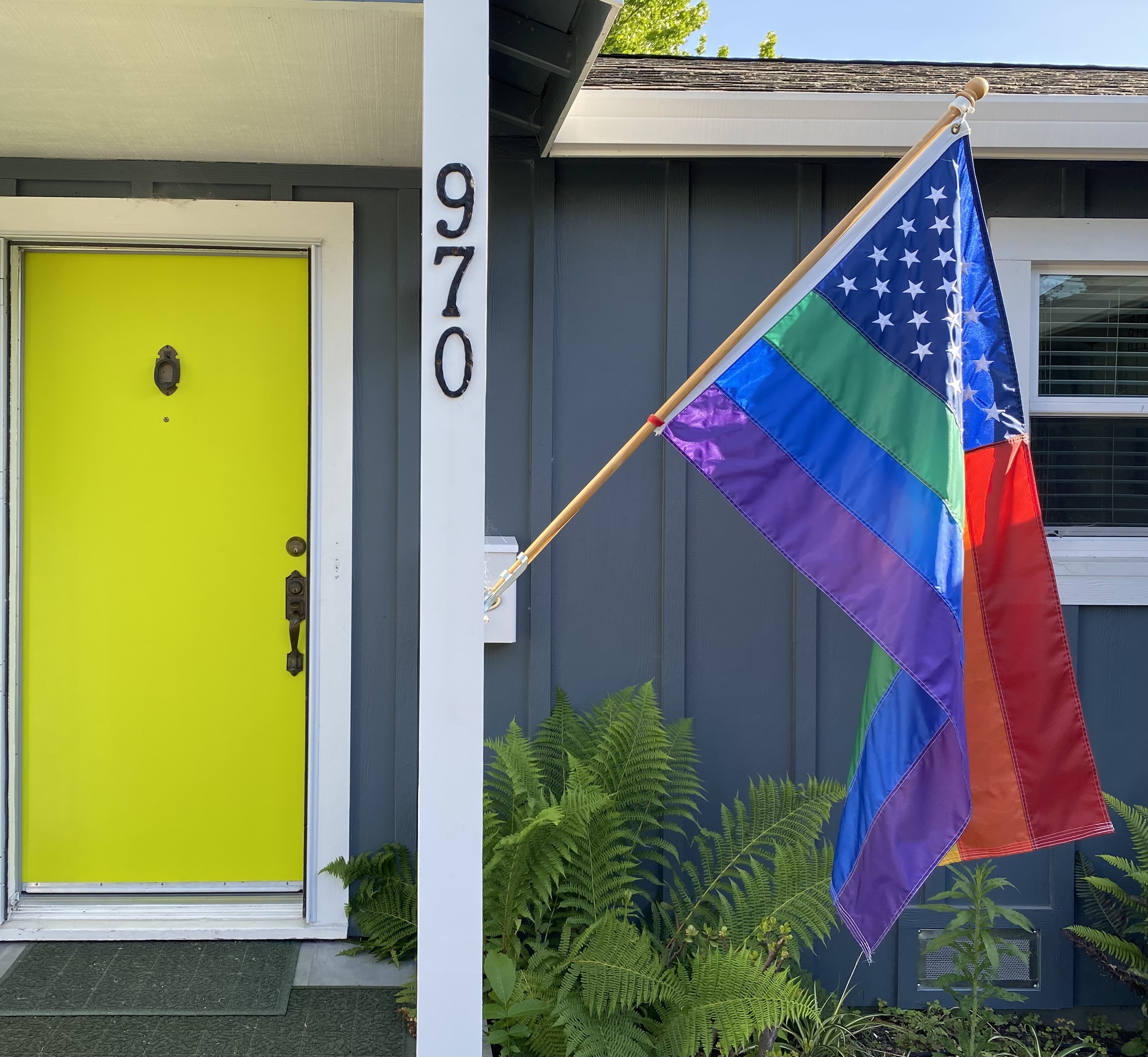
Flags are big during Gay Month. We hung the gay flag on June 1, a ritual repeated every year.
Then Holly and I both got covid, thankfully at the same time so we could isolate together. She brought it home from her mother’s assisted living place. We each took a five-day course of Paxlovid. I’m pretty sure it reduced the severity of our symptoms and now we’ve tested negative. We didn’t practice many rituals while we were sick, unless you count lying in bed all day watching Mrs. Maisel.
Now I’m back to hiking! I’ve resurrected my daily morning ritual of preparing for the hike—donning boots and hat, filling my water bottle, making a snack, checking the fanny pack. Keys, wallet, phone and bandana felt for in pockets. And I’m off to walk in nature, my favorite pastime.
Have a delightful Summer Solstice and a fabulous Gay Pride Day!
Education Initiatives Librarian Rachel Icaza (she/her/hers) speaks about partnering with schools at the Sonoma County Library Commission meeting
As LGBTQ people and their families in states like Florida pack their bags to move to nondiscriminatory states like California, those of us who live in the Golden State brace ourselves for an onslaught of anti-queer violence during gay month. Yes, we’re worried about becoming targets of violence, but that hasn’t meant that we’ve gone back into our closets. Gay celebrations here in Sonoma County have been more robust than ever.
On June 3, Santa Rosa hosted its biggest Sonoma County gay pride march ever. This year the haters didn’t show up, but they have been targeting our libraries and drag queen (and drag king!) story hours.
Sonoma county has a large organized gay community and our presence has had an impact on the culture here. The library is a fine example of a community institution successfully reaching out to all its patrons, including queers.
With 13 branches around our far-flung mostly rural county, the library system, in their words, “…makes an effort to be inclusive of all the different ethnic and identity groups in our communities. Programming has included drag story hours, LGBTQI teen groups and activities, Here+Queer the Sonoma County LGBTQI Archives.”
After a recent library commission meeting where vocal detractors made public comments, displayed signs, and stated that they intend to protest queer programming, the library let supporters know how we could help. They made it clear that if we wished to counter-demonstrate, we must practice nonviolence. They also suggested we could write letters to the commission. Here is what I wrote:
Dear Sonoma County Library Commission,
I’m writing to thank you for including queer books and queer programming at our Sonoma County libraries. I see books by and about LGBTQ people prominently displayed, including my own book with queer content, Wonder Woman Electric to the Rescue.
I’m a lesbian feminist who came of age in an era when books about lesbians and gays were exceedingly hard to find. Publishers and printers refused to print the books we wrote and so we started our own publishing and printing businesses. And we started our own bookstores because our libraries did not have our books.
I now use the library to check out audio books (thank you!), and so I no longer buy many books. But I had to buy Gender Queer by our own Sonoma county writer Maia Kobabe, the most banned book in the country today. I’m proud that my local library carries it.
Sincerely and Queerly,
Molly Martin
Queers and our allies are standing up to the bullies and book burners. A recent protest, originally organized by members of a private Facebook group called Sonoma County Parents Stand Up for Our Kids, ballooned when 130 counterprotesters arrived in support of Drag Story Hour. The local newspaper reported that, “Counterprotesters from Amor Para Todos, Petaluma Pride, Unitarian Universalists of Petaluma and others held signs and waved LGBTQ+ Pride flags peacefully next to five protesters from the Facebook group.” There was no threat of violence.
When asked how it felt to be in the midst of the national dialogue, Ray Holley, communications manager for Sonoma County Library said, “Democracy is messy and it’s complicated. And the free public library is such a good example of that. Libraries are for everyone. Not every book in the library is for every patron, but every patron is going to find a book in the library.ʺ
Now we have learned that the church that organized the anti-drag protests, Victory Outreach of Santa Rosa, has been granted $400,000 under the California State Nonprofit Security Grant Program, which “helps places of worship better defend themselves against violent attacks and hate crimes.” Another local grant recipient, Calvary Chapel The Rock, is also accused of anti-LGBTQ sentiments.
Jason Newman, a Petaluma marriage and family therapist who is gay, says there is no justification for the state helping these churches, which he called hate groups. More deserving recipients of this state money might be the LGBTQ groups being attacked by these religious cults.
Feel the same? Want to let the State know? Here’s what I found online. The state office is the California Office of Emergency Services. This is the best email I found (I don’t think they want emails): GMD@caloes.ca.gov
The phone number is 916-845-8510. I was able to leave a message.
I’m a writer not completely unfamiliar with the publishing process. I published a book in 1988 with a new edition in 1993. Hard Hatted Women: Life on the Job is an anthology of stories by and about women working in the construction trades and blue-collar jobs.
I had a publisher then, Seal Press, a woman-owned press that focused on women’s stories. Started in a Seattle garage, Seal Press came out of the Women’s Press Movement at a time when women, and especially lesbians, could not find printers who would print our words. Seal Press assigned me an excellent editor (every writer needs a great editor) and also a press person who got me interviewed by Jane Pauley on the Today Show. She organized a bare-bones book tour in which I drove my CRX across the country and back, staying in the homes of women’s bookstore proprietors. I loved working with those brilliant women at Seal.
Oh how the publishing business has changed since then! Seal Press is now an imprint of Hachette, a big publishing house in New York, still with a feminist focus. But I didn’t even send them a proposal for my latest book, Wonder Woman Electric to the Rescue. My book is a collection of essays, fiction and memoir and I know publishers prefer manuscripts that stick to one genre. Finding a niche publisher just seemed like an overwhelming challenge and I didn’t feel like writing proposals and waiting for rejection letters. Also, I know that even if I was lucky enough to find a publisher, they’d be unlikely to do much to promote my book.
Nowadays there are lots of “self” publishers to choose from, but I was lucky to employ a friend, Chris Carlsson, who has self-published a stack of books. Chris directs Shaping San Francisco (www.shapingsf.org), a project dedicated to the public sharing of lost, forgotten, overlooked, and suppressed histories of San Francisco and the Bay Area. The project hosts a digital archive (where many of my writings appear) at foundsf.org. The proceeds from my book will go to this project.
Once I had assembled the manuscript, I asked around and found a proofreader through a writer friend. I didn’t hire an editor, but most of the stories in my book have been published elsewhere and have been reviewed by my writers groups.
The motto of Redwood Writers, my local branch of the California Writers Club, is “writers helping writers,” and they take their mission seriously. I read a story in one of their salons and I learned about promotion in one of their workshops. I hired that workshop leader to set up a website for me and to design the book cover.
I’ve been calling Chris my publisher because he is the connection to Amazon. He uses Kindle Direct Publishing (Amazon). He lays out the book with Indesign and uses Photoshop for photos. Then he just follows Amazon’s directions. He found it difficult to engage with Amazon when he needed them to correct a mistake in the title, which would have made it impossible to search for the book by title. It took him many days to get hold of a live person to talk to. It seems the publishing department is run by robots.
My book is published but you can’t order it from your local bookstore. If you want the actual book, you must order it from Amazon, although you can access the digital version for free with Kindleunlimited (owned by Amazon).
Now I’m promoting my own book, something my publisher would have seen as their job in the old days. But there’ll be no more driving across the country for me. My book launch parties will be zooms that can gather readers across the country (and the world). Technology has revolutionized the publishing industry, and I’m still not sure what I think about that.










 tradeswomn musings