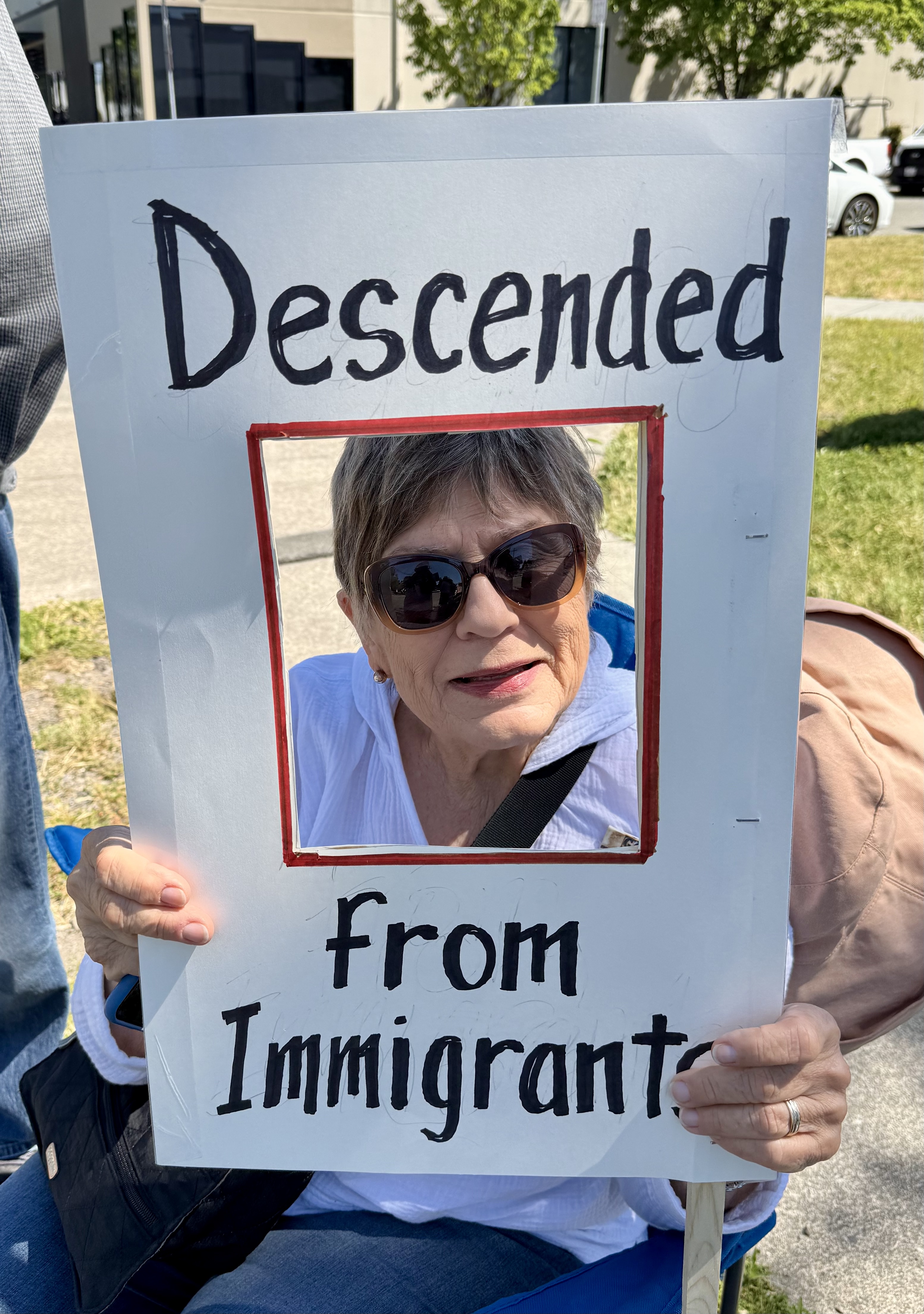
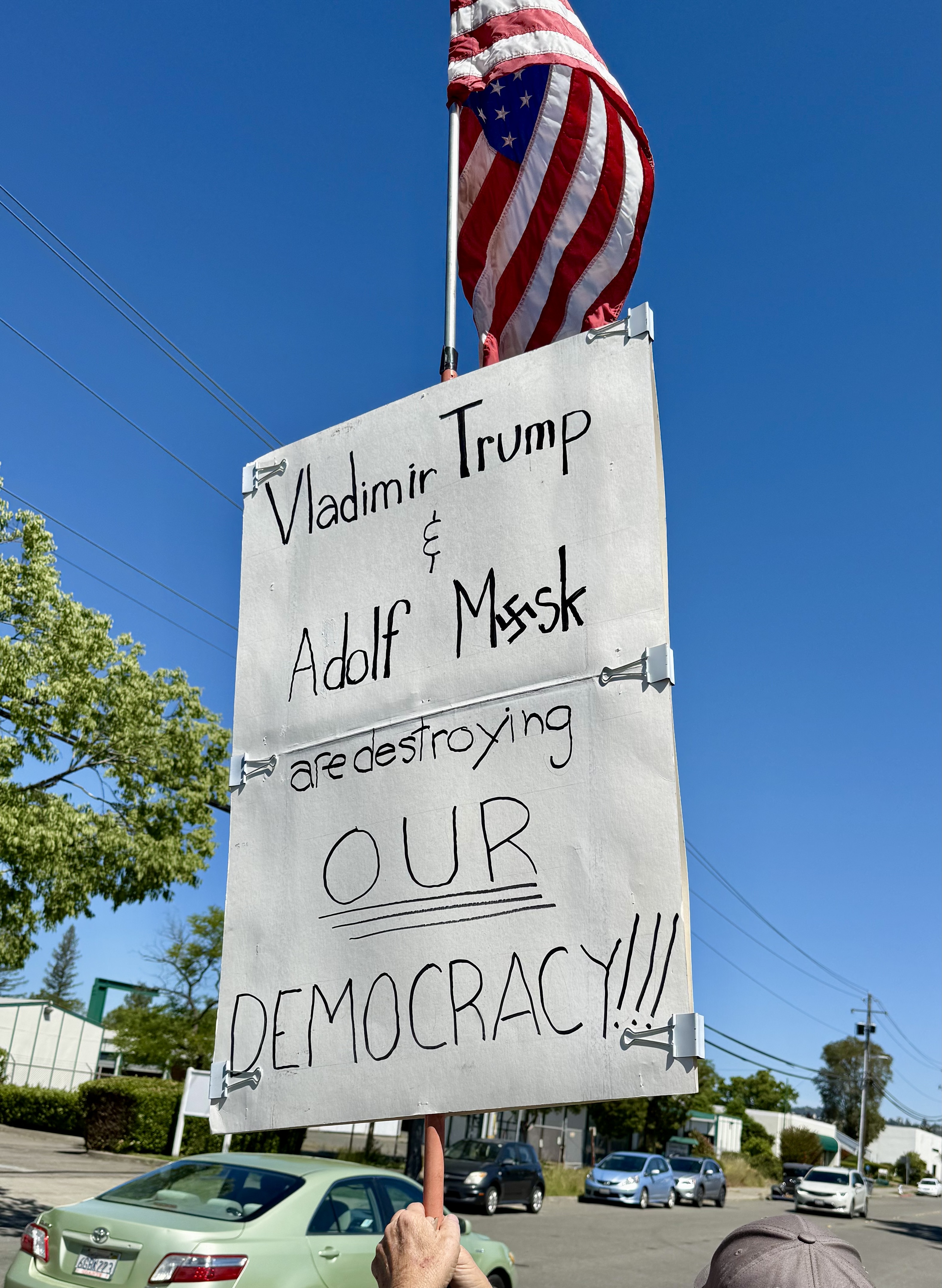
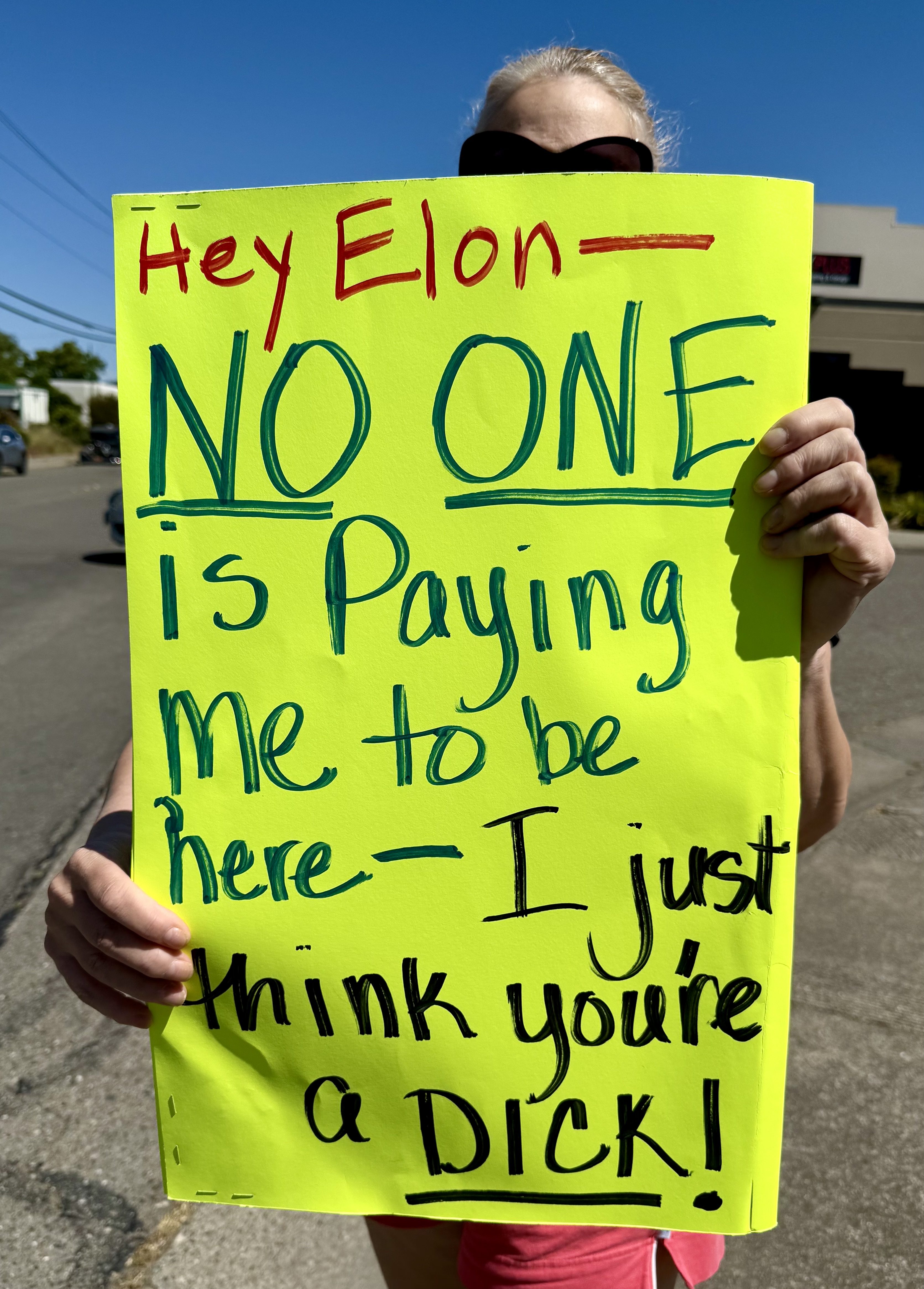
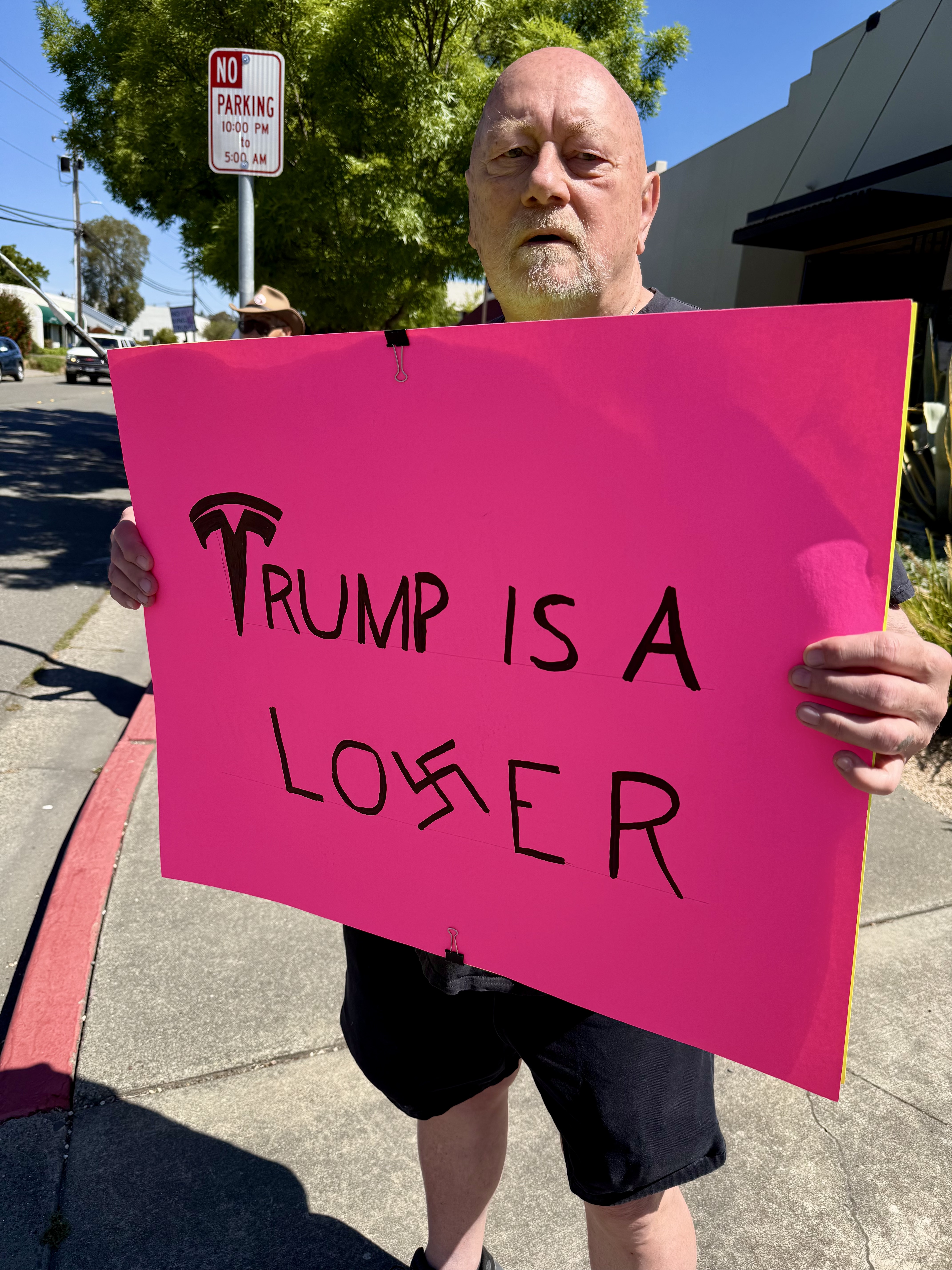
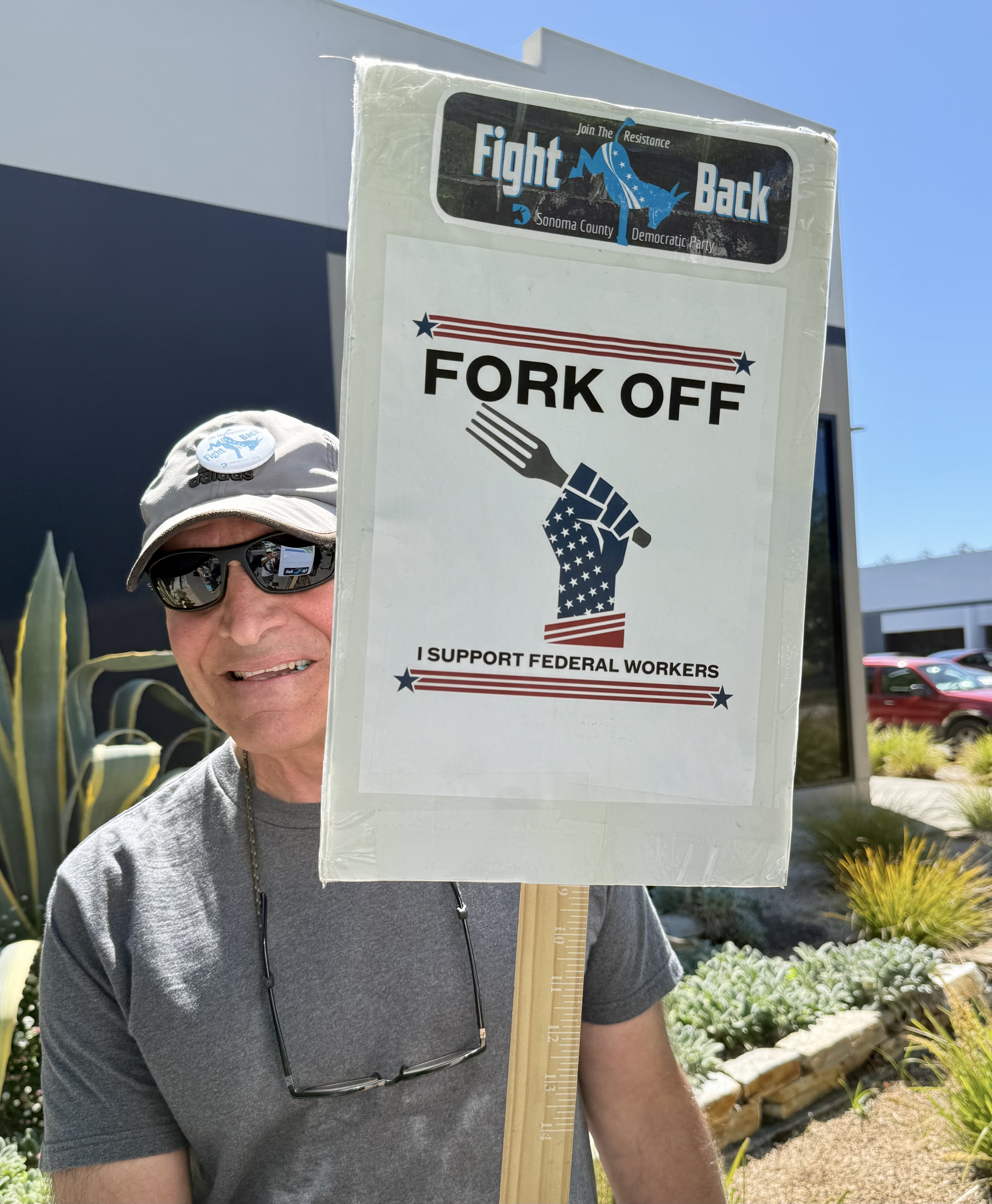
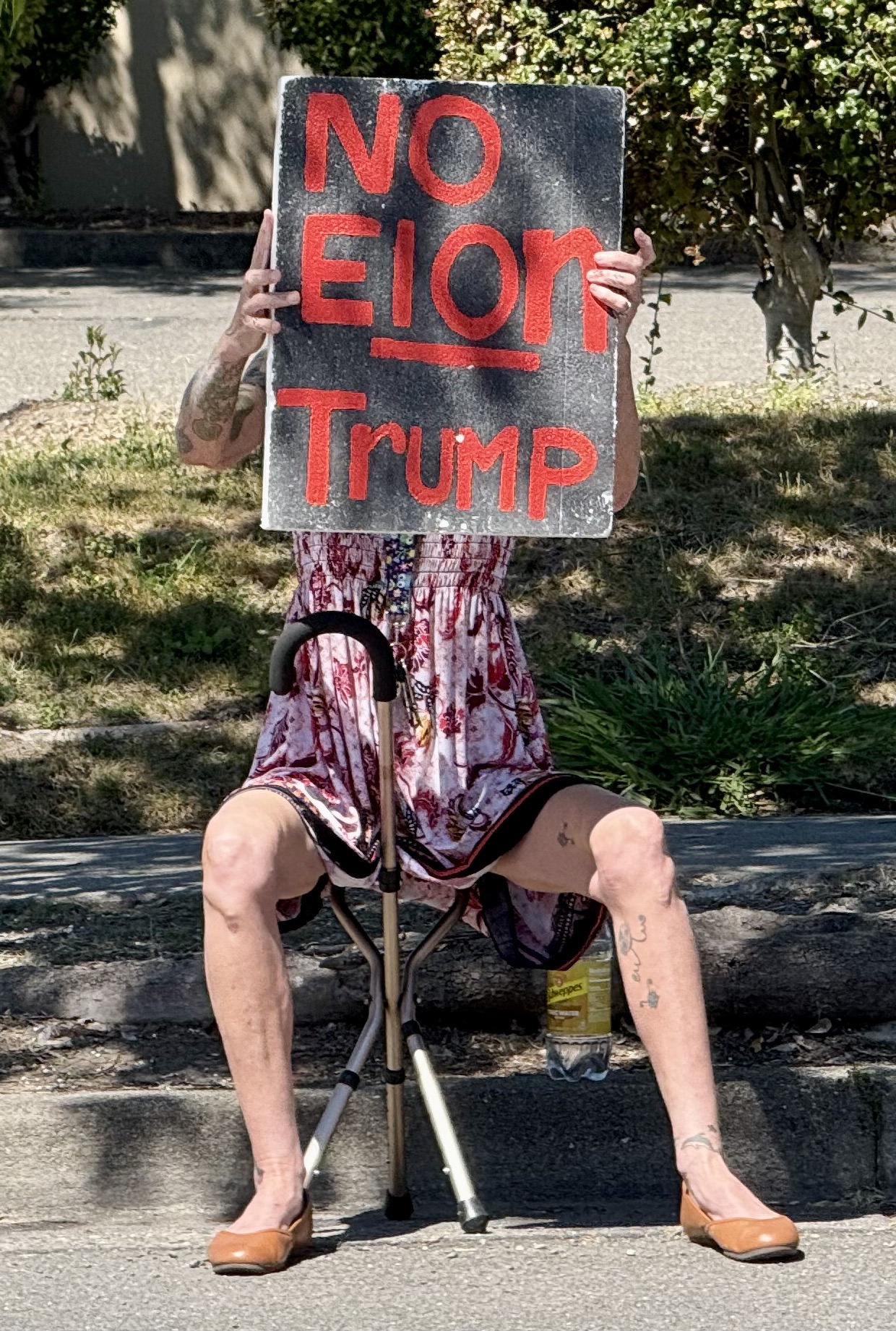
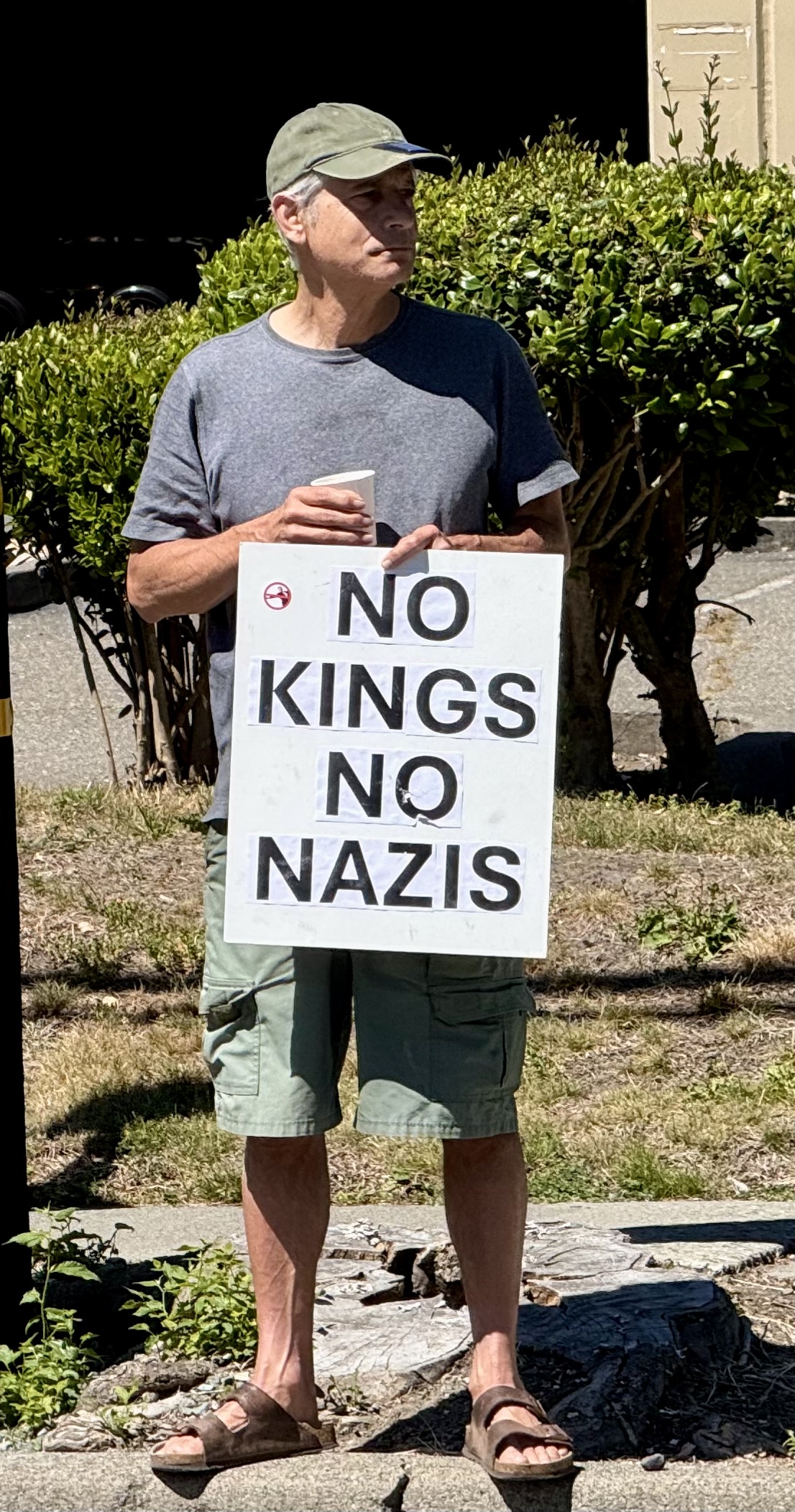
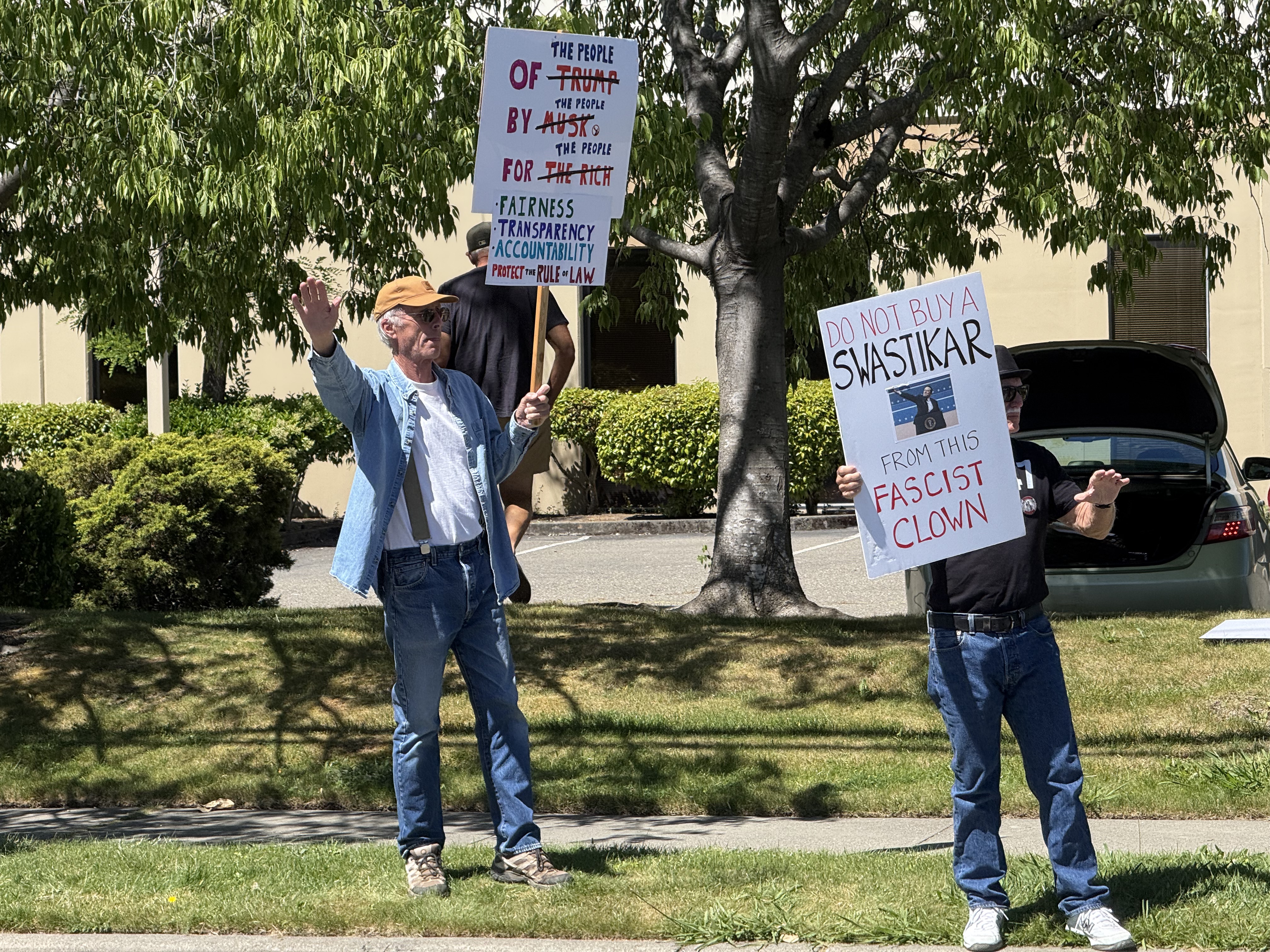
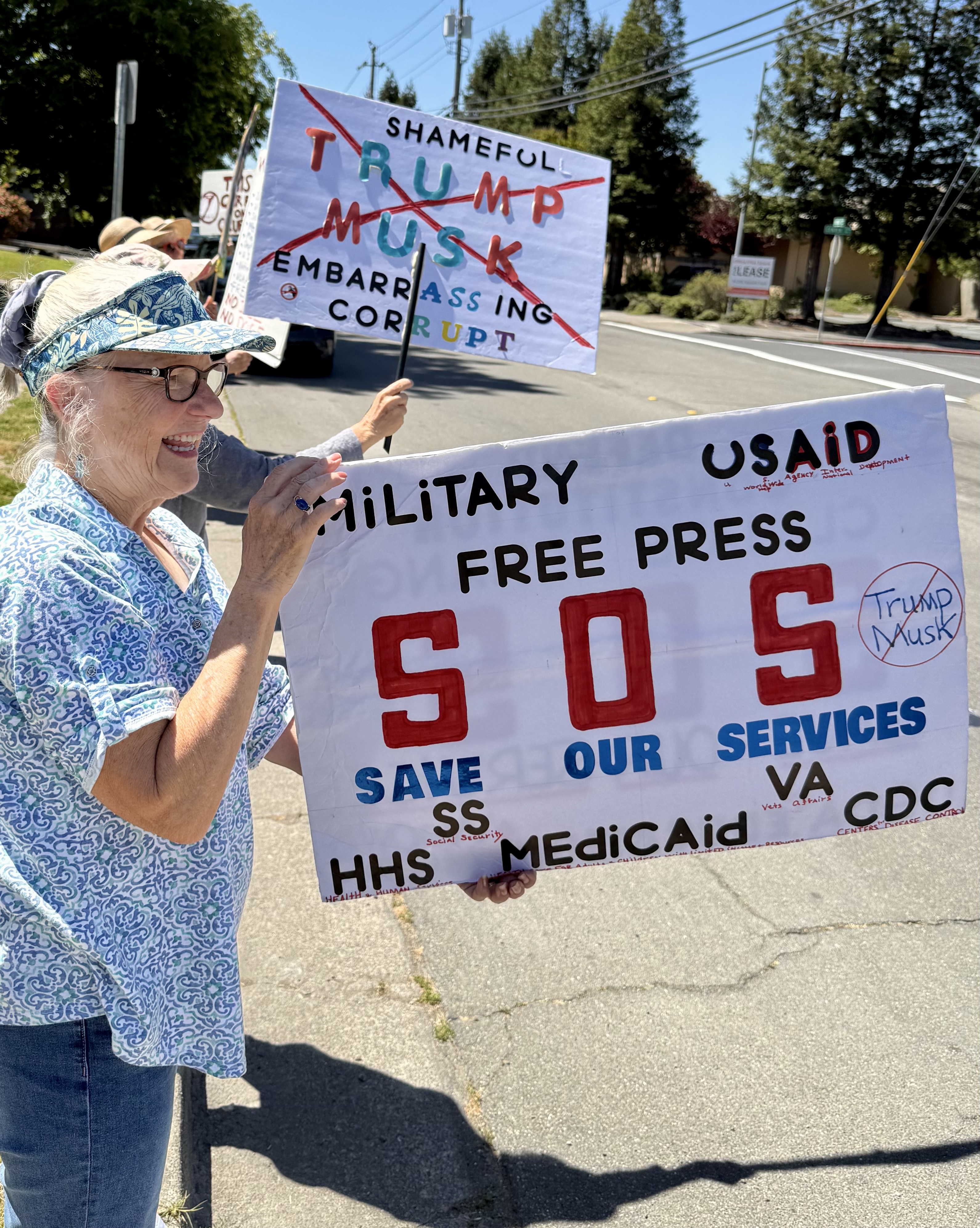
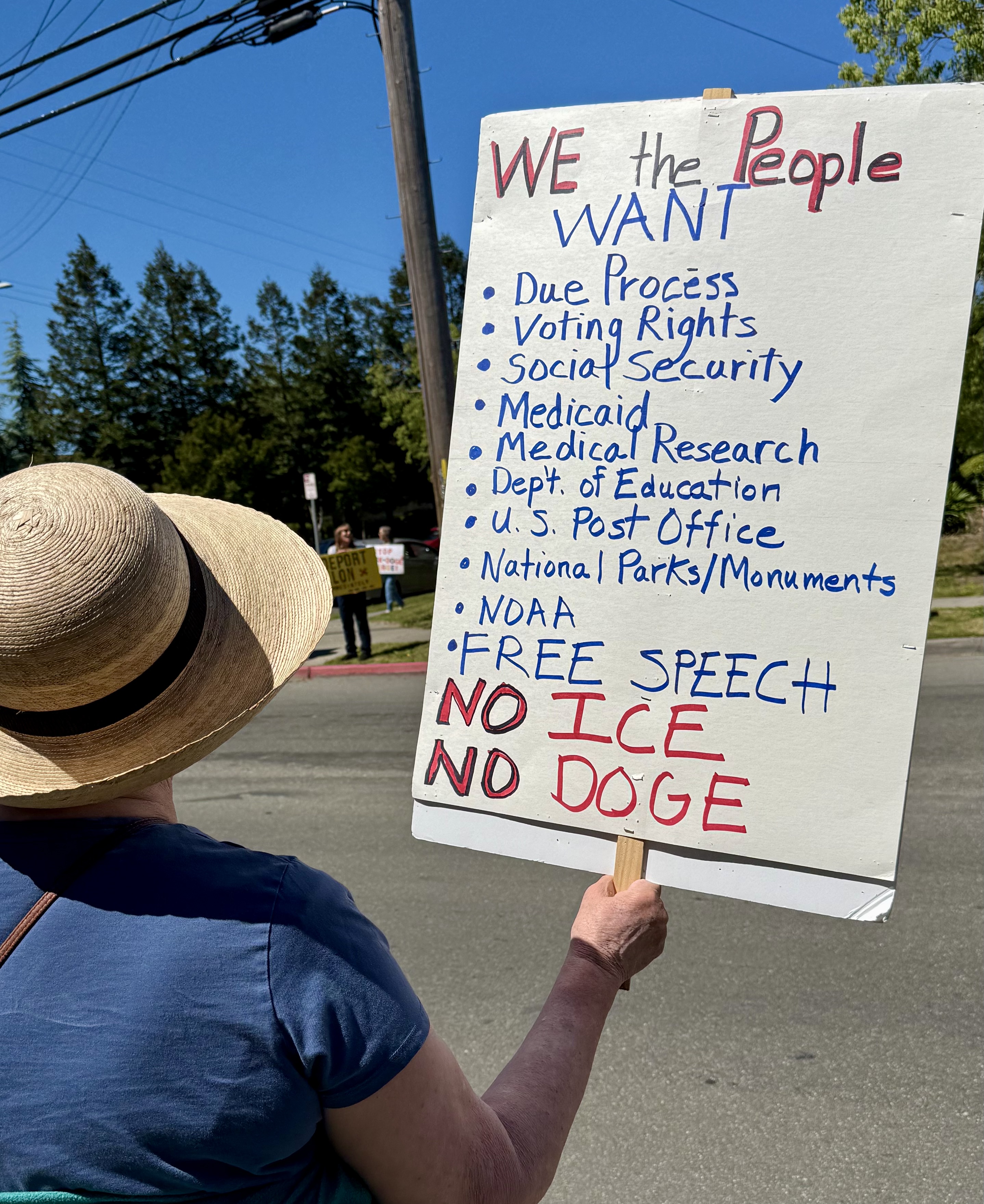
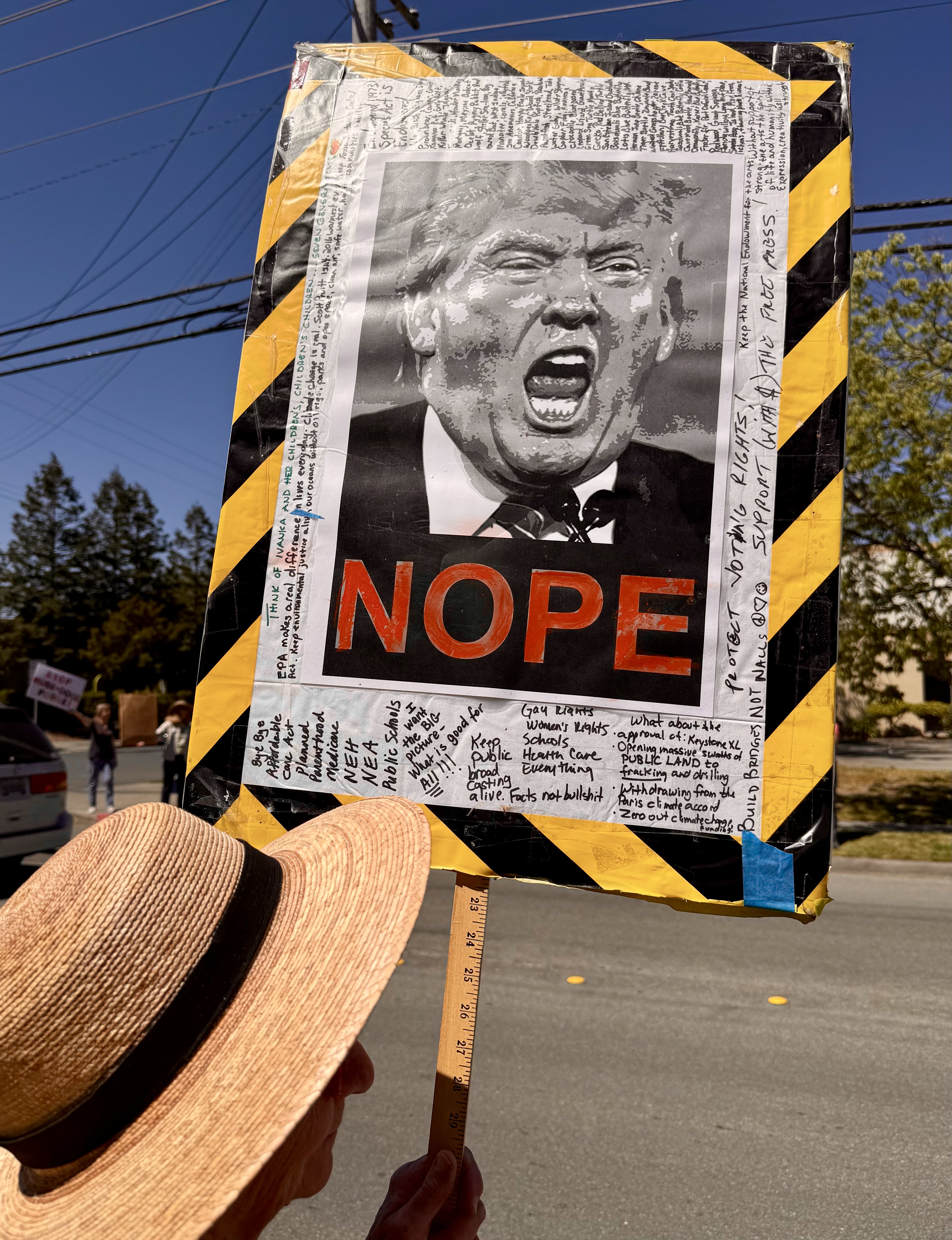
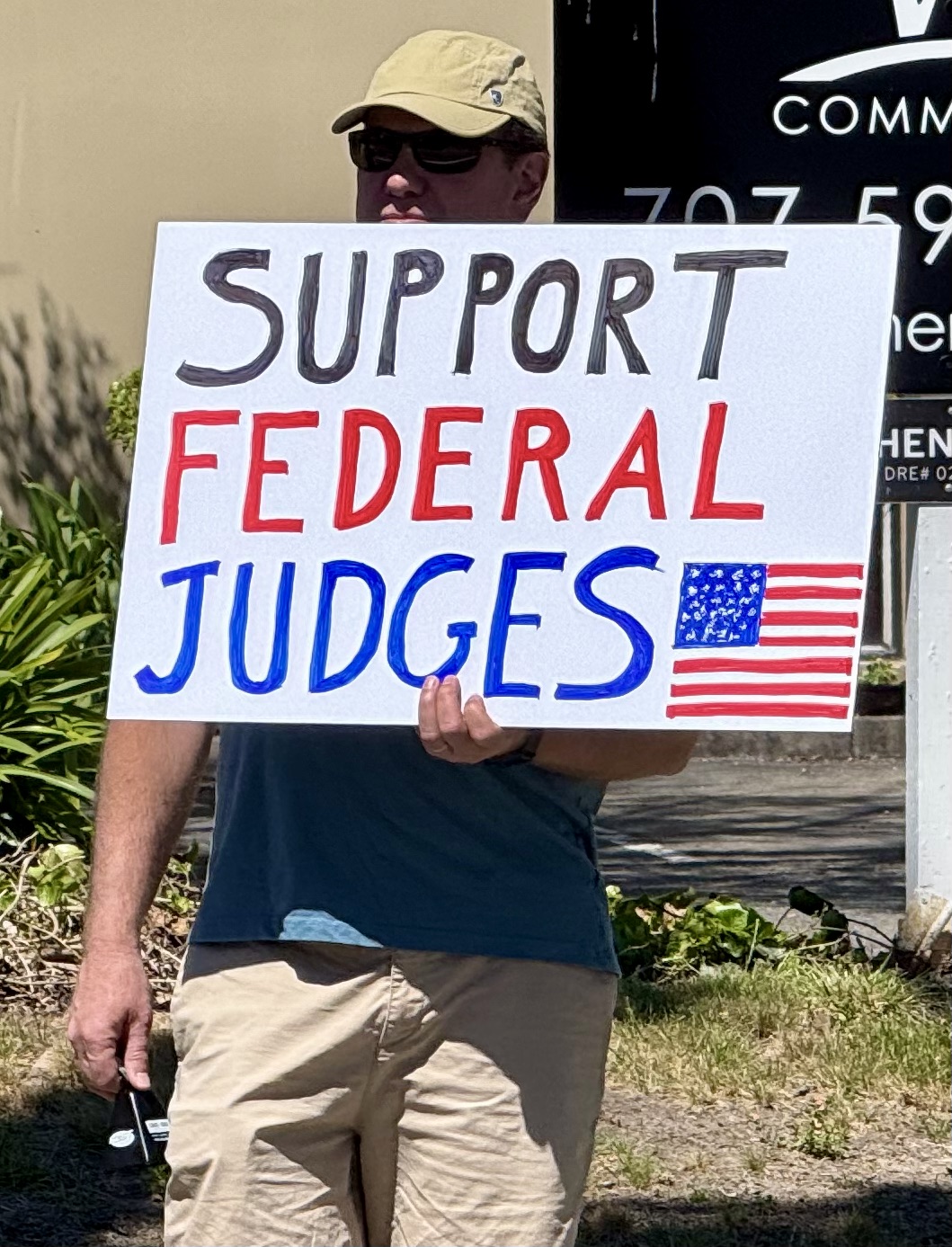
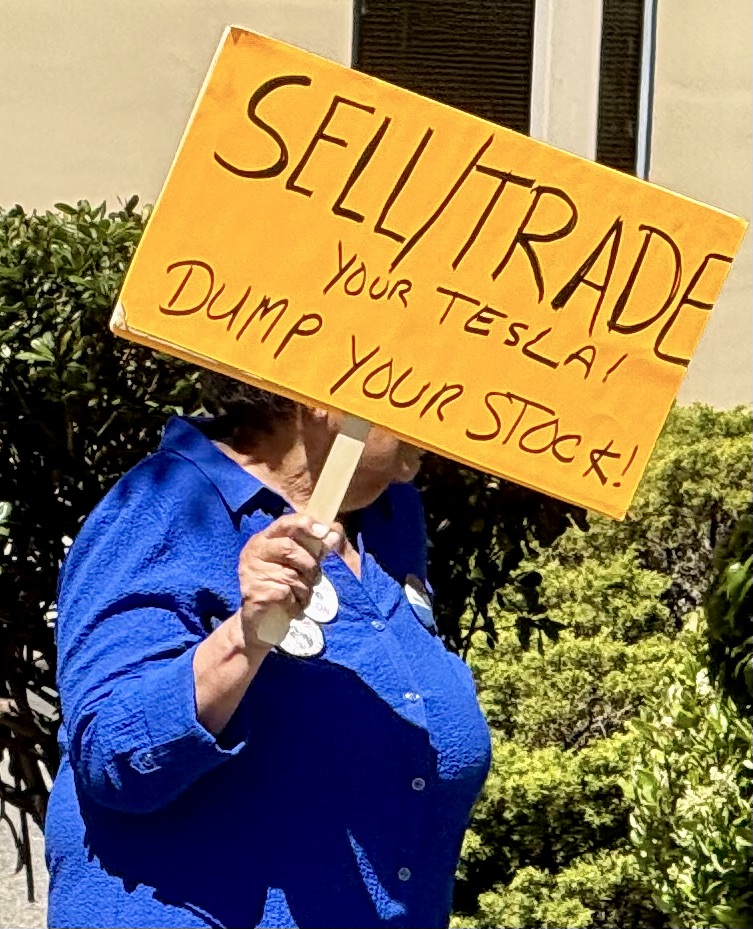
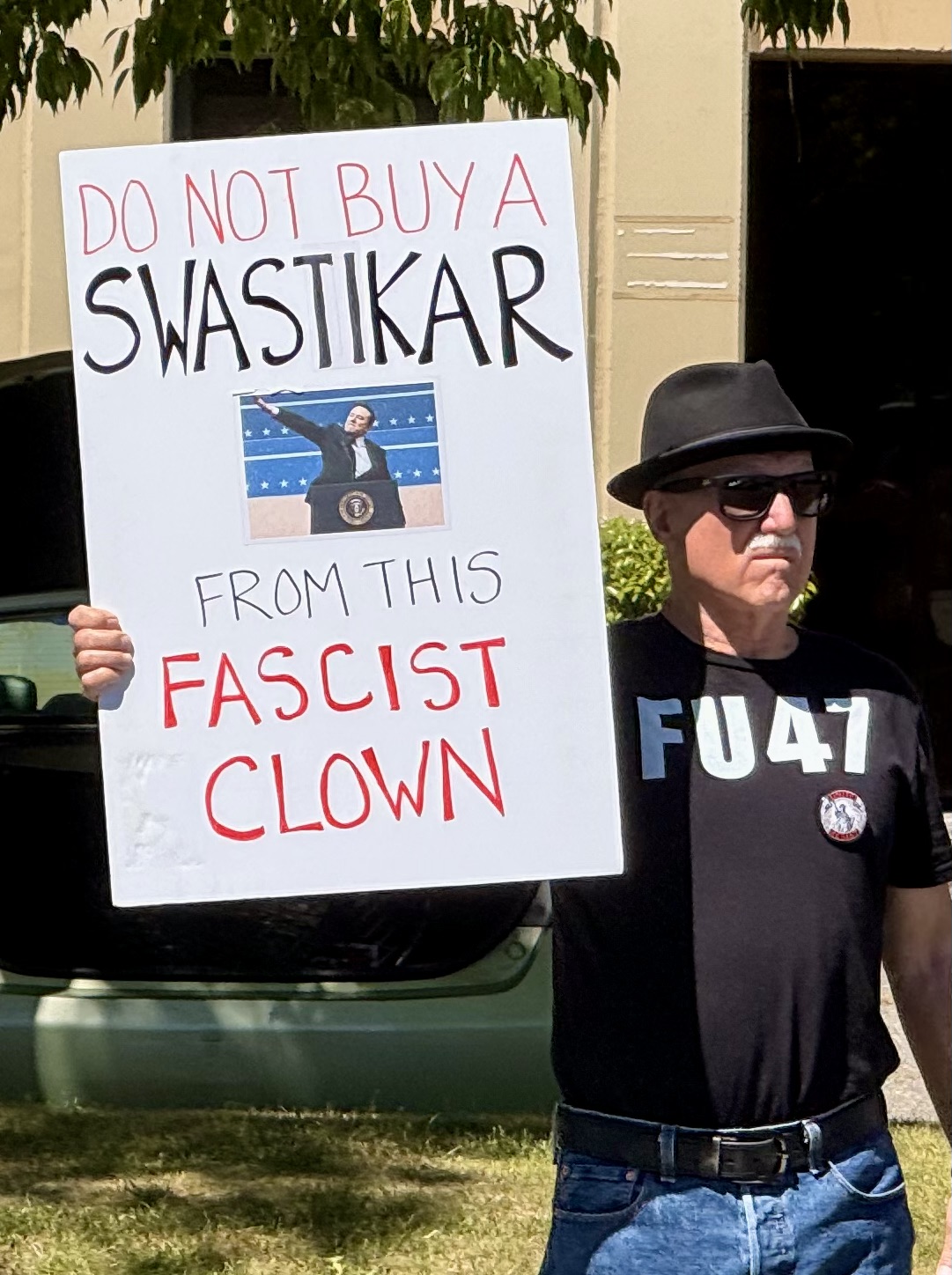
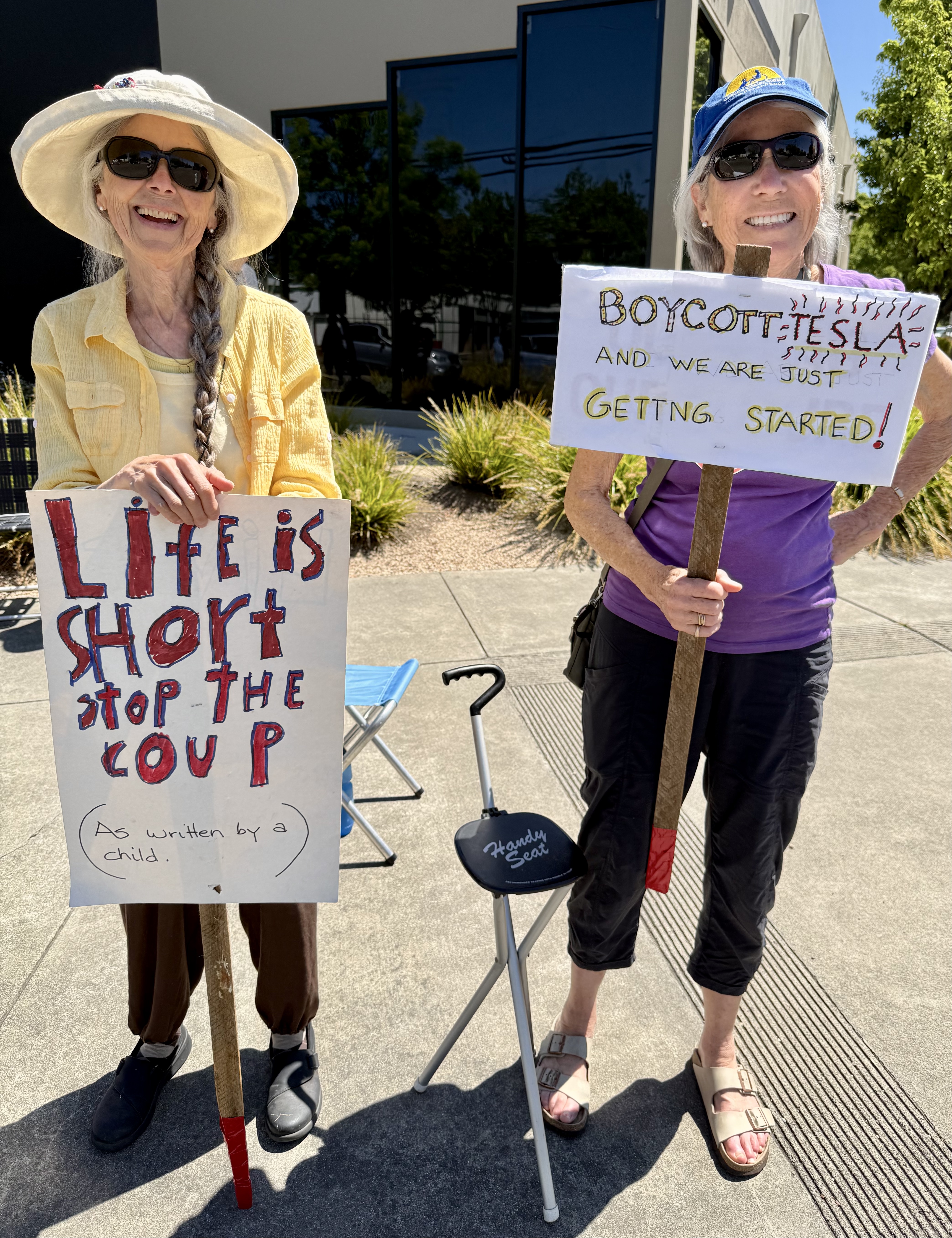
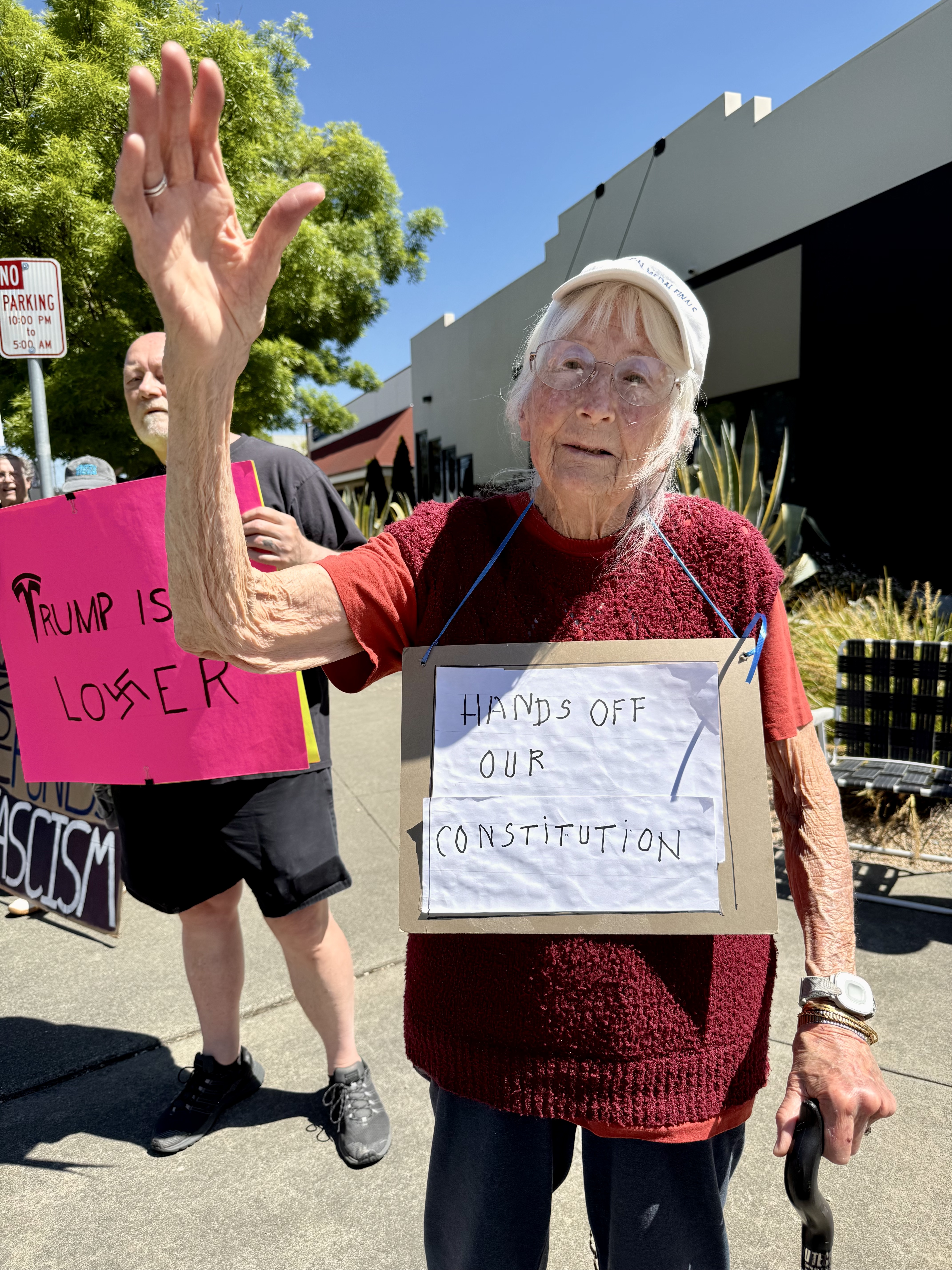
July 19 Santa Rosa CA


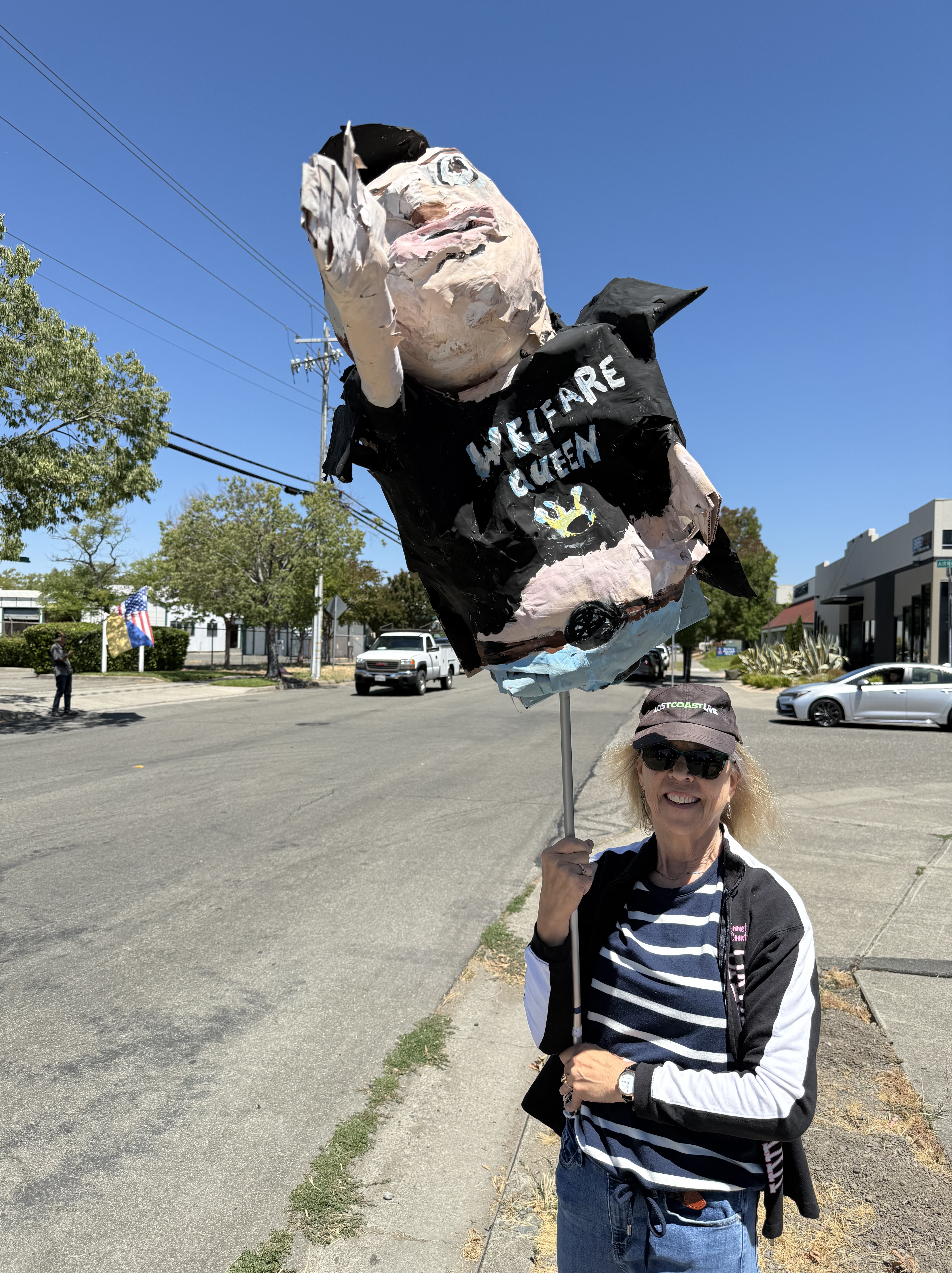

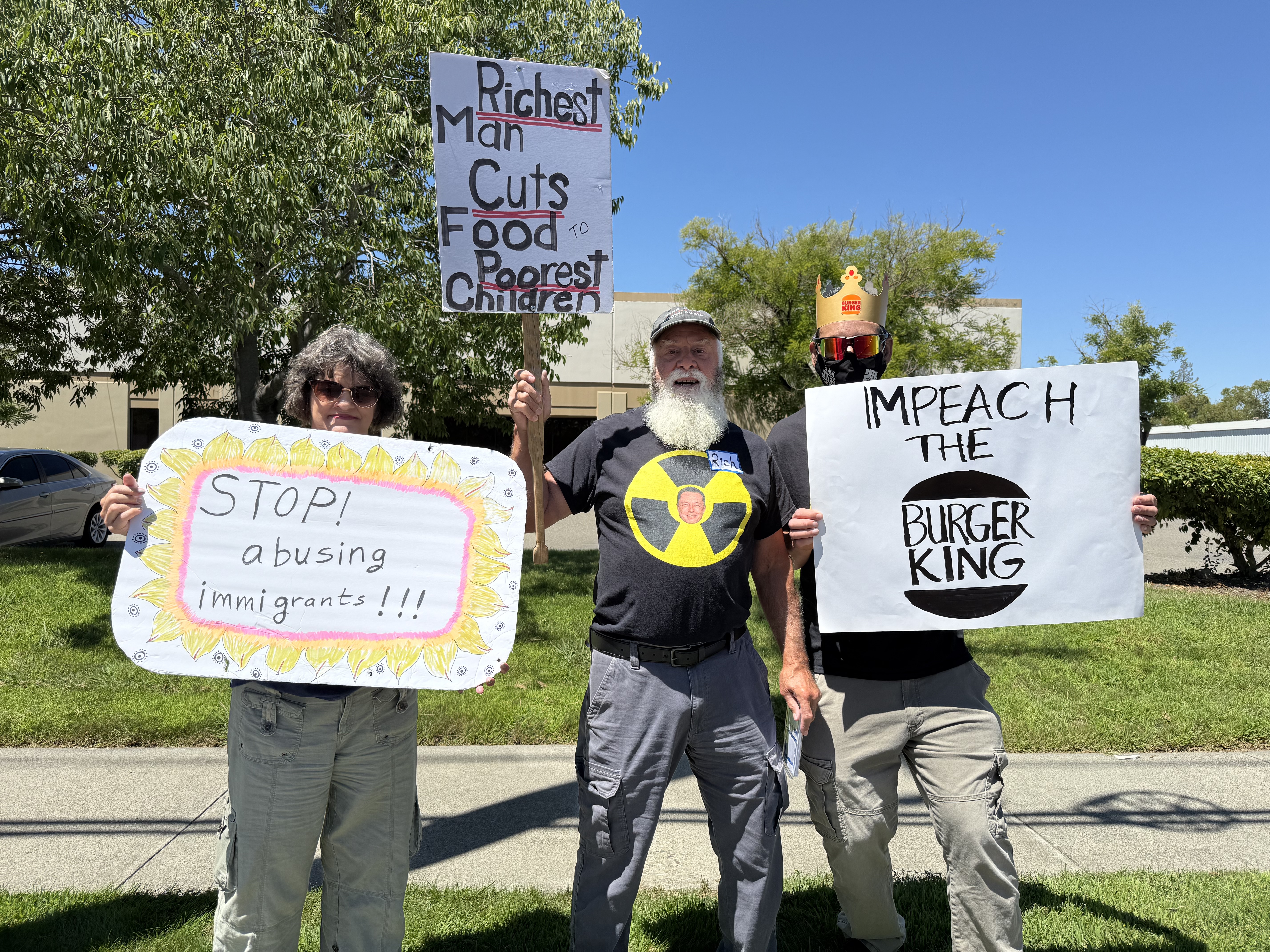
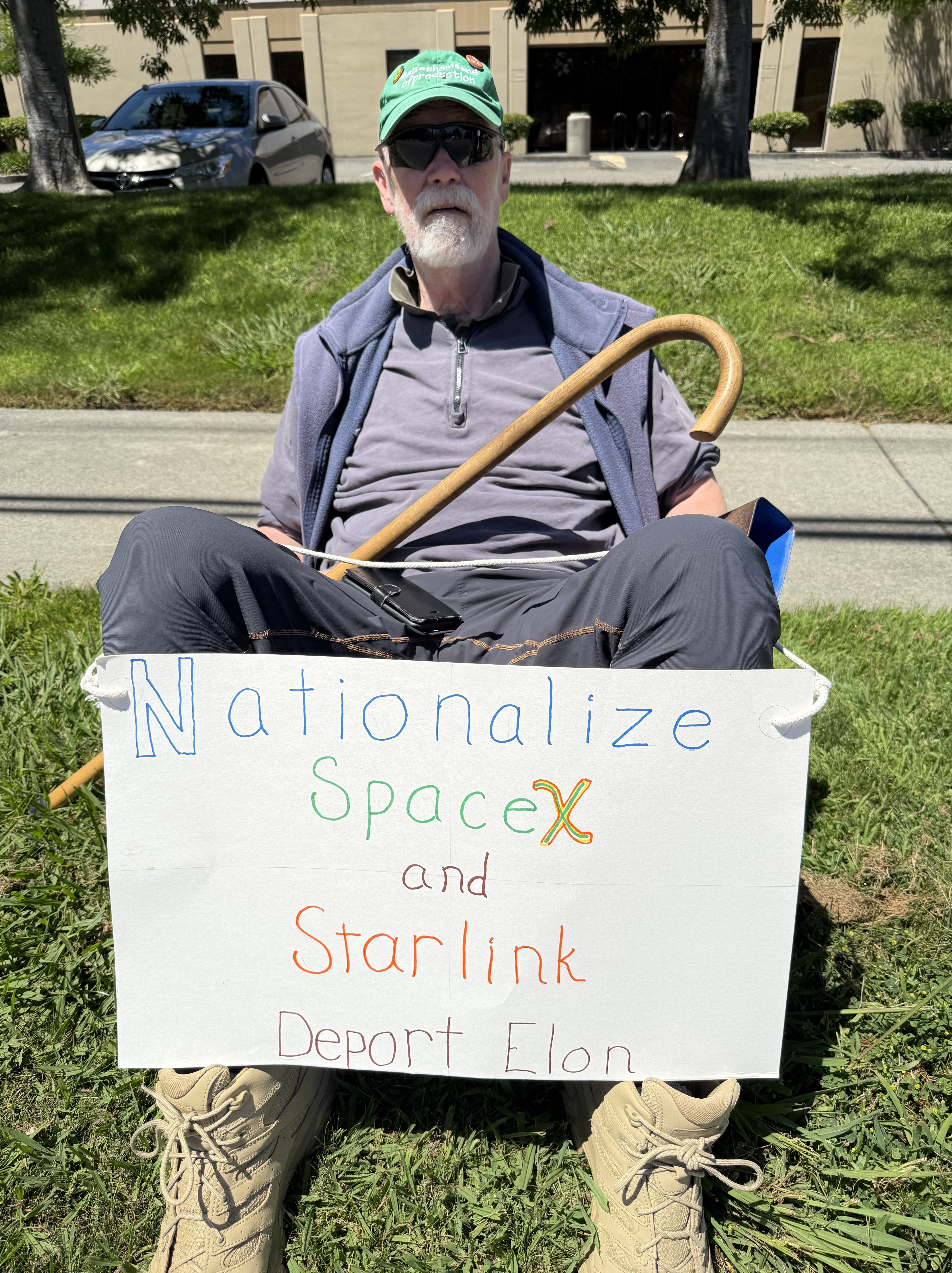


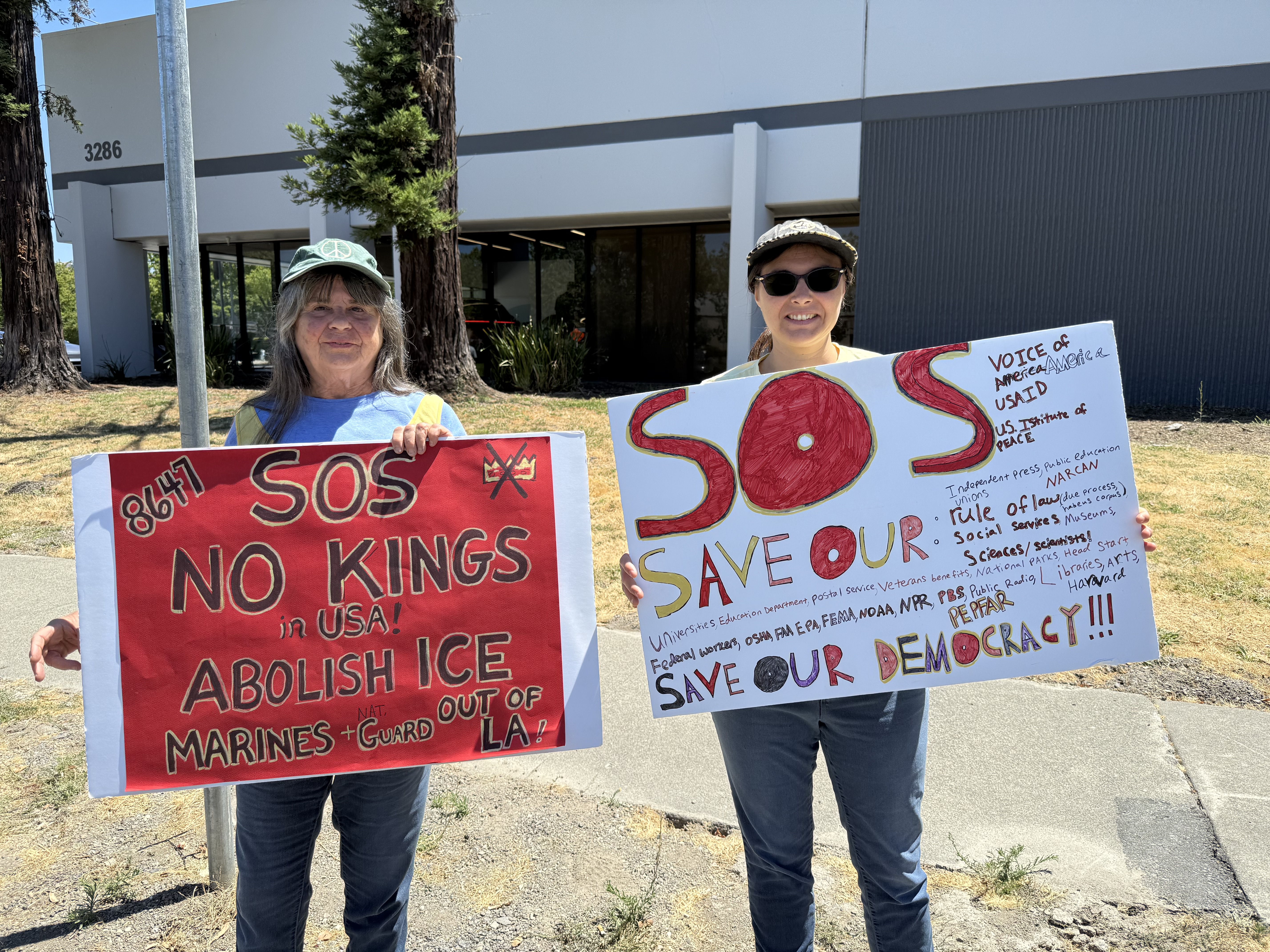
July 19 Santa Rosa CA
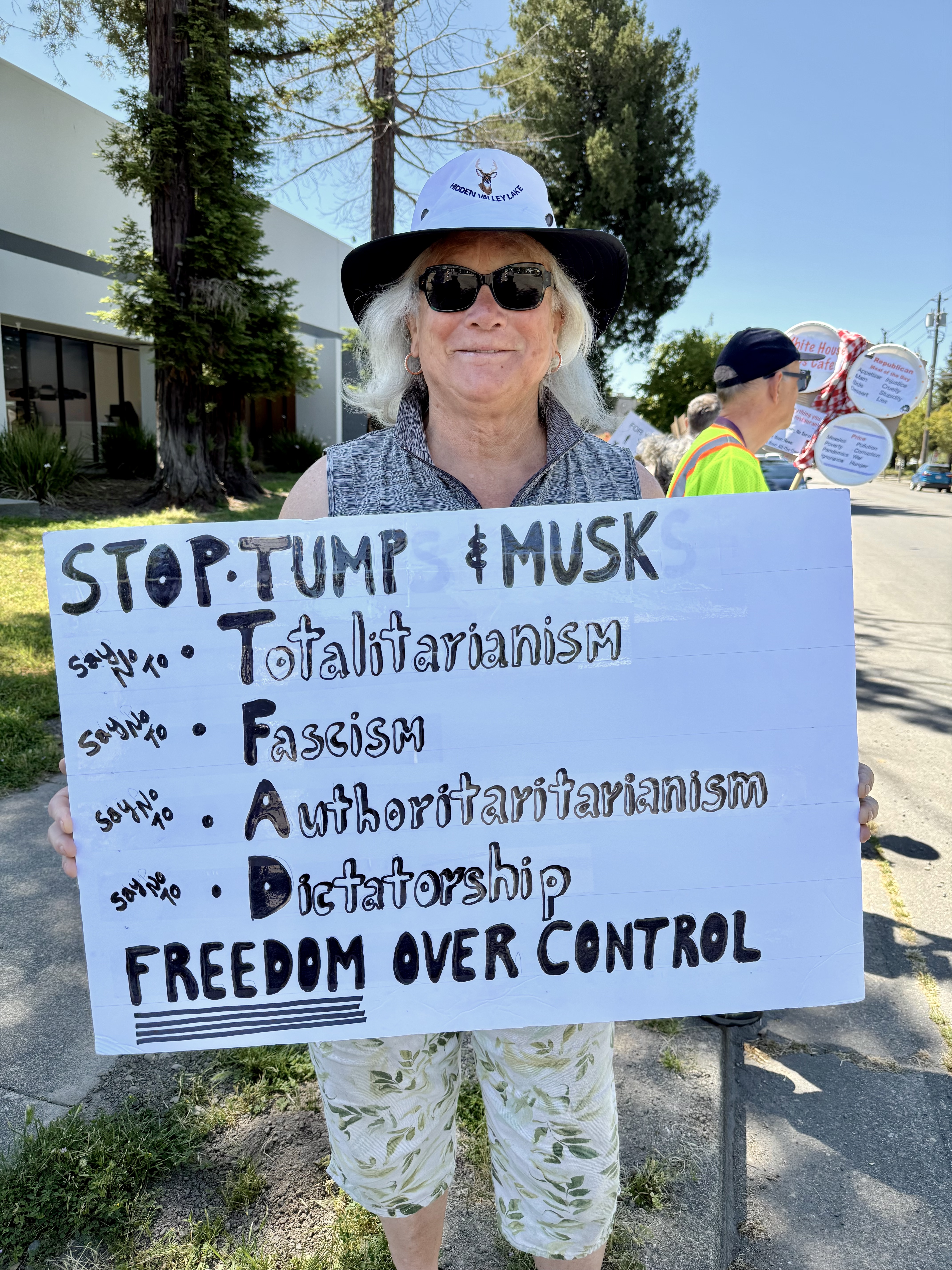
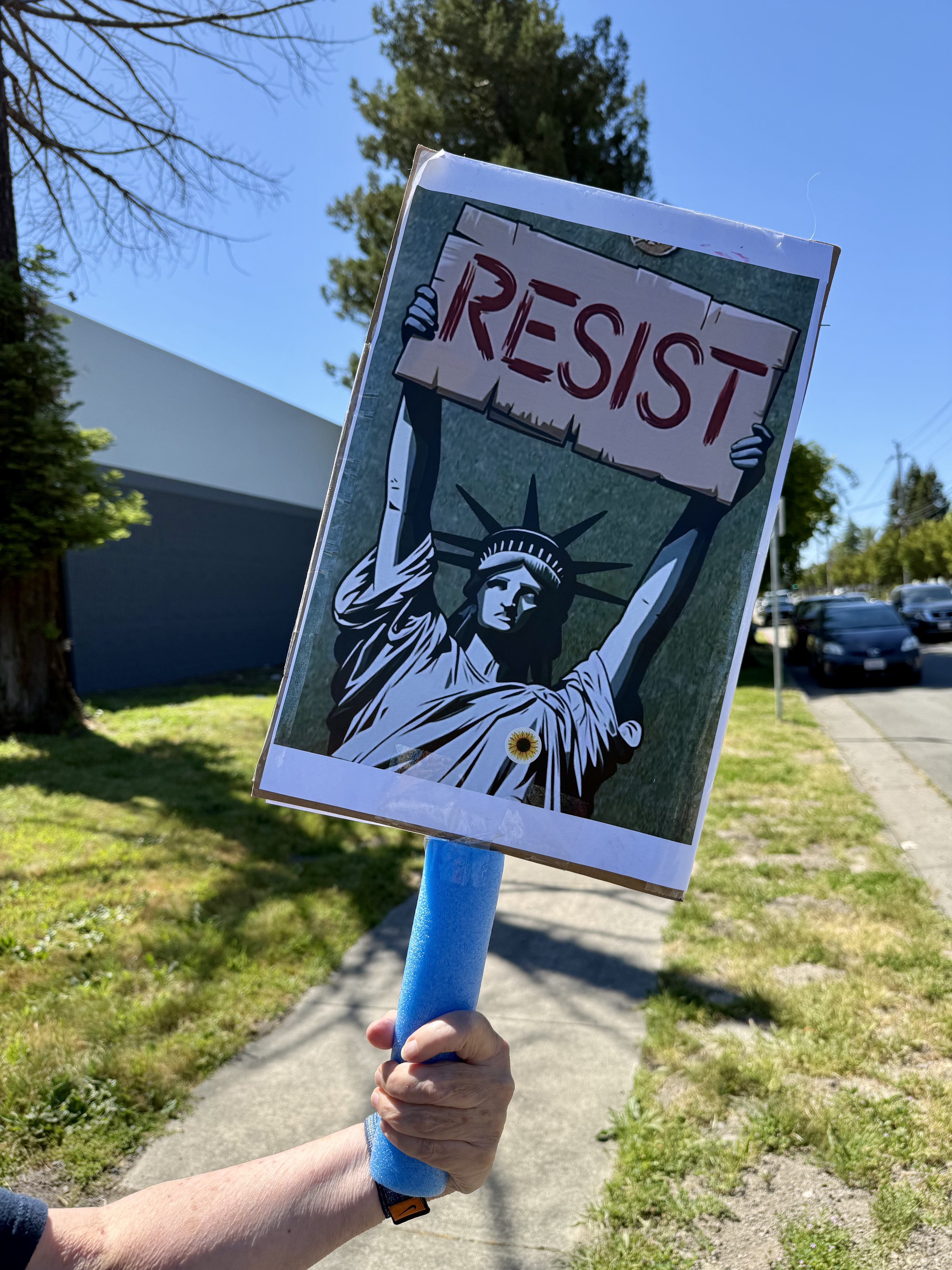
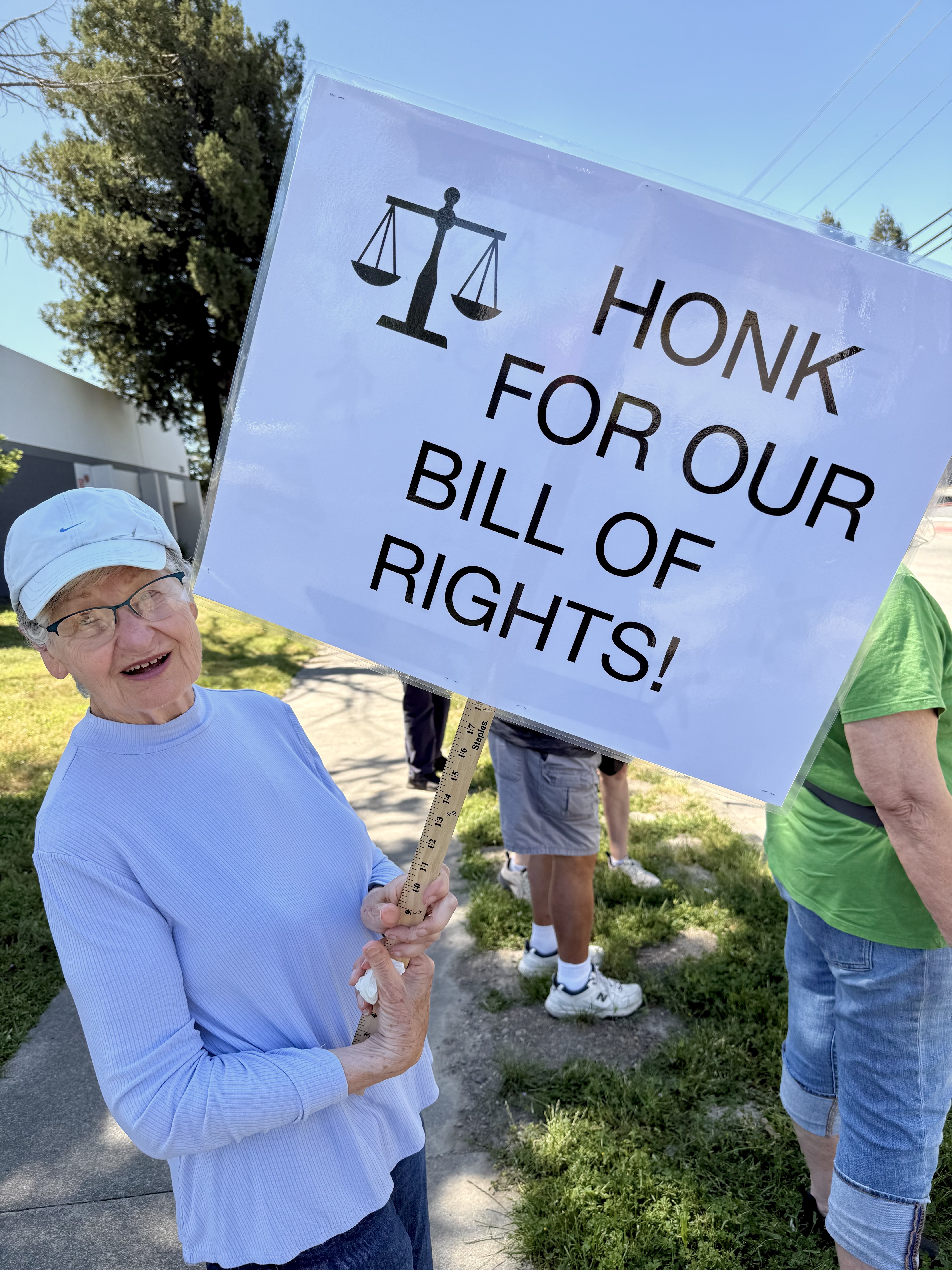
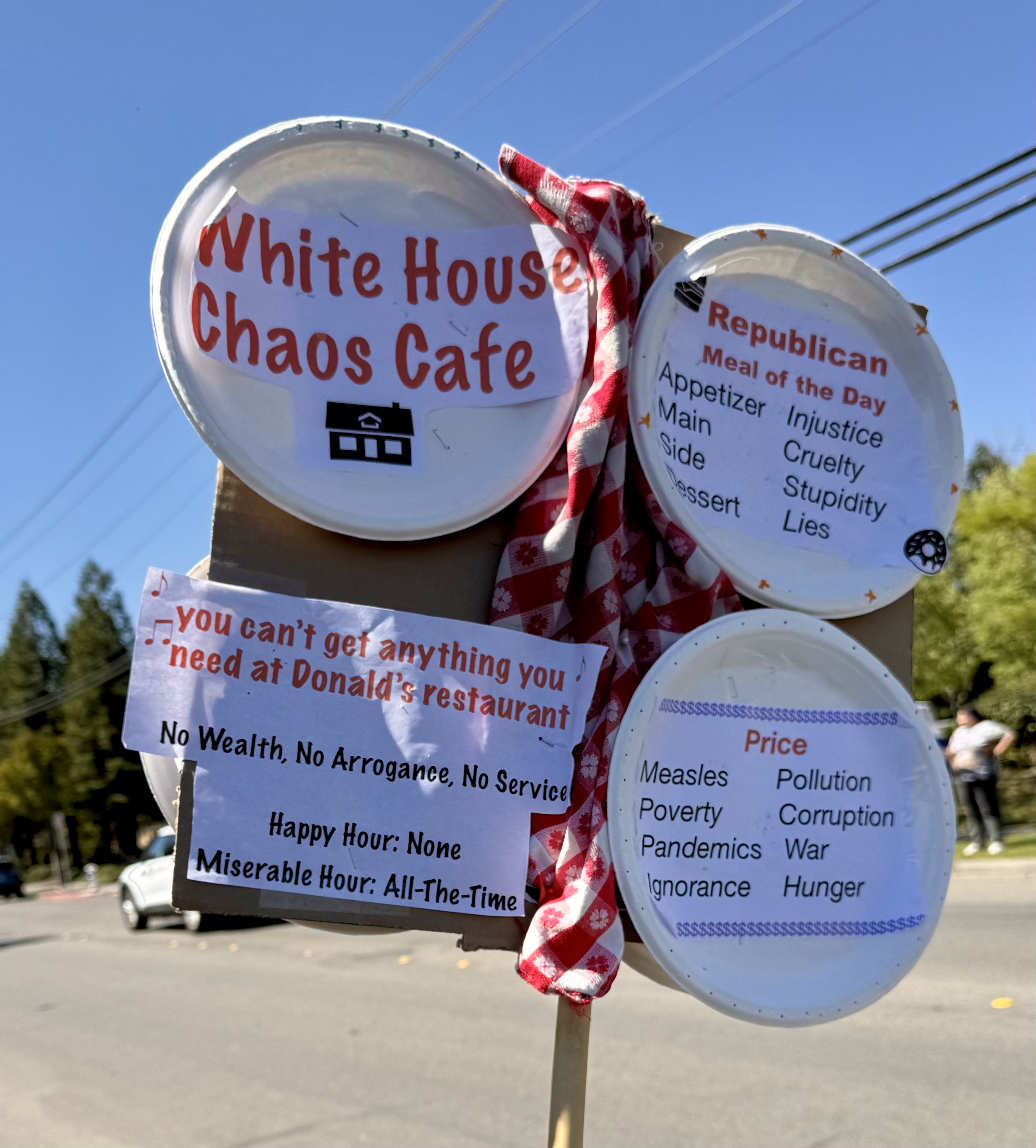
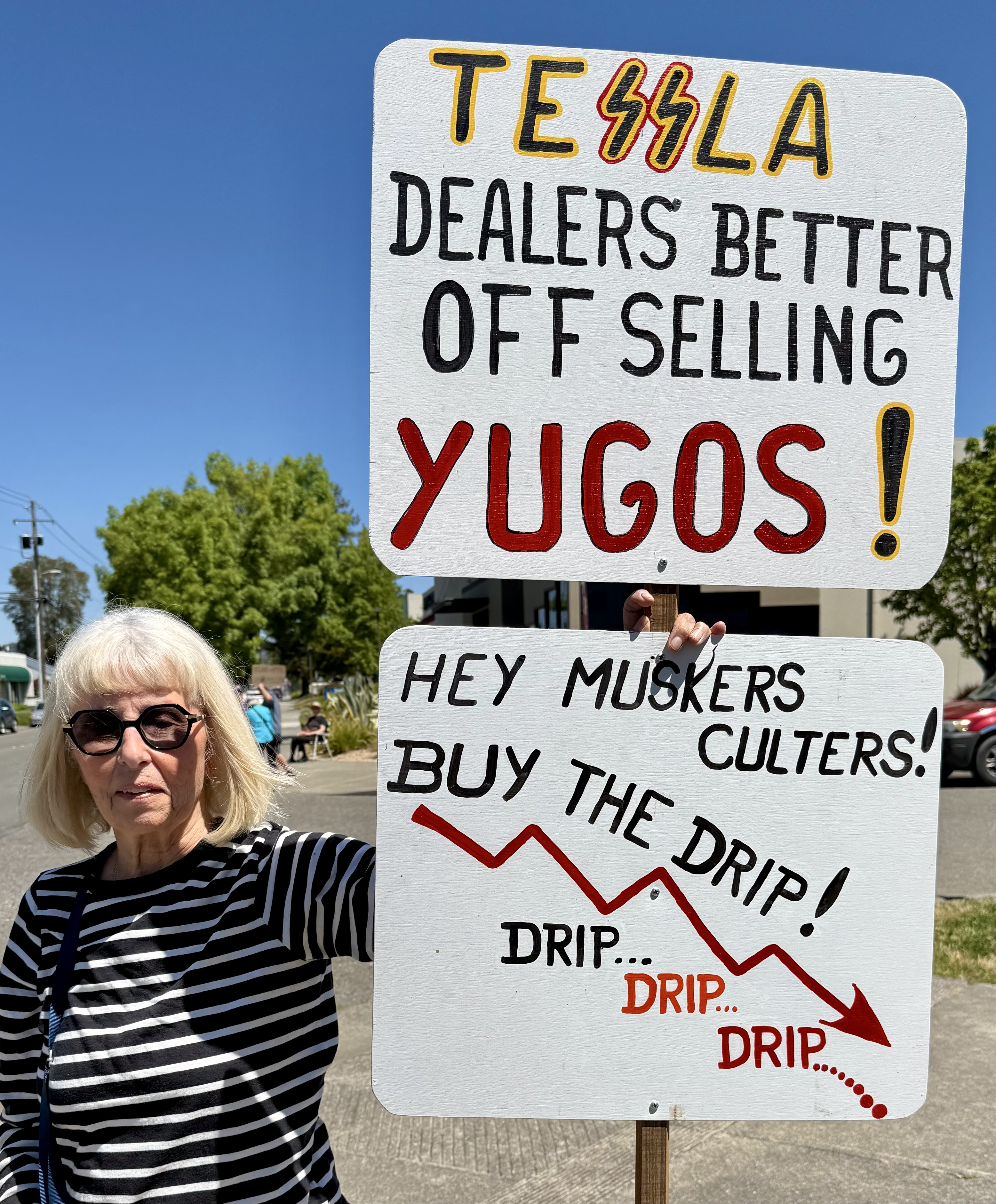
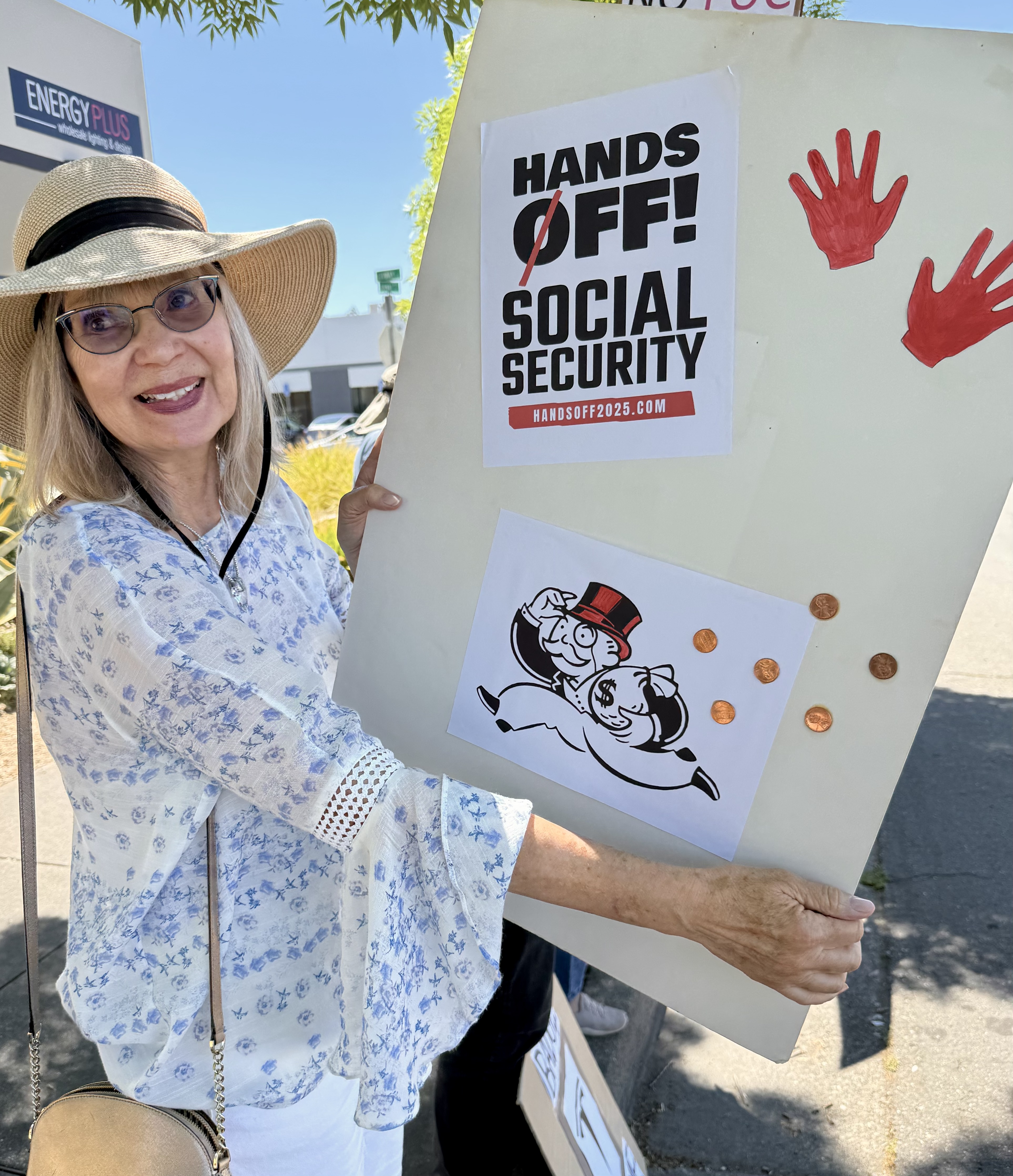
Santa Rosa CA July 17, 2025


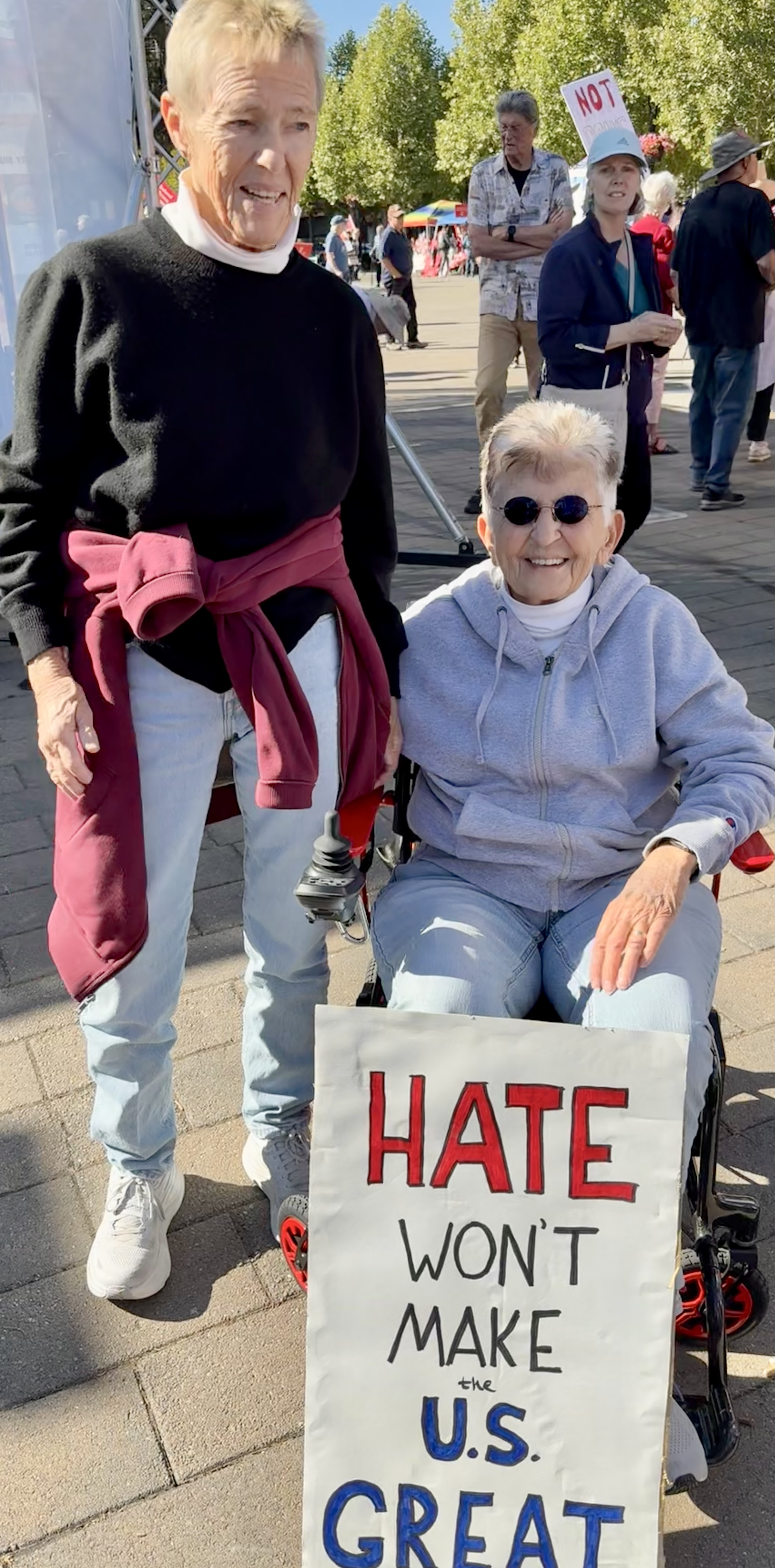


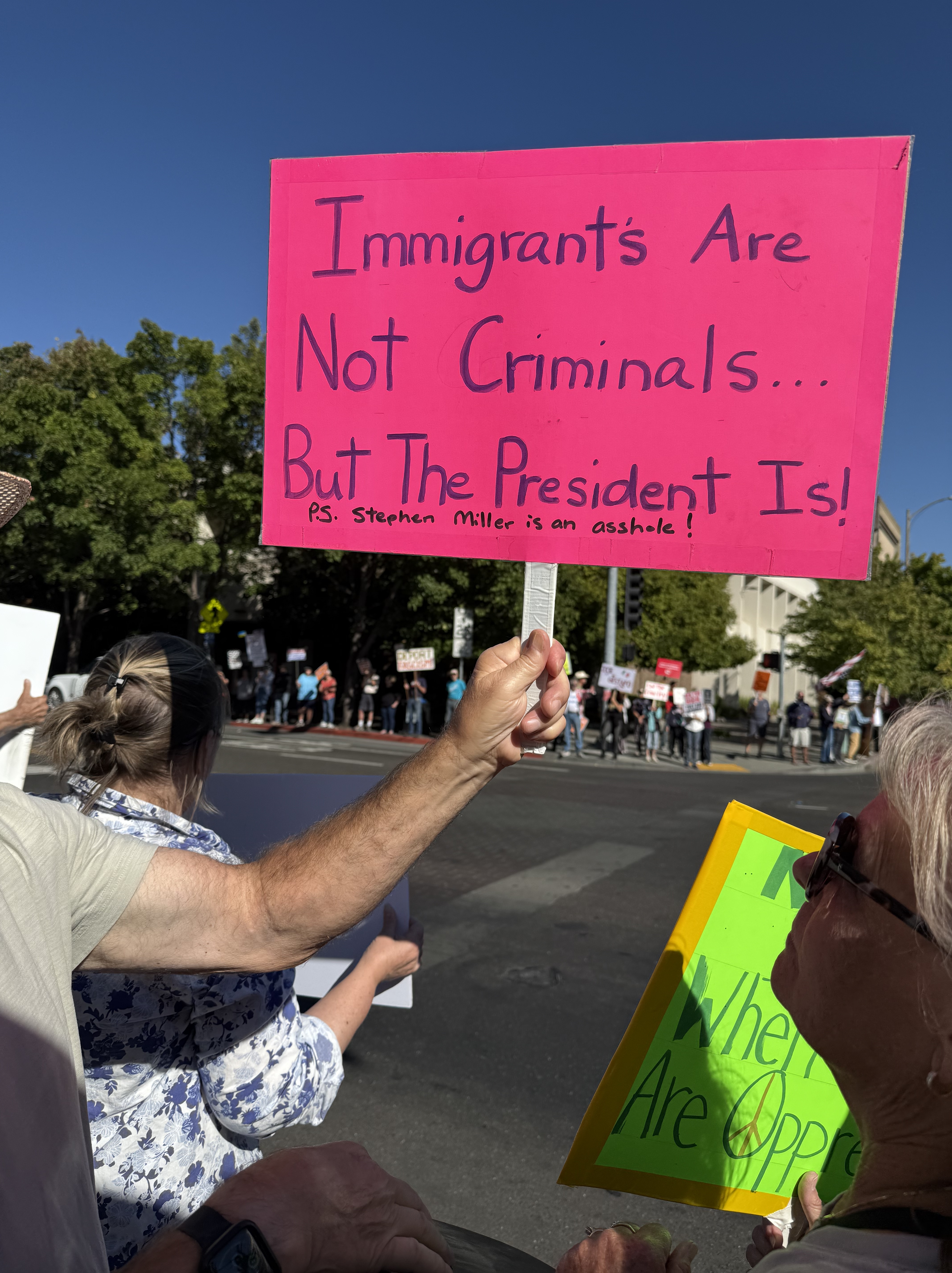


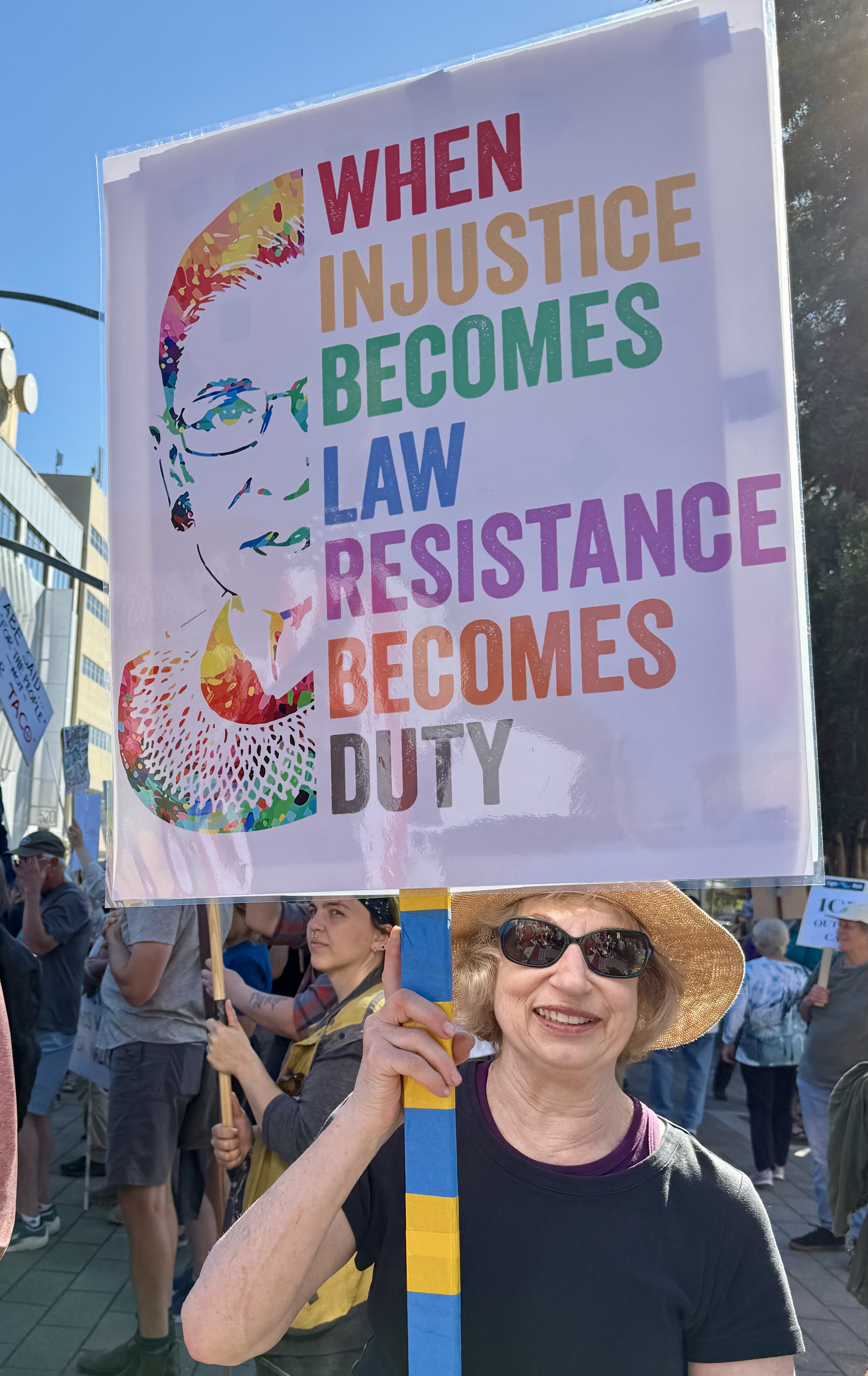


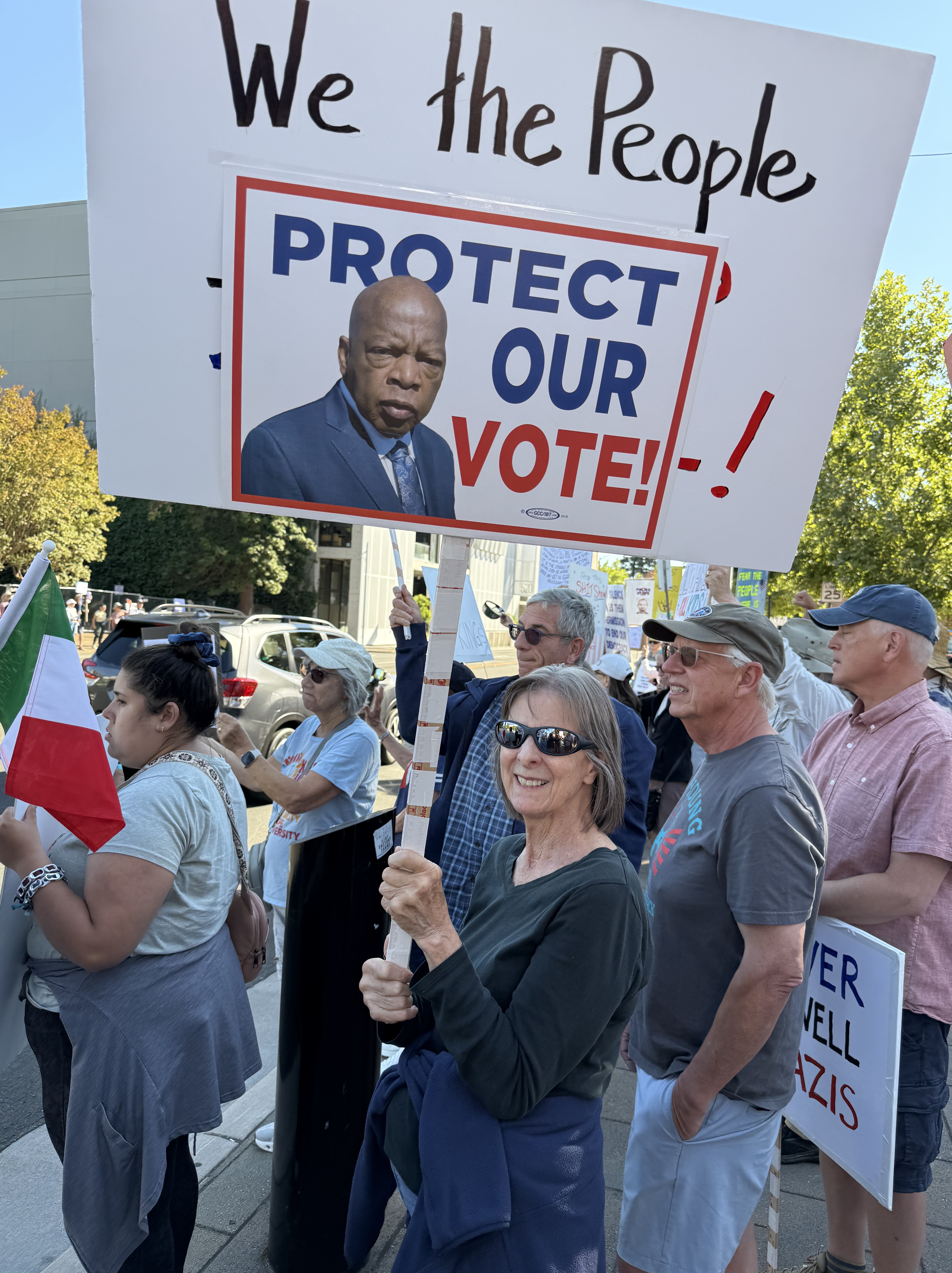

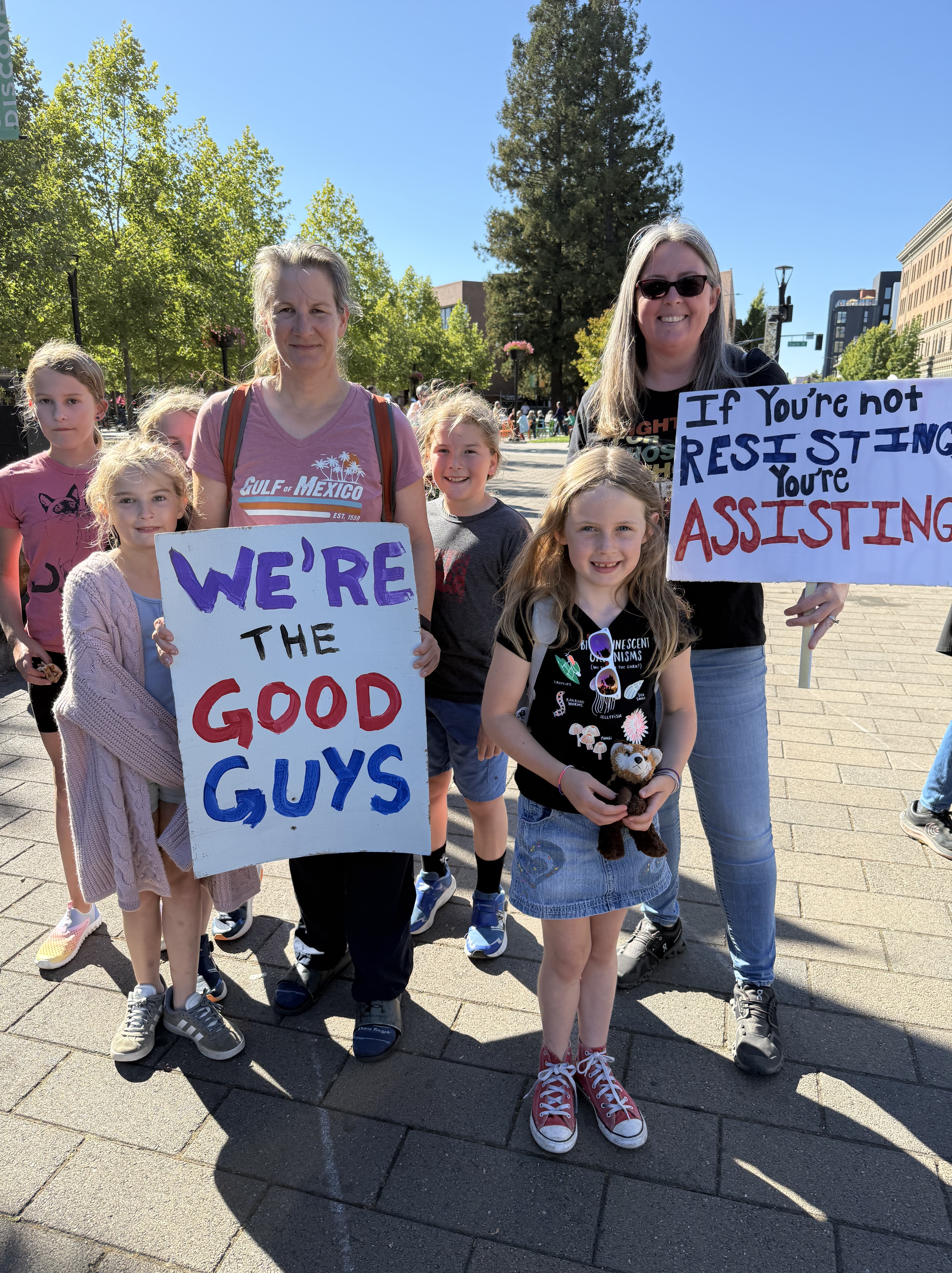
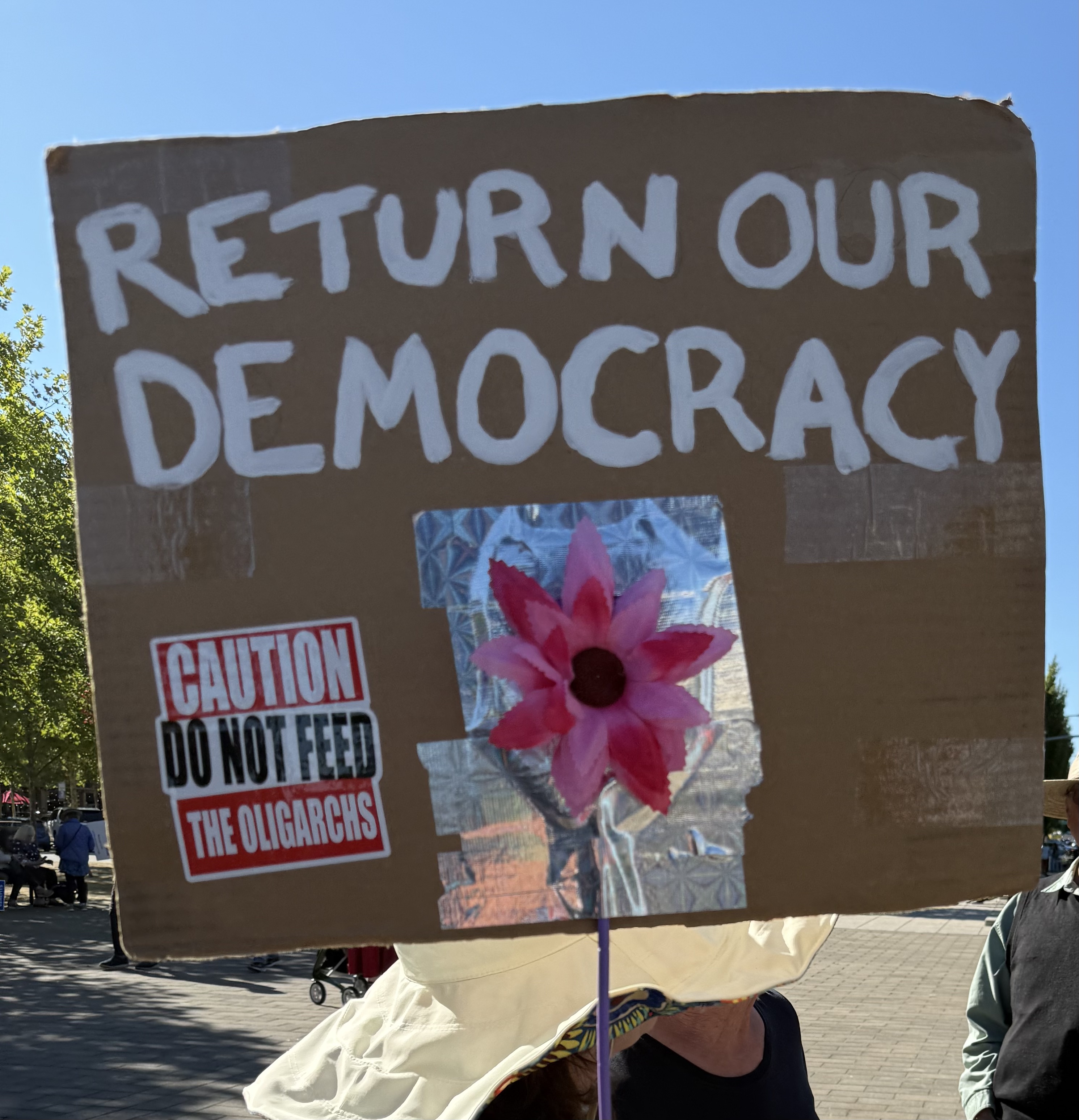

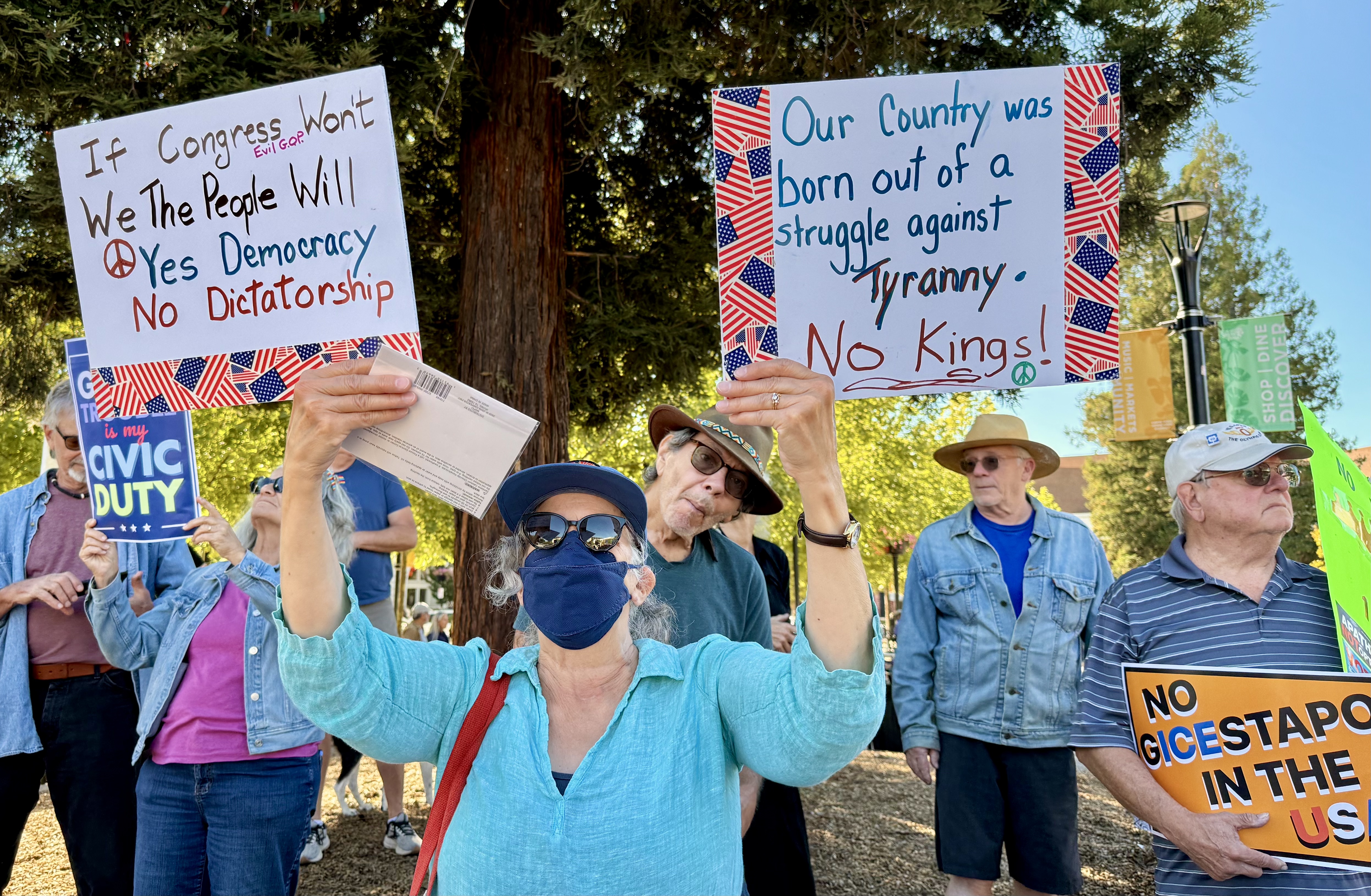


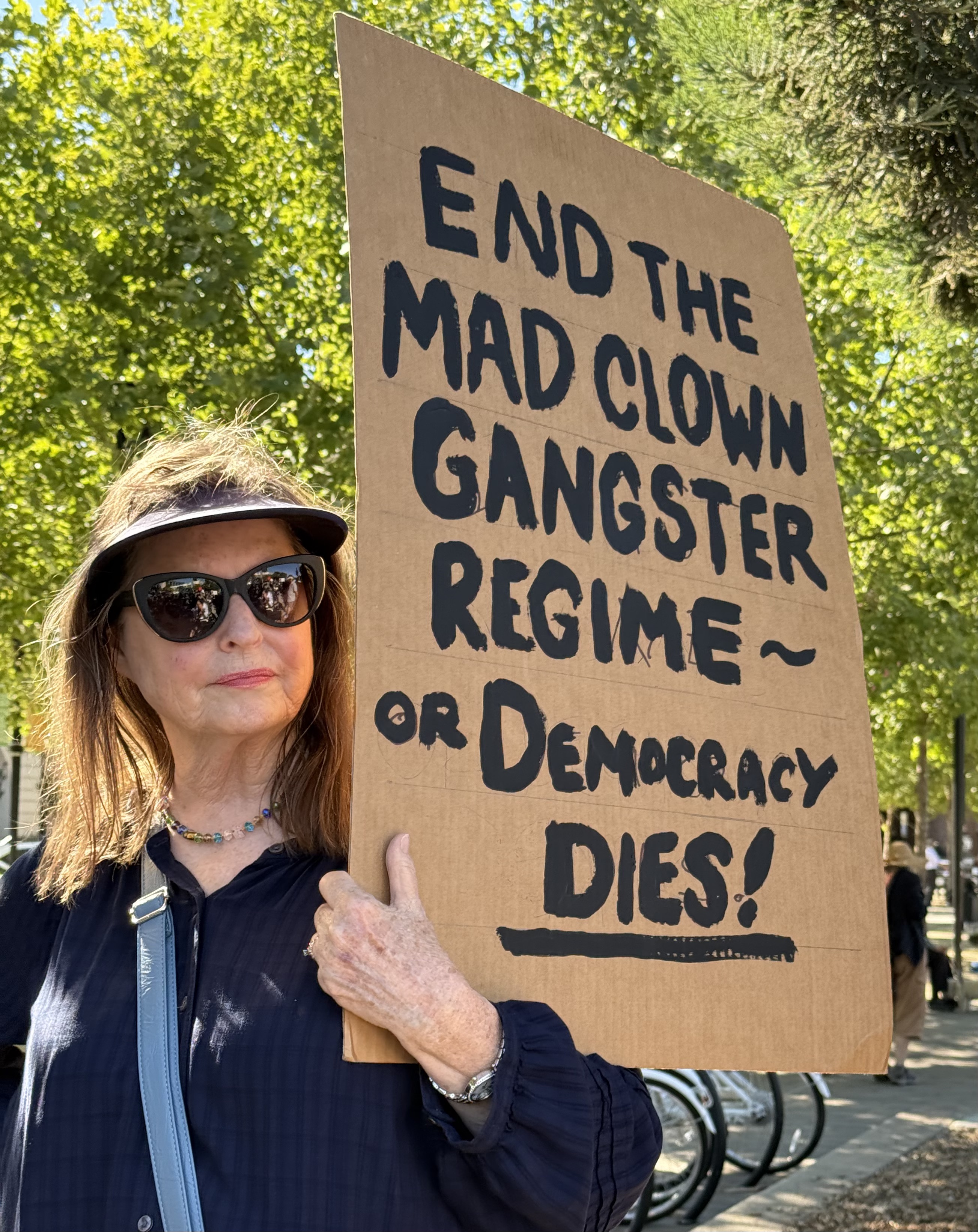

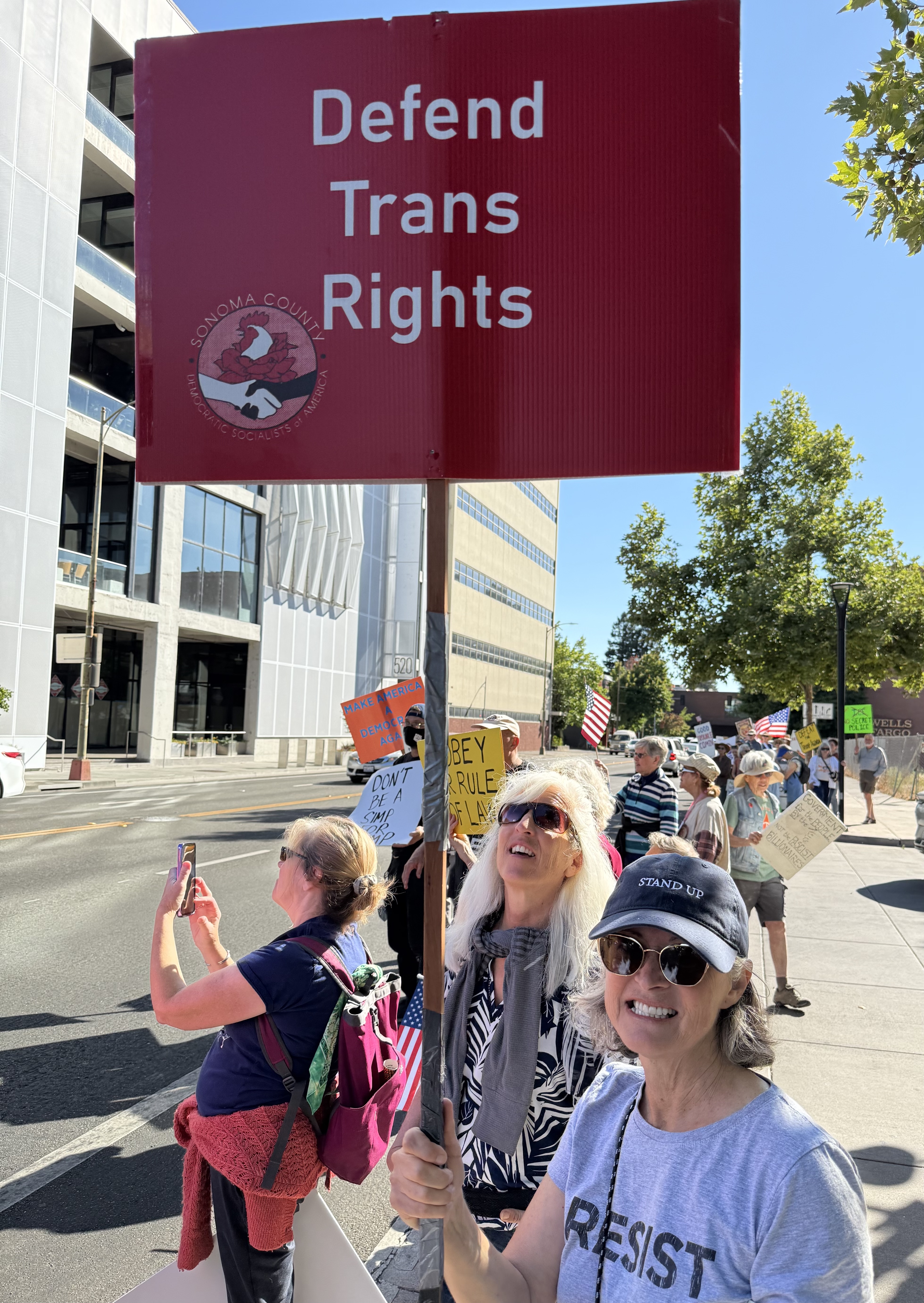
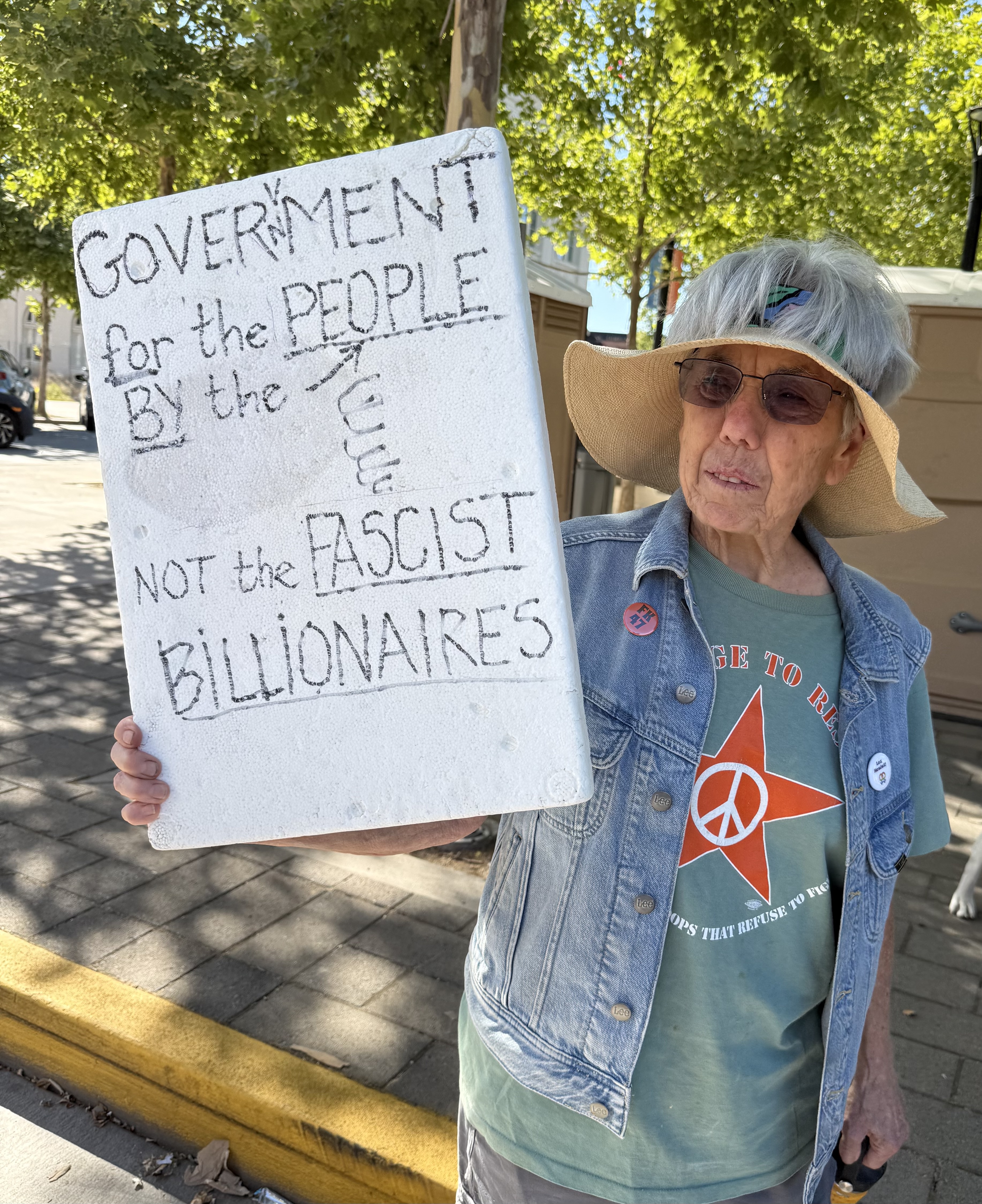

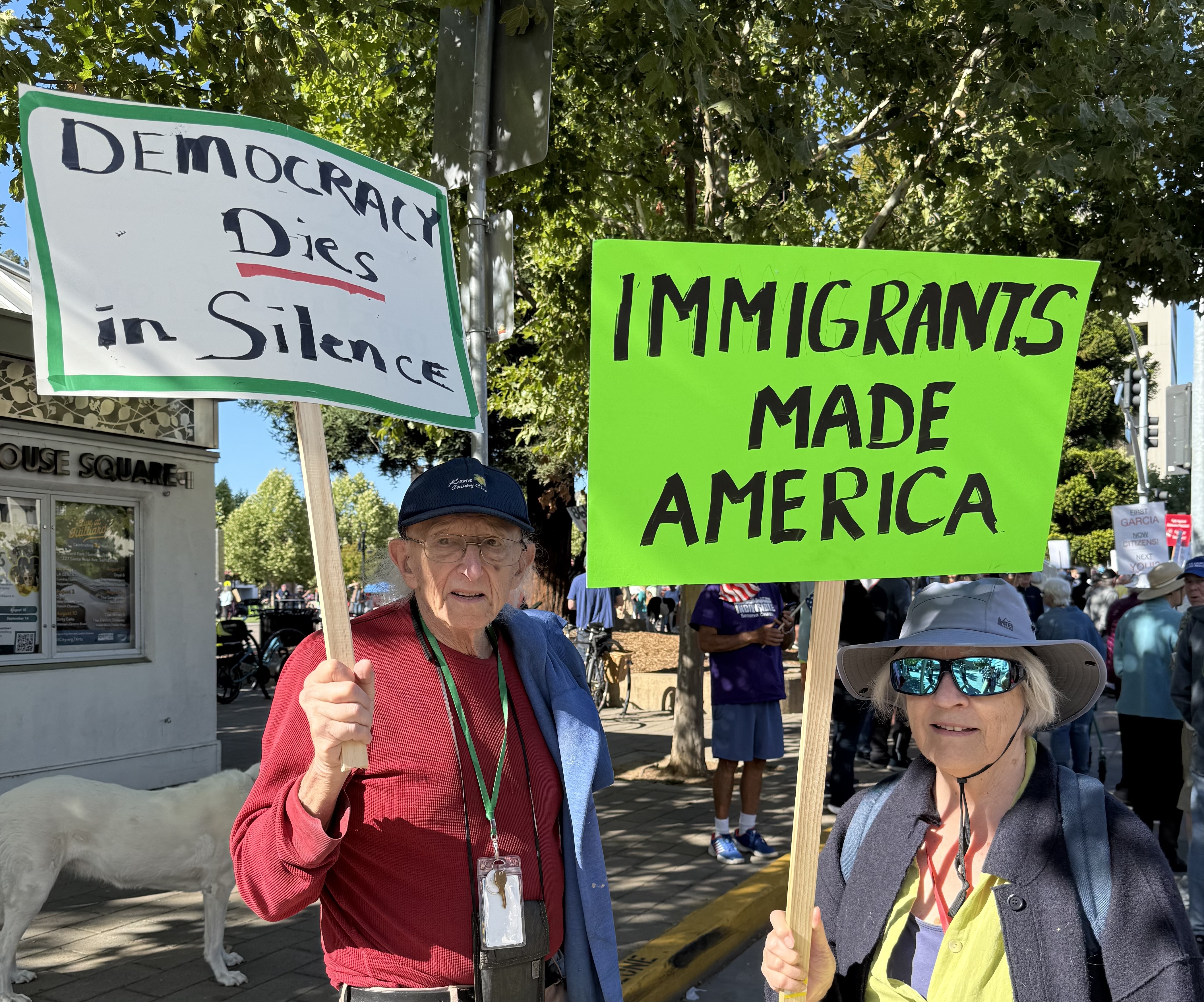
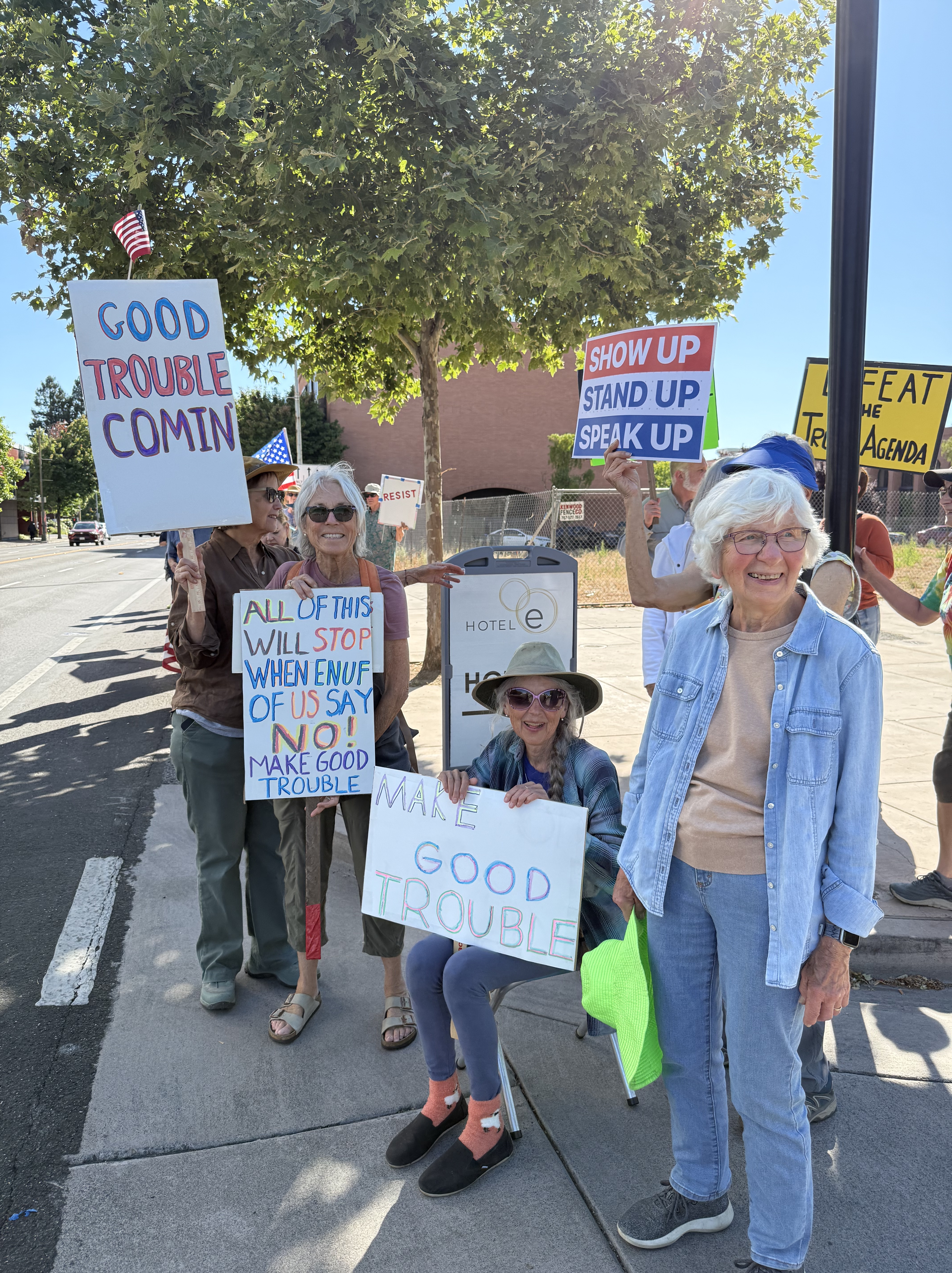
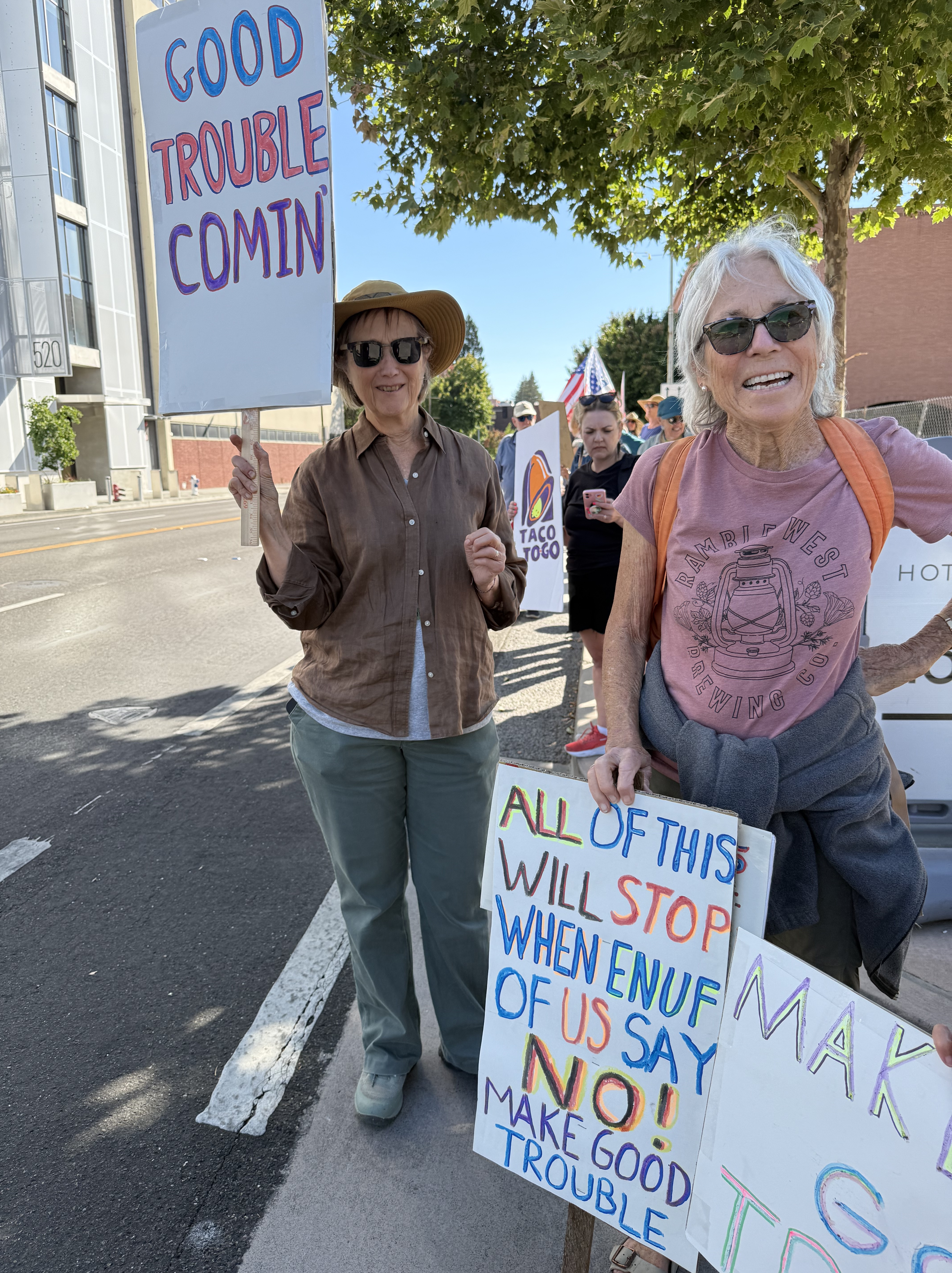

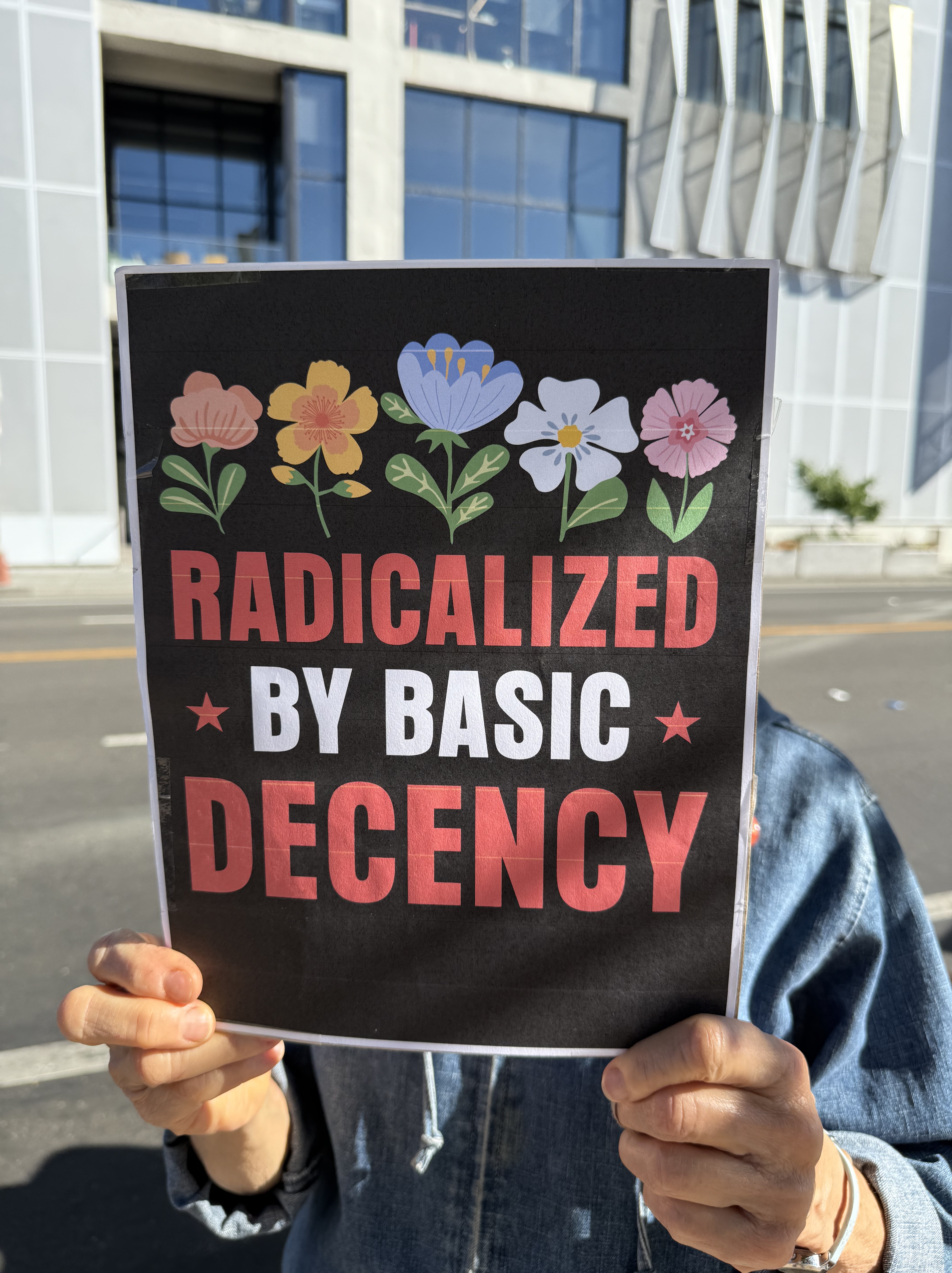


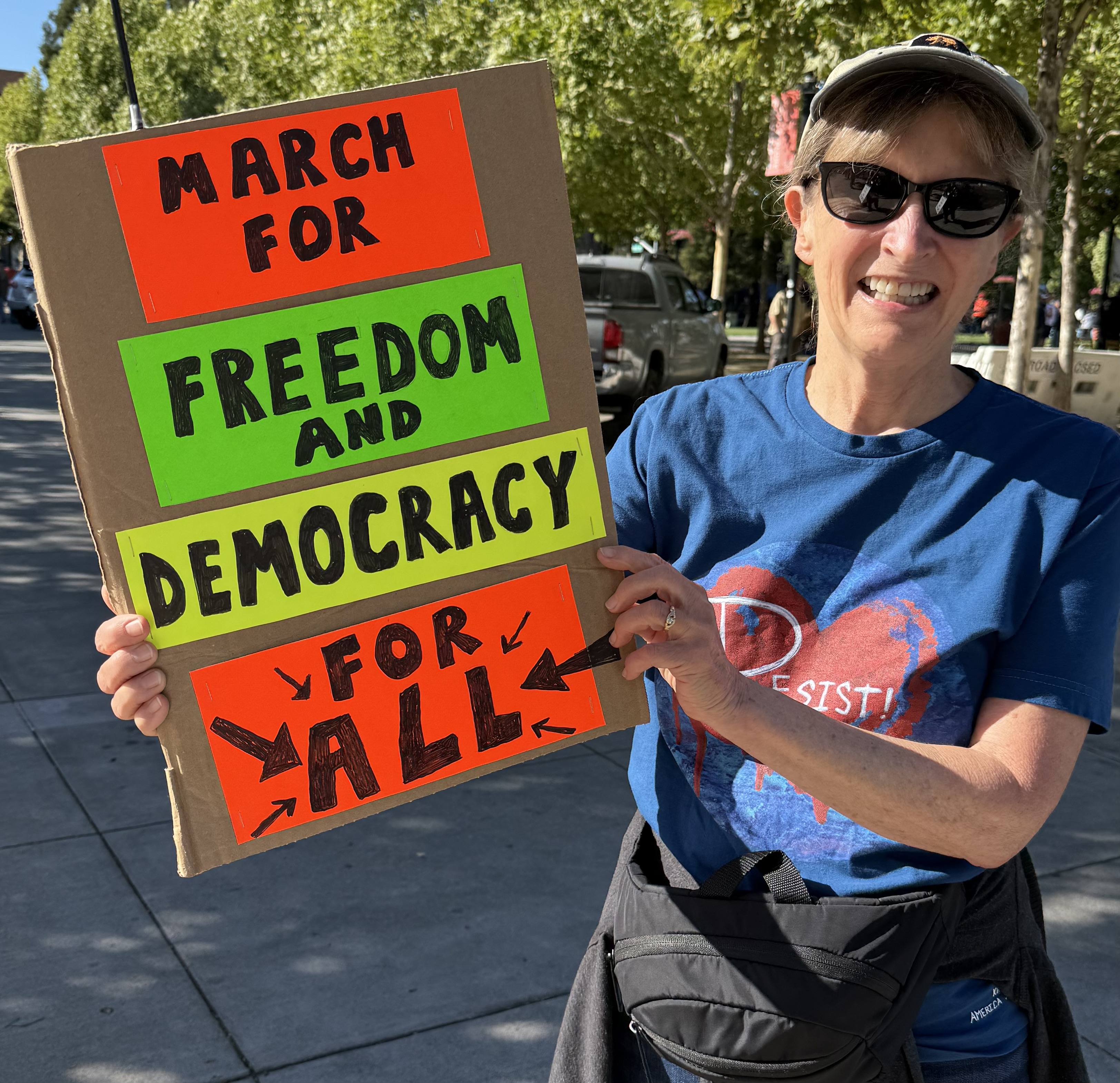
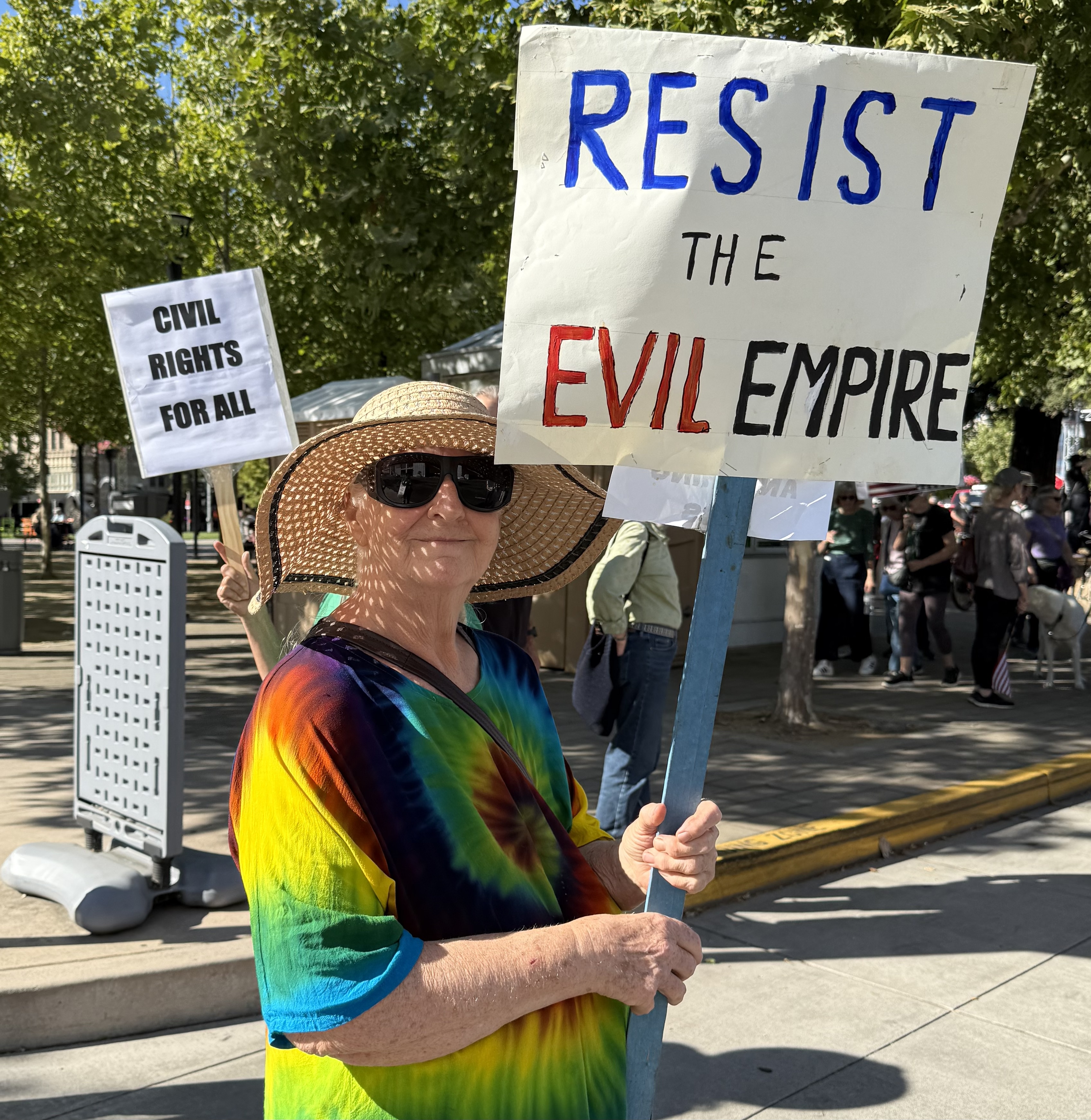


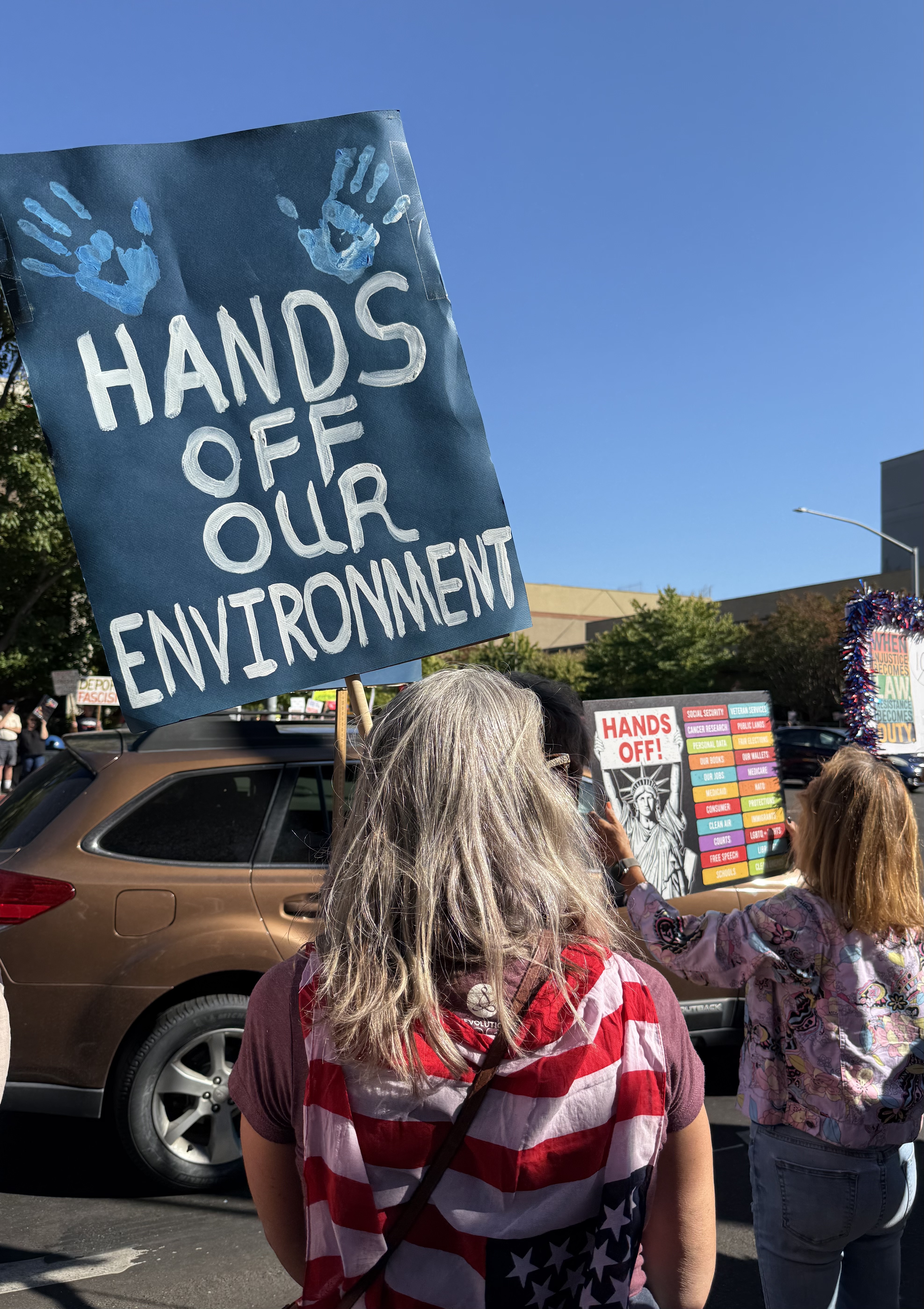
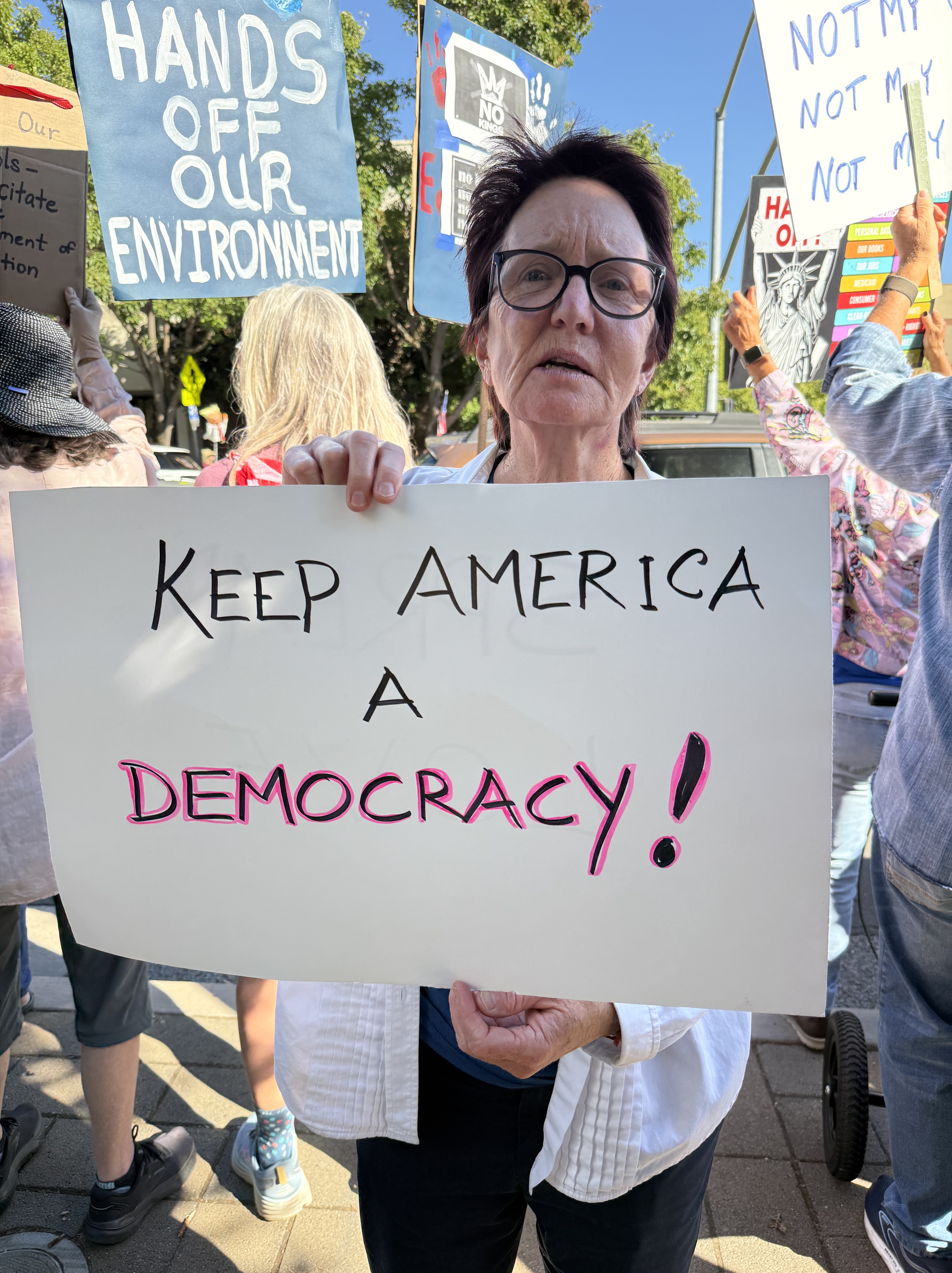

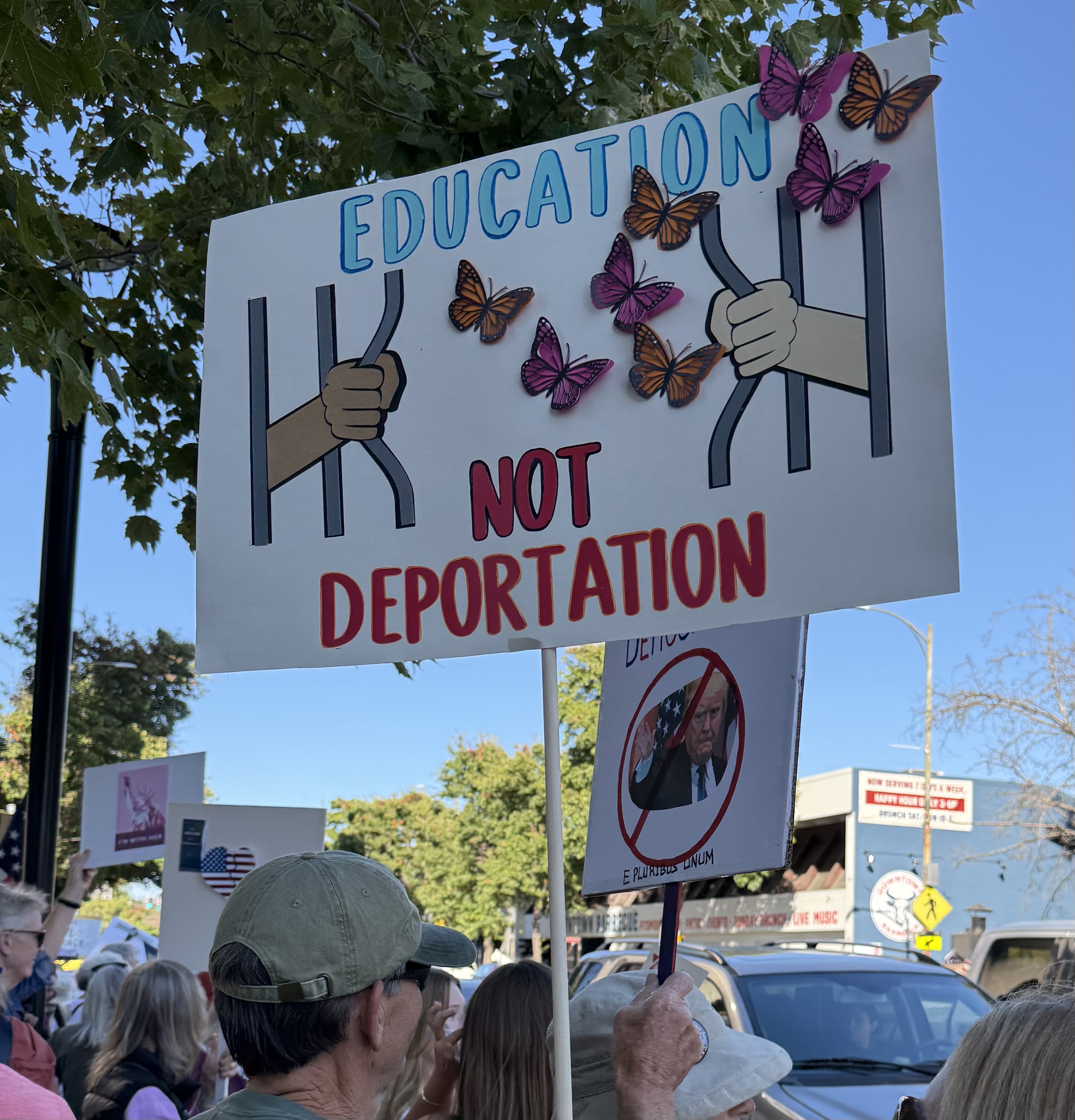

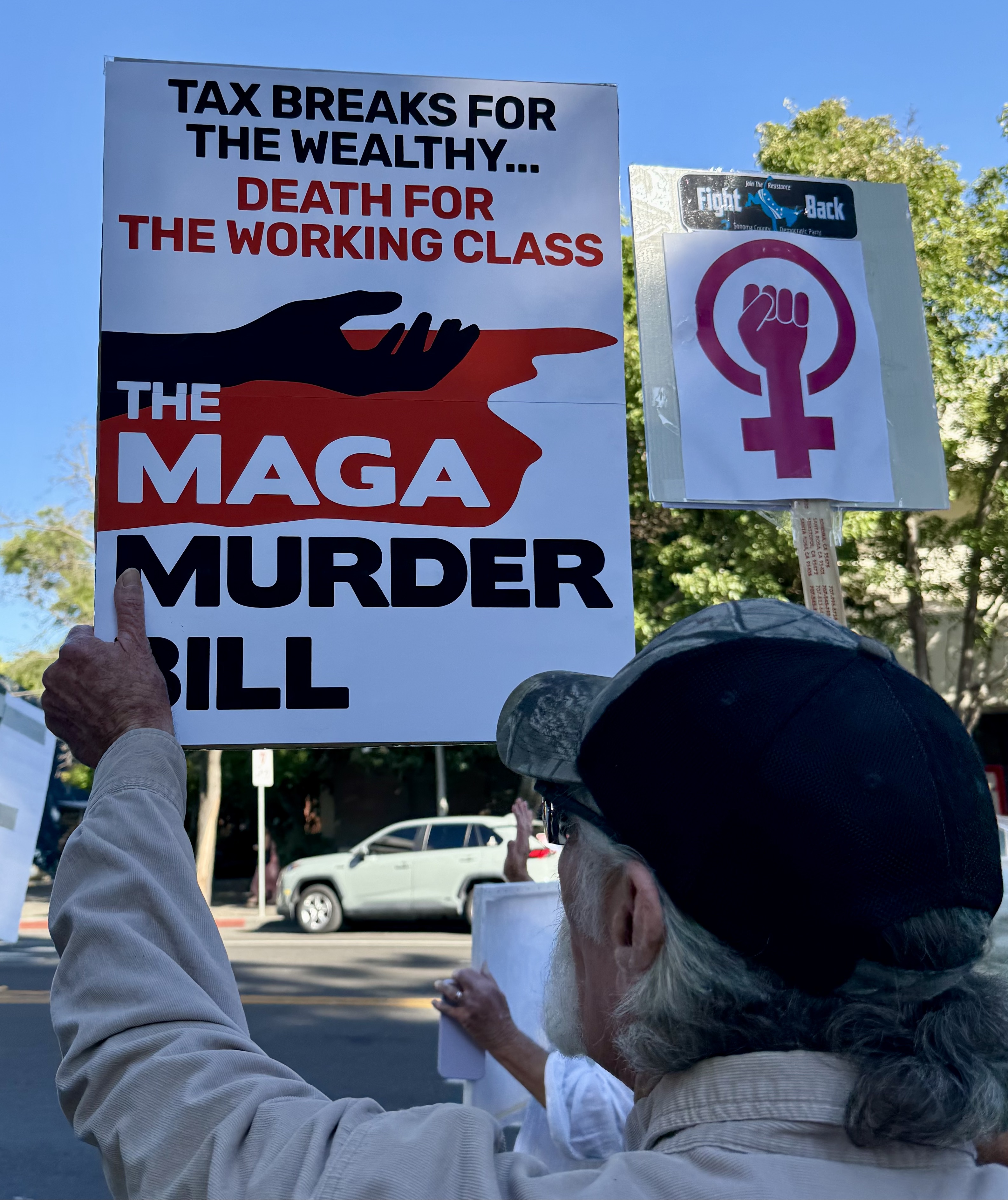
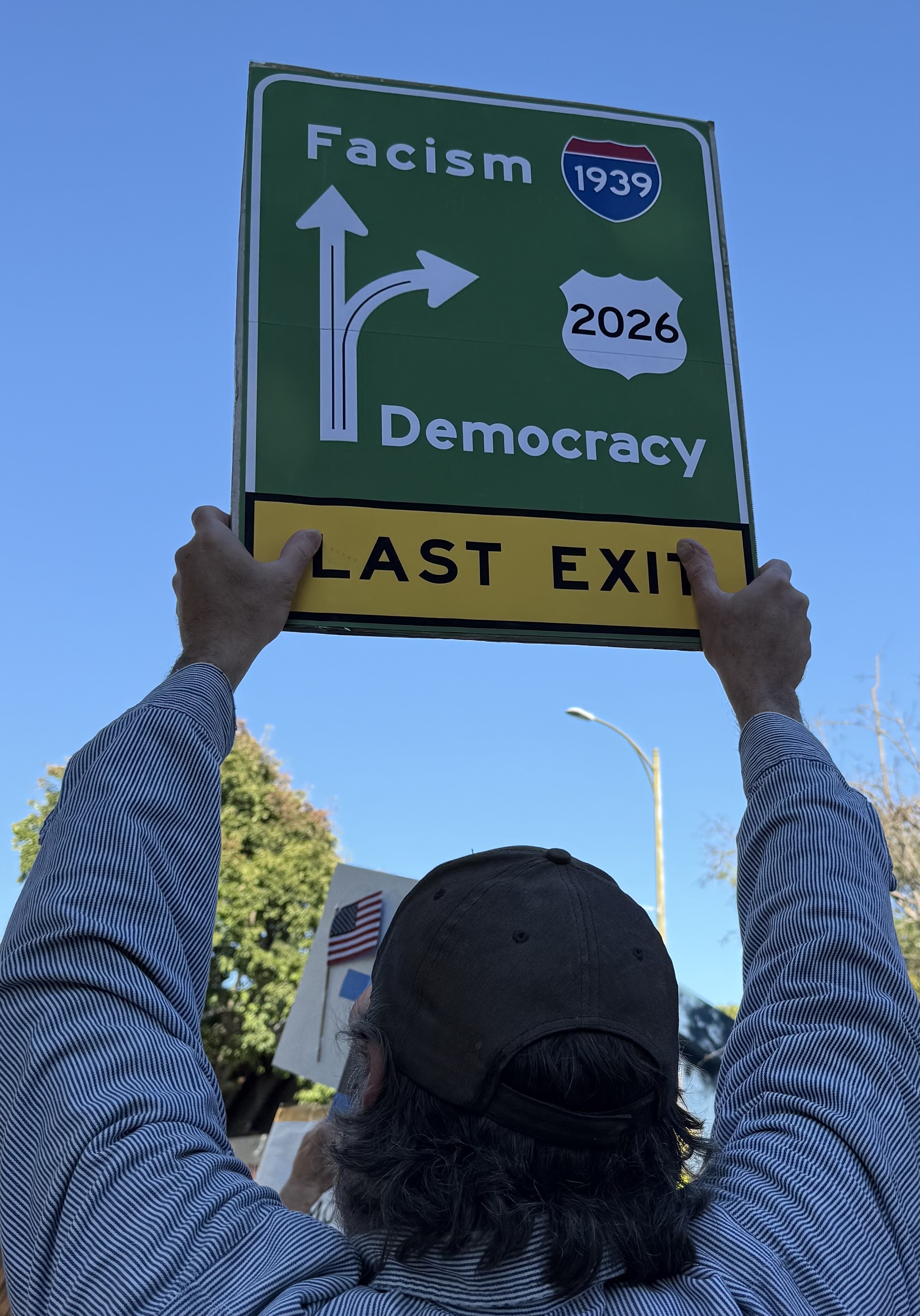


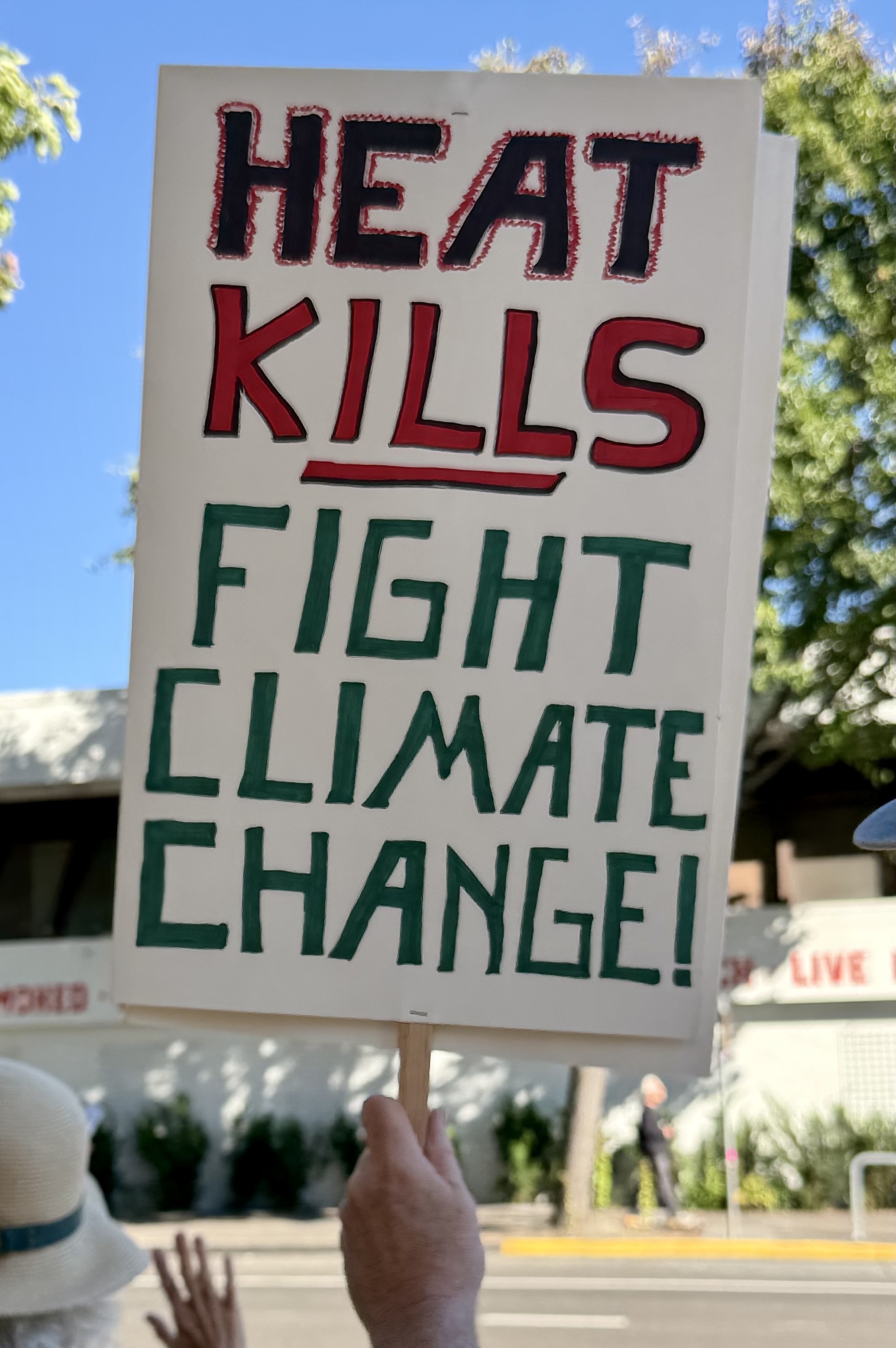
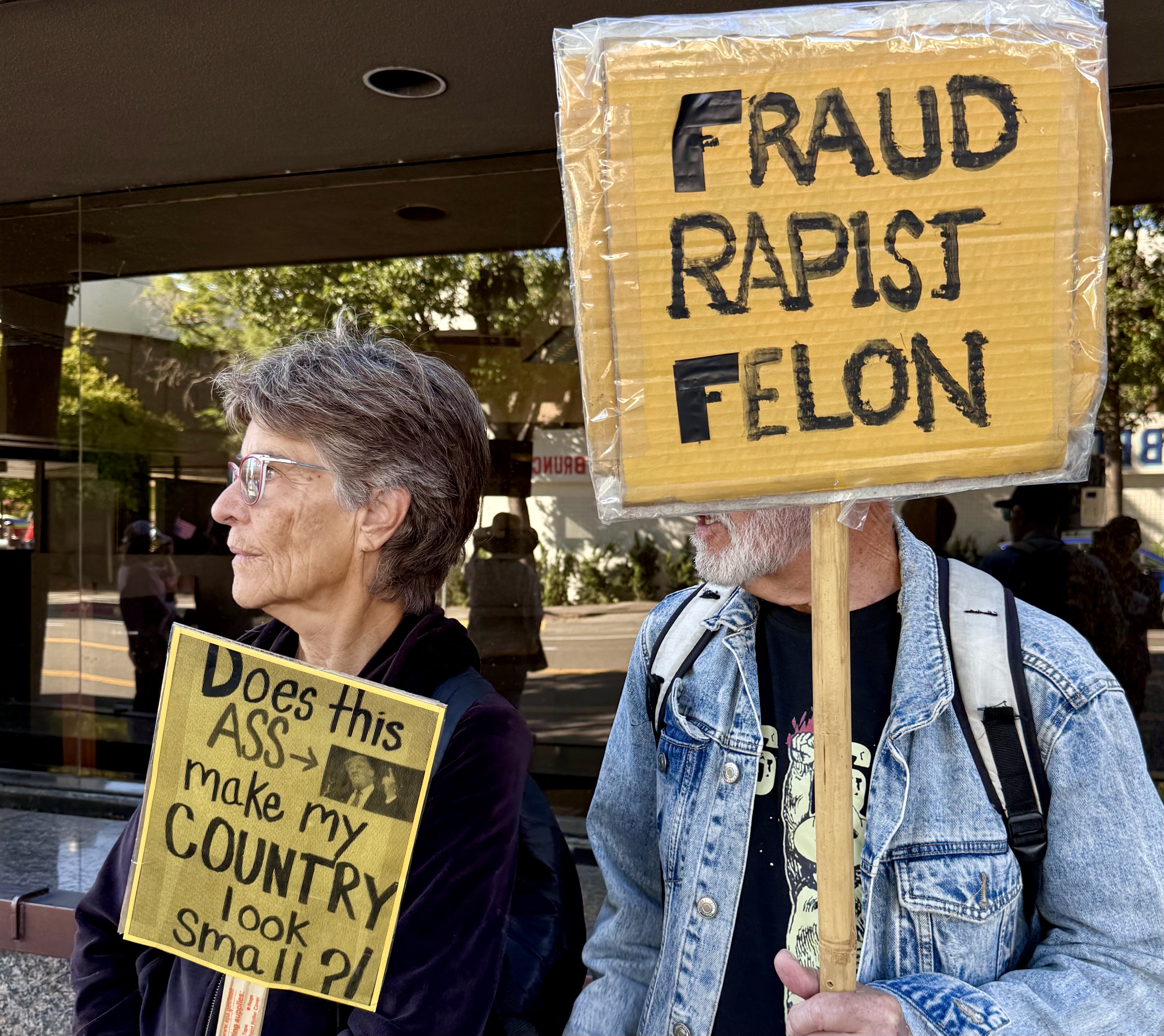
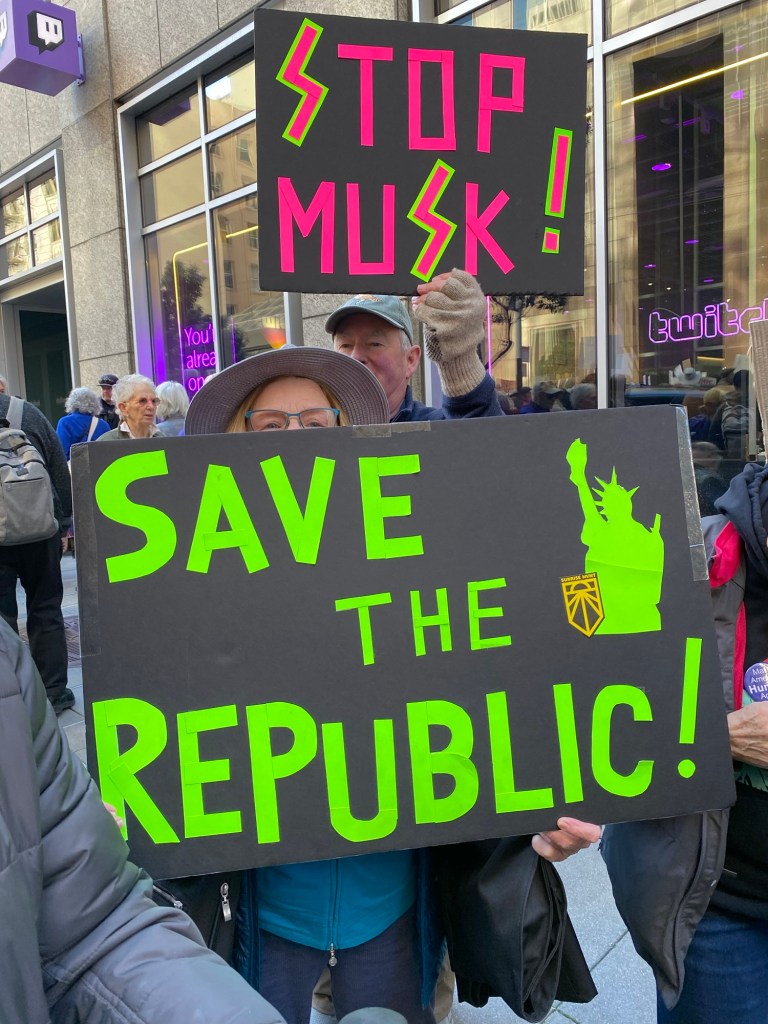
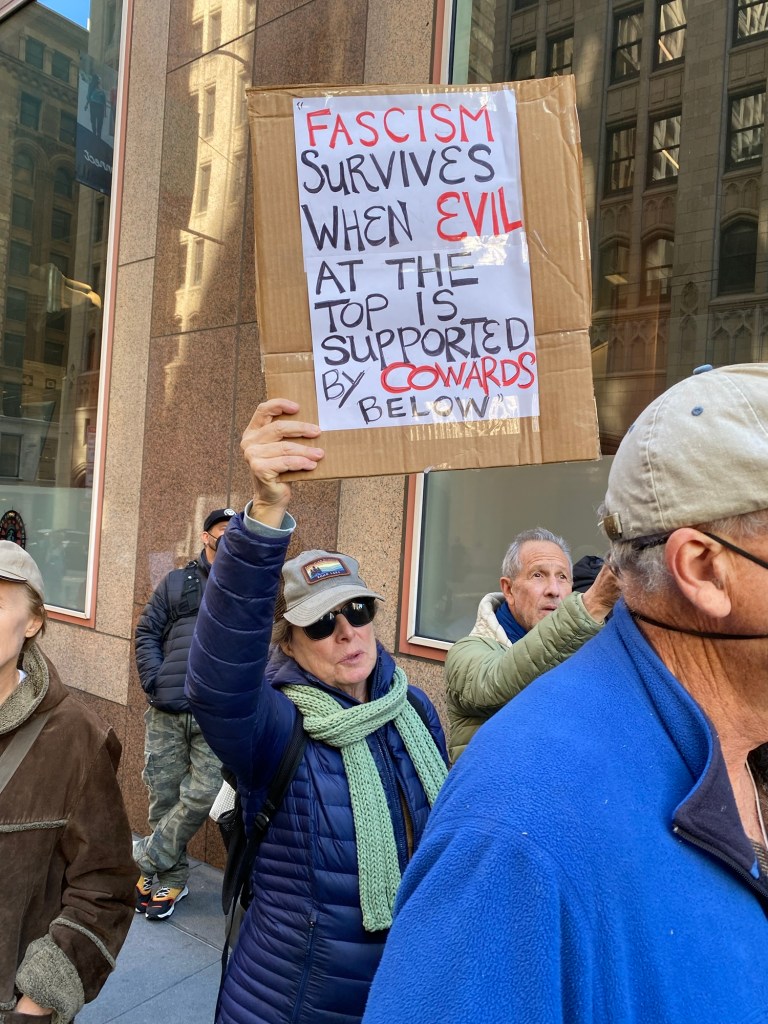
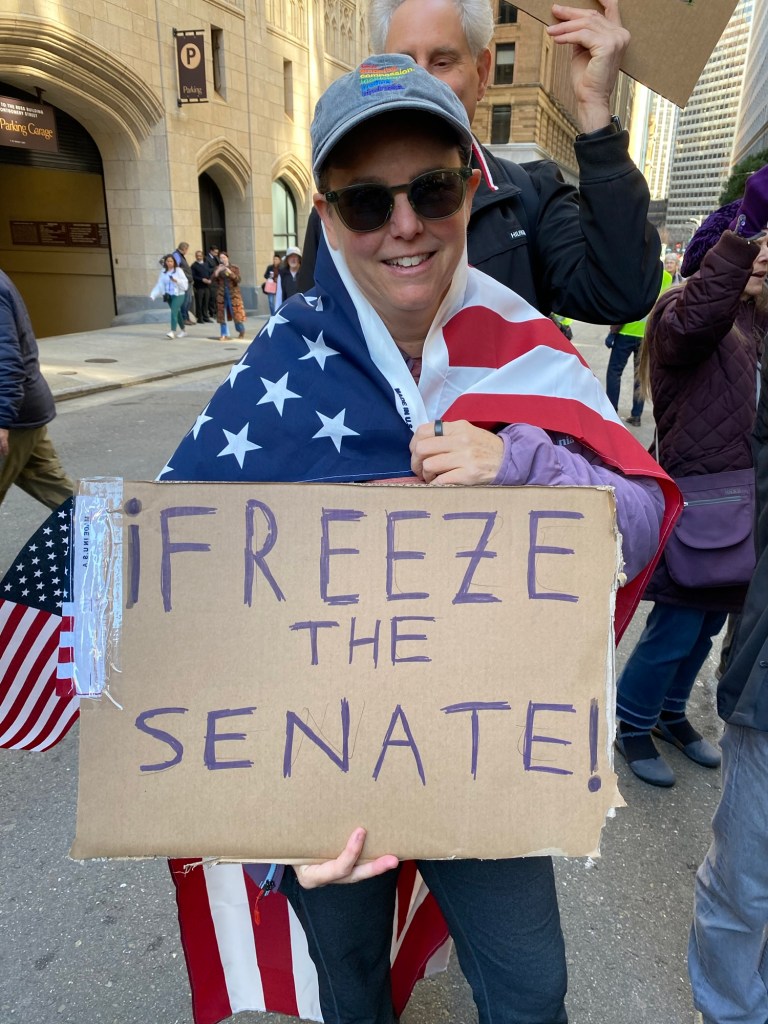
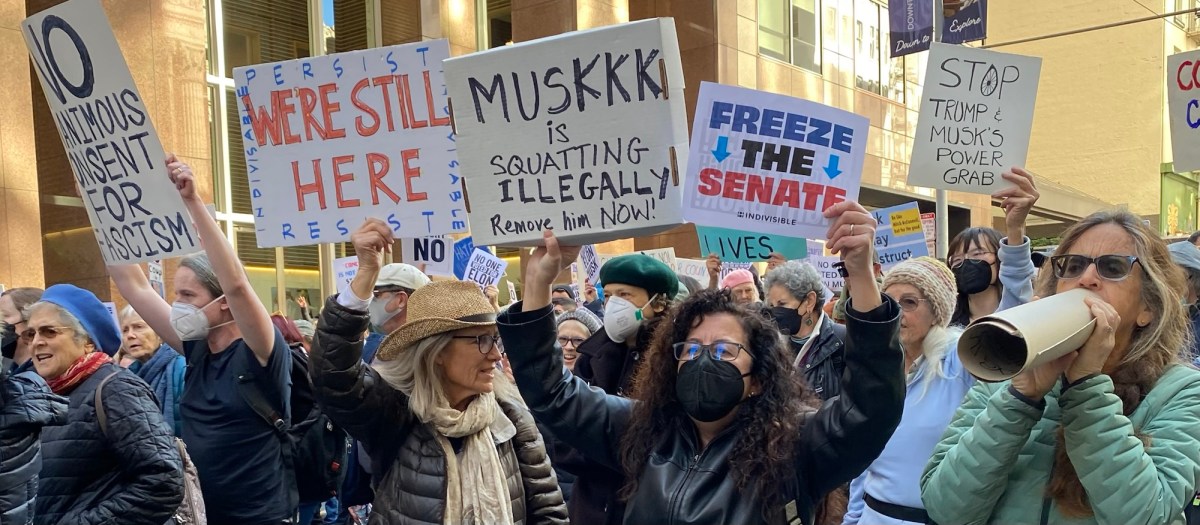
May 10, 2025 Lots of honks from folks driving by

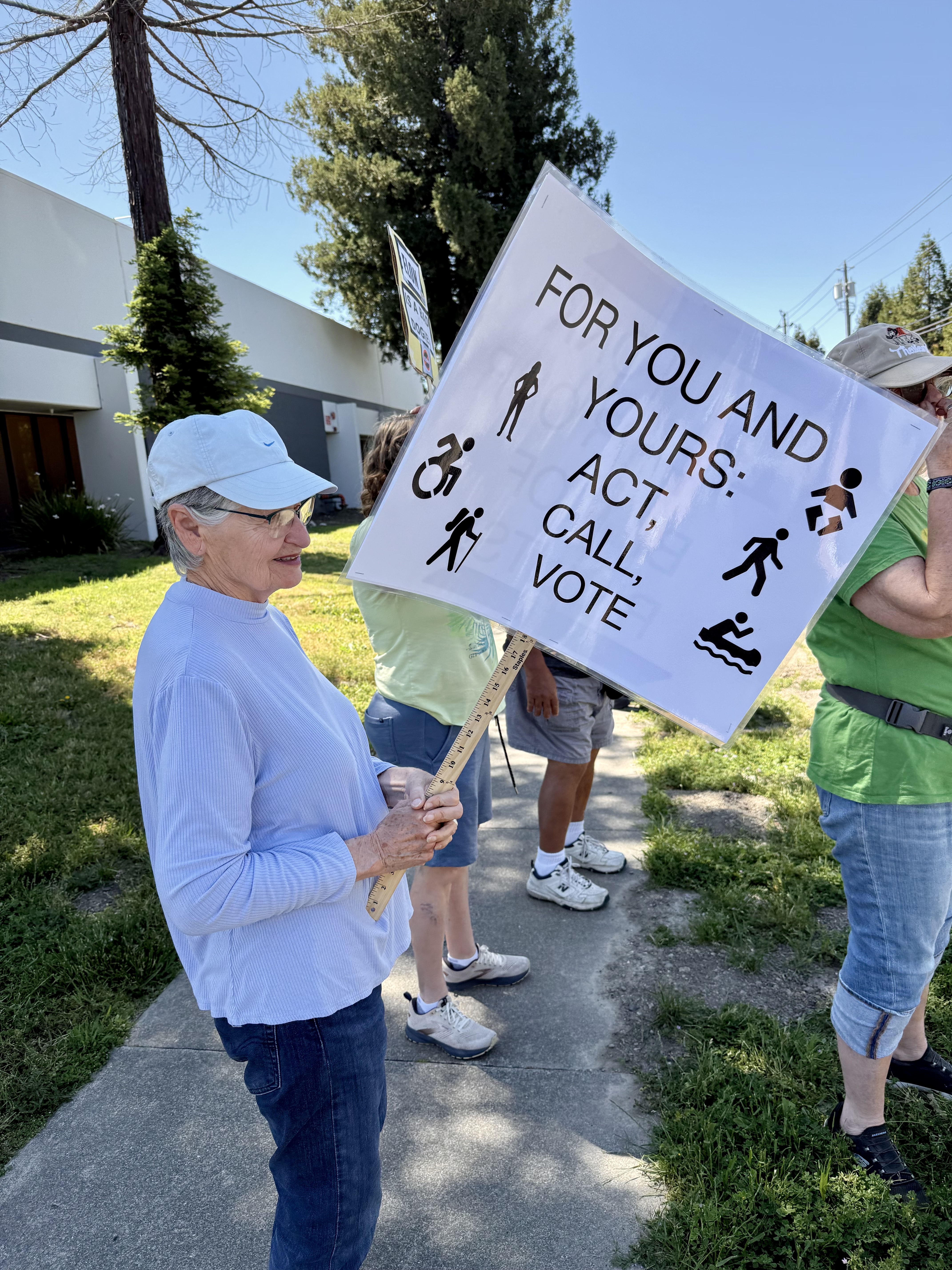
















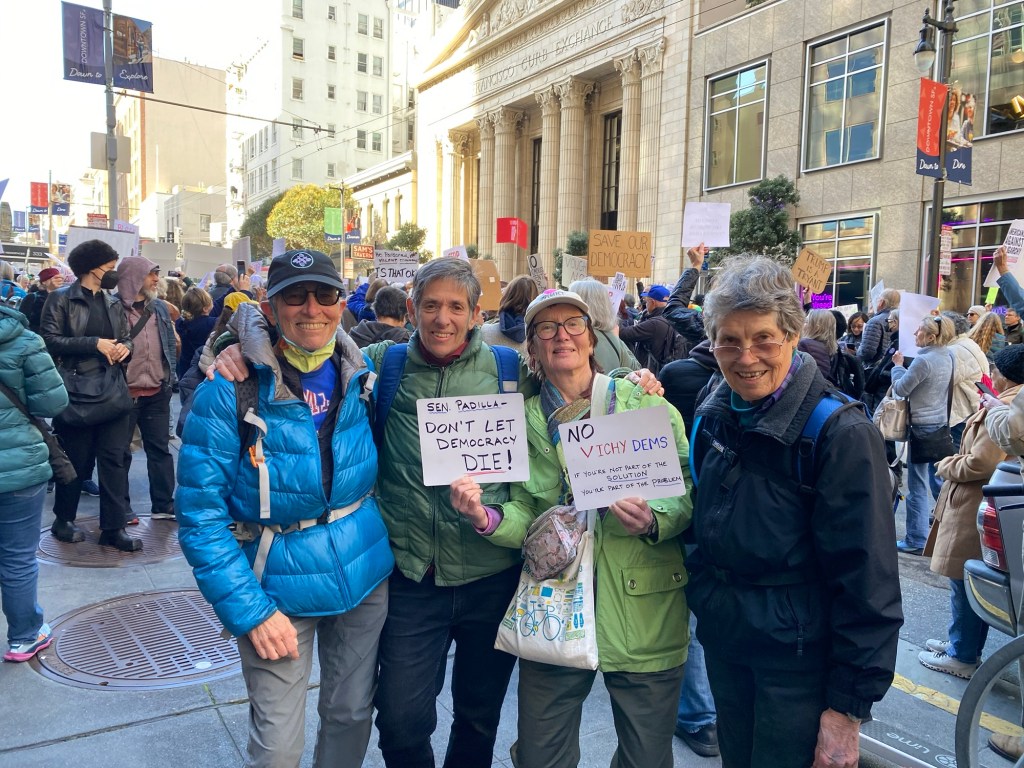
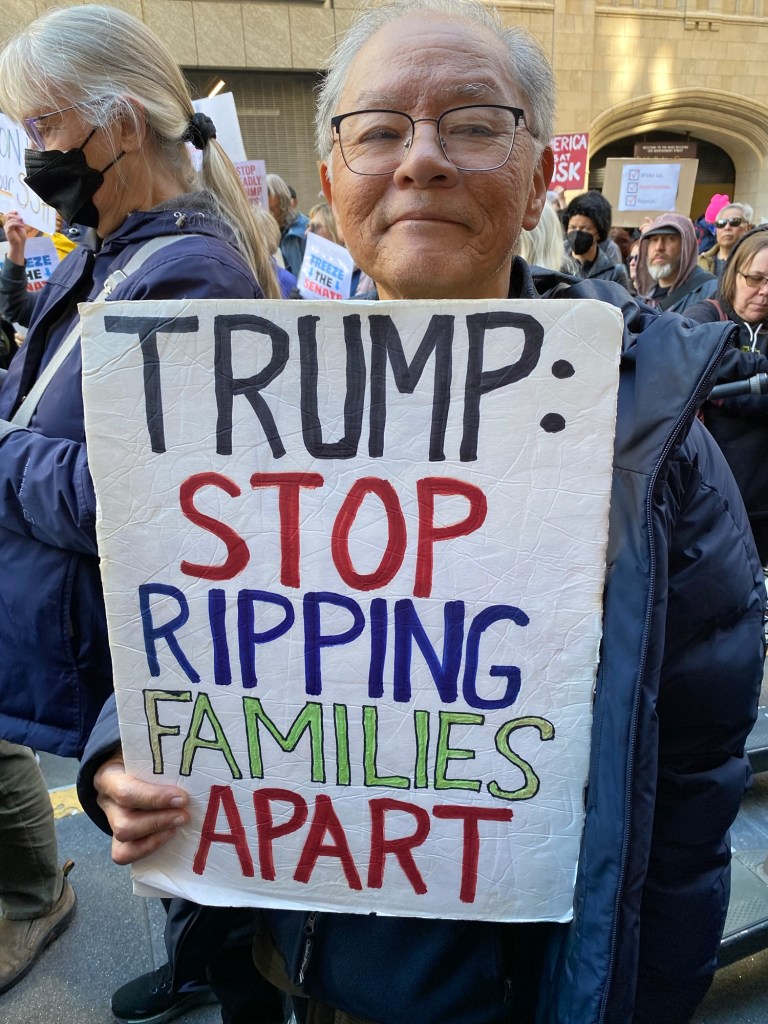
Indivisible February 5, 2025






by Molly Martin, Gail Sansbury, Elaine Elison, and the Bernal History Project

Dow Wilson of Painters Local 4, who was famously assassinated in 1966, standing in front of a picture of the writer and socialist Jack London.
Bernal Heights in San Francisco has always been called Red Hill, perhaps because it’s made of red rock—Franciscan formation chert—that once lay under the ocean.
More likely that moniker has to do with the large number of Reds who lived on the hill over the decades: Communists, Socialists, labor activists, and New Leftists.
Ever since it was colonized by Europeans, Bernal Heights, on San Francisco’s south end, has been a working class neighborhood. Slaughterhouses and tanneries proliferated along the creeks on the south and north sides of the hill before the turn of the 20th century. Breweries like the North Star on Army St. operated until the Volstead Prohibition act put them out of business in 1920.

This photo of Mission Street at Kingston was taken in 1906 during one of many carmens’ strikes of that era.
Bernal Hill never was home to much industry, but its two streetcar barns at the foot of the hill were the site of pitched battles during the carmens’ strike of 1907. In San Francisco’s deadliest strike, 26 people were killed and hundreds injured during the nine months the carmen were out. That year saw strikes in several unions, of women as well as men workers, and a general strike was nearly called. The city seemed on the verge of class war, with Market Street being the dividing line. It’s not hard to guess which side Bernal’s residents were on.
In the 2000s, neighbors came together to form the Bernal History Project and to research the history of our hill. We published a book, San Francisco’s Bernal Heights, and gave slideshow presentations around the city. In 2008 as part of the annual SF Labor Fest we gave a presentation called Reds on the Hill at the local bookstore, then Red Hill Books.
We chose to focus on six Bernal residents who had been active in labor struggles from the 1930s through the 1980s: Eugene Paton, Miriam Dinkin Johnson, Phiz Mezey, Dow Wilson, Bill Sorro and Giuliana “Huli” Milanese. These are the stories of working class people deeply committed to changing the world. They are six of many.
Thanks to the SF Labor Archives and Research Center, a rich source of information about union movements and working class life in the Bay Area, and the families of our subjects, especially Patty Paton Cavagnaro and Petrina Caruso Paton for their family albums.
Miriam Dinkin Johnson (1918-2001)

Eugene “Pat” Paton (1913-1951)


Giuliana “Huli” Milanese (1944-)

This story was first published in FoundSF.org, the San Francisco digital history archive.
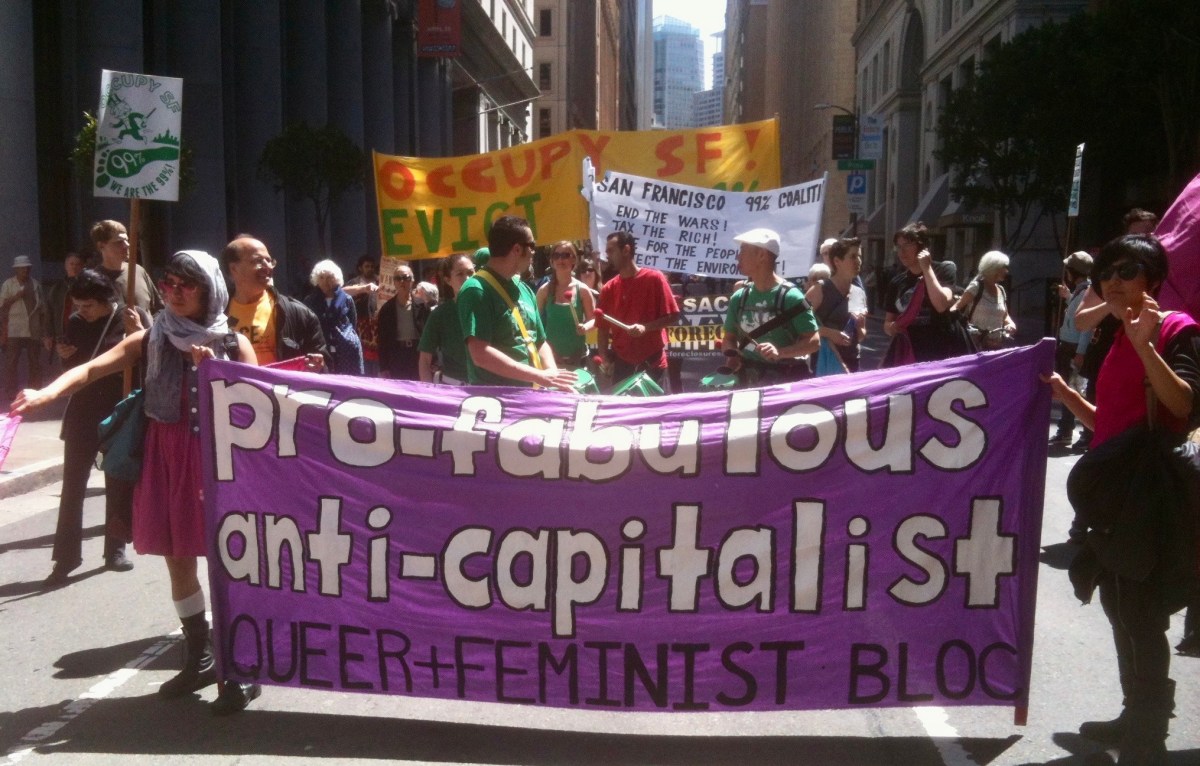
When I read news today of Wells Fargo’s illegal banking practices that resulted in $185 million in fines and the firing of 5,300 employees (but no cost to higher ups–of course they blamed workers), it reminded me of Wells Fargo’s deep involvement in the financial crisis, their theft of citizens’ wealth and homes. Wells was one of the worst actors and our Occupy coalition targeted them in dozens of protests. Here is a year-end letter I wrote to friends from 2012. Several of the dedicated leaders in the photos have since died. Lest we forget.
Homes in Foreclosure
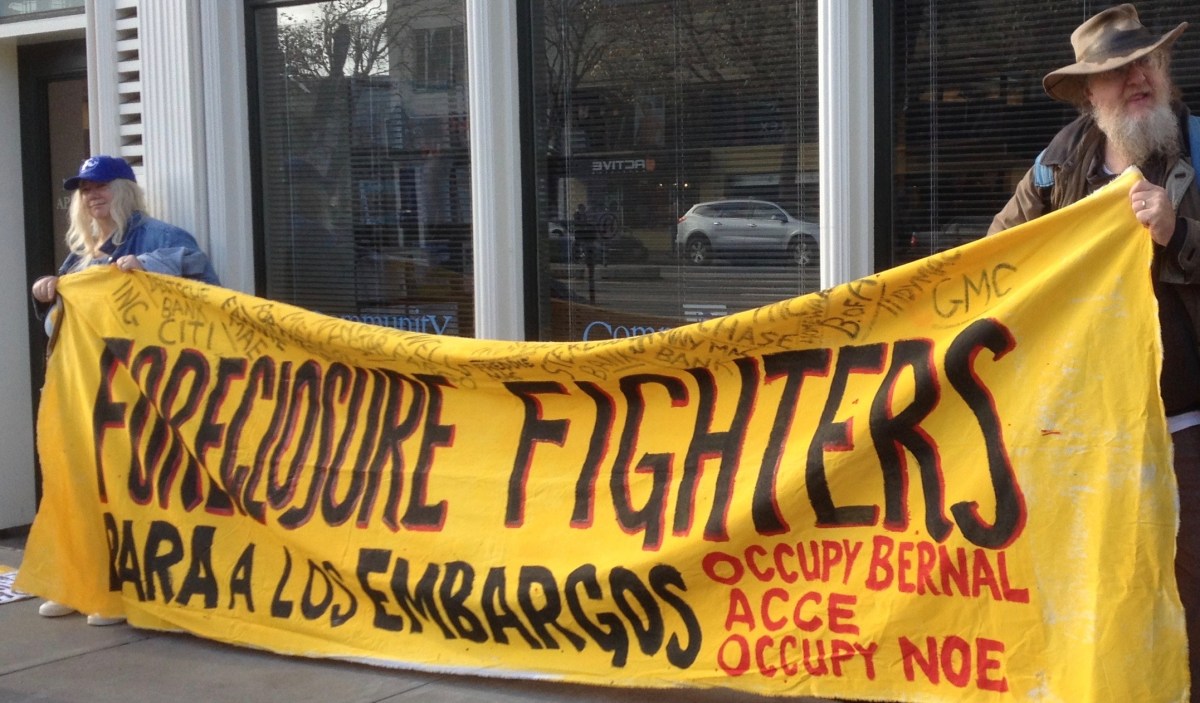
For me 2012 was the year of Occupy. During Thanksgiving week 2011, I had walked over to the Bayview, an adjacent neighborhood, to protest home foreclosures. The action was more like a neighborhood feast, with turkey and trimmings served up from tables set out on the sidewalk. I learned that there were eleven homes in foreclosure on one block of Quesada Street, and I joined ACCE, the Alliance of Californians for Community Empowerment. There I also saw some folks from my own neighborhood, Bernal Heights, and we began asking each other if there were home foreclosures in our neighborhood and wondering how we could find out.
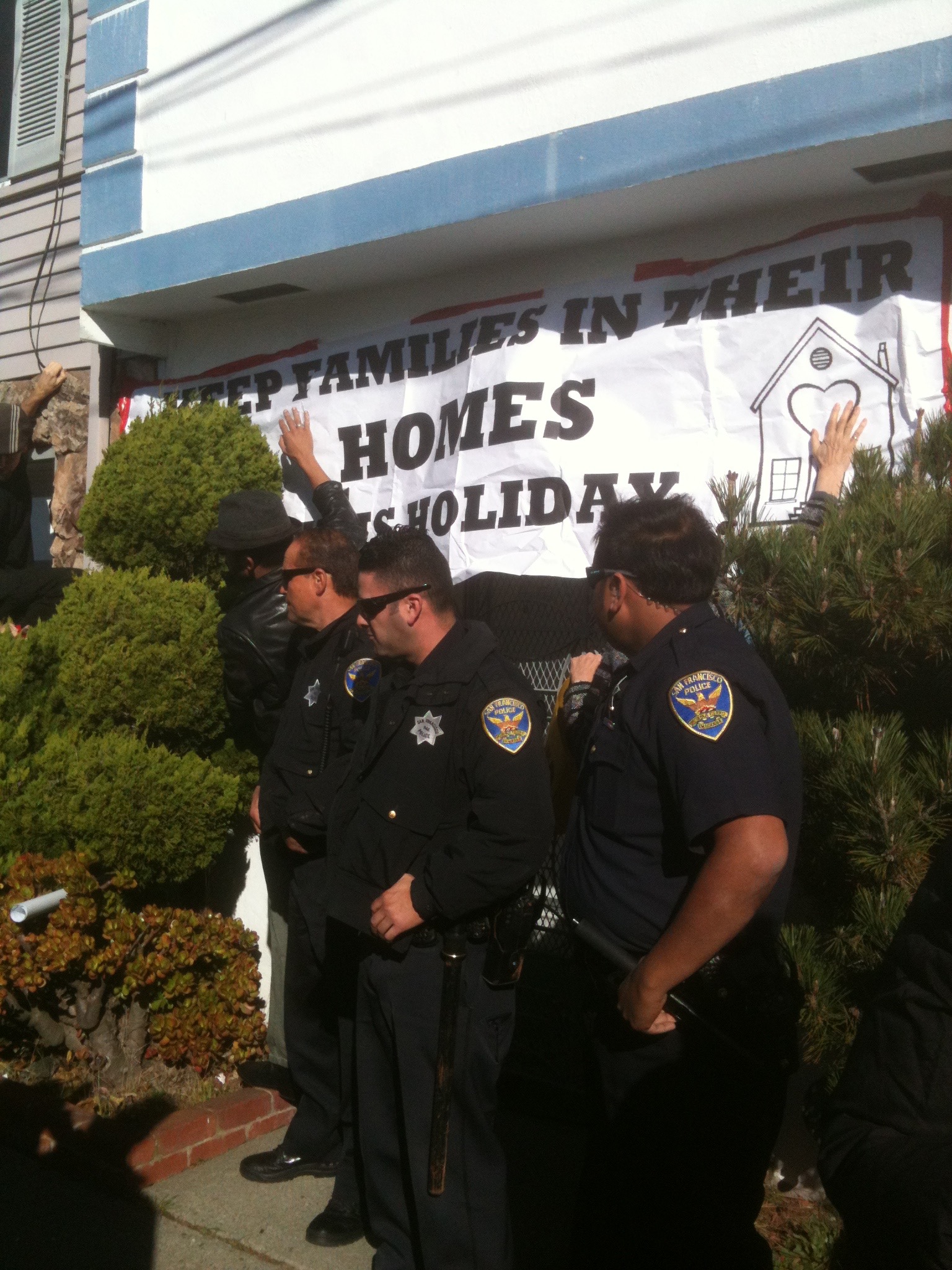
Two days later I got a call from an ACCE volunteer. One of the foreclosed homeowners, 75-year-old cancer survivor and childcare provider Josephine Tolbert, had been locked out of her house while she was shopping. Still inside her house were diabetes medication, diapers for the child in her care, essentially everything she owned. An impromptu press conference was being called for the following morning at her house in Visitacion Valley.
I picked up a couple of my neighbors and we got there early to be greeted by a phalanx of rather sheepish looking cops who apparently thought we were planning to re-occupy Josephine’s home. Actually reoccupying was not a bad idea, one that we would use several times in the coming year. This time the idea was to get the word out and create public sympathy for Josephine, who explained that the bank had already sold the house to an investor.

I admit to walking around being outraged most of the time, but this situation really got to me. How could this be happening in the prosperous US of A? And why was keeping an old woman from getting back into her home the most important charge of the SFPD? Why does my tax money pay for the county sheriff to evict people from their homes so predatory banks can foreclose on them and auction their property?
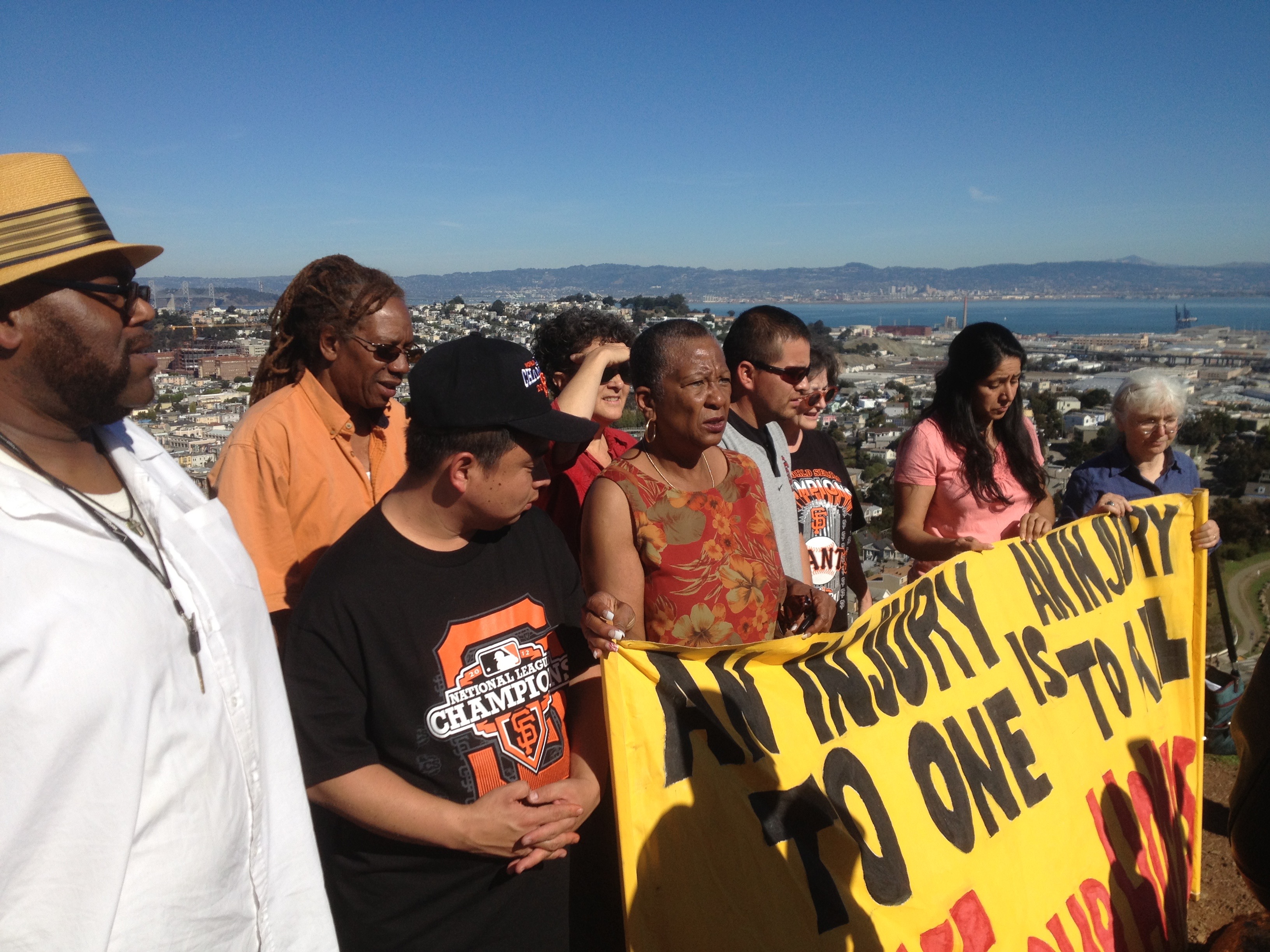
That week we picketed a restaurant owned by the new owner of Josephine’s home, convinced him to sell it back to B of A, and got her back in her home. Our pressure helped her fight for an affordable loan modification. We won and I was hooked.
We discovered 88 homeowners on a foreclosure list in our own small neighborhood. Soon after we called a meeting at the Bernal Heights Neighborhood Center (the center itself is a result of neighbors organizing since the seventies). Sixty-five people (many of them over 65) packed the dining hall, and Occupy Bernal was born.


We learned that an audit of homes facing foreclosure by San Francisco’s assessor-recorder showed 84% of loans contained legal violations, but litigation was not working to save homes. These banks are now too big to sue. The only way to keep our neighbors in their homes was to act collectively.


Once we had the list of foreclosed homes we just knocked on people’s doors asking them if they wanted to fight the banks. By this time many folks had already lost their homes. Finding buildings empty with eviction signs on the doors saddened me. The banks’ greed had already changed the composition of my own neighborhood. Most of the people in foreclosure, we discovered, were people of color. Bernal Heights was becoming less diverse daily. This knowledge strengthened our resolve and shortened our timeline. It felt like we were rushing to save the character of our neighborhood.

People’s foreclosure stories were as varied and complicated as the banks’ scams, but they usually came down to disability, job loss, death, divorce. Hard luck stories with no safety net. You get laid off, you can’t make the balloon payment. You get divorced and need to refinance the home that’s already paid off and you’ve lived in for 40 years. Then you’re sold a pick-a-payment loan and you’re urged to pick the lowest payment, interest only with increasing principal. Suddenly your $100K loan turns into $400K. You submit loan modification papers and the bank loses them—over and over. Every time you call them, you must talk to a new person, explaining your case over and over. Your bank refuses to talk to you or they tell you the only way they can help you is if you stop making payments. Then they foreclose. They sell your home at auction. Without notifying you.
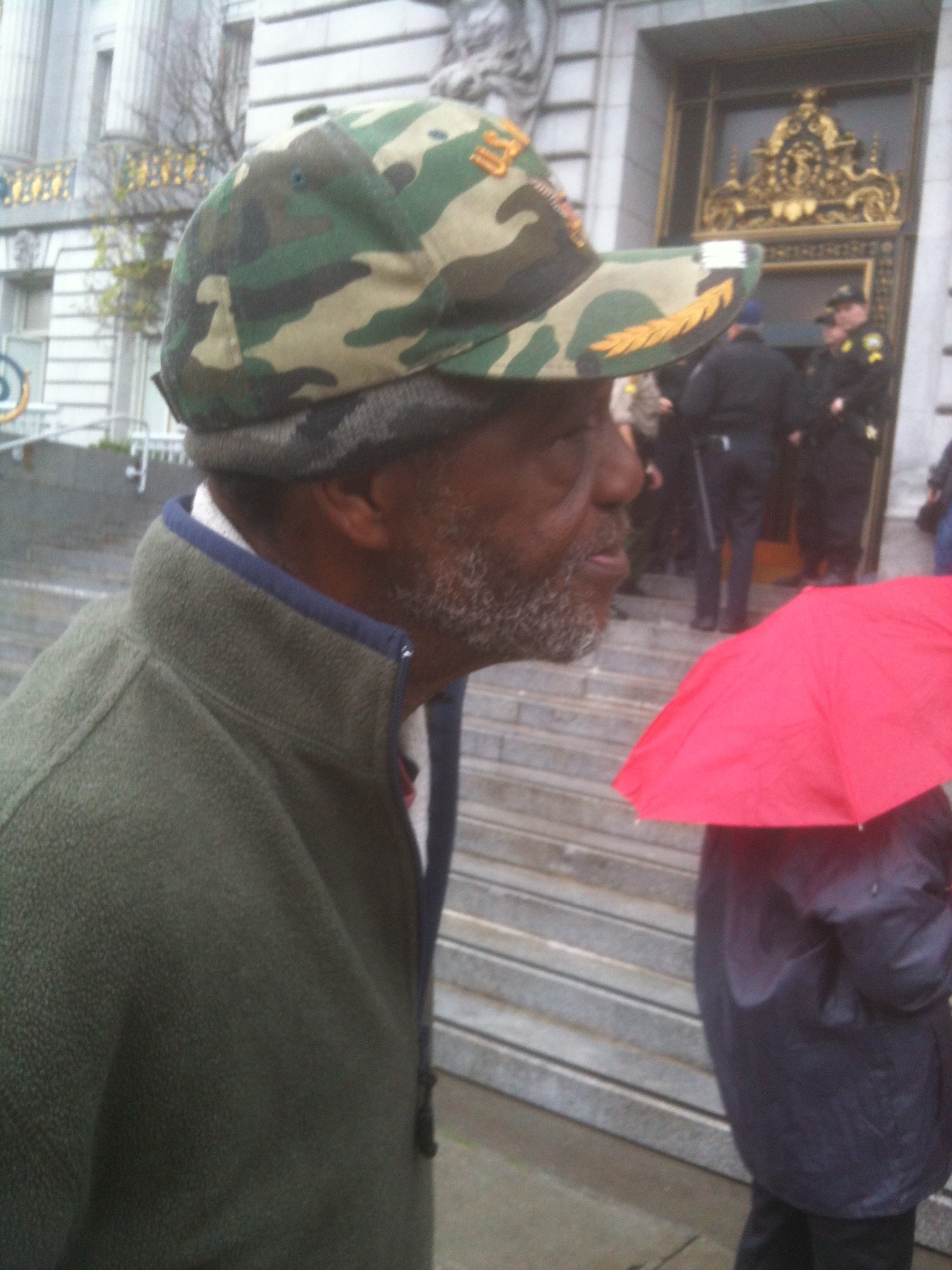
Here’s the thing: I got to know all these people personally and then I couldn’t look away. They are the face of this huge financial crisis that the perpetrators have survived. More than survived—they are making billions! But we are fighting back.
I could tell you about many more victories. The regular Saturday foreclosure fighter meetings typically attract 40-50 people. We learn with regularity that the pressure we have put on the banks has resulted in an affordable loan modification and that a family will not be evicted after all. People are fighting for their homes, and in the process growing from beaten and ashamed victims to articulate involved community leaders.
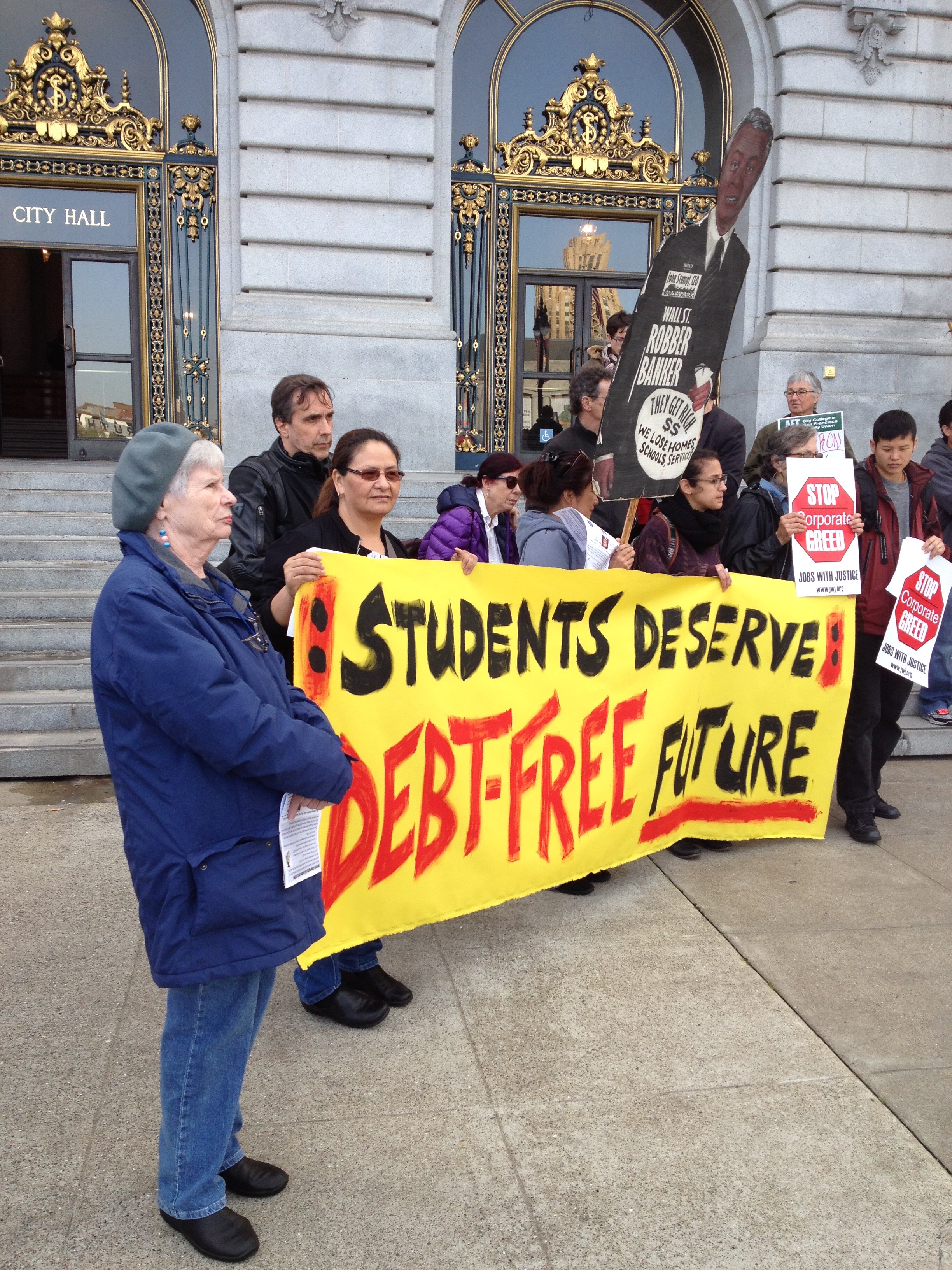
After a year of working at this we know that what brings the banks to the negotiating table is pressure from the community. The most effective thing we do is to call and email the banks when a home is at risk of being auctioned. Anyone can do it and I urge you all to join in these protests. Go to www.calorganize.org to sign up to receive updates and to join ACCE or make a contribution.
Here are a few highlights of our accomplishments in 2012:
ACCE members across California rallied to support the passage of the strongest anti-foreclosure legislation in the country, the California Homeowner Bill of Rights. In San Francisco, we built a Foreclosure Fighter group of over 150 active fighters. We’ve won over 20 permanent loan modifications resulting in close to $1 million in principal reduction. We’ve also stopped the auctions of hundreds of homes in San Francisco. We planned and executed well over 100 bank actions in the last year. A year after the launch of Occupy Our Homes and Occupy Bernal the narrative has shifted from blaming individual borrowers to blaming banks and demanding bank accountability. I’m proud to be an activist in this movement.

 tradeswomn musings