
“Force used tyranically is our common enemy”
My Mother and Audie Murphy Ch. 62
In To Hell and Back, Murphy tells of the last days of the war.
After the crossing of the Rhine, the dike seems to crumble, and a flood of men and equipment pours into Germany. Even the most fanatical Nazis must sense that the game is over, yet they still deceive the population with promises that resistance will bring a negotiated peace rather than unconditional surrender. If they still want war, the Americans give it to them. With victory in sight, they do not soften. Artillery levels sections of towns; flames lick across burning buildings. Infantry and armor prowl rubble-strewn streets, and blood flows needlessly through the gutters.

As the battle lines roll forward, windows drip with white flags. Any house without the mark of surrender receives no polite warning; soldiers rake its windows with machine-gun fire to correct the oversight. The tactic works.
Murphy is transferred to liaison duty, serving as the contact man between the division’s units. Near Munich, he enters a prison camp with his gun drawn and comes face-to-face with a German guard. The prisoners insist the man is a “good joe.” Murphy hears the phrase and thinks bitterly, Maybe he is. But I cannot see men anymore—I see only uniforms. He holsters his pistol.
The German mumbles something and stumbles toward a set of steps.
“There is something pathetically human about his odd, hobbled walk…. Perhaps it is the knowledge that we carry in our hearts that nobody ultimately wins. Somewhere we all go down. Force used tyrannically is our common enemy. Why align ourselves with it in whatever shape or fashion.“
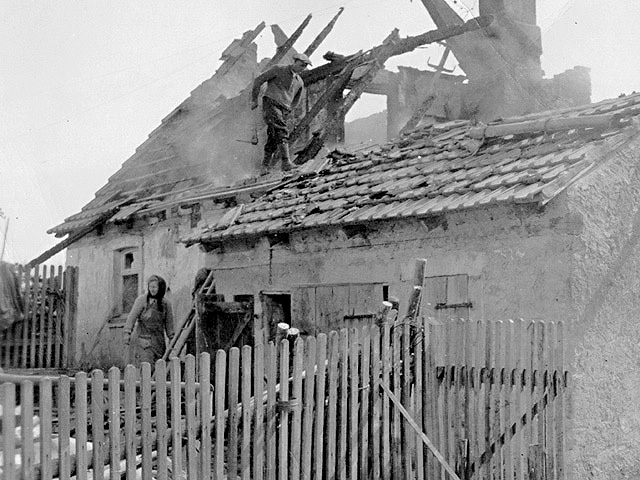
Then comes the great picture of mass defeat, the most overwhelming sight of the war. It appears in the bent figures of old women poking through ruins for some miserable relic of the past; in the shamed, darting eyes of the beaten; in the faces of little boys who watch the triumphant columns with fear and fascination. Above all, it appears in the thousands of dusty, exhausted soldiers streaming toward the stockades. Their feet clump wearily, mechanically, hopelessly along the seemingly endless road of war. They move as haggard gray masses in which the individual has no life and no meaning. It is impossible now to see in these men the fierce power that made them fight like demons out of hell only a few months before.
Ch. 63: https://mollymartin.blog/2025/10/17/we-were-once-all-antifascists/
 tradeswomn musings