Wither the Maypole?

May Day 2025

My Regular Pagan Holiday Post

Wide Hollow Elementary School in Yakima, Washington, was already an old building when I began attending in the 1950s. At the time, it served students from first through eighth grades. The little kids were on the first floor, the big kids upstairs. I remember the worn wooden steps leading to the second floor, scalloped by generations of student feet.

Our classrooms held old-fashioned desks—wooden with ornate cast-iron legs—each one with a small hole in the top for an ink bottle. We were taught how to fill our fountain pens by dipping the nib into the ink and lifting a lever to draw it in. (This cannot have happened without spills—the poor teachers!)
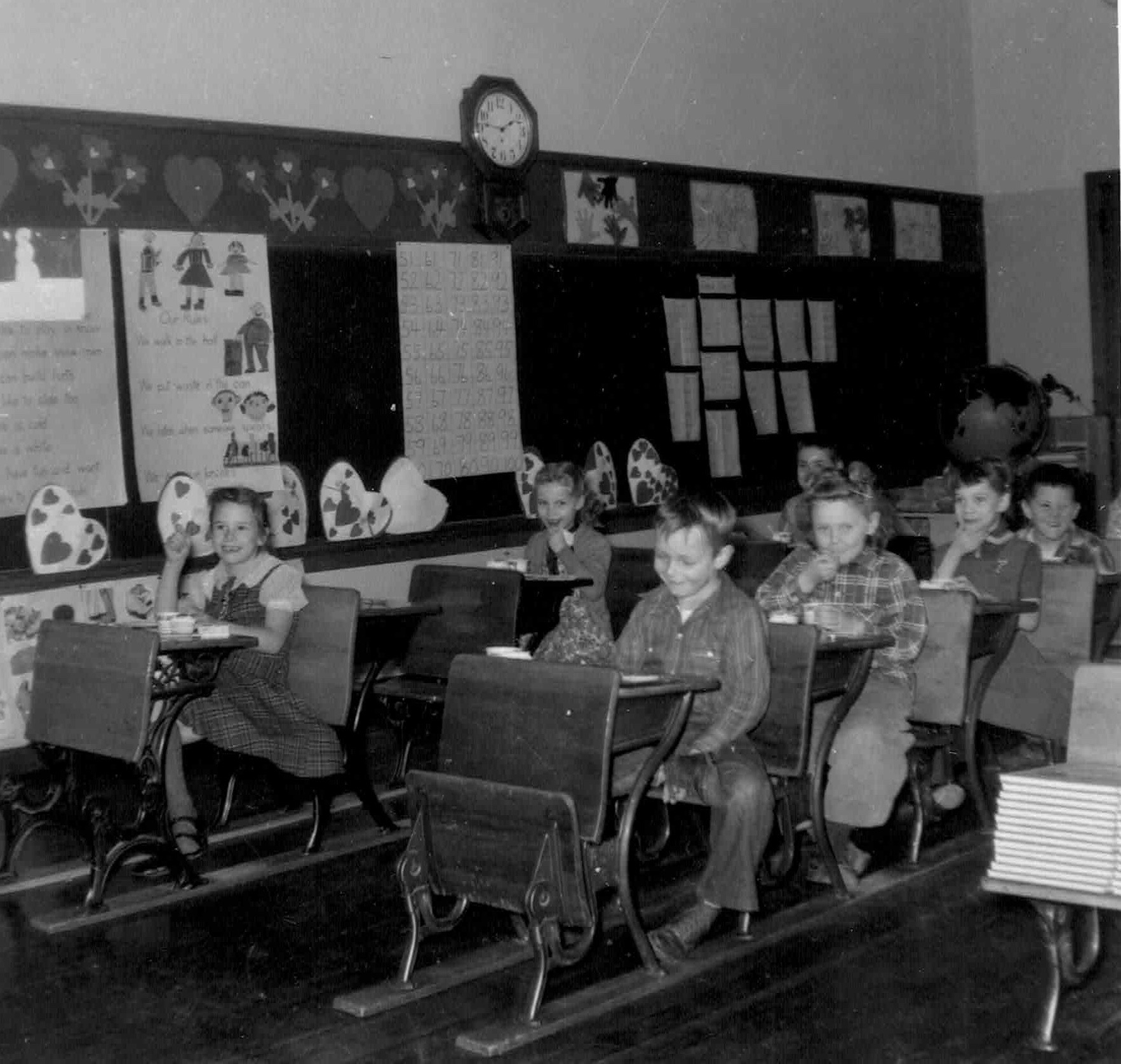
Valentines day 1956 at Wide Hollow school. That’s me on the far left.

Every room had a long wall of blackboard, with erasers that students cleaned by smacking them together, creating great clouds of chalk dust. The tall windows were opened using a long pole. Above the blackboards, neat rows of Palmer Method cursive letters reminded us of the proper way to form our handwriting.

The school was heated by a coal furnace. A coal chute led to the basement, where the coal man would periodically unload his delivery.

My first grade class at Wide Hollow

Outside, the playground seemed enormous. A towering maple tree stood right outside the building. We had swings, a slide, and a ride called the “ocean wave”—a notoriously dangerous contraption rumored to have killed children in other schools. As far as I know, ours survived it, though I did rip my good dress riding it on the very first day of first grade.

At recess, we played Ring Around the Rosie, Red Rover, jump rope, tetherball, and a game where we bounced a ball against the wall chanting, “Not last night but the night before, 24 robbers came knocking at my door.”

Much has changed. The old building was torn down years ago and replaced. The curriculum has become more inclusive. I still remember being twelve and furious that our new history books made no mention of the Indigenous peoples of the area. Today, Wide Hollow proudly displays a land acknowledgment on its website:

 “We would like to acknowledge that we’re coming to you from the traditional lands of the first people of our valley, the 14 Confederated Tribes and Bands of the Yakama Nation, and we honor with gratitude the land itself and the Yakama Tribe.”

Wide Hollow is now a K–5 school. They host a “multicultural celebration,” but I don’t believe the ancient pagan Spring holiday of May Day is among those still observed. Back in our day, we celebrated May Day by weaving ribbons around a maypole (perhaps the tetherball pole?) and making May baskets, often filled like Easter baskets with flowers.

Dancing around the maypole

While May Day celebrations have largely fallen out of fashion in the U.S., they still take place in some towns. In Europe, the tradition persists more strongly. In modern pagan communities, May Day has been revived and reimagined through the Celtic festival of Beltane.

In Sweden, maypole dancing has shifted to the big Summer Solstice festivals, but until the 19th century, May Day was celebrated with mock battles between Summer and Winter. I love this account by Sir James George Frazer in The Golden Bough (1911):

“On May Day two troops of young men on horseback used to meet as if for mortal combat. One of them was led by a representative of Winter clad in furs, who threw snowballs and ice in order to prolong the cold weather. The other troop was commanded by a representative of Summer, covered with fresh leaves and flowers. In the sham fight which followed, the party of Summer came off victorious, and the ceremony ended with a feast.”

Note: the picture of Wide Hollow school at the top is a postcard labeled North Yakima. That means the picture was taken before 1918 when North Yakima was changed to Yakima. So the school was originally built probably in the teens.

May 1 is also International Workers Day
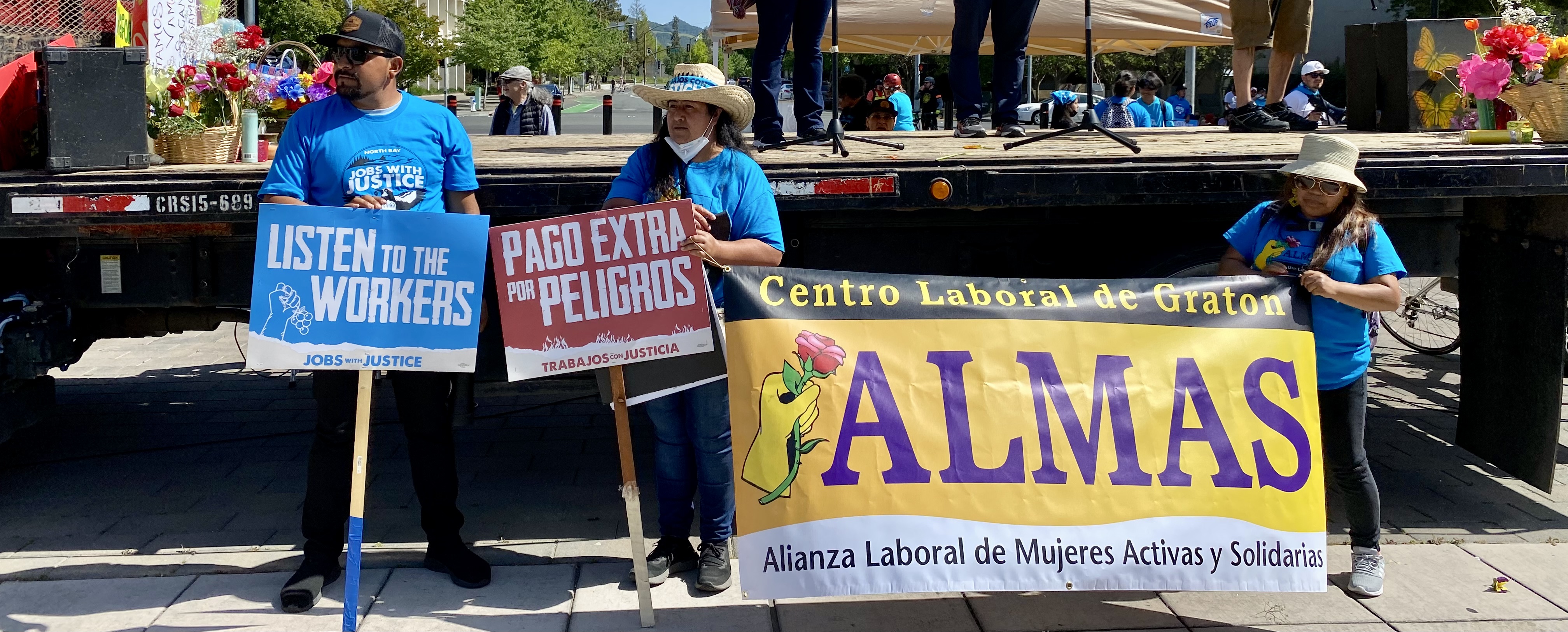
At the Santa Rosa International Workers Day celebration

May 1st is also recognized globally as International Workers’ Day. In 1889, the date was chosen by an international federation of socialist groups and trade unions to commemorate the Haymarket Affair—a violent deadly police riot in Chicago in 1886 targeting workers organizing for the eight-hour workday.

Here in Sonoma County, this year May Day marks the beginning of the Days of Action May 1-5, organized by Community United to Resist Fascism (CURF). The International Workers’ Day march will call for immigrant rights and is co-organized with the May 1st Coalition. The event will begin at 3 p.m. in Santa Rosa at the Sonoma County Sheriff’s Office, proceed to the Board of Supervisors’ office, and then continue to Old Courthouse Square to rally at 5pm. I’ll see you there!

For more information and to sign up for the coalition: https://www.pjcsoco.org/event—santa-rosa-protests-may-1—5.html

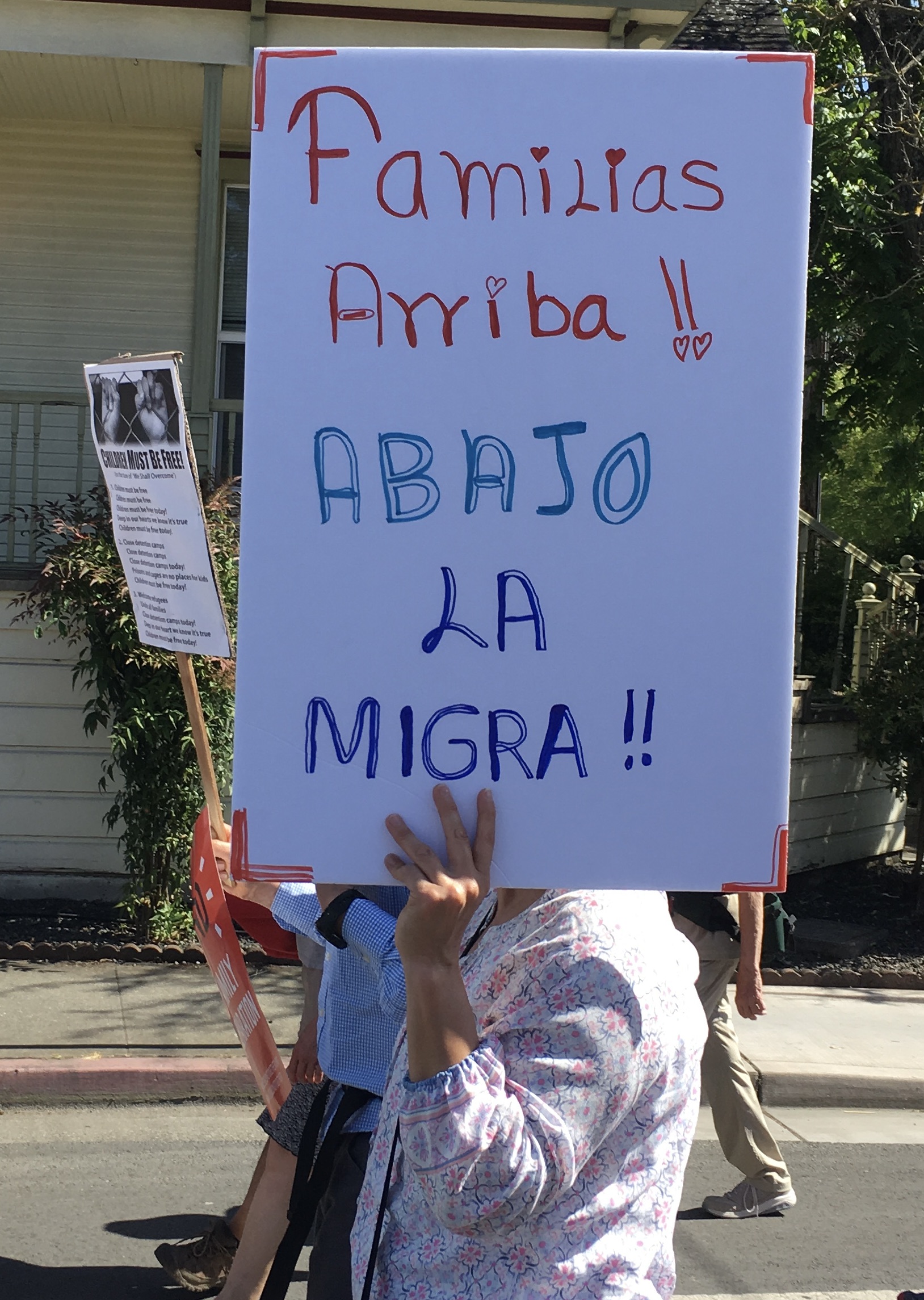
Celebrating May Day

Demand for the eight-hour day inspires a world-wide holiday

My regular pagan holiday post

No one ever knew who threw the bomb that killed a cop during a peaceful rally. Then the police opened fire, killing seven more of their own and several bystanders. 

But the Powers That Be said someone had to pay. They arrested eight men and charged them with conspiracy. 

The accused, immigrants and anarchists, became convenient scapegoats in a city gripped by fear and suspicion. The mainstream media fanned the flames of anti-immigrant hysteria with sensationalized tales and outright lies.

As the trial unfolded, prejudice tainted the proceedings. The judge’s bias was palpable, and jurors were selected for their predispositions. Despite a glaring lack of evidence, the men were convicted.

Four were hanged. One committed suicide in prison. Others were given long sentences. 

The progressive governor, burdened by the knowledge of their innocence, commuted the sentences of the surviving men. Then he faced the wrath of voters who, swayed by fear and misinformation, ousted him from office in a bitter electoral battle.

It happened in Chicago in 1886, but to me it reads like today’s news. Except for the bomb. Our modern methods of murder are far more sophisticated.

Could history repeat itself in a modern age? 

I worry. The specter of prejudice still haunts our land, immigrants demonized, and dissent silenced. The media—mainstream and social–wields its influence with impunity, shaping public opinion with biased narratives and sensationalism. 

Meanwhile, our judiciary does not even try to conceal its corruption. The militarization of police forces and the epidemic of police violence create more distrust in those pledged to keep us safe. We won’t forget the killing of a 13-year-old boy, Andy Lopez, in Santa Rosa at the hands of a deputy sheriff.

So, yeah. It seems little human evolution has taken place since 1886.

At that 1886 Chicago rally, workers had agitated for the eight-hour work day, a movement then brutally crushed by employers with the help of federal, state and local police forces. With its leaders executed and imprisoned, the Chicago labor movement’s head was cut off. Labor lost that battle, but eventually won the war for the eight-hour day. Their slogan, written in a song of the time, was “Eight hours for work, eight hours for sleep, eight hours for what we will.”

The eight defendants were all thinking and articulate men, but the one I find most interesting is the one man who was not an immigrant, Albert Parsons. Born in Alabama in 1848, he traced his ancestry back to English colonists in 1632. Some ancestors fought in the American revolution.

Parsons moved to Texas and fought for the Confederacy during the Civil War. Then he realized he had fought for the wrong side. He called the war “the slaveholders’ rebellion.” 

He became a Republican, supporting Reconstruction efforts and running for office, making enemies of his former comrades and the KKK. Then he joined the socialist movement, eventually denouncing electoral politics and joining the anarchists and the labor movement. 

His marriage to Lucy Parsons (Gonzales), a Black woman, defied the norms of a society steeped in prejudice, and her activism would become legendary in its own right. As she led the campaign to win a new trial, one Chicago official called her “more dangerous than a thousand rioters.” 

Albert Parsons saw the connections between slavery and capitalism. He said: “My enemies in the southern states consisted of those who oppressed the black slave. My enemies in the north are among those who would perpetuate the slavery of the wage workers.”

What made Albert Parsons switch sides? I think it was working with previously enslaved people after the war and at the start of Reconstruction. He began to see things from their point of view. 

The Haymarket Affair, as the events in Chicago came to be called, inspired May Day, or International Workers Day, as a labor holiday in countries around the world on May 1. It was never a national holiday in the US because of ourgovernment’s resistance to encouraging worldwide working-class unity. But workers in the US celebrate May Day anyway, and it will be marked again this year in cities across the country.

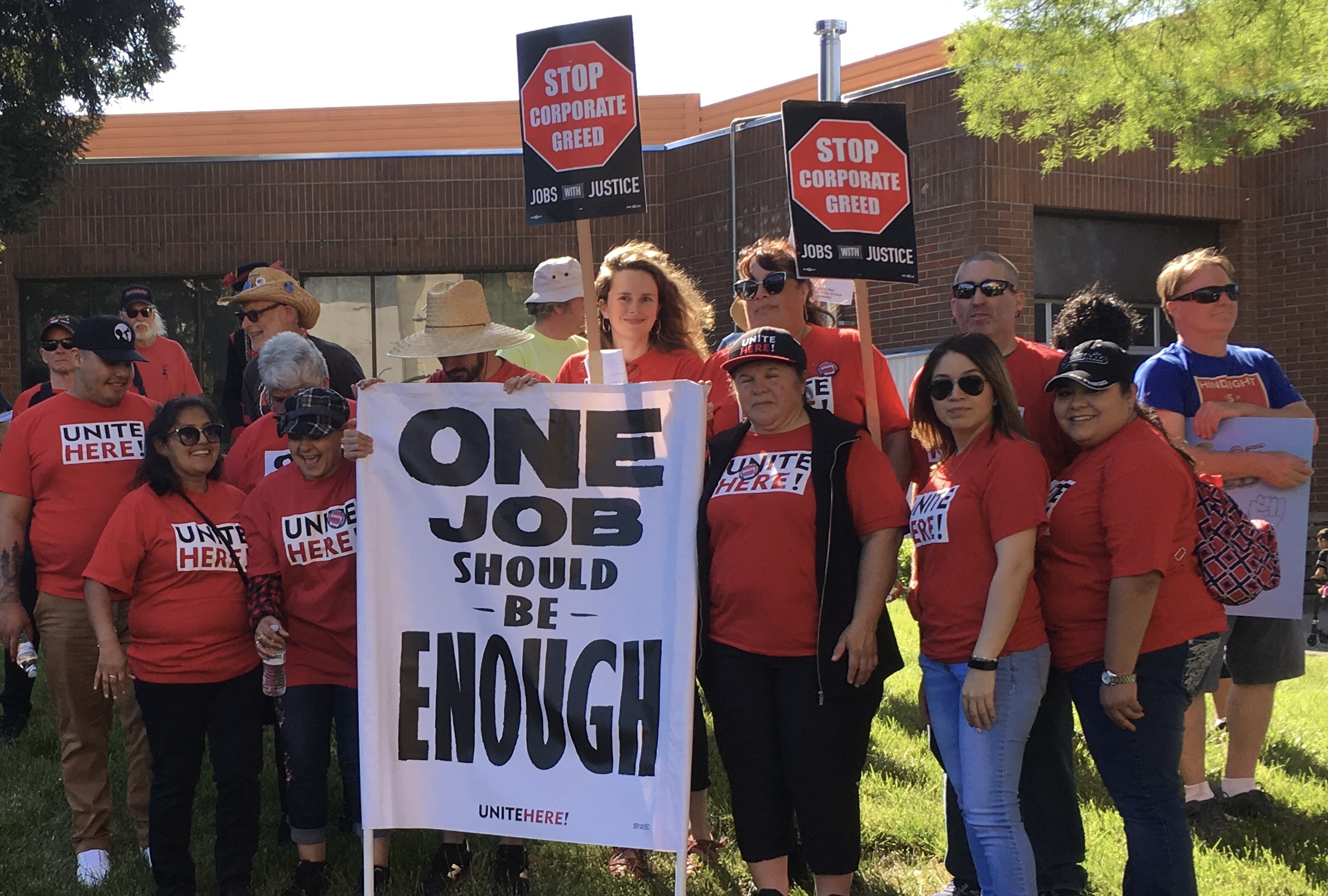
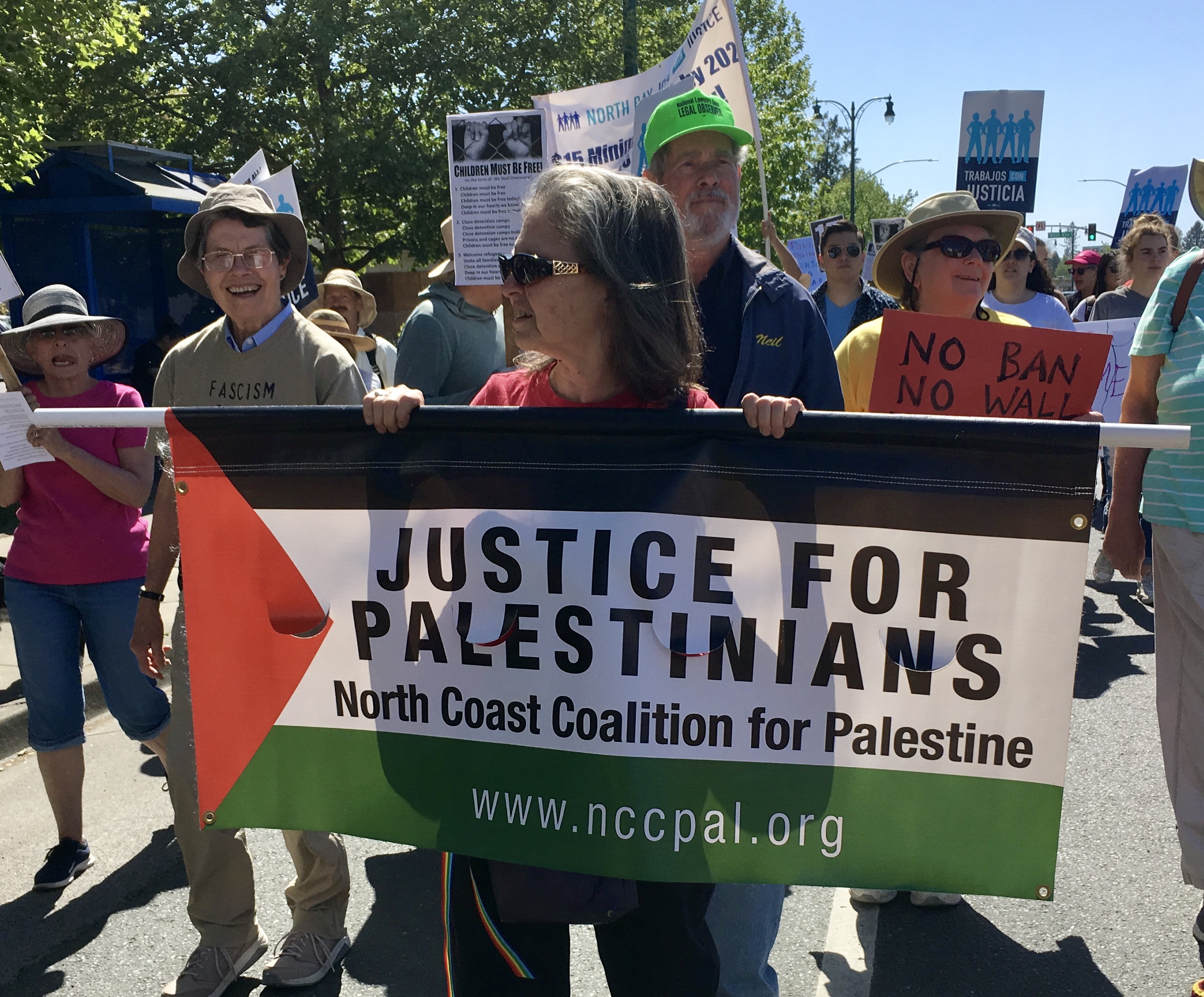
Photos are from the 2019 Santa Rosa May Day march

California Labor Councils are planning actions up and down the state. This year’s May Day actions are about solidarity across sectors as workers push for higher wages, stronger contracts, the right to join a union, and fight back against corporate greed.

Here in Sonoma County on May 1 we will be marching for “Immigrant Rights Are Human Rights” starting at the county sheriff’s office. Marchers will demand that the Sonoma County Board of Supervisors proactively advocate for a Path To Citizenship policy in Congress and also support a county ordinance which would prohibit any collaboration or information sharing between the Sonoma County Sheriff and Immigration Customs Enforcement (ICE).

The Haymarket Affair was a seminal moment in the struggle for workers’ rights. The martyrs of that turbulent era—Albert Parsons, August Spies, George Engel, and Adolph Fischer—must not be forgotten. Their legacy endures, inspiring movements for social justice and workers’ rights around the world. 

The Haymarket martyrs memorial and Lucy Parson’s grave at Forest Hill cemetery in Chicago

A happy Beltane and a revolutionary May Day to all!

Celebrating Beltane and May Day

Dear Friends,

Emerging from the chrysalis—a month and a half of  coronavirus lockdown and spine surgery recovery—it feels like a brand new day. In Sonoma County residents are now allowed to walk or bike (but not drive) to a park. Keep your mask on.

IMG_0302
A trailer parked on my block

I’m one of those people who finds it difficult to sit in one place and concentrate on anything for any length of time. I always knew I had a very short attention span. Holly thinks maybe I have undiagnosed ADHD. Anyway being flat on my back and having to concentrate on recovery from surgery has helped me if not to focus better at least to understand my problem better. I was pretty happy listening to novels especially when I was in the first stage of recovery and could barely get in and out of bed. As I recovered I felt more and more like multitasking, as if I actually could pick up my iPad and read Facebook posts while I’m listening to a book. Not! I can work on a jigsaw puzzle and listen to a book at the same time. Holly says that’s because you’re using different parts of the brain. Don’t try do two tasks that require words at the same time.

So I have been trying to practice doing one thing at a time. Then, reading the Audubon newsletter, I learned about bird sitting. It’s easy. You just sit and listen and watch and use all your senses to experience birds. I expanded this concept to pollinators. Bee sitting.

IMG_0331
Our pollinator garden

One sunny April day after I was able to walk around and sit outside in a zero gravity chair, I spent an hour or so just watching pollinators. The air was full of flying and floating things. Filaments of spider web, falling blossoms, puffs of seeds and insects moved through the air in the soft breeze. Honeybees populated the orange and the apple tree. The native bees went for the native plants. Bee segregation! Our pollinator garden starts blooming early. The native carpenter bees and bumblebees especially love the red salvia. And there are all these other little pollinators that may or may not be bees, the kind that fly in squares turning quickly at right angles, the tiny gnats that circle endlessly around each other. I was surprised at how many bugs I couldn’t identify.

IMG_0310
First strawberries. Eaten by a wild animal that night.

Two years ago we had a great population of carpenter bees. The females are big and shiny black, the males smaller with a smidge of yellow. A tub full of purple flowers bloomed near where I like to sit on the patio and my purple hair was constantly being dive-bombed by purple-loving bees. Then last year the bee population declined. I saw one maybe two carpenter bees and we began to wonder if they had been living in the old original redwood fence from 1948 that we had replaced the year before. My brother Don told me that when they remodeled their house in Olympia they destroyed the carpenter bees’ home in the exterior trim on their building. That year and some years after their apple orchard did not get pollinated and had no apples. So I’m delighted that the carpenter bees have returned. 

I plan to celebrate Beltane bee sitting. 

Sending virtual hugs to you all. Take care of yourselves.