Anzio: Advance, retreat, repeat

Fear is moving up with us. Fear is right there beside you.

My Mother and Audie Murphy Ch. 14

Audie Murphy’s autobiography To Hell and Back was shaped in collaboration with David McClure, a Hollywood writer who served in the Army Signal Corps and knows firsthand the shock of war. The book centers on the ordinary infantrymen of the Third Division, capturing their humor, fatalism, and endurance. In the battle scenes, the tone sharpens. At Anzio, Murphy describes the brutal churn of attack and counterattack in a landscape where the ground itself seems to resist survival.

“Anzio Annie” was a massive World War II German rail gun, used to bombard US and British forces during the 1944 Anzio landings. It was one of the largest land-based cannons ever built. It fired shells that weighed 550 pounds. Image: NARA

“Light trembles in the east. To our left, an artillery dual is growing fiercer. We hear the crack and thunder of our own guns; the whine and crash of incoming German shells. (A soldier) stands in his chest deep foxhole and leans with his elbows on the bank. He studies the eastern horizon and shakes his head in mock ecstasy. “Gee!” says he, “another beautiful day.”

By afternoon, the order comes: attack!

“Fear is moving up with us. It always does. In the heat of battle it may go away. Sometimes it vanishes in a blind, red range that comes when you see a friend fall. Then again, you get so tired that you become indifferent. But when you are moving into combat, why try fooling yourself. Fear is right there beside you….

“I am well acquainted with fear. It strikes first in the stomach, coming like the disemboweling hand that is thrust into the carcass of a chicken. I feel now as though icy fingers have reached into my mid-parts and twisted the intestines into knots….”
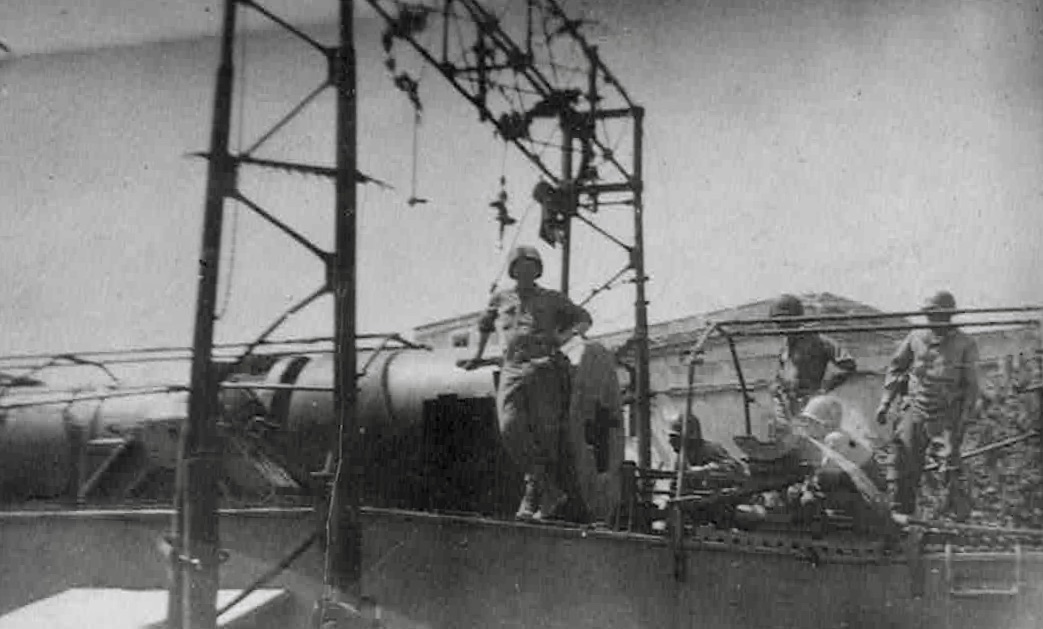
Hidden in a railway tunnel, the Anzio Annie guns started firing at the Anzio beachhead in February and were not discovered until May. Image from Flo’s album

Speech dies away as they approach the enemy line. Artillery fire slackens, and the men check their weapons one last time. Scouts creep forward. Everyone waits for the first eruption.

“This is the worst moment. Just ahead the enemy waits silently. It will be far better when the guns open up. The nerves will relax; the heart, stop its thumping. The brain will turn to animal cunning. The job lies directly before us: destroy and survive.” 

The scouts signal them on. Just as they inch forward, two hidden flakwagon guns open fire. One scout is hit squarely in the chest; his upper body disintegrates in an instant. The 20 mm shells, designed for aircraft, are used here against men, each strike exploding on impact. There is no time to think; the entire landscape erupts with automatic fire. Branches shear off the trees overhead. Bullets pitch into the earth. Two men in the open scramble for the shelter of a small rise, but the gunner finds his range. They collapse, still at last.

Annie’s threat was physical, but also psychological. The troops lived in constant fear of the next shell whose passage was compared to a freight train passing overhead. It could blast a whole big enough to swallow a jeep. Image from Flo’s album

The scouts signal them on. Just as they inch forward, two hidden flakwagon guns open fire. One scout is hit squarely in the chest; his upper body disintegrates in an instant. The 20 mm shells, designed for aircraft, are used here against men, each strike exploding on impact. There is no time to think; the entire landscape erupts with automatic fire. Branches shear off the trees overhead. Bullets pitch into the earth. Two men in the open scramble for the shelter of a small rise, but the gunner finds his range. They collapse, still at last.

A massive shell shrieks overhead and Murphy dives into a roadside ditch. The blast lifts him, knocks him senseless, then dumps him back into the mud. When he crawls forward to check the man beside him, the soldier lies dead with no visible wound—killed by pure concussion. Murphy marks the body for the burial team, driving the bayonet into the bank and tying a strip of white cloth to its tip.

German artillery intensifies. The earth becomes a furnace of shrapnel and fire. Limbs and fragments of bodies fall back to the ground with the dirt. Night offers no rest. The foxholes are cold, wet, and shallow. Rumors spread that the entire front has been forced back. The men are told they will attack again in the morning.

Exhausted and hollow-eyed, they rise. The numbness of survival replaces fear. When the order comes, they move like machines. German artillery meets them immediately, and the men spread across open fields, advancing from one shell crater to the next. Medics, unarmed and clearly marked, fall beside the wounded they are trying to save. The cycle continues: advance, retreat, advance, retreat. After three days, not a single yard of ground has been gained.

There were two of these guns. Once they were captured, soldiers climbed on them “like game hunters who had bagged two rogue elephants.” Image from Flo’s album.

This was the story of Anzio. The Allies made the first amphibious landing on the beachhead on January 22, 1944 and the battle didn’t officially end until the liberation of Rome June 4, 1944.

The 3rd Infantry Division suffered over 900 casualties in one day of combat at Anzio. This was the highest number of casualties suffered by any US division in a single day during the war. The Allies sustained 40,000 casualties at Anzio.

The battle leaves no one unchanged. Anzio becomes not just a place, but a memory carved in mud, smoke, concussion, and loss—the memory of men who advance, fall, rise again, and return to the line because there is no choice except forward.
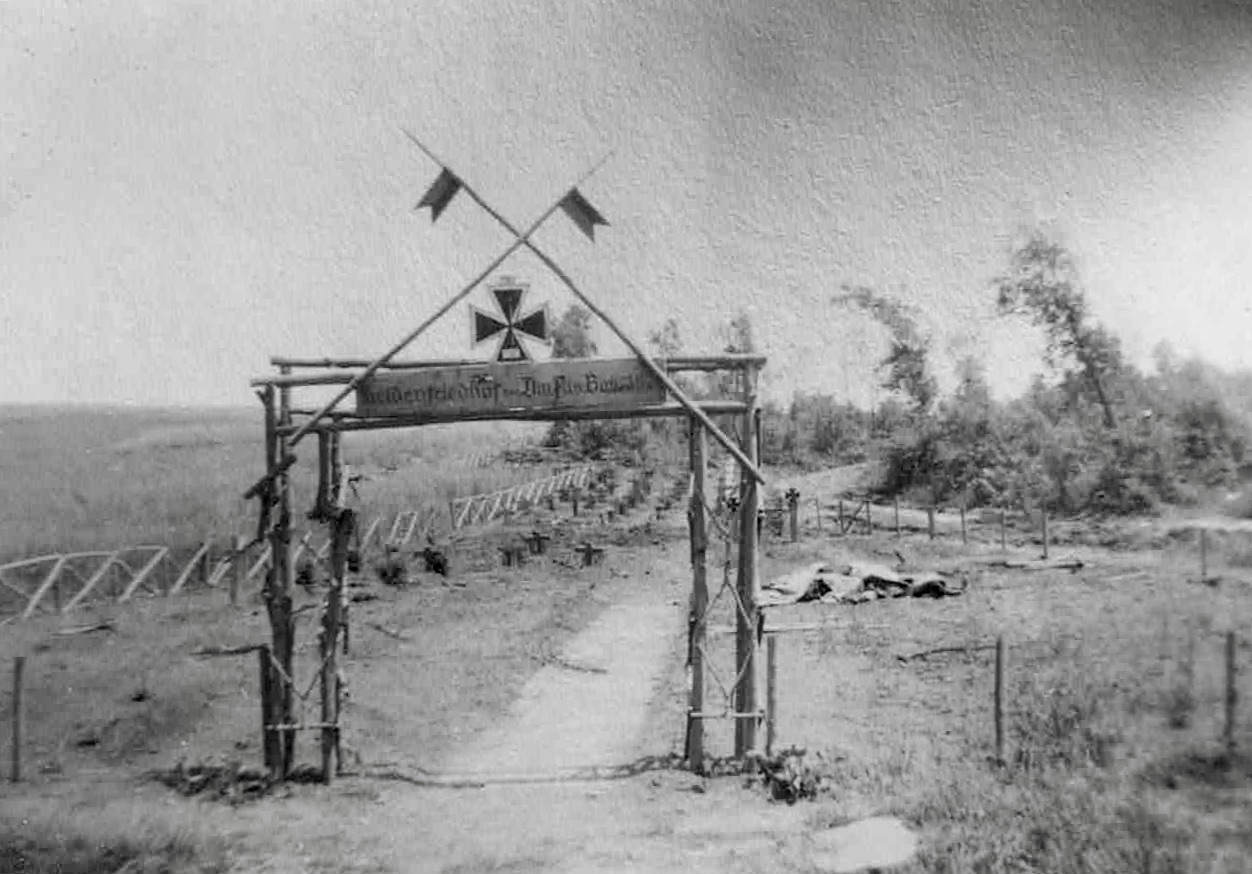
Flo captioned this picture “Kraut graves.” The Nazis sustained 43,000 casualties at Anzio.

Quotes are from Audie Murphy’s autobiography, To Hell and Back

Ch. 15: https://mollymartin.blog/2025/03/16/rome-is-liberated-by-allies/

Attack at Anzio

Malaria returns and Murphy confronts “Old Army” authority

My Mother and Audie Murphy ch. 12

January 1944. The squad is engaged in simulated combat. For three days they storm a dummy beachhead. They leap from landing craft and, falling, crawling, and firing, advance upon assigned objectives. Then the maneuvers end abruptly. The men are placed on strict alert, confined to the company area, and given one day of rest except for a final inspection of equipment. They recognize the signs. Everyone whispers “tomorrow.” Chaplains hold services. Letters are written with particular care. Still, no one knows the destination.

Murphy is sick again with malaria. Refusing to complain, worried that it will seem he’s trying to avoid combat, he’s finally turned in by a man in his squad. With a temperature of 105, he’s sent to a hospital in Naples. 

Then, after less than a week in hospital, Murphy is among a boatload of replacements headed for Anzio. Murphy can’t wait to rejoin his squad. He has missed the first several days of the Anzio attack.

From a Life Magazine story in Flo’s album

Ignoring orders to stay in camp, he walks toward the front. In a farmhouse where the command post has been set up, he learns that several men in his squad have been killed or maimed. Just as he feared, the Nazis have devastated his group, soldiers who have become like family after surviving the hell of war together.

At divisional headquarters, Murphy encounters the old hierarchy of the Army. A regular army sergeant, irritated by the informality of wartime soldiers, confronts him and orders him to unload his pack for a work detail. Murphy refuses. The sergeant threatens discipline; Murphy tells him to come find him at the front if he wants to press the issue. Slinging his carbine over his shoulder, he turns and heads up the road marked with the blue diamond of his regiment.

Americans at home depended on Life Magazine for news of the war.

That night, on the way to Cisterna, Murphy leads another reconnaissance patrol behind enemy lines. They discover that the Germans are moving tanks in–an ominous sign.

He reports to the lieutenant’s dugout. The lieutenant sits in a deep muddy hole, the roof made of poles, grass, and sod. Water seeps in from the sides. Bandoleers of cartridges and a case of grenades lie stacked in the corner. He looks as though he has not slept in days.

This, now, is home. A foxhole. Mud, cold, and the sound of artillery. The front line stretches ahead into darkness, and there is no certainty of what tomorrow will bring—only that tomorrow is coming.

Ch.13: https://mollymartin.blog/2025/03/06/flo-arrives-in-italy/

You’ve Got Mail–March 31, 1944

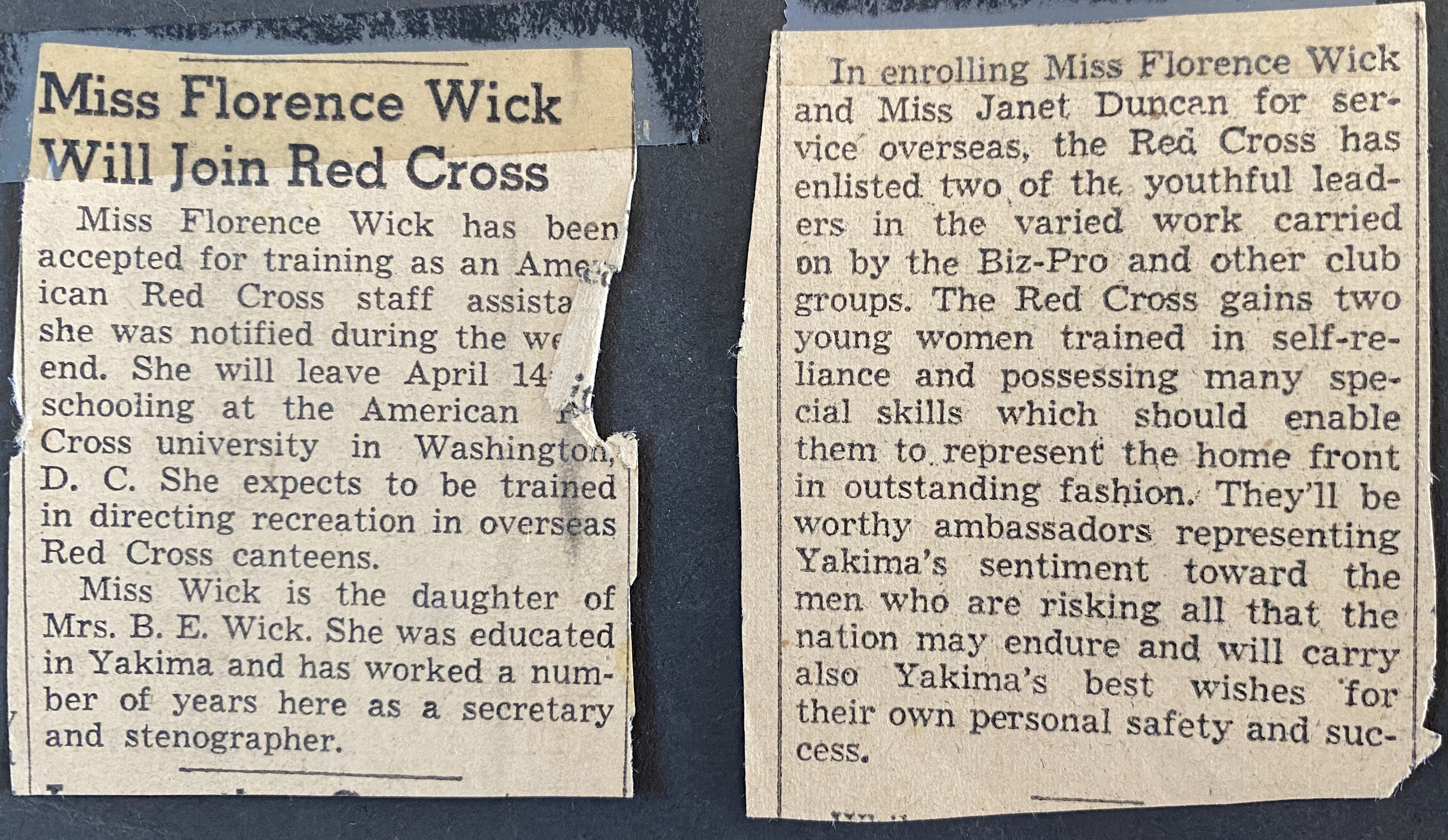
Flo Scheduled for ARC Training in D.C.

My Mother and Audie Murphy Ch. 5

March 31, 1944 began as a black day in Yakima. Farmers had lit smudge pots in the orchards during the night to protect delicate buds from frost. The fuel, which included old tires, diesel oil and whatever could be found to burn, had left a black oily residue on the landscape. The white horse in the field down the street was now charcoal black. And the polluted air had seeped inside houses, coating everything. 

The local Yakima paper kept track of citizens in the war. From Flo’s album.

When Flo awoke and blew her nose, the snot was black. Still, for her the day was a happy one. In two weeks she would be in Washington D.C. starting a new job as an American Red Cross (ARC) staff assistant. Today she would tell her boss that next week would be her last. She would give herself a week to get to D.C., taking the train to Chicago and staying overnight there. It would be the start of an exciting adventure and she could hardly wait to get started. 

The ARC telegram that had come the day before said she would receive a letter with more details. She would have to send some telegrams herself to let friends and relatives know this good news. Her best friend, Molly, now working in Seattle, would need to know. And so would her sister Eve, stationed as a U.S. Army nurse at a hospital in Burford, England.

At work, the engineers were full of congratulations and good wishes. For them it was nothing new. Employers all over the country were having to deal with workers leaving for the war, either as draftees or volunteers. The U.S. had already been at war for more than two years, since Japan bombed Pearl Harbor December 7, 1941. The Europeans had been at war since September 1, 1939 when Germany invaded Poland.

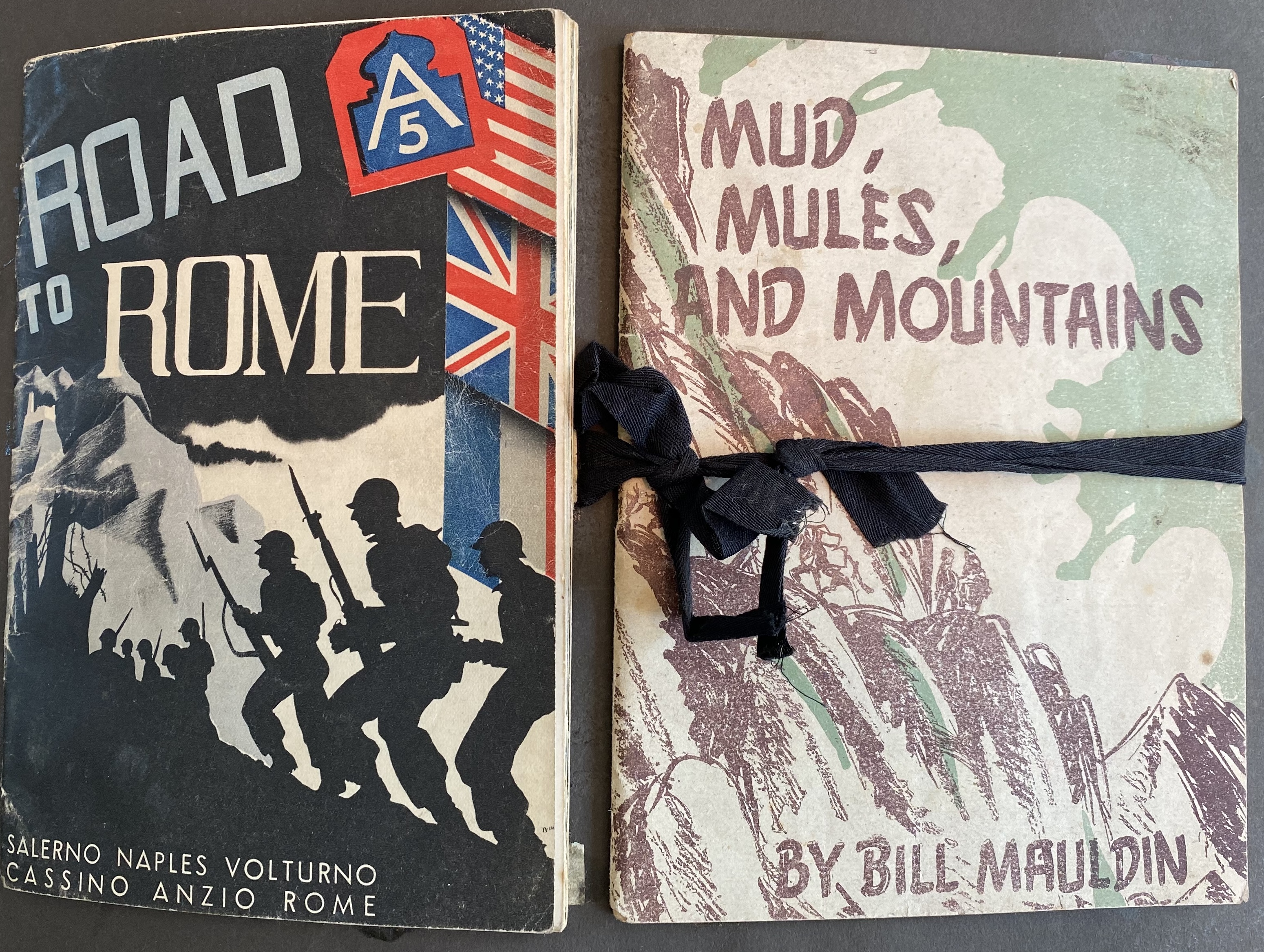
A page in Flo’s WWII album

In January, 1944 the Third Infantry Division had landed at Anzio, Italy and the campaign had become a stalemate, costing heavy losses on both sides. The Allies would not rout the Nazis there until May.

Flo agreed to finish out the next week to train her stenographer replacement, and she was happy to have one more week’s pay, but now that she knew she was leaving, she couldn’t wait to be finished with the Washington State Highway Department. It had been a fine place to work for more than a decade, but she was ready for new challenges. And she would have many.

When she got home that evening, her sister Betty ran from the house waving an envelope. 

Flo, still in her coat, opened the envelope carefully, thinking she would save the letter for a future scrapbook. Her life was about to change and she wanted to remember this moment.

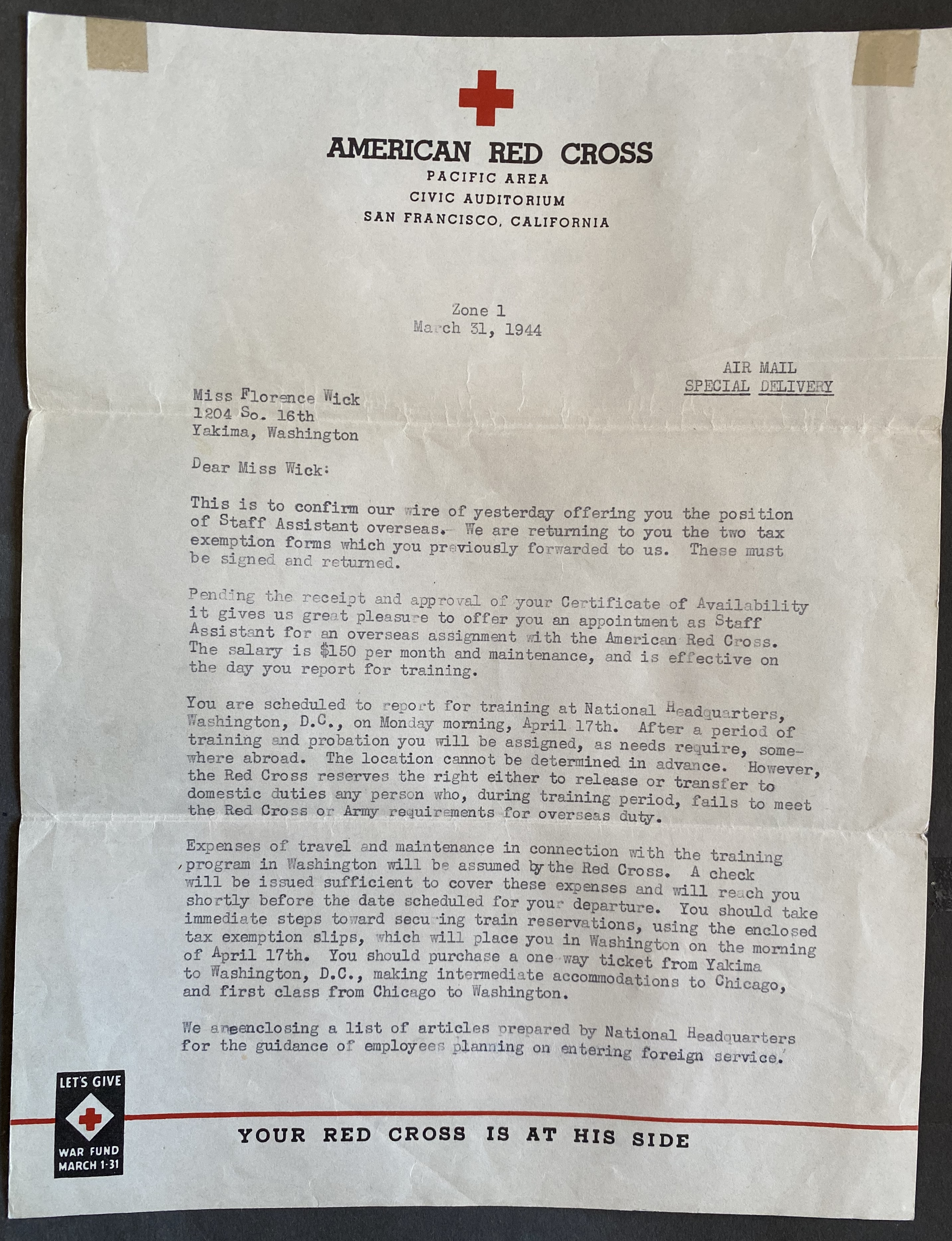
The letter was headed American Red Cross, Pacific Area, Civic Auditorium, San Francisco, California. It read:

“Dear Miss Wick:

This is to confirm our wire of yesterday offering you the position of Staff Assistant overseas.”

The “salary of $150 per month and maintenance” would be effective the day she was to report for training, April 17, 1944.  

“You are scheduled to report for training at National Headquarters, Washington, D.C., on Monday morning, April 17th. After a period of training and probation you will be assigned, as needs require, somewhere abroad. The location cannot be determined in advance. However, the Red Cross reserves the right either to release or transfer to domestic duties any person who, during training period, fails to meet the Red Cross or Army requirements for overseas duty.”

“Expenses of travel and maintenance in connection with the training program in Washington will be assumed by the Red Cross. A check will be issued sufficient to cover these expenses and will reach you shortly before the date scheduled for your departure. You should take immediate steps toward securing train reservations, using the enclosed tax exemption slips, which will place you in Washington on the morning of April 17th. You should purchase a one-way ticket from Yakima to Washington, D.C., making intermediate accommodations to Chicago, and first class from Chicago to Washington.”

 It was signed by (Miss) Esther Bristol, Assistant to the Director. The letter came with a list of “articles prepared by National Headquarters for the guidance of employees planning on entering foreign service.” The list of items included everything the ARC thought a woman would need for a year abroad, such as four girdles(!), sanitary napkins, and panties.

Flo resolved to do whatever was necessary to carry out her job to the best of her ability. She would respond by collect wire as instructed and then she would be officially in the Red Cross.

Their mother, Gerda, was in the kitchen cooking dinner for her daughters and their two boarders, female students at the community college. 

She promised her daughter that she would write, and keep her supplied with homemade Swedish cookies.

Chapter 6: https://mollymartin.blog/2025/01/24/the-battle-for-salerno/