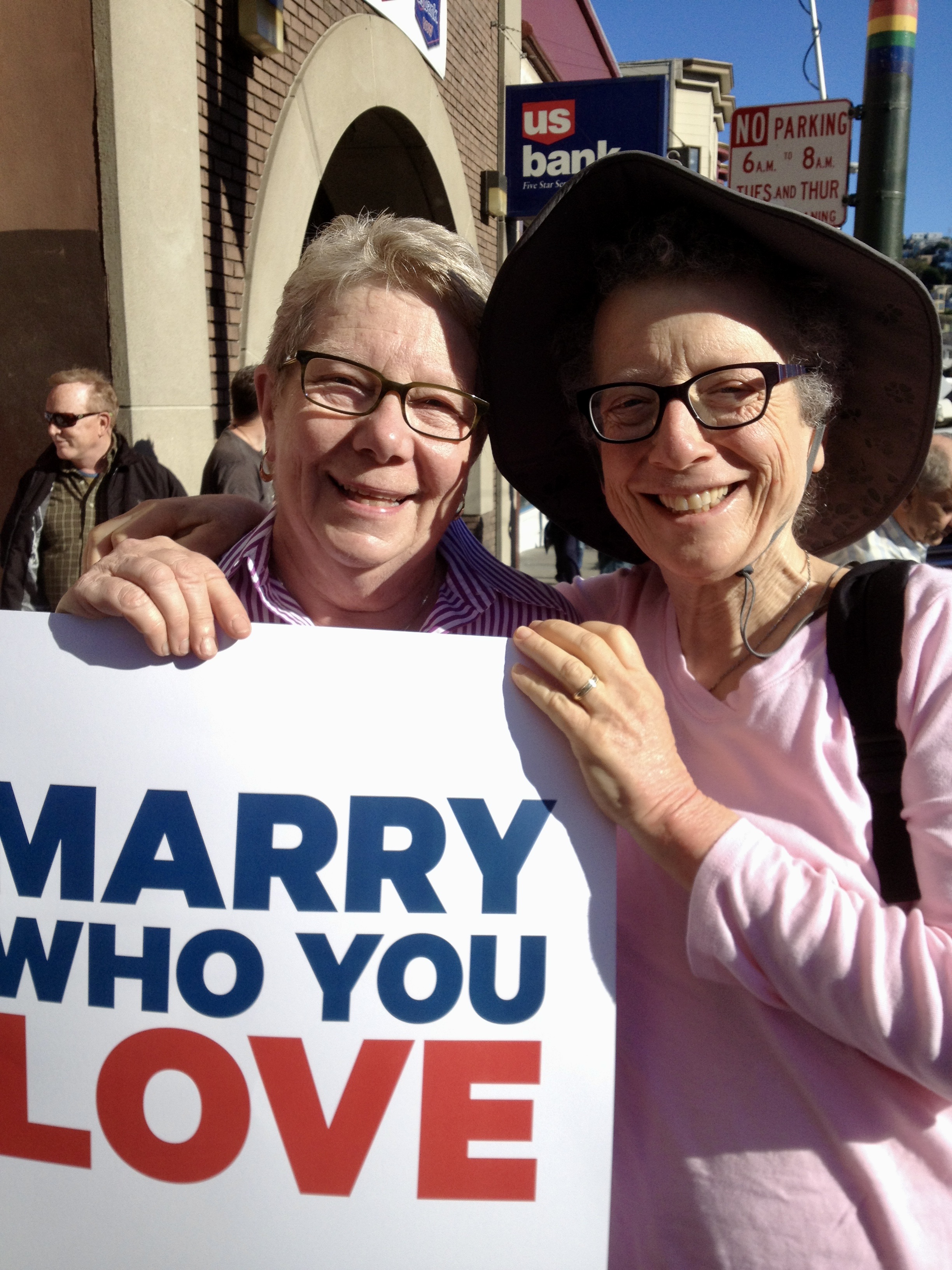
Celebrating Girlfriends

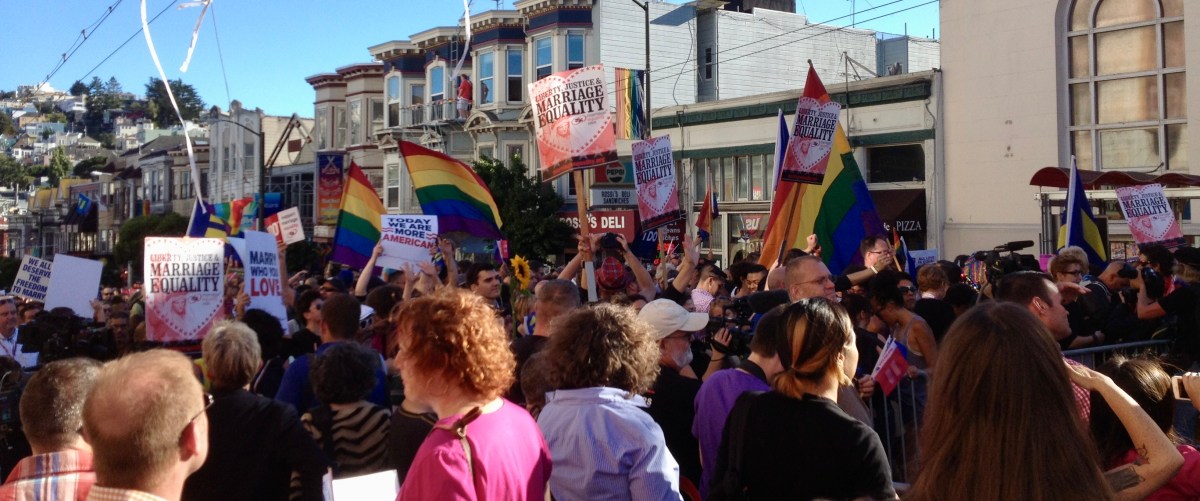
Marriage Equality Day in the Castro June 26, 2013

My Regular Pagan Holiday Post

National Girlfriends Day — August 1

August 1 marks the traditional Celtic holiday of Lammas, the first harvest festival on the pagan Wheel of the Year. According to the National Day Calendar, August 1 is also National Girlfriends Day. Judging by the ads, it might seem like a holiday invented to sell wine glasses and diet aids, but I plan to celebrate it anyway.

What does “girlfriend” mean in lesbianland?

In lesbianland, the word girlfriend carries a lot of weight, and a lot of meanings. It can refer to a platonic friend, a lover, or something in between. Back in the day, it usually meant lover. There simply weren’t enough words to describe us dykes or the nuanced ways we related to each other. For a while, we adopted partner, but that often got confused with business partner

Girlfriends for 40 years, my friends Char and Eileen finally got to be wives.

Very few of us used the word wife, and I never liked it.

As a budding feminist, I wanted no part of marriage. Wives, in my mind, were helpmeets, baby factories, second-class citizens. Property. In some states, it was still legal to kill your wife for adultery. Spousal rape wasn’t outlawed. Until 1974, women in the U.S. couldn’t even get credit in our own names. Before that, we had to depend on husbands. 

The feminist movement changed all that. But I still never wanted to be a wife.

Girlfriend. Partner. Wife. Spouse.

Some lesbian couples still use the term girlfriend. They let their friends know they don’t like the term wife and don’t use it to refer to each other. Others in my Boomer generation have come up with alternatives. One couple calls each other spouse and spice.

But I’ve become a wife convert.

I’ve been married twice. Maybe three times.

My ex, Barb, and I went to Vermont after it became the first state to legalize same-sex civil unions in 2000. But in 2004, San Francisco Mayor Gavin Newsom opened the doors to same-sex marriage. Thousands of couples–ourselves included–flocked to City Hall. Even though it wasn’t yet legal at the state or federal level, it felt revolutionary. Queer couples, dressed in their finest, stood in line all day in the rain, in the sun, waiting for a marriage license. Bouquets, cakes and good wishes arrived from around the country. The whole city felt like a wedding party. As City workers, Barb and I even got trained to be wedding officials ourselves. A lovely gender-free ceremony was provided.
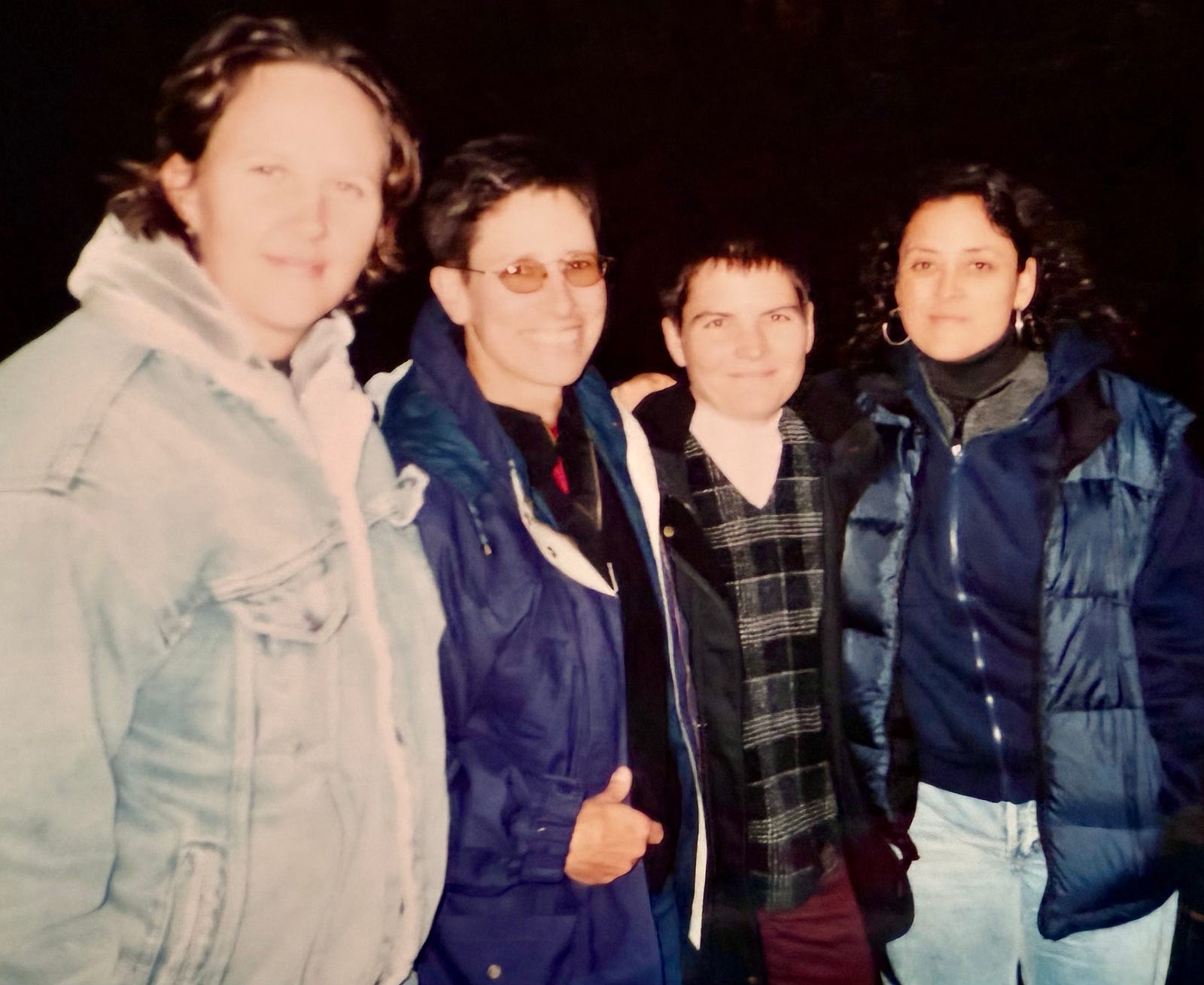
Barb and I first got married at a park in Vermont. With witnesses Jen and Michelle

Barb, then the San Francisco fire marshal, arranged for the SFFD chief, Joanne Hayes-White, to officiate our wedding in City Hall. In every room, in every hallway, people were saying vows. It was beautiful chaos. 

As we walked through the metal detectors and the guard called me “sir,” I turned to Barb and said, “Well, I guess I get to be the husband.”

That was not fair. With her crew cut, she got misgendered as often as I did. Neither of us really wanted to be a wife. But in this country, being legally married means access to health insurance, tax benefits, hospital visits, and death benefits. There were–and still are–good reasons to marry. 

The road to legal gay marriage was long and convoluted, culminating with the 2015 landmark civil rights case Obergefell v. Hodges. But in 2013, United States v. Windsor overturned key parts of the Defense of Marriage Act (DOMA), reinstating same-sex marriage in California. (Thank you, Edie Windsor!) By then, Barb and I had broken up. But because of legal limbo, we hadn’t been able to divorce. When the Supreme Court’s decision came down, we all ran to the Castro to celebrate. People held signs that said “Freedom to Marry.” For us, it was also the freedom to divorce.

And then came Holly
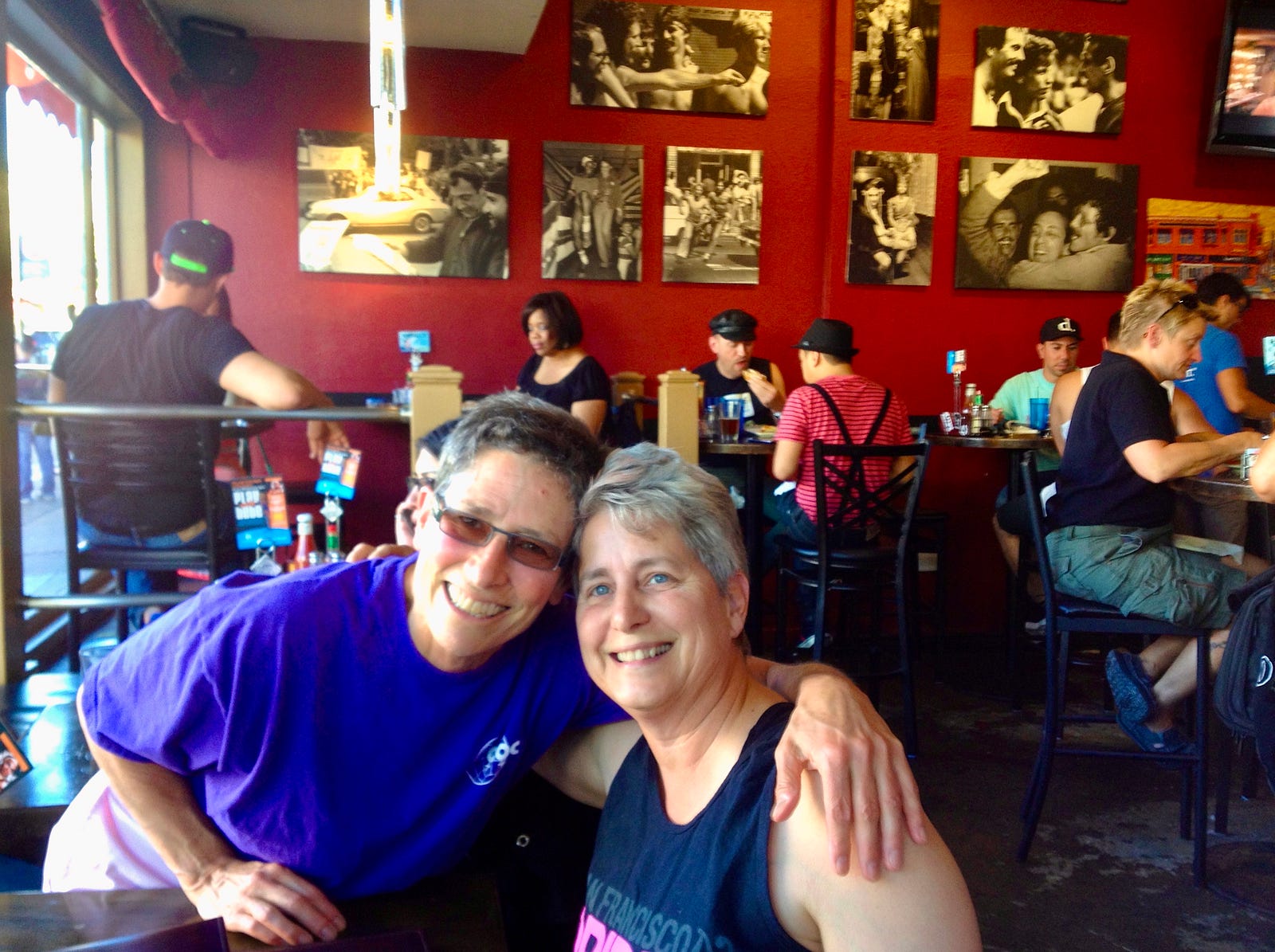
Holly and I celebrating on Marriage Equality Day at Harvey’s (named after Harvey Milk)

Holly and I were married on April 19, 2014, at Muir Beach–the site of our first date. The wedding was officiated by our gay cousin Richard, dressed in the robes of his Episcopal priest friend who had been defrocked for gayness. Witnesses were my brother Don and his husband John.

I love introducing Holly as my wife. It’s a simple, meaningful word. A word I once rejected. And, frankly, it helps when talking to straight people, and still sometimes provides a bit of shock value. Everyone knows what wife means.

Brother Don, Richard, Holly, me and John jump for joy at our Muir Beach wedding

Oh, and for the record, we introduced our exes to each other. They got married too.

How to describe our relationships with each other? We call ourselves Exes and Besties. But you could call us a gaggle of girlfriends.

Happy National Girlfriends Day to all!

Lammas and Kamala

My regular pagan holiday post: Celebrating the Harvest

August 1, a day that marks the halfway point between the summer solstice and the autumn equinox, is celebrated as the first harvest festival in many parts of the northern hemisphere. The Celts called it Lughnasa or Lammas. Besides Lammas, pagans celebrate two later harvest festivals, Mabon at the fall equinox, and Samhain on November 1.

In Sonoma County we can harvest food year-round, so I guess you could say every pagan holiday is a harvest fest here. By the time August rolls around, we’ve already been celebrating for months. The first bite of every ripe fruit calls for celebration.  

Still blooming in our garden: epilobium, native buckwheat, aster. Hydrangea in shade

Growing up in Yakima, Washington, on the eastern side of the Cascade Mountains, I always knew when the fruit was ripe. Cherries were picked on July 4th, and I would gorge until I was sick. Grandma had an old-fashioned peach tree with fuzzy skin that had to be peeled, and those peaches didn’t ripen until late August. Pears came later, and apples weren’t ready until the end of September.

Here in Sonoma County, our Gravenstein apples ripen at the beginning of August! We celebrate the harvest at the Gravenstein Apple Fair. It’s taken me years to adjust to California’s seasons. There’s no real winter here—just fall and then, magically, spring! Winter is the rainy season, and summer is dry. As Pam Peirce says in her book, Golden Gate Gardening, there’s a secret season here. Many seeds can and should be planted in the fall, but I have to remind myself every year.

Last October, I planted sugar snap and snow peas, and by February I was eating them right off the vine. When I’d eaten them all, I planted sweet peas just to enjoy their beauty and fragrance. Beans came next. Our beans didn’t fare so well this year, thanks to moles. They don’t eat veggies, just meat (like worms, that is—think “moles = meat, voles = veggies”), but they tunnel near the roots and leave air gaps that kill the plants. I even saw the soil moving where I had just planted seeds. Needless to say, those beans never stood a chance.

Sunflower, zinnias doing well in the heat

Sometimes, I think gardening is like throwing dice. You never know what the next season will bring, but that’s what makes it interesting. The garden has a mind of its own.

After a couple of disappointing years where our tomato plants succumbed to wilt, this year is shaping up to be a winner. As soon as the first tomatoes are ripe, we celebrate with BLTs. This year, we enjoyed our first BLTs in the first week of July, slicing the Early Girls (my favorite variety).

There’s always something ripe and ready in our garden. We harvested navel oranges from our tree until June, then our neighbor gifted us a bag of Valencias, keeping us swimming in orange juice until mid-July! By August, the purple Santa Rosa plums are history, but the yellow plums from the tree we planted last year are still ripening. 

I’m a gleaner, and throughout the fall harvest season you’ll find me harvesting my own and neighbors’ pomegranates, figs and persimmons. 

Then there are grapes and wine, the primary crop here in adjoining Sonoma and Napa counties. La Paulée, a traditional Burgundian harvest celebration takes place in the Russian River Valley on August 2-3, when winemakers, chefs and enthusiasts of both will gather to celebrate wine and food. A centuries-old celebration once reserved for French vigneron and their harvest crews, La Paulée is a French variation of the Celtic pagan Lammas holiday, marking the end of the grape harvest.

Like all gardeners we have our favorite plants. We love a dry bean called Eye of the Goat, which I got from the West County Community Seed Exchange in Sebastopol. This all-volunteer group has created a seed garden and a community seed library supporting local gardeners with free, locally grown, open-pollinated, pesticide- and GMO-free seeds. Local seed saving means we can cultivate plants that thrive in our region, with each generation adapting more to the local environment. And as the seed industry consolidates, we can preserve heirloom seeds.

The seed exchange sponsors workdays in their garden and classes, but the most fun event is the annual seed swap in early spring at the Sebastopol grange hall.

Another early spring highlight is the annual scion exchange in February, sponsored by the California Rare Fruit Growers. They share free scion wood from all sorts of fruit trees and vines. Local farmers stand by to help you choose the best varieties for your location. I discovered the scion exchange years ago and got hooked on grafting. 

Global warming is rapidly changing our world here in NorCal. This year June and July were hotter than ever, and August and September are predicted to break more records. On July 22 (and 23), 2024, the hottest day on earth in recorded history, it was 99 degrees here. 

Cone flower (echinacea) petals burned, but native yarrow does well

We and our plants struggle with a warming climate. We’ve already had three heat waves this season and the hottest part of the summer is yet to arrive. Leaves are scorched and beans refuse to flower. Not many plants like 100-degree temperatures; even tomatoes protest.

And fire season started early with smoke blowing down from fires north of us. We may experience poor air quality till the rains start in November. The fire app, Watch Duty (download it if you haven’t already) shows scores of fires in California. The biggest is the Park Fire near Chico at 350,000 acres and growing. Oregon is burning. Practically the whole state of Idaho and much of Montana is under a red flag warning.

Climate change also brings new bugs to our northern climes. There’s a new mosquito in town and she takes no prisoners. She joins about a dozen varieties of mosquitos here. In past years they’ve died off with the advent of winter, but this year, due to a warm, rainy winter, they never left. Holly isn’t much affected by mosquitos, but if I’m in the yard, especially at dawn and dusk, they find me. I’ve had to give up hot tubbing because no matter how quickly I throw a robe on, they attack. They bite in my most vulnerable places! When I’m dressed, they go for my chin and ears. They are stealthy! I don’t hear them, and I rarely see them. I’m terribly allergic to their bites, which result in gigantic welts that itch for weeks. I scratch, and then they weep copious amounts of lymph fluid. So, though I hike every day, mosquitoes have kept me more indoors–not a bad thing when the temperature soars.

There is one more development we’re celebrating this harvest season. As we queers, feminists, pagans, progressives and people of color work to overcome the rise of the christian right, our election fears have lessened with the candidacy of Kamala Harris. Memes abound. I like MALA (Make America Laugh Again).

Now we must work to get her and down ballot Democrats elected! Election day this year is Tuesday November 5. That’s 95 days and counting.

We can Do it!

Here’s to a productive election season, and good Lammas to all.

The top photo is the view of sunset on a hot day over the Coast Range that we see from our street. The high point is called Black Mountain.