Goodbye to the Boys

Chapter 22: My Mother and Audie Murphy

August, 1944. Operation Dragoon—the Allied invasion of Southern France—had been debated for months. Originally, it was supposed to launch alongside the more famous Operation Overlord, the Normandy invasion on June 6, 1944. But the top brass couldn’t agree. Resources were stretched thin, and priorities clashed. Was it wise to open a second front in France? Could they even pull it off?
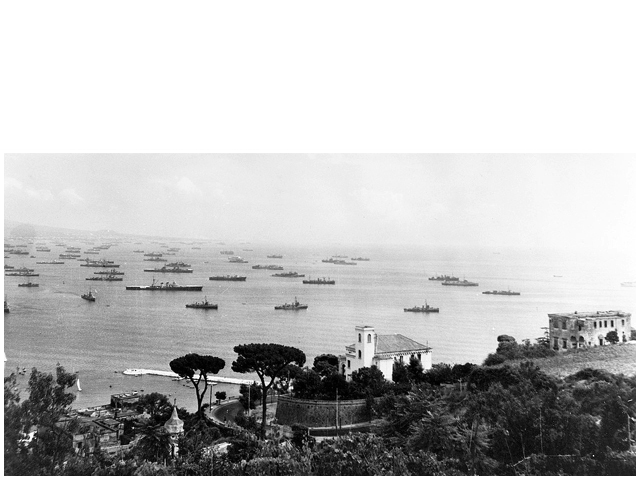
Part of the Operation Dragoon invasion fleet anchored off Naples. Photo: NARA

Meanwhile, thousands of young men trained on the sunbaked beaches near Naples, waiting for orders that never seemed to come. Tension hung heavy in the air. They practiced amphibious landings again and again, sand grinding into their boots and rifles, minds on the fight ahead—or trying not to think about it at all.

By August, the go-ahead finally came. Operation Dragoon would launch on August 15, with landings near St. Tropez. The plan: storm the beaches, push inland, liberate Marseille, and link up with the northern forces. It would be a massive undertaking, one that might finally break the German grip on Southern France.

In the ports around Naples, everything sprang into motion. Soldiers, tanks, trucks, jeeps, crates of ammunition and rations—all were loaded onto the towering LSTs (Landing Ship, Tank). The docks were a blur of noise and movement. Beneath the logistical precision, though, was something quieter, more personal: goodbye.
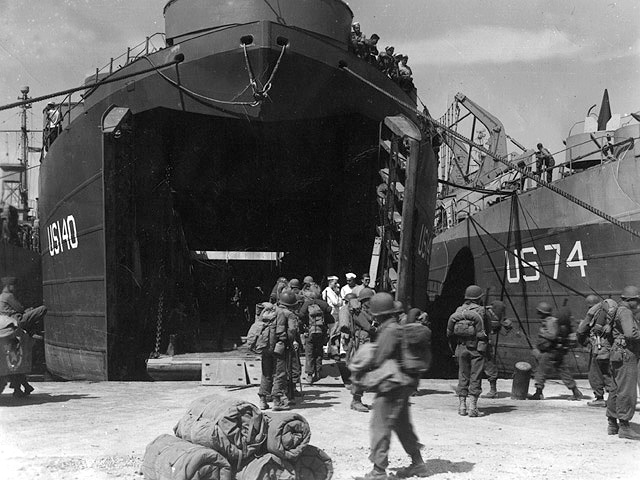
Loading the LSTs

The Red Cross women were there, as they always were—on the edges of history, offering comfort, coffee, and smiles to boys about to disappear into war.

On Monday, August 7, Flo wrote in her diary:  

“Served 3rd Div. leaving from Baia. Said goodbye to Stonie, Rick & Miles & part of 36E. Last date with Gene. Went to beach. Hated to say goodbye. Love him in spite of resolve.” 

The day before, Flo had written in her diary, “Decided I want to marry Gene.” He was now her fiancé, and they were parting ways, perhaps for the last time.

The next day, August 8, she wrote:  

“On beach at Nisida. Mostly Infantry—7th & 30th. Saw Gus, Buzz and all the rest of 1st Bn. Hot & dirty. Worked from 7 a.m. to 7 p.m.”  
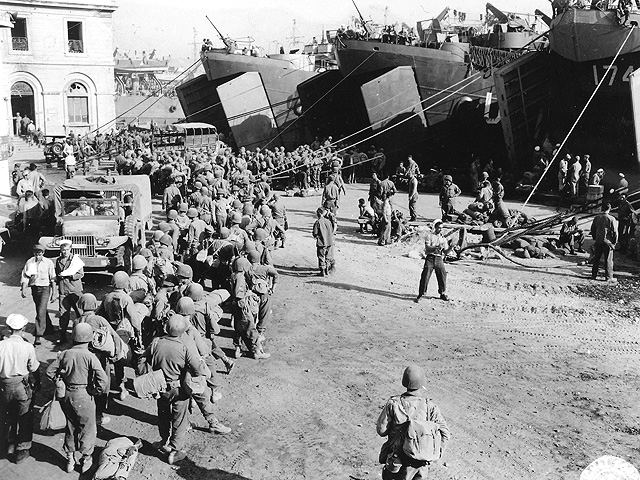
What a gigantic operation! Photo: NARA

Twelve-hour shifts, in the heat and dust, trying to give each man a sense that someone saw him, that someone cared. How do you say goodbye to that many young men, most of them barely more than boys? How do you smile through it, knowing many might never come back?

When the last ships pulled out, the docks were quiet. The women packed up their things, broke camp, and moved into Naples near headquarters. Flo wrote:  

“Much baggage. Helped 45th girls at Pozzuoli. Also 36th Div. leaving there. Very hot, busy and tired. LST ensign gave me dozen eggs. Exhausted after days of saying goodbye to thousands of boys en route for invasion.”  
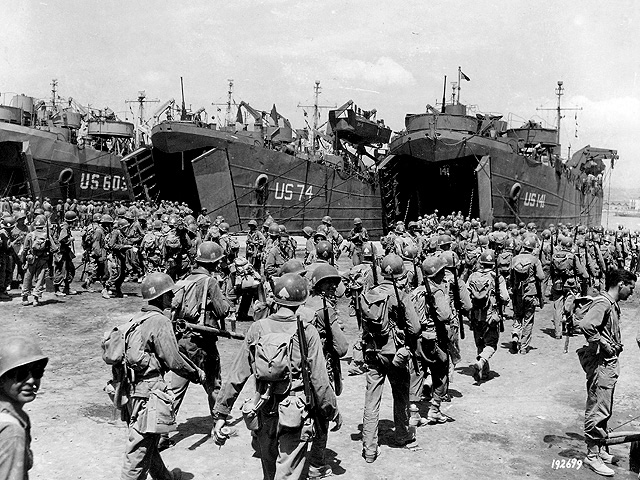
Photo: NARA

Now they waited. The invasion was set for August 15. First, the troops would land. Then they’d have to fight their way inland, clear the Germans, secure the roads. Only then would Flo and the other ARC staff be allowed to follow, to bring comfort once again to the weary, wounded, and grieving.

In the silence of the following days, Flo thought of Gene. And of Stonie, Rick, and Miles. And of the thousands of names she never knew—just faces, voices, laughter fading down the gangplank.

Ch. 23: https://mollymartin.blog/2025/04/27/on-leave-sorrento-and-capri/

Audie Murphy Fights to Fight

Chapter 4: He Sheds First Nazi Blood in Sicily

They nicknamed him Baby and he couldn’t shed the tag. Audie Murphy had to fight for his place in combat. From the beginning of his military journey, he faced skepticism at every turn. Rejected by the Marines and paratroops, he was finally accepted by the infantry. 

Battle route of the Third Infantry Division

Immediately his first commanding officer tried to shove him into a cook and baker’s school where the going would be less rough.

“That was the supreme humiliation. To reach for the stars and end up stirring a pot of C-rations. I would not do it. I swore that I would take the guardhouse first. My stubborn attitude paid off. I was allowed to keep my combat classification; and the Army was spared the disaster of having another fourth-class cook in its ranks,” he wrote in his autobiography.

In training, officers took one look at his skinny body and boyish face and tried to steer Murphy away from the front lines.  At Fort Meade, one well-meaning officer attempted to save him from combat altogether by assigning him a clerical position at the post exchange. Again he stuck to his guns.

In July, 1943 he made it to the front in Sicily, but his youth and appearance worked against him even there. He was transferred to headquarters to serve as a runner. But Murphy wouldn’t stay away from the action. He repeatedly sneaked off on patrols and scouting missions. His determination eventually forced his commander’s hand. He was promoted to corporal.

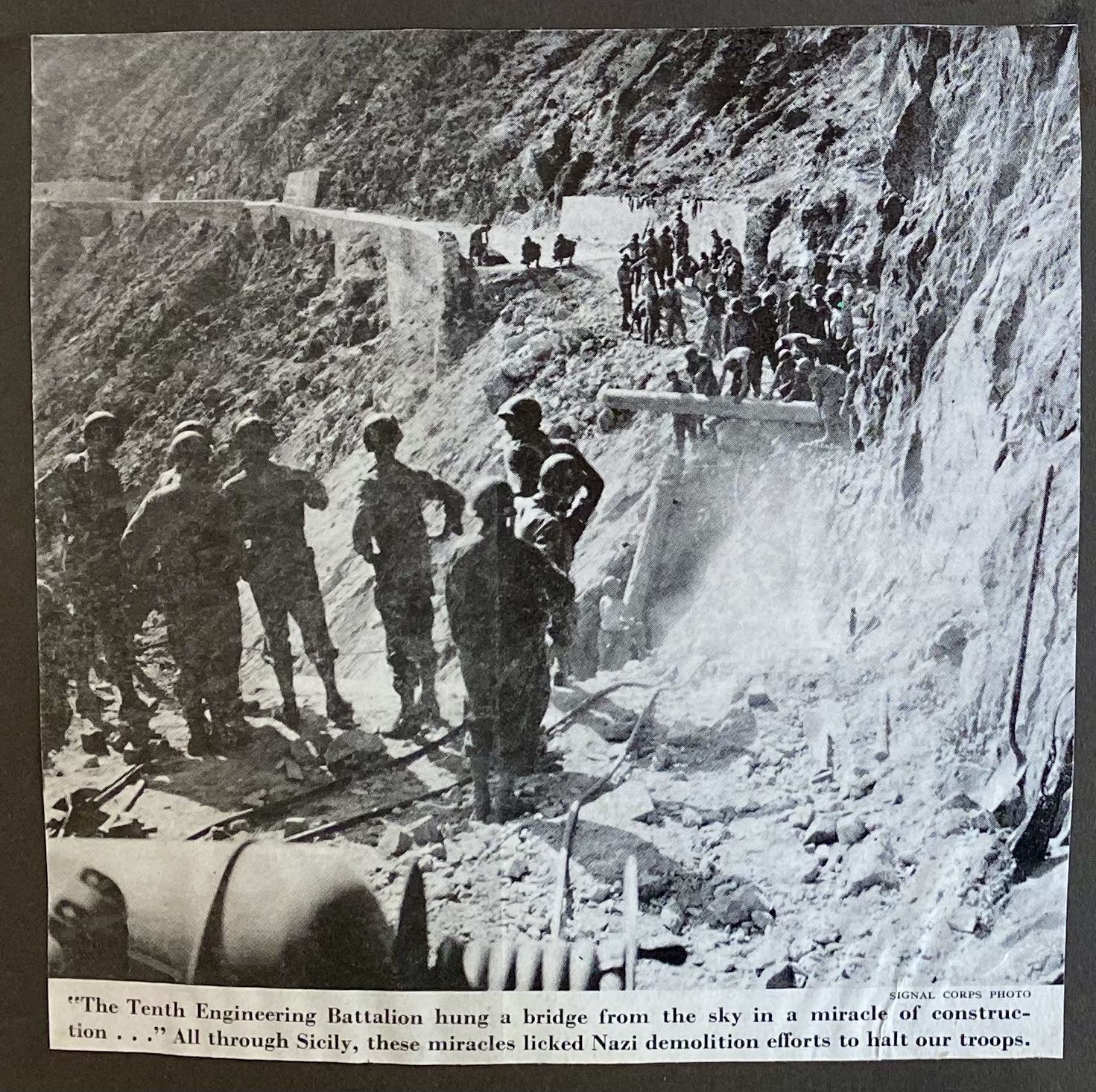
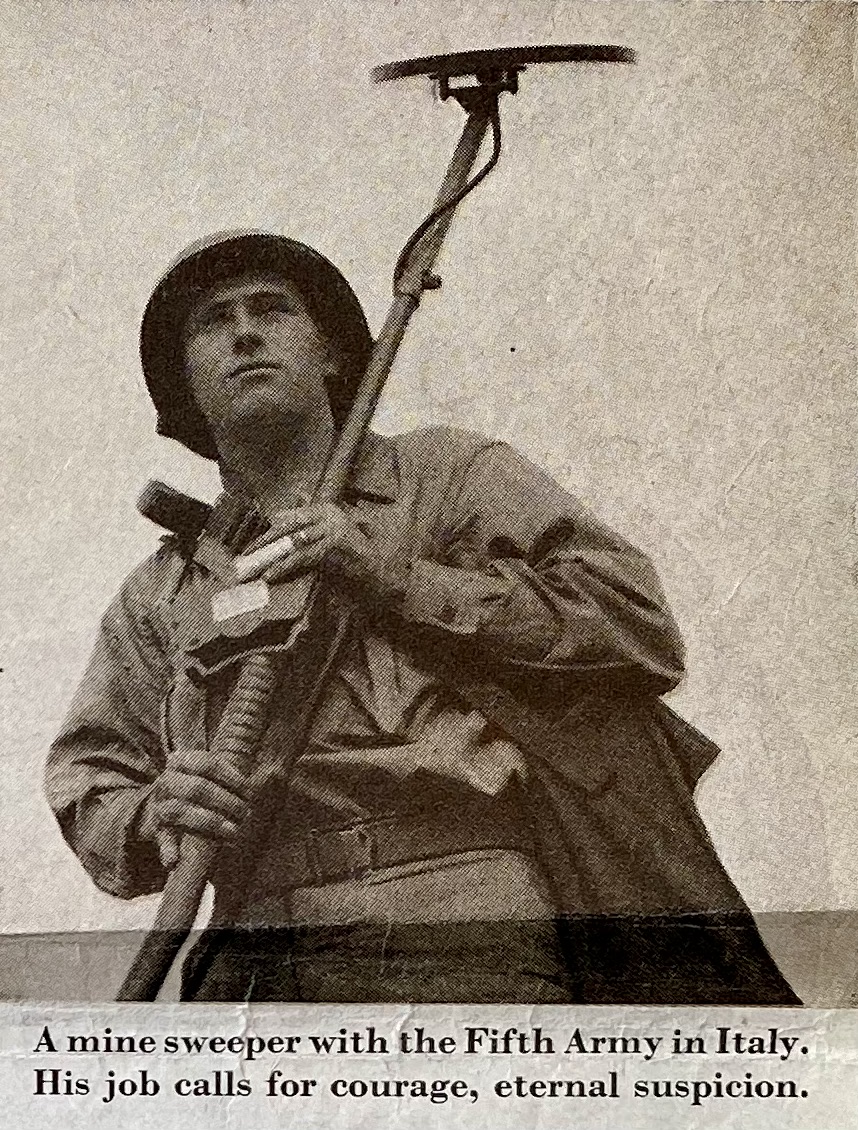
Life Magazine photo essay posted in Flo’s album

By then, Murphy had already missed his chance to fight in North Africa. His convoy had docked in Casablanca only after the battles were over. Instead of combat, he endured more training—much to his frustration. “I just wanted to fight,” he later said.  

Murphy finally got his chance in Sicily, but it was far from the glory he had imagined as a boy.  

On his first day in combat, a mortar attack killed a young soldier sitting nearby.  A boom, a whistle, the earth shakes, and the boy falls from the rock where he was sitting, just taking a break. As simple as that. One minute you’re sitting on a rock. The next minute you’re dead.  

This was not the war Murphy had dreamed of.  He had imagined men charging gallantly across flaming hills. Bugles blew, banners streamed, and the temperature was mild. Enemy bullets always miraculously missed, and his trusty rifle always hit home. As a kid, the dream was his escape from a grimly realistic world of poverty.

But now, as he trudged across the Sicilian battlefield, sweat soaking his uniform, his boyhood fantasies were shattered.  

“Maybe my notions about war are all cockeyed. How do you pit skill against skill if you cannot even see the enemy? Where is the glamour in blistered feet and a growling stomach? And where is the expected adventure? Well, whatever comes, it was my own idea. I had always wanted to be a soldier,” he wrote.  

His skill with a rifle, however, did not go unnoticed. In one skirmish, Murphy shot two German officers from their horses with two clean shots. He had shed his first blood. But he felt nothing except a weary indifference.

Even as malaria struck and forced him into a field hospital for a week, Murphy returned to the lines. The disease would haunt him throughout the war, but it didn’t stop him. 

He had loved the idea of war, but it didn’t take long to hate the real thing.

“The Sicilian campaign has taken the vinegar out of my spirit. I have seen war as it actually is, and I do not like it. But I will go on fighting,” he wrote.

*Quotes are from Audie Murphy’s autobiography, To Hell and Back