
June, 1944. Flo saw This is the Army at the Royal Opera House in Rome
My Mother and Audie Murphy Ch. 17
Drag, blackface, racial integration, “too many Jews”—they’re all part of the complicated legacy of Irving Berlin’s wartime musical revue, This Is the Army.
Berlin conceived the show in 1941, even before the U.S. entered WWII. It was a follow-up to a production he had staged during WWI in 1917.
This Is the Army premiered on Broadway in 1942, featuring a cast of 300—enlisted men who could sing and dance. The show then toured the U.S. before traveling to military bases worldwide, running until October 1945.
Berlin originally planned to open the show with a minstrel number, as he had in 1917, but director Ezra Stone pushed back. “Mr. Berlin,” he said, “I know the heritage of the minstrel show. Those days are gone. People don’t do that anymore.” Berlin eventually agreed to cut blackface from the stage production, though the number remained in the 1943 film adaptation.

Yet Berlin also made a bold move for the era: he insisted on integrating the show. At a time when the U.S. military remained segregated, This Is the Army became the only integrated unit in uniform. He even wrote a song specifically for Black performers.
Not all of Berlin’s decisions were as progressive. During the tour, he stunned cast members by complaining that there were “too many Jews in the show and too many of Ezra Stone’s friends.” The remark shocked those present—was the son of a cantor really saying this? For the soldier-performers, the fear was immediate: any cuts to the cast meant reassignment to the front lines.
The show’s use of drag also drew criticism. Warner Brothers, which produced the film version, worried that the female impersonators would limit its international release. “Female impersonators do not exist in Latin America,” claimed one misinformed studio memo. The studio also feared that images of U.S. soldiers in dresses would become enemy propaganda. In response, the film drastically reduced the female impersonators’ roles.
On June 4, 1944, Allied troops took Rome. Just six days behind them, This Is the Army rolled into the city on trucks. Later that month, the company took up residence at the Royal Opera House, performing twice daily.
The show was a global phenomenon, raising millions for the Army Emergency Relief Fund and leaving a lasting legacy.
Playbill from This Is the Army


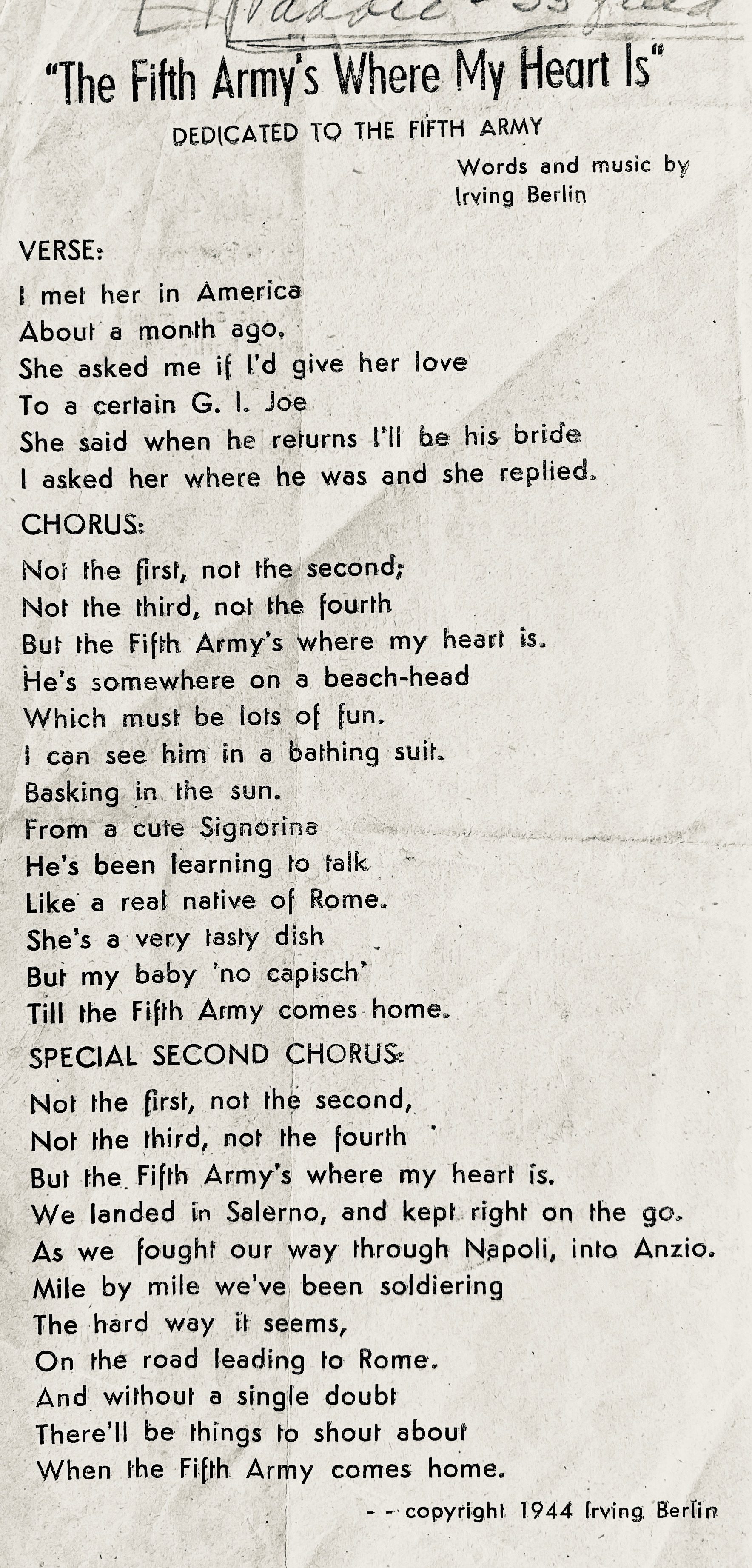
The playbook is from Flo’s WWII album
Ch. 18: https://mollymartin.blog/2025/03/31/in-the-tent-city-near-pozzuoli-italy/
 tradeswomn musings