
My Mother and Audie Murphy Ch. 11
May, 1944. On the Ship to Naples
“Loose lips sink ships.” That was the mantra drilled into the heads of American Red Cross (ARC) women during their training in Washington, D.C. If the FBI discovered that a secret had leaked because of something you said or wrote, you were sent home.
One instructor drove the point home with a cautionary tale: An ARC worker had called her parents in Montana, mentioning that she was in Colorado on her way to San Francisco. Her mother told the butcher, who told someone else, and within three hours, the FBI had traced the leak back to her. As a result, an entire convoy was delayed.
Flo took these warnings seriously. While she wrote to her mother in Yakima regularly, she was careful never to include anything that might be considered classified.

Fast-Tracked for War
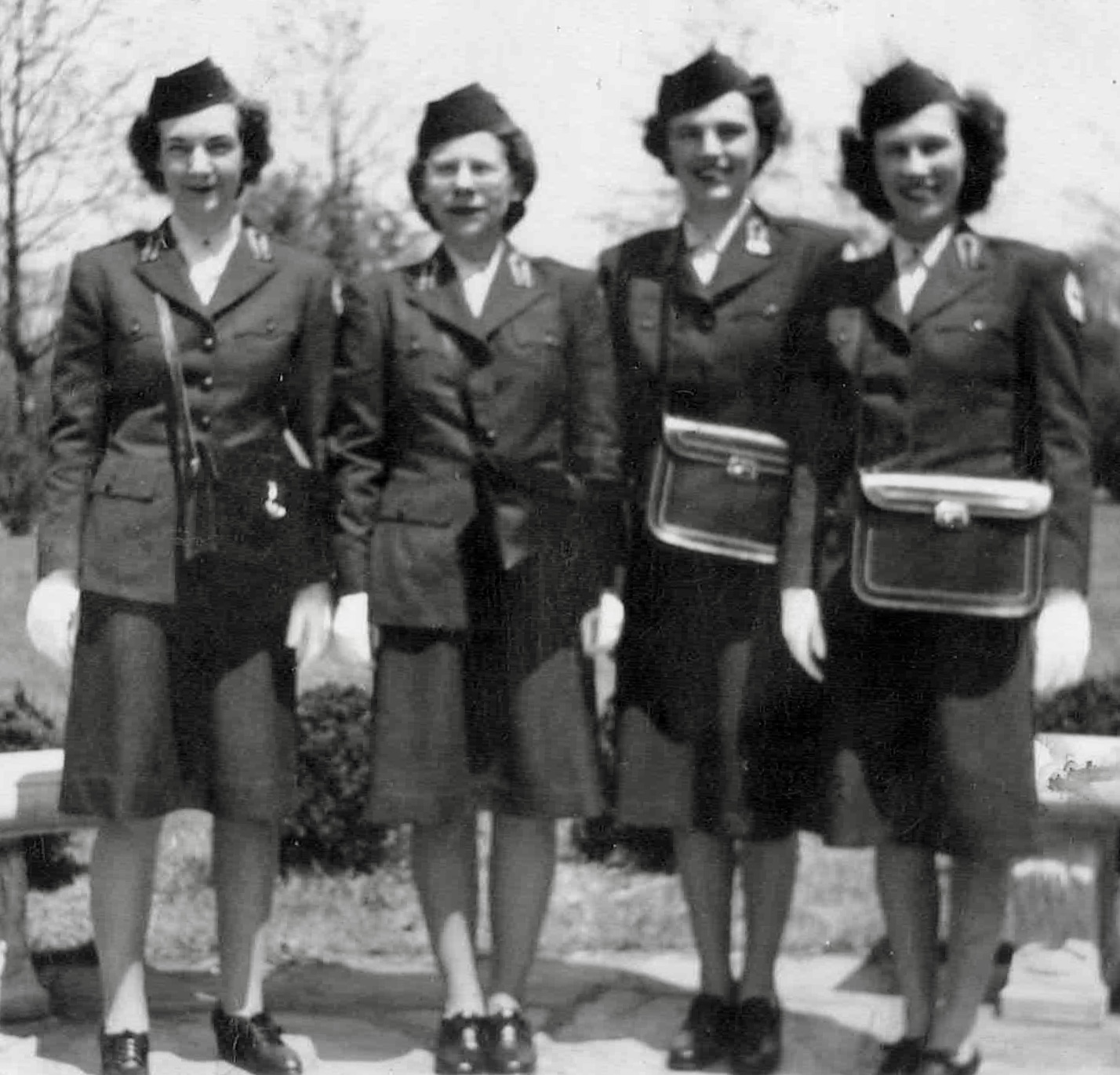
The usual six-week training program had been slashed to just two weeks to push the women through faster. The military issued them canteens, helmets, and web belts, alongside yet another round of security warnings. Phone calls and letters were discouraged. Training even covered how to handle a poison gas attack, complete with gas mask drills.
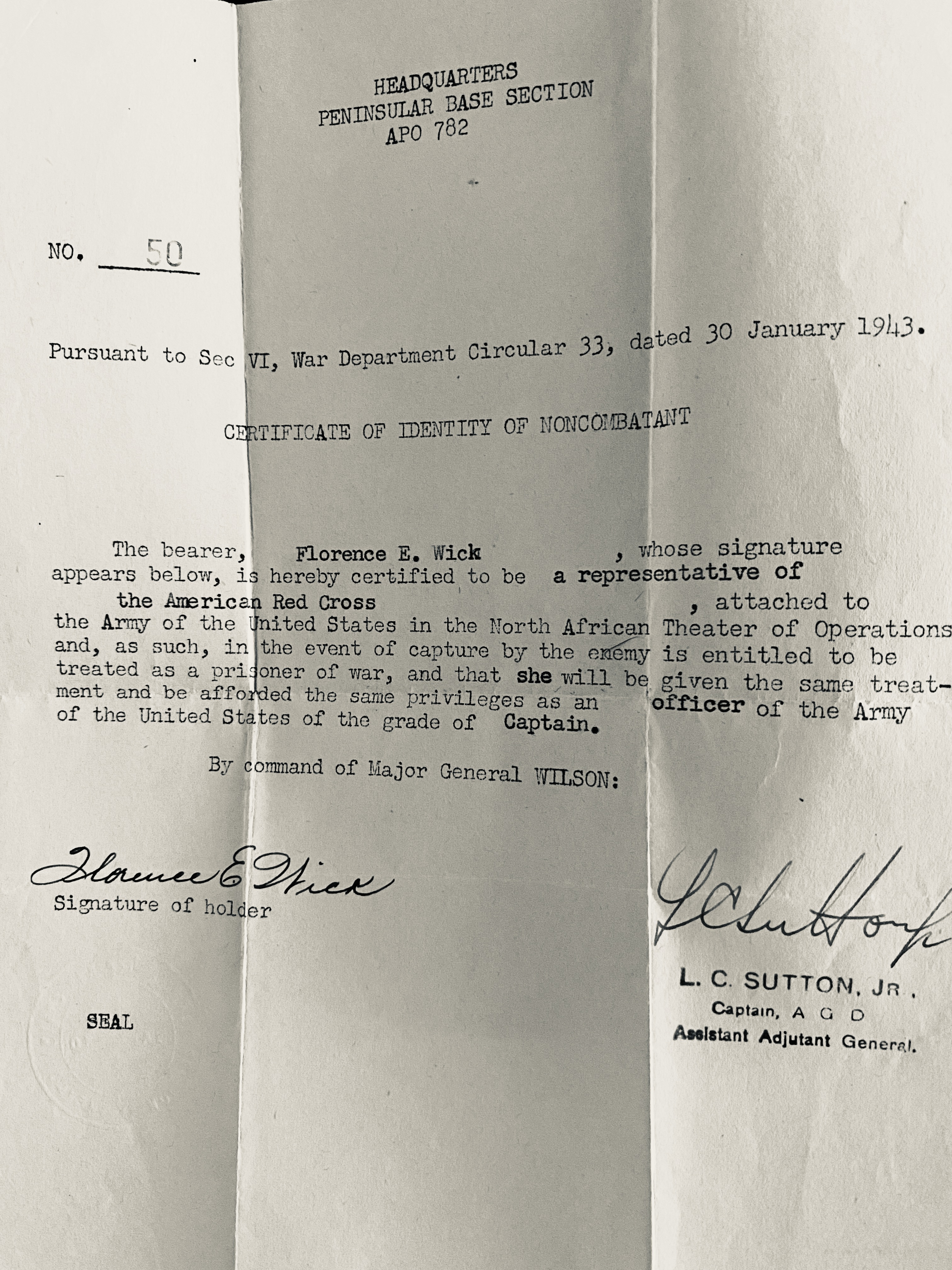
Flo and her cohort began training on April 17, 1944. By May 8, they had their embarkation orders. On a warm May morning, the ARC women, clad in winter uniforms, marched two abreast to Union Station, where they boarded a train to New York City. From Penn Station, they were shuttled by bus to Brooklyn and housed at the massive St. George Hotel. There, they waited—alongside countless other uniformed Americans—until it was time to ship out.
No one knew where they were going. Not even the ship’s officers were told their destination. Only the captain held that information, as wartime security dictated.

Aboard the HMHS Atlantis
Flo’s ship, the HMHS Atlantis, was a British hospital vessel that had already survived encounters with German U-boats. The Germans ignored Geneva Convention rules that forbade attacking hospital ships—these vessels made tempting targets. During submarine alerts, the Atlantis would zigzag wildly to evade torpedoes.
Once aboard, Flo learned that her destination was Italy, where she had been assigned to the North Africa theater. The ship carried British engineers, fellow ARC workers, and stacks of Italian phrasebooks. Flo tried to pick up a bit of the language during the long voyage.
Crossing the Atlantic took nearly three weeks. To pass the time, Army journalists produced a daily mimeographed newsletter, Red Cross Currents, a few copies of which Flo saved in her scrapbook. She also kept menus and records of shipboard activities, which included: horse racing (the cardboard variety), a contract bridge tournament, shuffleboard, deck quoits, “angell golf”, ping pong and deck tennis. Prizes were cartons of cigarets.
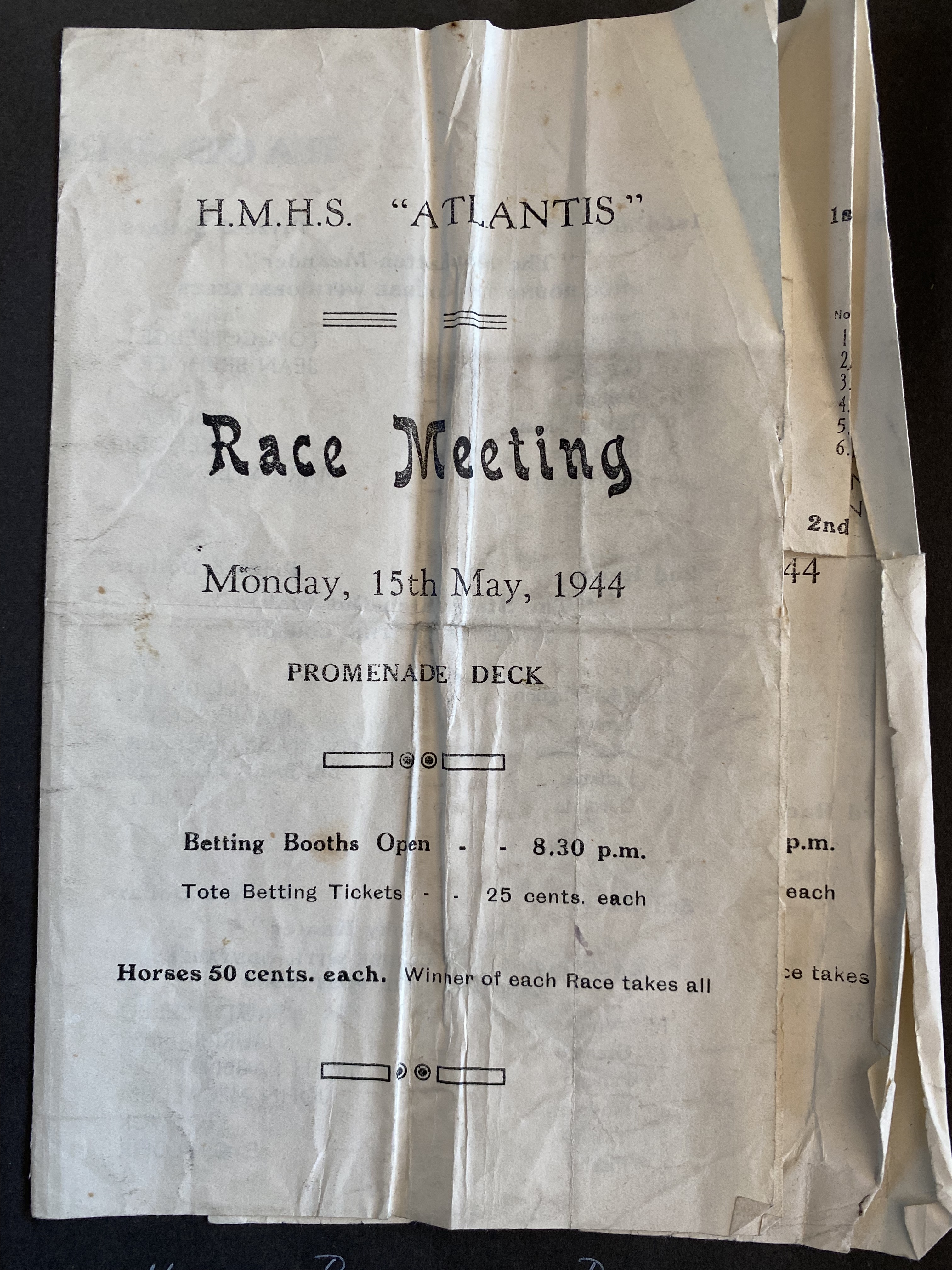

Flo documented her voyage with snapshots—sunbathing with English engineers, uniformed officers on deck. Among the clippings in her album was an image of the newly built Pentagon, a source of national pride. What the public hadn’t been told, however, was that its construction had wiped out Queen City, a thriving Black town in Arlington, Virginia. The residents of the town were descendants of the residents of Freedman’s Village, which had been established by the federal government during the Civil War as a home for displaced freed slaves.
Letters, Friendships, and Missed Meetings
Flo befriended an Irish engineer who worked on the ship, R.H. Wilkinson. They kept in touch throughout the war, attempting—but failing—to meet again. In August 1945, after the war had ended, Wilkinson wrote to her, reminiscing about their time on the Atlantis and asking for copies of photos to complete his scrapbook. He had since been deployed to the Pacific and was now stationed on the India run, where, as he put it, it was “very hot!” If she ever made it to Belfast, he promised, she would receive a true Irish welcome.
Flo never did make it to Ireland.

First Glimpse of Naples
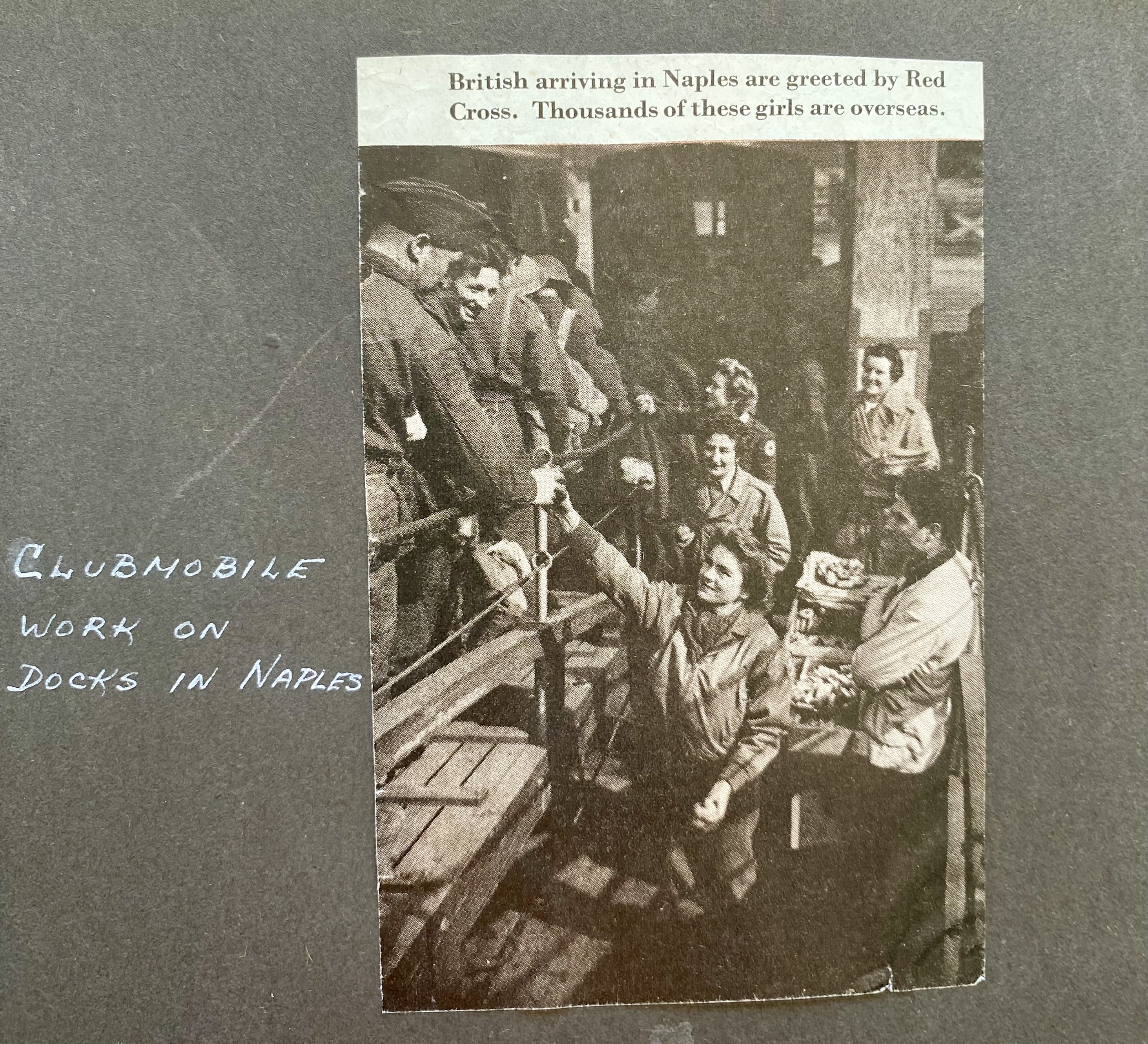
As the Atlantis steamed past the lush, romance-laden Isle of Capri into Naples harbor, the passengers got their first look at war-torn Italy. The harbor was in ruins, bombed repeatedly during the Allied campaign to drive out the Germans. Though much of the destruction was confined to the waterfront, Naples itself—dirty, crowded, and overrun with American troops—had changed dramatically.
A military-issued guide described the city in blunt terms:
“The city of 1,000,000 still is the filthy, teeming tourist town, and now prices have trebled with the advent of thousands of Americans. There are gimcrack souvenirs, phoney tortoise-shell, dangerously bad wine and brandy, poor but expensive waterfront restaurants.
There are trips to Pompeii and Herculaneum, tours of Naples, and excursions up the slopes of Vesuvius (ARC trips). There’s an Allied Officers’ Club (dinner, drinks, dance, romance), an 82% venereally infected civilian population, an opera company and a symphony; buses, cabs, suburban trains; oranges, tangerines, grapes, lemons, and apples.
And 50 miles to the northwest there is a war, of which occasional bombers remind Neapolitans on infrequent nights of the dimout.”
Stamped at the bottom:
NO – SORRY – YOU CAN’T MAIL THIS PAPER HOME.

A New Reality
Flo later wrote to her mother, “The Rock of Gibraltar was the only stop our ship made on the way over, and it looked exactly like all the pictures we’ve seen. The Isle of Capri, I saw in a very early morning light, and it looked even more romantic that way.”
In lovely spring weather they sailed into Naples May 27, 1944. Allied bombing over the course of many months had destroyed much of the ancient city. Of course, the port had been a prime target and so what the passengers of the Atlantis saw when they first laid eyes on Italy was the ruins of war, patched ably by the American engineers. For Naples was now in Allied hands. The Nazis had retreated north.
Ch. 12: https://mollymartin.blog/2025/03/01/attack-at-anzio/



 tradeswomn musings