Who Liberated Berchtesgaden?

The 3rd Division gets credit and Flo was there

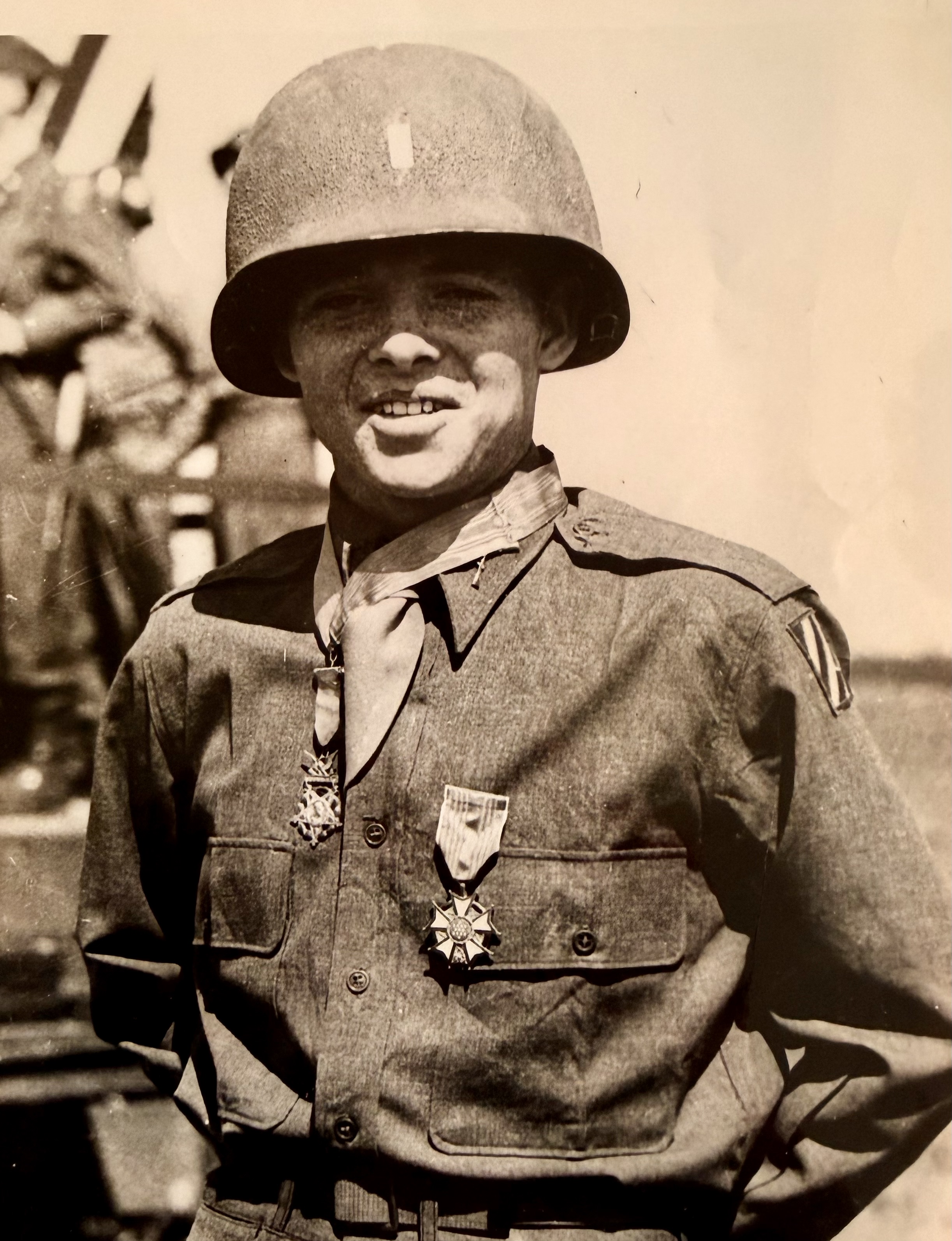
My Mother and Audie Murphy Ch. 70

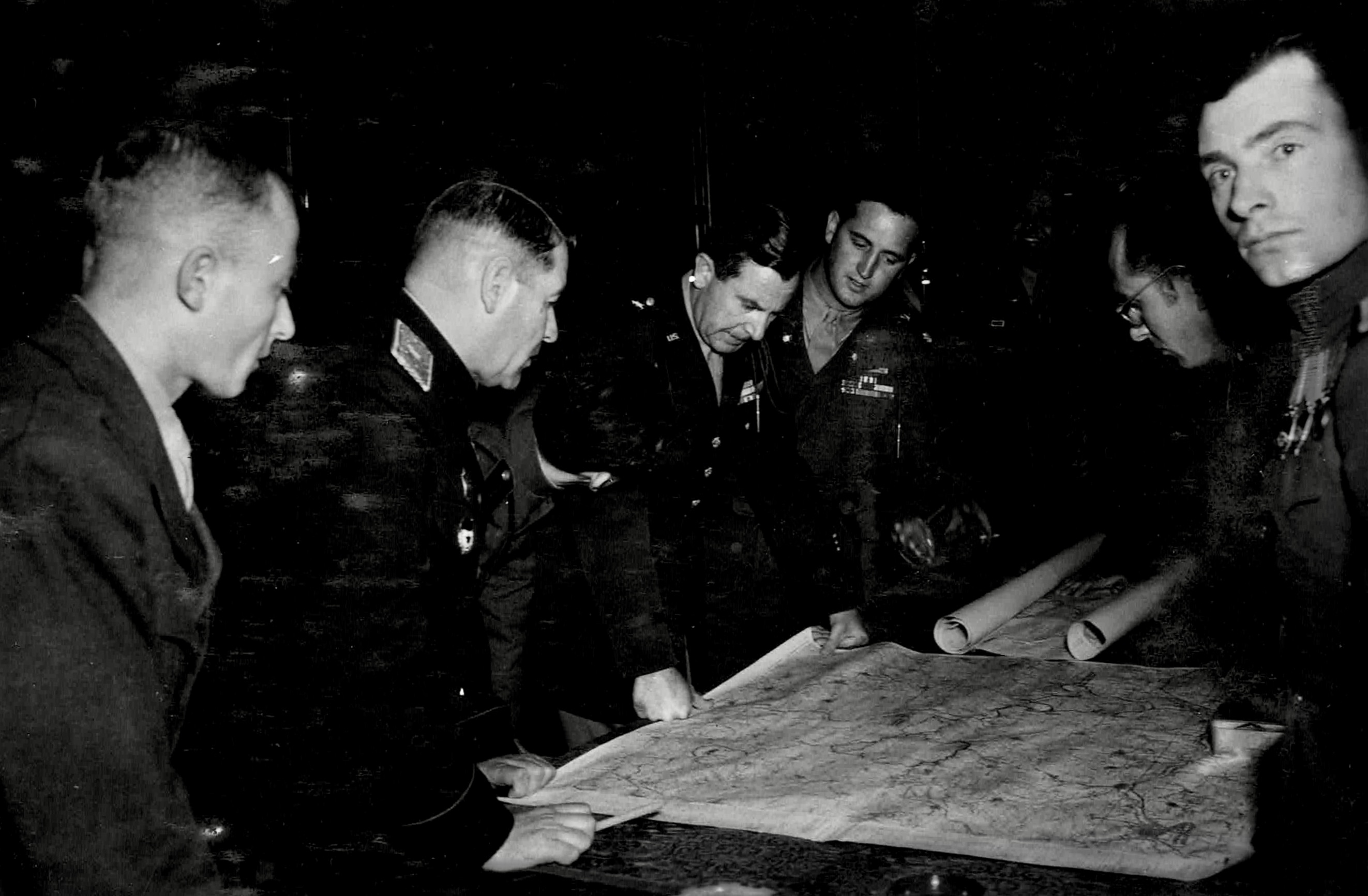
There is still debate over which Allied unit can claim credit for capturing Berchtesgaden in May 1945. The most reliable historical accounts indicate that the 3rd Infantry Division, specifically the 7th Infantry Regiment, commanded by Maj. Gen. John “Iron Mike” O’Daniel, reached the town on May 4, 1945, and accepted its surrender without resistance. They were the first American combat troops to enter the town itself.

However, popular history has sometimes credited the 101st Airborne Division’s Easy Company—made famous by Stephen Ambrose’s Band of Brothers—with the “liberation” of Berchtesgaden. Easy Company did arrive on May 5, the day after the 3rd Division. Their presence, and the power of their postwar memoirs, contributed to the widely repeated but inaccurate claim that they captured the town.

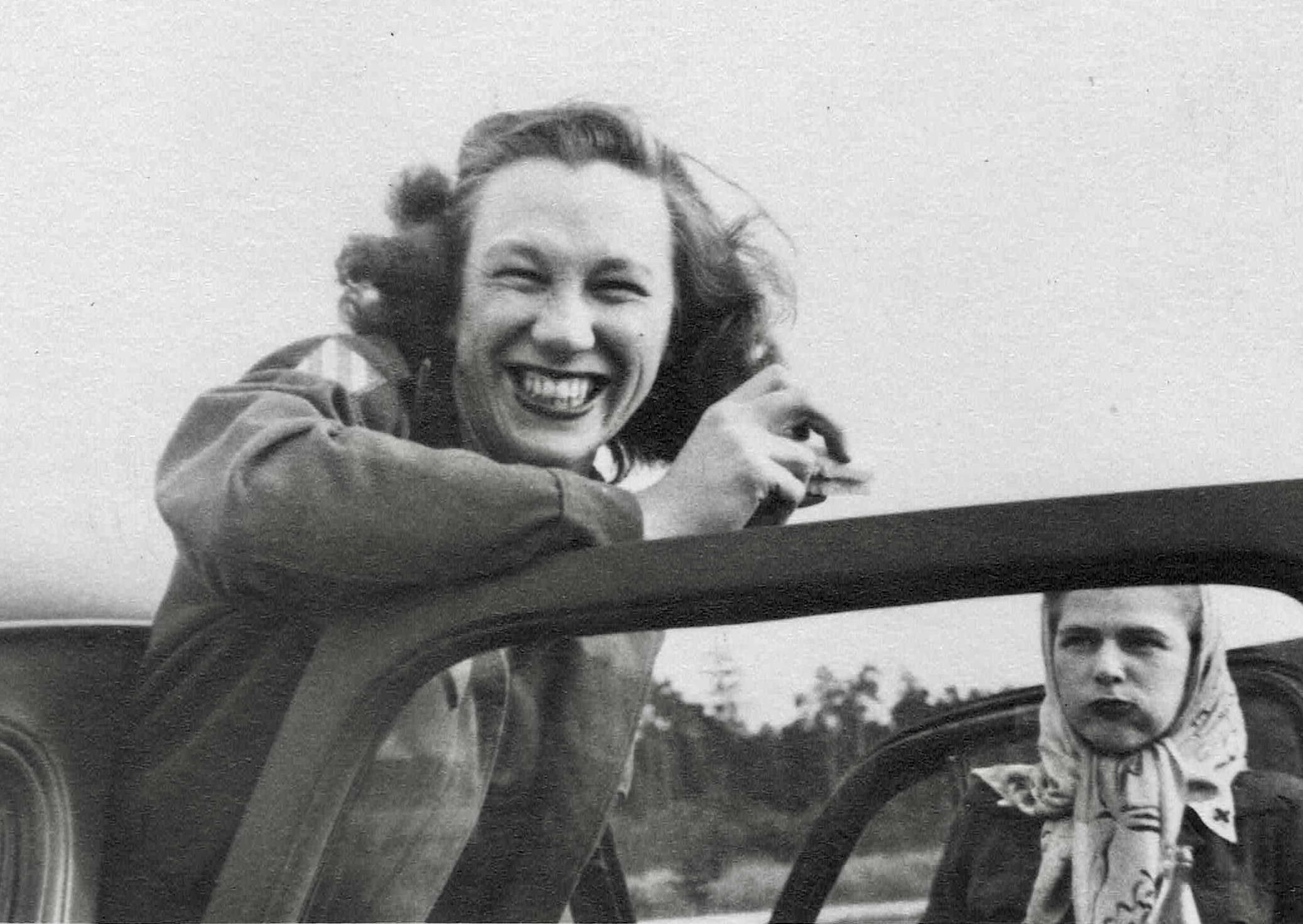
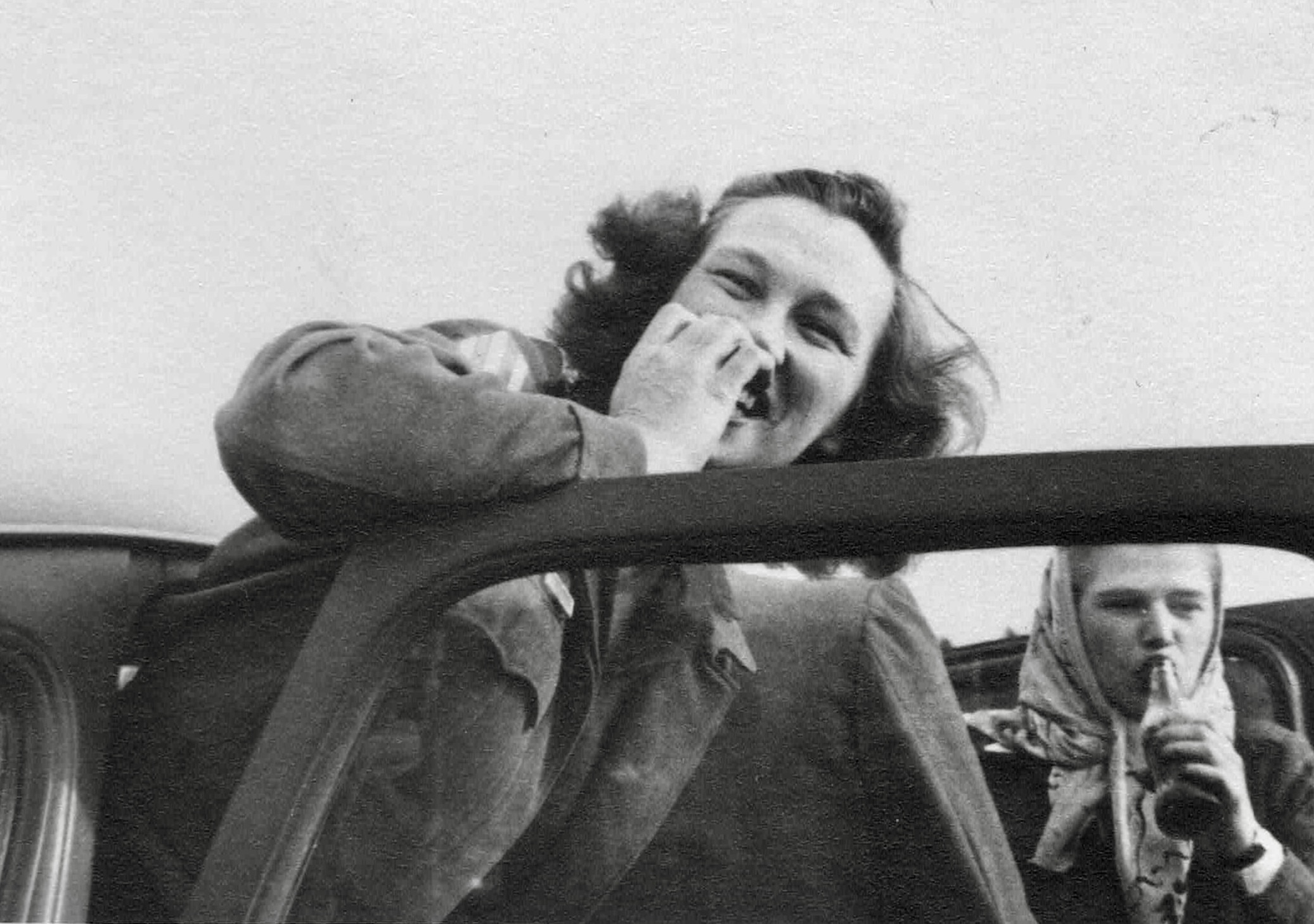
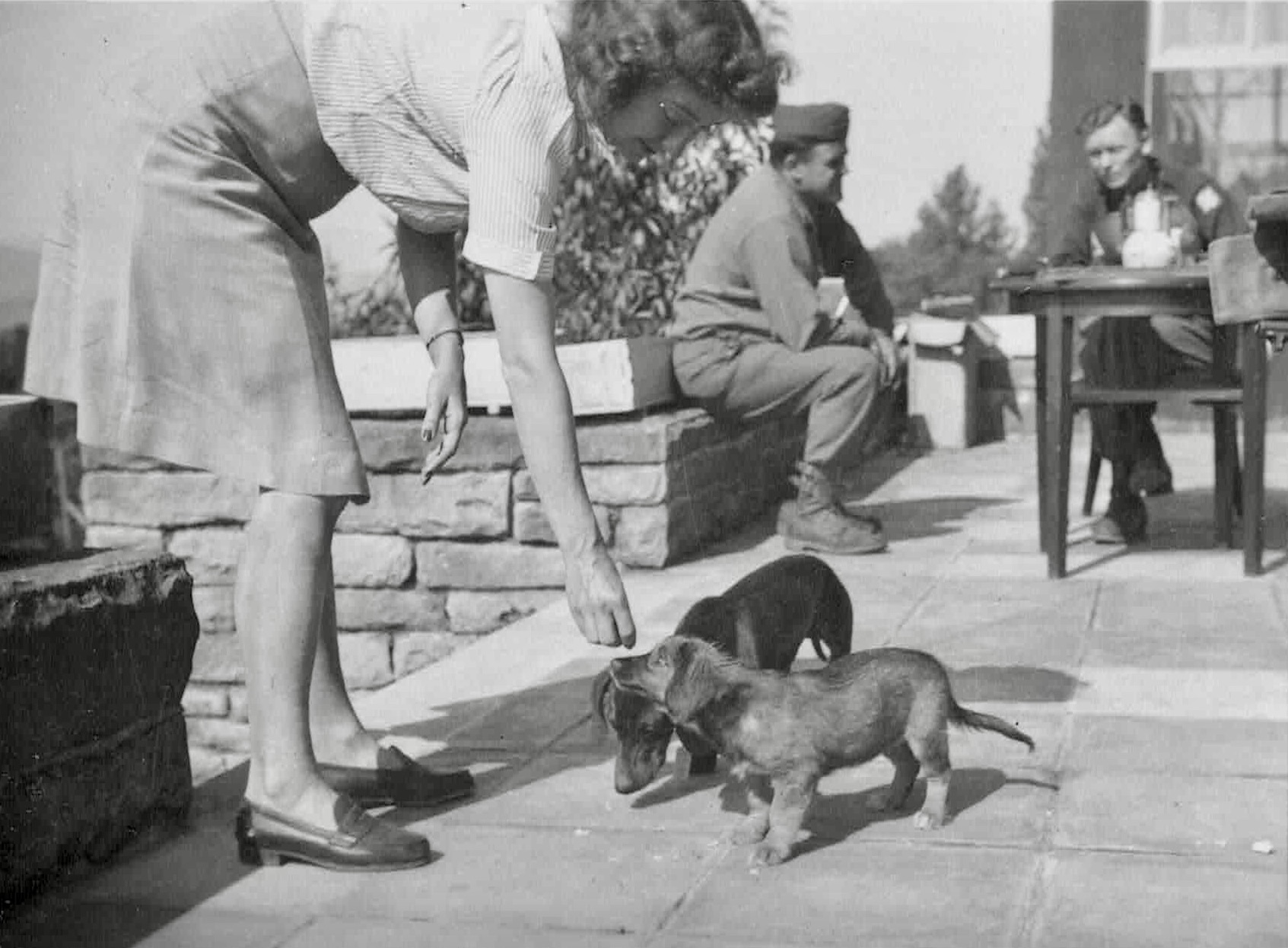
Flo adjusts her camera. Platterhof hotel in background

Complicating matters further, elements of the French 2nd Armored Division, advancing from the south, also reached the Obersalzberg at nearly the same time. French armored troops were already present at the SS guardhouse near the entrance to the Obersalzberg complex when the Americans arrived on May 4. So while the 3rd Infantry Division is generally recognized as having taken Berchtesgaden, the French made the first approach to the mountain enclave.

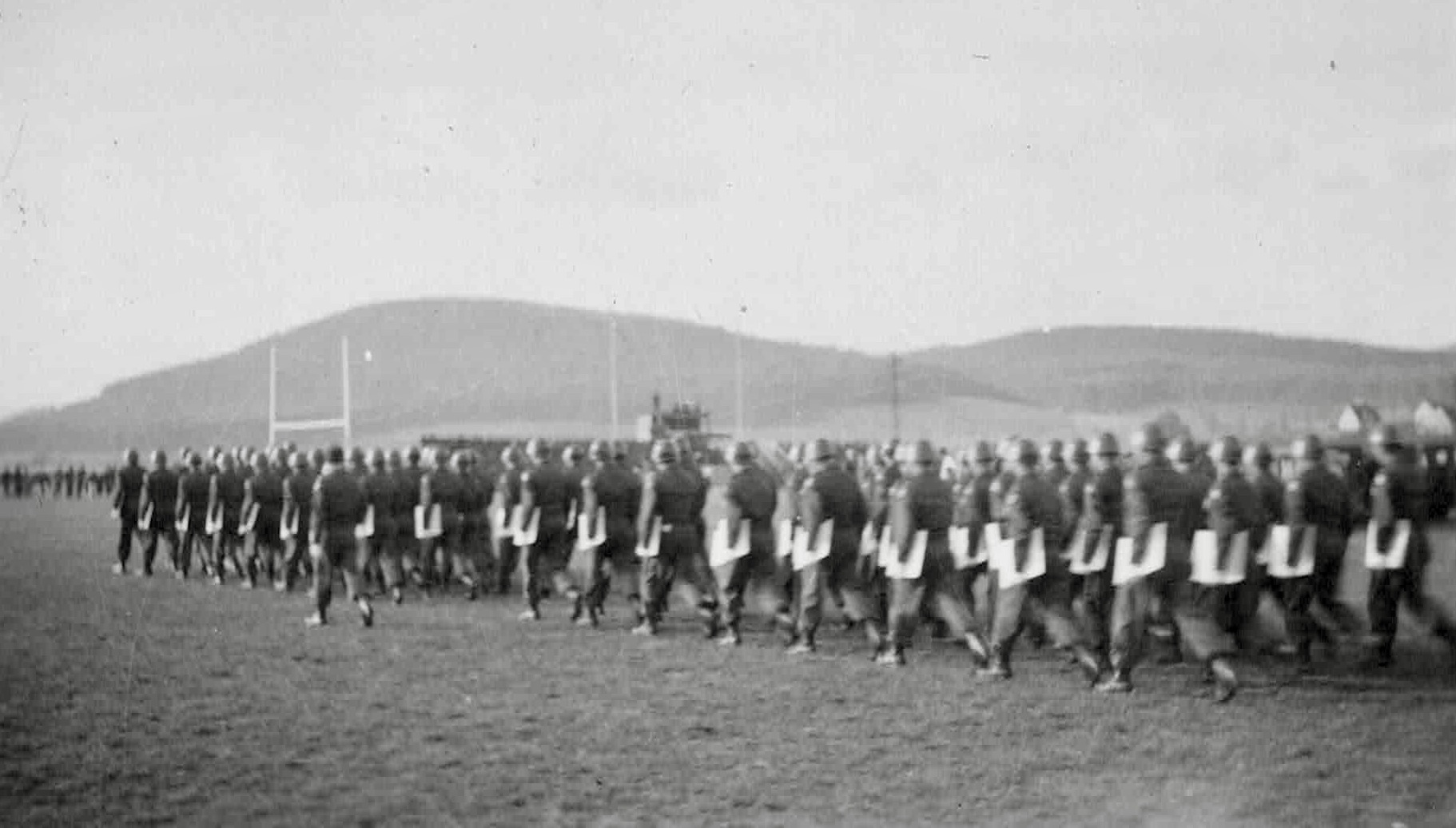
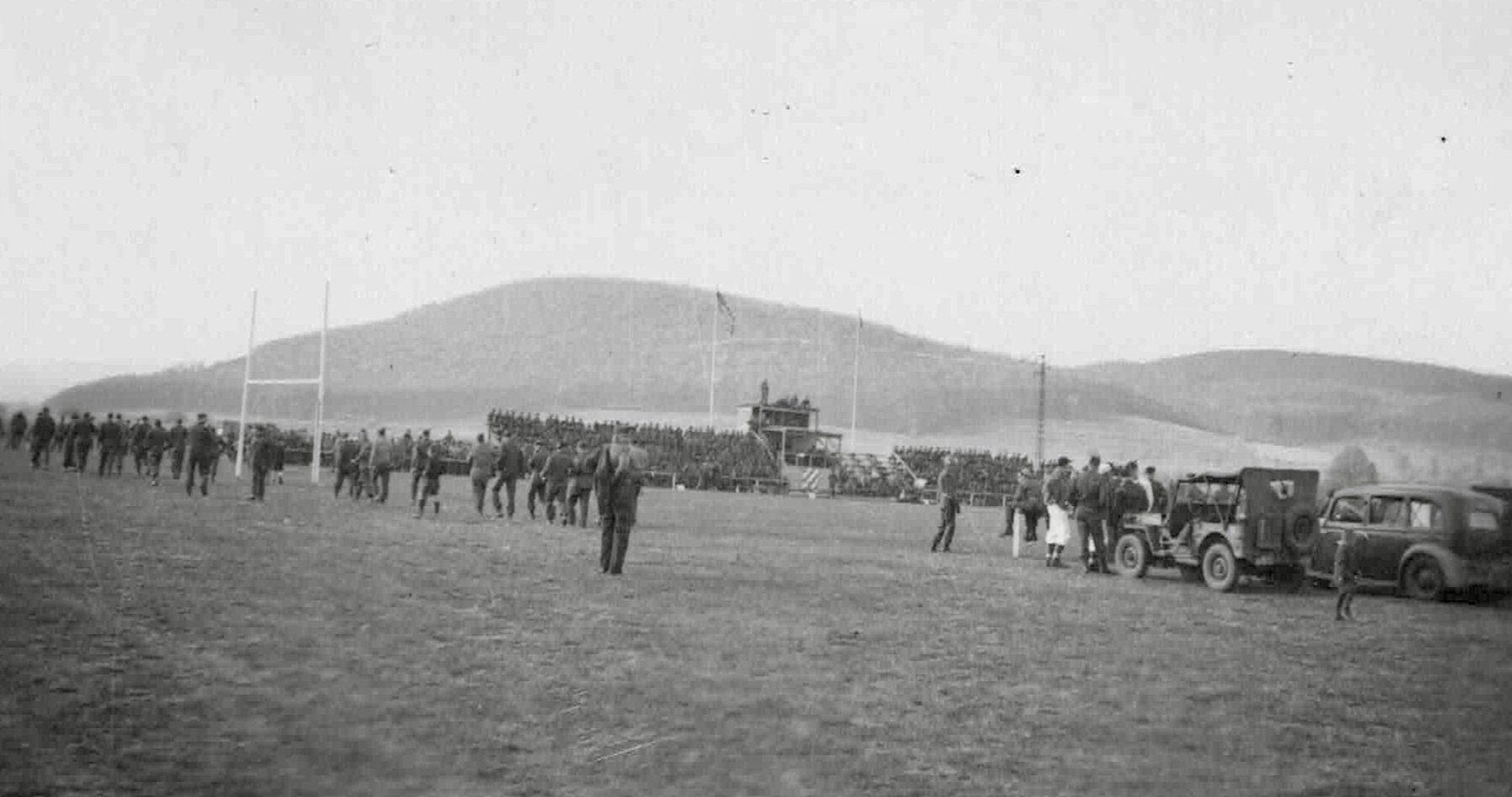
What is clear is that Flo arrived very shortly after the area had fallen to Allied forces, when the military presence was still active and the ruins still fresh.

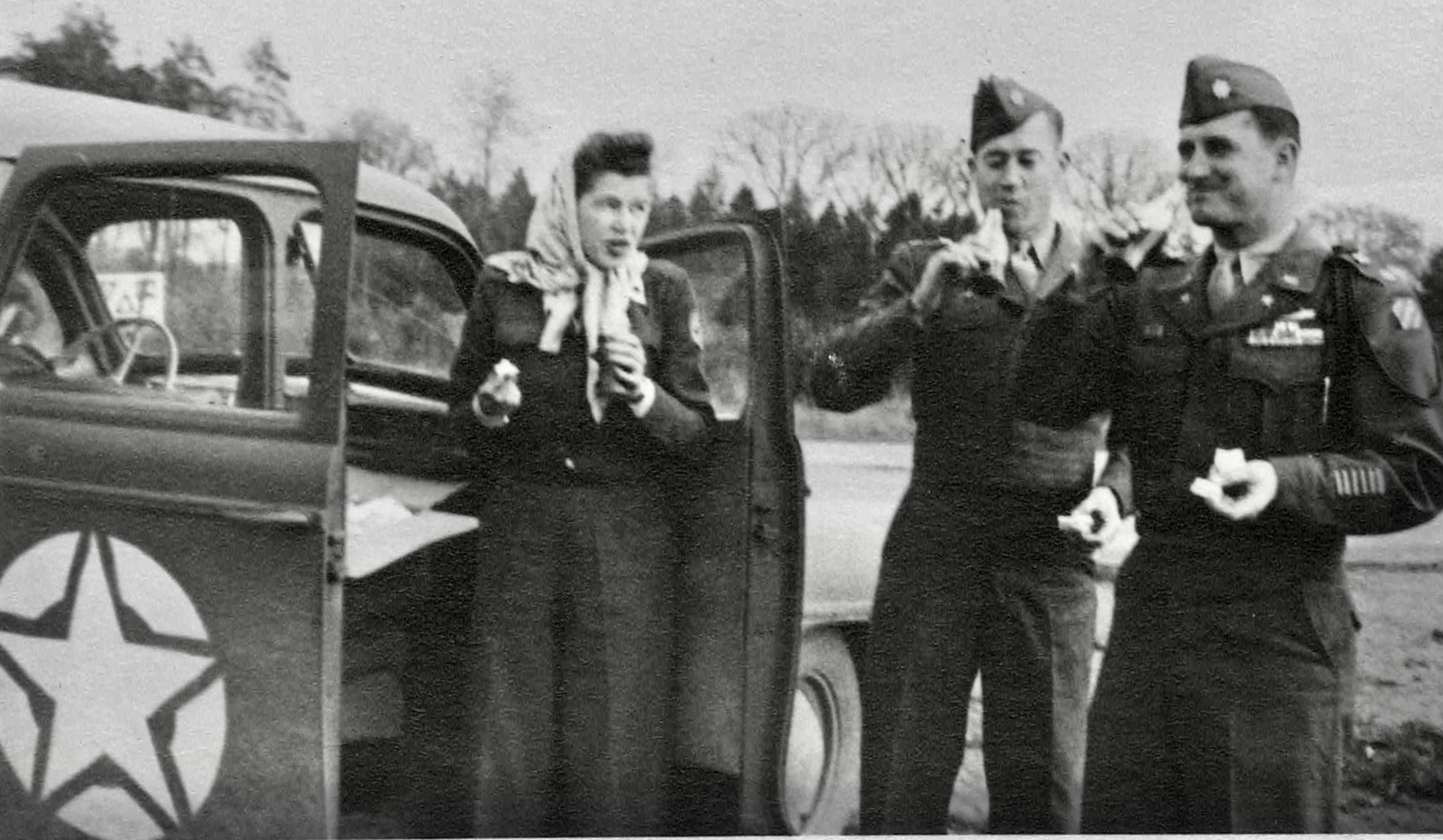
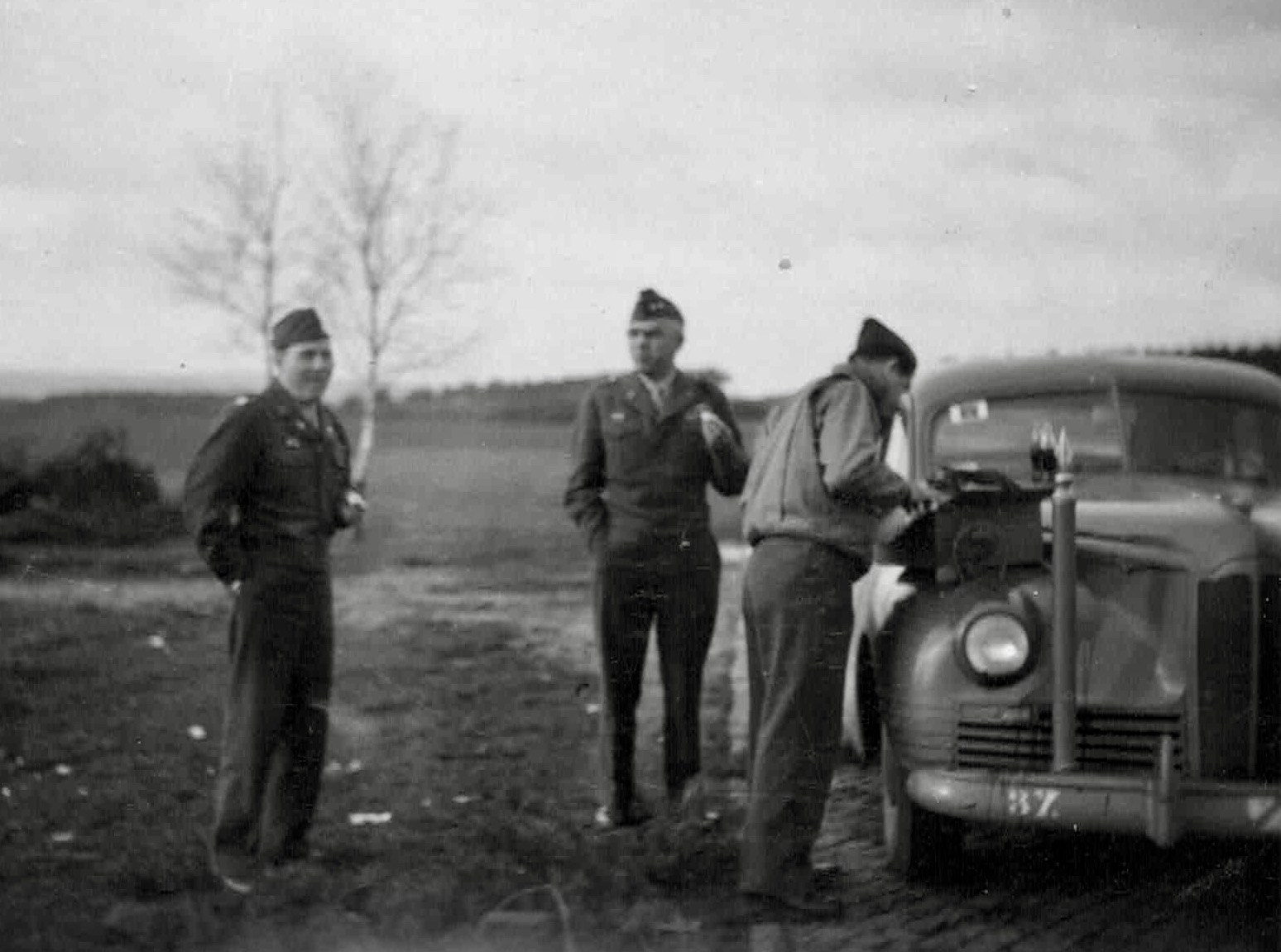
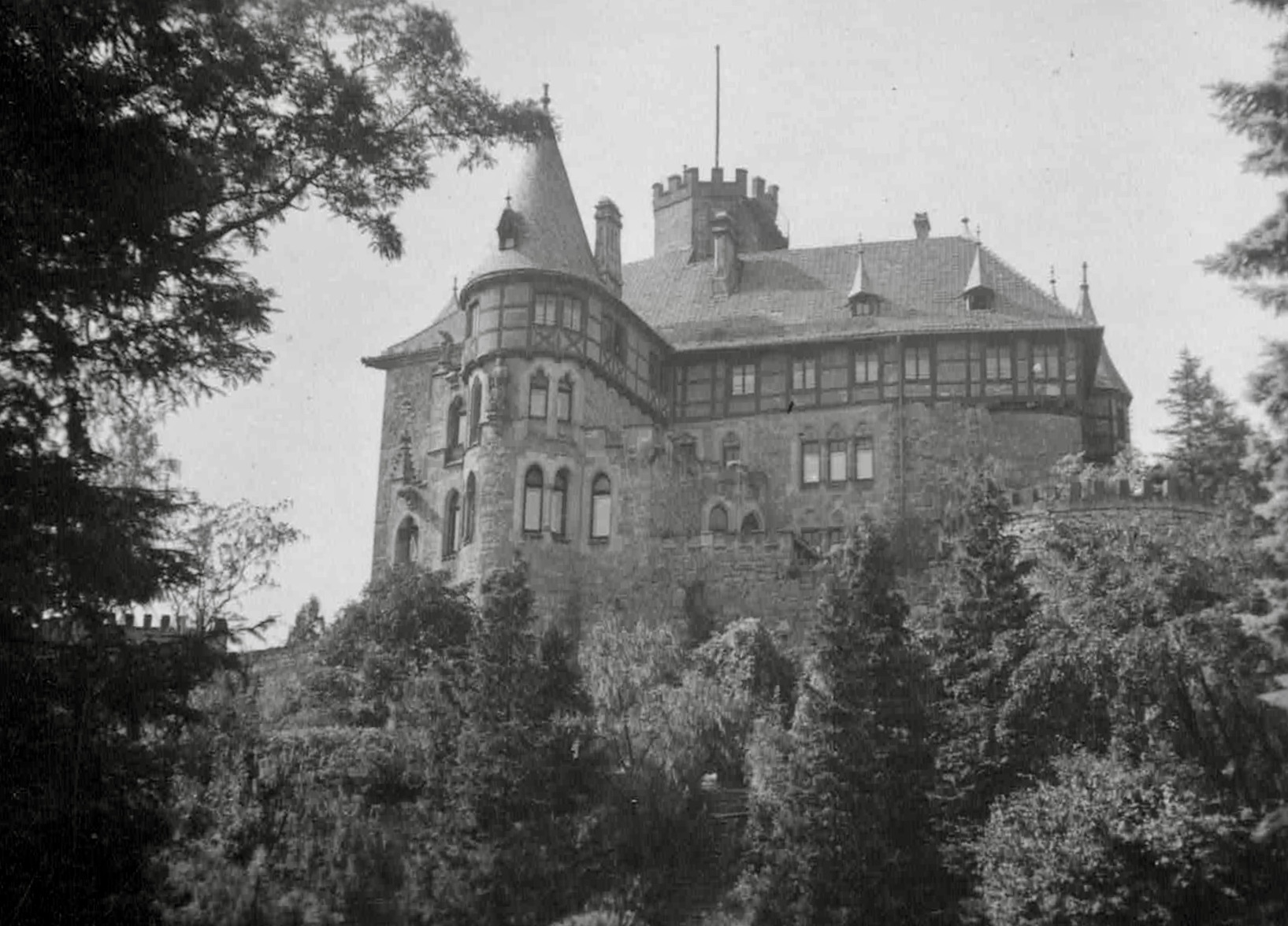
Views from Hitler’s mountaintop retreat. All photos by Flo Wick.

Berchtesgaden and the Obersalzberg Complex

Berchtesgaden, in the Bavarian Alps, served as Hitler’s alpine headquarters and a central site of Nazi state power. The Obersalzberg complex above the town contained residences, administrative buildings, and security installations used by Adolf Hitler and other high-ranking Nazi leaders, including Martin Bormann and Hermann Göring.

Key components included:

• The Berghof: Hitler’s primary residence, significantly damaged in a massive Allied bombing raid on April 25, 1945.
• The Eagle’s Nest (Kehlsteinhaus): A mountaintop chalet and diplomatic reception site, built for Hitler’s 50th birthday.
• SS Barracks and Guard Posts: Securing the restricted zone around the leadership compound.
• Underground Bunker System: An extensive network of tunnels, shelters, offices, and storage areas designed to protect leadership during air raids and potential last-stand scenarios.

The main entrance road, Bormann’s house on the hill. It was thought he had escaped, but DNA from remains discovered in Berlin in 1972 point to May 2 as the day of his death.
The Platterhof hotel was bombed and then burned by retreating Nazis
Inside the Berghof was the “great room” with the “grand picture window” with a view of the Untersberg Mountains.
Another view of the bombed Berghof
The barracks housed hundreds of SS guards
What a view!

We think this is where Flo found or was given Hermann Göring’s armband and a Nazi flag that she saved in her album.

Current status: Much of the Obersalzberg complex was demolished after the war. Today, the site is home to the Dokumentationszentrum Obersalzberg, a research and educational museum focused on the history of Nazism and the regime’s use of the mountain retreat. The Eagle’s Nest still stands and is now a tourist site with panoramic views and a restaurant. The surviving bunker tunnels are accessible through the documentation center.

Ch. 71: https://mollymartin.blog/2025/11/15/ve-day-may-8-1945/

With the 30th Infantry in Salzburg

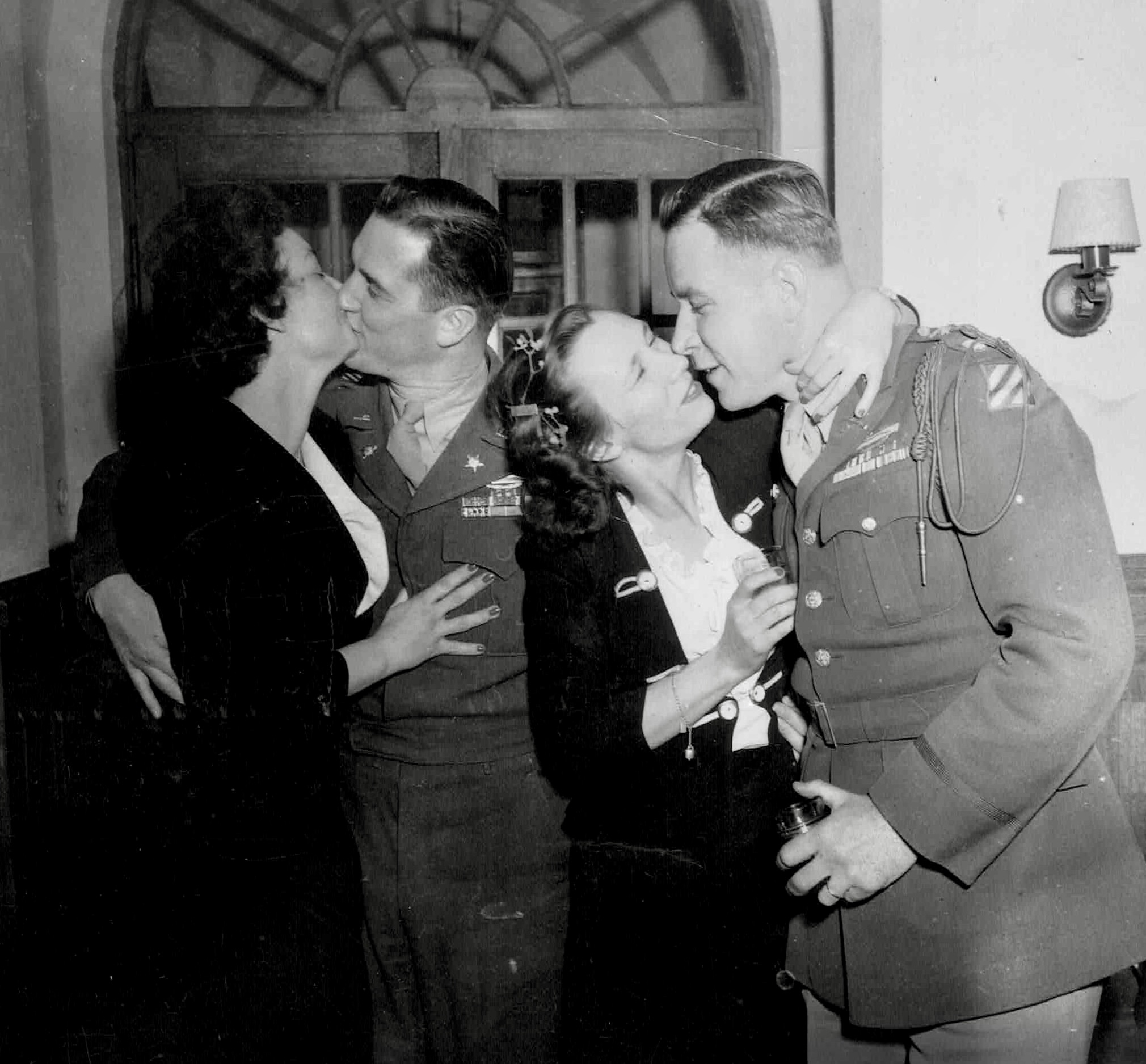
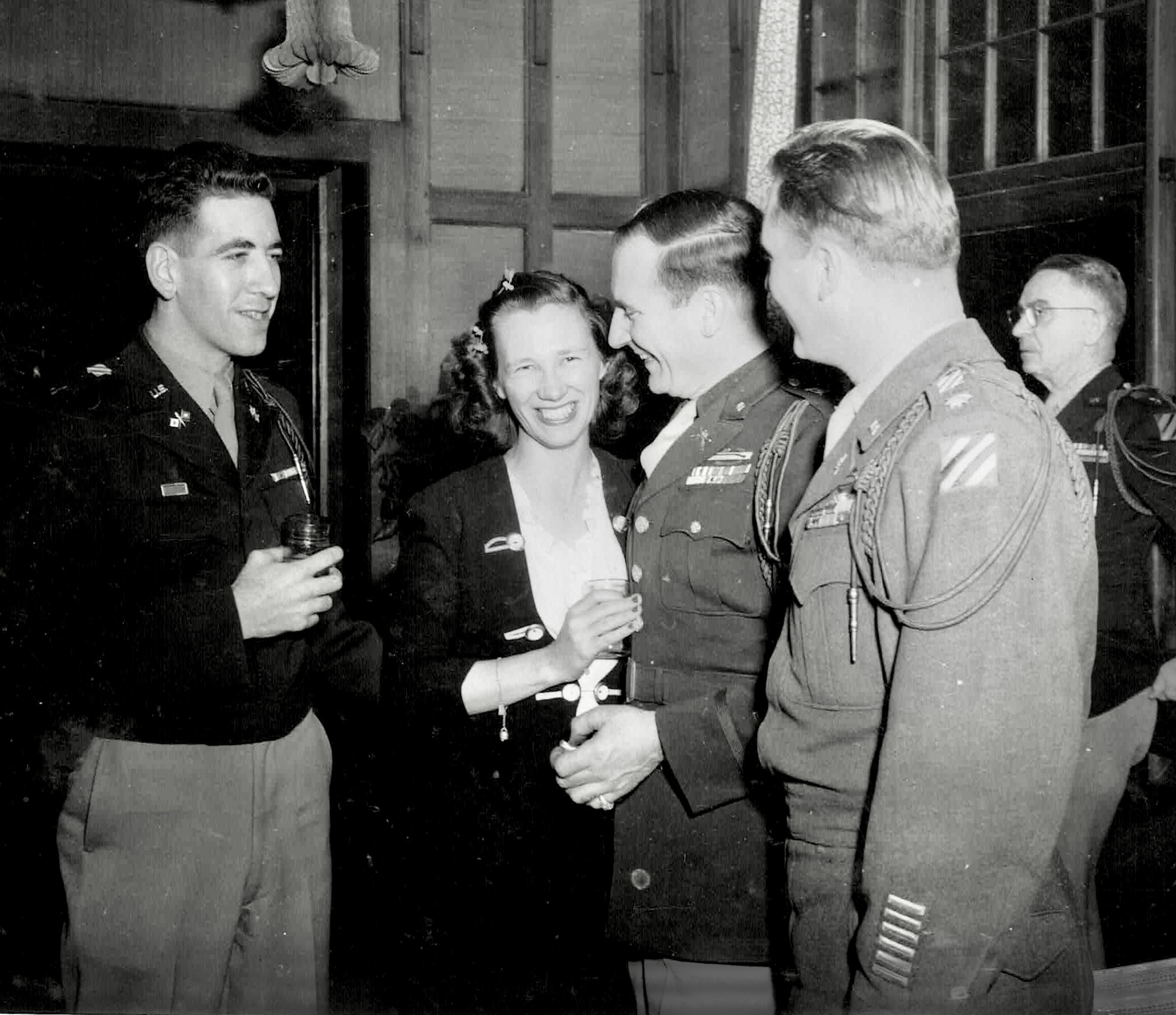
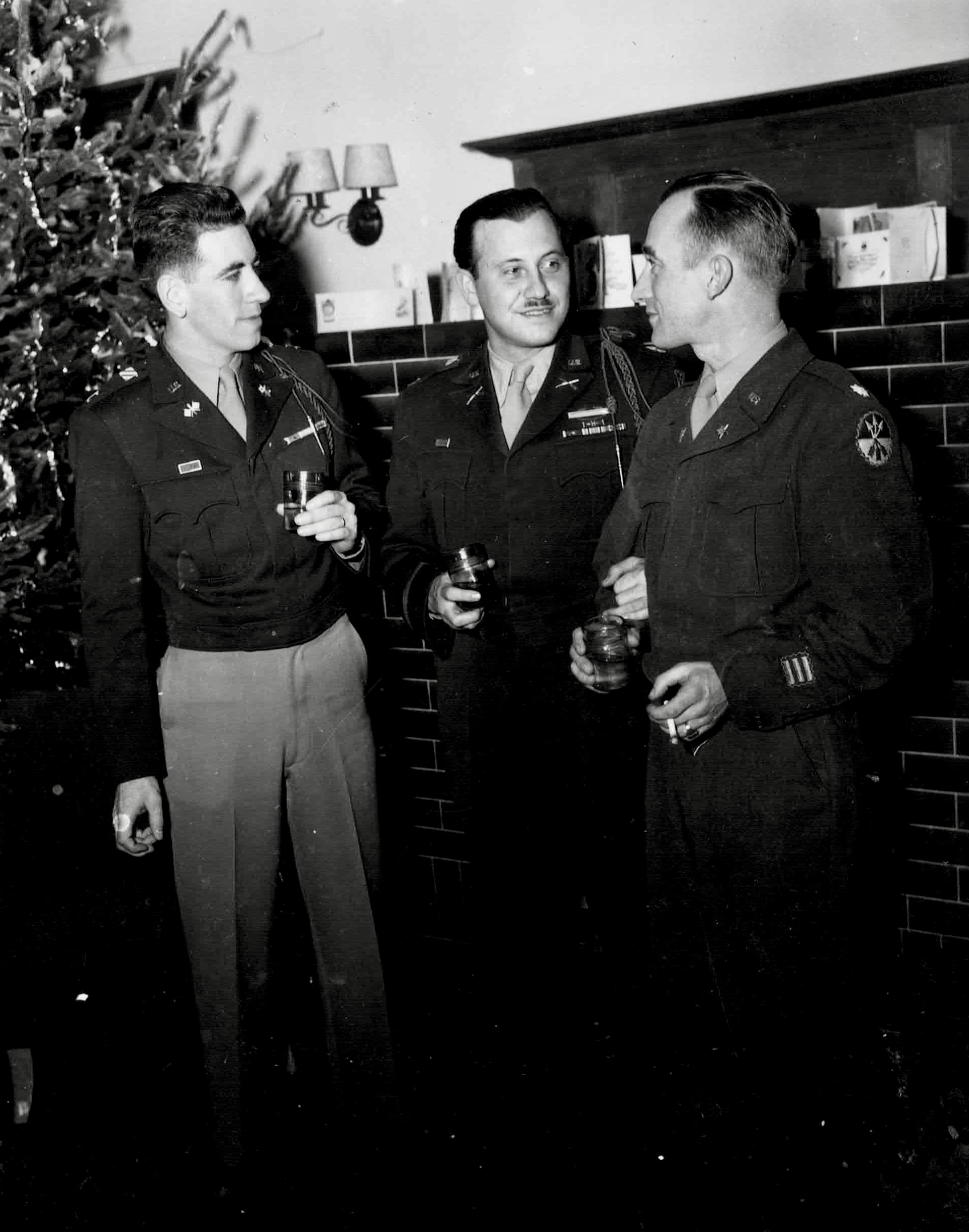
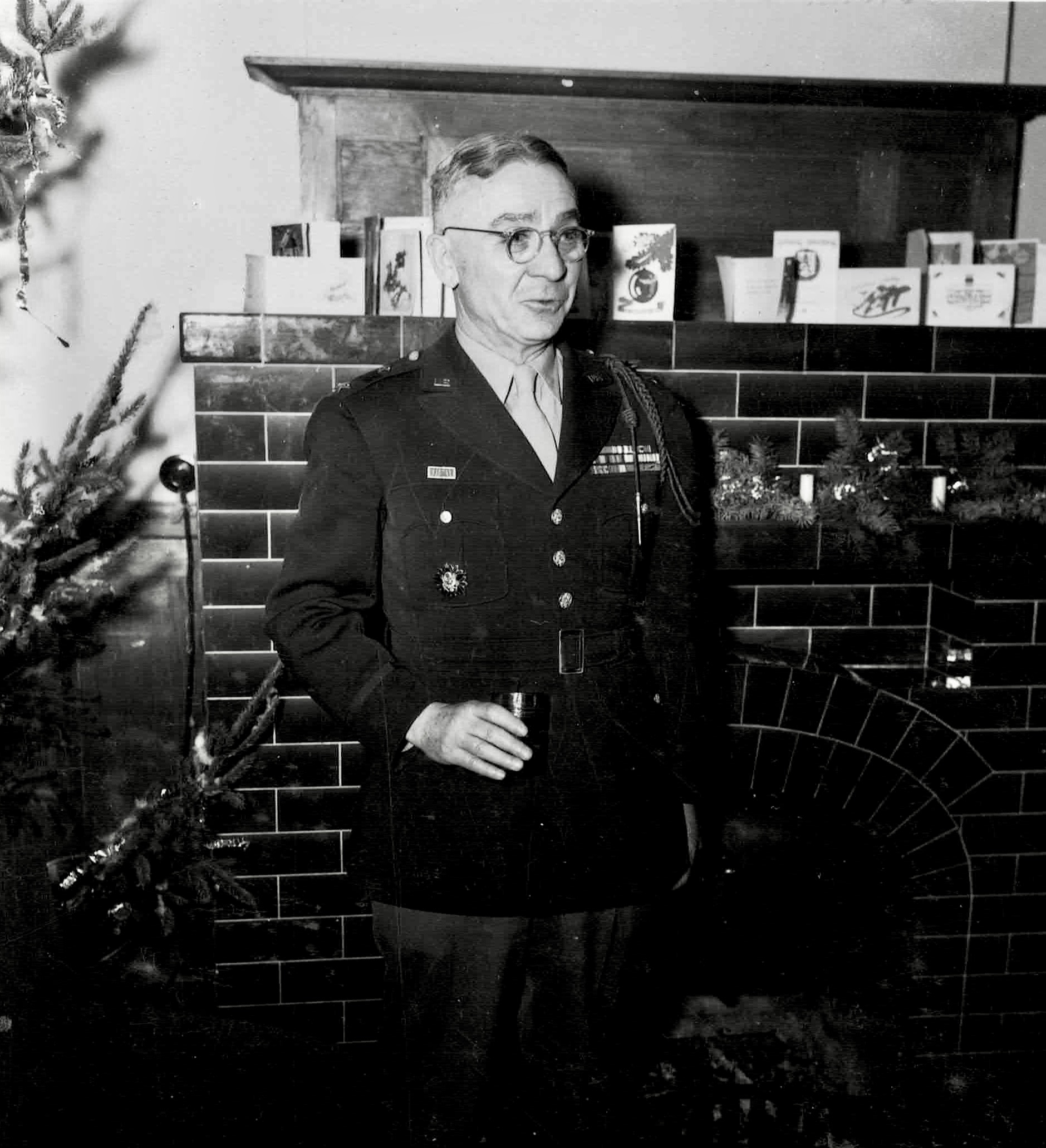
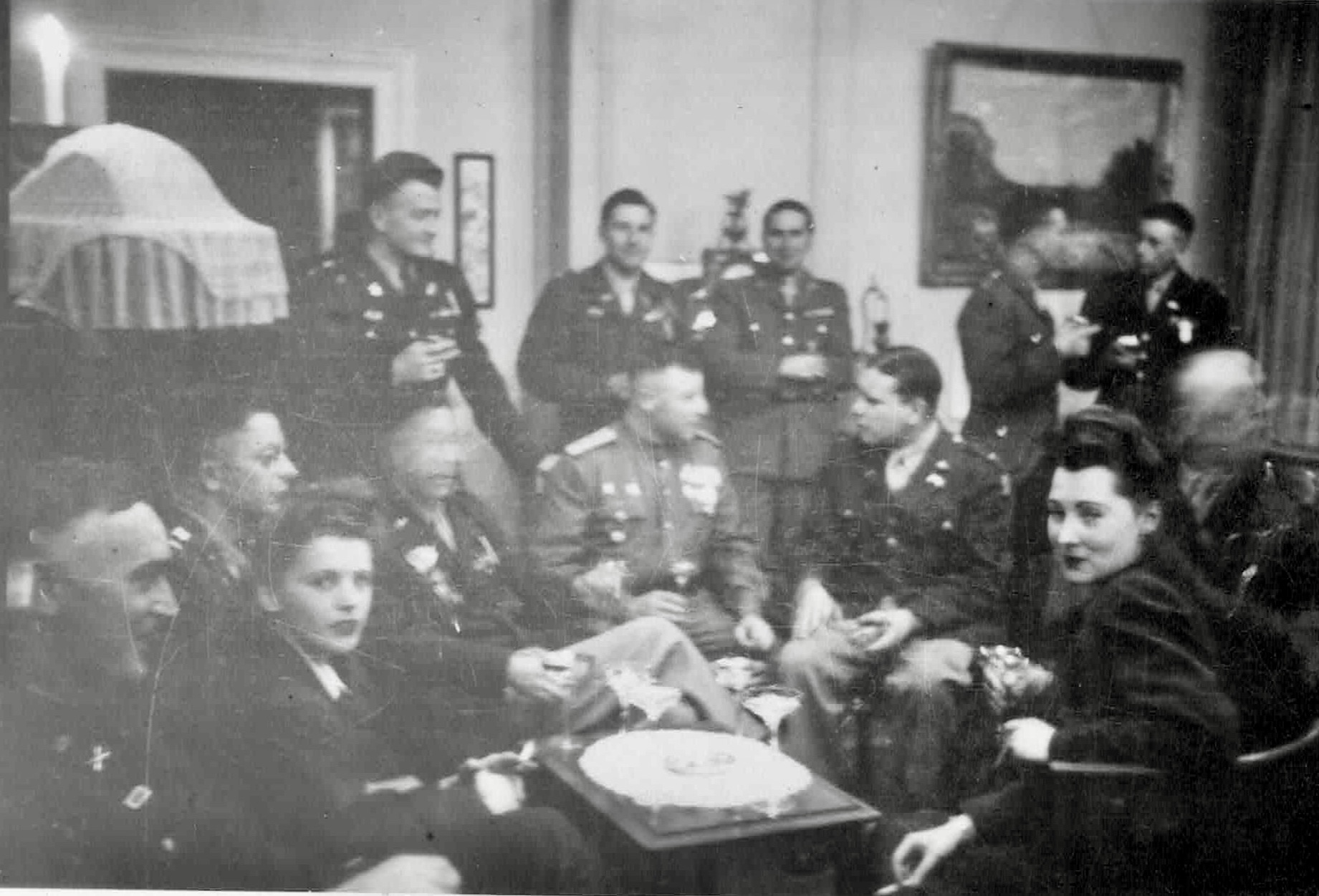
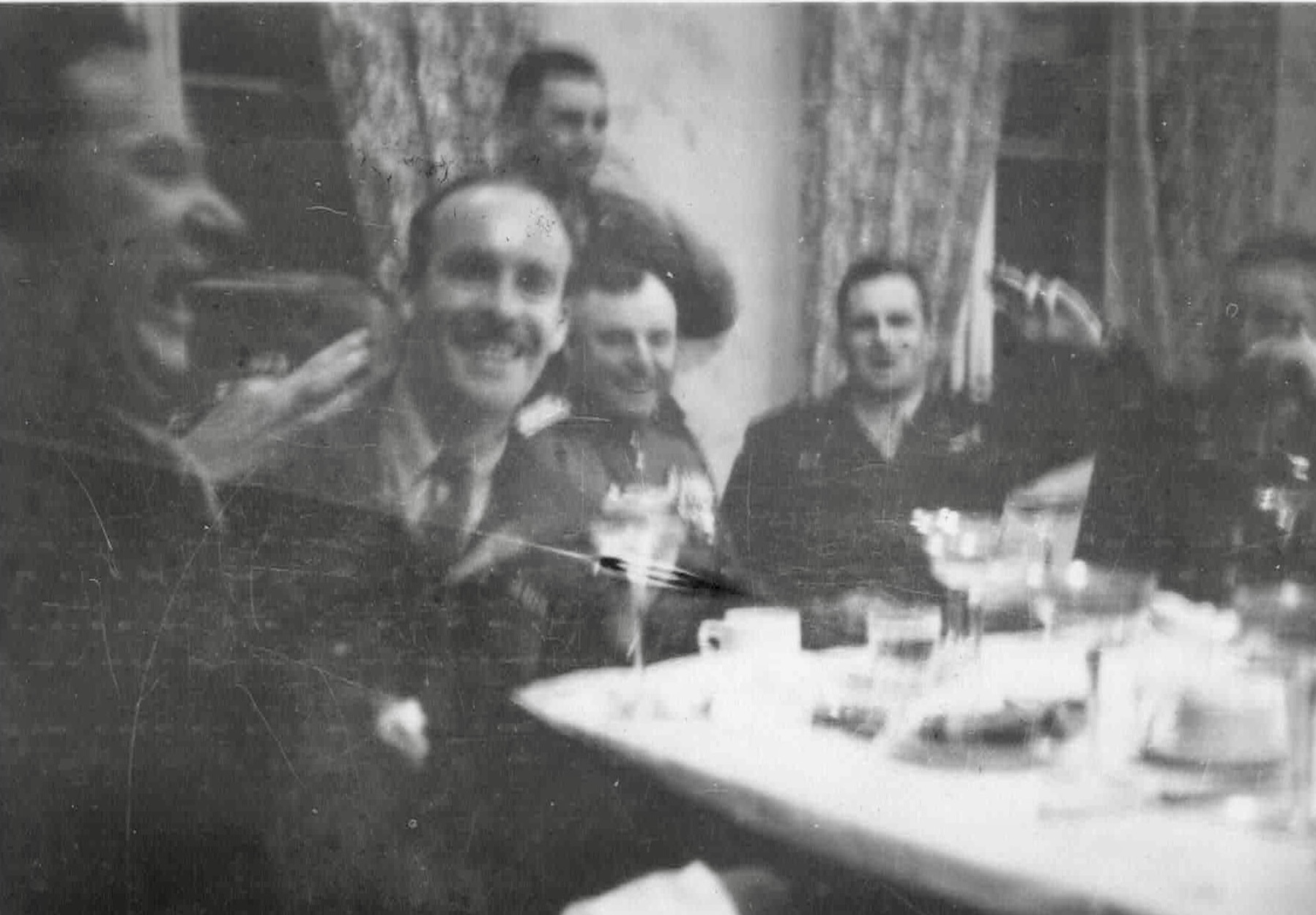
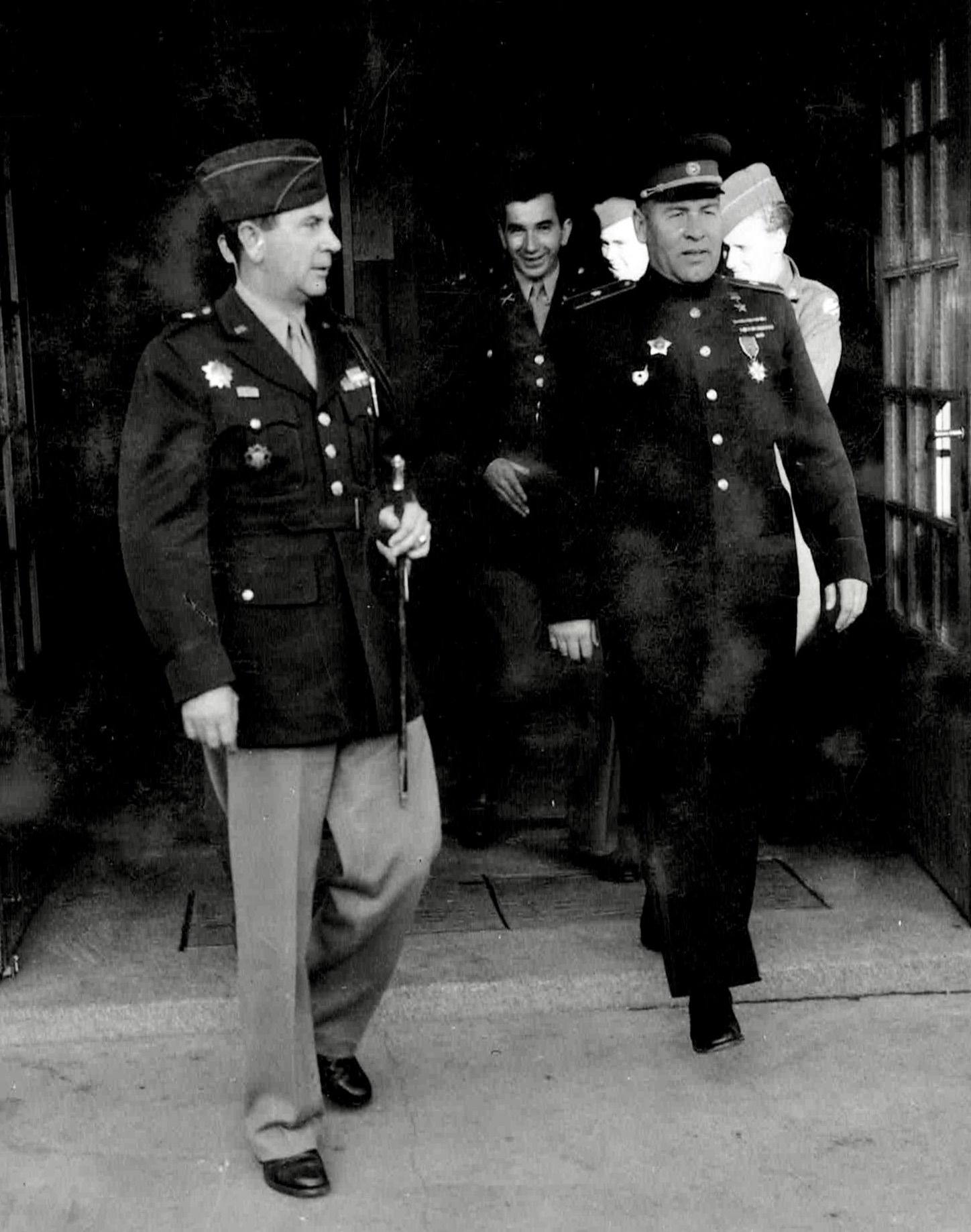
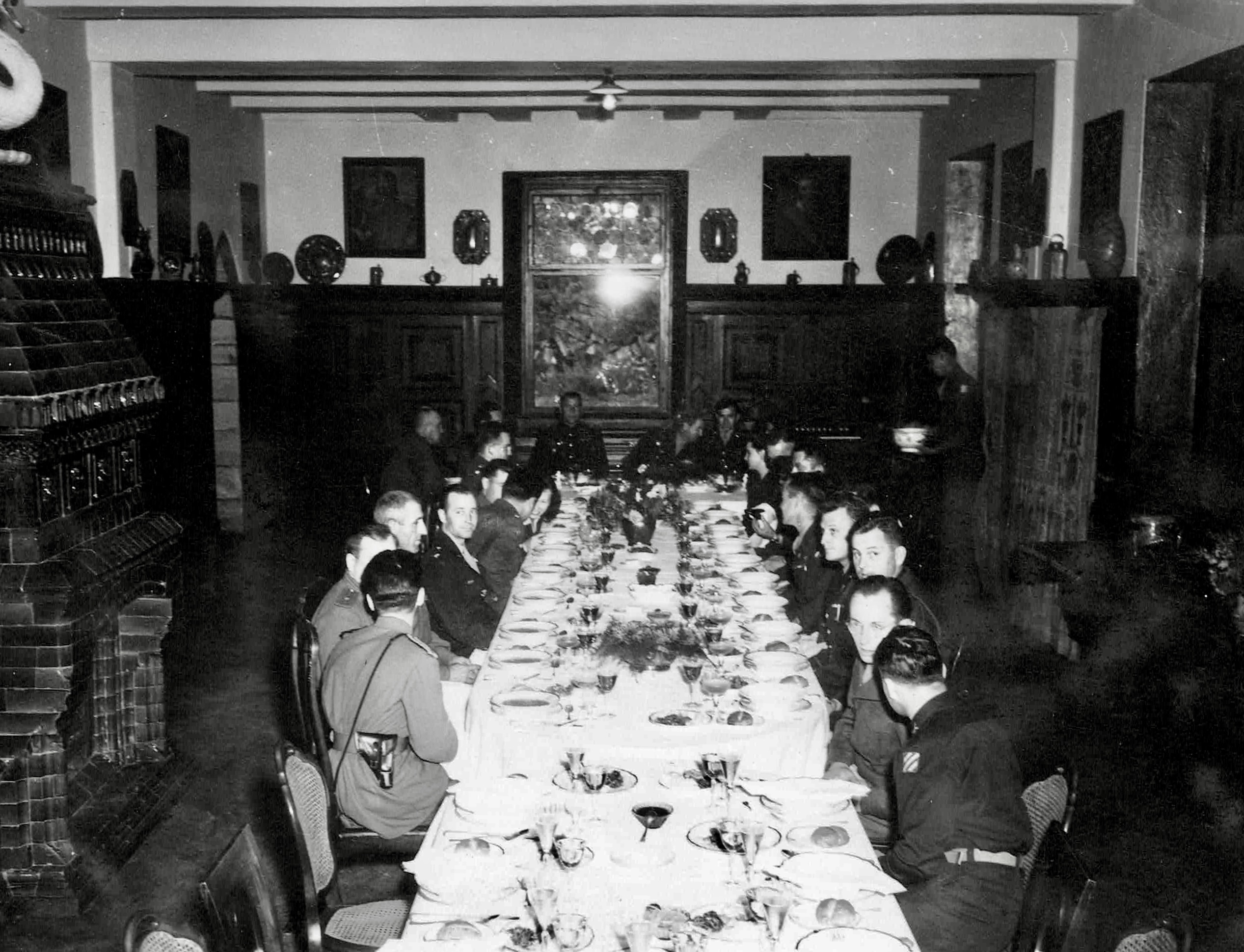
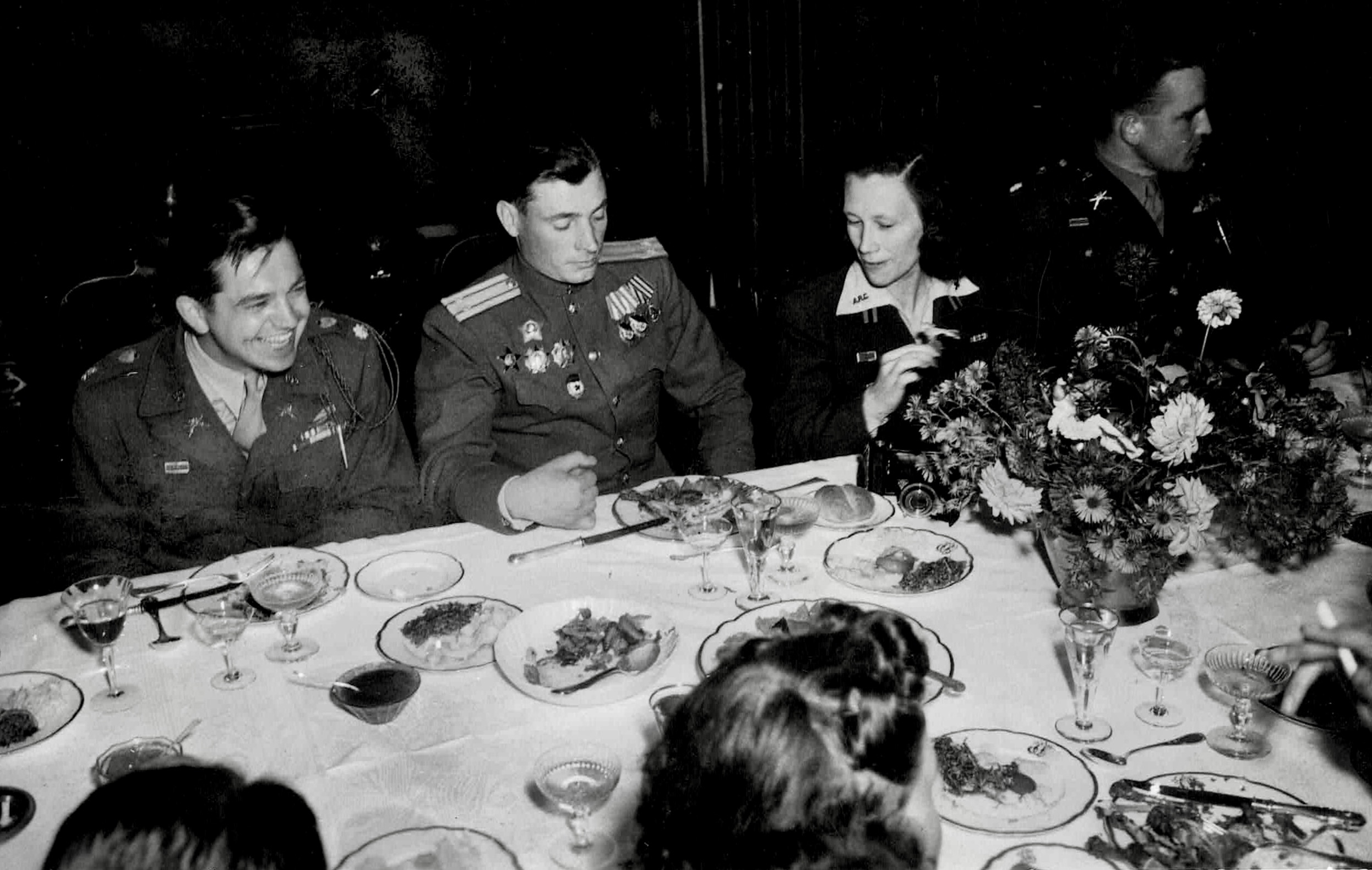
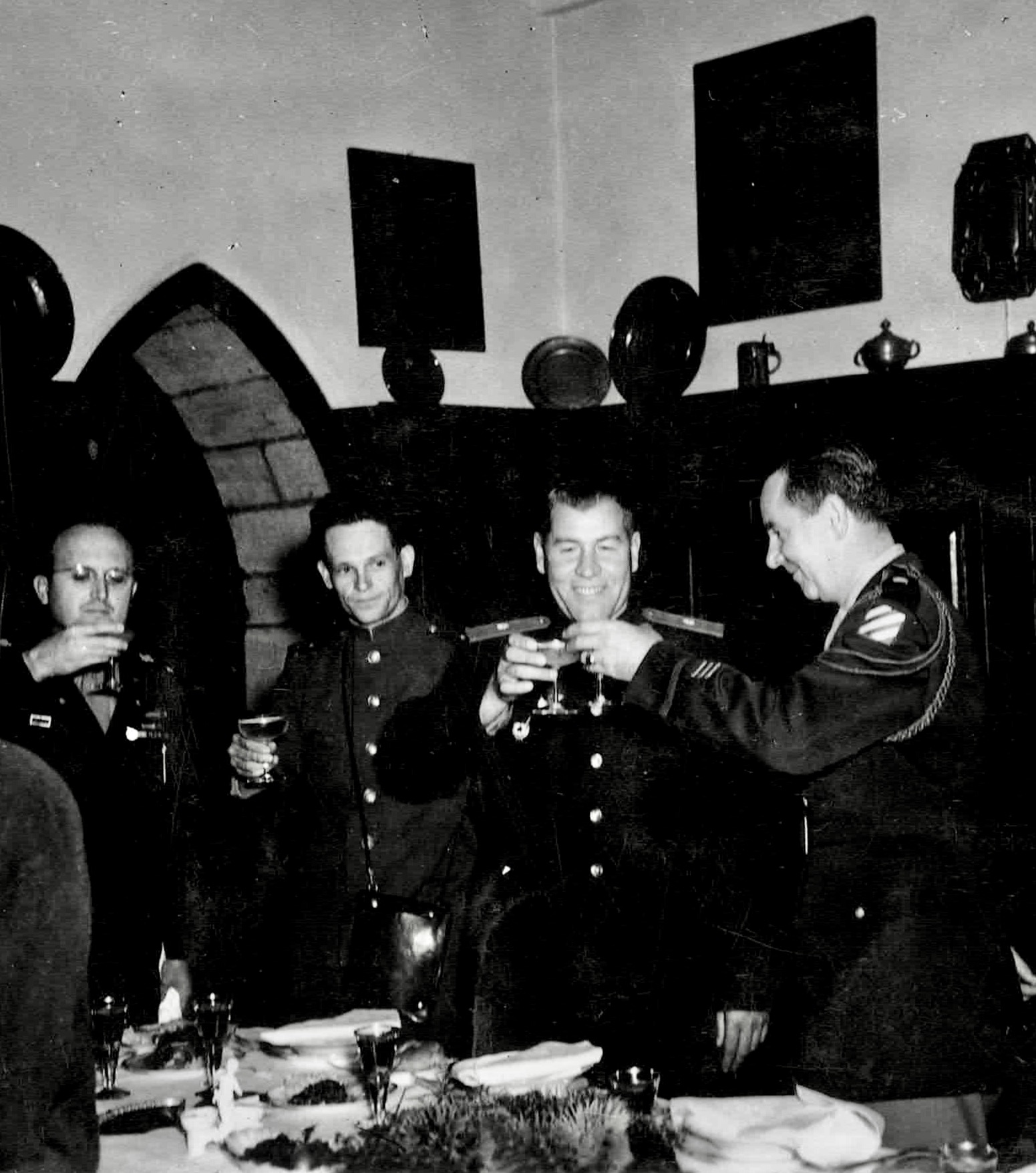
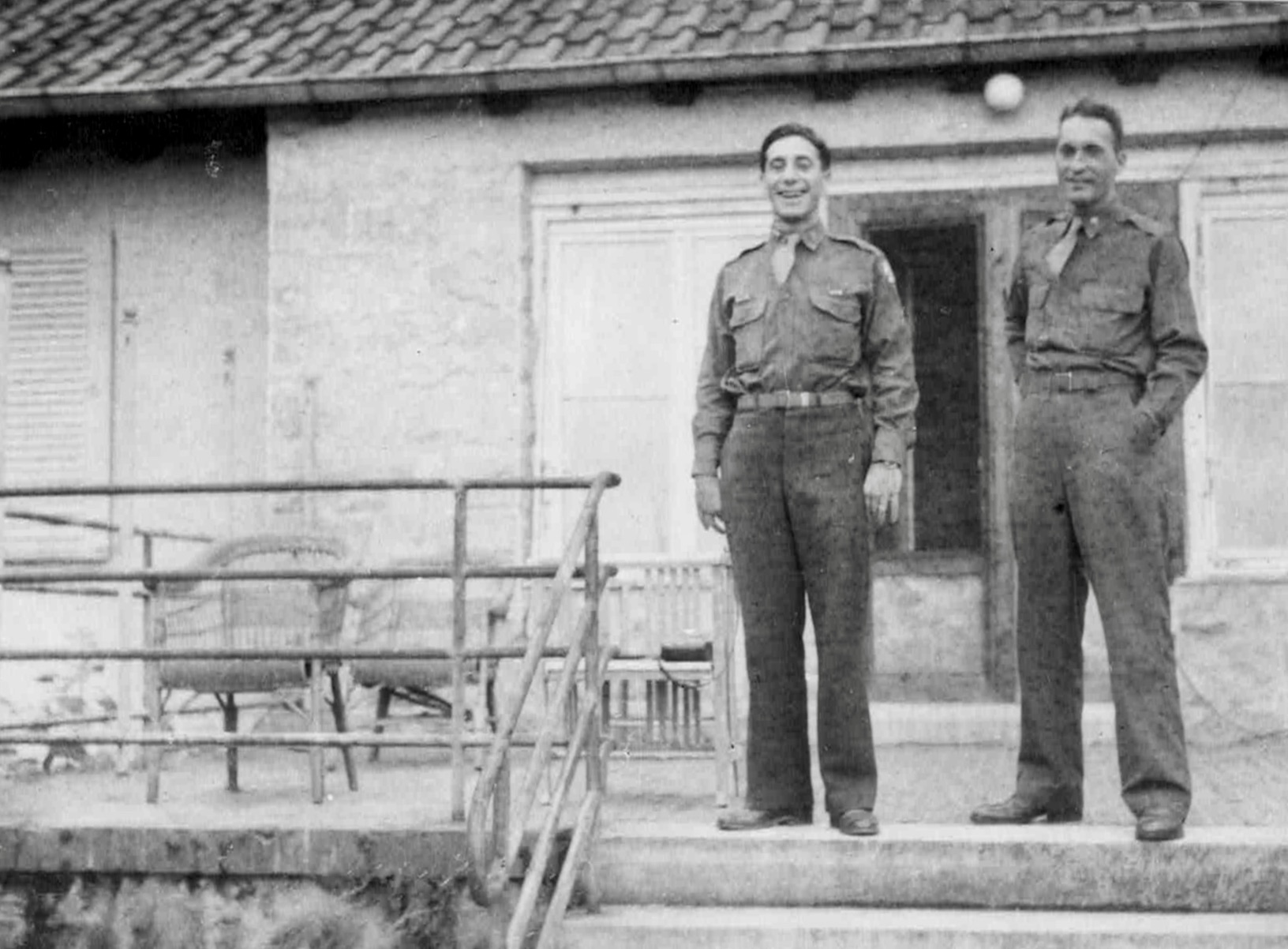
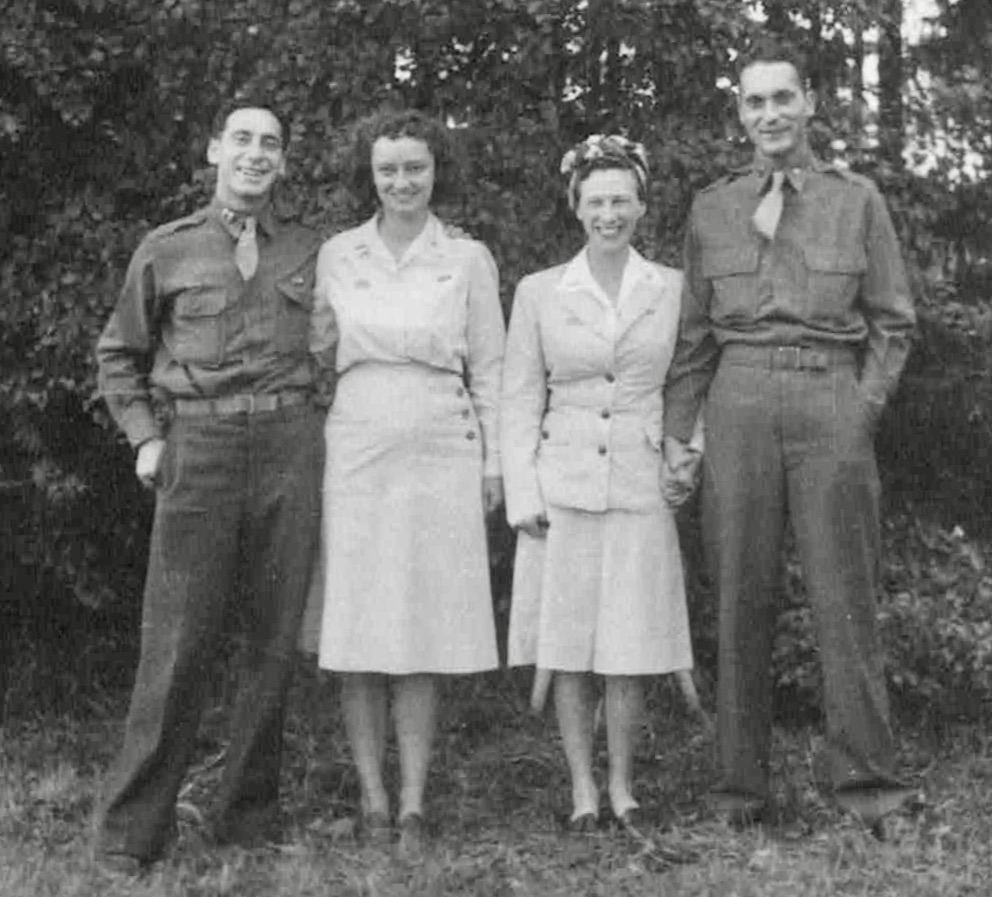
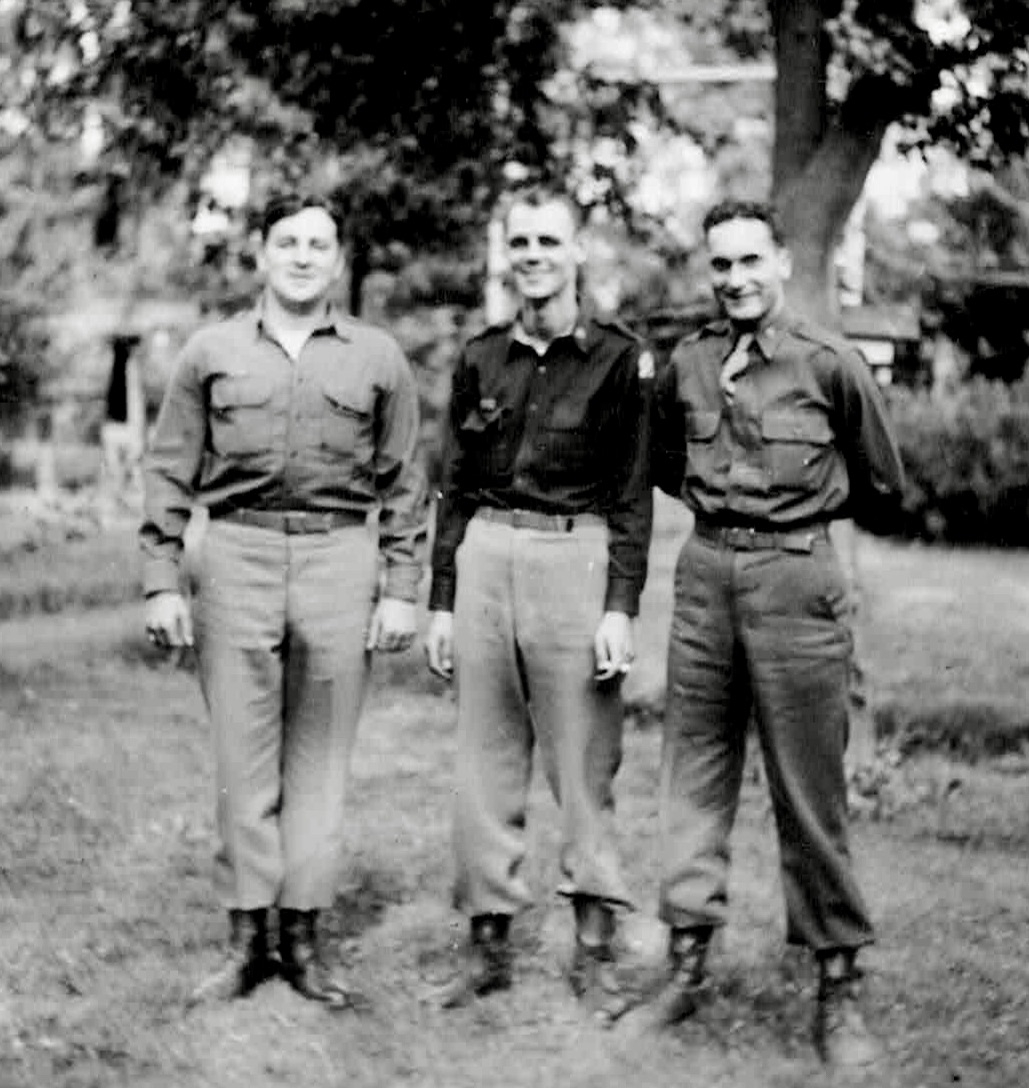
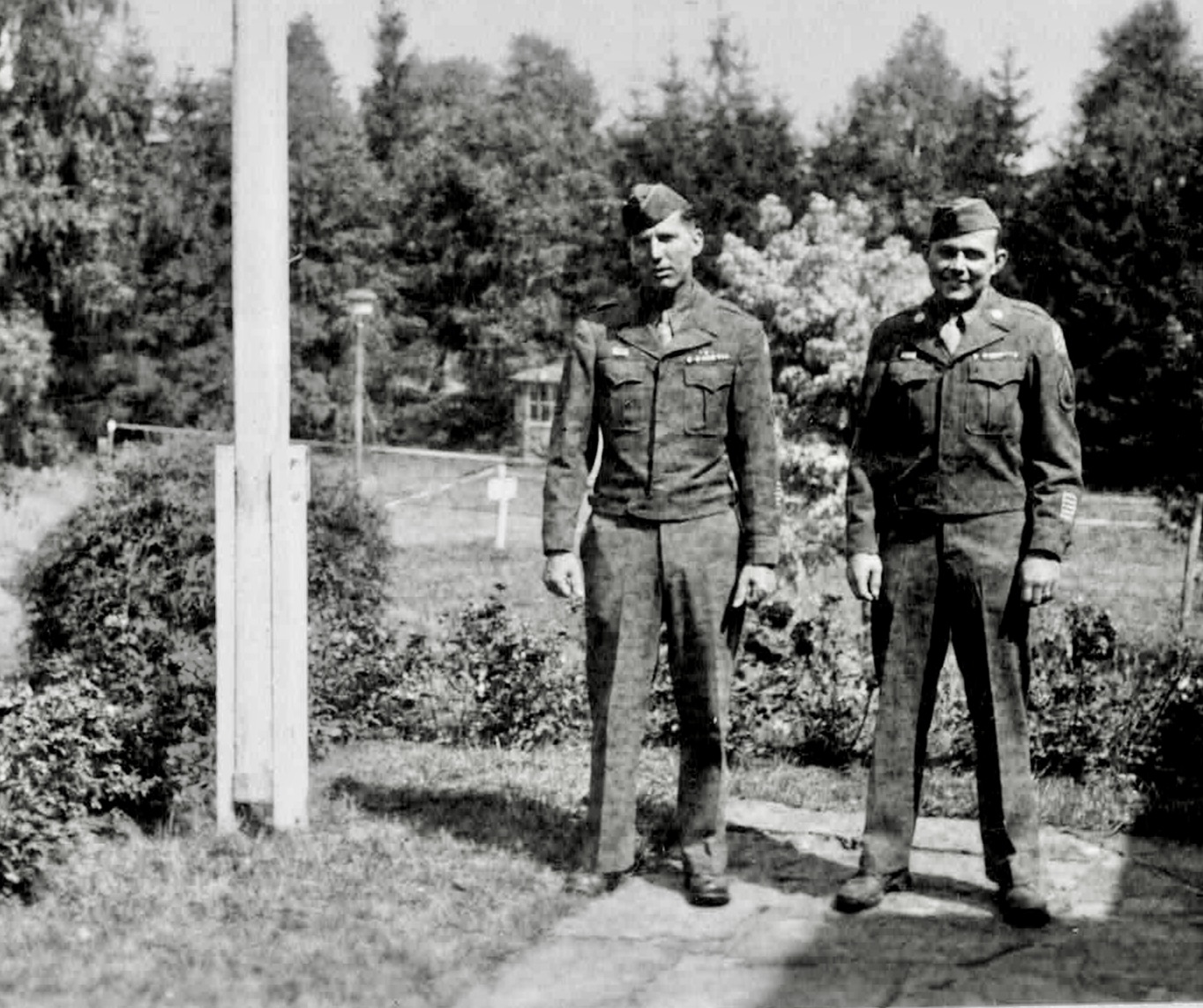
Pictures of Officers at the 3rd Battalion Headquarters

My Mother and Audie Murphy Ch. 69

Photos from Flo’s album. Schloss Klessheim served as 3rd Division HQ in Salzburg. Salzburg was occupied for ten years by American forces. It was the central HQ of the American Occupation Authority.
3rd Bn staff Salzburg

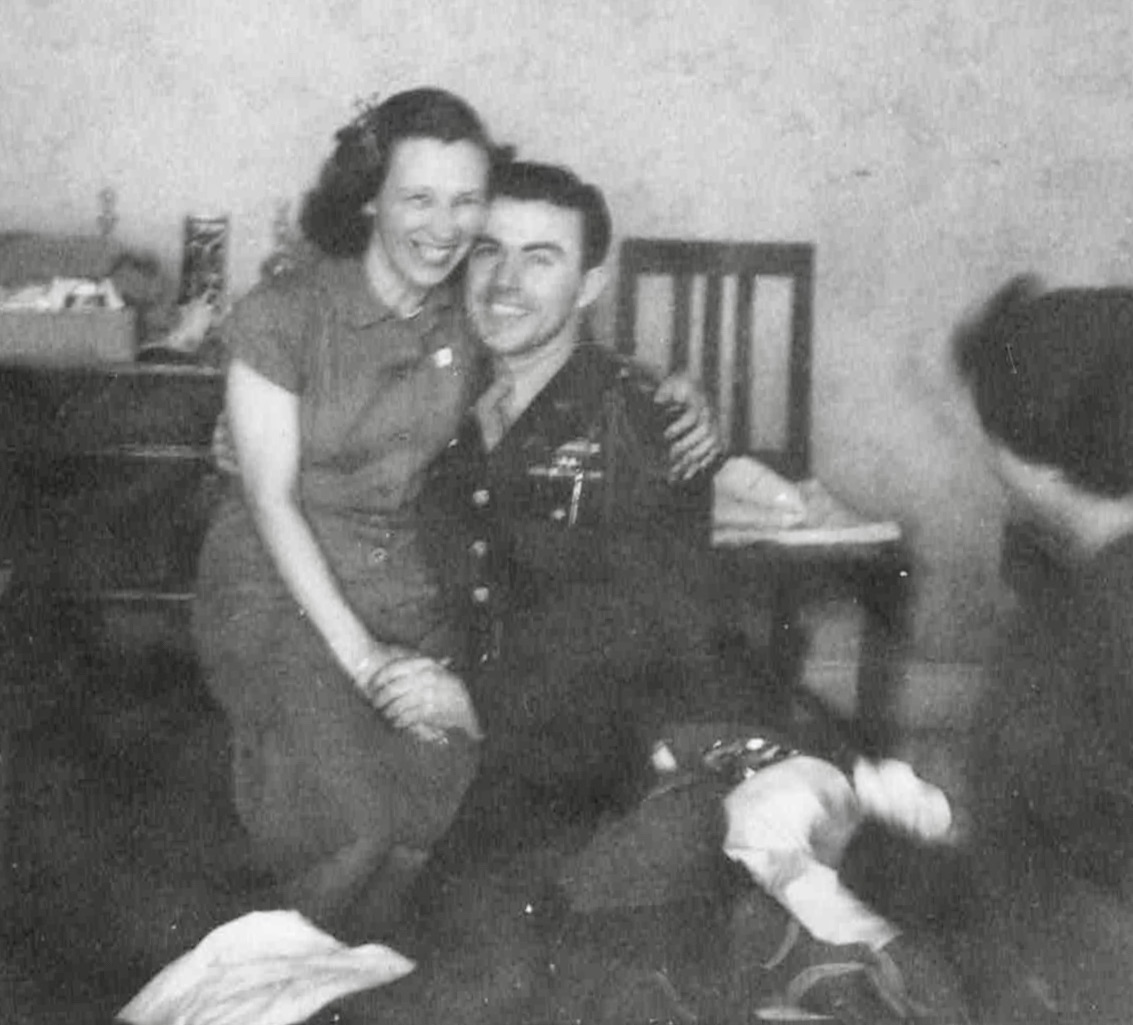
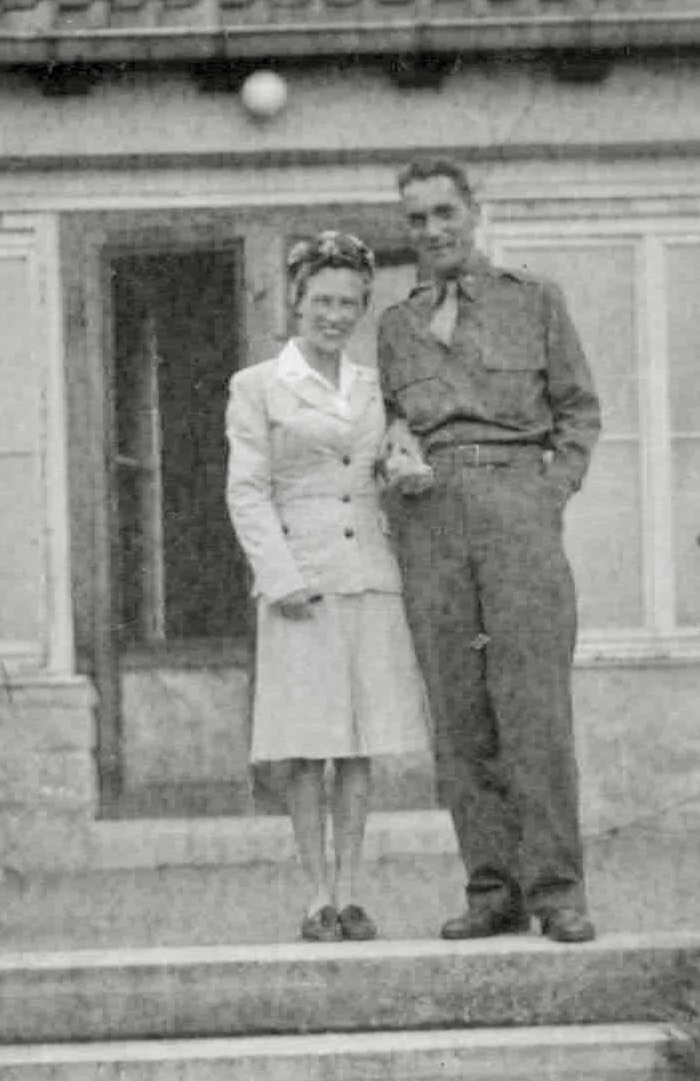
Also on this page of the album is a damaged picture of Flo and Capt. McFalls who became a friend and corresponded with Flo after the war.

Ch. 70: https://mollymartin.blog/2025/11/11/who-liberated-berchtesgaden/

The Liberation of Dachau

Clubmobilers are some of the first to see the camp

My Mother and Audie Murphy Ch. 68

The Dachau concentration camp near Munich was liberated by the US Army on April 29, 1945. There is no page in Flo’s album dedicated to Dachau, but the Red Cross women were there. Flo didn’t talk about the Holocaust, possibly because she thought no one would believe her.

In the 1970s she organized a writers group at the Yakima Senior Center where she worked. The group published a chapbook, Leaves of Sage, in which two of her stories appear. Then she was finally able to write about her experience. Here is her story.

Holocaust 1945

By Florence Martin

The long struggle to free the world of Hitler and his horrors was coming to an end; it was 1945 and Munich had fallen. The US Army’s famous Third Infantry Division, which had pursued the Nazis relentlessly through North Africa, Sicily, Italy and southern France into central Germany itself, had figured prominently in the capture of Munich and the liberation of the infamous concentration camp at Dachau. Armed with captured Zeiss-Ikon cameras, the four Red Cross Clubmobile gals, attached to the Third Division since Anzio in Italy, were eager to shoot scenes of the city which had been a Nazi stronghold and of the concentration camp prisoners, some of whom could still walk away from this 20th century torture chamber.

Photo: Dogface Soldiers Collection

We had not reckoned with the results of the swiftness of the Allied attack which had prevented the Nazi jailers from destroying the evidence of their hideous and unspeakable atrocities to Semitic citizens of Germany whose only crime was being a despised JEW. Left behind were literally stacks of human bodies–piled up like so much cord wood–only skin covering their skeletons. A year on the battlefields of Italy, France and Germany had toughened us to these sights of violence and death, and we almost calmly focused cameras on the neatly stacked corpses. I had snapped several views and was focusing on the bottom “layer” when I caught the movement of a human hand through the camera’s viewfinder. Thinking that my imagination was playing tricks on me, I moved closer to the subject, only to confirm that some of the skeletons did indeed still contain life and that several arms and legs were still moving. Sickened and horrified, my sudden scream brought the others running toward me.

Although there was still some movement, it was, of course, too late to resuscitate or rescue anyone. With revulsion we left the whole hellish scene. Later as I retched in a nearby ditch, I wondered how many potential Mendelsohns and Einsteins were there among those wretched skeletons, and if, perhaps, the great Goethe might be turning in his grave about this modern and depraved Mephistopheles, Adolf Hitler, and what he had done to Goethe’s Germany. 

Hitler died April 30, 1945. Photo: Dogface Soldier

Postscript: this is a true experience; The pictures that were taken that day were somehow conveniently lost in development in a German photoshop–only these shots among several rolls of film were missing, and it was not until television elaborated the Holocaust more than 30 years later that my personal experience could be proved. 

Ch. 69: https://mollymartin.blog/2025/11/07/with-the-30th-infantry-in-salzburg/

Around Munich and Salzburg

My Mother and Audie Murphy Ch. 69

April 1945. In Germany the four clubmobilers finally got their own clubmobile, a two-and-a-half-ton GMC truck. Flo was very proud that she could drive it. The vehicle must have required some modification for the women. At five foot two, it’s a wonder that Flo could reach the pedals. The clubmobilers were tasked with driving around to rest camps serving donuts. They managed to get over the border into Austria for some sightseeing. Photos are from Flo’s album.

Autobahn near Munich

The medieval fortess castle, Salzburg Austria

Schloss Klessheim, a baroque palace near Salzburg built 1700, became 3rd Division headquarters.

“Kraut prisoners near Munich”

“In QM area with Dr. Minerva”

Schloss Klessheim was shrouded in camouflage to hide anti-aircraft guns and defensive positions when 3rd Division forces captured it on May 4, 1945. It was described as “Hitler’s guesthouse for visiting foreign plenipotentiaries.

Old money

Ch. 70: https://mollymartin.blog/2025/11/03/the-liberation-of-dachau/

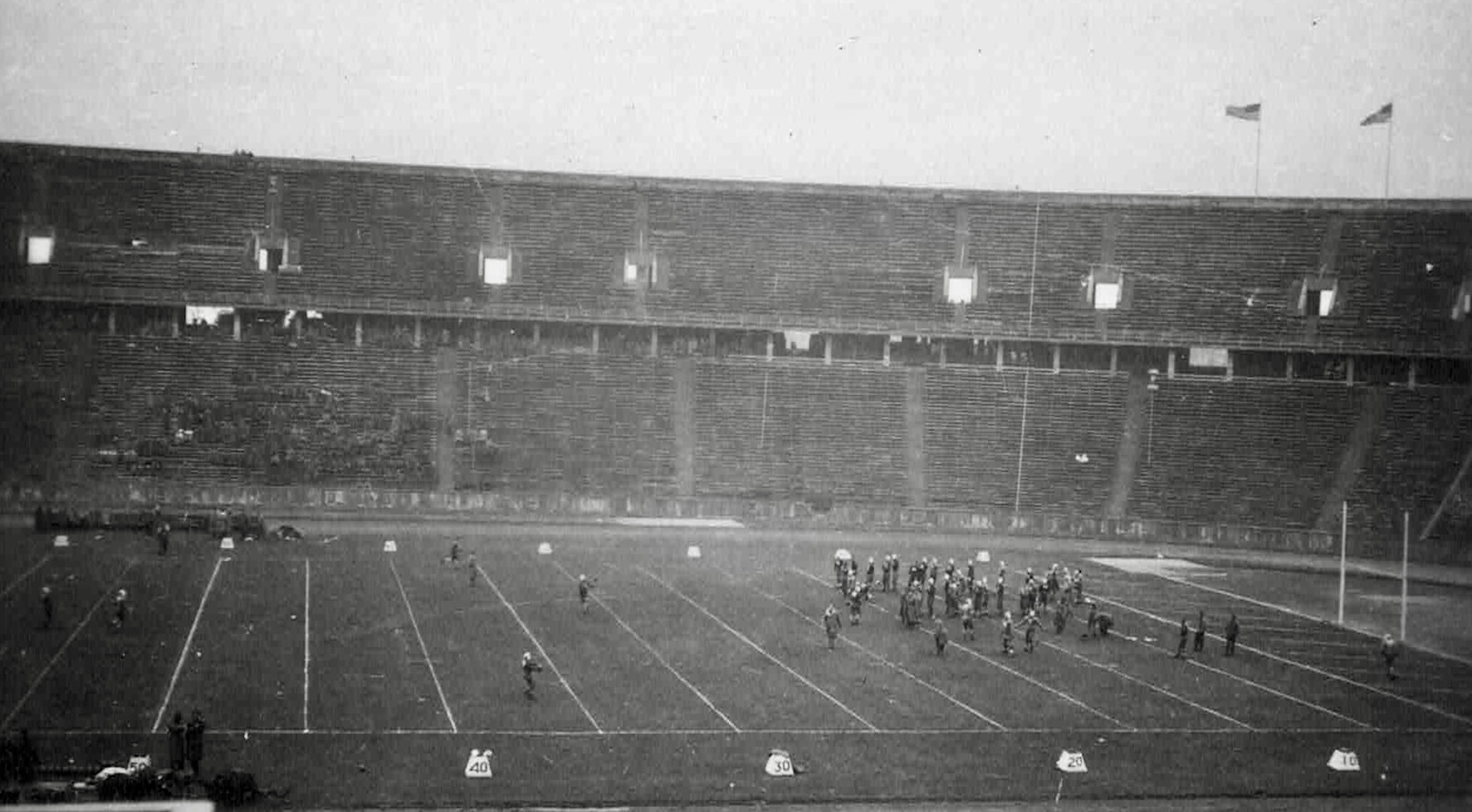
Fighters Honored at Zeppelin Stadium

How can these people be loyal to such a leader?

My Mother and Audie Murphy Ch. 66

Flo’s letter home was published in her hometown newspaper, the Yakima Republic.

Miss Wick in Germany: Sees Yanks Parade in Hitler Center

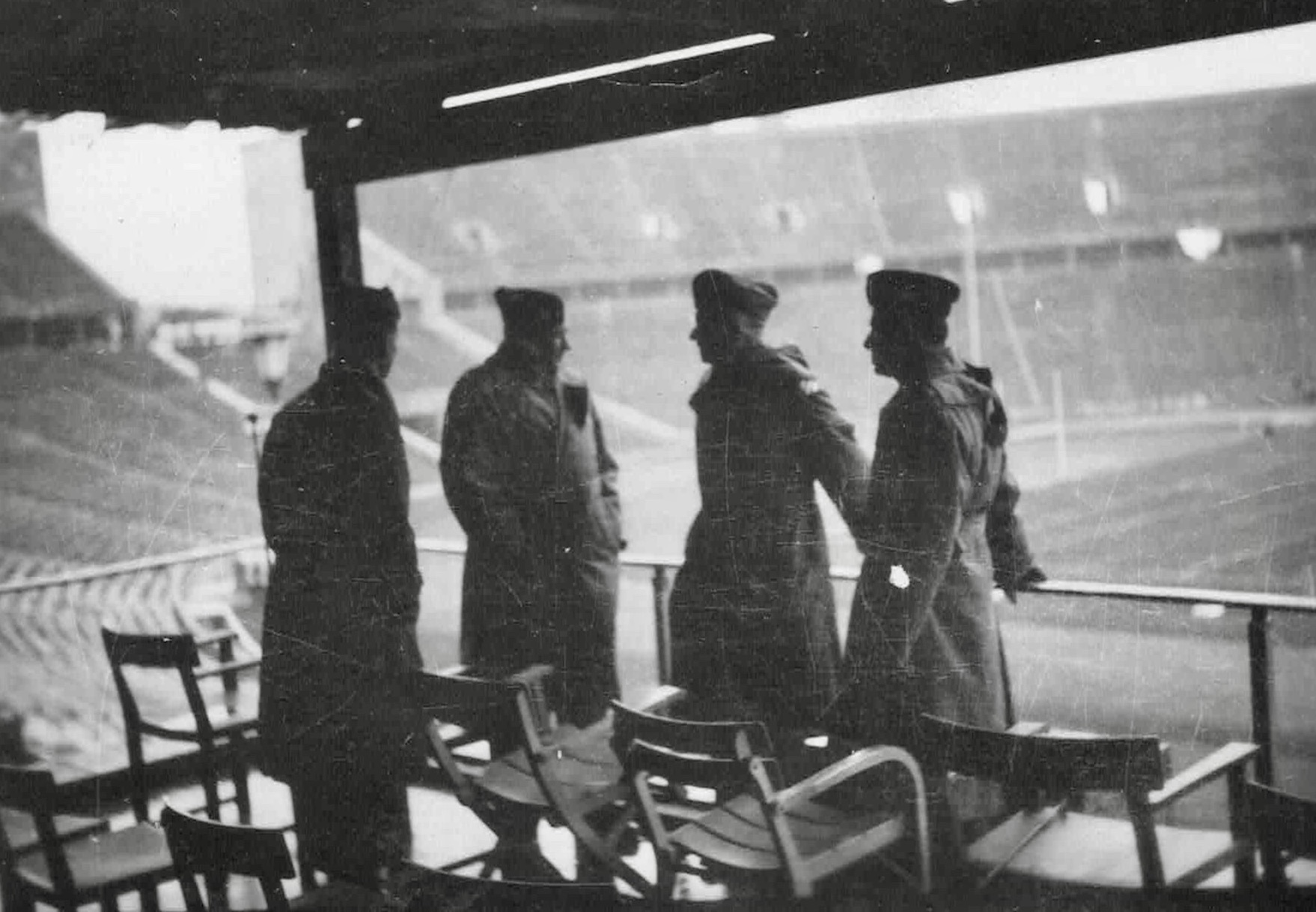
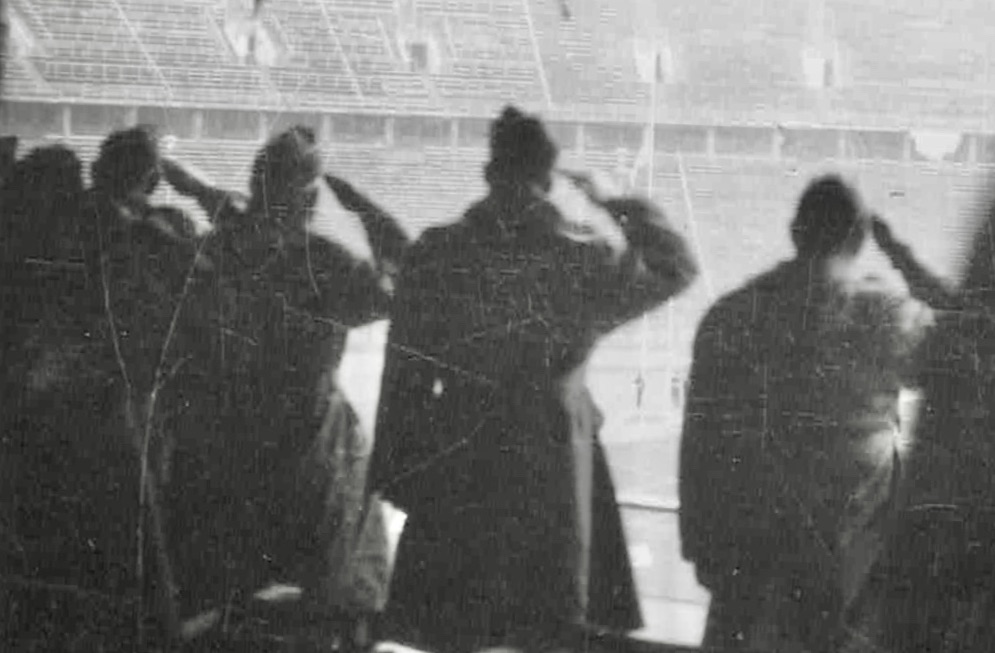
Parades in Hitler’s former stamping ground and presentation of congressional medals to brave American boys in a big Nazi stadium formerly ornamented with swastika flags, are among the sites witnessed by Miss Florence Wick, who is with the American Red Cross in Germany.

“General Patch presented five congressional medals of honor in the exact spot where Hitler used to ‘sell’ his theories to the Germans,” Miss Wick writes her mother, Mrs. Gerda Wick. “I have seen one of the biggest and most famous of Nazi cities in complete ruin. We drove in jeeps down streets which air corps and artillery have reduced to rubble.

War Messy

“War is a mess and how these people can be loyal to a leader who led them into it and brought about such destruction is more than I can understand. It is really something to drive through town after town and see white flags flying from windows.”

Hitler’s Zeppelin Stadium. Photo: Flo Wick

The doughnut business continues good, Miss Wick wrote three weeks ago. The Red Cross workers had been steadily on the move but serving doughnuts all of the time. Germany is beautiful now, especially in the places where the fruit trees bloom and everything is neat and clean, she says. Mail is slow when Red Cross workers, like the soldiers, are on the move. The weather was so warm they were wearing spring cotton uniforms, Miss Wick said.

“The cotton dresses are so welcome because I get tired of uniforms and can wear the dresses after work and when I go out or have company,” Miss Wick commented upon receiving some clothes from home. “We have to do our own laundry and it is a task with no conveniences, but cotton clothes make it simpler.”

Stars and stripes raised above the swastika at Zeppelin stadium. Photo: Flo Wick

Women Find Home

Most of the time the Red Cross workers have been living in tents although Miss Wick and her roommate found a room in an empty German house on their last move and were enjoying the comforts of a regular dwelling.

We have lovely days in between showers and the countryside is beautiful. We had a picnic in a patch of woods just below an old castle the other evening. We marveled that we were eating fried chicken and hard boiled eggs on a picnic in the woods of southern Germany.”

Ch. 67: https://mollymartin.blog/2025/10/29/around-munich-and-salzburg/

A Visit from Marlene Dietrich

She “spent more time at the front lines than Gen. Eisenhower”

My Mother and Audie Murphy Ch. 64

April 1945. Marlene Dietrich was a huge movie star. Flo was star struck and delighted to meet her when she visited soldiers and the clubmobile crew in a field somewhere in southern Germany.

Dietrich was also a WWII hero. She became an active participant in the American war effort after renouncing her German citizenship and refusing to cooperate with the Nazi regime. She sold war bonds, raised significant funds for the troops, and performed hundreds of morale-boosting shows for Allied soldiers—often close to the front lines—through her USO tours. 

Flo wrote: “Marlene up front. We took her picture. The GIs took ours.

Dietrich was a humanitarian. She housed German and French exiles, provided financial support, and advocated for their American citizenship. In the late 1930s, she co-founded a fund with Billy Wilder and several other exiles to help Jews and dissidents escape from Germany. In 1937, she placed her entire $450,000 salary from Knight Without Armor into escrow to assist refugees. Two years later, in 1939, she became an American citizen and formally renounced her German nationality.

After the U.S. entered World War II in December 1941, Dietrich was among the first public figures to help sell war bonds. From January 1942 through September 1943, she toured the United States, and was reported to have sold more war bonds than any other Hollywood star.

“Danube River (It ain’t blue)”

During two extended USO tours in 1944 and 1945, Dietrich performed for Allied troops in Algeria, Italy, the United Kingdom, France, and the Netherlands, and later entered Germany with Generals James M. Gavin and George S. Patton. When asked why she risked being so close to the front lines, she simply replied, “aus Anstand”—“out of decency.” Billy Wilder later remarked that she had spent more time at the front than General Dwight D. Eisenhower.

In 1944, the Morale Operations Branch of the OSS launched the “Musak Project,” a series of musical propaganda broadcasts designed to weaken enemy morale. Dietrich recorded several German-language songs for the project, including “Lili Marleen,” a tune beloved by soldiers on both sides of the conflict.

Dietrich’s return to West Germany in 1960 for a concert tour was met with a mixed reception. Despite negative press, bomb threats, and protests from those who considered her a traitor, her performances drew large crowds. In Berlin, demonstrators shouted, “Marlene, go home!” Yet she also received warm support from others, including Berlin Mayor Willy Brandt, who, like Dietrich, had opposed the Nazis and lived in exile during their rule. Emotionally drained by the hostility she faced, Dietrich vowed never to return to West Germany—though she was warmly welcomed in East Germany.

Her contributions earned her numerous honors, including the American Presidential Medal of Freedom and the French Legion of Honour. For her efforts to improve morale among troops and aid those displaced by the war, she received additional honors from the United States, France, Belgium, and Israel. 

More photos from this page in Flo’s album

30th Infantry Regimental Review

Captured Kraut plane

Nurnberg burning

Ch. 65: https://mollymartin.blog/2025/10/25/nurnberg-burning/

After the 3rd Crosses the Rhine

“Force used tyranically is our common enemy”

My Mother and Audie Murphy Ch. 62

In To Hell and Back, Murphy tells of the last days of the war.

After the crossing of the Rhine, the dike seems to crumble, and a flood of men and equipment pours into Germany. Even the most fanatical Nazis must sense that the game is over, yet they still deceive the population with promises that resistance will bring a negotiated peace rather than unconditional surrender. If they still want war, the Americans give it to them. With victory in sight, they do not soften. Artillery levels sections of towns; flames lick across burning buildings. Infantry and armor prowl rubble-strewn streets, and blood flows needlessly through the gutters.

A column of German prisoners is escorted by 3rd Division soldiers after their capture in Nuremberg, Germany. The fight for the city from April 17-20, 1945 was a tough one for the 3rd Division including mines, booby traps, Panzerfaust, snipers and futile counterattacks. Photo: Dogface Soldier

As the battle lines roll forward, windows drip with white flags. Any house without the mark of surrender receives no polite warning; soldiers rake its windows with machine-gun fire to correct the oversight. The tactic works.

Murphy is transferred to liaison duty, serving as the contact man between the division’s units. Near Munich, he enters a prison camp with his gun drawn and comes face-to-face with a German guard. The prisoners insist the man is a “good joe.” Murphy hears the phrase and thinks bitterly, Maybe he is. But I cannot see men anymore—I see only uniforms. He holsters his pistol.

The German mumbles something and stumbles toward a set of steps.

There is something pathetically human about his odd, hobbled walk…. Perhaps it is the knowledge that we carry in our hearts that nobody ultimately wins. Somewhere we all go down. Force used tyrannically is our common enemy. Why align ourselves with it in whatever shape or fashion.

A man and woman inspect their damaged home in Neuheusen east of Bamberg. Photo: Dogface

Then comes the great picture of mass defeat, the most overwhelming sight of the war. It appears in the bent figures of old women poking through ruins for some miserable relic of the past; in the shamed, darting eyes of the beaten; in the faces of little boys who watch the triumphant columns with fear and fascination. Above all, it appears in the thousands of dusty, exhausted soldiers streaming toward the stockades. Their feet clump wearily, mechanically, hopelessly along the seemingly endless road of war. They move as haggard gray masses in which the individual has no life and no meaning. It is impossible now to see in these men the fierce power that made them fight like demons out of hell only a few months before.

Ch. 63: https://mollymartin.blog/2025/10/17/we-were-once-all-antifascists/

All the Best Fields in Germany

Fritzie has a soldier boyfriend!

My Mother and Audie Murphy Ch. 61

Flo titled this page of her album “With the Q.M. in all the best fields in Germany.

The Quartermaster Corps was responsible for supplying the essentials—food, clothing, and equipment—to soldiers on the front lines. They ran supply depots, managed transportation networks, and made sure the troops had what they needed to keep operations moving.

This page of the album is packed with photos. What do they reveal on closer look?

Spring has arrived in 1945. The grass is green again, and Flo is wearing her summer uniform in one picture.
Fritzie has a soldier boyfriend—or maybe a husband—named Bill!
Even though the crew has its own clubmobile, they still rely on a team of “donut boys” to do the actual frying. These clubmobilers may never have had to cook donuts themselves. Which kind of makes sense; they gave out thousands of donuts daily and needed a whole crew to make them.
Flo got to relieve a patrol—she’s still in the regulation Red Cross skirt.
The dog, T.D., remains a star attraction.
The group has been able to get into German towns.
The pictures suggest that the women are camped here with the Q.M. They’re back to living in tents—or maybe sleeping in their clubmobile again.

Ch. 62: https://mollymartin.blog/2025/10/13/after-the-3rd-crosses-the-rhine/

The Evolution of PTSD

The Brass Didn’t Buy It

My Mother and Audie Murphy Ch. 60

Everyone knew about General George Patton’s infamous “slapping incidents,” when he physically attacked two soldiers under his command at hospital evacuation centers in August 1943. The episodes became international news — two among several erratic outbursts that may have led to his eventual removal as commander of the Seventh Army in Europe.

A woman sifts through the rubble of her home in Steinach. In the first half of April, 1945, the allies moved quickly through German towns, many already destroyed by bombing. photos: Dogface Soldier.

The men Patton slapped had been diagnosed with “exhaustion” and “psychoneurosis,” terms then used for what we now recognize as post-traumatic stress disorder (PTSD). During the First World War, it was called “shell shock.”

Patton didn’t believe in shell shock.

Steinach saw a fierce battle on April 7 before the Nazis retreated. Photo: Dogface Soldier collection

In a directive issued to his commanders, he explicitly forbade “battle fatigue” in the Seventh Army:

It has come to my attention that a very small number of soldiers are going to the hospital on the pretext that they are nervously incapable of combat. Such men are cowards and bring discredit on the army and disgrace to their comrades, whom they heartlessly leave to endure the dangers of battle while they, themselves, use the hospital as a means of escape. You will take measures to see that such cases are not sent to the hospital but dealt with in their units. Those who are not willing to fight will be tried by court-martial for cowardice in the face of the enemy.
— Patton directive to the Seventh Army, August 5, 1943

At the time, the Army Medical Department was beginning to study what would later be classified as PTSD, but most of the officer corps still regarded it as cowardice.

The devastation in Lohr was mostly caused by American artillery. Photo: Dogface Soldier collection

Audie Murphy, who saw more front-line combat than almost any other American soldier, witnessed many such breakdowns. As the war dragged on and he watched more men “crack up,” his own understanding and empathy evolved. The first episode he describes in To Hell and Back is met with derision from his men — and from himself:

“Olsen is the first to crack up. He throws his arms around the company commander, crying hysterically, ‘I can’t take any more.’ The harassed captain tries to calm him, but Olsen will not stop bawling. So he is sent to the rear, and we watch him go with hatred in our eyes.
‘If I ever throw a whingding like that, shoot me,’ says Kerrigan.
‘Gladly,’ I reply. ‘In North Africa I thought he was one tough boy.’
‘Yeah, he threw his weight around plenty.’
‘He seemed to be everything the War Department was looking for. He was my idea of a real soldier. Then one night that little Italian, Corrego, came in drunk; and Olsen beat him up.’
‘He should have been shot right then.’”

Lohr saw heavy fighting as allies advanced on April 3. Photo: Dogface Soldier collection.

Later, Murphy watches another man lose his senses and die as a result:

“Staggering with weariness and snarling like wolves, we meet the Germans again… We slip within 200 yards of their lines before they turn the full force of their weapons upon us. Obviously, they intend our complete annihilation.
Under the furious punishment, a man a few yards from me cracks up. He begins with a weeping jag; then, yelling insanely, he rises to his feet and charges straight toward the German lines. A sniper drills him through the head; and a burp gun slashes his body as he falls.”

Poppenlaur displayed flags made from any white fabric that could be found. Photo: Dogface Soldier.

Near the end of the war, Murphy’s tone shifts. He shows compassion and understanding when a soldier named Anders returns to the front, determined to stay with his comrades despite his shattered nerves:

“Before we have had time to regroup for instructions, the shells fall into our midst. Eight men are knocked out; and Anders cracks up. It is not his fault. He has courage to spare, but body and nerves have taken all they can stand. He has heard one explosion too many; seen one too many die.
As we check the dead and wounded, his voice goes thick. I grab him by the shoulder. He shudders and begins to shake violently.
‘What’s the matter?’
‘I’ve gone all to pieces.’
‘Stay here and wait for the medics. You shouldn’t have come back up.’
‘N-n-no. No. No.’
‘You’re no good in that shape.’
‘I’ll come out of it.’
‘The hell you will. You can’t let the men see you in that condition.’
‘I’ll be quiet. I won’t say anything.’
‘You’re going to tell it to the doctor.’
‘If you think so, maybe I should. Maybe I should.’
He rejoins us the next day. I curse him heartily, but he only grins. When we come under heavy artillery fire, that grin is quickly erased. His nerves collapse again… Whether or not he knows or wants it, he is through. Finished. This time when I send him to the rear, I also send the colonel word to keep him there.”

Photo: Wikipedia

Murphy himself suffered from PTSD for the rest of his life. After the war, he spoke publicly about it and tried to alert the Army to its dangers — but at the time, the brass didn’t want to hear it.

Meanwhile, during the war, doctors at an airbase hospital in Arizona began recognizing and treating PTSD with compassion rather than punishment or electroshock. Their pioneering work inspired the 1963 film Captain Newman, M.D., starring Gregory Peck, Tony Curtis, Angie Dickinson, Bobby Darin, and other notables. Five stars from me.

Ch. 61: https://mollymartin.blog/2025/10/09/all-the-best-fields-in-germany/

Clubmobiling in Germany

The ARC crew finally gets its own truck

My Mother and Audie Murphy Ch. 59

March 1945. The clubmobile was a two-and-a-half-ton GMC truck outfitted with coffee and donut-making equipment, and side windows that opened into a makeshift canteen—something like the taco trucks we see in cities today.

Scores of these trucks rolled onto Omaha Beach in July 1944, just weeks after the D-Day landings in France, each assigned to a crew of four American Red Cross (ARC) women. Their mission was to follow the troops, serving donuts, coffee, and good cheer to the men coming off the front lines.

The ARC women who landed in Italy, including my mother, Flo Wick, traveled with the armies north through southern France and all the way to the Rhine. But until they crossed into Germany, Flo’s crew had no clubmobile of their own. They improvised, scrounging whatever vehicles they could find to deliver donuts to soldiers.

Flo and Janet with TC loving their new truck

On this page of her album, Flo posted the first pictures of clubmobiling in Germany. Here, at last, they were issued their own truck—nearly a year into their service overseas.

The photos hint at a trade-off: the women may have had to endure some “good-natured” groping in exchange for their vehicle. Flo names “Lamour Harrigan” of the 7th Infantry Service Company as the man with his arms locked tightly around her. She is laughing in the photo, but the other women’s faces tell another story. Liz looks distinctly unhappy, while Fritzie, in trousers and an army jacket, seems to be sidestepping unwanted attention.

Flo herself is captured dancing in the mud. On the back of the photo she wrote: “Markelsheim, Germany. Jitterbugging in the mud—March 1945. Note the big galoshes. Sad days.”

So she did learn to jitterbug after all. But the note carries a weight. There were plenty of reasons to feel sad—her fiancé, Gene, had been killed, and so many others were dying still. Yet she put on a brave face. Must smile.

Interestingly, on the same album page, Flo pasted a picture of her boyfriend, Lt. Col. Chris Chaney. Perhaps it was her way of making clear she wasn’t romantically tied to any of the men in those muddy, grinning snapshots.

Janet and the crew’s dog, TC. That’s Liz sitting on the Clubmobile’s hood.

The ARC crew’s adopted dog, TC, had been with them since they landed in France (TC is short for something, but I can’t remember what). They all doted on him, but from these pictures it appears he took to Janet more than the others. His presence offered moral and emotional support to both the women and soldiers.

The clubmobile crew: Flo, Janet, Liz, Fritzie

Ch. 60: https://mollymartin.blog/2025/10/05/the-evolution-of-ptsd/