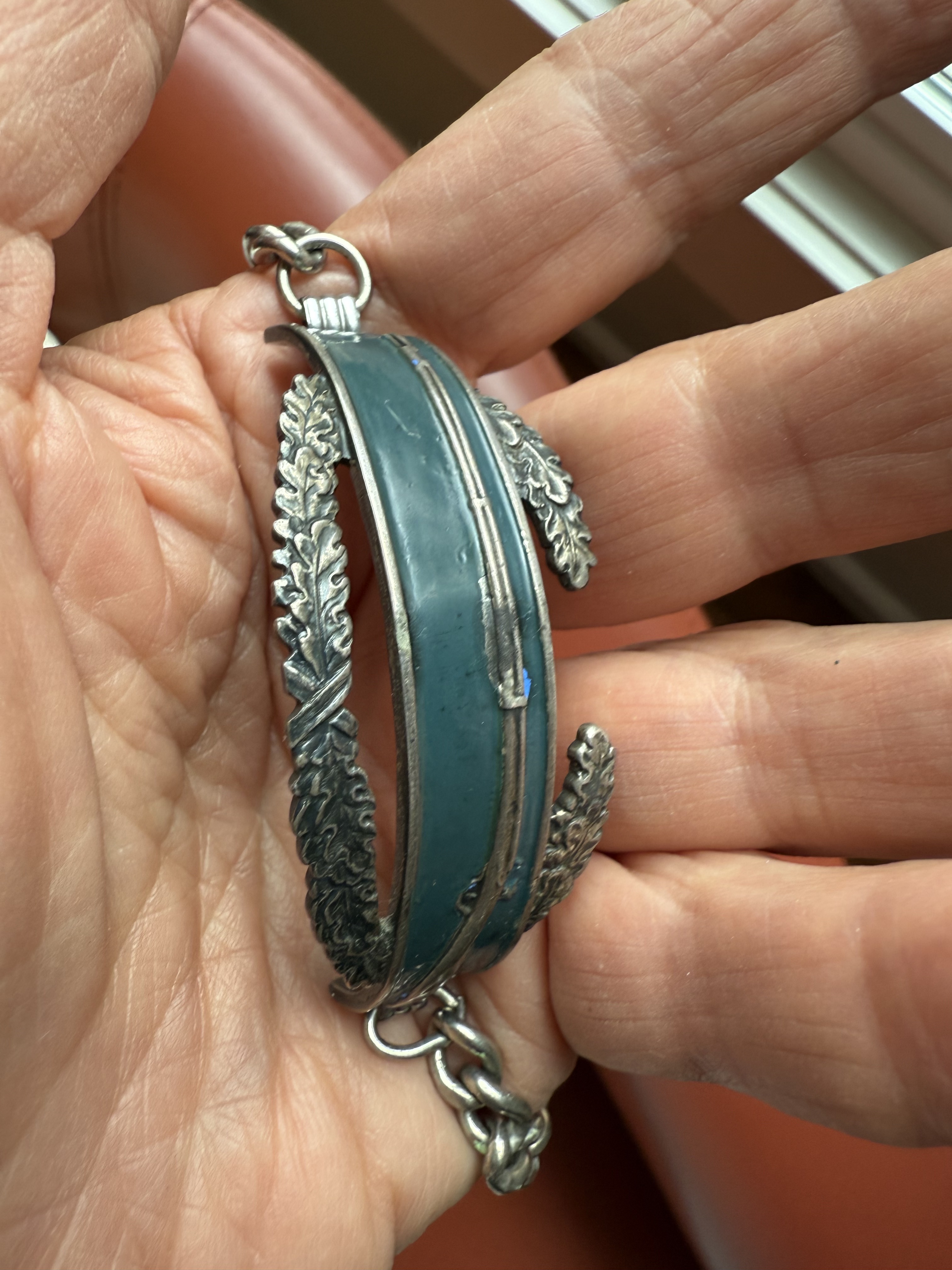
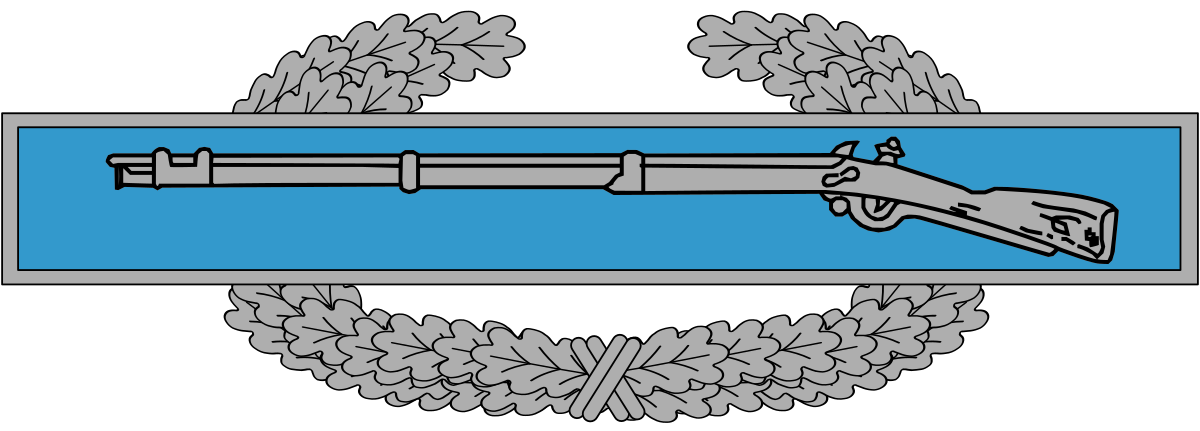
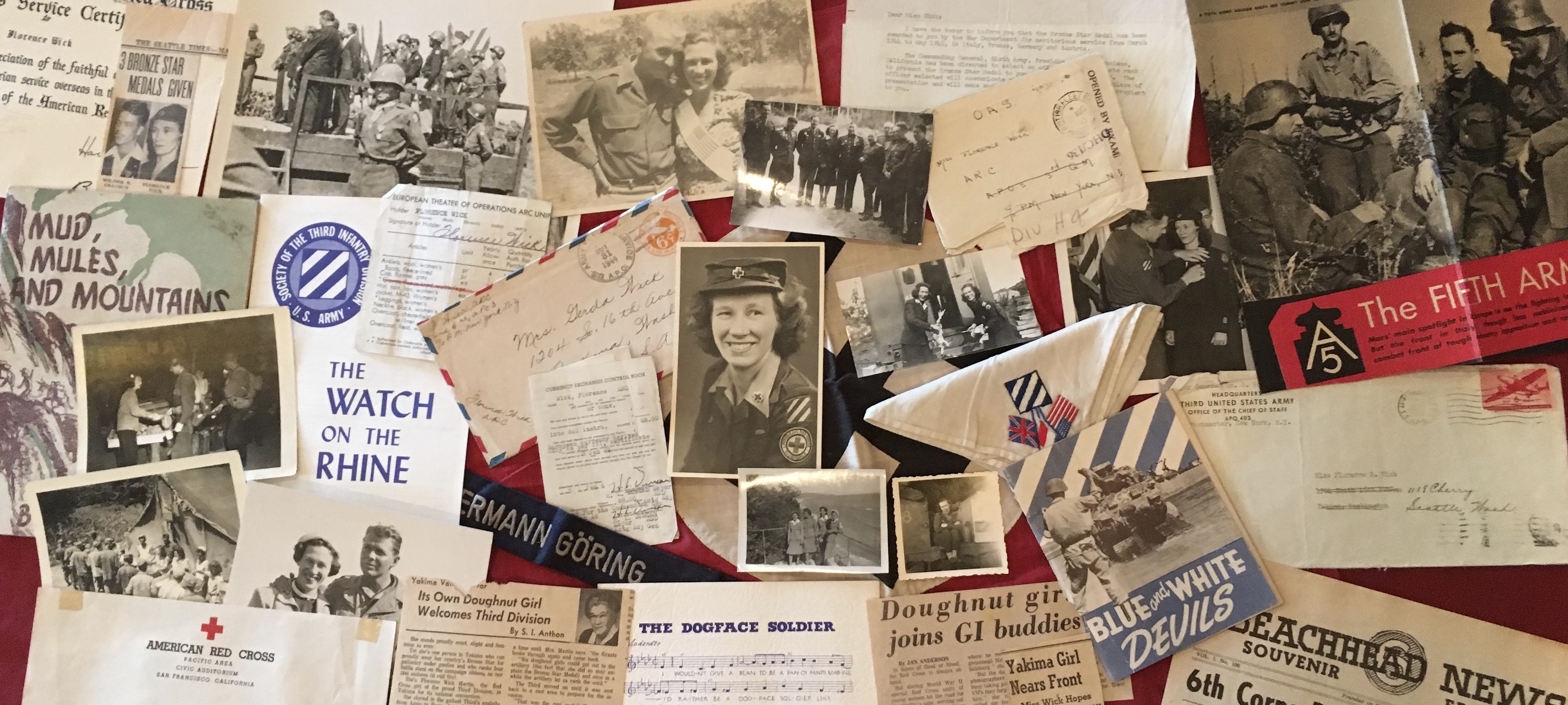
After her death, in Flo’s jewelry box I found a bracelet made from a Combat Infantryman Badge. The badge is a U.S. Army decoration awarded to infantrymen and Special Forces soldiers, colonel rank and below, who fought in active ground combat after December, 1941. The same badge appears here on the dance invitation. I imagine it had been awarded to Flo’s fiancé, Gene Gustafson, and that she had it fashioned into a bracelet she could wear.
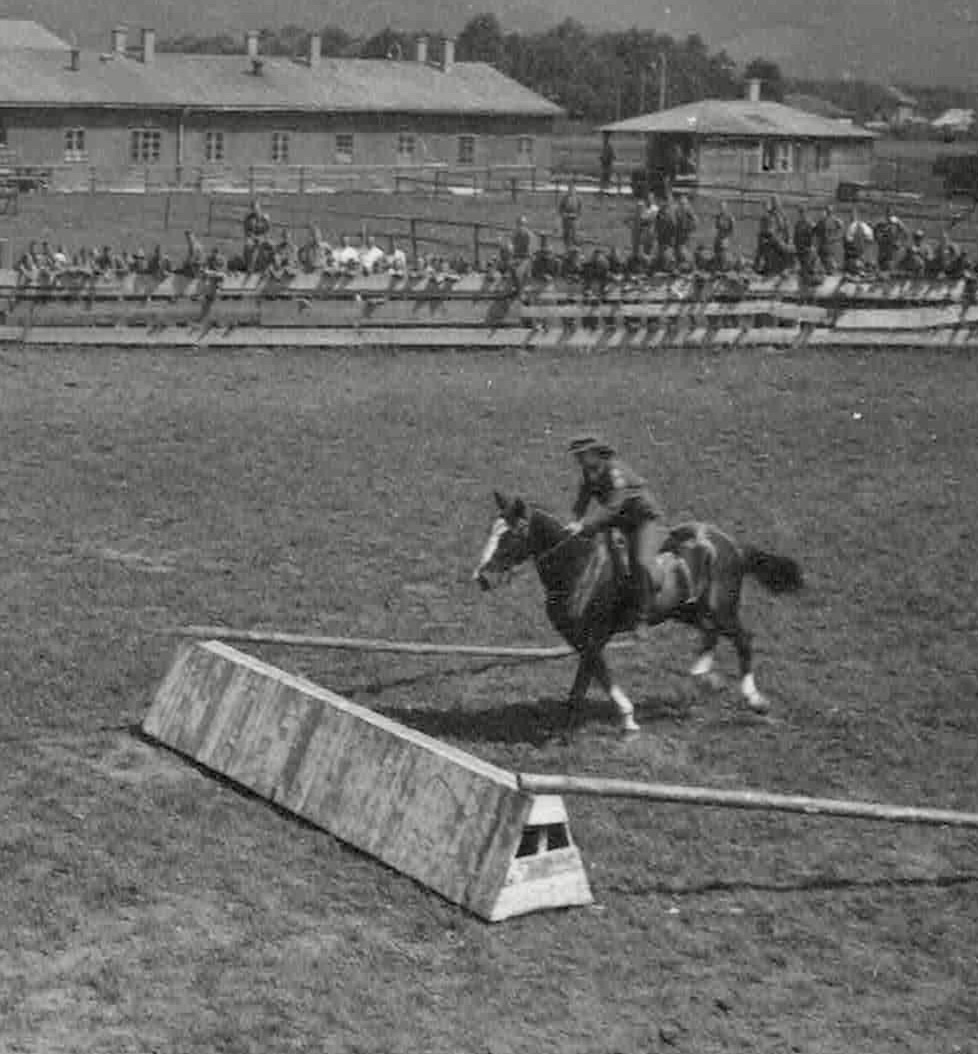
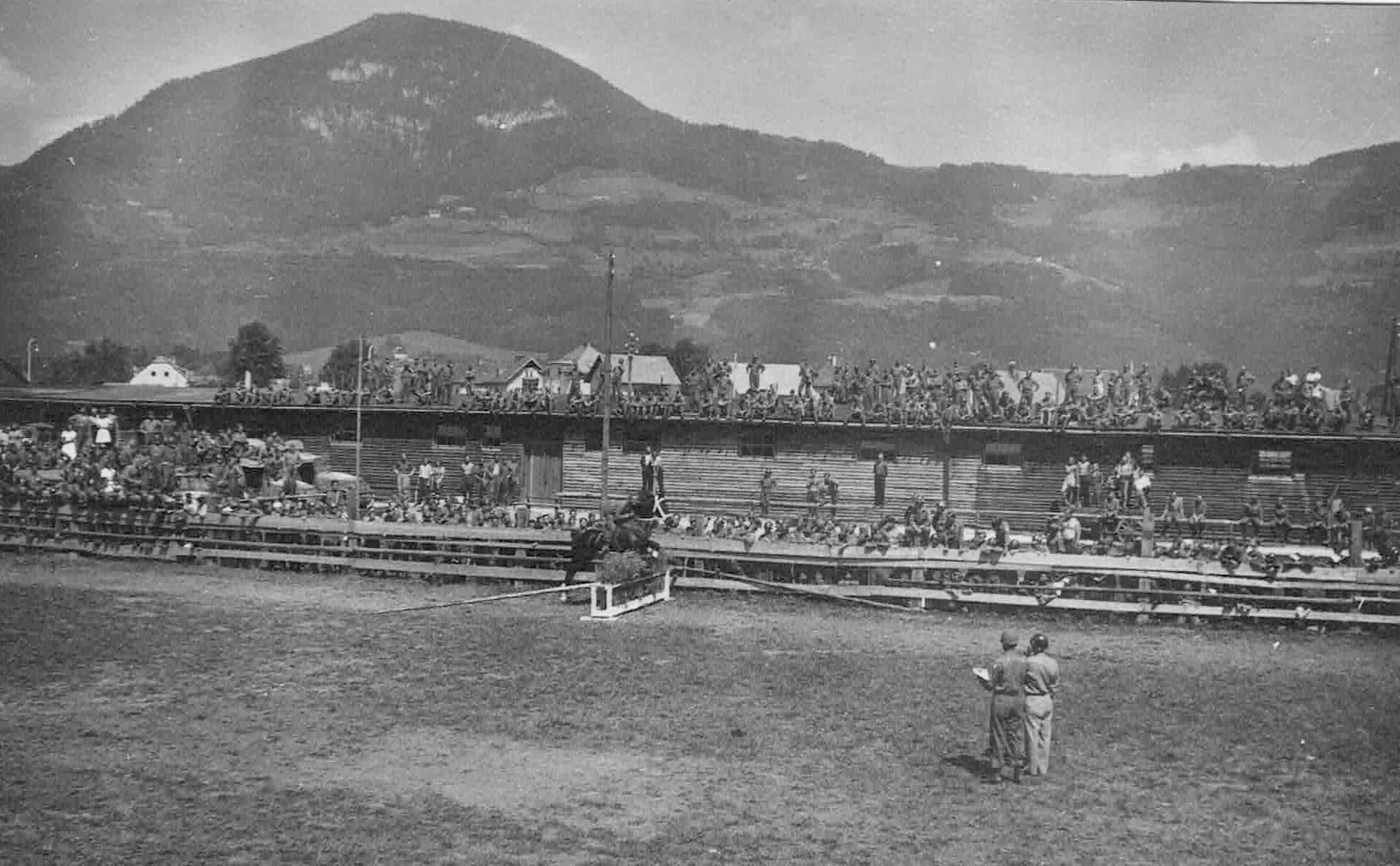
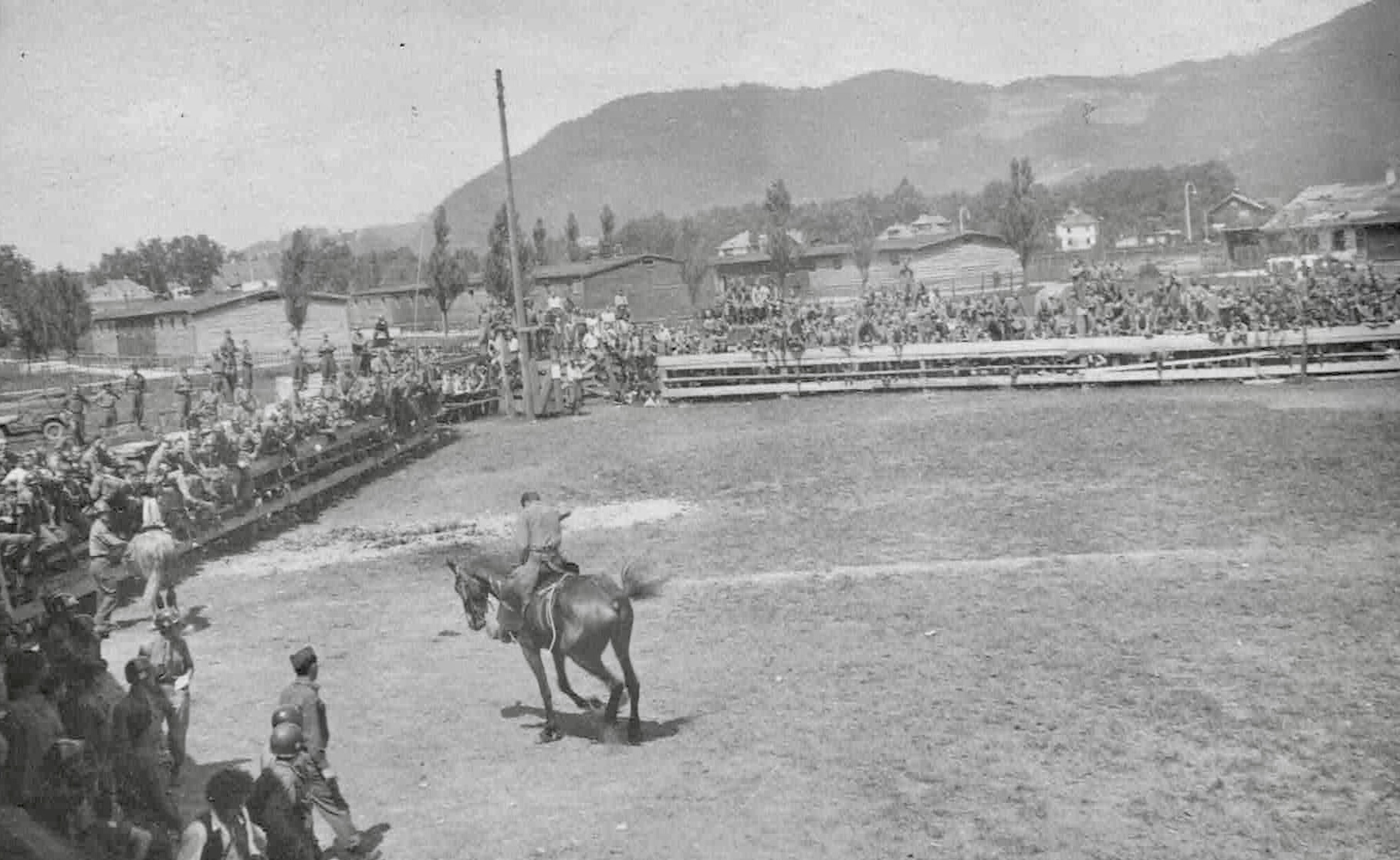
For almost ten weeks—from May 4 to July 13, 1945—the 3rd Division enjoyed a rare stretch of life without combat in and around Salzburg. To help soldiers shift from warfighting to occupation duty, the army quickly organized a full slate of sports and recreation. The Salzburg rodeo that Flo photographed was likely one of those morale-boosting events.
Clubmobiler Janet Potts, already an experienced equestrian with competition miles behind her, took part in the show. Even so, jumping with an unfamiliar horse must have been a challenge. And the horses themselves raise questions: where did they come from? Were they seized from a high-ranking Nazi officer? Whatever their origin, they were striking animals—well trained, elegant, and responsive. One photo even seems to show an American soldier riding a dressage horse, completing the unlikely tableau of a rodeo in postwar Salzburg.
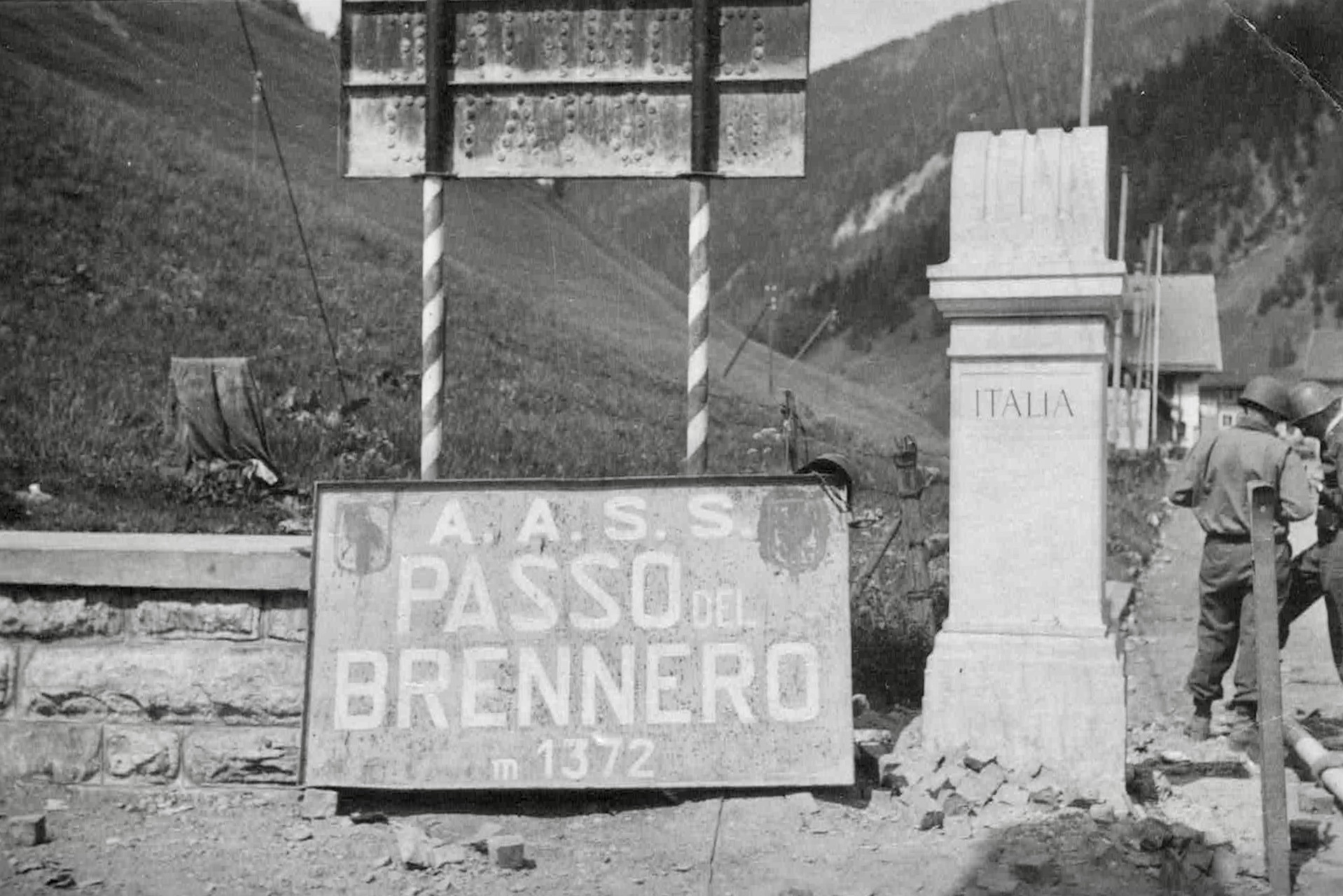
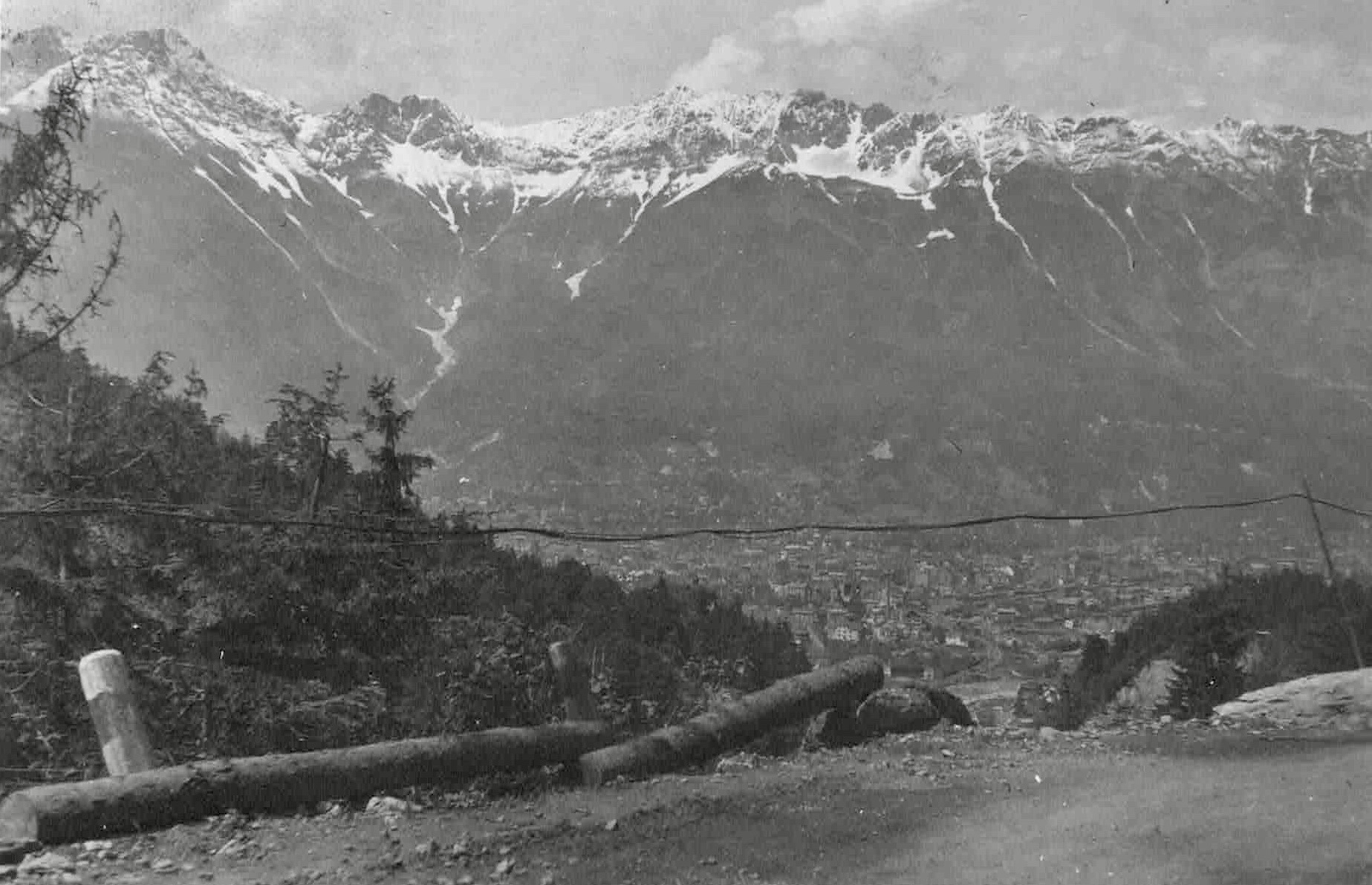
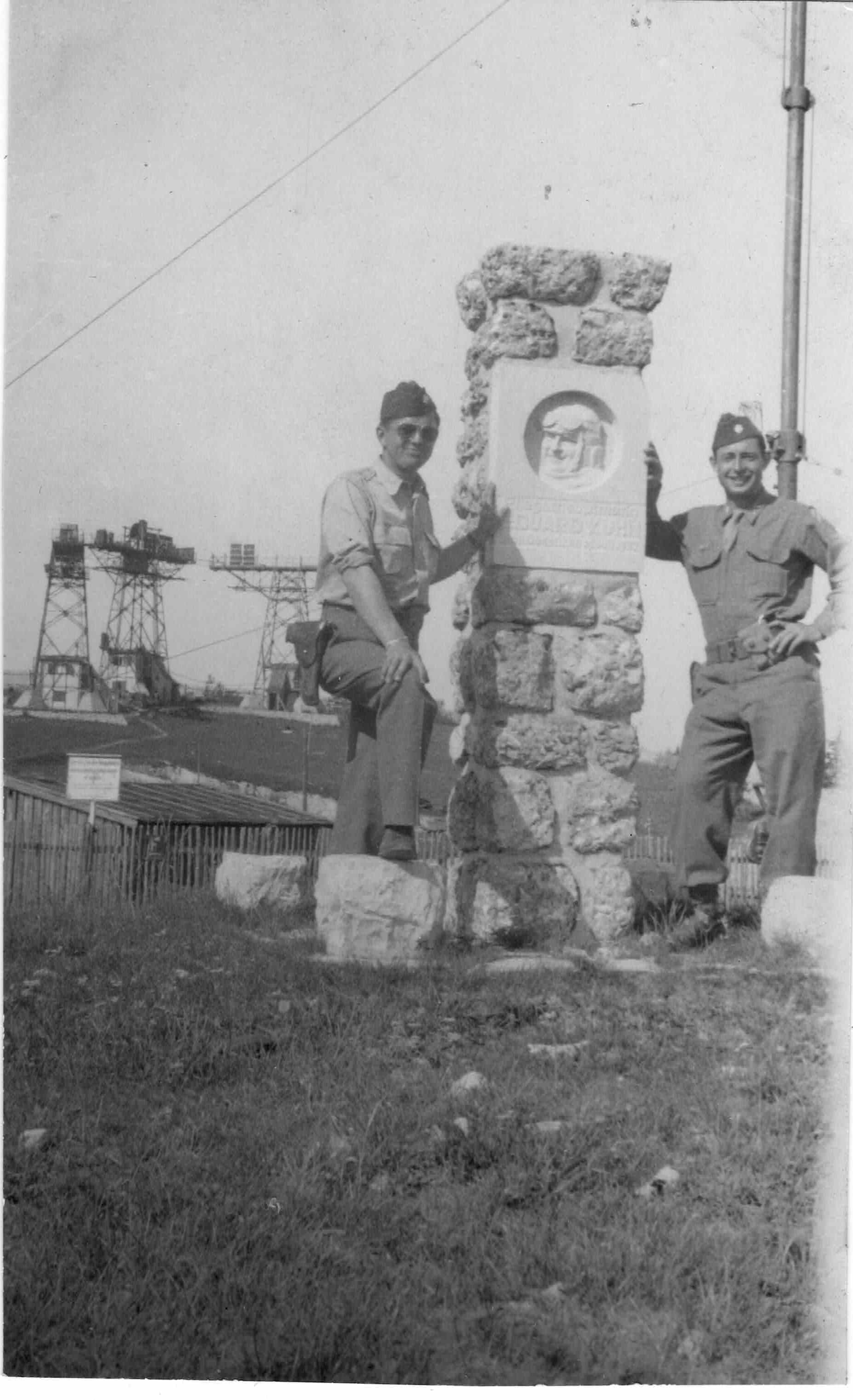
Flo stood at the border and looked across the Alps into Austria
My Mother and Audie MurphyCh. 77
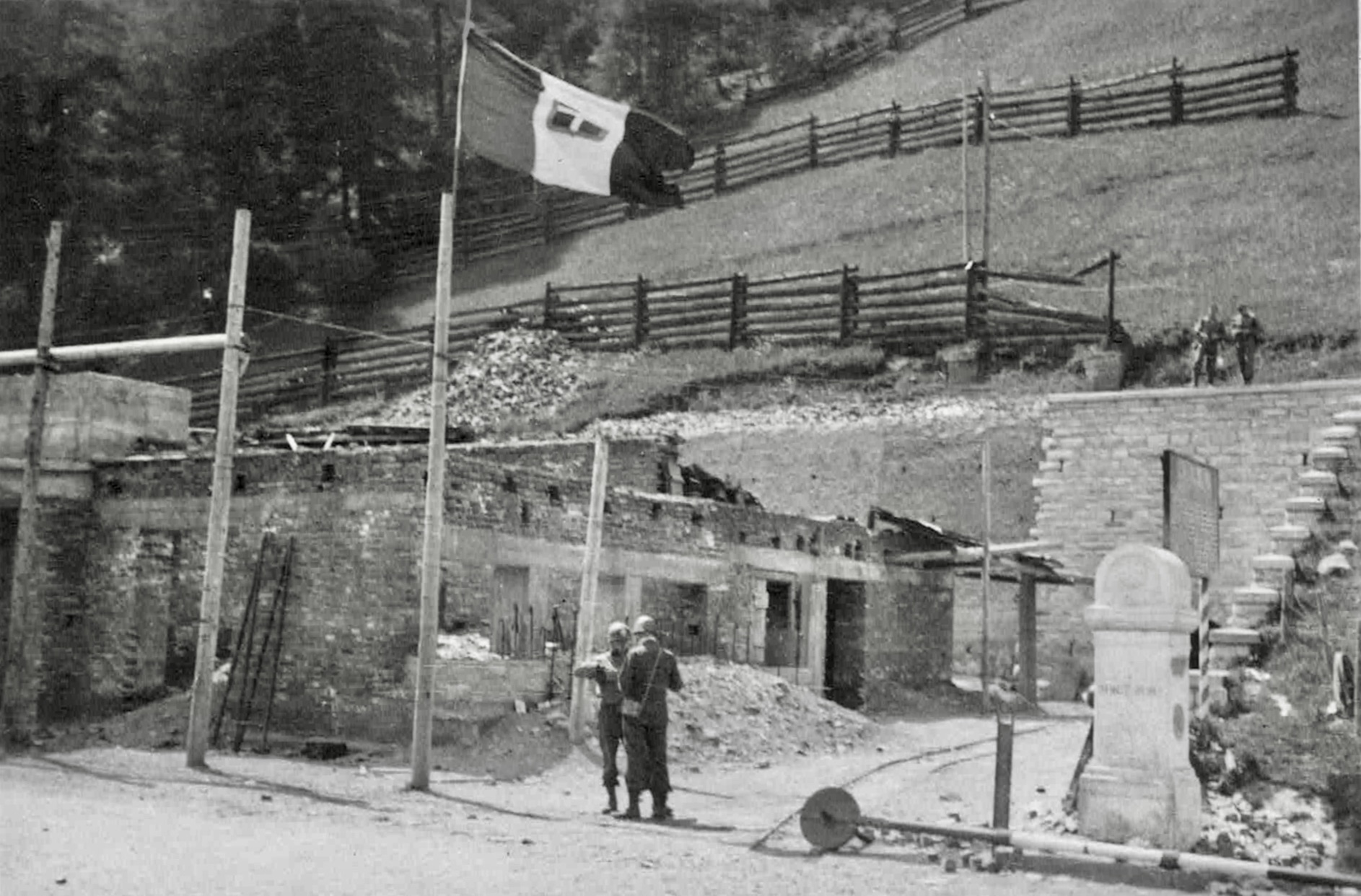
In May, 1945, just after the end of the war, Flo must have been excited to summit the Brenner Pass and see into Austria. Brenner Pass has long been a strategic gateway through the Alps, and its role intensified during World War II. After Germany annexed Austria in March 1938, the pass suddenly lay deep inside Hitler’s expanding Reich. Two years later, on 18 March 1940, Hitler and Mussolini met there to reaffirm their Pact of Steel.
When Italy signed an armistice with the Allies in 1943, Germany moved quickly to seize the pass and push the border with Mussolini’s new puppet regime far to the south. By 1945, American troops occupied the area, and the pass was returned to Italy once the war ended. In the chaotic aftermath, Brenner Pass also became one of the escape routes, part of the “ratlines” used by fleeing Nazi leaders. After the war, the pass once again marked the border between Italy and the newly independent Republic of Austria.
The sign shows the hard road from Salerno to AustriaSeen from the other sideGreat views from up there!
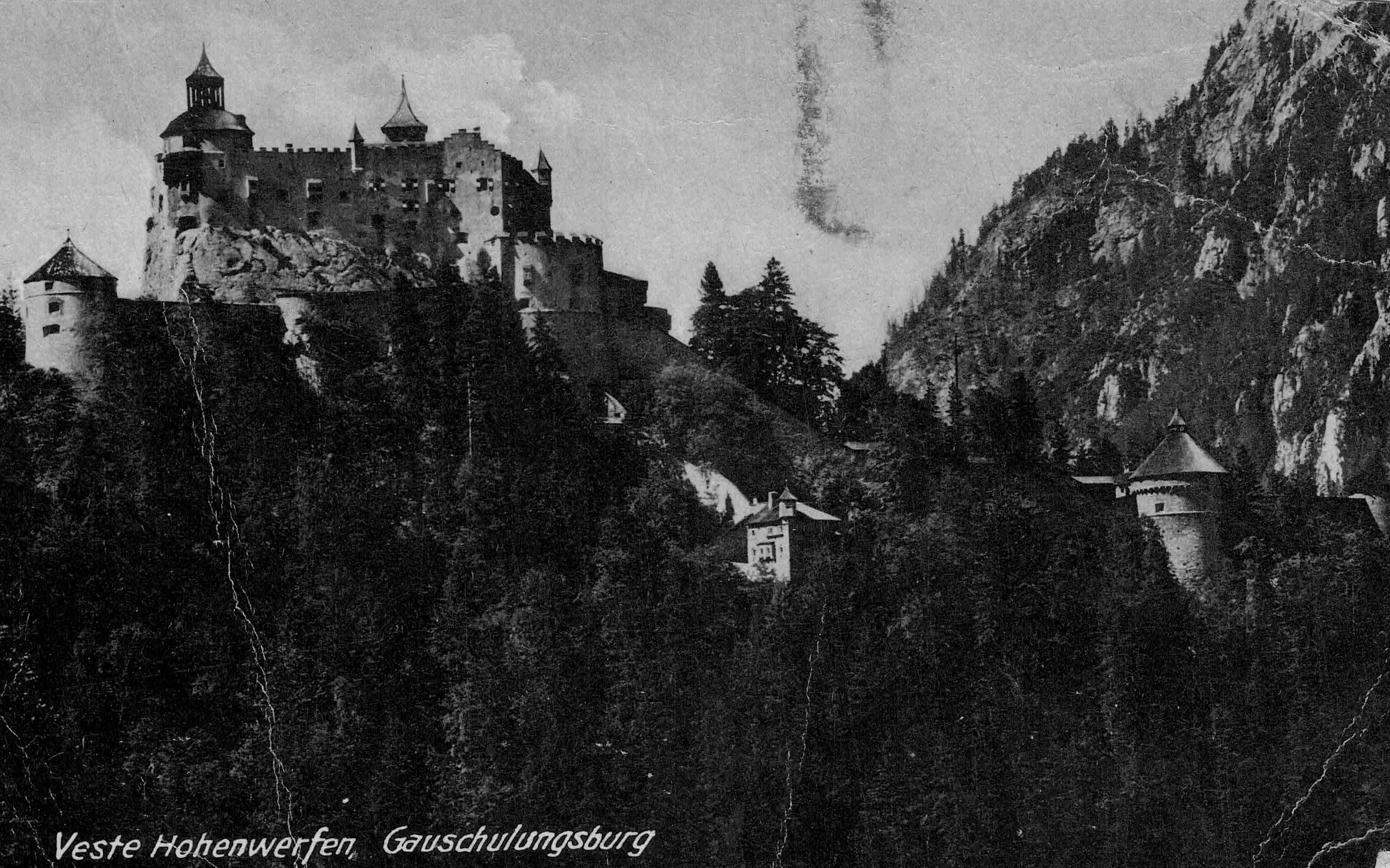
On June 25, 1945, Flo turned thirty-two, and her friends gathered to give her a proper birthday celebration. She spent the day with her clubmobile partner, Janet Potts, along with Janet’s boyfriend, Capt. Lloyd (Jens) Jenson, and Flo’s own boyfriend, Lt. Col. Chris Chaney. All four arrived in uniform as they wandered through the fortress castle that served as headquarters for the 15th Infantry above Salzburg. The women wore their Red Cross-issued dresses; the men their Army greens. They teased one another, snapped photographs in the grand corridors, and convinced Flo to pose in the old stocks for a laugh.
Later, they changed into civilian clothes and headed out for a picnic. Indoors, there was a birthday cake, and they captured more pictures—two couples who looked close, relaxed, and hopeful in the early summer after the war’s end.
These became the last images, and the last mention, of Flo’s relationship with Chris Chaney. The photographs made them seem comfortably paired, and although Janet and Jens eventually married, Flo and Chris did not stay together. She kept no letters from him after the war.
What became of him remained unclear. The two had talked about traveling to Paris and England, plans that never materialized. Most likely, he received an early chance to go home and took it. As a highly decorated officer with a Silver Star, he would have been near the front of the line for repatriation. Flo’s life moved forward, and whatever they had envisioned together faded with the summer.
Flo, Chris and JensJanet and JensRailroad tracks leading down from the fortressFlo posing in the ancient stocksFlo on her 32nd birthdayJanet and Jens at the picnicWhat did Chris do to deserve this?Or this?Celebrating war’s endThird Infantry Division buddiesHappy Birthday FloThere was even a birthday cake
More than 33,000 people in the province of Salzburg, including almost 13,000 in the provincial capital, had to register as former members of the NSDAP (National Socialist German Workers’ Party) or one of its organizations after the fall of the Nazi regime. Through the process known as denazification, the Austrian state sought to hold these people accountable and punish them, sometimes severely. However, the vast majority of those registered were considered denazified by the end of 1947 and escaped punishment. The US occupation authorities interned high-ranking functionaries of the Nazi system in Camp Marcus W. Orr, commonly known as Lager Glasenbach.
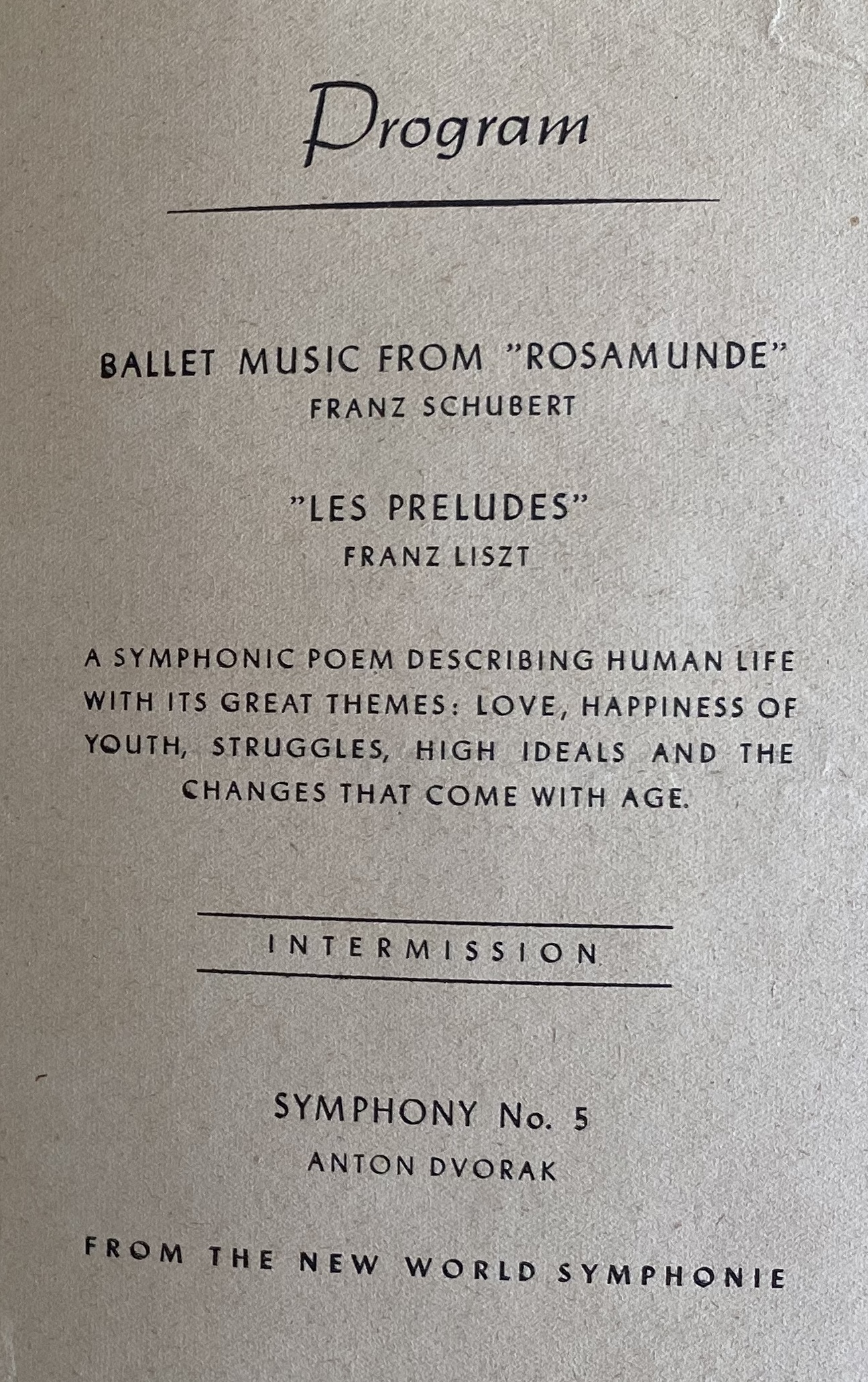
Flo and her cohort got to hear the Salzburg Festival Orchestra in concert
The denazification of Salzburg‘s cultural and art scene was one of the main concerns of US occupation policy. This also included the removal of over 2,000 books with National Socialist content from the holdings of the municipal library in Schloss Mirabell, which was able to resume its post-war service at the beginning of June 1945. Civilians were once again able to watch films in the cinema from July 1945. In the same month, the first public concert after the end of the war took place in the Great Hall of the Mozarteum and in September 1945. A performance was shown for the first time in the Salzburg State Theatre, which had been requisitioned by US forces.
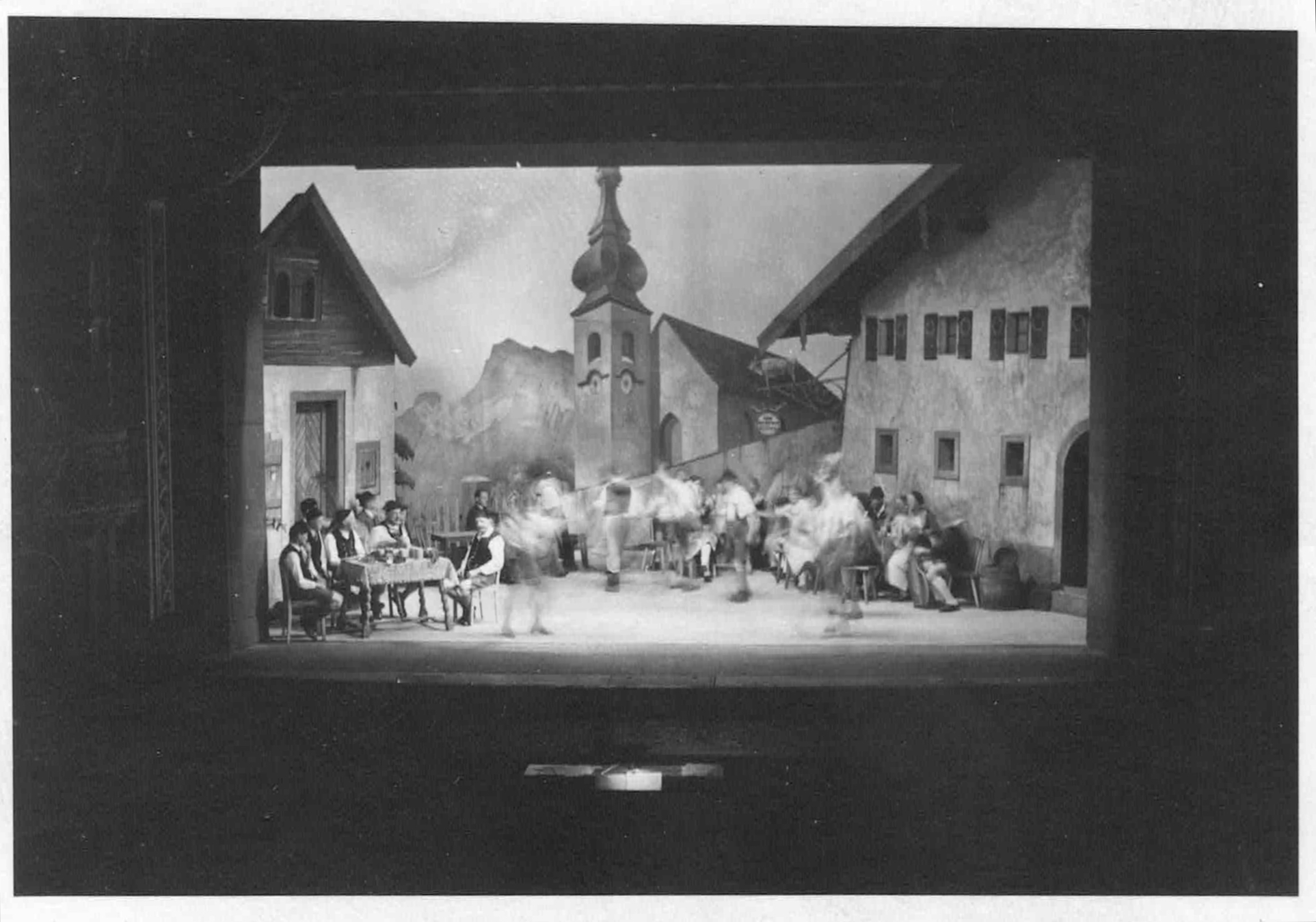
Bavarian dancers at the Salzburg Theater. Photos: Flo WickFlo got to know Margot Hielscher, a famous German actress. Here she is performing at the Salzburg Theater.
Margot Hielscher (1919-2017) was a German singer and film actress. She appeared in over fifty films between 1939 and 1994. She was chosen to represent Germany at the Eurovision Song Contest in 1957 and 1958.
Salzburg Festival
The US occupation authorities saw the Salzburg Festival as a central element in the reconstruction of Austrian identity. They lobbied hard to ensure that the Festival could take place again just a few months after the end of the war, although a large number of artists with Nazi backgrounds were not allowed to perform. Works by Austrian authors and composers dominated the program of the Festival, which began on August 12, 1945 with an opening evening featuring pieces by Wolfgang Amadeus Mozart, Johann Strauss, and Franz Lehár. Concerts were performed until September 1, including six ‘Österreichische Abende’ (‘Austrian evenings’) and two concerts of religious music. (From STADT-SALZBURG.AT The City of Salzburg in 1945.)
In and Around Salzburg
Clubmobilers serving the 15th Infantry in the Bavarian Alps15th Infantry anti-tank companyMajor Noser and Lt. Col Chaney at kraut radar station above Salzburg, Lt. Col. Chaney
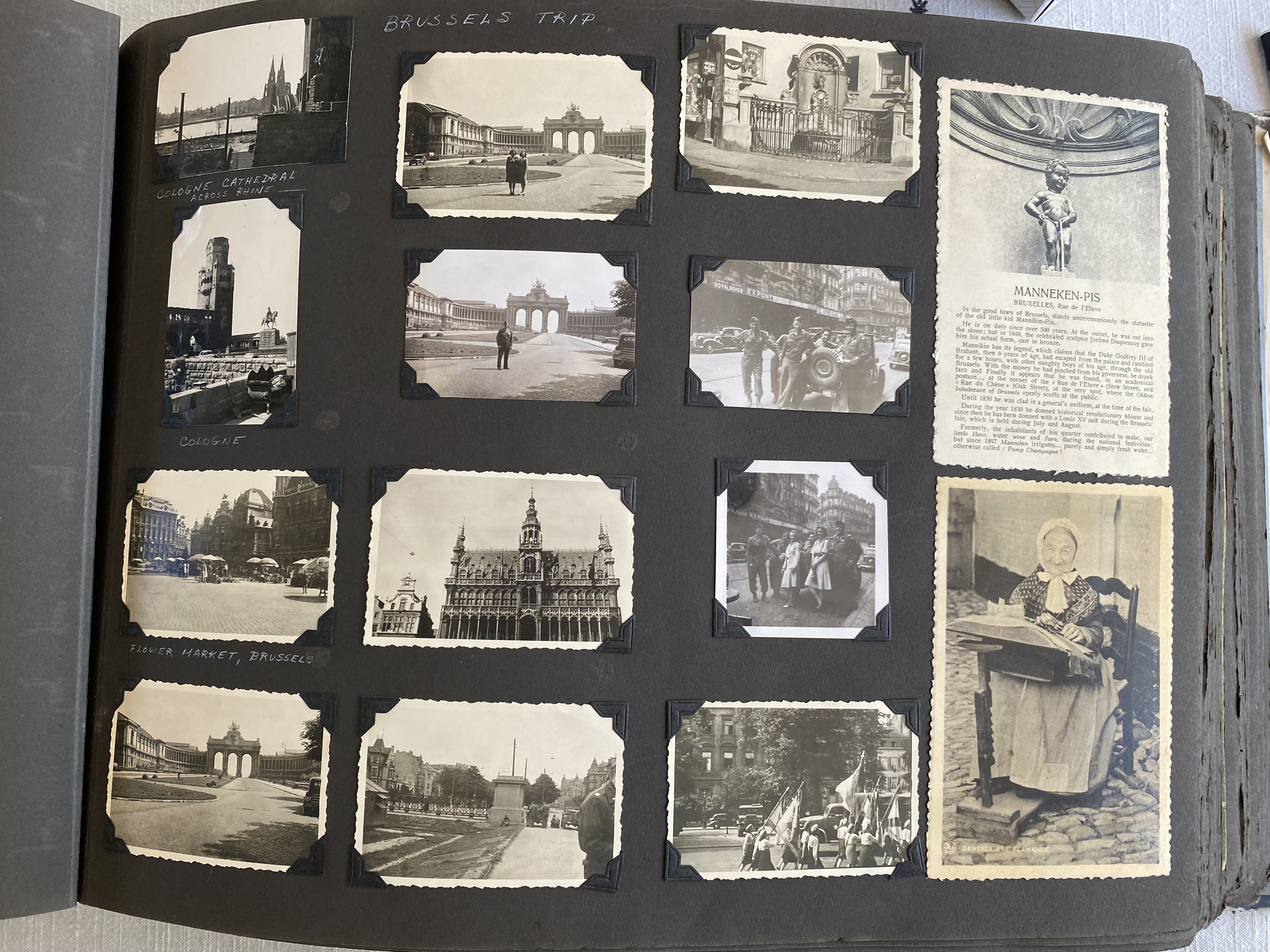
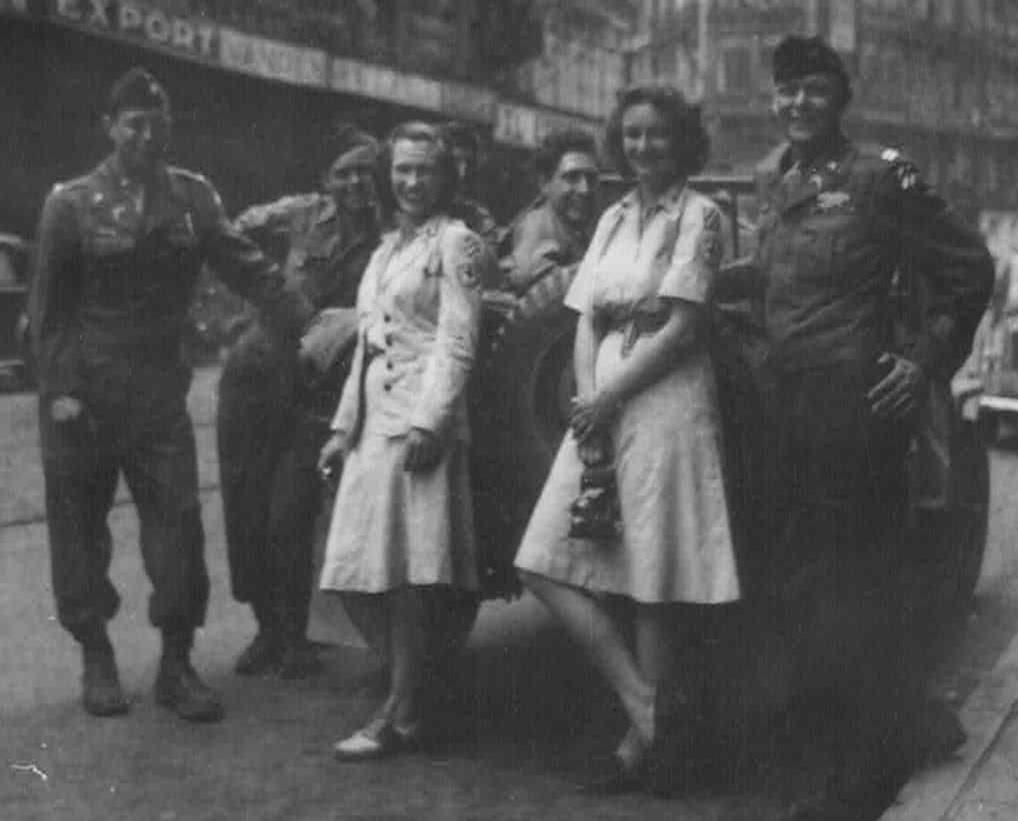
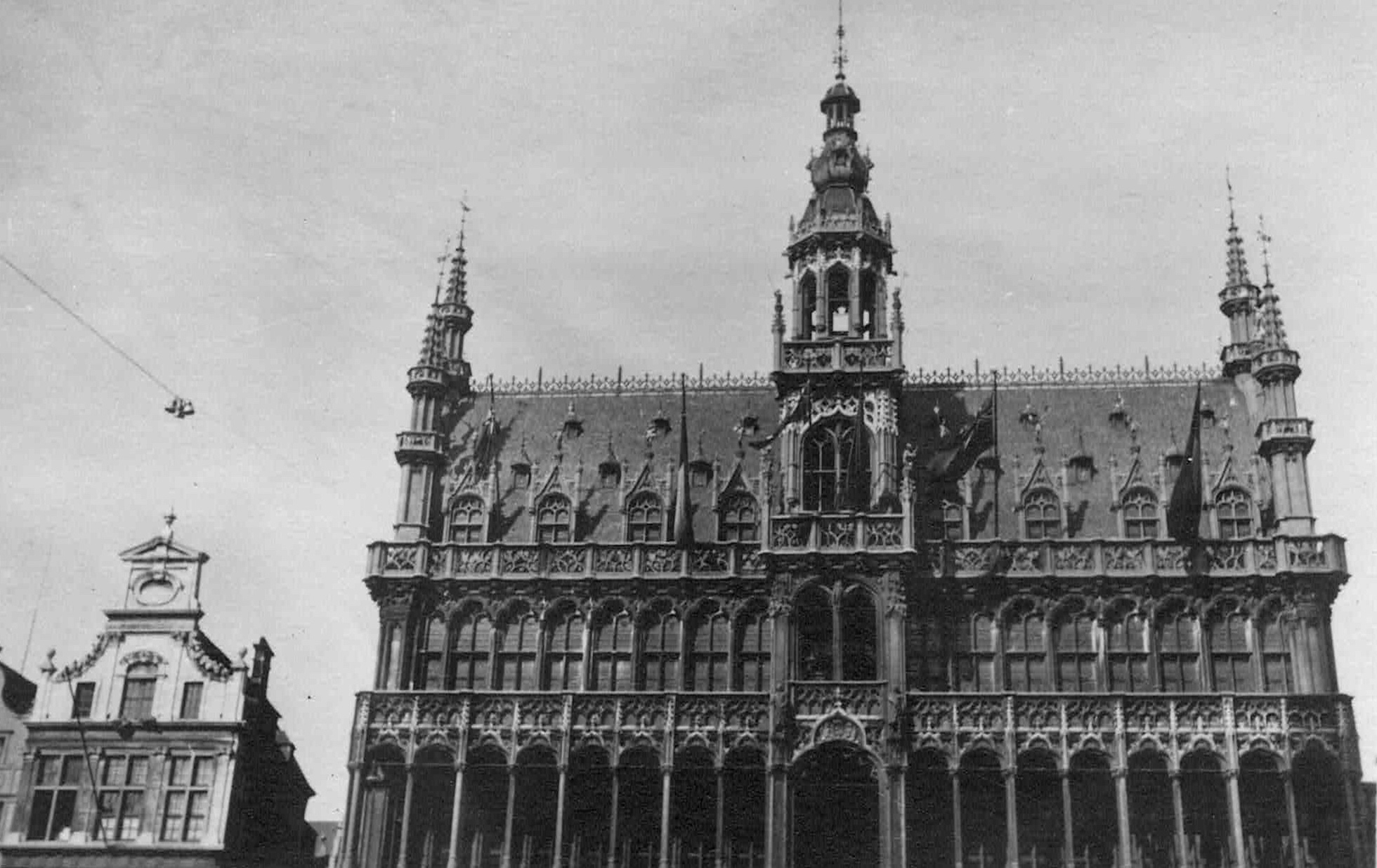
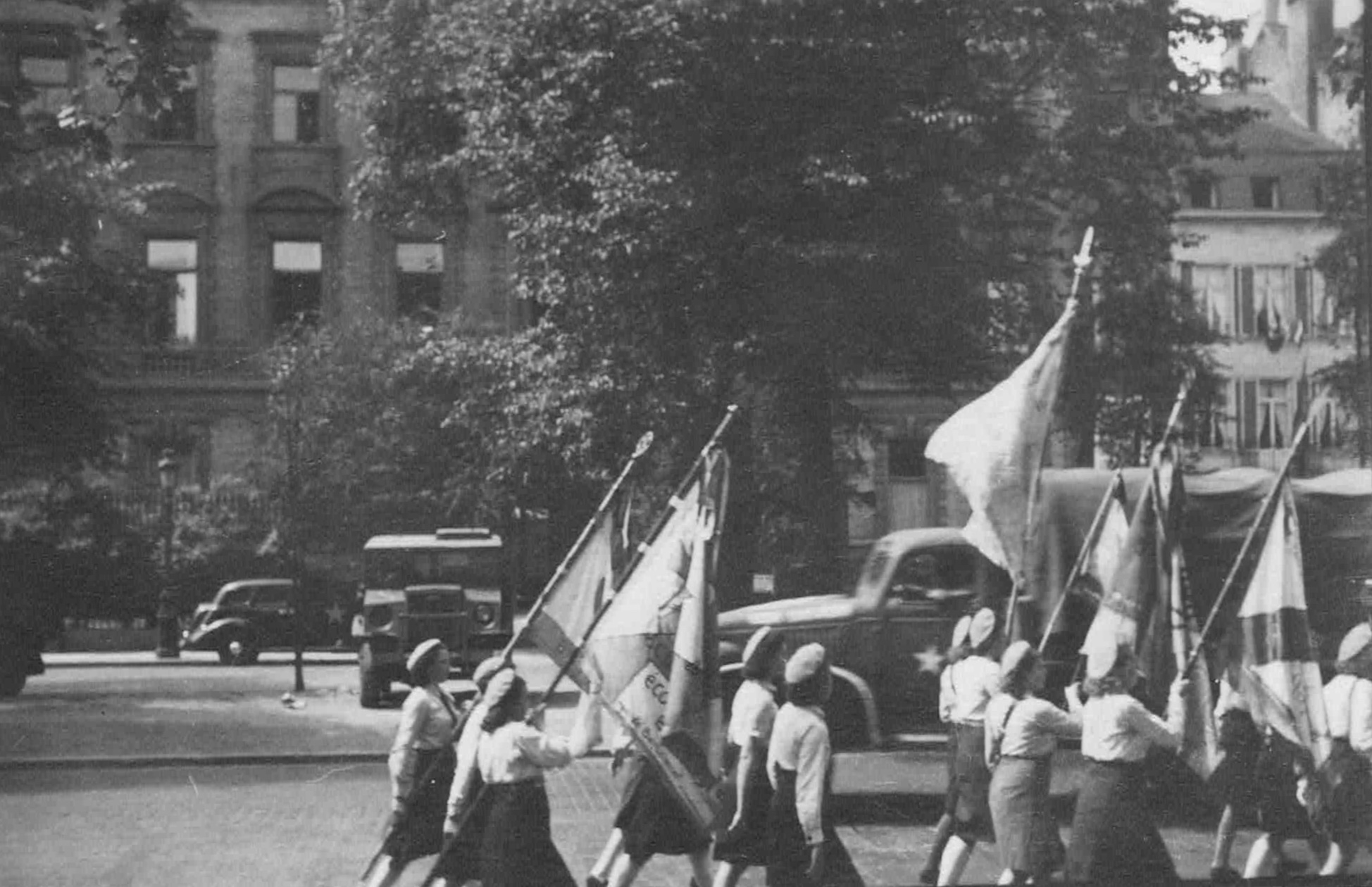
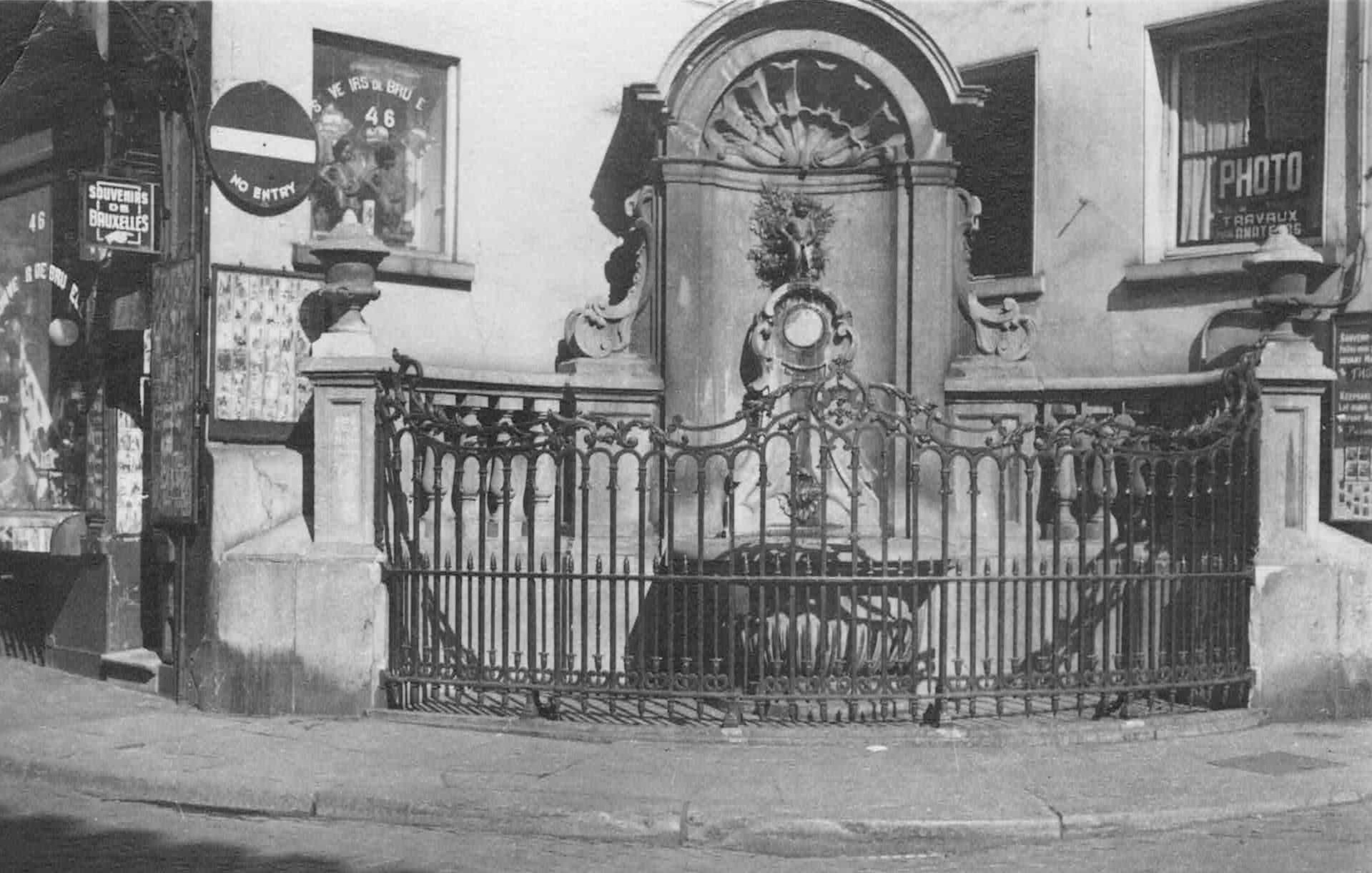
Flo and Janet got leave to travel to Brussels probably in June, 1945. In her inscriptions on this page in her album, Flo doesn’t indicate how they travelled the 450 miles from Salzburg, stopping in Cologne, nor whether they went with the soldiers in these pictures.
The War in Brussels
Belgium had been under German occupation since 1940, but Brussels was freed in early September 1944. The city of nearly a million people did not expect liberation to come so quickly, and enormous crowds poured into the streets, slowing the Allied advance as they welcomed their liberators. At the same time, Belgian railway workers and the resistance foiled a German attempt to deport 1,600 political prisoners and Allied POWs to concentration camps on the so-called “ghost train.”
The city escaped the widespread destruction seen elsewhere in Europe; it was not subjected to systematic or heavy bombing. The rest of the country was liberated by February 1945.
Flo and Janet in Brussels with the boysFlower market in Brussels
Cologne Cathedral Survived
When American troops entered Cologne on March 6, 1945, the Cologne cathedral was one of the few major structures still standing. The Gothic landmark became the backdrop to a famous tank battle as U.S. forces took the western part of the city and the Germans withdrew across the Rhine, holding the eastern bank for another month.
Remarkably, the cathedral survived both the battle and years of Allied bombing. Construction began in 1298, but the cathedral wasn’t finished until 1880. Just sixty years later, Cologne was hit by the first of 262 RAF air raids. Nearly a quarter of the city’s 770,000 residents fled after that initial attack, and the population continued to drain away until only about 20,000 remained by the final raid on March 2, 1945.
The cathedral’s twin spires even served as a navigational point for Allied bombers. Though struck 14 times and heavily damaged, the great structure endured, towering over the ruins of the city.
Cologne cathedral across the RhineCologne. Photos: Flo Wick
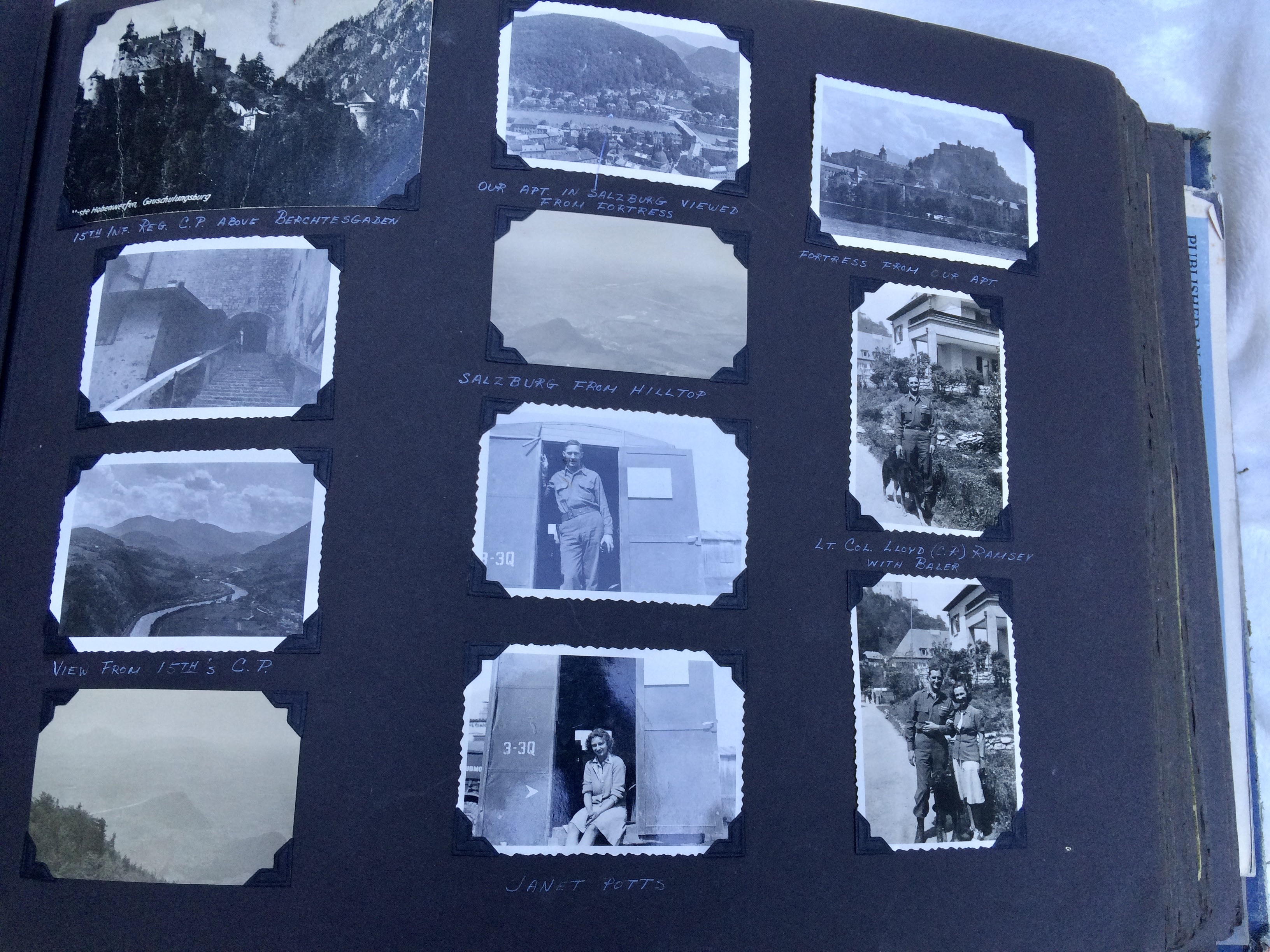
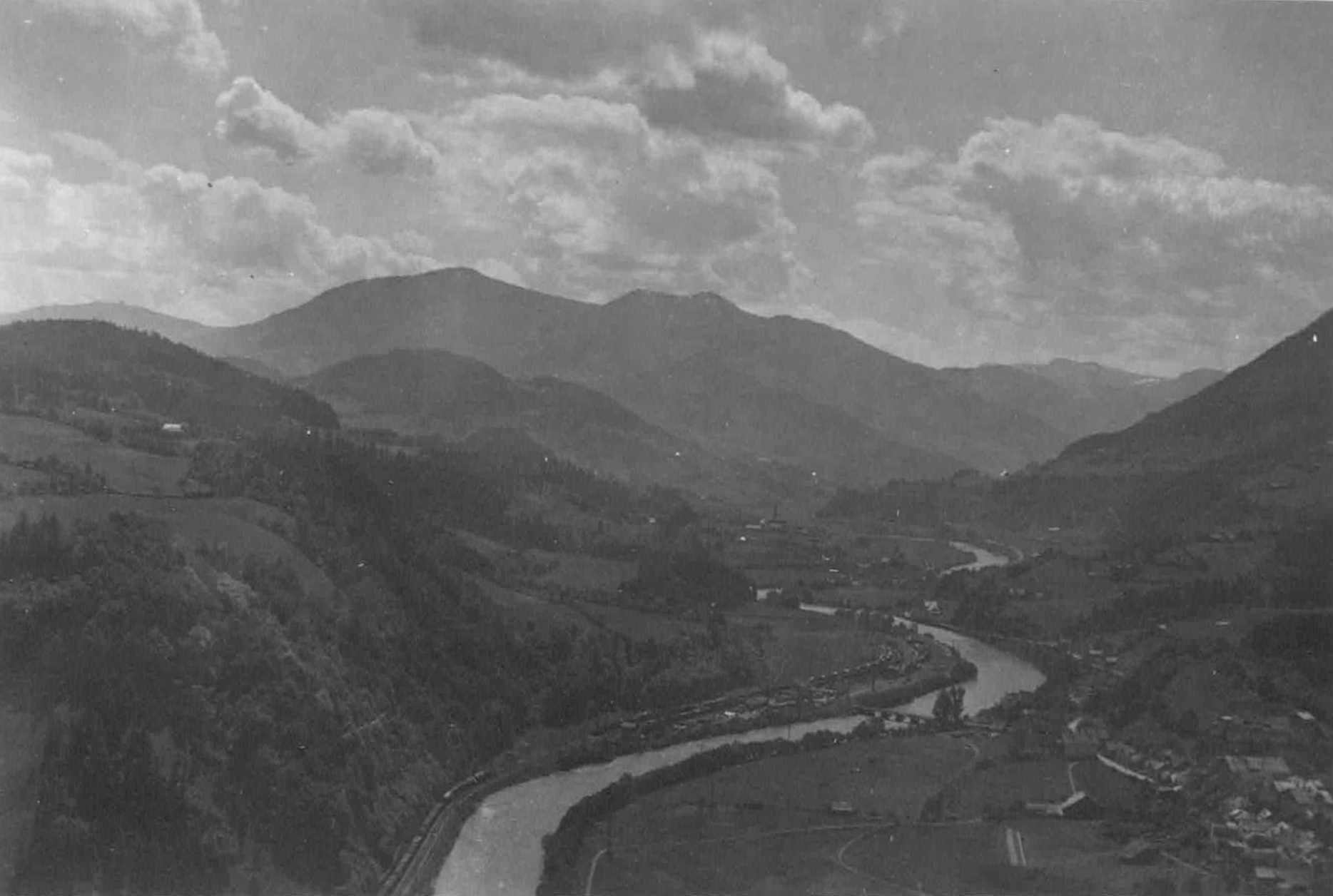
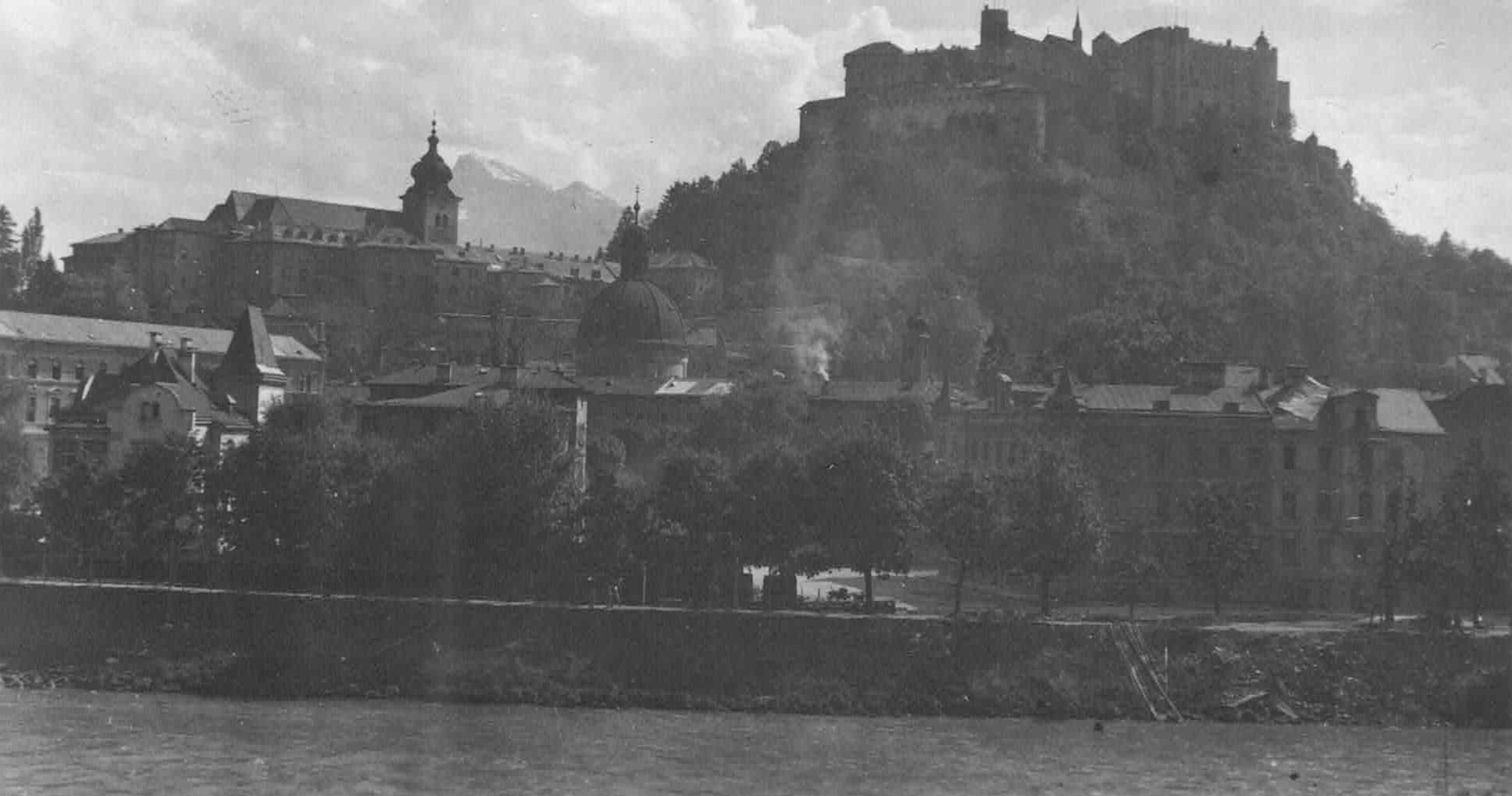
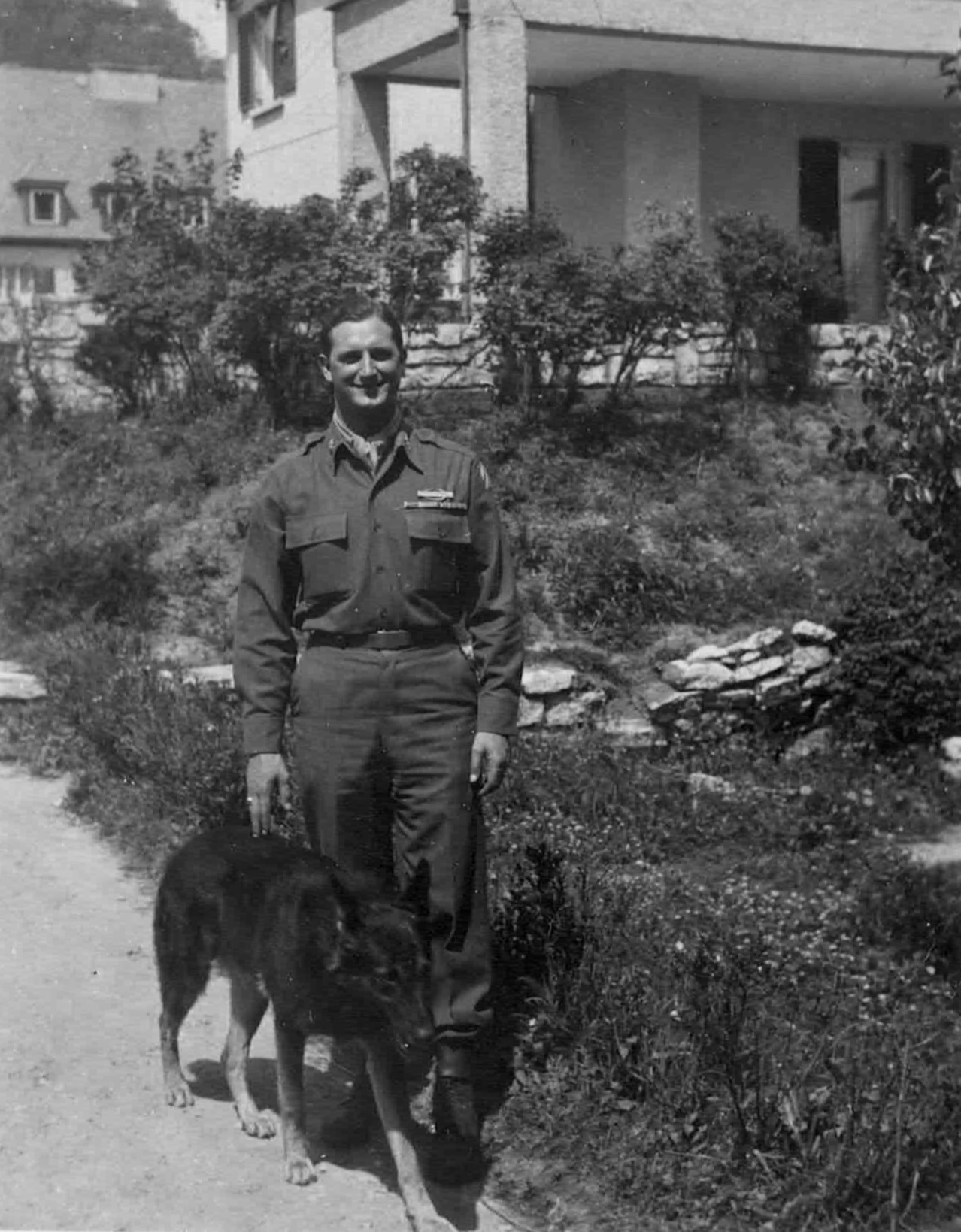
In May 1945 the clubmobilers settled in an apartment in Salzburg. They were attached to the 15th Infantry Regiment which had taken over a fortress above Hitler’s ruined mountain headquarters at Berchestgaden as their command post. Flo’s photos on this page in her album show scenes of Salzburg, the fortress and the surrounding hills, her sister clubmobiler Janet Potts and Lt. Col. Lloyd (C.P.) Ramsey with dog Baler. In a picture taken from the fortress, Flo drew an arrow pointing to the women’s apartment.
Salzburg, with a population of 36,000, had suffered heavy damage in the war: Allied bombs destroyed nearly half the city and killed 550 people. Much of its Baroque center survived, but rebuilding loomed large.
On May 5, 1945, Salzburg surrendered to advancing U.S. forces without a fight. Many residents greeted the Americans as liberators, relieved that 5½ years of war were finally ending—even if it meant accepting defeat. But the U.S. Army arrived as an occupying power as well. For years, no major political, cultural, administrative, or economic decision could be made without its approval.
Postwar life was marked by severe shortages, especially housing and food. More than 1,000 buildings had already been damaged or destroyed in the 1944–45 bombings, and the U.S. occupiers requisitioned many remaining properties for their own use.
The fortressFlo drew an arrow to the apartment (on the river near the center).Photo taken from the fortressThe fortress command post taken from the apartmentJanet Potts in the clubmobileLt. Col. Ramsey with Flo and Baler
At the end of the European war, a reporter interviewed the clubmobilers and filed this story, probably for an army publication like Stars and Stripes. It offers a clear summary of some of their toughest challenges and adds details we might not have known. We learn that the women once entered a town still held by the Germans and had to make a quick retreat, and that there were days when the boys refused to leave their foxholes for donuts because the shelling was too intense. The story describes the “Doggie Rest Camp,” where two men at a time were allowed to leave their positions long enough to grab donuts and wash up. And we learn that the clubmobilers visited army hospitals—with donuts of course.
Donut Gals Have Close Calls in Work
“Donuts for supper!” That’s the cry now, but at one time these same donuts had to be brought many miles over all sorts of situations. Then the cry was, “Donuts in the rations tonight!”
The Third Division Red Cross Clubmobile with its four occupants are as well known as the donuts, coffee, and cigarettes they bring. The “girls” have experienced many close escapes during their tour of duty with the division which dates back to the Italian days.
In the Colmar Pocket outside of Neuf-Brisach they volunteered to go on patrol on the Rhine with an artillery and mortar F.O. (field operations) party. “We all had a case of scratched knees, mud casts, and aching muscles after that,” said Miss Florence Wick, Yakima, Wash.
Flo and Janet near Neuf-Brisach
Still another time after they had sweated out the ride to the battalion CP (command post) the men refused to come out of their holes for donuts because of the heavy shelling.
Visit Kraut Town
It was during this trip while darting in and out of the smoke screen, that they went into a town that was ominously quiet. Recognizing the symptoms, they hastily parted company with the place. That afternoon they found out the town had just fallen.
When the Seventh was in Beblenheim, Alsace, the girls visited and fed a novel, so-called, “Doggie Rest Camp.” There two men at a time came in from their positions for a few minutes each to wash up, and put themselves in shape. They also visited the mortar OP (observation post), and threw a smoke screen from the sand-bagged position.
“The boys used to accuse us of always coming when they were moving out,” said Miss Janet Potts, NYC. “They were always on the move anyway!” chimed in Miss Elizabeth Elliot, NYC.
During the lightning dash through Southern France the girls really roughed it. They had no cover at all, and had to crawl under the tarpaulin that they used to cover the donut machine.
Visit Hospitals
After the Meurthe River crossing they went back to the hospital carrying their usual good cheer and inseparable trays of round, brown donuts with them, to see the men whose luck had not held out.
At one time they were confronted with mile after mile of mountains to accommodate the men, but they never missed once. Ask some of the “boys” as they call them—the proof is in the eating and they do mean donuts.
The quartet is not now up to combat strength as Miss “Fritzie” Haugland, Berkeley, Calif. Is hospitalized, but her three running mates are doing a fine job.
It is now possible to set a schedule and keep it without first having to wonder if the men will be there when they arrive. The next line that forms at the well known Clubmobile will get their donuts from the same smiling girls that brought them up under all the conditions imaginable before V-Day. They are just what their patch proclaims—part of the outfit.
By April, 1945 the war’s end was inevitable. The Soviets broke through German defenses and surrounded Berlin. Artillery shells rained down on the capital as Hitler, holed up in his bunker beneath the Reich Chancellery, raged against reality. On April 20, the bombardment of Berlin began. Five days later, Soviet and American troops met at the Elbe River, cutting Germany in half. In Italy, Benito Mussolini was captured by partisans and executed on April 28. Two days later, on April 30, Adolf Hitler killed himself in his underground bunker.
In Schloss Klessheim, VE-Day partiers hold up a liberated pair of Hermann Goring’s pajamas. Photo: Dogface Soldiers Collection
Berlin fell on May 2. Soviet troops raised their flag over the Reichstag, signaling the final collapse of the Third Reich. Across northern Europe, German armies laid down their arms: in Denmark, the Netherlands, and northwest Germany on May 4. In Prague, a last uprising flared as German resistance crumbled.
On May 7, German representatives signed an unconditional surrender at Reims, France, in the presence of Allied commanders. The next day—May 8, 1945—the war in Europe was officially over. Crowds filled the streets of London, Paris, and New York, singing, embracing, and weeping with relief. In Moscow, the celebration came a day later, on May 9, when the surrender was ratified in Berlin according to Soviet time.
Photo: Dogface Soldier Collection
The guns finally fell silent. After nearly six years of war, Europe lay in ruins—but free of Nazi rule. The deadliest war in history involved more than 30 countries around the globe. More than 50 million people lost their lives during the war.
We don’t know where Flo was on VE-Day, but it’s a good guess she was partying somewhere. She left the page in her album blank.
The page in Flo’s album
Audie Murphy is on leave, riding a train to the French Riviera when the war is declared over. In a Cannes hotel, he bathes and naps, but he can’t get images of the war out of his mind.
He wrote: “We have been so intent on death that we have forgotten life. And now suddenly life faces us. I swear to myself that I will measure up to it. I may be branded by war, but I will not be defeated by it.”
There is still debate over which Allied unit can claim credit for capturing Berchtesgaden in May 1945. The most reliable historical accounts indicate that the 3rd Infantry Division, specifically the 7th Infantry Regiment, commanded by Maj. Gen. John “Iron Mike” O’Daniel, reached the town on May 4, 1945, and accepted its surrender without resistance. They were the first American combat troops to enter the town itself.
However, popular history has sometimes credited the 101st Airborne Division’s Easy Company—made famous by Stephen Ambrose’s Band of Brothers—with the “liberation” of Berchtesgaden. Easy Company did arrive on May 5, the day after the 3rd Division. Their presence, and the power of their postwar memoirs, contributed to the widely repeated but inaccurate claim that they captured the town.
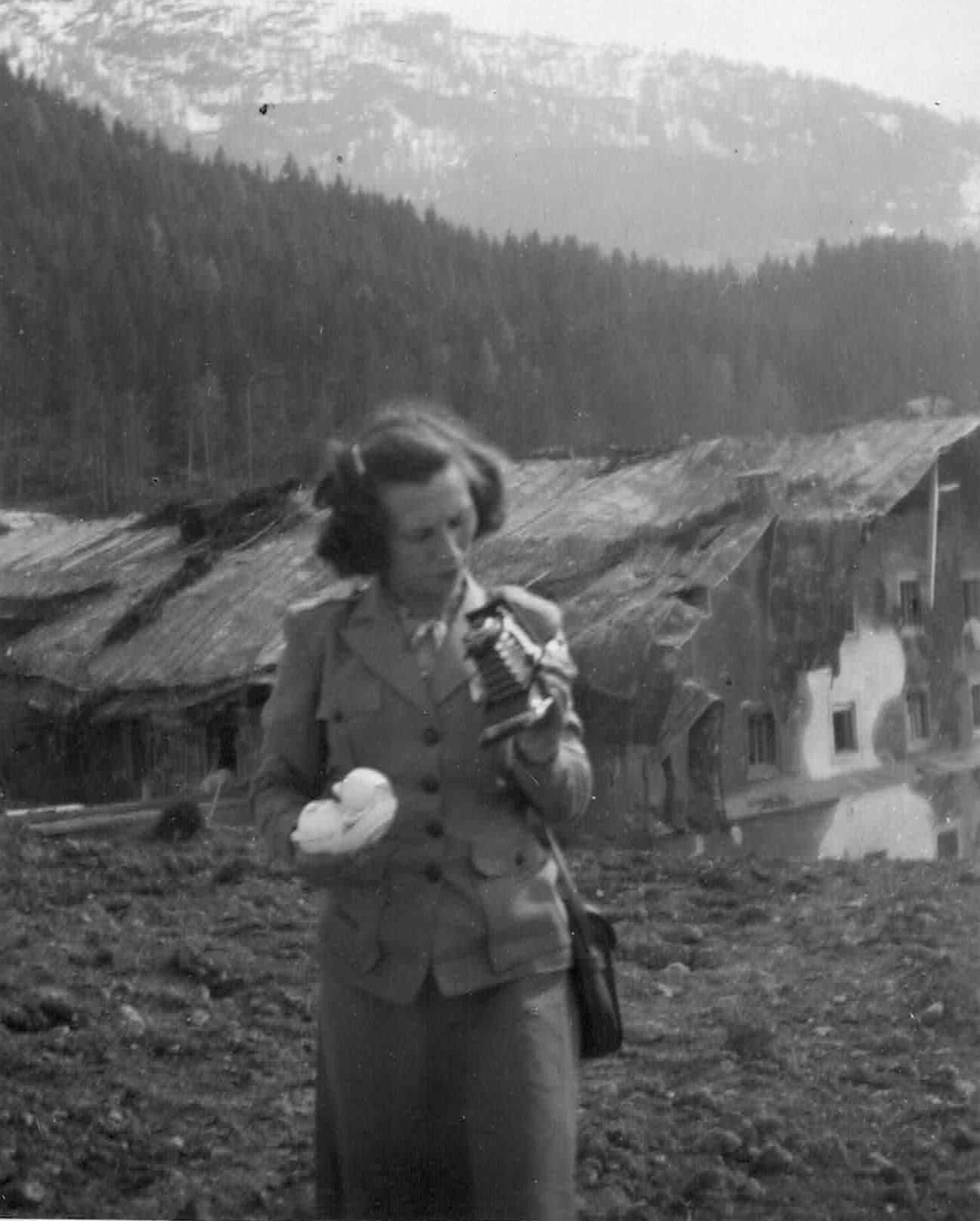
At Berchtesgaden Flo adjusts her camera. Platterhof hotel in background
Complicating matters further, elements of the French 2nd Armored Division, advancing from the south, also reached the Obersalzberg at nearly the same time. French armored troops were already present at the SS guardhouse near the entrance to the Obersalzberg complex when the Americans arrived on May 4. So while the 3rd Infantry Division is generally recognized as having taken Berchtesgaden, the French made the first approach to the mountain enclave.
What is clear is that Flo arrived very shortly after the area had fallen to Allied forces, when the military presence was still active and the ruins still fresh.
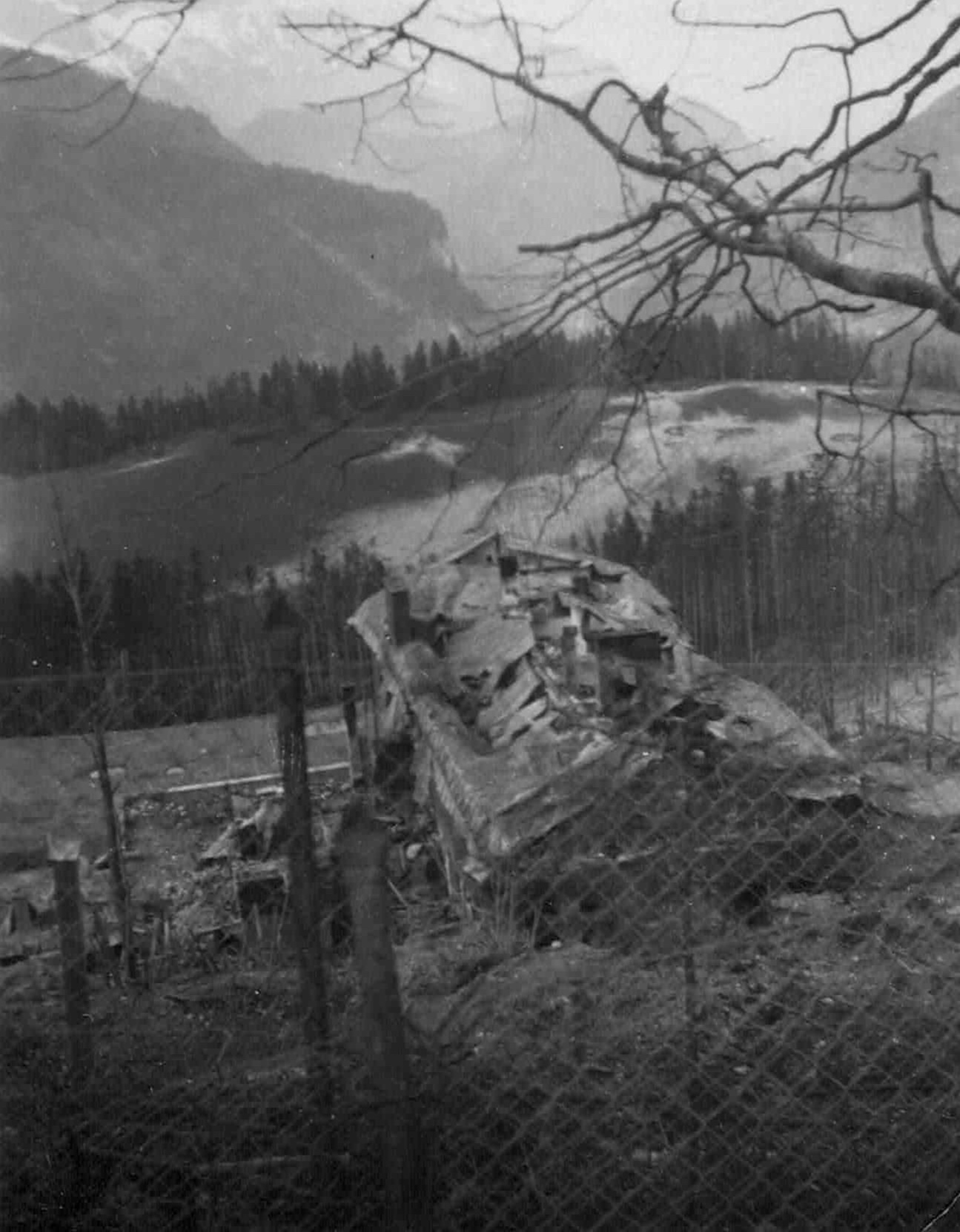
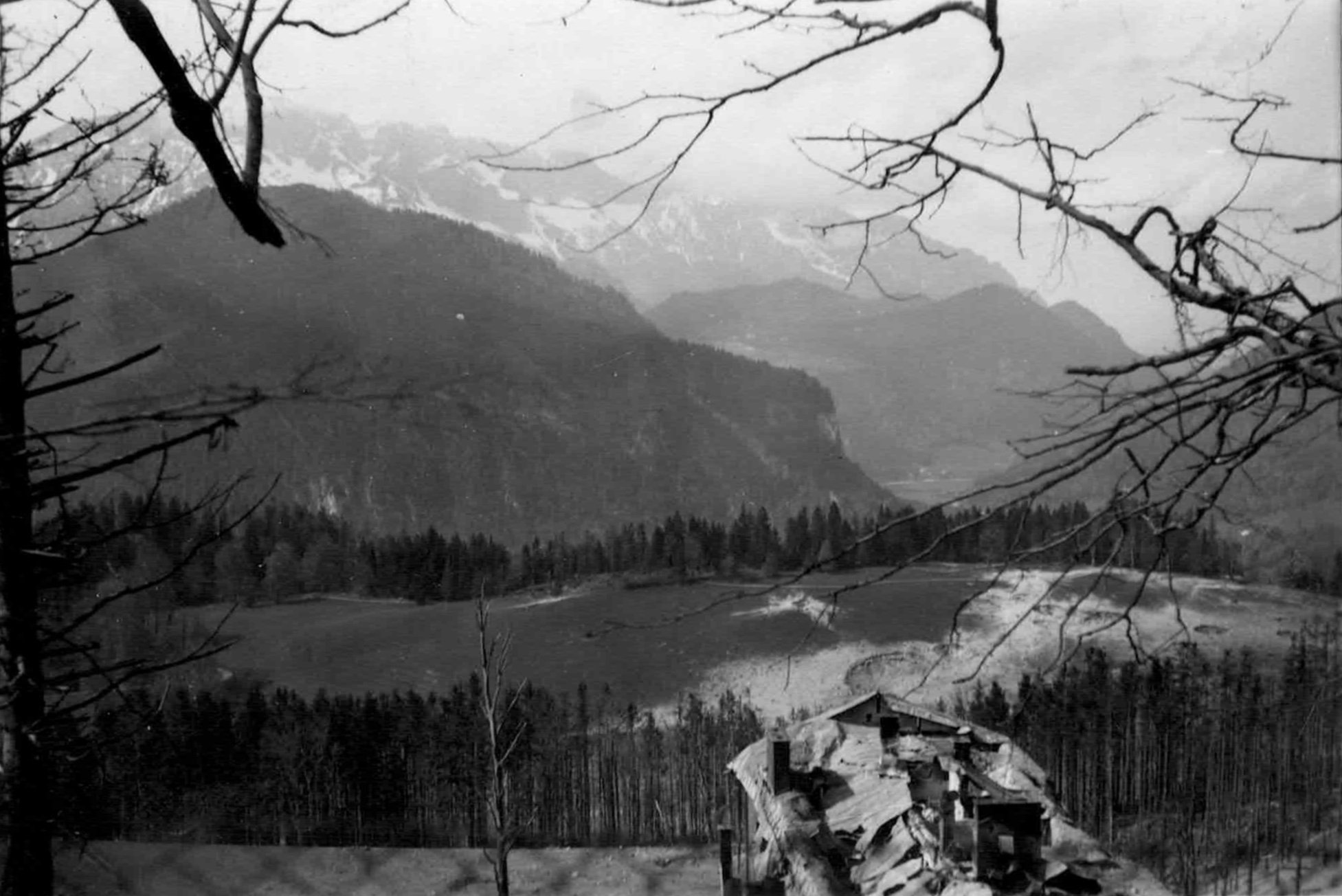
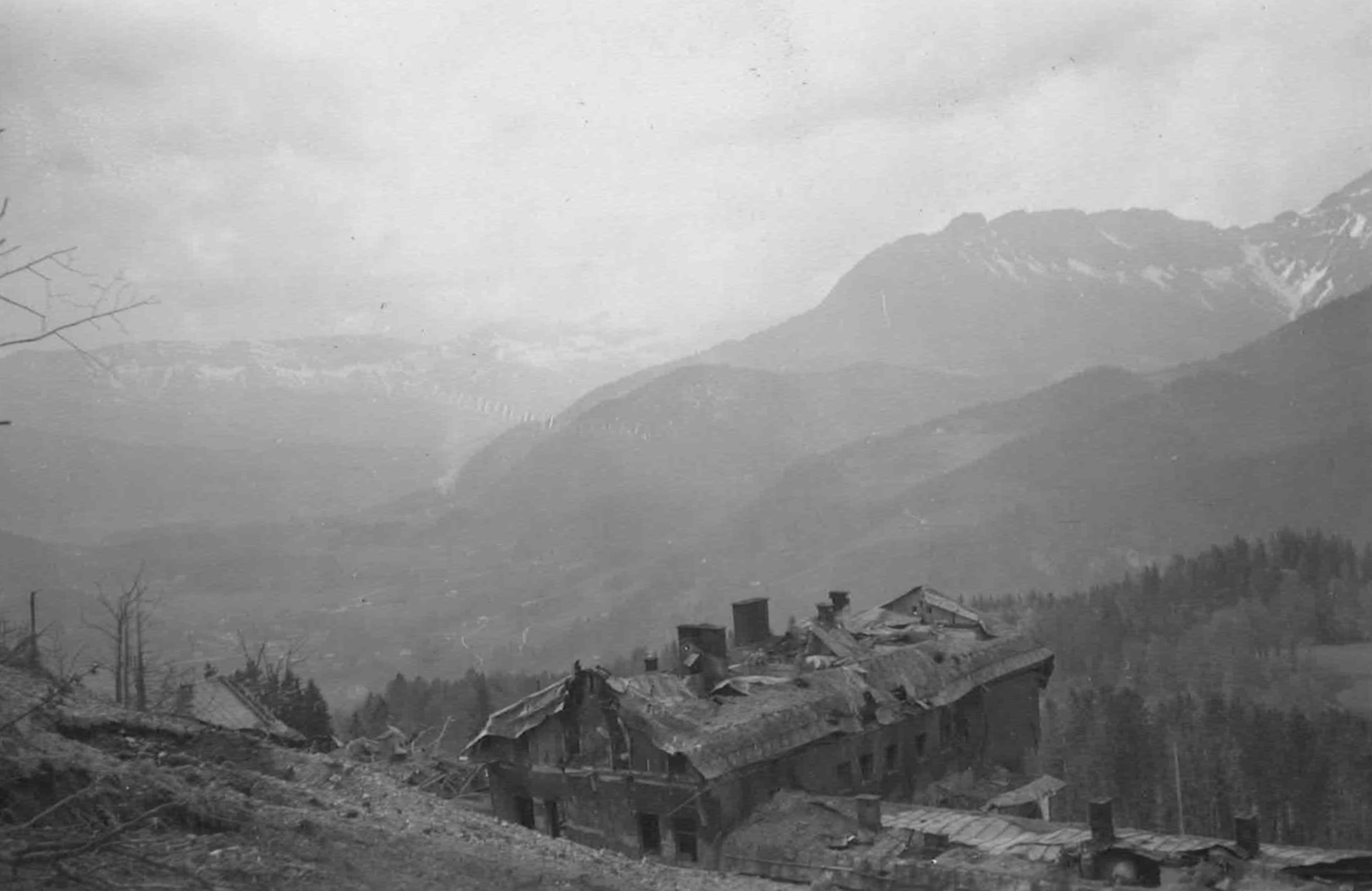
Views from Hitler’s mountaintop retreat. All photos by Flo Wick.
Berchtesgaden and the Obersalzberg Complex
Berchtesgaden, in the Bavarian Alps, served as Hitler’s alpine headquarters and a central site of Nazi state power. The Obersalzberg complex above the town contained residences, administrative buildings, and security installations used by Adolf Hitler and other high-ranking Nazi leaders, including Martin Bormann and Hermann Göring.
Key components included:
• The Berghof: Hitler’s primary residence, significantly damaged in a massive Allied bombing raid on April 25, 1945. • The Eagle’s Nest (Kehlsteinhaus): A mountaintop chalet and diplomatic reception site, built for Hitler’s 50th birthday. • SS Barracks and Guard Posts: Securing the restricted zone around the leadership compound. • Underground Bunker System: An extensive network of tunnels, shelters, offices, and storage areas designed to protect leadership during air raids and potential last-stand scenarios.
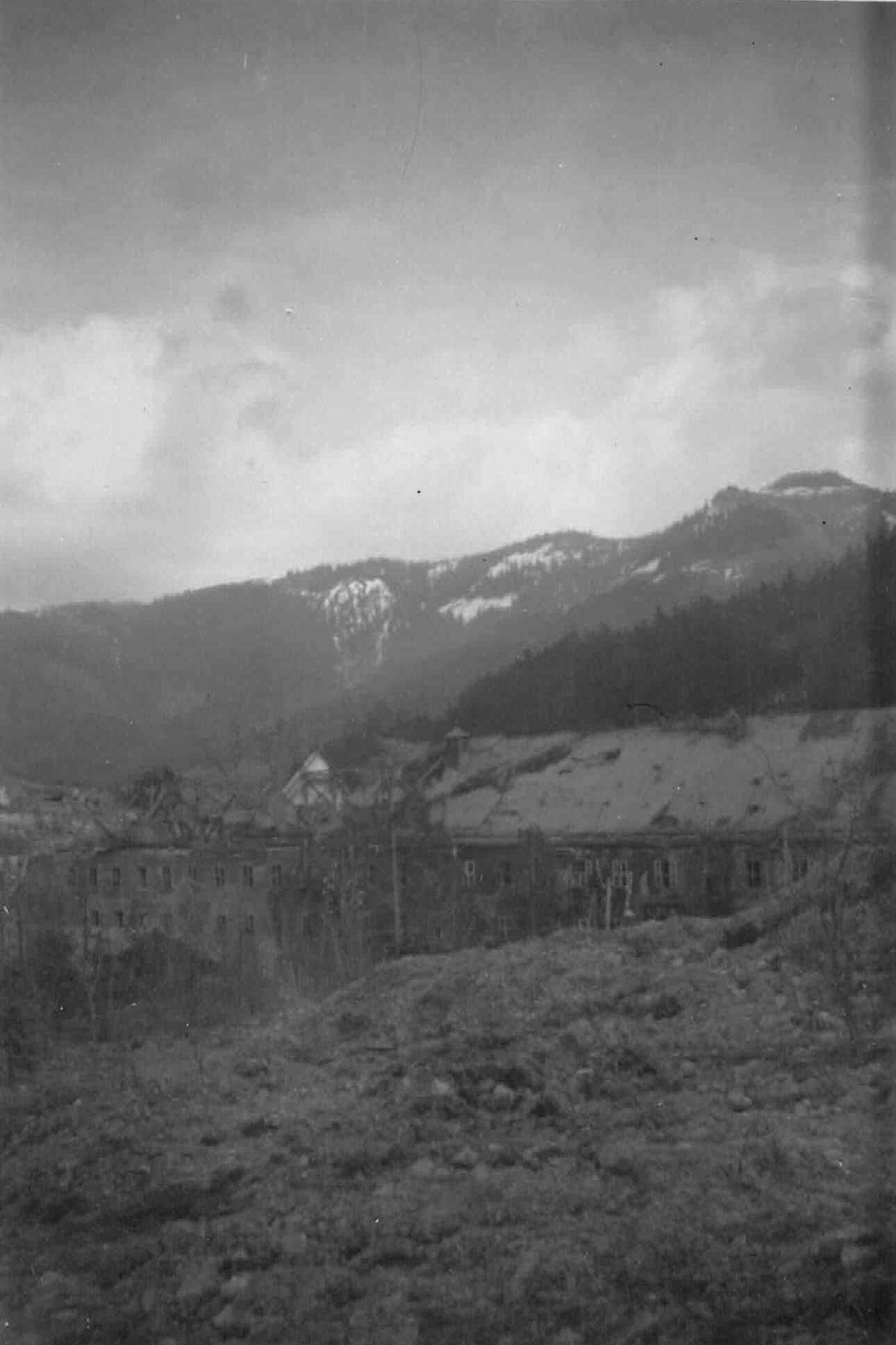
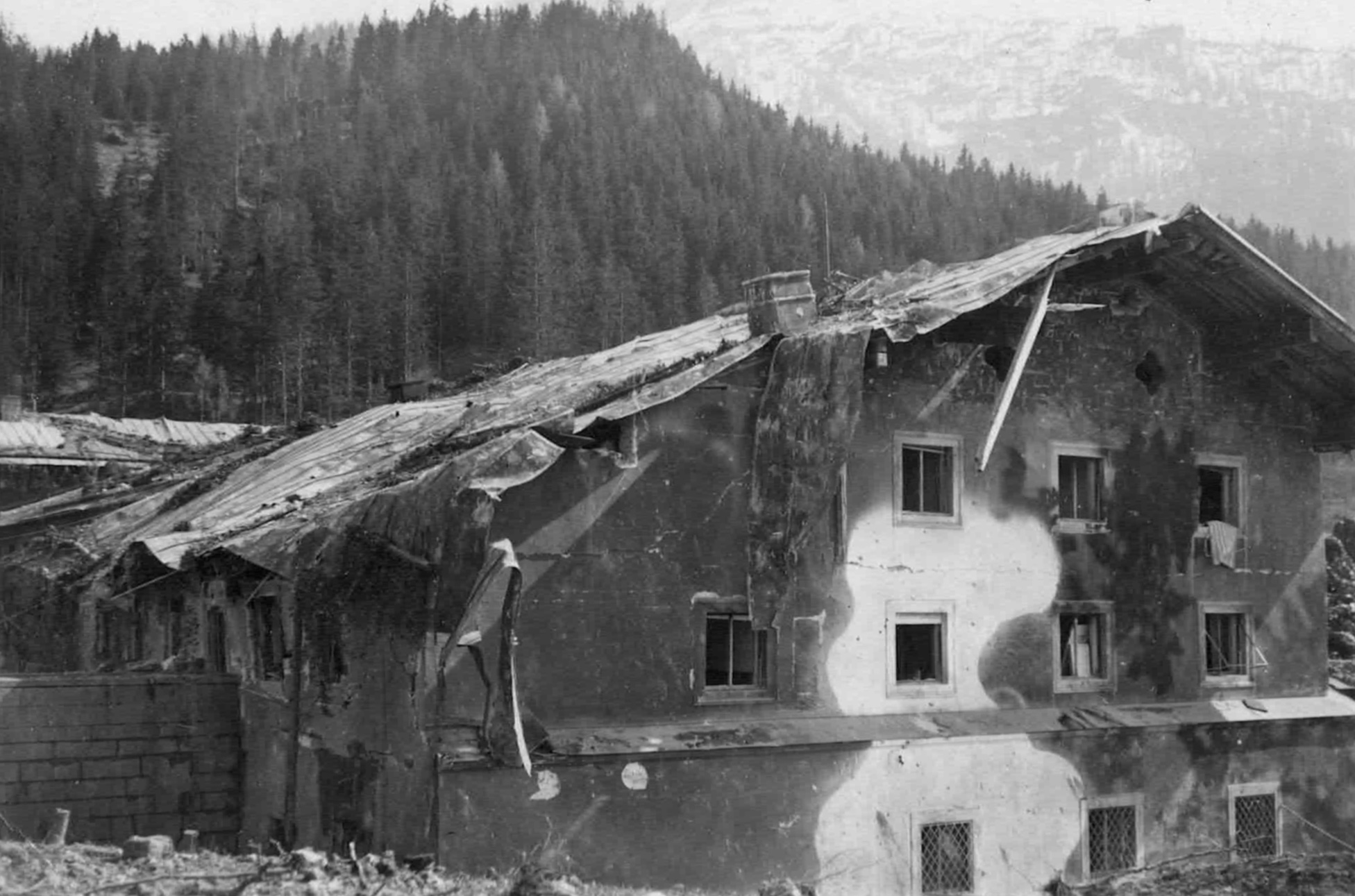
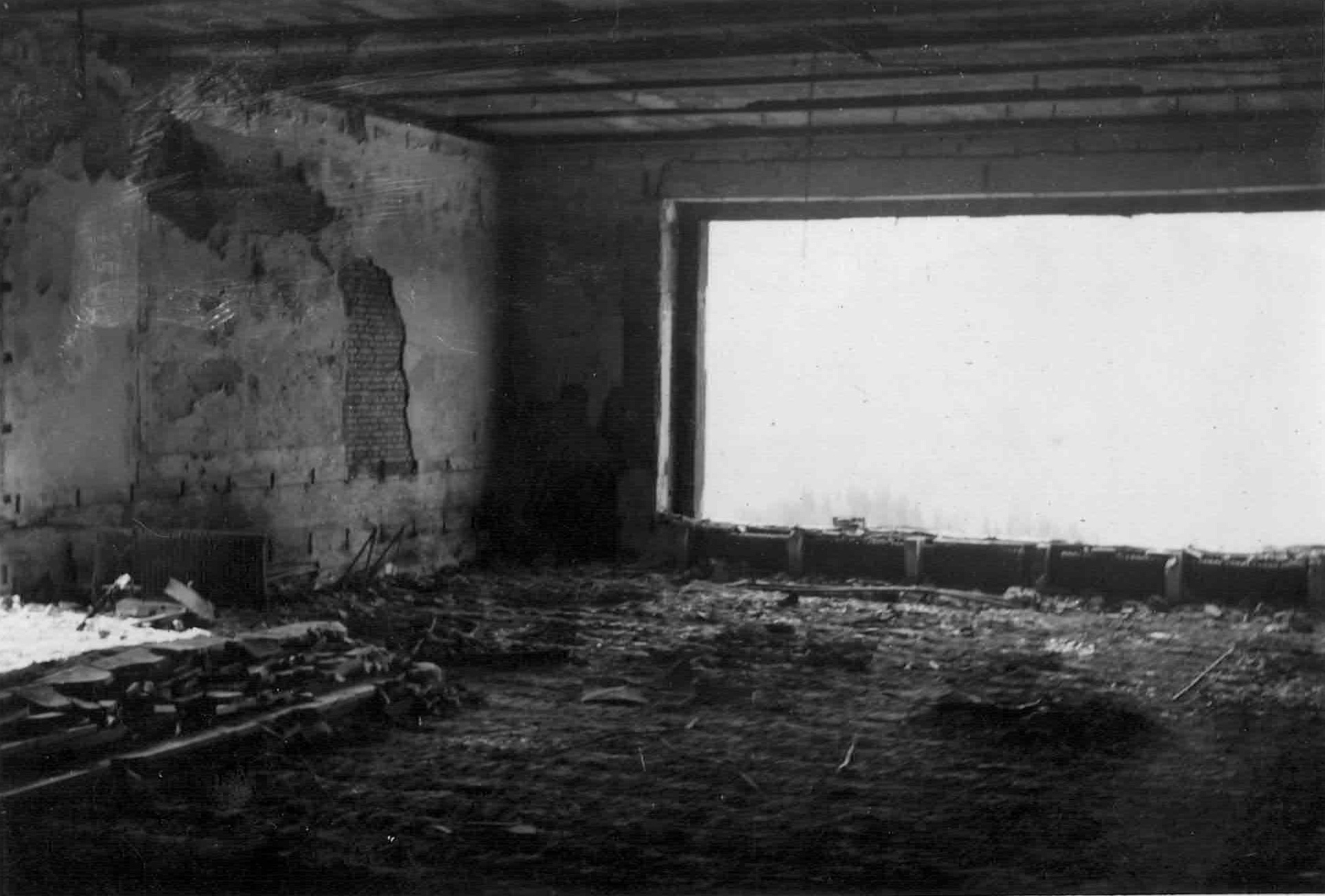
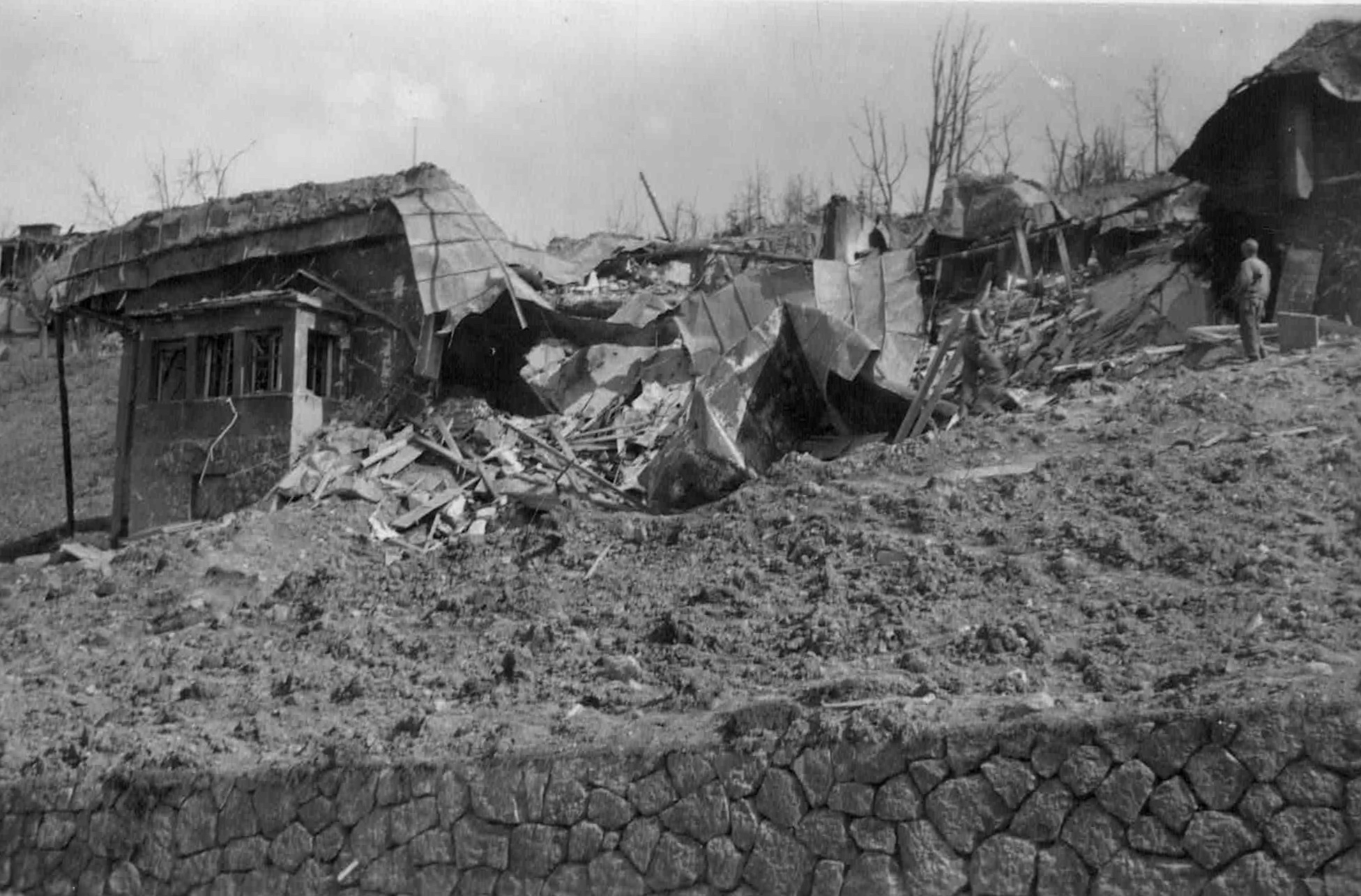
The Berghof was heavily bombedDestroyed barracks The main entrance road, Bormann’s house on the hill. It was thought he had escaped, but DNA from remains discovered in Berlin in 1972 point to May 2 as the day of his death.The Platterhof hotel was bombed and then burned by retreating NazisInside the Berghof was the “great room” with the “grand picture window” with a view of the Untersberg Mountains.Another view of the bombed BerghofThe barracks housed hundreds of SS guardsWhat a view!
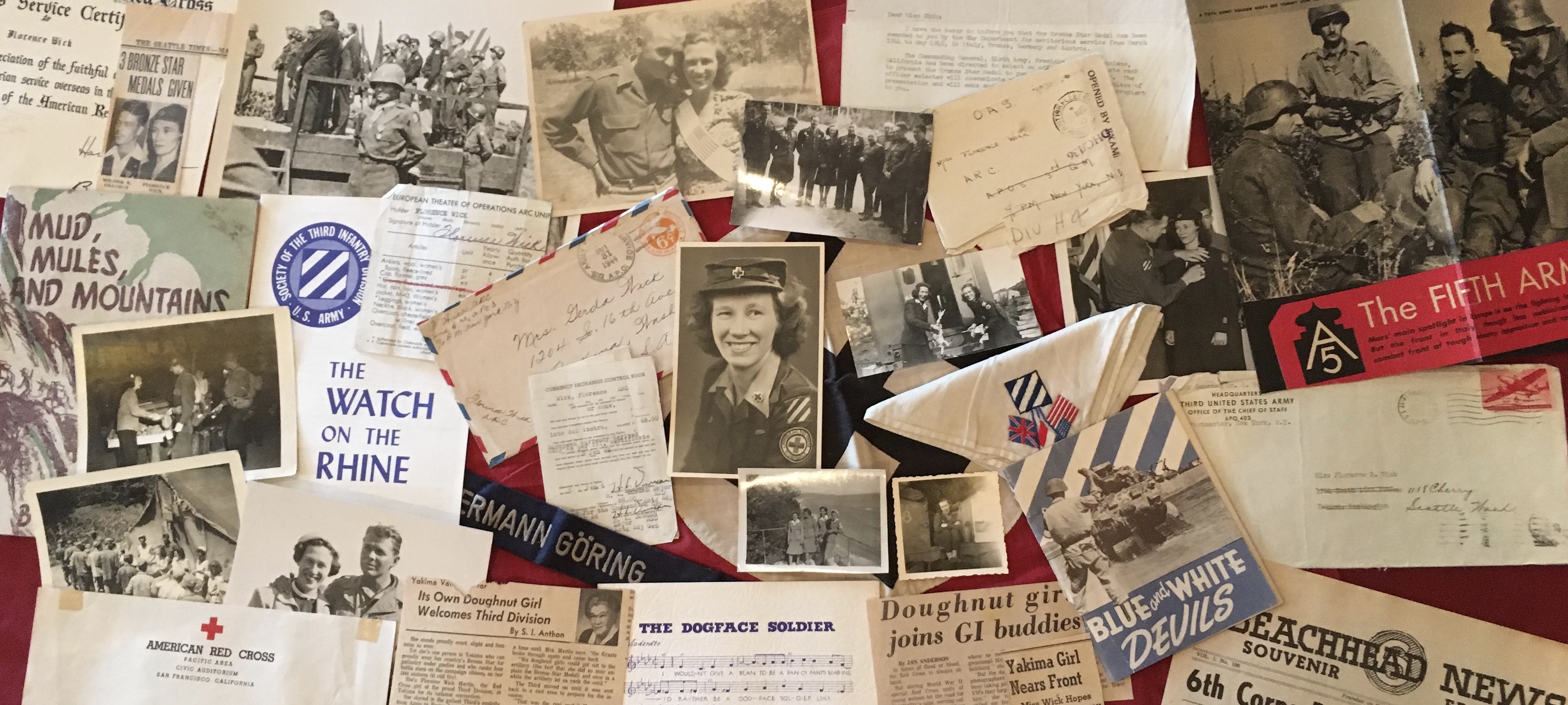
We think this is where Flo found or was given Hermann Göring’s armband and a Nazi flag that she saved in her album.
Current status: Much of the Obersalzberg complex was demolished after the war. Today, the site is home to the Dokumentationszentrum Obersalzberg, a research and educational museum focused on the history of Nazism and the regime’s use of the mountain retreat. The Eagle’s Nest still stands and is now a tourist site with panoramic views and a restaurant. The surviving bunker tunnels are accessible through the documentation center.
































 tradeswomn musings