By April, 1945 the war’s end was inevitable. The Soviets broke through German defenses and surrounded Berlin. Artillery shells rained down on the capital as Hitler, holed up in his bunker beneath the Reich Chancellery, raged against reality. On April 20, the bombardment of Berlin began. Five days later, Soviet and American troops met at the Elbe River, cutting Germany in half. In Italy, Benito Mussolini was captured by partisans and executed on April 28. Two days later, on April 30, Adolf Hitler killed himself in his underground bunker.
In Schloss Klessheim, VE-Day partiers hold up a liberated pair of Hermann Goring’s pajamas. Photo: Dogface Soldiers Collection
Berlin fell on May 2. Soviet troops raised their flag over the Reichstag, signaling the final collapse of the Third Reich. Across northern Europe, German armies laid down their arms: in Denmark, the Netherlands, and northwest Germany on May 4. In Prague, a last uprising flared as German resistance crumbled.
On May 7, German representatives signed an unconditional surrender at Reims, France, in the presence of Allied commanders. The next day—May 8, 1945—the war in Europe was officially over. Crowds filled the streets of London, Paris, and New York, singing, embracing, and weeping with relief. In Moscow, the celebration came a day later, on May 9, when the surrender was ratified in Berlin according to Soviet time.
Photo: Dogface Soldier Collection
The guns finally fell silent. After nearly six years of war, Europe lay in ruins—but free of Nazi rule. The deadliest war in history involved more than 30 countries around the globe. More than 50 million people lost their lives during the war.
We don’t know where Flo was on VE-Day, but it’s a good guess she was partying somewhere. She left the page in her album blank.
The page in Flo’s album
Audie Murphy is on leave, riding a train to the French Riviera when the war is declared over. In a Cannes hotel, he bathes and naps, but he can’t get images of the war out of his mind.
He wrote: “We have been so intent on death that we have forgotten life. And now suddenly life faces us. I swear to myself that I will measure up to it. I may be branded by war, but I will not be defeated by it.”
There is still debate over which Allied unit can claim credit for capturing Berchtesgaden in May 1945. The most reliable historical accounts indicate that the 3rd Infantry Division, specifically the 7th Infantry Regiment, commanded by Maj. Gen. John “Iron Mike” O’Daniel, reached the town on May 4, 1945, and accepted its surrender without resistance. They were the first American combat troops to enter the town itself.
However, popular history has sometimes credited the 101st Airborne Division’s Easy Company—made famous by Stephen Ambrose’s Band of Brothers—with the “liberation” of Berchtesgaden. Easy Company did arrive on May 5, the day after the 3rd Division. Their presence, and the power of their postwar memoirs, contributed to the widely repeated but inaccurate claim that they captured the town.
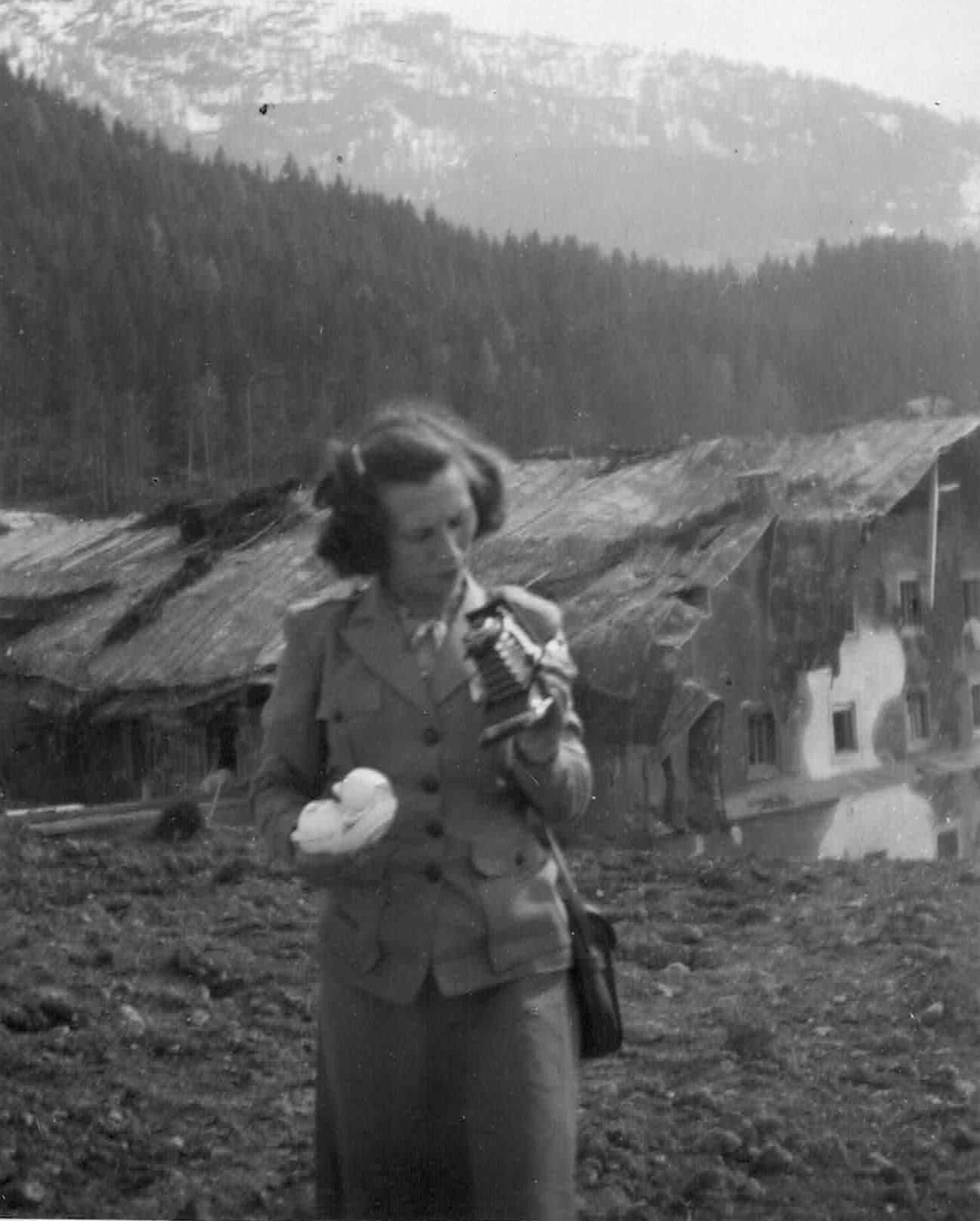
At Berchtesgaden Flo adjusts her camera. Platterhof hotel in background
Complicating matters further, elements of the French 2nd Armored Division, advancing from the south, also reached the Obersalzberg at nearly the same time. French armored troops were already present at the SS guardhouse near the entrance to the Obersalzberg complex when the Americans arrived on May 4. So while the 3rd Infantry Division is generally recognized as having taken Berchtesgaden, the French made the first approach to the mountain enclave.
What is clear is that Flo arrived very shortly after the area had fallen to Allied forces, when the military presence was still active and the ruins still fresh.
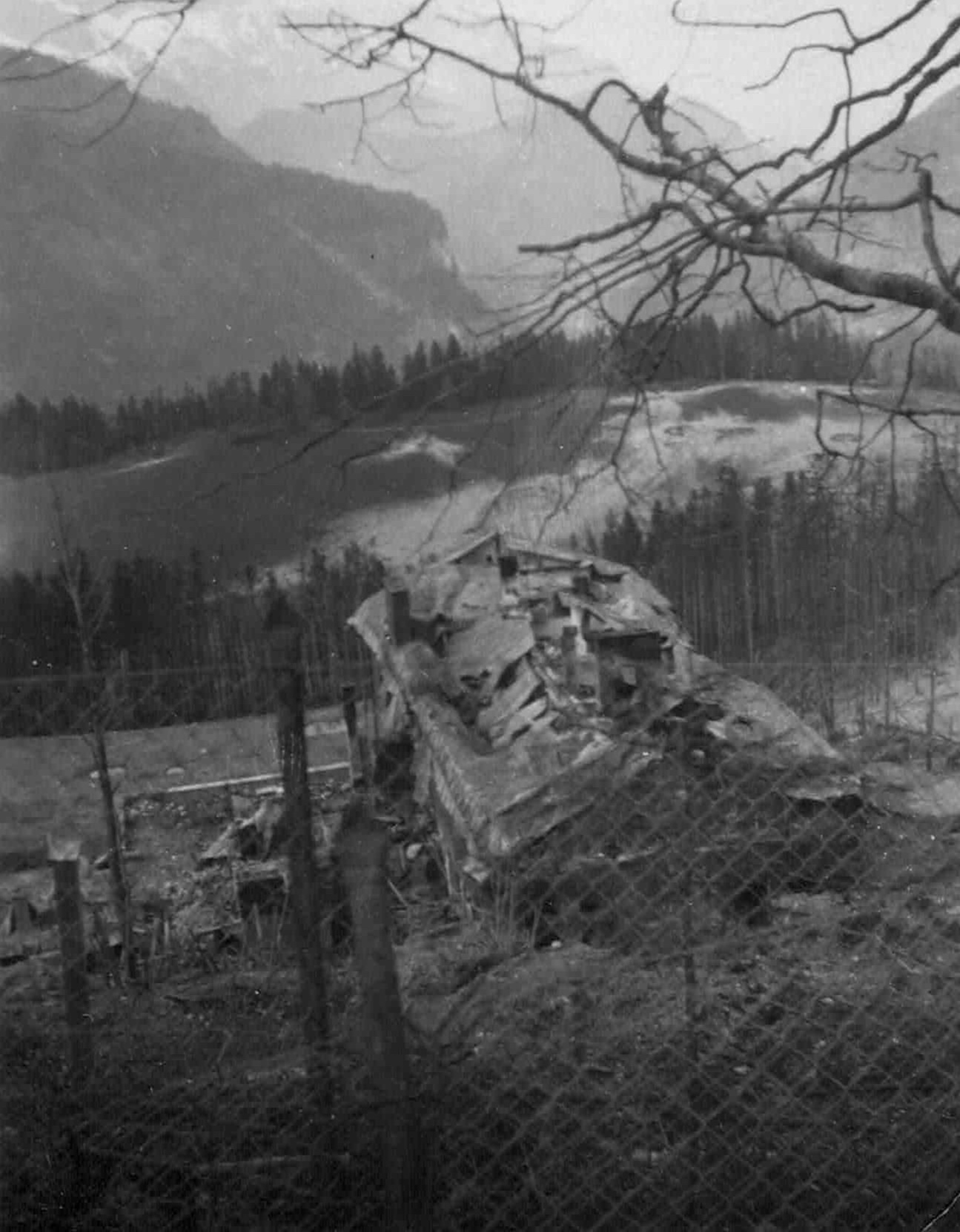
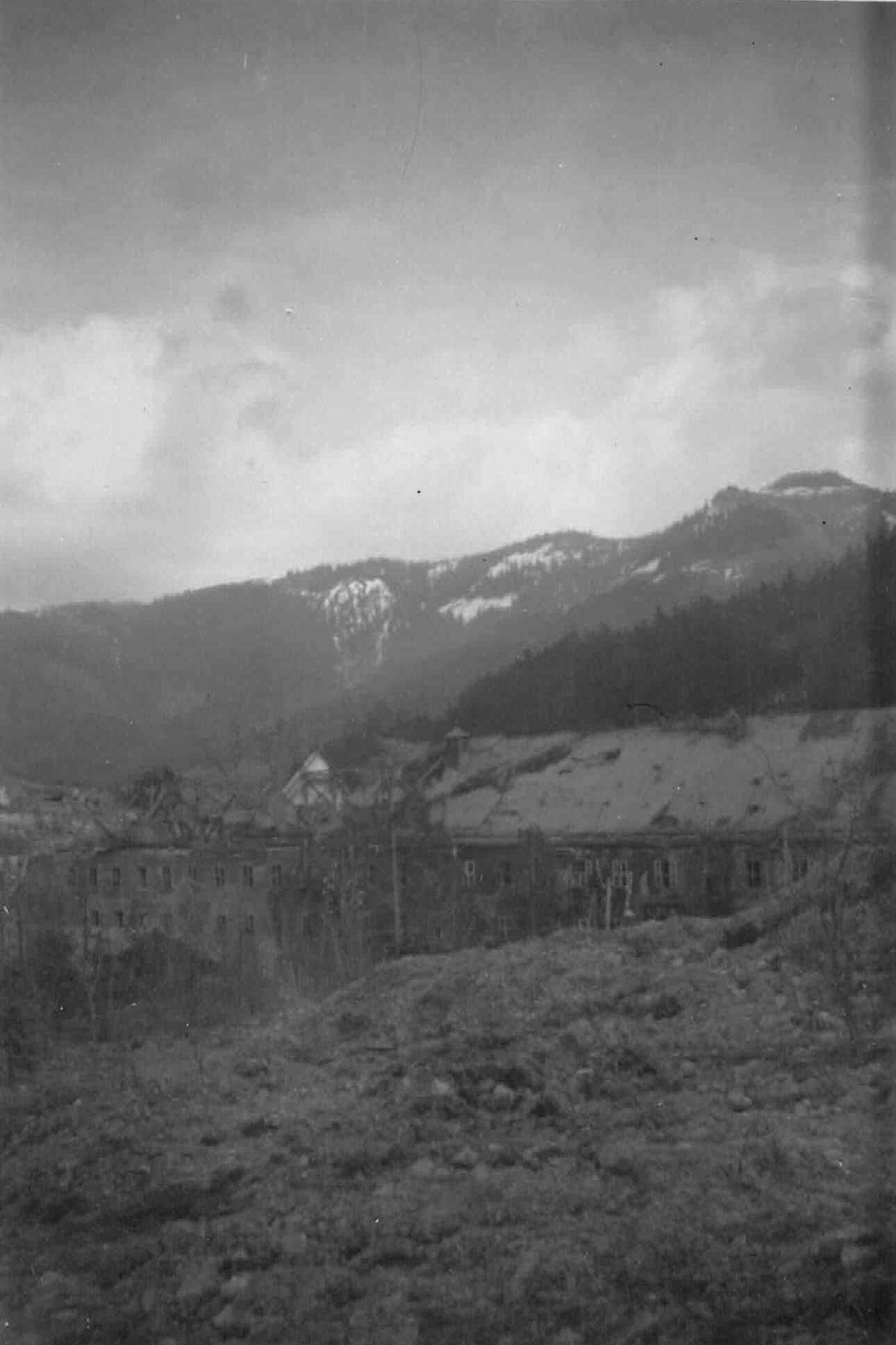
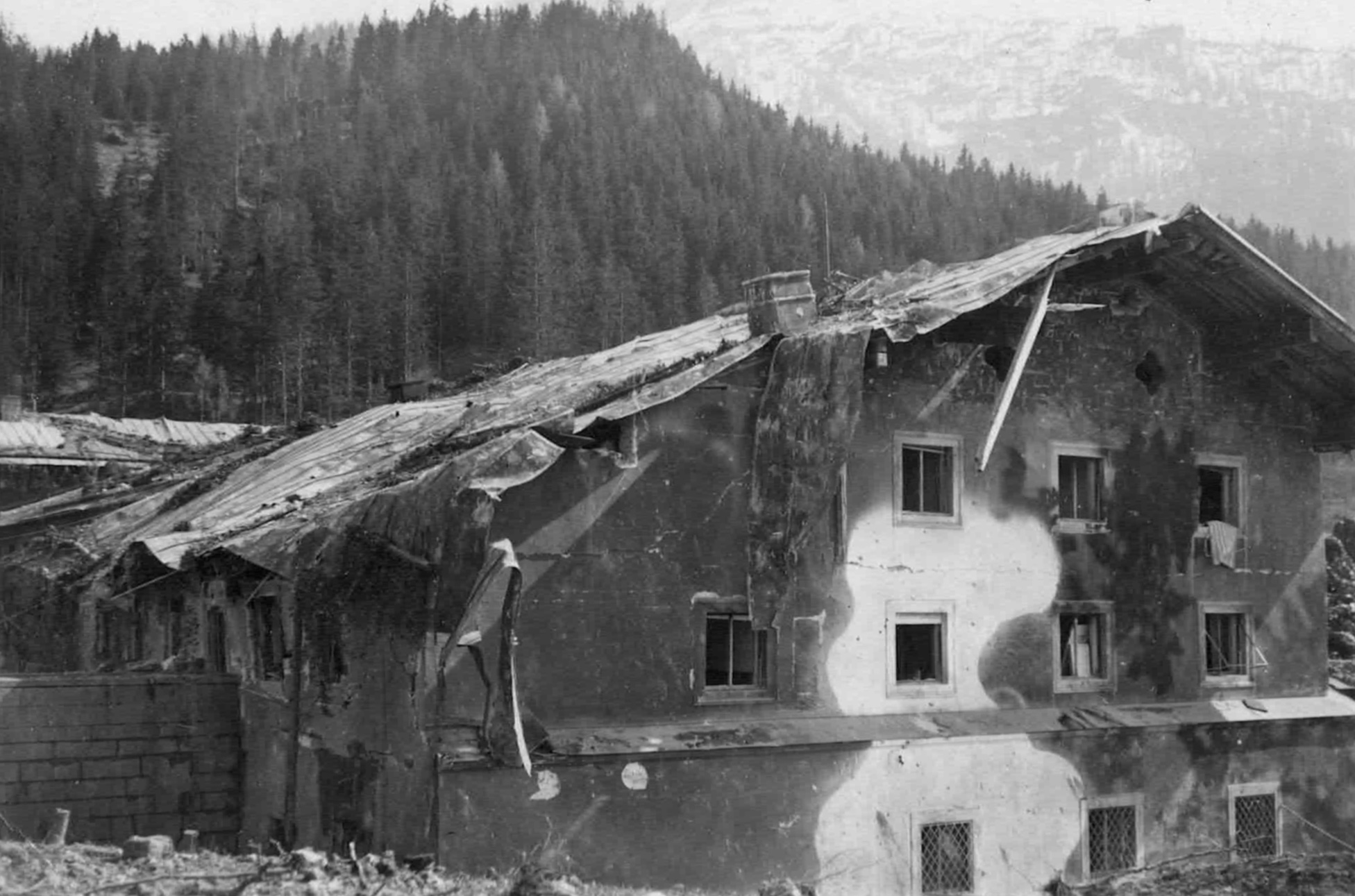
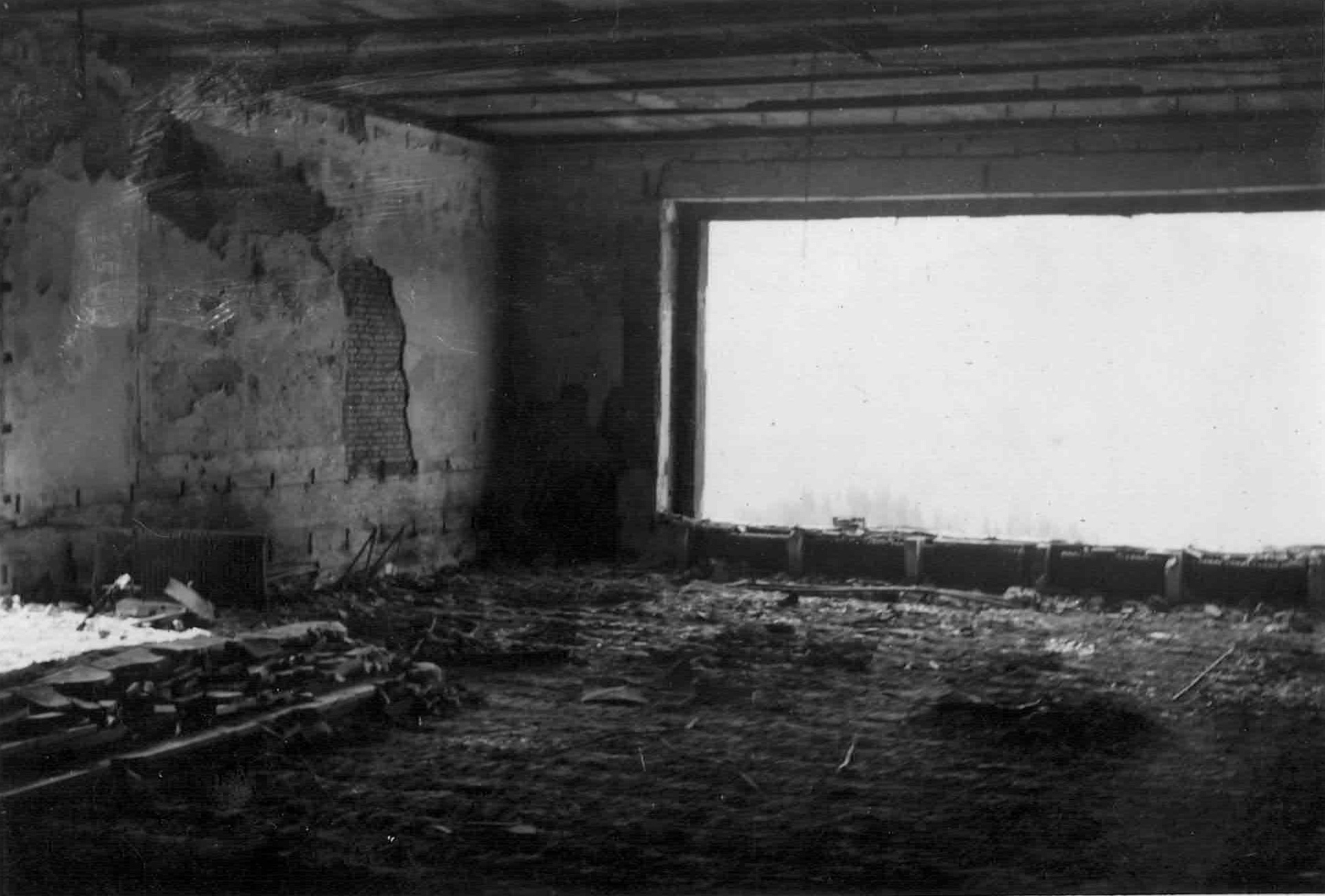
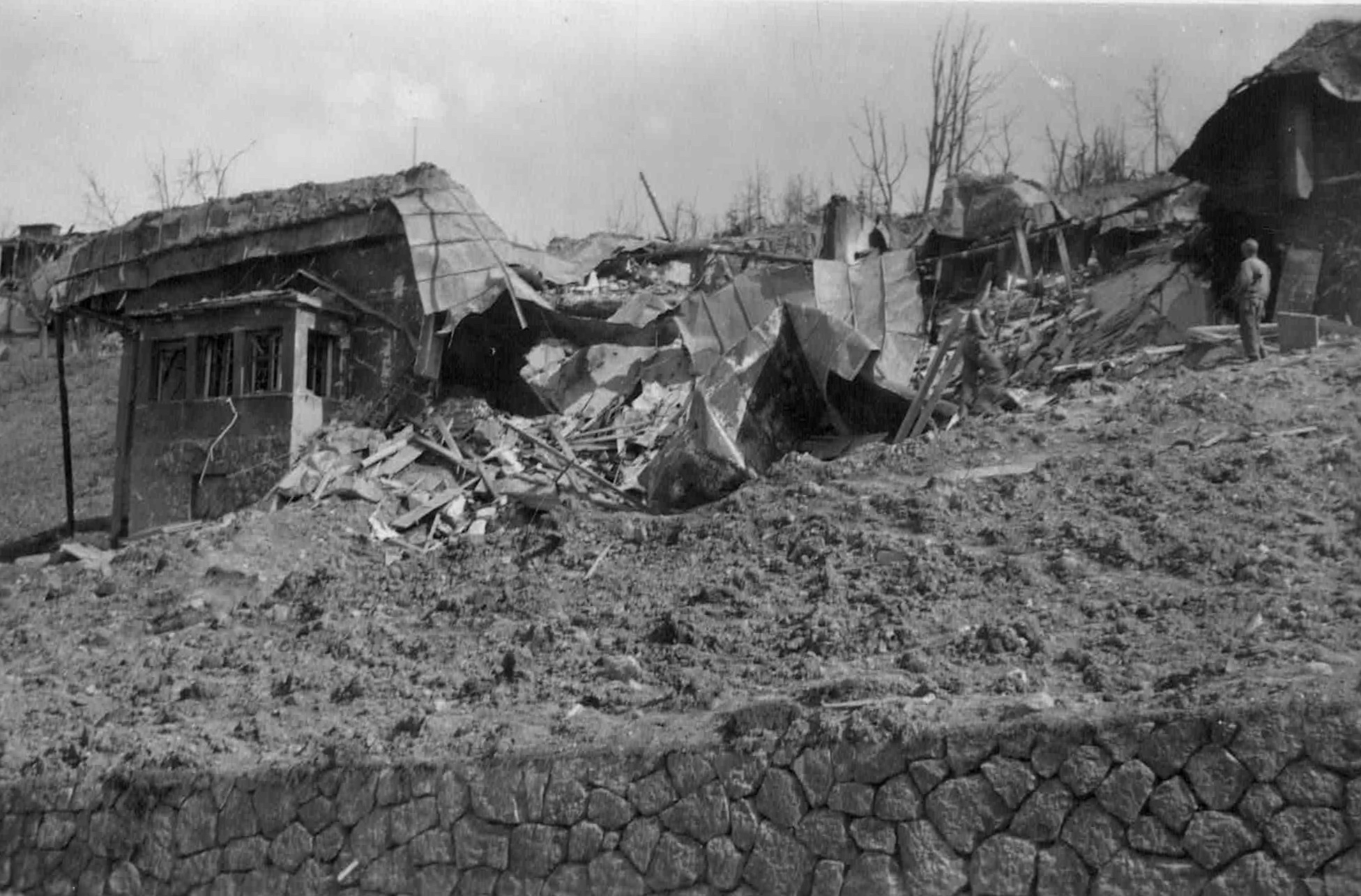
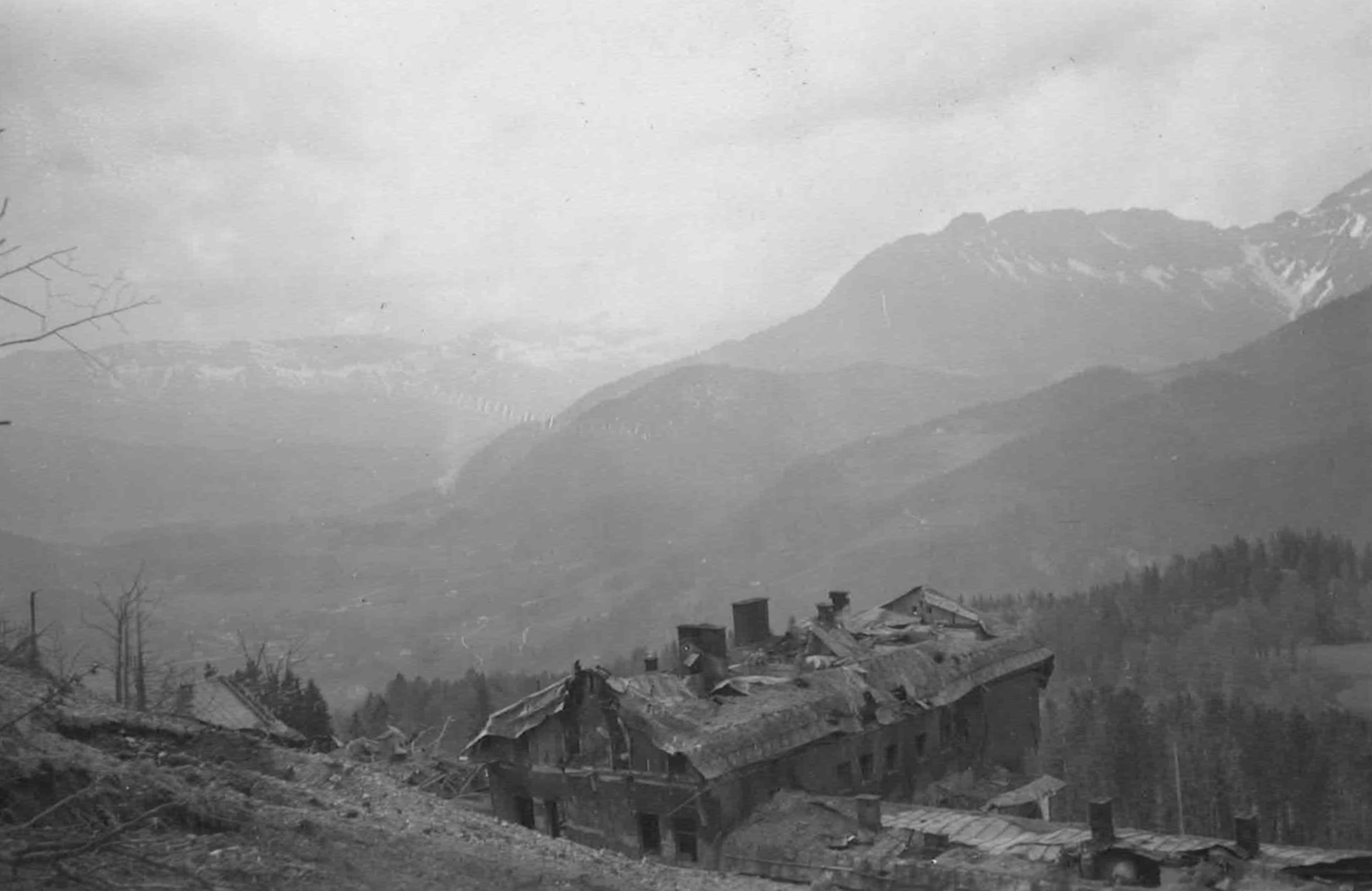
Views from Hitler’s mountaintop retreat. All photos by Flo Wick.
Berchtesgaden and the Obersalzberg Complex
Berchtesgaden, in the Bavarian Alps, served as Hitler’s alpine headquarters and a central site of Nazi state power. The Obersalzberg complex above the town contained residences, administrative buildings, and security installations used by Adolf Hitler and other high-ranking Nazi leaders, including Martin Bormann and Hermann Göring.
Key components included:
• The Berghof: Hitler’s primary residence, significantly damaged in a massive Allied bombing raid on April 25, 1945. • The Eagle’s Nest (Kehlsteinhaus): A mountaintop chalet and diplomatic reception site, built for Hitler’s 50th birthday. • SS Barracks and Guard Posts: Securing the restricted zone around the leadership compound. • Underground Bunker System: An extensive network of tunnels, shelters, offices, and storage areas designed to protect leadership during air raids and potential last-stand scenarios.
The Berghof was heavily bombedDestroyed barracks The main entrance road, Bormann’s house on the hill. It was thought he had escaped, but DNA from remains discovered in Berlin in 1972 point to May 2 as the day of his death.The Platterhof hotel was bombed and then burned by retreating NazisInside the Berghof was the “great room” with the “grand picture window” with a view of the Untersberg Mountains.Another view of the bombed BerghofThe barracks housed hundreds of SS guardsWhat a view!
We think this is where Flo found or was given Hermann Göring’s armband and a Nazi flag that she saved in her album.
Current status: Much of the Obersalzberg complex was demolished after the war. Today, the site is home to the Dokumentationszentrum Obersalzberg, a research and educational museum focused on the history of Nazism and the regime’s use of the mountain retreat. The Eagle’s Nest still stands and is now a tourist site with panoramic views and a restaurant. The surviving bunker tunnels are accessible through the documentation center.
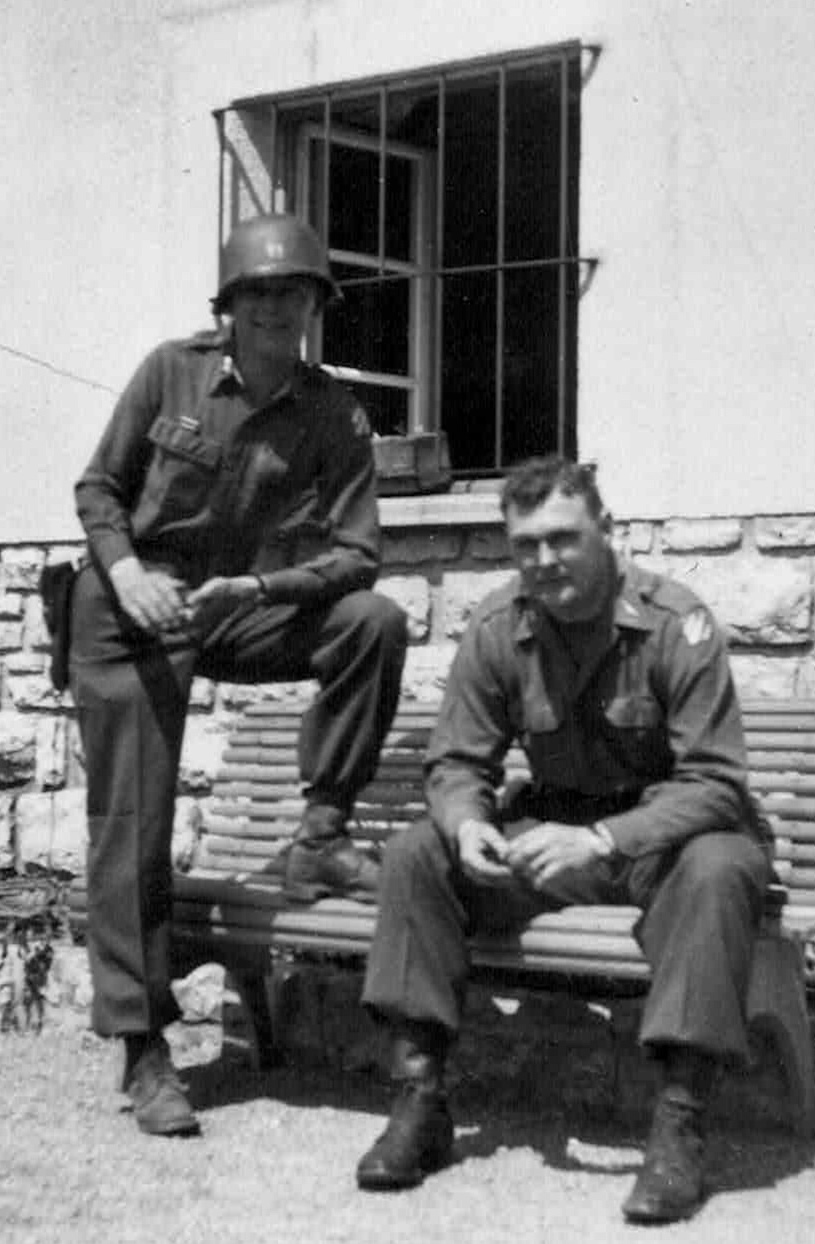
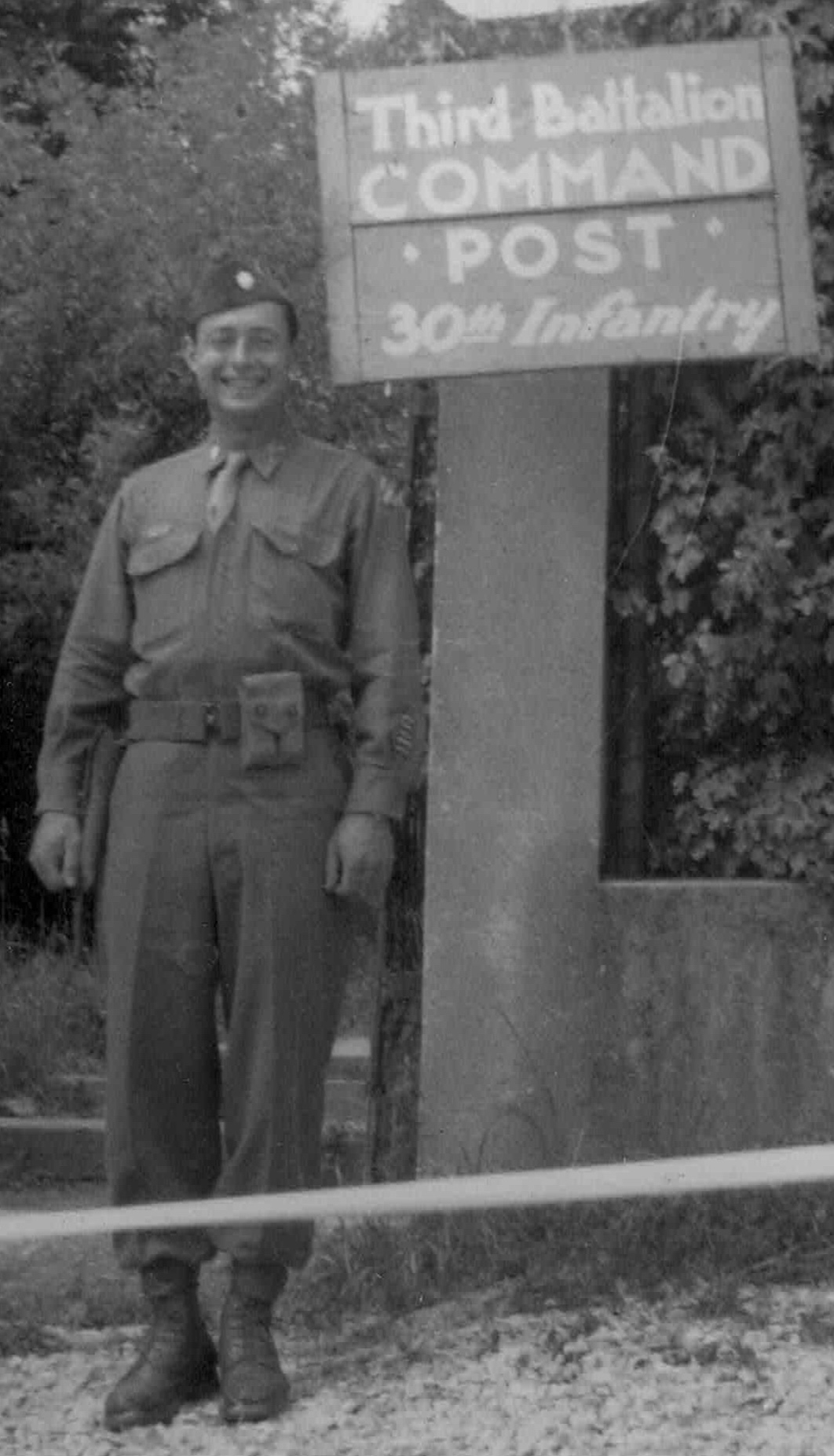
Pictures of Officers at the 3rd Battalion Headquarters
My Mother and Audie Murphy Ch. 69
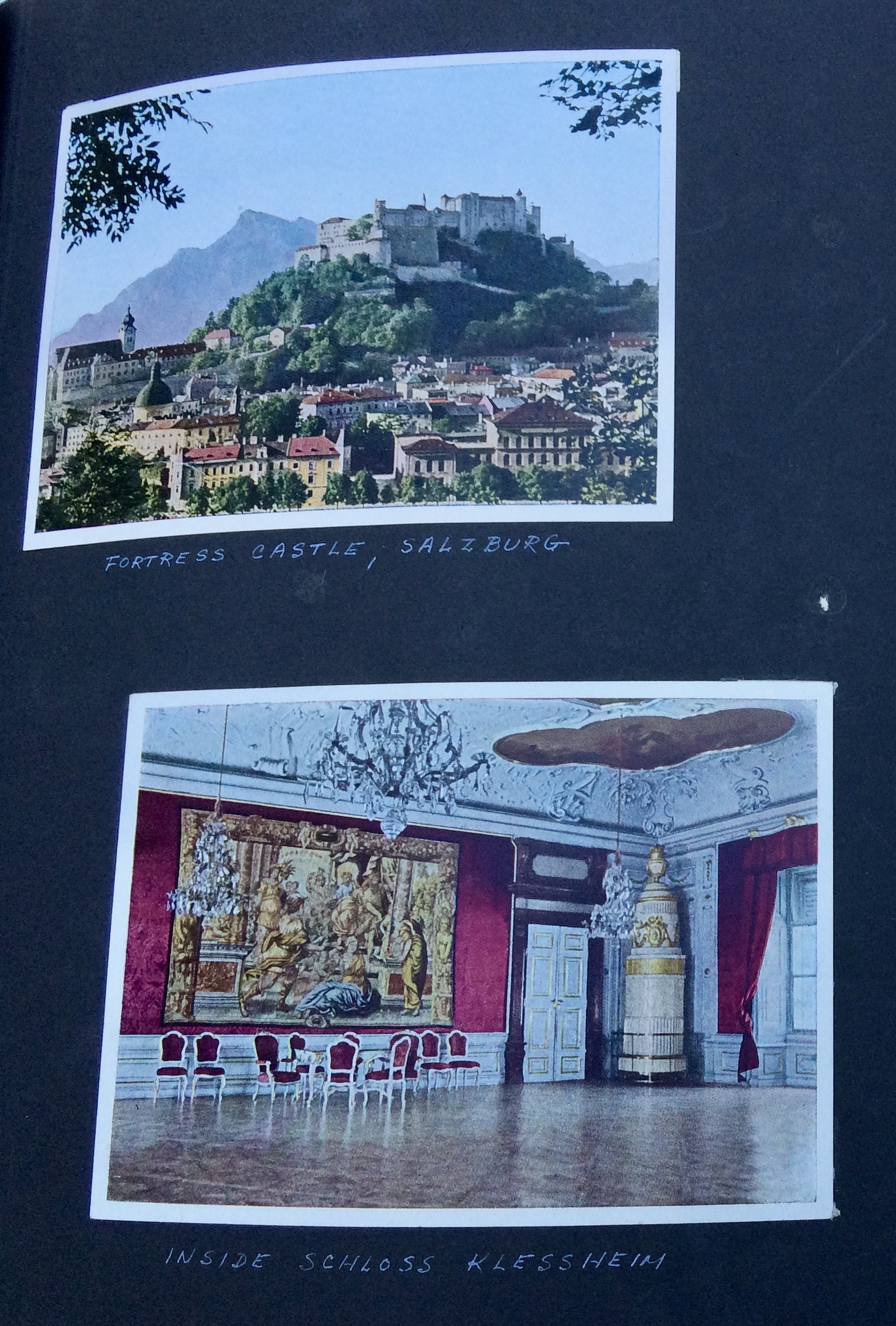
Photos from Flo’s album. Schloss Klessheim served as 3rd Division HQ in Salzburg. Salzburg was occupied for ten years by American forces. It was the central HQ of the American Occupation Authority.Lt. Col. Chaney (Flo’s boyfriend)Capt. Jenson, Maj. PerkinsMajor PridgenC.O. 3rd Bn3rd Bn staff Salzburg
Also on this page of the album is a damaged picture of Flo and Capt. McFalls who became a friend and corresponded with Flo after the war.
She was a lesbian who played in San Francisco 1952-2020
Found in Jackie’s cluttered house
She was an old-time dyke, although I never heard her use that word, nor the word lesbian to describe herself. She did call herself kiki, meaning neither butch nor femme. She may have called herself a character. I know the rest of us did.
Jackie Jones told me music saved her life. Music was certainly the theme of her life.
I first encountered Jackie at the Alemany Farmers Market in San Francisco where she played music every Saturday. She was a one-woman band playing the saw and a selection of hand-made instruments along with a dancing cat that she manipulated with her foot.
Jackie at the farmers market. Photos by author
She made the cat contraption out of plywood, springs, bike parts and wire. She painted the cat lavender with a sparkly G-string and stars where nipples would be. The cat had articulated limbs so Jackie could make it tap dance while the arms swung around. She recorded her own back up music and played it on a portable tape deck. She only played music from the 1920’s, songs like Bicycle Built for Two, Bye Bye Blues, and The Charleston.
Kids loved the dancing cat and always wanted to touch it so Jackie invented ways to discourage them. She talked about glueing a tack on the top of the cat’s head to pop their balloons. She wasn’t fond of kids, and when the kids moved on and we got close she would change song lyrics to bawdy and gay themes.
She rewrote the words to “Wait till the Sun Shines Nellie.” Her version went “Wait till your son turns nelly, and the neighbors start to talk.” The last line was “Gay is grand!”
Jackie always wore the same clothes—a John Deere trucker’s cap, a blue plaid shirt and jeans. Her front teeth were gone and she had false teeth that fit badly, which she only wore when in public.
Jackie lived in our neighborhood of Bernal Heights, but even though my lover and I invited her to dinner at our house, she never would let us into her house. She was an admitted hoarder.
Jackie owned two houses side by side on Manchester street, bought at a time when Bernal Heights housing was cheap. She lived in one and rented out the other, one of several on that street only 12-and-a-half-feet wide (most lots are 25 feet wide).
From Pensacola to New Orleans
Born in 1926, Jackie grew up in Florida, graduating from high school in 1944.
She said, “I remember in Pensacola listening to music with the Black maid that my mother hired. She would dance around with the broom to Ella Fitzgerald singing “A Tisket a Tasket,” then be back to ‘yes maam’ and sweeping when Mom came back.”
Jackie loved music from an early age and yearned to play it, but her parents scoffed and refused to pay for an instrument or lessons. Undaunted, Jackie saved her 35 cent-a-week allowance until she accumulated enough to buy an accordion from the Navy Exchange store. She spent hours in her room, teaching herself to play.
Jackie in her little house
After WWII, Jackie left home and moved to New Orleans. Living in the French Quarter, she held various day jobs to earn her $20 a month rent. At night, she would beg bands to let her sit in just to get experience.
Jackie’s first paid gig was $3 a night, playing her accordion for eight hours straight with a country band. She learned other instruments–guitar, then drums and vibraphone. By the late 1940s, she was supporting herself as a working musician, entertaining at bars, strip clubs and dances throughout New Orleans.
Her Journey West
In 1952, Jackie drove her 1948 woody station wagon west, coming first to Los Angeles, where she didn’t last long. She said, “Where I came from in New Orleans, people see you on the street and say ‘Hi! How are you.’ In LA, you say Hi, they just about call the cops on you.”
After six weeks in LA she couldn’t take any more of the place so she headed up north to San Francisco. There the people were friendly, they didn’t all look alike, folks were helpful, there were lots of bohemians, and she was able to get a job quickly. She never went back to LA.
Rubbing shoulders with the Beats
Jackie loved San Francisco but had problems finding permanent housing. Landlords did not want to rent to lady musicians, particularly the kind that wore pants and rode a motor scooter.
She bounced from rooming house to residential hotel, from day job (taxi driver, assembly-line worker) to music job (guitar at the Town Pump bar, accordion at the 1954 opening of San Francisco International Airport).
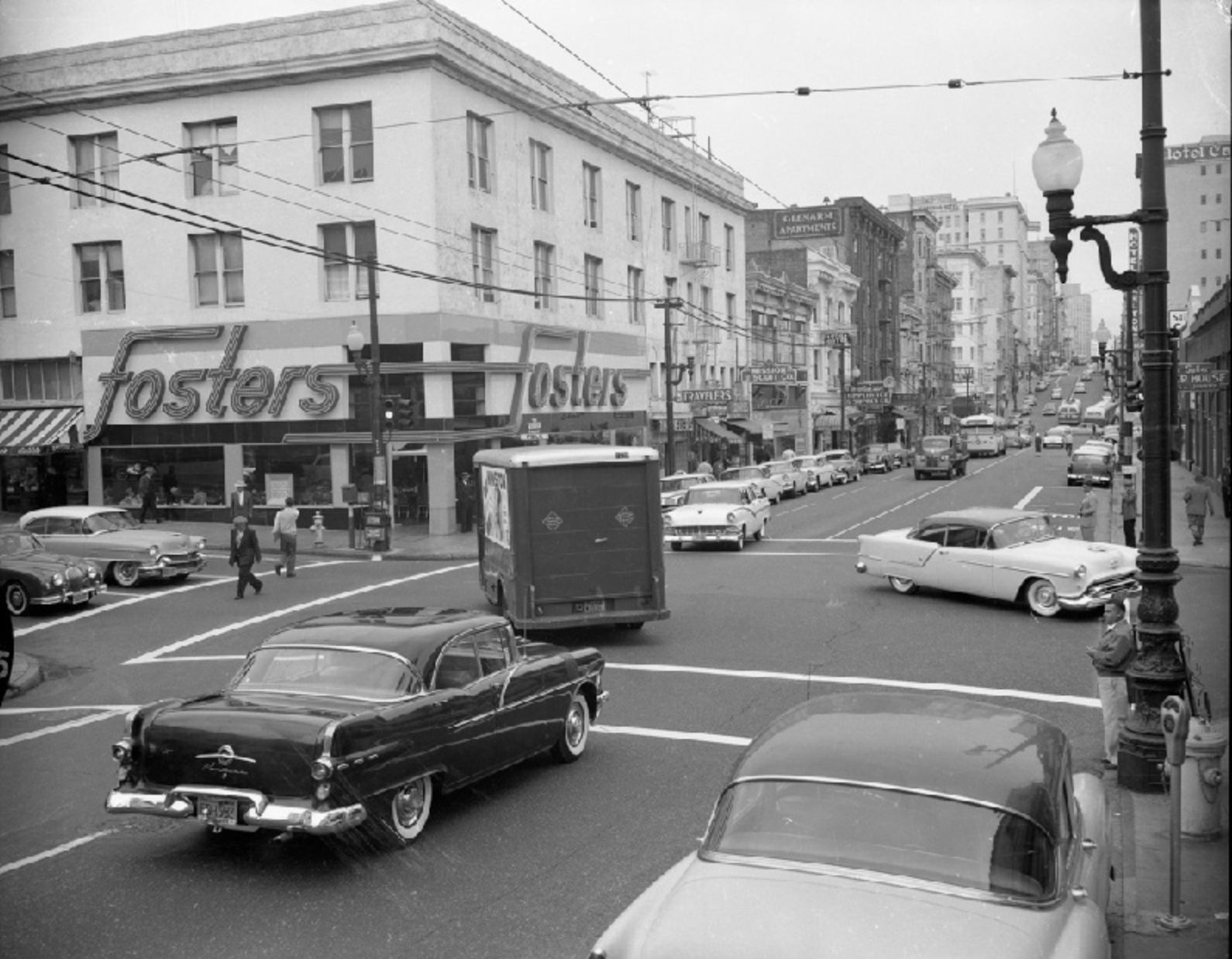
Fosters Cafeteria, downstairs from where she lived at Polk and Sutter, was open 24 hours and the bohemians hung out there. She met Alan Ginsberg and other Beats there. She became friends with ruth weiss (poet, performer, playwright and artist) when ruth worked the bar at the Wildside (a lesbian bar) in North Beach. Ruth traveled with Jack Kerouac and read her poetry around Europe and the US.
Fosters cafeteria 1956. Photo: Open SF History (wnp14.12640; Courtesy of a Private Collector)
In her spare time, Jackie attended City College of SF and SF State College, graduating with a physical science degree in 1962. In 1964, desperate for a steady paycheck, she became a mail sorter at Rincon Annex Post Office and worked there for 10 years.
But Jackie never stopped making music, working with anyone who’d hire her. She played accordion at the city’s Russian festivals and Columbus Day celebrations. She played drums for the Cockettes’ midnight shows and Kimo Cochran’s Polynesian dancing.
She played country guitar at Bay Area military bases with Faye Wayne and her Rhythm Roundup Girls, and Lady of Spain on the accordion at the Fairmont Hotel with a Latin trio. Dressed as a witch, she played Halloween gigs at the Randall Jr. Museum at an annual party for kids. Later in life she was asked to contribute her homemade music to a show at the San Francisco Museum of Modern Art.
Early lesbian culture
Jackie felt she never fit in the lesbian communities of New Orleans or San Francisco. She told me she thought the dykes in New Orleans in the 1950s fell into two groups: the fighters and truck driver type, and the professionals who needed to protect their reputations; they wore dresses and were in the closet. Jackie didn’t fit into either of those categories.
Lesbian bars didn’t hold much appeal. In those days in San Francisco women couldn’t get served if they wore jeans. They’d throw you out, she said. She never went to the lesbian bar the Paper Doll (San Francisco’s first lesbian bar, owned by Charlotte Coleman). “You’d see women wearing skirts, holding hands going in there. They were snotty to me. There was another lesbian bar called Peg’s Place. They had a room in the back and there was a little window in the wall where somebody watched you to make sure you weren’t touching,” she said.
She was a maker
House parties were no better. One Halloween the well-known San Francisco bar owner Ricki Streiker threw a party where all the dykes wore dresses and were not in costume. Jackie came in drag with a mustache. Drag had not yet caught on and she wasn’t invited back.
The only person Jackie had liked at that party was Pat Bond, the out lesbian actor who wrote and performed one-woman plays. She went home one night with Pat. They didn’t have sex; they talked all night instead. “I liked her mind,” said Jackie.
Jackie never had a long-term relationship. She had a lot of “bed friends.” I asked if that was the same as fuck buddies. Yes, she said. She would go on “sex binges” but there weren’t all those diseases out there then, she said.
“I went to the bohemian places where you had artists and a mix of interesting people. I liked the Black Cat best,” she said. “Gene Krupa came in once to the Black Cat, also Carson McCullers. Then the bar became gay when José Sarria (an early San Francisco drag queen) started his shows. I once played a show with José as his drummer. He was a nice guy. The music thing opened doors for me,” she said. “That’s why I like San Francisco.”
José Sarria performing at the Back Cat in 1958 |from José Sarria Papers| Courtesy of GLBT Historical Society
Later Jackie’s trademark instrument was a carpenter’s saw that she rubbed with a violin bow. One time Jackie came over to visit. We had several hand saws hanging in our garage/shop. Jackie pulled each out and tried it. “This one will make a good instrument,” she declared. She offered to teach us how to play the saw and we both tried. But playing the saw is hard!
Aging in place
In 2013 Jackie fell in her house, breaking her ankle and knee. But rather than call 911 and risk the fire department whisking her away to some rehab place that might never let her go back, she called some friends. She knew that if anyone from the city saw her house—the lair of a hoarder—they’d never let her back in. So, instead her friends helped her get over the back fence and into her smaller house, which was then empty of tenants.
The 12-and-a-half-foot-wide house was a studio up a flight of stairs in its original condition but otherwise in pretty good shape. The little house had two big advantages: it was not full of junk. Also, friends were now invited to visit.
When I’d visit Jackie, we would talk about musical instruments and how she made them, keys for different types of music, and what the lyrics to a song really meant. She would tell me about old time musicians she admired.
Jackie followed the careers of the Duncan sisters, Rosetta and Vivian Duncan. Rosetta was a lesbian. The white girls had a vaudeville act called Topsy and Eva that they created in 1923 about a white child and a Black child with Rosetta in blackface. It was a musical comedy derived from the novel Uncle Tom’s Cabin.
“Once I was in a show with Vivian who played Little Eva,” said Jackie. “She played the piano, sang and did comedy.” The show was a takeoff on the movie All About Eve. Charles Pierce played the part of the actress. It was at California Hall (where the infamous 1965 gay New Year’s ball took place). “I love that I can look back on doing these things,” she said.
One of Jackie’s favorite entertainers was Hadda Brooks, who ended up playing for gay audiences as she got older. “That’s My Desire” was her big number. Billed as “Queen of the Boogie,” the vocalist, pianist and composer was big in the 1940s and 50s, then made a comeback in the 90s.
We talked about death. Jackie wondered what will happen to her stuff when she dies. I was finally allowed to go into Jackie’s big house when she asked if I could help her clear it out. Every room was crammed full of junk—old computers, musical instruments, paper, clothes. There were machines that I couldn’t identify.
She had 12 guitars–none complete, some banjos, three accordions, electronics. She had 25 turntables because she was afraid she wouldn’t be able to get the needles. She kept dozens of instruments that she hoped to fix someday, inventing new musical instruments, experimenting with new sounds. She would scour the salvage yard and hardware stores for parts for her inventions and I was sent on trips to her favorite hardware store for particular screws and parts. Jackie didn’t want to get rid of anything because, she said, she might need it for something she was making or inventing. Having to let go of anything was so painful for her that the house never did get cleaned out.
We talked about the old days before gay liberation. Jackie didn’t have a partner, but she was was lucky to have the love and attention of her good friend Pauline, a sister musician who helped and supported her for 30 years.
Pauline wrote: “Jackie has always had a wary streak, not wanting folks to know all her business. I think it goes back to those ugly days in the 1940s and 1950s when she saw that being outed as gay could mean being arrested, having your name in the paper, losing your job, your residence, your family, etc.
“I’d say some of that fear still prevails. We recently had a fill-in caregiver who Jackie later told me asked her all these prying, straight-lady questions about her background: Why did Jackie never marry? Why doesn’t Jackie have her own family to look after her instead of this friend, Pauline? Didn’t Jackie ever want to have kids? Jackie gave the lady some bland answers but she wasn’t going tell her, “I’m gay. I wasn’t interested in husbands, kids and marriage.”
“Hell, Jackie didn’t tell her own family she was gay, they just thought she was weird, eccentric, and bohemian, and that was bad enough. In the 1940s, when her brother-in-law heard that Jackie was living in the French Quarter and working as a musician there, he told his wife to break off contact with Jackie because ‘We don’t associate with those kinds of people.’
“Why isn’t your family looking after you, Jackie? Because they were bigoted, small minded, homophobic assholes. Why don’t you want to tell people you’re gay, Jackie? Because there are still a lot of bigoted, small minded, homophobic assholes out there.
“Jackie has great survival instincts and is still following them. She is very proud of the fact that she never got arrested on a morals charge (or any other charge) back when plenty of her gay and lesbian friends were being pulled out of bars and thrown into paddy wagons.”
Jackie gave me banjo lessons. Photo of Molly by Barb Schultheis
Jackie never had to go to a nursing home. She lived with caretakers in the little house till she died in 2020 at the age of 93. Her friend Pauline was there when she died.
From the invitation to Jackie’s memorial: “Friends and neighbors of Jackie are invited to attend and celebrate Jackie. Per Jackie’s instructions, this is NOT to be a religious event but a party. All musicians are asked to bring their instruments so we can remember Jackie musically. By Jackie’s specific request, NO religious music of any kind is to be played. However, we welcome jazz, standards from the 20s and 30s, Latin, country-western, and any other music that swings.”
Jackie Jones was someone who discovered her passion, music, at an early age, and she never lost her love and enthusiasm for it. Music was the focus of her life: performing it, listening to it, collecting sheet music and instruments, arranging it, practicing it, recording it. Jackie had lovers but never had any girlfriends. That’s because she had found her great, all-consuming love…music.
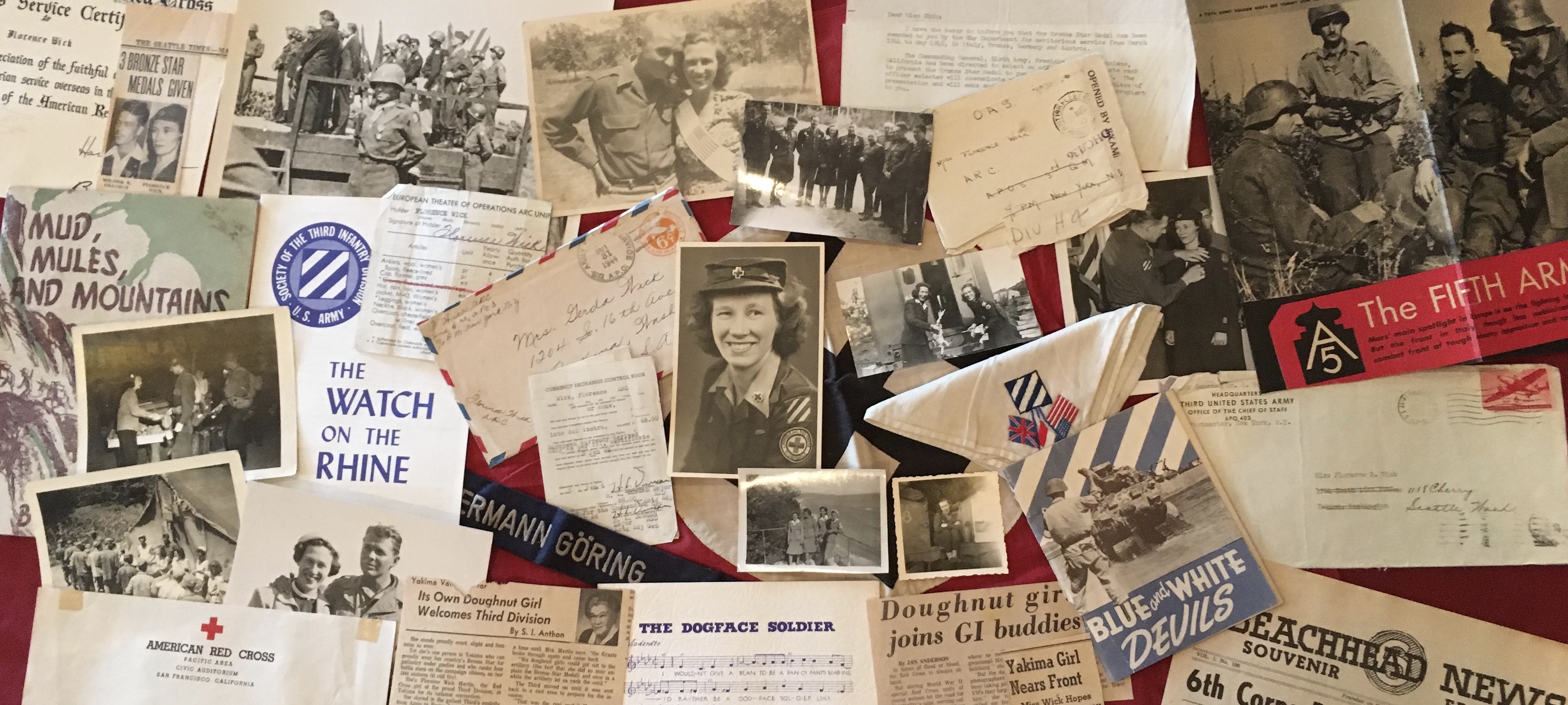
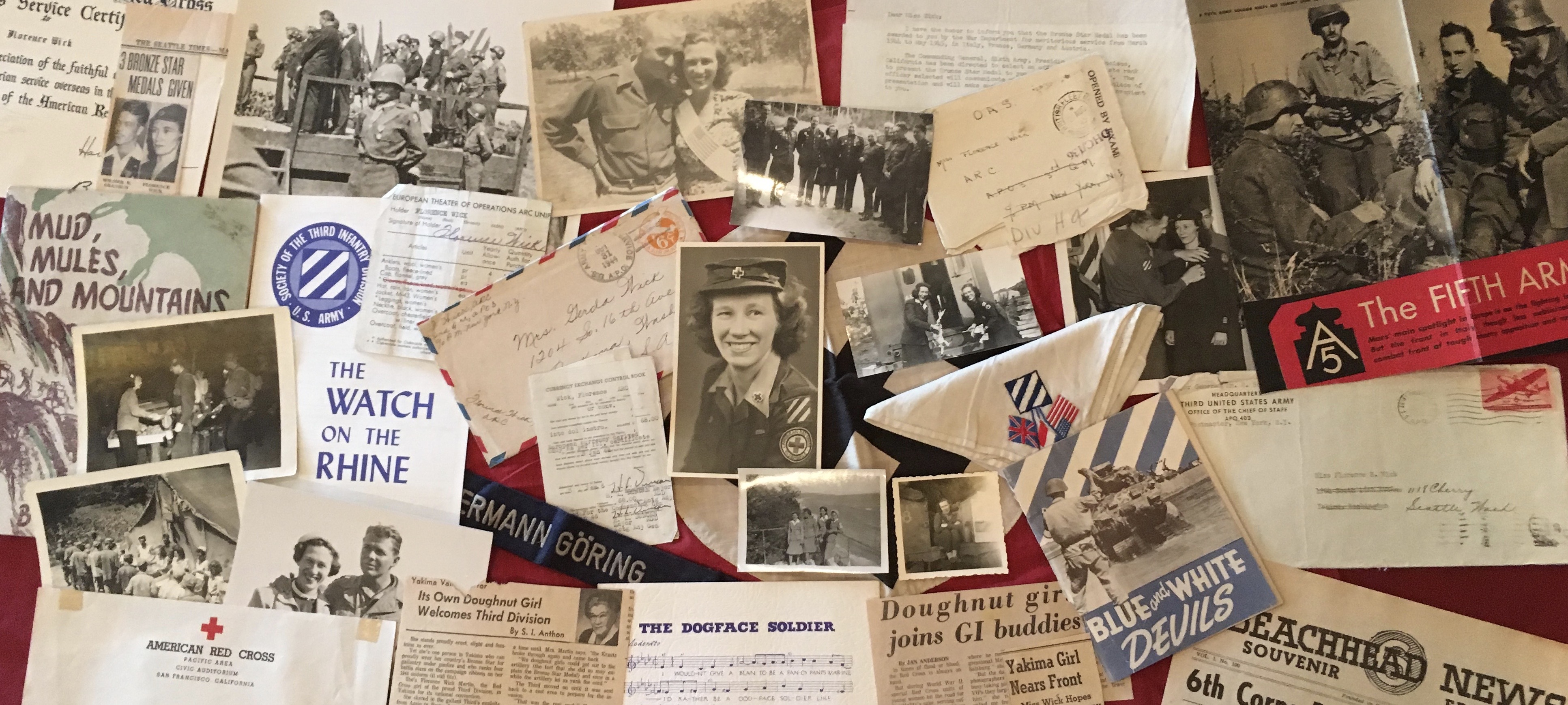
Clubmobilers are some of the first to see the camp
My Mother and Audie Murphy Ch. 68
The Dachau concentration camp near Munich was liberated by the US Army on April 29, 1945. There is no page in Flo’s album dedicated to Dachau, but the Red Cross women were there. Flo didn’t talk about the Holocaust, possibly because she thought no one would believe her.
In the 1970s she organized a writers group at the Yakima Senior Center where she worked. The group published a chapbook, Leaves of Sage, in which two of her stories appear. Then she was finally able to write about her experience. Here is her story.
Holocaust 1945
By Florence Martin
The long struggle to free the world of Hitler and his horrors was coming to an end; it was 1945 and Munich had fallen. The US Army’s famous Third Infantry Division, which had pursued the Nazis relentlessly through North Africa, Sicily, Italy and southern France into central Germany itself, had figured prominently in the capture of Munich and the liberation of the infamous concentration camp at Dachau. Armed with captured Zeiss-Ikon cameras, the four Red Cross Clubmobile gals, attached to the Third Division since Anzio in Italy, were eager to shoot scenes of the city which had been a Nazi stronghold and of the concentration camp prisoners, some of whom could still walk away from this 20th century torture chamber.
Photo: Dogface Soldiers Collection
We had not reckoned with the results of the swiftness of the Allied attack which had prevented the Nazi jailers from destroying the evidence of their hideous and unspeakable atrocities to Semitic citizens of Germany whose only crime was being a despised JEW. Left behind were literally stacks of human bodies–piled up like so much cord wood–only skin covering their skeletons. A year on the battlefields of Italy, France and Germany had toughened us to these sights of violence and death, and we almost calmly focused cameras on the neatly stacked corpses. I had snapped several views and was focusing on the bottom “layer” when I caught the movement of a human hand through the camera’s viewfinder. Thinking that my imagination was playing tricks on me, I moved closer to the subject, only to confirm that some of the skeletons did indeed still contain life and that several arms and legs were still moving. Sickened and horrified, my sudden scream brought the others running toward me.
Although there was still some movement, it was, of course, too late to resuscitate or rescue anyone. With revulsion we left the whole hellish scene. Later as I retched in a nearby ditch, I wondered how many potential Mendelsohns and Einsteins were there among those wretched skeletons, and if, perhaps, the great Goethe might be turning in his grave about this modern and depraved Mephistopheles, Adolf Hitler, and what he had done to Goethe’s Germany.
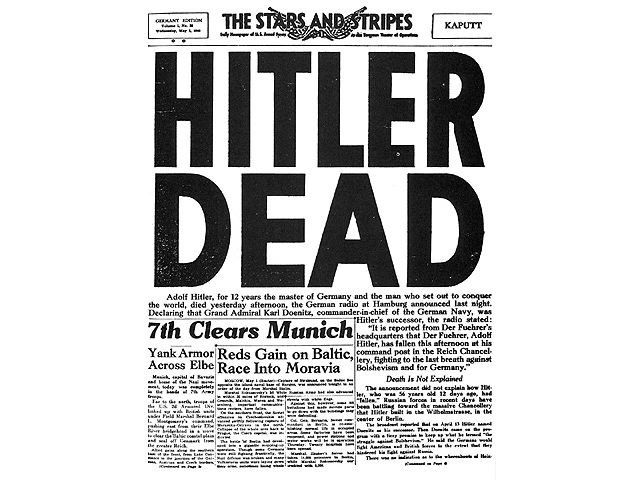
Hitler died April 30, 1945. Photo: Dogface Soldier
Postscript: this is a true experience; The pictures that were taken that day were somehow conveniently lost in development in a German photoshop–only these shots among several rolls of film were missing, and it was not until television elaborated the Holocaust more than 30 years later that my personal experience could be proved.
April 1945. In Germany the four clubmobilers finally got their own clubmobile, a two-and-a-half-ton GMC truck. Flo was very proud that she could drive it. The vehicle must have required some modification for the women. At five foot two, it’s a wonder that Flo could reach the pedals. The clubmobilers were tasked with driving around to rest camps serving donuts. They managed to get over the border into Austria for some sightseeing. Photos are from Flo’s album.
Autobahn near Munich
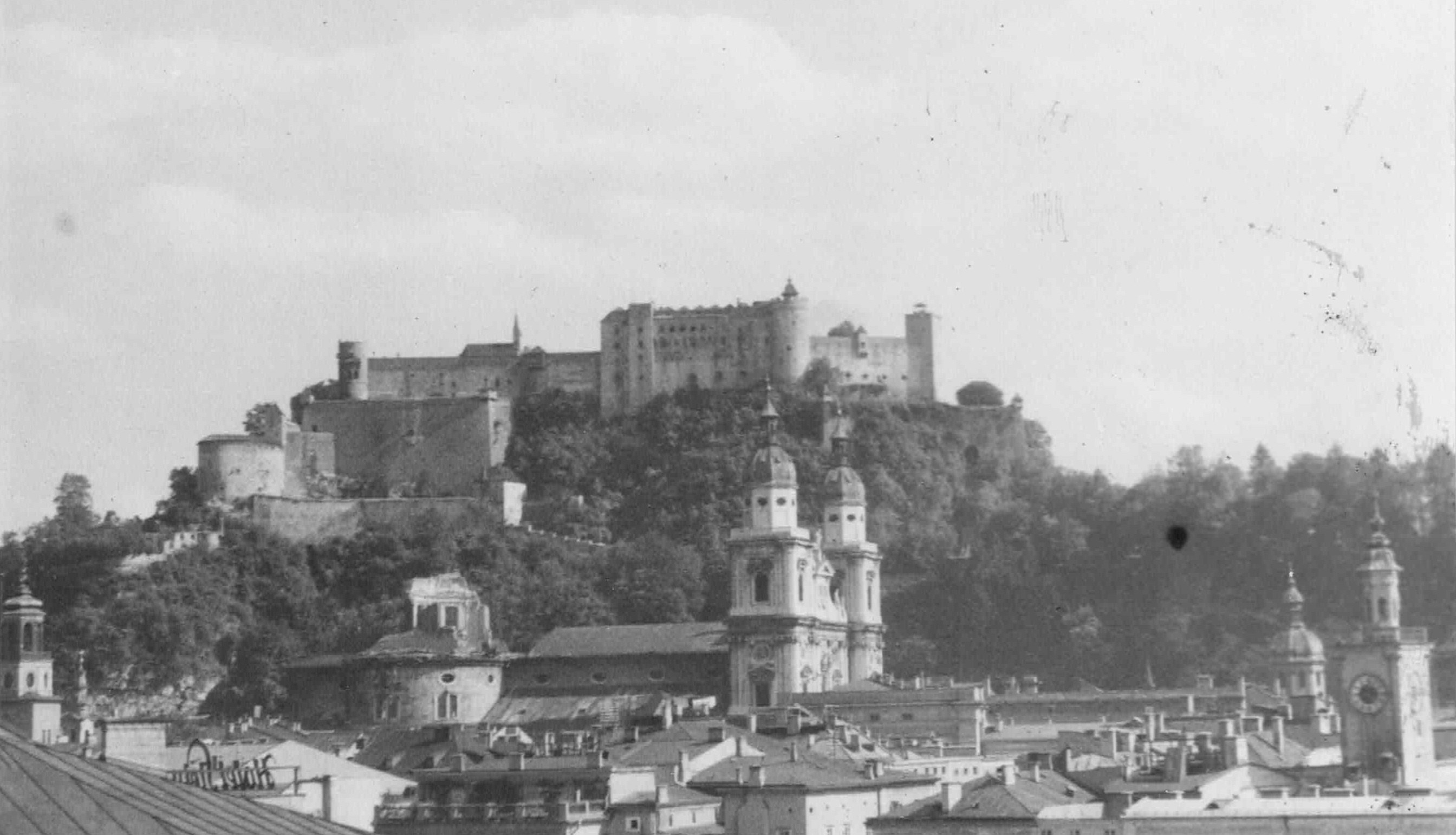
The medieval fortess castle, Salzburg Austria
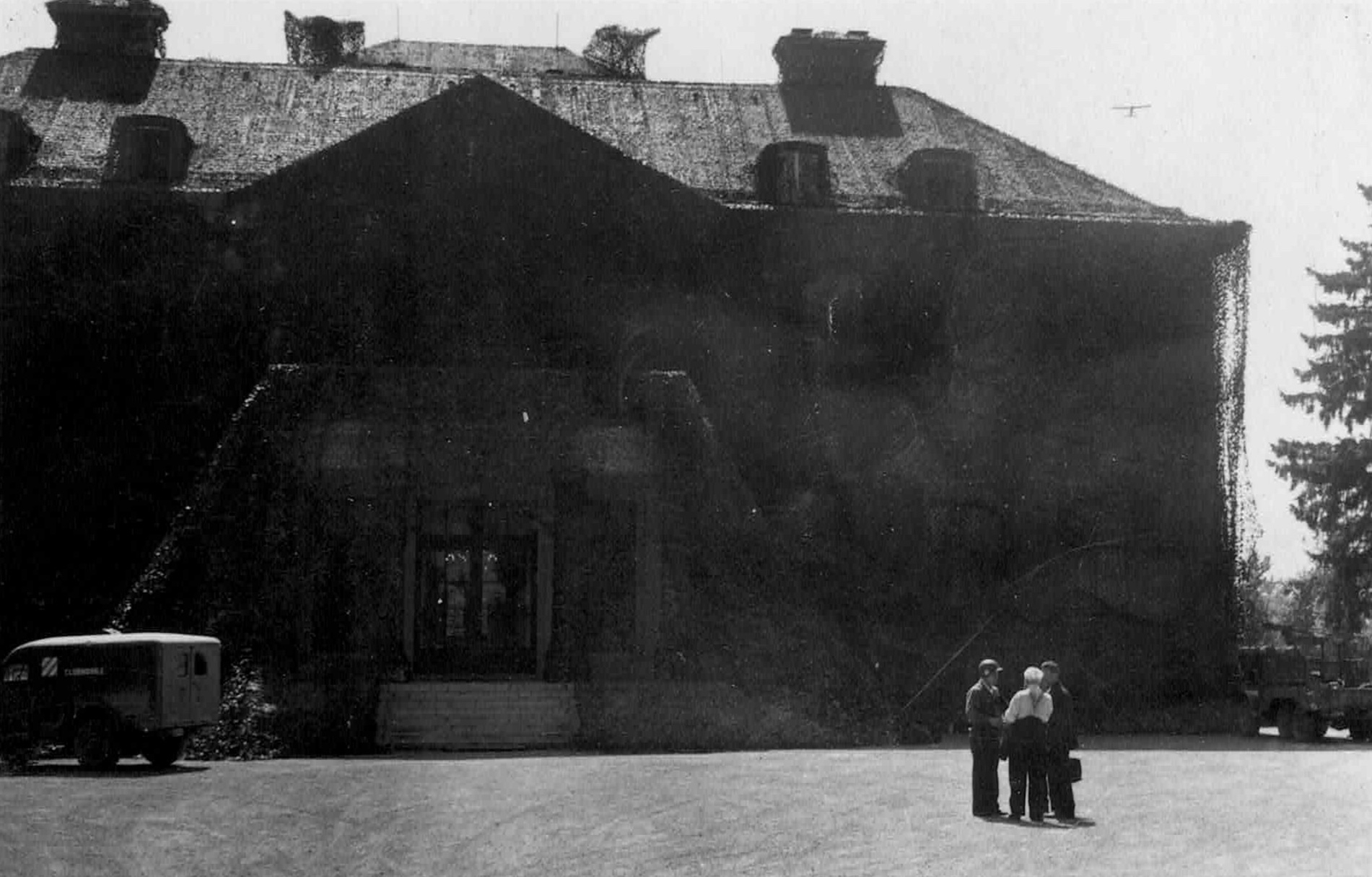
Schloss Klessheim, a baroque palace near Salzburg built 1700, became 3rd Division headquarters.
“Kraut prisoners near Munich”
“In QM area with Dr. Minerva”
Schloss Klessheim was shrouded in camouflage to hide anti-aircraft guns and defensive positions when 3rd Division forces captured it on May 4, 1945. It was described as “Hitler’s guesthouse for visiting foreign plenipotentiaries.
Flo’s letter home was published in her hometown newspaper, the Yakima Republic.
Miss Wick in Germany: Sees Yanks Parade in Hitler Center
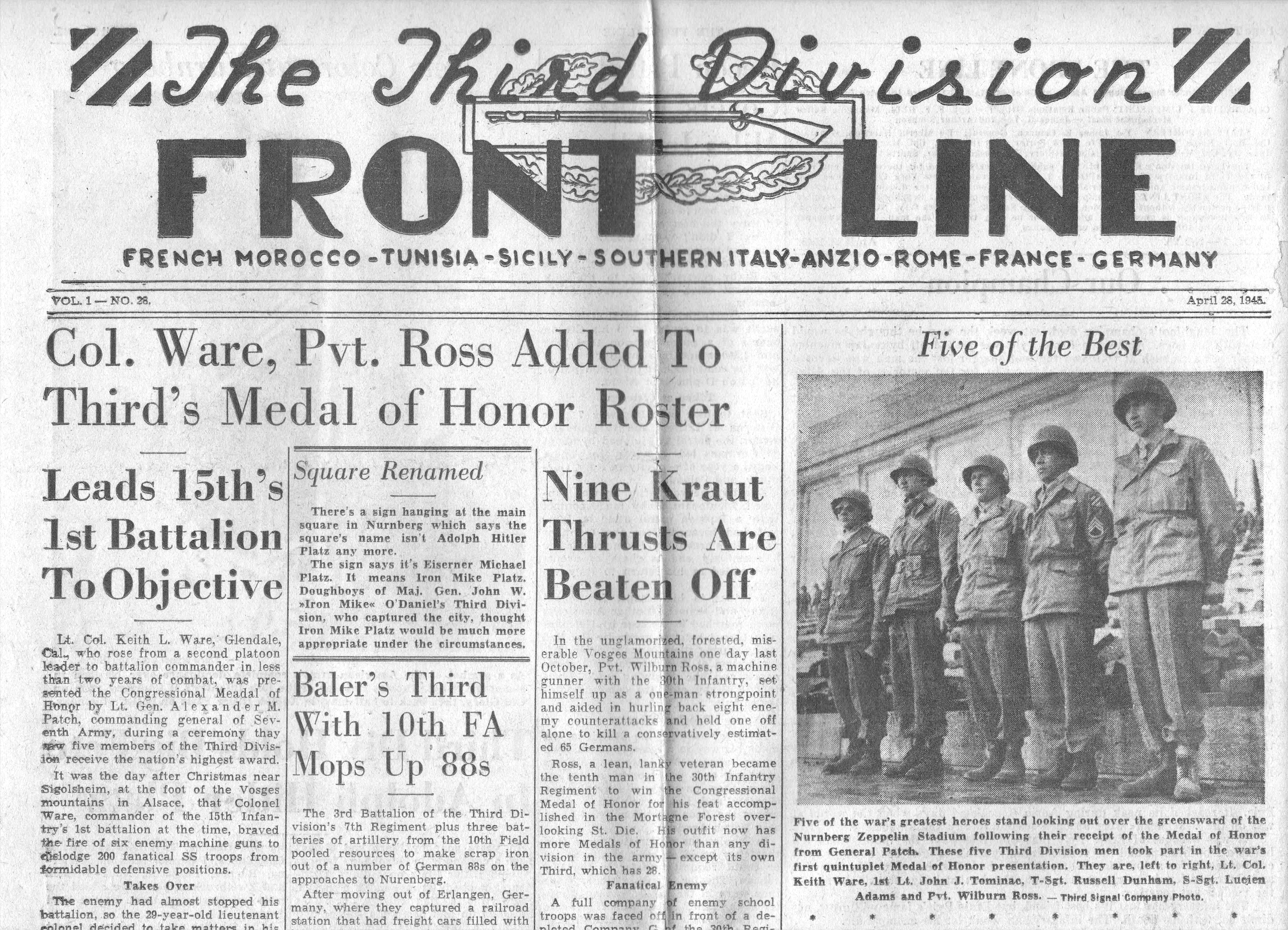
Parades in Hitler’s former stamping ground and presentation of congressional medals to brave American boys in a big Nazi stadium formerly ornamented with swastika flags, are among the sites witnessed by Miss Florence Wick, who is with the American Red Cross in Germany.
“General Patch presented five congressional medals of honor in the exact spot where Hitler used to ‘sell’ his theories to the Germans,” Miss Wick writes her mother, Mrs. Gerda Wick. “I have seen one of the biggest and most famous of Nazi cities in complete ruin. We drove in jeeps down streets which air corps and artillery have reduced to rubble.
War Messy
“War is a mess and how these people can be loyal to a leader who led them into it and brought about such destruction is more than I can understand. It is really something to drive through town after town and see white flags flying from windows.”
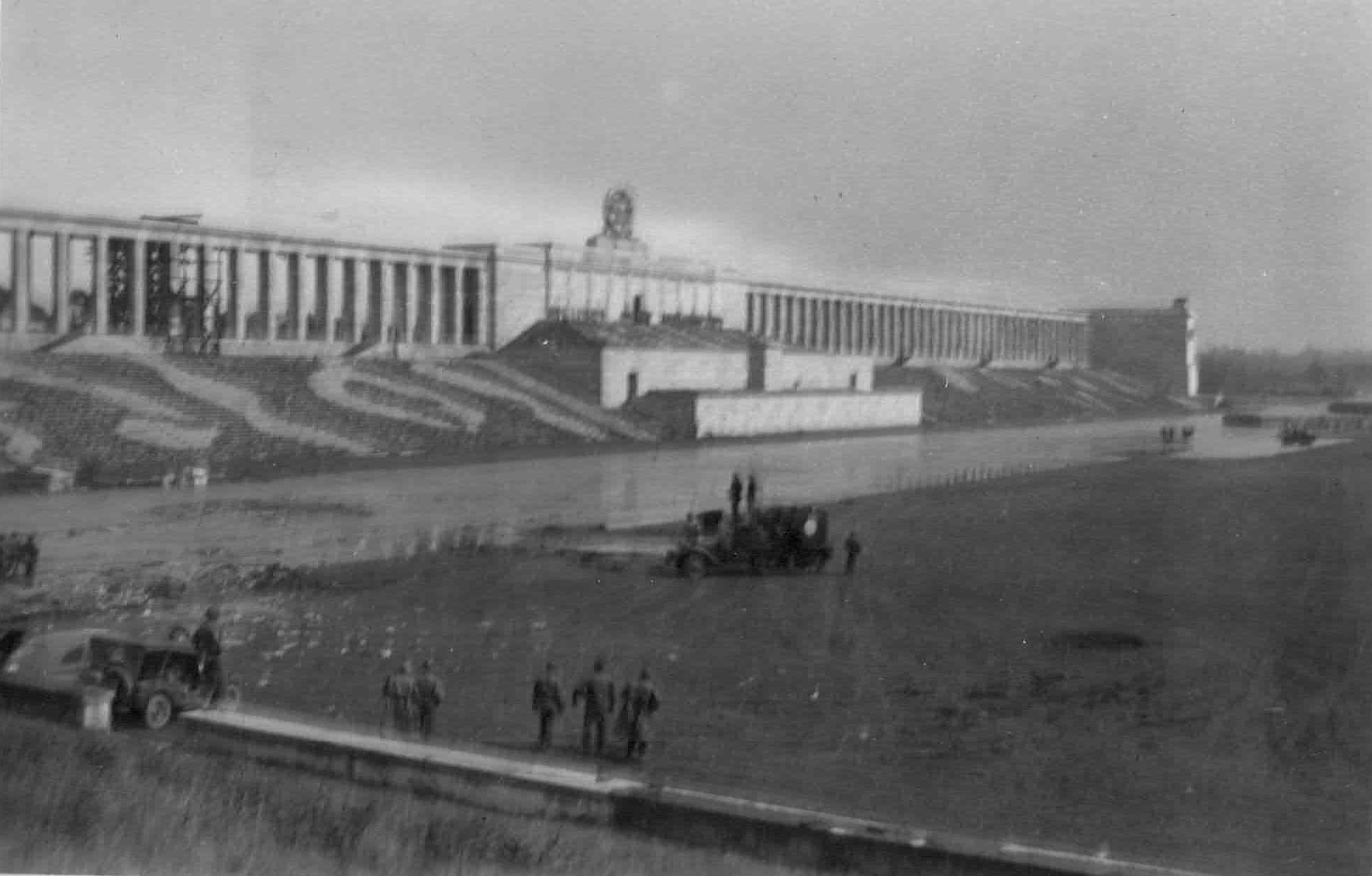
Hitler’s Zeppelin Stadium. Photo: Flo Wick
The doughnut business continues good, Miss Wick wrote three weeks ago. The Red Cross workers had been steadily on the move but serving doughnuts all of the time. Germany is beautiful now, especially in the places where the fruit trees bloom and everything is neat and clean, she says. Mail is slow when Red Cross workers, like the soldiers, are on the move. The weather was so warm they were wearing spring cotton uniforms, Miss Wick said.
“The cotton dresses are so welcome because I get tired of uniforms and can wear the dresses after work and when I go out or have company,” Miss Wick commented upon receiving some clothes from home. “We have to do our own laundry and it is a task with no conveniences, but cotton clothes make it simpler.”
Stars and stripes raised above the swastika at Zeppelin stadium. Photo: Flo Wick
Women Find Home
Most of the time the Red Cross workers have been living in tents although Miss Wick and her roommate found a room in an empty German house on their last move and were enjoying the comforts of a regular dwelling.
We have lovely days in between showers and the countryside is beautiful. We had a picnic in a patch of woods just below an old castle the other evening. We marveled that we were eating fried chicken and hard boiled eggs on a picnic in the woods of southern Germany.”
She “spent more time at the front lines than Gen. Eisenhower”
My Mother and Audie Murphy Ch. 64
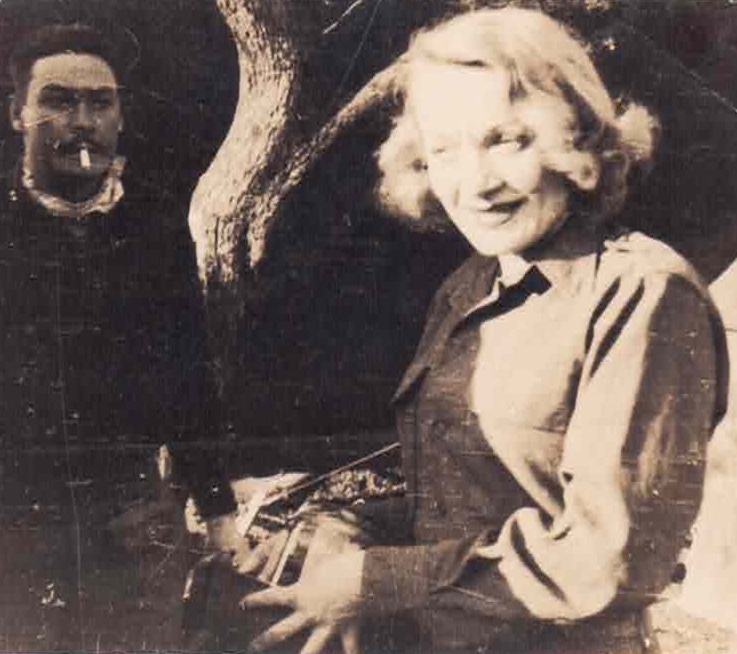
April 1945. Marlene Dietrich was a huge movie star. Flo was star struck and delighted to meet her when she visited soldiers and the clubmobile crew in a field somewhere in southern Germany.
Dietrich was also a WWII hero. She became an active participant in the American war effort after renouncing her German citizenship and refusing to cooperate with the Nazi regime. She sold war bonds, raised significant funds for the troops, and performed hundreds of morale-boosting shows for Allied soldiers—often close to the front lines—through her USO tours.
Flo wrote: “Marlene up front. We took her picture. The GIs took ours.“
Dietrich was a humanitarian. She housed German and French exiles, provided financial support, and advocated for their American citizenship. In the late 1930s, she co-founded a fund with Billy Wilder and several other exiles to help Jews and dissidents escape from Germany. In 1937, she placed her entire $450,000 salary from Knight Without Armor into escrow to assist refugees. Two years later, in 1939, she became an American citizen and formally renounced her German nationality.
After the U.S. entered World War II in December 1941, Dietrich was among the first public figures to help sell war bonds. From January 1942 through September 1943, she toured the United States, and was reported to have sold more war bonds than any other Hollywood star.
“Danube River (It ain’t blue)”
During two extended USO tours in 1944 and 1945, Dietrich performed for Allied troops in Algeria, Italy, the United Kingdom, France, and the Netherlands, and later entered Germany with Generals James M. Gavin and George S. Patton. When asked why she risked being so close to the front lines, she simply replied, “aus Anstand”—“out of decency.” Billy Wilder later remarked that she had spent more time at the front than General Dwight D. Eisenhower.
Flo and Janet
In 1944, the Morale Operations Branch of the OSS launched the “Musak Project,” a series of musical propaganda broadcasts designed to weaken enemy morale. Dietrich recorded several German-language songs for the project, including “Lili Marleen,” a tune beloved by soldiers on both sides of the conflict.
Dietrich’s return to West Germany in 1960 for a concert tour was met with a mixed reception. Despite negative press, bomb threats, and protests from those who considered her a traitor, her performances drew large crowds. In Berlin, demonstrators shouted, “Marlene, go home!” Yet she also received warm support from others, including Berlin Mayor Willy Brandt, who, like Dietrich, had opposed the Nazis and lived in exile during their rule. Emotionally drained by the hostility she faced, Dietrich vowed never to return to West Germany—though she was warmly welcomed in East Germany.
Janet hands out donuts“Three donuts, one grin”
Her contributions earned her numerous honors, including the American Presidential Medal of Freedom and the French Legion of Honour. For her efforts to improve morale among troops and aid those displaced by the war, she received additional honors from the United States, France, Belgium, and Israel.
When Donald Trump illegally designated Antifa as a domestic terrorist organization, my concern for the future of our democracy deepened.
Antifa is not an organization, just a loose movement with no leaders. Because Antifa lacks structure, Trump’s move could target anyone the government assumes to be part of the movement, which could be you or me. I declare I am an antifascist. I object to the fascist takeover of my country.
Whatever you think of antifascists, probably you don’t think of the US government. But there was a time when the villains of US foreign policy were fascists. It was after the Spanish Civil War, 1936-39, in which the US refused to intervene, letting the fascists win with the help of Hitler, Mussolini and US oilmen (see Spain in Our Hearts by Adam Hochschild). It was before the CIA incorporated Nazi war criminals into its organization and focused our wrath on communists and the Soviet Union after WWII (see The Devil’s Chessboard by David Talbot).
Mom in uniform
In the aftermath of WWI, European writers sought to alert the world about the fascist threat and Americans—if they were paying attention—knew about what was happening in Europe. My mother, Florence Wick, was paying attention. What cultural influences caused her to join the American Red Cross (ARC) and serve in Europe during the second world war? What can we learn today from antifascist art?
Watch on the Rhine
In the years before television, theater played an influential role in shaping the culture. Visiting New York City in 1941, my mother saw Watch on the Rhine, an antifascist play written by Lillian Hellman. The popular play won the New York Drama Critics prize that year and was still on Broadway when Pearl Harbor was bombed on December 7, 1941. Made into a movie starring Bette Davis in 1943, Watch on the Rhine was representative of a genre of antifascist art popular in the US during the early years of WWII whose purpose was to persuade isolationist Americans to get involved in the European war. It certainly influenced my mother’s decision to join the Red Cross and go to war. I think it may have been one reason she chose to join the ARC, which promised a job overseas, rather than other slots that opened for women, which may have kept her behind a desk back in the States.
Playbook saved by Mom in 1941
I watched the movie and several others with similar messages. Some are just naked propaganda with unbelievable characters and dialog. Others, like Hellman’s, seek to educate Americans about the crisis in Europe, about class and about anti-Semitism. Hellman, who had briefly joined the Communist Party, wrote the play in 1940 following the Nazi-Soviet non-aggression pact of 1939. Her call for a united international alliance against Hitler contradicted the party’s position at the time. She was labeled a “premature antifascist” by the Communist Party, ironically later a moniker used by the FBI during the McCarthy purges to target communists. Her lover, Dashiell Hammett, who had also joined the Communist Party, wrote the screenplay.
His introduction reads: In the first week of April 1940 there were few men in the world who could have believed that, in less than three months, Denmark, Norway, Belgium, Holland and France would fall to the German invaders. But there were some men, ordinary men, not prophets, who knew this mighty tragedy was on the way. They had fought it from the beginning, and they understood it. We are most deeply in their debt. This is the story of one of these men.
The man is Kurt Muller, a German who has devoted his life to the antifascist movement. We learn that he and many of his comrades fought in international brigades along with the Spanish Republicans to defend Spain’s democratically elected government against Francisco Franco’s fascists. They and others have constructed an underground antifascist organization in Europe. Watch on the Rhine shows us that fascists come in many shades; that Americans, naive about world politics, haven’t moved so far from slavery; that Bette Davis (bless her heart) excelled at overacting. The part played by Davis, Muller’s American wife, was expanded for the movie to make use of her star power at the box office.
The play is set in the Washington DC mansion of the wife’s family, whose dead patriarch had been a respected US Supreme Court justice. The family matriarch, Mama Fanny, runs it like a plantation, overseeing Black servants with strict control. When Joseph, the male servant, is summoned, he answers “Yasum.”
But Joseph gets some good lines. When Mama Fanny orders, “That silver has lasted 200 years. Now clean that silver,” Joseph says, “Not the way you take care of it Miss Fanny. I see you at the table and I say to myself, ‘There’s Miss Fanny doing it to that knife again.’ “
Hellman uses the three Muller children, sophisticated, language rich and worldly, to teach Americans about the outside world. “Grandma has not seen much of the world,” says the oldest, Joshua. “She does not understand that a great many work most hard to get something to eat.”
We learn that the antifascist movement is nonviolent. The youngest kid, Bodo, says, “We must not be angry. Anger is protest and should only be used for the good of one’s fellow man.”
The movie is both a critique of American culture and an attempt to school Americans about developments in Europe. Hellman did deep research for her script, and I thank her for helping me to understand this historical period and the forces that shaped it. Like most films from this era, it’s not available on Netflix, but I was able to check it out from the San Francisco Public Library.
The Moon Is Down
During Hitler’s rise, Nazis were winning the propaganda war. Leni Riefenstahl’s 1935 Nazi propaganda film, Triumph of the Will, was and still is much admired. Alarmed artists approached the US government with proposals for antifascist plays, movies and books, among them the famous writer John Steinbeck. The result of his effort, the novella, The Moon is Down, was published in March 1942. The next month it played on Broadway and a year later premiered as a movie. Its purpose was to motivate the resistance movements in occupied countries. The sinister title comes from Shakespeare’s Macbeth.
I accidentally discovered the thin book in a friend’s library and read it with great interest. It describes life in a town that has been invaded and occupied by the German fascist army.
There is bloodshed. Orders are followed. People resist, are arrested and executed. People flee. Some people collaborate. Others form an underground to communicate with those on the outside. At the end of the book, the war is still going. But the invaders have been surrounded and we are very aware that the invaders have become the harassed. In a way, the occupiers have become the occupied.
Steinbeck acknowledges the humanity of the enemy. We learn as much about the motivations and humanness of the invaders as the invaded. For that reason the book was criticized mercilessly in the US and Steinbeck’s patriotism questioned. But Europeans loved it. It was translated into many languages and became the most popular piece of Allied propaganda in WWII.
Five Came Back
Things weren’t looking good for the Allies as the US joined the war effort after the Japanese attack on Pearl Harbor. Germany and Japan were conquering Europe and the Pacific. The US had only just started to gear up its factories to make war materiel and Europe feared we wouldn’t get it there in time to stop the Nazi advance. It was during this time that the US antifascist propaganda machine went into high gear.
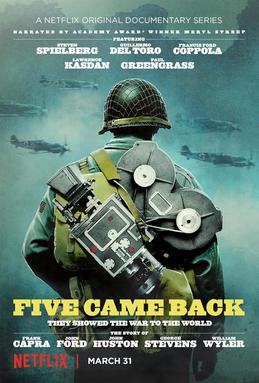
From 1942 to 1945, Frank Capra directed a series of seven antifascist propaganda films, narrated by the actor Walter Huston. The series, called Why We Fight, was produced by the War Department to make the case for US involvement in WWII. These films can now be accessed online. I also saw Five Came Back, a three-part Netflix series about five American film directors, including Capra, who produced propaganda for the US government during the war. The others were John Ford, William Wyler, John Huston, and George Stevens.
Making movies of the war changed the filmmakers as well as audiences. We learn that they were haunted by what they saw. Wyler was shocked by racism against Black soldiers and refused to make a film meant to recruit Blacks. Stevens, at Dachau, realized he should be there to film evidence of crimes against humanity, not propaganda. Ford turned to drink after witnessing the bloodbath on D-Day. Huston took on PTSD only to have his film suppressed by the government. Racism was present in these films. While Germans were depicted as humans, Japanese were often seen as subhuman caricatures. The government worried, rightly, that violence against Japanese Americans would result. Then, in 1942, it incarcerated them until the end of the war.
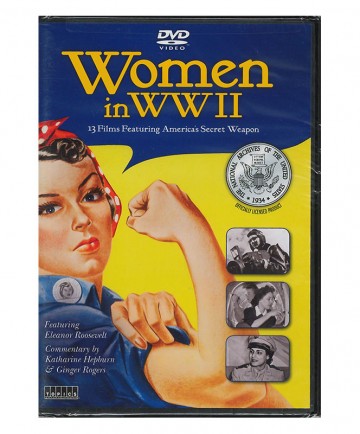
Women in WWII: 13 short films featuring America’s Secret Weapon
Most of these are US military propaganda films whose purpose was to convince women to join the WACS or other service, and also to persuade men that women could do the work. Some were written by Eleanor Roosevelt and narrated by famous actors like Katherine Hepburn. The American Red Cross, in which my mother served, wasn’t mentioned, but there was a picture of an ARC club in North Africa.
I wish the government had made films like this for women in the trades. In one scene a couple of men are talking on their front porch about how one’s sister wants to join the WACS and they think she’s crazy. It’s a man’s war, they say. Then the film counters their sexism and shows competent women doing all sorts of jobs. However, these films also endeavored to persuade women that they were taking men’s jobs and they needed to go back home after the war and relinquish their war jobs to returning soldiers. It was made clear that the jobs belonged to men.
I don’t know if my mother saw any of these films, but it was this sort of government propaganda that propelled her and her generation into World War II. When the enemy was fascism, she was “as patriotic as they come,” according to her sister. Only after the war did she begin to question the government-constructed enemies of the state.
Imaginary Witness: Hollywood and the Holocaust
Released in 2004, this film makes the case that the story of the Holocaust has been told to the world by films made in Hollywood, starting with Warner Bros. Confessions of a Nazi Spy in 1939, then MGM’s The Mortal Storm in 1940. Neither of these films used the word Jew. The Jewish studio heads wanted to stay in the closet and just be known as Americans. Also, the movie industry made a lot of money from selling its films to Germany during the early years of Hitler’s takeover. Some historians now view studio directors as Nazi collaborators.
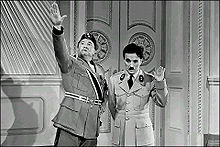
Finally in 1940 Charlie Chaplin used the word Jew in The Great Dictator, which he made with his own money. Imagining that an antifascist film can also be hysterically funny might be difficult until you see The Great Dictator. Chaplin slays as Adenoid Hynkel, a thinly disguised Hitler. Jack Oakie’s spoof of Mussolini inspires hilarity. This film is testament to Chaplin’s comic genius. In the globe scene, Chaplin/Hynkel performs a ballet dance with a balloon earth, achieving perfect domination. Chaplin impersonates Hitler to great comic effect. He watched Riefenstahl’s propaganda film Triumph of the Will to learn Hitler’s speech patterns and body movements. Chaplin later said that if he had known the extent of Nazi atrocities, he wouldn’t have made the film. I’m so glad he did.
My mother told us kids stories about her time in Europe during the war, but she never talked about the Holocaust and we were not taught about this historical period in school. So I didn’t learn until 1970 that she had been present at the liberation of Dachau. What finally got her talking was an American TV mini-series, QB VII, about a British court case involving concentration camp crimes. It exemplifies how American media jogged the memories and imaginations of war survivors even 25 years after the war.
Night Will Fall
In 1945 a team of British filmmakers overseen by Alfred Hitchcock went to Germany to document the Nazi death camps. Their documentary, German Concentration Camps Factual Survey, was suppressed and then lost for seven decades. Night Will Fall, a 2014 documentary directed by Andre Singer, chronicles the making of the 1945 film and includes original footage. These images are hard to watch, but I think we need to see them, to witness the consequences of fascism.
The death camp films were suppressed partly because they were thought too graphic for British and American tastes. And American tastes had changed almost as fast as superstate enemies revolved in Orwell’s dystopian novel, 1984. The Germans, our most recent deadly enemy, had become our friends. The Soviet Union, our recent ally, and communism, was now our mortal enemy.
With my neighbors at the No Kings demo in Santa Rosa October 18
In To Hell and Back, Murphy tells of the last days of the war.
After the crossing of the Rhine, the dike seems to crumble, and a flood of men and equipment pours into Germany. Even the most fanatical Nazis must sense that the game is over, yet they still deceive the population with promises that resistance will bring a negotiated peace rather than unconditional surrender. If they still want war, the Americans give it to them. With victory in sight, they do not soften. Artillery levels sections of towns; flames lick across burning buildings. Infantry and armor prowl rubble-strewn streets, and blood flows needlessly through the gutters.
A column of German prisoners is escorted by 3rd Division soldiers after their capture in Nuremberg, Germany. The fight for the city from April 17-20, 1945 was a tough one for the 3rd Division including mines, booby traps, Panzerfaust, snipers and futile counterattacks. Photo: Dogface Soldier
As the battle lines roll forward, windows drip with white flags. Any house without the mark of surrender receives no polite warning; soldiers rake its windows with machine-gun fire to correct the oversight. The tactic works.
Murphy is transferred to liaison duty, serving as the contact man between the division’s units. Near Munich, he enters a prison camp with his gun drawn and comes face-to-face with a German guard. The prisoners insist the man is a “good joe.” Murphy hears the phrase and thinks bitterly, Maybe he is. But I cannot see men anymore—I see only uniforms. He holsters his pistol.
The German mumbles something and stumbles toward a set of steps.
“There is something pathetically human about his odd, hobbled walk…. Perhaps it is the knowledge that we carry in our hearts that nobody ultimately wins. Somewhere we all go down. Force used tyrannically is our common enemy. Why align ourselves with it in whatever shape or fashion.“
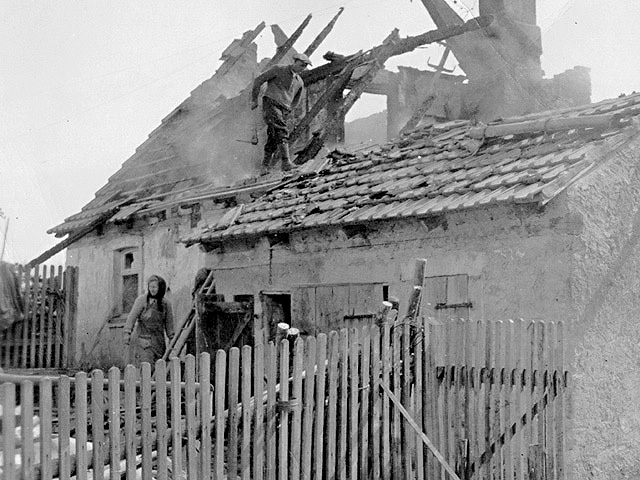
A man and woman inspect their damaged home in Neuheusen east of Bamberg. Photo: Dogface
Then comes the great picture of mass defeat, the most overwhelming sight of the war. It appears in the bent figures of old women poking through ruins for some miserable relic of the past; in the shamed, darting eyes of the beaten; in the faces of little boys who watch the triumphant columns with fear and fascination. Above all, it appears in the thousands of dusty, exhausted soldiers streaming toward the stockades. Their feet clump wearily, mechanically, hopelessly along the seemingly endless road of war. They move as haggard gray masses in which the individual has no life and no meaning. It is impossible now to see in these men the fierce power that made them fight like demons out of hell only a few months before.






























 tradeswomn musings