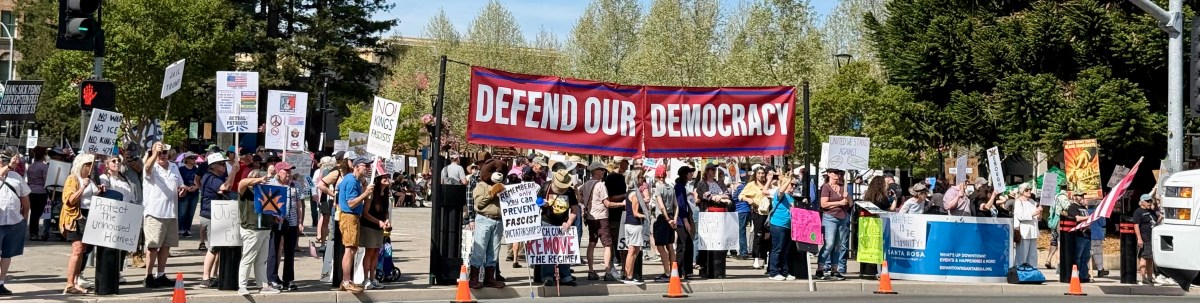
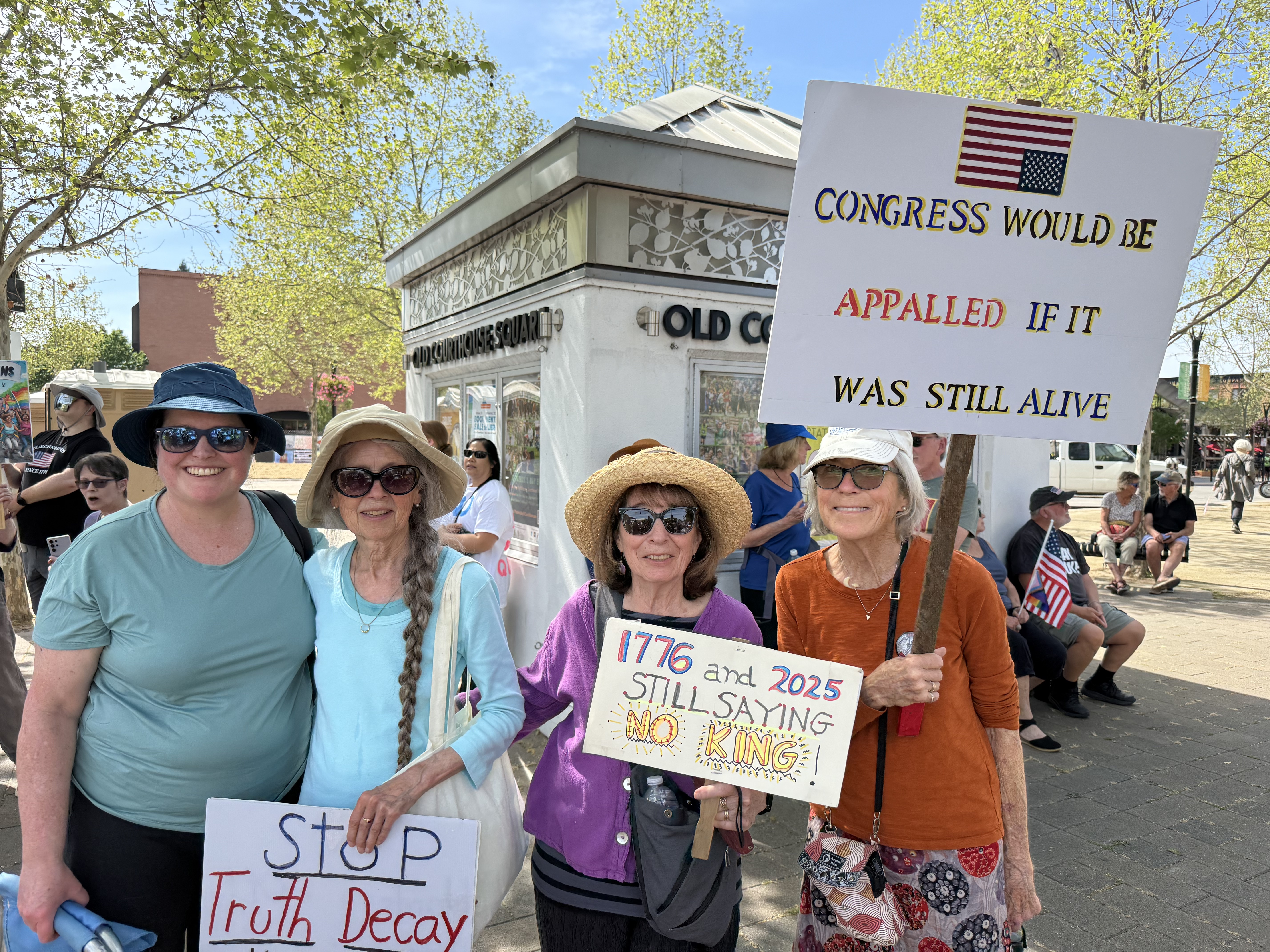
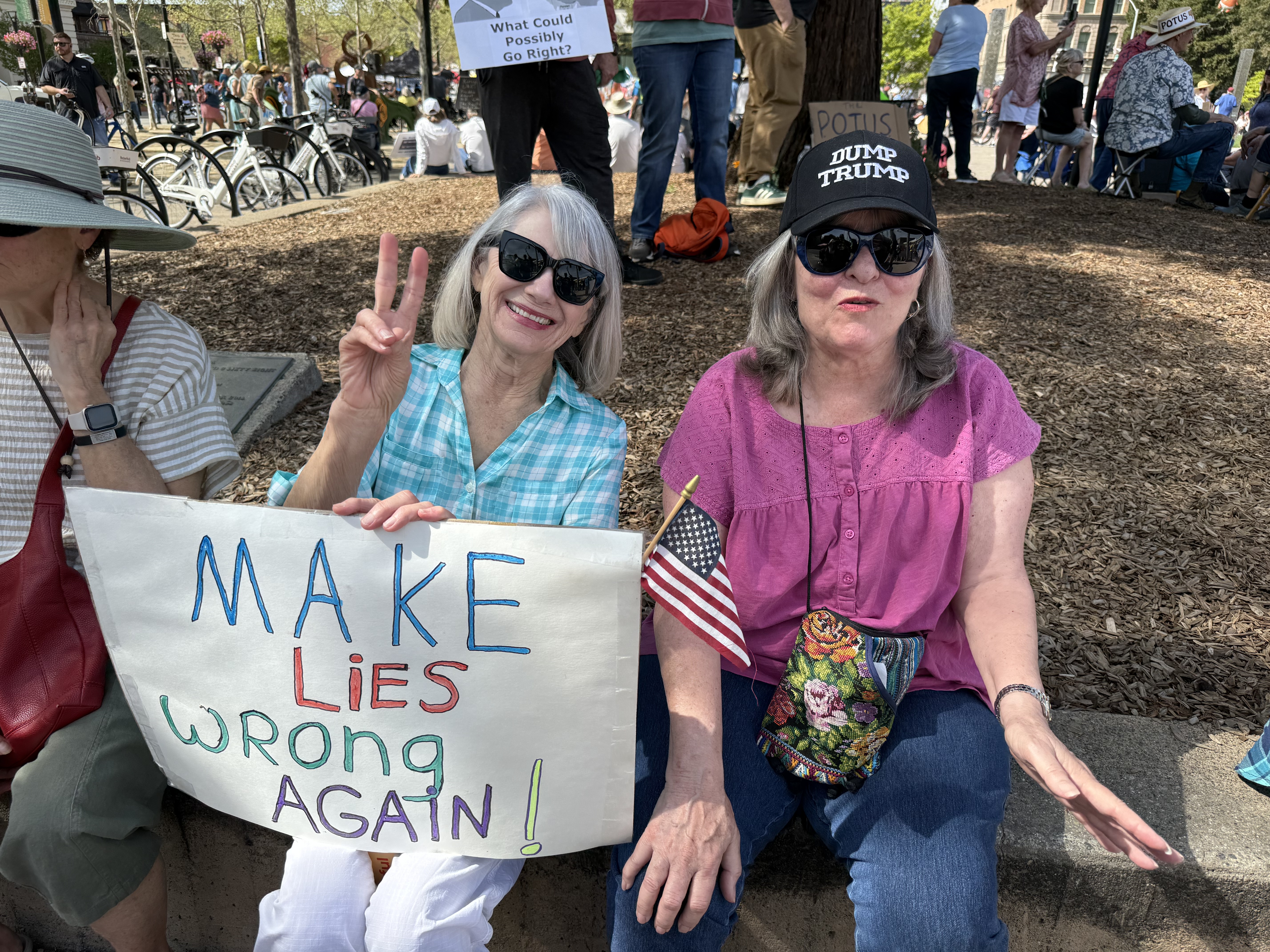
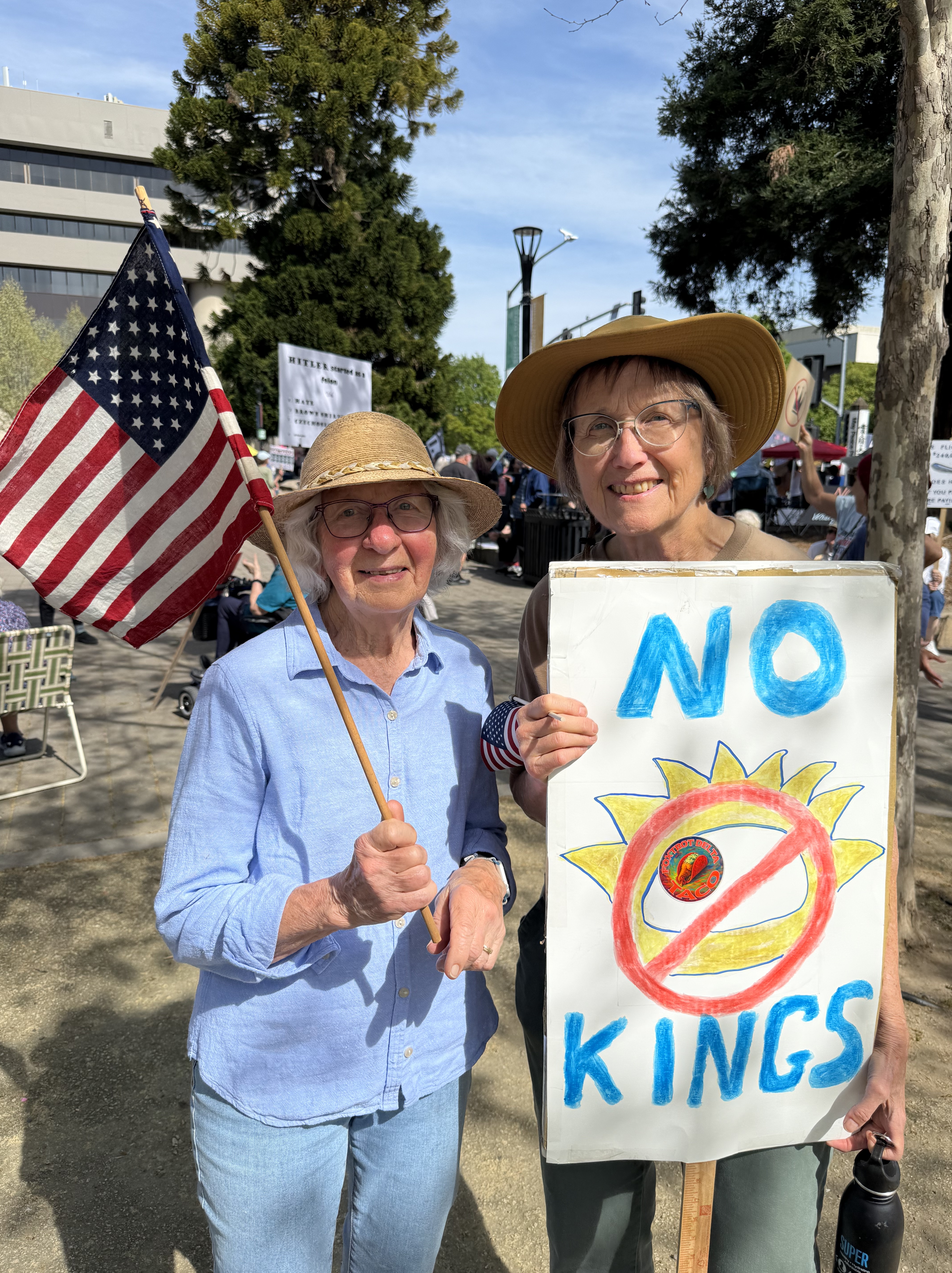
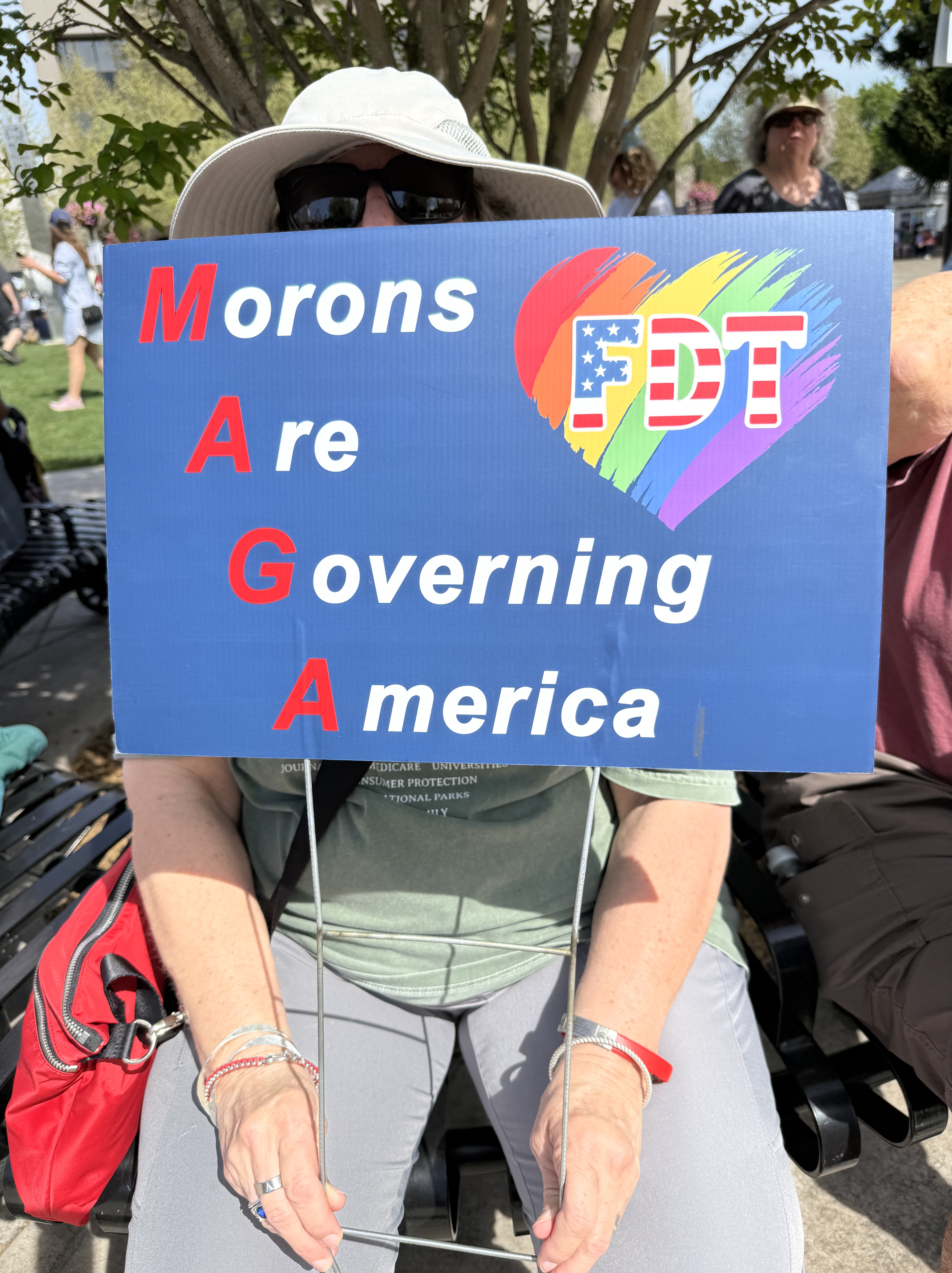
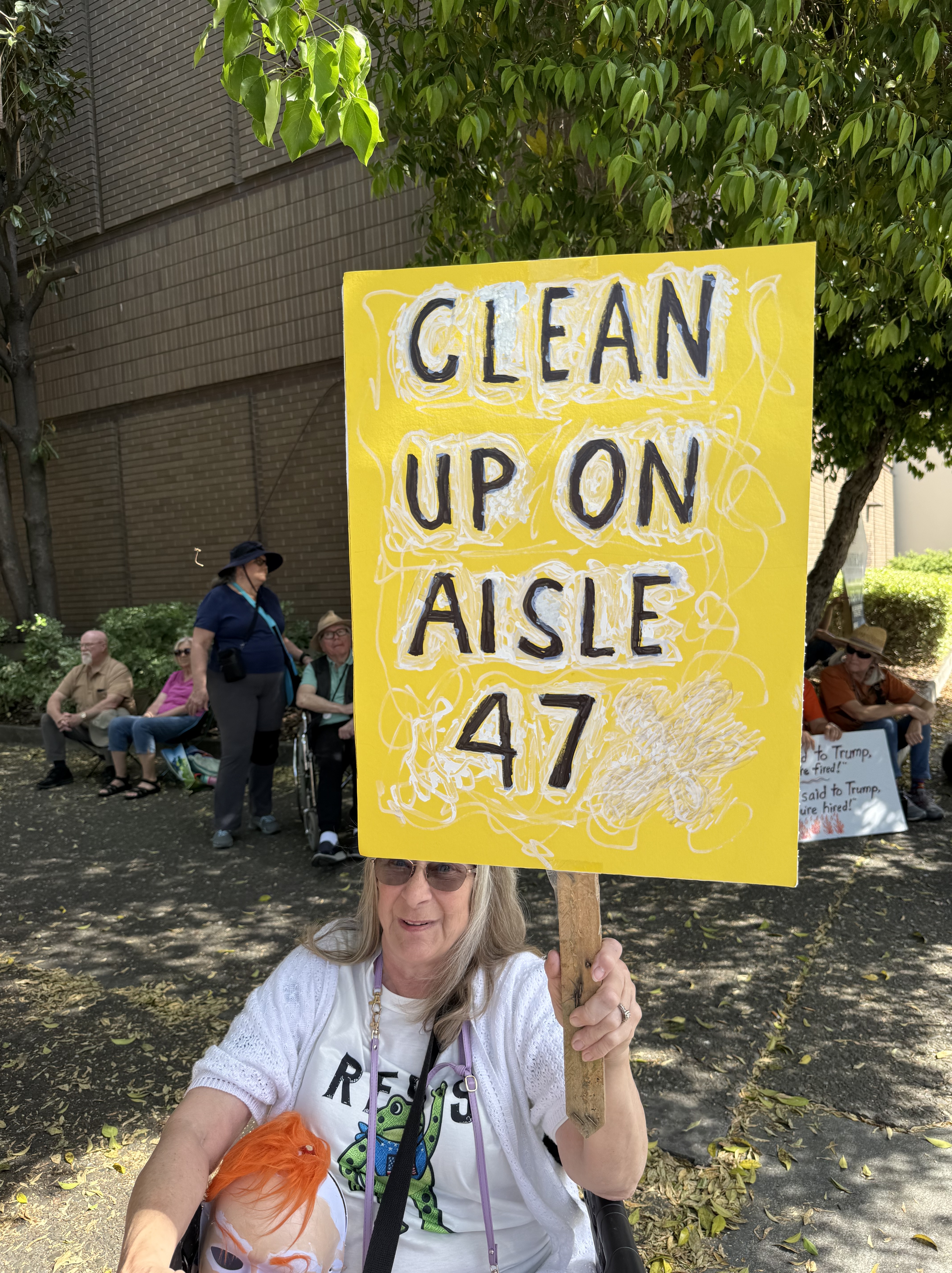
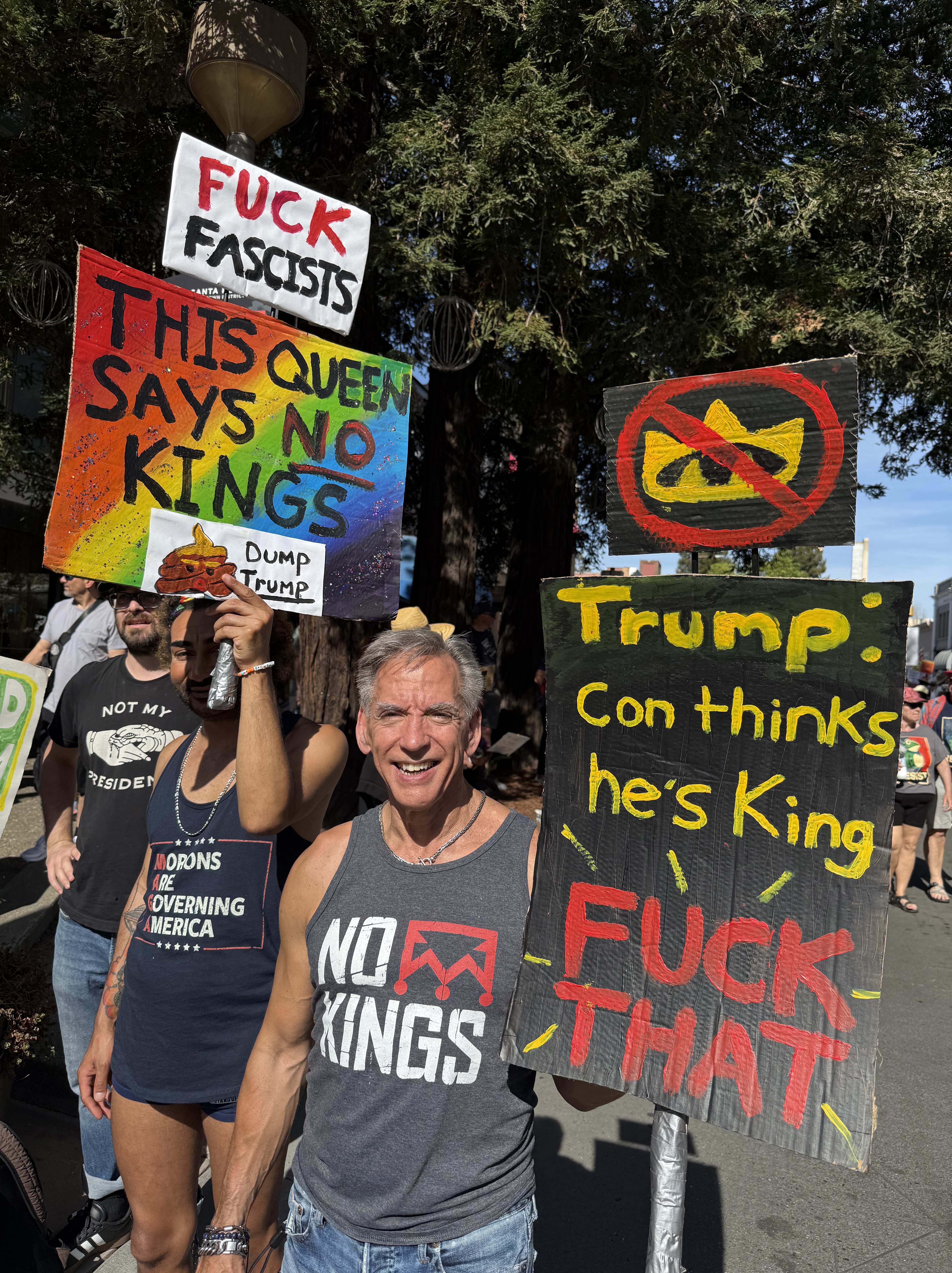
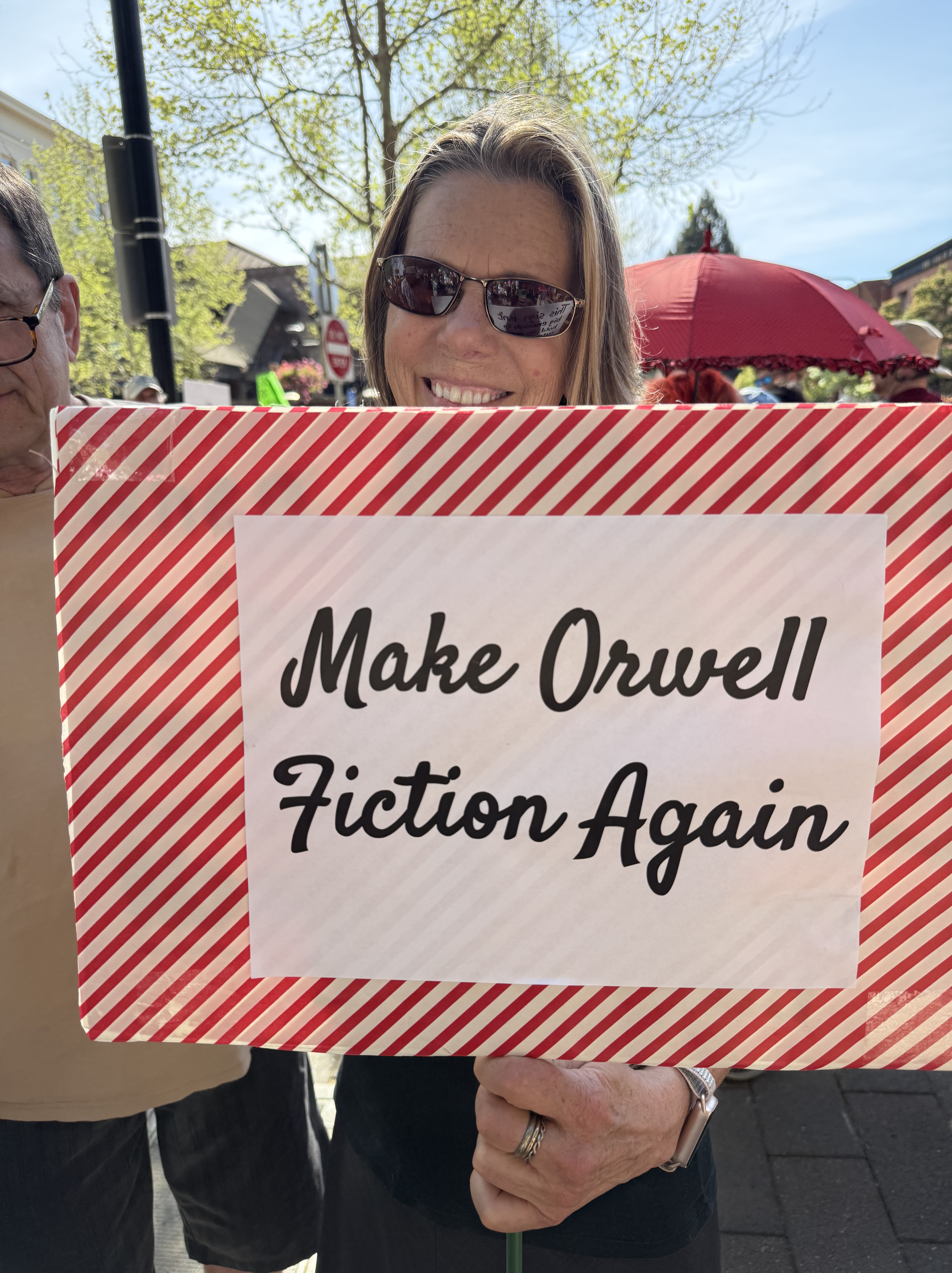
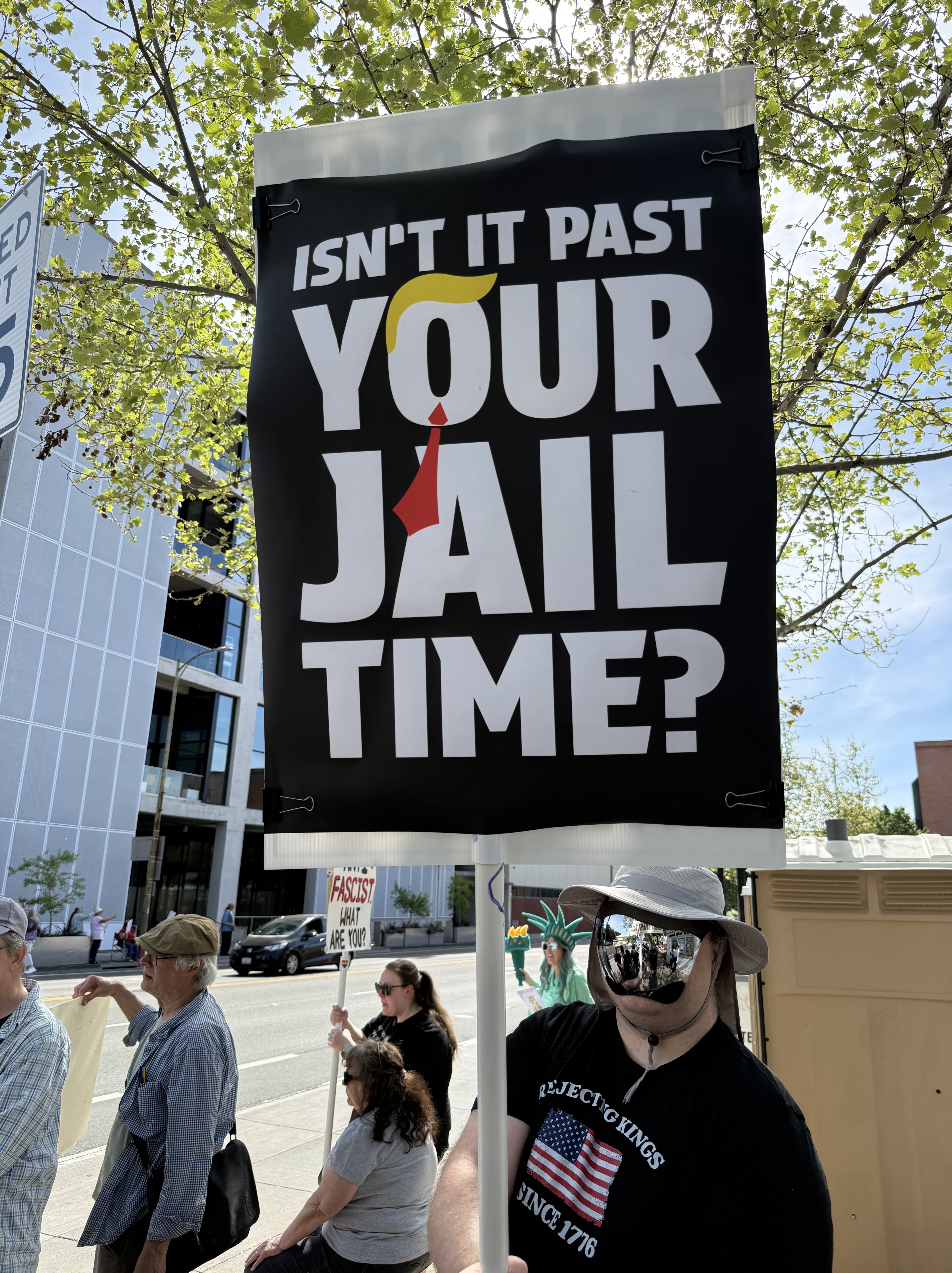
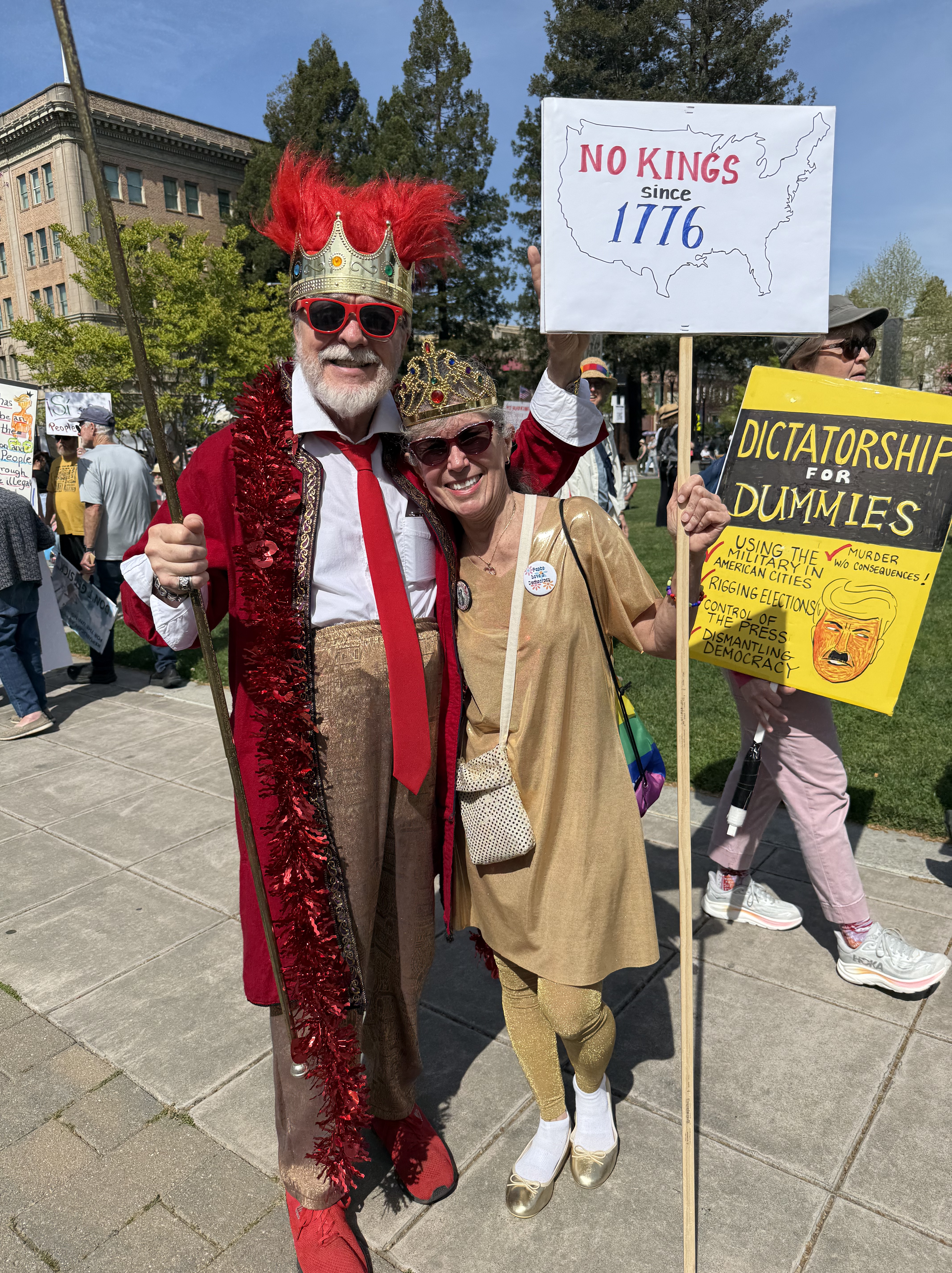
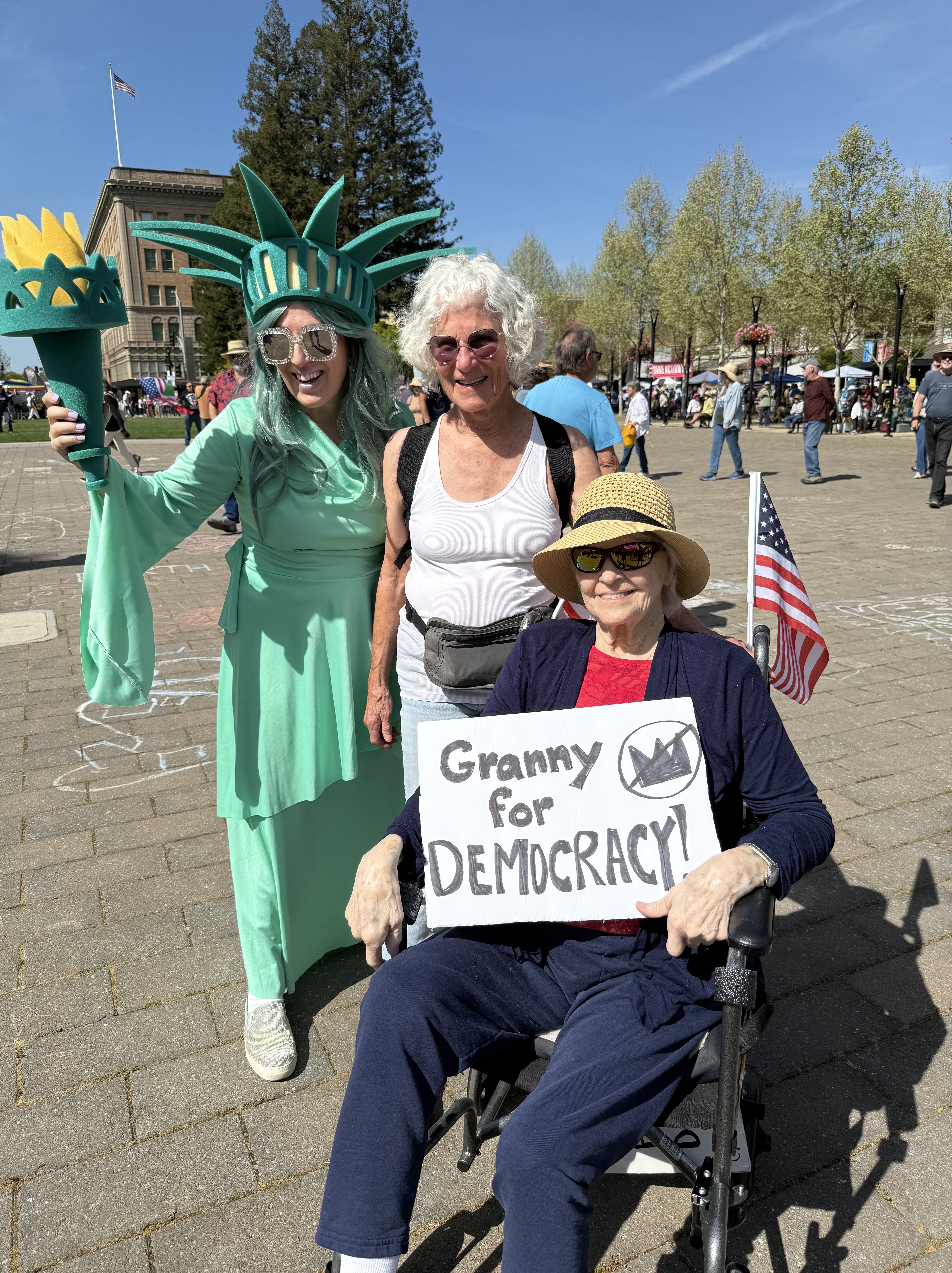
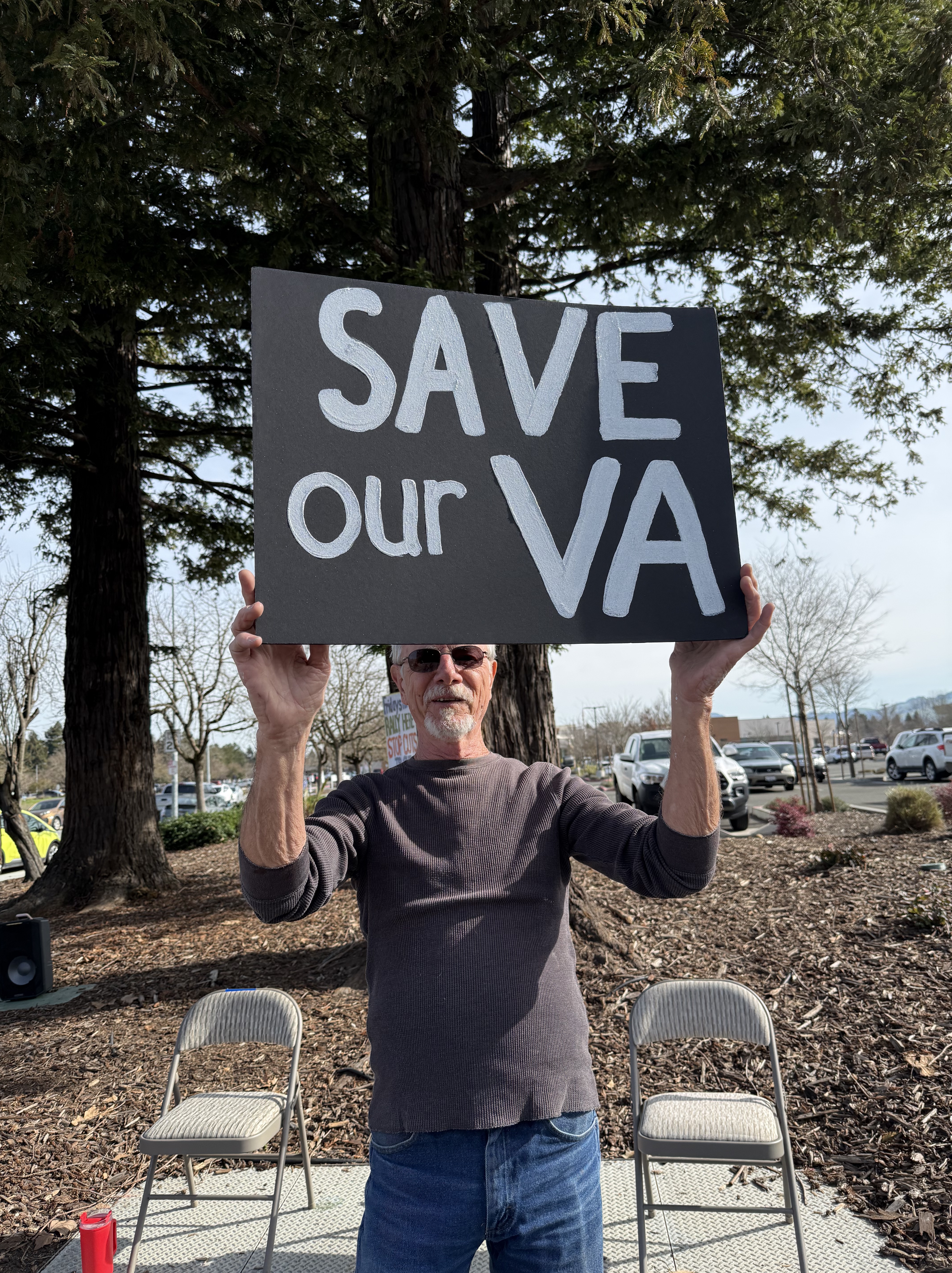
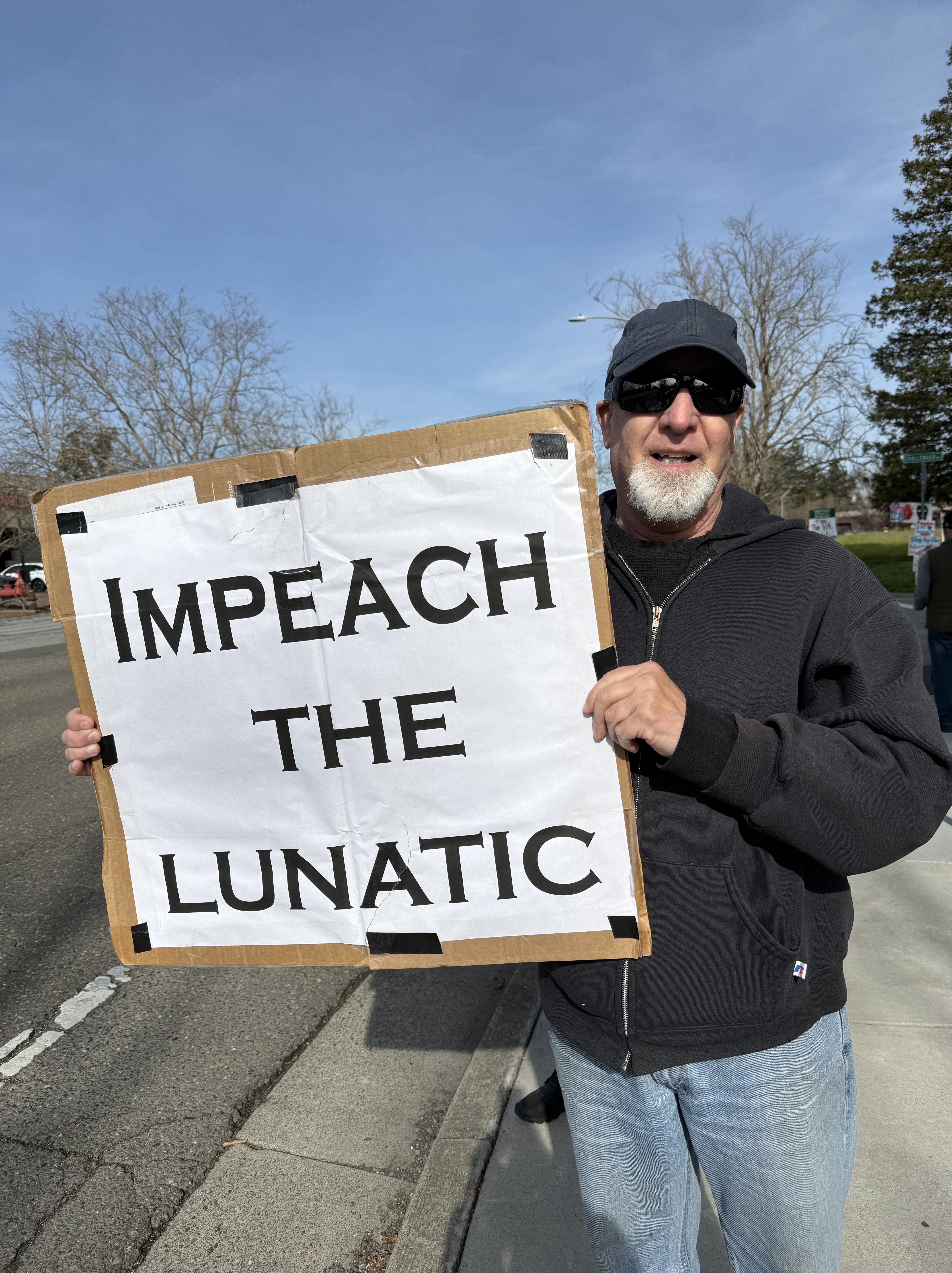
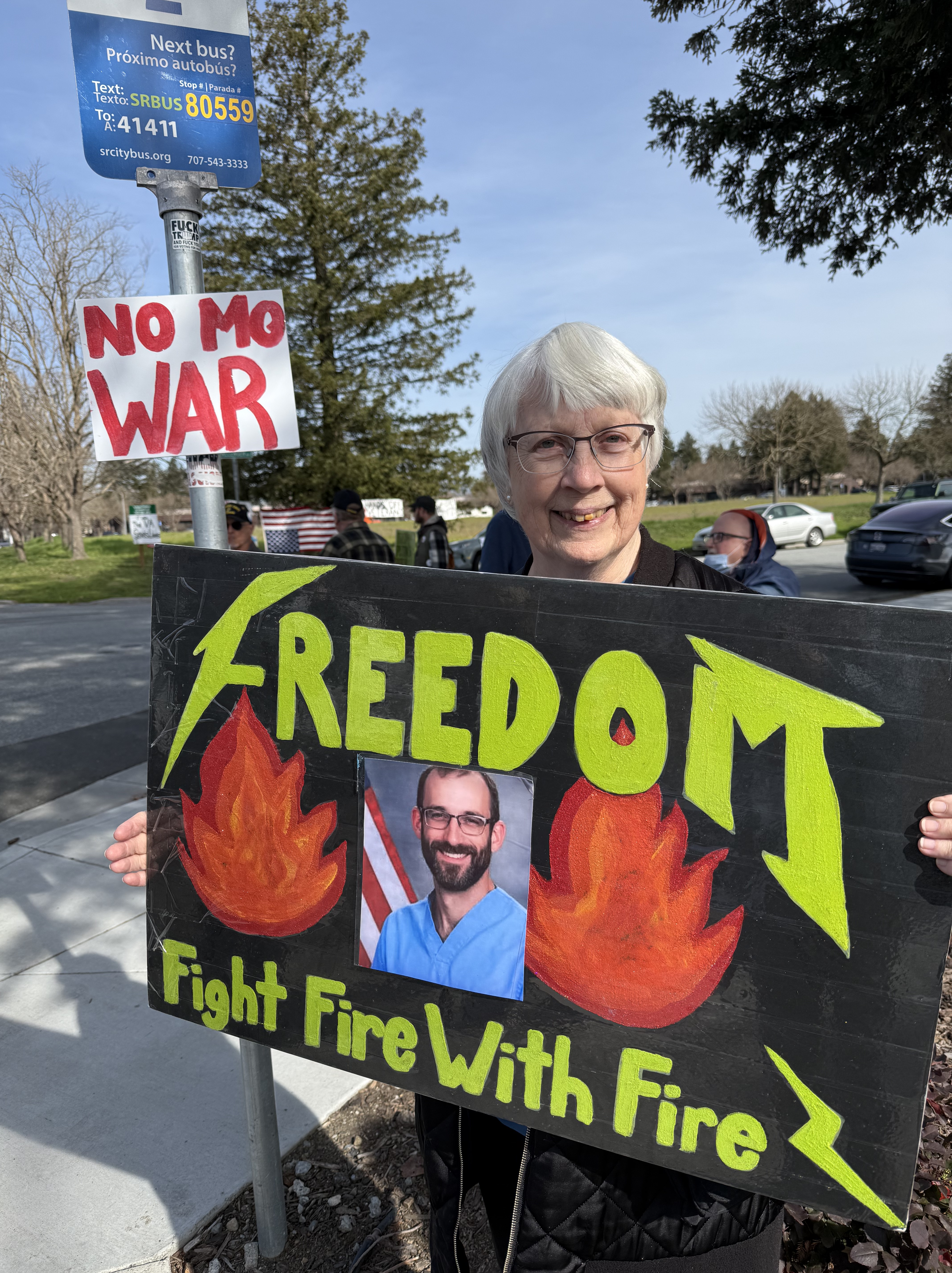
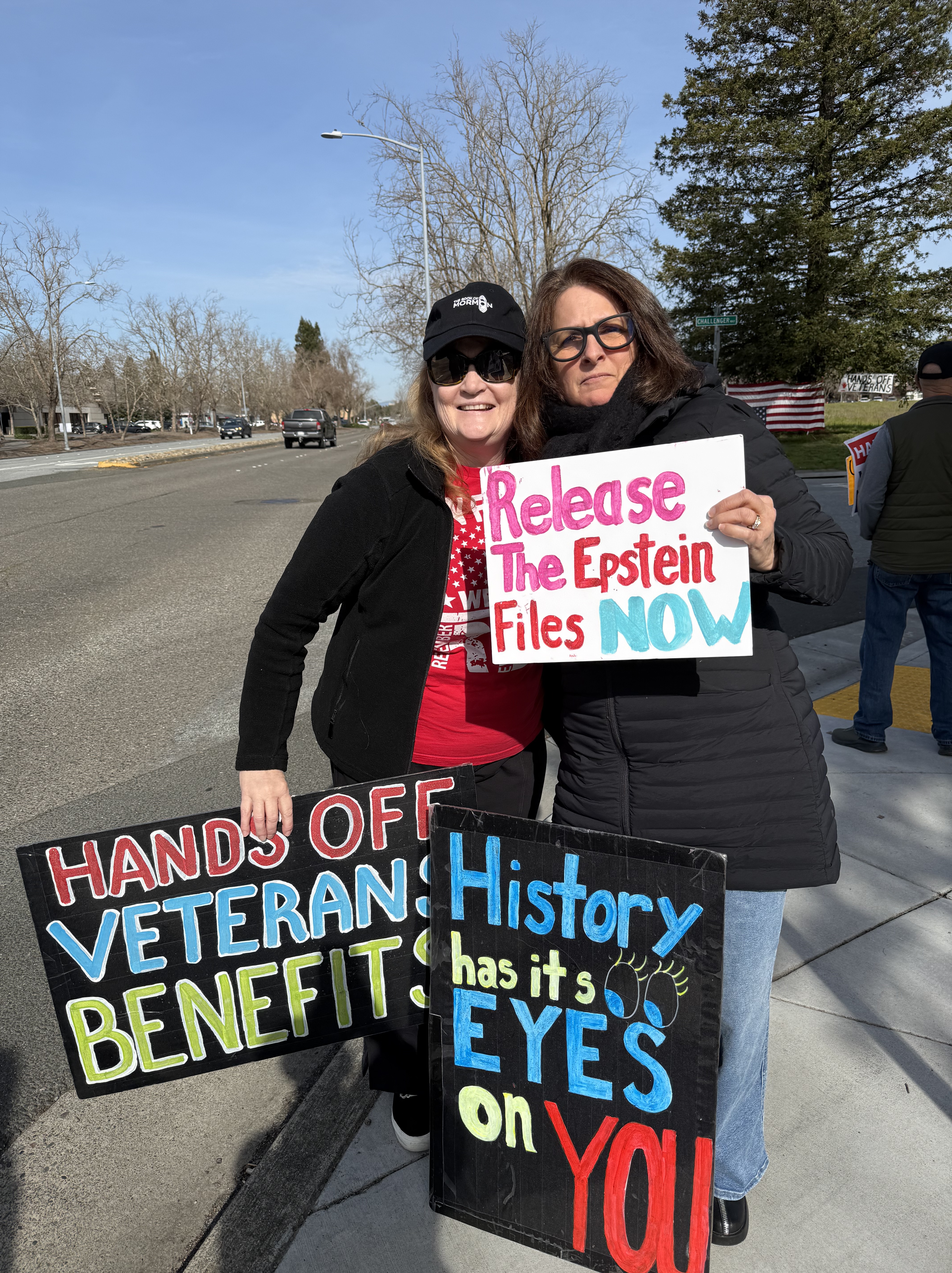
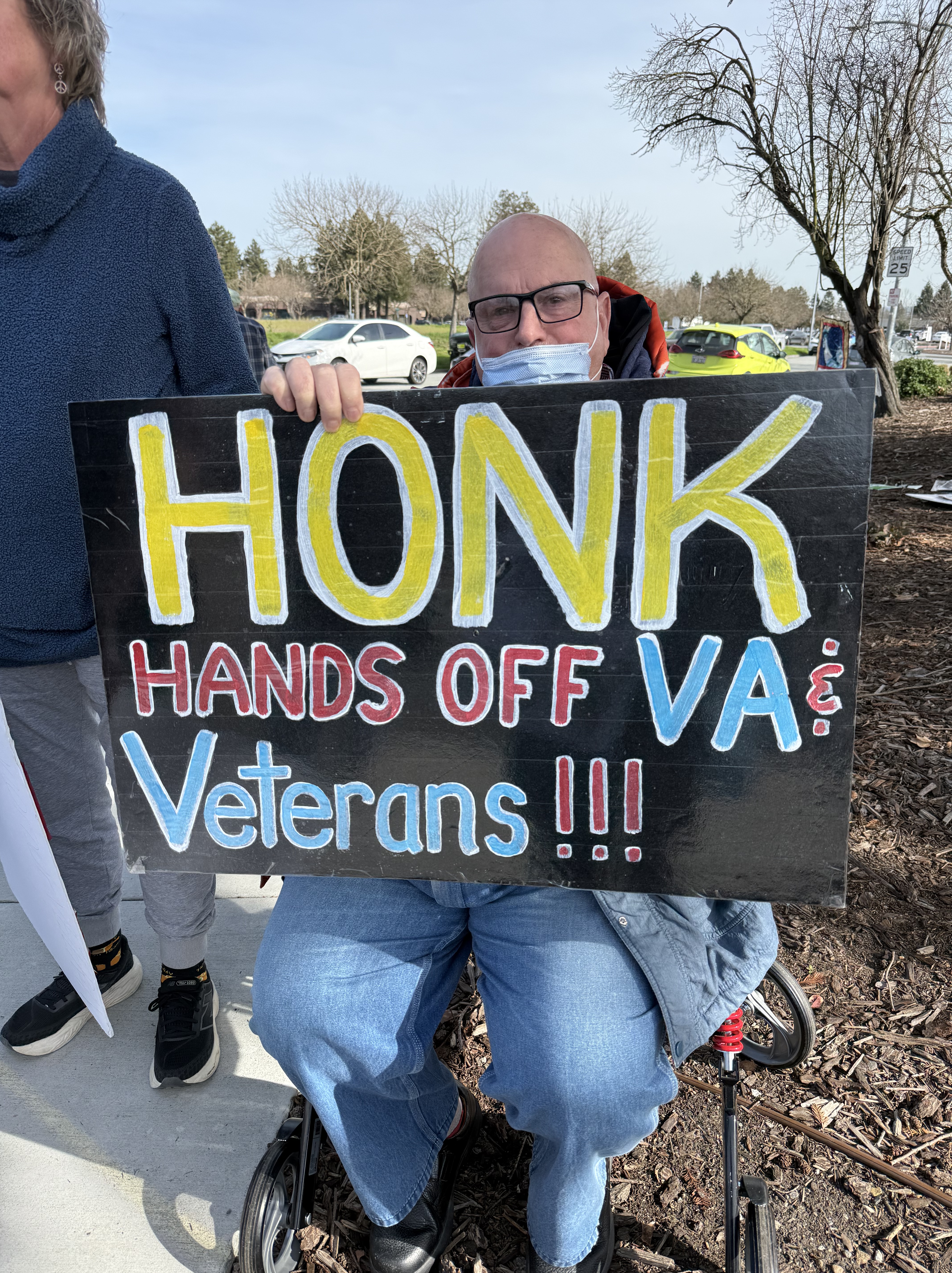
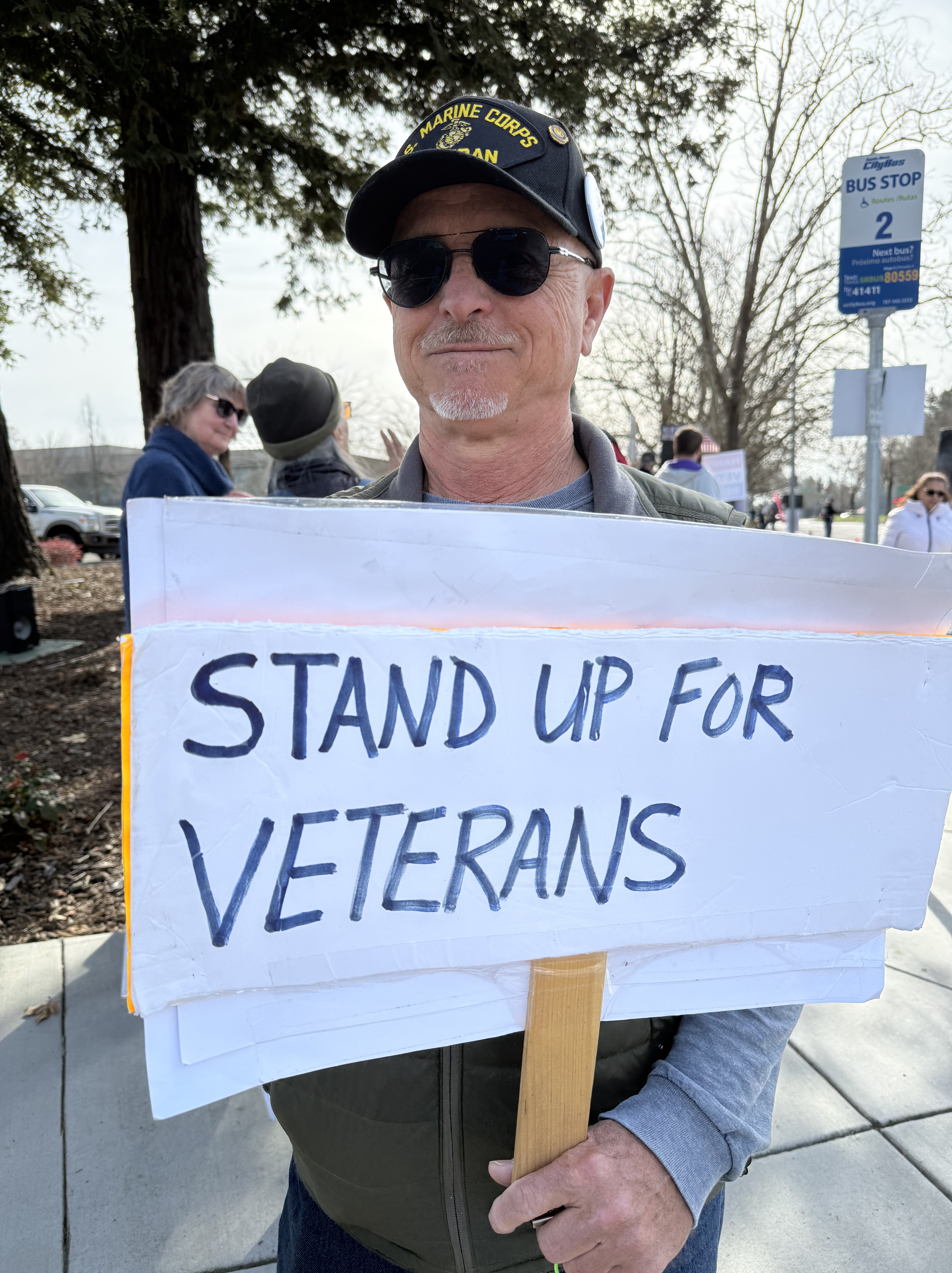
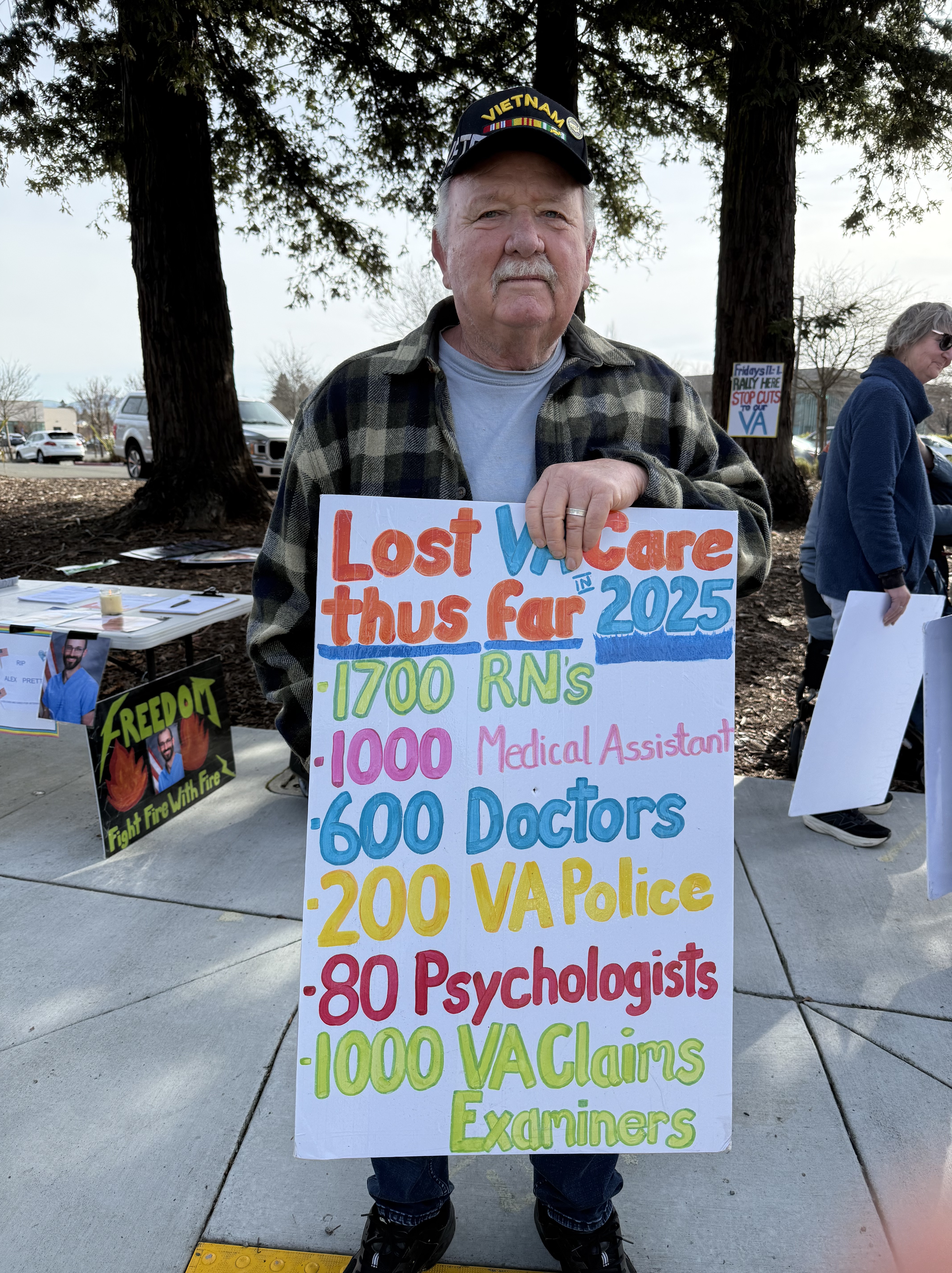
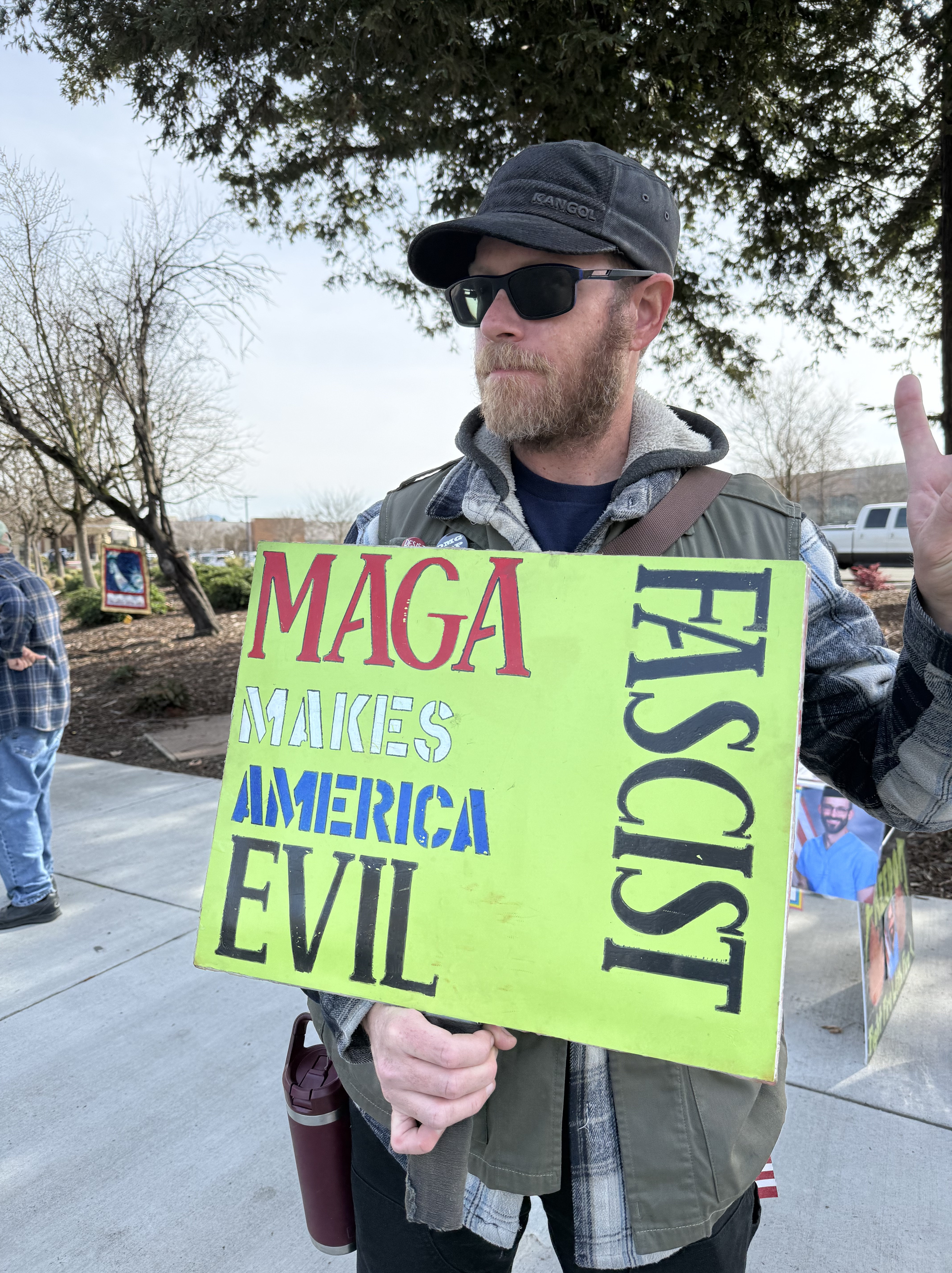
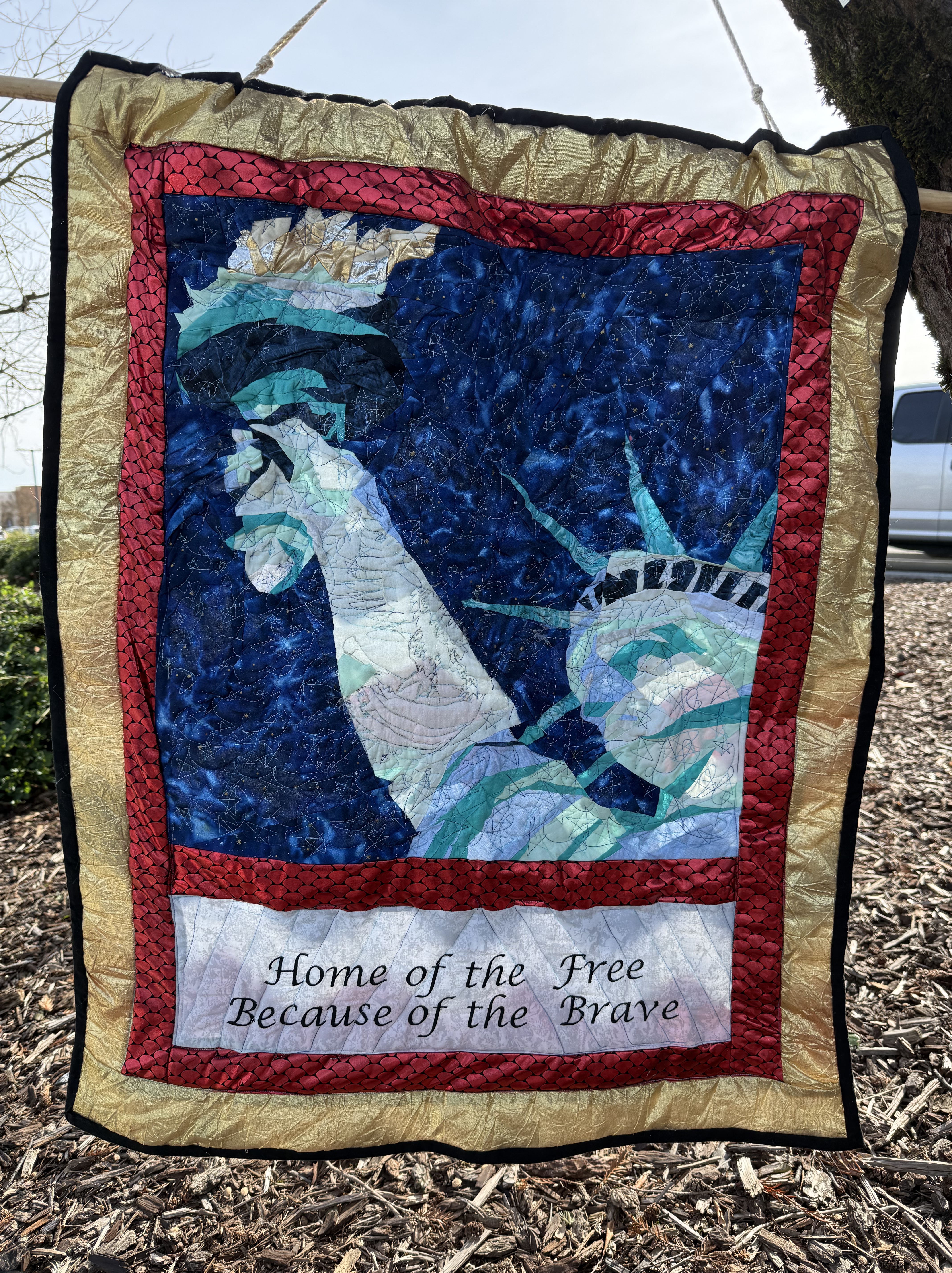
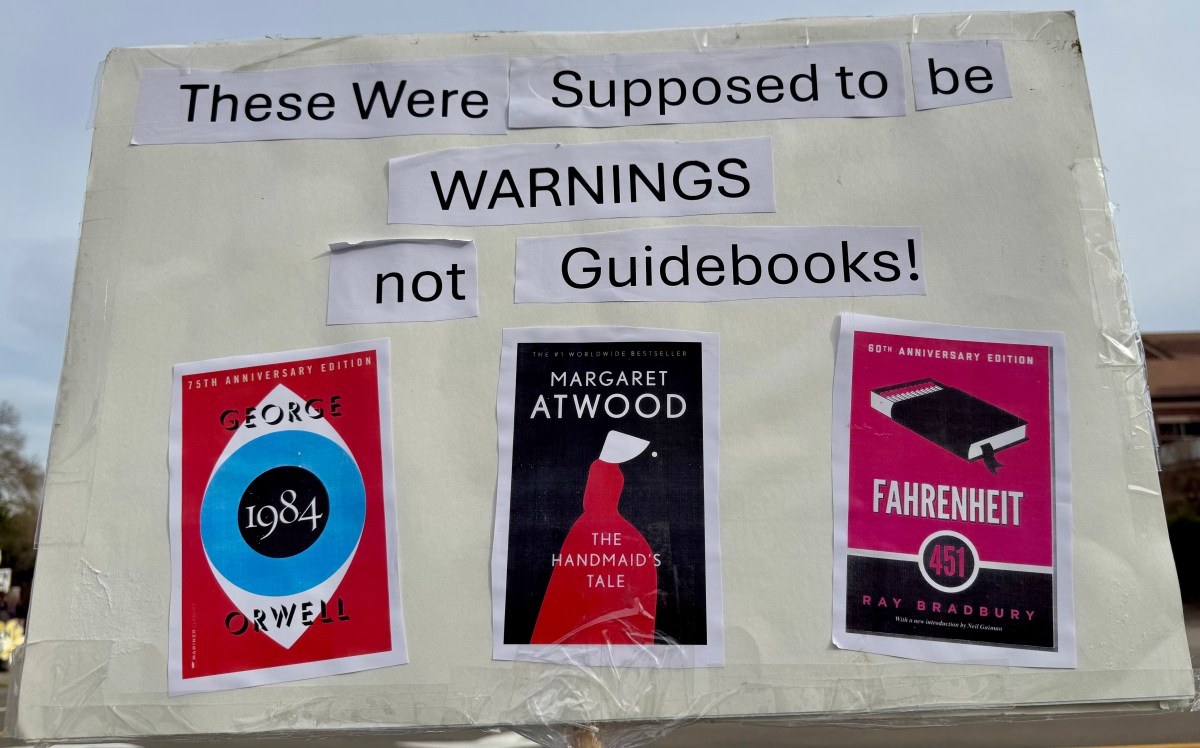
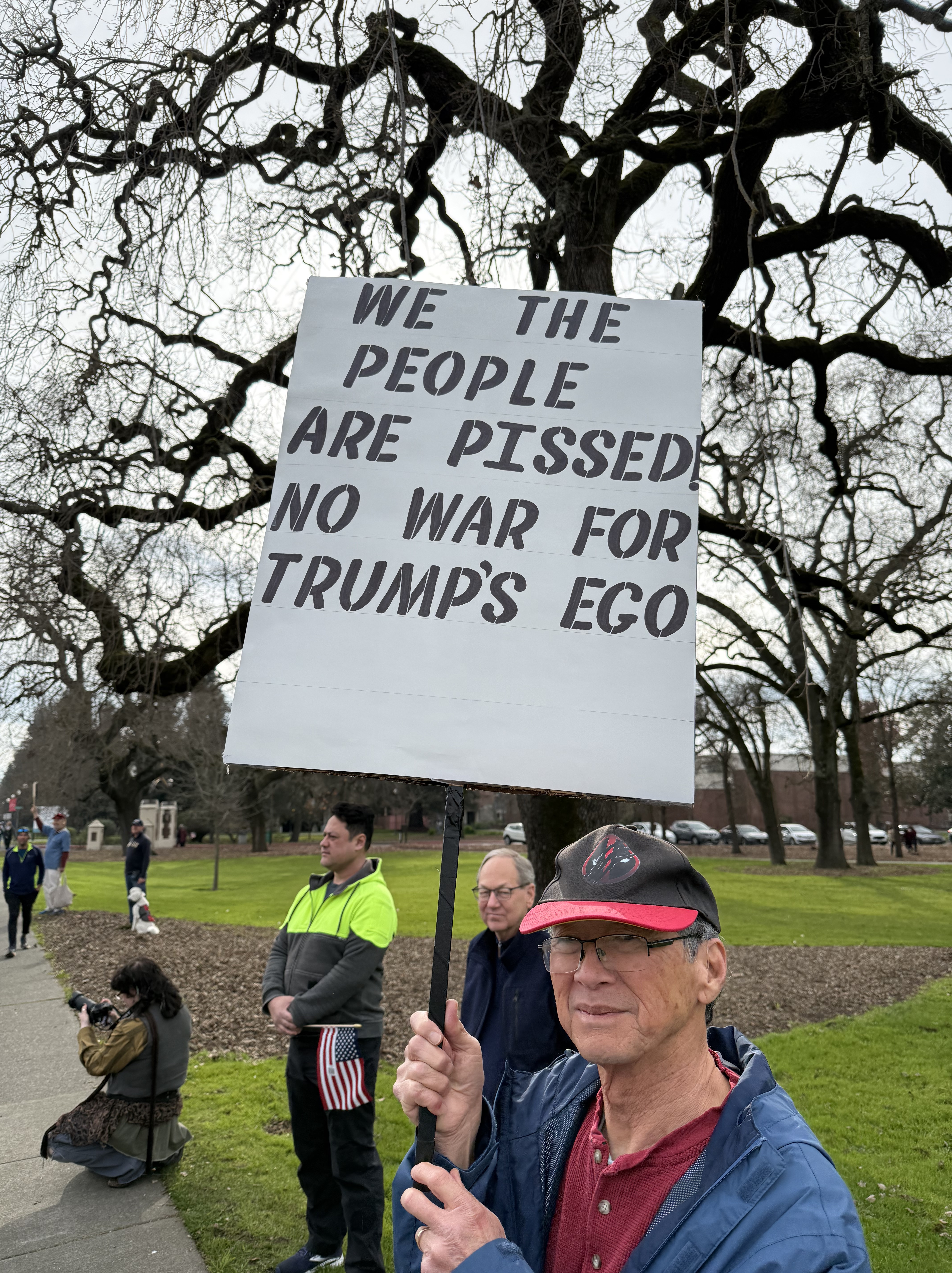
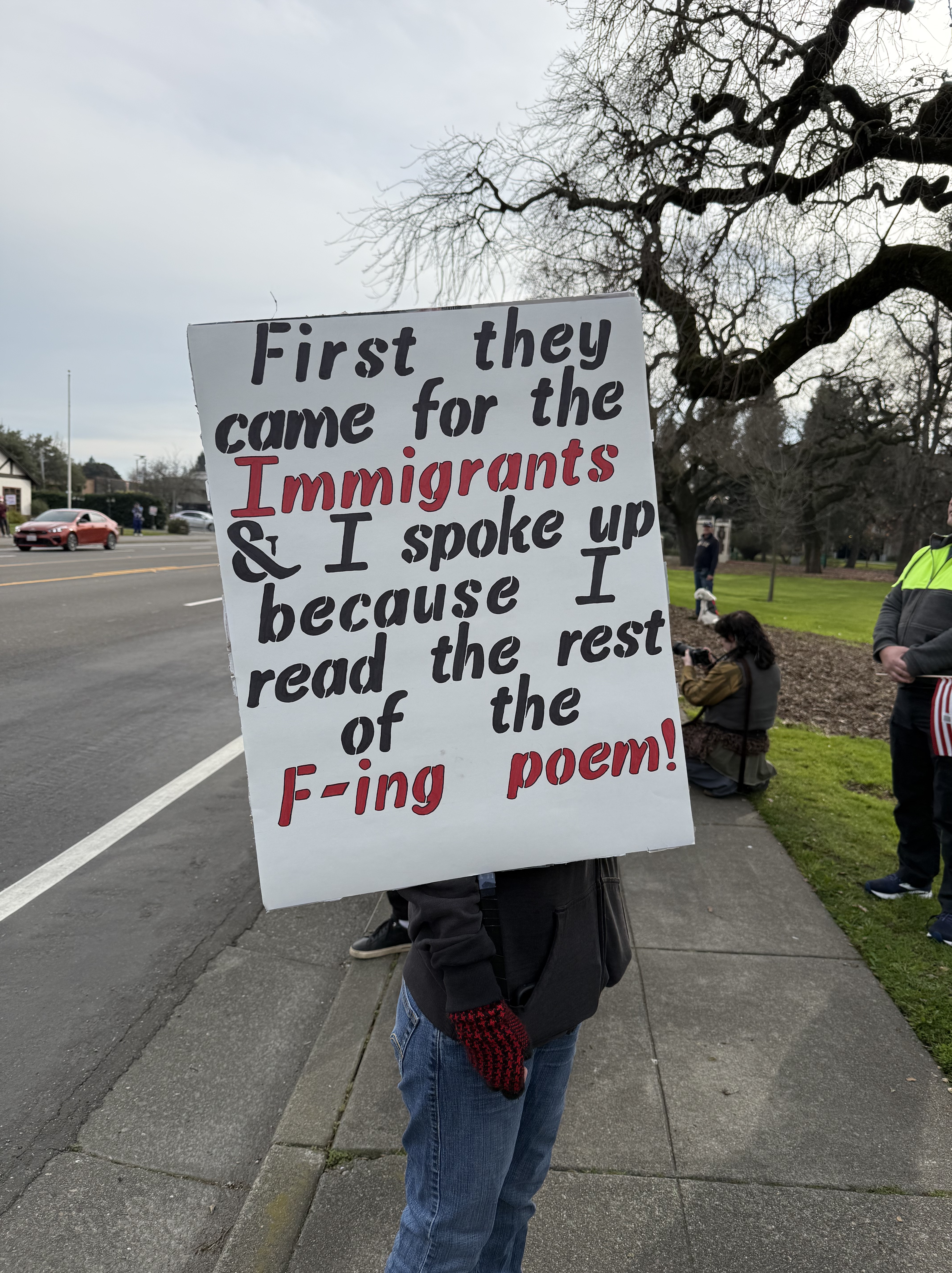
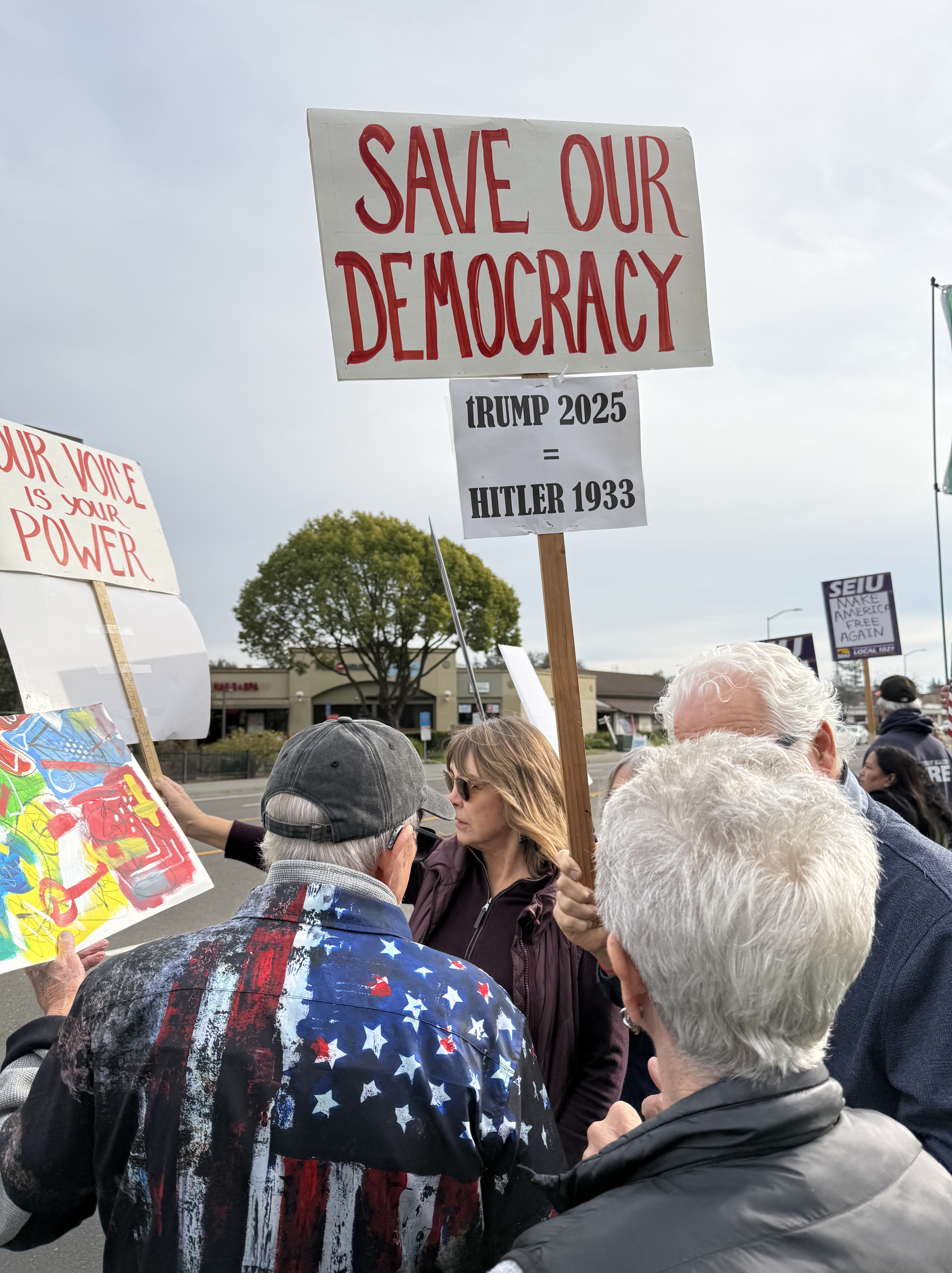
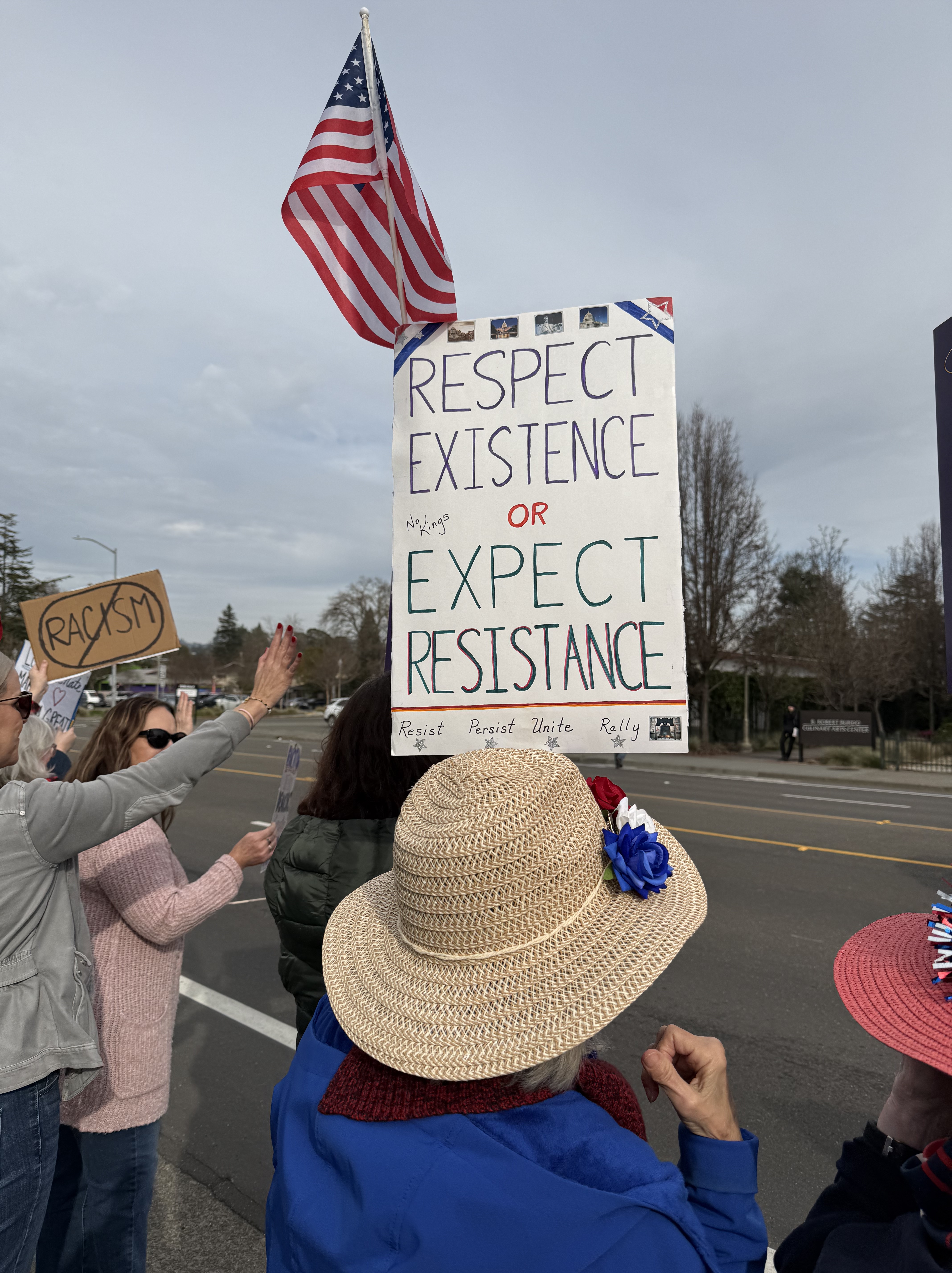
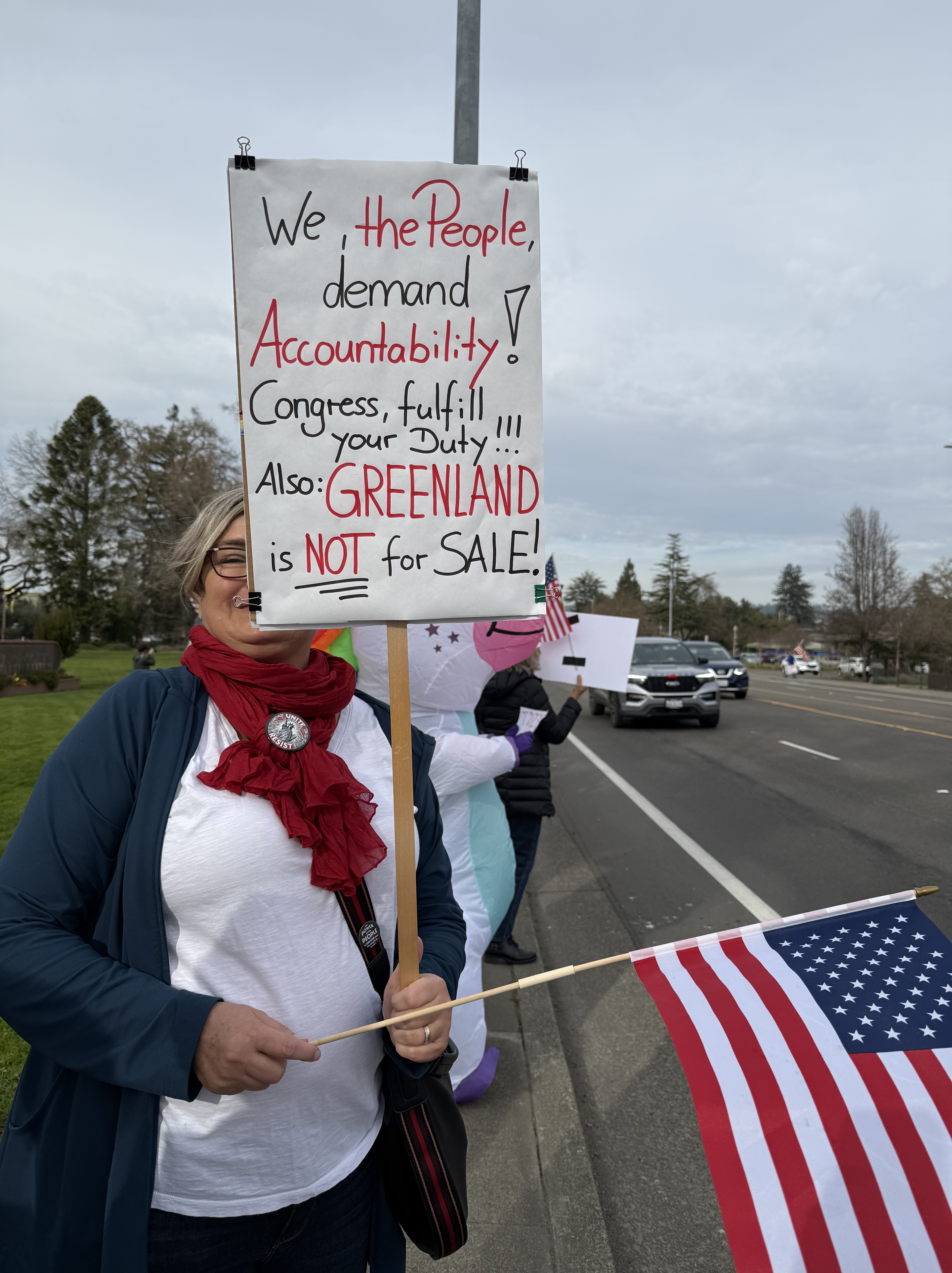
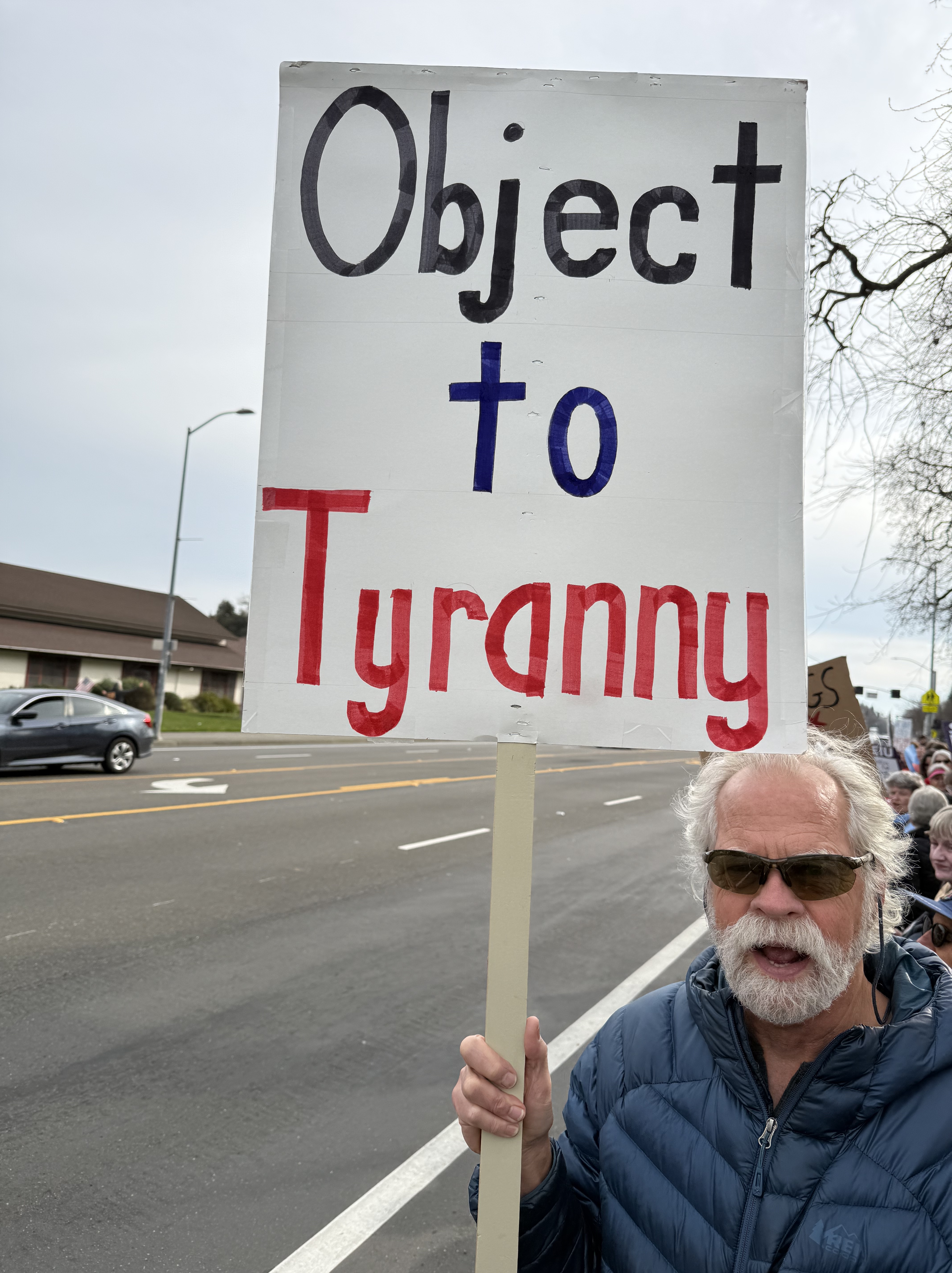
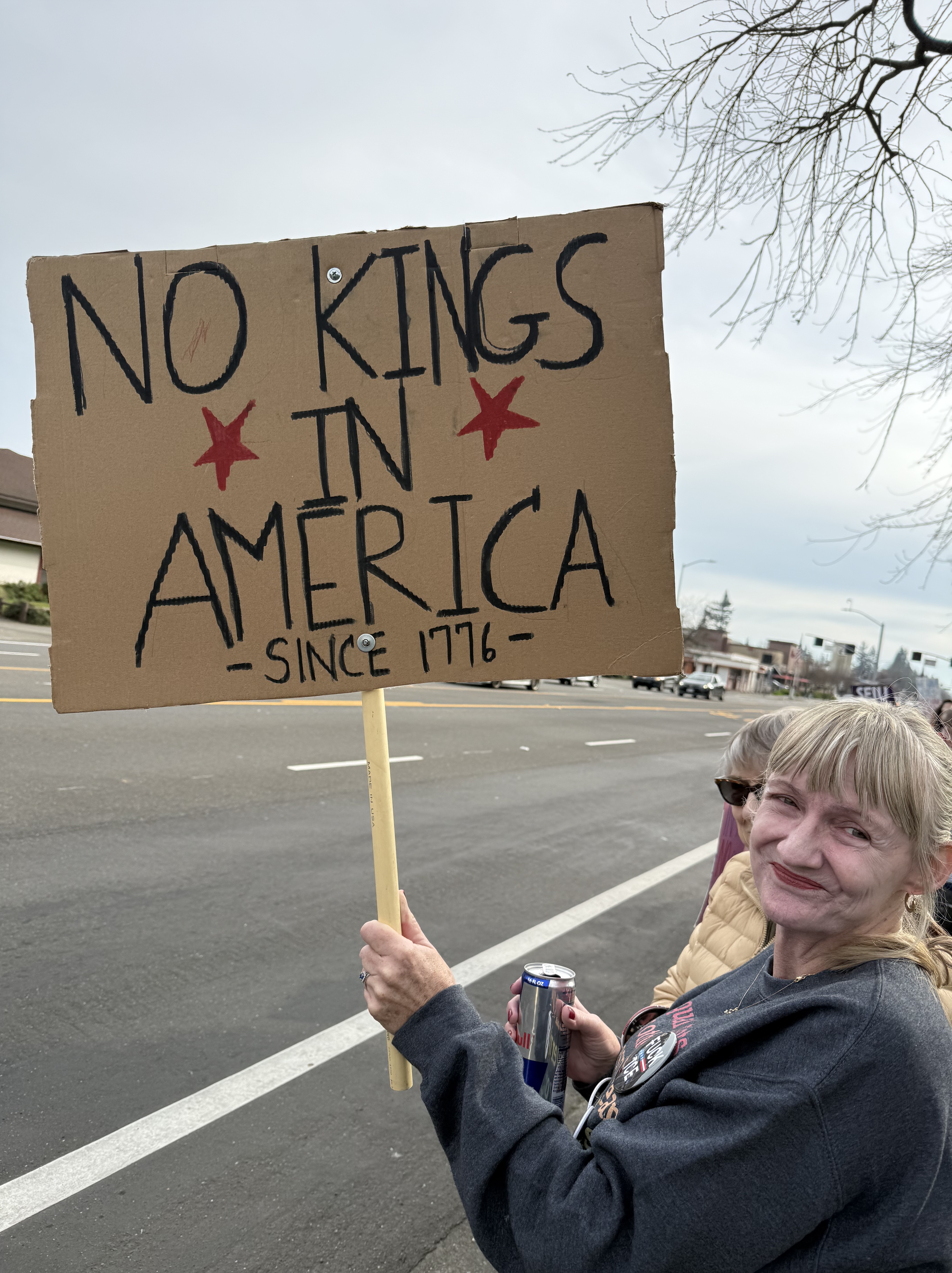
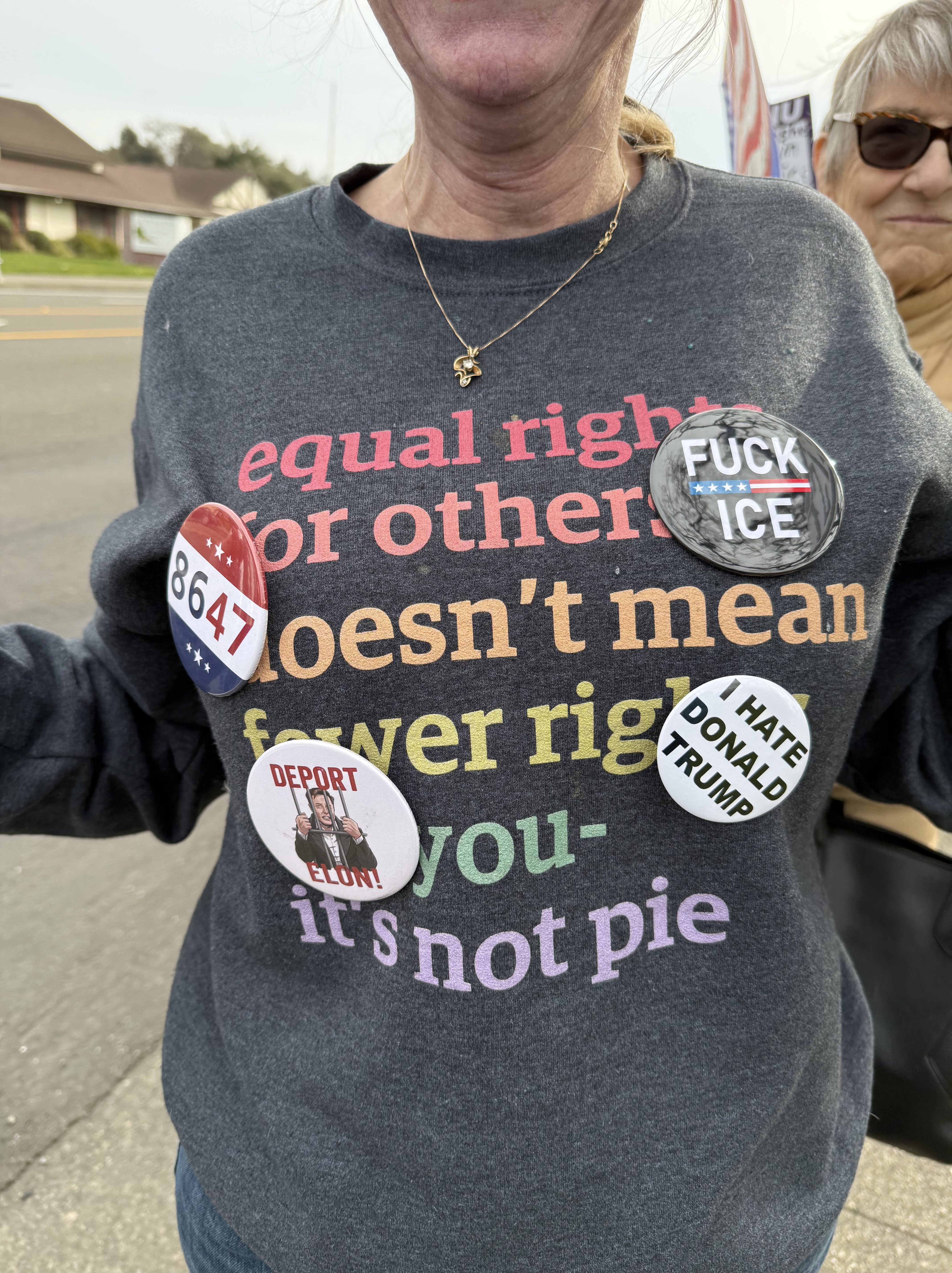
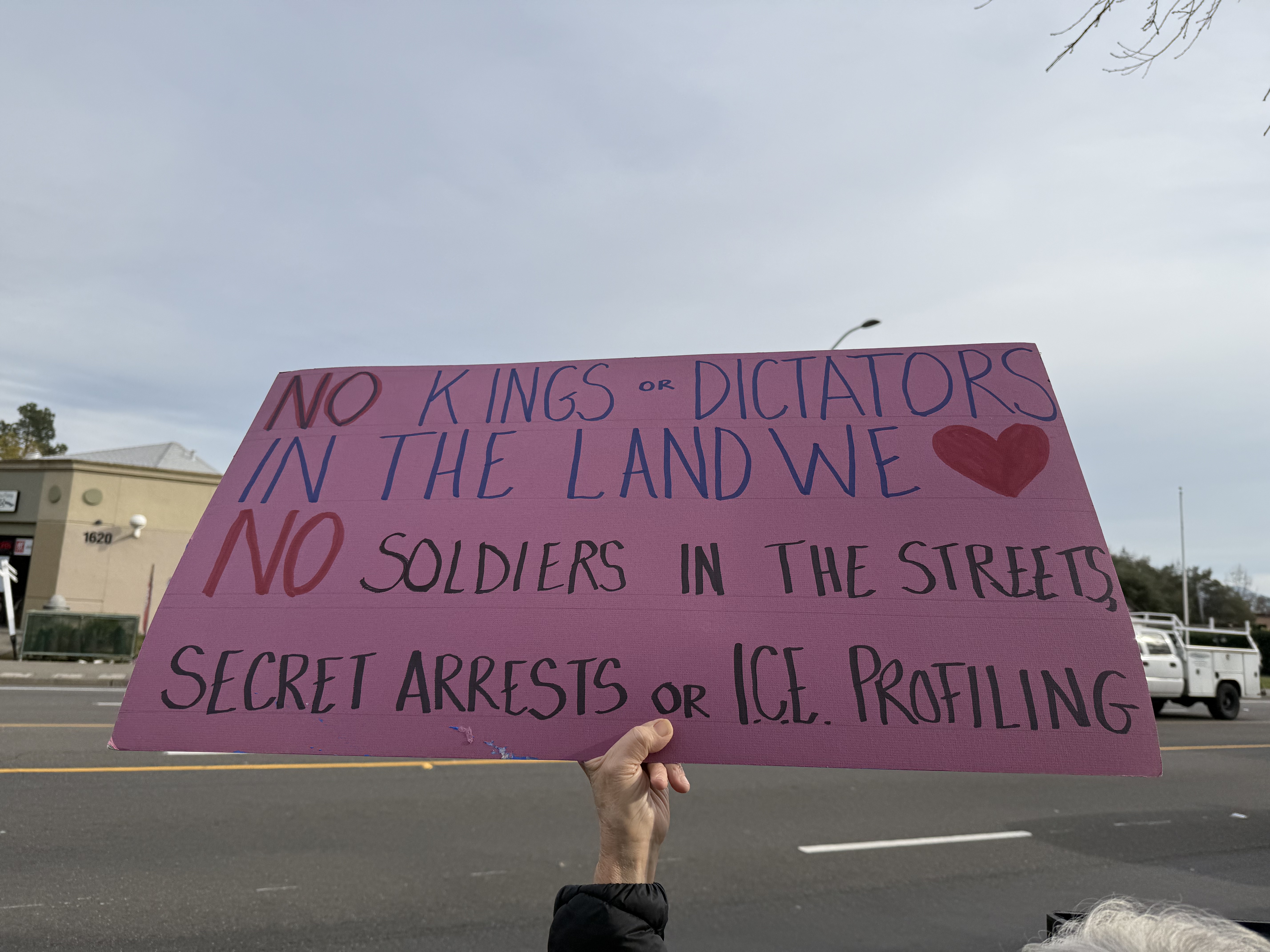
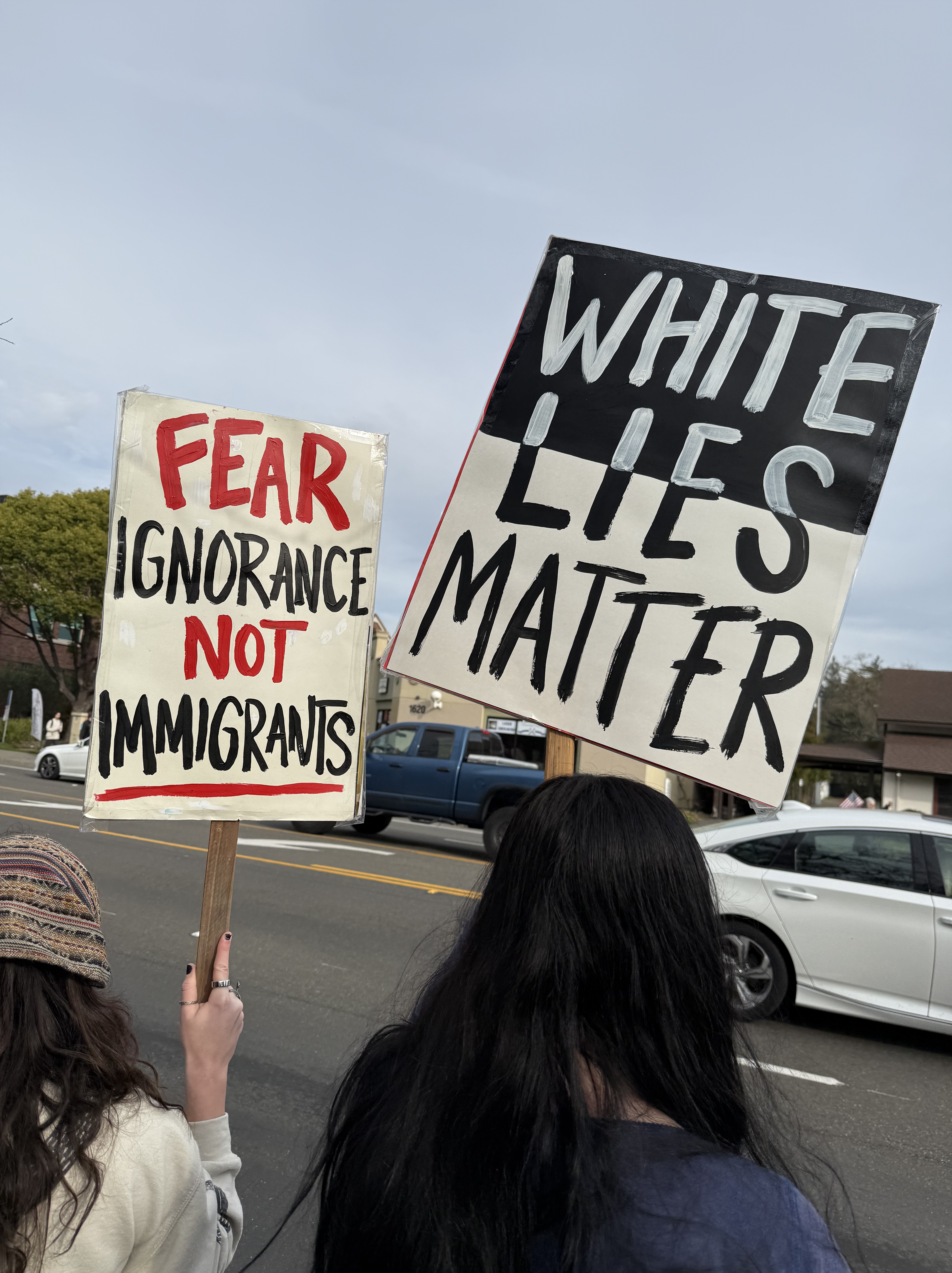
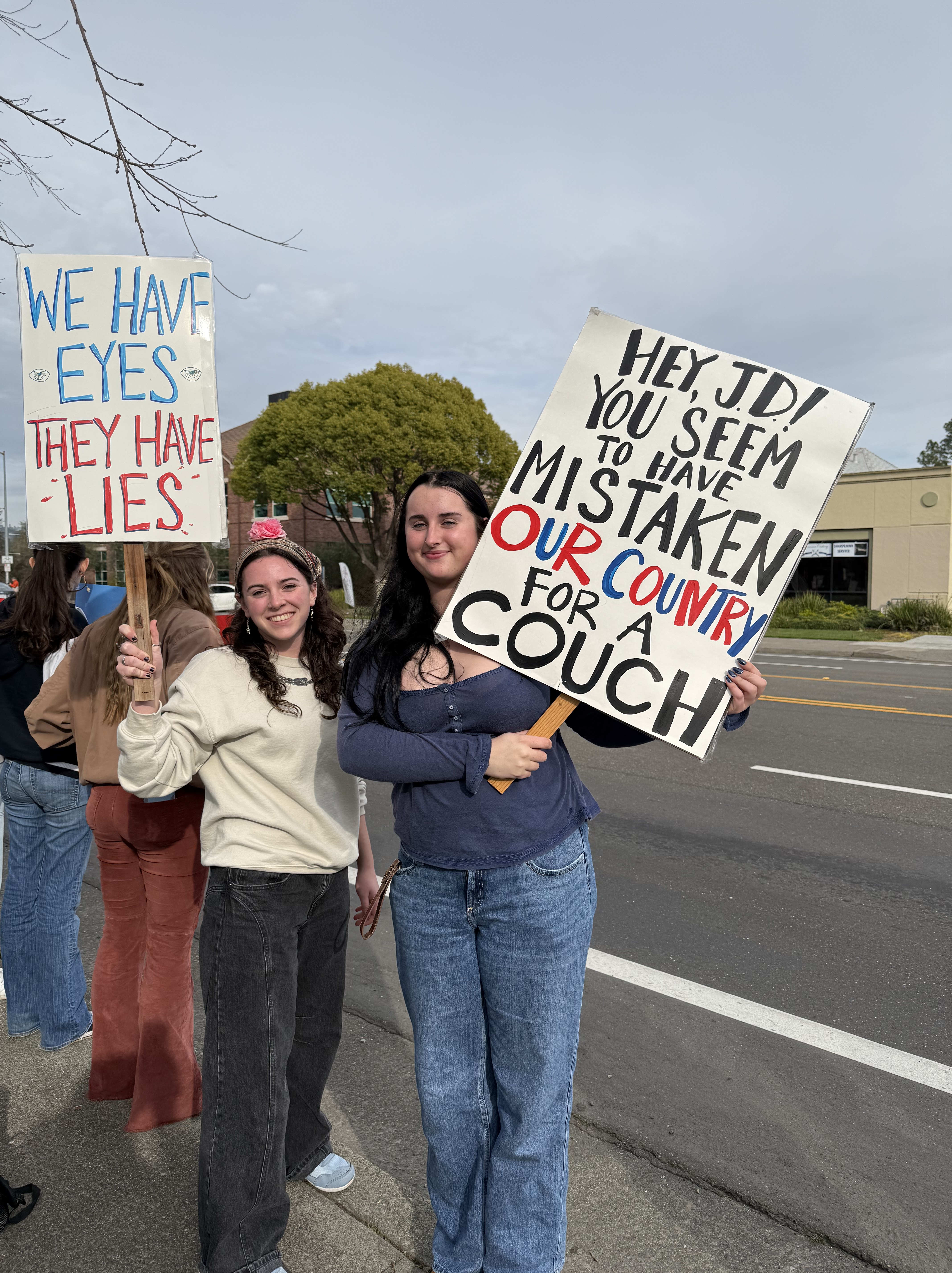
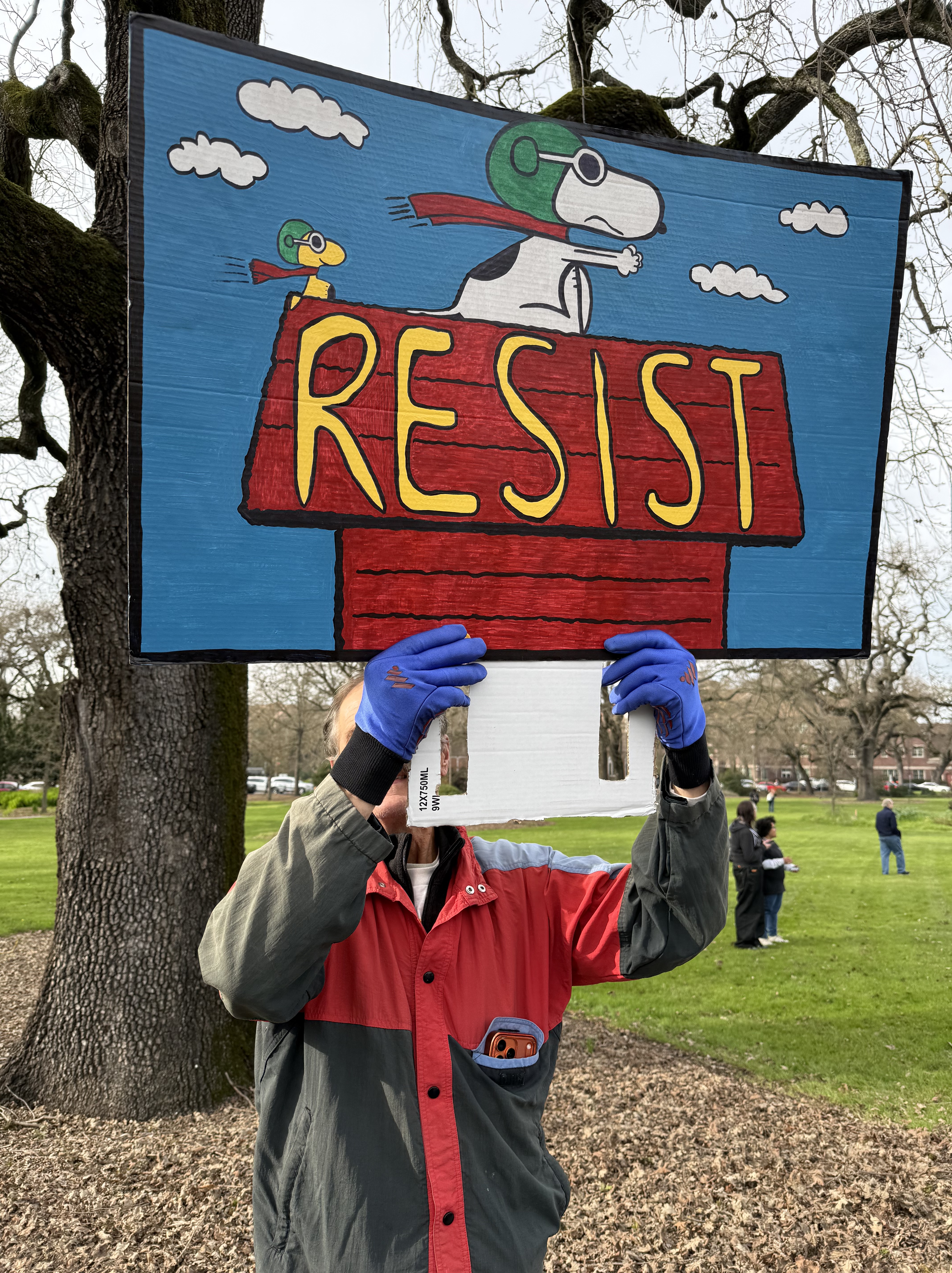
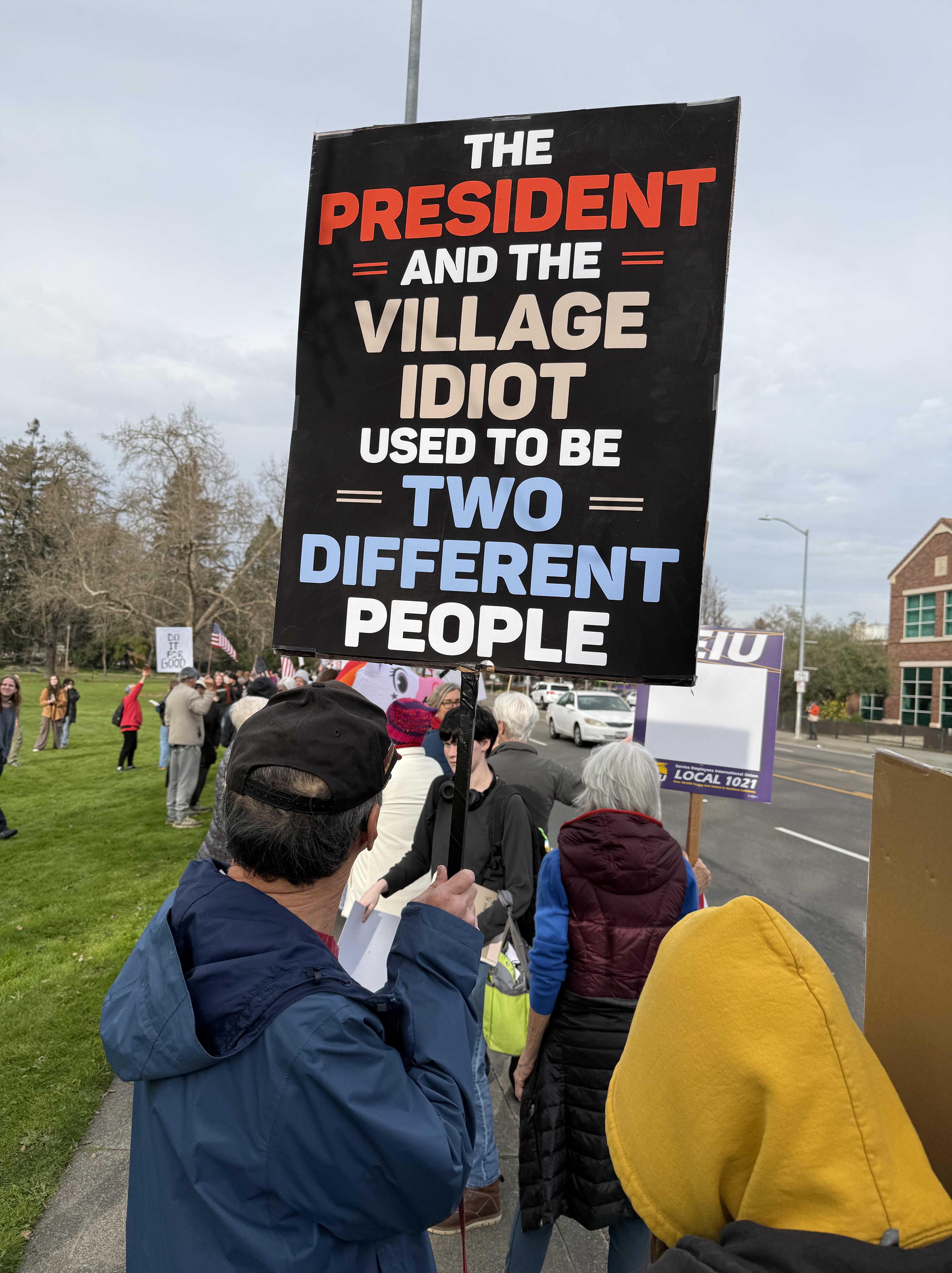
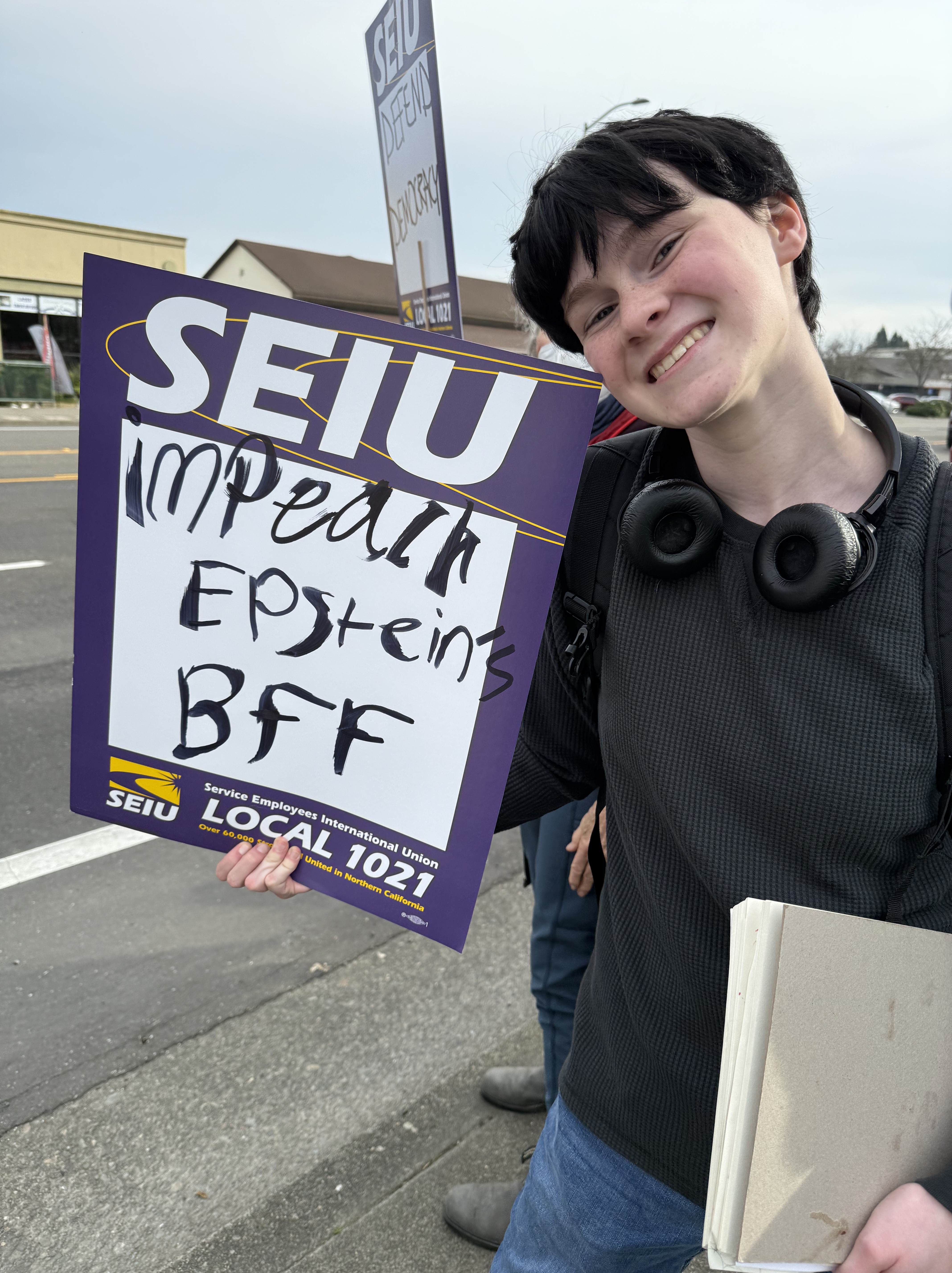
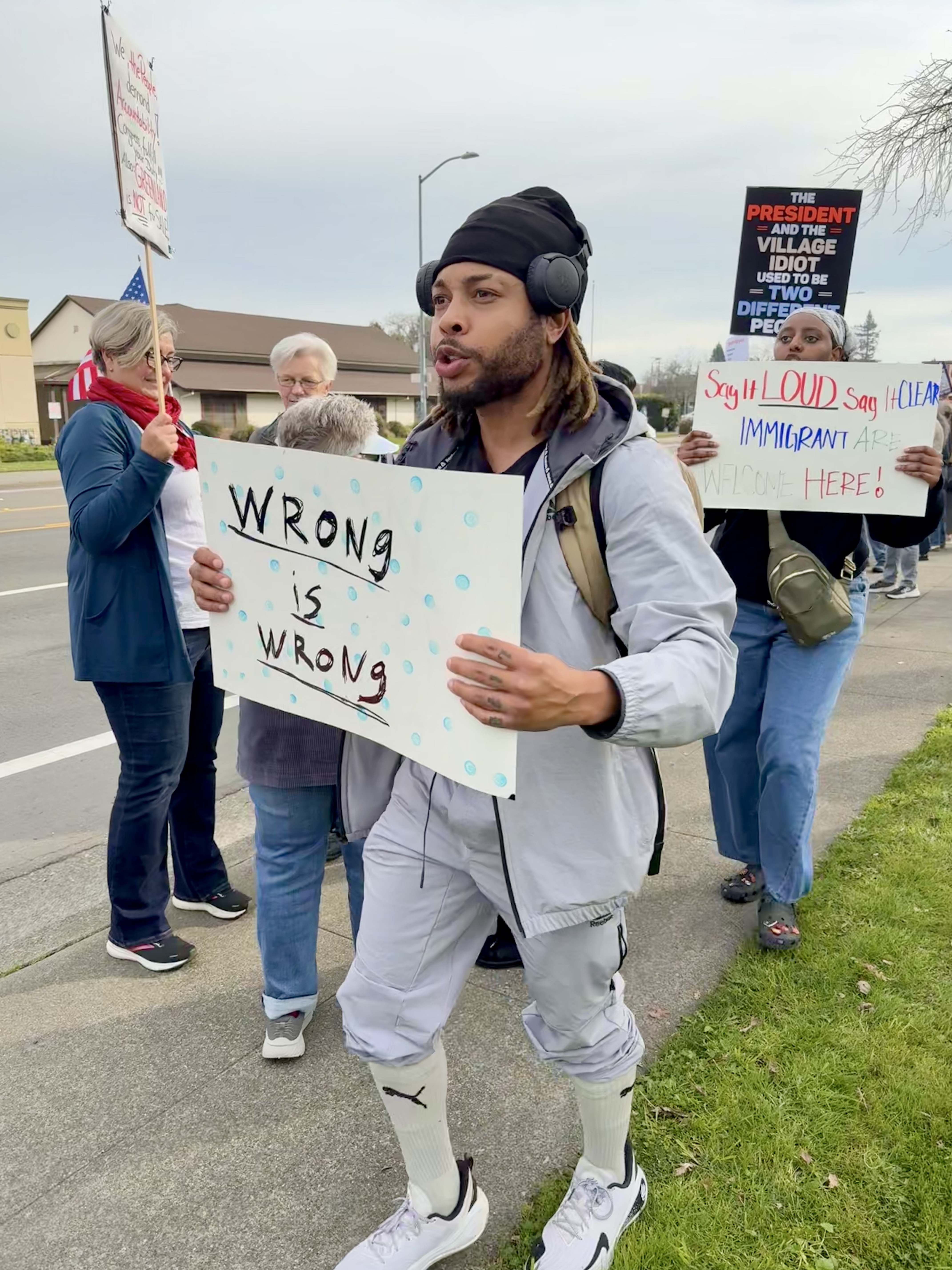
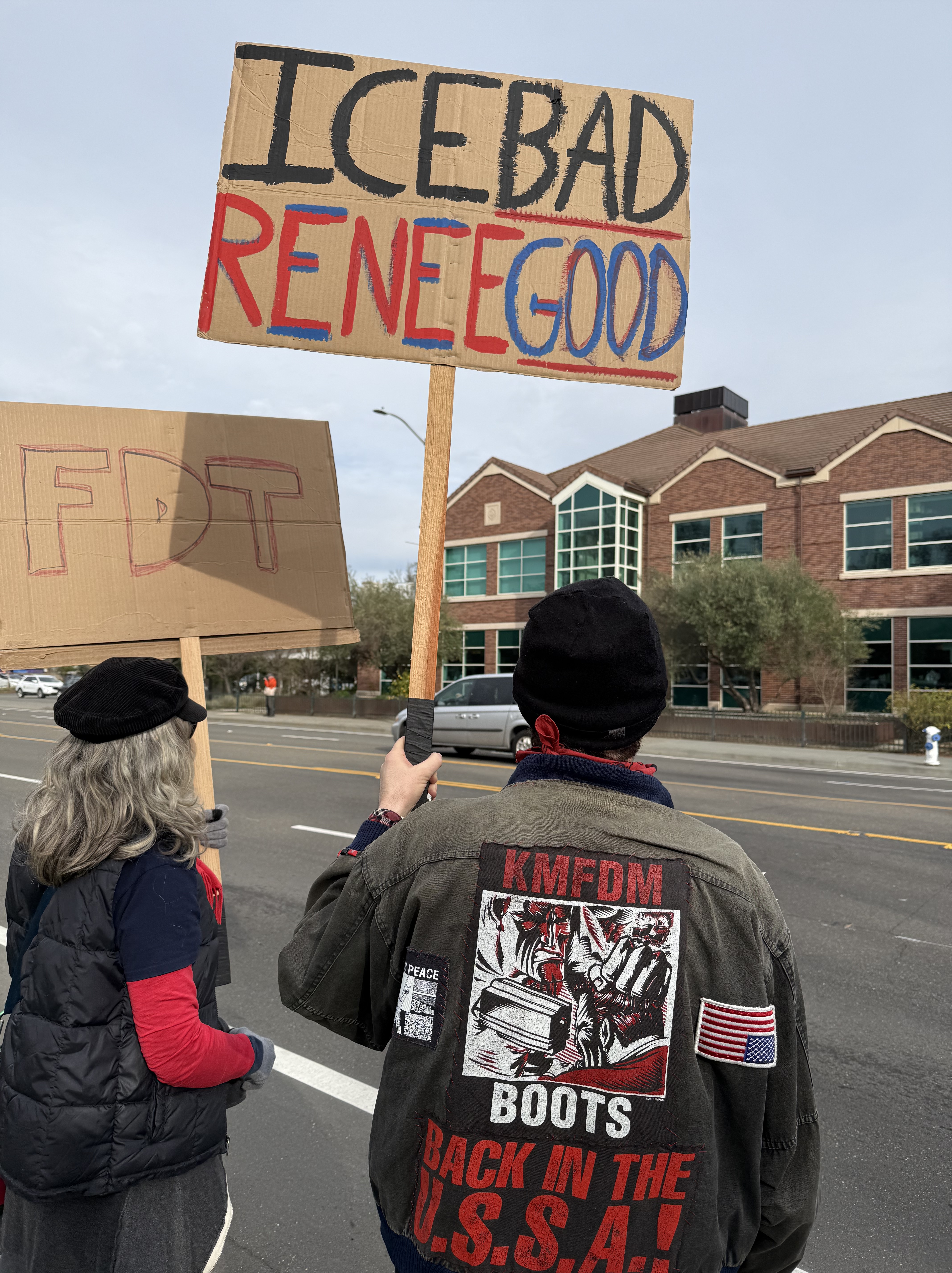
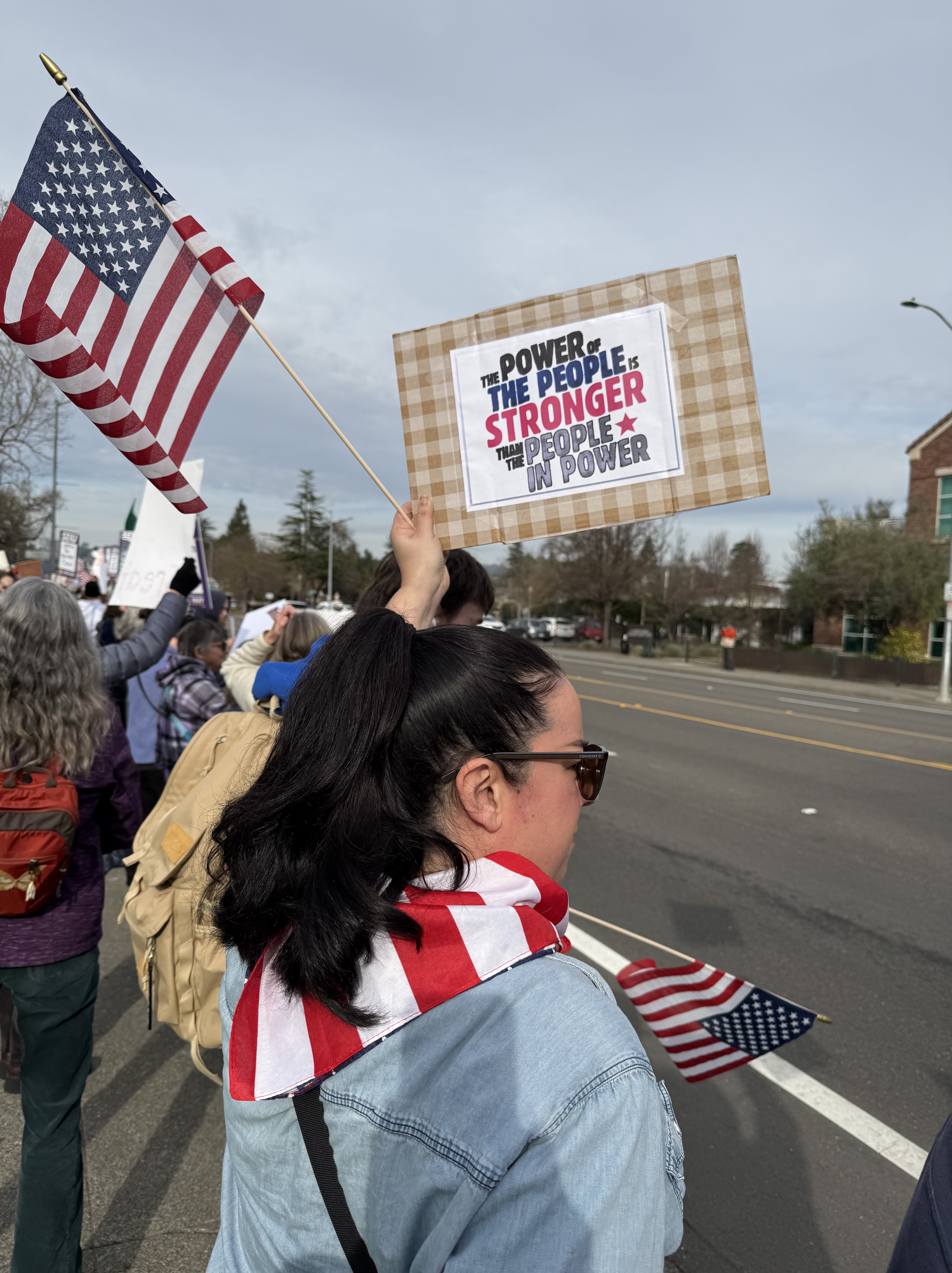
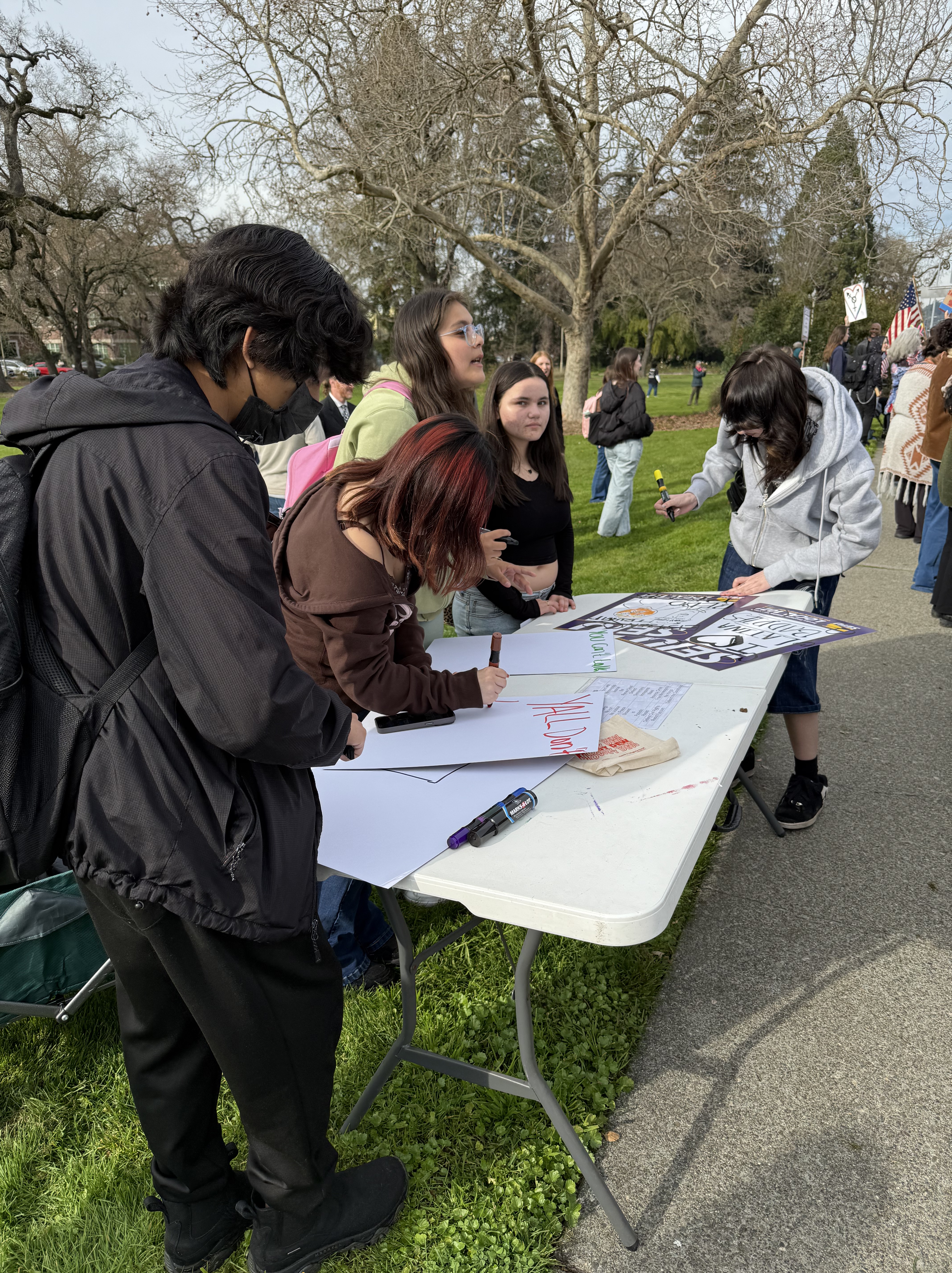
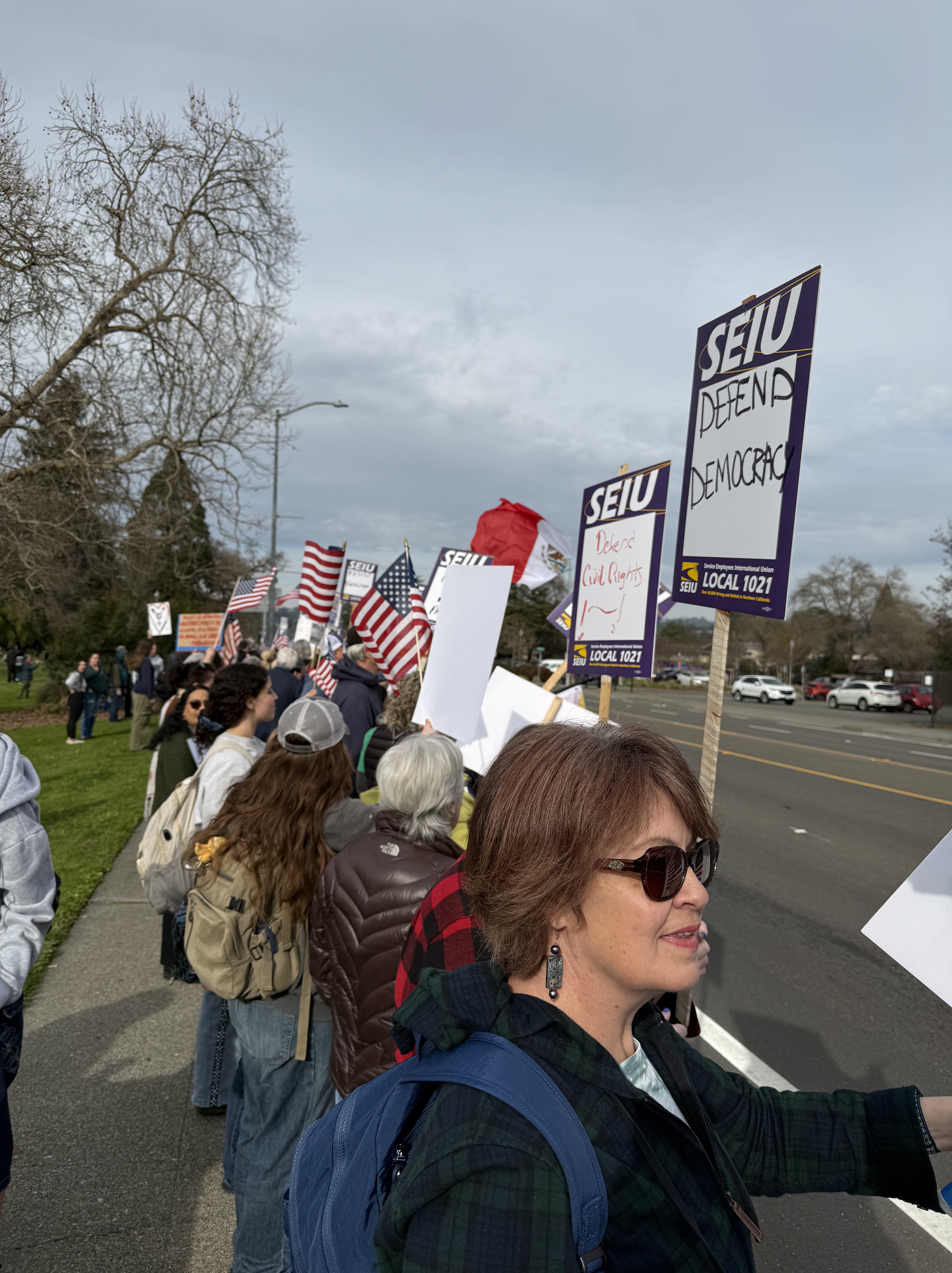
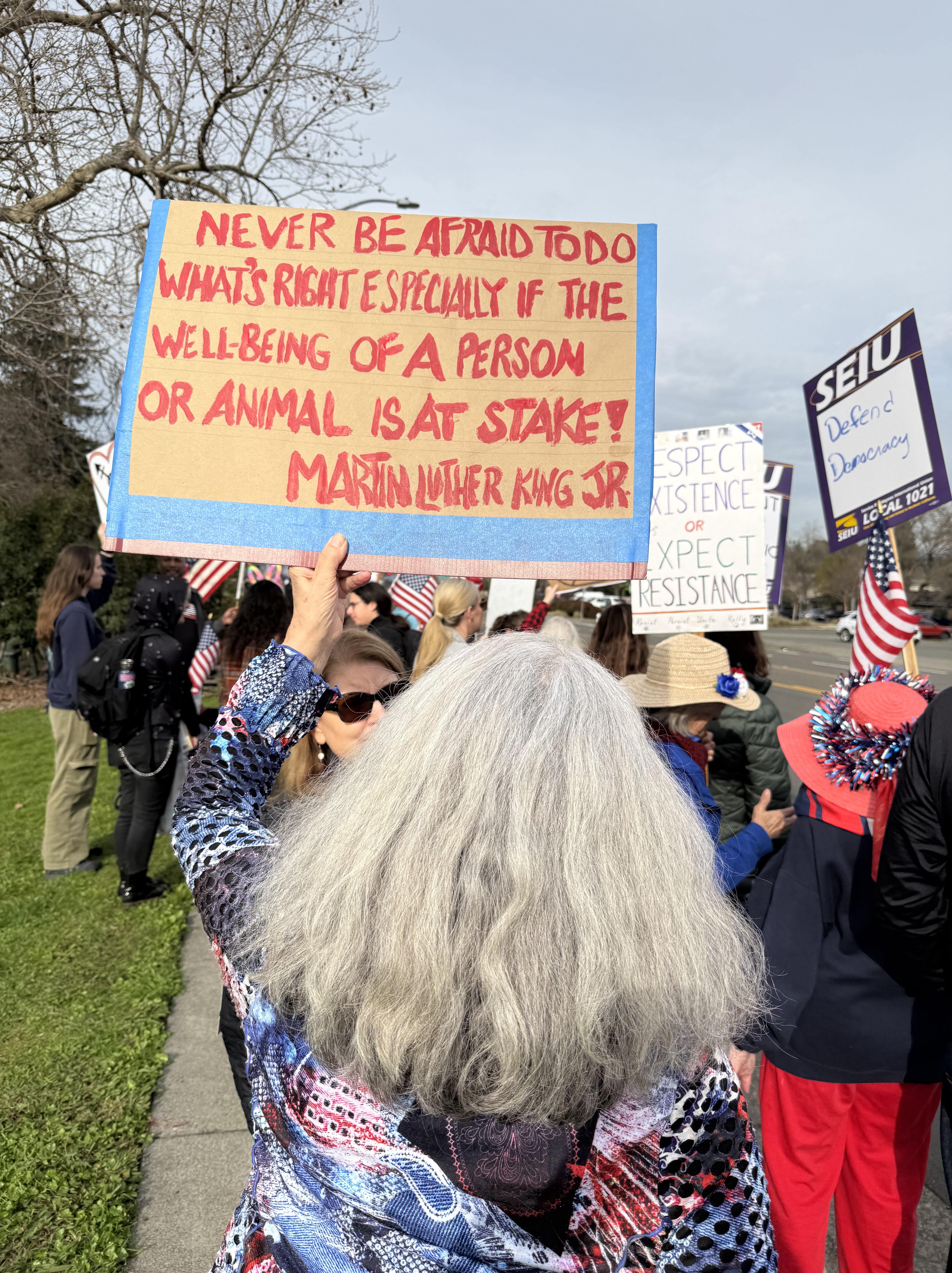
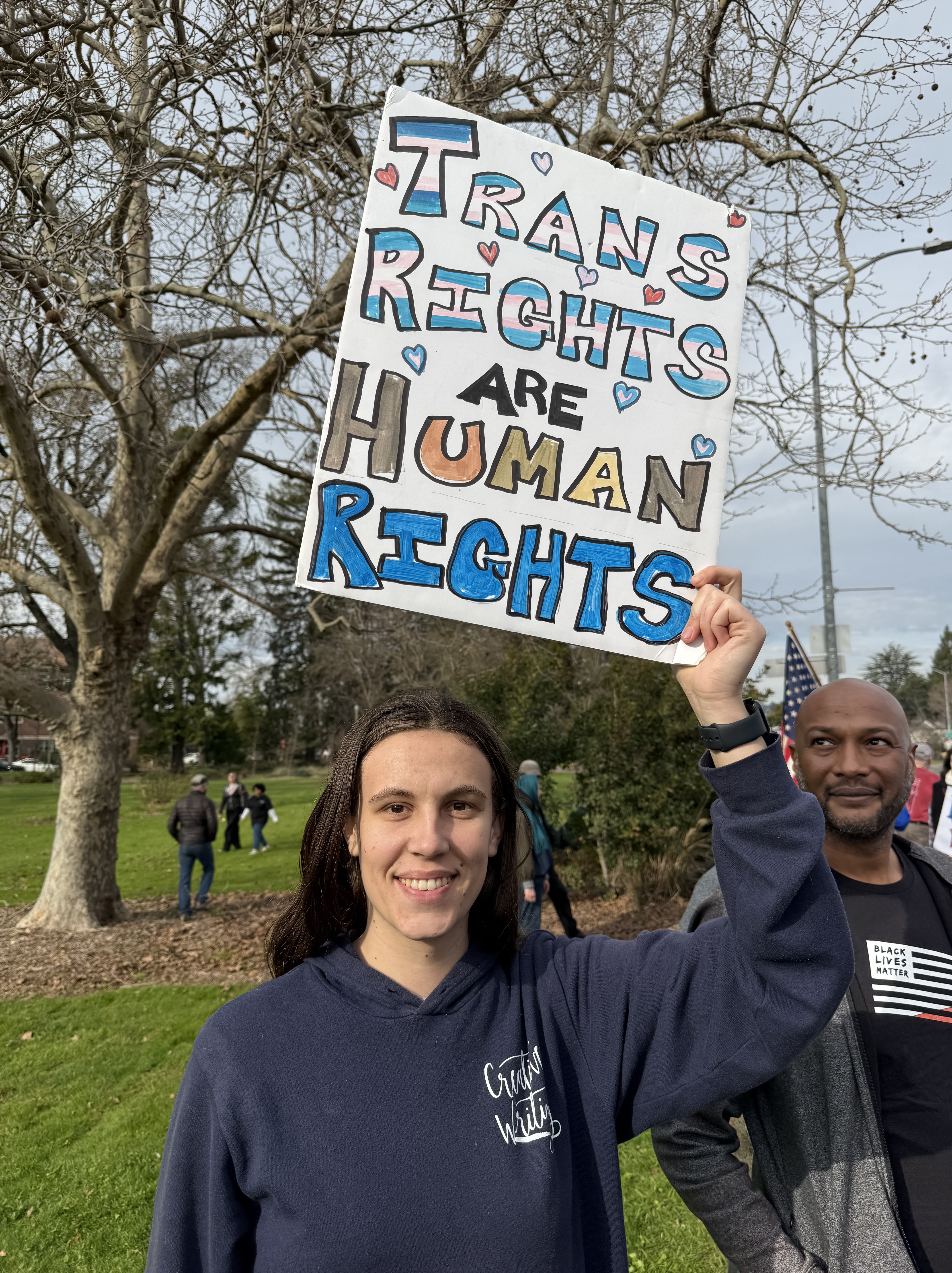
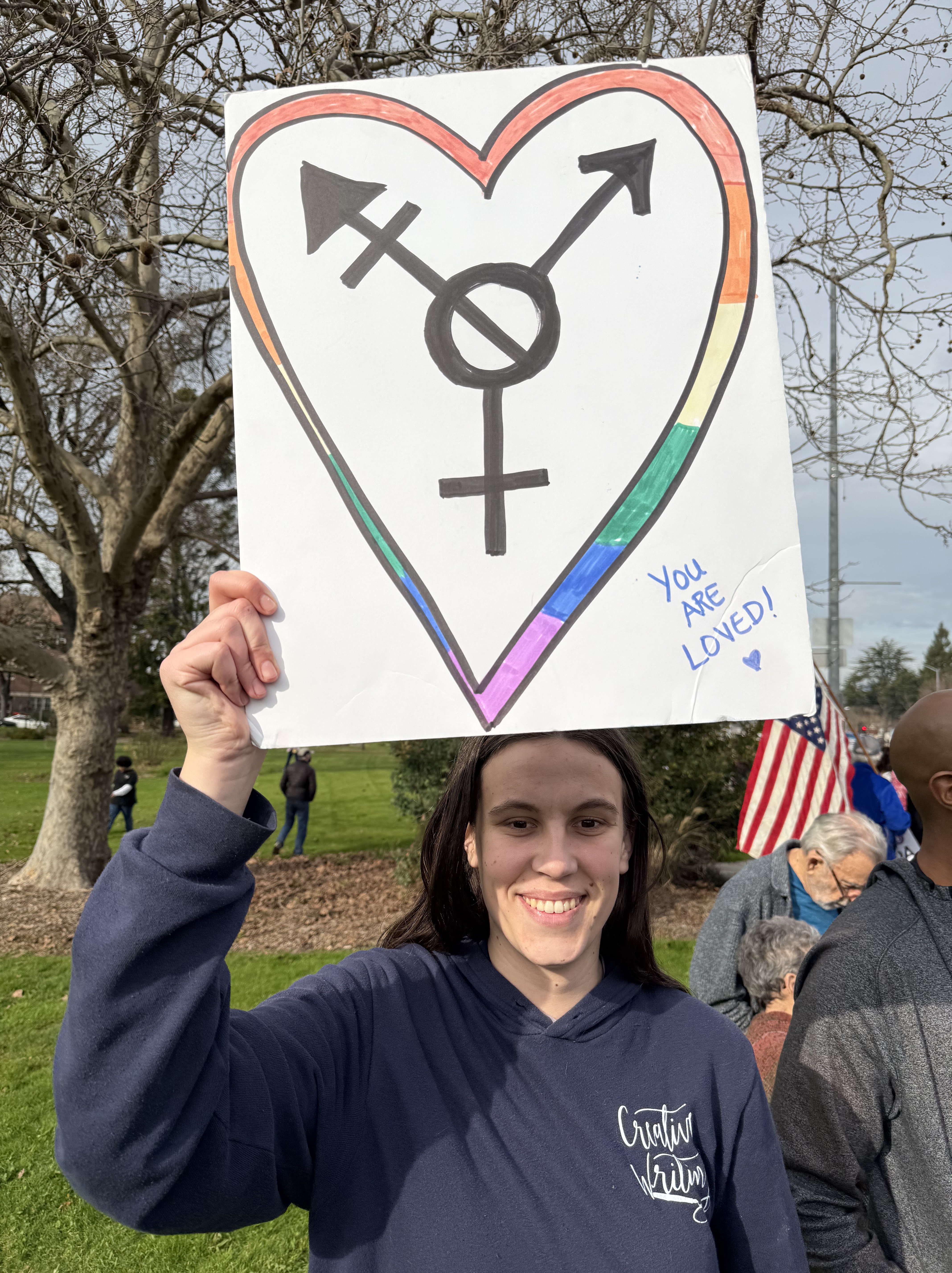
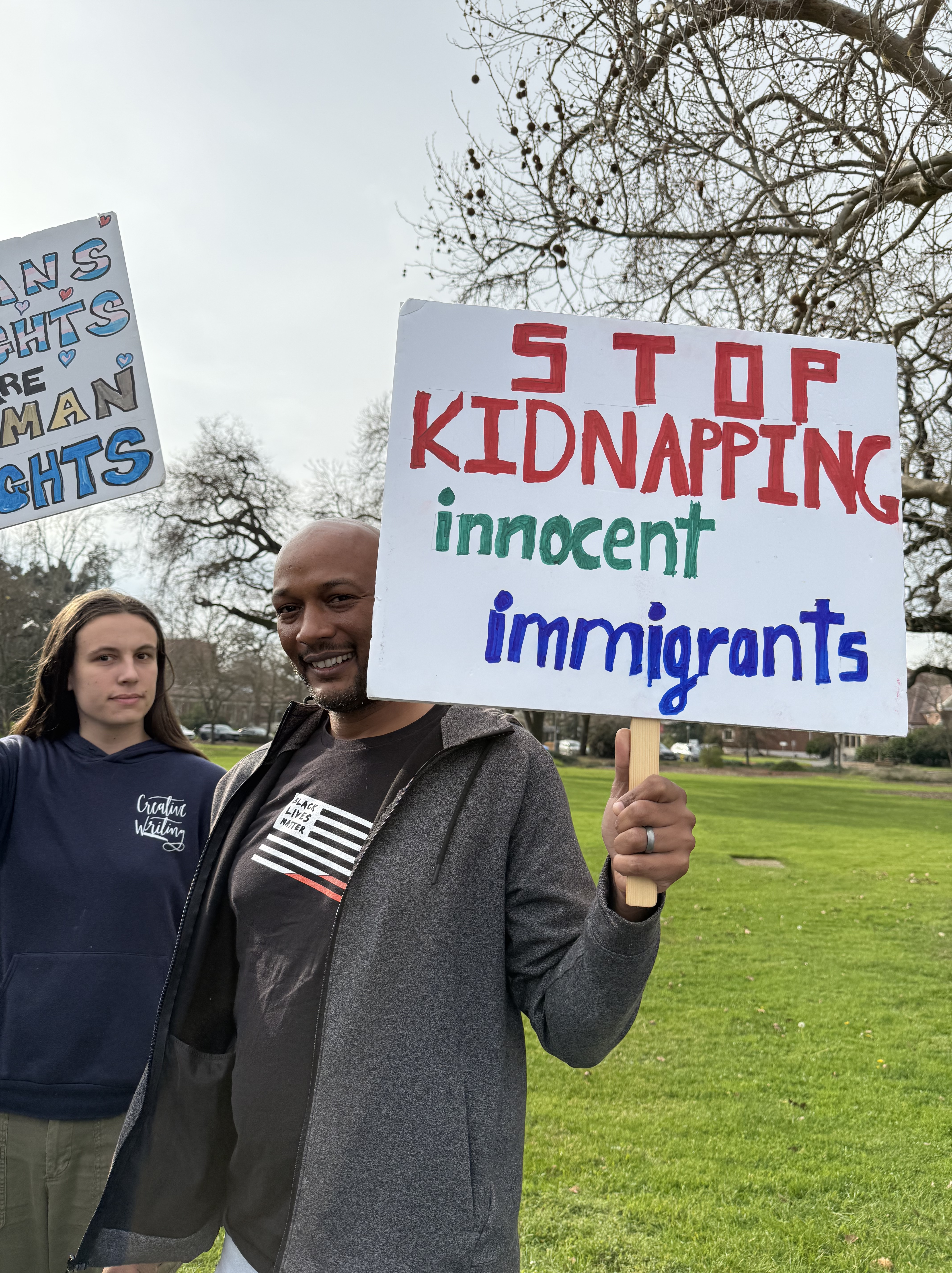
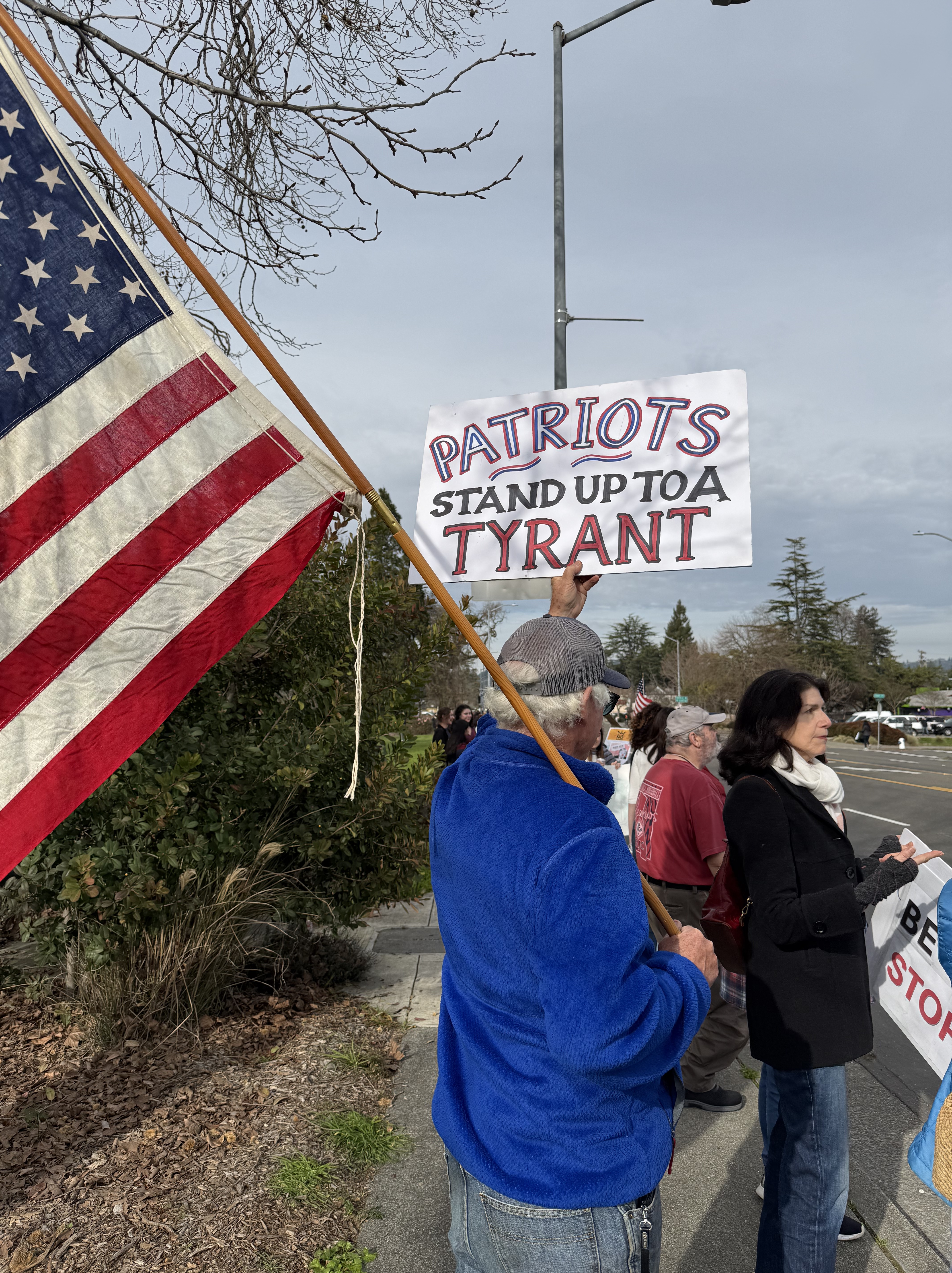
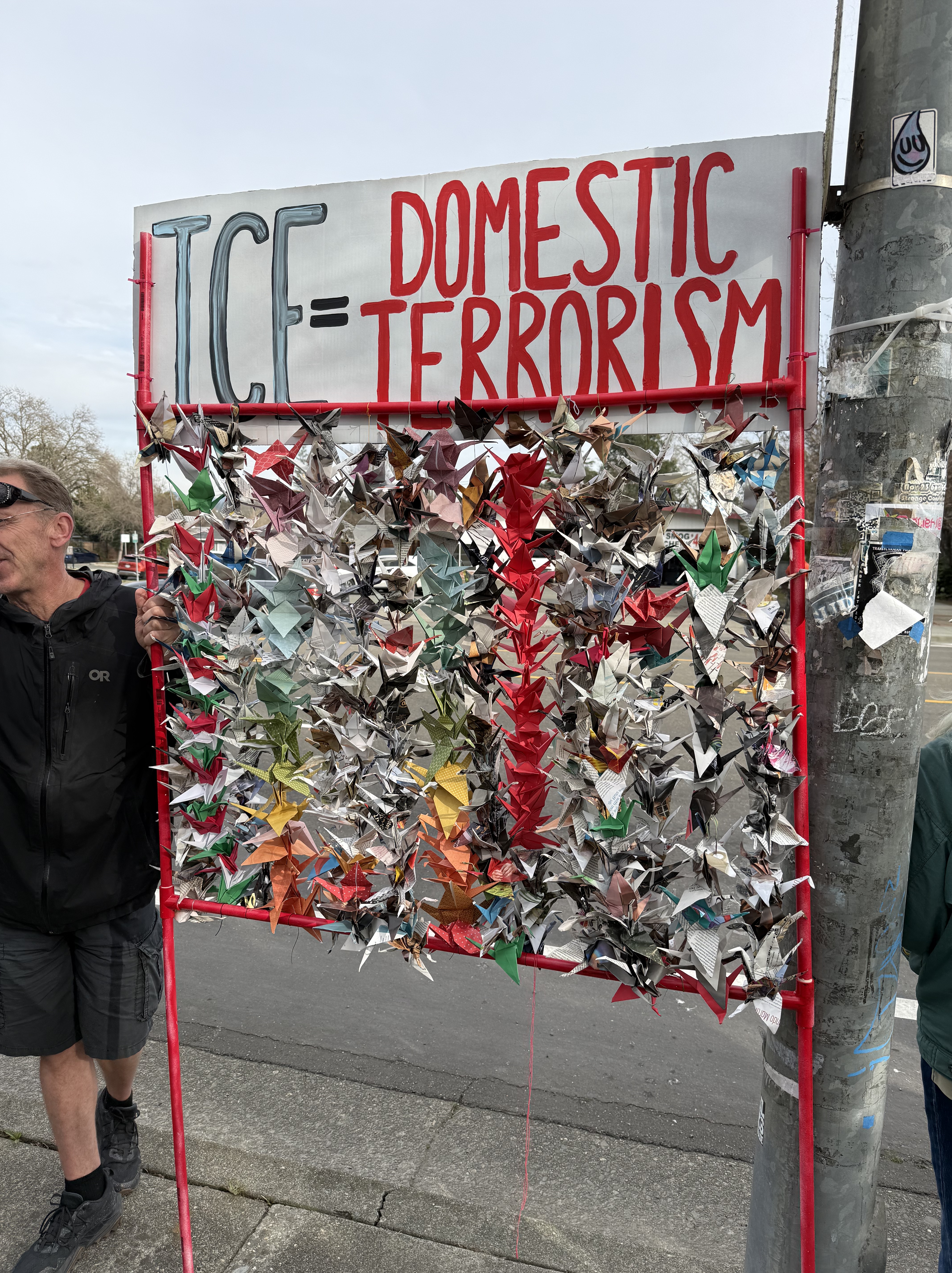
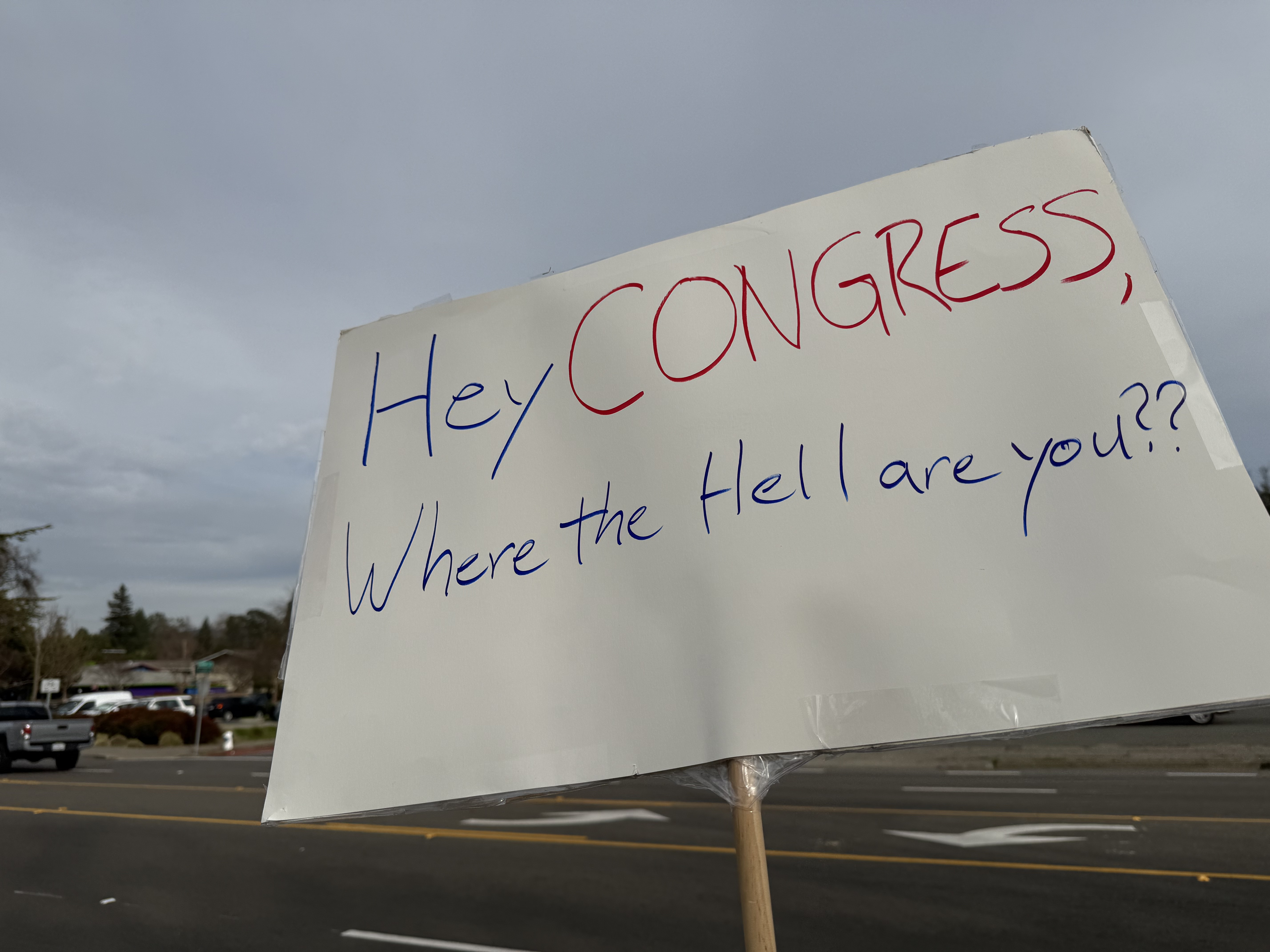
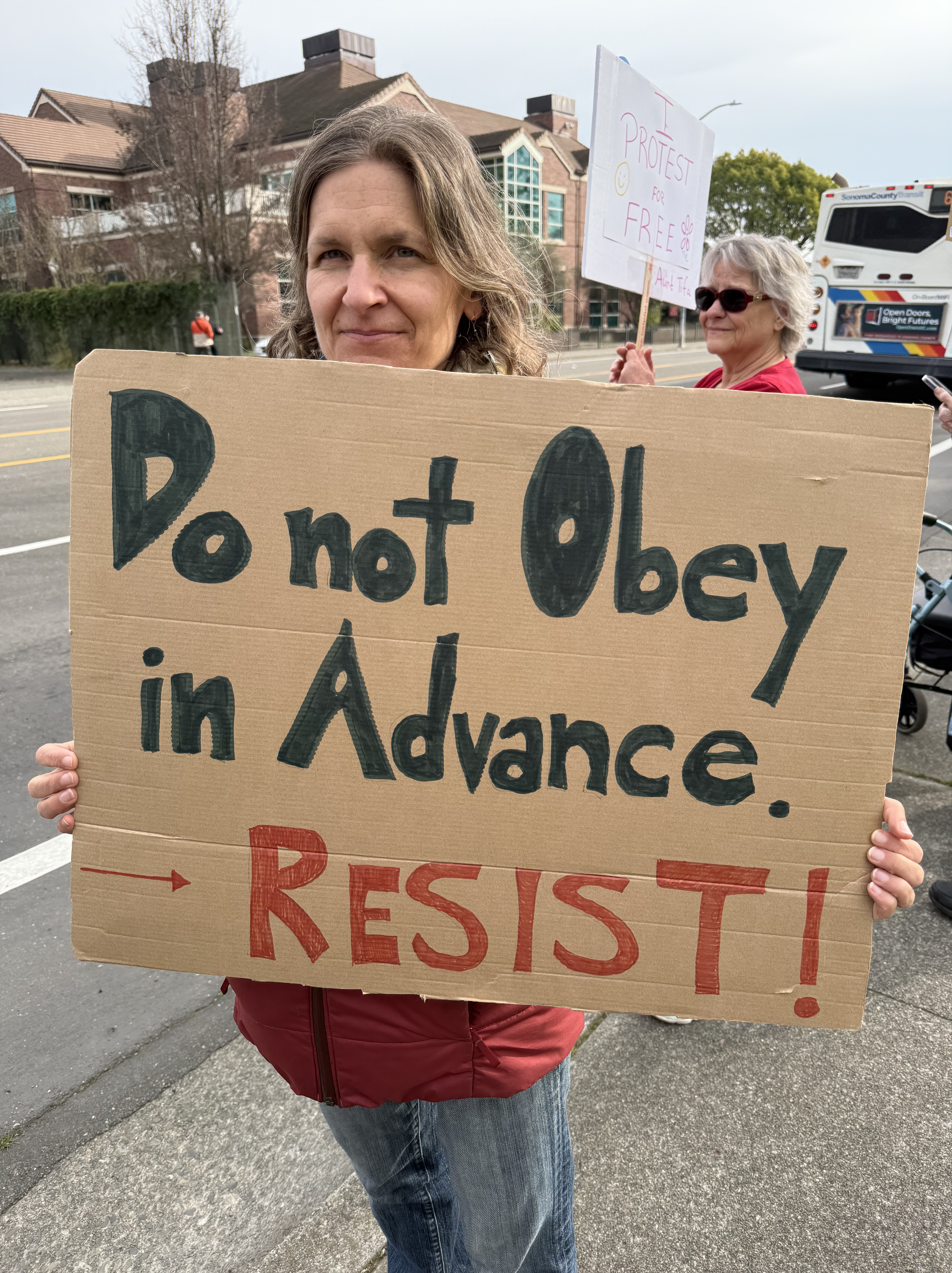
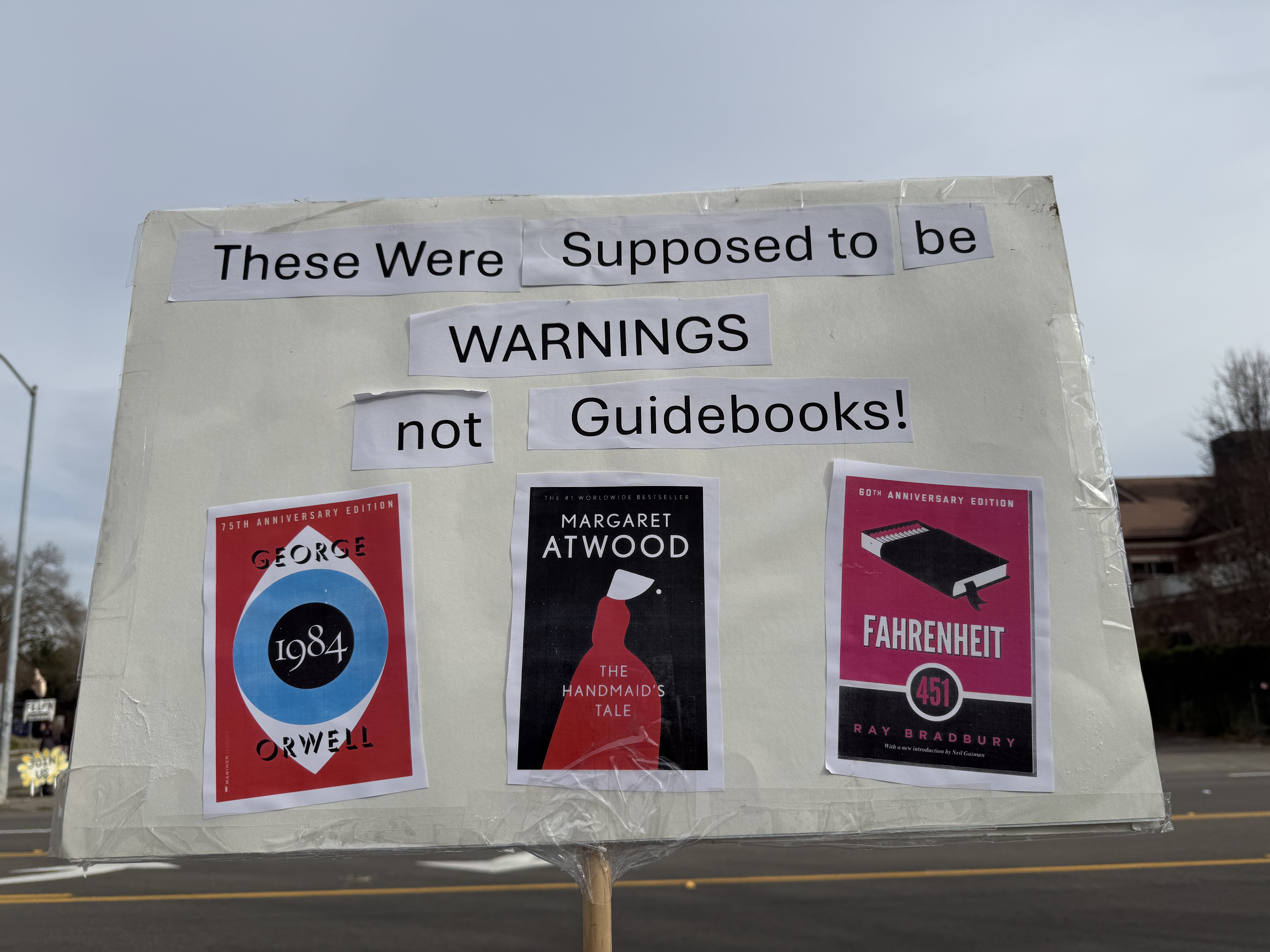
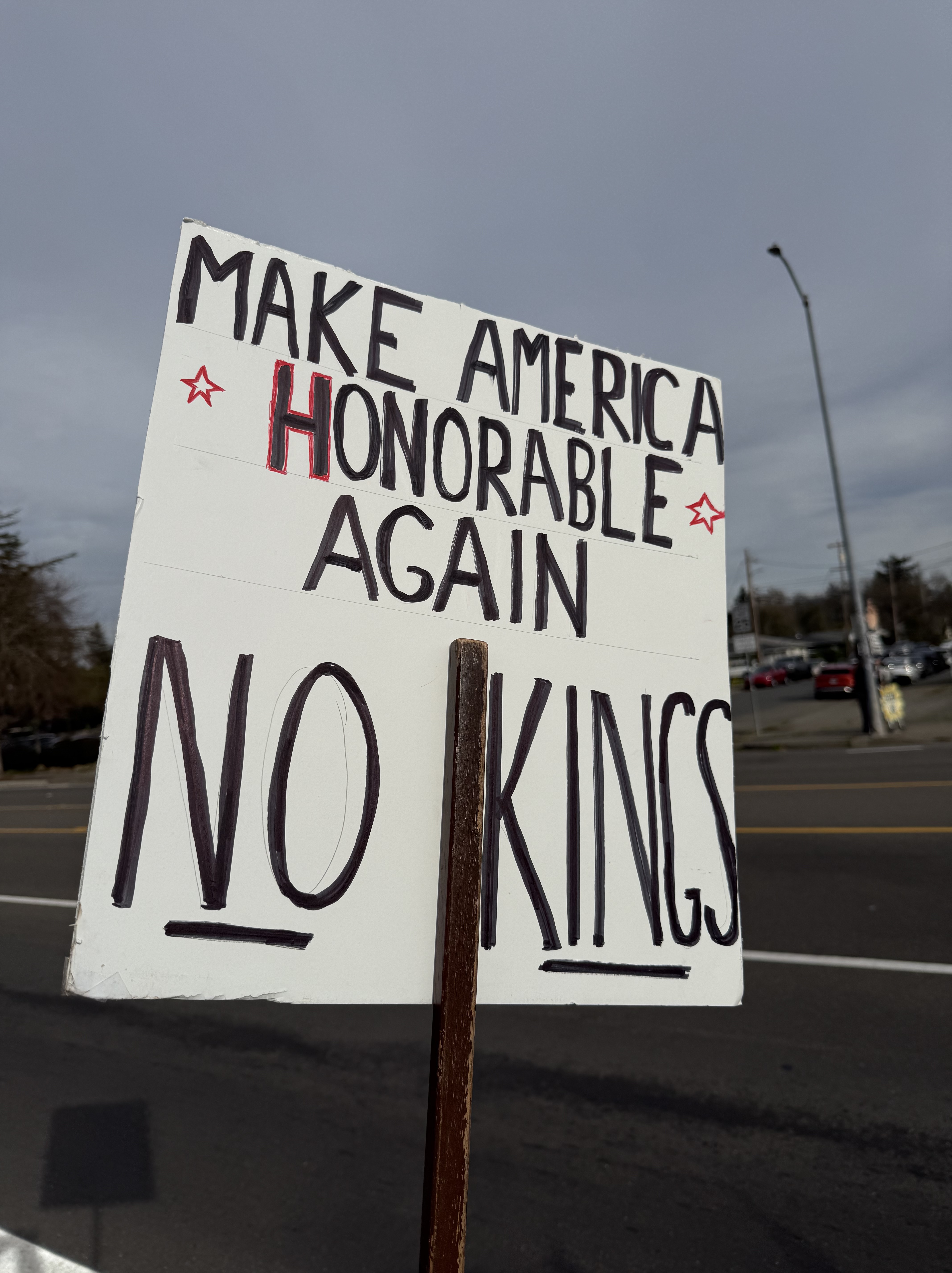
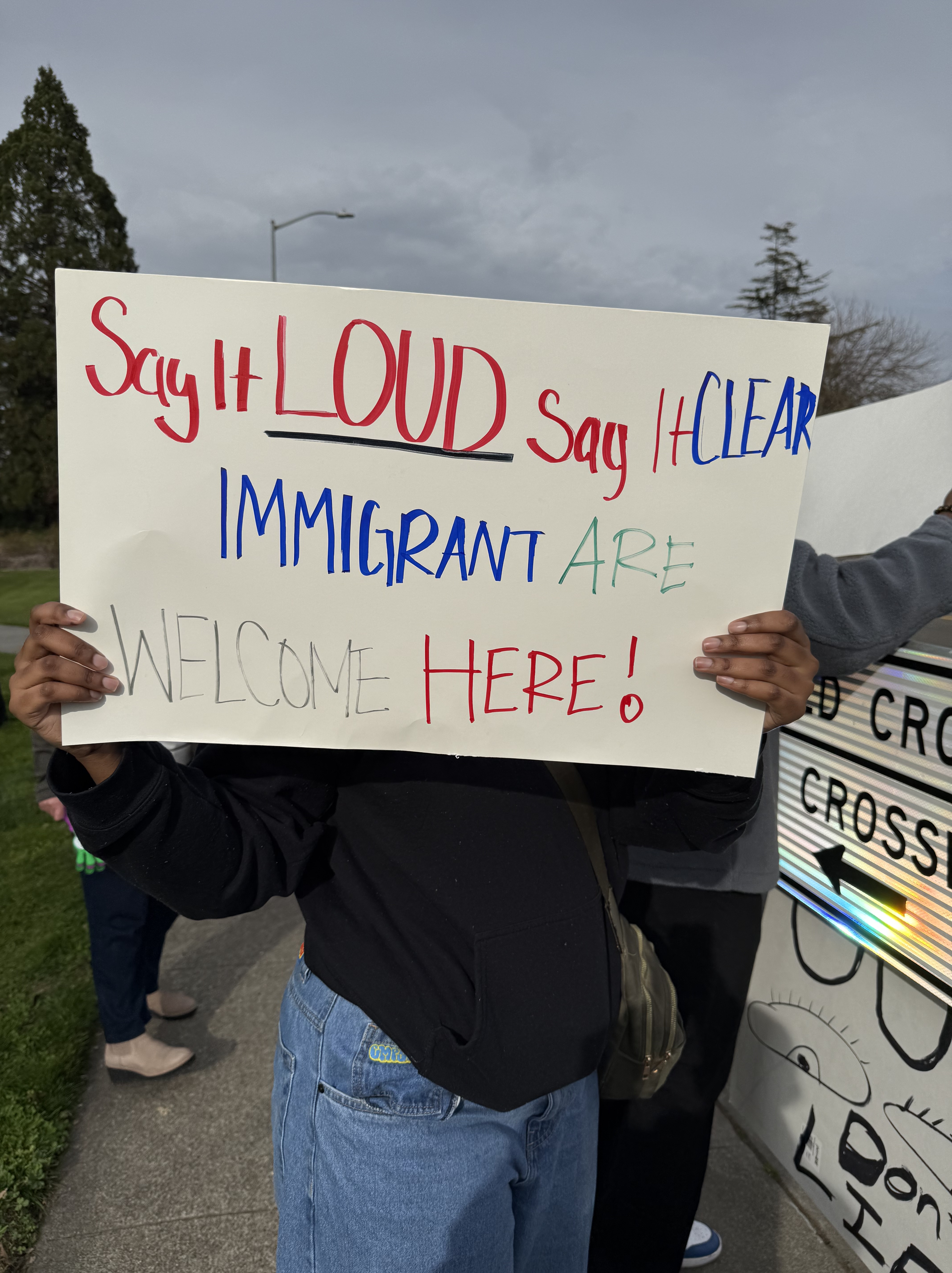
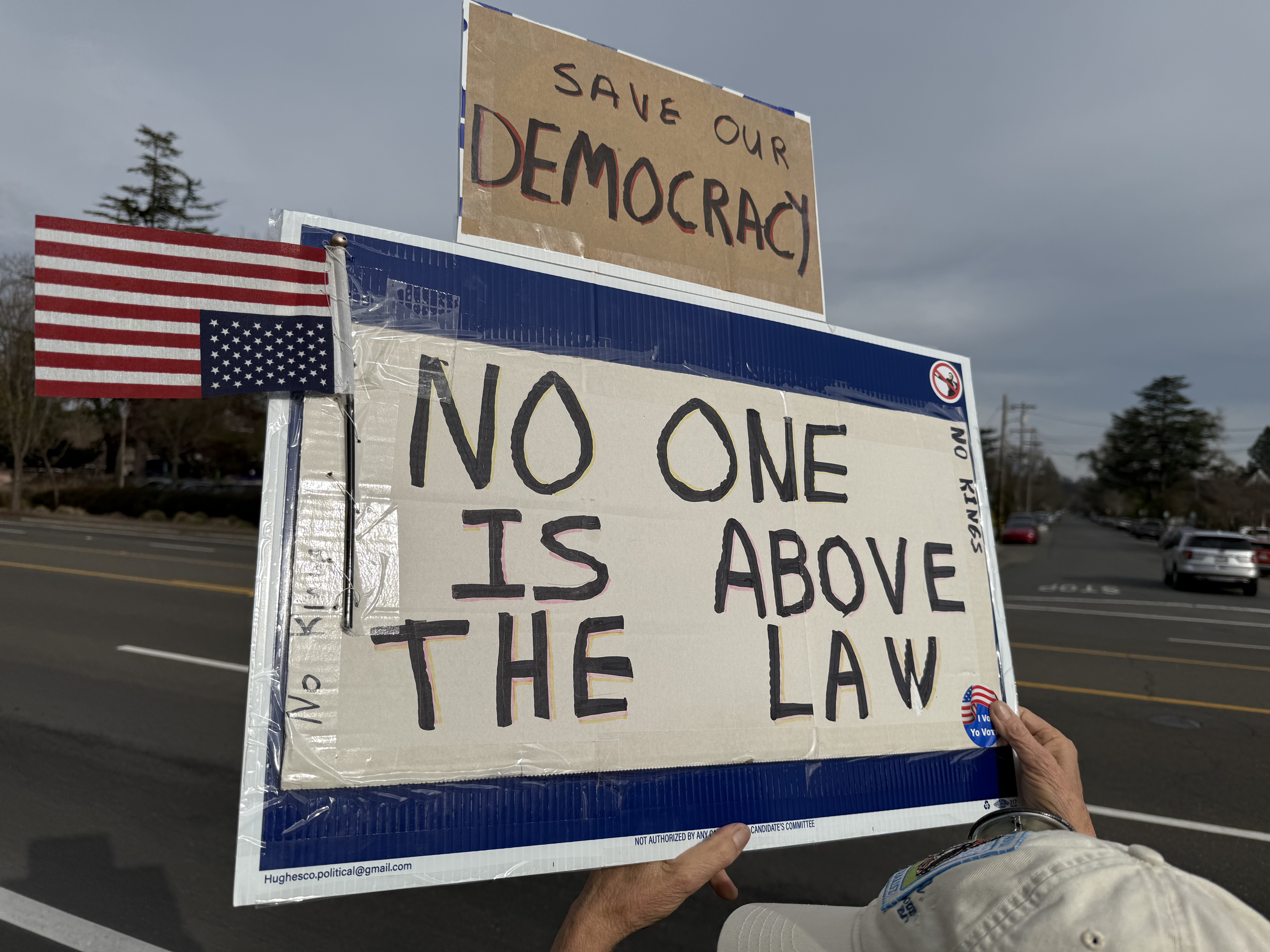
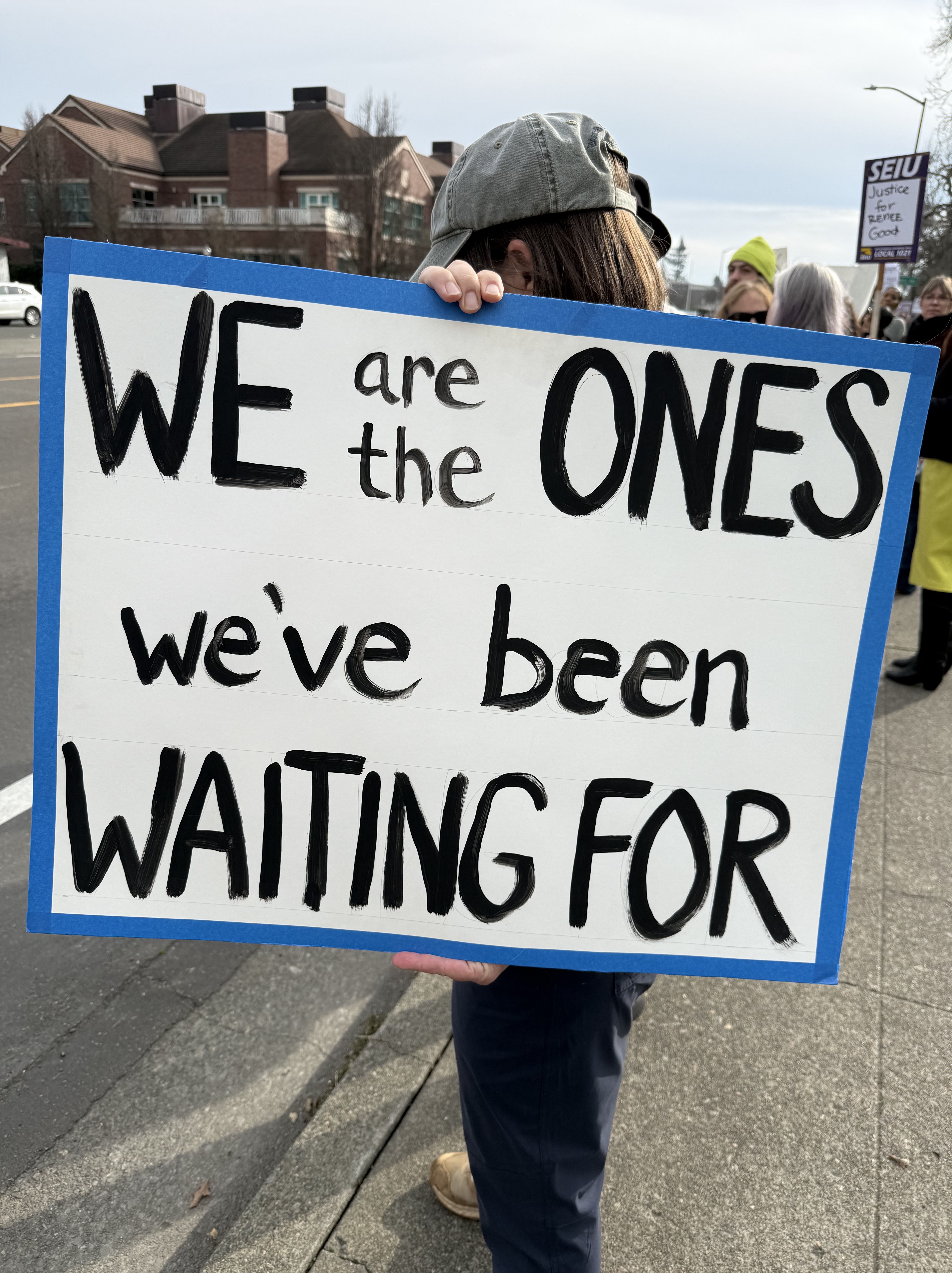
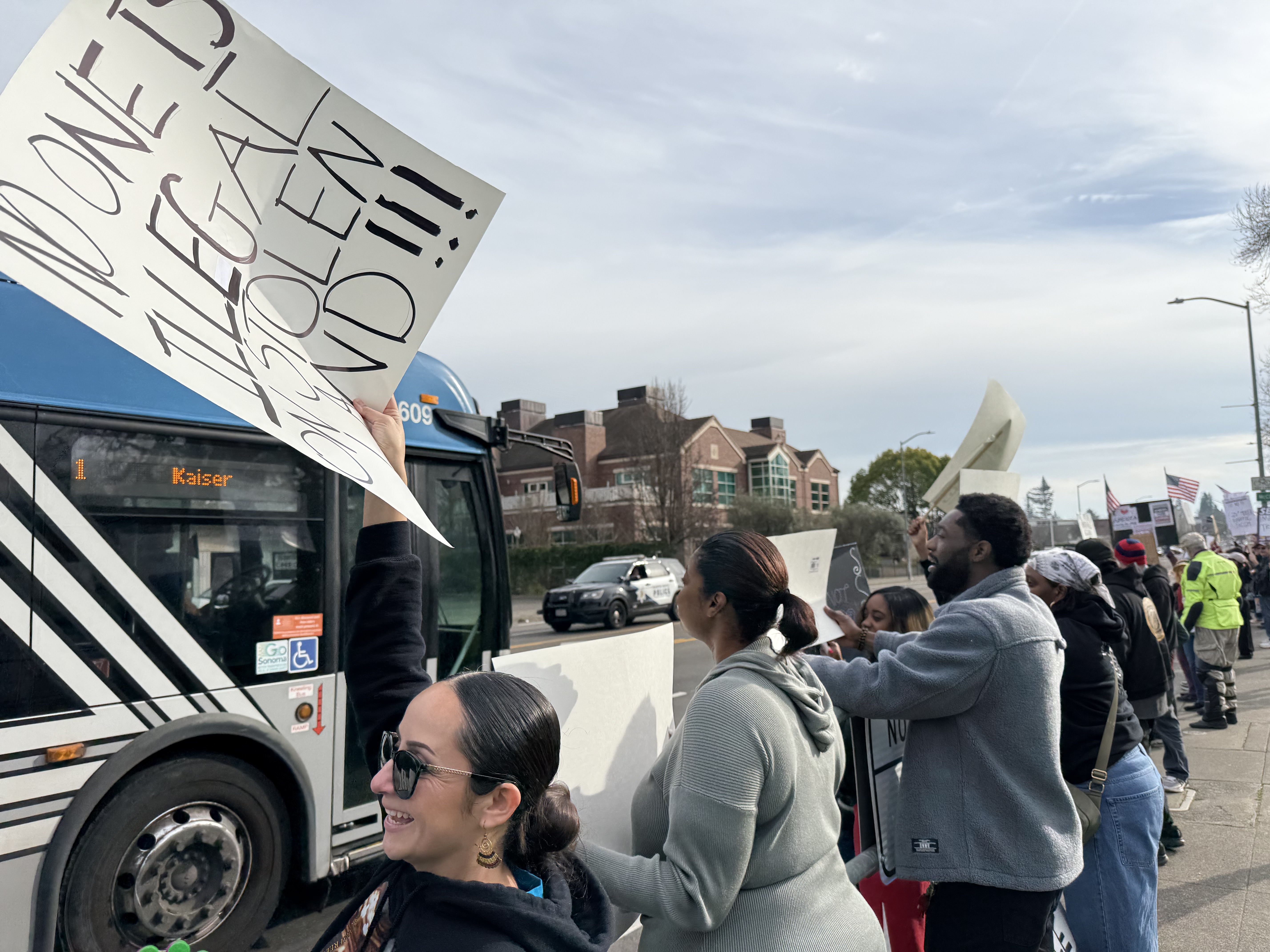
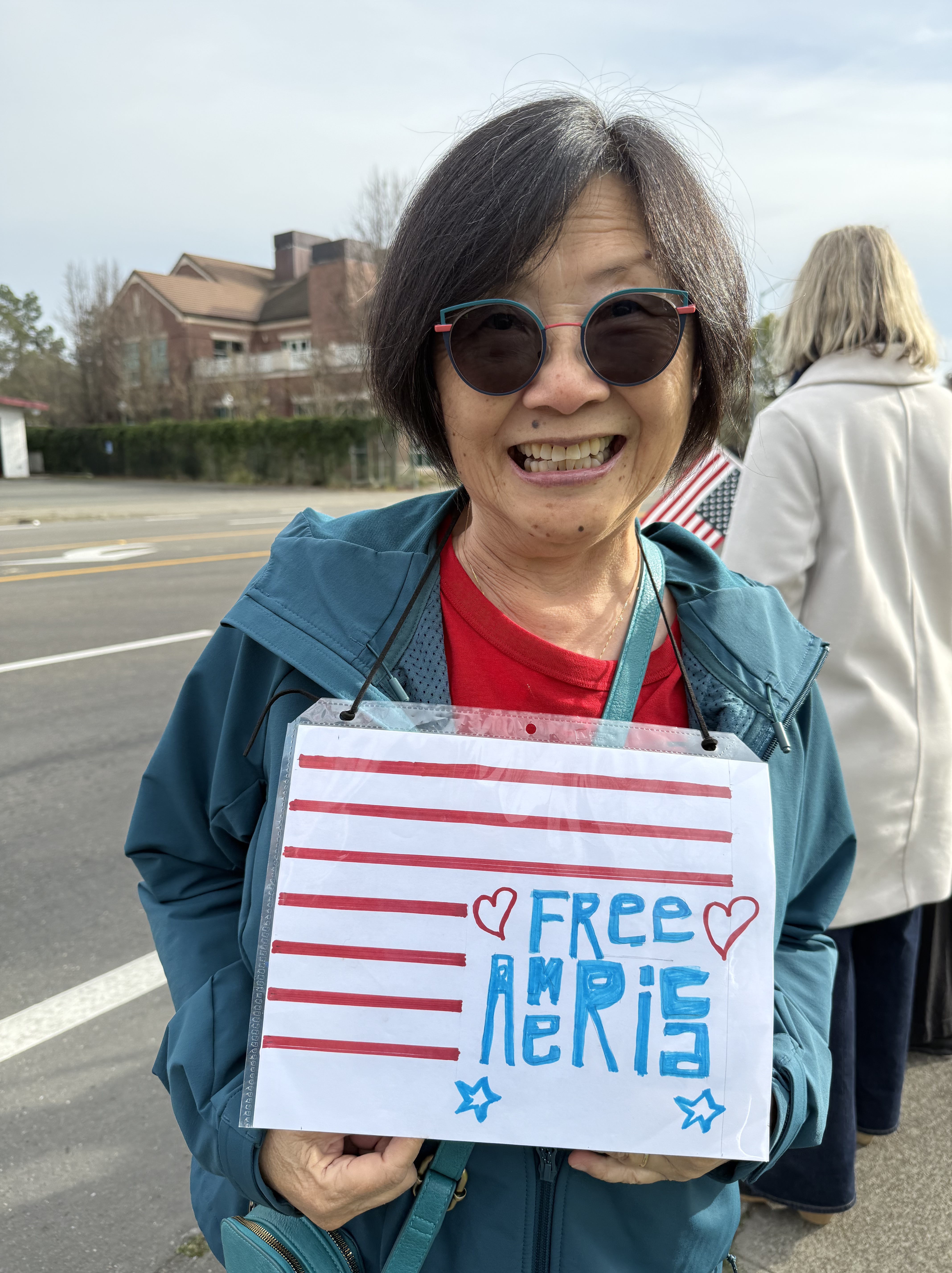
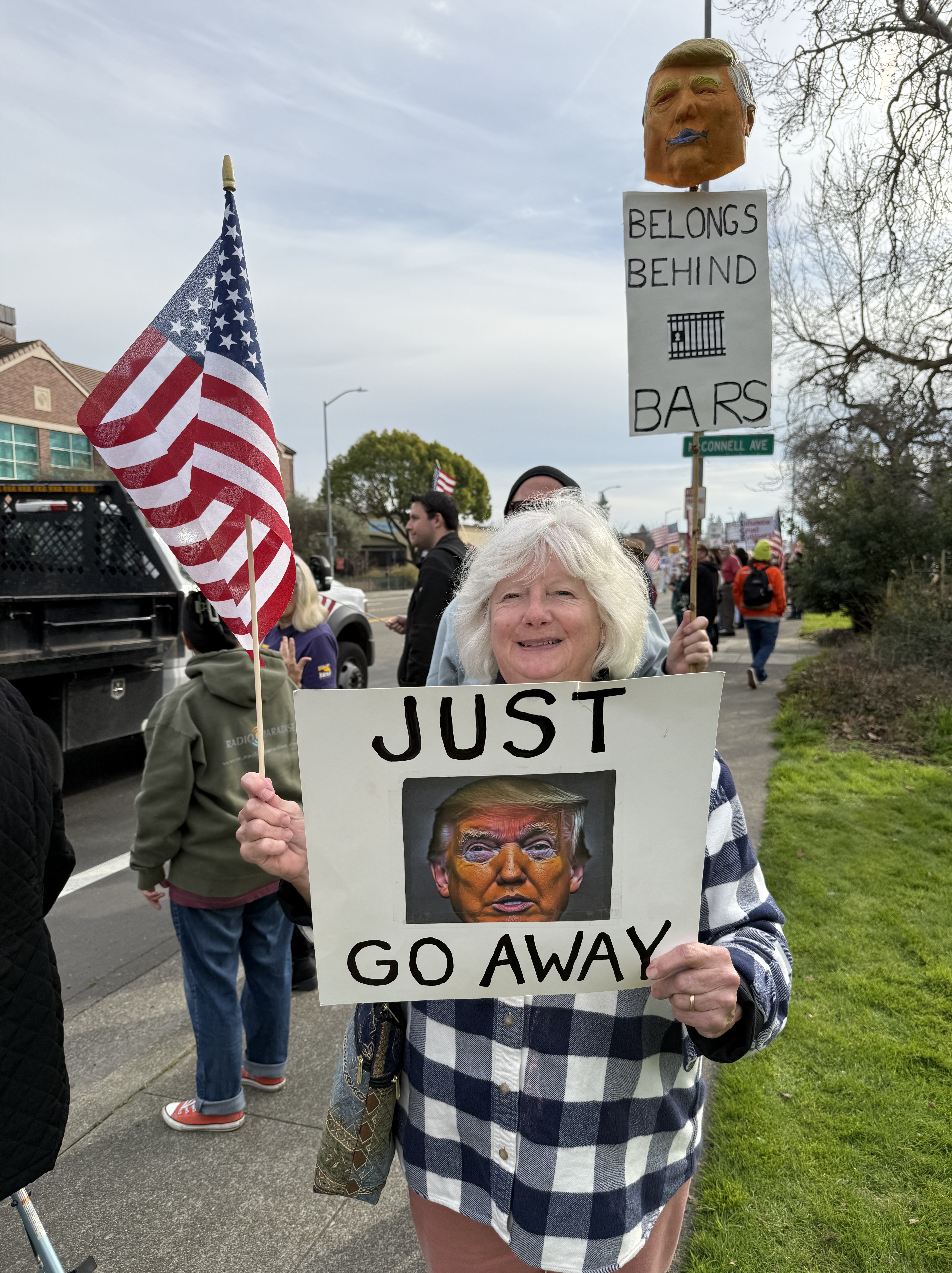
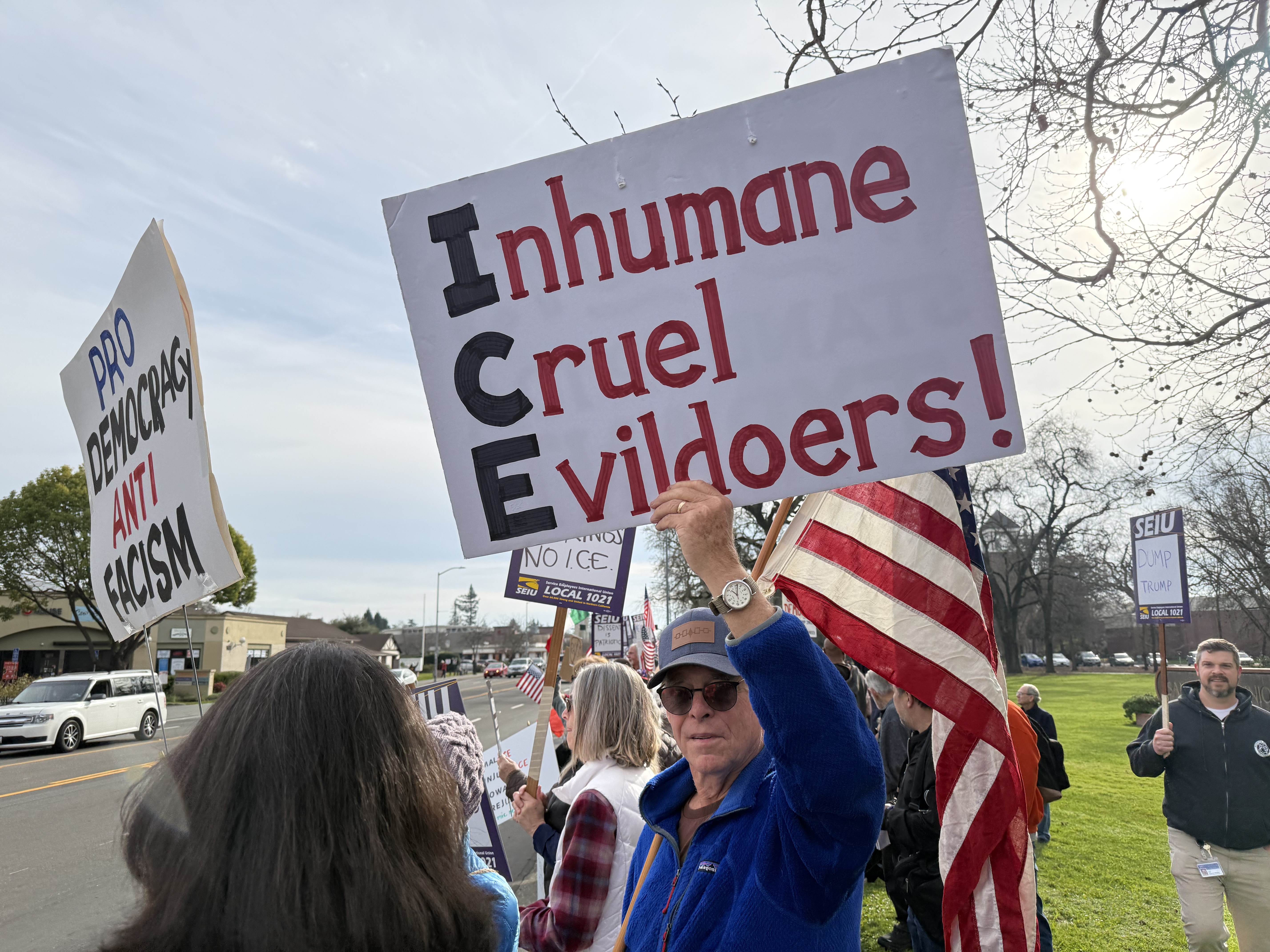
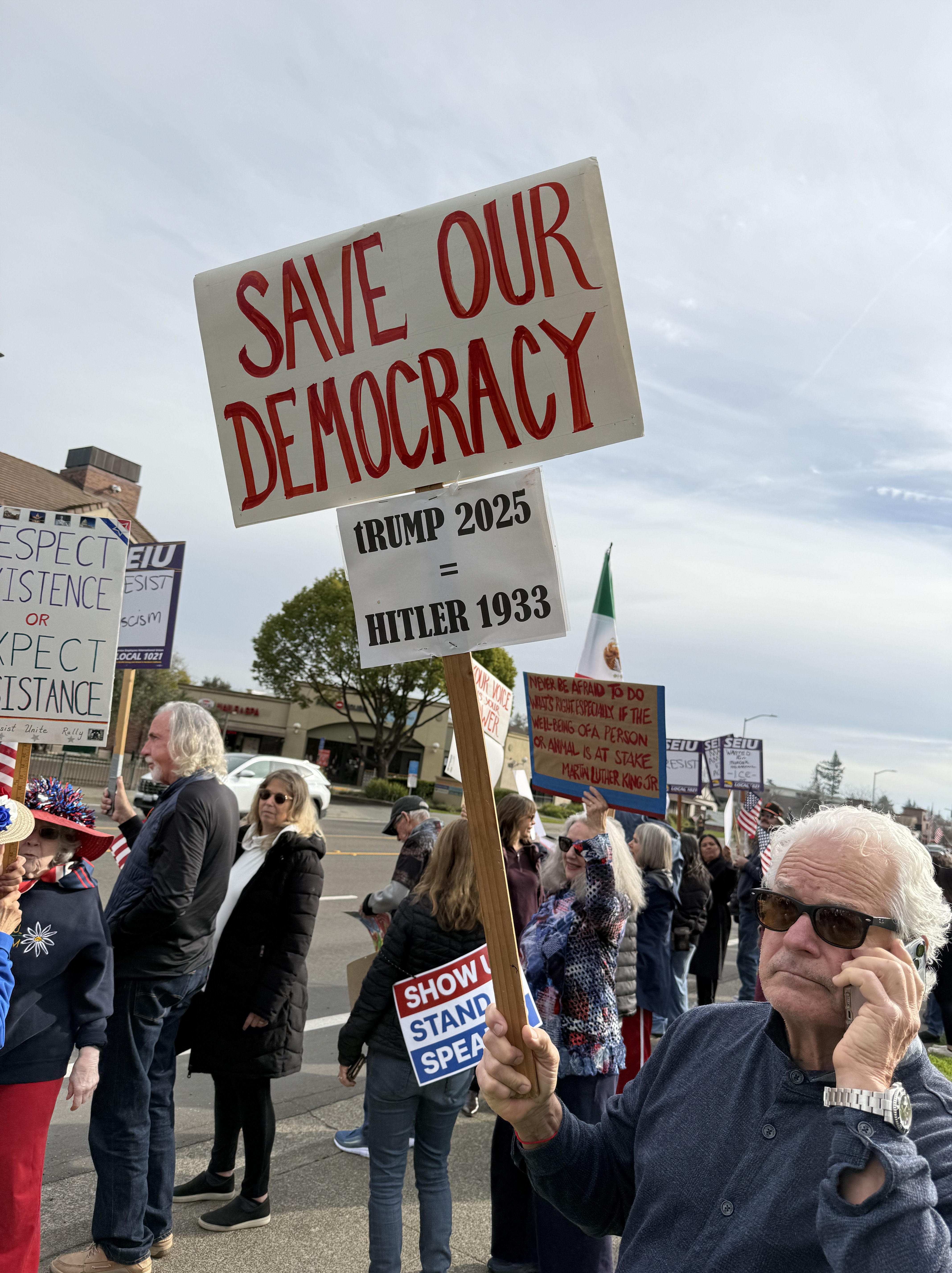
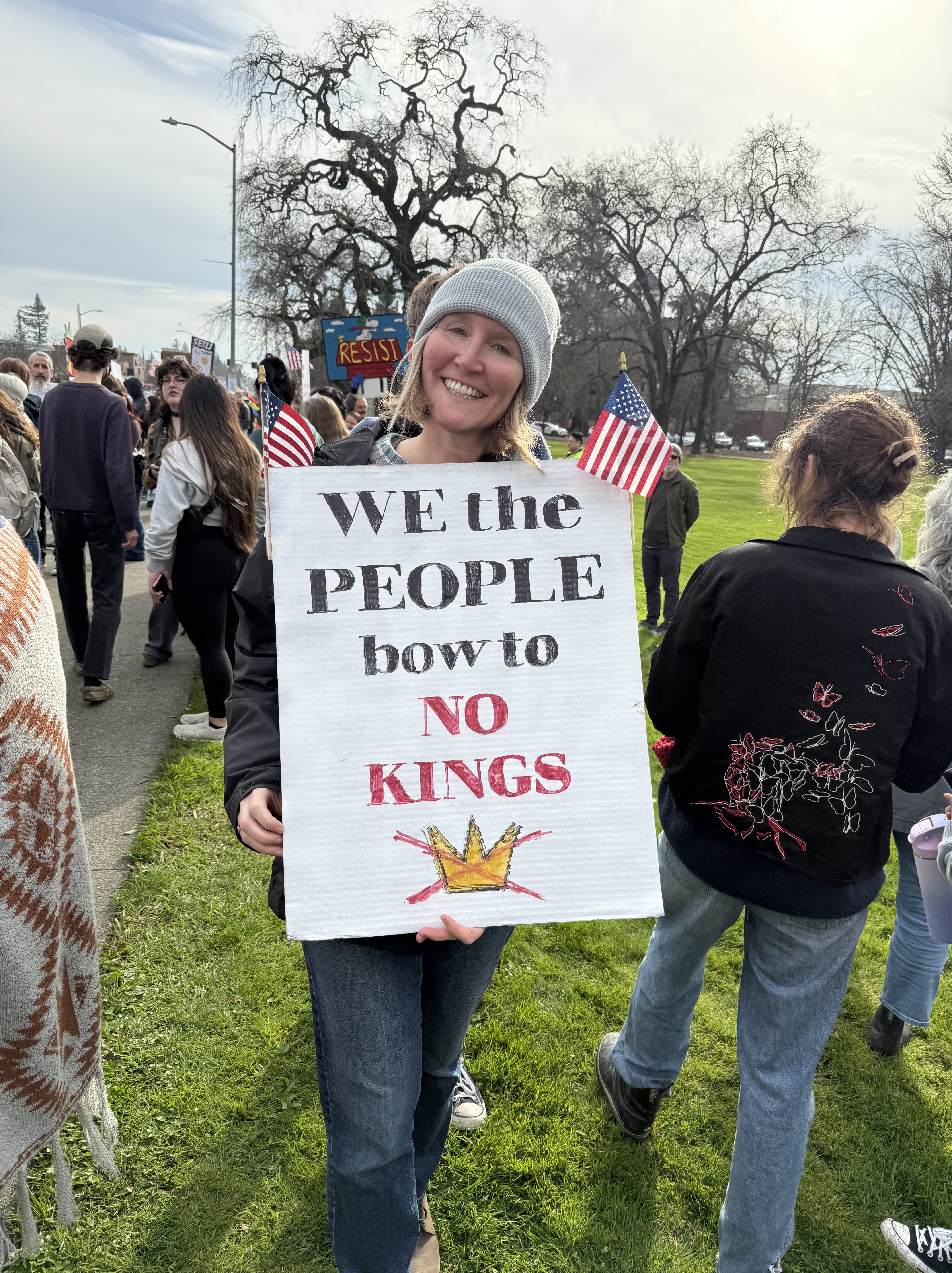
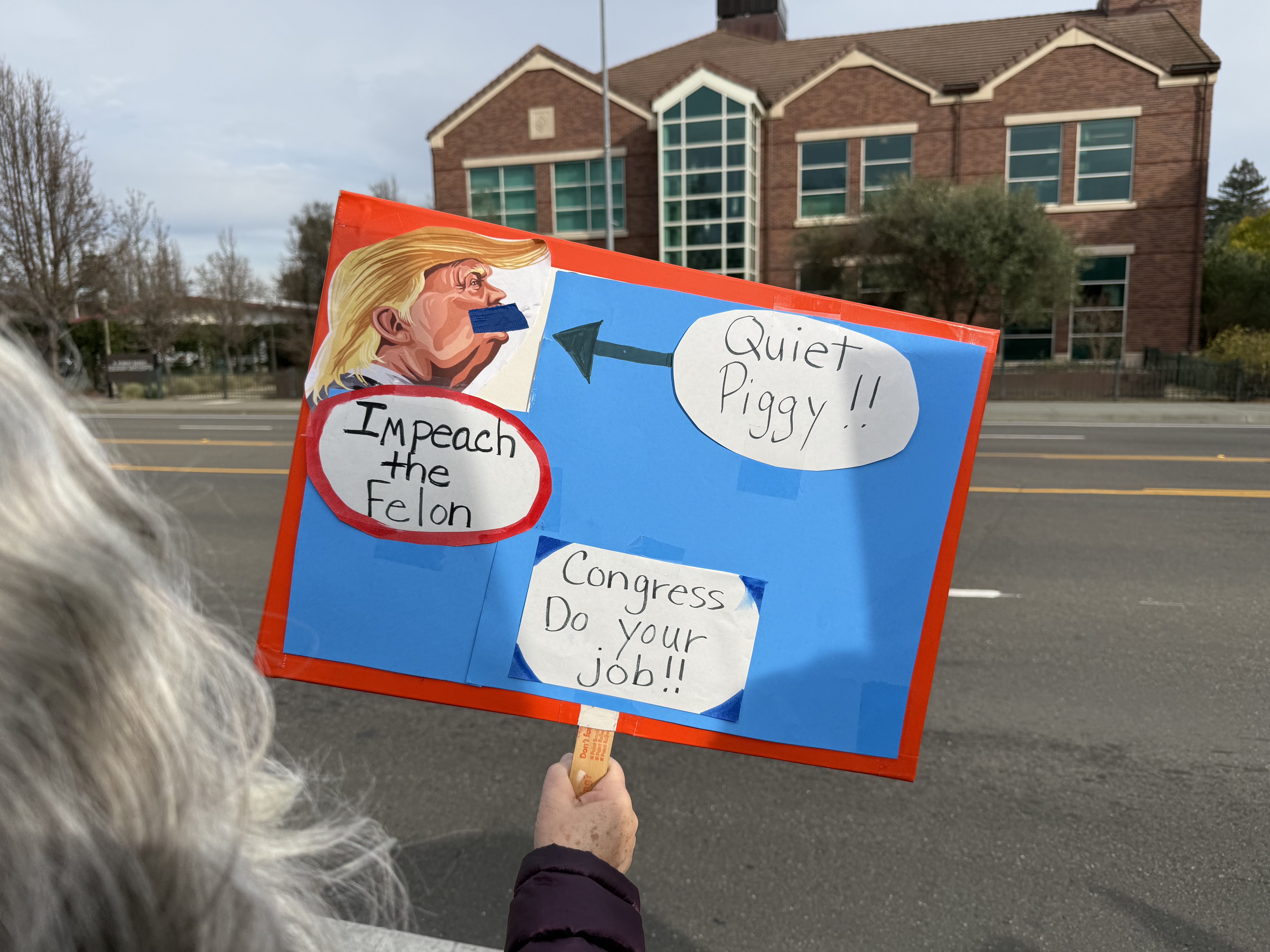
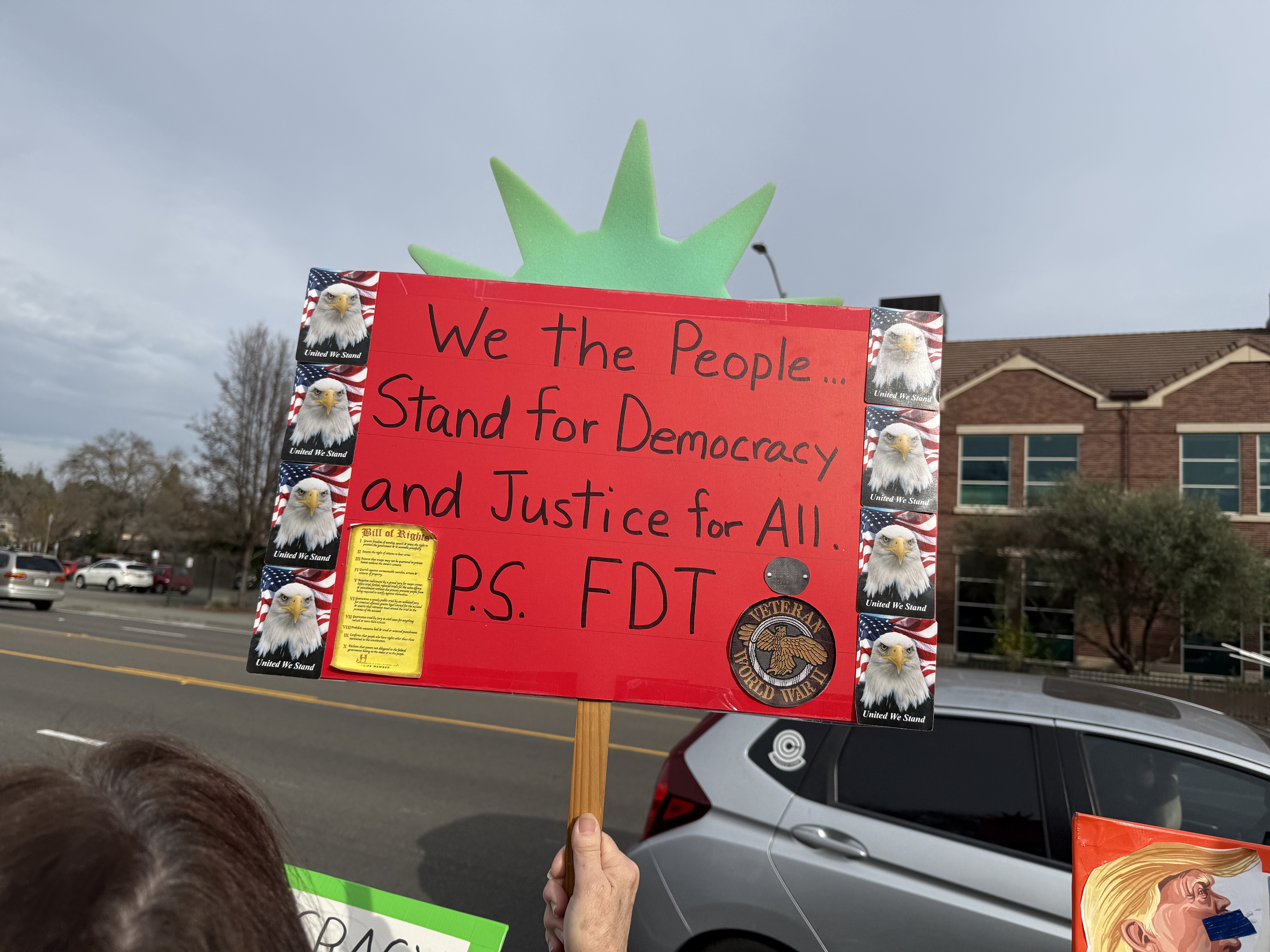
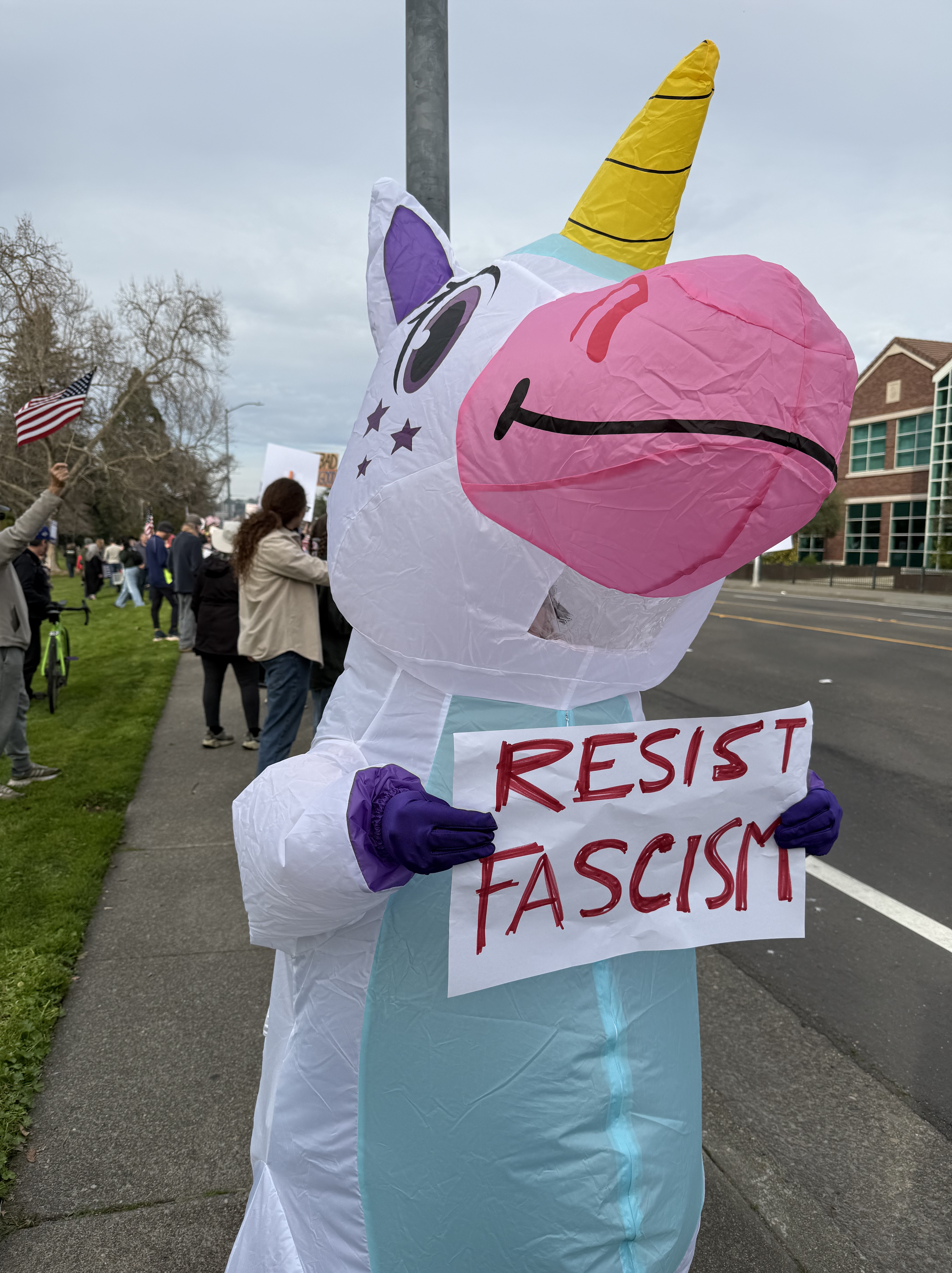
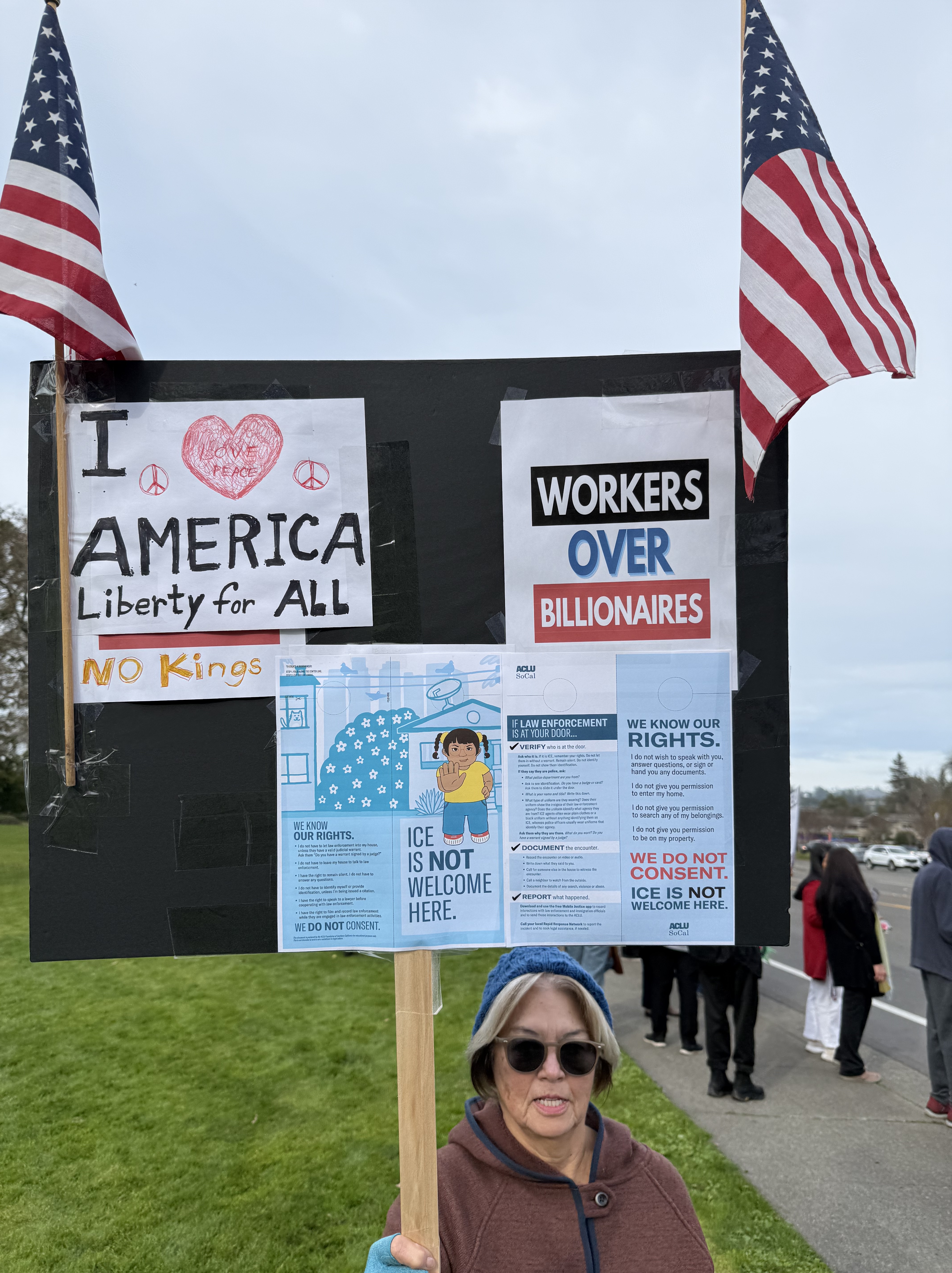
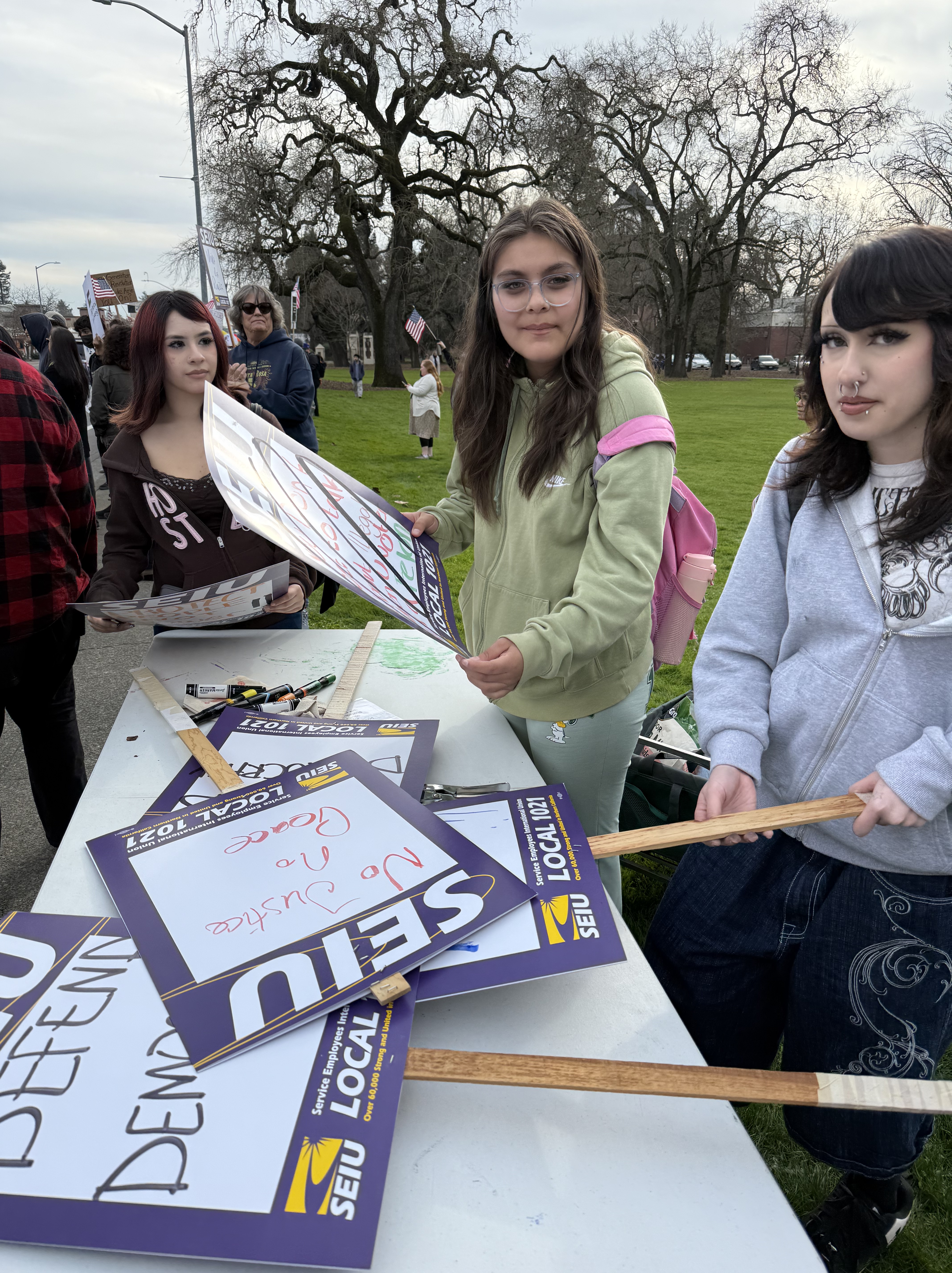
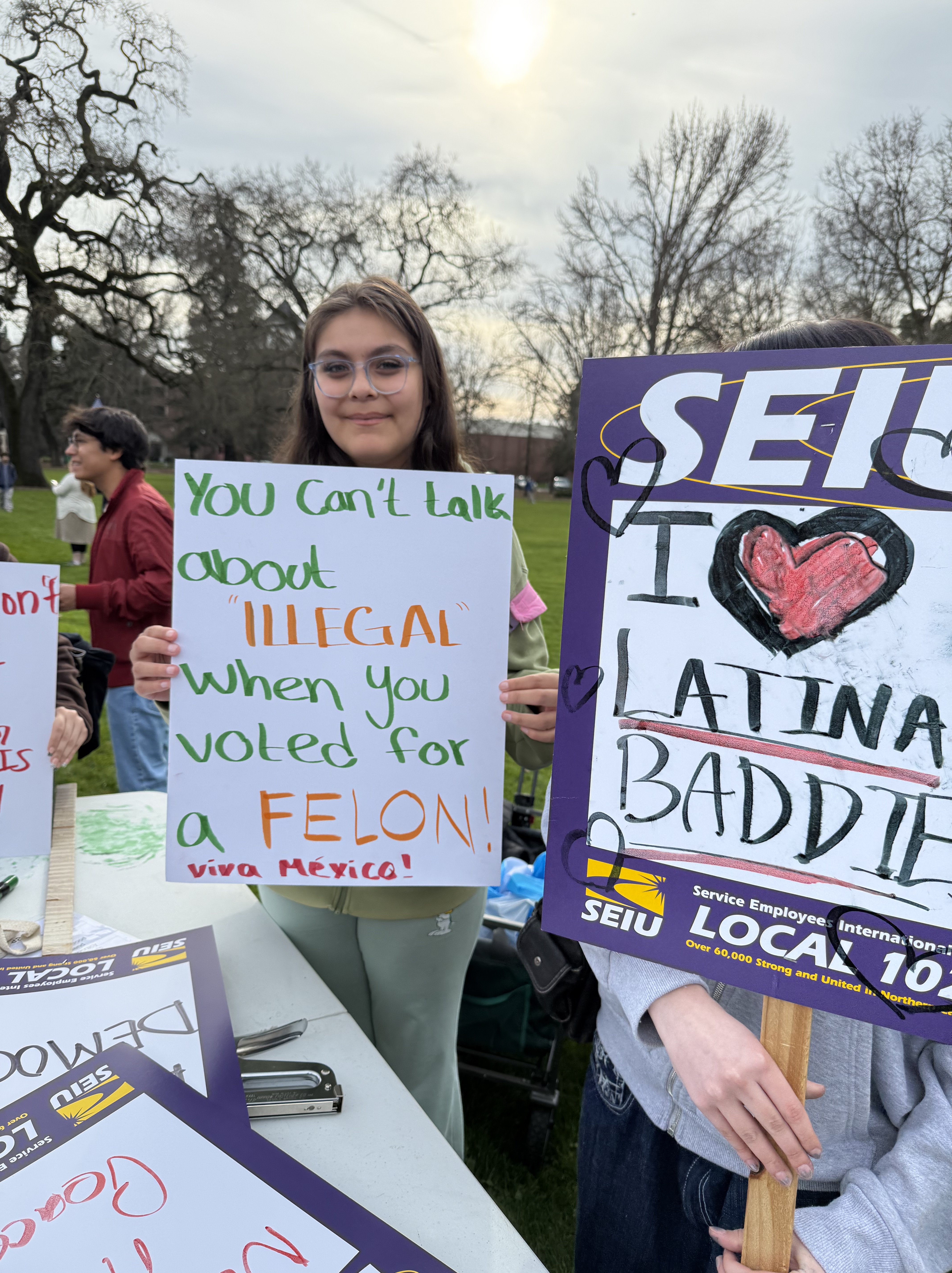
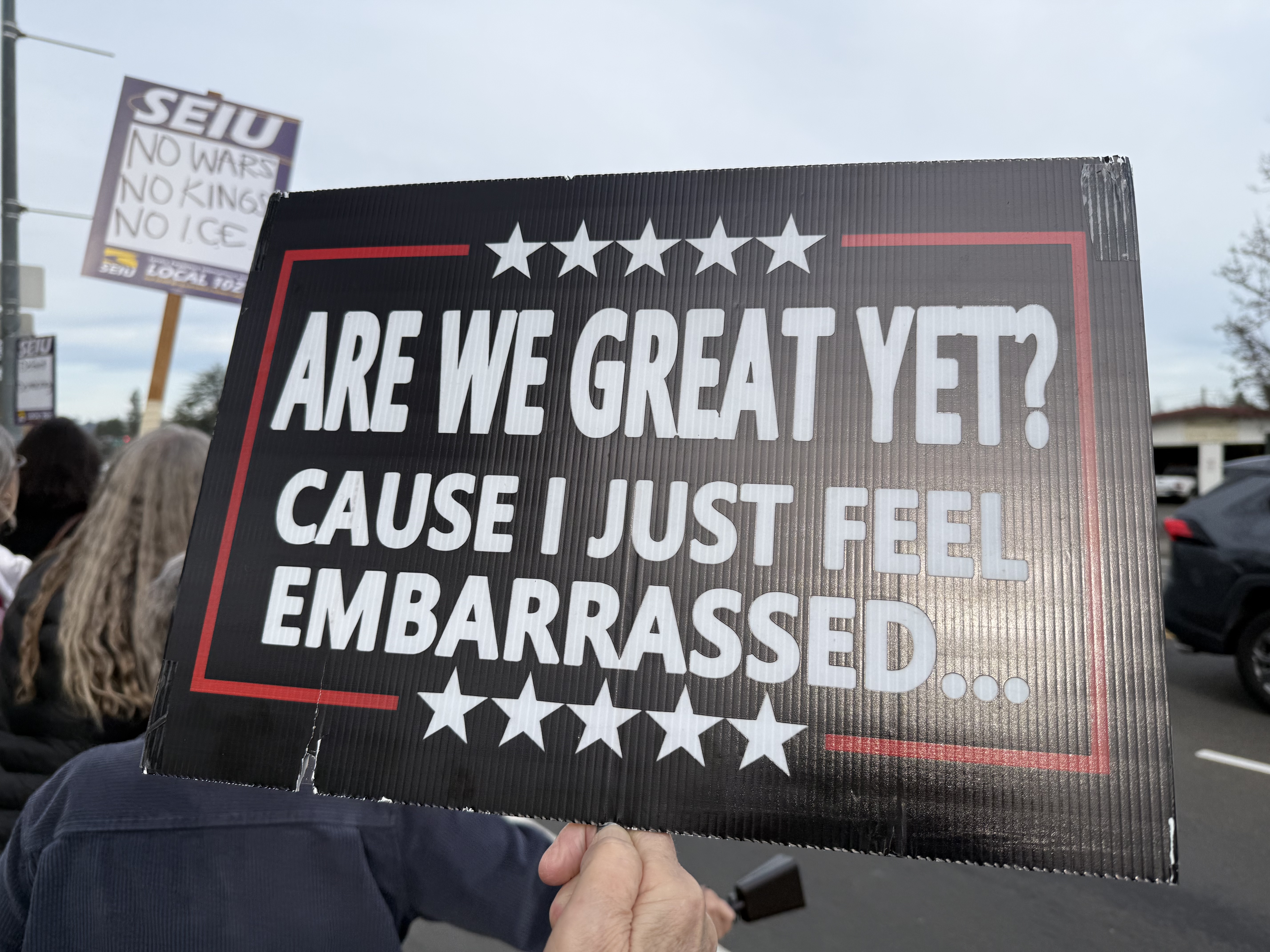
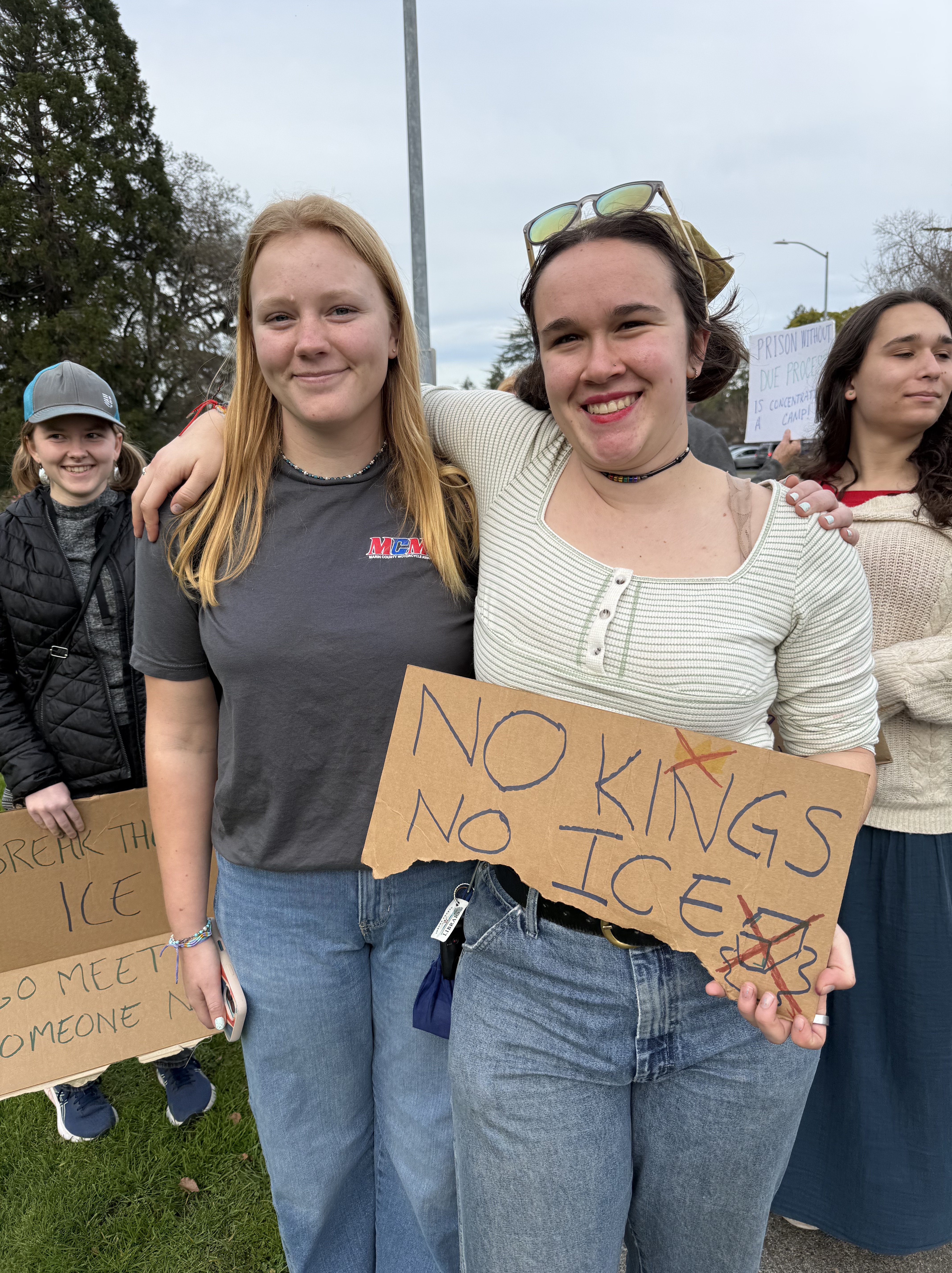
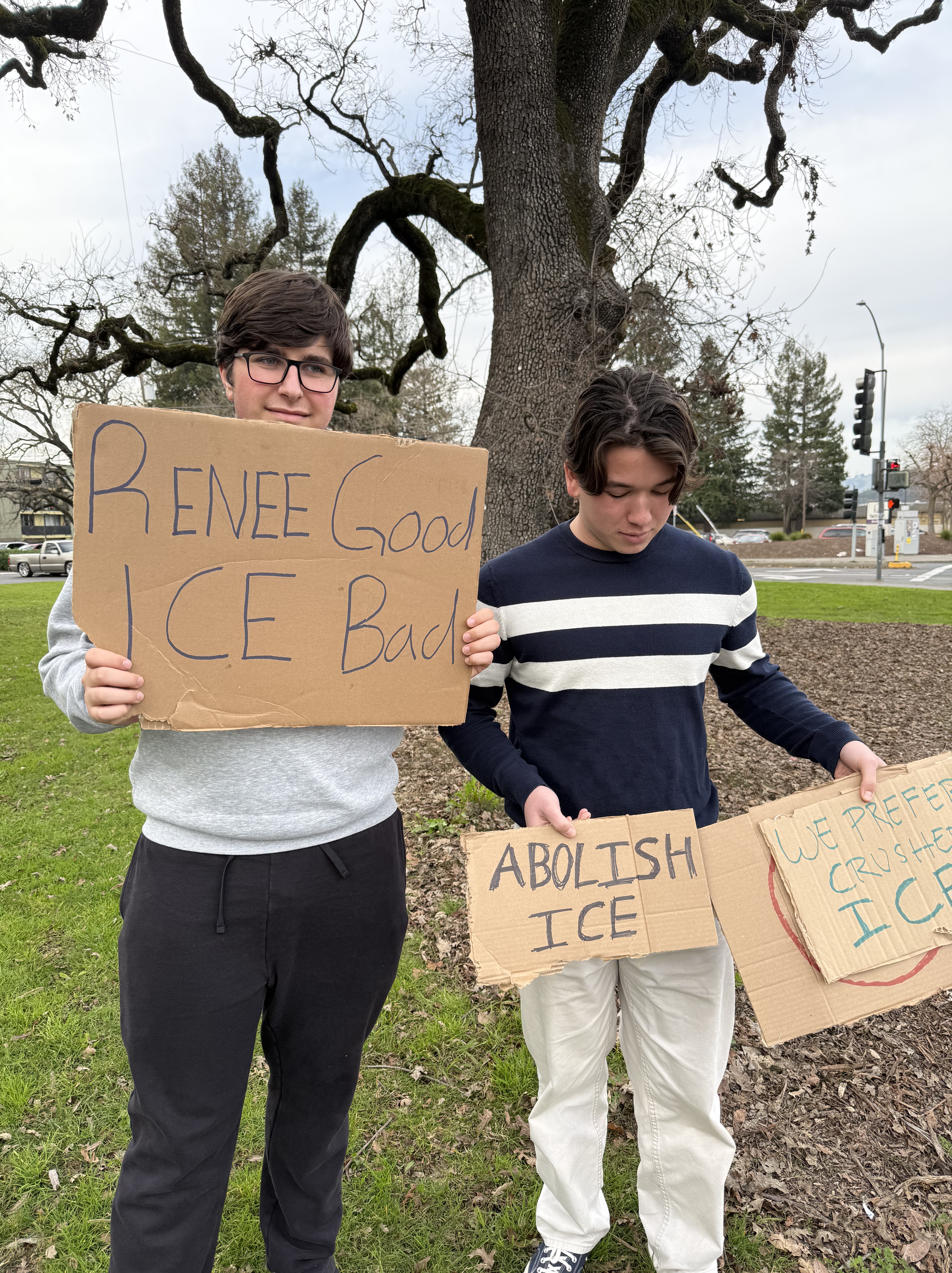
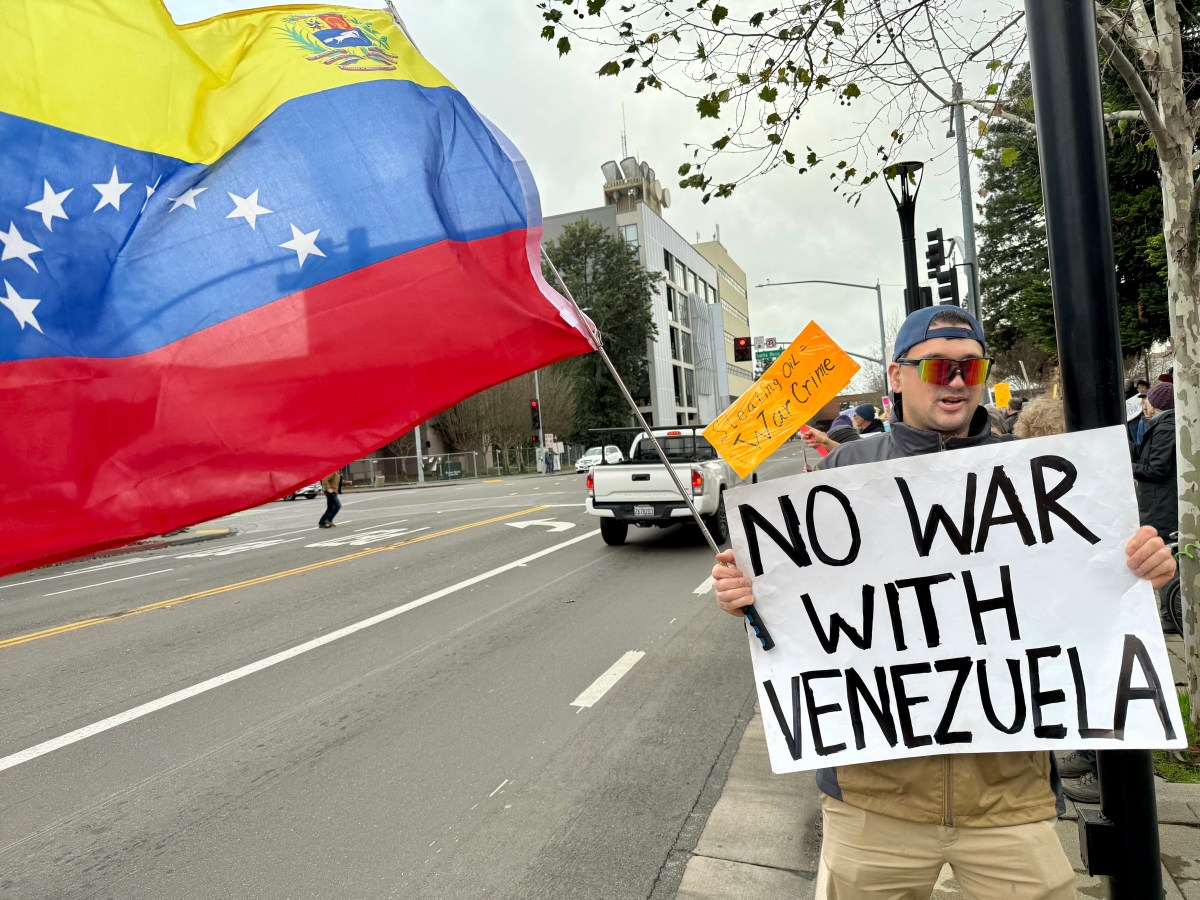
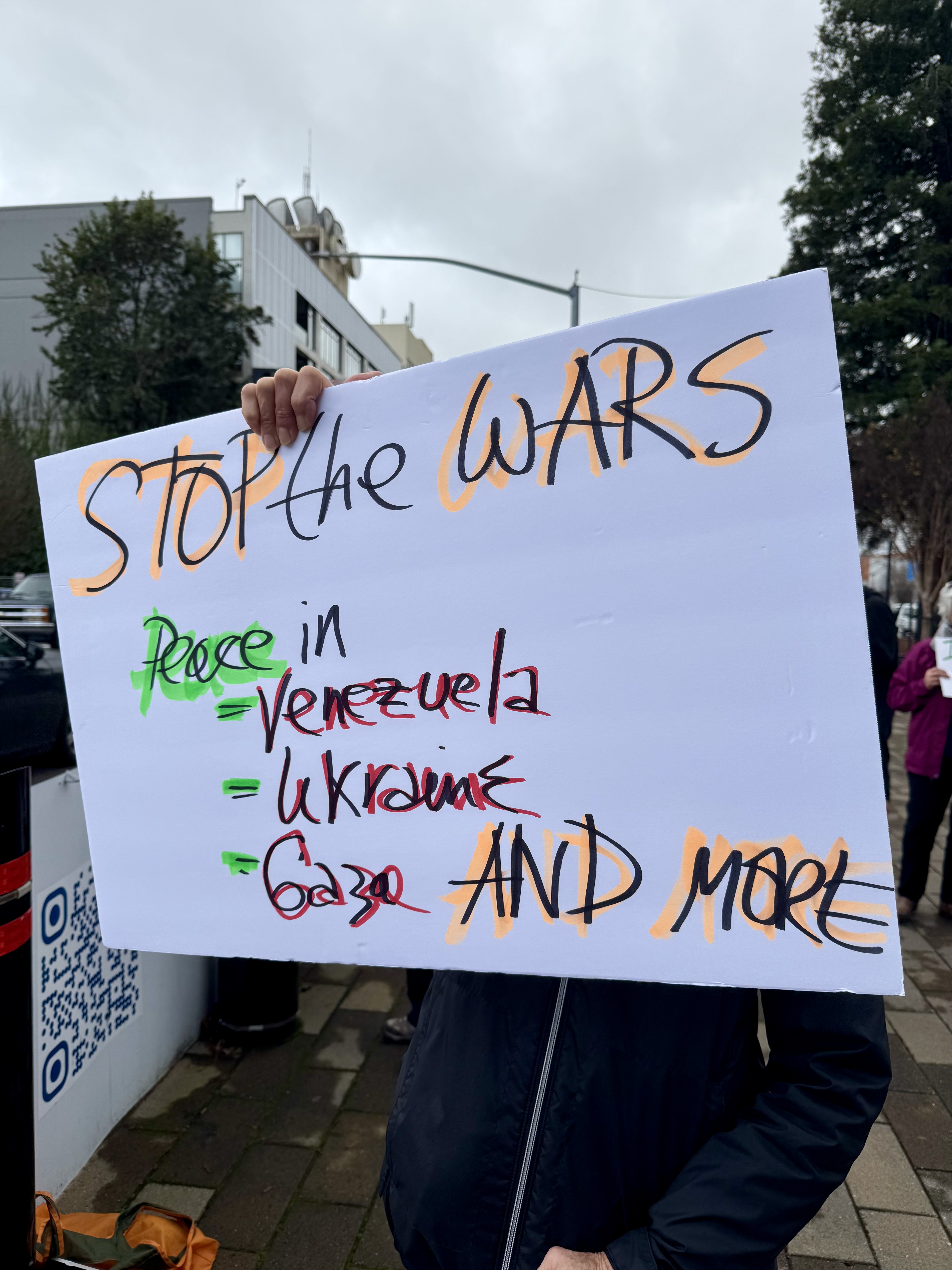
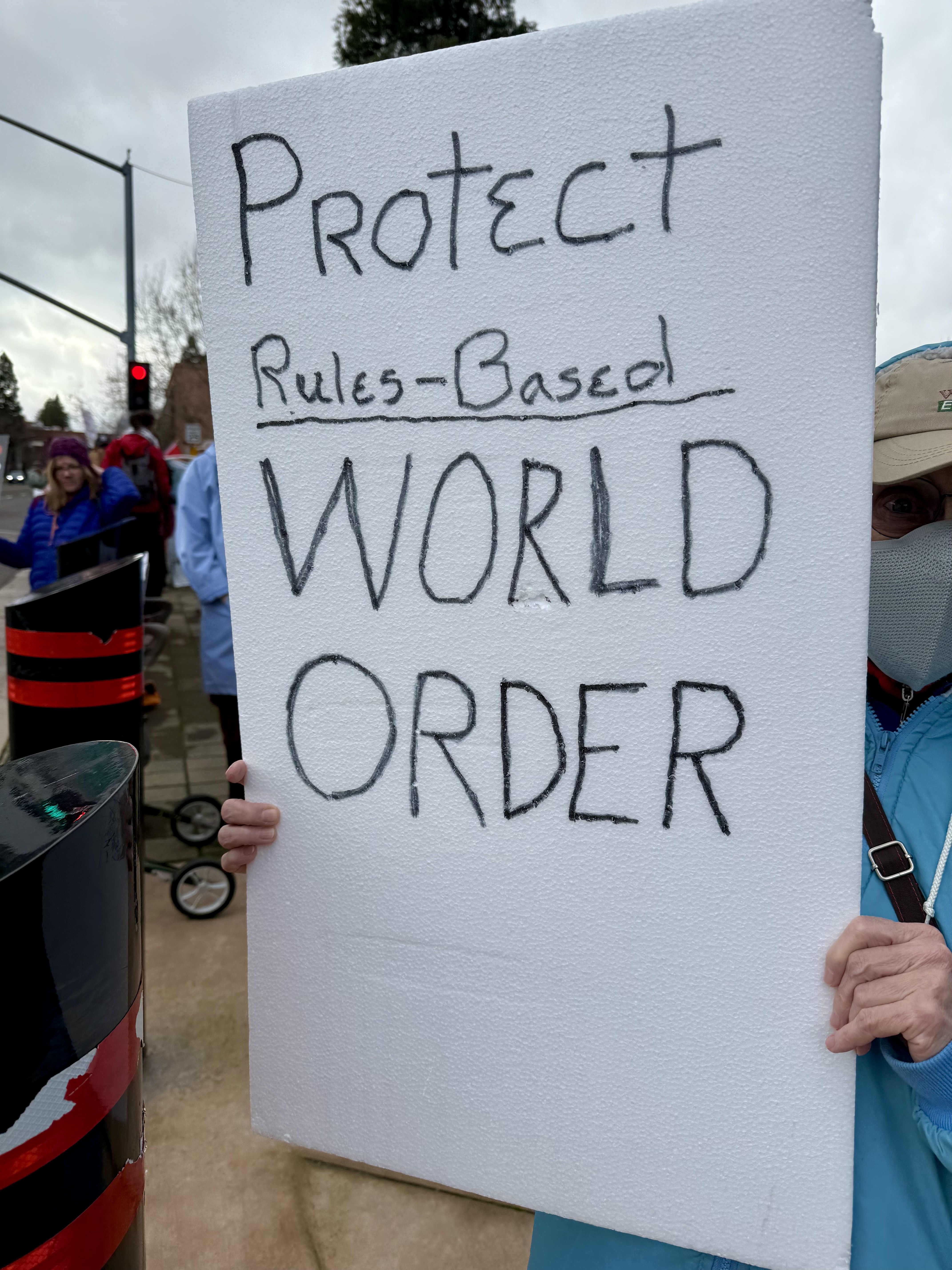
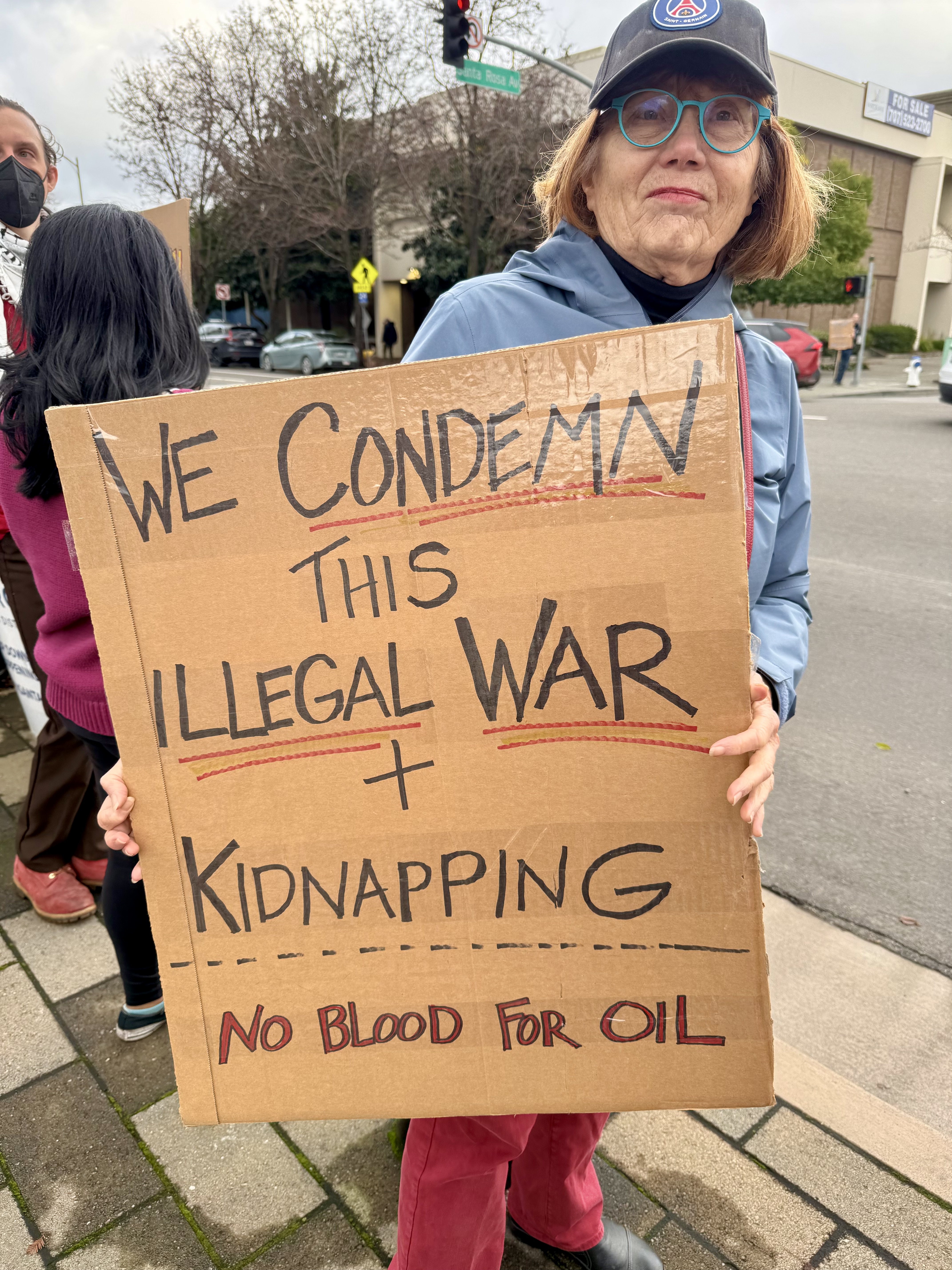
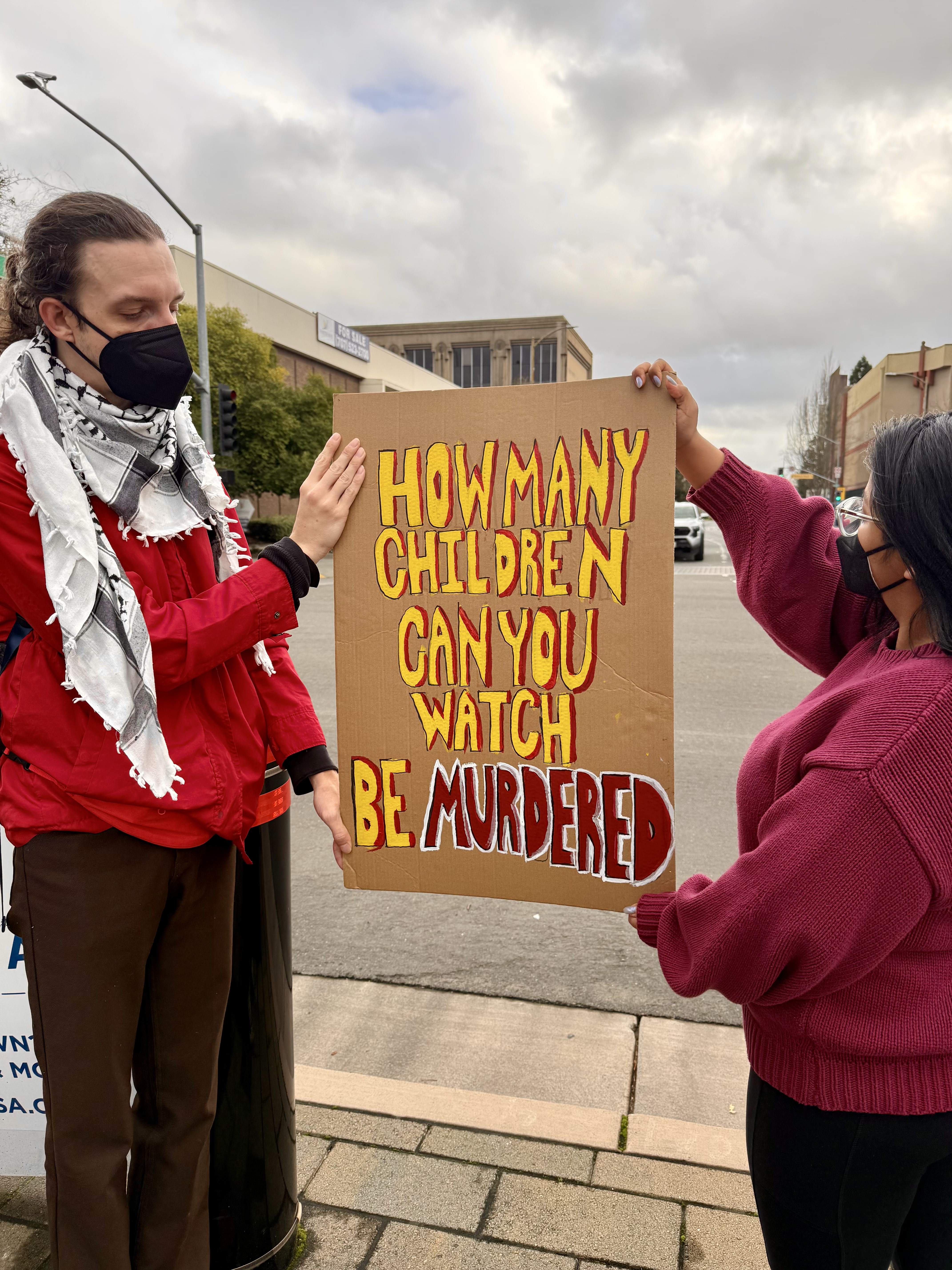
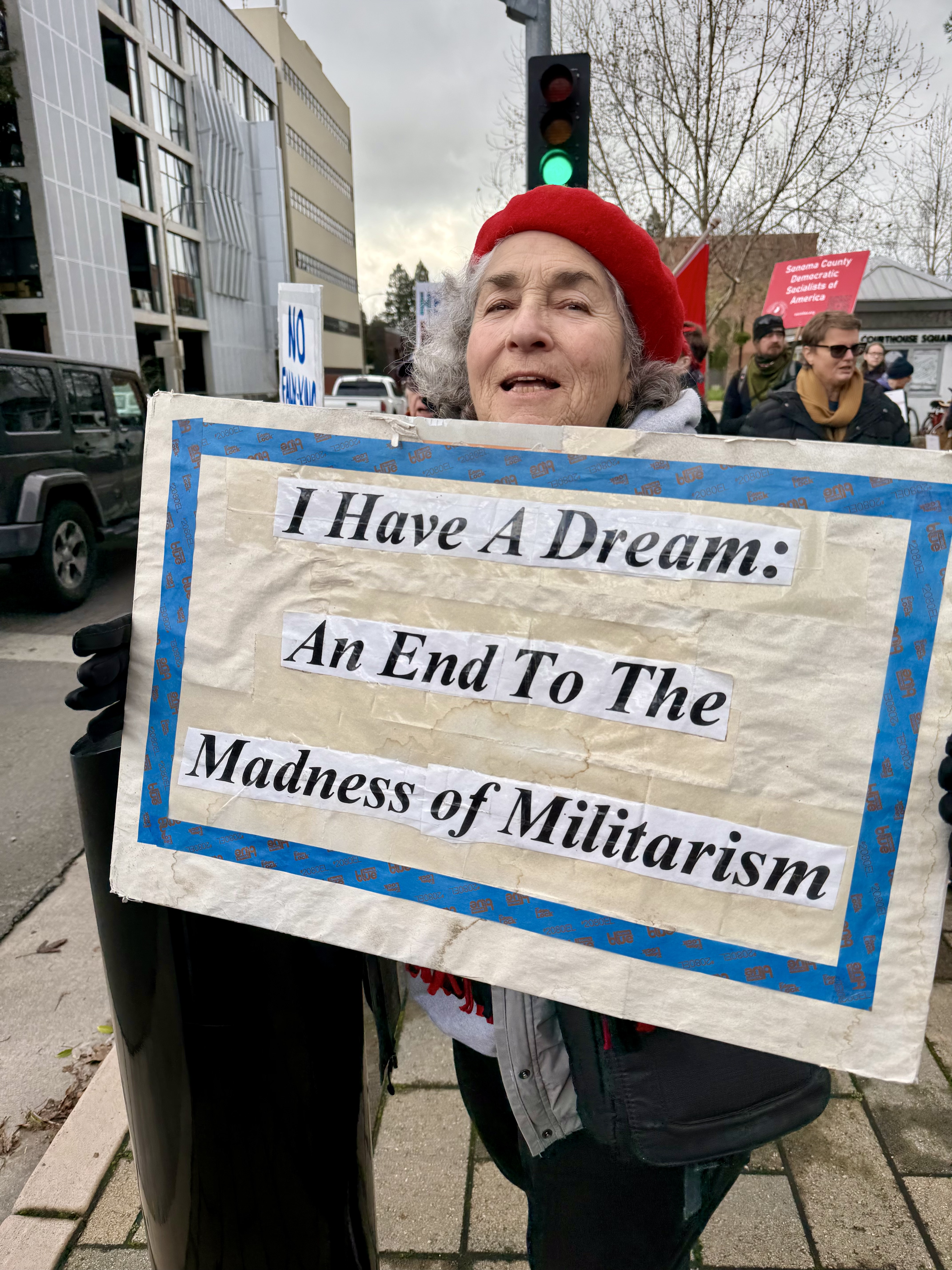
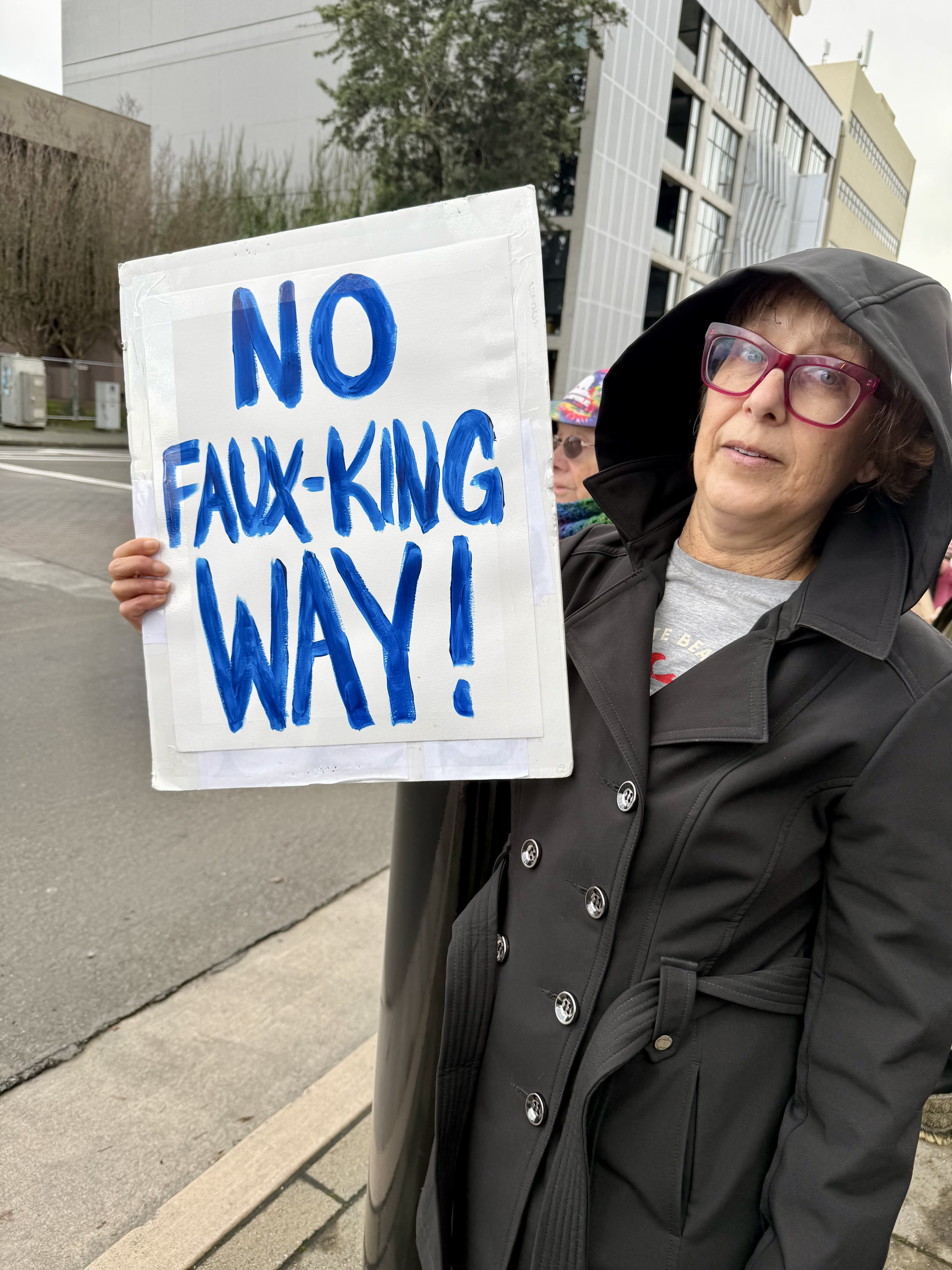
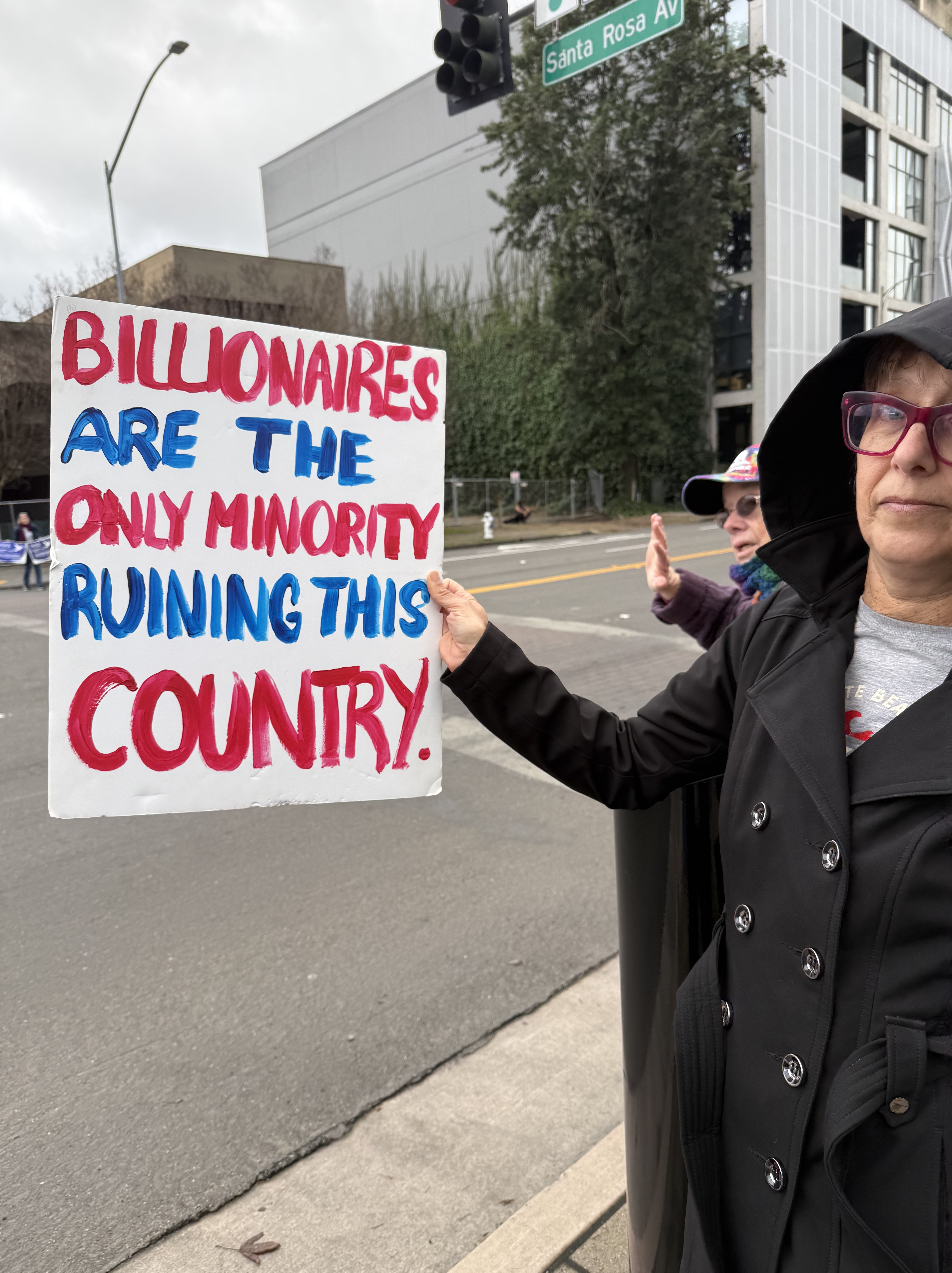
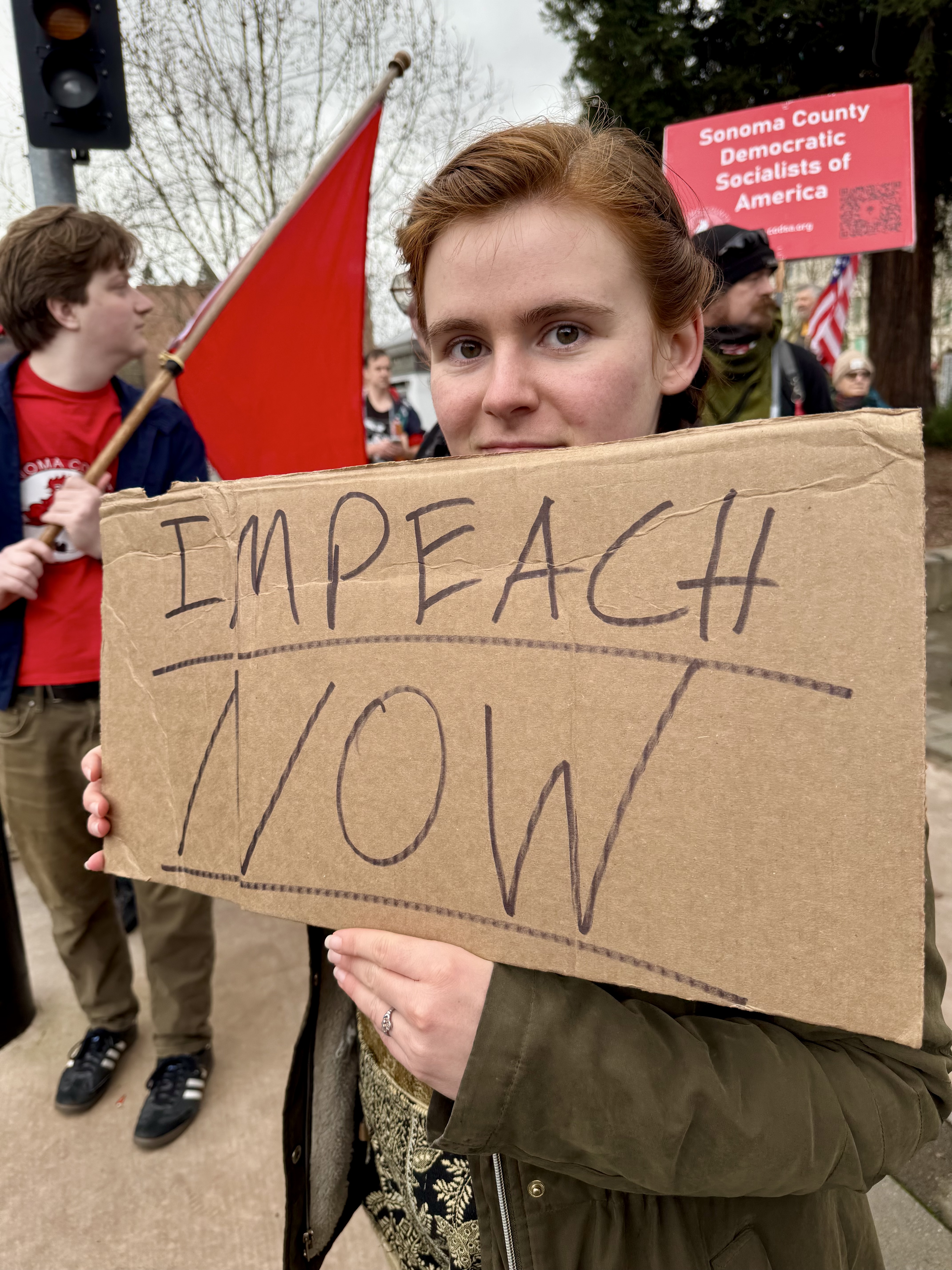
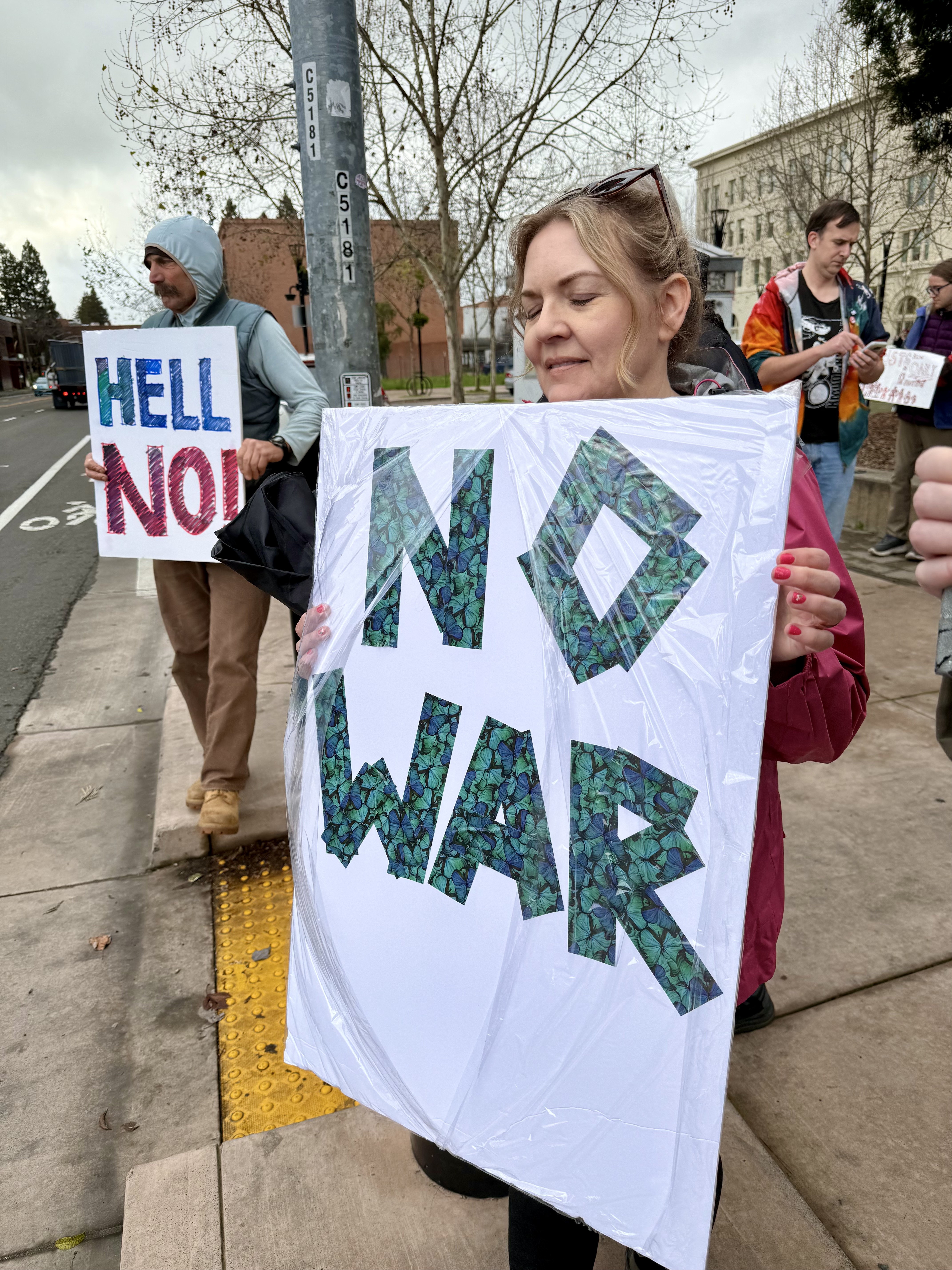
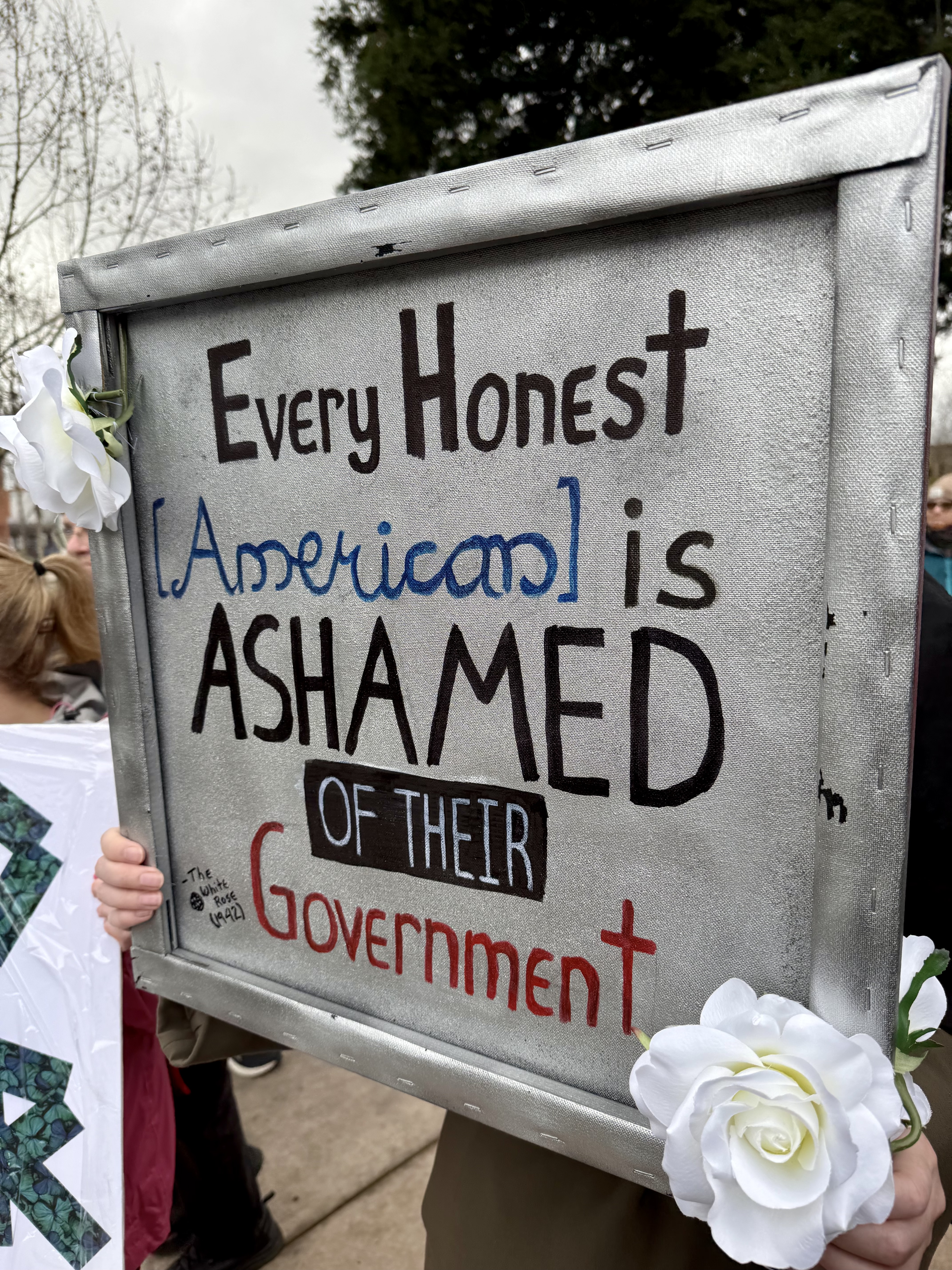
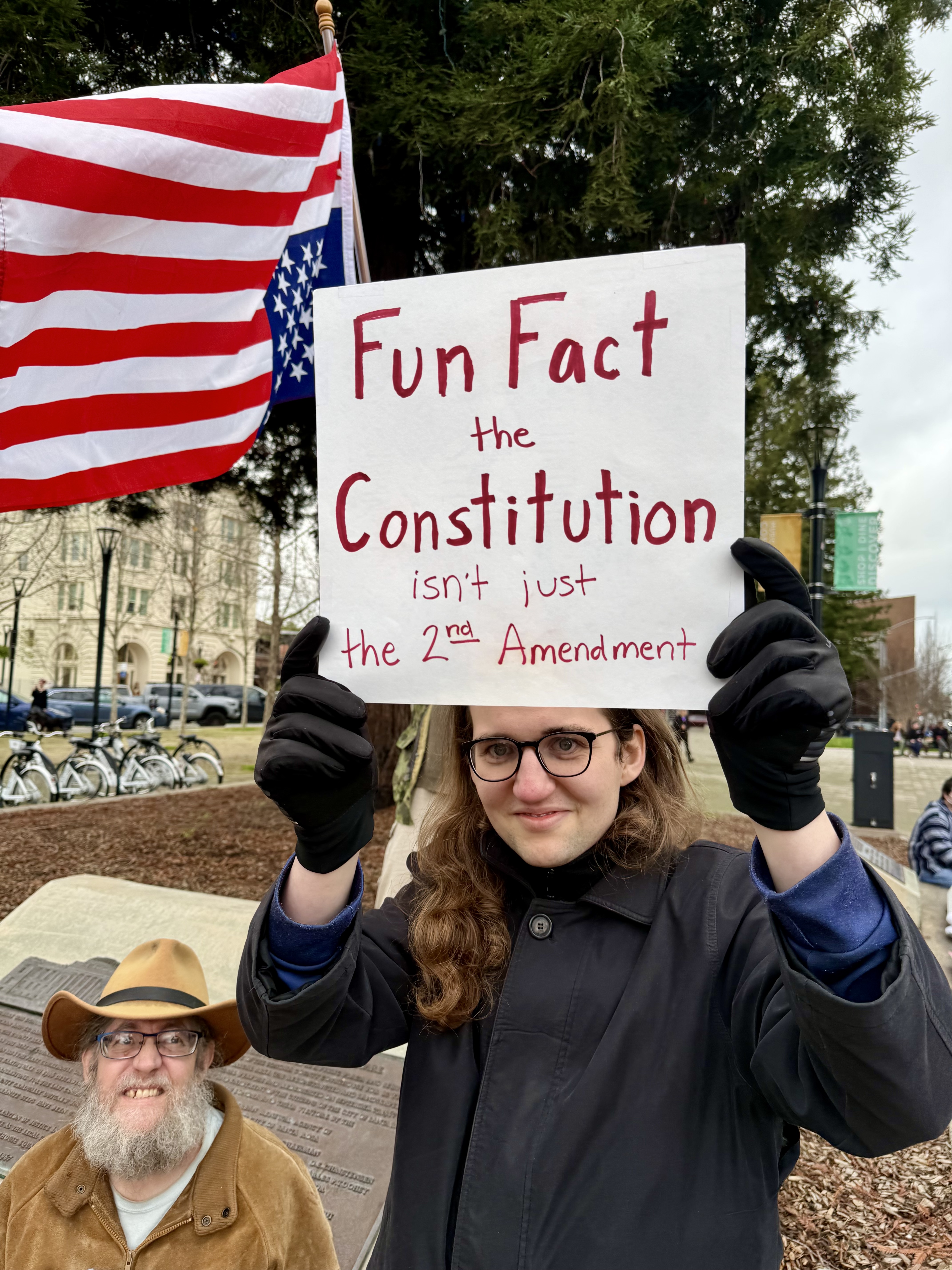
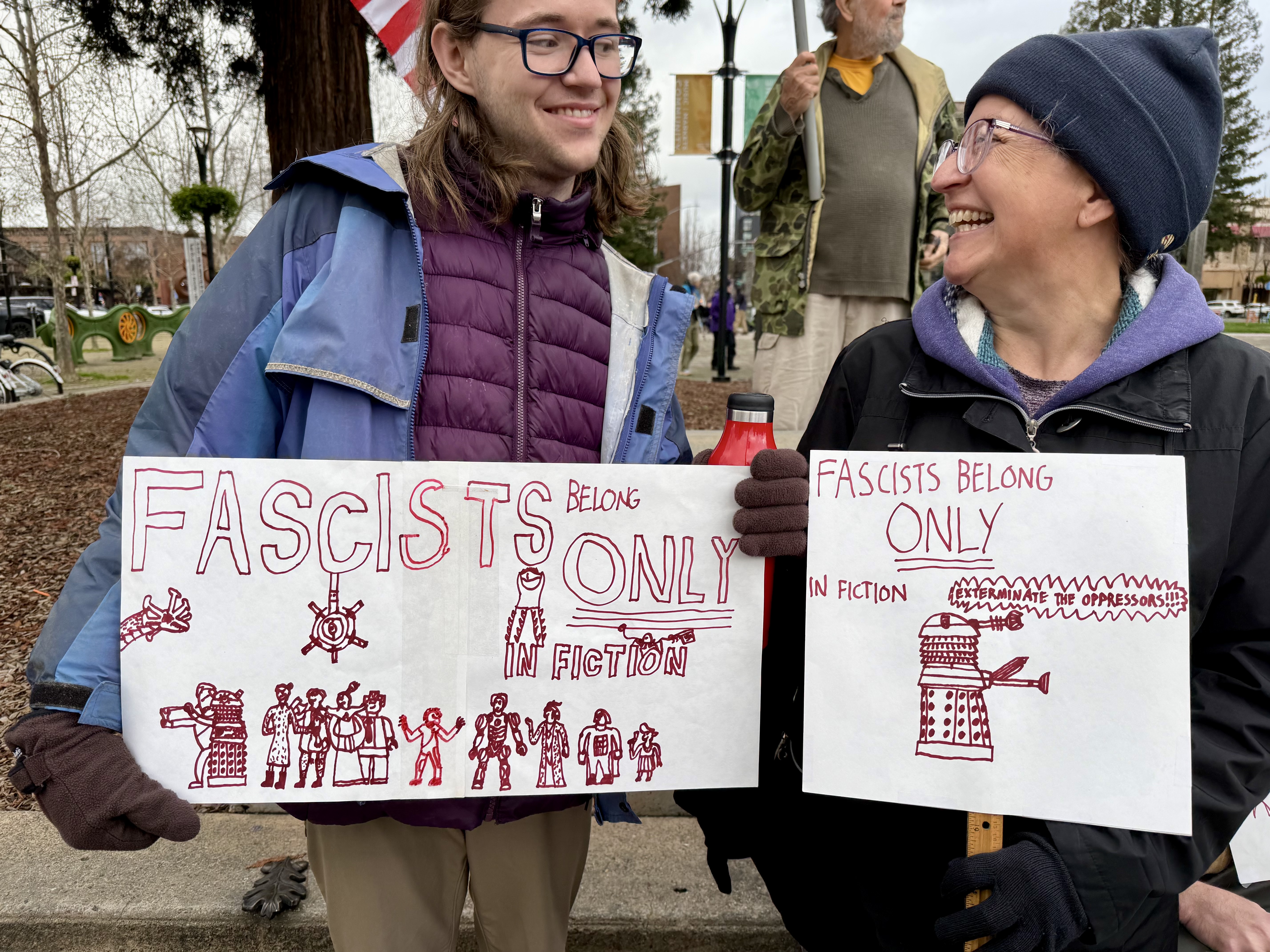
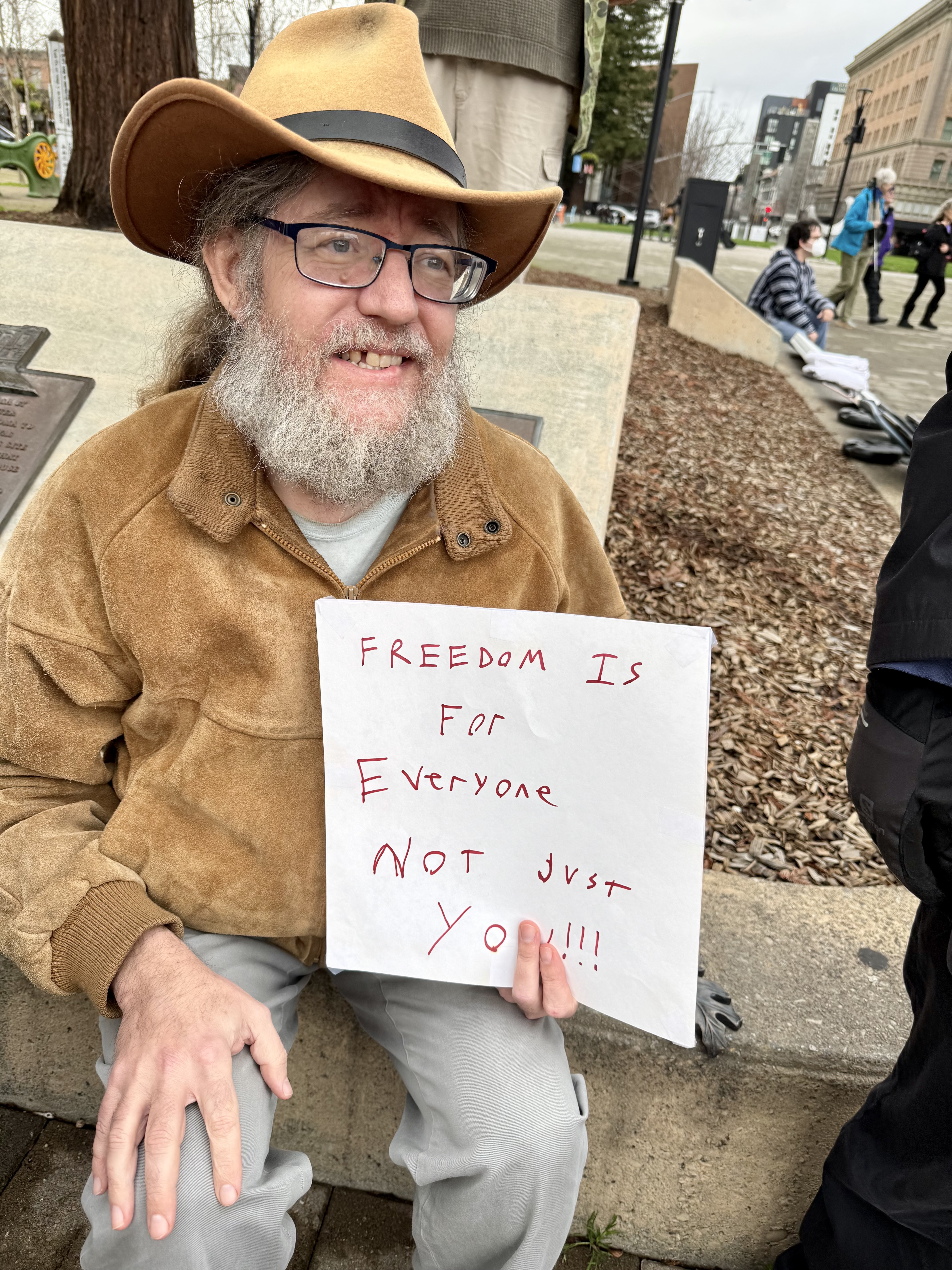
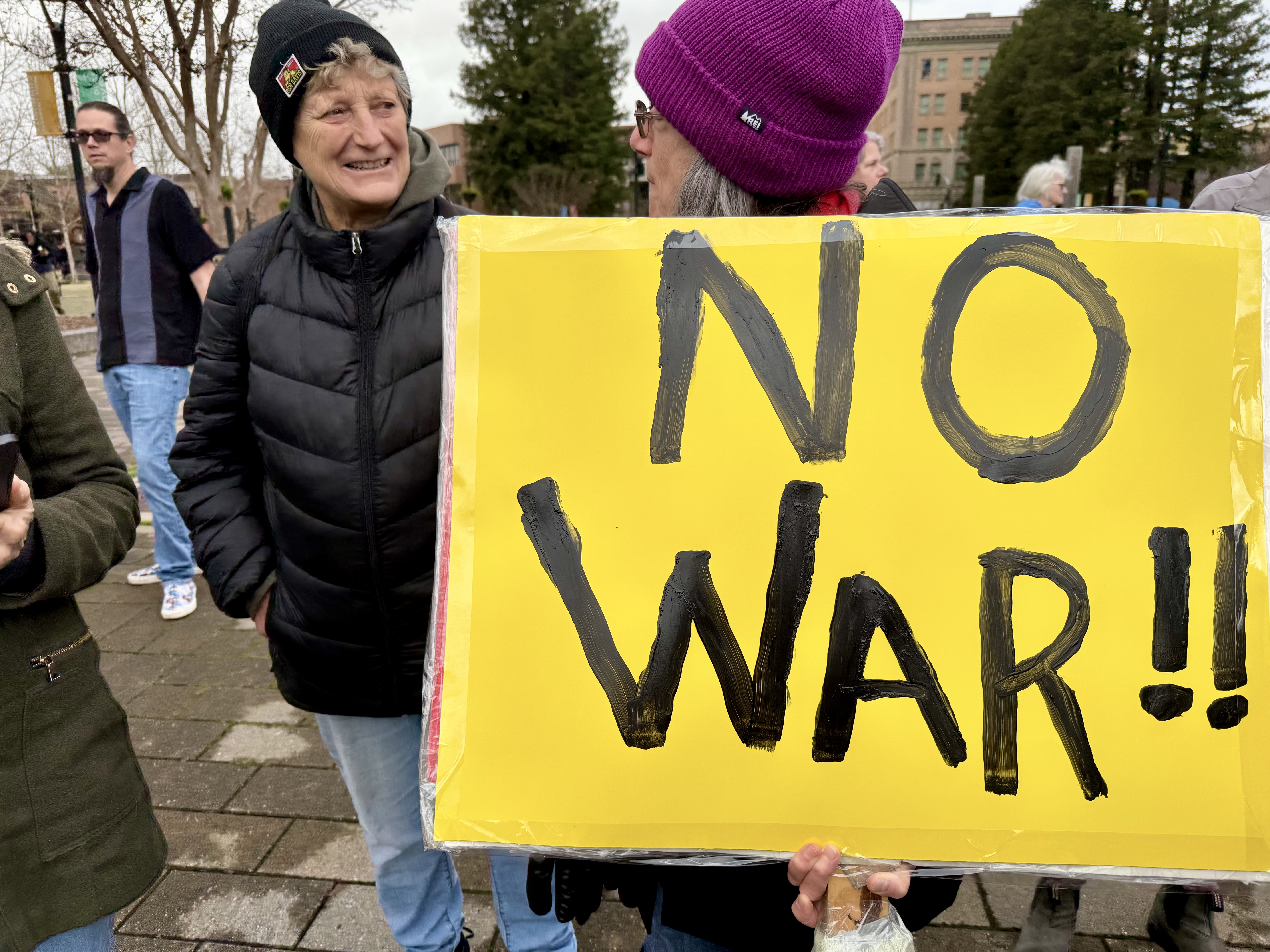
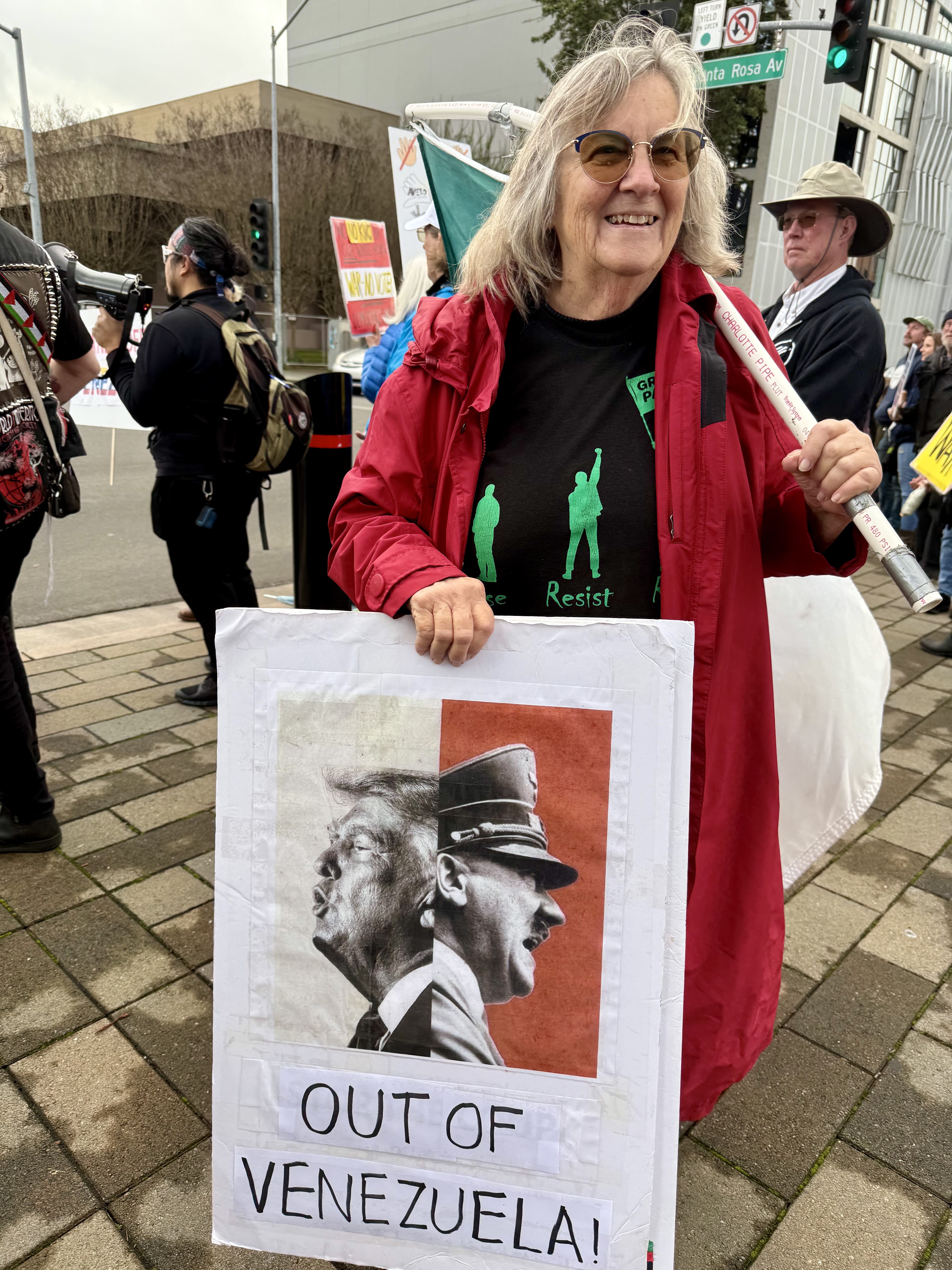
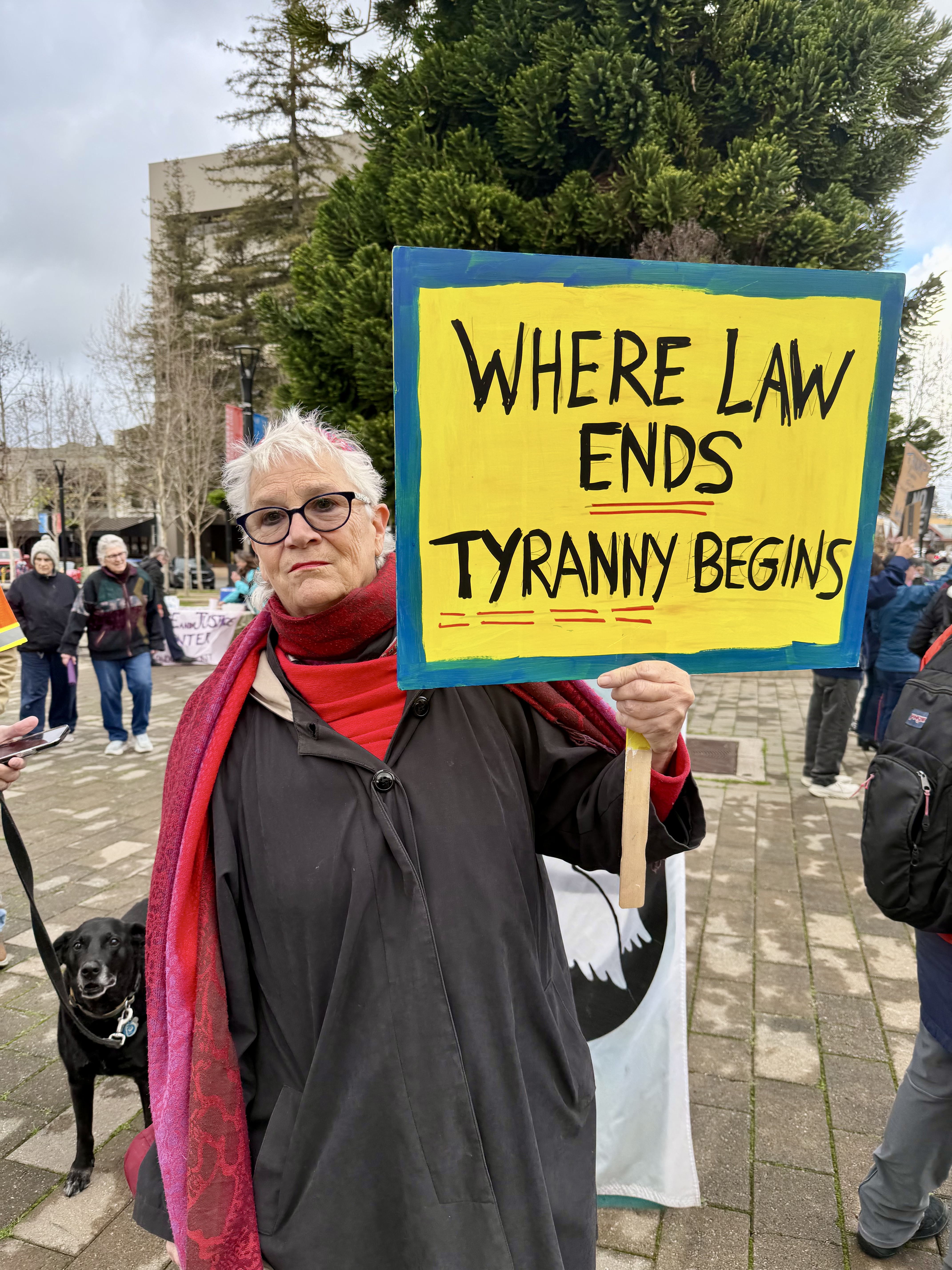
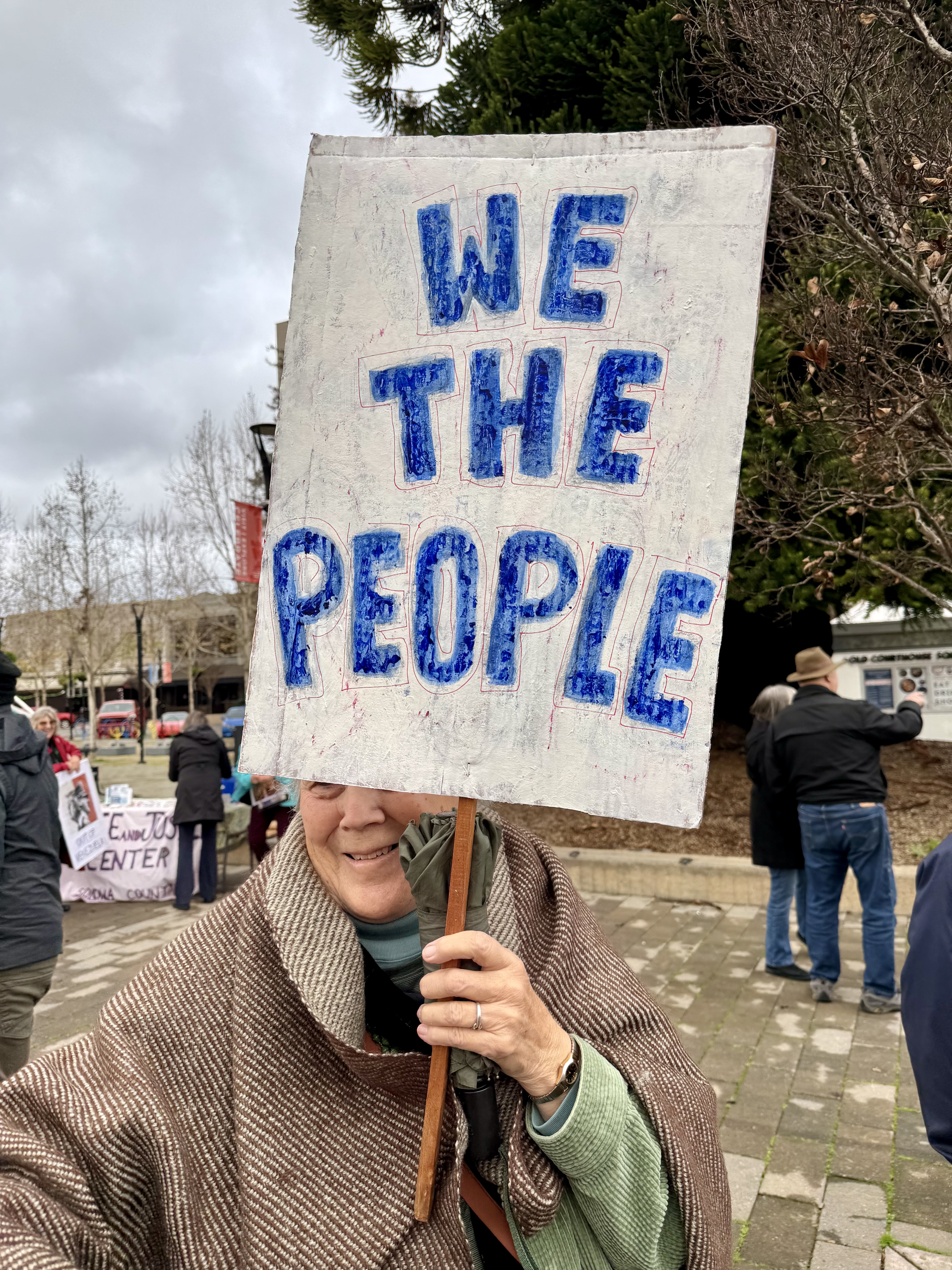
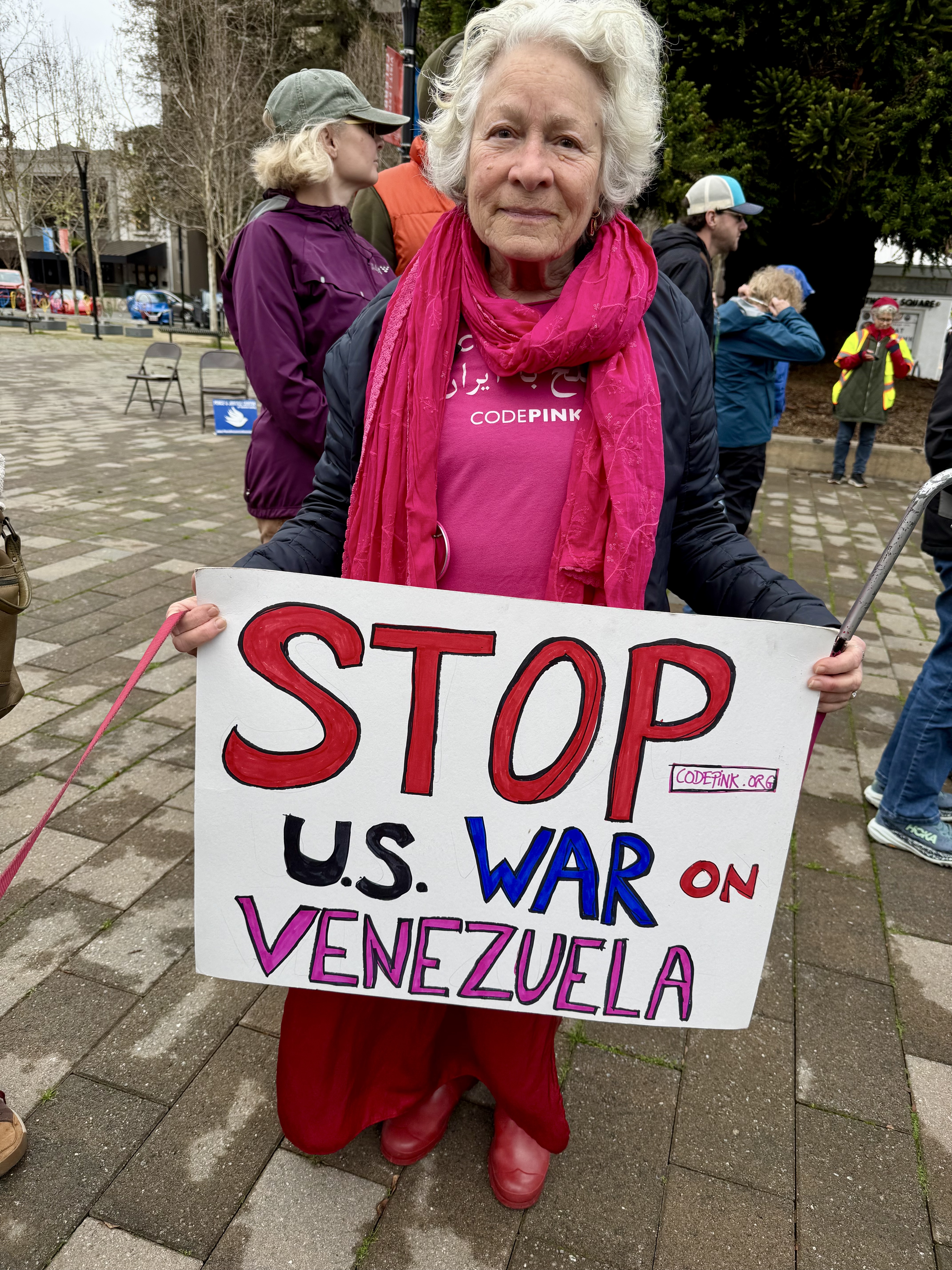
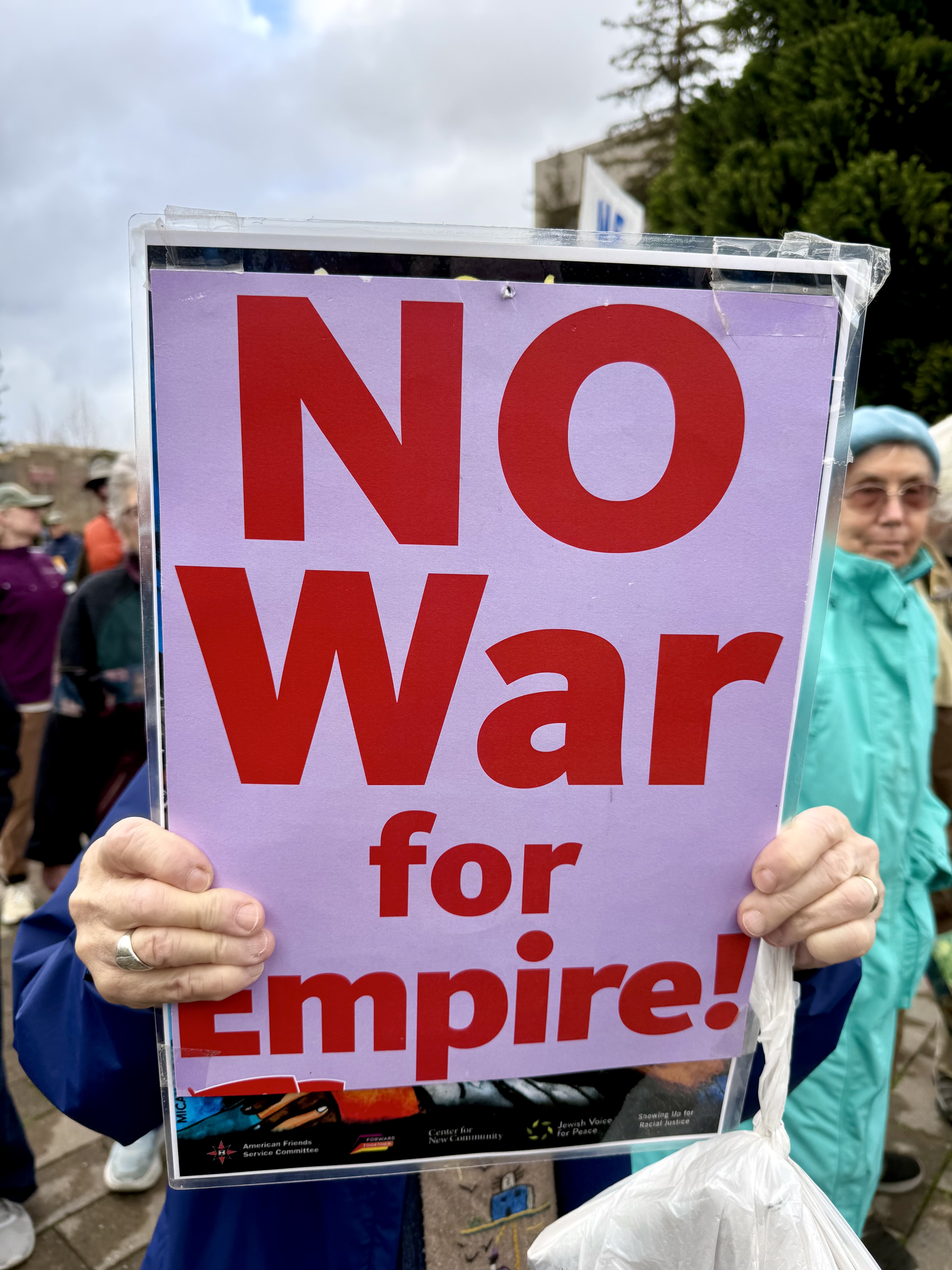
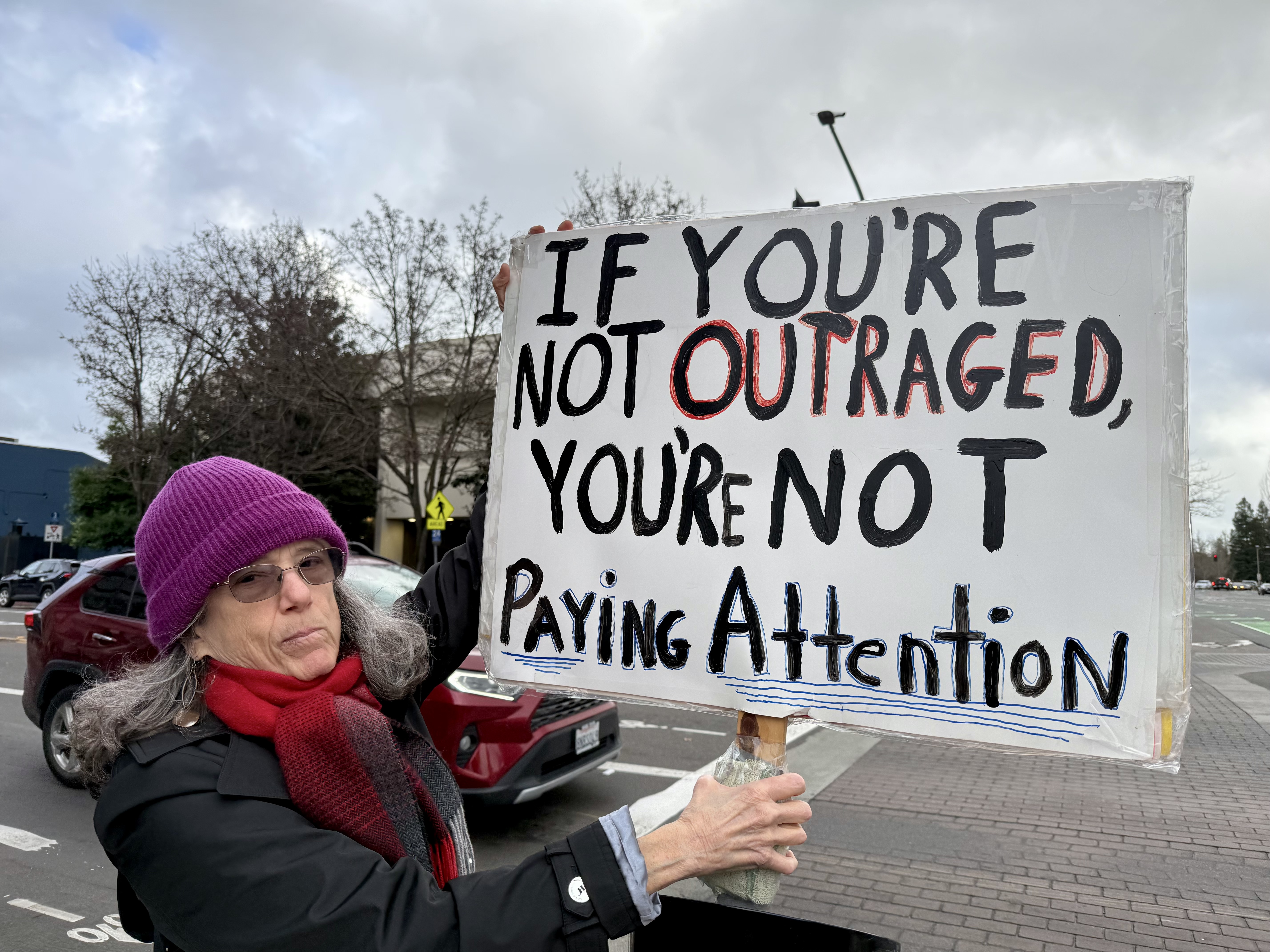
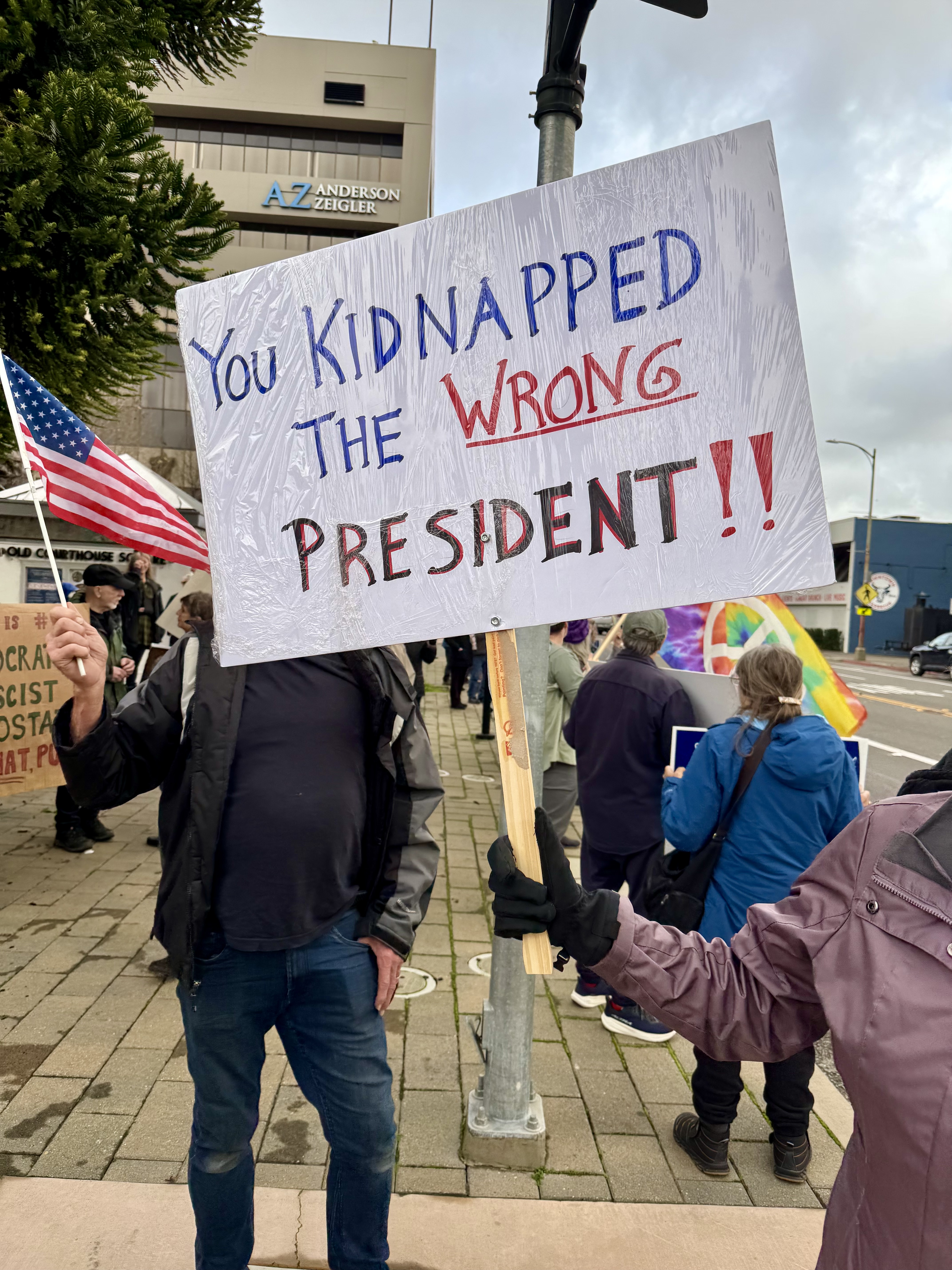
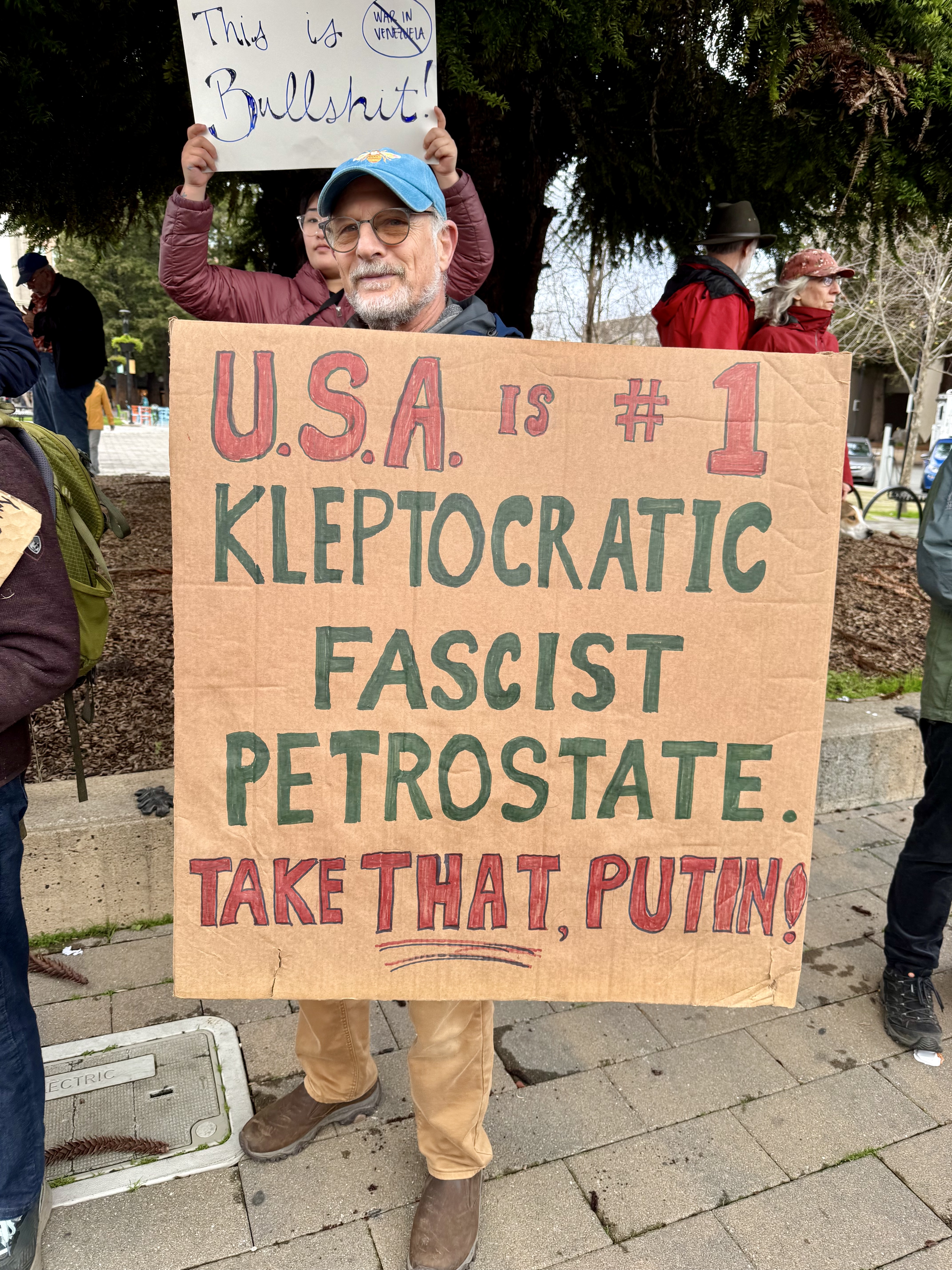
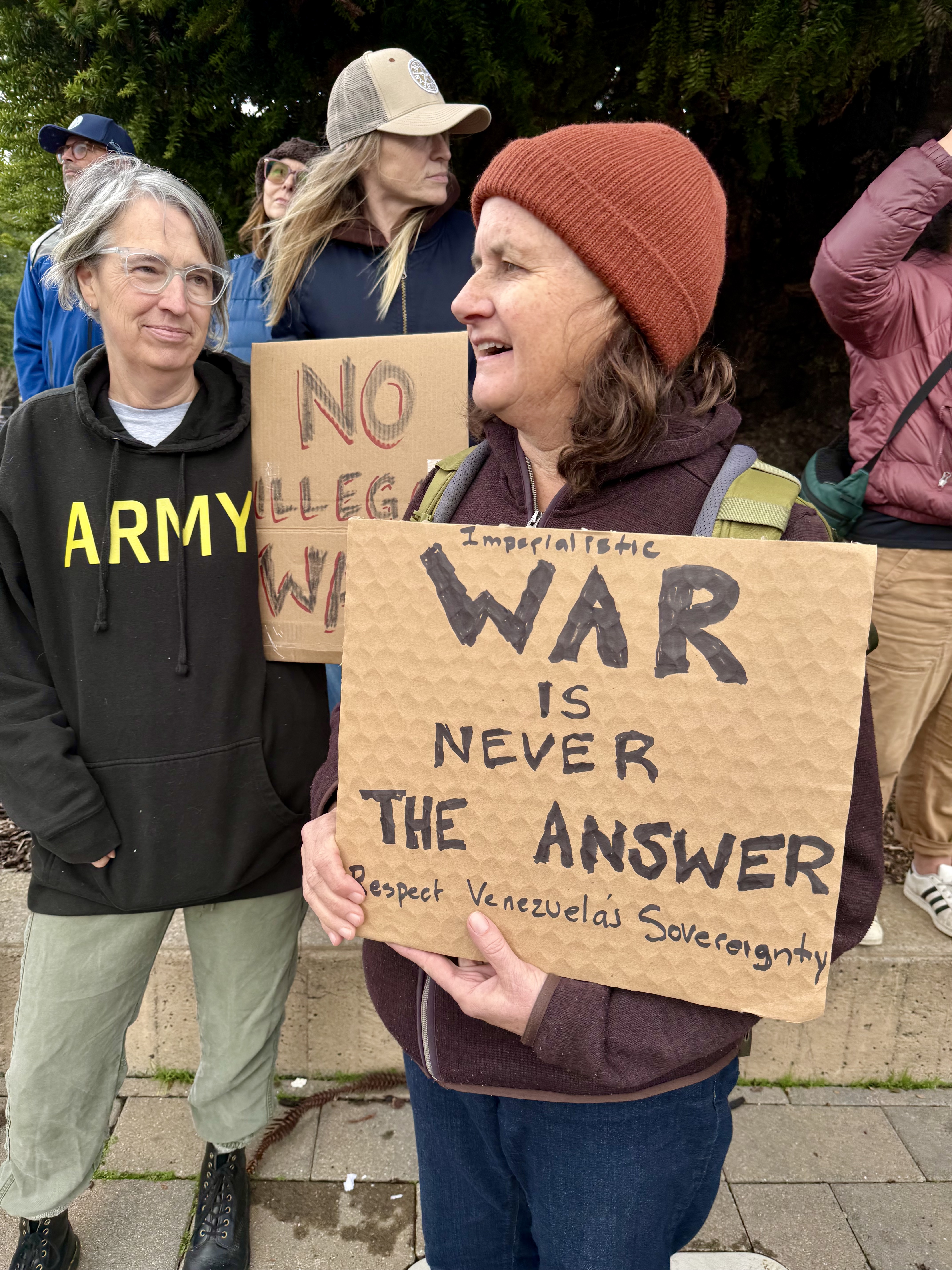
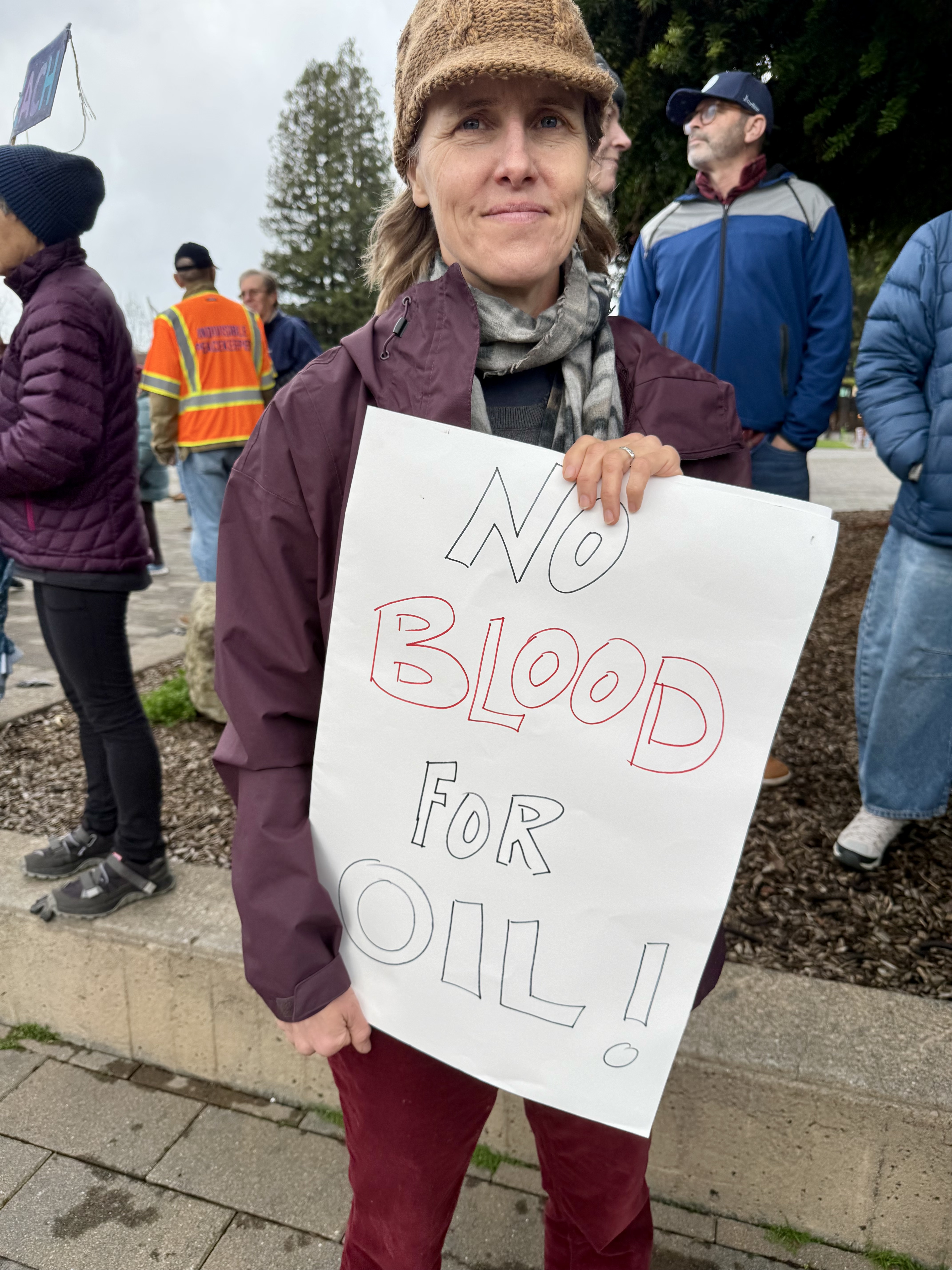
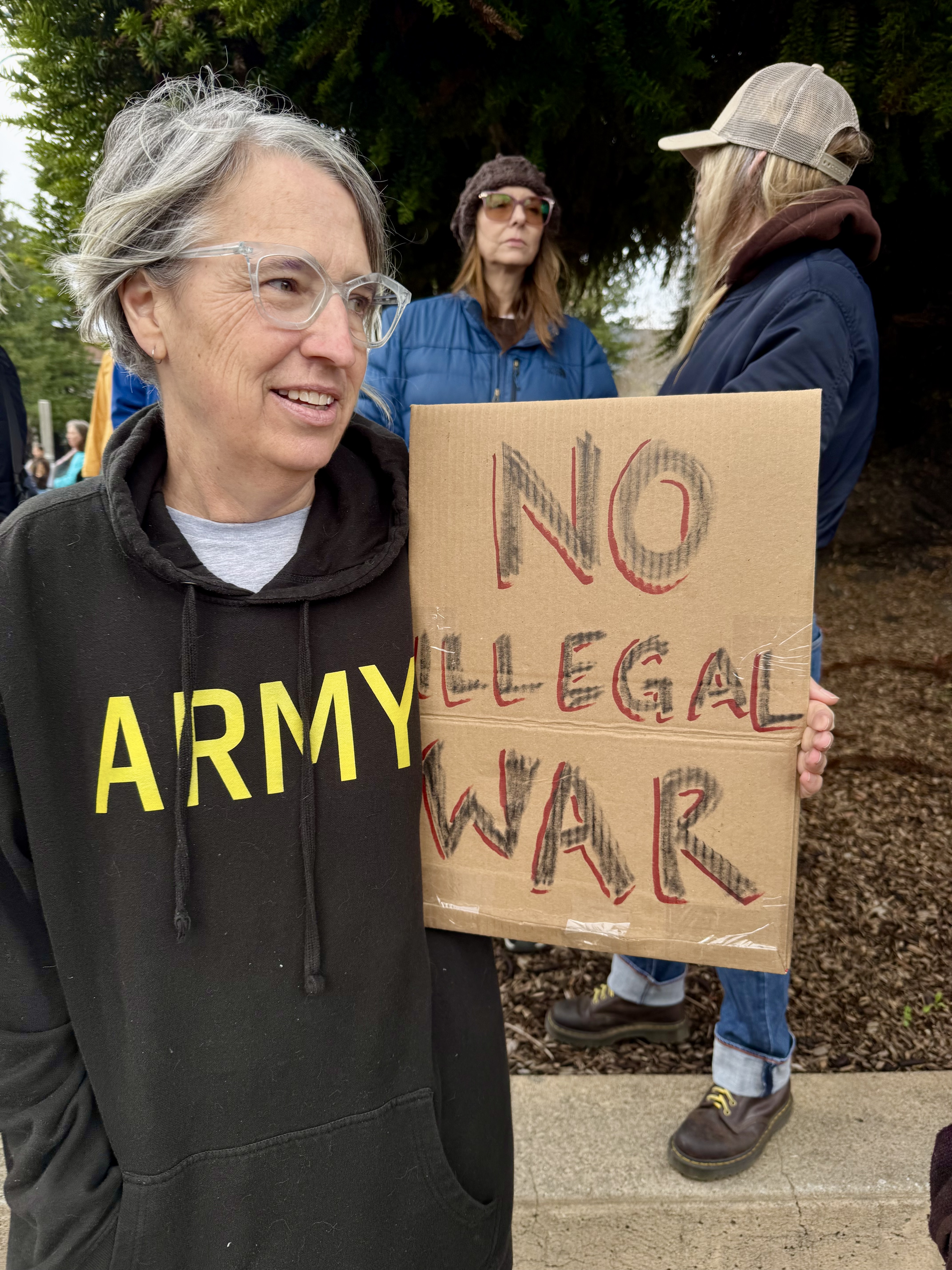
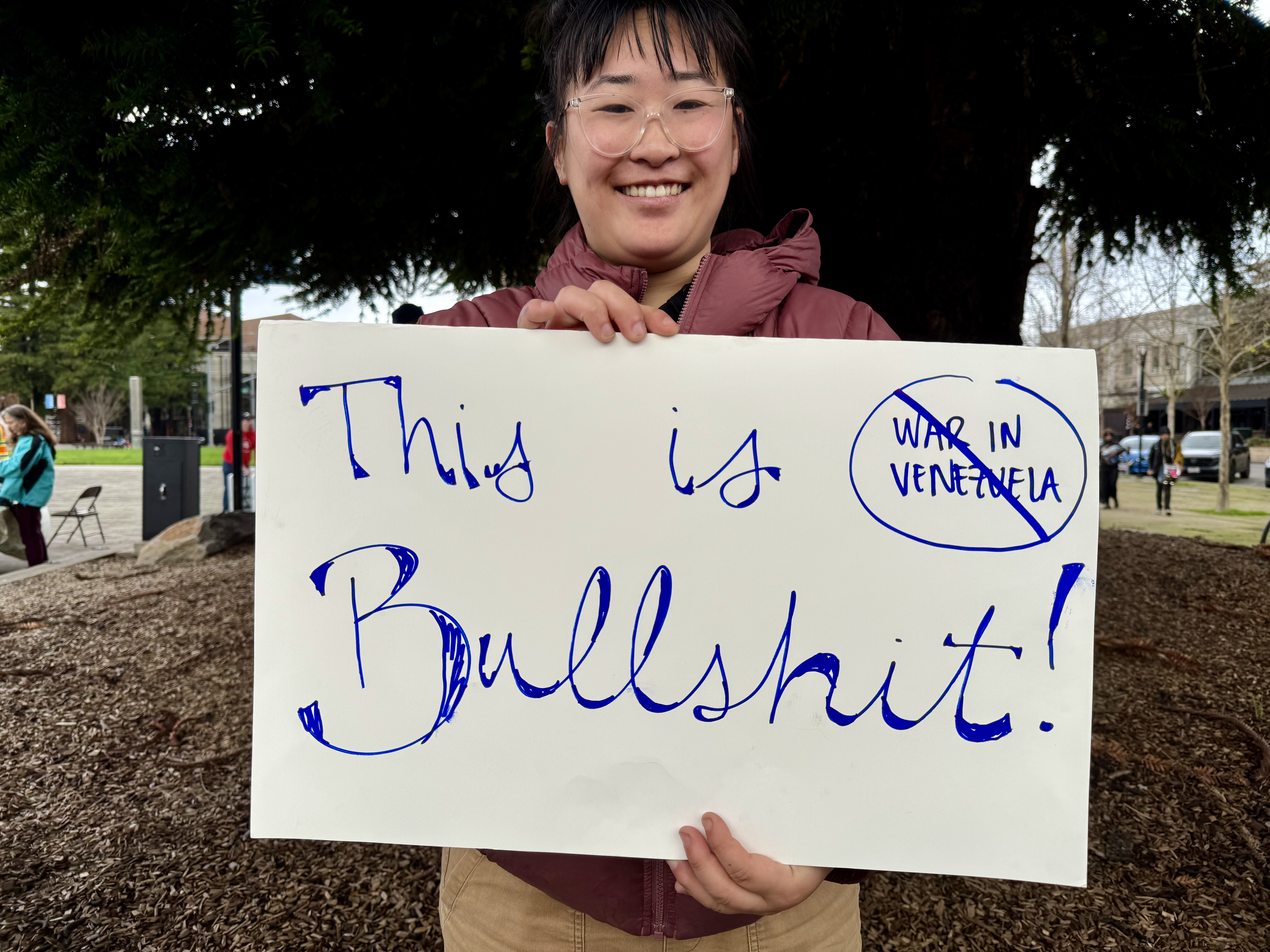
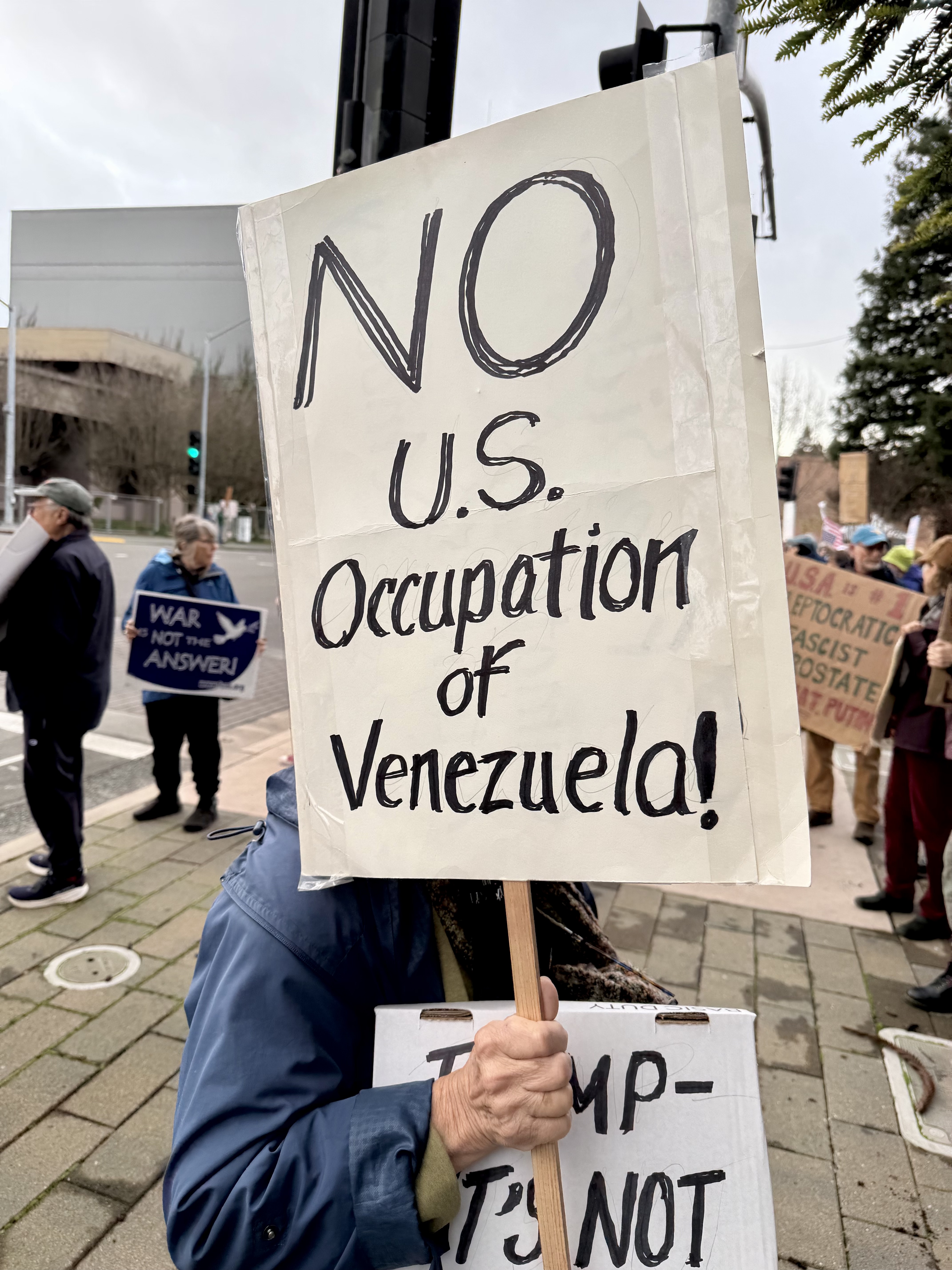
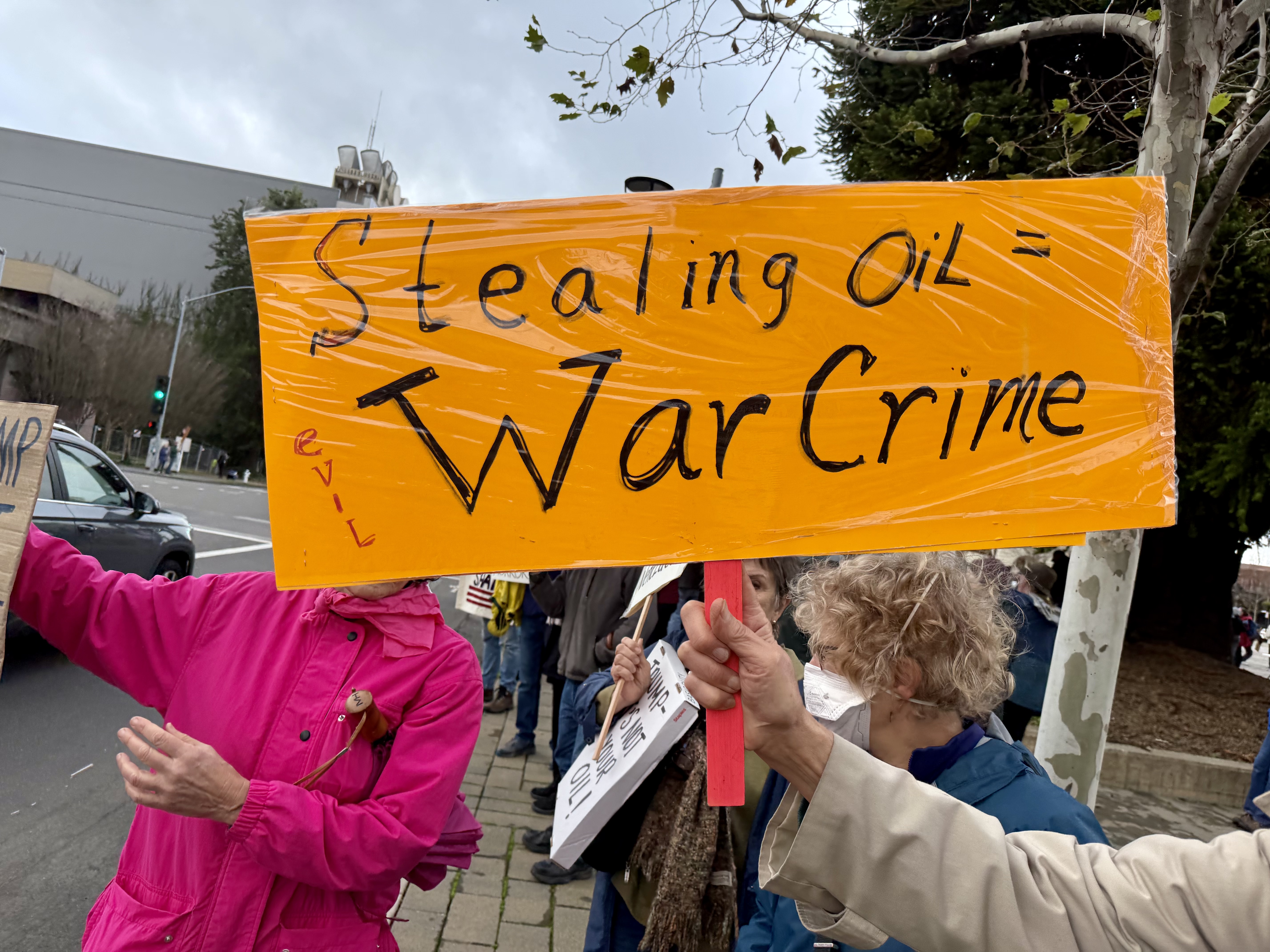
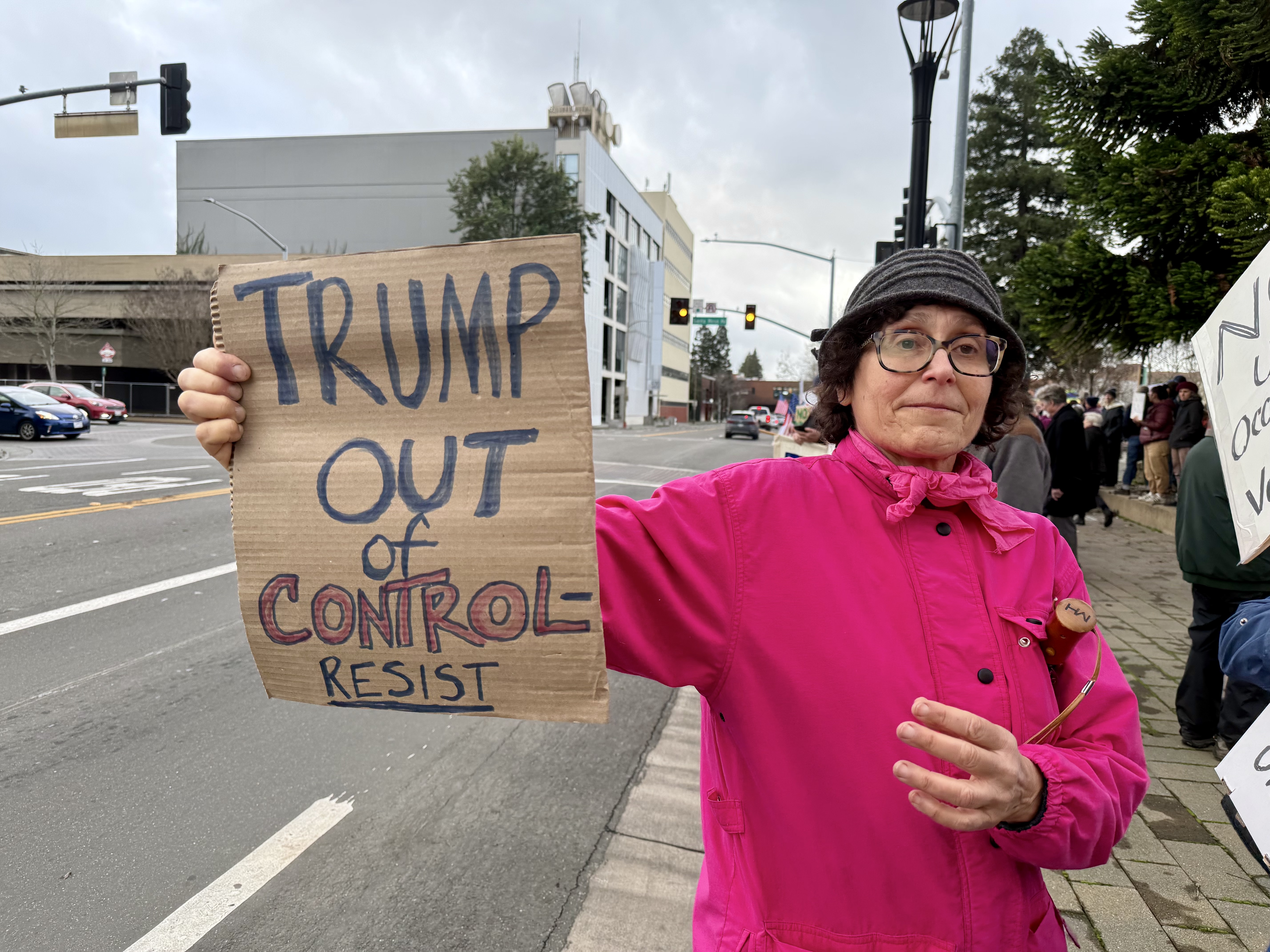
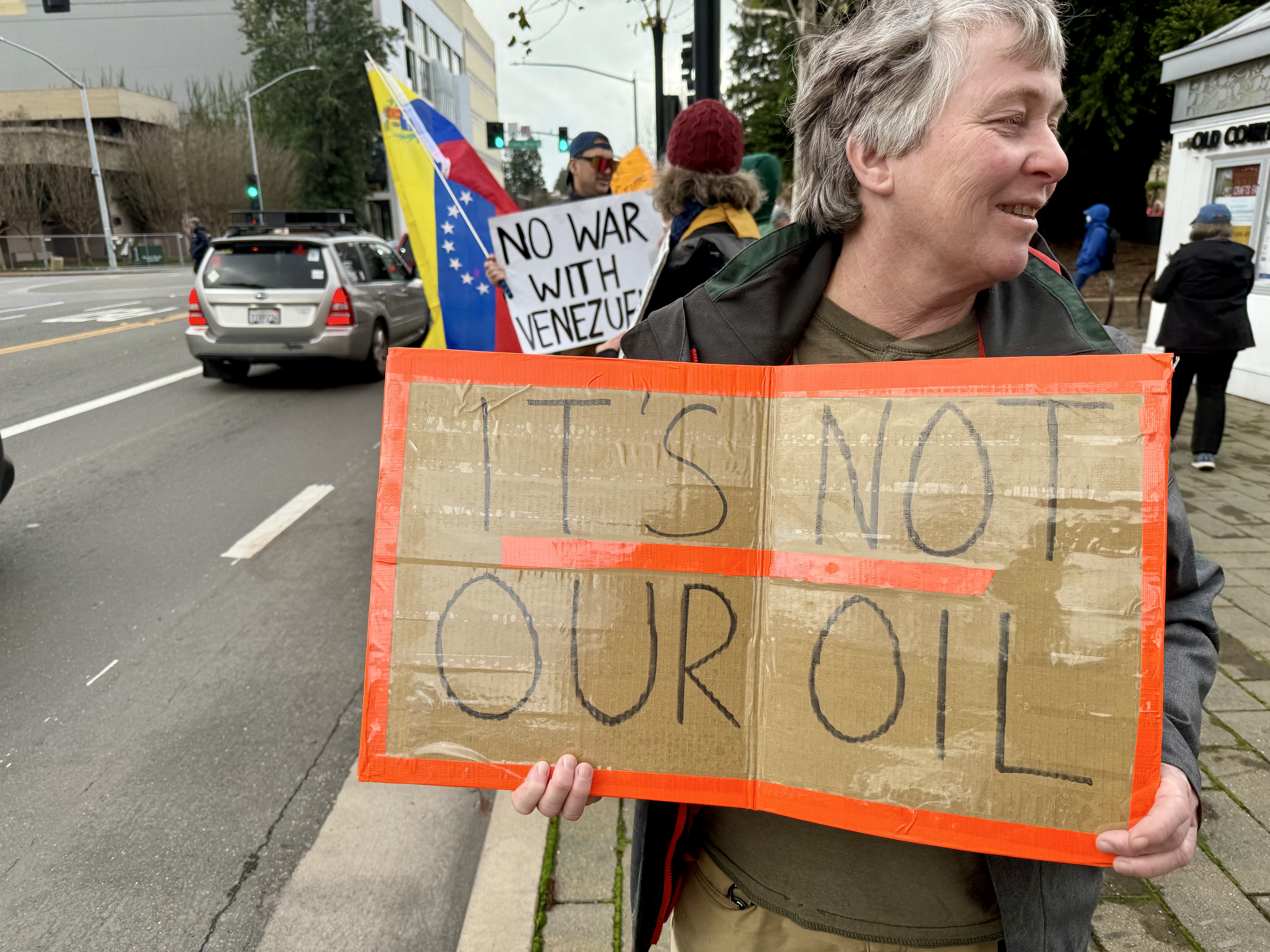
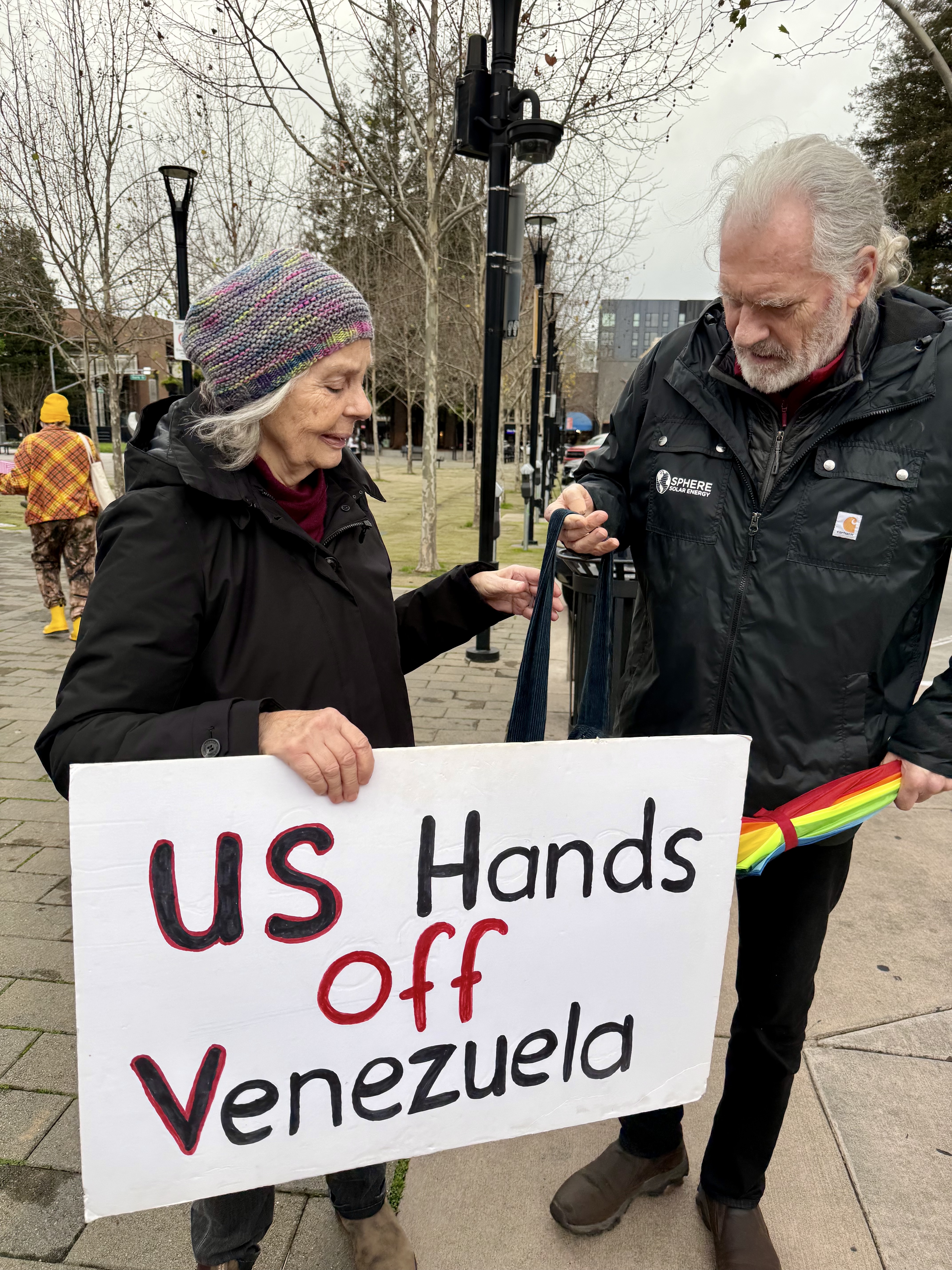
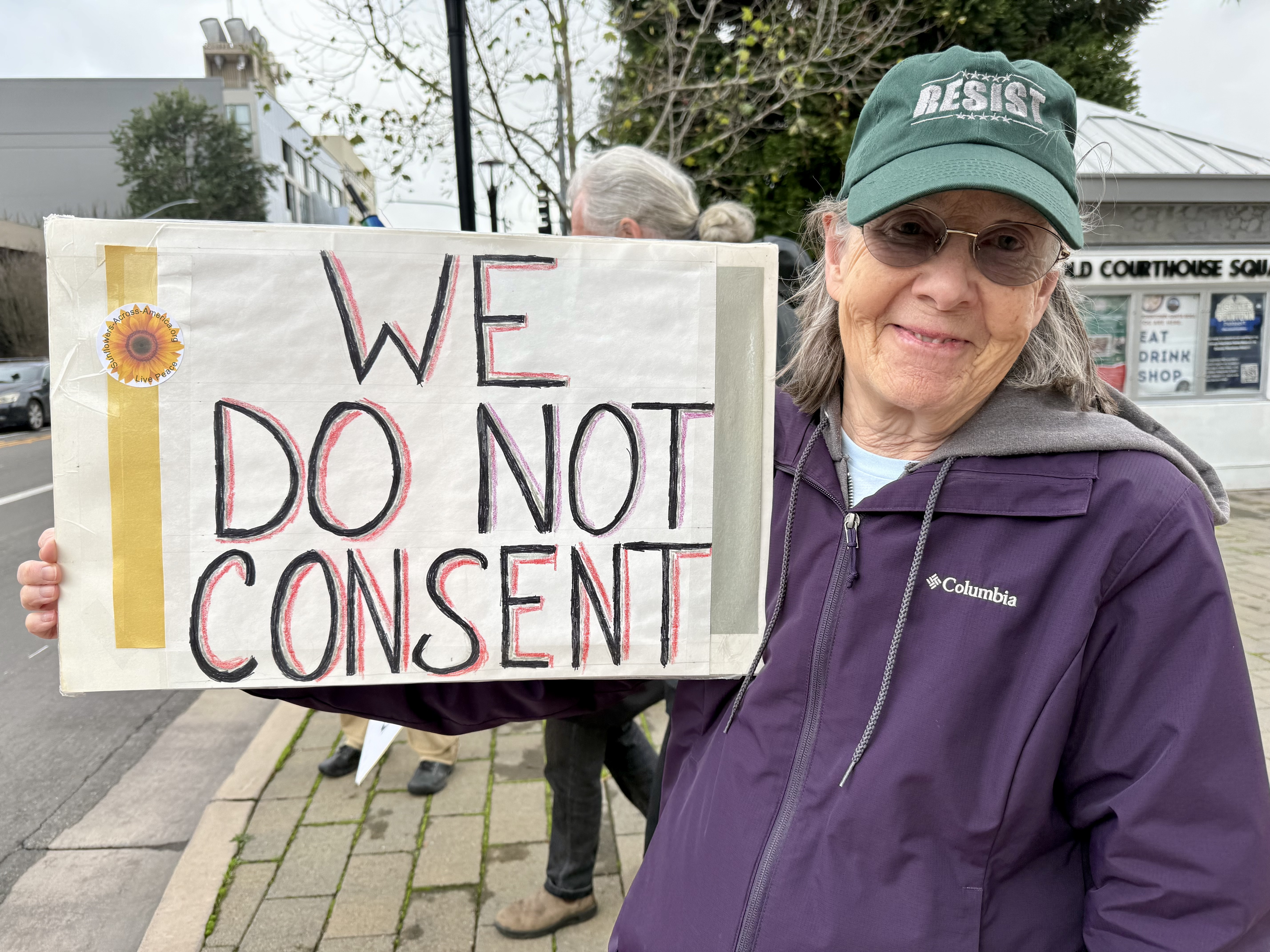
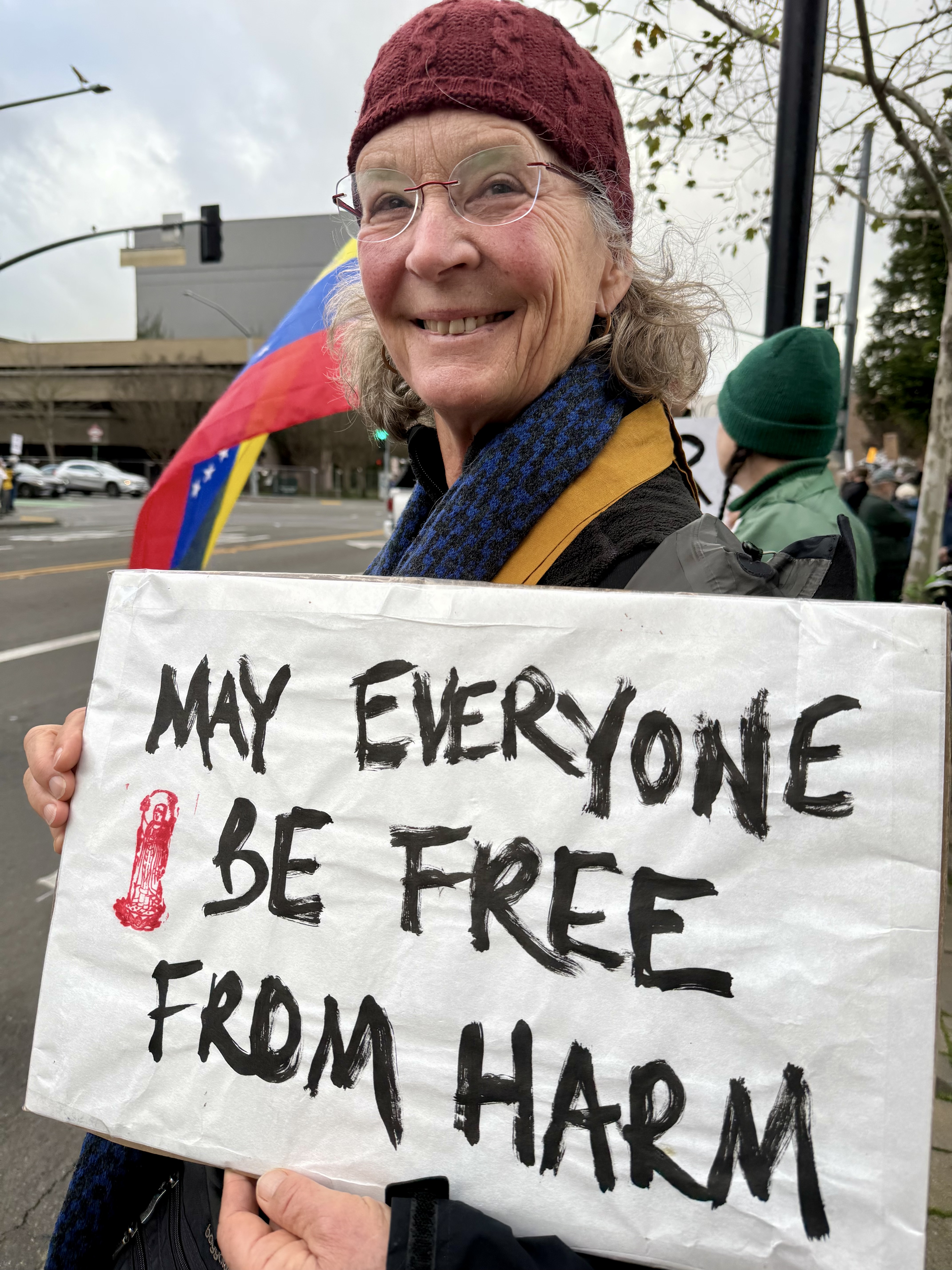
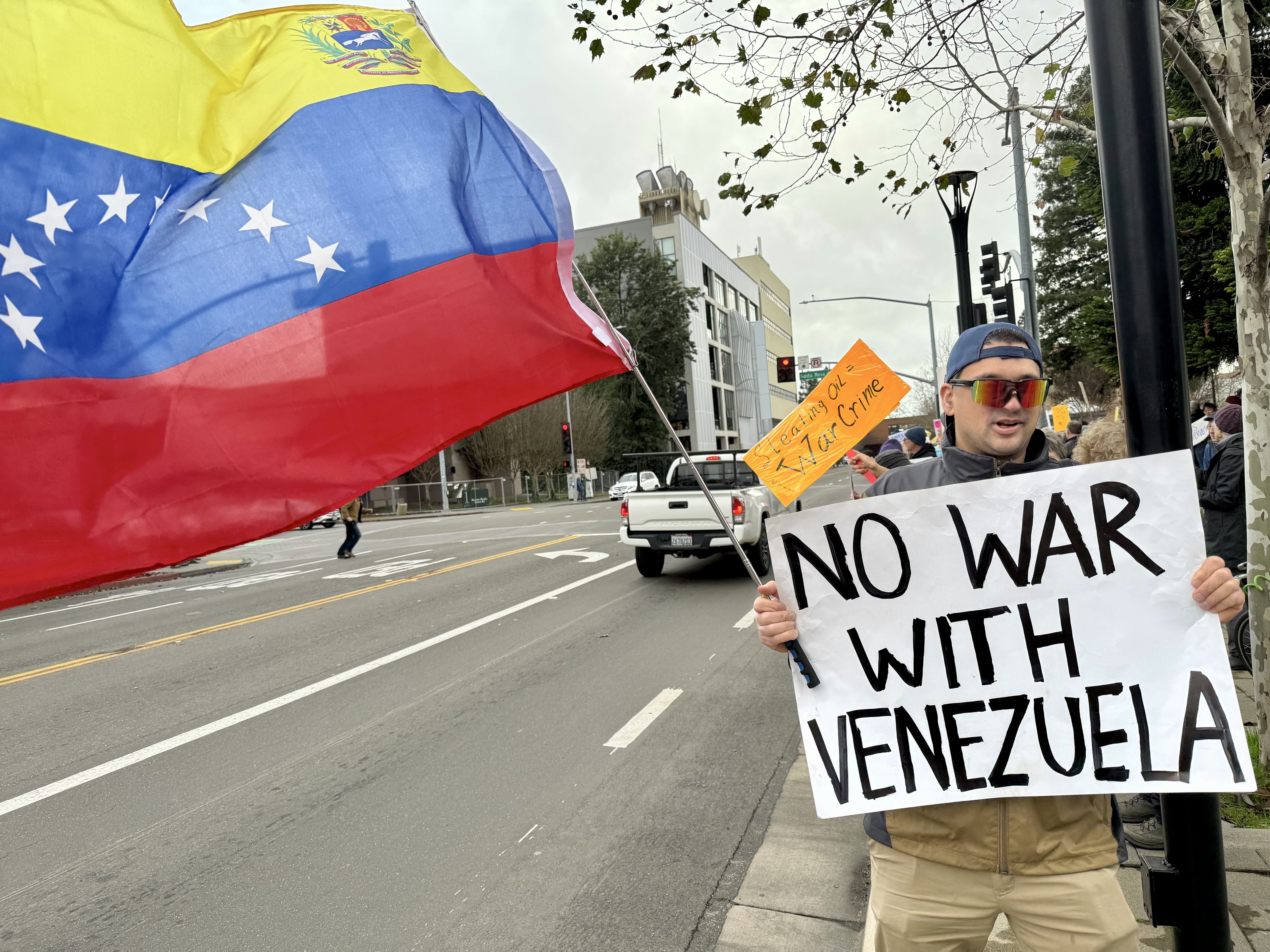
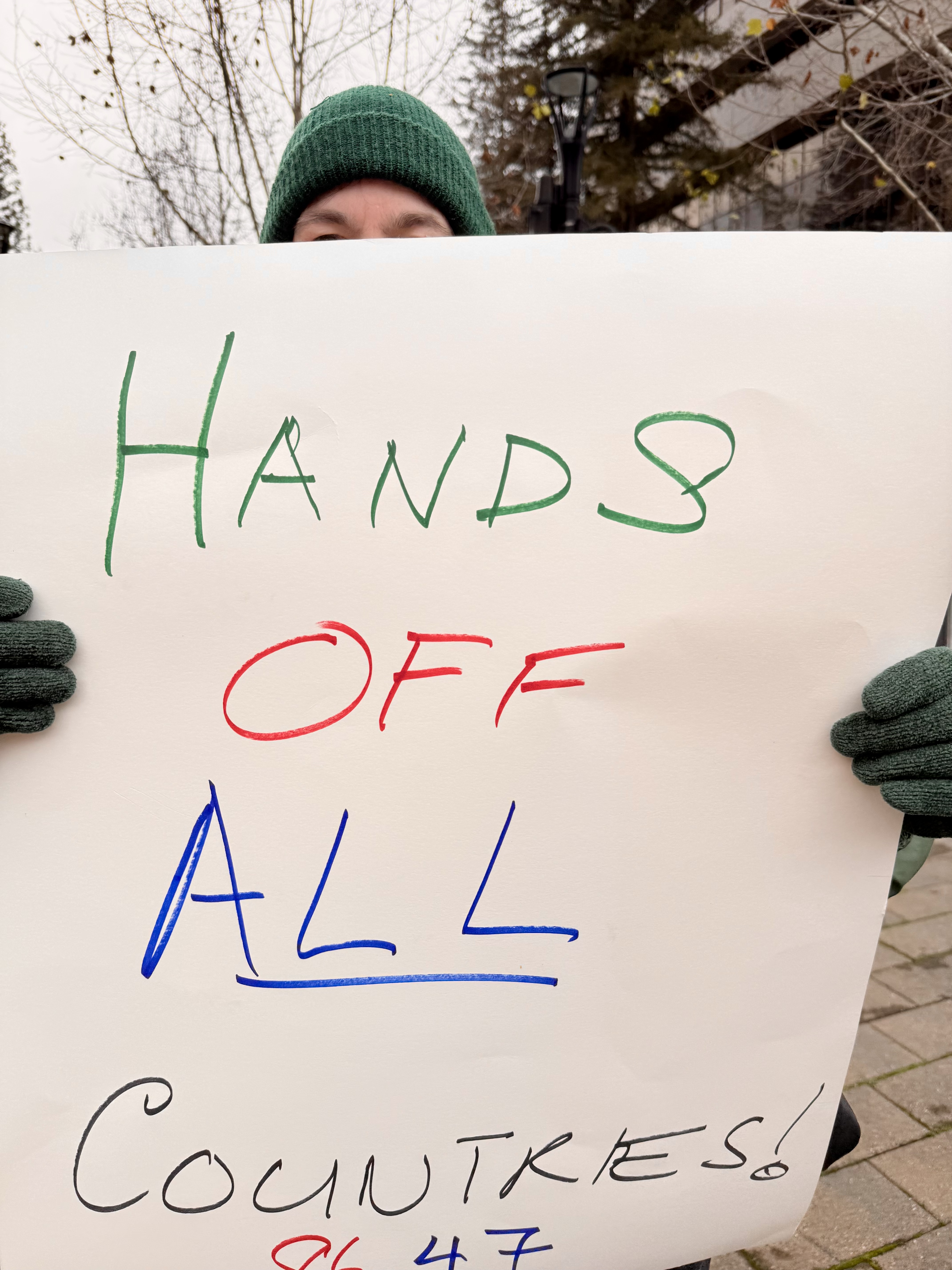
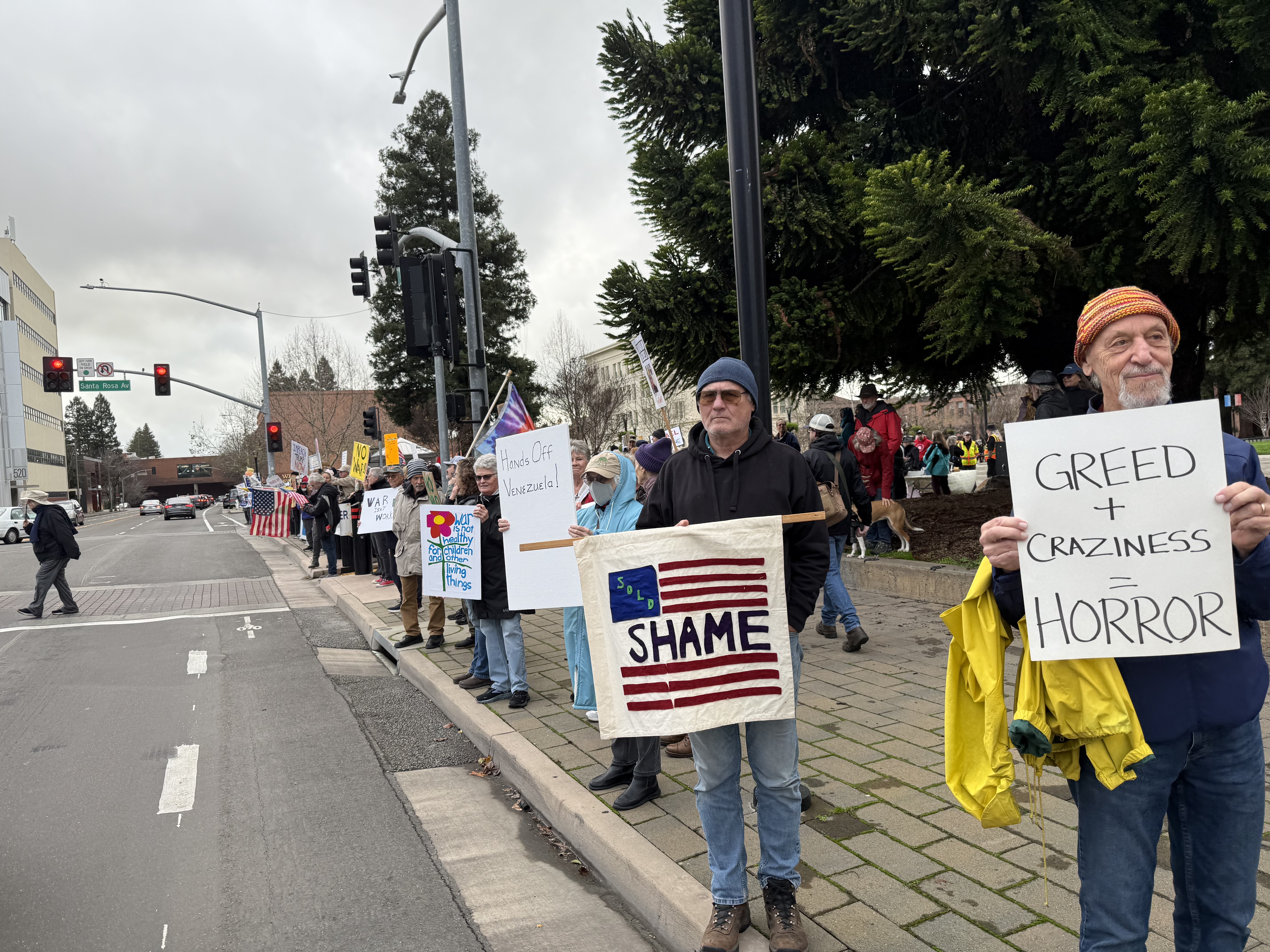
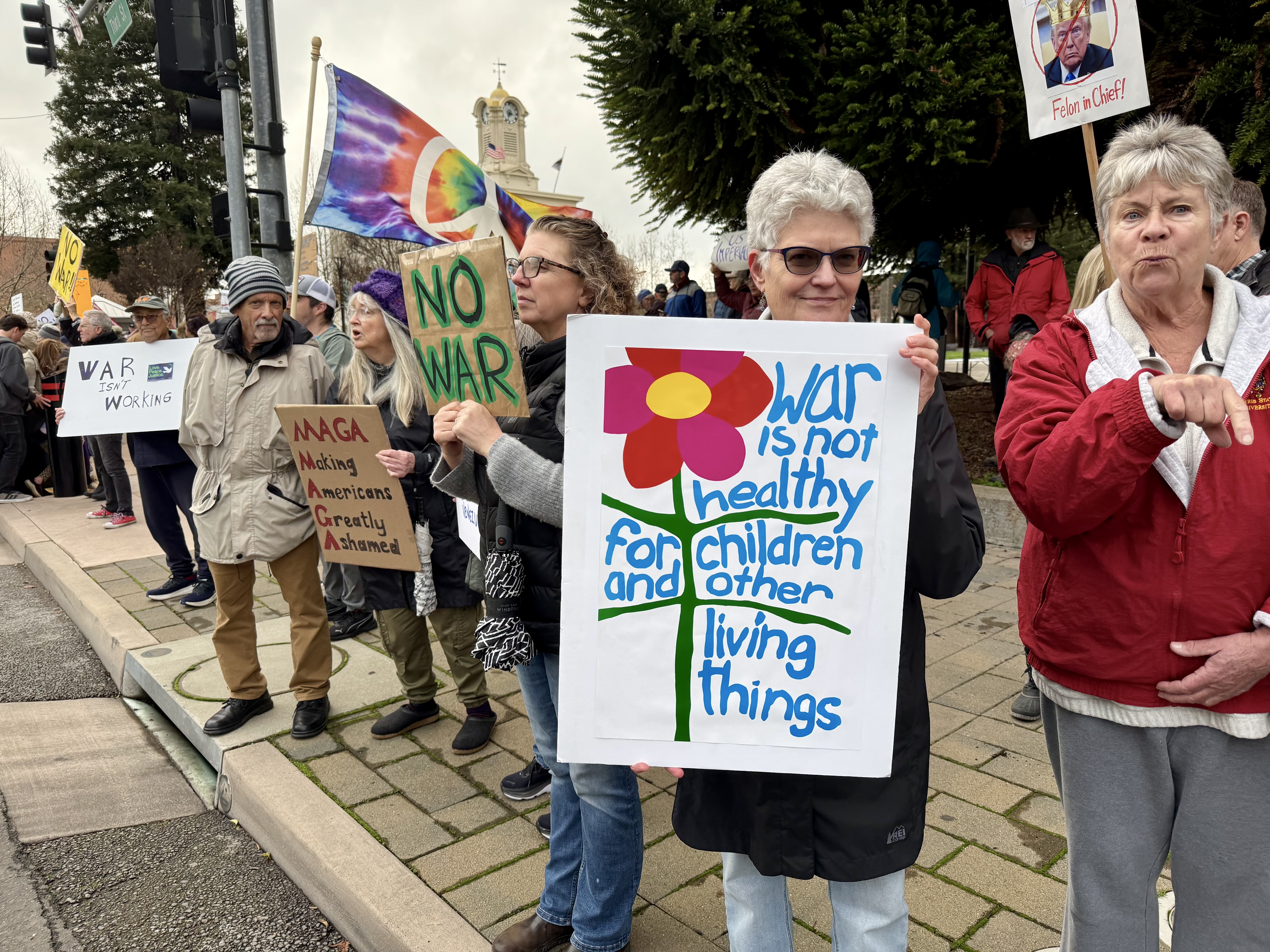
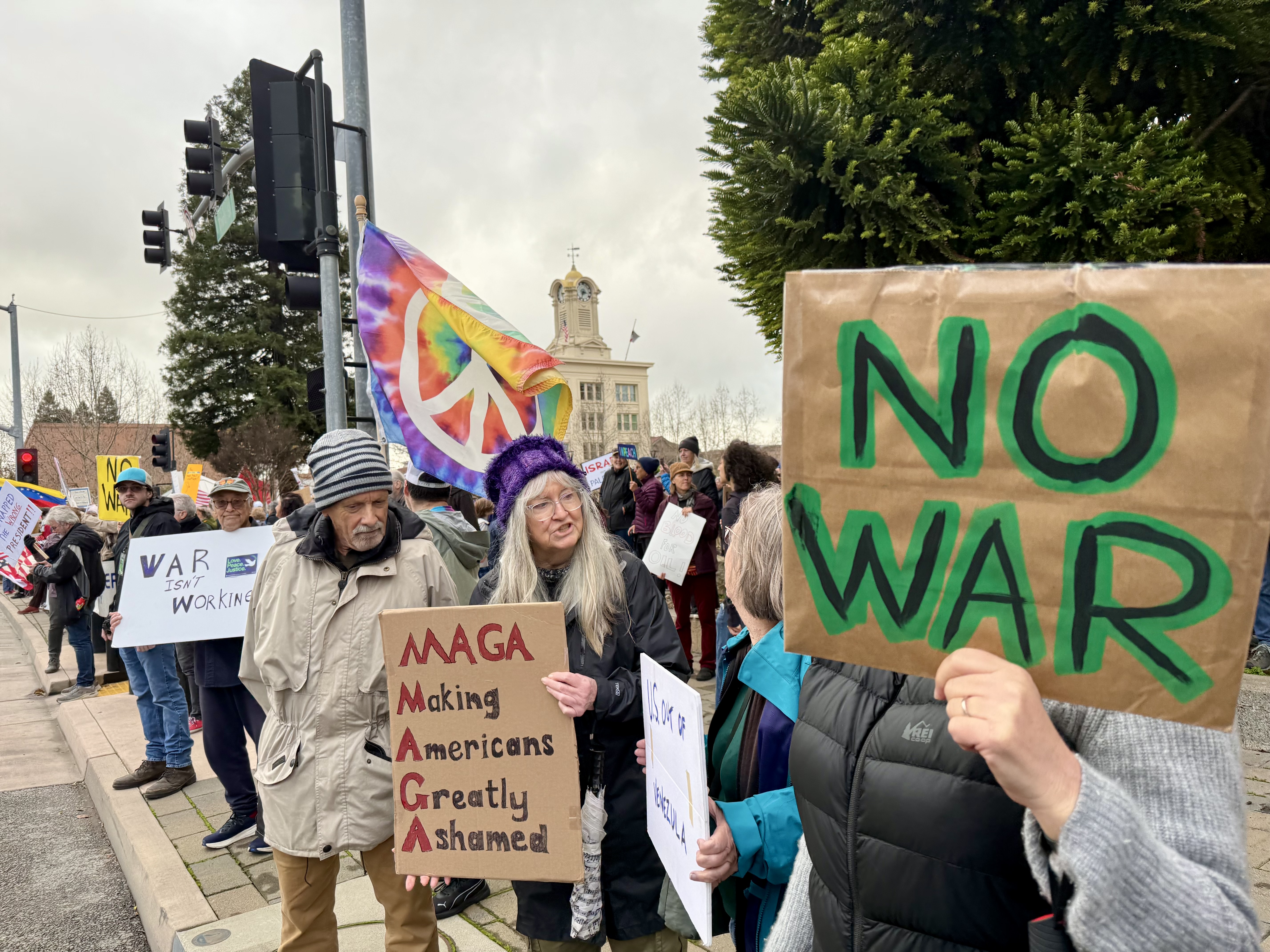
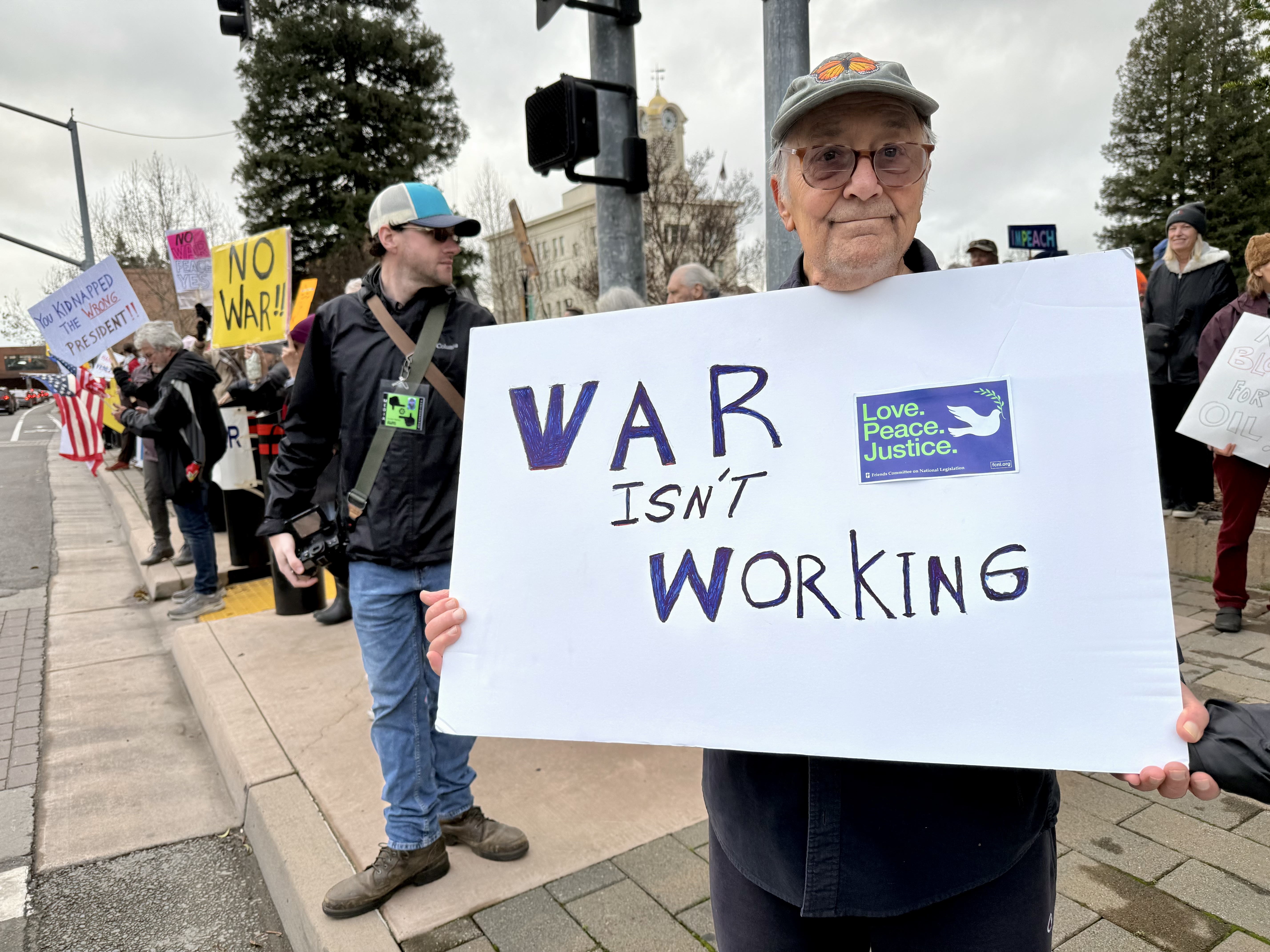
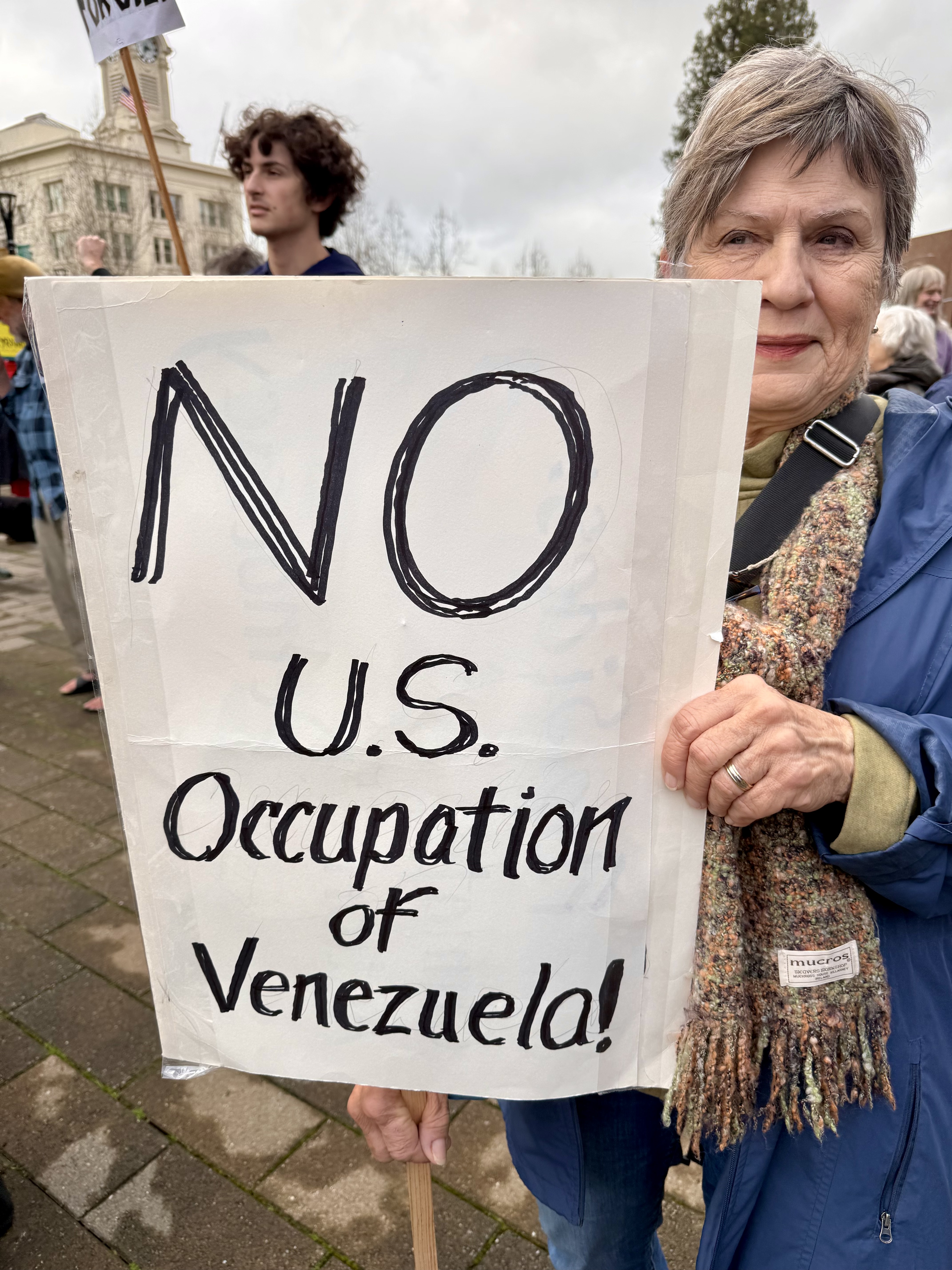
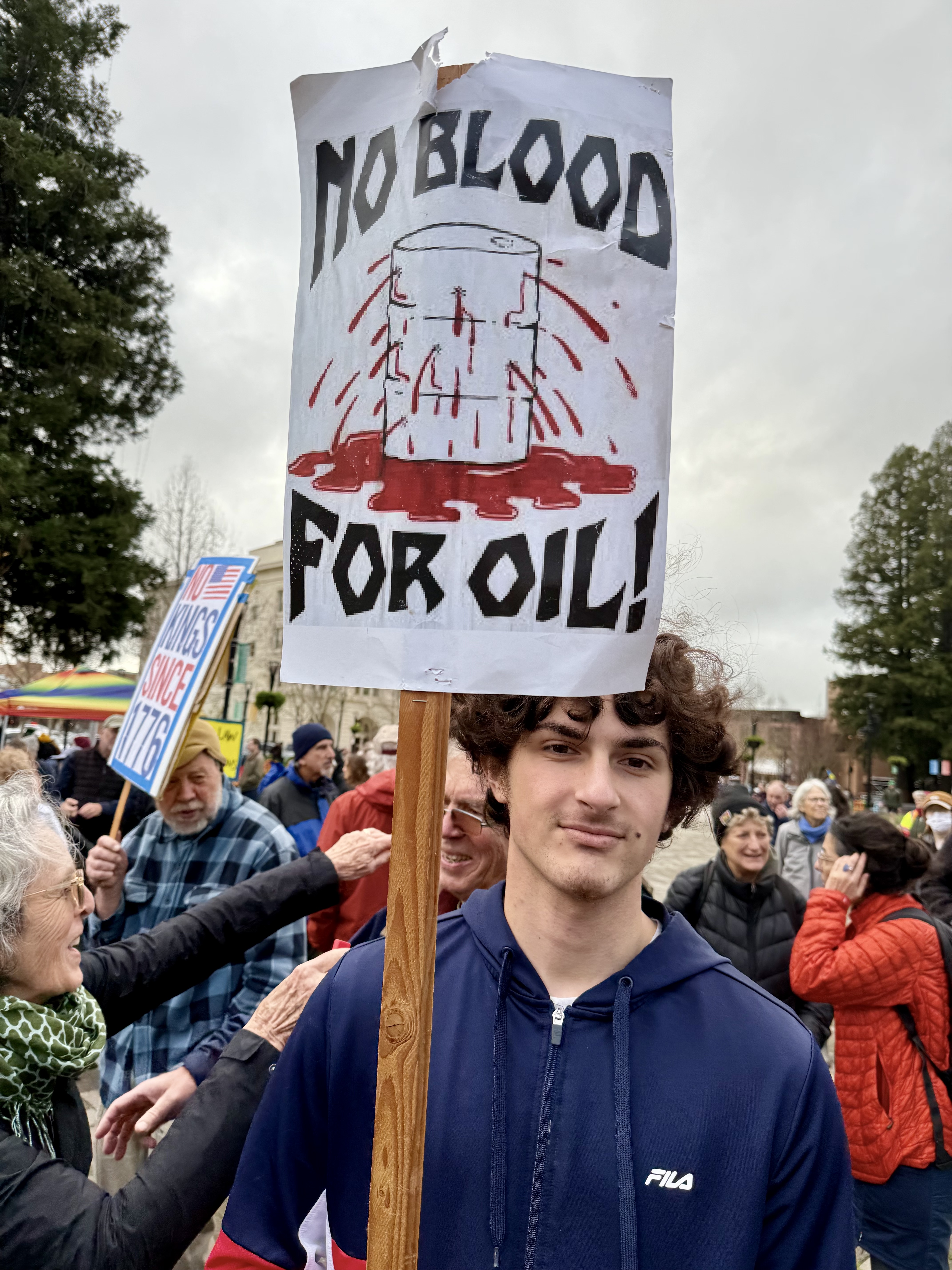
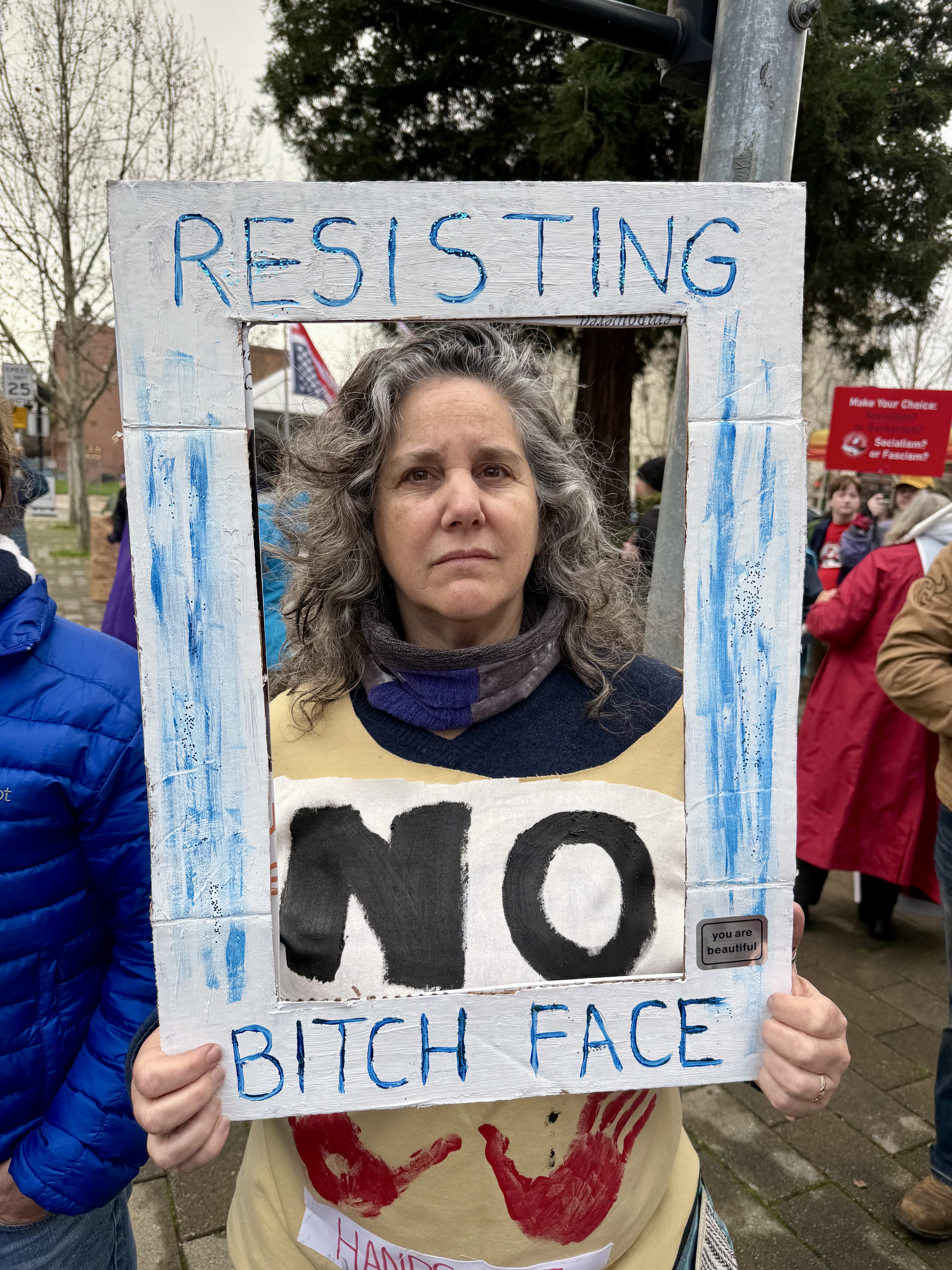
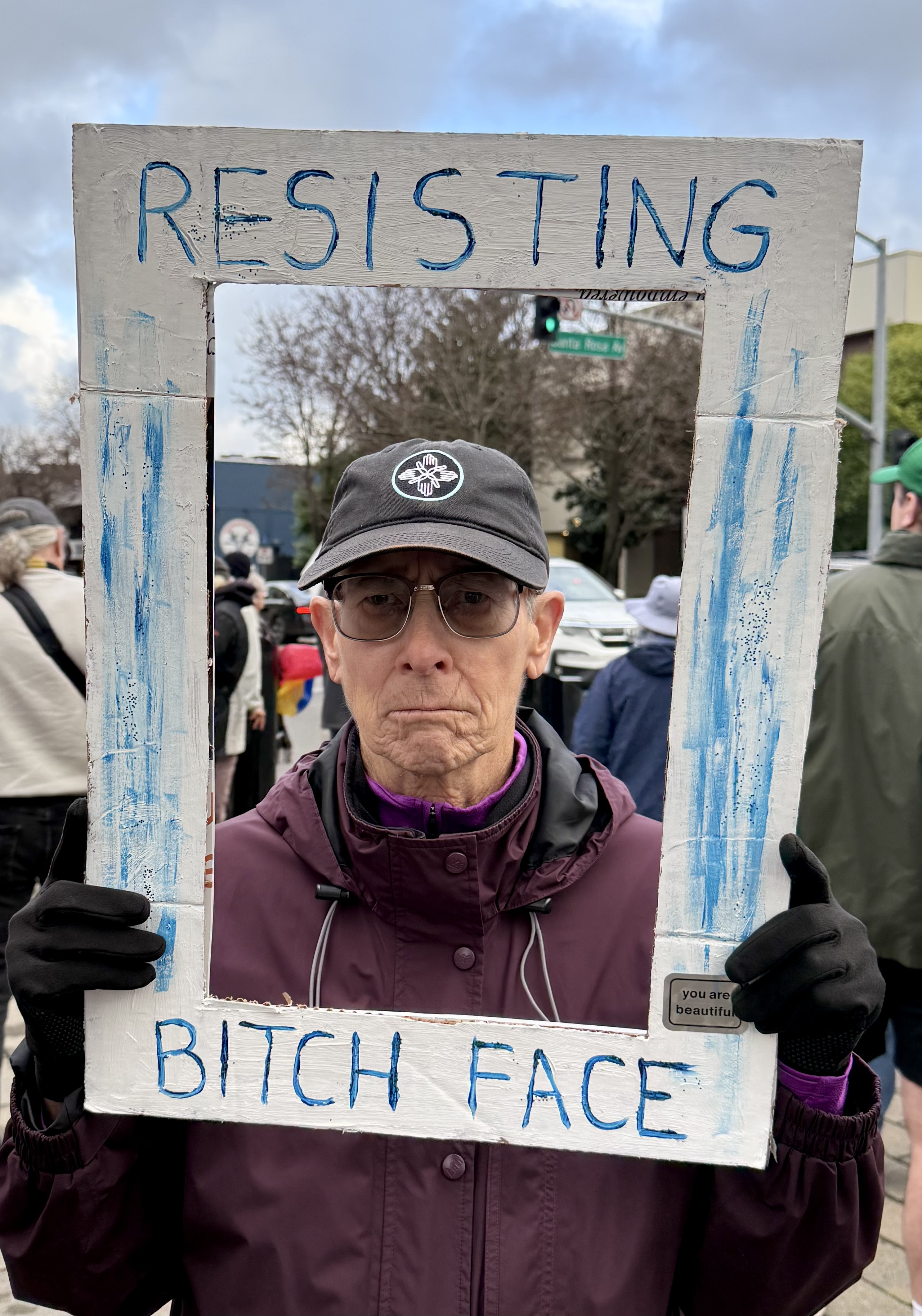
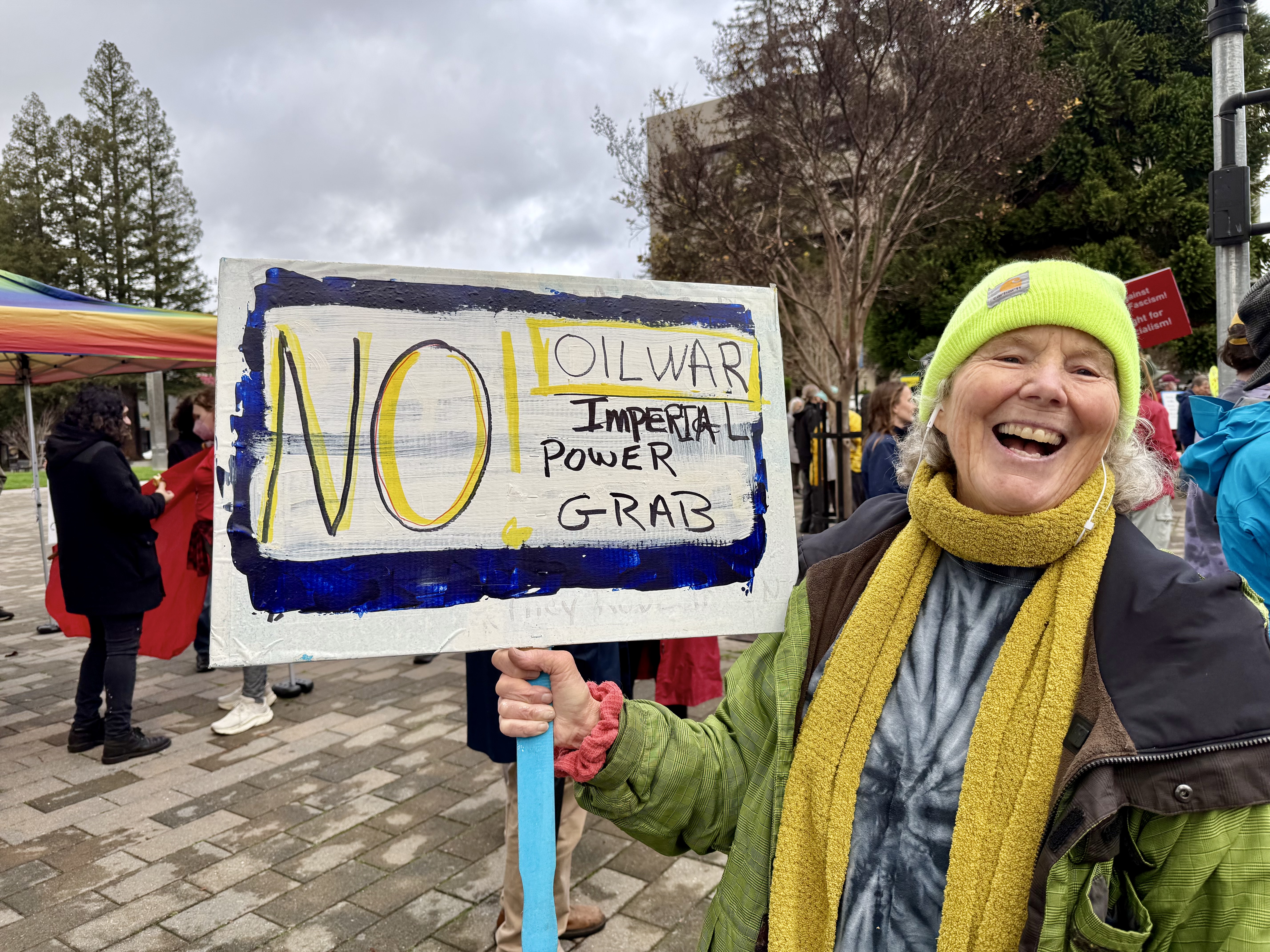
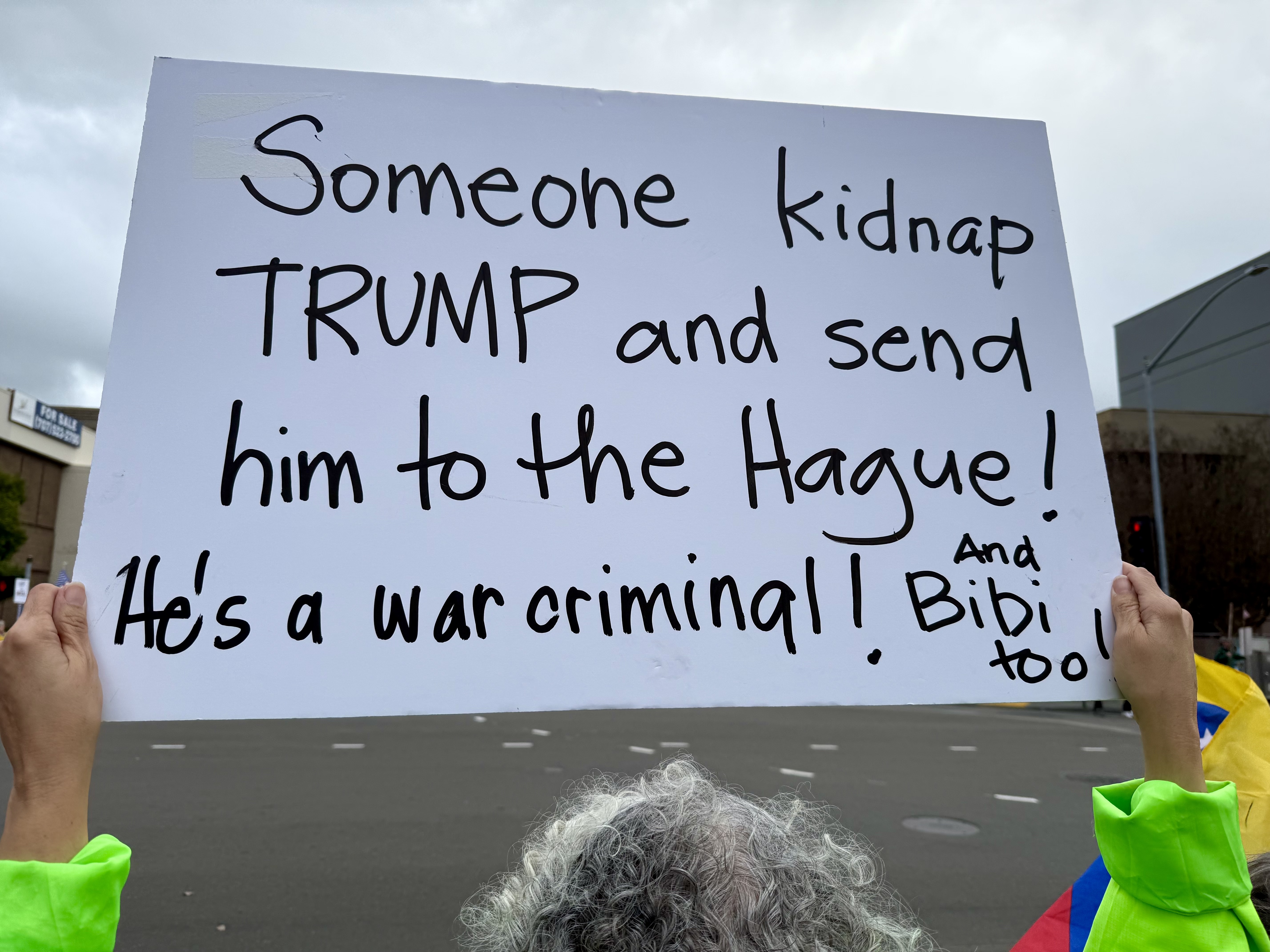
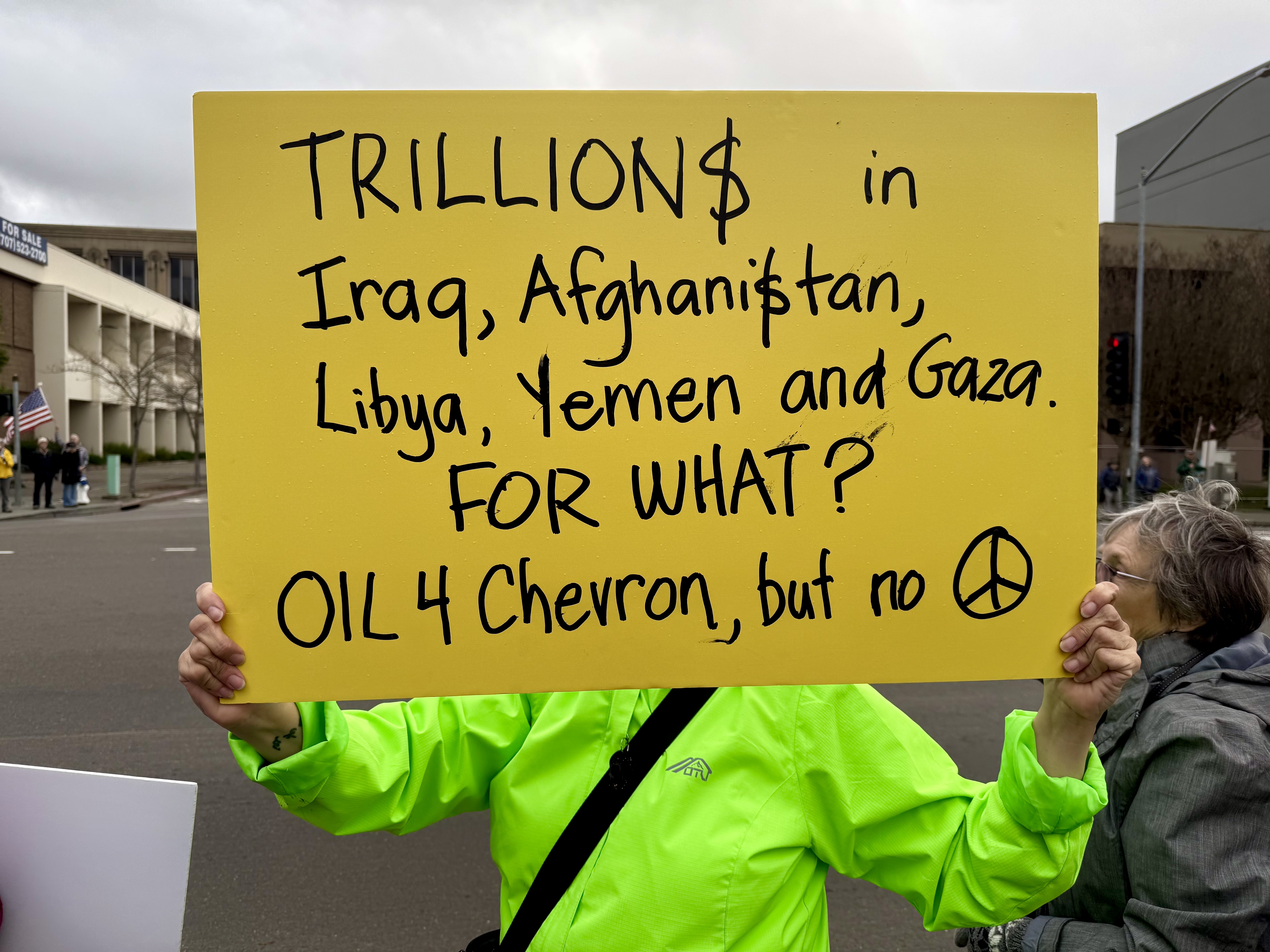
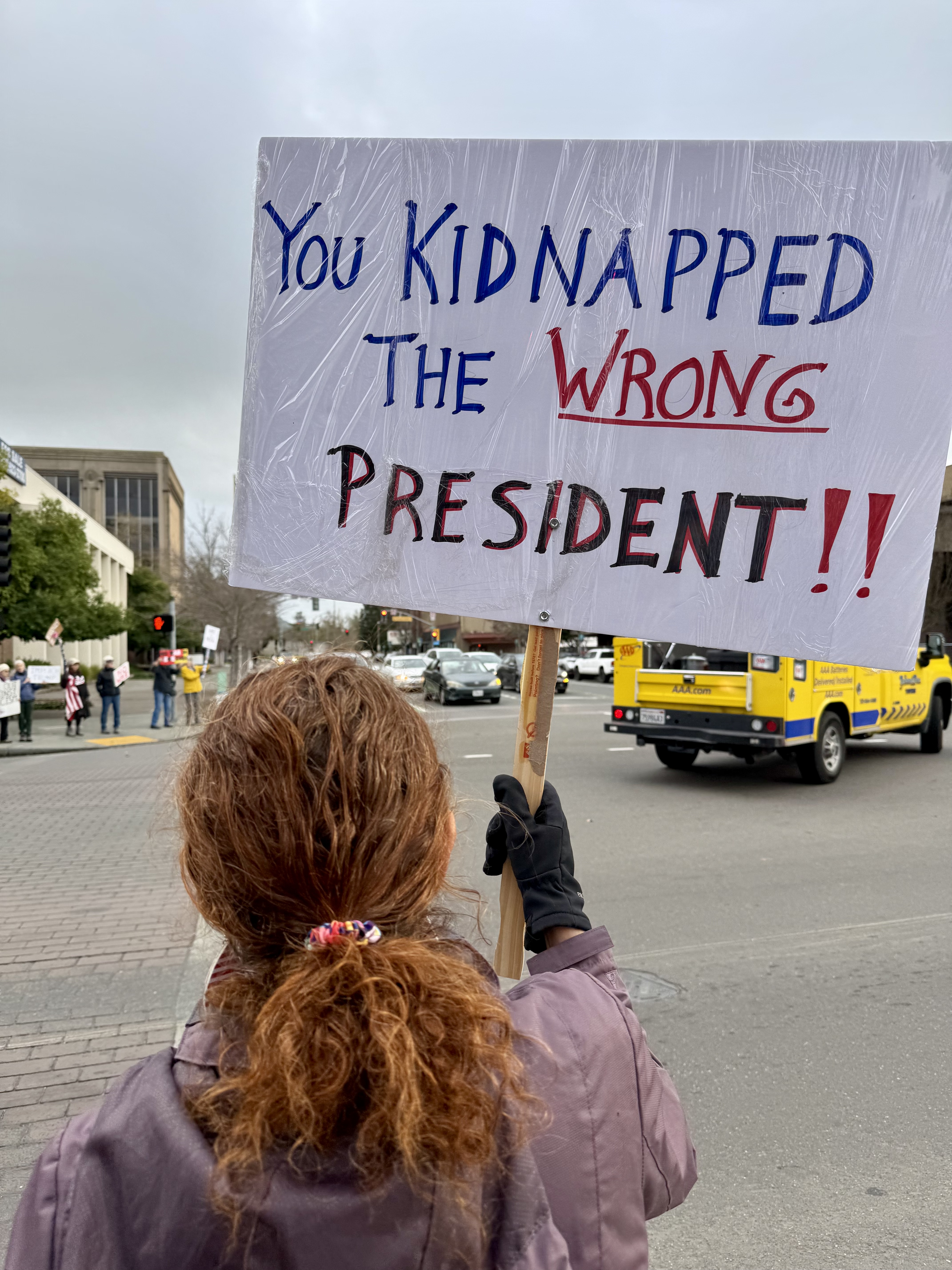
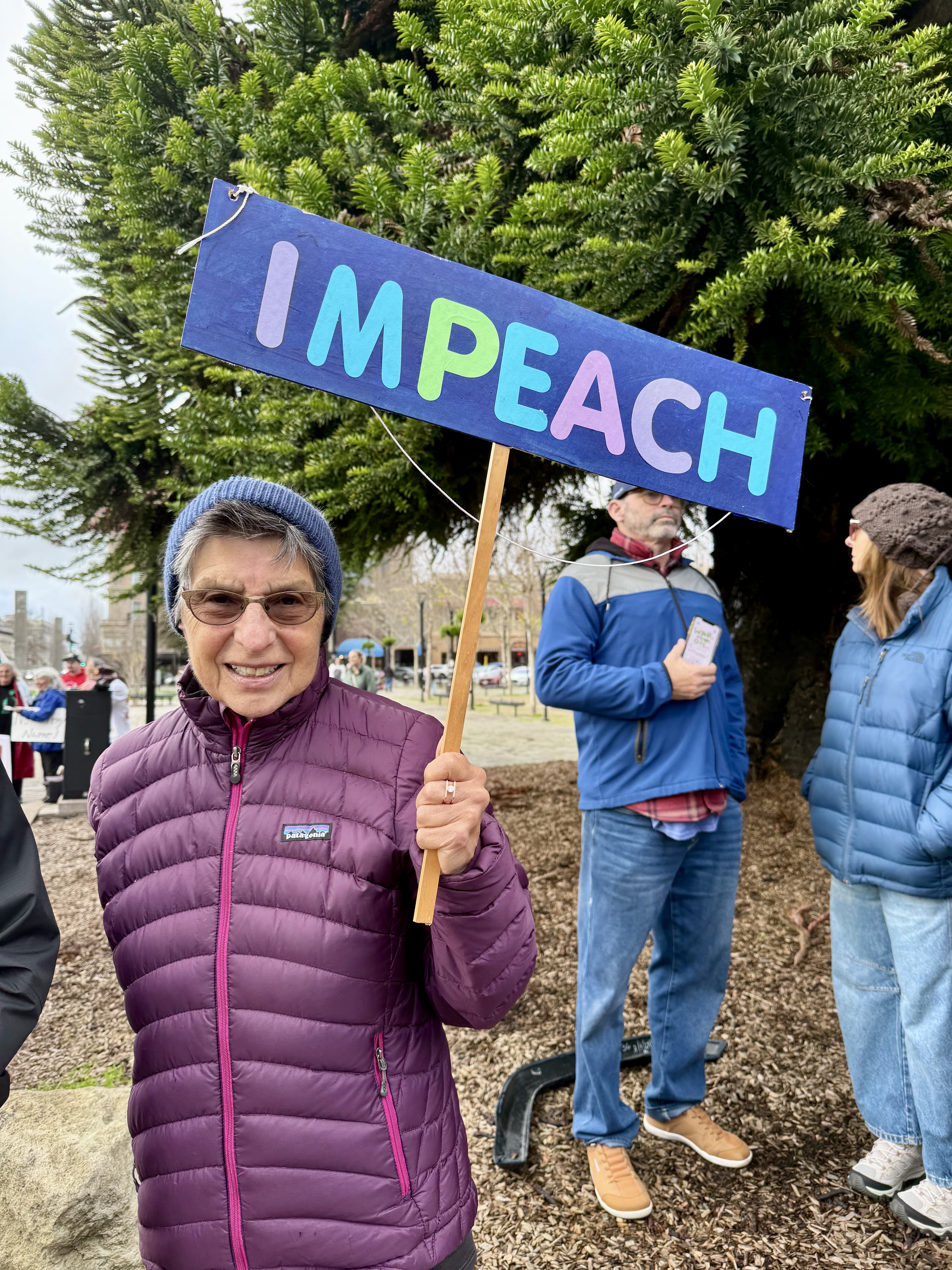
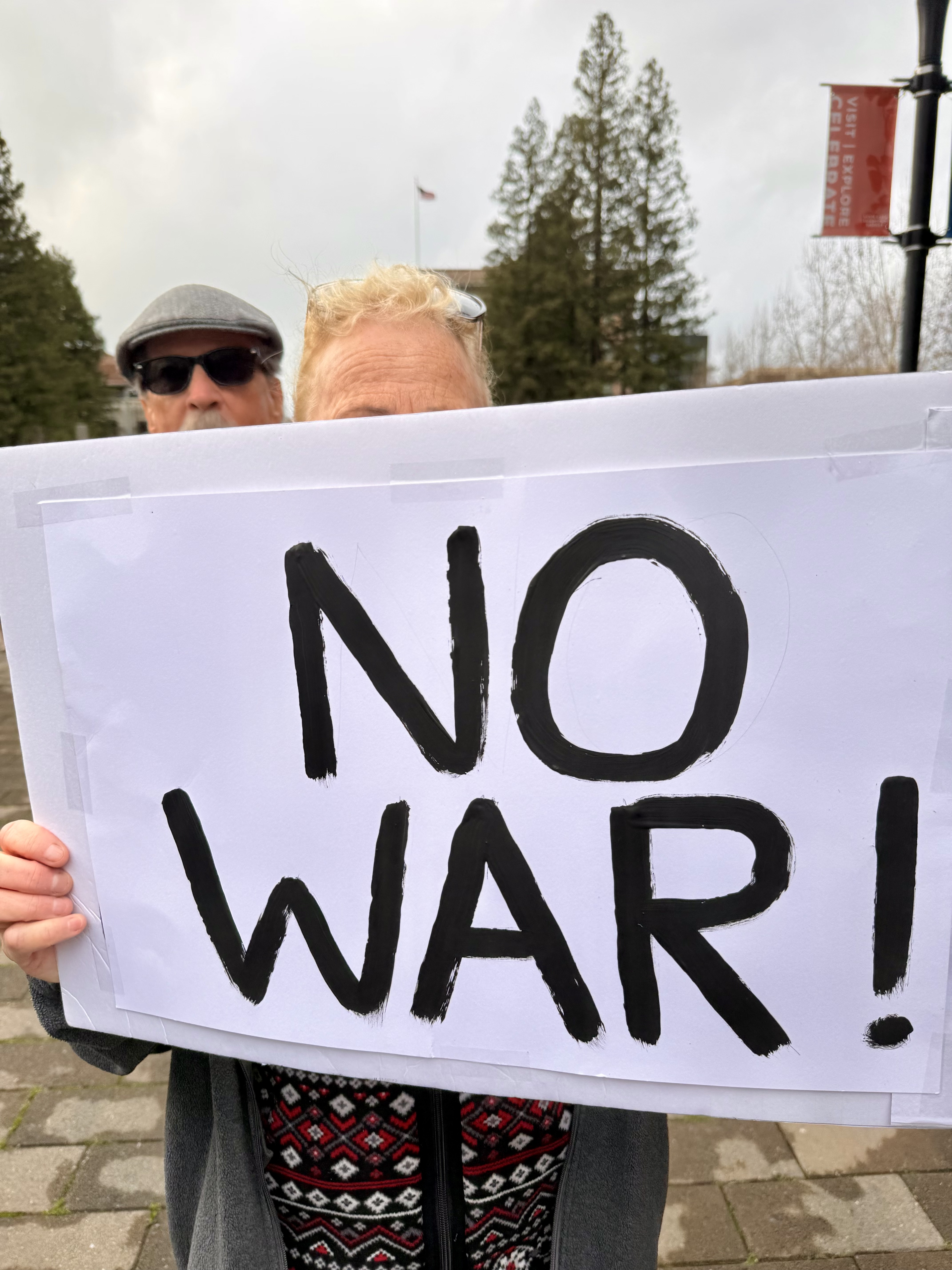
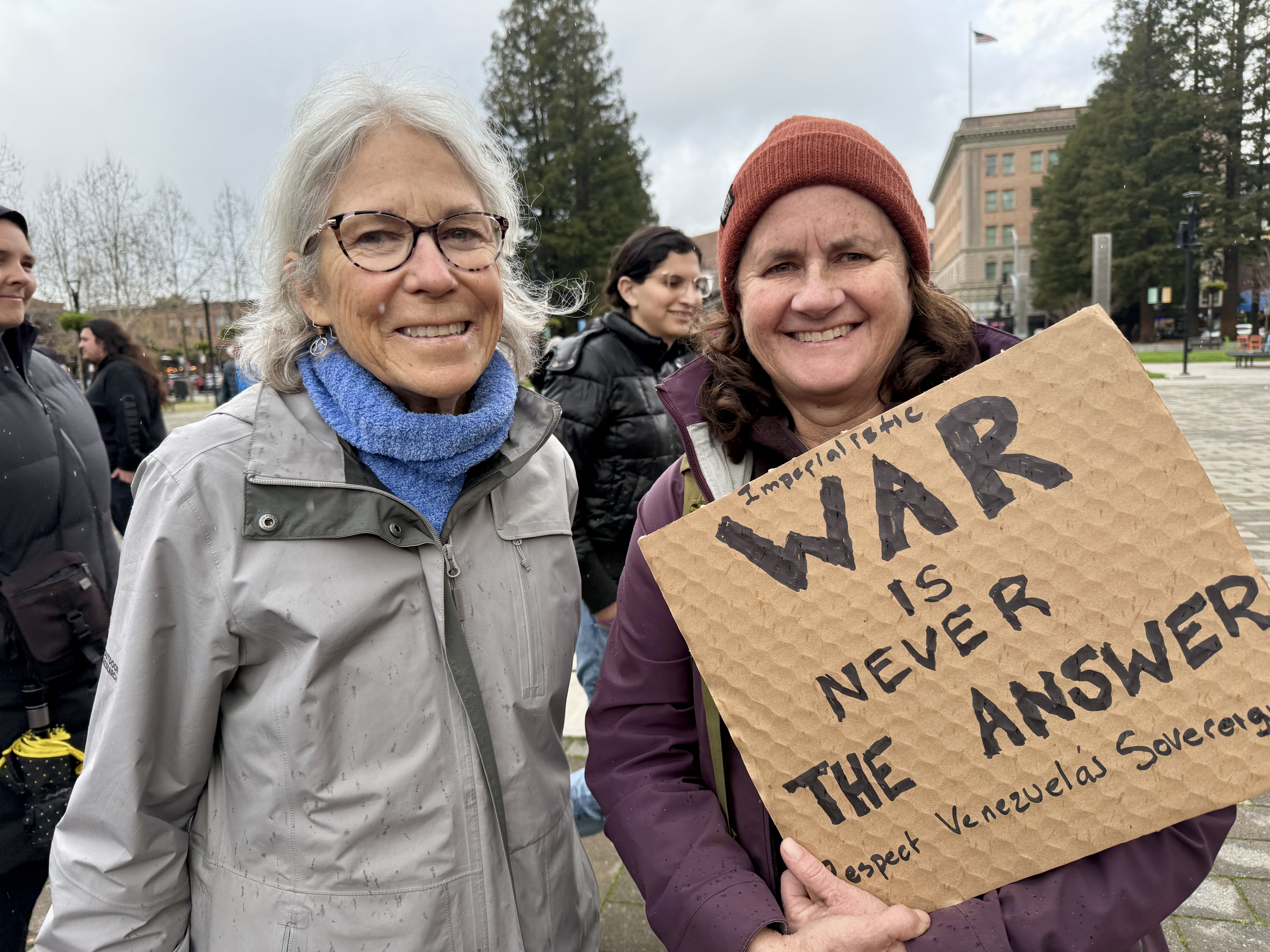
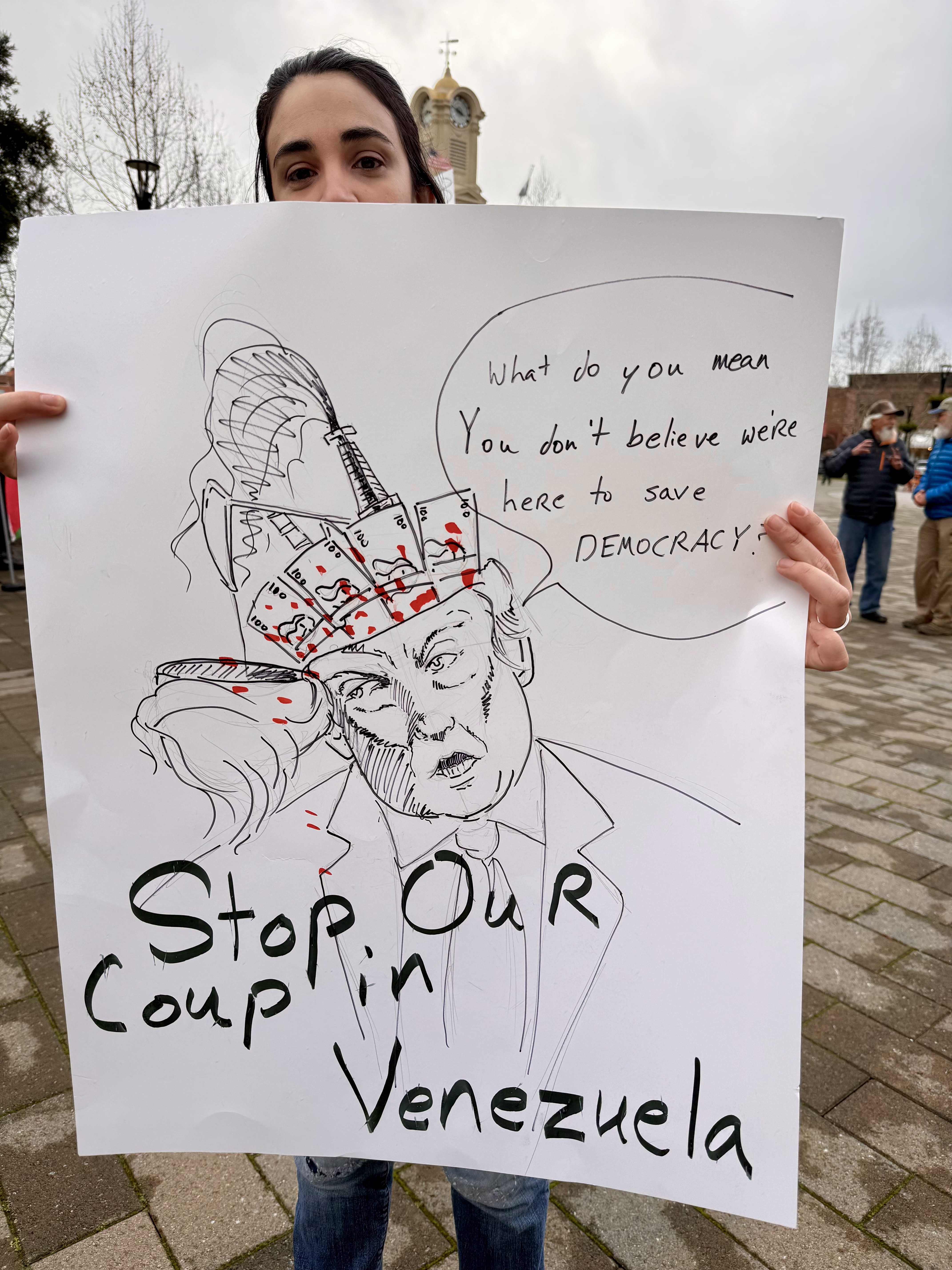
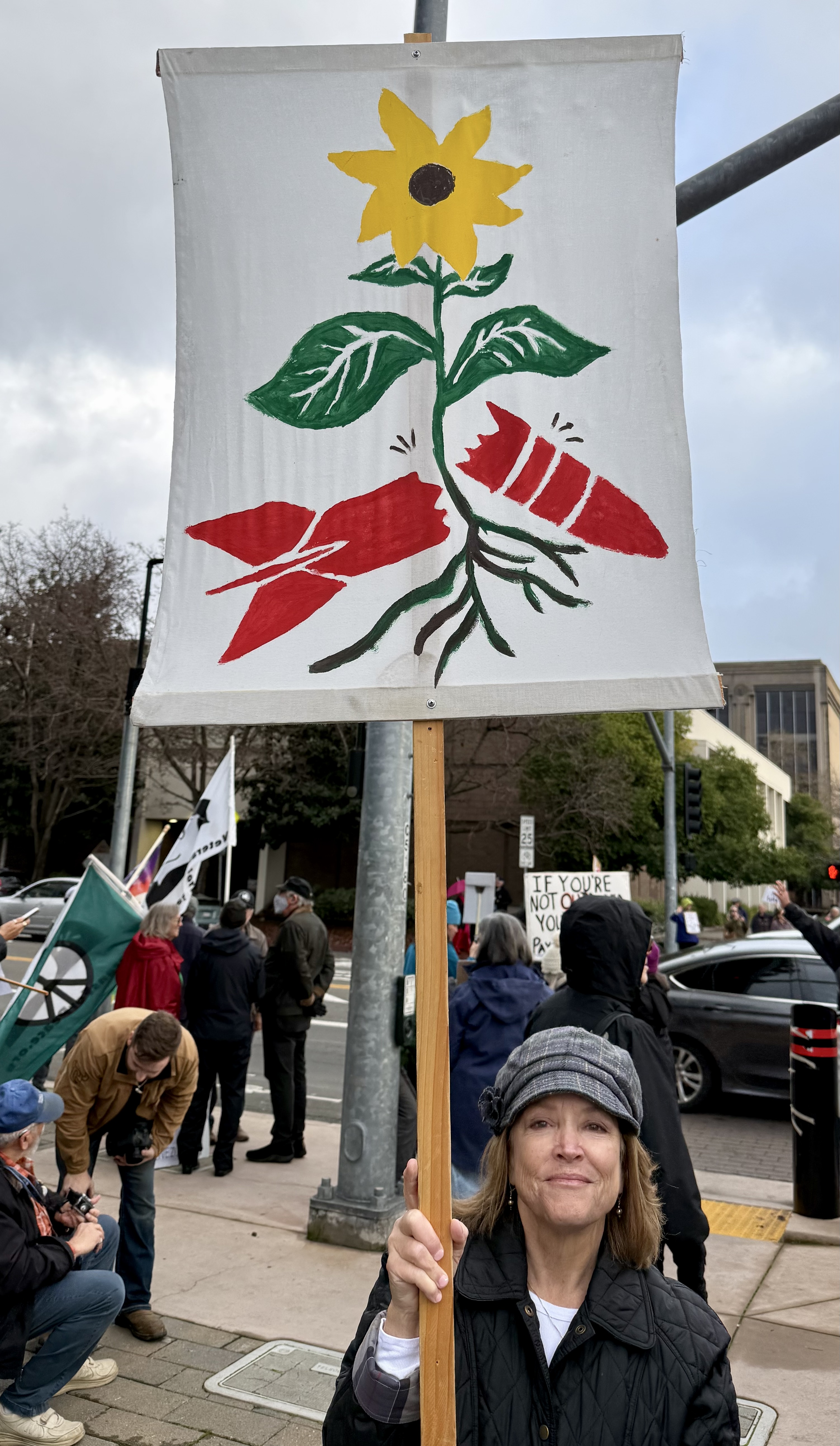
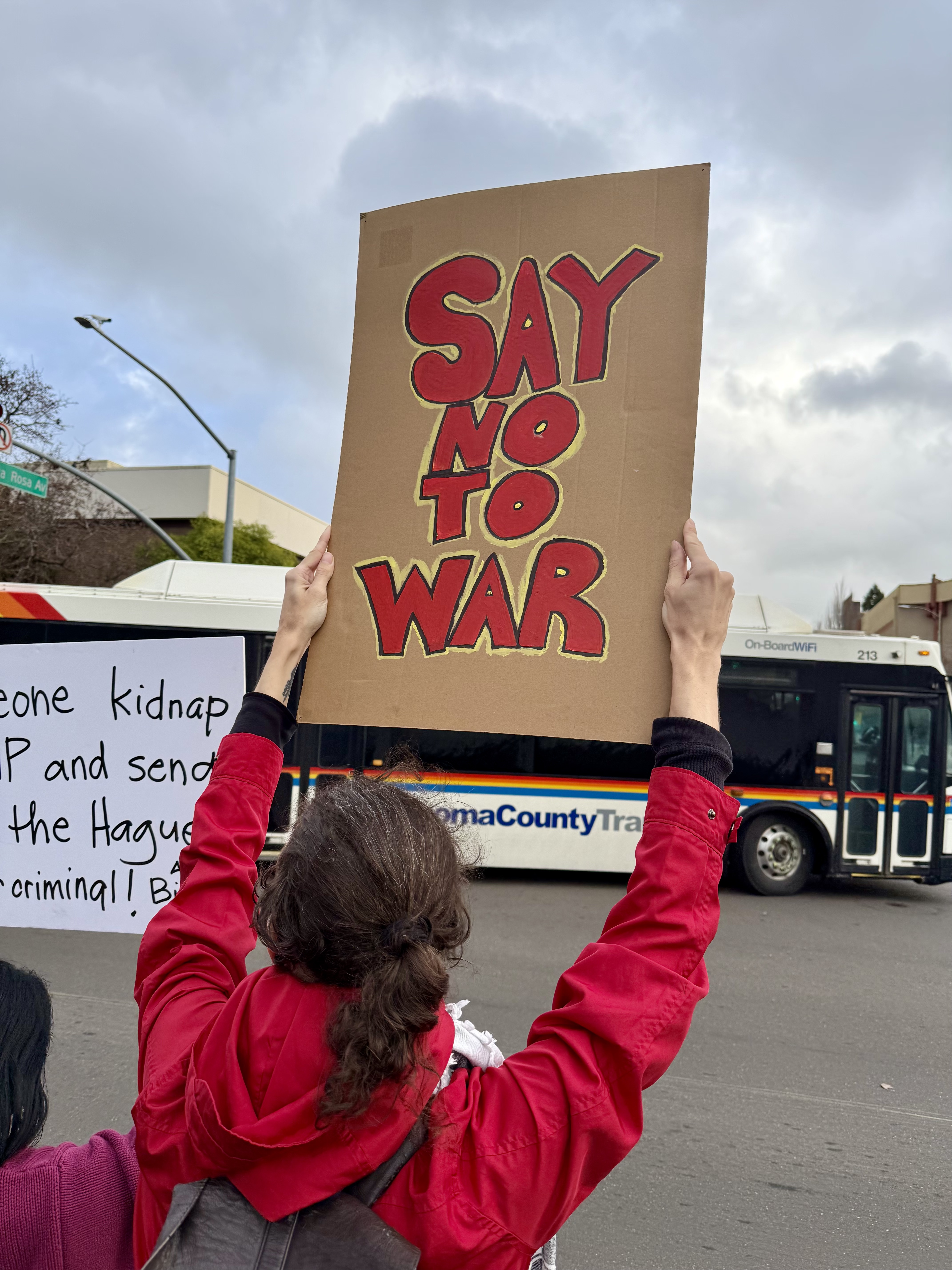
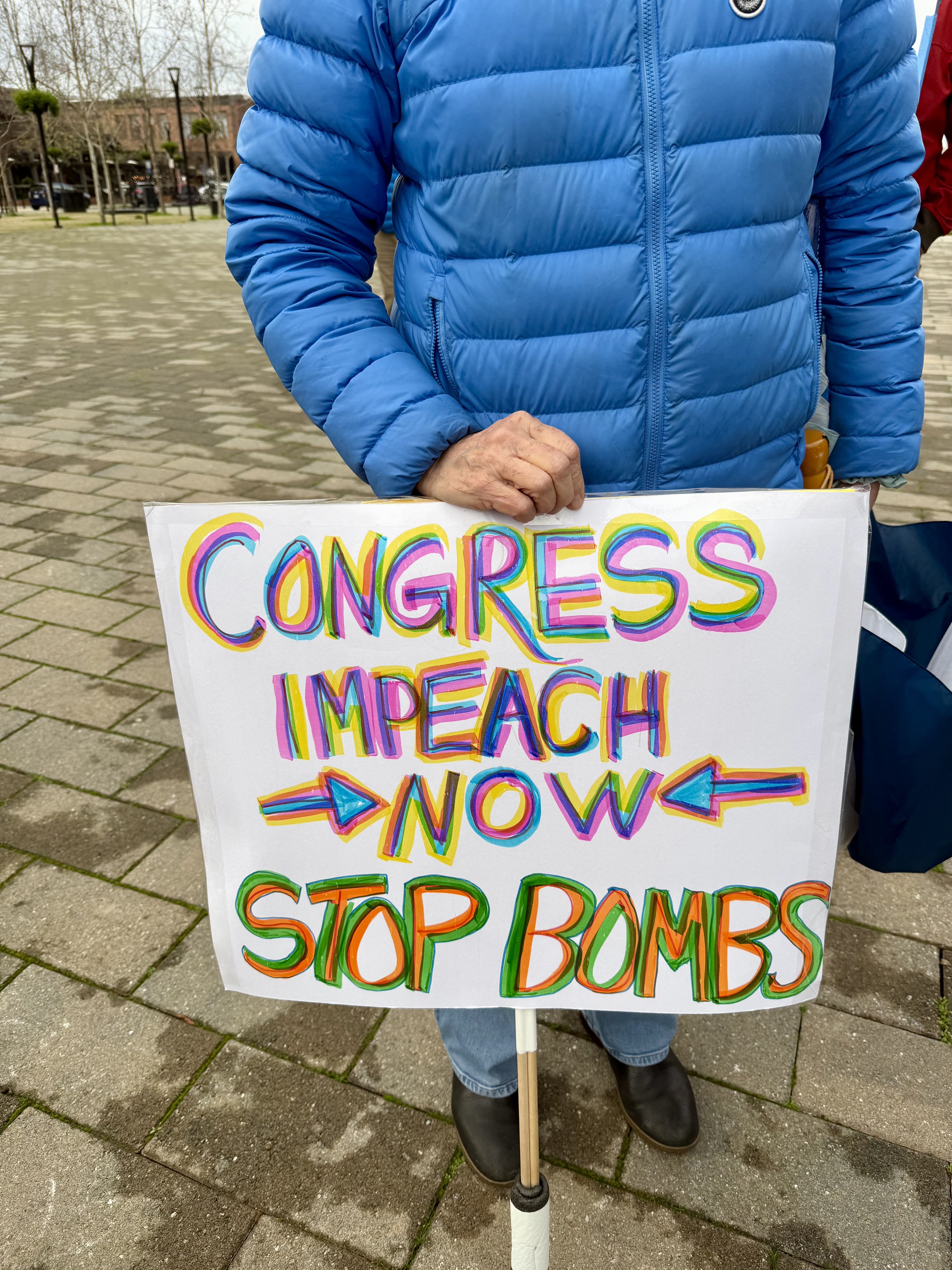
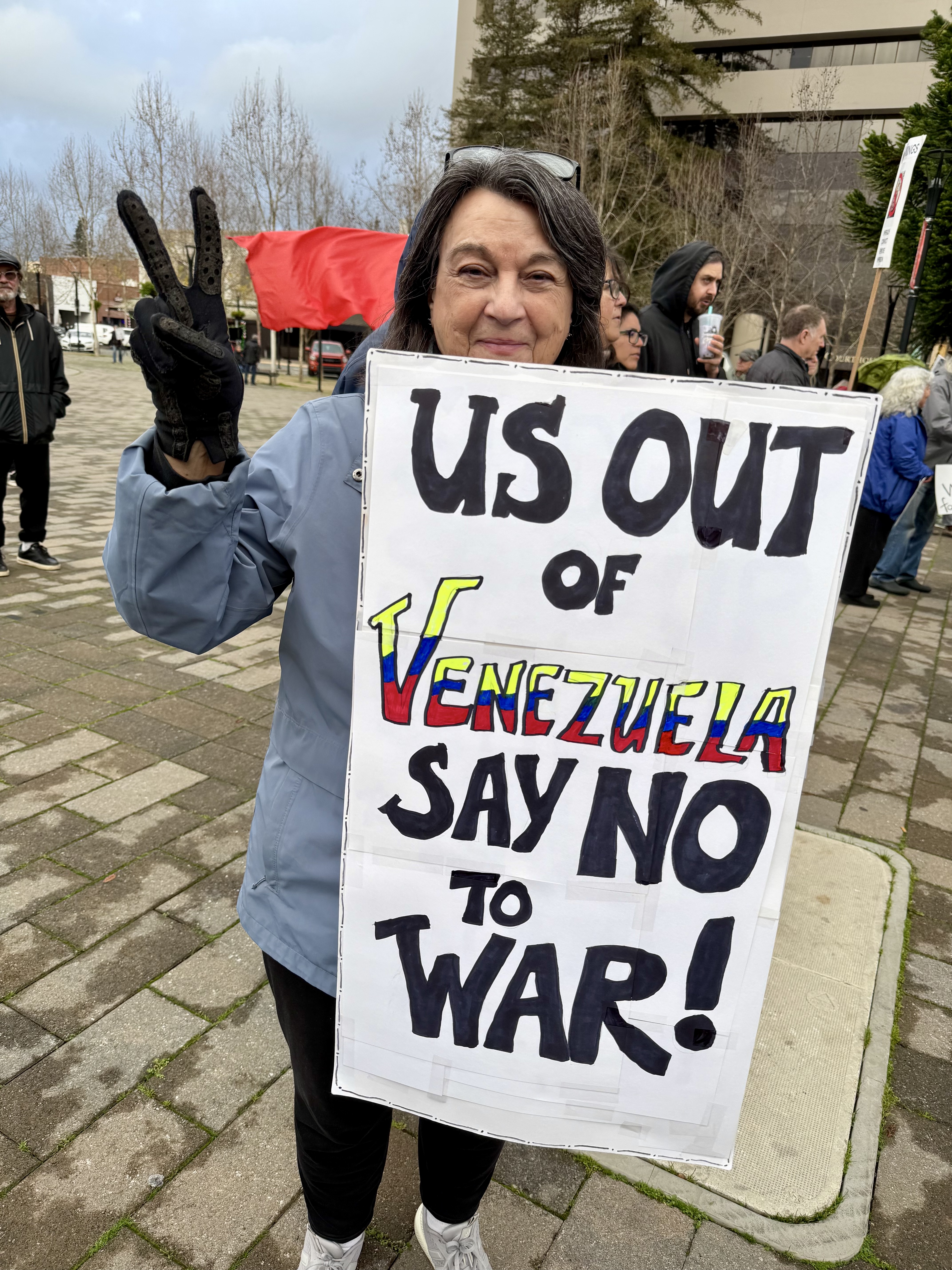
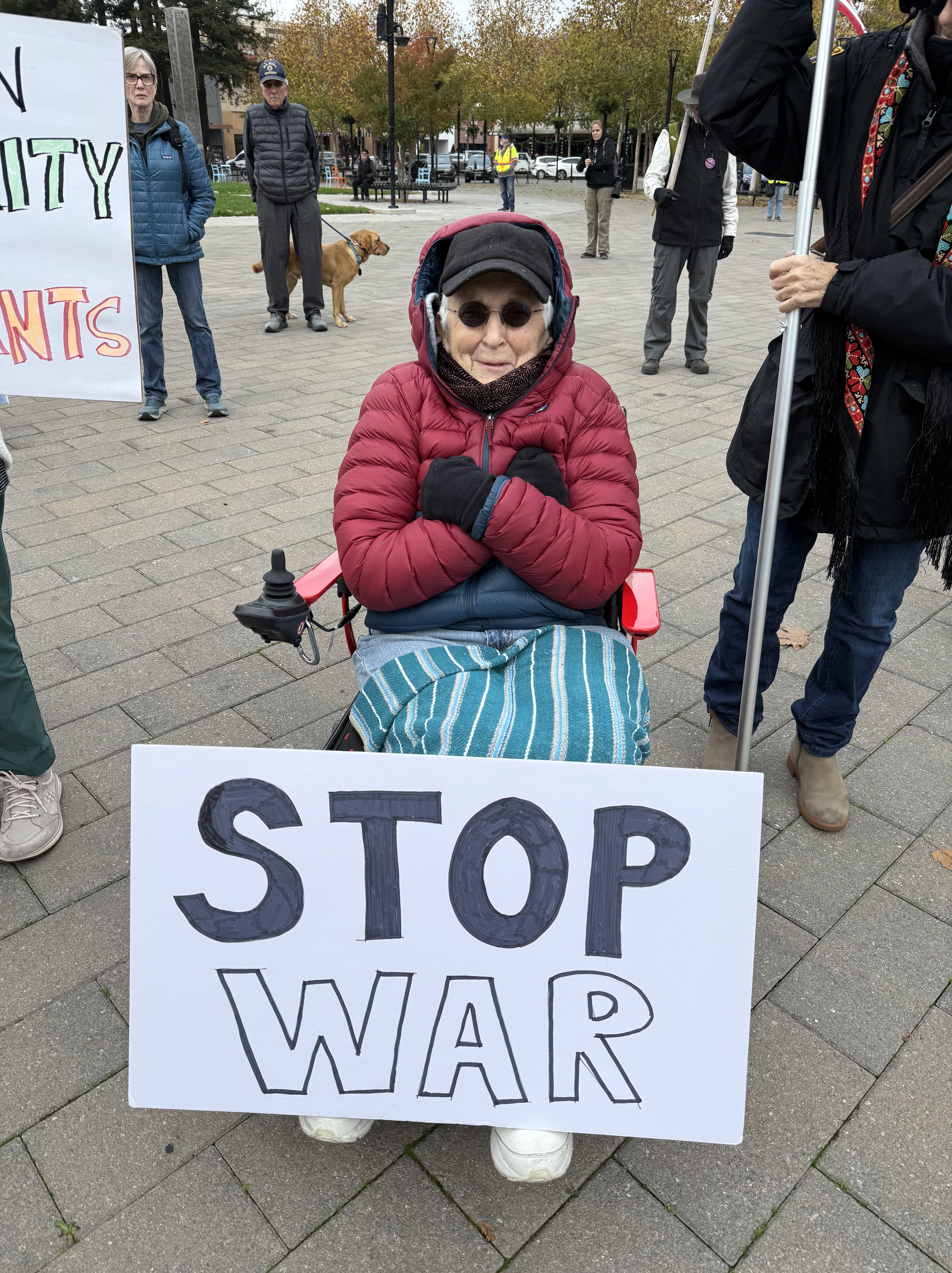
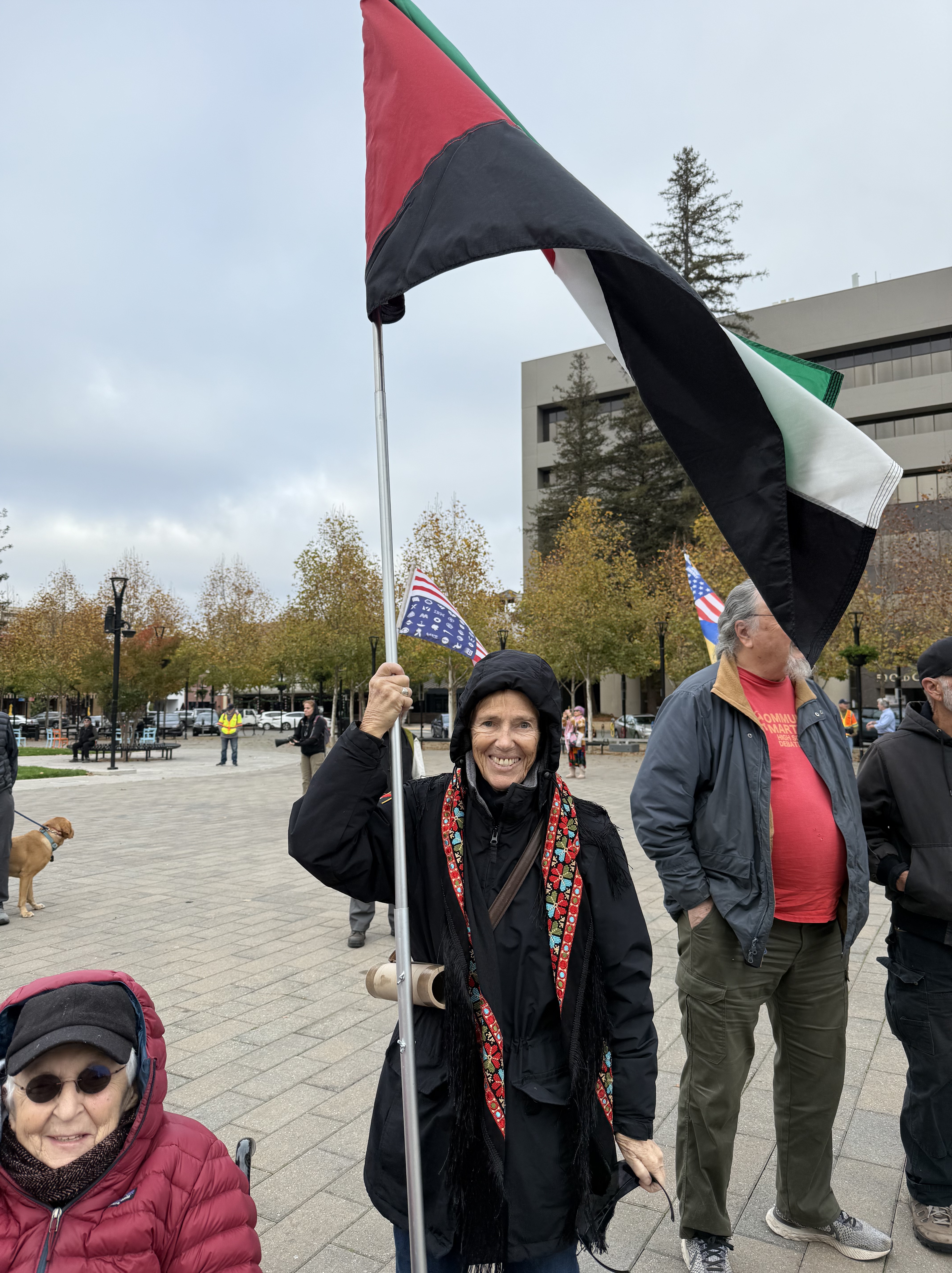
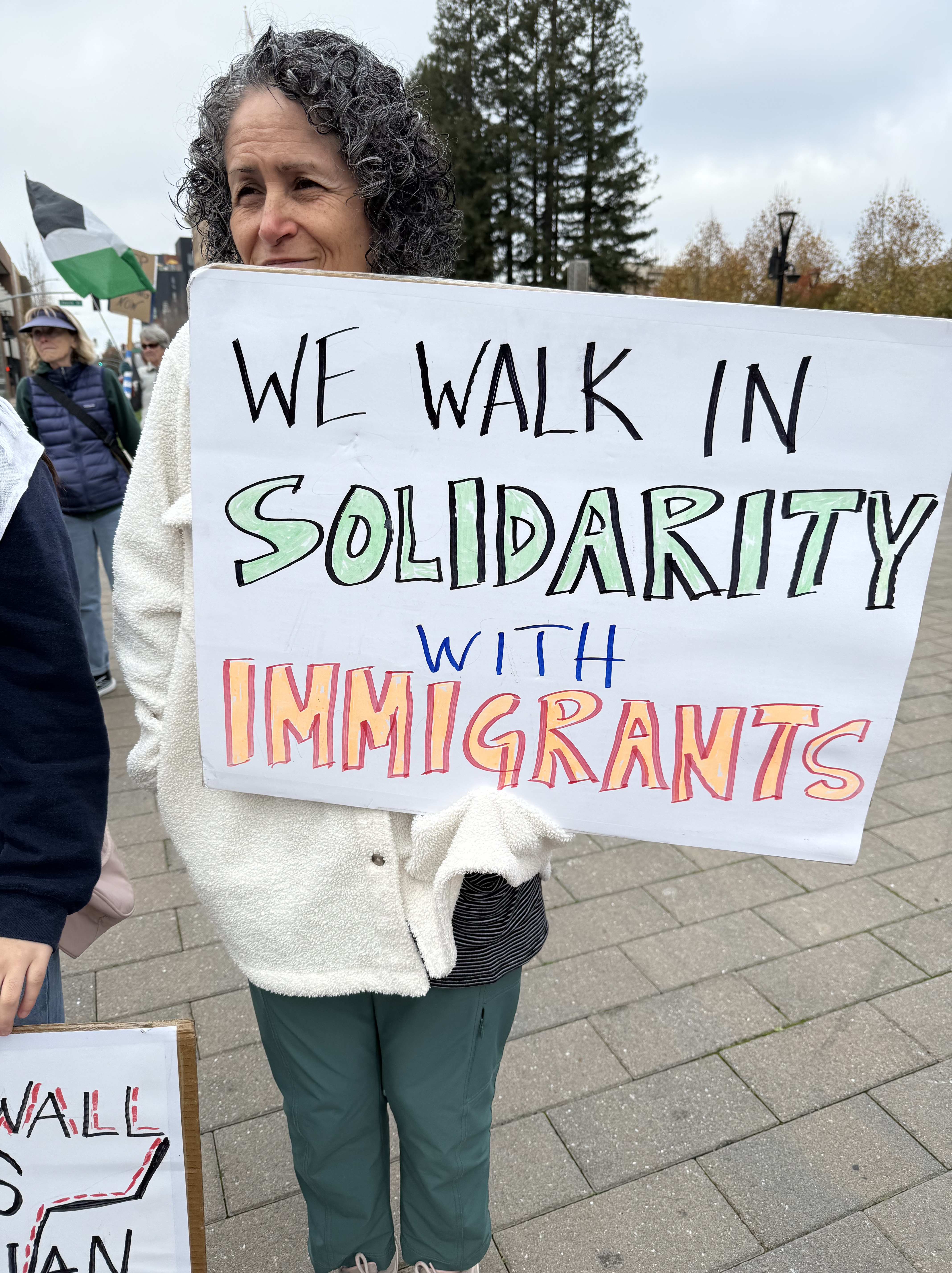
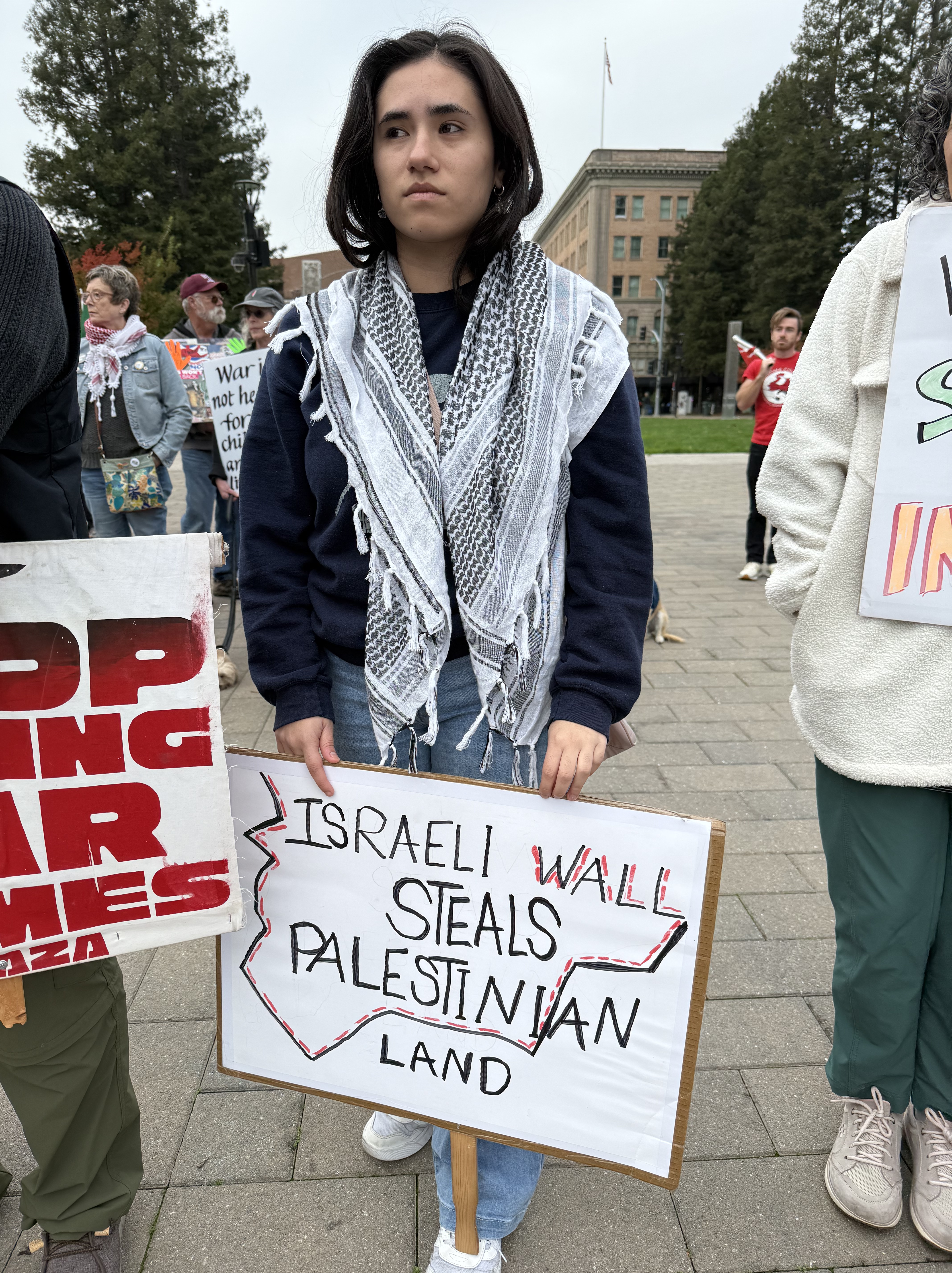
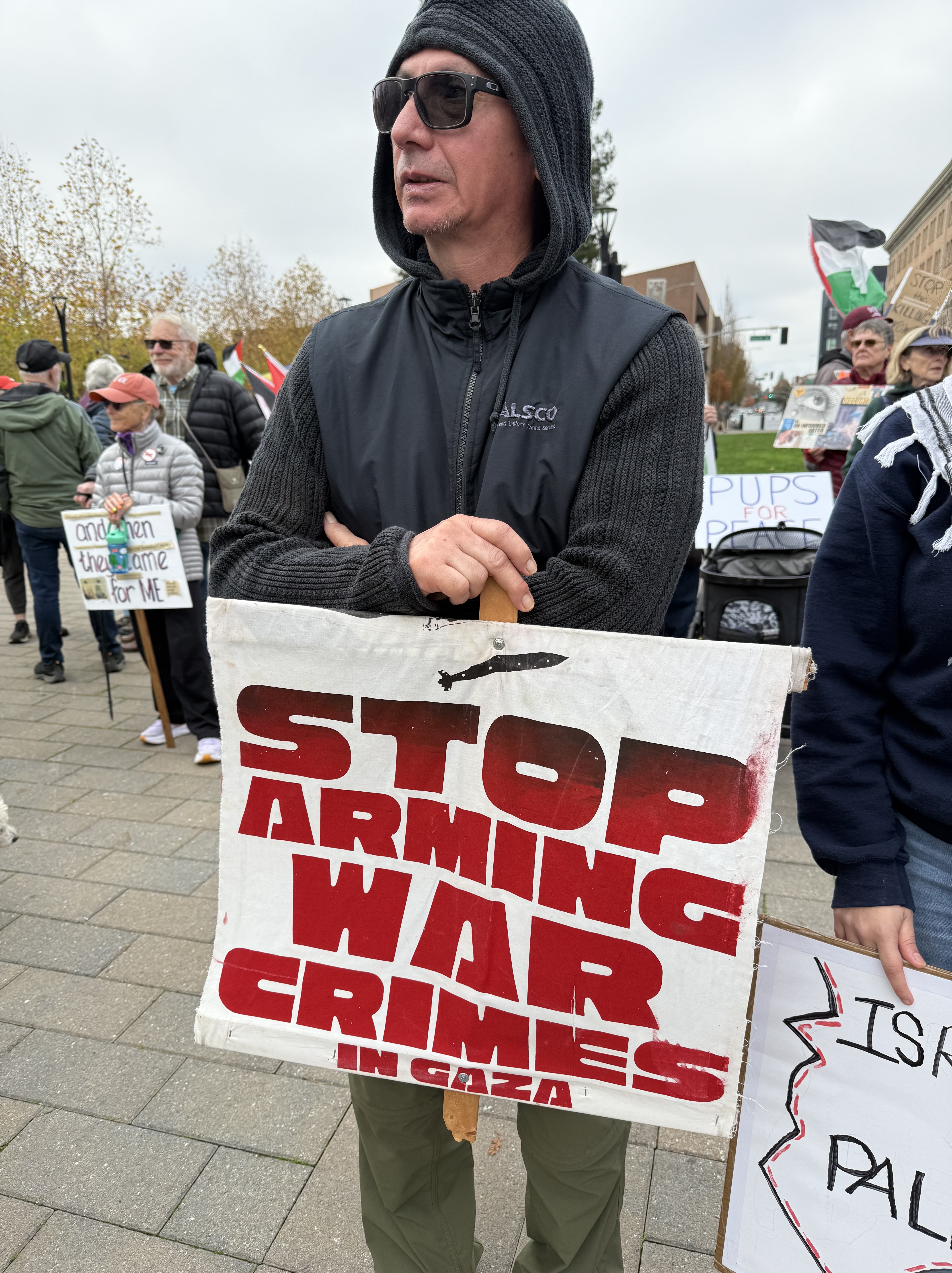
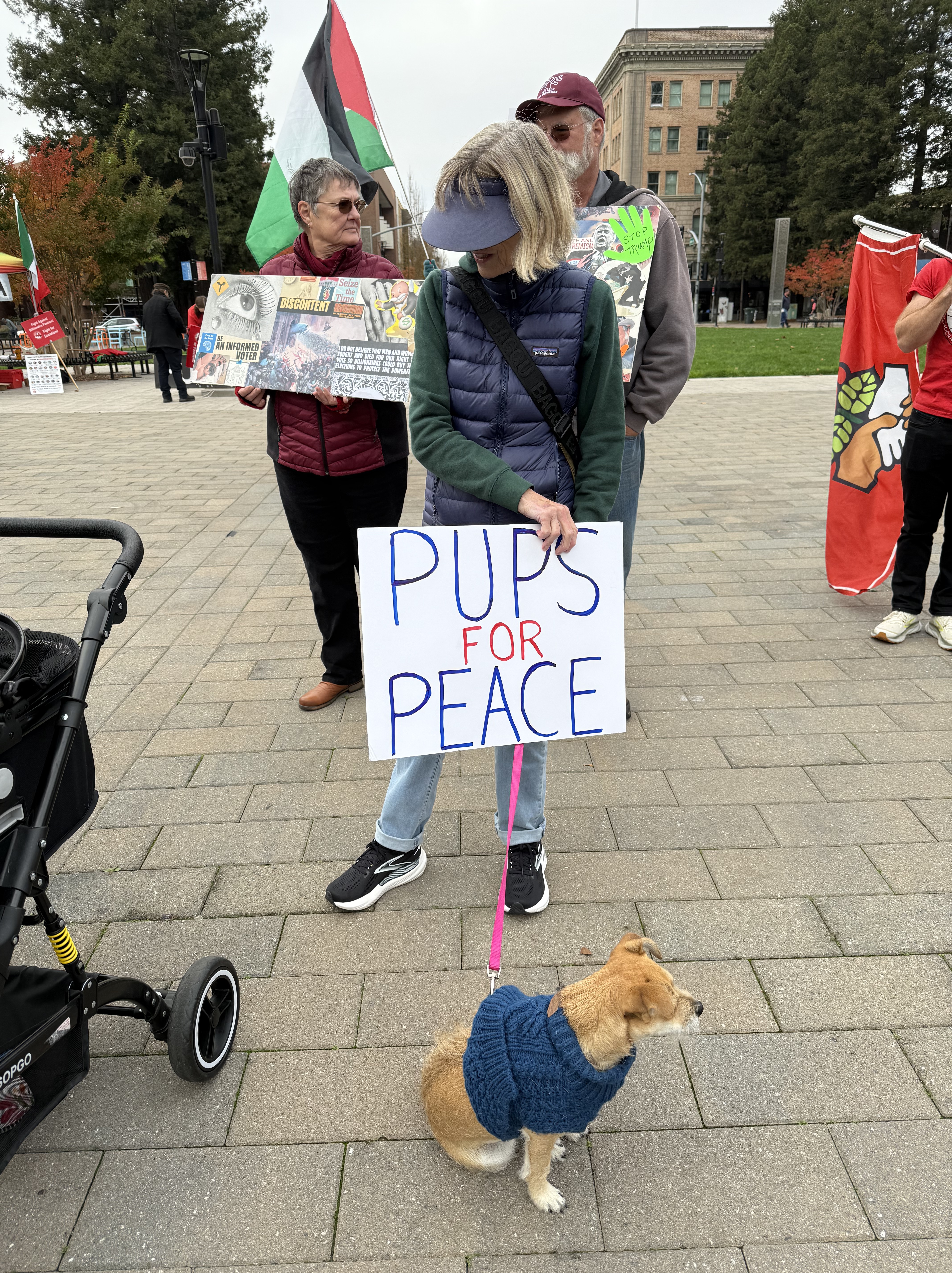
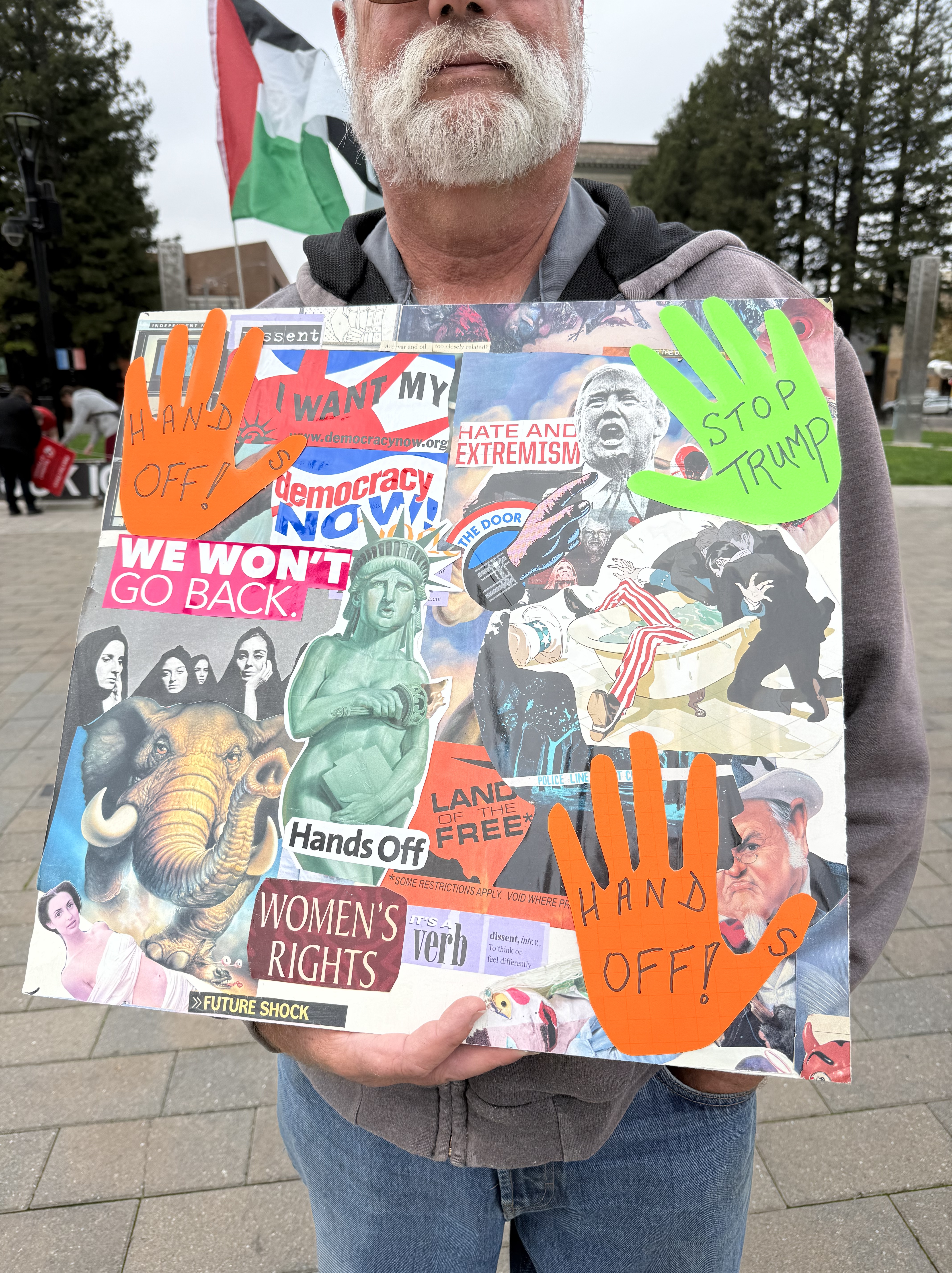
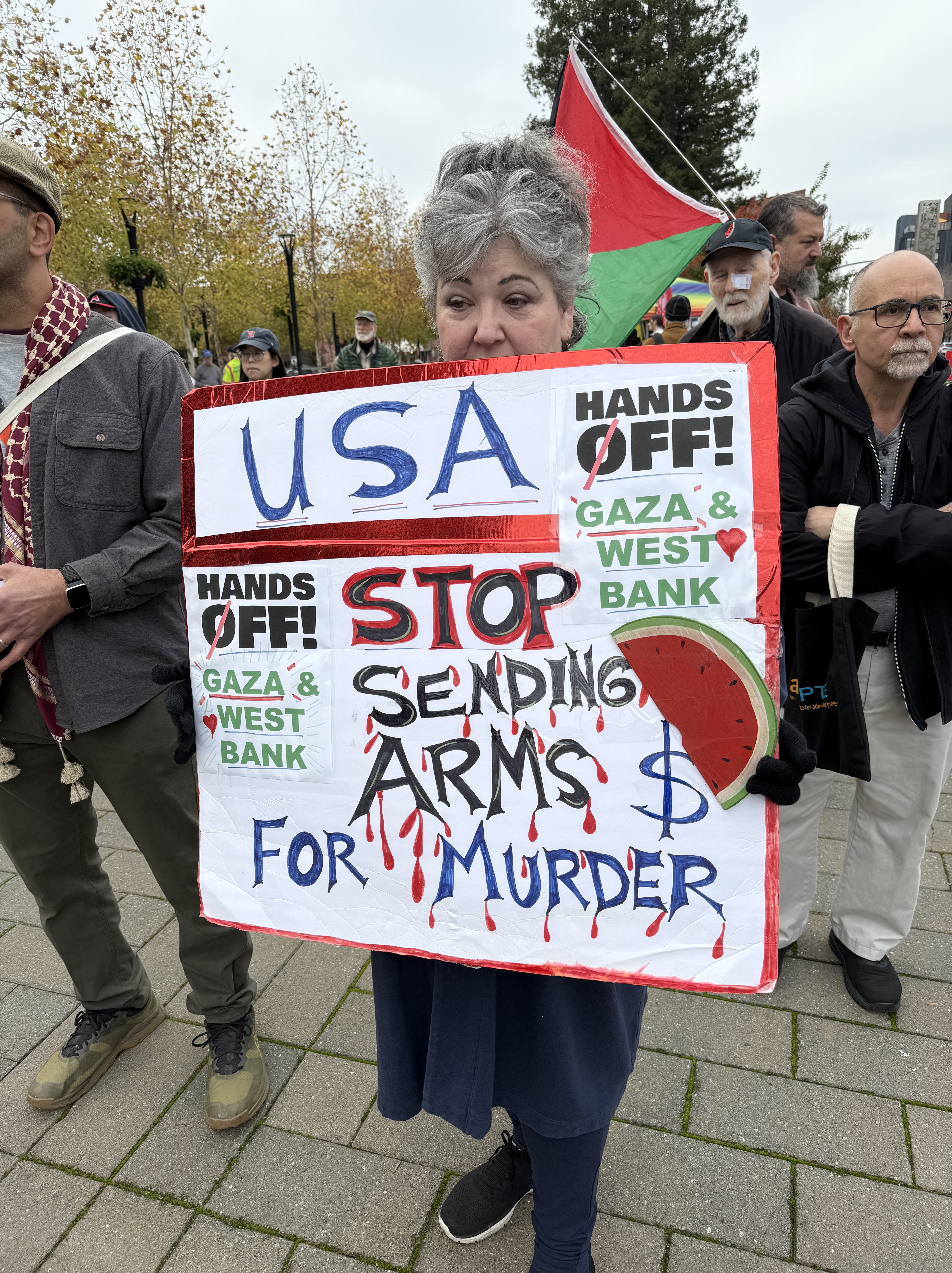
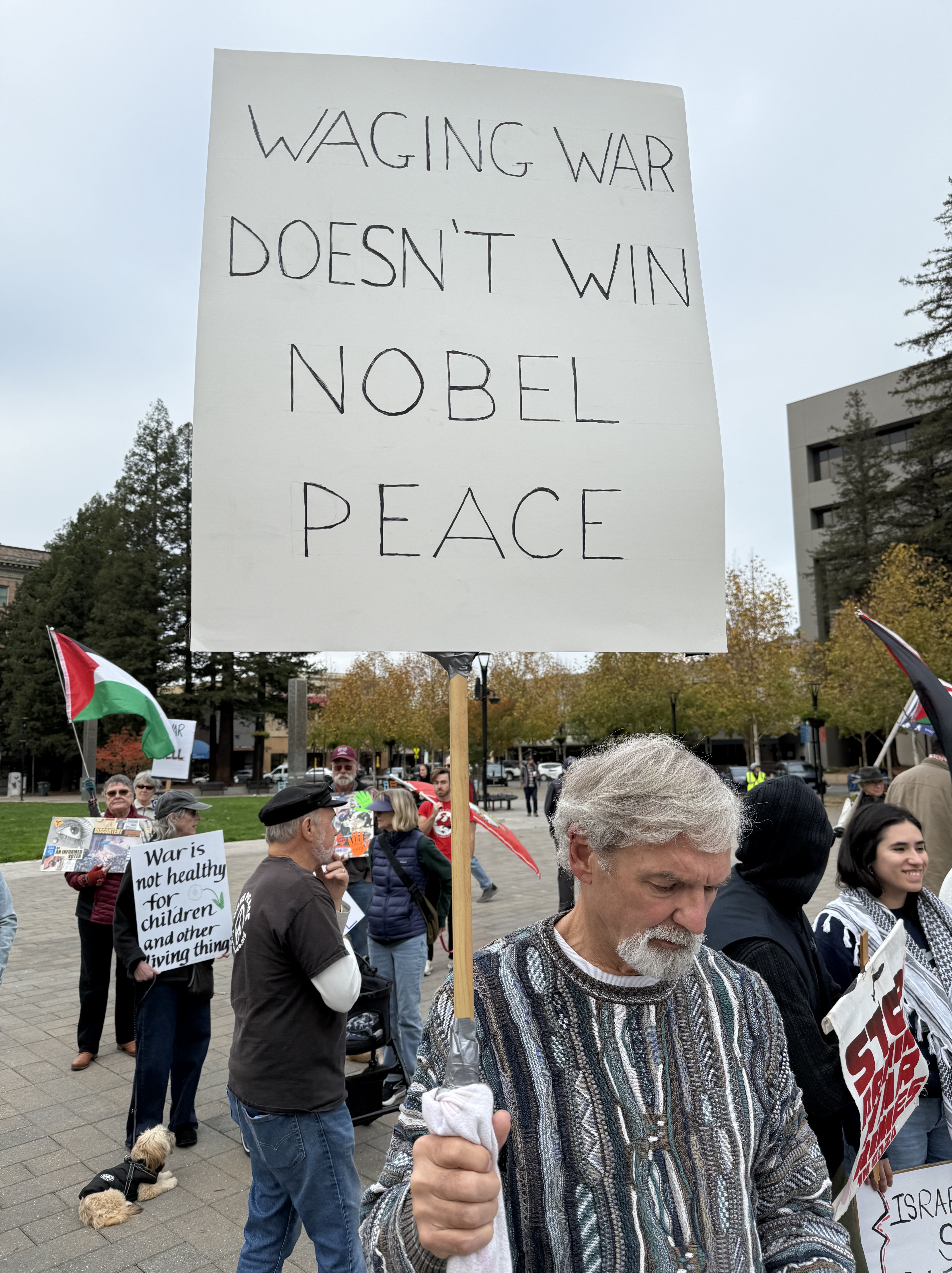
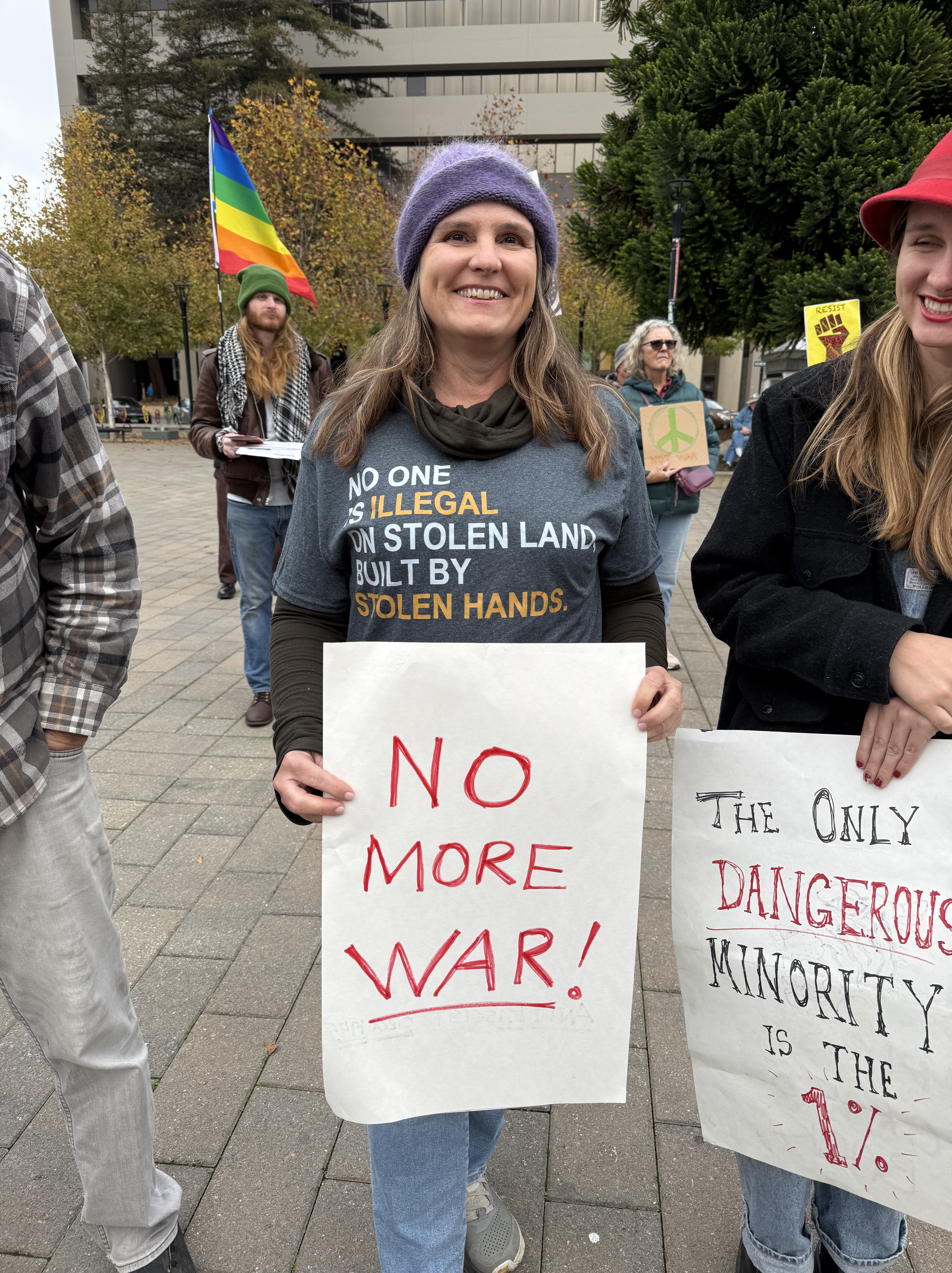
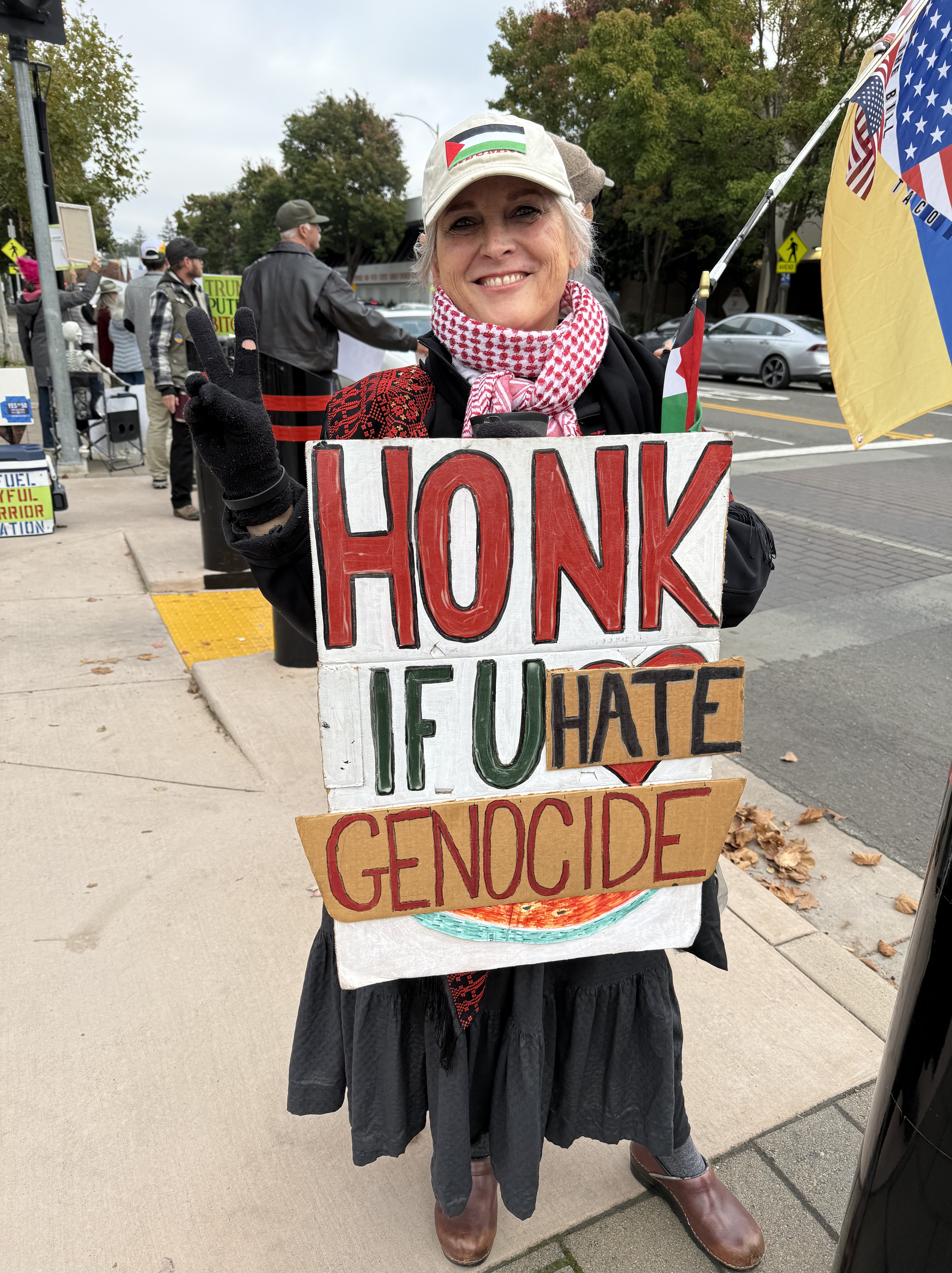
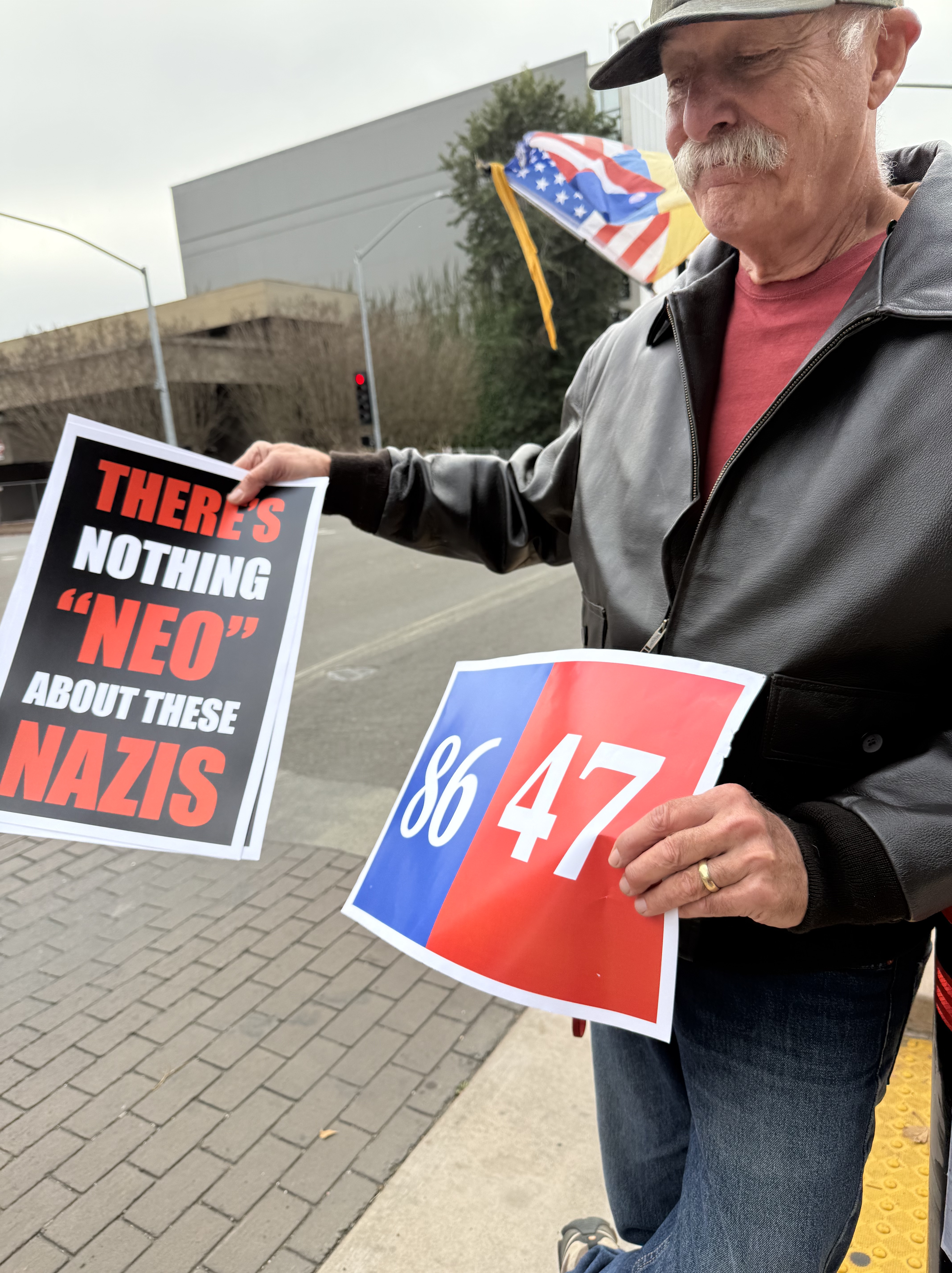
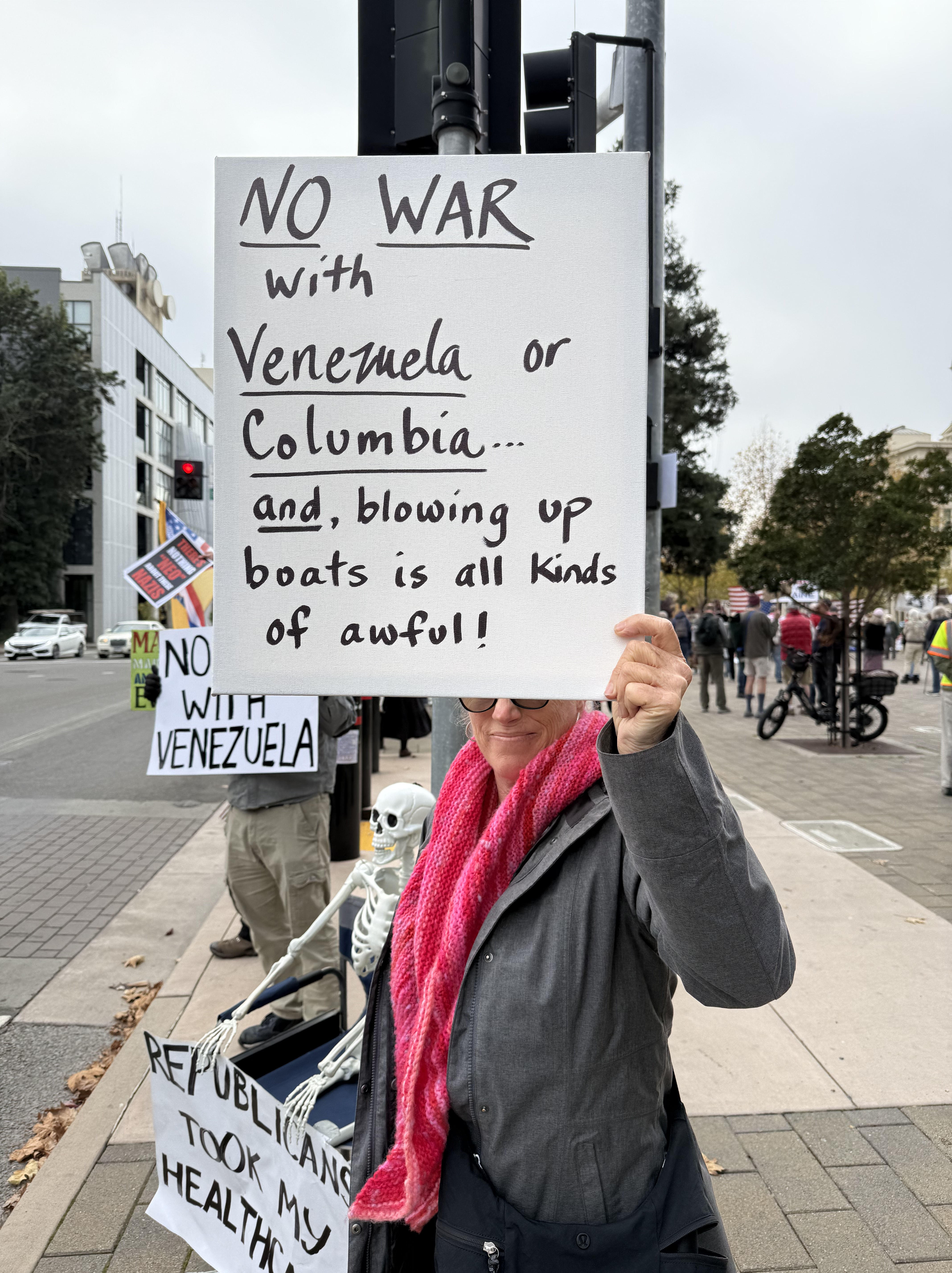
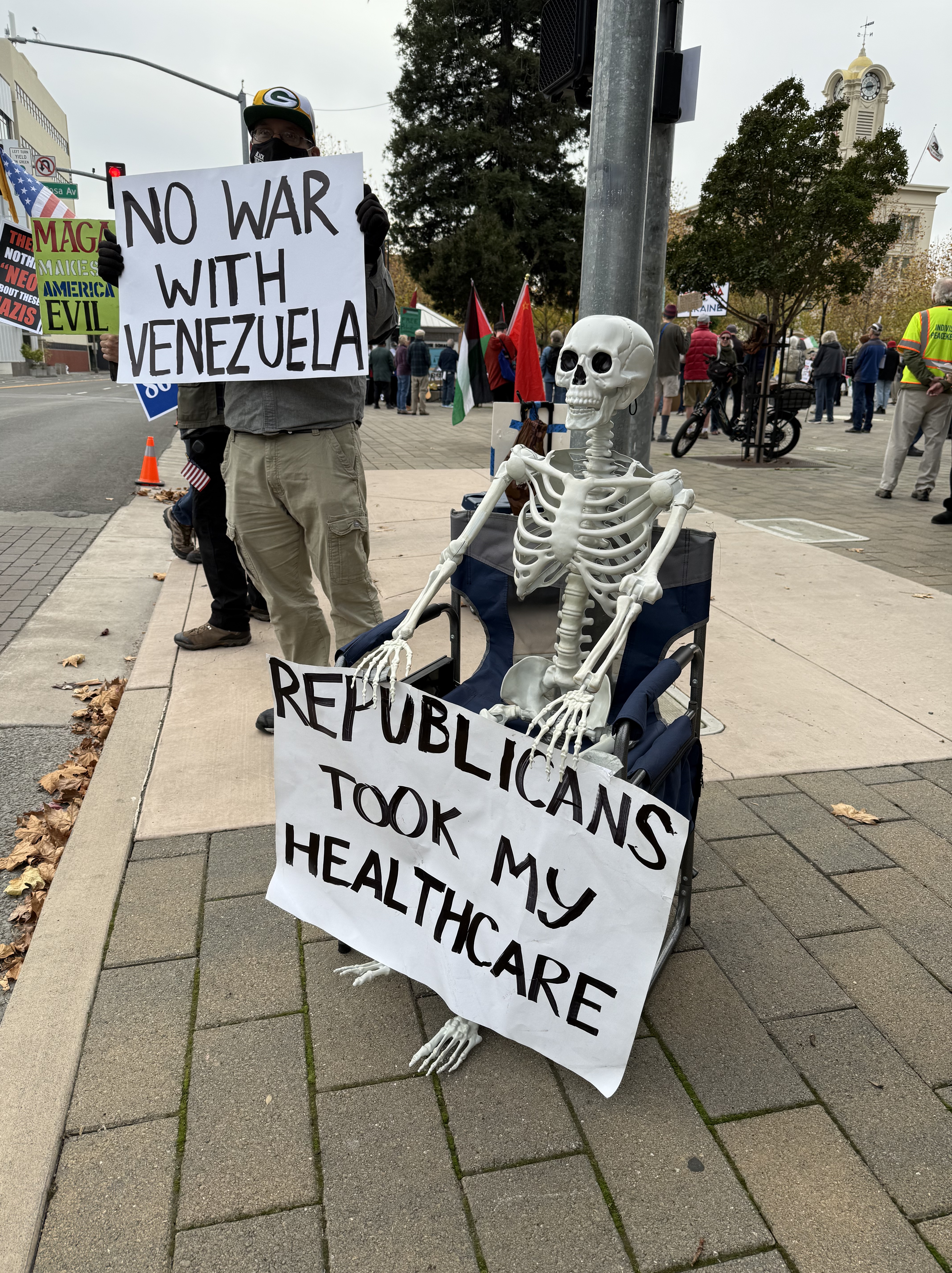
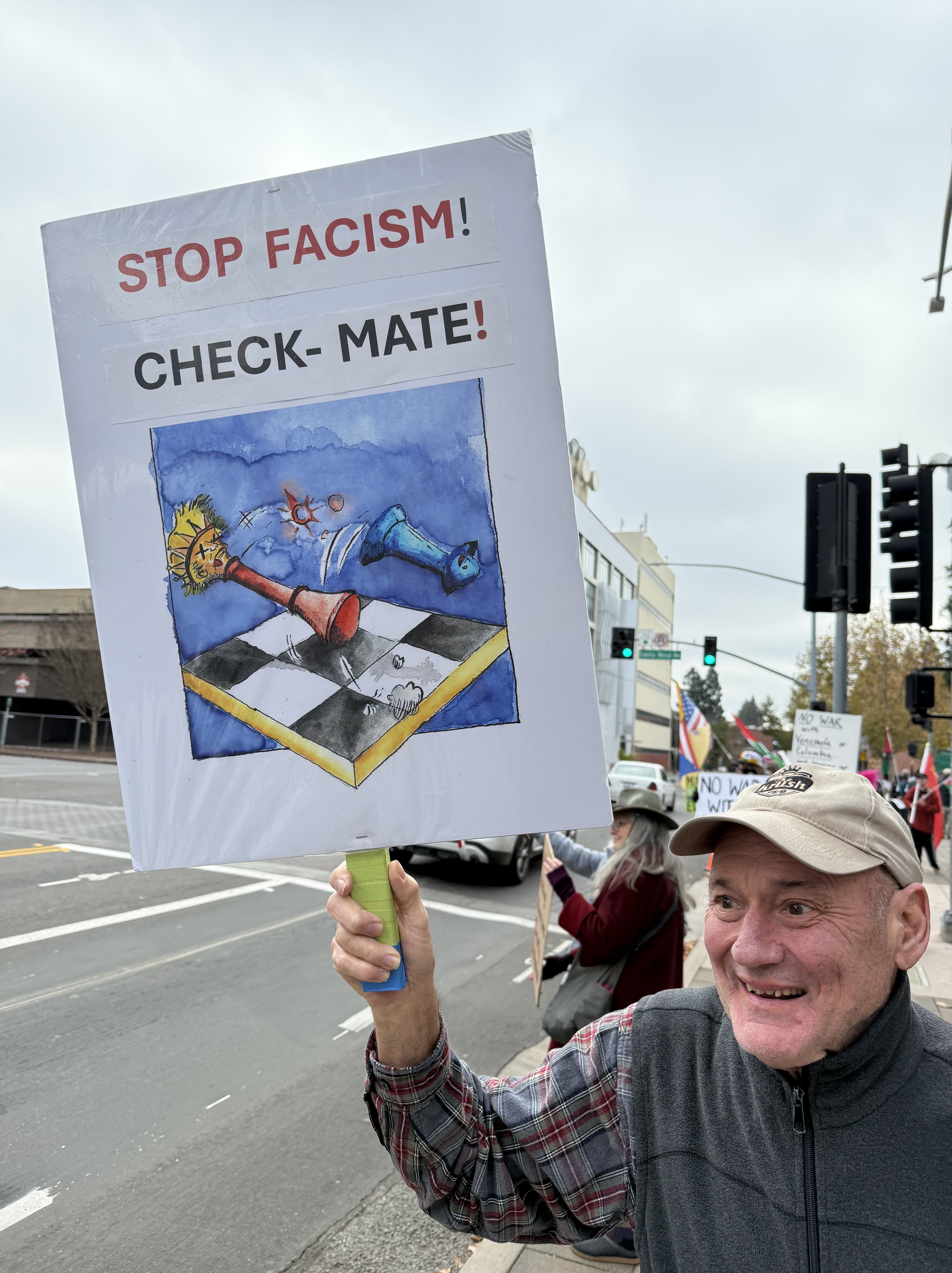
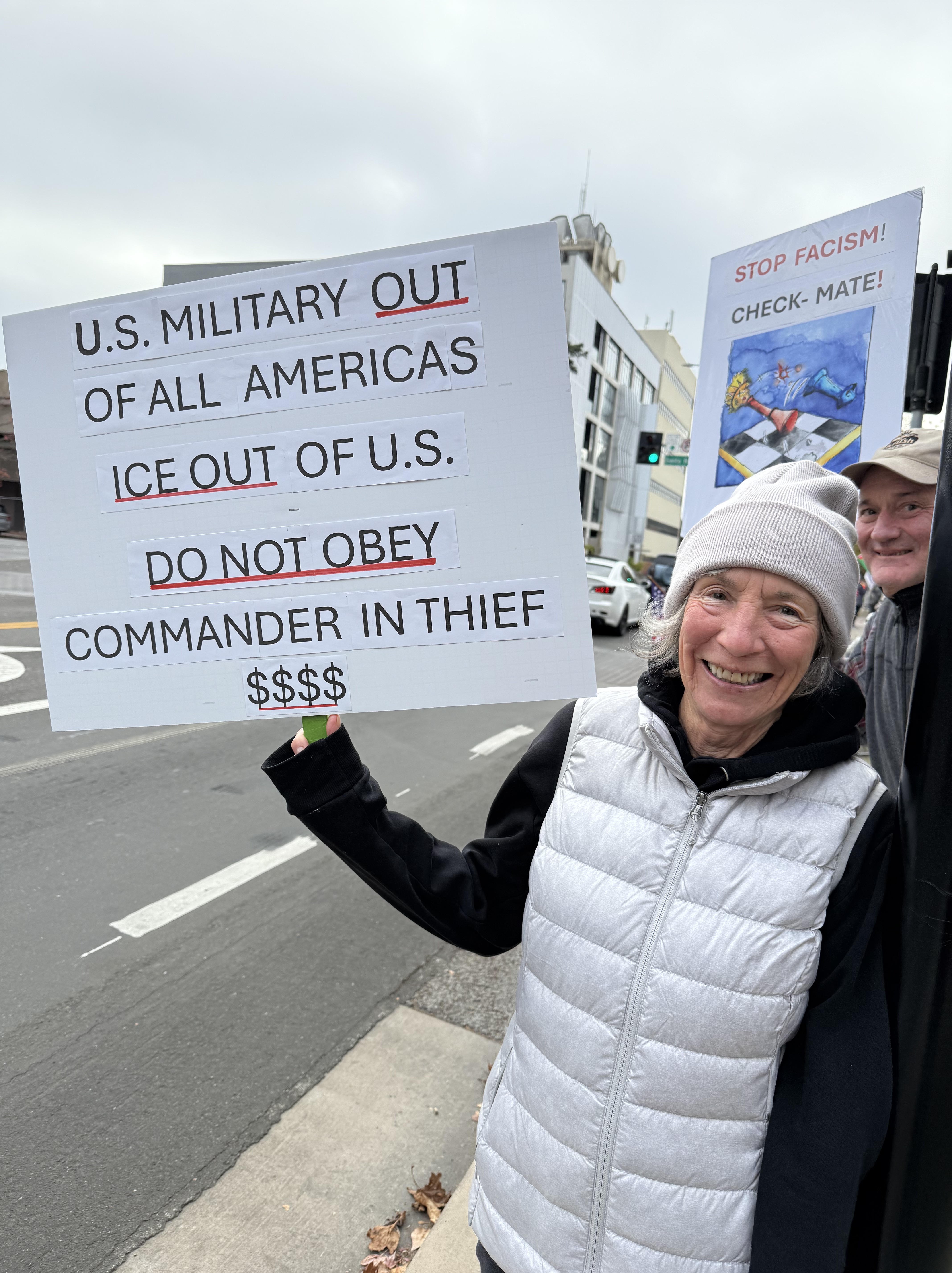
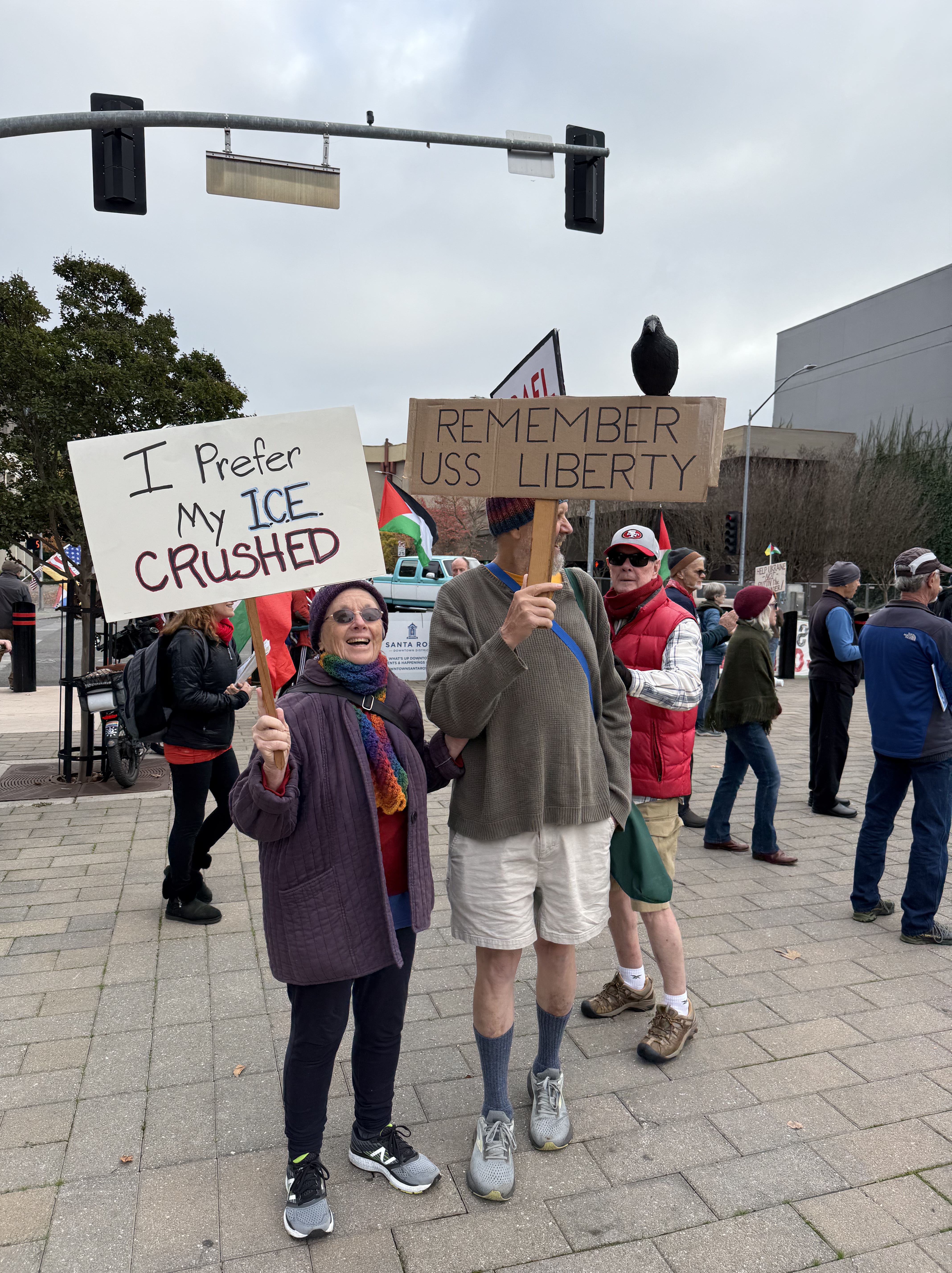
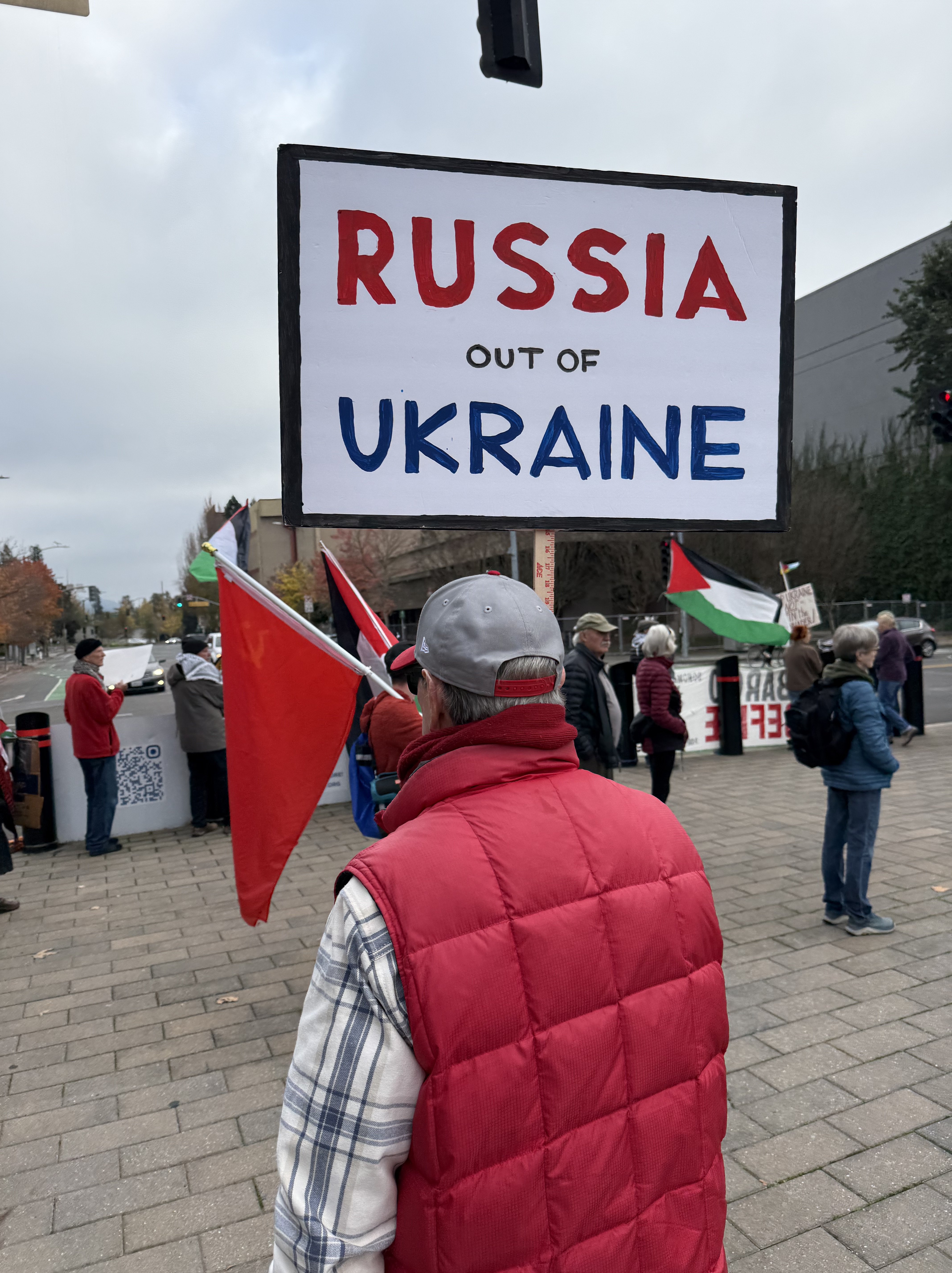
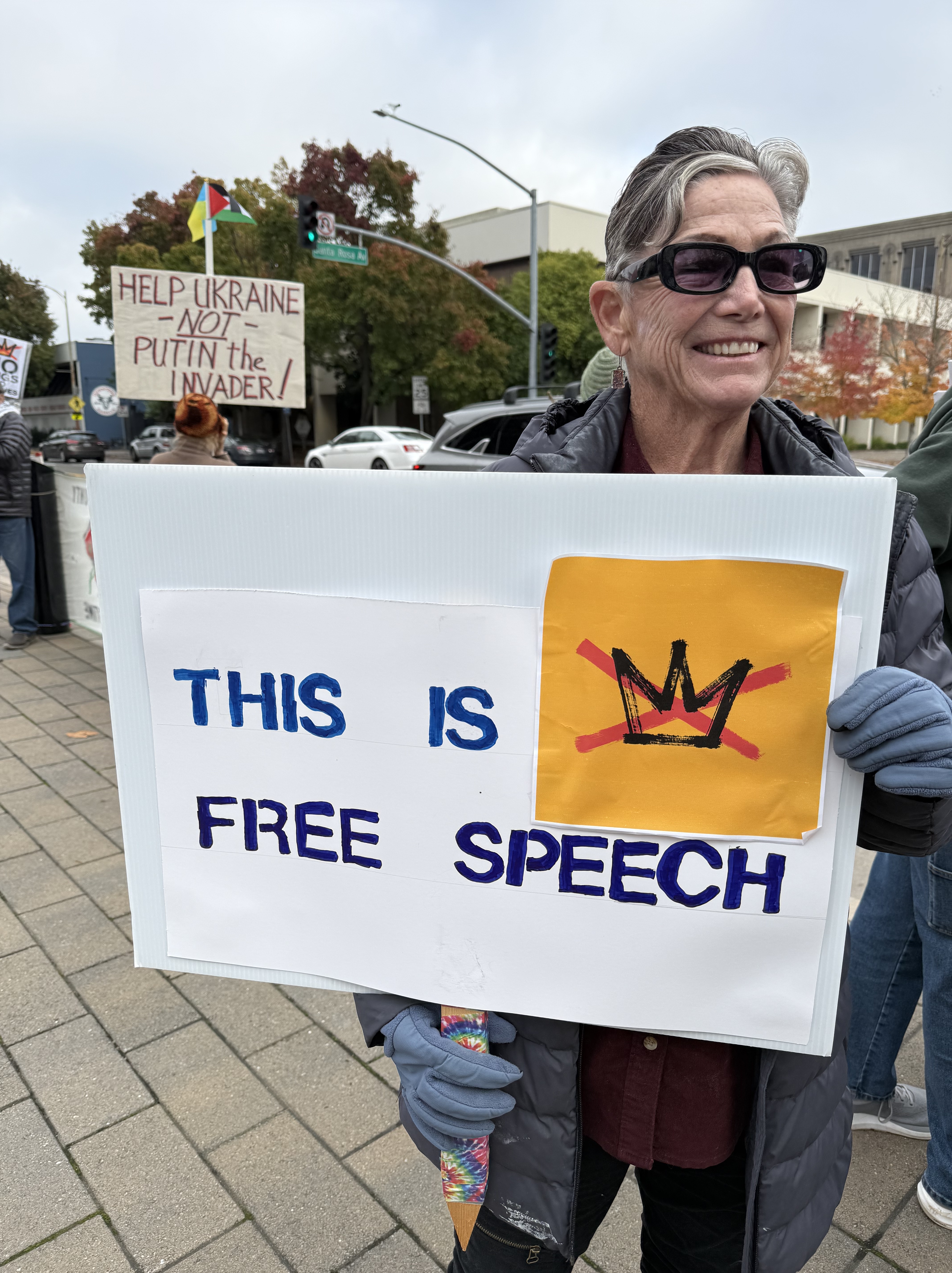
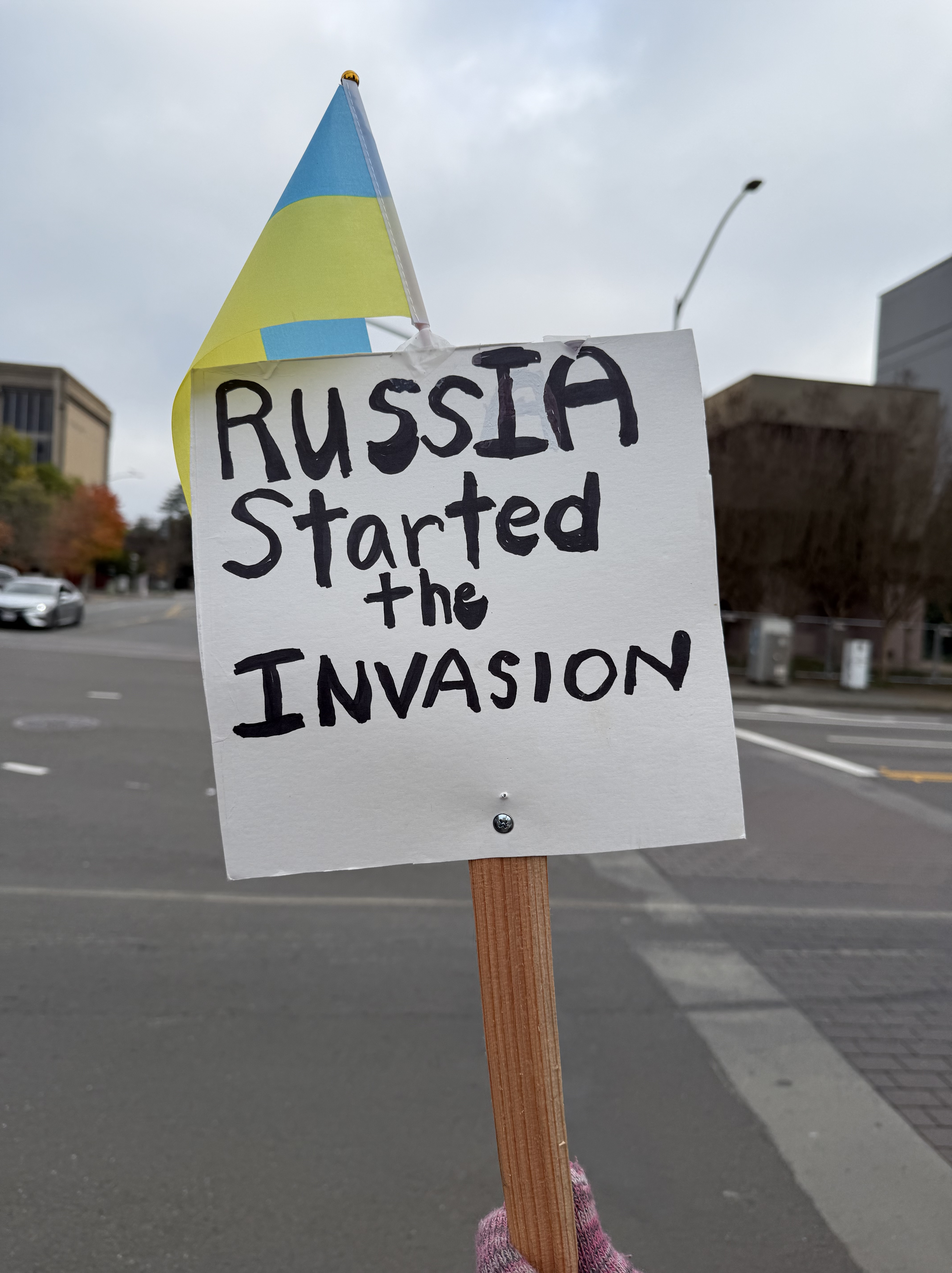
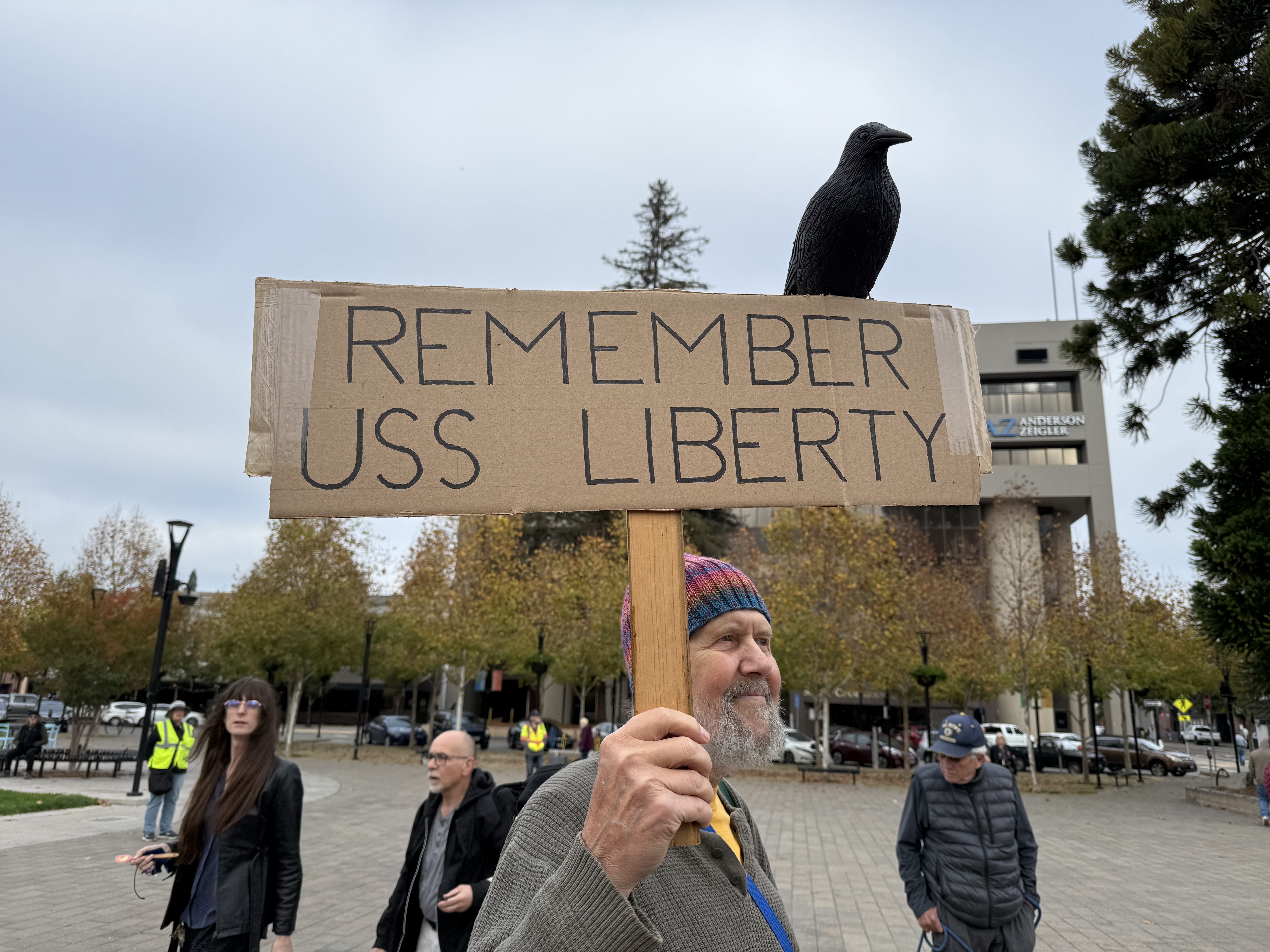
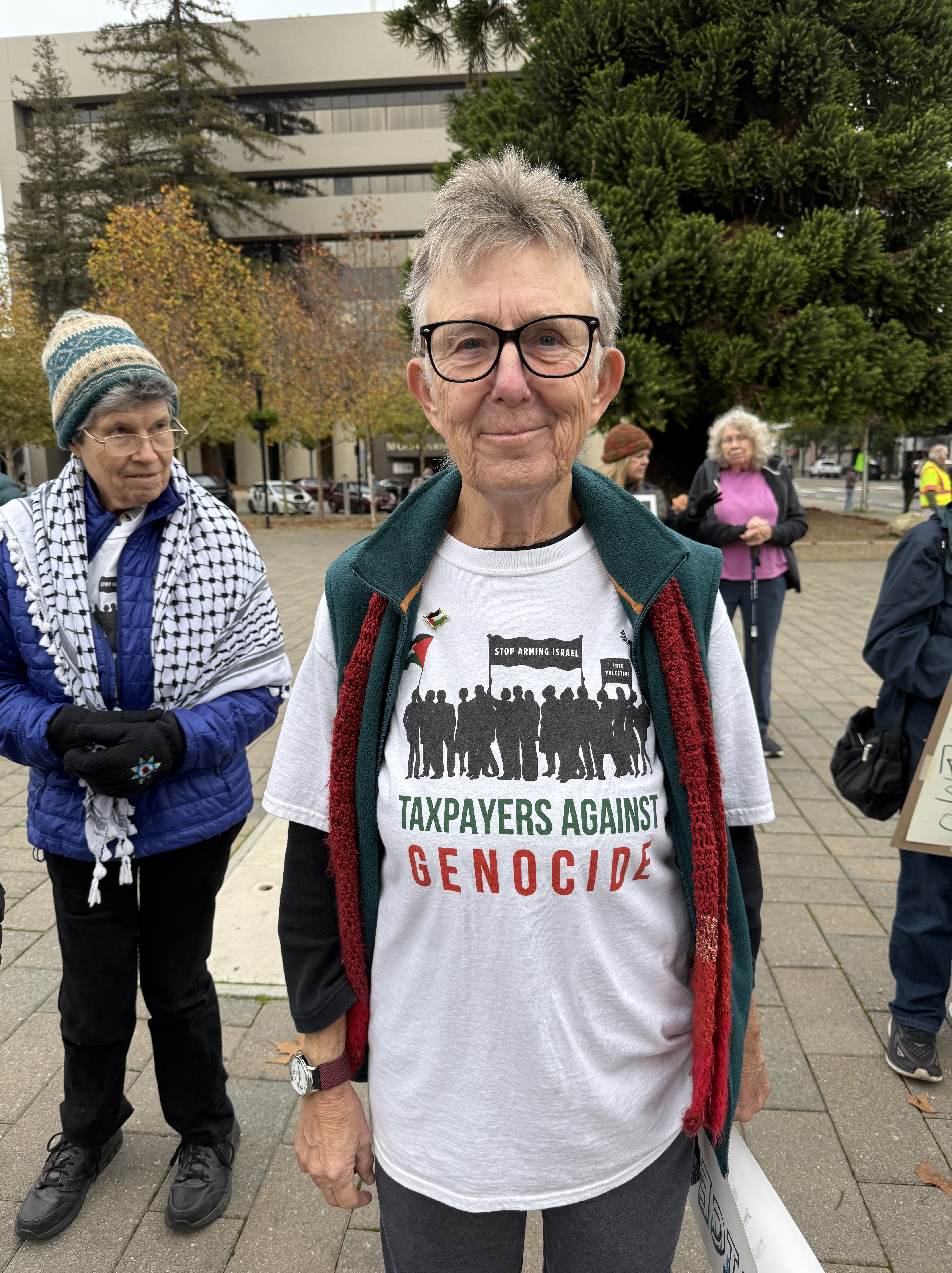
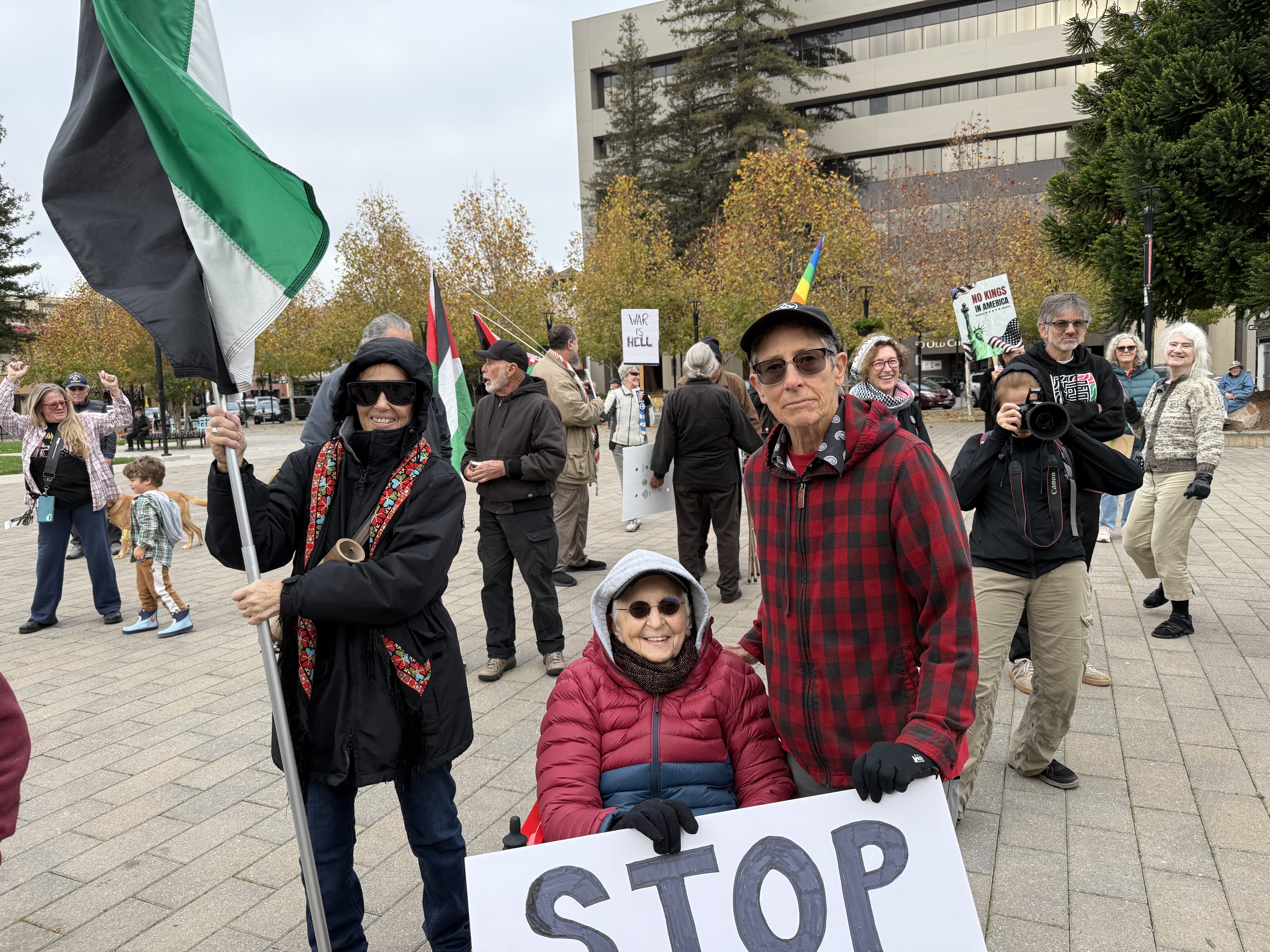
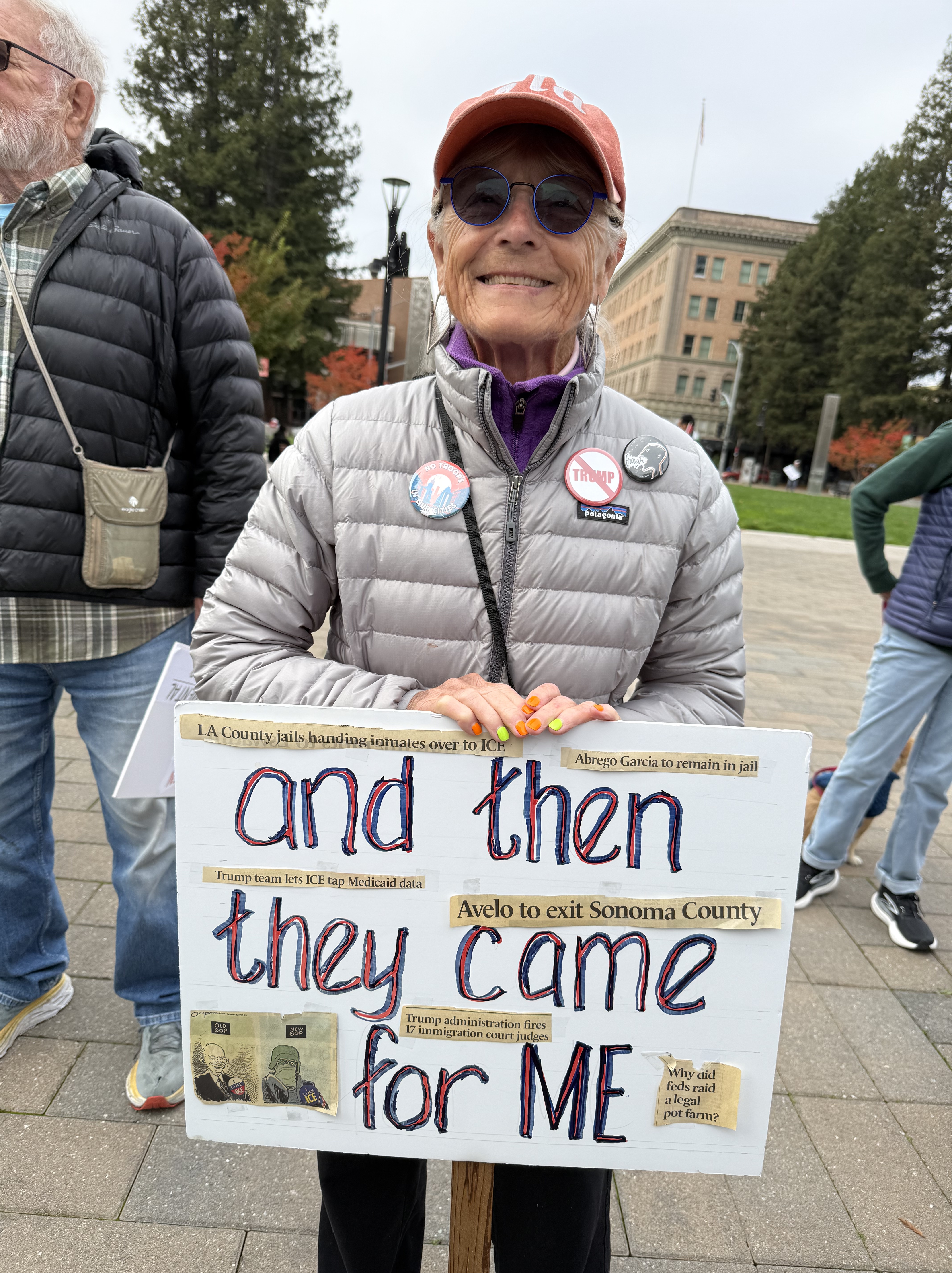
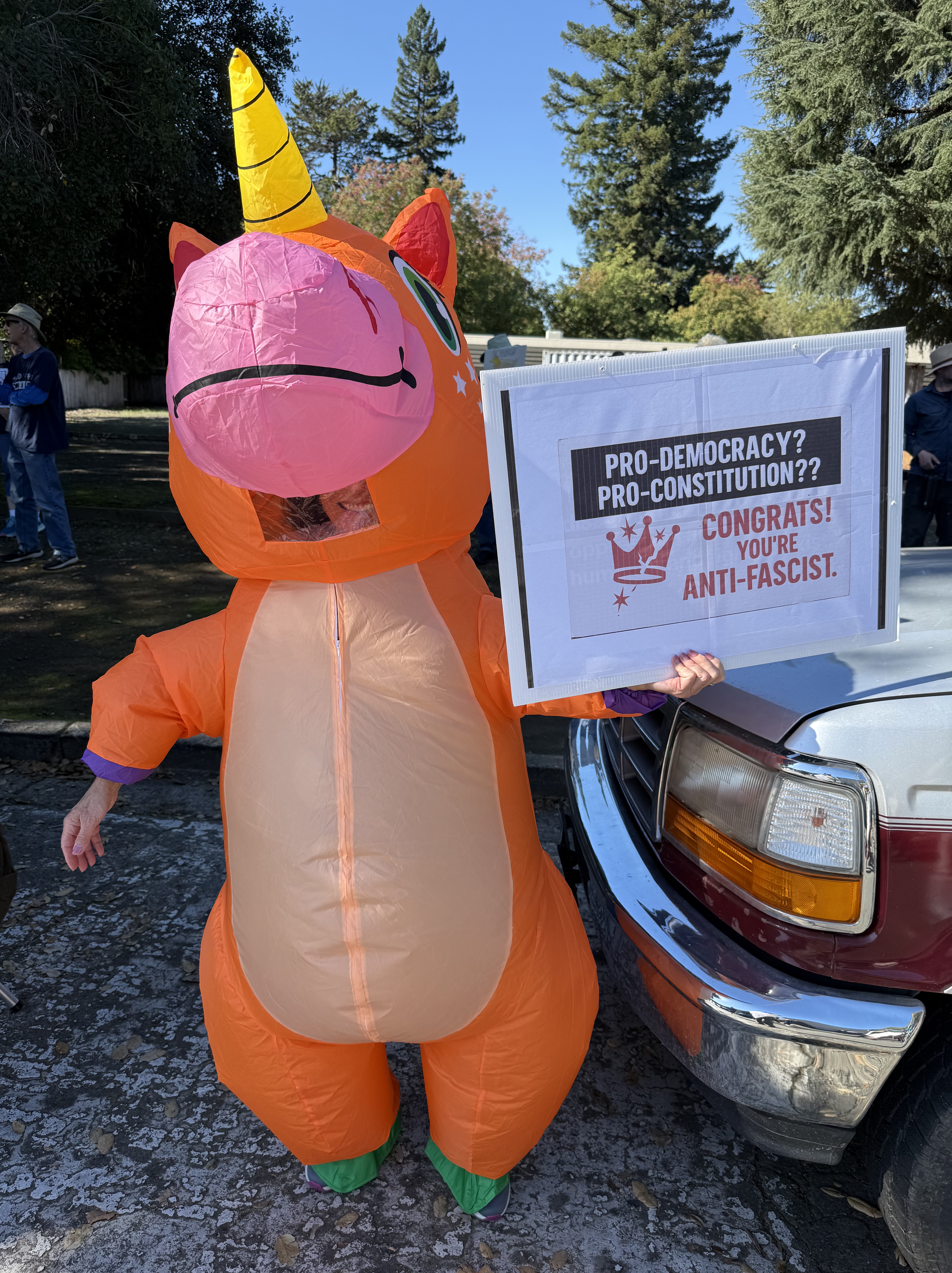
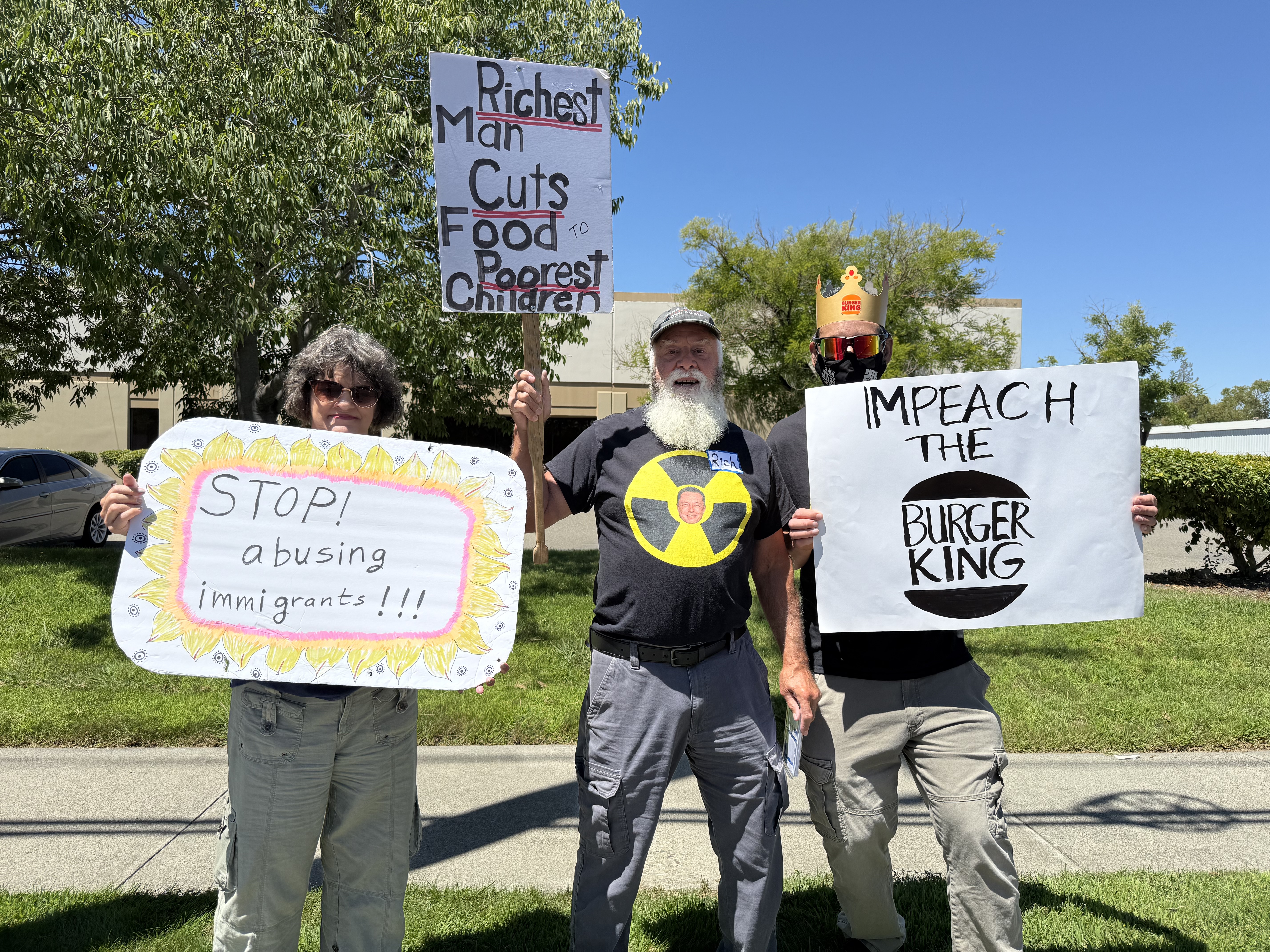
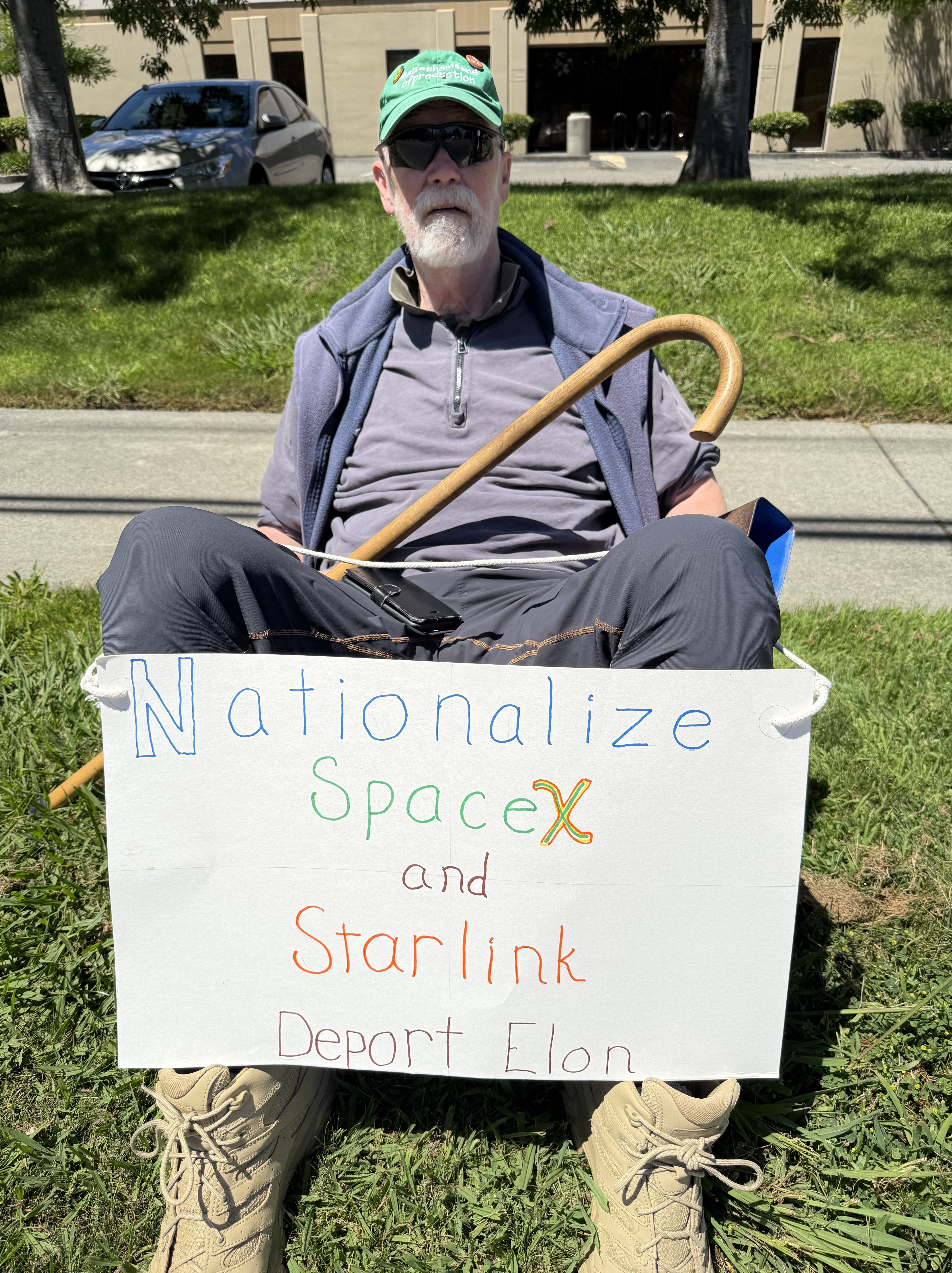
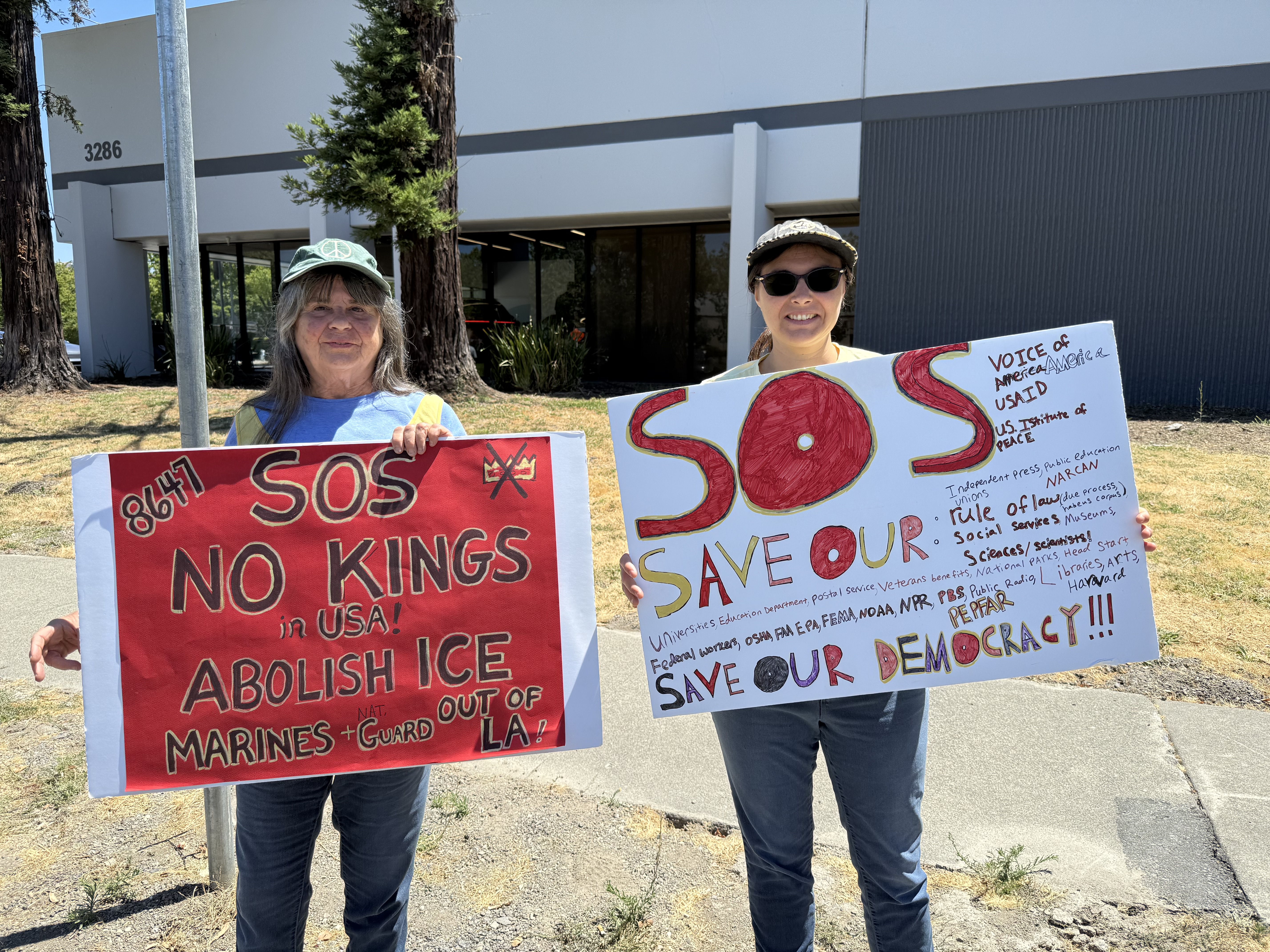
Marchers were coming from two directions to meet in Old Courthouse Square, but we decided to come directly to the square. I wanted to hear friends in the Good Trouble Band (they were great). The Press Democrat estimated 12,000 people at the protest, our biggest by far. I took lots of pictures and here are a few.
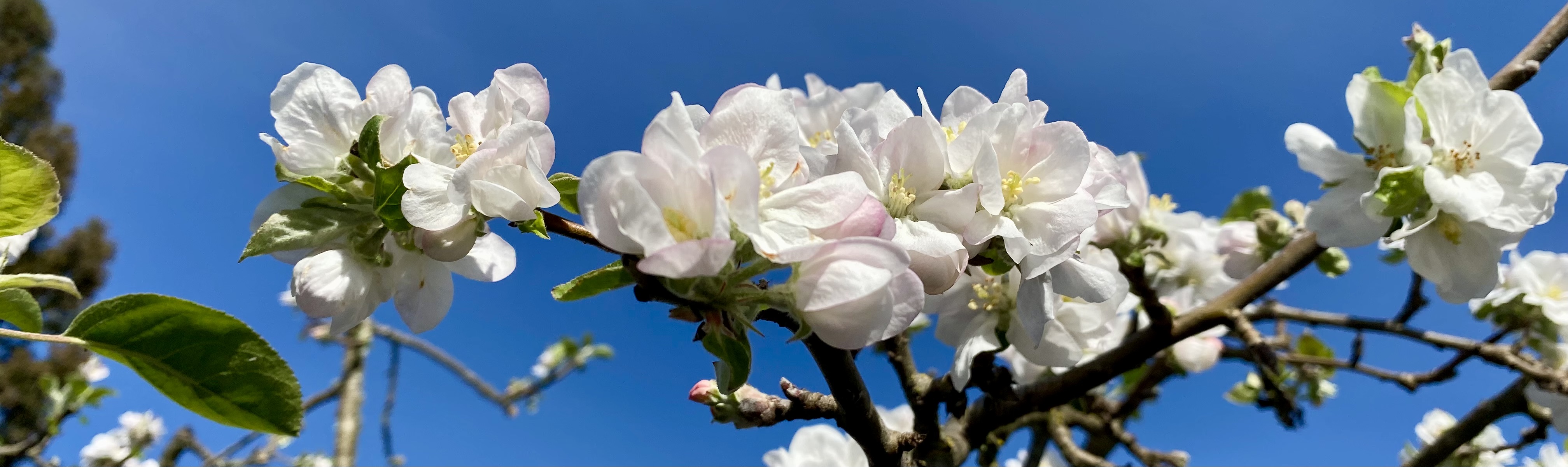
Each spring, near the Vernal Equinox, my family practiced a ritual that felt both ordinary and divine. We piled into the car and drove the back roads, wandering through orchards to admire the blossoming trees. In an agricultural town in the 1950s, perhaps many families did something similar. To us it marked the true arrival of Spring.
Yakima, Washington is on the dry eastern side of the Cascade mountain range, and from certain places in the valley you can glimpse two great peaks rising in white brilliance above the brown, sagebrushy foothills. The Indigenous peoples named the mountain we call Rainier Tahoma, which means “the mother of waters.” The Native name for Mt. Adams is Pahto. Closer in, foothill ridges encircle the valley: Ahtanum Ridge, Rattlesnake Hills, Horse Heaven Hills.
Our annual blossom pilgrimages would take us south to the Lower Valley where the trees bloomed earlier. To reach it from the town of Yakima, you drive through a narrow gap in the Rattlesnake Hills at Union Gap, where a massive basalt landslide is now slowly creeping south at a foot and a half per week. Drive fast and don’t look up.
From there, the road winds along the Yakima River past Wapato, Toppenish, and Buena—locally pronounced Byoo-enna. I didn’t realize until adulthood that the word is Spanish. Originally, the place had been called Konewock, a Native word meaning a lush, green marshy place. But when the railroad needed a station name, it became Buena.
The Yakama Indian Reservation borders the Lower Valley towns and stretches west toward Mount Adams. On the reservation stand the remains of Fort Simcoe, where U.S. soldiers were stationed during the Indian wars of the 1850s—a quiet, uneasy reminder of deeper histories layered beneath the orchards.
Yakima was home to vast orchards of apples and pears, along with stone fruits—peaches, cherries, apricots. In the spring the valley was a quilt of flowering trees, fragrant and luminous. But, in my childhood, change was already underway. Like the orchards here in Sonoma County today, many of Yakima’s were already being razed to make room for postwar housing developments and, later, vineyards.
The new ranch-style house we moved into in 1951 stood on land that had been a cherry orchard. The developers left one tall cherry tree in the front yard of each house on the block. I climbed every one of them. Across the street, an apple orchard remained, and bi-planes flew overhead, trailing clouds of DDT and other pesticides.
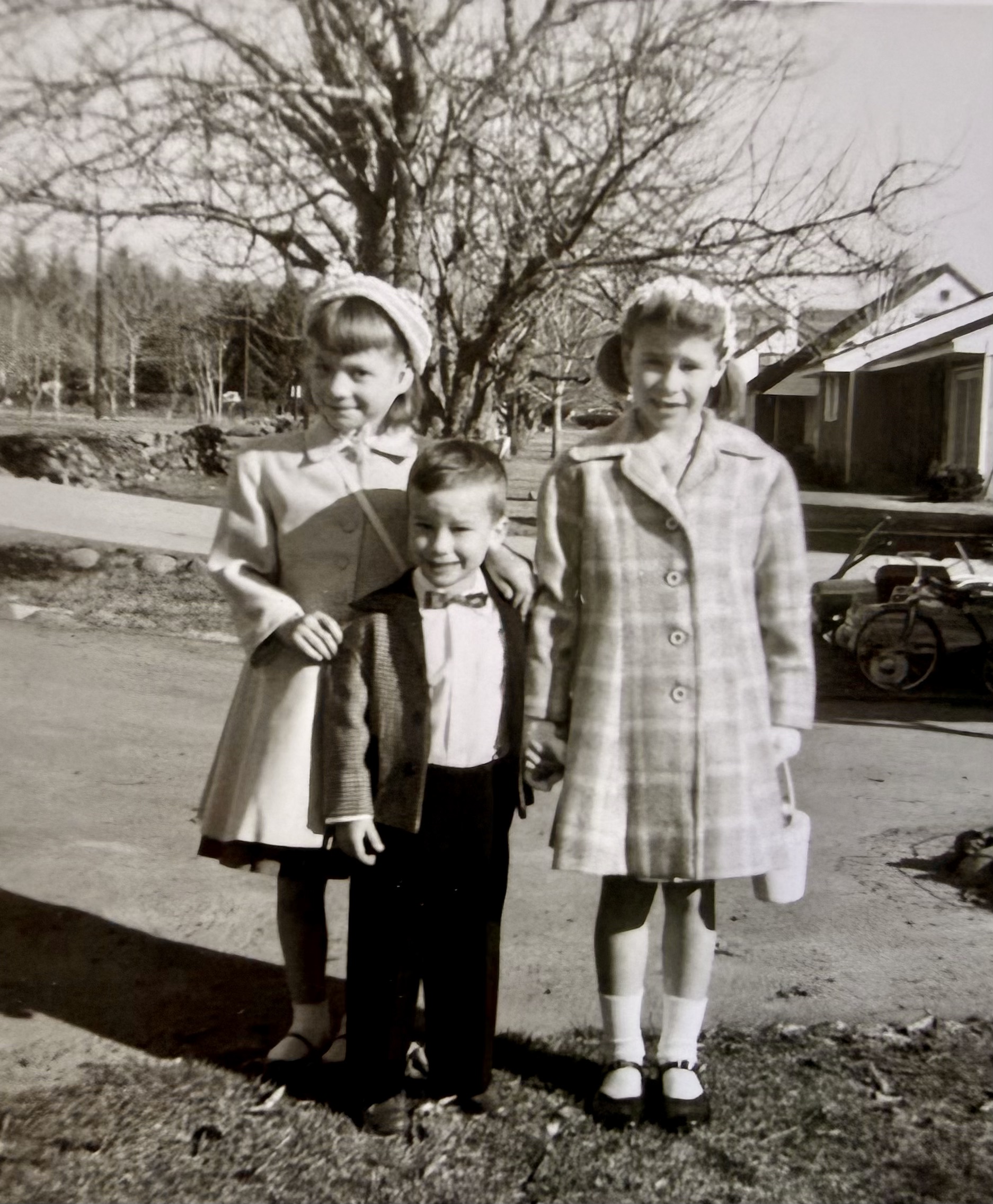
There is the row of cherry trees behind me (R), brother Don and a neighbor. I couldn’t find any blossom pictures and at Easter in 1955 the cherries hadn’t yet bloomed.
When I was a kid, Yakima was a town of about 40,000, with a lively downtown. Women wore hats and gloves to go shopping. Store windows gleamed, sidewalks buzzed, and the town felt cohesive, self-contained. Then, in the 1970s, the first shopping mall arrived, and everything shifted. Downtown slowly hollowed out.
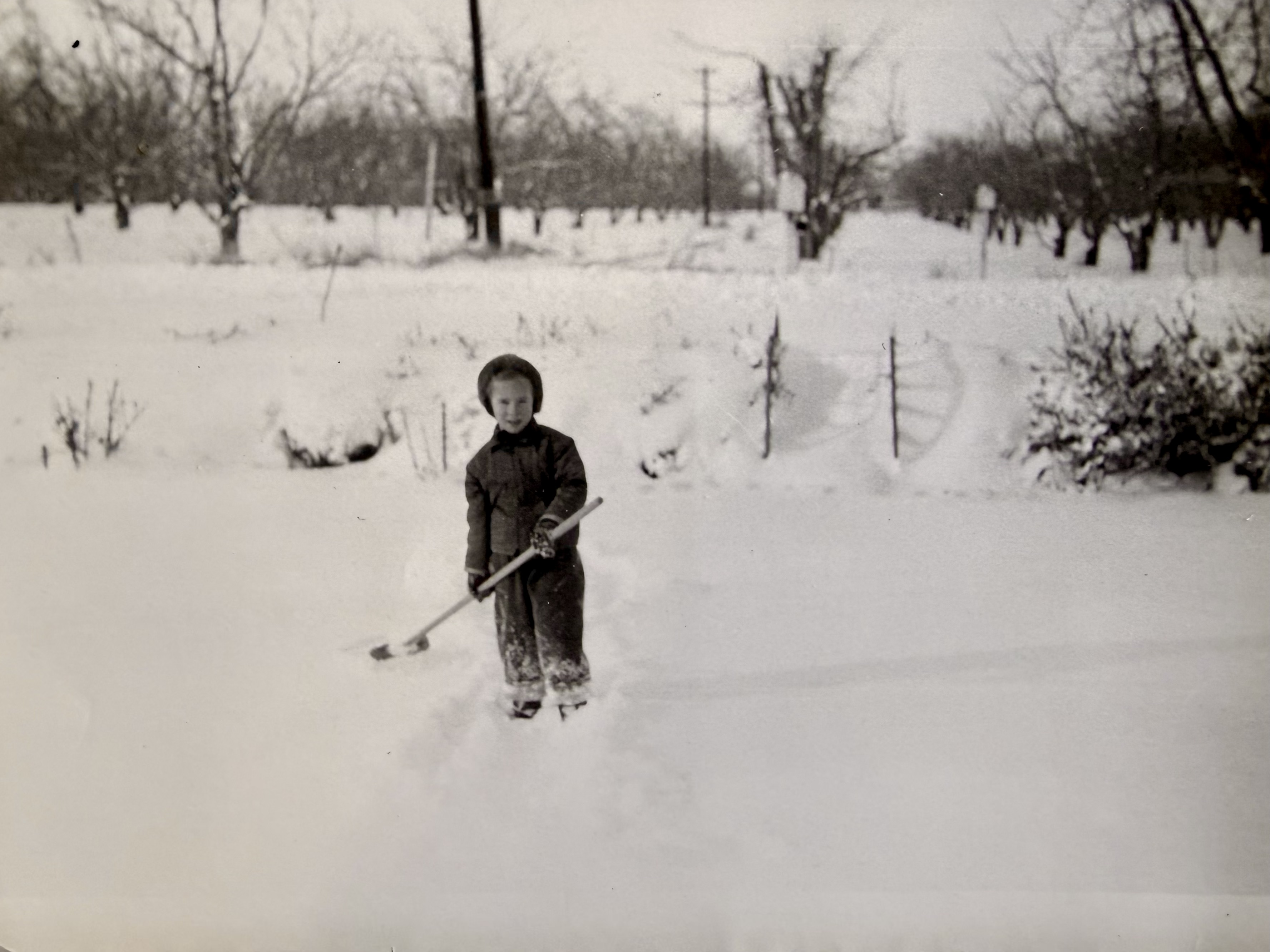
Behind me is the across-the-street apple orchard.
Now the population of Yakima is getting close to 100,000. Farmers still grow hops, and there are still fruit trees—mostly apples—but vineyards have been steadily taking over. There is less blossom-peeping now; grapes, after all, have no blossoms.
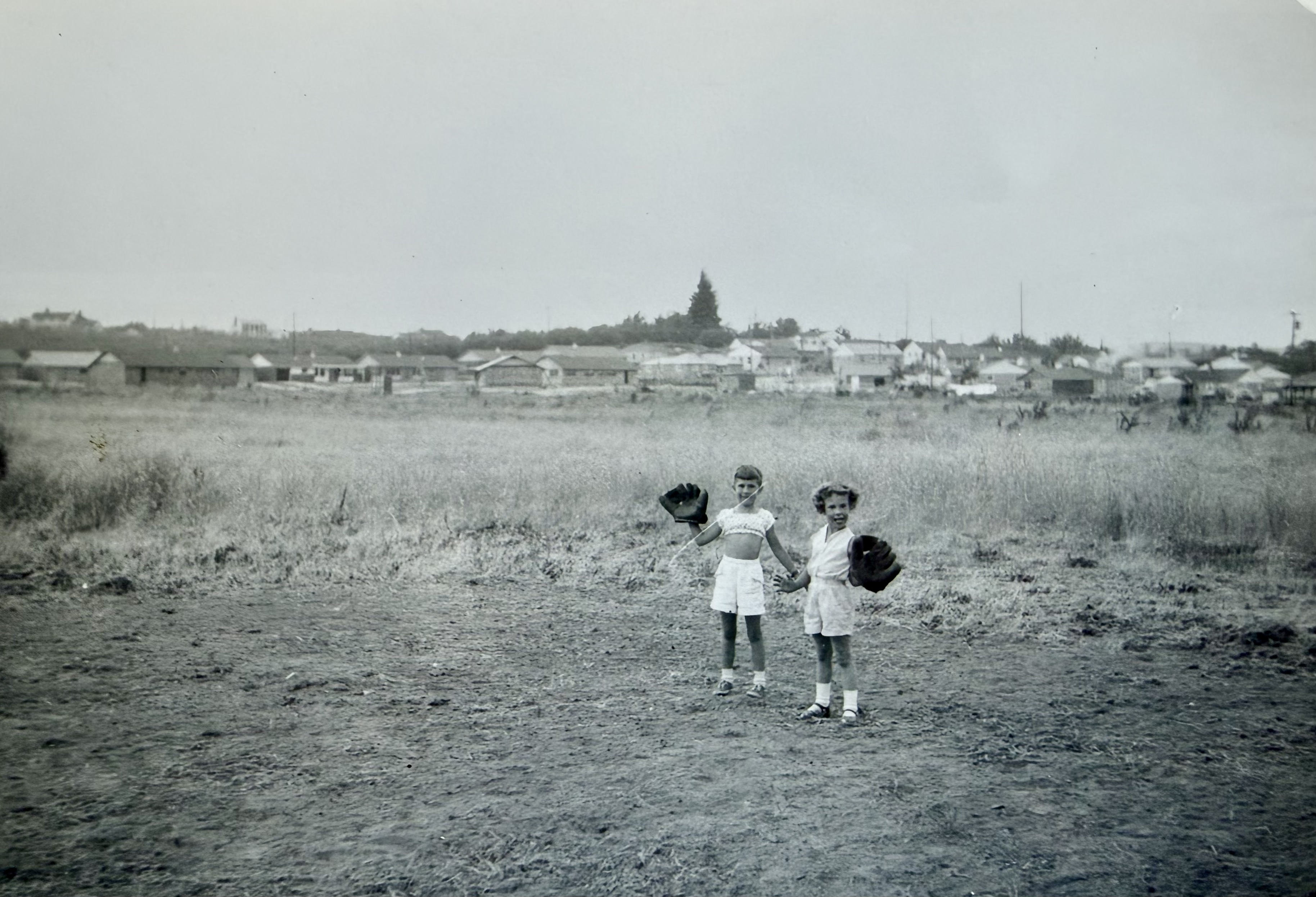
Me (R) and friend. From the back yard we can see development encroaching and a few trees left.
But we still participate in the ritual of spring blossom peeping. Holly and I have planted a little orchard of cherry, plum and peach trees in our back yard. We have a magical orange, and lemon and apple trees hang over our neighbors’ fences. Plus, in our town of Santa Rosa there are magnolias, redbuds, dogwood and ornamental fruit trees, enough to inspire a months’-long Spring ritual right in our neighborhood.
On March 28 we will be marching with our neighbors in the No Kings march and rally here in Santa Rosa, but every little town in Sonoma County will be hosting a No Kings event. We haven’t yet seen a big uptick in ICE arrests here, but the government’s anti-immigrant project is nevertheless creating chaos in the agricultural community. Our sheriff still has not responded to community demands that he not work with ICE and people feel that they are under siege. We are determined to protect and defend our immigrant neighbors.
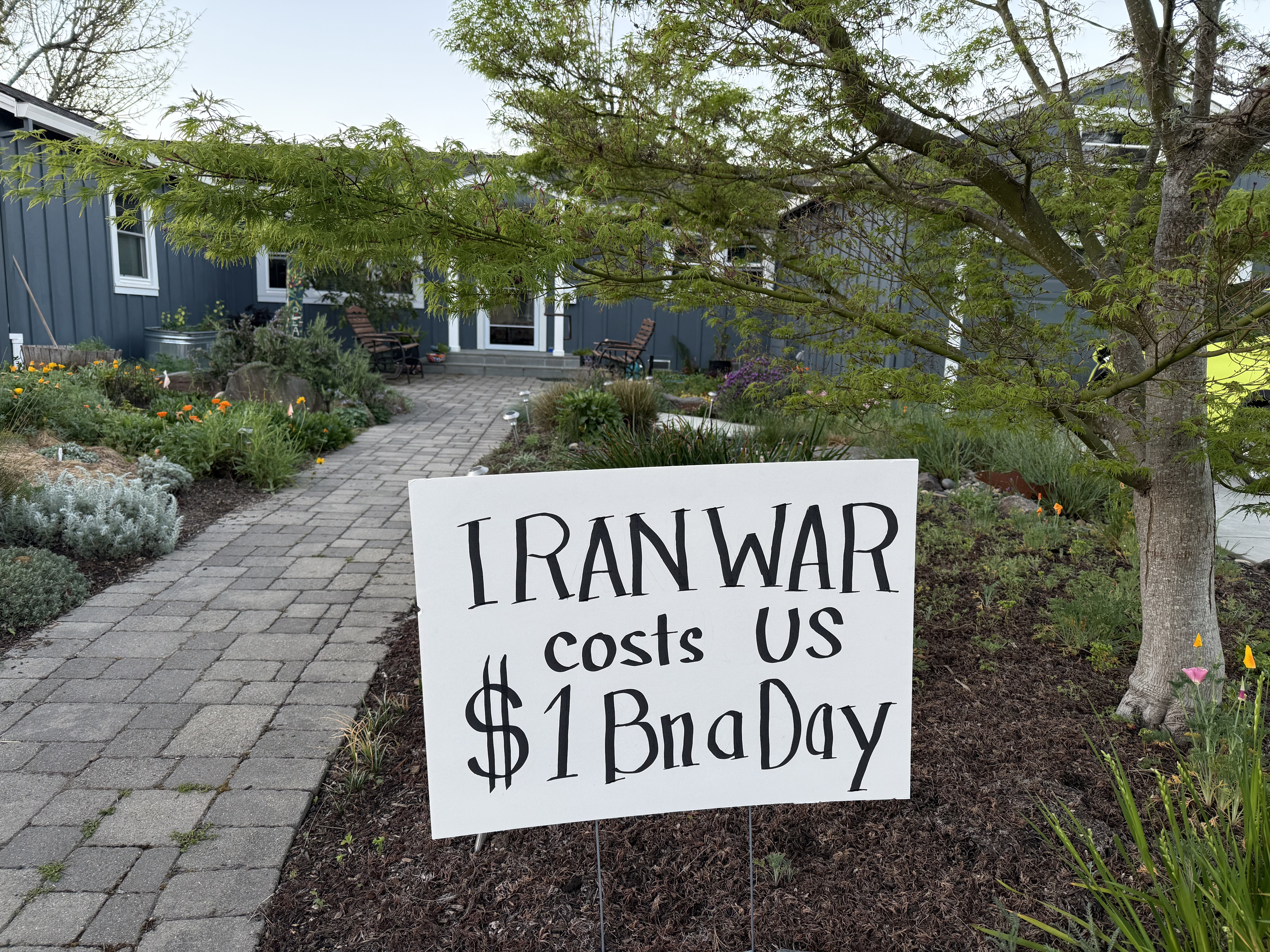
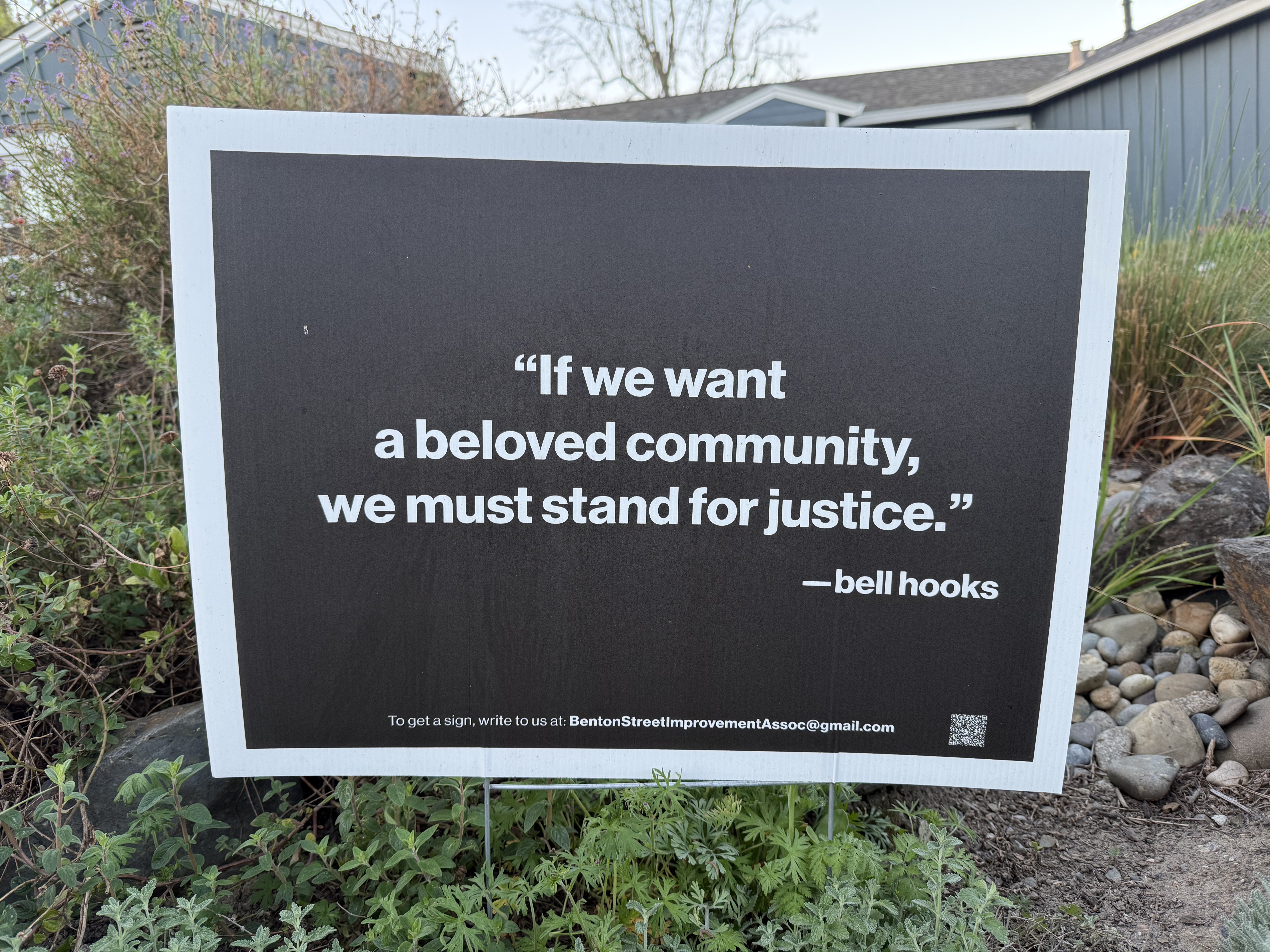
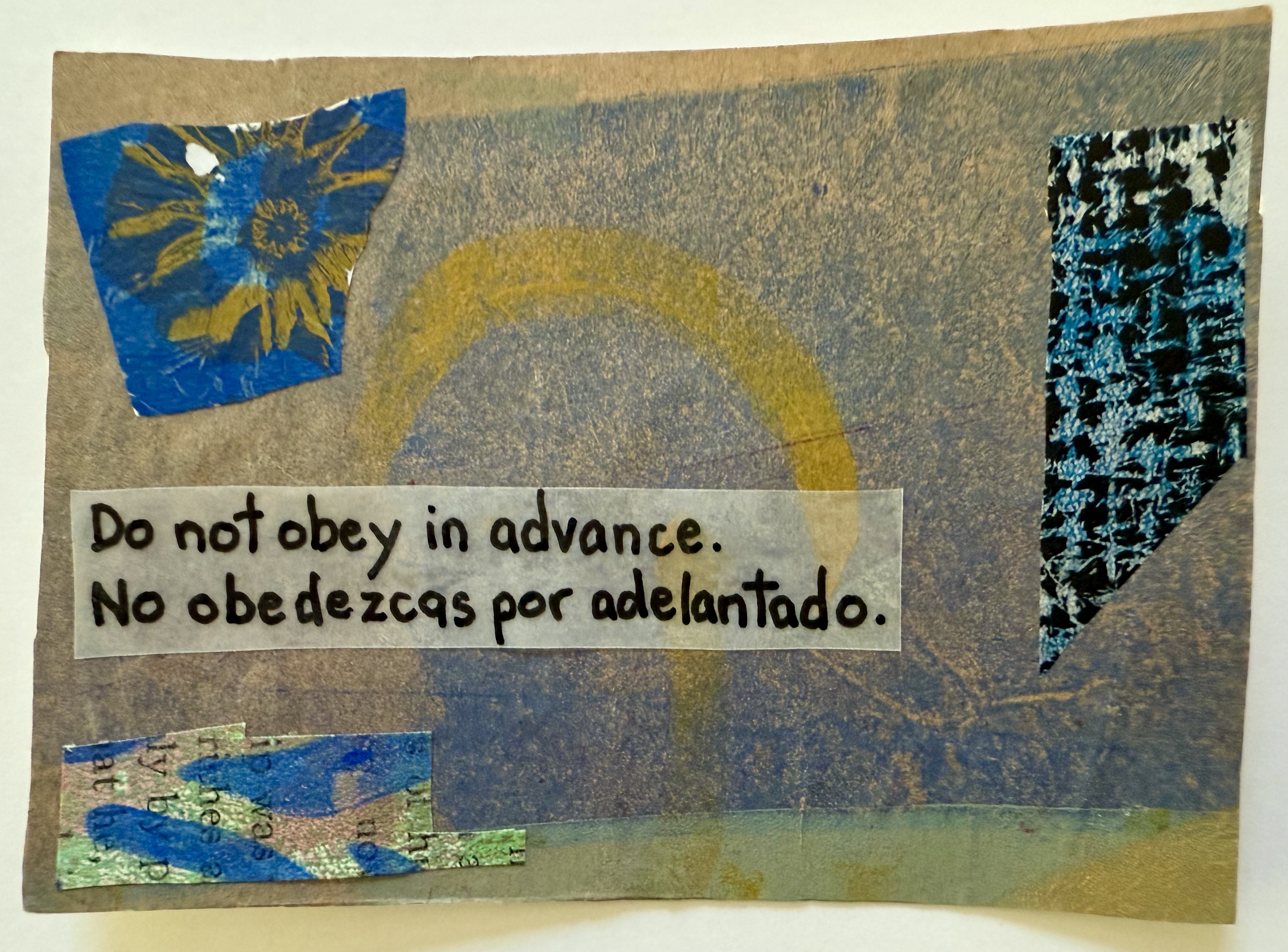
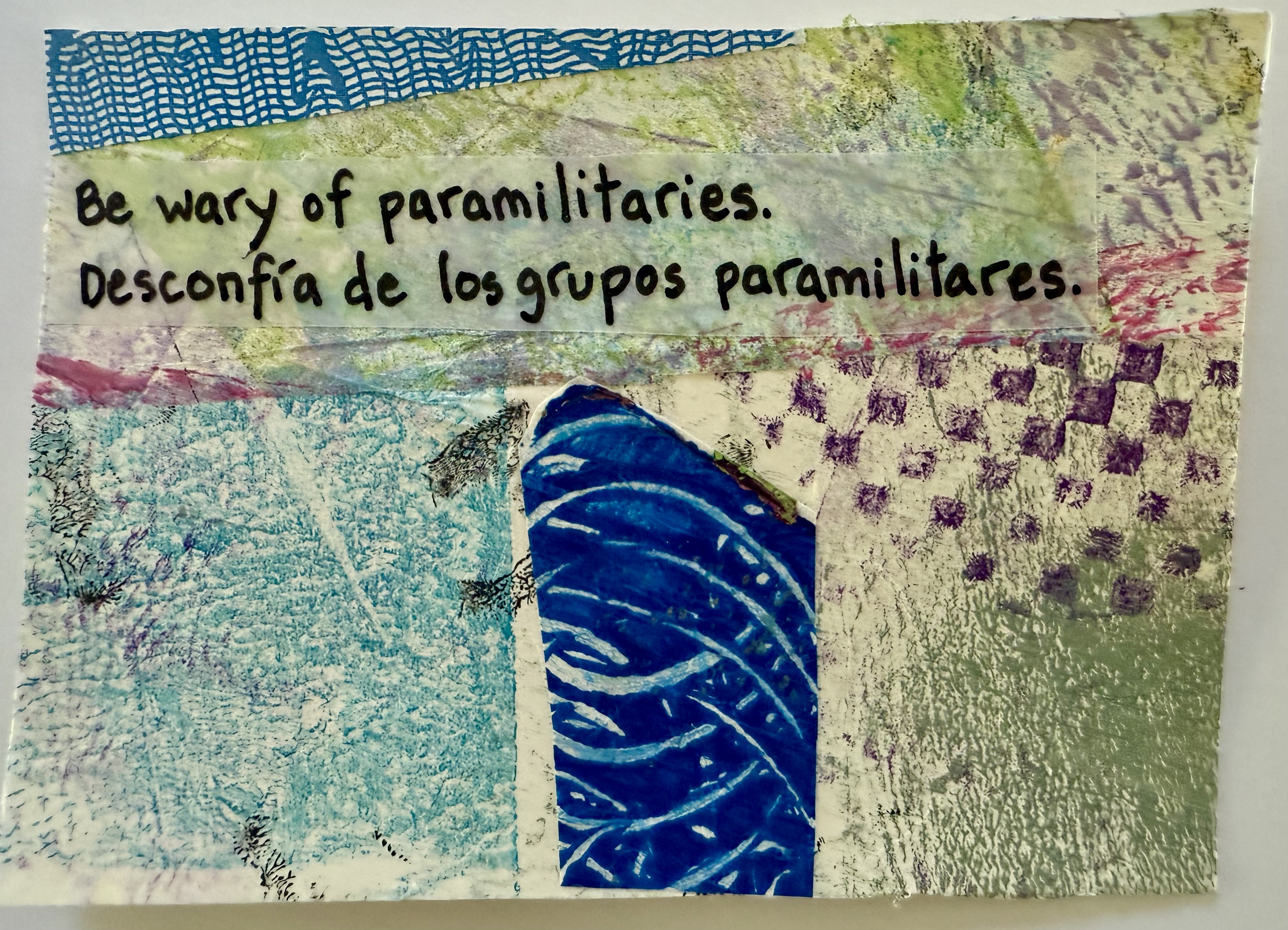
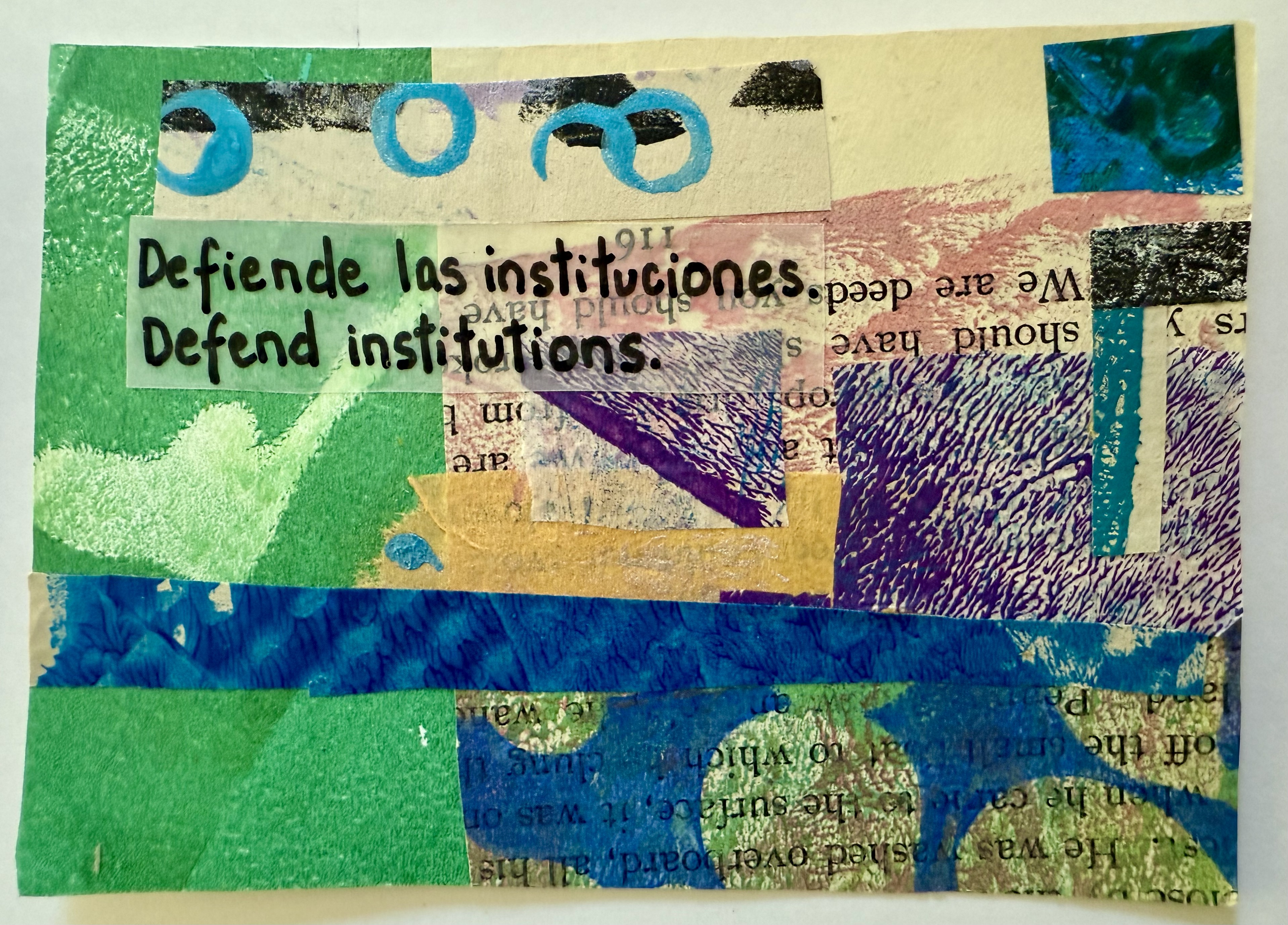
My No Kings sign posted in our front yardFour women in my neighborhood had these signs made, with quotes from luminaries that promote kindness and justice. Now they are posted in front yards all over town.
Happy Spring blossom peeping and protesting to all!
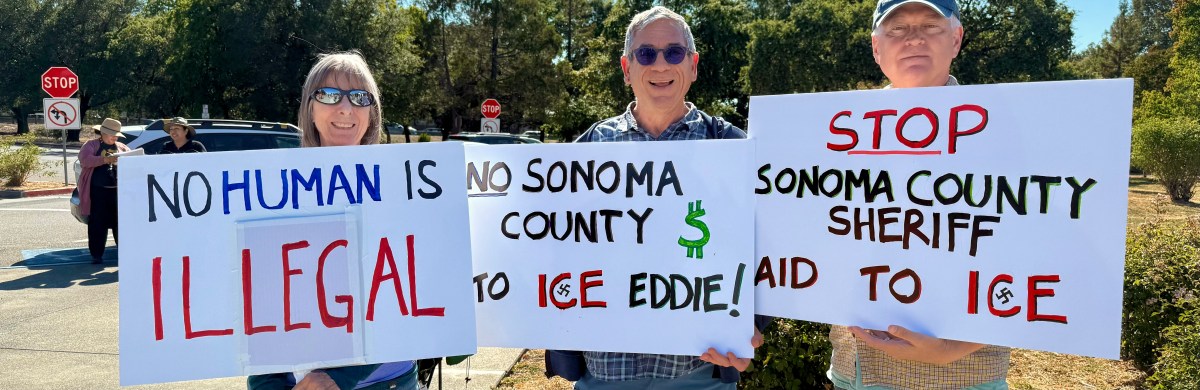
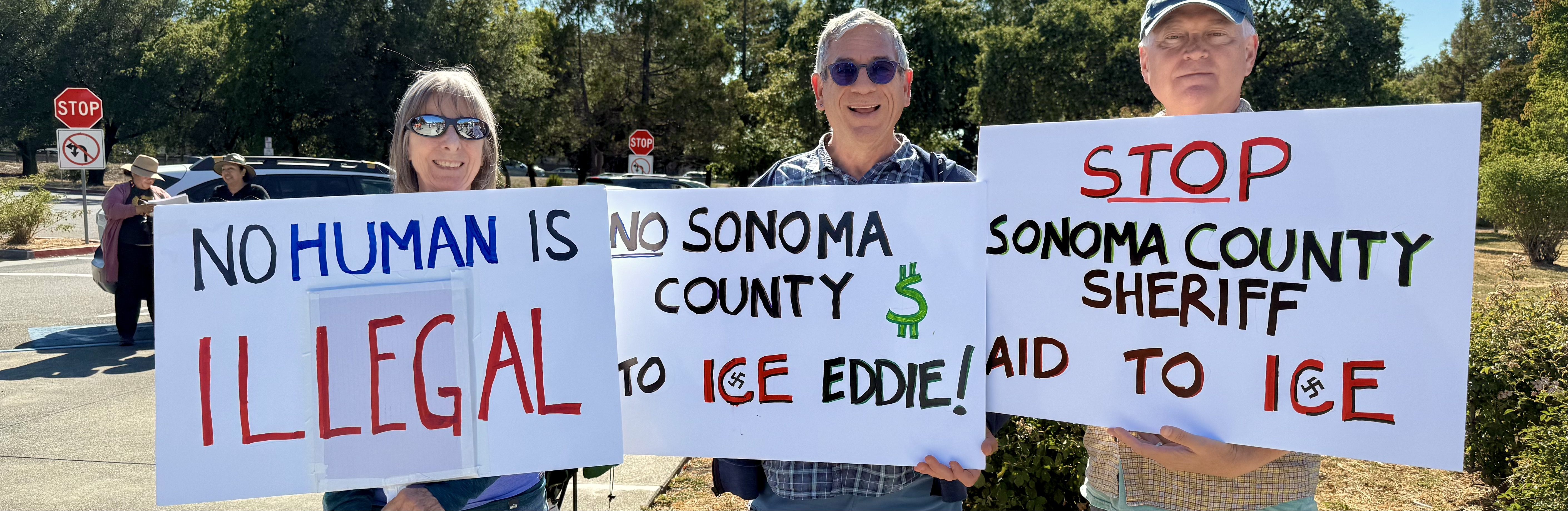
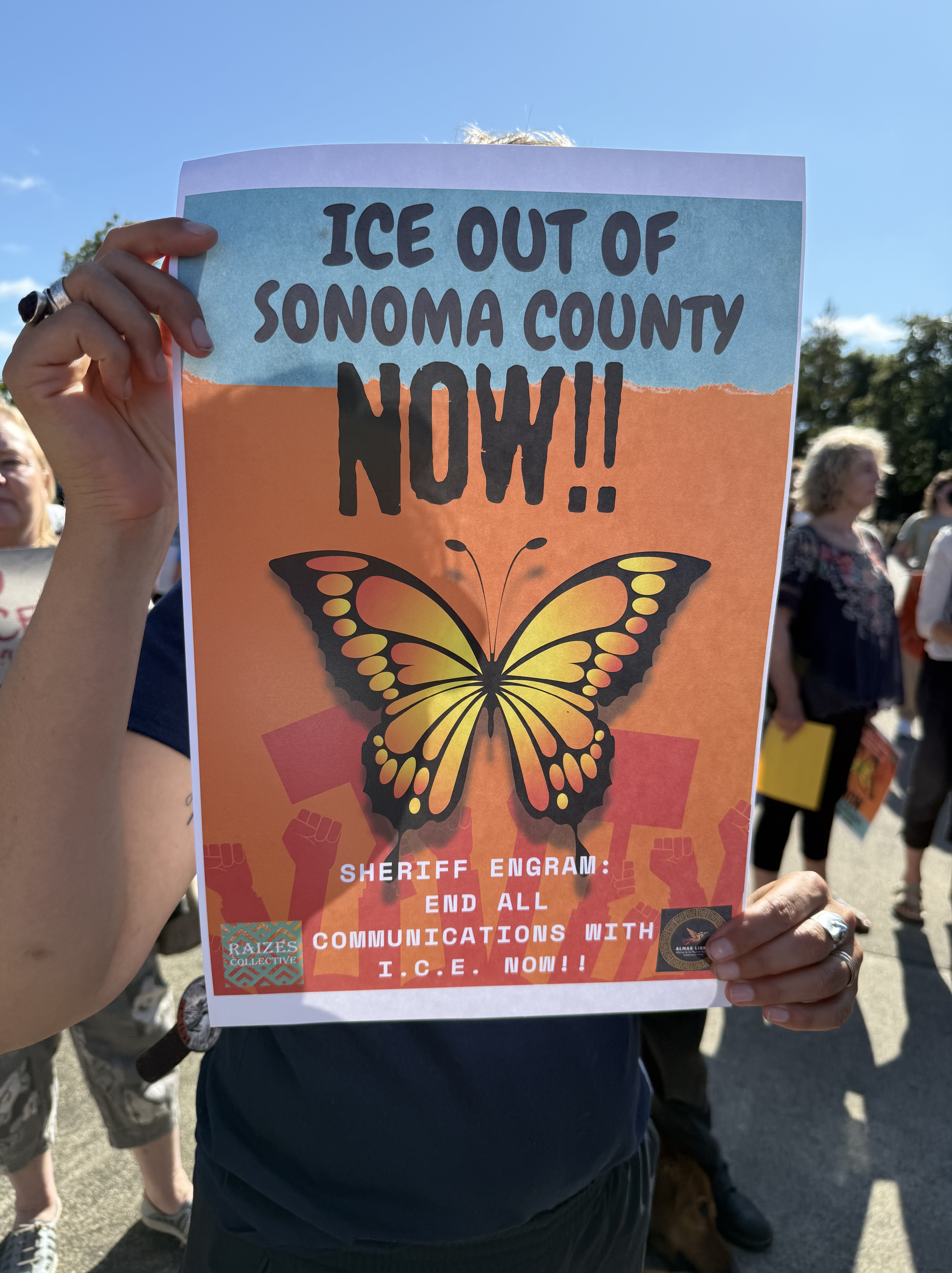
California has a law that requires sheriffs to explain themselves to us citizens. The California TRUTH Act (transparent review of unjust transfers and holds act) mandates a forum to give us details of the sheriff’s relationship with ICE.
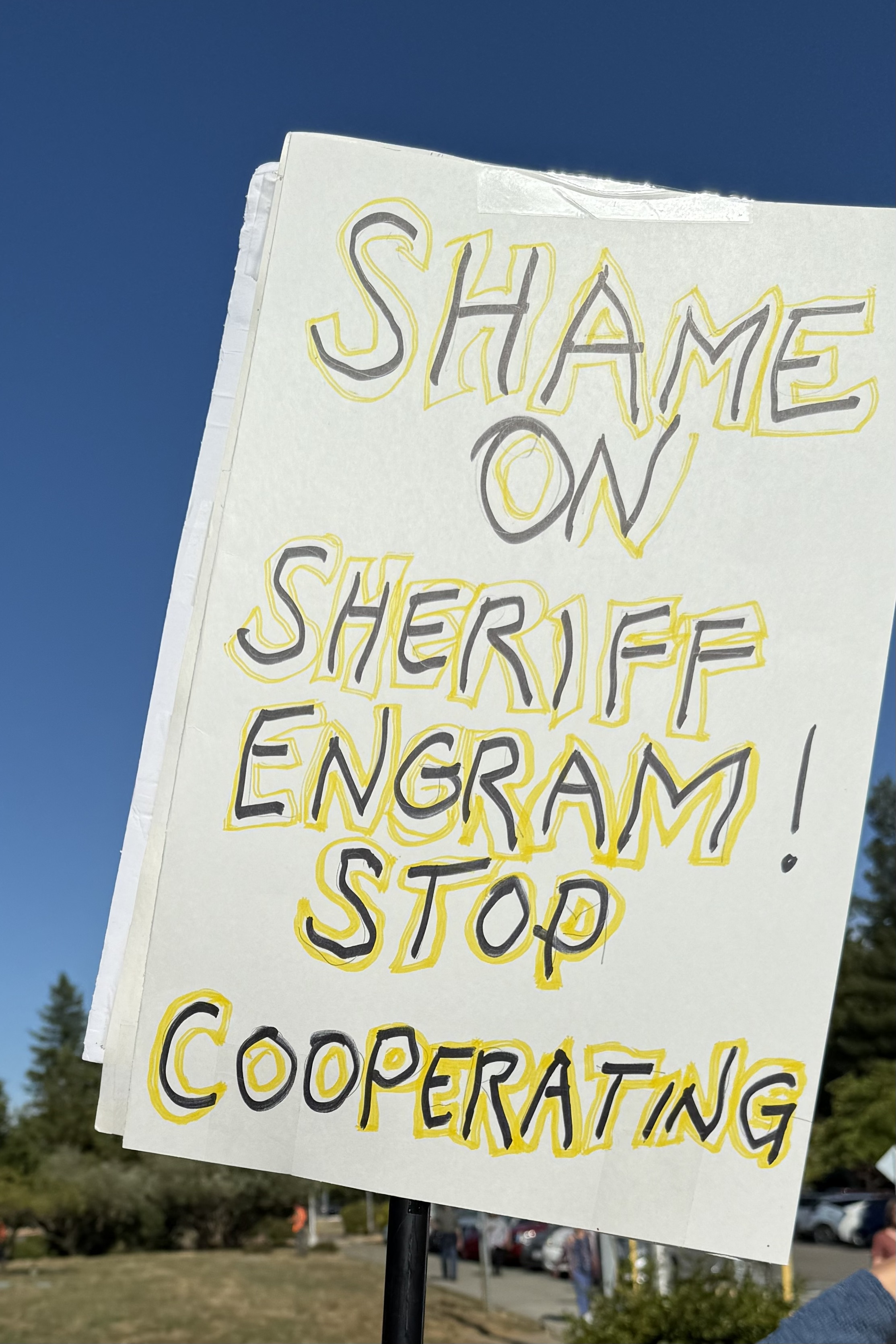
Under state law no sheriff is required to cooperate with ICE. Yet Sonoma County sheriff Eddie Engram continues to provide information about individuals in his custody to ICE.
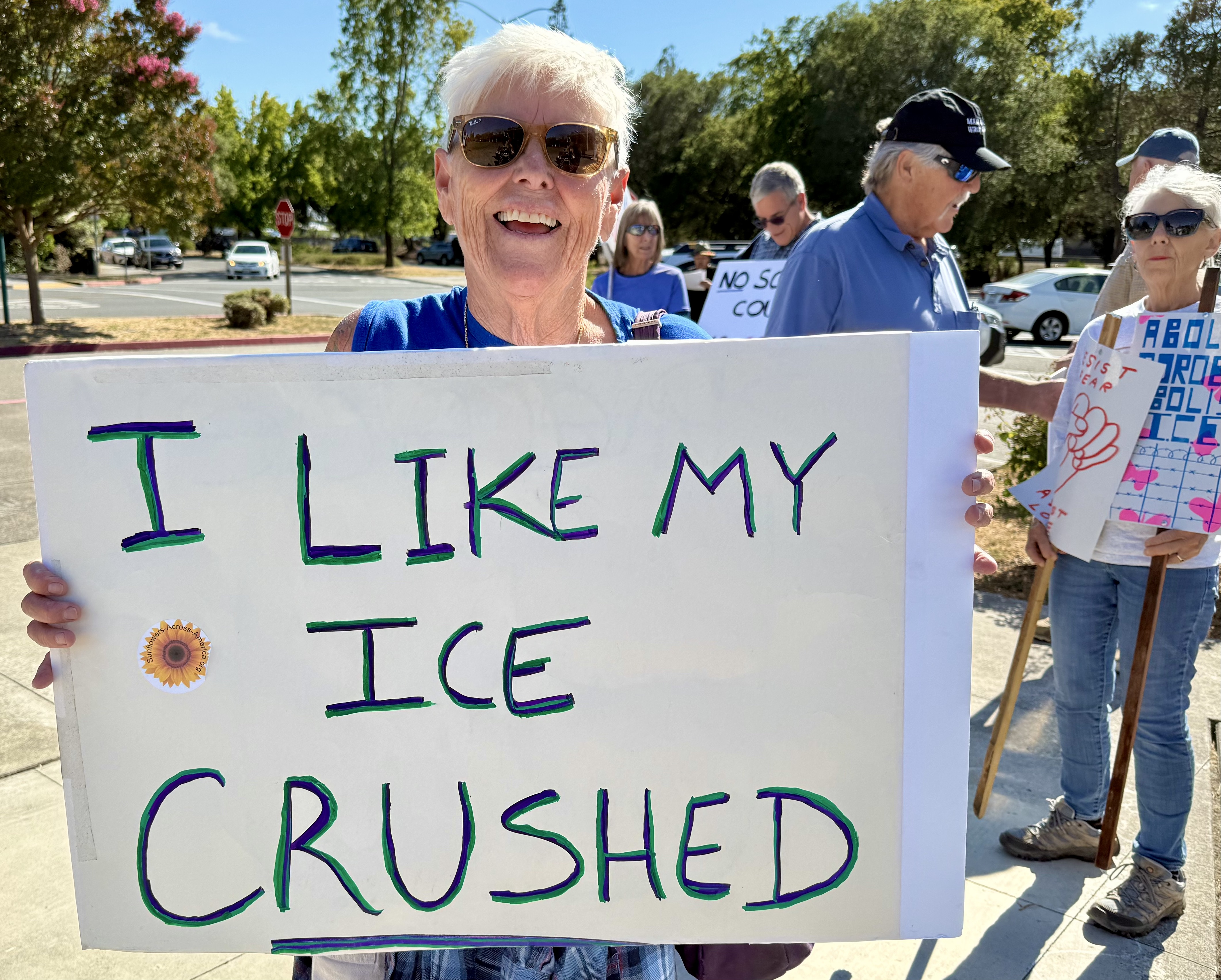
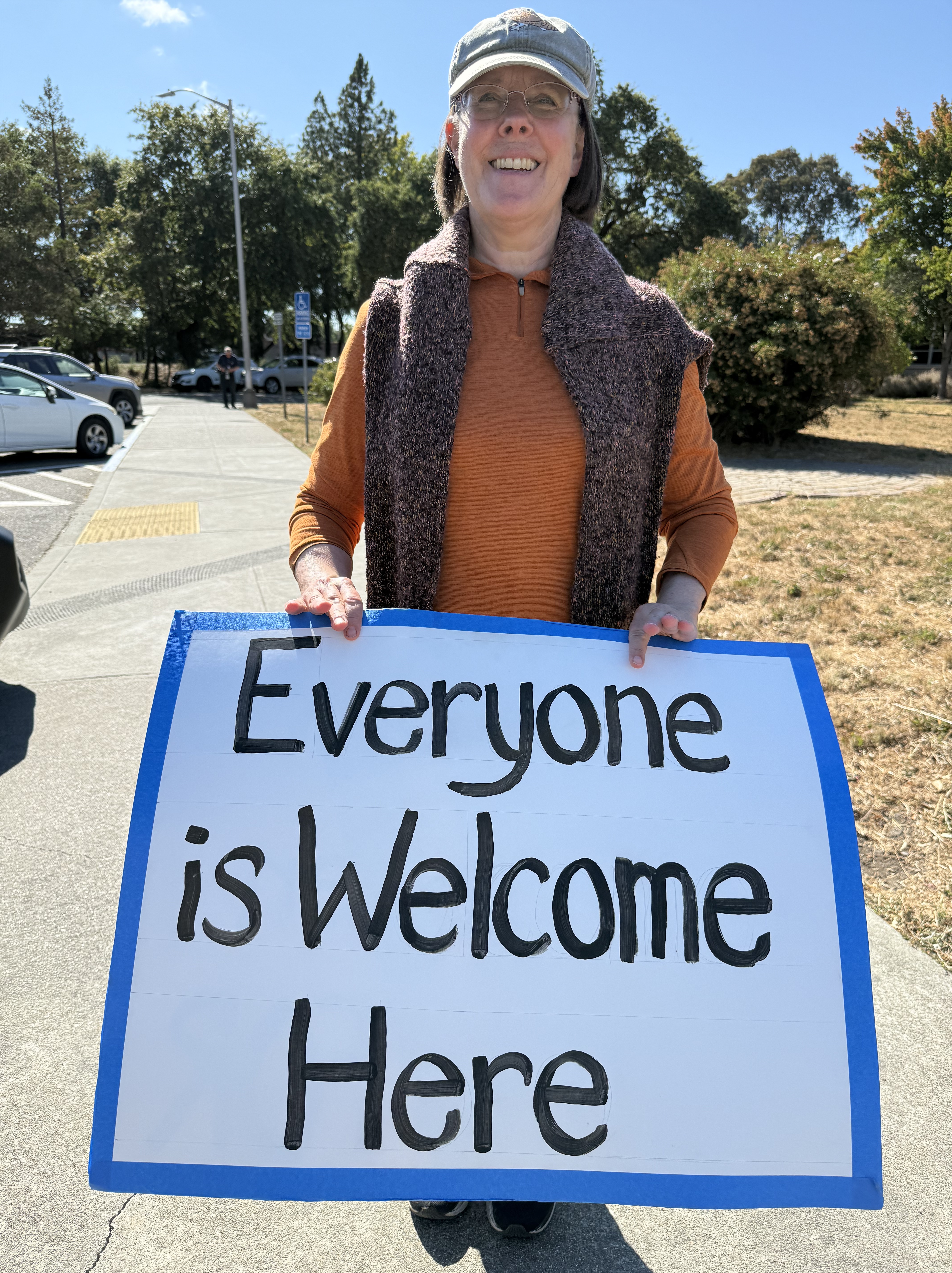
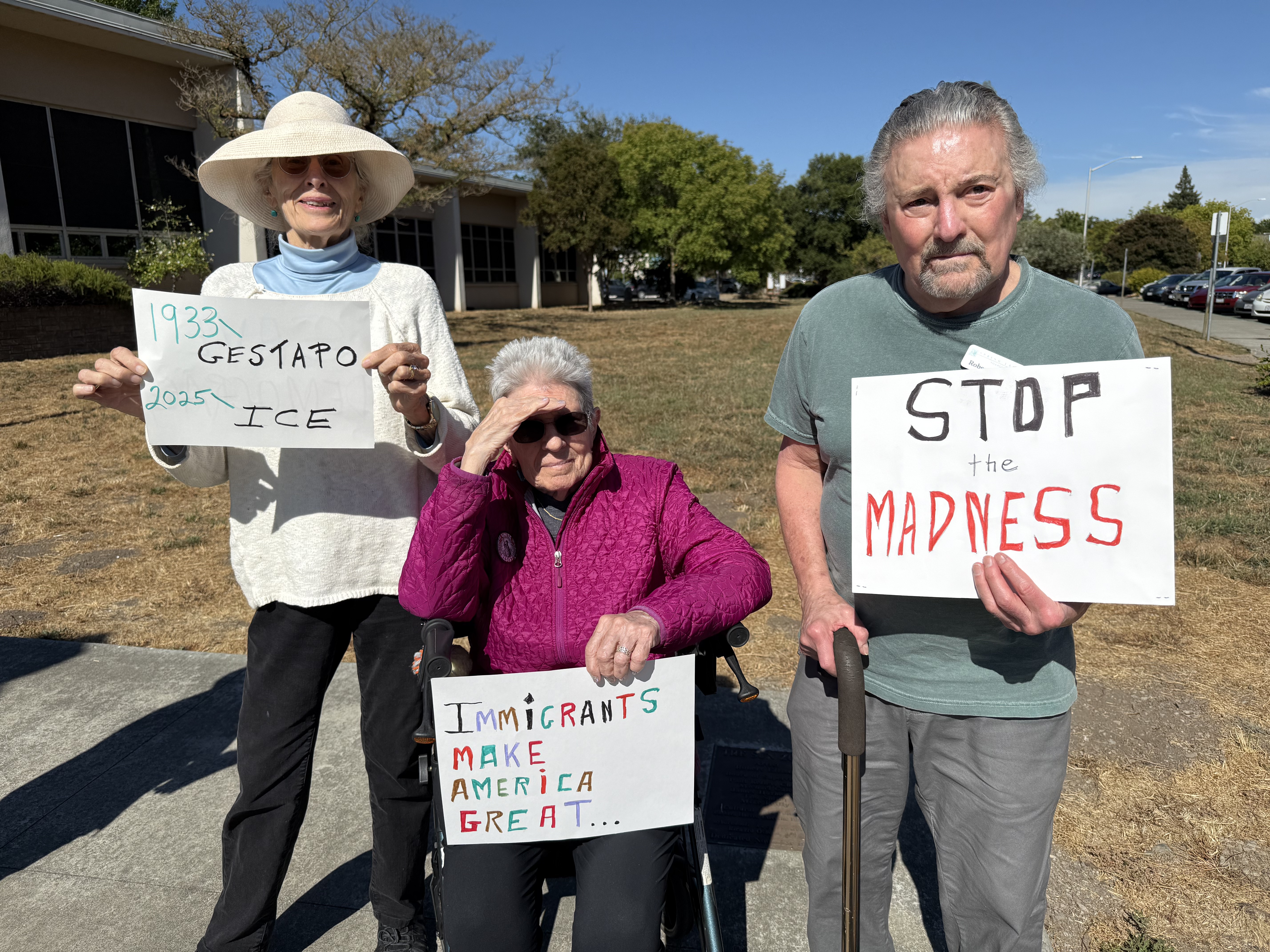
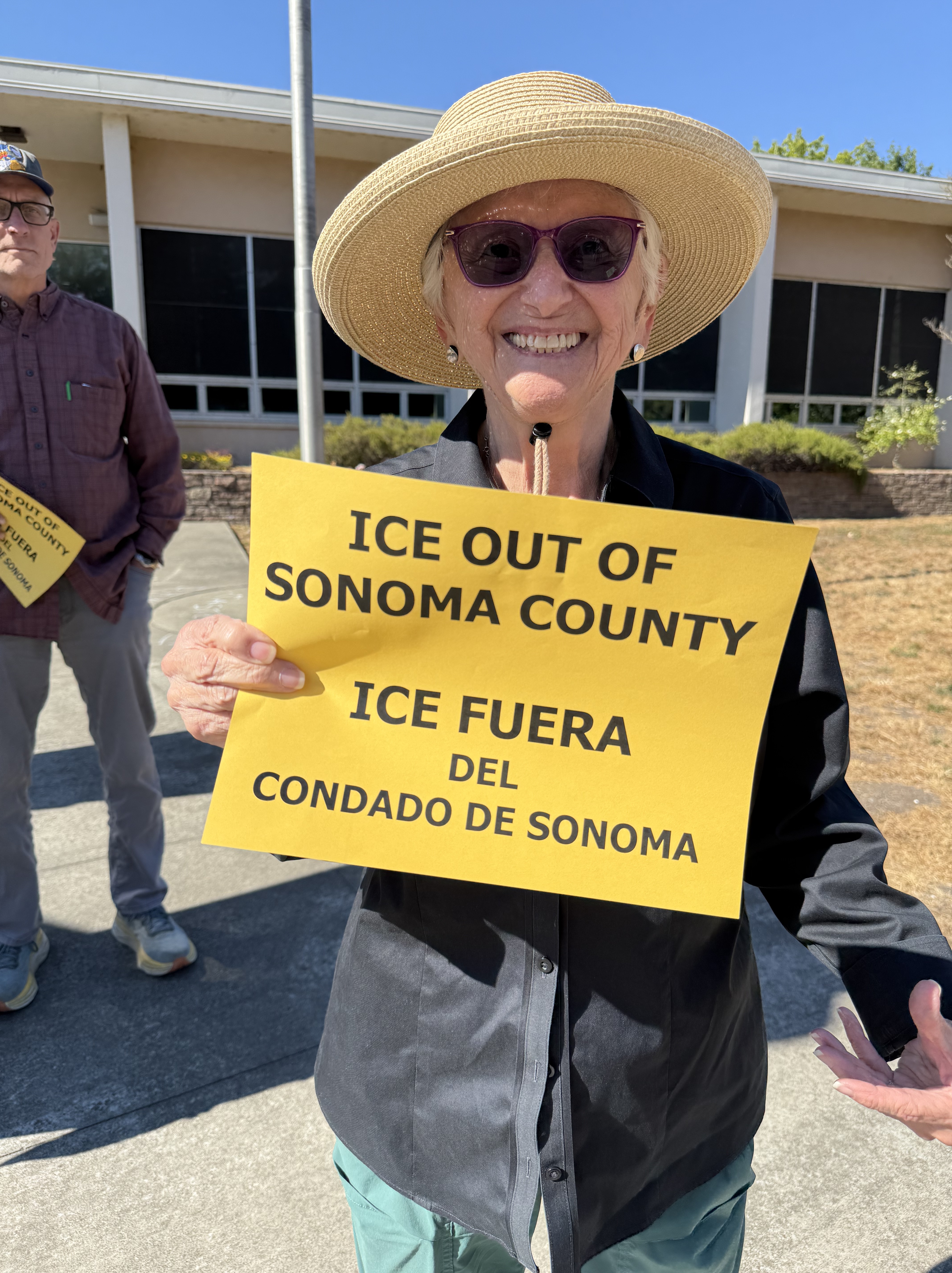
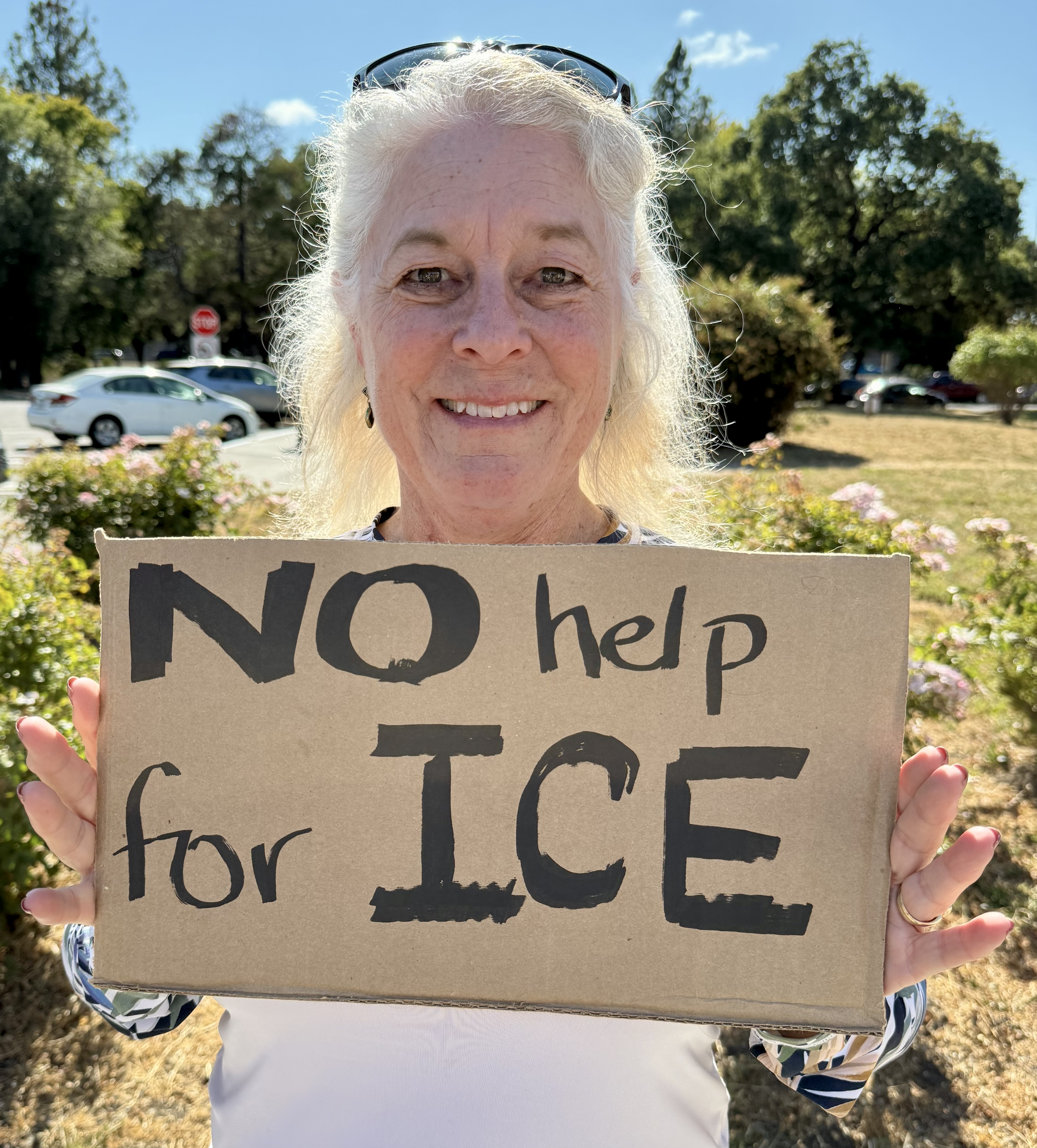
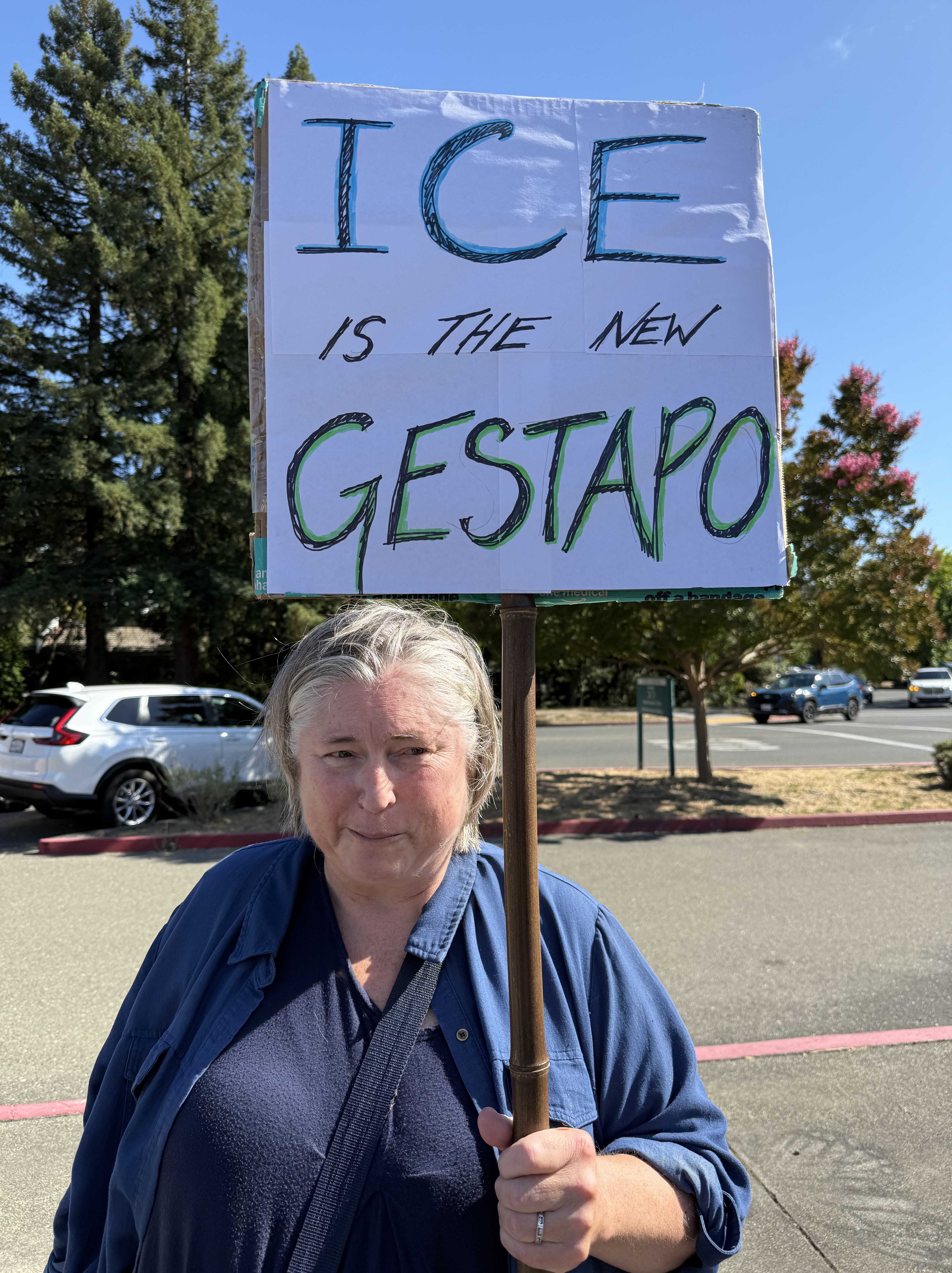
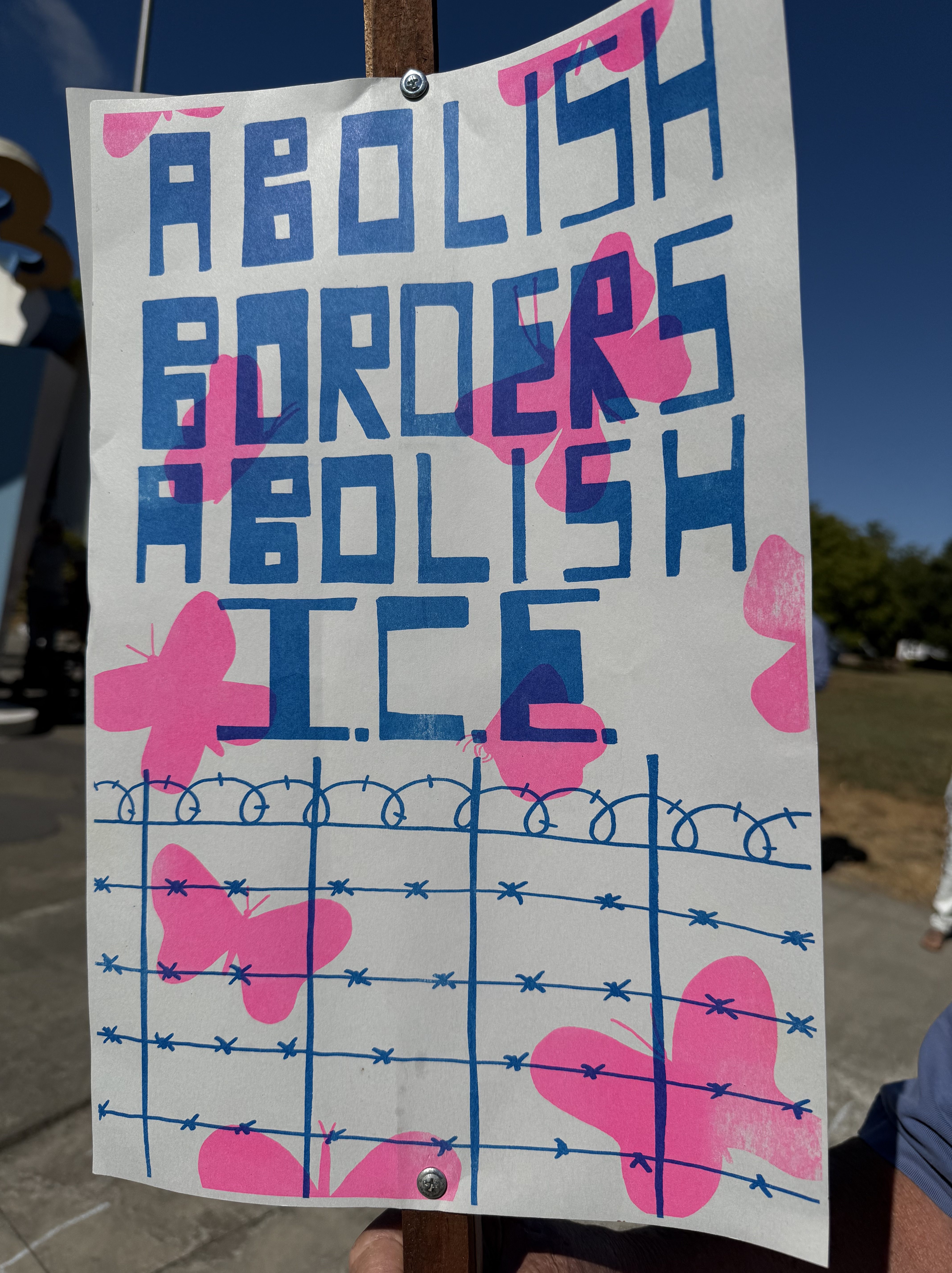
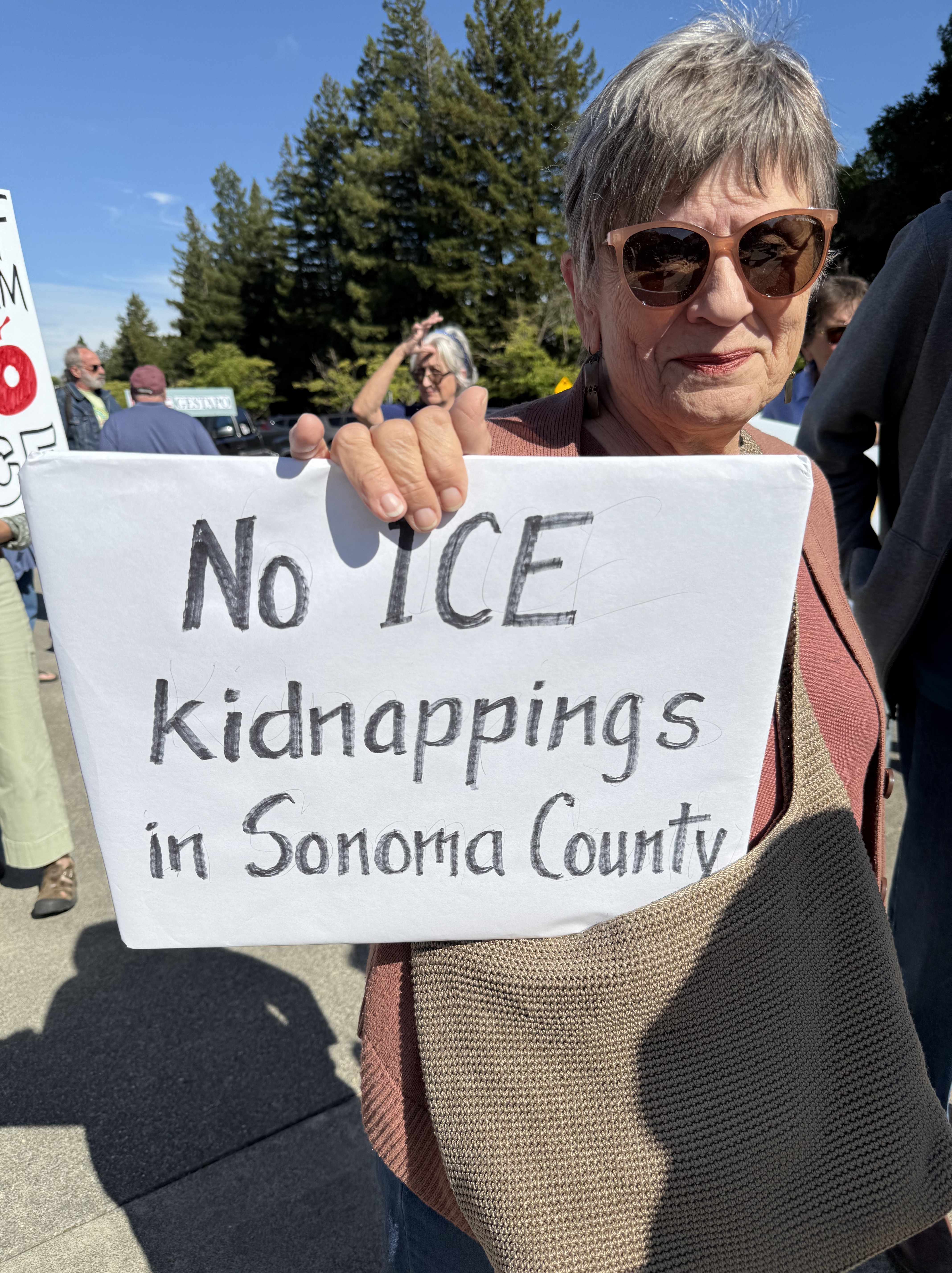
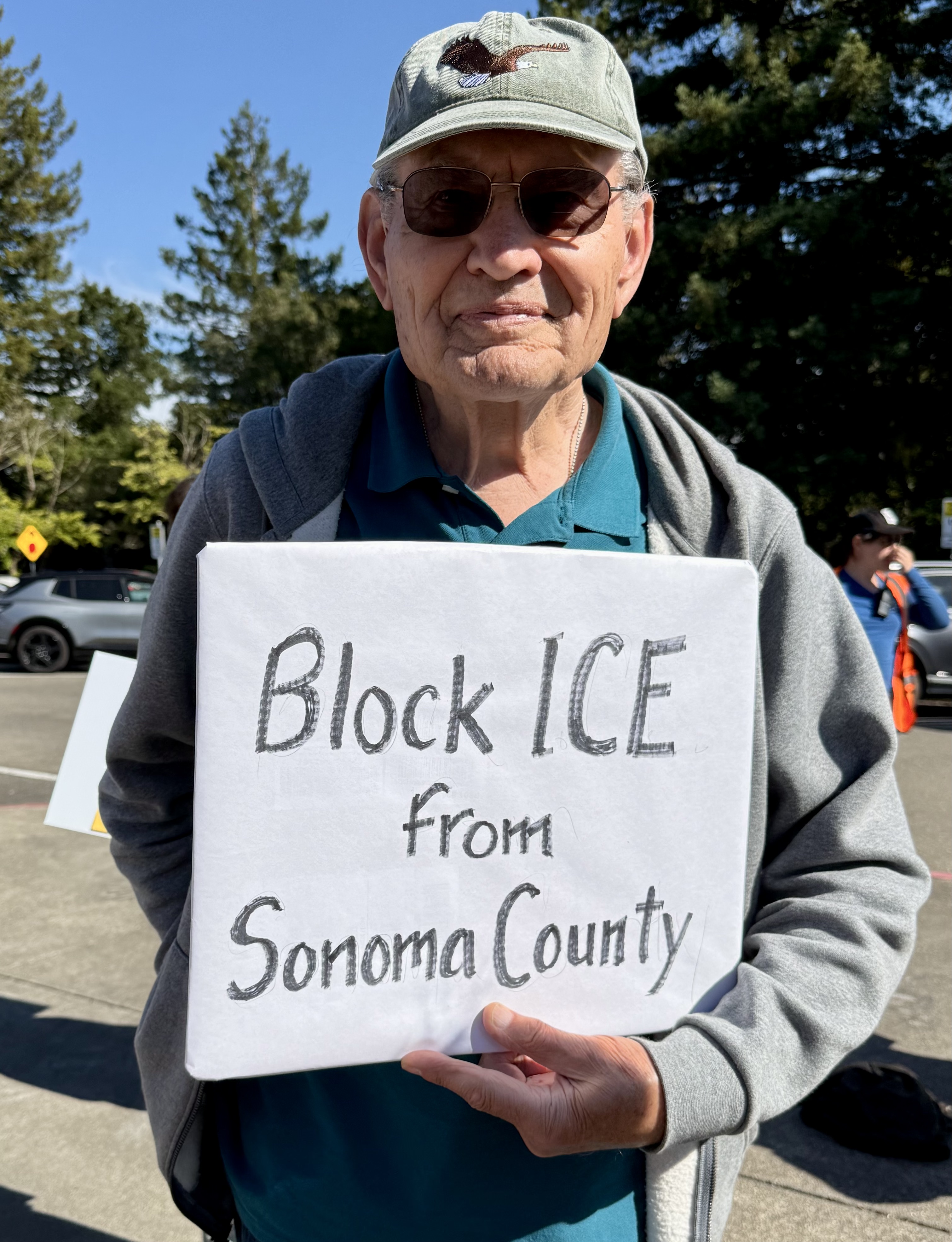
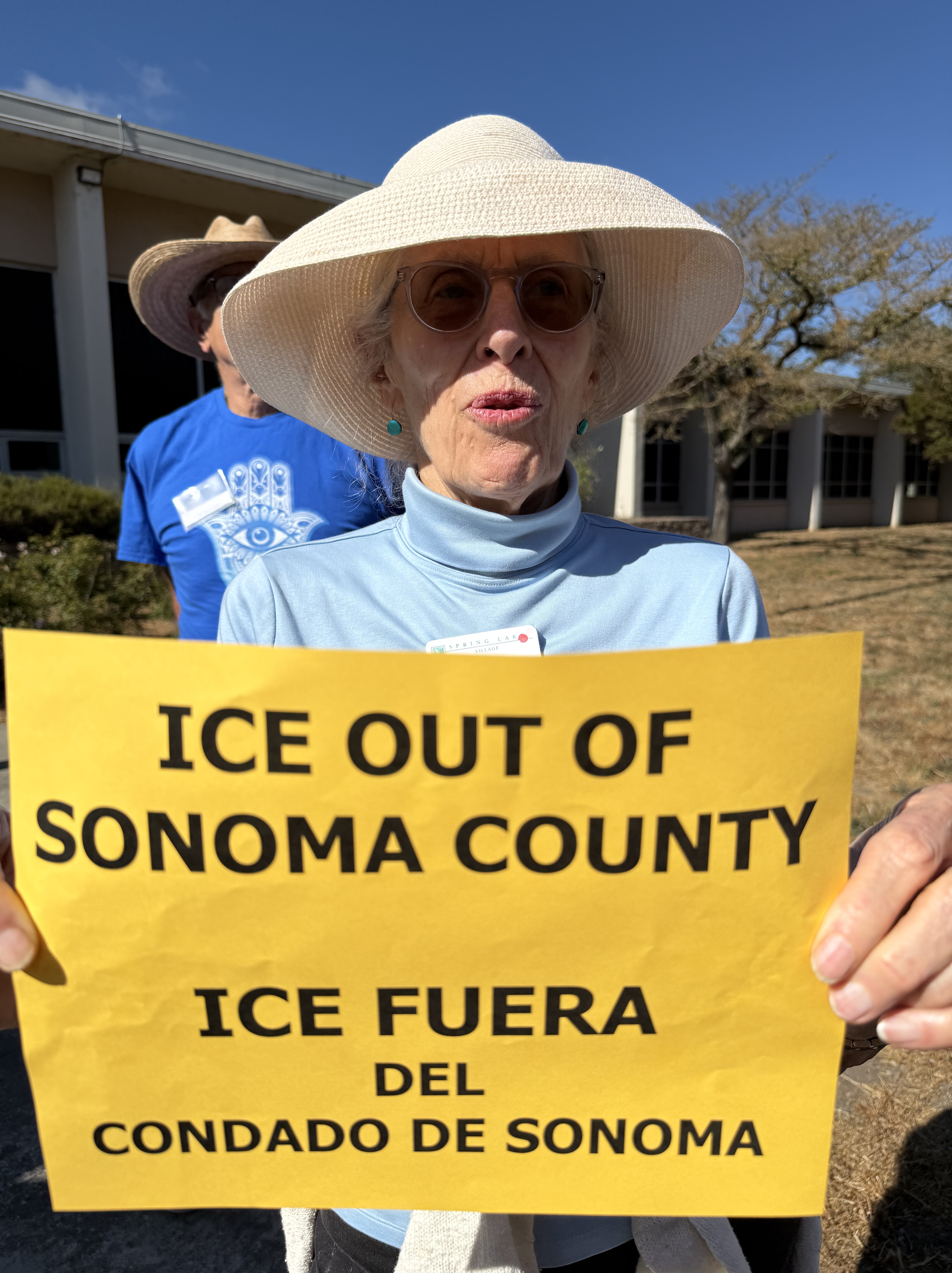
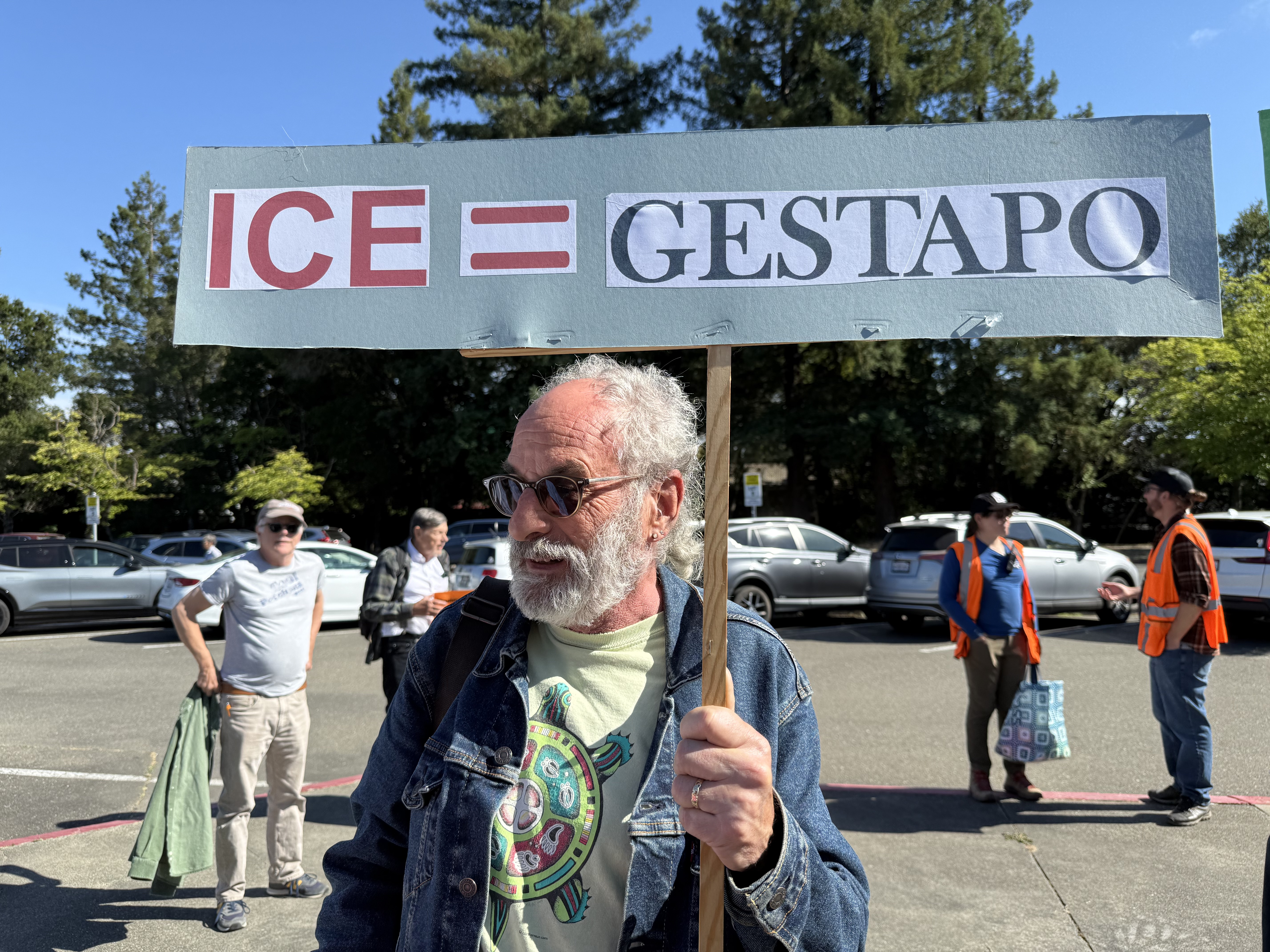
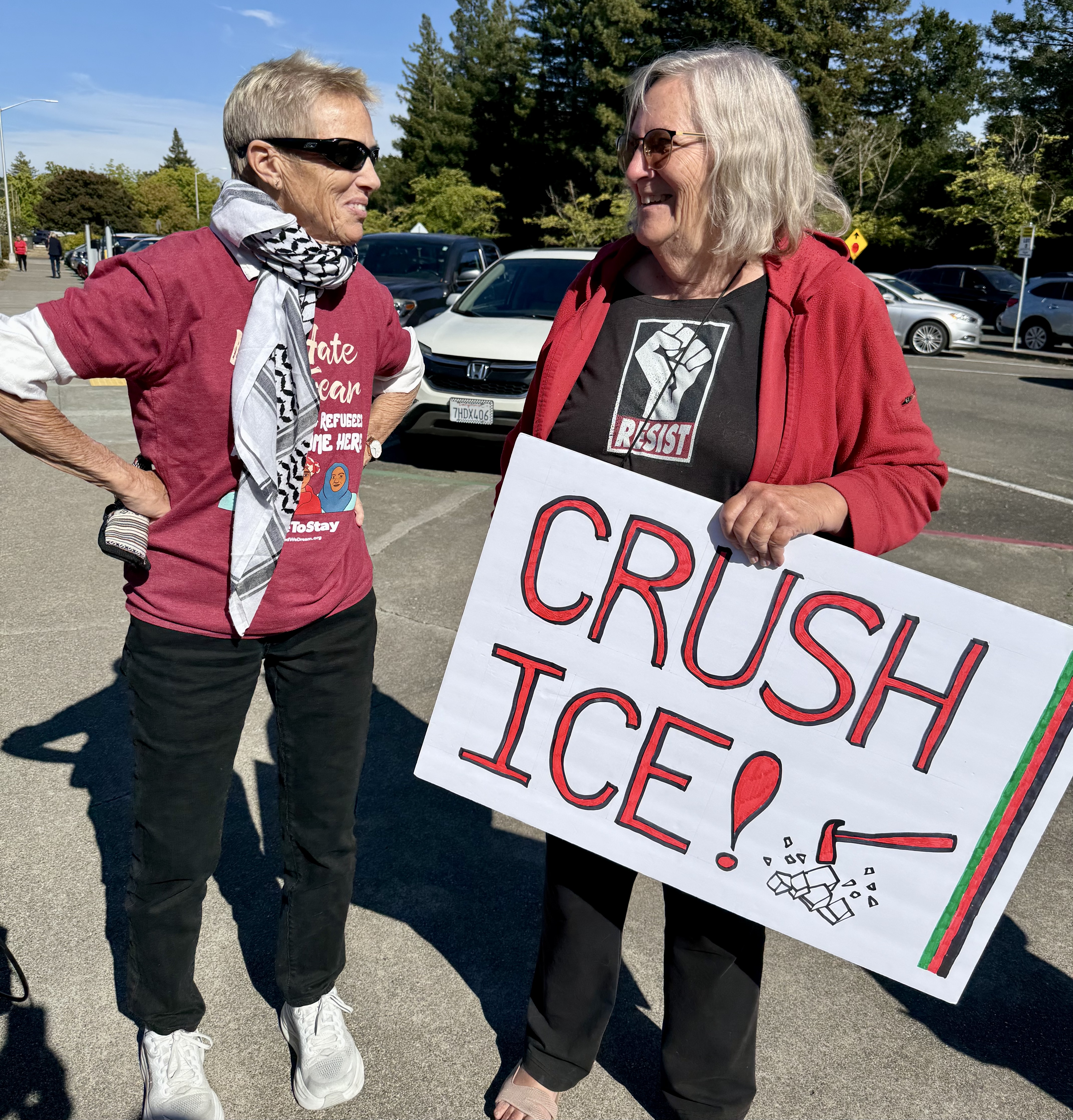
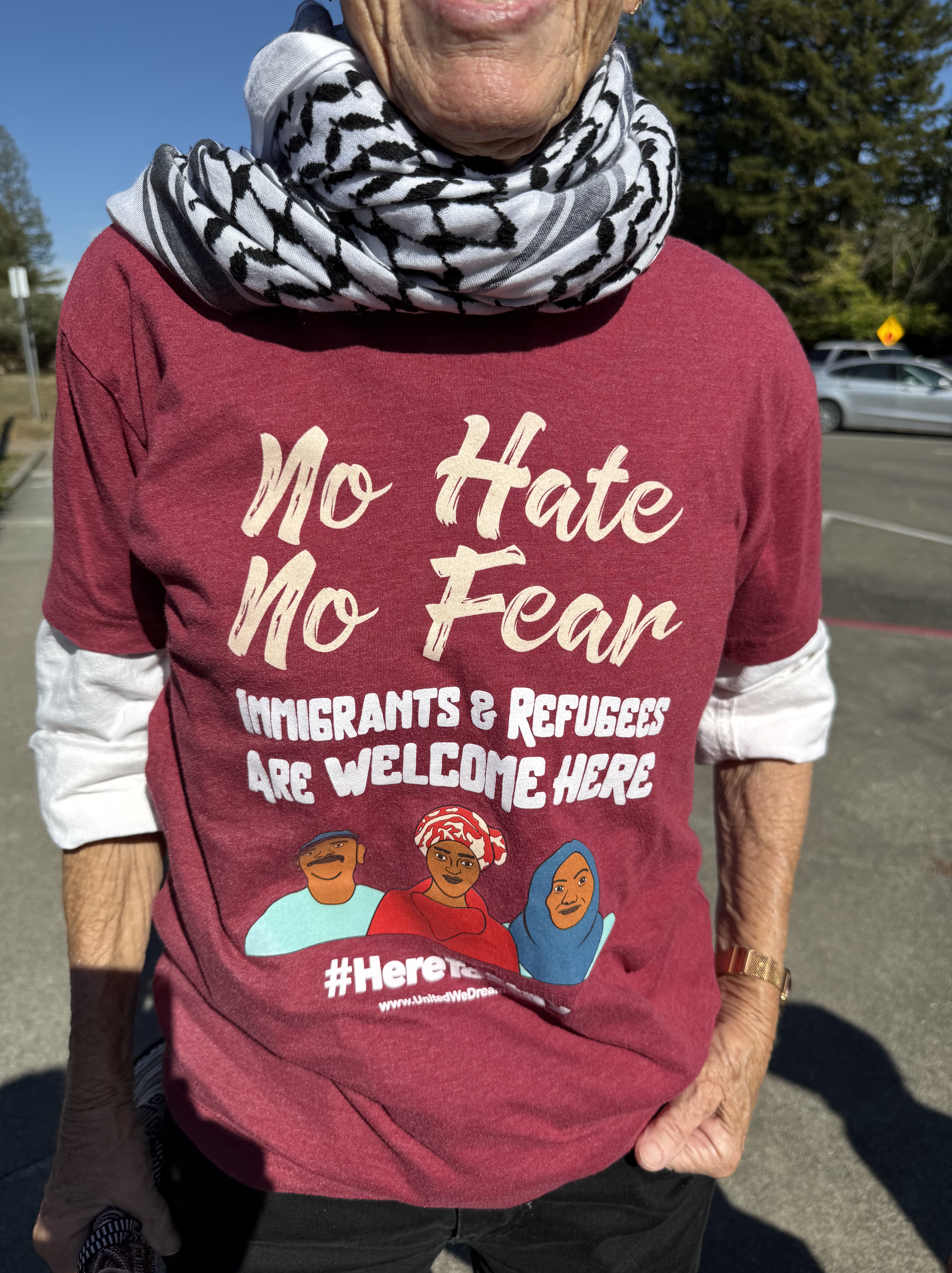
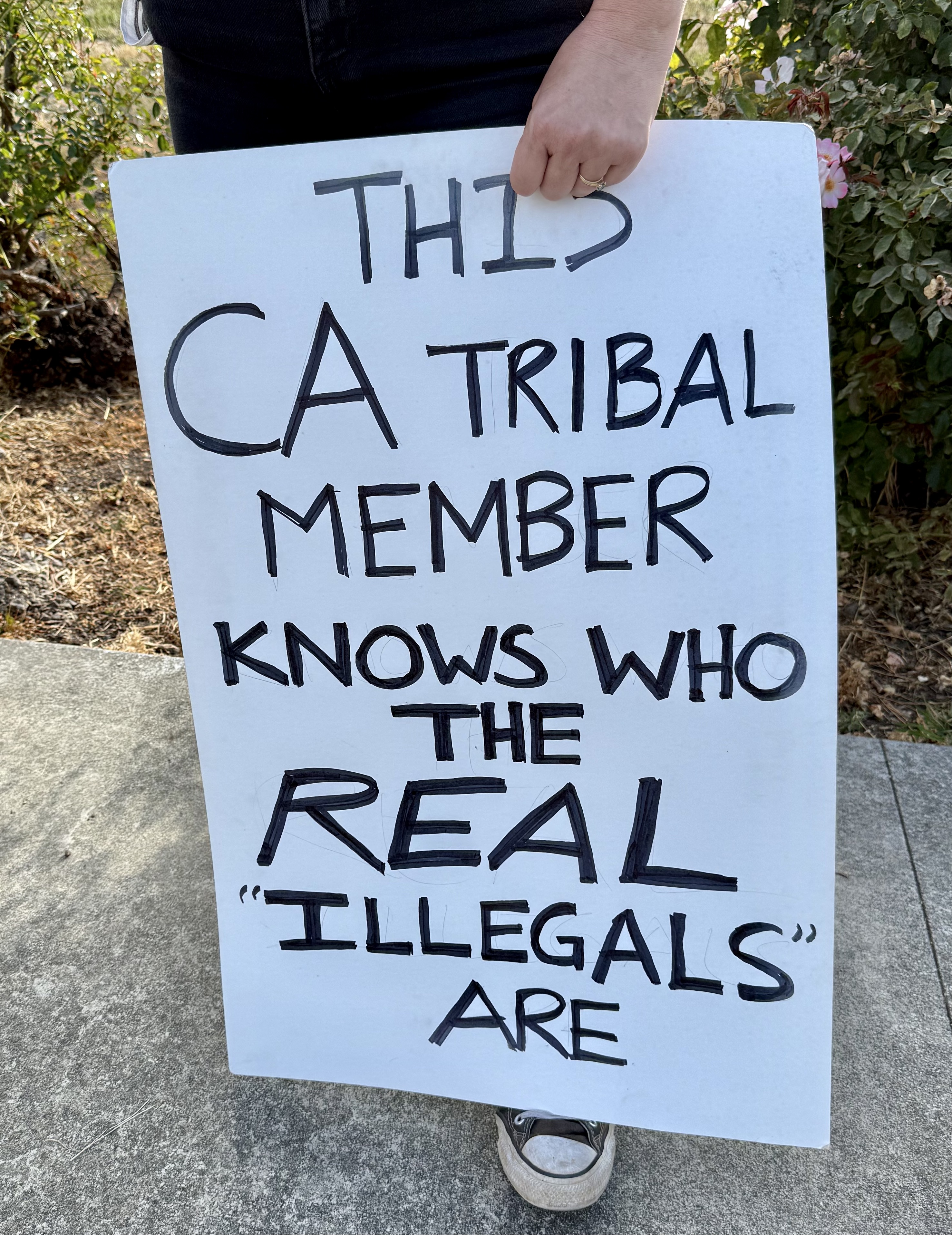
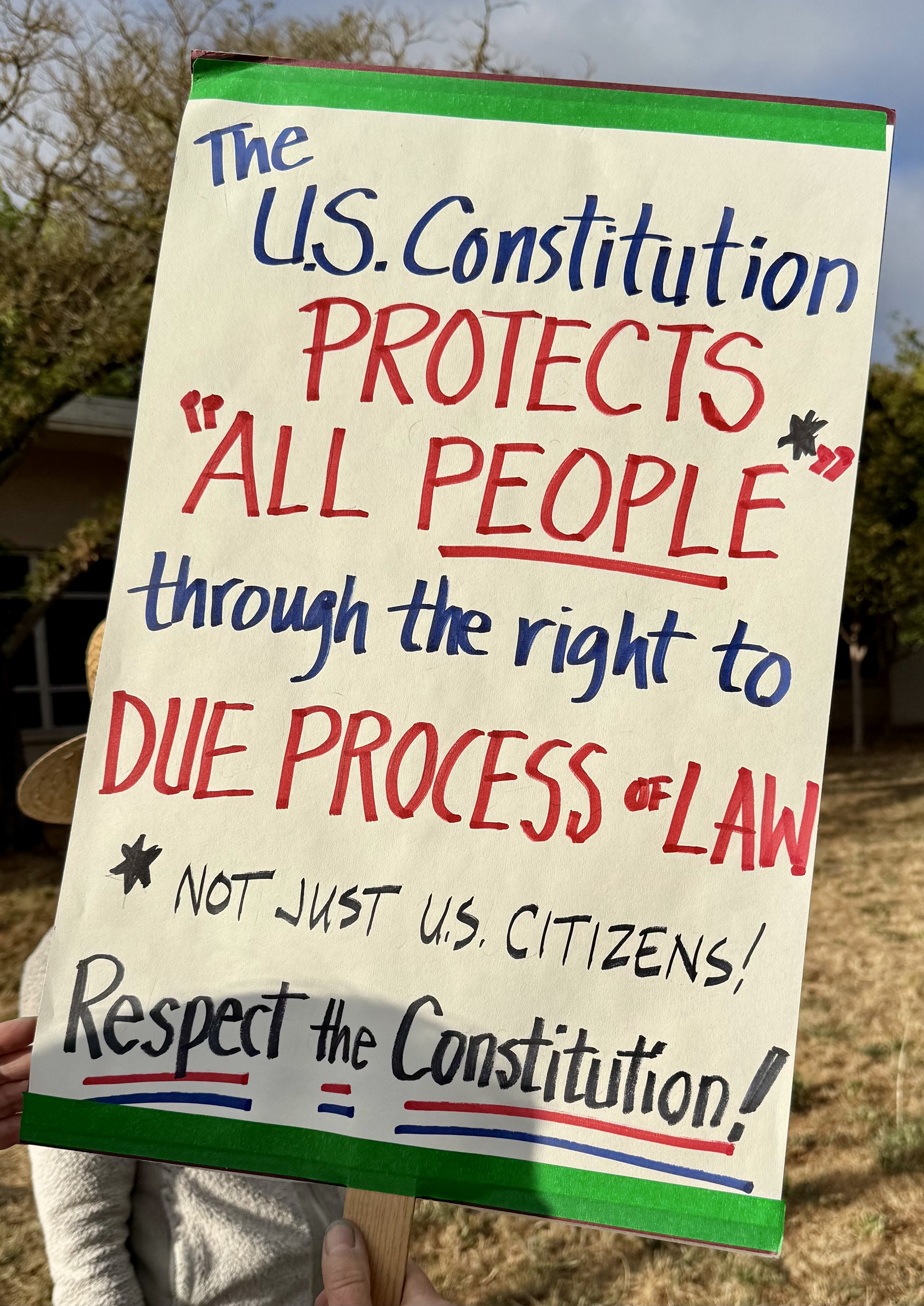
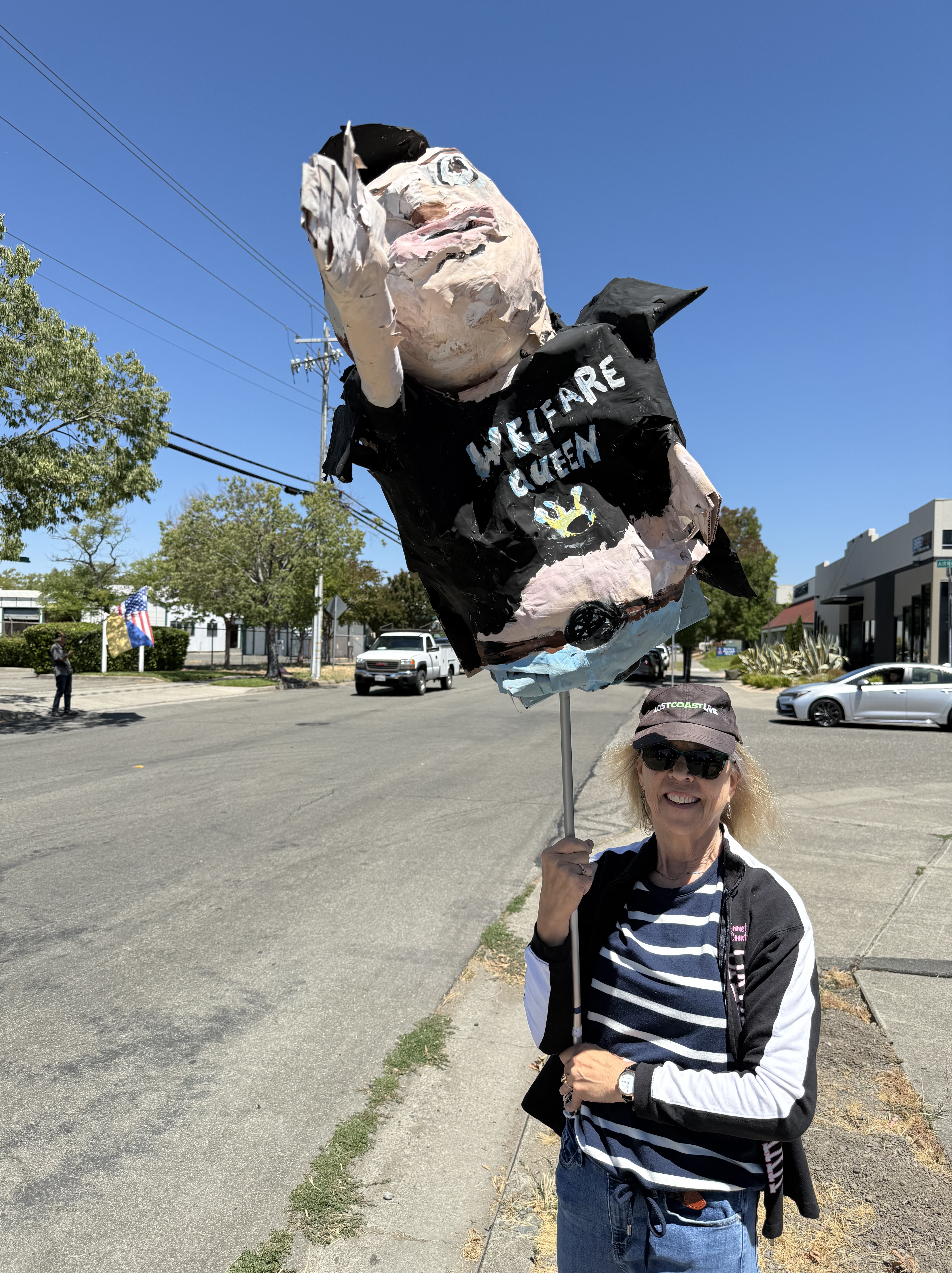
July 22, at our forum, hundreds of citizens showed up to protest that.
The sharing of inmate information with federal immigration officials can change lives instantly. Families split apart, community trust erodes, and neighborhoods feel less safe. About 29,000 undocumented immigrants live in Sonoma County and many families have mixed immigration status. We strive to protect our neighbors from ICE imprisonment and torture.

















































 tradeswomn musings