Matariki: New Zealand’s Solstice Celebration

My Regular Pagan Holiday Post

Summer (and Winter) Solstice will be June 20, 2025

For years, these pagan holiday letters have followed the rhythm of the Northern Hemisphere. So it’s about time we turned our gaze south. What is the summer solstice for us in the north is, of course, the winter solstice down under.

In Aotearoa (the Māori name for New Zealand, often translated as “Land of the Long White Cloud”), the winter solstice is marked by Matariki, a celebration that signals the Māori New Year. In 2022, Matariki was officially recognized as New Zealand’s first indigenous national holiday — a milestone in honoring the traditions of the land’s first people.

Rooted in ancient Māori astronomy and storytelling, Matariki revolves around the reappearance of a small but powerful star cluster in the early morning sky — known in Māori as Matariki, and in Western astronomy as the Pleiades or the Seven Sisters. Its rising marks a time of renewal, remembrance, and reconnection — with ancestors, the earth, and each other.

The date of Matariki shifts slightly each year, determined by both the lunar calendar and careful observation of the stars. Māori astronomers and iwi (tribal) experts consult mātauranga Māori — traditional Māori knowledge systems — to ensure the timing reflects ancestral wisdom. In precolonial times, the clarity and brightness of each star helped forecast the year’s weather, harvest, and overall wellbeing.

Unlike the linear passage of time in the Gregorian calendar, Māori time is circular — woven from moon phases, tides, seasons, and stars. Matariki is not just a new year, but a return point. A moment to pause, reflect on what has been, and plan how to move forward in harmony with the natural world.

At the heart of Matariki is kaitiakitanga — the ethic of guardianship. It’s the understanding that humans are not owners of the earth, but caretakers. We are part of the land, sea, and sky, and we carry the responsibility to protect and sustain them.

When Matariki rises just before dawn, it opens a space for both grief and celebration: to mourn those who’ve passed, give thanks for what we have, and set intentions for the year ahead. It reminds us of the interconnectedness of whānau(family), whakapapa (genealogy), and whenua (land).

The name Matariki is often translated as “the eyes of the chief,” from mata (eyes) and ariki (chief). According to one well-known Māori legend, the stars are the eyes of Tāwhirimātea, the god of winds and weather. In grief over the separation of his parents — Ranginui (Sky Father) and Papatūānuku (Earth Mother) — Tāwhirimātea tore out his own eyes and cast them into the heavens.

In a world that often values speed over stillness, Matariki offers a different rhythm. It’s a celestial breath — a reminder that time moves in cycles. That rest and reflection are just as important as action. That the sky still holds stories if we remember to look up.

The 9 Stars of Matariki

Each star in the Matariki cluster has its own role and significance:

  1. Matariki – Health and wellbeing
  2. Tupuānuku – Food from the earth
  3. Tupuārangi – Food from the sky (birds, fruits)
  4. Waitī – Freshwater and the life within it
  5. Waitā – The ocean and saltwater life
  6. Waipuna-ā-Rangi – Rain and weather patterns
  7. Ururangi – Winds and the atmosphere
  8. Pōhutukawa – Remembrance of those who have passed
  9. Hiwa-i-te-Rangi – Aspirations, goals, and wishes for the future

For Māori, these stars are not just celestial objects — they are guardians. They watch over the land, sea, and sky, and in doing so, remind us of our responsibility to them.

As global conversations about climate change and sustainability grow more urgent, the values of Matariki — care, reverence, reflection, and renewal — feel especially resonant. It’s a time to return to what matters, to honor the past, and to move forward in a way that honors both our roots and our shared future on this earth.

North Bay Rising

In Santa Rosa and across the North Bay, we’re mad as hell—and we’ve taken to the streets. From the Hands Off! protest in April that brought 5,000 people to downtown Santa Rosa, to thousands more mobilizing in surrounding towns, resistance to the rise of fascism in the U.S. is fierce and growing.
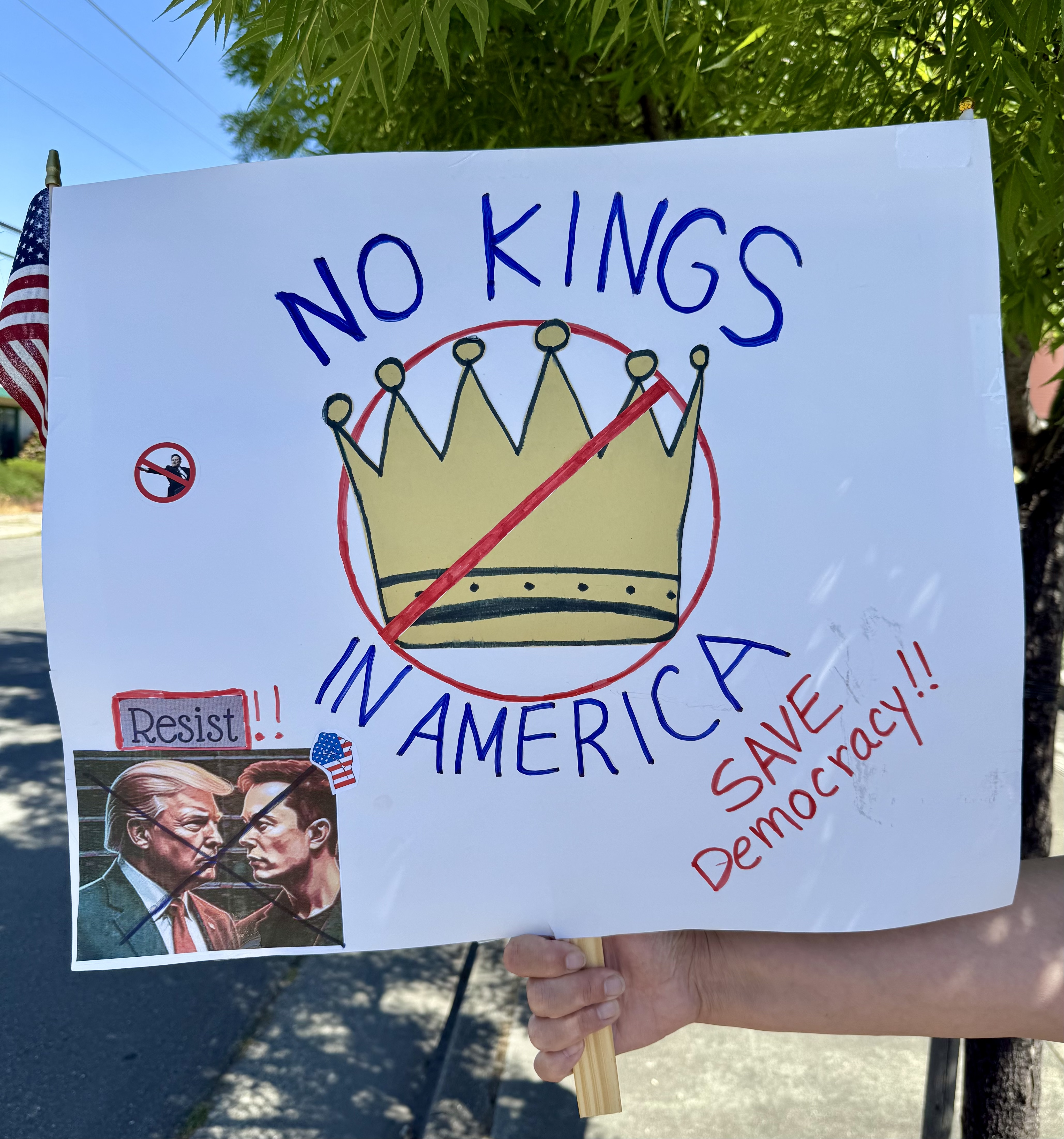
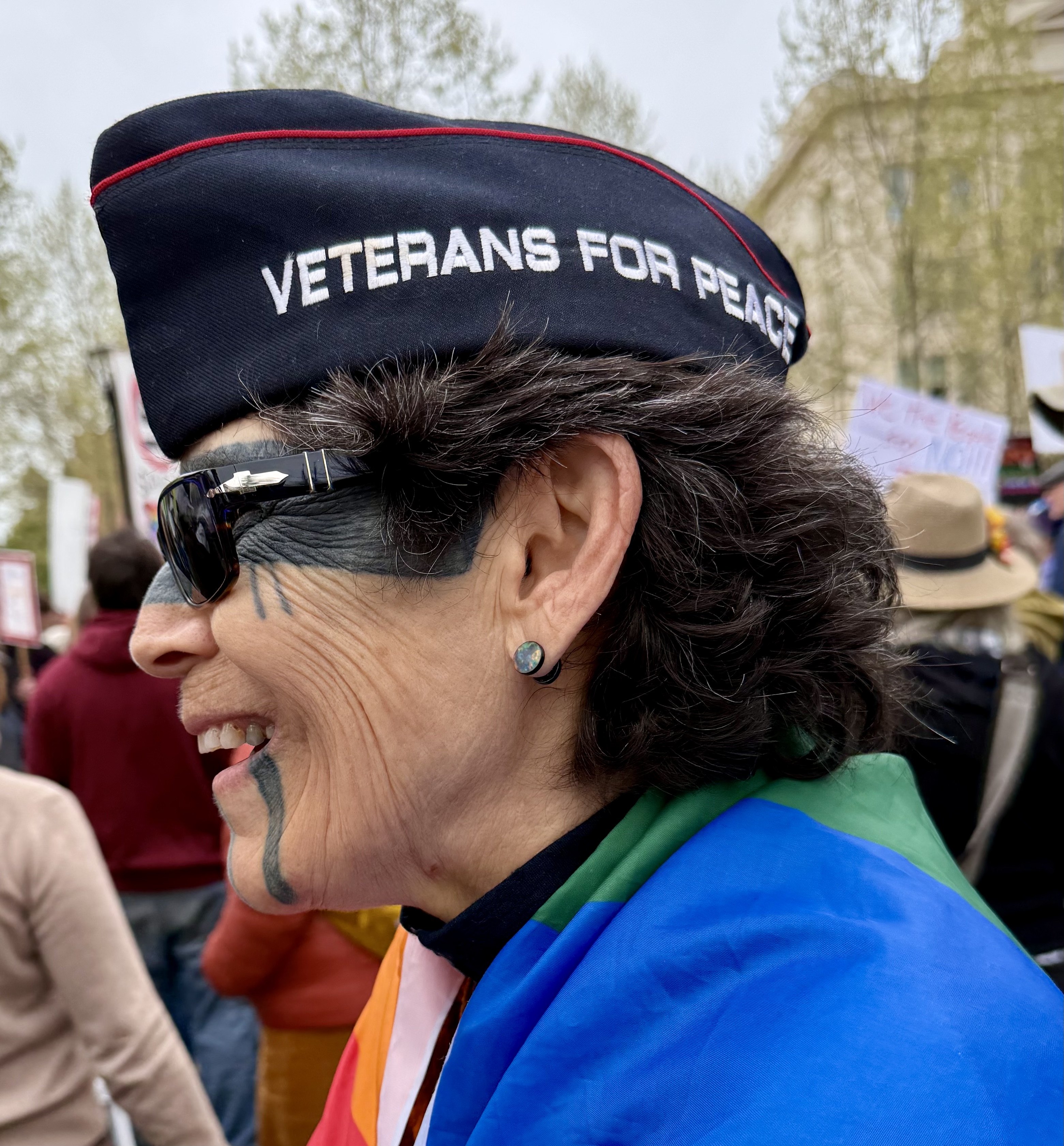
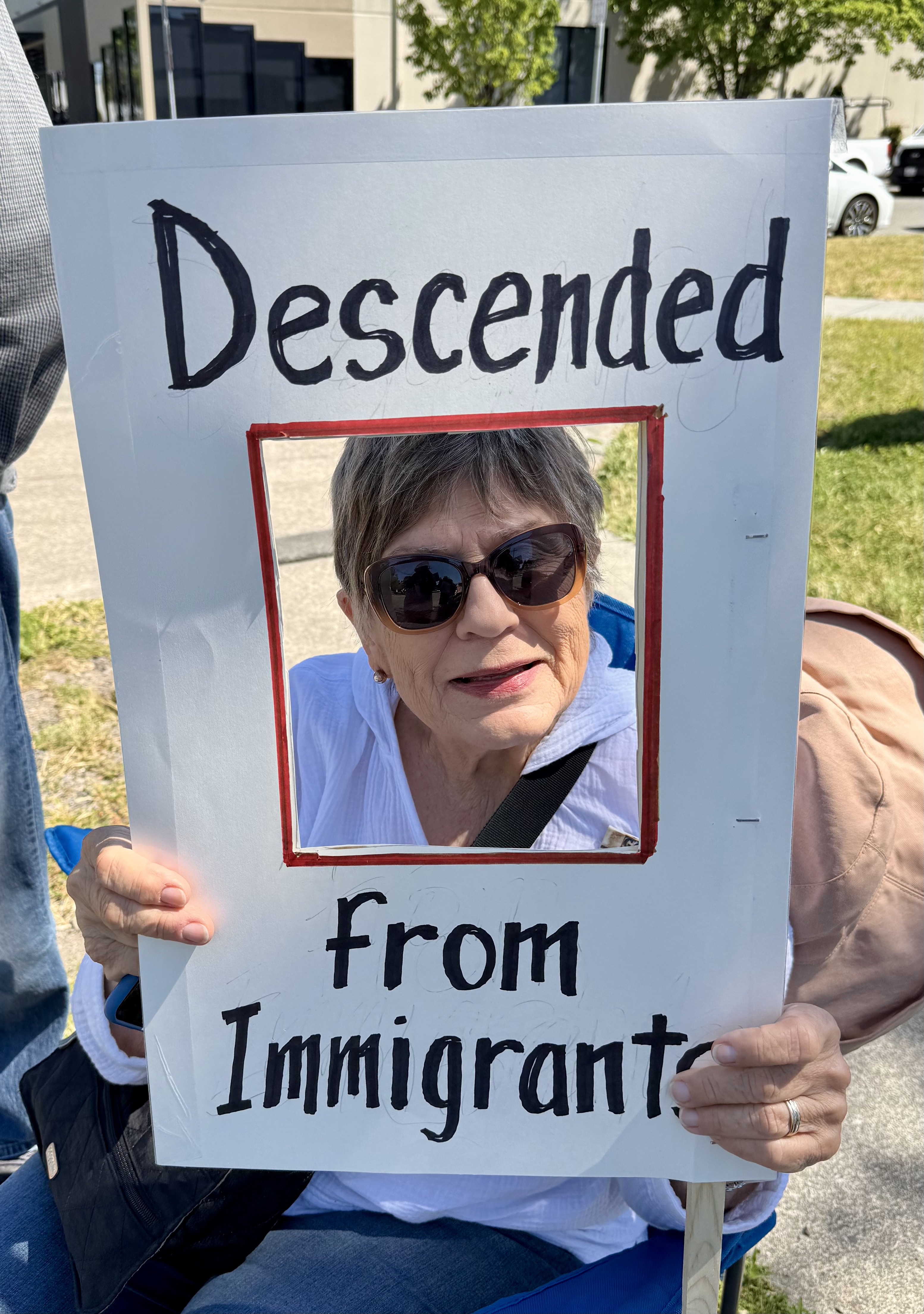
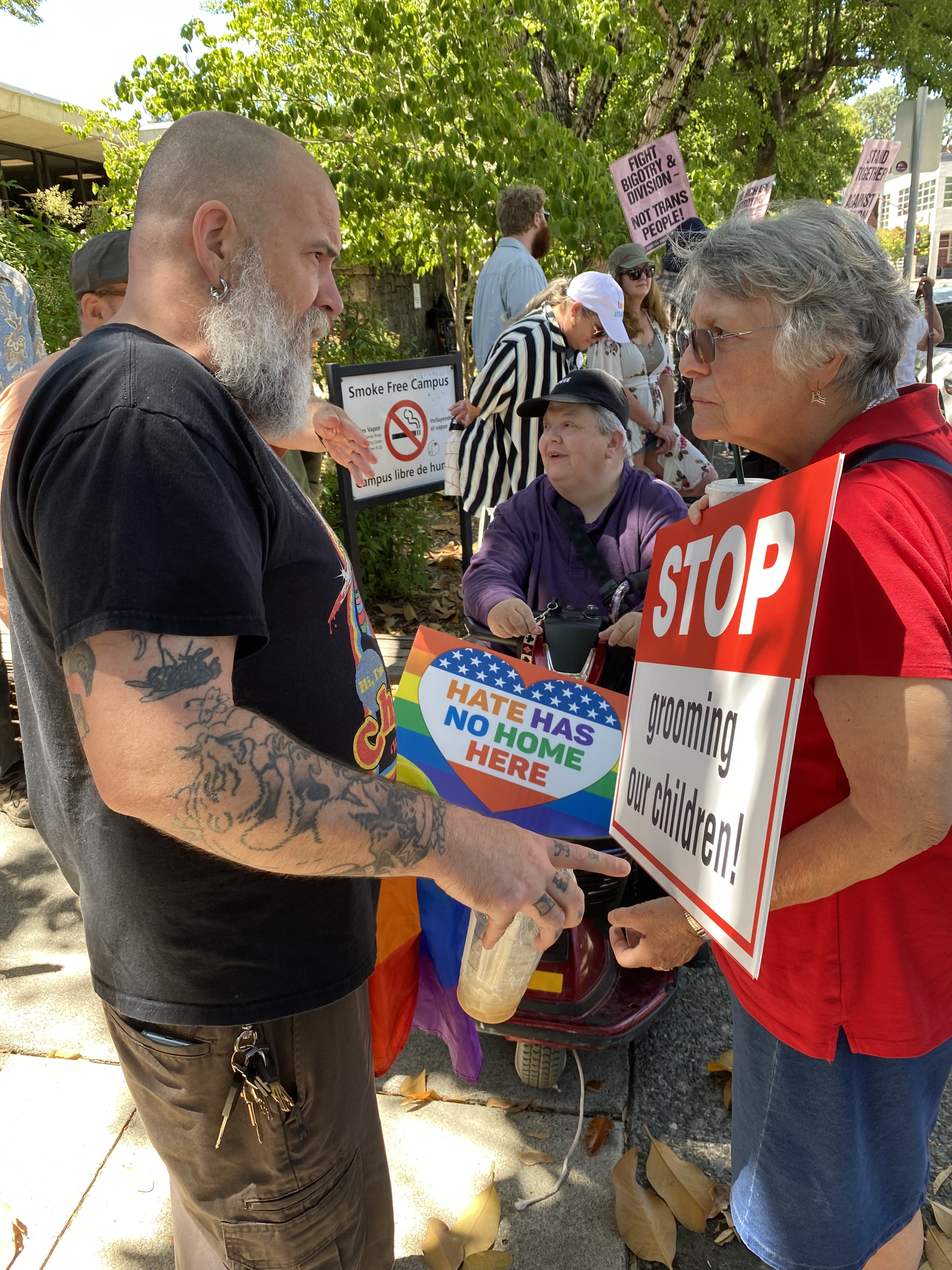
Some of the signs from our protests

Here in Sonoma County, protests are a near-daily occurrence. Demonstrators are targeting a wide range of issues: U.S. complicity in the genocide of Palestinians, Avelo Airline’s role in deportation flights, Elon Musk’s attacks on federal institutions like Social Security and Medicare/Medicaid, the gutting of the Veterans Administration, the criminalization of immigrants, assaults on free speech, and—by us tradeswomen—the dismantling of affirmative action and DEI initiatives.

The Palestinian community and its allies have been gathering every Sunday at the Santa Rosa town square since October 2023.

Weekly actions include:

  • ThursdaysWe the People protest in Petaluma.
  • Fridays: Veteran-focused rallies protesting VA budget cuts.
  • Fridays/SaturdaysPetalumans Saving Democracy actions.
  • SaturdaysTesla Takedown at the Santa Rosa showroom, and a vigil for Palestine in Petaluma.
  • Sundays: Protest at the Santa Rosa Airport against Avelo Airlines, and a Stand with Palestine demonstration in town.
  • TuesdaysResist and Reform in Sebastopol.
  • Ongoing: In Cotati, a weekly Resist Fascism picket line.

In Sonoma Plaza, there’s a weekly vigil to resist Trump. Sebastopol hosts a Gaza solidarity vigil, along with Sitting for Survival, an environmental justice action.

Beyond the regular schedule, spontaneous and planned actions continue:

  • A march to raise awareness of missing and murdered Indigenous women.
  • In Windsor, women-led organizing for immigrant rights.
  • A multi-faith rally at the town square on April 16.
  • Protest musicians and singers are coming together to strengthen the movement with art.

Trump’s goons are jailing citizens, and fear runs deep, especially among the undocumented and documented Latinx population—who make up roughly a third of Santa Rosa. But fear hasn’t silenced them. They continue to show up and speak out.

I’ve joined the North Bay Rapid Response Network, which mobilizes to defend our immigrant neighbors from ICE raids.

Meanwhile, our school systems are in crisis. Sonoma State University is slashing classes and programs in the name of austerity. Students and faculty are fighting back with protests, including a Gaza sit-in that nearly resulted in a breakthrough agreement with the administration.

Between all this, Holly and I made it to the Santa Rosa Rose Parade. The high school bands looked and sounded great—spirited and proud. Then, our Gay Day here on May 31, while clouded by conflict about participation by cops, still celebrated us queers.

And soon, I’ll hit the road heading to Yellowstone with a friend. On June 14, we’ll join protesting park rangers in Jackson, Wyoming as part of the No Kings! national day of action—a protest coordinated by Indivisible and partners taking place in hundreds of cities across the country. 

On the Solstice, June 20 in the Northern Hemisphere, we expect to be in Winnemucca, Nevada, on the way home.

Happy Solstice to all—Winter and Summer!

Photo of the Pleiades: Digitized Sky Survey

CircumTambulation Complete!

A Summer Solstice Walk Around Mt. Tamalpais

When I learned about the quarterly circumambulation of Mt. Tamalpais, I pledged to complete it for the summer solstice. A sister hiker, Dolores, agreed to join me.

The practice was begun in 1965 by poets Gary Snyder, Allen Ginsberg and Philip Whalen–a ritualized walking meditation around Mt. Tam. Following the traditional clockwise direction, they selected notable natural features along the way, performing Buddhist and Hindu chants, spells, sutras, and vows at each stop.

There are two walks, the longer one is 17 miles, the shorter 6.2 miles. At 89, Dolores was the oldest hiker, and I at 74 was likely the second oldest. We chose the shorter walk.

We met up at Rock Spring with about 40 long hikers, who had started earlier in the morning at Muir Woods. The temperature was a warm 74 degrees. Fog was coming in from the ocean down below us.

The short walkers join the long walkers for three of the nine stations. Our first stop was the serpentine rocks overlooking the ocean and the Golden Gate, where participants joined in ceremonial readings.

Ascending the serpentine hill; Leader Gifford Hartman reads a Gary Snyder poem to the group

In a poem, Gary Snyder advises us to learn the flowers. On this walk we did our best, focusing especially on native plants.

Few plants can grow in serpentine soil because of its high levels of toxic heavy metals, and low levels of water and nutrients. But a few plants have adapted to serpentine. Some grow right out of the rock.

Native buckwheat (Eriogonum luteolum), native cobweb thistle (Cirsium occidentale) and fog

Next we hiked on to Potrero Meadows for lunch and more readings. One hiker composed limericks just for us. Snyder envisioned the circumambulation as a joyful, creative endeavor, encouraging participants to be imaginative. He emphasized the importance of paying attention to the surroundings and oneself: “The main thing is to pay your regards, to play, to engage, to stop and pay attention. It’s just a way of stopping and looking — at yourself too.”

Walkers gathering at Potrero Meadow. In this area is mostly a Douglas fir, live oak and Bay laurel forest

Hiking through the Bay laurel leaves gave off a wonderful pungent menthol-like fragrance.

Watching for ticks in the meadow; native Mariposa lilies (Calochortus) and Ithuriel’s spear (Triteleia laxa) peeking out of the tall grass

Our next station was the serpentine cairn. We circumambulated the cairn, each tossing a stone upon it and chanting Women Life Freedom. Zan, Zendigi, Azadi.  

The chant was led by an Iranian-American woman. The spark for this chant and an uprising of Iranian women was the death of Mahsa Amini, a young Kurdish woman who died after being detained by Iran’s morality police for “improper hijab.”

For me this was the highlight of our trip. I was delighted to be led in this chant, joining Iranian women who have been risking their lives to protest for women’s rights and equality.

Dolores and the cairn (L); a closer look at the green serpentine rock

After that Dolores and I and three others went our own way, leaving the large group behind. We headed along the International trail toward the West Point Inn where I hoped to score a cold drink and maybe a popsicle.

California hedge nettle (Stachys bullata); Tanoak (Notholithocarpus densiflorus)

We saw lots of tan oak, the tree that has been devastated by sudden oak death (SOD). This species seems to be recovering. Soon the younger hikers walked on ahead of us. No problem we said. We have maps! Dolores and I continued together.

Me on the trail to the east slope; native chamise (Adenostoma fasciculatum) in bloom

We entered a plant community of chaparral, characterized by manzanita and scrub oak. Many of the native wildflowers had bloomed, but we found a few late bloomers.

Dolores with wooly sunflower (Eriophyllum lanatum), sticky monkeyflower (mimulus), lupine (Lupinus chamissonis)

Coming around to the east side of Tam we were treated to spectacular views of the Bay Area.

Looking toward Mt. Diablo (L) we could see smoke from north bay fires blowing into the Napa Valley. The city of Oakland on the far right.

More blooming plants greeted us.

Toyon (Heteromeles arbutifolia), mountain coyote mint (Monardella odoratissima)

I couldn’t stop taking pictures of the view.

The skyscapers of San Francisco appear above the fog right of center.

We’d been so looking forward to a rest stop at the West Point Inn but it was closed for a huge renovation. Some bikers and hikers hung around and we were able to refill water bottles from a spigot.

Built in 1904, it was once a stop on the Mill Valley and Mt. Tamalpais Scenic Railway.

From Old Railroad Grade we headed down the Rock Spring Trail to our starting point at Rock Spring, the final leg of our journey.

California aralia, the only member of the ginseng family native to California; Yerba Santa (Eriodictyon)

We were happy not to have to compete with bikes or horses on this trail.

Sign on the Rock Spring trail, Coast silk tassel (Garrya elliptica)

We knew we were close to the end of our circumTambulation when we came to the Mountain amphitheater, the 4,000-seat open air theater opened in 1913. This is the venue for the annual Mountain Play. Structures for this year’s play, Kinky Boots, were being struck. We were beat!

The Mountain Theater seats, taking a break near the end

Back on the road we got a bit lost. Which way to Rock Spring? We flagged down a passing car. Take that trail right there said the occupants. They were two of the young 17-mile circumabulators, already finished with their long walk!

We might have been slower but we made it!

Pride at Summer Solstice

My Regular Pagan Holiday Greeting: Litha

Reclaiming Ritual

Can we remake religious rituals into traditions that are free from religion? In her book, The Wonder Paradox, Jennifer Michael Hecht answers with a resounding Yes! And she shows us how. 

Hecht posits that humans need tradition and ritual in our lives, but that there is no reason to attach these practices to church, which she aptly calls “drop by and lie.” I do love that she is a fellow atheist, but anyone, religious or not, can make use of her ritual adaptations that are more appropriate to modern life. She says everything is secular, including religion—a human invention after all. Hecht makes the case for incorporating poetry into newly imagined rituals. Reading this book and listening to an interview with her has renewed my own path to inventing new rituals. 

We humans need ritual to mark births and deaths, but we can make our own or incorporate those of other cultures. My friend Ruth, a new grandmother, told me her Hindu relatives have rituals for everything, including the baby’s first haircut. She is not Hindu but she is invited and delighted to participate in them all.

When the news gets us down or is cause for celebration, we can create our own ceremonies. A friend posted “Happy arraignment eve to all who celebrate” and another commented, “I’m looking forward to the high holy days of conviction and sentencing.” (Me too!)

In these pagan holiday posts, I have been using the Wheel of the Year to think about the wheel of life. A combination of ancient and new tradition, the Wheel of the Year acknowledges the summer and winter solstices, the spring and fall equinoxes and the four cross quarter holidays in between. It’s a good way to notice the changing of the seasons and to feel closer to the earth and all its inhabitants.

Summer solstice is a gay holiday

Just as the whole alphabet of queer folks have become pariahs around the world, our invention of Gay Pride Day and Gay Month have become universal markers of summer solstice (winter solstice in the southern hemisphere). For most of my adult life I’ve been celebrating the summer solstice at Gay Pride Day. Taking place in cities and towns around the world, mostly in June, Pride is both a protest and a party. 

In San Francisco, Pride is huge, taking over the whole city for the month. In New York City, activists have split from the old corporate sponsored pride parade to form a new protest march. In LA, the parade turned into a music festival and has also split in two. 

I say it’s all for the good. Why not have Pride celebrations in every town and city and neighborhood. As Sonoma County celebrated its 38th year of Pride, other small towns around the Bay now sponsor their own Pride celebrations.

So Gay Pride Day and gay events like drag queen story hour are proliferating all over the country but at the same time our community is under attack in nearly every state. We are lucky to live in California whose state legislature is not at the moment promoting anti-gay bills (although we have fought against many in the past). But even in Sonoma County and around the liberal San Francisco Bay Area, protesters show up at public libraries and school boards with the aim of censoring books and queer programming. Here in Sonoma County the counterprotesters are vigilant and nonviolent. No events have been shut down by the book burners yet.

Not a Virgin Anymore

June has been a mixed bag this year. In between occasional sunny breakthroughs, Santa Rosa has been experiencing what Santa Barbarans call June Gloom. My wife Holly’s weather guru, Daniel Swain (https://weatherwest.com), predicts hotter-than-ever summer days after the gloom subsides. 

At the spring equinox I opined that the wet cold winter had become suddenly summer. Wrong! Summer lasted just a weekend before the weather turned cool again. I had performed a spring ceremony, kissing my winter gloves and putting them away for the season, but I soon pulled them back out. Now I’m putting them away again. Ok I’ll kiss them again. Our ceremonies and rituals can be repeated as often as we want.

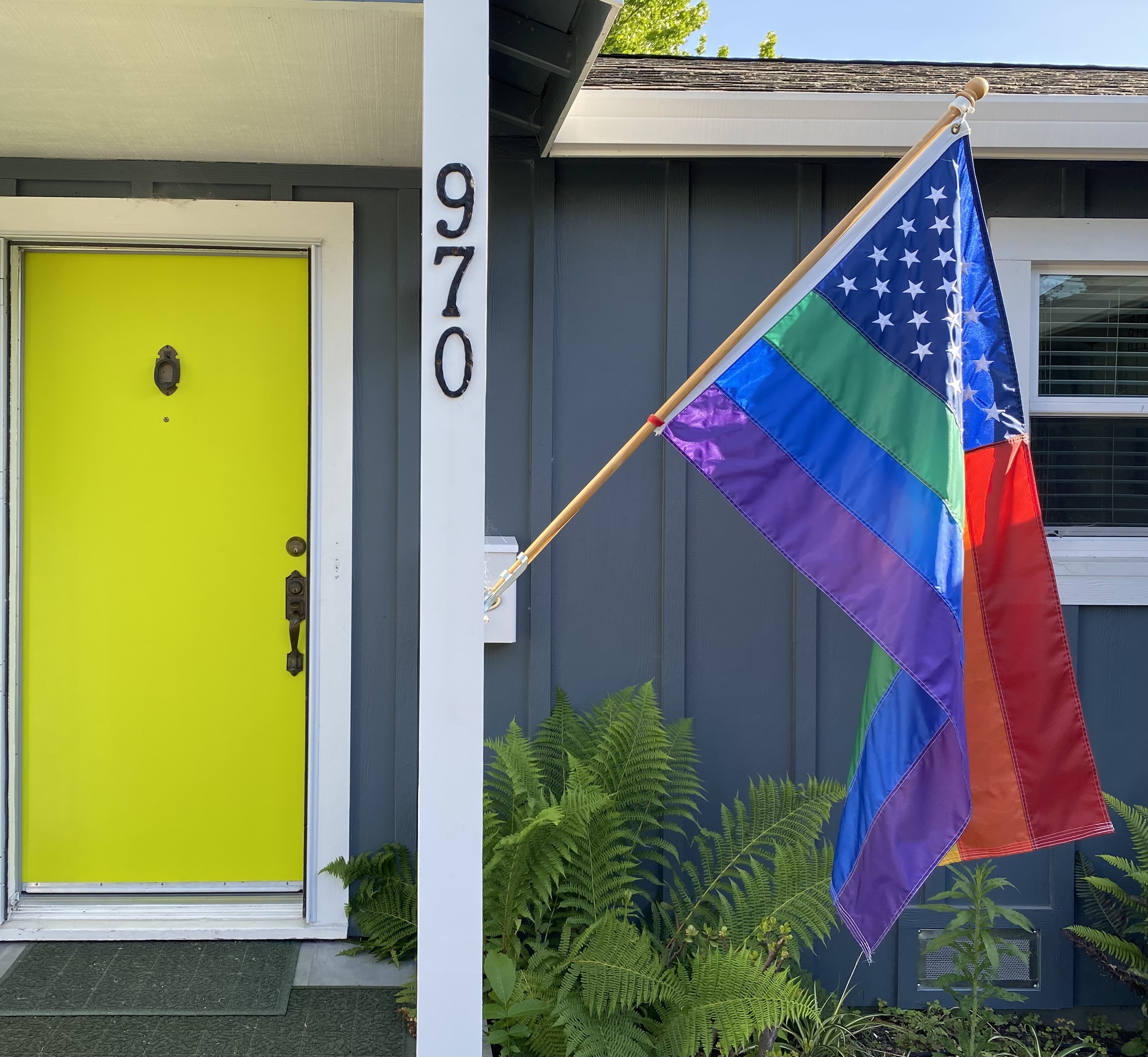
Flags are big during Gay Month. We hung the gay flag on June 1, a ritual repeated every year.

Then Holly and I both got covid, thankfully at the same time so we could isolate together. She brought it home from her mother’s assisted living place. We each took a five-day course of Paxlovid. I’m pretty sure it reduced the severity of our symptoms and now we’ve tested negative. We didn’t practice many rituals while we were sick, unless you count lying in bed all day watching Mrs. Maisel. 

Now I’m back to hiking! I’ve resurrected my daily morning ritual of preparing for the hike—donning boots and hat, filling my water bottle, making a snack, checking the fanny pack. Keys, wallet, phone and bandana felt for in pockets. And I’m off to walk in nature, my favorite pastime.

Have a delightful Summer Solstice and a fabulous Gay Pride Day!

Sirius and the Summer Solstice

My Regular Pagan Holiday Post

Osama Elsayed on Unsplash

Summer solstice 2022

I think of summer solstice as the start of the dry season here in NoCal, but in ancient Egypt it presaged the start of the wet season when the Nile River began to flood.

Nile Valley civilizations acknowledged and celebrated the solstice, when the sun reached its highest point in the Northern Hemisphere, as the most important day of the year marking the African new year.  


Celebrations commemorated the longest day of Ra, the sun god, as well as the rising of the star Sirius, which heralded the Nile flooding and divine blessings on the land of Egypt. 

The ancient Egyptians recognized the importance of Sirius (one of the stars of the constellation Canis Major) as the brightest star in the sky, as well as the birthplace of the goddess Isis. They called this star Sopdet. The celebrations for new year’s day began at dawn when Sirius appeared on the horizon as the shining morning star emerging from the darkness of the underworld. 

Goddesses were involved too. The great triad of goddesses, Isis, Hathor and Nut, was intimately connected with this “divine rebirthing” of Egypt each year, as depicted in detail on the walls of Dendera Temple in upper Egypt, built by Cleopatra.  Traditional beliefs held that Isis was mourning her dead husband, Asar (Osiris), and that her tears made the Nile rise. 

 
This festival is one of the oldest in Egyptian history, celebrated from archaic times all the way through to the Roman occupation of Egypt. Ancient Egyptians aligned the Great Pyramids so that the sun, when viewed from the Sphinx, sets precisely between two of the pyramids on the summer solstice. Here on my block we stand out in the street to watch the sun set over the Coast Mountain range. 

How will I be celebrating the solstice? Well, my weather app says it’s forecast to be 100 degrees here in Santa Rosa on Tuesday June 21, so my daily walk will have to be early in the morning. After the longest day of summer solstice, the days will gradually get shorter until the winter solstice and the shortest day of the year. Some part of me is looking forward to shorter, cooler days, longer nights and the coming of winter. Now we just have to get through fire season.

Wishing you all a fire and flood-free solstice.

Love, Molly (and Holly)

Happy Juneteenth!

Summer Solstice 2021

Dear Friends,

Happy Juneteenth, a new federal holiday! And happy Summer Solstice! This week we celebrate the opening up of California and Santa Rosa from covid restrictions. I’ve taken off my mask to eat at a restaurant, I saw a movie at the Summerfield (In the Heights—it was great), and I flew on a plane to visit family in Washington. Holly and I took a road trip to Pismo Beach and we hosted friends for lunch in our house. The awfulness of 2020 is starting to fade, but we must strive to remember lessons it taught us about resilient viruses and fragile democracies.

Two exciting developments took place in our neighborhood in May. The first was the birth of two fawns in Linda’s yard across the street from us. I was out in the front yard when Linda called me over. She had been getting her newspaper when she saw the doe and fawns. The mom left for a bit to forage, but she came back later to fetch her kids.

The second thing was a fire. On a windy day I was visiting with neighbor Pam when we looked up to see clouds of smoke blowing by her windows. When we ran outside to see what was happening, the street was already full of freaked out neighbors.

“I’ve got PTSD from 2017,” yelled Renee. Our block was evacuated when the Tubbs fire bore down on the neighborhood.

Fire trucks were already at the scene extinguishing the blaze that had combusted in Howie’s front yard which had just been landscaped with bark mulch. Apparently a passing driver had thrown a cigarette that ignited the mulch. This set us all worrying that mulch might be the wrong landscaping material as, like good citizens, we replace our water intensive lawns. And so for us on Hyland Drive fire season began in May. It gets earlier every year.

Because she grew up here and is now in her 60s, my partner Holly has taken on the character of an old timer. Lately she’s been telling me that when she was growing up the wind didn’t blow as much as it does now. She also said it was always foggy in the summer; she remembers freezing her ass off at swimming lessons before the sun came out. She ran into somebody recently who also grew up here who corroborated her theory. Perhaps for climate change updates we should just ask old timers what the weather was like when they were growing up.

Fire season with its smoke and toxic air has caused us to depend on a plethora of apps for air quality. We like purpleair best because it uses air quality monitors installed by citizens. We got one and so we can look at the map and see what the air quality is right in our back yard within ten-minute intervals. People also install them indoors. The purpleair map usually shows people’s indoor air to be worse than outdoor.

Nowadays there are lots of online resources to check air quality, smoke, temperature, rain and thunder, clouds, waves—just about anything we can imagine. My favorite discovery this year is windy.com. The visuals are so cool. You can change the screen to show different aspects, but my favorite is wind. Here are some things I’ve learned from the visual image: It’s a lot windier over the ocean than over the land. The wind tends to hug the coast and it can travel either north to south or south to north. Once I watched while it changed direction! Also the app gives you ten days of previews. Our westerly wind tends to blow through the Golden Gate and then travel north unless it’s really windy. Then it can come right over the Coast Range, which generally stops it.

The offshore wind is another animal altogether, coming from the east.  Diablo winds propelled the Tubbs fire in 2017 that burned 5200 homes here. Like the Santa Ana winds in southern California, our Diablo winds originate inland usually in the autumn when hot dry weather creates the worst fire conditions. The term Diablo wind first appeared after the 1991 Oakland firestorm in which the wind came from the direction of Mount Diablo in the east.

As fire season starts, we find ourselves in the middle of a historic drought. It’s always something, right? We citizens are doing our best to reduce water use, collecting shower water in buckets, letting lawns go brown and reducing irrigation to our gardens. Californians are practiced at this. I remember the first time I saw this sign in a bathroom: IF IT’S YELLOW LET IT MELLOW. That was in Sonoma County at a friend’s house during the drought of 1977.

Enjoy the longest day of the year. After June 21, the days shorten and nights lengthen. Rain will come with the darkness and I’ve got to admit I’m looking forward to that.

Sending big hugs to all.

Love, Molly (and Holly)

Summer solstice 2020

Dear Friends,

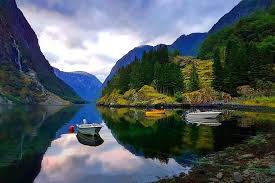
We think of you as we sit on our porch sipping aquavit and eating gjetost cheese on rye crisps looking out at the fjord in our cozy cabin for six in the village of Flam, Norway. To our backs are steep forested mountains and waterfalls. To our west is the North Sea.

Just kidding. That’s where we were supposed to be at midsummer with Scandinavian American cousins. We had made all our reservations and even bought plane tickets when the corona virus hit. Still waiting for refunds.

We had planned to visit the ancestral homes of our Scandinavian ancestors. I wanted to be there at midsommer, a celebratory holiday which marks the summer solstice. Instead we sit in our zero gravity chairs in our Santa Rosa backyard watching our flowers and veggies grow. In June I harvested the last of the oranges and then artichokes, the last of them now blooming magnificently. Tomatoes, eggplant and cucumbers are just coming on. It’s not so bad. Life has slowed way down (though it was already pretty slow around here.) 

The Norway trip was the idea of my cousin Gail. She lives in Gig Harbor, Washington in a lovely house that has been sort of a retreat center for the family for the last several years. We would gather for reunions and also to go through Gail’s extensive family history archives, saved in cardboard boxes in her attic. Lately my brother Don has been researching the Swedish relatives.

We share a Norwegian grandfather and Swedish grandmother who emigrated at the turn of the 20th century and met and married in South Dakota where their relatives had homesteaded. They soon moved further west to Idaho, Oregon and Washington, settling in Yakima.

Our grandfather, Bernt, or Ben in American, left Norway in 1898, never to return. He was born in 1878 in Borsa, a fishing village on a fjord not far from the town of Trondheim.

So we may never get to Norway but we have used this opportunity to educate ourselves about Norwegian culture, reading literature and history. My mother Flo and I had already made a pilgrimage to our Norwegian and Swedish ancestors’ homes. Thanks to Flo’s 1979 travel diary, I reconnected with a woman who we met at the Oslo feminist center and who let us stay in her apartment when all the inns were full. In letters, Bente has caught me up on 40 years of her life. She is a lesbian feminist and was part of a back-to-the-land movement in Norway when she returned to her family farm in the north. Now she’s working at a historical museum near Oslo.

We also discovered that our next door neighbors had taken a family trip last year back to his ancestral home in Norway and we had planned to meet up and hear all about their trip when coronavirus hit. Perhaps our neighbors are my cousins too!

Still sheltering in place in NoCal, we shall just have to pretend we are up in the north country. I think I have some aquavit around her somewhere. Skol!

(My Danish friend corrected me. Aquavit is not to be sipped. It is downed, ice cold.)