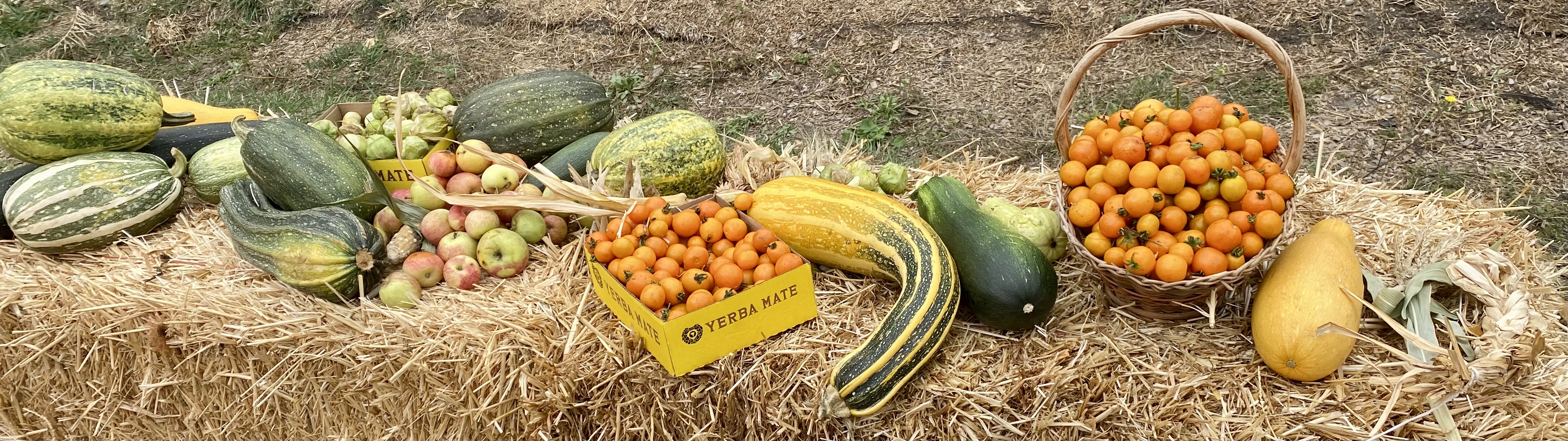
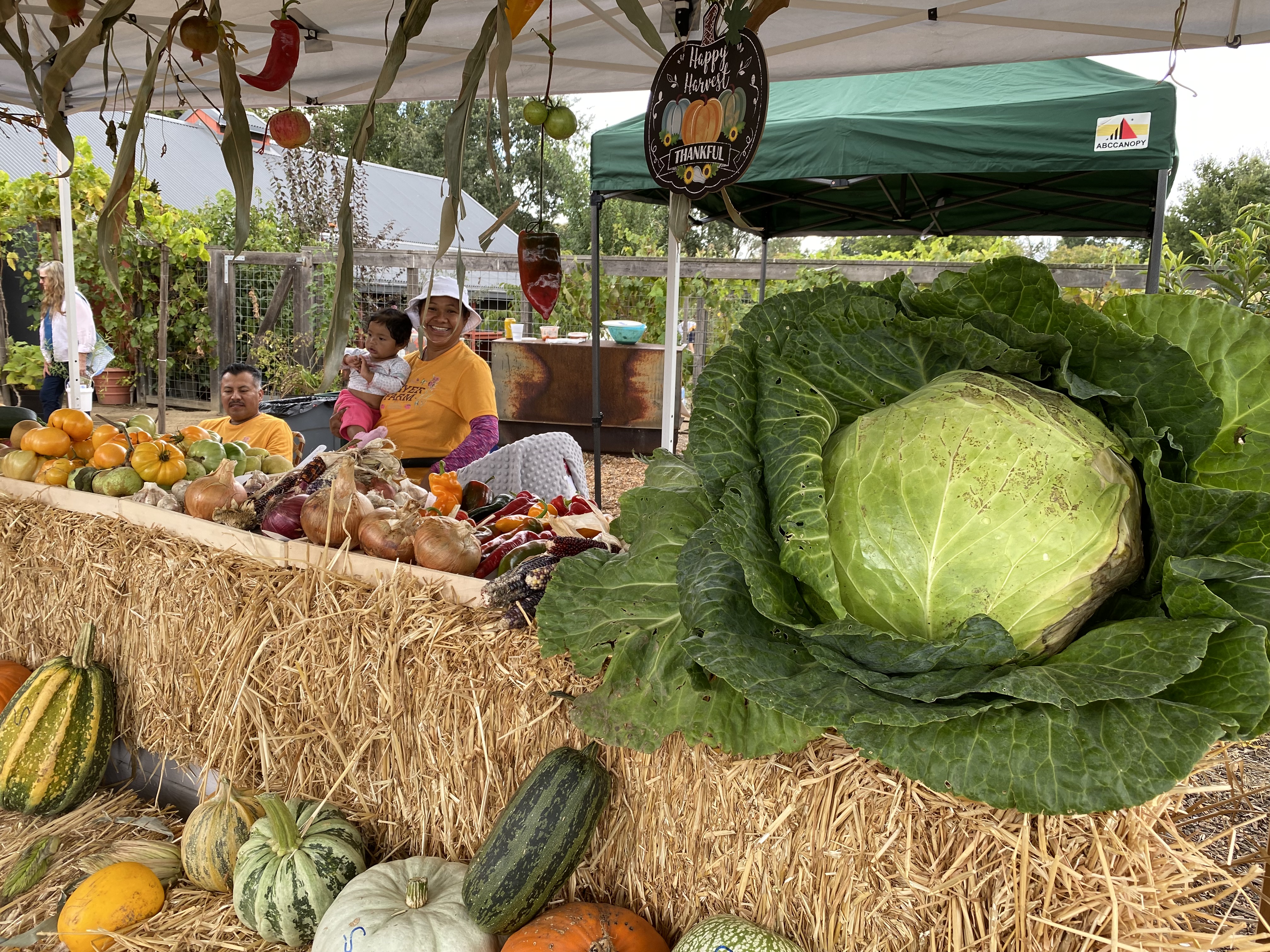
Some of the harvest of the 93 individual garden plots at Bayer Farm
My Regular Pagan Holiday Post
As the northern hemisphere tilts away from the sun this September, the autumn equinox arrives to signal a timeless transition. For centuries, cultures across the north have marked this shift with harvest festivals, and in Santa Rosa, this tradition finds a vibrant, modern home in the Festival de la Cosecha. Celebrating its 19th year, the festival is more than just a seasonal gathering; it is a living testament to the persistence of local environmentalists and land-planning activists who fought to ensure that nature and community could thrive amidst urban growth.
Mon Petit Chou
The heart of the celebration is Bayer Farm, a five-acre city park that stands as a victory of equitable urban planning. For a century, the surrounding Roseland neighborhood existed as an unincorporated pocket, an island of mostly Latinx working-class residents surrounded by the city. Historical records suggest that Santa Rosa’s ruling elite and political machine hesitated to annex the area, fearing that incorporating Roseland would introduce a wave of new voters who might shift the municipal balance of power. Consequently, the residents of Roseland were denied the basic infrastructure—sewers, fire protection, and parks—that the rest of the city enjoyed.
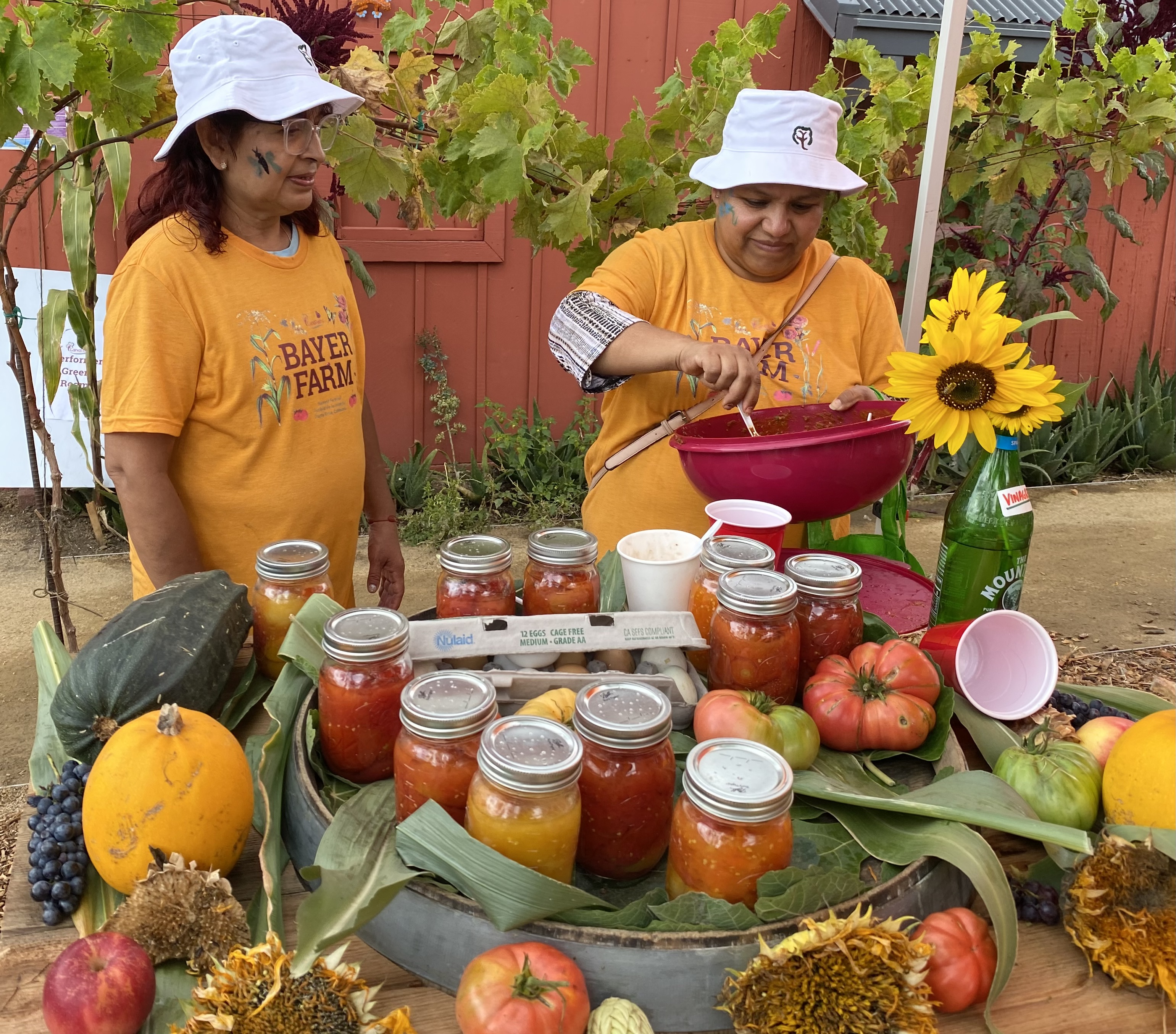
Making salsa
The creation of Bayer Farm broke this cycle of neglect. Born from a unique partnership between the City of Santa Rosa, LandPaths, and the Sonoma County Agricultural Preservation and Open Space District (Ag + Open Space), the farm embodies a vision of healing and equitable access to nature. It provides a sanctuary of greenery and cultural celebration right in the heart of a neighborhood that was long overlooked.
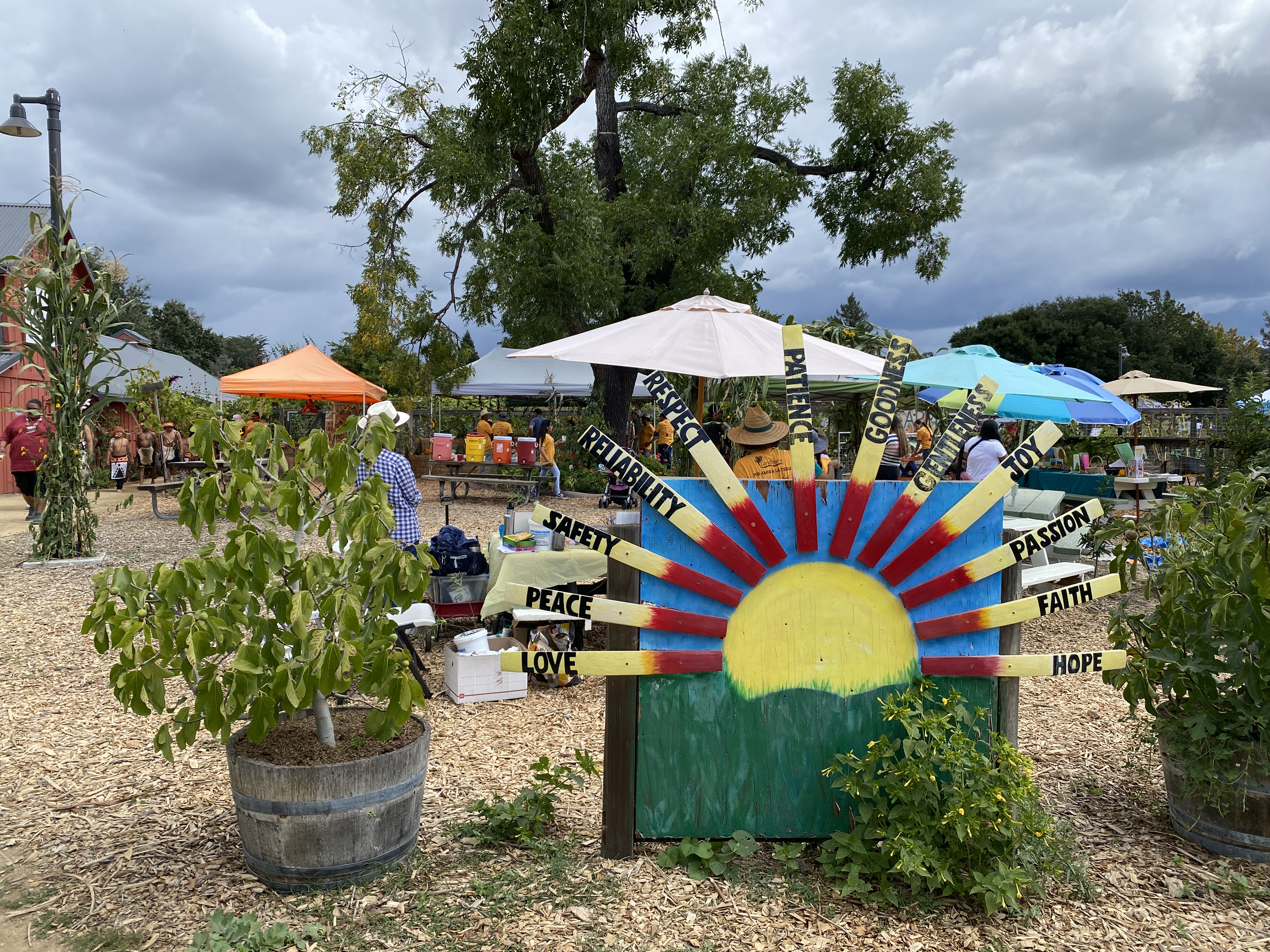
The entrance to the farm
The existence of this sanctuary is rooted in a legacy of activism. In 1990, citizens voted to establish Ag + Open Space to combat unchecked urban sprawl and protect the region’s rural identity. Through a strategic blend of grants, conservation easements, and a quarter-cent sales tax, the District works with landowners to keep the land undeveloped. This effort has permanently protected over 127,000 acres of forests, oak woodlands, working ranches, and critical waterways. By shifting the region away from a path of development and toward a model of sustainable coexistence, these activists created the very landscapes that we local residents now hike and cherish daily.
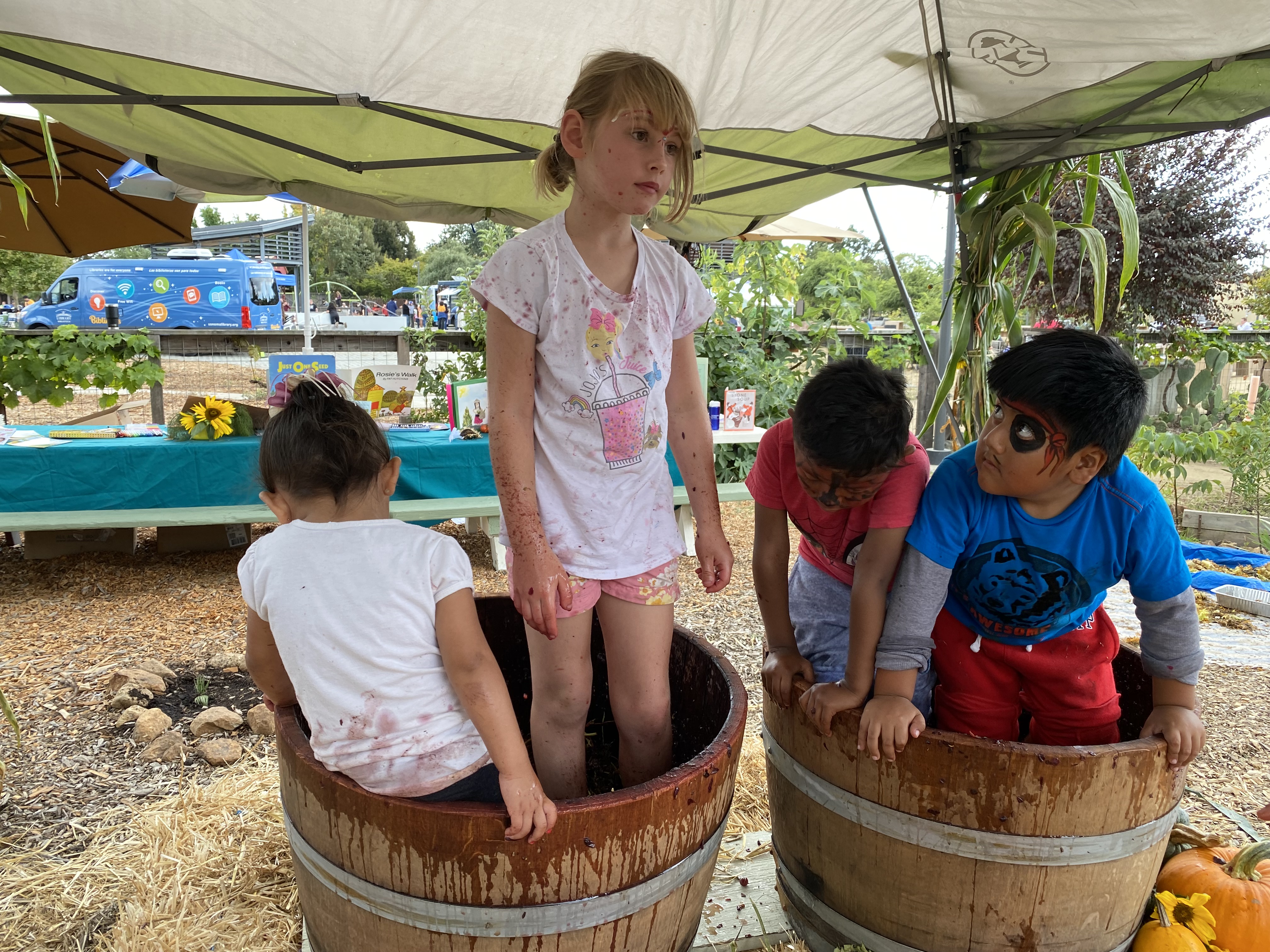
Crushing grapes the old fashioned way
Complementing this preservation is the work of LandPaths, an organization that has spent 30 years fostering a love of the land. By managing Bayer Farm and leading creative outings in both English and Spanish, LandPaths ensures that nature’s inspiration is accessible to everyone, regardless of their background. Through nature camps and community-led stewardship, they turn the act of conservation into a shared community experience.
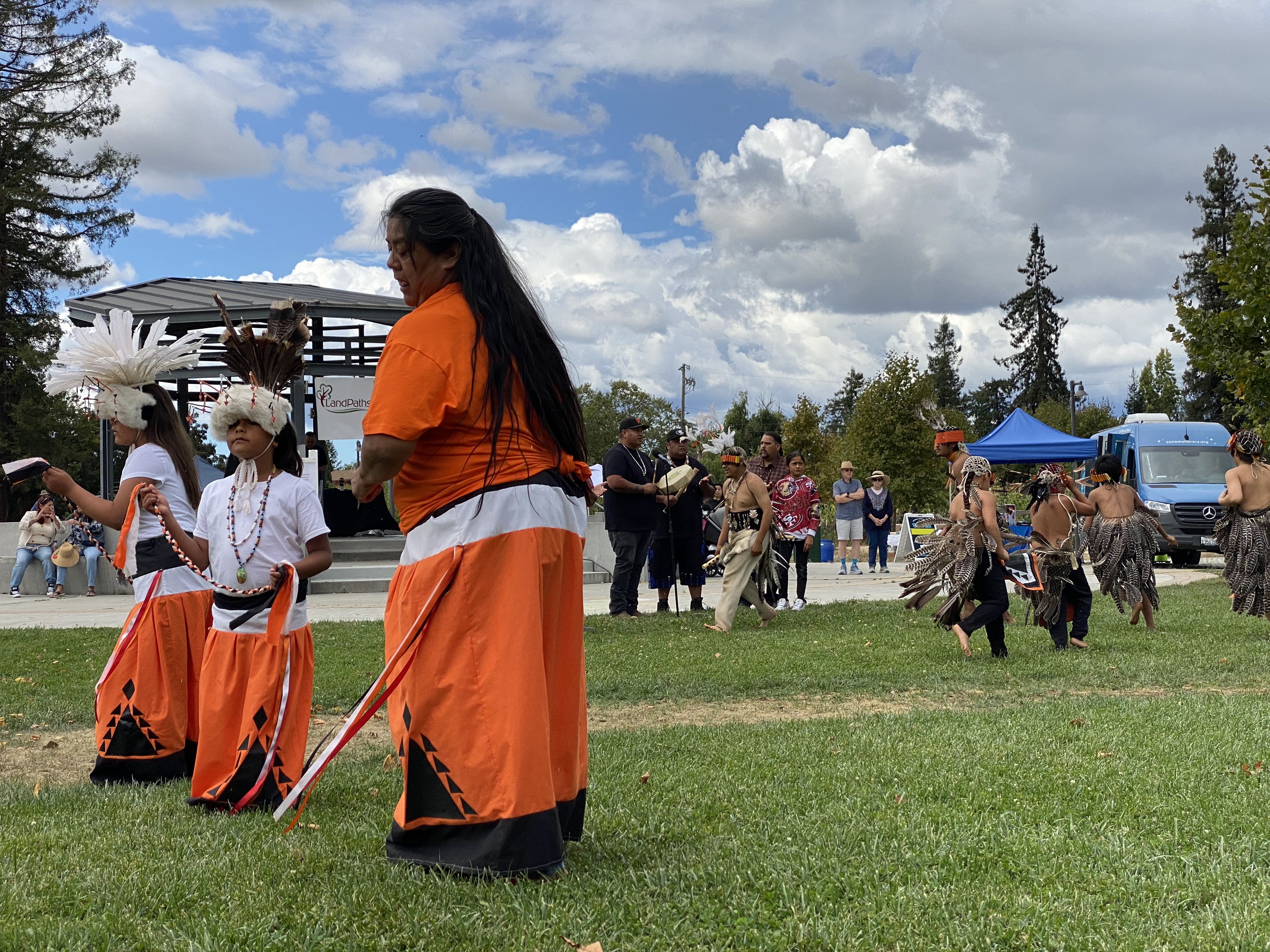
Pomo dancers performing in the meadow
On September 26, from 10 a.m. to 2 p.m., the Festival de la Cosecha brings this history to life. The air fills with the sounds of the Sonoma County Pomo Dancers and Danza Xantotl, while visitors engage in herbal medicine workshops, cooking demonstrations, and spirited salsa competitions. Between browsing community booths and picking out pumpkins and fresh vegetables, guests gather to recognize the land and the stewards—past and present—who fought to save it. In the laughter and abundance of the festival, Santa Rosa celebrates not just the harvest of the earth, but the harvest of a long-term commitment to justice, ecology, and community.
Bayer Farm is located on the ancestral homeland of the Southern Pomo people.
Summer (and Winter) Solstice will be June 20, 2025
For years, these pagan holiday letters have followed the rhythm of the Northern Hemisphere. So it’s about time we turned our gaze south. What is the summer solstice for us in the north is, of course, the winter solstice down under.
In Aotearoa (the Māori name for New Zealand, often translated as “Land of the Long White Cloud”), the winter solstice is marked by Matariki, a celebration that signals the Māori New Year. In 2022, Matariki was officially recognized as New Zealand’s first indigenous national holiday — a milestone in honoring the traditions of the land’s first people.
Rooted in ancient Māori astronomy and storytelling, Matariki revolves around the reappearance of a small but powerful star cluster in the early morning sky — known in Māori as Matariki, and in Western astronomy as the Pleiades or the Seven Sisters. Its rising marks a time of renewal, remembrance, and reconnection — with ancestors, the earth, and each other.
The date of Matariki shifts slightly each year, determined by both the lunar calendar and careful observation of the stars. Māori astronomers and iwi (tribal) experts consult mātauranga Māori — traditional Māori knowledge systems — to ensure the timing reflects ancestral wisdom. In precolonial times, the clarity and brightness of each star helped forecast the year’s weather, harvest, and overall wellbeing.
Unlike the linear passage of time in the Gregorian calendar, Māori time is circular — woven from moon phases, tides, seasons, and stars. Matariki is not just a new year, but a return point. A moment to pause, reflect on what has been, and plan how to move forward in harmony with the natural world.
At the heart of Matariki is kaitiakitanga — the ethic of guardianship. It’s the understanding that humans are not owners of the earth, but caretakers. We are part of the land, sea, and sky, and we carry the responsibility to protect and sustain them.
When Matariki rises just before dawn, it opens a space for both grief and celebration: to mourn those who’ve passed, give thanks for what we have, and set intentions for the year ahead. It reminds us of the interconnectedness of whānau(family), whakapapa (genealogy), and whenua (land).
The name Matariki is often translated as “the eyes of the chief,” from mata (eyes) and ariki (chief). According to one well-known Māori legend, the stars are the eyes of Tāwhirimātea, the god of winds and weather. In grief over the separation of his parents — Ranginui (Sky Father) and Papatūānuku (Earth Mother) — Tāwhirimātea tore out his own eyes and cast them into the heavens.
In a world that often values speed over stillness, Matariki offers a different rhythm. It’s a celestial breath — a reminder that time moves in cycles. That rest and reflection are just as important as action. That the sky still holds stories if we remember to look up.
The 9 Stars of Matariki
Each star in the Matariki cluster has its own role and significance:
Matariki – Health and wellbeing
Tupuānuku – Food from the earth
Tupuārangi – Food from the sky (birds, fruits)
Waitī – Freshwater and the life within it
Waitā – The ocean and saltwater life
Waipuna-ā-Rangi – Rain and weather patterns
Ururangi – Winds and the atmosphere
Pōhutukawa – Remembrance of those who have passed
Hiwa-i-te-Rangi – Aspirations, goals, and wishes for the future
For Māori, these stars are not just celestial objects — they are guardians. They watch over the land, sea, and sky, and in doing so, remind us of our responsibility to them.
As global conversations about climate change and sustainability grow more urgent, the values of Matariki — care, reverence, reflection, and renewal — feel especially resonant. It’s a time to return to what matters, to honor the past, and to move forward in a way that honors both our roots and our shared future on this earth.
North Bay Rising
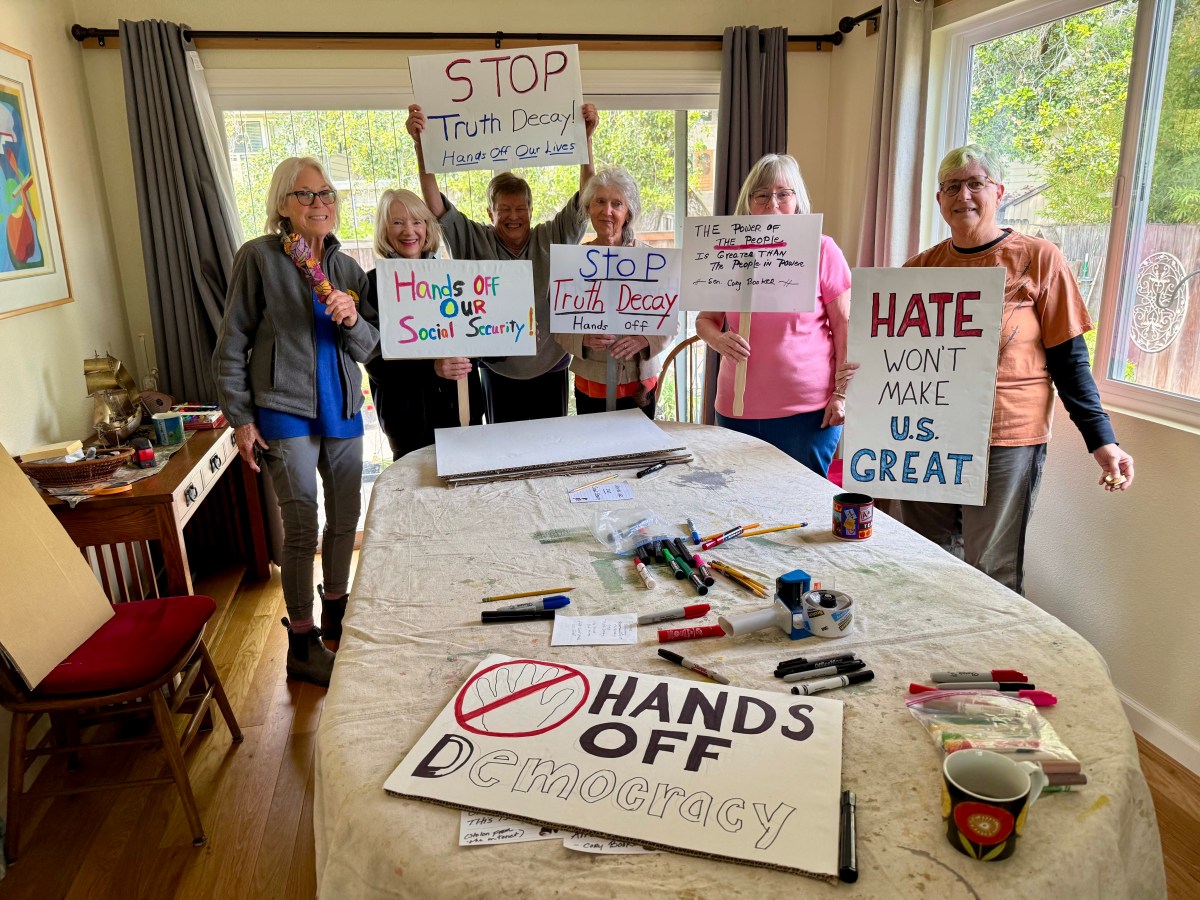
In Santa Rosa and across the North Bay, we’re mad as hell—and we’ve taken to the streets. From the Hands Off! protest in April that brought 5,000 people to downtown Santa Rosa, to thousands more mobilizing in surrounding towns, resistance to the rise of fascism in the U.S. is fierce and growing.
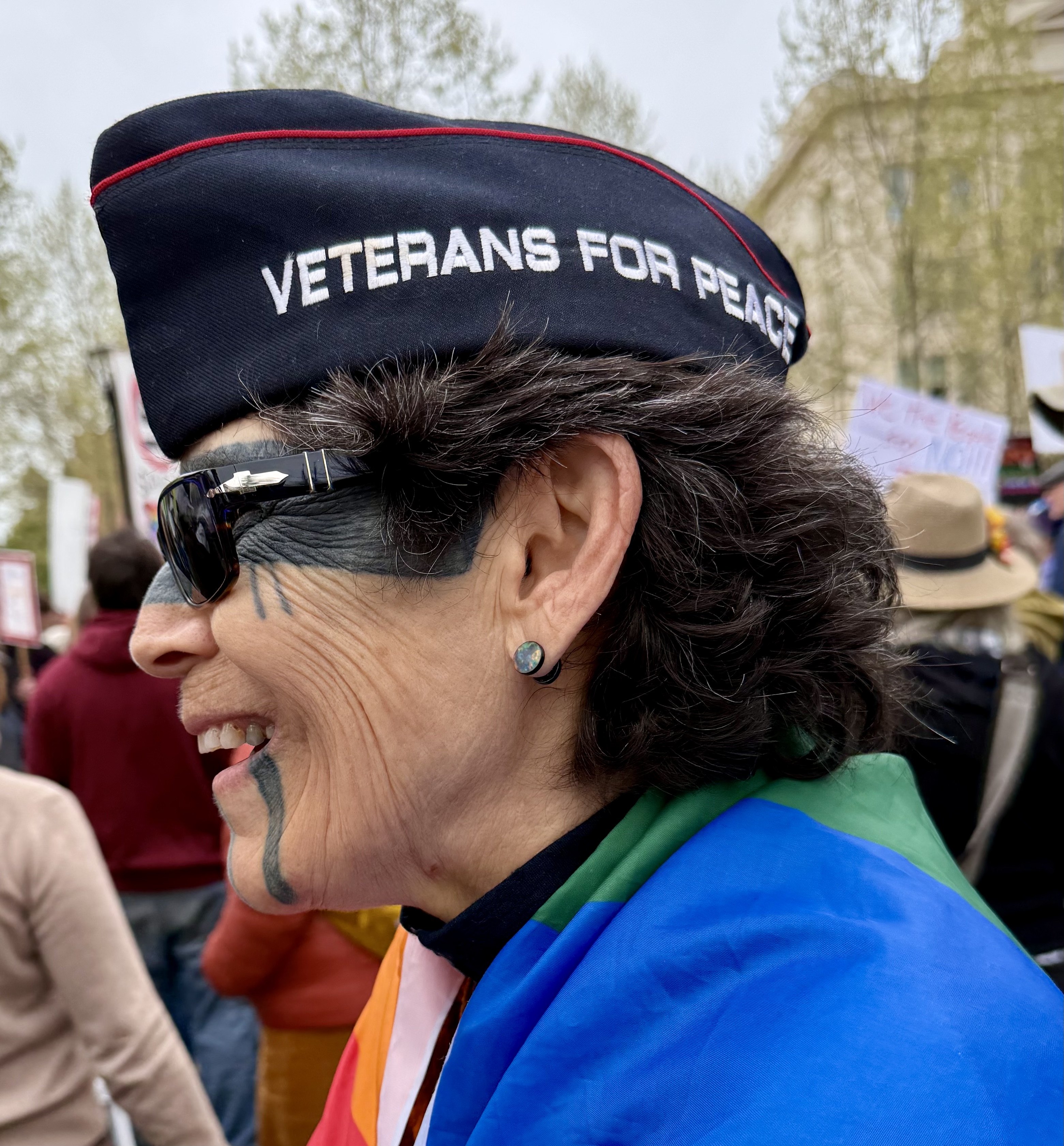
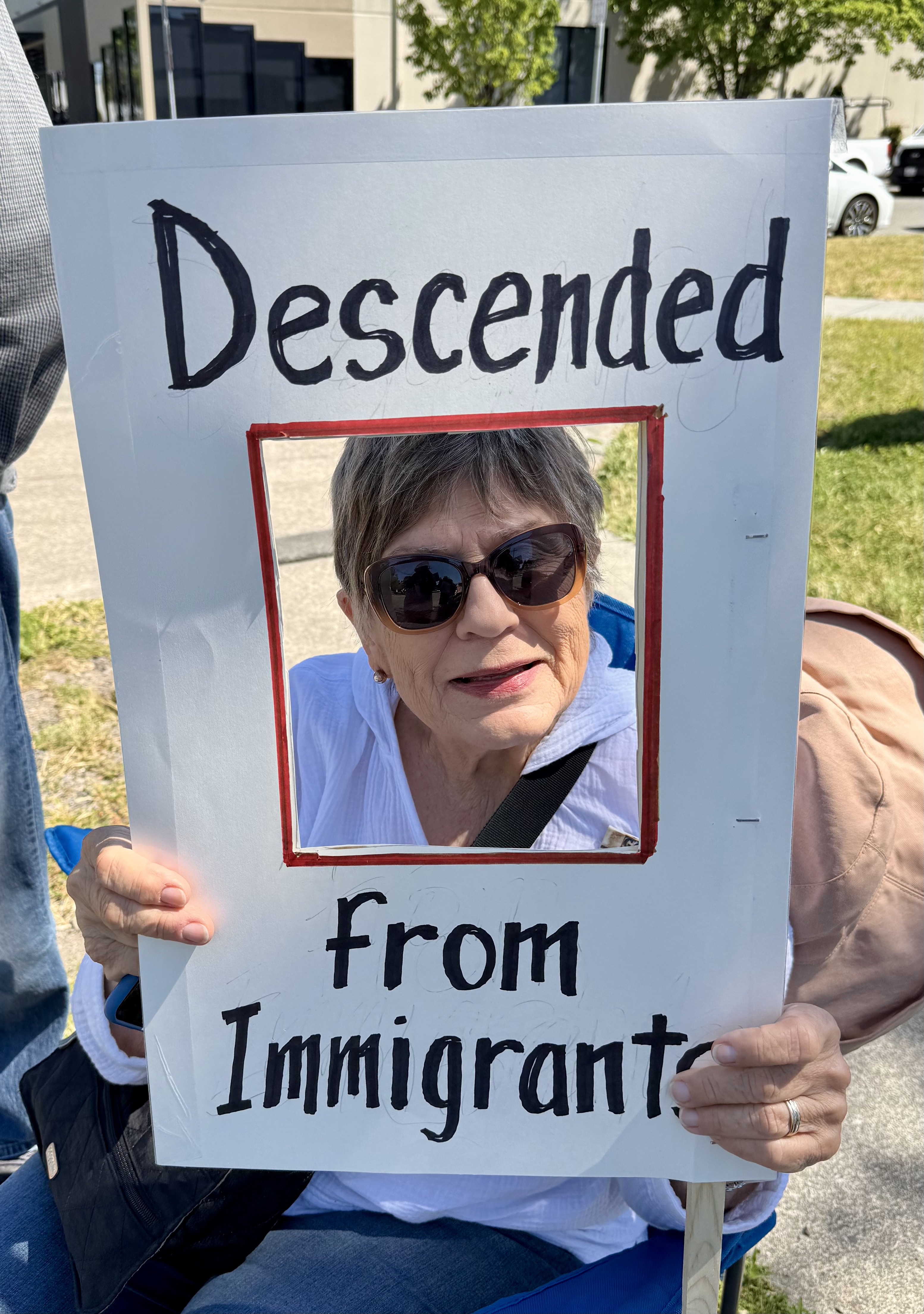
Some of the signs from our protests
Here in Sonoma County, protests are a near-daily occurrence. Demonstrators are targeting a wide range of issues: U.S. complicity in the genocide of Palestinians, Avelo Airline’s role in deportation flights, Elon Musk’s attacks on federal institutions like Social Security and Medicare/Medicaid, the gutting of the Veterans Administration, the criminalization of immigrants, assaults on free speech, and—by us tradeswomen—the dismantling of affirmative action and DEI initiatives.
The Palestinian community and its allies have been gathering every Sunday at the Santa Rosa town square since October 2023.
Weekly actions include:
Thursdays: We the People protest in Petaluma.
Fridays: Veteran-focused rallies protesting VA budget cuts.
Saturdays: Tesla Takedown at the Santa Rosa showroom, and a vigil for Palestine in Petaluma.
Sundays: Protest at the Santa Rosa Airport against Avelo Airlines, and a Stand with Palestine demonstration in town.
Tuesdays: Resist and Reform in Sebastopol.
Ongoing: In Cotati, a weekly Resist Fascism picket line.
In Sonoma Plaza, there’s a weekly vigil to resist Trump. Sebastopol hosts a Gaza solidarity vigil, along with Sitting for Survival, an environmental justice action.
Beyond the regular schedule, spontaneous and planned actions continue:
A march to raise awareness of missing and murdered Indigenous women.
In Windsor, women-led organizing for immigrant rights.
A multi-faith rally at the town square on April 16.
Protest musicians and singers are coming together to strengthen the movement with art.
Trump’s goons are jailing citizens, and fear runs deep, especially among the undocumented and documented Latinx population—who make up roughly a third of Santa Rosa. But fear hasn’t silenced them. They continue to show up and speak out.
I’ve joined the North Bay Rapid Response Network, which mobilizes to defend our immigrant neighbors from ICE raids.
Meanwhile, our school systems are in crisis. Sonoma State University is slashing classes and programs in the name of austerity. Students and faculty are fighting back with protests, including a Gaza sit-in that nearly resulted in a breakthrough agreement with the administration.
Between all this, Holly and I made it to the Santa Rosa Rose Parade. The high school bands looked and sounded great—spirited and proud. Then, our Gay Day here on May 31, while clouded by conflict about participation by cops, still celebrated us queers.
And soon, I’ll hit the road heading to Yellowstone with a friend. On June 14, we’ll join protesting park rangers in Jackson, Wyoming as part of the No Kings! national day of action—a protest coordinated by Indivisible and partners taking place in hundreds of cities across the country.
On the Solstice, June 20 in the Northern Hemisphere, we expect to be in Winnemucca, Nevada, on the way home.
My mother died at 70 from COPD and air pollution. She was ill the last two decades of her life until she coughed herself to death.
We lived in a small town where people (including my family) relied on burning wood for heat in the winter. We were also exposed to pesticides sprayed on surrounding crops, smudging of orchards in the Spring, dust created by haying and mowing, and Agent Orange chemicals applied to nearby forests by lumber companies.
My mother tried to raise awareness of these pollutants, writing letters to the editor of the local paper and pressuring her representatives to regulate their use. Some of her letters, written four or five decades ago, could be written today.
We pay too little attention to air quality. New studies about the effects of air pollution and smoke show that they are worse for human health than we knew, especially for children and elders. Wood smoke is linked to heart attack and stroke, lung disease, cancer, cognitive decline, brain inflammation and neurological problems according to a recent Stanford study https://neuroscience.stanford.edu/news/stanford-study-shows-wood-smoke-can-harm-brain.
Please, dear neighbors, stop burning wood. You are affecting your child’s health and you are killing your mother.
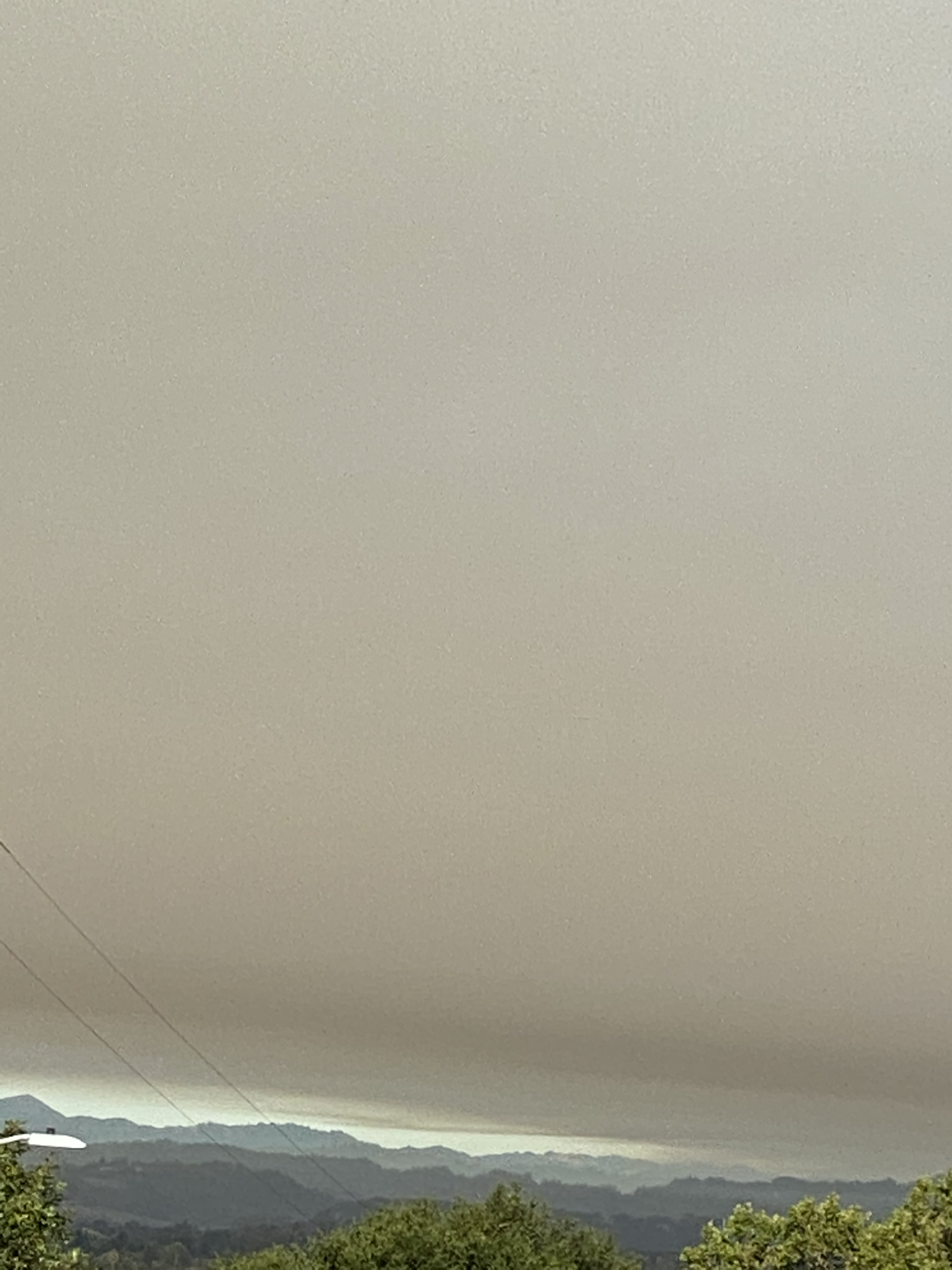
We thought our world couldn’t get any smaller than it has with the covid epidemic, but lately it has shrunk even further since California has been engulfed in flames and smoke.
The pandemic has many downsides, but one upside was clear sweet air—that is until the fires. During the spring and summer I kept my bedroom windows wide open, even on colder nights. I liked to pretend that I was camping outdoors and I’d lie by the window and breathe in the fresh cool air in great inhalations. Indoors is better than out, where mosquitos might attack and you’d be wet from fog in the morning. Snug in bed I’d just pull up a blanket and breathe more deeply the covid-era air, cleansed by a dearth of gasoline-powered engine exhaust.
It was a warm night on the Ides of August that Holly and I were awakened by flashes of lightning at 4 am. We lay there watching the display from our windows for a while as the flashes got larger and more frequent, accompanied by louder booms of thunder until we just had to arise and walk outside. Suddenly wind whipped the trees, rain and hail pounded the deck and we sought shelter back in the house. Cloudbursts continued into the day but rain didn’t amount to much. The lightning was dry.
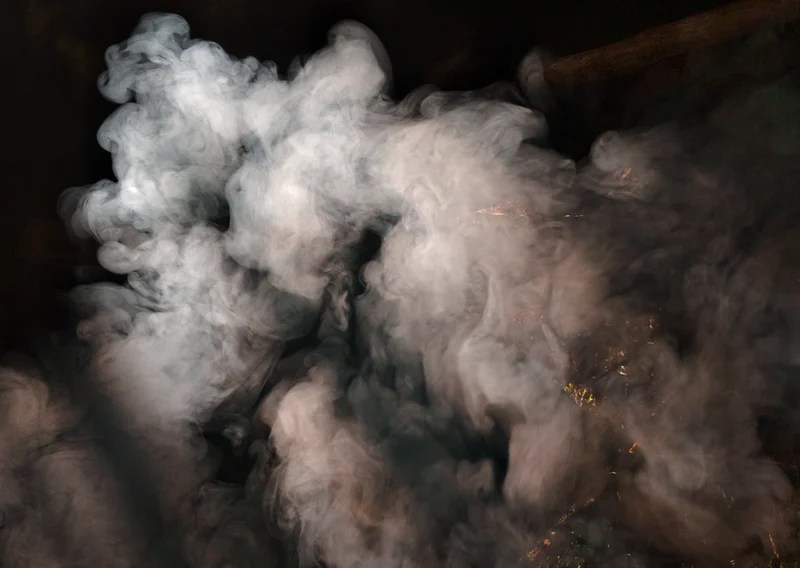
I could smell the smoke and see the Meyers fire from Goat Rock beach
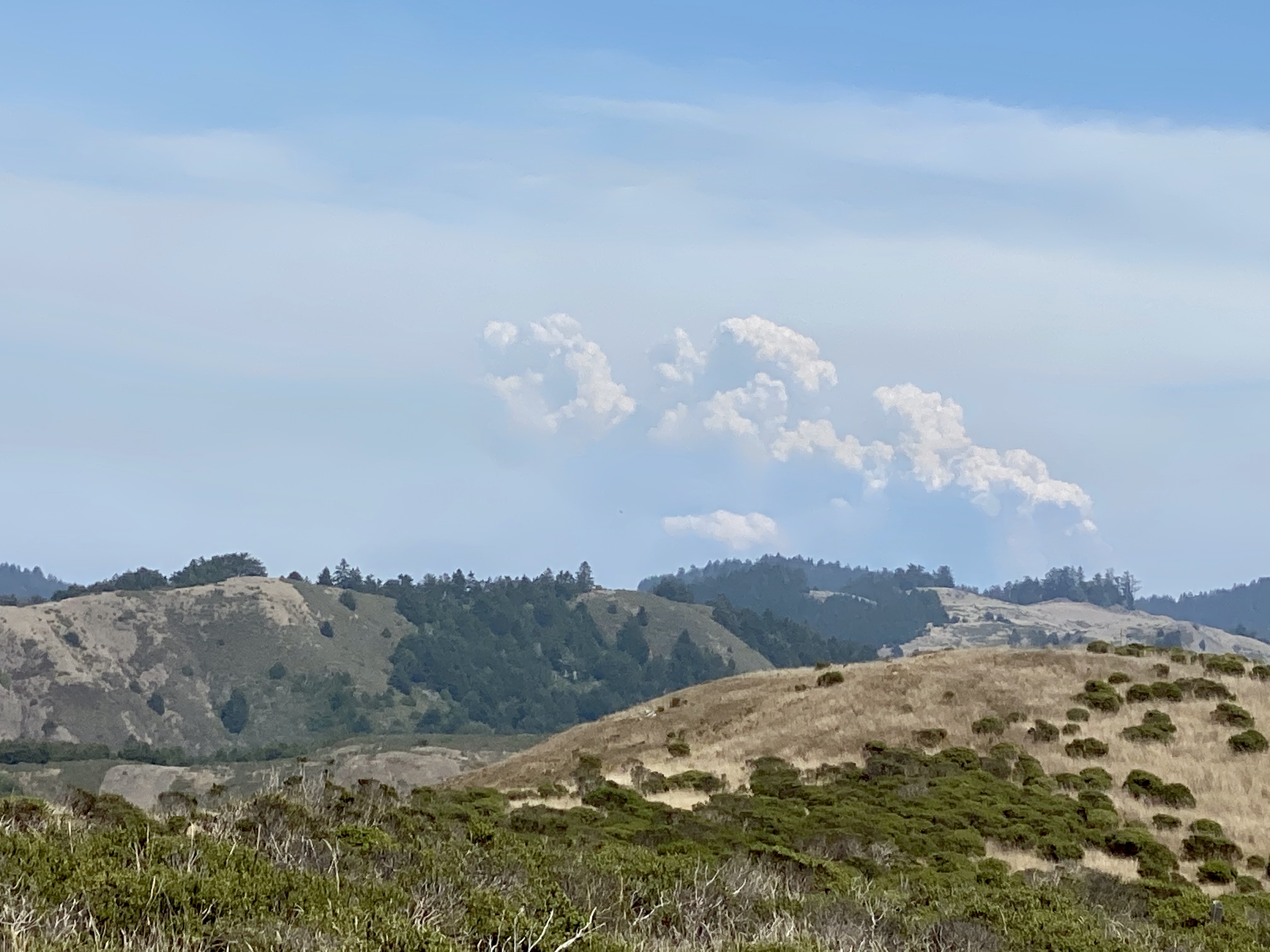
Smoke from the Meyers fire seen from atop the Coast Range
The Napa fires looking east from Santa Rosa
That spectacular storm and its thousands of lightning strikes turned our world dark in Sonoma County and the whole Bay Area, but we wouldn’t know it until a couple of days later. Cabin fever had driven me to the coast just to walk along the beach at Goat Rock. That’s when I saw the smoke from what later was called the Meyers fire, which burned right down to the ocean but took no buildings. I drove home on Coleman Valley Road, a narrow, poorly paved country road that traverses the Coastal Range. At the crest you can see the tops of those rounded hills. I saw smoke rising up in white puffs like a column of cumulus clouds. As I drove back toward town I could see the smoke from three more fires. We were surrounded.
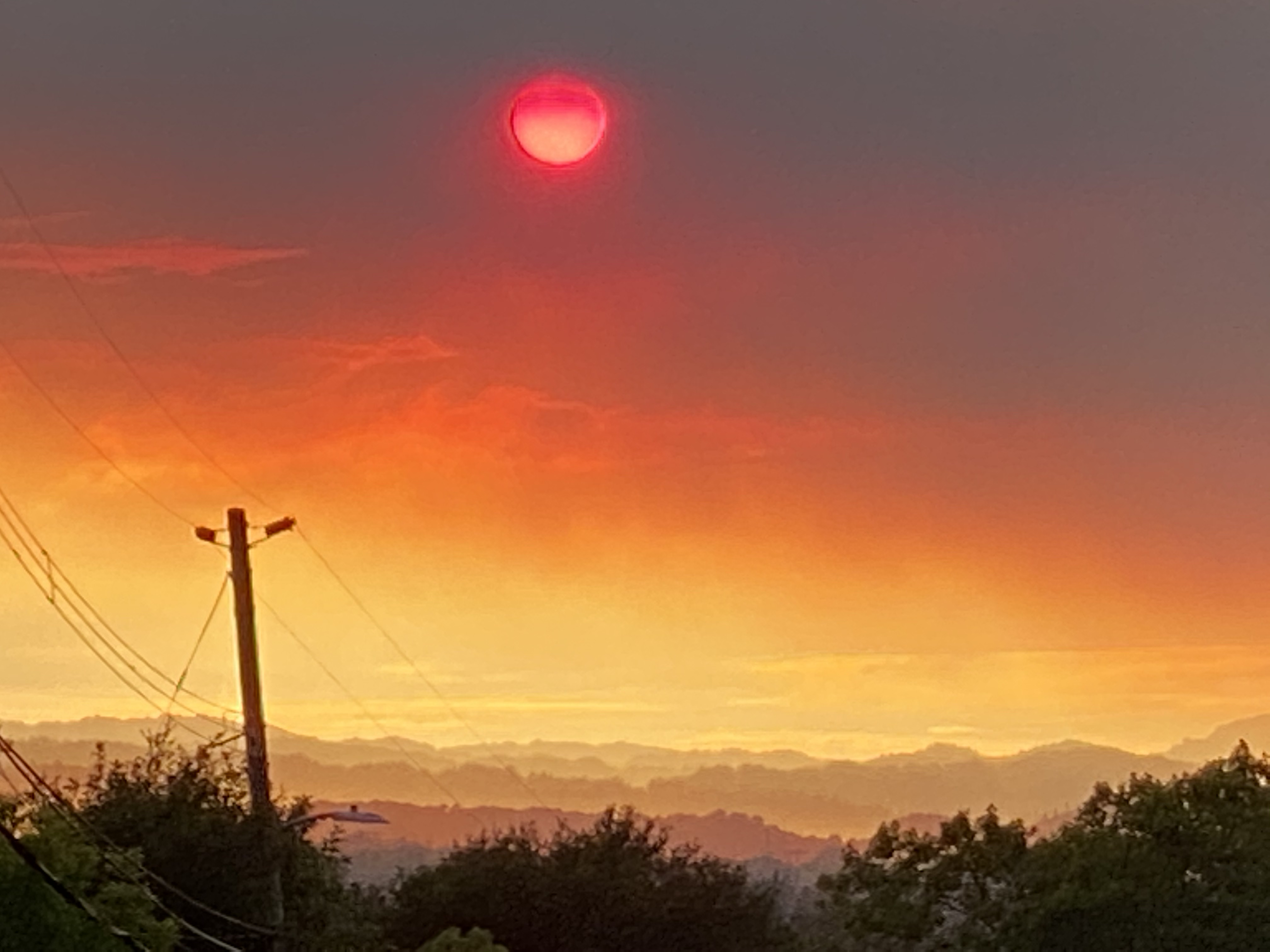
Looking west from our house
Goodbye sweet pure air. We had been obsessed with covid numbers, now we are obsessed with the Air Quality Index. We are part of a citizen science project using PurpleAir.com, having installed our own sensor. Anyone can use the map online to see the air quality instantly in their neighborhood. Shifts in wind direction change it constantly. If it’s under 50 we feel free to go outside without a mask.Soon it’s down to 15, but quickly climbs back up to 134. All day the number is 105, then suddenly it’s 38. The map shows that in some places the AQI is in the high 400s—Beijing numbers.
Let’s go back to life before smoke. It was a time of boredom, gardening, breathing, reading, eating, dancing, drinking, zooming, puzzle solving, post carding, early morning walks. We reveled in our garden. At the end of the day we would set up a chair somewhere in the garden just to sit and breathe in the expiration of the plants. The oxygen rich environment soothes the soul as well as the lungs.
The native pollinator garden
After 40+ years living in San Francisco’s cold foggy summers, I’m still getting used to Santa Rosa’s pleasant weather. Hot nights are rare in San Francisco; you might get one in the whole summer, which almost always falls on a night when you’re sweating at an indoor event without A/C. Santa Rosa has fog too, but it doesn’t arrive with the same gusty intensity. On hot nights we relish sitting out in the yard and watching the light change, pointing out constellations and listening to crickets. The chirping of crickets is one of my favorite things about summer in Santa Rosa. We didn’t have them where I lived in San Francisco.
When you put crickets into a search engine, what comes up first is methods to kill them. This is pretty much true when you google any insect, even as the world insect population declines disturbingly. I don’t want to kill them; I just want to understand them.
Crickets start their nocturnal chirping in July. That’s when we know it’s really summer. By mid-August the noise is so loud it punctures my dreams. They often keep going until the end of October or whenever it gets too cold for them to survive.
I never see them although I could probably find them if I looked hard enough. But I can pinpoint the male’s location by listening for chirping. My favorite cricket this summer lived in a tangle of epilobium and I’d check on him nightly. Then one night he was gone. Perhaps he died of old age or perhaps he was eaten by a bird. Towhees roam around the garden and I suspect one of them.
Ever since lightning strikes started so many fires in California it’s felt like the apocalypse here, with hot temperatures and smoky air keeping us indoors with air filters going. Now I struggle to remember our lovely covid summer. Ok, admittedly we are privileged—retired boomers who need not worry about loss of work or childcare. And we have great sympathy for folks who do. We can give money to the food bank and UndocuFund. We can mask up and stay six feet from everyone. We can stay home. On hot days I would get out early and take a walk in the neighborhood, nodding at neighbors with masks at the ready. We might do a bit of gardening in the morning but by afternoon we would come inside and work at indoor tasks until dusk.
Twilight became my favorite part of the day—well two parts because we have twilight in the morning and in the evening. Photographers have divided the twilight into two “hours”. The Golden Hour, more like half an hour, is the period just after the sun rises in the morning and just before it sets in the evening. It’s the best time to take pictures of the landscape. Then there is the Blue Hour which only lasts about 10 minutes. And in between there are about 20 minutes which we have christened the Hazel Hour, just after the sun goes down or just before it rises. I don’t know why photographers don’t include these 20 minutes but I think they are the most special part of twilight.
I love that nautical twilight was measured for hundreds of years by sailors who called it night when they could no longer see a ship on the horizon. More recently scientists have divided twilight into three different phases measured by the angle of the sun as it dips below the Horizon. At Midsummer in Santa Rosa, astronomical twilight starts just after 3:30 in the morning, and in the evening it ends around 10:30. I’m so very aware now as September arrives that as the days get shorter twilight is coming later in the morning and earlier in the evening.
Lately it’s been too smoky to sit outside in twilight, but we are thankful that we didn’t have to evacuate and that our neighborhood did not experience PG&E’s rolling blackouts. Some people are still evacuated from their homes. This year the Northern California fires have claimed hundreds of buildings and seven lives.
They say disasters come in threes. We await the earthquake.