Welcome to the Face Plant Club
It was humiliating.
A friend texted and asked if she could come over to talk about the horse-packing trip we were planning. I assumed she wanted to discuss food, gear, or transportation. She had already added me to the group, and I was thrilled at the thought of getting back into the Sierra backcountry.
Instead, she came to ask me to withdraw.
She explained that she thought I represented a falling hazard. What if I fell and injured myself? What if the group had to call in a helicopter? I would ruin the trip, she said, and she would spend the entire week worrying about me.
I sat there stunned. I couldn’t believe this was how she saw me.
It couldn’t have been easy for her to come to my house and have this conversation. We aren’t close friends, but we’re neighbors who hike with the same club. She wasn’t trying to be cruel. She was trying to prevent what she imagined could become a disaster.
True, I’d taken a bad fall stepping onto my deck a couple of months earlier and injured my ankle. I blame thick-soled flip-flops. Years before, I’d tripped over a root and landed flat on my face during a hike. My companions shrugged it off. “Welcome to the face-plant club,” they said. “It happens to all of us.”
Since then I’ve become a much more careful hiker. I switched to two trekking poles. I stop before taking a picture or removing a jacket instead of trying to multitask. I’ve even taken classes on how to fall safely. Every setback has taught me something.
My friend asked what I was doing to recover from my ankle injury. Had I added balance exercises to my daily routine? Did I do squats? Stand on one foot while brushing my teeth?
As if, after living seventy-seven years, I had somehow never heard this advice.
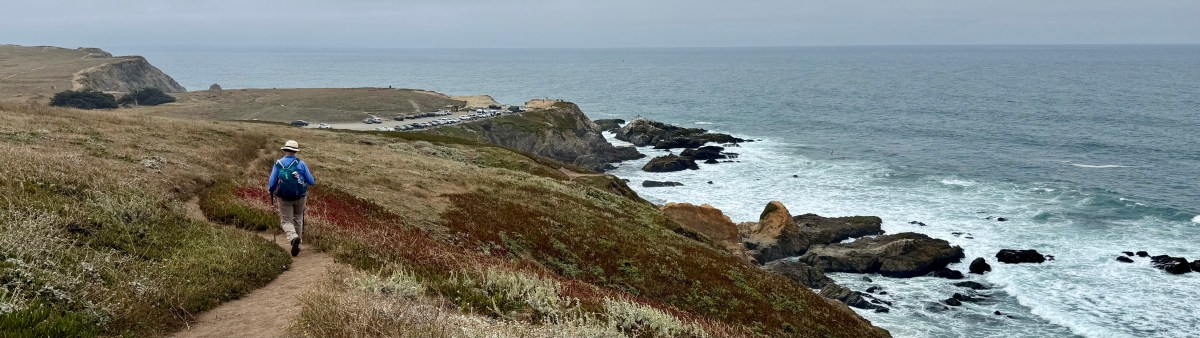
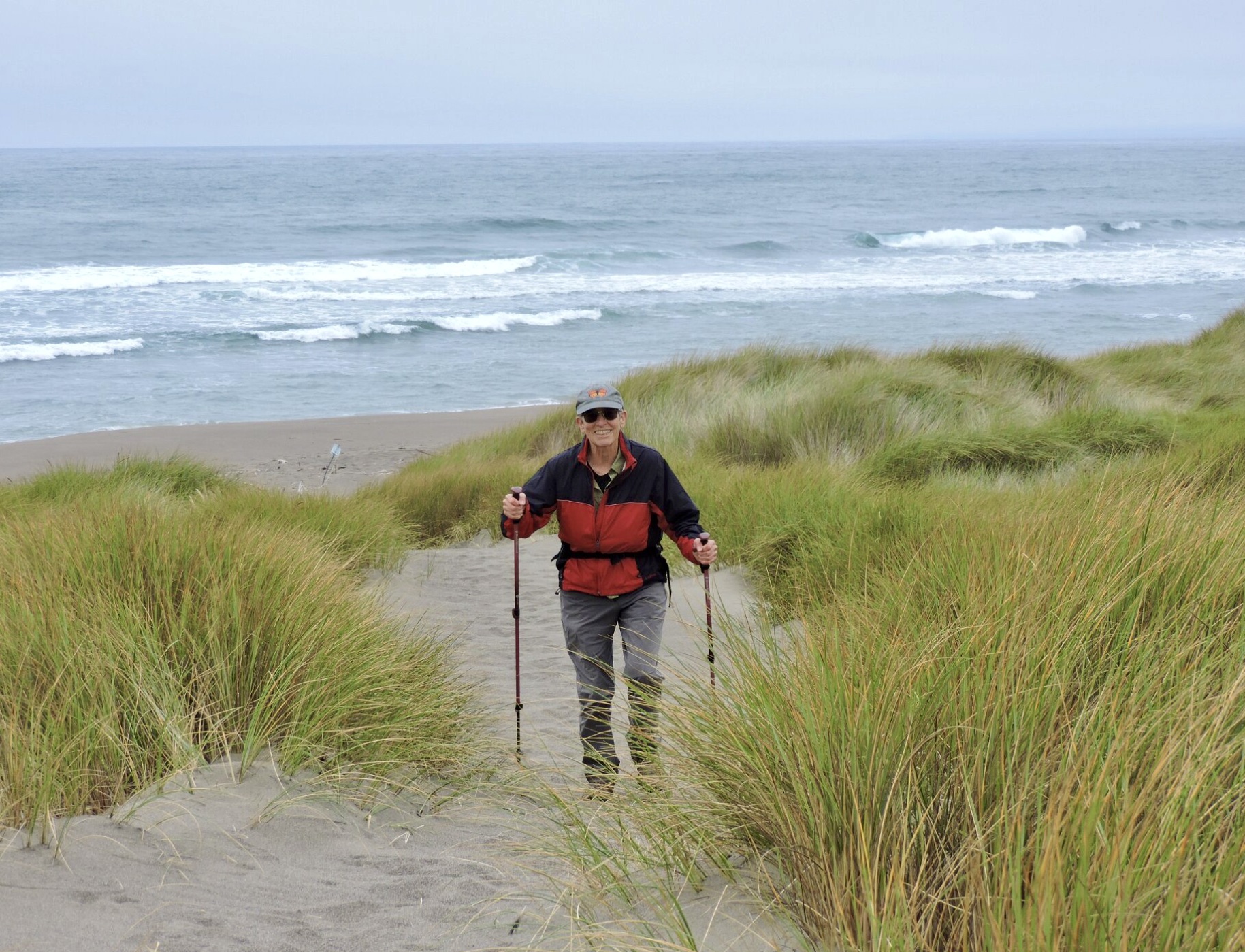
The irony is that I walk really well. I hike several miles almost every day with different hiking groups. Sonoma County is filled with wonderful trails through state and county parks and protected open spaces, and I rarely miss a chance to explore them. The longest hike on this Sierra trip would have been seven miles—a distance I cover routinely.
What I can’t do anymore is backpack. After two back surgeries, I know I can’t carry a heavy pack for days. That’s why this horse-packing trip appealed to me so much. The horses would carry the gear, leaving me free to hike.
I told her I wasn’t ready to resign from the trip. I felt strong and capable.
At first I was angry that she’d invited me and then, in effect, uninvited me. But as my anger faded, I began wondering how she had come to see me this way. As I write this, I realize I played a part in creating the image she has of me.
Among my hiking friends—especially the women my age—we talk openly about our health. Who’s taking Fosamax? Who opted for the Reclast infusion? (I did both). We compare bone scans, surgeries, aches, and physical therapy.
I’ve talked about my osteoporosis diagnosis and my back surgeries. At one point I joked, “It seems like my spine is crumbling.”
More recently, though, a bone-density scan upgraded me from severe osteoporosis to osteopenia. Had my doctor exaggerated my diagnosis to persuade me to take medication?
Perhaps I’d spent too much time talking about what was wrong with me and not enough time showing people everything that was still right.
The next day I texted my friend and withdrew.
What changed my mind wasn’t that I’d suddenly decided she was right. It was that I realized her anxiety would poison the trip for both of us. Even if I hiked every mile without incident, she’d spend the week worrying, and I’d spend it wondering whether every stumble or awkward step was confirming her fears.
That wouldn’t be much fun for either of us.
I’m deeply disappointed not to be going into the Sierra backcountry. More painful still is the realization that perhaps I’ll never get there again. Growing older means slowly crossing things off the list of what you can still do. Sometimes you choose to cross them off. Sometimes someone else does it for you.

After I’d withdrawn, I wrote to her:
“I think what makes me saddest is that somehow I’ve made you think I’m an unsafe, incompetent hiker who is likely to ruin a trip. I don’t see myself that way, and I don’t think others do either. I only ask that you not promote that image of me to the other hikers. If you need an explanation for why I didn’t come, you can simply mention my ankle injury.”
She replied, “I’m feeling your sadness and feeling sad too. I appreciate your generosity in letting go. I do tend to be a worrier sometimes. Hard to say whether my worry or your optimism was more accurate.”
I’ve thought a lot about what happened.
What we tell people about ourselves shapes how they see us. Repeated often enough, stories about our illnesses and injuries can become our identity in someone else’s mind.
There is a difference between acknowledging our limitations and allowing them to define us.
I don’t intend to pretend I’m younger than I am. My back has been operated on twice. My bones aren’t what they once were. I have fallen.
But I’m also someone who hikes almost every day, who loves being outdoors, and who still thinks of herself as capable.
Maybe the lesson isn’t to stop talking about my health.
Maybe it’s to make sure that’s not the only story I tell.


I know that this one was a hard one for you. So sorry.
LikeLiked by 1 person
I am so sorry Molly. You are incredibly fit and I see the energy and time you put into hiking and staying connected with nature and with friends. I hope you don’t stop doing the things you love.
LikeLiked by 1 person
Beautifully written a poignant story about our aging process.
LikeLiked by 1 person
Such a nice story, and so well written. Thanks for sharing it. You are quite a hiker!!!!!! Best wishes, Minerva
>
LikeLiked by 1 person
I liked your post very much. Honest and nuanced. Thanks!
LikeLiked by 1 person
Thanks for this post, Molly. Very honest and thoughtful, and yhought-provoking! BIG HUGSL.
LikeLiked by 1 person
Oh, thanks so much for this, Mol. An 82-year-old friend twisted her ankle badly last week on a on a rocky trail up Grizzly Peak near Ashland, Ore. Another friend and I saw her down safely, but she really doesn’t want to be seen as infirm! I’ll share this with both of my pals.
LikeLiked by 1 person
“She didnt want to be seen as infirm.” There’s the rub.
LikeLike
hard story.
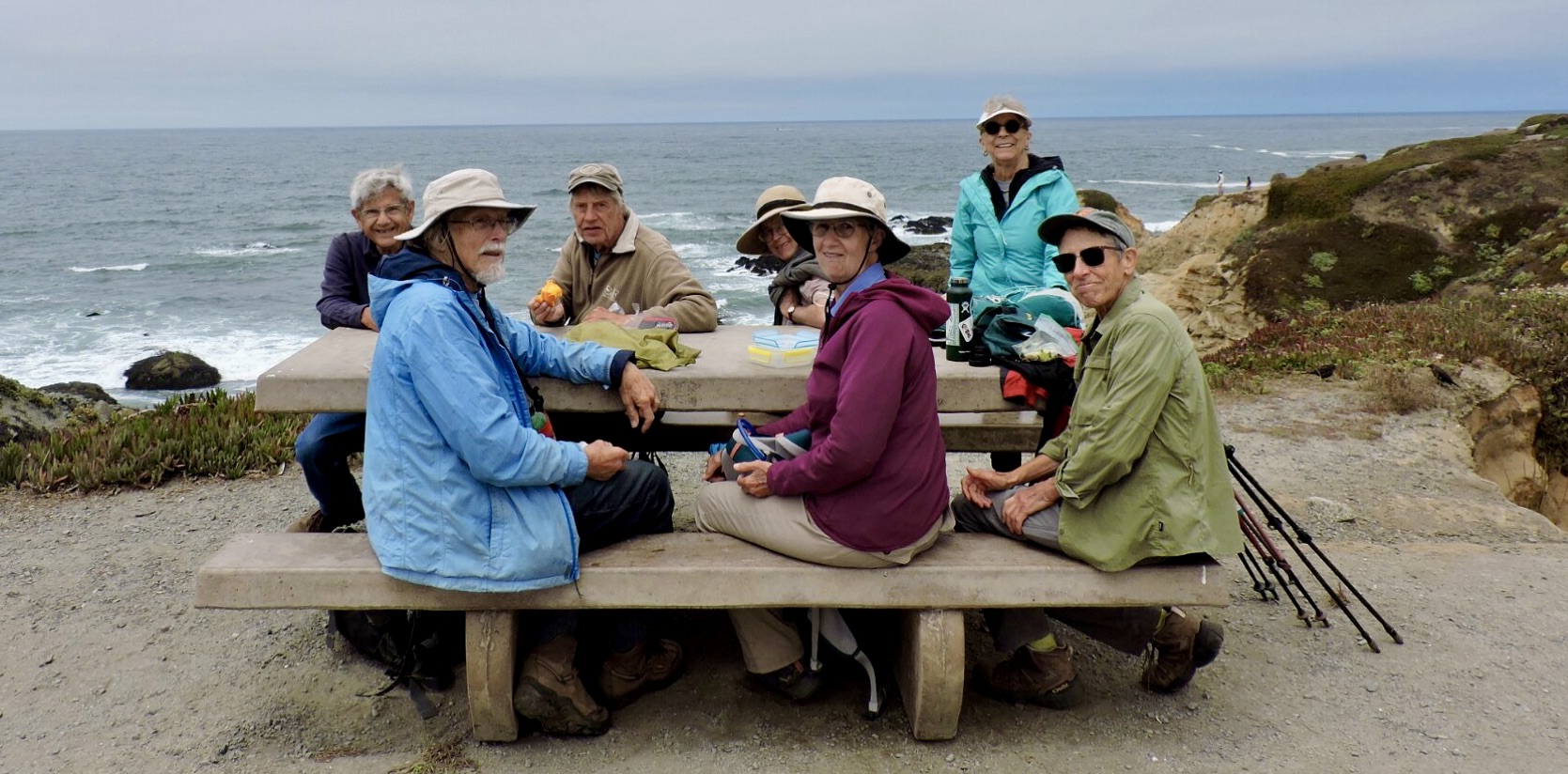
But what I liked most was the photo at the end with (at least) 3 pairs of treking poles leaning up against the picnic table. Having — and using the resources we need to live our best lives. And being out there living. It doesn’t get any better than that.
LikeLiked by 1 person
You are so right! I feel like I’m living my best life and just being out there living. Goddess! I hope I didnt come across as whiny. I’ve got nothing to whine about.
LikeLike
Molly, this was not a good think….they should be ashamed. Maybe the others going
could stand up for you?……………dolores
LikeLiked by 1 person
Well, that sucks … just because someone isn’t able to be a grown-up about her ‘fears’, (talk about control issues!) (or couldn’t even be bothered to talk with you and work out a set of contingencies that you could both live with) you get punished.
LikeLiked by 1 person
Thanks Widdershins. I do feel much more sanguine about it now, and taking responsibility for my own part in it. I know from your blog posts that you deal with your own issues about disability.
LikeLike
I really appreciate this essay (and the photos), Molly. So much of it resonates.
Many thanks for writing it.
Ruth
>
LikeLiked by 1 person
Always so nice to hear from you Ruth. We are fighting the same battle(s).
LikeLike