ARC in the French Mountains

In a Letter Home Flo tells of Clubmobilers’ Life

My Mother and Audie Murphy Ch. 56
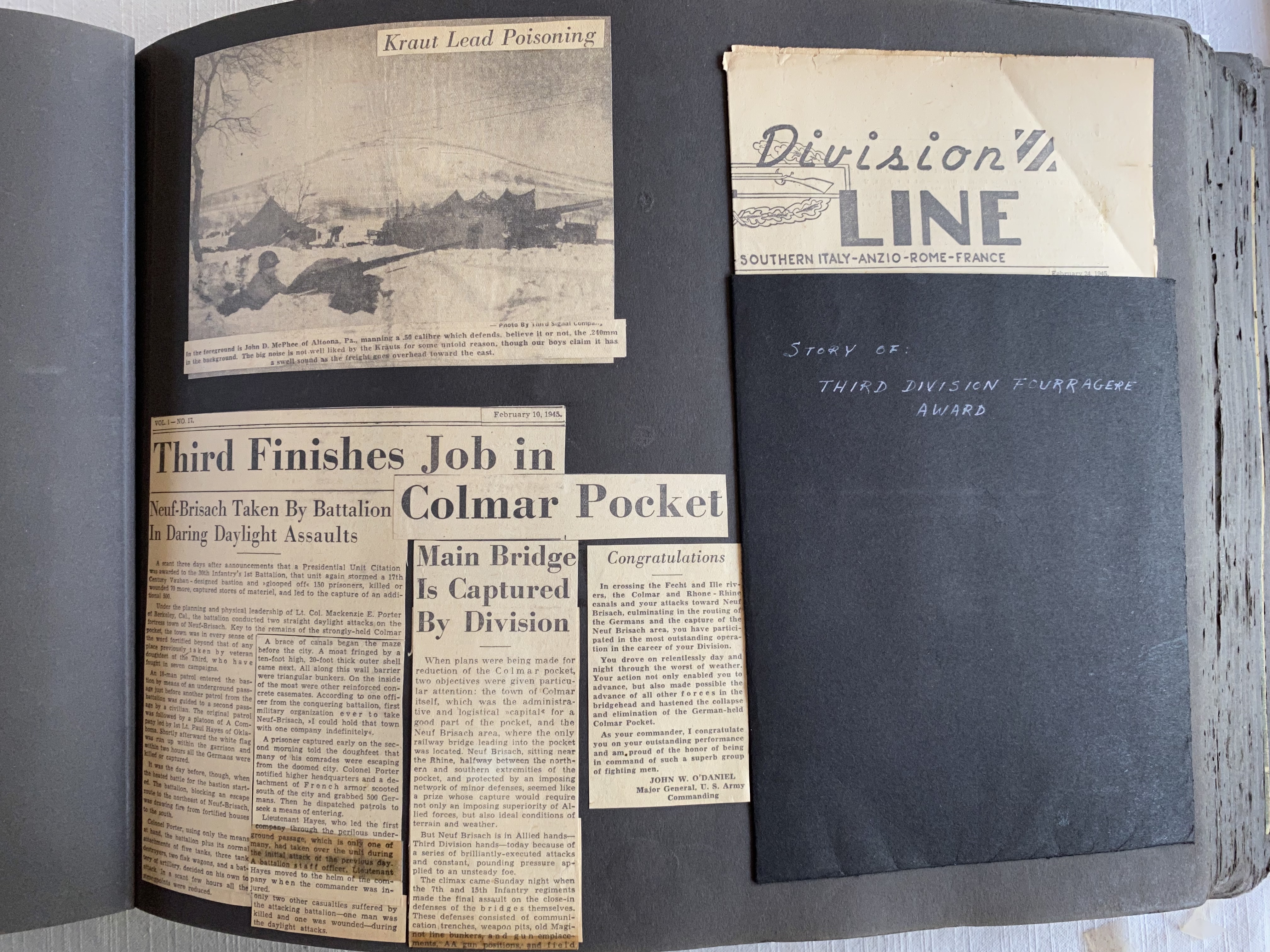
Page from Flo’s album

Searching through archives kept by my cousin Gail (our mothers were sisters), I was delighted to find two letters written by my mother, Flo, to her mother, Ruth–one in August, 1944 and the other dated February 1, 1945. These have helped to give a more personal perspective to the ARC women’s lives. Here Flo muses about death and war while describing everyday life of the clubmobilers in the French mountains. She reveals that the wedding rings her fiance Gene had ordered from home had arrived the day after he died.  

February 1, 1945

Dearest Ruth:

“Your letter of December 4 just reached me a few days ago – mail has had no priority and many of my Christmas greetings and cards arrived just now. However, packages came through well and I had all of yours from home in time. Thanks for the grand gifts, Ruthie – they were so appreciated. The sweatshirt was the envy of everyone (we wear them with our clubmobile uniforms) and I love the slip and underwear. Was down to “Rock bottom.” Your cake was eaten so quickly, all I can remember was that it was very good. 

(Flo admires pictures of Ruth’s three girls)

Thanks for the sympathy and your philosophical comments. I’ve “recovered” if you can call it that, but it was a cruel shock, and I wouldn’t want to go through it again. We see friends “go” so often these days that death is close always, though it never ceases to be tragic and futile. Gene’s first sergeant, a fine, handsome boy, who has a lovely wife and darling three-year-old daughter, and who was always so good to me, has been killed in the last few days. That’s the way it goes – they leave one by one, particularly in a combat outfit like theirs and my division. The few who have survived almost 3 years of constant fighting, are very tired and should go home, but probably won’t until the war is over.

Gene’s family write to me often and find it hard to believe he is gone. They are sending me the rings he bought and which arrived over here the day after he was killed and were returned to them. Somehow, I don’t want them, but they think I should have them.

“We are in the mountains and have had a lot of snow the last month but a very welcome chinook wind has melted much of it, which makes driving on these roads less hazardous. Evidently the French ski a great deal around here and there are some attractive ski places, as well as good slopes. I never seem to have time to try them out, but some of the boys did and had a fun time. 
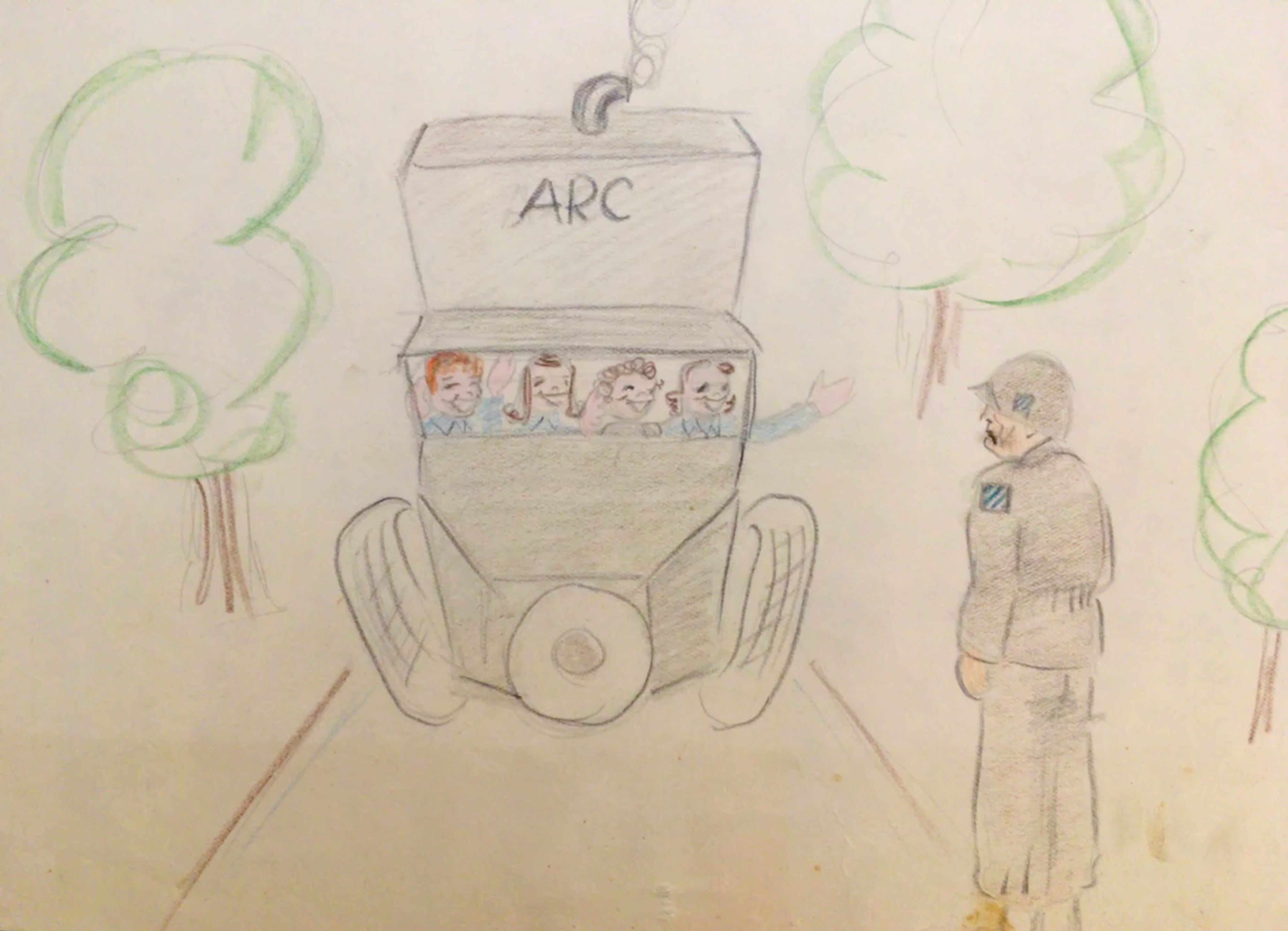
Drawing by Liz Elliott needs no explanation

Our infantry is “busy” as usual, and we are waiting to see them and feed them donuts again. It is always hard, after a session in the lines, to see them again and find friends are missing.

“After a brief session of gaiety in Strasbourg our social life has been reduced to practically nil. Contrary to many ideas, we do not indulge in much social activity; the men are pretty well occupied, you know, and it is only when they have a brief rest that we have a dance or two. 

We continue moving frequently and just made another one today. Lately we have been living in French homes and are coming to know the natives quite well. I can’t speak much French, but can understand it quite well when they slow down to 50 mph instead of 90.

Right now we have rather cramped quarters in a home which is filled with refugees who were burned out of their homes when the Germans left. Many of these people have lost everything and many, of course, being Alsatian, are torn between being Frenchmen or Germans.

We’ve been “up front” a few times – within a few hundred yards and within firing range, but it looks no different from any other place, unless the towns have been shelled (and most of them have). There are no trenches, like the last war, And much of the time, it moves so fast, there are no foxholes either, though they “dig in” if they are holding a line. We were shelled in one of the villages the other day, though it happened so quickly, we didn’t have time or sense enough to be frightened. It isn’t fun, even if it seemed funny afterwards.

There have been setbacks for the Americans in France, but we are happier about the situation now and the Russian drive is encouraging too. I doubt if I will be home for some time yet, but then, I certainly won’t be among the first to leave.

“My package – sent to Mom – with gifts for you all should have reached you by now. I hope they serve the purpose; it is difficult to find anything worthwhile here – their stores and supplies have been hard-hit.

“I like to hear about your kids and other news of the people at home. Betty doesn’t write very often, but mom is wonderfully faithful and takes care of me over here almost as well as she did at home.

If there are any of my clothes – hats, shoes etc. that you can wear and want to, help yourself, because they will be out of style when I get home and I’d like to have you get some use out of them. Just go down and see what you can use. 
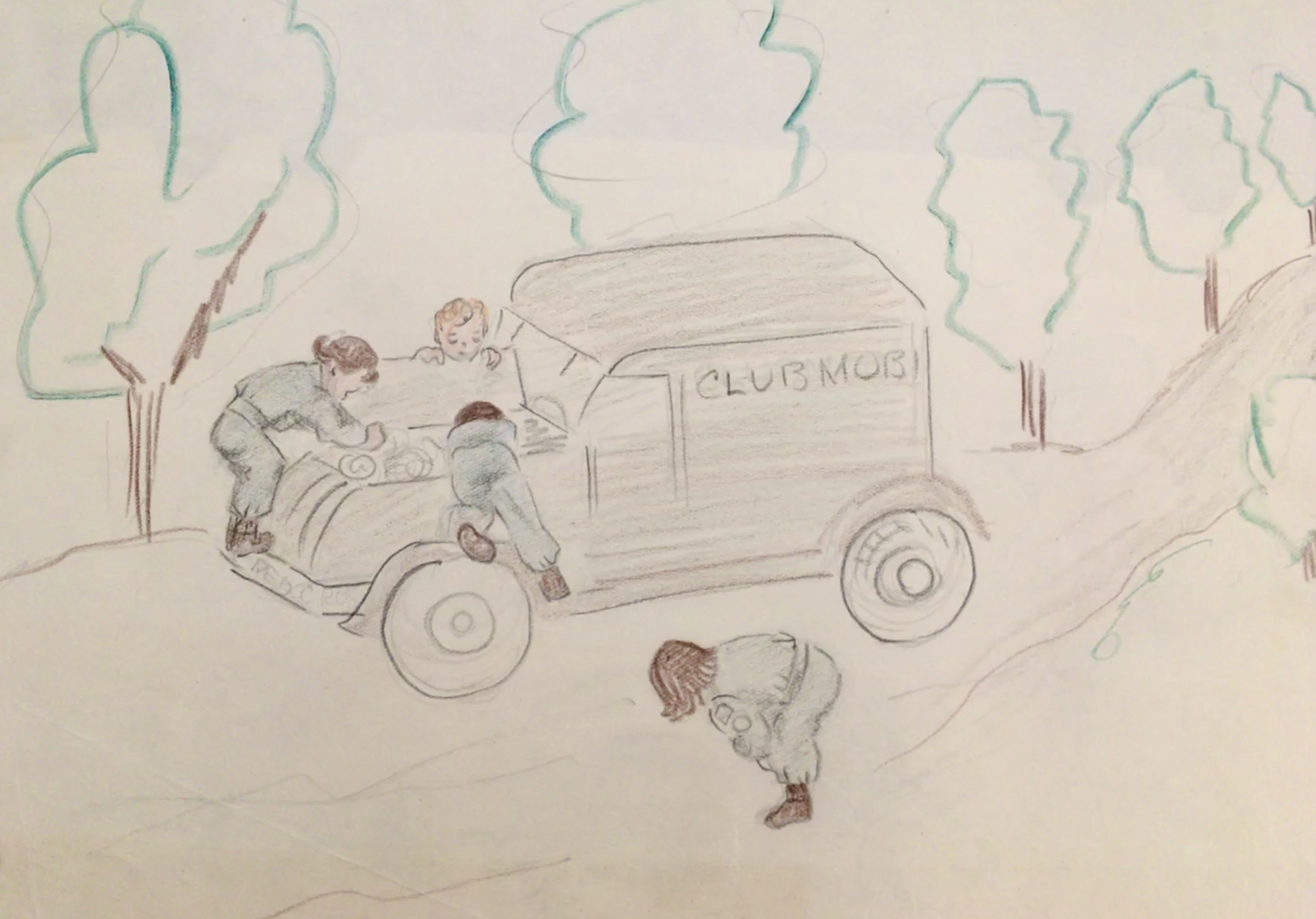
You had to be a mechanic too. Drawing by Liz

Very seldom see a movie (last one was “A guy named Joe” which I saw with Gene and which he didn’t like; he was killed a few days later and the show haunted me).* They have very few good ones and very few period. Read seldom, too, and even more seldom hear a radio, so you see my mode of living and entertainment has changed considerably.” 

*(This was a popular war movie starring Spencer Tracy, Irene Dunne and Van Johnson about an American pilot who is killed when his plane goes down after bombing a German aircraft carrier. Then he is sent by “the general” back to earth to train a pilot in the South Pacific war. At the end he’s still dead. The Irene Dunne character gets to fly planes too. The screenwriters were Dalton Trumbo and Frederick Hazlitt Brennan.)

We have the fellows at the 2.M. (not sure what this means) in quite a bit, toot around the country in our jeep whenever we can and manage to never be bored, which keeps us happy, I suspect. 

I like the work and love the boys. Life gets very simple and fundamental, if you can understand that, and we share many of the same experiences, which makes everyone a friend. 

“Eve was fine but busy, and Paris is the same lovely lovely city, though they have food shortages, little fuel and all that. It didn’t seem too unusual to see Notre Dame Cathedral on Christmas morning, but in years to come it will be quite a recollection. Eve and Janet were very good to me and it was like home to see them. Janet’s husband was wounded tho not seriously and she was quite upset. I hope to go back in the spring– It would be even nicer there then in the lovely parks.

Maybe my own luck will change one of these days; at least I can share sorrow and sincerely sympathize with others who are hit by the tragedy of war. It makes me even a worse “softie,” but there are many to share it with.

Ch. 57: https://mollymartin.blog/2025/09/23/black-and-japanese-soldiers-in-wwii/

Loose Lips Sink Ships

My Mother and Audie Murphy Ch. 11

May, 1944. On the Ship to Naples 

“Loose lips sink ships.” That was the mantra drilled into the heads of American Red Cross (ARC) women during their training in Washington, D.C. If the FBI discovered that a secret had leaked because of something you said or wrote, you were sent home. 

One instructor drove the point home with a cautionary tale: An ARC worker had called her parents in Montana, mentioning that she was in Colorado on her way to San Francisco. Her mother told the butcher, who told someone else, and within three hours, the FBI had traced the leak back to her. As a result, an entire convoy was delayed. 

Flo took these warnings seriously. While she wrote to her mother in Yakima regularly, she was careful never to include anything that might be considered classified.  

The Pentagon, opened 1943, displaced a Black town.

Fast-Tracked for War  

The usual six-week training program had been slashed to just two weeks to push the women through faster. The military issued them canteens, helmets, and web belts, alongside yet another round of security warnings. Phone calls and letters were discouraged. Training even covered how to handle a poison gas attack, complete with gas mask drills.  

Flo and her cohort began training on April 17, 1944. By May 8, they had their embarkation orders. On a warm May morning, the ARC women, clad in winter uniforms, marched two abreast to Union Station, where they boarded a train to New York City. From Penn Station, they were shuttled by bus to Brooklyn and housed at the massive St. George Hotel. There, they waited—alongside countless other uniformed Americans—until it was time to ship out.  

No one knew where they were going. Not even the ship’s officers were told their destination. Only the captain held that information, as wartime security dictated.  

The HNHS Atlantis

Aboard the HMHS Atlantis 

Flo’s ship, the HMHS Atlantis, was a British hospital vessel that had already survived encounters with German U-boats. The Germans ignored Geneva Convention rules that forbade attacking hospital ships—these vessels made tempting targets. During submarine alerts, the Atlantis would zigzag wildly to evade torpedoes.  

Once aboard, Flo learned that her destination was Italy, where she had been assigned to the North Africa theater. The ship carried British engineers, fellow ARC workers, and stacks of Italian phrasebooks. Flo tried to pick up a bit of the language during the long voyage.  

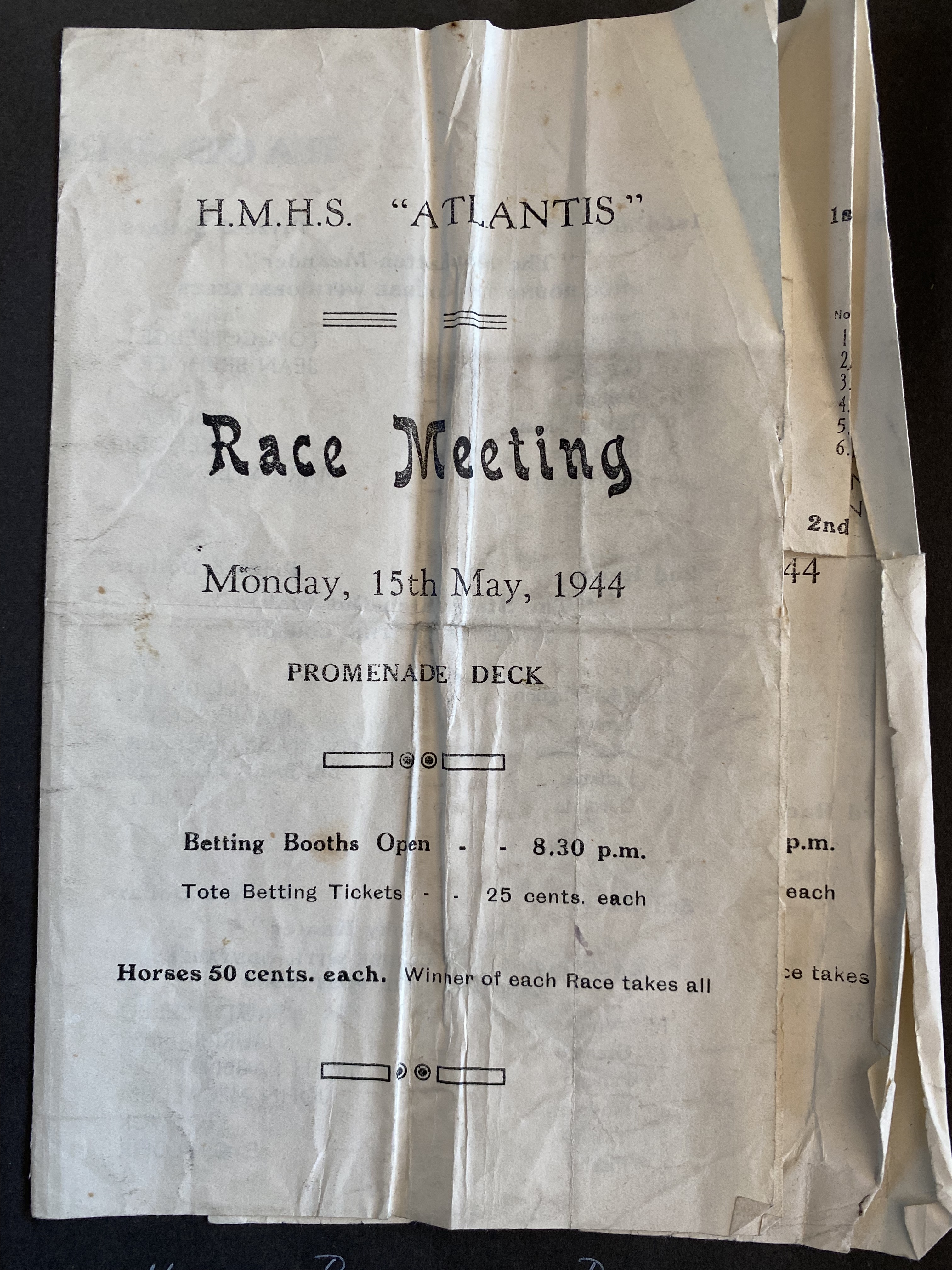
Crossing the Atlantic took nearly three weeks. To pass the time, Army journalists produced a daily mimeographed newsletter, Red Cross Currents, a few copies of which Flo saved in her scrapbook. She also kept menus and records of shipboard activities, which included:  horse racing (the cardboard variety), a contract bridge tournament, shuffleboard, deck quoits, “angell golf”, ping pong and deck tennis. Prizes were cartons of cigarets. 

Flo documented her voyage with snapshots—sunbathing with English engineers, uniformed officers on deck. Among the clippings in her album was an image of the newly built Pentagon, a source of national pride. What the public hadn’t been told, however, was that its construction had wiped out Queen City, a thriving Black town in Arlington, Virginia. The residents of the town were descendants of the residents of Freedman’s Village, which had been established by the federal government during the Civil War as a home for displaced freed slaves.

Letters, Friendships, and Missed Meetings  

Flo befriended an Irish engineer who worked on the ship, R.H. Wilkinson. They kept in touch throughout the war, attempting—but failing—to meet again. In August 1945, after the war had ended, Wilkinson wrote to her, reminiscing about their time on the Atlantis and asking for copies of photos to complete his scrapbook. He had since been deployed to the Pacific and was now stationed on the India run, where, as he put it, it was “very hot!” If she ever made it to Belfast, he promised, she would receive a true Irish welcome.  

Flo never did make it to Ireland.  

Sunning on the deck. Flo in the middle

First Glimpse of Naples 

As the Atlantis steamed past the lush, romance-laden Isle of Capri into Naples harbor, the passengers got their first look at war-torn Italy. The harbor was in ruins, bombed repeatedly during the Allied campaign to drive out the Germans. Though much of the destruction was confined to the waterfront, Naples itself—dirty, crowded, and overrun with American troops—had changed dramatically.  

A military-issued guide described the city in blunt terms:  

“The city of 1,000,000 still is the filthy, teeming tourist town, and now prices have trebled with the advent of thousands of Americans. There are gimcrack souvenirs, phoney tortoise-shell, dangerously bad wine and brandy, poor but expensive waterfront restaurants.

There are trips to Pompeii and Herculaneum, tours of Naples, and excursions up the slopes of Vesuvius (ARC trips). There’s an Allied Officers’ Club (dinner, drinks, dance, romance), an 82% venereally infected civilian population, an opera company and a symphony; buses, cabs, suburban trains; oranges, tangerines, grapes, lemons, and apples.  

And 50 miles to the northwest there is a war, of which occasional bombers remind Neapolitans on infrequent nights of the dimout.”

Stamped at the bottom: 

NO – SORRY – YOU CAN’T MAIL THIS PAPER HOME.  

From a Life Magazine story pasted in Flo’s album

A New Reality  

Flo later wrote to her mother, “The Rock of Gibraltar was the only stop our ship made on the way over, and it looked exactly like all the pictures we’ve seen. The Isle of Capri, I saw in a very early morning light, and it looked even more romantic that way.”  

In lovely spring weather they sailed into Naples May 27, 1944. Allied bombing over the course of many months had destroyed much of the ancient city. Of course, the port had been a prime target and so what the passengers of the Atlantis saw when they first laid eyes on Italy was the ruins of war, patched ably by the American engineers. For Naples was now in Allied hands. The Nazis had retreated north.

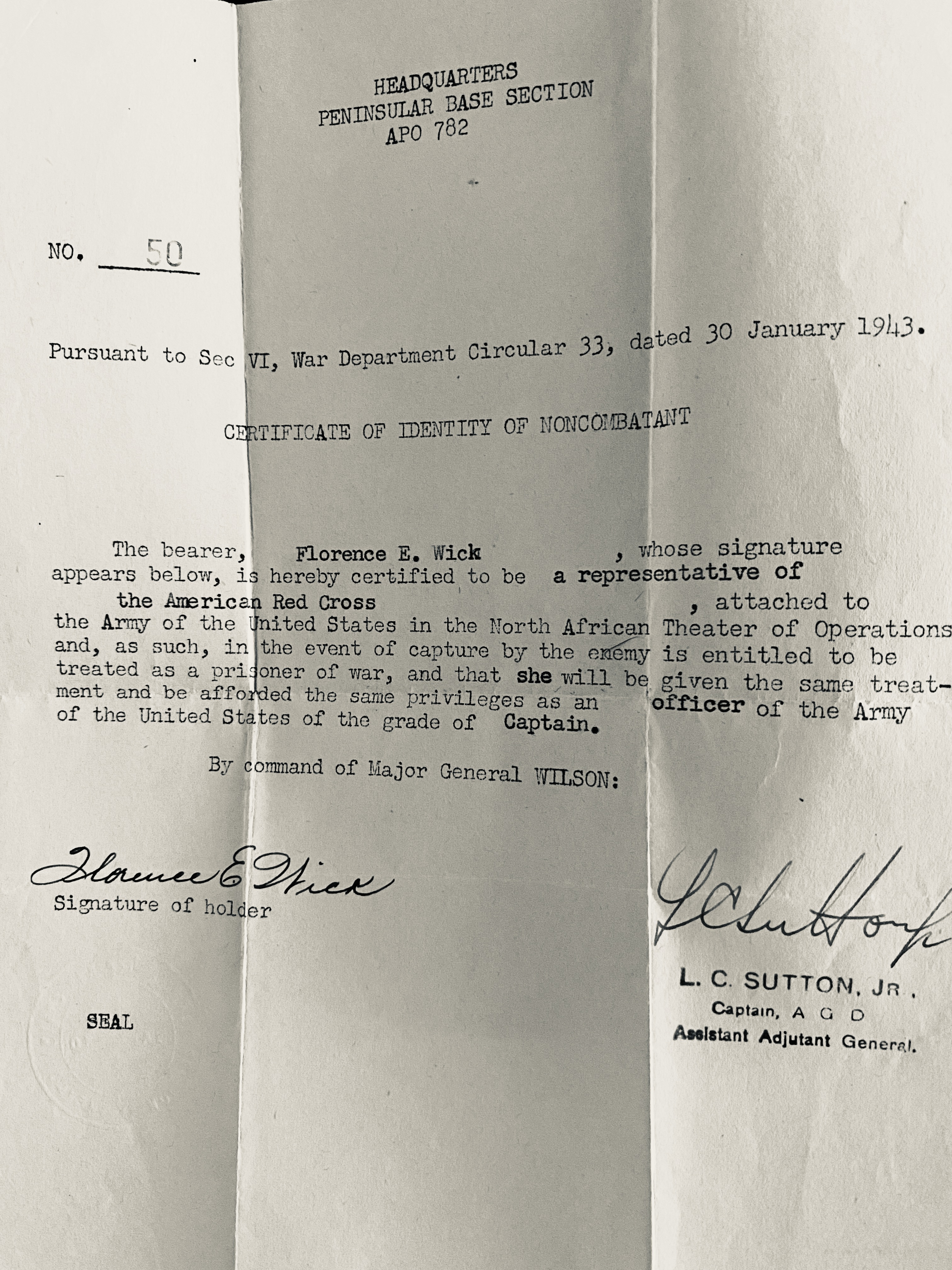
In event of capture, she will be treated as a captain.

Ch. 12: https://mollymartin.blog/2025/03/01/attack-at-anzio/

Audie Murphy Fights to Fight

Chapter 4: He Sheds First Nazi Blood in Sicily

They nicknamed him Baby and he couldn’t shed the tag. Audie Murphy had to fight for his place in combat. From the beginning of his military journey, he faced skepticism at every turn. Rejected by the Marines and paratroops, he was finally accepted by the infantry. 

Battle route of the Third Infantry Division

Immediately his first commanding officer tried to shove him into a cook and baker’s school where the going would be less rough.

“That was the supreme humiliation. To reach for the stars and end up stirring a pot of C-rations. I would not do it. I swore that I would take the guardhouse first. My stubborn attitude paid off. I was allowed to keep my combat classification; and the Army was spared the disaster of having another fourth-class cook in its ranks,” he wrote in his autobiography.

In training, officers took one look at his skinny body and boyish face and tried to steer Murphy away from the front lines.  At Fort Meade, one well-meaning officer attempted to save him from combat altogether by assigning him a clerical position at the post exchange. Again he stuck to his guns.

In July, 1943 he made it to the front in Sicily, but his youth and appearance worked against him even there. He was transferred to headquarters to serve as a runner. But Murphy wouldn’t stay away from the action. He repeatedly sneaked off on patrols and scouting missions. His determination eventually forced his commander’s hand. He was promoted to corporal.

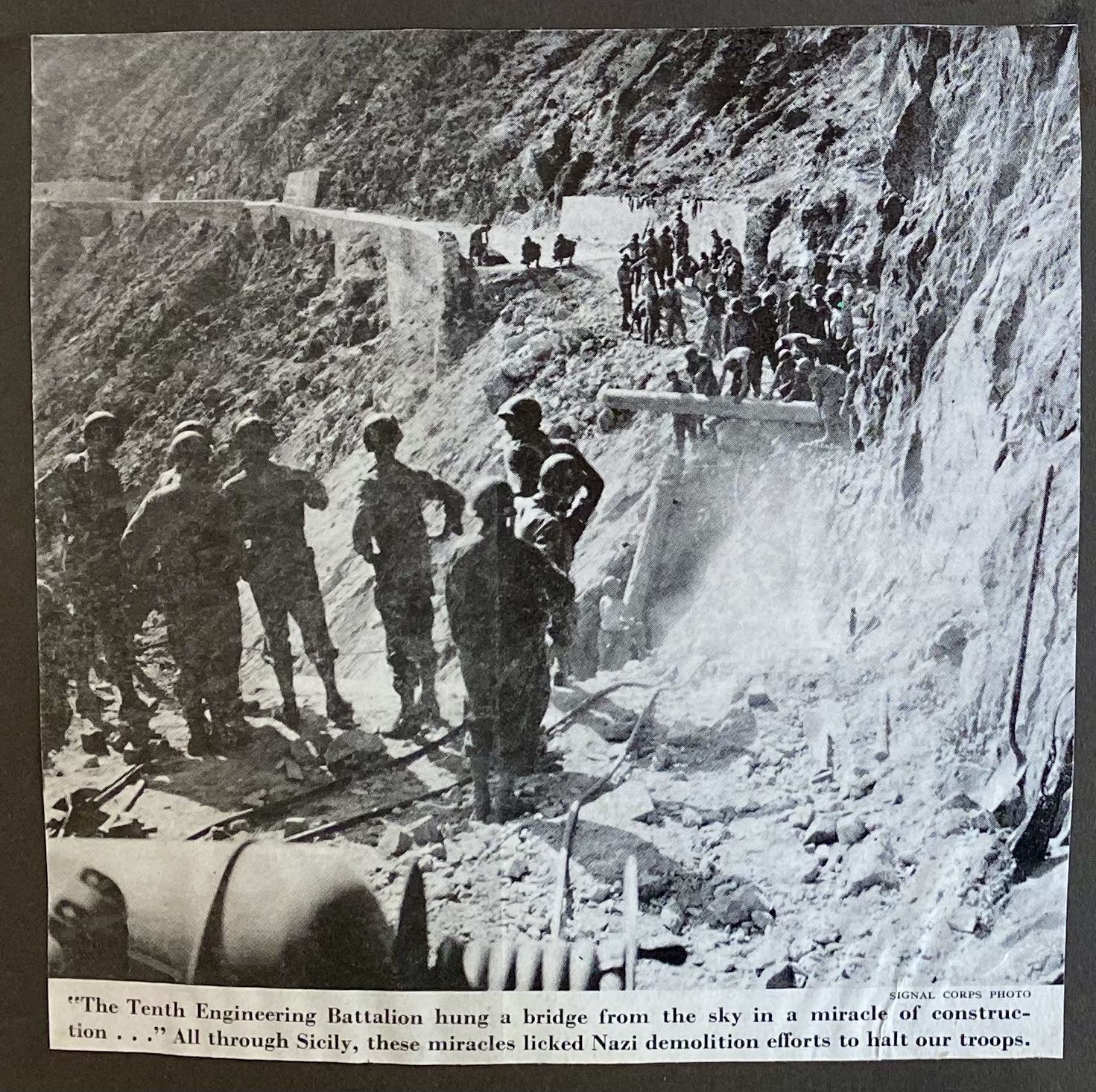
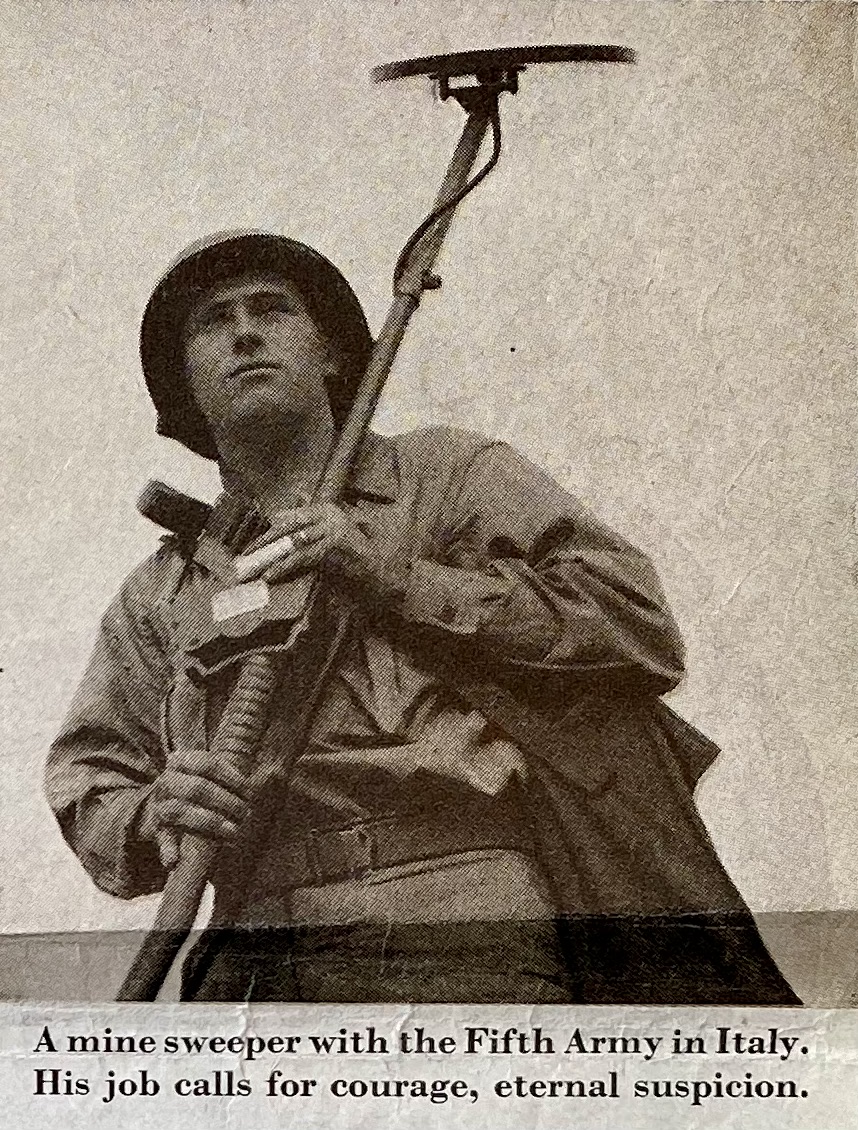
Life Magazine photo essay posted in Flo’s album

By then, Murphy had already missed his chance to fight in North Africa. His convoy had docked in Casablanca only after the battles were over. Instead of combat, he endured more training—much to his frustration. “I just wanted to fight,” he later said.  

Murphy finally got his chance in Sicily, but it was far from the glory he had imagined as a boy.  

On his first day in combat, a mortar attack killed a young soldier sitting nearby.  A boom, a whistle, the earth shakes, and the boy falls from the rock where he was sitting, just taking a break. As simple as that. One minute you’re sitting on a rock. The next minute you’re dead.  

This was not the war Murphy had dreamed of.  He had imagined men charging gallantly across flaming hills. Bugles blew, banners streamed, and the temperature was mild. Enemy bullets always miraculously missed, and his trusty rifle always hit home. As a kid, the dream was his escape from a grimly realistic world of poverty.

But now, as he trudged across the Sicilian battlefield, sweat soaking his uniform, his boyhood fantasies were shattered.  

“Maybe my notions about war are all cockeyed. How do you pit skill against skill if you cannot even see the enemy? Where is the glamour in blistered feet and a growling stomach? And where is the expected adventure? Well, whatever comes, it was my own idea. I had always wanted to be a soldier,” he wrote.  

His skill with a rifle, however, did not go unnoticed. In one skirmish, Murphy shot two German officers from their horses with two clean shots. He had shed his first blood. But he felt nothing except a weary indifference.

Even as malaria struck and forced him into a field hospital for a week, Murphy returned to the lines. The disease would haunt him throughout the war, but it didn’t stop him. 

He had loved the idea of war, but it didn’t take long to hate the real thing.

“The Sicilian campaign has taken the vinegar out of my spirit. I have seen war as it actually is, and I do not like it. But I will go on fighting,” he wrote.

*Quotes are from Audie Murphy’s autobiography, To Hell and Back