Black Women to the Rescue

The 6888th Battalion cleaned up the mail mess

My Mother and Audie Murphy Ch. 43

In October 1944, after her fiancé Gene was killed, Flo had trouble reaching her mother. The wartime mail system was broken.

This wasn’t just a personal problem—it was widespread. Soldiers on the battlefield were not receiving letters and packages from home. Mail, the lifeline of morale, was piling up undelivered. The men risking their lives for democracy weren’t hearing from their families, and the silence was taking a serious toll.

Flo had noticed the problem early. In letters and diary entries beginning in May 1944, shortly after arriving in Italy, she often mentioned that no mail had come. She didn’t complain—Flo wasn’t a complainer—but she noted it again and again. Others were more vocal. Across the war front, soldiers and Red Cross workers alike were frustrated and bitter. What began as a logistical issue had grown into a morale crisis.

The Army didn’t officially acknowledge the scale of the problem until 1945—by then, millions of letters and packages were sitting in European warehouses, unopened and unsorted.

Then came the 6888th.
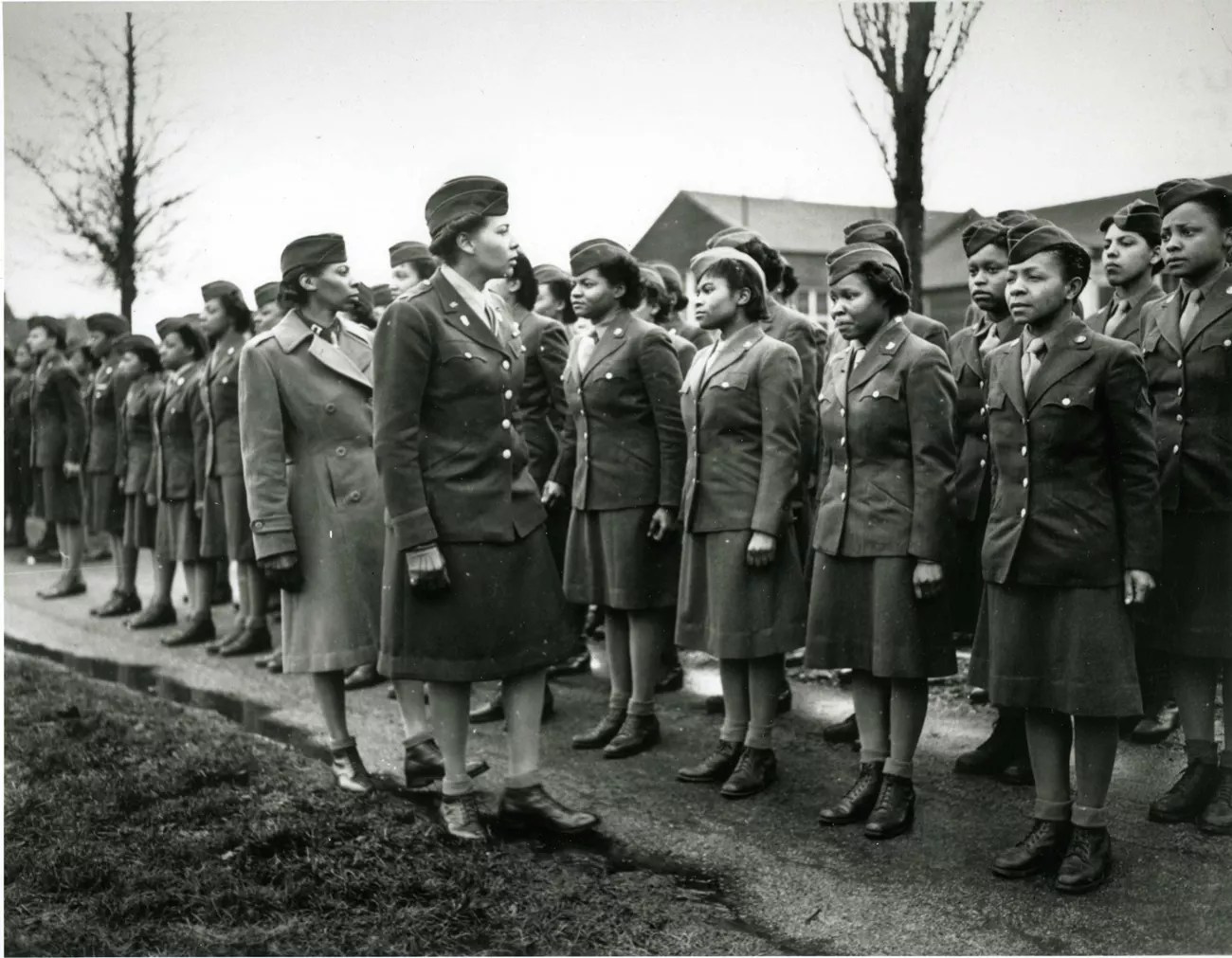
Major Charity E. Adams and Captain Mary Kearney inspect members of the 6888th Central Postal Directory Battalion in England on February 15, 1945. Photo: National Archives

The 6888th Central Postal Directory Battalion—known as the “Six Triple Eight”—was a groundbreaking, all-Black, multi-ethnic unit of the Women’s Army Corps (WAC), led by Major Charity Adams. It was the only Black WAC unit to serve overseas during the war.

Their mission: clear the massive backlog of undelivered mail under grueling conditions and extreme time pressure. They worked in unheated warehouses, with rats nesting among the mailbags, and under constant scrutiny from a military establishment rife with racism and sexism. But they got the job done—sorting and forwarding millions of pieces of mail in record time.

Their work restored something vital: connection. And morale.

The 6888th wouldn’t have existed without the efforts of civil rights leaders. In 1944, Mary McLeod Bethune lobbied First Lady Eleanor Roosevelt to support the deployment of Black women in meaningful overseas roles. Black newspapers across the country demanded that these women be given real responsibility and not sidelined. Eventually, the Army relented.

The women of the 6888th made their mark. Many would later say they were treated with more dignity by Europeans than they had ever experienced in the United States.

If you haven’t seen the Netflix movie The Six Triple Eight, it’s well worth your time.


Back in October 1944, the broken mail system meant heartbreak and silence for Flo. How long did it take for her disconsolate letter to reach her mother? Gerda telegrammed back on November 14—more than two weeks after Gene had died.

Gerda’s radiogram was sent November 14, likely just after she received Flo’s letter.

When did Flo receive Gene’s final letters? She saved the ones he wrote on October 24 and 27, but it seems likely she didn’t get them until after he was gone. He died on October 28, killed by a mortar shell. That same day, Flo wrote in her diary, “Mail from home today.” She didn’t mention anything from Gene.

In his last letters, Gene wrote about his army buddies. He worried about his little sister wanting to marry. He dreamed of peace, and of a life with Flo in the Northwest:

“Back there where the country is rugged and beautiful. Where you can breathe fresh, free air; and fish and hunt to your heart’s content. You know honey, a place where we don’t have to sleep in the mud and cold, and where the shrapnel doesn’t buzz around your ears playing the Purple Heart Blues.”

Even in the chaos of war, he tried to stay lighthearted:

“I’m writing on my knees with a candle supplying the light. I hope you are able to read it. My spelling isn’t improving very much; but with the aid of a dictionary I may improve or at least make my writing legible.”

He hoped Flo had managed a trip to Paris, and that she’d seen her sister and brother-in-law stationed there. He looked forward to getting married:

“Honey I haven’t heard from home on the ring situation yet, but I expect to before long. When I do, I shall let you know right away. I’m hoping we can make it so by xmas, if not before.”

But his letters also reflected the danger he was in:
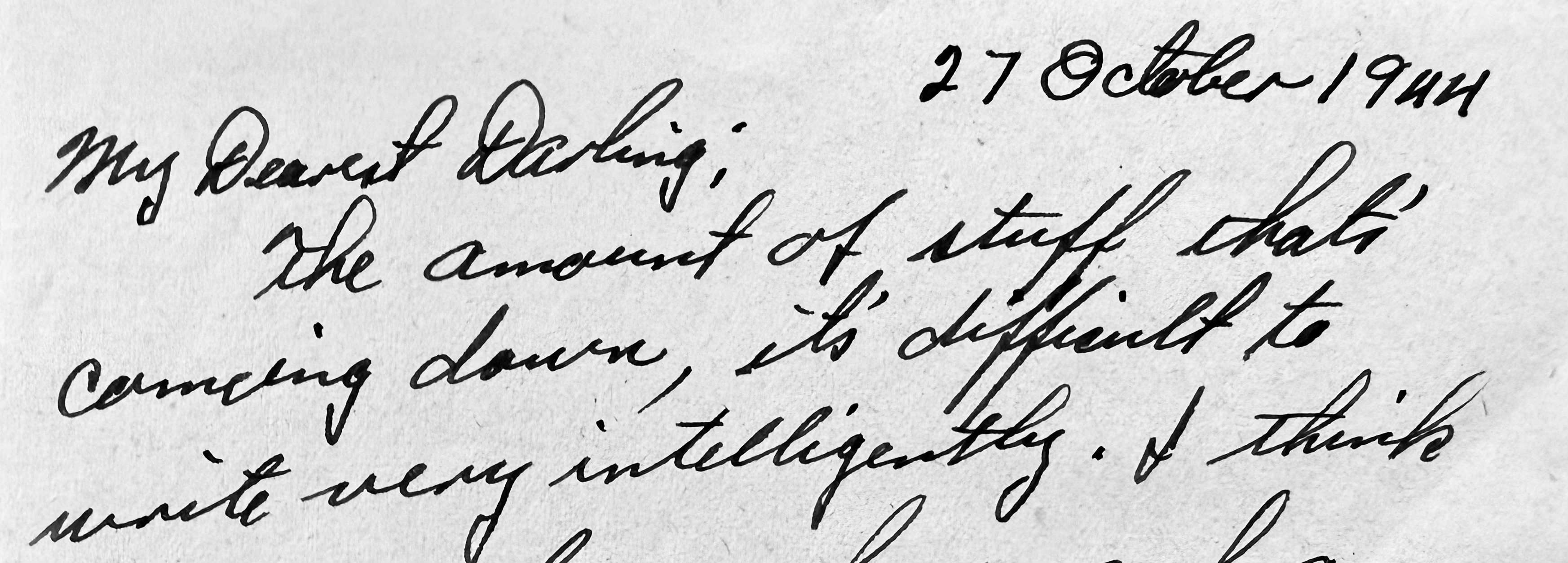
“It’s very difficult to write a letter on one’s knees, as you probably already know. Ducking shrapnel and trying to write just don’t mix. I do manage to wash and brush my teeth most every day.”

“It’s too ‘hot’ for you to be here. I’ve got some real stories to tell you when I see you next—if I’m not too exhausted. You don’t know how close you’ve been to—I hadn’t better tell you.”

Gene’s voice comes through with vivid clarity, even across 80 years and a broken mail system. 

Gene’s letter was posted the day he was killed

That words eventually reached soldiers in the field and their families back home is thanks, in part, to the quiet heroism of the 6888th—who made sure love letters, grief, and hope could still find their way through a war.

Ch. 44: https://mollymartin.blog/2025/08/02/born-in-oregon-buried-in-france/

Flo Gets a Telegram

My Mother and Audie Murphy chapter 3

The winter of 1943-44 had been mild in Yakima with less than the usual snow. On March 30, some fruit trees already bloomed in the orchards of the Yakima Valley, but frost warnings loomed and could result in a smudge night with fires lit in the orchards to keep the buds from freezing. It was a Thursday and tomorrow would mark the last day of Flo’s workweek at the Washington State Highway Department where she had been a stenographer for 13 years. 

“You got a telegram!” sang her sister Betty as Flo pulled the car into the family driveway. 

Flo had been anticipating this telegram, eagerly awaiting news on her application to the American Red Cross (ARC) overseas program. She opened it carefully.

It read:

APPLICATION OVERSEAS STAFF ASSISTANT ACCEPTED. EMPLOYMENT CONTINGENT UPON RECEIPT AVAILABILITY CERTIFICATE. FORWARD TENTATIVELY SCHEDULED WASHINGTON TRAINING MONDAY APRIL 17TH. LETTER FOLLOWS=

                  ESTHER BRISTOL.==

Throwing her purse and coat on a chair in the entryway, Flo ran to the kitchen to show their mother, Gerda. 

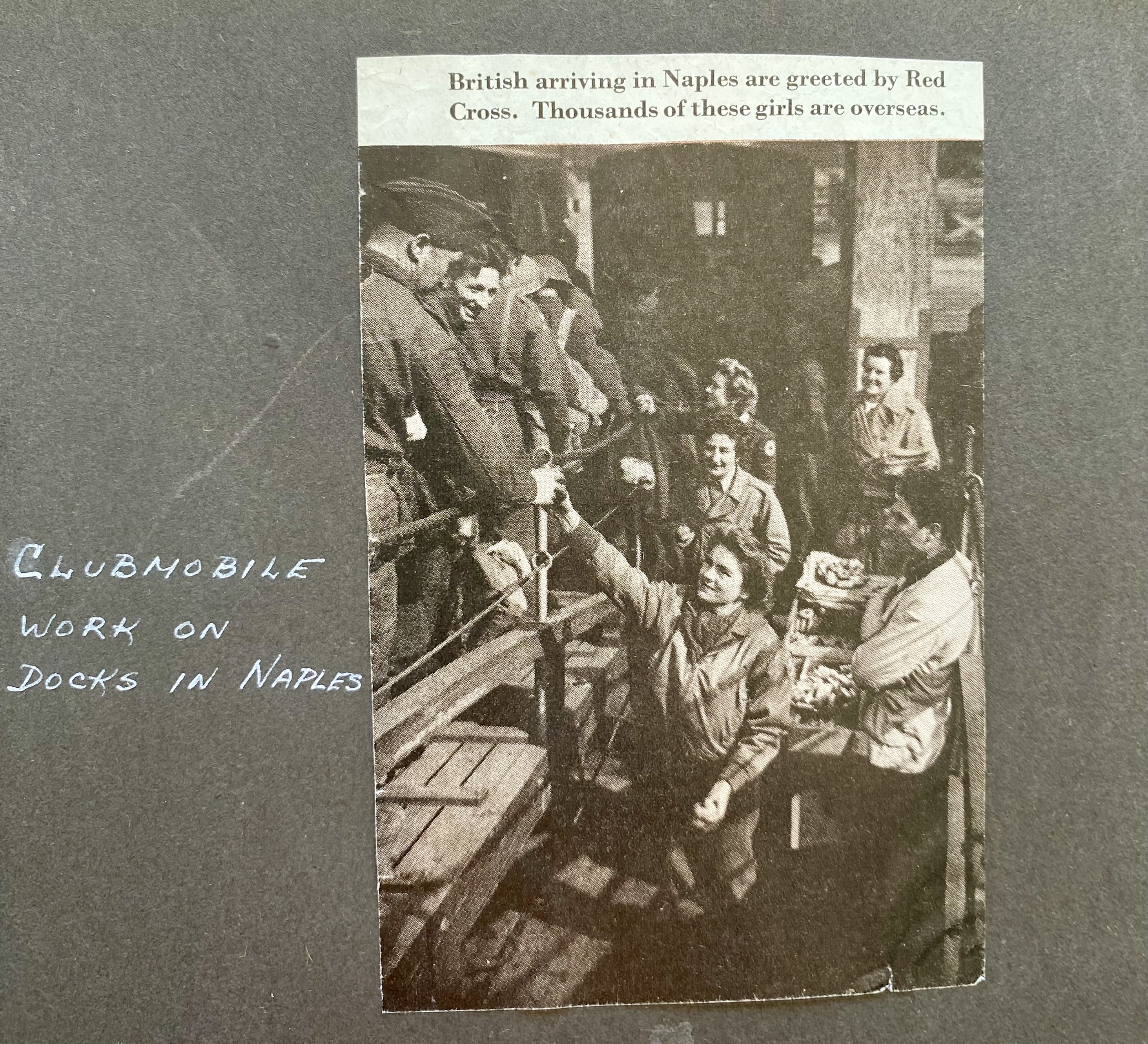
Flo had signed up for the ARC program as soon as she’d heard about it. She badly wanted to be in Europe where her sister Eve was already working as an Army nurse. Eve had written that when their troop ship had docked in Guroch, Scotland on January 7, they were met by a clubmobile with ARC women handing out donuts and coffee. 

The ARC had rolled out the clubmobile model in England in 1942 with repurposed buses modified as mobile canteens and now the program was to be expanded into the European theater of the war. The clubmobile “donut girls” were envisioned as one element that would keep American soldiers willing to fight and die on foreign soil.

In February 1944, a Life magazine article had described the ARC women as “handpicked for looks, education, personality and experience in recreational fields. They are hardy physically and have a sociable, friendly manner.” The qualifications included a high level of education, being between 25 and 35 years old, an upbeat attitude, social skills, and good health. The women were chosen for their attractiveness, embodying the wholesome, well-scrubbed appearance of the girl next door. Nearly all were unmarried. Flo had immediately pictured herself among them.

Handing out donuts from the Life Magazine story

Flo and her youngest sister Betty still lived at home, contributing their earnings to the family kitty. Gerda had found work at a fruit processing plant, and they had taken in boarders to make ends meet since their father, Ben, had died five years earlier. Times had been tough, but their finances had stabilized, and the ARC job paid $150 a month. Flo could send most of her paycheck back home. 

Flo wondered what her father would have said, although she thought she knew the answer. Her father would have been proud of her decision to do her part for the war effort. He was a Norwegian immigrant, and a patriotic American.

To apply for the job of ARC overseas Staff Assistant, women were required to have at least two years of college education. White skin was an unwritten modifier, although there were some Black women recruited to work with segregated Black troops. Flo was 30 in 1944. She met the minimum qualifications except for the college education part. But Flo had mastered a skill that she would use throughout her life. She knew how to write a convincing letter. She was sure that she could show the ARC that she was just as qualified as any college educated woman.

The application process had been rigorous. Besides a written application, Flo included reference letters from her employers, the Presbyterian minister, and members of the Business Professional and YWCA groups where she was active. She passed a medical fitness exam and traveled to Seattle for an in-person interview.

Pasted in Flo’s album from the Life Magazine story

Flo understood that the college requirement was based on class. The ARC aimed to hire middle or upper-class “girls.” In her application letter, Flo emphasized her middle-class status, morality, and responsibility as a church-going citizen. During the interview, she felt they had been impressed.

Other opportunities existed for women to become involved in the war, but most were situated in the U.S. You could volunteer to roll bandages, but for that you received no pay, so those who volunteered tended to be women of means or women supported by husbands. You could join the Women’s Auxiliary Army Corps (WAC), which did pay a salary about the same as the ARC. But WAC was not well thought of only because many people did not believe women should be involved in war, or even serve close to it. Few WACs were sent overseas, mostly performing office work to free men for combat roles.

The ARC flew under the radar because, even though the jobs were paid, the women were referred to as “girls” and “volunteers.” And the ARC was associated with nursing, which incited no prejudice. It was ok for women to take care of wounded soldiers as long as they weren’t allowed to fire the guns. As it turned out, the ARC women would be the first American women to fire guns in combat and Flo would be among them.

Flo knew she could be sent anywhere the war raged: the Pacific, England, North Africa, even India. She hoped for Europe where most of the fighting was. She had always dreamed of traveling to Europe. But she resolved to accept with enthusiasm whatever her assignment turned out to be.

Chapter 4: https://mollymartin.blog/2025/01/13/audie-murphy-fights-to-fight/