A Photo Album Tells the Story

My mother and Audie Murphy Chapter 2

The photo album that my mother, Flo Wick, shared with Audie Murphy when they reconnected in 1955 is massive. The scrapbook is filled with photographs, newspaper clippings, letters, and travel paraphernalia and it tells the story of Mom’s two years as an American Red Cross (ARC) “donut girl” in Europe during World War II. 

It also tells the story of the Third Infantry Division, the only American division that fought the Nazis on every front—North Africa, Sicily, Italy, France, and Germany. “The Fightin’ Third” had more casualties—nearly 35,000—than any other division, and it holds the record for high combat citations. 

Throughout our childhoods my brothers and I pulled out the album, looked through it, and listened to our mother’s war stories. We kids especially liked the sketches by Flo’s comrade Liz Elliott of the everyday lives of the “donut gals.”

When my mother died in 1983 at the age of 70, I claimed the album and it’s been stored in garages and closets ever since, occasionally brought out for perusal by relatives or friends with an interest in World War II. For a time, it lived in a mold-infected storage room and so it was infected along with other archives. I exposed each page to sunlight in an effort to reduce the mold and that helped, but when I really wanted to examine the book, I donned a respirator to avoid breathing in clouds of invisible mold spores.

Mom was a scrapbook maker and for that I am now grateful as I try to piece together the events of her life during the war. Perhaps she had the idea for the album even before she sailed to Europe on a hospital ship in May 1944. I do know that the act of putting it together when she returned home after the war in 1946 salved her sadness at the deaths of so many and helped her readjust to life stateside where it seemed Americans had moved on and no longer wanted to think or talk about the war.

Recently I went through the album page by page, photographing all. That’s when I discovered that Flo had had a friendship with Audie Murphy that began somewhere in France when she served him donuts and continued after the war.

This story follows two narratives: one chronicles Flo Wick and the other chronicles Audie Murphy. They were both attached to the Third Division but mostly in different parts of the North African and European theaters. Their paths intersect in the Vosges mountains of France and as the Third pushed its way into Germany. For Audie’s tale I’m referencing his autobiography To Hell and Back, as well as letters and artifacts saved in Flo’s album.

A Little Background

She came of age during the Depression

Born in 1913, Florence Wick had graduated high school at 16 after being allowed to skip ahead a grade. Her class graduated in 1929½. Flo was excited about the prospect of going to college. She planned to enroll at the state college, but the Great Depression intervened. Instead, she completed a secretarial course at a trade school. At 17 she started working to help support her family. In 1931 she found a job as a stenographer for the Washington State Department of Highways. 
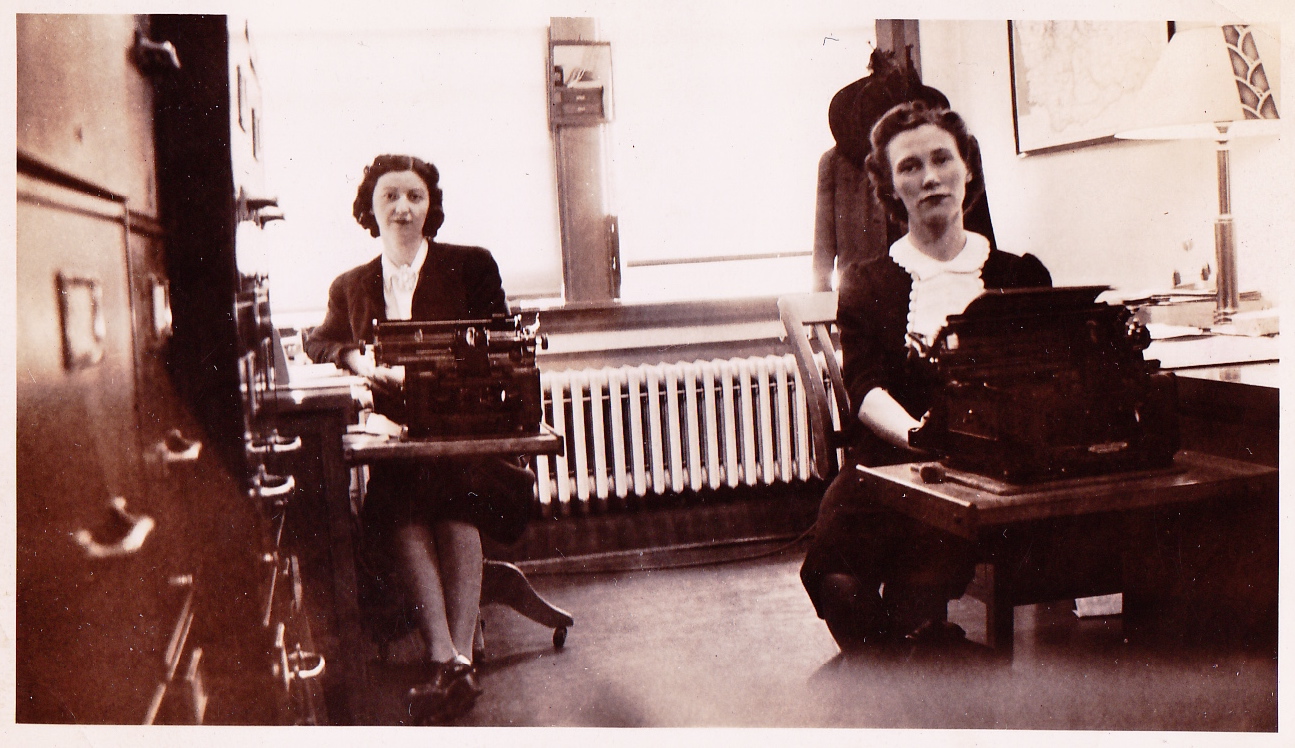
Flo (R) at the Highway Dept.

By the time she learned about the ARC program, Flo had been working full time at that job for more than a decade. No doubt she was ready to do something else—maybe anything else. This seemed like an opportunity to travel outside of Washington State and to see other places in the world. And she was anxious to help the war effort.

He always wanted to be a soldier
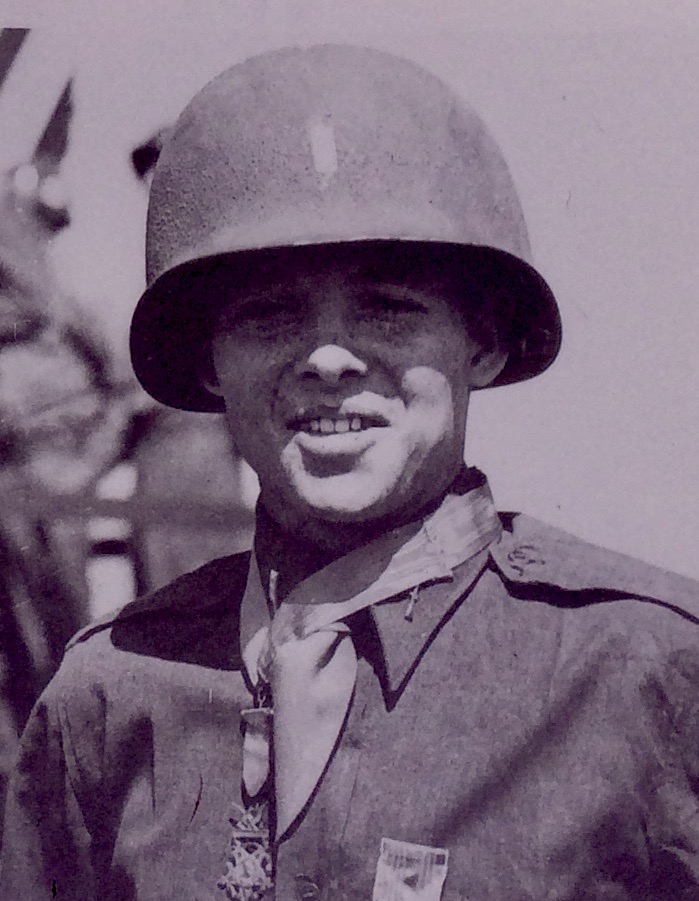
Flo’s photo of Audie 1945

Even as a little boy Audie Murphy had wanted to be a soldier. His share cropper father abandoned his mother and their children leaving the family destitute. Then, when he was 16, his mother died. Born in 1925, the seventh of twelve kids, Audie tried to provide for the others, dropping out of school in fifth grade to pick cotton for a dollar a day. But he knew he had to get out of Farmersville, Texas. He tried to join the paratroopers and the Marines, but was told he was too short at five feet five. The Army took him and trained him to be a soldier. The baby-faced kid earned the nickname Baby. He was already a good shot, having fed the family with wild game. He couldn’t wait to shoot the enemy.

Murphy was assigned to the Third Division, then part of the Third Army under the command of General George Patton. He joined them in Sicily in 1943, on the way from Morocco and North Africa. They would fight their way through Italy and France into Germany. Murphy would be one of a very few of his company left standing and would become the most decorated American soldier of the war.

Chapter 3 https://mollymartin.blog/2025/01/07/flo-gets-a-telegram/

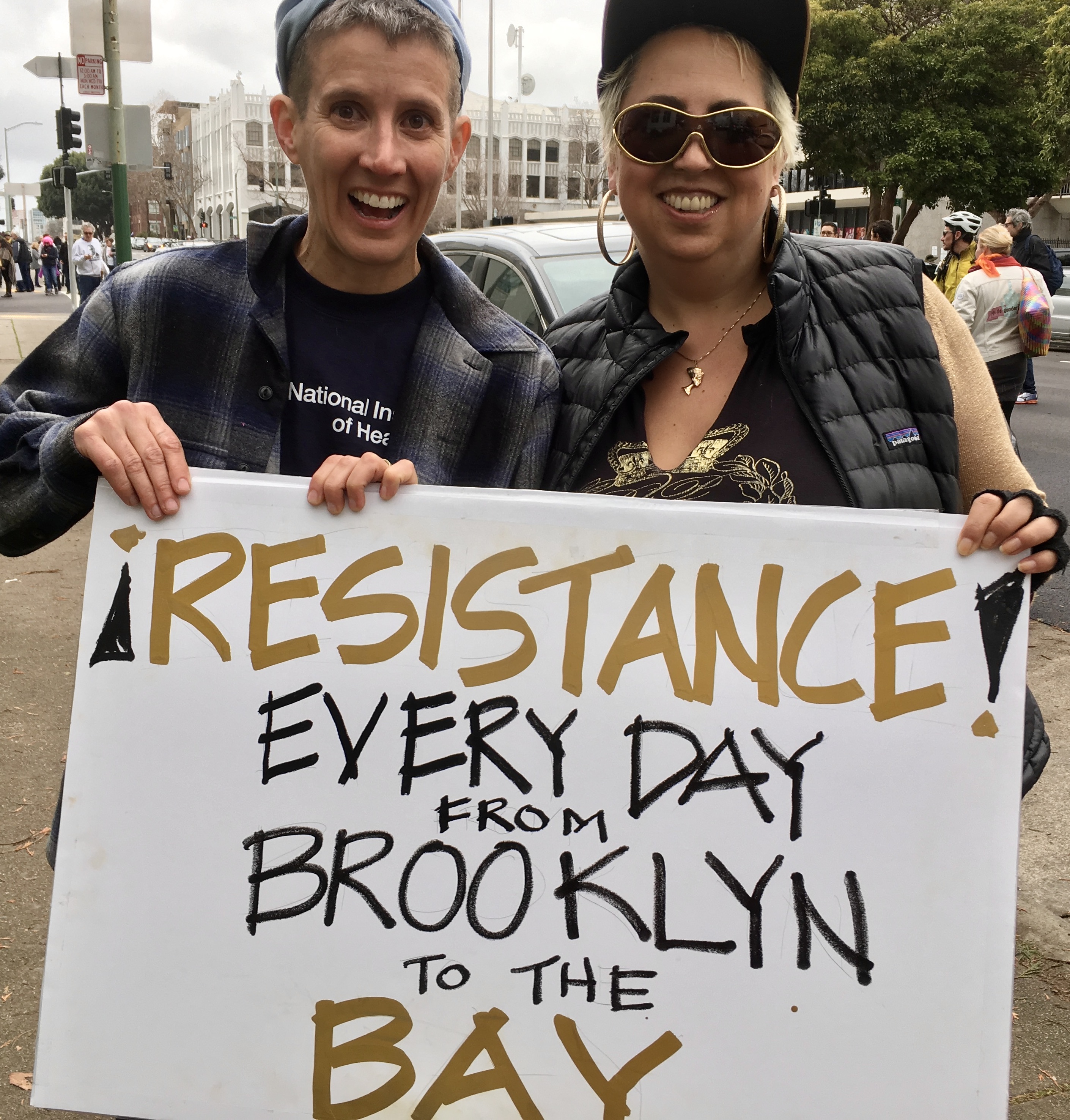
Santa Rosa Women’s March 2019

I was inspired looking at old pictures

Provenance of a Family Heirloom

How our Norwegian cousin solved the mystery

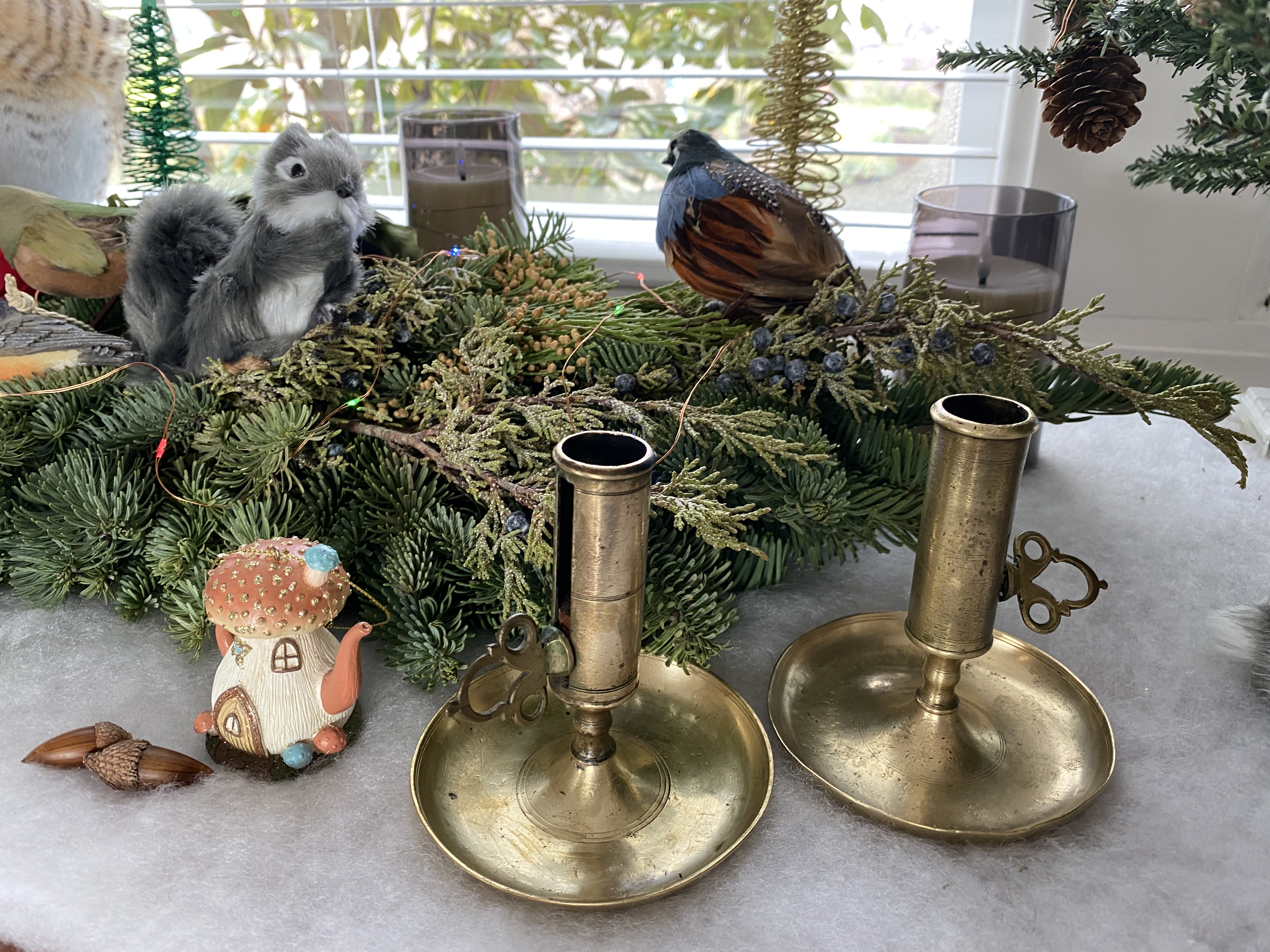
As I pulled down the box of Solstice ornaments from a high shelf in the garage, I wondered about the provenance of a pair of candlesticks. They were grungy from years of use, the brass darkened with candle wax. I thought Mom said they were from our Norwegian grandfather, who left Norway as a teenager and never went back. Did he bring them with him when he immigrated to the U.S.?

 Looking carefully at the base I could see the maker’s mark stamped there. The letters SB, then a crown, then No 5. I went online and looked through databases of metalworks. That got me nowhere, so I asked my brother Don if he had any information. He didn’t remember the candlesticks but did remember that he’d discovered a Norwegian cousin on Ancestry who still lives near our grandfather’s place of birth. Their correspondence follows.

8. des. 2024 Don Orr Martin

To: Rune Aalberg

A question from your cousin in Canada (Don now lives in Vancouver B.C.)

Hello Rune–

We emailed each other a couple of years ago about shared genealogy. I am one of the Wick relatives (along with Shelly Harris). My grandfather from Klokkervik was Ben Wick (Bernt Evensen). 

My sister Molly recently remembered two candle holders that she was told by our mother belonged to Ben. She got them out of storage and plans to clean them up and use them. We suspect they were brought to the US from Norway in the 1890s, but have no documentation. I am attaching 3 photos Molly sent me. She has been trying to identify the foundry markings without any luck. We wondered if you might have access to internet search information in Norway about these markings on the bottoms of the candlesticks. Probably brass. We are curious about their origin. 

Your cousin,

Don

8. des. 2024 Rune Aalberg 

Hi, Don!

The time runs fast, and I have seen your box in my e-mail App, but I have been busy with collecting names to the database on my father’s side. Never ending work /research.

I have announced on Facebook that someone in Canada wants to know about the candle lights. The mark SB should be easy to find for the right person. If not I go to a jeweler and ask there.

I hope the winter time is kind to you. Here we still see the green areas, but have also had a couple of white days.

Until next time
Enjoy the Christmas time

Sun, Dec 8, 2024 Rune Aalberg 

Hi!
I have sent an e-mail to Swedish Skultuna. Yours are very look alike. Long link:

https://www.careofcarl.no/no/skultuna-the-office-candlestick-brass?channable=0091cc696400313232393838313051&utm_source=google&utm_medium=cpc&utm_campaign=S%20/%202%20/%20Index,%20Near-index,%20Potential&gad_source=1

Exiting. 😎

9. des. 2024 Don Orr Martin 

Thanks Rune. I really appreciate your help in tracking down the origin of these heirlooms. The link does indeed look a lot like the ones Molly has. It is very possible they are from Sweden where our grandmother lived until she was 17.  

Our early winter has been pretty mild so far. No snow yet except in the nearby mountains. Lots of salmon returning to the rivers here. John and I love to hike the many trails in parks along the ocean and the local rivers. We are looking forward to our annual trip to Baja, Mexico. We’ll spend 2 months from late January to late March. It’s about a 3,000K drive one way, but a very interesting trip once you get past the US.

Hope you have a pleasant holiday,

Don

From: Rune Aalberg 
Date: Tue, Dec 10, 2024
Hi!
I have not got an answer from the company, but a response on FB says it is this company:
https://skultuna.com/en-no

Buy more 😉

SB = Skultuna Bruk (bruk can mean a farm, to use or meant for using, and they made products for daily usage).
The crown mark is the swedish one.
Take care of the candle lights and yourself, of course 🤗
Time to sleep for Rune 🥱

Our Norwegian cousin was right. The candlesticks are Swedish, made by a foundry that still exists and still sells the exact same product. We imagine that our grandmother, Gerda Wick (Persson), brought them with her when she immigrated to the U.S. in 1905. Candlesticks would have been a necessity before the advent of electric light.

From the Skultuna website:

Four centuries in the same place

The year was 1607, and King Karl IX could at last implement his long held plans for a Swedish brass industry. Refining copper into brass would reduce imports of brass and increase income from exports. The King had a man sent off on the Crown’s business to find a suitable location for a brass foundry, the choice fell on Skultuna, where the Svartån brook provided sufficient water power. Today, over four centuries later, the company still resides in the very same place in Skultuna. The first master braziers were called here from the brass foundries in Germany and the Netherlands, they also brought the technique on how to make large brass objects like chandeliers. The oldest known chandelier is in the Church of Our Lady in Enköping and is dated 1619. The journey throughout history has been rough at times, once the whole factory floated away with the spring flood and it has burnt down completely on at least three occasions.

Today you can follow them on Instagram, facebook and tiktok.

God jul to all

Santa was a Psychedelic Shaman

My Regular Pagan holiday post: Mysteries of Santaland

Even as a little kid, I was skeptical. The story is preposterous: a jolly rotund man in a red suit operates a workshop at the North Pole where elves make toys for children. On Christmas Eve, he loads them into a sleigh pulled by flying reindeer and delivers gifts to every child in the world by descending through their chimneys.

Did adults really expect us to believe that! How could that fat guy even get down a chimney? And what if you don’t have a chimney? And visiting every child in the world on one night! Give me a break. And how can wingless reindeer fly anyway? Wouldn’t it make more sense to harness a herd of Pegasuses,* or even a flock of owls? My parents were unable to satisfactorily answer these questions.

But it all starts to make sense when you look at the traditions of Arctic indigenous peoples. Turns out, Santa’s origins might involve a bit more…tripping. 

Santa is a modern counterpart of a shaman, who consumed mind-altering fungi by drinking the urine of reindeer.

A Ten Thousand Year High

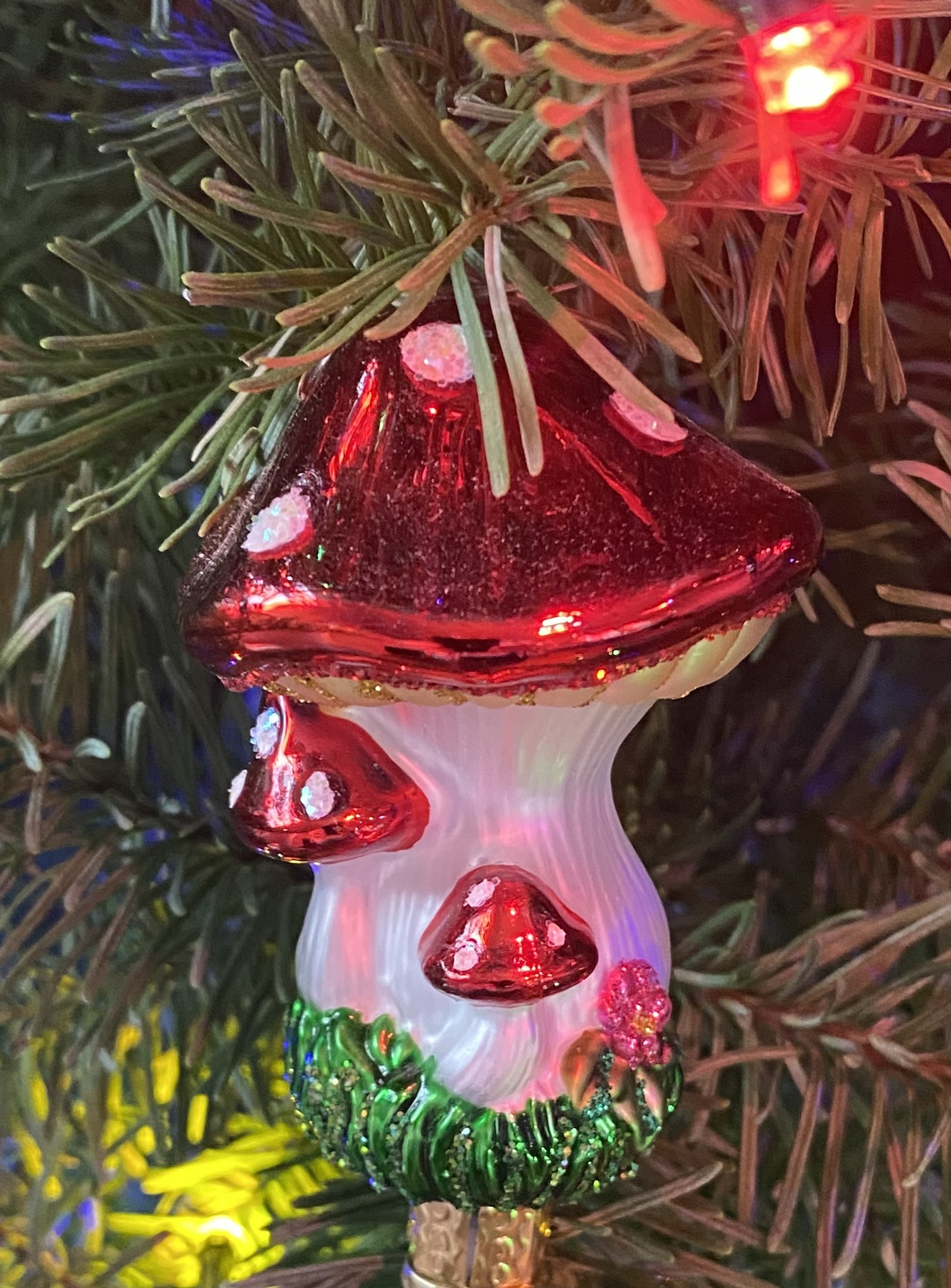
Santa’s story bears striking similarities to the winter solstice practices of Arctic shamans—specifically those of the reindeer herding Koryaks of Siberia and the Sámi of Sápmi (formerly called Lapland) who used hallucinogenic mushrooms in their winter solstice ceremonies. These shamans consumed the mind-altering Amanita muscaria mushroom—the iconic red-and-white fungus often depicted in Christmas decorations—to commune with the spirit world.

Shamanic rituals involving A. muscaria date back over 10,000 years. During Siberian midwinter ceremonies of Annual Renewal, shamans, dressed in red-and-white fur-trimmed coats and tall black boots, gathered the mushrooms from beneath sacred pine trees. These mushrooms are the fruiting bodies of fungi whose mycelial networks interlace with tree roots underground. The association of red mushrooms with green pine trees might explain the colors of Christmas.

Gifts of Vision and Insight

In winter, heavy snow often blocked the doorways of Arctic yurts, forcing shamans to enter through the roof. They slid down the central birch pole, carrying a bag of dried A. muscaria—a probable origin of Santa’s descent through chimneys with a sack of gifts.

Amanita muscaria, found growing under pine trees in Northern California. Photos by author.

After consuming the mushrooms or drinking the urine of reindeer that had eaten them, shamans would enter altered states of consciousness. Amongst the Siberian shamans, the reindeer was an animal spirit to journey with in their vision quests. The gifts shamans brought to their communities included the visions and insights from their psychedelic experiences, as well as portions of the mushrooms themselves. 

Flying Reindeer Explained

Reindeer play a crucial role in this story. These animals can eat A. muscaria without suffering its toxic effects, metabolizing the mushroom’s compounds in a way that makes their urine safe—and still hallucinogenic—for humans to consume. Drinking reindeer urine allowed people to experience the mushroom’s psychoactive effects while avoiding its more unpleasant toxins.

The hallucinations induced by A. muscaria often include sensations of flying, contributing to the myth of Santa’s airborne sleigh and reindeer. After ingesting the mushrooms, the shamans were said to experience heightened senses, bursts of energy, the desire to sing, feelings of joy, and increased muscle tone, so any physical effort was easier to perform.

Stockings Hung by the Fire

Indigenous peoples dried their mushrooms on tree branches or by hanging them in socks near fires, practices reminiscent of today’s Christmas stockings. As with many pagan traditions, Christians appropriated these shamanic elements, attributing them to Saint Nicholas, a 4th-century Turkish bishop known for his generosity to children and the needy.

Incidentally, the plural of shaman is shamans, not shamen. There were female shamans among the indigenous peoples, just as there are in many cultures today. 

Koryak shaman woman, photo from Jesup North Pacific Expedition 1900. (PD-US)

The Arctic shamans might have been jolly, but probably were not fat. That image was exploited in ad campaigns by Coca cola, starting in 1930 (although folks are mad that the company’s latest AI video ad focuses on trucks instead of Santa).

Mushrooms and Me

My own relationship with mushrooms is one of wonder and deliciousness. Wonder-ful because mushrooms are witchy and mysterious. Scientists estimate that as many as 95% of fungal species on Earth are still unknown! Many mushrooms are associated with particular species of trees, so in learning about ‘shrooms, we learn about the forest and its ecosystem too.

Deliciousness because I’ve foraged, eaten and enjoyed many mushrooms. But A. muscaria is not one of them. The poison is not a deadly one like some of the other Amanitas, but it does make you sick. And while I am curious about hallucinations, I’m not so curious about regurgitations. 

Still, A. muscaria fascinates me, not just for its beauty but also for its potential. Recent research explores its psychoactive compounds, muscimol and ibotenic acid, for therapeutic uses. These compounds show promise in treating conditions such as stress, anxiety, insomnia, addiction, and even neurodegenerative diseases like Parkinson’s and Alzheimer’s.

Solstice Spirits

As the winter solstice approaches on December 21, I’m reminded of the deep connections between ancient rituals and modern traditions. So, whether you celebrate with a cup of cocoa or an appreciation for fungi, happy solstice to all—and to all a good long night.

*The proper plural of Pegasus is Pegasi but I like Pegasuses better

P.S. A friend told me she needs sources in order to share this. Here’s a video I liked: https://youtu.be/MrLb2-wETAQ?si=VRQ28QsBitb5ndCF