Flo Goes to a Football Game

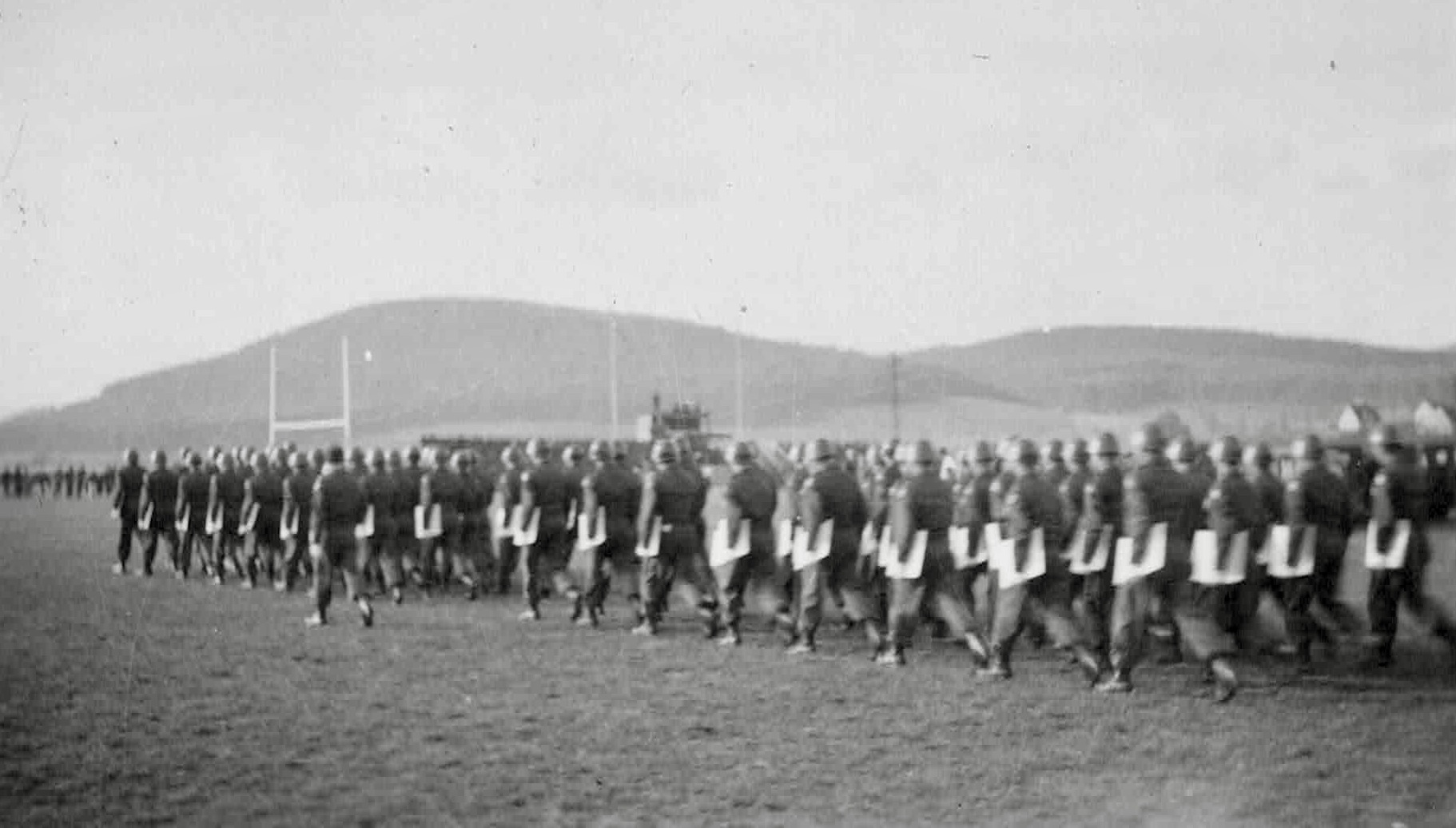
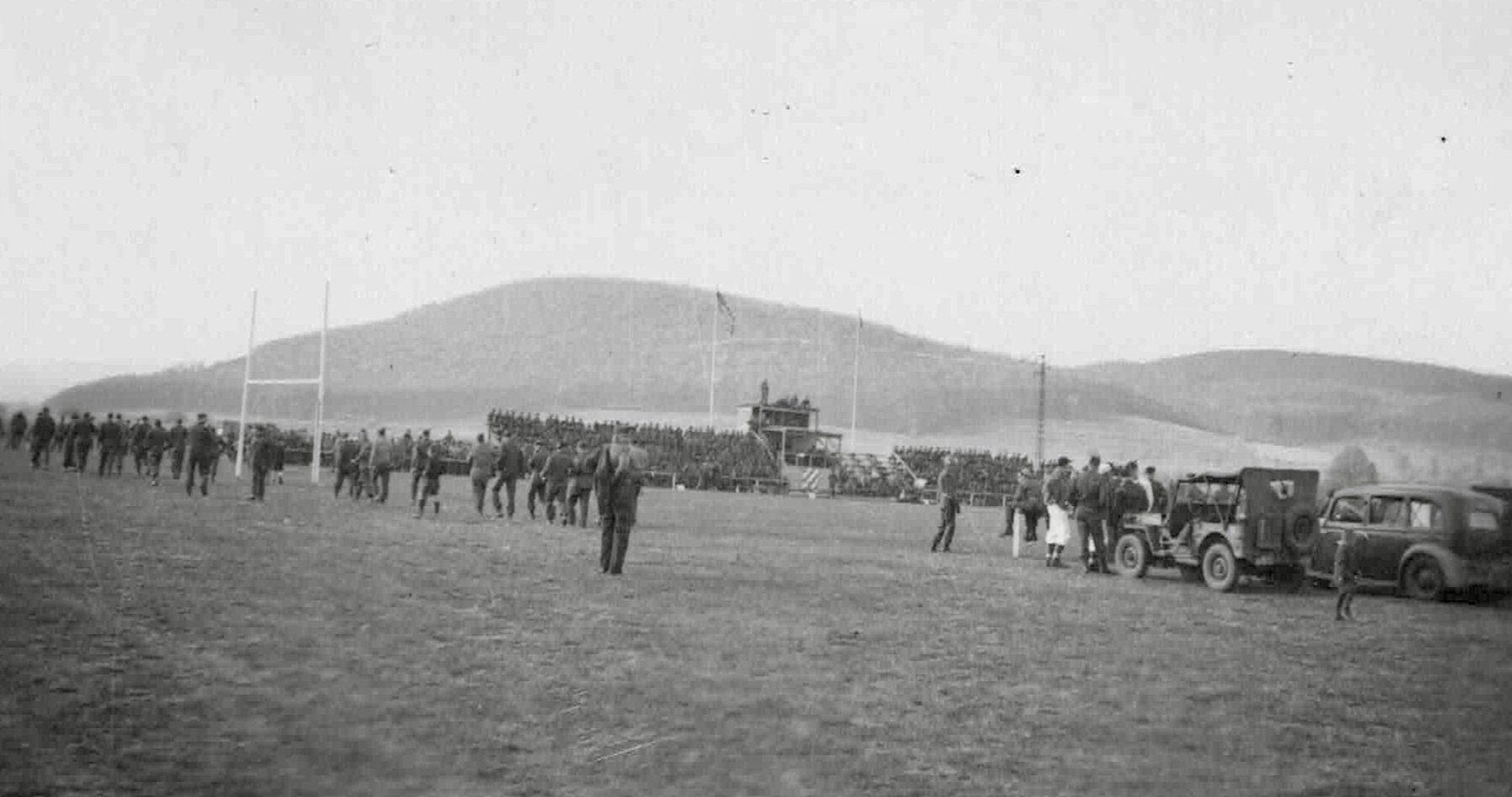
Third Division vs. 29th

Ch. 91 My Mother and Audie Murphy

The football games were part of a sports program organized to occupy restless American and Canadian troops awaiting discharge. In August 1945, the U.S. Army had staged the “GI Olympics” in Nuremberg, with high-ranking Russian observers in attendance. Events included a baseball game played in the former Hitler Youth Stadium—an unmistakably symbolic reclaiming of Nazi space. That same day, news of Japan’s surrender crackled over the loudspeakers, unleashing a roar that seemed to lift the roof as GIs tossed caps, coats, and red-white-and-blue programs into the air, hugging, kissing, and celebrating the war’s end. The festivities continued into the night with performances by Hal McIntyre at the amphitheater and Bob Hope at the Opera House, drawing thousands of cheering troops in a city freshly transformed from fascist spectacle to victorious release.

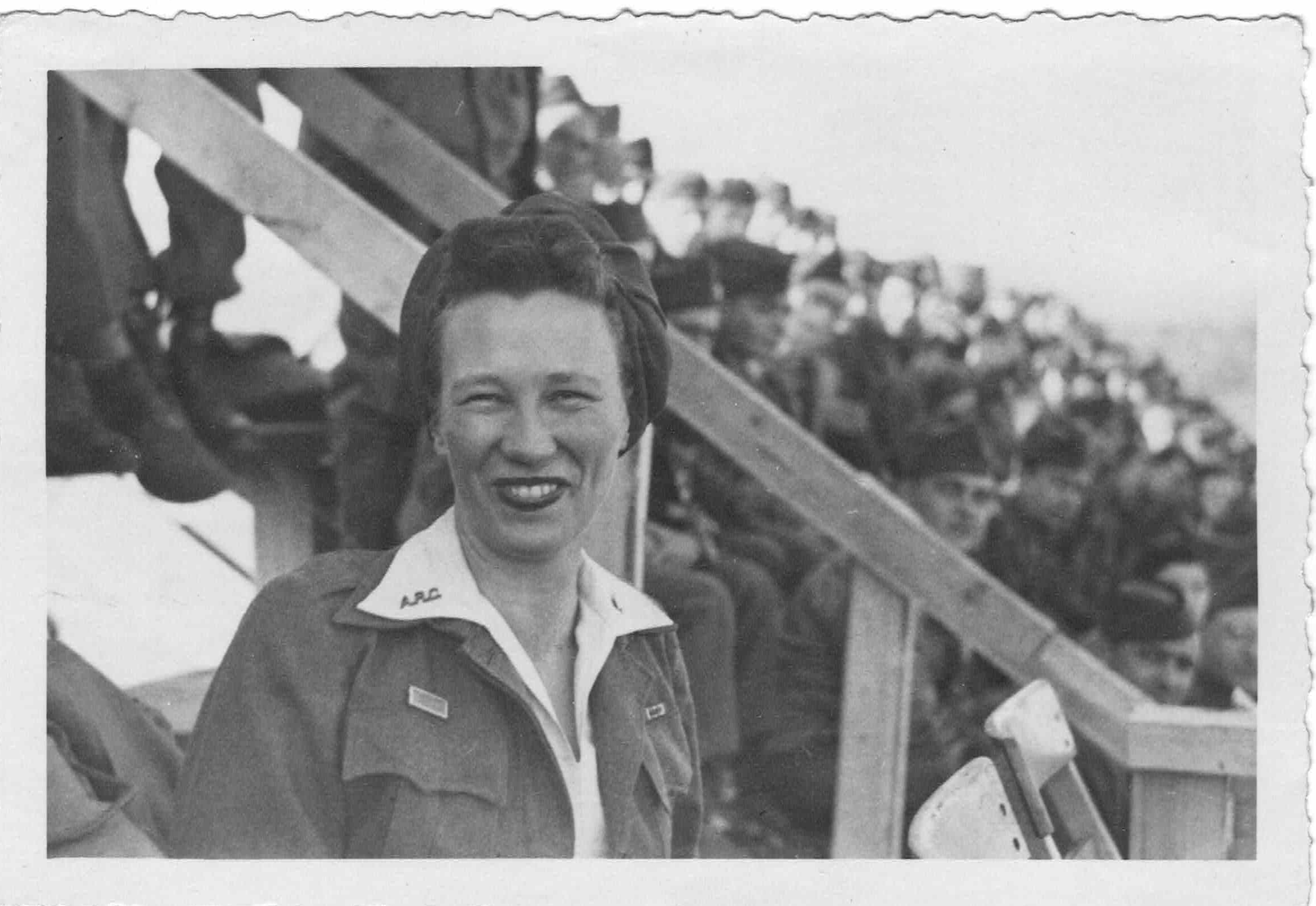
Pretty sure Flo was rooting for the Third Division
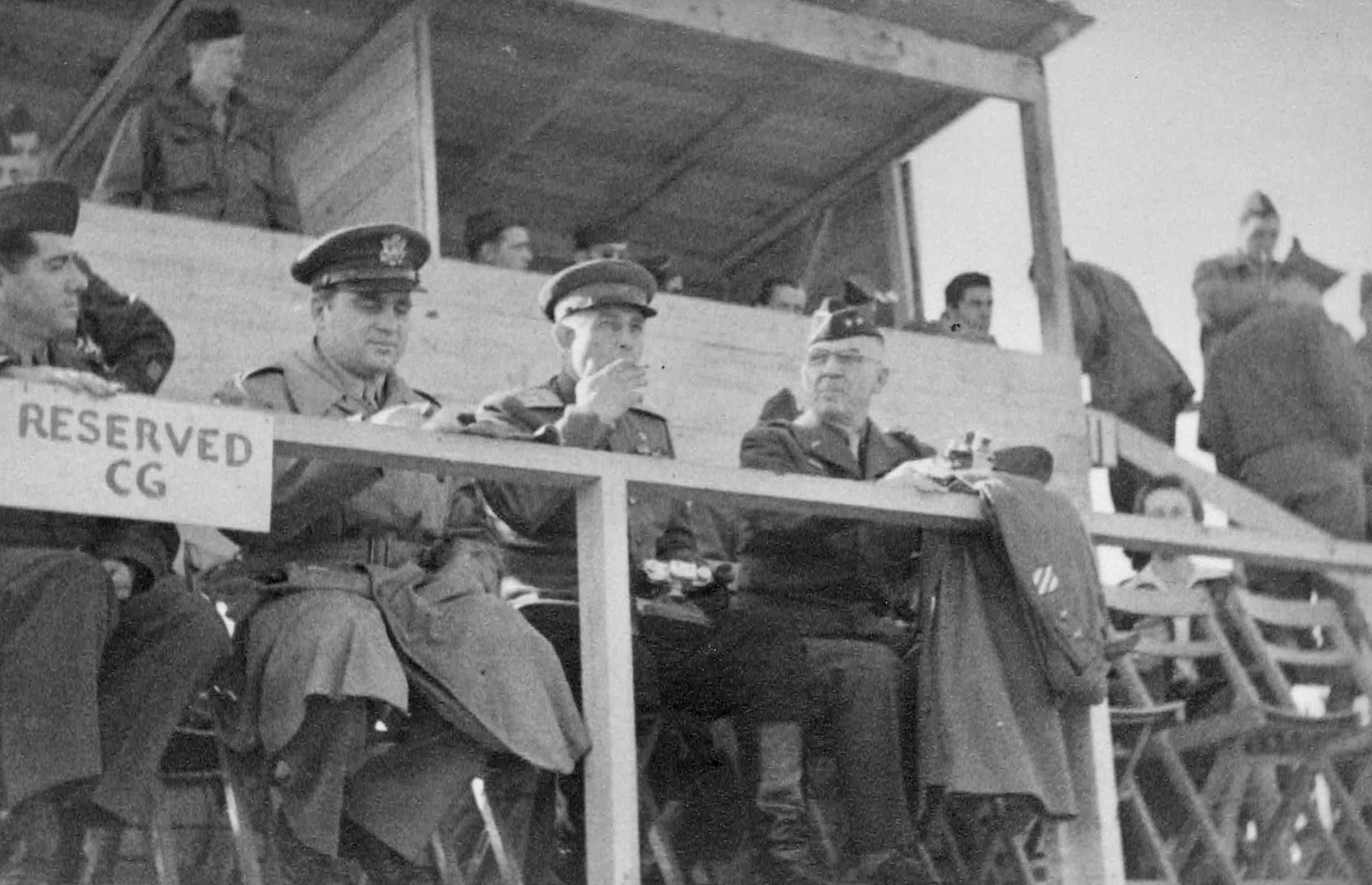
Reserved for the brass.

Friends at the 3rd QM

“Our home for two years”

Ch. 90 My Mother and Audie Murphy

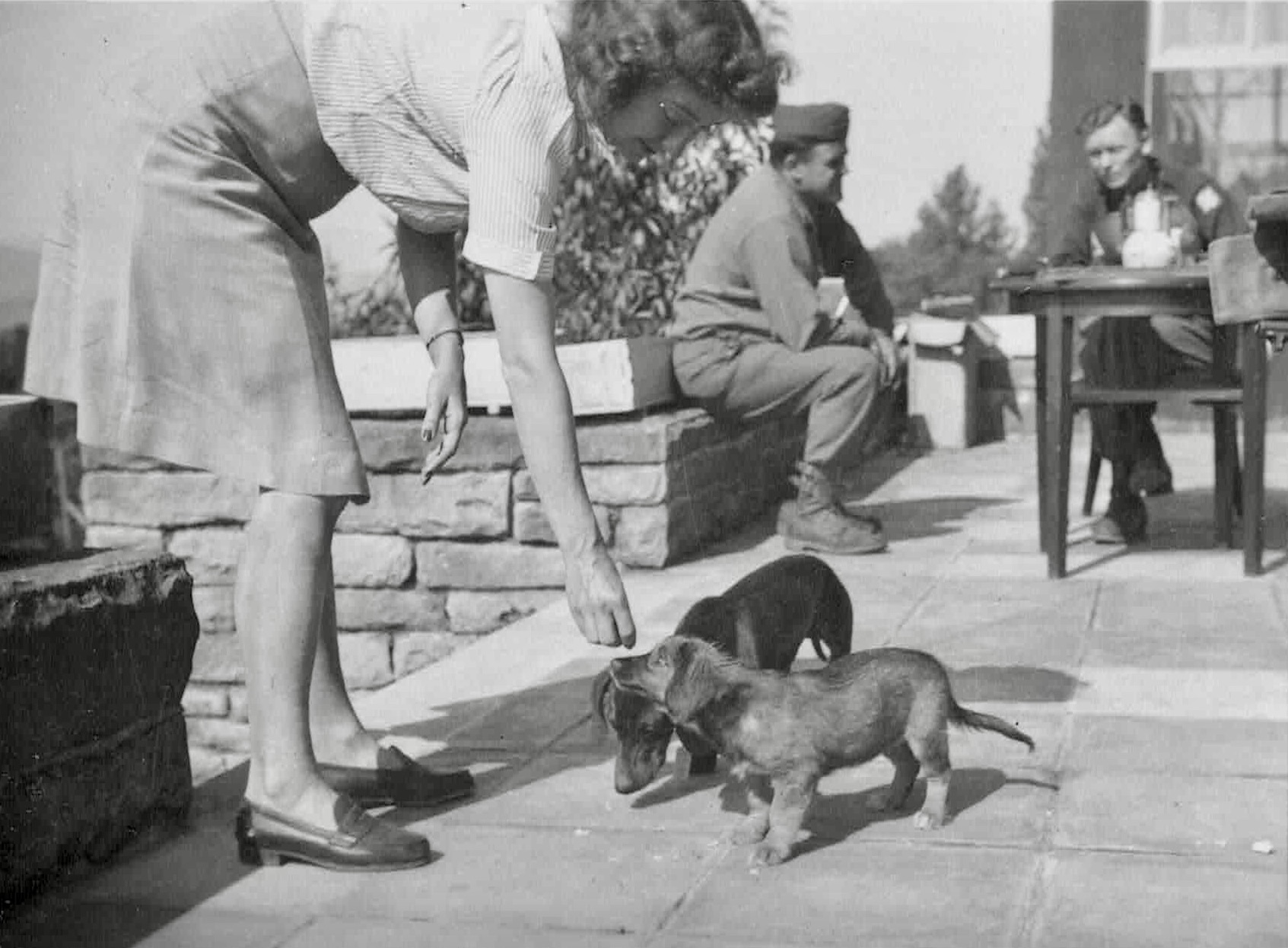
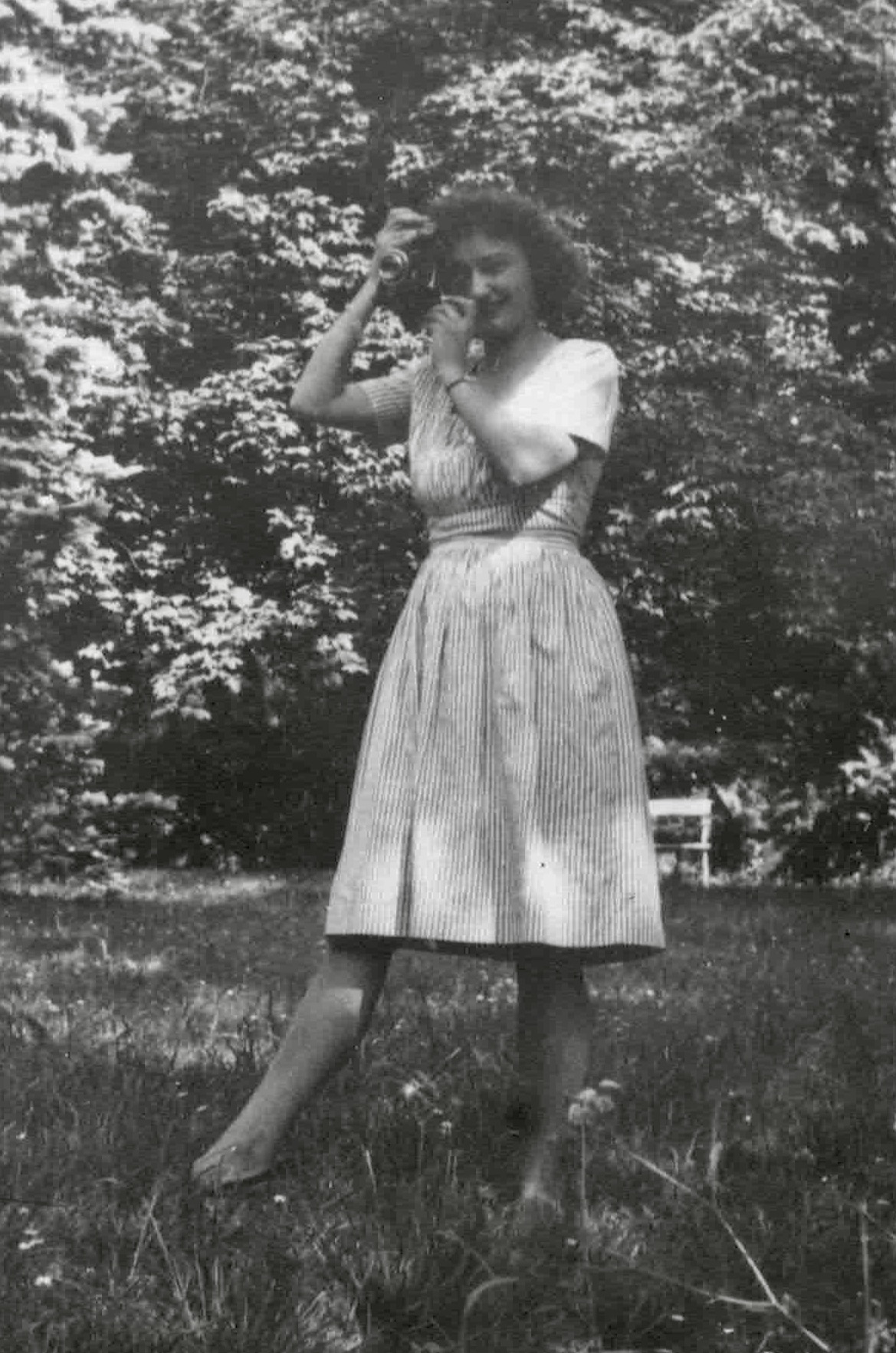
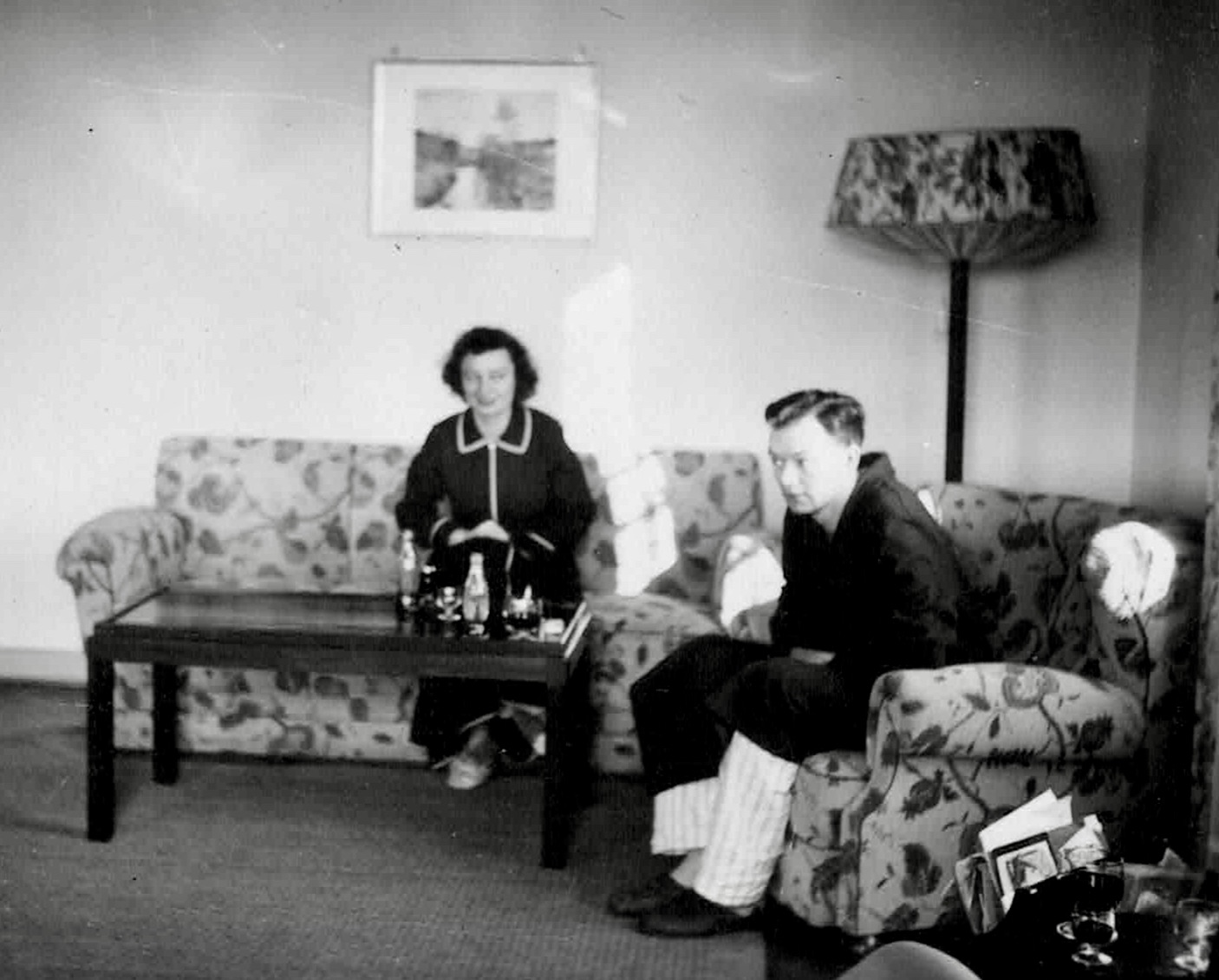
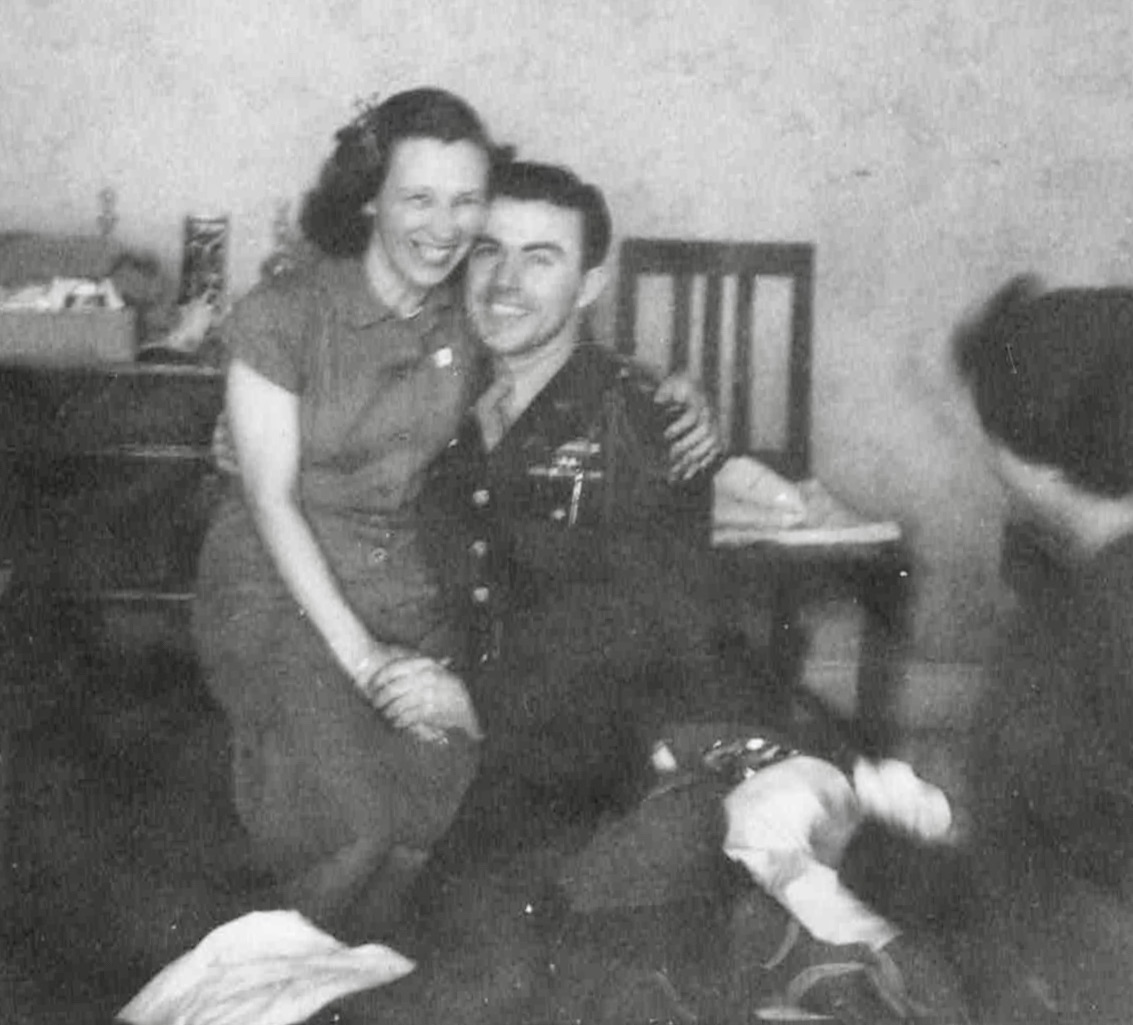
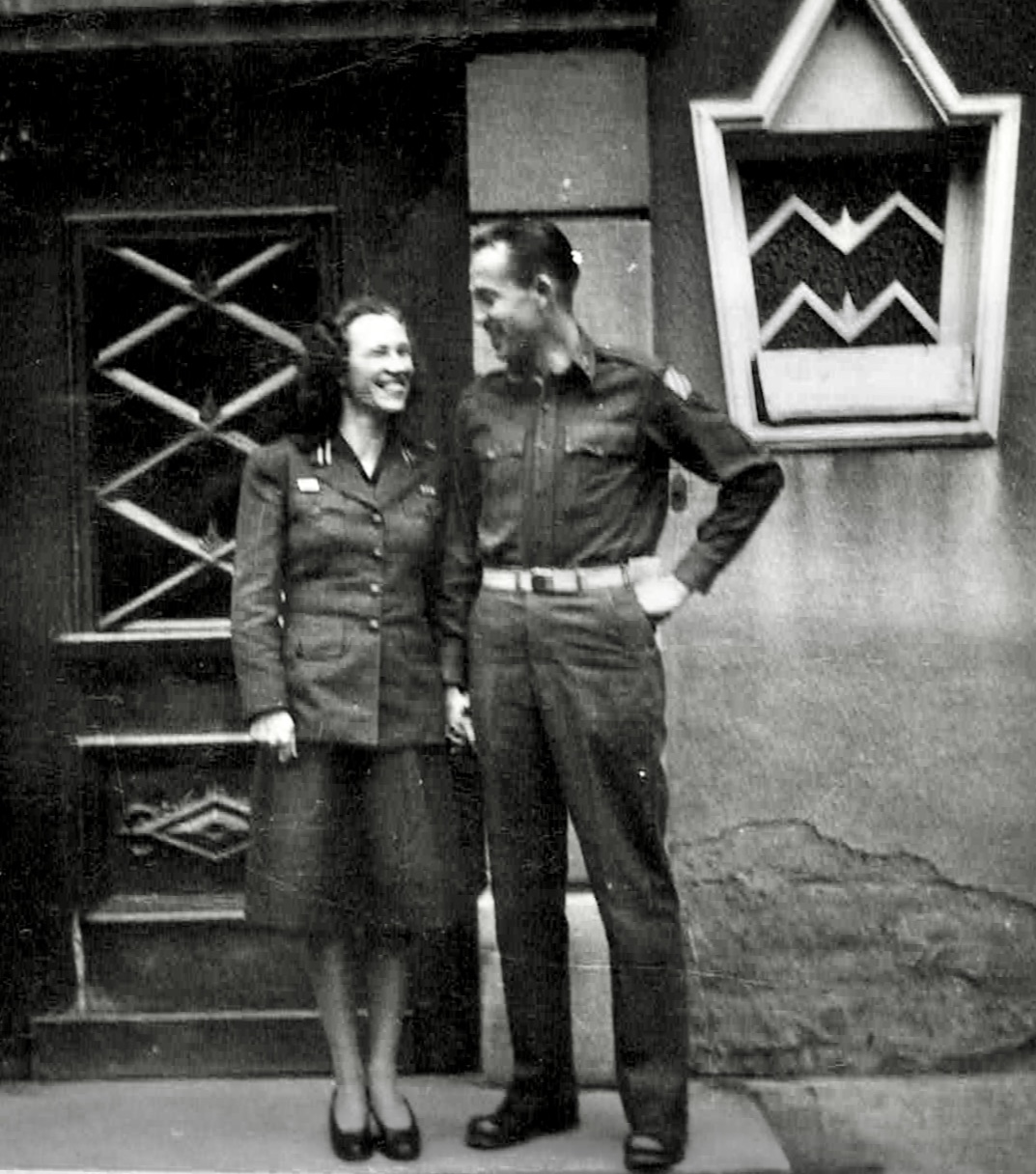
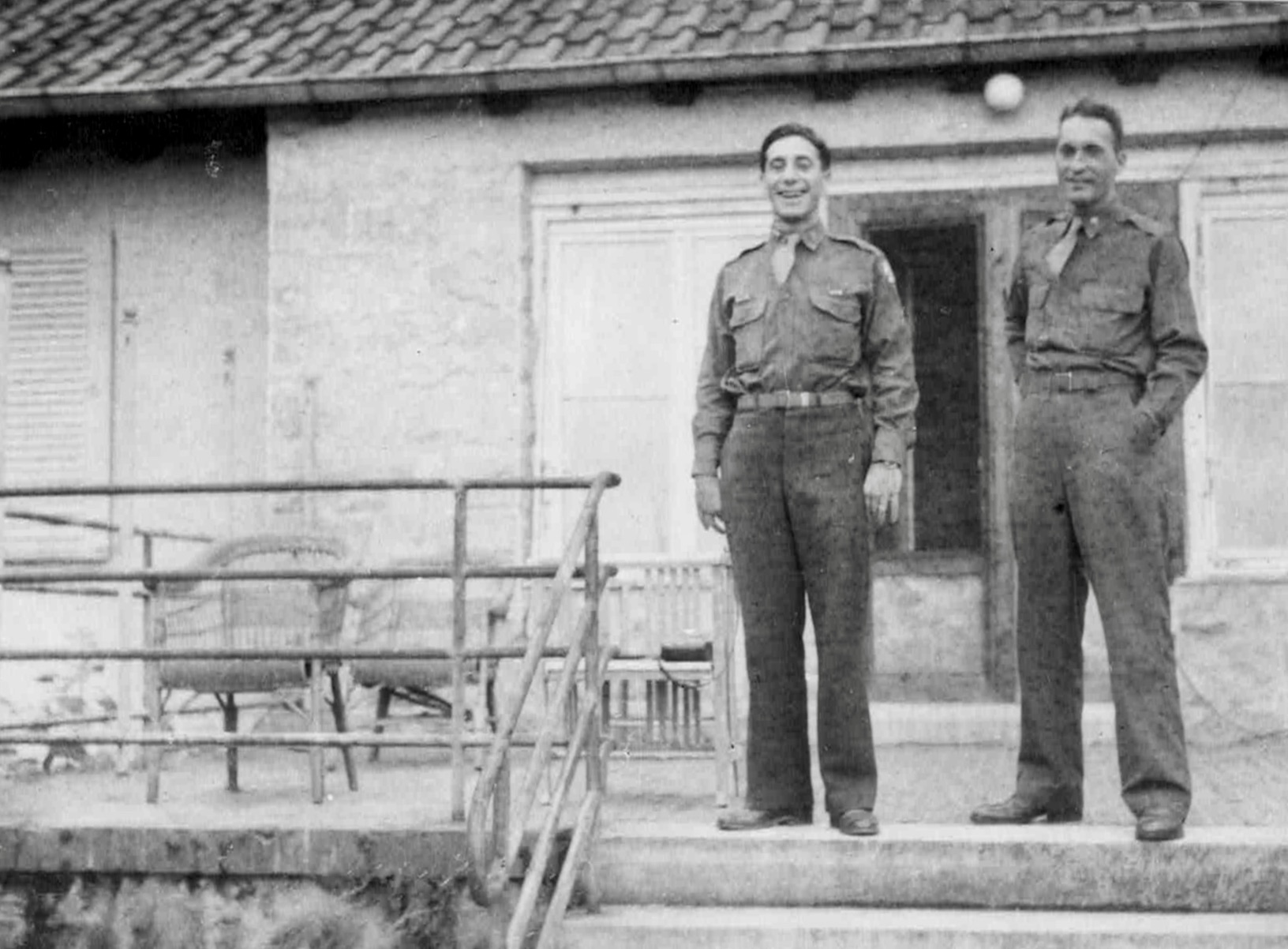
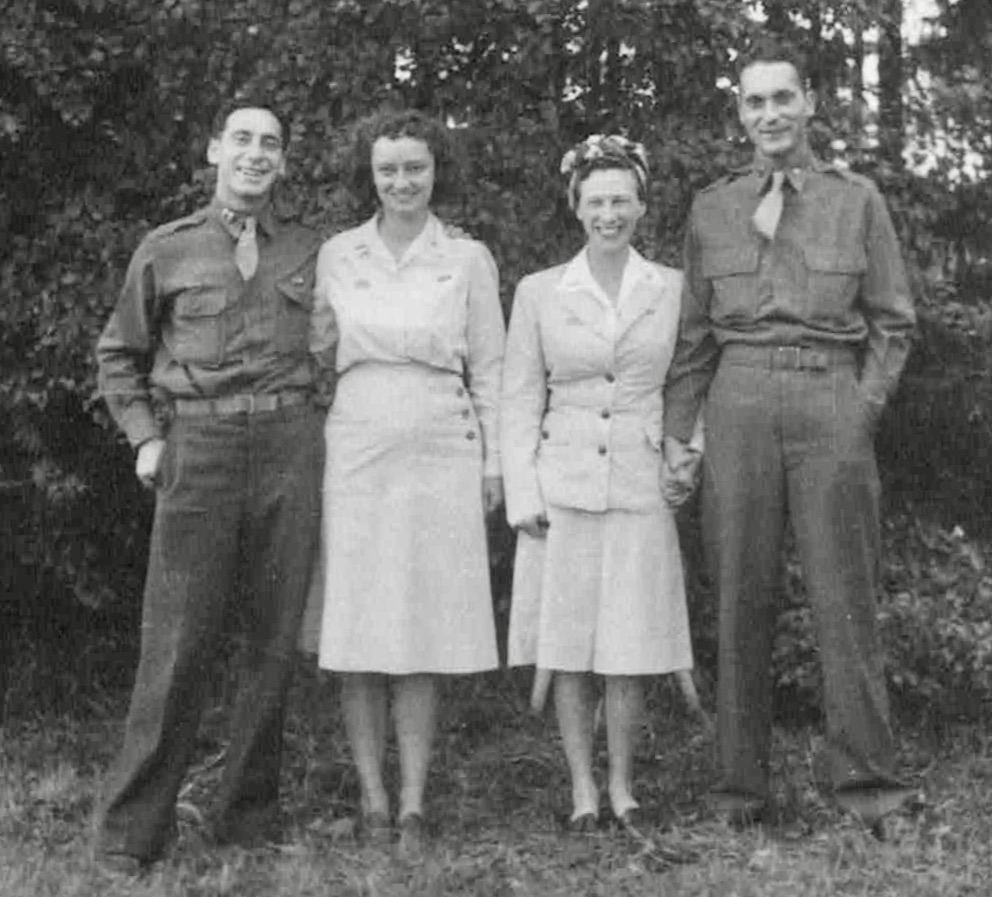
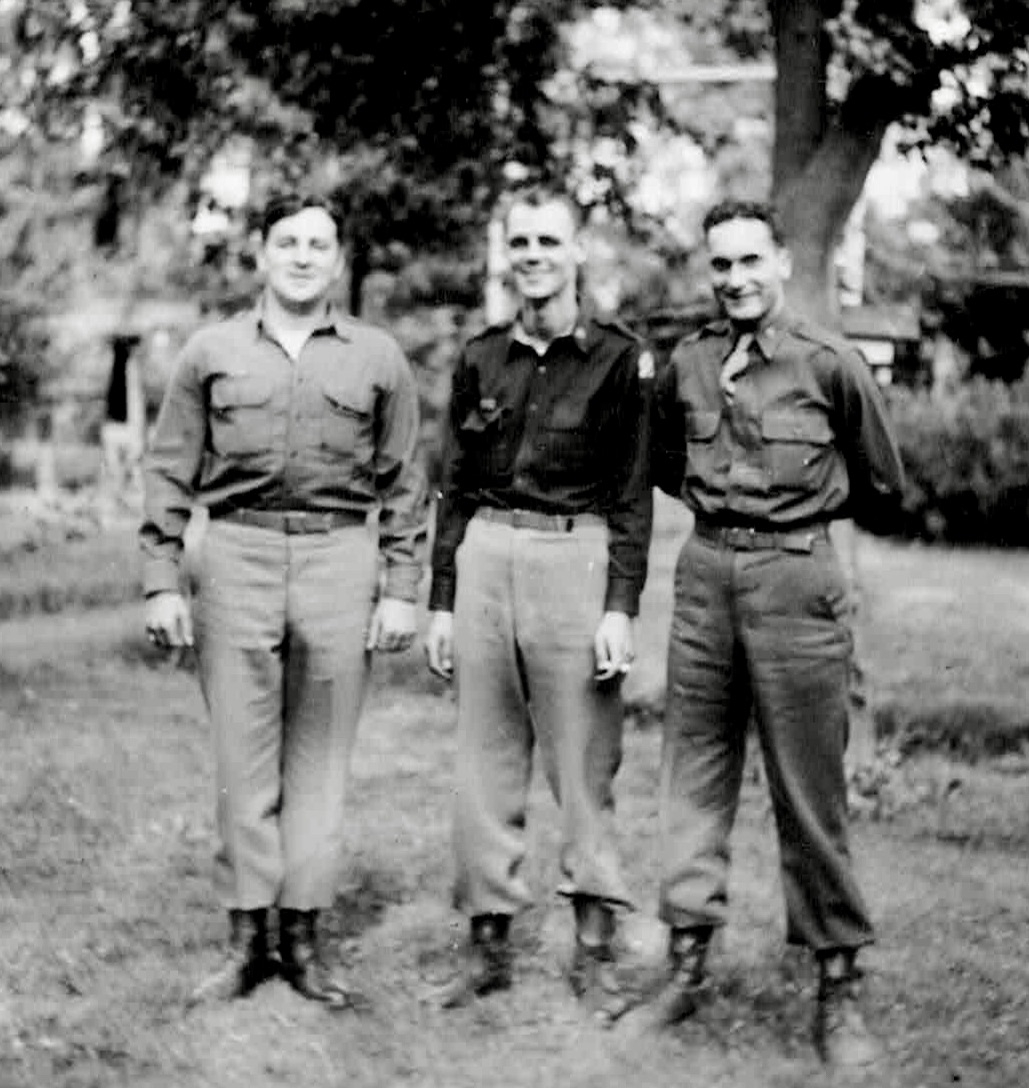
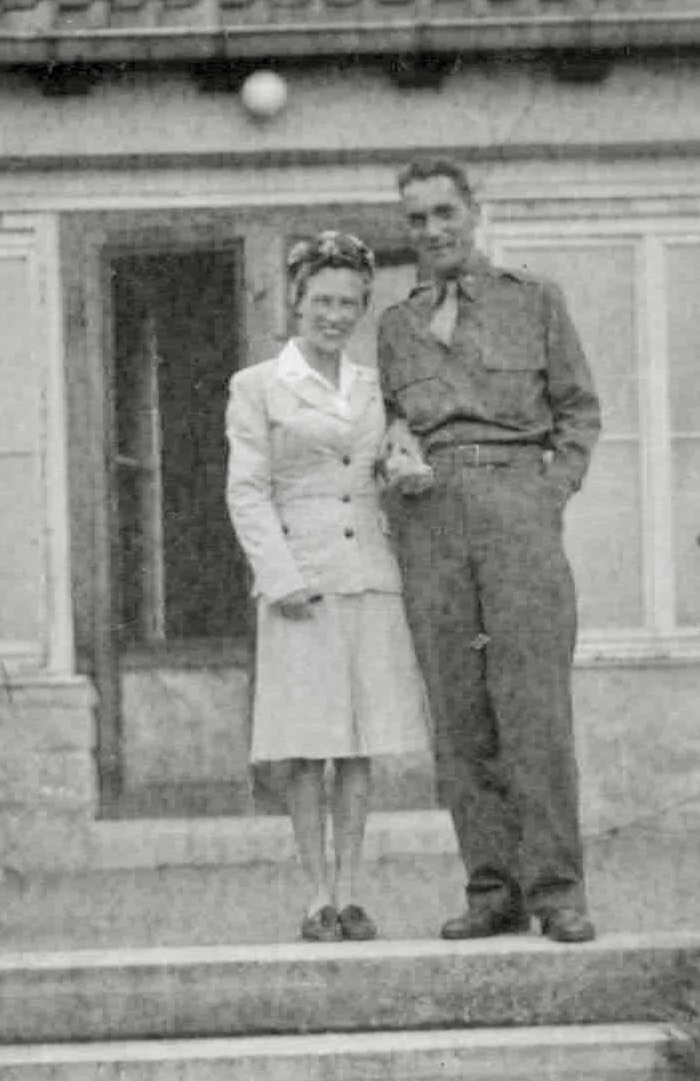
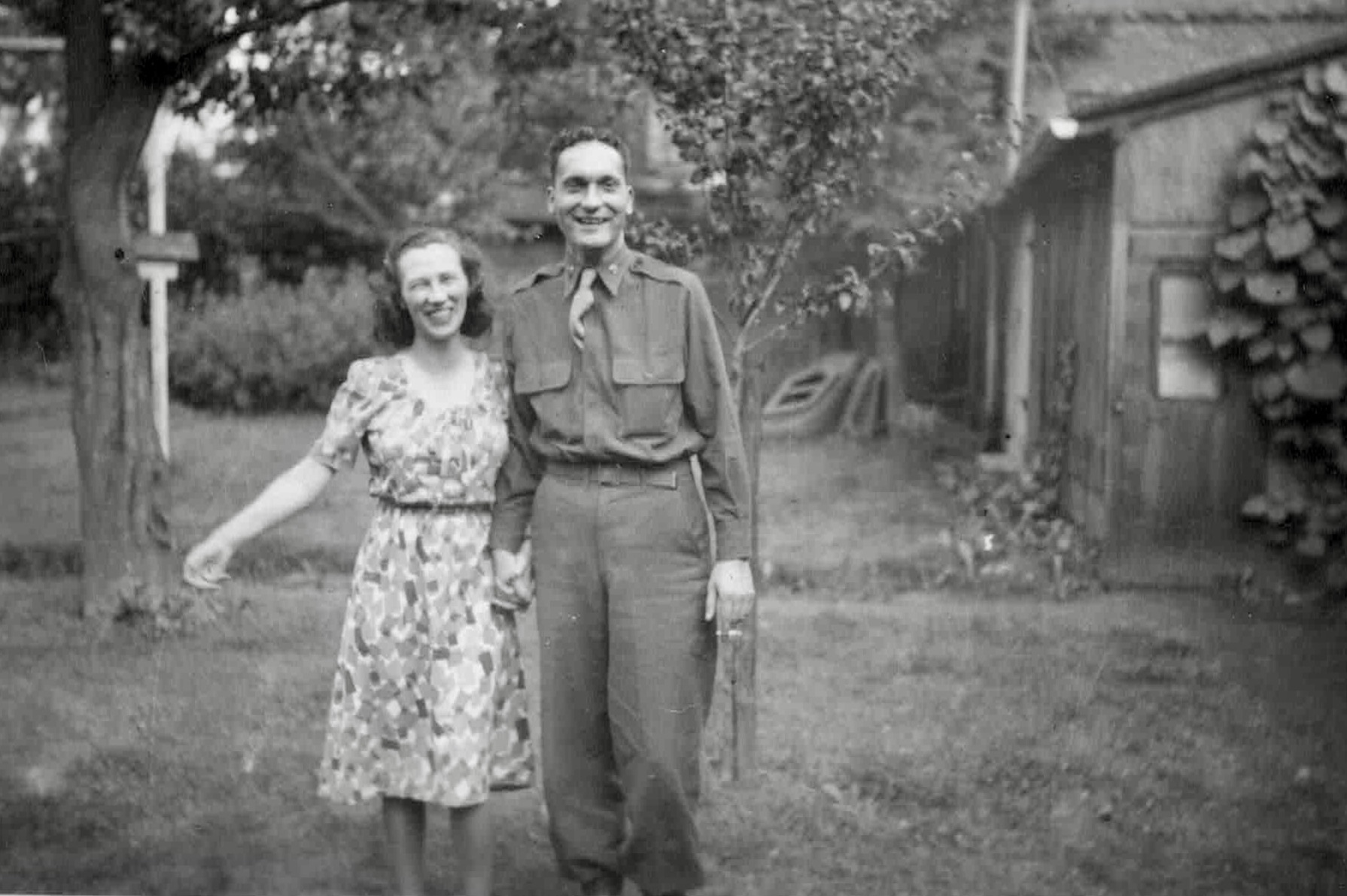
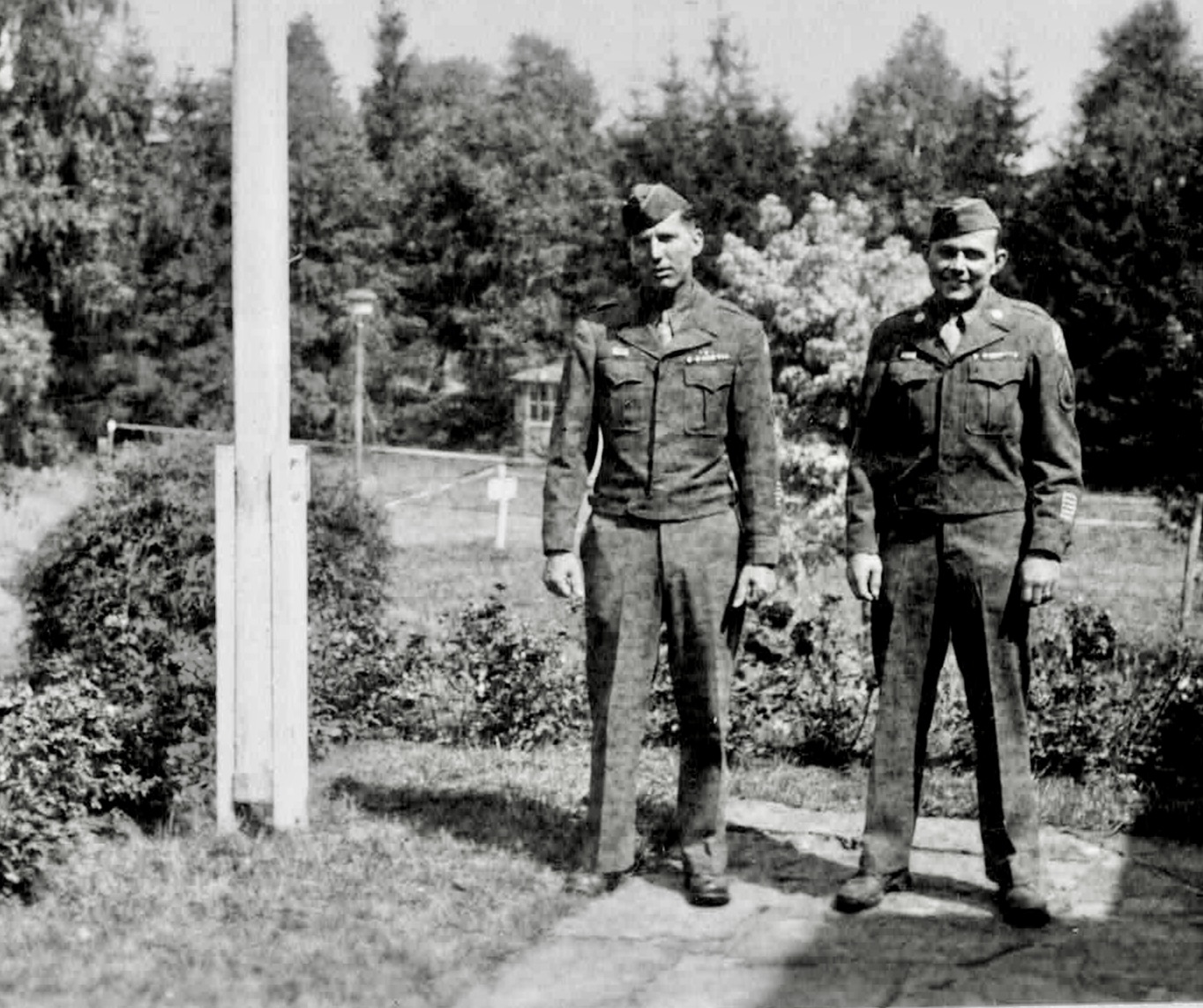
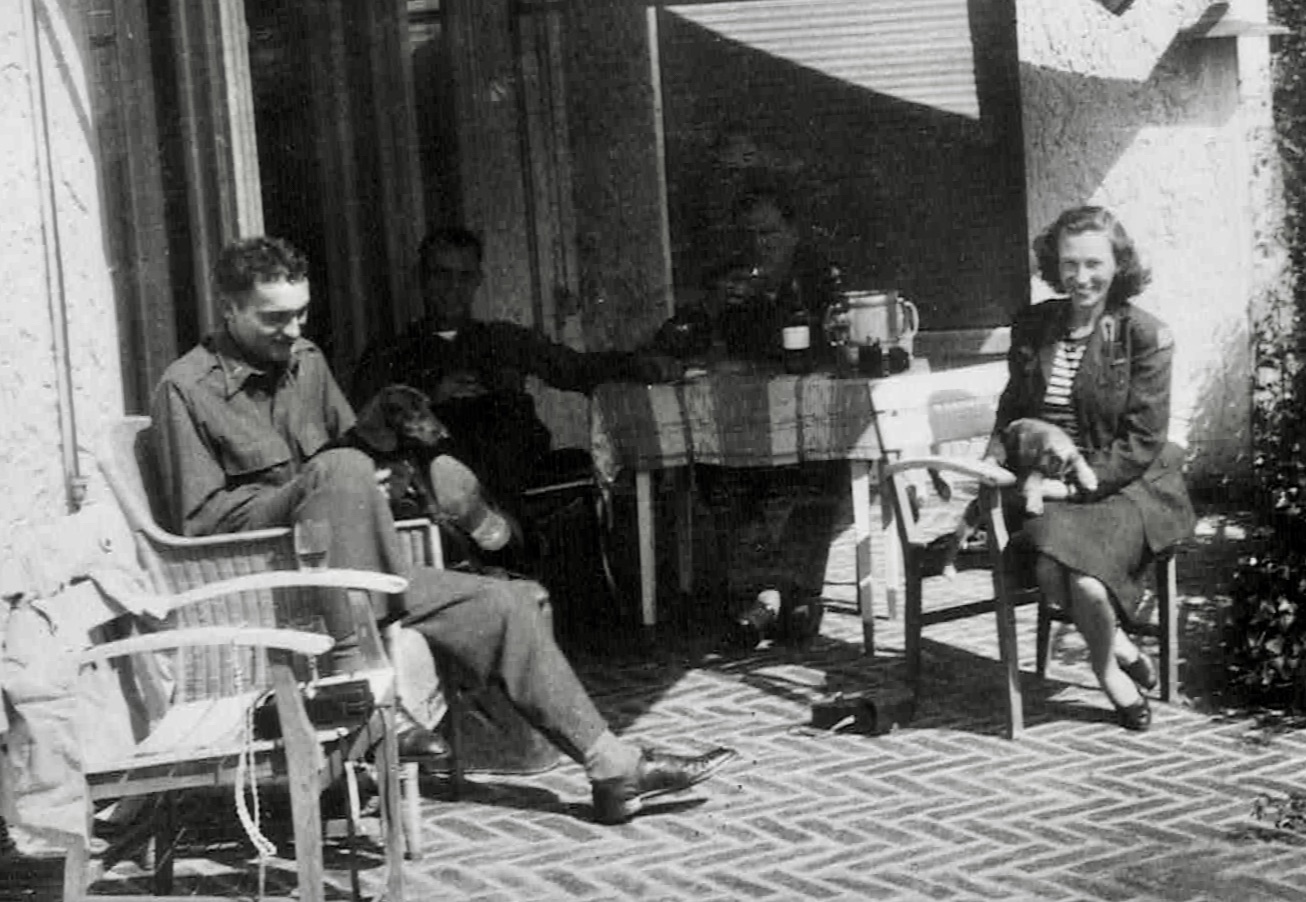
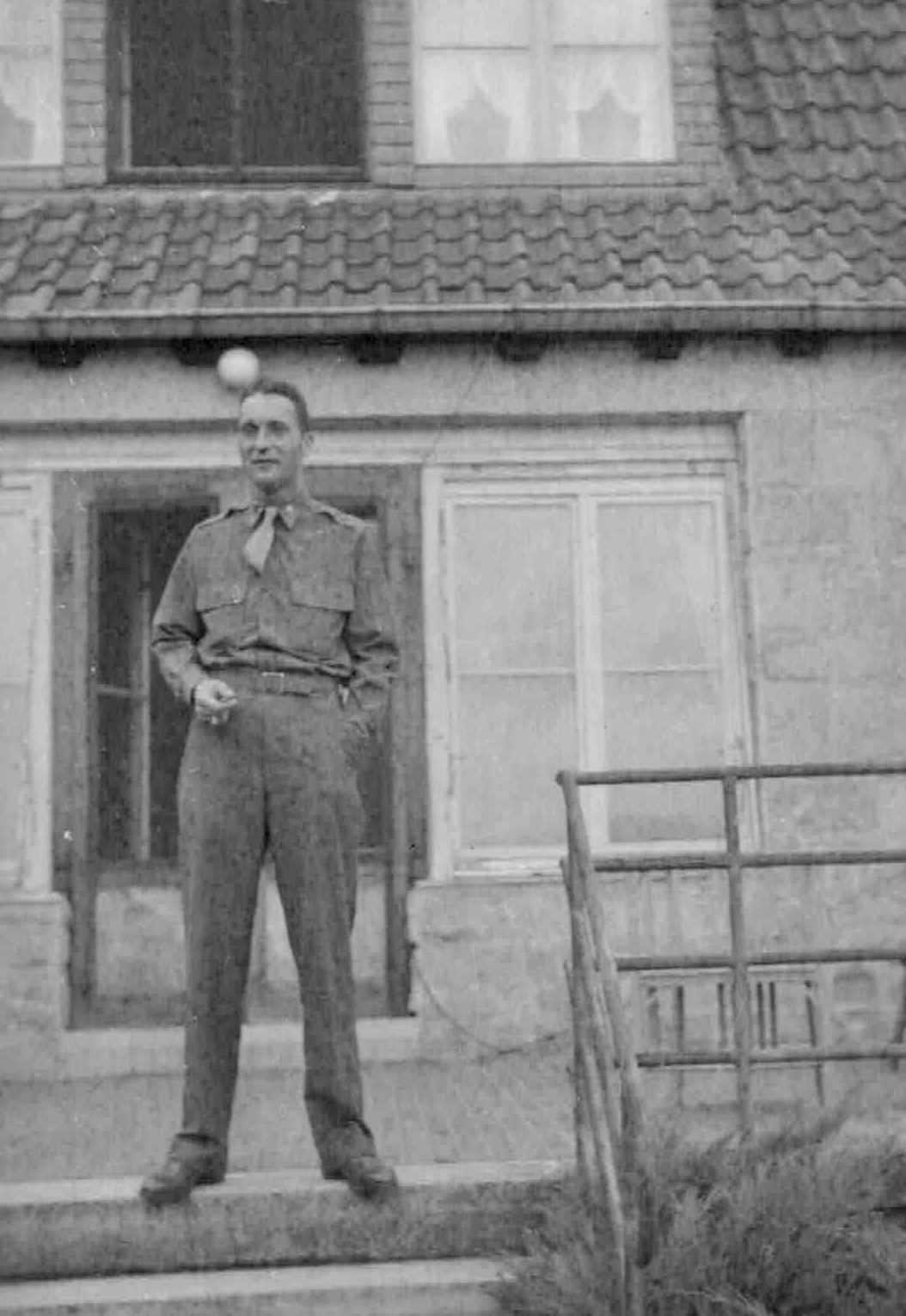
Flo didn’t identify the soldiers on this page of the album. We see ARC clubmobiler Janet Potts in one picture and I’m guessing the man standing next to her is her fiance Jens Jenson. Flo is holding tightly onto one tall handsome man’s hand in several photos. Apparently she has a new boyfriend.

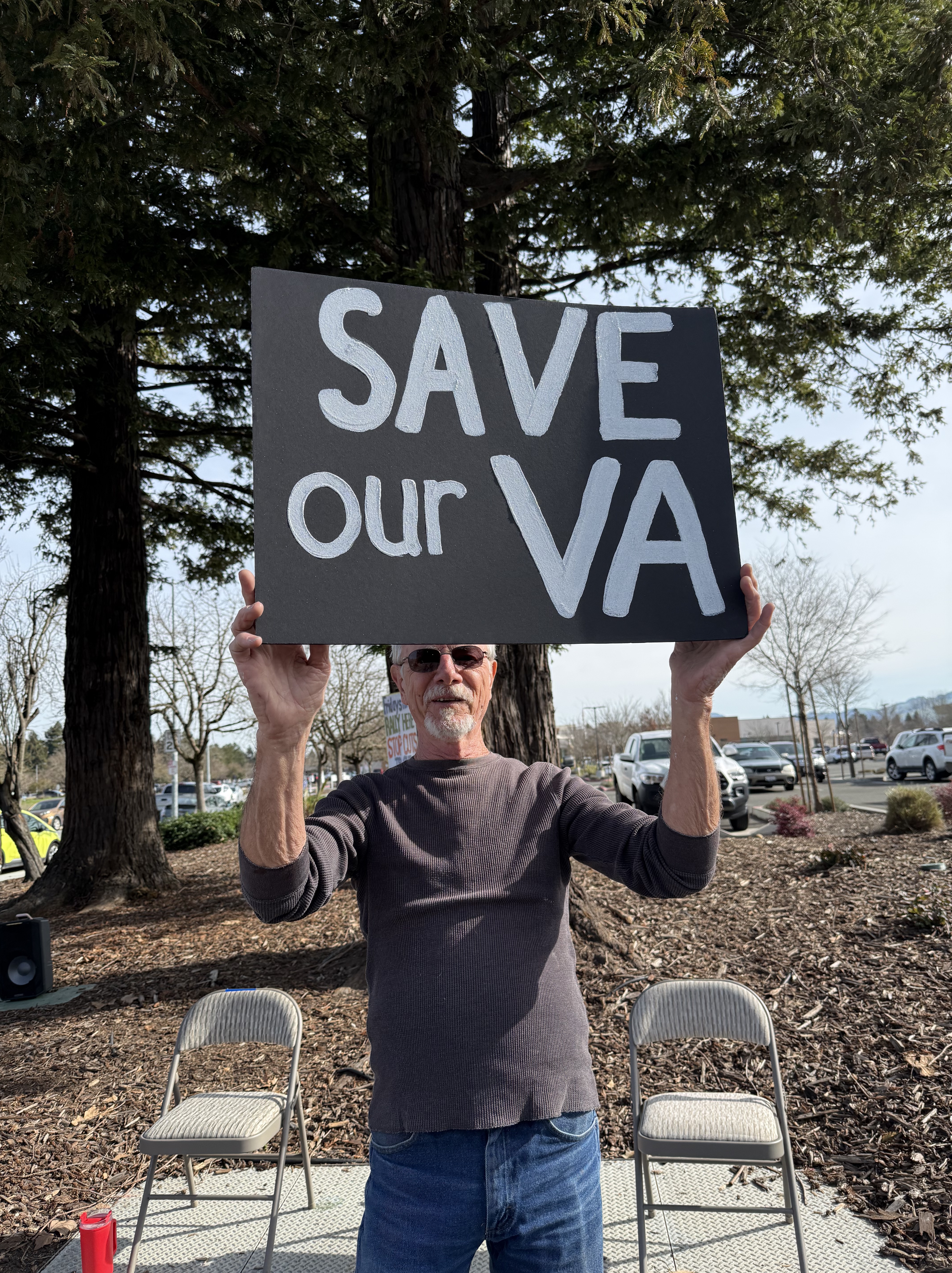
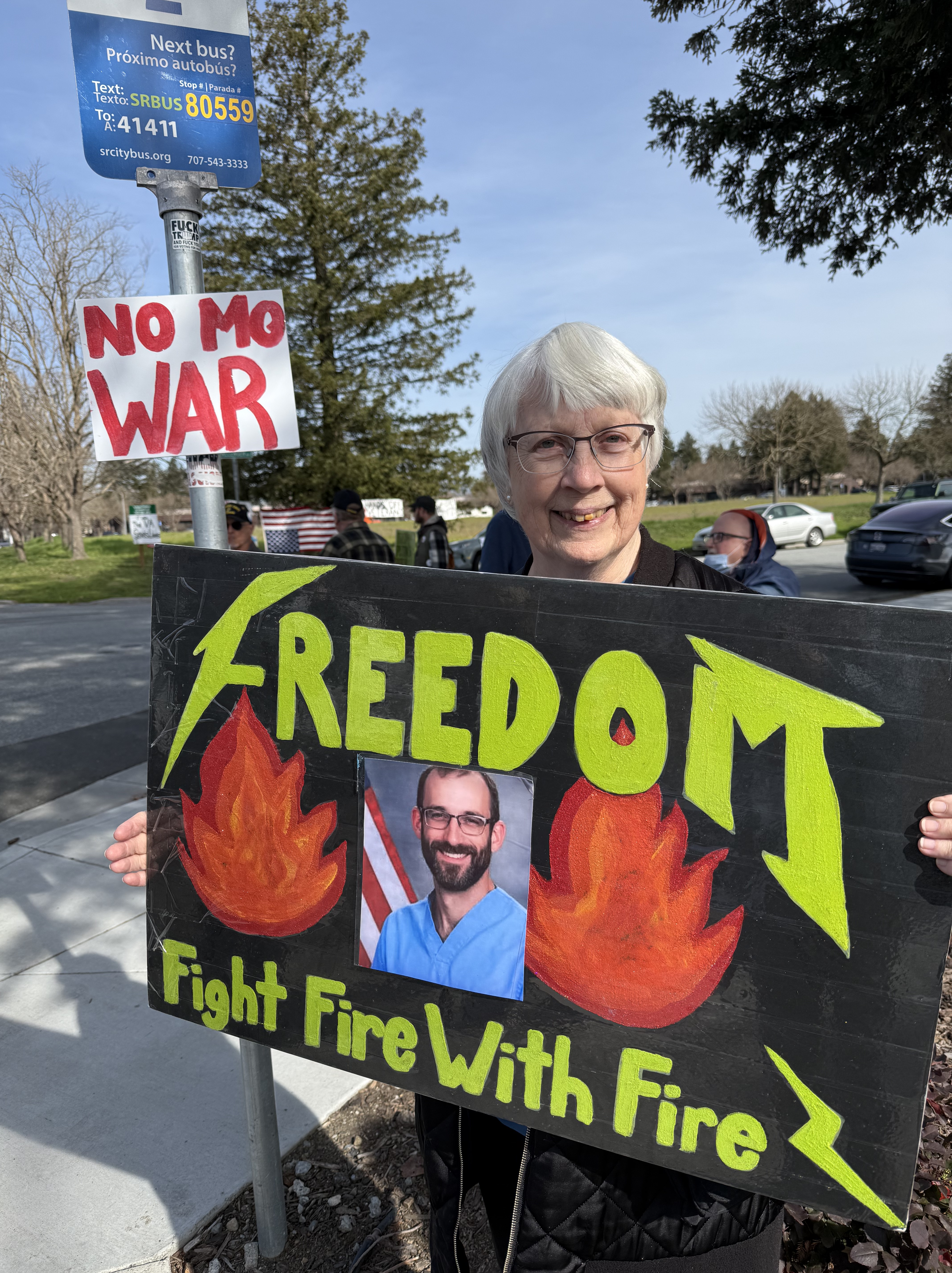
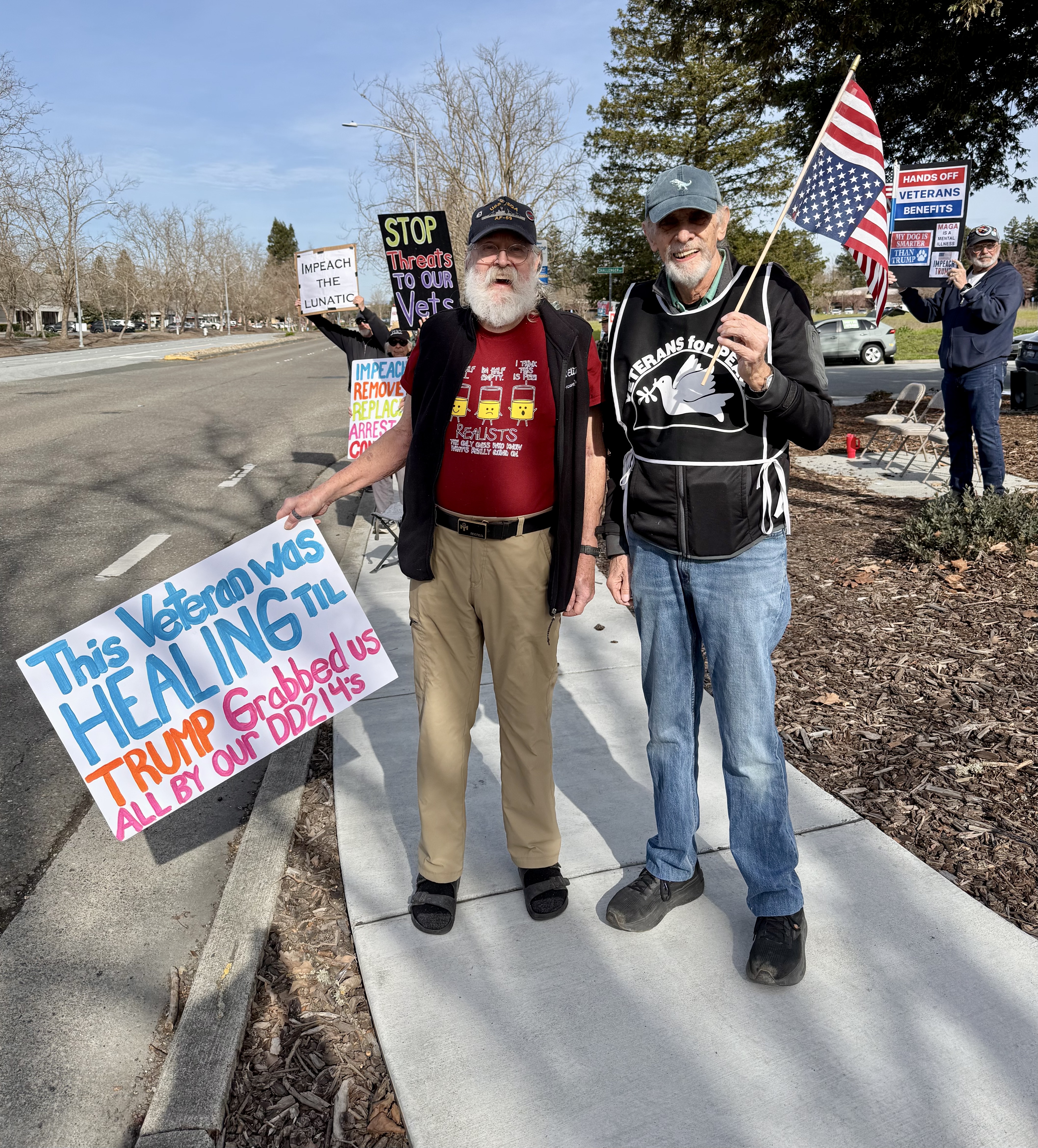
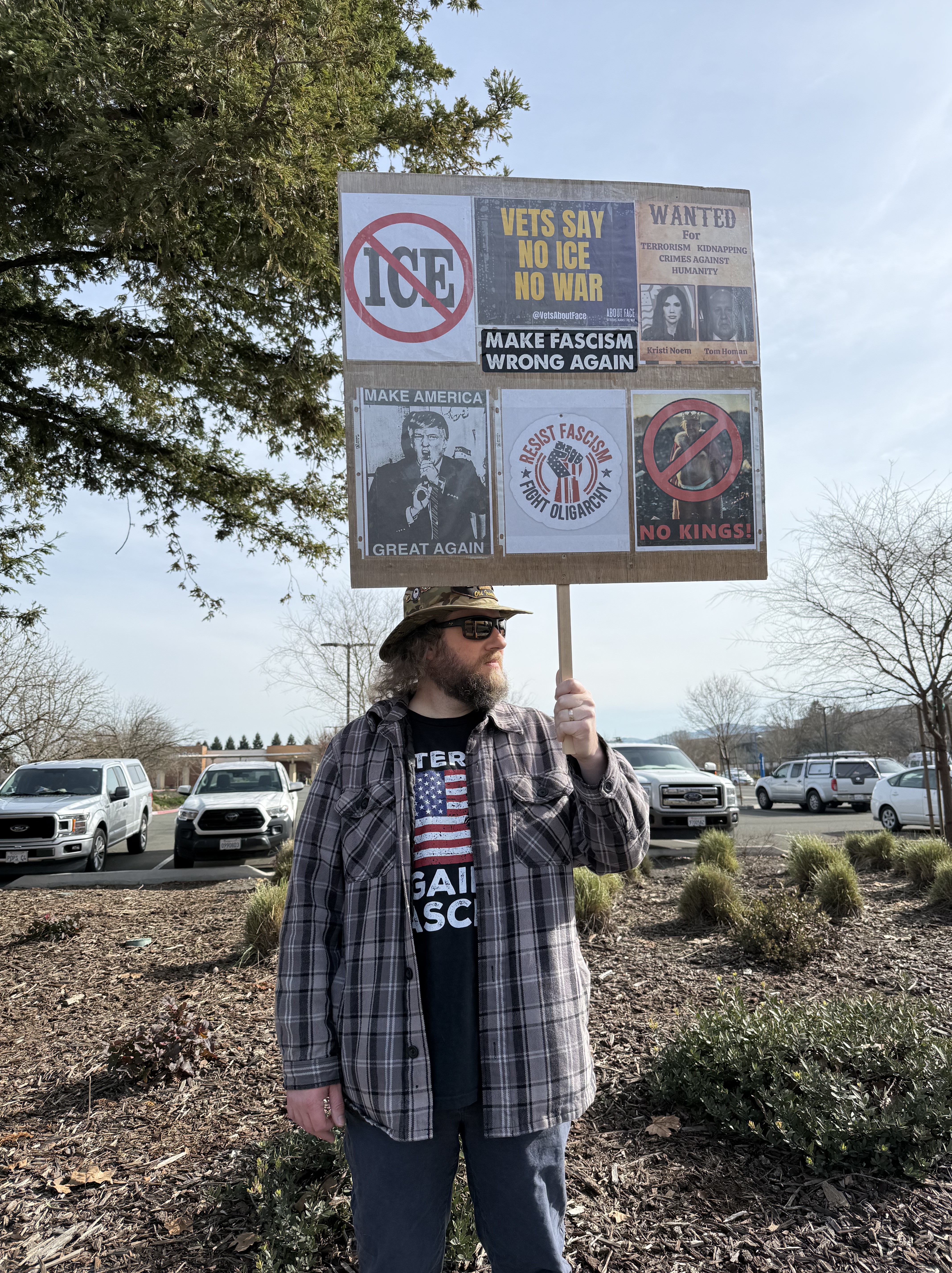
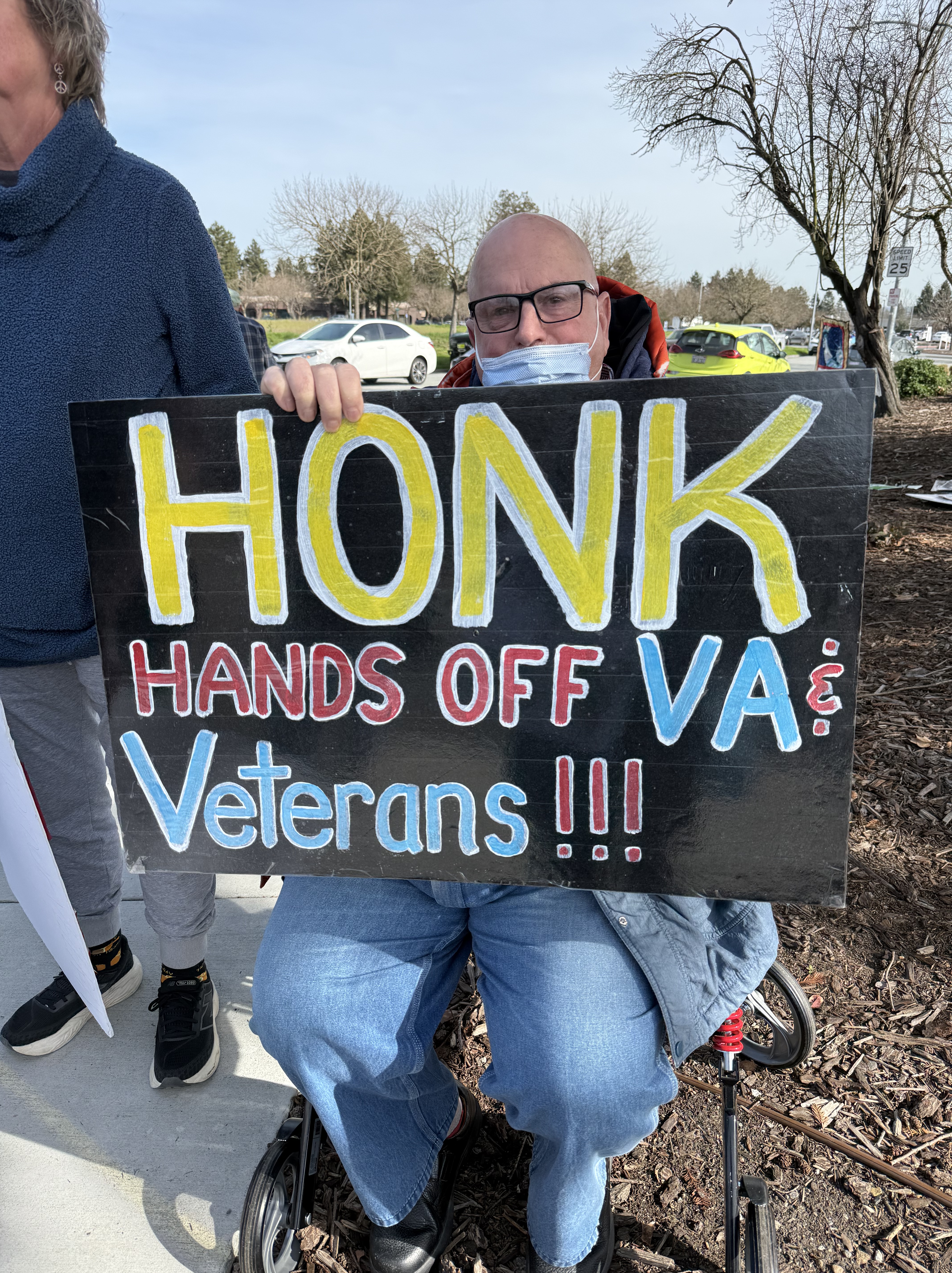
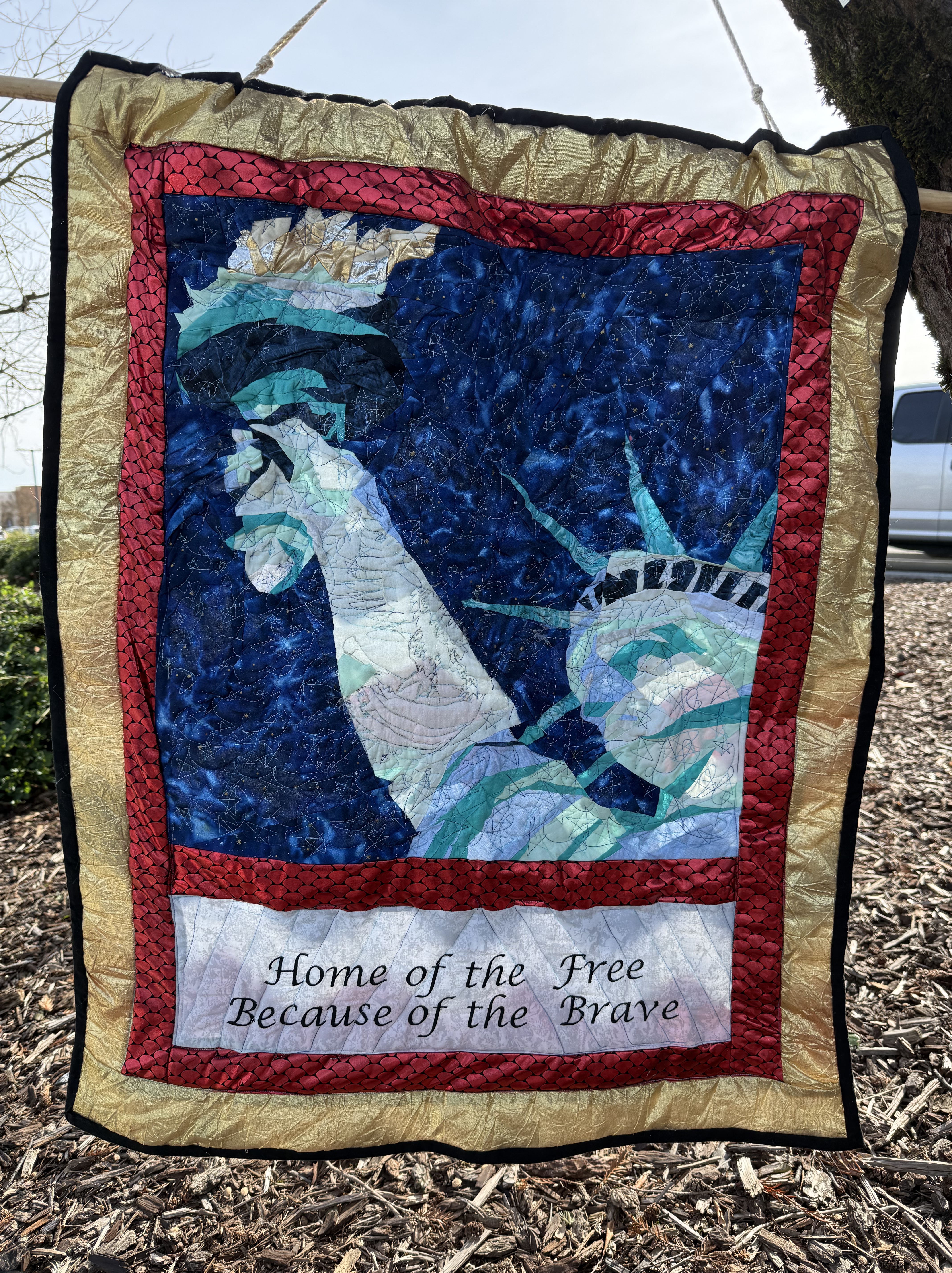
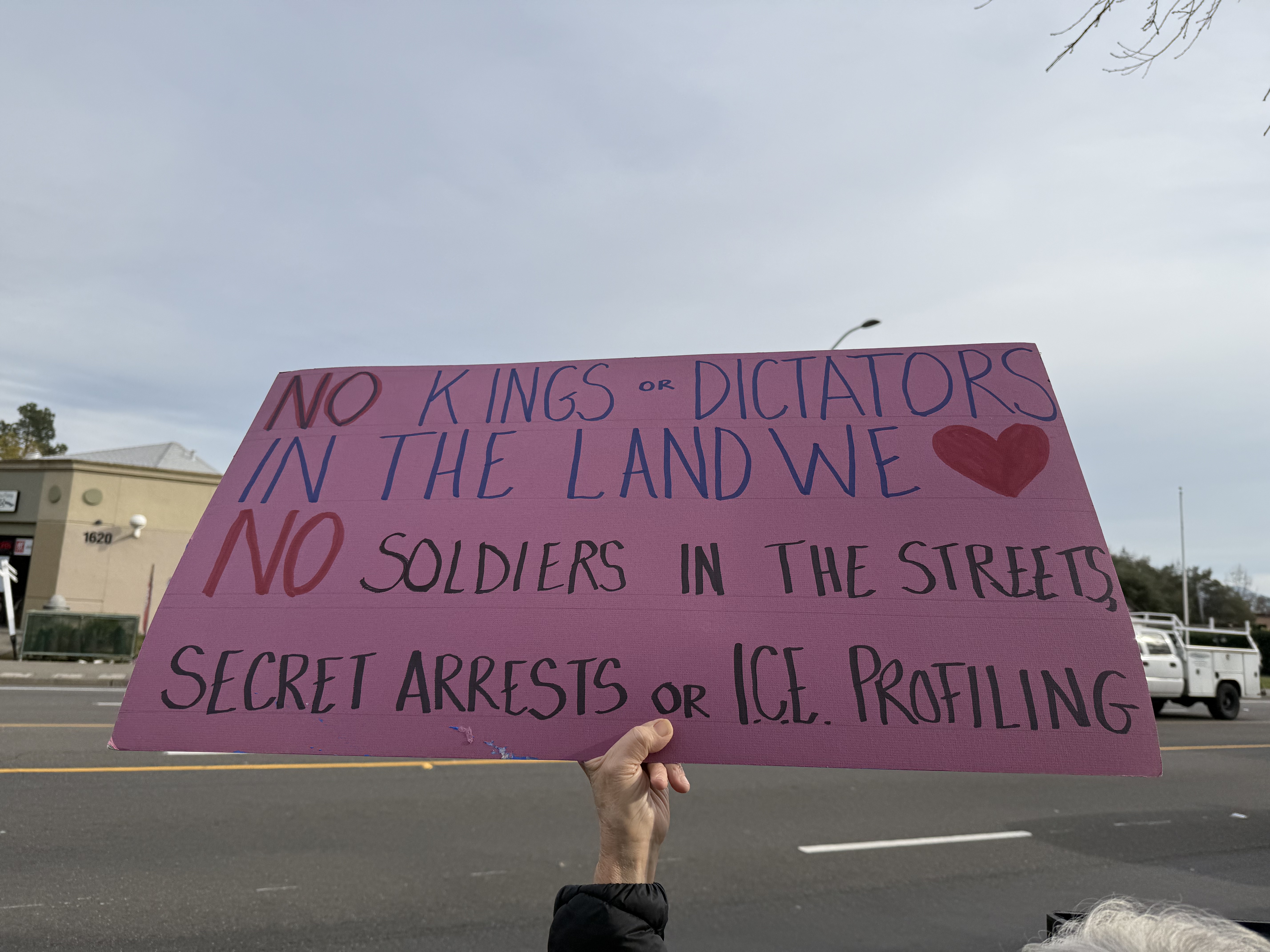
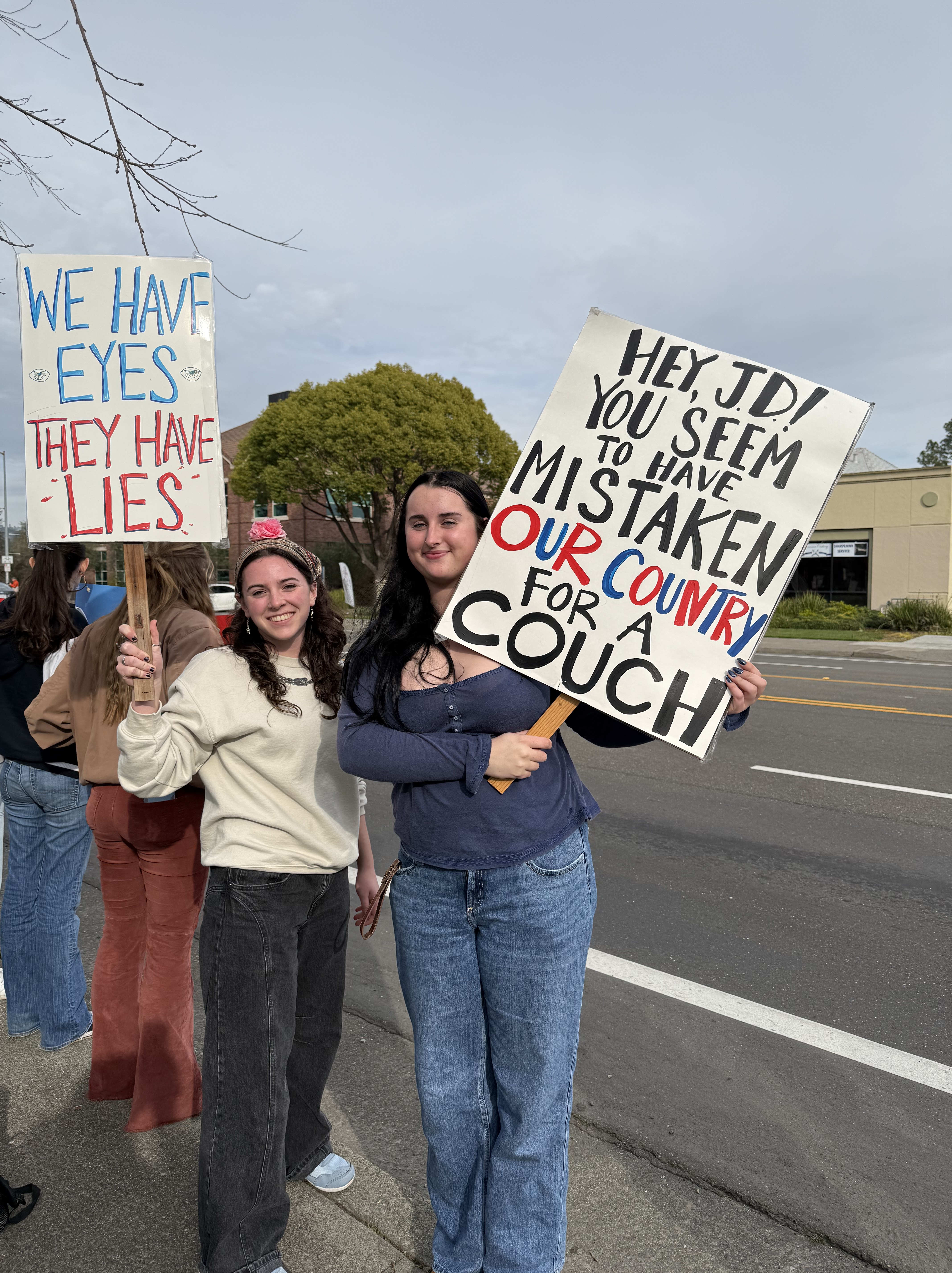
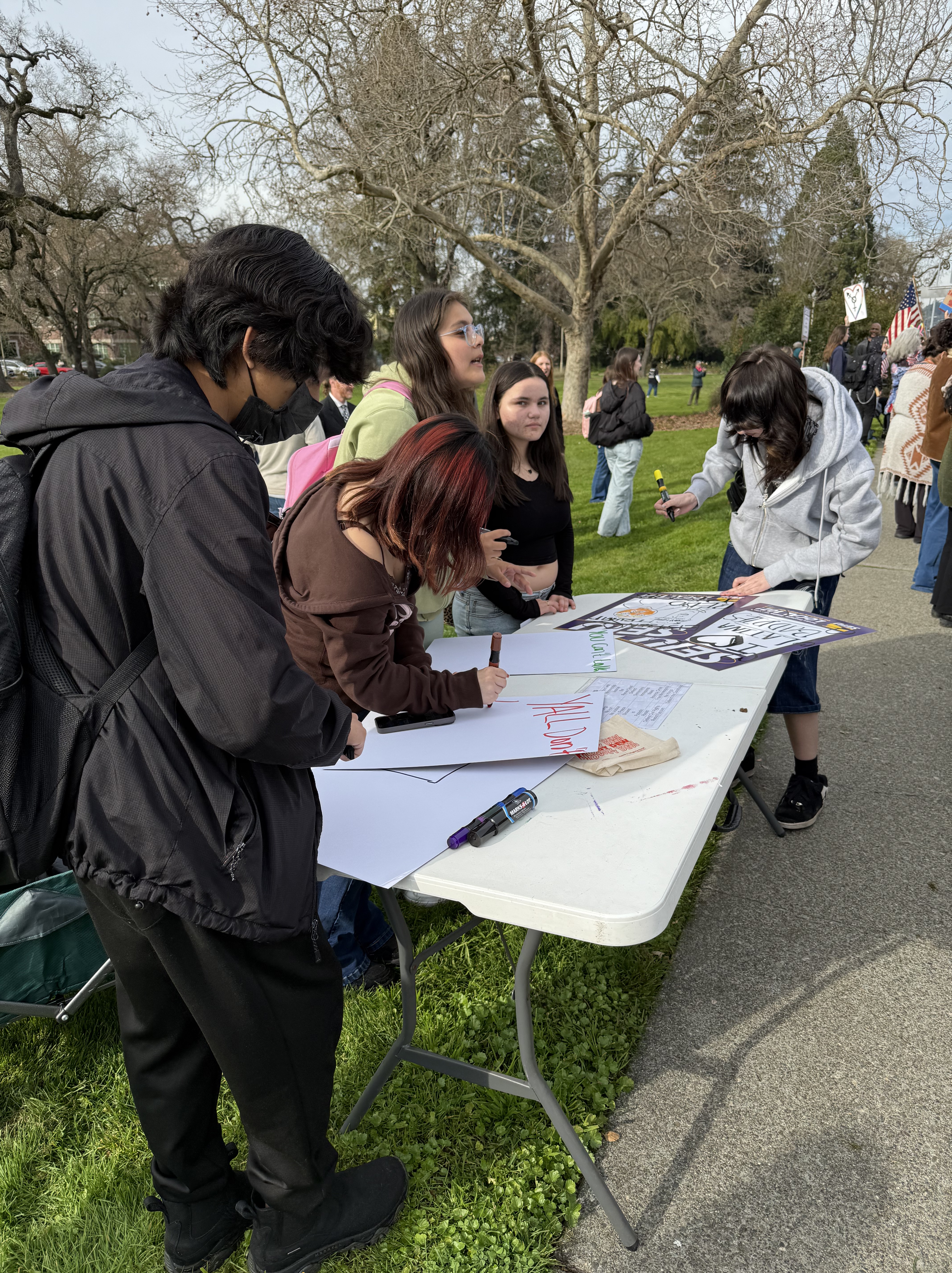
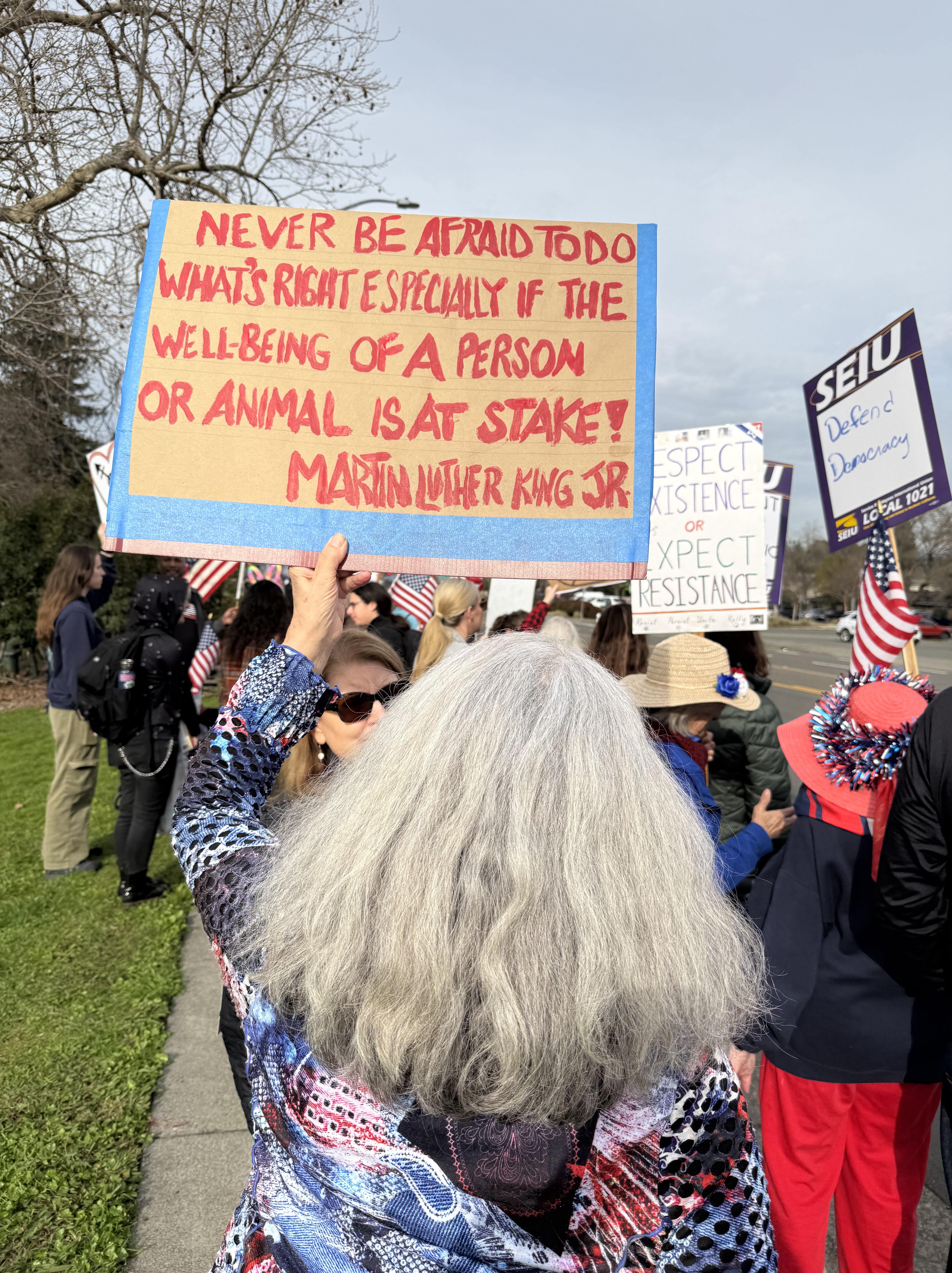
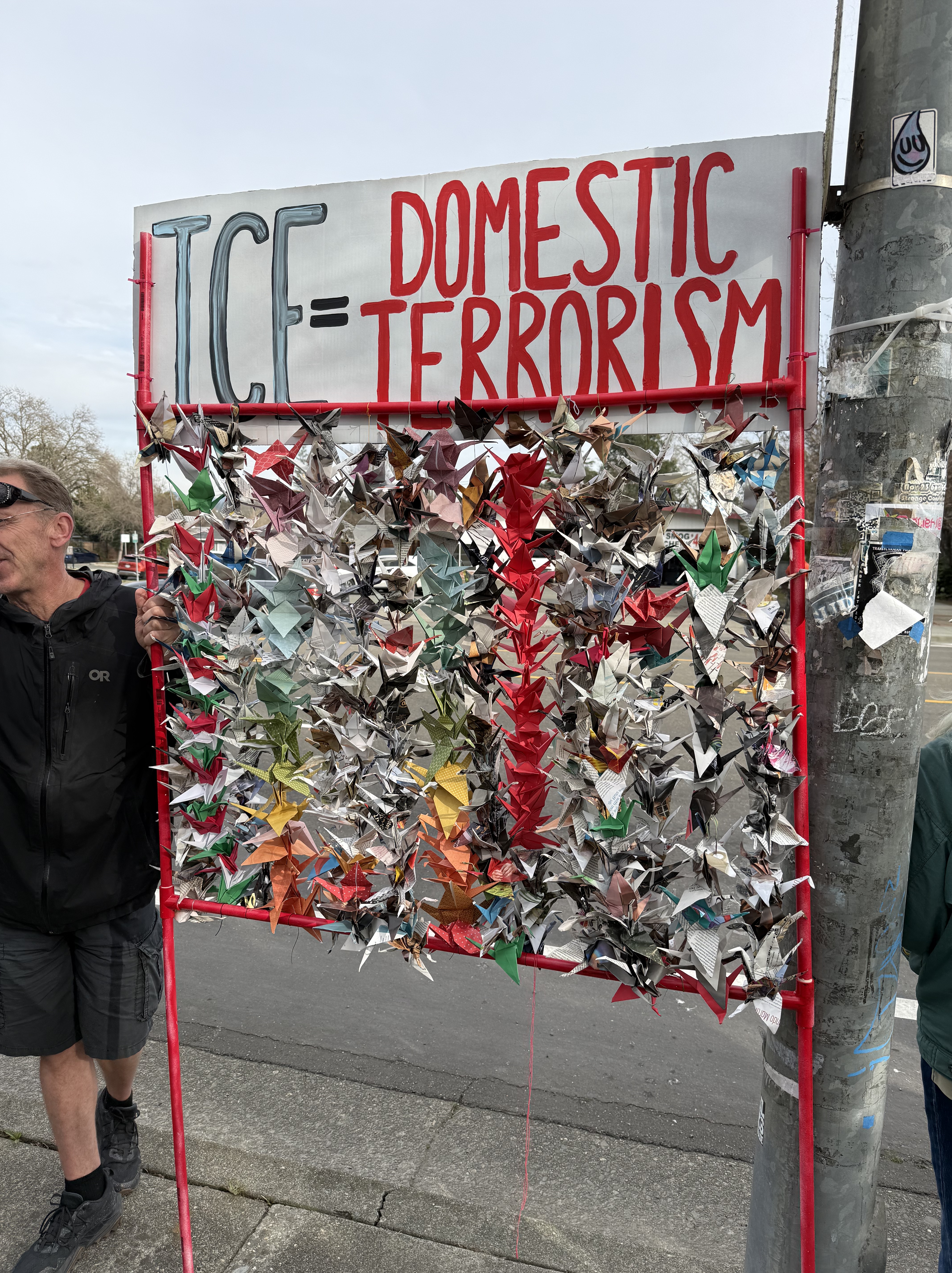
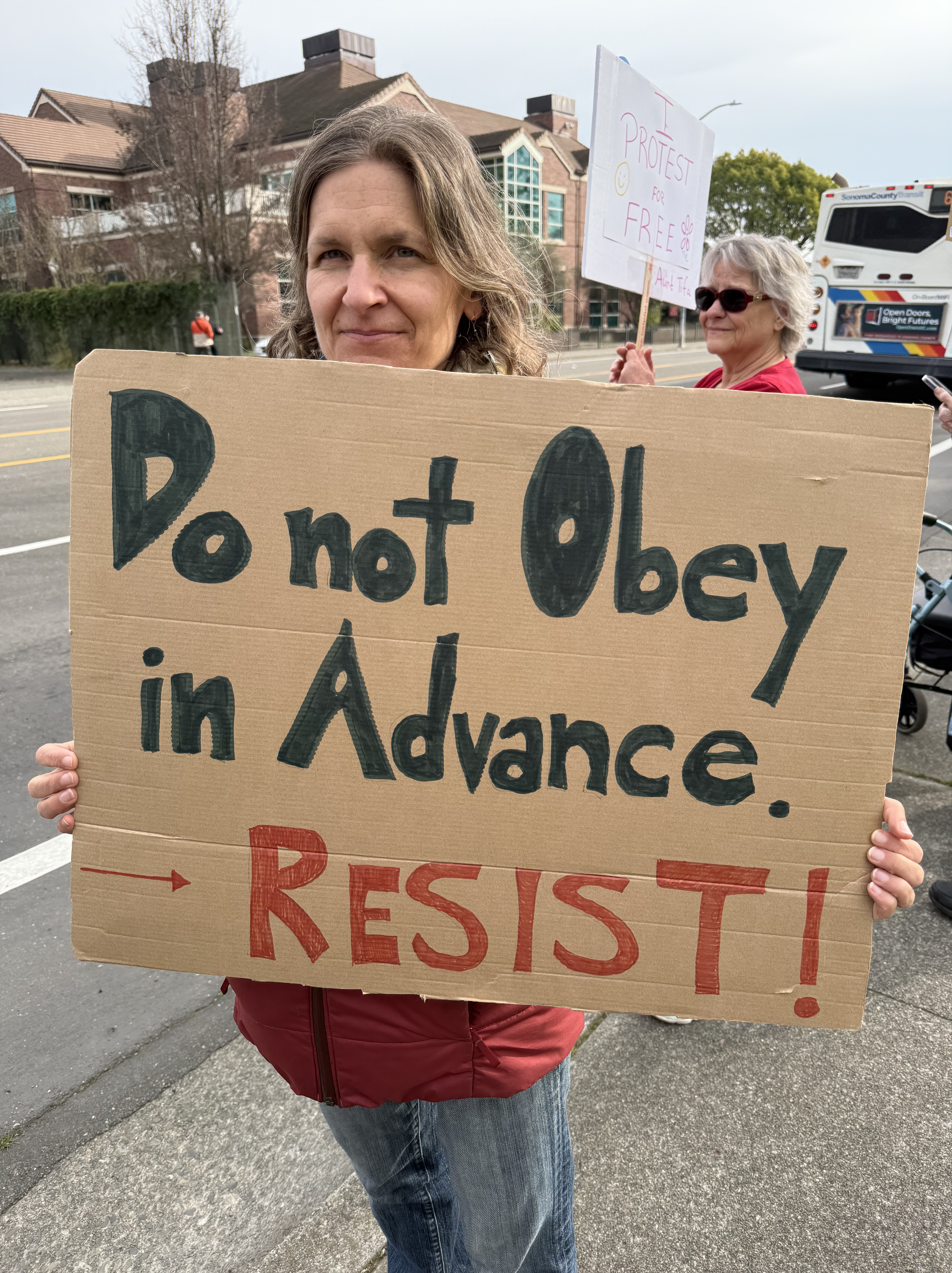
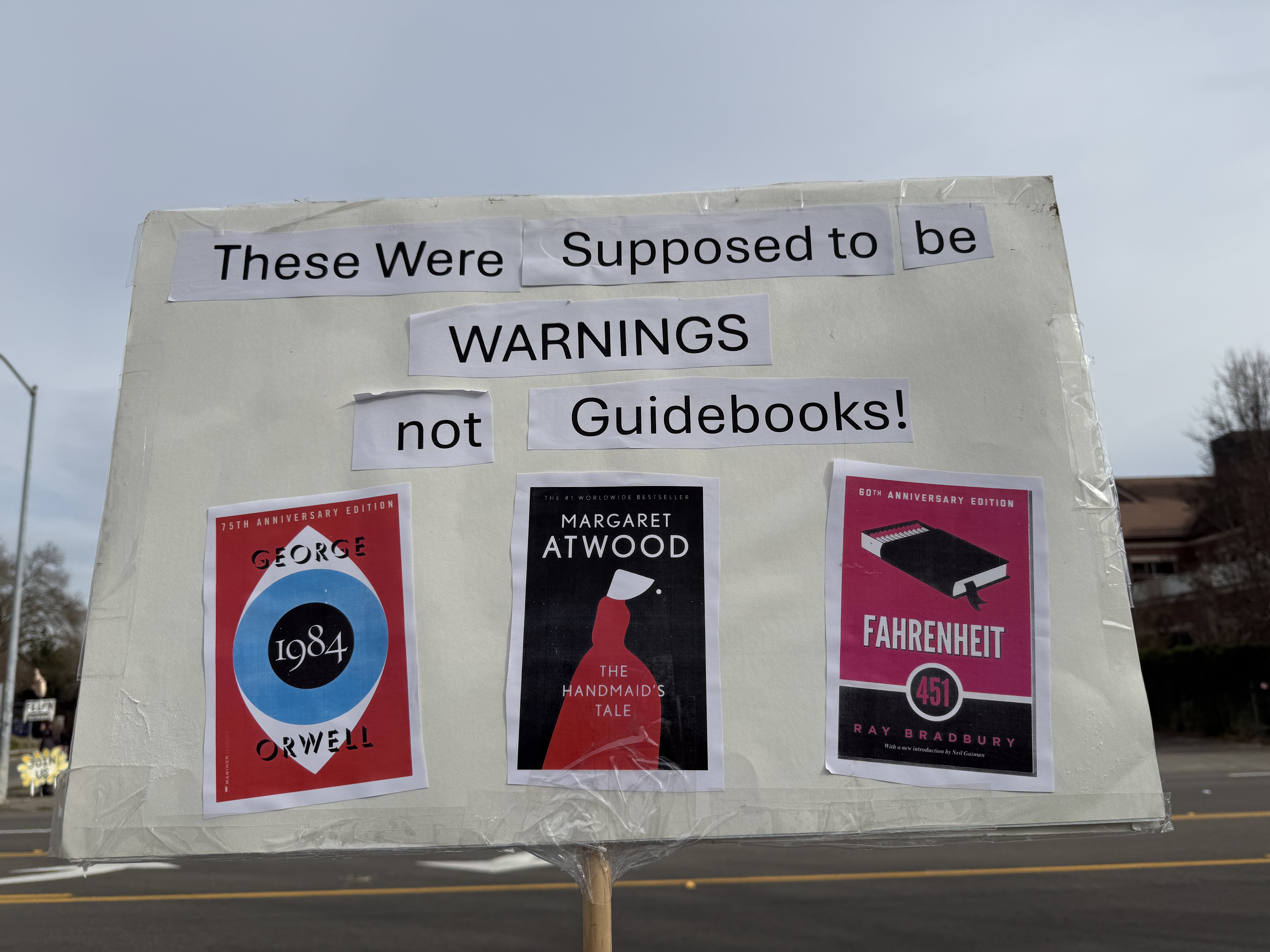
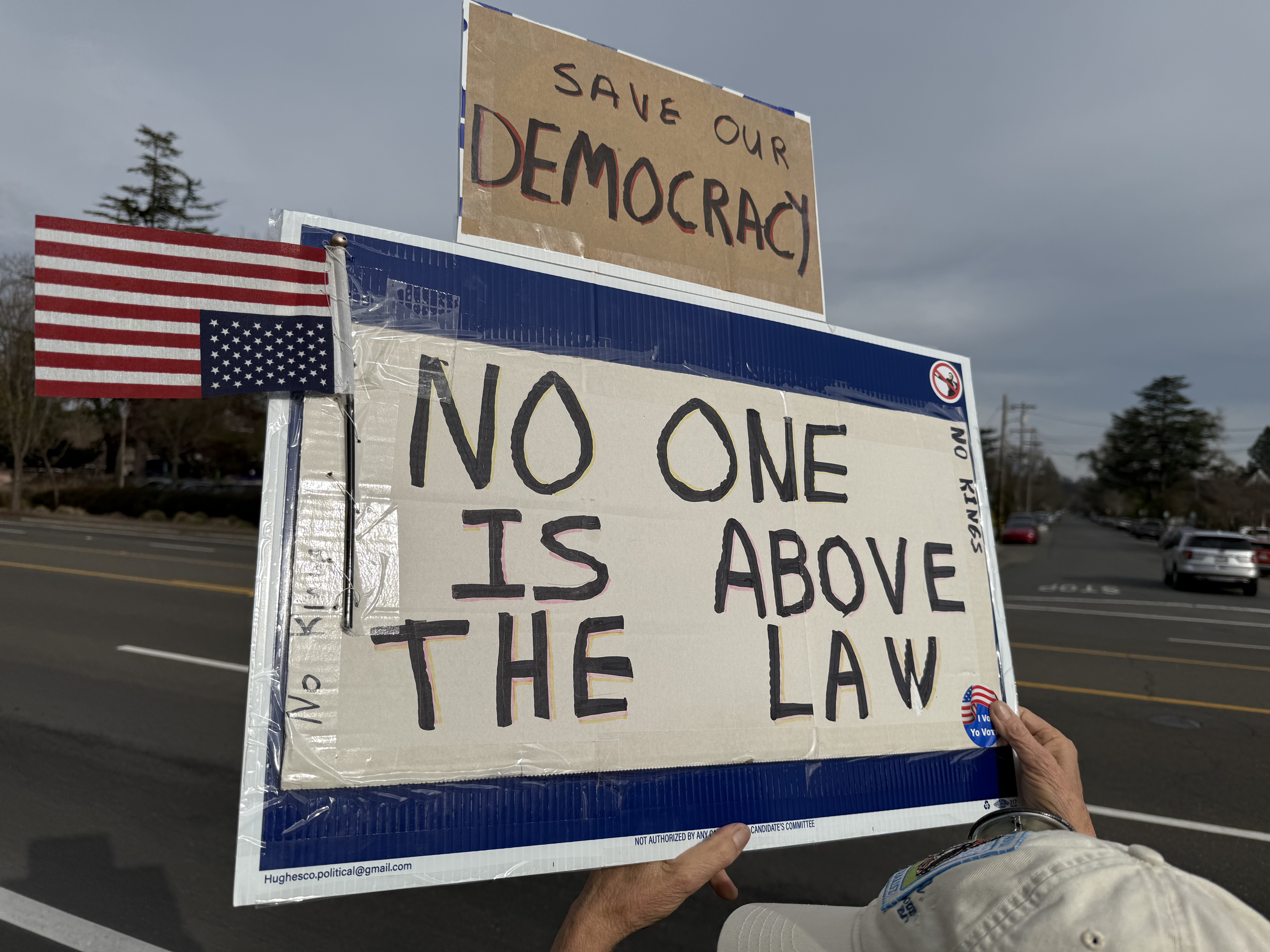
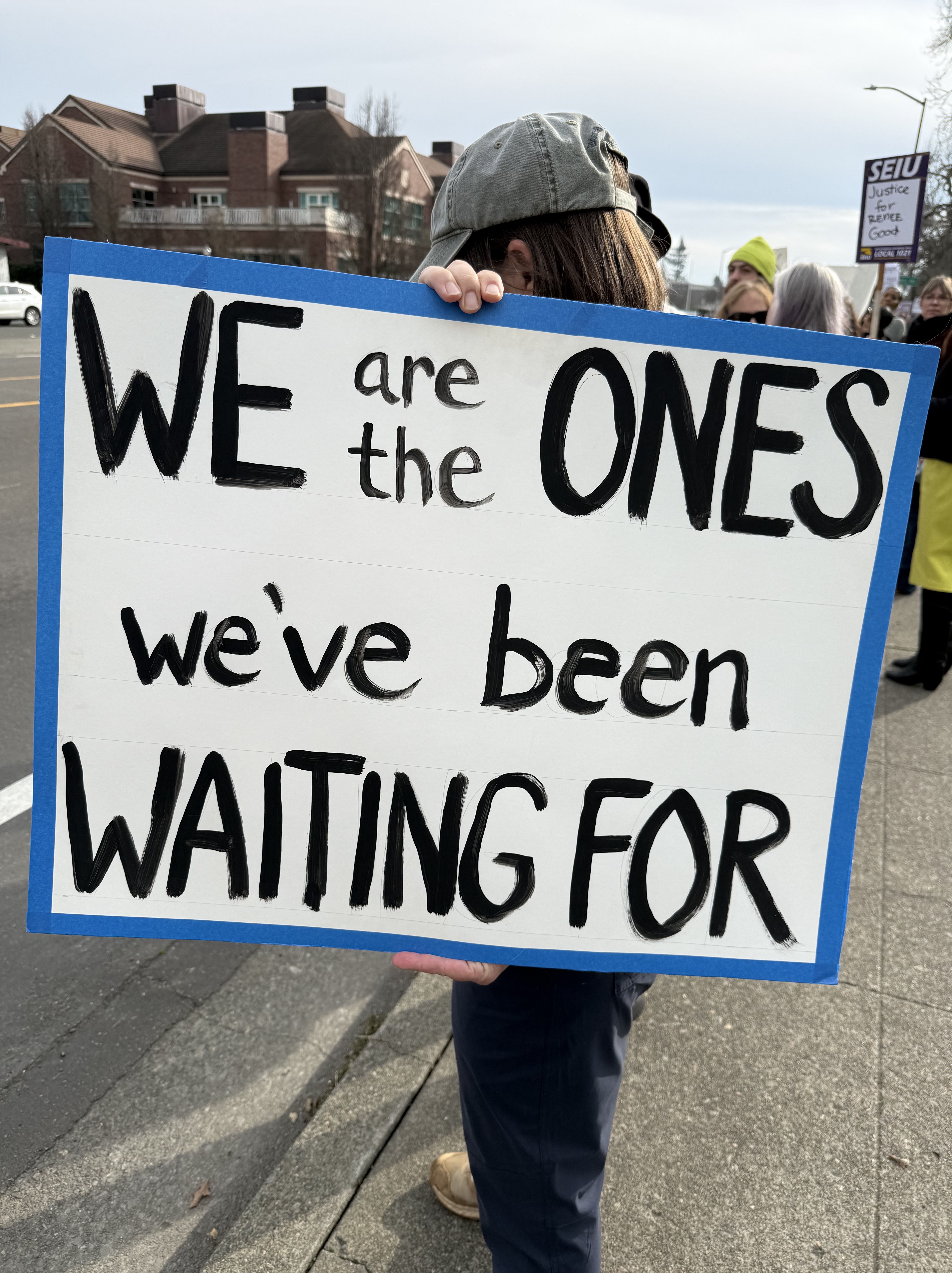
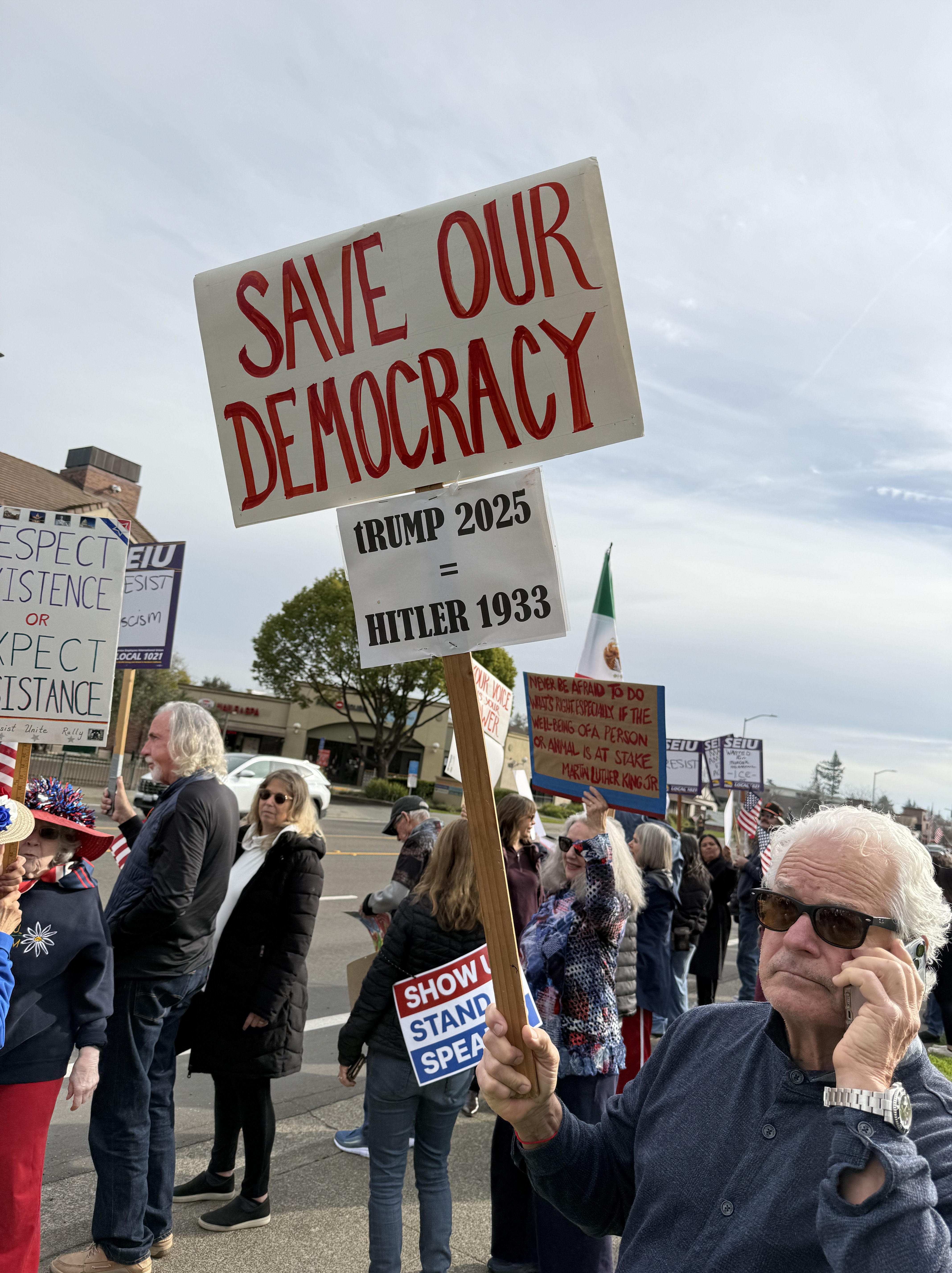
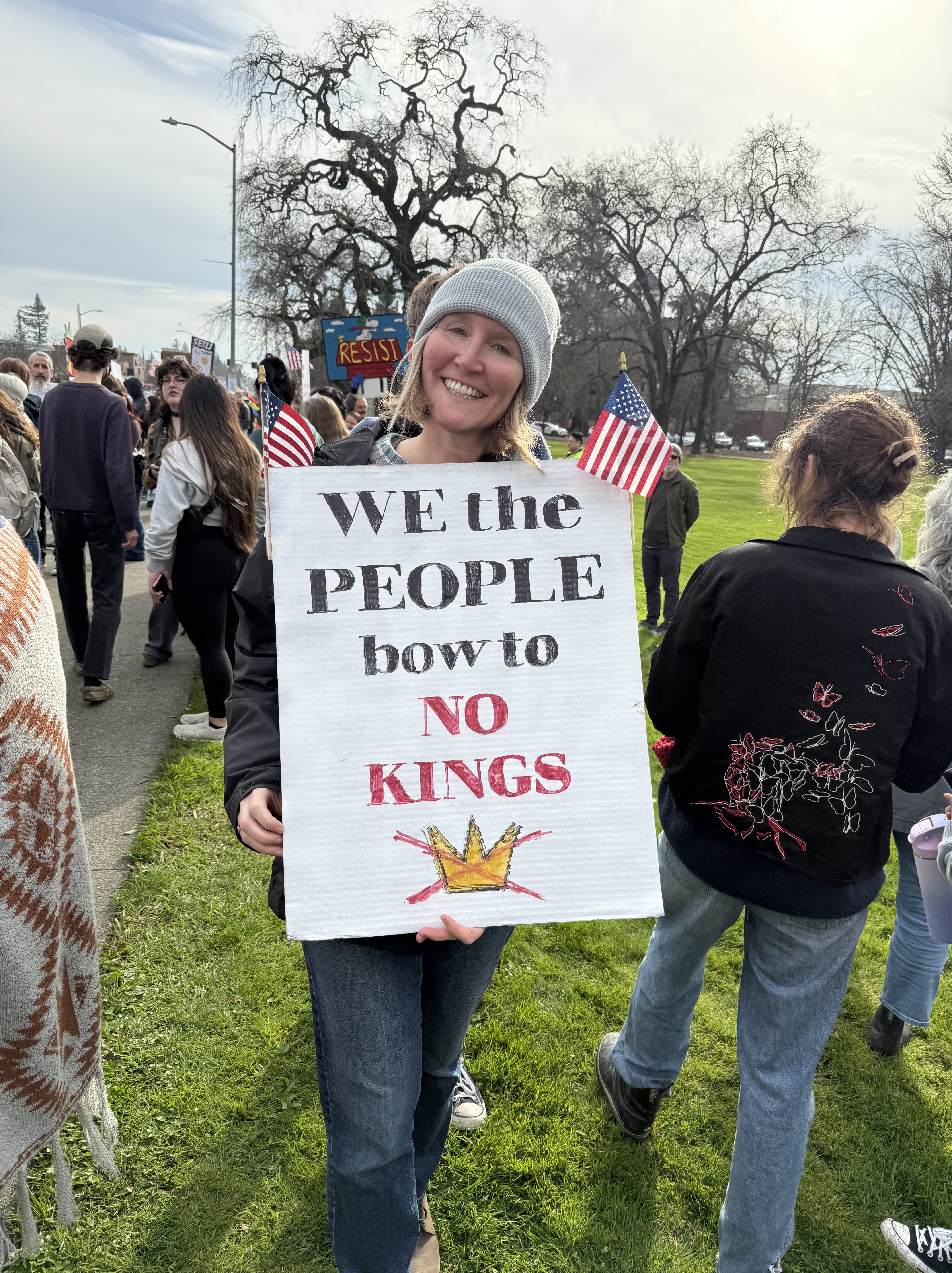
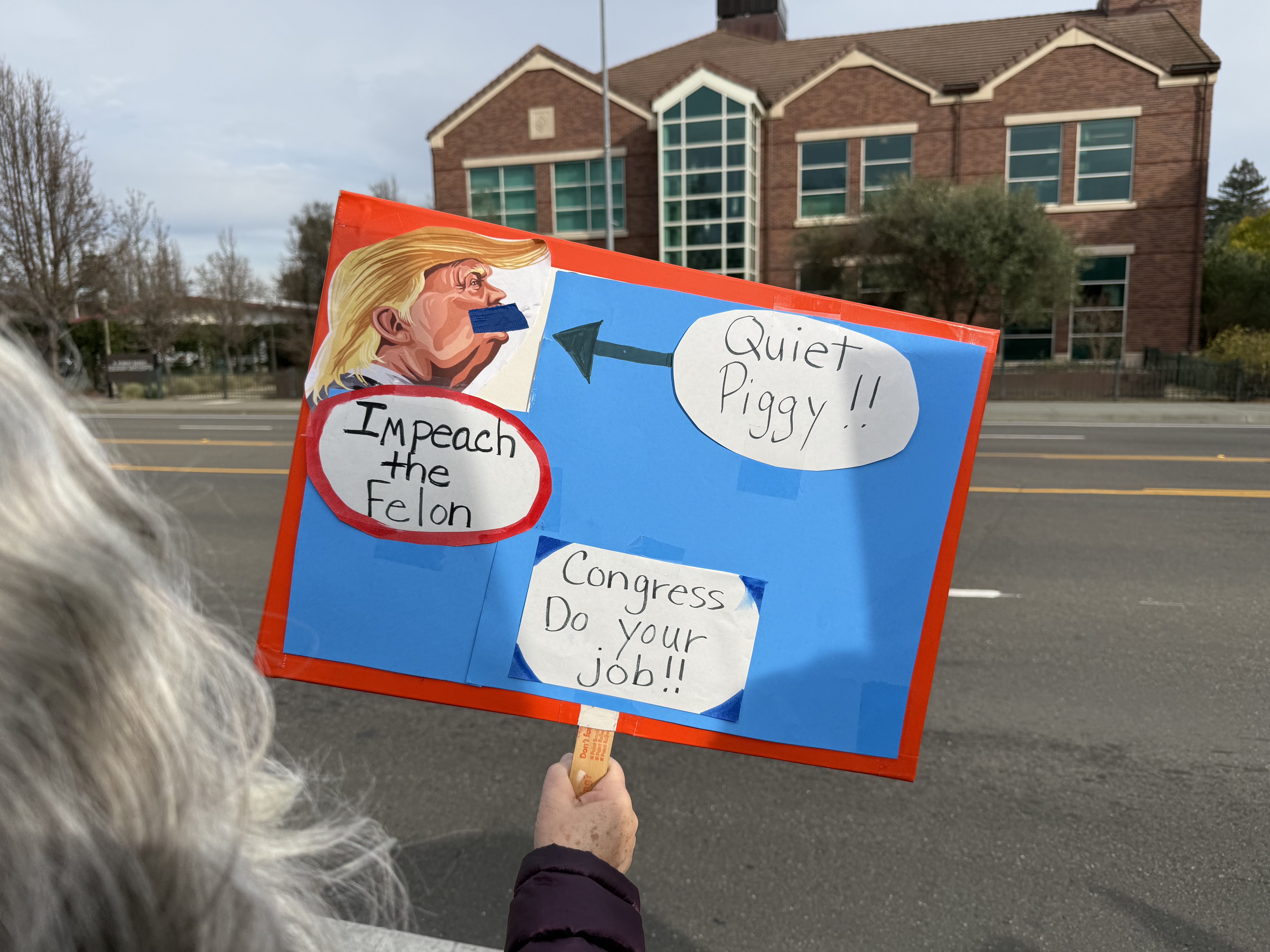
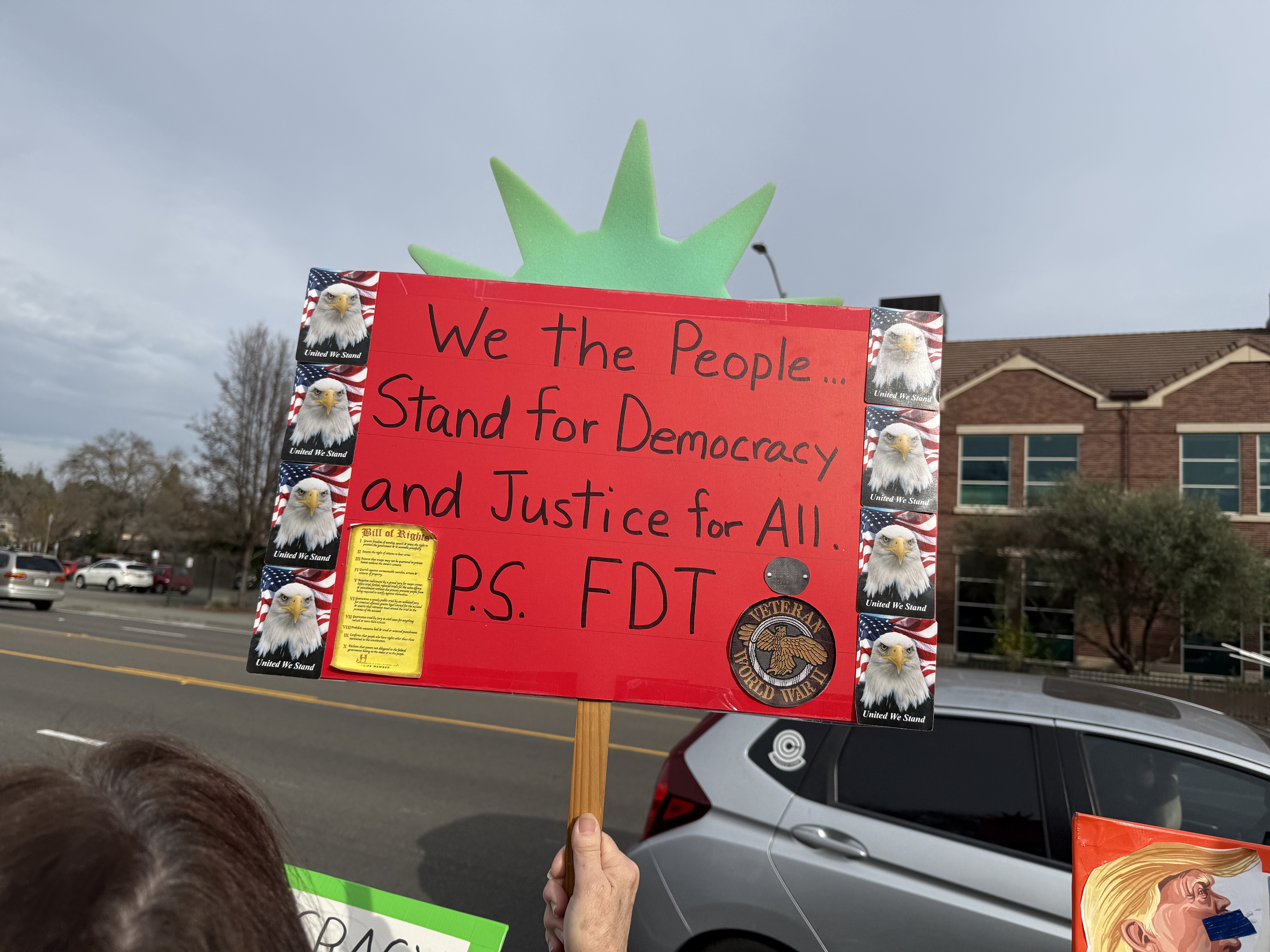
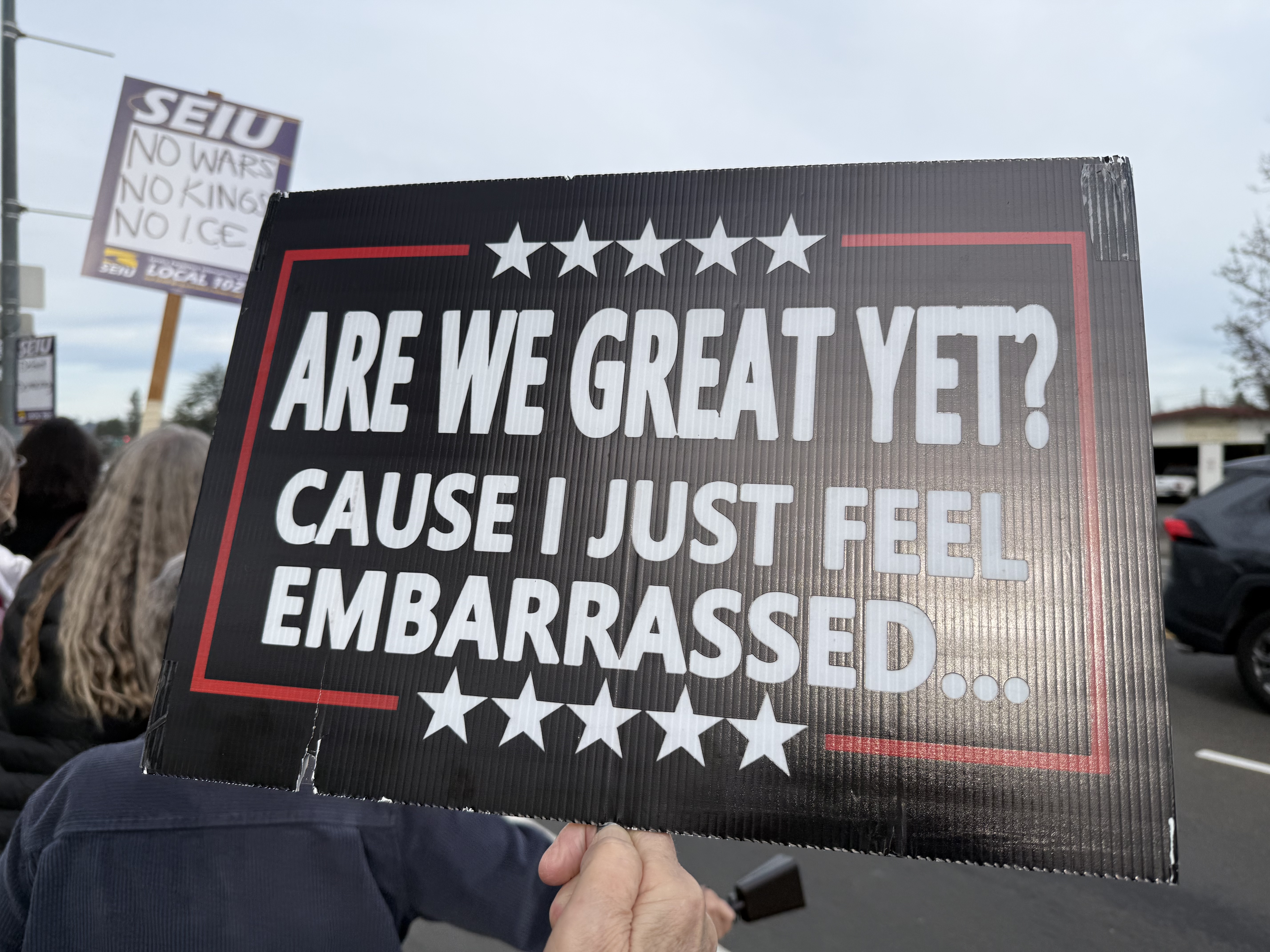
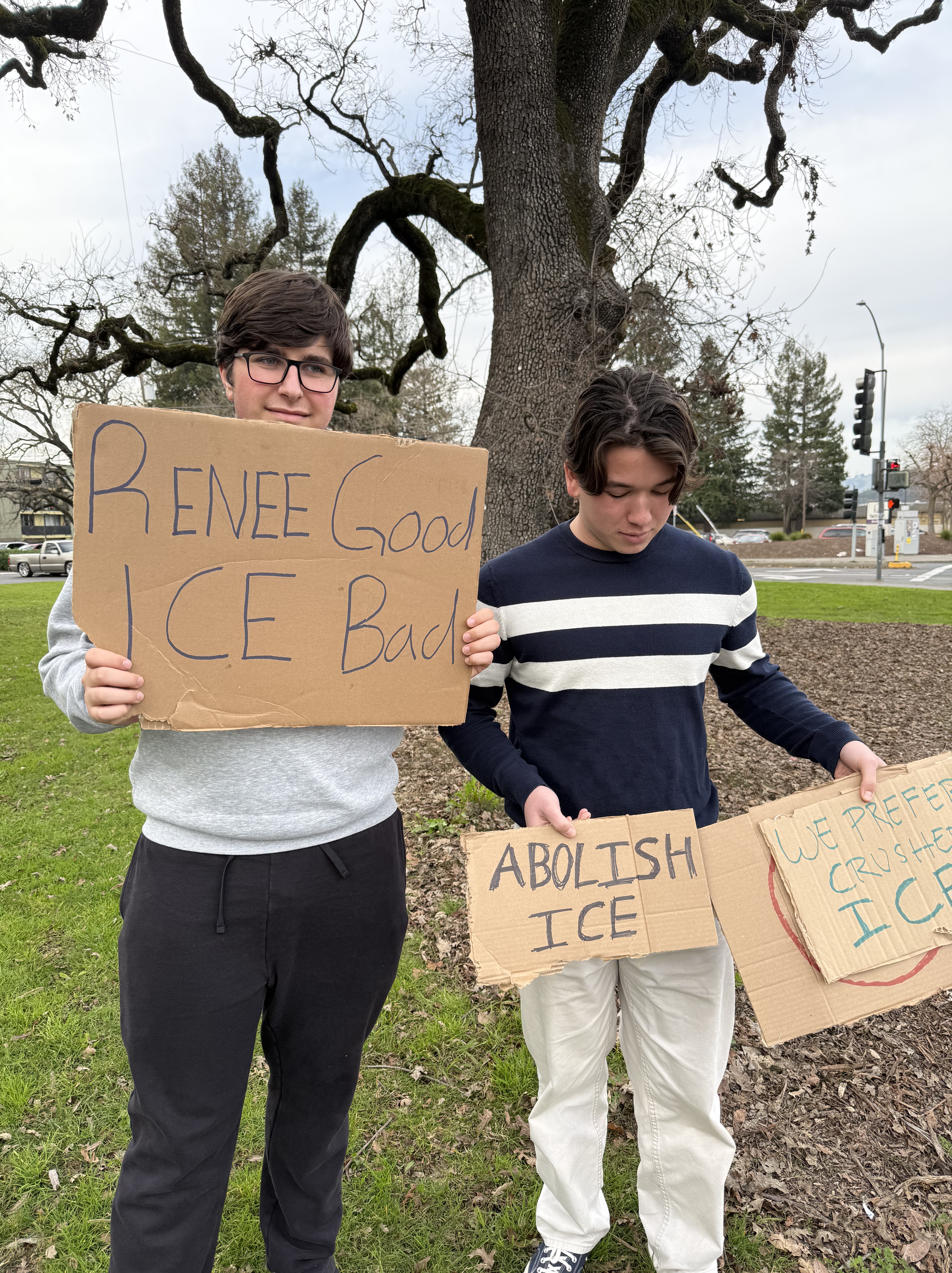
Free America Walkout Jan. 20, 2026

With Santa Rosa Women’s March and SEIU Local 2021

Folks Get Creative With Their Signs

Report on the Occupation

John Dos Passos travels around the zone

Ch. 89 My Mother and Audie Murphy

In her album Flo saved a Report on the Occupation published in Life Magazine authored by John Dos Passos*. In late autumn, 1945, Dos Passos traveled around occupied Germany and wrote about encounters with Germans in cities and in small towns. Here are some passages from his report.

“In the American zone in Germany reconstruction stands still and victors are as glum as vanquished.”

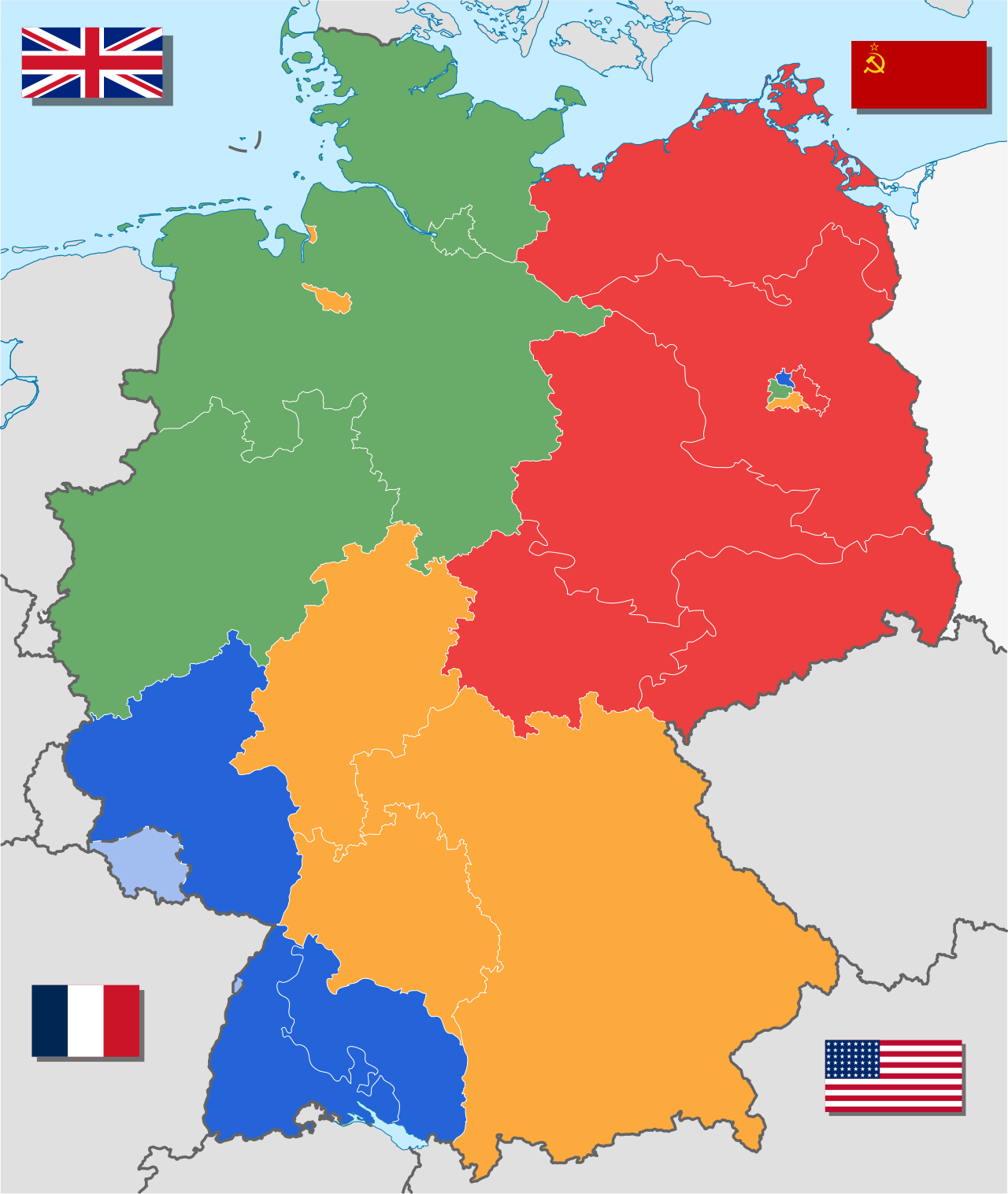
Germany was divided into four zones controlled by Britain, France, the USSR and the US.
Image: Wikipedia

Dos Passos traveled through “medieval villages out of the backgrounds of Breughel and Hieronymus Bosch.” 

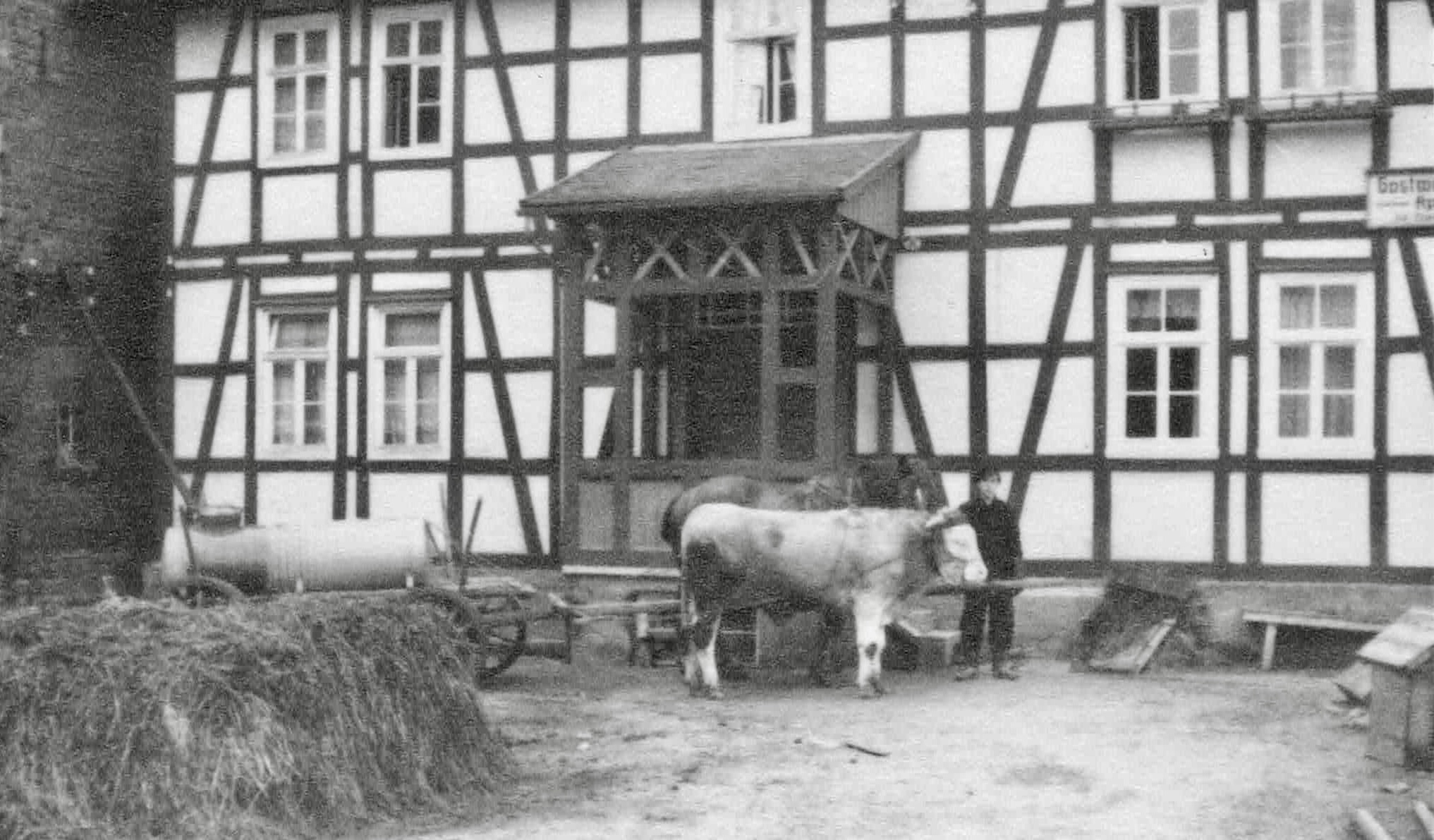
“We began to see Hessian peasants in their traditional dress. The women wear their hair pulled off their faces and tied up in stiff little cylindrical topknots on the top of their heads. They wear embroidered blouses and black knee length dresses fluffed out by numerable petticoats. The men wear black smocks and knee breeches over the same heavy knitted stockings the women wear. Some of them have 18th century-looking black felt hats. They have grim nutcracker faces. They slog along beside long wooden carts, drawn by oxen or bulls or cows…. Here and there you even see a wooden plow.” 

“In every farmhouse, yard, right under the front windows, you see the steaming manure piles that so intrigued Mark Twain. Long coffin-shaped tanks on wheels are hauling tankage, and human manure out to the fields. Like the Chinese, the Hessians can’t afford to waste a thing.”

One village had a lady burgomaster. She was a fresh-faced young woman with glasses. Unmarried, she had been chief clerk in charge of rationing under the old burgomaster.  She had never been a Nazi. We asked if she knew she was the first woman in her country to hold the post of burgomaster. She didn’t seem impressed. “Somebody’s got to be first” she said flatly.

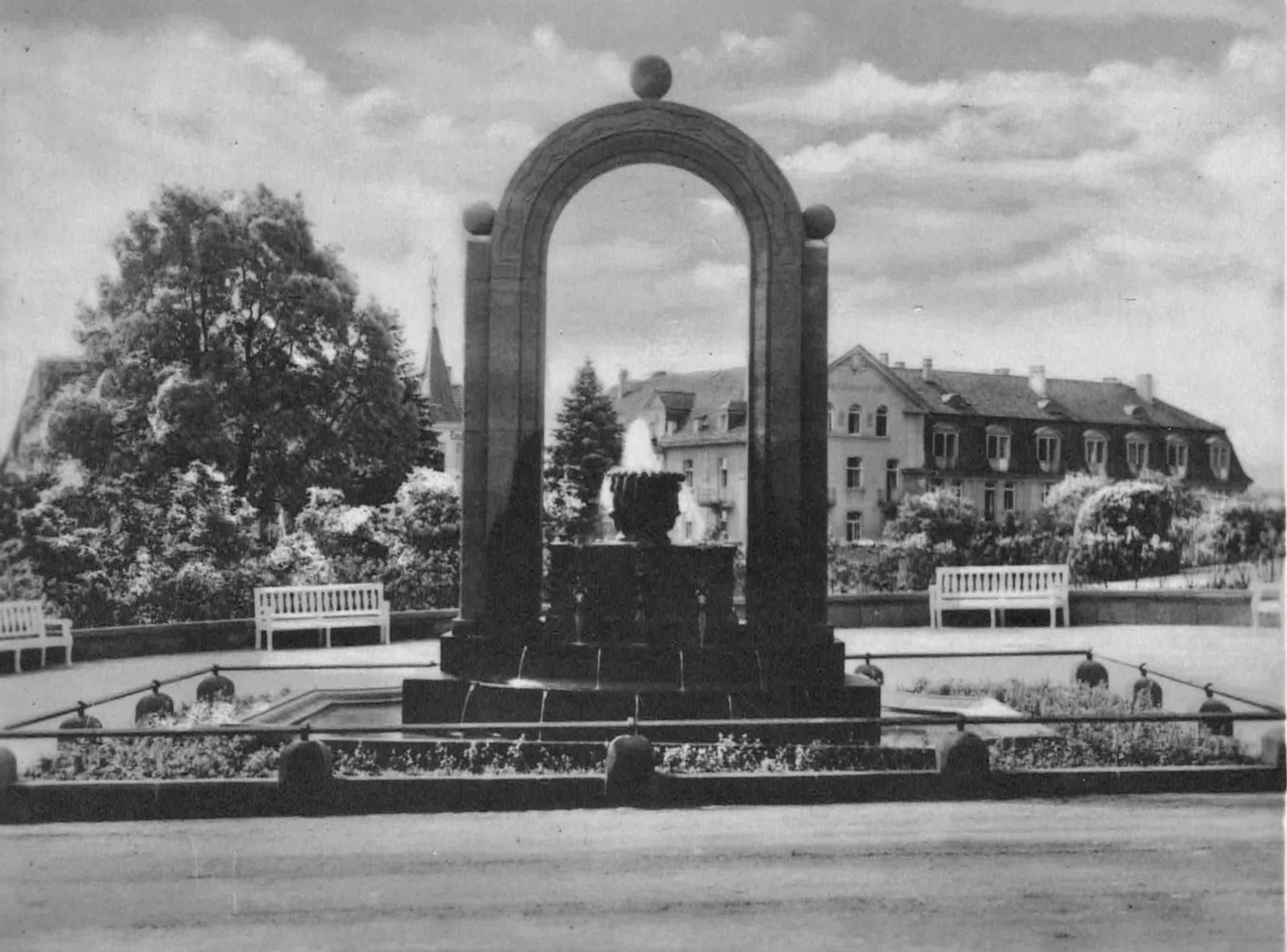
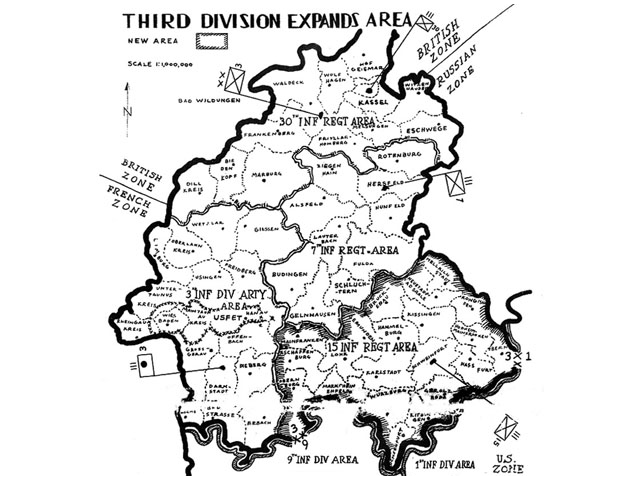
The Third Infantry Division divided their part of the occupation zone into sectors .
Image: Dogfacesoldier.org

“About the time of the book burnings the people of this town managed to make about 300 volumes disappear. One man walled up his library with a brick wall. All these old pre-Nazi books are ready to go back into circulation.”
As part of the denazification program, all Germans had to fill out a Fragebogen (often 131 questions) detailing their Nazi Party and organization memberships, employment, and activities to determine their suitability for public life and employment.

“The fragebogen is the greatest thing in Germany,” said the sergeant who came out from his desk with a long questionnaire of the type developed by US immigration inspectors. If they get past this, he says, they can hold any job they want. If they don’t, they can’t have any position where they employ labor or exercise a skilled trade or profession. They can’t do nothing but dig ditches, and if they lie on their fragebogan we have them up in court and they don’t get off easy. Every man or woman who has any position of authority has got to make out a fragebogan. If it turns out they are big Nazis it’s mandatory arrest. If they are small Nazis, they report to the labor gang. Everybody gets frageboganed sooner or later. Then we know what’s what.

Along the road, men and women, bundled up in heavy clothes and bowed under the weight of rucksacks, carried bundles of sticks. Their forests ought to be saving them in this winter. If they can’t get coal, they’ll at least have wood. But it’s hard to get the wood into the cities.

The trouble is all the foresters turned out to be Nazis. With denazification we are having trouble finding anybody who knows how to get the logs out.

“Frankfurt resembles a city as much as a pile of bones and a smashed skull on the Prairie resembles a prize Hereford steer, but quite enabled streetcars packed with people jingle purposefully as they run along the cleared asphalt streets. People in city clothes with city faces and briefcases under their arms trot busily about among the high rubbish piles, dart into punched out doorways under tottering walls. They behave horribly like ants when you have kicked over an anthill.”

“At every intersection there’s a traffic cop in blue uniform with a long warm overcoat. The traffic cops are the happiest looking people in Frankfurt. They are warm. They are fed. Their uniforms are clean. And they can order the other Germans around.”

Dos Passos speaks to the director of the zoo who tells how he saved some animals and some have died from cold.

“The more I see the more I hate the krauts for having made us do it.” shouts an American man.

*John Dos Passos (1896–1970) was an American novelist, journalist, and political commentator best known for his modernist U.S.A. trilogy—The 42nd Parallel, 1919, and The Big Money—a sweeping portrait of American life in the early twentieth century. An experimental writer, he blended fiction, biography, newsreels, and stream-of-consciousness to capture the forces shaping modern society. Politically radical in his early years, Dos Passos sympathized with labor movements such as the Industrial Workers of the World (IWW) and sharply criticized war, corporate power, and government repression, themes that run powerfully through the trilogy and define his enduring place in American literature.

Austria During American Occupation

The Geműtlichkeit was riddled by flashes of bitterness

Ch. 88 My Mother and Audie Murphy

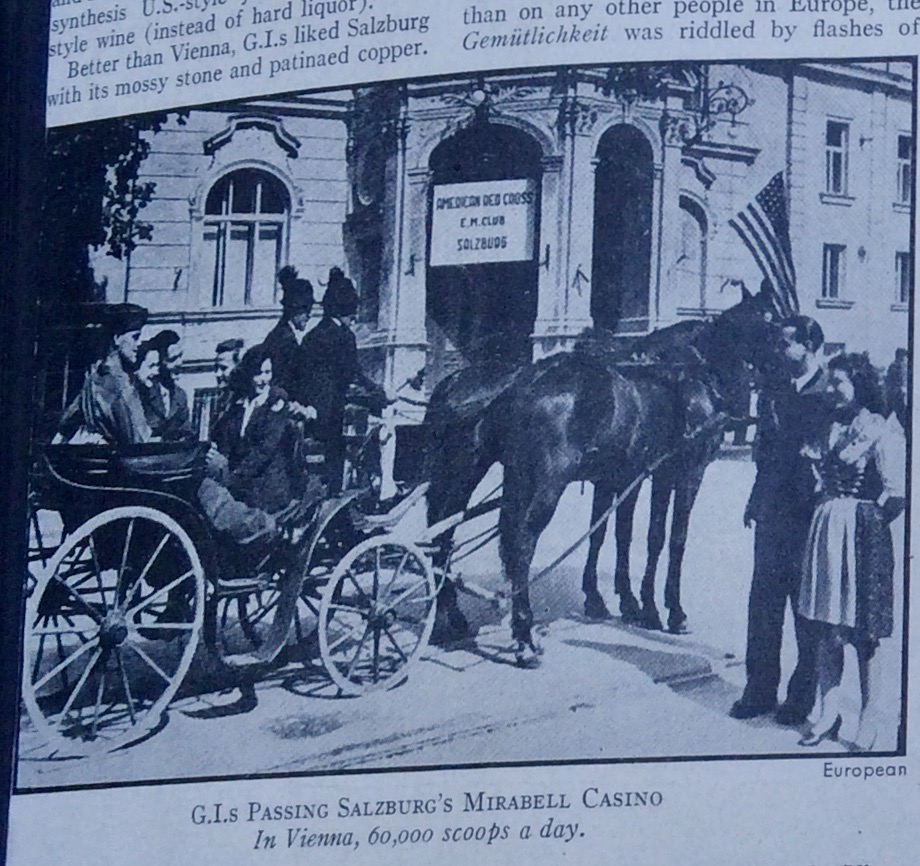
Flo pasted this page from an English language newspaper in her album. The story gives more details about what it was like for Americans and Austrians alike during the occupation. It mentions that the Red Cross had a club in the Mirabell casino in Salzburg and it’s a good bet Flo spent time there. She may have had to work serving coffee and donuts there.

Ice cream and jitterbugging

(In Vienna the Army) set up replicas of US drugstores where GI’s could take their Austrian girls for a soda (daily ice cream consumption of the US army and friends in Vienna now runs to 60,000 scoops.) Among venerable establishments, Broadwayish nightclubs sprouted. Racily named Esquire, Zebra, and Heideho, they offered in neat, cultural synthesis US style jazz and Viennese style wine instead of hard liquor.

Better than Vienna, GI’s liked Salzburg with its mossy stone and patinated copper. The Red Cross had moved into the Mirabell casino and the GI’s listened to symphony concerts in the Mirabell castle’s gardens. Then, oblivious to the echoes of Mozart’s minuets, they jitterbugged in the old, staid Hotel Pitter….

The Red Cross club at the Mirabell casino in Salzburg

Nearby, built directly against the rough mountainside, was the Festspielhaus, through whose cavernous yard had boomed the theatrical damnation of Dr. Faust. The GI metamorphosis had turned it into a movie house nostalgically named the Roxy. And around Salzburg’s Bierjodelgasse (beer-yodel street) GI’s noisily scouted for beer gardens.

The favorite outdoor sport was chamois hunting in the mountains hovering over the city–where the game poacher has always been a highly respected member of society, and where one of Austria’s most important bits of national philosophy originated: If you hadn’t climbed up you wouldn’t have fallen down.

Krauts and cokes

Although Americans had made a better impression on Austrians than any other people in Europe, the Geműtlichkeit (good feeling) was riddled by flashes of bitterness. Usually broad minded, the Viennese grew jealous, called girls who fraternized with the chocolate-bearing GI’s “chocoladies.” The sprinkling (5%) of combat veterans among US troops called the Austrians just plain krauts only softer.

Last month soldiers in the US zone were booked for 32 assaults, 5 rapes, 3 disorderly conducts, and one house breaking. Cracked an MP officer: “Now that we’re getting quantity supplies of Coca-Cola maybe our boys will get back to behaving.” But most GI’s in Austria already had passing marks for behavior; and many were living up to their orientation slogan, “Soldier, you are helping Austria.” The first crop of Austrian babies fathered by helpful GI’s is sizable.

Ch. 89: https://mollymartin.blog/2026/01/18/report-on-the-occupation/

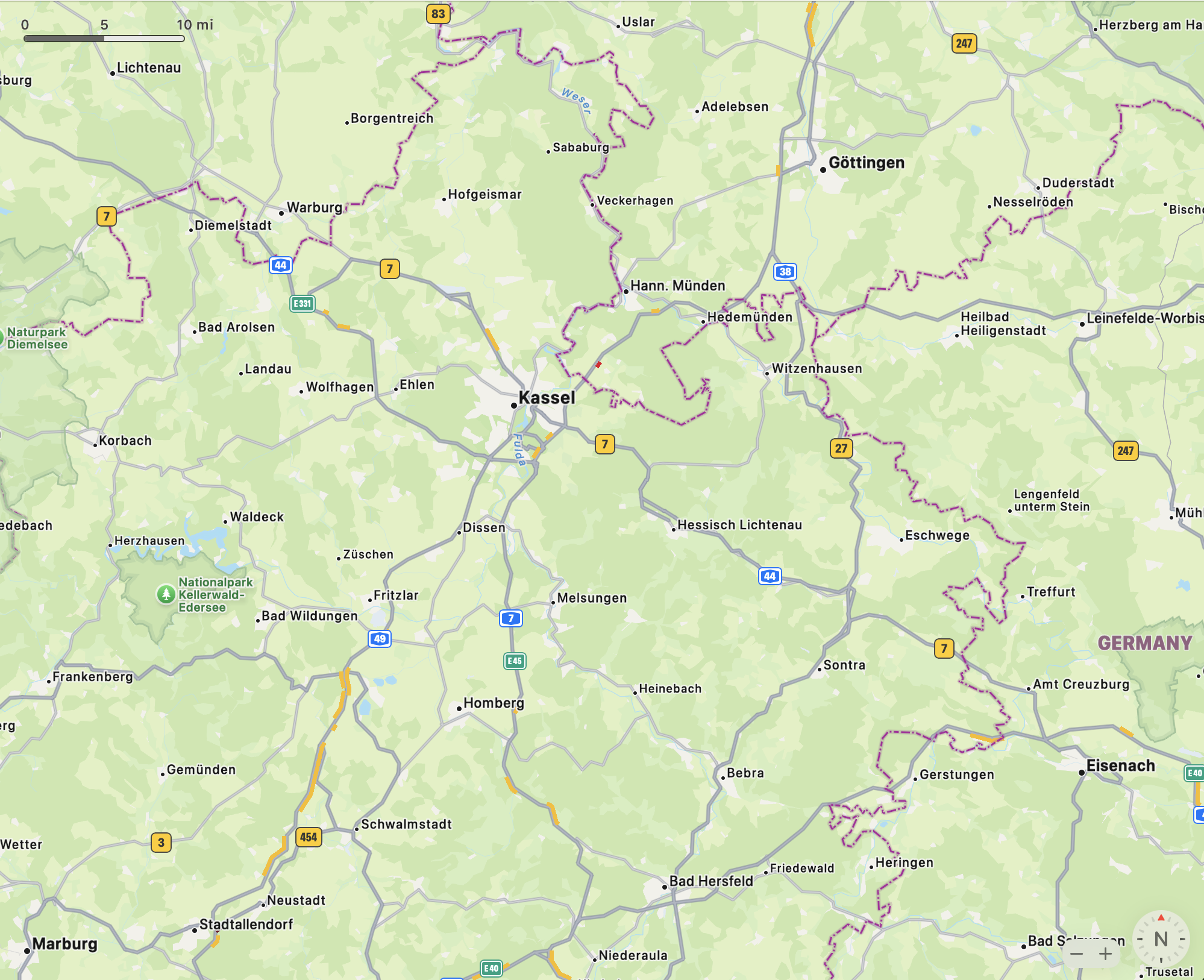
Kassel and the Hesse Area

Traveling Around the American Occupation Zone

Ch. 87 My Mother and Audie Murphy

Kassel, Germany, was a critical WWII target due to its Henschel & Sohn factories (building tanks like Tigers and Panthers) and major railway hub. The city suffered devastating Allied bombing from 1942-1945, especially the October 1943 raid that destroyed the city center and killed thousands. Few inhabitants were left by the time US forces captured it in April 1945 after intense fighting, concluding a brutal chapter of destruction. The Third Infantry Division was heavily involved in the fight for Kassel before securing the region, and later established its command structure in the surrounding Hesse area. 

From pictures on this page of her album, it appears Flo was able to travel around the Hesse area as a tourist. She was probably continuing to dish out donuts to occupation troops from the clubmobile.

Typical kraut village
Division formation, Reinhardshausen
View from Furstenhof
Lt. Cols. Chaney and Rosson of Portland, C.C. and Exec. Kassel, Germany
Maj. Prever, Lt.Col. King, Col. McGarr, Lt. Col. Ramsey, Maj. Wickersham, 3rd Div. HQ staff
Staff quarters. Flo with Col. McGarr (R)

Ch. 88: https://mollymartin.blog/2026/01/15/austria-during-american-occupation/

Stationed at Bad Wildungen

Allied Occupation Forces Settle In

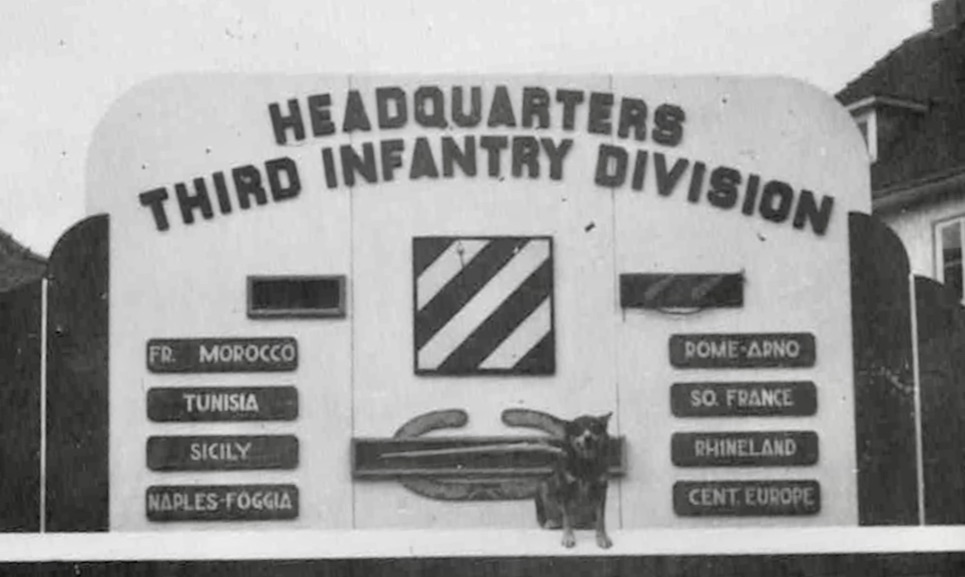
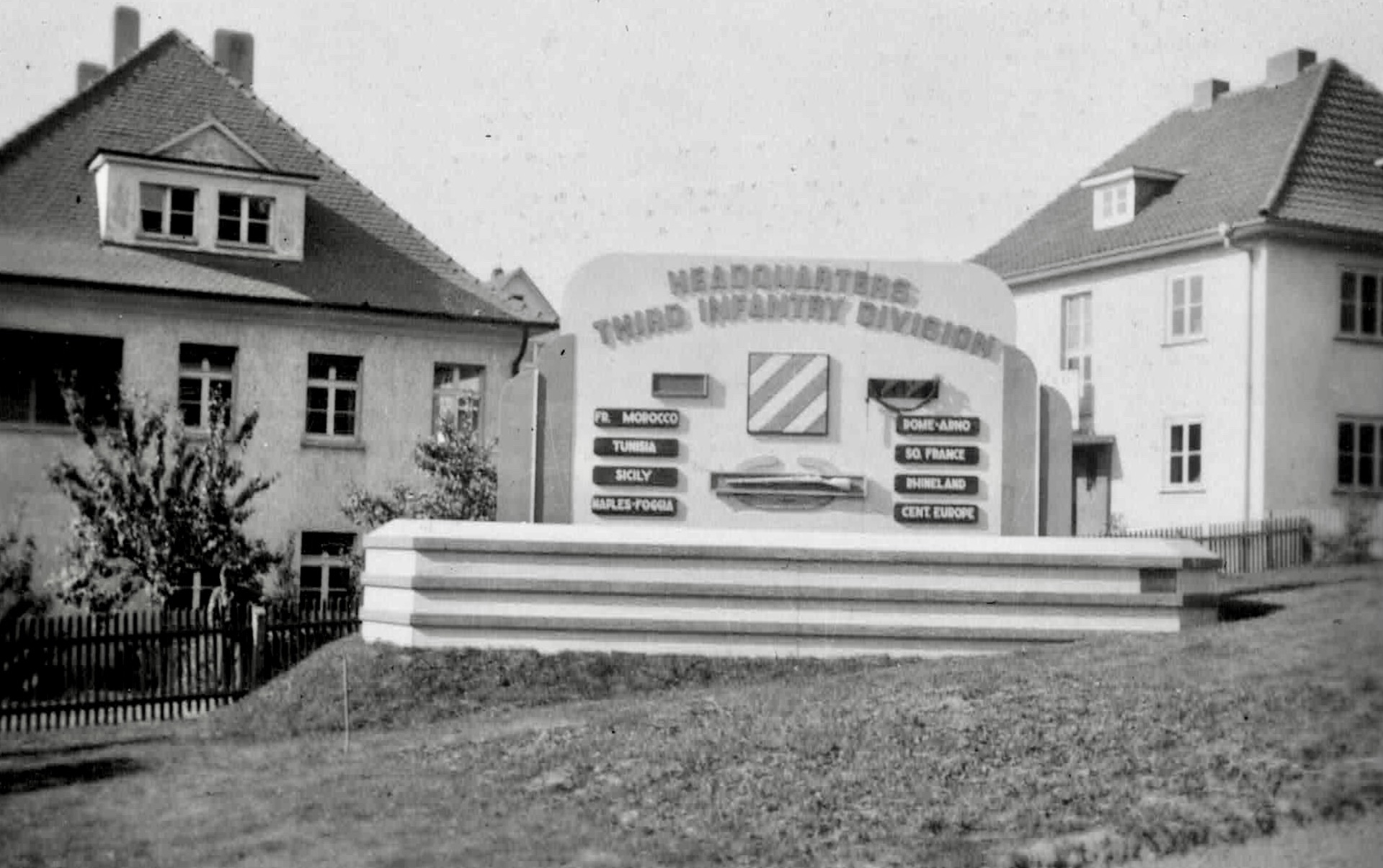
The route of the 3rd Division during the war is posted at the HQ entrance: Morocco, Tunisia, Sicily, Naples-Foggia, Rome-Arno, So. France, Rhineland, Cent. Europe.

Ch. 86 My Mother and Audie Murphy

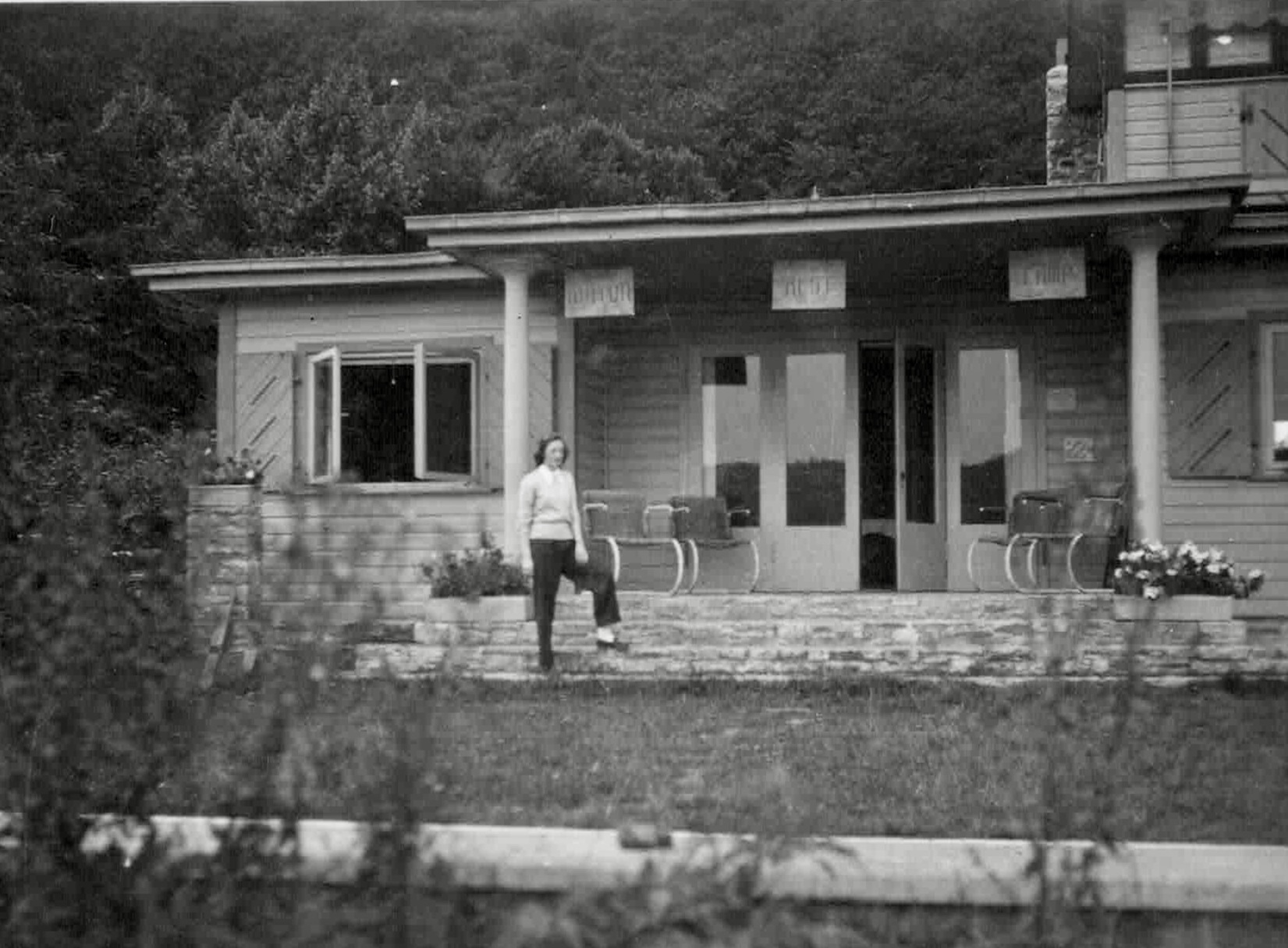
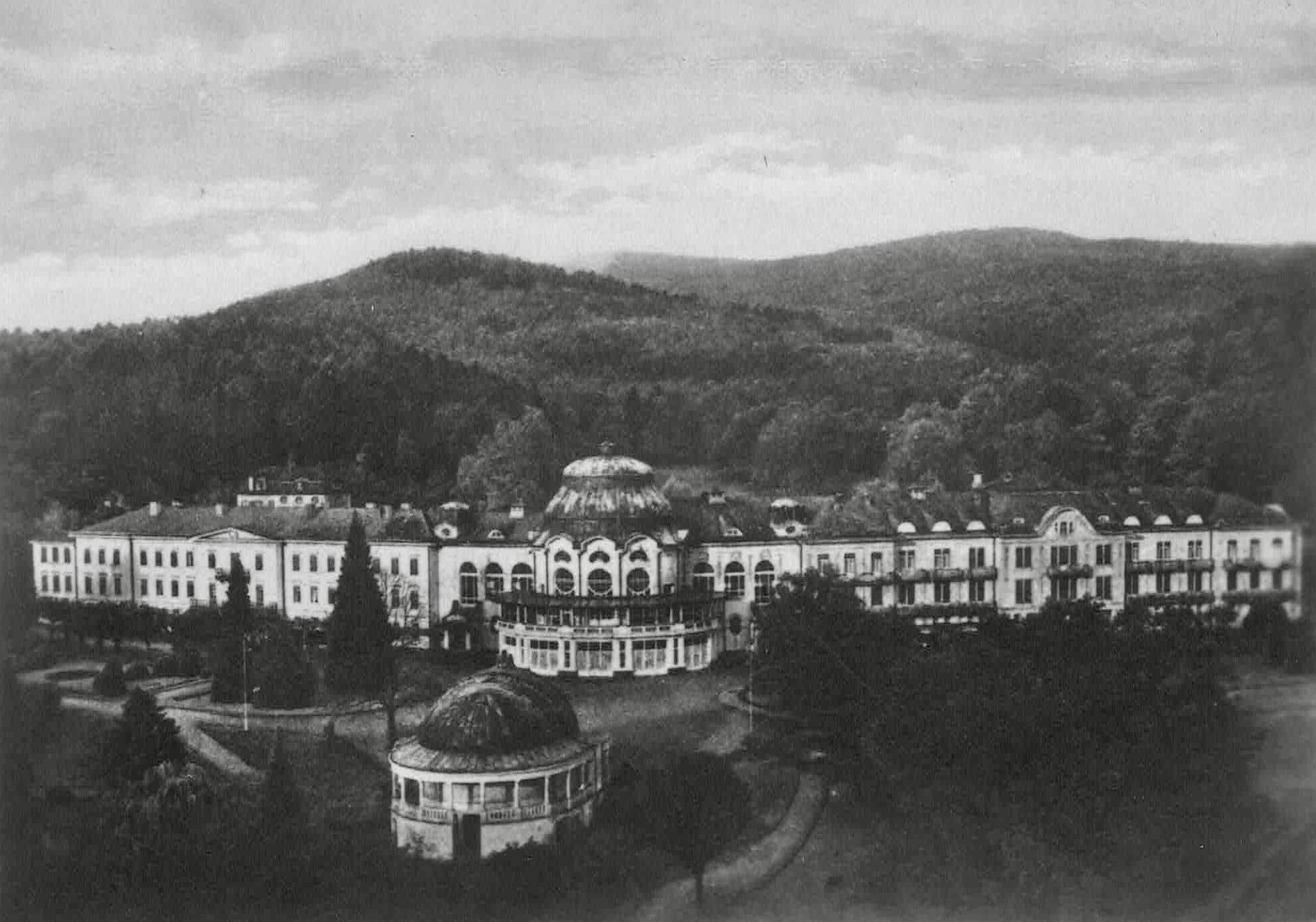
In July 1945, the Third Infantry Division moved its headquarters to the spa town of Bad Wildungen, Germany, and that’s where Flo was stationed during the Allied occupation.

Bad Wildungen was known as a significant storage site for looted German cultural treasures, with American forces discovering vast caches of art and artifacts in bunkers there in April 1945 as the war ended. The town itself remained relatively undamaged, becoming part of the American occupation zone.

Photos: Flo Wick

Back to Ch. 1: https://mollymartin.blog/2024/11/04/my-mother-and-audie-murphy/

Ch. 87: https://mollymartin.blog/2026/01/11/kassel-and-the-hesse-area/

Audie Murphy Comes Home

Most decorated American soldier of WWII

My Mother and Audie Murphy Ch. 85

Audie Murphy returns home in June 1945 to a hero’s welcome of parades, swarming reporters and his face on the cover of Life Magazine. At just twenty years old, he is celebrated as the most decorated American soldier of World War II, awarded the Medal of Honor along with more than 30 US and foreign decorations for extraordinary valor in combat. The public sees a slight, soft-spoken Texan who embodied courage and sacrifice, but behind the accolades Murphy carries the psychological weight of prolonged frontline combat, the loss of close comrades, and memories that will not easily fade.

In the years after the war, Murphy remains connected to the Army even as he struggles to adjust to civilian life. He continues to serve in the Texas Army National Guard, eventually reaching the rank of major, and becomes an outspoken advocate for recognizing what is now known as post-traumatic stress disorder, then poorly understood and often dismissed. By publicly acknowledging his nightmares, insomnia, and dependence on medication, Murphy challenges the myth that heroism ends suffering. His postwar Army career, marked by continued service and hard-won honesty, expands his legacy beyond battlefield valor to include a lasting contribution to how veterans’ mental health is understood and discussed.

Ch. 86: https://mollymartin.blog/2026/01/07/stationed-at-bad-wildungen/

A Visit to Stratford-upon-Avon

Flo gets to see some Shakespeare too

Ch. 84 My Mother and Audie Murphy

Stratford-upon-Avon, as we all know, is the 16th-century birthplace and burial place of William Shakespeare. The medieval market town in England’s West Midlands is about 100 miles northwest of London. The Royal Shakespeare Company still performs his plays in the Royal Shakespeare Theatre and adjacent Swan Theatre on the banks of the River Avon. Flo visited in mid-June, 1945.

She attended the Shakespeare Festival
Stratford-on-Avon Red Cross club. Photos from Flo’s album
Shakespeare’s house
Flo didn’t identify this woman, her host at the Red Cross club
Sailing back to the Continent. Leaving England for Dieppe at the end of the week-long leave.

Stratford-upon-Avon had faced the threat and effects of the Blitz through scattered incidents and as a sanctuary, rather than being a central target for sustained bombing like larger industrial or military centers. During the war the town provided refuge, with people from heavily bombed areas like Birmingham coming to Stratford for quiet and respite from the relentless night raids.

Ch. 85: https://mollymartin.blog/2026/01/04/audie-murphy-comes-home/