3rd Division souvenir paper tells history of the division
My Mother and Audie Murphy Ch. 100
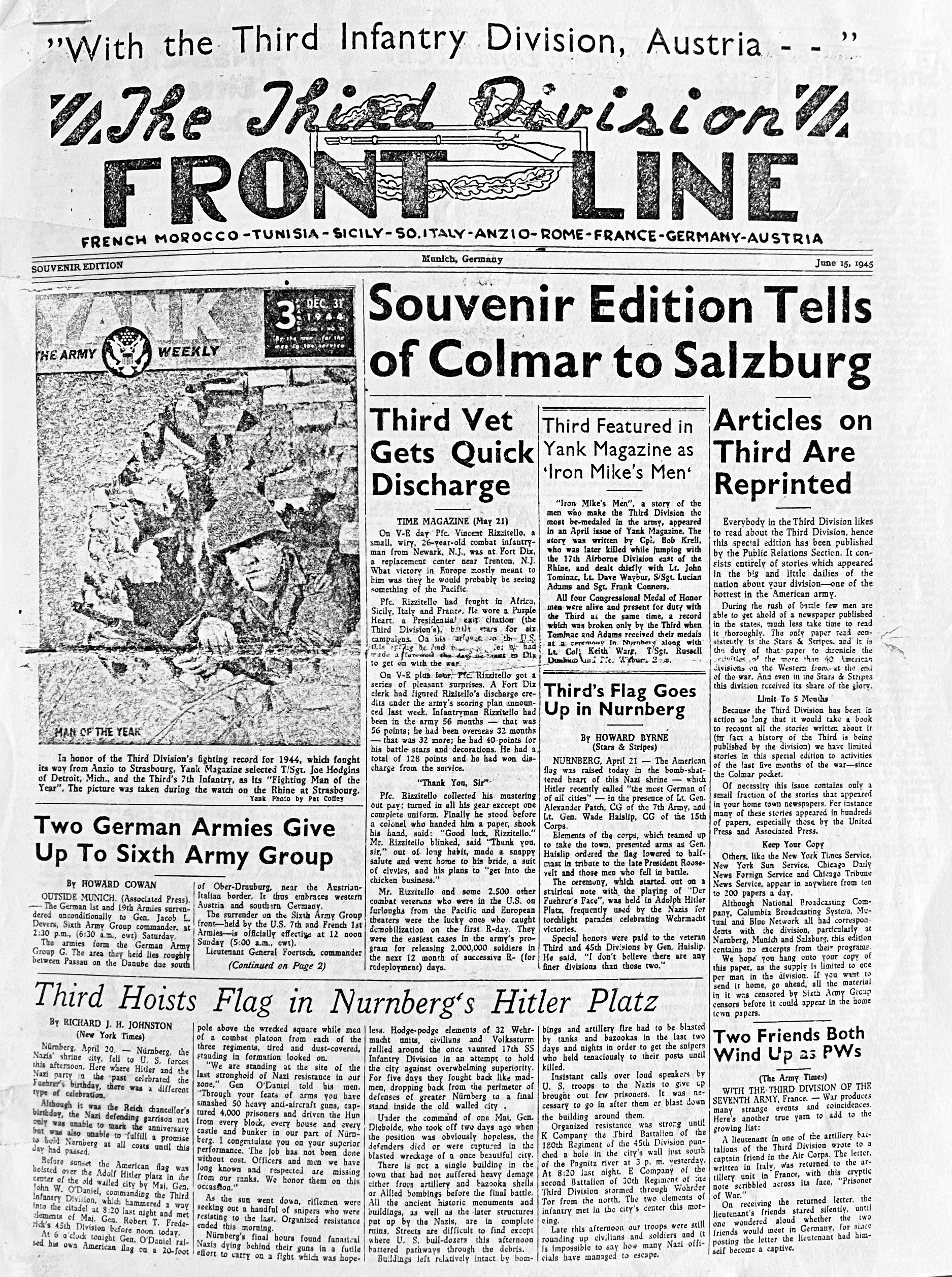
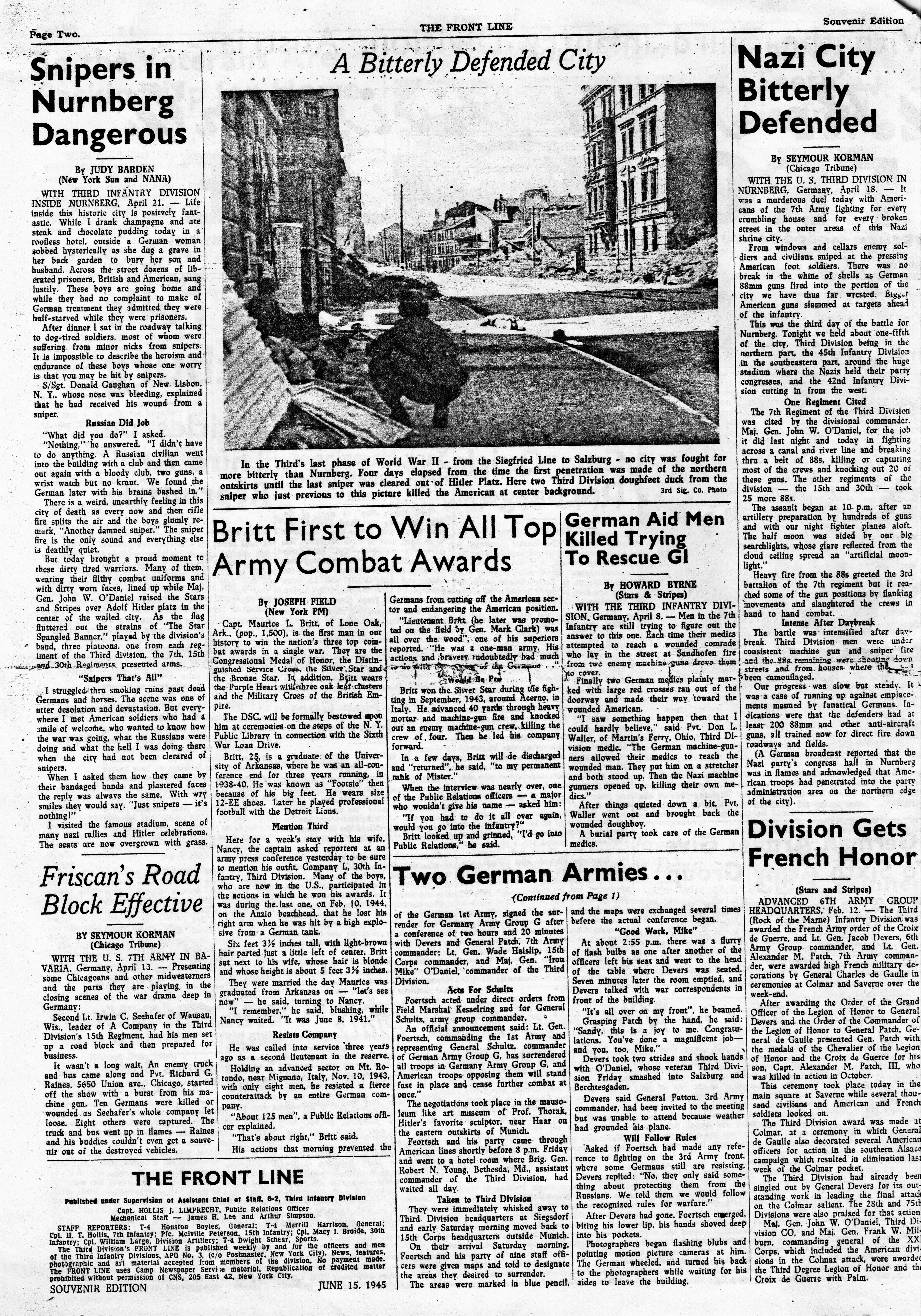
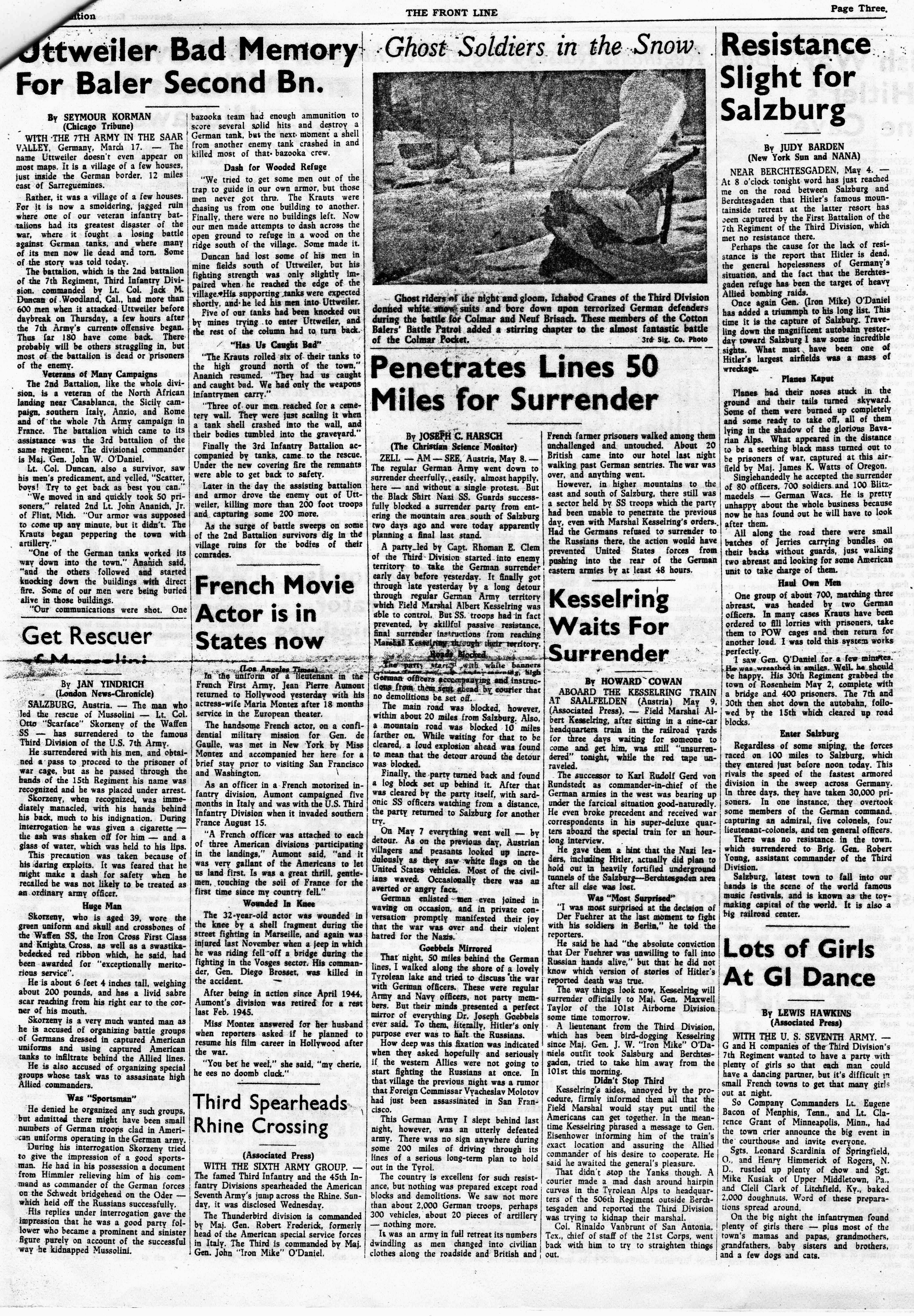
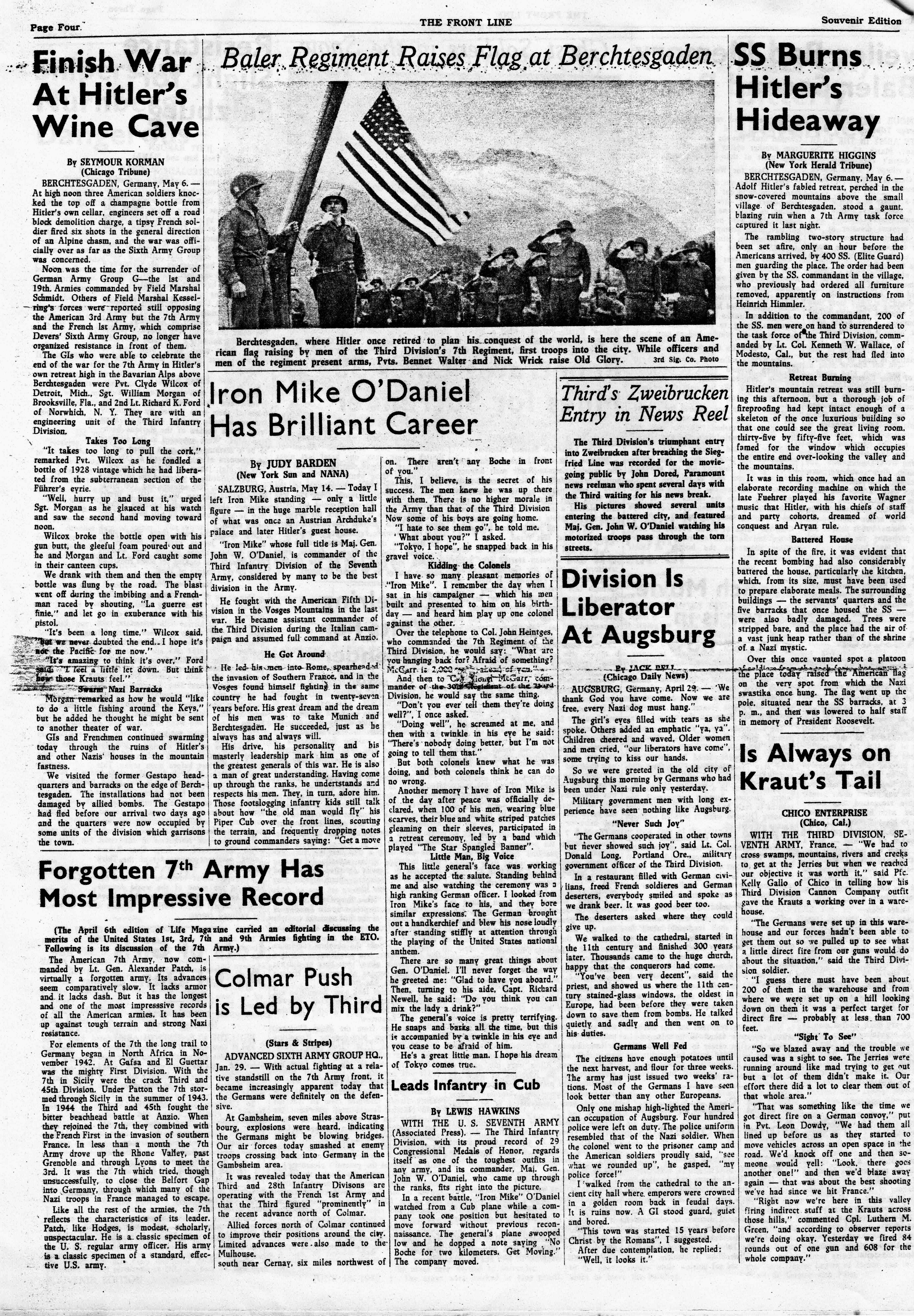
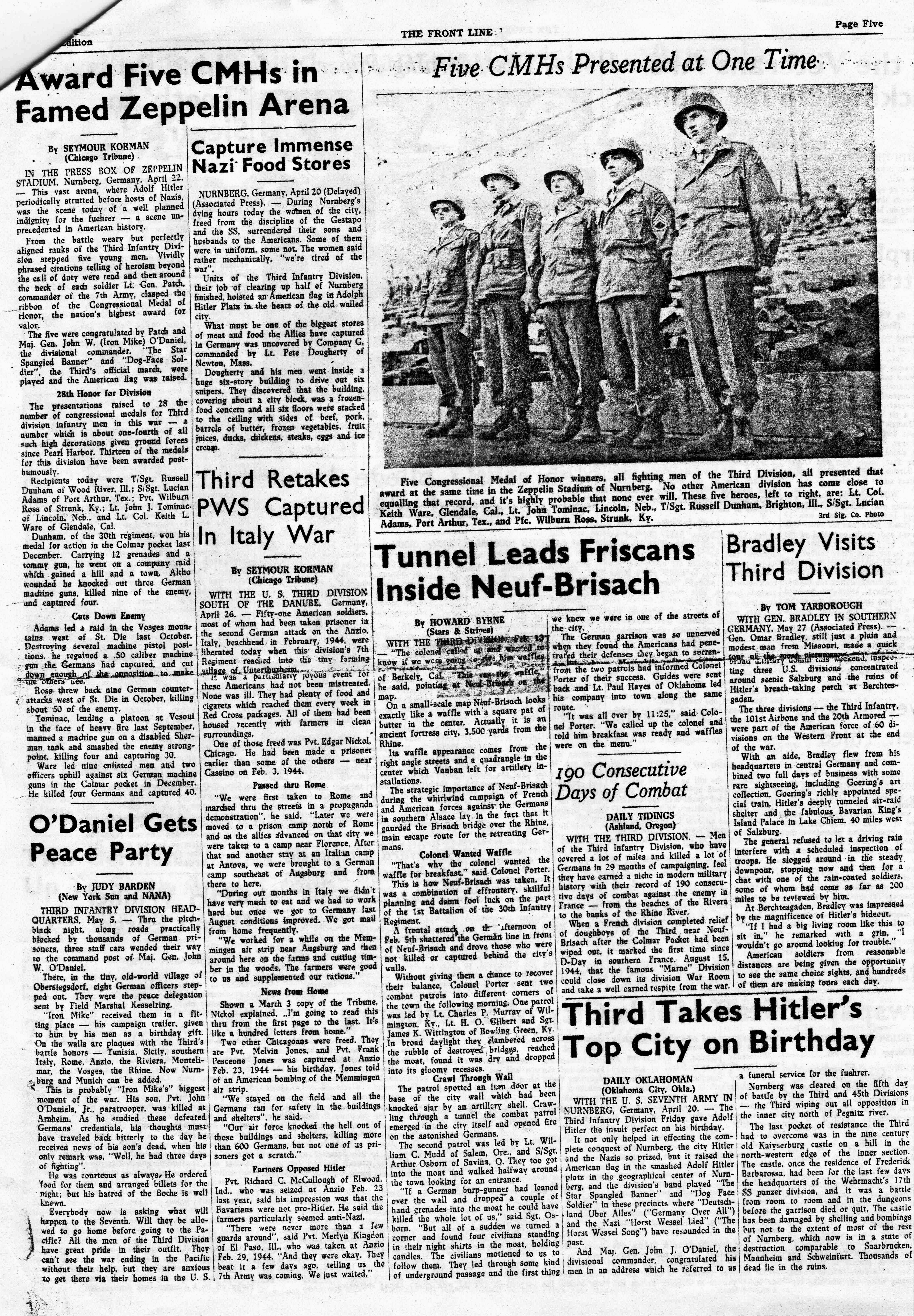
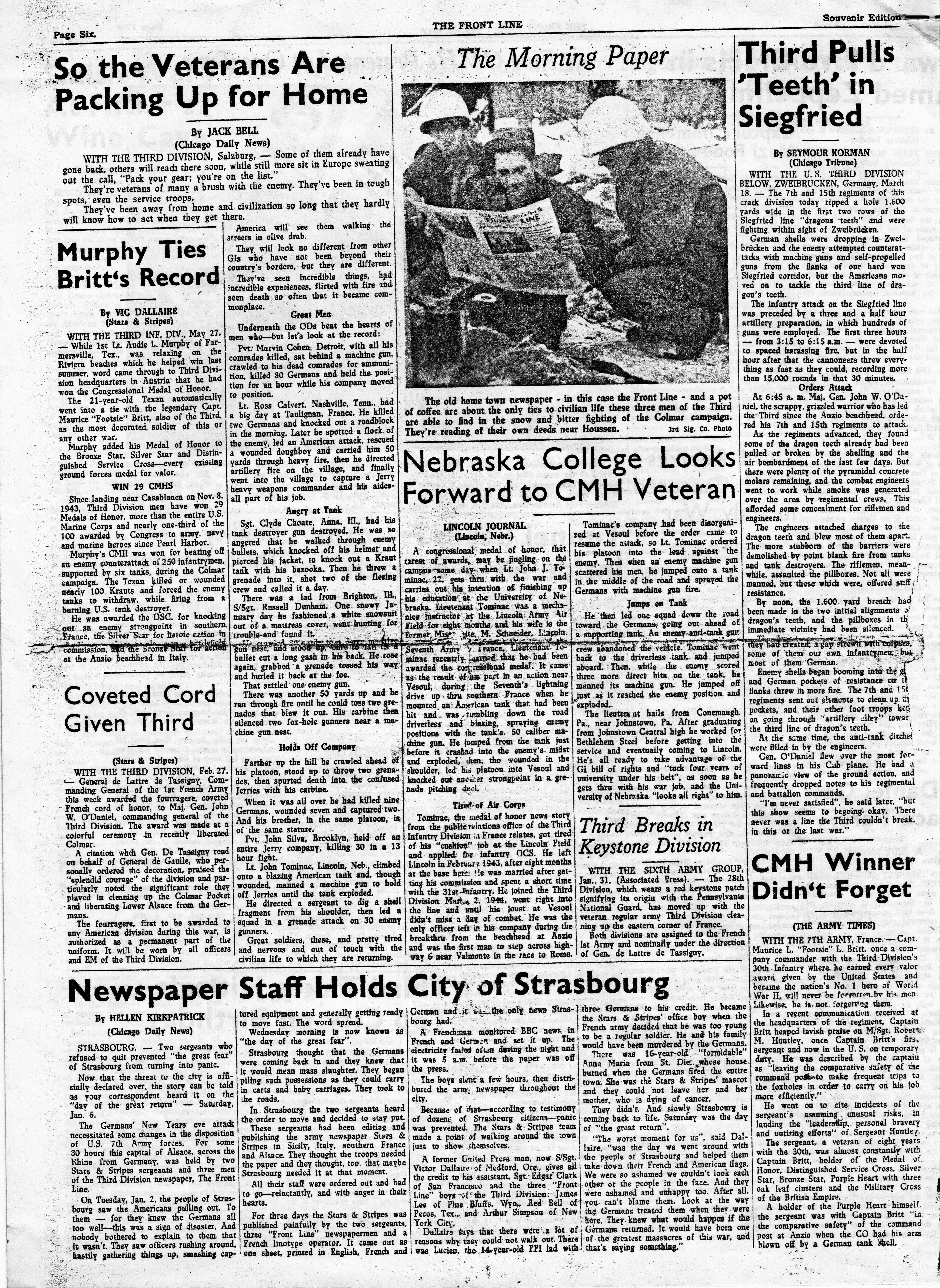
Don’t throw this away! admonishes the Front Line newspaper of their post-war special edition. Flo didn’t throw it away. She saved it and tucked it into her album. The issue consists entirely of stories which appeared in the big and little dailies of the nation about the Third Division.
From the introduction: “During the rush of battle few men were able to get a hold of a newspaper published in the states, much less take time to read it thoroughly….Hence, this special edition.
“We hope you hang on to your copy as the supply is limited to one per man. If you want to send it home, go ahead. All the material in it was censored by Sixth Army Group censors before it could appear in the home town papers.”
The Front Line is the official newspaper of the Third Infantry Division. In the interest of archiving, I’m posting the whole six-page paper. You can read it by pinching out the image.
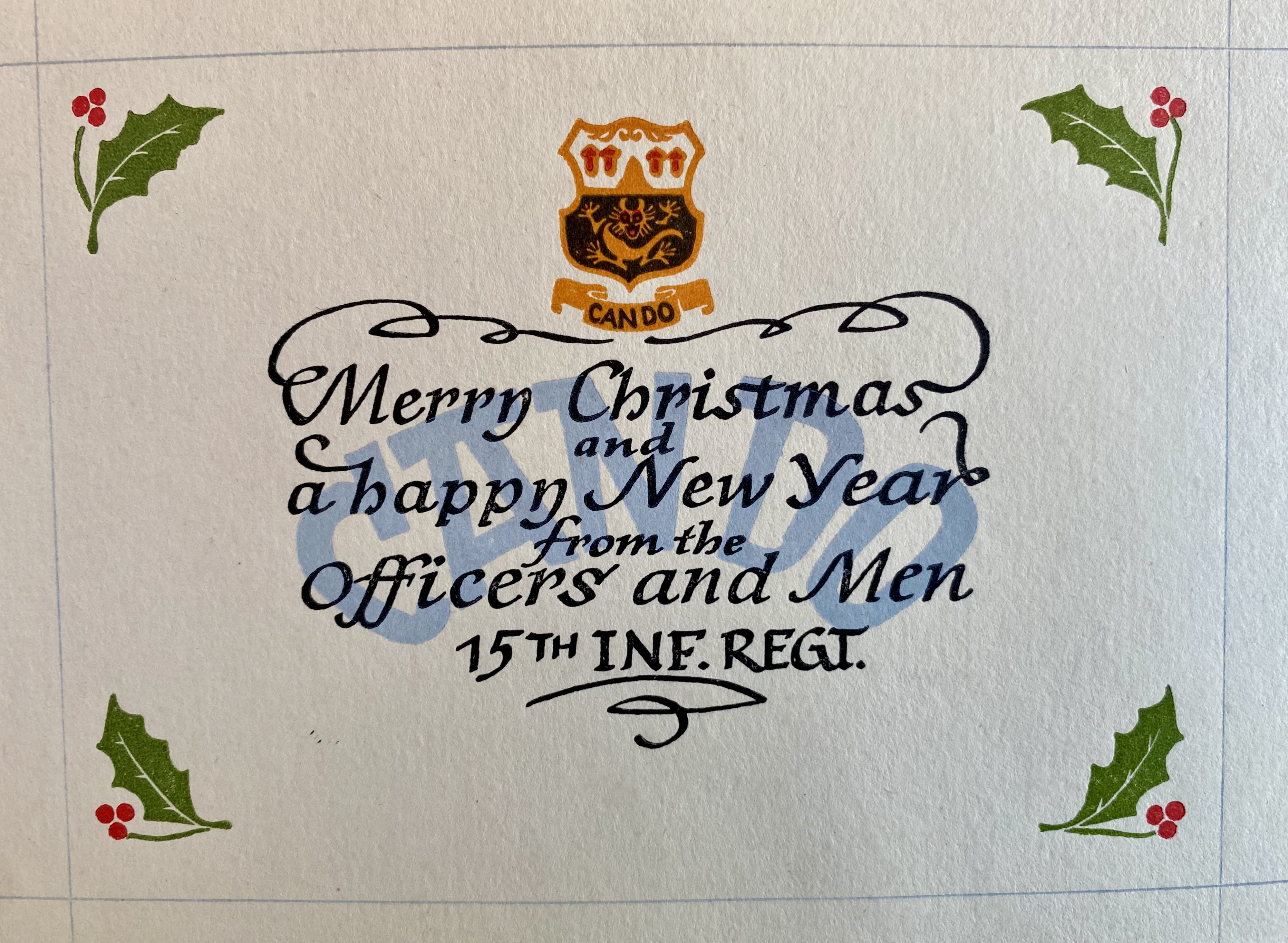
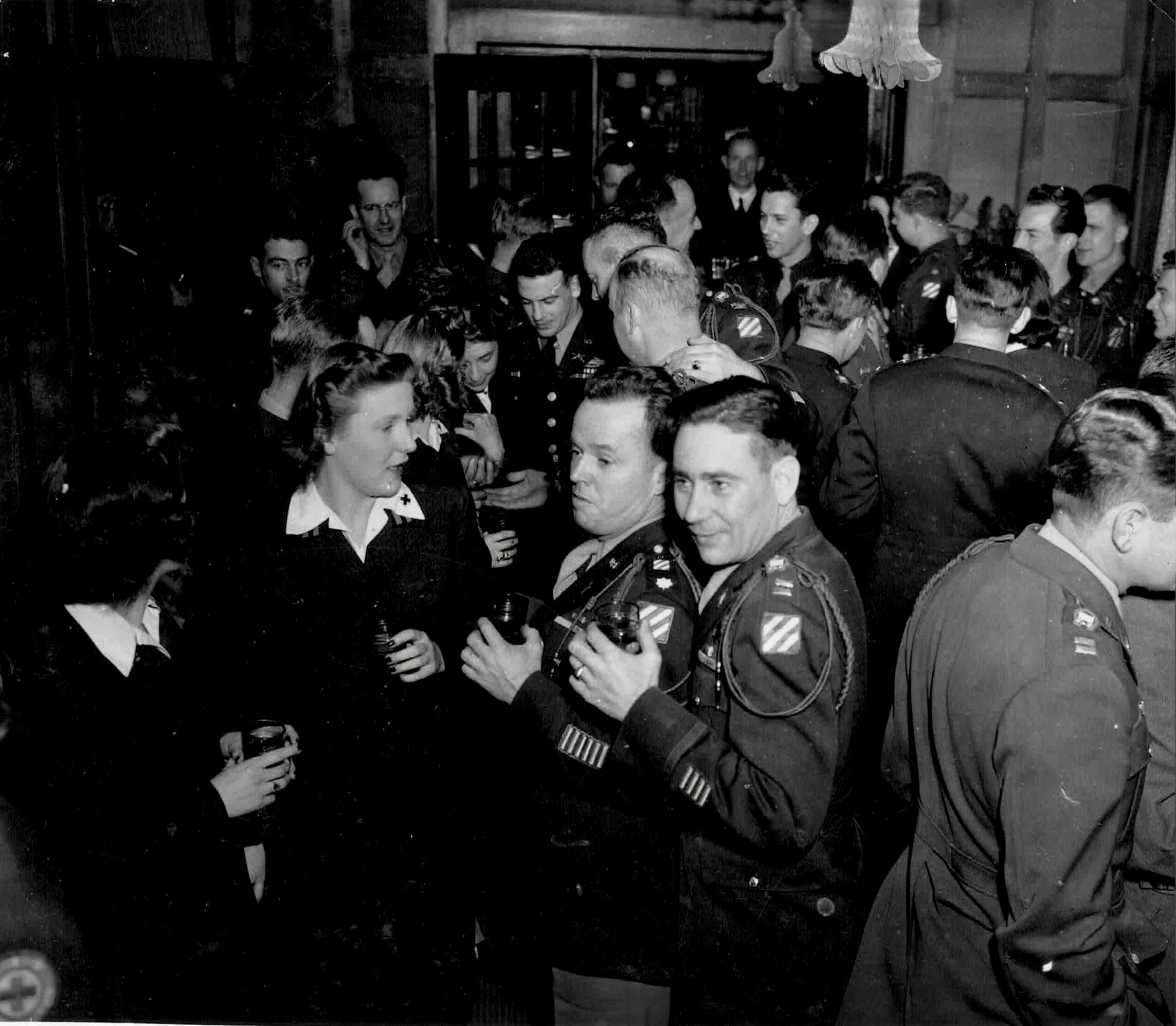
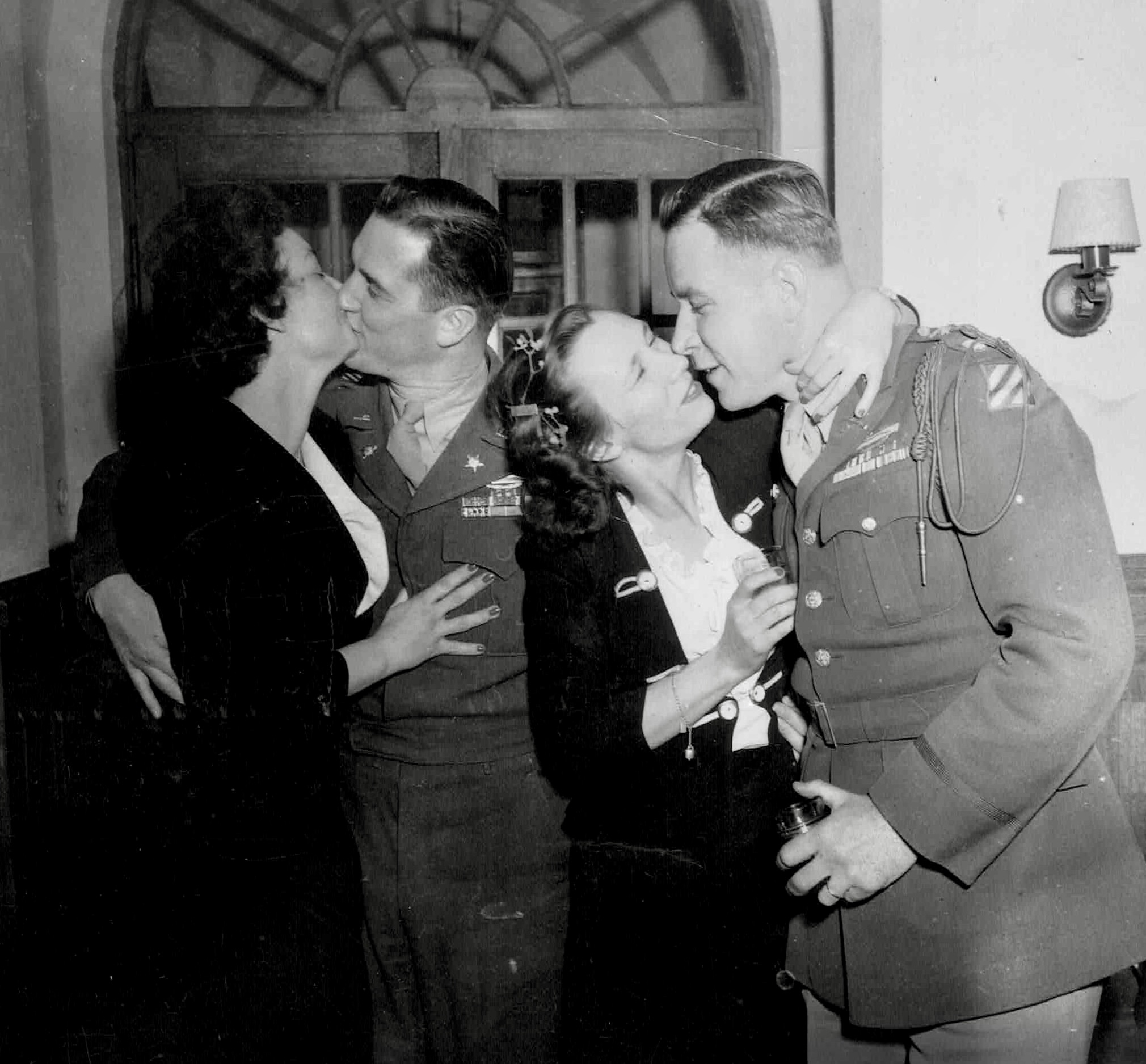
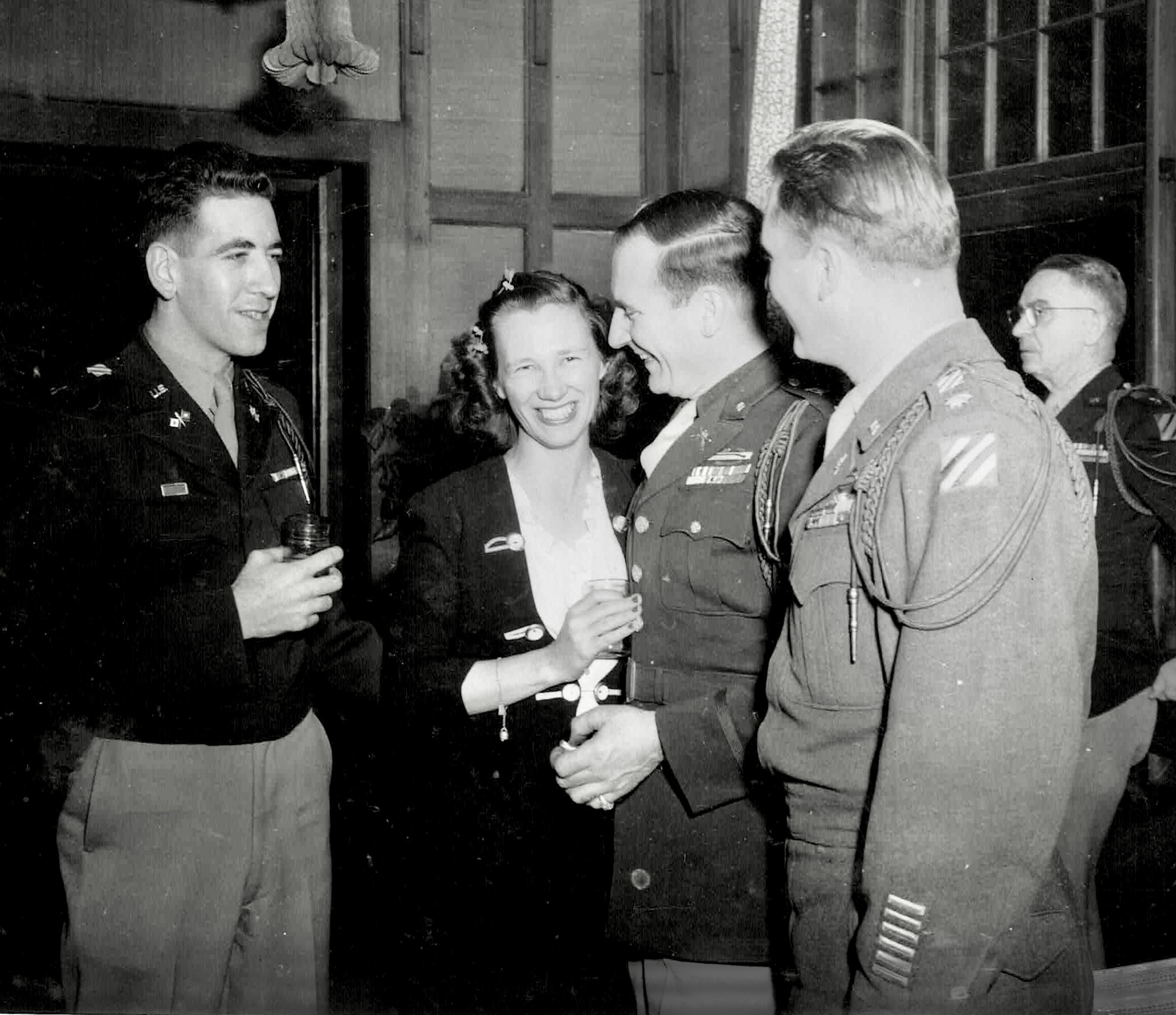
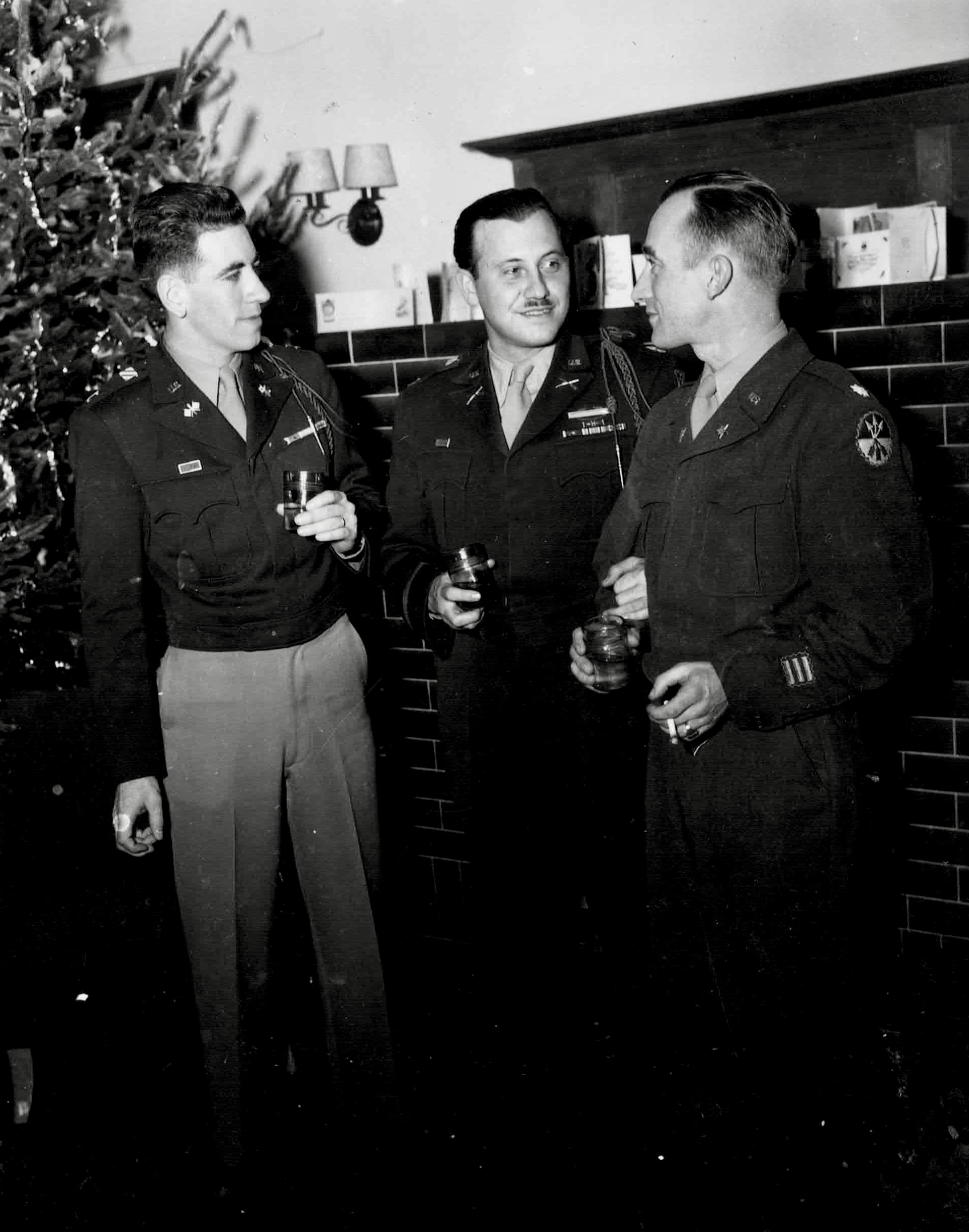
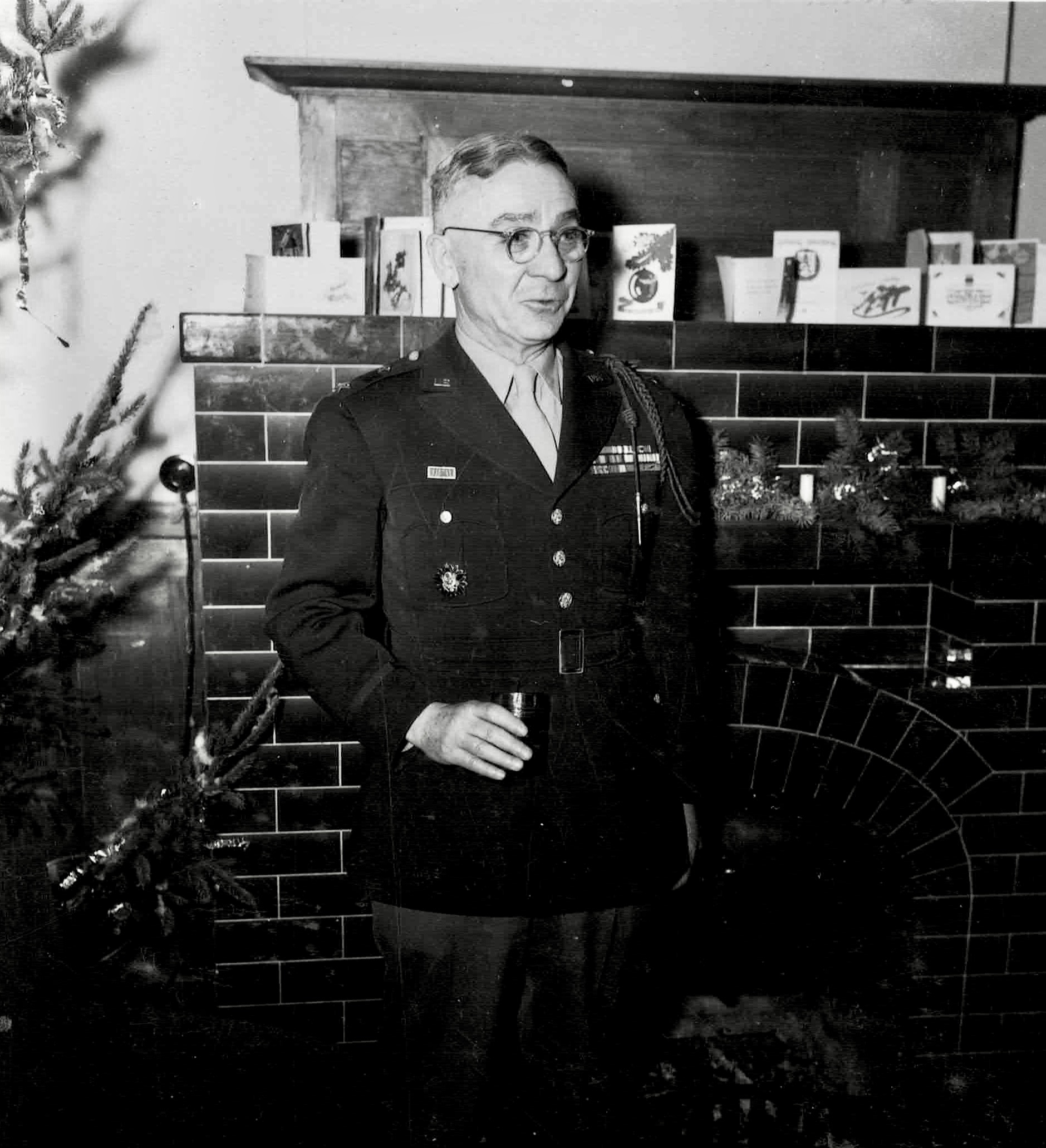
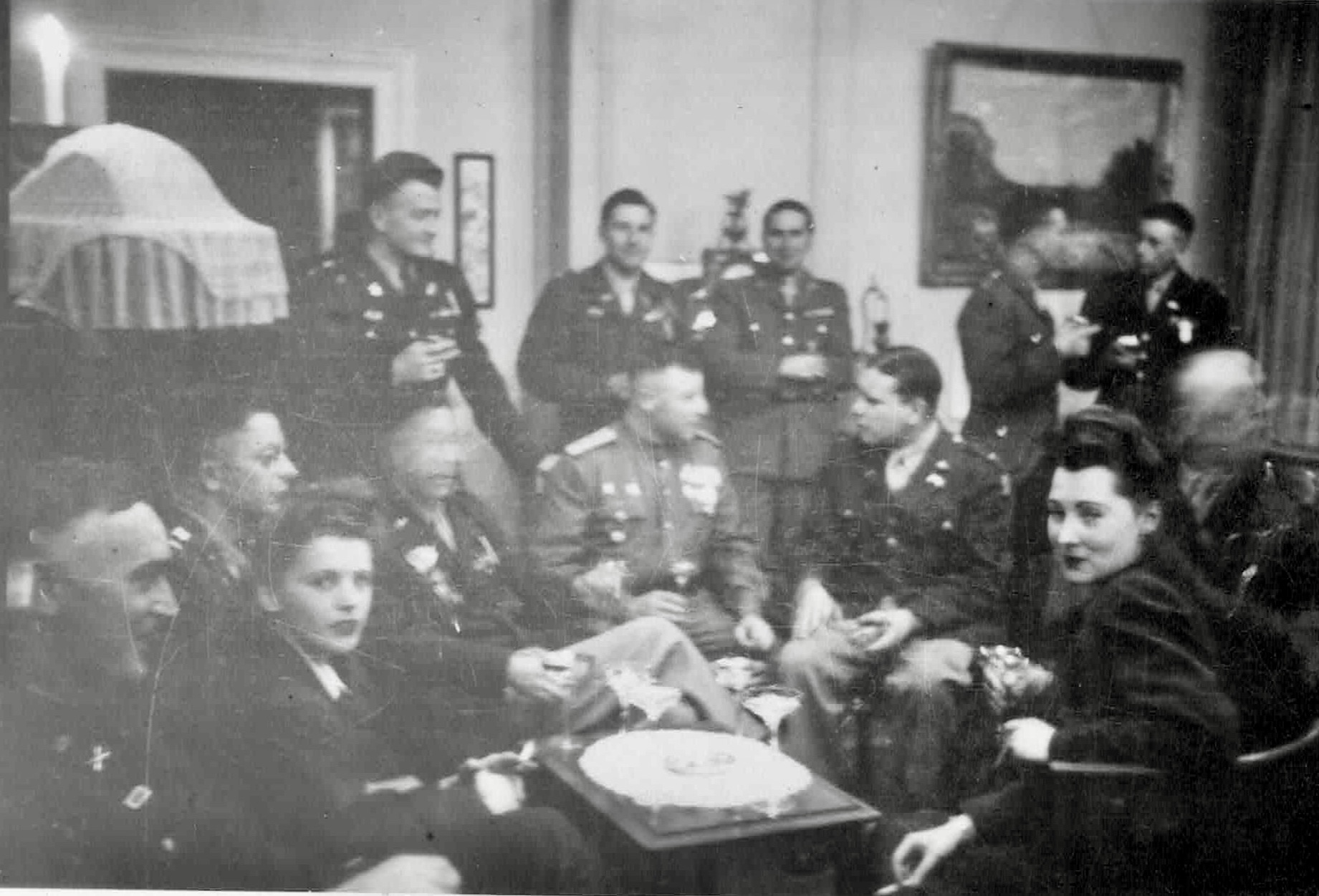
Gen. Schmidt’s New Year’s party celebrates Third Division
My Mother and Audie Murphy Ch. 99
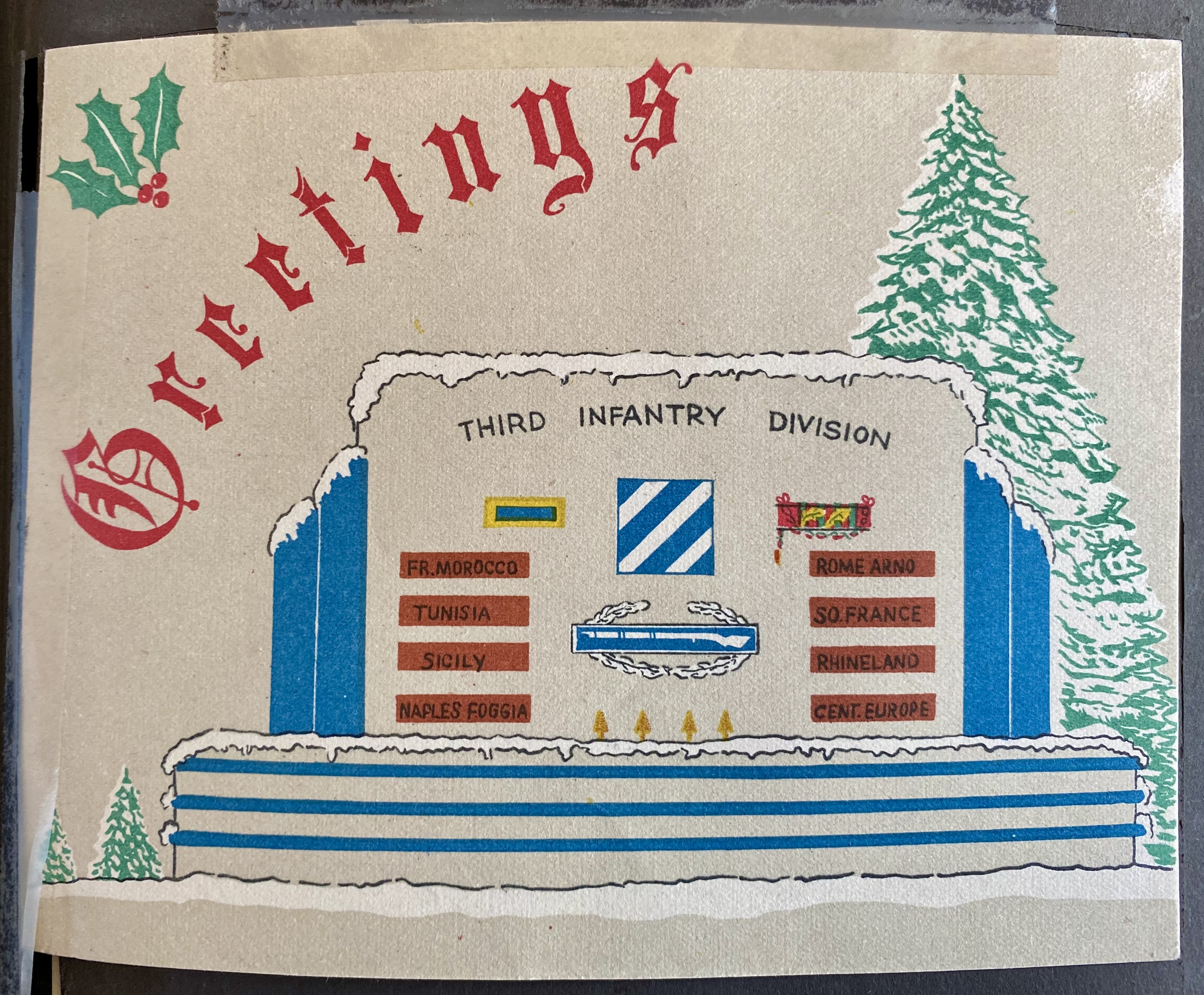
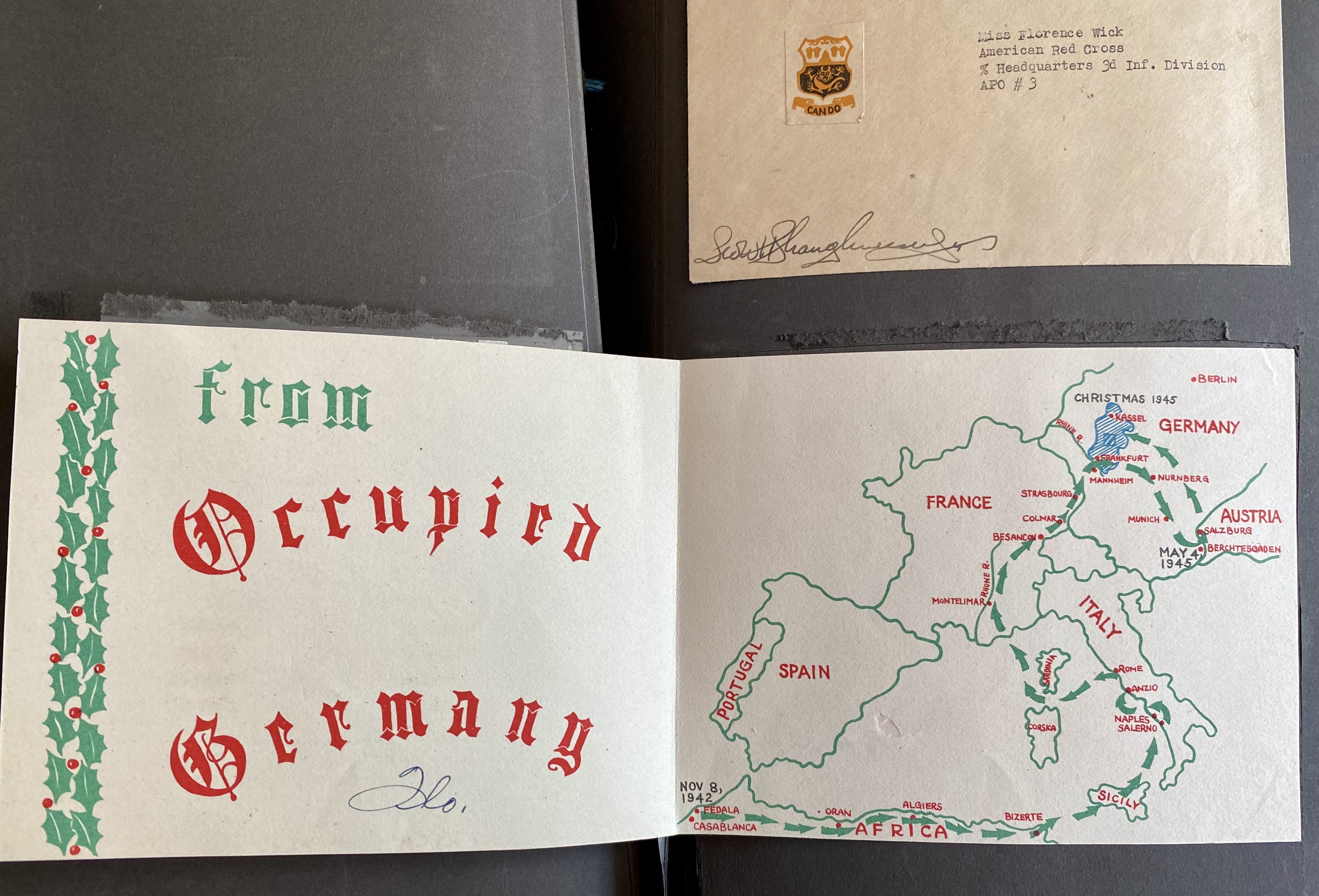
The card shows the route of the 3rd Division from Africa to GermanyThird Infantry Division New Year’s partyFlo captioned this “Blackmail material”Flo didn’t ID these guysGeneral Schmidt hosted the party Christmas ‘C’ company 30th Infantry
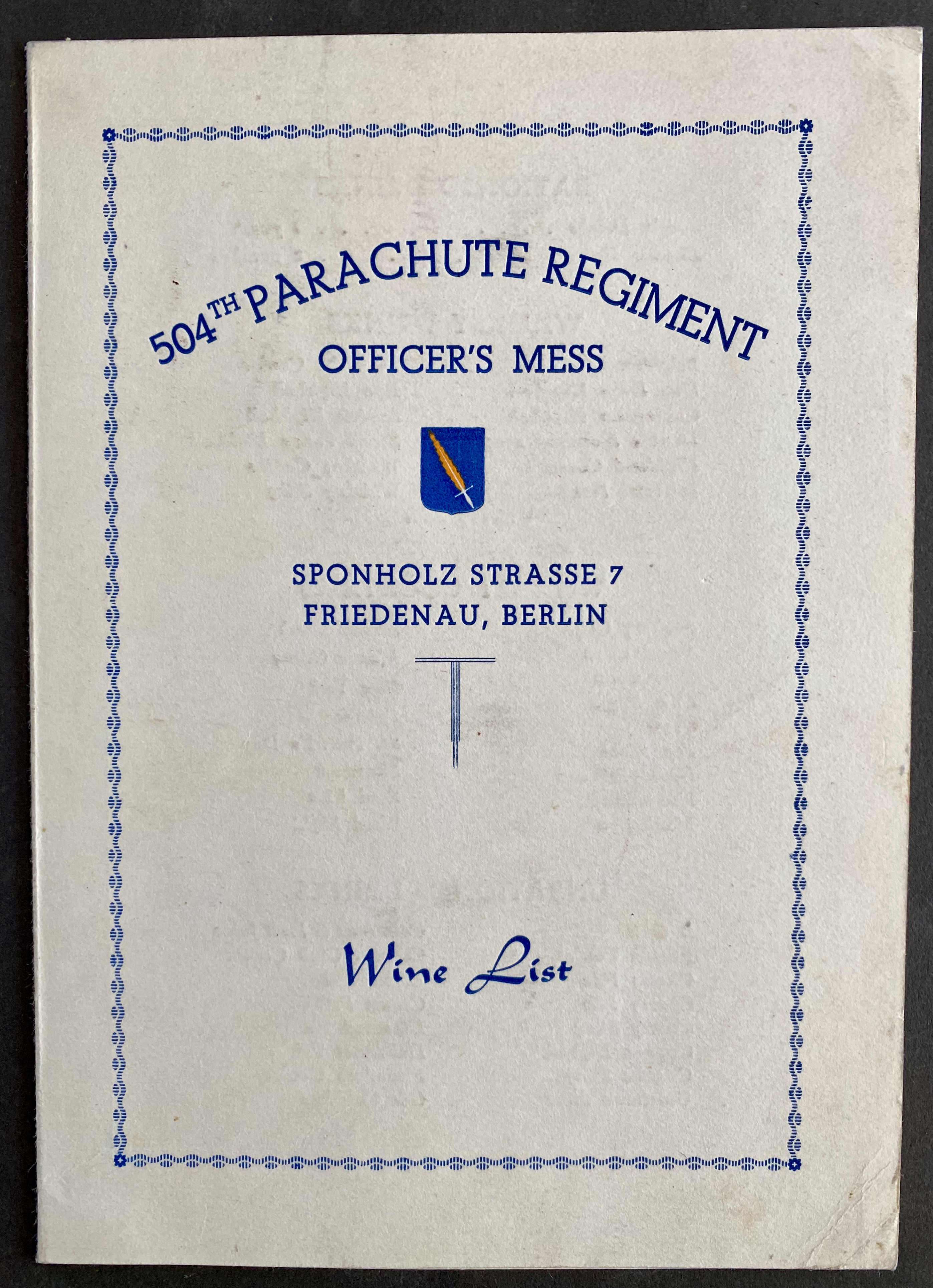
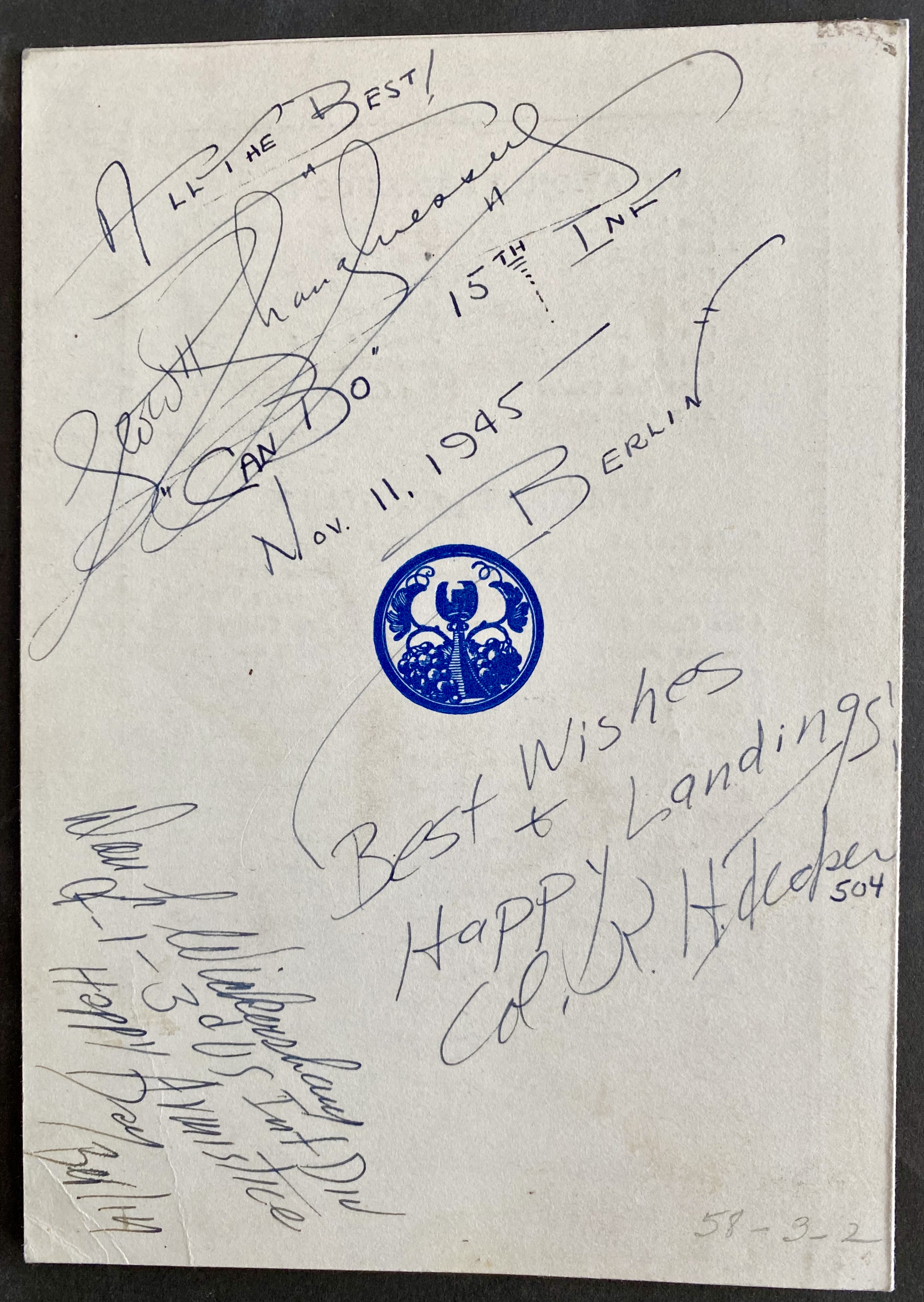
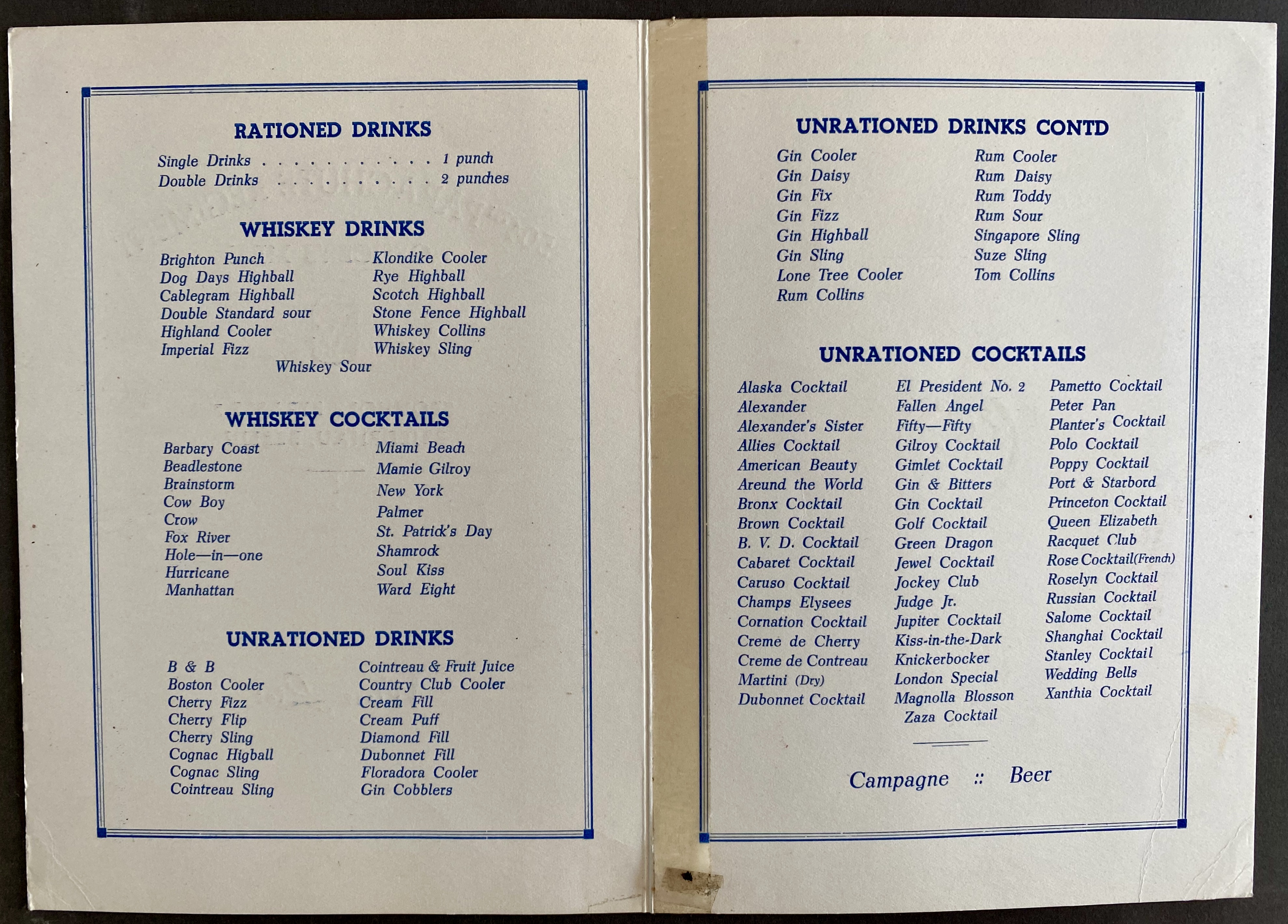
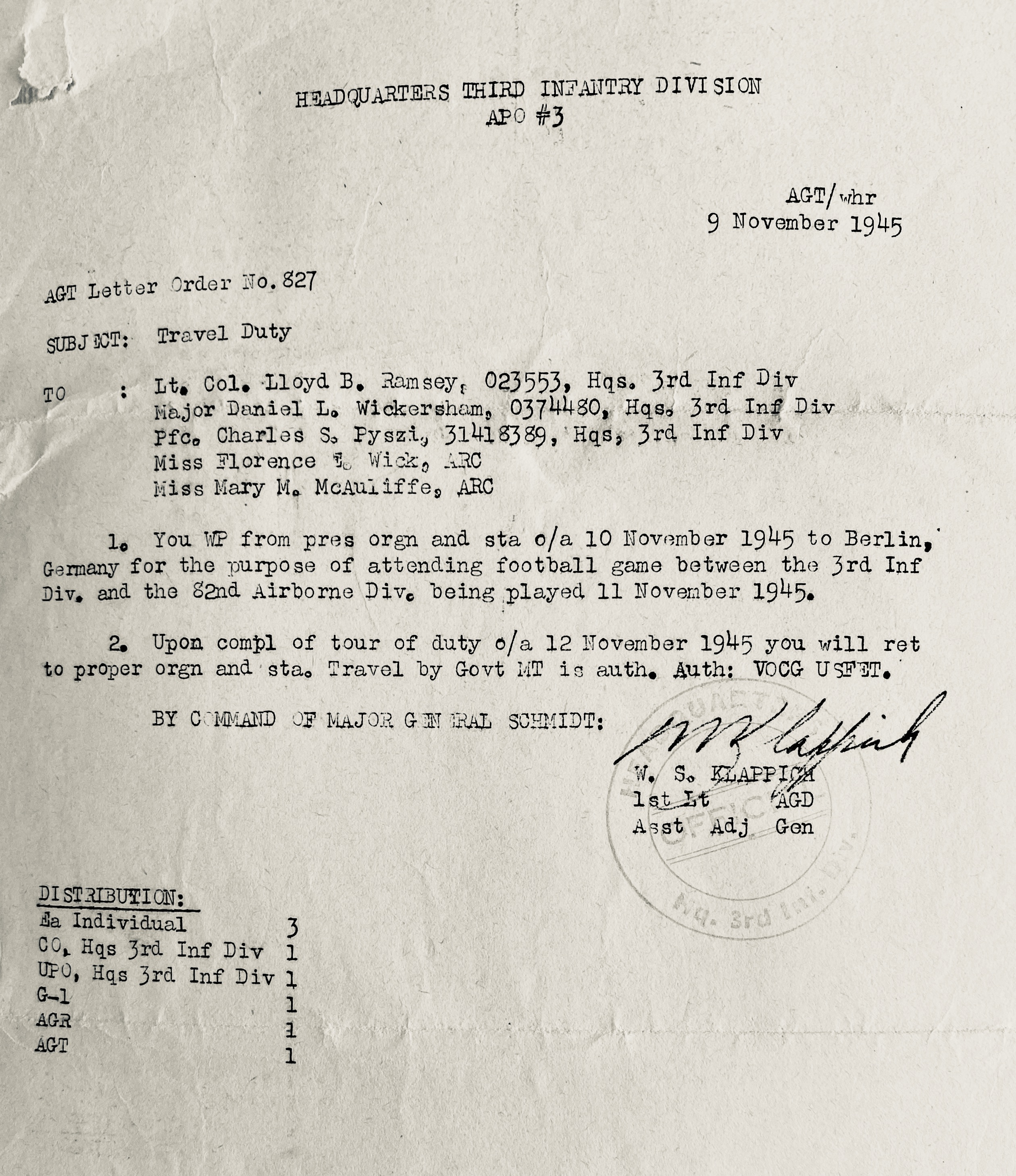
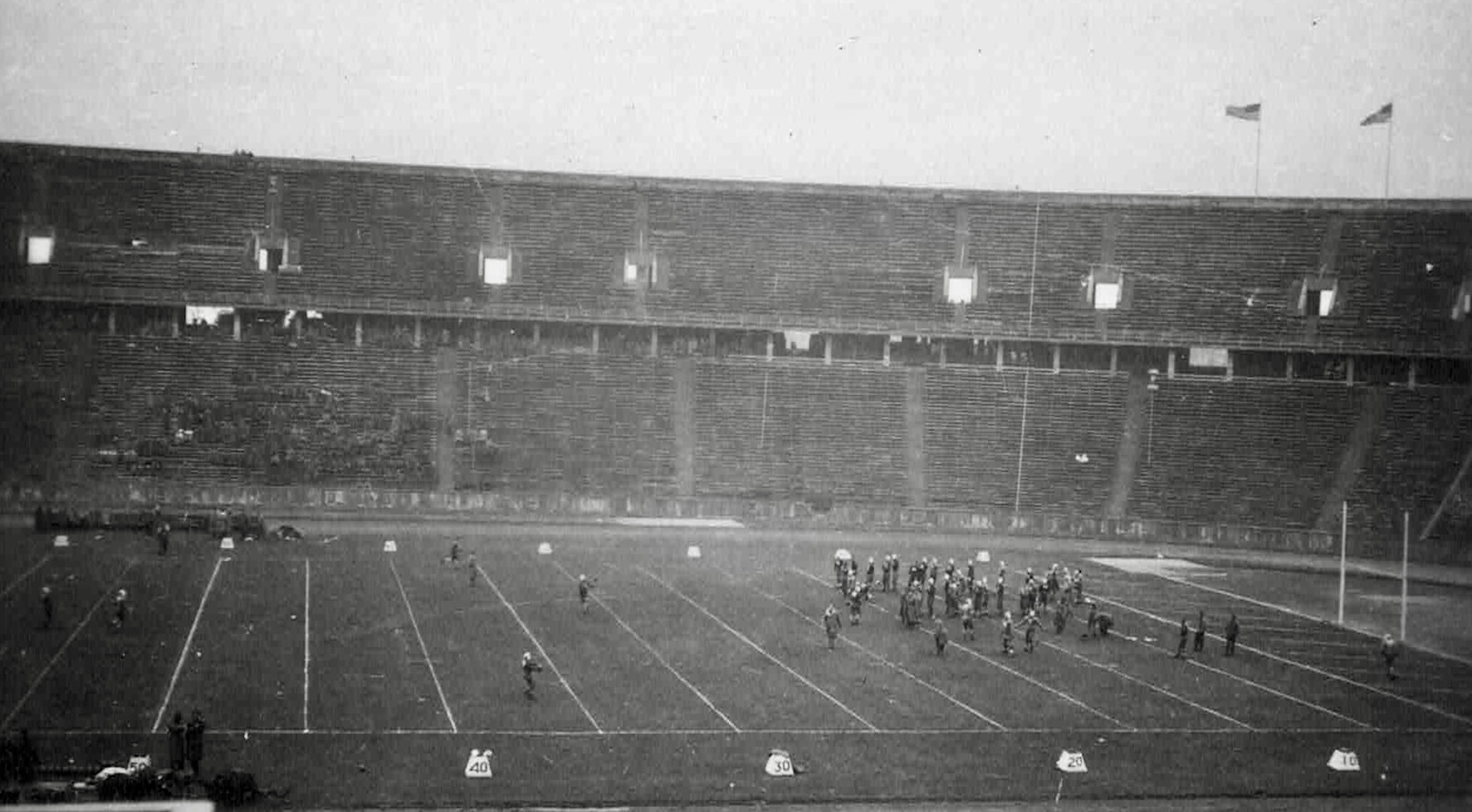
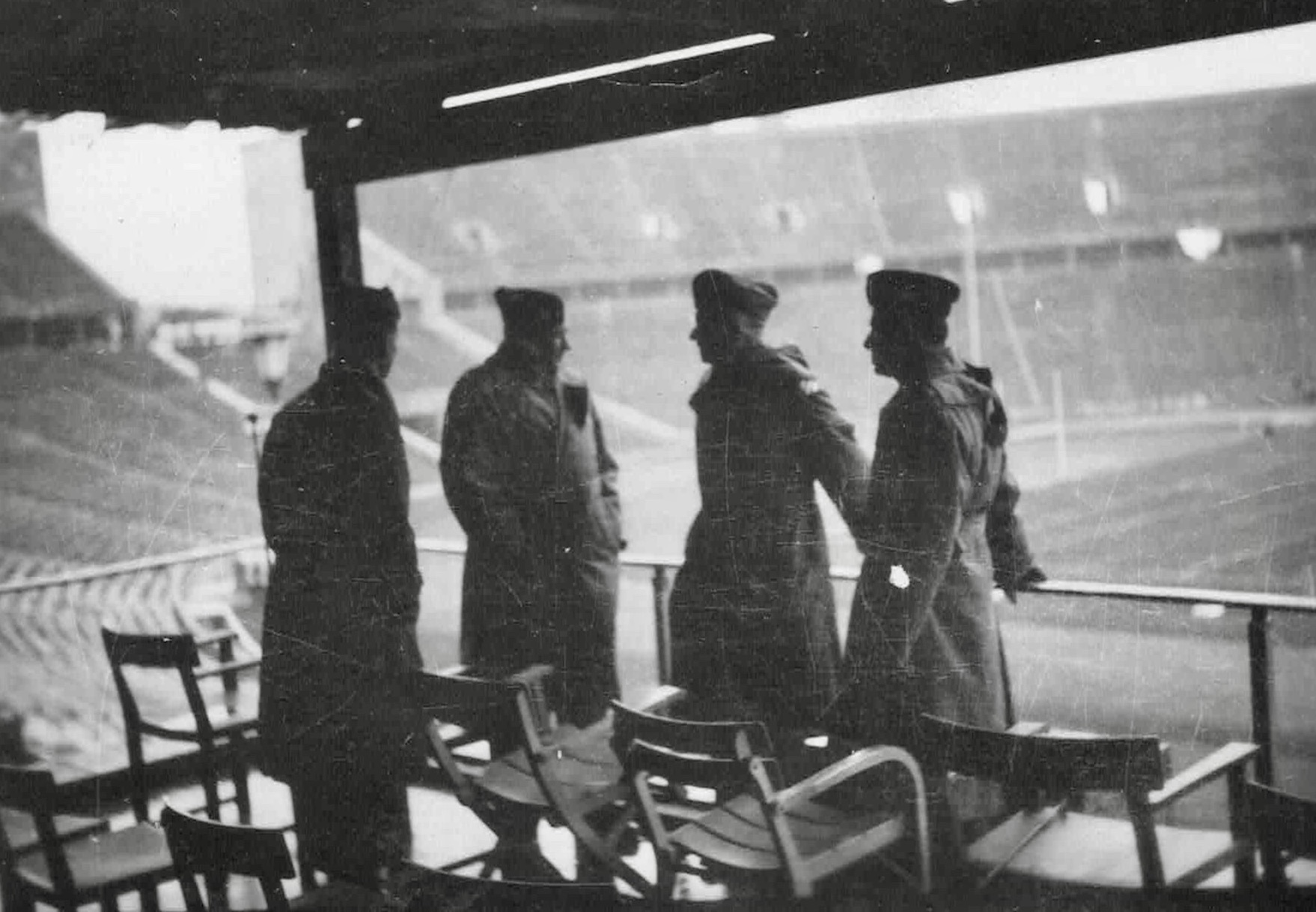
While they were in Berlin for the football game between the Third Division and the 82nd Airborne, Flo and her comrades were invited to a party hosted by the 504th Parachute Regiment. To celebrate Armistice Day in occupied Berlin must have been especially poignant so soon after the end of this second world war.
Flo saved the wine list which listed no wine, but more cocktails than I knew existed. I recognize a few—Manhattan, Martini, Gin Fizz—but not most. I wonder if modern bartenders are still making any of these drinks. The list notes that champagne and beer are available, but there is no mention of wine, at least on this page. Maybe Americans were just not partial to wine in the year 1945.
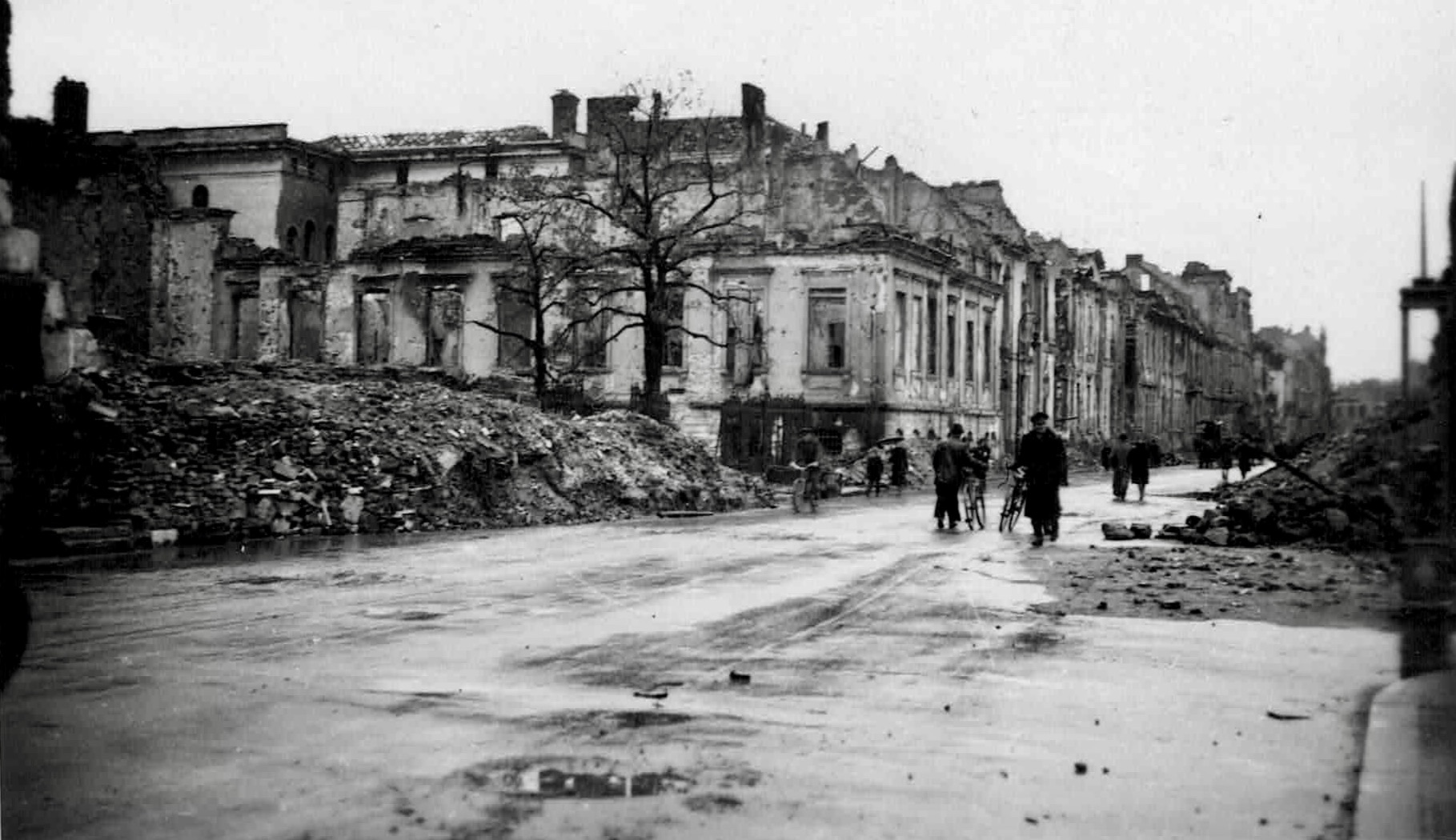
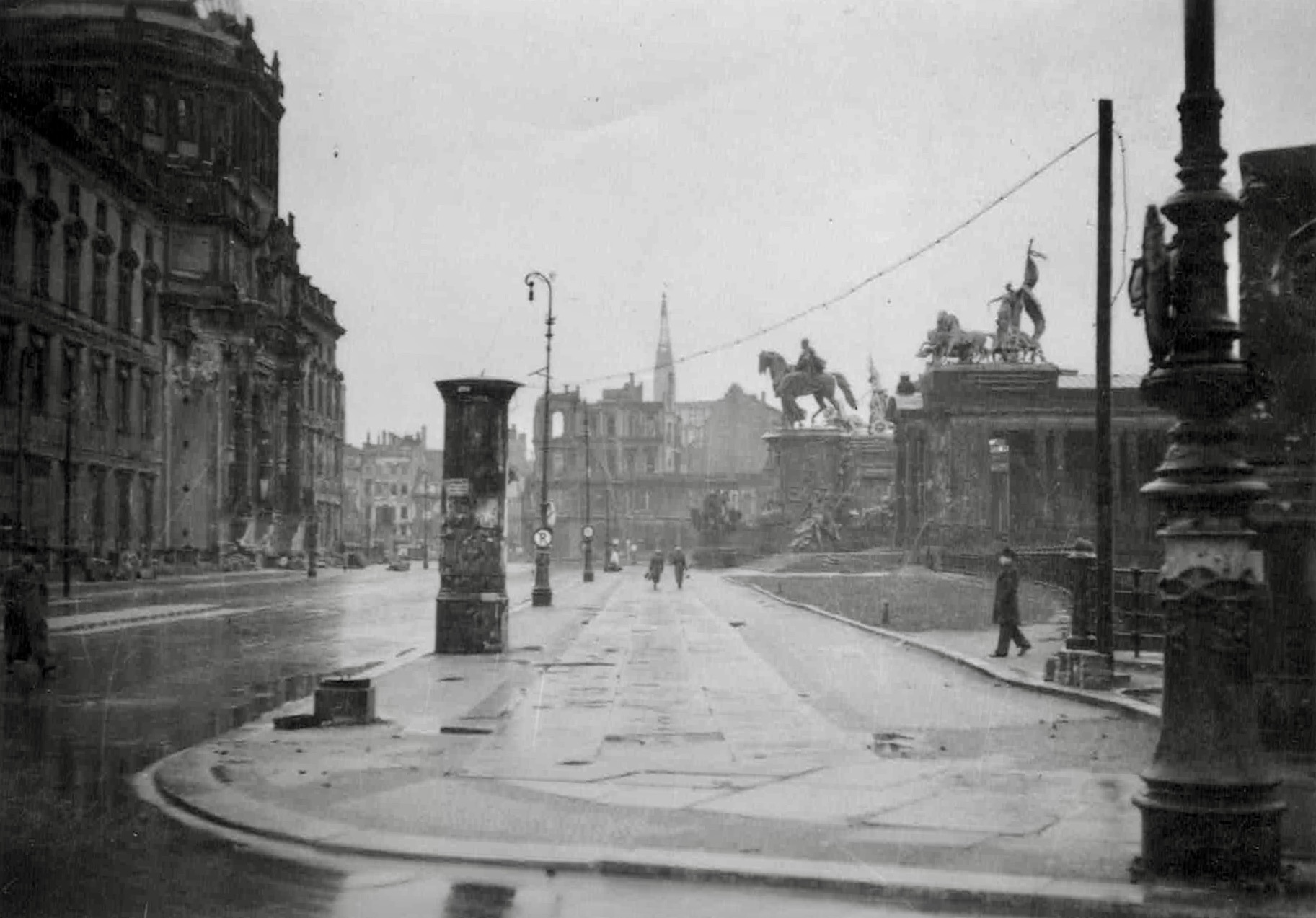
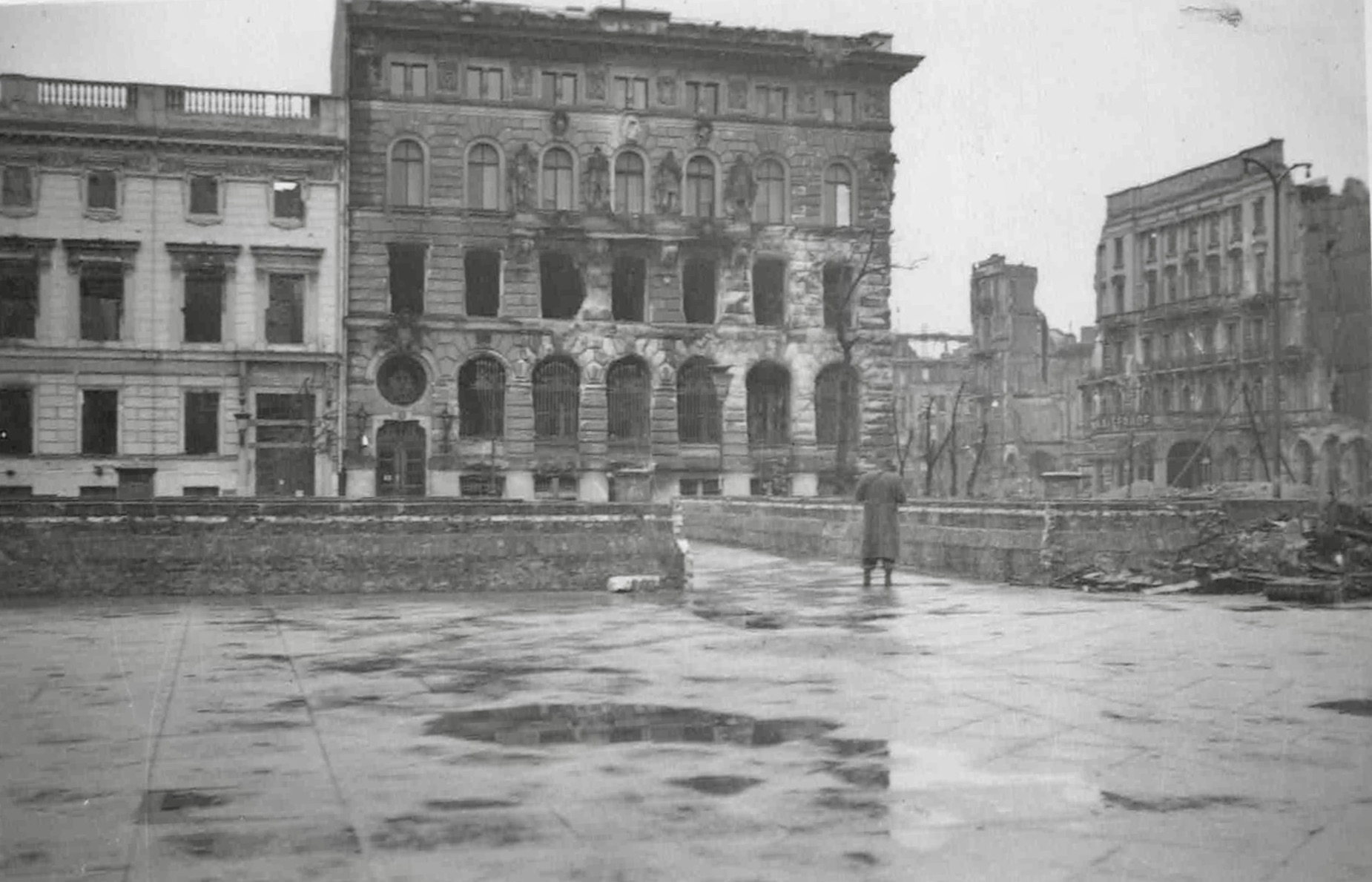
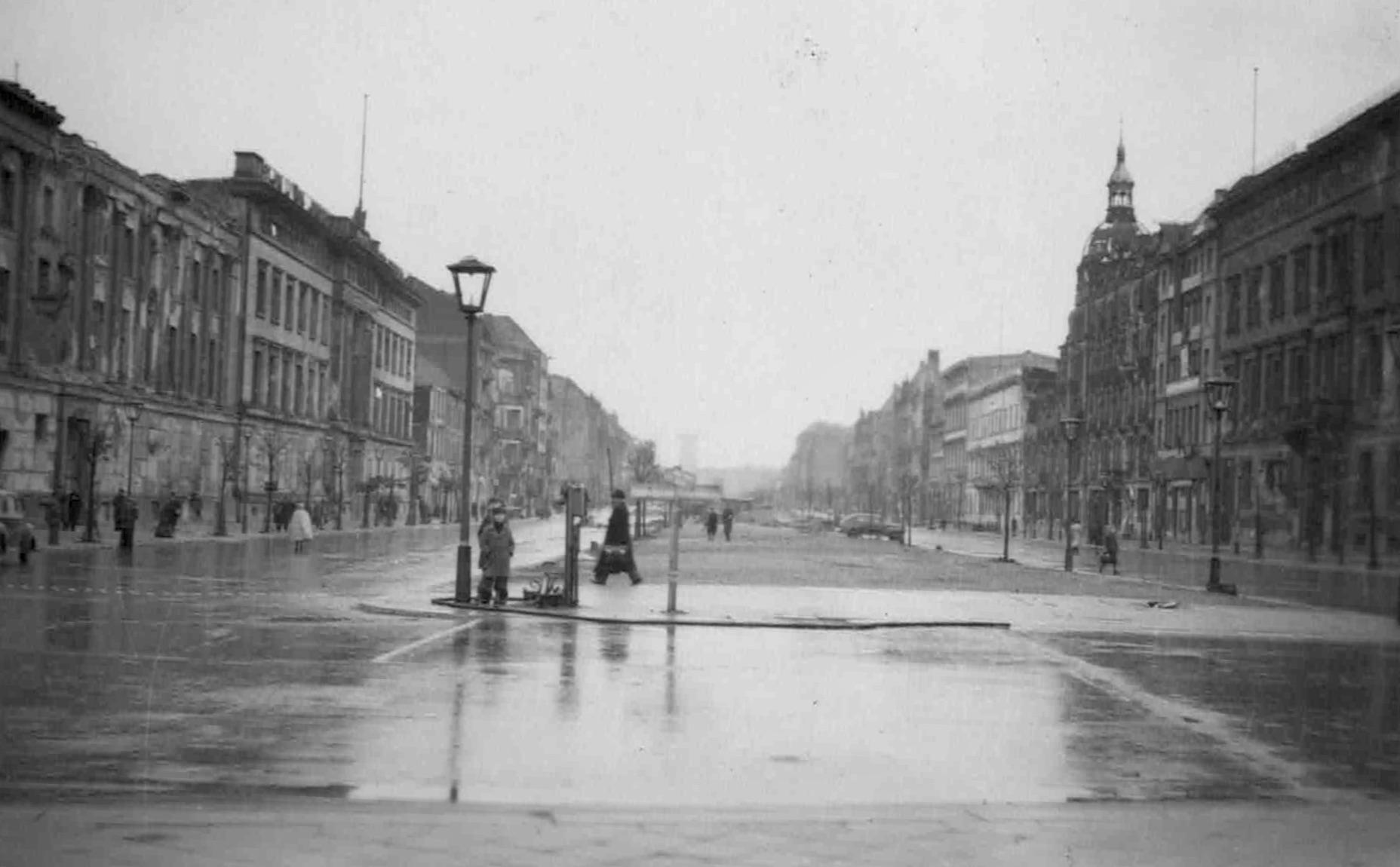
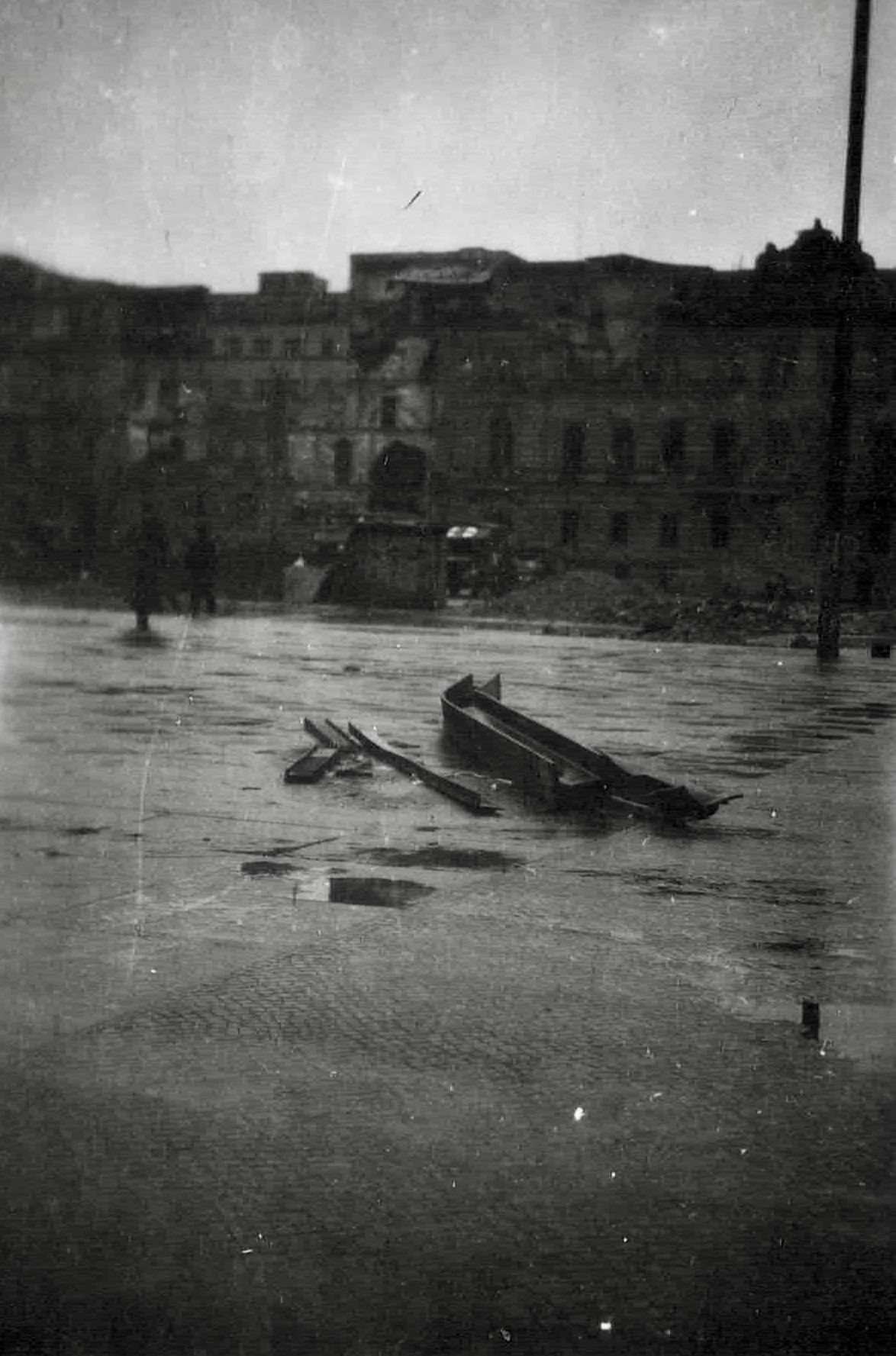
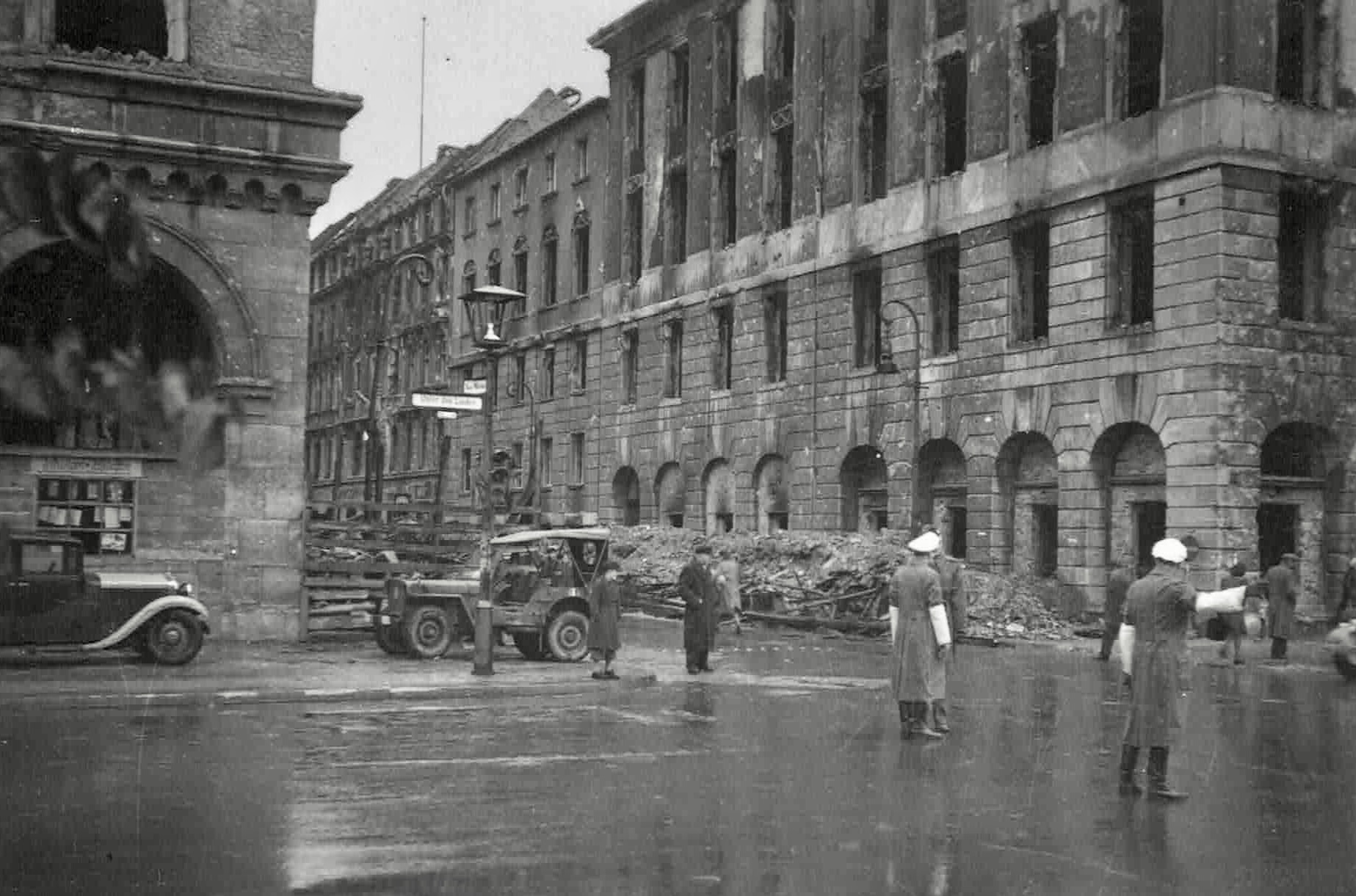
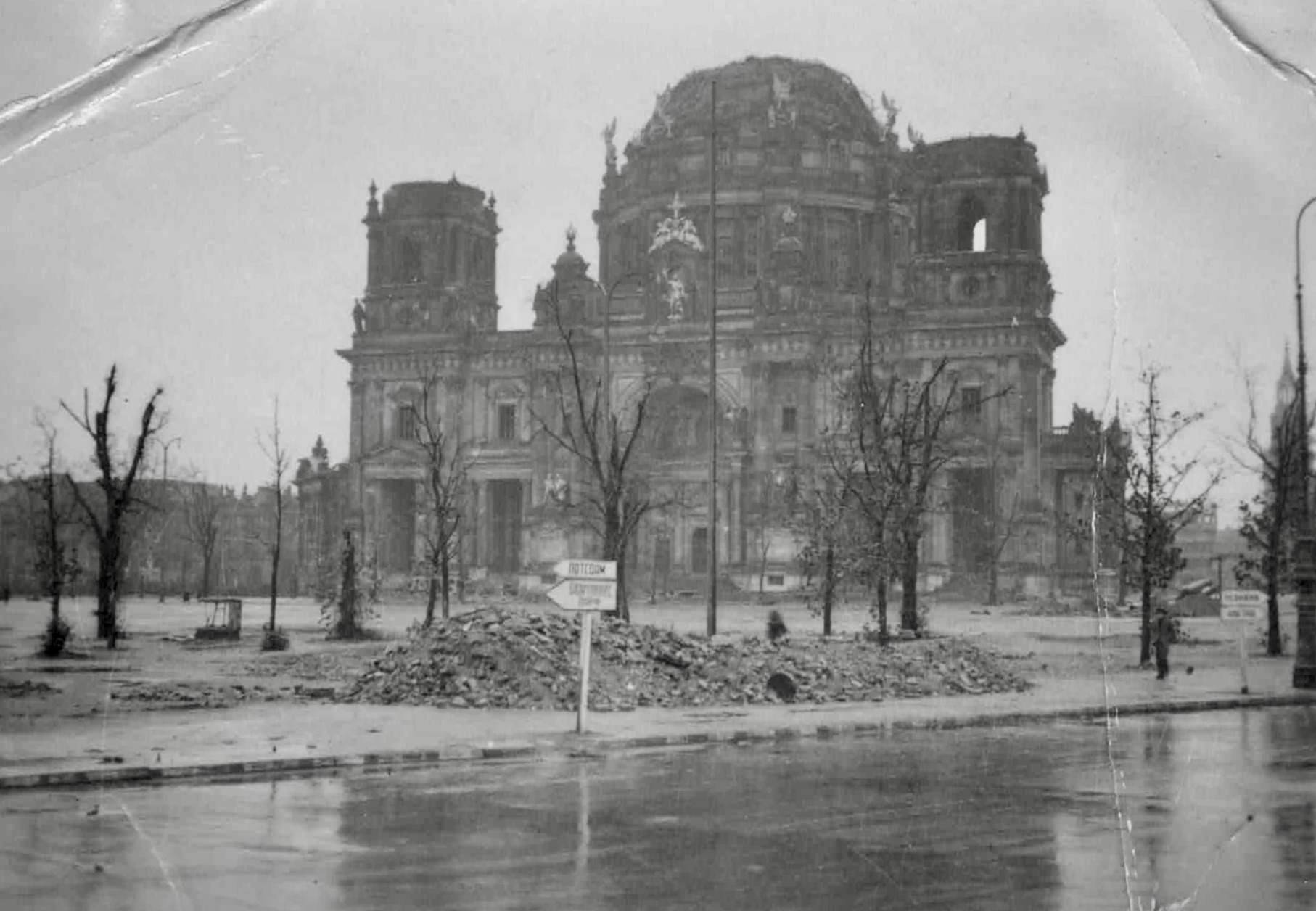
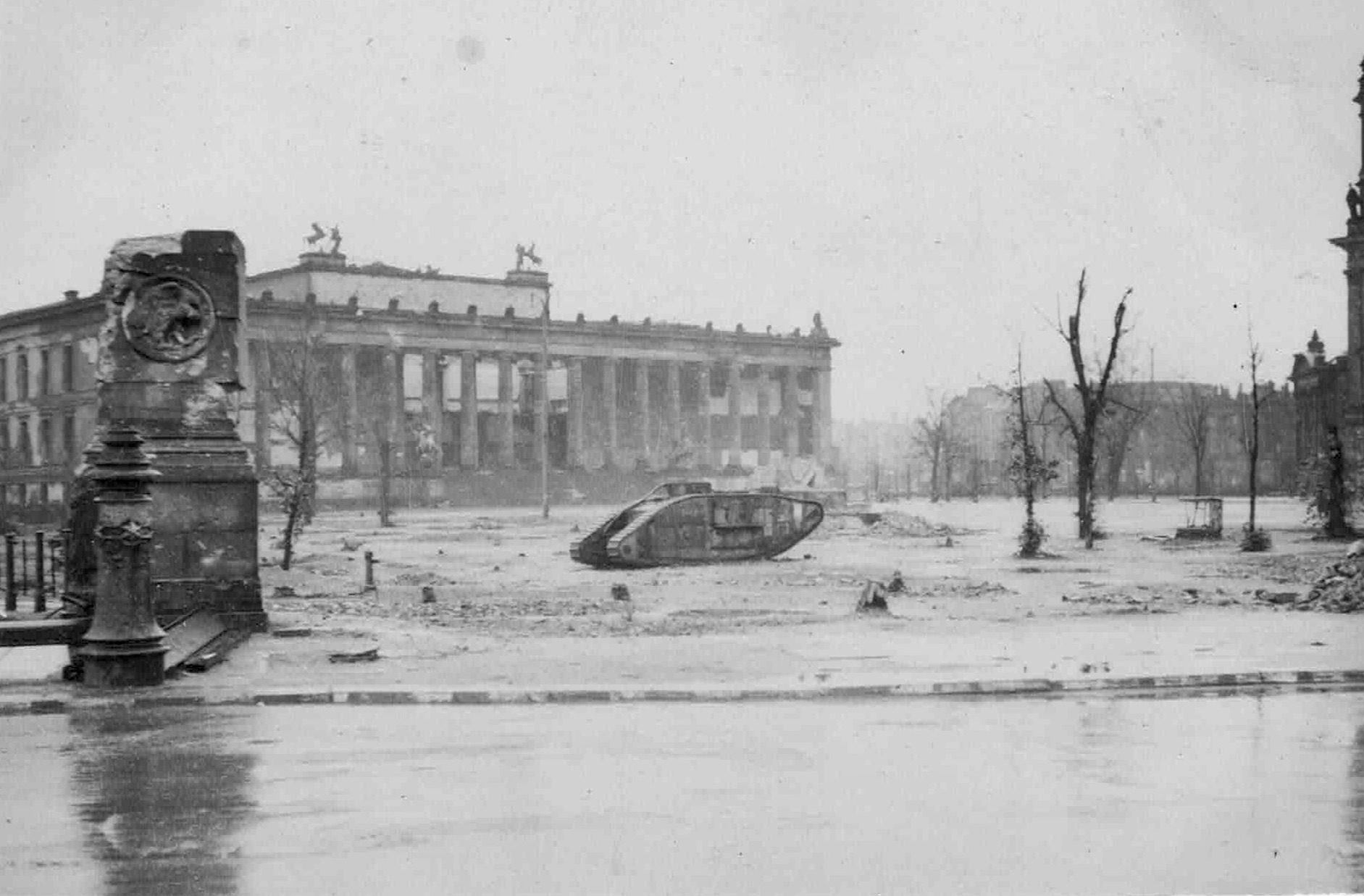
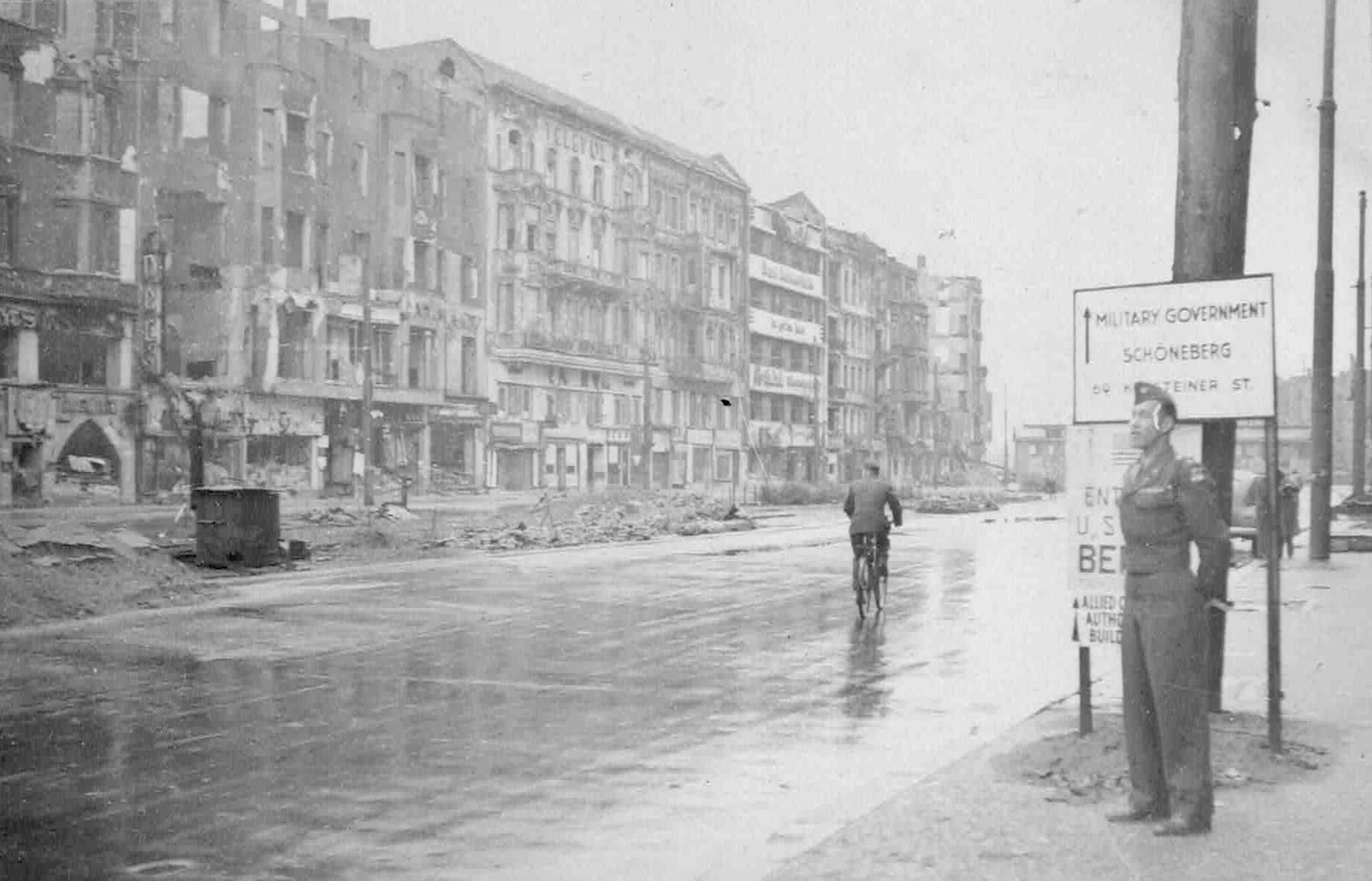
By the end of World War II, Berlin was no longer a city so much as a vast field of ruins. After enduring 363 air raids and a final, catastrophic ground assault, the German capital lay shattered—famously described by its own residents as a heap of rubble. Street by street, block by block, the urban fabric had been torn apart, leaving behind a landscape of collapsed buildings, twisted steel, and drifting ash.
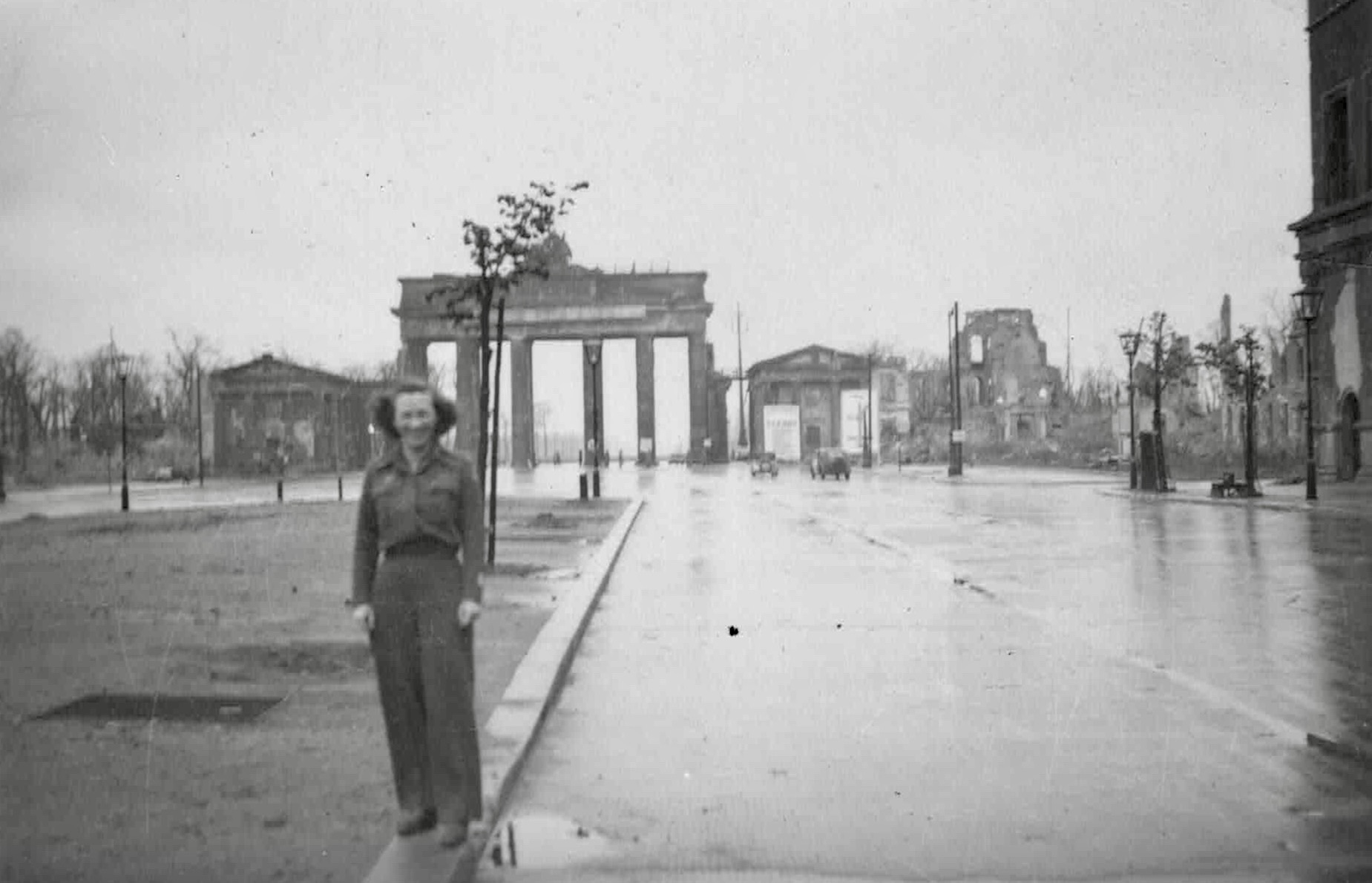
Flo at the Brandenburg Gate, built in 1791. It would soon be incorporated into the Berlin Wall, dividing the city into East and West sectors during the Cold War.
Nearly 80 percent of Berlin’s city center had been destroyed. Across the wider metropolis, some 600,000 apartments were reduced to dust and broken brick. Infrastructure collapsed alongside homes: in the final days of fighting, 128 of the city’s 226 bridges were blown apart, a quarter of the subway system was deliberately flooded, and running water, electricity, and rail transport virtually ceased to function. Iconic landmarks suffered the same fate as ordinary neighborhoods. The Reichstag and Brandenburg Gate were battered by artillery and close-quarters combat, while along the grand boulevard Unter den Linden, only 16 of its 64 buildings remained standing.
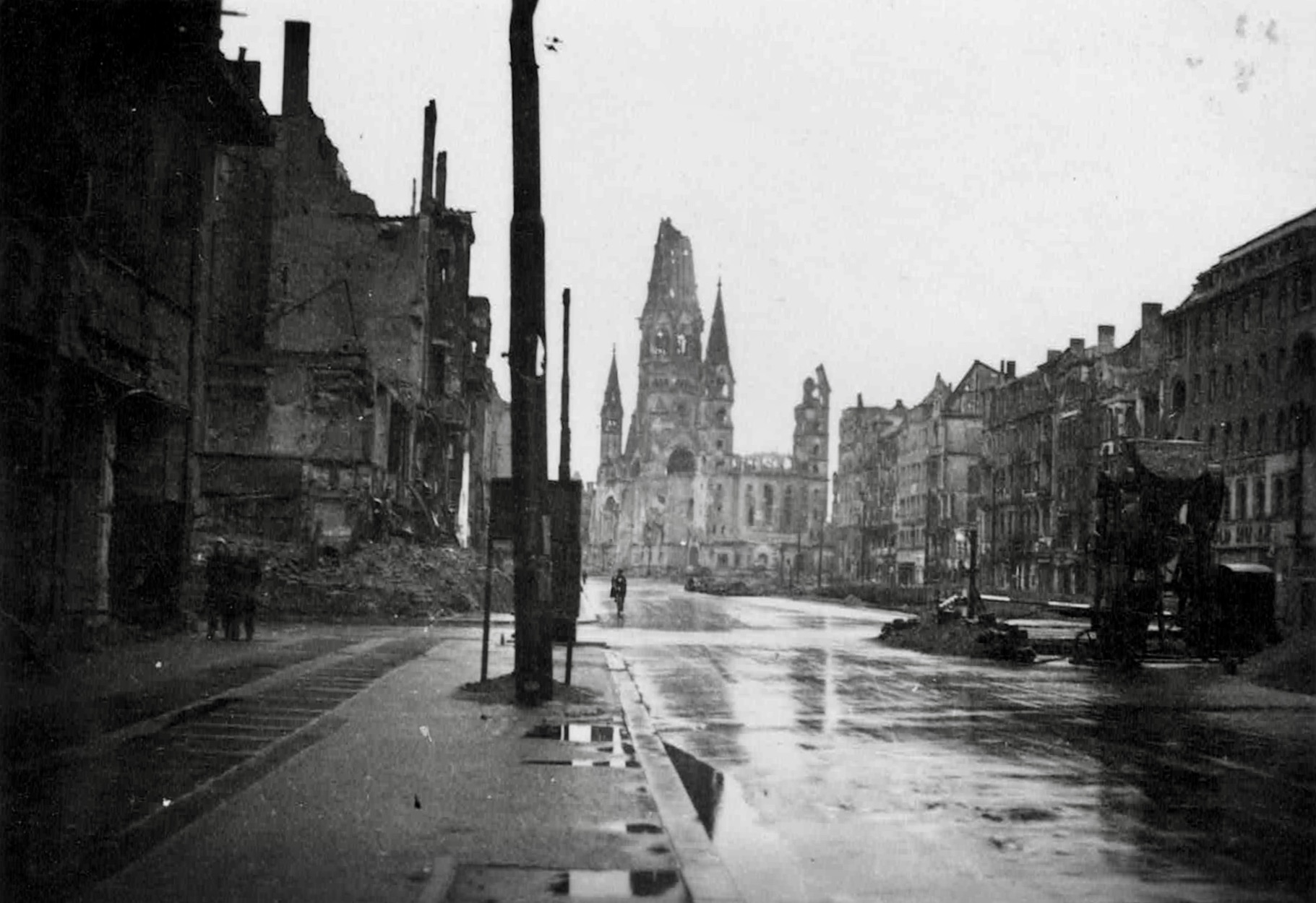
Kaiser Wilhelm Memorial Church and the city center
The human cost was staggering. Civilian deaths from bombing raids alone are estimated at between 20,000 and 50,000. During the final Battle of Berlin, another 125,000 civilians are believed to have died amid the chaos of street fighting, shelling, and firestorms. At least 450,000 people were left homeless, and the city’s population collapsed from 4.3 million in 1939 to just 2.8 million by the war’s end—a mass exodus of refugees, evacuees, and the dead.
All photos from Flo’s album
Unlike many cities that later erased the physical traces of war, Berlin chose to preserve parts of its devastation as visible memory. Bullet holes and shrapnel scars still mark walls in districts like Mitte and Charlottenburg. The shattered spire of the Kaiser Wilhelm Memorial Church stands deliberately unrepaired, a permanent anti-war monument rising from the city center. Elsewhere, mountains of rubble were piled into artificial hills—Teufelsberg and Volkspark Humboldthain—turning the wreckage of war into silent landmarks.
Some monuments survived
These images of destruction are not only records of ruin. They are reminders of the scale of collapse, the human suffering beneath the debris, and the deliberate choice to remember, rather than forget, what war reduced Berlin to in 1945.
The grand boulevard of Unter den LindenThe Berlin CathedralMajor Dan Wickersham in the US zone
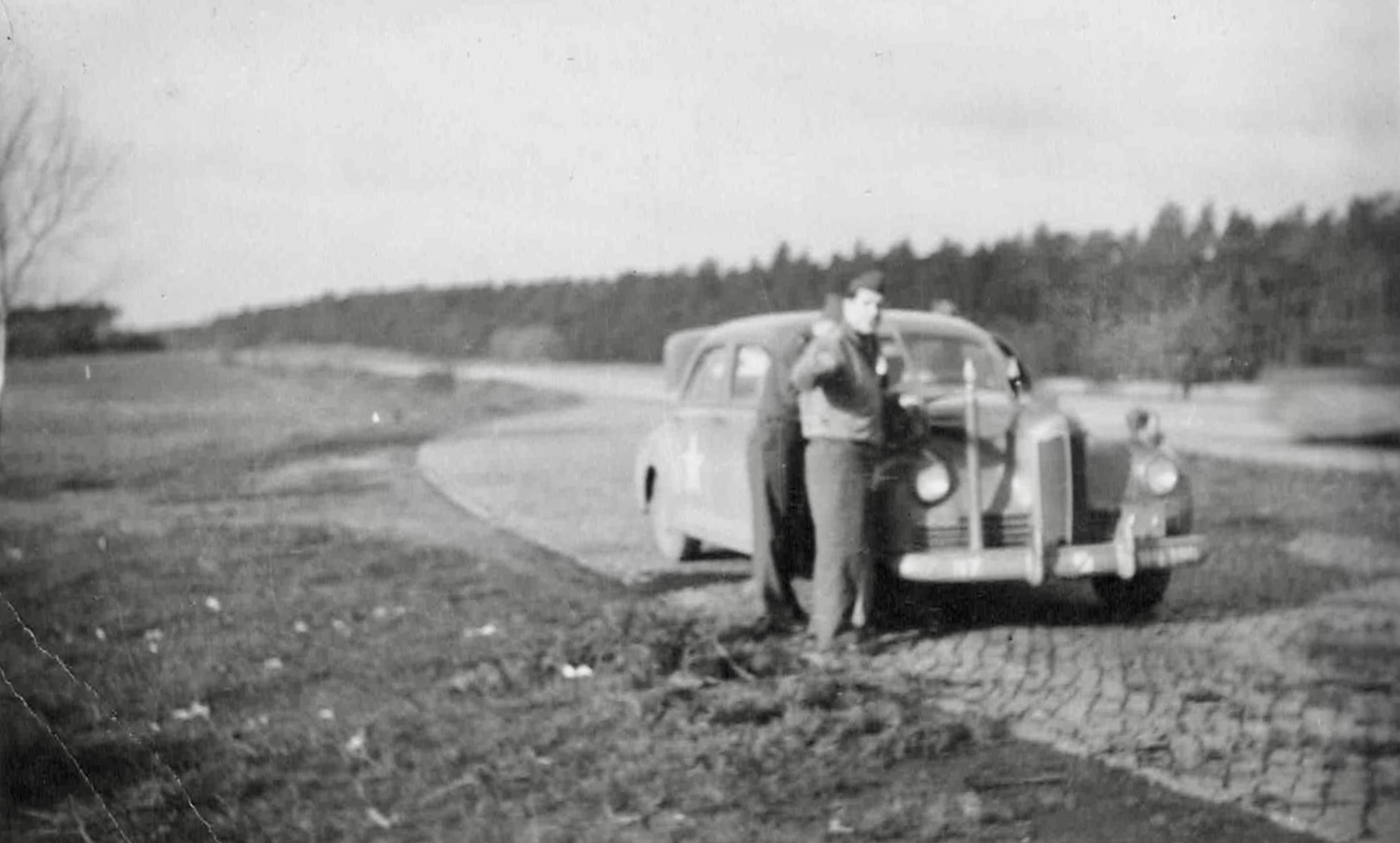
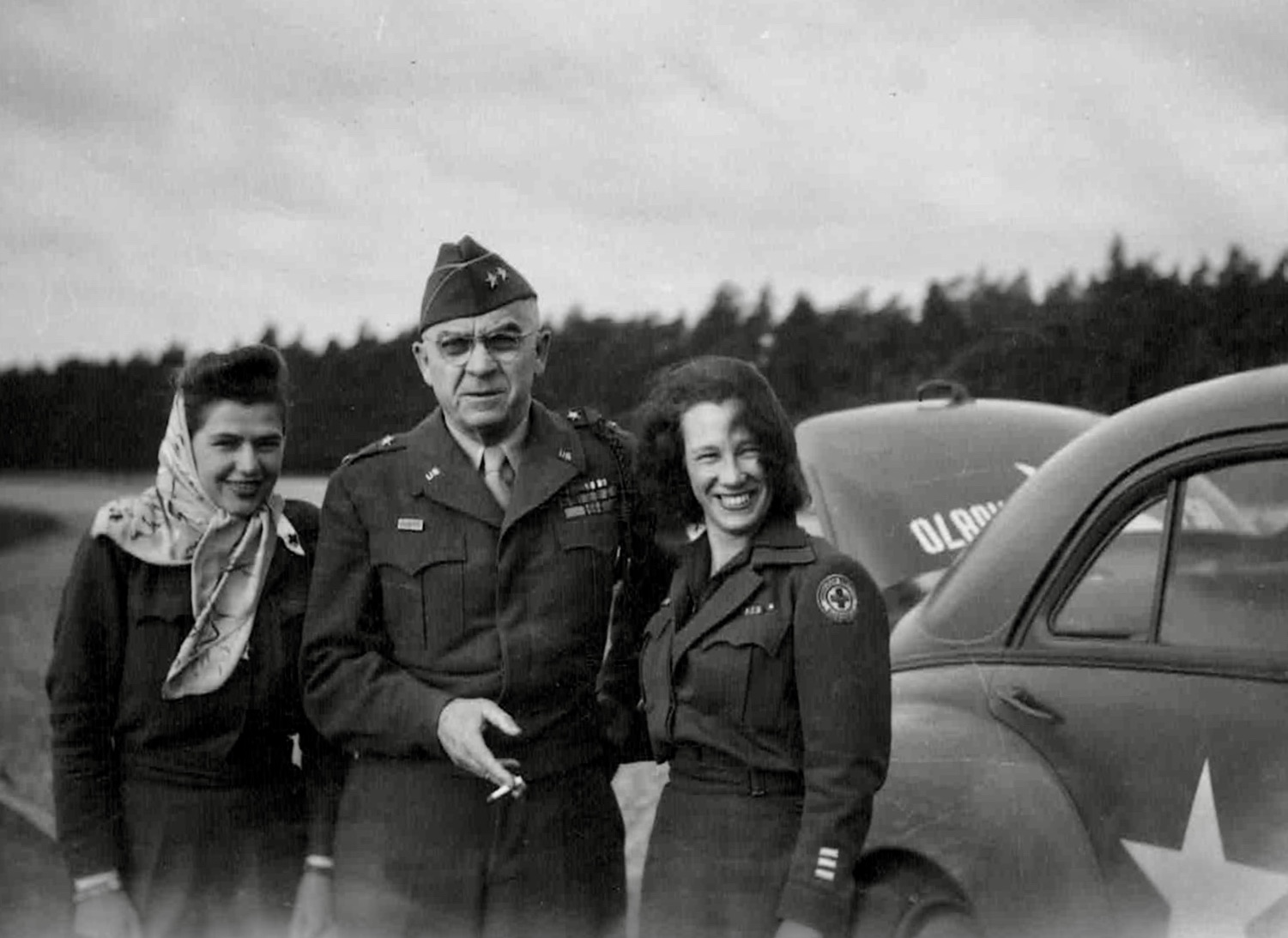
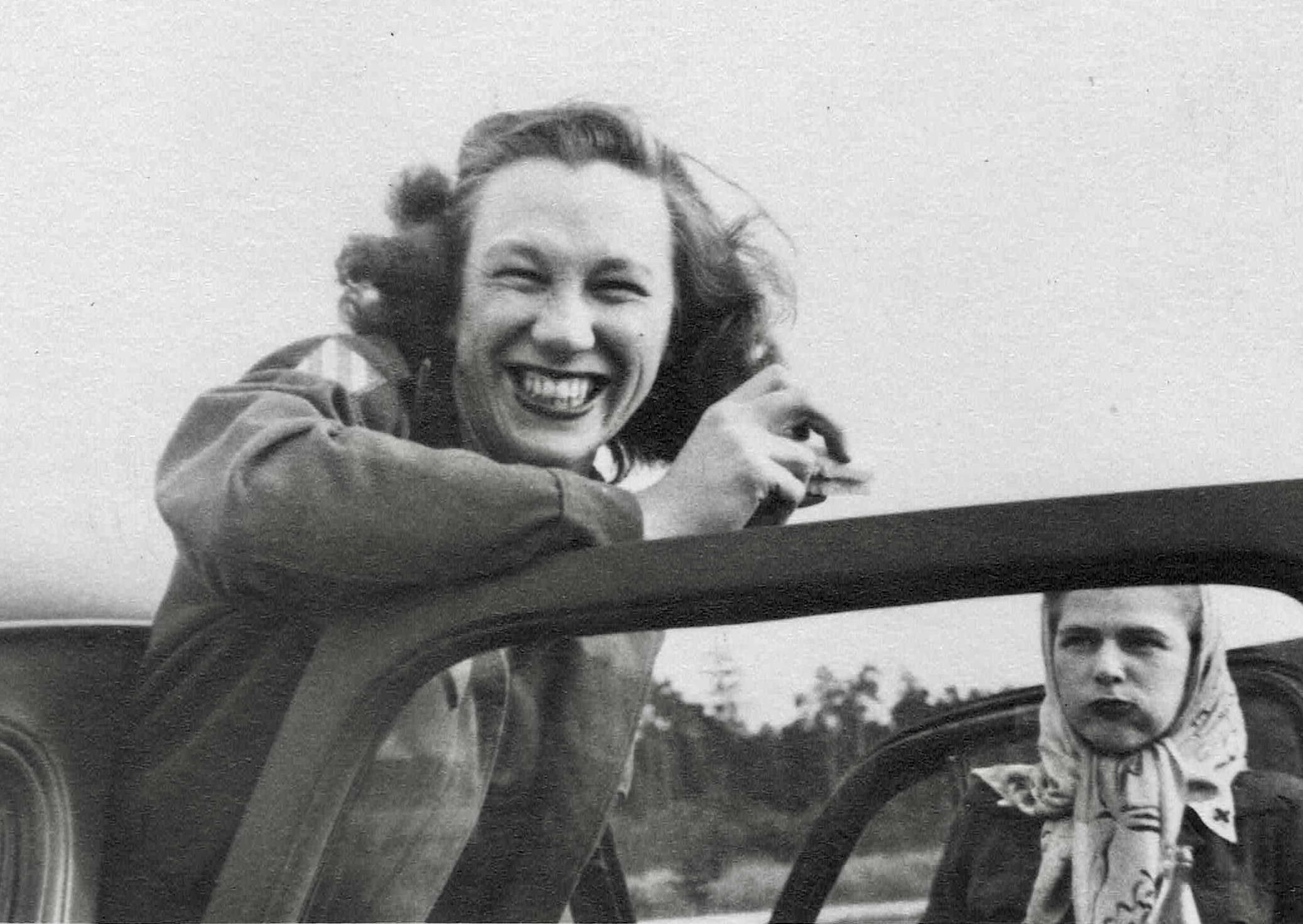
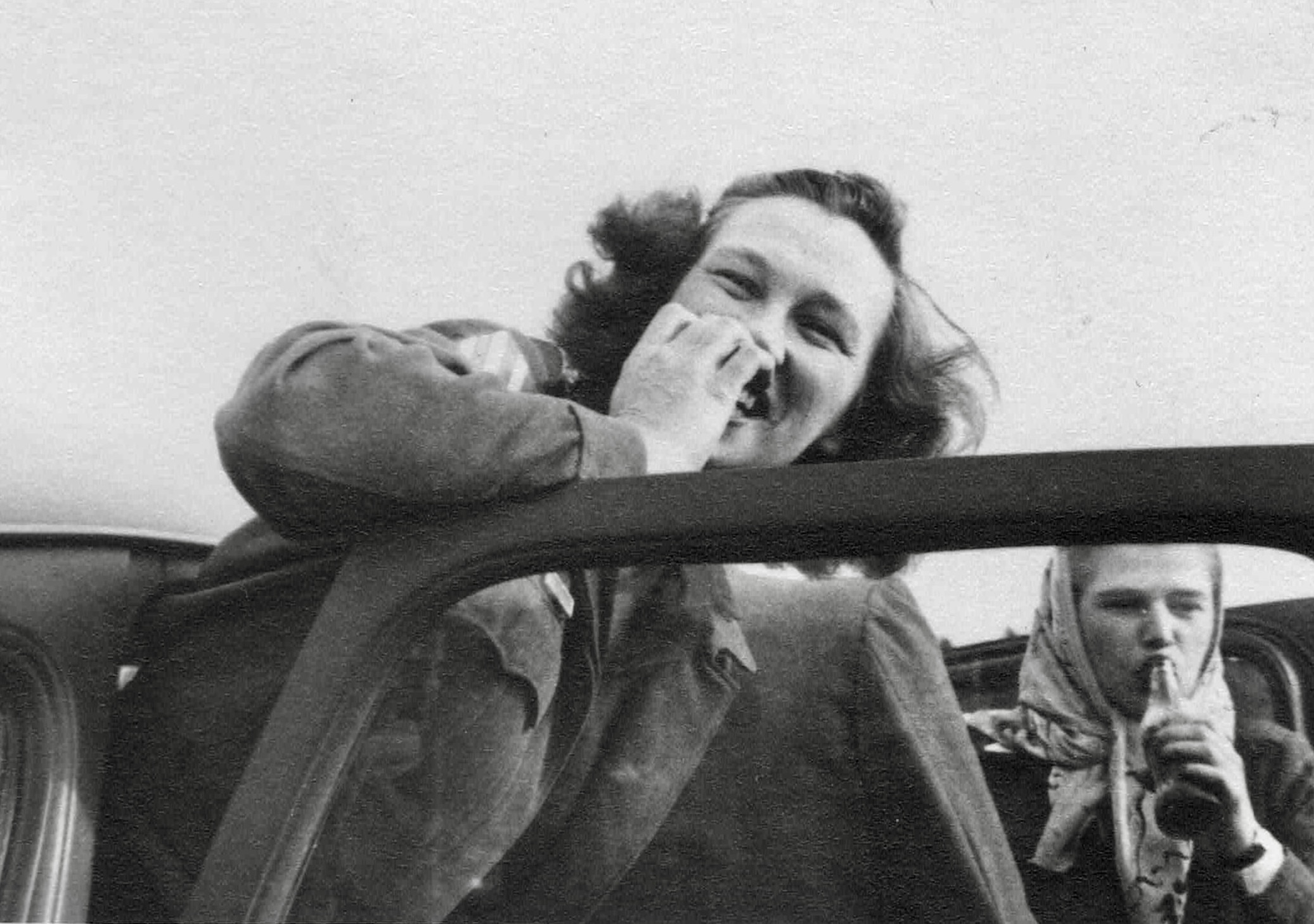
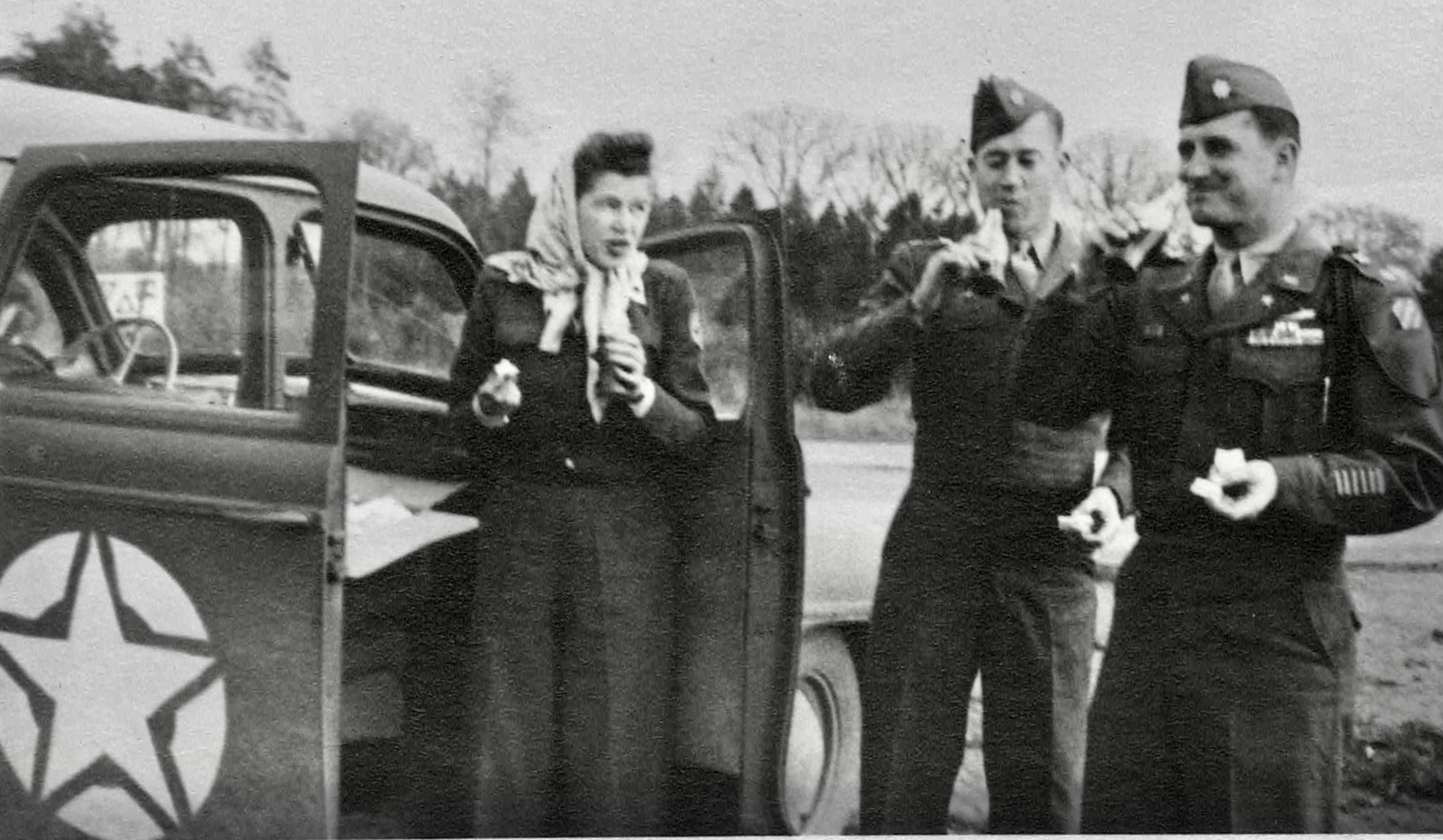
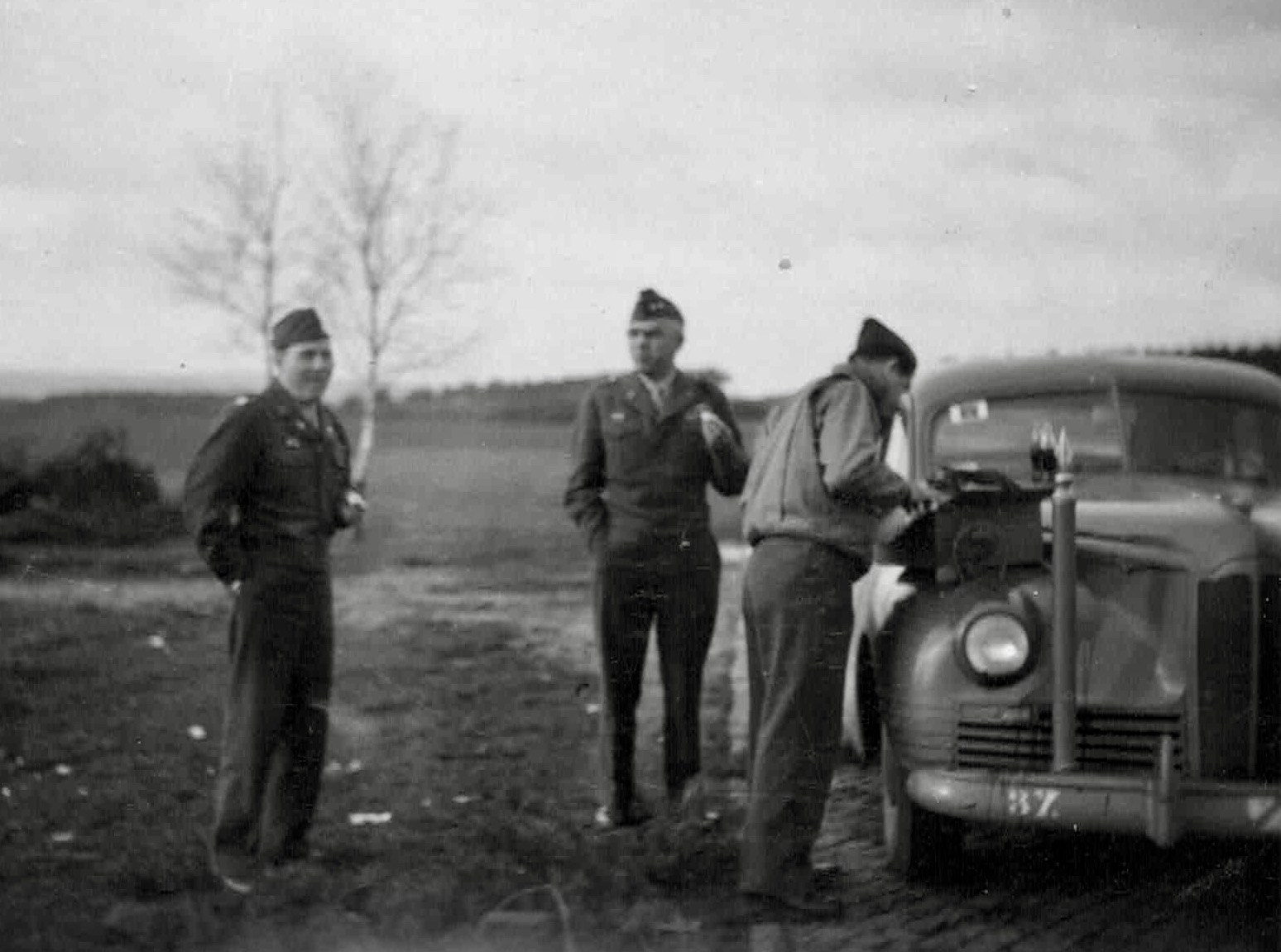
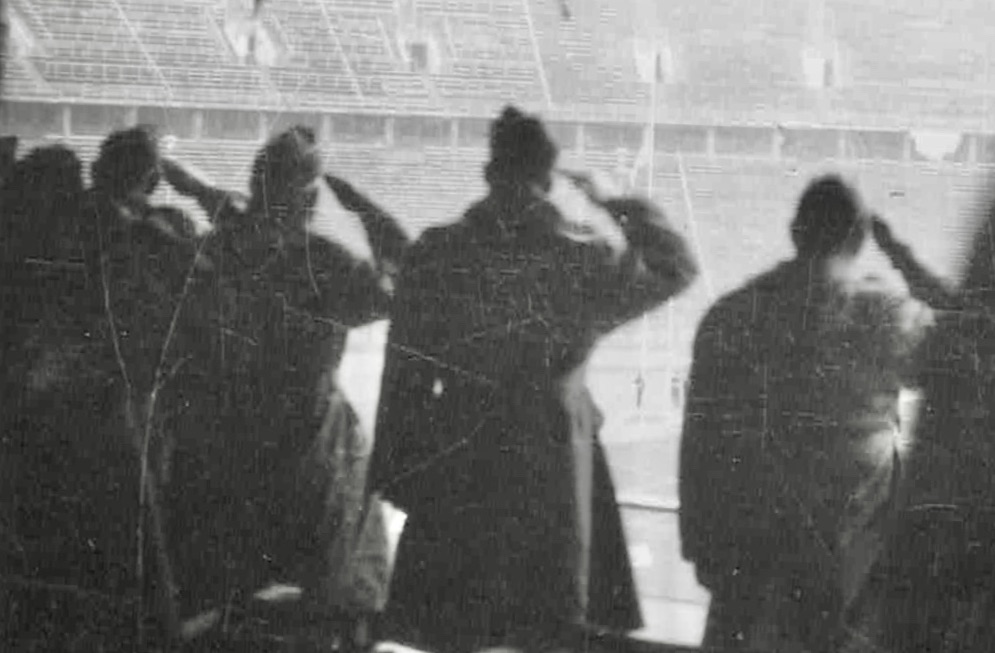
By command of Gen. Schmidt permission to attend a football game in BerlinLove the car. Mary McAuliffe, ARC; Gen. Schmidt; Flo WickHaving a little snack before taking off. Flo and MaryNo fair getting photographed while eating!Mary McAuliffe, Major Wickersham, Lt. Col. RamseyGen. Schmidt saw them off.The Third Division played the 82nd Airborne at Hitler’s Olympic stadium Nov. 11, 1945.The brass section Attention! The gigantic stadium, built for the 1936 Olympics, survived the bombings.
The agreementmarked a territorial change in the occupied zones
My Mother and Audie Murphy Ch. 93
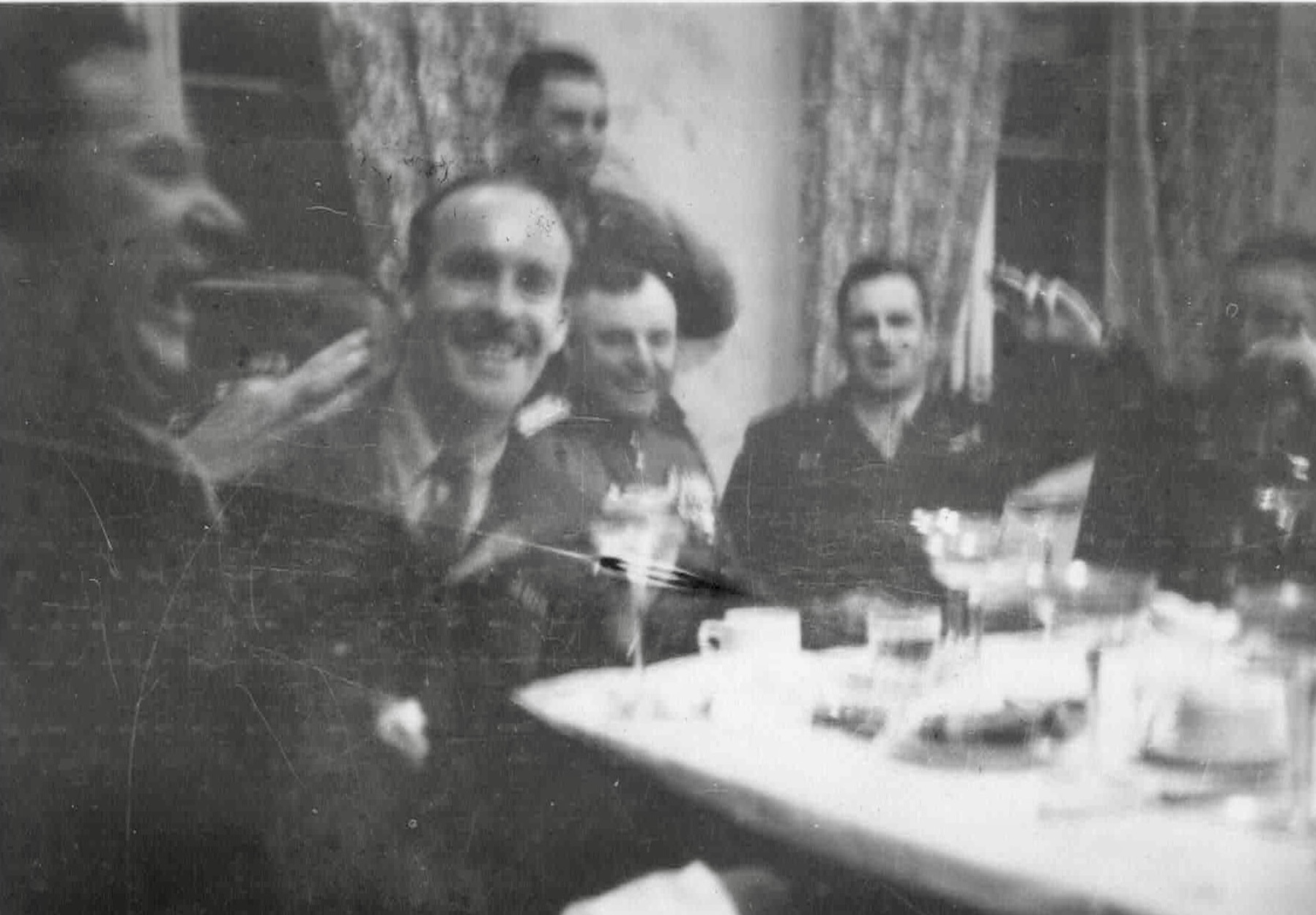
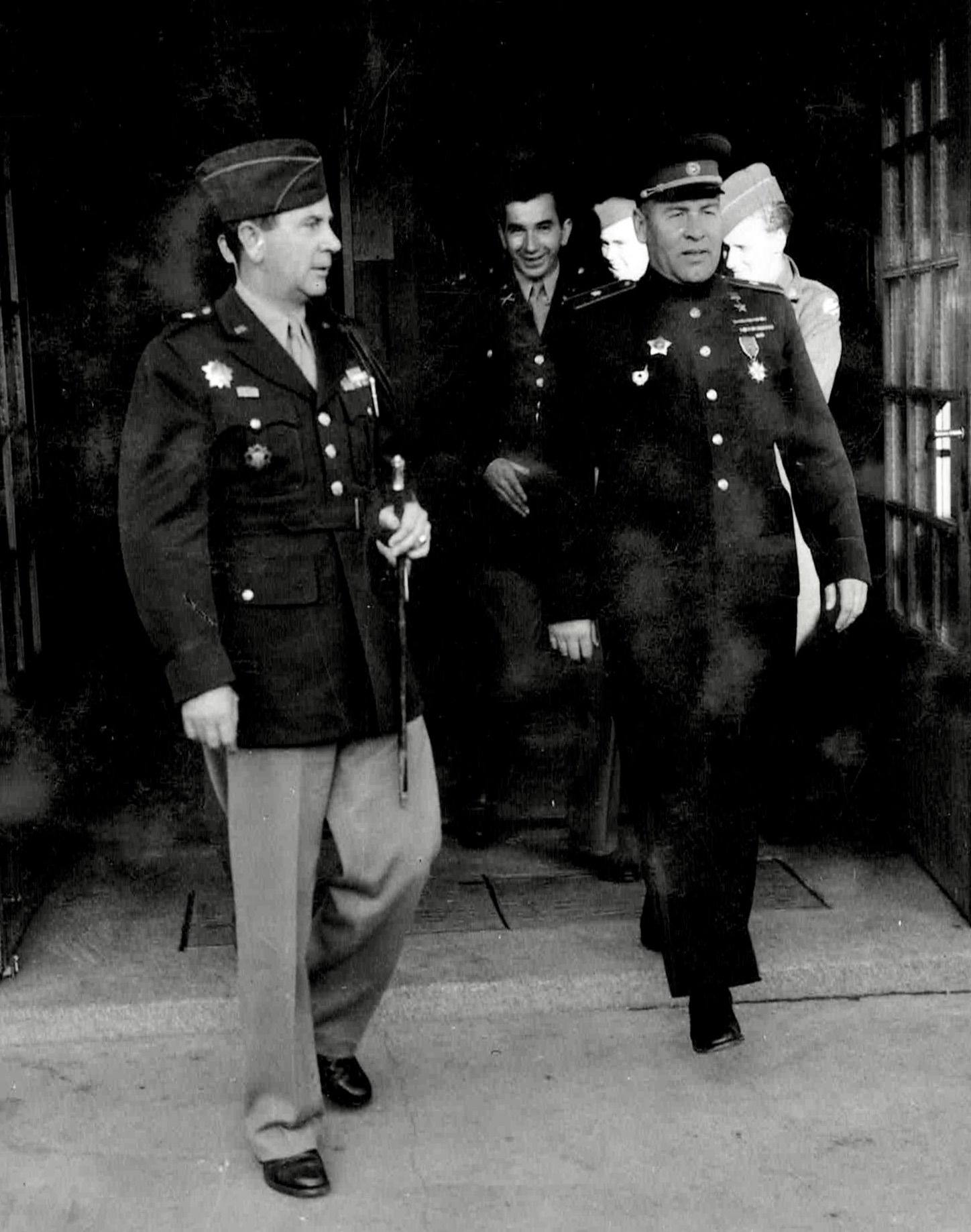
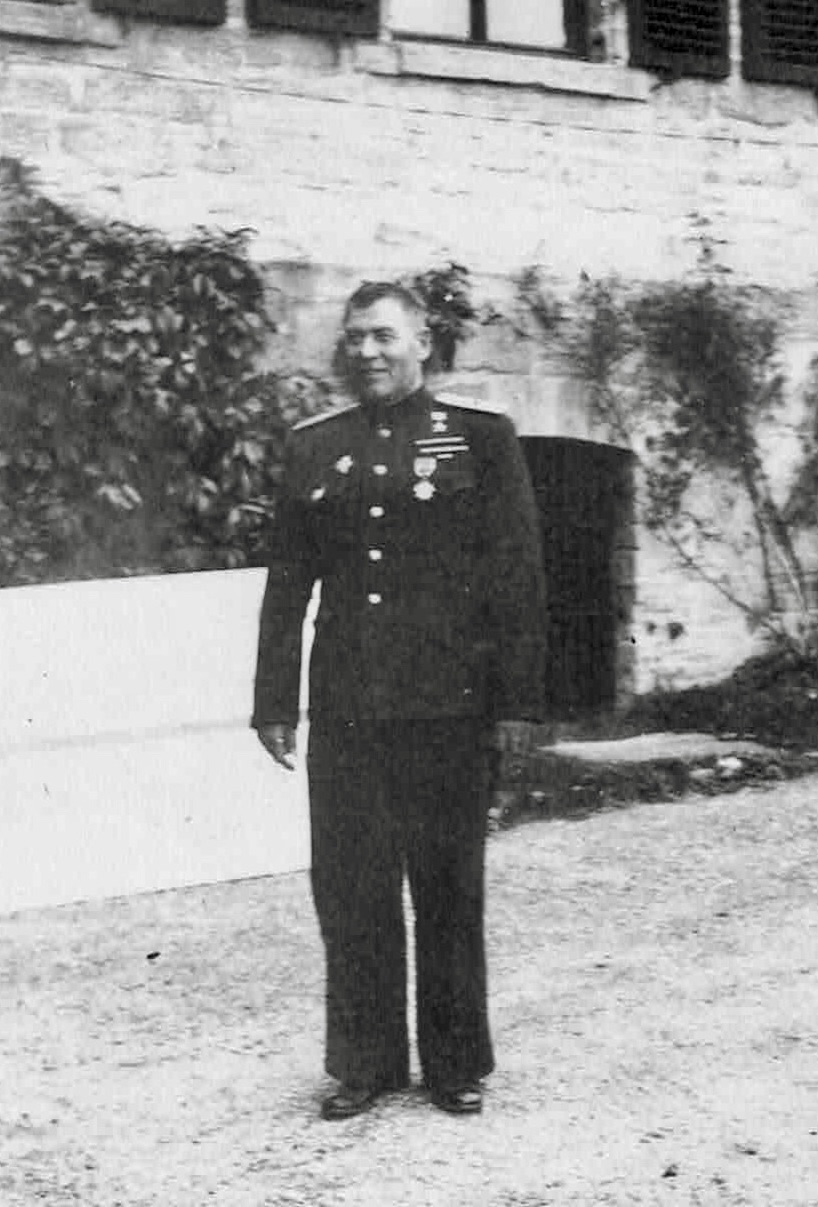
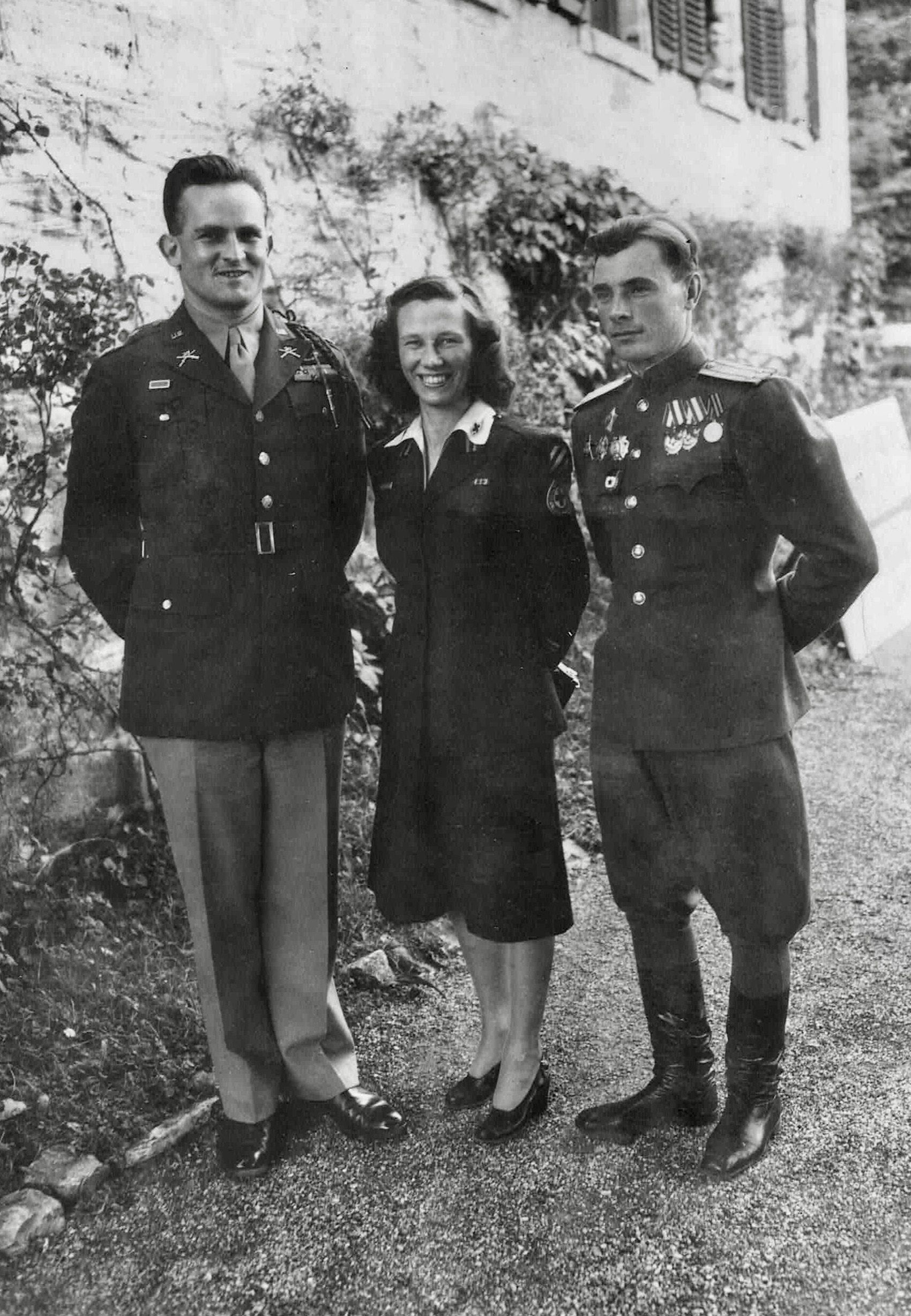
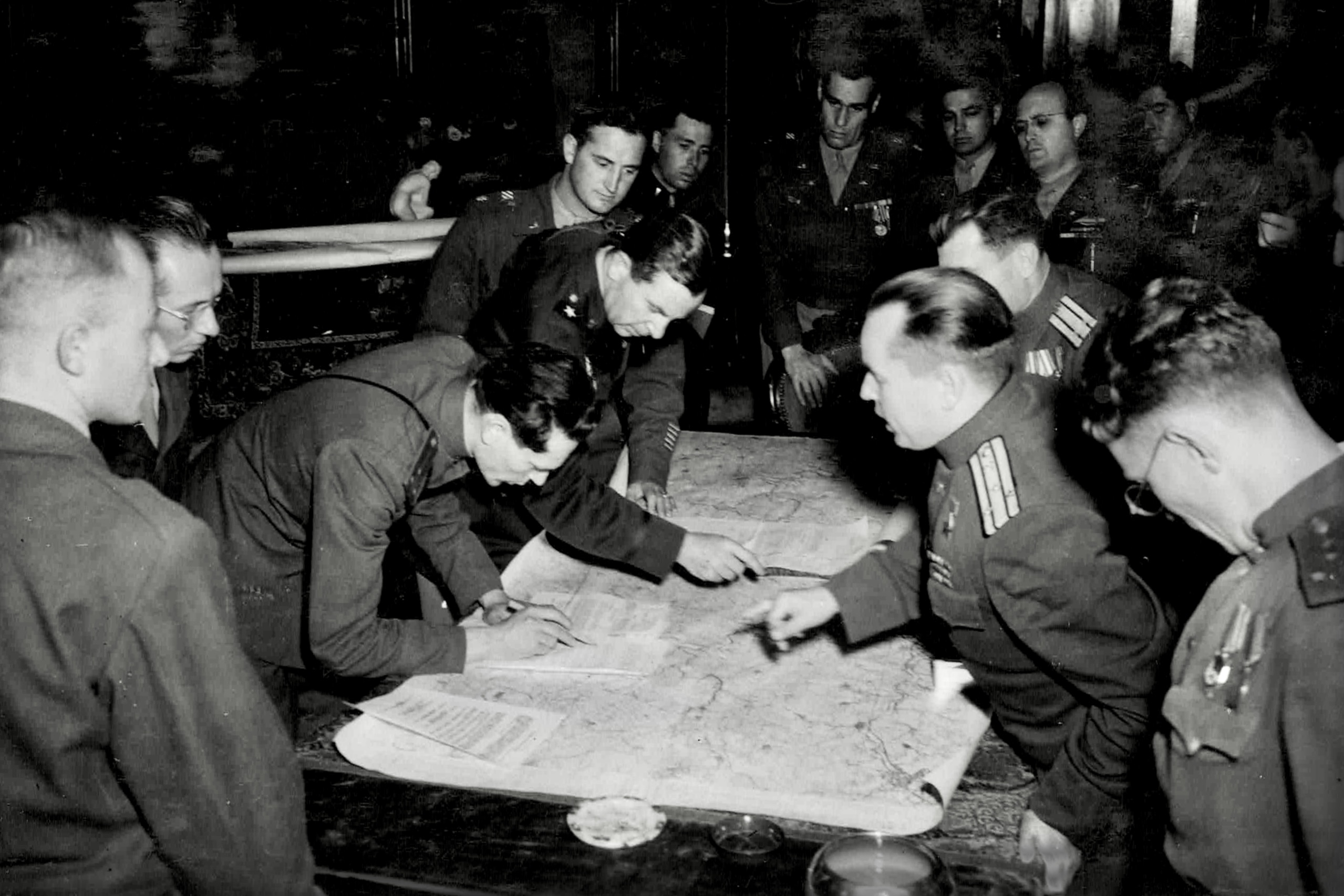
The meeting took place at the Russian and American liaison headquarters in Wanfried.
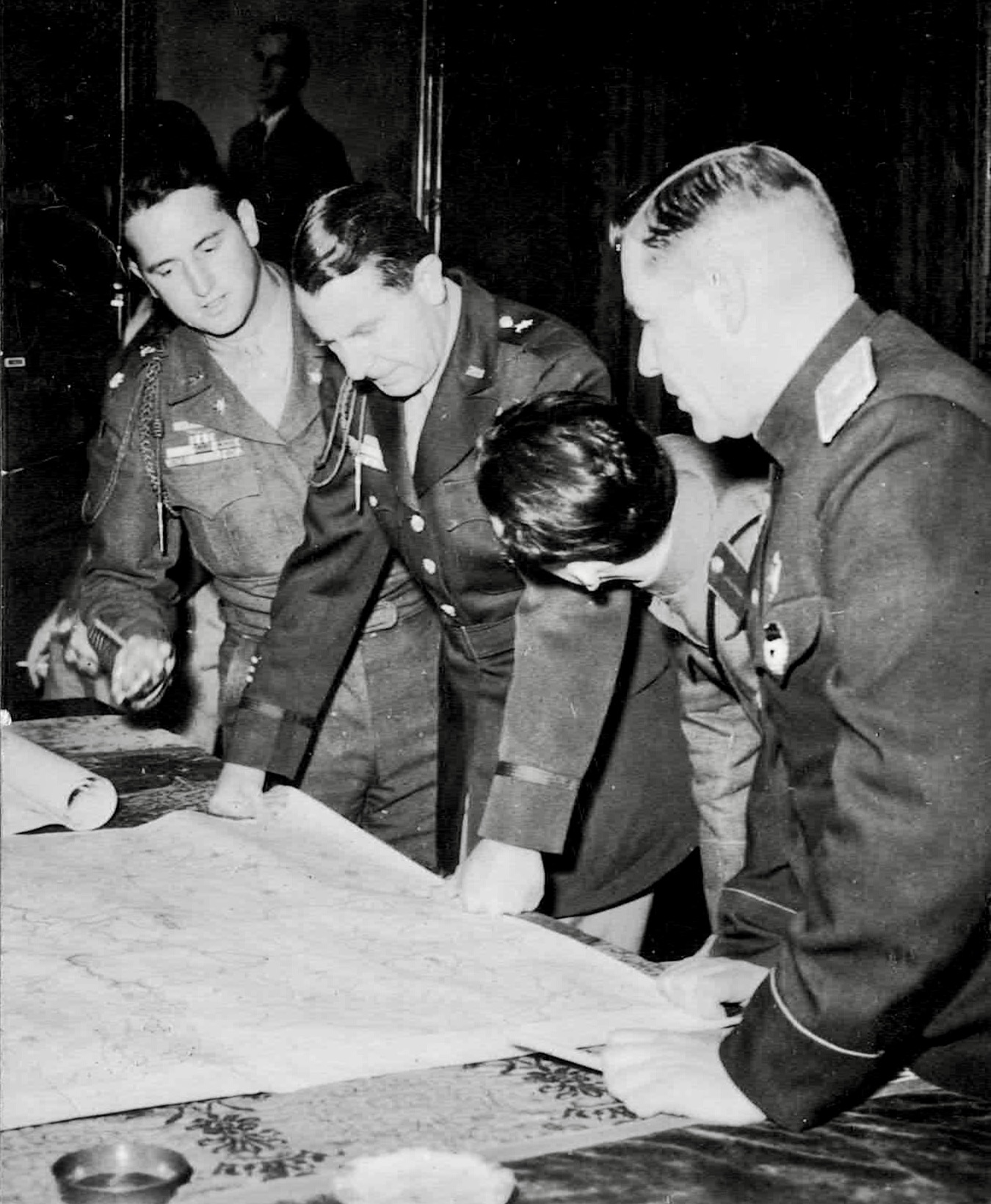
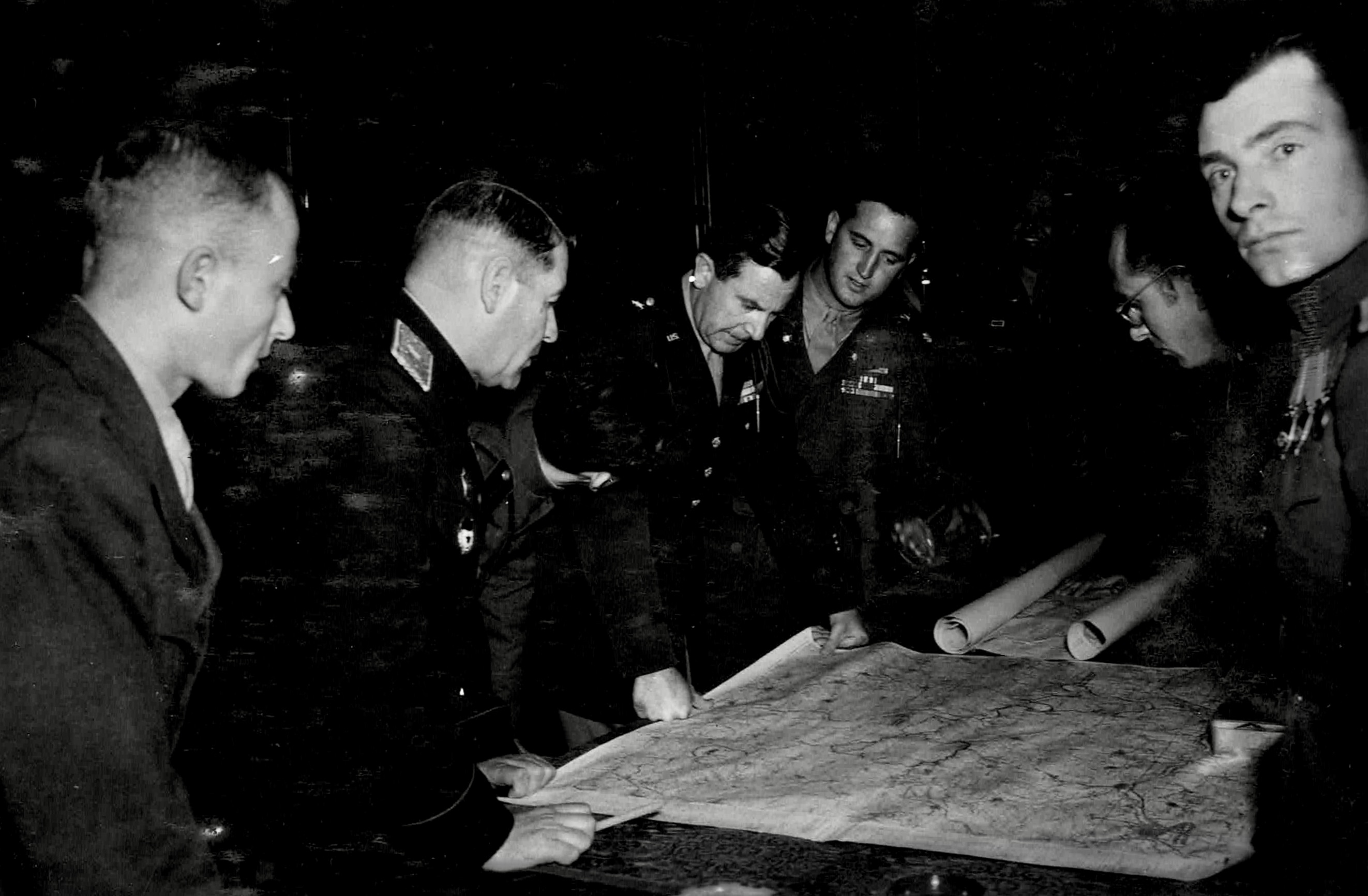
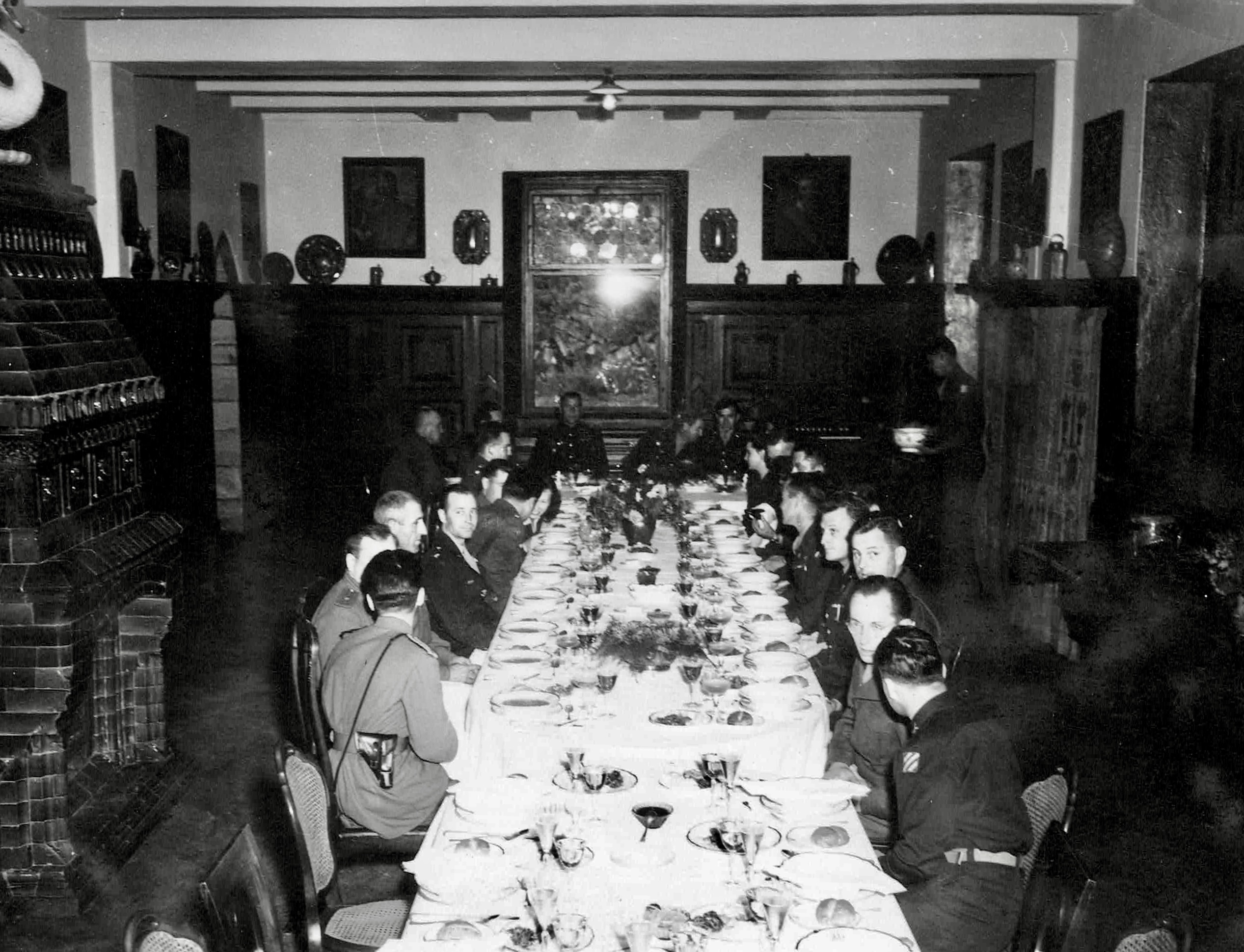
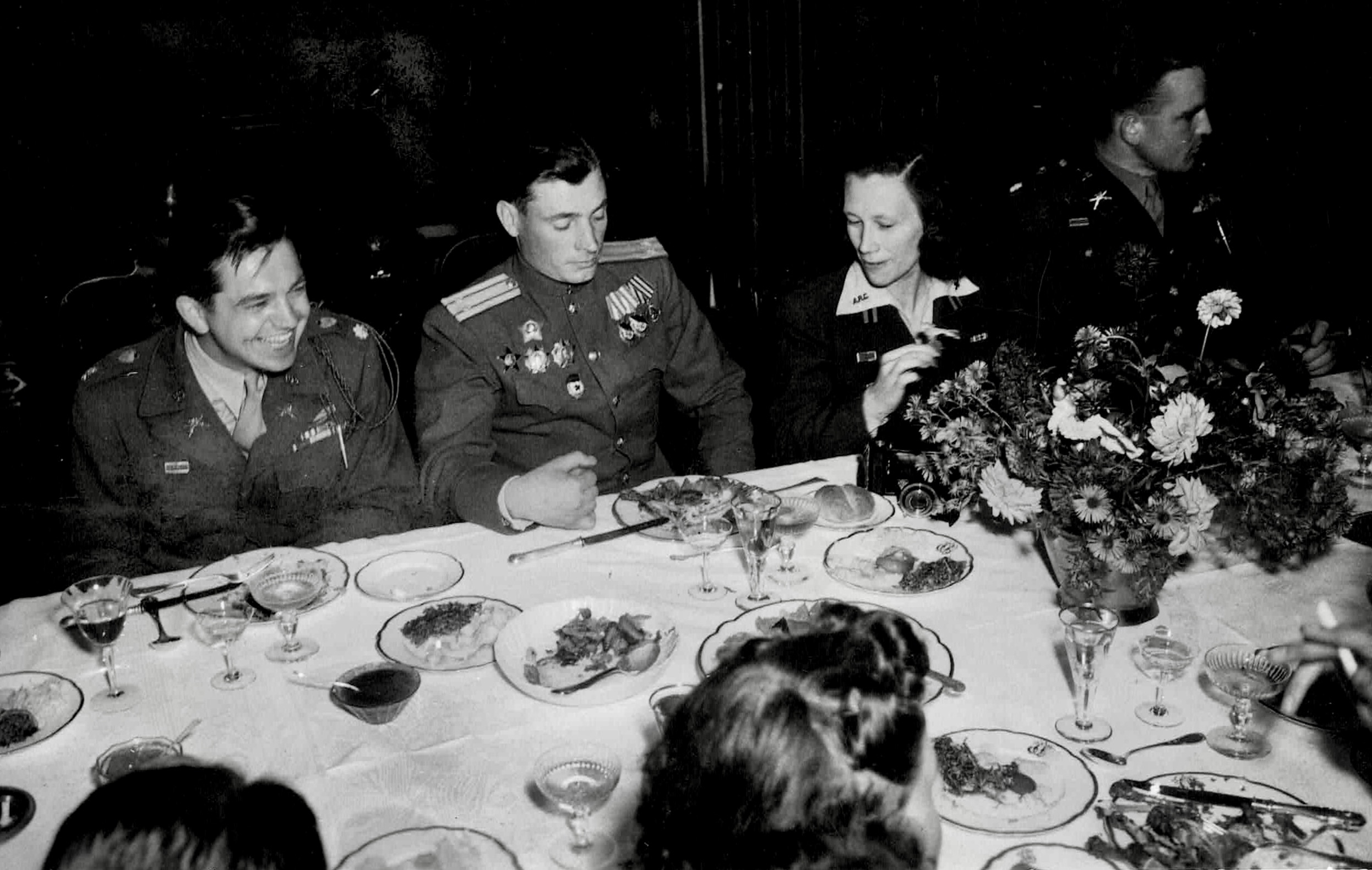
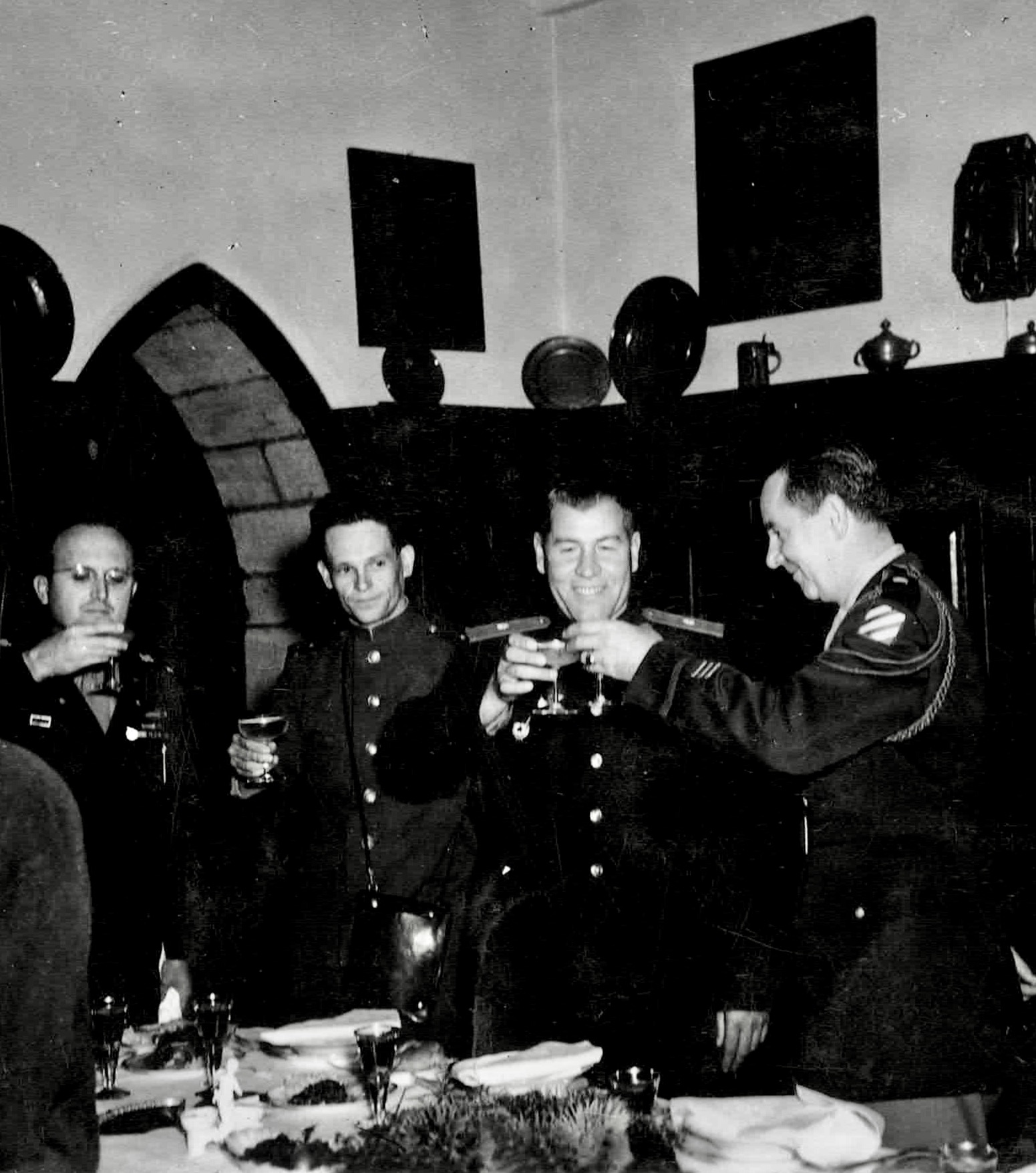
Flo attended the historic Russian–American conference in Wanfried, Germany, where the Wanfried Agreement was signed on September 17, 1945. The agreement was a post–World War II territorial exchange between U.S. and Soviet occupation authorities, finalized in English and Russian, to resolve a logistical problem along the Bebra–Göttingen railway. A roughly 2.7-mile stretch of this crucial rail line briefly crossed into the Soviet zone near Wanfried, disrupting traffic vital to U.S. connections between southern Germany and the American-controlled port of Bremerhaven. To secure uninterrupted U.S. control of the line, two villages in Soviet-occupied Thuringia were exchanged for five villages in American-occupied Hesse. The agreement, informally known as the “Whisky-Vodka Line,” stands out as a rare, peaceful, and highly localized negotiation between the two superpowers in the tense early months of the occupation.
Figuring out the new borders between occupations zonesFlo’s head sticks out on the left. It looks like there was one other female at the table. At least one participant wore a gun to lunch.Flo sitting next to Russian regimental CO. Col. Michael Paschchenko. Flo told me she had a big crush on this handsome guy but neither spoke the other’s language.Agreement signed! Russian general and Gen. Sexton toast.
Witzenhausen, Germany, lay within the American occupation zone near the border with the Soviet zone, making it strategically important for intelligence and personnel transfers. In 1945, U.S. forces used the town during Operation Paperclip to evacuate German rocket scientists, including Wernher von Braun, from Bleicherode to prevent their capture by advancing Soviet troops, underscoring Witzenhausen’s role in the emerging Cold War. The town became a U.S. Army garrison, with military bases integrated into local life, a pattern seen across West Germany. This long American presence left lasting marks on language, consumer culture, and infrastructure, making Witzenhausen a microcosm of the broader U.S. occupation experience.
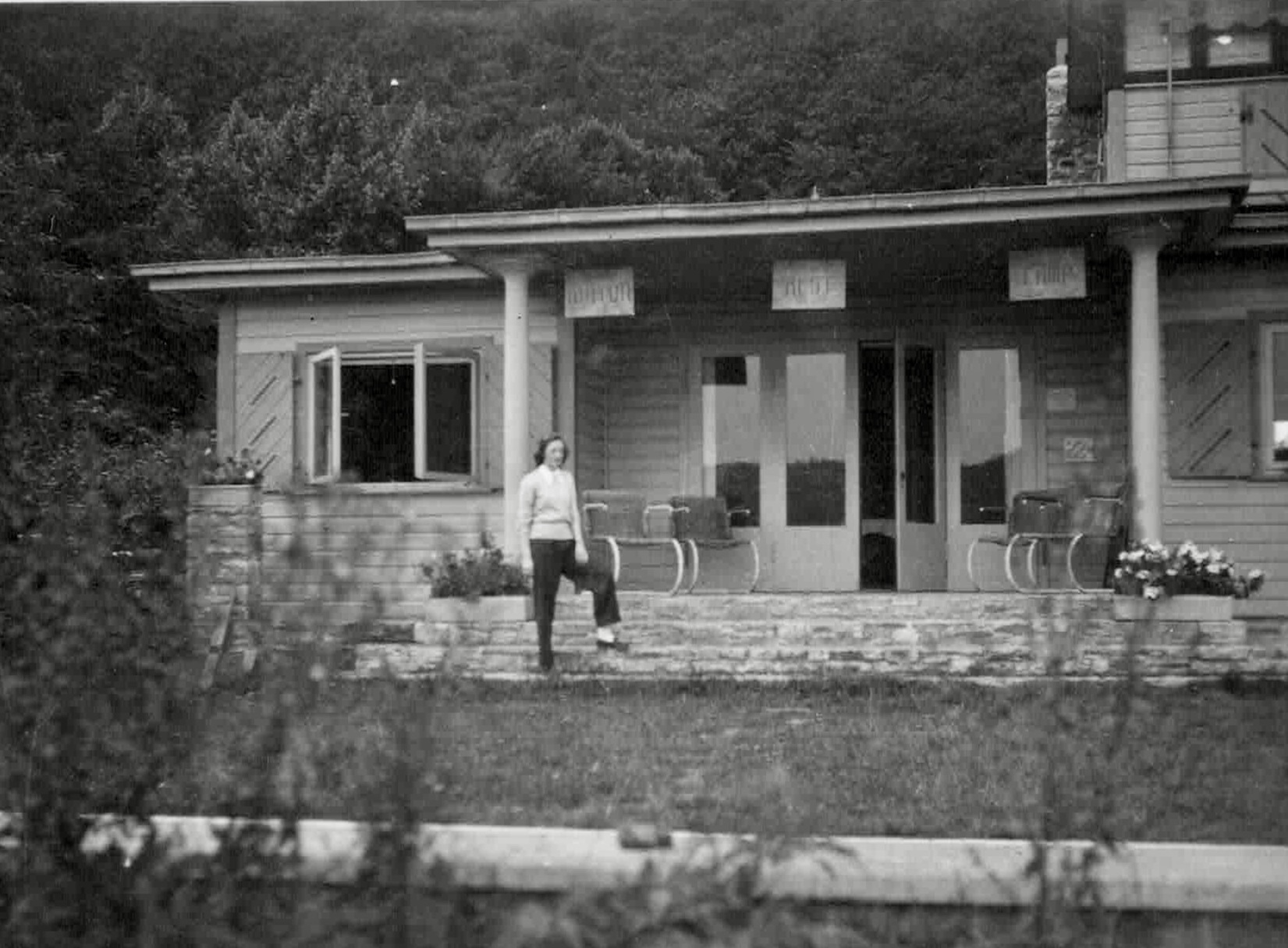
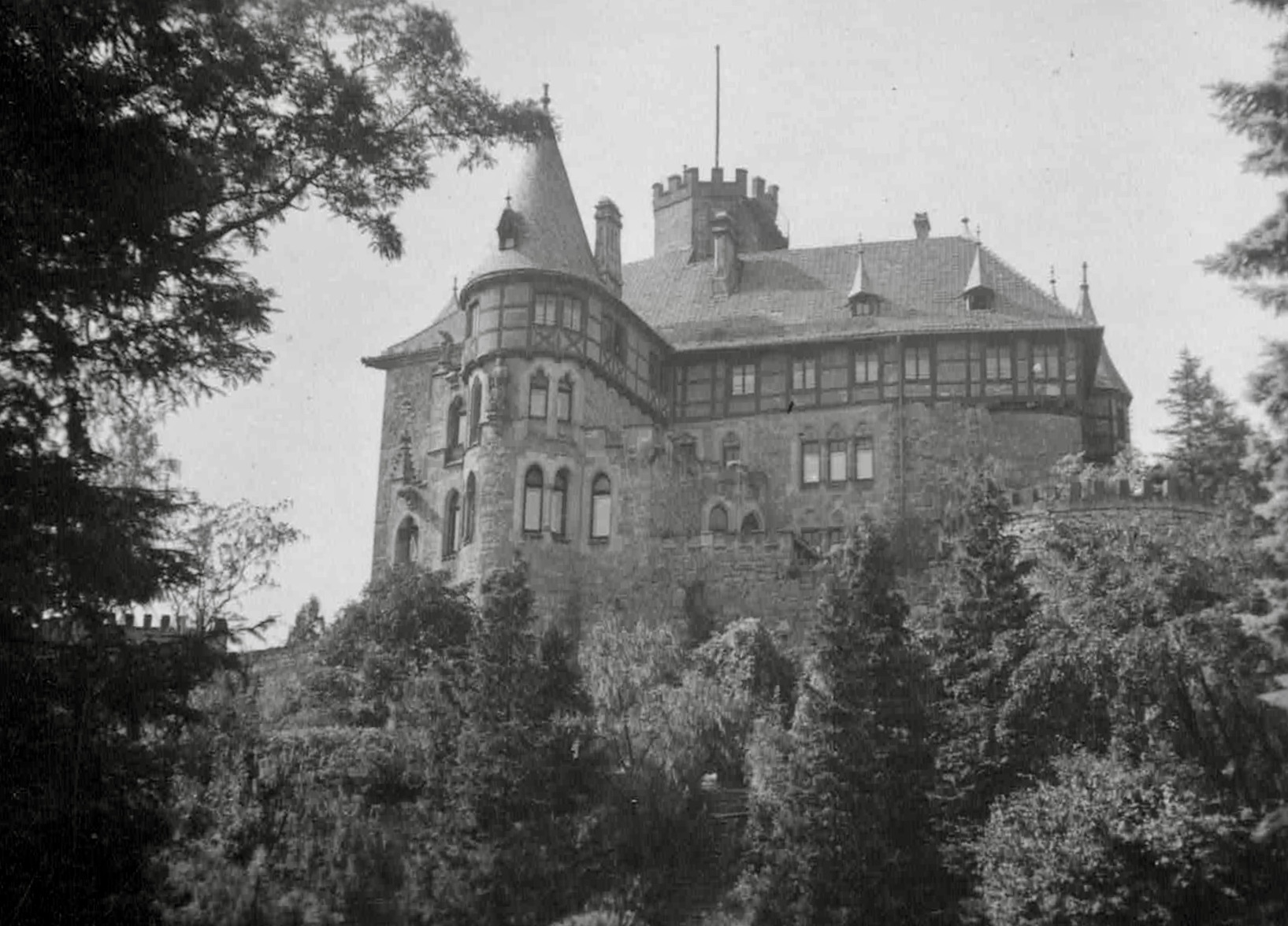
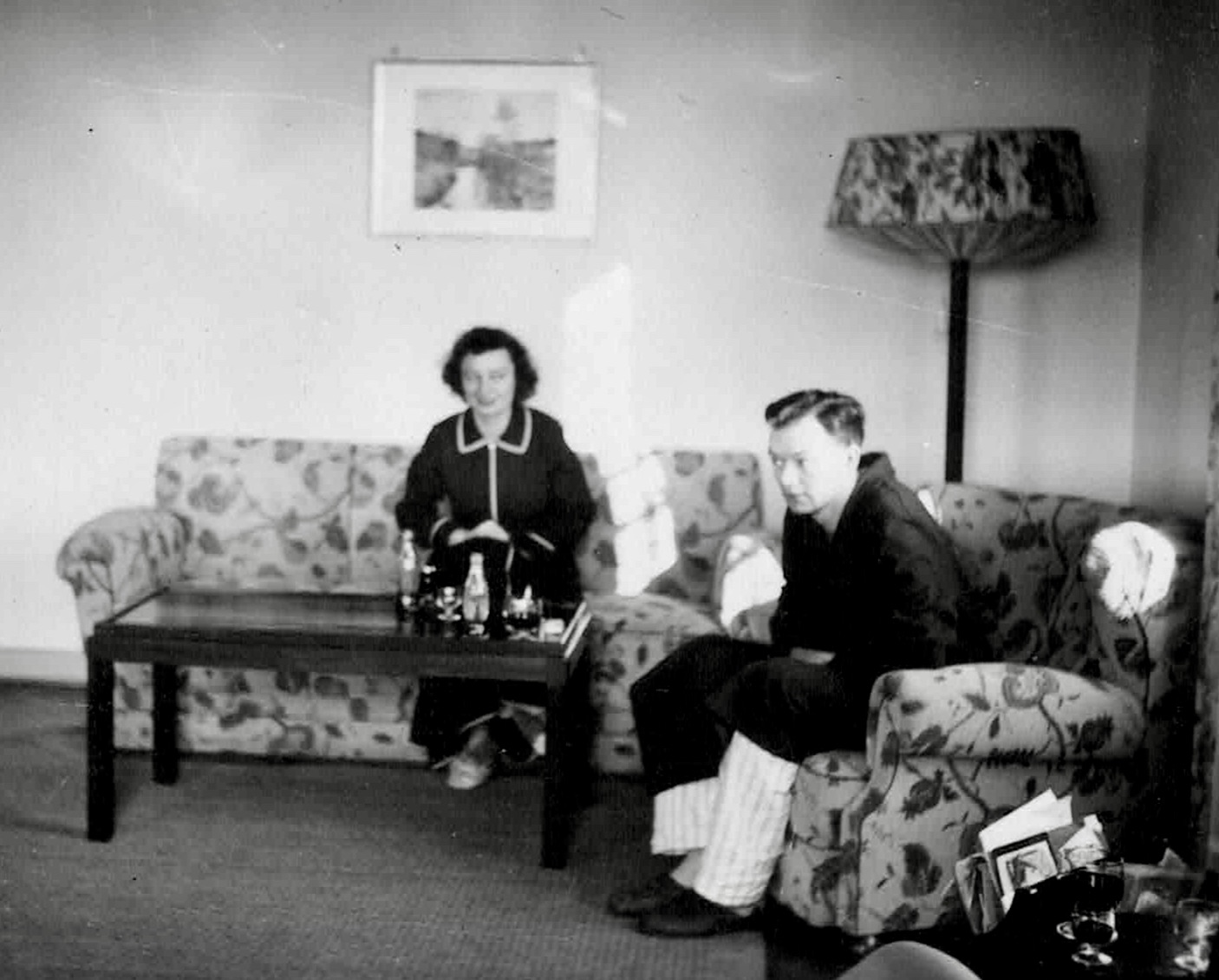
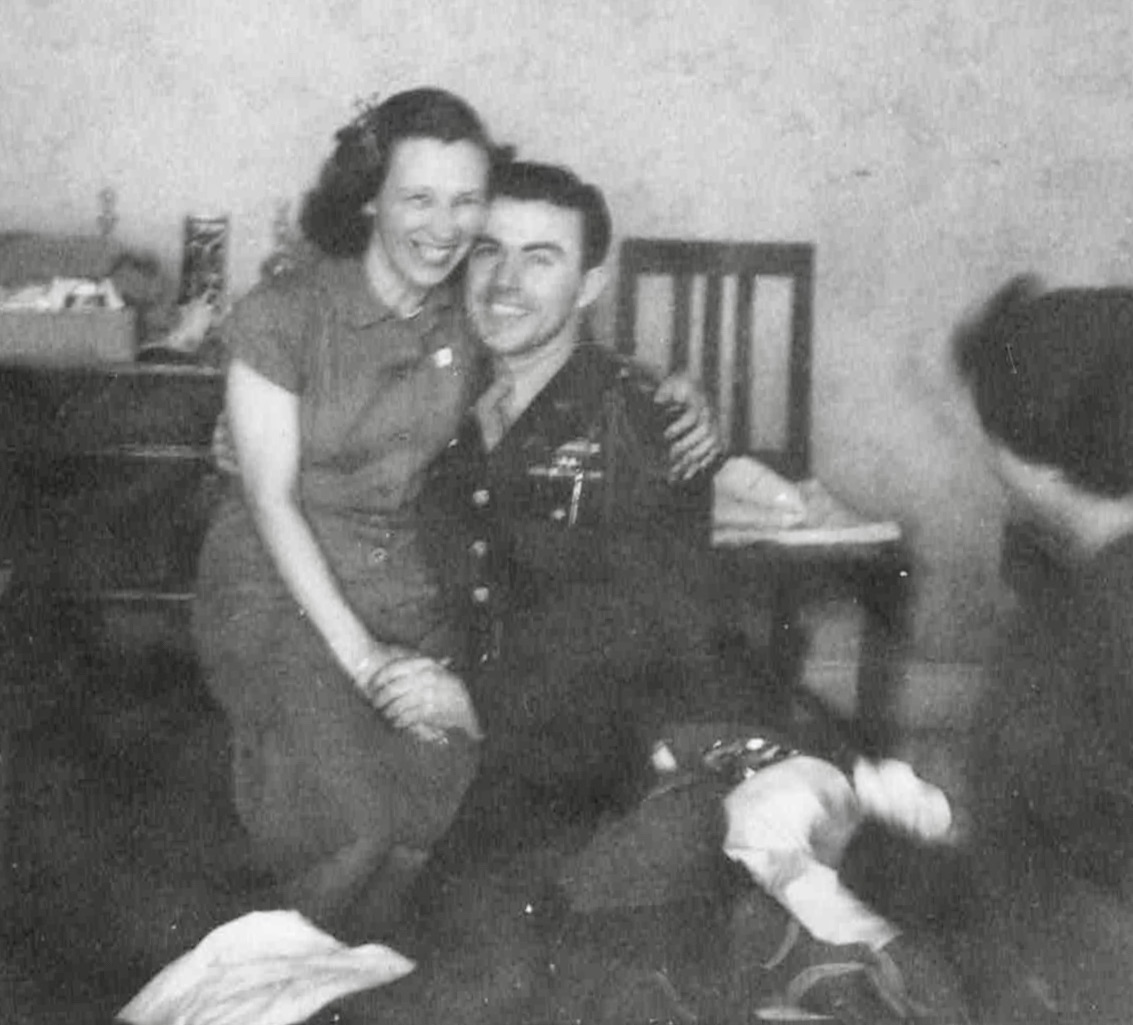
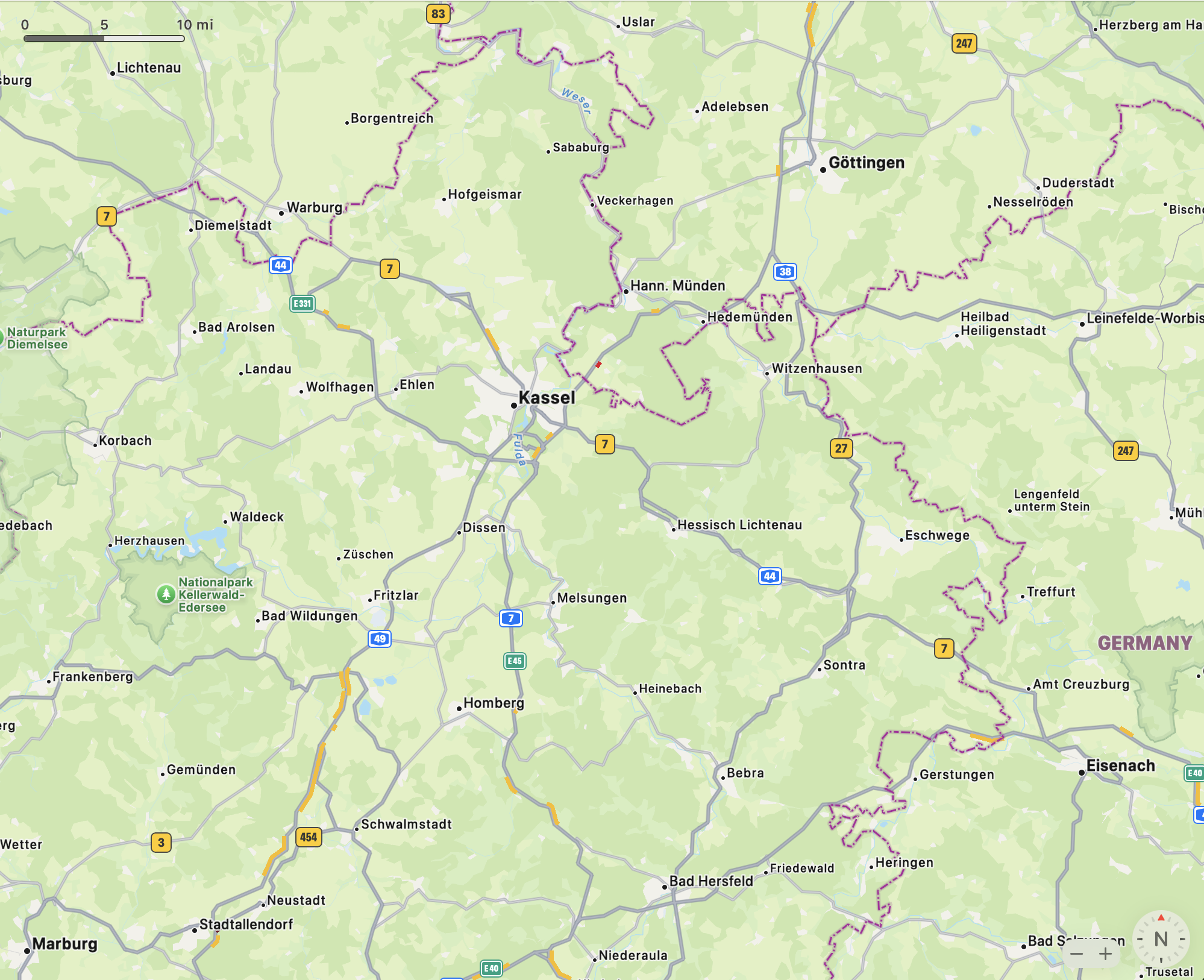
Janet and Flo visited a beach house on Lake Edersee occupied by the 3rd Signal Co.Janet PottsBerlepsch castleJanet and Jens Jenson in their living quarters at Witzenhausen Thanksgiving, 1945. They weren’t yet married, but apparently the Army and ARC no longer cared.At Janet and Jens’s home with Lt. Gerry Mehuron 3rd Bn. 3oth Thanksgiving Day. New boyfriend?With Major Wickersham, a friend from Flo’s hometown, Yakima, WALocating these places on Apple maps helps me. Lake Edersee on the left, Witzerhausen to the right of Kassel, Bad Wildungen where Flo was stationed is to the right of Lake Edersee. All were within the American occupation zone in Hesse.
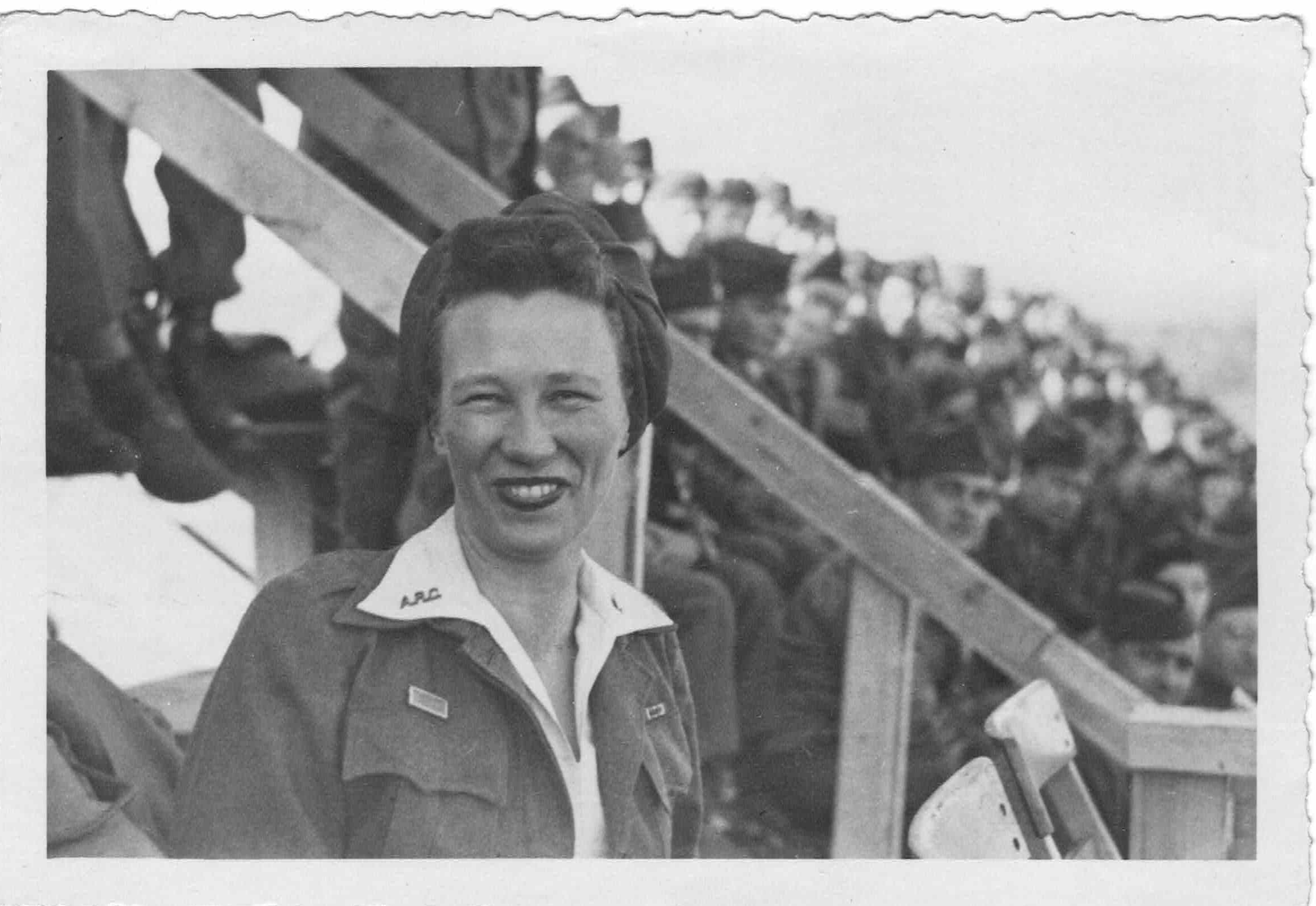
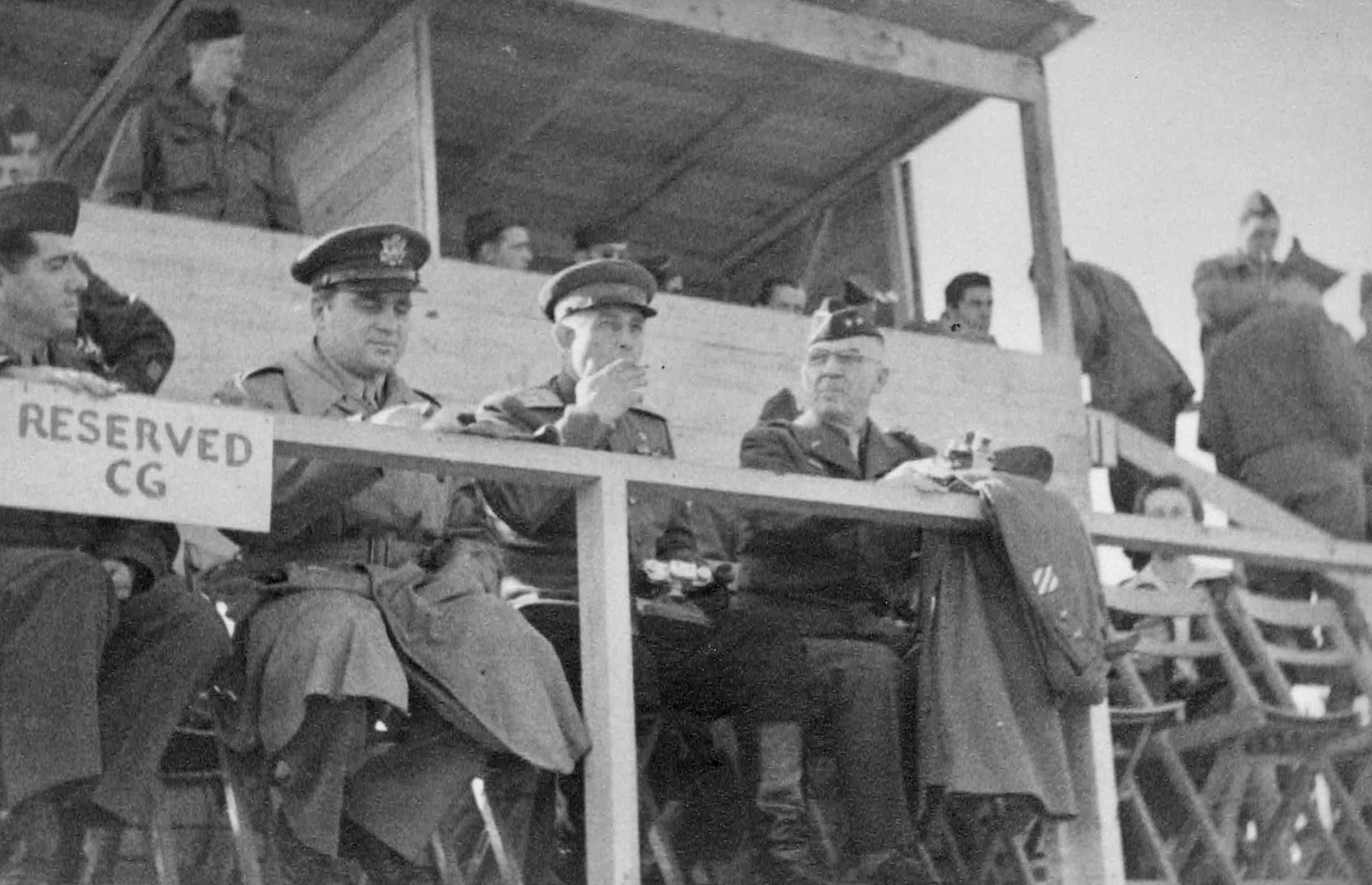
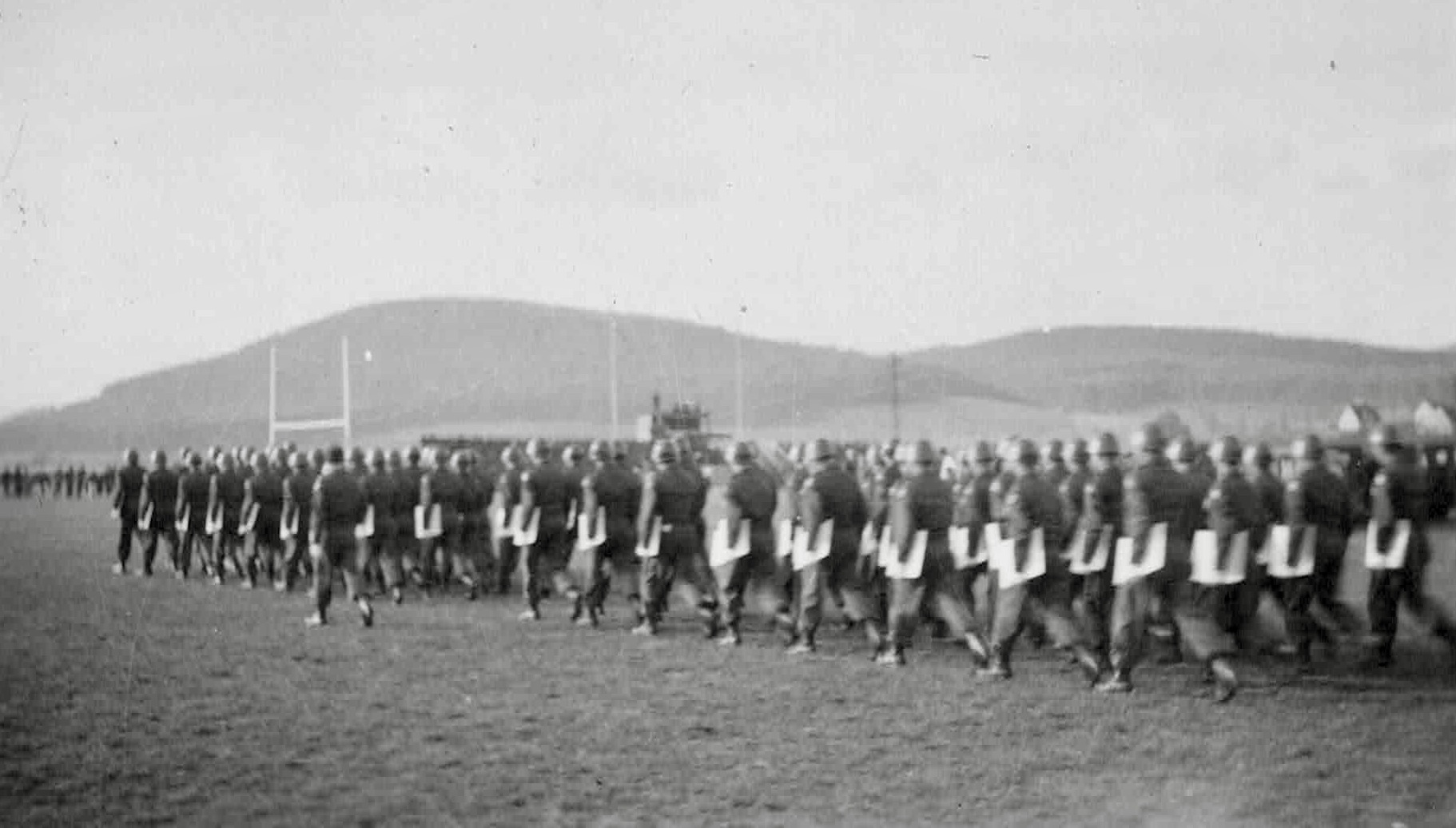
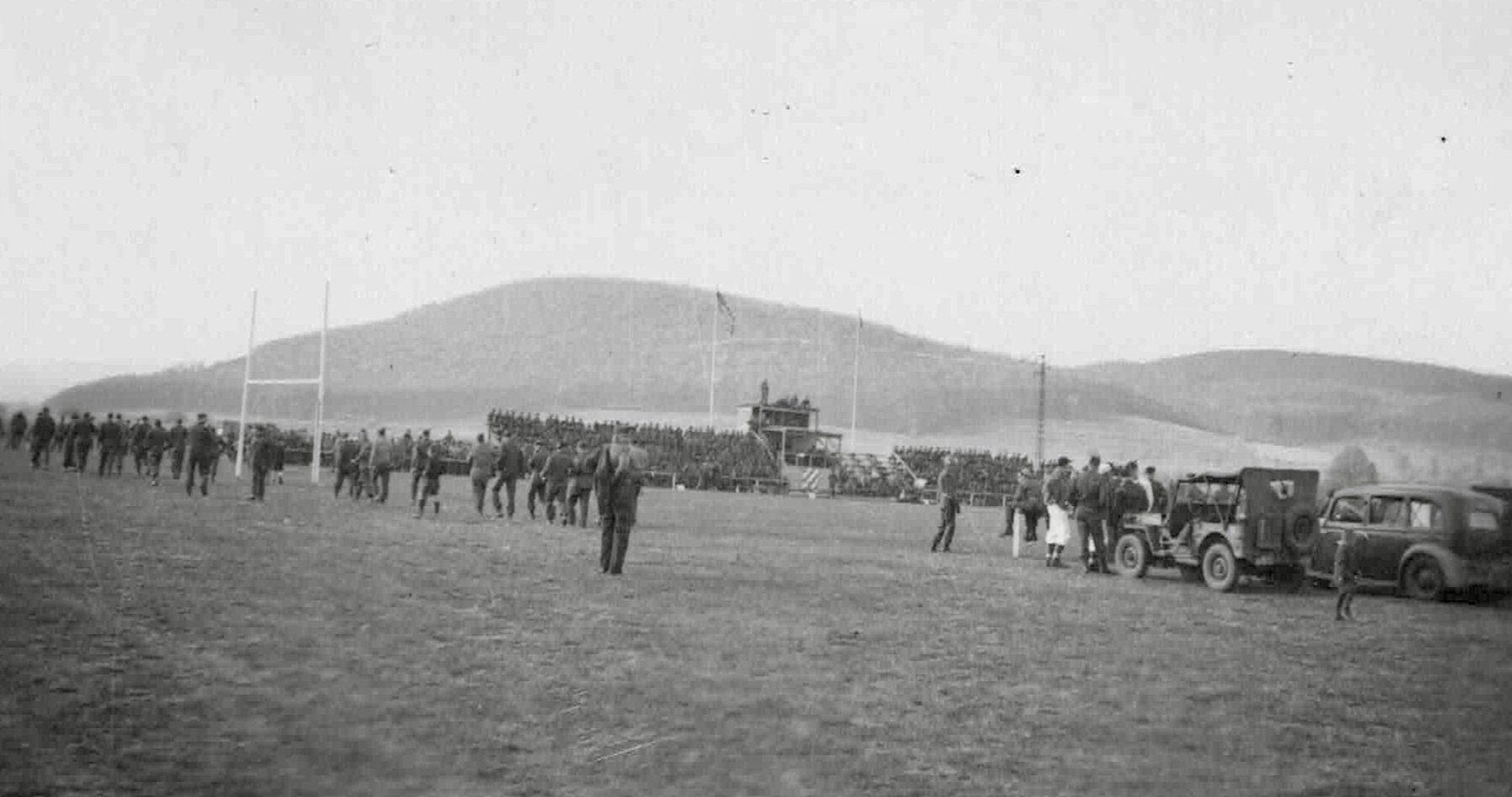
The football games were part of a sports program organized to occupy restless American and Canadian troops awaiting discharge. In August 1945, the U.S. Army had staged the “GI Olympics” in Nuremberg, with high-ranking Russian observers in attendance. Events included a baseball game played in the former Hitler Youth Stadium—an unmistakably symbolic reclaiming of Nazi space. That same day, news of Japan’s surrender crackled over the loudspeakers, unleashing a roar that seemed to lift the roof as GIs tossed caps, coats, and red-white-and-blue programs into the air, hugging, kissing, and celebrating the war’s end. The festivities continued into the night with performances by Hal McIntyre at the amphitheater and Bob Hope at the Opera House, drawing thousands of cheering troops in a city freshly transformed from fascist spectacle to victorious release.
Pretty sure Flo was rooting for the Third DivisionReserved for the brass.
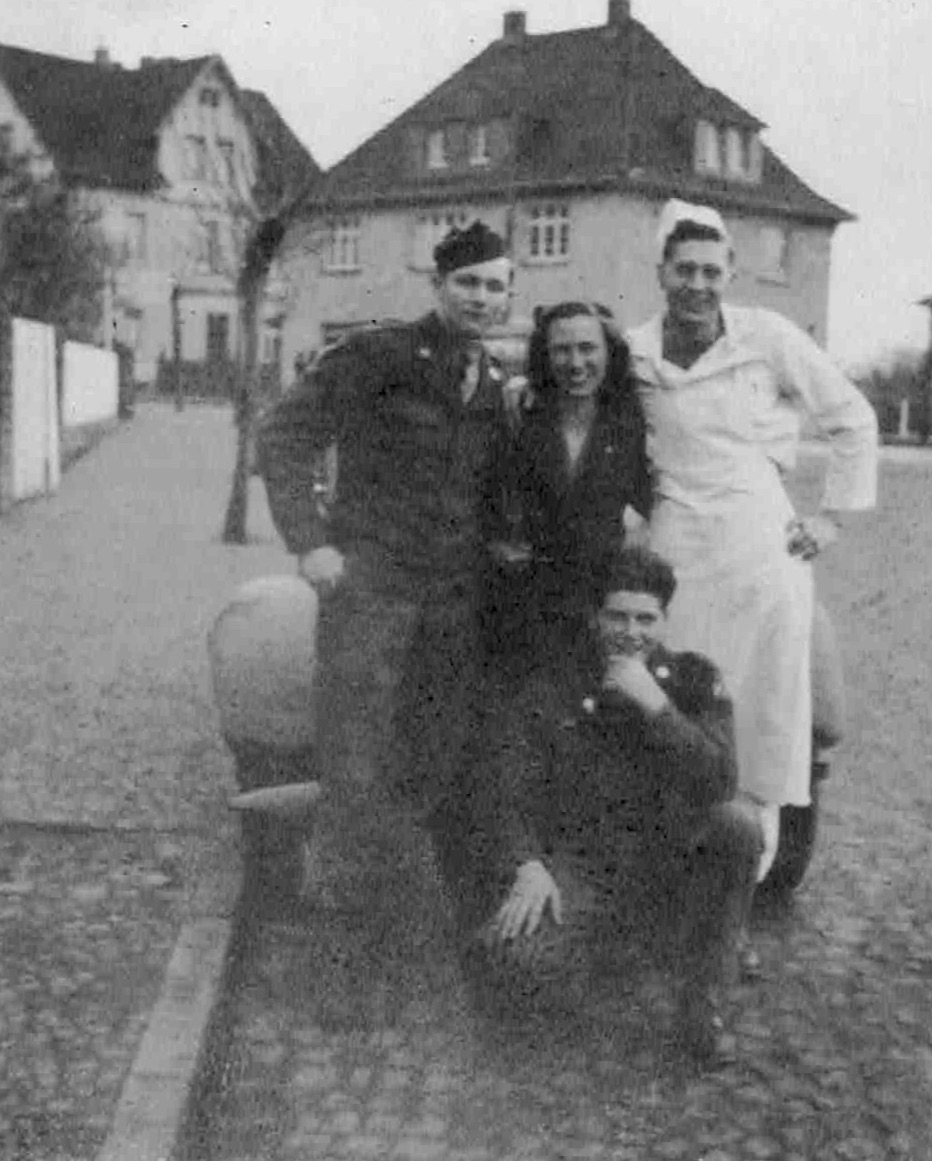
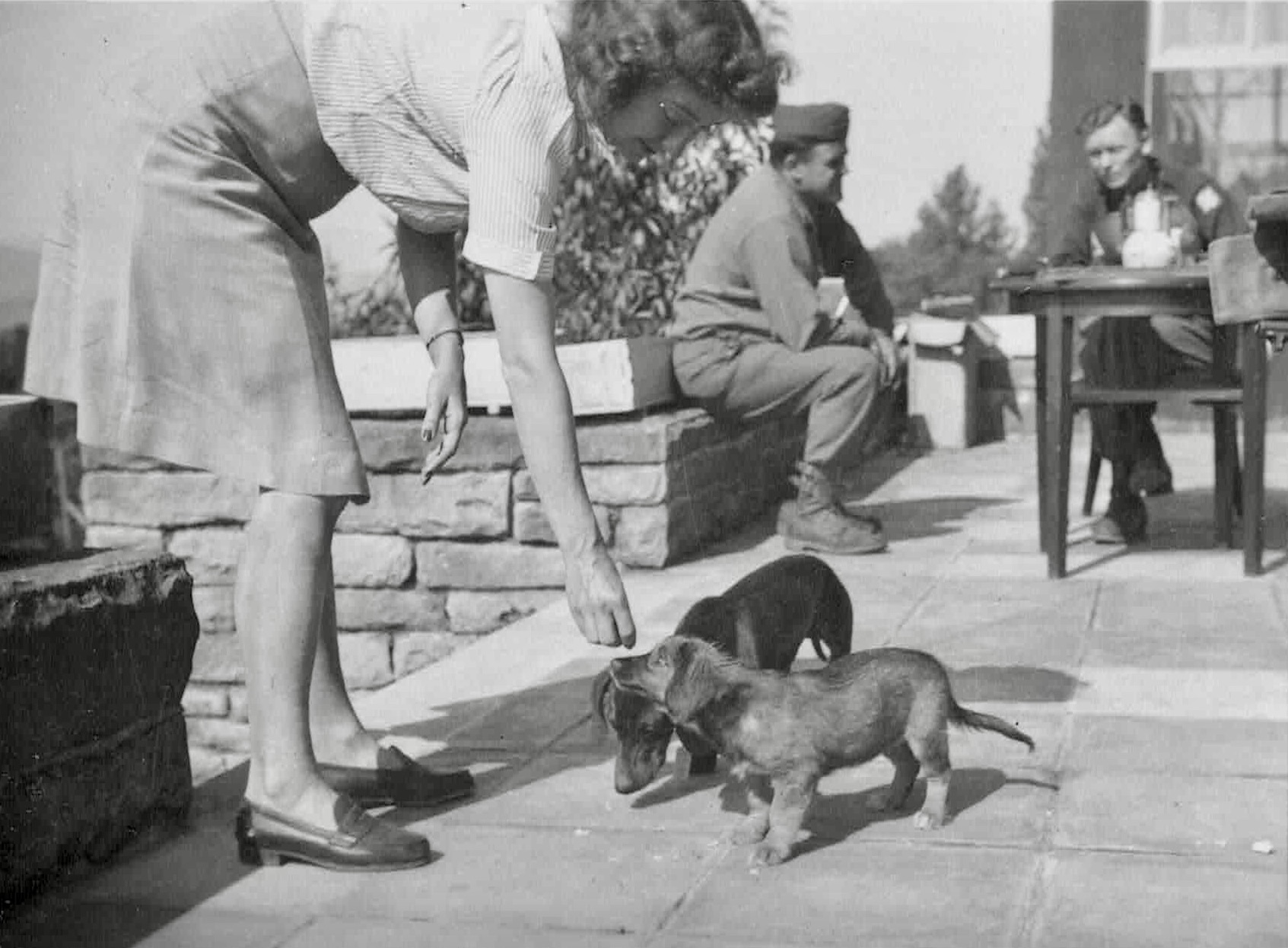
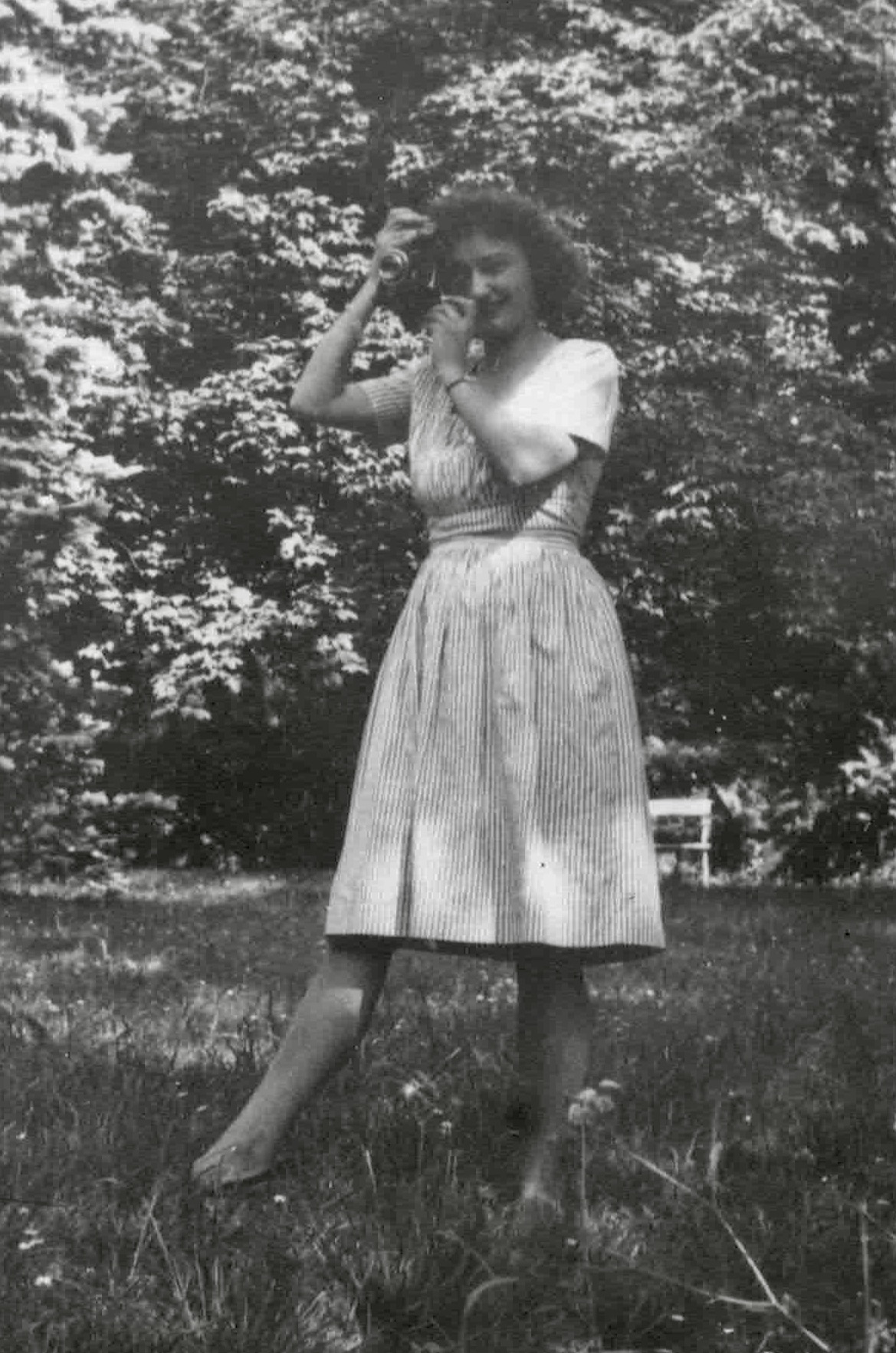
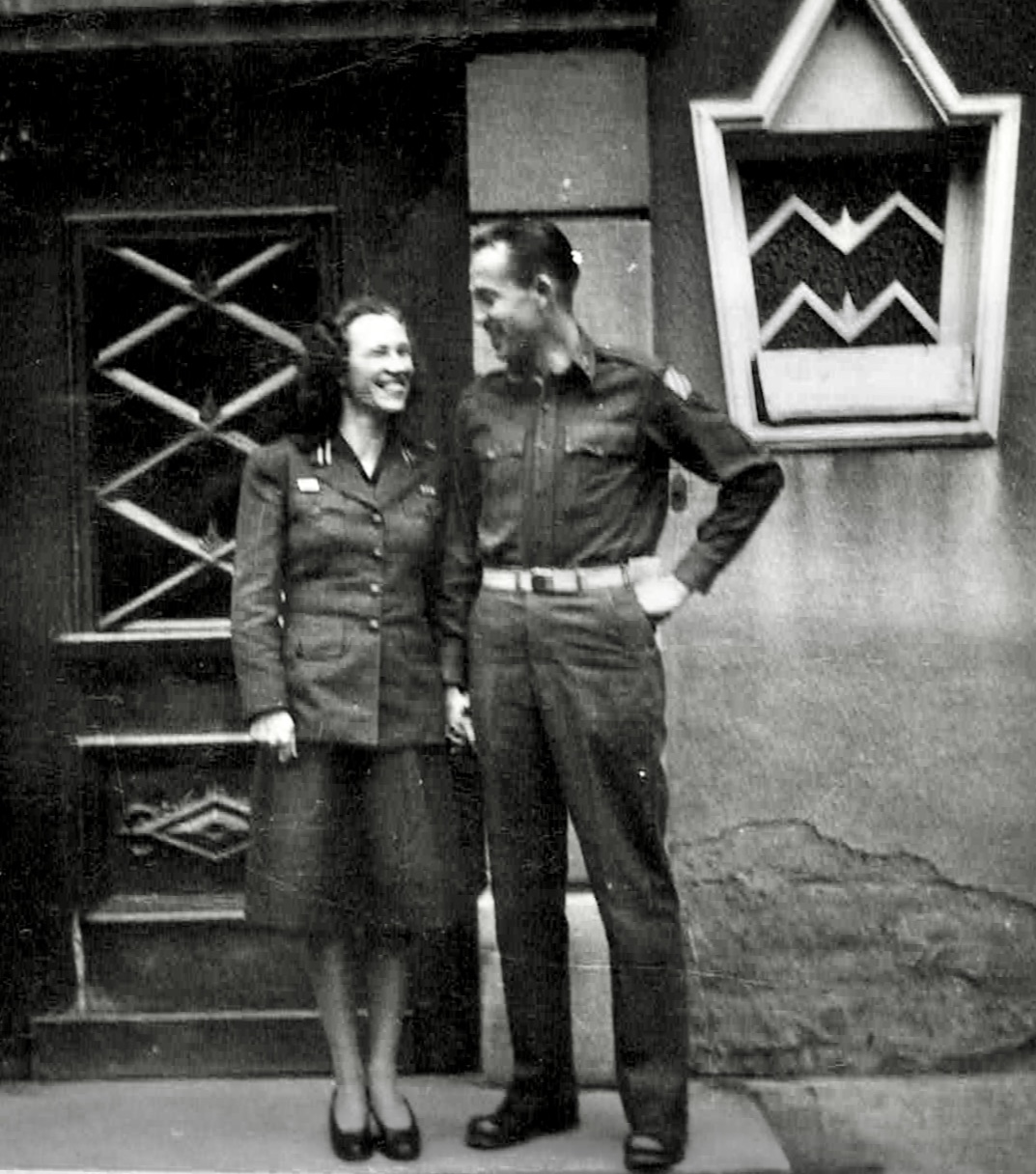
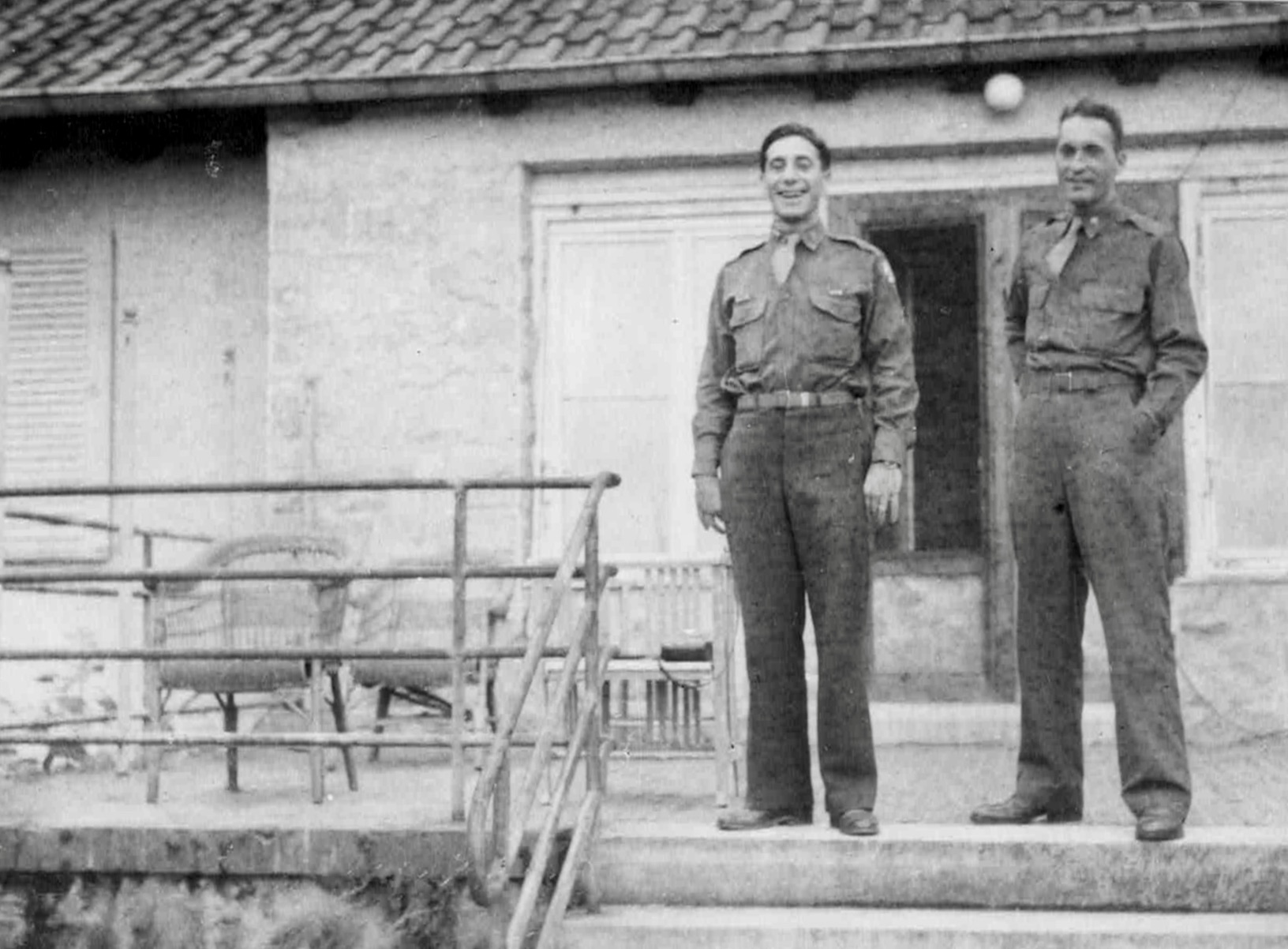
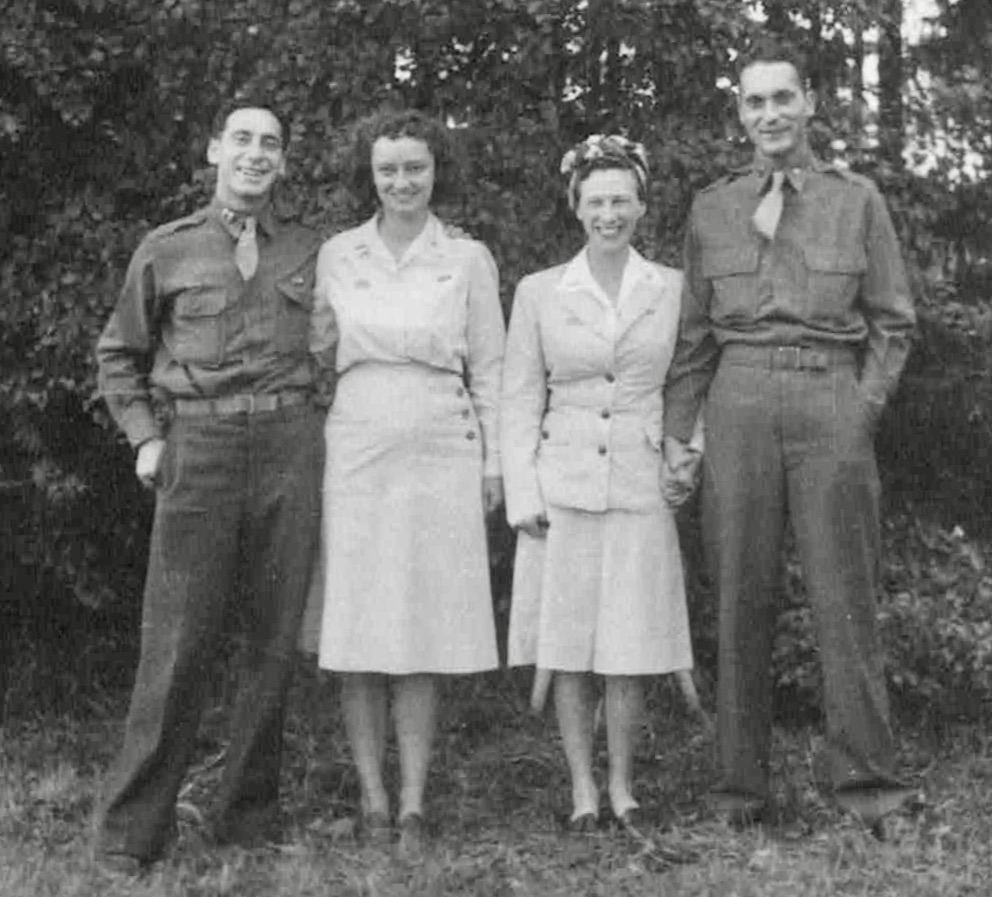
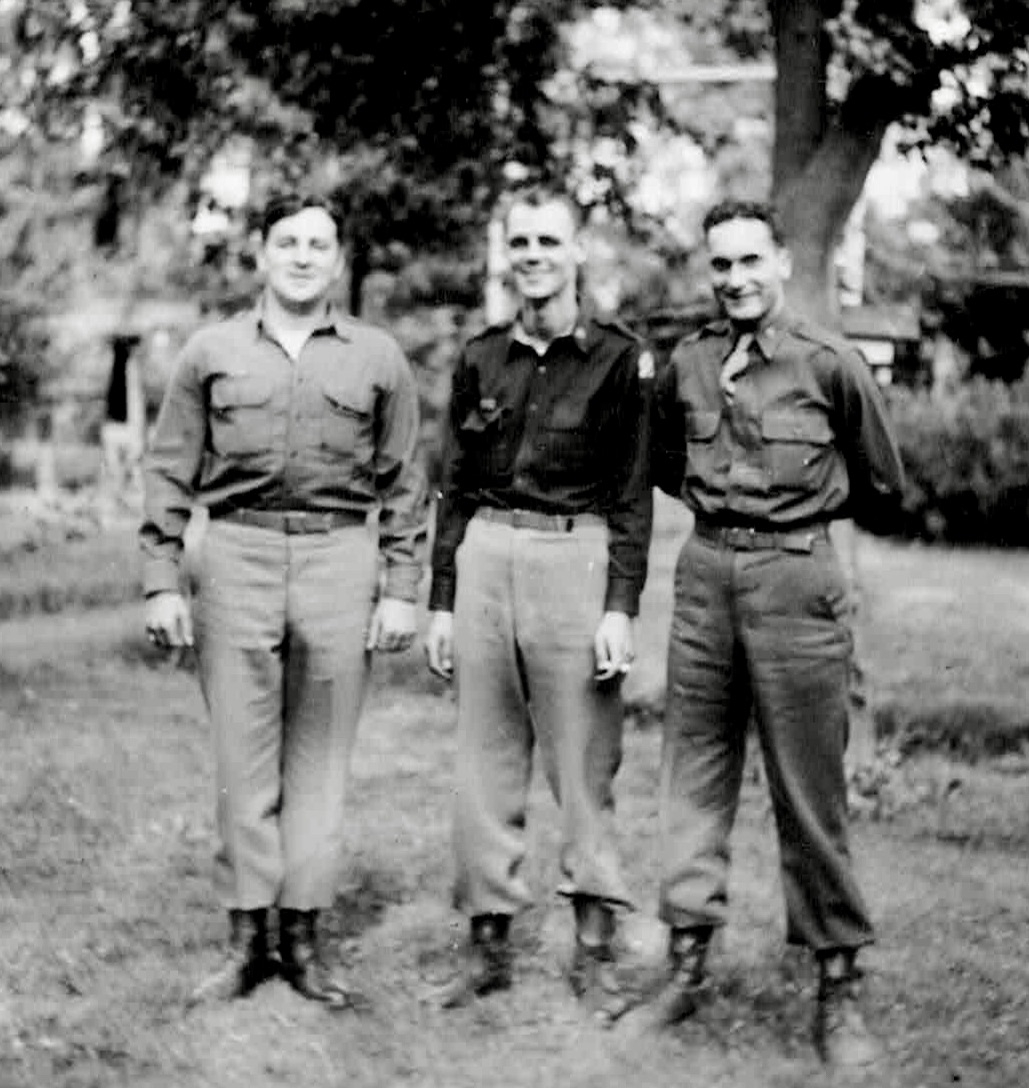
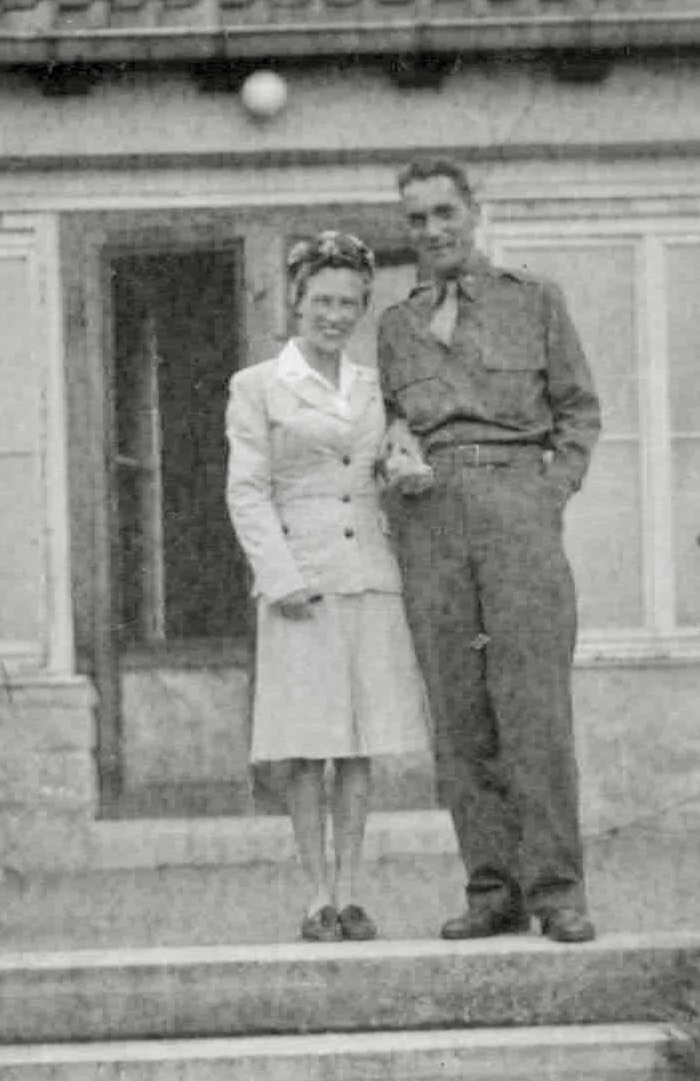
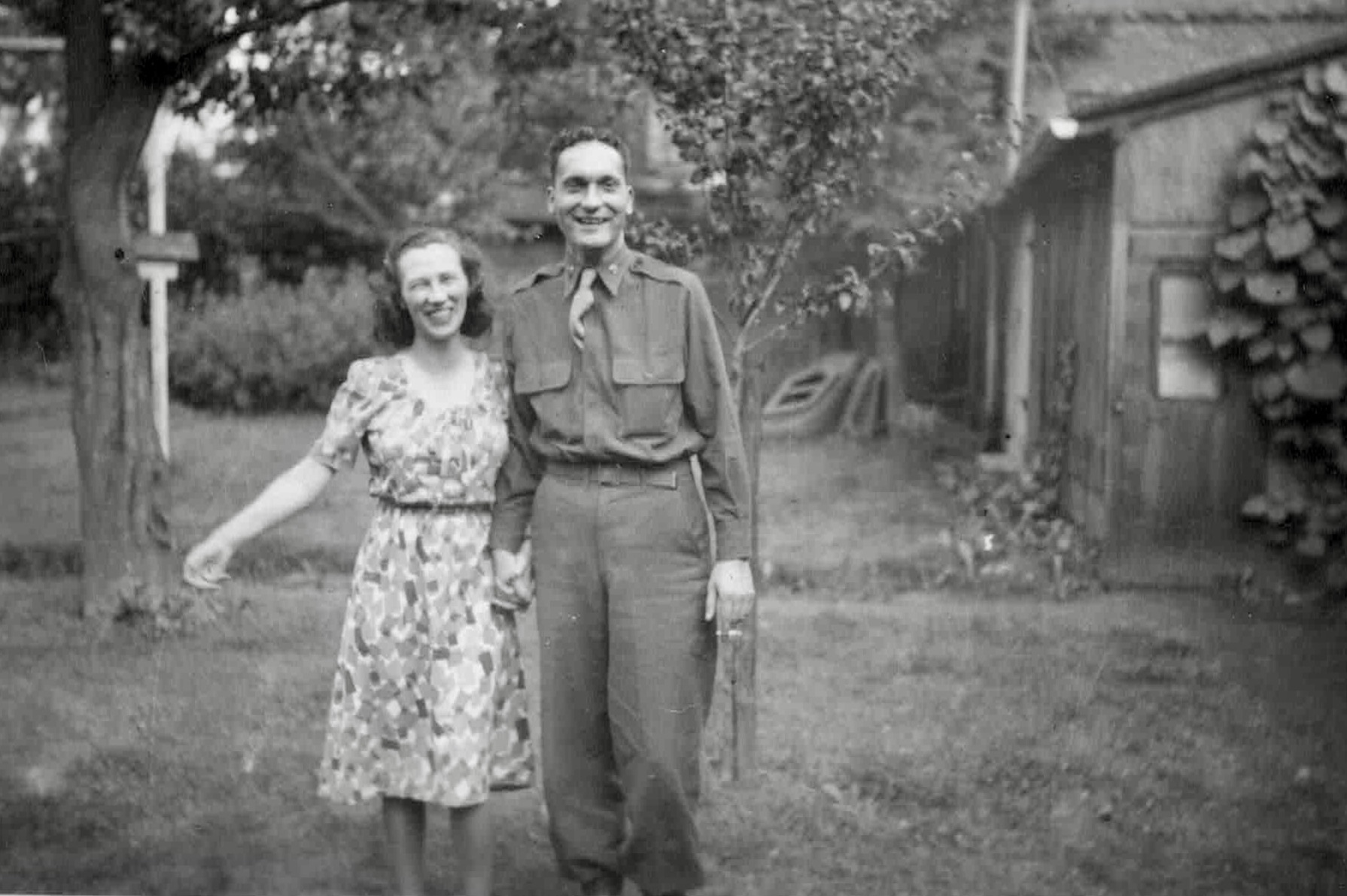
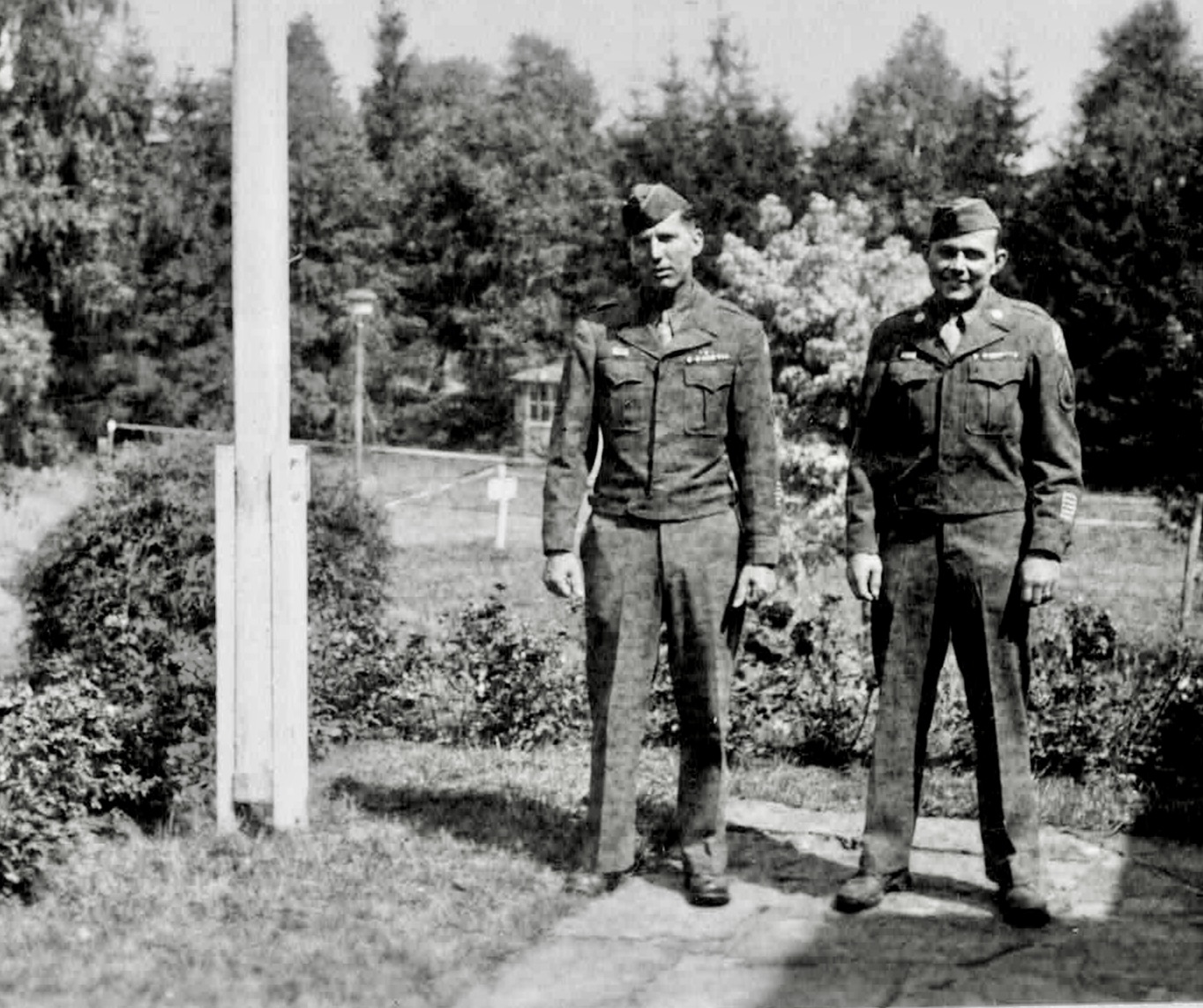
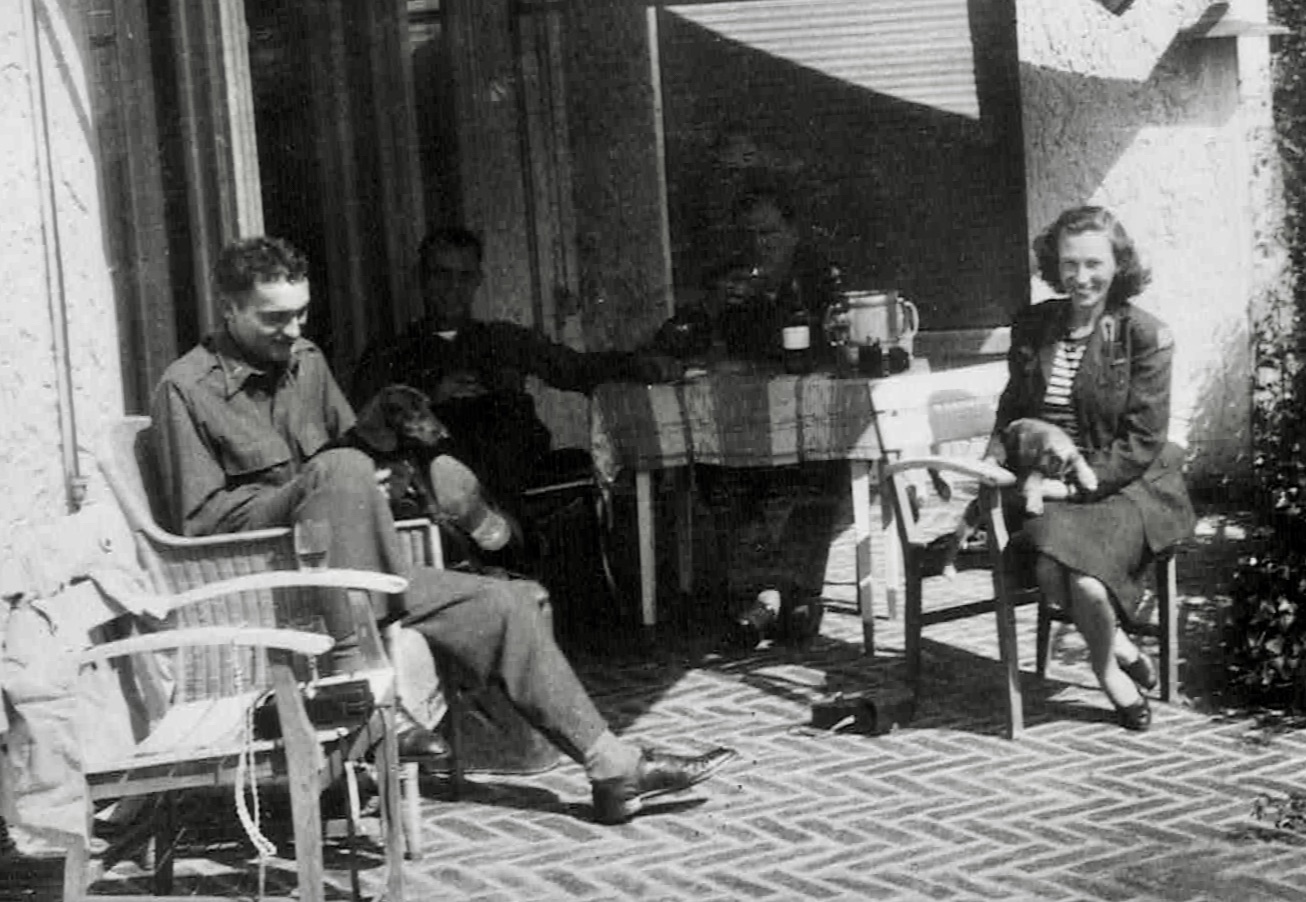
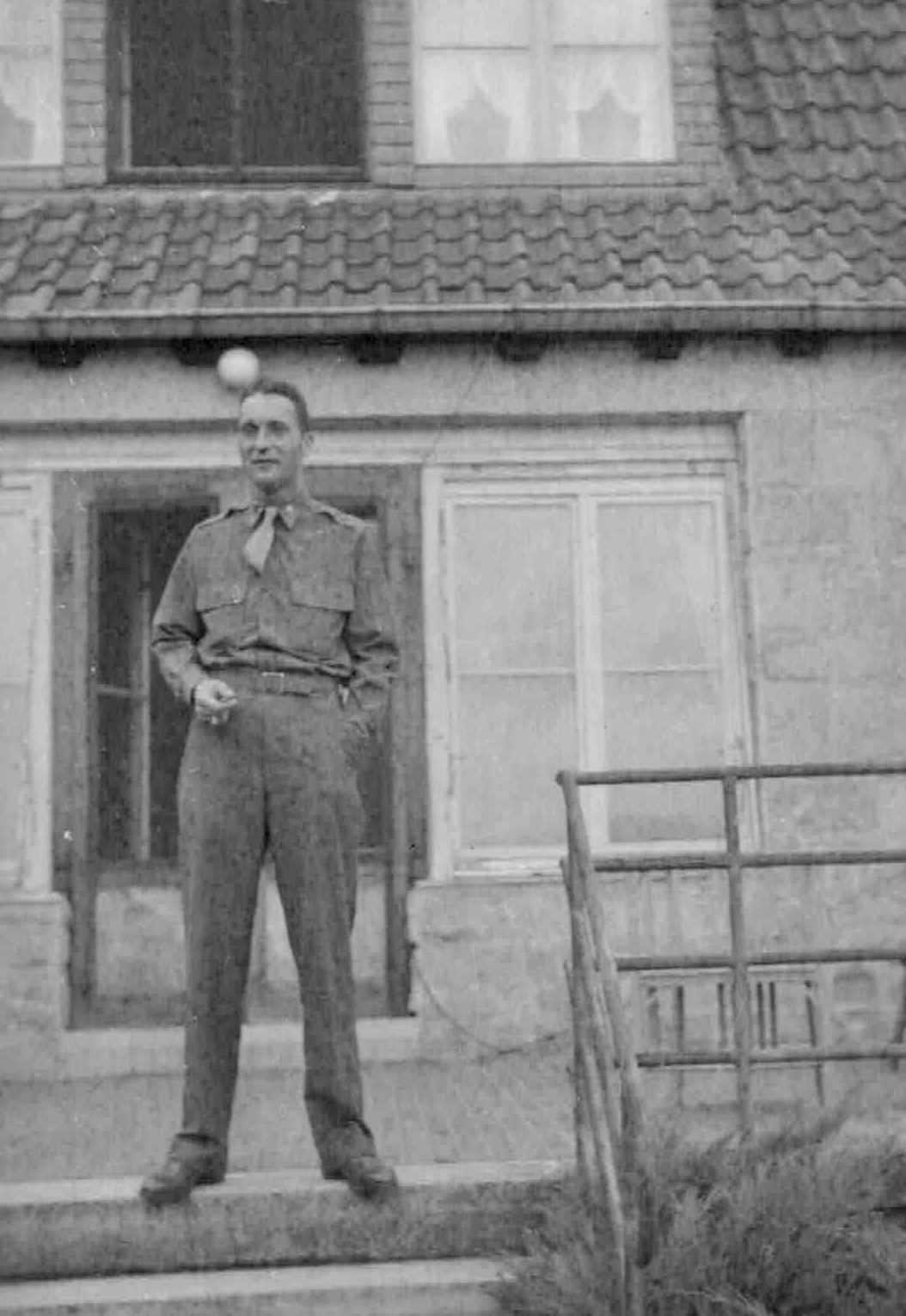
Flo didn’t identify the soldiers on this page of the album. We see ARC clubmobiler Janet Potts in one picture and I’m guessing the man standing next to her is her fiance Jens Jenson. Flo is holding tightly onto one tall handsome man’s hand in several photos. Apparently she has a new boyfriend.

 tradeswomn musings