The Evolution of PTSD

The Brass Didn’t Buy It

My Mother and Audie Murphy Ch. 60

Everyone knew about General George Patton’s infamous “slapping incidents,” when he physically attacked two soldiers under his command at hospital evacuation centers in August 1943. The episodes became international news — two among several erratic outbursts that may have led to his eventual removal as commander of the Seventh Army in Europe.

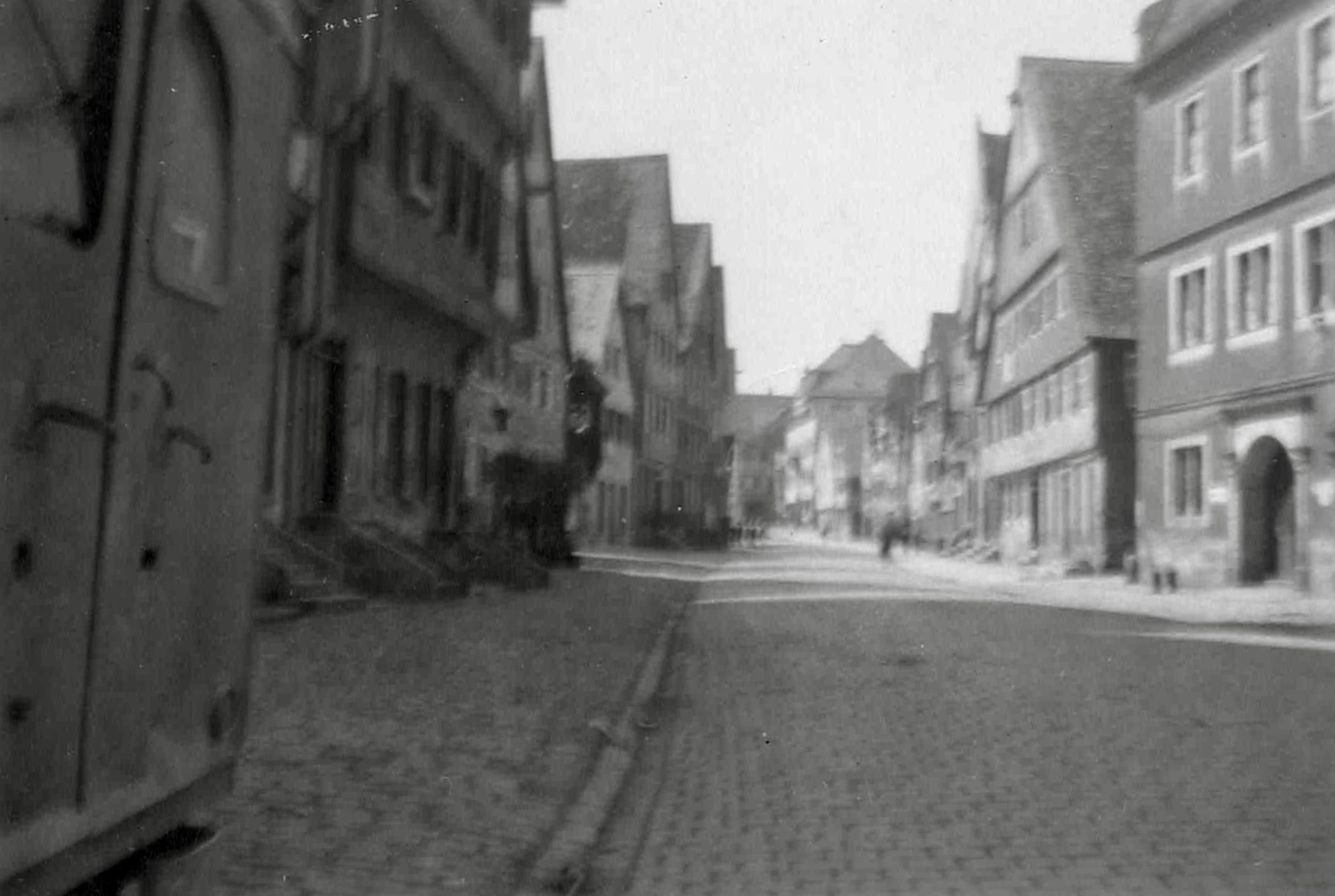
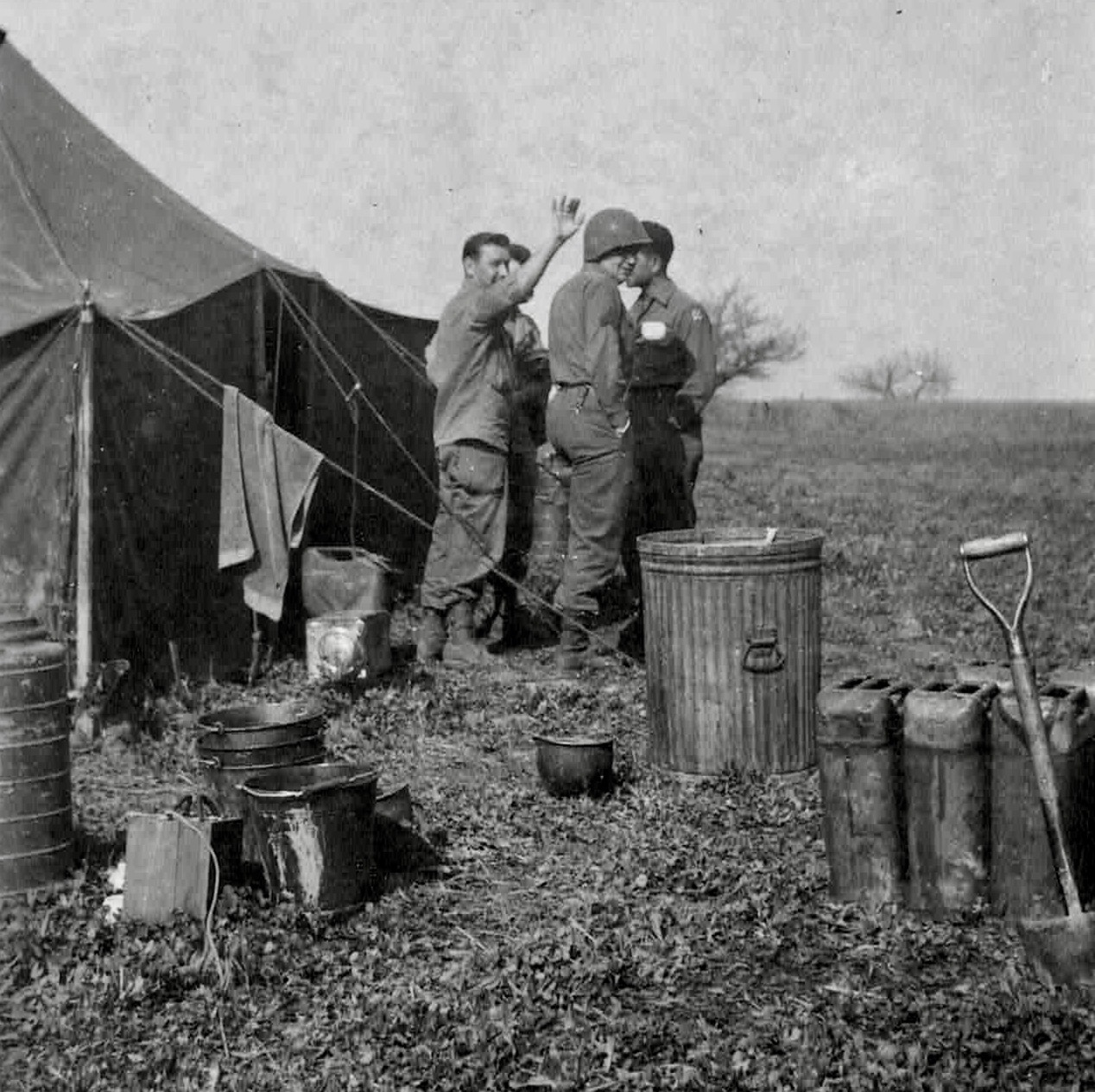
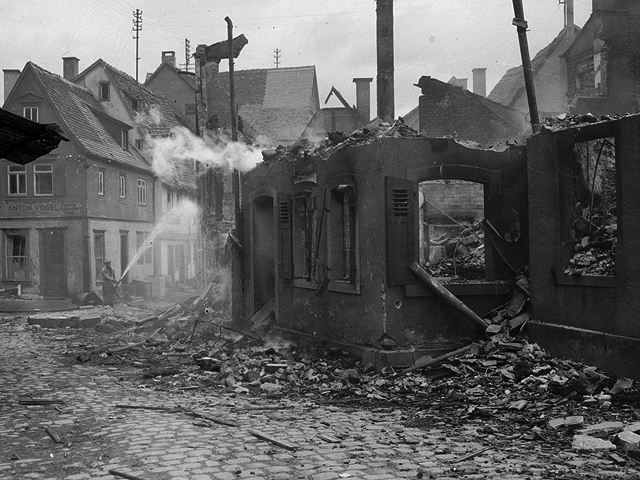
A woman sifts through the rubble of her home in Steinach. In the first half of April, 1945, the allies moved quickly through German towns, many already destroyed by bombing. photos: Dogface Soldier.

The men Patton slapped had been diagnosed with “exhaustion” and “psychoneurosis,” terms then used for what we now recognize as post-traumatic stress disorder (PTSD). During the First World War, it was called “shell shock.”

Patton didn’t believe in shell shock.

Steinach saw a fierce battle on April 7 before the Nazis retreated. Photo: Dogface Soldier collection

In a directive issued to his commanders, he explicitly forbade “battle fatigue” in the Seventh Army:

It has come to my attention that a very small number of soldiers are going to the hospital on the pretext that they are nervously incapable of combat. Such men are cowards and bring discredit on the army and disgrace to their comrades, whom they heartlessly leave to endure the dangers of battle while they, themselves, use the hospital as a means of escape. You will take measures to see that such cases are not sent to the hospital but dealt with in their units. Those who are not willing to fight will be tried by court-martial for cowardice in the face of the enemy.
— Patton directive to the Seventh Army, August 5, 1943

At the time, the Army Medical Department was beginning to study what would later be classified as PTSD, but most of the officer corps still regarded it as cowardice.

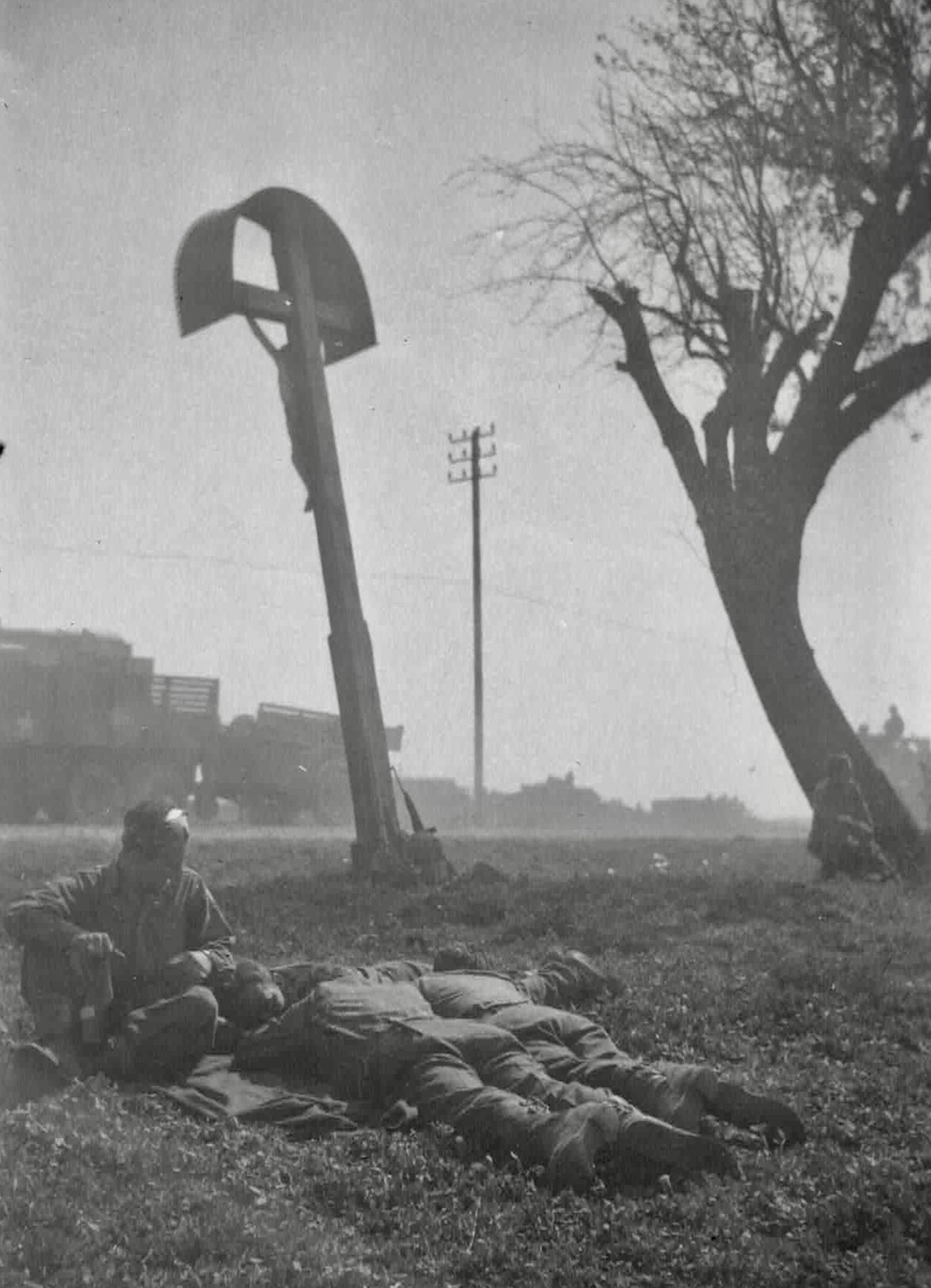
The devastation in Lohr was mostly caused by American artillery. Photo: Dogface Soldier collection

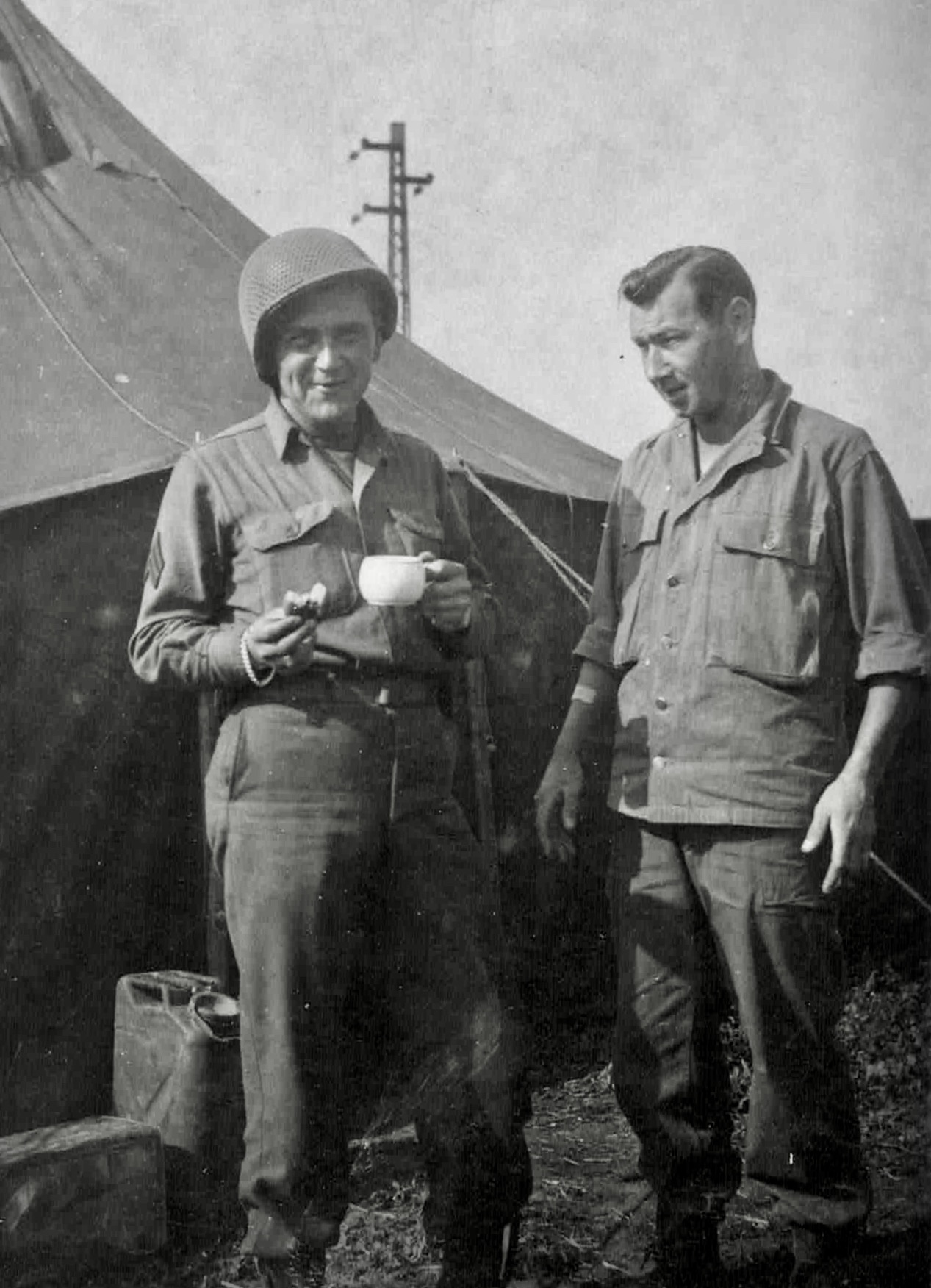
Audie Murphy, who saw more front-line combat than almost any other American soldier, witnessed many such breakdowns. As the war dragged on and he watched more men “crack up,” his own understanding and empathy evolved. The first episode he describes in To Hell and Back is met with derision from his men — and from himself:

“Olsen is the first to crack up. He throws his arms around the company commander, crying hysterically, ‘I can’t take any more.’ The harassed captain tries to calm him, but Olsen will not stop bawling. So he is sent to the rear, and we watch him go with hatred in our eyes.
‘If I ever throw a whingding like that, shoot me,’ says Kerrigan.
‘Gladly,’ I reply. ‘In North Africa I thought he was one tough boy.’
‘Yeah, he threw his weight around plenty.’
‘He seemed to be everything the War Department was looking for. He was my idea of a real soldier. Then one night that little Italian, Corrego, came in drunk; and Olsen beat him up.’
‘He should have been shot right then.’”

Lohr saw heavy fighting as allies advanced on April 3. Photo: Dogface Soldier collection.

Later, Murphy watches another man lose his senses and die as a result:

“Staggering with weariness and snarling like wolves, we meet the Germans again… We slip within 200 yards of their lines before they turn the full force of their weapons upon us. Obviously, they intend our complete annihilation.
Under the furious punishment, a man a few yards from me cracks up. He begins with a weeping jag; then, yelling insanely, he rises to his feet and charges straight toward the German lines. A sniper drills him through the head; and a burp gun slashes his body as he falls.”

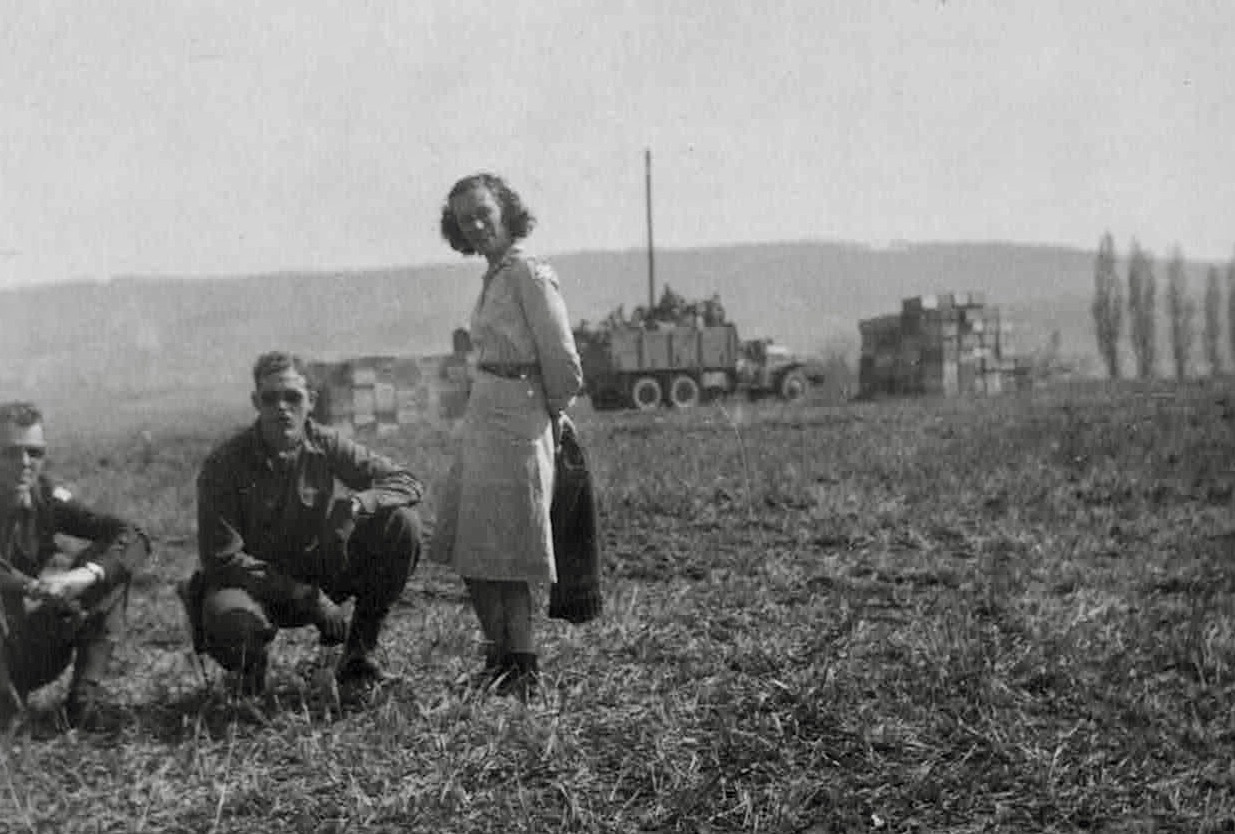
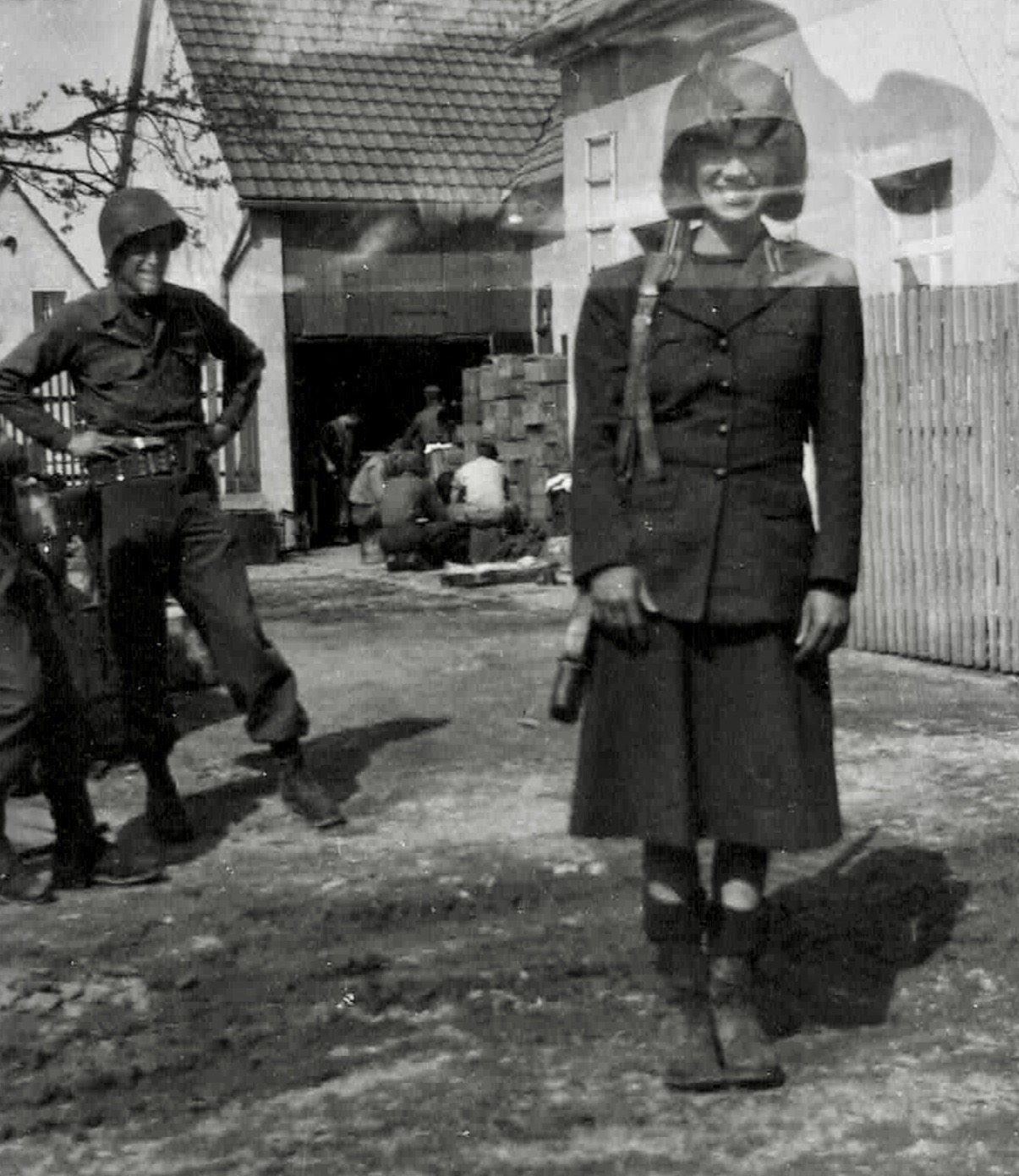
Poppenlaur displayed flags made from any white fabric that could be found. Photo: Dogface Soldier.

Near the end of the war, Murphy’s tone shifts. He shows compassion and understanding when a soldier named Anders returns to the front, determined to stay with his comrades despite his shattered nerves:

“Before we have had time to regroup for instructions, the shells fall into our midst. Eight men are knocked out; and Anders cracks up. It is not his fault. He has courage to spare, but body and nerves have taken all they can stand. He has heard one explosion too many; seen one too many die.
As we check the dead and wounded, his voice goes thick. I grab him by the shoulder. He shudders and begins to shake violently.
‘What’s the matter?’
‘I’ve gone all to pieces.’
‘Stay here and wait for the medics. You shouldn’t have come back up.’
‘N-n-no. No. No.’
‘You’re no good in that shape.’
‘I’ll come out of it.’
‘The hell you will. You can’t let the men see you in that condition.’
‘I’ll be quiet. I won’t say anything.’
‘You’re going to tell it to the doctor.’
‘If you think so, maybe I should. Maybe I should.’
He rejoins us the next day. I curse him heartily, but he only grins. When we come under heavy artillery fire, that grin is quickly erased. His nerves collapse again… Whether or not he knows or wants it, he is through. Finished. This time when I send him to the rear, I also send the colonel word to keep him there.”

Photo: Wikipedia

Murphy himself suffered from PTSD for the rest of his life. After the war, he spoke publicly about it and tried to alert the Army to its dangers — but at the time, the brass didn’t want to hear it.

Meanwhile, during the war, doctors at an airbase hospital in Arizona began recognizing and treating PTSD with compassion rather than punishment or electroshock. Their pioneering work inspired the 1963 film Captain Newman, M.D., starring Gregory Peck, Tony Curtis, Angie Dickinson, Bobby Darin, and other notables. Five stars from me.

Ch. 61: https://mollymartin.blog/2025/10/09/all-the-best-fields-in-germany/

Clubmobiling in Germany

The ARC crew finally gets its own truck

My Mother and Audie Murphy Ch. 59

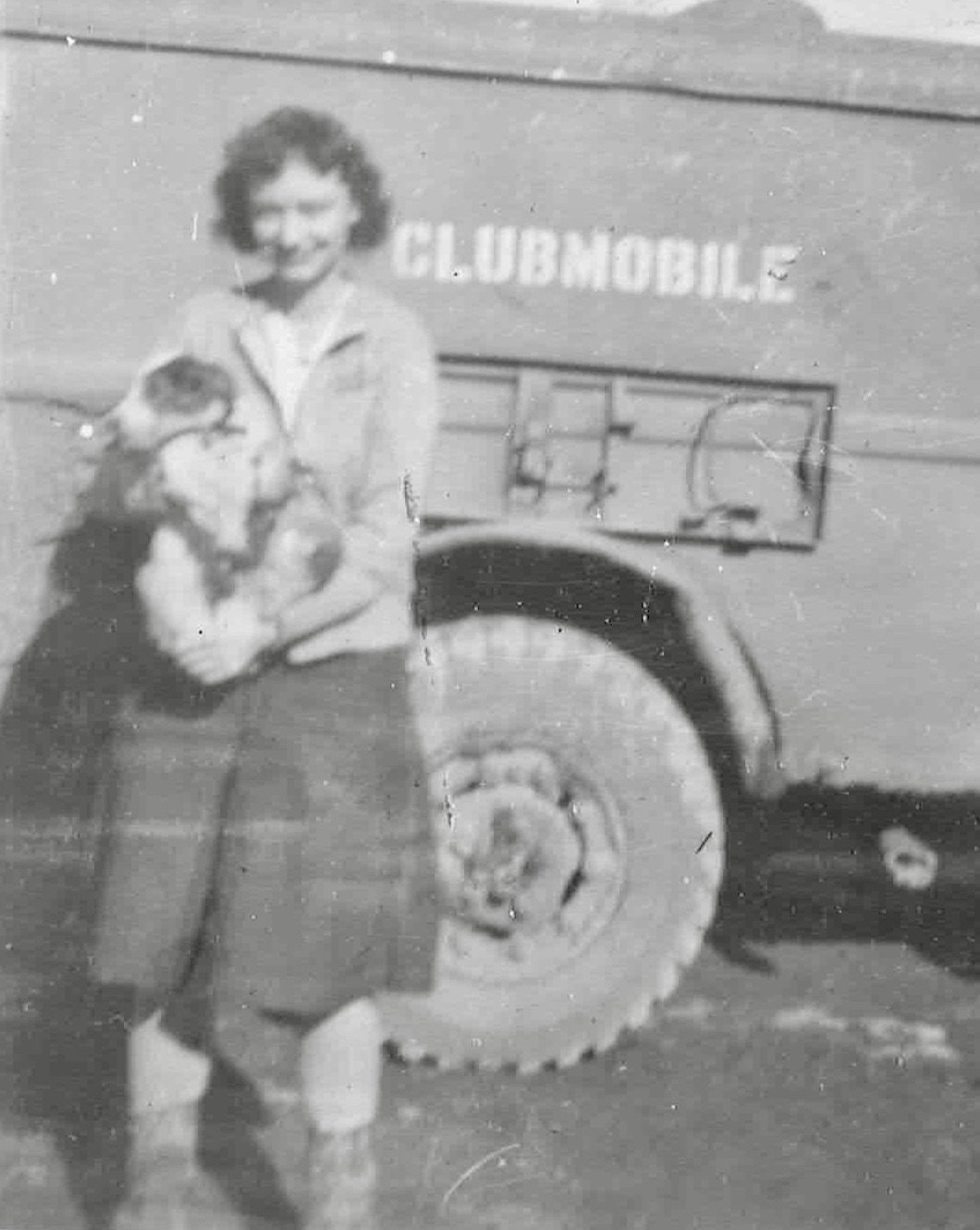
March 1945. The clubmobile was a two-and-a-half-ton GMC truck outfitted with coffee and donut-making equipment, and side windows that opened into a makeshift canteen—something like the taco trucks we see in cities today.

Scores of these trucks rolled onto Omaha Beach in July 1944, just weeks after the D-Day landings in France, each assigned to a crew of four American Red Cross (ARC) women. Their mission was to follow the troops, serving donuts, coffee, and good cheer to the men coming off the front lines.

The ARC women who landed in Italy, including my mother, Flo Wick, traveled with the armies north through southern France and all the way to the Rhine. But until they crossed into Germany, Flo’s crew had no clubmobile of their own. They improvised, scrounging whatever vehicles they could find to deliver donuts to soldiers.

Flo and Janet with TC loving their new truck

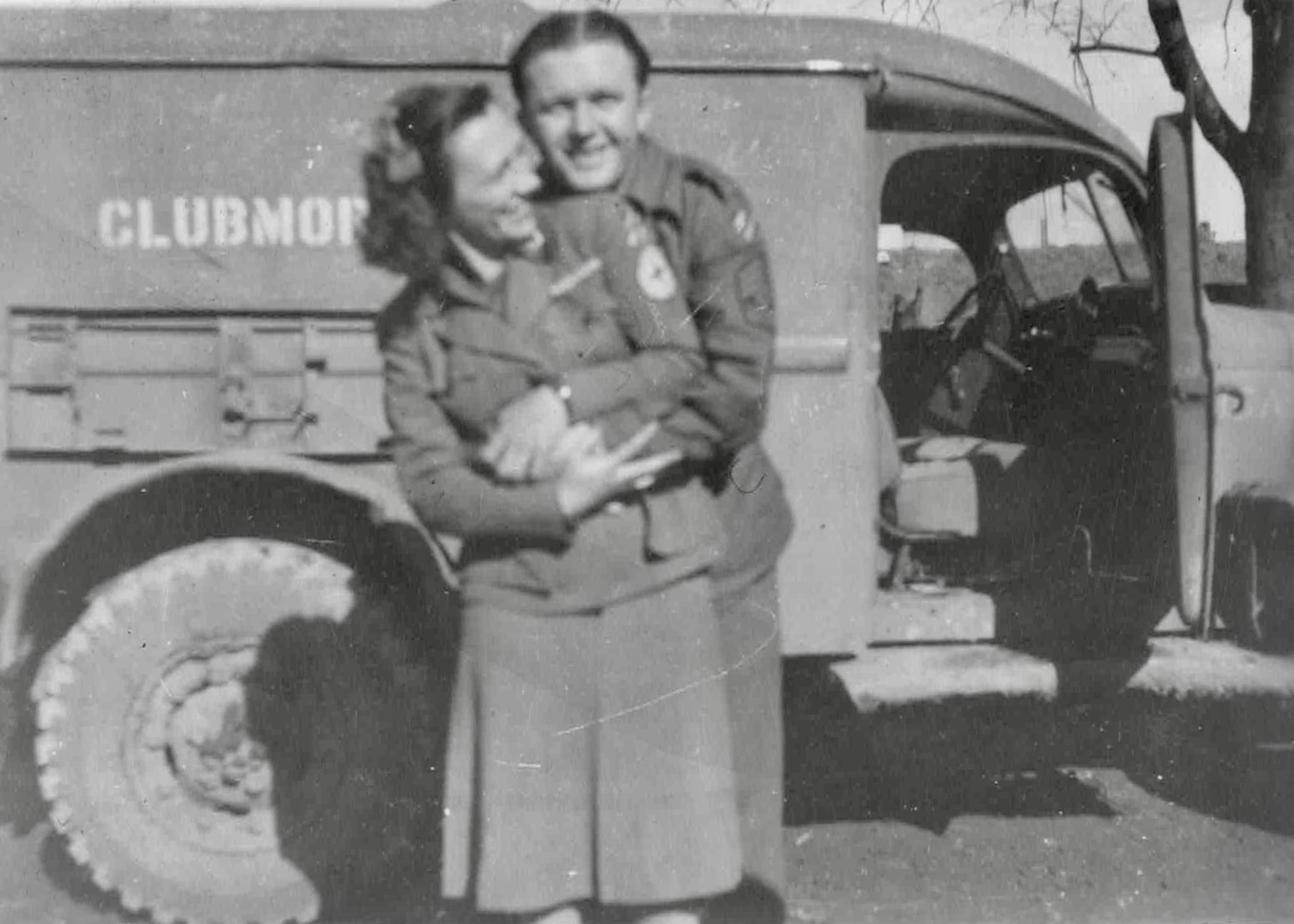
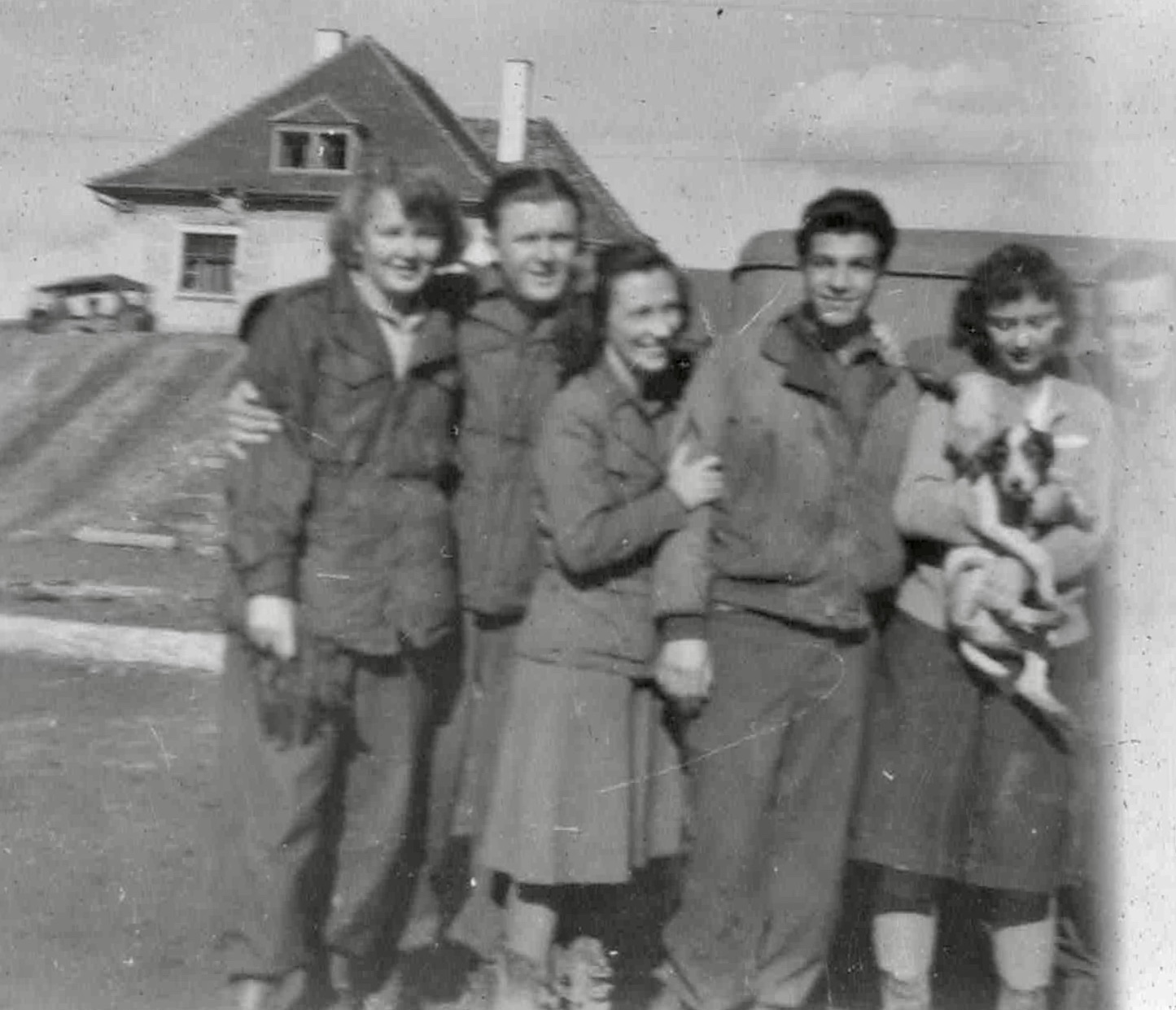
On this page of her album, Flo posted the first pictures of clubmobiling in Germany. Here, at last, they were issued their own truck—nearly a year into their service overseas.

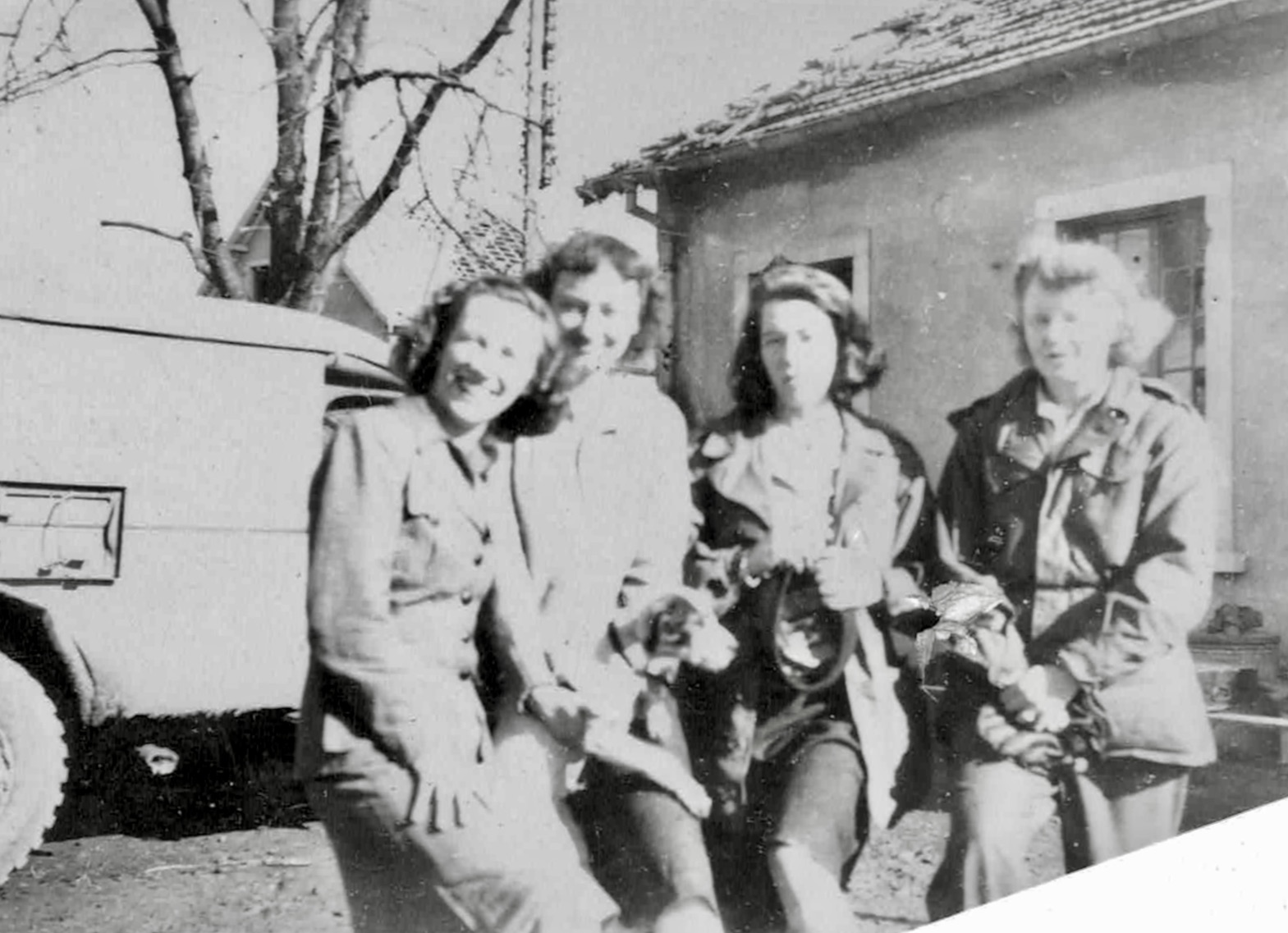
The photos hint at a trade-off: the women may have had to endure some “good-natured” groping in exchange for their vehicle. Flo names “Lamour Harrigan” of the 7th Infantry Service Company as the man with his arms locked tightly around her. She is laughing in the photo, but the other women’s faces tell another story. Liz looks distinctly unhappy, while Fritzie, in trousers and an army jacket, seems to be sidestepping unwanted attention.

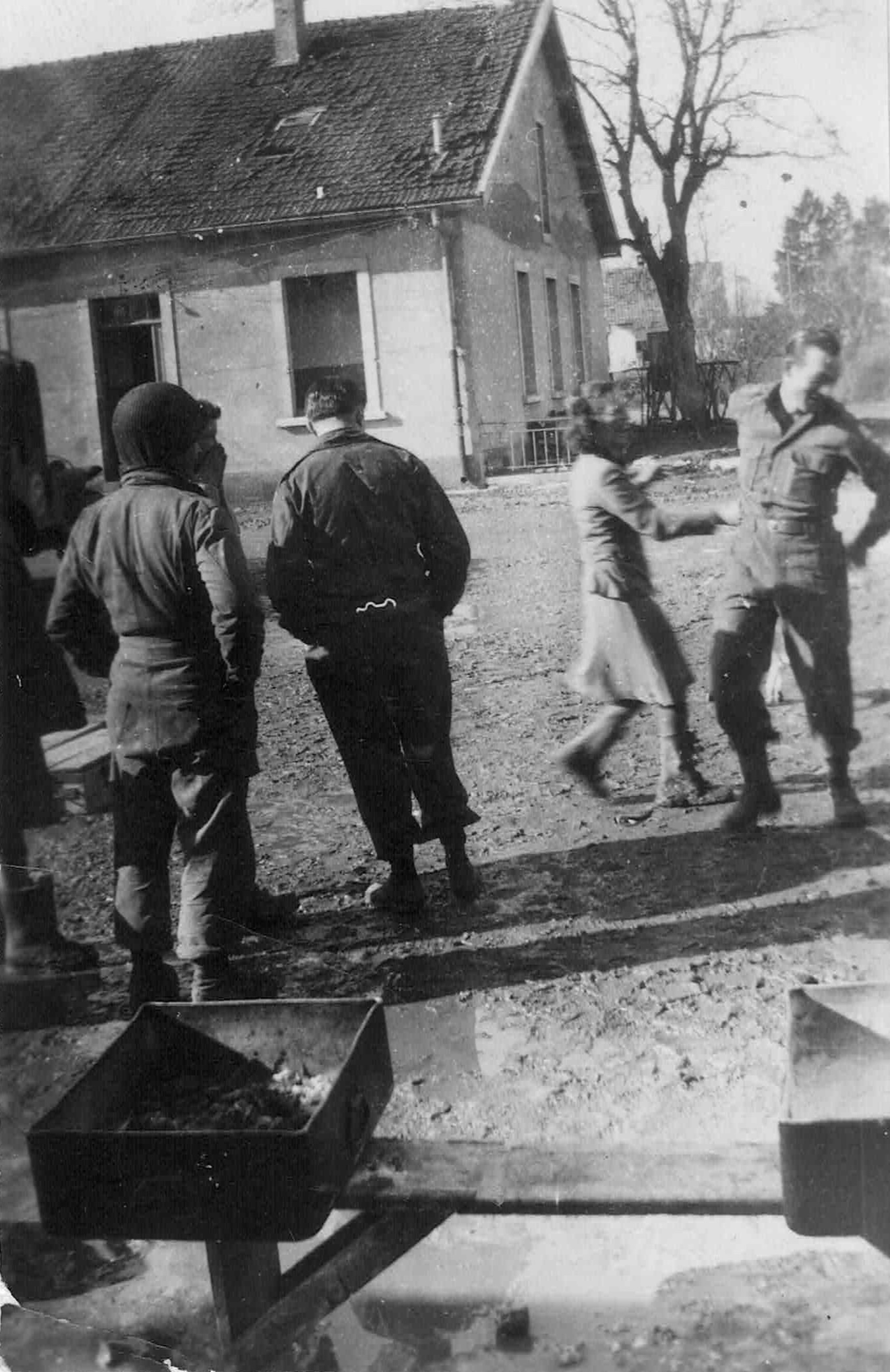
Flo herself is captured dancing in the mud. On the back of the photo she wrote: “Markelsheim, Germany. Jitterbugging in the mud—March 1945. Note the big galoshes. Sad days.”

So she did learn to jitterbug after all. But the note carries a weight. There were plenty of reasons to feel sad—her fiancé, Gene, had been killed, and so many others were dying still. Yet she put on a brave face. Must smile.

Interestingly, on the same album page, Flo pasted a picture of her boyfriend, Lt. Col. Chris Chaney. Perhaps it was her way of making clear she wasn’t romantically tied to any of the men in those muddy, grinning snapshots.

Janet and the crew’s dog, TC. That’s Liz sitting on the Clubmobile’s hood.

The ARC crew’s adopted dog, TC, had been with them since they landed in France (TC is short for something, but I can’t remember what). They all doted on him, but from these pictures it appears he took to Janet more than the others. His presence offered moral and emotional support to both the women and soldiers.

The clubmobile crew: Flo, Janet, Liz, Fritzie

Ch. 60: https://mollymartin.blog/2025/10/05/the-evolution-of-ptsd/

Taking a Break in Nancy

Celebrating the End of the French Campaign

My Mother and Audie Murphy Ch. 58

“OUT OF THE LINE, Nancy, France” Flo wrote on this album page, where she pasted a handful of invitations from February and March 1945. The front was quiet for a spell, and for a few precious days it was party time.

In Belleville, just north of Nancy, the French put on a parade with bands playing and troops marching in review. The 30th Infantry Regiment hosted a couple of lively dances too.

The best invitation, though, was a tongue-in-cheek “battle order” for a party called Plan Jitterbug, issued from 7th Infantry headquarters with Colonel Heintges in command. Under Intelligence it warned that “numerous Wolves in the Stag Line” would be present and could only be defeated by outmaneuvering their flanking moves and cut-ins. At the bar, one could expect “a normal amount of obstacles and confusion.”

Under Attachments the orders promised “several pretty nurses and Red Cross women,” advising “close cooperation with these units” for the evening’s success. Escorts and proper infantry protection were guaranteed.

It was all in good fun—a way to laugh, flirt, and dance before heading back into the seriousness of war. The parties in Nancy marked the end of the campaign in France. From there, the Third Division would soon cross into Germany.

Ch. 59: https://mollymartin.blog/2025/10/01/clubmobiling-in-germany/

Flo and Janet Shoot Guns

ARC Women the Only American Females to Shoot in WWII

My Mother and Audie Murphy Ch. 54

The page from Flo’s album

American women were strictly forbidden from shooting guns during WWII or serving in any combat position. The WACs, the Women’s Army Corps, were disparaged because Americans thought they would be too close to war and women should be protected from war. The ARC women flew under the radar because they were referred to as volunteers (even though it was a paying job), and as “girls” and because they primarily worked as nurses. Their carefully crafted image was as noncombatant helpers of soldiers, humanitarian aid workers, not fighters.

the American Red Cross worked hard to establish these women as safe and non-threatening to the social norms of the time. In so doing, it allowed them to gain access to battle and combat to an extent no American women had before. 

The Allies and Germany had lost such extensive manpower during the First World War that women were allowed much more active military roles in the Second World War. Unlike American women, Soviet women were fighters on the front lines of the war.

“Janet and our jeep”

As it turned out, the ARC clubmobilers may have been the only American women in the war who actually shot guns. They were closer to the front lines of the war than any other women.

They also experienced many close escapes during their tour of duty with the Third Division.

Flo and her comrades got the chance to shoot in the freezing winter of 1944-45, during some of the hardest fighting of the war. In the Colmar Pocket outside of Neuf-Brisach they volunteered to go on patrol on the Rhine with an artillery and mortar FO (field operations) party. They also visited the mortar OP (observation post) and threw a smoke screen from the sand-bagged position.

Because the clubmobilers saw the soldiers and worked with them daily, the women were seen as part of the team. The men wanted to show them what it was like on the front line and the women wanted to be part of the action. Their comrades showed the women how to shoot.

Photos of her from that day show she was wearing the ARC regulation uniform—a skirt—while lying in a trench aiming a rifle.

“Ostheim, Alsace”

I don’t know whether Flo had ever shot a gun, but she was part of a hunting and fishing culture in the Northwest, so she may have. I have a picture of her posing with a deer carcass and holding a rifle taken after the war.

Flo was quoted in a newspaper article: “We all had a case of scratched knees, mud casts, and aching muscles after that.”

Still another time after they had sweated out the ride to the battalion CP (command post) the men refused to come out of their holes for donuts because of the heavy shelling.

It was during this trip while darting in and out of the smoke screen, that they went into a town that was ominously quiet. Recognizing the symptoms, they hastily left the place. That afternoon they found out the town had just fallen. It had been occupied by the Krauts during their visit.

When the Seventh Regiment was in Beblenheim, Alsace, the clubmobilers visited and fed a novel, so-called, “Doggie Rest Camp.” There two men at a time came in from their positions for a few minutes each to wash up, and put themselves in shape. 

“Colmar”

According to the newspaper report, “The quartet is not now up to combat strength as Miss “Fritzie” Haugland, Berkeley, Calif. is hospitalized, but her three running mates are doing a fine job…. They are just what their patch proclaims—part of the outfit.”

The letter from another admirer Flo pasted on this page

Letters from Third Division friends confirm that the clubmobilers’ exploits were dangerous and put them in the line of fire. 

On Jan 31, 1945, Lt. Col.Chaney wrote: Please don’t be as reckless as you have been, and stay out of range of shell fire.

Sincerely, Chaney

On March 5, 1945, Mel wrote: 

Yes, I can well imagine your time is not your own, particularly when the Div. is getting their well-earned respite from the 88’s. Your own “combat time” was hardly a surprise to me. To me, you were the type that would do such a thing, just for the hell of it! Stick to your donuts, honey, and let others do the OP shift—I’d hate to lose such a good letter writer so soon—believe me!

After the war Larry Lattimore wrote:

Oh yes, Agolsheim, did you know that was the second big attack in which I had acted in the capacity of C.O.? Golly! But after things finally quieted down, I enjoyed that little town. That was the first time we ever had any fun on the Rhine River. About that big white goose—we did cook it, we did eat it, and it was good! Do wish Col. Chaney had let you stay long enough to have some. Do you remember that little courtyard in front of my C.P.? About 15 minutes after you left, three 120 MM mortar shells landed in the center of that courtyard. Lucky no one was hurt but those shells sure shot hell out of our rations. I shudder to think what would have happened had those shells come in while you were still there. C’est la Guerre!

To return to Chapter 1: https://mollymartin.blog/2024/11/04/my-mother-and-audie-murphy/

Ch. 55: https://mollymartin.blog/2025/09/15/lt-david-waybur-honored/

Strasbourg Xmas Party and Tea

Allies Celebrate Before Plunging Back into War

My Mother and Audie Murphy Ch. 47

Strasbourg, France was liberated by the French 2nd Armored Division supported by the U.S. 7th Army on November 23, 1944, during the Alsace campaign, ending the city’s occupation by the Nazis. 

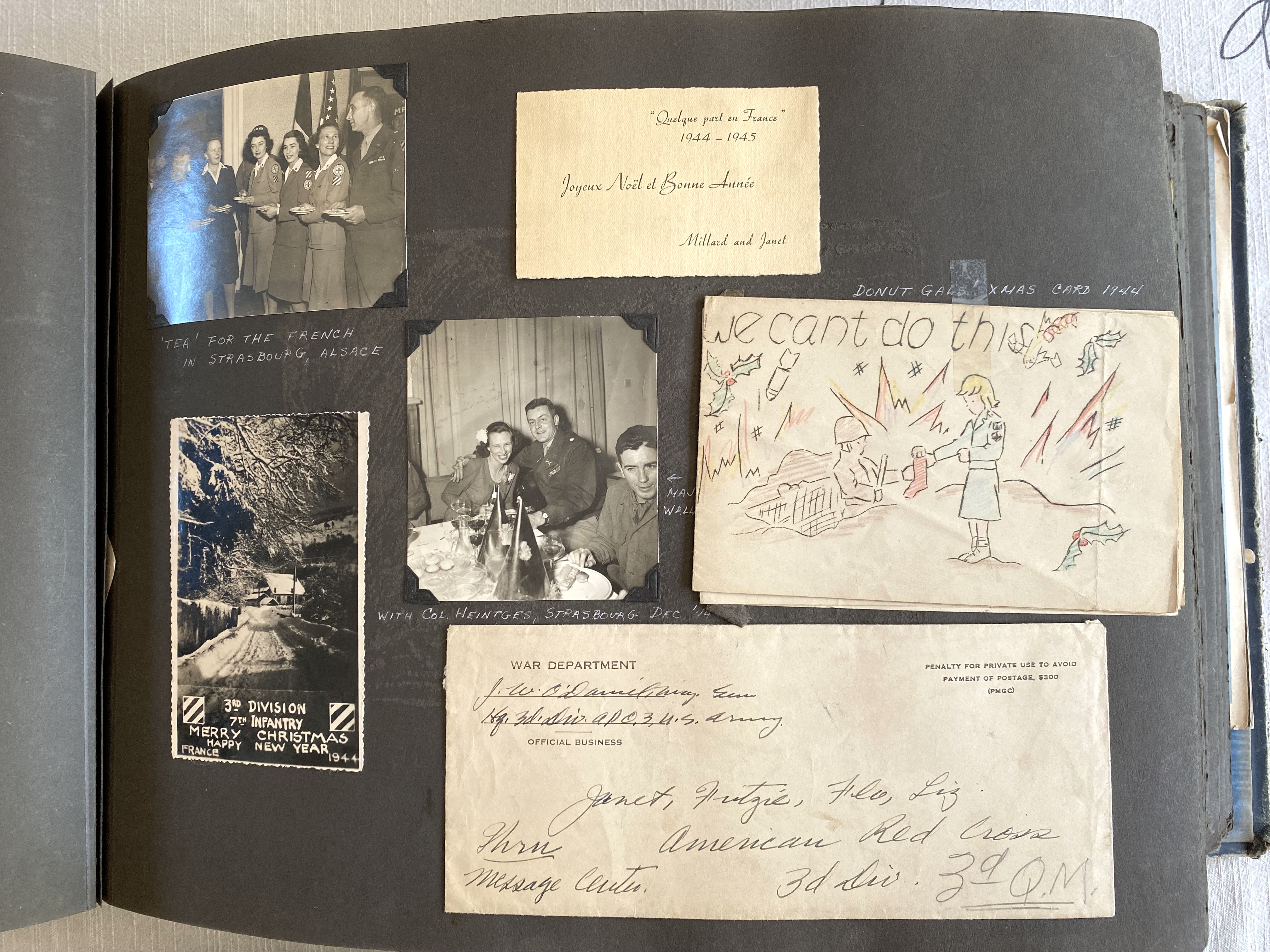
Flo devoted a page in her album to a party and a “tea for the French” in Strasbourg. There was a little time for celebrating before all had to return to the continuing war.

The page from Flo’s album

On the back of a rare picture of the whole clubmobile crew, Flo indentified the ARC clubmobilers and the generals on either side. I could see that she spelled Fritzie’s last name Haugland, so that is likely correct. In the picture are Fritzie, Janet, Liz and Flo with Gen. Schwartz, commander of the 10th French military district and acting commanding Gen. Robert Young.

Gen. Schwartz, Fritzie, Janet, Liz and Flo and Gen. Robert Young at a tea for the French

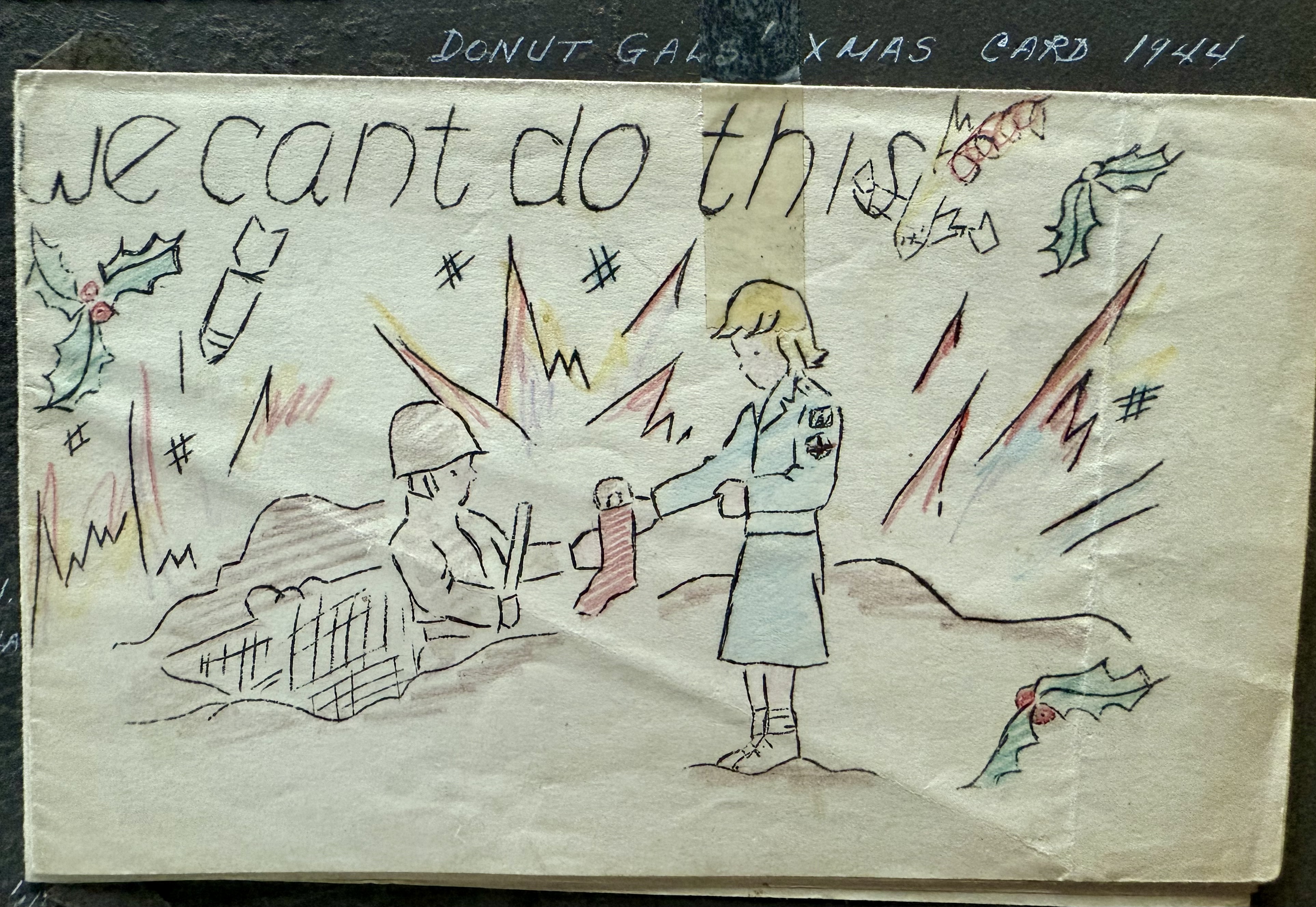
The ARC clubmobilers 1944 Xmas card, made by Liz, is pasted on this page. Cleverly folded, its message reads: We can’t do this (hand out Xmas stockings to boys in foxholes as bombs blast) nor this (offer permanent passes to the USA) but we do wish you a Merry Christmas and Happy New Year. Janet – Fritzie – Flo – Liz ARC.

ARC Xmas card made by Liz

The envelope contains a hand-written thank you letter from Gen. Iron Mike O’Daniel.

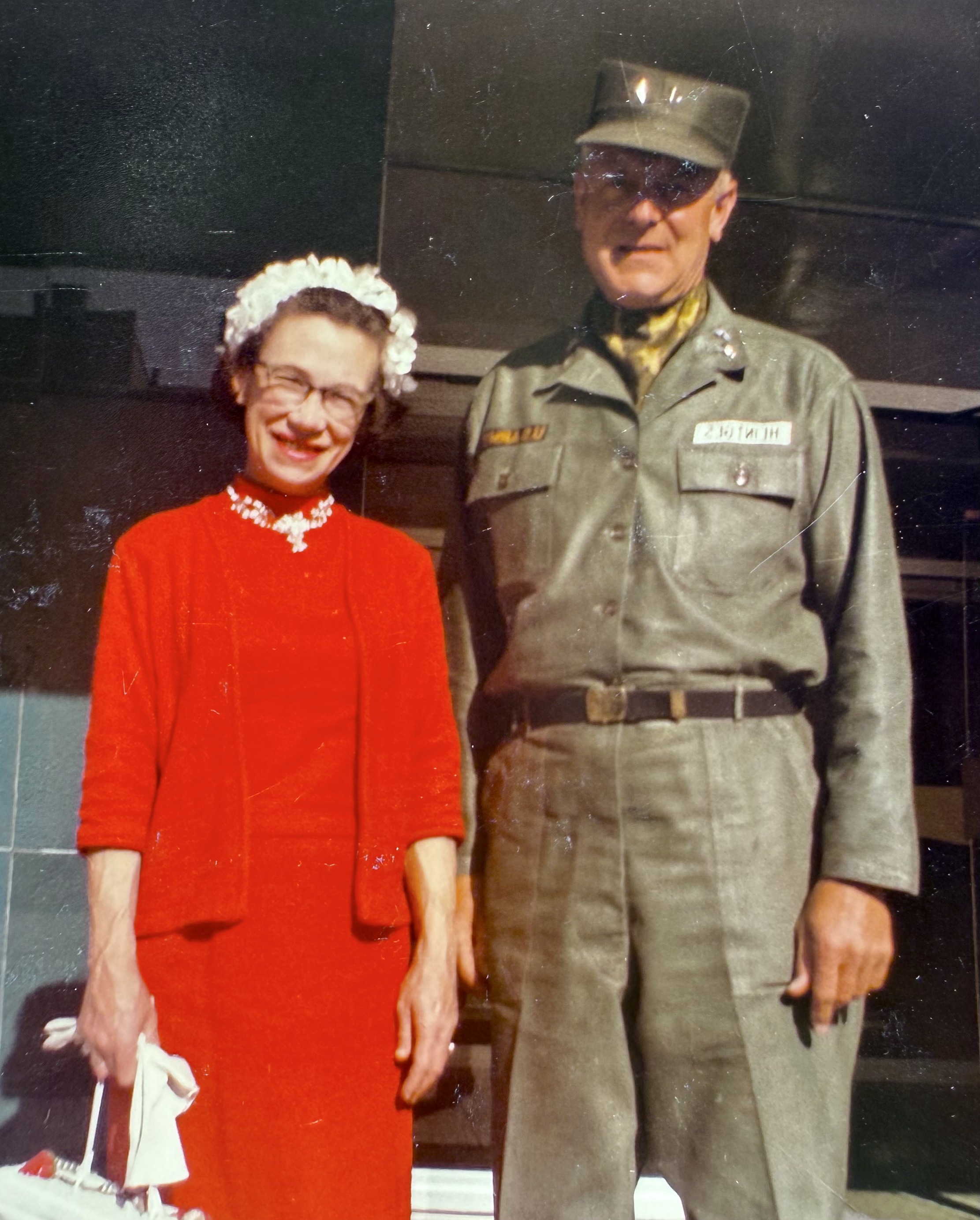
There’s also a picture of what looks like a nice party with wine and canapes. Are those pointed hats on the table? This might be a New Years party. Flo captioned it Strasbourg Dec. ’44. Her date for this evening was Lt. Col. John Heintges, who was romancing her just then.

Flo partying with Lt. Col. Heintger. On the right is Major Wallace. But who is in back with a hand is on Heintger’s. Does he have a war boyfriend?

Flo saved two letters from him, written in December 1944, that show he definitely had a thing for her. And it seems like the thing was mutual, at least for a while, as she was writing to him too. 

He wrote: “Anyone who writes as beautiful, sentimental and sensible as you is truly a lovely person. I enjoyed your little card very much and I must admit Flossie that more than once since I last saw you have I thought of you.”

In the next letter he addressed a bit of rivalry.

“Hello Flossie! I understand you did me dirt n’est ce-pas? I thought we were going to Paris together. I guess why not after the rough treatment I imposed on you.” 

I can’t imagine what this means but it might be the reason Flo decided to move on. 

He continued, “The fact that Chris Chaney went at the same time sort of makes me a little envious but then he’s not your type anyway—or am I wrong. No Flo I am not really jealous because in the first place I have no right to be and in the second I know where your duty lies.…. I guess I am not the number one man I thought I was.

His first letter is signed, “Sincerely, John”. The second ends with “Be good my little angel”.

The officers were fighting over her and that must have felt good. He is right that she chose Chris Chaney, although Chaney wasn’t able to get leave to join Flo in Paris. It seems like Flo went to Paris as often as she could.

By April, Lt. Col. Chaney was addressing Flo as darling:

1 April 45

Hello, Flo, darling,

I am sitting here peacefully in a beautiful CP drinking some captured German cognac, and thinking how nice it would be if you were to walk in, to serve donuts, of course. Oh well, can’t have everything I guess.

Really enjoyed your letter from Paris and wherever you were when you finished it. Wish I could have been there with you, and we really would have seen the town. I think your idea of seeing England is swell, together I mean.

I saw my close friend, Col. Heintgas, the other day, after I had taken one of his towns for him for which he thanked me, anyway, and asked him if he was getting any letters from my girl, and he said “Yes, lots,” So he gave me a drink of good whiskey!

Lots of love, CW Chaney

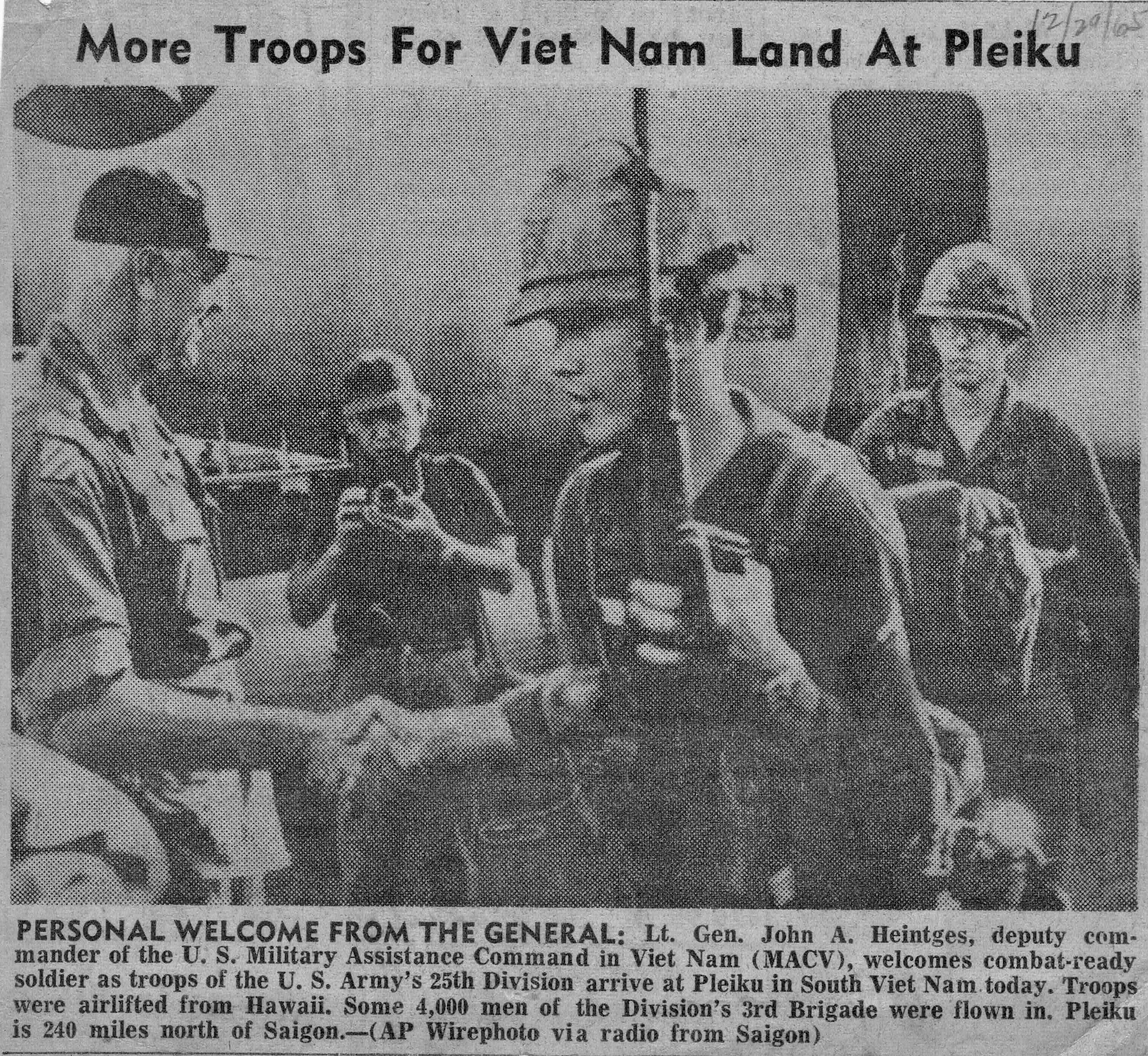
Tucked in the back of Flo’s album along with a lot of post-war ephemera was a newspaper clipping from 1965—a picture of Heintger, now a general, welcoming troops arriving at Pleiku, South Vietnam.

There’s no way to know why she broke up with Heintges (I found different spellings of his name, but this is from his Wikipedia page. Chaney mocked him with the spelling Heintgas), but perhaps the life of an army wife just didn’t appeal to Flo.

Ch. 48: https://mollymartin.blog/2025/08/20/murphy-back-in-the-lines/

Flo, Janet Jump from Exploding Jeep

1500 Donuts Burn, but Clubmobilers Not Hurt

My Mother and Audie Murphy Ch. 46

Newspaper clipping posted in Flo’s album

WITH THE 7TH ARMY, FRANCE—

“Total damage: one volkswagon and 1500 donuts,” so read unit B’s report of accident. Back of the simple statement, however, was more than meets the eye.

Sent to serve an artillery unit of the infantry division to which they are attached, Florence Wick and Janet Potts took off for the assignment in their captured German jeep or volkswagon.

Liz and Flo with the captured VW jeep. Later it became The Thing

Down the road they went, bounding happily along in the mud. The car ran smoothly while the girls served their coffee and then things began to happen.

“After covering part of the battalion,” Miss Wick reports, “our car caught on fire from a short in the wiring system, and a few minutes after we had gone out the only door in front that worked, the gas tank exploded and threw gasoline across the highway and held up traffic for several minutes.”

Nothing daunted, the girls thumbed a ride back to their donut shop, a little shaky, then started out again with more donuts and covered the balance of their day’s assignment.

After the war, Flo still drove Volkswagens

Flo developed a hatred for Germans; they killed her fiancé and many of her friends. But she wasn’t one of those war survivors who refused to drive German-made cars after the war. She hated krauts, but she loved their cars.

At the start of their service the clubmobilers were told they would be issued a 2 ½ ton truck retrofitted with a kitchen and equipment for making coffee and donuts. But they travelled through Italy and France before they finally got their truck in Germany. Until then the women had to scrounge vehicles in which to carry their donuts to the troops. They used any vehicle they could get their hands on; for a while it was a recommissioned ambulance. Later they used a captured German Volkswagen. It seems this was not the vehicle that blew up. Flo notes that they left the Volks behind when they crossed the Rhine into Germany.

Flo sent the photo to Wagen Wheels, the Volkswagen magazine, in 1973. She wrote to them:

“Leaning on their ‘donut delivery wagon’ are Liz Elliott of Manhattan, New York, and Flo Wick of Yakima, Washington, donut gals with the American Red Cross in World War II. They were attached to the famed Third Infantry Division which left from home base at Fort Lewis, Washington in 1942 for North Africa, thence to Sicily, Anzio, Rome, France and Germany, ending the war in Salzburg, Austria in 1945 and with more Congressional Medals of Honor than any other unit in World War II (a majority posthumous). Most famous Congressional Medal holder, Audie Murphy, later made his movie, “To Hell and Back” in the Yakima area.

“Their vehicle is an original People’s car (Volkswagen) which the German people bought, contributed to the Fatherland for the war with the promise that after the war (and victory, of course), their car would be returned to them.

“Fortunately, the American and British armies were able to spoil their plans and when this particular VW “German jeep” was captured in France in 1944 it was presented to the 3rd Division’s four Red Cross girls who converted it into a donut wagon in which they delivered Red Cross donuts to units of the combat division in all the best mountains and fields of France. Later, after crossing the Rhine into Germany and leaving the Volks behind, they had a more military vehicle in which to deliver donuts—a 2 ½ ton clubmobile truck.

“Flo Wick, Red Cross Clubmobile Captain, from Yakima, Washington is now Mrs. Carroll Martin of that city—mother of a daughter and three sons—daughter and eldest son college students. She is the happy owner of a VW Squareback in which she commutes from her home in Yakima’s West Valley to her office in Selah, some 15 miles, every day. There are two other VWs in the Martin family—one, another Squareback, used by the 19-year-old son, and the other, a red Beetle, operated by the youngest son, a junior in high school. None of these, however, can match the ugly little original for stamina and glamor. After all, not many VWs have “fought” on both sides of World War II!”

In 1944, while in France, the Third Division “liberated” one of the Wermacht’s famous Kubelwagens. A second incarnation was called The Thing.

Flo’s story was published in the 1973 Wagen Wheels magazine.

Ch 47: https://mollymartin.blog/2025/08/24/sainte-marie-aux-mines/

A Cold Rainy November

Third Infantry Division in the Vosges Mountains

My Mother and Audie Murphy Ch. 45

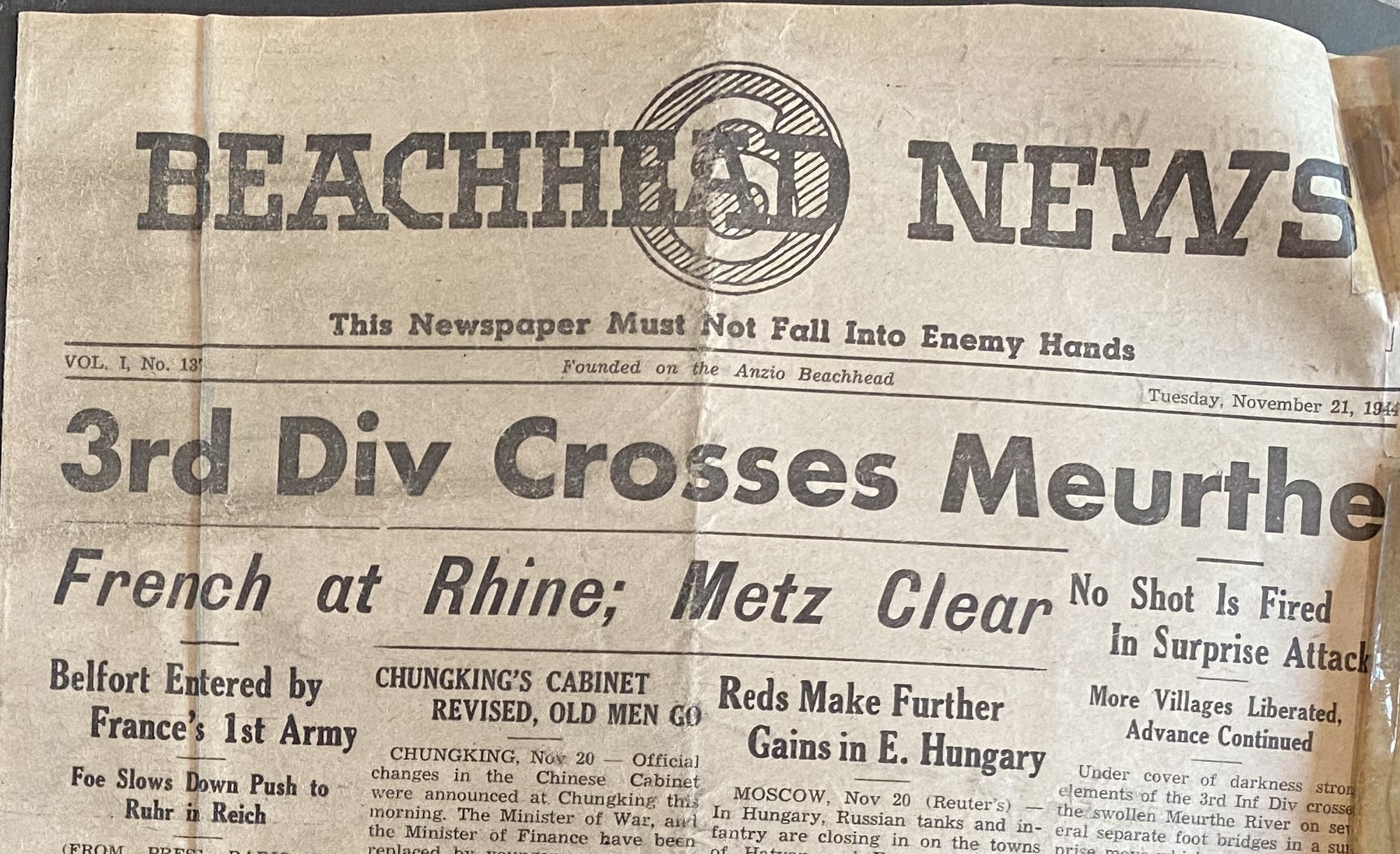
Beachhead News November 11, 1944

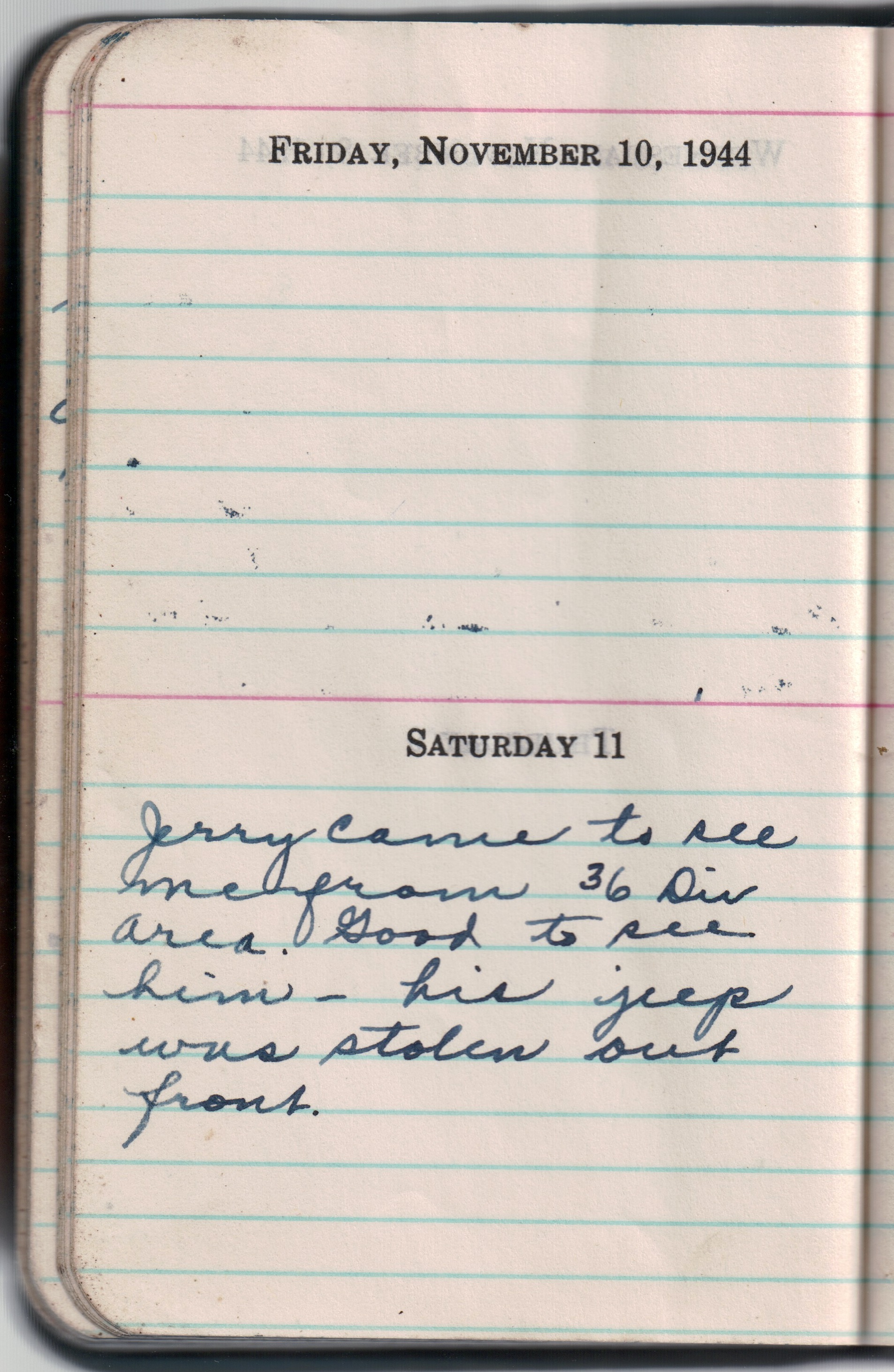
Flo had written her mother after Gene’s death that she planned to go to Paris to visit her sister Eve who worked as an Army nurse in a hospital there. She may have done so but there is no record of it in her diary or album. Her final three diary entries note that she attended a dance in Epinal on Nov. 1. Then she visited with boys from Gene’s company Nov. 11 and 12. If she traveled to Paris in the meantime, it can’t have been a happy trip, but she would have been glad for comfort from Eve and her ARC friend Janet Tyson, who traveled with her.

The last three entries in Flo’s diary

November 1944 in the Vosges mountains was cold and rainy, presaging a bad winter. In a letter to her mother published in her hometown paper, Flo celebrated the dogface soldiers and chastised Americans and the media in the States for thinking the war was near its end.

Florence Wick Writes

Miss Florence Wick, who is with the American Red Cross in France, writes to her mother:

“Things have slowed down considerably now though, and the boys are having a tough fight. The weather is cold here, and winter looks discouraging in that respect. It rains a lot, which makes it miserable, but we get used to it, and to wading in mud. Every once in a while the sun will come out, and that’s wonderful. 

We are up quite far and are serving doughnuts every day, and keeping very busy. It is hard to see these boys come out of the lines dirty, cold, tired and old, but we do have a chance to spread a little cheer before they have to go back again. God bless the ‘dog faces’. They are winning this war mile by mile, and dying too. There is none like them. They are so sick of it all, but they are good soldiers, and everyone at home should appreciate what they are doing and pray for them all daily. They have a very hard fight ahead of them, and in winter, that’s tough. 

People at home shouldn’t take the papers too literally–the war is definitely not over yet, and they had better carry on as they have been doing and not relax any effort. I wish they could see their own boys for just one day during combat, or eat the C ration these kids eat, and they wouldn’t talk of an early end to the war.”

Liz Elliott’s drawing illustrates a typical challenge for the clubmobile workers

Ch. 46: https://mollymartin.blog/2025/08/12/flo-janet-jump-from-exploding-jeep/

He Was So Fine

Flo’s fiancé Gene is killed in action

My Mother and Audie Murphy Ch. 42

I’m finding it so very difficult to tell this story. Thinking about war all the time takes a toll on the psyche.

This morning, before sitting down to write, I went to a protest at the local veterans clinic. We were there to demand an end to cuts to the Veterans Administration. Many of the protesters—like the woman who organized it—are vets themselves. There’s always music at these gatherings: sometimes a live band called Good Trouble, sometimes just a boombox. I usually love to dance, to sing along. But lately, the old anti-war songs catch in my throat.

I’m gonna lay down my sword and shield,
Down by the riverside.
I ain’t gonna study war no more.

War! What is it good for? Absolutely nothing.

John Lennon singing Give Peace a Chance.

They all make me cry now, and when you’re crying, it’s hard to sing. We’ve been singing these songs for so damn long. All my adult life, since I was a college student protesting the Vietnam War in the 1960s. Flo protested with me. She was a patriot, but her time in Europe changed her. The war turned her against war.

Flo’s Diary Tells the Story

Flo and her crew had just returned from a brief trip to Paris before getting back to work, serving donuts in remote villages. Still hoping to see her fiancé Gene, Flo went to the Third Battalion headquarters. There, a major gave her the news: Gene had been killed by a mortar shell.

“Dear God!” she wrote in her diary.

Those were among the last words she wrote in it. Except for a few brief notes, the rest of her wartime diary is blank. From here on, I have only the letters she saved, and newspaper clippings pasted into her album, to help me tell the rest of her story.

My grandmother, Gerda, saved the letter Flo wrote to her.

Sun. nite Oct. 29

Dearest Mom–

I need you so! I just learned that Gene was killed yesterday at the front–in fact, I was at his battalion headquarters, a short distance back, this afternoon and the major broke the news to me. I can’t believe it; I just saw him a few days ago–before we left for Paris–and everything seemed wonderful. He was hit by a mortar shell and died very quickly. Oh, Mom, I loved him so much–he was so wonderful to me–and so attractive and fine. He was his mother’s favorite and the family “mainstay”–it will break her heart–and mine too. Right now I want to come home and see you–that would help. I had so much faith that this time, things would work out and I am so sure he was the “right” person. I’ve prayed for him and his safety, but war is such an evil thing, prayers don’t help much, I’m afraid.

I’m trying very hard to believe in all the things you taught me, but it certainly is hard. Perhaps now I realize, a little, how you felt when Daddy died, though it isn’t quite the same. Gene had sent home for rings for me and wanted so much to get married and have children–like all these men over here who are fighting and dying every day.

I wish there were a church to go to around here–it would help me, I think. Funny how that is what you need when these things happen. Everything is blank and black ahead right now and the shock has been terrific. Of course it will wear off and I will accept it, but it is very, very hard. I didn’t realize how much he meant until I heard the tragic news, but I am glad we had so many good times and that I made him happy for a few months. You would have loved him, Mom; he was so big and handsome and good to everyone. His boys are heartbroken–the whole battalion was shocked. I have so many friends among the 36th engineers and they are wonderful to me. It doesn’t bring Gene back, tho, and I can’t feel much of anything.

I may go up and see Eve again for a few days; it will help to see her–she was so nice to us girls when we were there.

Am glad you finally got my letters, Mom; it was worrying me that you didn’t hear, but mail service has been perfectly terrible. I hope they all catch up with you soon. Can’t write anymore right now. I’ll try to be brave. Pray for me, Mom. 

Love, Florence

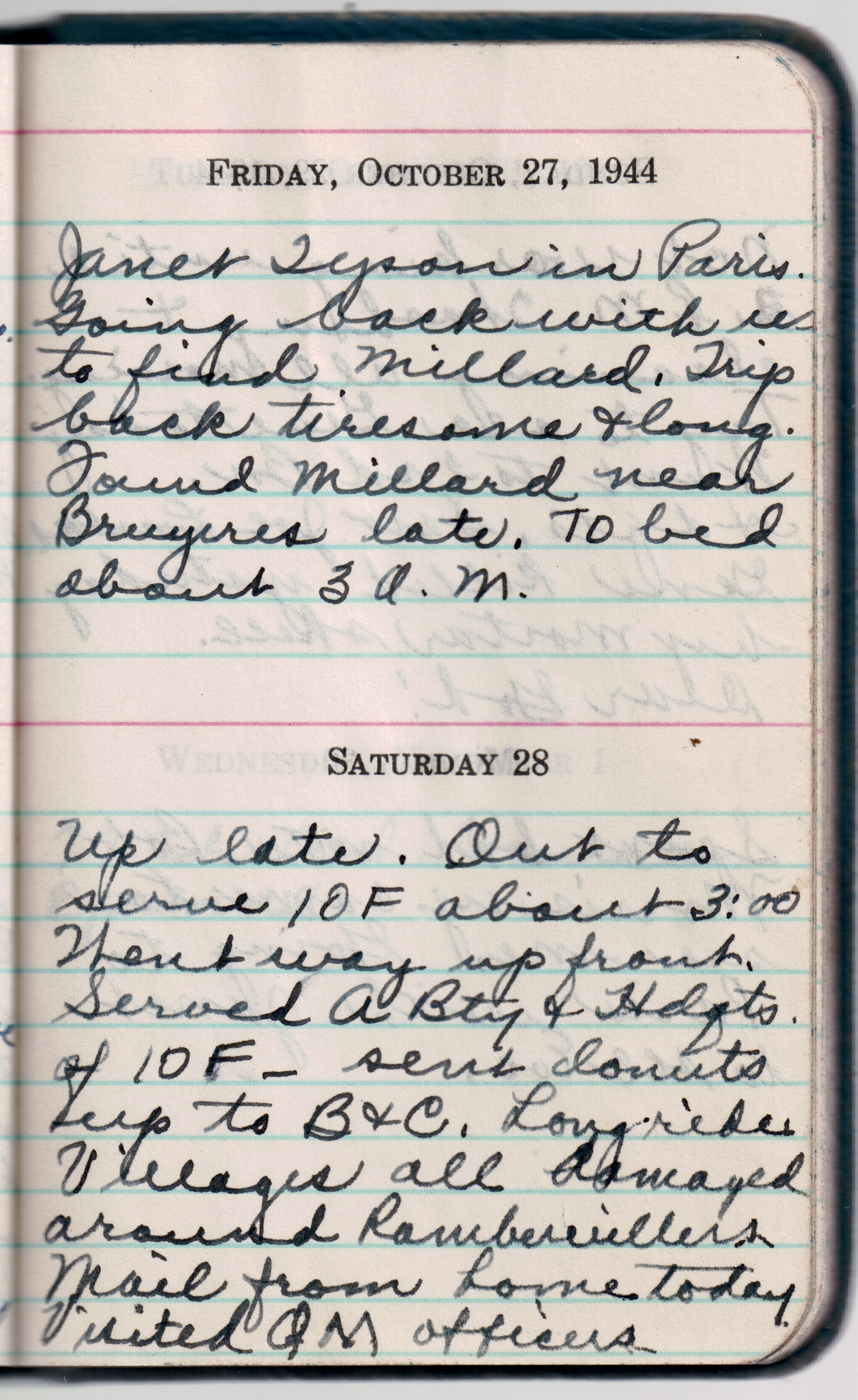
Mon. A.M. Forgot to tell you in the excitement that I ran into Janet Tyson in Paris! She drove back with us and we took her to her husband’s camp–his division is right with ours. She dropped by this morning and talked me into going back to Paris for a few days to be with her and Eve. I don’t know what is best, but I’m on my way there and may feel better.

I read the second chapter of Timothy and thought of Gene where it says “I have fought the good fight”–he certainly did! I am trying to draw on those “inner resources” but it is so hard and I shall miss him so much. Write me. 

All my love, Florence

Susan Jenson remembered her mother Janet saying, “Flo, like the rest of them, suffered loss. So sad to finally find Gene—only to lose him.”

Ch. 43: https://mollymartin.blog/2025/07/27/black-women-save-the-us-army/

The Clubmobile Crew Goes to Paris

We ponder the purpose of the trip

My Mother and Audie Murphy Ch. 41

Paris—cultural capital of the world—was a dream destination, even in wartime. Everyone in Flo’s Red Cross crew wanted to see it. They’d heard about the food, the fashion, the grandeur. Who wouldn’t want a taste of it, especially after months of mud, cold, and war?

Liz Elliott’s drawing

In October 1944, Flo and her crew made the trip. It’s unclear why they chose to go just then—or why they stayed only two days—but they made the harrowing drive from the Vosges. Though the route avoided the front lines, it was still far from safe.

According to Flo’s diary, they left at 6 a.m. and got a flat tire in Épinal. Luckily, the 77th Ordnance gave them a new tire—and breakfast. “Trip long, but successful,” she wrote. Successful how? I can’t help but wonder if this was the trip my cousin later referred to—when Flo supposedly went to Paris for an abortion.

The group’s main stop was the 203rd Army Hospital, about 15 miles outside the city, where Flo’s sister Eve was working as a nurse. Flo noted that they found the hospital easily and spent the night there. Eve, on night duty, didn’t appear until around 7 p.m.

Flo’s diary

The next day, they went into Paris. “Simply wonderful,” Flo wrote. “Shopped for 2 hours. Things nice but expensive.” She also had a perm done “on post—very good.” But I wonder—was that all she had done that day?

After my mother died, I asked her sister Eve about the abortion story. Eve said she didn’t know anything about it. But she recalled that Flo once told her she’d miscarried while lifting heavy equipment. The original story came from their other sister, Ruth—who, according to her daughter, had been sworn to secrecy. It’s possible Flo never told Eve, perhaps fearing she couldn’t keep the secret.

Still, from the diary it seems Flo and Eve spent most of that day together, which makes it hard to imagine that Flo had a medical procedure without Eve noticing. That night, she wrote, “Eve and I very sleepy. To bed at 1 a.m.”

The following afternoon, Flo returned to the city with “gals and nurses.” They shopped again, bought gifts, and enjoyed themselves. “Leaving in am. Hate to,” she wrote.

She also noted, “Bob not back from England.” That was Eve’s husband, also in the military.

Flo did return to Paris later, so perhaps the abortion took place on a different trip. Maybe this one really was just for sightseeing, shopping, and a little time with her sister. Or maybe it was something more—something she chose never to write down.


Ch. 42: https://mollymartin.blog/2025/07/24/he-was-so-fine/

To go back to Ch. 1: https://mollymartin.blog/2024/11/04/my-mother-and-audie-murphy/

Two New Women Join the Clubmobile Crew: Janet Potts and Fritzie Hoglund

My Mother and Audie Murphy Ch. 40

October, 1944. The four-woman crew gets to work, Flo sees Gene before his company goes in the lines, clubmobilers get up near the front lines and they move to a new camp.

Flo’s diary (pinch out to read)

A note here about the challenge of research: In 1973, a fire at the National Personnel Records Center (NPRC) destroyed 16-18 million official military personnel files. Among them were the archived records of the Clubmobile program, making modern-day research into these women’s service difficult.

From Flo’s album

One helpful resource is The Clubmobile—The ARC in the Storm: A Personal History of and by the Clubmobilers in the European Theater of War During WWIIcompiled by Marjorie Lee Morgan. The book includes interviews, diary entries, and photographs. But it focuses solely on the European Theater and omits those who served in the North African and Italian Theaters—even though many of those women, like my mother, also served in France, Germany, and Austria. And these women were the first to enter France and Europe. The book even includes a list of clubmobilers, but no names from the North African/Italian Theater appear, except Forence Wick on the inactive list.

With help from my brother Don, I was able to find some information on Janet Potts and even contacted her daughter. But so far, we’ve found nothing definitive about Fritzie Hoglund (or possibly Hoagland). A newspaper clipping pasted into Flo’s album says Fritzie was from Berkeley, California.

Janet Jenson (née Potts)


Born in New Rochelle, New York, Janet graduated from the Brearley School, attended Barnard and Columbia, and joined the Red Cross in 1944. An accomplished equestrian, she rode in a Third Division “rodeo” at the end of the war.

Janet was one of eight sisters—three of whom served in the Red Cross during the war. Janet was the only one who went to Europe, while the two others served in the South Pacific.

She married Lloyd Jenson in 1946 and had two daughters. Her daughter Susan Jenson told me that Janet often spoke of Flo and that her mother also made a wartime album, which she plans to go through. 

Janet’s daughter wrote, “I personally think there’s far too much focus on donuts in the way the clubmobilers’ work is remembered. These women were brave and generous souls who took on a difficult and emotionally demanding role, offering comfort to exhausted and traumatized troops. As my mother often said, the French sometimes mistook them for camp followers—a euphemism for prostitutes. They had no idea what these women were really doing. But for many soldiers, these were the last warm smiles they ever saw.

“Janet always had kind things to say about Flo. I can imagine the two of them together in a jeep, laughing. It was an adventure—but also full of heartbreak.”

Janet died in 2011, in Denver at age 96.

Liz, Flo, Fritzie and Janet (in clubmobile)

The new four-woman crew slept in the clubmobile. Flo wrote in her diary, “It was fun, but very crowded.” Later, they were issued a tent and new cots.

At one point, Flo’s fiance Gene came down from Docelles and surprised her. “Went out to a movie with him,” she wrote. She saw him again on October 19. Then on October 20: “Last night with Gene—co. going in lines. Sat in front of fireplace at Docelles.” The next day in a free afternoon, she drove back to Docelles maybe with the hope of seeing him one last time. She wrote: “Gene gone. Spent night at ‘home.’”

The following morning, Flo and the crew spent hours loading and moving supplies—the clubmobile was relocating to an area near Épinal.

Ch. 41: https://mollymartin.blog/2025/07/20/the-clubmobile-crew-goes-to-paris/