Invoking the Travel Goddesses

August 1, 2023 

My Regular Pagan Holiday Post: Lammas

It is the season for traveling in the northern hemisphere and I’ve been traveling along with millions of others, this year freed from covid restrictions. 

The Santa Rosa airport was packed with more people than I’ve ever seen there, and my destination, Seattle, was just as chaotic. I was one of very few folks wearing a mask. On the plane, people sitting around me discovered we are all from the same neighborhood. Two were flight attendants, relieved that they no longer are required to act as mask cops, risking physical confrontations with MAGAs (they wore masks).

My full flight was smooth and on time. At SeaTac I always rush through the baggage claim level to the far south end of the airport where I catch the bus to Kitsap peninsula towns and my destination, Gig Harbor. This time the bus was just boarding and there was an empty seat for me. My luck may have been the result of my friend Barbara Sjoholm’s invocation of (and my introduction to) the two Roman travel goddesses, Abeona and Adeona. The goddesses are often petitioned together to provide safe travels. 

Abeona–in Latin abeo means to depart—also indicates the birth of plant and animal life, including human beings.

Adeona–adeo means to return. “She who returns” is a goddess of plant and animal growth and death.

Betsy, Barbara and Cousin Gail

A prolific writer, Barbara has just published what I’d call her magnum opus, “From Lapland to Sápmi: Collecting and Returning Sámi Craft and Culture,” about the cultural history of the indigenous Scandinavian people. I know her from the murder mysteries she published in the 1980s and 90s, featuring a lesbian sleuth, Pam Nilsen. During covid she wrote and published two mysteries with an older lesbian protagonist, Cassandra Reilly. My cousin Gail, a student of Native American culture, is a big fan of Barbara’s writing about the Sámi, and I got to introduce them. At lunch in Port Townsend we met Barbara’s wife, Betsy Howell, who works for the US Forest Service and writes about it on her blog: https://betsylhowell.com/. She has a new book coming out in the fall. Mazel tov!

We Watch the Earth Burn

I left Santa Rosa as it was experiencing a heat wave. It was only 86 degrees when I arrived in Gig Harbor, also pretty hot for this time of year. For now, the West has mainly avoided heat domes and smoke from Canadian fires that have affected most of the rest of the country. Phoenix is experiencing nearly a month of temperatures above 110 degrees. July 4 was the hottest day in human history.

At one time I thought I would not live to see the effects of climate change, but the change is coming faster than anyone expected. It’s happening in my lifetime!

In California we worry this time of year about fire as well as heat. As a person with lung issues, I dread fire season and its smoky air, which starts earlier every year. It used to start in the fall with the diablo winds that come from the east. Our usual winds blow from the west, offshore, and while they contain pollution from China, they are not usually smoky.

On this trip I’m reuniting with my three brothers and two cousins. Then I’ll travel to Vancouver BC with my brother Don to commune with him and his husband. It’s gonna be great. 

Siblings Molly, Don, Tim and Terry

Celebrating the Cross Quarter Holiday

In the northern hemisphere, the autumn cross-quarter holiday was celebrated by the Celts as Lughnasa/Lammas on August 1. Astronomically the event occurs around August 6 or 7, the hottest time of the year in much of our hemisphere.

At Lammas we celebrate the harvest of first fruits. In Santa Rosa we’ve been harvesting beans for a while. Our first tomatoes are finally ripe. I look forward to summer BLTs and I ate the first one just before leaving town. The peaches are in the dehydrator. The neighbor’s apple tree that hangs over our fence is full of ripe Gravenstein apples. Holly made pies from the leftover last year’s apples so we’ll have room in the freezer for this year’s. Artichokes were prolific and I ate many but left some to flower. Bees love the purple-blue flowers and I love looking at them, but they are now over and the plants are ready to be cut down. 

At summer solstice I celebrated my mother’s birth day. On August 9 I mark her death day, which is also Nagasaki day, the day in 1945 when we, the Americans, dropped the atomic bomb on Nagasaki, Japan. August 6 was Hiroshima. 

Seen from Cousin Gail’s deck. Looking across Colvos Passage at Vashon Island

People all over the world mark the anniversary of the nuclear bombings. Some people fast from August 6 to 9, a nonviolent tradition to pause, reflect and create empathy for those who have suffered from nuclear weapons. Others fold 1,000 origami cranes, a long tradition in Japan, believed to bring a peaceful and healthy life. After the nuclear bombing, origami crane folding became an action for peace and nuclear abolition. It started in response to the story of Sadako Sasaki, a child who contracted leukemia from the radioactive fallout. She tried to make 1,000 cranes but died before she could finish. Her classmates finished the 1,000 cranes, then made crane making their message for peace, starting an international tradition. 

As we face threats of nuclear war and see a new arms race developing, this anniversary must remind us to strive for a nuclear free world.

If you haven’t read Hiroshima, John Hersey’s 1946 piece about the bombing, I recommend it. He personalizes the experience, telling the stories of six survivors. https://www.newyorker.com/magazine/1946/08/31/hiroshima

Sending best wishes for a safe and peaceful Lammas.

Pride at Summer Solstice

My Regular Pagan Holiday Greeting: Litha

Reclaiming Ritual

Can we remake religious rituals into traditions that are free from religion? In her book, The Wonder Paradox, Jennifer Michael Hecht answers with a resounding Yes! And she shows us how. 

Hecht posits that humans need tradition and ritual in our lives, but that there is no reason to attach these practices to church, which she aptly calls “drop by and lie.” I do love that she is a fellow atheist, but anyone, religious or not, can make use of her ritual adaptations that are more appropriate to modern life. She says everything is secular, including religion—a human invention after all. Hecht makes the case for incorporating poetry into newly imagined rituals. Reading this book and listening to an interview with her has renewed my own path to inventing new rituals. 

We humans need ritual to mark births and deaths, but we can make our own or incorporate those of other cultures. My friend Ruth, a new grandmother, told me her Hindu relatives have rituals for everything, including the baby’s first haircut. She is not Hindu but she is invited and delighted to participate in them all.

When the news gets us down or is cause for celebration, we can create our own ceremonies. A friend posted “Happy arraignment eve to all who celebrate” and another commented, “I’m looking forward to the high holy days of conviction and sentencing.” (Me too!)

In these pagan holiday posts, I have been using the Wheel of the Year to think about the wheel of life. A combination of ancient and new tradition, the Wheel of the Year acknowledges the summer and winter solstices, the spring and fall equinoxes and the four cross quarter holidays in between. It’s a good way to notice the changing of the seasons and to feel closer to the earth and all its inhabitants.

Summer solstice is a gay holiday

Just as the whole alphabet of queer folks have become pariahs around the world, our invention of Gay Pride Day and Gay Month have become universal markers of summer solstice (winter solstice in the southern hemisphere). For most of my adult life I’ve been celebrating the summer solstice at Gay Pride Day. Taking place in cities and towns around the world, mostly in June, Pride is both a protest and a party. 

In San Francisco, Pride is huge, taking over the whole city for the month. In New York City, activists have split from the old corporate sponsored pride parade to form a new protest march. In LA, the parade turned into a music festival and has also split in two. 

I say it’s all for the good. Why not have Pride celebrations in every town and city and neighborhood. As Sonoma County celebrated its 38th year of Pride, other small towns around the Bay now sponsor their own Pride celebrations.

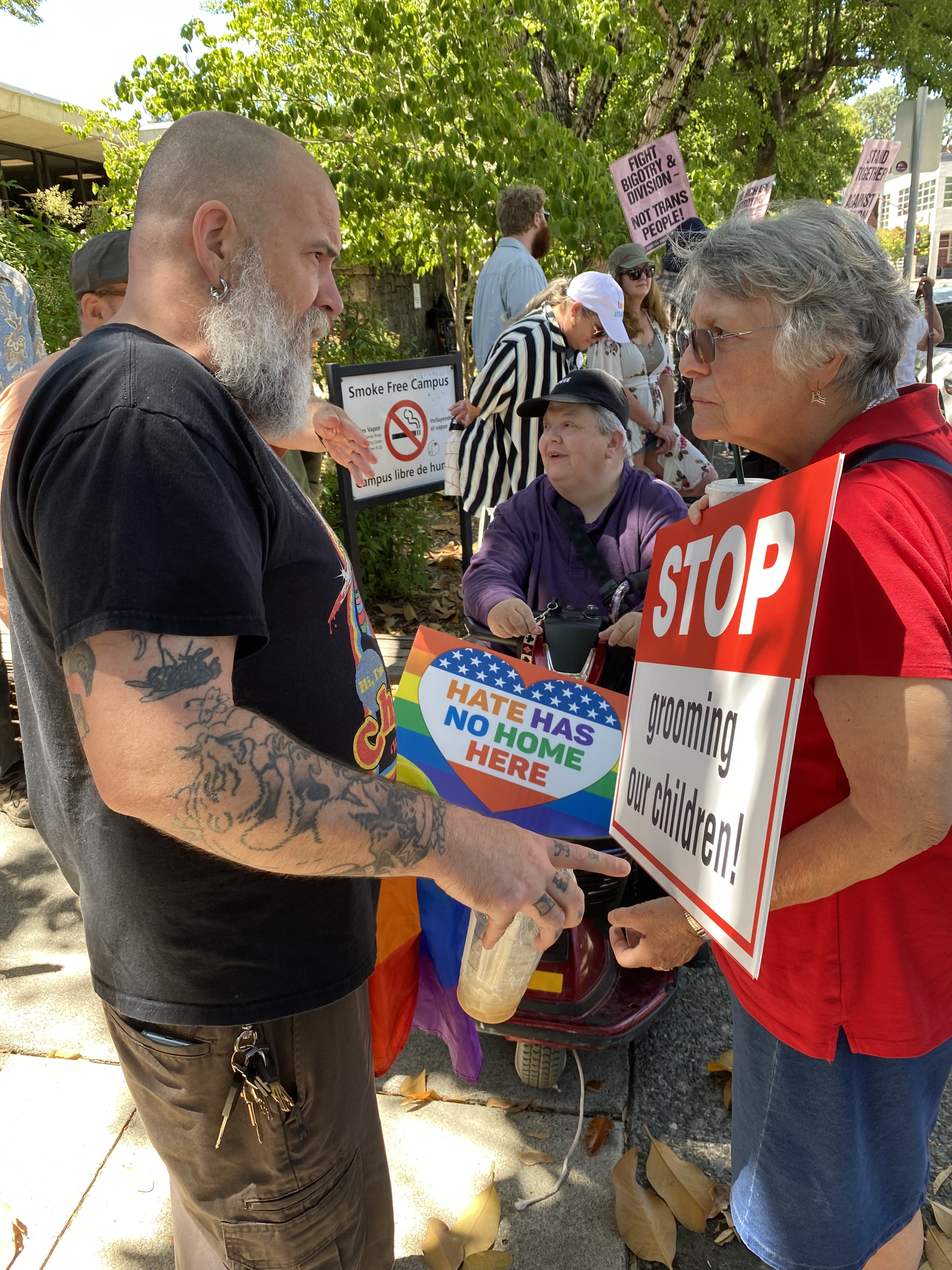
So Gay Pride Day and gay events like drag queen story hour are proliferating all over the country but at the same time our community is under attack in nearly every state. We are lucky to live in California whose state legislature is not at the moment promoting anti-gay bills (although we have fought against many in the past). But even in Sonoma County and around the liberal San Francisco Bay Area, protesters show up at public libraries and school boards with the aim of censoring books and queer programming. Here in Sonoma County the counterprotesters are vigilant and nonviolent. No events have been shut down by the book burners yet.

Not a Virgin Anymore

June has been a mixed bag this year. In between occasional sunny breakthroughs, Santa Rosa has been experiencing what Santa Barbarans call June Gloom. My wife Holly’s weather guru, Daniel Swain (https://weatherwest.com), predicts hotter-than-ever summer days after the gloom subsides. 

At the spring equinox I opined that the wet cold winter had become suddenly summer. Wrong! Summer lasted just a weekend before the weather turned cool again. I had performed a spring ceremony, kissing my winter gloves and putting them away for the season, but I soon pulled them back out. Now I’m putting them away again. Ok I’ll kiss them again. Our ceremonies and rituals can be repeated as often as we want.

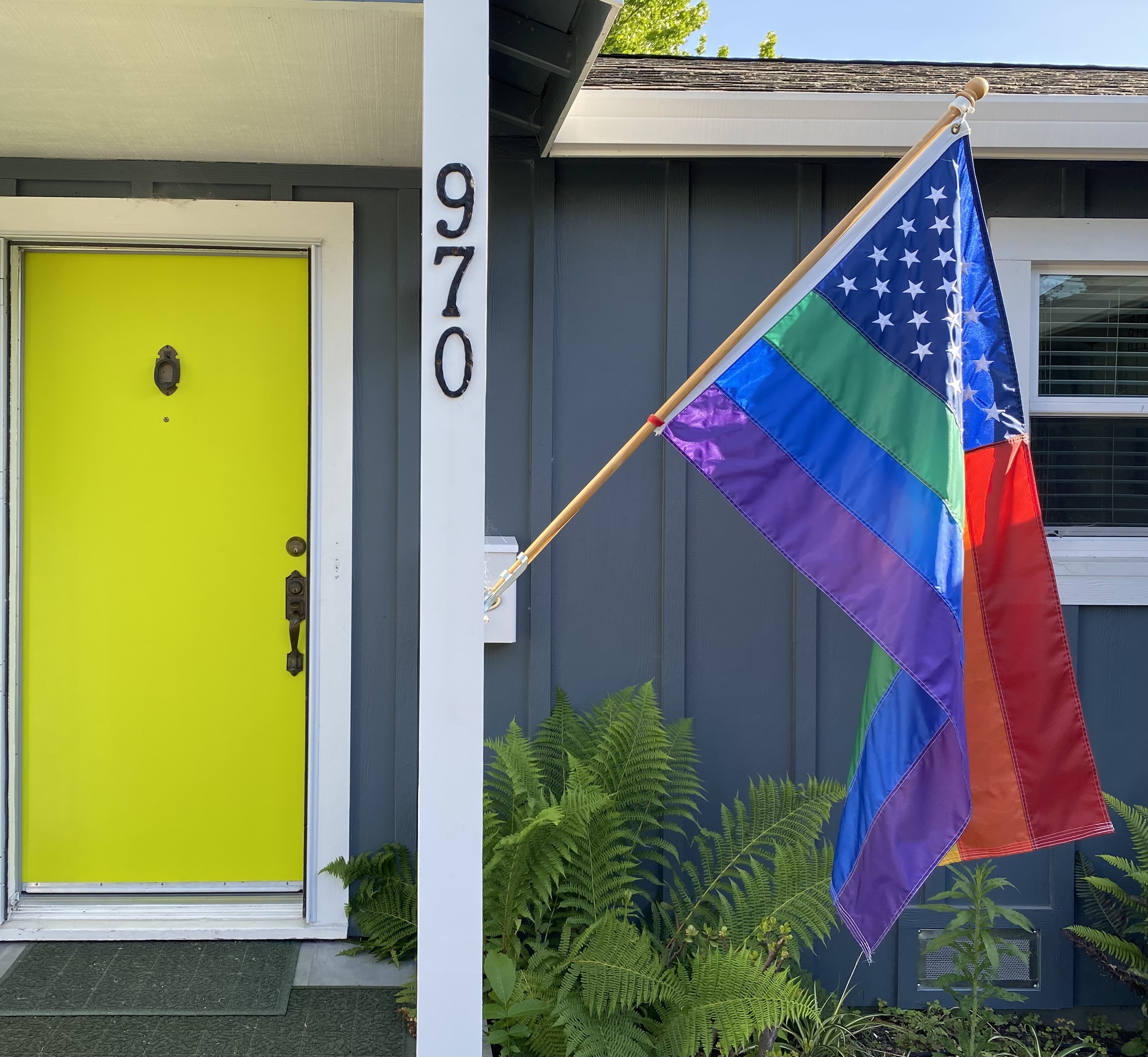
Flags are big during Gay Month. We hung the gay flag on June 1, a ritual repeated every year.

Then Holly and I both got covid, thankfully at the same time so we could isolate together. She brought it home from her mother’s assisted living place. We each took a five-day course of Paxlovid. I’m pretty sure it reduced the severity of our symptoms and now we’ve tested negative. We didn’t practice many rituals while we were sick, unless you count lying in bed all day watching Mrs. Maisel. 

Now I’m back to hiking! I’ve resurrected my daily morning ritual of preparing for the hike—donning boots and hat, filling my water bottle, making a snack, checking the fanny pack. Keys, wallet, phone and bandana felt for in pockets. And I’m off to walk in nature, my favorite pastime.

Have a delightful Summer Solstice and a fabulous Gay Pride Day!

Remembering the Mother of California Civil Rights

My Regular Pagan Holiday Greeting: Celebrating Beltane May 1

Mary Ellen Pleasant, the mother of California civil rights, is associated with the pagan holiday Beltane because she once owned and lived at Beltane Ranch, here in Sonoma County. It is now recognized as a Black historic site by the National Park Service. Once the richest Black woman in America, her wealth was stolen and she died a pauper in 1904. She is buried in the Tulocay cemetery in Napa.

I wrote about Pleasant last year on Beltane, but I wasn’t finished thinking about her. She is a supremely important person in California history, but one who has been largely forgotten. I’m all about resurrecting her memory.

I refer to her as MEP because that is how she signed the note found in the pocket of John Brown before he was hanged for treason and inciting a slave rebellion in 1859. The note read, “The ax is laid at the foot of the tree. When the first blow is struck, there will be more money to help.” MEP had financed Brown’s raid on Harper’s Ferry with a donation of what today would be a million dollars. Because her initials were read as WEP, she was never caught by Virginia authorities.

MEP was born in the East where she worked to bring slaves up north on the underground railroad until slavers threatened her. Along with a number of fellow abolitionists, she migrated to California in 1850. She sailed first to New Orleans where she continued to help people to flee slavery. During her short time there she connected with the legendary voodoo queen Marie Laveau. She left the city just as she was about to be captured for helping runaway slaves. 

The party landed in San Francisco where abolitionists found plenty of work to do. In California of the 1850s the law allowed any Black person who did not have proper papers to be sold into slavery. Slave catchers and slave owners came west looking for runaways. Slave owners who arrived in California before September, 1850 were allowed to keep their slaves as indentured servants.

My wife’s family traces their ancestry to Peter Burnett, the first elected governor of California, but of this they are not proud. Burnett, a Missouri immigrant, slave owner and white supremacist, promoted some of California’s most racist laws including enabling the enslavement and genocide of American Indians, the Chinese Exclusion Act, and a push for the total exclusion of Blacks from the state. Earlier, as a judge in Oregon territory, he signed the first exclusion laws which required all Blacks to leave the territory or be flogged.

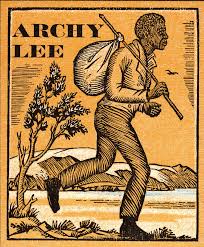
Burnett and MEP were destined to tangle. At the time Blacks were not allowed to testify in court. MEP helped get this law changed, but in the meantime she defended and hid Blacks unfairly captured. She paid the legal bills of young Archy Lee, brought as a slave from Mississippi, a slave state, to California, a free state, in 1857.

In the first case, Lee was declared free, as California allowed only “transient” slave owners to retain their slaves. Then, in an appeal to the state supreme court, Peter Burnett (by this time he was a member of the court) authored and signed the court’s decision to allow the slaveholder to leave the state with Lee as his slave. 

From the court ruling: “It must be concluded that, where slavery exists, the right of property of the master in the slave must follow as a necessary incident. This right of property is recognized by the Constitution of the United States.” 

Californians were outraged, and abolitionists boarded the ship to rescue Lee as it was leaving the state. A federal court overturned the Burnett decision, but then the slaveholder charged that Lee was in violation of the Fugitive Slave Act of 1850. A final trial declared Lee to be a free man. Archy Lee joined an expedition of African Americans who resettled in Canada.

Burnett was only governor for a year, then on the supreme court for less than a year, but he and other Southern whites impressed racist ideology on California in that short time. Reading the history, I’m truly amazed that a failed shop owner who had fled Missouri in debt could leave such a smear on the new state. California citizens have since learned the history and taken Burnett’s name off public buildings.

I wanted to see MEP’s grave so my friend Joan and I made the pilgrimage to Napa this spring. When we visited, the cherry trees surrounding it were in full bloom. Tucolay is a beautiful big cemetery and MEP’s grave is situated in a lovely corner.

When my friend Bill had visited last year, the gravestone was covered with voodoo icons like skulls with a vase of black roses. Icons had been glued right onto the stone, obscuring the inscription. Was it the work of a modern voodoo cult that surrounds her because of her association with Madame Leveau? At my visit the skulls had been removed, but traces of glue remained.

MEP said, “Before I pass away, I wish to clear the identity of the party who furnished John Brown with most of his money to start the fight at Harpers Ferry and who signed the letter found on him when he was arrested.” 

She said it was the most important and significant act of her life, a life spent working to end human slavery.

On Beltane we celebrate the life and work of MEP and we also devise our own rituals to acknowledge the changing of the seasons. Our winter was cold and wet—about twice as rainy as normal. There was no spring; we graduated into summer on easter weekend. The sun came out with a vengeance and all the buds and flowers that had been patiently waiting for it burst forth in profusion. Grass of every variety grew tall. Lawn mowers revved. Fence lizards emerged. Ants vacated the kitchen. Bees and pollinators are waking up.

On Easter, instead of hunting for eggs, we concocted a ritual with friends who periodically drink Prosecco with us. It’s Linda’s job to pop the corks, and they can travel far into the garden. We hunted for corks instead of eggs. This, we expect, will become an annual custom.

I’ve just picked the last of the oranges and am about to start harvesting artichokes. We planted flowers and vegetables. I put away my warm slippers and took out my flip flops. I kissed the gloves I’d worn all winter, thanked them for warming my hands on many chilly hikes and tucked them into a drawer.

Goodbye winter. Hello summer!

Here is the link to last year’s story about MEP: https://mollymartin.blog/2022/05/01/beltane-and-a-black-heroine/

Blue Krishna Worried About Color

My Regular Pagan Holiday Post: Ostara

Dear Friends,

The Hindu god Krishna, who was blue, worried that his love Radha, who was not blue, might not appreciate his color. His mother suggested that he ask Radha to paint his face any color she wanted. And, according to legend, that’s how the Hindu holiday Holi was born. At the spring equinox people gather to throw colored powders on each other, and lovers paint each other’s faces. The holiday is big in India and it’s also becoming popular in the U.S.

I love the idea of getting together with a big group to throw colors on each other. What fun! But then I started wondering about what is in that powder. And also thinking, as someone with lung issues, what might be the consequence of breathing it in. We all know that breathing dust and smoke is not good for us. There’s farmer’s lung and carpenter’s lung and smoker’s lung. Now there’s probably Holi lung!

So while I’m always looking for new and old ways to celebrate the turning of the seasons, Holi is not a spring equinox tradition I intend to adopt. Instead I’m sending colorful flowers to our household to remind us that the cold wet winter is over. Which right now in Santa Rosa is more of a hope than reality. It’s raining now and it’s not very warm by our standards. Two more atmospheric rivers are threatening in the next week. The whole state of California worries about where all the water from the Sierra snow melt will go.

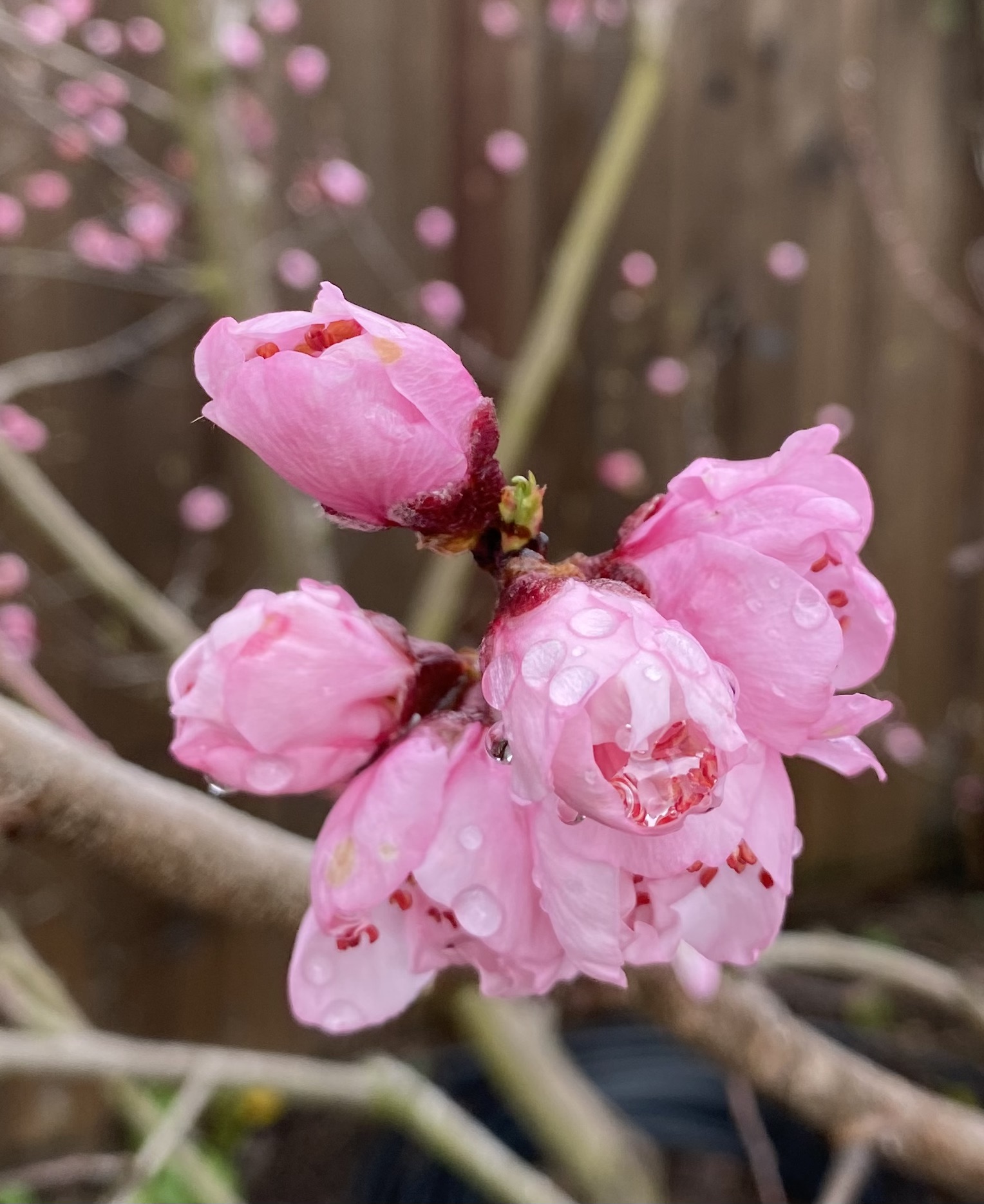
We see some signs of spring. Plum, peach and pear trees are blooming and the magnolias are magnificent. Poppies are starting to bloom. Birds are frisky. Oaks are leafing out. Is it fair to say spring is here but winter is still hanging on? 

My boots are muddy and the trails wet but, along with my hiking buddies, I go out every day that it’s not raining. Being outdoors is what has kept me sane through covid. Masks have kept us healthy. One or both of us usually gets sick sometime during the winter with a virus that lands in the chest and hangs on, but Holly and I have avoided air-borne diseases for three years now. Very often these days I’m the only one in a group wearing one, but I feel saved by the mask! 

May you be well and (soon) warm!

Good Imbolc, Happy New Year!

My Regular Pagan Holiday Greeting: Imbolc

Posted on Solstices, Equinoxes and Cross Quarter Holidays

Dear Friends,

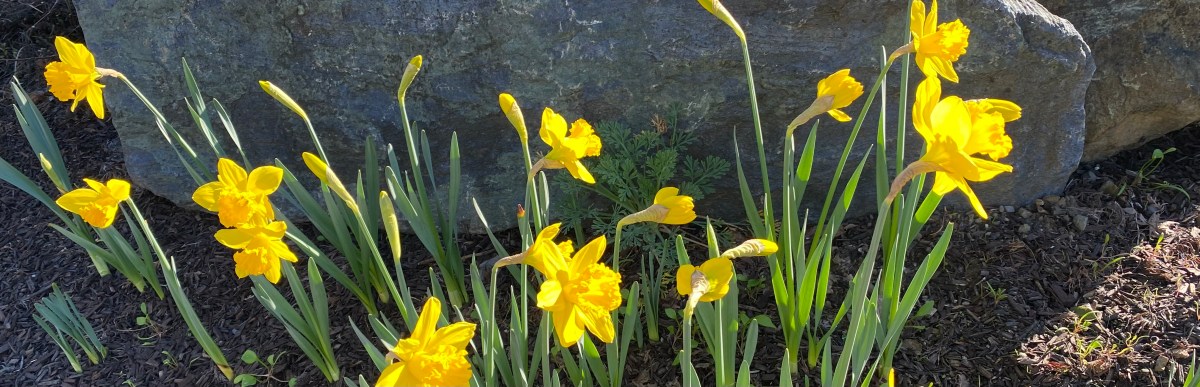
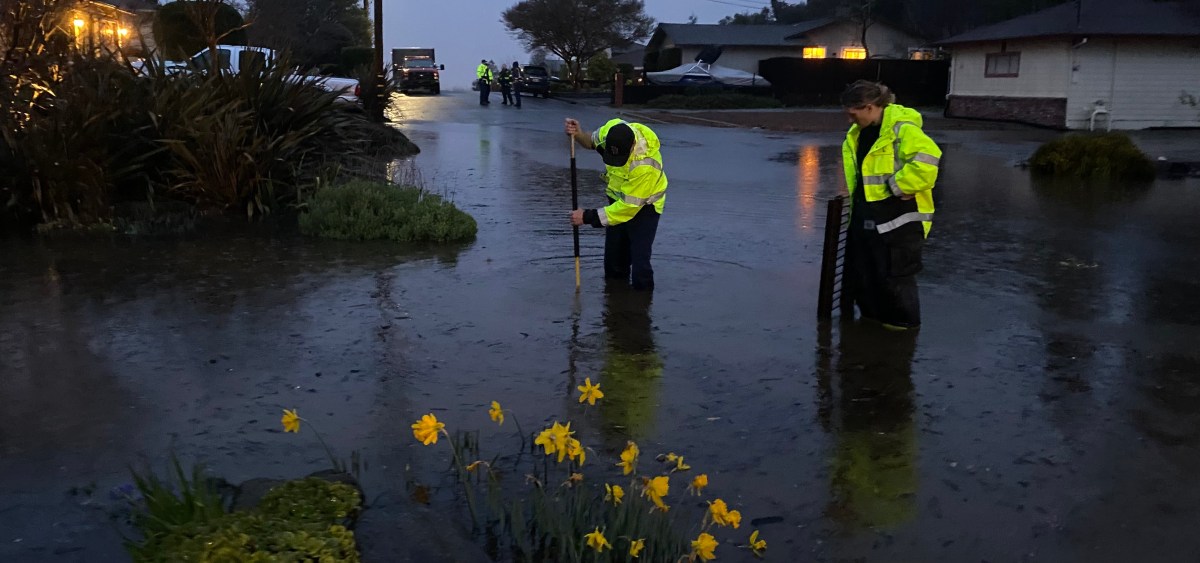
Imbolc, the Celtic pagan holiday on February 1, and the time of the Lunar New Year really mark the advent of spring in California, at least here in Sonoma County. The daffodils I planted in November are in full bloom. Just before a series of atmospheric rivers dumped 18 inches of rain (about three times the normal rainfall), we installed a water catchment system with swales in the front yard and three 1000-gallon tanks. Our system worked well to save water for future irrigation and to direct it away from the house. The January rains filled creeks to overflowing and greened the grass, although storms also felled many trees and resulted in flooding and some deaths. 

The earth is turning and the light is returning, but it’s still dark at 5 AM when I go out to look for the comet called ZTF. I haven’t been able to see it yet, but skies have been clear lately and I keep trying. The comet can be found in the north sky between the north star and the big dipper. It will be closest to Earth on February 2. It’s green! Perhaps a sign? 

A bit of angst seizes me whenever I look up for the comet. I can’t help thinking about the movie Don’t Look Up. We watched it again recently and it was just as hilarious and sobering as the first time. If you haven’t seen this movie yet, you must! It’s a metaphor for climate change that hits us over the head hard, but lately I’m thinking nothing can be too un-subtle for us humans. (My friends, I’m not talking about you. I know you are aware and doing all you can do to avert the predicted climate disaster).

Every day, as the green comet comes closer, I’ve looked for it with binoculars, but it keeps eluding me. So we bought a telescope. I found two telescopes in town–an inexpensive one at a sporting goods store and a more expensive one at a camera store. I’m new at this so figured the cheaper one would be just fine. We brought it home and tried to figure out how to use it. It seemed so simple. We followed the spare directions but failed to make it work. We tried and tried. The manufacturer didn’t have decent assembly instructions. So we looked online for videos and found one in Spanish, but as neither of us understands the language (a failing I’ve always regretted) we didn’t really get it. Plus, to set the focus each time you have to bend over in a way that my old neck will no longer allow. 

So I boxed the telescope back up and returned it. Then we bought the expensive one. This thoroughly modern telescope was made in France and must be connected to wifi and a computerized device. Directions say we can have as many as ten devices so we imagine we can host star watching parties where all the guests could see the comet, or the moon, or planets on their ipads. That’s the fantasy anyway. Still is. 

We were directed to connect to the manufacturer’s wifi network, which didn’t come up on my phone. Later I was able to log on but couldn’t figure out the next step. Instructions are not terribly helpful. Are they translated? Or are we just too old to understand? Normally this tech breakdown would have me throwing up my hands in despair. But my wife Holly is kind of a tech wizard (witch?) and I depend on her to solve these problems. She couldn’t, but she is sanguine and so I haven’t lost hope that we can figure it out. Maybe I’ll see the green comet yet. It won’t be back around again for 50,000 years. I just can’t wait that long.

Aside from my unfulfilled obsession with the comet, life is good for us in Santa Rosa. We are thankful for our good fortune, but at the same time we are anguished by the growing wealth gap and the failure of our society to care for those more needy than we. The capitalist system values nothing as much as making (or stealing) money, assigning those with other priorities to the losers column.

My angst is multiplied by the recent explosion of gun violence especially in the past couple of weeks. California, with the strictest gun laws in the country, experienced some of the worst violence. We lesbian feminists laugh (and cry) about testosterone poisoning, and I do think that simple theory has some truth to it. Systems breakdowns and our society’s failure to prioritize the common good contribute. Gun violence has worsened with the proliferation of guns, but it has been going on for a long time. January 30 is the 75thanniversary of the shooting death of Mahatma Ghandi.

I support taking away the guns. That’s what Cheryl Wheeler sang. Her song, If It Were Up to Me, was written after the Stockton school shooting in 1989 and it still applies. https://www.youtube.com/watch?v=Op7agdIFOGY

If you don’t know Cheryl Wheeler, check her out. She writes funny songs too. My Cat’s Birthday comes to mind. We lesbians do love our cats.

Sending wishes for peace in the new year.

Love, Molly and Holly (MoHo)

Solstice Came Early This Year

Winter Solstice 2022

My Regular Pagan Holiday Missive

Years ago my wife Holly and I invented a solstice ritual we named the Twelve Days of Solstice, starting on the solstice, December 21, and ending with New Year’s day. We made up our own daily rituals and customs, observing the natural world and the changing of the seasons.

Our invention was aimed at supplanting the christian holiday. We are both ex-christians, she tortured by a more evangelical denomination than me by my pale protestant presbyterian sect.

My antipathy has been mostly aimed toward catholicism, a particularly misogynist, patriarchal, racist, and homophobic cult whose latest endeavor is covering up its sexual abuse of children. It is only the most powerful example of christian horror, but there are many more worldwide who hide behind religion to perpetrate evil.

We want no part of this and so we eschew the trappings of christian holidays. However, we do feel the need for tradition and ritual in our lives and so must invent our own. This year in the wake of a worldwide fascist assault on democracy I was feeling a bit depressed in mid-November and sought holiday solace. 

“Let’s start celebrating solstice early!” I entreated.

The festive custom of tree decorating is not owned by the christians. It was stolen from pagan religions and so I feel very good about reclaiming this pagan tradition. The term pagan was historically used by christians to refer to everyone not christian, so it includes all of us non-christians.

I checked around and there were no trees nor boughs to be bought until the day after Thanksgiving. So, after considering and rejecting cutting our own, on the morning of November 25th we drove directly to Grandma’s tree farm a few miles out in the country. People had already stormed the farm, a magical place with a huge old barn decorated to the rafters for the season. There was hot chocolate waiting, a flocking room, a real antique sleigh for kids to play on and all the ornaments and boughs and trees of every size. 

We bought evergreen boughs for the mantle, adorable bird decorations and, of course, a tree, cut and carried by an agile worker who told me he has a landscape company in other seasons.

For the next couple of days we decorated the tree, taking all the time we felt like because why should we be in a hurry? One point of invention is to overcome all the obligations that make this holiday stressful. Like shopping. We are made to feel like we will be responsible for the U.S. economy failing if we don’t spend tons of money. Retailers depend on this holiday to bring in 40 percent of their annual revenue, an unsustainable economic program that bankrupts the poor and does not fit well with our effort to consume less.

With a much longer holiday schedule than usual, we were designing rituals for a month of celebrating instead of just the 12 days of solstice. Ok but no pressure. Instead, I decided to just appreciate the revelatory events that happened to me daily.

Nov. 24 As I planted 40 daffodils in the front yard, I thought bulb planting must be added to our annual constellation of solstice rituals.

Nov. 30 It froze! Contemplating the Japanese concept of Wabi-Sabi, we acknowledged the wilting of the big flowers in our yard. The tree dahlia, which at nearly 20 feet tall had only just started blooming, died. And the huge marigold that had appeared late in the fall, maybe from a wildflower mix, froze. We appreciate that nothing is truly perfect or permanent.

Dec. 1 Then it stormed! We got an inch of rain. We invoked Tefnut, the Egyptian goddess of rain and moisture, responsible for maintaining life, as we watched the bright leaves fall from the trees.

Dec. 3 As I picked the first oranges from our tree and made juice, I called in Demeter, the Greek goddess of agriculture and the harvest. When her daughter Persephone returns to Hades each winter, the plants die, only to be reborn when she returns in spring. The orange, one plant that the gods apparently overlooked, produces fruit all winter.

Dec. 7 I’m witness to a supernatural event at 5am while I soak in the hot tub. The sheet metal cap on the chimney glows with an amazingly bright light. I feel this is like seeing the virgin Mary on a slice of toast–positively spiritual. The cap continues to glow and I wonder what the universe is trying to tell me. It was so bright I couldn’t imagine what the light source could be. Could the light be coming from inside the house? Of course, it was the setting full moon shining at a direct angle, but so otherworldly that I wanted to take a picture to let someone else in on my religious experience. Who would believe me? Will I be the Cassandra of Hylandia?

I can find no goddess of chimneys nor sheet metal nor chimney caps, so I’ll have to decide whether to check in with one of many goddesses of the hearth. Or perhaps the moon was communicating with me through the chimney cap, in which case I can consult any number of moon goddesses like Selene, the Greek personification of the moon.

The universe is definitely talking to me.

Dec. 8 We spent a lovely couple of hours walking at the ocean with Holly’s brother and wife and afterward I happily consumed the sacred molluscs, oysters. Is there a seafood goddess? Maybe not exactly, but Venus, the Roman goddess of love and beauty, was born in an oyster so she knew something about them.

Then on our way back from the ocean we hit only green lights on Guerneville Road. A total miracle! I didn’t even have to invoke Asphalta, the goddess of roads and highways, because I know that she is watching over us, especially when we look for parking. We recite the prayer “Hail Asphalta full of grace, help me find a parking place.” Then we rub the sacred crystals which are pieces of asphalt adorned with the yellow line, enclosed in an orange bag that hangs from the car’s mirror. Asphalta’s priestesses are the flag women of the highways. The goddess was invented by my friend Morgan Grey for a book called Found Goddesses and so fits right in with our effort to invent rituals.

Finding the sacred in my everyday life has definitely improved my spirits. It’s worked so well that I might have to continue this practice for the rest of the year.

Happy solstice my friends, however you choose to celebrate it.

Who Put the We in Halloween?

My Regular Pagan Holiday Greeting

Dear Friends,

Halloween might be the one pagan holiday that neither the Romans nor the catholic church could suppress or usurp, even after centuries of trying.

The Celt holiday of Samhain (pronounced sow-in) celebrated the end of summer and the start of winter. Celts believed that on the night of October 31 the ghosts of the dead returned to earth. People lit sacred bonfires and wore costumes to ward off ghosts. In some places, people doused their hearth fires on Samhain night; then each family solemnly re-lit its hearth from the communal bonfire, thus bonding the community together. 

The Celts lived 2000 years ago in what later became Ireland, the UK and northern France. The 400-year occupation by the Romans left some cultural traditions. At Feralia the Romans commemorated the passing of the dead. And the festival of Pomona, the Roman goddess of fruit and trees whose symbol is the apple, was held November 1. In Celtic mythology, apples were strongly associated with the Otherworld and immortality.

Then the christians invaded. Over the centuries, a couple of popes made the effort to subsume the pagan holiday under a new Christian one on November 2, All Souls Day. As with other pagan holidays, it is widely understood that the church was attempting to replace the Celtic festival of the dead with a related, church-sanctioned holiday.

But the old customs associated with Samhain never died out entirely. Instead, the first night of Samhain, October 31, became All Hallows Day Evening, the night before the saints were venerated. That name eventually morphed into Halloween. One of the rituals adopted from the Celts waspumpkin carving, which held religious significance. The jack-o-lantern custom consisted of placing fire—which imitates the good magic of the sun—inside a hollowed out vegetable (usually a turnip), representing the harvest. The hope was that the good magic would help to preserve the harvested food through the dark half of the year, until the next growing season could replenish the community’s food stocks.

The practice of trick-or-treating began as the Celtic custom of giving token bits of the harvest to spirits wandering outside of houses on the evening of Samhain to placate them and prevent them from doing destructive things to the harvest or to homes.

Centuries later, Halloween customs were brought to the U.S. by immigrants from Ireland, Scotland and other ancient homelands of the Celts. That’s when pumpkins took over from turnips to make jack-o-lanterns, a modern advancement.

Here in Santa Rosa, Holly and I have invented new rituals and customs for Samhain.

The blessing of the flip flops During the changing of the footwear we remove our flip flops and put them away for the winter after kissing them and telling them we appreciate their hard work of protecting our feet all summer. Then we don our winter slippers.

The beanie and toque resurrection We bring down the box of winter hats, scarves and gloves from the top shelf of the closet where they have patiently waited all summer. 

The moving of the deck furniture All summer the outdoor couch has sat in the shade where we could be comfortable even on hot days. At this time of year we move the couch to a sunny spot on the deck near the house. The ceremony consists of grabbing the couch, saying one two three up and carefully carrying it to its new place.

The building of the ofrenda Our little Dia de los Muertos altar sits on the fireplace mantle where we assemble pictures and clay figurines of friends and family who have died. We are reminded that many cultures remember their dead at this time of year.

The planting of the peas, the harvesting of persimmons and pomegranates October is the time to plant sugar snap peas so we can eat them right off the vine in Spring. We also plant cover crops and colorful flowers like violas and pansies to keep us smiling through the winter. My favorite fall salad is made with persimmons, pomegranates, pecans and pears with a citrus dressing (I call it the P salad).

Wishing you, your pods and families a happy Halloween. 

Equinox and the Middle Way

My Regular Pagan Holiday post

Dear Friends,

I’m writing this during a gentle rainstorm that has elicited delight among denizens here in Santa Rosa. Our weather station says it has brought a little less than an inch of rain. We are humbled when we think of raging floods elsewhere in the world but of course what we worry about at this time of the year is fire. Word is that the rain has dampened our biggest California fire, the Mosquito Fire, which has burned 75,000 acres in the Sierra foothills and is now 35 percent contained. This rain may not put an end to fire season, but we hope, as the fall equinox approaches, it marks the beginning of the end. This year the autumn equinox takes place on September 22, when the sun crosses the equator making night and day of equal length in all parts of the earth. 

In Japan the equinox symbolizes the middle way between the seasons. This week will mark the start of Higan, a seven-day Buddhist celebration and national holiday in Japan during the fall and spring equinoxes. The origin of the holiday dates from Emperor Shomu in the 8th century. Higan means the “other shore” and refers to the spirits of the dead reaching Nirvana. It is a time to remember the dead by visiting, cleaning, and decorating their graves. The red spider lily signals shūbun, the arrival of fall. 

Buddhist psychology is neither a path of denial nor of affirmation. It shows us the paradox of the universe, within and beyond the opposites. It teaches us to be in the world but not of the world. This realization is called the middle way.

If we seek happiness purely through indulgence, we are not free. If we fight against ourselves and reject the world, we are not free. It is the middle path that brings freedom. This is a universal truth discovered by all those who awaken.

The middle way describes the middle ground between attachment and aversion, between being and non-being, between form and emptiness, between free will and determinism. The more we delve into the middle way the more deeply we come to rest between the play of opposites.

When we discover the middle path, we neither remove ourselves from the world nor get lost in it. We can be with all our experience in its complexity, with our own exact thoughts and feelings and drama. We learn to embrace tension, paradox, change. Instead of seeking resolution, waiting for the chord at the end of a song, we let ourselves open and relax in the middle. In the middle we discover that the world is workable. From the book The Wise Heart by Jack Kornfield

Here in Sonoma County at fall equinox we celebrate the end of those super hot days of summer. There was a day in August when we set a heat record of 115 degrees here. 

We may still get some 90 degree days, but the withering heat is behind us and the cold of winter is yet to come. No more flex alerts! We look forward to enjoying the outdoors in this mild season.

Native aster

Like all Californians we are conserving water during an ongoing drought. Our vegetable garden is not as robust and productive as in wetter years, but native plants thrive. Favorites include native Epilobium in bright reds and pinks, eriogonum (wild buckwheat), and a purple native aster given to us by a neighbor, still blooming happily without water! Birds of all feathers converge on our garden to eat the seeds of spent wildflower blooms.

Wishing you a tranquil equinox.

Love, Molly (and Holly)

Dancing at Lughnasa

My Regular Pagan Holiday Post

I first learned of the August Celtic harvest festival, Lughnasa, from the play Dancing at Lughnasa. Written by the “Irish Chekhov” Brian Friel and first produced in Ireland in 1990, the play examines the cultural war between the catholic church and the old pagan religions it sought to destroy. Did destroy. 

Set in County Donegal in 1936, the tale is told by the boy, Michael, of the summer when the family life carefully constructed by his mother and her four sisters begins to disintegrate. Their only brother, Uncle Jack, returns from 25 years in Africa, where he was sent to practice colonialism as a catholic priest, and has gone native. Supposed to be a “visible saint, exemplar of ideal piety in a sea of persistent savagery,” he responds more to the drumming and fires of the pagan celebrations than to catholic doctrine. When the local priest learns of Jack’s pagan “conversion,” he fires Kate, the oldest sister and the only one of the five sisters with a paying job, from the school where she teaches. Two other sisters made some money knitting gloves until a glove factory opens nearby. Then the family, already dirt poor, suddenly has no income, destroyed by the church, patriarchy and capitalism in concert.

Our pollinator garden

The movie version, made in 1998, starring Meryl Streep as the conventional Kate and the Irish actor Michael Gambon as befuddled Uncle Jack is well worth watching. If you require car crashes or murders or automatic weapons, you will be disappointed. But these actors do a fine job portraying this resourceful proud Irish family in a beautiful rural setting.

A newly acquired wireless radio works on and off and provides a musical background to the family’s drama. We hear popular Western songs of the day, but it’s only when Irish music begins to play that the five sisters’ feet set to tapping and they dance with wild abandon, even priggish Kate, proving there’s still some pagan left in the Irish culture. 

Michael’s father, absent for 18 months, returns on a motorbike but does not intend to stay. He plans to join the International Brigades to fight for democracy in the Spanish Civil War. Uncle Jack asks if the catholic church is for the dictator Franco. Yes, says Gerry Evans, the father. “They would be,” answers Jack. 

Young Gerry says the war will probably be over by Christmas. Old Jack replies, “They say that about all wars.”

Says Kate, “It’s a sad day for Ireland when we send off our boys to fight for godless communism.”

Fr. Jack says he has been called away from the church to “the god of light, god of music.” He hints at his homosexuality when asked by Michael to whom he sings. With a nostalgic expression, he says it is his African houseboy. Jack has been given a feathered baroque helmet by an African priest. Colorful and magisterial, with its tall red and white feathers, it could be a piece of African regalia. But it is a remnant of British imperialism. The hat, reminiscent of a prop from a Gilbert and Sullivan opera, has made its way from the British imperial army to Africa and back again. Ironic because the Irish themselves were slaves to English colonialism.

In the movie, on the night of Lughnasa, fires can be seen burning in the “black hills” of Donegal where bits of the old religions are still practiced. People gather to drink, dance, and jump the fire. From Fr. Jack we learn of the African goddess, Opis (pronounced Opee), the great chthonian goddess of the earth. The Chthonian deities are the manifestations of the Great Goddess, like Gaia or Ge. Jack explains to the family how the Ugandans celebrate the harvest festival. August is the time of the new yam and the sweet cassava. “The Africans cut and anoint the new yam and pass it around. They light fires and paint their faces and they dance and dance and lose all sense of time.” It is easy to see why Jack has renounced repressive catholicism for a freer earth-based religious experience.

Medicinal yarrow

Here in Santa Rosa there is good reason to celebrate the harvest this Lughnasa. Strawberries are at their peak and Holly has planted enough this year to have fruit every morning. The corn is as high as a Columbian mammoth’s eye (they were taller than elephants). We have just harvested the last of the peaches and Gravenstein apples. Eggplant, peppers, tomatoes, beans and cukes are happening. Figs are having a good year. Holly has harvested her herbs and is mixing up the medicine. Flower and pollinator gardens buzz with bees. Even as we strive to conserve water, our garden is happy.

I probably won’t paint my face (ok, maybe my hair) and I certainly won’t light any fires, but you may find me dancing around our garden on Lughnasa on the first day of August.

Fire photo by Meritt Thomas on Unsplash

Sirius and the Summer Solstice

My Regular Pagan Holiday Post

Osama Elsayed on Unsplash

Summer solstice 2022

I think of summer solstice as the start of the dry season here in NoCal, but in ancient Egypt it presaged the start of the wet season when the Nile River began to flood.

Nile Valley civilizations acknowledged and celebrated the solstice, when the sun reached its highest point in the Northern Hemisphere, as the most important day of the year marking the African new year.  


Celebrations commemorated the longest day of Ra, the sun god, as well as the rising of the star Sirius, which heralded the Nile flooding and divine blessings on the land of Egypt. 

The ancient Egyptians recognized the importance of Sirius (one of the stars of the constellation Canis Major) as the brightest star in the sky, as well as the birthplace of the goddess Isis. They called this star Sopdet. The celebrations for new year’s day began at dawn when Sirius appeared on the horizon as the shining morning star emerging from the darkness of the underworld. 

Goddesses were involved too. The great triad of goddesses, Isis, Hathor and Nut, was intimately connected with this “divine rebirthing” of Egypt each year, as depicted in detail on the walls of Dendera Temple in upper Egypt, built by Cleopatra.  Traditional beliefs held that Isis was mourning her dead husband, Asar (Osiris), and that her tears made the Nile rise. 

 
This festival is one of the oldest in Egyptian history, celebrated from archaic times all the way through to the Roman occupation of Egypt. Ancient Egyptians aligned the Great Pyramids so that the sun, when viewed from the Sphinx, sets precisely between two of the pyramids on the summer solstice. Here on my block we stand out in the street to watch the sun set over the Coast Mountain range. 

How will I be celebrating the solstice? Well, my weather app says it’s forecast to be 100 degrees here in Santa Rosa on Tuesday June 21, so my daily walk will have to be early in the morning. After the longest day of summer solstice, the days will gradually get shorter until the winter solstice and the shortest day of the year. Some part of me is looking forward to shorter, cooler days, longer nights and the coming of winter. Now we just have to get through fire season.

Wishing you all a fire and flood-free solstice.

Love, Molly (and Holly)