Hope for a New Day

My Regular Pagan Holiday Post

Dear Friends, 

Happy Ostara, the celebration of the vernal equinox, which takes place this year today, March 20. Searching for spring festivals and hoping for inspiration, I found one from Iran.

“In Iran, the festival of NowRuz begins shortly before the vernal equinox. The phrase “NowRuz” actually means “new day,” and this is a time of hope and rebirth.

Boy, am I feeling the need for hope and rebirth right now.

“The Iranian new year begins on the day of the equinox, and typically people celebrate by getting outside for a picnic or other activity with their loved ones. No Ruz is deeply rooted in the beliefs of Zoroastrianism, which was the predominant religion in ancient Persia before Islam came along.”

Getting outside—yes! The vernal equinox must be celebrated outdoors.

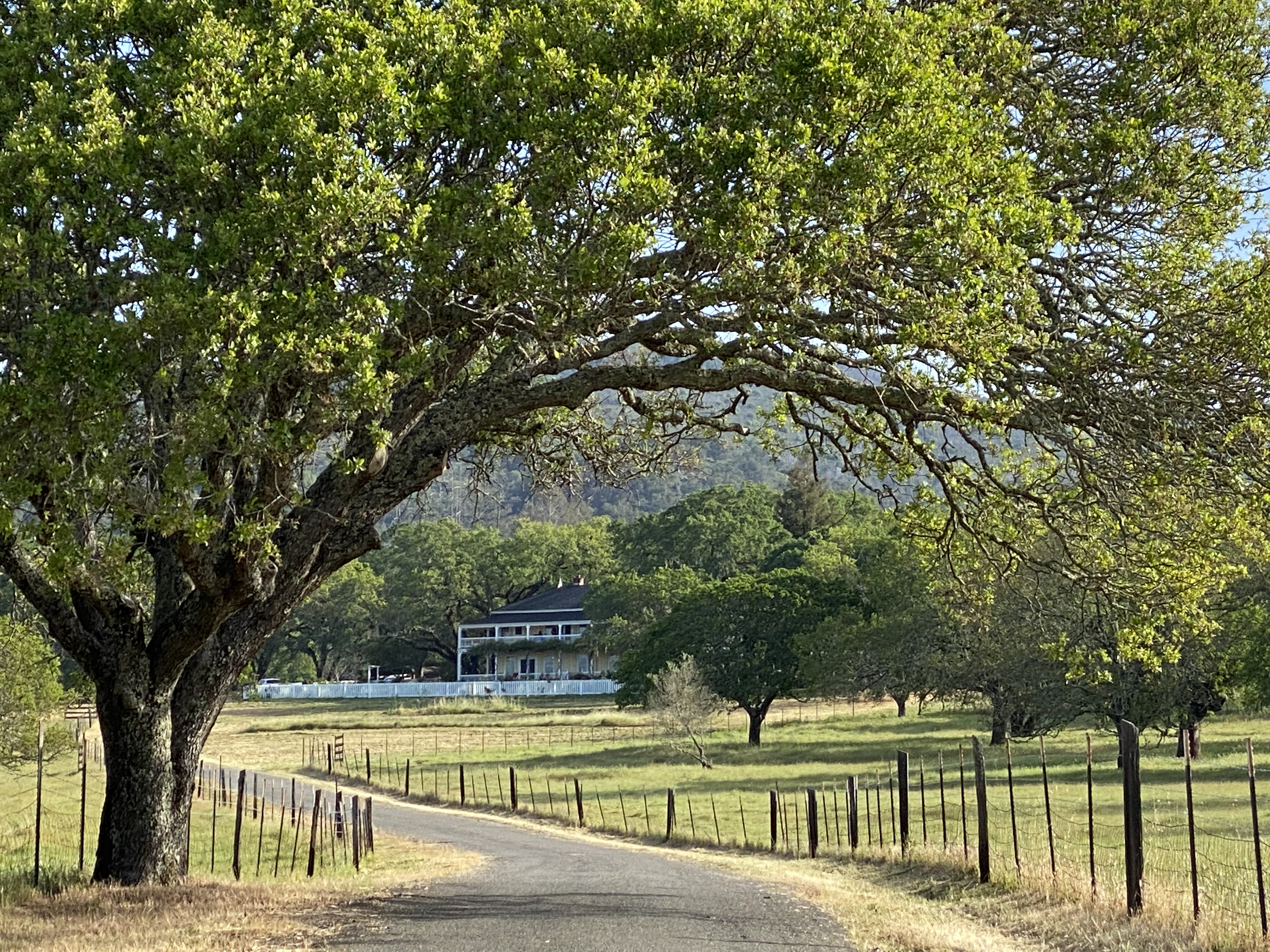
Another inspiration comes from my neighbors, many of whom are my age, in their 70s. In Santa Rosa people take their gardens and landscaping seriously. When I walk down the street and see Dan and Karen tending their gardens or Howie down on the ground pulling weeds, or Pam planting natives in her front yard, or Susan wielding digging tools I think yeah I can do that too!

Gardening and planting plants—what a great way to celebrate spring!

I’ve always seen myself as a big strong woman and I’ve spent my adult life telling other women working in the construction trades “We Can Do It!” Admitting that I can’t do something is still hard for me, even though I’ve been practicing it for a decade now. At 72 I discover new limits to my ability constantly.

So, after Holly and I acknowledged to each other that there are some garden chores we just can’t do anymore, we hired a laborer to dig out crab grass, matilija poppy roots and a couple of stumps.

There is also this: I don’t want to do it. I might have felt like I had to in the past, or I was required to show that I could meet some physical challenge. Now I no longer have to make a point.

Or that’s what I thought before Maximo, the laborer, weighed in on my ability. He was digging out the poppy roots with an adz. I said to him, “that’s such hard work.” I knew this because I had dug out the roots a couple years before and found the job taxing.

“Yes,” he said, “you couldn’t do this.”

My hackles went up immediately. What do you mean I can’t do it! I thought to myself. He had said that as he worked without even looking at me. What was it about me that made him think I couldn’t do the work? Gray hair? My gender? To me them’s fightin’ words.

So of course after that I had to do it to prove I still could. I decided to start celebrating spring a little early, on the Ides of March. I know the last day of frost in Santa Rosa is April 15 but I can never wait that long and I figure global warming has moved it up at least a couple of weeks. And I was willing to take a chance. If my seedlings froze I’d just have to start over.

Holly had ordered seedlings from Annie’s Annuals and we set out to plant them in the front yard, which required squatting for long periods.

Look, I’m not decrepit and I’m proud that I can still pee in the woods and get up off my haunches (except for that one time after a back operation when my quads were so weak I needed help from a tree). But peeing is a short operation and planting takes longer. Especially since I get obsessed with pulling out the bermuda grass roots, an unending task (I do know we will never be rid of them).

After working at it for a while and feeling pretty good about my athletic ability, my neck and my hands started sending pain signals. Then suddenly the muscles in my legs objected, seizing up and screaming for me to move, but I was stuck in the position. Oh My Goddess I can’t get up!

I remembered the episode of Grace and Frankie where both Lily Tomlin and Jane Fonda fell and couldn’t get up. They both raced for the phone by swimming across the floor on their backs. And the episode when Jane pulls a MacGyver, lassoing a sculpture to pull herself up off the toilet. If only my elderly exploits could be so funny!

I rolled over to get up the way they teach old people to do and I finished the job on hands and knees.

I did it! Not very gracefully, but I did it.

In the meantime Holly had finished her part of the planting without mishap, but she is a decade younger than I.

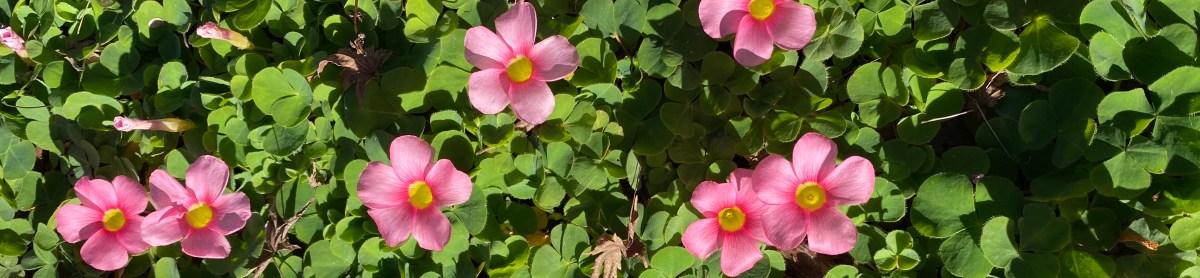
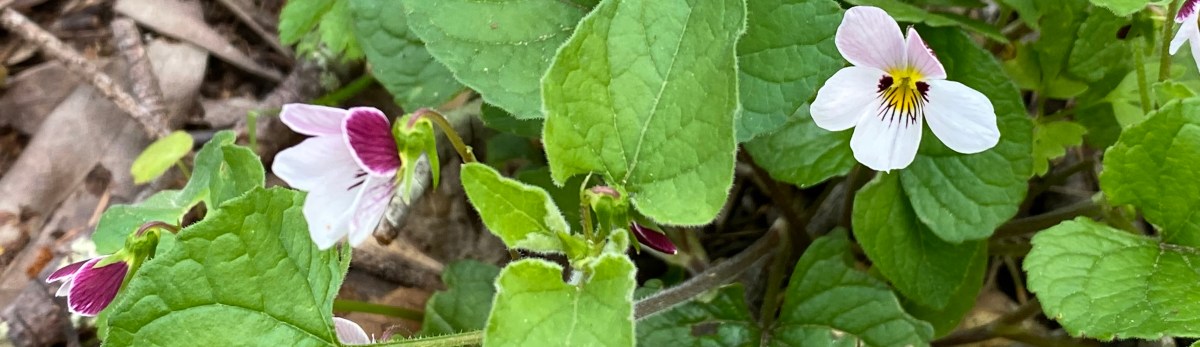
Acknowledging that I might not be so good at planting seedlings, I can still throw seeds around the garden and rake them into the dirt while standing up. And that’s what I did last fall for cover crops of mustard, red clover, calendula and fava beans. Now they are flowering and I’m appreciating the fruits of my labor.

Maybe next year I’ll find a new way to celebrate the advent of spring, something I can do while standing upright.

In the meantime I wish you all NowRuz Mobarak–Happy New Year. May this be the start of a new day.

Sending love to you all,

Molly

Celebrating National Freedom Day

Major Richard Robert Wright Sr.

My Regular Pagan Holiday Greeting
Happy New Year! February 1 gives us many reasons to celebrate.

Imbolc, the Celtic pagan holiday celebrated February 1 and 2, marks the mid-point between the winter solstice and spring equinox. And February 1 is the first day of Chinese New Year.

February 1 is also National Freedom Day. Have you ever heard of it? Me neither, but I plan to start celebrating it now that I have. Feb 1, 1865 was the day President Abraham Lincoln signed the 13th Amendment outlawing slavery. The amendment was ratified by the states on December 18 of that year.

The holiday was created by a former slave named Major Richard Robert Wright, Sr., a committed community builder who founded a college and a bank. Born into slavery in Georgia in 1855, after the Civil War ended he moved with his mother to Atlanta where he enrolled in the Storrs School, the forerunner of Atlanta University. In 1876 he married Lydia Elizabeth Howard, who bore nine children. Wright was the first African American paymaster in the U.S. Army (appointed by President McKinley). As a major he was the highest ranking Black officer during the Spanish American War.

In 1948, the year after Wright’s death, Congress passed and President Harry Truman signed into law a bill to make February 1 National Freedom Day. It later became Black History Day. This gave impetus to national recognition for Black History Week and, in 1976, Black History Month.

Wright envisioned National Freedom Day as a day for “all Americans” to celebrate our freedom. Harry Truman, Major Richard Robert Wright and the U.S. Congress saw America itself as a symbol of freedom. 

The arc of the moral universe is a lot longer than I had thought and I’m not convinced it bends toward justice without a lot of help. As we now lose freedoms we fought for in our own lifetimes—the freedom to vote, women’s freedom to control reproduction, the freedom to live without fear of fascism—let’s celebrate National Freedom Day by appreciating the freedoms we do enjoy and joining the fight to regain freedoms lost. 

God Jul and Good Solstice

My Regular Pagan Holiday Letter

Our family never did that thing where white-robed virgins with candle crowns bring breakfast, but we did celebrate Swedish Christmas. Culture was supplied by my grandmother, Gerda, who grew up on a farm near Lake Vänern in central Sweden in an age when you really did hitch the horse up to the sleigh to go anywhere in winter. The farm, Stora Myren, is still there. The nearest village, Lugnås, hasn’t changed much since Grandma emigrated in 1905.

My grandmother Gerda Persson

I hate a lot about Xmas—the whole religious thing, the requisite shopping to keep the economy afloat, the pressure to give the perfect gift, to give gifts at all. Bah humbug. I’m an atheist who joined the Church of Stop Shopping decades ago. https://revbilly.com

But, as my brother and I delve into the Swedish side of our family, we’re rediscovering ways that Swedish culture has influenced our family. One thing we all agree on: Christmas was the most important holiday of the year, when the Swedes pulled out all the stops.

The tradition is long. The winter solstice, representing the return of light and warmth, held great importance for pre-christian peoples. The earth had died and would be resurrected.

Solstice is a Saint Named Lucy

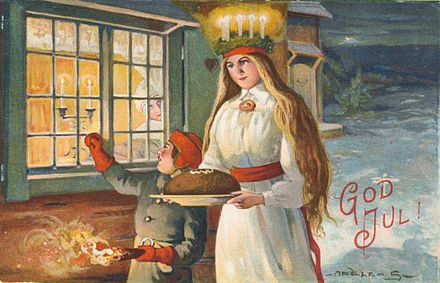
As with most northern European cultures, a christian holiday usurped the pagan solstice celebration. Catholics took over solstice festival and made it into St. Lucia or St. Lucy’s Day during the Middle Ages. Now, and ever since the Protestant Reformation in the 16th century, Lutherans rule in Scandinavia, but they continue to celebrate St. Lucy’s Day. The holiday is on December 13 because that was the date of the winter solstice on the Julian calendar before it was changed to the Gregorian. The actual solstice is now a week later, but St. Lucy’s Day retained the old date.

St. Lucy’s Day card

St. Lucia was a fourth century virgin christian martyr in what is now Italy. She invented the head lamp, putting a candle wreath on her head to keep her hands free as she hid christians in the catacombs. Or so it’s said. The name Lucia translates as light.

Candle wreaths have not yet been replaced with head lamps in modern celebrations, but I see it coming. I mean when I see pictures of people walking around with lit candles in their hair, all I can think of is–fire hazard! 

The celebration is, or was, an all-female affair with one young woman playing Lucia and a court of girls and women. There are white robes, candle wreaths, singing and the serving of food. Lately, though, the boys have nudged their way into the celebration with a boy or two being elected to play Lucia. Traditionalists are not amused.

We grandchildren knew nothing of St. Lucy’s Day. It was, apparently, a Swedish tradition left in the Old Country. 

Grandma Remembers

But Grandma did envelop us in Swedish culture at Christmas.She brought with her the tradition of cooking the foods of her childhood when she immigrated to the U.S. In our hometown of Yakima, Washington, she was famous for her cooking, and especially her baking. 

Our mother had the foresight to record Grandma’s childhood memories of Christmas in Sweden. My brother printed up a little chapbook of the stories, titled A 19th Century Swedish Christmas by Gerda Wick. Grandma was in her 92nd year but her memories were still clear.

Here are some excerpts.

“In Sweden we could, of course, always count on a white Christmas—snow that was “deep and crisp and even” and a great abundance of evergreen trees growing all around us. Christmas Eve was the official time for celebration and gift giving; Christmas Day was a religious holiday and holy day.”

“In a day without rural electricity or other conveniences that we now take for granted, our preparations for the annual celebration had to start in the fall with butchering of beef and pork and turning the slabs of dried cod into the famous and favorite holiday dish, lutefisk.

It is hard for me to realize now that all cooking was done on an open fire in the brick fireplace and all baking in a very large brick oven, heated by large logs about the size of railroad ties. In this oven breads of all kinds—flat bread, rye loaves, traditional braided coffee bread and dozens of cookies—were baked for weeks before the big day. Many kinds of sausages and head cheese were prepared and meat readied for another traditional food, Swedish meatballs.

“The food at Christmas Eve was a smörgåsbord of breads, homemade cheeses, pickled herring and korv (homemade sausage), but best of all the lutefisk which had been in preparation for several weeks from a dry slab of cod, by soaking in water and a “lute” of lime and lye. Served with a rich white sauce and white potatoes, it was and still is a favorite native winter dish. This was followed by meatballs made of ground beef and pork, sweet and sour brown beans and a dessert of rice pudding with wild lingonberry or strawberry jam (from berries we children picked in the nearby woods), or fruit soup.”

Loving and Laughing at Lutefisk

Lutefisk jokes elicit laughs in both cultures. Garrison Keillor told a story about people arrested for bringing toxic waste across state lines when they took lutefisk to Minnesota for Christmas dinner. Most actual Scandinavians abhor the fish, but Americans still eat it with gusto and most lutefisk is exported to the U.S. Served with white potatoes and white gravy, it resembles a blob of glue. Still, for my family, lutefisk symbolized Scandinavian culture. 

Don says he has made Swedish meatballs and lutefisk many times since our childhood, but I only tried it once, recreating my family’s holiday meal for my gay San Francisco family. I bought frozen lutefisk from the Scandinavian Deli on Market Street near the Castro. No soaking necessary. I attempted to bake Grandma’s cookie and bread recipes, making krumkake using the pancake maker that you heat over an open flame. It didn’t go so well. No one would even try the lutefisk. I neglected to have a distribution plan for the cookies, which quickly got stale before we could eat them all. But I can say I did it!

In her small kitchen in Yakima, Grandma ground the pork and beef with a meat grinder to make Swedish meatballs. My brother Don served as Grandma’s little helper, and so his memories are best, butI do remember helping her make krumkake, Smörbakelser cookies and fancy braided breads. Don has her old Swedish cookbooks whose frayed binding opens to favorite recipes. Recently he challenged the family to remember the secret ingredient in Grandma’s meatballs. He kept us in suspense for a month. WTF Bro! It turns out the secret ingredient is crustless bread torn in pieces and soaked in cream, then wrung out and added to the meat. Never would have guessed that!

Gerda Persson was the second youngest child in a family of 12 kids. Born in 1888, she was 12 when the century turned. Her memories were about more than just food.

Birds and mittens and tree trimming

“My father would put my younger brother and me on a sled and take us with him into the woods to select a tree for our house. He would also cut other trees to place on the outside of the house and at the barn. Not forgotten in our celebration were the birds and our domestic animals. Papa mounted a large sheaf of oats on a pole for the birds and gave the animals an extra share of hay.

“Most of the tree trimmings were hand-made and our favorite was the customary paper-wrapped candies which we children could help make, wrapping hard candy in colored tissue paper. There was a variety of candlesticks for candles of all sizes, many of them hand-wrought of brass and wood. A candle was always displayed in the front window.

“We exchanged gifts, though this was not the ritual it is today. The gifts were mostly handmade and very practical—knitted socks, mittens and caps—all from yarn spun on my mother’s spinning wheel, wooden toys—a doll cradle or sled—and gifts like sewing boxes for the older girls and Mama.

“Christmas morning it was up early to be at church at six o’clock. Our church was the most important building in our village; it had been built in the 12th century and still stands and is in use today. Our family walked to church and those further away came in horse-drawn cutters (sleighs). And what a joy it was in the early morning light to see a lighted candle in the window of each home, reflecting on the deep white snow, and to feel the crisp crunching and squeaking of the hard-packed snow under foot. 

The church at Lugnas

“The two bells in the steeple were rung by hand. My father was an official ringer of the smaller bell, which required skill in alternating its sound with the large bell, and also very strong arms.  The church was lighted with hundreds of candles at the communion table, the large hanging chandeliers and at each row of the pews. It was a thrilling festival of light and sound to a child growing up in a simple farm village in Europe before the age of industrial wonders. Inside the  church Christmas hymns from the time of Luther were played on our ancient organ. This, too, required man power to operate, and my father served often as “pumper.” We children sang in the choir accompanied by the organ. The rest of Christmas day was quiet with a dinner of ham and goodies of the night before.” 

Carry it on

Our family continued the Swedish traditions of trimming the tree with hand-made ornaments and of opening gifts on Christmas eve. My mother filled the house with colorful Swedish decorations like wooden horses and straw reindeer. After the big dinner with cousins at Grandma’s house, one of the men would excuse himself and (we later realized) would go back home to place all the presents under the tree. My father would drive home slowly from Grandma’s looking at all the outdoor decorations. Of course, we kids couldn’t wait to get home to open gifts. 

I was glad Christmas Day wasn’t a religious holiday for us. Watching football, playing with toys and eating took up our day. Mom cooked the traditional ham and Grandma joined us for dinner. Her memories end with another delightful custom—robbing the Christmas tree.

“The neighborhood children took turns having these “untrimming” parties before the Christmas tree was taken out. Each child was blindfolded and allowed to pick a paper-covered candy from the tree until all were gone. There were cookies and cakes and milk for the guests. Since many homes were involved, the shared candies and goodies made a happy ending to the holiday for all the children.”

God Jul 

And Good Yule to all.

Love, Molly (and Holly)

We Thank Mexican Culture for Day of the Dead

My Regular Pagan Holiday Post

Day of the Dead, Dia de los Muertos, has become one of my favorite holidays. Credit should go to the influence of Mexican culture.

I couldn’t remember when I first started celebrating Day of the Dead, at this time of the year when the veil between the lands of the living and the dead thins and we celebrate the lives of our ancestors and others who have died. I asked friends and family when we first learned of this holiday. No one could really remember. It just seeped into American culture when we weren’t looking.

Now the holiday is a cross-cultural experience. Though it originated in Mexico, it is commonly celebrated worldwide, especially throughout Latin America. Day of the Dead is a joyful celebration of life and death that originated thousands of years ago among Aztec, Toltec and other Nahua people. They believed that death is a cyclical part of life and that when someone died, they would go to the Land of the Dead. This tradition differs vastly from Halloween in its life-affirming tone and its rejection of death as a finality. In a modern culture whose chief way of responding to death is denial, the addition of this celebration to American life seems much needed.

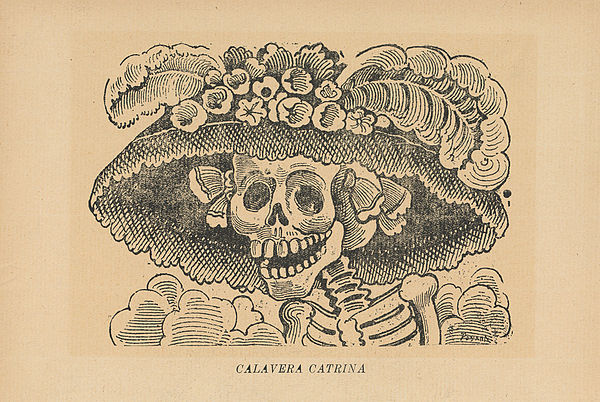
Posada illustration

I was lucky to live in San Francisco where Rene Yanez and Ralph Maradiaga had launched our local version of the celebration in 1972. Day of the Dead evolved into a gigantic procession up 24th Street, the Latinx district, on November 2. The Mission Cultural Center would sponsor events and we gathered to erect altars, or ofrendas. My Old Lesbians group one year made a beautiful altar for our friend Tita Caldwell, who had been active in our Occupy Bernal organization in 2012. San Franciscans gather at Garfield Square Park (perhaps we should rename it Frida Kahlo Park) to walk through the park and view the altars. Rene describes the history here: https://www.foundsf.org/index.php?title=Day_of_the_Dead. In the interview Rene refers to Posada (Jose Guadelupe Posada Aguilar), the Mexican artist who created illustrations of la calavera catrina that have become ubiquitous symbols of this holiday.

Now I live in Sonoma County where we have many options for celebrating Day of the Dead. Our Sonoma County Museum and our art district have exhibits. The town of Petaluma sponsors events all month, ending with a candlelight procession at the fairgrounds that has been going for 19 years. This year the town of Windsor is sponsoring its 6th annual event. Every town now has one. These events are led by Mexican and Latinx people, who make up the largest ethnic group in Santa Rosa at around 30 percent of the population. 

October is Latinx Heritage Month. This month we also remember the murder by a deputy sheriff of 13-year-old Andy Lopez October 22, 2013. Andy was walking in his neighborhood when sheriffs spotted him carrying a toy gun. Erick Gelhaus fired eight shots that killed the boy. No charges were filed against the shooter, he returned to work and was later promoted before retiring. A civil suit filed by Andy’s parents resulted in a $3 million settlement. 

Sadly, Andy’s murder has defined the relationship between the Sonoma County Sheriff’s Department and its citizens, especially the Latinx population. In the seven years since the shooting, people have staged multiple protests, organized to build a park at the site of the shooting and pressured the county for more police accountability. This year we met at Andy’s Unity Park in the Latinx neighborhood of Roseland to remember Andy. 

Our fireplace mantel ofrenda

Holly and I celebrate this season by making clay catrina sculptures for our ofrenda on the fireplace mantle and telling stories about our friends and family who have died. I like to walk by our altar and commune with the figure of my mother who is sitting in an armchair reading Esquire (from a 1940s picture). Holly’s dad sits in a recliner nearby and her dog Mattie lies at his feet.

What do I say to Mom? She was a news junkie who kept a close watch on world events. She liked to imagine what the world would be like in 50 years. I tell her if she were alive today she absolutely would not believe it.

Sending big virtual hugs to all.

Summertime Falls Down

Dear Friends,

Happy fall! Lately I’m being told I’ve gotten lazy with pagan holidays.  I’m focusing too much on the Celts and should expand my cultural reach.

I confess I do love the Celts. But of course the autumn equinox has associations with harvest time in many cultures in the northern hemisphere. In China the Moon Festival takes place on the full moon closest to the equinox. This year the full harvest moon was on September 20. I am visiting cousins in Gig Harbor, Washington and we celebrated by watching the glorious moon rise over Puget Sound just to the left of Mt. Rainier while on a zoom call with my brother Don. A thoroughly modern pagan celebration!I

was introduced to Chinese philosophy in a class about Chinese medicinal cooking led by West County neighbor Briahn. What an eye opener! A whole different way of looking at nature and the earth. Each of the five phases or seasons of ancient Chinese philosophy carries associations with specific things. Not only spring, summer, fall and winter, but also the cardinal directions, colors, sounds, organs in the body, fundamental elements such as wood, fire, earth, metal, and real or mythological beasts.

In Chinese tradition, the autumn season is associated with the color white, the emotions of both courage and sadness, the sound of weeping, the lung organ, the metal element, and a white tiger. Autumn is also connected in Chinese thought with the direction west, considered to be the direction of dreams and visions. To the Chinese, nature means more than just the cycling of the seasons. Nature is within and around us, in all things. 

This summer I’ve been communing with nature by watching the night sky on clear nights. At the Ides of August I missed the Perseid meteor shower because smoke from fires in the Sierra mixed with fog to obscure the sky in Santa Rosa. But the clear sky has returned periodically.

I developed a bit of an obsession with the night sky and when I told neighbor Pam, she lent me a book by her husband, Jerry Waxman, who before his death in 2009 had been an astronomy professor at Santa Rosa Jr. College. It’s called Astronomical Tidbits: A Layperson’s Guide to Astronomy and it’s a perfect book for me, a layperson if there ever was one. Astronomy is explained and stories told in short short chapters, just right for my short attention span.

Jerry was forced to retire from teaching in 2003 after being diagnosed with Multiple Systems Atrophy (MSA), a disease like Parkinson’s. He worked on the book the last two years of his life and Pam got it published. Pam told me Jerry’s doctor speculated that toxins in the environment caused the disease. He was a runner who daily ran through vineyards coated with pesticides. The doctor said farmers, too, have higher evidence of this disease than the general population.

Jerry’s death is a reminder that living in a semi-rural agricultural area does not save us from industrial pollution. I’ve wondered about the effects of pesticide exposure on my own health. I grew up in Yakima Washington in the middle of an apple orchard when DDT was sprayed liberally and crop dusters flew over with regularity. My mother had what would now be called environmental illness. She died at 70 after years of suffering from COPD.

I know that those crop duster pilots showed signs of memory loss in studies. Did exposure to pesticides affect my memory? I’ve suffered from memory problems all my adult life (although as a little kid I was a whiz). At some point I was helped by seeing this as a disability, although the cause remains a mystery. One way I have coped is to learn to let things go when I can’t remember. Another is to focus on just memorizing one thing at a time.

Stargazing this summer I have focused on the summer triangle because it contains three stars that are the first to come out after dark. The triangle is an asterism, made up of stars that are part of three different constellations. Vega, the brightest star in the northern hemisphere, is the very first star I see and by now in September it is high in mid-sky. Seeing Vega blink on is comforting in this age of turmoil. The earth is still turning, my star is still there. The other two stars are Deneb and Altair, though I keep forgetting Altair. Gotta let that go. Then I will memorize it again tomorrow.

Here is another cool thing I learned from this book while reading about meteor showers. The best time to look for meteors is between 3 and 6 a.m. because we are on the side of the earth that is rushing forward in space! It’s called the leading edge. Jerry writes, “Earlier, around 9 p.m., the observer finds him or herself on the trailing edge, the backside of the Earth. Just the way your front windshield has more dead bugs than the rear windshield, so the leading edge of the Earth gathers more meteors.”

Now on a clear night when I awake at 3 or 4 or 5 a.m., I go outside, sit in a zero gravity chair and look up. Even if I don’t see any falling stars, it’s exhilarating to think that I’m on the edge of the Earth that’s rushing into space! And it’s humbling to remember that I’m just a tiny speck on a little planet in a minor solar system.

Wishing you a fabulous autumnal equinox!

Love, Molly (and Holly)

Lunasa Greetings

Dear Friends,

Lunasa or Lammas is the first of three fall Celtic harvest holidays, celebrated on August 1. It marks the halfway point between summer solstice and fall equinox. Amidst the joys of harvest, this year Lunasa brings with it anxiety. We worry about fire and toxic smoke, about covid, about drought.

As we move into harvest season this year a historic drought confronts us in the West, with Sonoma County at the crux of the crisis. The city is asking citizens to cut back water use 20 percent and we have exceeded that. Lawns are turning brown all over town. Now at the end of July two major water sources, Lake Mendocino and Lake Sonoma, are dangerously low.

Fires burn throughout the state. The smoke hasn’t reached us yet, but East Coast cities are suffering from the smoke of over 50 major fires burning across 10 western states. The smoke caught up with us in Sacramento while visiting Holly’s brother this week. The air had been fine when we woke up, but smoke from the Dixie fire rolled in fast, creating that familiar orange sun and low visibility. We donned our masks and headed for home where the air quality was still good. But there’s no reason to think we will be spared here in Santa Rosa.

They live in the neighborhood

Our Sonoma County harvest festival season will be again impacted by covid. This year the Gravenstein Apple Fair is being reimagined as a benefit concert. We bought tickets with the hope that we’ll feel comfortable wearing masks in a crowd. The Sonoma County fair is happening in reduced form but they cut out our favorite part—the hall of flowers. You can still go on rides at the midway and eat fair food but I think we’ll skip it this year. Maybe we will get to the Sonoma County Harvest Fair scheduled for October

The delta variant is more virulent and more contagious. This virus has affected me more personally than before. The 42-year-old son of a friend is in the hospital on a ventilator dying. We have gotten word that his lungs have been too damaged to survive. He and his wife just adopted a baby. He was not anti-vax, just suspicious enough to put off getting vaccinated. His family and friends are devastated.

Travel plans have again been cancelled. Holly and I had planned a trip around the South but that’s now the last place we want to go—where the fewest have been vaccinated and numbers of covid infections and deaths are rising. Though we have been vaccinated we are learning that we could still be carriers.

In my summer solstice missive I told about newborn fawns and a fire in the neighborhood. Here’s an update on both. About the fire I must issue a correction. I wrote that it was started when someone threw a cigarette onto a yard that had just been landscaped with bark. It turns out that rumor was false. The fire was started when PG&E’s electric lines hit against each other in the wind, causing sparks that ignited the bark. The power company came out and put plastic insulators around the wires, an easy fix.

The fawns have been seen around the neighborhood. They live here in the place they were born. But sadly I’ve just heard of an epidemic among deer that is killing fawns. Someone posted on Nextdoor that three fawns had perished in her yard. The disease is a virus that had a big outbreak in the mid-90s among deer and came back again last year. The California Department of Fish and Wildlife has confirmed outbreaks of cervid adenovirus 1 —CdAdV-1 — as the cause. Deer fawns are at greatest risk, with high rates of mortality following infection. Yearlings and adult deer are more resistant but deaths do occur in those age groups. The virus is not known to affect people, pets or domestic livestock. Anyone who observes a deer exhibiting symptoms, or encountering a deer that has died from unknown causes, can submit the information to CDFW through the department’s online mortality reporting system.

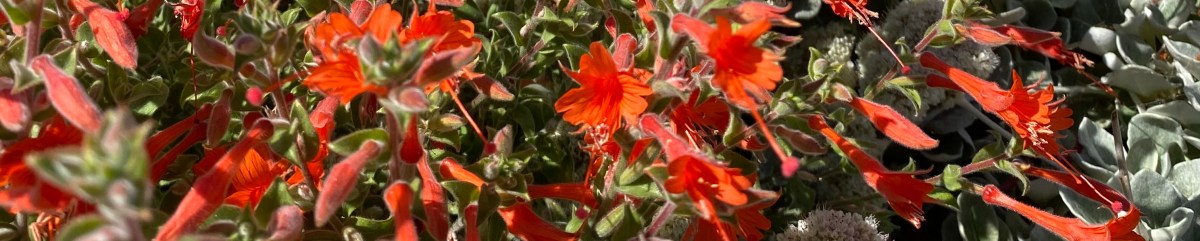
Despite all this worrying, we are doing well. Our garden, while not as lush as last year, is surviving on less water. Holly has planted dry land natives like Epilobium, yarrow, buckwheat and verbena and they look great right now. 

Sending big virtual hugs to you all.

Love, Molly (and Holly)

Happy Juneteenth!

Summer Solstice 2021

Dear Friends,

Happy Juneteenth, a new federal holiday! And happy Summer Solstice! This week we celebrate the opening up of California and Santa Rosa from covid restrictions. I’ve taken off my mask to eat at a restaurant, I saw a movie at the Summerfield (In the Heights—it was great), and I flew on a plane to visit family in Washington. Holly and I took a road trip to Pismo Beach and we hosted friends for lunch in our house. The awfulness of 2020 is starting to fade, but we must strive to remember lessons it taught us about resilient viruses and fragile democracies.

Two exciting developments took place in our neighborhood in May. The first was the birth of two fawns in Linda’s yard across the street from us. I was out in the front yard when Linda called me over. She had been getting her newspaper when she saw the doe and fawns. The mom left for a bit to forage, but she came back later to fetch her kids.

The second thing was a fire. On a windy day I was visiting with neighbor Pam when we looked up to see clouds of smoke blowing by her windows. When we ran outside to see what was happening, the street was already full of freaked out neighbors.

“I’ve got PTSD from 2017,” yelled Renee. Our block was evacuated when the Tubbs fire bore down on the neighborhood.

Fire trucks were already at the scene extinguishing the blaze that had combusted in Howie’s front yard which had just been landscaped with bark mulch. Apparently a passing driver had thrown a cigarette that ignited the mulch. This set us all worrying that mulch might be the wrong landscaping material as, like good citizens, we replace our water intensive lawns. And so for us on Hyland Drive fire season began in May. It gets earlier every year.

Because she grew up here and is now in her 60s, my partner Holly has taken on the character of an old timer. Lately she’s been telling me that when she was growing up the wind didn’t blow as much as it does now. She also said it was always foggy in the summer; she remembers freezing her ass off at swimming lessons before the sun came out. She ran into somebody recently who also grew up here who corroborated her theory. Perhaps for climate change updates we should just ask old timers what the weather was like when they were growing up.

Fire season with its smoke and toxic air has caused us to depend on a plethora of apps for air quality. We like purpleair best because it uses air quality monitors installed by citizens. We got one and so we can look at the map and see what the air quality is right in our back yard within ten-minute intervals. People also install them indoors. The purpleair map usually shows people’s indoor air to be worse than outdoor.

Nowadays there are lots of online resources to check air quality, smoke, temperature, rain and thunder, clouds, waves—just about anything we can imagine. My favorite discovery this year is windy.com. The visuals are so cool. You can change the screen to show different aspects, but my favorite is wind. Here are some things I’ve learned from the visual image: It’s a lot windier over the ocean than over the land. The wind tends to hug the coast and it can travel either north to south or south to north. Once I watched while it changed direction! Also the app gives you ten days of previews. Our westerly wind tends to blow through the Golden Gate and then travel north unless it’s really windy. Then it can come right over the Coast Range, which generally stops it.

The offshore wind is another animal altogether, coming from the east.  Diablo winds propelled the Tubbs fire in 2017 that burned 5200 homes here. Like the Santa Ana winds in southern California, our Diablo winds originate inland usually in the autumn when hot dry weather creates the worst fire conditions. The term Diablo wind first appeared after the 1991 Oakland firestorm in which the wind came from the direction of Mount Diablo in the east.

As fire season starts, we find ourselves in the middle of a historic drought. It’s always something, right? We citizens are doing our best to reduce water use, collecting shower water in buckets, letting lawns go brown and reducing irrigation to our gardens. Californians are practiced at this. I remember the first time I saw this sign in a bathroom: IF IT’S YELLOW LET IT MELLOW. That was in Sonoma County at a friend’s house during the drought of 1977.

Enjoy the longest day of the year. After June 21, the days shorten and nights lengthen. Rain will come with the darkness and I’ve got to admit I’m looking forward to that.

Sending big hugs to all.

Love, Molly (and Holly)

Happy Beltane to All

Birds Are Busy in Our Garden

The Celts were a bunch of tree worshippers and their pagan holiday of Beltane featured a May Bush, decorated and shown off around town. The Celts celebrated the holiday with big smokey bonfires into which the May Bush was sacrificed at the end. Beltane, May 1, marks the Gaelic start of summer. 

Our celebration was fireless and smokeless and we didn’t get around to decorating a May Bush, although I love the idea and think we should adopt it. But we celebrate by appreciating the flora and fauna in our garden and neighborhood. This spring we’ve been particularly appreciating our birds.

This is our fourth spring living and gardening here at Hylandia, and we’ve watched the behavior of our local birds change over that time. Now we see that some birds just visit our garden and some live here year round, becoming family of sorts. They no longer fly high over our yard, but swoop fast and low over our heads. 

In the midst of our human pandemic the birds experienced their own pandemic, an outbreak of salmonella especially prominent among flocks of pine siskins. They migrated here because of a bird irruption, the greatest irruption of these birds on record, according to Audubon. The pine siskin is a finch that looks very much like a goldfinch, brown striped with yellow markings. But they were easily identifiable because they looked sick. Dying birds lay on the ground in our garden and the neighborhood.

On the advice of the Bird Rescue Center we took our feeder down, but now the pine siskins have moved on and Holly has put it back up. The fickle finches have returned to the feeder. They don’t live here, but they don’t migrate either. They roost elsewhere and only come in for eating and bathing. Robins occasionally drop in for a bath and jays are regular visitors.

Crows built a nest at the top of the big oak tree in the next-door yard and so we had crows visiting our garden often for about a month. By mid-April the chicks had fledged. The crows have disbursed now but for a time the crow noise was deafening. Baby birds don’t look babyish at all. They sometimes are even bigger than their parents. But you can tell the fledglings because they flap their wings asking to be fed. And very often we see adults feeding them. For the first time we saw crows coming down to our fountain to drink and bathe and just check out the yard. 

The crow noise must’ve also inspired the mockingbirds around here. One was singing all night for a few weeks. He would stand on top of a telephone pole–mockingbird territory. Then he would do an acrobatic dance, jumping up in a somersault before coming back down to the top of the pole, singing all the while. Mockingbirds are loud but not boring because they sing lots of different songs. They have learned the song of the titmouse: sweetie sweetie. They’ve also learned the sound of car alarms although their version is more songlike than the actual alarm. Leave your windows open and they might keep you up at night.

We were delighted that the titmice chose our birdhouse to nest in this year.  Once the nest was chosen the male’s call began to sound threatening and kind of rough, unlike his usual sweet song. He aggressively patrolled the yard, now his territory. Some people think crows in the garden scare away little birds, but nesting titmice and crows cohabited well here.

Oak titmice are year-round residents of the yard and so are California towhees. Here is something we have discovered this year: towhee sex is is violent and it happens in midair in a fast flurry of bodies and feathers. The birds make weird grunting sounds that we never hear from them otherwise. Their usual call is a boring and sometimes irritating cheep cheep cheep that can go on for hours and is loud enough to wake humans. Chimneys and rooftops are their territory. They scratch the ground, chicken-like, which to me is rather comforting. 

Ok, I must admit a slight irrational prejudice against the towhees. More than once I’ve mistaken one of them for a rat in the garden. They move in a devious way like rats, scurrying with heads down. And they’re a similar brown color to the rats that live here. I do know this unfortunate resemblance is not their fault.

We have learned the beautiful songs of the Bewicks wren this spring but we’ve only seen one and assume it’s the male. He likes to eat lettuce planted in straw bales in the garden, and he sometimes comes to the feeder for suet. We have been anxious for him to find a mate, settle down and live with us.

Mourning doves visit most often in the morning and evening at dusk. We know that their nests can be found in unlikely places. In my San Francisco garden the female laid eggs in a depression in a flower pot on the back stairs. We could see everything. Sadly, so could the crows; the eggs were stolen. Here in Santa Rosa we haven’t seen them nesting, though our neighbor Linda told us they nested on her electric meter last year.

One day I watched an elaborate dove mating ritual. There was wing flapping and feather ruffling and head bobbing and something that looked like passionate making out where they would grab each others’ beaks and hold on while moving back and forth. It went on for a while. Then another time they just did it with no ritual at all. The couple, it turns out, only has to court once. They are a pair for the season.

Lately we’ve been delighted to see a pair of hooded orioles taking baths in the fountain. They do migrate south for the winter but have nested in the last two seasons in a bottle brush tree in the neighbor’s yard. 

Bird behavior is so very varied, often we can’t even confirm our observations by looking these things up in our bird books or online (I couldn’t find anything written about towhee sex). But we are having great fun learning by observing.

The Hilaria: Ostara 2021

Celebrating the Spring Equinox

My Regular pagan holiday post

Looking into ways that humans celebrate the turning of the seasons I discovered the Hilaria (plural of Hilaris). They were spring festivals celebrated by the cult of Cybele, the great mother of the gods, in Asia Minor and Greek and Roman cultures from about the 5th century BCE onward. Cybele’s consort, Attis, was born of her via a virgin birth and resurrected in the spring (sound familiar?). The day of this celebration was the first day after the vernal equinox, or the first day of the year which was longer than the night. I imagine there was a lot of laughing.

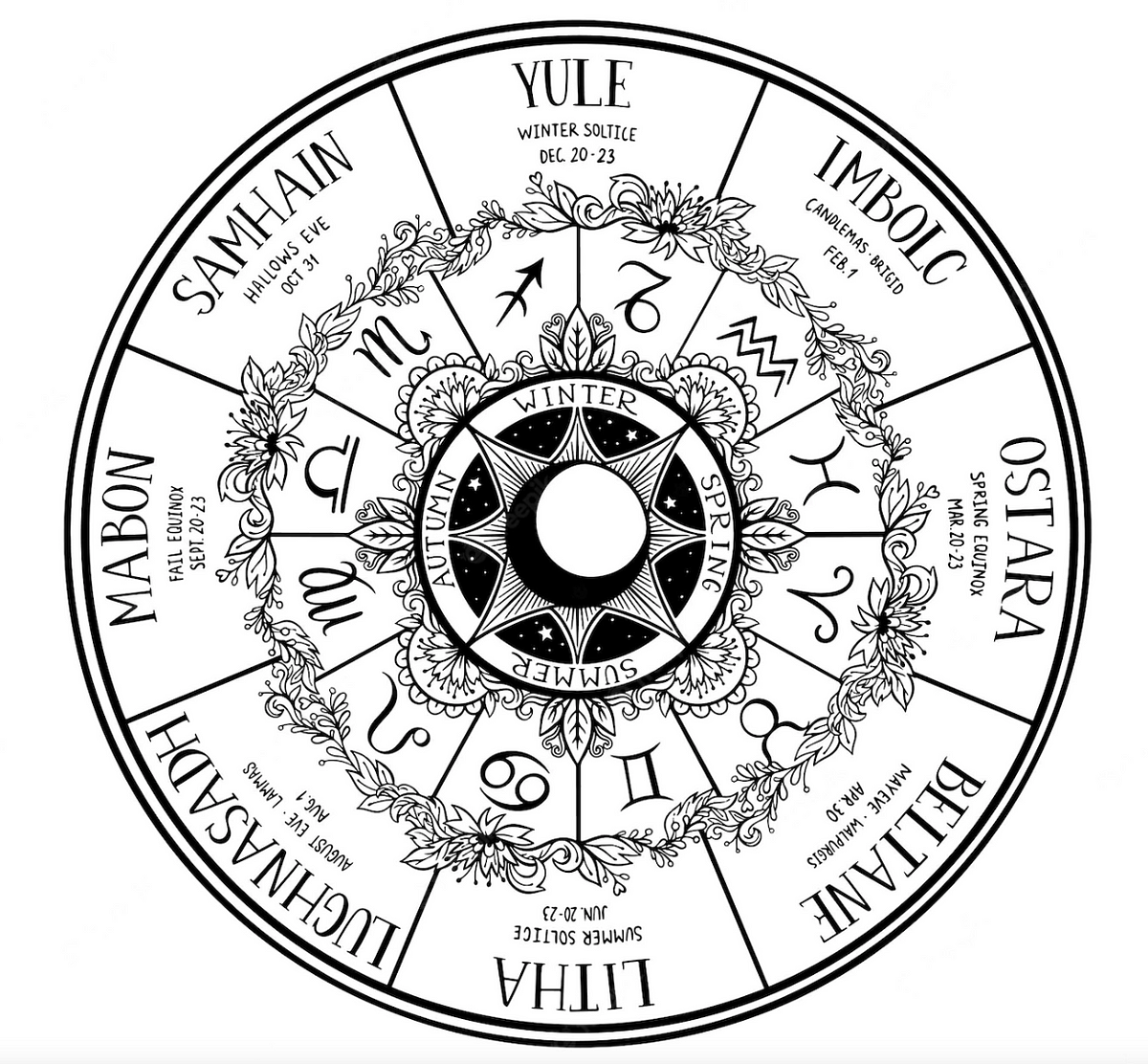
I write these pagan holiday letters eight times a year following the pagan wheel of the year, the annual cycle of seasonal festivals observed by modern pagans. Pagans and wiccans have divided the year into eight parts consisting of the chief solar events (solstices and equinoxes) and the midpoints between them, called cross-quarter holidays. Many of these holidays were stolen by the christian religion while colonizing and absorbing pagan customs. Think Christmas and Easter.

Wiccans have named the spring equinox Ostara with a nod to the ancient Tutonic goddess, but of course equinox celebrations have been practiced by humans for millennia. The Anglo-Saxon goddess is Eastre or Eostre.

I can call myself a pagan even though I don’t worship any goddess or god. Pagan is just a pejorative term used by early christians to refer to polytheists, animists or other non-christians. But modern pagans and wiccans have embraced the term and fashioned a religion of sorts. They borrowed the holidays from various pre-christian traditions. This earth-centered practice beats all to hell the christian teaching that humans have dominion over the earth and its animals (interesting that Genesis leaves out the plants). 

I appreciate the wheel of the year because there is no beginning and no end. Life is a cycle. I find this a compelling way to look at and think about the year. The holidays are just far enough apart for my taste. They correspond with the seasons and the movement of nature. The next holiday is only eight weeks away from the current celebration. Now at Ostara I find it easy to think ahead to the next holiday, Beltane on May 1. What flowers will be blooming then? What will I be planting and harvesting from the garden? When will nesting birds be fledging?

One great thing about these holidays is we can make up our own. My version of paganism takes into account the earth and all its beings, not just humans. My version is anti-capitalist and all-inclusive. My personal Hilaria celebration begins on the Ides of March, maybe a bad day for Caesar but an auspicious date in my life. 

One year ago at this time I had spine surgery at Oakland Kaiser, the last of the elective surgeries just as the pandemic was announced. We had our last restaurant meal on Piedmont Avenue and at the time I thought it might be my last out meal for months, maybe years (I was right). A year later, I’ve recovered from surgery and covid restrictions are being lifted. I’ve just had my first shot of Moderna vaccine.

It was on the Ides of March three years ago that Holly and I hired movers and said goodbye to our San Francisco home, Richlandia, moving to our new home in Santa Rosa, Hylandia.

And here is another reason the Ides of March is auspicious. We are selling the last of the property in San Francisco that I bought in 1980 with my then-collective house of lesbians. I lived there for 38 years. That three-unit building has been the center of my life for four decades. I spent nearly a decade (the 2000s) with my partner at the time, Barb, remodeling the units and turning them into condos with the help of tradeswomen friends, especially carpenters Carla Johnson, who died in 2016, https://mollymartin.blog/2016/06/12/losing-carla-jean/ and Pat Cull. See my blog posts about the building: https://mollymartin.blog/2017/09/16/still-standing/

When we bought Hylandia, we sold the condo we lived in and continued to rent the other two units. I was committed to never evicting anyone from their home, but I did want to get out of the absentee landlord business. Then, last month, both the tenants gave notice allowing us to sell the apartments. 

I was so very attached to Richlandia, into which I put so much blood, sweat and tears. But because letting go has spanned years now, I think I’m ready. And the building, given new life by me and my tradeswomen friends, awaits a community of new occupants.

It is a time of new beginnings and as I write this I think What a cliché. Everyone is writing this. Still it seems momentous, life changing. I know that after this year of trump and covid and the fires and fascists assaulting our capital and Black Lives Matter uprisings and the growing throngs of homeless that things can never “go back to normal.” Nor do I wish for that. Life is a circle with no real endings or beginnings. I’m looking forward to what comes next.

Imbolc Is Imminent

Feb. 1, 2021

Dear Ones,

It’s been a rough year. Impossible to say that without understating. But, as we celebrate Imbolc, I feel like it’s a new morning.

My covid walking outfit. Brew is the local gay cafe.

I’m on the pavement thinking about the government. But I hesitate to write about that because it’s been written about so very much. Suffice to say Holly and I are maintaining our sanity here in Santa Rosa. And we ain’t goin’ nowhere. We haven’t been vaccinated partly because of a shortage of vaccine here in Sonoma County. Also because we are in no way essential.

Actually I’m lying not on pavement but on the redwood deck in the backyard after having pulled out as many oxalis as I can from the garden. I’m starting to worry about getting a sunburn when clouds roll in swift from the south. Rain is coming but it won’t be a hard rain. Not today.

This day of sun and weeding and planting and gray clouds has got my mind off wintertime. And I think that’s the whole point of Imbolc, one of my favorite pagan holidays because—spring!

Imbolc falls in the middle between the winter solstice and the spring equinox. The old Celtic pre-christian holiday was a day to honor the pagan goddess Brigid, who invoked fertility rites. She also oversaw crafts, poetry and prophecy—the domain of us old folks. 

Brigid was a powerful Celtic god and so of course the christians had to turn her into St. Brigid, whose day is still celebrated in Ireland. Here at Hylandia we prefer to celebrate the goddess. I can already feel myself becoming more prophetic. Maybe more poetic and crafty too!

However you celebrate have a happy Imbolc. 

Sending big virtual hugs to you all.