Lunasa Greetings

Dear Friends,

Lunasa or Lammas is the first of three fall Celtic harvest holidays, celebrated on August 1. It marks the halfway point between summer solstice and fall equinox. Amidst the joys of harvest, this year Lunasa brings with it anxiety. We worry about fire and toxic smoke, about covid, about drought.

As we move into harvest season this year a historic drought confronts us in the West, with Sonoma County at the crux of the crisis. The city is asking citizens to cut back water use 20 percent and we have exceeded that. Lawns are turning brown all over town. Now at the end of July two major water sources, Lake Mendocino and Lake Sonoma, are dangerously low.

Fires burn throughout the state. The smoke hasn’t reached us yet, but East Coast cities are suffering from the smoke of over 50 major fires burning across 10 western states. The smoke caught up with us in Sacramento while visiting Holly’s brother this week. The air had been fine when we woke up, but smoke from the Dixie fire rolled in fast, creating that familiar orange sun and low visibility. We donned our masks and headed for home where the air quality was still good. But there’s no reason to think we will be spared here in Santa Rosa.

They live in the neighborhood

Our Sonoma County harvest festival season will be again impacted by covid. This year the Gravenstein Apple Fair is being reimagined as a benefit concert. We bought tickets with the hope that we’ll feel comfortable wearing masks in a crowd. The Sonoma County fair is happening in reduced form but they cut out our favorite part—the hall of flowers. You can still go on rides at the midway and eat fair food but I think we’ll skip it this year. Maybe we will get to the Sonoma County Harvest Fair scheduled for October

The delta variant is more virulent and more contagious. This virus has affected me more personally than before. The 42-year-old son of a friend is in the hospital on a ventilator dying. We have gotten word that his lungs have been too damaged to survive. He and his wife just adopted a baby. He was not anti-vax, just suspicious enough to put off getting vaccinated. His family and friends are devastated.

Travel plans have again been cancelled. Holly and I had planned a trip around the South but that’s now the last place we want to go—where the fewest have been vaccinated and numbers of covid infections and deaths are rising. Though we have been vaccinated we are learning that we could still be carriers.

In my summer solstice missive I told about newborn fawns and a fire in the neighborhood. Here’s an update on both. About the fire I must issue a correction. I wrote that it was started when someone threw a cigarette onto a yard that had just been landscaped with bark. It turns out that rumor was false. The fire was started when PG&E’s electric lines hit against each other in the wind, causing sparks that ignited the bark. The power company came out and put plastic insulators around the wires, an easy fix.

The fawns have been seen around the neighborhood. They live here in the place they were born. But sadly I’ve just heard of an epidemic among deer that is killing fawns. Someone posted on Nextdoor that three fawns had perished in her yard. The disease is a virus that had a big outbreak in the mid-90s among deer and came back again last year. The California Department of Fish and Wildlife has confirmed outbreaks of cervid adenovirus 1 —CdAdV-1 — as the cause. Deer fawns are at greatest risk, with high rates of mortality following infection. Yearlings and adult deer are more resistant but deaths do occur in those age groups. The virus is not known to affect people, pets or domestic livestock. Anyone who observes a deer exhibiting symptoms, or encountering a deer that has died from unknown causes, can submit the information to CDFW through the department’s online mortality reporting system.

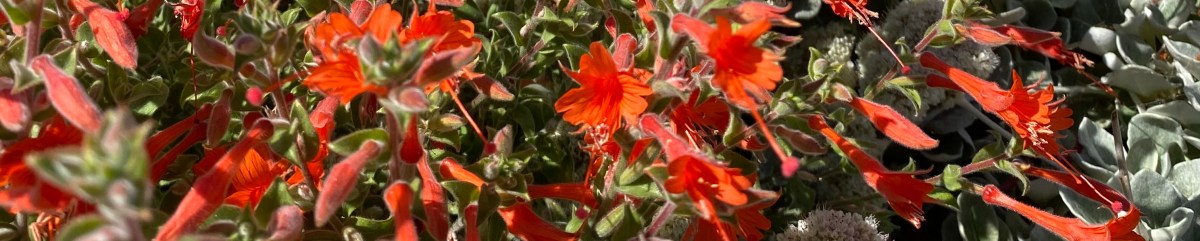
Despite all this worrying, we are doing well. Our garden, while not as lush as last year, is surviving on less water. Holly has planted dry land natives like Epilobium, yarrow, buckwheat and verbena and they look great right now. 

Sending big virtual hugs to you all.

Love, Molly (and Holly)

Happy Juneteenth!

Summer Solstice 2021

Dear Friends,

Happy Juneteenth, a new federal holiday! And happy Summer Solstice! This week we celebrate the opening up of California and Santa Rosa from covid restrictions. I’ve taken off my mask to eat at a restaurant, I saw a movie at the Summerfield (In the Heights—it was great), and I flew on a plane to visit family in Washington. Holly and I took a road trip to Pismo Beach and we hosted friends for lunch in our house. The awfulness of 2020 is starting to fade, but we must strive to remember lessons it taught us about resilient viruses and fragile democracies.

Two exciting developments took place in our neighborhood in May. The first was the birth of two fawns in Linda’s yard across the street from us. I was out in the front yard when Linda called me over. She had been getting her newspaper when she saw the doe and fawns. The mom left for a bit to forage, but she came back later to fetch her kids.

The second thing was a fire. On a windy day I was visiting with neighbor Pam when we looked up to see clouds of smoke blowing by her windows. When we ran outside to see what was happening, the street was already full of freaked out neighbors.

“I’ve got PTSD from 2017,” yelled Renee. Our block was evacuated when the Tubbs fire bore down on the neighborhood.

Fire trucks were already at the scene extinguishing the blaze that had combusted in Howie’s front yard which had just been landscaped with bark mulch. Apparently a passing driver had thrown a cigarette that ignited the mulch. This set us all worrying that mulch might be the wrong landscaping material as, like good citizens, we replace our water intensive lawns. And so for us on Hyland Drive fire season began in May. It gets earlier every year.

Because she grew up here and is now in her 60s, my partner Holly has taken on the character of an old timer. Lately she’s been telling me that when she was growing up the wind didn’t blow as much as it does now. She also said it was always foggy in the summer; she remembers freezing her ass off at swimming lessons before the sun came out. She ran into somebody recently who also grew up here who corroborated her theory. Perhaps for climate change updates we should just ask old timers what the weather was like when they were growing up.

Fire season with its smoke and toxic air has caused us to depend on a plethora of apps for air quality. We like purpleair best because it uses air quality monitors installed by citizens. We got one and so we can look at the map and see what the air quality is right in our back yard within ten-minute intervals. People also install them indoors. The purpleair map usually shows people’s indoor air to be worse than outdoor.

Nowadays there are lots of online resources to check air quality, smoke, temperature, rain and thunder, clouds, waves—just about anything we can imagine. My favorite discovery this year is windy.com. The visuals are so cool. You can change the screen to show different aspects, but my favorite is wind. Here are some things I’ve learned from the visual image: It’s a lot windier over the ocean than over the land. The wind tends to hug the coast and it can travel either north to south or south to north. Once I watched while it changed direction! Also the app gives you ten days of previews. Our westerly wind tends to blow through the Golden Gate and then travel north unless it’s really windy. Then it can come right over the Coast Range, which generally stops it.

The offshore wind is another animal altogether, coming from the east.  Diablo winds propelled the Tubbs fire in 2017 that burned 5200 homes here. Like the Santa Ana winds in southern California, our Diablo winds originate inland usually in the autumn when hot dry weather creates the worst fire conditions. The term Diablo wind first appeared after the 1991 Oakland firestorm in which the wind came from the direction of Mount Diablo in the east.

As fire season starts, we find ourselves in the middle of a historic drought. It’s always something, right? We citizens are doing our best to reduce water use, collecting shower water in buckets, letting lawns go brown and reducing irrigation to our gardens. Californians are practiced at this. I remember the first time I saw this sign in a bathroom: IF IT’S YELLOW LET IT MELLOW. That was in Sonoma County at a friend’s house during the drought of 1977.

Enjoy the longest day of the year. After June 21, the days shorten and nights lengthen. Rain will come with the darkness and I’ve got to admit I’m looking forward to that.

Sending big hugs to all.

Love, Molly (and Holly)

Happy Beltane to All

Birds Are Busy in Our Garden

The Celts were a bunch of tree worshippers and their pagan holiday of Beltane featured a May Bush, decorated and shown off around town. The Celts celebrated the holiday with big smokey bonfires into which the May Bush was sacrificed at the end. Beltane, May 1, marks the Gaelic start of summer. 

Our celebration was fireless and smokeless and we didn’t get around to decorating a May Bush, although I love the idea and think we should adopt it. But we celebrate by appreciating the flora and fauna in our garden and neighborhood. This spring we’ve been particularly appreciating our birds.

This is our fourth spring living and gardening here at Hylandia, and we’ve watched the behavior of our local birds change over that time. Now we see that some birds just visit our garden and some live here year round, becoming family of sorts. They no longer fly high over our yard, but swoop fast and low over our heads. 

In the midst of our human pandemic the birds experienced their own pandemic, an outbreak of salmonella especially prominent among flocks of pine siskins. They migrated here because of a bird irruption, the greatest irruption of these birds on record, according to Audubon. The pine siskin is a finch that looks very much like a goldfinch, brown striped with yellow markings. But they were easily identifiable because they looked sick. Dying birds lay on the ground in our garden and the neighborhood.

On the advice of the Bird Rescue Center we took our feeder down, but now the pine siskins have moved on and Holly has put it back up. The fickle finches have returned to the feeder. They don’t live here, but they don’t migrate either. They roost elsewhere and only come in for eating and bathing. Robins occasionally drop in for a bath and jays are regular visitors.

Crows built a nest at the top of the big oak tree in the next-door yard and so we had crows visiting our garden often for about a month. By mid-April the chicks had fledged. The crows have disbursed now but for a time the crow noise was deafening. Baby birds don’t look babyish at all. They sometimes are even bigger than their parents. But you can tell the fledglings because they flap their wings asking to be fed. And very often we see adults feeding them. For the first time we saw crows coming down to our fountain to drink and bathe and just check out the yard. 

The crow noise must’ve also inspired the mockingbirds around here. One was singing all night for a few weeks. He would stand on top of a telephone pole–mockingbird territory. Then he would do an acrobatic dance, jumping up in a somersault before coming back down to the top of the pole, singing all the while. Mockingbirds are loud but not boring because they sing lots of different songs. They have learned the song of the titmouse: sweetie sweetie. They’ve also learned the sound of car alarms although their version is more songlike than the actual alarm. Leave your windows open and they might keep you up at night.

We were delighted that the titmice chose our birdhouse to nest in this year.  Once the nest was chosen the male’s call began to sound threatening and kind of rough, unlike his usual sweet song. He aggressively patrolled the yard, now his territory. Some people think crows in the garden scare away little birds, but nesting titmice and crows cohabited well here.

Oak titmice are year-round residents of the yard and so are California towhees. Here is something we have discovered this year: towhee sex is is violent and it happens in midair in a fast flurry of bodies and feathers. The birds make weird grunting sounds that we never hear from them otherwise. Their usual call is a boring and sometimes irritating cheep cheep cheep that can go on for hours and is loud enough to wake humans. Chimneys and rooftops are their territory. They scratch the ground, chicken-like, which to me is rather comforting. 

Ok, I must admit a slight irrational prejudice against the towhees. More than once I’ve mistaken one of them for a rat in the garden. They move in a devious way like rats, scurrying with heads down. And they’re a similar brown color to the rats that live here. I do know this unfortunate resemblance is not their fault.

We have learned the beautiful songs of the Bewicks wren this spring but we’ve only seen one and assume it’s the male. He likes to eat lettuce planted in straw bales in the garden, and he sometimes comes to the feeder for suet. We have been anxious for him to find a mate, settle down and live with us.

Mourning doves visit most often in the morning and evening at dusk. We know that their nests can be found in unlikely places. In my San Francisco garden the female laid eggs in a depression in a flower pot on the back stairs. We could see everything. Sadly, so could the crows; the eggs were stolen. Here in Santa Rosa we haven’t seen them nesting, though our neighbor Linda told us they nested on her electric meter last year.

One day I watched an elaborate dove mating ritual. There was wing flapping and feather ruffling and head bobbing and something that looked like passionate making out where they would grab each others’ beaks and hold on while moving back and forth. It went on for a while. Then another time they just did it with no ritual at all. The couple, it turns out, only has to court once. They are a pair for the season.

Lately we’ve been delighted to see a pair of hooded orioles taking baths in the fountain. They do migrate south for the winter but have nested in the last two seasons in a bottle brush tree in the neighbor’s yard. 

Bird behavior is so very varied, often we can’t even confirm our observations by looking these things up in our bird books or online (I couldn’t find anything written about towhee sex). But we are having great fun learning by observing.

The Hilaria: Ostara 2021

Celebrating the Spring Equinox

My Regular pagan holiday post

Looking into ways that humans celebrate the turning of the seasons I discovered the Hilaria (plural of Hilaris). They were spring festivals celebrated by the cult of Cybele, the great mother of the gods, in Asia Minor and Greek and Roman cultures from about the 5th century BCE onward. Cybele’s consort, Attis, was born of her via a virgin birth and resurrected in the spring (sound familiar?). The day of this celebration was the first day after the vernal equinox, or the first day of the year which was longer than the night. I imagine there was a lot of laughing.

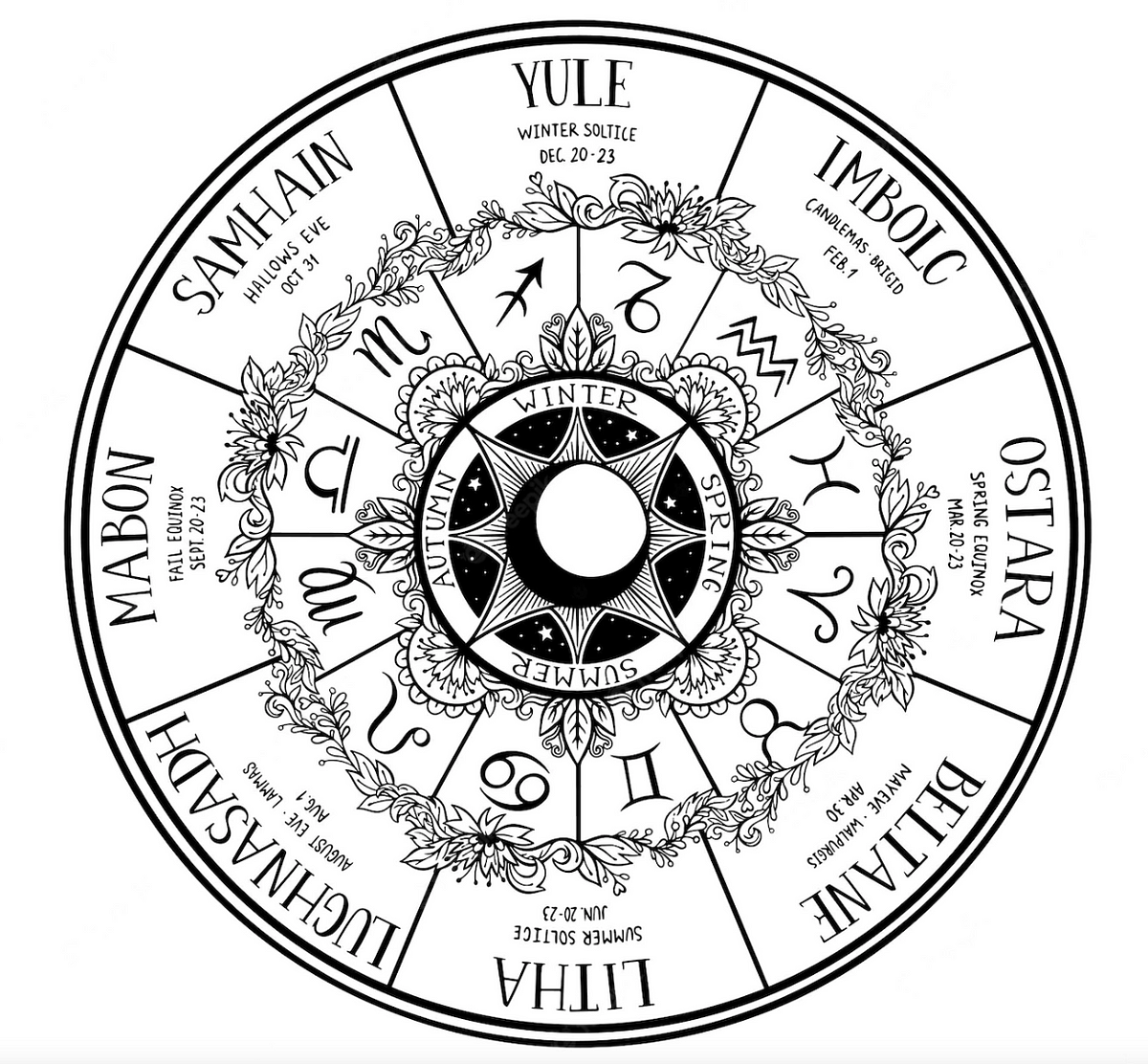
I write these pagan holiday letters eight times a year following the pagan wheel of the year, the annual cycle of seasonal festivals observed by modern pagans. Pagans and wiccans have divided the year into eight parts consisting of the chief solar events (solstices and equinoxes) and the midpoints between them, called cross-quarter holidays. Many of these holidays were stolen by the christian religion while colonizing and absorbing pagan customs. Think Christmas and Easter.

Wiccans have named the spring equinox Ostara with a nod to the ancient Tutonic goddess, but of course equinox celebrations have been practiced by humans for millennia. The Anglo-Saxon goddess is Eastre or Eostre.

I can call myself a pagan even though I don’t worship any goddess or god. Pagan is just a pejorative term used by early christians to refer to polytheists, animists or other non-christians. But modern pagans and wiccans have embraced the term and fashioned a religion of sorts. They borrowed the holidays from various pre-christian traditions. This earth-centered practice beats all to hell the christian teaching that humans have dominion over the earth and its animals (interesting that Genesis leaves out the plants). 

I appreciate the wheel of the year because there is no beginning and no end. Life is a cycle. I find this a compelling way to look at and think about the year. The holidays are just far enough apart for my taste. They correspond with the seasons and the movement of nature. The next holiday is only eight weeks away from the current celebration. Now at Ostara I find it easy to think ahead to the next holiday, Beltane on May 1. What flowers will be blooming then? What will I be planting and harvesting from the garden? When will nesting birds be fledging?

One great thing about these holidays is we can make up our own. My version of paganism takes into account the earth and all its beings, not just humans. My version is anti-capitalist and all-inclusive. My personal Hilaria celebration begins on the Ides of March, maybe a bad day for Caesar but an auspicious date in my life. 

One year ago at this time I had spine surgery at Oakland Kaiser, the last of the elective surgeries just as the pandemic was announced. We had our last restaurant meal on Piedmont Avenue and at the time I thought it might be my last out meal for months, maybe years (I was right). A year later, I’ve recovered from surgery and covid restrictions are being lifted. I’ve just had my first shot of Moderna vaccine.

It was on the Ides of March three years ago that Holly and I hired movers and said goodbye to our San Francisco home, Richlandia, moving to our new home in Santa Rosa, Hylandia.

And here is another reason the Ides of March is auspicious. We are selling the last of the property in San Francisco that I bought in 1980 with my then-collective house of lesbians. I lived there for 38 years. That three-unit building has been the center of my life for four decades. I spent nearly a decade (the 2000s) with my partner at the time, Barb, remodeling the units and turning them into condos with the help of tradeswomen friends, especially carpenters Carla Johnson, who died in 2016, https://mollymartin.blog/2016/06/12/losing-carla-jean/ and Pat Cull. See my blog posts about the building: https://mollymartin.blog/2017/09/16/still-standing/

When we bought Hylandia, we sold the condo we lived in and continued to rent the other two units. I was committed to never evicting anyone from their home, but I did want to get out of the absentee landlord business. Then, last month, both the tenants gave notice allowing us to sell the apartments. 

I was so very attached to Richlandia, into which I put so much blood, sweat and tears. But because letting go has spanned years now, I think I’m ready. And the building, given new life by me and my tradeswomen friends, awaits a community of new occupants.

It is a time of new beginnings and as I write this I think What a cliché. Everyone is writing this. Still it seems momentous, life changing. I know that after this year of trump and covid and the fires and fascists assaulting our capital and Black Lives Matter uprisings and the growing throngs of homeless that things can never “go back to normal.” Nor do I wish for that. Life is a circle with no real endings or beginnings. I’m looking forward to what comes next.

Imbolc Is Imminent

Feb. 1, 2021

Dear Ones,

It’s been a rough year. Impossible to say that without understating. But, as we celebrate Imbolc, I feel like it’s a new morning.

My covid walking outfit. Brew is the local gay cafe.

I’m on the pavement thinking about the government. But I hesitate to write about that because it’s been written about so very much. Suffice to say Holly and I are maintaining our sanity here in Santa Rosa. And we ain’t goin’ nowhere. We haven’t been vaccinated partly because of a shortage of vaccine here in Sonoma County. Also because we are in no way essential.

Actually I’m lying not on pavement but on the redwood deck in the backyard after having pulled out as many oxalis as I can from the garden. I’m starting to worry about getting a sunburn when clouds roll in swift from the south. Rain is coming but it won’t be a hard rain. Not today.

This day of sun and weeding and planting and gray clouds has got my mind off wintertime. And I think that’s the whole point of Imbolc, one of my favorite pagan holidays because—spring!

Imbolc falls in the middle between the winter solstice and the spring equinox. The old Celtic pre-christian holiday was a day to honor the pagan goddess Brigid, who invoked fertility rites. She also oversaw crafts, poetry and prophecy—the domain of us old folks. 

Brigid was a powerful Celtic god and so of course the christians had to turn her into St. Brigid, whose day is still celebrated in Ireland. Here at Hylandia we prefer to celebrate the goddess. I can already feel myself becoming more prophetic. Maybe more poetic and crafty too!

However you celebrate have a happy Imbolc. 

Sending big virtual hugs to you all.

Hot Tub Stargazing–My New Sport

Here’s one thing covid has not stolen from us—the night sky. Stars and planets, the moon in all its phases, meteor showers, constellations. 

In my last home in San Francisco we had a good view of the southern sky from the deck, high in the air from the fourth story, so we could see the moon and planets rise and set. But a view of the north sky was blocked by the building and Bernal Hill.

Now in Santa Rosa we have a better view of the north sky. In the summer we sat back in outdoor zero gravity chairs to star watch. I relearned the summer constellations—Ursa Major (the Big Dipper), the giant square of Pegasus, the cross of Cygnus. We keep close track of the moon’s progress. We do love moongazing but stargazing is best with a dark cloudless sky.

Waiting for the great conjunction of Jupiter and Saturn we watched nightly as they came closer and closer together. They converged into one giant star for the first time in 800 years, on the solstice, December 21. It was a great way to celebrate the winter solstice but clouds blocked our view on that night.

Photo by Darren Samuelson of the Perseid Meteor shower on August 12 taken from Hopland

This winter I’ve discovered a new pastime—hot tub stargazing. From the hot tub we get a window on the north sky. I find Polaris by fixing my gaze on the gas grill, then looking up. The North Star doesn’t change location (even though the gas grill might); all the other stars appear to rotate around it because right now it lies nearly in a direct line with the Earth’s rotational axis. But that will change in a cycle that takes 26,000 years! The Big Dipper and W-shaped Cassiopeia travel around the North Star taking up opposite positions in evening and morning. 

Winter mornings are a great time to star gaze. It doesn’t start to get light here till after 6:30 at solstice. The sun doesn’t rise till almost 7:30. Of course it’s colder than at night. Often it’s around freezing when I go out at 5:30 or 6 am, but the hot tub, set at 104 degrees, is a perfect antidote.

In the morning even with low clouds or some fog, two bright stars greet me. In the east is Vega. In the west is Capella with the north star, Polaris, in between. Capella, the third brightest star in the northern celestial hemisphere after Arcturus and Vega, is part of the constellation Auriga, which I just learned about. Its name means little goat in Latin, depicting the goat Amalthea that suckled Zeus in classical mythology. Vega is the brightest star in the constellation Lyra. You have to look straight up in the summer, and then you can see Vega is one of the stars of the Summer Triangle along with Altair and Deneb. But in winter it twinkles near the northeastern horizon.

There are some impediments to hot tub stargazing: our private moon—the street light just above the roof; glasses that fog up in the tub; city lights, or any lights. I had to turn off our Solstice tree lights before going out to the tub.

Of course you don’t need a hot tub to stargaze. In San Francisco to watch a winter meteor shower we would dress warmly and lie on a camp mattress on the deck. Maybe not so much fun in a colder winter climate. But you can watch from indoors too.

From the hot tub I watched the Geminid meteor shower at its height in mid-December. Then in the morning back in the house with coffee in hand I set up a stargazing station in the living room looking south through the picture window. One bright star greeted me—Spica, the brightest star in the constellation Virgo. I saw a shooting star at 6:30 am just as the sky started to lighten.

Watching for shooting stars is not always calming.  During the meteor shower I discovered stargazing anxiety. If you close your eyes for a moment you might miss a shooting star. They are quick and unpredictable! I got a case of FOMO. How many meteors did I miss? Since then I’ve made an effort to more calmly appreciate the capriciousness of the universe.

You can’t look at your phone and stargaze at the same time, though I do use the phone to identify heavenly bodies. A decade ago on a backpacking trip in the Sierra Holly and I made good use of a phone app we’d just discovered called Star Walk. You point your phone in the direction of the star or planet or satellite you want to ID and as you move the phone it shows the whole night sky with the planets’ orbits and all the constellations.

In old age my sleep habits vary. I often wake up wide awake in the middle of the night. One night at 1:30 I could see, even without glasses, one bright star outside my window. So of course I used the Star Walk app and learned it is Sirius, the brightest star in the night sky.

I know we are all happy that the light is returning now since the winter solstice. But I’m just a little sad that there will be less dark sky. I still hope to catch a falling star.

Celebrating Lughnasa in Quarantine

August 1, 2020

The Gaelic festival Lughnasa, midway between summer solstice and autumn equinox, celebrates the first fruits of the harvest season. 

Here in Santa Rosa, at a more southern latitude, we picked our first fruits at the beginning of July—tomatoes, cucumbers, eggplants, peaches and plums. The neighbor’s Gravenstein apple tree that hangs over into our yard was ready for harvest around August 1 last year, but this year the apples were a couple of weeks early, maybe because we are in a drought, or maybe it’s just global warming. Everything is early this year.

Apple harvest here is usually celebrated at the ides of August at the Sebastopol Apple Festival, but of course all of our local gatherings have been cancelled for covid.

We will miss the Sonoma County fall fairs and expositions. The Heirloom Expo in September is one of our favorites and last year we heard a presentation about native bees by a company based in Woodinville WA that propagates bees and sells them. We bought some—mason bees and leaf cutter bees. They came in the mail with detailed instructions. Native bees don’t live in hives like honey bees. They are solitary and nest in holes, often in undisturbed ground (so don’t dig up your whole garden) and they don’t sting like honey bees.

Introducing the mason bees to our garden went well. They are kept in the refrigerator until you place them in the top drawer of their bee house, mounted on the fence facing east so the morning sun hits it. Mason bees place their eggs in the wooden straws provided and then cement them in with mud to protect them from predators. They emerge with the daffodils in spring. The male bees fly only three weeks and the females seven weeks. We were instructed to leave a patch of wet clay in the garden for their masonry work.

The leaf cutter bees came in June and, before reading directions, we put them in the refrigerator till we could let them out. Only the next day did we read the directions which warned against refrigeration. We killed our bees! But we ran to the refrigerator and dumped them all out on a plate on the deck hoping for revival. Then we watched, transfixed, as they slowly crawled out of their shells, stumbled to the edge of the plate and flew off into the garden. Most of them survived.

For us humans 2020 has been a disastrous year, but for bees in our garden—honey bees as well as native bees—it’s been a great one. 

Sending virtual hugs to all of you as we continue to shelter in place.

Summer solstice 2020

Dear Friends,

We think of you as we sit on our porch sipping aquavit and eating gjetost cheese on rye crisps looking out at the fjord in our cozy cabin for six in the village of Flam, Norway. To our backs are steep forested mountains and waterfalls. To our west is the North Sea.

Just kidding. That’s where we were supposed to be at midsummer with Scandinavian American cousins. We had made all our reservations and even bought plane tickets when the corona virus hit. Still waiting for refunds.

We had planned to visit the ancestral homes of our Scandinavian ancestors. I wanted to be there at midsommer, a celebratory holiday which marks the summer solstice. Instead we sit in our zero gravity chairs in our Santa Rosa backyard watching our flowers and veggies grow. In June I harvested the last of the oranges and then artichokes, the last of them now blooming magnificently. Tomatoes, eggplant and cucumbers are just coming on. It’s not so bad. Life has slowed way down (though it was already pretty slow around here.) 

The Norway trip was the idea of my cousin Gail. She lives in Gig Harbor, Washington in a lovely house that has been sort of a retreat center for the family for the last several years. We would gather for reunions and also to go through Gail’s extensive family history archives, saved in cardboard boxes in her attic. Lately my brother Don has been researching the Swedish relatives.

We share a Norwegian grandfather and Swedish grandmother who emigrated at the turn of the 20th century and met and married in South Dakota where their relatives had homesteaded. They soon moved further west to Idaho, Oregon and Washington, settling in Yakima.

Our grandfather, Bernt, or Ben in American, left Norway in 1898, never to return. He was born in 1878 in Borsa, a fishing village on a fjord not far from the town of Trondheim.

So we may never get to Norway but we have used this opportunity to educate ourselves about Norwegian culture, reading literature and history. My mother Flo and I had already made a pilgrimage to our Norwegian and Swedish ancestors’ homes. Thanks to Flo’s 1979 travel diary, I reconnected with a woman who we met at the Oslo feminist center and who let us stay in her apartment when all the inns were full. In letters, Bente has caught me up on 40 years of her life. She is a lesbian feminist and was part of a back-to-the-land movement in Norway when she returned to her family farm in the north. Now she’s working at a historical museum near Oslo.

We also discovered that our next door neighbors had taken a family trip last year back to his ancestral home in Norway and we had planned to meet up and hear all about their trip when coronavirus hit. Perhaps our neighbors are my cousins too!

Still sheltering in place in NoCal, we shall just have to pretend we are up in the north country. I think I have some aquavit around her somewhere. Skol!

(My Danish friend corrected me. Aquavit is not to be sipped. It is downed, ice cold.)

Celebrating Beltane and May Day

Dear Friends,

Emerging from the chrysalis—a month and a half of  coronavirus lockdown and spine surgery recovery—it feels like a brand new day. In Sonoma County residents are now allowed to walk or bike (but not drive) to a park. Keep your mask on.

IMG_0302
A trailer parked on my block

I’m one of those people who finds it difficult to sit in one place and concentrate on anything for any length of time. I always knew I had a very short attention span. Holly thinks maybe I have undiagnosed ADHD. Anyway being flat on my back and having to concentrate on recovery from surgery has helped me if not to focus better at least to understand my problem better. I was pretty happy listening to novels especially when I was in the first stage of recovery and could barely get in and out of bed. As I recovered I felt more and more like multitasking, as if I actually could pick up my iPad and read Facebook posts while I’m listening to a book. Not! I can work on a jigsaw puzzle and listen to a book at the same time. Holly says that’s because you’re using different parts of the brain. Don’t try do two tasks that require words at the same time.

So I have been trying to practice doing one thing at a time. Then, reading the Audubon newsletter, I learned about bird sitting. It’s easy. You just sit and listen and watch and use all your senses to experience birds. I expanded this concept to pollinators. Bee sitting.

IMG_0331
Our pollinator garden

One sunny April day after I was able to walk around and sit outside in a zero gravity chair, I spent an hour or so just watching pollinators. The air was full of flying and floating things. Filaments of spider web, falling blossoms, puffs of seeds and insects moved through the air in the soft breeze. Honeybees populated the orange and the apple tree. The native bees went for the native plants. Bee segregation! Our pollinator garden starts blooming early. The native carpenter bees and bumblebees especially love the red salvia. And there are all these other little pollinators that may or may not be bees, the kind that fly in squares turning quickly at right angles, the tiny gnats that circle endlessly around each other. I was surprised at how many bugs I couldn’t identify.

IMG_0310
First strawberries. Eaten by a wild animal that night.

Two years ago we had a great population of carpenter bees. The females are big and shiny black, the males smaller with a smidge of yellow. A tub full of purple flowers bloomed near where I like to sit on the patio and my purple hair was constantly being dive-bombed by purple-loving bees. Then last year the bee population declined. I saw one maybe two carpenter bees and we began to wonder if they had been living in the old original redwood fence from 1948 that we had replaced the year before. My brother Don told me that when they remodeled their house in Olympia they destroyed the carpenter bees’ home in the exterior trim on their building. That year and some years after their apple orchard did not get pollinated and had no apples. So I’m delighted that the carpenter bees have returned. 

I plan to celebrate Beltane bee sitting. 

Sending virtual hugs to you all. Take care of yourselves.

Surgery Spring part 2

Continuing the story of my spine surgery. This might be TMI for some. For the first chapters, go to my previous post.

I checked into Oakland Kaiser March 12 and was in the hospital two nights. I got good care but hospital personnel seemed like they were trying hard to look calm and relaxed when covid-19 had become the focus. Two covid patients were already there in isolation. Staff were flustered and distracted and their assignments changed continually. Some wore masks, but most did not. Our floor of the hospital was emptying out. I might have been the last elective surgery, just under the wire. We couldn’t wait to get out of there.

The nadir of the whole surgery experience was the hour-long drive back home from Oakland to Santa Rosa. In excruciating pain, I got overly familiar with every damn bump in the highway. What a relief to lie (carefully) down in my own bed!

I Love My Wife

IMG_0257
We finished the puzzle!

Working construction when you come home after work so tired that all you can do is throw some food in your mouth and go to bed, we tradeswomen often wished for wives like our male coworkers had. We all needed a wife. Well I now have a wife and I can tell you that it’s just as great as I imagined, especially when you’re laid up after surgery. My wife Holly was chief nurse, cook and bandage changer while I recovered. When I first got home from the hospital just getting in and out of bed was a painful chore. I needed help to do everything. What would I have done without my wife? I began to think about what people do when they don’t have a partner to care for them in situations like this. If you have money you hire someone. I would’ve had to hire someone to be here 24 hours a day, at least at the beginning. Holly, sleeping in the guest room, woke up in the middle of the night to check on me and give me pain drugs. Or maybe the hospital would have sent me to rehab or to a nursing home. We have a friend who, after she suffered an injury, is now stuck in a nursing home that is locked down. And Holly‘s mom is locked down at her assisted living place in Windsor. No visitors allowed. I feel thankful and lucky.

Did Rush Ever Shit?

IMG_0263
Our Bacchinalian garden goddess

During the time he was addicted to opioids and was caught buying them on the black market, did Rush Limbaugh ever have a shit? Perhaps he was literally full of shit. This is what I couldn’t help thinking as I faced my own opioid crisis. I just don’t understand what people see in these drugs. They didn’t get me high and they totally fuck with my digestive system. I couldn’t wait to get free. In the meantime I resorted to disgusting and painful methods of evacuation which I will not go into. You can imagine.

Recovery has been like baby steps. You mark every significant newly gained ability. I can reach up to put food in the microwave. Yay! I can bow my head to look at the computer screen. Yay! I can carry five pounds. Yay! I walked a half-mile neighborhood loop up and down hills. Yay! Now lately I have been able to do a bit of cooking and Holly’s telling me she appreciated the several weeks when I was not leaving messes in the kitchen. Most recently I tried cooking rice pudding with some 2% milk that had been substituted for half-and-half by our Instacart shopper. I guess some people think there’s no difference? Anyway it turned out fine except, while I was resting, it burned the bottom of two pans. Milk is a binder, once used in paint, and my brother said that in his activist days they used evaporated milk for postering. You can never get it off, he said. Stuck milk sucks! So at least for the time being I’ve ceded most of the cooking back to Holly. 

I Grew!

The first week of April I put my shoes on to go out for a walk, looked down at Holly and said “I feel taller!” Looking up at me she said “You’re right. Alice, what was in that bottle you drank?” 

A month after the surgery Holly drove us back to Kaiser Oakland to get my stitches taken out and to let a physicians assistant, Jose, have a look at the incision on the back of my neck. Protocol had changed since we were there for the surgery and when we tried to walk in the door we were met by a phalanx of workers in protective gear. Holly was told she couldn’t come with me; she waited in the car. I had to get a special pass and then sanitize my hands before they let me in. There had been two coronavirus patients in isolation in the hospital when we were there for the surgery. Now there were 12. 

The receptionist at the spine surgery desk confessed that he was bored. Kaiser was dead. All elective surgeries (the most lucrative procedures for hospitals) had been canceled and he was trying to find ways to look busy.

Jose looked terrible. A loquacious guy who sometimes is a little too cheerful for me, he was very glum. I asked him if something was wrong and he said he just had a death in the family. Oh dear.

Am I really taller? And why am I dizzy?

IMG_0230
My bed of wild miners lettuce

Jose explained that there is a part of my brain that makes and regulates spinal fluid and because my spinal fluid has been so cut off for so long it’s having to readjust. That can make you dizzy and it might be six months before things get back to normal. Also he said your spine is kind of like a spring. I guess they sprung it. He implied that might create more height. Anyhow I am delighted by this side effect. I’ve been losing height as my spine compresses and osteoporosis has its way. I used to be 5‘8“ and the last time I was measured I was only 5 foot 5 1/2 inches. Perhaps I’ve regained a half inch!

In which I Encounter a Wizard at Kaiser Oakland

Before leaving the hospital I was directed to the lab to have blood drawn. The  masked phlebotomist was an older black man with a gray beard and  stylish glasses with filigreed hinges. He settled me in the chair, looked me in the eye and said, “You know a squirrel.” I said, “Why yes I do. There’s a squirrel outside my window that entertains me endlessly. What kind of sixth sense do you have?” He said he didn’t know exactly but that he was particularly prescient with pregnant women. He could tell what the physical traits of their babies would be. He told me about one woman who came back in after the birth and told him that he had correctly identified everything about her baby including that she had eyes of two different colors. 

They tell me it takes six weeks to recover, (but a year for the bones to knit fully) and so I have less than two weeks to go. Then I’ll join the rest of you—bored in lockdown. 

Take care of yourselves.