My Queer Family Holidays: Learning from Hopi Tradition

On Soyal Native Americans marked the shortest day of the year

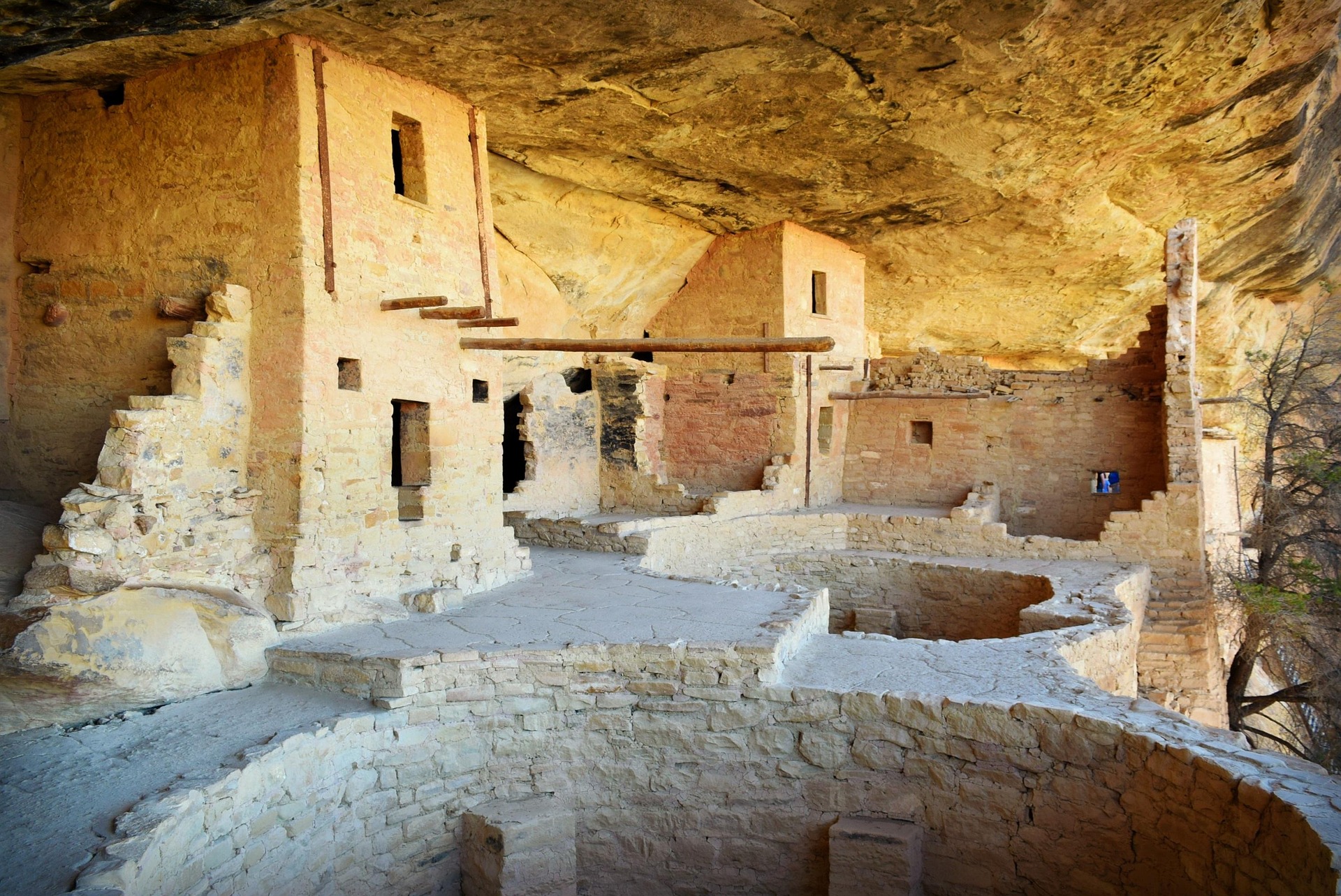
Cliff Palace in Mesa Verde National Park, Colorado. Photo by Judson McCranie. (CC BY-SA 3.0) It is believed that ancestors to the Hopi built and lived in Cliff Palace from about 1200 to 1300 C.E.

My Regular Pagan Holiday Post: Winter Solstice

My queer family chooses to forgo holidays shaped by a christian tradition steeped in homophobia and misogyny—a church that has long covered up sexual abuse against children and parishioners while scapegoating queer people. Recent comments by Pope Francis only underline this contradiction, reaffirming the catholic church’s ban on ordaining gay men and punishing and defrocking priests who question that policy or support what it calls “gay culture.”

So we create our own rituals instead—queer, chosen-family–centered traditions. We look to other cultures for inspiration, especially pagan and pre-christian practices that honor the natural world and community rather than dogma.

We can learn much from Native Americans that might help us through what is shaping up to be a particularly dark period in our history and present. 

Soyal: Winter Solstice and Renewal

On the winter solstice, Hopi and Zuni peoples perform a ceremony with the intention of achieving unity and strengthening community. Soyal is held on the shortest day of the year. It marks the symbolic return of the sun, the turning of the seasonal wheel, and the beginning of a new spiritual cycle. Soyal is a time of purification, prayer, and renewal, when the community prepares itself—spiritually and socially—for the year ahead.

In the days before Soyal, families create pahos, prayer sticks made with feathers and plant fibers, which are used to bless homes, animals, fields, and the wider world. Sacred underground chambers, called kivas, are ritually opened to mark the beginning of the kachina season. The kachinas are understood as spiritual messengers who carry prayers for rain, health, balance, and right living. Songs, dances, offerings, and storytelling strengthen community bonds and pass ethical teachings from elders to children.

Soyal also dramatizes the struggle between darkness and light. Through symbolic dances and ritual objects, such as shields representing the sun and effigies symbolizing destructive forces, the community enacts the tension between chaos and order, drought and rain, winter and warmth. The message is not that darkness must be destroyed, but that it must be faced, respected, and brought back into balance.

The solstice itself becomes a sacred pause: a moment when time feels suspended and people are invited to examine their lives. It is a season for letting go of harmful habits, reconciling conflicts, offering forgiveness, and setting intentions rooted in responsibility rather than personal gain. Gifts are exchanged not as possessions, but as blessings and goodwill.

Creating Our Own Rituals

Soyal reminds us that human life is meant to move in natural cycles, not endless acceleration. Rest is not weakness; it is a form of wisdom. Renewal begins with humility, gratitude, and shared responsibility. Personal healing is inseparable from the health of the community and the land.

The enduring spiritual mission expressed through Soyal is the same across Hopi villages: to promote and achieve the unity of everything in the universe.

While that vast unity may be beyond our vision, we, too, seek to strengthen our community and mark the return of light. At winter solstice, we gather ourselves and our loved ones, shaping rituals that keep us connected to one another and to the slow turning of the year. We invite friends to help us trim our solstice tree, contribute to the local food bank, have neighbors over for hot chocolate, read poetry and stories aloud, bake cannabis edibles, host impromptu living room dance parties, cook savory soups, plant flower bulbs. With neighbors, we make signs and join street protests to raise our voices against fascism. We look for the sacred in everyday life.

Happy solstice to all, however you celebrate!

Is It Winter Yet?

My Regular Pagan Holiday Post: Samhain, November 1

When does winter begin?

Is it October, when we pick the last tomatoes to let them ripen indoors?
November 1, Samhain, when daylight thins and the world folds in on itself?
December 1, when the record-keepers say it does?
Or December 21, when the Earth leans furthest from the sun?

There are many ways to mark the turning.

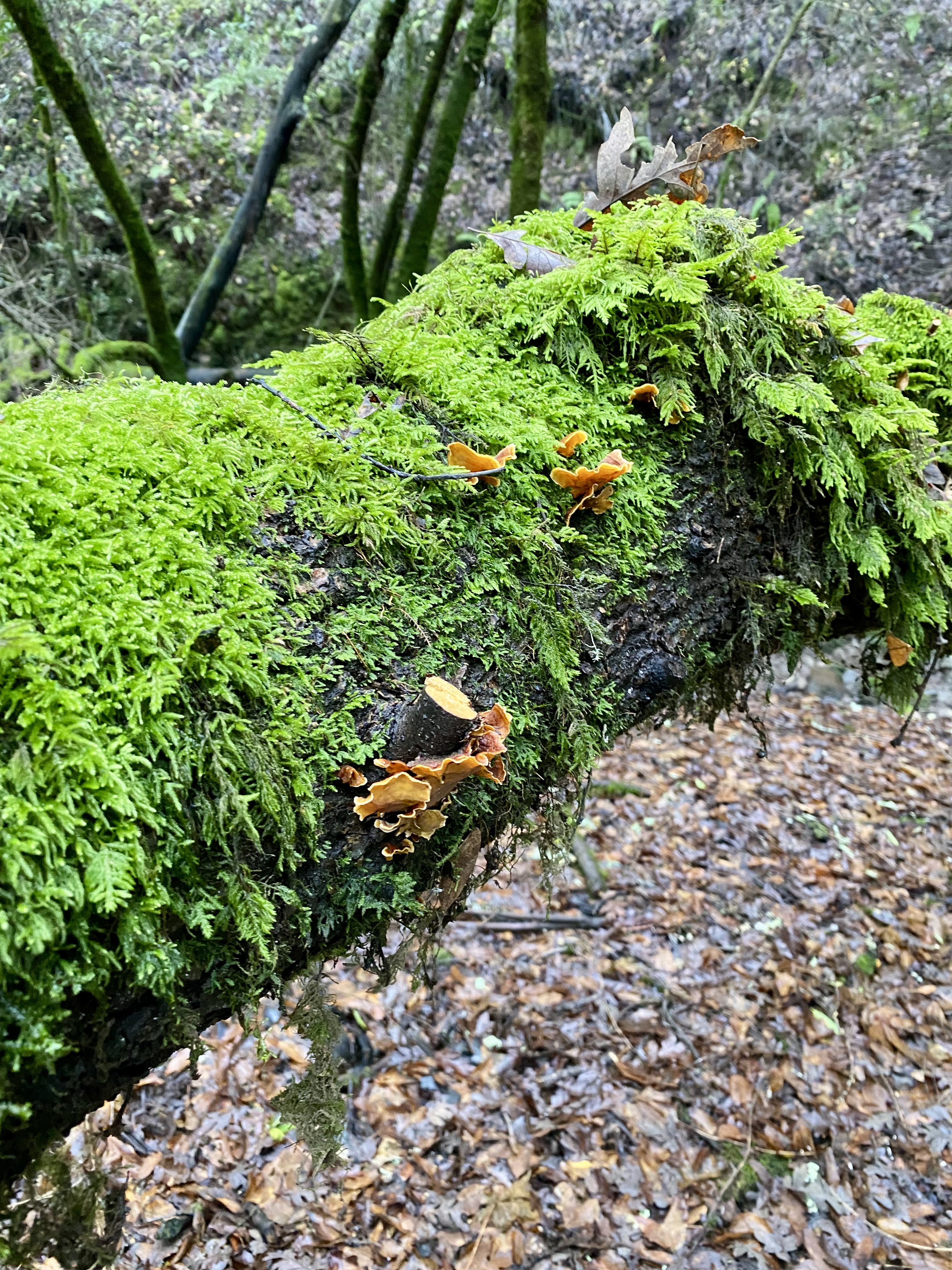
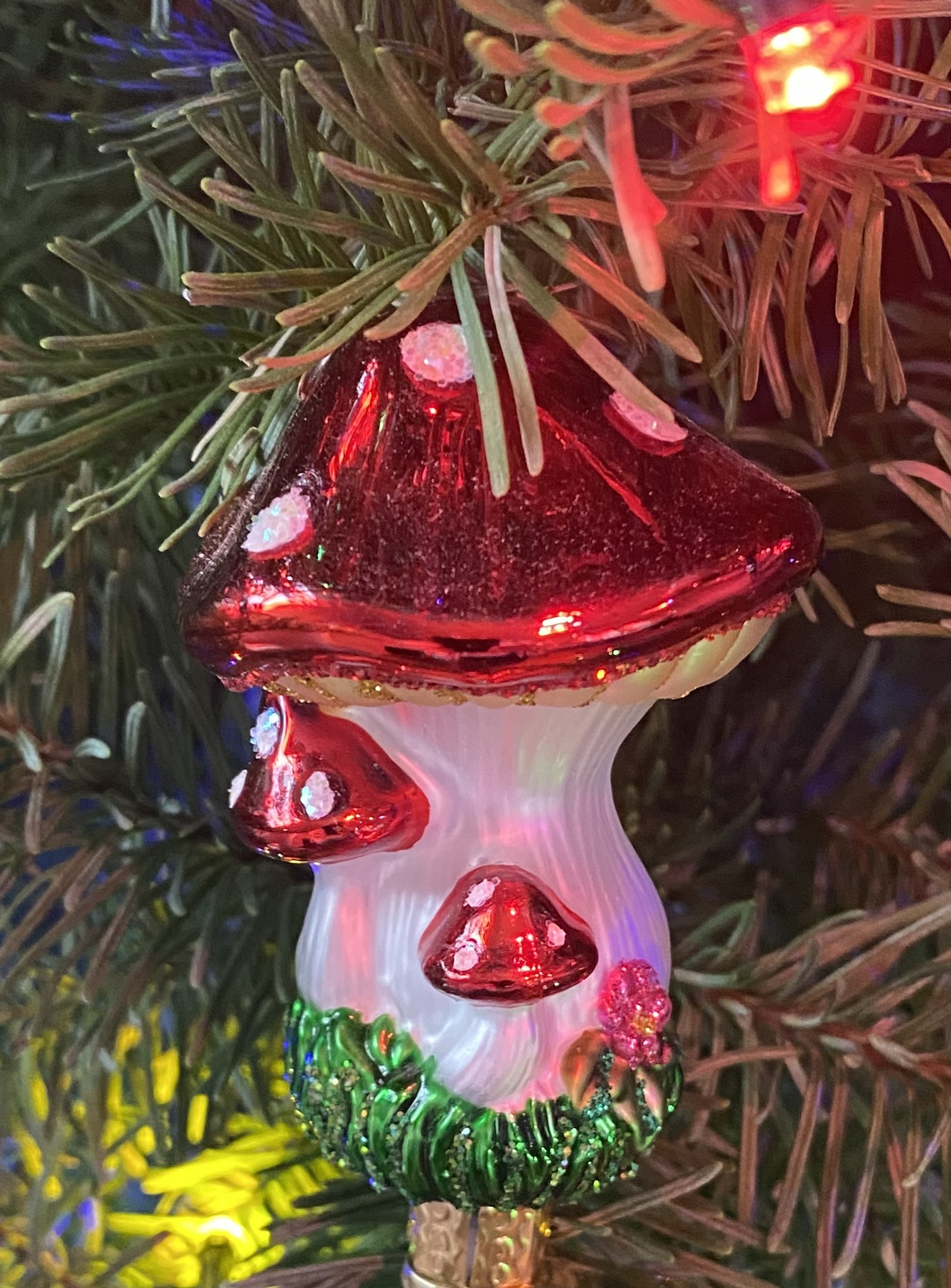
In Northern California winter starts when the moss wakes up and fungus emerges

The Astronomers’ Winter

Astronomical winter begins with the solstice, that celestial pause when the sun halts its slow descent and begins its long climb back toward spring.

It happens around December 21, though never on exactly the same day—
Earth wobbles a little in its orbit, as if uncertain.

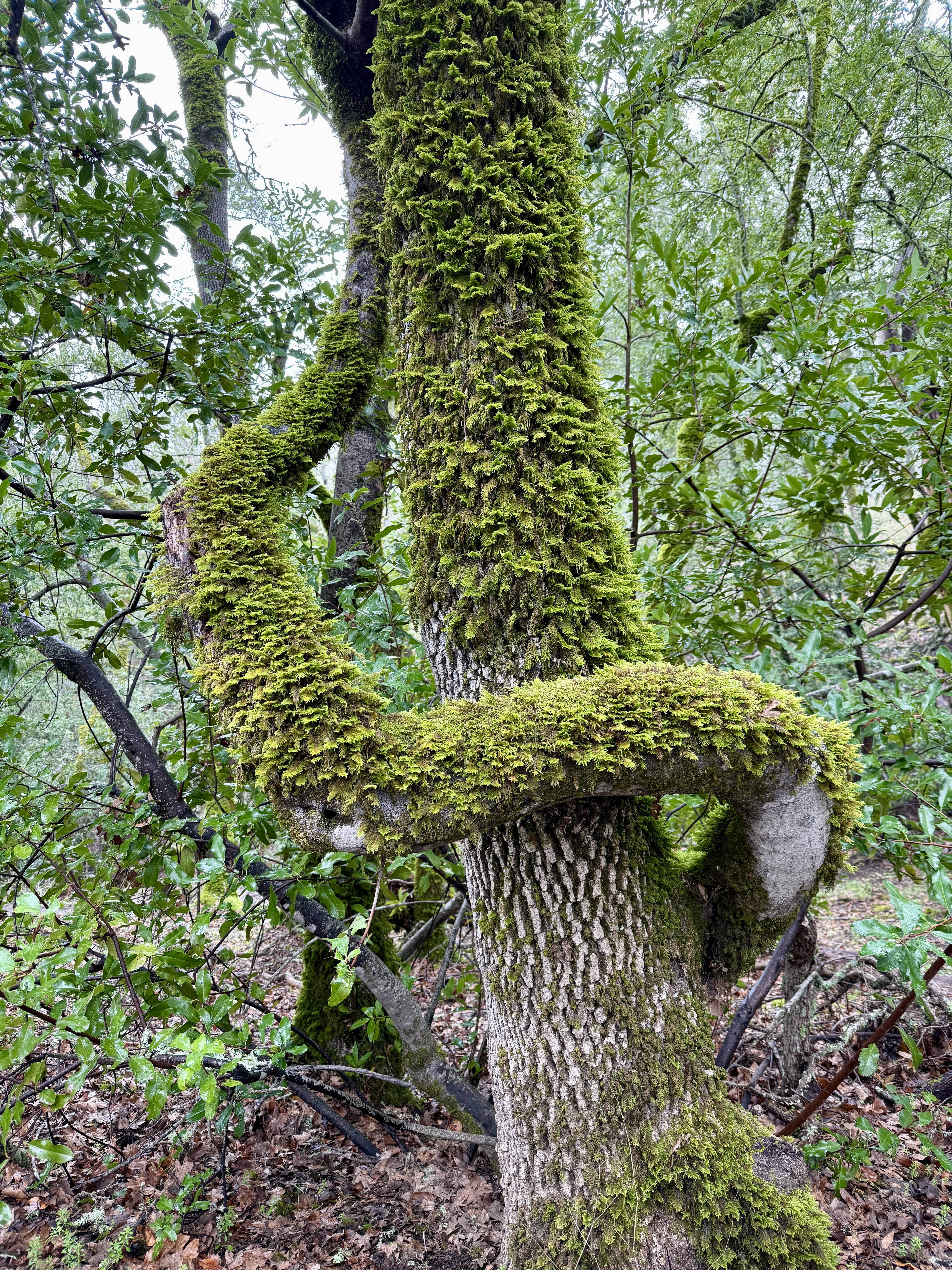
The oak’s witchy branches show themselves

The Meteorologists’ Winter

The meteorologists keep tidier books.
For them, winter starts on December 1 and ends with February—
three even months of cold data,
meant for graphs and records.

The forest breathes a sigh of relief as rainy season begins

The Ecologists’ Winter

Ecologists, meanwhile, listen to the ground.
They call this time hibernal—the season of rest.

Their calendar has six seasons, each following the pulse of life itself:

Prevernal – the first stirring, buds swelling, birds returning
Vernal – full spring, leafing and nesting
Estival – the height of summer
Serotinal – late summer’s slow ripening
Autumnal – the fall of leaves and the long migration
Hibernal – the stillness of sleep

The Gardener’s Winter

Gardeners go by the Persephone Period. It starts when there are less than ten hours of daylight in a day, causing plant growth to slow down or stop. Employed to plan crops, insuring plants have time to get a head start before winter harvesting or overwintering.

Other Ways of Knowing

Elsewhere, the world names winter differently.

In the Hindu and Bengali calendars, there is Hemanta, the cooling air,
and Shishira, the deep chill that follows.

The Noongar people of Western Australia read their six seasons
in wind, rain, and blooming trees—
a rhythm that moves with the land, not the clock.

The Cree of the far north know six seasons as well:
the breaking and freezing of ice,
the coming and going of warmth.

And pagans, watchers of the sun’s dance,
divide the year into eight—
by solstices, equinoxes, and the cross quarter days between.

Rain revives forest streams

The Truest Beginning

So when does winter begin?
Perhaps it starts in a feeling—
the first evening you reach for a blanket
and feel the world grow still.

Winter begins when the Earth draws inward—
and so do we.

Photos are mine taken in open spaces near my home

Practicing Garden Herb Witchery

My Regular Pagan Holiday Post

Autumn Equinox is September 22, 2025

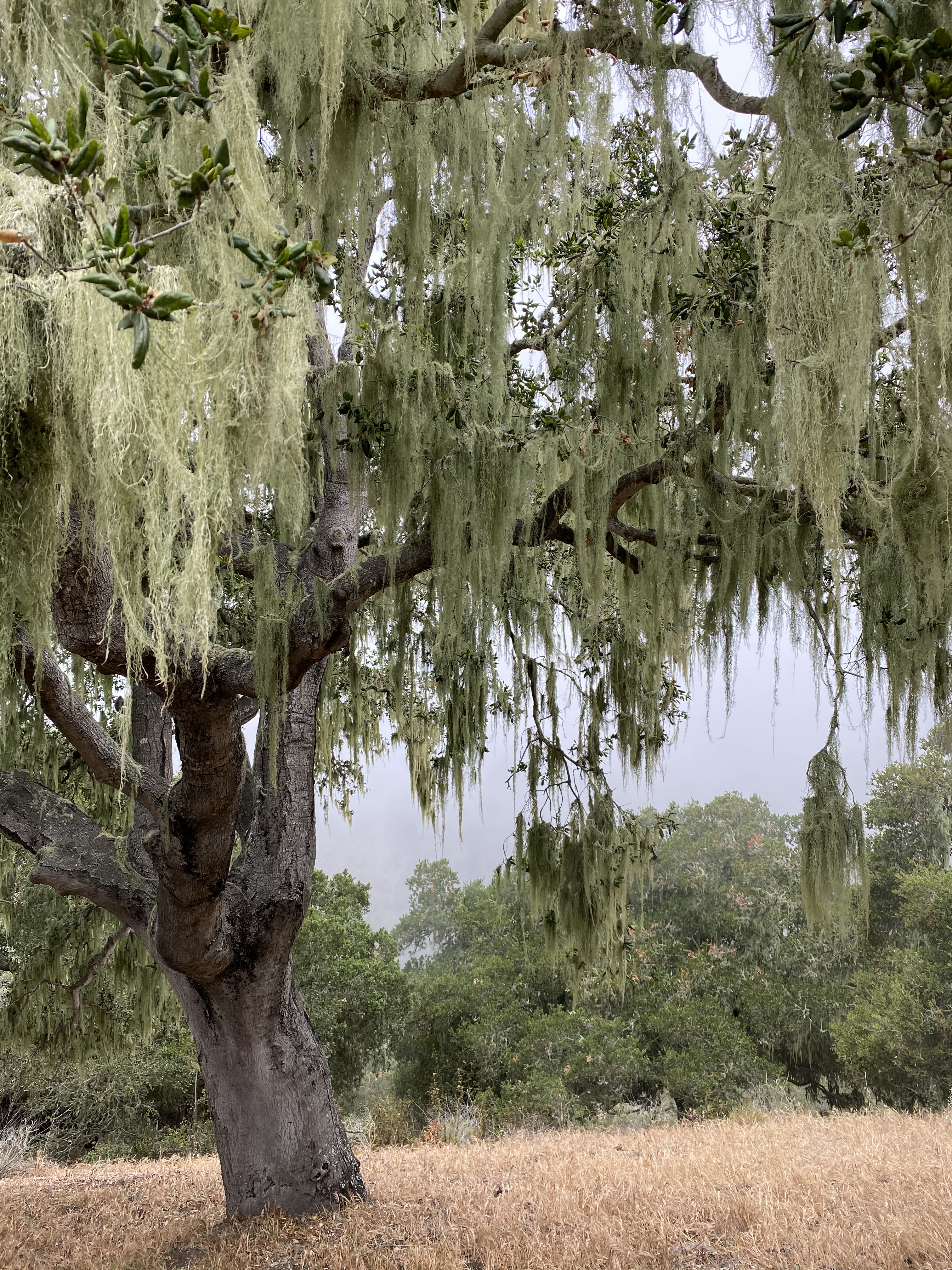
It felt like fate. On our very first date, a hike in the hills above Muir Beach, Holly and I bonded over plants. She pointed out a lichen growing on an oak tree—Usnea. To identify it, she said, you snap a branch and pull it apart until you see the central cord inside.

Usnea on oak. Photo by author

Usnea is known by many names: old man’s beard, beard lichen, or beard moss. A sensitive bioindicator of air quality, it only thrives where the air is clean and unpolluted. For centuries, it has been used in traditional medicine to treat wounds and infections. Today it’s still valued—for easing sore throats, helping wounds heal, reducing fevers and pain, even as a possible cancer-fighting agent.

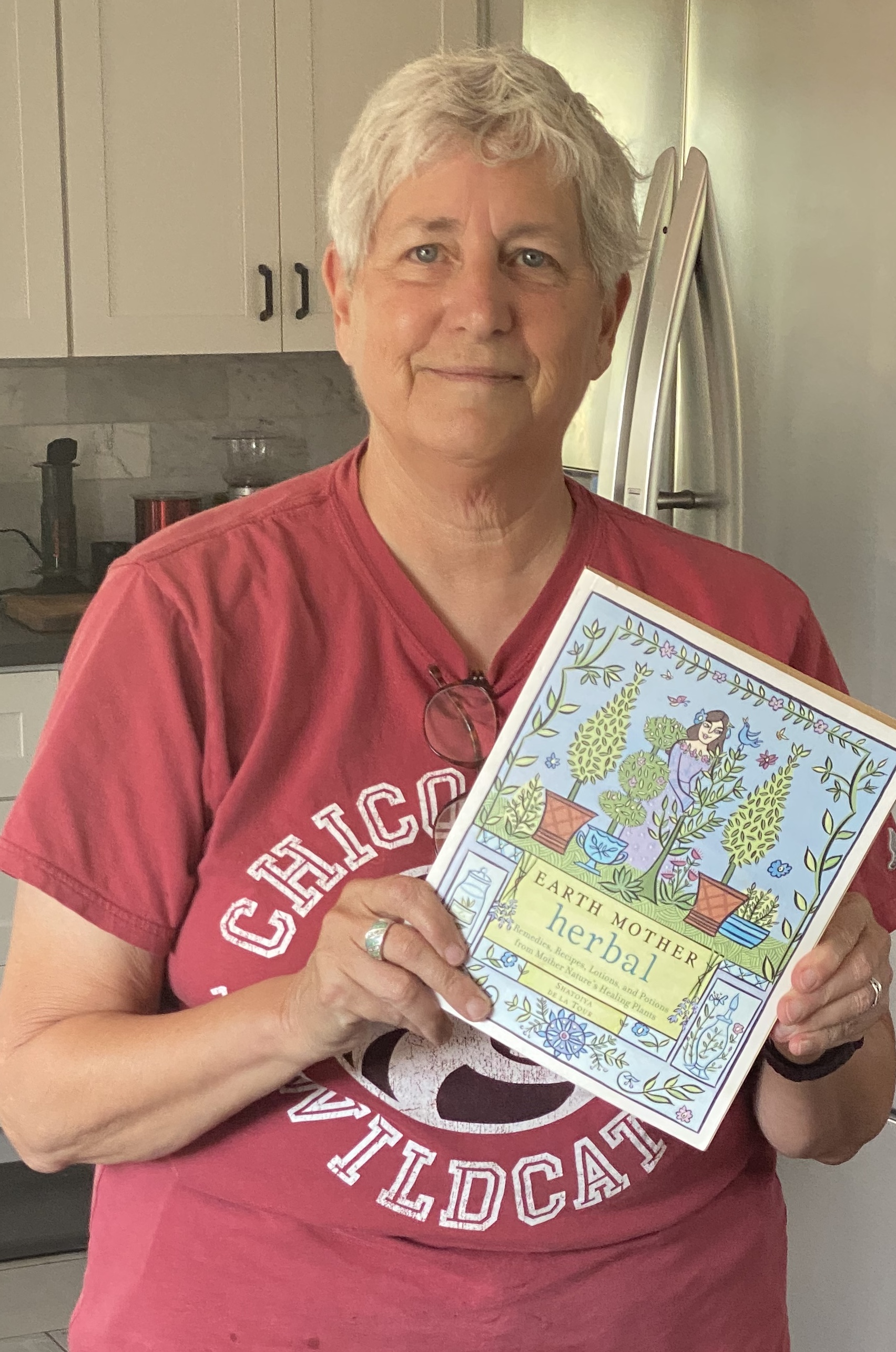
Holly, now my wife, is a witch and an herbalist. She first learned about Usnea from a teacher of medicinal plants, and today her garden overflows with remedies. 

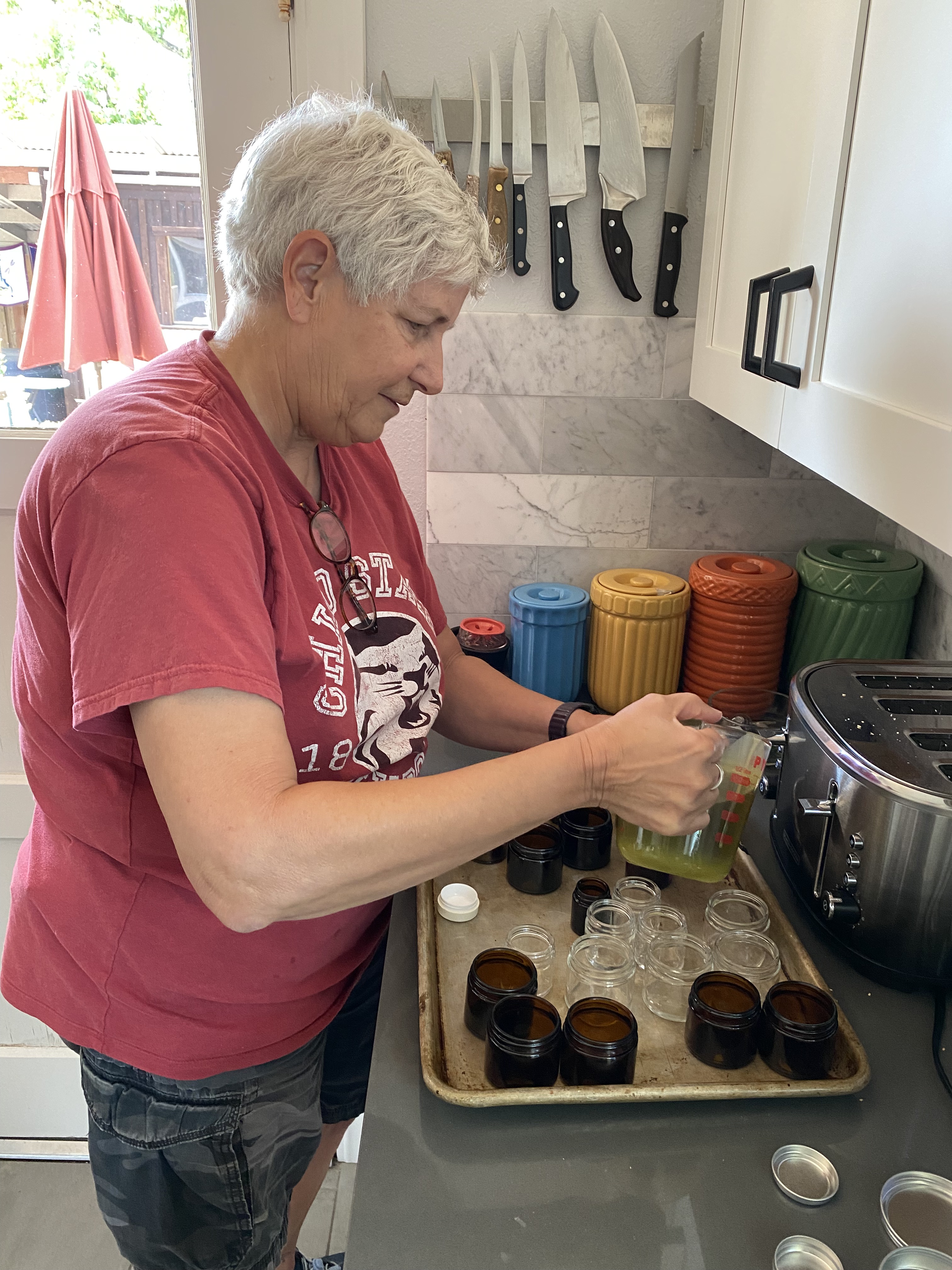
The fall equinox—Mabon—is our time to harvest herbs and brew up remedies. Holly stirs up her bite balm, a salve for every kind of skin irritation, while I turn to cannabis. Since I don’t smoke, I’ve studied the alchemy of decarboxylation: gently heating the herb to unlock its powers before infusing it into oils for cooking.

Some of the herbs in Holly’s garden. Photos by author

Together we blend teas from garden herbs. Our MoHo Blend we make from nettle, comfrey, and lemon balm. Comfrey mends bones; nettle brims with minerals; lemon balm lifts the spirit. Holly grows native yarrow, too, and last week she showed me how to stop a cut from bleeding: chew a fresh leaf and press it to the wound.

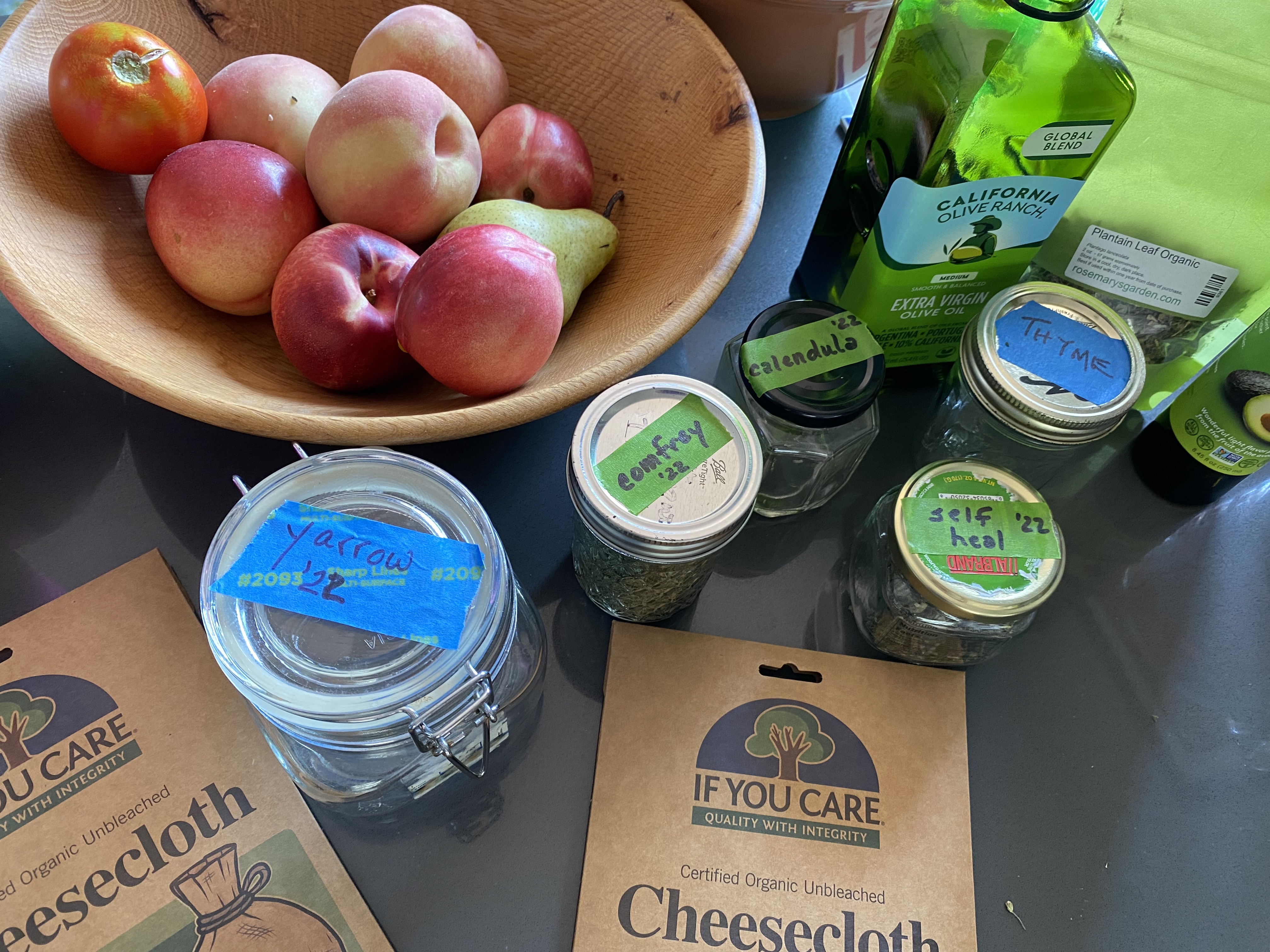
Some of the ingredients for bite balm. Photos by author from 2022

This season, I’m also harvesting and drying figs. Sonoma County is fig country, rich with varieties—Black Mission, Brown Turkey, green Kadota, Adriatic. The fig in our own garden is called Celestial: small, pink-fleshed, and honey-sweet. I can’t resist foraging (with permission) from neighbors’ trees, and the green figs from the tree across the street are my favorite treat.

Earlier in the summer we dried peaches from our little orchard. We peeled and cored the apples that hang over from next door, simmered them into apple sauce and pie fillings for the freezer, and pressed the rest into juice with friends. These harvest gatherings always feel like old-time rituals, neighbors bound by fruit, labor, and laughter.

Our garden is more than soil and stems. It is a living grimoire—a book of green magic—where medicine, ritual, and daily life are entwined. Harvesting and making are rituals of resistance too: an antidote to the anxiety of a world slipping toward fascism. To touch leaf, fruit, and root is to salve our spirits, to root ourselves again in Mother Earth.

Matariki: New Zealand’s Solstice Celebration

My Regular Pagan Holiday Post

Summer (and Winter) Solstice will be June 20, 2025

For years, these pagan holiday letters have followed the rhythm of the Northern Hemisphere. So it’s about time we turned our gaze south. What is the summer solstice for us in the north is, of course, the winter solstice down under.

In Aotearoa (the Māori name for New Zealand, often translated as “Land of the Long White Cloud”), the winter solstice is marked by Matariki, a celebration that signals the Māori New Year. In 2022, Matariki was officially recognized as New Zealand’s first indigenous national holiday — a milestone in honoring the traditions of the land’s first people.

Rooted in ancient Māori astronomy and storytelling, Matariki revolves around the reappearance of a small but powerful star cluster in the early morning sky — known in Māori as Matariki, and in Western astronomy as the Pleiades or the Seven Sisters. Its rising marks a time of renewal, remembrance, and reconnection — with ancestors, the earth, and each other.

The date of Matariki shifts slightly each year, determined by both the lunar calendar and careful observation of the stars. Māori astronomers and iwi (tribal) experts consult mātauranga Māori — traditional Māori knowledge systems — to ensure the timing reflects ancestral wisdom. In precolonial times, the clarity and brightness of each star helped forecast the year’s weather, harvest, and overall wellbeing.

Unlike the linear passage of time in the Gregorian calendar, Māori time is circular — woven from moon phases, tides, seasons, and stars. Matariki is not just a new year, but a return point. A moment to pause, reflect on what has been, and plan how to move forward in harmony with the natural world.

At the heart of Matariki is kaitiakitanga — the ethic of guardianship. It’s the understanding that humans are not owners of the earth, but caretakers. We are part of the land, sea, and sky, and we carry the responsibility to protect and sustain them.

When Matariki rises just before dawn, it opens a space for both grief and celebration: to mourn those who’ve passed, give thanks for what we have, and set intentions for the year ahead. It reminds us of the interconnectedness of whānau(family), whakapapa (genealogy), and whenua (land).

The name Matariki is often translated as “the eyes of the chief,” from mata (eyes) and ariki (chief). According to one well-known Māori legend, the stars are the eyes of Tāwhirimātea, the god of winds and weather. In grief over the separation of his parents — Ranginui (Sky Father) and Papatūānuku (Earth Mother) — Tāwhirimātea tore out his own eyes and cast them into the heavens.

In a world that often values speed over stillness, Matariki offers a different rhythm. It’s a celestial breath — a reminder that time moves in cycles. That rest and reflection are just as important as action. That the sky still holds stories if we remember to look up.

The 9 Stars of Matariki

Each star in the Matariki cluster has its own role and significance:

  1. Matariki – Health and wellbeing
  2. Tupuānuku – Food from the earth
  3. Tupuārangi – Food from the sky (birds, fruits)
  4. Waitī – Freshwater and the life within it
  5. Waitā – The ocean and saltwater life
  6. Waipuna-ā-Rangi – Rain and weather patterns
  7. Ururangi – Winds and the atmosphere
  8. Pōhutukawa – Remembrance of those who have passed
  9. Hiwa-i-te-Rangi – Aspirations, goals, and wishes for the future

For Māori, these stars are not just celestial objects — they are guardians. They watch over the land, sea, and sky, and in doing so, remind us of our responsibility to them.

As global conversations about climate change and sustainability grow more urgent, the values of Matariki — care, reverence, reflection, and renewal — feel especially resonant. It’s a time to return to what matters, to honor the past, and to move forward in a way that honors both our roots and our shared future on this earth.

North Bay Rising

In Santa Rosa and across the North Bay, we’re mad as hell—and we’ve taken to the streets. From the Hands Off! protest in April that brought 5,000 people to downtown Santa Rosa, to thousands more mobilizing in surrounding towns, resistance to the rise of fascism in the U.S. is fierce and growing.

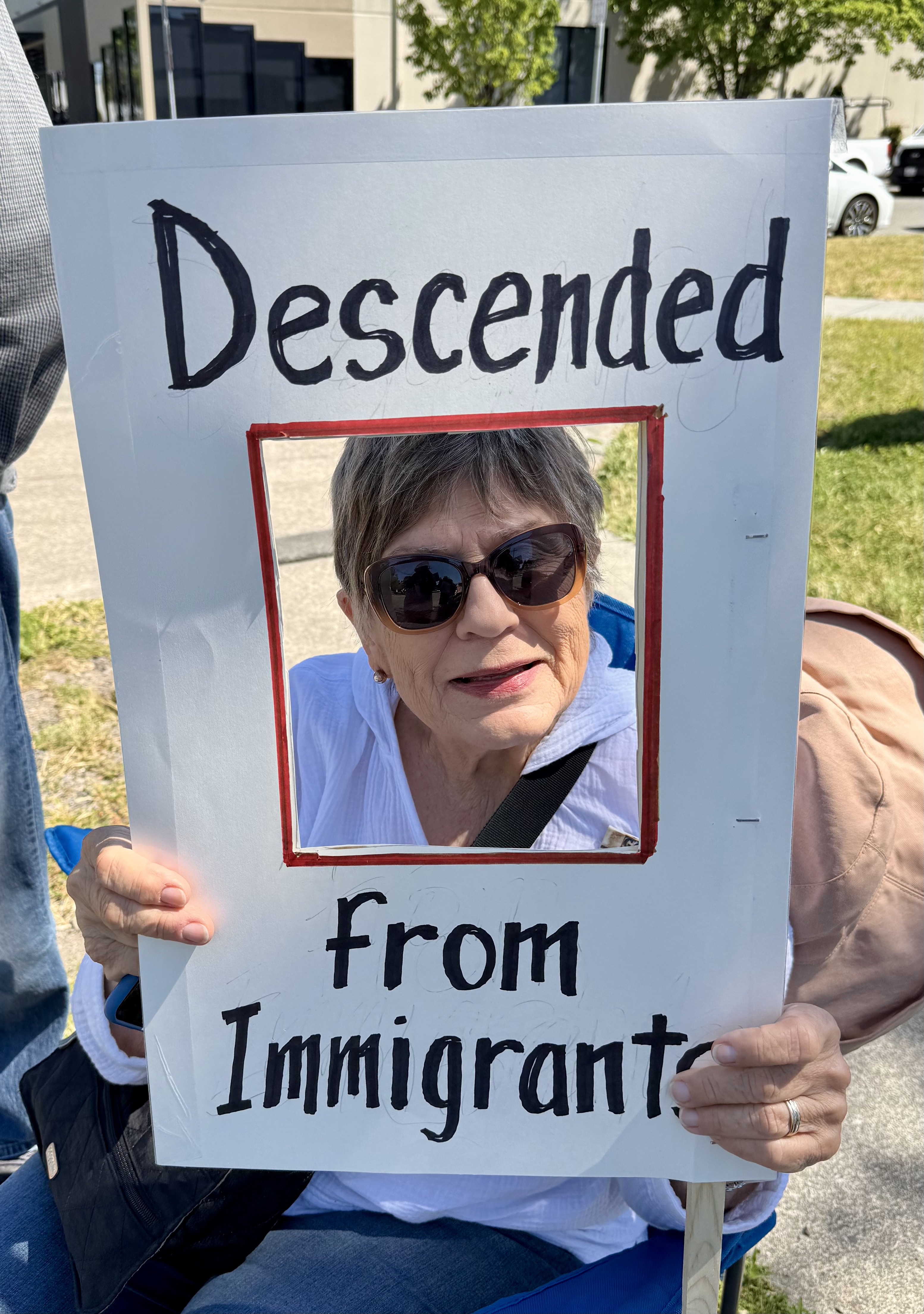
Some of the signs from our protests

Here in Sonoma County, protests are a near-daily occurrence. Demonstrators are targeting a wide range of issues: U.S. complicity in the genocide of Palestinians, Avelo Airline’s role in deportation flights, Elon Musk’s attacks on federal institutions like Social Security and Medicare/Medicaid, the gutting of the Veterans Administration, the criminalization of immigrants, assaults on free speech, and—by us tradeswomen—the dismantling of affirmative action and DEI initiatives.

The Palestinian community and its allies have been gathering every Sunday at the Santa Rosa town square since October 2023.

Weekly actions include:

  • ThursdaysWe the People protest in Petaluma.
  • Fridays: Veteran-focused rallies protesting VA budget cuts.
  • Fridays/SaturdaysPetalumans Saving Democracy actions.
  • SaturdaysTesla Takedown at the Santa Rosa showroom, and a vigil for Palestine in Petaluma.
  • Sundays: Protest at the Santa Rosa Airport against Avelo Airlines, and a Stand with Palestine demonstration in town.
  • TuesdaysResist and Reform in Sebastopol.
  • Ongoing: In Cotati, a weekly Resist Fascism picket line.

In Sonoma Plaza, there’s a weekly vigil to resist Trump. Sebastopol hosts a Gaza solidarity vigil, along with Sitting for Survival, an environmental justice action.

Beyond the regular schedule, spontaneous and planned actions continue:

  • A march to raise awareness of missing and murdered Indigenous women.
  • In Windsor, women-led organizing for immigrant rights.
  • A multi-faith rally at the town square on April 16.
  • Protest musicians and singers are coming together to strengthen the movement with art.

Trump’s goons are jailing citizens, and fear runs deep, especially among the undocumented and documented Latinx population—who make up roughly a third of Santa Rosa. But fear hasn’t silenced them. They continue to show up and speak out.

I’ve joined the North Bay Rapid Response Network, which mobilizes to defend our immigrant neighbors from ICE raids.

Meanwhile, our school systems are in crisis. Sonoma State University is slashing classes and programs in the name of austerity. Students and faculty are fighting back with protests, including a Gaza sit-in that nearly resulted in a breakthrough agreement with the administration.

Between all this, Holly and I made it to the Santa Rosa Rose Parade. The high school bands looked and sounded great—spirited and proud. Then, our Gay Day here on May 31, while clouded by conflict about participation by cops, still celebrated us queers.

And soon, I’ll hit the road heading to Yellowstone with a friend. On June 14, we’ll join protesting park rangers in Jackson, Wyoming as part of the No Kings! national day of action—a protest coordinated by Indivisible and partners taking place in hundreds of cities across the country. 

On the Solstice, June 20 in the Northern Hemisphere, we expect to be in Winnemucca, Nevada, on the way home.

Happy Solstice to all—Winter and Summer!

Photo of the Pleiades: Digitized Sky Survey

Wither the Maypole?

May Day 2025

My Regular Pagan Holiday Post

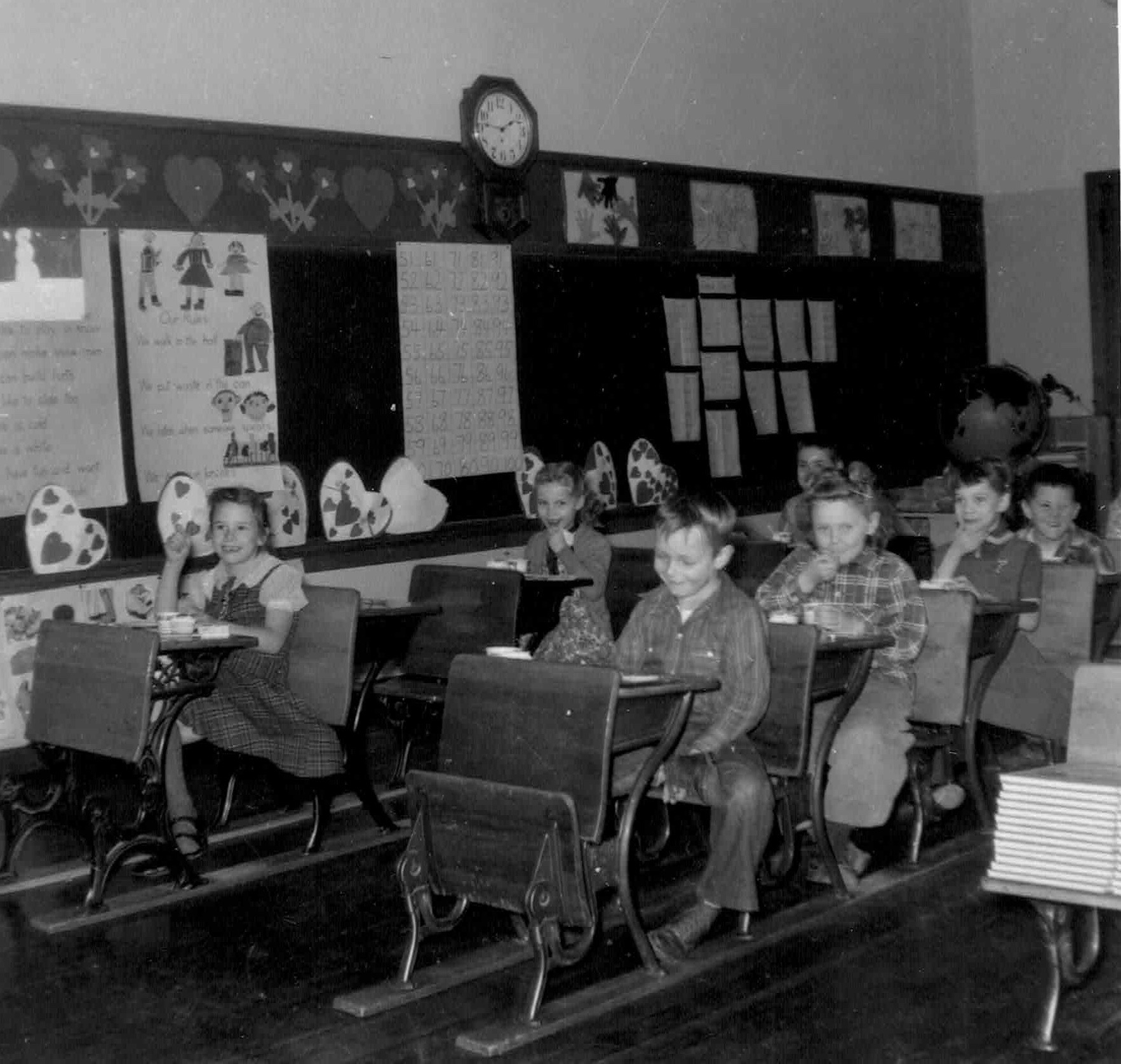
Wide Hollow Elementary School in Yakima, Washington, was already an old building when I began attending in the 1950s. At the time, it served students from first through eighth grades. The little kids were on the first floor, the big kids upstairs. I remember the worn wooden steps leading to the second floor, scalloped by generations of student feet.

Our classrooms held old-fashioned desks—wooden with ornate cast-iron legs—each one with a small hole in the top for an ink bottle. We were taught how to fill our fountain pens by dipping the nib into the ink and lifting a lever to draw it in. (This cannot have happened without spills—the poor teachers!)

Valentines day 1956 at Wide Hollow school. That’s me on the far left.

Every room had a long wall of blackboard, with erasers that students cleaned by smacking them together, creating great clouds of chalk dust. The tall windows were opened using a long pole. Above the blackboards, neat rows of Palmer Method cursive letters reminded us of the proper way to form our handwriting.

The school was heated by a coal furnace. A coal chute led to the basement, where the coal man would periodically unload his delivery.

My first grade class at Wide Hollow

Outside, the playground seemed enormous. A towering maple tree stood right outside the building. We had swings, a slide, and a ride called the “ocean wave”—a notoriously dangerous contraption rumored to have killed children in other schools. As far as I know, ours survived it, though I did rip my good dress riding it on the very first day of first grade.

At recess, we played Ring Around the Rosie, Red Rover, jump rope, tetherball, and a game where we bounced a ball against the wall chanting, “Not last night but the night before, 24 robbers came knocking at my door.”

Much has changed. The old building was torn down years ago and replaced. The curriculum has become more inclusive. I still remember being twelve and furious that our new history books made no mention of the Indigenous peoples of the area. Today, Wide Hollow proudly displays a land acknowledgment on its website:

 “We would like to acknowledge that we’re coming to you from the traditional lands of the first people of our valley, the 14 Confederated Tribes and Bands of the Yakama Nation, and we honor with gratitude the land itself and the Yakama Tribe.”

Wide Hollow is now a K–5 school. They host a “multicultural celebration,” but I don’t believe the ancient pagan Spring holiday of May Day is among those still observed. Back in our day, we celebrated May Day by weaving ribbons around a maypole (perhaps the tetherball pole?) and making May baskets, often filled like Easter baskets with flowers.

Dancing around the maypole

While May Day celebrations have largely fallen out of fashion in the U.S., they still take place in some towns. In Europe, the tradition persists more strongly. In modern pagan communities, May Day has been revived and reimagined through the Celtic festival of Beltane.

In Sweden, maypole dancing has shifted to the big Summer Solstice festivals, but until the 19th century, May Day was celebrated with mock battles between Summer and Winter. I love this account by Sir James George Frazer in The Golden Bough (1911):

“On May Day two troops of young men on horseback used to meet as if for mortal combat. One of them was led by a representative of Winter clad in furs, who threw snowballs and ice in order to prolong the cold weather. The other troop was commanded by a representative of Summer, covered with fresh leaves and flowers. In the sham fight which followed, the party of Summer came off victorious, and the ceremony ended with a feast.”

Note: the picture of Wide Hollow school at the top is a postcard labeled North Yakima. That means the picture was taken before 1918 when North Yakima was changed to Yakima. So the school was originally built probably in the teens.

May 1 is also International Workers Day

At the Santa Rosa International Workers Day celebration

May 1st is also recognized globally as International Workers’ Day. In 1889, the date was chosen by an international federation of socialist groups and trade unions to commemorate the Haymarket Affair—a violent deadly police riot in Chicago in 1886 targeting workers organizing for the eight-hour workday.

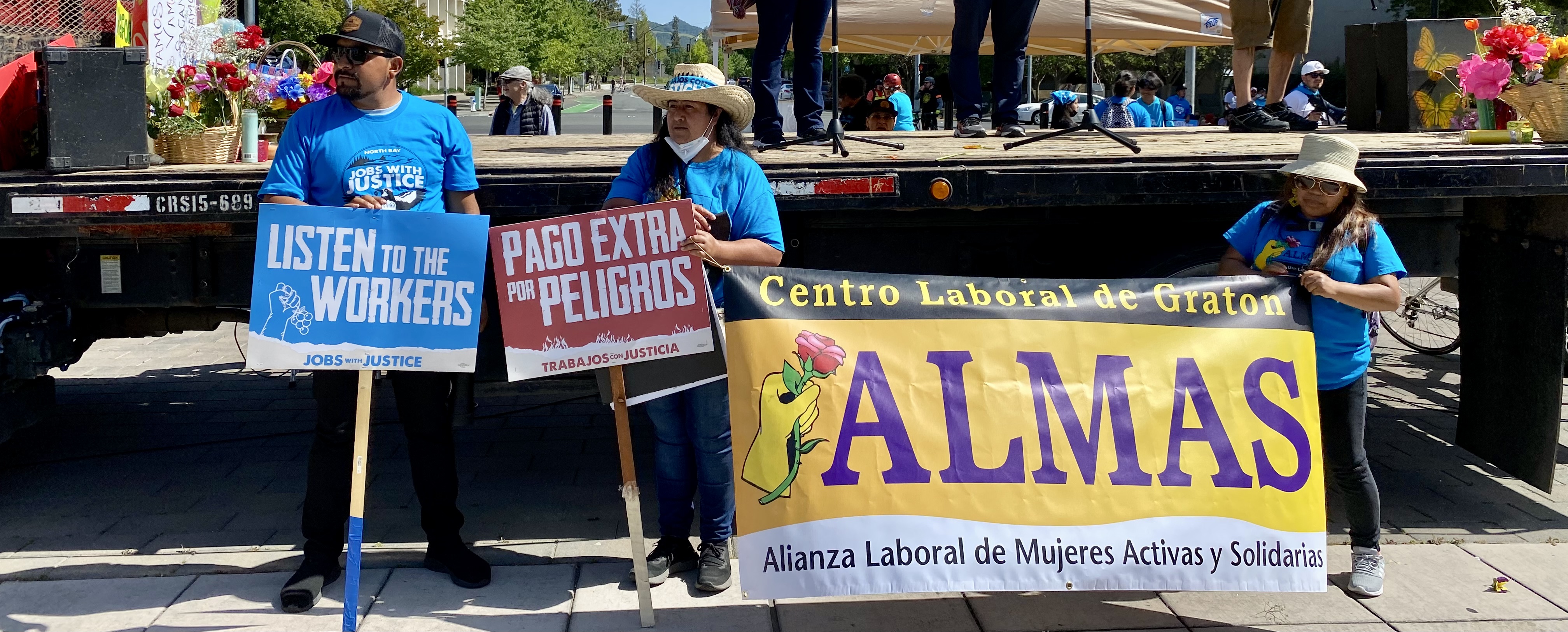
Here in Sonoma County, this year May Day marks the beginning of the Days of Action May 1-5, organized by Community United to Resist Fascism (CURF). The International Workers’ Day march will call for immigrant rights and is co-organized with the May 1st Coalition. The event will begin at 3 p.m. in Santa Rosa at the Sonoma County Sheriff’s Office, proceed to the Board of Supervisors’ office, and then continue to Old Courthouse Square to rally at 5pm. I’ll see you there!

For more information and to sign up for the coalition: https://www.pjcsoco.org/event—santa-rosa-protests-may-1—5.html

Mayan Rituals Remembered

I’ll be wearing white on the spring equinox

Colonialism: the violent seizure of land, the domination of people, the erasure of cultures. It is the practice of extending and maintaining political and economic control over another people, typically through displacement, suppression, and destruction.

While researching pre-christian seasonal celebrations around the world, I keep running into the same brutal reality: colonialism didn’t just conquer people—it annihilated their histories, their traditions, and their sacred knowledge. Lately, I’ve been searching for evidence of spring rituals in Latin America, only to find that much of what once existed has been deliberately erased.

European colonial invasion of the Americas was not just a conquest—it was an extermination. The very term “pre-Columbian” grates, as if history only begins with Columbus’s arrival, ignoring the fact that indigenous civilizations flourished for millennia before European diseases and massacres decimated their populations.

Nowhere is this erasure more apparent than in the destruction of Mayan knowledge. In the 16th century, Spanish catholic priests set fire to nearly all Mayan codices, incinerating vast repositories of scientific, spiritual, and astronomical understanding in a frenzied effort to impose christianity. Only a handful of these texts survived. What remains is a civilization whose intellectual and architectural brilliance we can only glimpse—its great stone pyramids standing defiantly even as its written history was reduced to ashes.

Can you see the shadow image of the serpent? Photo: Chichen Itza

Yet, despite this attempted obliteration, traces of indigenous traditions persist. In Mexico, celebrations of the spring equinox remain deeply connected to pre-Hispanic heritage, even as they blend with modern religious elements. Across the country, people gather for festivales de primavera, celebrations that embrace the new season and pay homage to a past that refuses to be forgotten.

Chichén Itzá in Yucatán remains the most famous site for these celebrations. Every spring, thousands of people come to witness the astonishing spectacle of light and shadow on the Kukulcán pyramid. Designed with mathematical precision, the structure casts shadows that create the illusion of a serpent slithering down its steps during the equinox. This event is not a coincidence—it is the result of a civilization that understood celestial mechanics better than many modern observers. The pyramid, built in the 12th century CE, stands as a testament to Mayan brilliance, though the city of Chichén Itzá itself dates back to 550–800 CE.

Another important site is Teotihuacan, where thousands—often dressed in white—gather to greet the equinox. With arms raised to the sun, they take part in rituals of purification and energy renewal, honoring the sacred astronomical knowledge that once made this city one of the most important spiritual centers in Mesoamerica.

Mexican equinox celebration. Photo: kunuk hotel

I plan to adopt the tradition of wearing white on the spring equinox. I still have my white jeans and jacket, bought in anticipation of Hillary Clinton’s 2016 presidential victory. White is also the color of the women’s suffrage movement, and it seems we might need to again fight for the right to vote. Trump and his allies would like to take us back to the 18thcentury. I’ll be holding onto my suffrage gear as we witches resurrect our hexes.

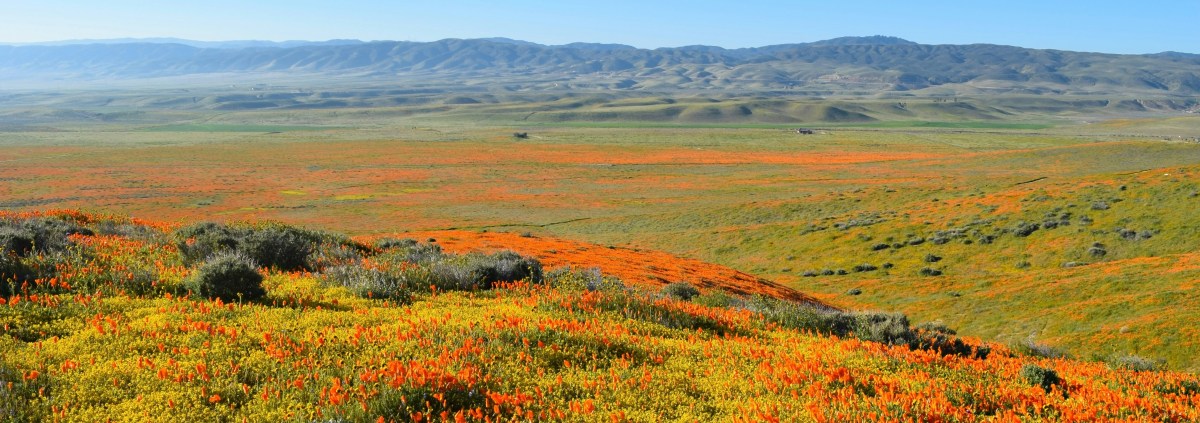
The vernal equinox this year falls on March 20. Holly and I will be visiting our exes in San Bernardino County’s high desert. My brother Don and his husband John will join us on their way back from Mexico to Vancouver. We hope the poppies in Antelope Valley will be in bloom, though the lack of recent rains might mean disappointment.

This winter, California has experienced what our weather guru, Dr. Daniel Swain calls hydroclimatic whiplash—extreme shifts between wet and dry weather, an increasingly common global phenomenon. Sonoma County saw zero rainfall in January. Then, in February, while dry Los Angeles burned in the worst wildfire in its recorded history, Northern California was drowning. Though the flooding wasn’t the worst ever, two people died, reminding us to take road warnings seriously: Don’t Drown. Turn Around.

Swain frequently references the Great Flood of 1862, when California, lacking big dams, saw the town of Sacramento submerged. Before colonization, the Central Valley was essentially a giant swamp, and California’s climate has always swung between extremes since it was first monitored in the mid-nineteenth century.

California winter holds some other surprises. February is skunk mating season and, driving around Sonoma County, we see bumper skunk roadkill. They traipse through our garden and they are welcome visitors, eating mice and grubs. Nearsighted but with a keen sense of smell and hearing, they are quite beautiful. Skunks are nocturnal and so we see them only on trips to and from the hot tub at dawn and dusk, which is where Holly encountered one. She didn’t see it until the tail was raised. Too late! The resulting stink resonated in our house for a week. She had to throw away her robe and slippers, which never recovered. Now we stop and look both ways before crossing the deck to the hot tub.

Spring equinox is a time of renewal, balance, and resistance. Let’s celebrate it in ways that honor the past while reclaiming our future.

Poppies landscape photo: Pamela Heckel on Unsplash

Santa was a Psychedelic Shaman

My Regular Pagan holiday post: Mysteries of Santaland

Even as a little kid, I was skeptical. The story is preposterous: a jolly rotund man in a red suit operates a workshop at the North Pole where elves make toys for children. On Christmas Eve, he loads them into a sleigh pulled by flying reindeer and delivers gifts to every child in the world by descending through their chimneys.

Did adults really expect us to believe that! How could that fat guy even get down a chimney? And what if you don’t have a chimney? And visiting every child in the world on one night! Give me a break. And how can wingless reindeer fly anyway? Wouldn’t it make more sense to harness a herd of Pegasuses,* or even a flock of owls? My parents were unable to satisfactorily answer these questions.

But it all starts to make sense when you look at the traditions of Arctic indigenous peoples. Turns out, Santa’s origins might involve a bit more…tripping. 

Santa is a modern counterpart of a shaman, who consumed mind-altering fungi by drinking the urine of reindeer.

A Ten Thousand Year High

Santa’s story bears striking similarities to the winter solstice practices of Arctic shamans—specifically those of the reindeer herding Koryaks of Siberia and the Sámi of Sápmi (formerly called Lapland) who used hallucinogenic mushrooms in their winter solstice ceremonies. These shamans consumed the mind-altering Amanita muscaria mushroom—the iconic red-and-white fungus often depicted in Christmas decorations—to commune with the spirit world.

Shamanic rituals involving A. muscaria date back over 10,000 years. During Siberian midwinter ceremonies of Annual Renewal, shamans, dressed in red-and-white fur-trimmed coats and tall black boots, gathered the mushrooms from beneath sacred pine trees. These mushrooms are the fruiting bodies of fungi whose mycelial networks interlace with tree roots underground. The association of red mushrooms with green pine trees might explain the colors of Christmas.

Gifts of Vision and Insight

In winter, heavy snow often blocked the doorways of Arctic yurts, forcing shamans to enter through the roof. They slid down the central birch pole, carrying a bag of dried A. muscaria—a probable origin of Santa’s descent through chimneys with a sack of gifts.

Amanita muscaria, found growing under pine trees in Northern California. Photos by author.

After consuming the mushrooms or drinking the urine of reindeer that had eaten them, shamans would enter altered states of consciousness. Amongst the Siberian shamans, the reindeer was an animal spirit to journey with in their vision quests. The gifts shamans brought to their communities included the visions and insights from their psychedelic experiences, as well as portions of the mushrooms themselves. 

Flying Reindeer Explained

Reindeer play a crucial role in this story. These animals can eat A. muscaria without suffering its toxic effects, metabolizing the mushroom’s compounds in a way that makes their urine safe—and still hallucinogenic—for humans to consume. Drinking reindeer urine allowed people to experience the mushroom’s psychoactive effects while avoiding its more unpleasant toxins.

The hallucinations induced by A. muscaria often include sensations of flying, contributing to the myth of Santa’s airborne sleigh and reindeer. After ingesting the mushrooms, the shamans were said to experience heightened senses, bursts of energy, the desire to sing, feelings of joy, and increased muscle tone, so any physical effort was easier to perform.

Stockings Hung by the Fire

Indigenous peoples dried their mushrooms on tree branches or by hanging them in socks near fires, practices reminiscent of today’s Christmas stockings. As with many pagan traditions, Christians appropriated these shamanic elements, attributing them to Saint Nicholas, a 4th-century Turkish bishop known for his generosity to children and the needy.

Incidentally, the plural of shaman is shamans, not shamen. There were female shamans among the indigenous peoples, just as there are in many cultures today. 

Koryak shaman woman, photo from Jesup North Pacific Expedition 1900. (PD-US)

The Arctic shamans might have been jolly, but probably were not fat. That image was exploited in ad campaigns by Coca cola, starting in 1930 (although folks are mad that the company’s latest AI video ad focuses on trucks instead of Santa).

Mushrooms and Me

My own relationship with mushrooms is one of wonder and deliciousness. Wonder-ful because mushrooms are witchy and mysterious. Scientists estimate that as many as 95% of fungal species on Earth are still unknown! Many mushrooms are associated with particular species of trees, so in learning about ‘shrooms, we learn about the forest and its ecosystem too.

Deliciousness because I’ve foraged, eaten and enjoyed many mushrooms. But A. muscaria is not one of them. The poison is not a deadly one like some of the other Amanitas, but it does make you sick. And while I am curious about hallucinations, I’m not so curious about regurgitations. 

Still, A. muscaria fascinates me, not just for its beauty but also for its potential. Recent research explores its psychoactive compounds, muscimol and ibotenic acid, for therapeutic uses. These compounds show promise in treating conditions such as stress, anxiety, insomnia, addiction, and even neurodegenerative diseases like Parkinson’s and Alzheimer’s.

Solstice Spirits

As the winter solstice approaches on December 21, I’m reminded of the deep connections between ancient rituals and modern traditions. So, whether you celebrate with a cup of cocoa or an appreciation for fungi, happy solstice to all—and to all a good long night.

*The proper plural of Pegasus is Pegasi but I like Pegasuses better

P.S. A friend told me she needs sources in order to share this. Here’s a video I liked: https://youtu.be/MrLb2-wETAQ?si=VRQ28QsBitb5ndCF

Winter’s Coming and We Like It

My Regular Pagan Holiday Post: Autumn Equinox

You can shake your fist at heaven, you can file your appeal

You can try to rise above it, you can crawl and you can kneel

No matter what life gives you, no matter what you steal

You cannot stop the turning of the wheel

Chorus from Jennifer Berezan’s song Turning of the Wheel

Naked ladies (Amaryllis belladonna), a ubiquitous and favorite fall flower

Sitting out in our yard on a lovely evening at the ides of August, Holly and I luxuriated in the garden’s summer radiance. The day was cooling as the sun retreated. Colorful zinneas and cone flowers bloomed and the fragrance of the rockrose bush enveloped us. Hummingbirds zipped back and forth. Finches and oak titmice populated the feeder. Towhees scratched the ground as mourning doves bobbed and cooed. It was a perfect summer evening.

But as we sat in our twin rockers, we both said, almost in unison, “I’m looking forward to the turning of the seasons.”

Summer, with its long, warm days and bountiful harvests, has been beautiful, but we’re ready for the change. Holly says that humans evolved with the rhythm of change, and that’s why we appreciate the wheel of the year turning.

Now, with the autumn equinox upon us, the new season begins. Pagans call this time Mabon, after the Welsh God who is the son of the Earth Mother Goddess.

Recently, I learned about the lunistice, the moment when the moon seems to pause, similar to the way the sun appears to stop at solstices before shifting direction. It’s a fascinating event, though hard to observe unless you track the moon regularly.

The major lunar standstill is marked by observing the extreme points where the moon rises and sets on the horizon, akin to watching the sun at solstices. Just as the sun’s position reaches its furthest northern and southern points at solstice, the moon does something similar every 18.6 years during a maximum lunistice—an event that occurs near equinoxes and eclipses, and it’s happening now!

This 18.6-year cycle is due to the moon’s orbital tilt and the gravitational pull of the sun, causing the moon’s orbit to swivel and vary its angle relative to Earth.

Excited, I reached out to the folks at Ferguson Observatory at Sugarloaf State Park to learn more. I was intrigued by the idea of “maximum lunistice,” thinking it sounded particularly special. But I learned something surprising: the minimum lunistices are actually more significant, especially in relation to tides. 

The Observatory explained that during maximum lunistices, the moon is furthest from the celestial equator, resulting in less dramatic tides. However, minimum lunistices bring larger tides because the moon is closer to the equator’s gravitational bulge. But since “maximum” sounds more impressive, it tends to get more attention. The next minimum lunistice won’t be until 2034.

At an Old Lesbians retreat in the Mayacamas mountains as a group of us stargazed, I attempted to explain this lunar phenomenon but stumbled over the details. Honestly, I don’t fully grasp it myself. Yet, here’s what’s clear: ancient peoples understood this cycle.

Bronze Age societies, like those who constructed the megalithic monuments in Britain and Ireland, placed great significance on lunar standstills. Modern Neopagan religions find meaning in them too. Ancient cultures beyond the British Isles also recognized these events—sites like Chaco Canyon in New Mexico, Chimney Rock in Colorado, and the Hopewell sites in Ohio all feature alignments to the moon during lunar standstills.

As I write this, the full supermoon is rising with a partial lunar eclipse. The turning of the celestial wheel continues to fascinate us, just as it did our ancestors.

I’d like to call back summertime and have her stay for just another month or so

But she’s got the urge for going so I guess she’ll have to go.

From Joni Mitchell’s song Urge for Going

One of my favorite Joni Mitchell songs, Urge for Going, laments “summertime falling down.” Joni was thinking about snow and cold and pulling the blankets up to her chin. She sang, “All that stays is dying and all that lives is getting out.” But she was singing about winter coming in Canada. In California when I think about winter coming I think rain, which makes plants start to grow in the outdoors. It brings mushrooms, grass, new leaves and flowers. The cold coastal summer fog falls away and dust is dampend. 

David Douglas, the Scottish botanist who traveled in North America in the 1830s (after whom the Douglas fir and other plants were named) remarked on how dead the Sonoma area was in summer. He collected plants in the winter and spring when they were growing and flowering.

These are some of the reasons we here in summer-dry California exclaim with anticipation “Winter’s coming!”

The autumn equinox takes place Sunday September 22. Wishing you all a fabulous fall season.

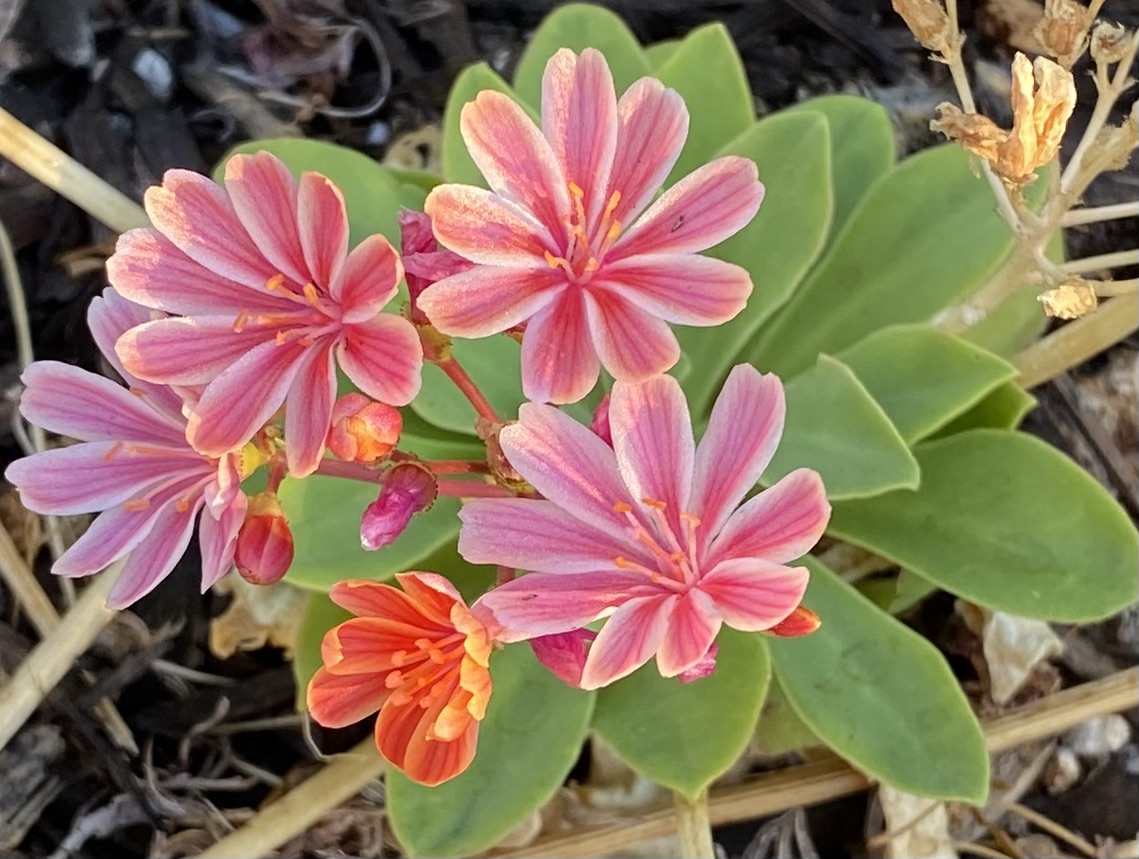
Lewisia, a native in our garden, named for Meriwether Lewis who encountered the species in 1806

Lammas and Kamala

My regular pagan holiday post: Celebrating the Harvest

August 1, a day that marks the halfway point between the summer solstice and the autumn equinox, is celebrated as the first harvest festival in many parts of the northern hemisphere. The Celts called it Lughnasa or Lammas. Besides Lammas, pagans celebrate two later harvest festivals, Mabon at the fall equinox, and Samhain on November 1.

In Sonoma County we can harvest food year-round, so I guess you could say every pagan holiday is a harvest fest here. By the time August rolls around, we’ve already been celebrating for months. The first bite of every ripe fruit calls for celebration.  

Still blooming in our garden: epilobium, native buckwheat, aster. Hydrangea in shade

Growing up in Yakima, Washington, on the eastern side of the Cascade Mountains, I always knew when the fruit was ripe. Cherries were picked on July 4th, and I would gorge until I was sick. Grandma had an old-fashioned peach tree with fuzzy skin that had to be peeled, and those peaches didn’t ripen until late August. Pears came later, and apples weren’t ready until the end of September.

Here in Sonoma County, our Gravenstein apples ripen at the beginning of August! We celebrate the harvest at the Gravenstein Apple Fair. It’s taken me years to adjust to California’s seasons. There’s no real winter here—just fall and then, magically, spring! Winter is the rainy season, and summer is dry. As Pam Peirce says in her book, Golden Gate Gardening, there’s a secret season here. Many seeds can and should be planted in the fall, but I have to remind myself every year.

Last October, I planted sugar snap and snow peas, and by February I was eating them right off the vine. When I’d eaten them all, I planted sweet peas just to enjoy their beauty and fragrance. Beans came next. Our beans didn’t fare so well this year, thanks to moles. They don’t eat veggies, just meat (like worms, that is—think “moles = meat, voles = veggies”), but they tunnel near the roots and leave air gaps that kill the plants. I even saw the soil moving where I had just planted seeds. Needless to say, those beans never stood a chance.

Sunflower, zinnias doing well in the heat

Sometimes, I think gardening is like throwing dice. You never know what the next season will bring, but that’s what makes it interesting. The garden has a mind of its own.

After a couple of disappointing years where our tomato plants succumbed to wilt, this year is shaping up to be a winner. As soon as the first tomatoes are ripe, we celebrate with BLTs. This year, we enjoyed our first BLTs in the first week of July, slicing the Early Girls (my favorite variety).

There’s always something ripe and ready in our garden. We harvested navel oranges from our tree until June, then our neighbor gifted us a bag of Valencias, keeping us swimming in orange juice until mid-July! By August, the purple Santa Rosa plums are history, but the yellow plums from the tree we planted last year are still ripening. 

I’m a gleaner, and throughout the fall harvest season you’ll find me harvesting my own and neighbors’ pomegranates, figs and persimmons. 

Then there are grapes and wine, the primary crop here in adjoining Sonoma and Napa counties. La Paulée, a traditional Burgundian harvest celebration takes place in the Russian River Valley on August 2-3, when winemakers, chefs and enthusiasts of both will gather to celebrate wine and food. A centuries-old celebration once reserved for French vigneron and their harvest crews, La Paulée is a French variation of the Celtic pagan Lammas holiday, marking the end of the grape harvest.

Like all gardeners we have our favorite plants. We love a dry bean called Eye of the Goat, which I got from the West County Community Seed Exchange in Sebastopol. This all-volunteer group has created a seed garden and a community seed library supporting local gardeners with free, locally grown, open-pollinated, pesticide- and GMO-free seeds. Local seed saving means we can cultivate plants that thrive in our region, with each generation adapting more to the local environment. And as the seed industry consolidates, we can preserve heirloom seeds.

The seed exchange sponsors workdays in their garden and classes, but the most fun event is the annual seed swap in early spring at the Sebastopol grange hall.

Another early spring highlight is the annual scion exchange in February, sponsored by the California Rare Fruit Growers. They share free scion wood from all sorts of fruit trees and vines. Local farmers stand by to help you choose the best varieties for your location. I discovered the scion exchange years ago and got hooked on grafting. 

Global warming is rapidly changing our world here in NorCal. This year June and July were hotter than ever, and August and September are predicted to break more records. On July 22 (and 23), 2024, the hottest day on earth in recorded history, it was 99 degrees here. 

Cone flower (echinacea) petals burned, but native yarrow does well

We and our plants struggle with a warming climate. We’ve already had three heat waves this season and the hottest part of the summer is yet to arrive. Leaves are scorched and beans refuse to flower. Not many plants like 100-degree temperatures; even tomatoes protest.

And fire season started early with smoke blowing down from fires north of us. We may experience poor air quality till the rains start in November. The fire app, Watch Duty (download it if you haven’t already) shows scores of fires in California. The biggest is the Park Fire near Chico at 350,000 acres and growing. Oregon is burning. Practically the whole state of Idaho and much of Montana is under a red flag warning.

Climate change also brings new bugs to our northern climes. There’s a new mosquito in town and she takes no prisoners. She joins about a dozen varieties of mosquitos here. In past years they’ve died off with the advent of winter, but this year, due to a warm, rainy winter, they never left. Holly isn’t much affected by mosquitos, but if I’m in the yard, especially at dawn and dusk, they find me. I’ve had to give up hot tubbing because no matter how quickly I throw a robe on, they attack. They bite in my most vulnerable places! When I’m dressed, they go for my chin and ears. They are stealthy! I don’t hear them, and I rarely see them. I’m terribly allergic to their bites, which result in gigantic welts that itch for weeks. I scratch, and then they weep copious amounts of lymph fluid. So, though I hike every day, mosquitoes have kept me more indoors–not a bad thing when the temperature soars.

There is one more development we’re celebrating this harvest season. As we queers, feminists, pagans, progressives and people of color work to overcome the rise of the christian right, our election fears have lessened with the candidacy of Kamala Harris. Memes abound. I like MALA (Make America Laugh Again).

Now we must work to get her and down ballot Democrats elected! Election day this year is Tuesday November 5. That’s 95 days and counting.

We can Do it!

Here’s to a productive election season, and good Lammas to all.

The top photo is the view of sunset on a hot day over the Coast Range that we see from our street. The high point is called Black Mountain.

Solstice Came Early This Year

Winter Solstice 2022

My Regular Pagan Holiday Missive

Years ago my wife Holly and I invented a solstice ritual we named the Twelve Days of Solstice, starting on the solstice, December 21, and ending with New Year’s day. We made up our own daily rituals and customs, observing the natural world and the changing of the seasons.

Our invention was aimed at supplanting the christian holiday. We are both ex-christians, she tortured by a more evangelical denomination than me by my pale protestant presbyterian sect.

My antipathy has been mostly aimed toward catholicism, a particularly misogynist, patriarchal, racist, and homophobic cult whose latest endeavor is covering up its sexual abuse of children. It is only the most powerful example of christian horror, but there are many more worldwide who hide behind religion to perpetrate evil.

We want no part of this and so we eschew the trappings of christian holidays. However, we do feel the need for tradition and ritual in our lives and so must invent our own. This year in the wake of a worldwide fascist assault on democracy I was feeling a bit depressed in mid-November and sought holiday solace. 

“Let’s start celebrating solstice early!” I entreated.

The festive custom of tree decorating is not owned by the christians. It was stolen from pagan religions and so I feel very good about reclaiming this pagan tradition. The term pagan was historically used by christians to refer to everyone not christian, so it includes all of us non-christians.

I checked around and there were no trees nor boughs to be bought until the day after Thanksgiving. So, after considering and rejecting cutting our own, on the morning of November 25th we drove directly to Grandma’s tree farm a few miles out in the country. People had already stormed the farm, a magical place with a huge old barn decorated to the rafters for the season. There was hot chocolate waiting, a flocking room, a real antique sleigh for kids to play on and all the ornaments and boughs and trees of every size. 

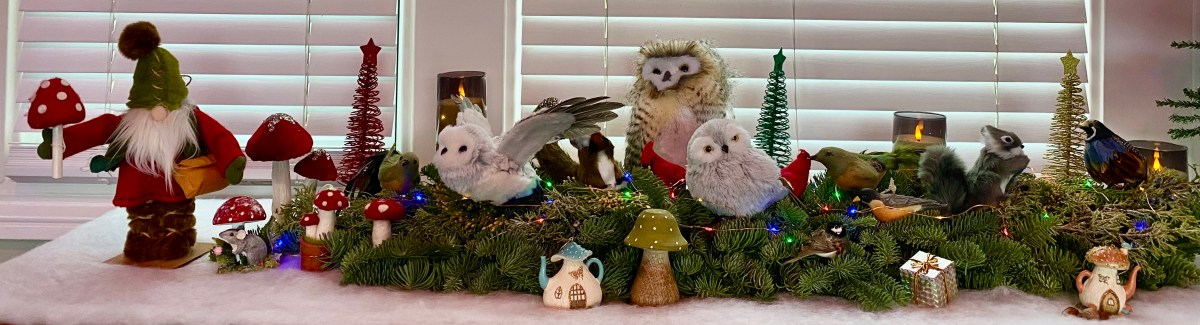
We bought evergreen boughs for the mantle, adorable bird decorations and, of course, a tree, cut and carried by an agile worker who told me he has a landscape company in other seasons.

For the next couple of days we decorated the tree, taking all the time we felt like because why should we be in a hurry? One point of invention is to overcome all the obligations that make this holiday stressful. Like shopping. We are made to feel like we will be responsible for the U.S. economy failing if we don’t spend tons of money. Retailers depend on this holiday to bring in 40 percent of their annual revenue, an unsustainable economic program that bankrupts the poor and does not fit well with our effort to consume less.

With a much longer holiday schedule than usual, we were designing rituals for a month of celebrating instead of just the 12 days of solstice. Ok but no pressure. Instead, I decided to just appreciate the revelatory events that happened to me daily.

Nov. 24 As I planted 40 daffodils in the front yard, I thought bulb planting must be added to our annual constellation of solstice rituals.

Nov. 30 It froze! Contemplating the Japanese concept of Wabi-Sabi, we acknowledged the wilting of the big flowers in our yard. The tree dahlia, which at nearly 20 feet tall had only just started blooming, died. And the huge marigold that had appeared late in the fall, maybe from a wildflower mix, froze. We appreciate that nothing is truly perfect or permanent.

Dec. 1 Then it stormed! We got an inch of rain. We invoked Tefnut, the Egyptian goddess of rain and moisture, responsible for maintaining life, as we watched the bright leaves fall from the trees.

Dec. 3 As I picked the first oranges from our tree and made juice, I called in Demeter, the Greek goddess of agriculture and the harvest. When her daughter Persephone returns to Hades each winter, the plants die, only to be reborn when she returns in spring. The orange, one plant that the gods apparently overlooked, produces fruit all winter.

Dec. 7 I’m witness to a supernatural event at 5am while I soak in the hot tub. The sheet metal cap on the chimney glows with an amazingly bright light. I feel this is like seeing the virgin Mary on a slice of toast–positively spiritual. The cap continues to glow and I wonder what the universe is trying to tell me. It was so bright I couldn’t imagine what the light source could be. Could the light be coming from inside the house? Of course, it was the setting full moon shining at a direct angle, but so otherworldly that I wanted to take a picture to let someone else in on my religious experience. Who would believe me? Will I be the Cassandra of Hylandia?

I can find no goddess of chimneys nor sheet metal nor chimney caps, so I’ll have to decide whether to check in with one of many goddesses of the hearth. Or perhaps the moon was communicating with me through the chimney cap, in which case I can consult any number of moon goddesses like Selene, the Greek personification of the moon.

The universe is definitely talking to me.

Dec. 8 We spent a lovely couple of hours walking at the ocean with Holly’s brother and wife and afterward I happily consumed the sacred molluscs, oysters. Is there a seafood goddess? Maybe not exactly, but Venus, the Roman goddess of love and beauty, was born in an oyster so she knew something about them.

Then on our way back from the ocean we hit only green lights on Guerneville Road. A total miracle! I didn’t even have to invoke Asphalta, the goddess of roads and highways, because I know that she is watching over us, especially when we look for parking. We recite the prayer “Hail Asphalta full of grace, help me find a parking place.” Then we rub the sacred crystals which are pieces of asphalt adorned with the yellow line, enclosed in an orange bag that hangs from the car’s mirror. Asphalta’s priestesses are the flag women of the highways. The goddess was invented by my friend Morgan Grey for a book called Found Goddesses and so fits right in with our effort to invent rituals.

Finding the sacred in my everyday life has definitely improved my spirits. It’s worked so well that I might have to continue this practice for the rest of the year.

Happy solstice my friends, however you choose to celebrate it.