A Day to Thank the Earth

My Regular Pagan Holiday Post

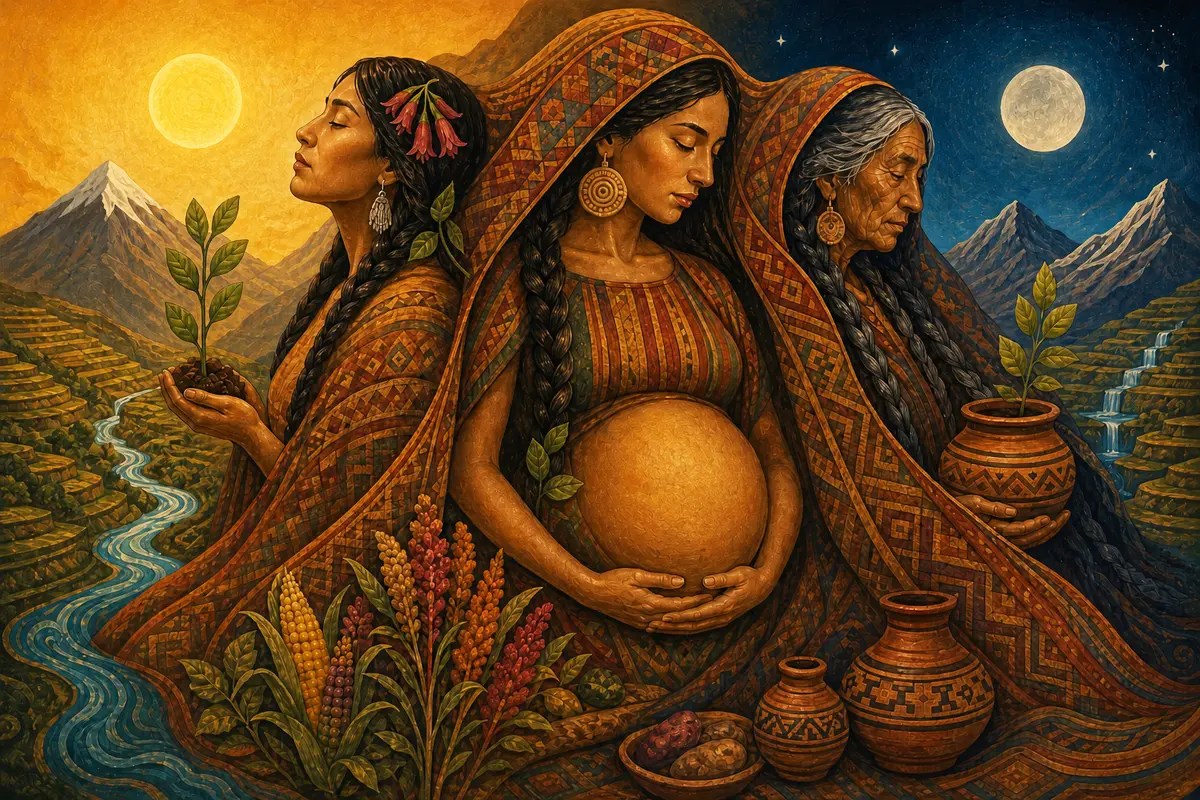
In Andean cultures, the feminine figure was valued as a living expression of Pachamama’s attributes. AI generated image

August 1 in the northern hemisphere is celebrated as Lammas, the first harvest day. In South America it is Pachamama Day, the start of the growing season.

I first encountered the idea more than fifty years ago, but I didn’t recognize its importance until much later.

While reading Charles Mann’s 1491: New Revelations of the Americas Before Columbus, I kept noticing one name in the footnotes: Alfred Crosby. The name stopped me. Crosby had taught history at my alma mater, Washington State University, and I had been his student.

At the time I knew him simply as a professor. I had no idea I was sitting in the classroom of a historian who would change the way the world understood history.

In 1972 Crosby published The Columbian Exchange, introducing a revolutionary way of thinking about European conquest. History, he argued, was not driven only by kings, generals, and battles. Plants, animals, microbes, and ecosystems were just as important. His work essentially created the field of environmental history.

The Columbian Exchange describes the enormous movement of crops, livestock, diseases, technologies, and cultures between the Americas and Afro-Eurasia after Christopher Columbus arrived in 1492. Potatoes, tomatoes, and corn transformed Europe, Africa, and Asia. Horses and cattle transformed the Americas. But the deadliest travelers were invisible.

In Ecological Imperialism, Crosby argued that European conquest depended as much on biology as on military power. Smallpox, measles, influenza, and other diseases swept through Indigenous populations that had no immunity. Entire societies were devastated before they could organize resistance. Europeans inherited landscapes emptied by epidemics as much as they conquered them by force.

Charles Mann takes the story even further. He argues that the Americas were home to far larger populations than historians once believed—perhaps tens of millions more. The continent Europeans imagined as a wilderness had actually been carefully managed for centuries by Indigenous peoples. Forests, fields, rivers, and grasslands all bore the imprint of human stewardship.

The tragedy becomes even greater in that light. Not only were millions of people lost; countless traditions, languages, and ways of understanding the natural world nearly disappeared with them.

Nearly—but not entirely.

Some traditions survived.

Every August 1, Indigenous communities across Peru, Bolivia, Ecuador, Colombia, Chile, and Argentina celebrate Pachamama Raymi, or Festival of Mother Earth, one of the oldest pre-Hispanic ceremonies still practiced in South America. Pachamama, from the Quechua words pacha (world, space, or time) and mama (mother), is often translated as Mother Earth. But she is more than the ground beneath our feet. She represents the living world that nourishes all life. Pachamama is the fertility goddess in Inca mythology, responsible for planting, harvesting, creating mountains and earthquakes, as well as the very existence of life on Earth.

The celebration coincides with the start of the agricultural season in the southern hemisphere and centers on a simple but profound idea: reciprocity.

The Earth feeds us. We must feed the Earth.

On August 1, farmers allow their fields to rest. Families prepare offerings of cooked foods, corn, potatoes, fruits, coca leaves, medicinal herbs, chicha, seeds, and flowers. A small hole is dug in the ground—symbolically Pachamama’s mouth—and the gifts are placed into the earth. The offering is not payment but gratitude, an acknowledgment that human life depends on the generosity of the land.

It is, in essence, Thanksgiving.

Long before Europeans arrived in the Americas, Andean peoples had developed a tradition that recognized what modern environmental science is only beginning to emphasize: humans are not separate from nature. We exist because of it.

The ritual feels remarkably relevant today. We celebrate technological progress while exhausting soils, warming the climate, polluting rivers, and treating the Earth as an endless warehouse of resources. Pachamama Day offers another way of thinking—not about ownership, but relationship; not about extraction, but reciprocity.

I find myself wishing we had something similar in our Western culture.

Our Thanksgiving has become centered on football, shopping, and overeating, with little reflection on the land that produces our food or on the Indigenous peoples who first cultivated many of the crops on our tables. Imagine setting aside a single day each year not to consume more, but to acknowledge our dependence on healthy soil, clean water, pollinating insects, and the astonishing web of life that makes our existence possible.

Perhaps that is why Crosby’s work and Pachamama Day seem connected to me.

Crosby taught that history cannot be understood without ecology. The Andean peoples never separated the two in the first place.

One explains how civilizations rose and fell. The other reminds us how to live.

As August 1 approaches, I think about the professor whose lectures made a great impression on me, the civilizations whose knowledge survived against overwhelming odds, and the simple wisdom embodied in a handful of food returned to the soil.

The Earth has always sustained us.

Perhaps it’s time we remembered to say thank you.

My Queer Family Holidays: Learning from Hopi Tradition

On Soyal Native Americans marked the shortest day of the year

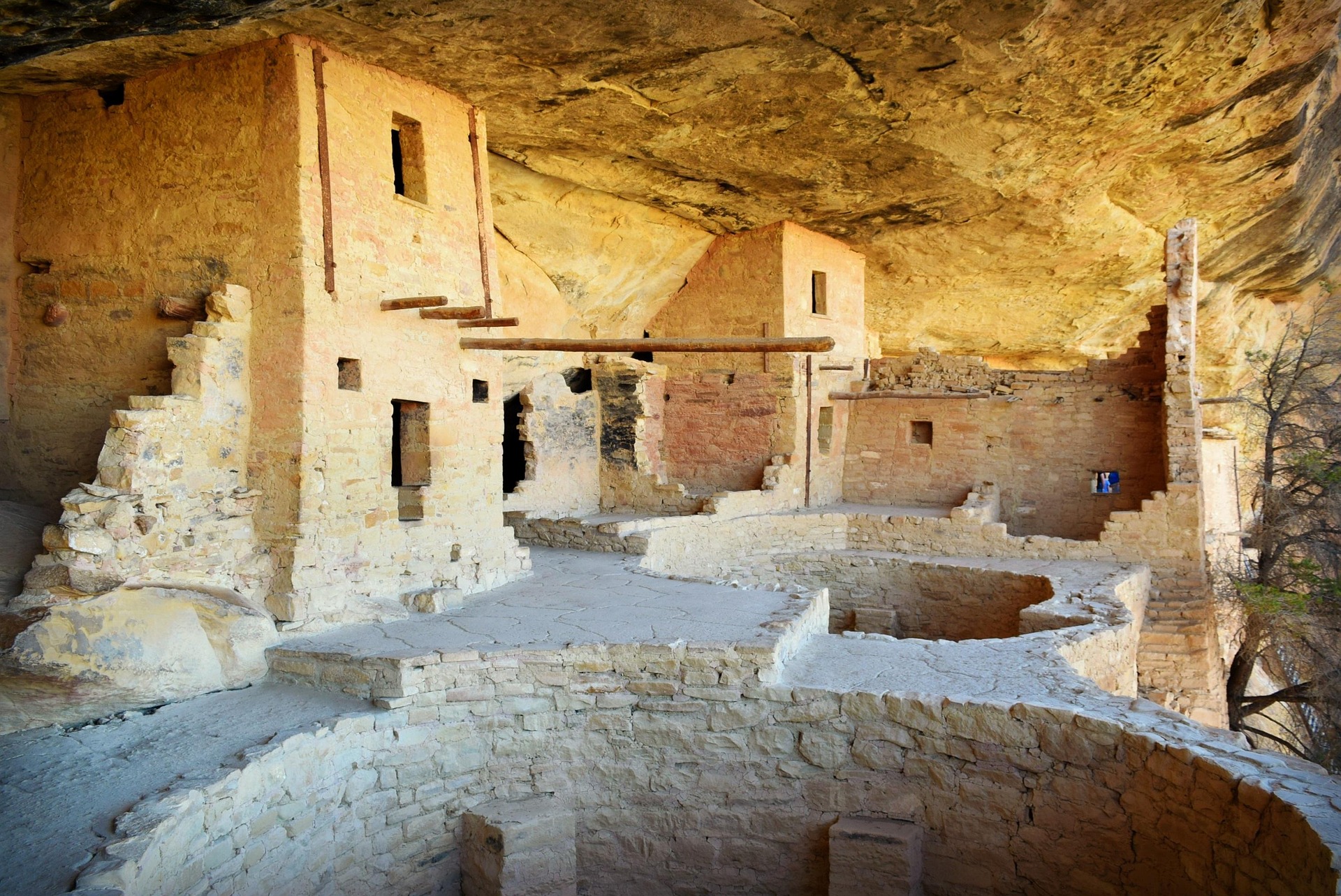
Cliff Palace in Mesa Verde National Park, Colorado. Photo by Judson McCranie. (CC BY-SA 3.0) It is believed that ancestors to the Hopi built and lived in Cliff Palace from about 1200 to 1300 C.E.

My Regular Pagan Holiday Post: Winter Solstice

My queer family chooses to forgo holidays shaped by a christian tradition steeped in homophobia and misogyny—a church that has long covered up sexual abuse against children and parishioners while scapegoating queer people. Recent comments by Pope Francis only underline this contradiction, reaffirming the catholic church’s ban on ordaining gay men and punishing and defrocking priests who question that policy or support what it calls “gay culture.”

So we create our own rituals instead—queer, chosen-family–centered traditions. We look to other cultures for inspiration, especially pagan and pre-christian practices that honor the natural world and community rather than dogma.

We can learn much from Native Americans that might help us through what is shaping up to be a particularly dark period in our history and present. 

Soyal: Winter Solstice and Renewal

On the winter solstice, Hopi and Zuni peoples perform a ceremony with the intention of achieving unity and strengthening community. Soyal is held on the shortest day of the year. It marks the symbolic return of the sun, the turning of the seasonal wheel, and the beginning of a new spiritual cycle. Soyal is a time of purification, prayer, and renewal, when the community prepares itself—spiritually and socially—for the year ahead.

In the days before Soyal, families create pahos, prayer sticks made with feathers and plant fibers, which are used to bless homes, animals, fields, and the wider world. Sacred underground chambers, called kivas, are ritually opened to mark the beginning of the kachina season. The kachinas are understood as spiritual messengers who carry prayers for rain, health, balance, and right living. Songs, dances, offerings, and storytelling strengthen community bonds and pass ethical teachings from elders to children.

Soyal also dramatizes the struggle between darkness and light. Through symbolic dances and ritual objects, such as shields representing the sun and effigies symbolizing destructive forces, the community enacts the tension between chaos and order, drought and rain, winter and warmth. The message is not that darkness must be destroyed, but that it must be faced, respected, and brought back into balance.

The solstice itself becomes a sacred pause: a moment when time feels suspended and people are invited to examine their lives. It is a season for letting go of harmful habits, reconciling conflicts, offering forgiveness, and setting intentions rooted in responsibility rather than personal gain. Gifts are exchanged not as possessions, but as blessings and goodwill.

Creating Our Own Rituals

Soyal reminds us that human life is meant to move in natural cycles, not endless acceleration. Rest is not weakness; it is a form of wisdom. Renewal begins with humility, gratitude, and shared responsibility. Personal healing is inseparable from the health of the community and the land.

The enduring spiritual mission expressed through Soyal is the same across Hopi villages: to promote and achieve the unity of everything in the universe.

While that vast unity may be beyond our vision, we, too, seek to strengthen our community and mark the return of light. At winter solstice, we gather ourselves and our loved ones, shaping rituals that keep us connected to one another and to the slow turning of the year. We invite friends to help us trim our solstice tree, contribute to the local food bank, have neighbors over for hot chocolate, read poetry and stories aloud, bake cannabis edibles, host impromptu living room dance parties, cook savory soups, plant flower bulbs. With neighbors, we make signs and join street protests to raise our voices against fascism. We look for the sacred in everyday life.

Happy solstice to all, however you celebrate!