Celebrating the Autumn Equinox

Santa Rosa’s Own Harvest Festival at Bayer Farm

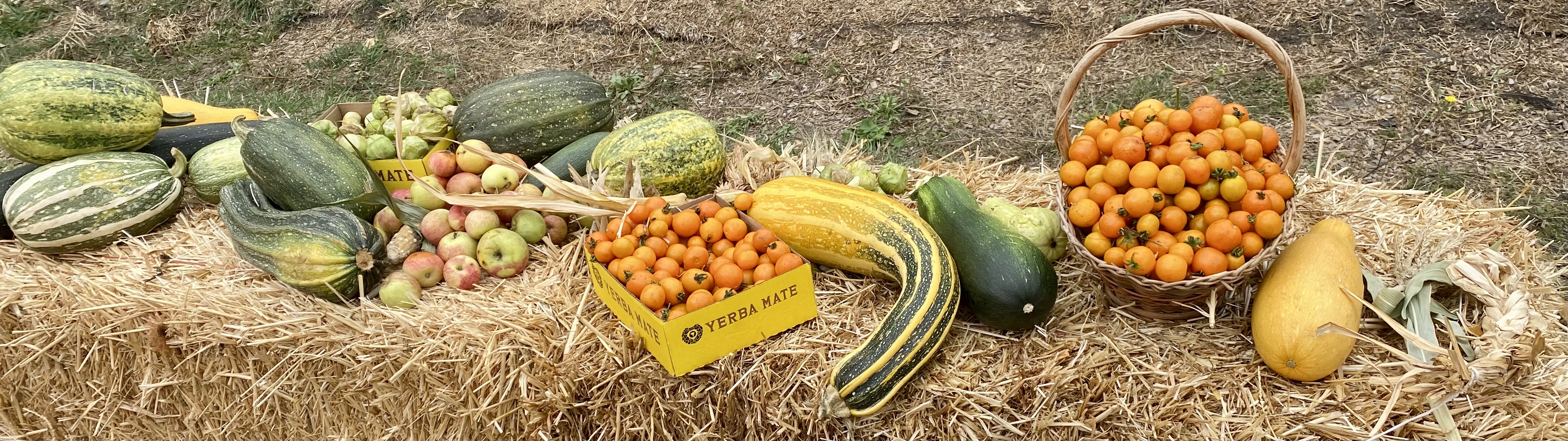
Some of the harvest of the 93 individual garden plots at Bayer Farm

My Regular Pagan Holiday Post
As the northern hemisphere tilts away from the sun this September, the autumn equinox arrives to signal a timeless transition. For centuries, cultures across the north have marked this shift with harvest festivals, and in Santa Rosa, this tradition finds a vibrant, modern home in the Festival de la Cosecha. Celebrating its 19th year, the festival is more than just a seasonal gathering; it is a living testament to the persistence of local environmentalists and land-planning activists who fought to ensure that nature and community could thrive amidst urban growth.

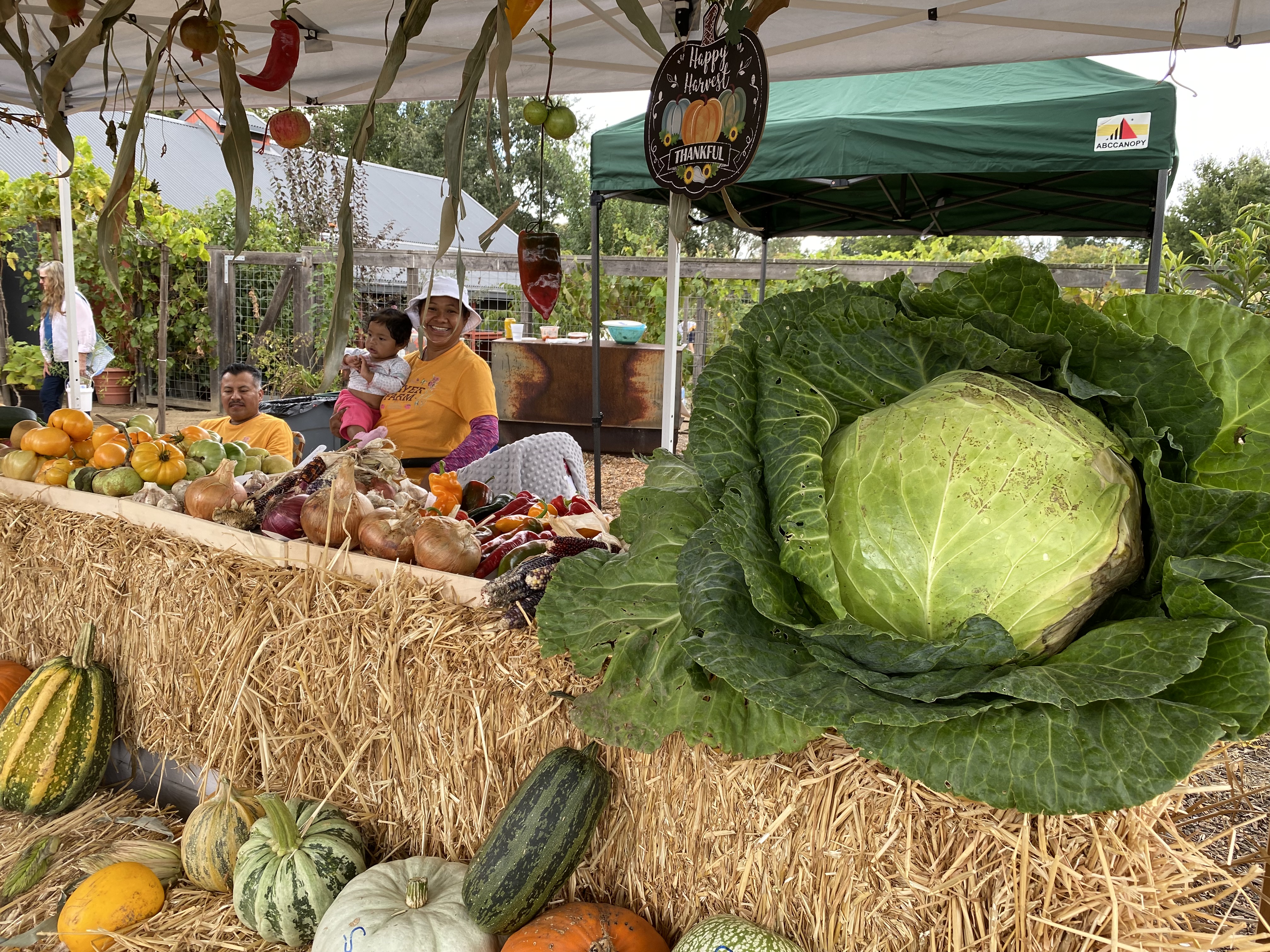
Mon Petit Chou

The heart of the celebration is Bayer Farm, a five-acre city park that stands as a victory of equitable urban planning. For a century, the surrounding Roseland neighborhood existed as an unincorporated pocket, an island of mostly Latinx working-class residents surrounded by the city. Historical records suggest that Santa Rosa’s ruling elite and political machine hesitated to annex the area, fearing that incorporating Roseland would introduce a wave of new voters who might shift the municipal balance of power. Consequently, the residents of Roseland were denied the basic infrastructure—sewers, fire protection, and parks—that the rest of the city enjoyed.

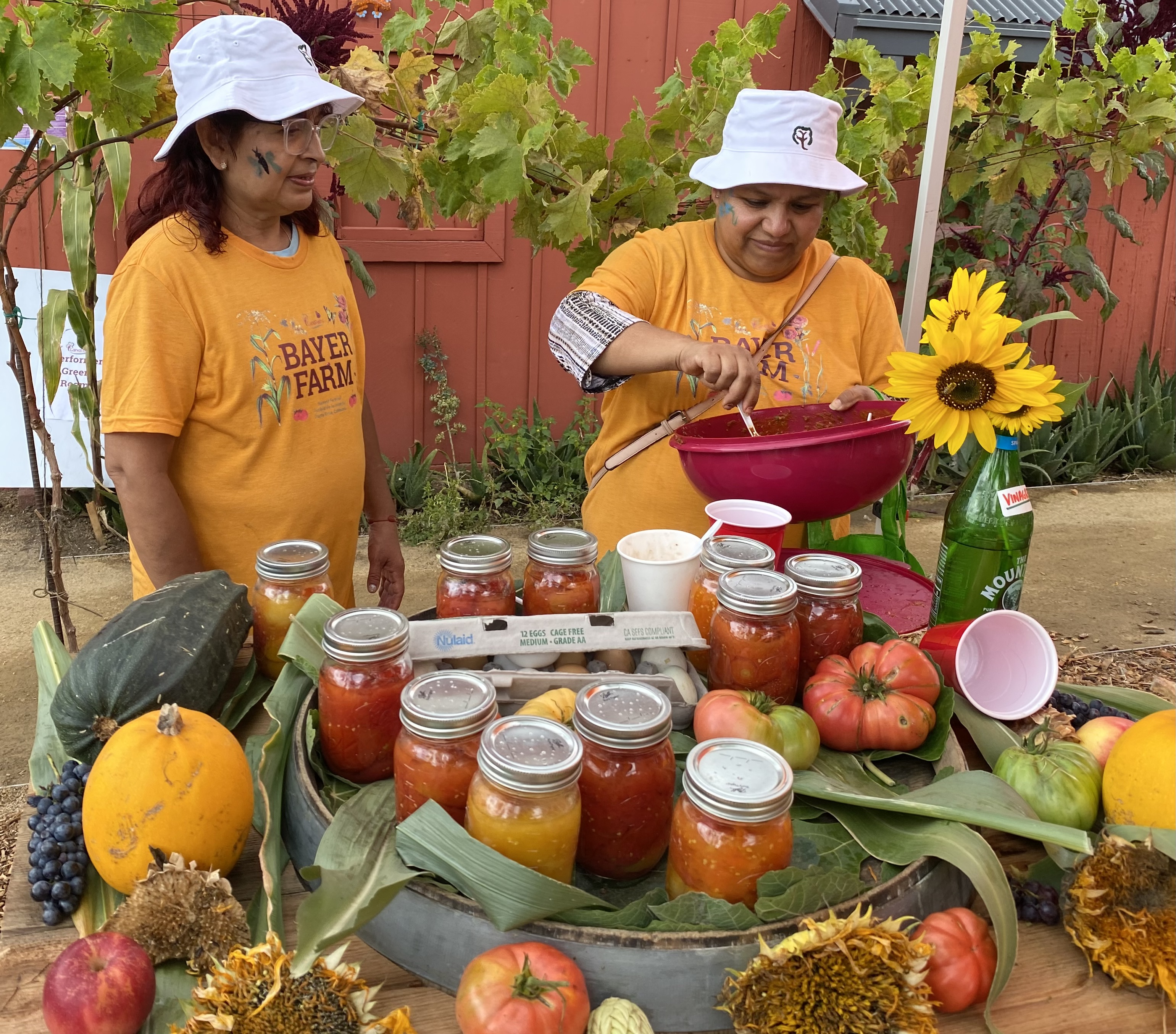
Making salsa

The creation of Bayer Farm broke this cycle of neglect. Born from a unique partnership between the City of Santa Rosa, LandPaths, and the Sonoma County Agricultural Preservation and Open Space District (Ag + Open Space), the farm embodies a vision of healing and equitable access to nature. It provides a sanctuary of greenery and cultural celebration right in the heart of a neighborhood that was long overlooked.

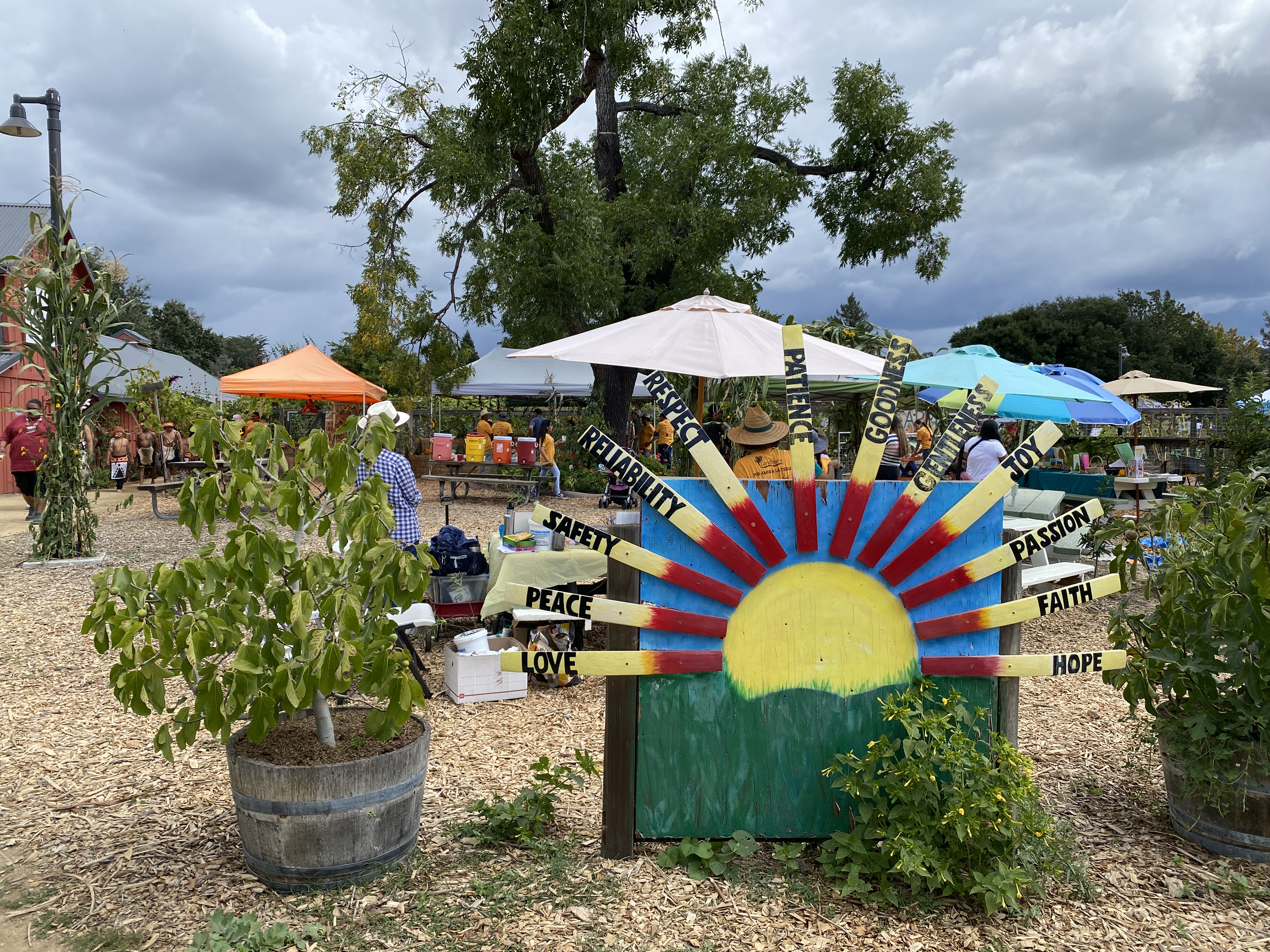
The entrance to the farm

The existence of this sanctuary is rooted in a legacy of activism. In 1990, citizens voted to establish Ag + Open Space to combat unchecked urban sprawl and protect the region’s rural identity. Through a strategic blend of grants, conservation easements, and a quarter-cent sales tax, the District works with landowners to keep the land undeveloped. This effort has permanently protected over 127,000 acres of forests, oak woodlands, working ranches, and critical waterways. By shifting the region away from a path of development and toward a model of sustainable coexistence, these activists created the very landscapes that we local residents now hike and cherish daily.

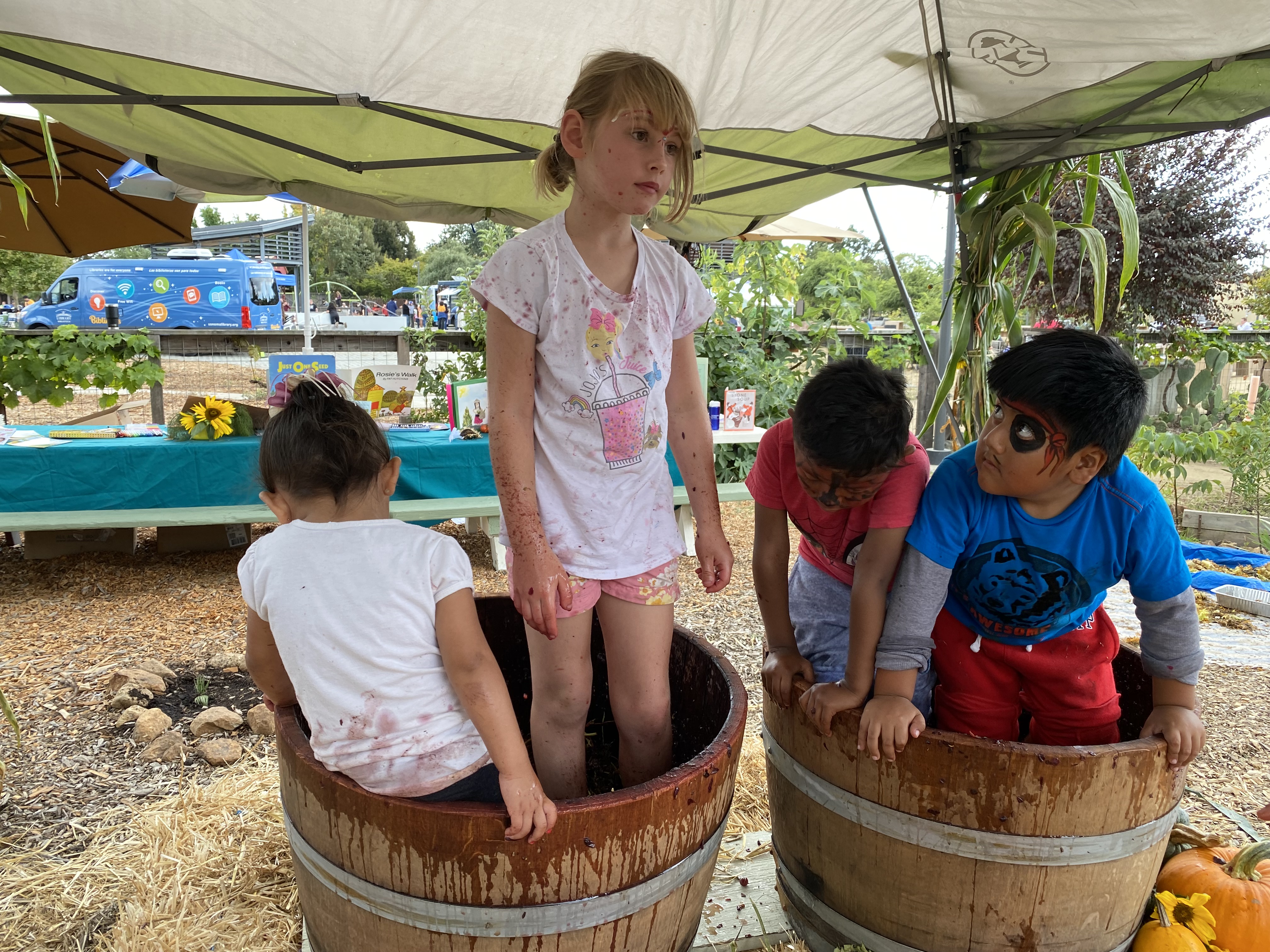
Crushing grapes the old fashioned way

Complementing this preservation is the work of LandPaths, an organization that has spent 30 years fostering a love of the land. By managing Bayer Farm and leading creative outings in both English and Spanish, LandPaths ensures that nature’s inspiration is accessible to everyone, regardless of their background. Through nature camps and community-led stewardship, they turn the act of conservation into a shared community experience.

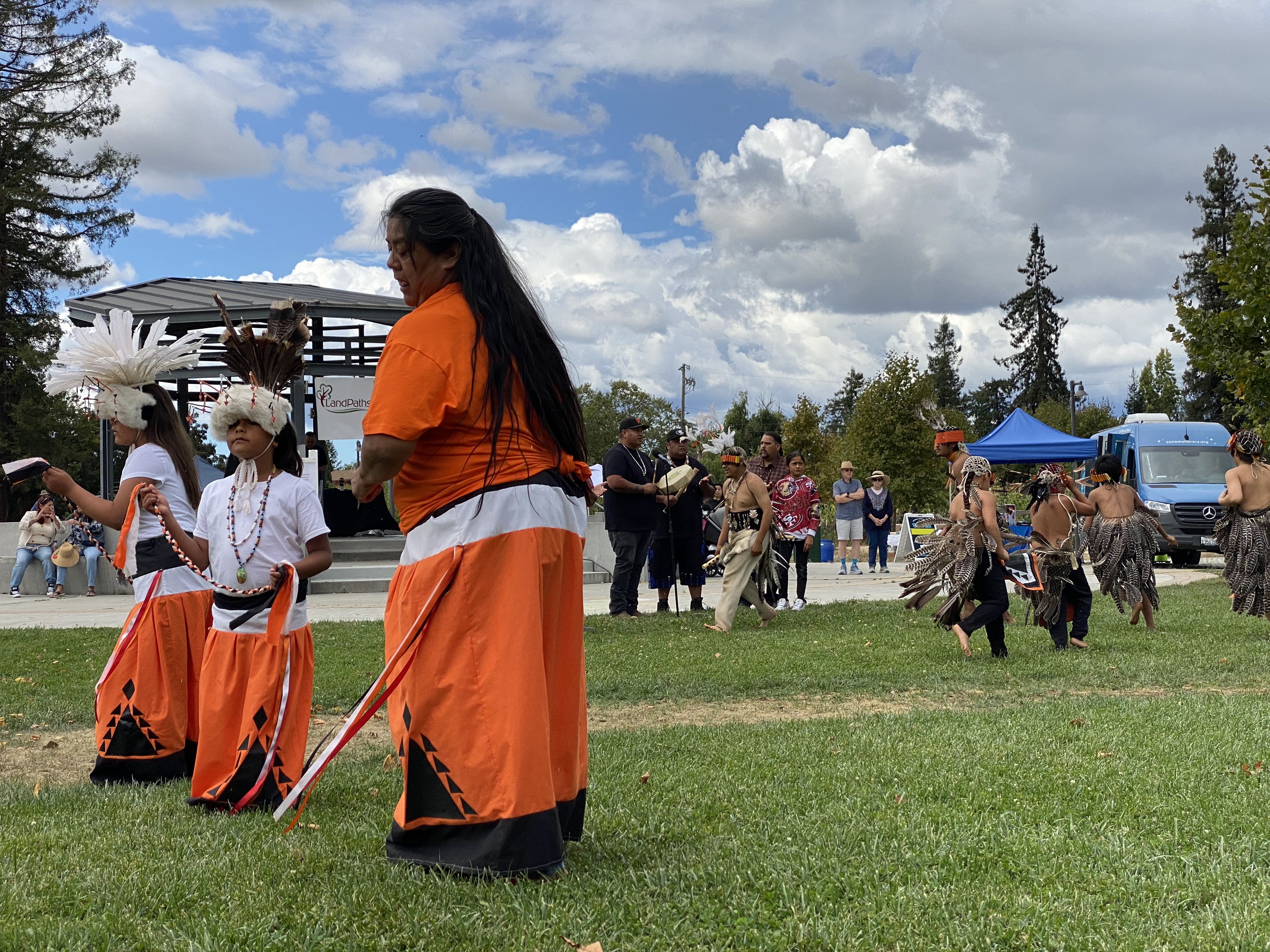
Pomo dancers performing in the meadow

On September 26, from 10 a.m. to 2 p.m., the Festival de la Cosecha brings this history to life. The air fills with the sounds of the Sonoma County Pomo Dancers and Danza Xantotl, while visitors engage in herbal medicine workshops, cooking demonstrations, and spirited salsa competitions. Between browsing community booths and picking out pumpkins and fresh vegetables, guests gather to recognize the land and the stewards—past and present—who fought to save it. In the laughter and abundance of the festival, Santa Rosa celebrates not just the harvest of the earth, but the harvest of a long-term commitment to justice, ecology, and community.

Bayer Farm is located on the ancestral homeland of the Southern Pomo people.

Looking for Santa Rosa’s Oldest Rose

We once found it in an ally in the JC neighborhood

Santa Rosa, famed for its roses and annual rose parade, is also known as the home of Luther Burbank, the legendary plant wizard. Why did Burbank choose Sonoma County? Simple—because plants here live their best lives. He famously said, “I firmly believe…that this is the chosen spot of all this earth, as far as nature is concerned.”

Before Holly and I tied the knot and set up camp in Santa Rosa, I lived in San Francisco. Every week I’d take the Golden Gate Transit bus to visit Holly. We had this delightful hobby of cycling through various neighborhoods, ogling the stunning gardens and secretly judging people’s landscaping choices.

On one particularly memorable ride—it must have been April or May in 2010—we spotted a man toiling away in his garden. Naturally, we screeched to a halt, intrigued by his green-thumb magic. As we marveled at his work, the man asked us a curious question, “Have you heard about the oldest rose in Santa Rosa?”

With a sense of mystery, he directed us to an alley between Nason and Spencer in the JC neighborhood. Our mission was clear. We pedaled like detectives on a hot lead until we found the rose. It was a gigantic bush, but, believe it or not, I can’t recall its color. This was pre-cell-phone-camera days, so no pics for proof. Did I smell it? I don’t remember, but I must have, considering I make it a habit to stop and smell the roses around town.

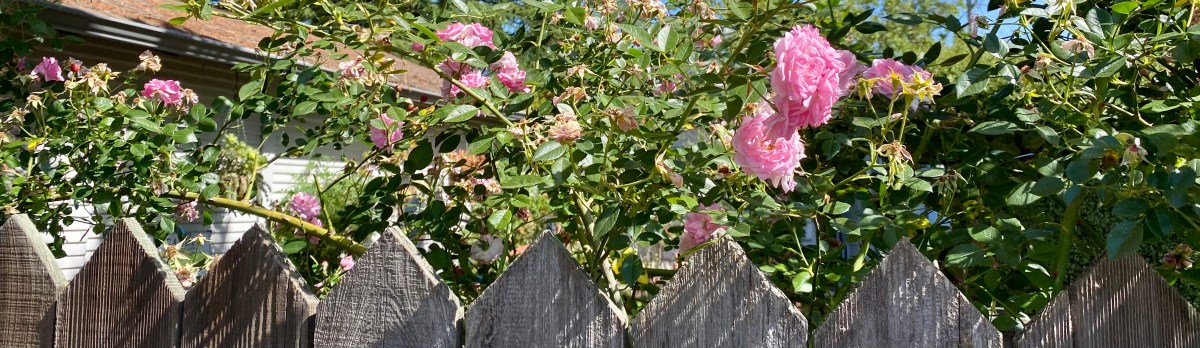
The color? Your guess is as good as mine. I later fantasized it was yellow, like a rose from a century-old house my family moved into back in 1959 in Yakima, Washington. But after diving into rose lore, I’m pretty sure it was pink, which is the go-to hue for ancient roses.

Fast forward to my discovery that roses, despite their ageless beauty, don’t live for a century. The Methuselahs among them might clock in at 35 to 50 years, while the newer hybrids are lucky to hit double digits.

Roses have a traceable origin. They likely sprouted in Central Asia and migrated to northern Europe over centuries. Rose cultivation kicked off in Central Asia around 5000 years ago. Today’s garden-variety roses are the glam descendants of plants from the Oligocene epoch (33 million to 23 million years ago), with fossils found across Europe, Asia, and western North America.

Recently, I went back to search for the oldest rose. I asked a friend who grew up in the JC neighborhood if she had heard of it. She had, but she didn’t remember seeing it—the stuff of urban legend.

The alley between Nason and Spencer stretches from King St. to Mendocino, morphing into Ridgway. I paced up and down that alley more times than I care to admit, but alas, I didn’t find it. Now I know, roses don’t do immortality.

Maybe someone took a cutting and gave it a fresh start. Perhaps the rose’s spirit lives on in the rural cemetery or the JC rose garden, which boasts some elderly blooms.

Rose or no rose, the alley had its charms. I met some interesting folks and stumbled upon quirky artwork on weathered walls. And so, the hunt for the oldest rose may be thorny, but it’s always blooming with stories.