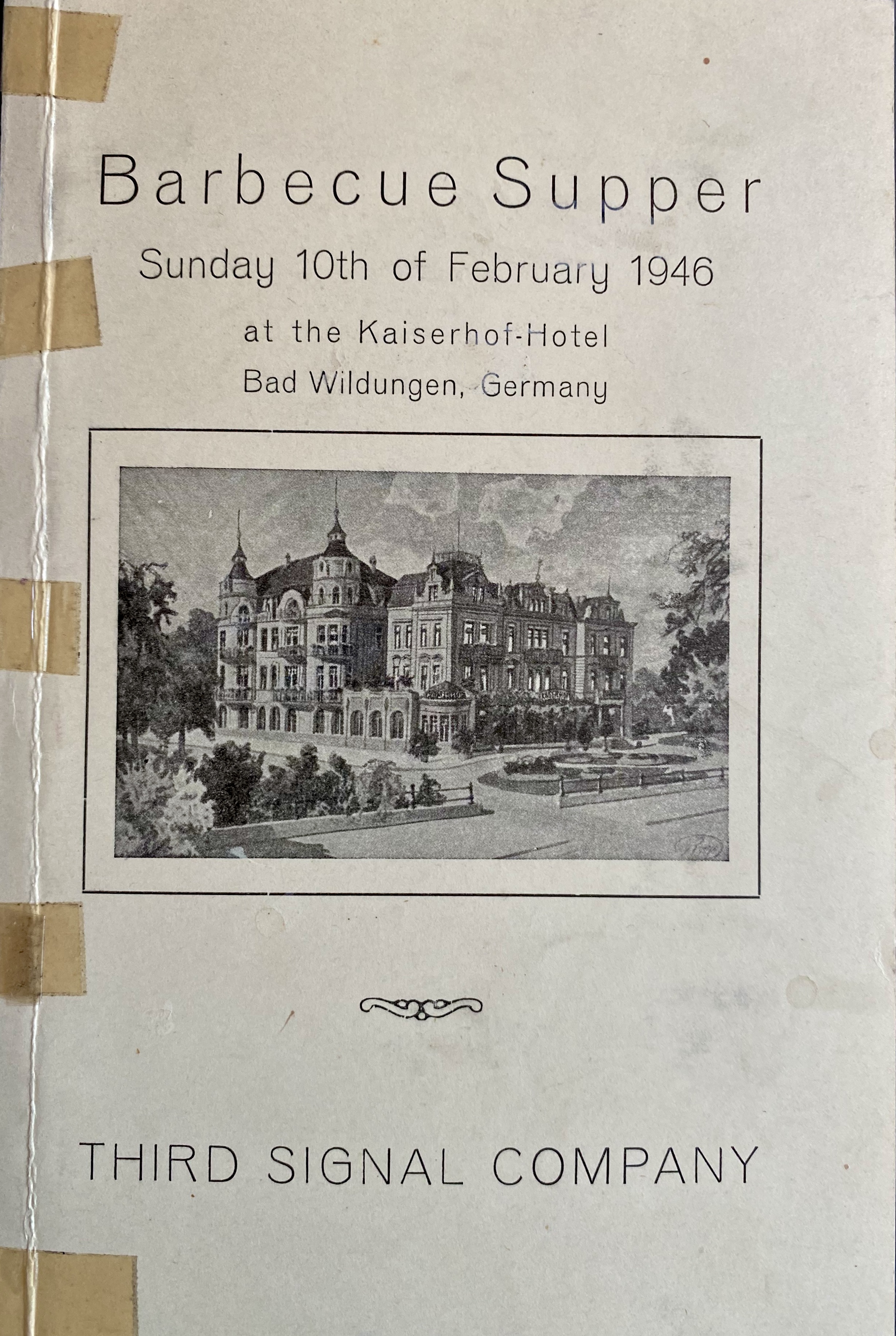
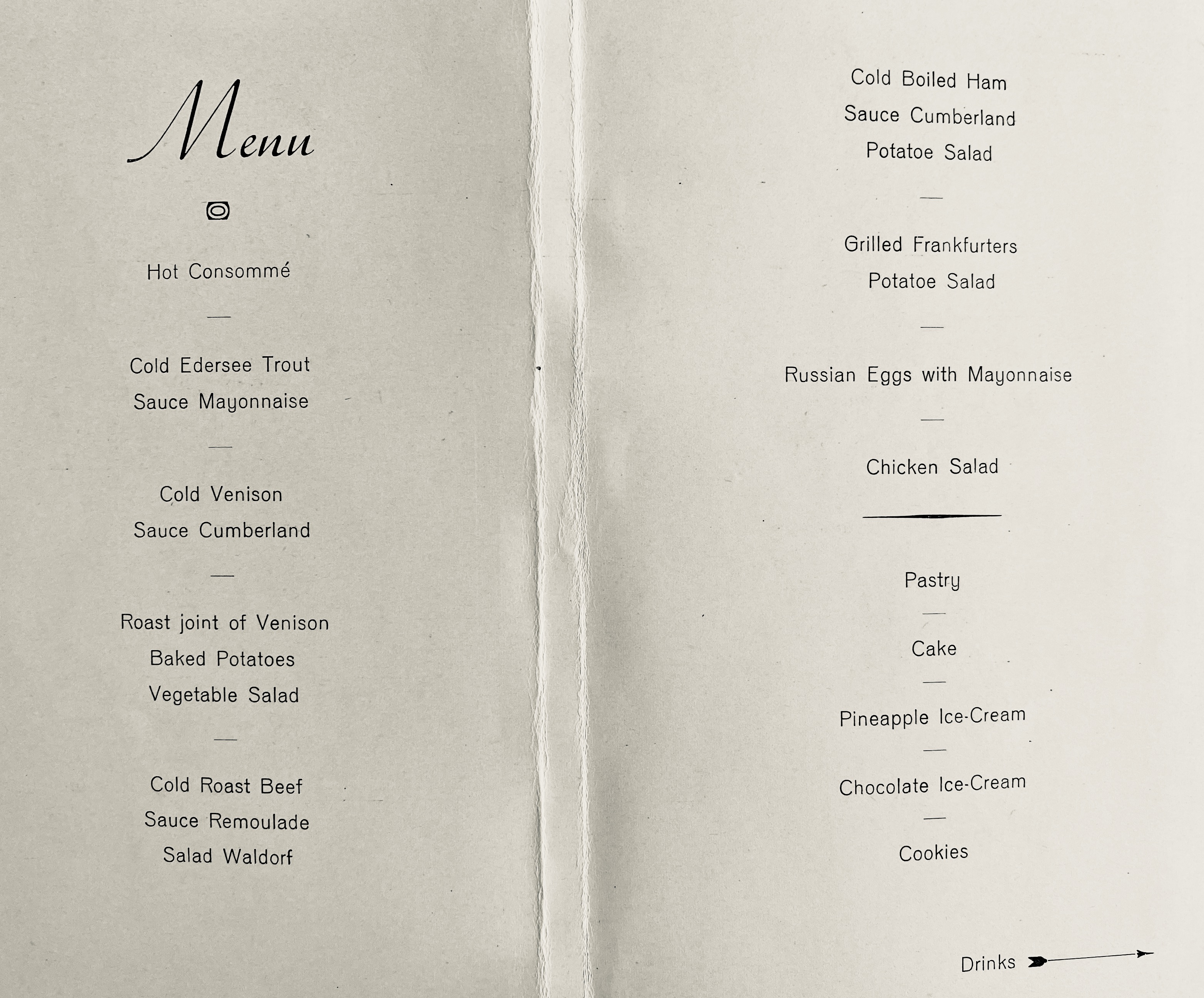
Flo and her comrades got together for an indoor BBQ supper in February probably in an effort to recreate an American picnic. It was sponsored by the Third Signal Company, the photographers attached to the Third Infantry Division who joined the division at Anzio. Their photographs are posted at dogfacesoldier.org.
Cotton Balers. The 7th US Infantry Regiment is one of the five oldest continuously serving regiments in the U.S. Army, initially organized in July 1798. The regiment earned its nickname, “The Cottonbalers”, from its use of cotton bales as defensive works during the 1815 Battle of New Orleans. The regiment deployed early on in 1942’s assault on Morocco. They went on to serve across North Africa into Sicily and Italy, up through France, and then participating in the capture of Berchtesgaden.
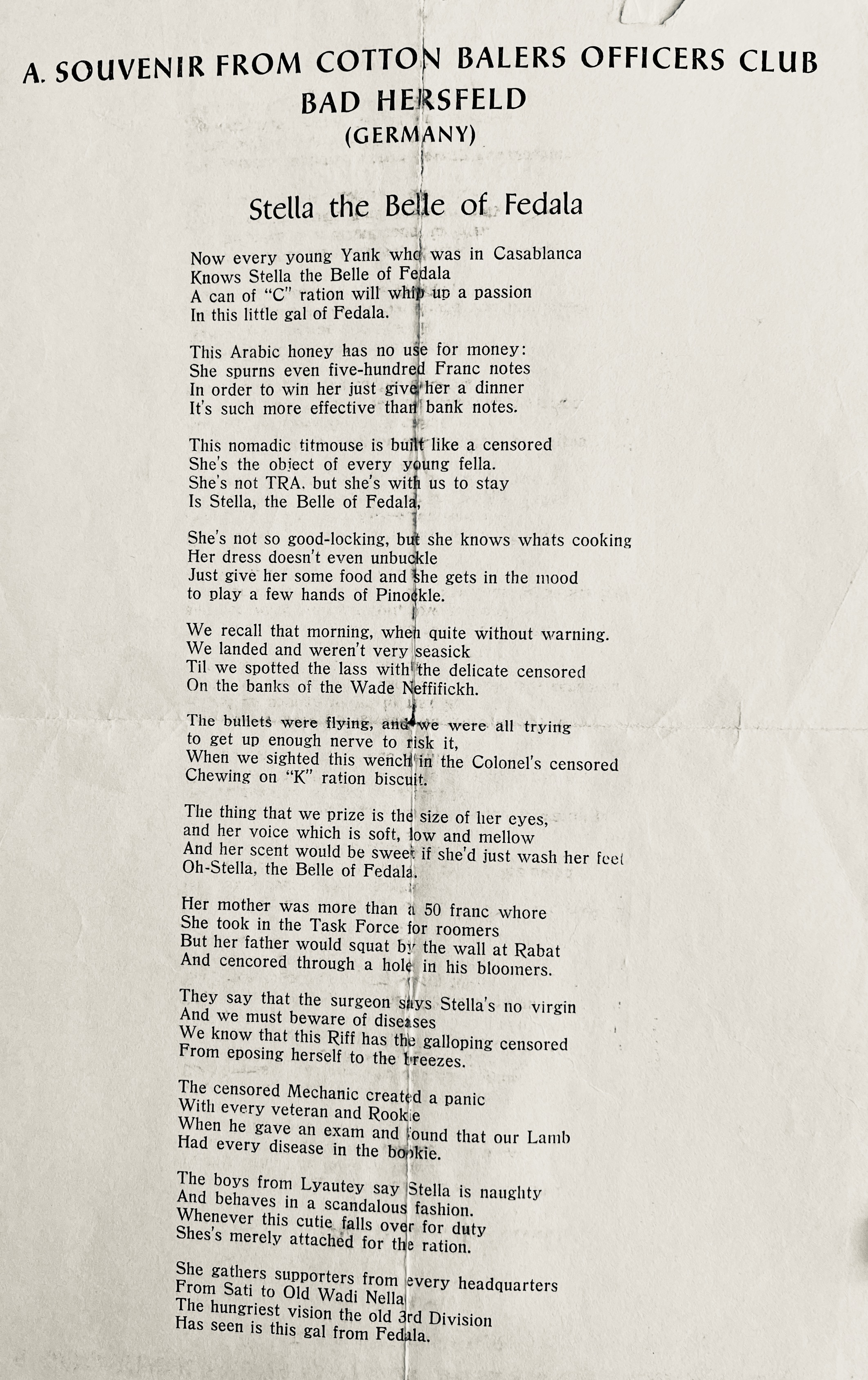
Stella the Belle of Fidella is a song sung by soldiers who joined the war in Casablanca. Stella, it turns out, was just starving.
“This Arabic honey has no use for money: She spurns even five hundred Franc notes In order to win her just give her a dinner It’s much more effective than bank notes”
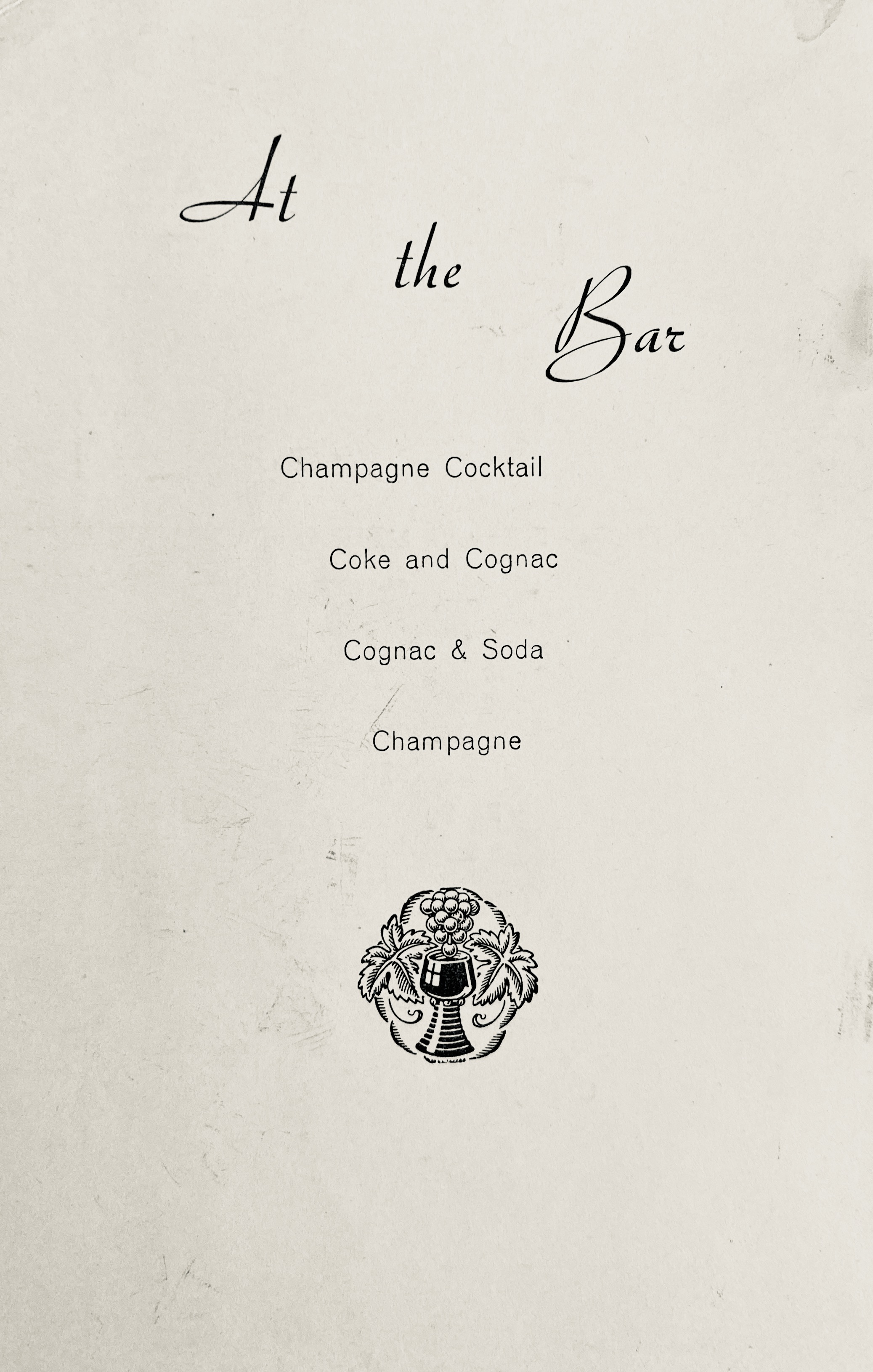
Still no wine
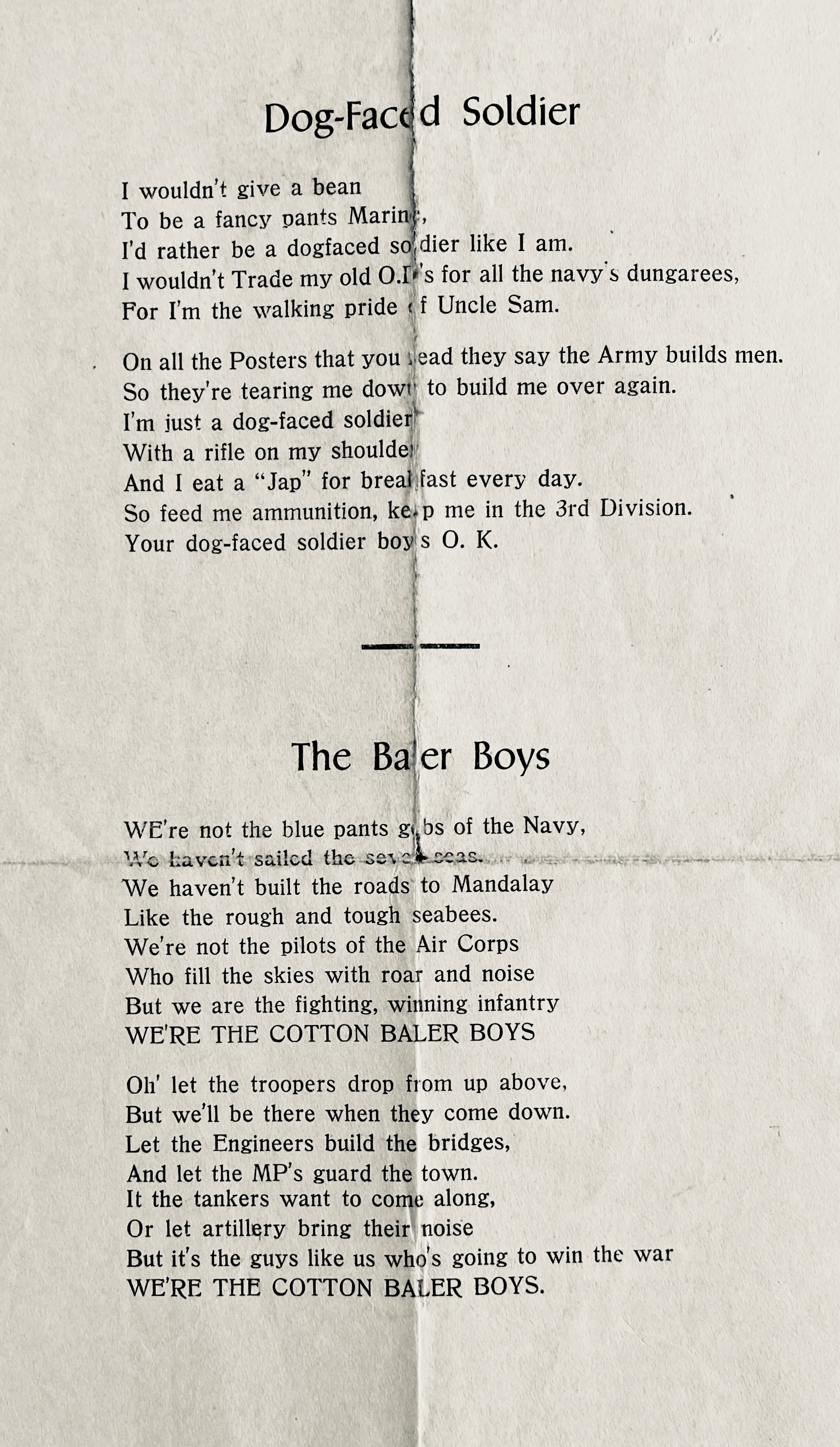
Dog-faced soldier is the official song of the Third Infantry Division. In this version the word “Jap” replaces the word “Kraut.”
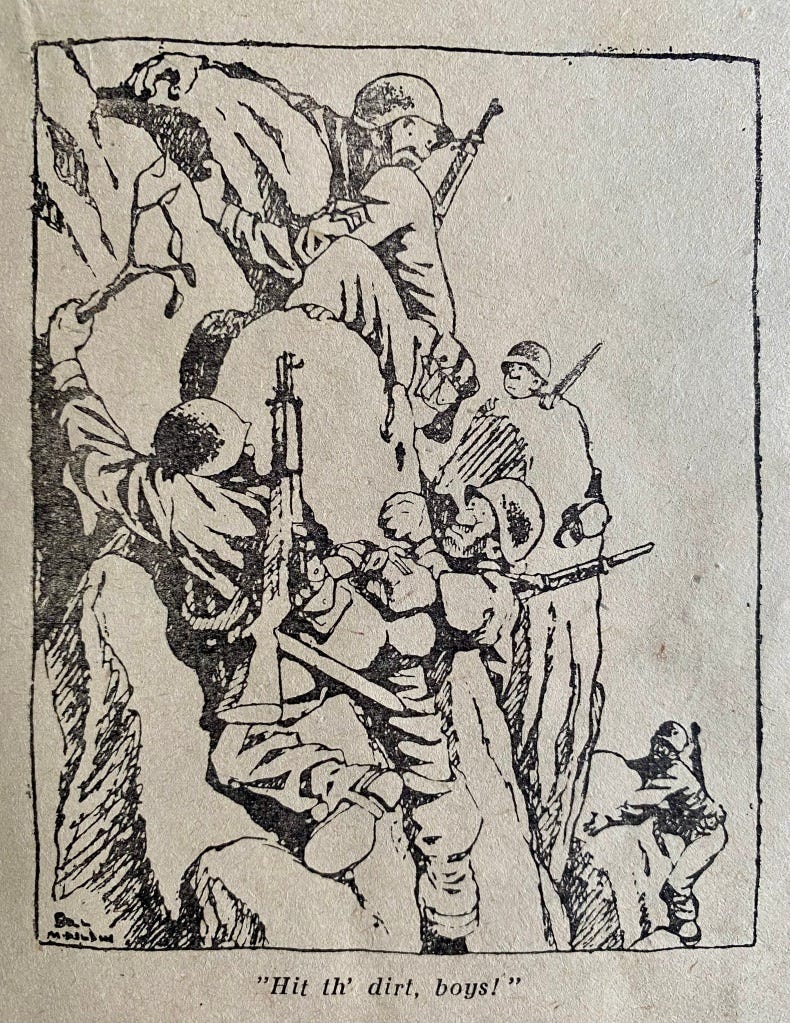
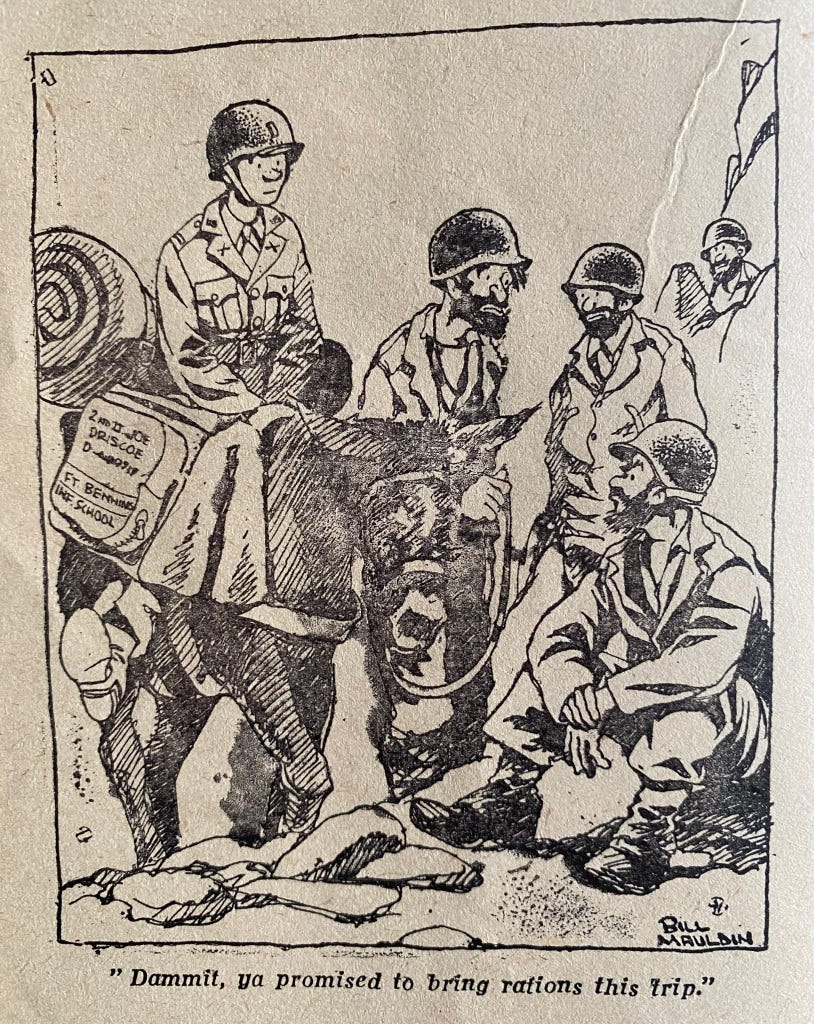
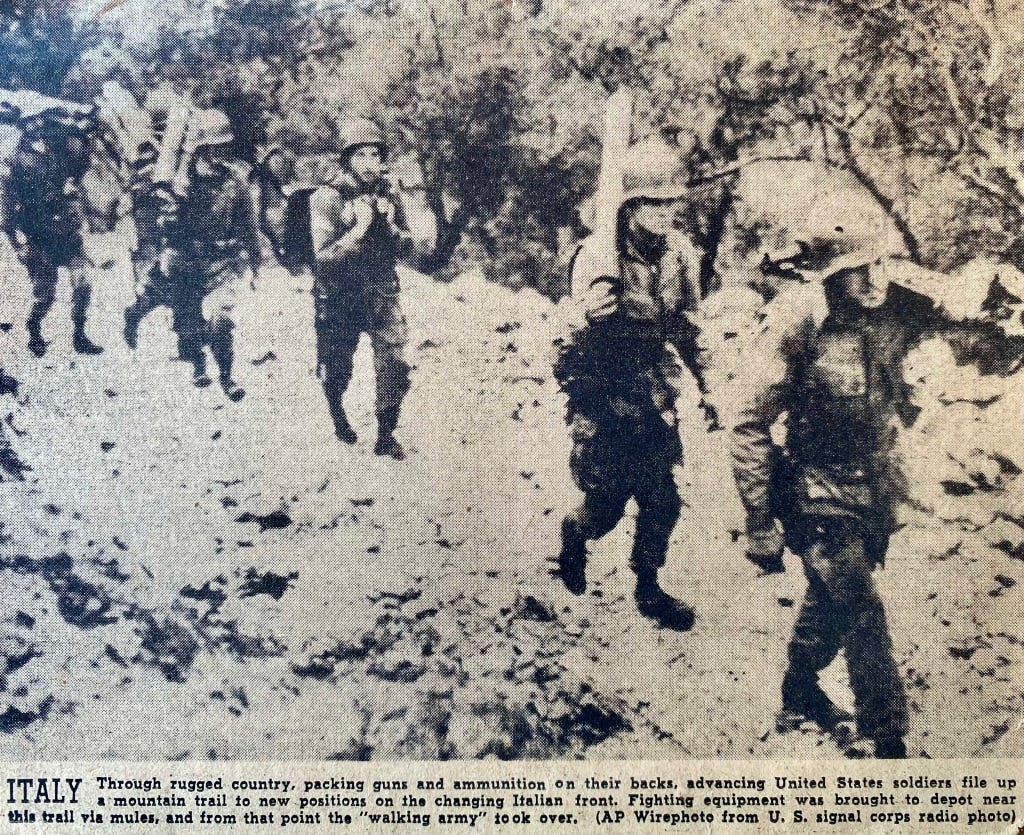
The town of Mignano sits trapped between steep, craggy peaks, their sheer faces scarred by war. The Nazis are dug in, their defenses embedded in the rock like stubborn roots. The strategy is clear — avoid the town and strike straight at the mountains surrounding it. But the terrain is merciless. Cliffs rise like walls, gorges cut deep into the earth, and even surefooted pack mules often slip, falling to their deaths. When the animals fail, the soldiers must take over, crawling on hands and knees, dragging supplies through mud that swallows boots whole.
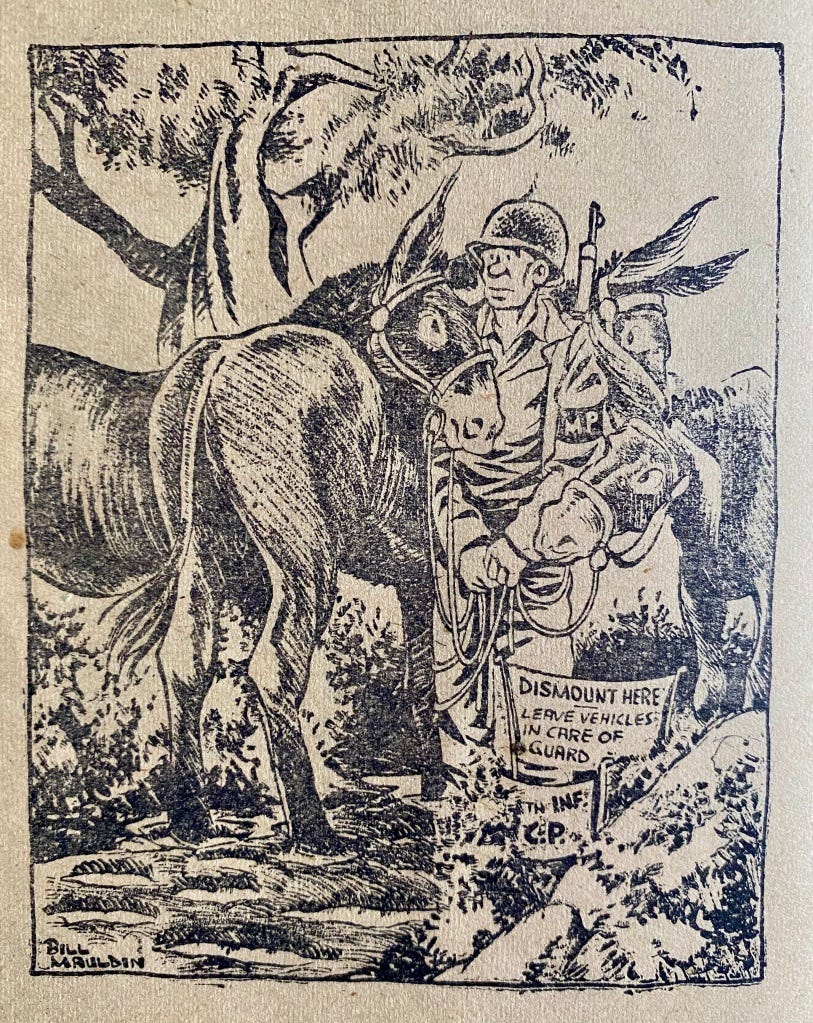
Bill Mauldin (1921–2003) — Pulitzer Prize-winning cartoonist famous for his WWII characters, Willie and Joe, depicted the hardships of American soldiers with grit and humor.
On a reconnaissance mission, Audie Murphy and his squad find themselves stranded on the side of a mountain above Mignano. They walk straight toward a German tank, so expertly camouflaged that they miss it. As the snout of the cannon is lowered at them, they run like hell for a clump of bushes. One soldier breaks his leg in the rush. They drag him into a ditch and lose the tank.
Several assaults on nearby Mount Rotondo are pushed back. Lines are confused by enemy fire. Murphy mistakes a Nazi patrol for allies. When he realizes his mistake, he starts firing. Now the enemy knows where they are. With no choice, they scramble up the rocks, reaching an abandoned quarry where they settle in for the night.
At dawn, they ambush a Nazi patrol. The fight is brutal and quick, but the cost is high. Three German soldiers lay dying.
Mauldin drew six cartoons a week during the war. He was only 23 when awarded the Pulizer Prize.
“The wounded must be got under cover. The peculiar ethics of war condone our riddling the bodies with lead. But then they were soldiers. (The machine gun) transformed them into human beings again; and the rules say that we cannot leave them unprotected against a barrage of their own artillery,” Murphy wrote.
Murphy’s squad is forced to stay with them, listening to their labored breaths as a cold mountain rain washes over the quarry.
“When dawn breaks, two of the Germans are dead. Their eyes stare glassily. Their mouths are open and the old man’s swollen tongue protrudes between his teeth,” Murphy wrote.
For three days artillery rains down, death echoing off the cliffs. The men remain trapped.
On the third day, the third German dies. In the light of the moon that night “the faces of the dead seem green and unearthly. That is bad for morale, as it makes a man reflect on what his own life may come to.”
After the war, Mauldin became a political cartoonist, advocating civil liberties. He also appeared in John Huston’s film The Red Badge of Courage (1951) starring with Audie Murphy.
Murphy is near breaking. “My eyeballs burn, my bones ache; and my muscles twitch in exhaustion. Oh, to sleep and never awaken. The war is without beginning, without end. It goes on forever.”
Then, at last, the sound they have been waiting for — American artillery. The shells scream through the air, bursting against the rocks like salvation.
“If there is one thing a dogface loves, it is artillery — his own.”
American Red Cross workers, too, must contend with mountains and mud.
From a Life Magazine story pasted in Flo’s album
On Christmas Day, 1943, high in the rain-drenched peaks, a soldier huddles in his foxhole, staring at a can of C-rations — his holiday meal. Then, out of the swirling mist, she appears. Isabella Hughes of Baltimore, a Red Cross clubmobile worker, crouches on the lip of his trench, one hand gripping a box of doughnuts, the other holding a steaming pot of coffee. The soldier blinks, then exclaims, “Good Lord, sweetheart! What in hell are you doing here?”
Isabella Hughes was one of the first ARC workers to get to Italy, in 1943. She would later join Flo’s clubmobile crew in Naples.
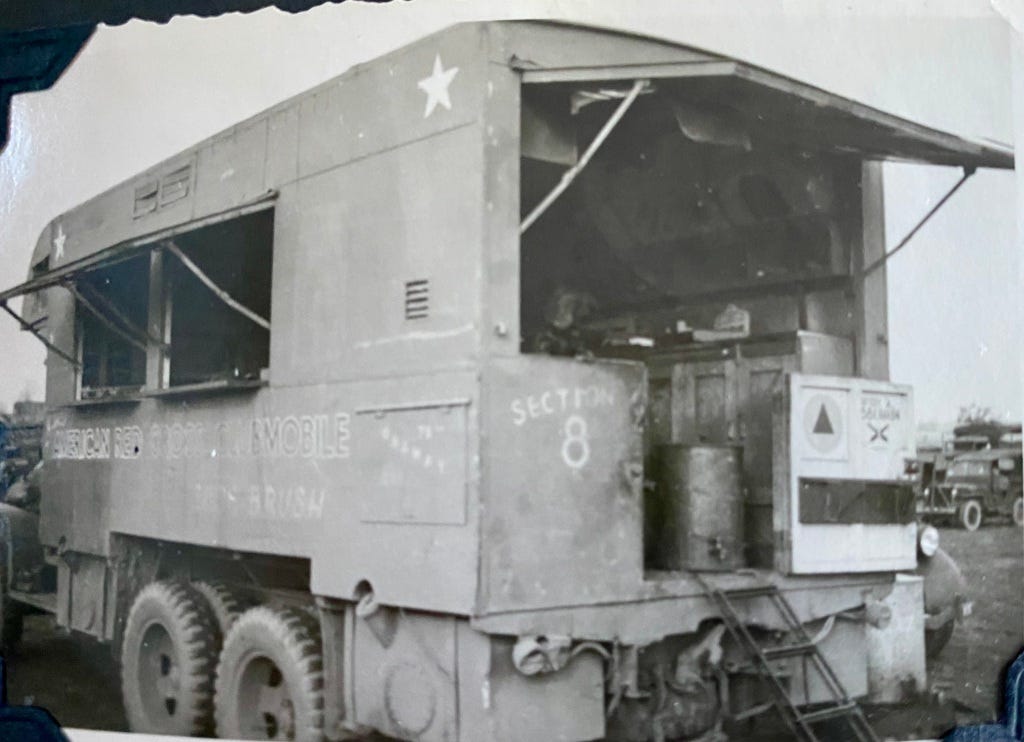
The clubmobile was a two and a half ton Dodge truck fitted with a kitchen and windows. Workers sometimes slept in it or under it.
Italy’s roads, slick with rain and churned to sludge, are brutal even for military transport. The clubmobile — a sturdy machine — proves no match for the mountains. When roads vanish into goat trails, the Red Cross workers adapt. They take the Army’s weapons carriers, pushing higher, until even those fail. Then come the donkeys and mules.
Two clubmobile workers, Margaret Decker of Towaco, New Jersey, and Gladys Currie of Greenwich, Connecticut, volunteer for an impossible task: deliver coffee and doughnuts to a unit stationed atop a remote peak. No road leads there — only a narrow mule track winding up the mountain’s spine. The Army offers them transport, if they’re willing to ride donkeys up the perilous slope. They accept without hesitation.
The climb is slow, the air thin. Their donkeys pick careful steps along the treacherous trail. The doughnuts are packed onto a mule. At last, they reach the summit. The men are waiting — shaved, cleaned — their arrival announced on the camp bulletin board like the coming of long-lost friends. As the ARC workers pour coffee, the soldiers form a circle around them, an island of warmth in the cold mountain war. Mortars shriek in the distance. Shells thunder through the valleys below. But for a moment, they all pause, talk, and remember something beyond the battle.
Their bravery does not go unnoticed. When the U.S. Army Rangers commend Lois N. Berney of Fallon, Nevada — a clubmobile worker once secretary to Harry Hopkins — it is understood that the honor belongs to all of them. From General Mark W. Clark down to the last rifleman, the Army recognizes the Red Cross women not just for their courage, but for bringing something human to the inhuman mountains.
From Audie Murphy’s autobiography, “To Hell and Back,” and from “At His Side–The Story of The American Red Cross Overseas in WWII” by George Korson
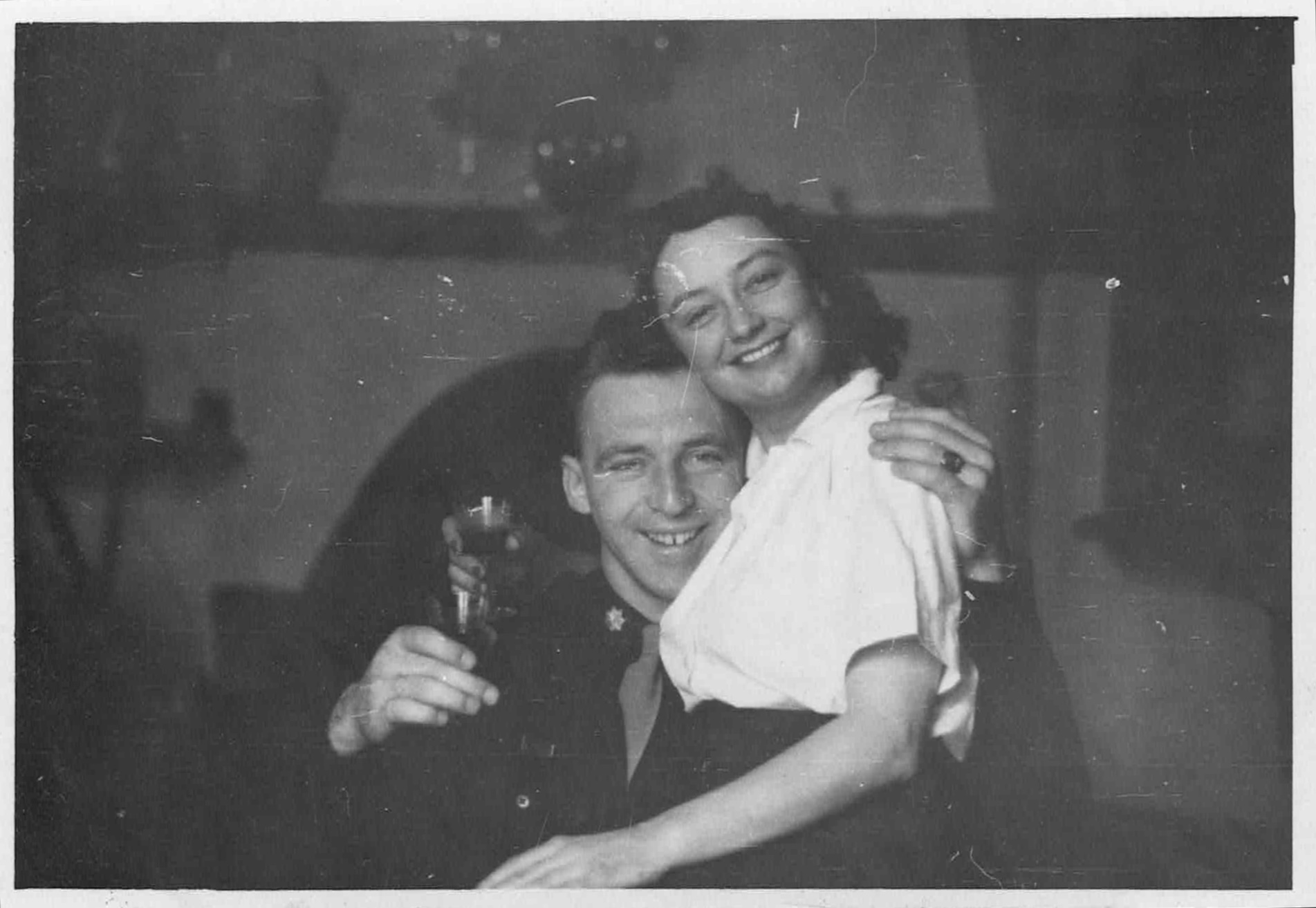
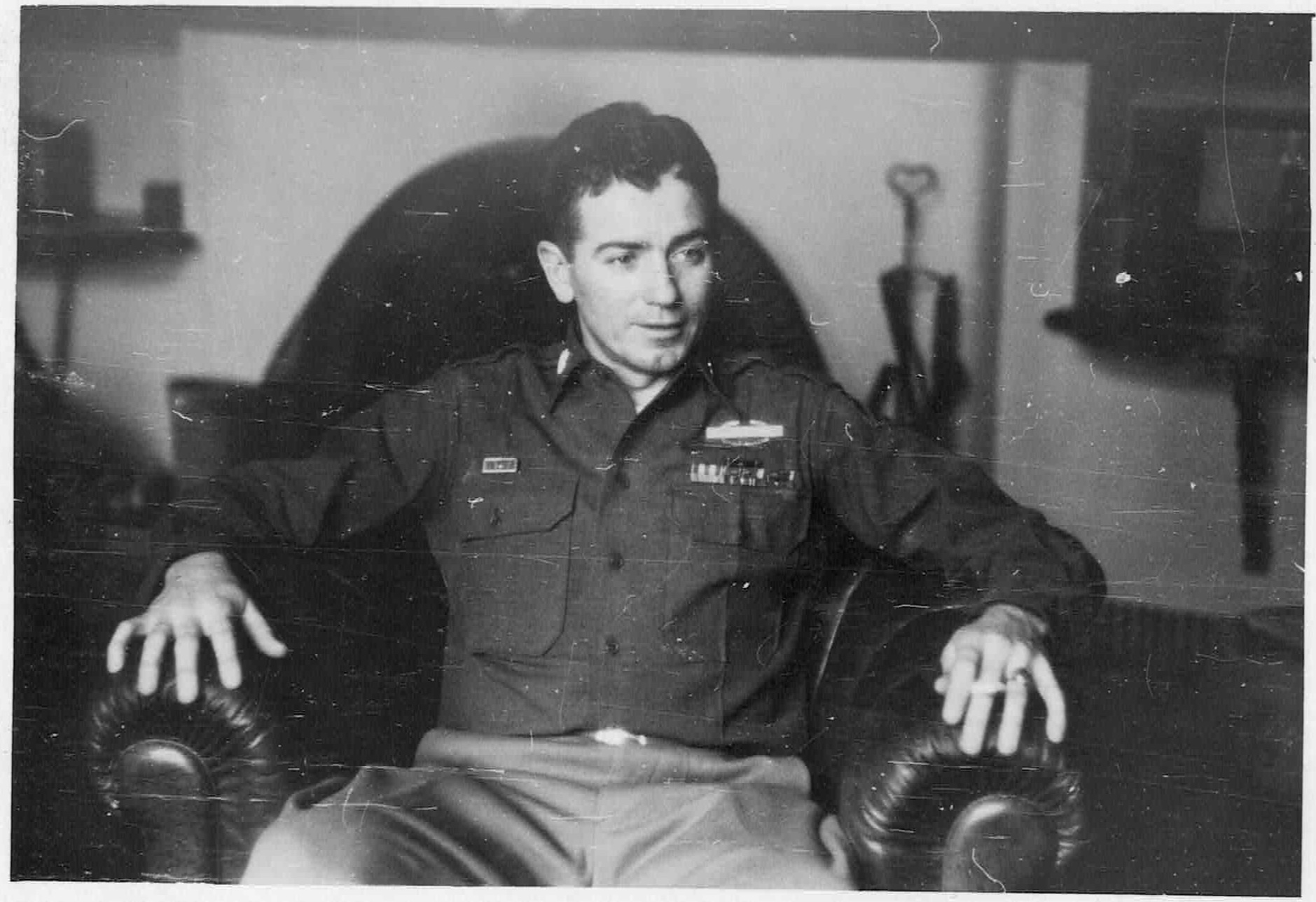
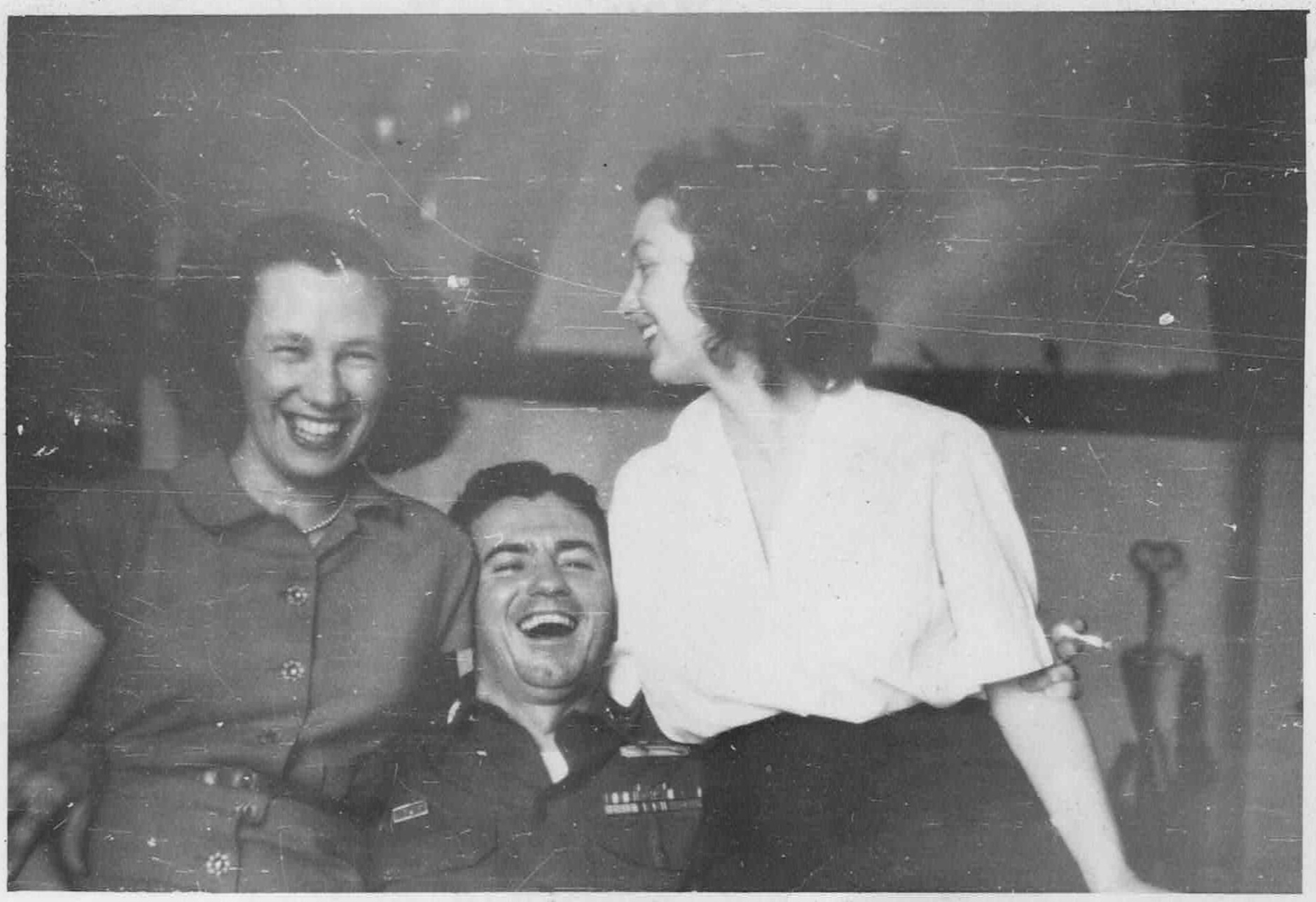
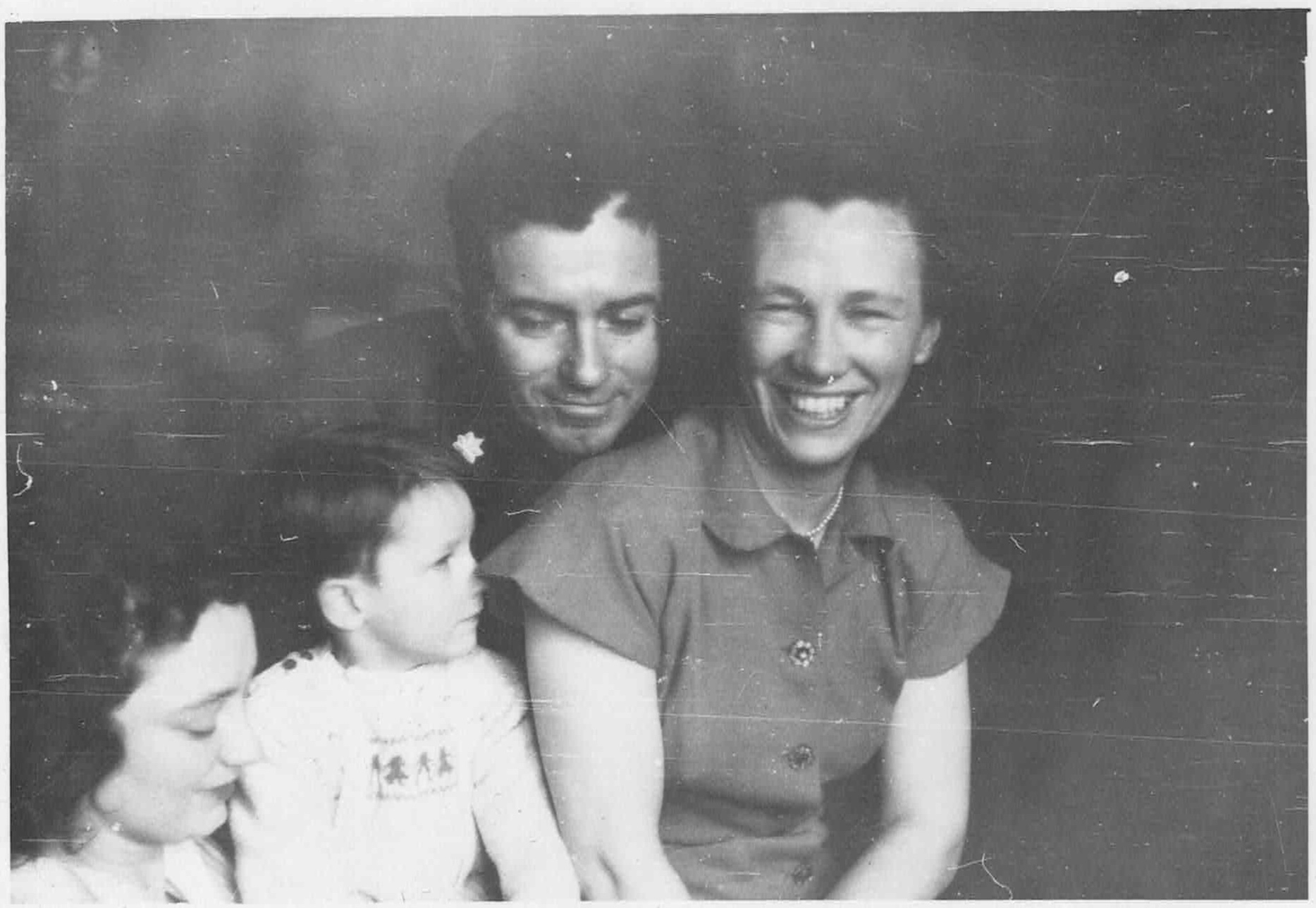
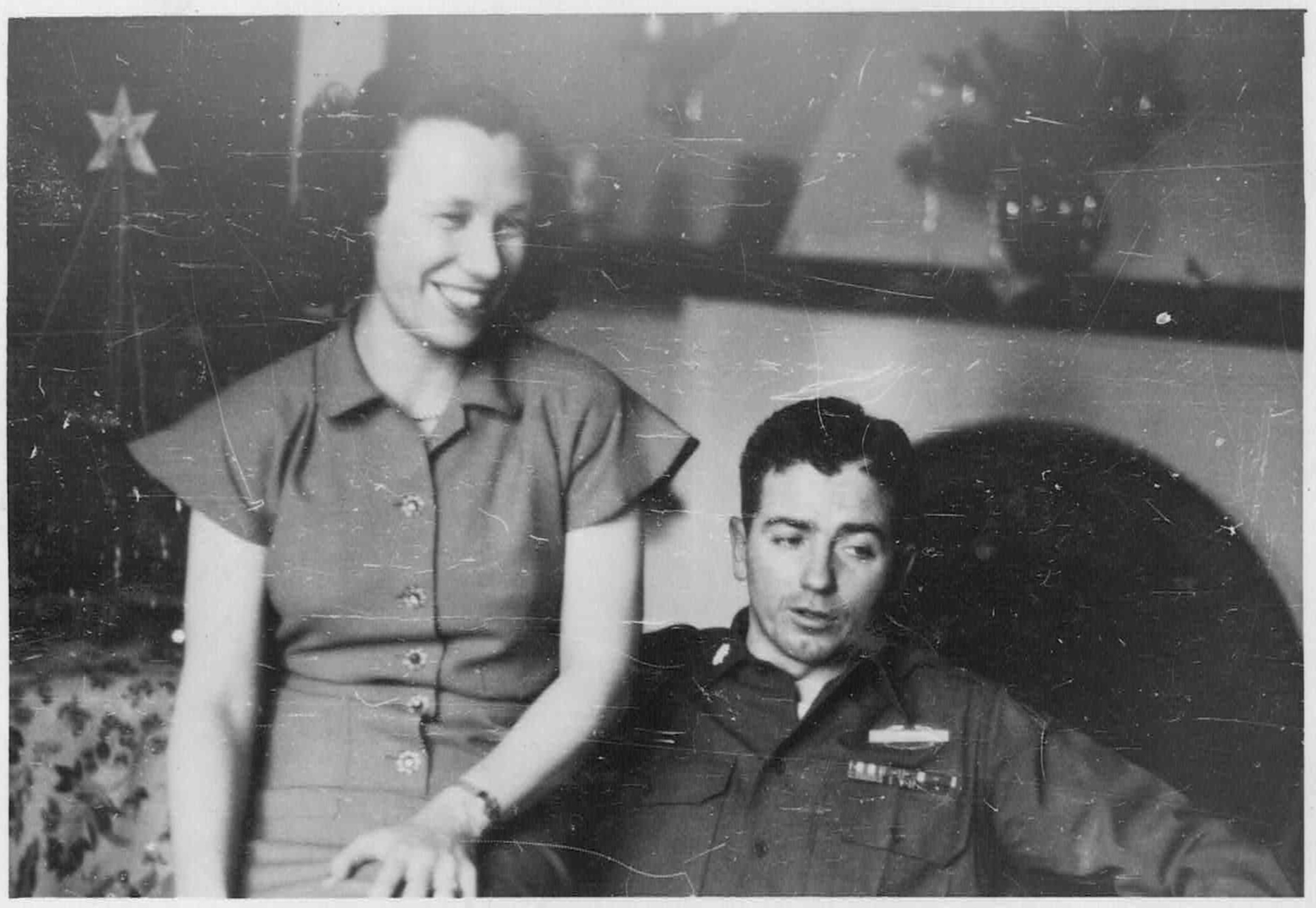
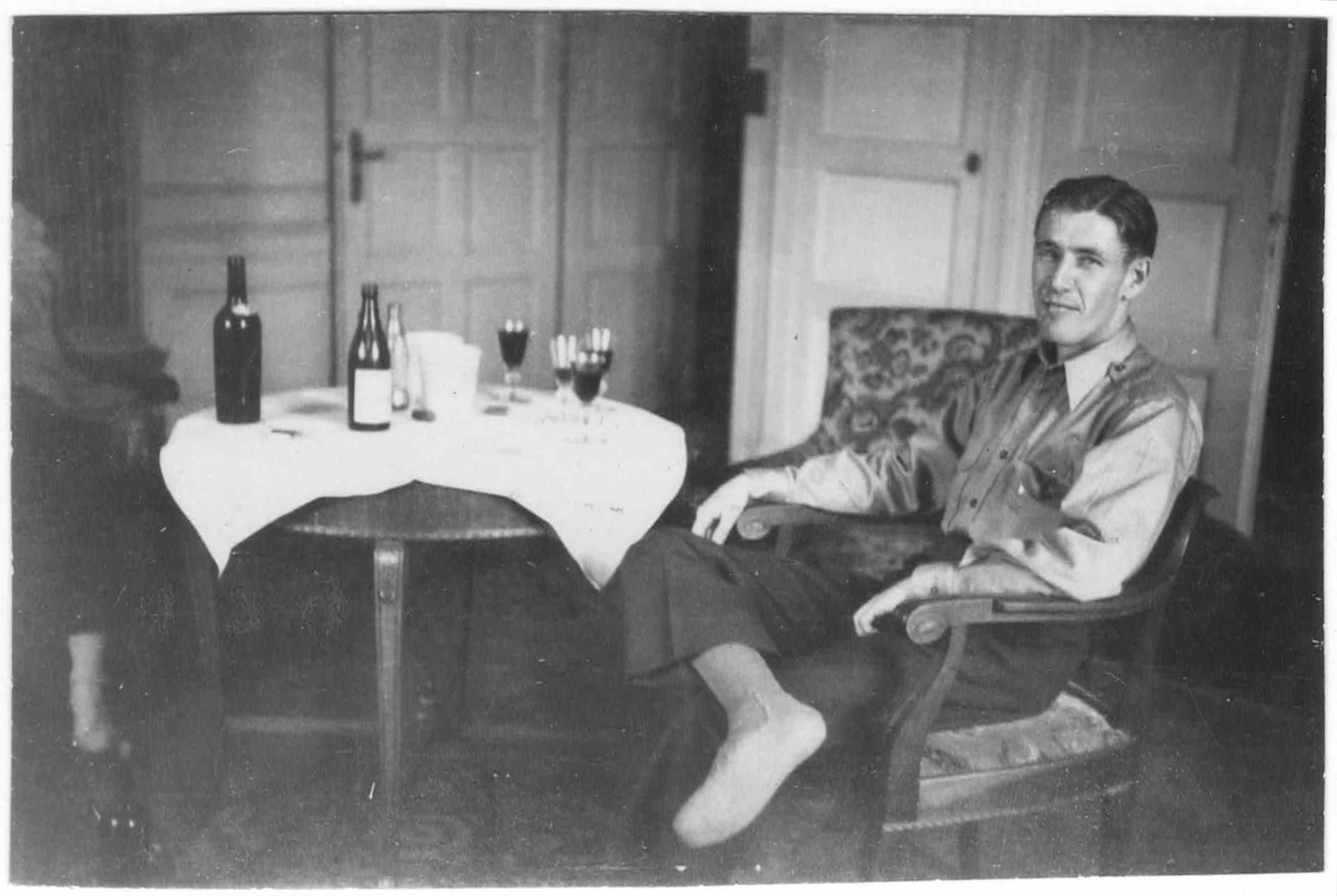
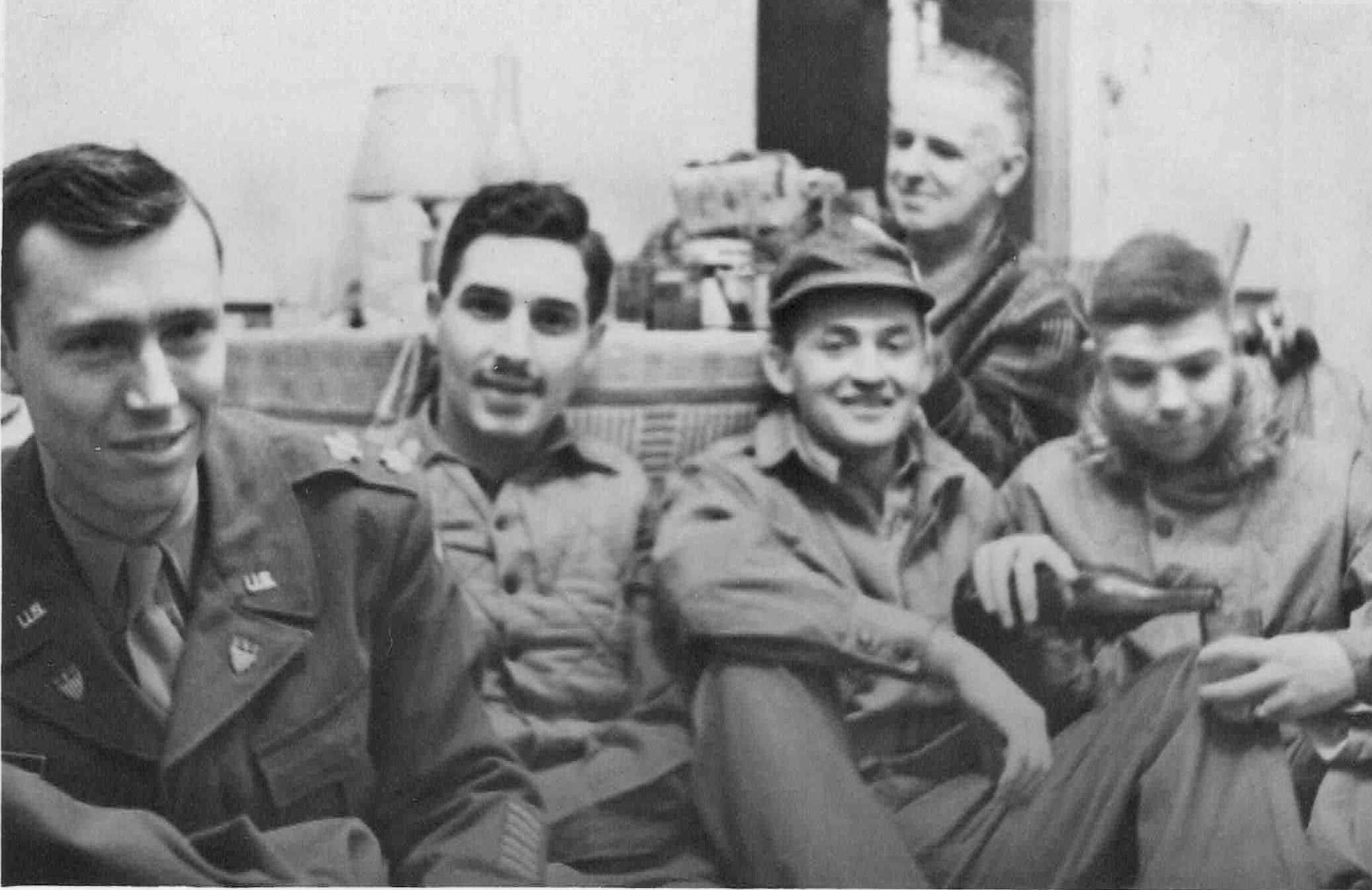
Flo did a good job of identifying the people in pictures on this page in her album relaxing at the 7th Infantry house. I’ve no idea where the child came from.
Maj. Win Whall (Kent WA)Jens and JanetLt. Col (CP) RamseyMaj. Kenneth WallaceWhose child is this?Flo and Maj. WallaceLt. Col. Ralph Flynn, 3rd Div, 7th Inf.
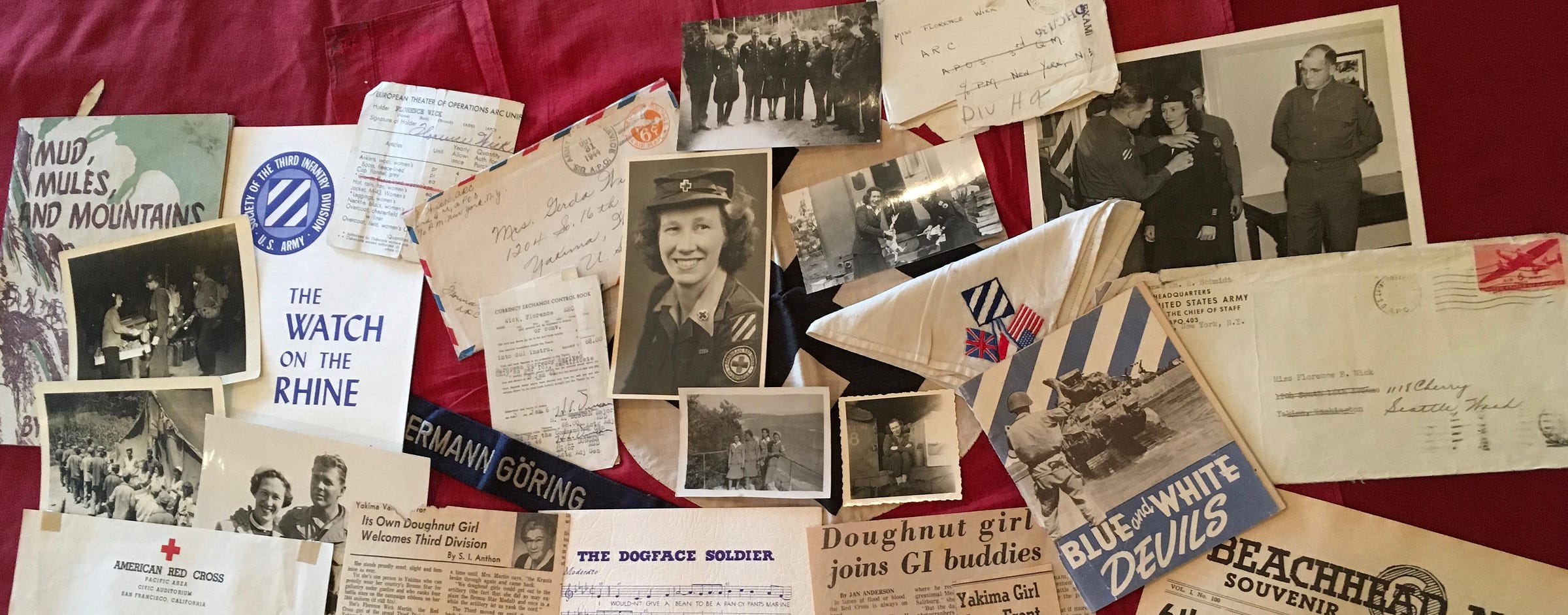
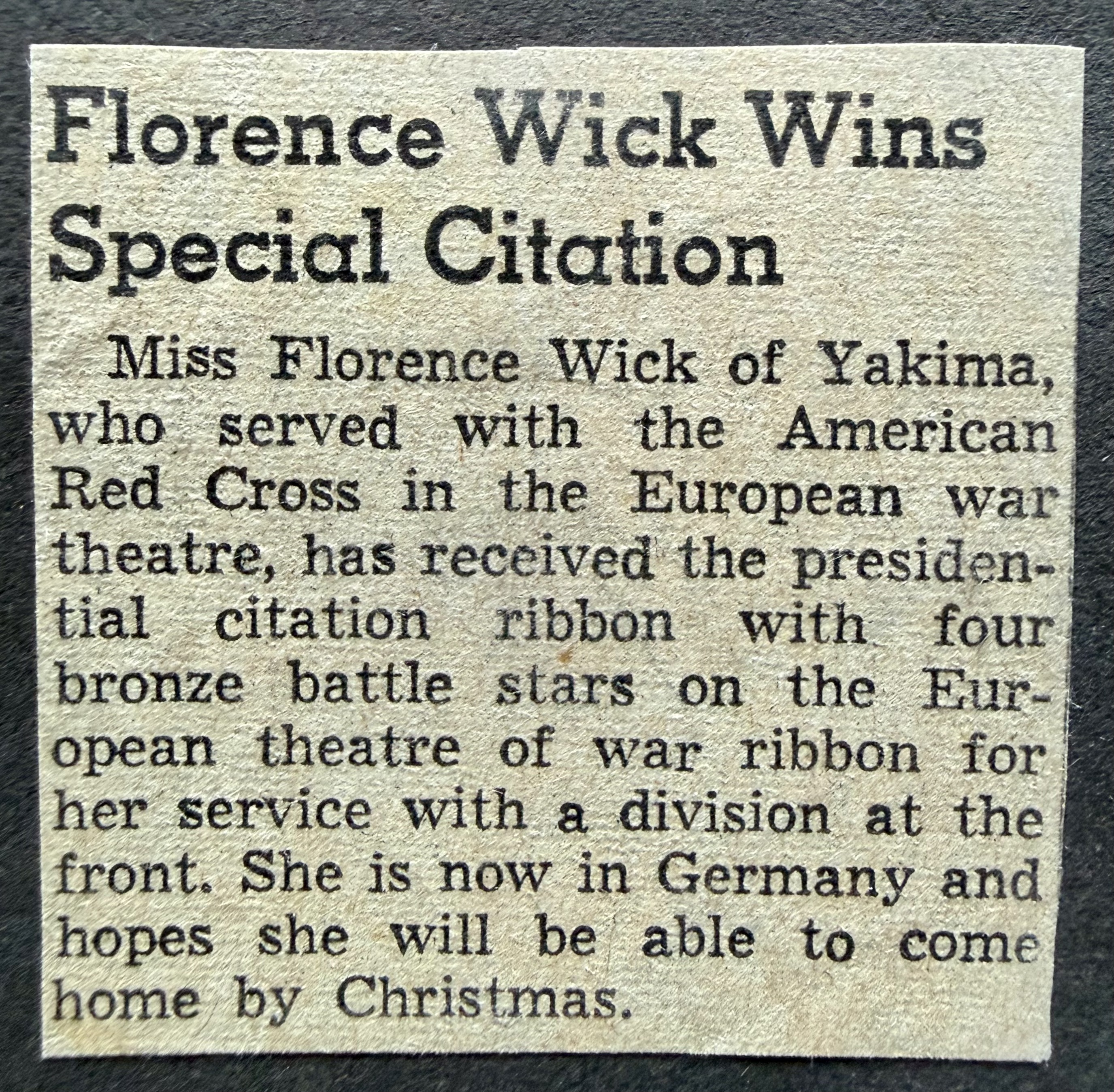
Flo pasted some ephemera on this page which includes a newspaper story about her receipt of an award. Flo was later awarded a bronze star. This is an award called a service star. The story reads: Miss Florence Wick of Yakima, who served with the American Red Cross in the European war theatre, has received the presidential citation ribbon with four bronze battle stars on the European theatre of war ribbon for her service with a division at the front. She is now in Germany and hopes she will be able to come home by Christmas.
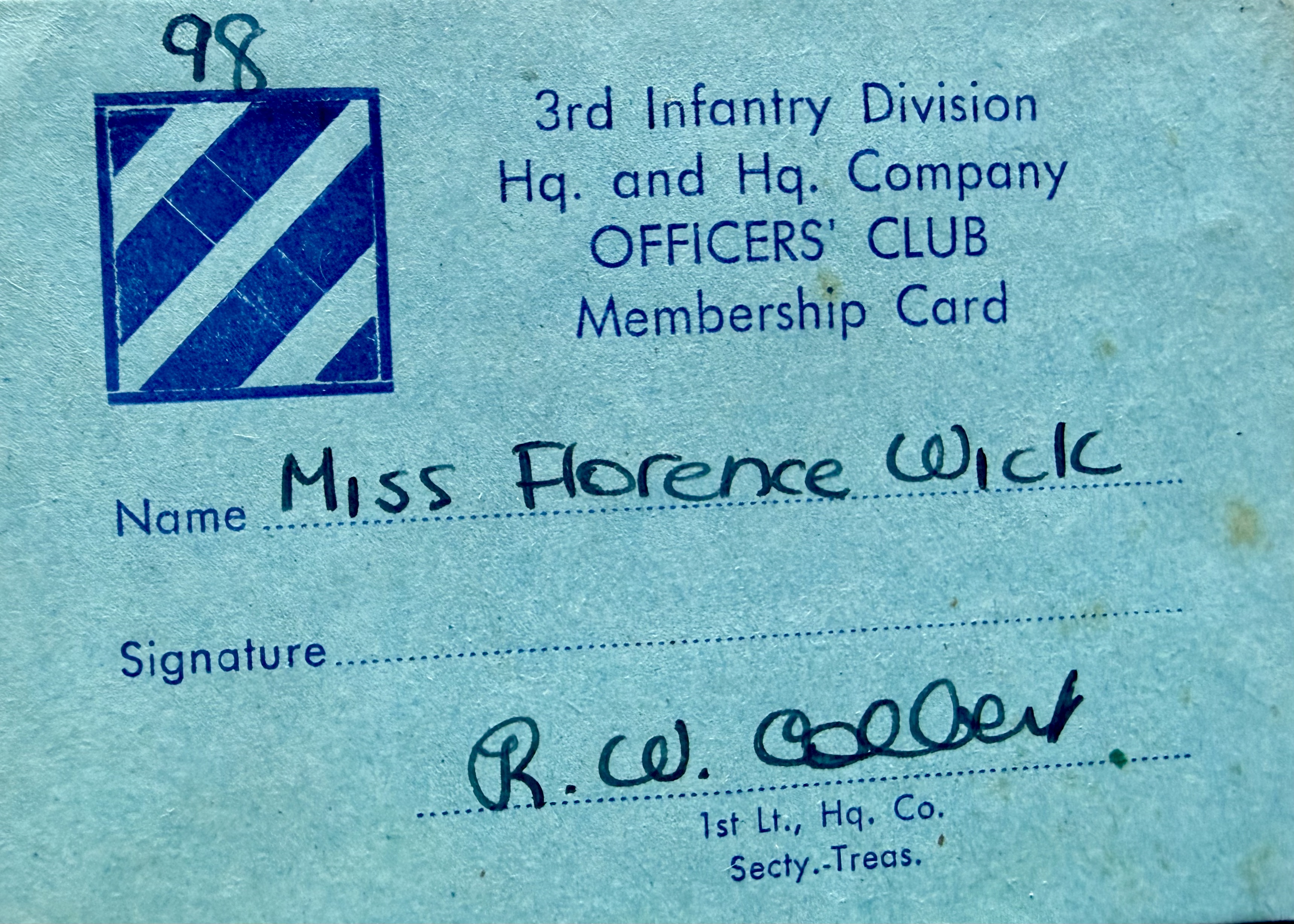
Flo’s 3rd Div. officers club membership card
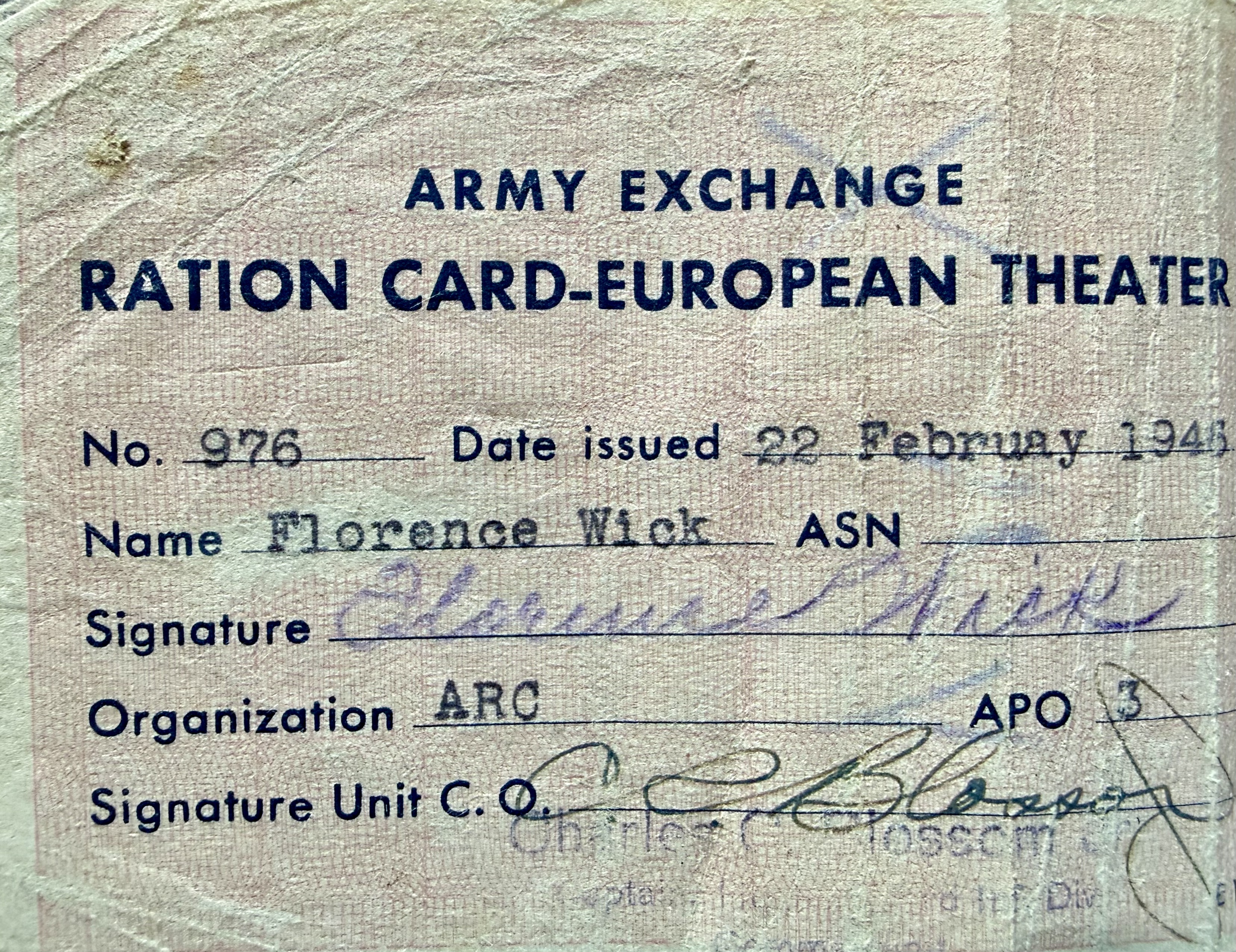
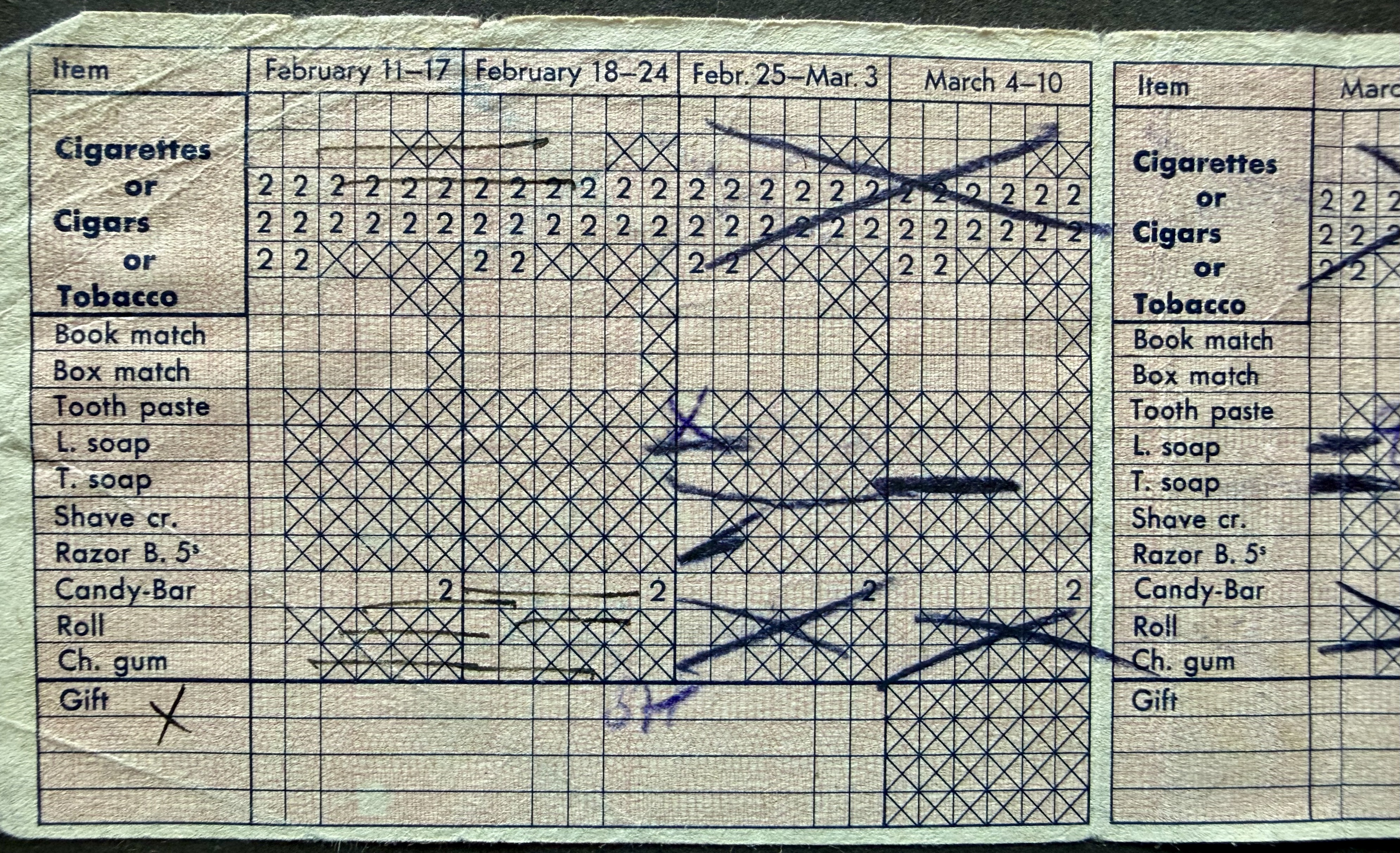
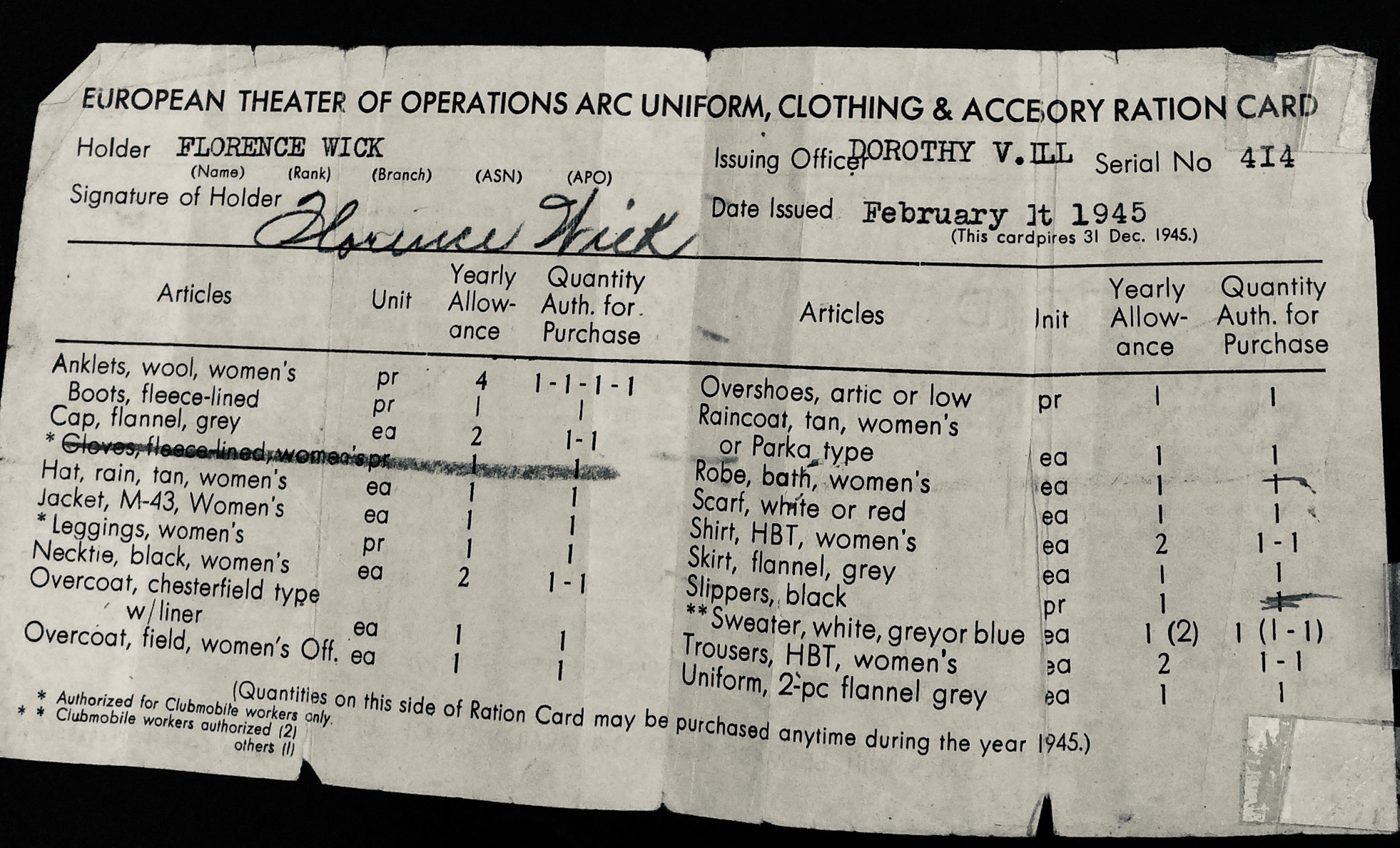
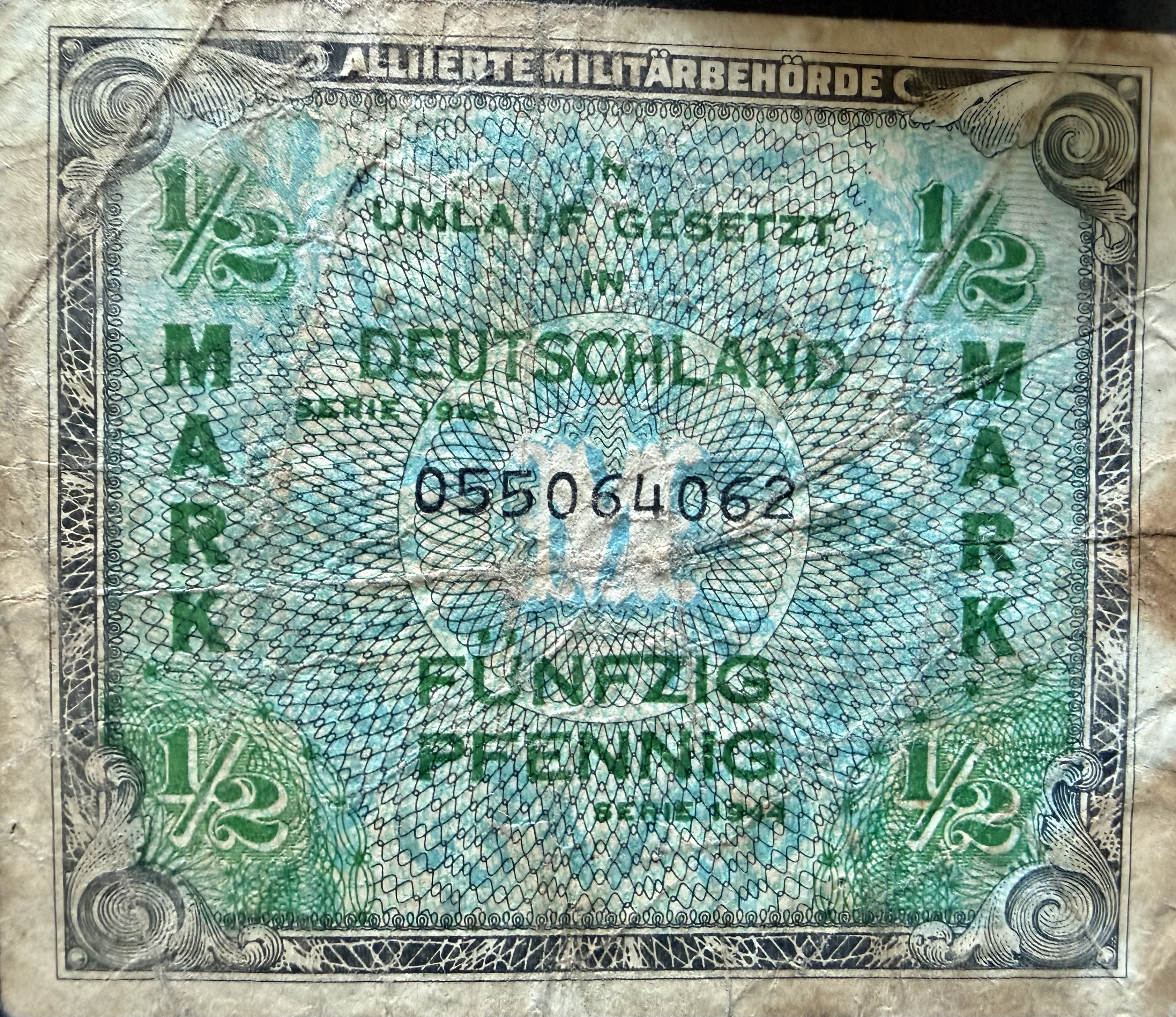
Army exchange ration cardWhat’s the difference between L. soap and T. soap?In February 1945 the clubmobilers were issued new uniformsThis currency was issued by the Allied Military Government during the occupation, replacing the German Reichsmark. It was used for transactions in the occupied zones of Germany and was a part of the effort to stabilize the economy and control inflation after the collapse of the Nazi regime. Fünfzig Pfennig means fifty pfennigs in German. AI says this type of currency is collectible and significant in the context of post-war German history.
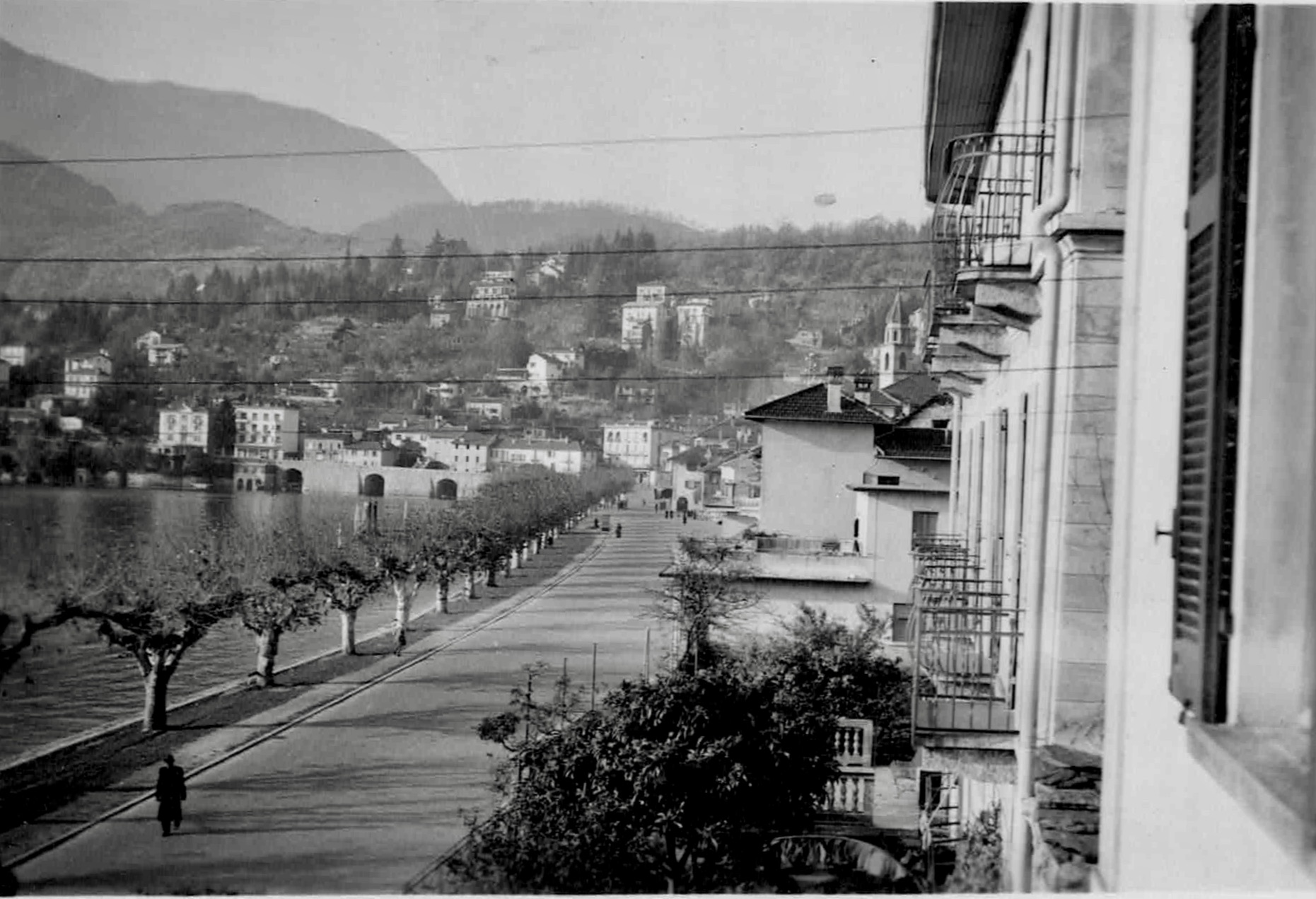
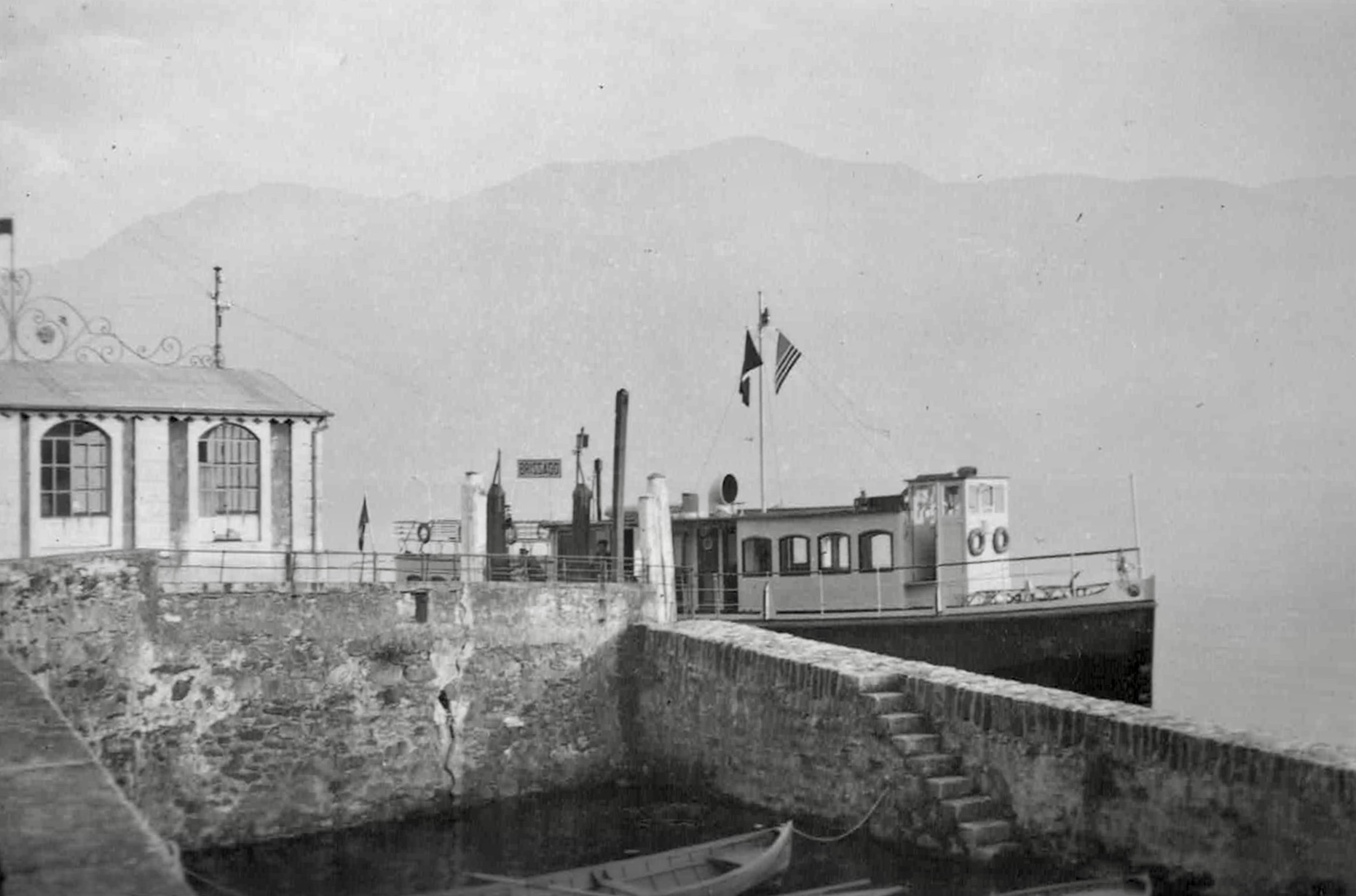
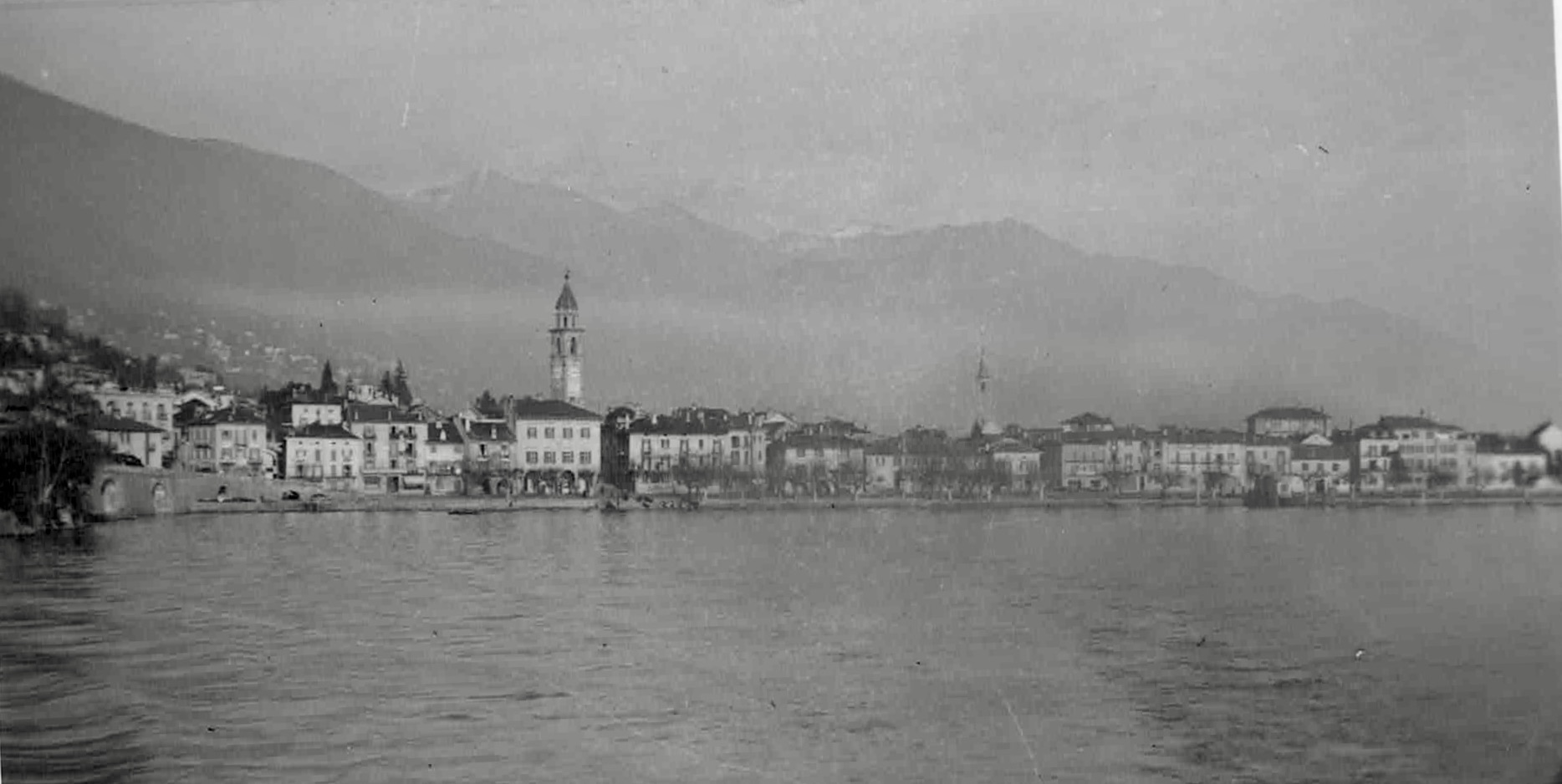
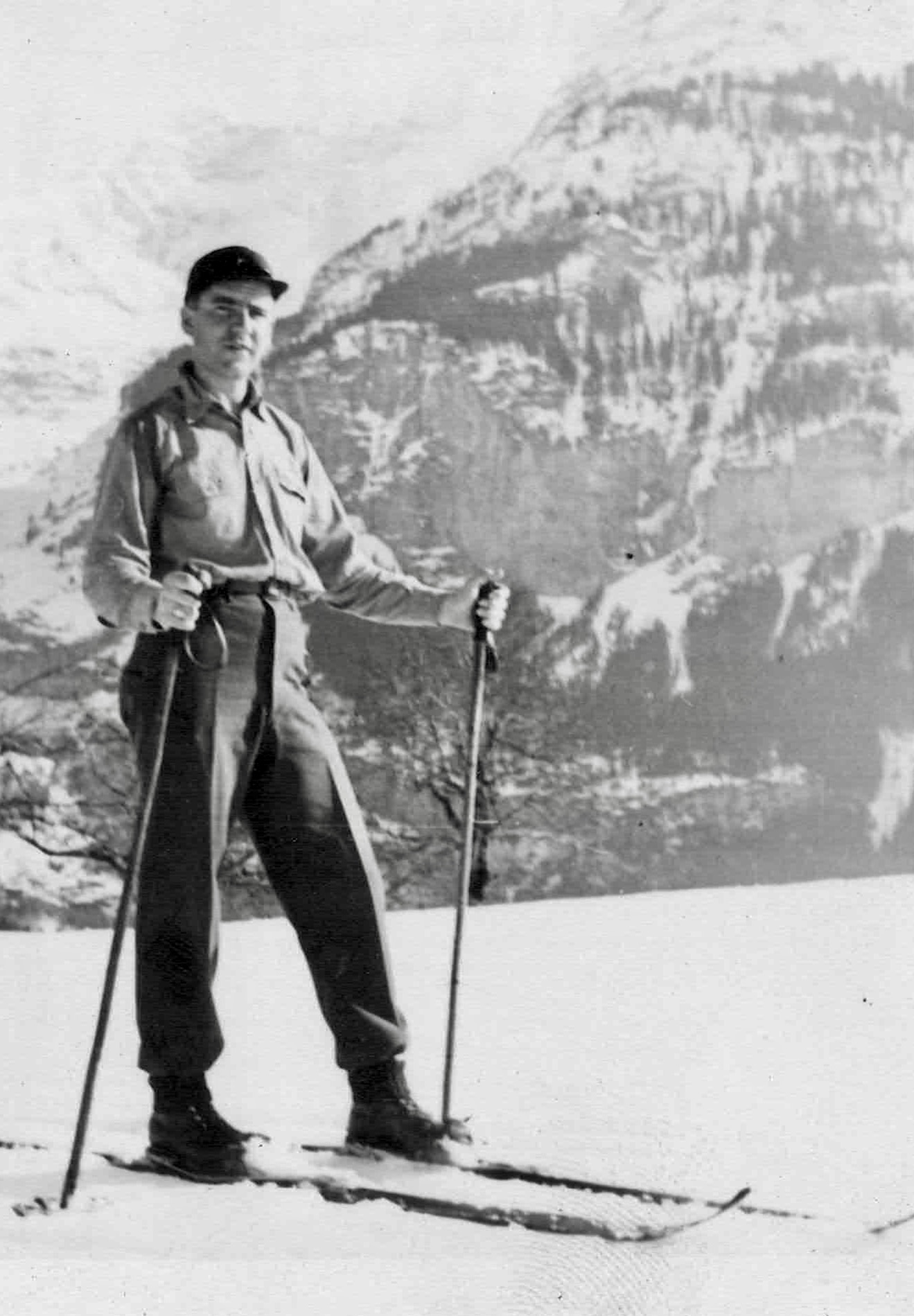
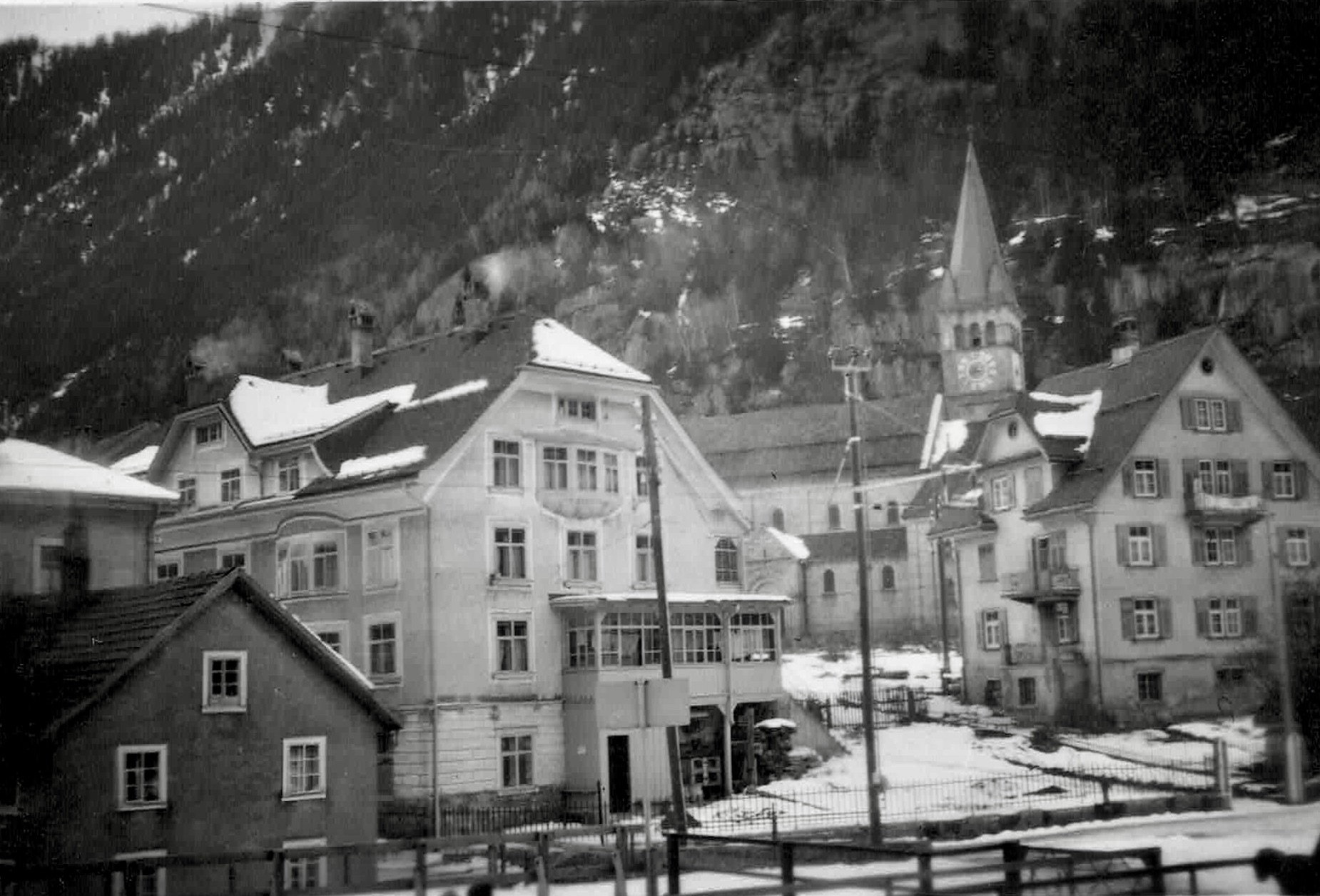
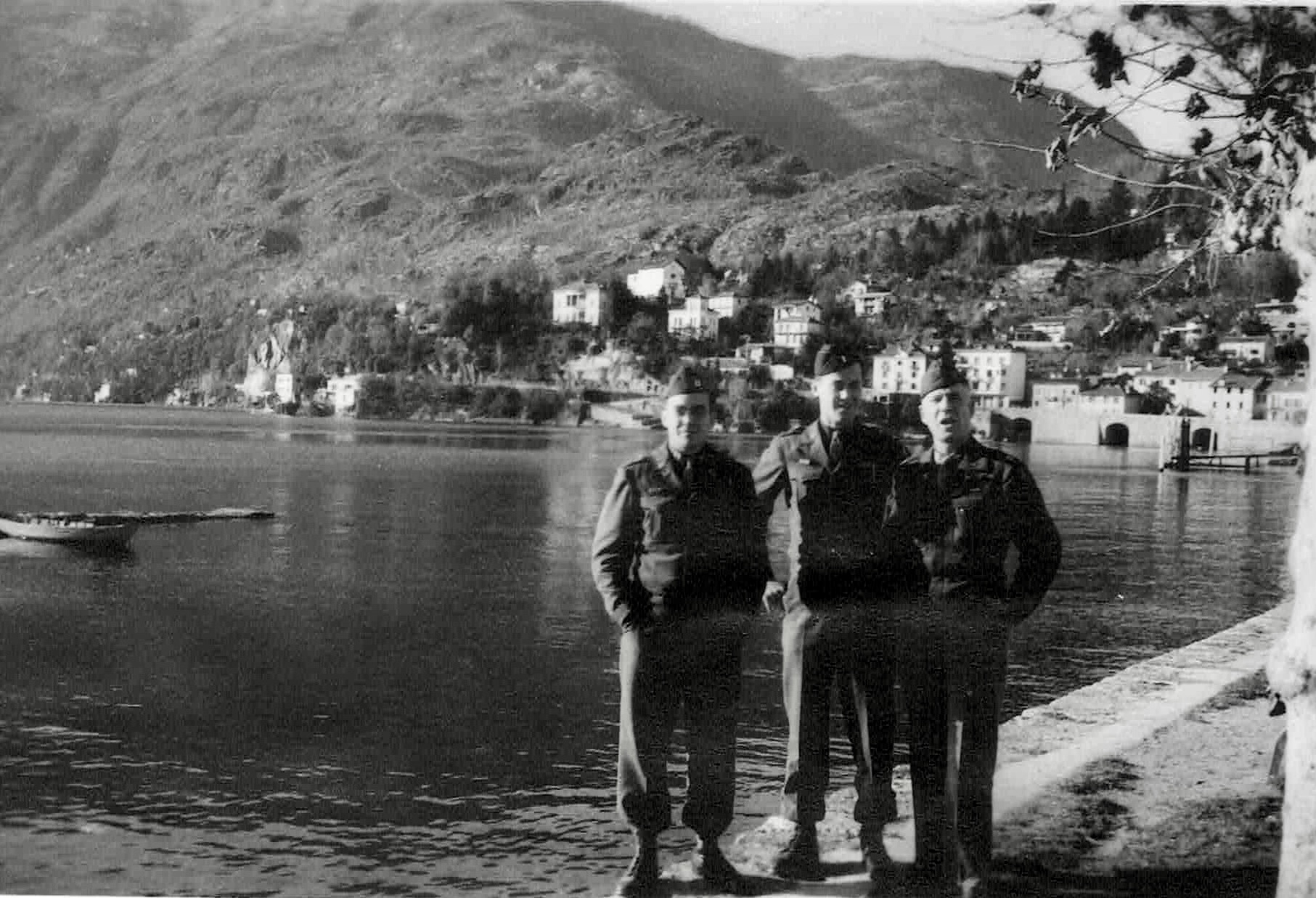
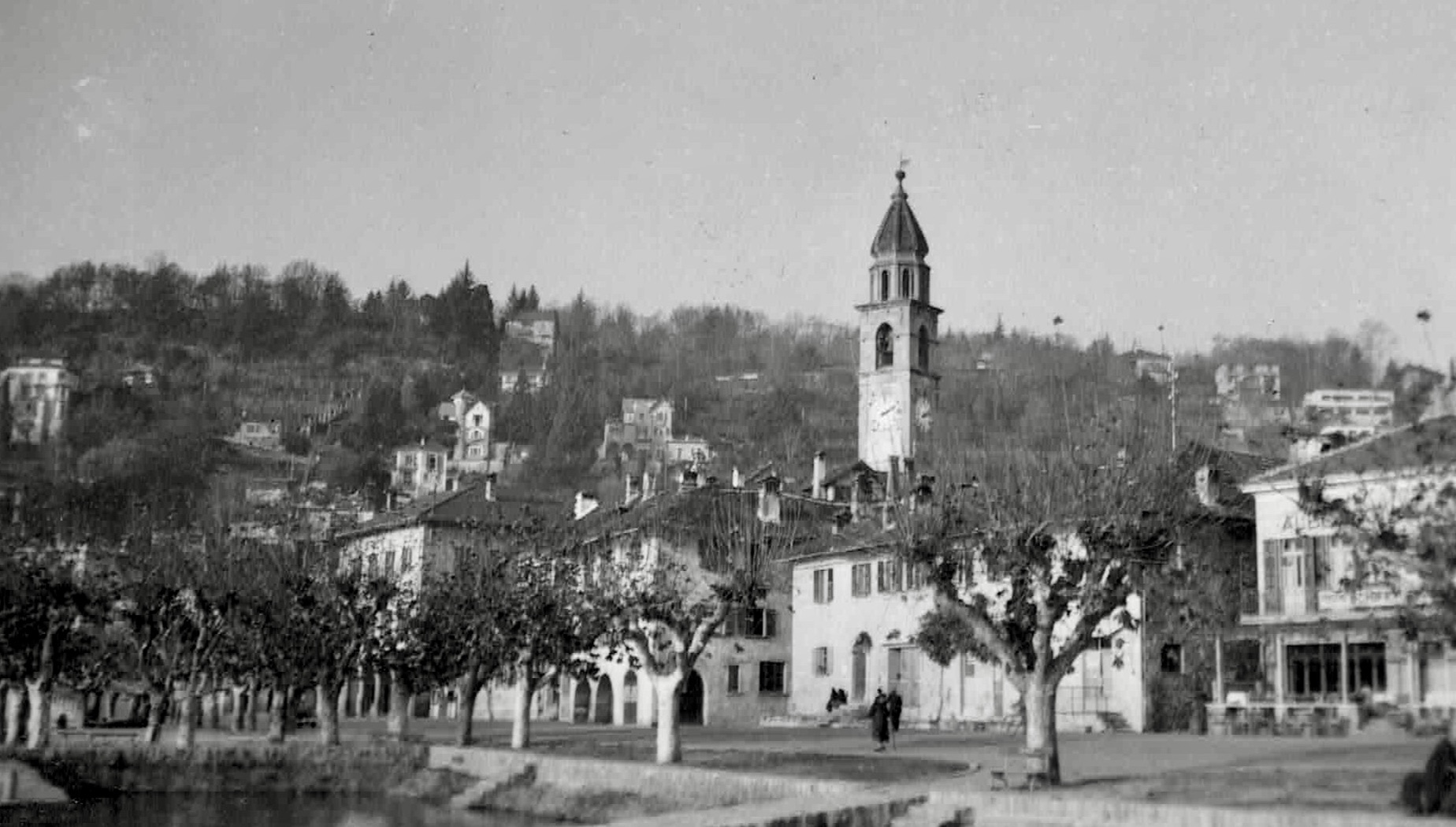
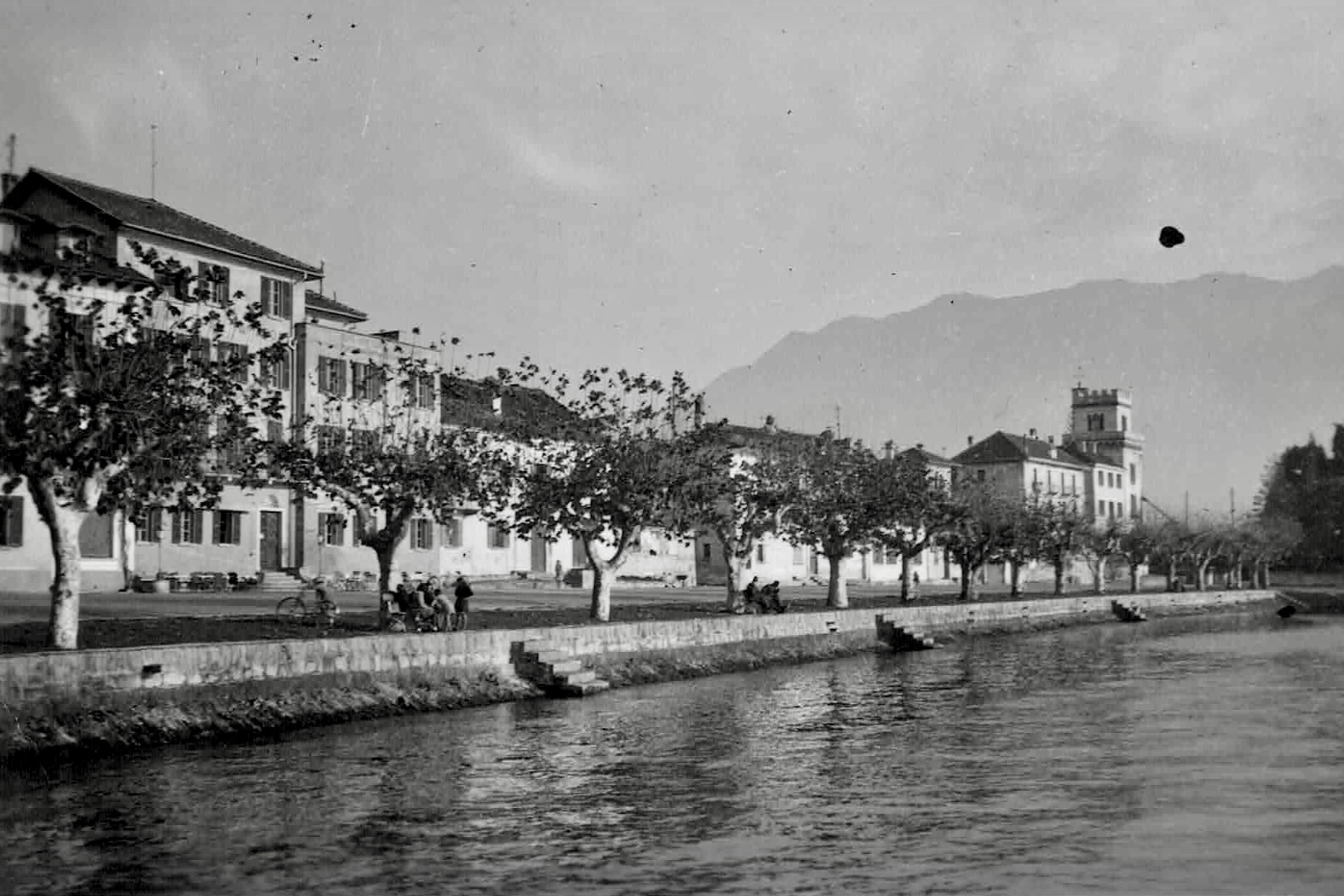
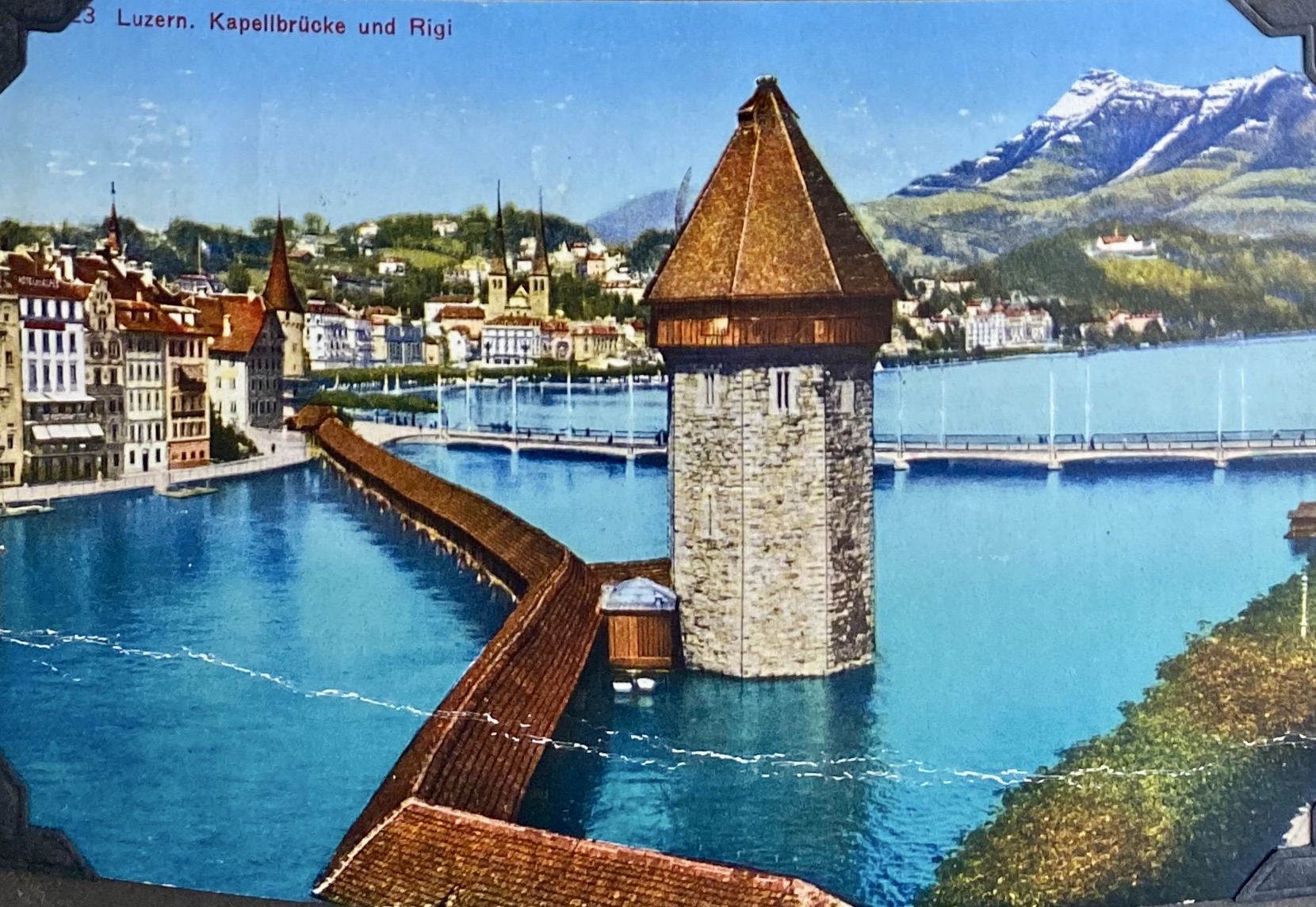
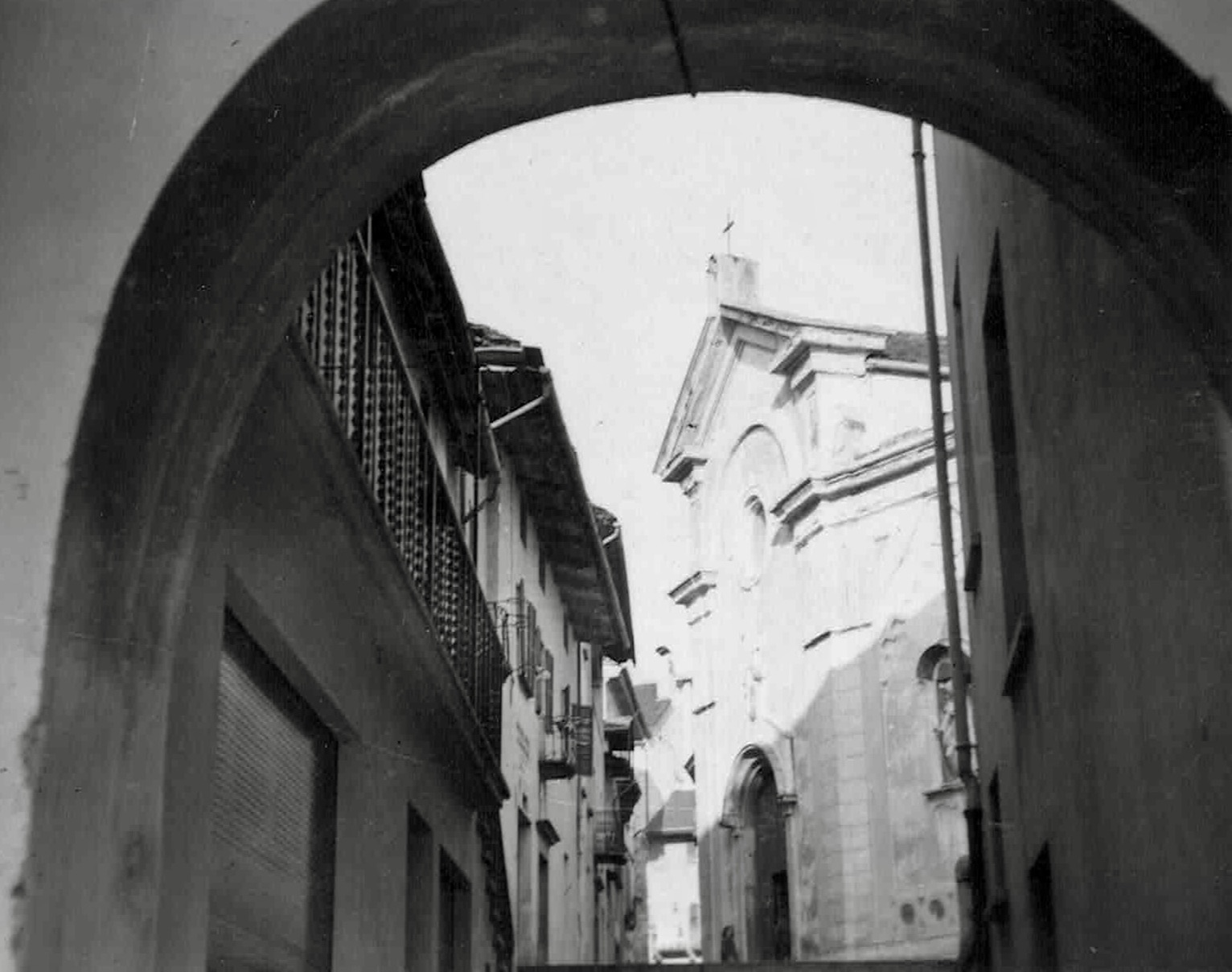
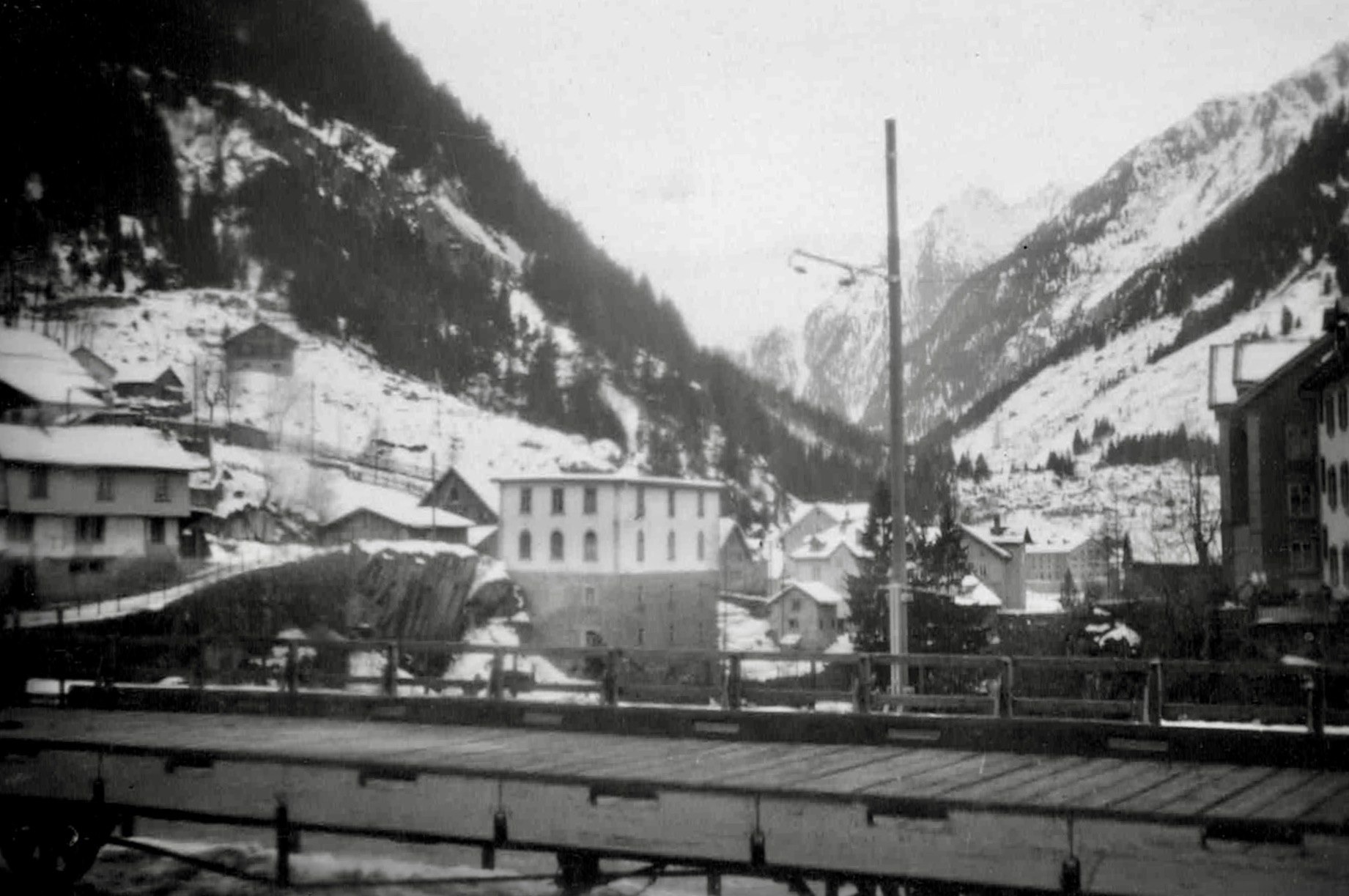
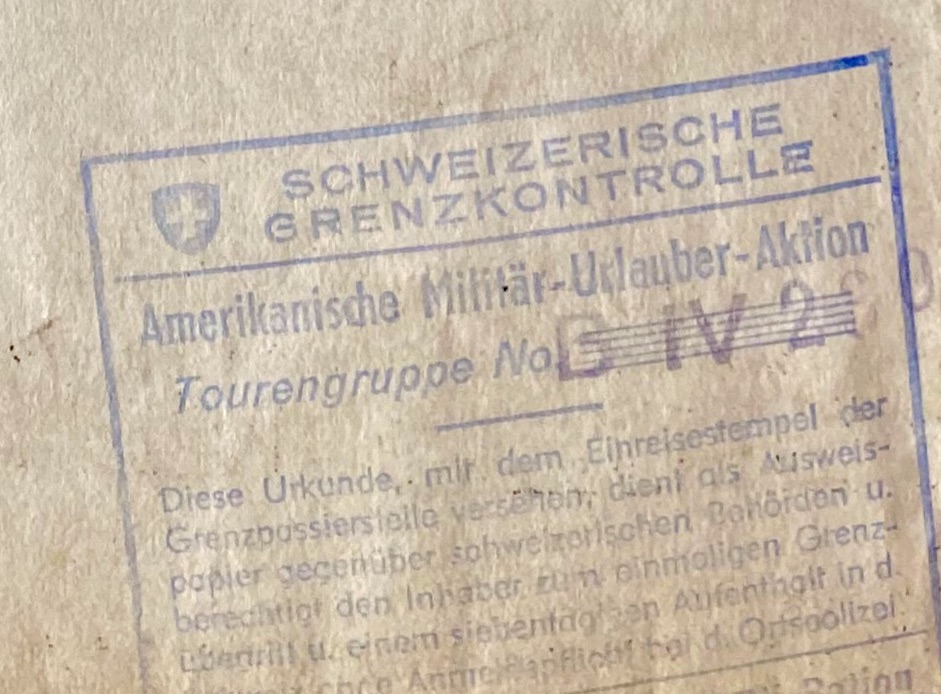
At the end of the year Flo scored a leave to Switzerland. She didn’t give enough detail on this page of her album to tell if she was traveling alone or with someone but it seems she was traveling alone.
Famously neutral during the war, the Swiss managed to pull it off, never being bombed or invaded. Switzerland had entered the war determined to remain neutral yet fully prepared to defend itself. In August 1939, days before Germany invaded Poland, the Swiss government mobilized its military, signaling that neutrality would be backed by force. Surrounded by Axis powers, Switzerland relied on its rugged geography, fortified defenses, and a vigilant air force to deter invasion. Swiss pilots even engaged German aircraft that violated their airspace, shooting down eleven while losing only three of their own. At the same time, the country became a refuge for some of those fleeing the conflict and a hub of quiet diplomacy, hosting negotiations and humanitarian efforts that underscored its role as a neutral intermediary.
Swiss businesses continued to trade with Germany, a reality that later raised ethical questions about the limits of neutrality, while the government struggled to preserve independence under constant pressure. Public sentiment, however, strongly opposed Nazism, fueling what became known as “spiritual defense”—a shared cultural and moral commitment to protect Swiss democracy against totalitarianism. Through military readiness, diplomatic maneuvering, and civic resolve, Switzerland managed to navigate the war’s dangers and emerge with its sovereignty intact.
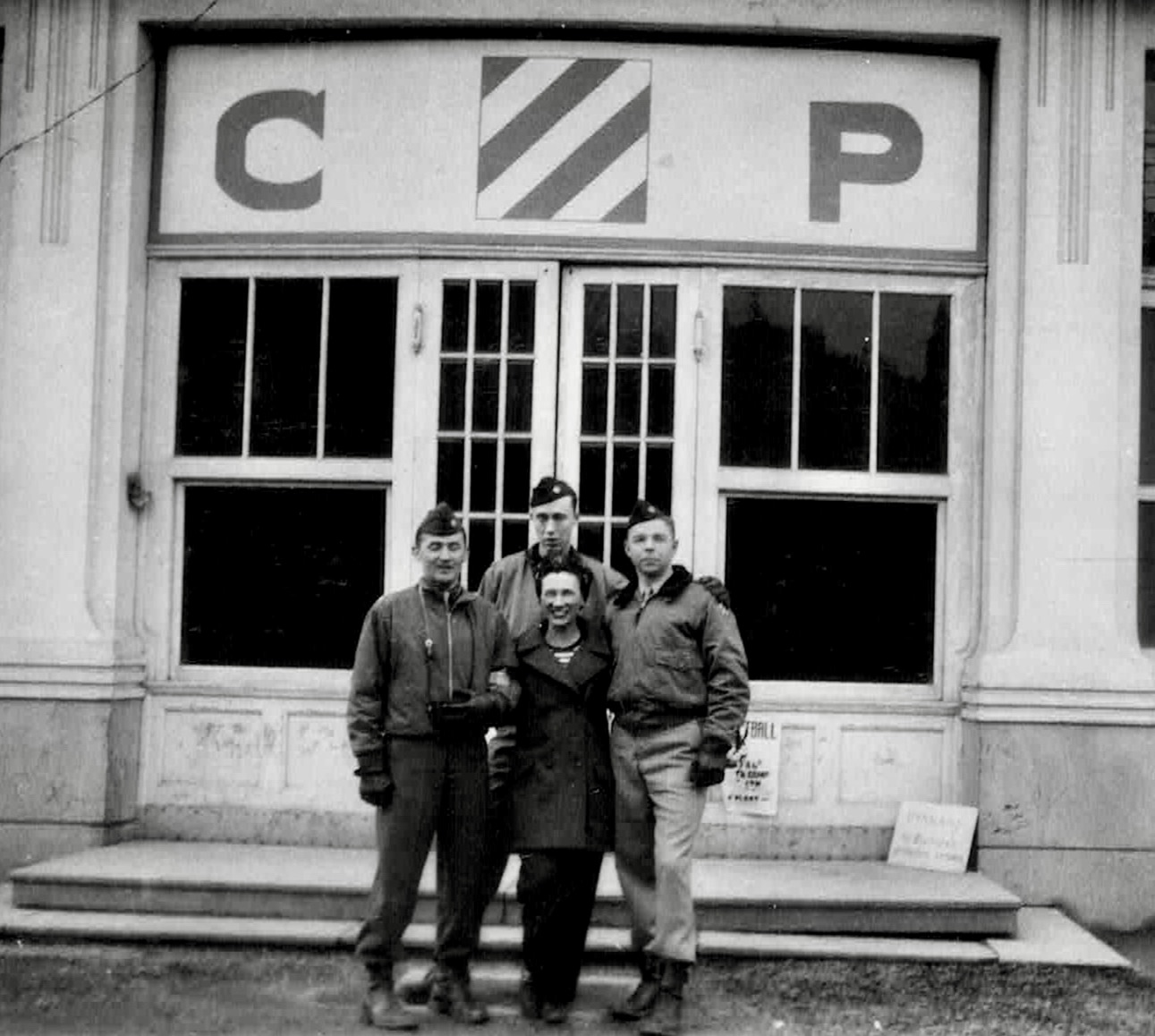
Flo photographed some of her coworkers and visitors at the CP
My Mother and Audie Murphy Ch. 102
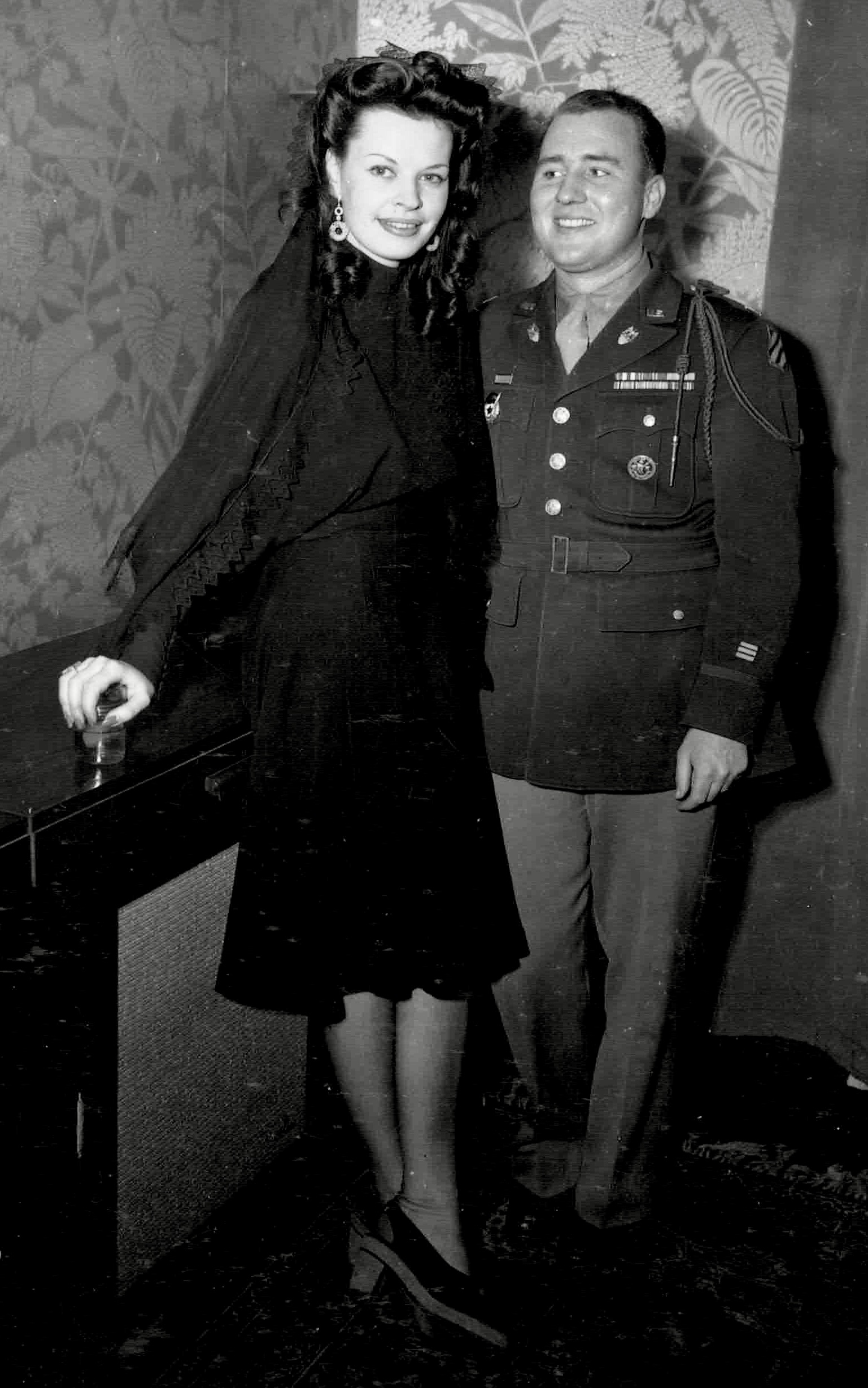
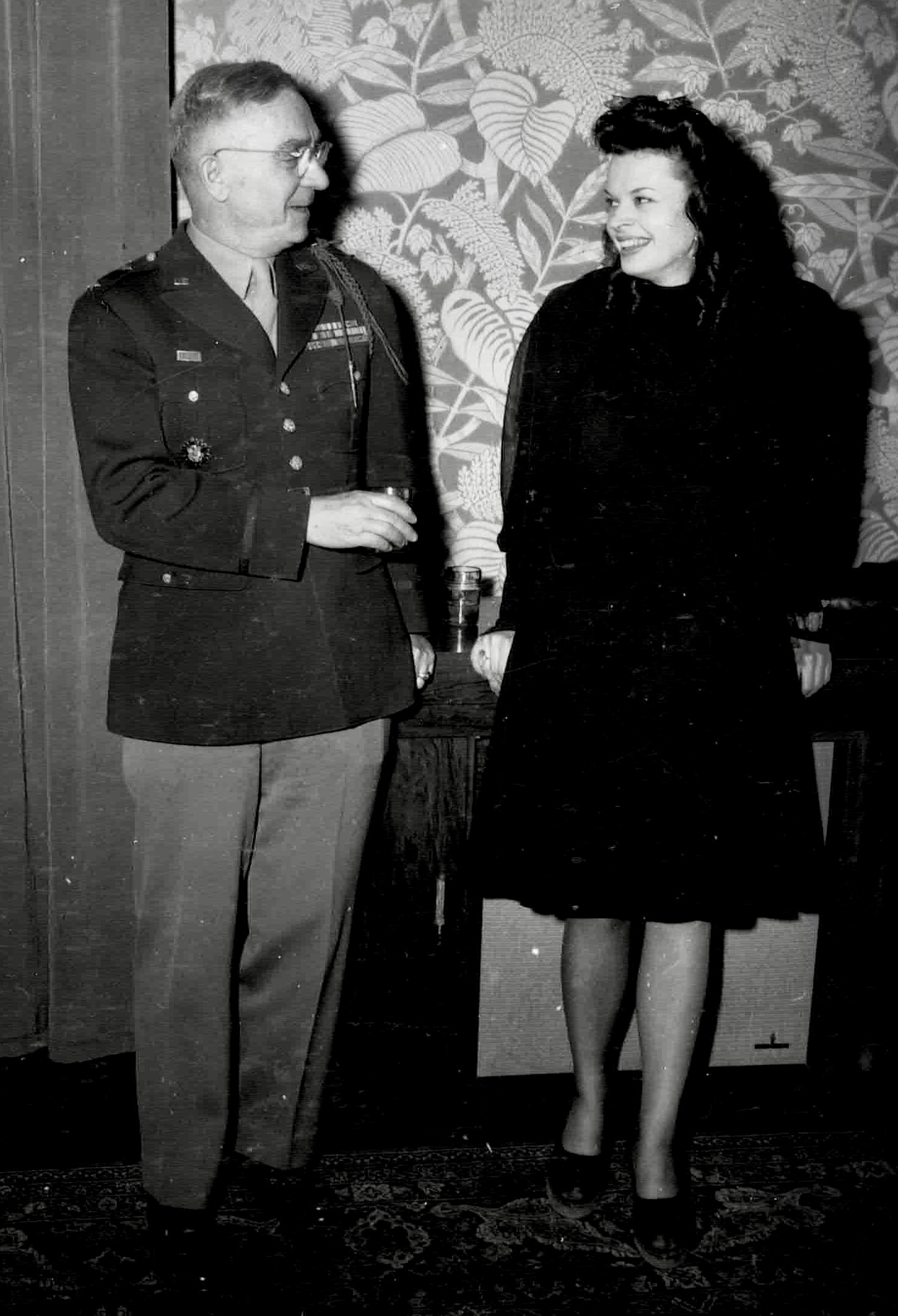
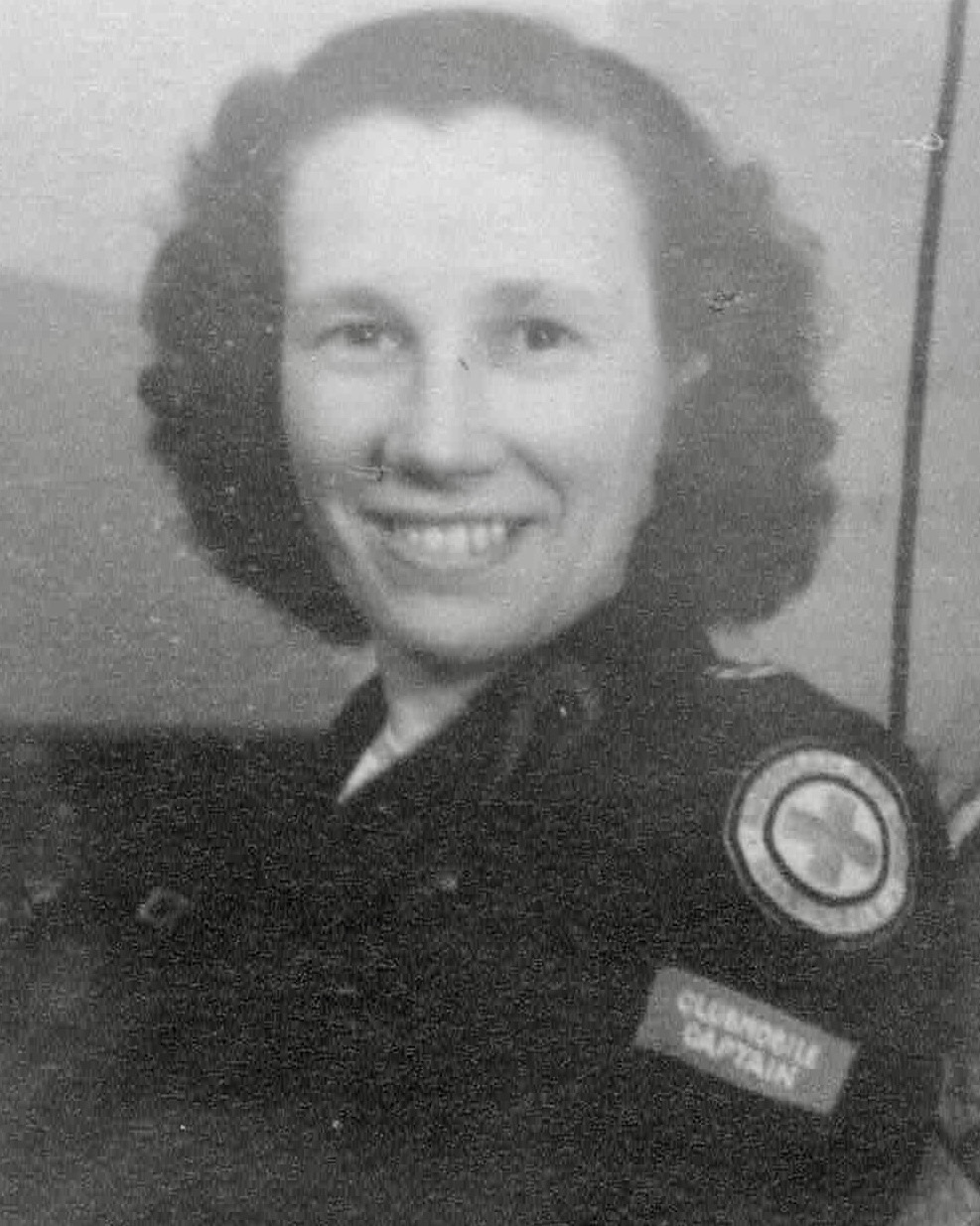
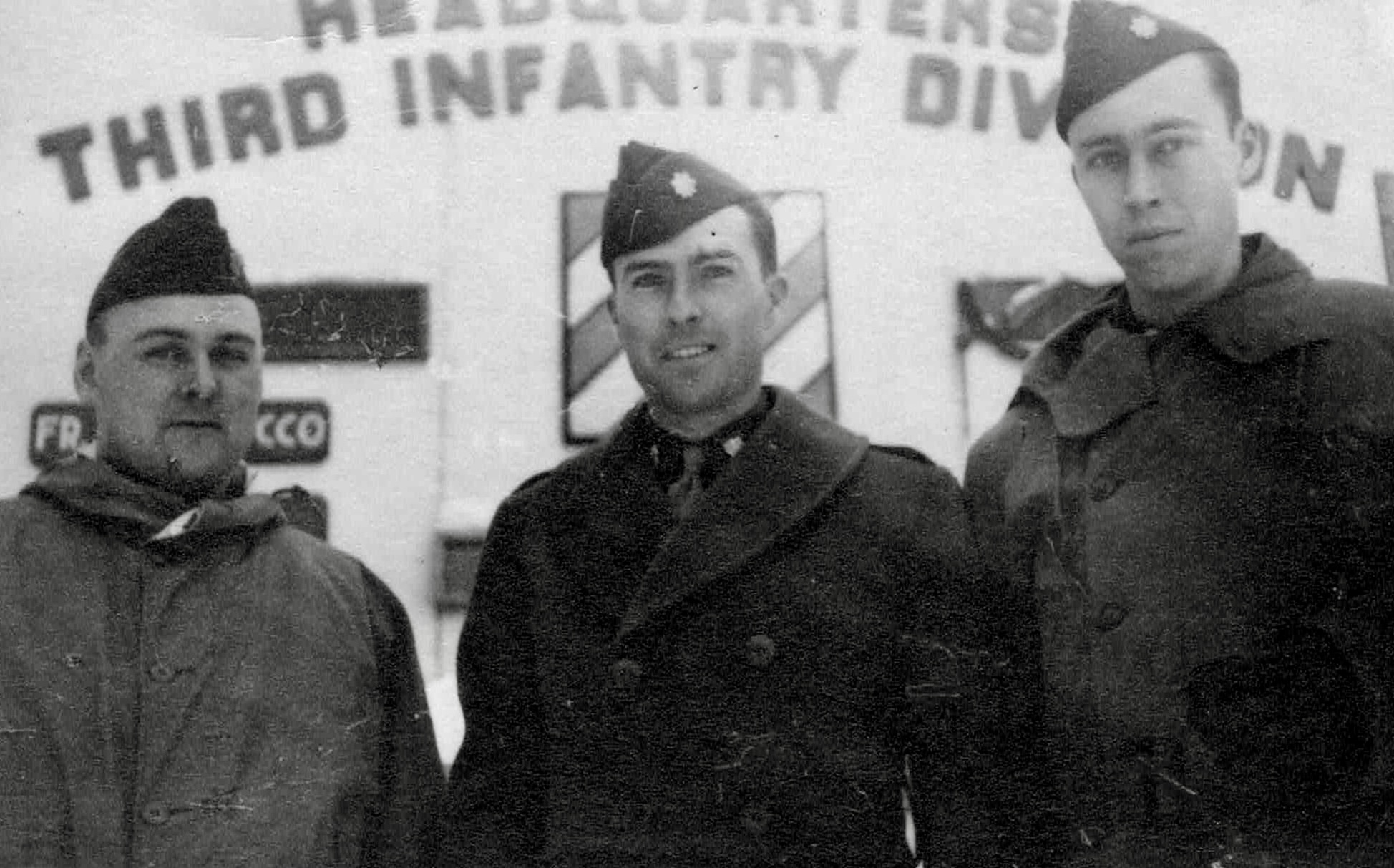
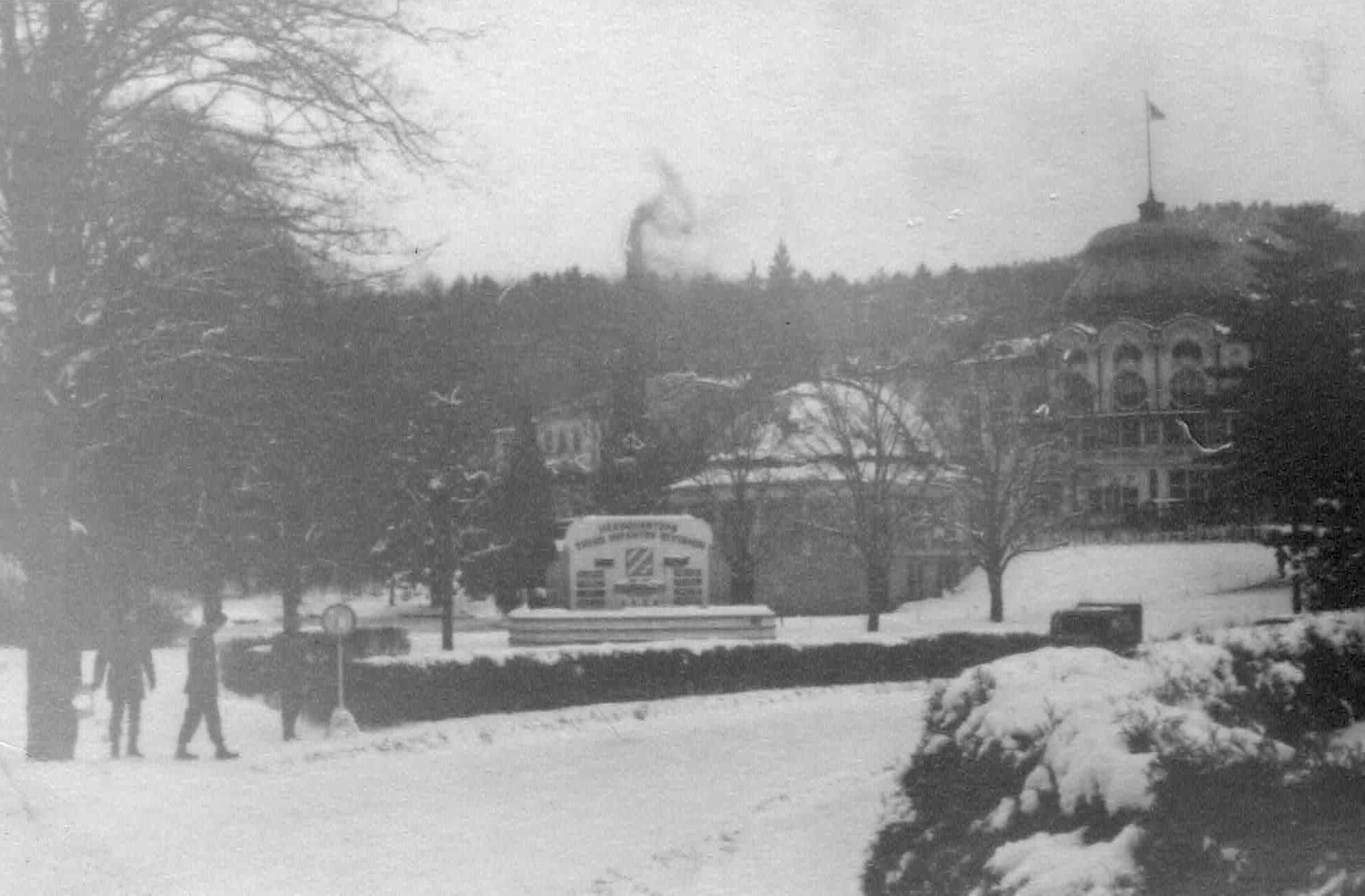
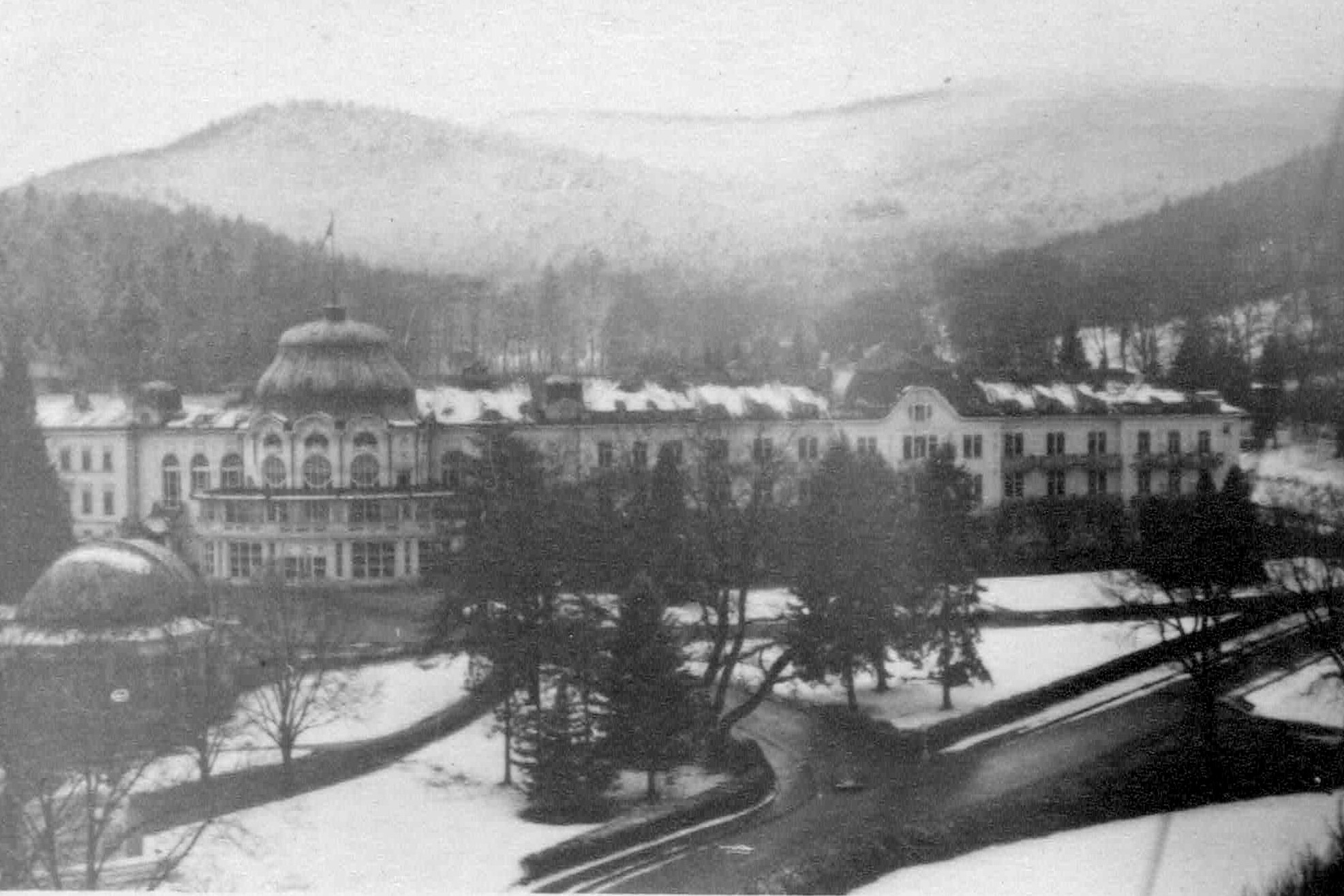
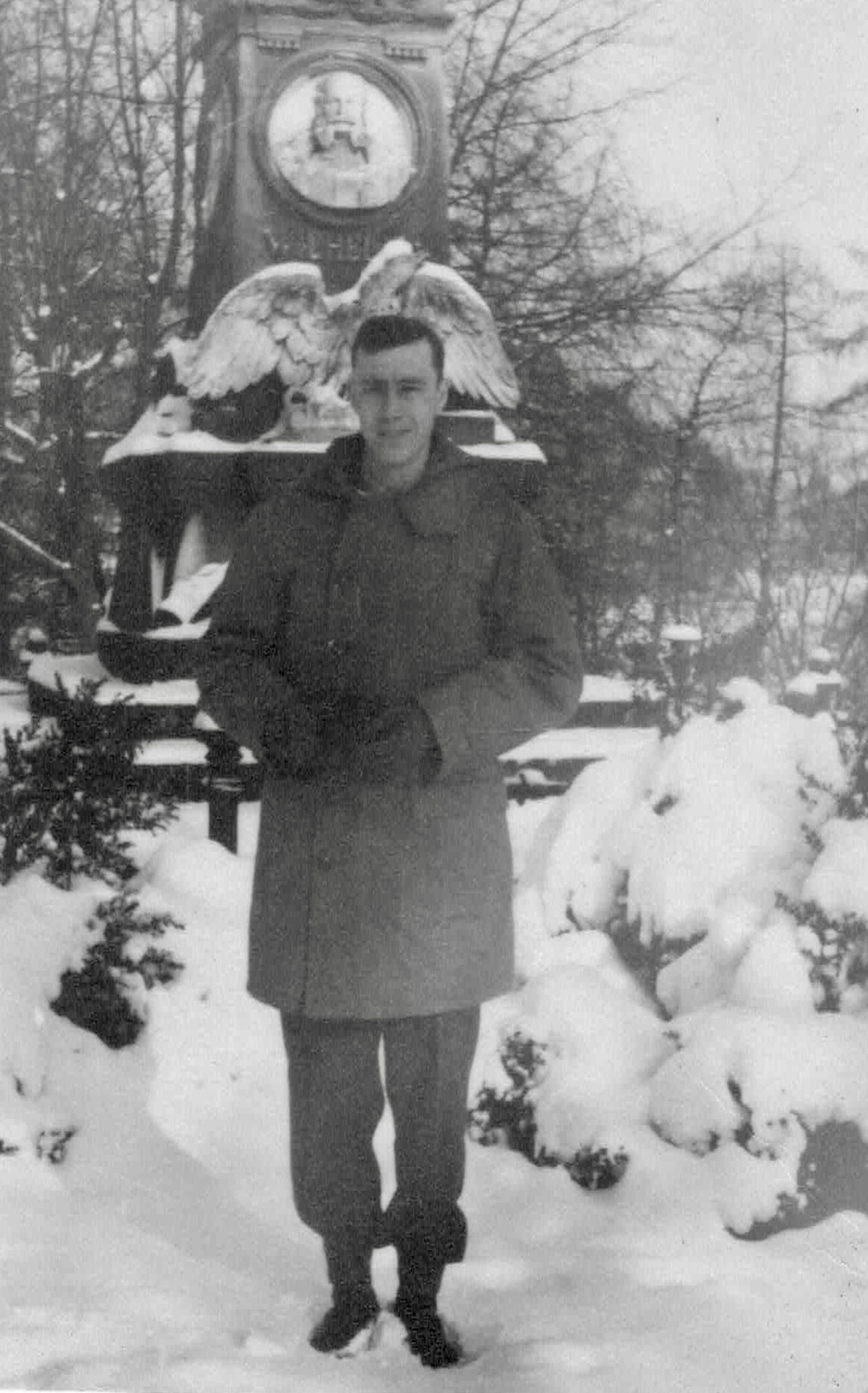
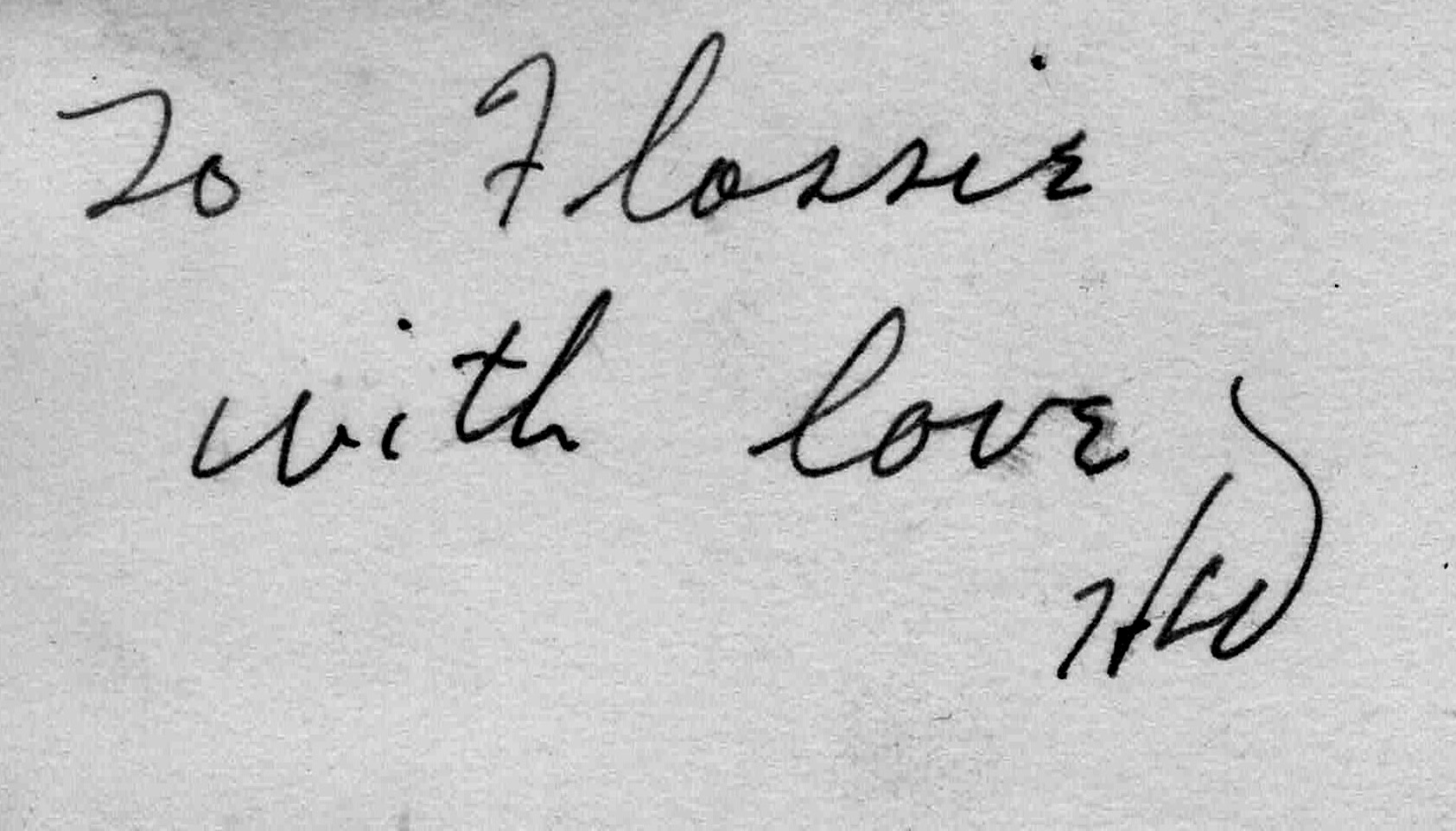
German actress Margot HillscherWith Gen. SchmidtI love this picture of Flo in uniform. There are the Red Cross and Clubmobile Captain patches on her shoulder. She looks happy.Maj. Carey, Col. Drain, Maj. Duncan, Maj. Royce, Maj. SchutThe “Mad Majors” with FloMaj. Perkins, Maj. Dwan, Maj. DuncanThe “Mad Majors” at easeMajor CareyLt. Leland NelsonThird Division CP, Bad Hotel, Bad WildungenMaj. Duncan AGWritten on the back of the picture of Major Duncan. But who is HW?
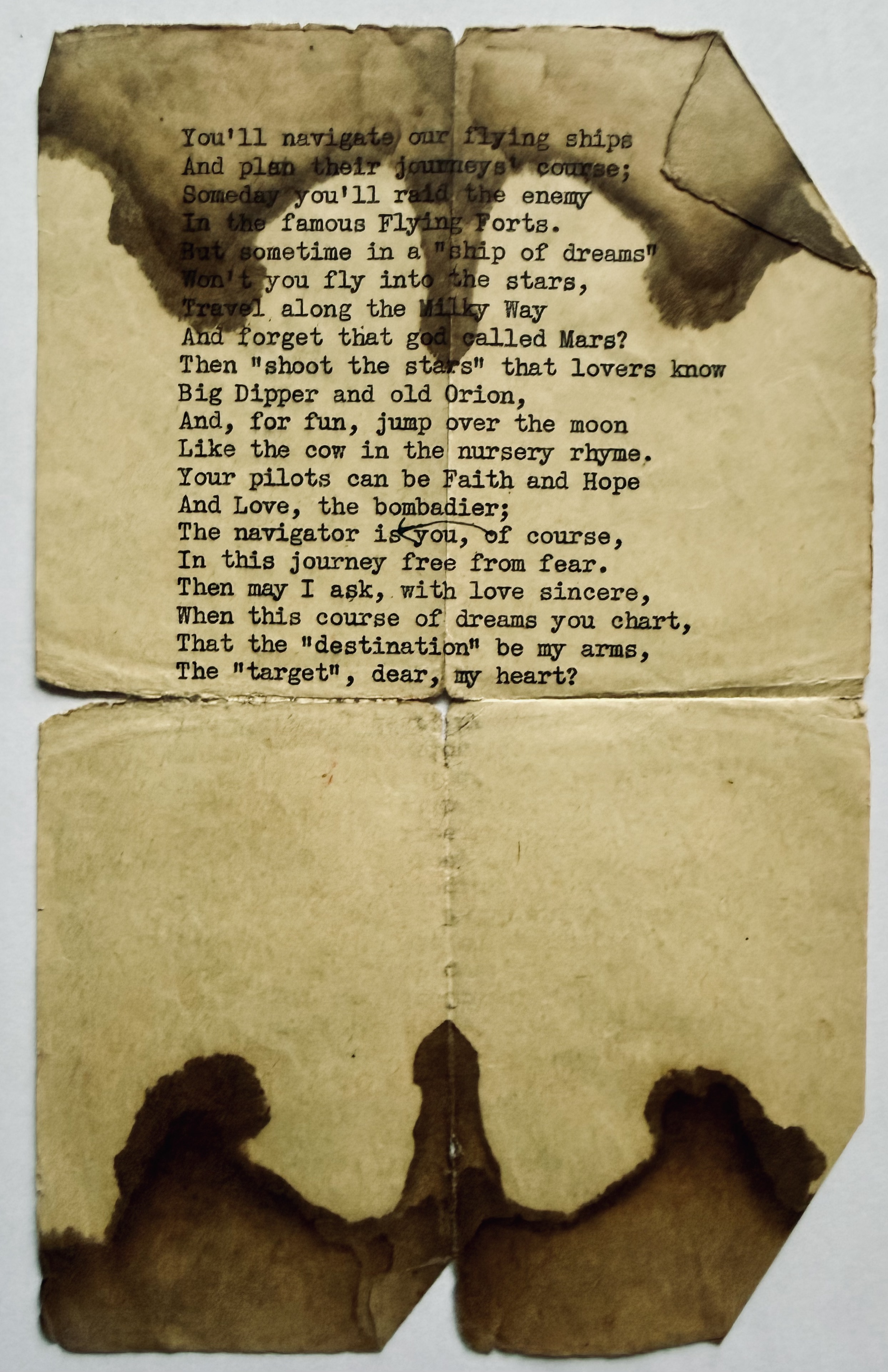
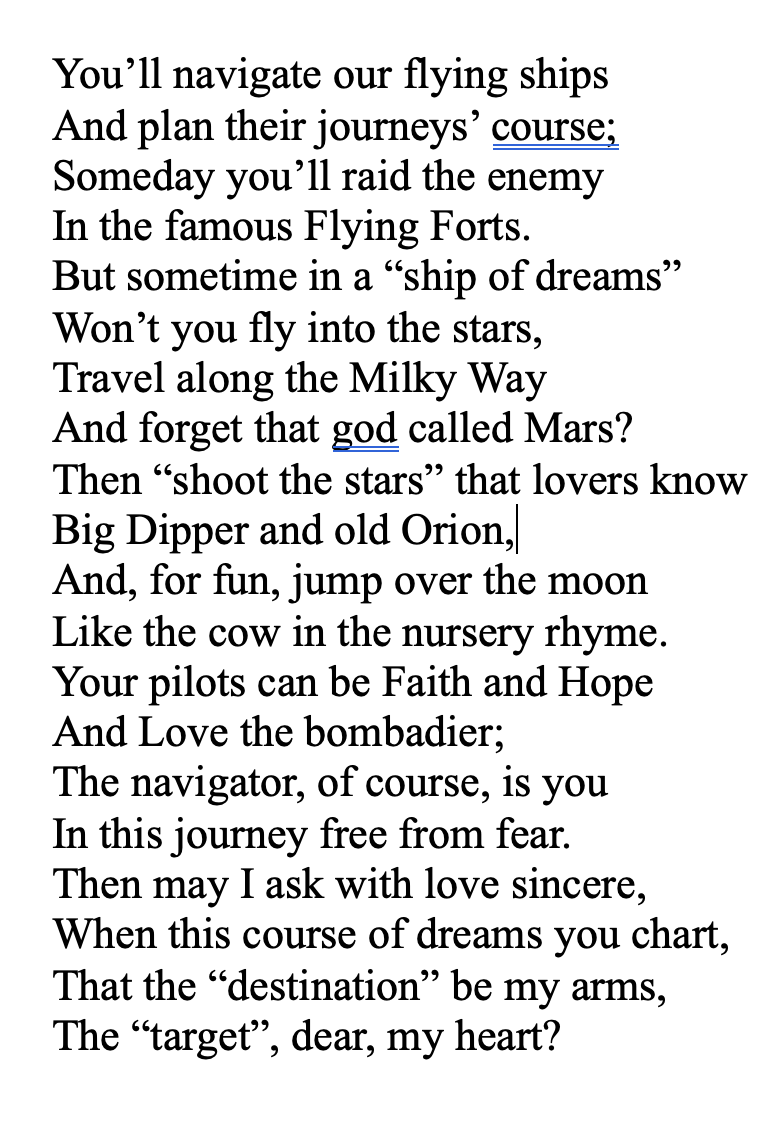
This poem, written on a small slip of paper, fell out of Flo’s album, and I can’t be sure where she meant to place it. I believe she wrote it herself: she made a correction in the text, and I could find no reference to it anywhere else. The poem is addressed to a flyer, yet none of her Third Division friends–nor her fiancé–were flyers. So who was she writing to? I found one possible clue in a letter she wrote to her sister Ruth in August 1944:
“When I returned from Sorrento, Ruth, I found some tragic news awaiting me. A letter I had written Johnny on July 19 was returned to me and on the envelope in red ink was written “accidentally killed in training flight July 15, 1944 near NY.” I simply can’t believe he is dead – he was so alive and so anxious to get over here and do his part. He had had nothing but bad luck since getting into the air Corps. His last letter told me he was just recuperating from pneumonia – common due to flying in sub zero altitudes. It is easier to “take” over here than it would have been at home because you develop a different philosophy, but it is hard nevertheless. His poor mother – both sons killed in airplanes!”
The poem implies that Johnny was more than just a friend. But Flo never told me about him and I can find no other reference to him in her papers. The poem must have been enclosed in her returned letter.
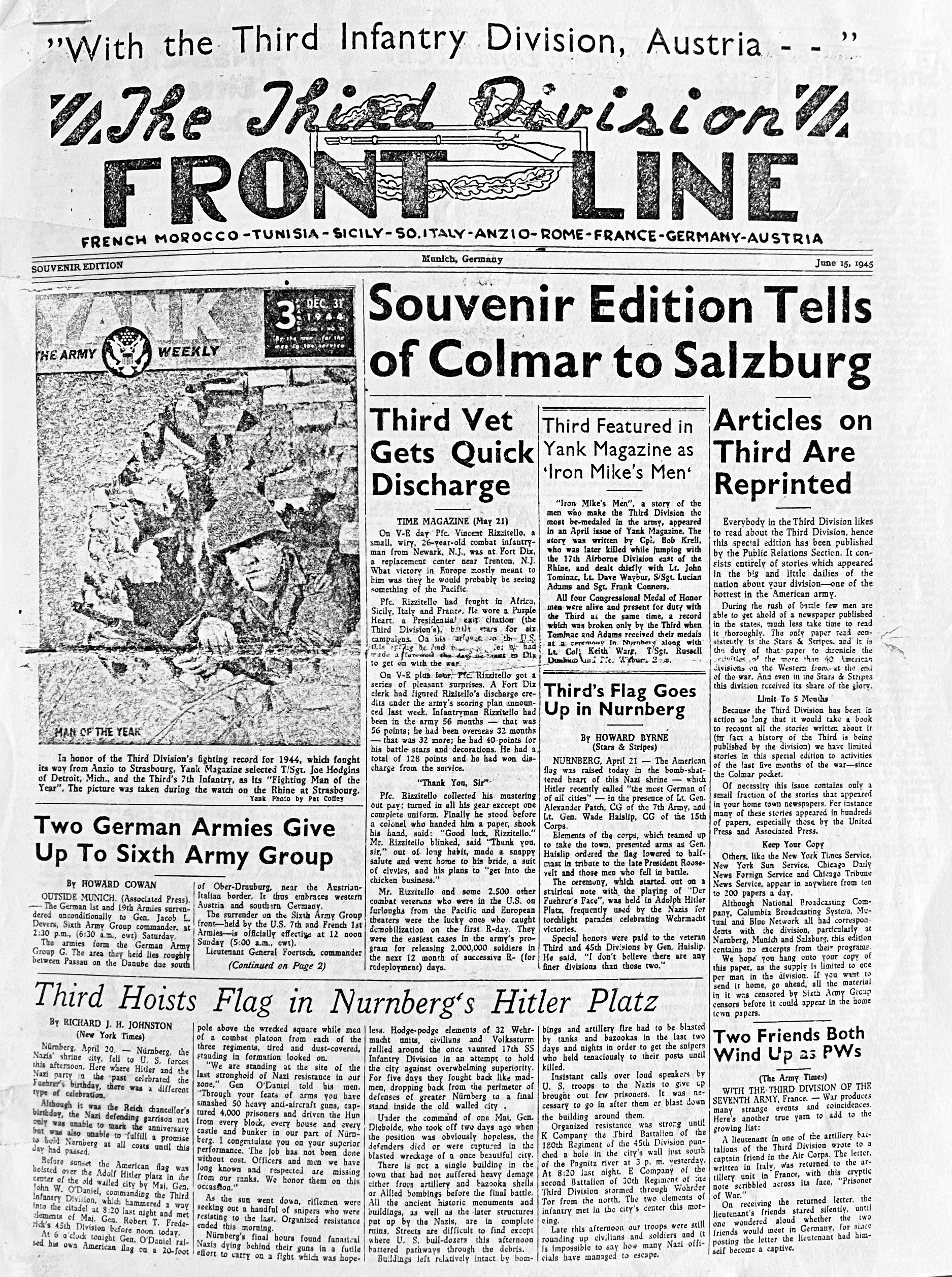
3rd Division souvenir paper tells history of the division
My Mother and Audie Murphy Ch. 100
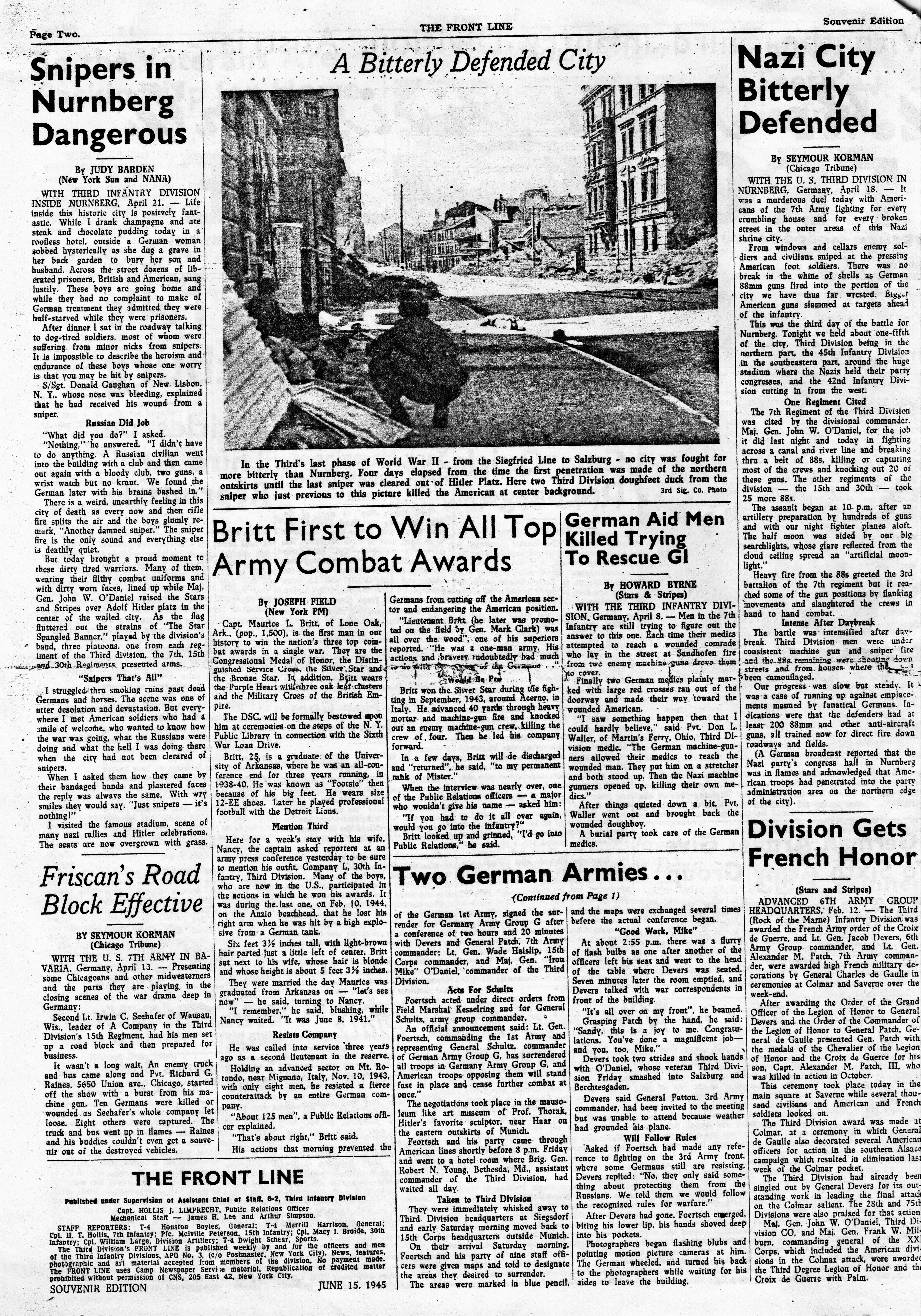
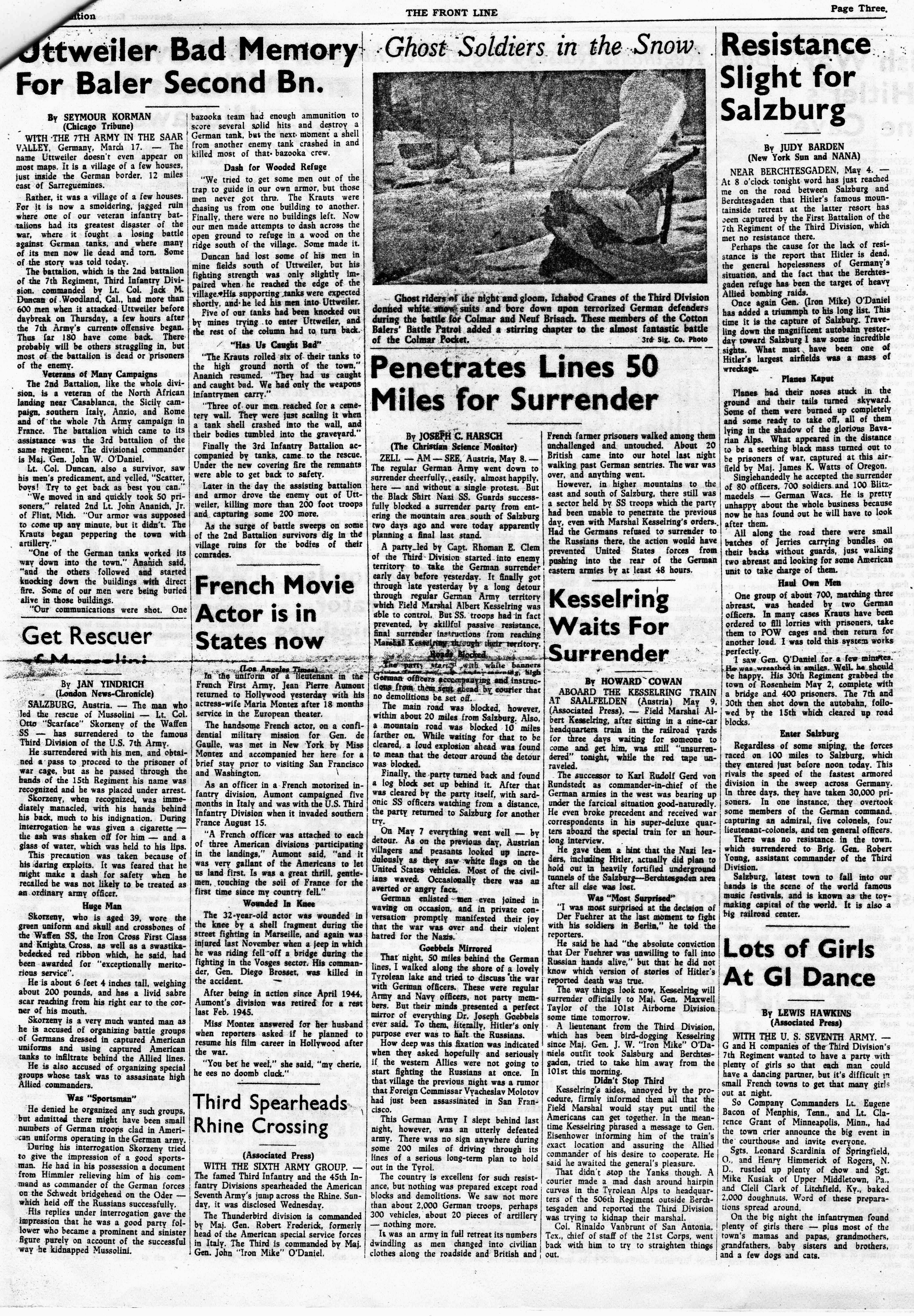
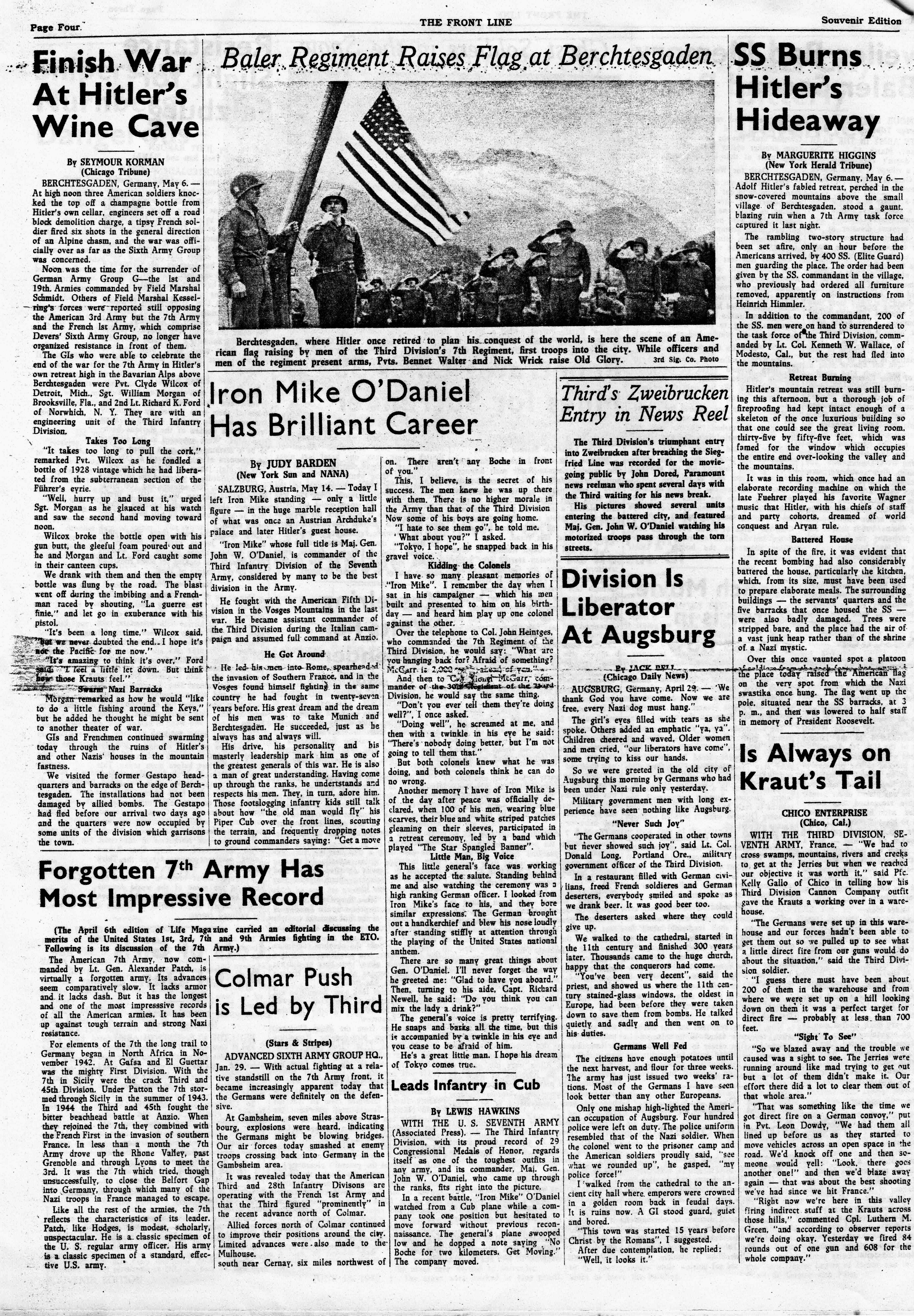
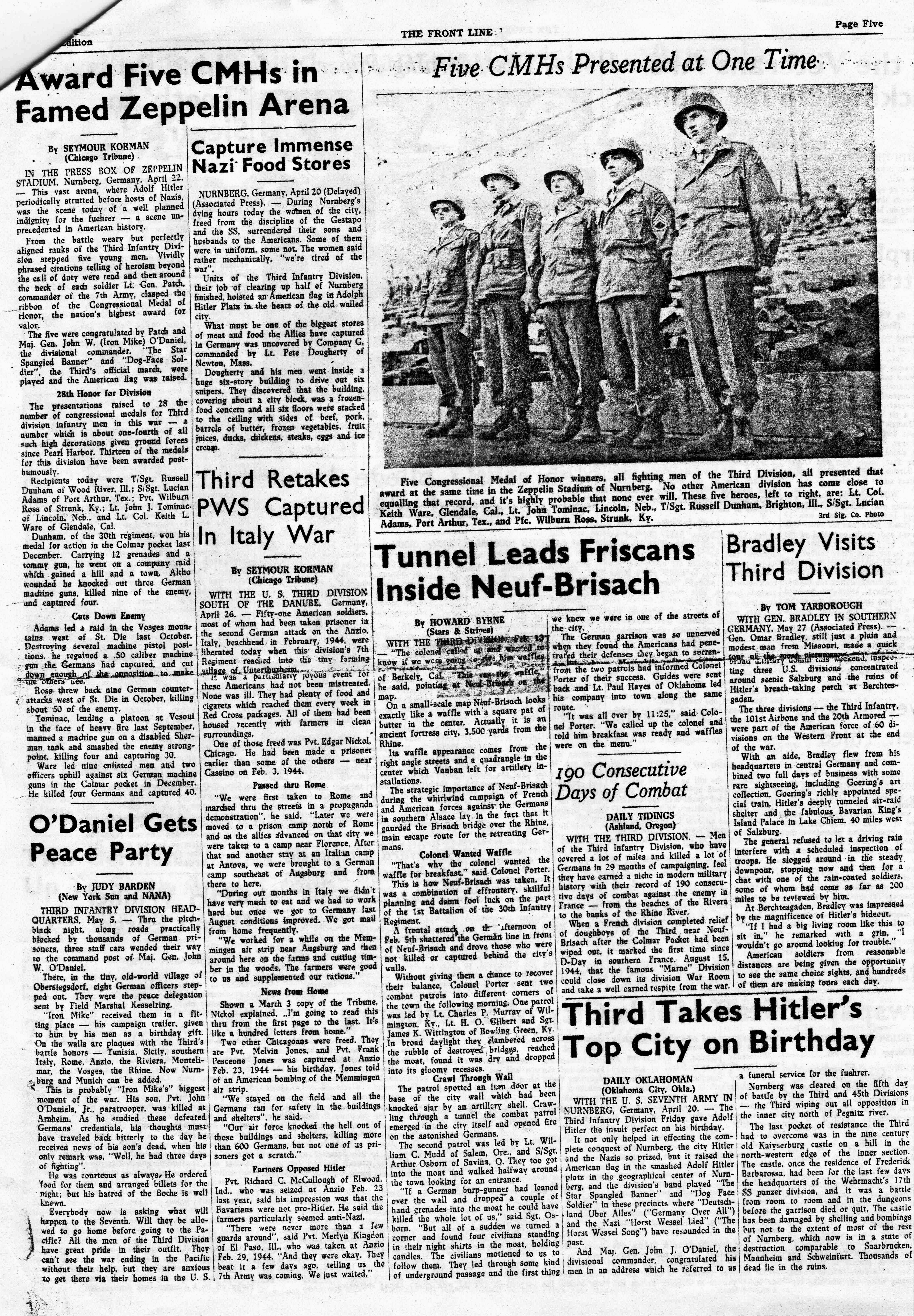
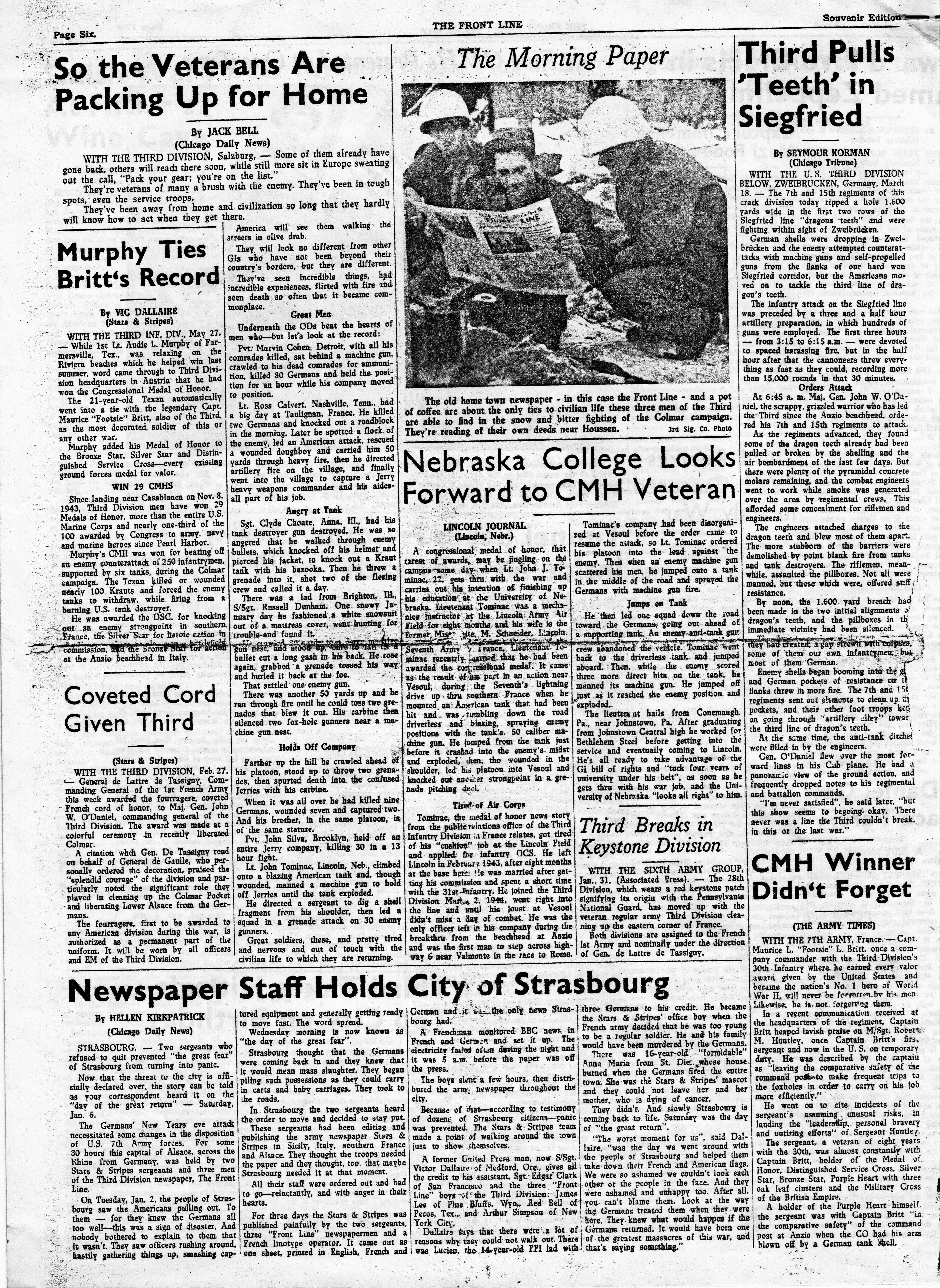
Don’t throw this away! admonishes the Front Line newspaper of their post-war special edition. Flo didn’t throw it away. She saved it and tucked it into her album. The issue consists entirely of stories which appeared in the big and little dailies of the nation about the Third Division.
From the introduction: “During the rush of battle few men were able to get a hold of a newspaper published in the states, much less take time to read it thoroughly….Hence, this special edition.
“We hope you hang on to your copy as the supply is limited to one per man. If you want to send it home, go ahead. All the material in it was censored by Sixth Army Group censors before it could appear in the home town papers.”
The Front Line is the official newspaper of the Third Infantry Division. In the interest of archiving, I’m posting the whole six-page paper. You can read it by pinching out the image.
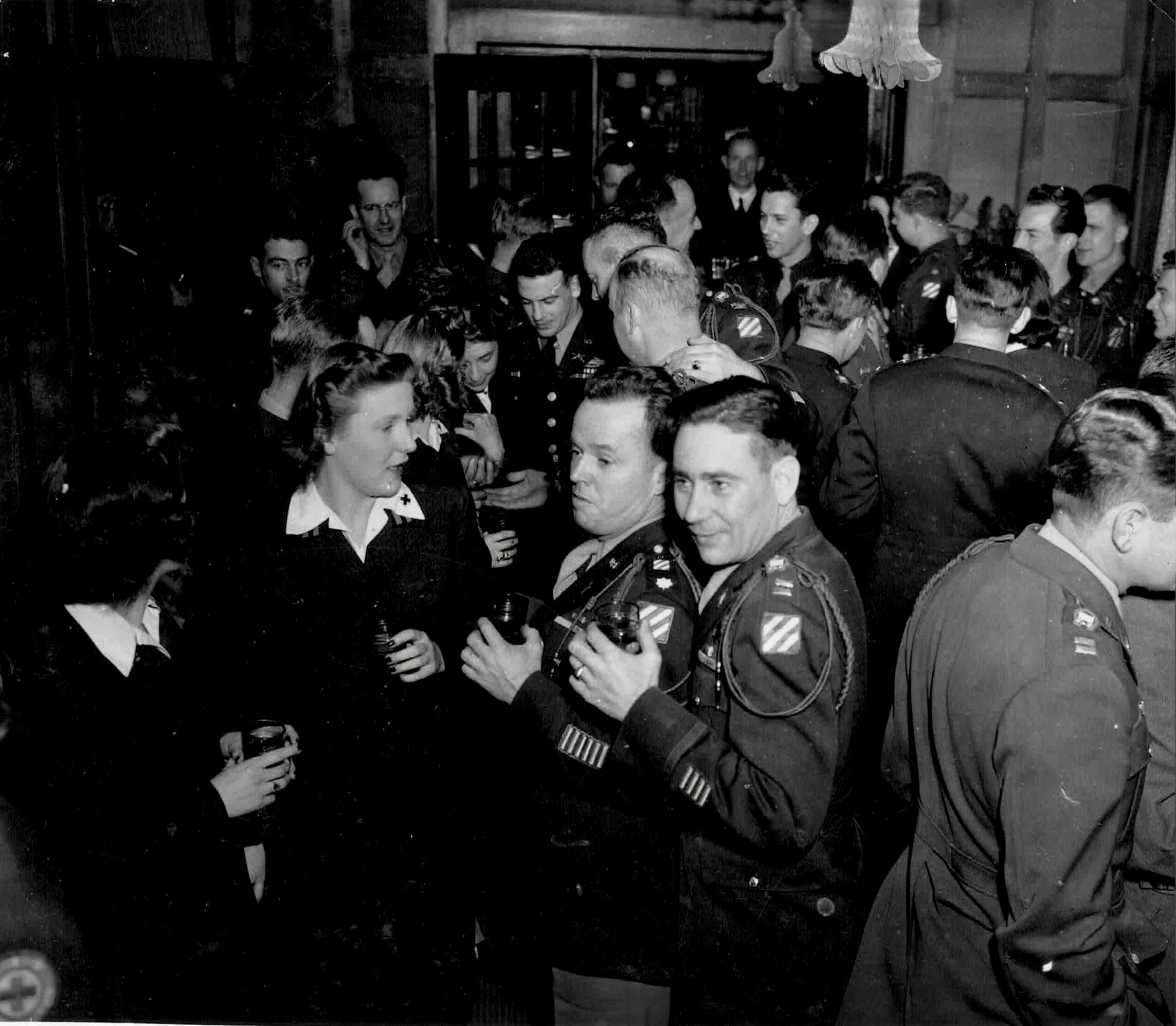
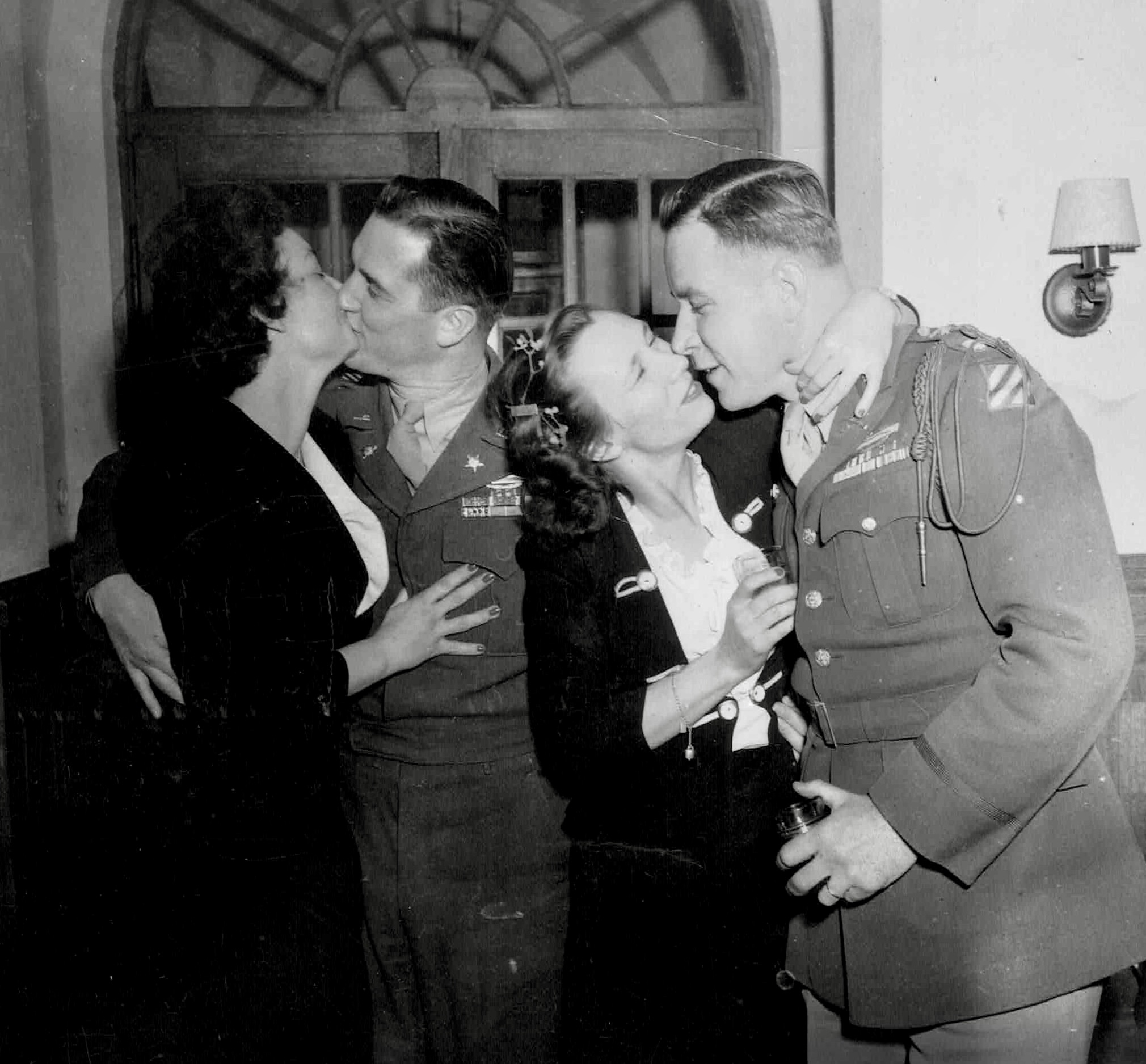
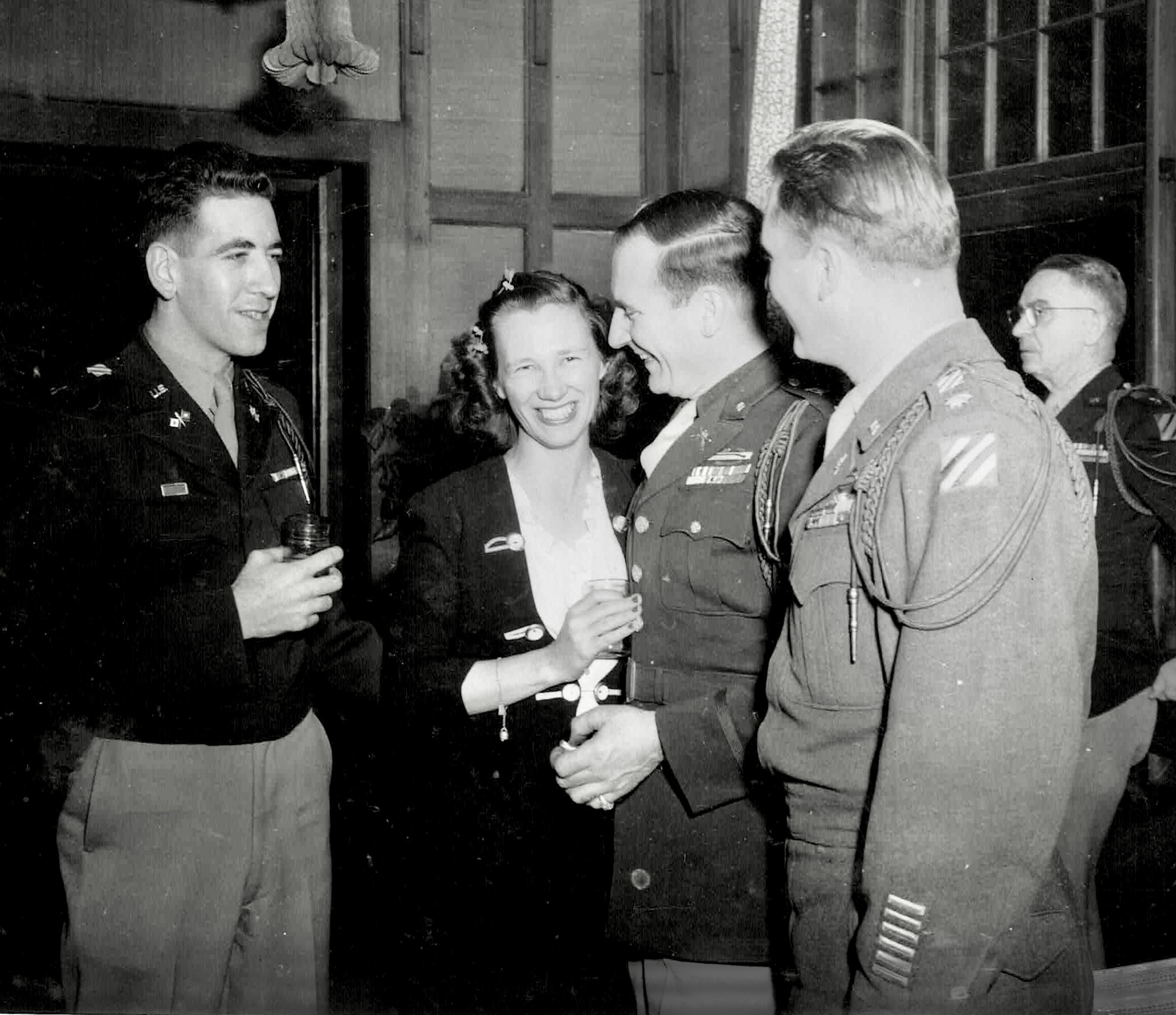
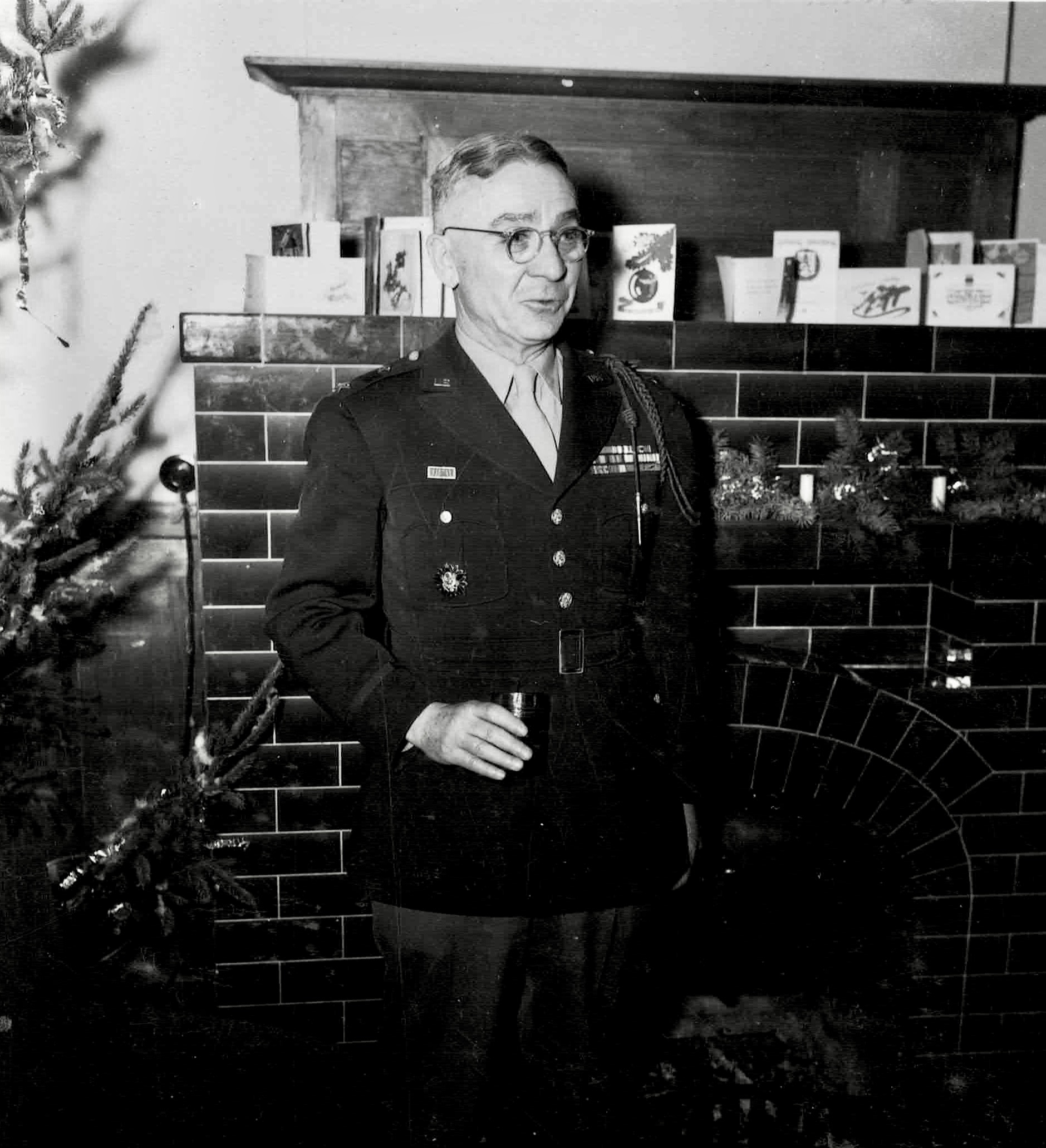
Gen. Schmidt’s New Year’s party celebrates Third Division
My Mother and Audie Murphy Ch. 99
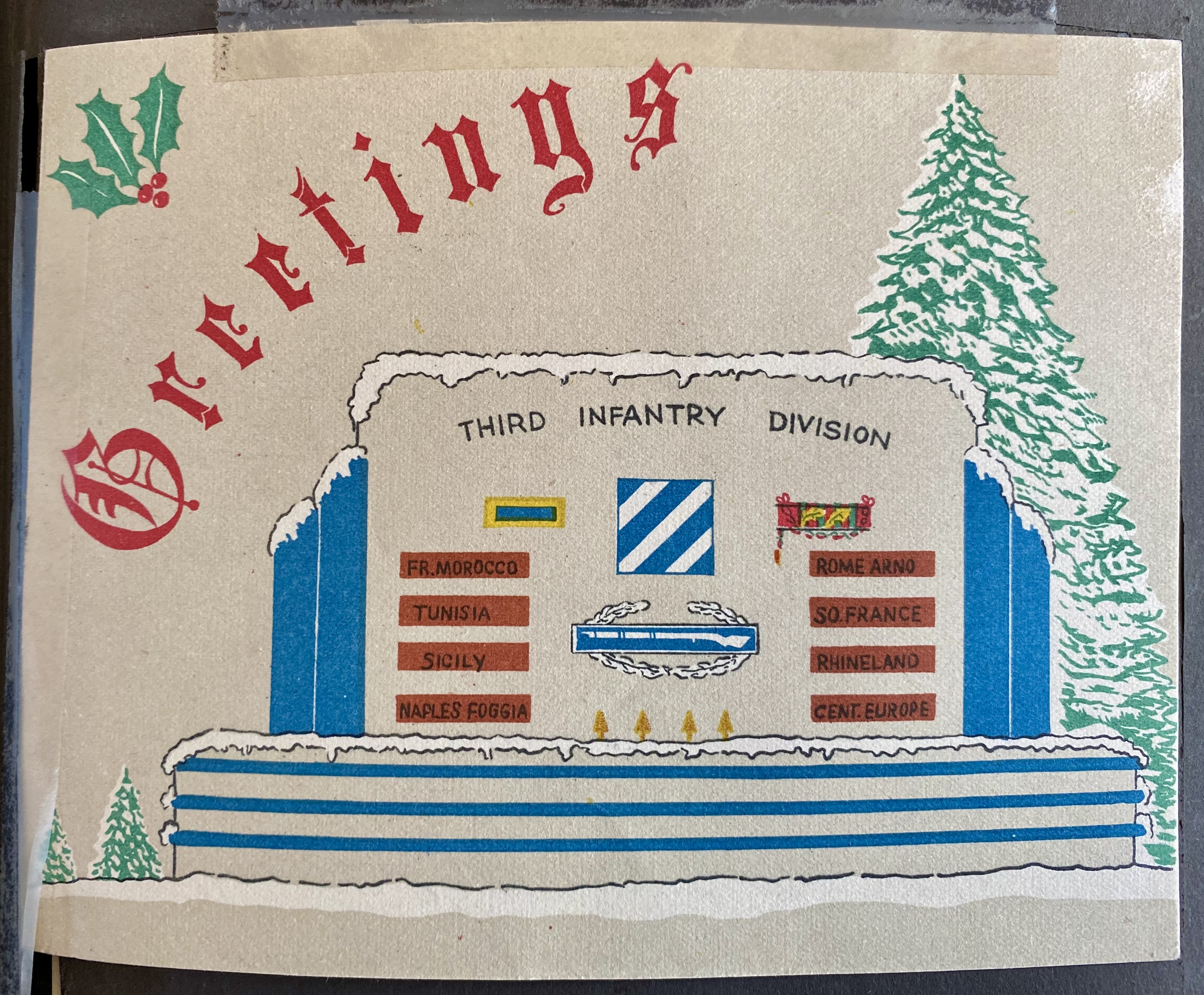
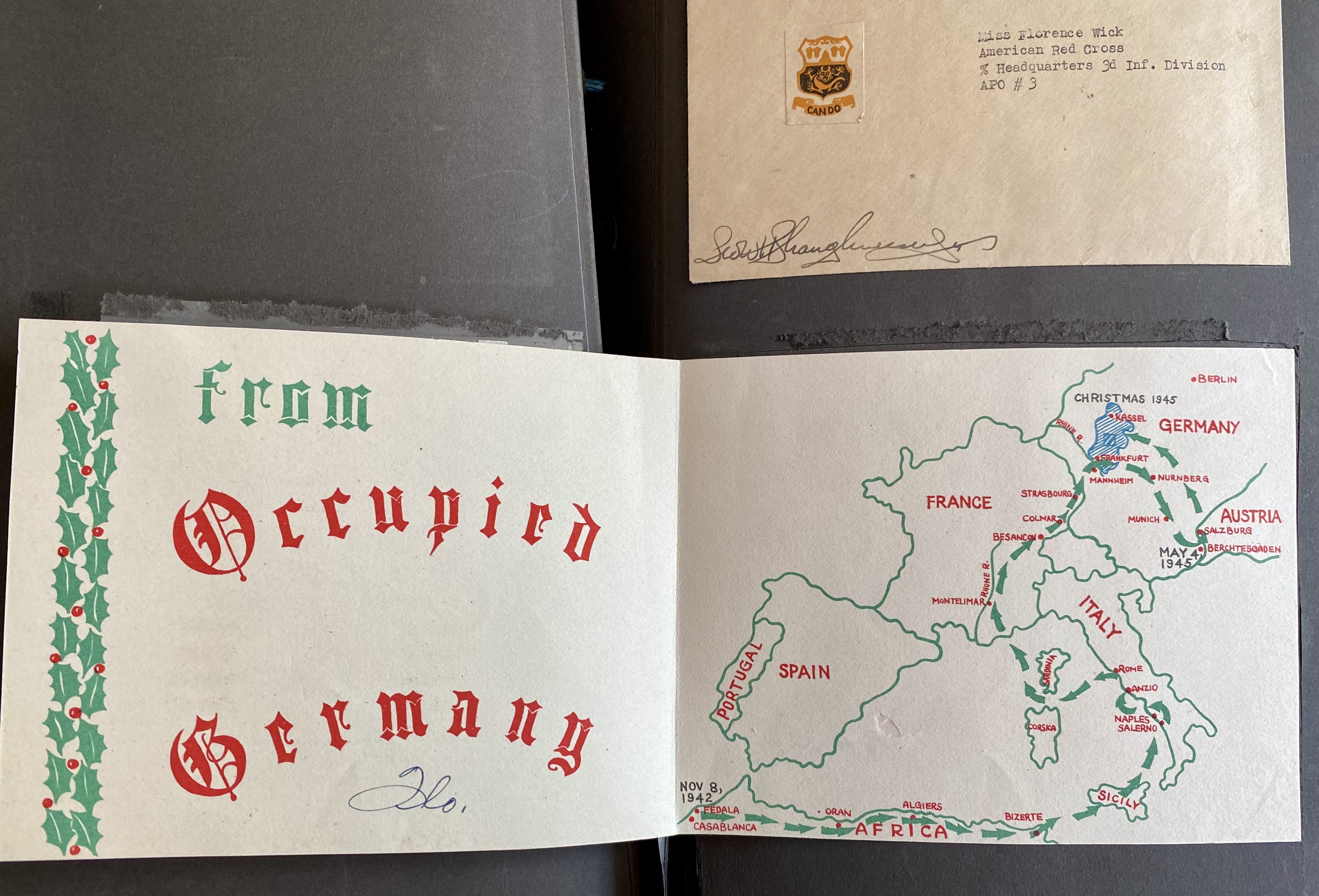
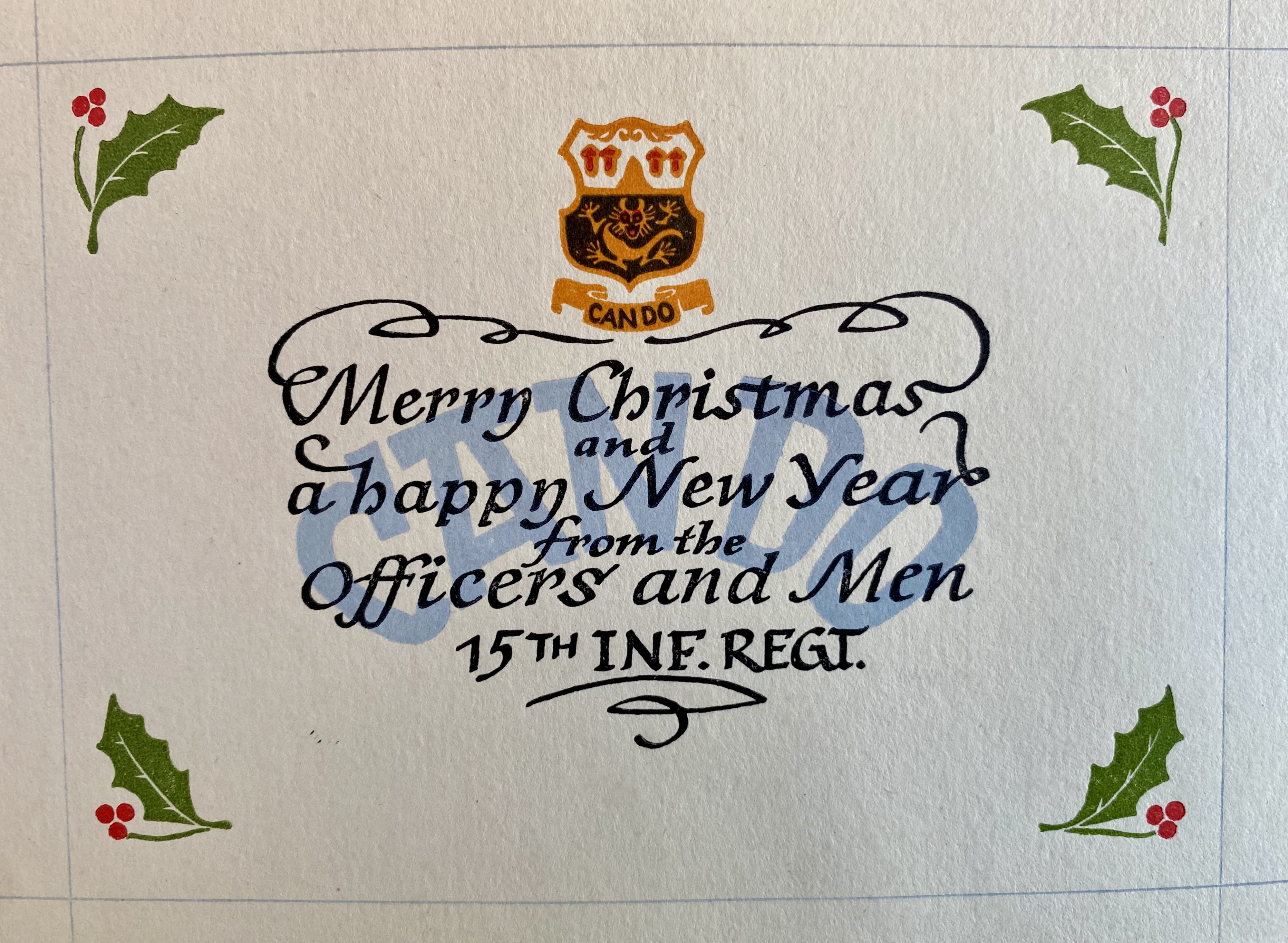
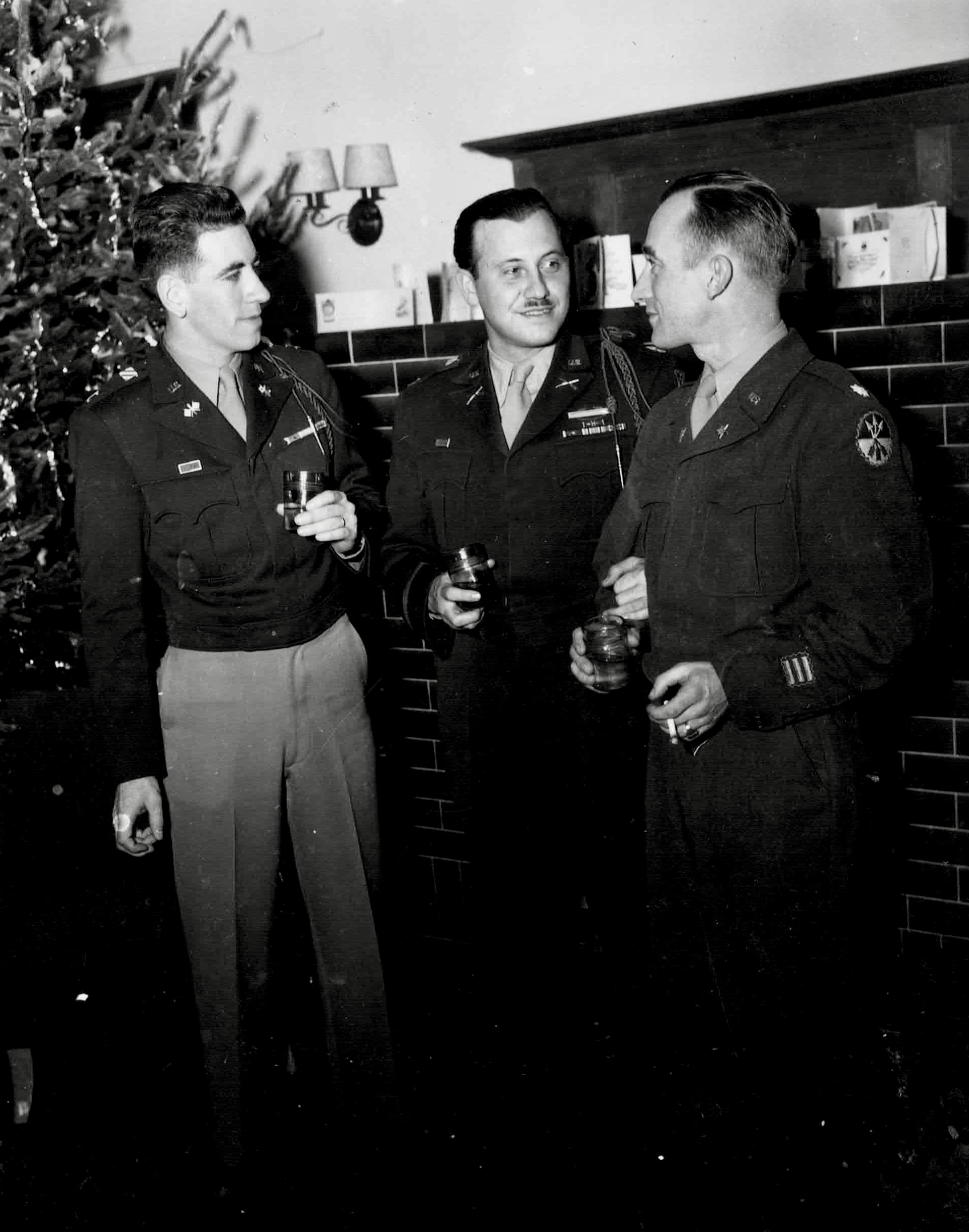
The card shows the route of the 3rd Division from Africa to GermanyThird Infantry Division New Year’s partyFlo captioned this “Blackmail material”Flo didn’t ID these guysGeneral Schmidt hosted the party Christmas ‘C’ company 30th Infantry
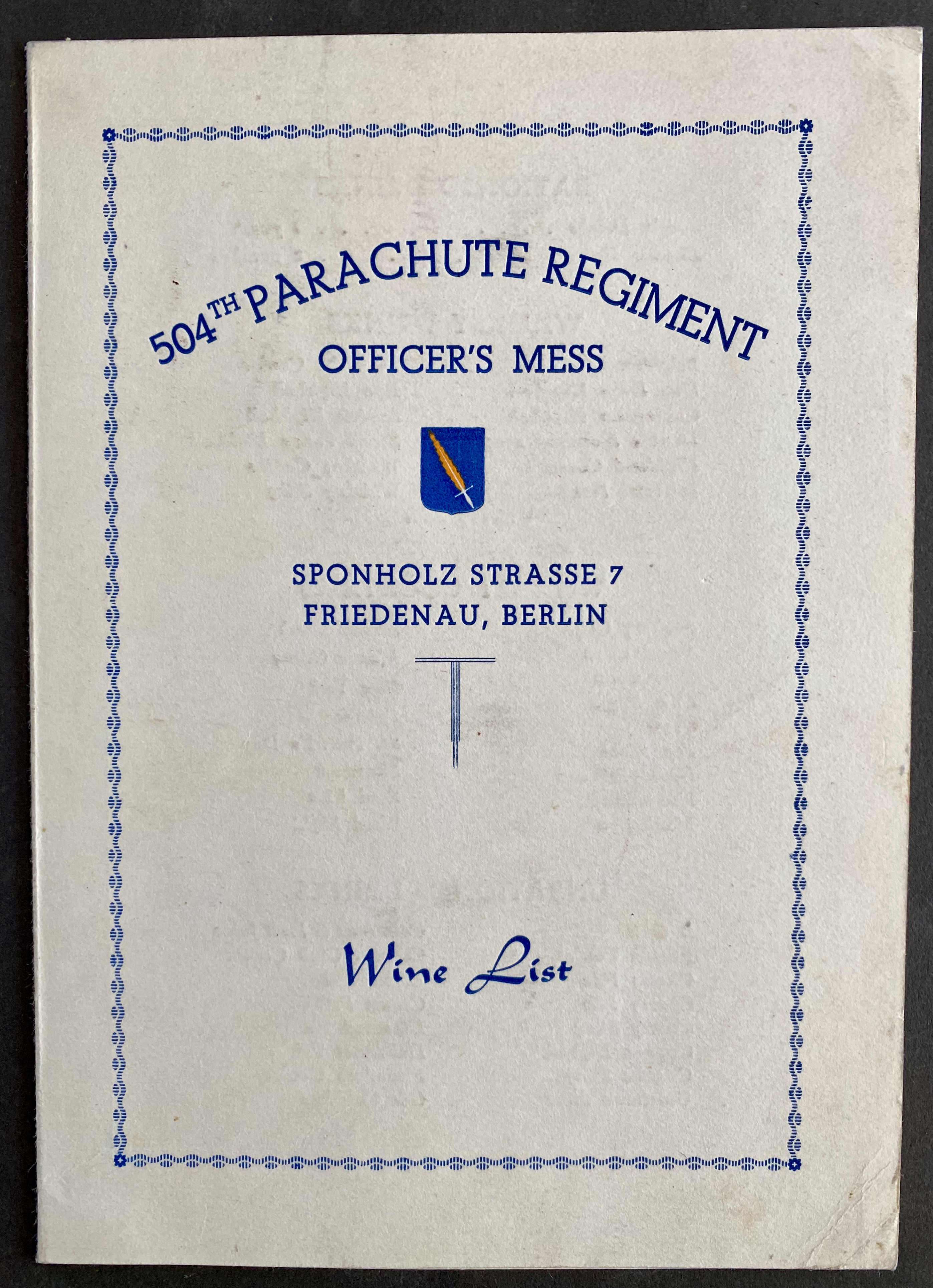
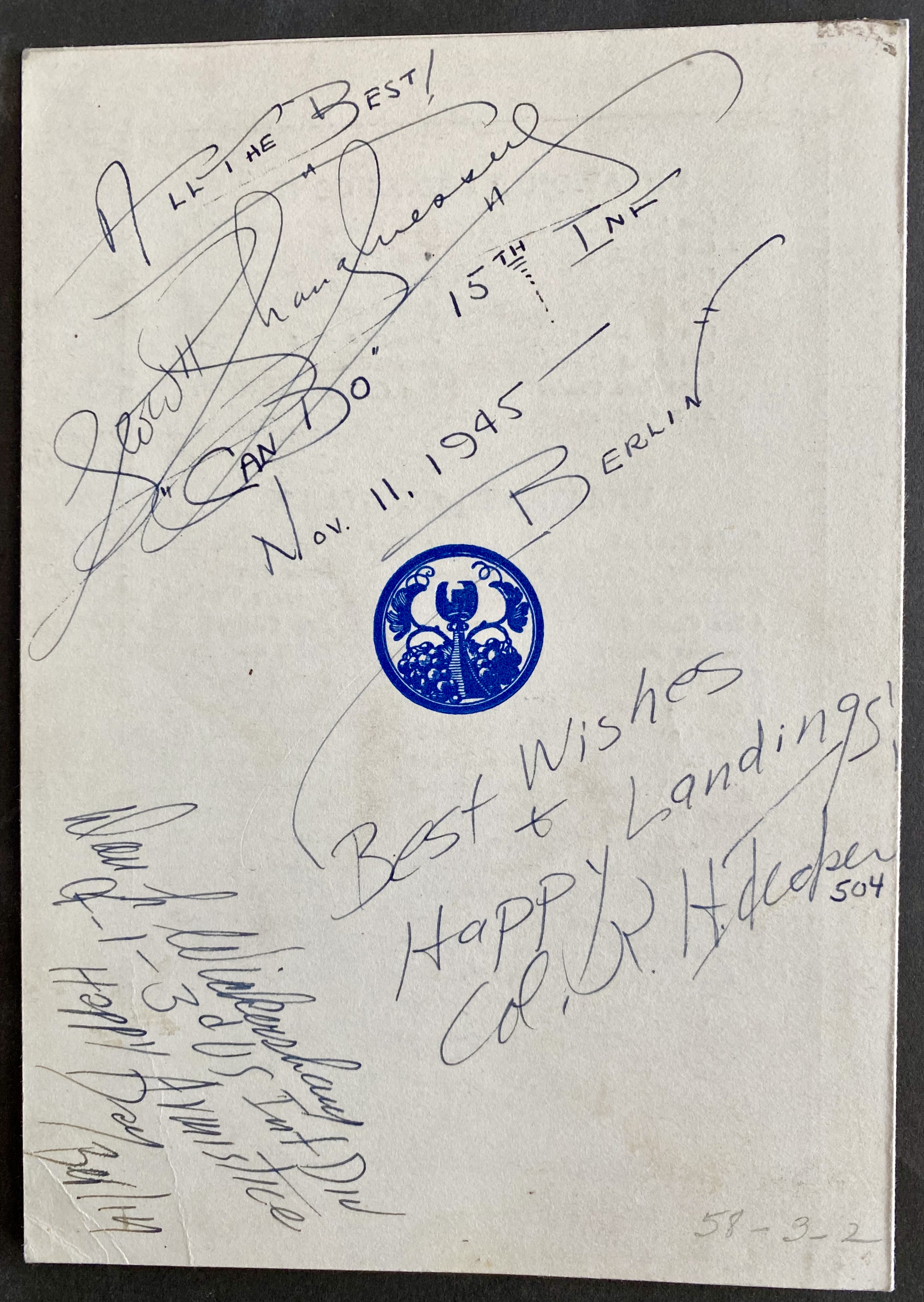
While they were in Berlin for the football game between the Third Division and the 82nd Airborne, Flo and her comrades were invited to a party hosted by the 504th Parachute Regiment. To celebrate Armistice Day in occupied Berlin must have been especially poignant so soon after the end of this second world war.
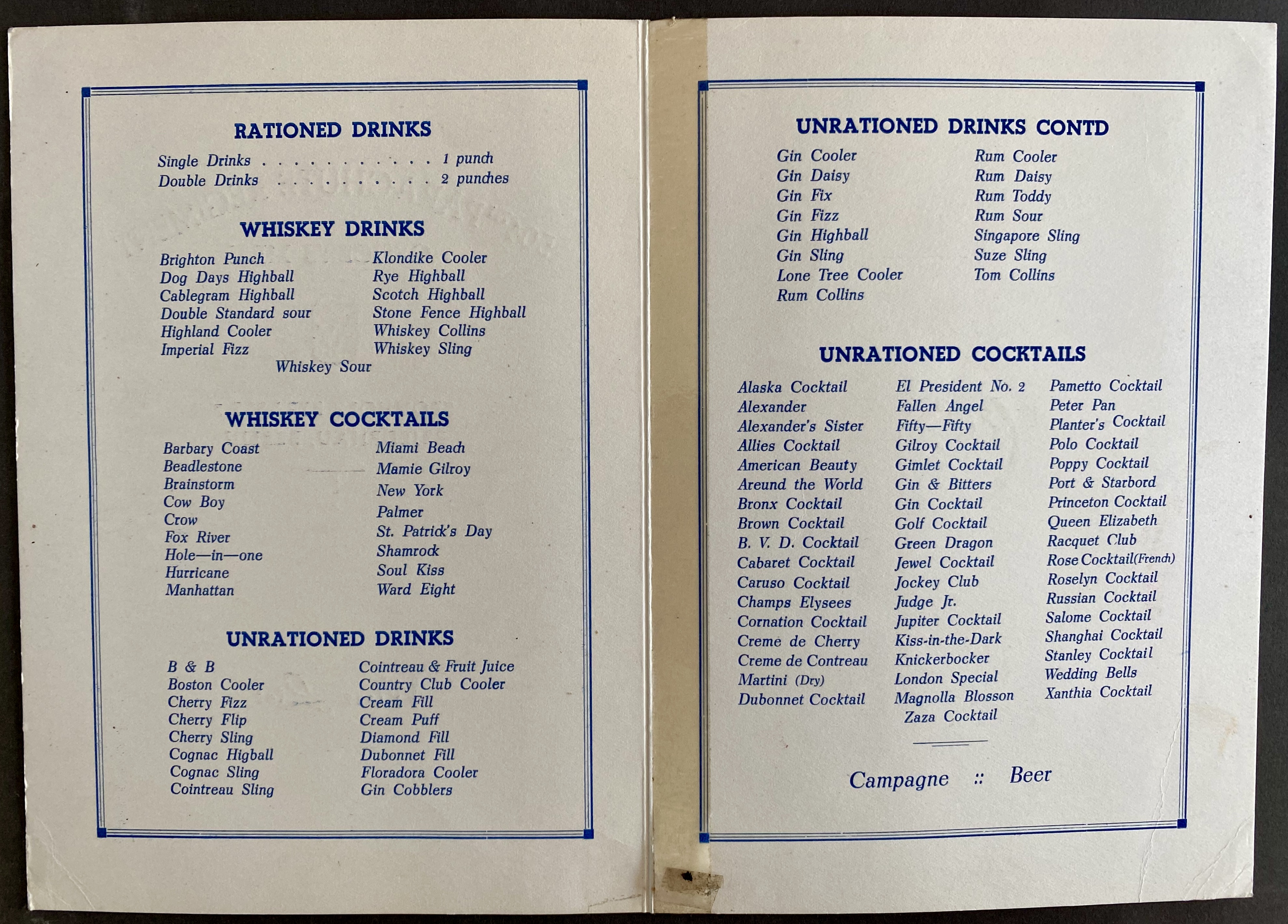
Flo saved the wine list which listed no wine, but more cocktails than I knew existed. I recognize a few—Manhattan, Martini, Gin Fizz—but not most. I wonder if modern bartenders are still making any of these drinks. The list notes that champagne and beer are available, but there is no mention of wine, at least on this page. Maybe Americans were just not partial to wine in the year 1945.


 tradeswomn musings