Anzio: Advance, retreat, repeat

Fear is moving up with us. Fear is right there beside you.

My Mother and Audie Murphy Ch. 14

Audie Murphy’s autobiography To Hell and Back was shaped in collaboration with David McClure, a Hollywood writer who served in the Army Signal Corps and knows firsthand the shock of war. The book centers on the ordinary infantrymen of the Third Division, capturing their humor, fatalism, and endurance. In the battle scenes, the tone sharpens. At Anzio, Murphy describes the brutal churn of attack and counterattack in a landscape where the ground itself seems to resist survival.

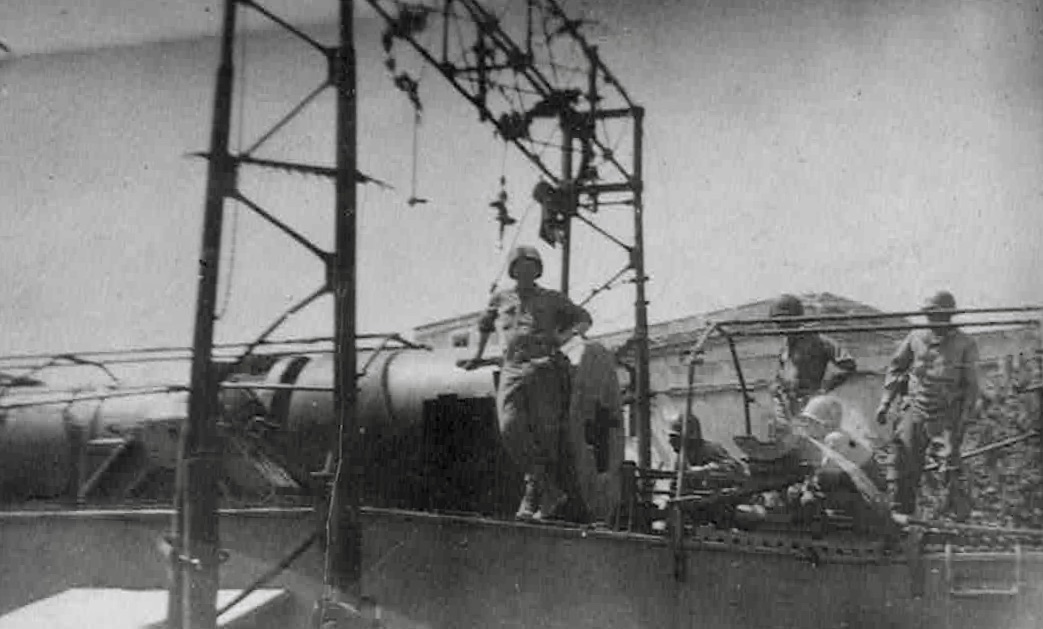
“Anzio Annie” was a massive World War II German rail gun, used to bombard US and British forces during the 1944 Anzio landings. It was one of the largest land-based cannons ever built. It fired shells that weighed 550 pounds. Image: NARA

“Light trembles in the east. To our left, an artillery dual is growing fiercer. We hear the crack and thunder of our own guns; the whine and crash of incoming German shells. (A soldier) stands in his chest deep foxhole and leans with his elbows on the bank. He studies the eastern horizon and shakes his head in mock ecstasy. “Gee!” says he, “another beautiful day.”

By afternoon, the order comes: attack!

“Fear is moving up with us. It always does. In the heat of battle it may go away. Sometimes it vanishes in a blind, red range that comes when you see a friend fall. Then again, you get so tired that you become indifferent. But when you are moving into combat, why try fooling yourself. Fear is right there beside you….

“I am well acquainted with fear. It strikes first in the stomach, coming like the disemboweling hand that is thrust into the carcass of a chicken. I feel now as though icy fingers have reached into my mid-parts and twisted the intestines into knots….”

Hidden in a railway tunnel, the Anzio Annie guns started firing at the Anzio beachhead in February and were not discovered until May. Image from Flo’s album

Speech dies away as they approach the enemy line. Artillery fire slackens, and the men check their weapons one last time. Scouts creep forward. Everyone waits for the first eruption.

“This is the worst moment. Just ahead the enemy waits silently. It will be far better when the guns open up. The nerves will relax; the heart, stop its thumping. The brain will turn to animal cunning. The job lies directly before us: destroy and survive.” 

The scouts signal them on. Just as they inch forward, two hidden flakwagon guns open fire. One scout is hit squarely in the chest; his upper body disintegrates in an instant. The 20 mm shells, designed for aircraft, are used here against men, each strike exploding on impact. There is no time to think; the entire landscape erupts with automatic fire. Branches shear off the trees overhead. Bullets pitch into the earth. Two men in the open scramble for the shelter of a small rise, but the gunner finds his range. They collapse, still at last.

Annie’s threat was physical, but also psychological. The troops lived in constant fear of the next shell whose passage was compared to a freight train passing overhead. It could blast a whole big enough to swallow a jeep. Image from Flo’s album

The scouts signal them on. Just as they inch forward, two hidden flakwagon guns open fire. One scout is hit squarely in the chest; his upper body disintegrates in an instant. The 20 mm shells, designed for aircraft, are used here against men, each strike exploding on impact. There is no time to think; the entire landscape erupts with automatic fire. Branches shear off the trees overhead. Bullets pitch into the earth. Two men in the open scramble for the shelter of a small rise, but the gunner finds his range. They collapse, still at last.

A massive shell shrieks overhead and Murphy dives into a roadside ditch. The blast lifts him, knocks him senseless, then dumps him back into the mud. When he crawls forward to check the man beside him, the soldier lies dead with no visible wound—killed by pure concussion. Murphy marks the body for the burial team, driving the bayonet into the bank and tying a strip of white cloth to its tip.

German artillery intensifies. The earth becomes a furnace of shrapnel and fire. Limbs and fragments of bodies fall back to the ground with the dirt. Night offers no rest. The foxholes are cold, wet, and shallow. Rumors spread that the entire front has been forced back. The men are told they will attack again in the morning.

Exhausted and hollow-eyed, they rise. The numbness of survival replaces fear. When the order comes, they move like machines. German artillery meets them immediately, and the men spread across open fields, advancing from one shell crater to the next. Medics, unarmed and clearly marked, fall beside the wounded they are trying to save. The cycle continues: advance, retreat, advance, retreat. After three days, not a single yard of ground has been gained.

There were two of these guns. Once they were captured, soldiers climbed on them “like game hunters who had bagged two rogue elephants.” Image from Flo’s album.

This was the story of Anzio. The Allies made the first amphibious landing on the beachhead on January 22, 1944 and the battle didn’t officially end until the liberation of Rome June 4, 1944.

The 3rd Infantry Division suffered over 900 casualties in one day of combat at Anzio. This was the highest number of casualties suffered by any US division in a single day during the war. The Allies sustained 40,000 casualties at Anzio.

The battle leaves no one unchanged. Anzio becomes not just a place, but a memory carved in mud, smoke, concussion, and loss—the memory of men who advance, fall, rise again, and return to the line because there is no choice except forward.

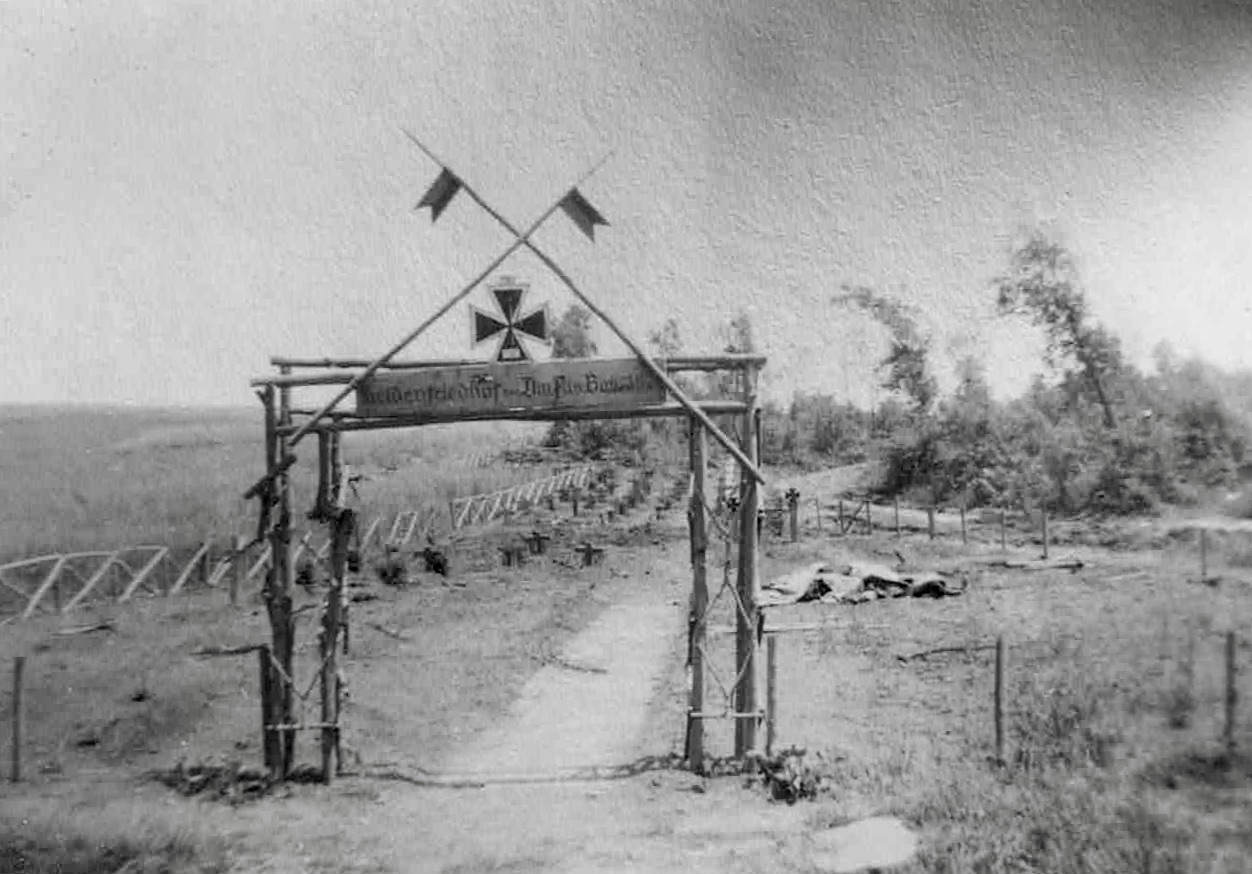
Flo captioned this picture “Kraut graves.” The Nazis sustained 43,000 casualties at Anzio.

Quotes are from Audie Murphy’s autobiography, To Hell and Back

Ch. 15: https://mollymartin.blog/2025/03/16/rome-is-liberated-by-allies/

Bivouacked: Flo Arrives in Italy

Her letters home are published in the Yakima paper

My Mother and Audie Murphy ch. 13

Miss S.I. Anthon was a family friend who visited and sent Christmas cards throughout my childhood. She reminded me of the BBC version of Agatha Christie’s sleuth, Miss Marple. She was unmarried, was short with short curly hair, and (during the 1950s and 60s) dressed in a straight no-nonsense mid-calf-length skirt, blouse, vest and suit jacket and those low-heeled sturdy shoes worn then by women of a certain age. She usually wore a hat (women wore hats in those days). We always called her Miss Anthon. She was a reporter for the local newspaper, the Yakima Republic, later the Yakima Herald-Republic.

Soester (sister in Danish) I. Anthon was born in Denmark in 1890 and she lived in Yakima’s Scandinavian neighborhood. She was a neighbor as well as a mentor to my mother, and she shared Scandinavian roots with the Wick family. By 1930 Miss Anthon was the managing editor of the Yakima Republic, the evening newspaper, a rare accomplishment for an immigrant woman whose first language was not English. For many years she wrote a column called “Daily Mirror of Life in Yakima,” and during the war she reported on the activities of local men and women serving overseas. 

When Flo wrote home from Europe, her mother, Gerda, would share the letters with Miss Anthon, who would write them up into news stories. While few of Flo’s actual letters to her mother survive, Miss Anthon’s clipped stories are pasted throughout Flo’s WWII album.

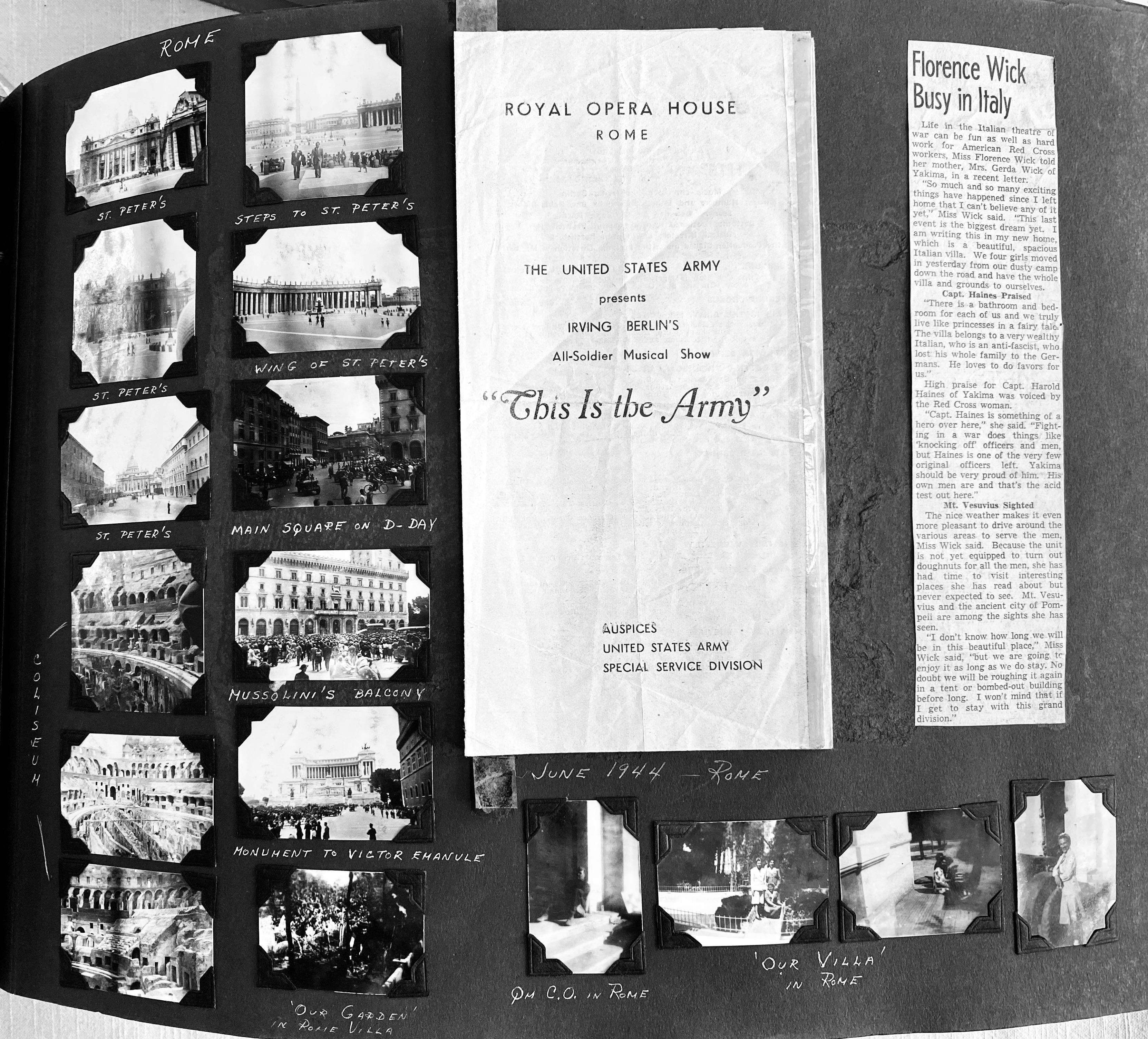
A page in Flo’s WWII album

One of Miss Anthon’s earliest reports quotes Flo’s descriptions of her first weeks in Italy.

June, 1944.

Headline: Yakima Girl Now in Italy. Miss Wick Tells About Her Tasks

Miss Florence Wick, who recently landed in Italy as a member of an American Red Cross clubmobile staff, is getting broken into her work “by passing out doughnuts and a smile,” she writes her relatives here.

“Several of us clubmobile girls are billeted at present in an old Italian hotel,” she says. “It has such incongruous items in it as a huge crystal chandelier and ornate gold valances over the doors. As in all Europe, the plumbing leaves much to be desired and warm water is rare enough to cause excitement.

“We have a sweet little Italian girl who acts as maid, does our laundry and tries very hard to learn English. She even goes to school after working all day. They are so poor here. It makes our standard of living seem even higher and makes us all appreciate the U.S. more than ever.

“I saw some of the Italian country-side in a tour and find it very pretty and picturesque. The fruit trees (cherries and apricots) remind me of Yakima.

“The trains are small and have only two or three cars on them. They are more like our street cars.

“Clubmobile will give me an opportunity to see more of Italy than just club work and although we clubmobile gals won’t be as settled and won’t be able to dress up as much, I think we will get a greater experience.”

“I have had some interesting talks with the men—both officers and G.I.’s. Some have had some harrowing experiences. They can always laugh and ‘sling a line,’ regardless, and the ‘purple heart’ boys do the best of any.

“The Red Cross service men’s club here is the nicest I’ve ever seen and the boys really appreciate it. There haven’t been many West Coast boys through here, but when I run into them, I’m as pleased as they are. All the others seem to think Washington state is out of this world.”

Flo was assigned to a clubmobile group of four women, and she was designated captain of the group, which included Isabella Hughes (Jingles) of Baltimore, Elizabeth Elliott (Liz) of New York City, and Dorothy Shands (Dottie) of Greenville, Miss. 

L-R Isabella Hughes (Jingles), Elizabeth Elliott (Liz), Dorothy Shands (Dottie), Florence Wick (Flo). Flo wrote “Overlooking a lovely Mediterranean beach. The villas along here were all bombed and ruined.”

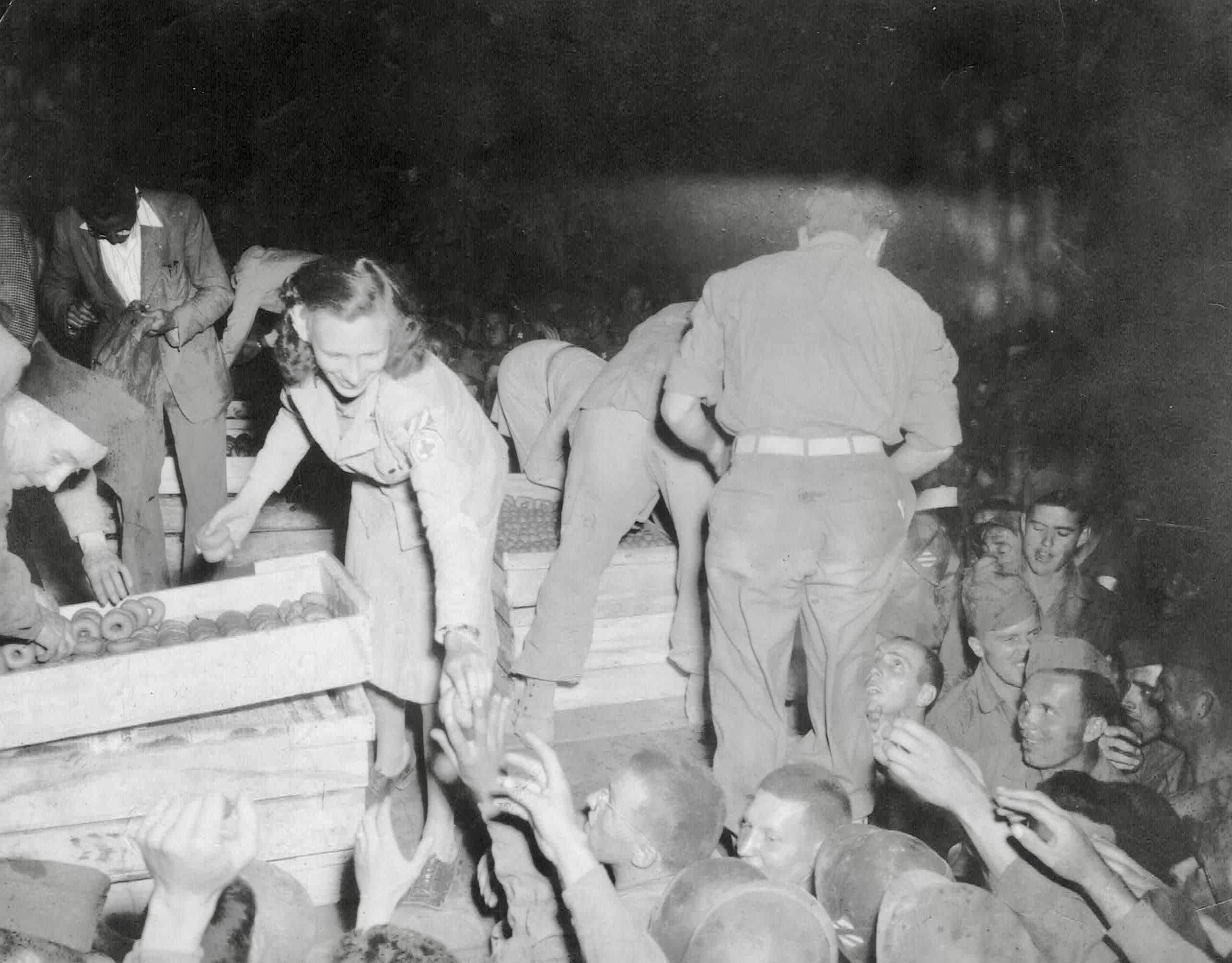
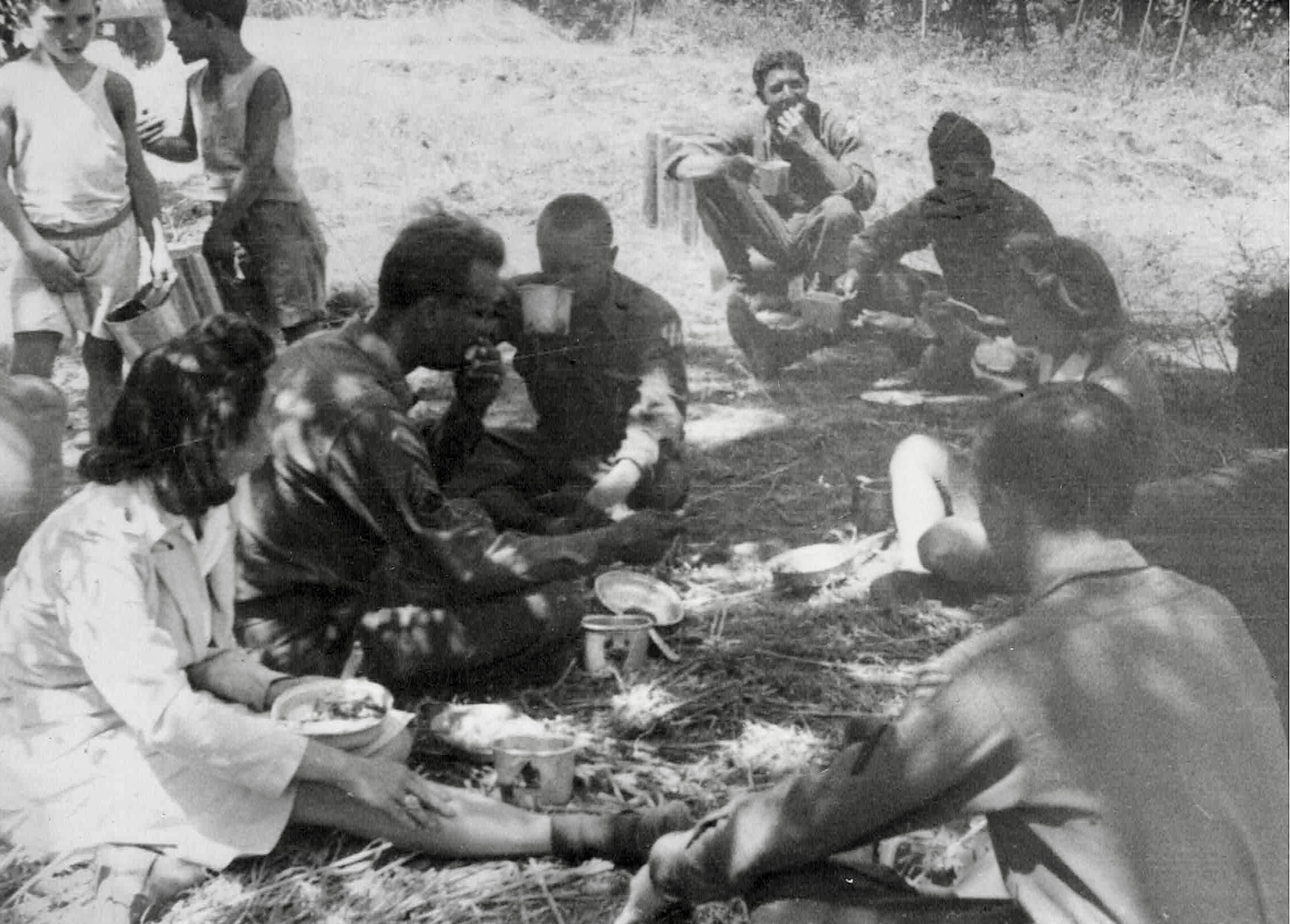
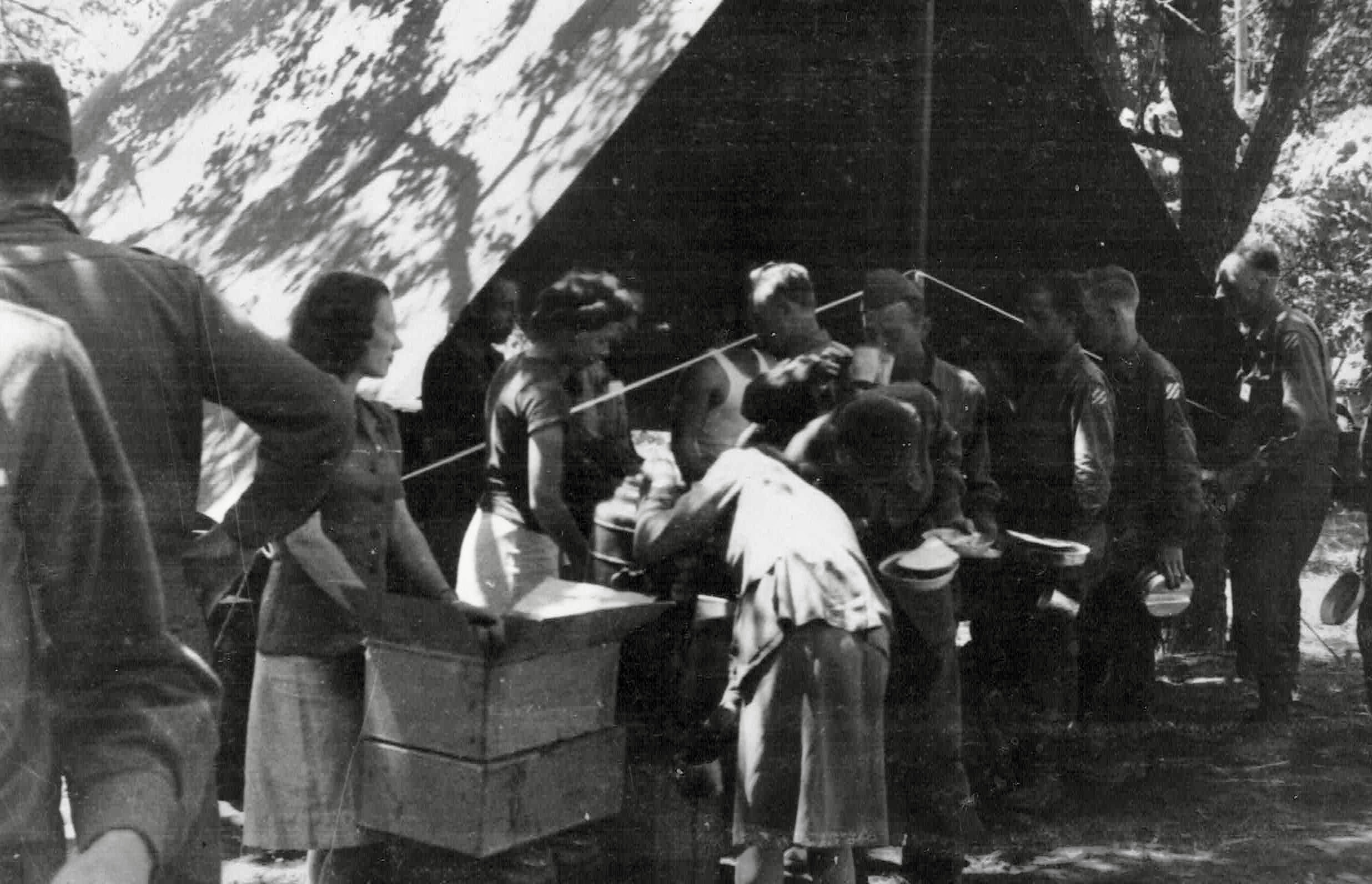
Flo and her team were first stationed near Naples in an old Italian hotel from the time her ship docked May 28, 1944. It seemed like the ARC was not quite ready for their arrival. The women just sat around for several days before the ARC could figure out what to do with them. They had started to feel like they’d been hired as concubines when they finally got an assignment. Rather than driving a two-and-a-half-ton truck around Italy like the other Europe-based clubmobilers, they would be bivouacked with the Third Infantry Division of the Army. The tent city was near the town of Pozzuoli, on the sea, just north of Naples, where the soldiers trained for an amphibious landing in France. 

Goodbye hotel with crystal chandeliers, maid and laundry service. Hello Army tents with cots and bedrolls.


A Familiar Voice in the Blackout

The company had just arrived in Naples, one of thousands of American and British units flooding into the battered port city. Their first stop was the American Red Cross club, a welcome sight after weeks on the move.

Inside, amid the clatter of cups and typewriters, he scanned the lists of newly arrived Red Cross women. There it was — a familiar name. An old girlfriend from back home. The war had scattered them across oceans, and now fate had brought them to the same city. But there was no time to find her. Orders came down; the company had to move.

That night, the air raid sirens began. The Germans, retreating north, were still pounding the city, shelling the docks and rail lines. The blackout was immediate — every light extinguished. Hundreds of soldiers, nurses, and civilians poured from buildings into the damp mouth of a tunnel carved into the hillside.

It was pitch dark. The air was thick with fear, sweat, and the echo of boots. Then, through the chaos, he heard a voice. Her voice.

He called her name, and she called back. In the darkness, they moved toward each other, guided only by sound. They reached out — a hand, a sleeve, a touch — and for a moment, found each other. They couldn’t see a thing, but they laughed softly in disbelief. Two people from the same small town, meeting again by chance in the middle of a war, in total darkness.

When the shelling stopped, the crowd dispersed into the shattered streets, and they lost each other again.

They wouldn’t see each other until after the war, back home, this time in daylight. 

The woman was my mother, Florence Wick. The man was (later) my uncle Morton Werner. He married Flo’s sister, Ruth. They each told this story many times, marveling at the happenstance.

Ch. 14: https://mollymartin.blog/2025/03/11/anzio-advance-retreat-repeat/

Attack at Anzio

Malaria returns and Murphy confronts “Old Army” authority

My Mother and Audie Murphy ch. 12

January 1944. The squad is engaged in simulated combat. For three days they storm a dummy beachhead. They leap from landing craft and, falling, crawling, and firing, advance upon assigned objectives. Then the maneuvers end abruptly. The men are placed on strict alert, confined to the company area, and given one day of rest except for a final inspection of equipment. They recognize the signs. Everyone whispers “tomorrow.” Chaplains hold services. Letters are written with particular care. Still, no one knows the destination.

Murphy is sick again with malaria. Refusing to complain, worried that it will seem he’s trying to avoid combat, he’s finally turned in by a man in his squad. With a temperature of 105, he’s sent to a hospital in Naples. 

Then, after less than a week in hospital, Murphy is among a boatload of replacements headed for Anzio. Murphy can’t wait to rejoin his squad. He has missed the first several days of the Anzio attack.

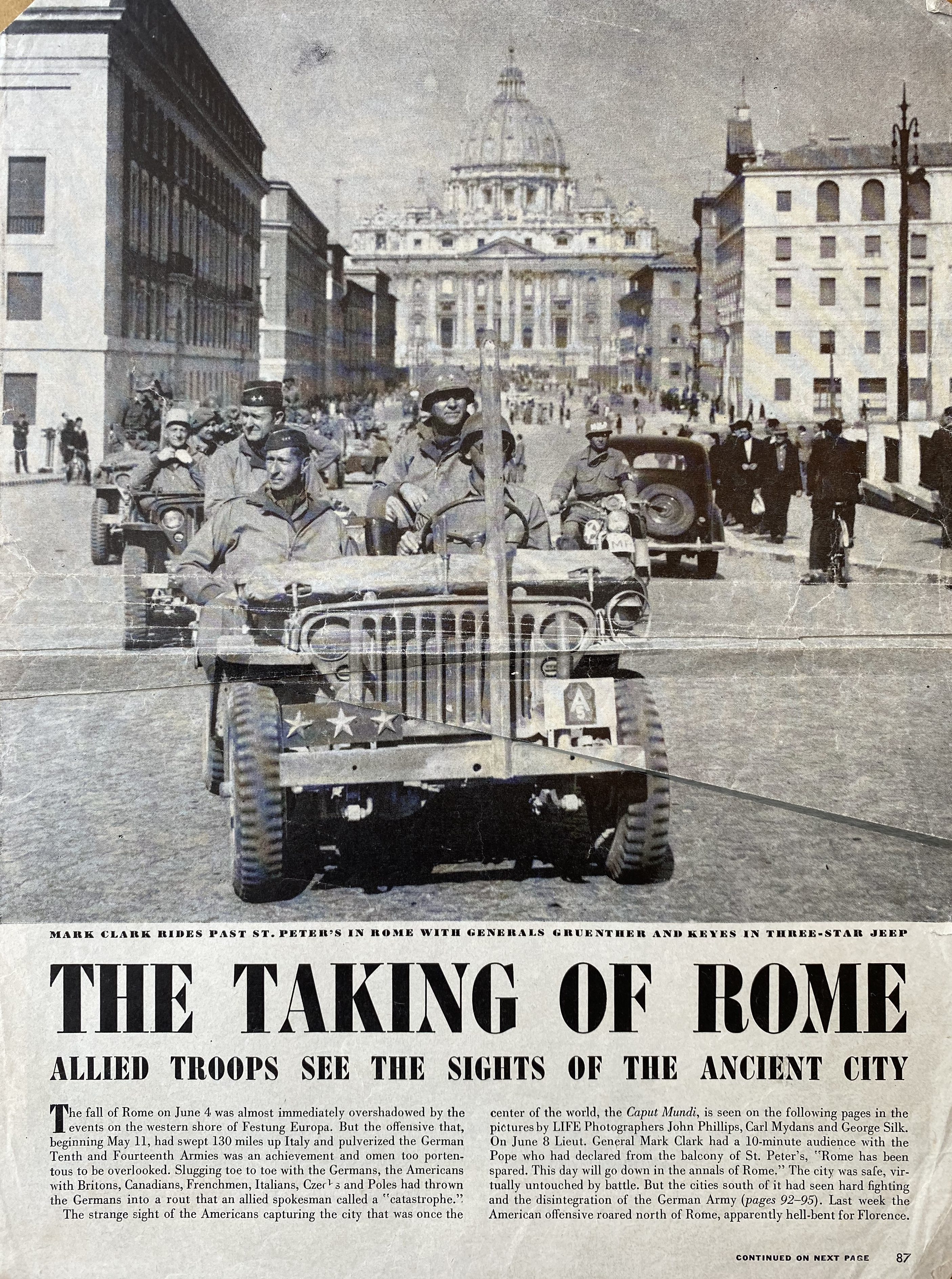
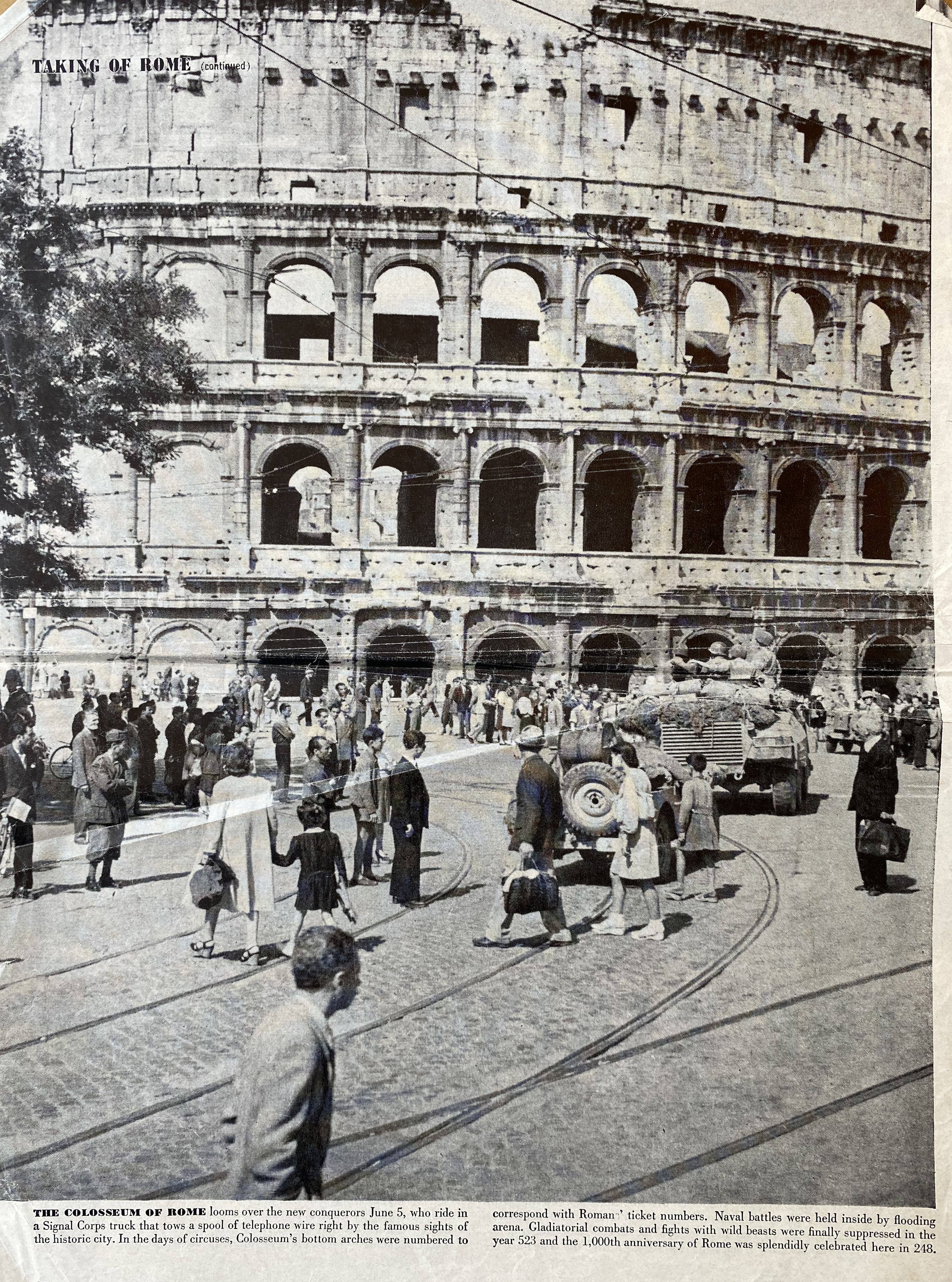
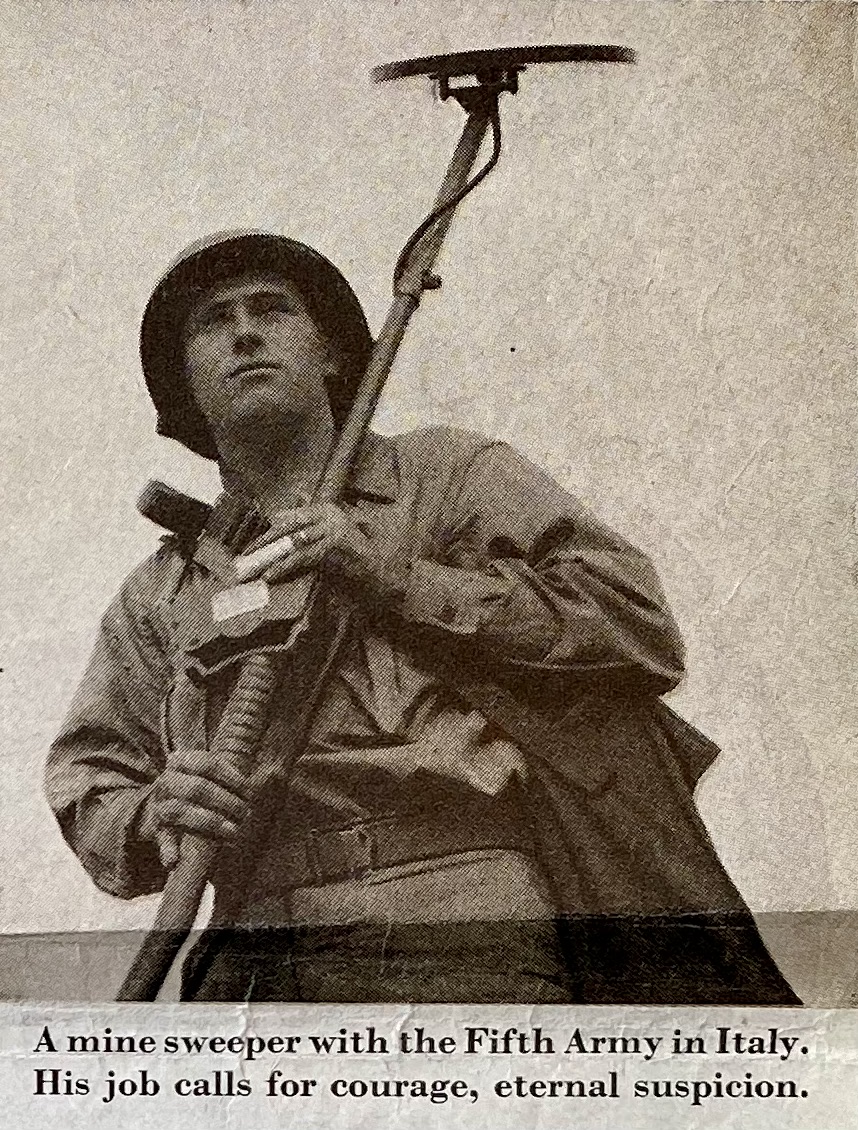
From a Life Magazine story in Flo’s album

Ignoring orders to stay in camp, he walks toward the front. In a farmhouse where the command post has been set up, he learns that several men in his squad have been killed or maimed. Just as he feared, the Nazis have devastated his group, soldiers who have become like family after surviving the hell of war together.

At divisional headquarters, Murphy encounters the old hierarchy of the Army. A regular army sergeant, irritated by the informality of wartime soldiers, confronts him and orders him to unload his pack for a work detail. Murphy refuses. The sergeant threatens discipline; Murphy tells him to come find him at the front if he wants to press the issue. Slinging his carbine over his shoulder, he turns and heads up the road marked with the blue diamond of his regiment.

Americans at home depended on Life Magazine for news of the war.

That night, on the way to Cisterna, Murphy leads another reconnaissance patrol behind enemy lines. They discover that the Germans are moving tanks in–an ominous sign.

He reports to the lieutenant’s dugout. The lieutenant sits in a deep muddy hole, the roof made of poles, grass, and sod. Water seeps in from the sides. Bandoleers of cartridges and a case of grenades lie stacked in the corner. He looks as though he has not slept in days.

This, now, is home. A foxhole. Mud, cold, and the sound of artillery. The front line stretches ahead into darkness, and there is no certainty of what tomorrow will bring—only that tomorrow is coming.

Ch.13: https://mollymartin.blog/2025/03/06/flo-arrives-in-italy/

A Reprieve and a Little R&R

My Mother and Audie Murphy Ch. 10

Naples suffers bombing by all

Autumn, 1943. After many weeks on the front lines, Audie Murphy and his squad are given a reprieve.

Crawling with filth and exhausted to the bone, they are pulled out of the lines in mid-November. The valley below is now clear of the enemy; Mount Lungo has fallen. From its heights, they look toward Cassino. The war drags north, its roar receding into the distance. Burial squads already move across the slopes, searching for the bodies of men who have received their final order to go forward.

As the squad makes its way on foot down a shell-torn road, the relief is almost intoxicating. Despite the lateness of the season, the day is bright and mild. A breeze whispers through the trees, and the solid earth beneath their boots feels strangely kind. The simple rhythm of marching renews their spirits. They look at one another with foolish affection, aware that they have been handed back life.

They are transferred to a camp with tents and two full meals a day. Orders soon come down: amphibious training at a beachhead near Naples. Discipline tightens, and day and night they drill against an unseen enemy. Fully armed, they wade through surf up to their hips and crawl belly-down through marshes, their clothes crusted with salt and mud.

Bombing of Naples

None of the troops know what the training will lead to. Rumors fly. Are they being prepared for an assault on southern France, to be sent to England for a cross-channel D-Day, for assault on some new beachhead? The dogface soldiers are always strangers to the plan.

The mood darkens. Many are certain they are being prepared for slaughter. Tempers fray, and old comrades come to blows over small provocations.

Murphy’s squad gets overnight passes to Naples.

Poor Naples. The city endures relentless bombing raids from 1940 into 1944. While under German control, the Allies bombard it continuously—first the French, then the British, and finally American bombers. Italy surrenders to the Allies on September 8, 1943, but the Germans refuse to relinquish their hold, murdering civilians and those who resist the ongoing occupation.  

Then, the citizens of Naples rise up against the Nazi forces. They successfully disrupt German plans to deport Neapolitans en masse to work camps, destroy the city, and block the Allies from securing a strategic foothold. A spontaneous insurrection erupts, and despite limited weapons and organization, the Neapolitans force the German troops to retreat just before Allied forces arrive.  

This dramatic rebellion is later depicted in Nanni Loy’s 1962 film “The Four Days of Naples”, which earns Oscar nominations for Best Foreign Film and Best Screenplay.  

Even after Naples falls to British and American forces on October 1, 1943, the bombing continues. The Germans respond with a scorched-earth campaign, destroying communication and transportation networks, water and power grids, and mining buildings. They burn the state archives of Naples and the national library, sink ships in the harbor, and leave devastation in their wake. Within a week of its capture, however, the Allies manage to reopen the port, restoring vital access to the city.

On the night that Murphy and his squad rest and recreate in Naples, there is an air raid. Murphy doesn’t drink or smoke, but his men get drunk, and one gets rolled by a hooker, returning to camp without his coat, gear and money. Murphy is set up with a date, but he sleeps through it and the air raid as well.

Winter settles over Naples. The clock strikes three. Light from a low January sun creeps along stone walls and rooftops. The war is still close enough to feel—but for the moment, Murphy and his men live, rest, and wait for whatever comes next.

From Life Magazine October 18, 1943

“Last week Italy’s autumn rain was soaking the plain of Campania. It dripped on the date and peach trees, on vineyards heavy with unharvested grapes, and on the rich bottom lands north of Naples. It trickled down the necks of British and American soldiers slogging across the marshes toward the Volturno river and chilled the Germans, dug into foxholes across the river, in the shadow of Mount Massico. Somewhere in that area in the rain, the Germans would try to halt the relentless Allied advance. If they failed, the road to Rome would be open.

Behind the lines, Naples, slowly and painfully returned to normal. But the wounds of battle would not be healed for many months. The city was still practically without water, gas or electricity. In one terrible explosion on October 7, more than 100 civilians were killed when a delayed-action German mine destroyed the post office. Hungry, homeless children wandered the streets, and there was no medicine in the hospitals. German demolition squads have made a shambles of the waterfront. Shops were looted, the telephone building blown up, the University fired, and the tourist hotels ruined by Nazi troops before their retreat.”

Chapter 11: https://mollymartin.blog/2025/02/24/loose-lips-sink-ships/

You’ve Got Mail–March 31, 1944

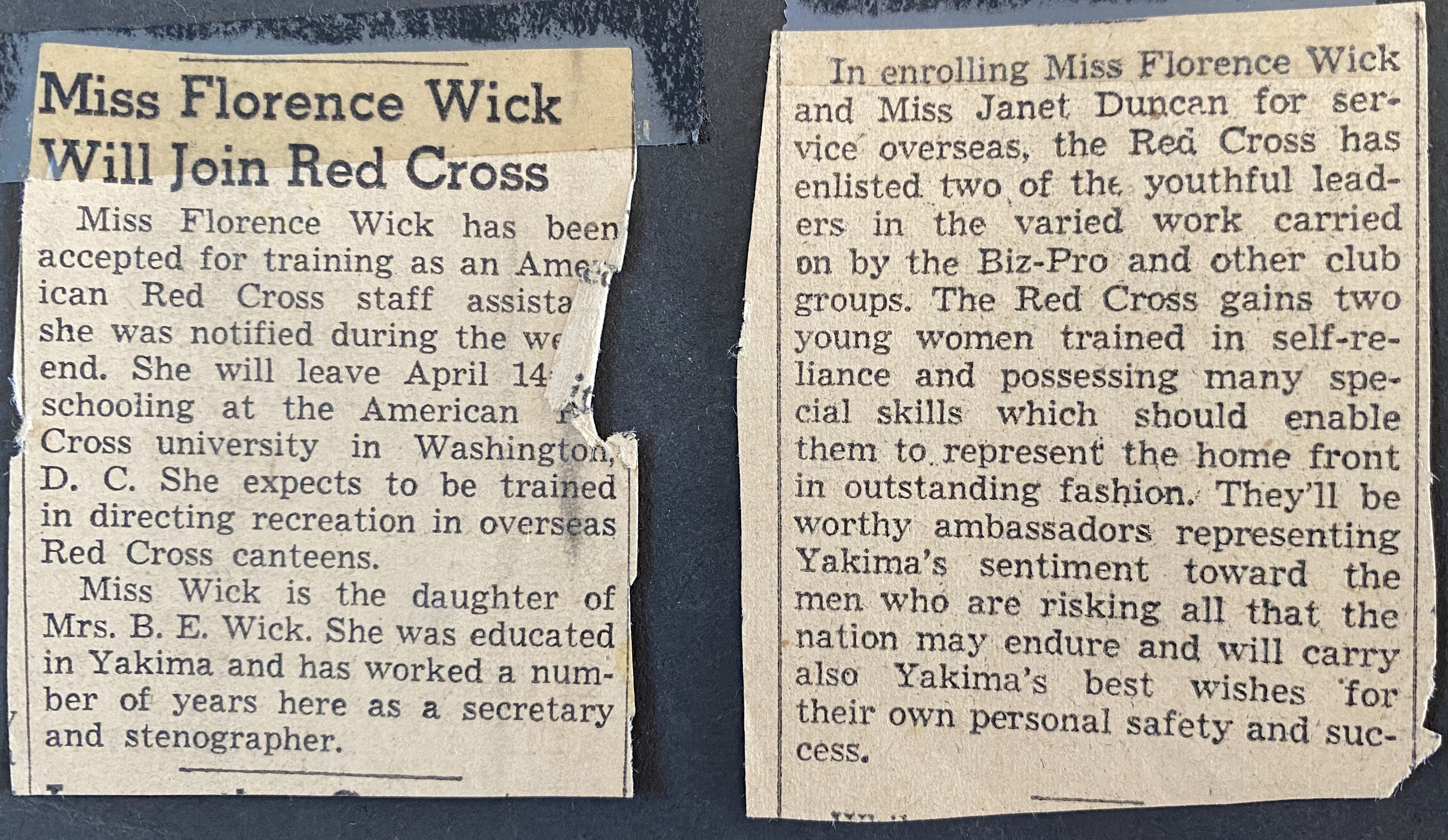
Flo Scheduled for ARC Training in D.C.

My Mother and Audie Murphy Ch. 5

March 31, 1944 began as a black day in Yakima. Farmers had lit smudge pots in the orchards during the night to protect delicate buds from frost. The fuel, which included old tires, diesel oil and whatever could be found to burn, had left a black oily residue on the landscape. The white horse in the field down the street was now charcoal black. And the polluted air had seeped inside houses, coating everything. 

The local Yakima paper kept track of citizens in the war. From Flo’s album.

When Flo awoke and blew her nose, the snot was black. Still, for her the day was a happy one. In two weeks she would be in Washington D.C. starting a new job as an American Red Cross (ARC) staff assistant. Today she would tell her boss that next week would be her last. She would give herself a week to get to D.C., taking the train to Chicago and staying overnight there. It would be the start of an exciting adventure and she could hardly wait to get started. 

The ARC telegram that had come the day before said she would receive a letter with more details. She would have to send some telegrams herself to let friends and relatives know this good news. Her best friend, Molly, now working in Seattle, would need to know. And so would her sister Eve, stationed as a U.S. Army nurse at a hospital in Burford, England.

At work, the engineers were full of congratulations and good wishes. For them it was nothing new. Employers all over the country were having to deal with workers leaving for the war, either as draftees or volunteers. The U.S. had already been at war for more than two years, since Japan bombed Pearl Harbor December 7, 1941. The Europeans had been at war since September 1, 1939 when Germany invaded Poland.

A page in Flo’s WWII album

In January, 1944 the Third Infantry Division had landed at Anzio, Italy and the campaign had become a stalemate, costing heavy losses on both sides. The Allies would not rout the Nazis there until May.

Flo agreed to finish out the next week to train her stenographer replacement, and she was happy to have one more week’s pay, but now that she knew she was leaving, she couldn’t wait to be finished with the Washington State Highway Department. It had been a fine place to work for more than a decade, but she was ready for new challenges. And she would have many.

When she got home that evening, her sister Betty ran from the house waving an envelope. 

Flo, still in her coat, opened the envelope carefully, thinking she would save the letter for a future scrapbook. Her life was about to change and she wanted to remember this moment.

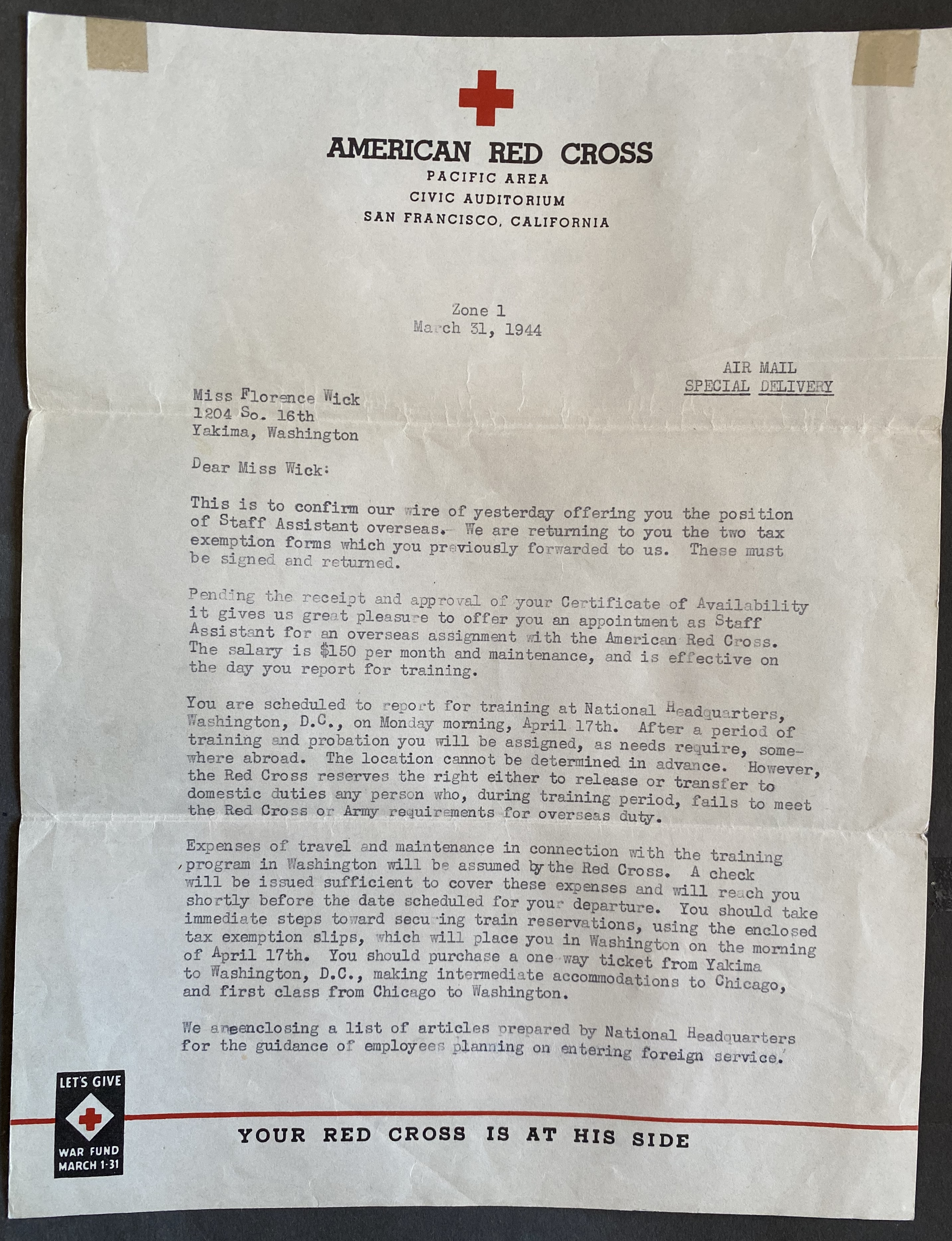
The letter was headed American Red Cross, Pacific Area, Civic Auditorium, San Francisco, California. It read:

“Dear Miss Wick:

This is to confirm our wire of yesterday offering you the position of Staff Assistant overseas.”

The “salary of $150 per month and maintenance” would be effective the day she was to report for training, April 17, 1944.  

“You are scheduled to report for training at National Headquarters, Washington, D.C., on Monday morning, April 17th. After a period of training and probation you will be assigned, as needs require, somewhere abroad. The location cannot be determined in advance. However, the Red Cross reserves the right either to release or transfer to domestic duties any person who, during training period, fails to meet the Red Cross or Army requirements for overseas duty.”

“Expenses of travel and maintenance in connection with the training program in Washington will be assumed by the Red Cross. A check will be issued sufficient to cover these expenses and will reach you shortly before the date scheduled for your departure. You should take immediate steps toward securing train reservations, using the enclosed tax exemption slips, which will place you in Washington on the morning of April 17th. You should purchase a one-way ticket from Yakima to Washington, D.C., making intermediate accommodations to Chicago, and first class from Chicago to Washington.”

 It was signed by (Miss) Esther Bristol, Assistant to the Director. The letter came with a list of “articles prepared by National Headquarters for the guidance of employees planning on entering foreign service.” The list of items included everything the ARC thought a woman would need for a year abroad, such as four girdles(!), sanitary napkins, and panties.

Flo resolved to do whatever was necessary to carry out her job to the best of her ability. She would respond by collect wire as instructed and then she would be officially in the Red Cross.

Their mother, Gerda, was in the kitchen cooking dinner for her daughters and their two boarders, female students at the community college. 

She promised her daughter that she would write, and keep her supplied with homemade Swedish cookies.

Chapter 6: https://mollymartin.blog/2025/01/24/the-battle-for-salerno/

Audie Murphy Fights to Fight

Chapter 4: He Sheds First Nazi Blood in Sicily

They nicknamed him Baby and he couldn’t shed the tag. Audie Murphy had to fight for his place in combat. From the beginning of his military journey, he faced skepticism at every turn. Rejected by the Marines and paratroops, he was finally accepted by the infantry. 

Battle route of the Third Infantry Division

Immediately his first commanding officer tried to shove him into a cook and baker’s school where the going would be less rough.

“That was the supreme humiliation. To reach for the stars and end up stirring a pot of C-rations. I would not do it. I swore that I would take the guardhouse first. My stubborn attitude paid off. I was allowed to keep my combat classification; and the Army was spared the disaster of having another fourth-class cook in its ranks,” he wrote in his autobiography.

In training, officers took one look at his skinny body and boyish face and tried to steer Murphy away from the front lines.  At Fort Meade, one well-meaning officer attempted to save him from combat altogether by assigning him a clerical position at the post exchange. Again he stuck to his guns.

In July, 1943 he made it to the front in Sicily, but his youth and appearance worked against him even there. He was transferred to headquarters to serve as a runner. But Murphy wouldn’t stay away from the action. He repeatedly sneaked off on patrols and scouting missions. His determination eventually forced his commander’s hand. He was promoted to corporal.

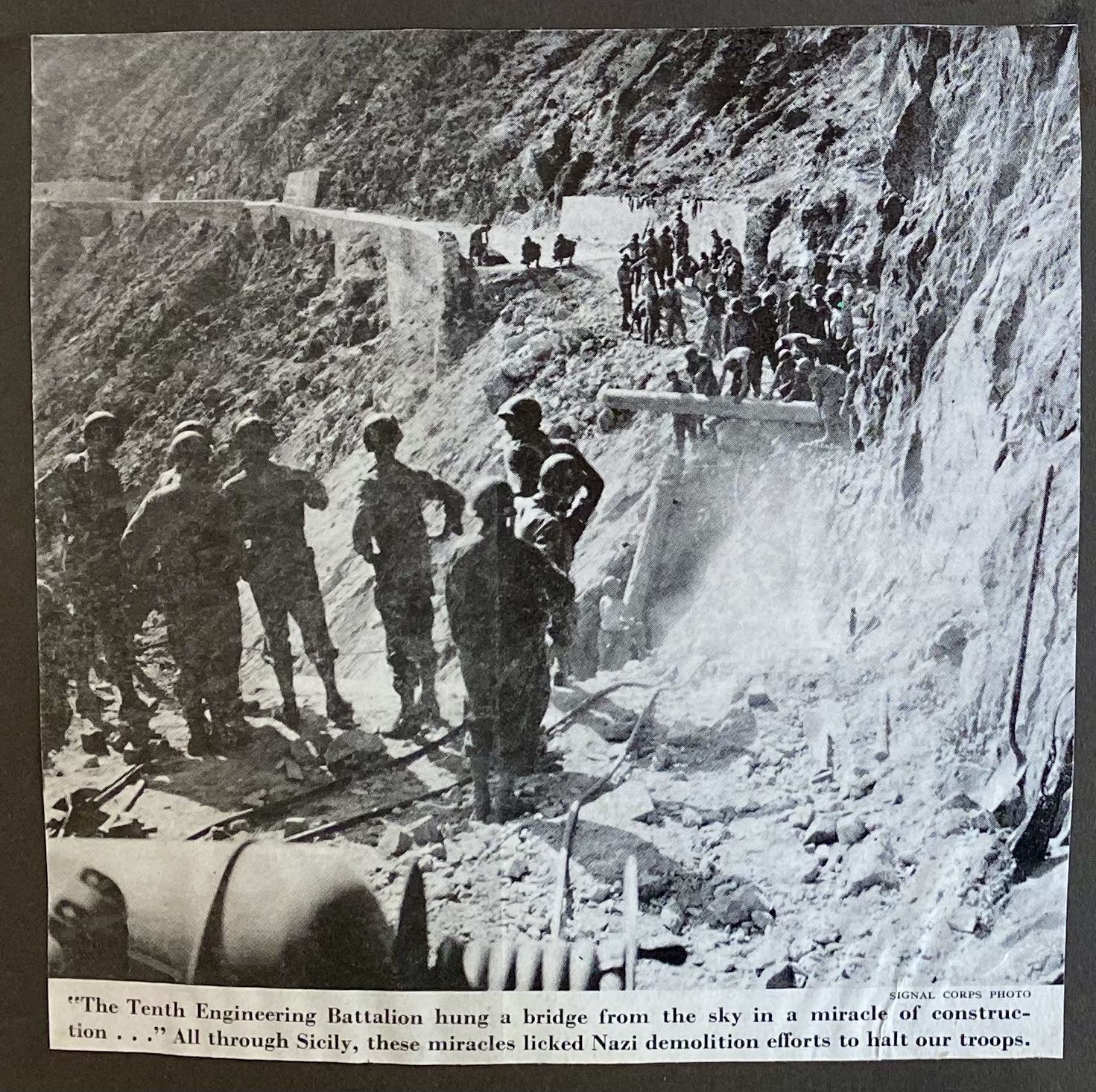
Life Magazine photo essay posted in Flo’s album

By then, Murphy had already missed his chance to fight in North Africa. His convoy had docked in Casablanca only after the battles were over. Instead of combat, he endured more training—much to his frustration. “I just wanted to fight,” he later said.  

Murphy finally got his chance in Sicily, but it was far from the glory he had imagined as a boy.  

On his first day in combat, a mortar attack killed a young soldier sitting nearby.  A boom, a whistle, the earth shakes, and the boy falls from the rock where he was sitting, just taking a break. As simple as that. One minute you’re sitting on a rock. The next minute you’re dead.  

This was not the war Murphy had dreamed of.  He had imagined men charging gallantly across flaming hills. Bugles blew, banners streamed, and the temperature was mild. Enemy bullets always miraculously missed, and his trusty rifle always hit home. As a kid, the dream was his escape from a grimly realistic world of poverty.

But now, as he trudged across the Sicilian battlefield, sweat soaking his uniform, his boyhood fantasies were shattered.  

“Maybe my notions about war are all cockeyed. How do you pit skill against skill if you cannot even see the enemy? Where is the glamour in blistered feet and a growling stomach? And where is the expected adventure? Well, whatever comes, it was my own idea. I had always wanted to be a soldier,” he wrote.  

His skill with a rifle, however, did not go unnoticed. In one skirmish, Murphy shot two German officers from their horses with two clean shots. He had shed his first blood. But he felt nothing except a weary indifference.

Even as malaria struck and forced him into a field hospital for a week, Murphy returned to the lines. The disease would haunt him throughout the war, but it didn’t stop him. 

He had loved the idea of war, but it didn’t take long to hate the real thing.

“The Sicilian campaign has taken the vinegar out of my spirit. I have seen war as it actually is, and I do not like it. But I will go on fighting,” he wrote.

*Quotes are from Audie Murphy’s autobiography, To Hell and Back

A Photo Album Tells the Story

My mother and Audie Murphy Chapter 2

The photo album that my mother, Flo Wick, shared with Audie Murphy when they reconnected in 1955 is massive. The scrapbook is filled with photographs, newspaper clippings, letters, and travel paraphernalia and it tells the story of Mom’s two years as an American Red Cross (ARC) “donut girl” in Europe during World War II. 

It also tells the story of the Third Infantry Division, the only American division that fought the Nazis on every front—North Africa, Sicily, Italy, France, and Germany. “The Fightin’ Third” had more casualties—nearly 35,000—than any other division, and it holds the record for high combat citations. 

Throughout our childhoods my brothers and I pulled out the album, looked through it, and listened to our mother’s war stories. We kids especially liked the sketches by Flo’s comrade Liz Elliott of the everyday lives of the “donut gals.”

When my mother died in 1983 at the age of 70, I claimed the album and it’s been stored in garages and closets ever since, occasionally brought out for perusal by relatives or friends with an interest in World War II. For a time, it lived in a mold-infected storage room and so it was infected along with other archives. I exposed each page to sunlight in an effort to reduce the mold and that helped, but when I really wanted to examine the book, I donned a respirator to avoid breathing in clouds of invisible mold spores.

Mom was a scrapbook maker and for that I am now grateful as I try to piece together the events of her life during the war. Perhaps she had the idea for the album even before she sailed to Europe on a hospital ship in May 1944. I do know that the act of putting it together when she returned home after the war in 1946 salved her sadness at the deaths of so many and helped her readjust to life stateside where it seemed Americans had moved on and no longer wanted to think or talk about the war.

Recently I went through the album page by page, photographing all. That’s when I discovered that Flo had had a friendship with Audie Murphy that began somewhere in France when she served him donuts and continued after the war.

This story follows two narratives: one chronicles Flo Wick and the other chronicles Audie Murphy. They were both attached to the Third Division but mostly in different parts of the North African and European theaters. Their paths intersect in the Vosges mountains of France and as the Third pushed its way into Germany. For Audie’s tale I’m referencing his autobiography To Hell and Back, as well as letters and artifacts saved in Flo’s album.

A Little Background

She came of age during the Depression

Born in 1913, Florence Wick had graduated high school at 16 after being allowed to skip ahead a grade. Her class graduated in 1929½. Flo was excited about the prospect of going to college. She planned to enroll at the state college, but the Great Depression intervened. Instead, she completed a secretarial course at a trade school. At 17 she started working to help support her family. In 1931 she found a job as a stenographer for the Washington State Department of Highways. 

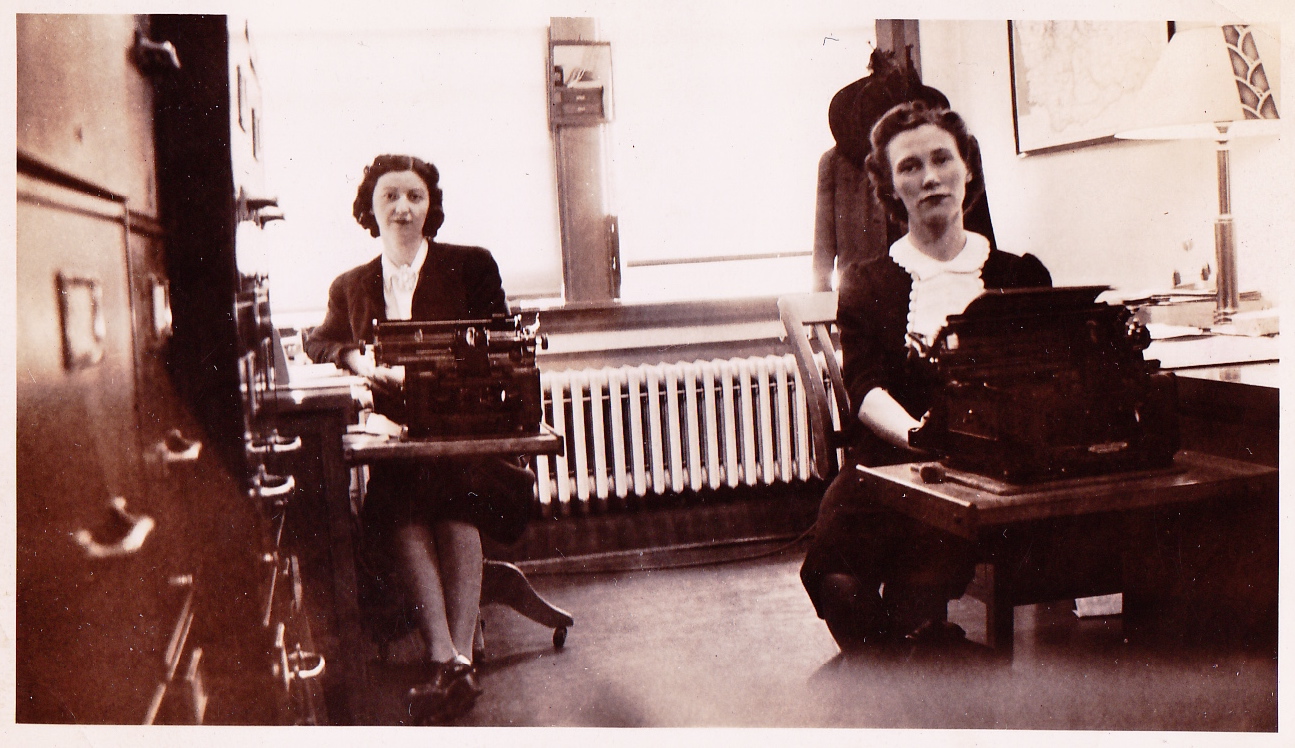
Flo (R) at the Highway Dept.

By the time she learned about the ARC program, Flo had been working full time at that job for more than a decade. No doubt she was ready to do something else—maybe anything else. This seemed like an opportunity to travel outside of Washington State and to see other places in the world. And she was anxious to help the war effort.

He always wanted to be a soldier

Flo’s photo of Audie 1945

Even as a little boy Audie Murphy had wanted to be a soldier. His share cropper father abandoned his mother and their children leaving the family destitute. Then, when he was 16, his mother died. Born in 1925, the seventh of twelve kids, Audie tried to provide for the others, dropping out of school in fifth grade to pick cotton for a dollar a day. But he knew he had to get out of Farmersville, Texas. He tried to join the paratroopers and the Marines, but was told he was too short at five feet five. The Army took him and trained him to be a soldier. The baby-faced kid earned the nickname Baby. He was already a good shot, having fed the family with wild game. He couldn’t wait to shoot the enemy.

Murphy was assigned to the Third Division, then part of the Third Army under the command of General George Patton. He joined them in Sicily in 1943, on the way from Morocco and North Africa. They would fight their way through Italy and France into Germany. Murphy would be one of a very few of his company left standing and would become the most decorated American soldier of the war.

Chapter 3 https://mollymartin.blog/2025/01/07/flo-gets-a-telegram/

My Mother and Audie Murphy

She took the only pictures as he was honored

Chapter One

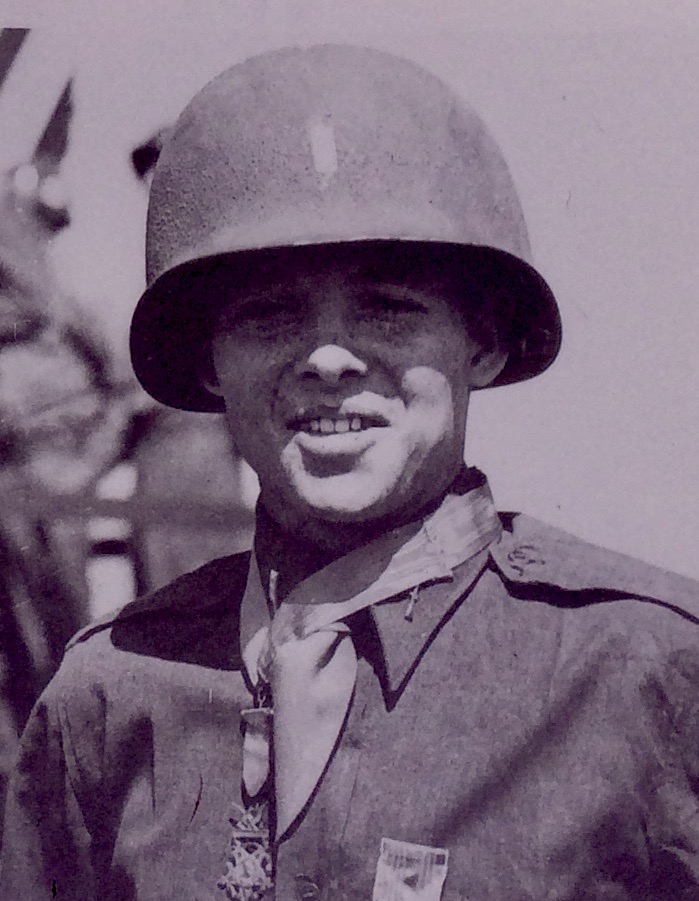
“When are we going to get some more donuts?” asked Audie Murphy of the photographer after he received the highest of all military honors, the Congressional Medal of Honor, in the field in Salzburg, Germany.

Flo’s photo of Audie Murphy receiving the Congessional Medal of Honor

It was 1945 and the photographer was my mother, Florence Wick. She had been serving as a Red Cross “donut girl” with the Third Infantry Division in the Europe. She had met Murphy and served him donuts somewhere in France.

That photograph was the only one taken of Murphy at the awards ceremony and it was published worldwide and used to recreate the scene for the movie of his life story, “To Hell and Back.”

1955 Flo and Audie reconnected on the movie set of To Hell and Back. Photo by Rollie Lane. The photo at top is the one taken by Flo at the awards ceremony in Salzburg in 1945.

The most decorated soldier of WWII, Audie would cross paths with Flo again ten years later when he came to our hometown of Yakima, Washington to film the movie. There at the Yakima Firing Center the two of them looked through the scrapbook Flo had compiled of her adventures and heartbreaks in the European theater.

Now I have that scrapbook. It’s gigantic and weighs 25 pounds. I have wanted to use its contents to tell my mother’s story, but the project is overwhelming. Maybe I can start with Audie.

Audie Murphy was known worldwide after the war. He had a huge fan club and maybe still does (he died in 1971). One of his fans recently got in touch with me and asked if I could supply more stories and pictures. Yes! Flo stayed in touch with Audie. She corresponded with his biographer, his associates and those putting together a memorial in Texas. She saved mementos and newspaper clippings.

As for her photo that became famous, she gave it freely and others took credit. A post-war letter she saved warns that others are charging for the use of her photo. She never received credit.

Chapter 2: https://mollymartin.blog/2024/12/31/a-photo-album-tells-the-story/