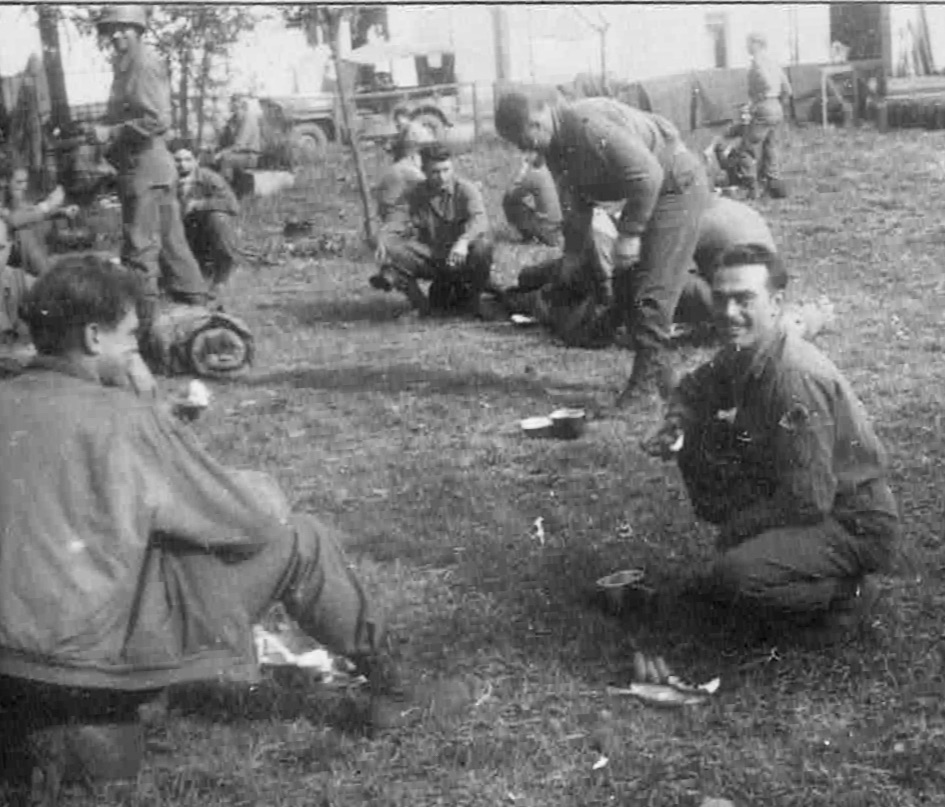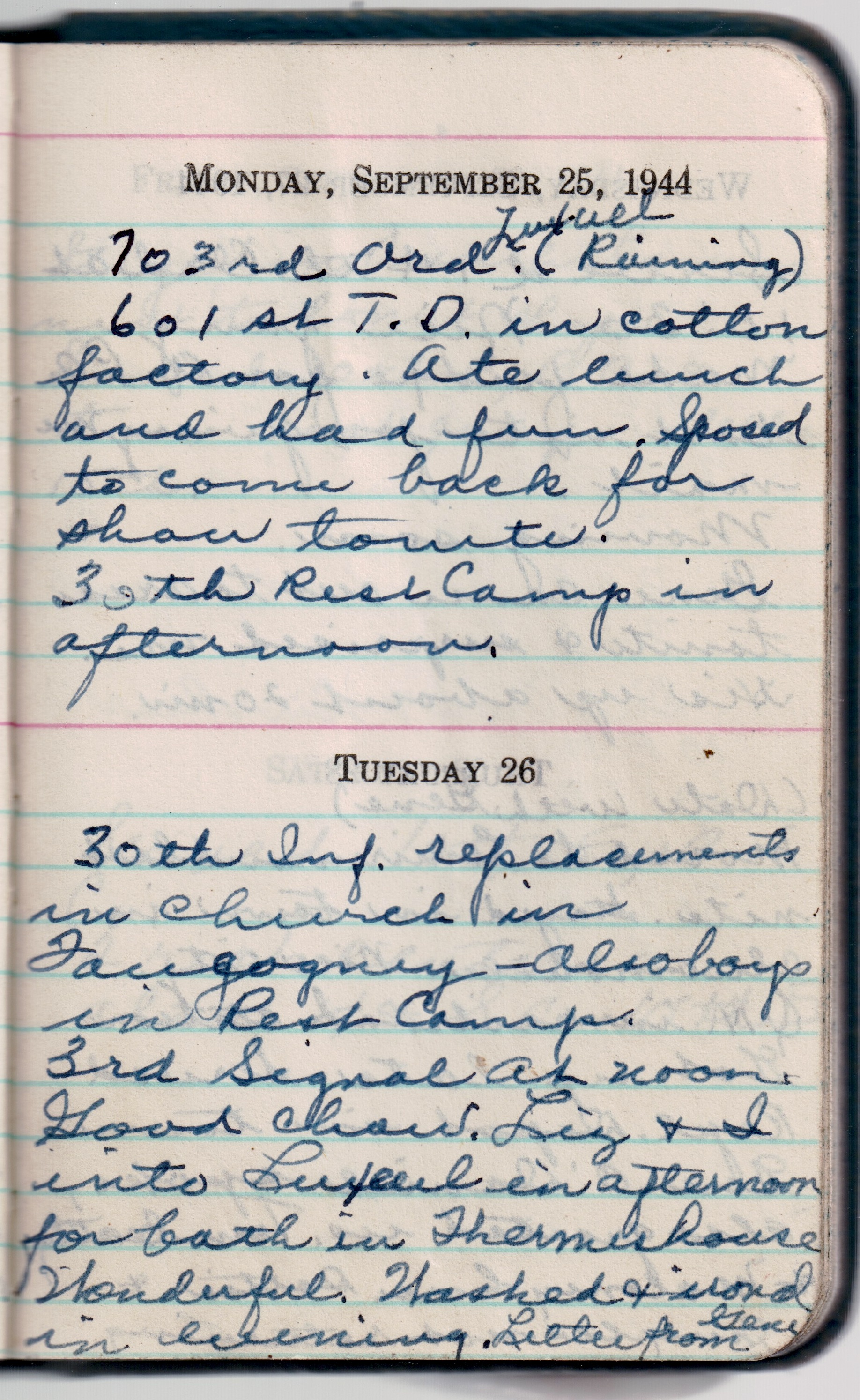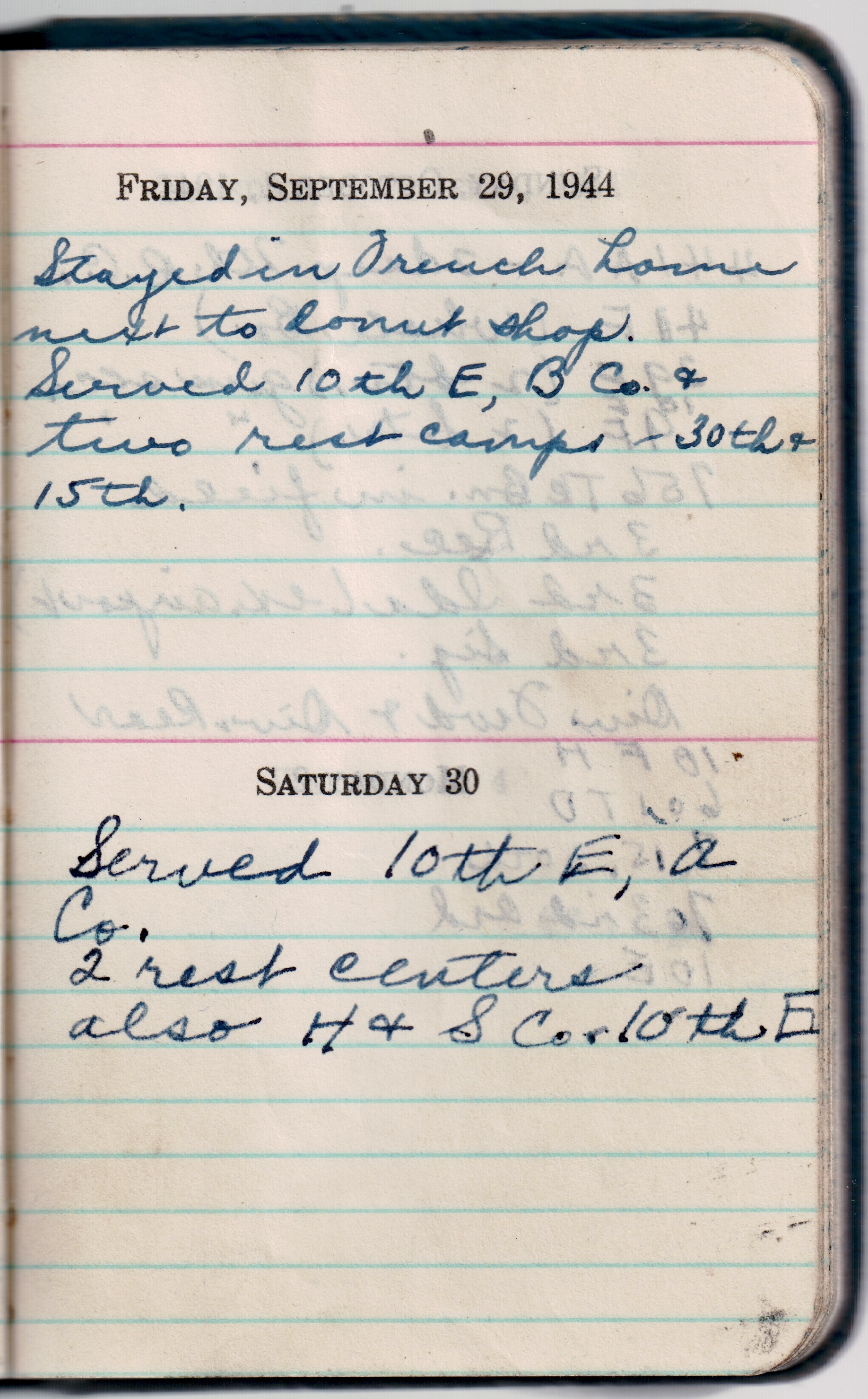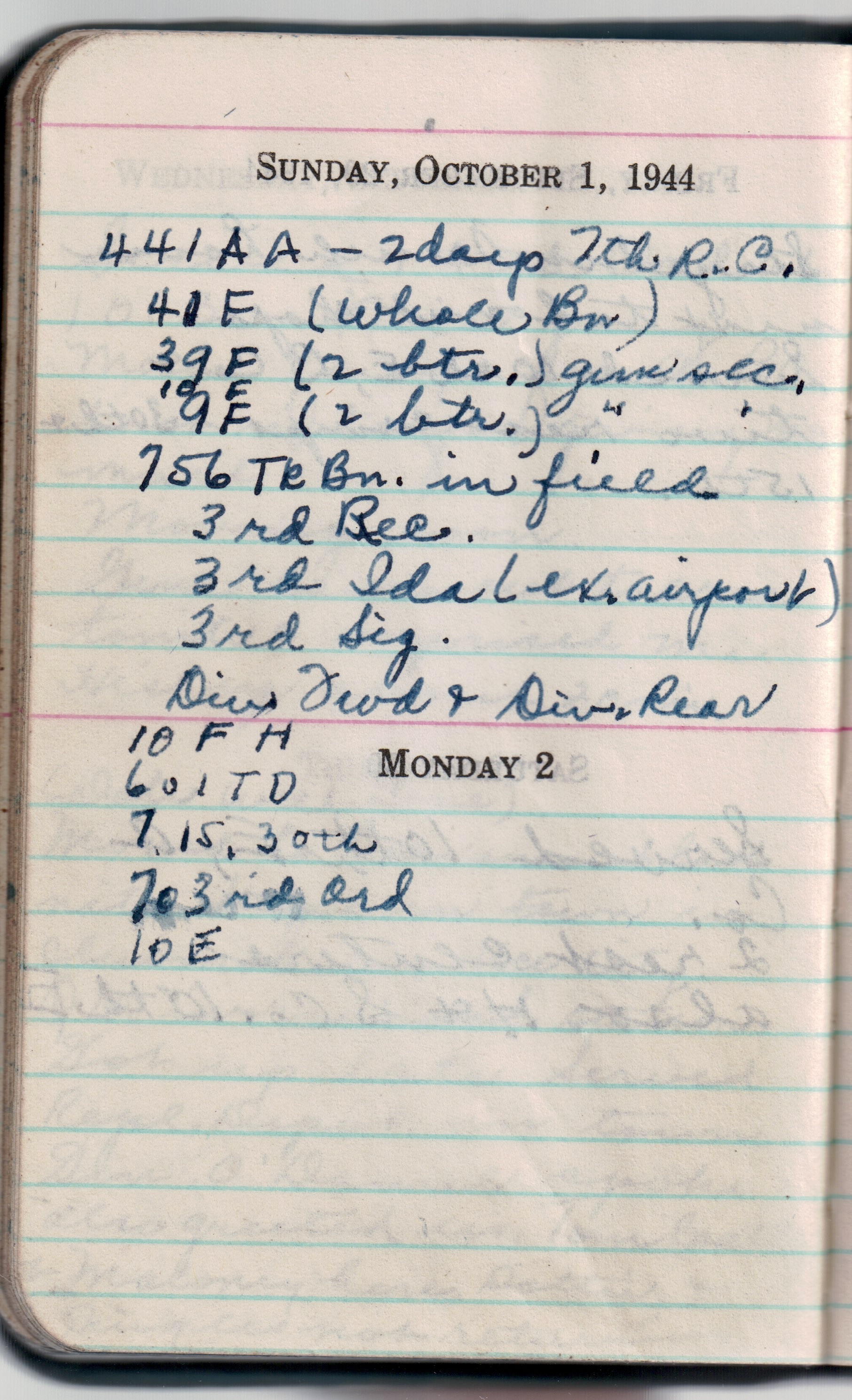
Ready to Leave Poor Italy

In a letter home, Flo writes of the strain of waiting

My Mother and Audie Murphy Ch. 25

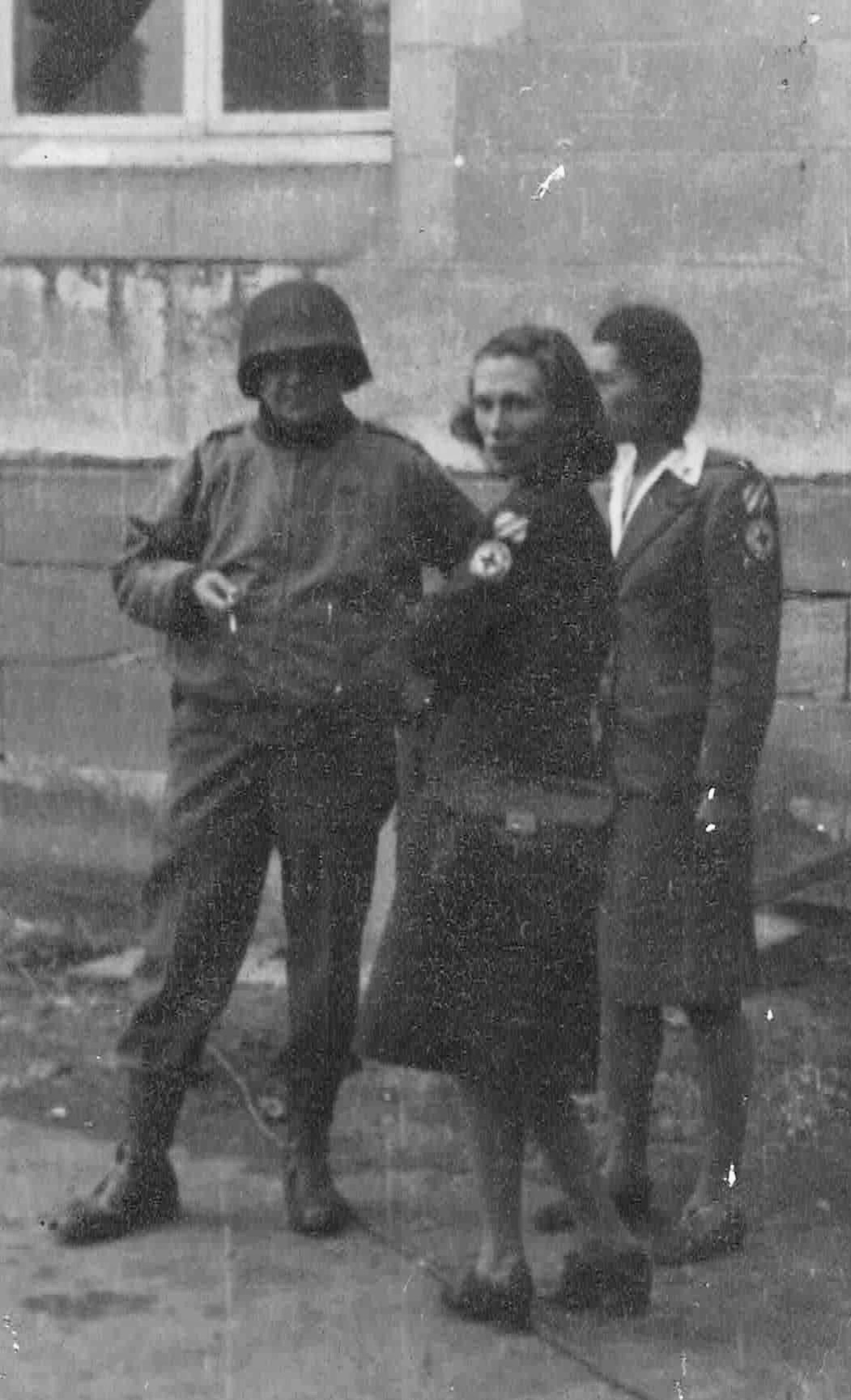
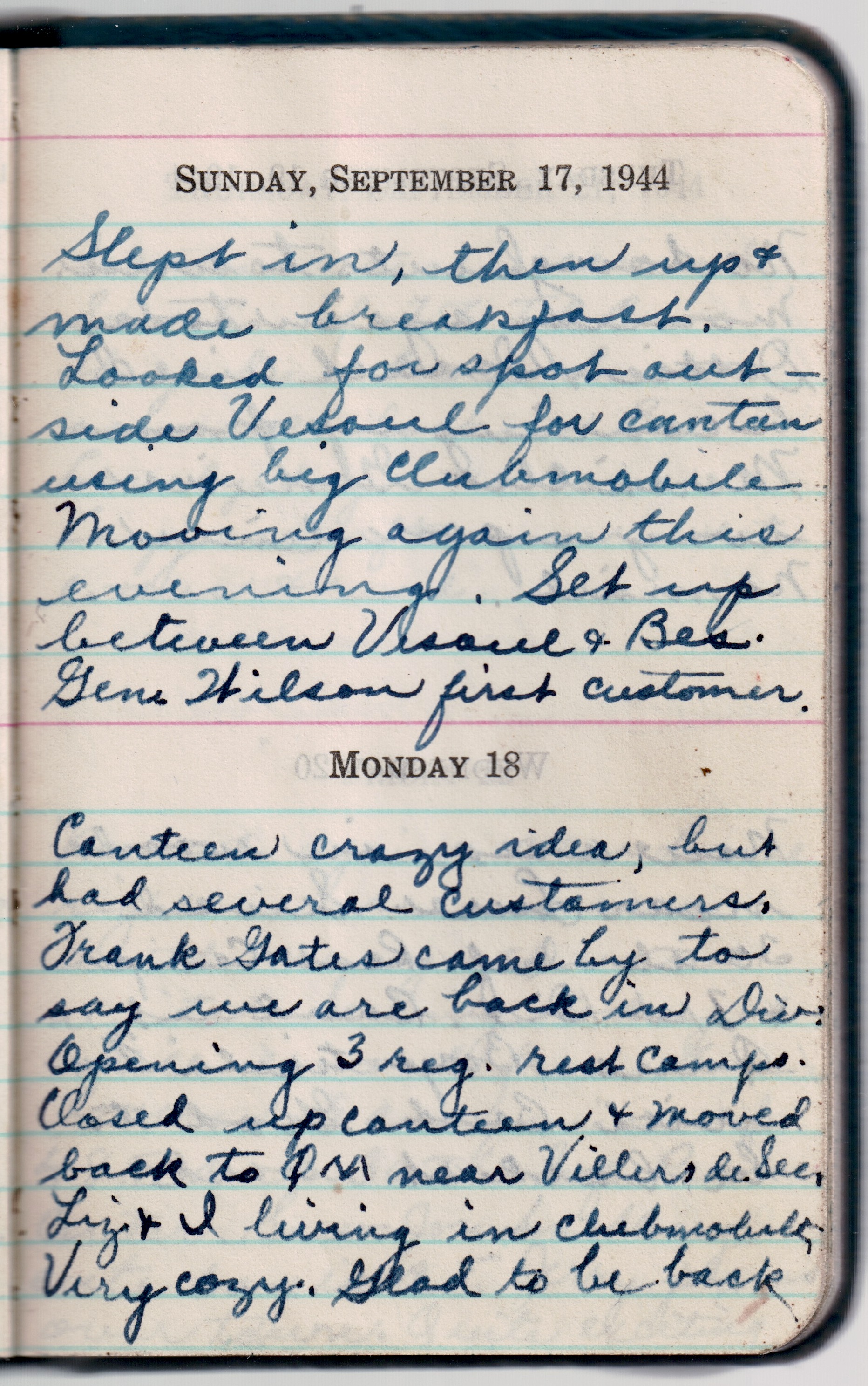
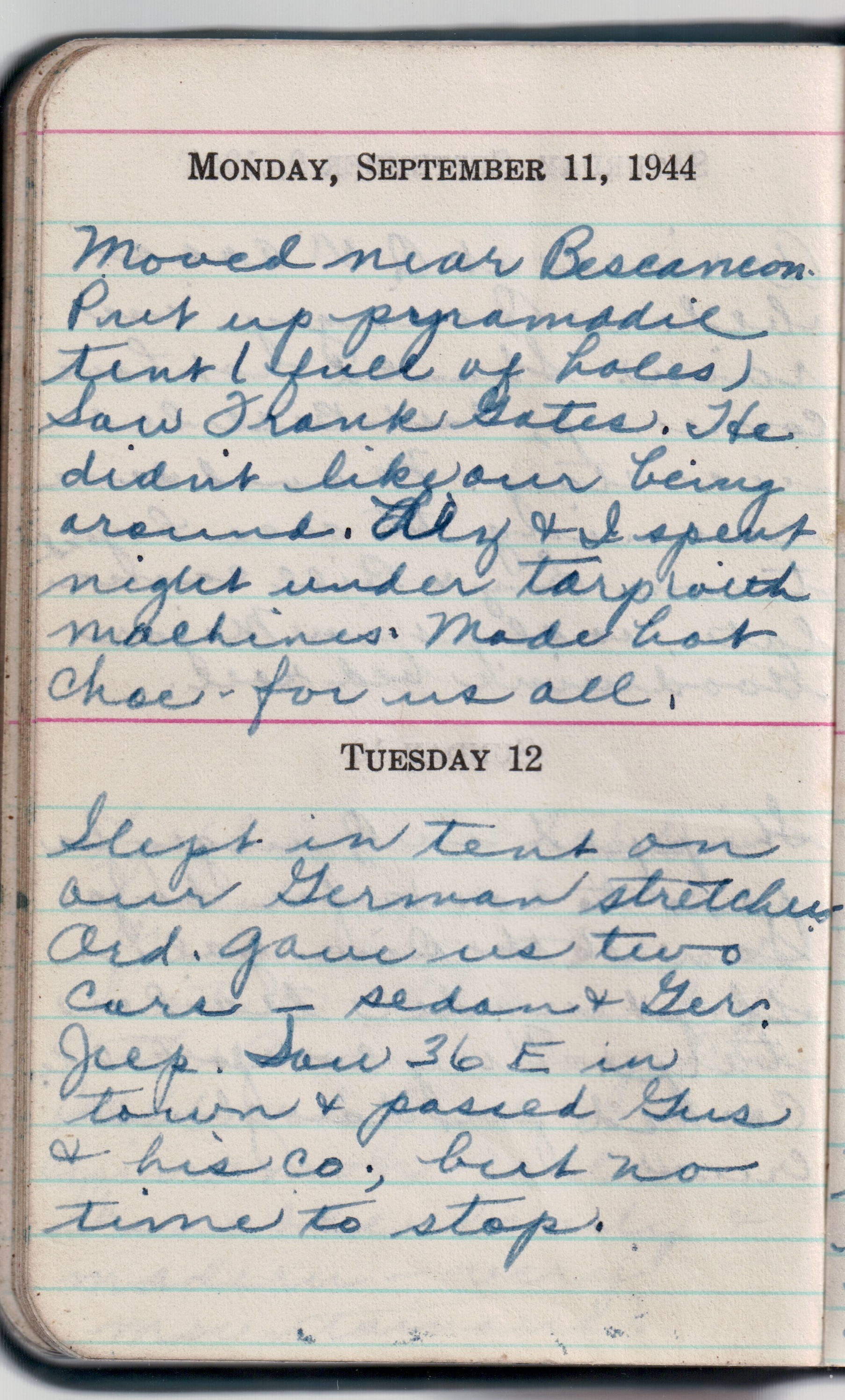
August 24, 1944. “We are in the process of waiting right now and it is very much of a strain, particularly since “our boys” are fighting and we worry so much about them. War is hell when you “sweat out” an invasion and it becomes pretty grim when you hear that someone you knew well and liked a great deal has been wounded or killed. We hope to be with them before too long. 

“I have just started to comprehend Italian and will soon have to struggle with French, but I’m sure I’ll like it much better.

“I’ve gained at least 5 pounds, I am nut brown from outdoor life and feel excellent. The last two days I’ve had a sore throat and am now horse as a crow, but fine otherwise. 

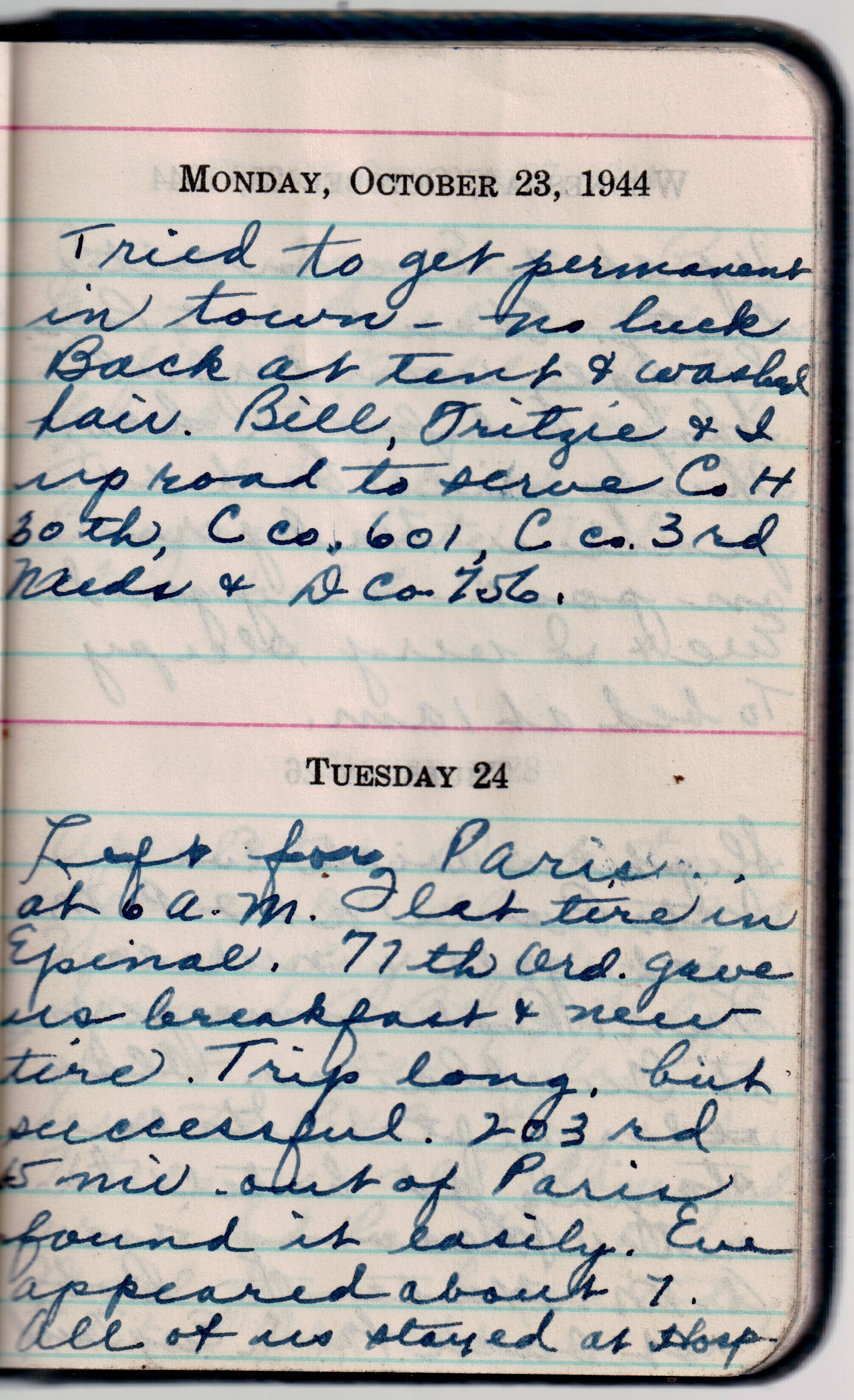
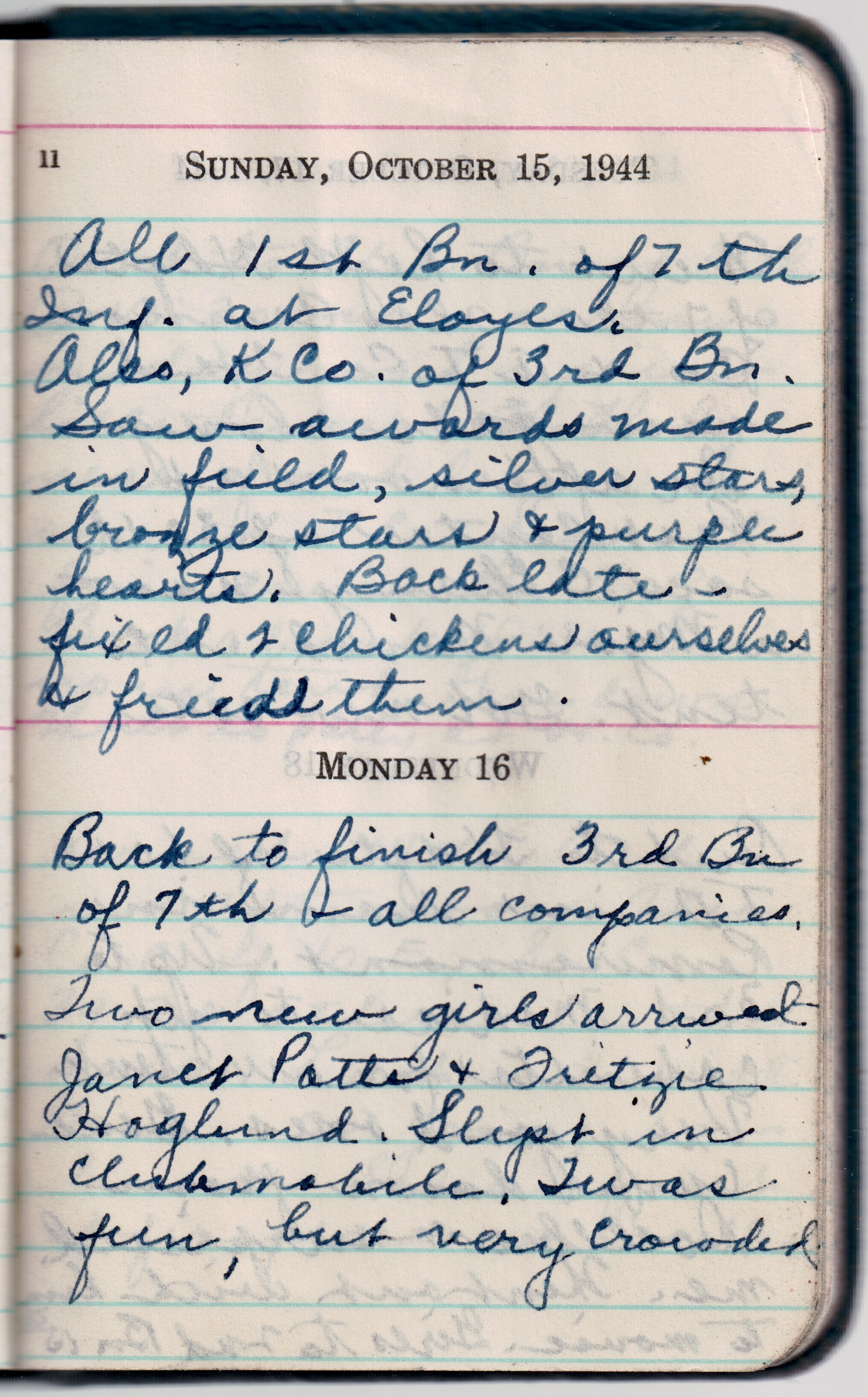
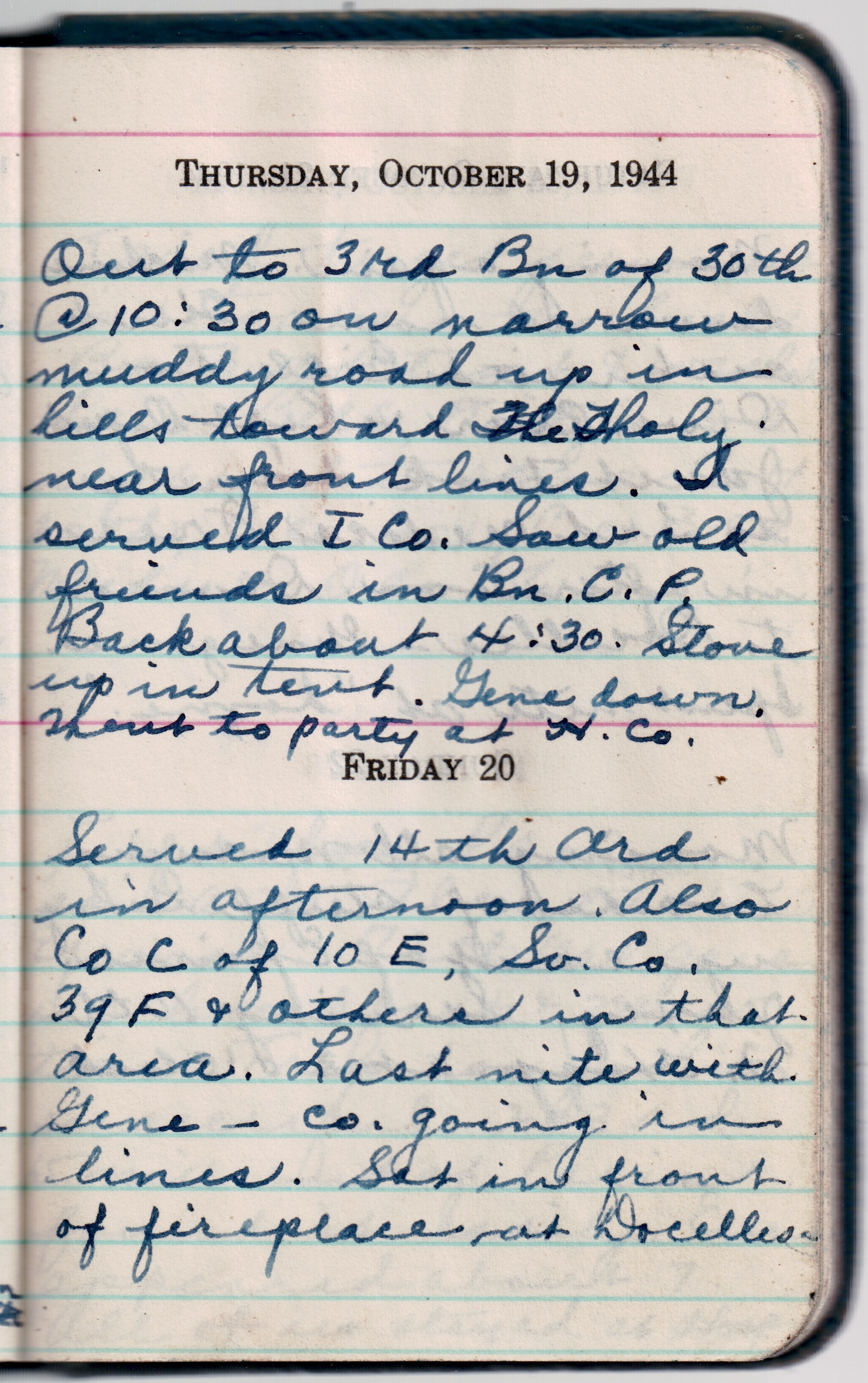
“Paris fell last evening. No word from Gene,” wrote Flo in her diary August 23.

“My “Love life” is taking time off, too, as the boyfriend is having a little argument with the Jerries right now. I hope he will “come back” but there is always the tragic possibility that he won’t, along with hundreds of others. 

“The war advances are encouraging, though to us, not as encouraging as to the folks back home. I am afraid it will still be quite some time, but about that no one can tell for sure.

“It is as hot here as it must be at home in August. We didn’t mind it when we were in the country, but in the city it is very enervating and we notice it considerably. 

“I love my job and I am fond of my coworkers, so I’ve never been sorry I came over. In fact, I feel as if I’ve really been doing something. 

“Waiting around is hard, but we have even a bigger job ahead of us, as well as new scenes and new adventures.

“I will be just as glad to leave Italy – it has been fun here, but the people are very disillusioning– their whole standard of living is so far, far below what I expected and they seem to have no leaders, no particular ambition or initiative. Like much of Europe now, it is dirty and poor. We have very little to do with the natives and I am more often pitying them than not, but that is wearing. The poor children – there is no health standard and very little good food – the next generation will really suffer. 

“Ruth (her sister), If you get a chance, please tell Mom to send me some combs – long ones. They have nothing but cheap short ones in the PX here and I’m destitute. Some Italian stole my two pair of dress shoes, so I’m completely dependent on those horrible black oxfords. Only one package has reached me from home as yet.” 

Ch. 26: https://mollymartin.blog/2025/05/12/3rd-divisions-first-day-in-france/

Operation Dragoon: The Landing

Audie Murphy recalled landing on French soil

My Mother and Audie Murphy Ch. 24

August 15, 1944. From Murphy’s autobiography To Hell and Back:

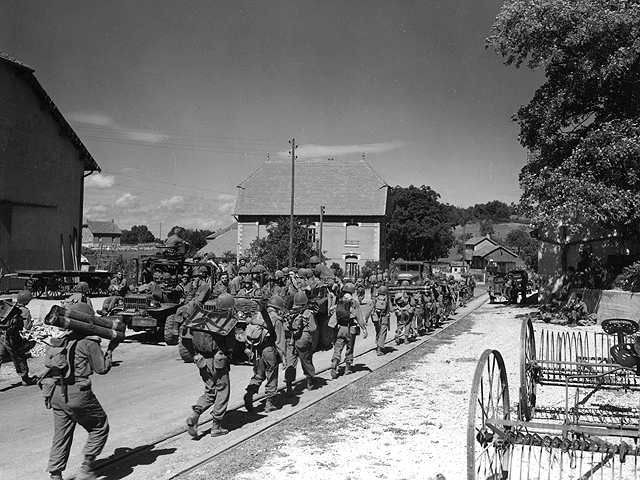
Audie Murphy later described the landing in southern France in his autobiography To Hell and Back. He recalled that, technically, the operation was considered perfect. The assault had been calculated to the smallest detail, every movement coordinated so that the effort unfolded with the smooth precision of a machine.

Compared to earlier invasions, resistance here was light. Weeks before, Allied forces had already broken out of Normandy and were cutting through northern France like a flood bursting through a levee. On the eastern front, the Russians were hammering the German armies. Overhead, American bombers were grinding German cities to rubble. Murphy likened Germany’s situation to that of a man hiding in a stolen house, frantically running between front and back doors as justice pounded from both sides—only to realize too late that another force was now rising up through the cellar. His regiment, Murphy observed, was that third force.

Landing craft on D-Day August 15. More than 90,000 amphibious and 9,000 airborne troops participated in the initial two-day southern France landings. Photo: NARA

Yet the men in the landing craft knew nothing of this sweeping strategic picture. They saw only the edge of the boat, the immediate shoreline, and the moment that lay before them. Their first objective was a narrow, harmless-looking strip of sand called “Yellow Beach.” It was early morning in mid-August; a thin mist hovered above the flat fields beyond the shore, and beyond that, quiet green hills rose inland.

Photo: Dogface soldiers collection

The bay between St. Tropez and Cavalaire was crowded with the familiar pattern of an amphibious assault. Battleships had already given the coastline a thorough pounding and now drifted silently in the background. Rocket craft followed, launching volleys that hissed through the air like schools of strange metallic fish, exploding mines and shredding barbed wire while rattling the nerves of the Germans waiting on shore.

Photo: Dogface soldiers collection

Under this barrage, scores of landing boats churned forward. Murphy stood in one of them, gripped again by that old, stomach-knotting fear that always came before action. Around him, his men crouched like miserable, soaked cats. Some were seasick; others sat glassy-eyed, lost in the kind of inward withdrawal that came just before battle.

And then, in the midst of dread, Murphy felt the absurdity of the moment. Here they were—small, cold, wet men—thrust into a riddle vast as the sky. He laughed, as he often did when confronted with the enormity of life and death.

Photo: Dogface soldiers collection

As the boats drew nearer, Murphy tried to rally his men by urging them to sing. They weren’t interested. But singing had long been a way soldiers kept fear in check, anger in rhythm, and marching in step. The Third Division even had its own song—Dogface Soldier—written in 1942 by two of its own, Sgt. Bert Gold and Lt. Ken Hart, both from Long Beach, New York. The division commander, Lucian Truscott, liked it so much he made it official. Third Division soldiers sang it, marched to it, and danced to it.

Years later, in 1955, when Murphy played himself in the film To Hell and Back, the song made its public debut. It became one of the most well-known songs of the war, celebrating not heroes of legend, but the ordinary infantryman—the “dogface” soldier who carried the rifle, slogged the mud, and shouldered the daily weight of the war.

The lyrics—simple, proud, and rough-edged—captured exactly who they were:

I Wouldn’t Give A Bean
To Be A Fancy Pants Marine
I’d Rather Be A
Dog Face Soldier Like I Am

I Wouldn’t Trade My Old OD’s
For All The Navy’s Dungarees
For I’m The Walking Pride
Of Uncle Sam

On Army Posters That I Read
It Says “Be All That You Can”
So They’re Tearing Me Down
To Build Me Over Again

I’m just a Dogface Soldier, 
With a rifle on my shoulder, 
And I eat a Kraut for breakfast every day. 

So Feed Me Ammunition
Keep Me In the Third Division
Your DogFace Soldier’s A-Okay

Ch. 25: https://mollymartin.blog/2025/05/07/ready-to-leave-poor-italy/

On Leave: Sorrento and Capri

My Mother and Audie Murphy Ch. 23

After Goodbyes, Four Days of Bliss

August 1944 was a month of waiting. The men Flo and her friends had waved off were now at sea, sailing toward the battlefields of Southern France. Their D-Day, scheduled for August 15, loomed heavy in the minds of the Red Cross women left behind. It might be weeks, they were warned, before the coast was clear enough for them to follow. On August 8, the women moved from the camp at Pozzuoli to a residence next to headquarters in Naples.

After days of stifling heat and restless worry in Naples, the women were granted leave. Flo, Dottie, and Isabella fled to Sorrento, trading the grit and noise of the city for something closer to paradise. Flo captured it all in a letter home:

A page from Flo’s album. Which one of these guys is the cute French officer? She didn’t save the letters that were in the envelopes. What did he write? Pinch out to look more closely.

“We have been resting for several days and spent four wonderful days at Sorrento in a lovely old hotel, which is now an officers rest camp. It was peaceful and lovely down there after the hot, noisy, dirty city and seemed like a different world. We were in bathing suits and shorts most of the time, swimming and sailing. They not only have white sails on the boats, but red, Blue and terra-cotta. It is a picturesque site – the sailboats skimming along on that blue, blue water with veri-colored sails. 

In her diary Flo wrote about her flirtation with a cute French officer in Sorrento. She called him a “very romantic boy.”

“Italy has its good points and they are nearly all scenery. We took the one-day boat excursion trip to Capri and it is as romantic and lovely as all the songs and posters say. It is out of this world and is surrounded by the clearest, bluest water I’ve seen. The island itself is quaint– abounding in all kinds of flowers, trees, lovely shrines and cathedrals, which date back to the 15th century. 

“To make my few vacation days even more unusual and romantic, I met a cute French officer, who made a big hit with all – male and female – staying at the hotel. He spoke a very few words of English and I no French, but we got along beautifully and I took a great deal of kidding about it. Even in his broken English, he was quite a smoothie, and so sincere about it all. They are such sentimentalists, but confidentially I prefer them to the English.” 

Flo wrote about their trip to Sorrento and Capri in her diary

They sailed to Capri, where the sea was so blue it looked unreal, and the hillsides spilled over with flowers and ancient shrines. Flo met a young French officer, charming even in broken English, and spent a day with him swimming, sailing, and dancing under the southern sun.

In her diary, she noted the date — August 15 — and scribbled the words: “Hope 3rd Div. okey.” She took a drive along the Amalfi coast, marveling at the villages clinging to cliffs above the sea. For a moment, the war felt far away, almost unreal.

But when the four days ended, reality closed back around them. Returning to Naples, Flo and the others slipped once more into the long, anxious business of waiting — and worrying about the boys they had left behind. She wrote in her diary, “May be here for another two weeks. Invasion going well, but worry about boys and especially Gene. Hope he escapes.”

Ch. 24: https://mollymartin.blog/2025/05/02/operation-dragoon-the-landing/

Goodbye to the Boys

Chapter 22: My Mother and Audie Murphy

August, 1944. Operation Dragoon—the Allied invasion of Southern France—had been debated for months. Originally, it was supposed to launch alongside the more famous Operation Overlord, the Normandy invasion on June 6, 1944. But the top brass couldn’t agree. Resources were stretched thin, and priorities clashed. Was it wise to open a second front in France? Could they even pull it off?

Part of the Operation Dragoon invasion fleet anchored off Naples. Photo: NARA

Meanwhile, thousands of young men trained on the sunbaked beaches near Naples, waiting for orders that never seemed to come. Tension hung heavy in the air. They practiced amphibious landings again and again, sand grinding into their boots and rifles, minds on the fight ahead—or trying not to think about it at all.

By August, the go-ahead finally came. Operation Dragoon would launch on August 15, with landings near St. Tropez. The plan: storm the beaches, push inland, liberate Marseille, and link up with the northern forces. It would be a massive undertaking, one that might finally break the German grip on Southern France.

In the ports around Naples, everything sprang into motion. Soldiers, tanks, trucks, jeeps, crates of ammunition and rations—all were loaded onto the towering LSTs (Landing Ship, Tank). The docks were a blur of noise and movement. Beneath the logistical precision, though, was something quieter, more personal: goodbye.

Loading the LSTs

The Red Cross women were there, as they always were—on the edges of history, offering comfort, coffee, and smiles to boys about to disappear into war.

On Monday, August 7, Flo wrote in her diary:  

“Served 3rd Div. leaving from Baia. Said goodbye to Stonie, Rick & Miles & part of 36E. Last date with Gene. Went to beach. Hated to say goodbye. Love him in spite of resolve.” 

The day before, Flo had written in her diary, “Decided I want to marry Gene.” He was now her fiancé, and they were parting ways, perhaps for the last time.

The next day, August 8, she wrote:  

“On beach at Nisida. Mostly Infantry—7th & 30th. Saw Gus, Buzz and all the rest of 1st Bn. Hot & dirty. Worked from 7 a.m. to 7 p.m.”  

What a gigantic operation! Photo: NARA

Twelve-hour shifts, in the heat and dust, trying to give each man a sense that someone saw him, that someone cared. How do you say goodbye to that many young men, most of them barely more than boys? How do you smile through it, knowing many might never come back?

When the last ships pulled out, the docks were quiet. The women packed up their things, broke camp, and moved into Naples near headquarters. Flo wrote:  

“Much baggage. Helped 45th girls at Pozzuoli. Also 36th Div. leaving there. Very hot, busy and tired. LST ensign gave me dozen eggs. Exhausted after days of saying goodbye to thousands of boys en route for invasion.”  

Photo: NARA

Now they waited. The invasion was set for August 15. First, the troops would land. Then they’d have to fight their way inland, clear the Germans, secure the roads. Only then would Flo and the other ARC staff be allowed to follow, to bring comfort once again to the weary, wounded, and grieving.

In the silence of the following days, Flo thought of Gene. And of Stonie, Rick, and Miles. And of the thousands of names she never knew—just faces, voices, laughter fading down the gangplank.

Ch. 23: https://mollymartin.blog/2025/04/27/on-leave-sorrento-and-capri/

She Liked Opera, They Liked Jazz

A decade older than the boys, Flo became a mother figure

Summer, 1944. My Mother and Audie Murphy Ch. 21

The soldiers were young—just boys, really—and by the end of that summer of 1944 at the training camp in Pozzuoli, they had become “her” boys. In the relative calm of the camp, Flo had served thousands of troops, gotten to know hundreds, and formed real friendships with many of them.

She and her clubmobile crew made regular visits to the army units, offering coffee, donuts, and a brief escape from the war. The women were allowed to join the men in some of their tasks—driving the amphibious DUKW boats, using the mine sweep, traveling to training areas, watching mock battles. Flo kept photos in her album—snapshots of the women posing with soldiers on tanks, jeeps, and trucks—memories of lighter moments amid the looming darkness. 

Flo and Dottie posing with 442nd Ack Ack

To the young men, she became a maternal figure. At 30, Flo was a decade or more older than most of the infantrymen who would soon be fighting on the front lines. There was a natural generational divide—she had grown up with opera and classical music; they preferred jazz. She danced the waltz. They wanted to jitterbug.

Still, there was deep mutual respect. She told me often how much she cared for them, how proud she was of them—and how worried she became as the next invasion loomed. She feared many of them wouldn’t come back.

She always emphasized how respectful the soldiers were. Of course, they were under strict military discipline, and they lived with the constant awareness that any day could be their last. That shaped their behavior, certainly—but so did the bond they shared with her.

Photogrphers unknown, but probably 3rd Signal Co.

Ch. 22: https://mollymartin.blog/2025/04/21/goodbye-to-the-boys/

Dance with All, but Don’t Fall

My Mother and Audie Murphy Ch. 20

They were told to dance with all the boys—but fall for none. Red Cross rules were clear: dating was fine, as long as the man wore officer’s stripes. Enlisted men were off-limits.

By day, the women drove from camp to camp serving donuts. By night, they danced—sometimes until midnight, then back on their feet by 3 a.m. when the troops came off the line. It was often exhausting, but it was the job.

Flo did her duty. She danced with everyone. Her diary mentions a rotating cast of names—Gus, Buzz, Captain Chaney, Pvt. Rotter, Rick, Stonie, Lt. Phillips, and a handful of Yakima boys. She even dined with Gen. O’Daniel. But her heart stayed untouched.

Until Gene.

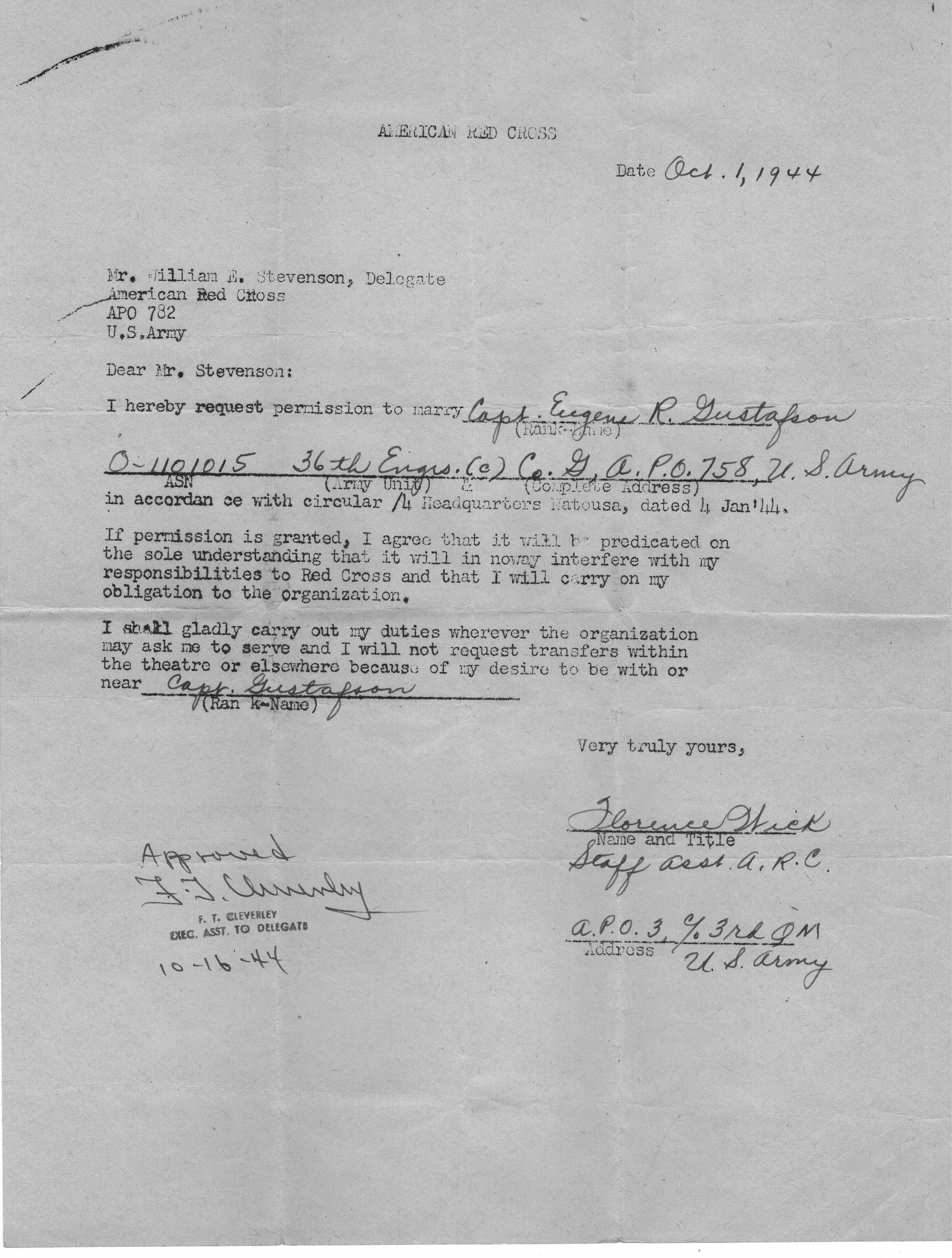
She met him in June at the Third Division bivouac at Pozzuoli while serving the 36th Engineers. The first hint shows up in her diary on July 13:  

“Date with Lt. Gustafson at 36E dinner and swimming at beach. Fun.”

From there, something shifted.

Flo serving the 36th Engineers

July 21:  

“Too many parties tomorrow nite; am involved.” 

She didn’t say his name, but by then, it was clear. She had a boyfriend.

Flo, once a secretary fluent in shorthand, sometimes switched to code in her diary. On July 23, in those secret curves and loops, she wrote:  

“Gene asked me to marry him today.”

The next day:  

“Gene down at 9:30. Looked at moon by the lake.”

The war made everything urgent. The ARC discouraged marriage, but love had its own rules. On July 28, she confessed:  

“Hate to think of the new invasion. He wants to give me a ring.”  

And then,  

July 31: “Afraid I like him lots.”  

August 6 in shorthand: “Decided I want to marry him.”

Gene Gustafson and Flo. She is wearing the armband used in the southern France invasion.

Flo had no shortage of admirers. She made friends easily, and turned down suitors gently. One woman joked that a soldier, refused by her, turned around and proposed to her friend—who accepted on the spot. It was that kind of war.

On August 7, as Gene prepared to ship out:  

“Last date with Gene. Love him in spite of resolve.”

Flo captioned this picture “Gene’s home at Anzio.”

In a letter to her sister Ruth, she tried to make sense of it all:  

“He’s big, very blonde, nice-looking, Swedish on both sides, and an engineer, as well as an Oregonian. It’s almost too perfect a set up and I don’t know just how it will materialize, but he wants to get married as soon as the army and Red Cross will let us. You would like this man and Mom especially, would approve. We’ve talked of going through Sweden before we come home but one never knows here. 

War does some peculiar things though, and we have no idea when we will get together again, or, of course, if he will survive this mess. The only thing I can do is borrow your philosophy that if it is to be, it will be!” 

Ch. 21: https://mollymartin.blog/2025/04/17/she-liked-opera-they-liked-jazz/

A Sisterhood on the Front Lines

ARC women provided support to the men–and each other

My Mother and Audie Murphy Ch. 19

Summer 1944. Surrounded by thousands of men, the women of the American Red Cross (ARC) held their own. They got along well with the soldiers—it was their job to lift spirits, provide comfort, and remind the men of home.

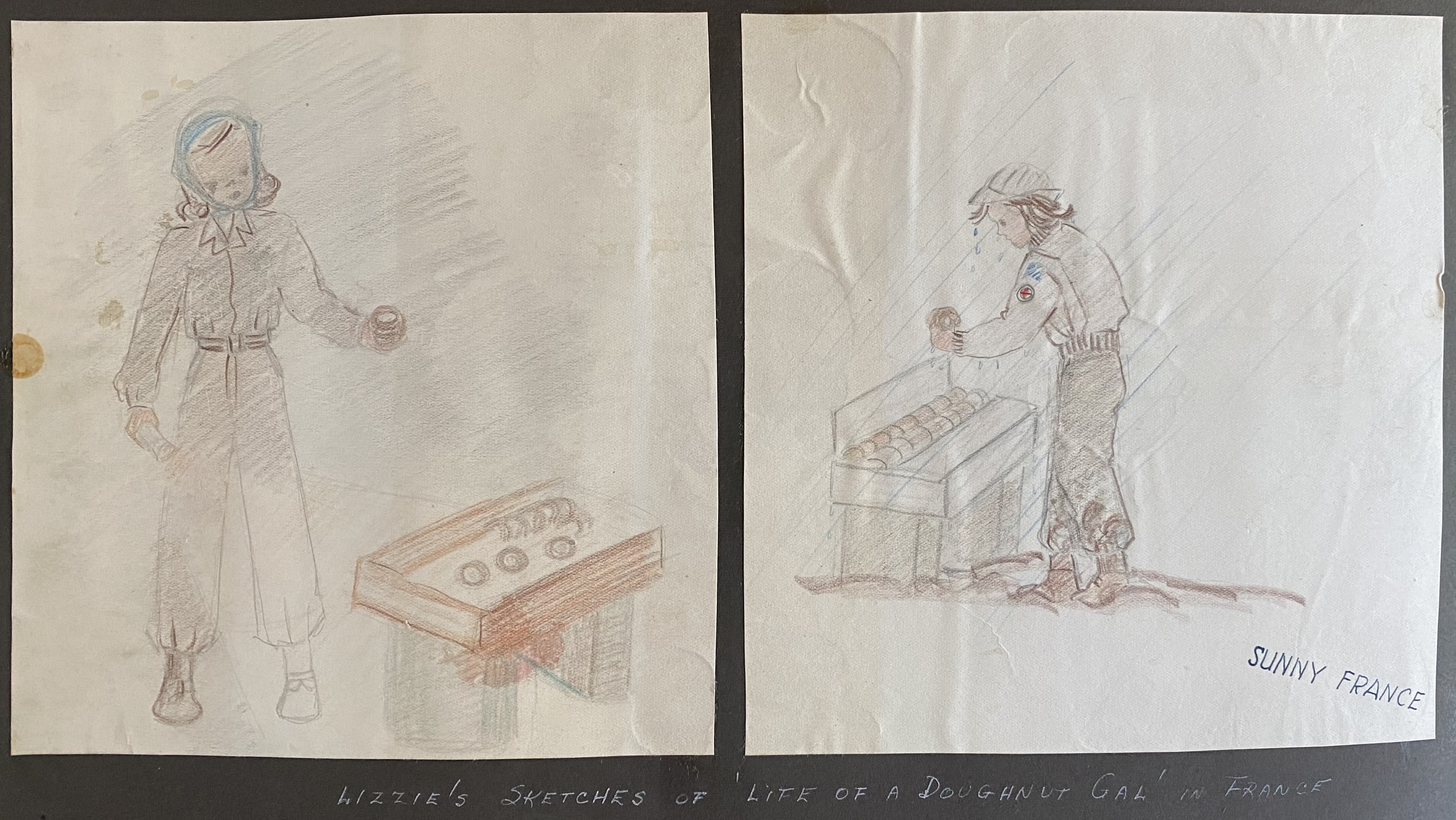
Liz Elliott’s drawings are pasted throughout Flo’s album. The greatest mother was a found statue that lived outside their clubhouse tent.

In this overwhelmingly male environment, having three other women in their squad of Clubmobilers offered not just companionship, but a deep sense of mutual recognition. Over time, they grew as close as sisters while serving alongside the Third Infantry Division.

Clubmobile women faced the strain and dangers of war with minimal training and little psychological preparation. Yet they were expected—and depended upon—to boost the morale of men fresh from the front. To endure these demands and perform their duties, they relied deeply on one another. Their camaraderie grew not only from shared experiences, but also from their unique position as noncombatants and women in a war zone.

They shared tents, washed their hair in army helmets, and leaned on each other in moments of grief—mourning the loss of friends and fiancés who died on the front lines. They were a sisterhood in every sense, traveling together during leave and supporting each other through the toughest of times.

The original squad of four included:  

Florence “Flo” Wick  

Dorothy “Dottie” Shands  

Elizabeth “Liz” Elliott  

Isabella “Jingles” Hughes

At 30, my mother, Florence Wick “Flo”, was the oldest of the group and served as the squad’s captain.

Elizabeth “Liz” Elliott was the one Clubmobiler who stayed with Flo from their early days in Naples all the way into Germany. Liz was the artist who drew pictures of the ARC women’s experience like the one above. Though she lived in New York City, she was originally born in New Mexico. Dottie and Jingles were later reassigned to different stations across Europe.

Dorothy “Dottie” Shands, born in Greenville, Mississippi, graduated from Baylor University in 1940. Her maternal grandmother had been the first woman legislator in her Mississippi county and a suffragist; her paternal grandfather served as Governor of Mississippi. After the war, Dottie worked as a secretary in Washington, D.C. for Representative Will Whittington. During the conflict, she served two and a half years with the Red Cross, beginning in North Africa and following the Third Division through Sicily, Italy, France, and Germany. She broke her leg in Sicily but remained with her team—a testament to her grit. Like Flo, she came from a small town, and her community followed her wartime service with great pride.

Isabella “Jingles” Hughes, from Baltimore, reached the front in North Africa in July 1943, following the troops into Sicily and then Italy. She was delivering donuts before Flo even set sail for Naples.

Though their lives were often at risk—and some ARC workers were killed during the war—these four survived to return home. The sisterhood they formed was essential to their physical and emotional survival.

Ch. 20: https://mollymartin.blog/2025/04/11/dance-with-all-but-dont-fall/

In the Tent City Near Pozzuoli Italy

My Mother and Audie Murphy ch. 18

Pozzuoli, Italy—In the sweltering summer of 1944, the 3rd Infantry Division assembled near this small resort town, joining the 36th and 45th Divisions in preparation for a high-stakes amphibious invasion of southern France. These battle-hardened troops, fresh from the grueling Anzio campaign and the march to Rome, were now under the Seventh Army’s command, sharpening their combat readiness for the next major offensive.

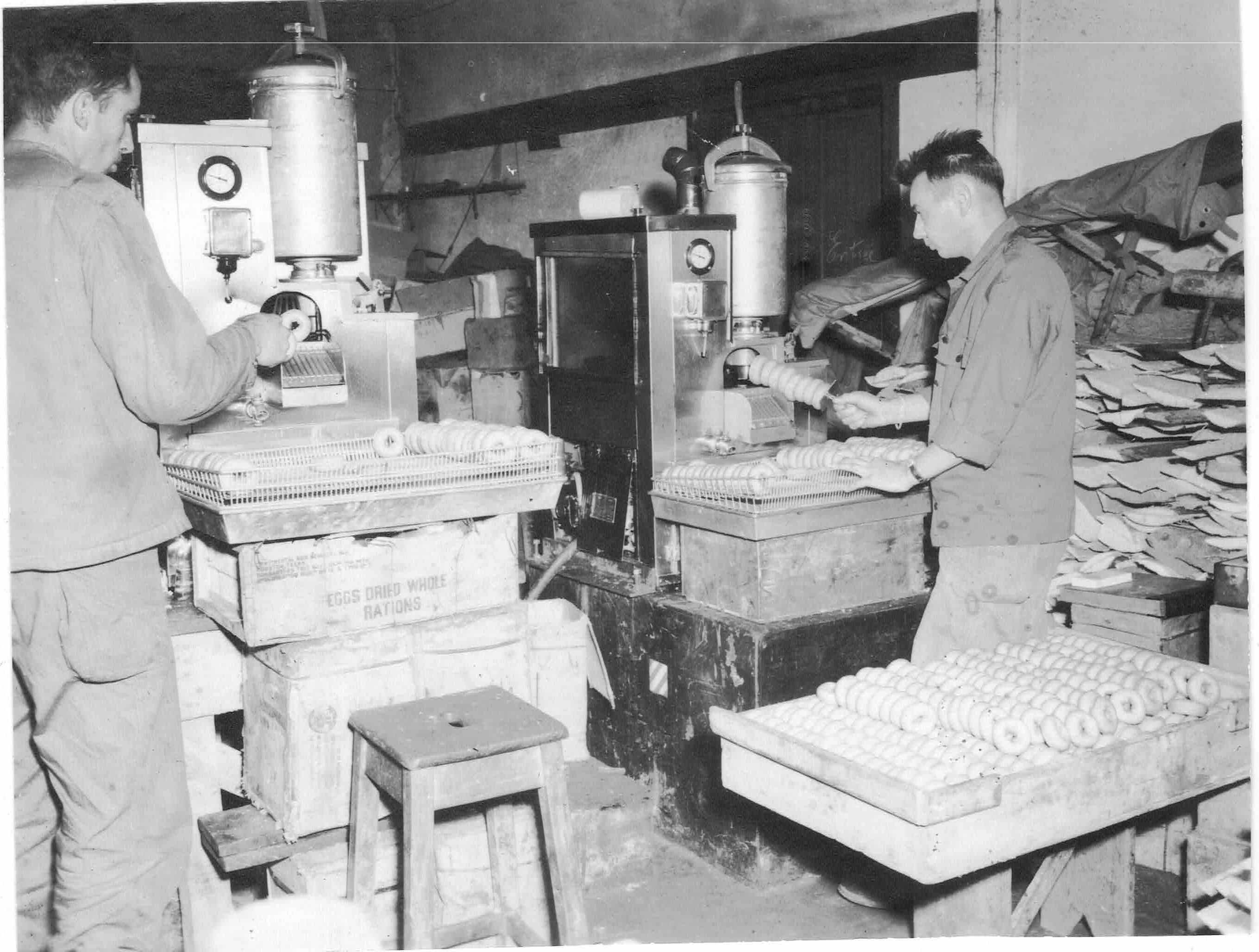
Among them was an unassuming but vital group—Flo and her clubmobile squad—who arrived in June to serve the men a taste of home: fresh donuts and hot coffee. Stationed in a sprawling tent city, these women had to get creative without a clubmobile truck, the specially outfitted vehicle designed for donut-making on the go. Instead, they improvised, scrounging up transportation and setting up makeshift field canteens in the dusty camps where soldiers could grab a sweet treat before heading back to drills. They were assisted by “donut boys,” soldiers who manned the donut machine in a tent kitchen.

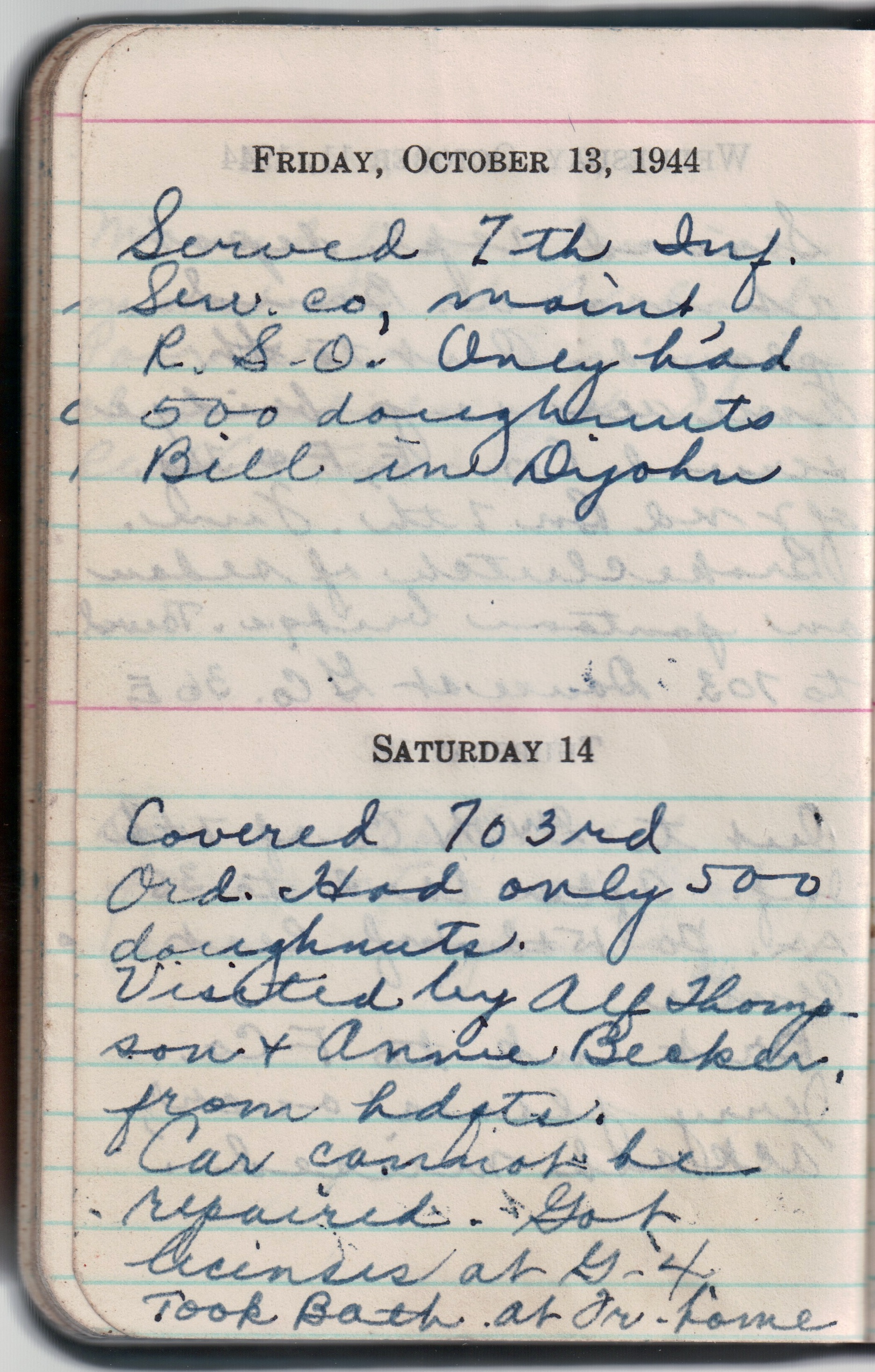
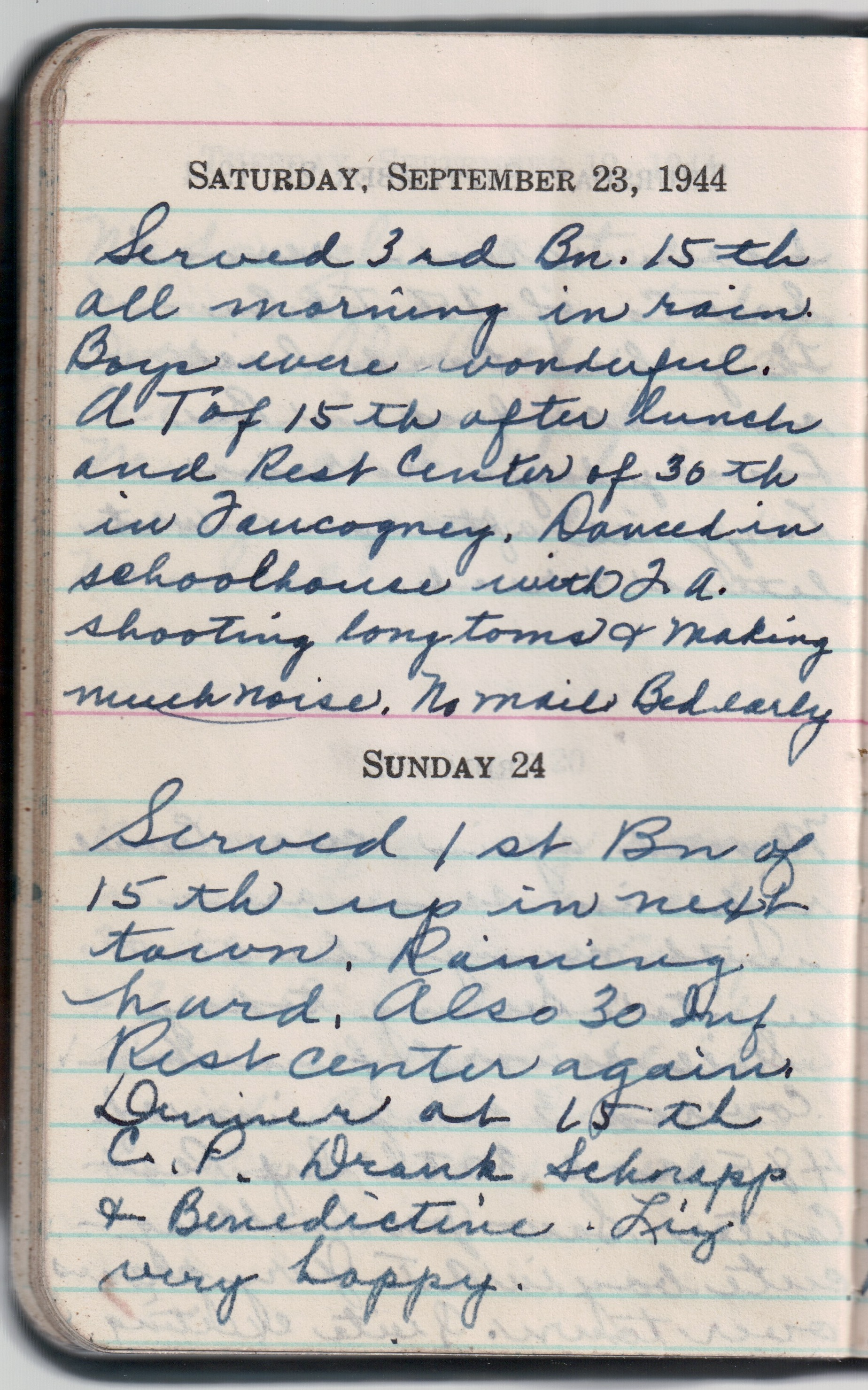
Flo meticulously recorded her daily work in a diary that read like a military log, listing the units she and her team served, often during the darkest hours of the night. Her notes mentioned names that would later be etched in history: the 1st Battalion of the 30th Infantry Regiment, the 441st Co. A+B, the 9th Field Artillery, the 36th Combat Engineers. On one occasion, on July 16, she may have even handed a donut to a young soldier named Audie Murphy—the future war hero and Hollywood star—though she dryly noted the day as “quite dull.” Murphy, in his autobiography, recalled the 1st Bn. 15th completing amphibious training earlier in the year, which likely explains their limited encounters at Pozzuoli.

One entry stood out: service to the 442nd Ack Ack (Anti-Aircraft Battalion), part of the legendary segregated Japanese American 442nd Regimental Combat Team. These soldiers, despite facing discrimination at home, were training for a mission that would cement their reputation as one of the most decorated units in U.S. military history.

Flo’s diary (pinch out to read)

Photographs from this period, many taken by the 3rd Signal Company, capture Flo and her fellow workers hard at work. These combat photographers, who had joined the division at Anzio, developed and printed their images in a darkroom trailer, documenting the war in vivid, unfiltered detail. Their images offer a rare glimpse into the everyday moments behind the front lines. For more see dogfacesoldier.org, a website dedicated to their photos and the 3rd Division.

Ch. 19: https://mollymartin.blog/2025/04/05/a-sisterhood-on-the-front-lines/

Foot soldiers in Rome

Infantrymen’s time in Rome is no triumph

My Mother and Audie Murphy ch. 16

June, 1944. From Murphy’s autobiography, To Hell and Back:

There is no triumph in Rome. The city is only another objective along an endless road of war. During the long, bitter months on the Anzio beachhead, the men dreamed of entering Rome in celebration. They imagined drinking, swaggering through its streets, losing themselves in indulgence and release. But when the city finally falls and they do enter, the feeling is nothing like victory. They pitch their tents in a public park and sleep with a depth that borders on collapse, waiting for something like life to return to their bodies.

They move through Rome like ghosts. The grand architecture and ancient monuments hold no power to lift the heart. Murphy feels as if he has been briefly spared from death, but the sparing brings no relief. Joy is impossible until the war is truly over. On the streets, surrounded by civilians, he feels lonelier than he did in the mud and gun smoke of the front. The men know others are still fighting to the north, and their thoughts remain with them.

As the front lines move forward, rear-echelon troops flood into the city. Their clean uniforms and easy laughter provoke an irrational resentment. The infantry still carry the smell of mud, cordite, smoke, and decay. They look at the rested, polished soldiers and feel a gulf that cannot be crossed.

One night, the resentment turns into a brawl. Murphy and his men clash with a group of air corps troops in a café. Chairs break, glass shatters, and bodies slam across tables until the military police arrive and shut it down. The MPs warn them not to return.

Day by day, Rome becomes less meaningful. The men begin drifting back to camp earlier, choosing their own company over the city. They gather in small groups as dusk settles, sharing bottles of wine. The songs they sing together come from home, from childhood, from a world untouched by war. The singing softens something inside them—feelings that have been buried beneath survival. The tenderness is temporary. It disappears the moment the order comes to shoulder their weapons and move again.

They leave Rome for another training ground, not knowing what operation lies ahead. Rumor fills the silence, but certainty is impossible.

Their next destination is the coast of southern France. 

Ch. 17: https://mollymartin.blog/2025/03/25/playbill-from-irving-berlins-show/

Rome is Liberated by Allies

Flo is one of the first to enter the city after Nazis retreat

My mother and Audie Murphy ch. 15

The city of Rome was liberated by Allied troops June 4, 1944. Flo got to Rome the next day, June 5. She told me she was proud to come into the city with General Mark Clark and the U.S. 5th Army. The Third Division had taken big hits in battles at Anzio and on the Italian coast. Rome would be an easy victory, a source of prestige for the leaders and pride for infantrymen recovering from those battles. Later, historians and Allied commanders agreed that Clark’s decision to march into Rome instead of cutting off a large part of the retreating German army was a major blunder, extending the war for maybe another year. In any case, the liberation of Rome was overshadowed by the D-Day landings on the beaches of Normandy in northern France on June 6. 

A page in Flo’s album. She saw the Irving Berlin show in Rome

Flo kept detailed notes in a tiny pocket-sized diary. This was the first entry.

Monday June 5, 1944

Came into Rome in amphib Jeep with Frank Gates.

They were traveling from the camp at Pozzuoli, a seaside town on the Gulf of Naples where they’d been bivouacked with the Third Division. At first I imagined that they drove the 138 miles on the bombed out rutted roads. But these amphibious jeeps were faster in the water than on land, so now I’m thinking they traveled on the water. Amphib jeeps were used by the Third Division because they were training for an amphibious landing in France that would take place in August.

The amphibious jeep. There were about 12,000 built by Ford.

Flo didn’t make note of who was with her and Frank Gates, but I’m imagining all four of the American Red Cross women in her group went to Rome together. Gates was able to secure a promise from a rich anti-Nazi Roman to allow the ARC clubmobilers to stay in his fancy villa. The four women moved in soon after. The man did much to make them comfortable.

I wasn’t able to find information about Frank Gates but I believe he was Flo’s boss, the Red Cross director on the Italian front whose job was to establish ARC canteens and clubs near the front lines of fighting. He would be driving around Rome to look for suitable buildings in which to house the clubs. 

Unlike Naples, which had been bombed for years, Rome had been spared from widespread destruction by the Nazis in part due to its declaration as an “open city” by the Italian government and the efforts of the Vatican to protect it, which led to a relatively peaceful occupation and liberation. No one, perhaps not even the Nazis, wanted to be responsible for destroying that historic city. 

The 1945 Italian film Rome, Open City, directed by Roberto Rossellini, takes place during the Nazi occupation of Rome. It was one of the first post-war Italian films to gain major acclaim internationally.

The ARC women were some of the first Americans to move into Rome. Before Allied troops started coming in, they had the city almost to themselves and set about seeing all the tourist sights. Flo wanted to see all the famous architectural treasures she had read about as a child.

From a report in the Yakima Herald-Republic

Florence Wick busy in Italy

Life in the Italian theatre of war can be fun as well as hard work for American Red Cross workers, Miss Florence Wick told her mother, Mrs. Gerda Wick of Yakima, in a recent letter.

“So much and so many exciting things have happened since I left home that I can’t believe any of it yet,” Miss Wick said. “This last event is the biggest dream yet. I am writing this in my new home, which is a beautiful, spacious Italian villa. We four girls moved in yesterday from our dusty camp down the road and have the whole villa and grounds to ourselves.

“There is a bathroom and bedroom for each of us and we truly live like princesses in a fairy tale. The villa belongs to a very wealthy Italian, who is an anti-fascist, who lost his whole family to the Germans. He loves to do favors for us.”

High praise for Capt. Harold Haines of Yakima was voiced by the Red Cross woman.

“Capt. Haines is something of a hero over here,” she said. “Fighting in a war does things like ‘knocking off’ officers and men, but Haines is one of the very few original officers left. Yakima should be very proud of him. His own men are and that’s the acid test out here.”

The nice weather makes it even more pleasant to drive around the various areas to serve the men, Miss Wick said. Because the unit is not yet equipped to turn out doughnuts for all the men, she has had time to visit interesting places she has read about but never expected to see. Mt. Vesuvius and the ancient city of Pompeii are among the sights she has seen.

“I don’t know how long we will be in this beautiful place,” Miss Wick said, “but we are going to enjoy it as long as we do stay. No doubt we will be roughing it again in a tent or bombed out building before long. I won’t mind that if I get to stay with this grand division.”

The ARC women didn’t stay in the villa in Rome very long. By July 9 Flo is back in the camp, writing in her diary about cleaning their tent.

Ch. 16: https://mollymartin.blog/2025/03/21/foot-soldiers-in-rome/