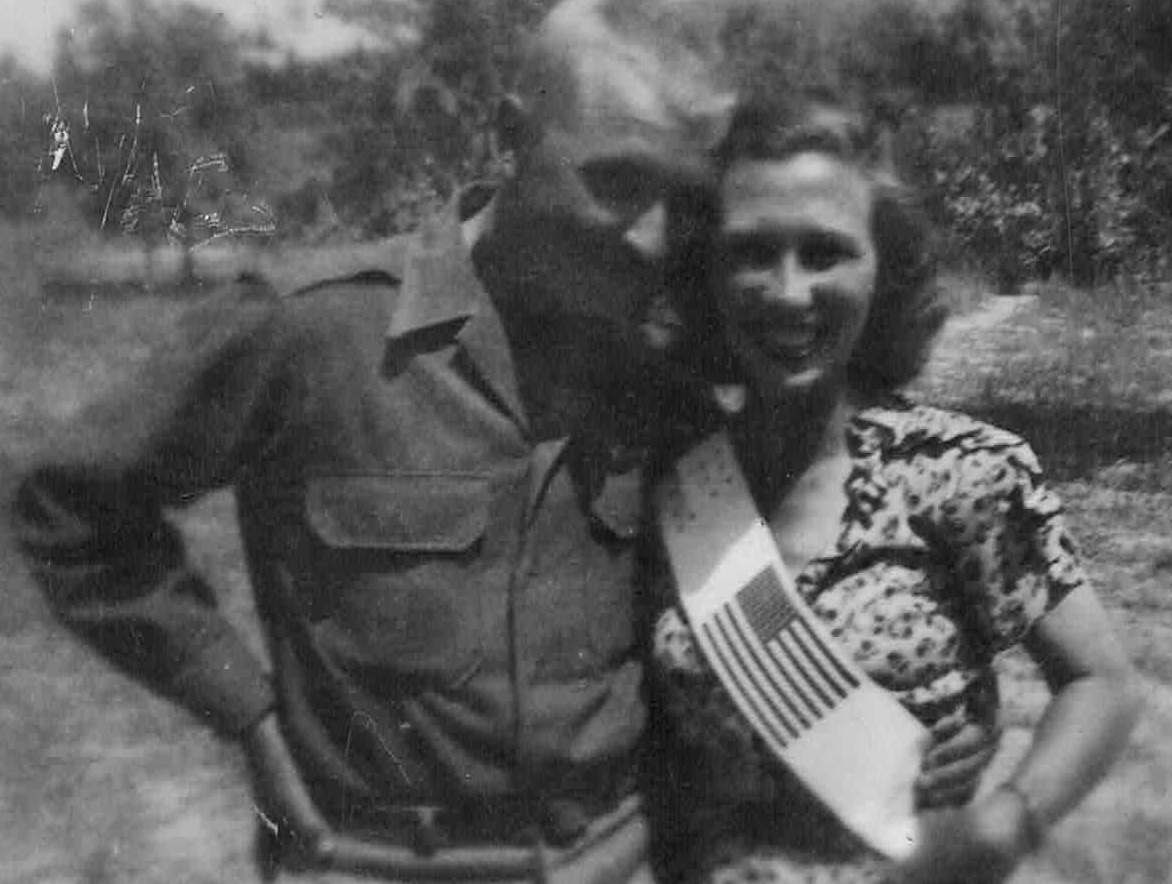
You’ve Got Mail–March 31, 1944

Flo Scheduled for ARC Training in D.C.

My Mother and Audie Murphy Ch. 5

March 31, 1944 began as a black day in Yakima. Farmers had lit smudge pots in the orchards during the night to protect delicate buds from frost. The fuel, which included old tires, diesel oil and whatever could be found to burn, had left a black oily residue on the landscape. The white horse in the field down the street was now charcoal black. And the polluted air had seeped inside houses, coating everything. 

The local Yakima paper kept track of citizens in the war. From Flo’s album.

When Flo awoke and blew her nose, the snot was black. Still, for her the day was a happy one. In two weeks she would be in Washington D.C. starting a new job as an American Red Cross (ARC) staff assistant. Today she would tell her boss that next week would be her last. She would give herself a week to get to D.C., taking the train to Chicago and staying overnight there. It would be the start of an exciting adventure and she could hardly wait to get started. 

The ARC telegram that had come the day before said she would receive a letter with more details. She would have to send some telegrams herself to let friends and relatives know this good news. Her best friend, Molly, now working in Seattle, would need to know. And so would her sister Eve, stationed as a U.S. Army nurse at a hospital in Burford, England.

At work, the engineers were full of congratulations and good wishes. For them it was nothing new. Employers all over the country were having to deal with workers leaving for the war, either as draftees or volunteers. The U.S. had already been at war for more than two years, since Japan bombed Pearl Harbor December 7, 1941. The Europeans had been at war since September 1, 1939 when Germany invaded Poland.

A page in Flo’s WWII album

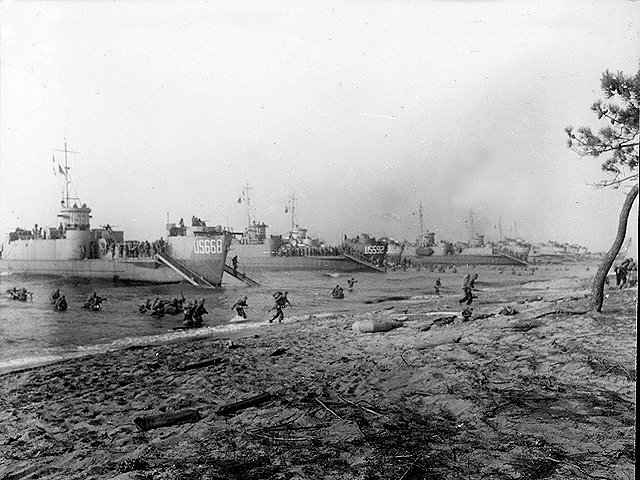
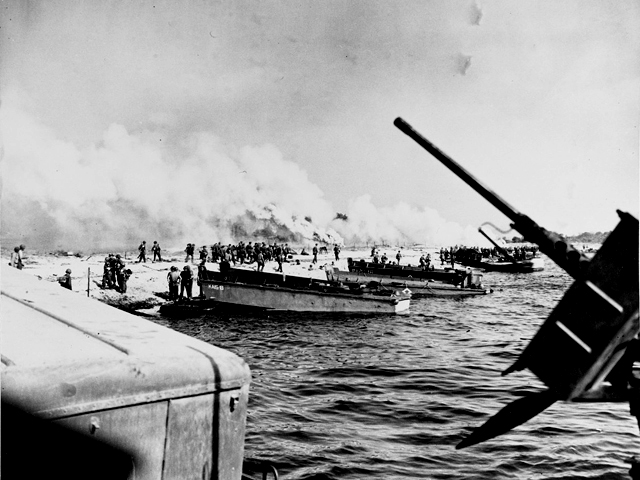
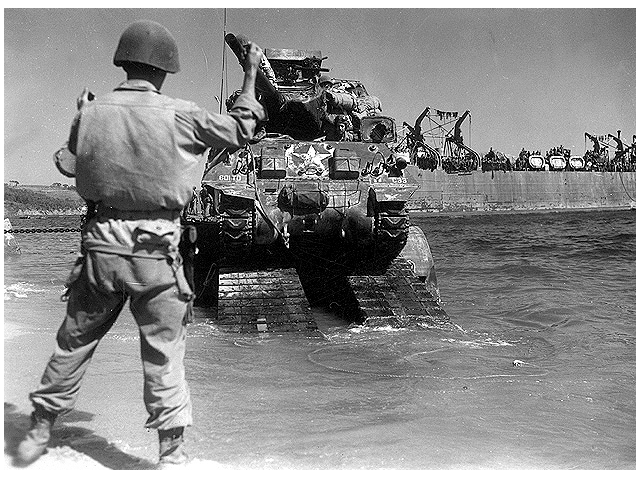
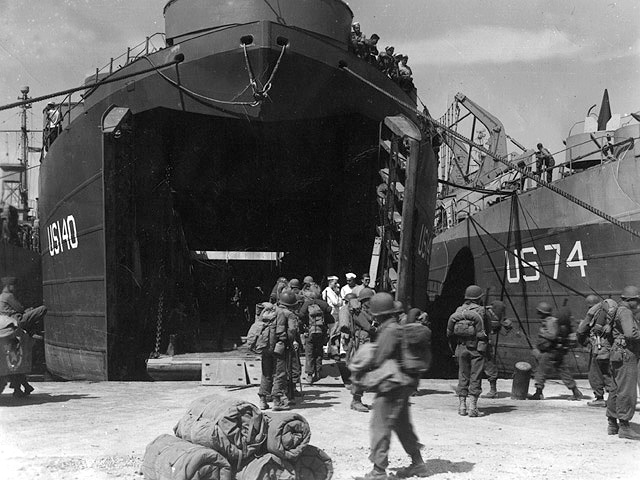
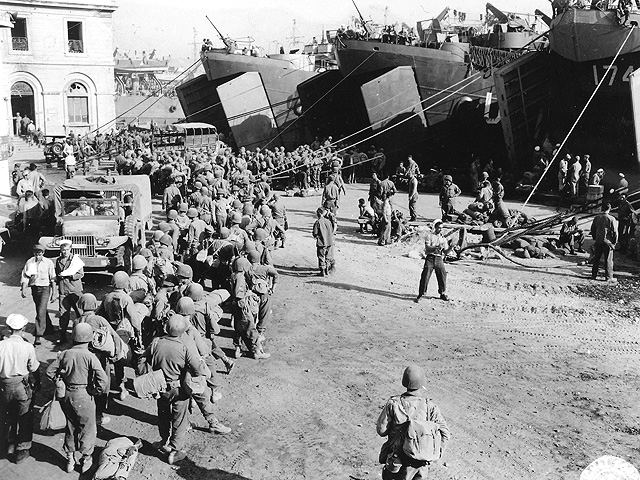
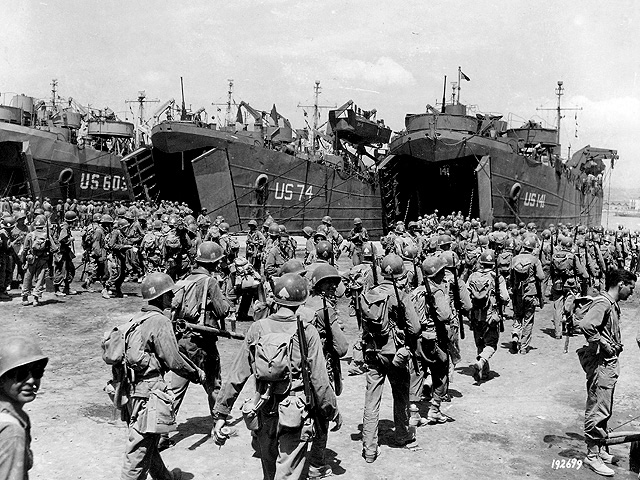
In January, 1944 the Third Infantry Division had landed at Anzio, Italy and the campaign had become a stalemate, costing heavy losses on both sides. The Allies would not rout the Nazis there until May.

Flo agreed to finish out the next week to train her stenographer replacement, and she was happy to have one more week’s pay, but now that she knew she was leaving, she couldn’t wait to be finished with the Washington State Highway Department. It had been a fine place to work for more than a decade, but she was ready for new challenges. And she would have many.

When she got home that evening, her sister Betty ran from the house waving an envelope. 

Flo, still in her coat, opened the envelope carefully, thinking she would save the letter for a future scrapbook. Her life was about to change and she wanted to remember this moment.

The letter was headed American Red Cross, Pacific Area, Civic Auditorium, San Francisco, California. It read:

“Dear Miss Wick:

This is to confirm our wire of yesterday offering you the position of Staff Assistant overseas.”

The “salary of $150 per month and maintenance” would be effective the day she was to report for training, April 17, 1944.  

“You are scheduled to report for training at National Headquarters, Washington, D.C., on Monday morning, April 17th. After a period of training and probation you will be assigned, as needs require, somewhere abroad. The location cannot be determined in advance. However, the Red Cross reserves the right either to release or transfer to domestic duties any person who, during training period, fails to meet the Red Cross or Army requirements for overseas duty.”

“Expenses of travel and maintenance in connection with the training program in Washington will be assumed by the Red Cross. A check will be issued sufficient to cover these expenses and will reach you shortly before the date scheduled for your departure. You should take immediate steps toward securing train reservations, using the enclosed tax exemption slips, which will place you in Washington on the morning of April 17th. You should purchase a one-way ticket from Yakima to Washington, D.C., making intermediate accommodations to Chicago, and first class from Chicago to Washington.”

 It was signed by (Miss) Esther Bristol, Assistant to the Director. The letter came with a list of “articles prepared by National Headquarters for the guidance of employees planning on entering foreign service.” The list of items included everything the ARC thought a woman would need for a year abroad, such as four girdles(!), sanitary napkins, and panties.

Flo resolved to do whatever was necessary to carry out her job to the best of her ability. She would respond by collect wire as instructed and then she would be officially in the Red Cross.

Their mother, Gerda, was in the kitchen cooking dinner for her daughters and their two boarders, female students at the community college. 

She promised her daughter that she would write, and keep her supplied with homemade Swedish cookies.

Chapter 6: https://mollymartin.blog/2025/01/24/the-battle-for-salerno/

Audie Murphy Fights to Fight

Chapter 4: He Sheds First Nazi Blood in Sicily

They nicknamed him Baby and he couldn’t shed the tag. Audie Murphy had to fight for his place in combat. From the beginning of his military journey, he faced skepticism at every turn. Rejected by the Marines and paratroops, he was finally accepted by the infantry. 

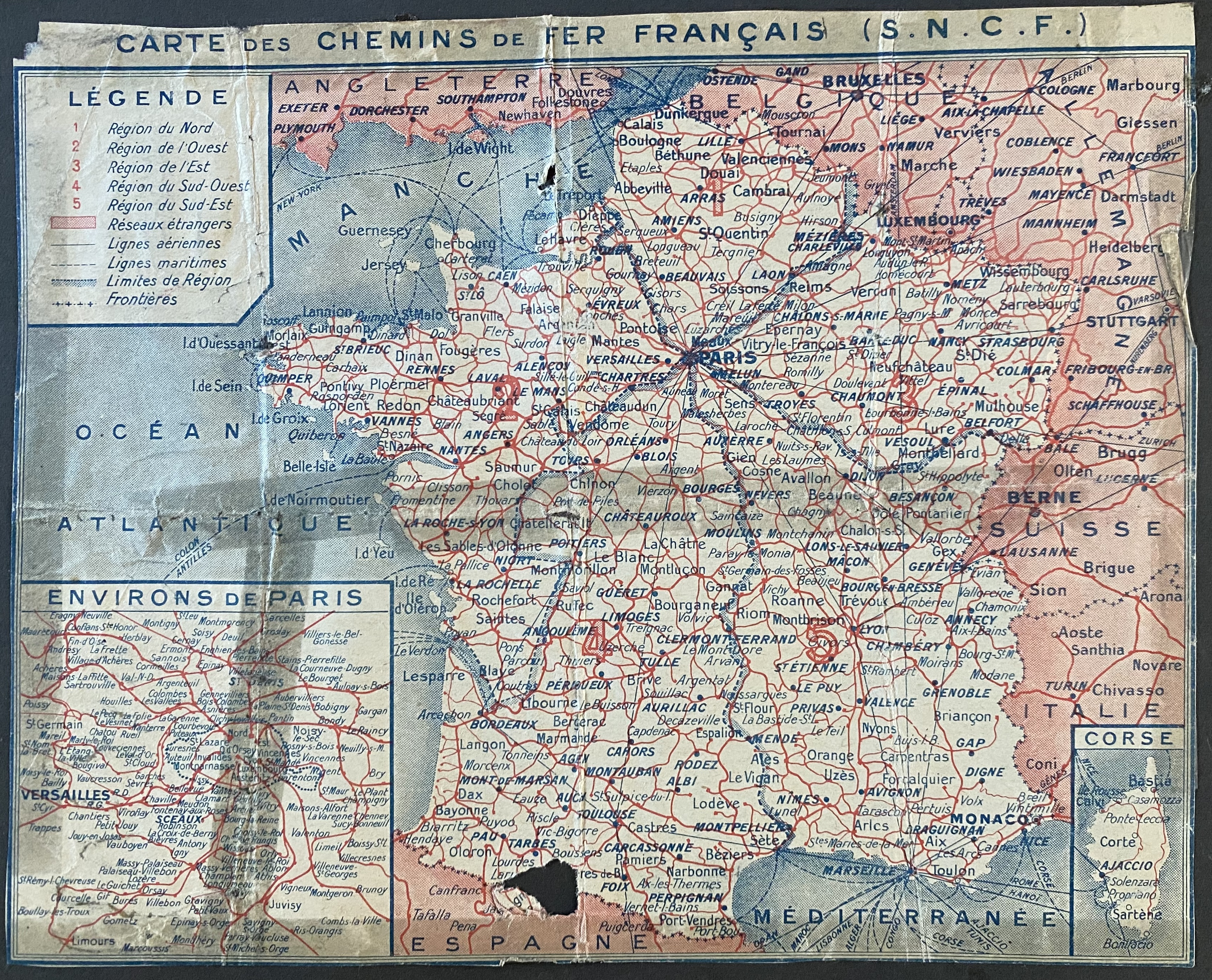
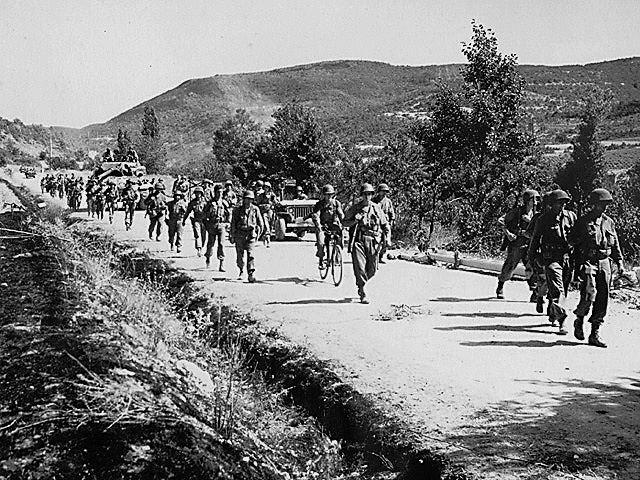
Battle route of the Third Infantry Division

Immediately his first commanding officer tried to shove him into a cook and baker’s school where the going would be less rough.

“That was the supreme humiliation. To reach for the stars and end up stirring a pot of C-rations. I would not do it. I swore that I would take the guardhouse first. My stubborn attitude paid off. I was allowed to keep my combat classification; and the Army was spared the disaster of having another fourth-class cook in its ranks,” he wrote in his autobiography.

In training, officers took one look at his skinny body and boyish face and tried to steer Murphy away from the front lines.  At Fort Meade, one well-meaning officer attempted to save him from combat altogether by assigning him a clerical position at the post exchange. Again he stuck to his guns.

In July, 1943 he made it to the front in Sicily, but his youth and appearance worked against him even there. He was transferred to headquarters to serve as a runner. But Murphy wouldn’t stay away from the action. He repeatedly sneaked off on patrols and scouting missions. His determination eventually forced his commander’s hand. He was promoted to corporal.

Life Magazine photo essay posted in Flo’s album

By then, Murphy had already missed his chance to fight in North Africa. His convoy had docked in Casablanca only after the battles were over. Instead of combat, he endured more training—much to his frustration. “I just wanted to fight,” he later said.  

Murphy finally got his chance in Sicily, but it was far from the glory he had imagined as a boy.  

On his first day in combat, a mortar attack killed a young soldier sitting nearby.  A boom, a whistle, the earth shakes, and the boy falls from the rock where he was sitting, just taking a break. As simple as that. One minute you’re sitting on a rock. The next minute you’re dead.  

This was not the war Murphy had dreamed of.  He had imagined men charging gallantly across flaming hills. Bugles blew, banners streamed, and the temperature was mild. Enemy bullets always miraculously missed, and his trusty rifle always hit home. As a kid, the dream was his escape from a grimly realistic world of poverty.

But now, as he trudged across the Sicilian battlefield, sweat soaking his uniform, his boyhood fantasies were shattered.  

“Maybe my notions about war are all cockeyed. How do you pit skill against skill if you cannot even see the enemy? Where is the glamour in blistered feet and a growling stomach? And where is the expected adventure? Well, whatever comes, it was my own idea. I had always wanted to be a soldier,” he wrote.  

His skill with a rifle, however, did not go unnoticed. In one skirmish, Murphy shot two German officers from their horses with two clean shots. He had shed his first blood. But he felt nothing except a weary indifference.

Even as malaria struck and forced him into a field hospital for a week, Murphy returned to the lines. The disease would haunt him throughout the war, but it didn’t stop him. 

He had loved the idea of war, but it didn’t take long to hate the real thing.

“The Sicilian campaign has taken the vinegar out of my spirit. I have seen war as it actually is, and I do not like it. But I will go on fighting,” he wrote.

*Quotes are from Audie Murphy’s autobiography, To Hell and Back

A Photo Album Tells the Story

My mother and Audie Murphy Chapter 2

The photo album that my mother, Flo Wick, shared with Audie Murphy when they reconnected in 1955 is massive. The scrapbook is filled with photographs, newspaper clippings, letters, and travel paraphernalia and it tells the story of Mom’s two years as an American Red Cross (ARC) “donut girl” in Europe during World War II. 

It also tells the story of the Third Infantry Division, the only American division that fought the Nazis on every front—North Africa, Sicily, Italy, France, and Germany. “The Fightin’ Third” had more casualties—nearly 35,000—than any other division, and it holds the record for high combat citations. 

Throughout our childhoods my brothers and I pulled out the album, looked through it, and listened to our mother’s war stories. We kids especially liked the sketches by Flo’s comrade Liz Elliott of the everyday lives of the “donut gals.”

When my mother died in 1983 at the age of 70, I claimed the album and it’s been stored in garages and closets ever since, occasionally brought out for perusal by relatives or friends with an interest in World War II. For a time, it lived in a mold-infected storage room and so it was infected along with other archives. I exposed each page to sunlight in an effort to reduce the mold and that helped, but when I really wanted to examine the book, I donned a respirator to avoid breathing in clouds of invisible mold spores.

Mom was a scrapbook maker and for that I am now grateful as I try to piece together the events of her life during the war. Perhaps she had the idea for the album even before she sailed to Europe on a hospital ship in May 1944. I do know that the act of putting it together when she returned home after the war in 1946 salved her sadness at the deaths of so many and helped her readjust to life stateside where it seemed Americans had moved on and no longer wanted to think or talk about the war.

Recently I went through the album page by page, photographing all. That’s when I discovered that Flo had had a friendship with Audie Murphy that began somewhere in France when she served him donuts and continued after the war.

This story follows two narratives: one chronicles Flo Wick and the other chronicles Audie Murphy. They were both attached to the Third Division but mostly in different parts of the North African and European theaters. Their paths intersect in the Vosges mountains of France and as the Third pushed its way into Germany. For Audie’s tale I’m referencing his autobiography To Hell and Back, as well as letters and artifacts saved in Flo’s album.

A Little Background

She came of age during the Depression

Born in 1913, Florence Wick had graduated high school at 16 after being allowed to skip ahead a grade. Her class graduated in 1929½. Flo was excited about the prospect of going to college. She planned to enroll at the state college, but the Great Depression intervened. Instead, she completed a secretarial course at a trade school. At 17 she started working to help support her family. In 1931 she found a job as a stenographer for the Washington State Department of Highways. 

Flo (R) at the Highway Dept.

By the time she learned about the ARC program, Flo had been working full time at that job for more than a decade. No doubt she was ready to do something else—maybe anything else. This seemed like an opportunity to travel outside of Washington State and to see other places in the world. And she was anxious to help the war effort.

He always wanted to be a soldier

Flo’s photo of Audie 1945

Even as a little boy Audie Murphy had wanted to be a soldier. His share cropper father abandoned his mother and their children leaving the family destitute. Then, when he was 16, his mother died. Born in 1925, the seventh of twelve kids, Audie tried to provide for the others, dropping out of school in fifth grade to pick cotton for a dollar a day. But he knew he had to get out of Farmersville, Texas. He tried to join the paratroopers and the Marines, but was told he was too short at five feet five. The Army took him and trained him to be a soldier. The baby-faced kid earned the nickname Baby. He was already a good shot, having fed the family with wild game. He couldn’t wait to shoot the enemy.

Murphy was assigned to the Third Division, then part of the Third Army under the command of General George Patton. He joined them in Sicily in 1943, on the way from Morocco and North Africa. They would fight their way through Italy and France into Germany. Murphy would be one of a very few of his company left standing and would become the most decorated American soldier of the war.

Chapter 3 https://mollymartin.blog/2025/01/07/flo-gets-a-telegram/

My Mother and Audie Murphy

She took the only pictures as he was honored

Chapter One

“When are we going to get some more donuts?” asked Audie Murphy of the photographer after he received the highest of all military honors, the Congressional Medal of Honor, in the field in Salzburg, Germany.

Flo’s photo of Audie Murphy receiving the Congessional Medal of Honor

It was 1945 and the photographer was my mother, Florence Wick. She had been serving as a Red Cross “donut girl” with the Third Infantry Division in the Europe. She had met Murphy and served him donuts somewhere in France.

That photograph was the only one taken of Murphy at the awards ceremony and it was published worldwide and used to recreate the scene for the movie of his life story, “To Hell and Back.”

1955 Flo and Audie reconnected on the movie set of To Hell and Back. Photo by Rollie Lane. The photo at top is the one taken by Flo at the awards ceremony in Salzburg in 1945.

The most decorated soldier of WWII, Audie would cross paths with Flo again ten years later when he came to our hometown of Yakima, Washington to film the movie. There at the Yakima Firing Center the two of them looked through the scrapbook Flo had compiled of her adventures and heartbreaks in the European theater.

Now I have that scrapbook. It’s gigantic and weighs 25 pounds. I have wanted to use its contents to tell my mother’s story, but the project is overwhelming. Maybe I can start with Audie.

Audie Murphy was known worldwide after the war. He had a huge fan club and maybe still does (he died in 1971). One of his fans recently got in touch with me and asked if I could supply more stories and pictures. Yes! Flo stayed in touch with Audie. She corresponded with his biographer, his associates and those putting together a memorial in Texas. She saved mementos and newspaper clippings.

As for her photo that became famous, she gave it freely and others took credit. A post-war letter she saved warns that others are charging for the use of her photo. She never received credit.

Chapter 2: https://mollymartin.blog/2024/12/31/a-photo-album-tells-the-story/